
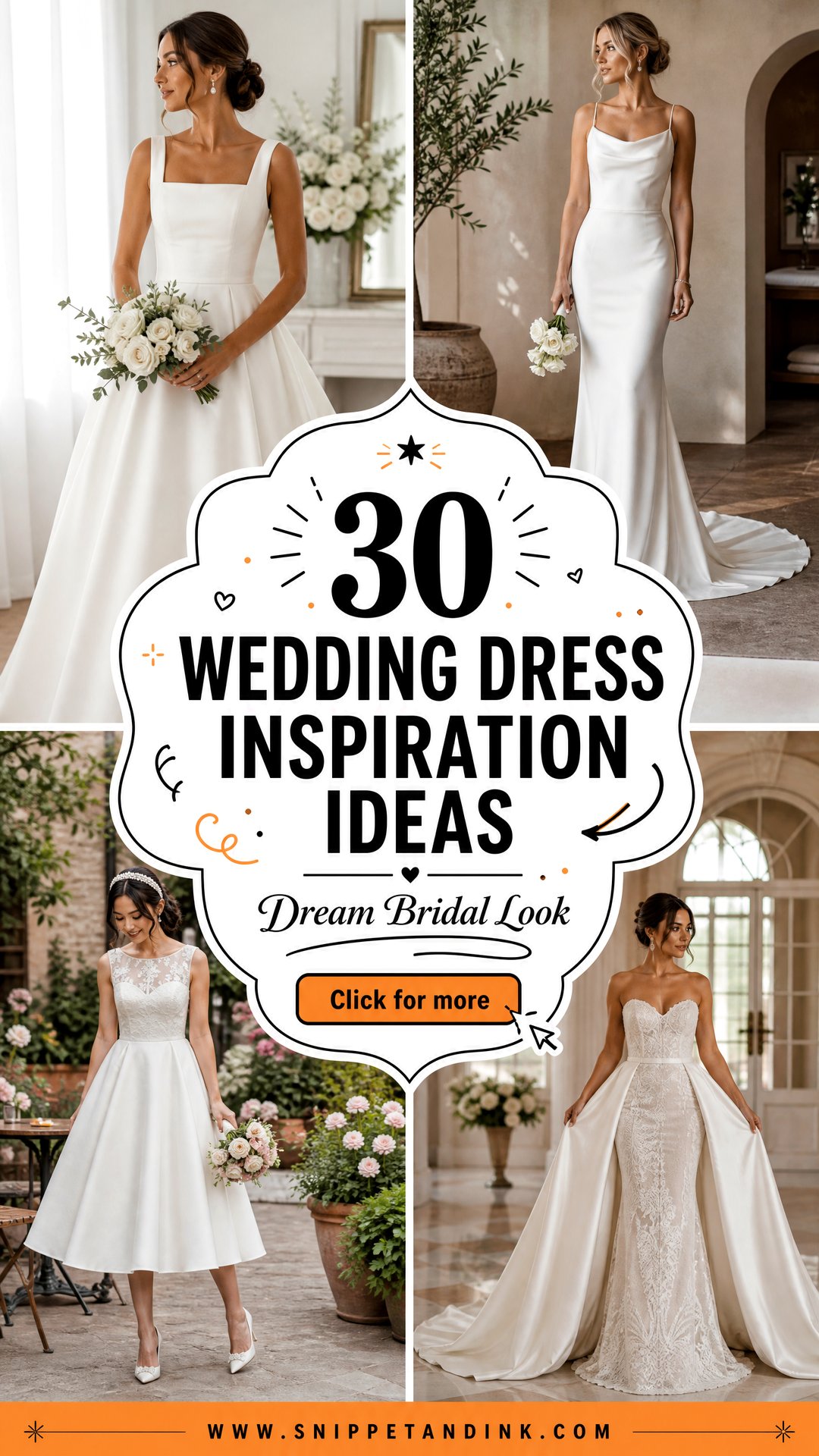
No single white gown defines a bride anymore. In my fitting room this season I’m dressing brides in soft lace, clean satin, corset bodices, drop waists, pearl veils, removable overskirts, minis and suits, sometimes two of those on the same woman in one day. What decides the right one is less about trend and more about practical things: your venue, how you’ll move, your body and how many hours you’ll be wearing it. Below are thirty complete looks, dress to shoes to veil, with the fitting notes I’d give you in person, including the places where each one tends to go wrong.
Where the Money Goes Beyond the Gown’s Price Tag
Brides tend to budget for the dress and forget the rest. When I help plan a bridal look, I split it into parts, because the extras can add a surprising amount. Costs vary widely by region, designer and salon, so treat these as items to price, not fixed figures.
- Alterations: hemming, bustle, bodice adjustments. Ask for a quote at the first fitting.
- Veil and hair accessories: a long veil with lace or pearl trim can cost more than expected.
- Undergarments: a good strapless bra, shaping pieces or sewn-in cups.
- Shoes: often two pairs, one for the ceremony and one for dancing.
- Steaming and pressing before the wedding.
- Cleaning and preservation after.
If the budget is tight, I’d spend on fit first. A less expensive gown that fits perfectly looks better than a designer gown that was never altered. Sample sales and preowned gowns are good options, but plan extra alterations since they were fitted to someone else.
1. Satin Ball Gown Wedding Dress
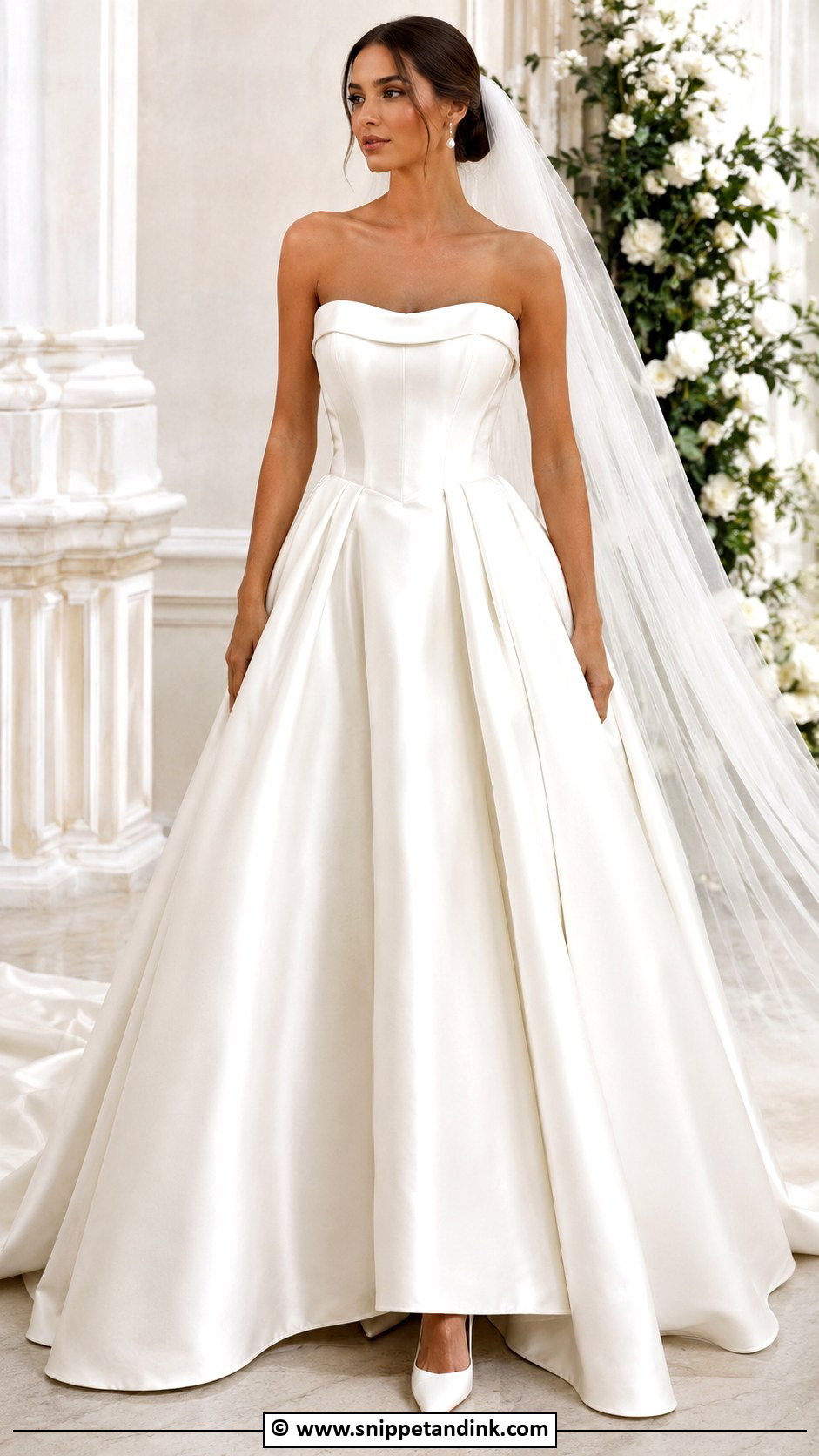
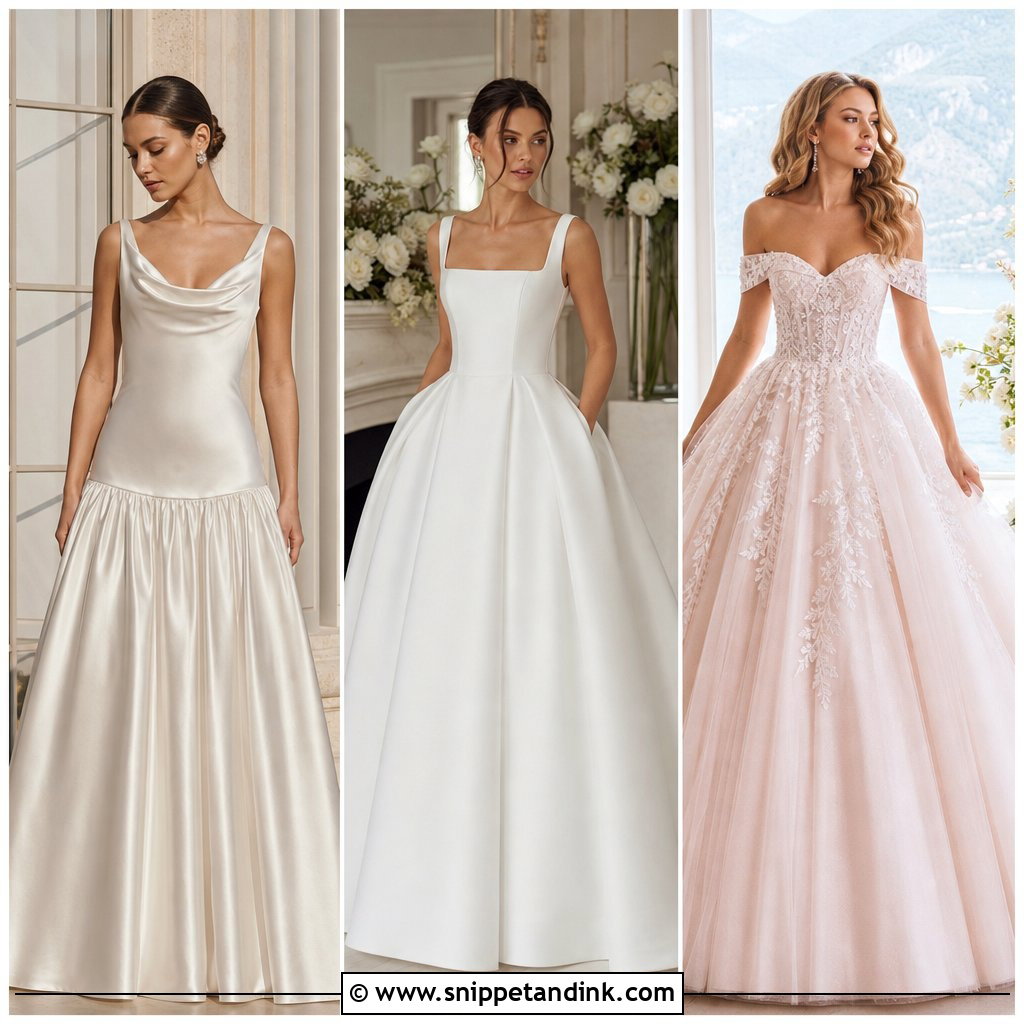
Satin ball gowns look simple and take real engineering. The bodice carries the weight of the skirt, so I check the waist stay and the boning at every fitting; a skirt that drags the bodice down shows in every photo. Ivory satin with a soft pearl veil reads classic. Pointed satin heels, pearl drops and a low bun keep the top half calm for grand venues, hotels and formal evening weddings.
2. Lace Long Sleeve Wedding Dress
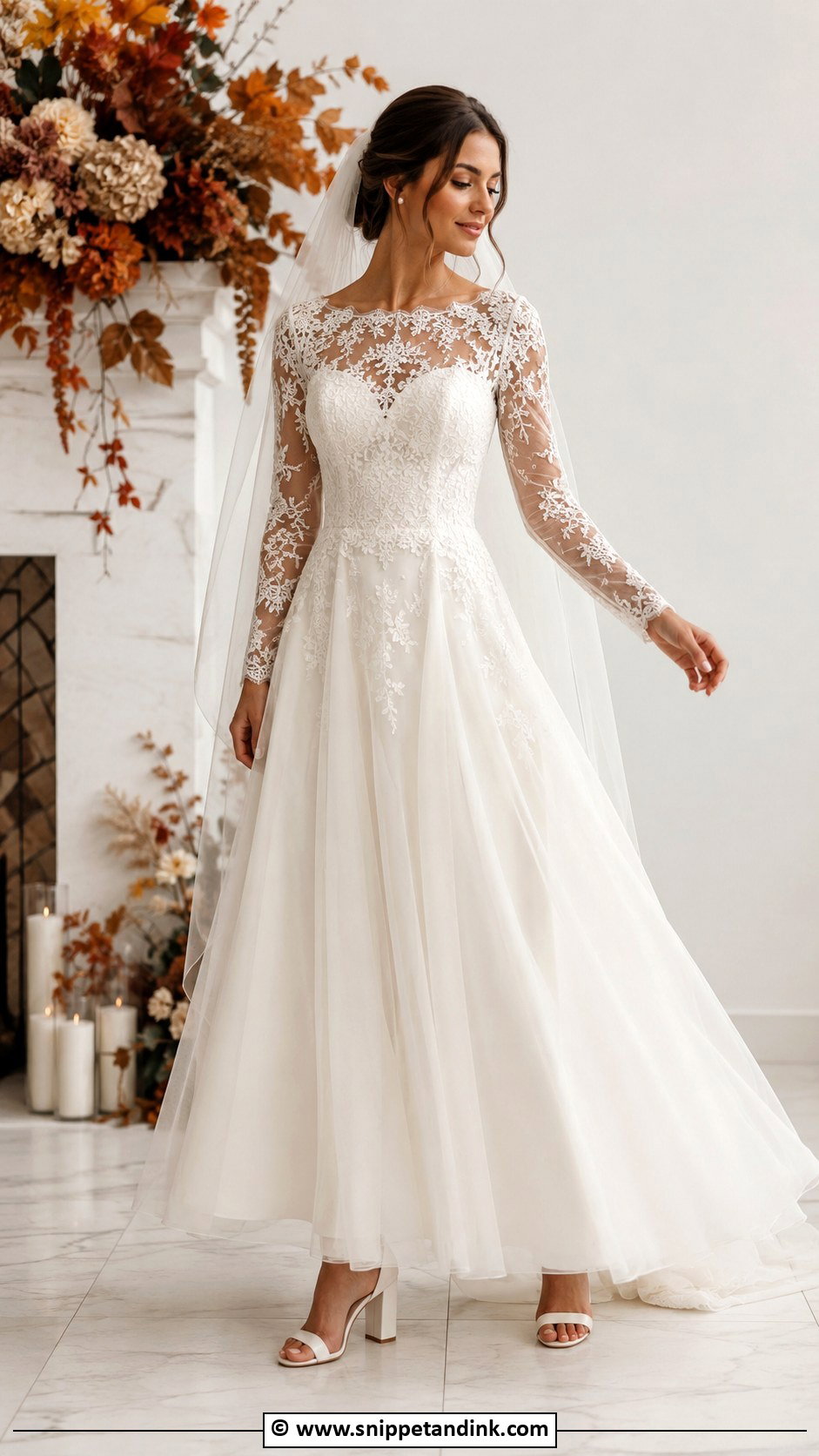
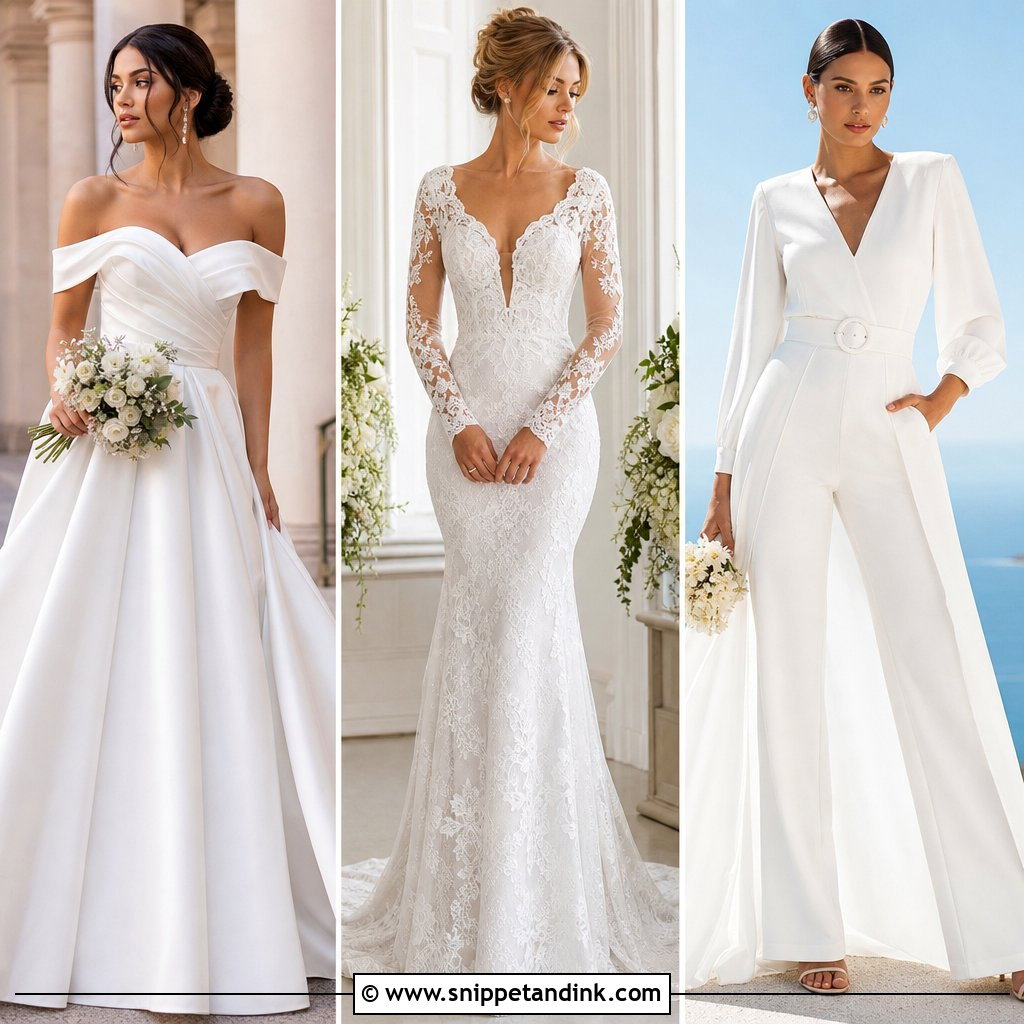
Lace sleeves on a fitted bodice give coverage and texture at once. Illusion sleeves, sheer mesh with lace motifs, feel lighter than full lace. My usual concern is the armhole: if it’s cut too low, the whole bodice lifts when you raise your arms, so I check it with a hug test. Block heels, a soft tulle veil and pearl studs suit fall, winter and indoor weddings. Loose waves or a relaxed chignon match the mood.
3. Strapless A Line Wedding Dress
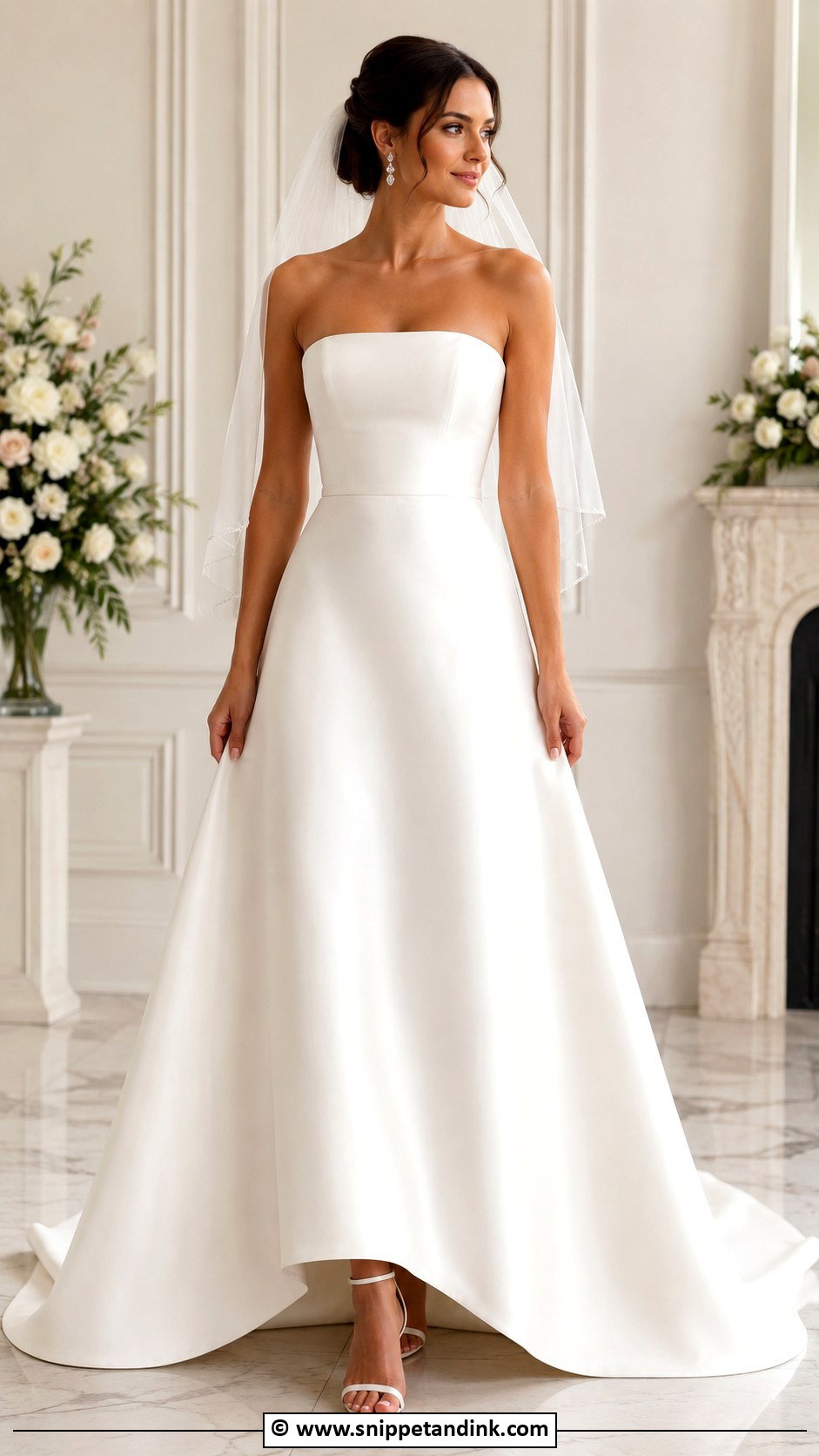
Strapless A-lines are where many brides land, and for good reason: the bodice shows the neckline, the skirt skims the hips, and you can walk freely. The bodice must be fitted snugly, with a little grip silicone along the top edge if needed, or you’ll be tugging all night. Choose a cathedral veil for formality or a fingertip for ease. Crystal earrings and ankle-strap heels suit ballrooms and outdoor terraces alike.
4. Basque Waist Wedding Dress
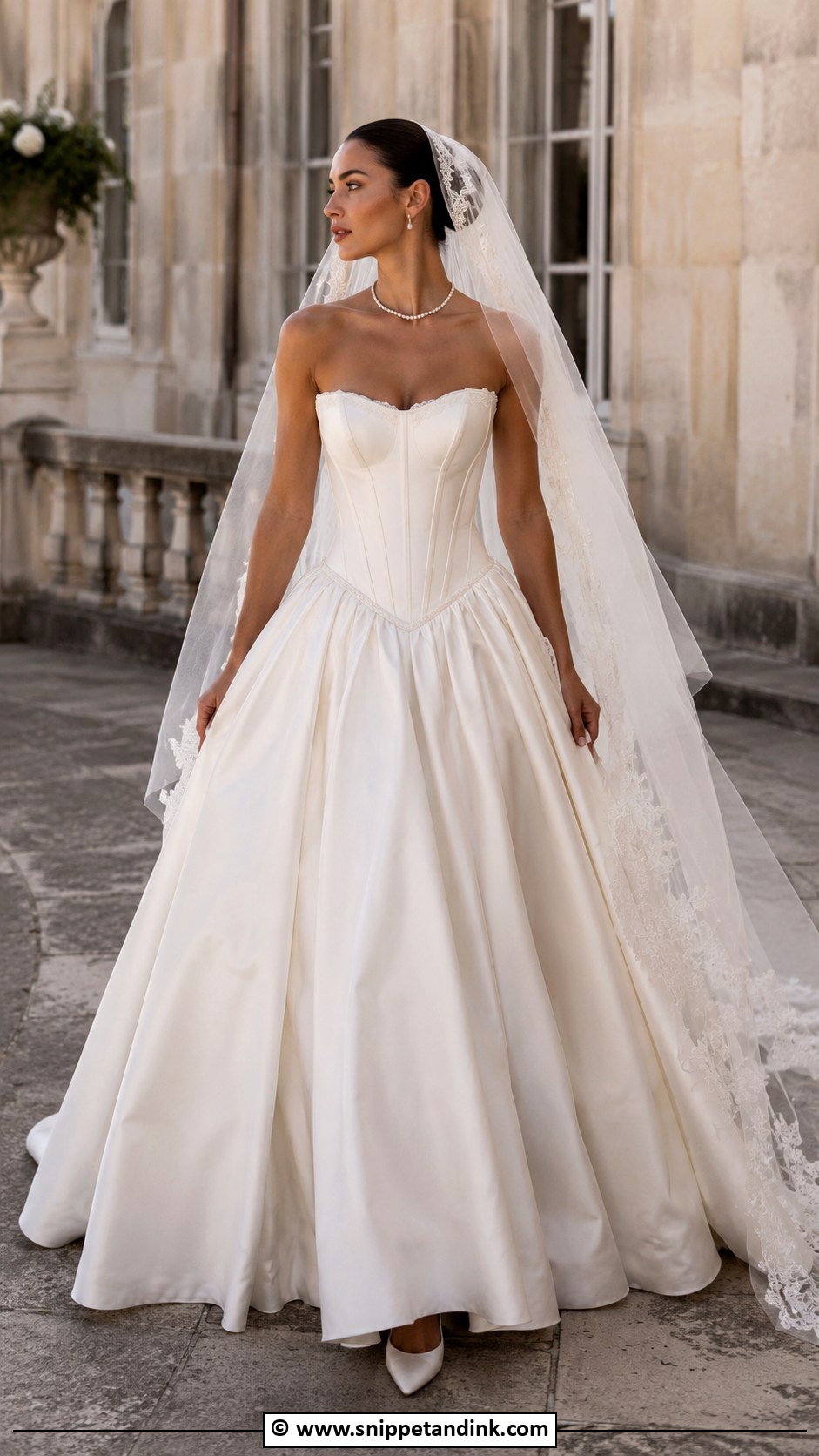
A basque waist wedding dress dips into a soft V at the center, which sculpts the waist and lengthens the torso. A corset bodice with a tulle or satin skirt balances it well. I’d set a long sheer veil to fall in a straight line from the crown to emphasize that length. Pointed heels and pearls keep it current for historic estates and architectural photo backdrops.
5. Drop Waist Wedding Dress
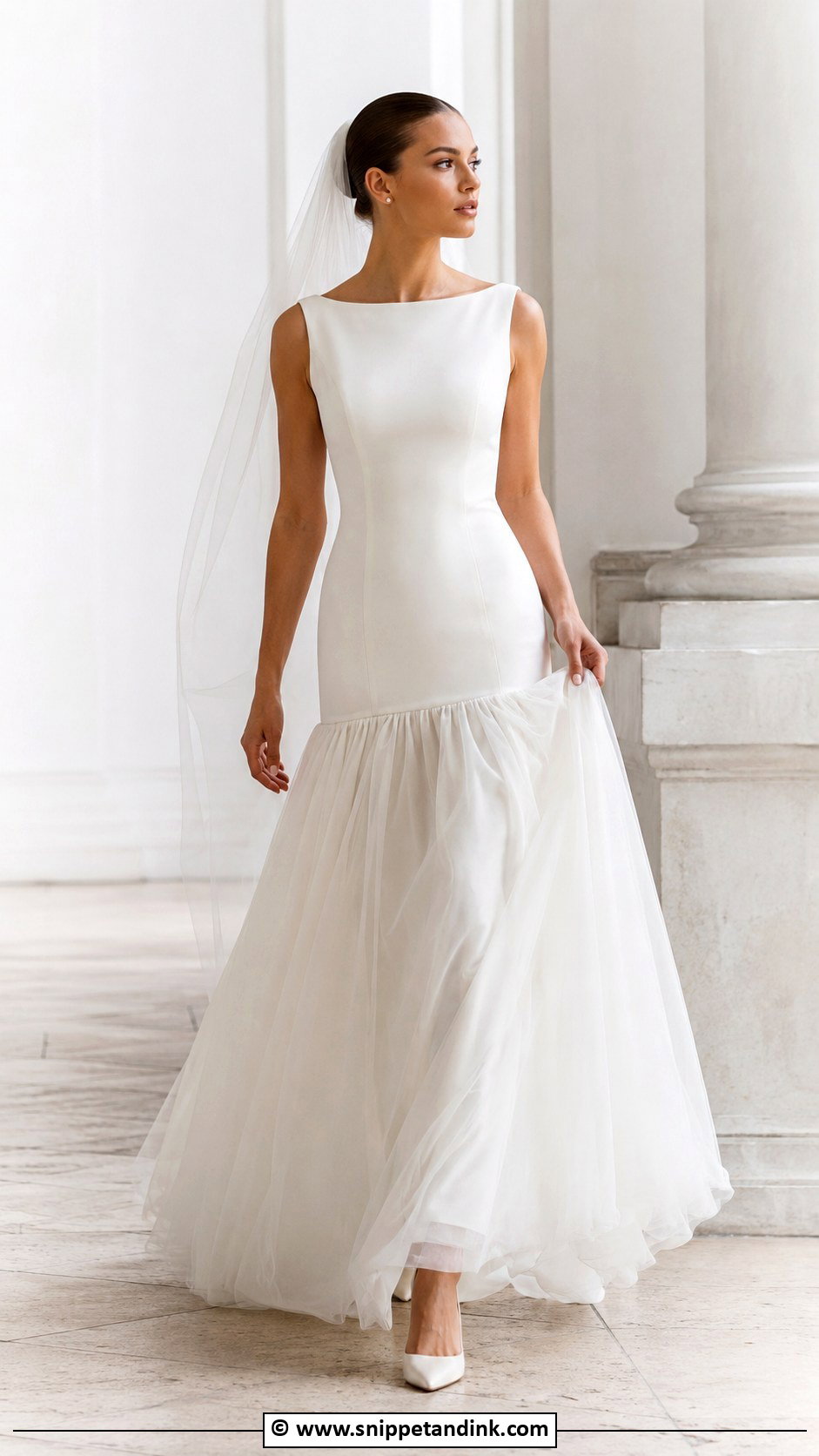
Tailoring decides whether a drop waist works. The seam has to sit exactly at your hip, or it looks like the dress slipped. For softness, gathered tulle or organza below the drop; for a sleeker effect, satin or crepe. Slim heels, a clean veil and diamond or pearl studs keep it modern. It suits a bride who wants something different from a standard waistline without losing the bridal feeling.
6. Corset Bodice Wedding Dress
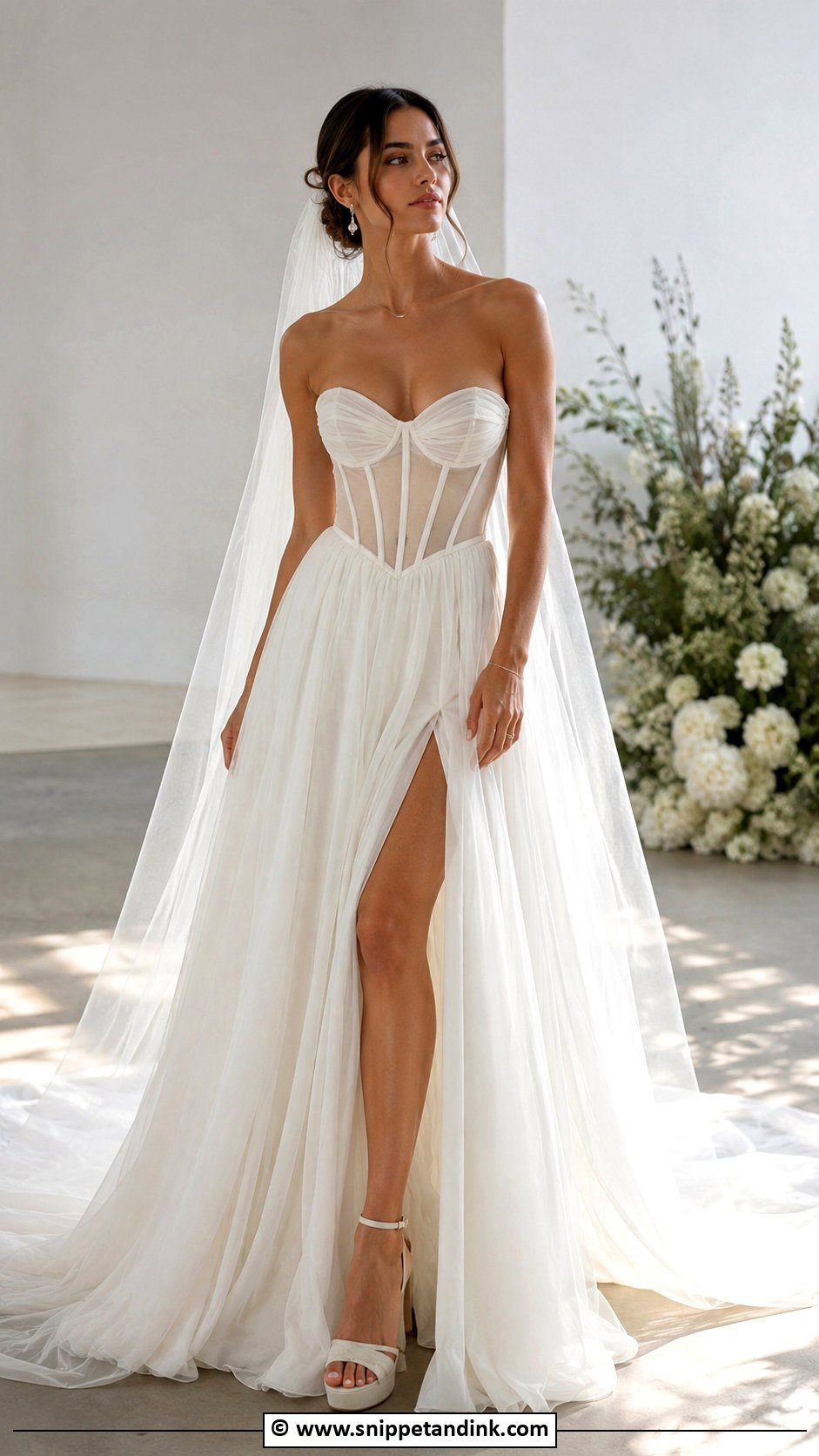
A corset should feel secure enough that you forget about it, not tight enough that you notice every breath. I ask brides to sit and eat a snack at the second fitting to check. Soft exposed boning, lace panels or sheer overlays keep it modern. A flowing skirt, satin heels and a long veil contrast with the structure. Skip the necklace and leave the neckline clean.
7. Minimalist Crepe Wedding Dress
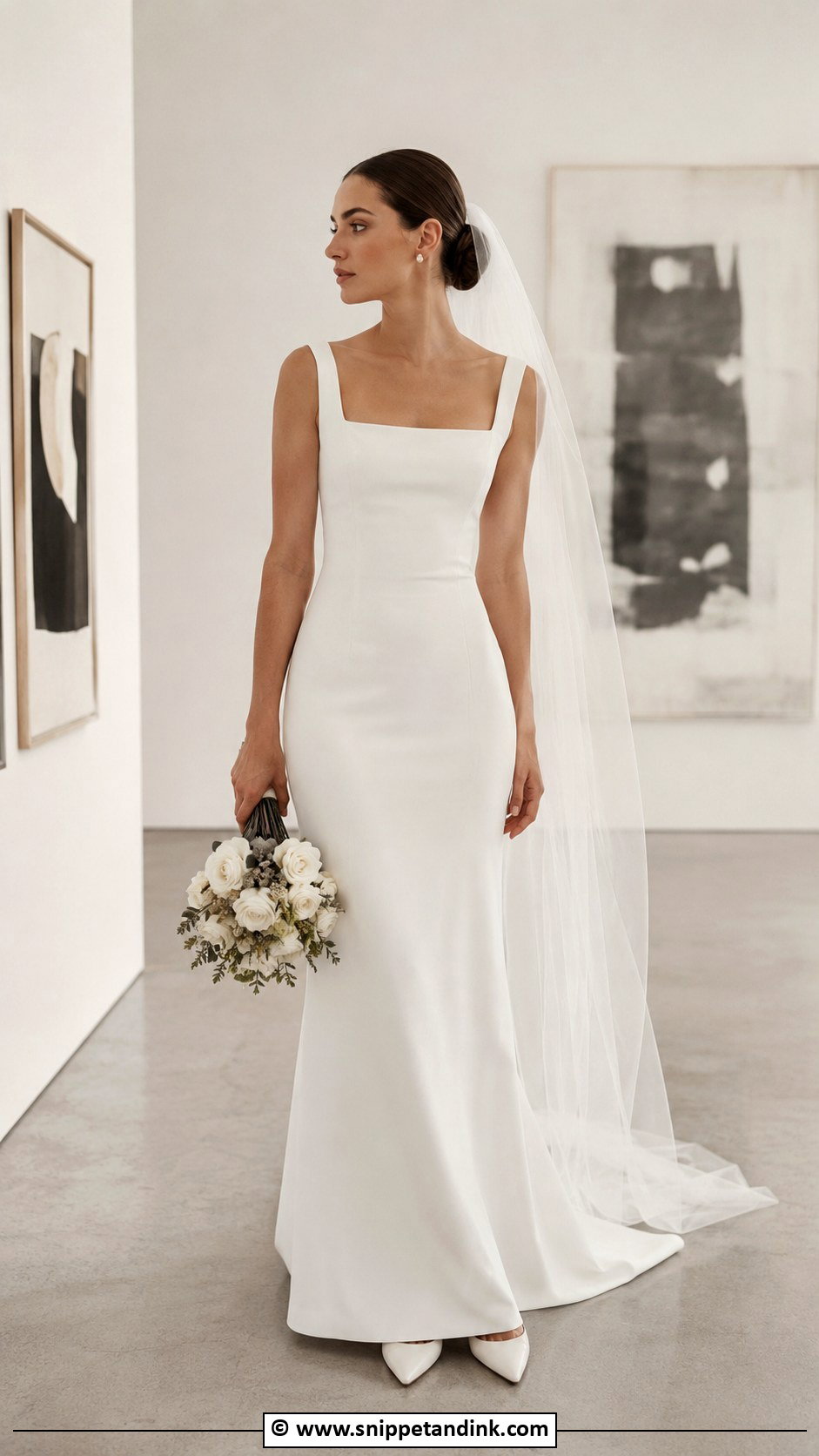
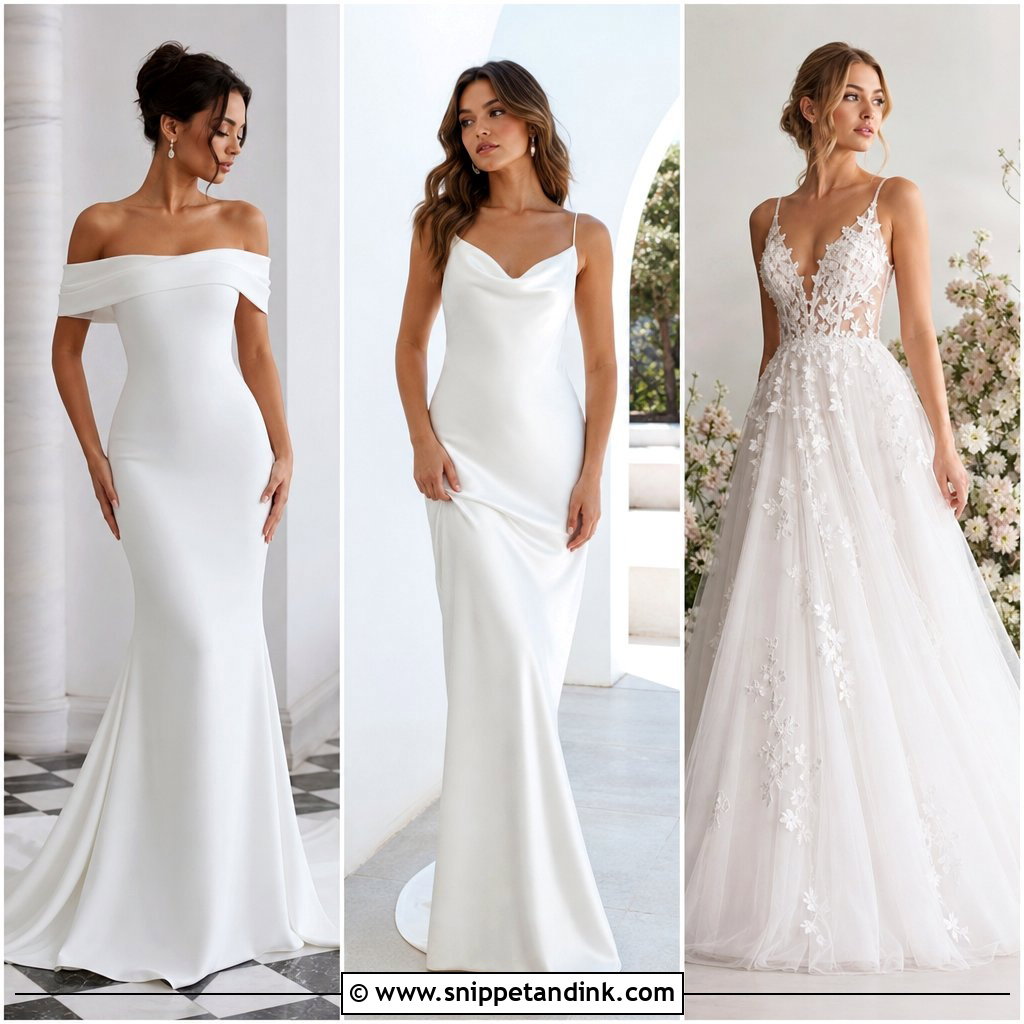
Crepe has a slight structure that follows the body without clinging, which makes it good for column, square-neck and bateau styles. Fewer details means fit becomes everything; a badly set seam shows immediately. Sleek pumps, pearl studs, a simple veil and a polished bun suit city weddings, galleries and intimate celebrations. Tailored well, it looks expensive.
8. Off Shoulder Wedding Dress
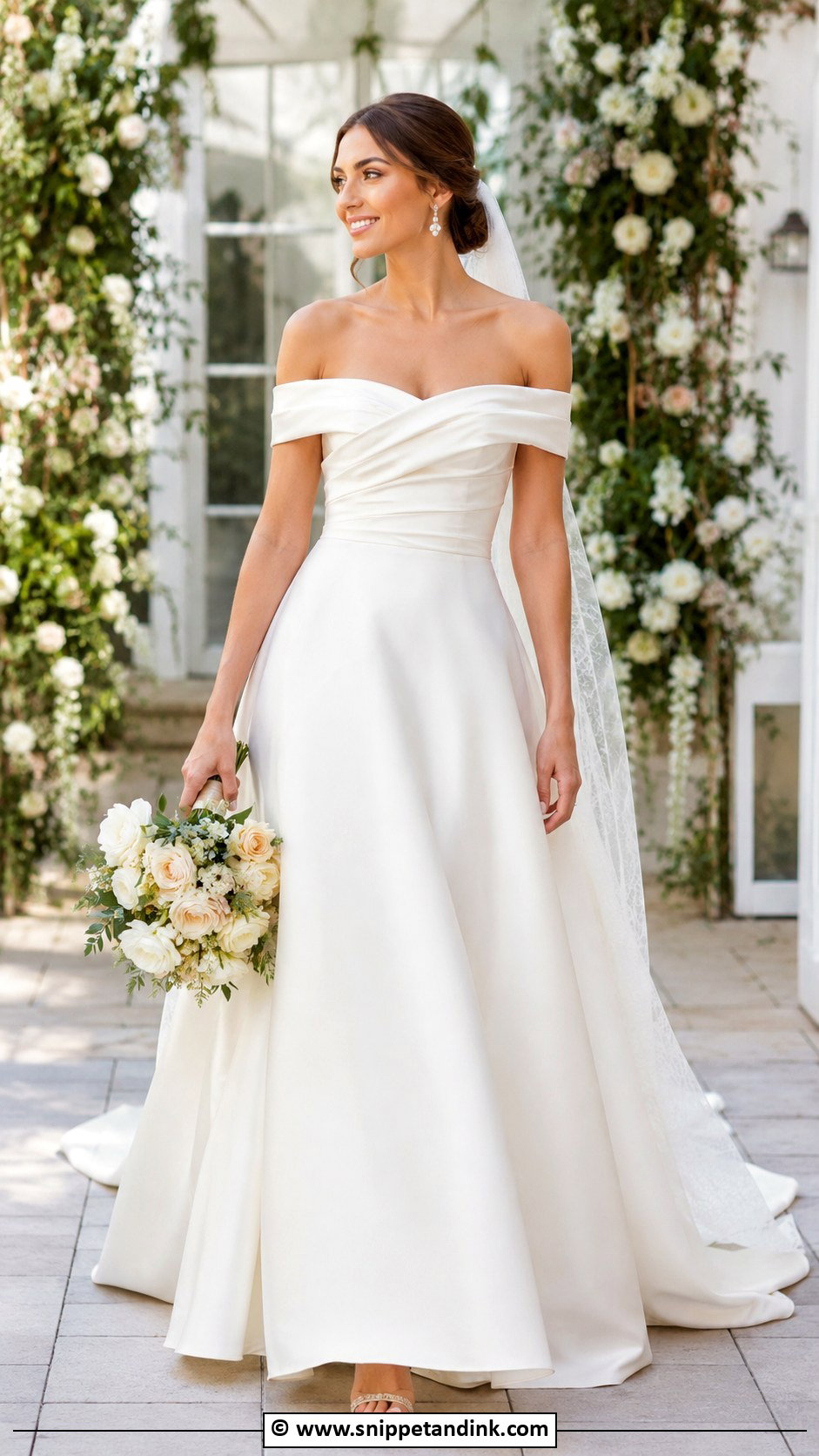
An off shoulder neckline shows the collarbones and works with mermaid, A-line or full skirts. Satin and mikado look classic; lace, chiffon and tulle are softer. The sleeve band has to sit snugly without digging, and I check the upper arm when the bride lifts her bouquet. Drop earrings, a low updo and a veil placed low at the back keep the neckline visible.
9. Square Neck Wedding Dress
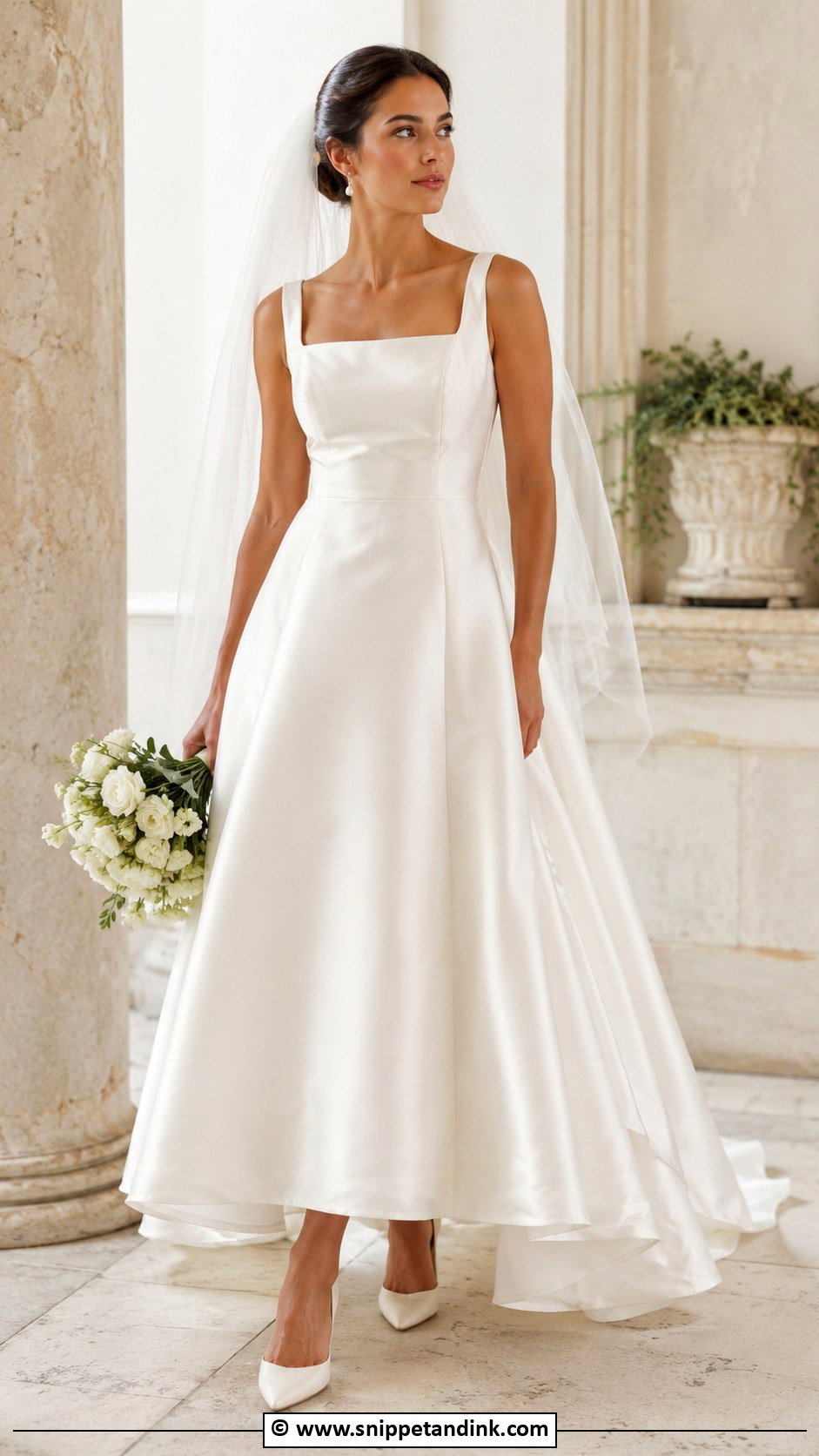
Square necks frame the upper body cleanly without much coverage or exposure. Thin straps look lighter; wider ones hide a bra and give more support. Pearl earrings, a soft veil and ivory heels suit garden, estate and indoor weddings. Simple hair, like a low bun or soft waves, keeps the straight neckline as the focus.
10. Halter Neck Wedding Dress
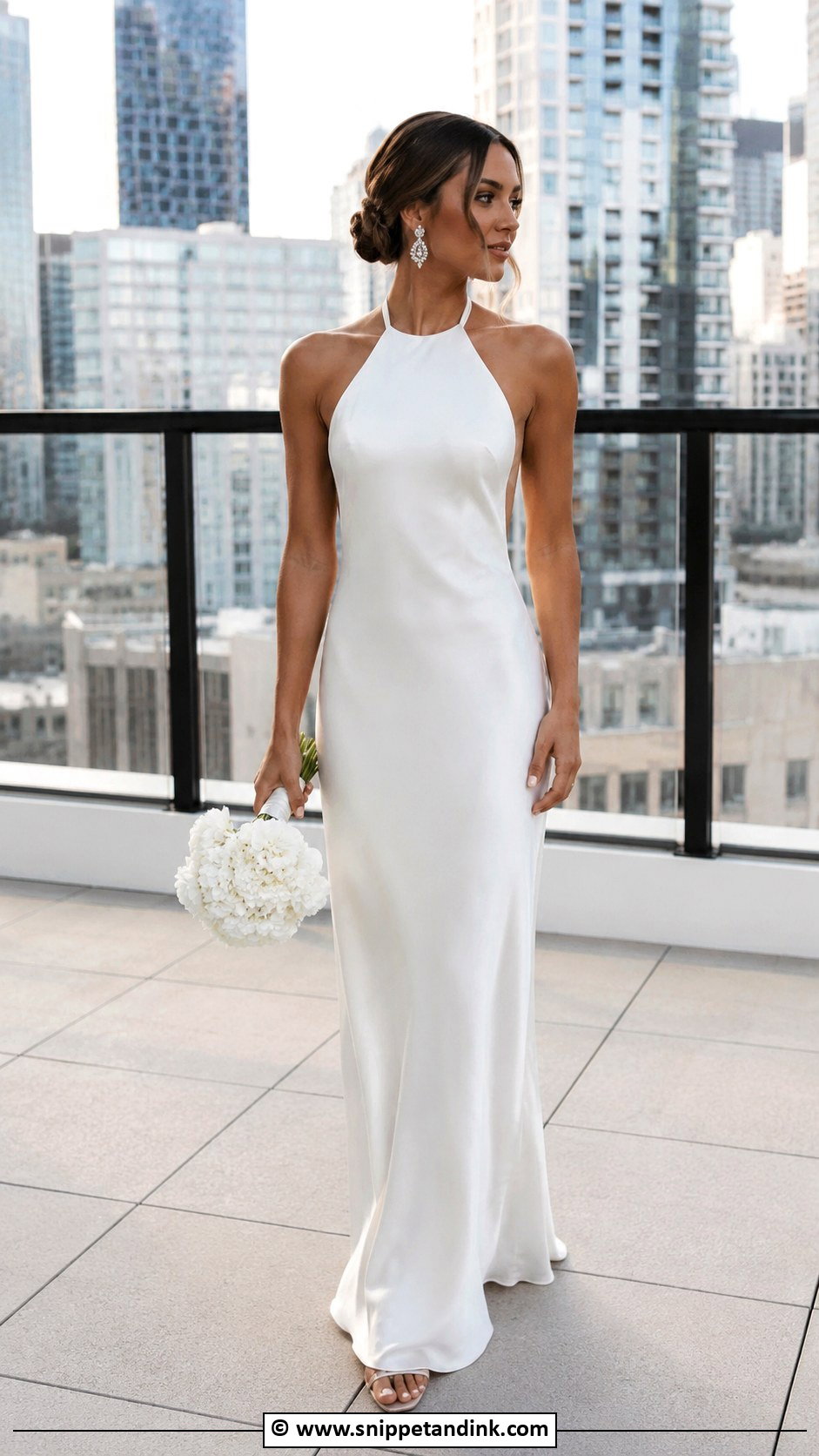
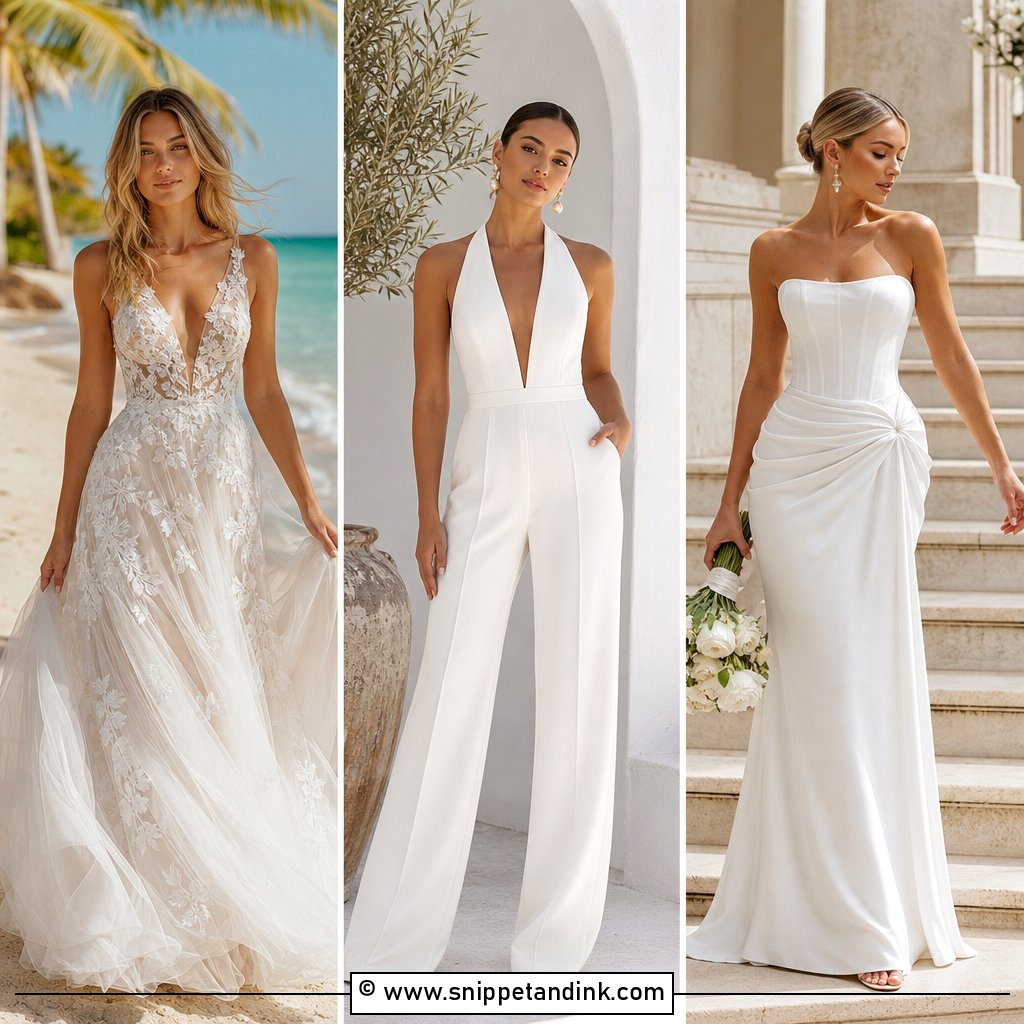
Halters work best in fabrics that fall cleanly from the neck: satin, crepe and light silk. A slim column skirt looks minimal; an A-line gives more movement. The neck strap carries weight all day, so for heavier fabrics I sometimes add a hidden clasp to adjust the tension. Statement earrings and a high or low polished bun suit rooftop weddings, beach resorts and city halls.
11. Floral Applique Wedding Dress
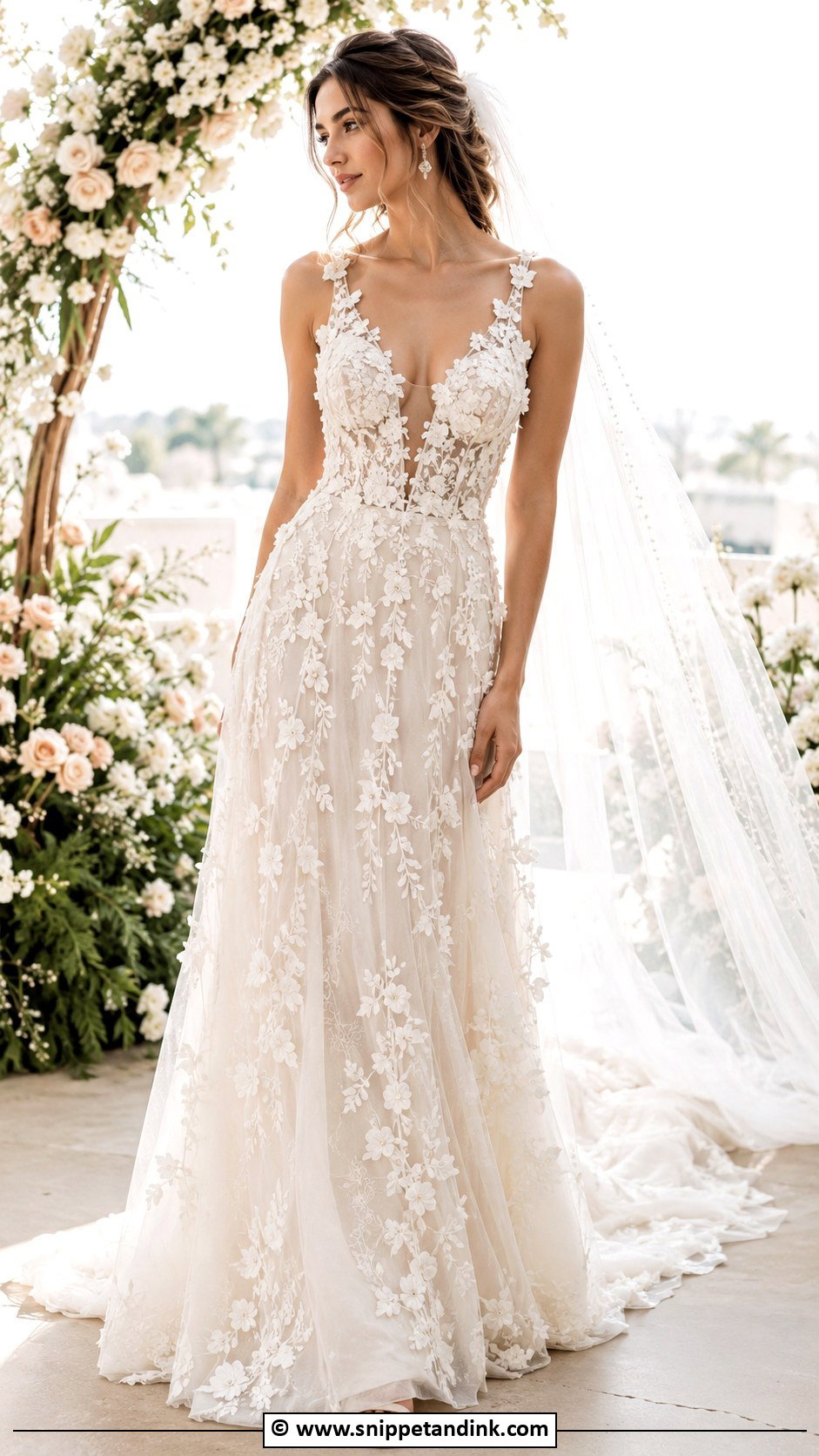
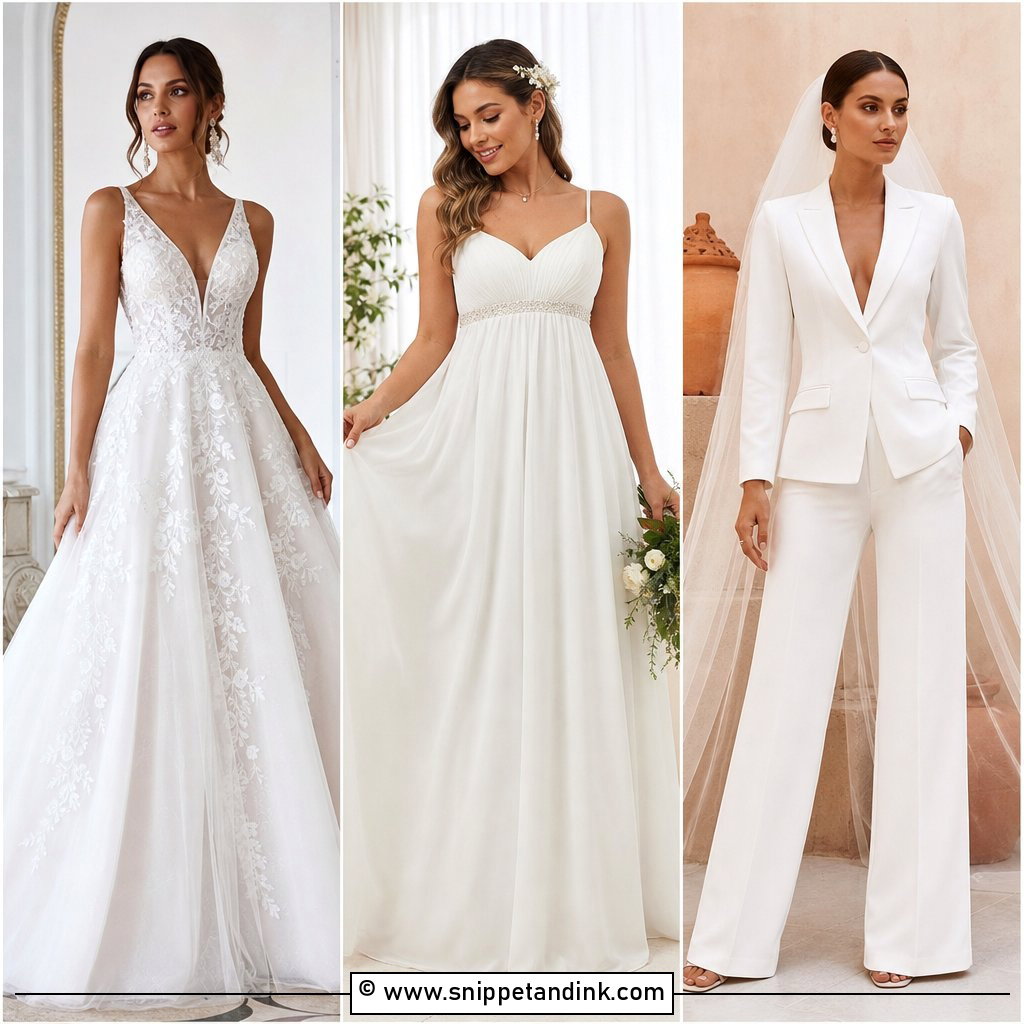
Appliqués sit on top of the gown, so they give raised dimension that flat lace can’t. On a floral applique wedding dress, small scattered flowers look subtle and large 3D blooms read boldly from the back of the room. A plain veil avoids snagging the raised petals. Sheer gloves, simple heels and soft curls suit spring and summer weddings in gardens, where the florals echo the setting.
12. Pearl Detail Wedding Dress
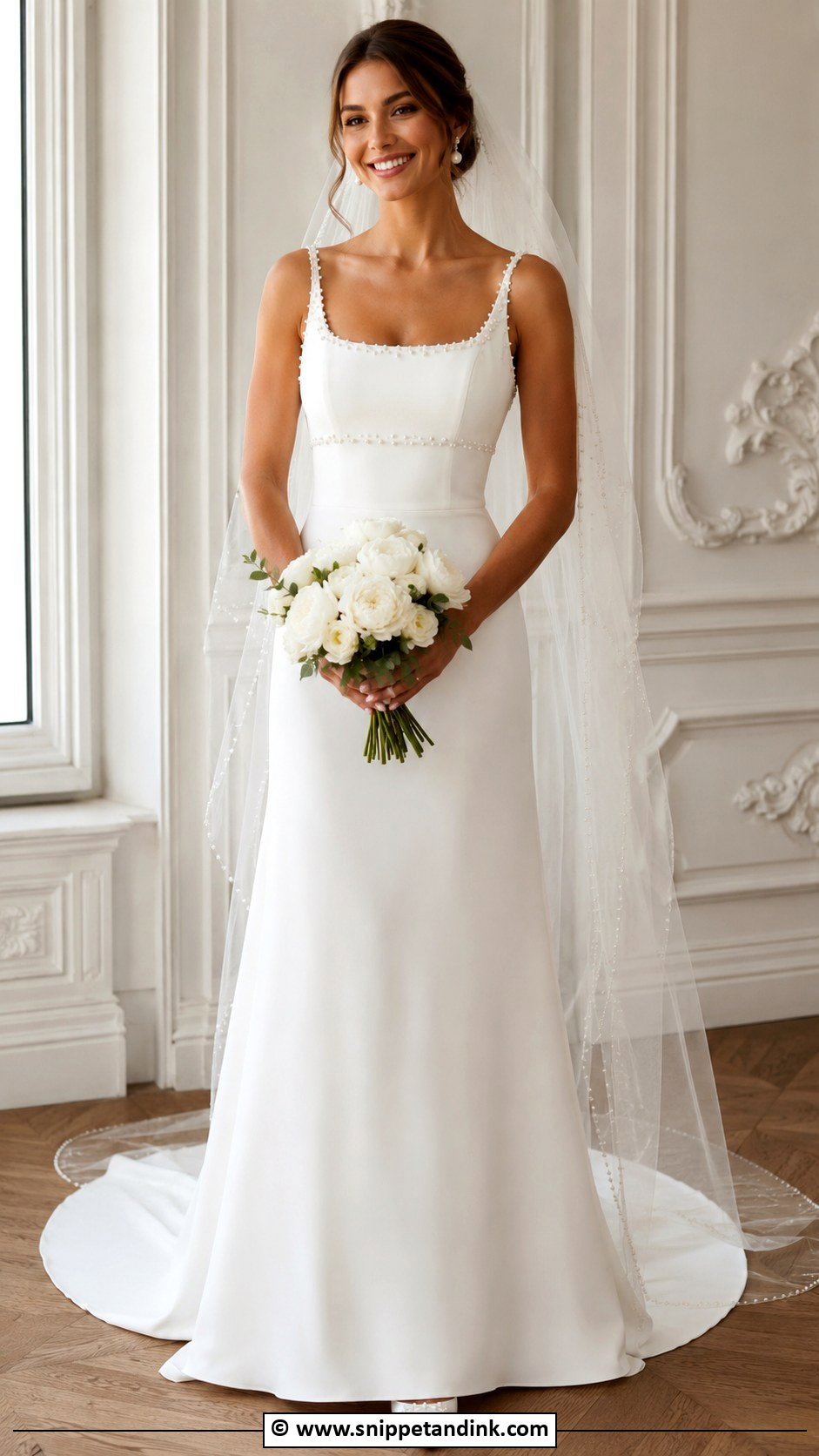
Pearl accents work best on a simple gown, along the bodice, sleeves, neckline or straps, rather than covering everything. A veil edged in tiny pearls ties it together. Pearl earrings and satin pumps finish it. In bright daylight, pearls catch the light softly, so they suit classic brides who want detail without sparkle. Keep the bouquet and hair simple.
13. Tulle Princess Wedding Dress
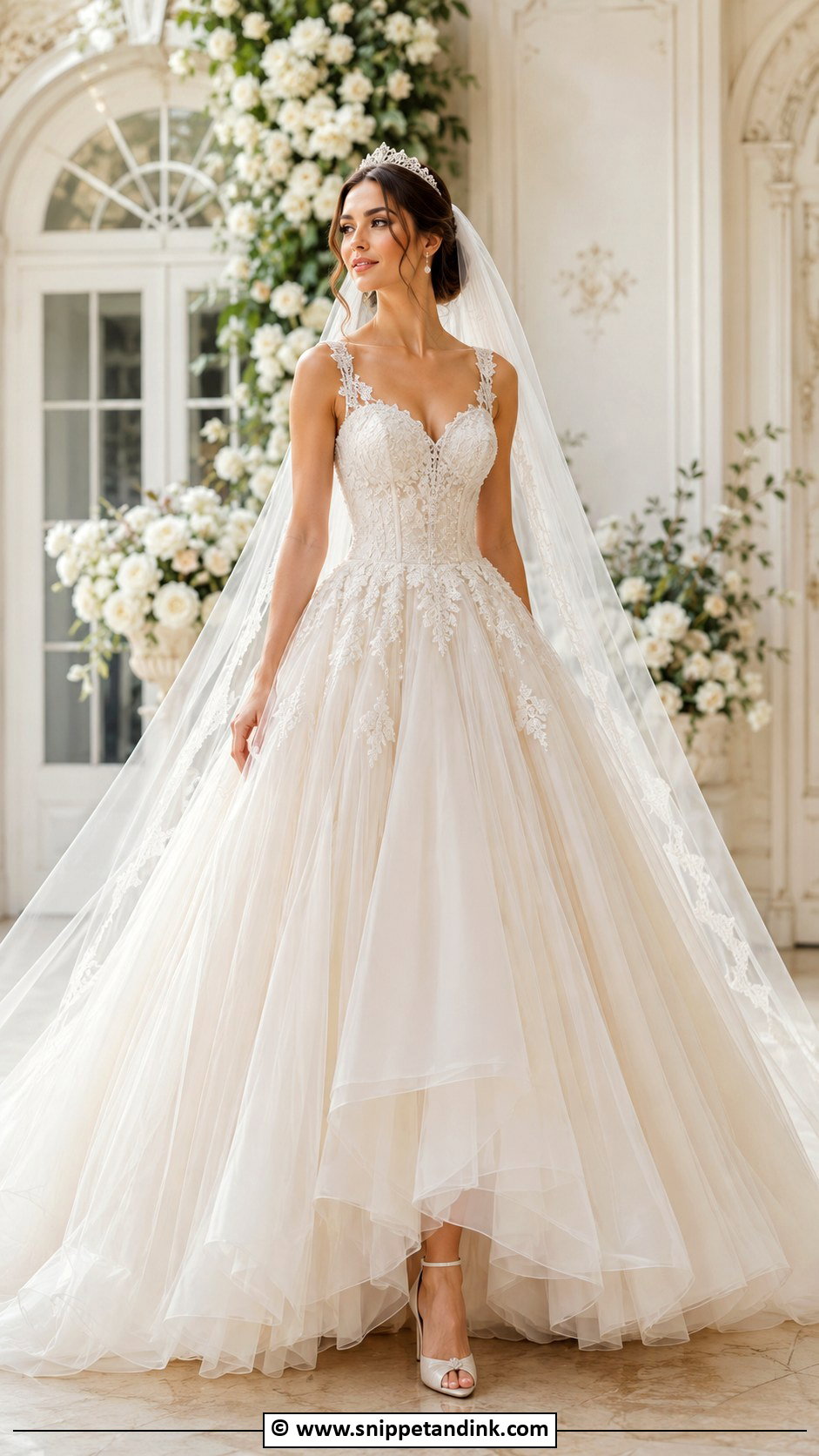
The best tulle princess gowns feel light, not heavy, and I lift the skirt at a fitting to check the weight. Layers of soft tulle over a fitted bodice float when you walk. A delicate tiara or pearl headband adds a regal touch; keep other jewelry simple. Ivory heels and a long veil suit formal venues, gardens and large celebrations where the skirt can fill the space.
14. Mermaid Wedding Dress
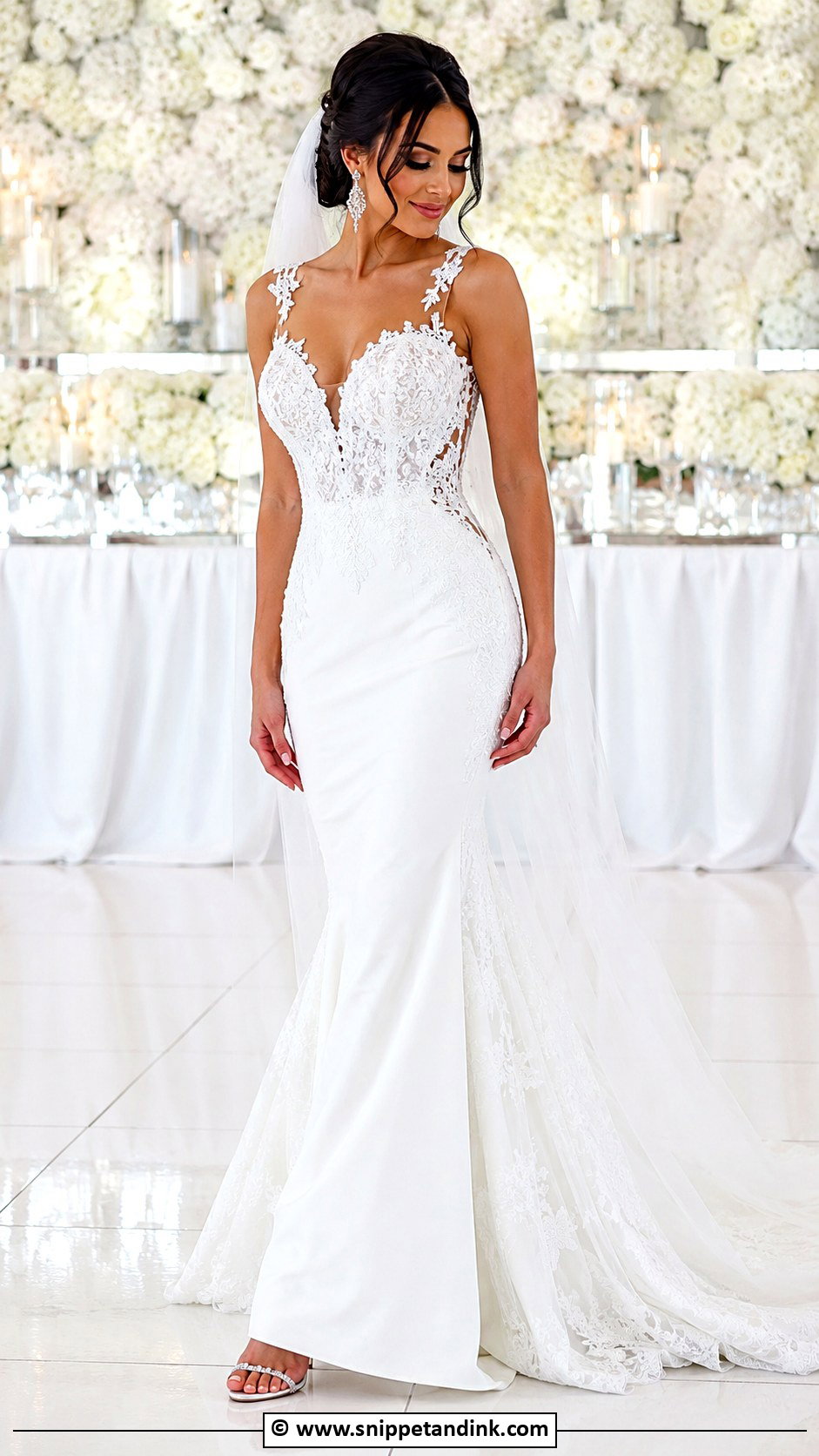
Everything about a mermaid depends on where it flares. Too low and you’ll shuffle; too high and it becomes a trumpet. Stretch crepe, lace or satin with some give lets you move. I’d have brides sit, walk stairs and dance a few steps in one. High heels, long earrings and a simple veil suit formal hotel receptions and evening weddings.
15. Sheath Wedding Dress
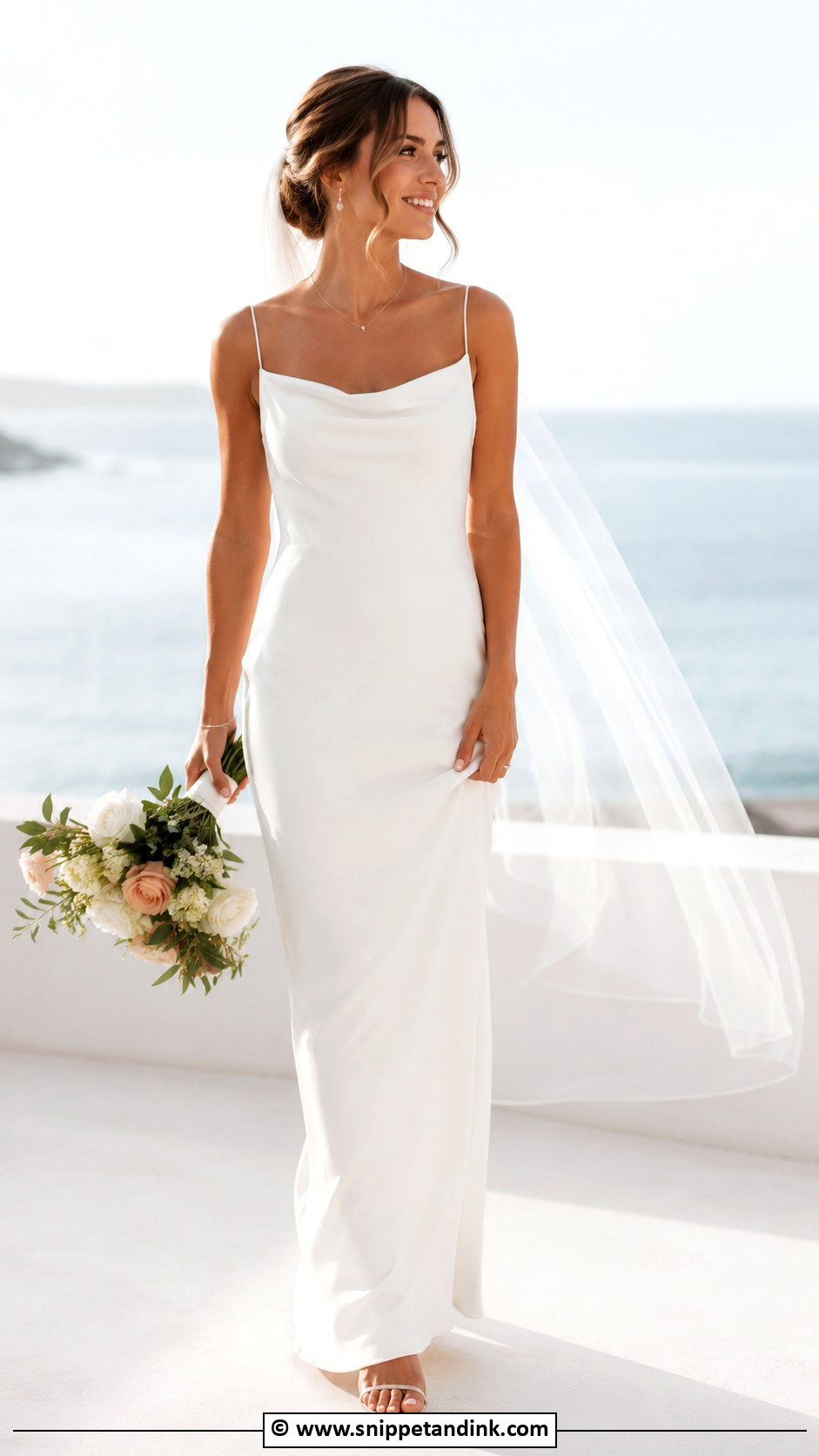
A sheath wedding dress falls close to the body without a mermaid’s flare or a ball gown’s volume, which makes it easy to wear all day. Crepe gives structure, silk softness, lace romance. Sheaths travel well for destination and beach weddings. A light veil, barely-there heels and delicate jewelry keep the look intentional and bridal.
16. Tea Length Wedding Dress
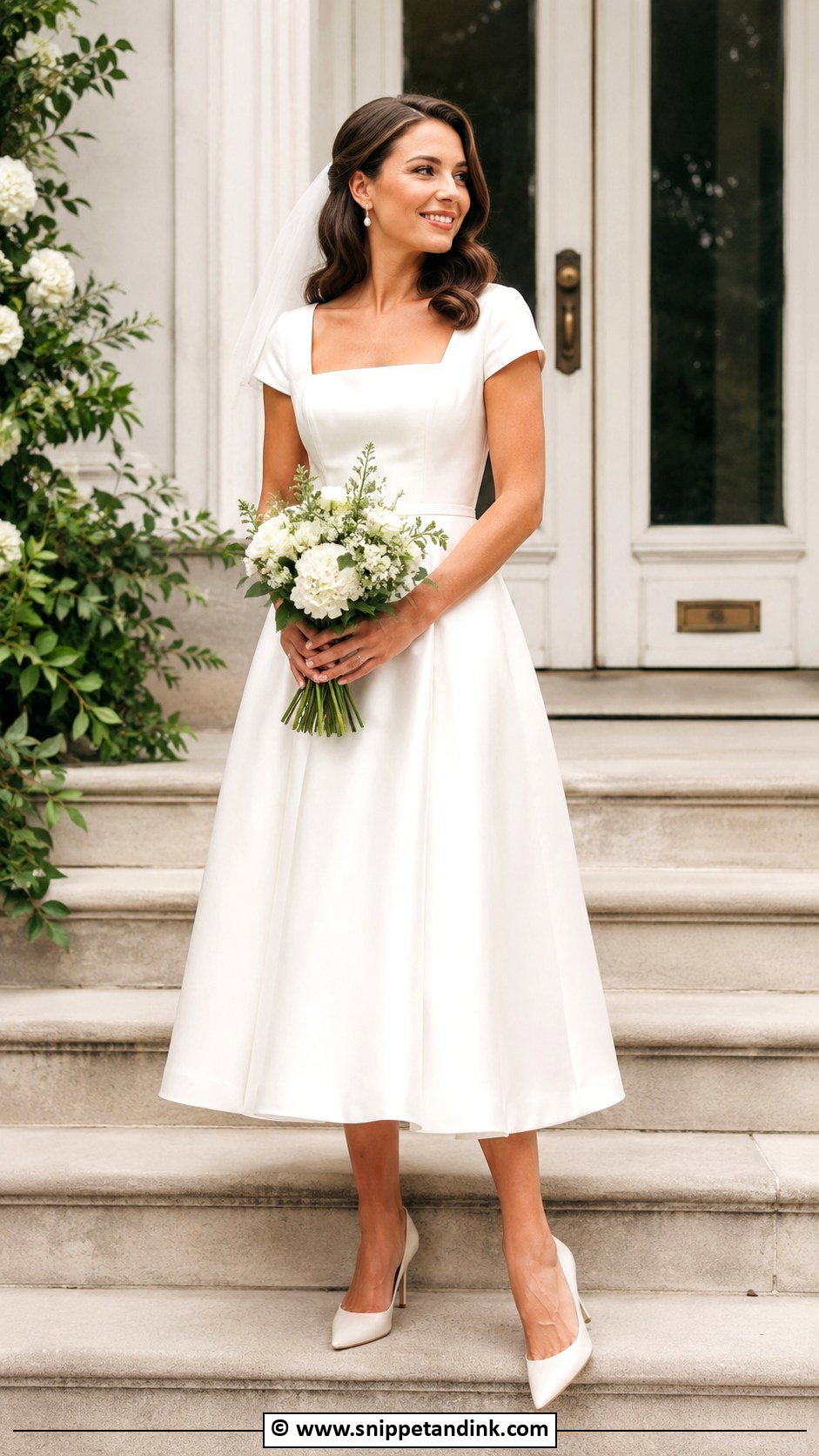
Tea length falls between the knee and ankle, so shoes are part of the outfit. Pointed pumps, embellished heels or satin ankle straps all work. A short veil, pearl earrings and soft waves give a classic feel. If dancing matters to you, it’s the length I suggest first, and it suits courthouse weddings, garden receptions, brunches and smaller venues.
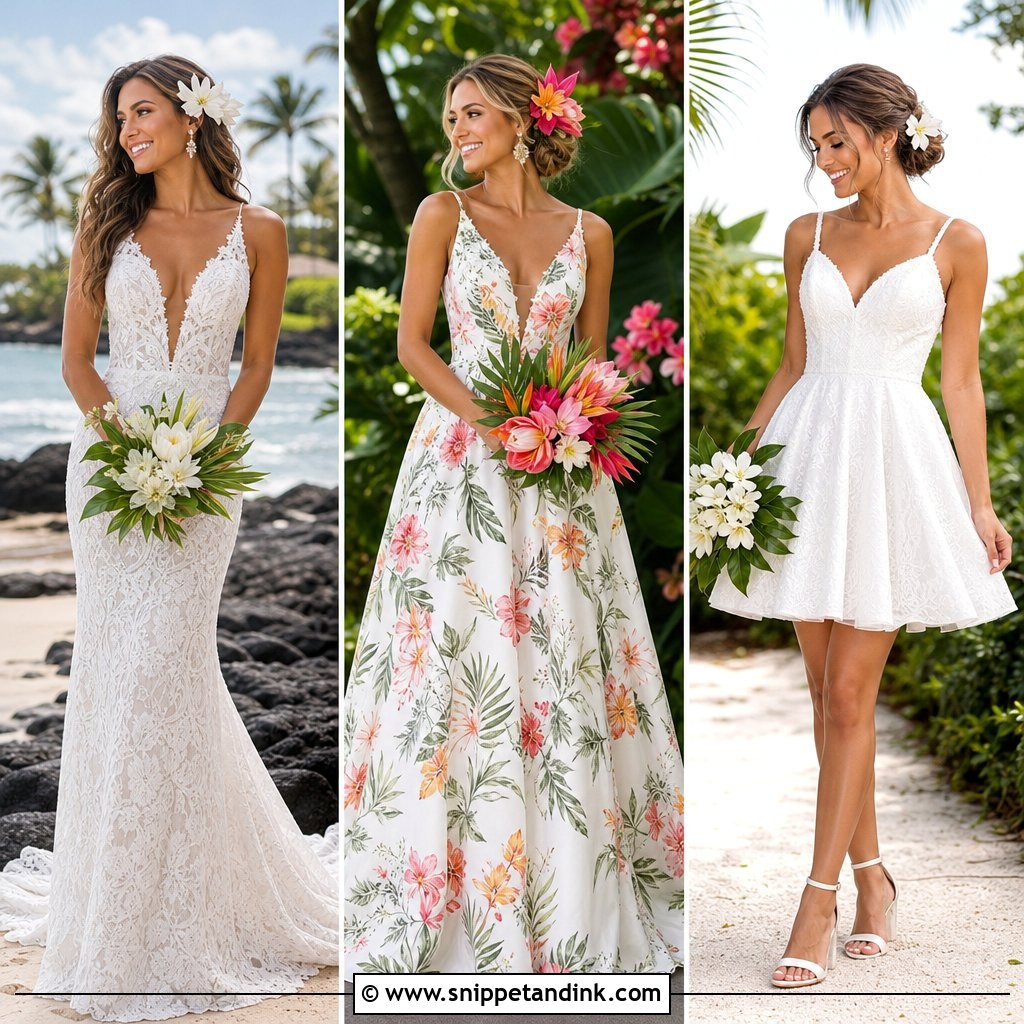
17. Short Wedding Dress
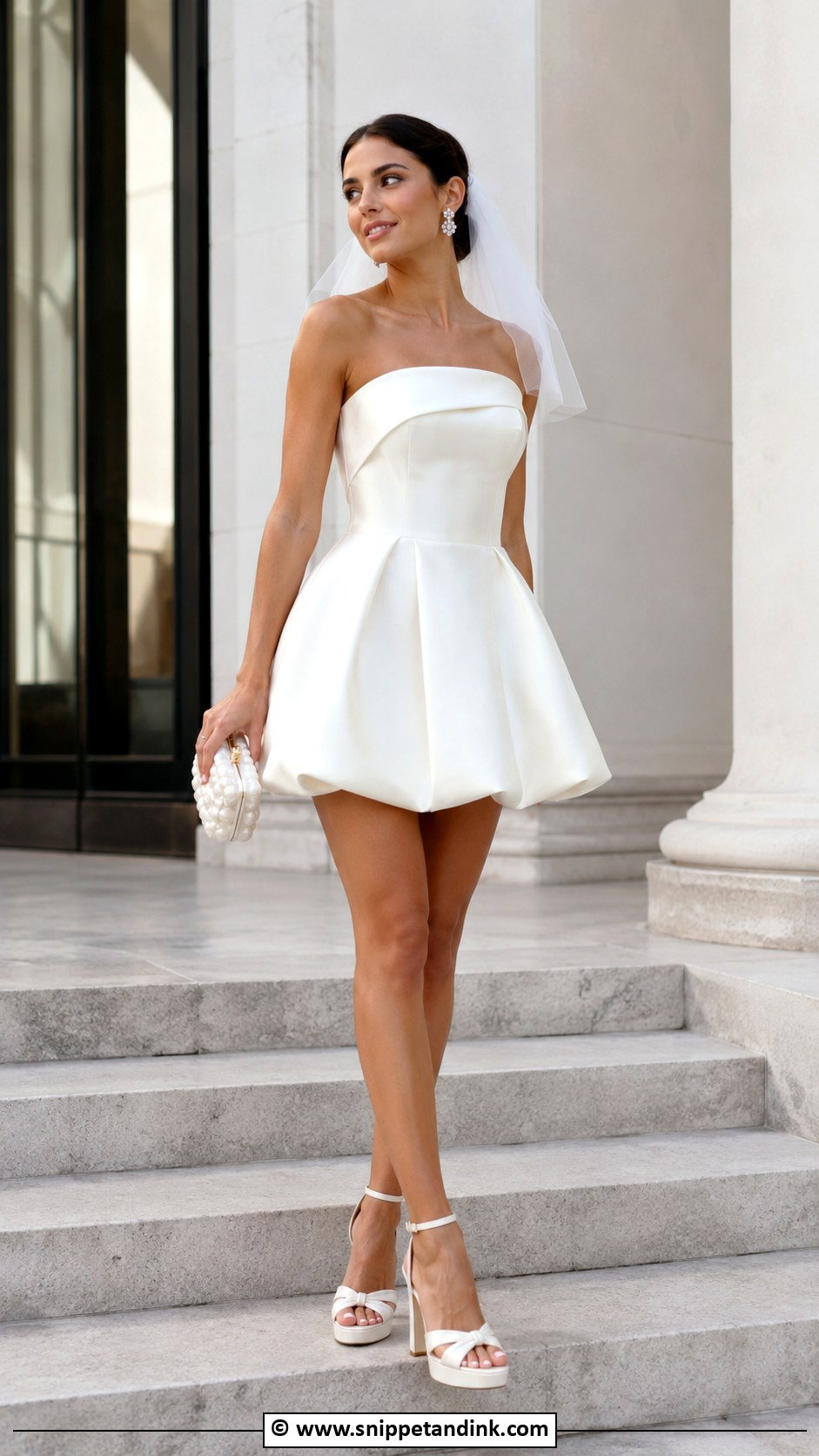
Short dresses are for civil ceremonies, reception changes, elopements, after-parties and warm-weather weddings. A structured mini with long sleeves, a satin shift or a lace skater silhouette all work. Shorter dresses need high-quality fabric to look bridal; cheap satin looks like a party dress. Statement heels, a mini veil and sparkling earrings make it a clear bridal look.
18. Wedding Dress With Detachable Overskirt
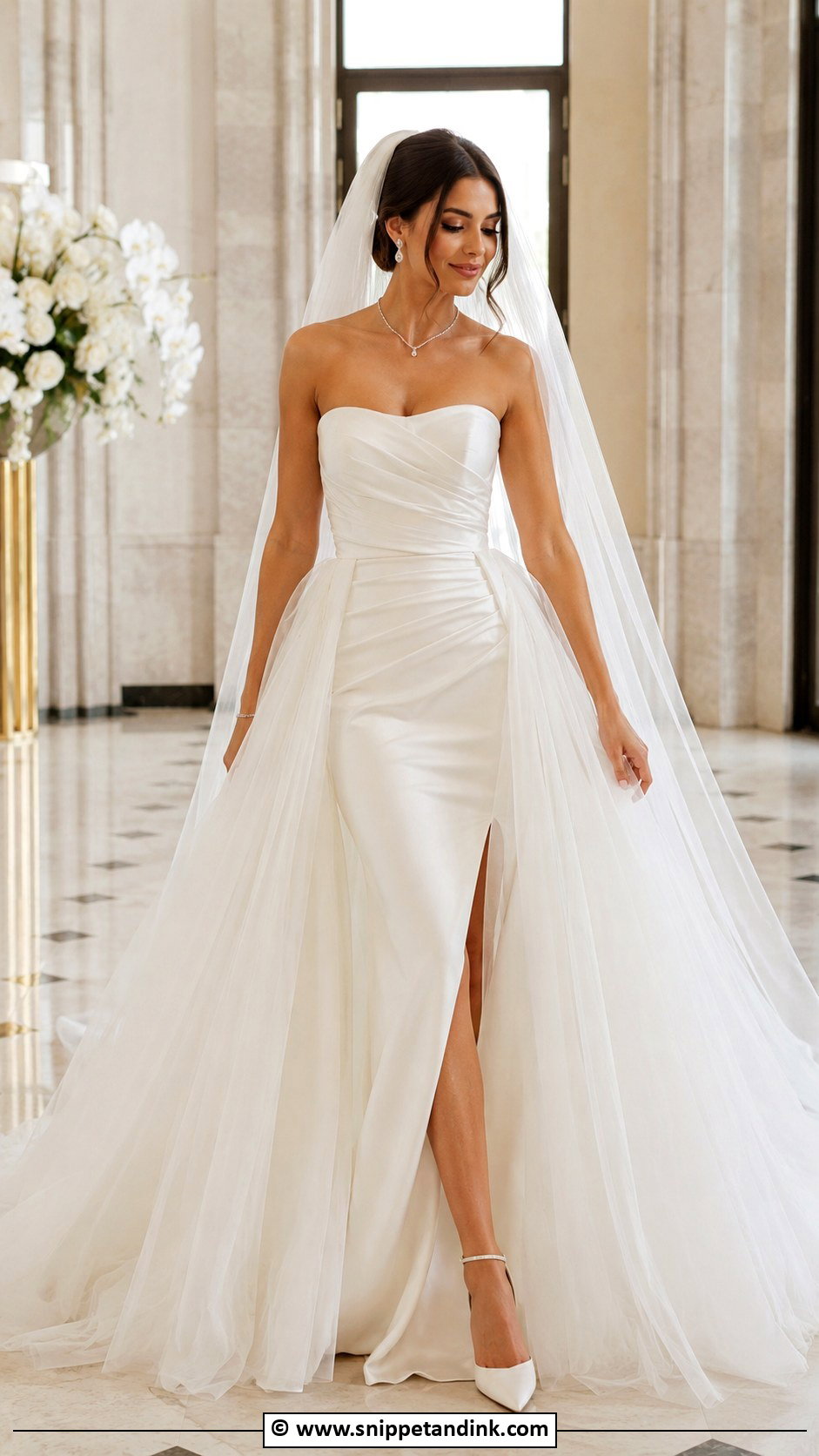
A detachable overskirt turns one gown into two looks. Start with a fitted column, mermaid or mini as the base, and add a tulle, satin or organza overskirt for the ceremony. I check that the overskirt’s waistband sits flat; a lumpy band shows on the fitted dress underneath. After it comes off, bolder earrings or a shorter veil suit dancing.
19. Convertible Wedding Dress
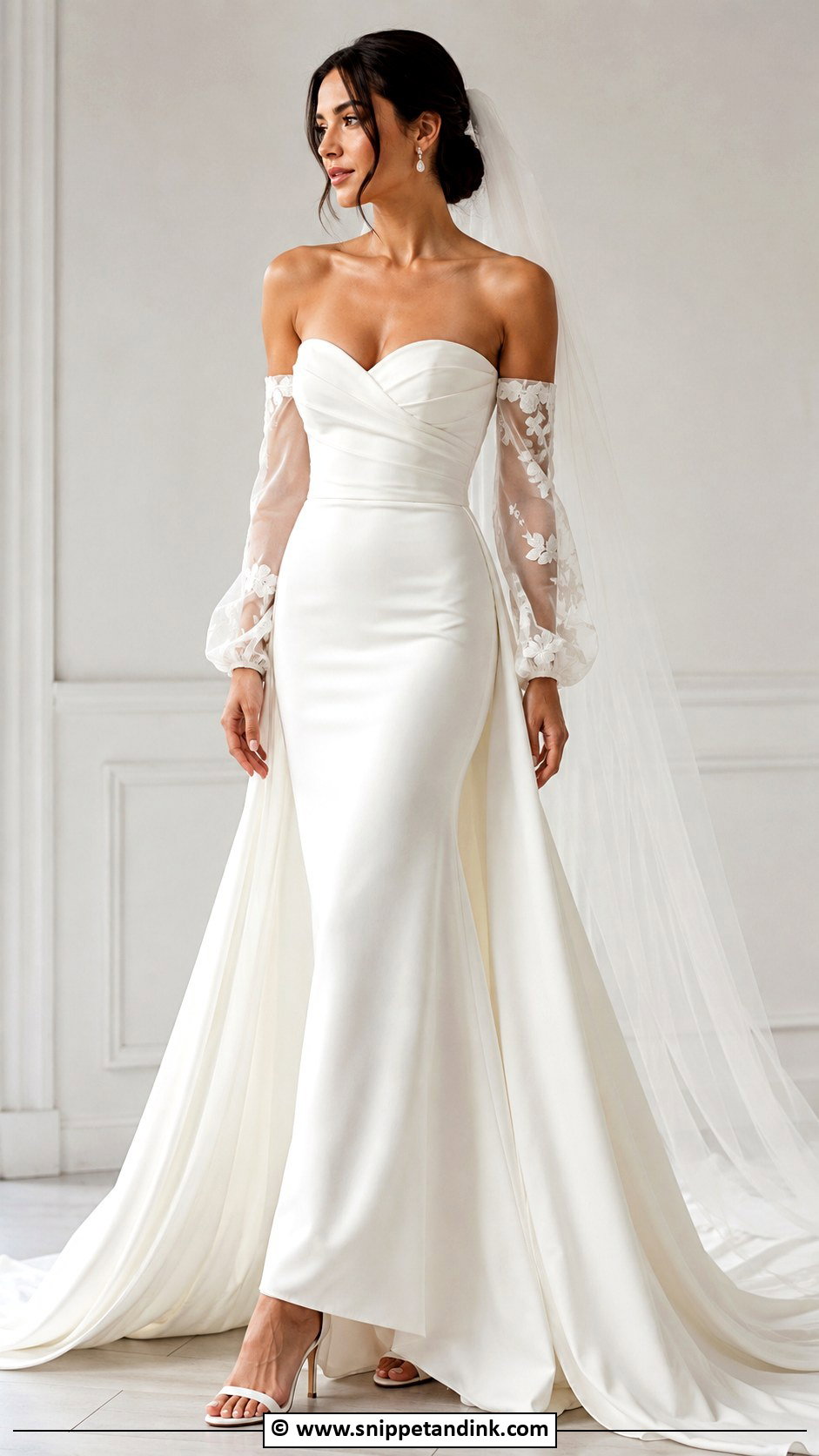
With a convertible wedding dress, start with a base dress you love on its own; the add-ons should be extras, not fixes. Removable sleeves, detachable trains, capes, overskirts and straps all exist. Plan your change around the timeline, for example sleeves for the ceremony and off for the reception. Classic heels and simple jewelry keep each version cohesive.




20. Wedding Dress With Cape
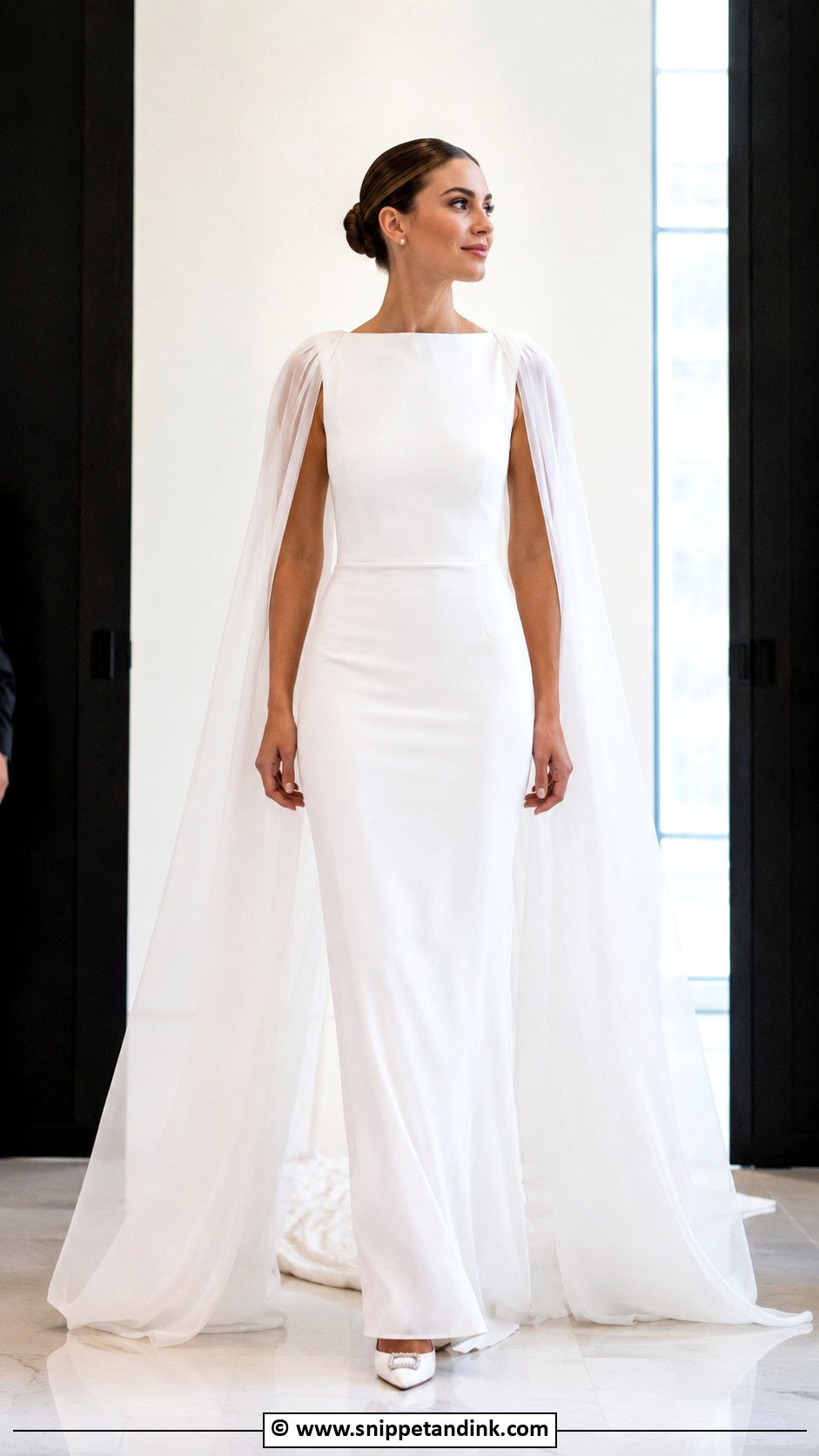
A sheer cape can replace a veil and adds movement behind you. A clean crepe gown with a long cape looks sleek; a lace dress with a soft tulle cape is more romantic. If the cape attaches at the shoulders, skip the necklace. I’d also check that it doesn’t pull the bodice backward. Pointed heels and a neat hairstyle suit outdoor portraits and formal entrances.
21. Wedding Dress With Statement Sleeves
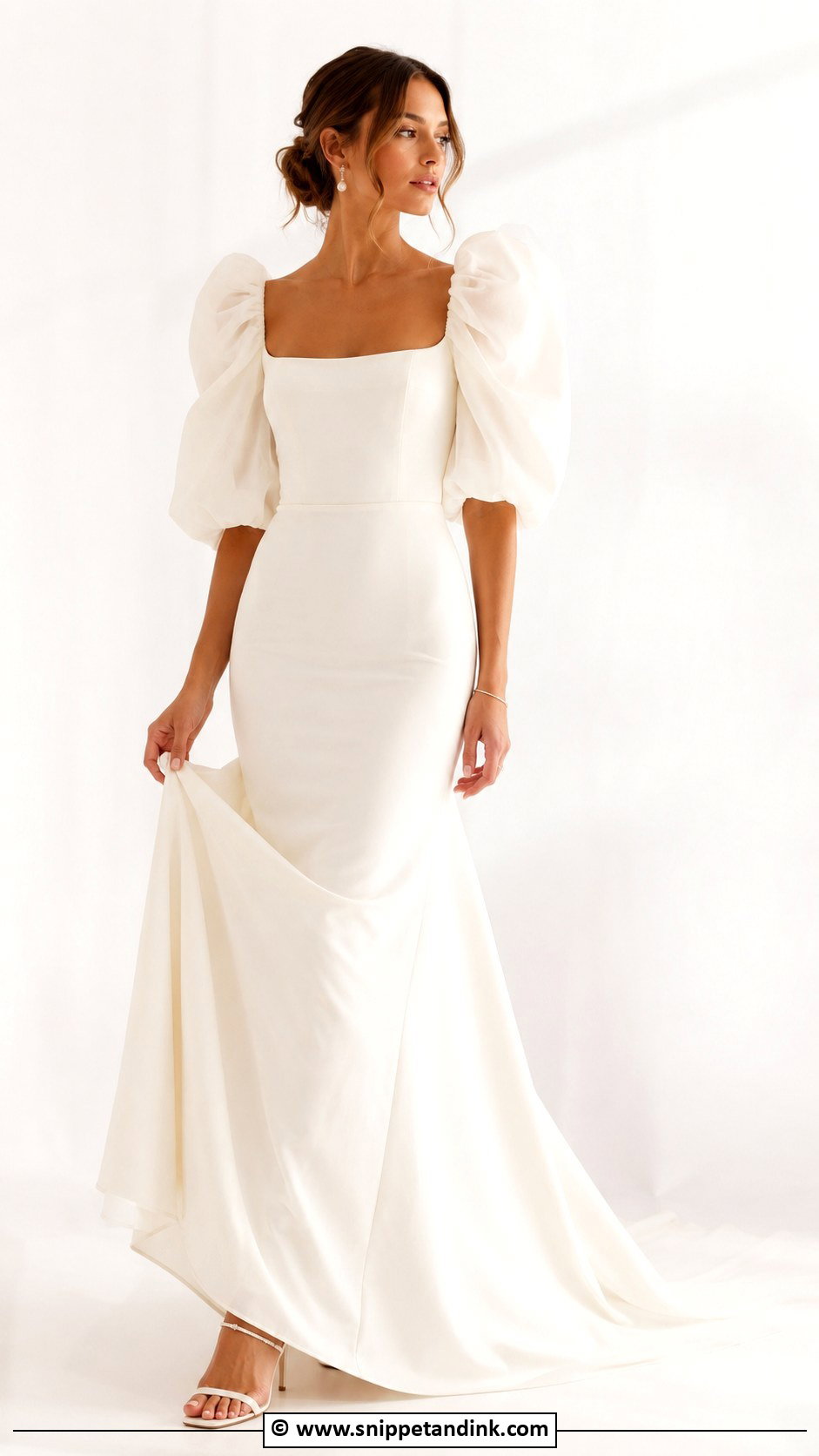
Puff, bishop, detachable and sheer lace sleeves each change a gown’s mood. Soft sleeves read romantic; sculptural ones are more fashion-forward. Balance them with a simple skirt, clean heels and minimal jewelry. A low bun or sleek ponytail keeps the sleeves from feeling busy. Detachable sleeves are useful if you want more freedom later.
22. Backless Wedding Dress
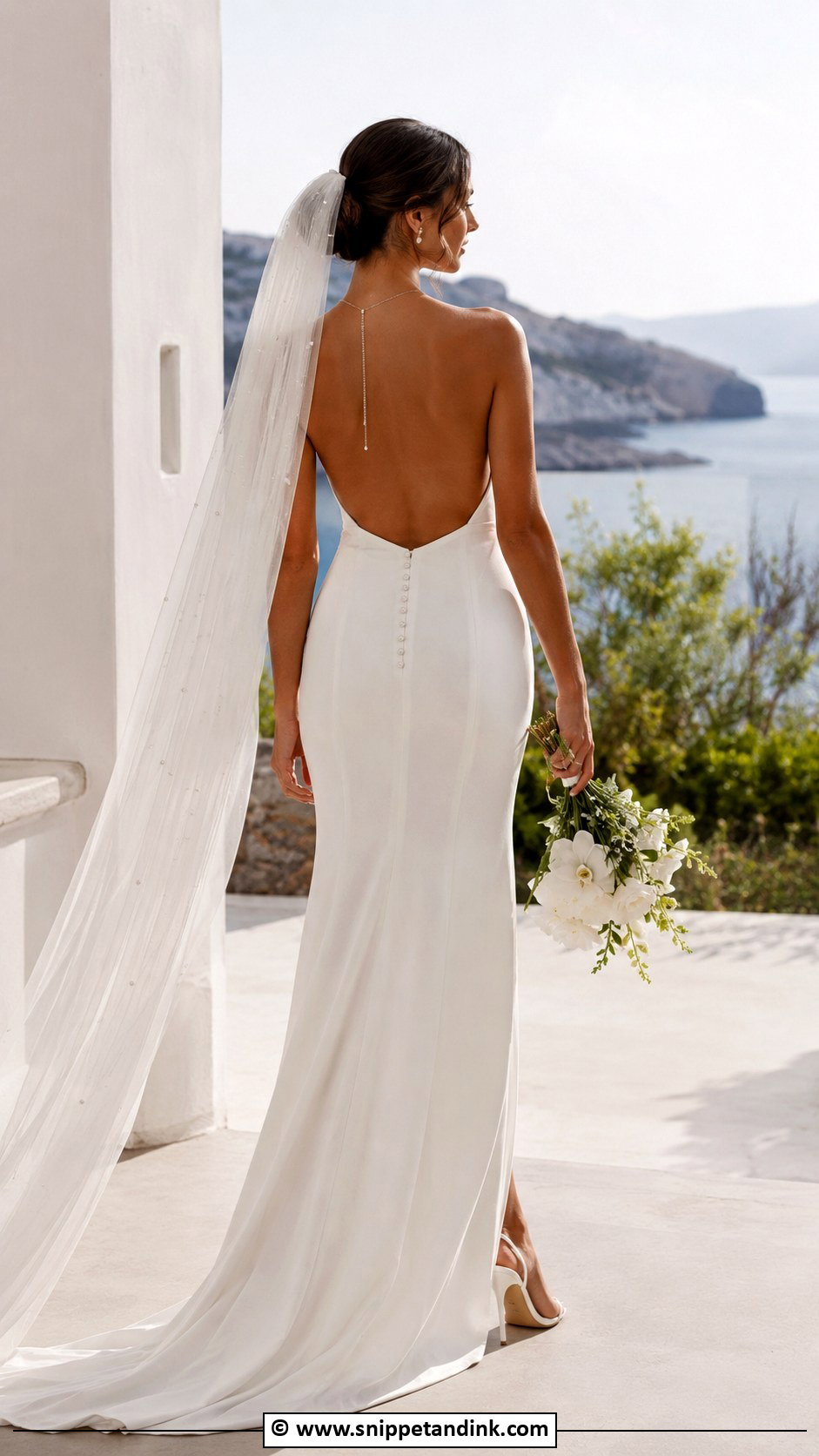
An open back is the statement on a backless gown, so the front can stay simple. A low scoop, deep V or lace-framed back all work. Undergarments decide whether it looks good, so I’d sort adhesive cups or a sewn-in bra at the first fitting. A low veil, a delicate back necklace and hair pinned up or swept to one side keep the back visible at warm-weather and destination weddings.
23. High Neck Wedding Dress
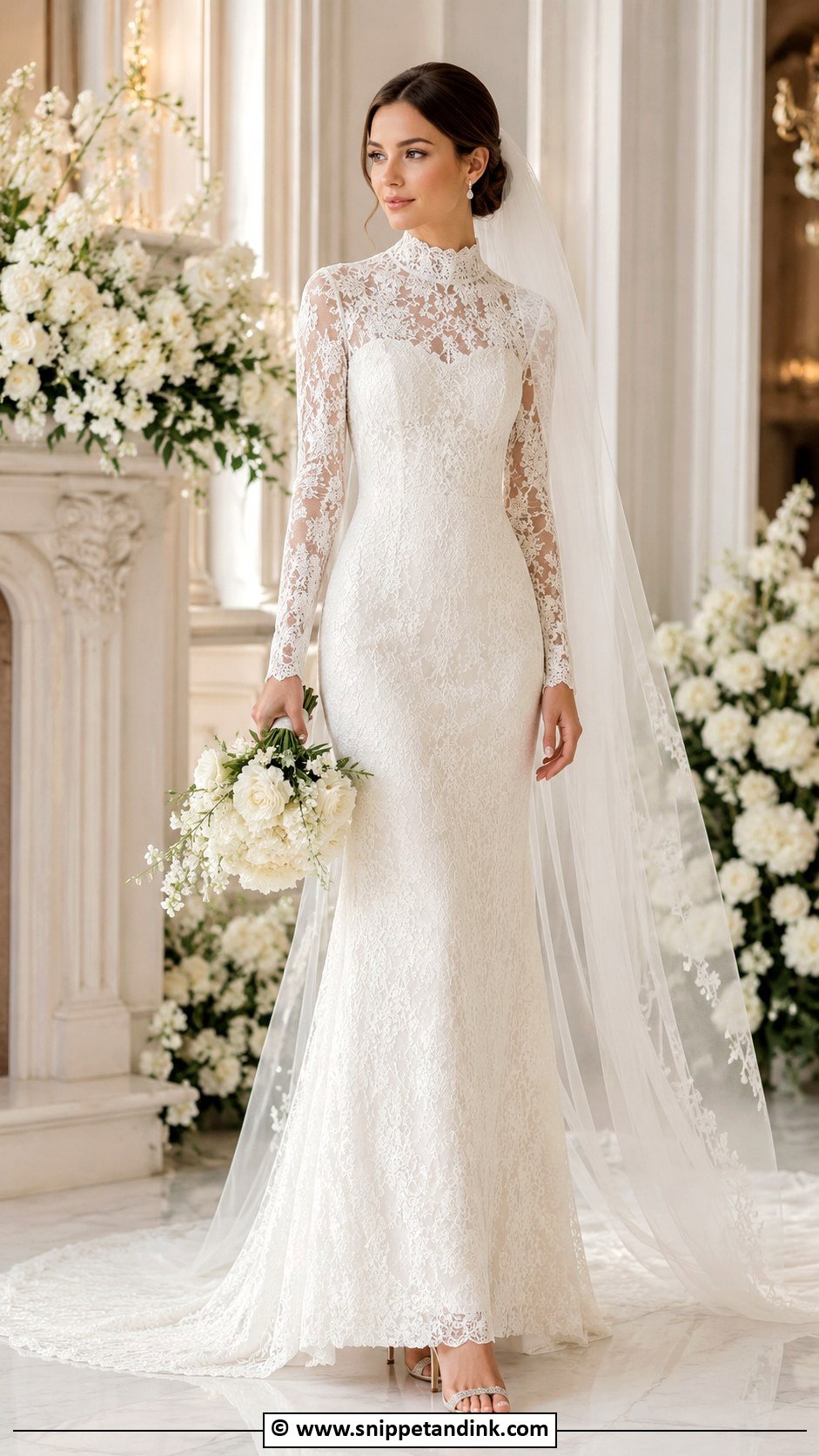
High necks give coverage without looking heavy, in lace, crepe or satin. A fitted bodice with a slim skirt feels sophisticated; a high-neck lace gown with an A-line skirt is softer. I check that the collar doesn’t press when the bride looks down. Small earrings, a smooth updo and a long veil suit formal venues and cooler seasons.
24. Slip Wedding Dress
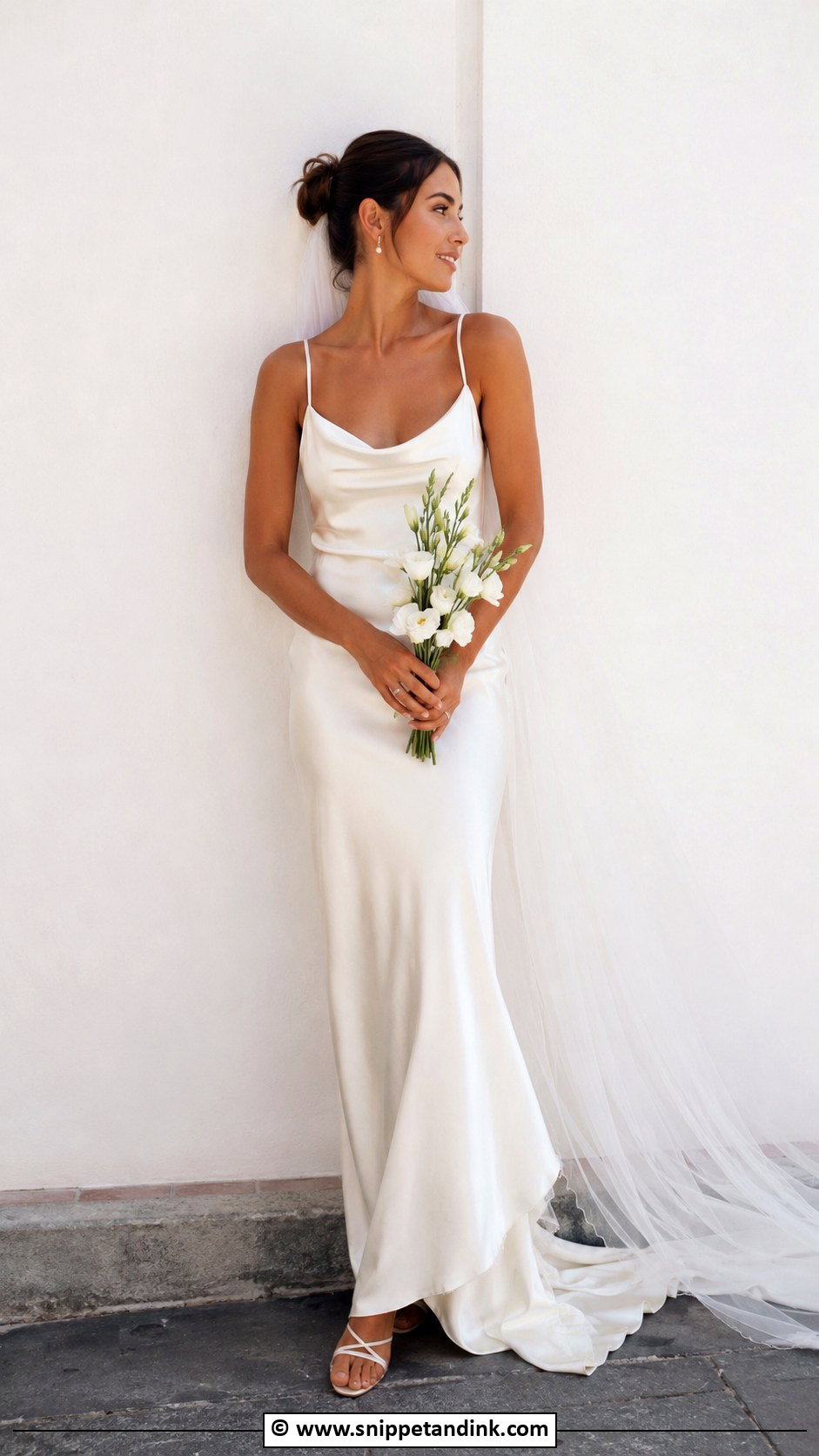
Slip dresses work best in silk, satin or charmeuse with a gentle sheen. A bias cut should skim, not cling. The fabric shows every line underneath, so plan undergarments carefully. Strappy heels, a sheer veil and delicate earrings suit beach weddings, city elopements and intimate receptions. Fabric quality and tailoring decide everything.





25. Boho Lace Wedding Dress
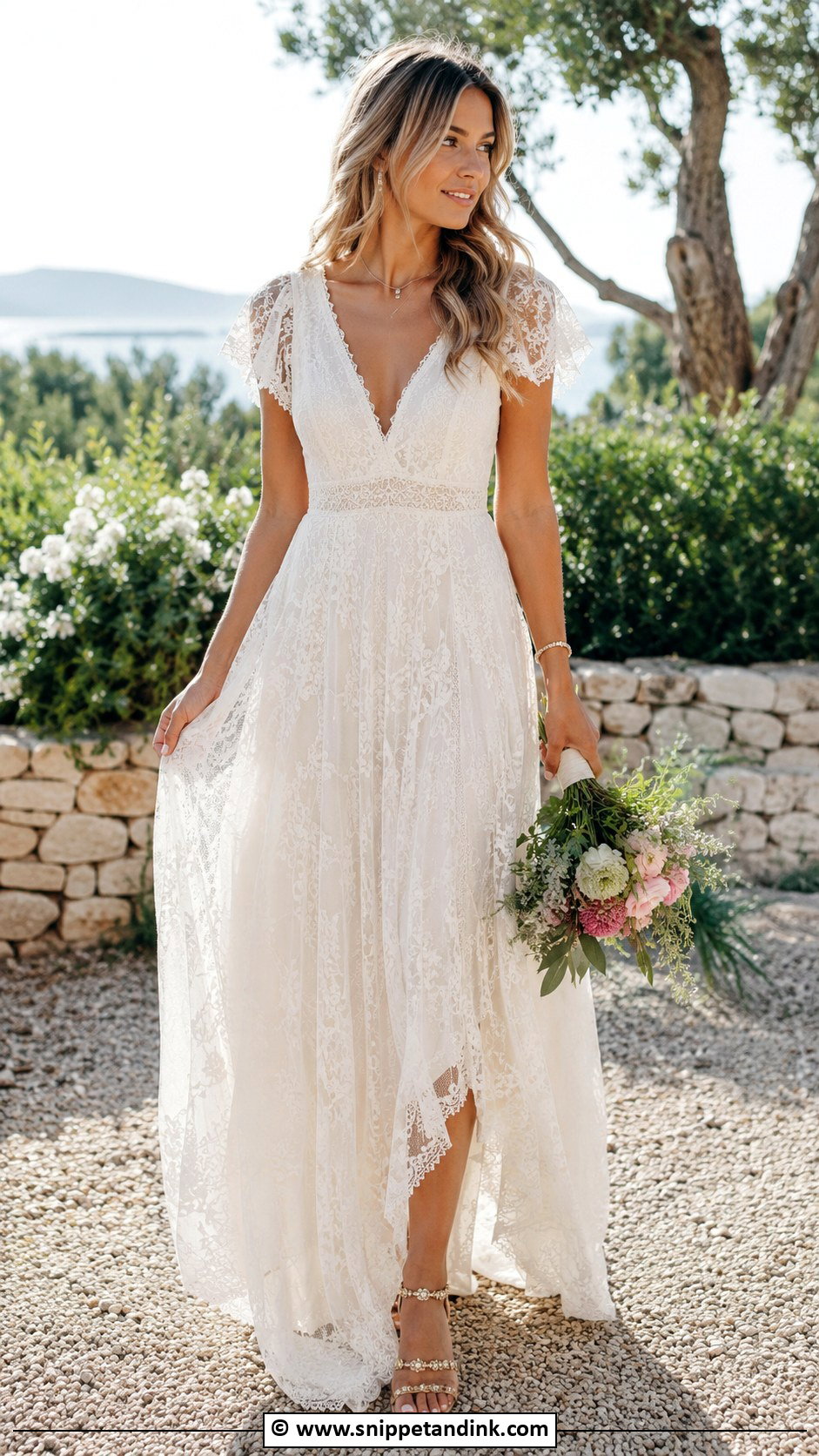
Boho lace should feel relaxed, so I avoid stiff shapes. Soft lace, flutter sleeves, a flowing skirt or a loosely fitted bodice give the right feel. Block heels or embellished sandals manage uneven ground. Loose waves, simple gold or pearl jewelry and a delicate comb or veil suit garden venues, coastal settings and rustic spaces.
26. Beach Wedding Dress
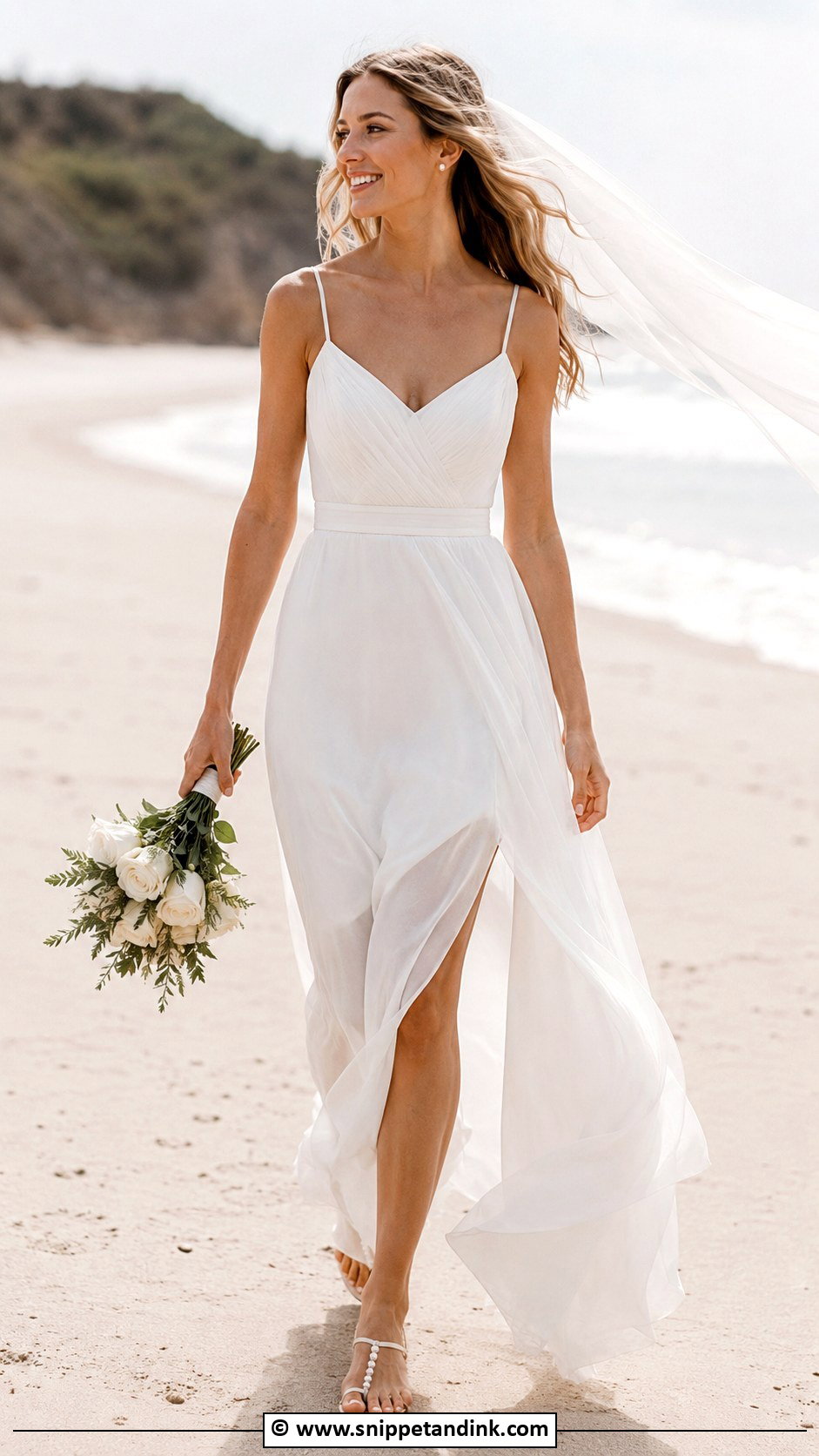
Beach dresses need breathable fabric: chiffon, soft tulle, crepe or light silk. Heavy satin and layers trap heat. A sheath, slip or relaxed A-line moves with the breeze. Flat sandals, low block heels or barefoot sandals suit sand. For destination weddings, I’d choose wrinkle-resistant fabric and pack the dress in a garment bag with tissue in the folds, then steam it on arrival.
27. Courthouse Wedding Dress
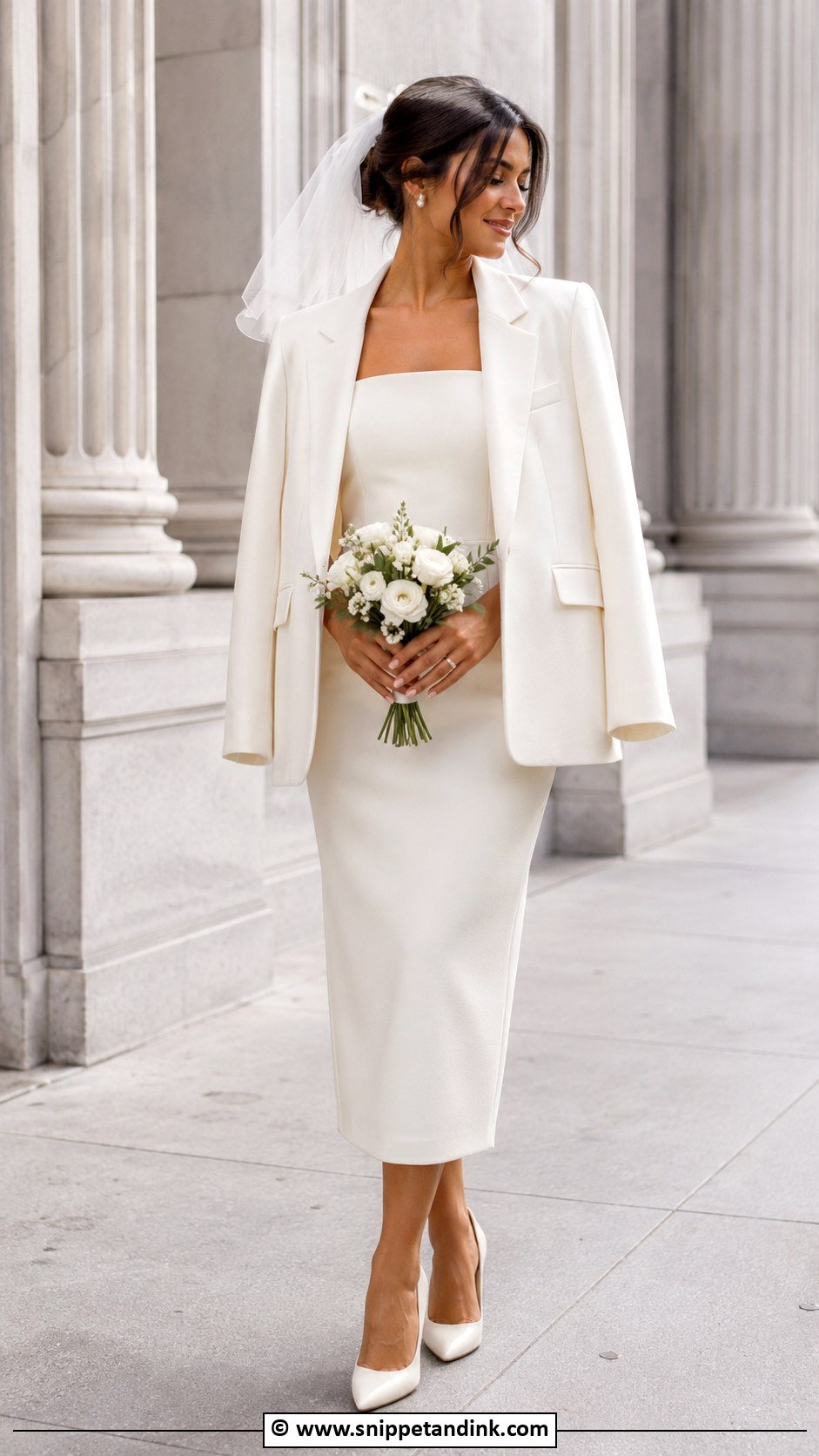
A courthouse wedding dress should feel polished but not overdressed for a small ceremony. A tailored midi, structured short dress, satin slip or crepe column all suit it. Pointed pumps, a small bouquet, pearl earrings and a short veil or headband make it bridal, and a blazer helps for city photos. Clean lines and good fabric matter more than detail.
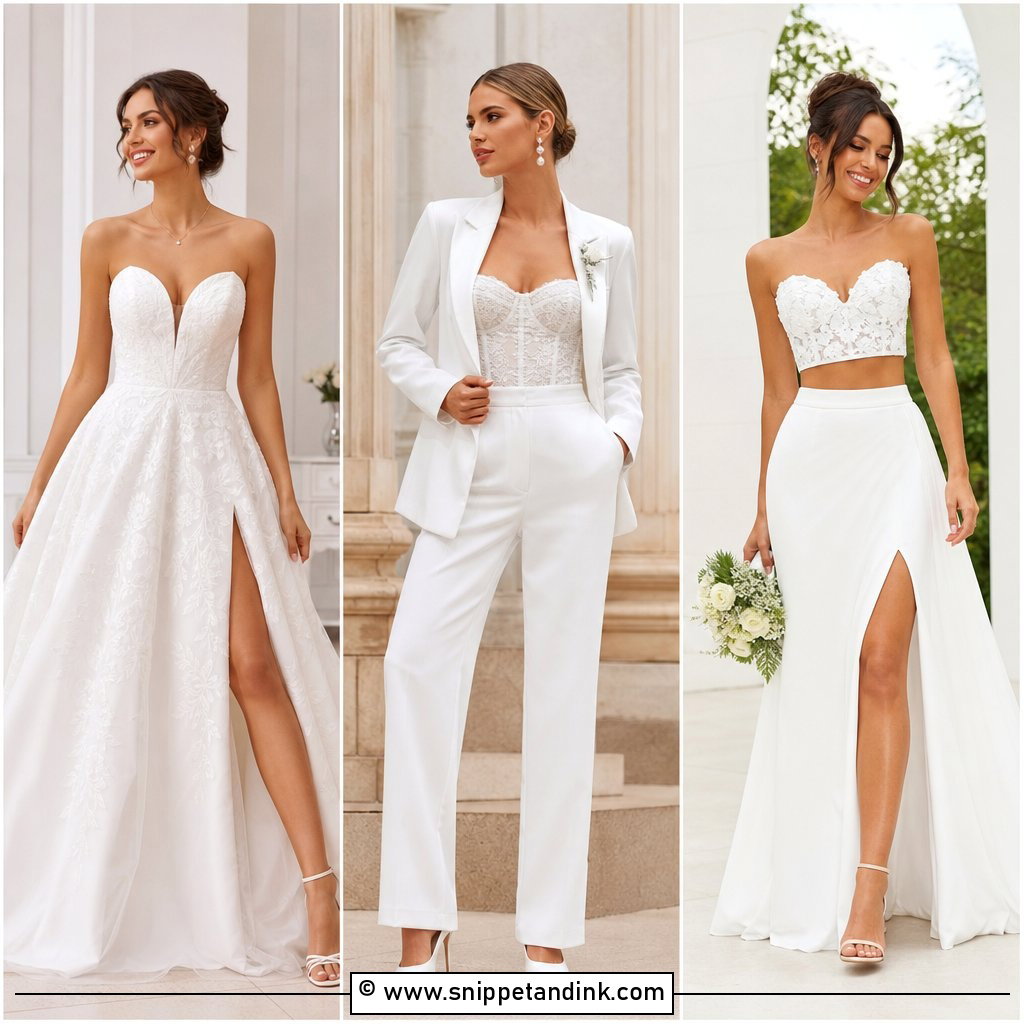
28. Wedding Pantsuit
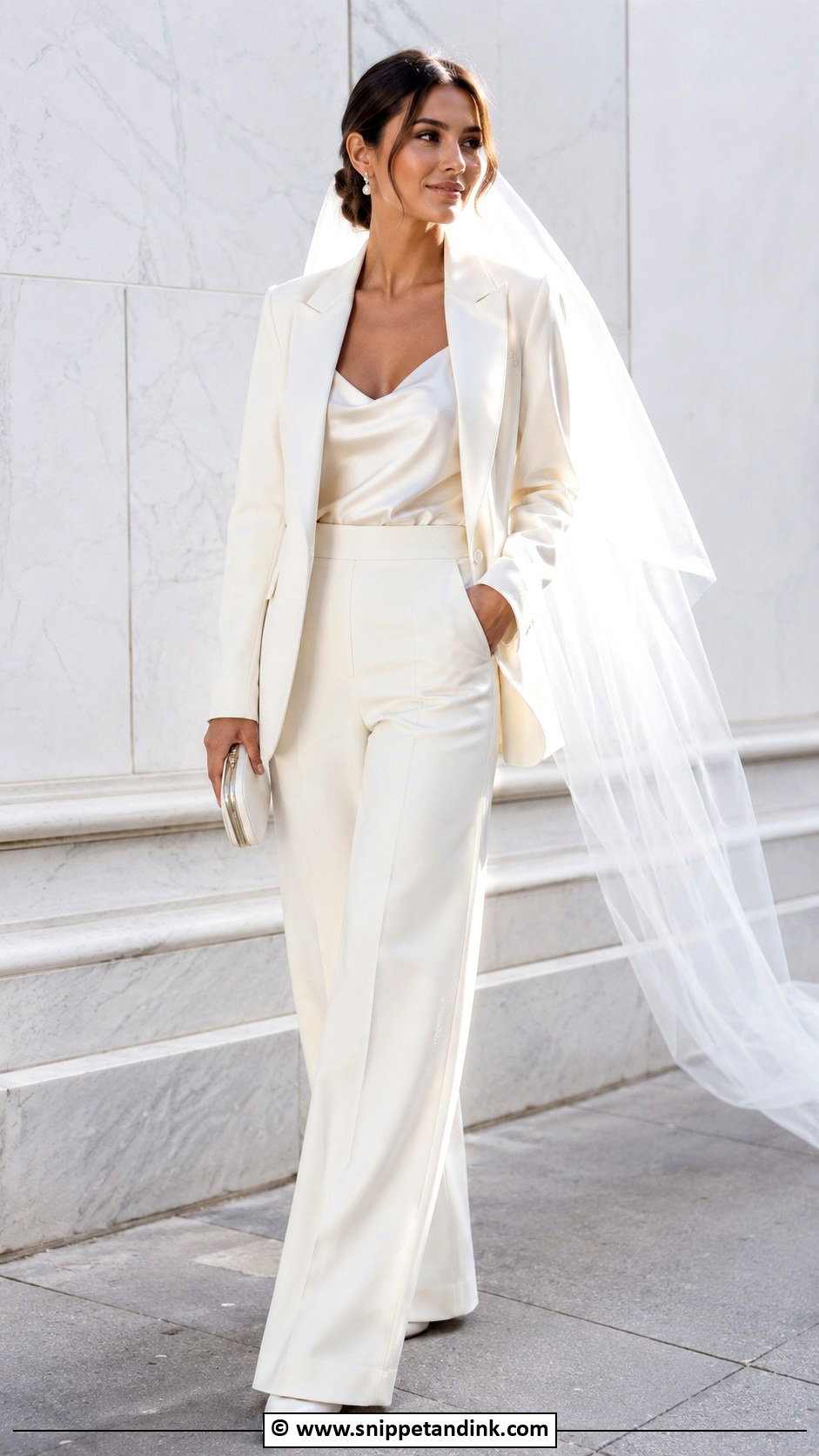
A wedding pantsuit lives or dies on tailoring, especially the shoulders, waist and trouser length. Ivory with a fitted blazer, wide-leg trousers and a silk camisole or structured vest underneath feels bridal. Pointed heels, pearl earrings and a sleek clutch add polish, and a veil, cape or floral hair accessory softens it. Courthouse weddings, city celebrations and reception changes all suit it.
29. Two Piece Wedding Dress
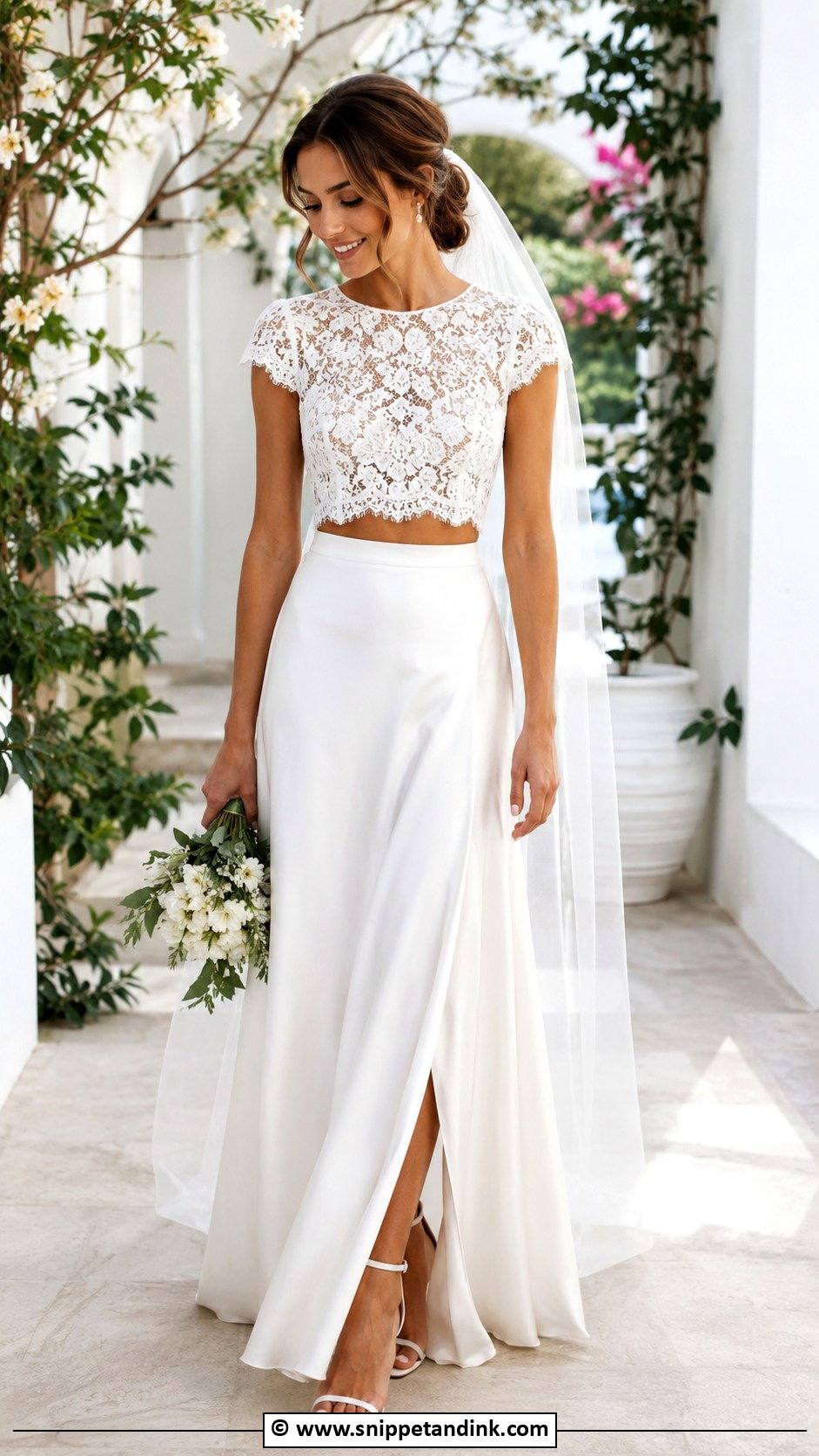
Two-piece dresses let you choose exactly how much skin shows, and they’re useful for brides who wear different sizes on top and bottom. A lace crop top with a high-waisted skirt, a corset with a satin skirt or a sleek top with wide-leg bridal pants all work. Clean heels, simple earrings and a matching veil suit beach, garden and destination weddings.
30. Colored Wedding Dress
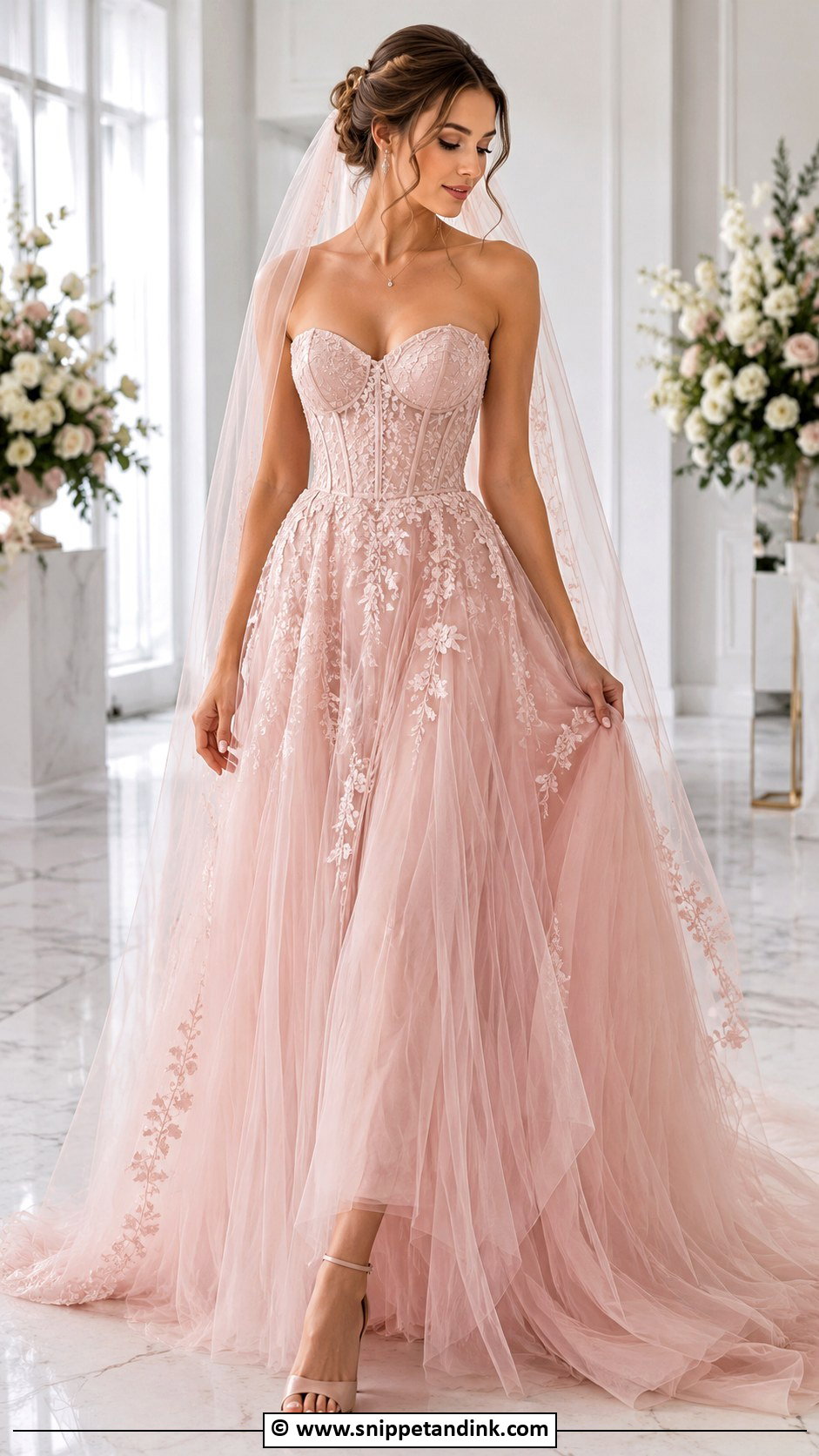
Color works when it flatters your skin and suits the venue. Blush, champagne, pale blue, buttercream, silver and warm ivory are all wearable. Blush tulle feels romantic; champagne satin looks grown-up. I hold the fabric to a bride’s face in daylight before deciding. Neutral heels, delicate jewelry and a matching or sheer veil let the color enhance the dress rather than overpower it.
If It Rains, Snags or Rips on the Day
Something small almost always happens to a gown on the day. Most of it can be fixed in minutes if someone has the right kit and knows what to do.
- A broken bustle loop: safety pins hidden under the bustle points hold it until the end of the night.
- A popped hem or seam: a needle and thread in white and ivory, or fashion tape for a quick hold.
- A tulle snag: don’t pull it; trim the loose thread carefully or tuck it under.
- Rain: lift the hem with a bridesmaid’s help and walk on clean surfaces; a clear umbrella keeps photos bright.
- A makeup mark: a white chalk stick or a dab of cornstarch hides it in photos.
Give the kit to one person you trust, ideally the one who learned your bustle at the final fitting, and let them handle it so you can keep enjoying the day.
Save the Shortlist, Then Try Them On
Some brides feel their best in a satin ball gown, others in a slip, pantsuit, mini or lace with sleeves. Think about your venue, season, how you’ll move and how long you’ll wear it. Tailoring, fabric, shoes and accessories shape the whole look more than people expect. Let trends guide you, but trust your own taste.
You'll Like These Ideas:







Leave a Reply