
The muhurtham is the short, auspicious window when the thali is tied, and on many South Indian wedding mornings it falls early, which means hair starts in the dark. A muhurtham style has jobs most bridal hair never faces. It has to carry fresh flowers and gold for hours, stay put while you bow for blessings and have rice showered over you, and leave the back of your neck reachable for the thali knot. Some brides want the classic poola jada running all the way down the back; others want a bun that lets a heavy necklace show. These are 25 styles I’d genuinely put forward for that morning, with notes on how each one behaves once the ceremony is underway.
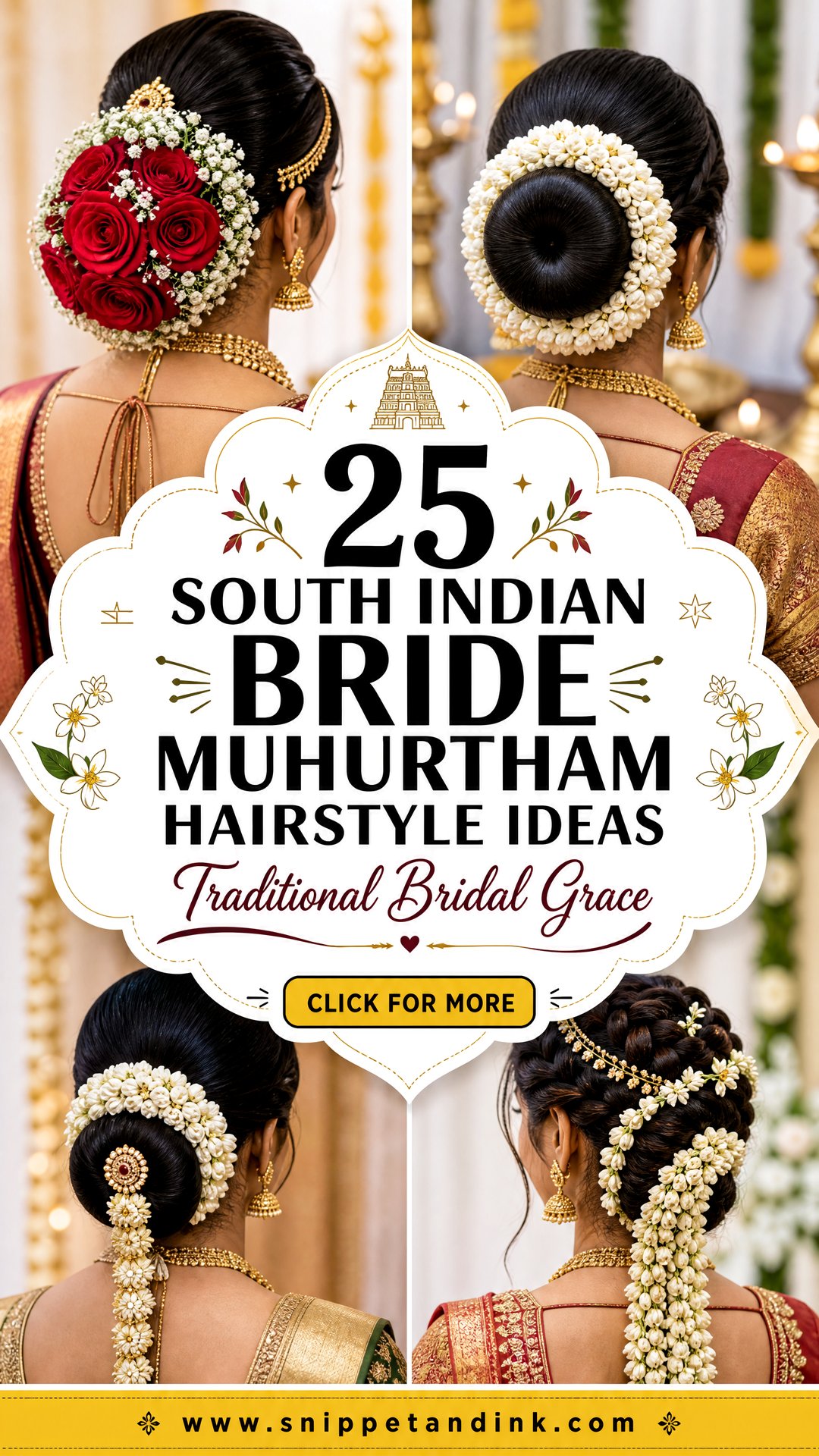
Jasmine, Gold and a Pre-Dawn Start
Most muhurtham times are fixed by the family priest, and a lot of them land early. Work backwards from that time, not from when you’d like to wake up. A flower-heavy braid with a full jada can take a stylist well over an hour on its own, and saree draping and makeup have to fit around it. I’d rather start too early and have you sit with tea than rush the pins.
- Order strung jasmine by length from a florist who supplies weddings, and ask for buds rather than open flowers. Buds open through the morning, so the braid looks fuller at the ceremony than it did in the chair.
- Have the flowers delivered the night before and keep them wrapped in a damp cloth in the fridge, well away from the freezer. Frozen jasmine browns at the edges within hours of coming out.
- Collect rented ornaments like the jada, billas and nagam before the trial so the weight is tested on your own head.
- Tell your stylist if there’s a change of saree for the reception. Stitched flowers and pinned gold take a while to come out cleanly.
When Your Own Braid Is Too Short or Too Fine
A braided-in extension, often called a savaram, is standard practice for a full poola jada, and nobody at the wedding will think twice about it. If your hair stops above the waist or it’s fine, I’d much rather braid in a matched extension than stretch thin hair under a heavy load of flowers and gold. Match the colour at the trial in daylight, because indoor light makes almost any black extension look right.
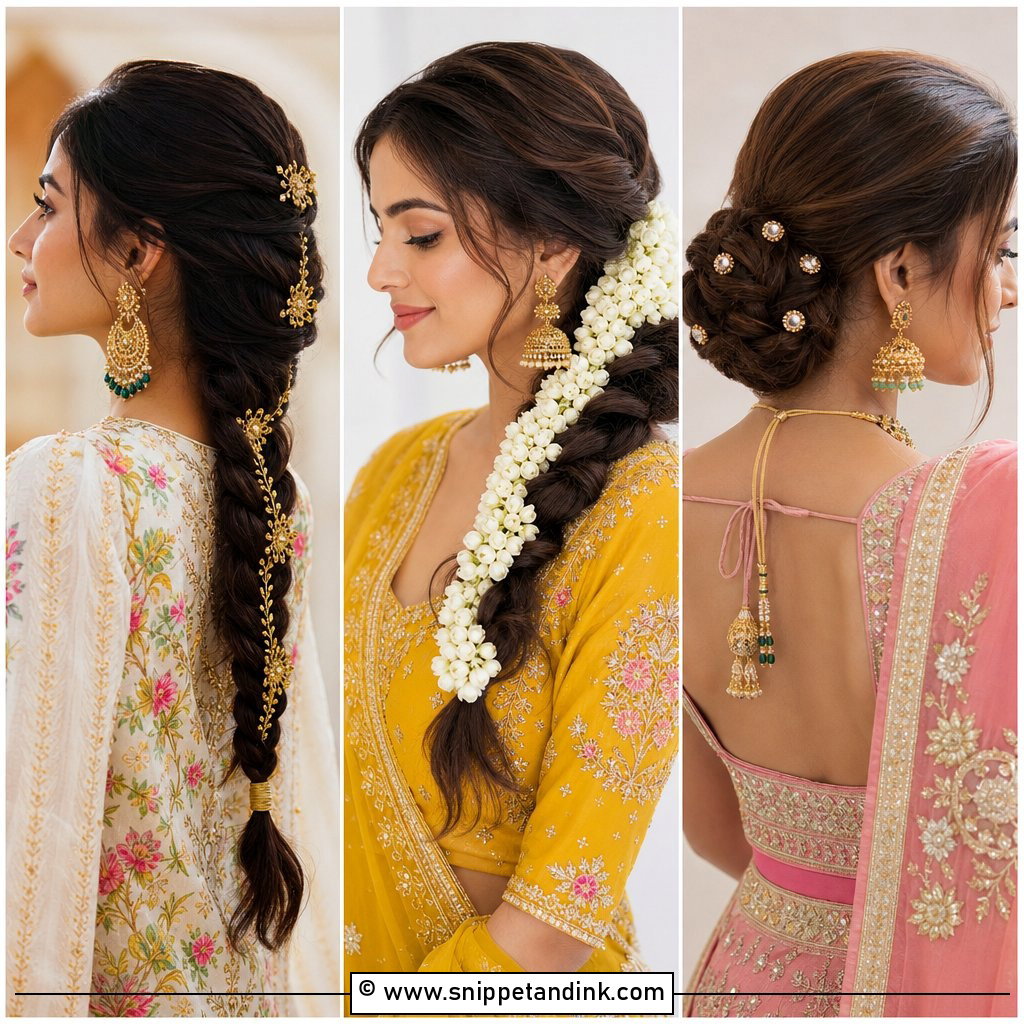
1. Classic Jasmine Braid for South Indian Brides
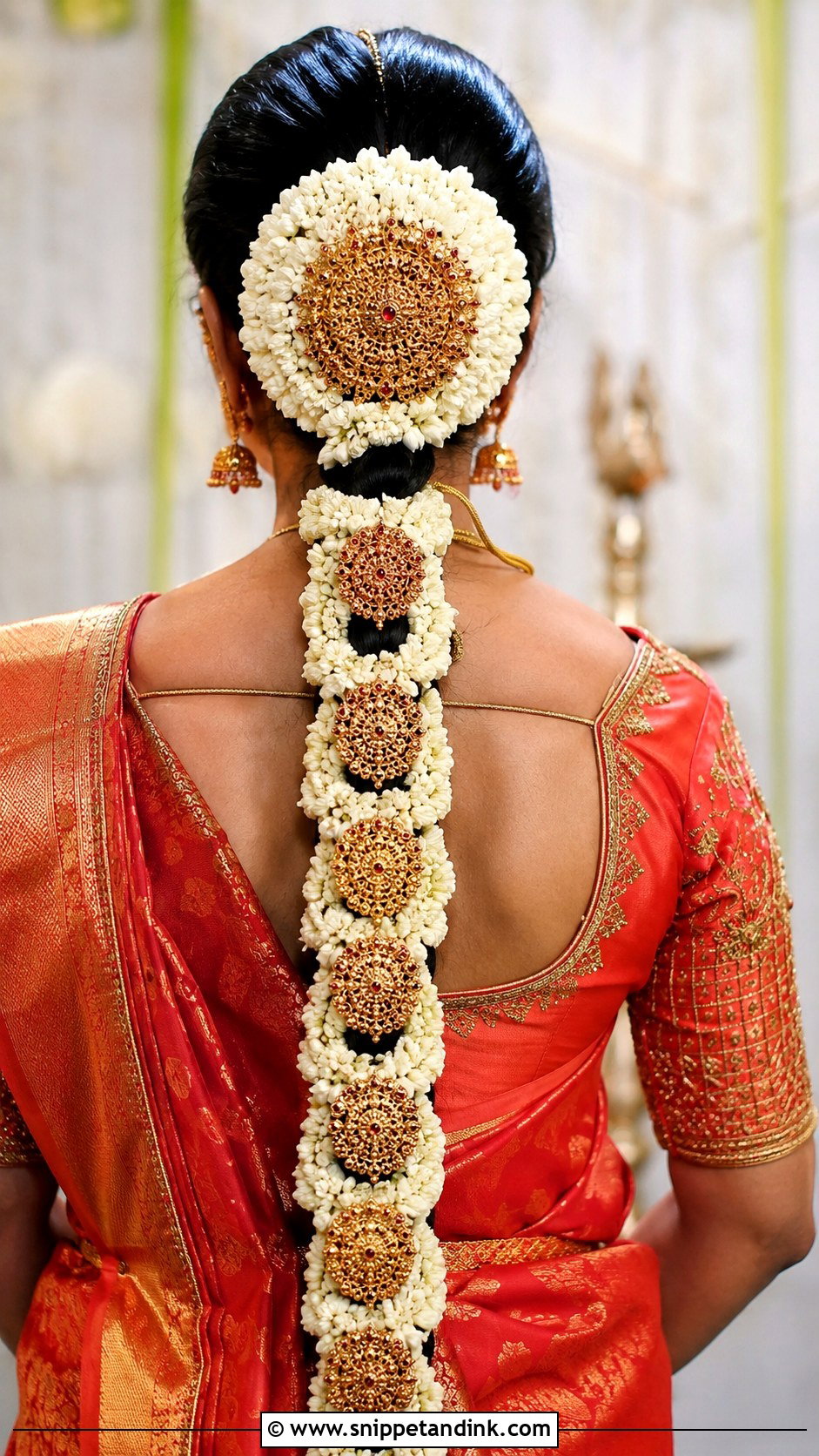
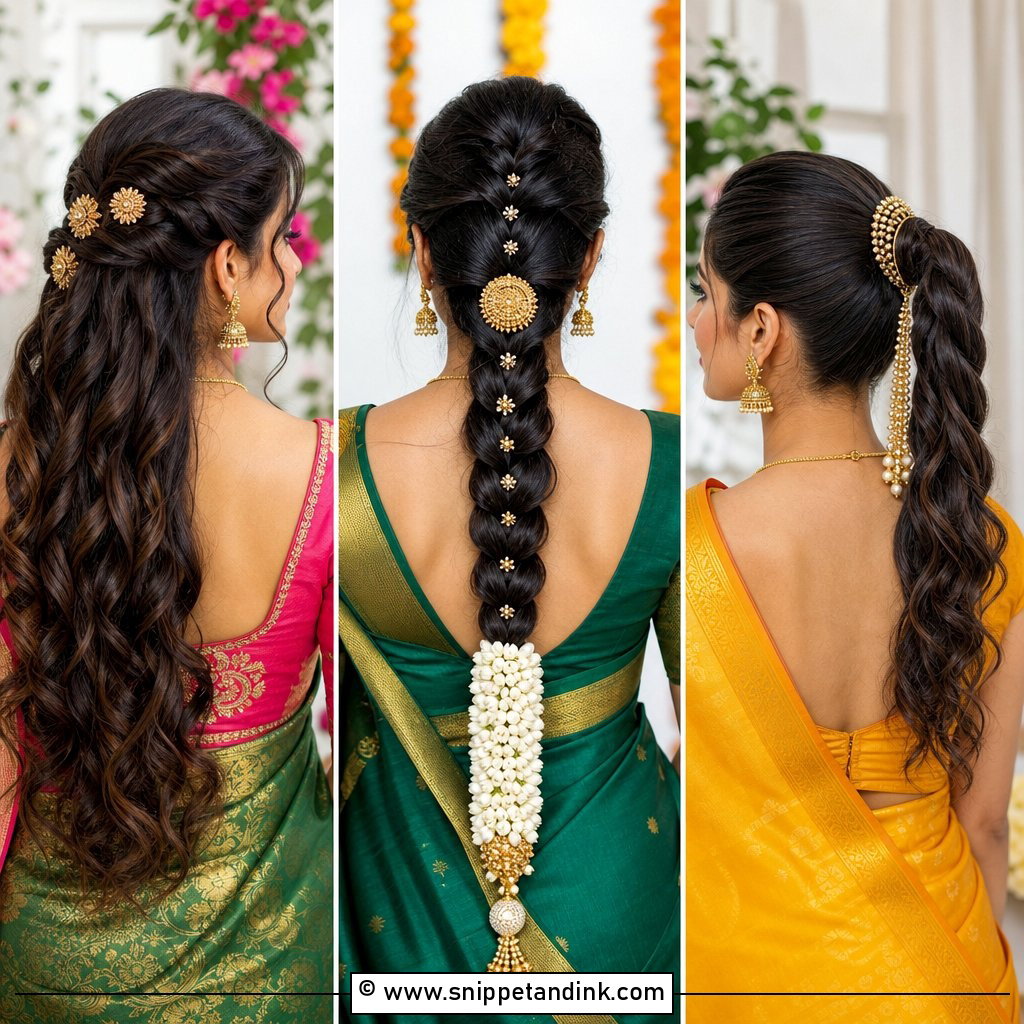
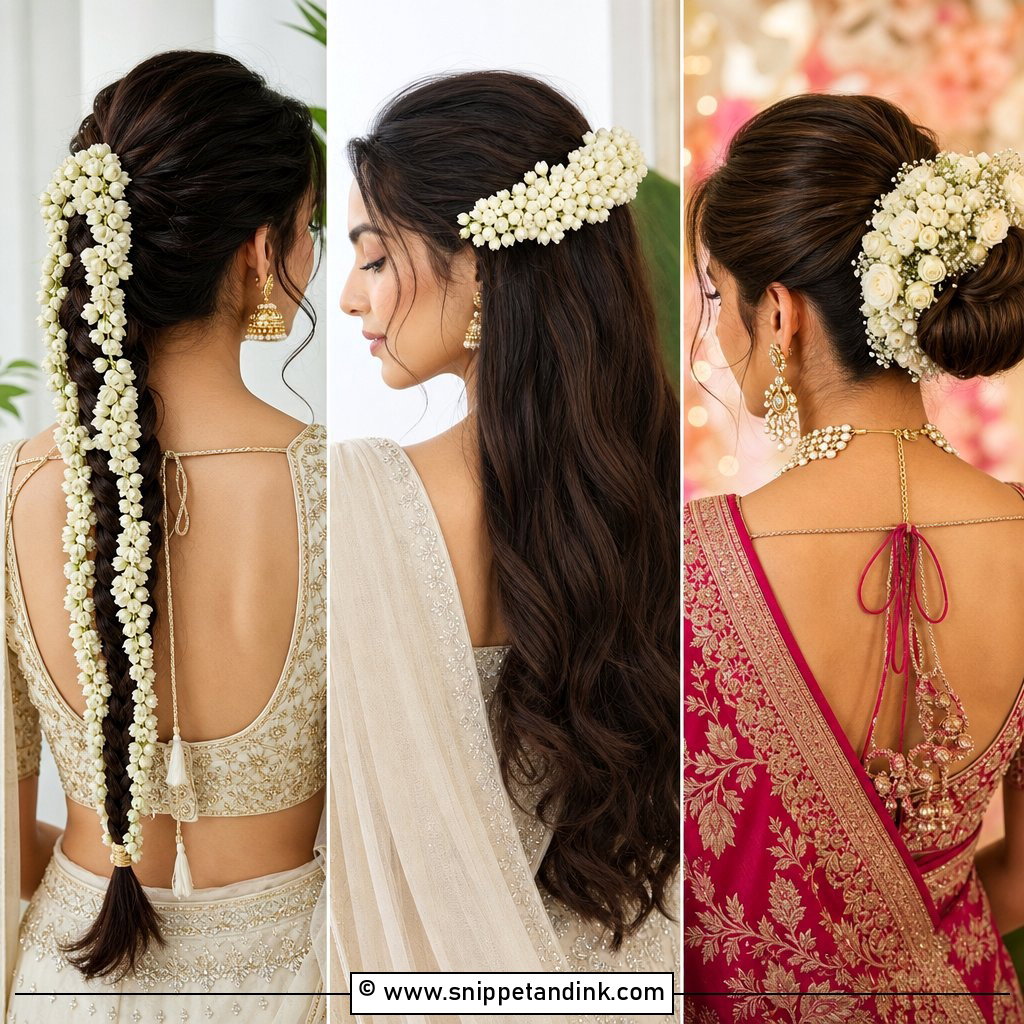
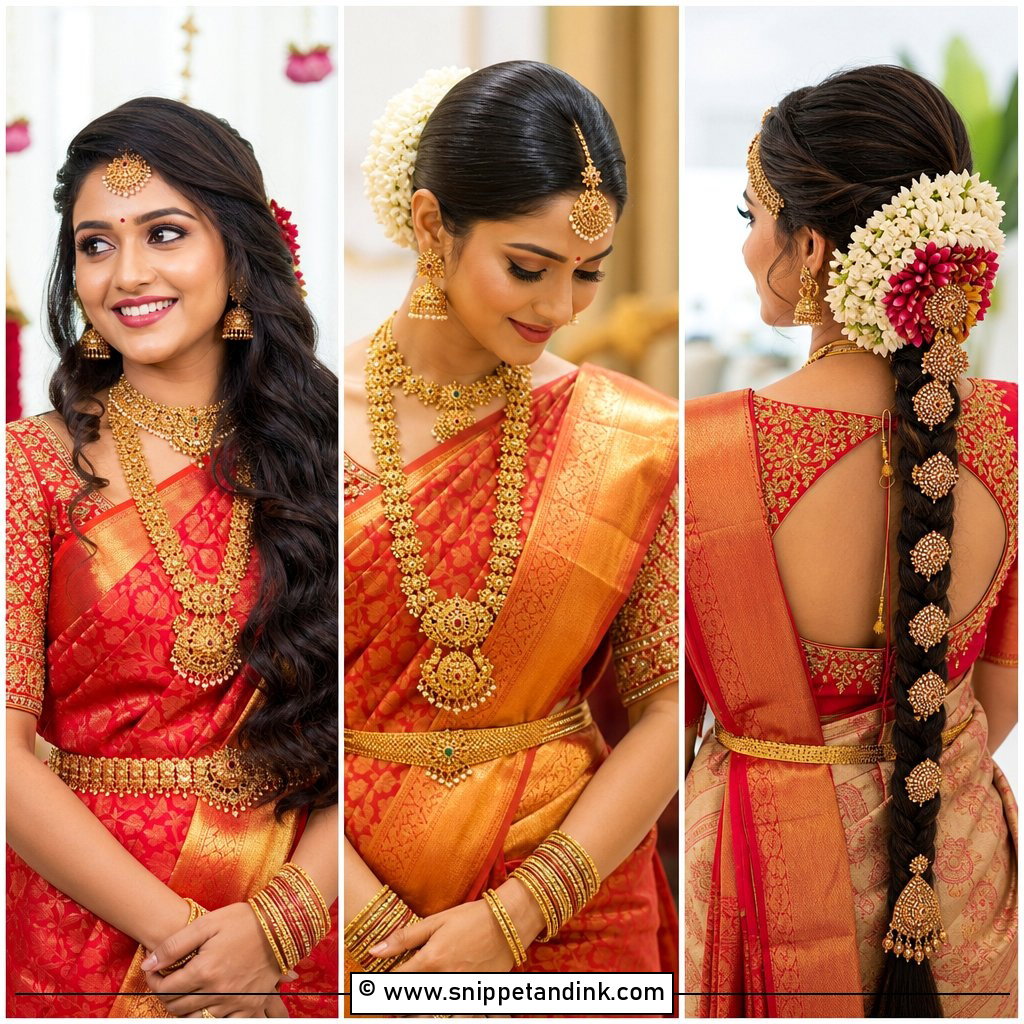
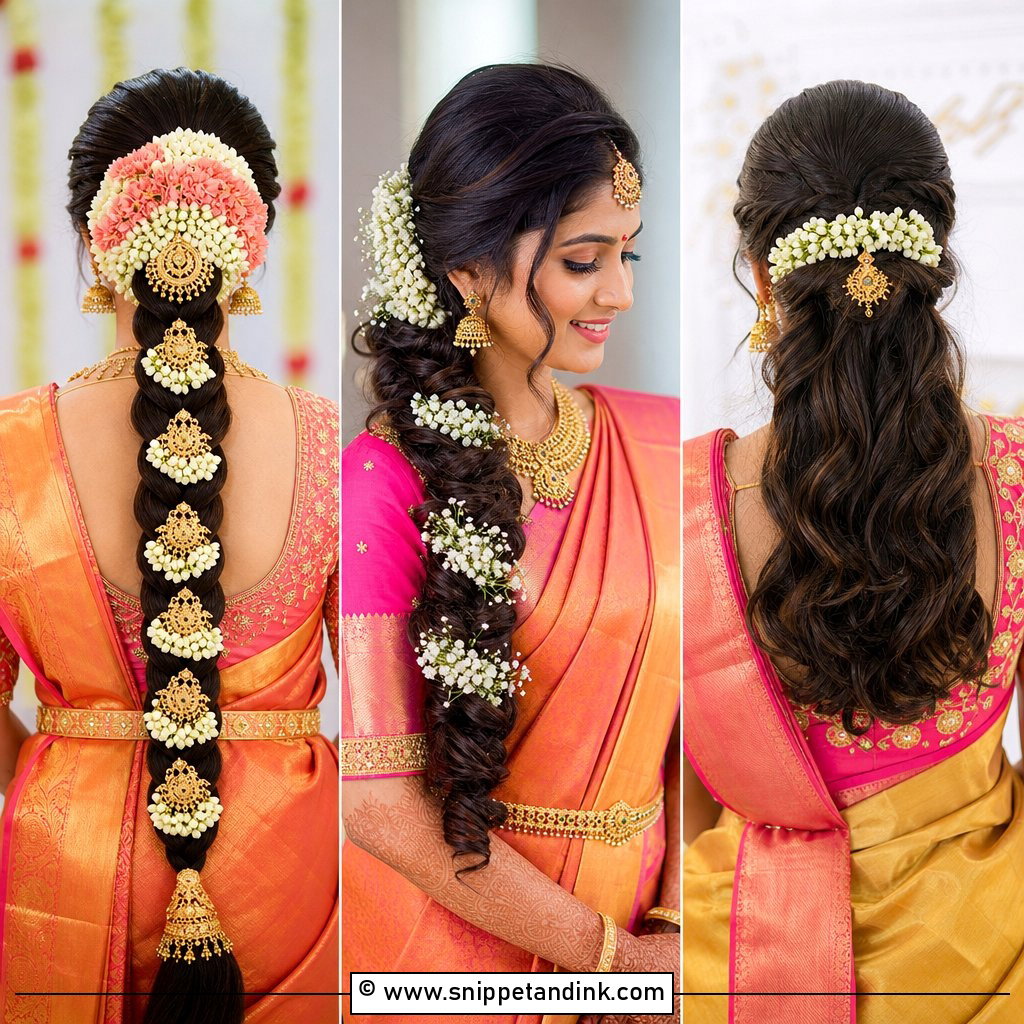
This is the style I’m asked for most, and it rewards a little engineering. I plait it firmly from the crown so there’s a solid spine to attach flowers to, then lay the gajra rows in overlapping lines so no hair peeks through. Jada billa ornaments go on top, and their weight adds up quickly, so I anchor the first billa with crossed pins at the base instead of letting it hang from the braid alone. Long, thick hair handles it best. Finer hair usually needs a matched extension braided in to give the flowers something to grip. With a Kanjeevaram, the back view of this braid is often the photo families end up framing.
2. Traditional Bun with Gold Ornaments
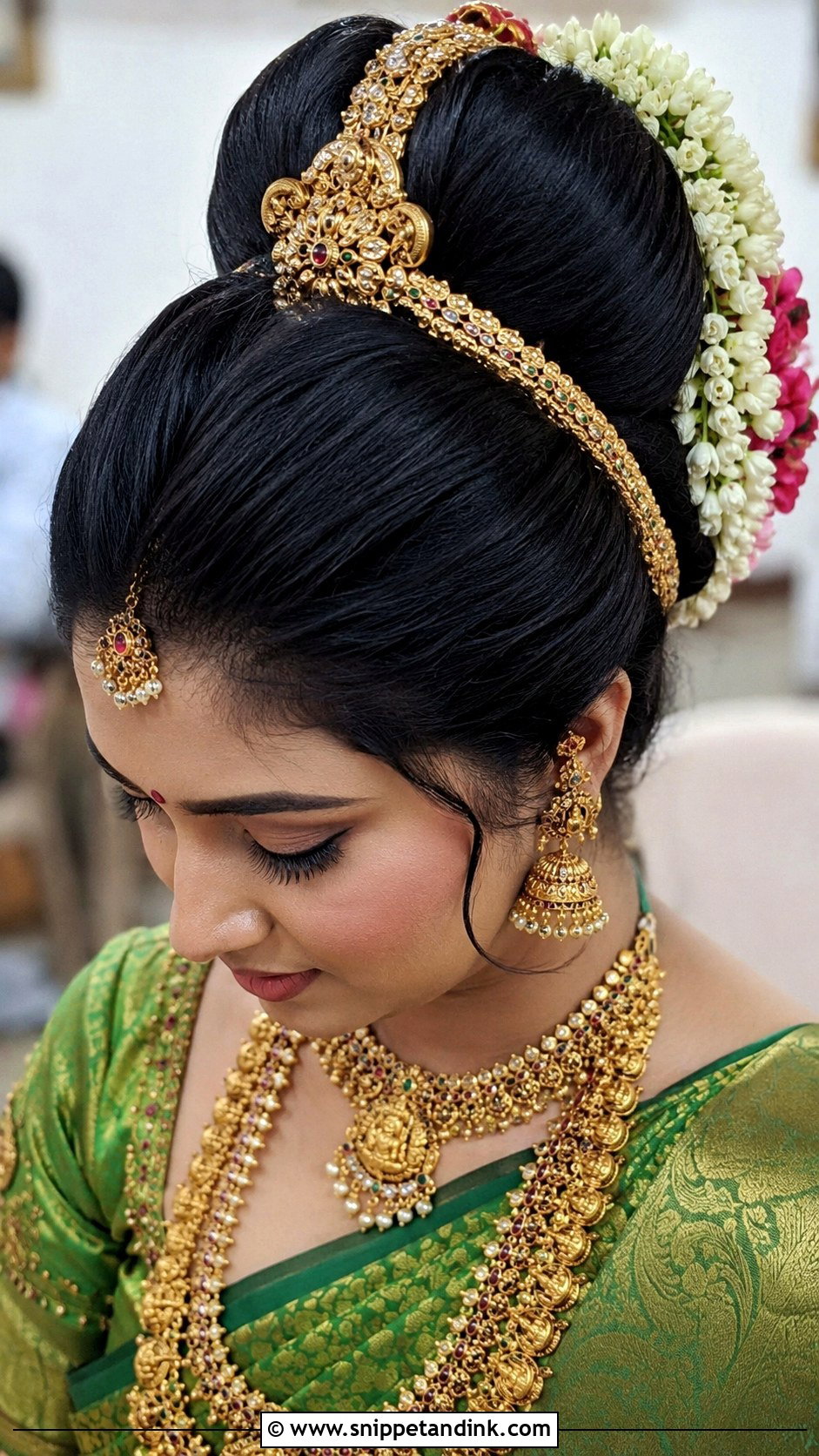
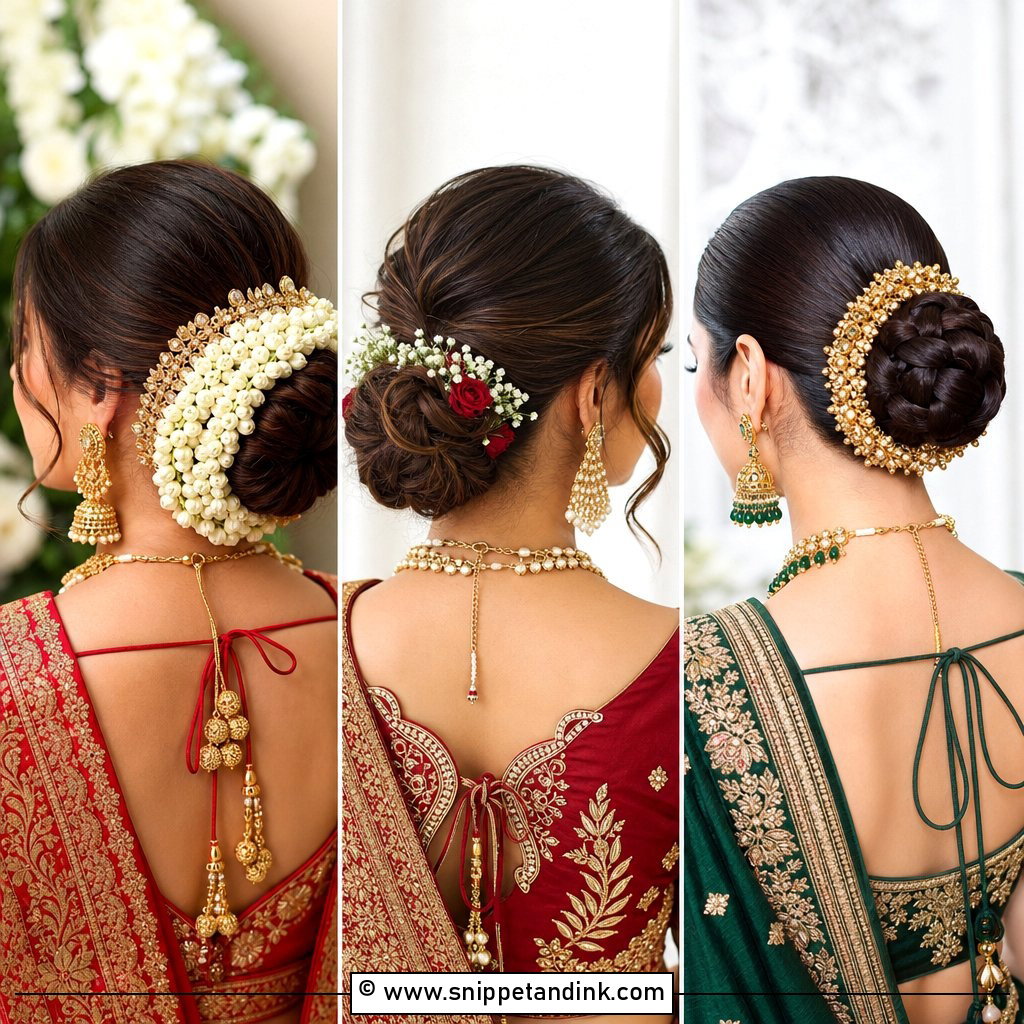
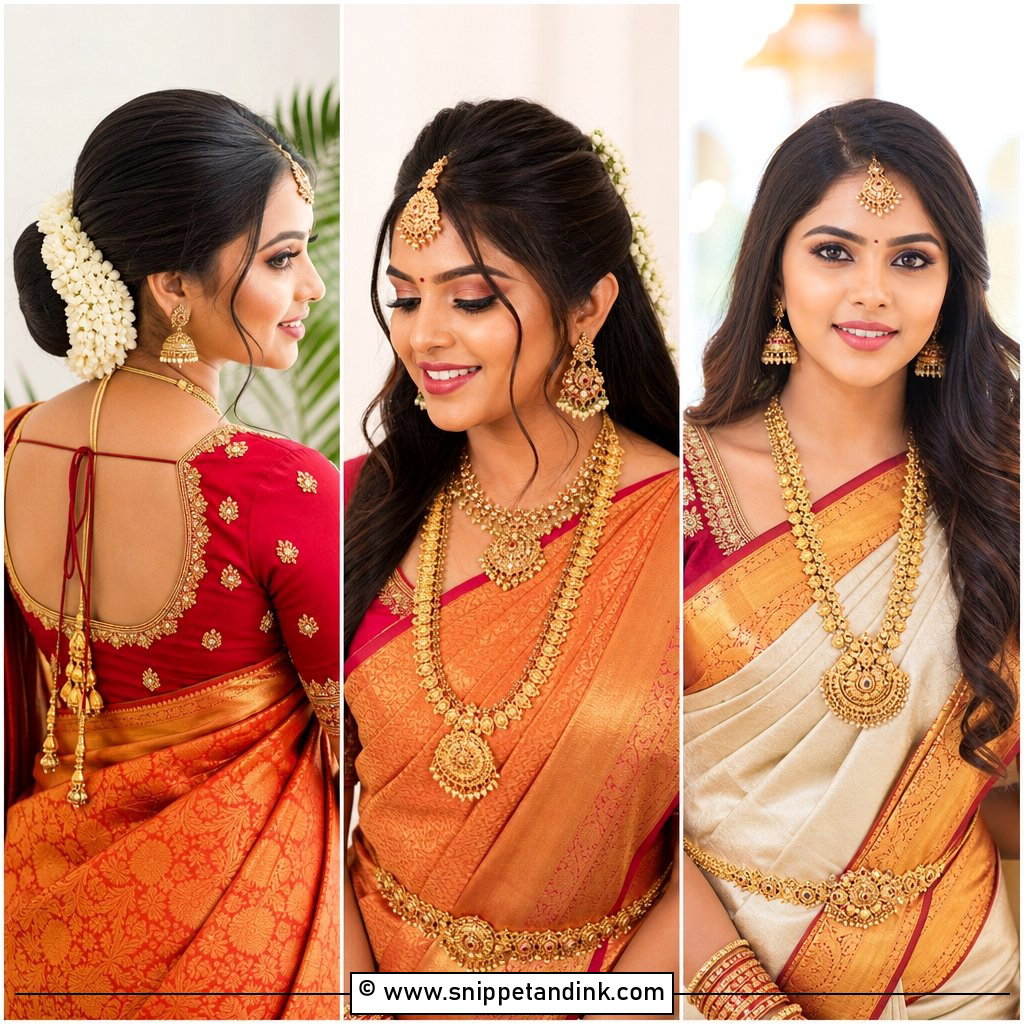
A crown bun gives temple ornaments like the jada nagam a flat, steady platform. I build it over a padded donut or a backcombed base so the gold doesn’t sink into soft hair, and every ornament is pinned through that base, never just through the outer layer. Fresh flowers around the bottom take the edge off all that metal. Sitting high, it clears the neckline so a heavy temple necklace and the blouse back stay visible, and it keeps hair off your skin in a warm, crowded mandapam. If you have a shorter neck, try it at the trial and look at your profile; the height often surprises people in a good way.
3. Kerala Bridal Braid with Jasmine
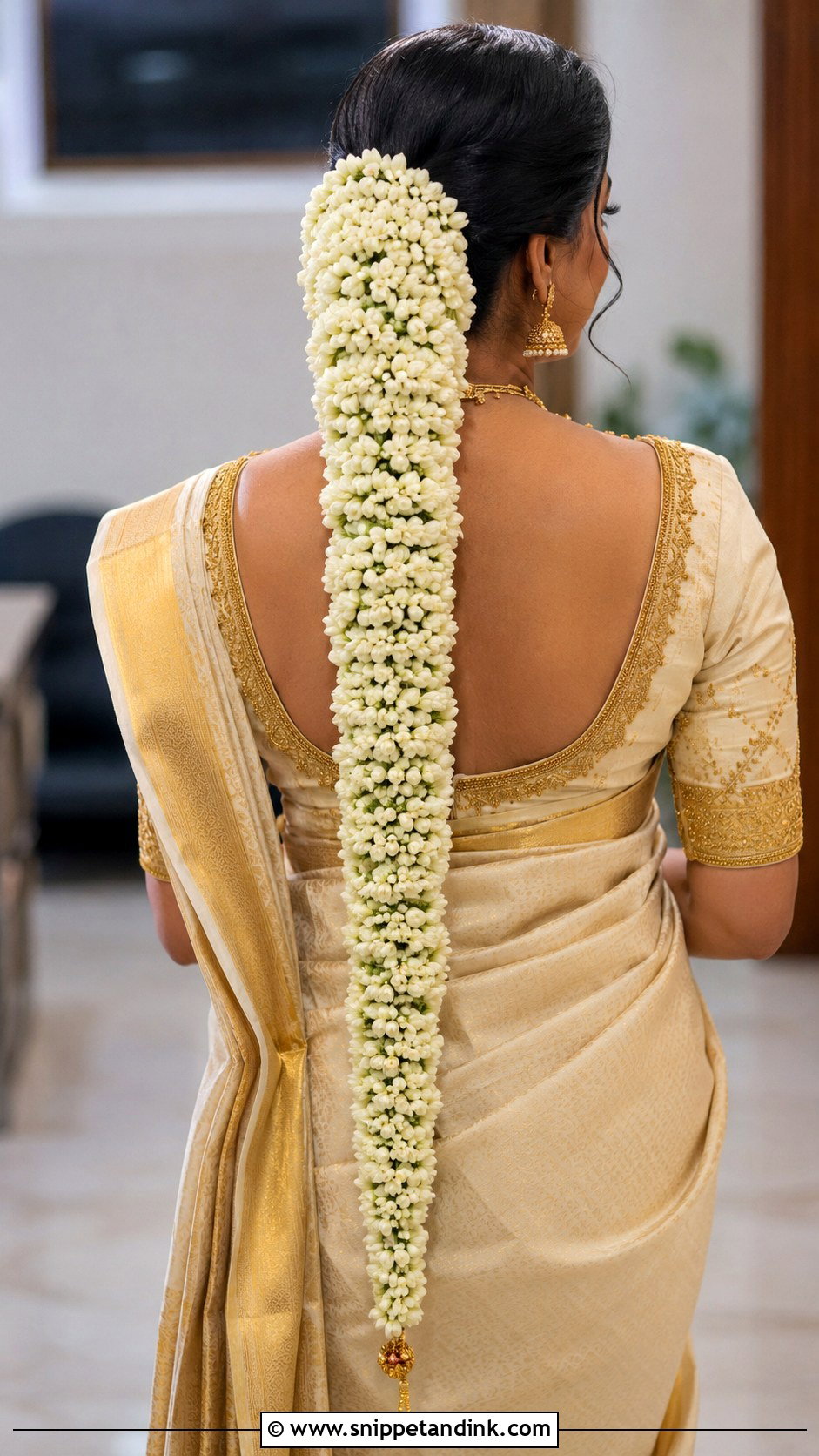
Kerala brides tend to keep the jasmine-draped braid deliberately plain underneath. The braid is long and simple, and strung jasmine is wound around it so densely that the hair almost disappears. Against a cream and gold kasavu saree, that much white becomes the main ornament, so jewelry stays restrained, sometimes just a waist chain. The practical catch is that jasmine is usually kept misted to stay fresh, and a tightly packed garland resting on bare skin at the nape feels cold and damp by mid-morning. I start the garland on the hair just below the nape so it never sits against the neck.
4. Side Braid with Temple Jewelry
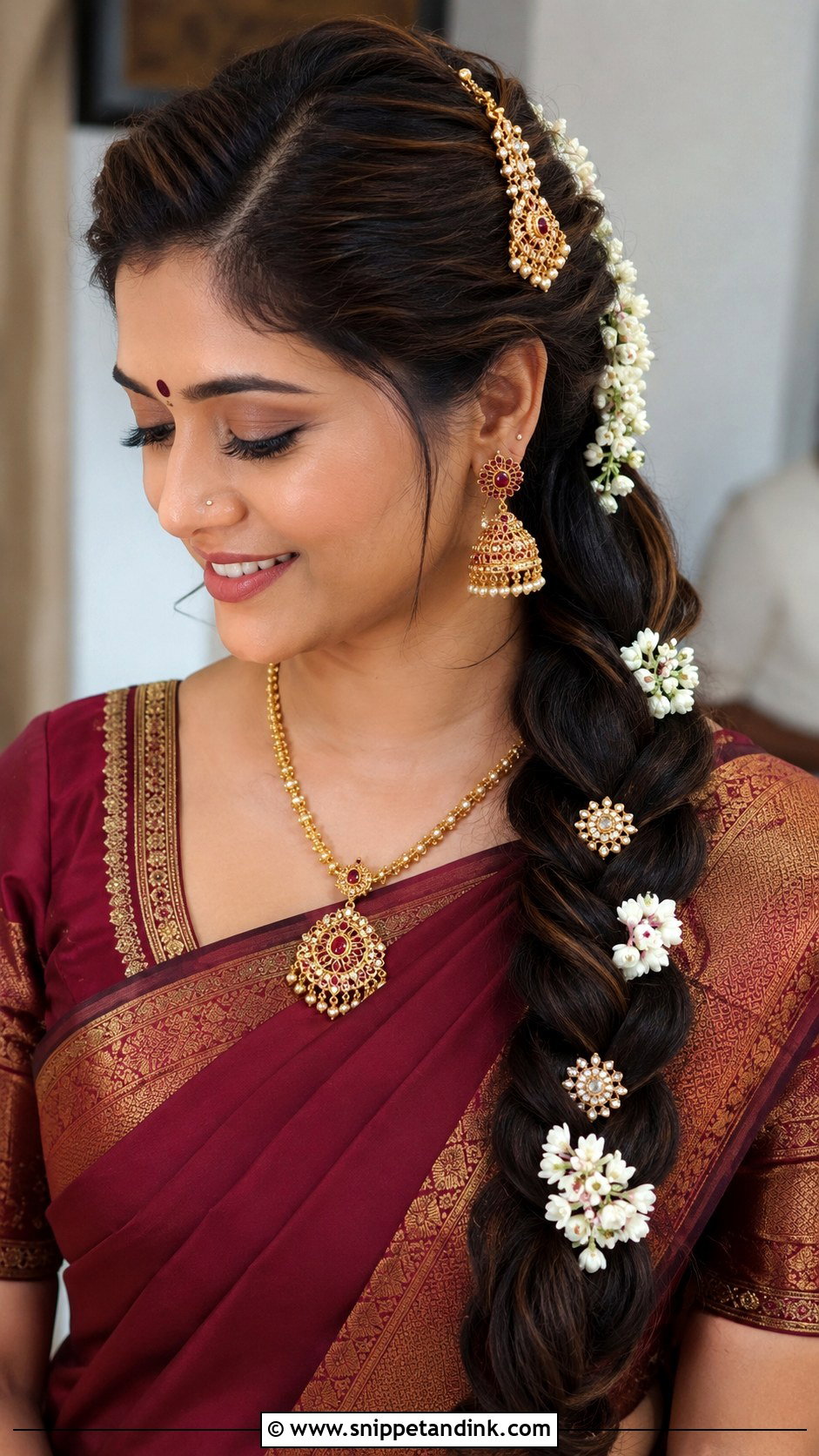
Moving the braid over one shoulder changes how the jewelry reads: the clips, jada billa and jasmine that would face the back wall now face the guests and the camera during the rituals. I start the braid slightly off-centre at the crown so it falls to the side naturally instead of being dragged round, which pulls at the hairline after a few hours. Medium to long hair works. One thing to plan for is the garland exchange, because the garlands land exactly where a side braid sits, and flowers there get crushed. Keep the heaviest ornaments high, near the ear, and pair the braid with jhumkas and a temple necklace.
5. Floral Bun with Roses
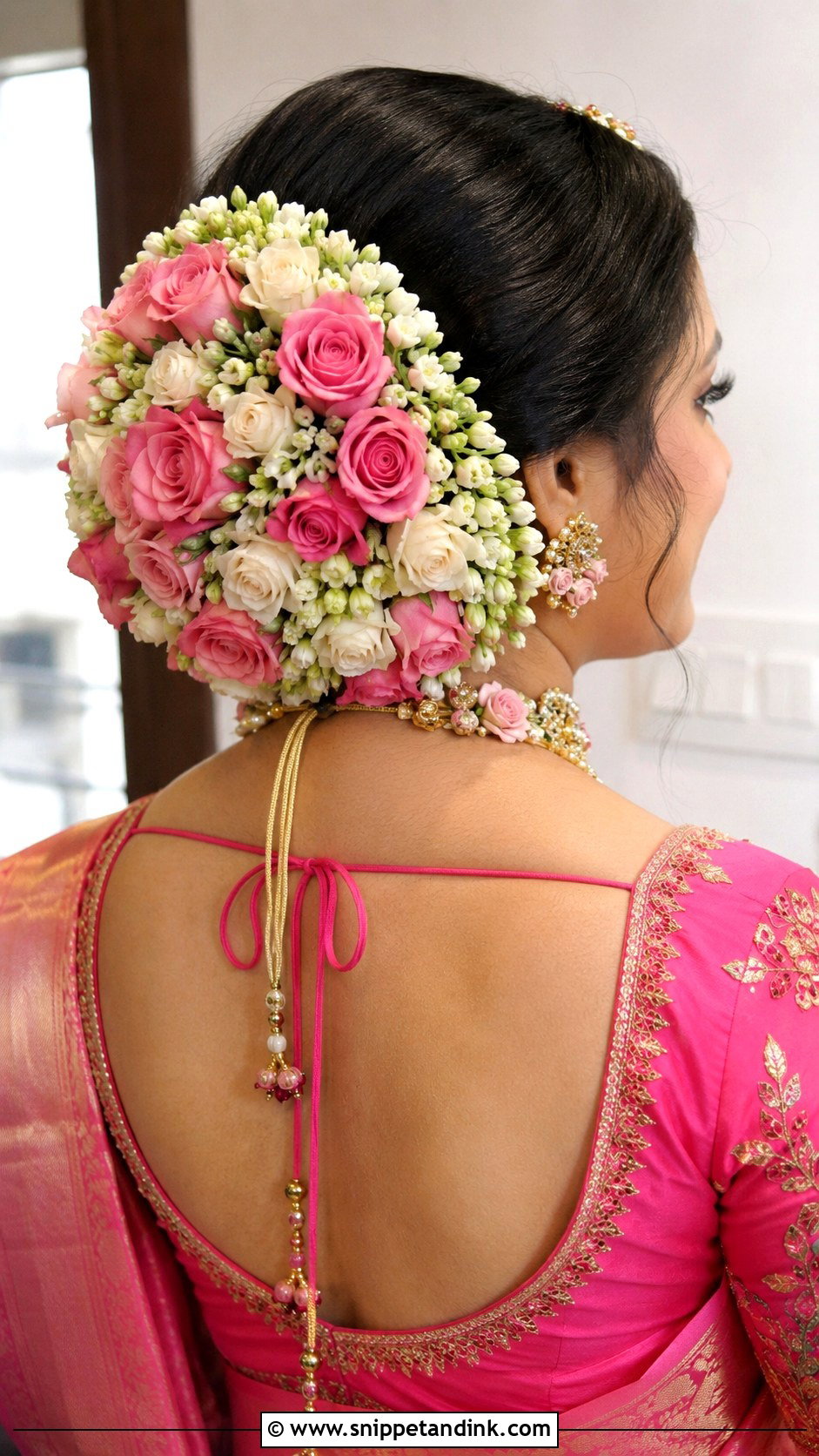
Roses bring colour that jasmine alone can’t, and a ring of them around a nape bun shows up clearly even in wide shots of the mandapam. I pin each rose head into the base of the bun and fill the gaps with jasmine buds so the edge doesn’t look patchy. Roses brown at the petal edges sooner than jasmine does, so I ask the florist for tight heads delivered as late as possible and keep a few spares in my kit. Deep crimson holds its own against bright silk. Pale blush can wash out next to a saree with heavy gold zari, so hold a petal against the fabric before you decide.
6. Maang Tikka Updo for Muhurtham
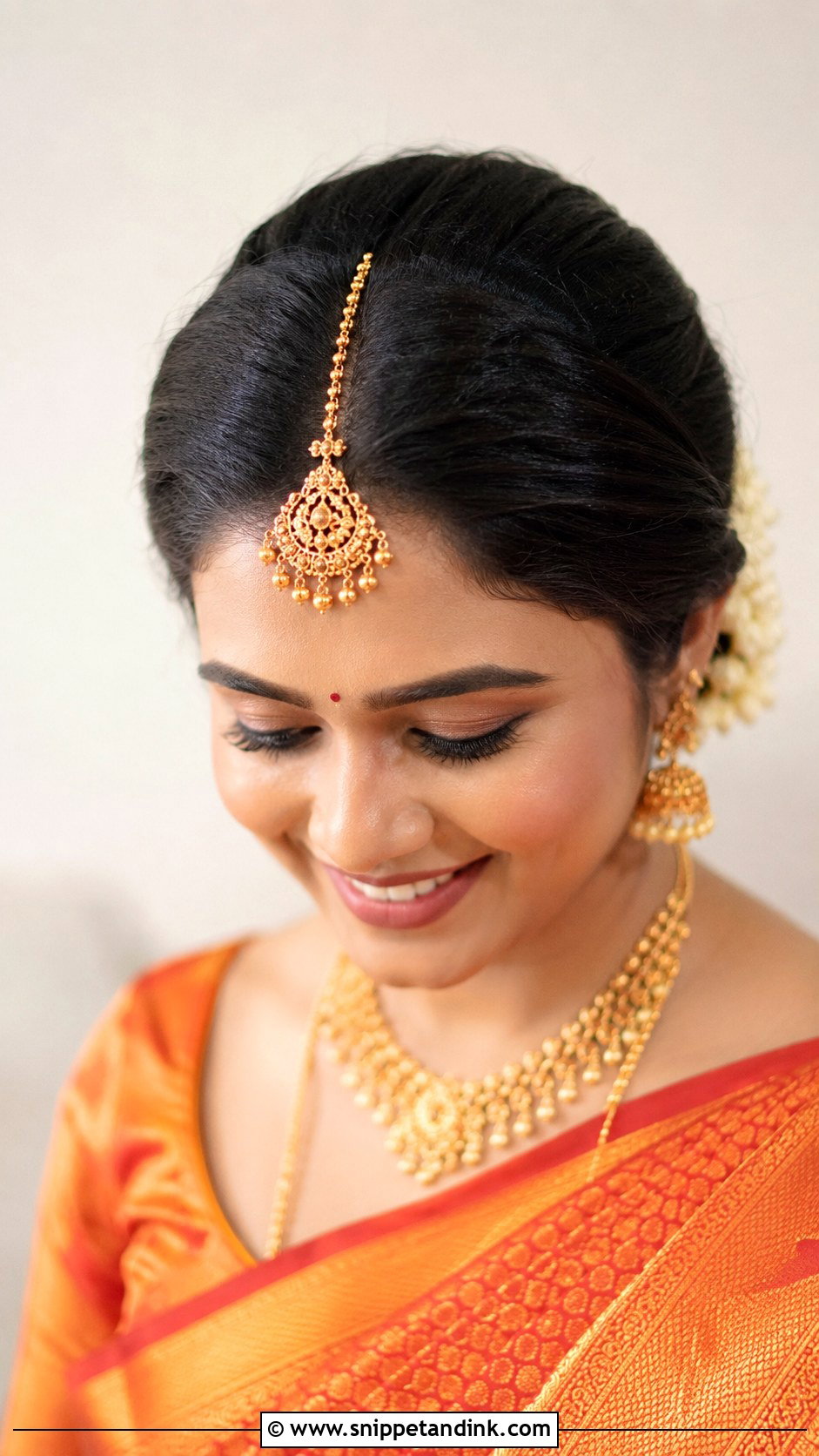
A neat updo is the right base for a heavy maang tikka or matha patti, because nothing competes with it at the hairline and the jewelry draws the eye straight to your face. The tikka chain needs a firm anchor, so I pin it into a small section at the crown before the bun goes in and hide the pin under the parting. Flowers or gold at the bun’s base finish the back view. If your tikka is weighty, tell your stylist before the day. A centre parting with a weak anchor lets the tikka creep forward by the second hour, and it’s fiddly to fix once the saree and jewelry are on.
7. Double Braid Design with Flowers
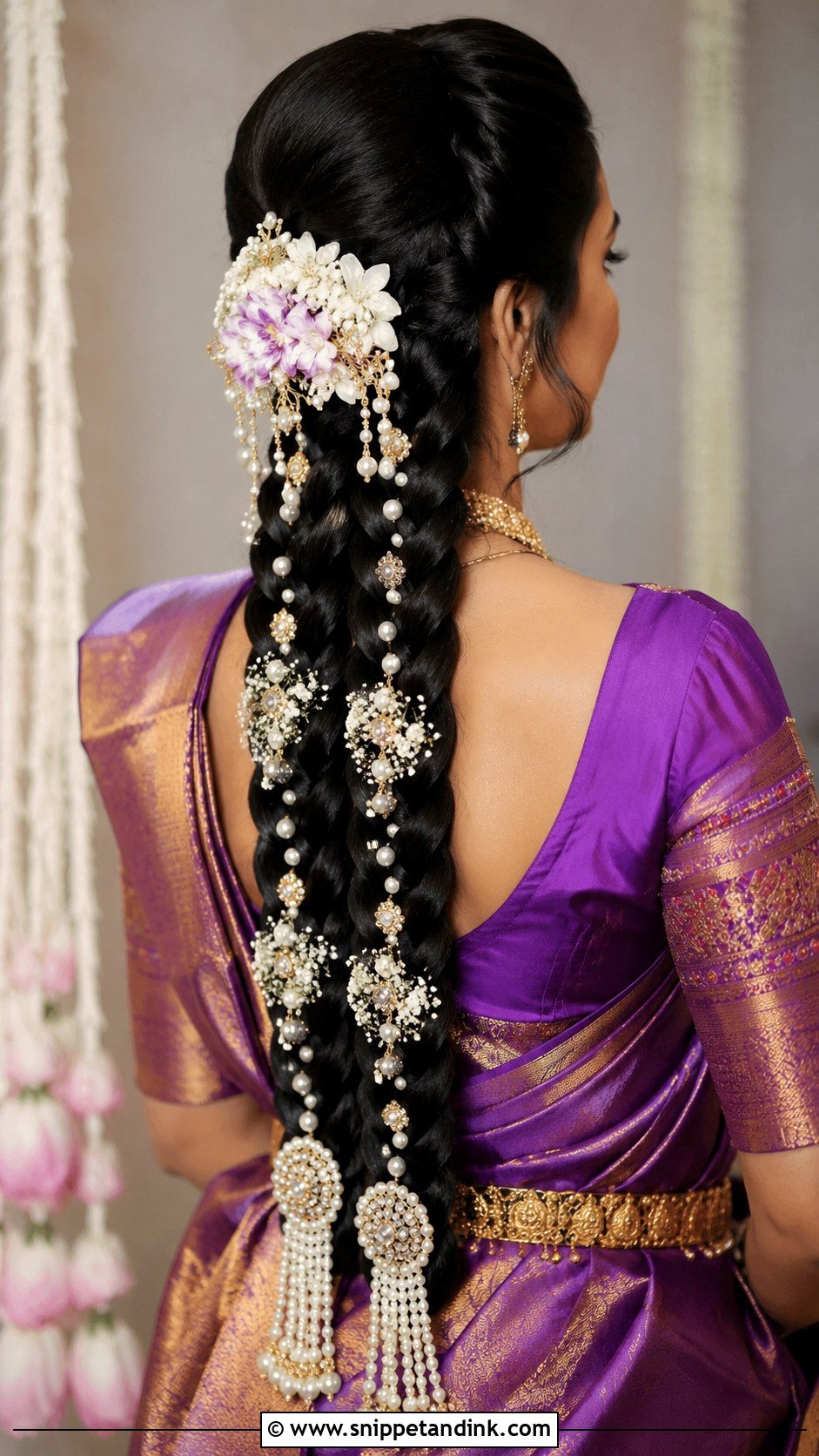
Two braids give a fuller back view than one, and with jasmine, roses or marigolds woven into each, the pattern reads from across the hall. I only suggest it for thick, long hair; divide thinner hair in two and each braid looks sparse once the flowers go in. Gold or pearl pieces can run down both lengths. Decide at the trial whether you want them close together or spaced apart, because spaced braids sit over the shoulder blades and show more of the blouse back. Budget extra chair time too. Two decorated braids take noticeably longer than one, on a morning that already starts before sunrise.
8. High Bun with Gajra
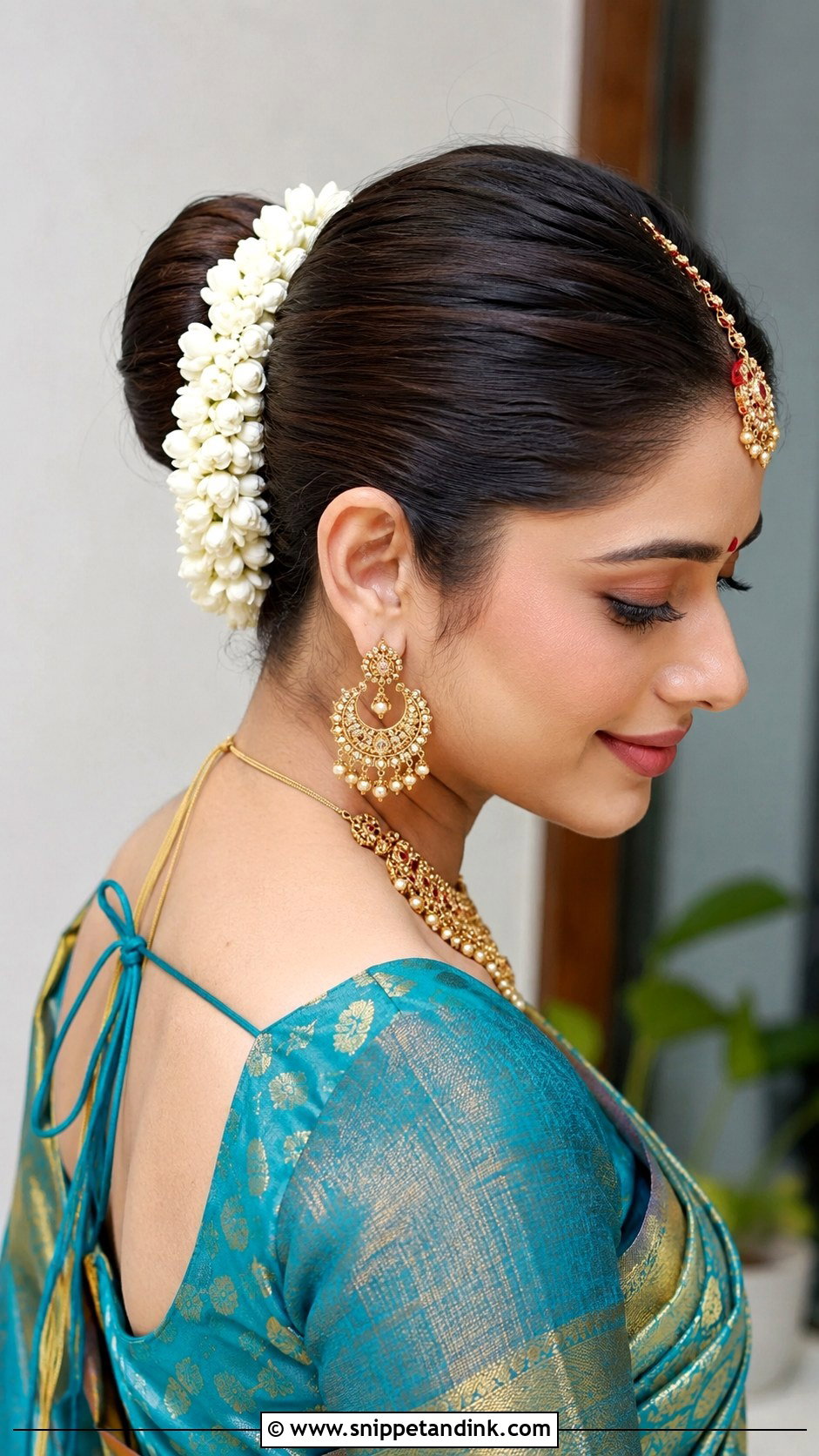
A gajra ring around a crown bun is the quickest flower-heavy option on this list, which matters when the muhurtham is early and the queue for the stylist is long. The height lengthens the neck and keeps everything off warm skin. I pin the ring at four points at least; held at two, it slides down the bun as the hair settles through the morning. Statement chandbalis and a temple necklace both stay in full view. Very tall brides sometimes prefer it a little lower so it doesn’t add more height than they want.
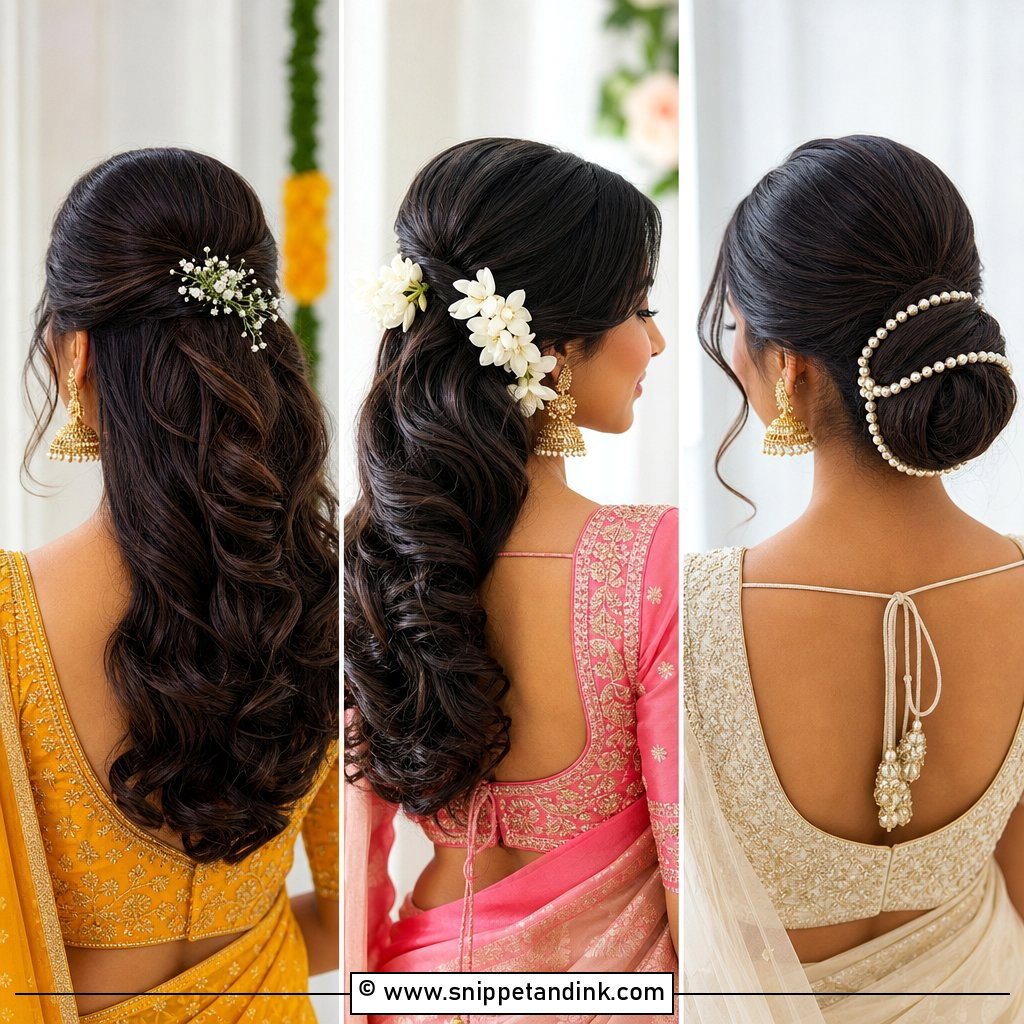
9. Half Up Half Down Bridal Look
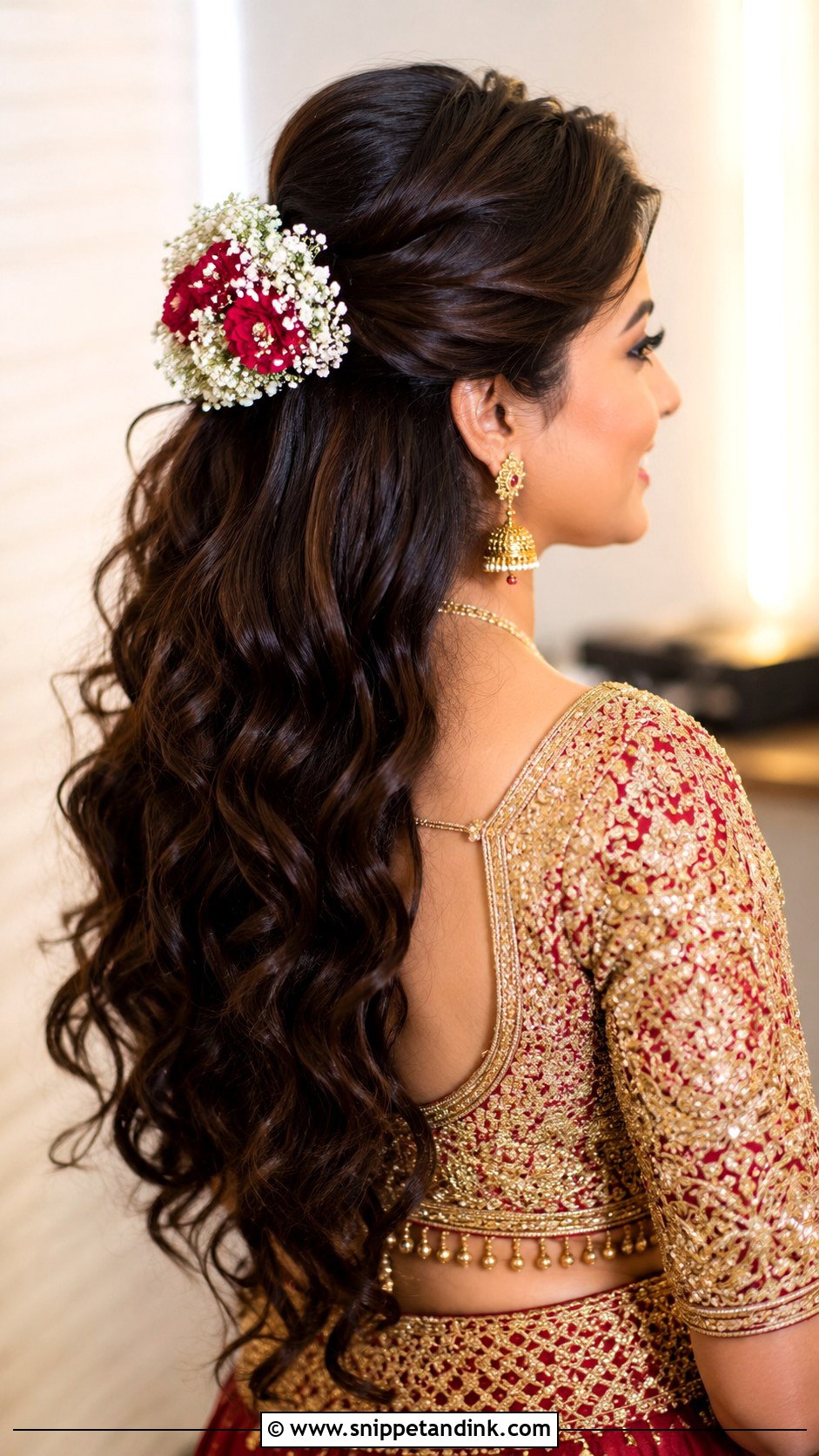
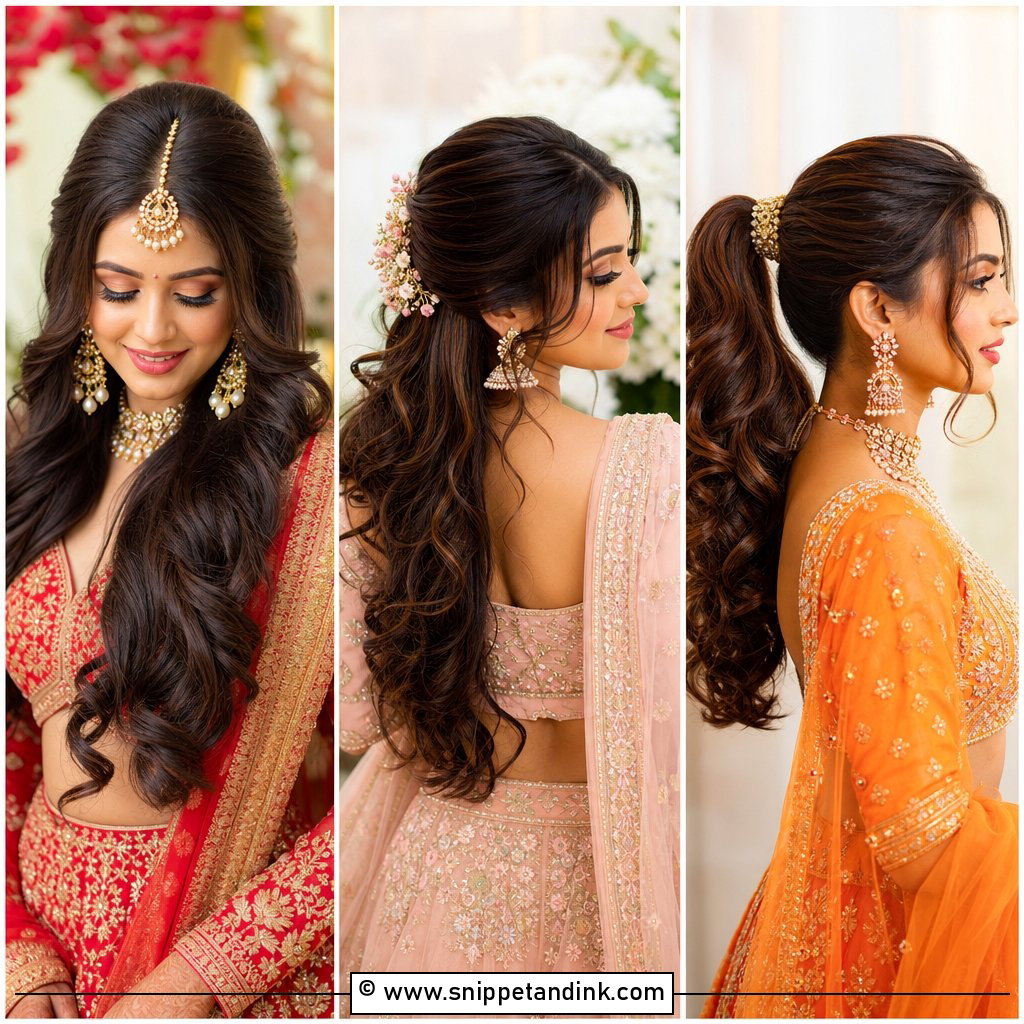
A half-up style lets you show off your length while keeping the top secured. I pin the crown section with gold accessories or jasmine and wave the lengths that fall below. My honest caveat for a muhurtham is the thali: loose hair over the nape gets in the way when the knot is tied, and it can snag in the thread. If you choose this, I set the waves with heat and a firm hold spray, and someone close to you sweeps the lengths over one shoulder just before that moment. Plenty of brides save it for the reception instead.
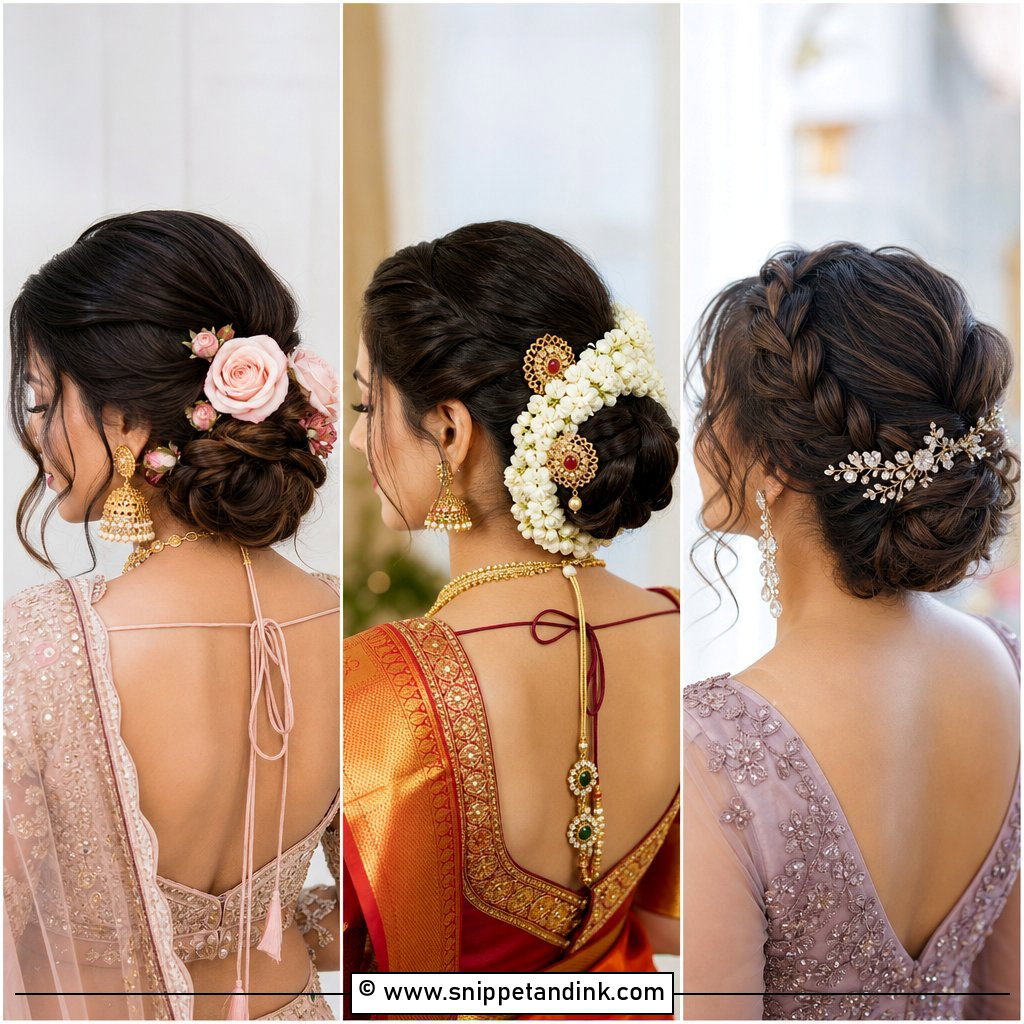
10. Curly Bun with Fresh Flowers
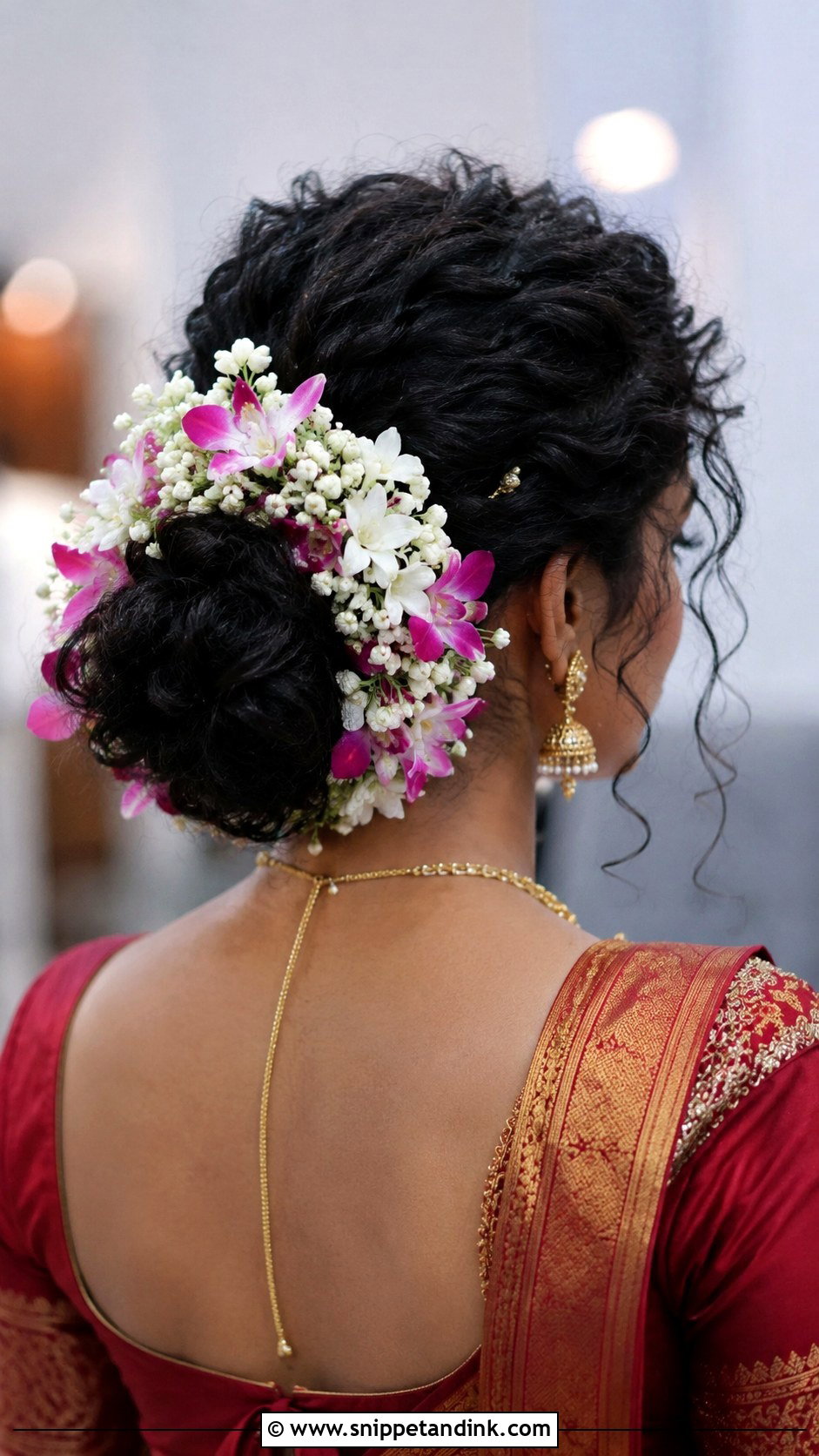
Natural curls make a bun that holds flowers with very little backcombing, because the texture grips the pins. I gather the curls at the nape without straightening them and tuck jasmine, roses or orchids where the curl pattern naturally opens up. Prep matters more than styling here. Wash and condition curly hair the day before, not the morning of, so it isn’t swollen and frizzy by the ceremony. If you usually wear your curls loose, wear this bun for a full day after the trial to check how the pins feel at hour six.
11. Long Braid with Marigold
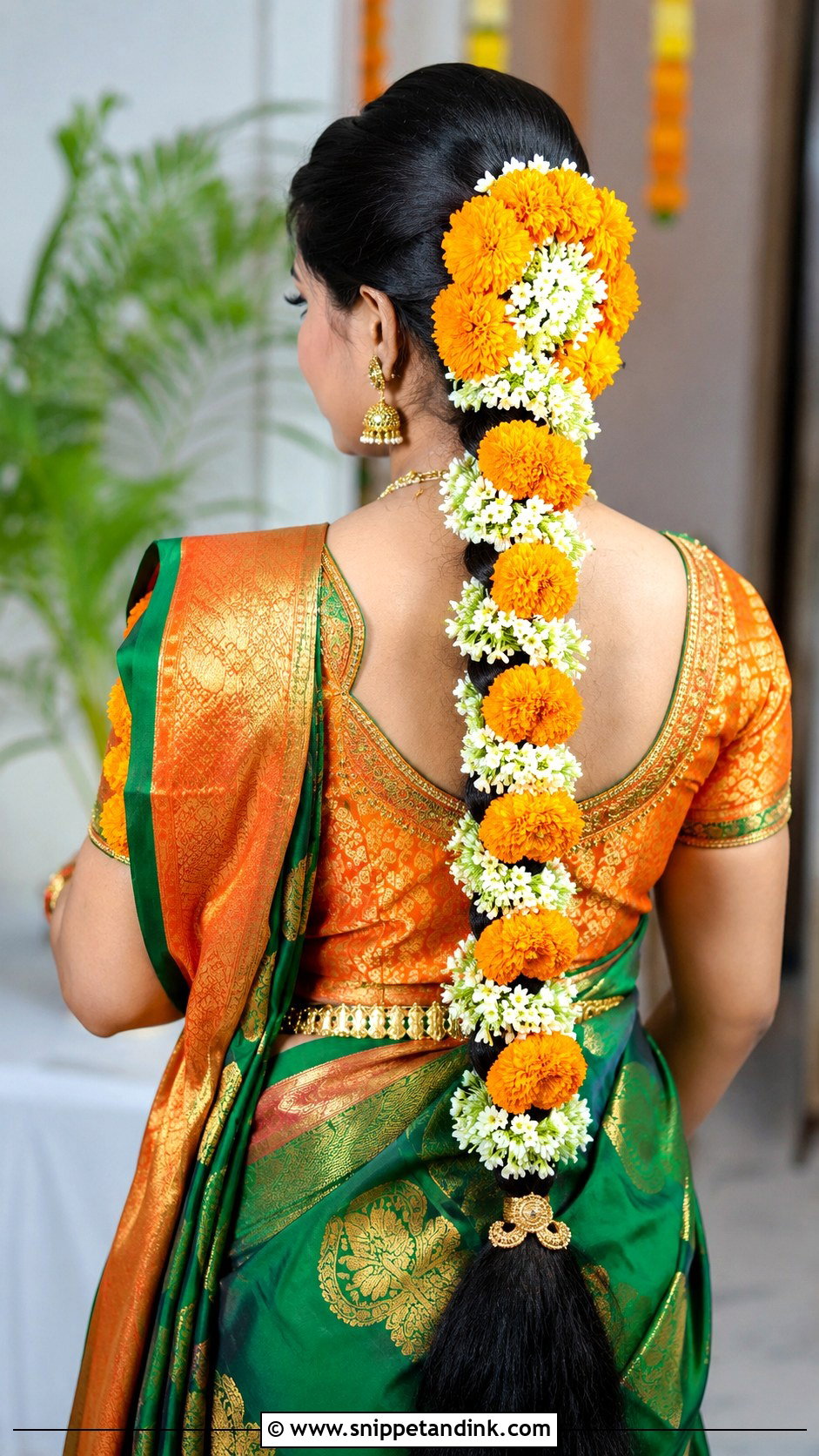
Marigolds are considered auspicious at South Indian weddings, and their orange and yellow give a braid real warmth. Against red, green or orange silk they look festive, and mixed with jasmine the contrast gets sharper. Marigold heads are bulkier than jasmine, so I use smaller varieties along the length and save full heads for the base. The marigold braid photographs warmly in morning light. Expect a few dropped petals, though; they shed more than jasmine, so I keep the flowers off the last few inches near the neckline.
12. Pinned Bun with Pearl Accessories
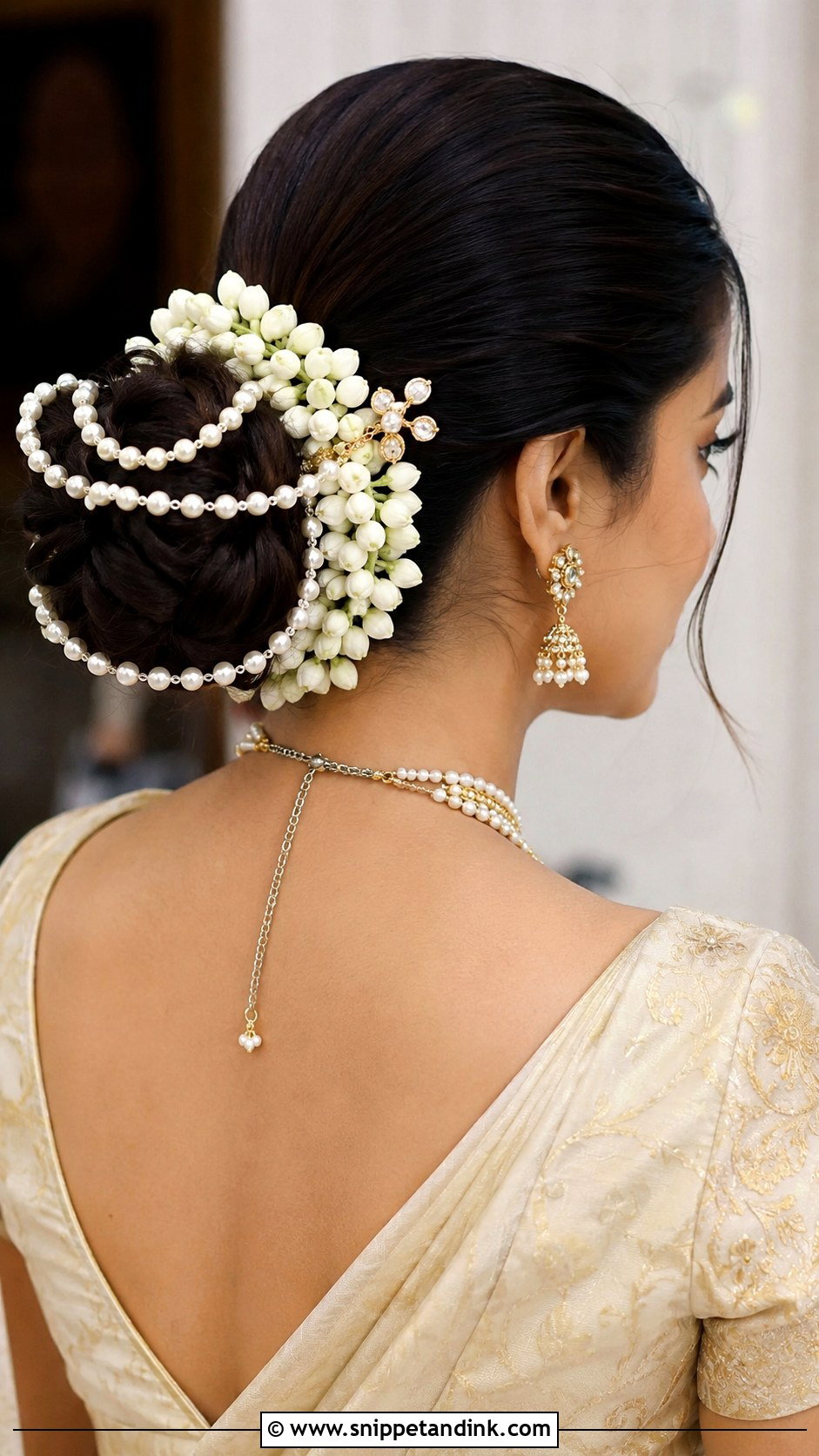
A pearl-strung bun is the quiet option on this list. It suits brides in pastel or cream silk wearing a pearl set rather than heavy temple gold. Pearl strings shift every time you turn your head, so I secure each one at both ends and add short pins through the middle to stop it sagging. Small jasmine buds tucked around the edge add scent. Next to a full temple set, pearls tend to look lost, so I’d only choose this when the jewelry is pared back too.
13. Tamil Bridal Braid with Billa
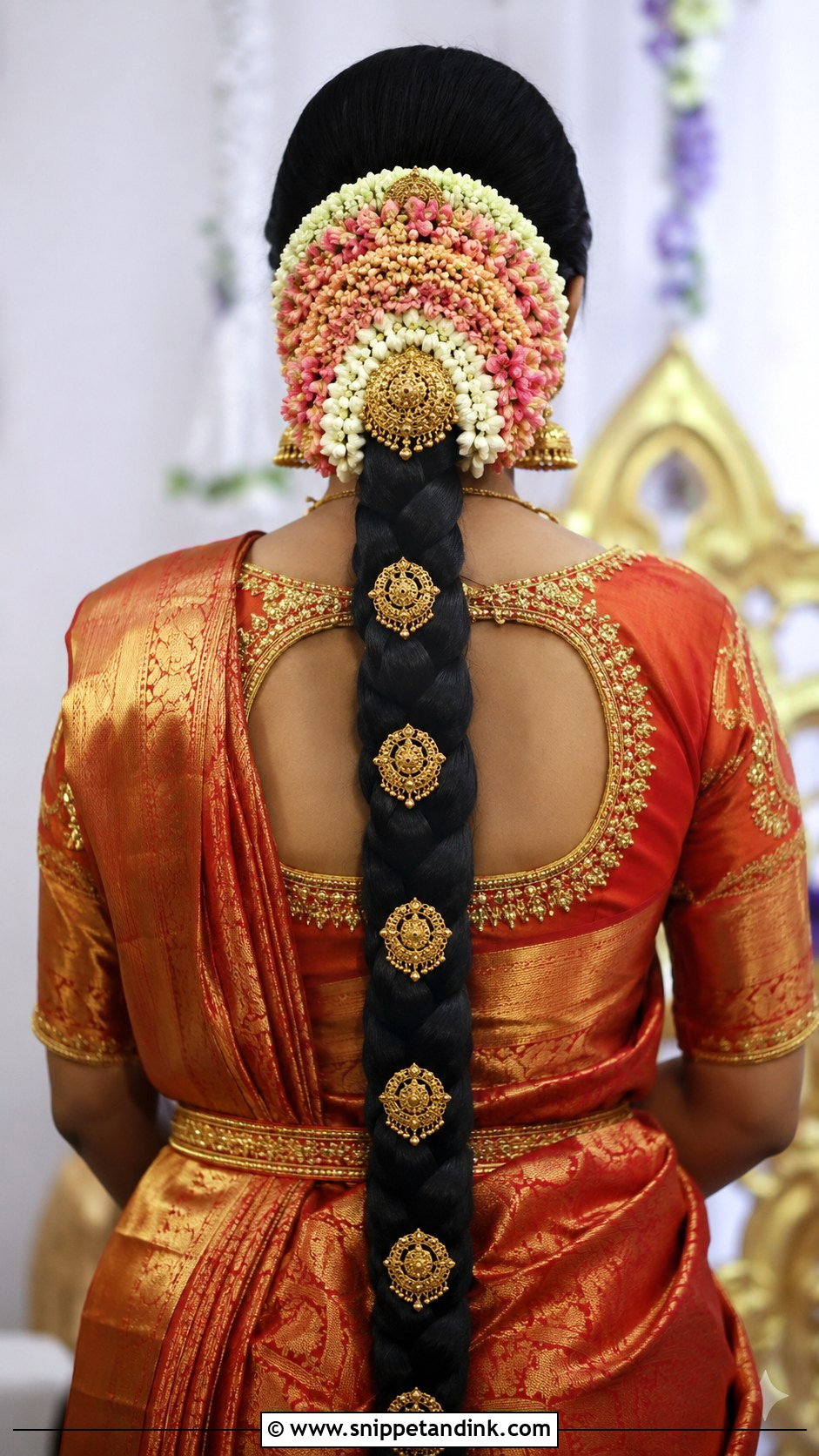
Tamil brides often wear a beautifully decorated braid with a semicircular floral veni at the top and two jasmine venis running alongside. Gold billas sit down the length, and flowers fill every gap so the whole thing reads as one continuous piece. It’s demanding to build and heavy to wear, so the base braid must be tight, with the venis pinned or stitched to it rather than laid on top. With a silk saree and temple jewelry, this is the most traditional choice here. Ask your family early whether they expect a particular arrangement; many households have clear preferences, and it’s easier to know before the trial.
14. Loose Curls with Floral Crown
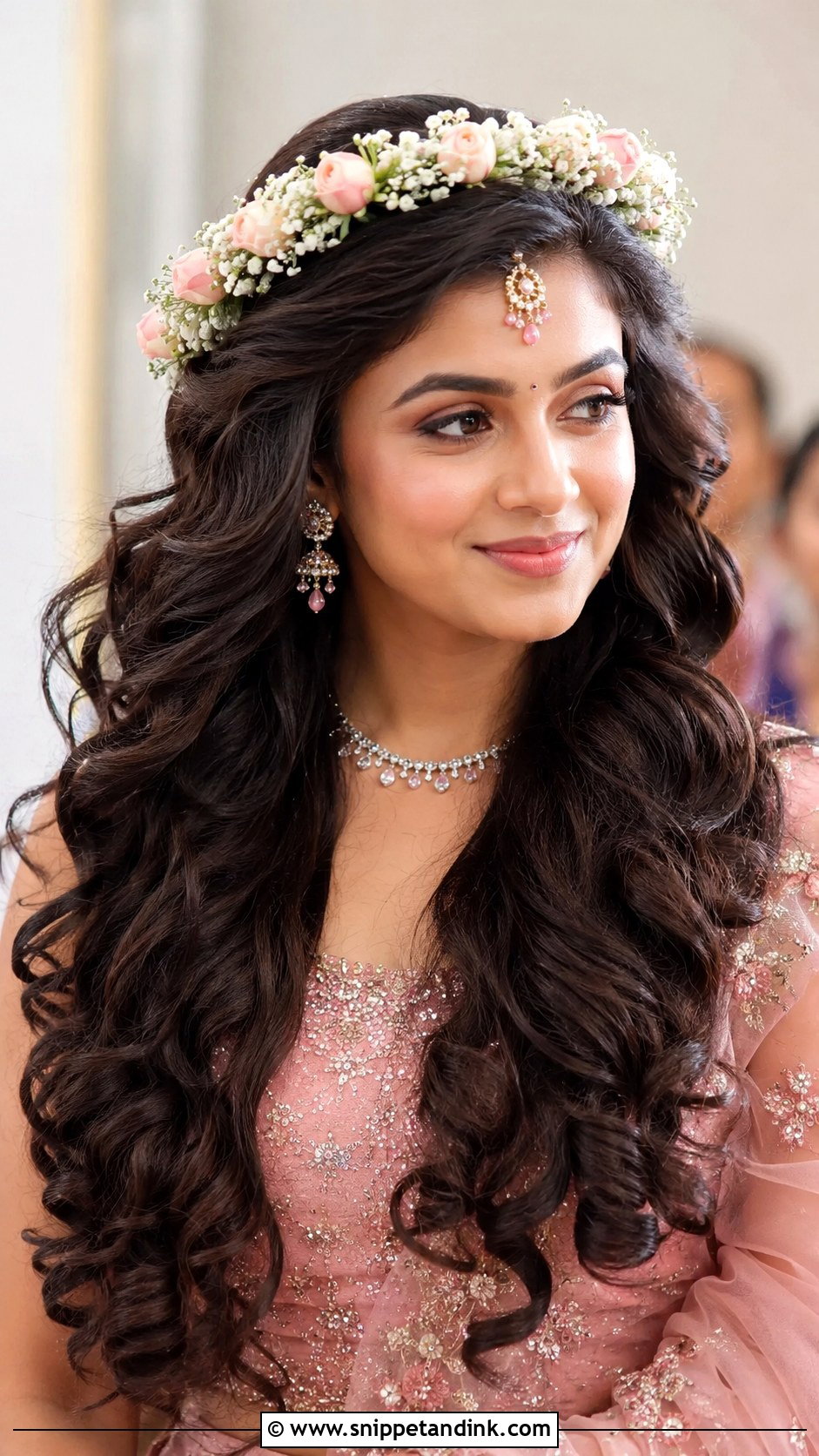
Loose curls under a floral crown lean modern, with jasmine, roses or baby’s breath forming the circlet. I build the crown on a thin wire band so it doesn’t rely on the hair to hold its shape, then pin the band at the sides. Curls in a hot mandapam need a proper set: I curl, pin each curl while it cools, and only release them shortly before you leave. Brides who wear their hair open every day often feel most like themselves in this one. It sits well with lighter sarees and lehengas, and the soft curls take natural window light kindly.

15. Messy Bun with Jasmine
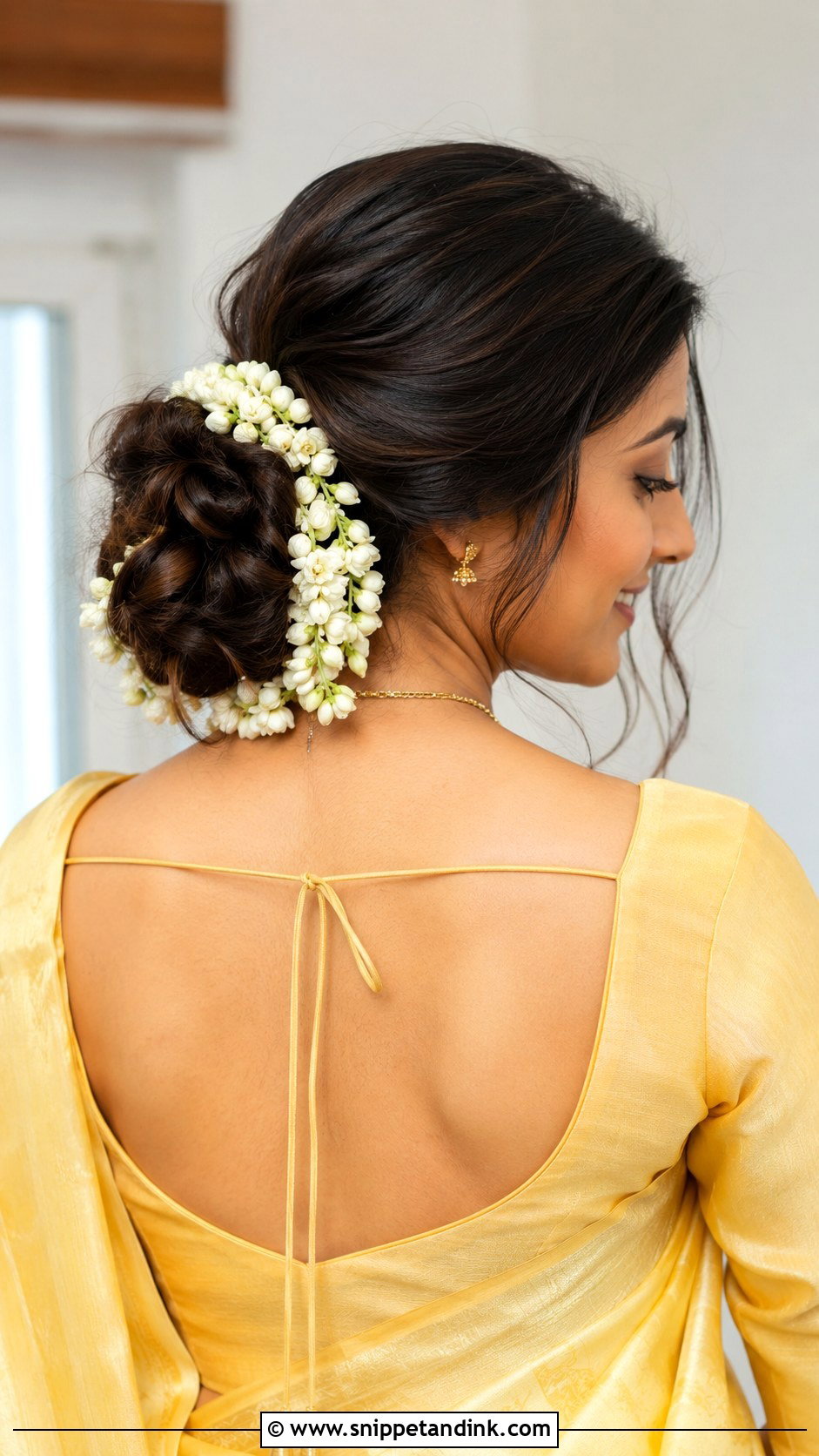
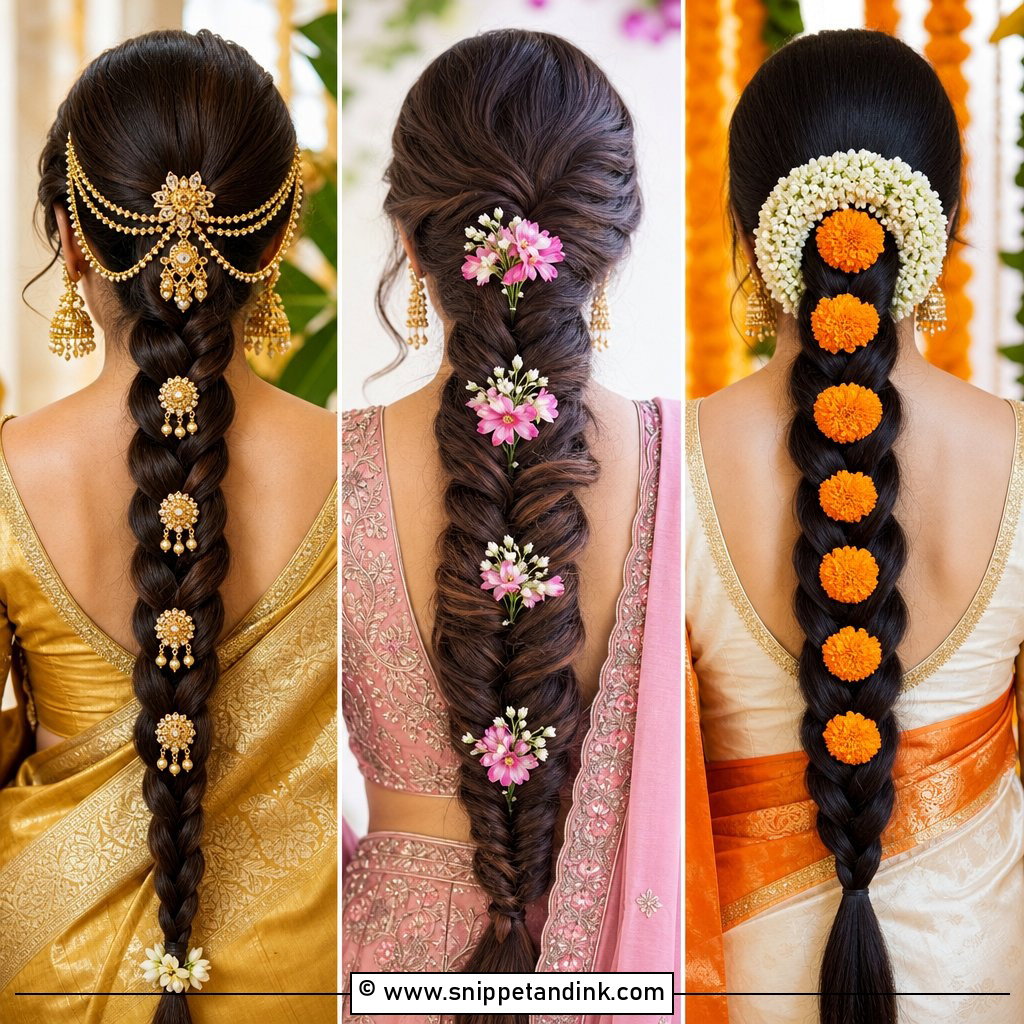
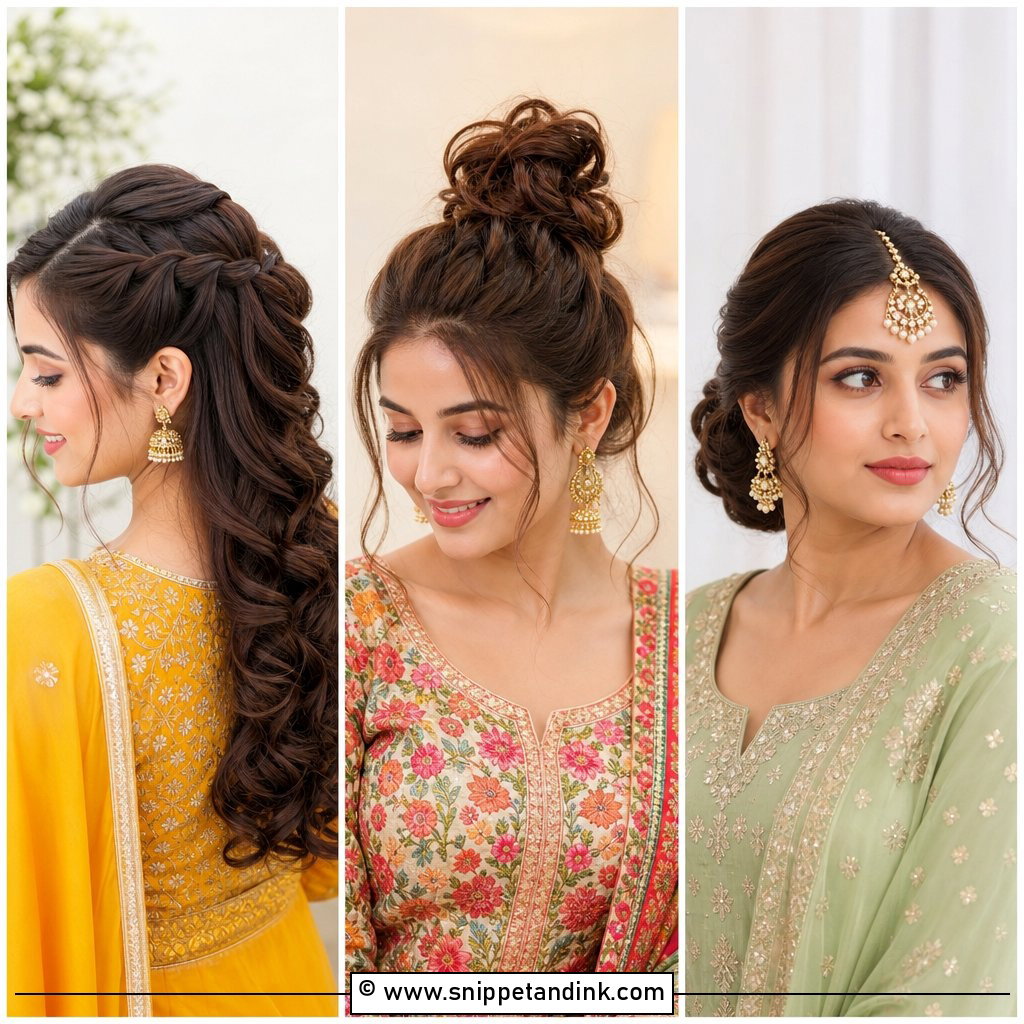
A textured bun with a few loose pieces feels relaxed, and wrapping jasmine around it brings the tradition back in. The undone part is planned. I pull pieces out after the bun is fully secure, never before, so it looks soft without actually coming apart. Lightweight sarees and minimal jewelry suit it. I’d steer you away from it with a heavy temple set, which looks oddly formal against a soft bun, and with very fine hair, which reads as flat rather than tousled unless it’s textured first.
16. Braided Updo with Mango Motif
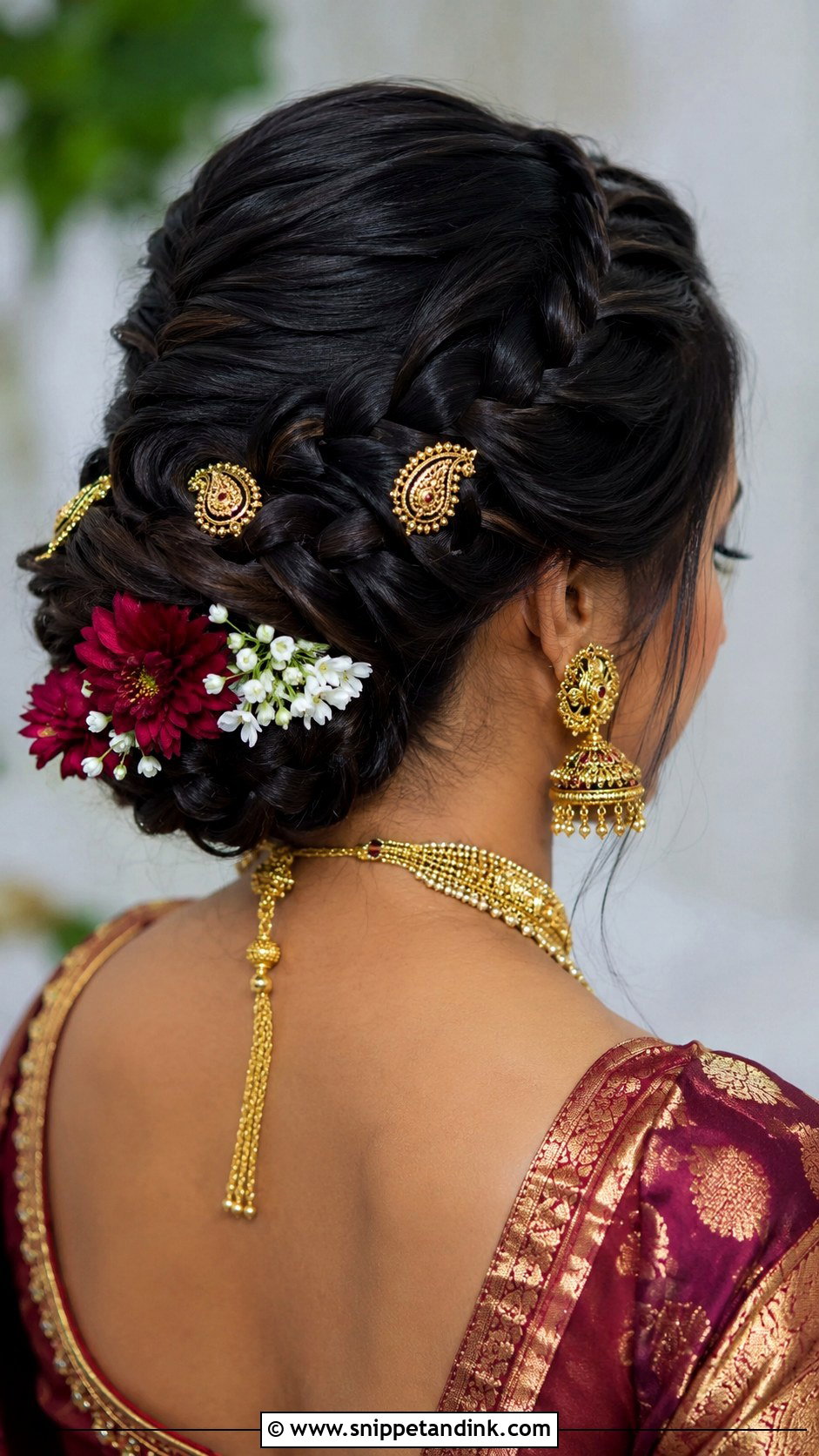
Paisley, or mango, motifs are among the most recognisable shapes in South Indian jewelry, and a braided updo gives them a structured place to sit. I braid the sections first, wrap them into the updo, then position the ornaments where the braids cross so the pins stay hidden. Flowers fill whatever gaps remain. It needs thick hair and time, so it’s not one to squeeze into a rushed morning. The mango motif braided updo looks most considered when the necklace or earrings repeat the same paisley shape.
17. Donut Bun with Flowers
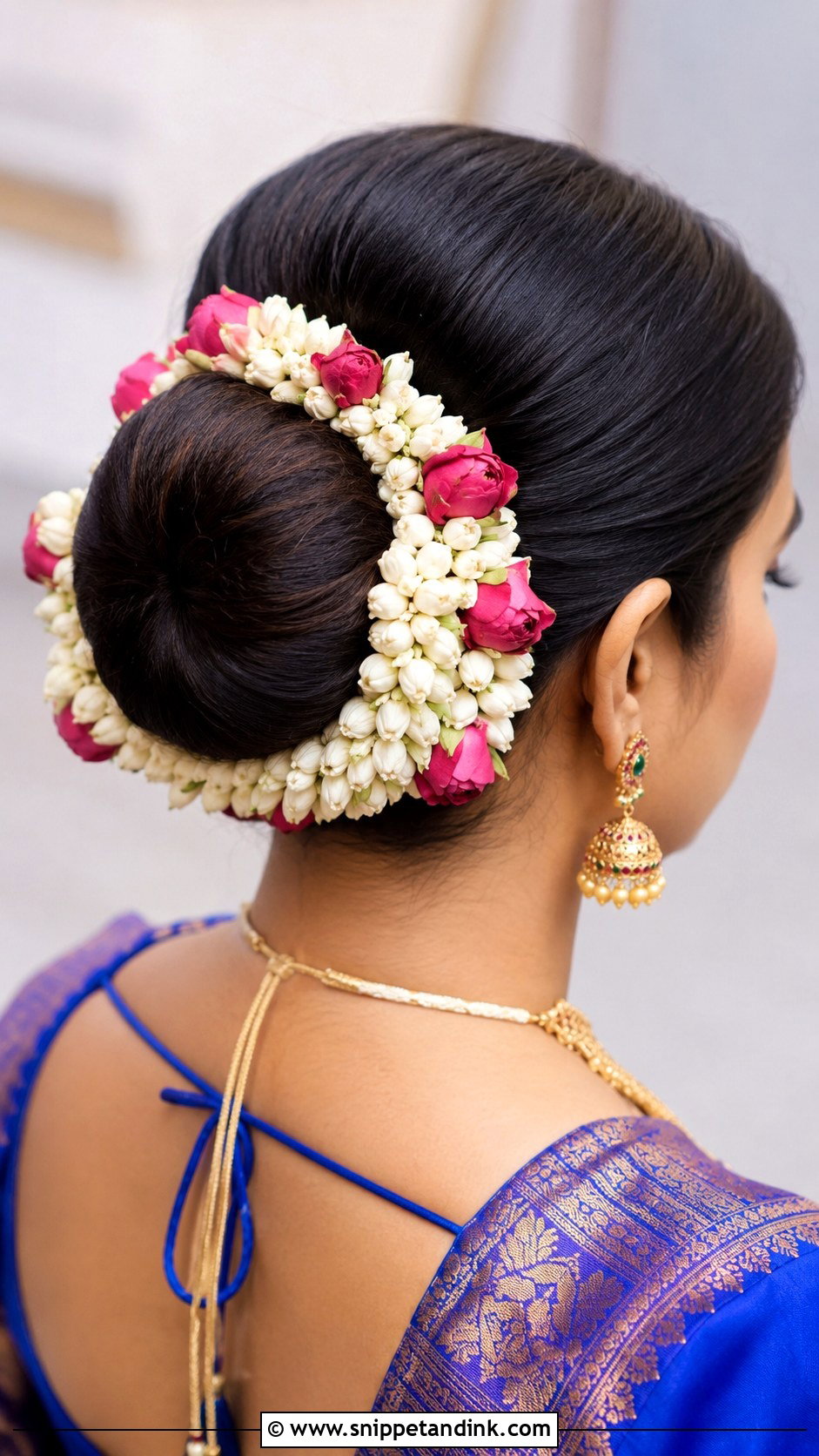
Of everything here, the donut bun is the most secure. I wrap the hair smoothly around a donut form, pin it close, and ring it with jasmine or roses. It doesn’t loosen when you bow for blessings, and heavy earrings and necklaces have nothing to tangle with. The trade-off is that a perfectly smooth bun shows every flyaway, so I finish along the hairline with a little gel or wax. If you’ve had a recent layered cut, mention it; very short layers sometimes can’t reach the form and need hiding with flowers.
18. Fishtail Braid with Flowers
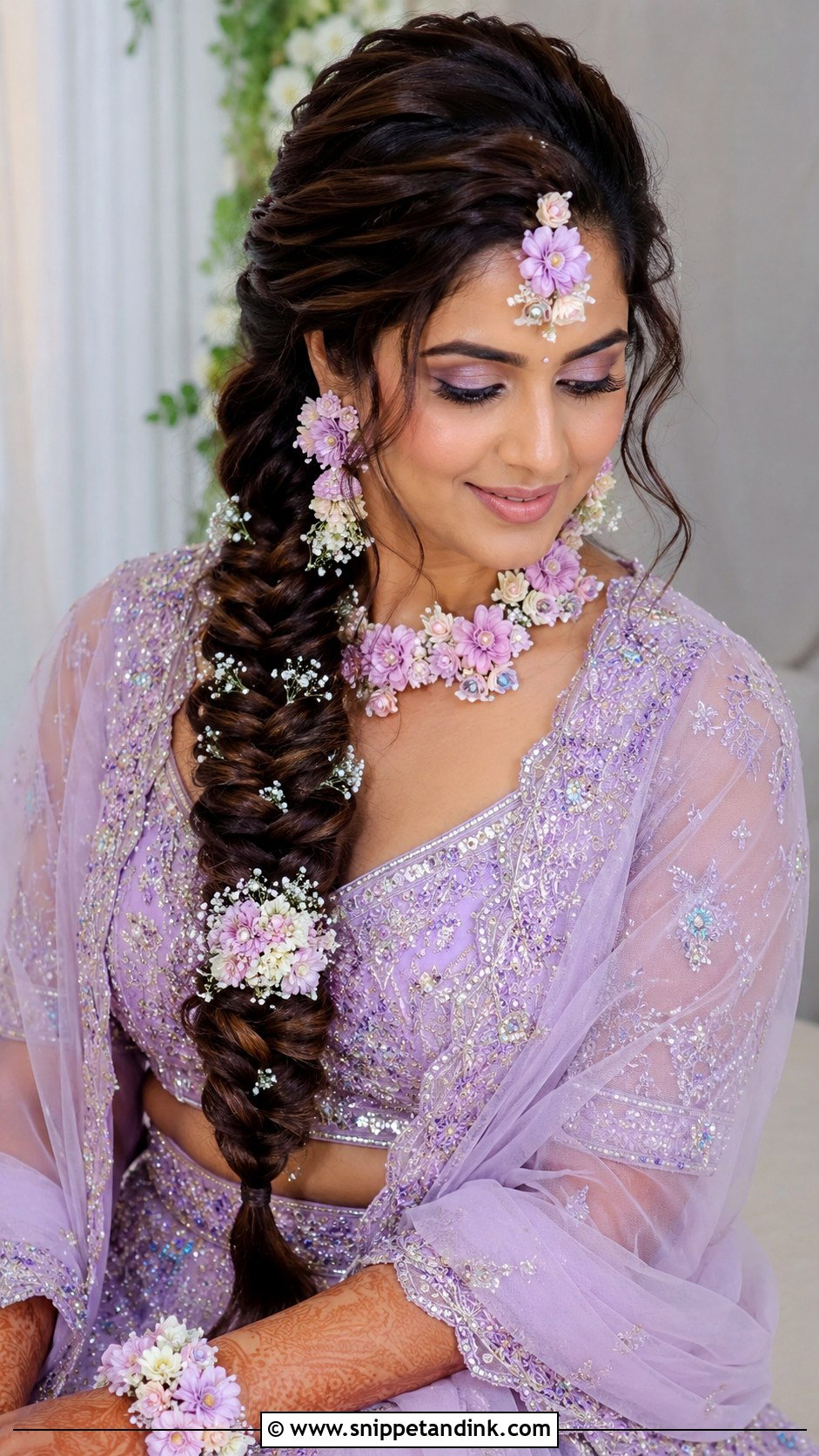
The herringbone weave stands out next to classic three-strand braids, and small jasmine buds tuck into its tight pattern neatly. It’s slower to braid and harder to repair if it loosens, so I gently pull the edges for volume only after it’s tied off. It hangs over one shoulder or down the back equally well. Layered hair is the risk: short ends poke out of a fishtail more than a regular braid, so I mist it with hold spray along the length and smooth any strays.
19. Low Bun with Hair Jada
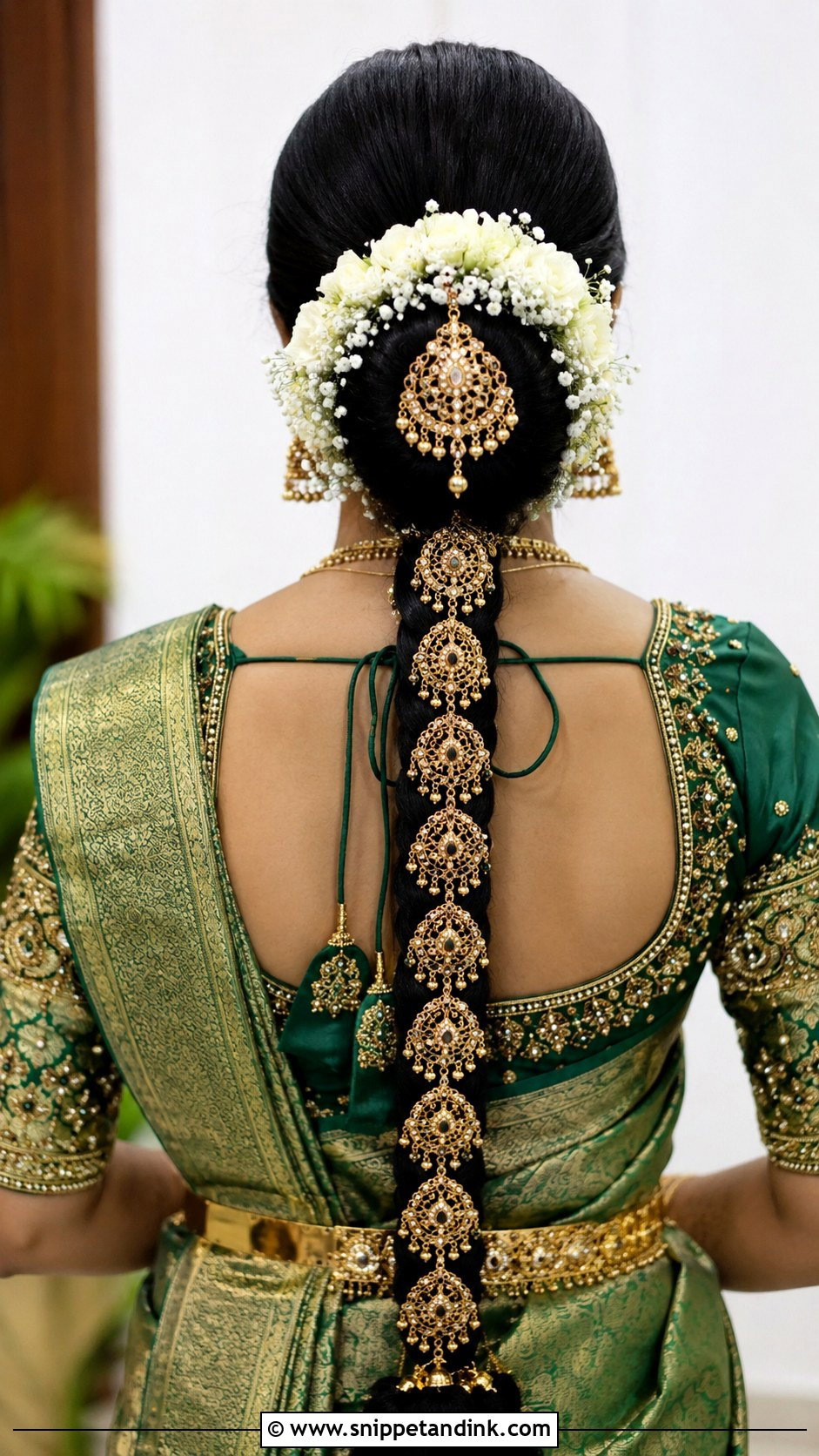
The hair jada is a gold ornament that runs down the back like a decorated braid, often with sun and moon motifs at the top. Paired with a low bun, it hangs from beneath the bun, so you get an updo and a cascade at once. A full gold jada pulls downward all morning, so I anchor it firmly underneath the bun with crossed pins, not just one hook. With heavy silk and temple jewelry, the low bun with jada looks properly traditional. Jadas are often rented; collect yours before the trial so the weight can be tested on your own hair.
20. Voluminous Braid with Ribbons
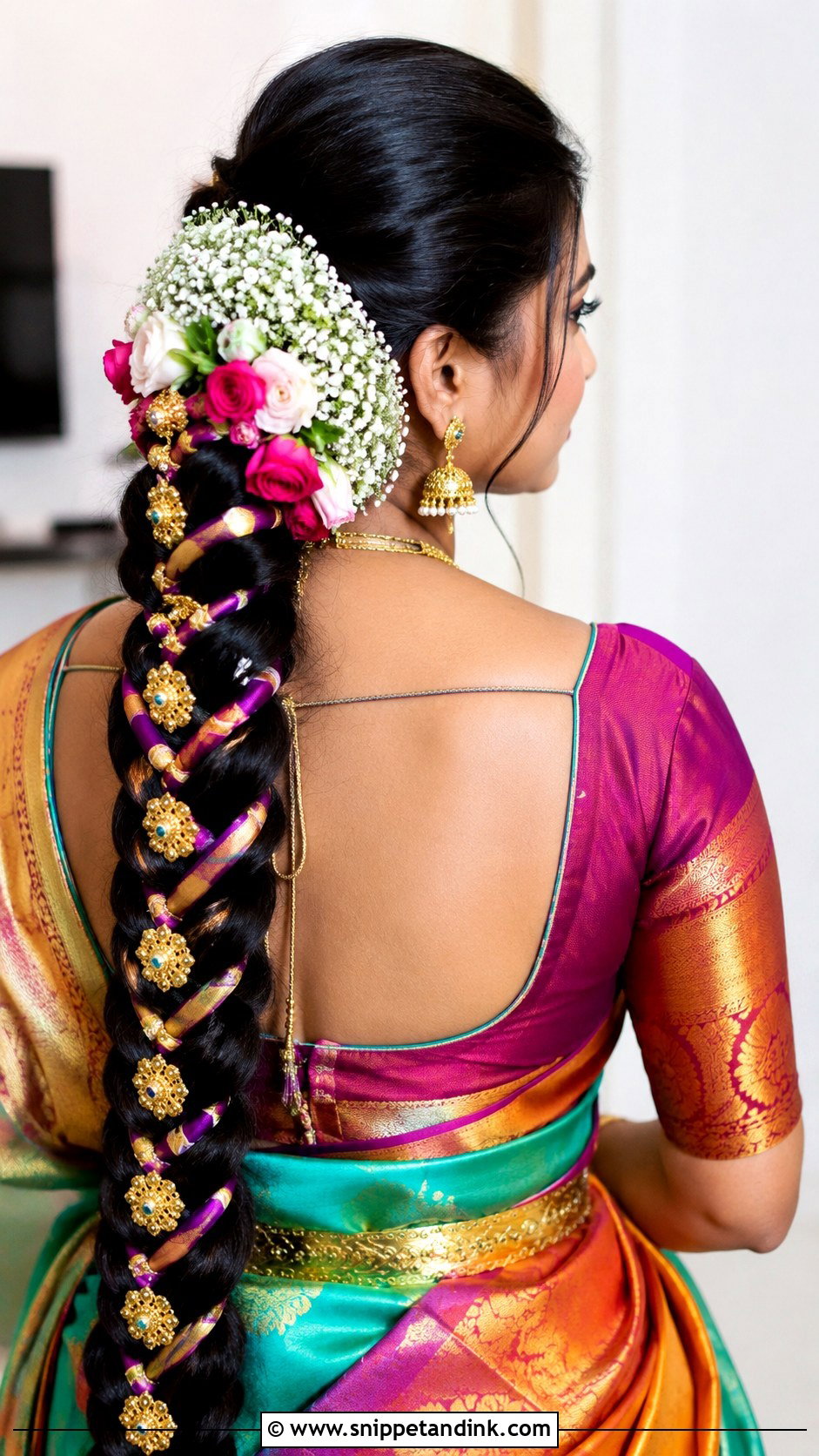
Ribbons add colour to a thick braid and make it look fuller. I weave them in as I braid, either matched to the saree or in a contrasting shade, with fresh flowers alongside to keep it feeling bridal. Satin ribbon slips, so I knot it at the top and hide a pin through the knot. Before you commit, check with your family; in some households ribbons read as playful rather than ceremonial, and you’ll want to know that before the morning itself.
21. Crown Braid with Jasmine
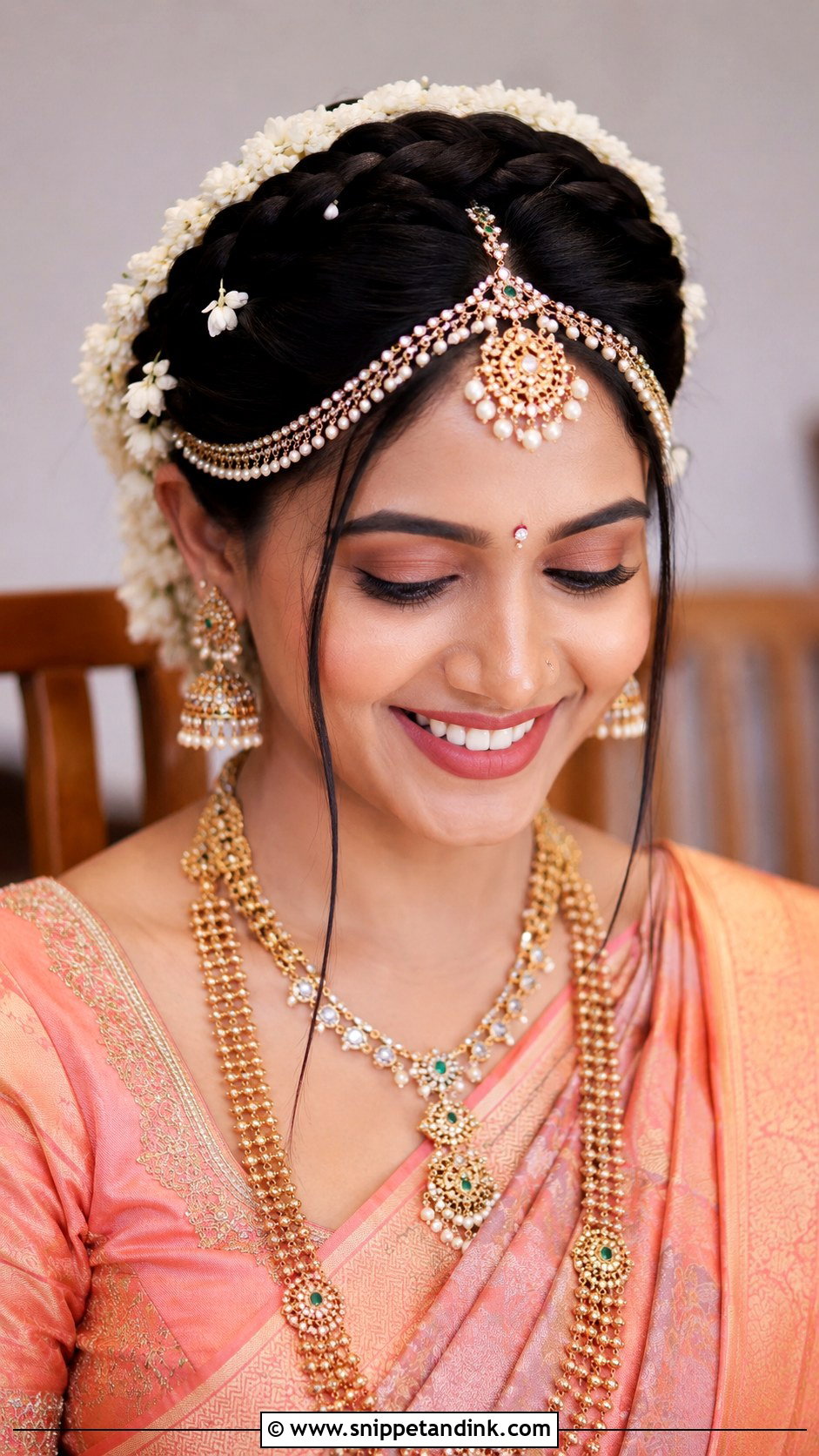
A crown braid wraps around the head and clears the face completely. I braid from one side, lay it across the top, pin it flat, and tuck jasmine along its length. Matha pattis and statement earrings both suit it, because the forehead and ears stay open. It needs long hair to complete the circle; shorter hair can manage a half crown that ends behind one ear. In heat it’s one of the most comfortable options, since nothing touches the neck.
22. Sleek Bun with Maang Tikka
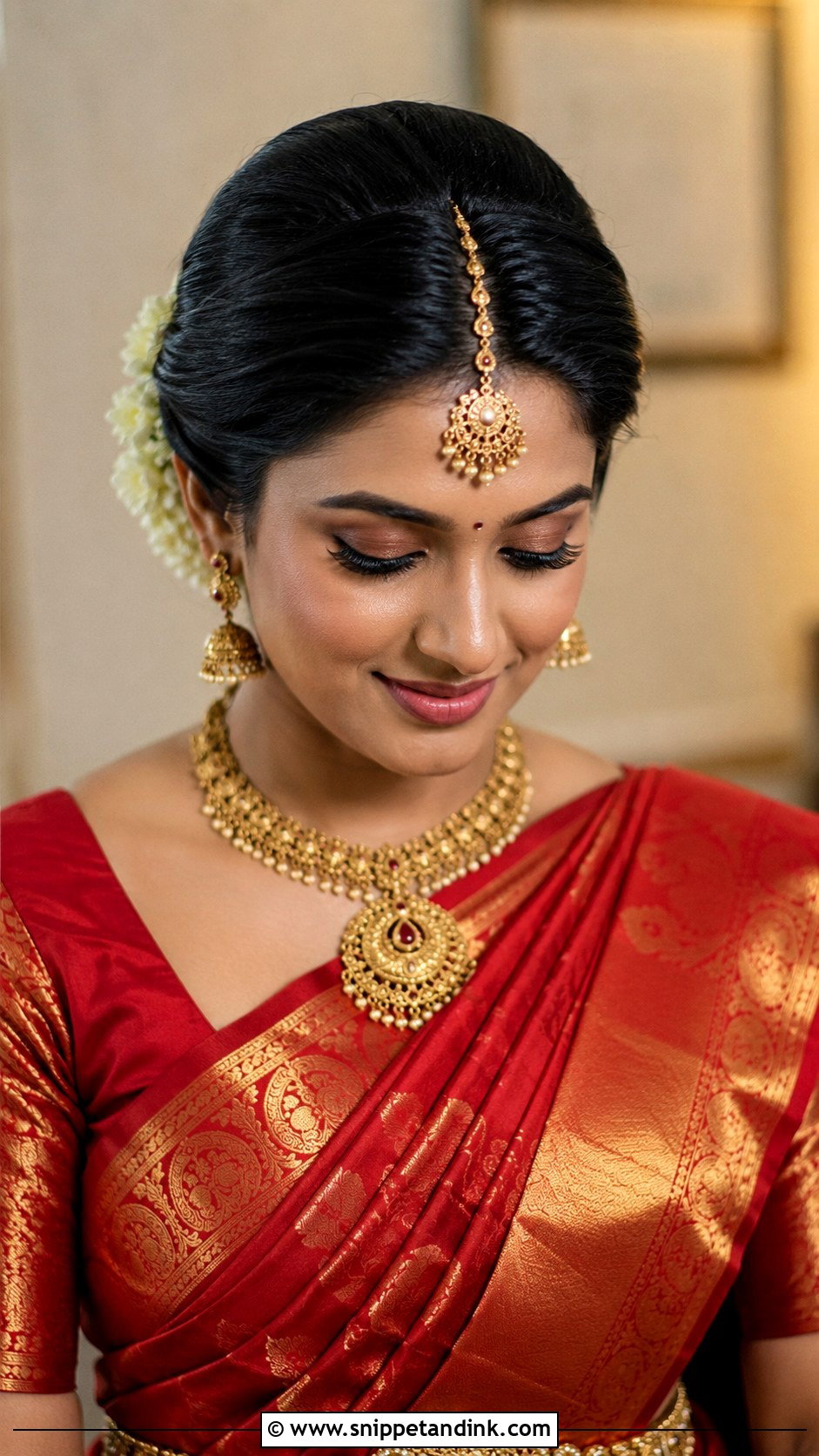
Minimal yet striking, a sleek bun hands the attention to your maang tikka and jewelry. I brush the hair back smoothly, set the hairline with a firm gel, and pin the bun tight and low. A few flowers can soften it if you’d like. Watch out if your scalp gets oily in heat: a sleek finish can look greasy by midday. I dust a little powder along the parting before you leave and pack blotting papers in the touch-up kit.
23. Open Hair with Floral Pins
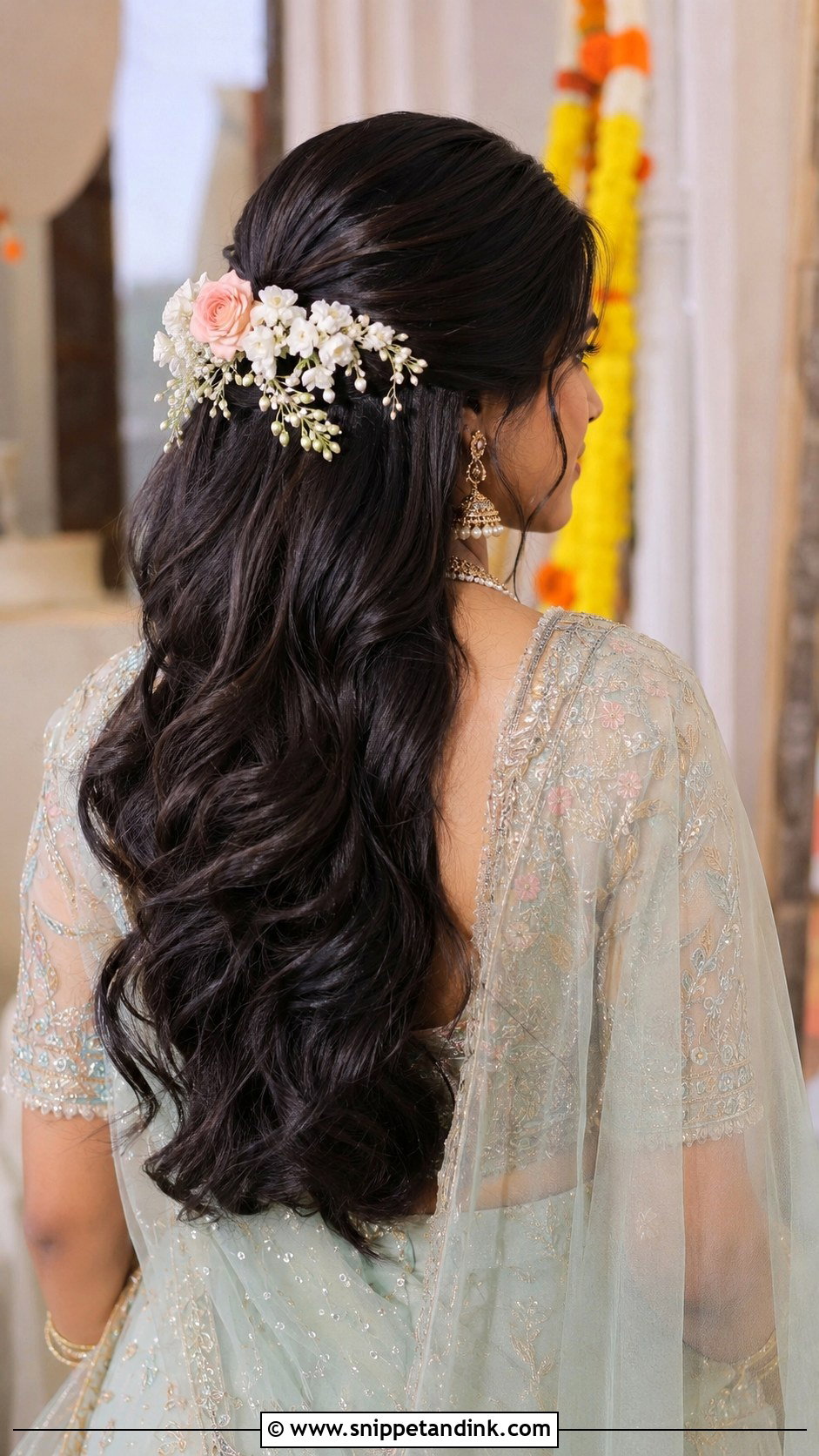
Open hair with flower pins is the lightest choice, with jasmine, roses or small buds clipped near the crown or behind one ear. It suits long, healthy hair and lighter sarees. Practically, it’s my least favourite for the muhurtham itself. Loose lengths tangle with the garlands, catch on the thali thread and frizz in a humid hall. If it’s the look you love, I secure the front sections firmly and keep a clip and a small brush within reach of whoever is helping you.
24. Braided Bun with Temple Jewelry
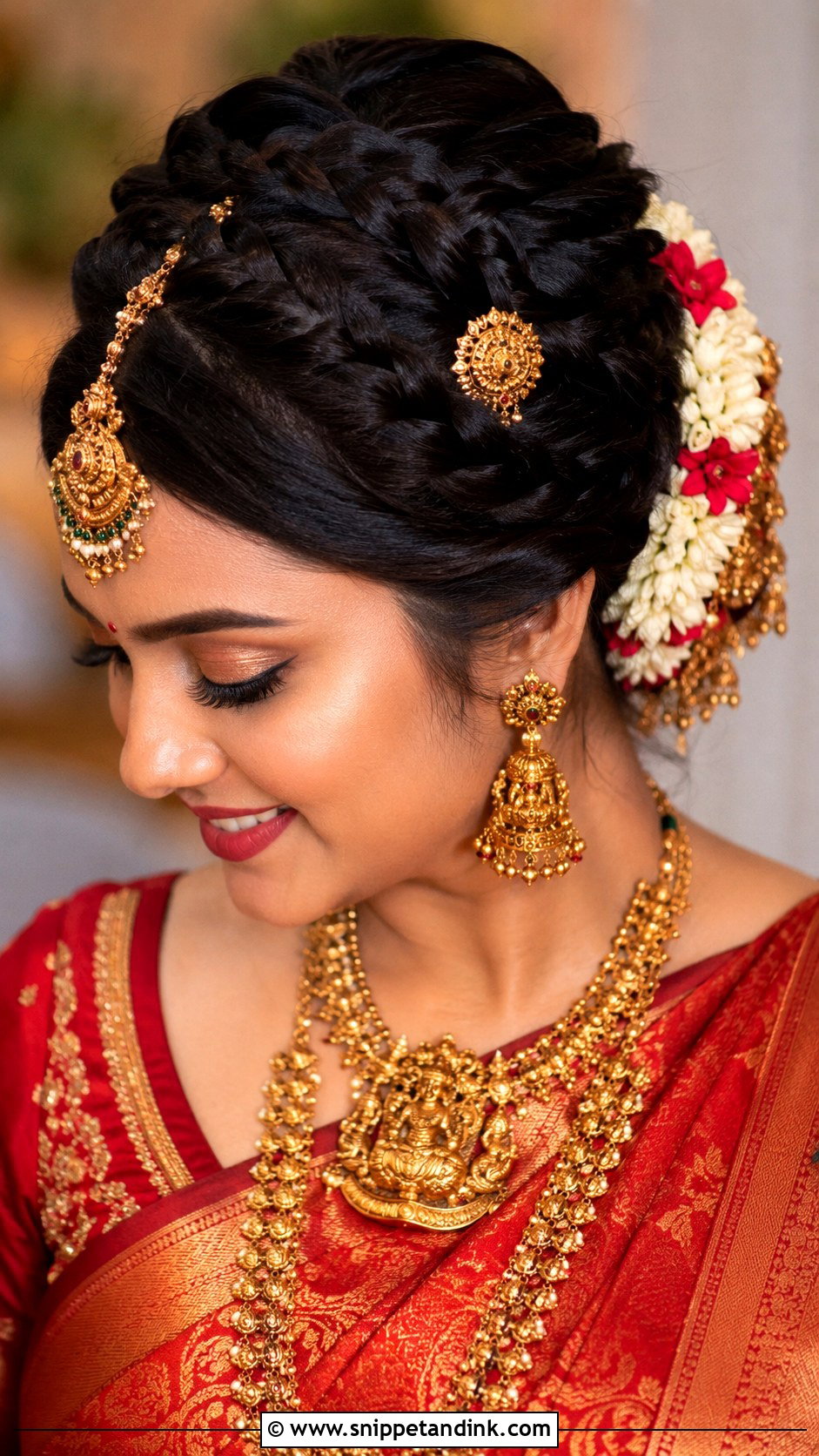
Here braids are wrapped into a bun and decorated with gold temple ornaments, with fresh flowers tucked into the woven sections. The braided texture gives the pins plenty to grip, which makes it one of the safest places for heavy temple pieces. It works with heavy silk sarees and a matching temple necklace. Because it’s dense, it can feel warm against the head after a few hours; I leave the braids slightly looser at the base so air circulates and the scalp doesn’t ache.

25. Twisted Updo with Jasmine and Roses
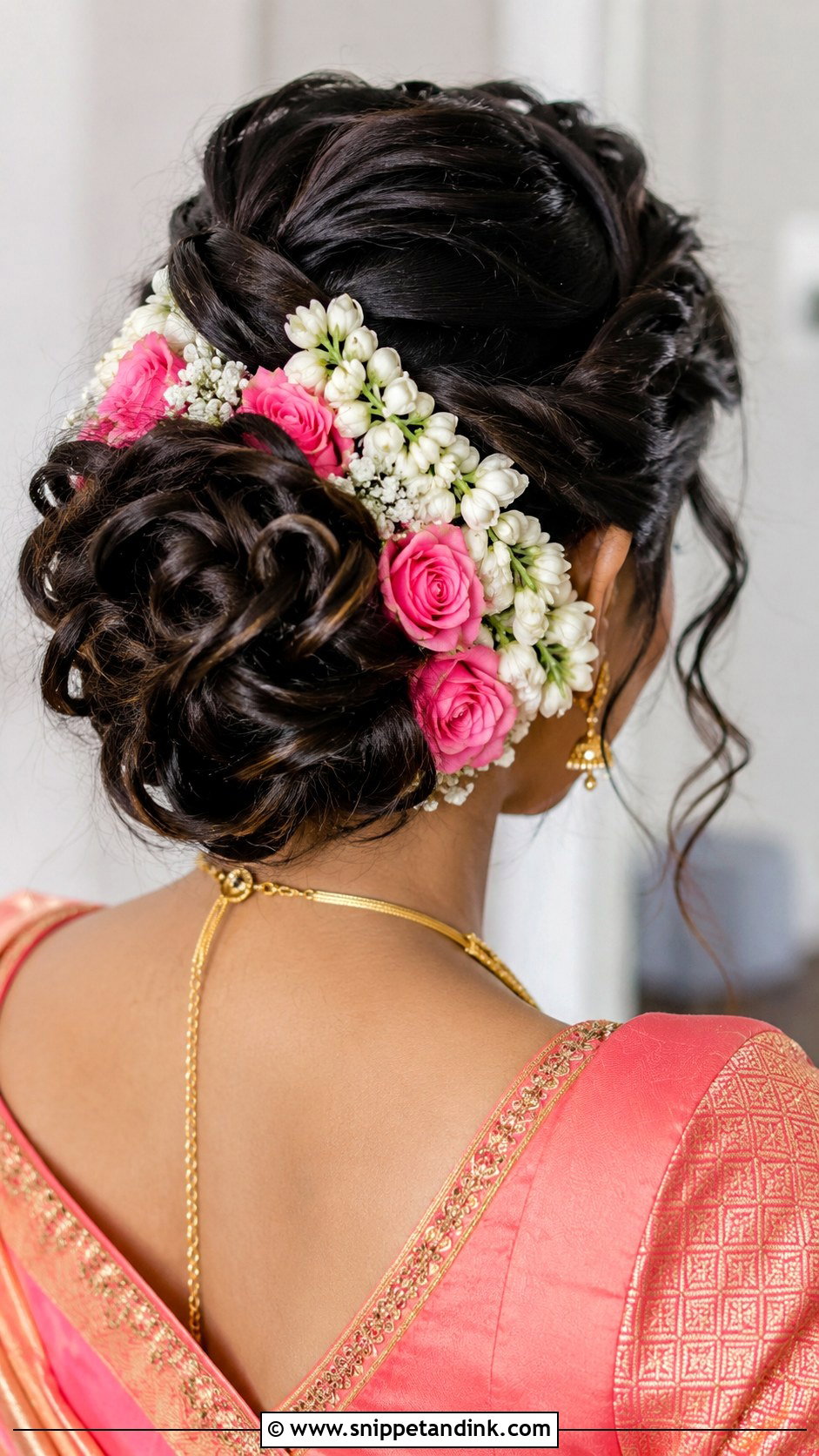
Twists gathered into a textured updo, decorated with jasmine and roses, give a softer look than a braid. The white and coloured flowers set each other off. Twists unravel more easily than braids, so I set each twist with a pin at the point where it meets the next, and spray lightly before adding flowers. Loose pieces at the face soften it. It works with both sarees and lehengas, and it’s a good choice when you want something modern but still covered in flowers.
What Your Hair Goes Through During the Thali Tying
The groom ties the thali at the back of your neck while you’re seated, usually with family pressing close and rice being thrown. Any style that covers the nape makes that moment awkward for him and uncomfortable for you. With a braid, I leave a clean gap at the nape and fix the braid with a single pin that a sister or cousin can lift. With a low bun, I set it just high enough that the knot falls below it.
Rice and petals land in the hair too. Most of it shakes out, but grains lodge in textured buns and between braid sections. A soft brush in the touch-up kit clears them before the posed portraits.
Weight and the Ache That Creeps In
A full poola jada with gold ornaments can feel heavy by the second hour. I spread the load across many crossed pins near the crown, never one or two, and I check that you can turn your head comfortably before you leave the chair. If a pulling ache settles in one spot, say so. Moving a single pin usually fixes it, and there’s no prize for gritting your teeth through the rituals.
Your Trial Needs Real Jasmine and the Real Gold
Shortlist two or three styles from this list and wear your favourite at a trial with real jasmine and the actual jewelry you’ll wear, not stand-ins. Weight, pin placement and how your neck feels after an hour only show up with the real things. Bring the saree blouse, or a photo of its back, so your stylist can judge where the braid or bun should sit. Then show the trial photos to the family member with the strongest views on tradition, well before the morning, not on it.
You'll Like These Ideas:






Leave a Reply