
Asia holds dozens of bridal traditions, each with its own colors, cuts, fabrics and rules about who wears what and when. Lehengas and silk sarees, qipaos, hanboks, áo dài, kimono-inspired robes and fusion gowns all appear below, and many brides now wear two or three of them across one wedding. Right now I see lighter embroidery, sculpted draping, heritage textiles and custom pieces that honor more than one family. For each of the thirty looks I’ve added the jewelry, shoes, veils, dupattas and hair pieces I’d put with it, plus the practical notes that only come up once you are actually wearing it.
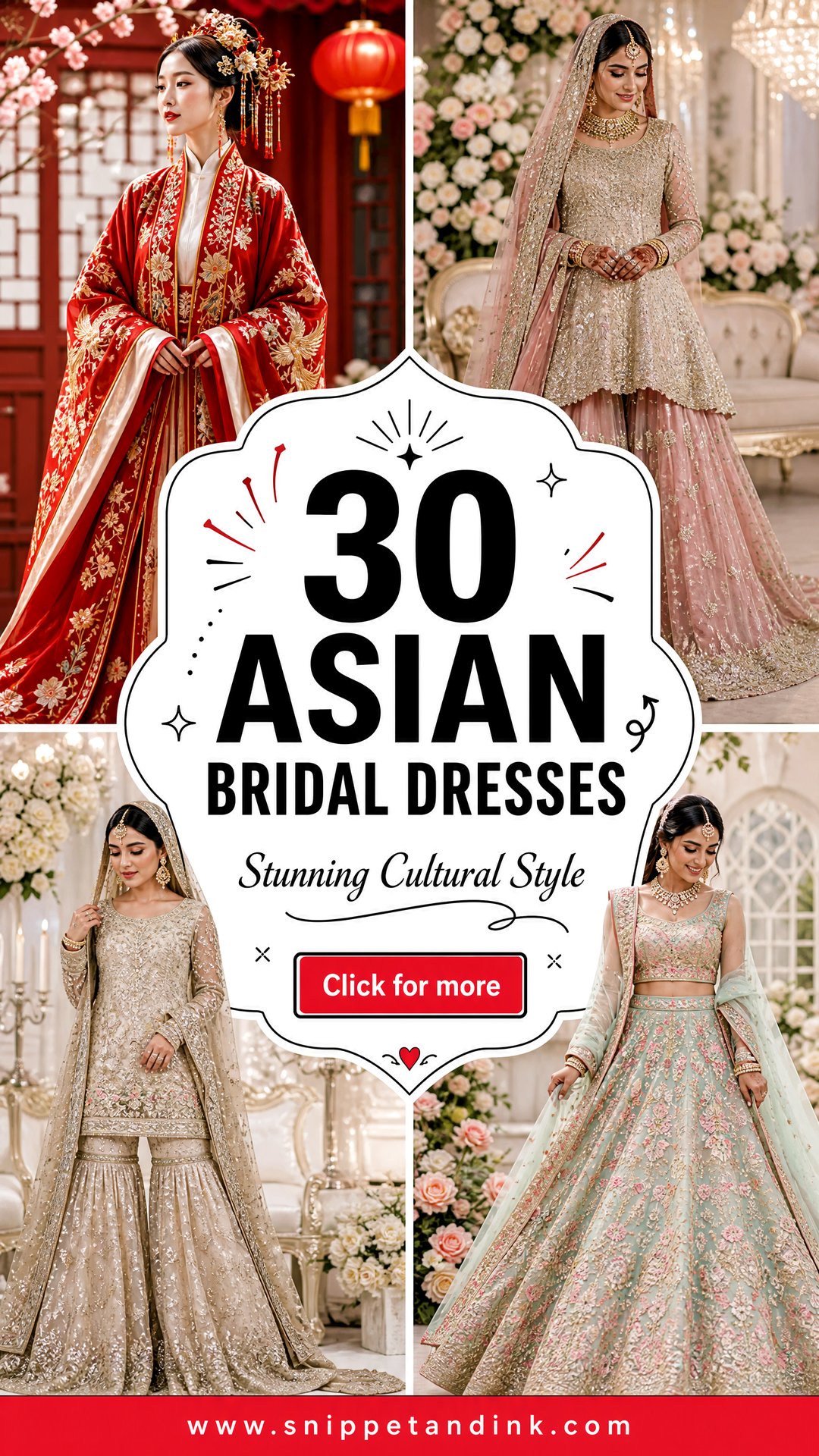
Some of These Outfits Need a Dresser, Not Just a Fitting
A gown goes on with a zip. Many of the outfits below do not. A silk saree needs pleating and pinning, a kimono needs a trained dresser and a series of ties, a hanbok’s chest ribbon takes practice, and a heavy lehenga with a separate dupatta needs someone to pin it into the hair. I plan the dressing as carefully as the outfit.
- Ask your boutique or a local draper whether they offer dressing on the day, and book them early for peak wedding season.
- Allow enough time on the morning: a draped saree with jewelry and dupatta pinning often takes far longer than brides budget for, and a full kimono longer still.
- Do one full rehearsal, outfit, jewelry, hair and shoes together, at least a week before.
- Ask the boutique roughly what the finished outfit weighs. A heavily embroidered lehenga can be very heavy, and that changes how long you can comfortably stand.
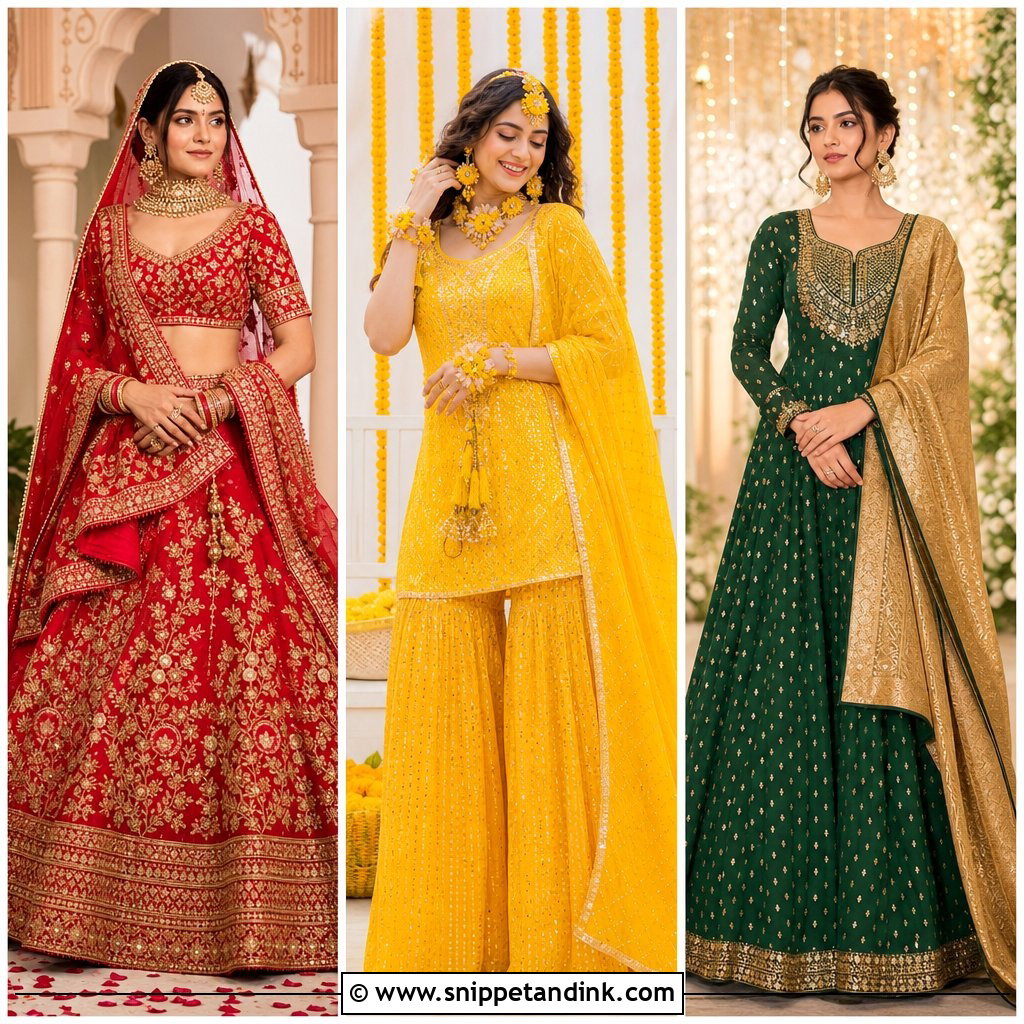
1. Red Bridal Lehenga
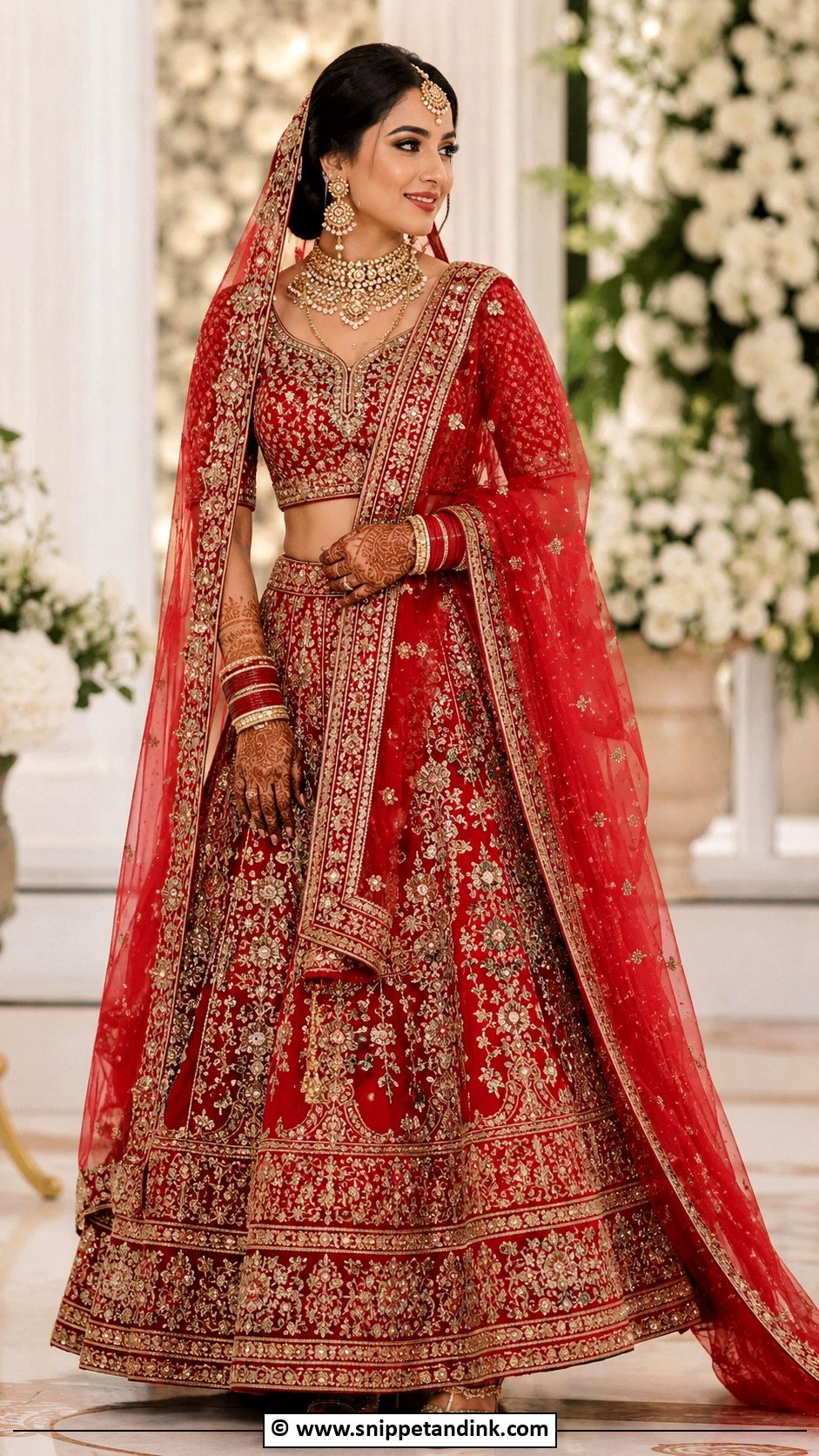
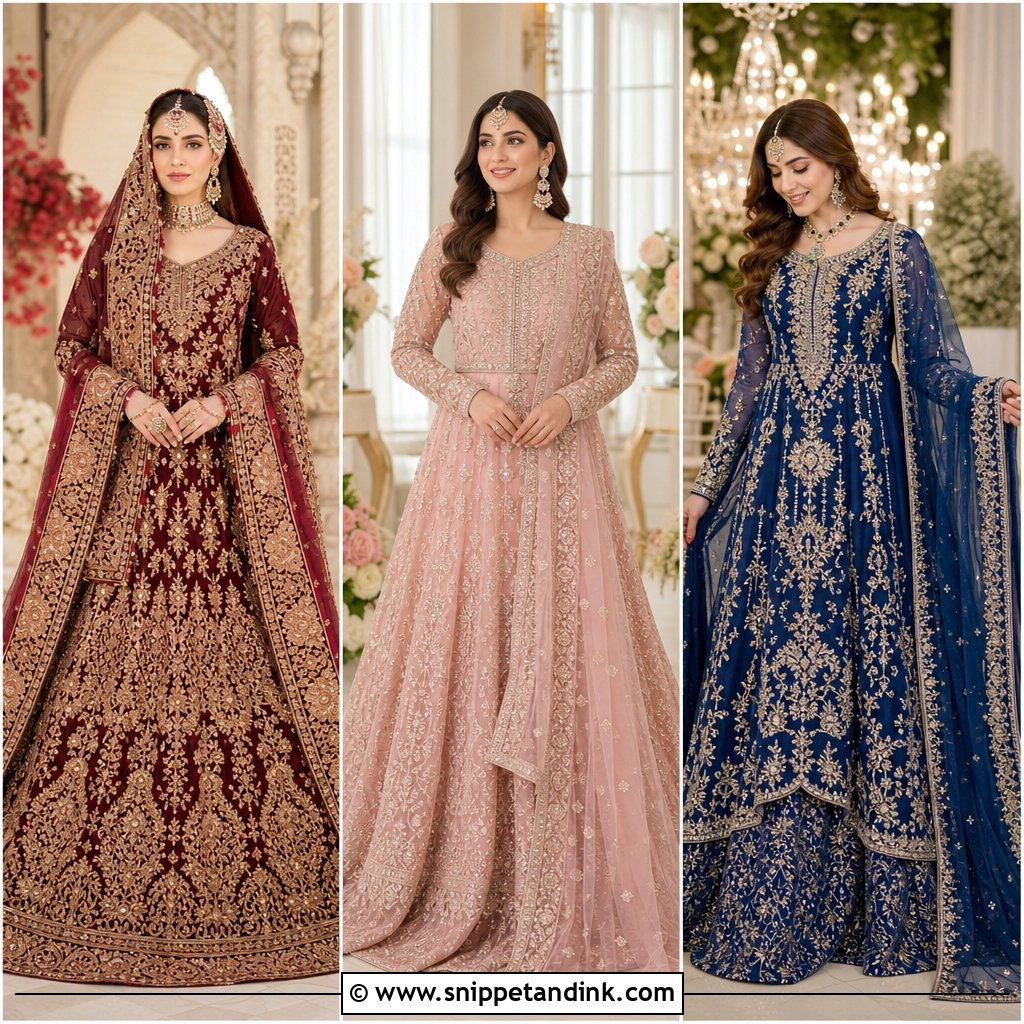
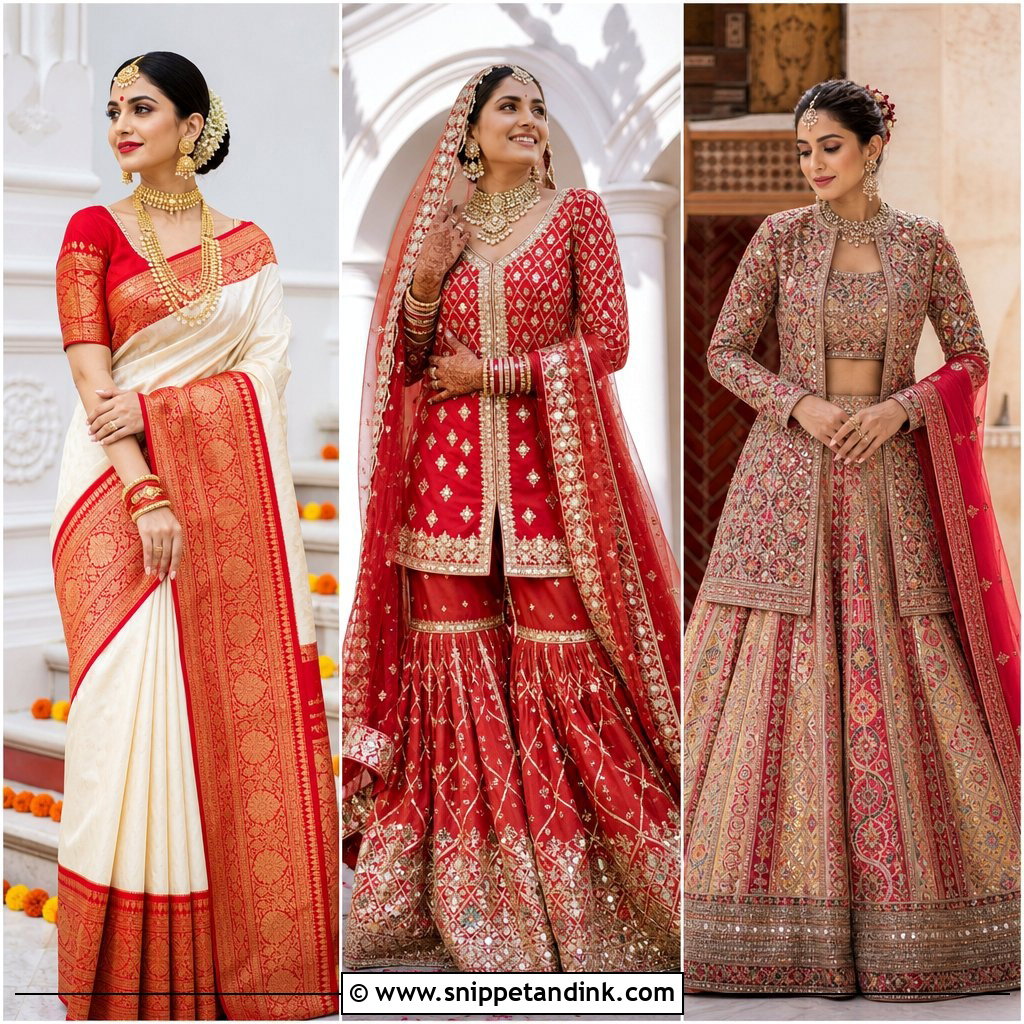
Red is the color most South Asian families picture, and a red lehenga carries that weight of meaning. A full skirt worked in zari, zardozi, sequins or threadwork, a fitted blouse and a dupatta over the head or shoulder is the classic line. Gold jewelry belongs here: choker, layered necklace, maang tikka, bangles and jhumkas. Heavy zardozi on velvet can make the skirt very heavy, so I ask about weight before anything else and suggest organza or georgette to a bride facing a long ceremony. Embroidered block heels or low wedges are kinder than stilettos on a mandap floor.
2. Ivory Bridal Lehenga
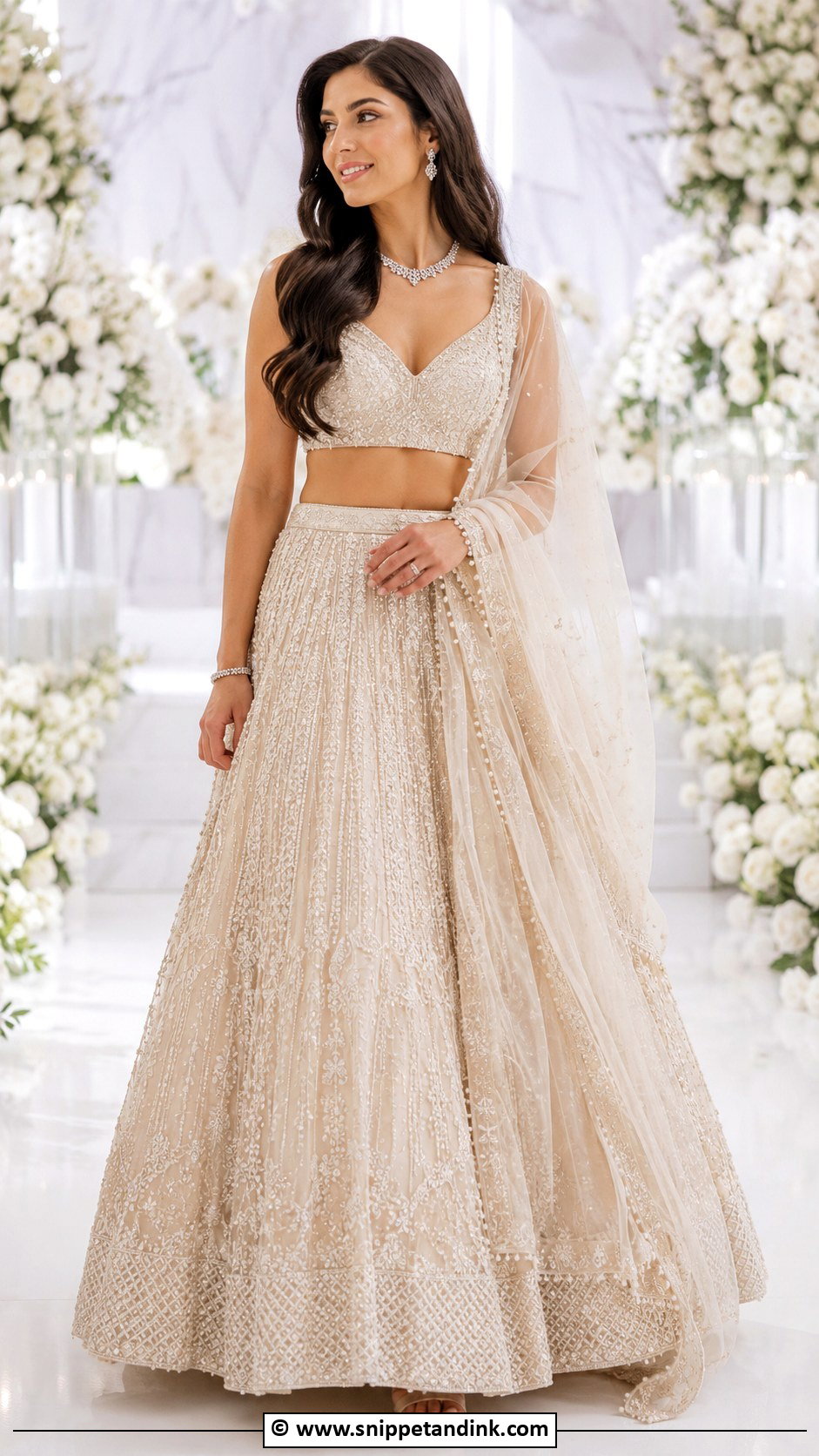
Ivory reads soft and refined while keeping all the cultural construction. Pearl embroidery, silver threadwork, mirror accents or tone-on-tone florals give it depth without weight. A matching ivory dupatta finishes it cleanly; a second pastel or gold dupatta adds drama for the ceremony. Diamond, pearl or polki jewelry suits the palette. In some families white or ivory carries associations with mourning, so I’d talk it through with elders before ordering. It works well at a multicultural wedding where one outfit has to speak to both sides.
3. Gold Bridal Saree
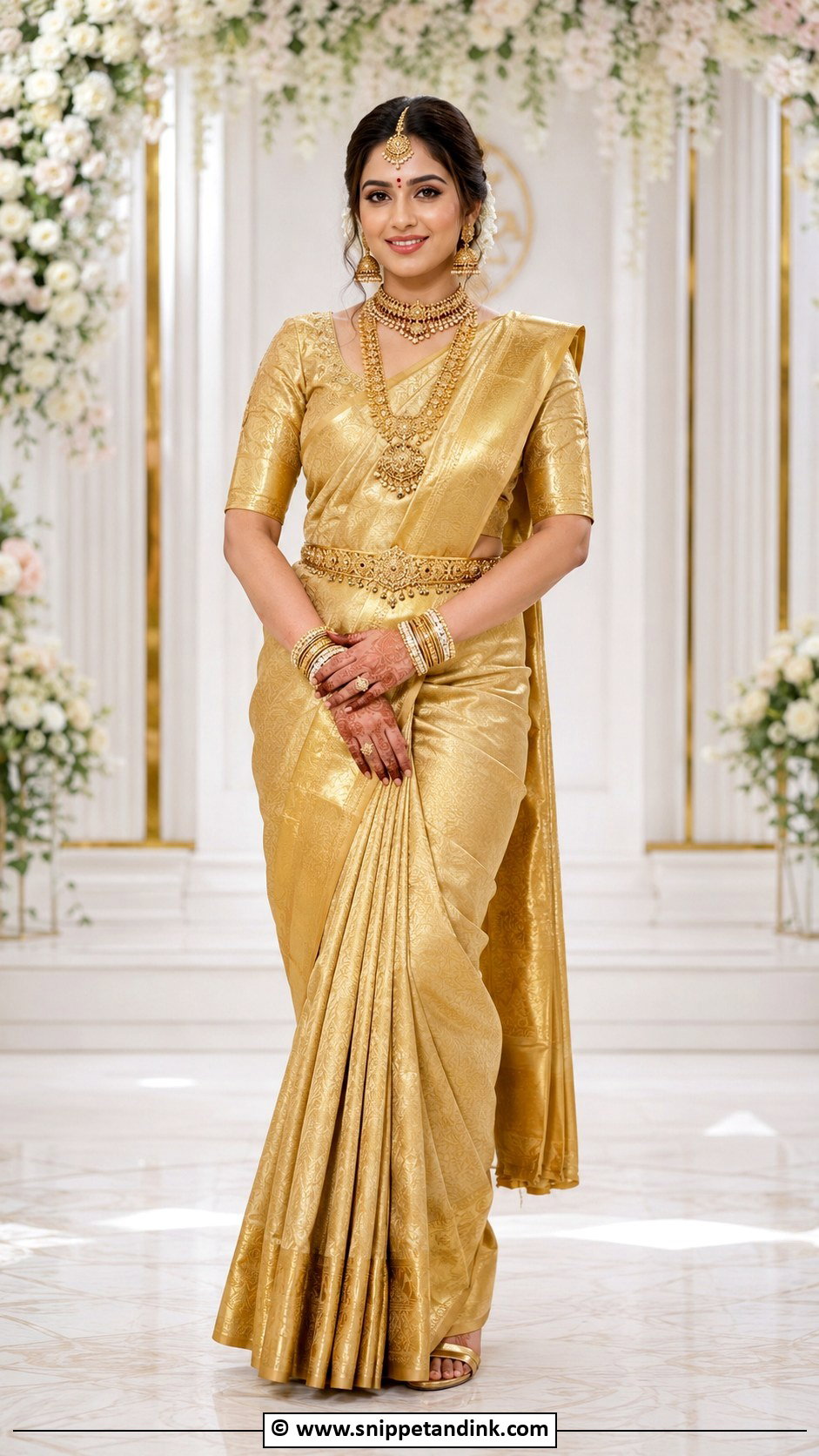
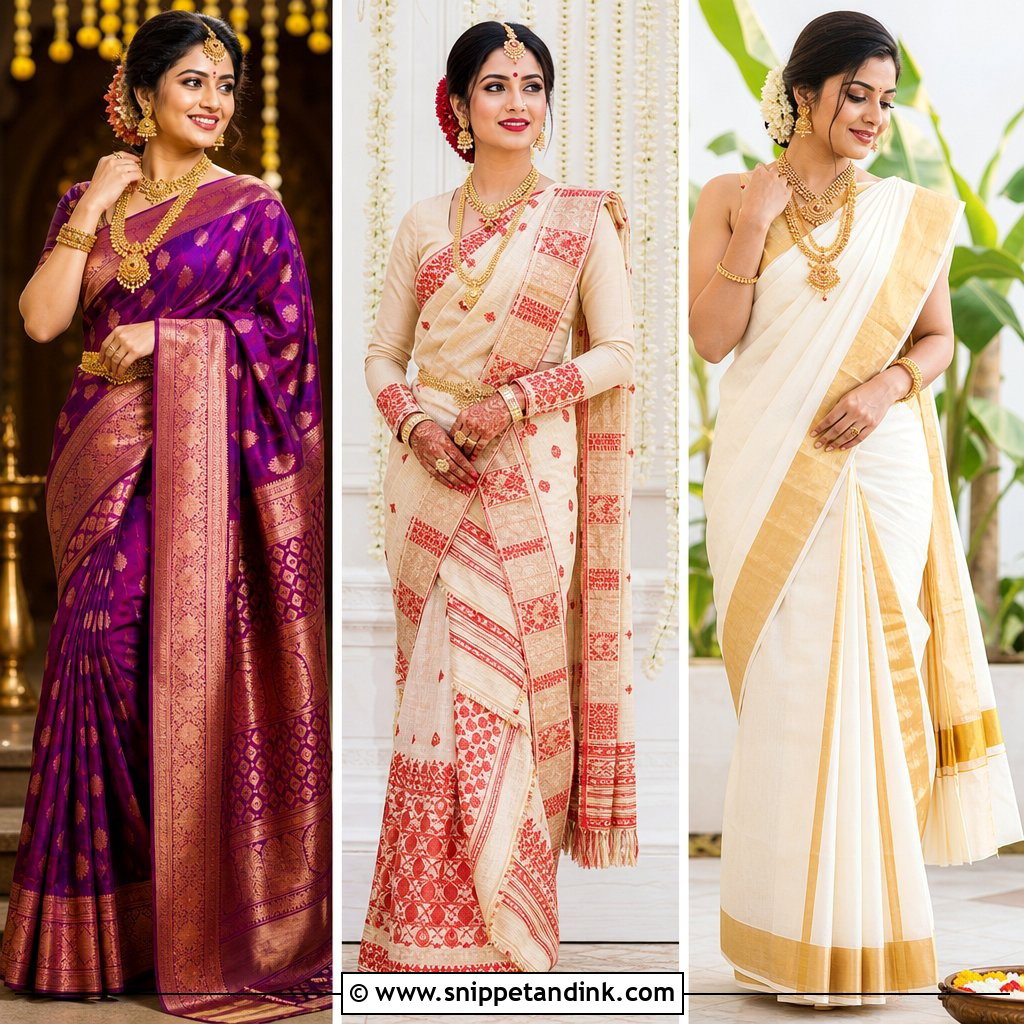
A gold saree in silk, tissue or brocade with rich woven borders is one of the most heirloom-worthy pieces on this list. A structured blouse polishes it. Temple jewelry, layered necklaces, bangles and a waist belt make it ceremonial, and gold sandals or embellished heels carry the color down. Heavy woven silk is stiff, and the pleats will not fall neatly without a skilled drape and a few hidden safety pins, so I book a draper rather than trusting the morning to a relative. Keep the hair smooth in a bun with fresh flowers or jeweled pins.
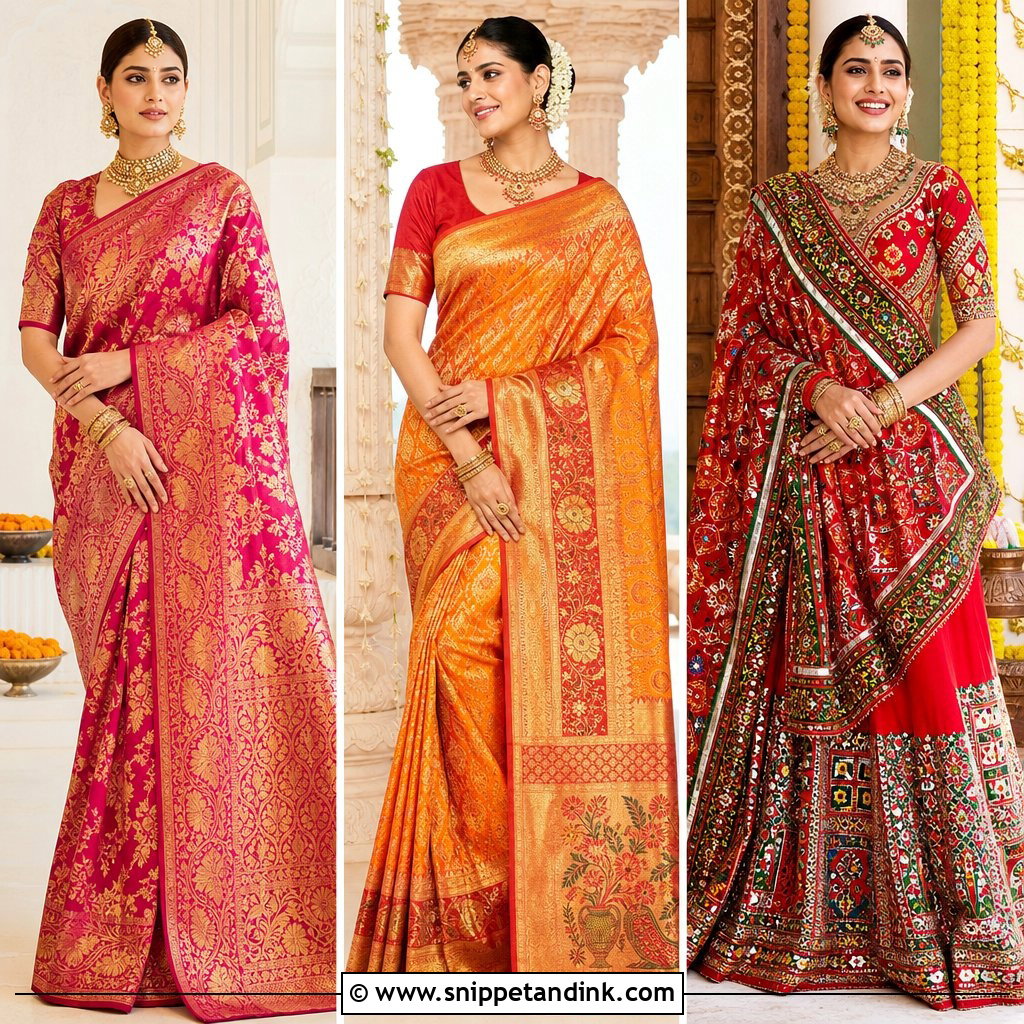
4. Kanchipuram Silk Saree
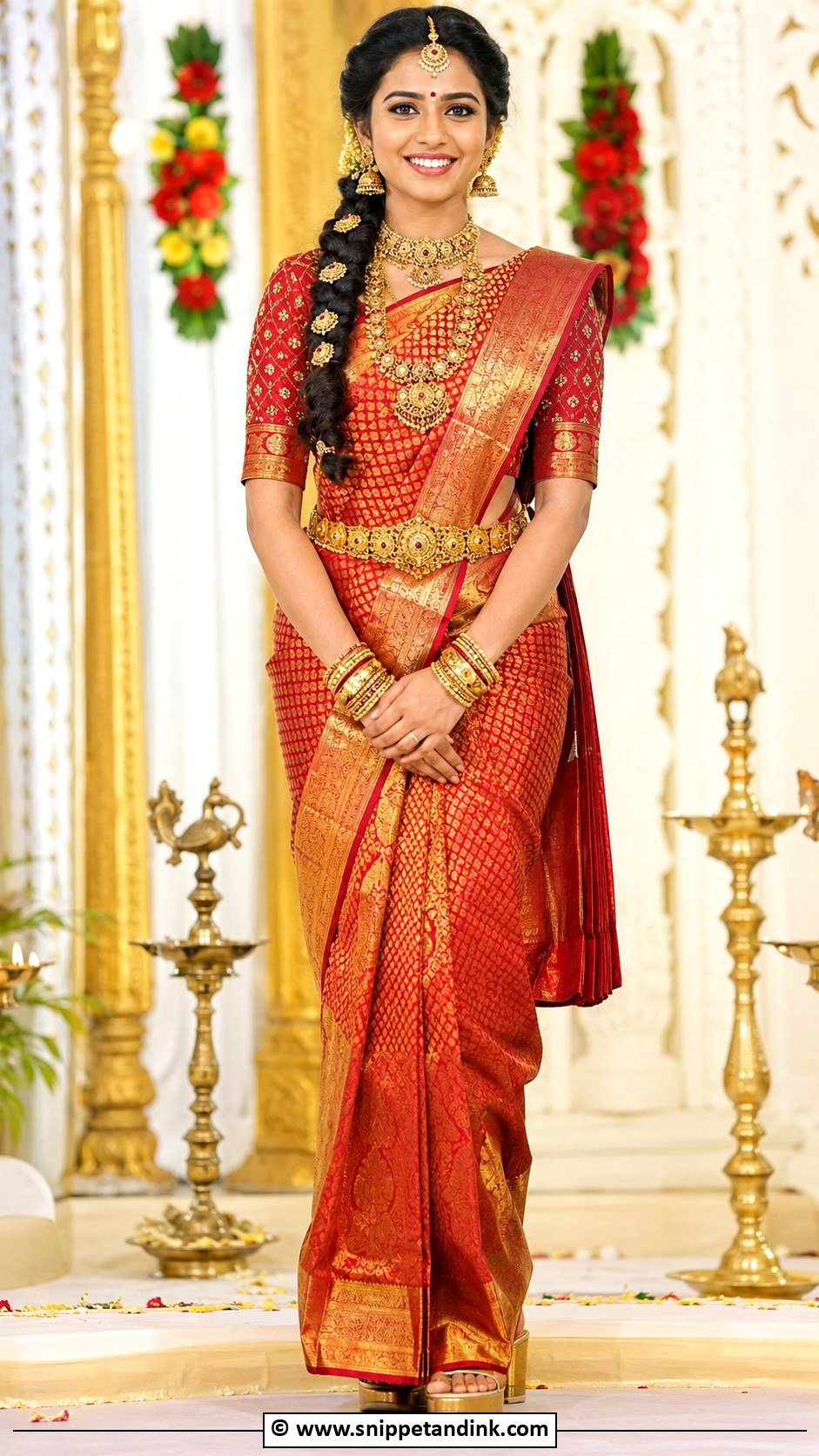
Kanchipuram silk is woven heavy, with contrasting borders often joined to the body of the saree, and that weight is why it drapes with such structure. Red, maroon, emerald, mustard and royal blue with deep gold borders are the classics. A fitted blouse, layered gold and temple jewelry, bangles, anklets and a decorated braid or bun complete it. The gold waist belt does real work here, holding the pleats steady through a long ceremony. Platform sandals are easier than heels on a heavy drape. For many families it is the saree a mother wore, and it says so.
5. Banarasi Bridal Saree
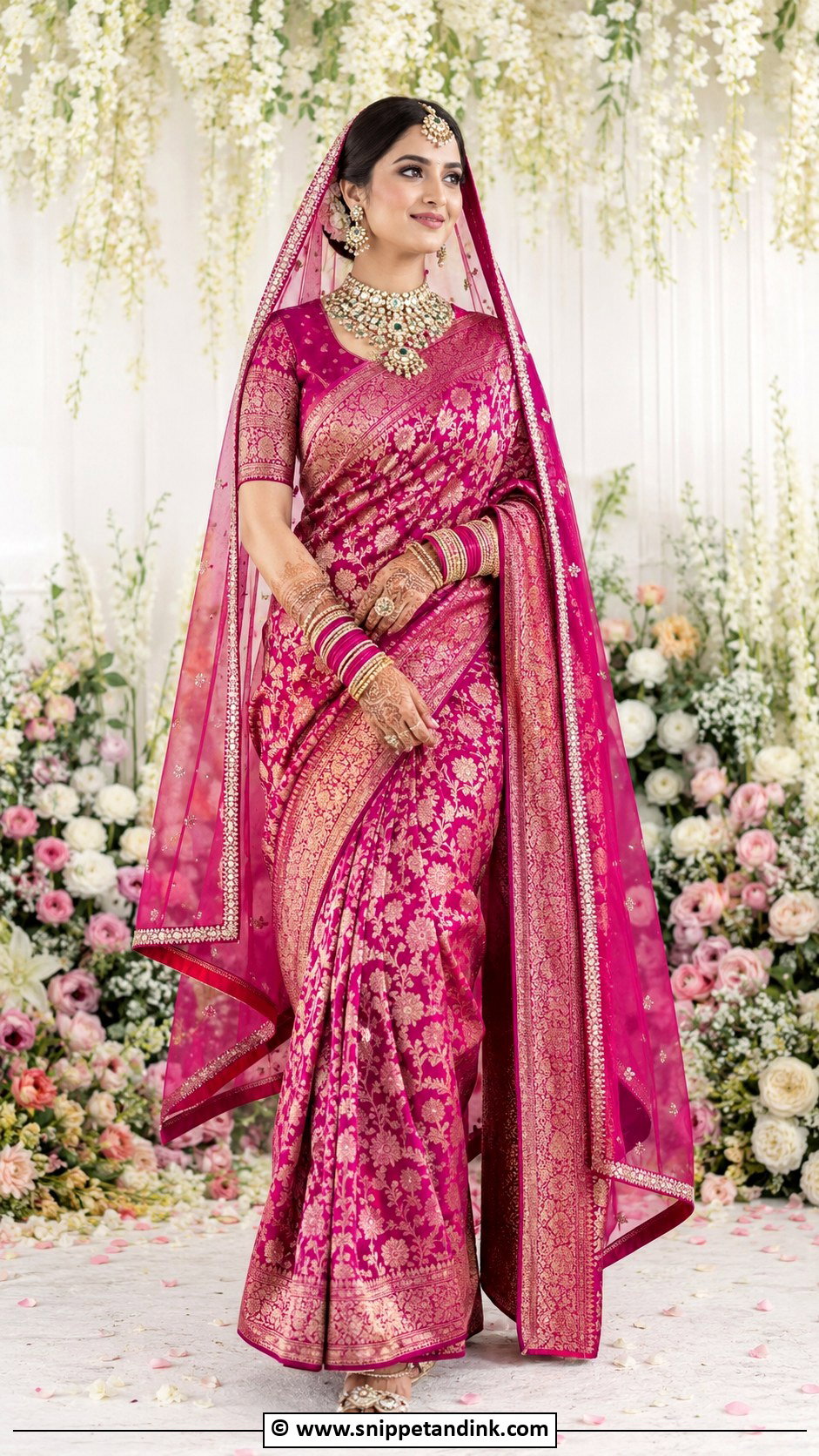
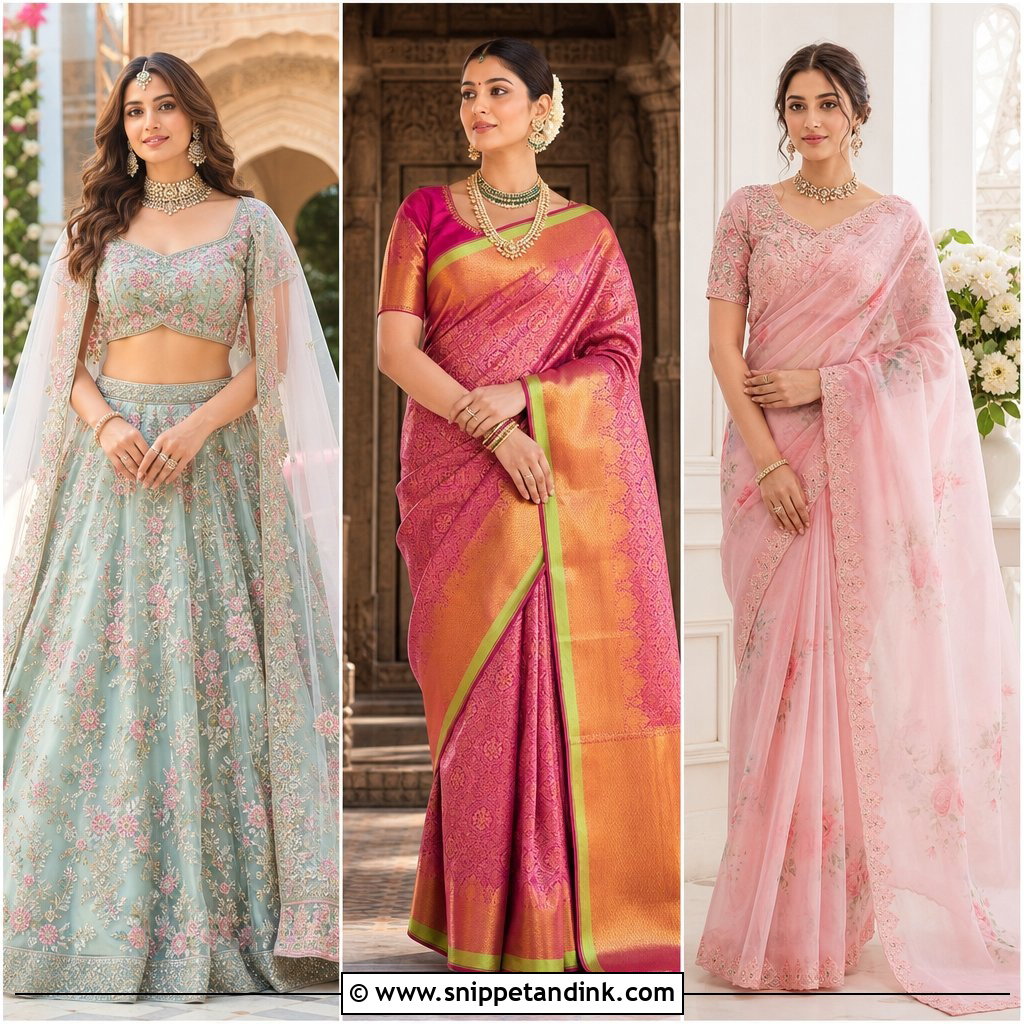
Banarasi silk does the decorating for you: brocade, floral weaves and metallic thread give presence without extra layers. Red, magenta, rani pink, deep green and antique gold suit a bride. A fitted blouse, polki jewelry, bangles and a neat bun with ornaments complete it, and a sheer veil or dupatta adds an entrance. Banarasi has natural body, so I pin the pleats firmly at the waist and choose supportive heels; a loose pleat on brocade is obvious in every full-length photograph.
6. Red Bridal Qipao
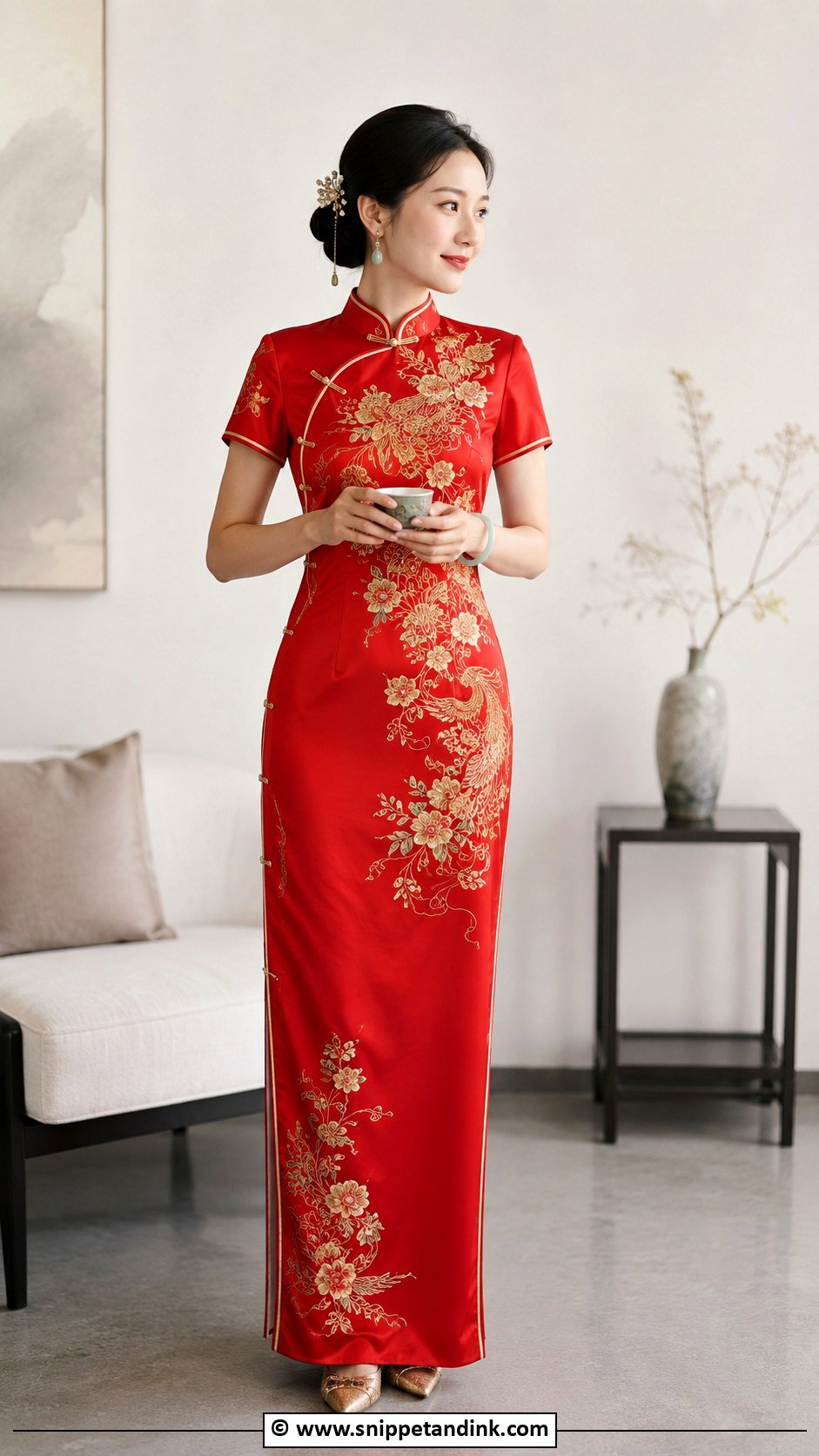
A red bridal qipao is cut close to the body, with a high collar and a side slit, and the fit is unforgiving in a way looser bridal wear is not. Floor-length versions with gold embroidery, phoenix and dragon motifs, pearl buttons or floral jacquard are traditional. I check the slit height at every fitting, since it decides whether you can manage stairs and kneeling at the tea ceremony. Gold heels, jade earrings, a delicate bracelet and a neat updo with a gold hairpin complete it, with a red veil or cape for the ceremony.
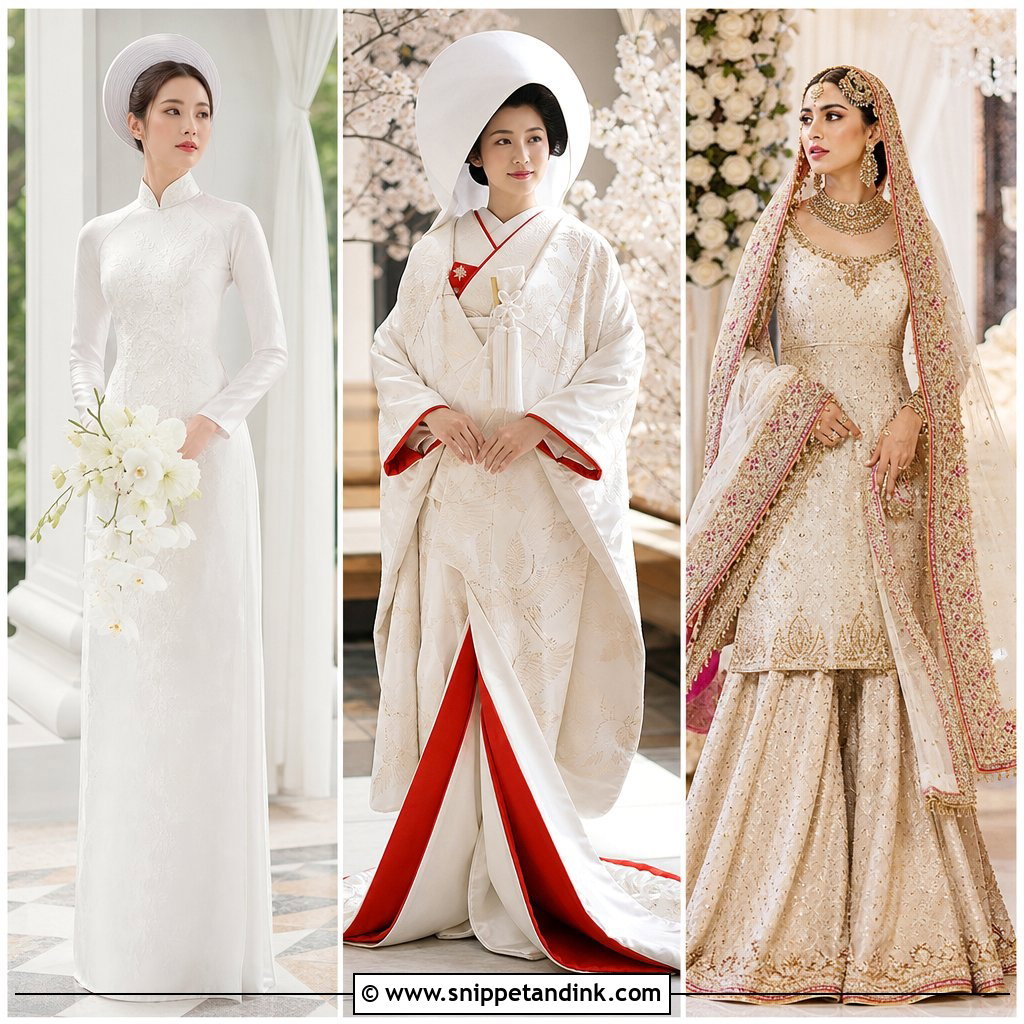
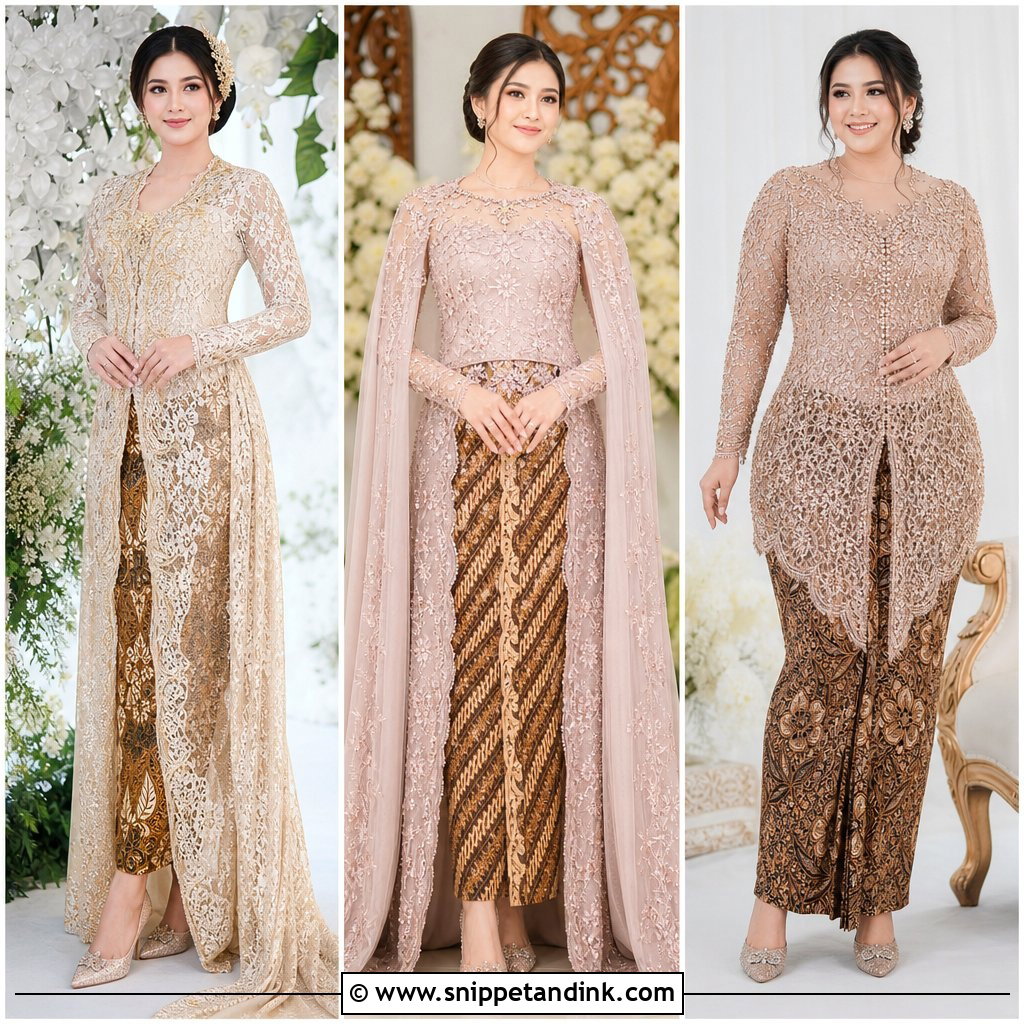
7. Modern White Qipao Wedding Dress
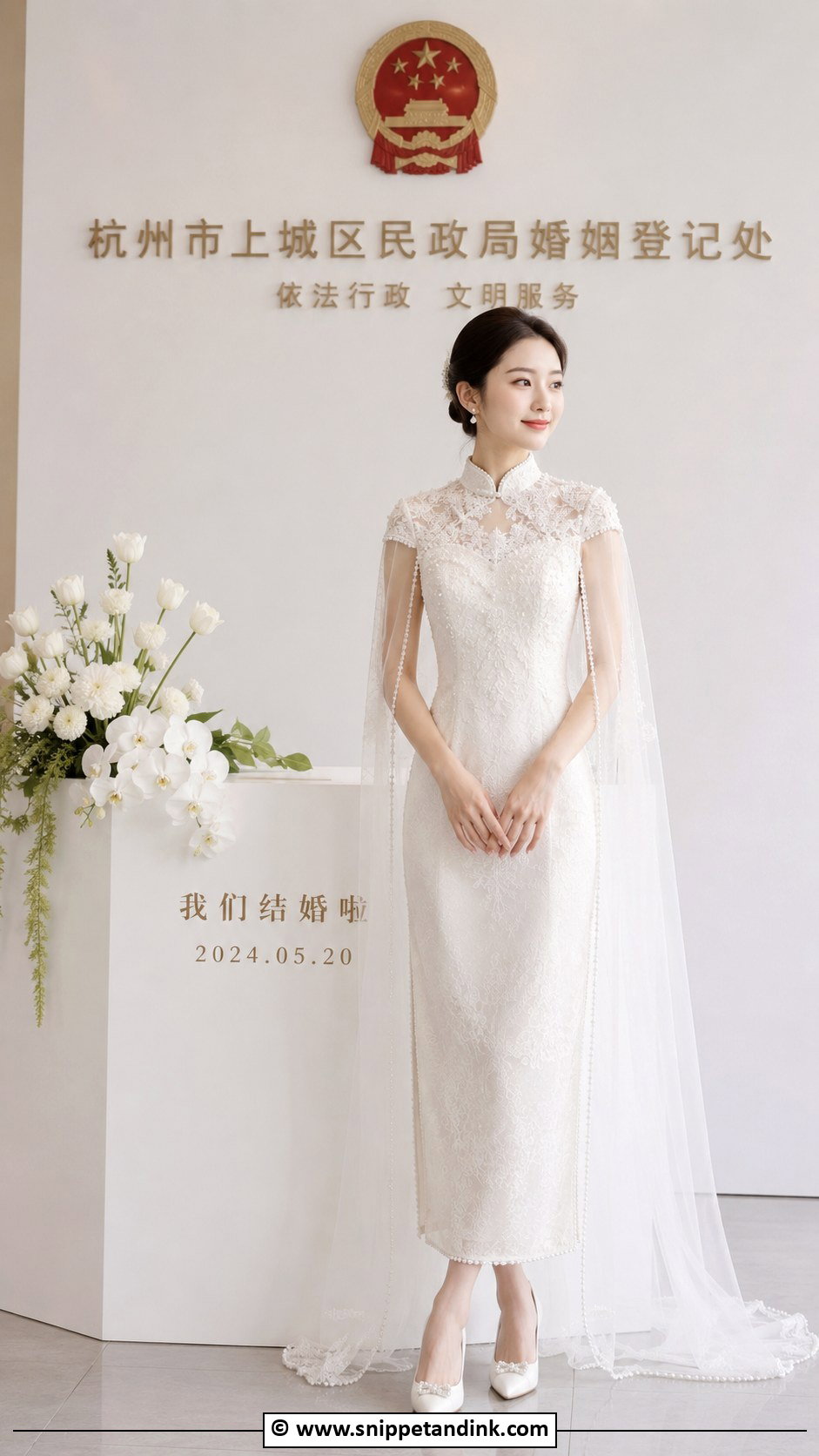
White changes the qipao from traditional to modern-bridal. Lace overlays, pearl beading, silk satin or embroidered florals keep it special. Ankle- or floor-length, it suits pointed heels or delicate slingbacks, pearl earrings, a low bun and soft makeup. Add a sheer cape, detachable overskirt or embroidered veil for drama. As with red, the collar must sit flat without pressing the throat, so I have brides turn their heads fully at the fitting. It suits a civil ceremony or small wedding.
8. Chinese Bridal Hanfu
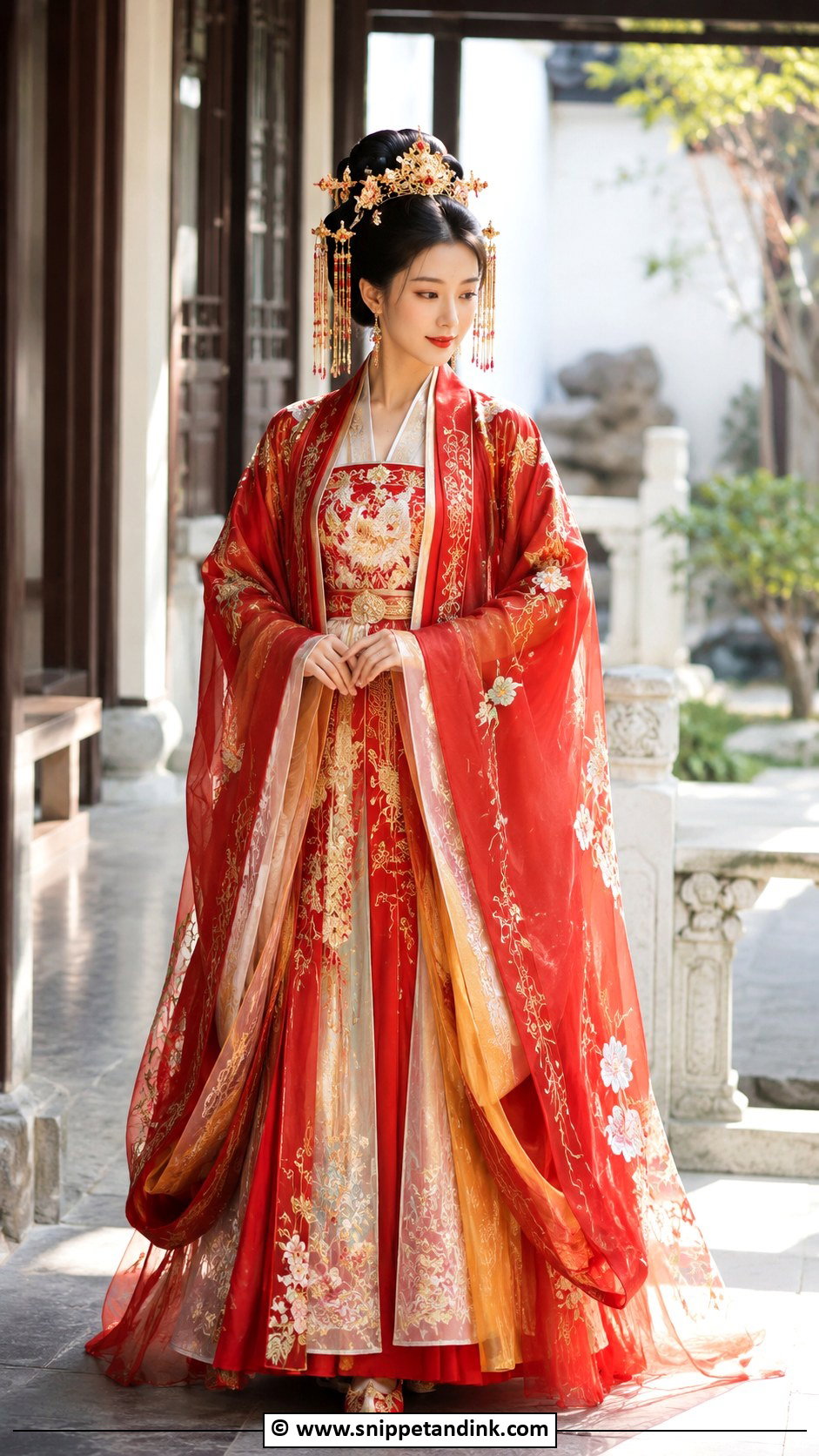
Hanfu is layered: a cross-collar top, a long skirt, an embroidered outer robe, and often wide flowing sleeves. Red and gold are classic; blush, ivory and champagne read bridal too. Gold earrings, delicate rings and embroidered shoes finish it, with hair secured by decorative pins or combs. Long sleeves are the challenge on the day. They dip into tea cups and food, so I show brides how to gather the sleeve with the opposite hand before reaching, the way the garment was always worn. It makes a dramatic, graceful entrance.
9. Korean Bridal Hanbok
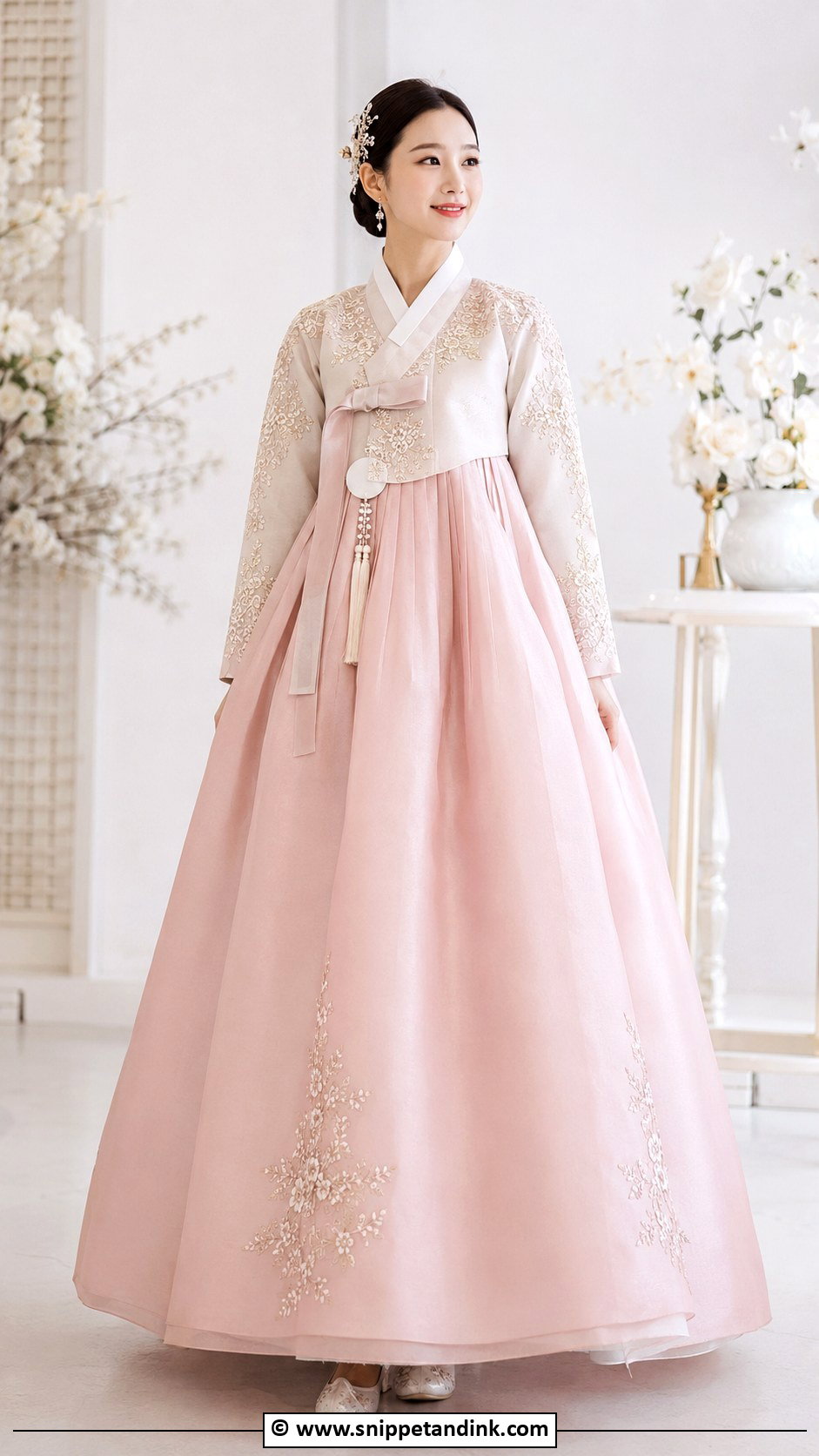
The hanbok’s short jacket and full skirt make it one of the easiest bridal outfits to move in. Traditional bridal colors include red, green, pink, blue and gold; modern brides often pick ivory, blush or pastels. Silk or satin gives the skirt movement, and embroidery adds formality. Traditional hair accessories, delicate earrings and simple shoes under the skirt complete it. The ribbon tie at the chest sets the whole line, and it takes a little practice to tie flat and even, so learn it before the day. Family ceremonies and cultural portraits suit it.
10. Japanese Bridal Kimono
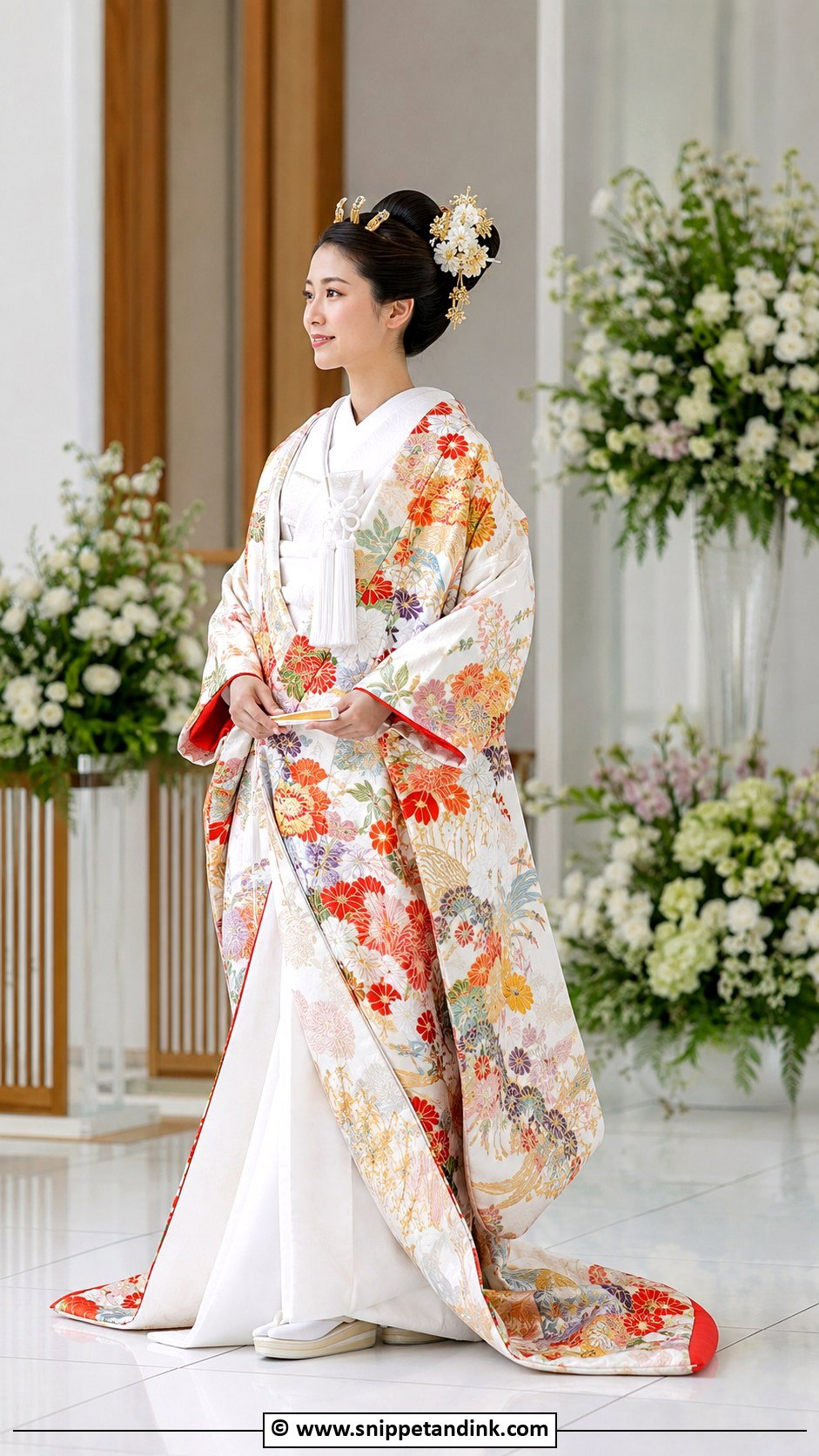
A Japanese bridal kimono is a layered, wrapped garment, and it really should be put on by a trained dresser so the layers sit correctly and stay comfortable. A white shiromuku-inspired outfit is pure and classic; a colorful uchikake-style outer robe brings cranes, florals, gold and red. Traditional footwear, a structured hairstyle and refined ornaments complete it, with little or no jewelry. Expect to walk in small steps and to take longer than you think getting in and out of a car.
11. Vietnamese Bridal Ao Dai
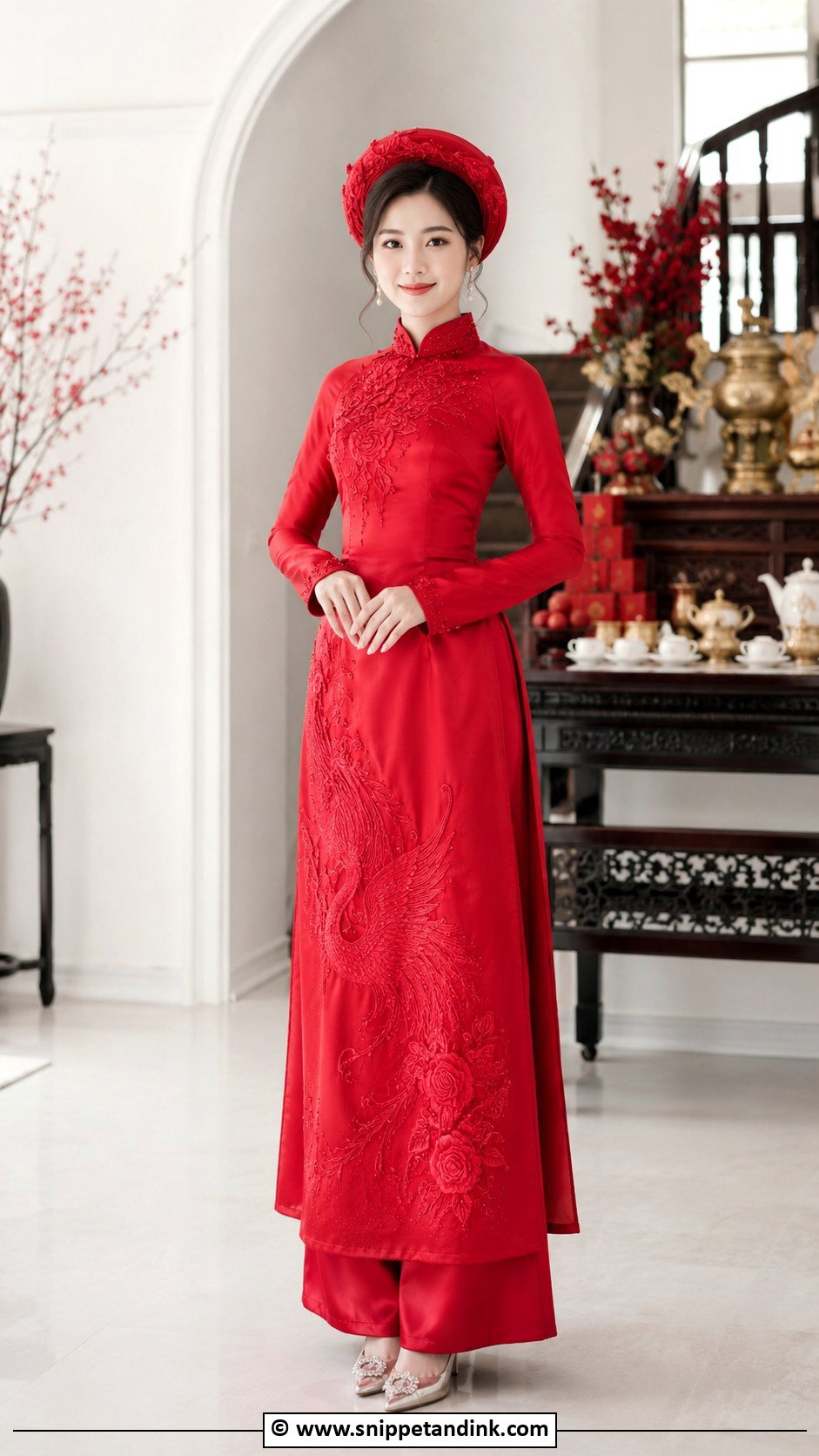
The áo dài’s long tunic over flowing pants gives a clean line and complete freedom of movement. Red, white, gold, blush and pastels are bridal favorites, often with embroidery, lace, beading or brocade. Matching pants, pointed heels, pearl earrings and a traditional headpiece complete it. Fitted cuts look modern, looser ones are easier to wear. The side slits must start exactly at the waist, and the tunic is usually cut to the bride’s exact measurements, so plan for a proper fitting rather than buying off the rack. Tea ceremonies and family portraits suit it well.
12. Filipino Bridal Terno
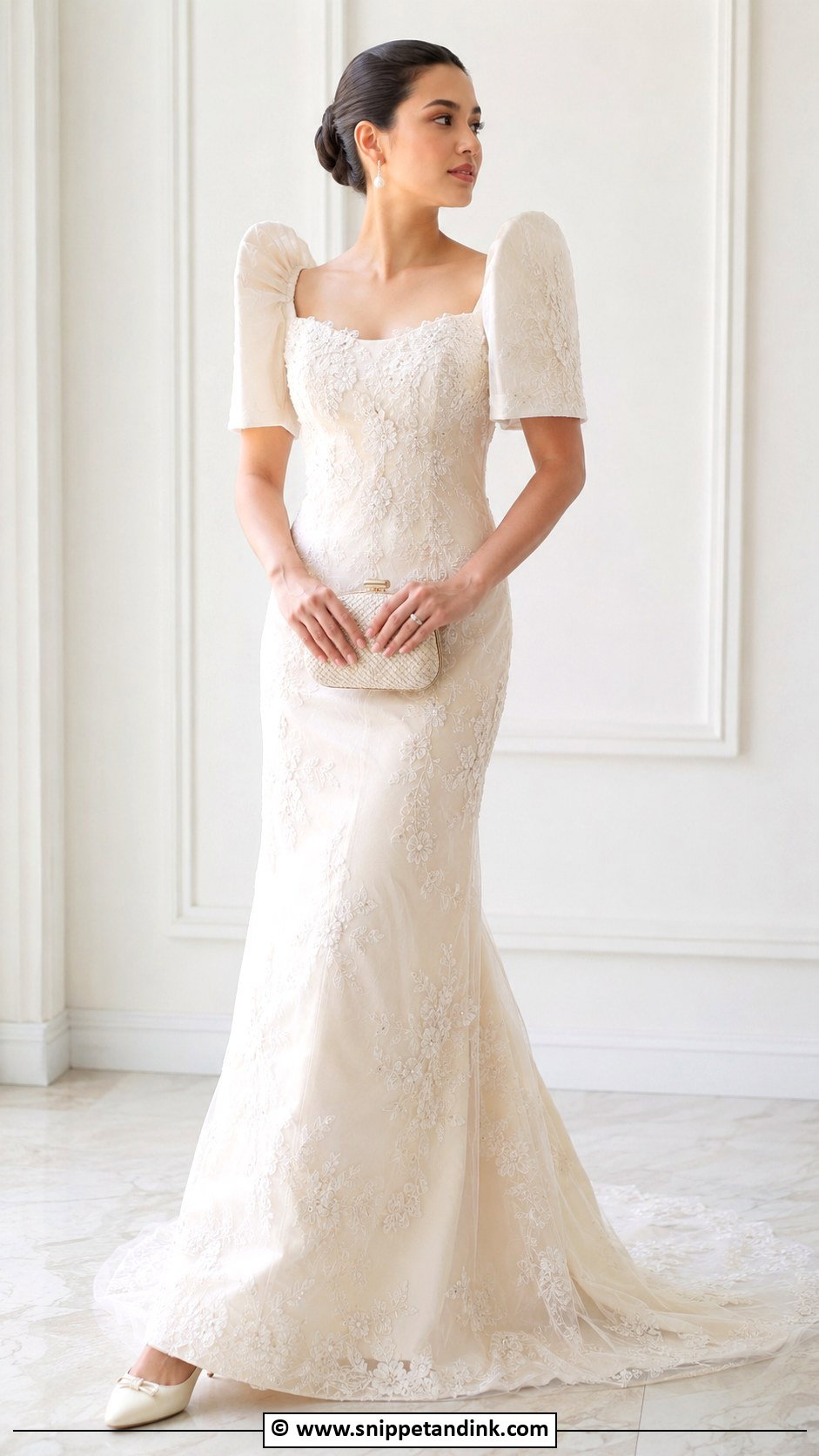
The terno’s butterfly sleeves give it a strong, sculptural shape, and in ivory, champagne or soft gold it reads both traditional and modern. A full-length gown in embroidered piña-inspired fabric, lace, beadwork or fine floral texture is the base. Pearl earrings, a sleek bun, low heels and a structured clutch complete it. The sleeves hold their shape from stiffening inside, so I store the gown with tissue in each sleeve and keep it off crowded racks. It is a good fit for a formal indoor ceremony or a destination wedding.
13. Pakistani Bridal Gharara
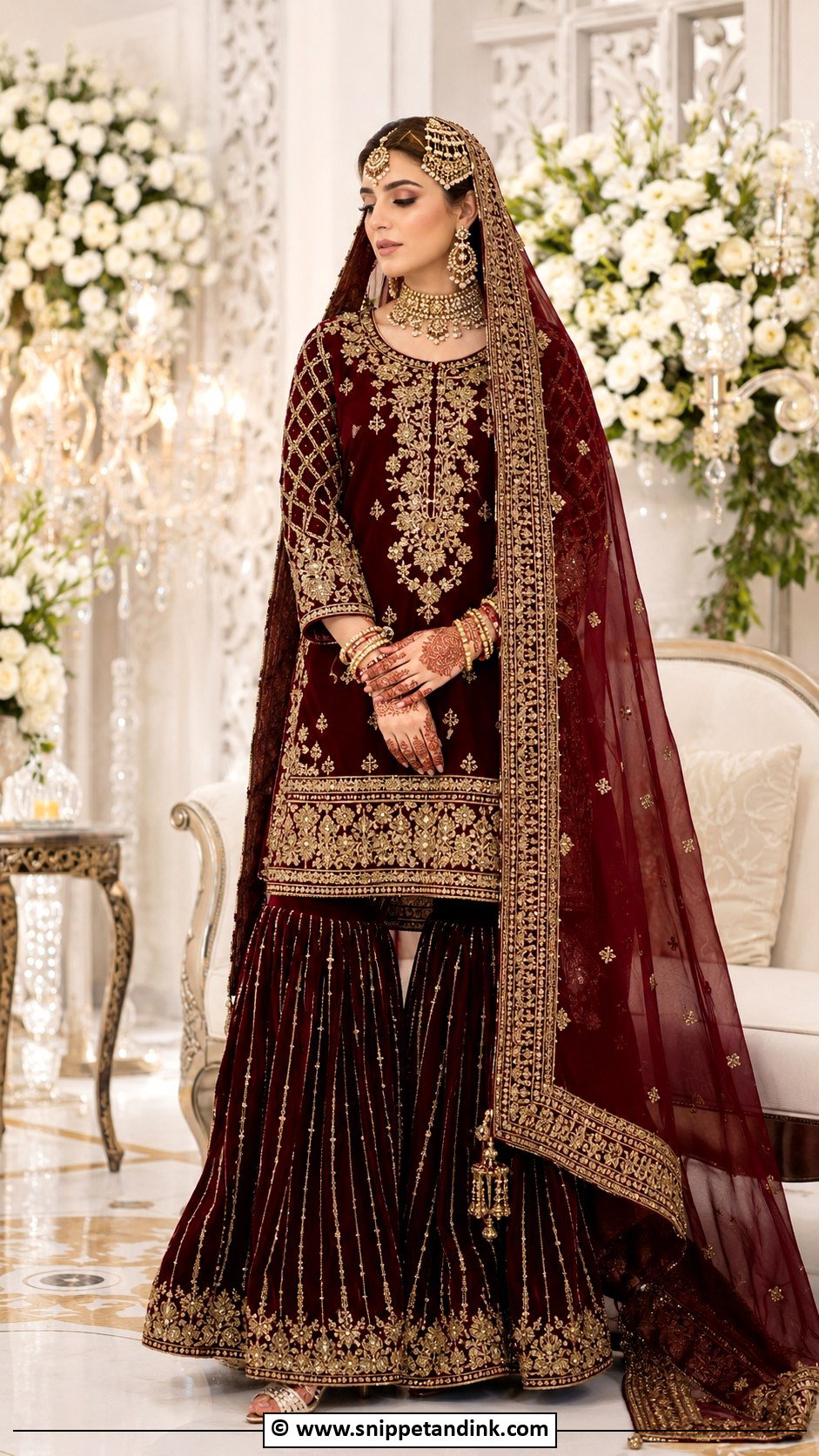
A Pakistani bridal gharara pairs a short kameez with pants that are fitted to the knee and then flare out sharply, gathered at the knee where a decorated band often sits. Deep red, maroon, rust, emerald and champagne carry zardozi, gota, dabka or sequins well. The flare is heavy at the hem, so walking takes a small kick to clear it; I have brides practice on stairs. A choker, long necklace, passa, jhumkas, bangles and embellished heels complete it, and net or organza over silk keeps it lighter.
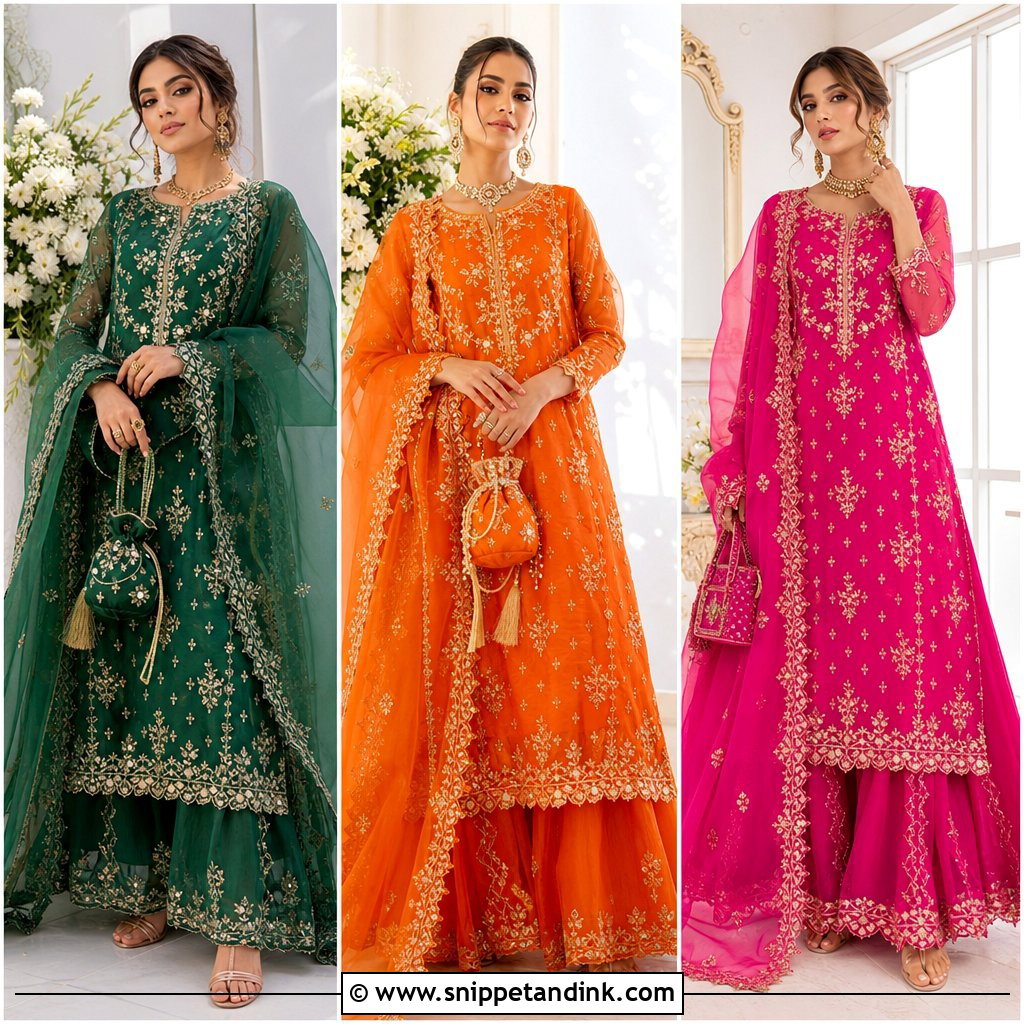
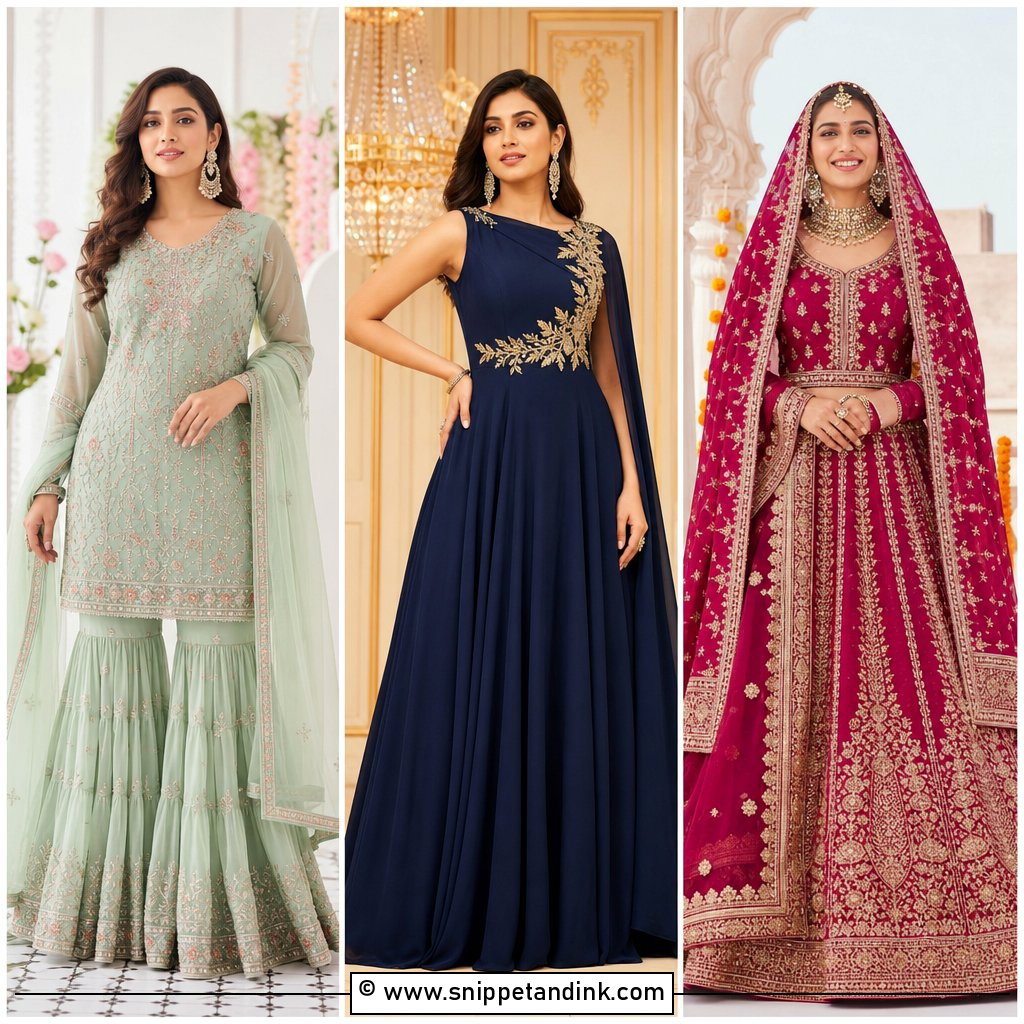
14. Pakistani Bridal Sharara
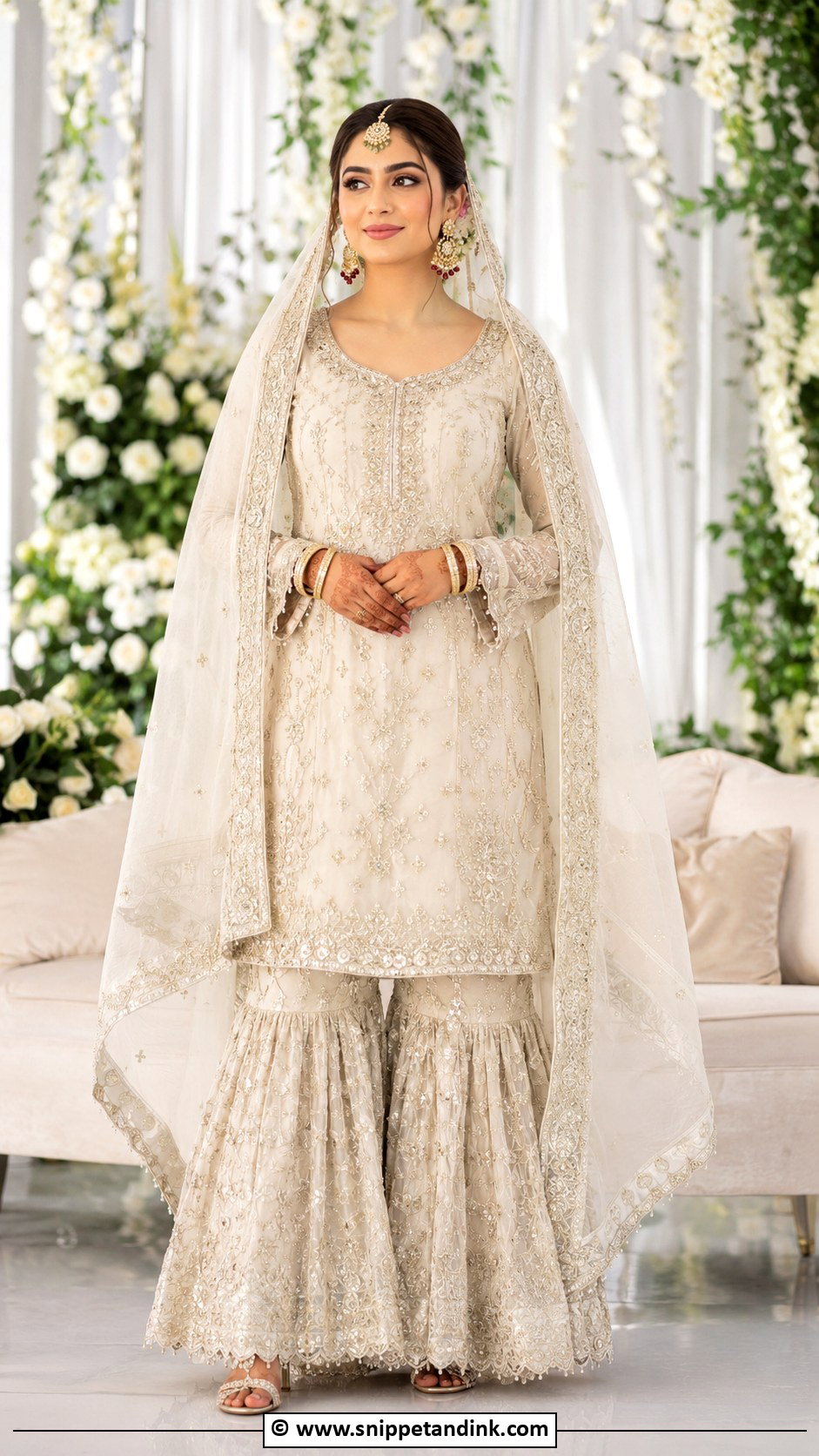
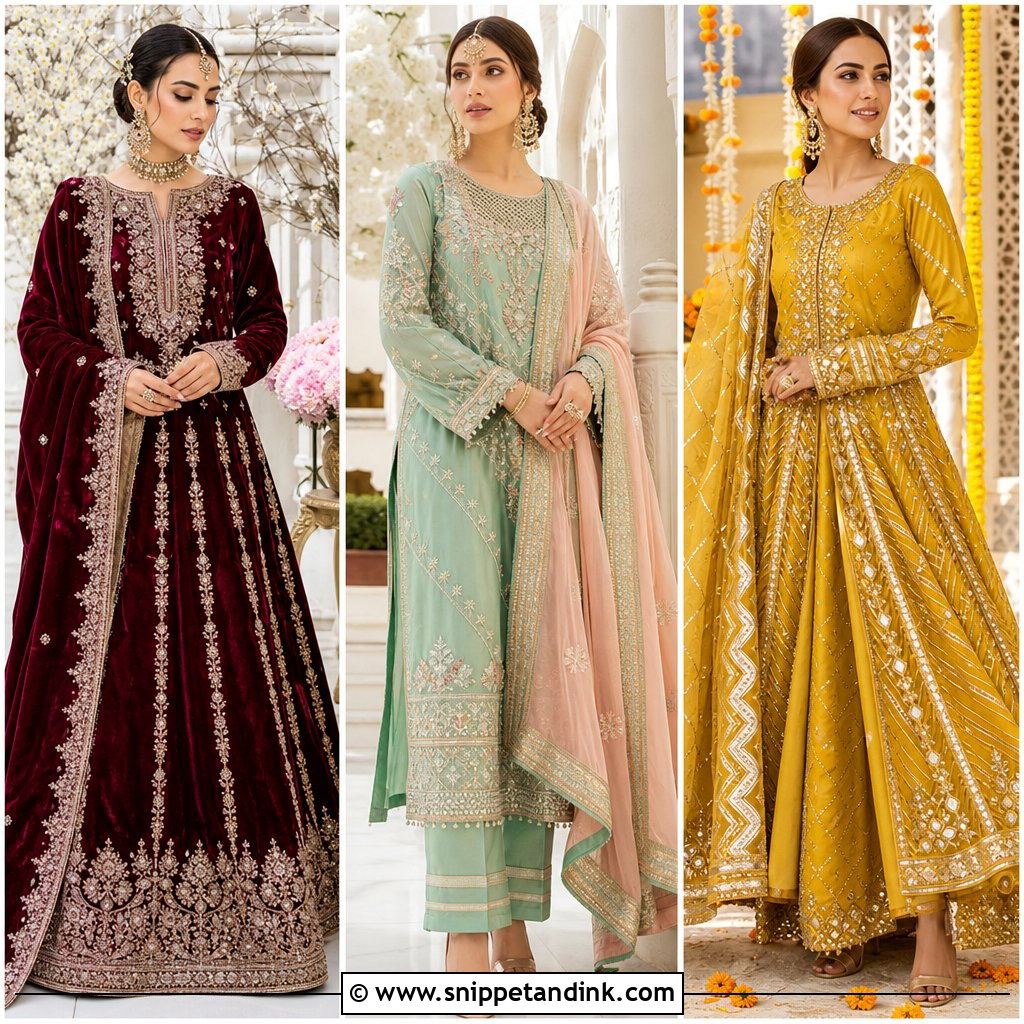
Shararas flare from the waist rather than the knee, so they move like a skirt and walk like trousers. The kameez can be short, long, fitted or slightly flared. Rich embroidery, scalloped borders and a matching dupatta pull it together. Gold, ivory, red, rose and sage can all feel bridal. Statement earrings, a tikka, bangles and embroidered sandals complete it. For a bride with a long day of rituals, it is the most comfortable formal option I know.
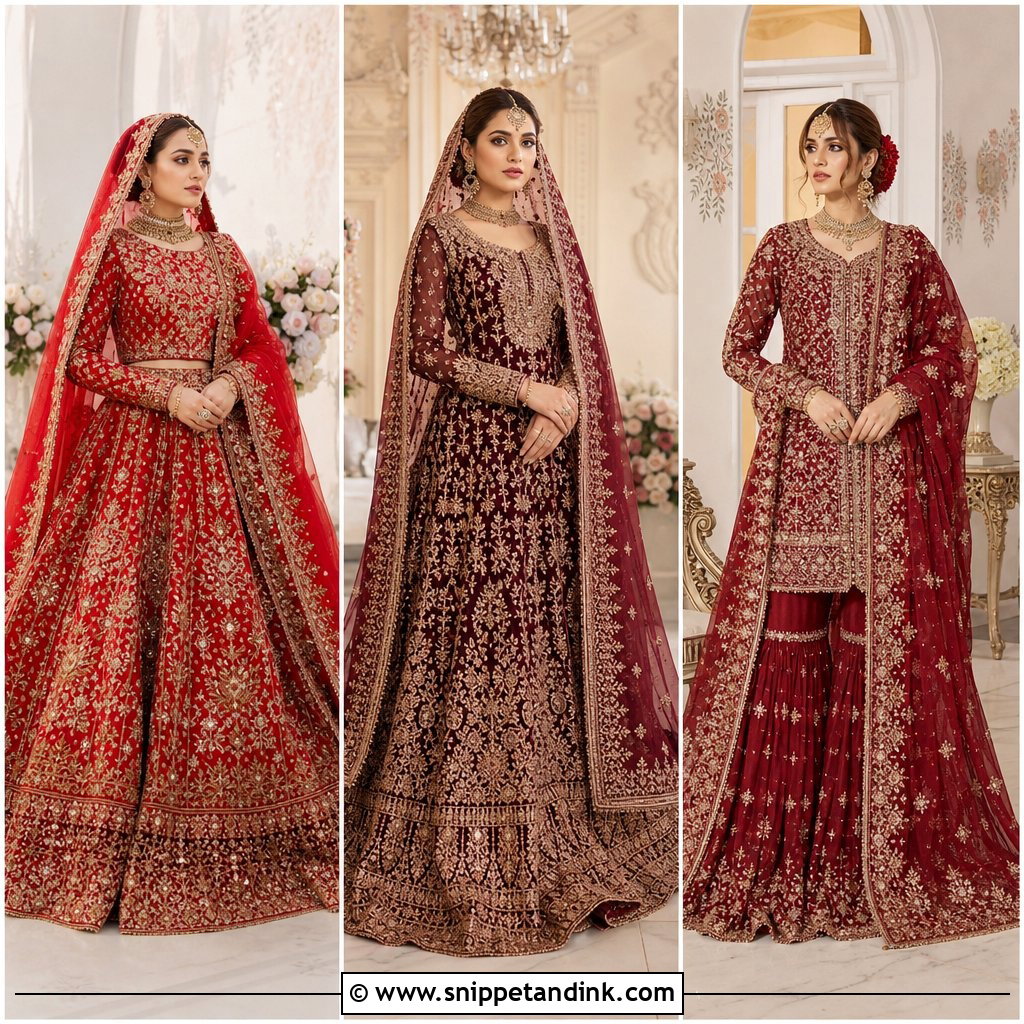
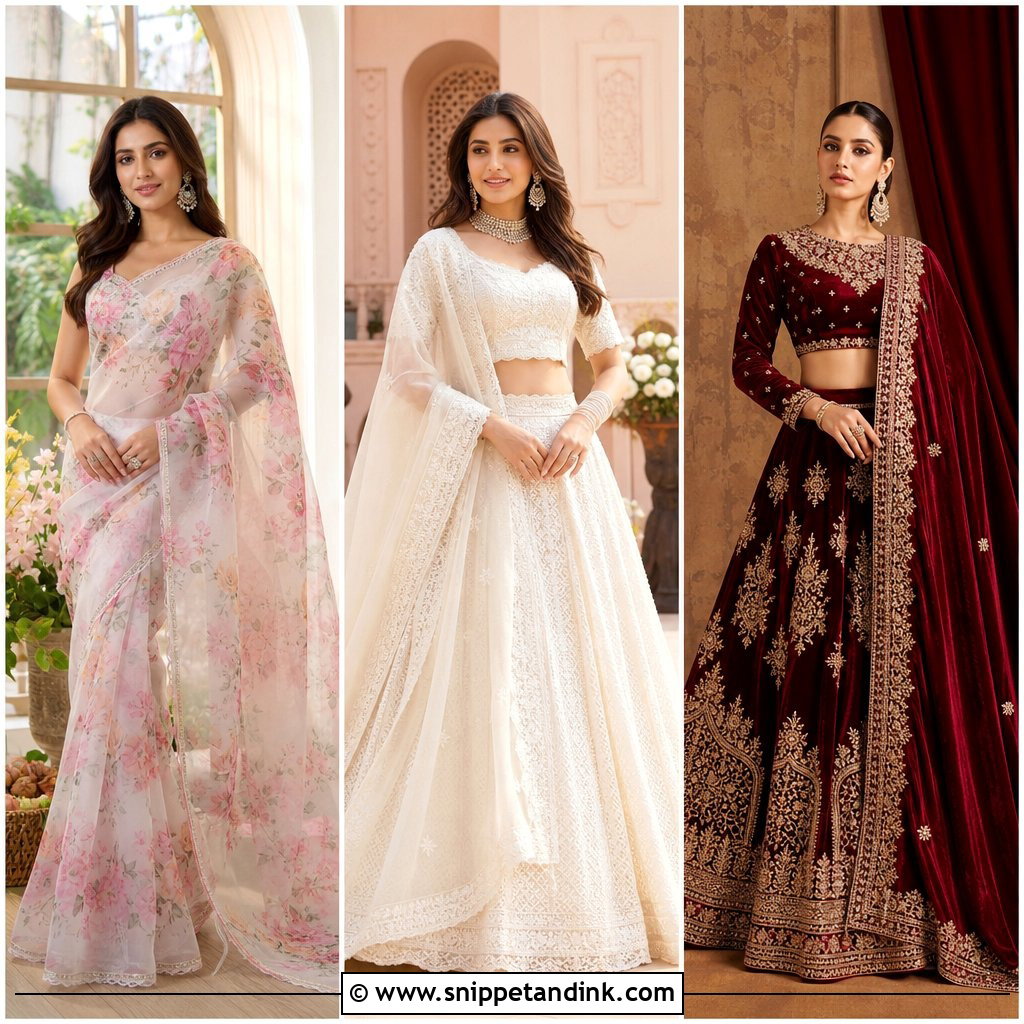
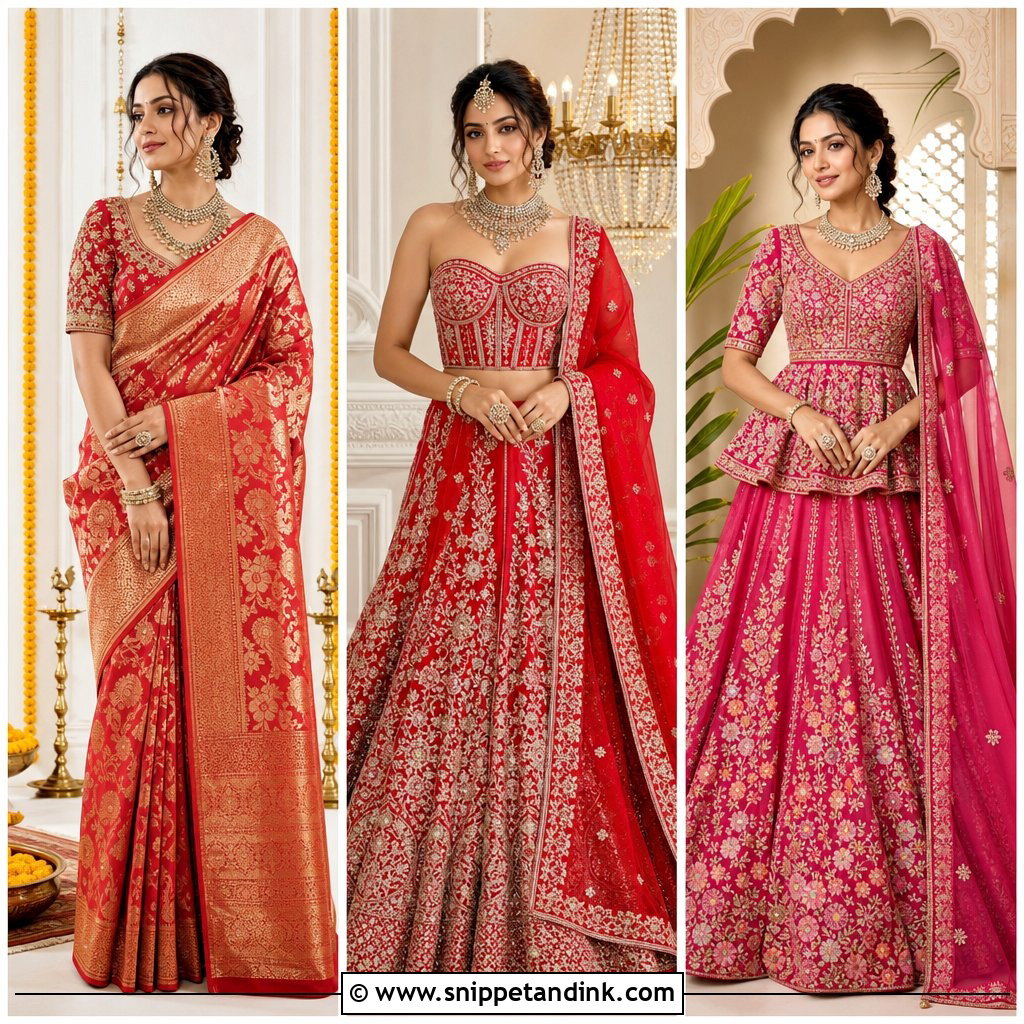
15. Anarkali Bridal Dress
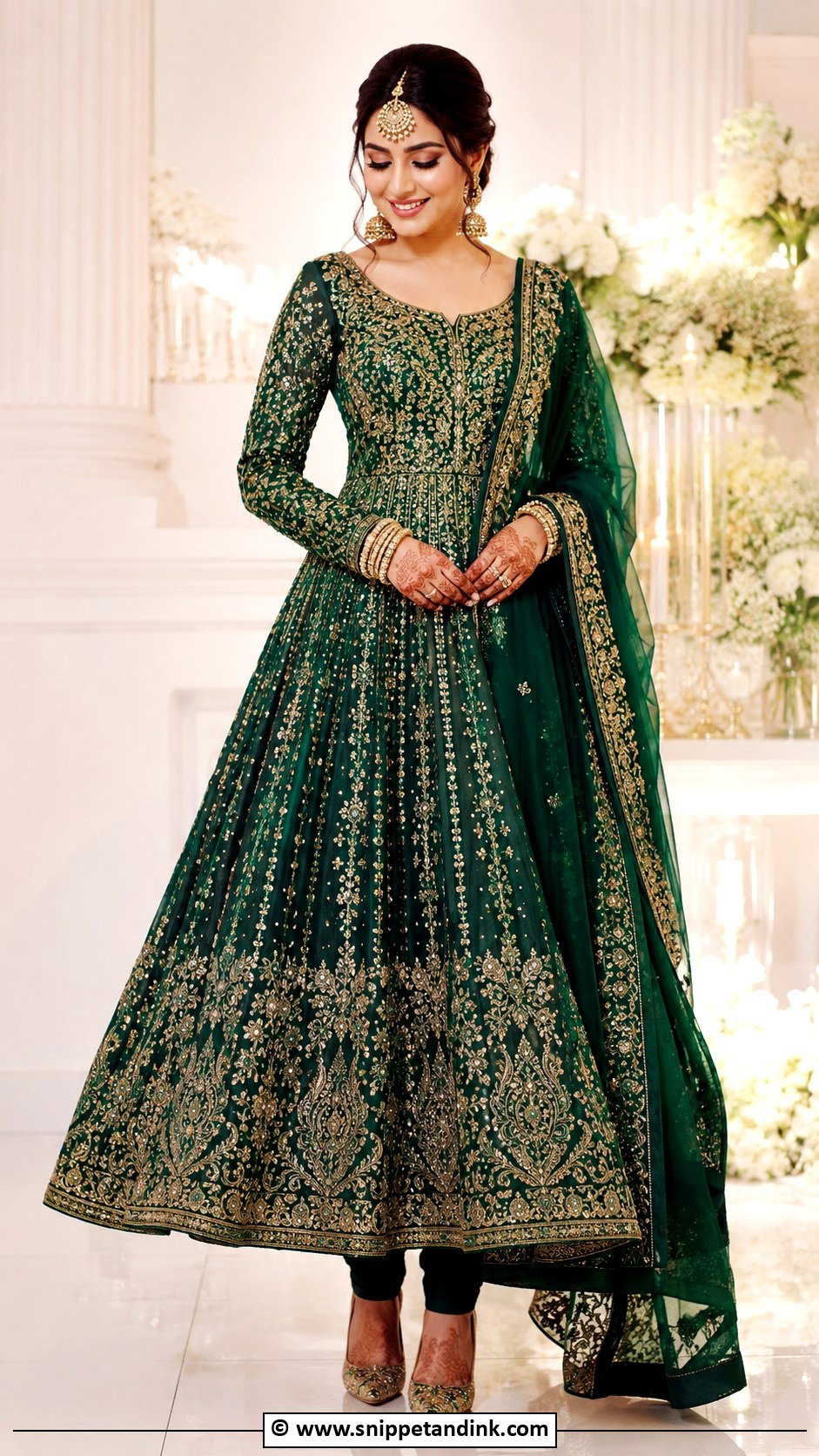
An Anarkali is fitted through the bodice and flares from just under the bust or at the waist into a long, full skirt. Red, ivory, blush, emerald and gold suit it, with embroidery at the neckline, sleeves and hem. Churidar pants or a soft inner skirt go beneath, and a matching dupatta drapes for the ceremony. Jhumkas, a maang tikka, bangles and embellished heels finish it. If you are adding platform heels for height, wear them at the hem fitting. It flatters many figures because it defines the top and lets the skirt move.
16. Bridal Lehenga Saree
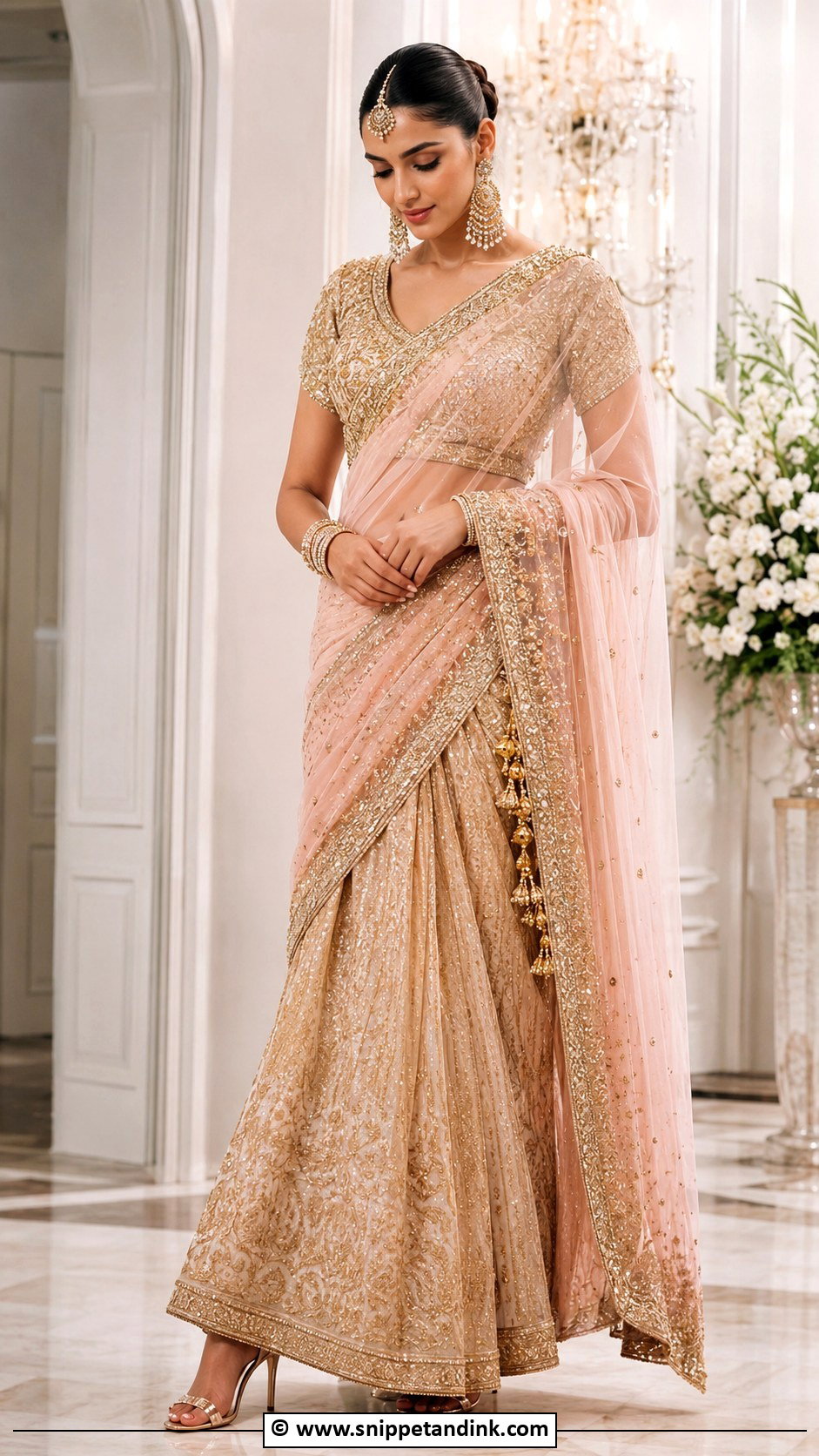
Pre-draped lehenga sarees give the look of pleats and a pallu with the security of a stitched skirt, which is why I suggest them to brides nervous about a saree slipping. Silk, organza, georgette or net with embroidery framing the waist and shoulder all work. A fitted blouse, statement earrings, bangles and a sleek bun polish it. Heels are not optional here; the drape is cut for a particular height, so fit it in the shoes you will wear. It makes a dramatic entrance while staying easy to move in.
17. Pastel Bridal Lehenga
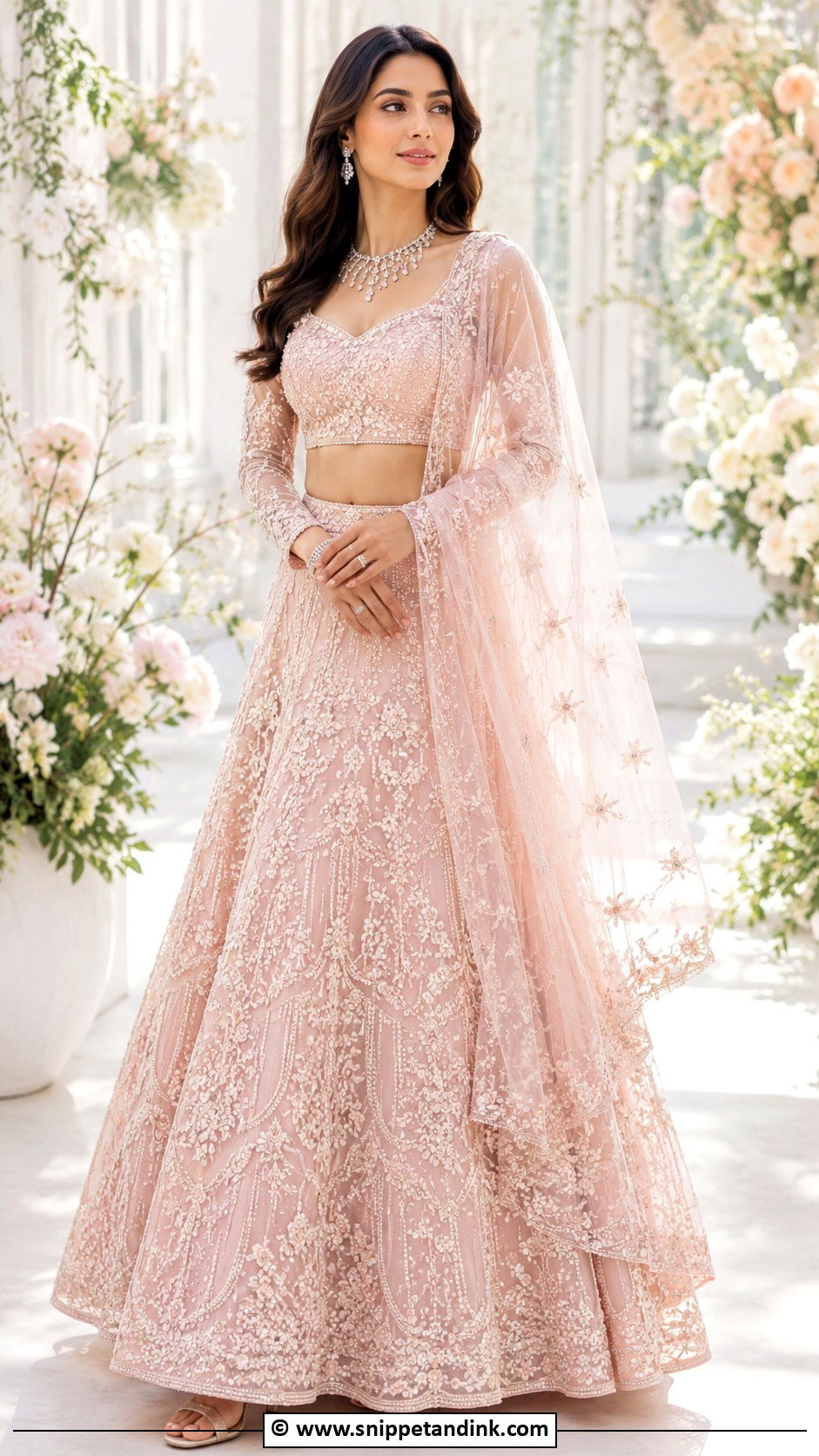
Pastels feel fresh while staying formal. Blush, mint, powder blue, lavender, peach and champagne pair well with pearl, silver or tone-on-tone embroidery. A lightweight skirt, fitted blouse and sheer dupatta create soft layers. Diamond jewelry, pearls or pastel enamel keep it gentle, and nude or metallic heels are easiest. Pale shades show every mark, from henna stains on the sleeves to foundation on the dupatta, so I keep a cloth and a little gentle stain remover in my kit on pastel weddings. Daytime and spring ceremonies suit it.
18. Velvet Bridal Lehenga
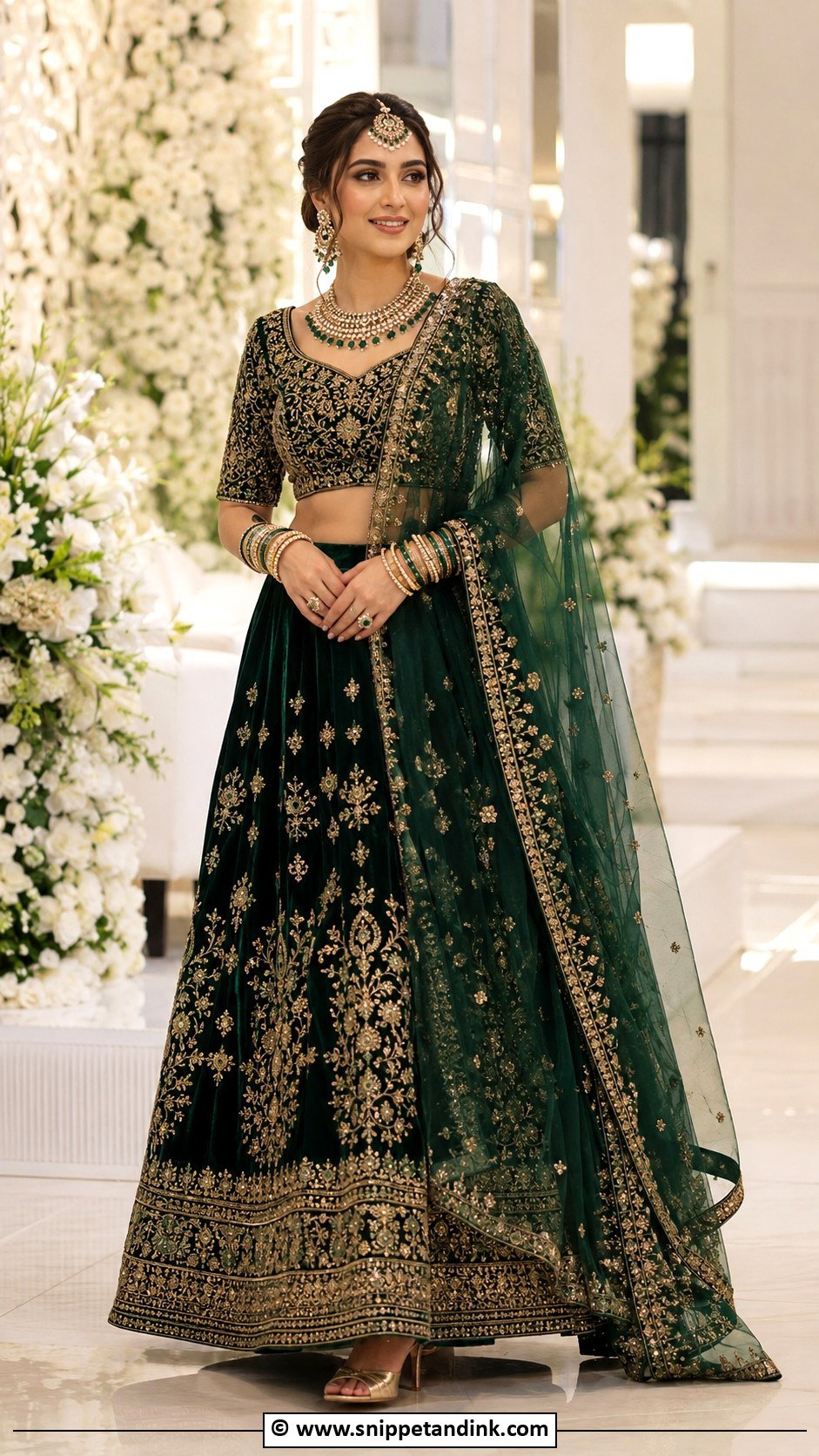
Velvet holds deep color like no other fabric, so maroon, ruby, emerald, navy and plum come alive in it. It is also warm and heavy, which makes it a winter or evening choice; at a summer daytime ceremony, I’d steer a bride away from it. Concentrate embroidery on the hem, blouse and dupatta border. Antique gold, bold earrings, bangles and comfortable heels suit it. A dupatta on one shoulder keeps it neat, and a second sheer dupatta softens the face.
19. Organza Bridal Lehenga
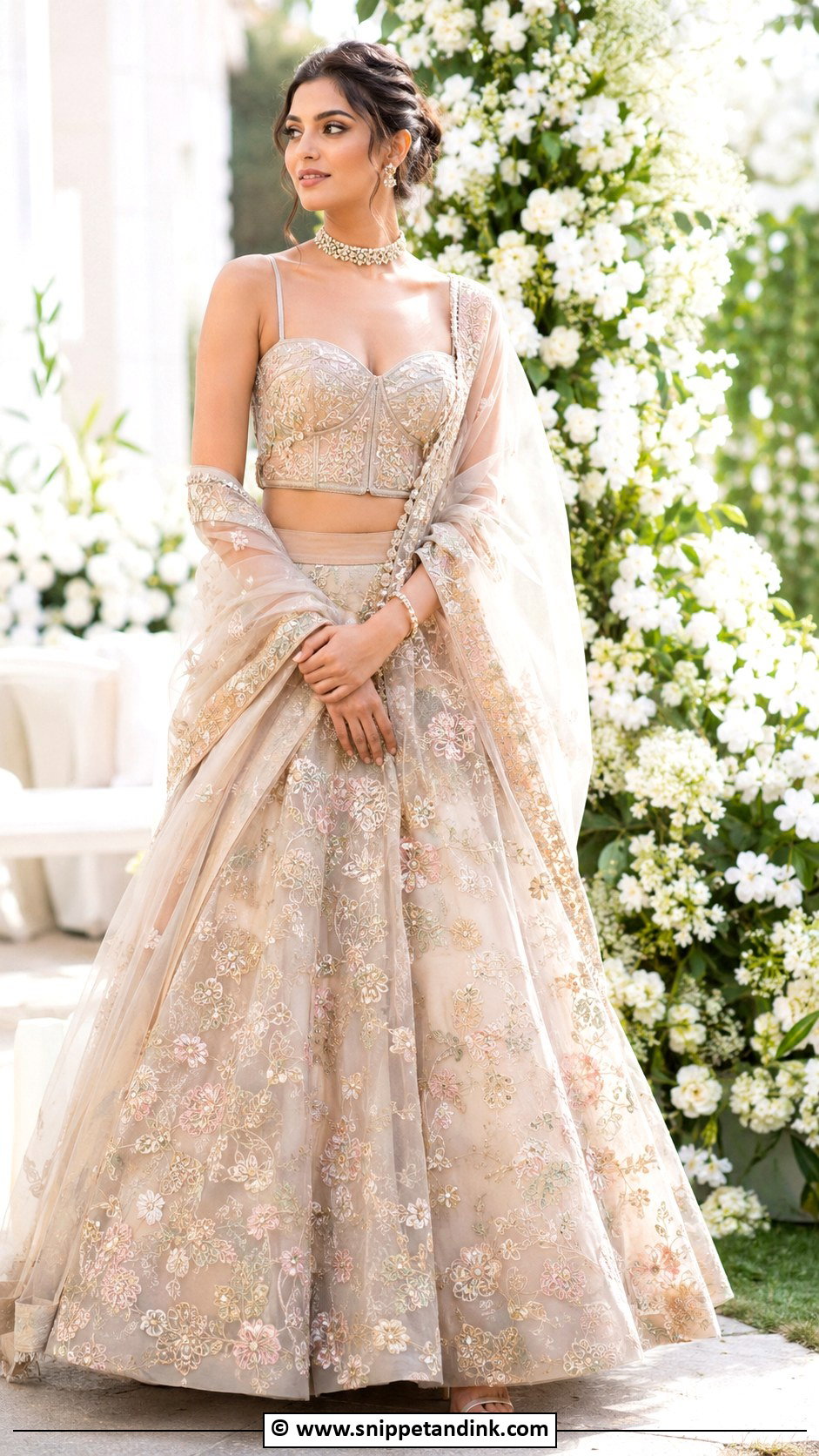
Organza gives a full skirt without the weight of many layers. Its crispness holds volume, so the skirt looks big and feels light. Ivory, blush, sage, peach and gold organza look refined with floral embroidery or scattered sequins. Pair it with a structured blouse, sheer dupatta, delicate jewelry and soft heels, and keep hair and makeup soft to balance the crisp fabric. Organza creases sharply when crushed, so it travels on a hanger, never folded in a bag. Outdoor and daytime weddings suit it.
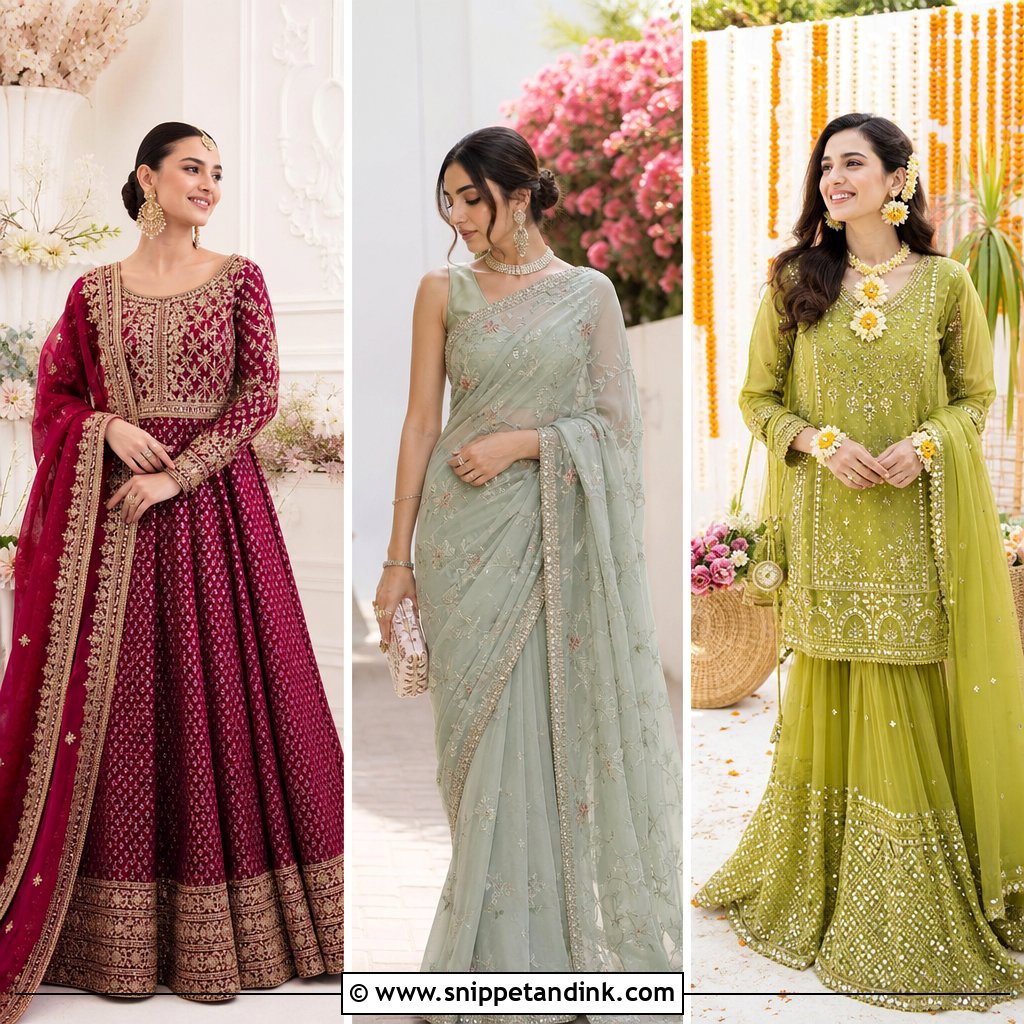

20. Fusion Lehenga With Qipao Blouse
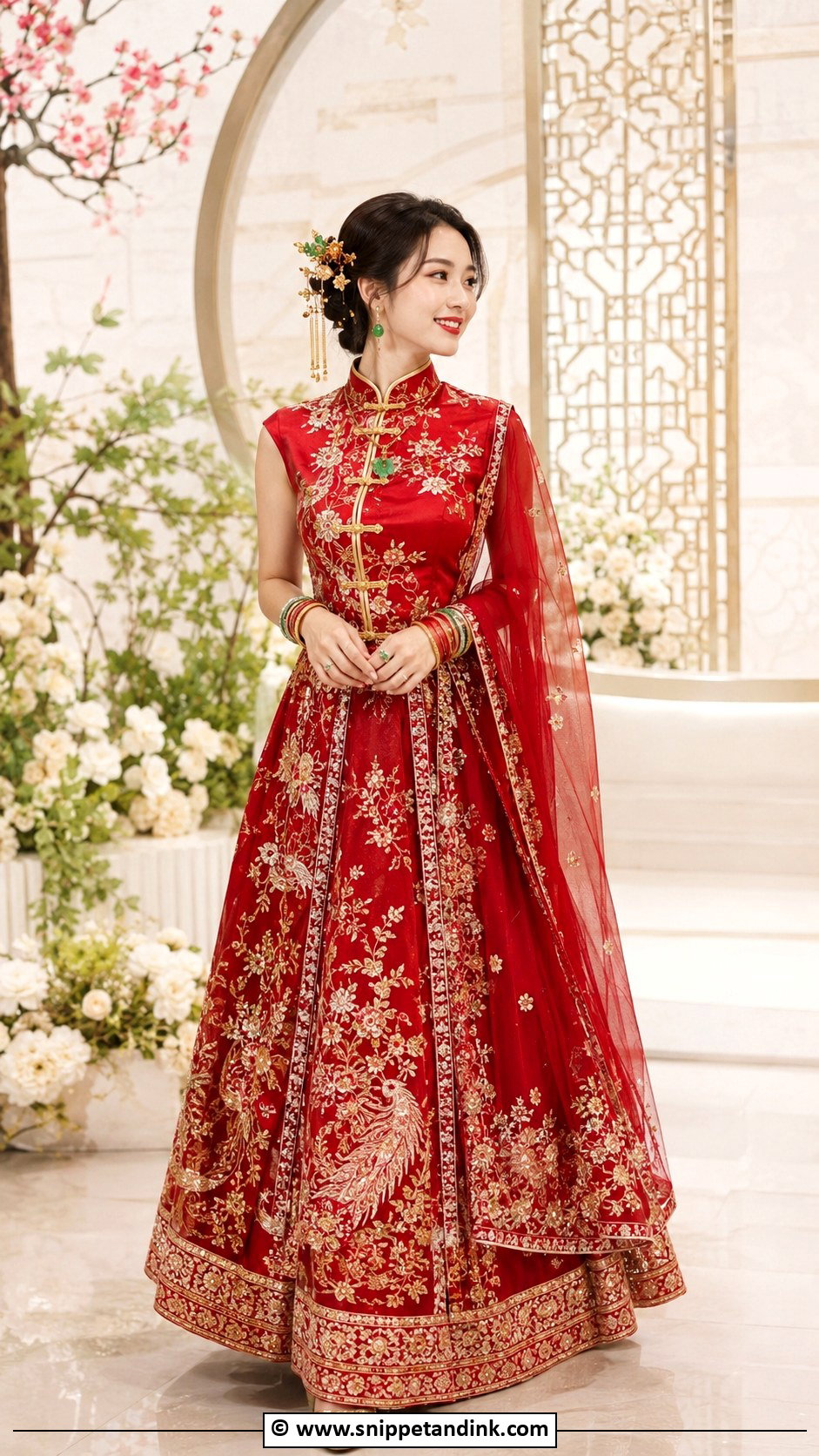
This fusion piece has to look designed, not assembled. The lehenga skirt gives volume; the qipao-inspired blouse adds a high collar, fitted shape and frog or button details. Red and gold join the two traditions most smoothly, though ivory, blush or emerald also work. A dupatta, gold heels, jade jewelry, bangles or a delicate hairpin link both influences. A high collar plus a heavy necklace crowds the face, so I usually let the collar be the necklace. Custom fitting is essential.
21. Saree With Bridal Veil
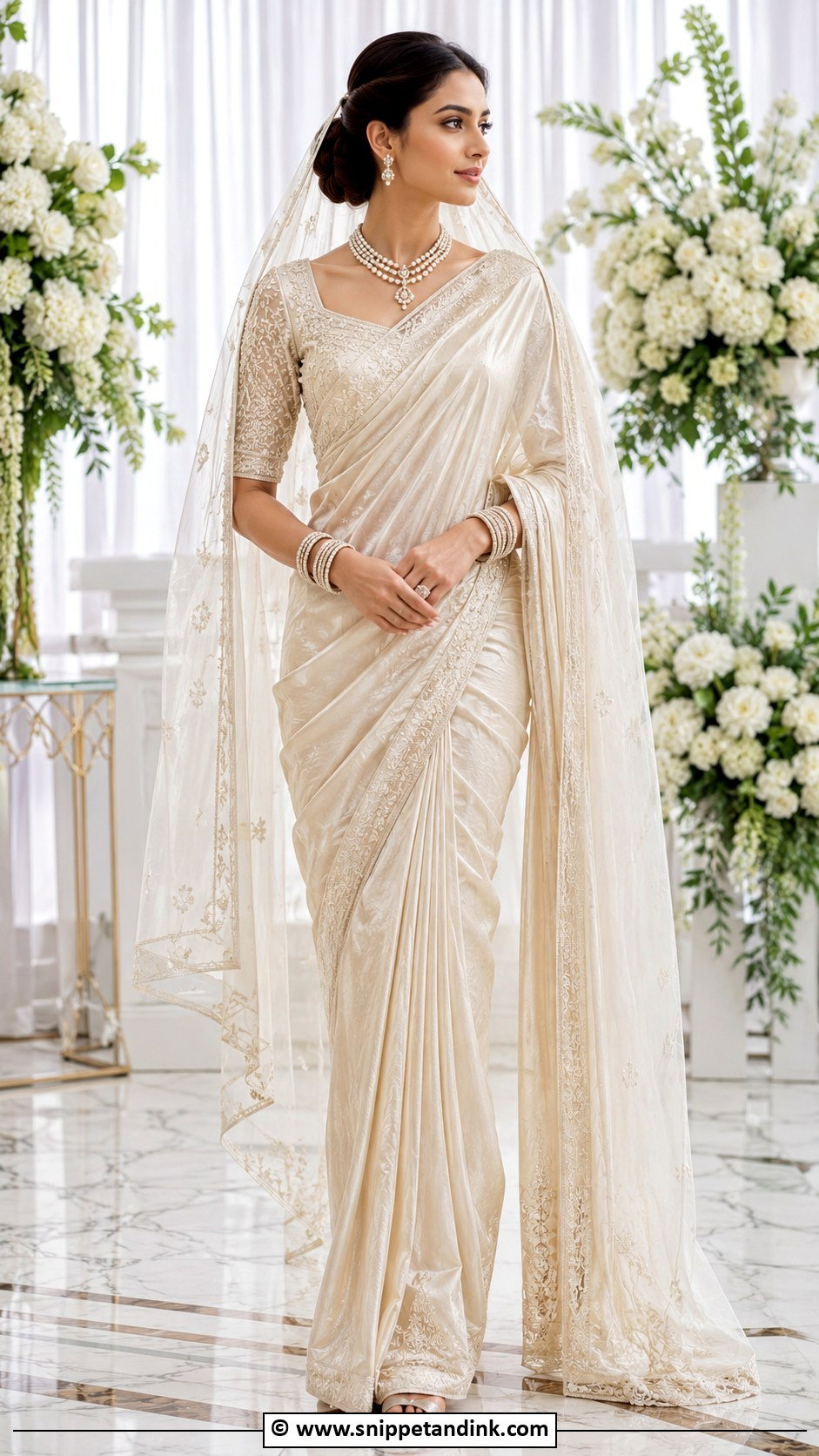
A veil over a saree gives a familiar bridal moment without changing into a gown. Silk, satin, chiffon or organza work, with a sheer veil in matching ivory, gold, blush or soft red. The blouse can be simple or embroidered to suit the saree. Pearl or gold jewelry, soft heels, bangles and a neat bun or waves complete it. I pin the veil into the bun rather than the pallu, so the drape stays independent and the veil can come off without disturbing it.
22. White Lace Asian Bridal Dress
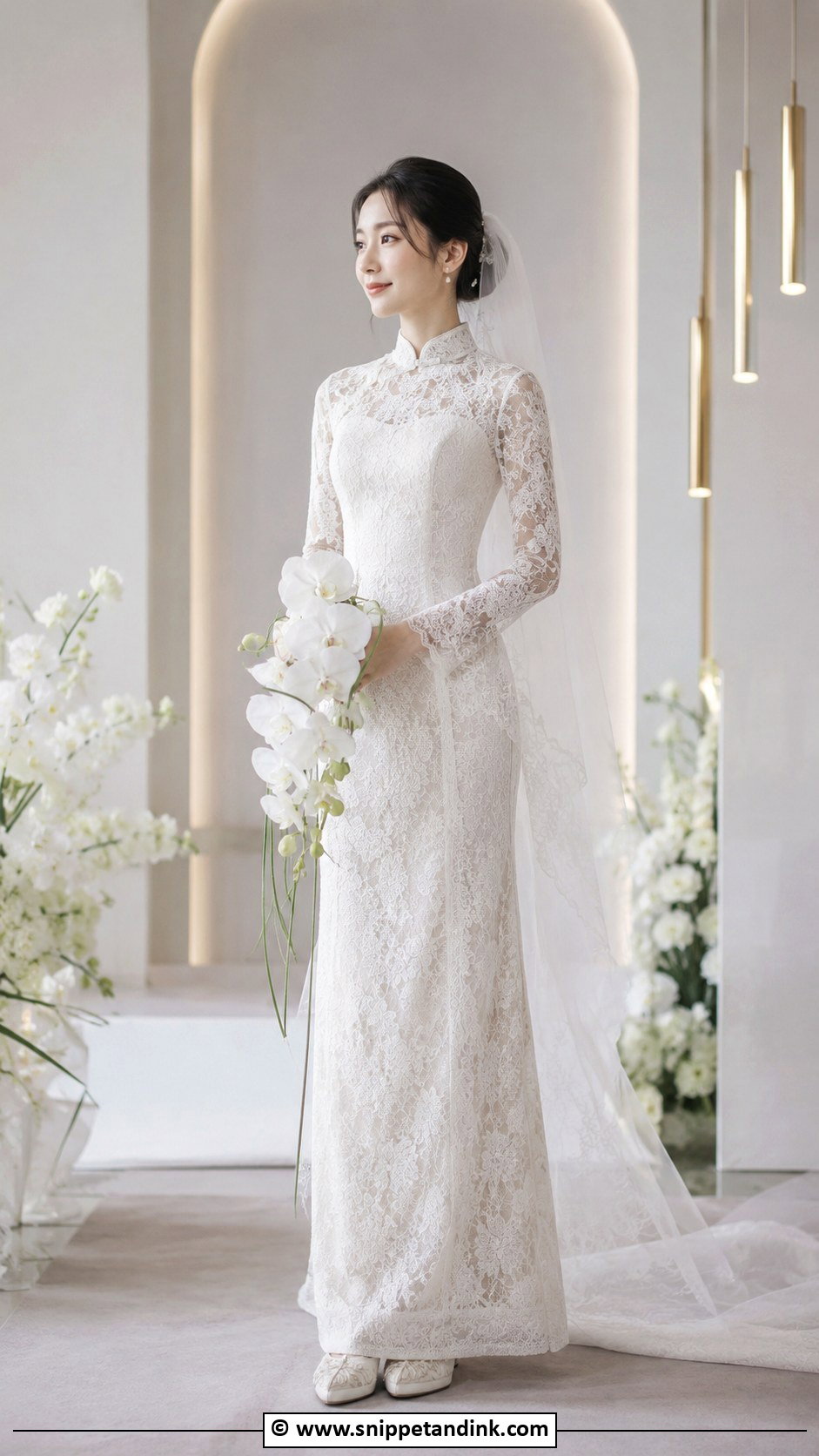
A lace gown gives a Western silhouette that cultural accessories make personal. A full-length lace dress with sleeves, a high neck or a soft A-line works. Add pearl earrings, embroidered shoes, a sheer veil or family jewelry. A short cape, bolero or beaded belt adds shape. I prefer refined lace with clear motifs over busy all-over patterns, because heirloom jewelry needs a calm background. It suits modern Asian weddings, civil ceremonies and multicultural celebrations.
23. Red And Gold Bridal Gown
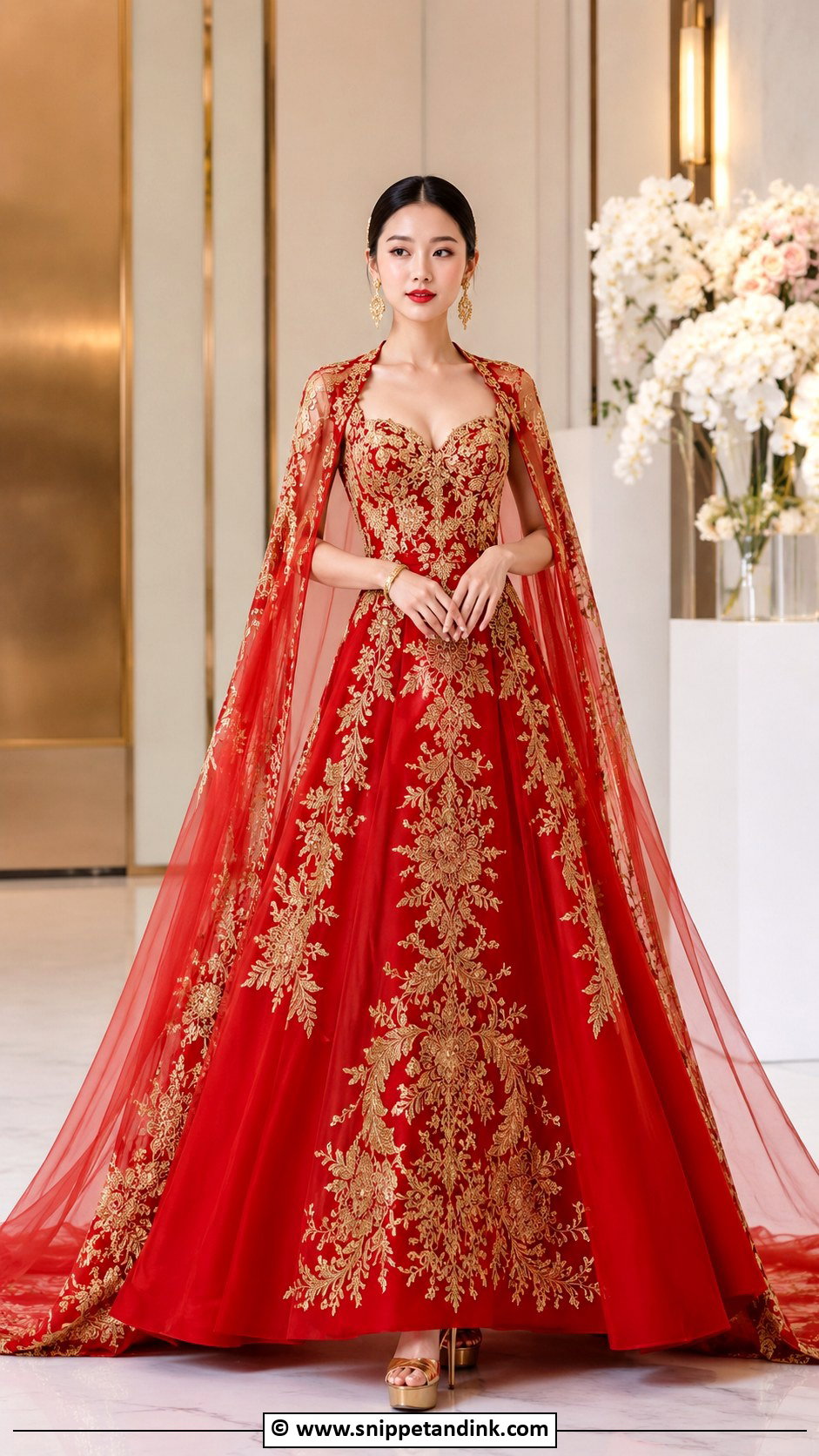
Red and gold carry celebration across many Asian traditions, and putting them on a Western gown is a direct way to bridge both. An A-line, ball gown or fitted silhouette with gold embroidery, beading or brocade-like fabric is the base. Gold heels, statement earrings, a bracelet and a sleek hairstyle complete it, with a cape veil or embroidered train for the ceremony. Deep red can photograph almost black in dim halls, so I prefer a slightly brighter red for evening receptions.
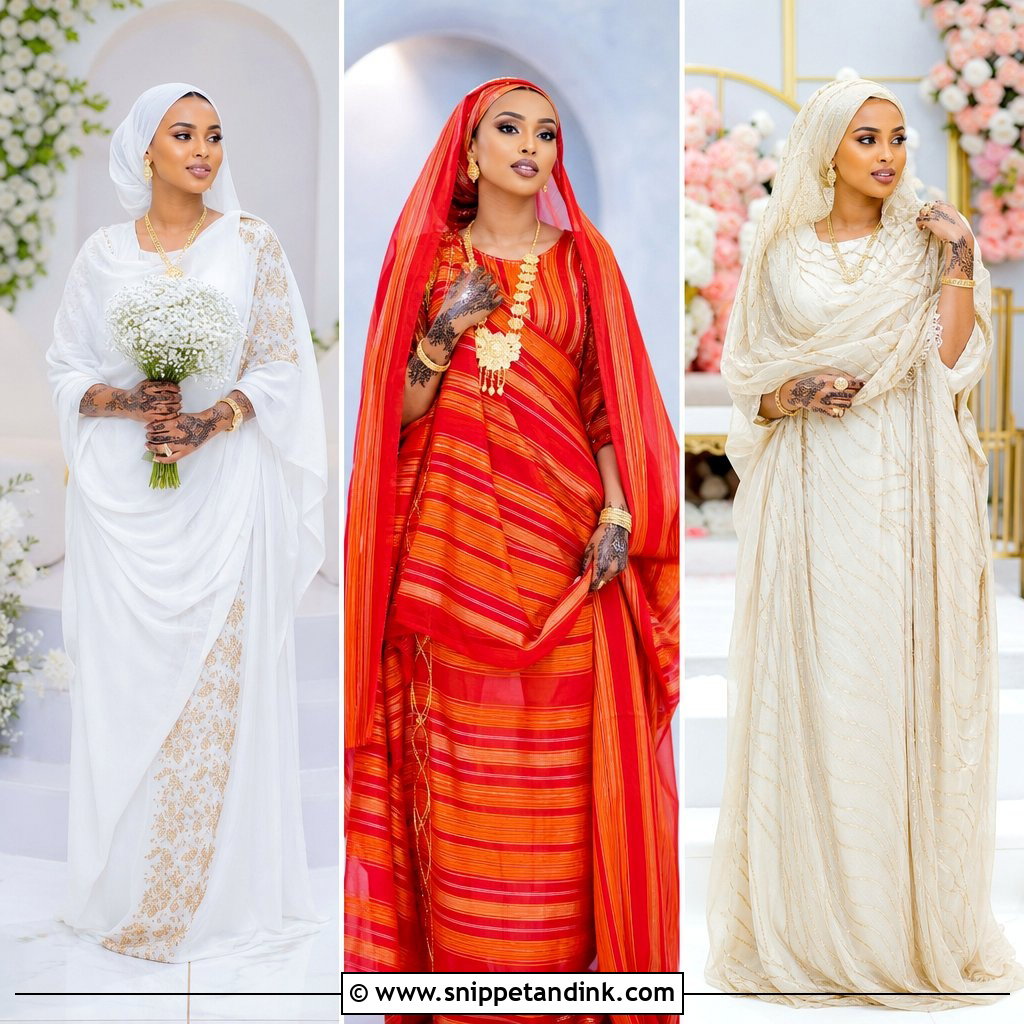
24. Muslim Asian Bridal Dress
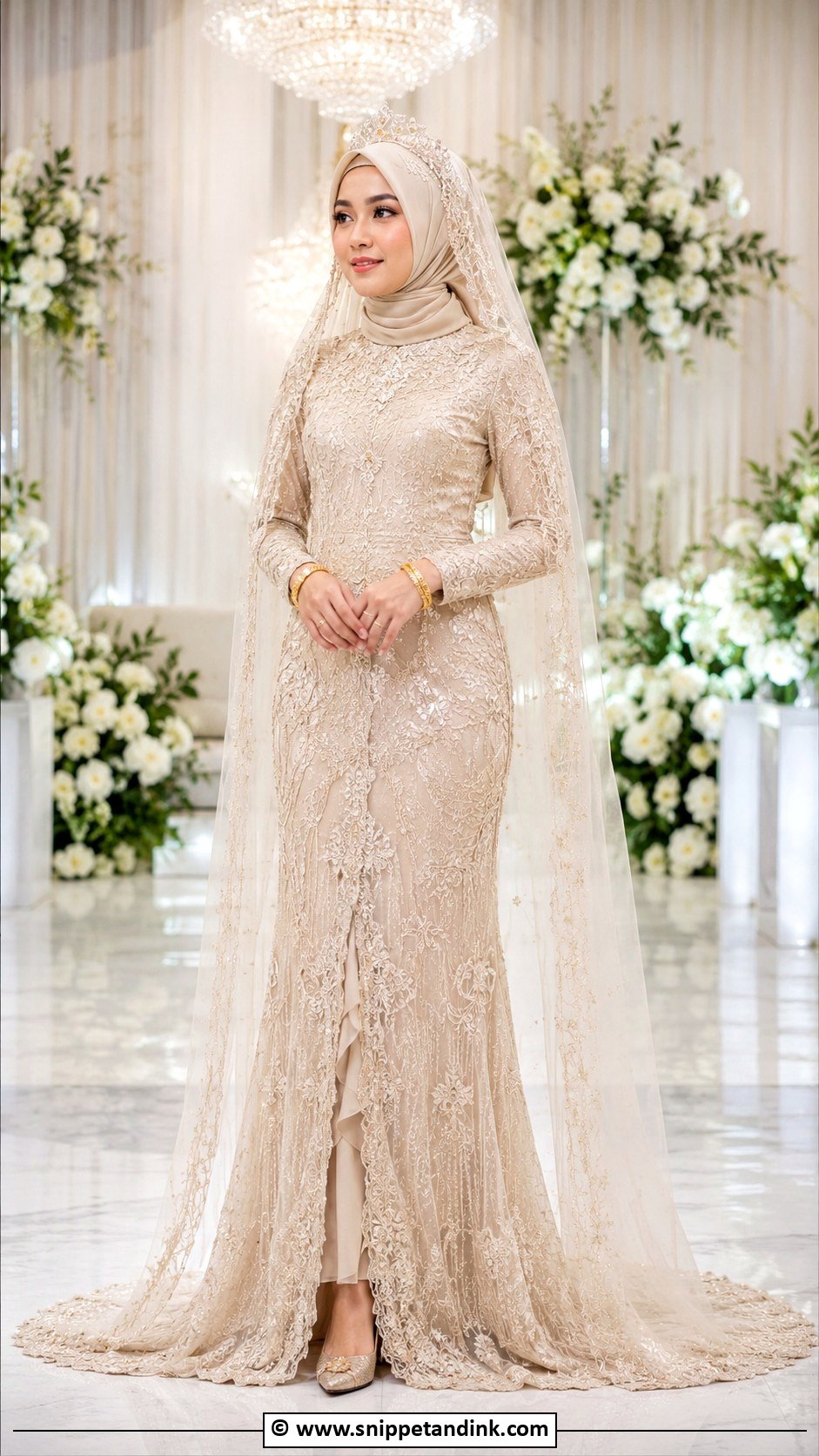
A Muslim Asian bridal dress can be fully modest and fully glamorous at once. A long-sleeve gown, lehenga, sharara or kaftan-style dress works with a matching hijab or draped veil. Satin, silk, chiffon, organza or embroidered net suit different seasons. Ivory, champagne, blush, emerald, red and gold are all bridal. A jeweled headpiece, bangles and comfortable heels complete it. The pinning is where I spend the time: secure, flat pins under the hijab, set so the headpiece sits on top without pulling the fabric.
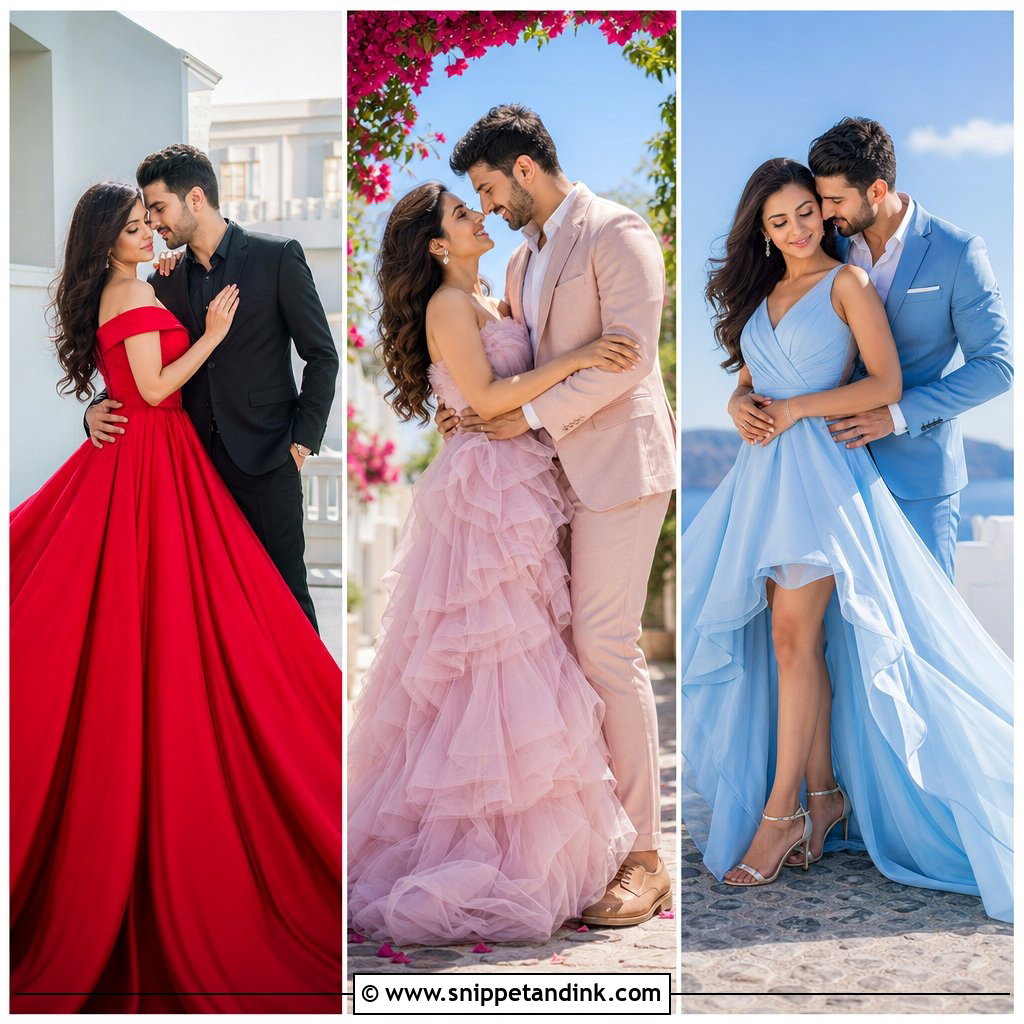


25. Nikah Bridal Sharara
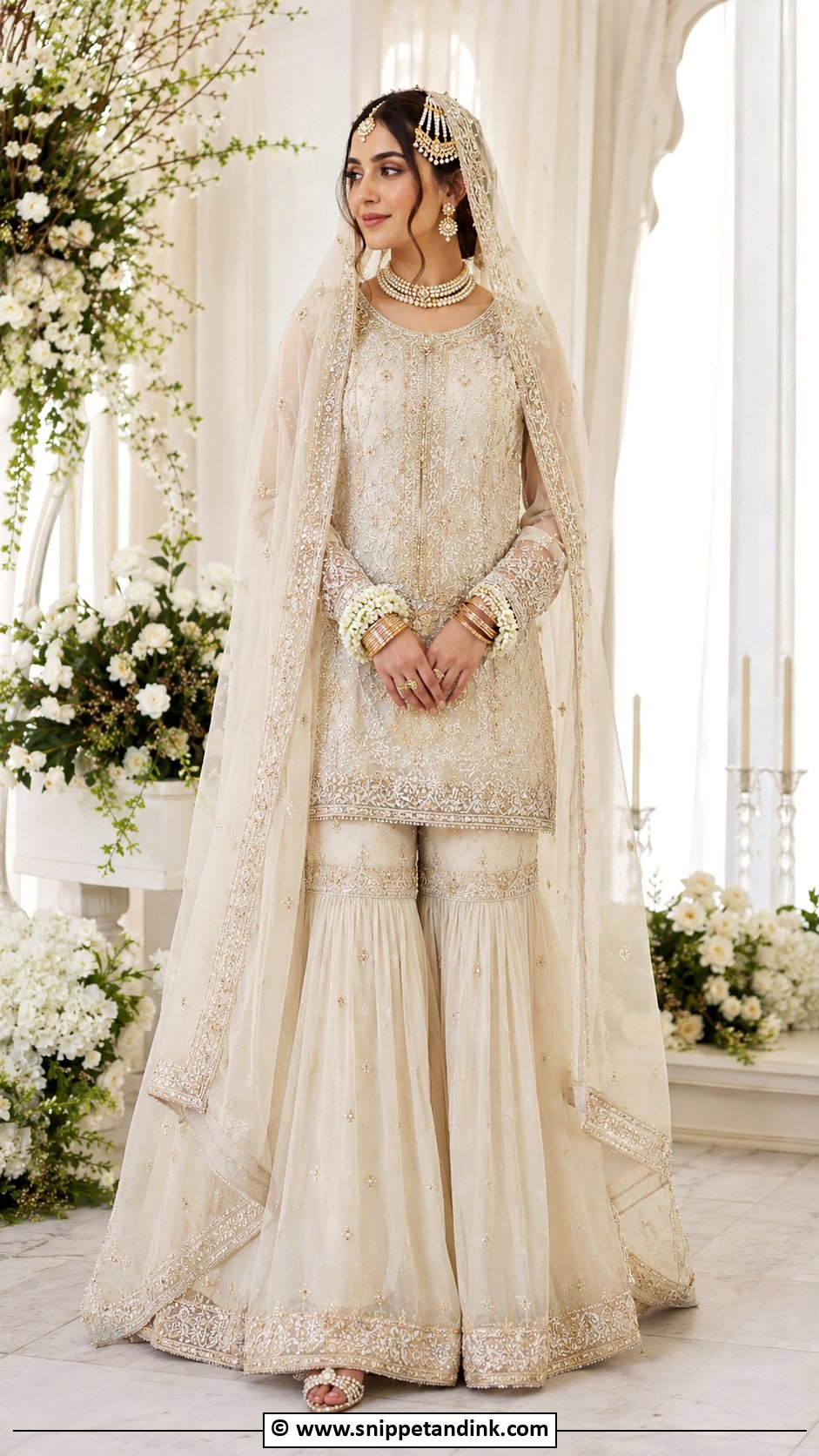
A Nikah bridal sharara suits a ceremony that is seated, intimate and modest. Ivory, champagne, blush, mint and soft gold are popular for their calm. A long kameez or peplum top with wide sharara pants and a sheer dupatta over the head or shoulders is the base. Pearl jewelry, a passa, delicate bangles and embellished heels finish it. Organza or chiffon with fine embroidery keeps it light for a day of sitting with family, and it photographs softly in daylight.
26. Reception Lehenga Gown
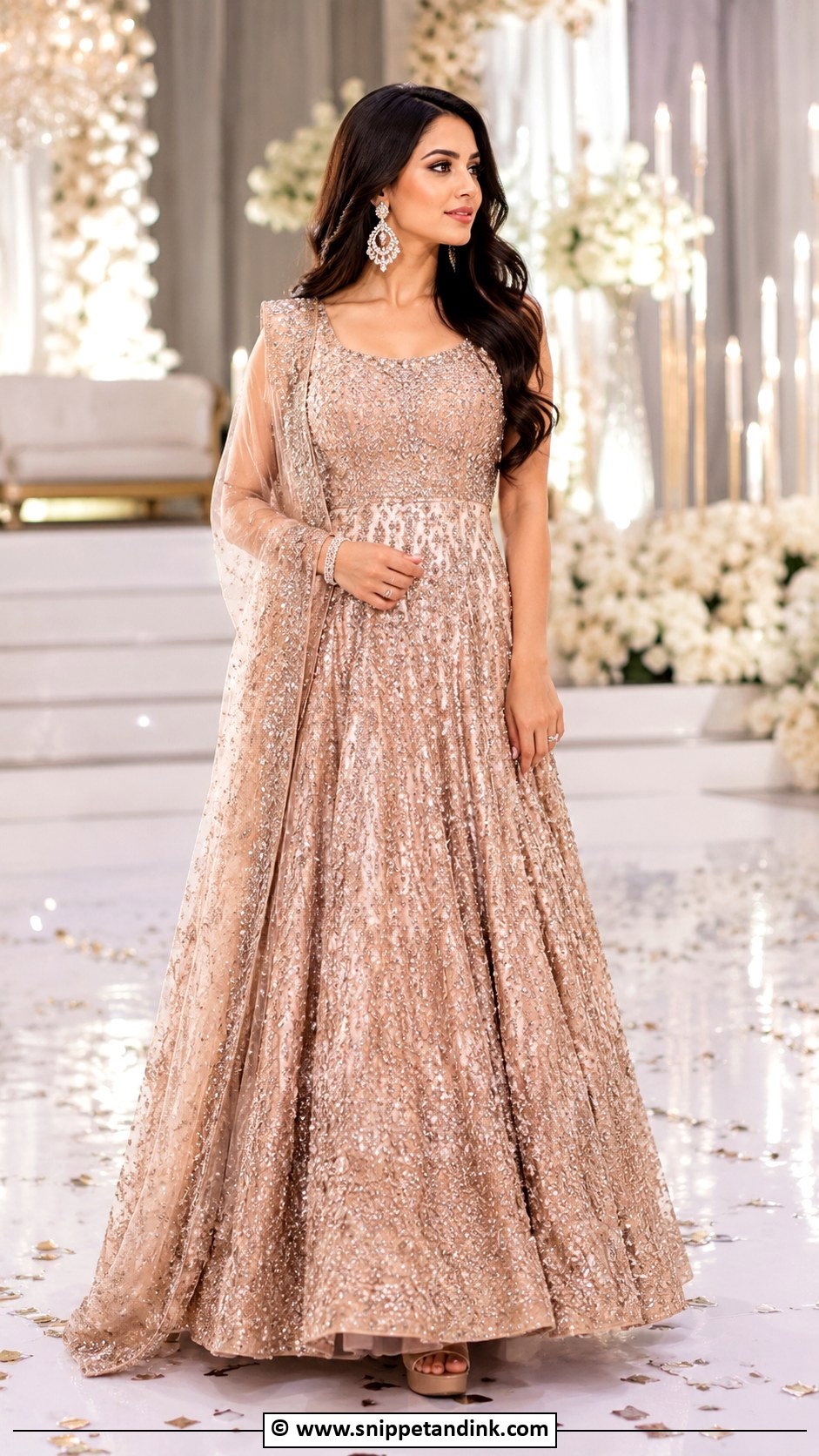
A lehenga gown joins the lehenga’s volume with the smooth line of an evening gown, which makes it a natural reception change. Metallic embroidery, crystals, sequins or soft draping in champagne, silver, rose gold, navy, emerald or deep red all suit it. Statement earrings, a bracelet, sleek heels and polished hair complete it. Skip heavy head jewelry unless the event calls for it. Because it is one piece with a concealed zip, it goes on in minutes, which is exactly what you want between ceremony and reception.
27. Minimal Bridal Saree
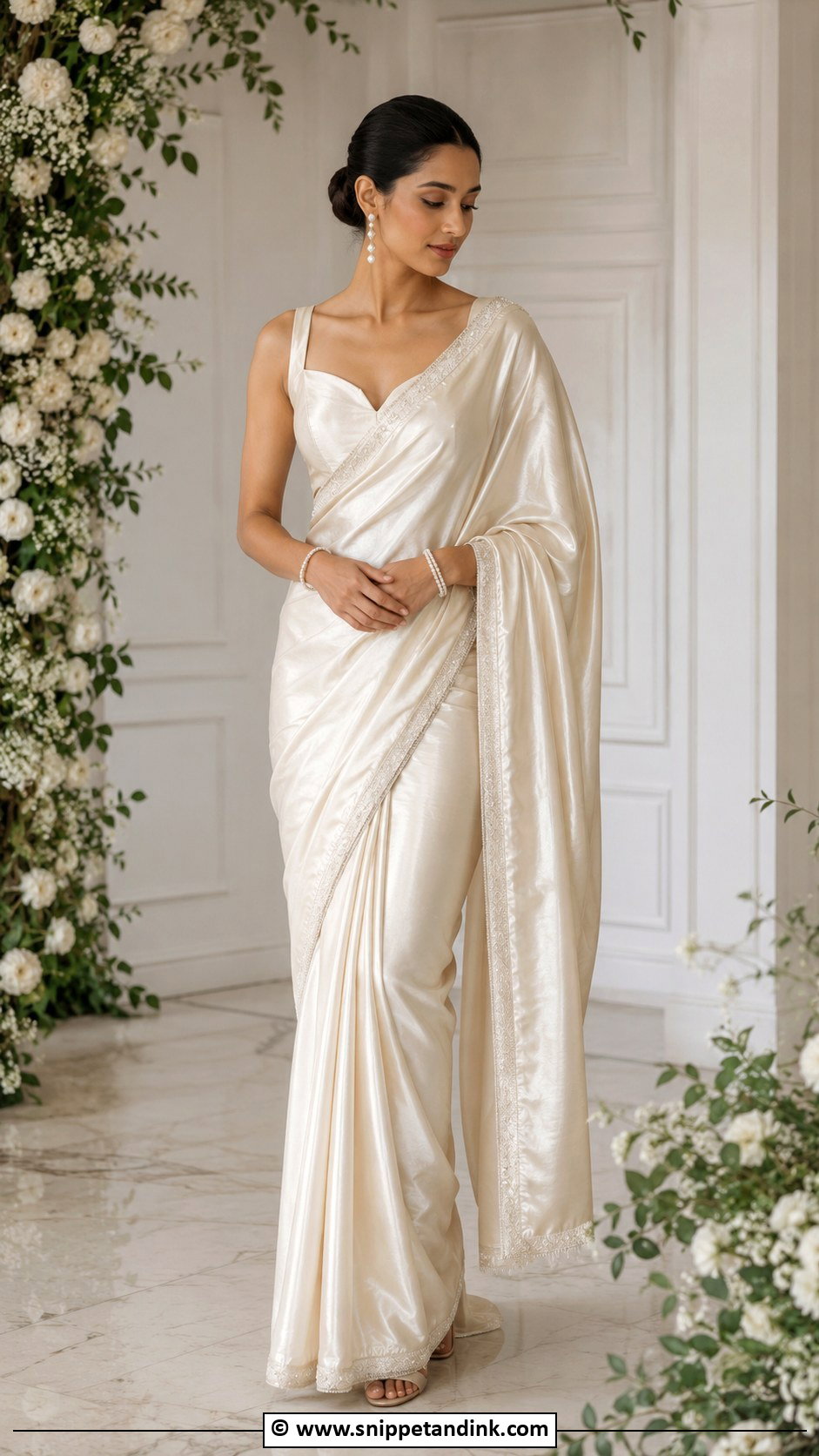
Minimal sarees put fabric quality on show. A plain silk, satin, crepe or organza saree with a refined border or subtle texture in ivory, champagne, blush, beige, pale gold or soft silver is enough. A structured blouse, pearl earrings, a sleek bun, delicate bangles and barely-there heels complete it. A small bindi, fresh flowers or a fine veil adds a bridal note. On a plain drape every pleat shows, so I steam the pleats in place once it is on. It suits civil ceremonies and intimate weddings.
28. Embroidered Bridal Kaftan
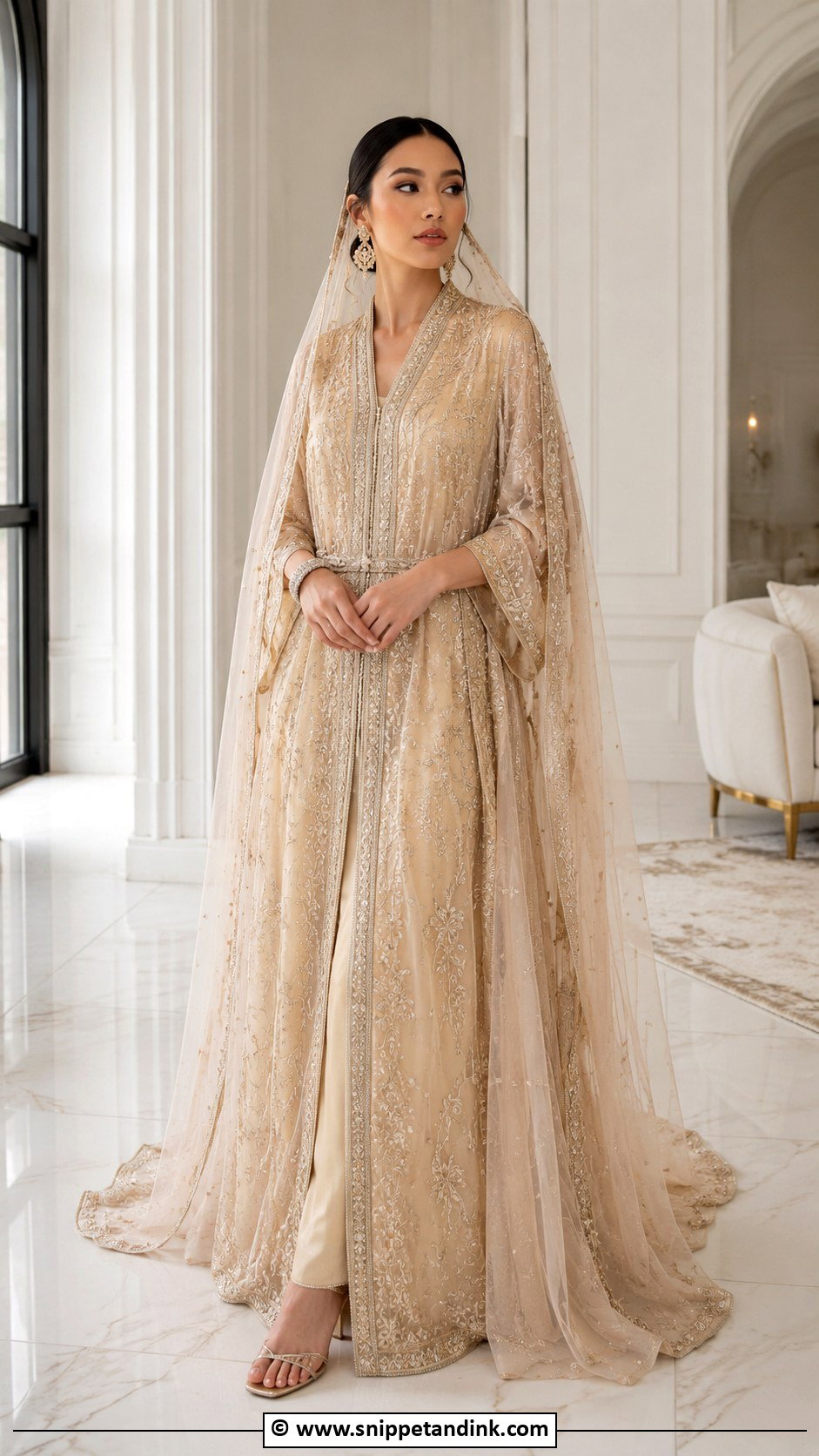
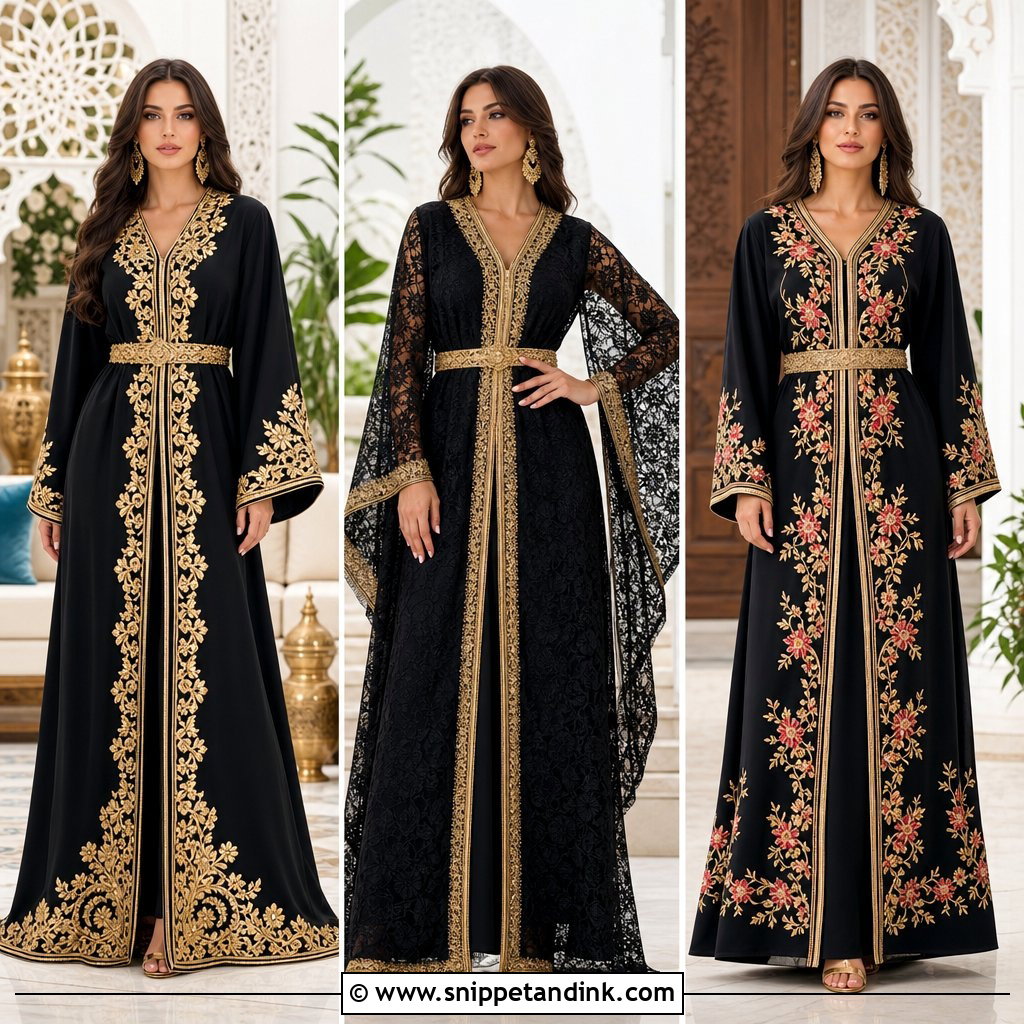
Kaftans give coverage and ease without looking casual, as long as they are tailored. A floor-length shape with hand embroidery, beadwork, metallic thread or crystal detail along the neckline, sleeves and hem is the base. Ivory, gold, champagne, emerald and deep red can all be bridal. Heeled sandals, statement earrings, a bracelet and a soft veil or headscarf complete it. Loose does not mean shapeless: I adjust the shoulder width and sleeve length exactly, because a kaftan that is even slightly too wide looks borrowed. It suits Southeast Asian, South Asian and fusion weddings.
29. Tea Ceremony Bridal Dress
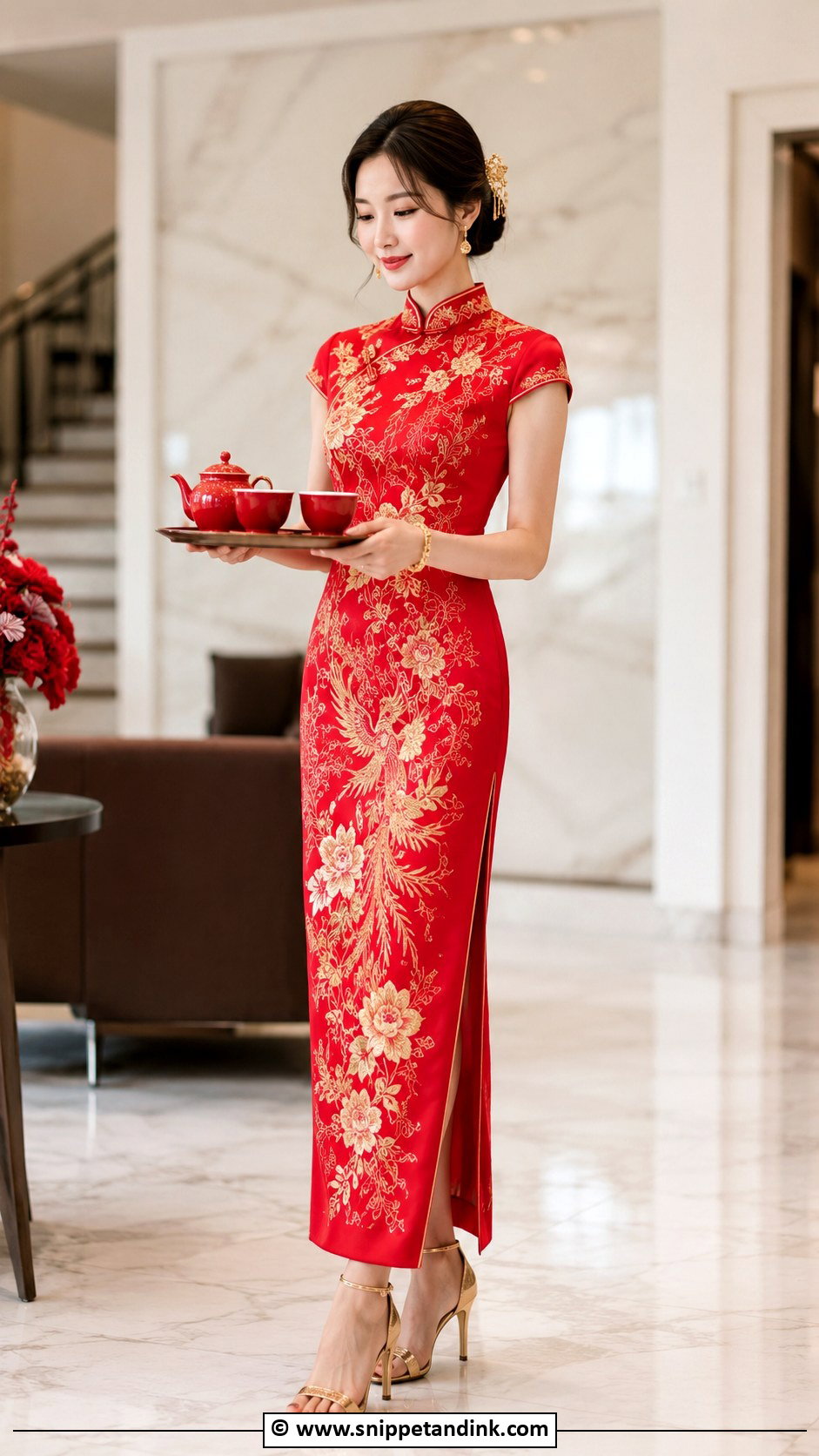
A tea ceremony involves bowing, kneeling or sitting, and serving tea to elders, so the dress must allow all of that. A red qipao, áo dài, hanfu or embroidered two-piece works depending on your culture and family. Red, gold and jewel tones feel festive. Comfortable heels, simple jewelry and a hairstyle secure enough to survive repeated bows complete it. Practice serving a cup in the outfit before the day; long sleeves and stiff collars feel different with a tray in your hands. Close-up photos are common here, so keep accessories refined.
30. Multicultural Asian Bridal Dress
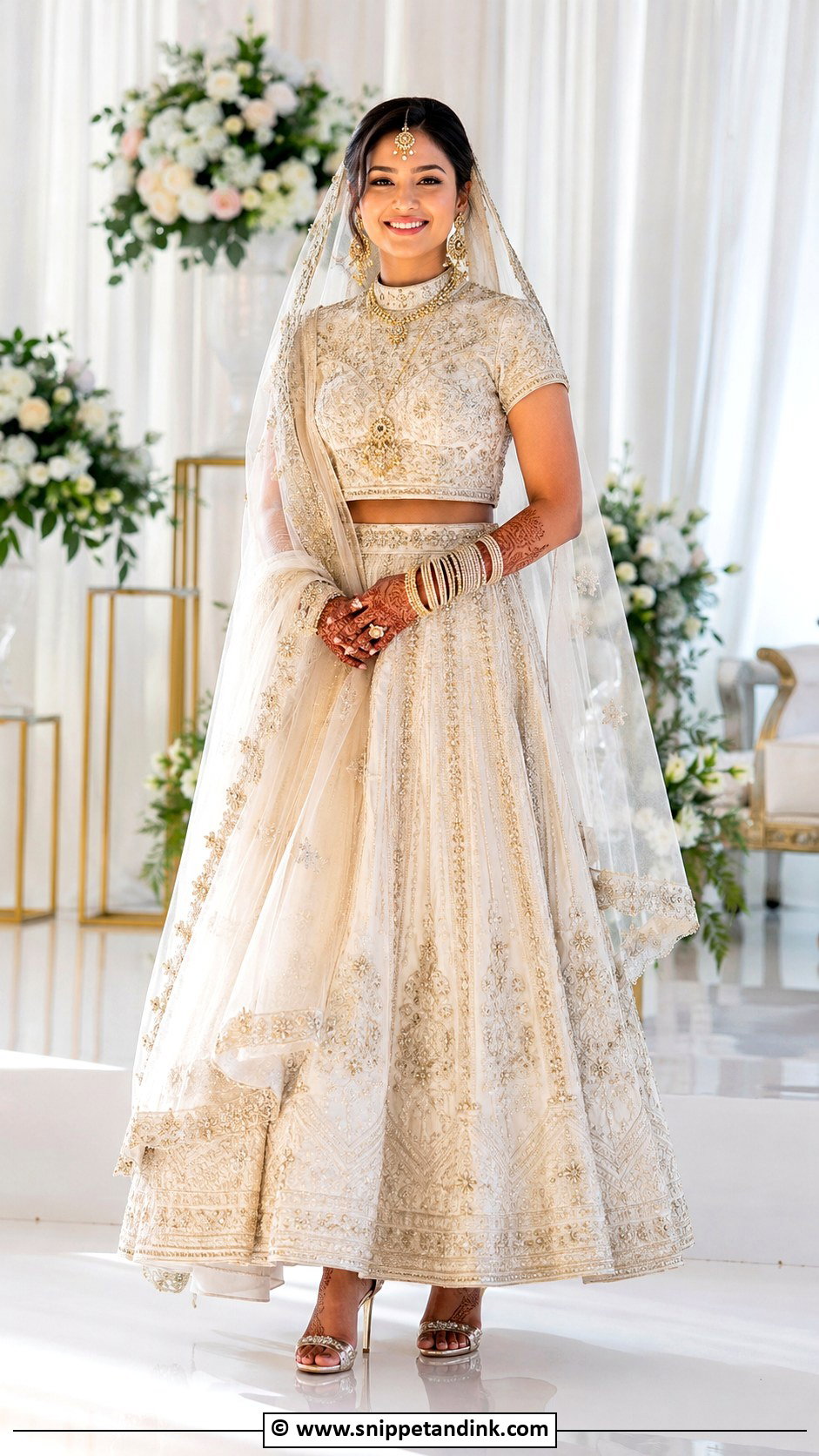
A multicultural Asian bridal dress honors more than one background in one outfit: a lehenga with a qipao collar, a saree with a veil, an áo dài with South Asian jewelry, a gown with Korean-inspired fabric. I start by choosing one main silhouette and then adding the other culture’s elements with care, inside a focused palette. Custom tailoring matters, because fusion details must look as if they were always meant to sit together. Meaningful jewelry, comfortable shoes and hair accessories complete the story.
Three Outfits in One Day Means Planning the Changes
Brides who wear a tea ceremony qipao, a ceremony lehenga and a reception gown lose a surprising amount of the day in changes. I map each change ahead: where it happens, who helps, what jewelry and hair stay on. A hairstyle that suits a qipao collar may not suit a dupatta, so decide whether the hair changes too, and leave real time for it in the schedule rather than squeezing it between photos.
Silk and Zari Last Generations If You Store Them Right
Many of these pieces become heirlooms, and the damage usually happens in the cupboard rather than on the day. Wrap silk sarees and lehengas in soft cotton or muslin, never plastic, which traps moisture. Refold sarees every few months along different lines; silk left on the same fold for years can split at the crease. Keep perfume and deodorant off the fabric, and air the pieces occasionally on a dry day out of direct sun. Real zari can tarnish over time, so store it away from damp and anything rubber.
Every Fold, Pleat and Collar Tells Your Family’s Story
There is no single right outfit here, only the right one for your ceremony, season, body and the traditions you want to honor. A red lehenga, silk saree, qipao, hanbok or áo dài may feel most like you; a fusion gown, modest sharara or lace dress may suit better. Put fit, fabric and movement first, and choose accessories that support the outfit rather than compete with it. When each piece has a reason to be there, the outfit says something about your family as well as your style.
You'll Like These Ideas:




Leave a Reply