
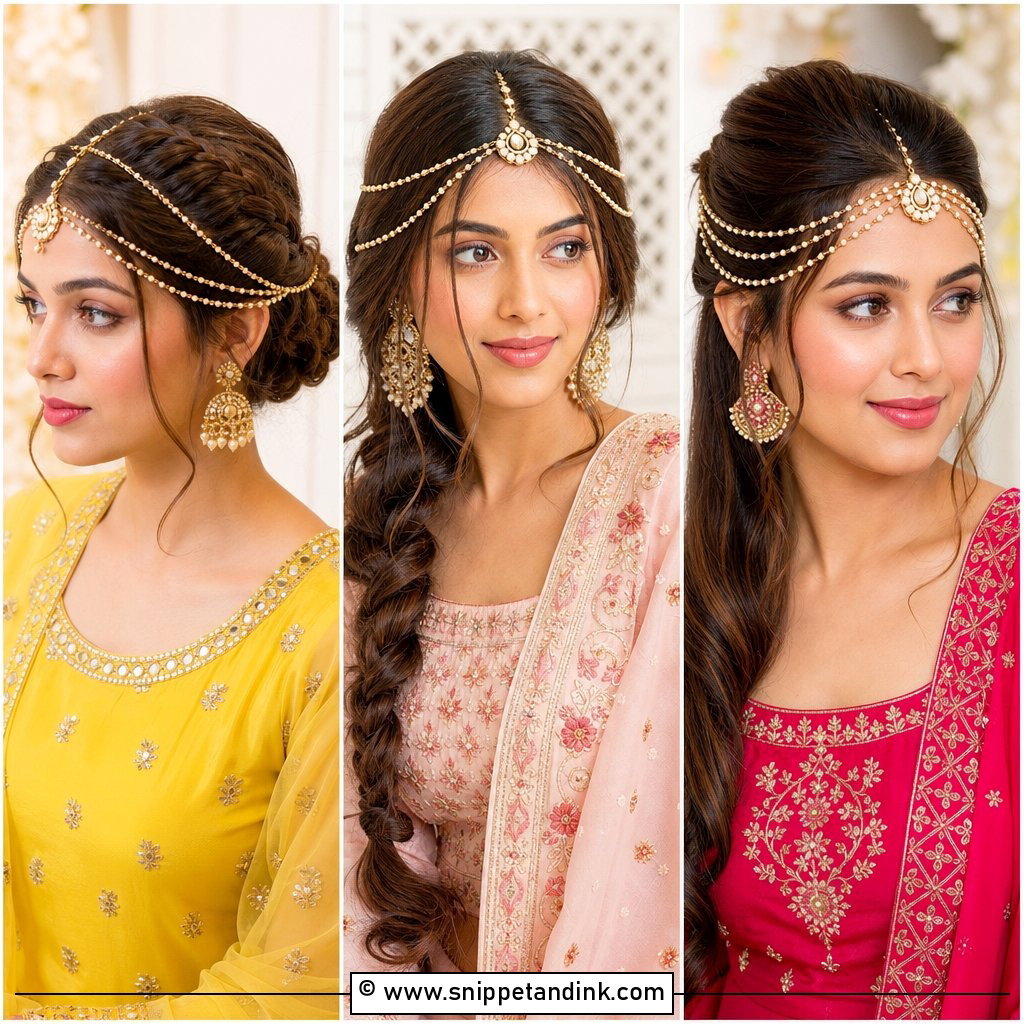
A matha patti changes how I plan a bride’s hair before I pick up a single pin. It sits right on the parting, it carries real weight, and it has to share the crown with a dupatta that someone will pin and re-pin all day. So the style underneath is doing a structural job. A heavy kundan piece wants a firm base like a sleek bun or a tight braid. A fine pearl chain gives me room for open waves or a half-up look. Outfit, face shape and hair length narrow it down from there, and the fifteen styles below cover most of what I get asked for.
How a Matha Patti Gets Hooked Into the Hair
Most matha pattis have three parts: a center chain that runs along the parting, a pendant that sits on the forehead, and two side chains that sweep along the hairline toward the ears. Each end has a small hook. I pin the center hook at the crown or into the top of the bun, and tuck the side hooks into the hair just above or behind the ears.
Hooks need something to grip. On silky, freshly washed hair they slide, so I backcomb a small section at each anchor point or build a tiny hidden braid there and pin the hook through it. Watch where the pins go at your trial, so a cousin can fix it later if a hook works loose during the ceremony.
Getting the chain length right
- The pendant should sit just below the hairline, not halfway down the forehead. If it drops too low, the center chain can be folded and pinned shorter.
- Side chains look best following the hairline in a gentle curve. If they hang loose at the temples, they’re too long for your face.
- Broad foreheads carry wider, heavier side chains well. Smaller foreheads usually suit a single fine chain or a slimmer pattern.
- If your parting sits off-center by habit, settle early on switching to a center part. The jewelry looks crooked on a side part, and hair trained one way for years needs a few days of blow-drying to lie flat the other way.
1. Sleek Bridal Bun With Matha Patti
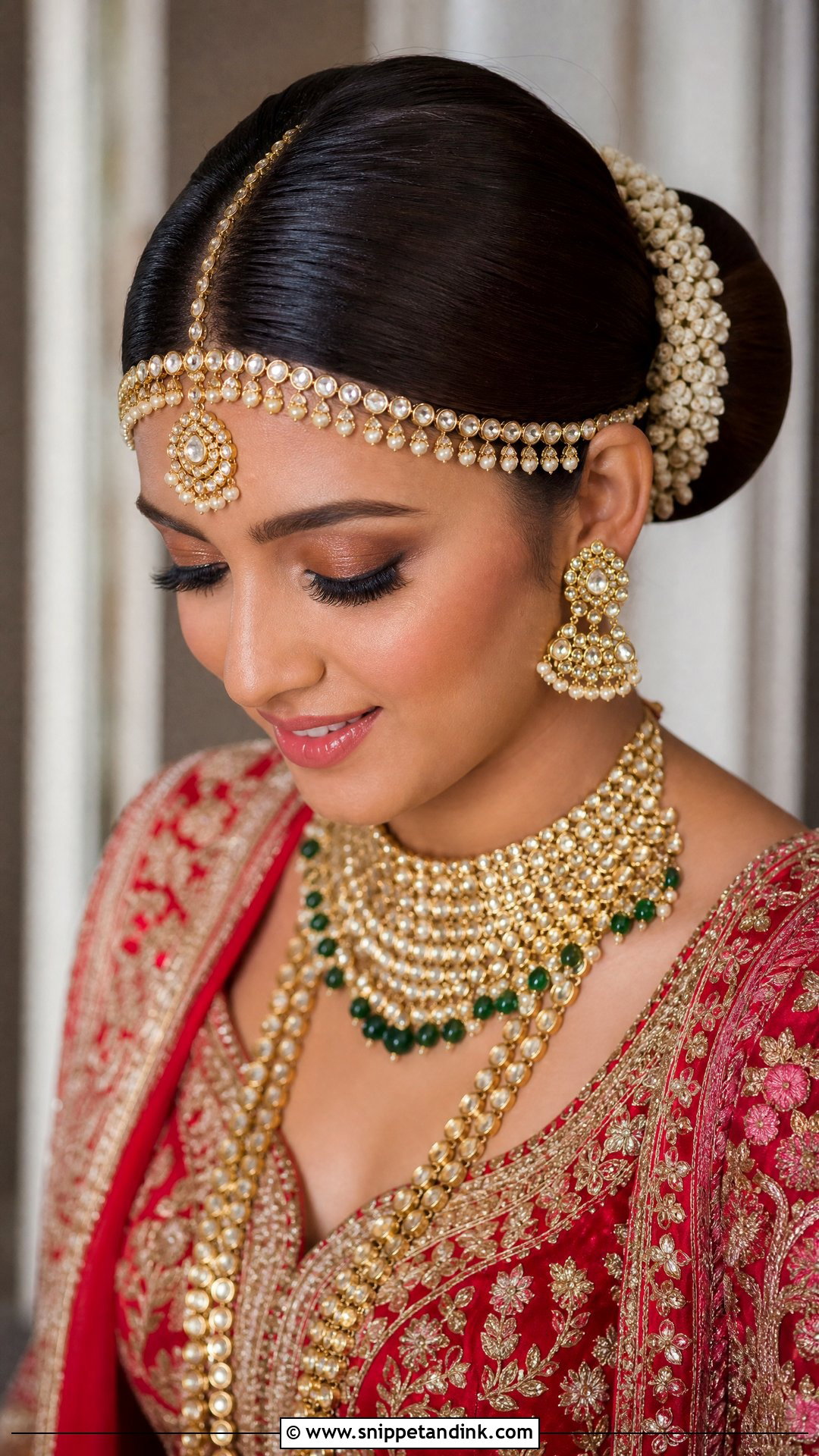
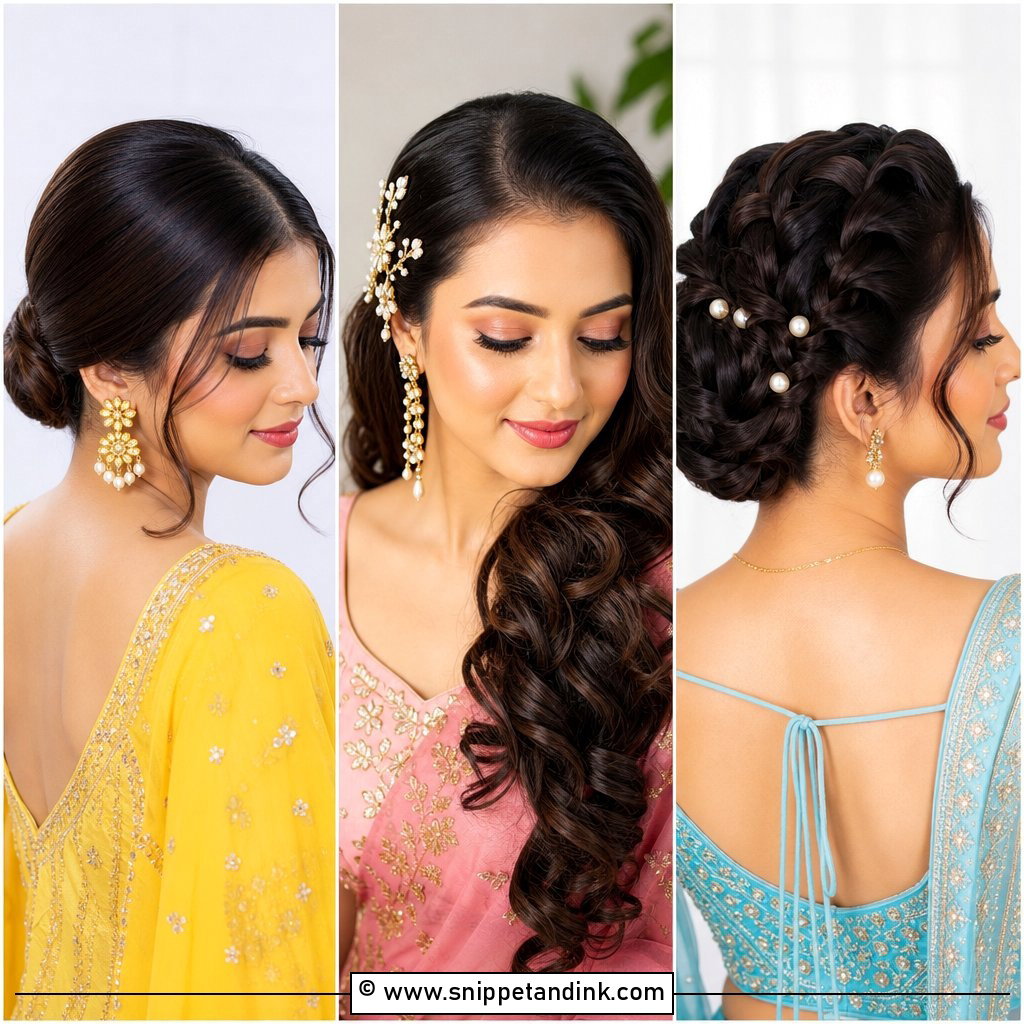
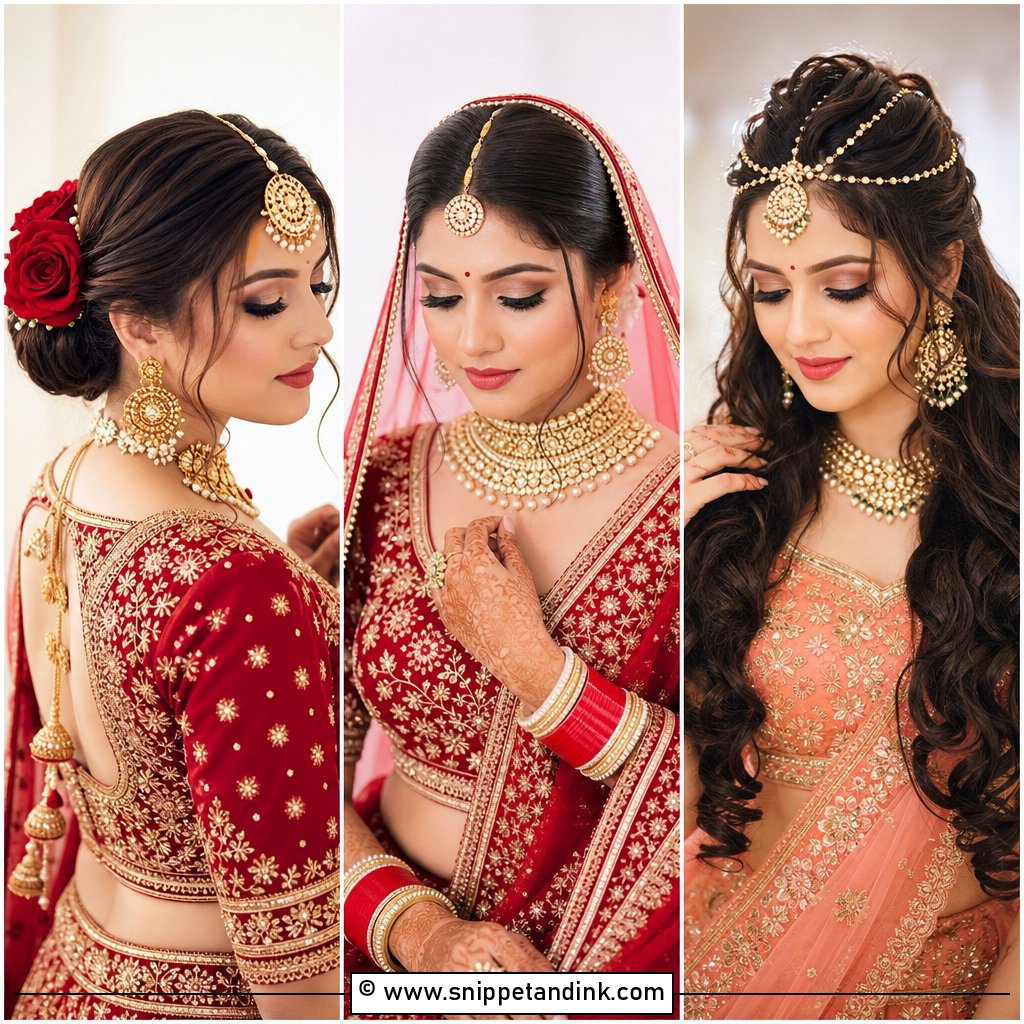
This is the style I reach for when the jewelry is heavy and the ceremony is long. The clean center part gives the chain a straight track to lie flat on, and a bun at the crown or mid-back gives me a solid place to hook the center chain and pin the dupatta without the two fighting. I always smooth the front with a little gel on a fine brush, then pull the lengths back with a bit of looseness at the sides so the head shape doesn’t look shrunken in photos. A kundan or polki matha patti suits this base better than anything else on the list, because nothing competes with it.
2. Low Bridal Bun With Matha Patti
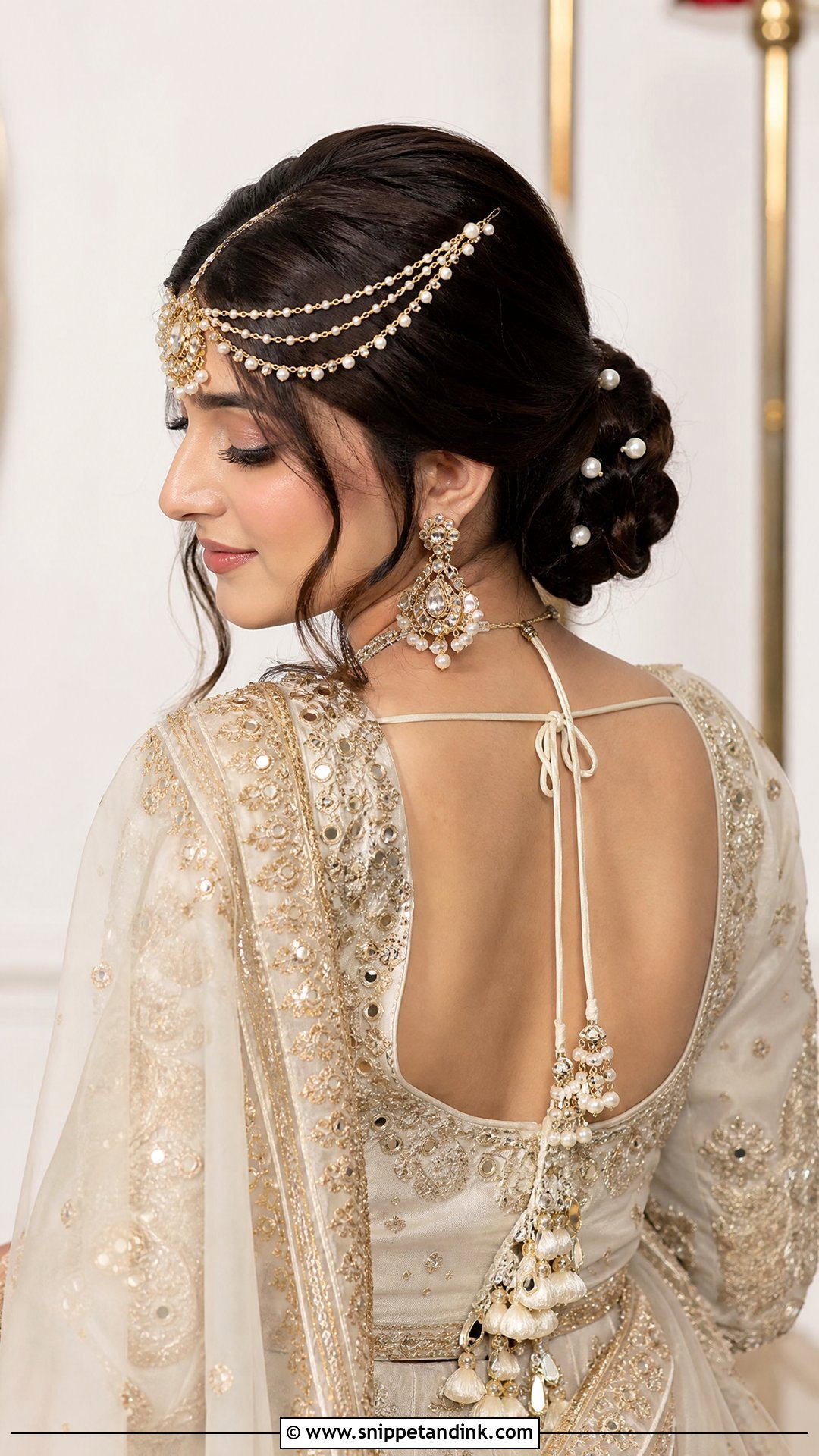
A low bun sitting at the nape is the softer cousin of the sleek bun. The dupatta drapes over it rather than being stabbed into it, which brides with sensitive scalps notice by the third hour. Because the bun is low, the center hook of the matha patti needs its own anchor at the crown, so I build a small hidden section there and pin into that. I like to leave two thin face-framing pieces, curled away from the face, for nikah ceremonies and daytime weddings where a fully scraped look can feel severe under natural light.
3. High Bridal Bun With Matha Patti
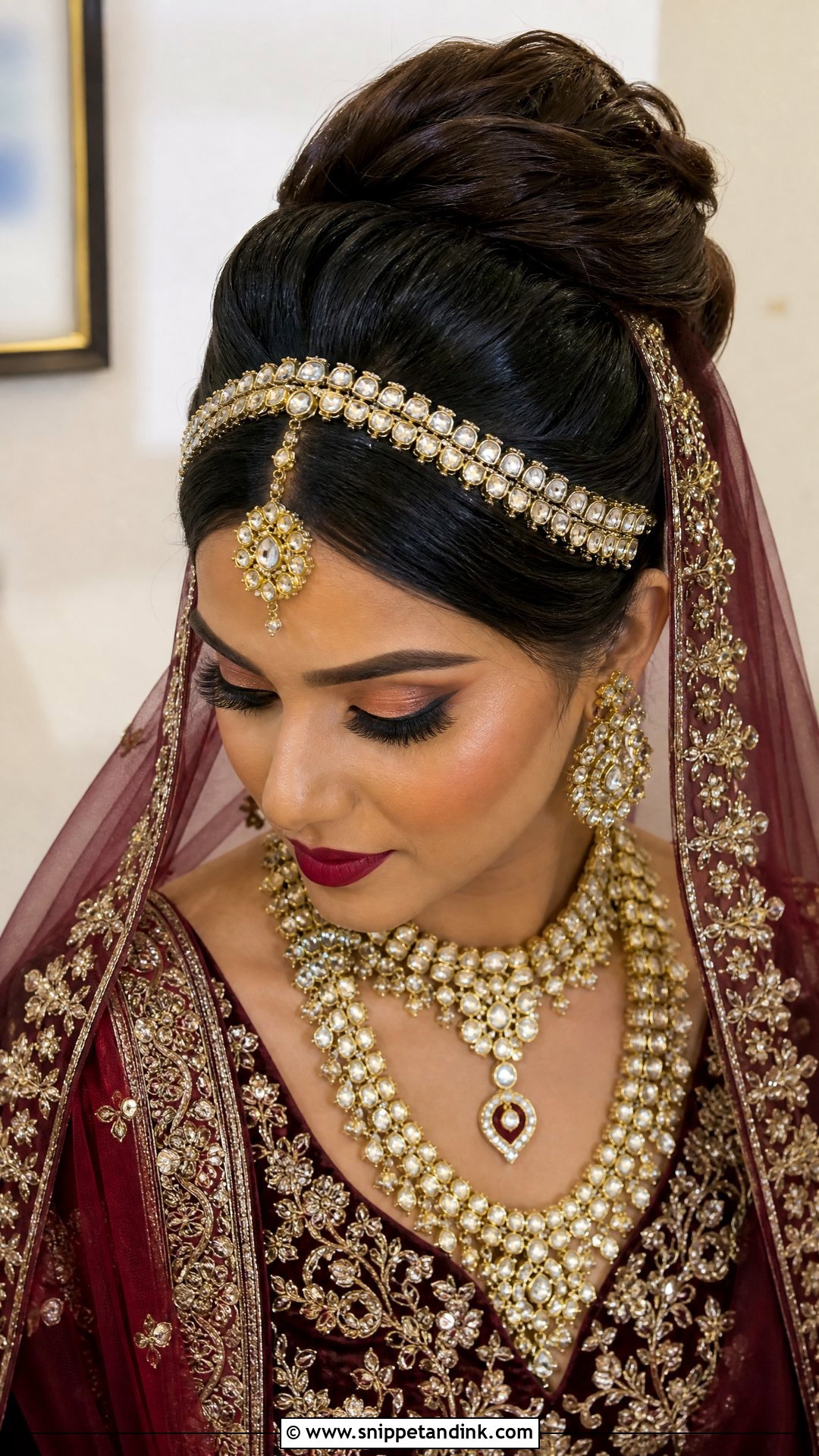
Height at the crown makes a full matha patti look properly regal, and it shows off a high neckline or an embroidered blouse back. The trade-off is weight distribution: a high bun plus a heavy dupatta pinned into it plus jewelry hooked into it all pulls on the same small area. I build these on a padded base or a donut so the pins have something to grip besides hair. Petite brides and rounder faces get a little visual length from it. If you have very fine hair, tell your stylist early, because a high bun on fine hair needs padding or extensions to stay round all day.
4. Messy Bridal Bun With Matha Patti
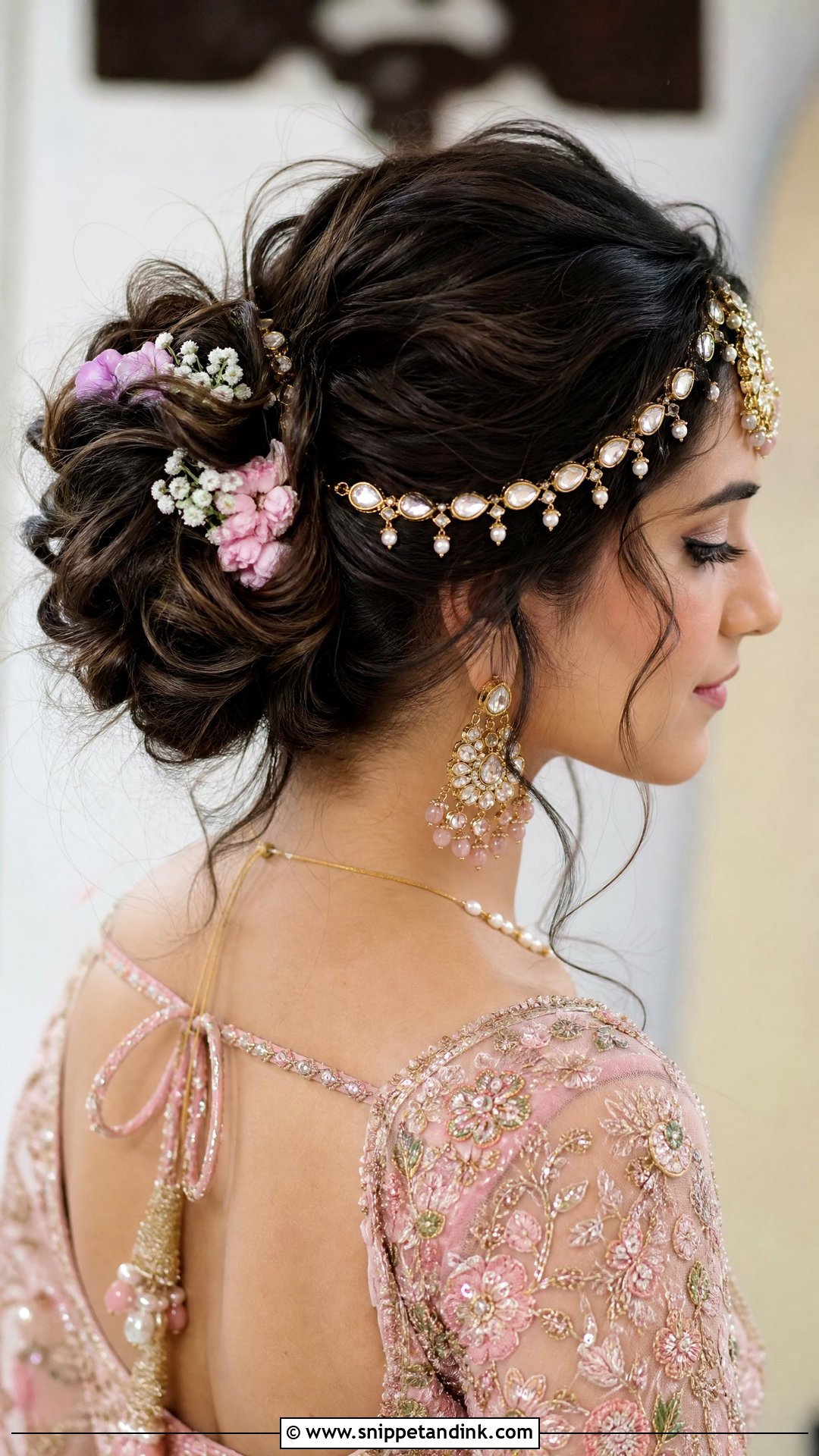
Messy is the wrong word for what’s actually happening here. Every loose twist in a textured bun is pinned on purpose, and the parting under the matha patti stays completely smooth, because a fuzzy part makes the chain look crooked. I prep with texturizing spray rather than oil so the twists hold their shape. It reads best at mehndi, sangeet, garden weddings and other daytime events. On very silky, straight hair I’d usually add a quick curl first, or the texture drops flat before the photos start.
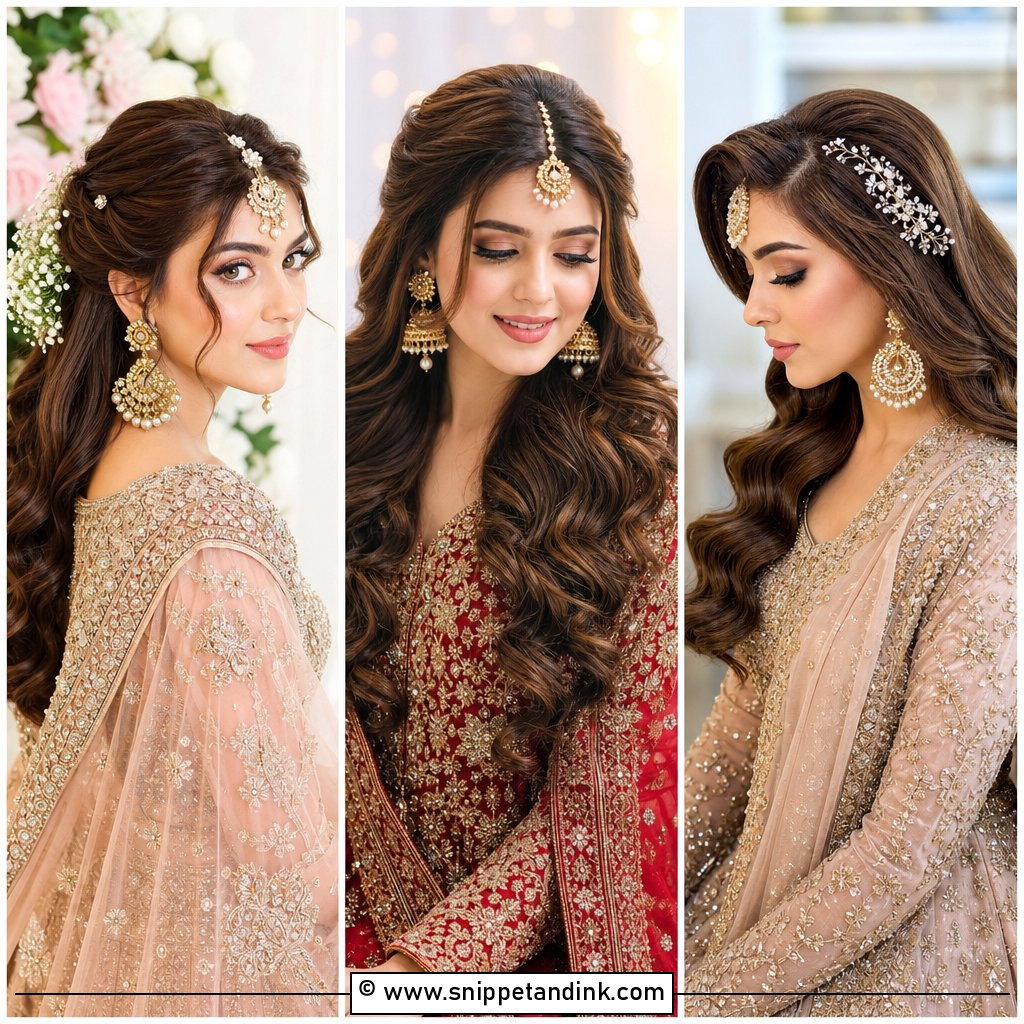
5. Open Curls With Matha Patti
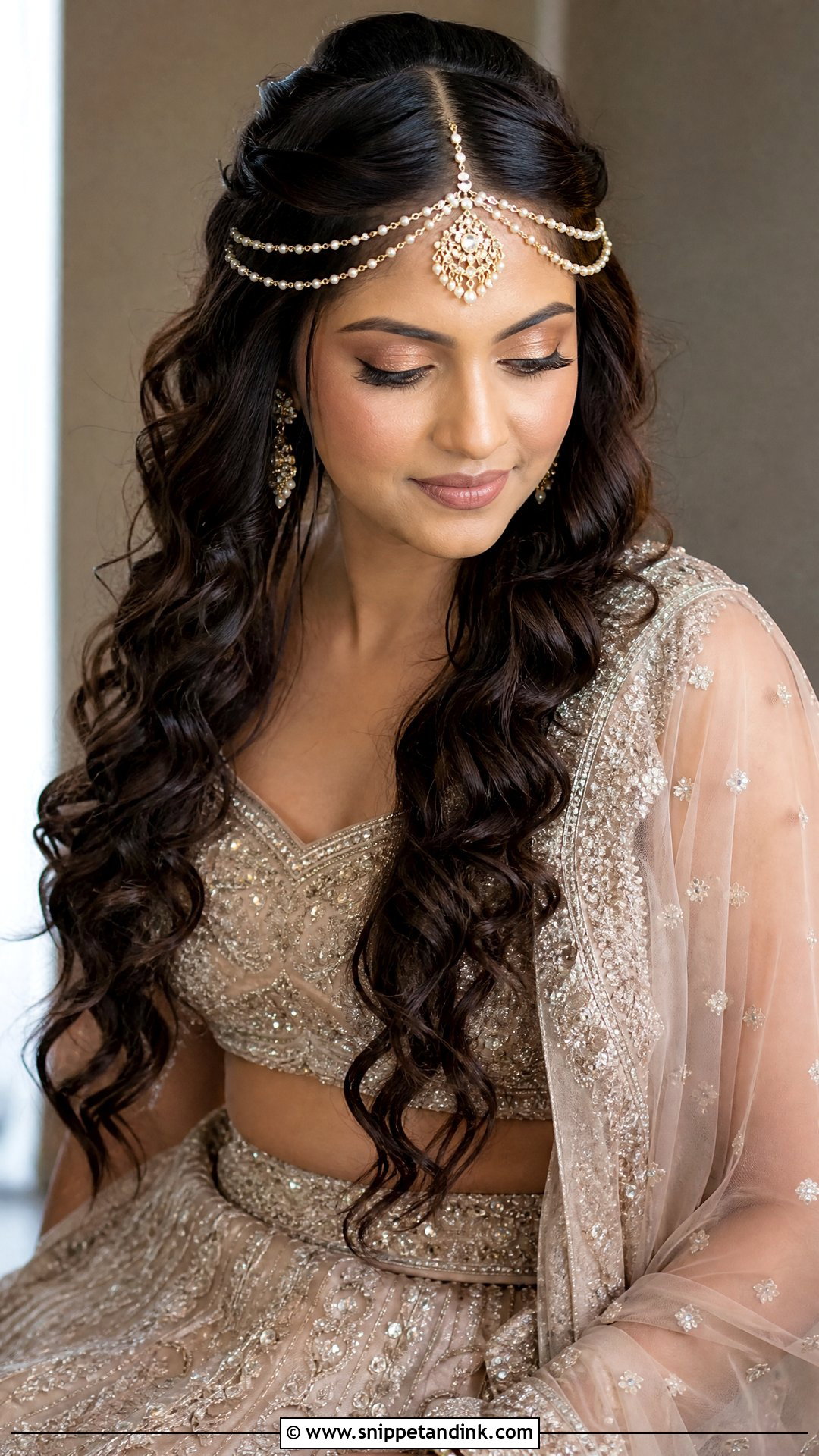
Open curls move, and a matha patti doesn’t like movement. That’s the honest problem with this one. The fix is all at the crown: a few hidden pins in a crisscross where the center chain hooks in, and a light grip spray before I curl so the waves don’t slide out of place. Long or layered hair holds the curl best. I steer brides toward a single-chain or pearl piece here, because a heavy set on open hair tends to drift toward one temple during the pheras and needs constant correcting.
6. Open Waves With Matha Patti
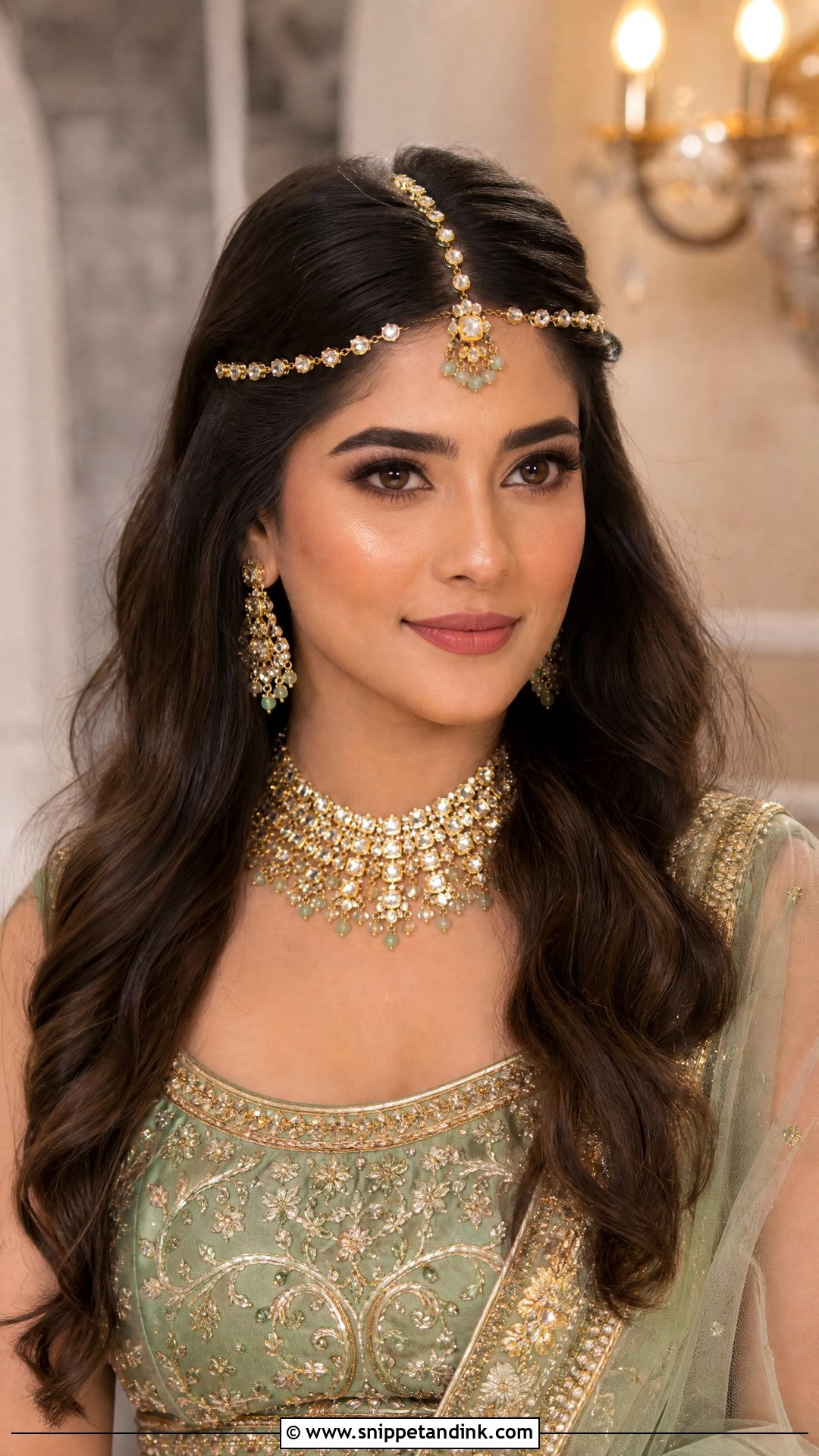
Brushed-out waves are softer than defined curls and suit lighter dupattas, engagement looks and pre-wedding functions. What makes or breaks them is root lift. Without it the matha patti flattens the crown and the waves look limp beside the jewelry by the second hour. I curl in larger sections, let them cool completely in the barrel shape, then brush through. Keep the jewelry lightweight here, since anything heavy pulls the parting open and drags on the hair it is hooked into.
7. Half Up Bridal Hair With Matha Patti
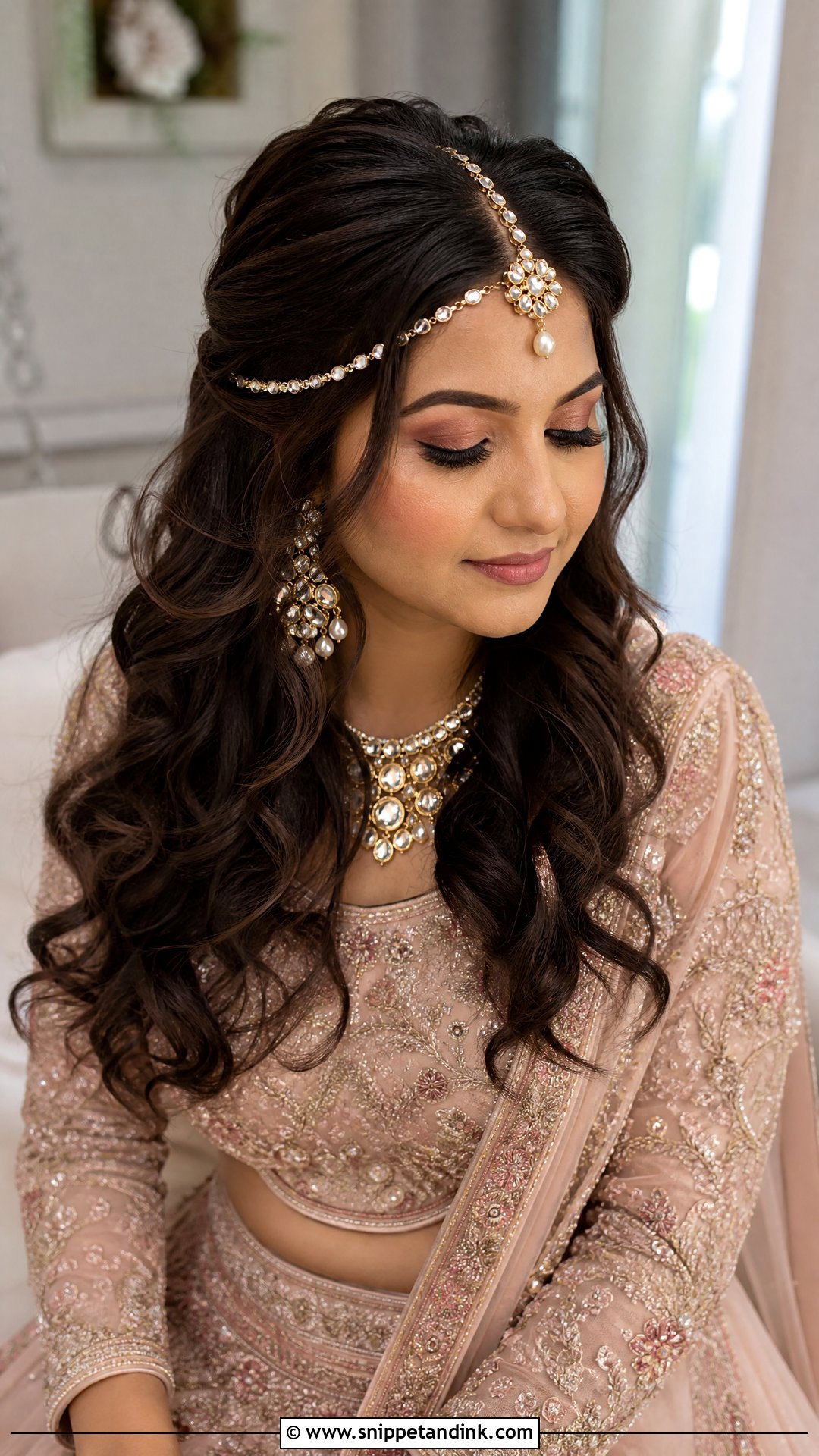
Half up is my compromise when a bride wants her hair down but needs security for a long day. The pinned top section is where everything anchors: the center chain hooks into it, the side chains tuck behind it, and it stops the weight from dragging the parting apart. I tease the crown section lightly before I pin it, otherwise it collapses under a mid-weight piece. Side chains and a softly draped dupatta both sit comfortably with it, and it still looks young without tipping into prom territory.
8. Side Swept Bridal Hair With Matha Patti
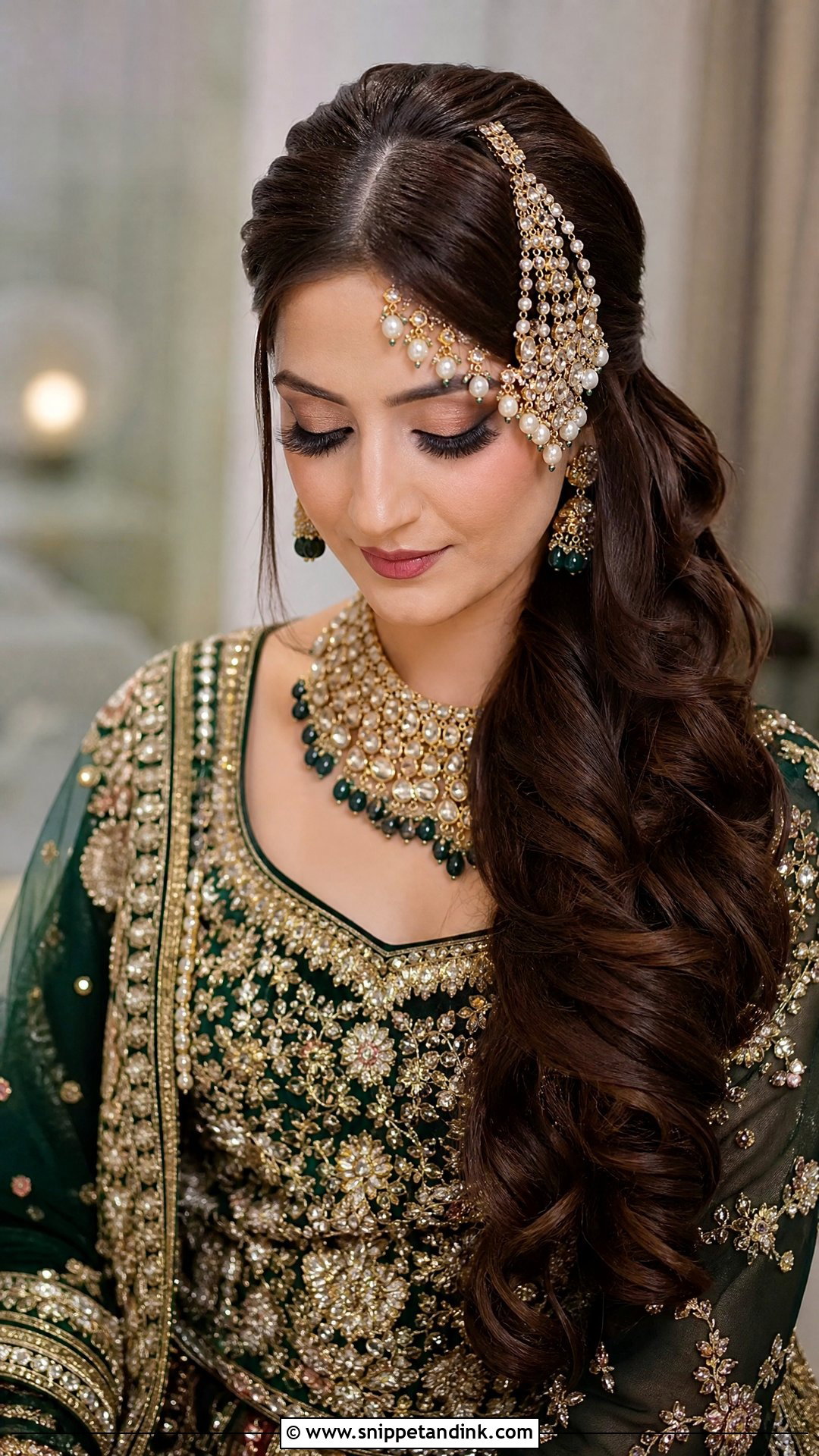
A side-swept style is pure drama for the reception, walima, sangeet or an evening ceremony. Order matters here: I set the matha patti first, check it sits flat and centered, and only then sweep and pin the curls to one side. If you do it the other way round, the side volume pushes the jewelry off-center and it never looks intentional. A one-sided jhoomar can echo the sweep, but keep the matha patti itself lighter so the two pieces don’t compete for attention.
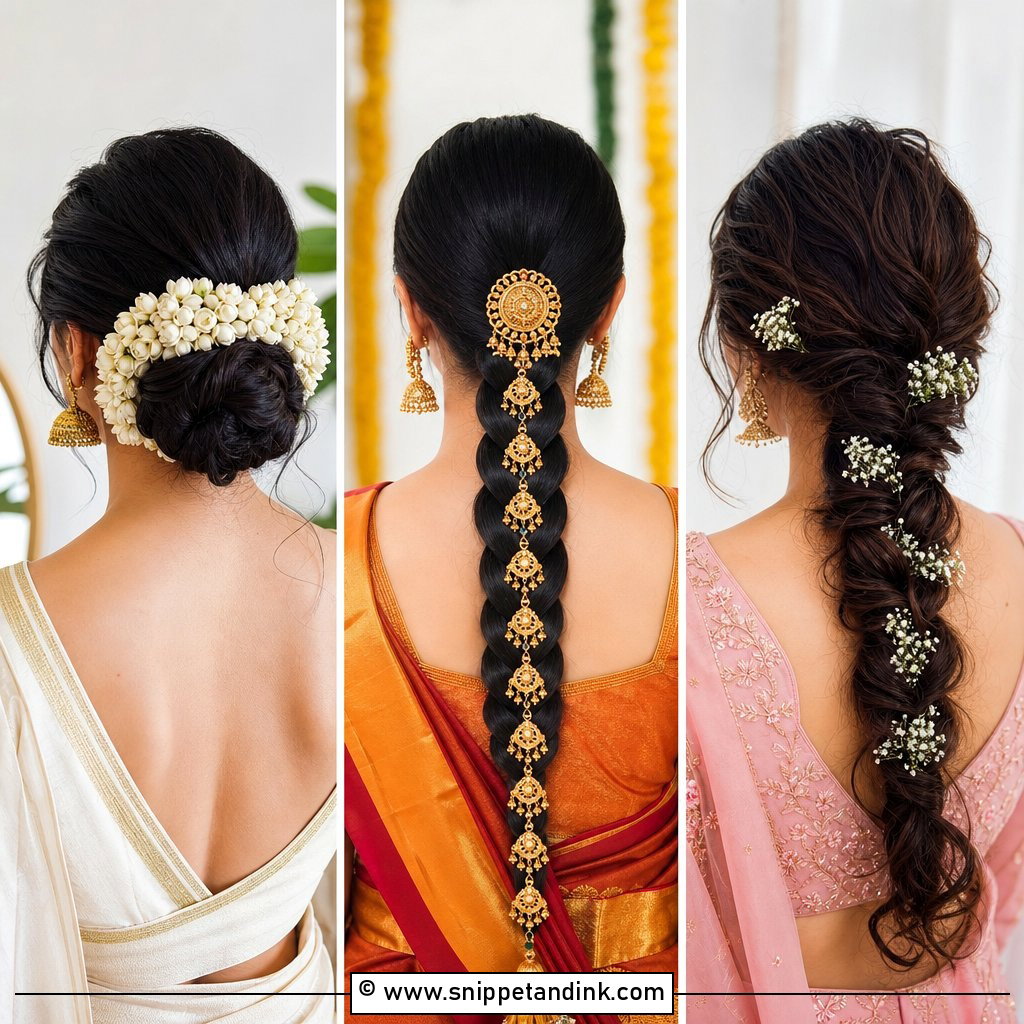
9. Long Bridal Braid With Matha Patti
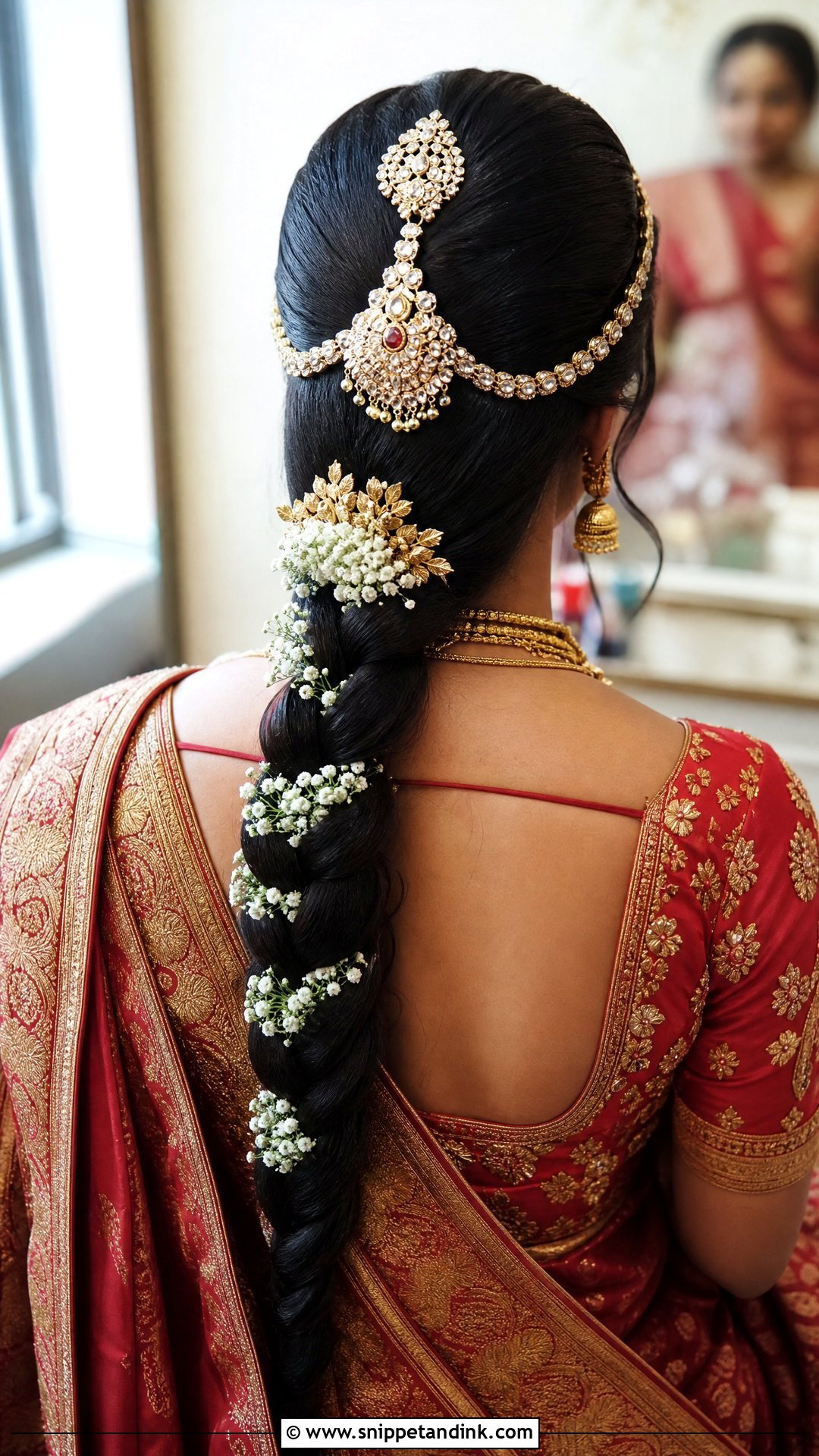
The long braid is the quiet workhorse of South Asian weddings. It stays put through hours of sitting, bending and greeting, and it never tangles under a heavy dupatta. Most brides need clip-in length or a paranda to get the full, ankle-swinging look, and I pancake each section of the braid so it looks wider in photos than it really is. Flowers, beads or pearls can be threaded through. The matha patti then has a clean, centered frame to sit in.
10. Fishtail Bridal Braid With Matha Patti
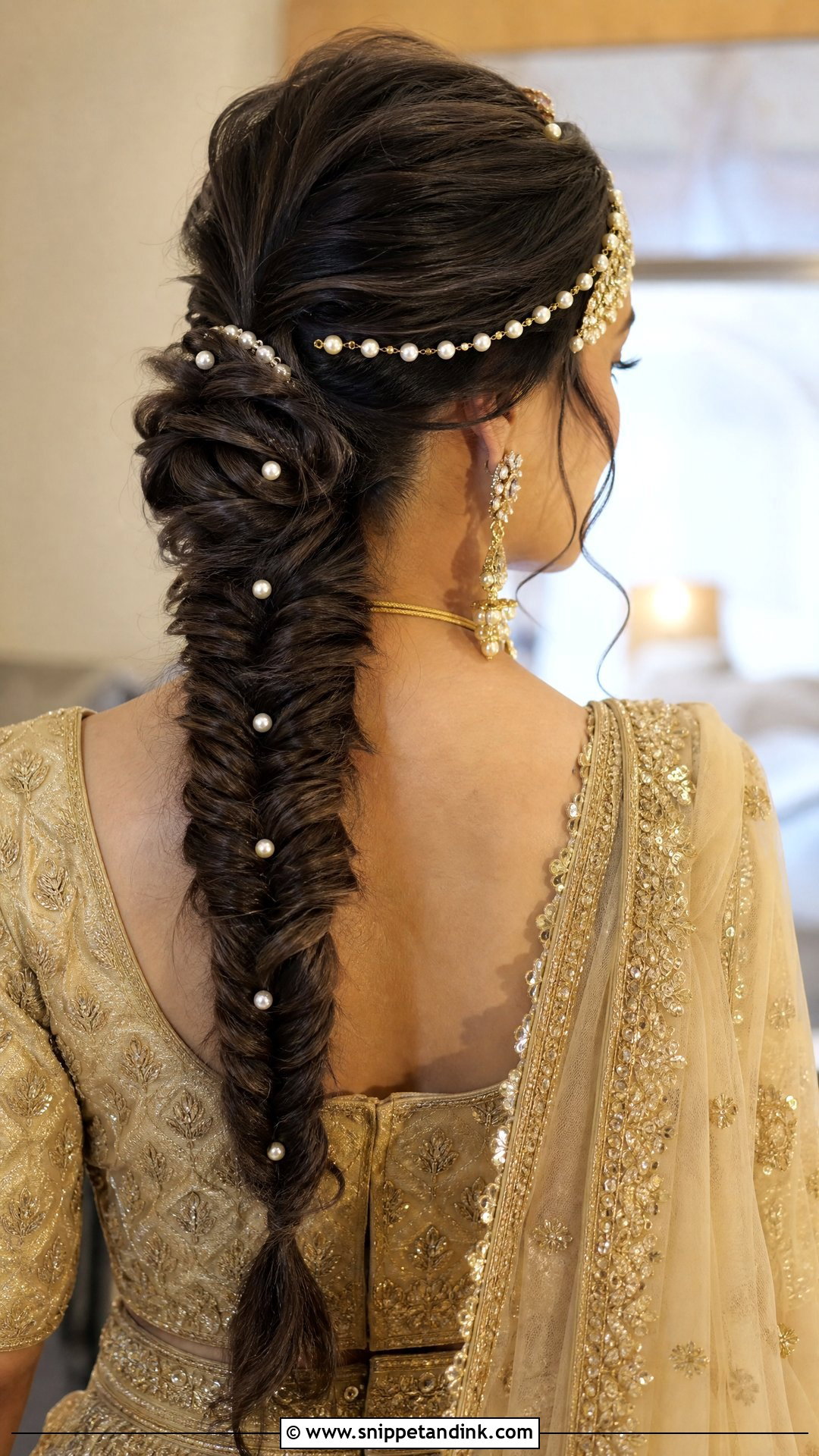
A fishtail has much finer detail than a three-strand braid, so it can take over the whole look if the jewelry is also busy. My rule is to pick one star. With a fishtail, that’s usually the braid, so I’d pair it with a slim matha patti rather than a wide kundan piece. It suits lehengas, gowns and fusion outfits, and can hang down the back or come over one shoulder for portraits. Pull the edges loose gently, a few strands at a time, or the weave disappears into a flat rope.
11. Side Bridal Braid With Matha Patti
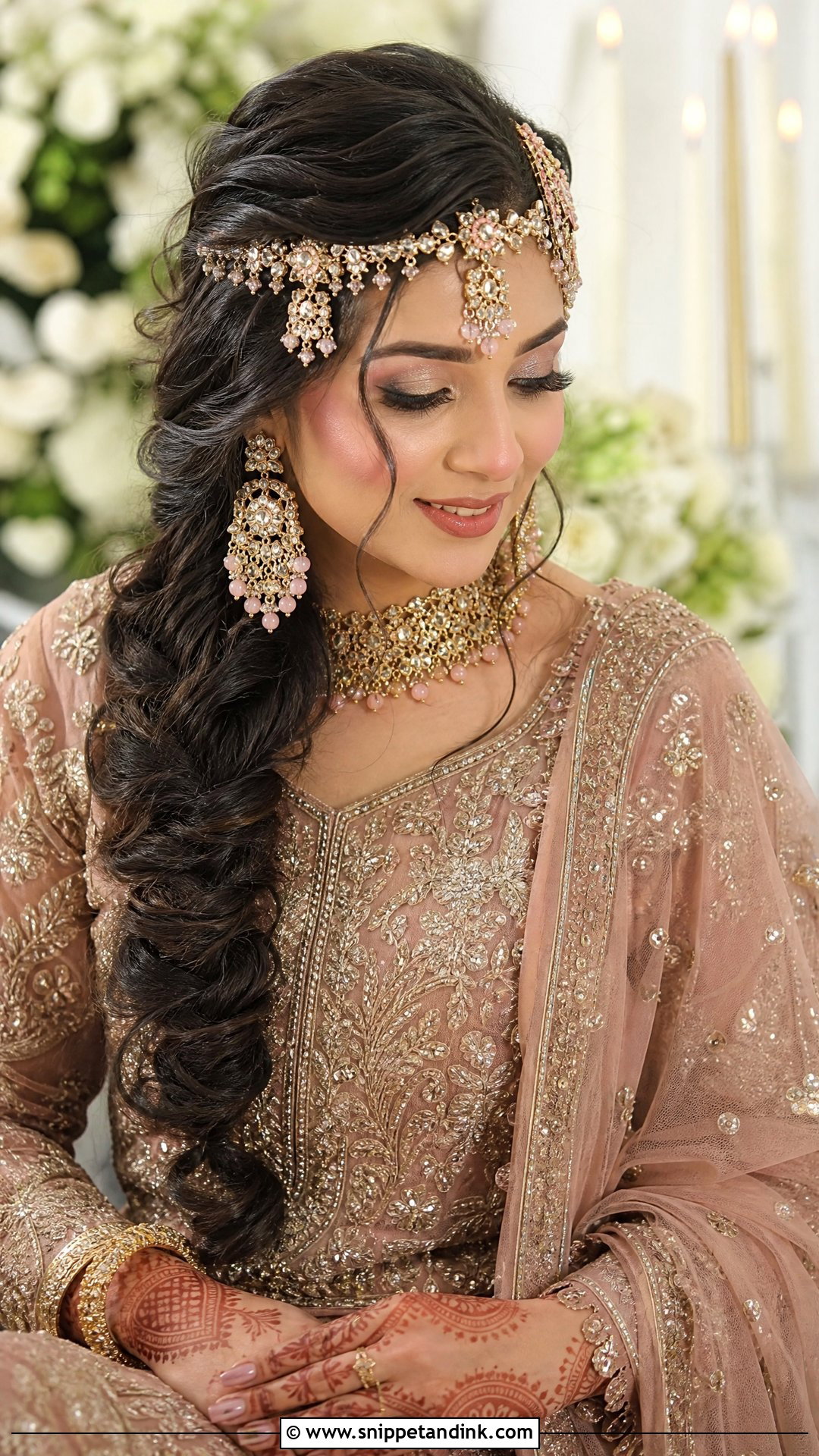
Pulling the braid over one shoulder keeps it visible instead of hidden under the dupatta, which is the main reason brides ask me for it. It does change the balance, though. All the visual weight is on one side, so the crown has to be smooth and perfectly centered or the matha patti looks tilted in every front-facing photo. A one-sided matha patti or jhoomar-style piece suits this placement. Decorate the braid with baby’s breath or small gold accents if you like, but keep it light so it doesn’t drag the shoulder seam of your blouse.
12. South Indian Bridal Braid With Matha Patti
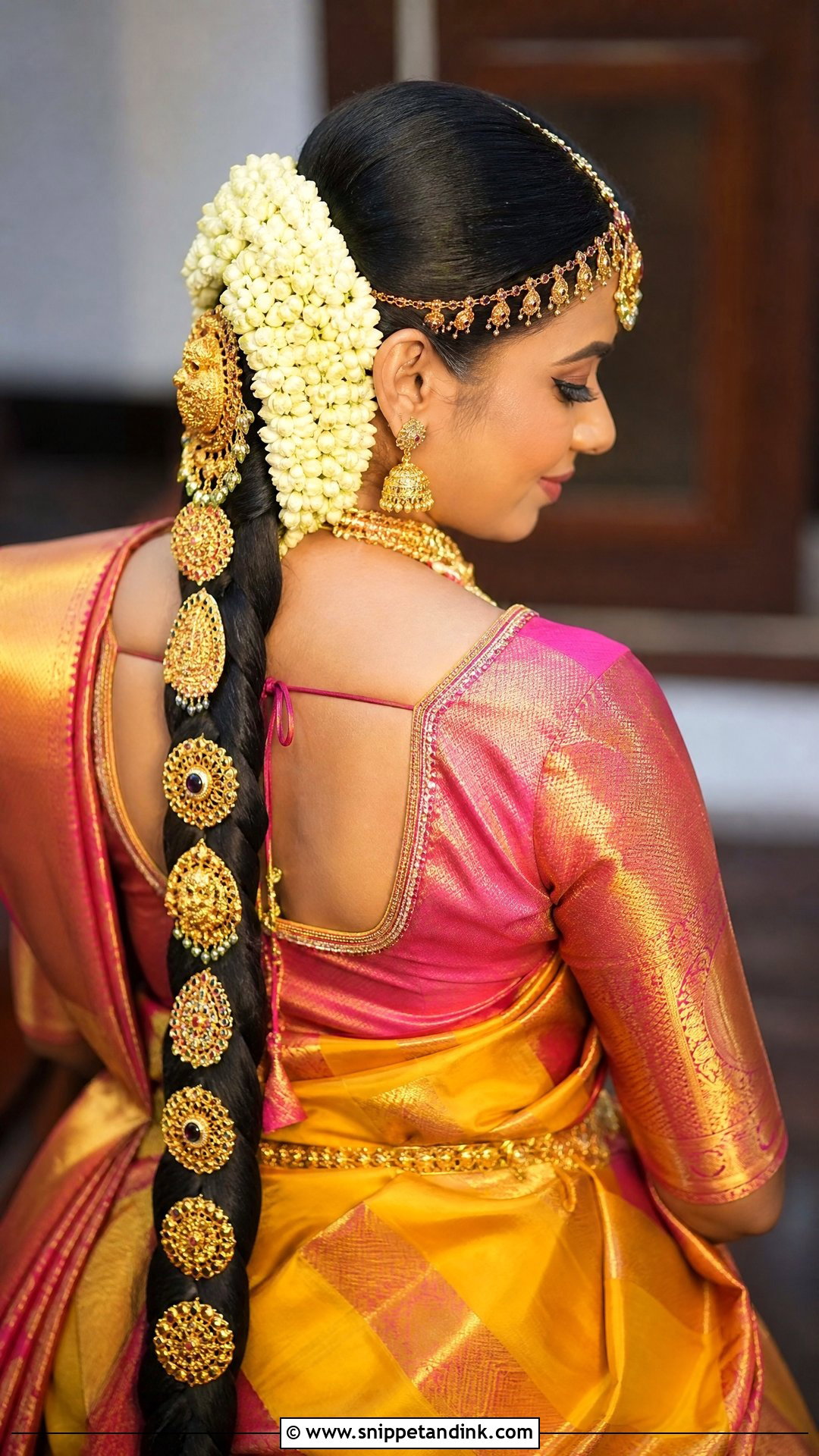
A South Indian bridal braid is usually built around a center part, a smooth crown and a long braid finished with jasmine, gold accessories or a poola jada. The braid becomes the main feature down the back, and the matha patti frames the face from the front. Jasmine is heavy once it’s strung thickly, so I sew or pin it to a base along the braid rather than letting the hair carry it alone. Keep the matha patti in the same metal and style as the temple jewelry so the front and back read as one set.
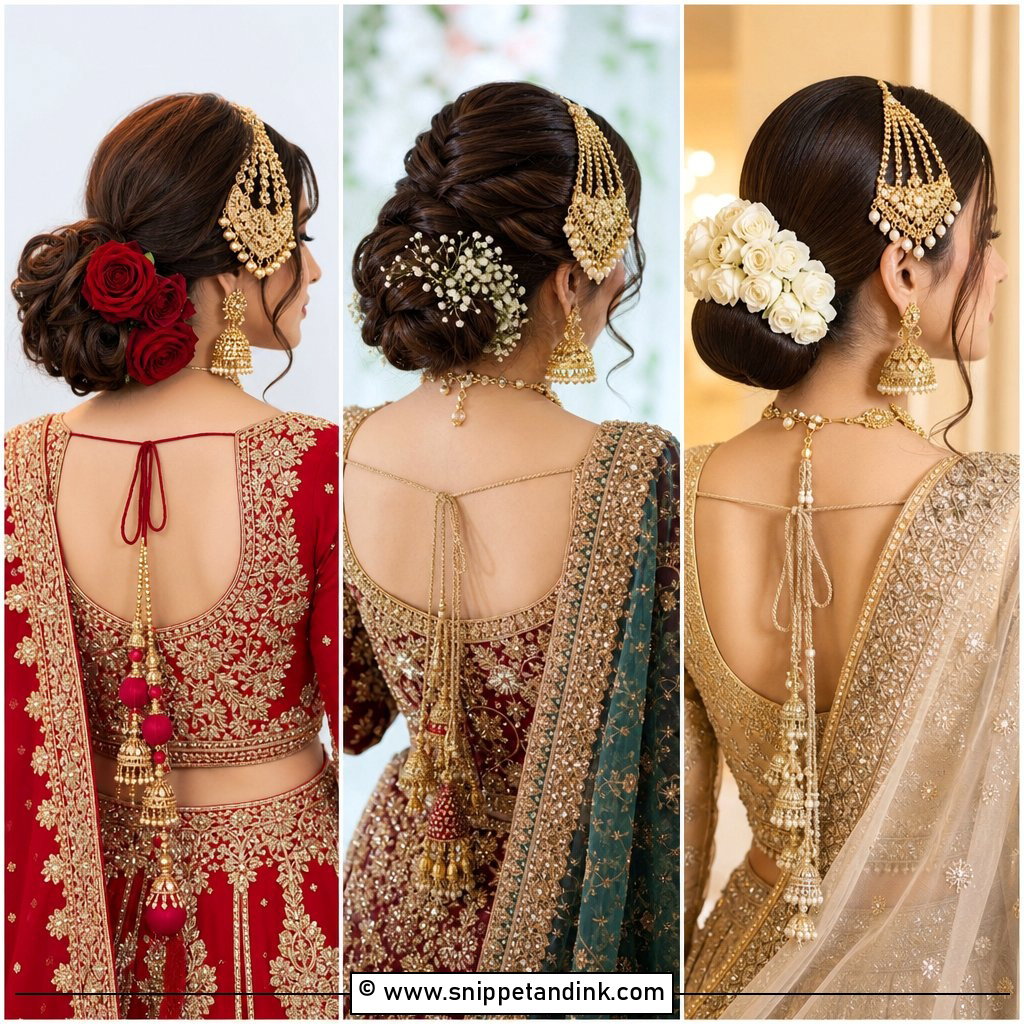
13. Pakistani Bridal Bun With Matha Patti
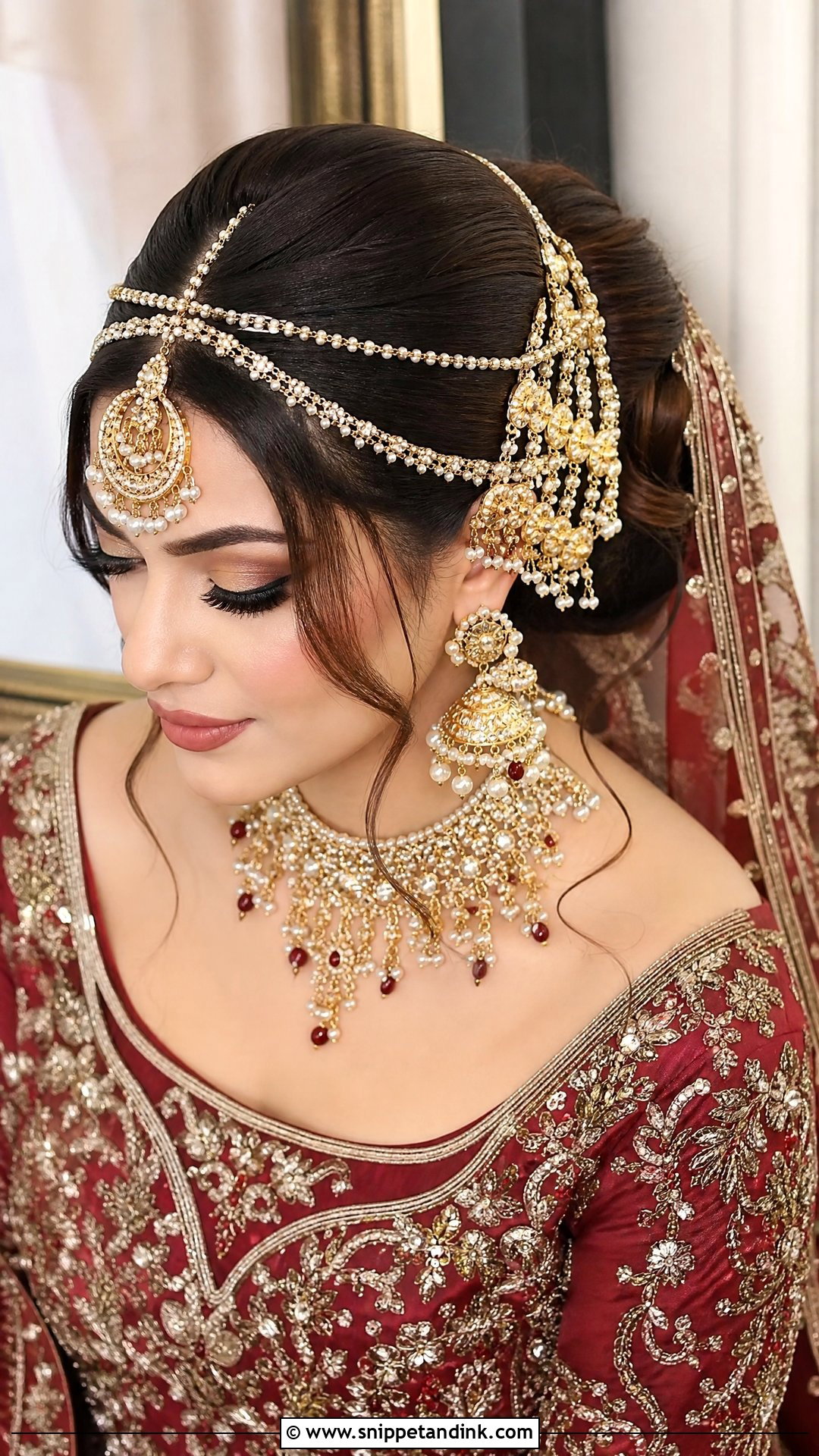
A Pakistani bridal bun with matha patti carries the most jewelry of anything on this list: jhoomar, passa, statement earrings and layered necklaces often all at once. That’s exactly why the bun has to be full and firm. It is the anchor for the dupatta and the jhoomar together, and a soft bun will sag under that load. I usually keep it low to mid-height for baraat and nikah looks. Softening the front with a gentle puff or bend stops the whole thing looking harsh against heavy gold.
14. Short Bridal Hair With Matha Patti
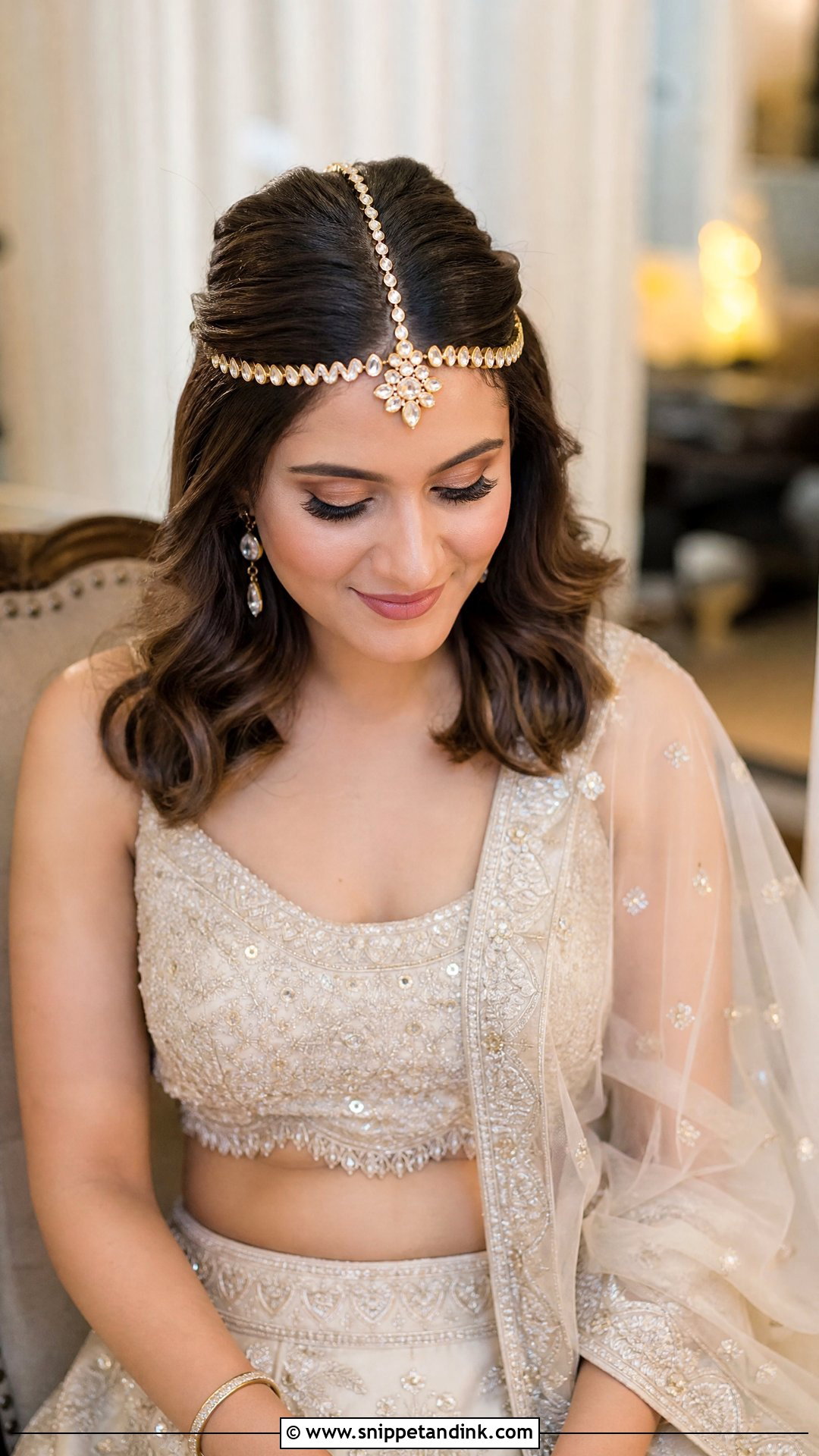
Short hair can absolutely carry a matha patti. It just needs a different anchor plan. With a bob or a lob, there’s no bun to hook into, so I create a small pinned section at the crown and a mini braid or twist behind each ear for the side chains. From there I’d do soft waves, a tiny low bun or a pinned half-up look. Keep the jewelry light to medium, because short hair simply has less to hold onto, and a heavy piece will slide.
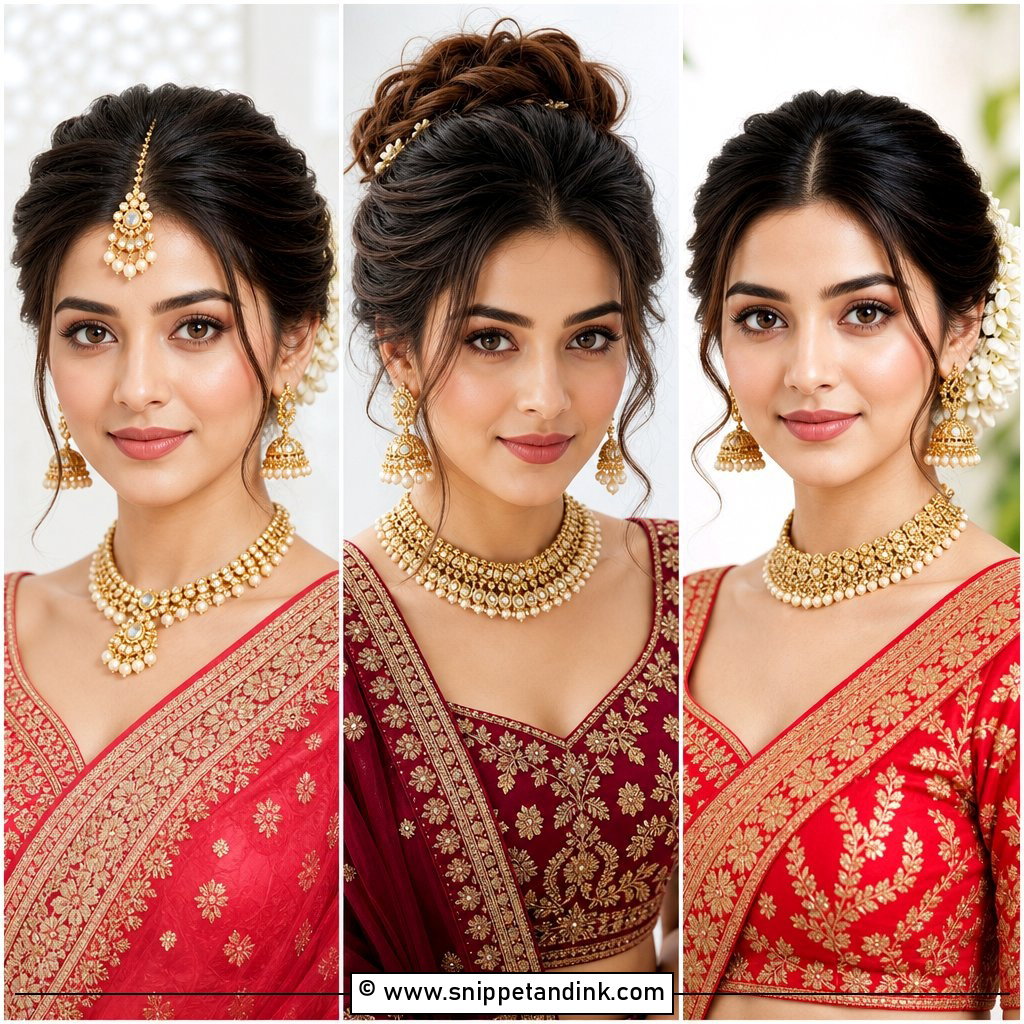
15. Curly Bridal Hair With Matha Patti
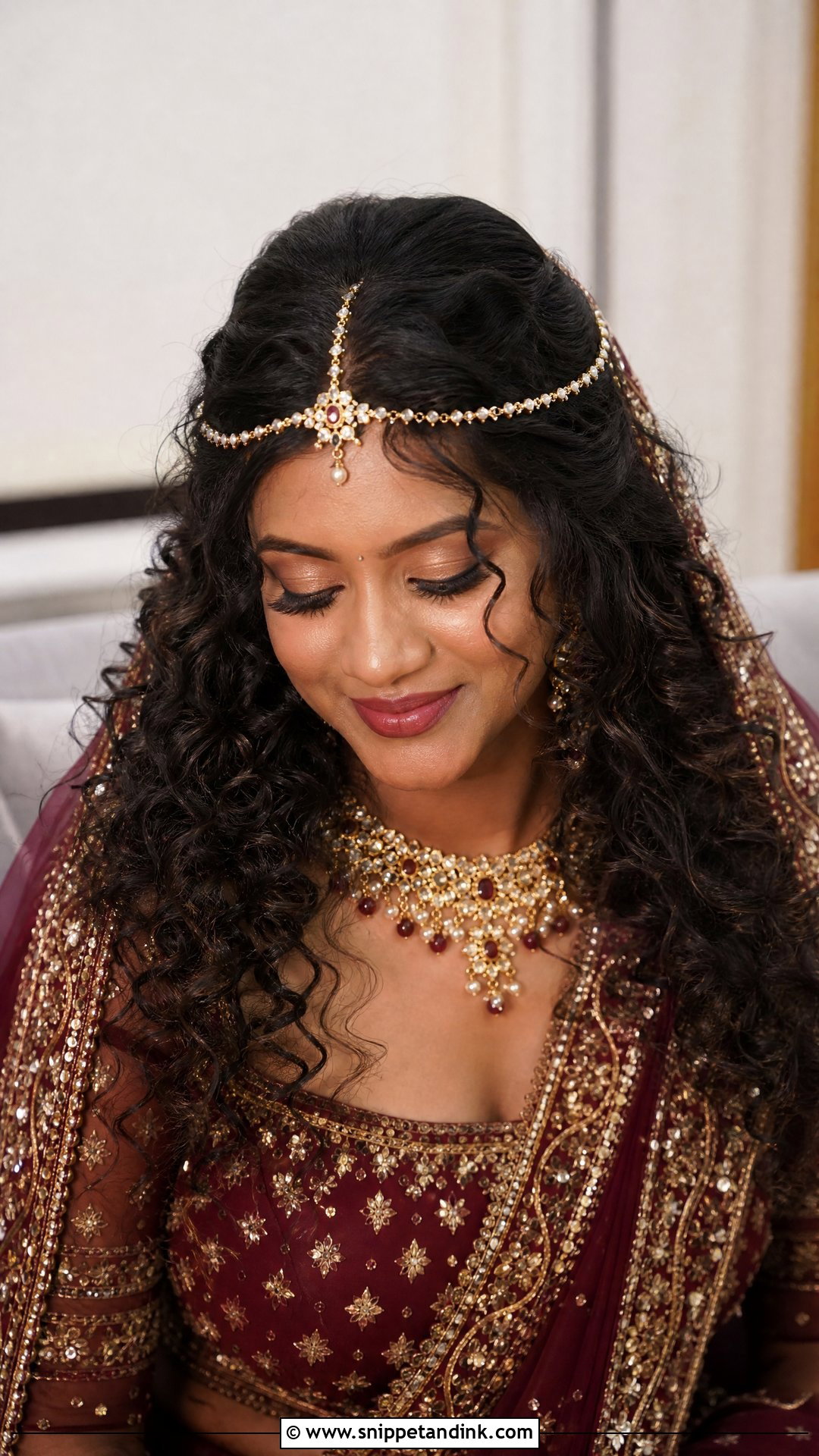
Natural curls are an asset with a matha patti, not something to fight. I hydrate and set the curls first, then define the center part just enough for the chain to lie on, and leave the rest with its own bounce, worn down or gathered into a soft curly updo. Brushing curls out dry turns them into frizz, so I shape them with fingers and a little cream. Strong pins hold better than bobby pins in thick textured hair. A lightweight piece is kinder here too, because curls compress under weight and the chain sinks into them.
When the Kundan Starts to Ache by the Reception
The first hour is never the problem. Trouble shows up later, when a polki or kundan piece has been pressing on the same two spots since morning and the dupatta has been lifted and re-pinned for photos a dozen times. A few habits separate the bride who’s comfortable at the reception from the one quietly counting pins.
- Spread the load. A heavy matha patti hung from only two pins will drag. Ask for extra pins along the center chain so the weight sits on a strip of hair, not on one hook.
- Pin the dupatta after the jewelry, and around it. If dupatta pins catch a side chain, every tug pulls the matha patti sideways.
- Give one trusted person bobby pins in your hair color, a few U-pins and a tail comb. Not your bag, a person.
- If tight styles give you headaches, say so at the trial. A slightly softer base with more pins is kinder than one tight bun holding everything.
Swapping pieces between events
For a multi-day wedding, wear a lighter piece for the mehndi or sangeet and save the heaviest set for the main ceremony. After the rituals, it’s completely fine to switch to a lighter matha patti or a tikka alone for the reception. Nobody notices the swap, and your scalp gets a break. Take the heavy piece out slowly, hook by hook, before you touch any pins, or you’ll pull hair with it.
Wear the Real Matha Patti to Your Trial
Sleek, soft, braided, short or curly: all of these can work. What decides it is the jewelry you’re actually wearing and how many hours you need to wear it. A sleek bun suits a royal ceremony look, open curls and waves feel lighter, and braids carry long rituals without complaint. Bring the real matha patti and the real dupatta to your hair trial. Ten minutes of wearing them together will tell you whether the chain slips, pulls or sits exactly where you want it.
You'll Like These Ideas:


Leave a Reply