
Desi wedding hair carries more than most. It has to hold a pinned dupatta, a tikka, maybe a jhoomar and a gajra, survive long rituals in heat, and still let you dance at the sangeet. When I plan a look, I start from the outfit and the jewellery, because hair that fights a heavy dupatta loses every time. The right style can change how your lehenga, saree, sharara, or anarkali sits and photographs. Below are buns, braids, waves and half-up styles for brides, sisters, bridesmaids and guests, with notes on which events and accessories each one can actually carry.
Spreading Hair Looks Across Haldi, Mehendi, Sangeet and Walima
A Desi wedding is rarely one event, and heavy heat styling four days running is hard on anyone’s lengths. I plan the looks as a set with my brides, saving the most structured style for the main ceremony and giving the hair easier days around it.
Haldi
Turmeric paste stains, and it shows most on blonde, highlighted or grey hair. Wear a simple braid or bun you don’t mind getting messy; a little oil through the lengths beforehand helps the yellow wash out. This isn’t the day for a blowout.
Mehendi
Once the henna goes on, your hands are out of action for hours. I make sure the hair is completely finished and off the face before the artist starts, because you won’t be able to tuck a loose strand back. A side braid or soft half up with flowers fits the mood.
Sangeet and reception
These are dancing nights, so ponytails, open curls and Hollywood waves come into their own. If the main ceremony was a sleek bun, open hair the next evening also gives your scalp a rest from a day of pins and a heavy dupatta.
Between events, skip heat where you can, sleep on a silk pillowcase, and use a moisturising mask on the one free evening. Your hair on the final day will show the difference.
1. Desi Wedding Low Bun
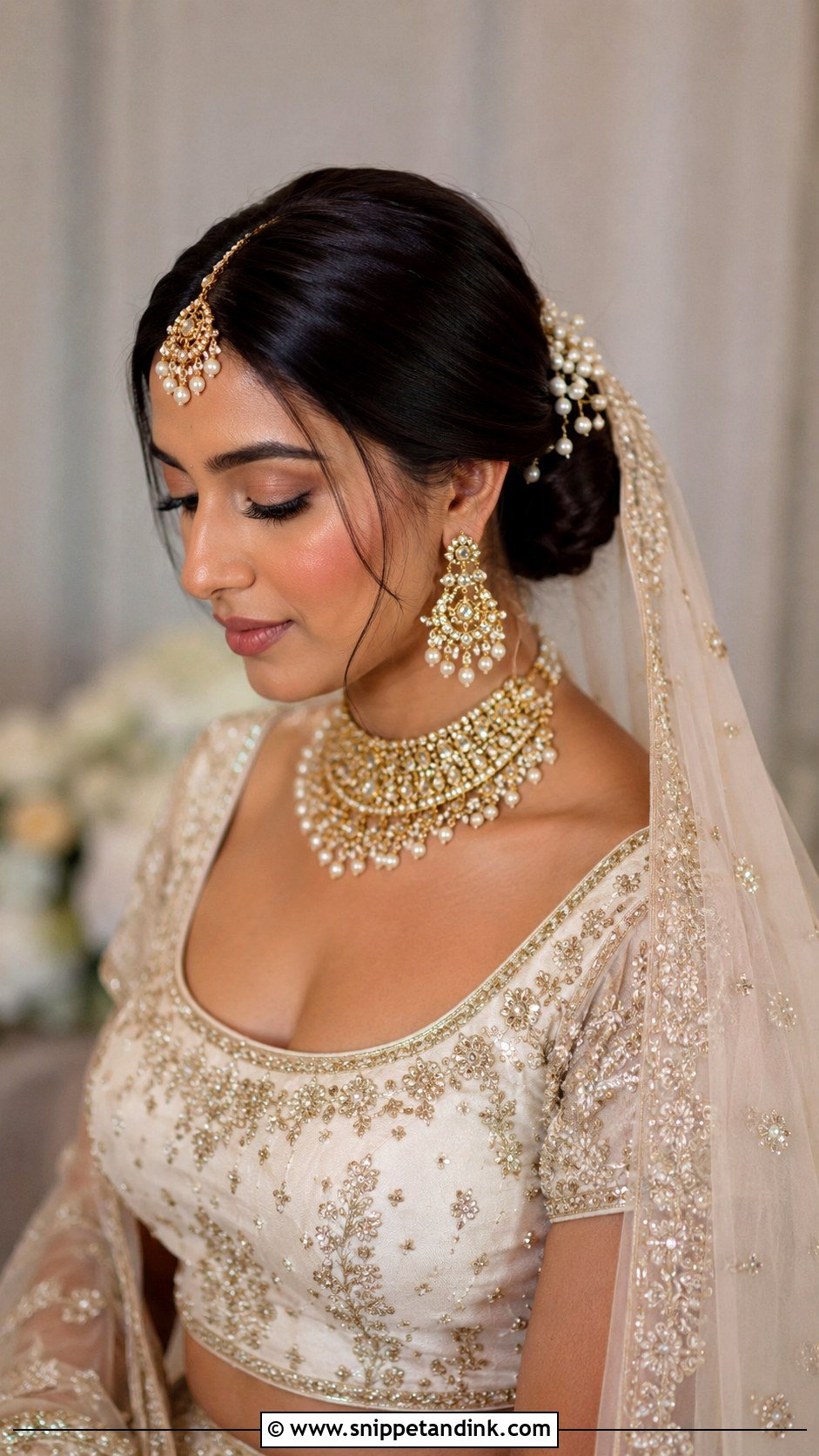
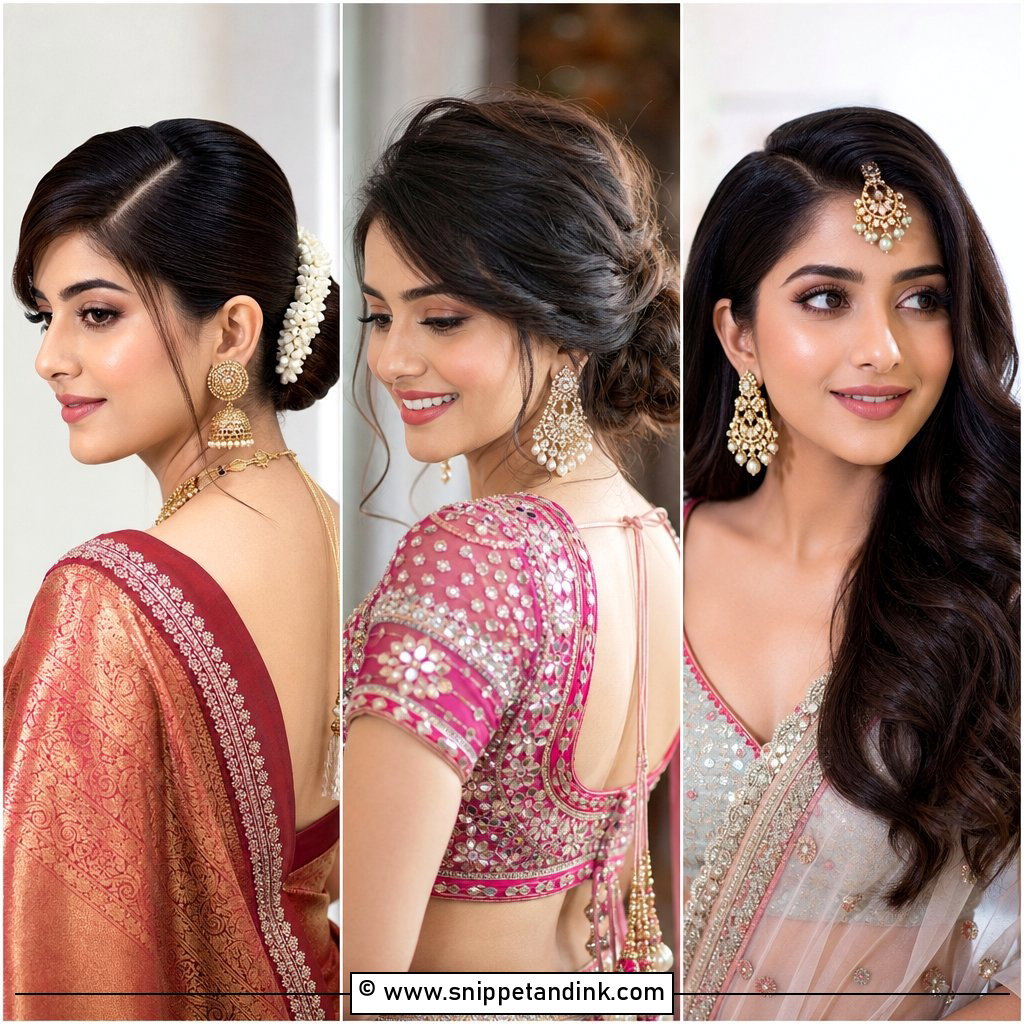
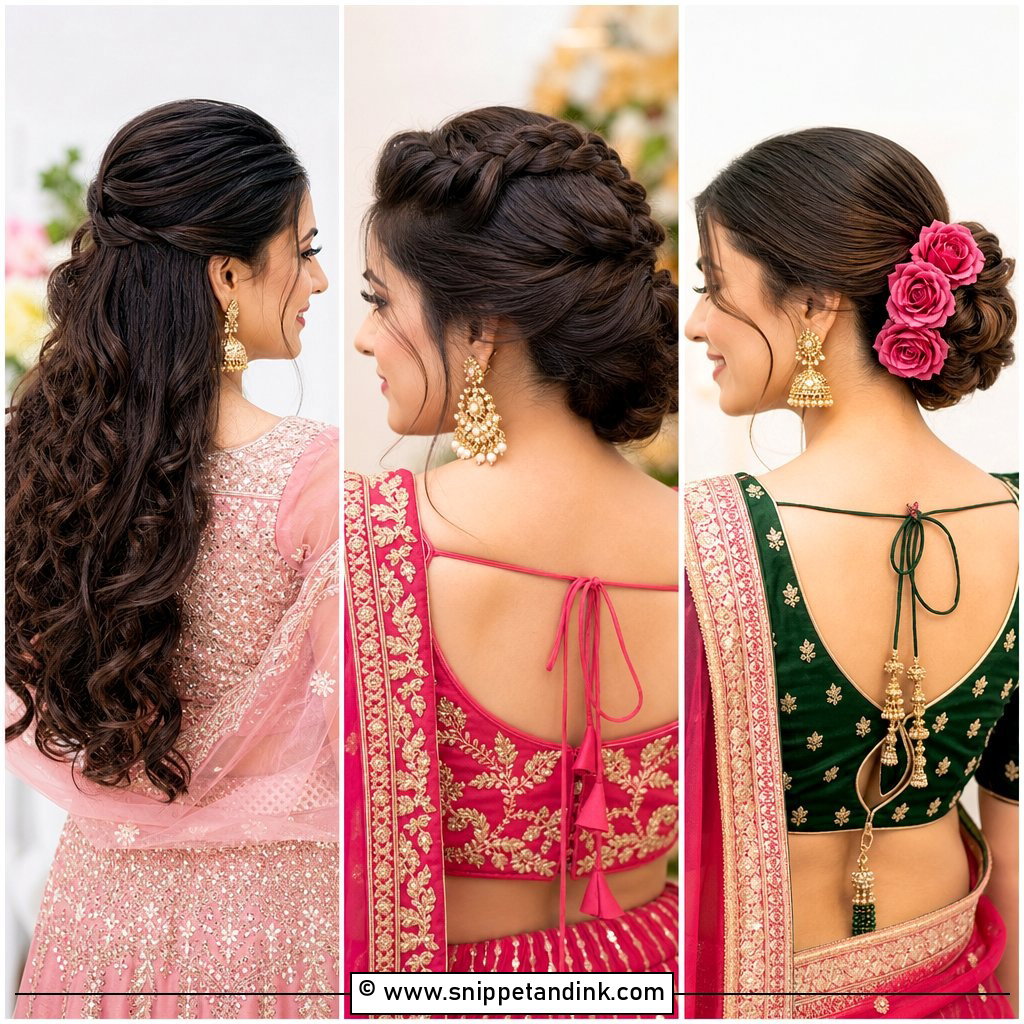
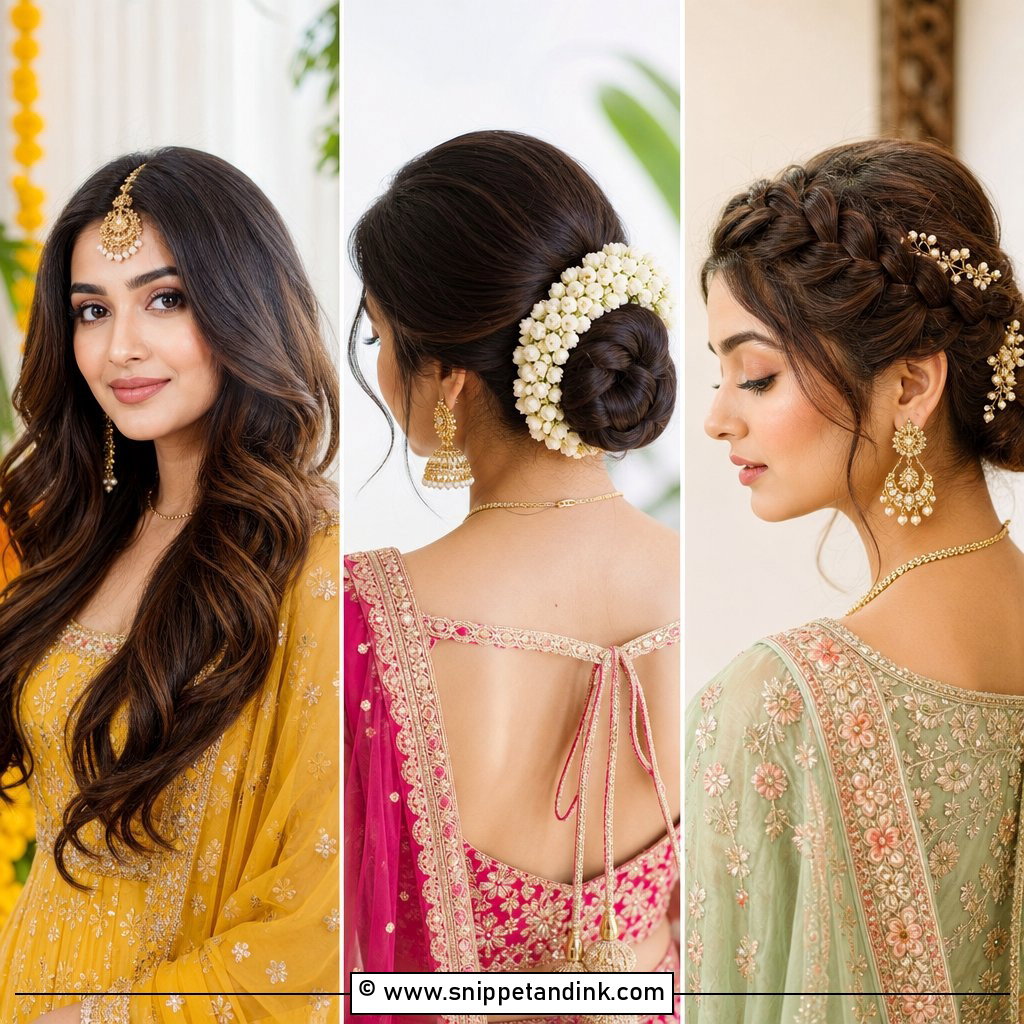
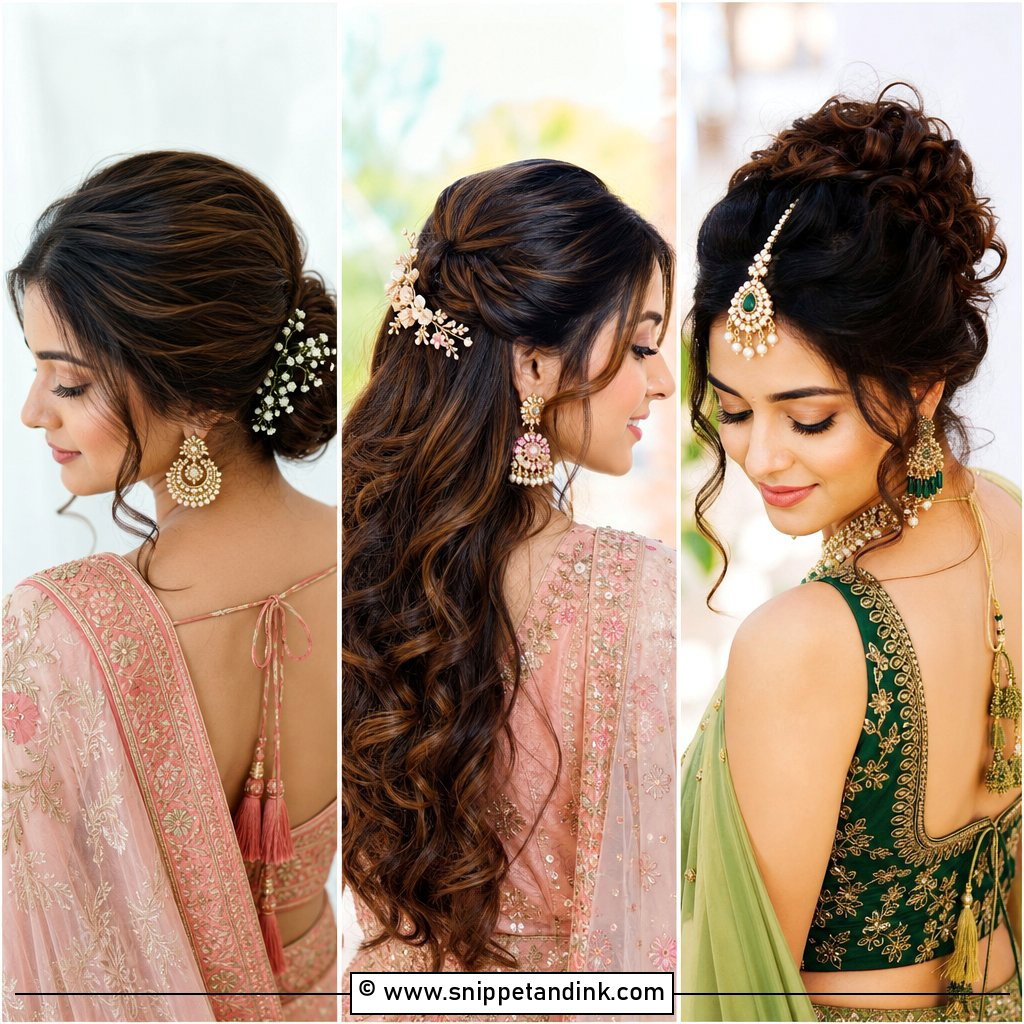
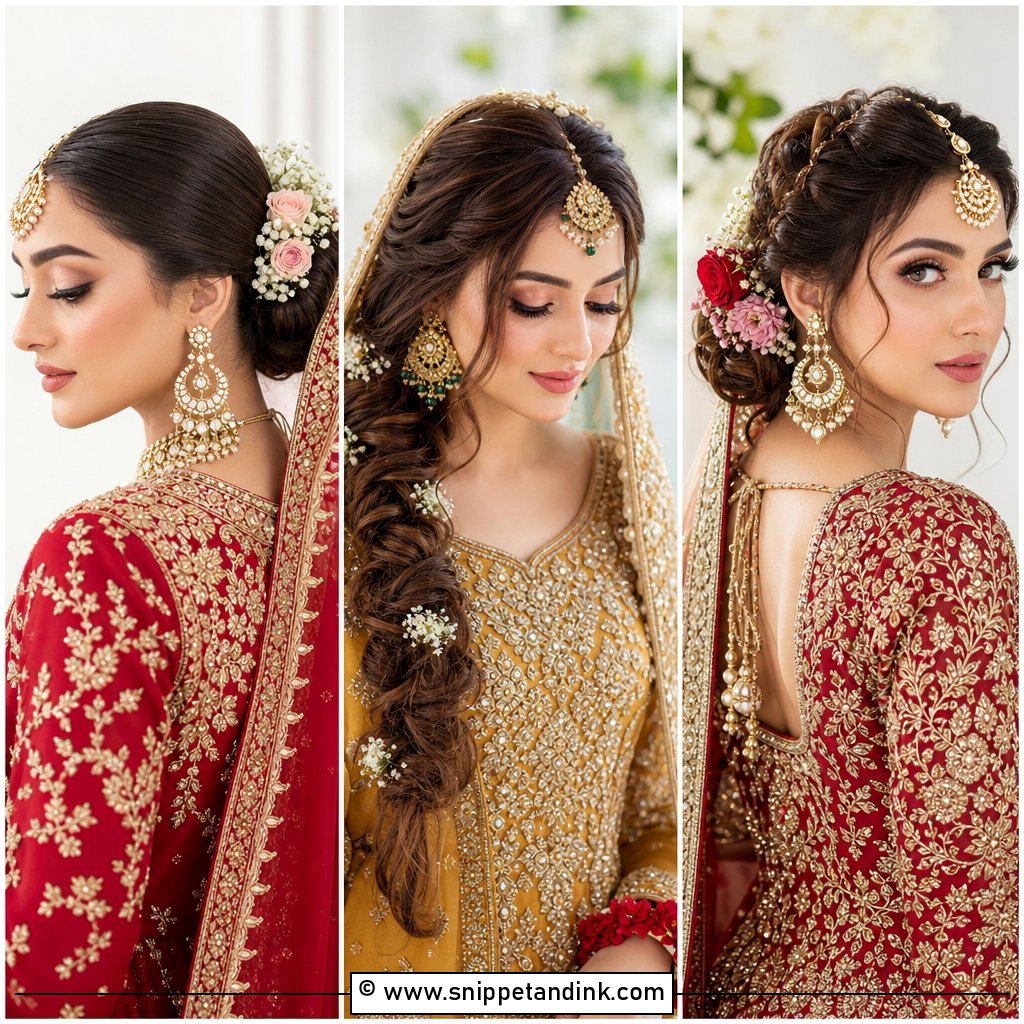
For a dupatta pinned over the head, the low bun is the base I trust most. It gives me a solid mass to pin into at the back, keeps an embroidered blouse neckline clear, and suits lehengas, sarees and ghararas alike. Sleek reads bridal; softly textured suits a guest. A center part with a maang tikka, fresh jasmine, pearl pins or a gold bun chain makes it festive. I build the bun slightly higher than the nape when a heavy dupatta is planned, so the fabric drapes over it instead of pushing it down.
2. South Indian Bridal Braid
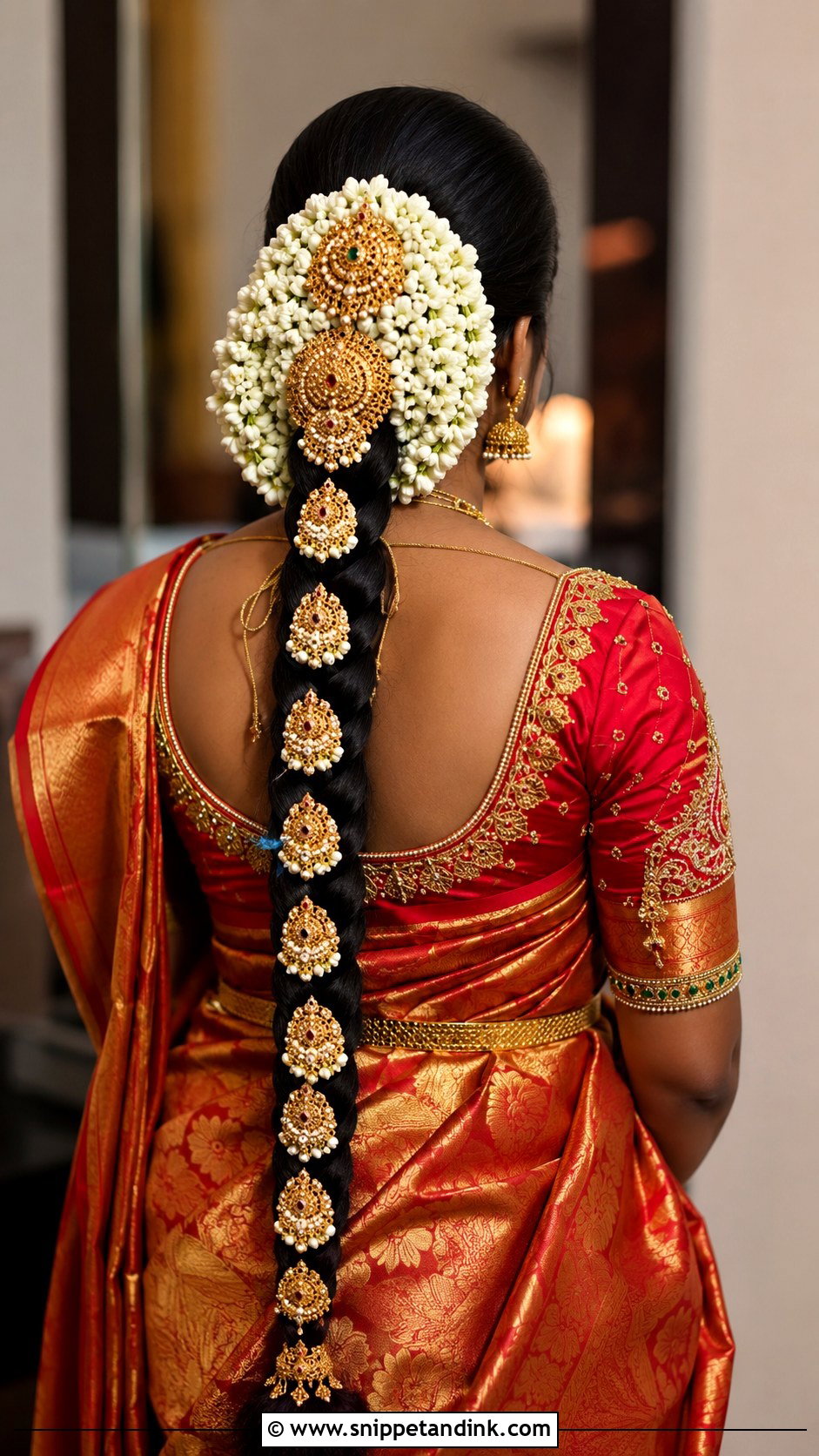
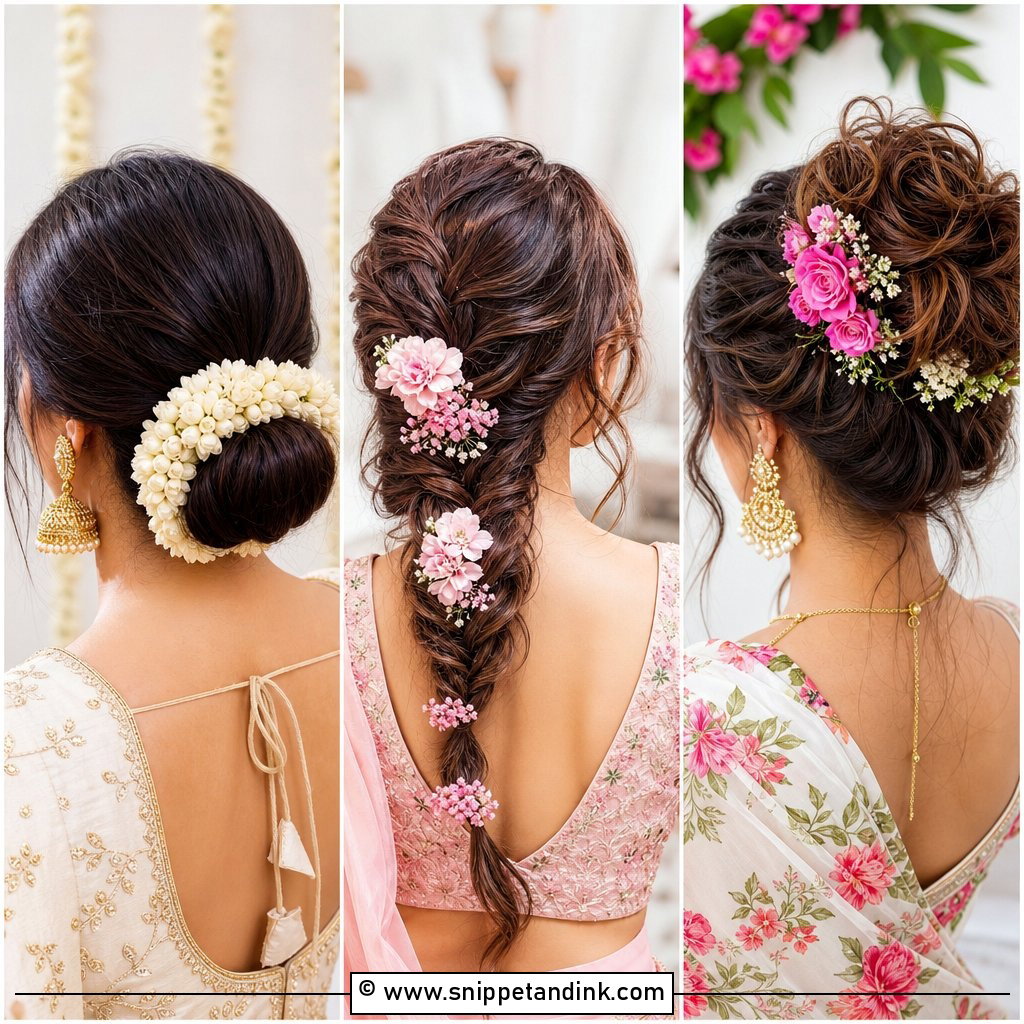
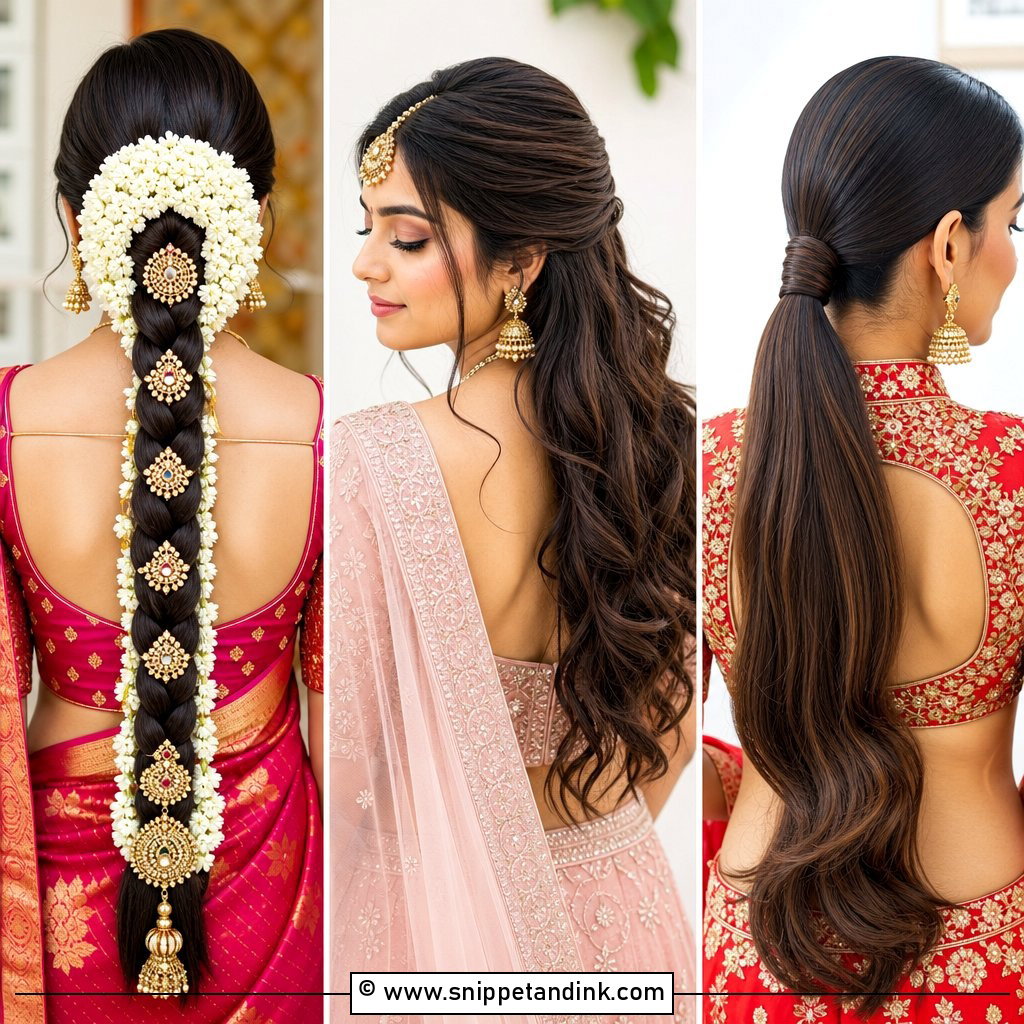
The South Indian bridal braid is part of the ceremonial look, not just a hairstyle, and it suits silk sarees and temple jewellery. Most of the length usually comes from extensions or a braid attachment, then flowers, gold ornaments or a poola jada are fixed along it. Because so much of the ritual is seen from behind, the back has to be even all the way down. If your own hair is short or layered, I pad the top and blend the added hair in at the nape so the join doesn’t show. A full jada is heavy, so I anchor it to a firm base rather than loose hair.
3. Desi Wedding Half Up Hair
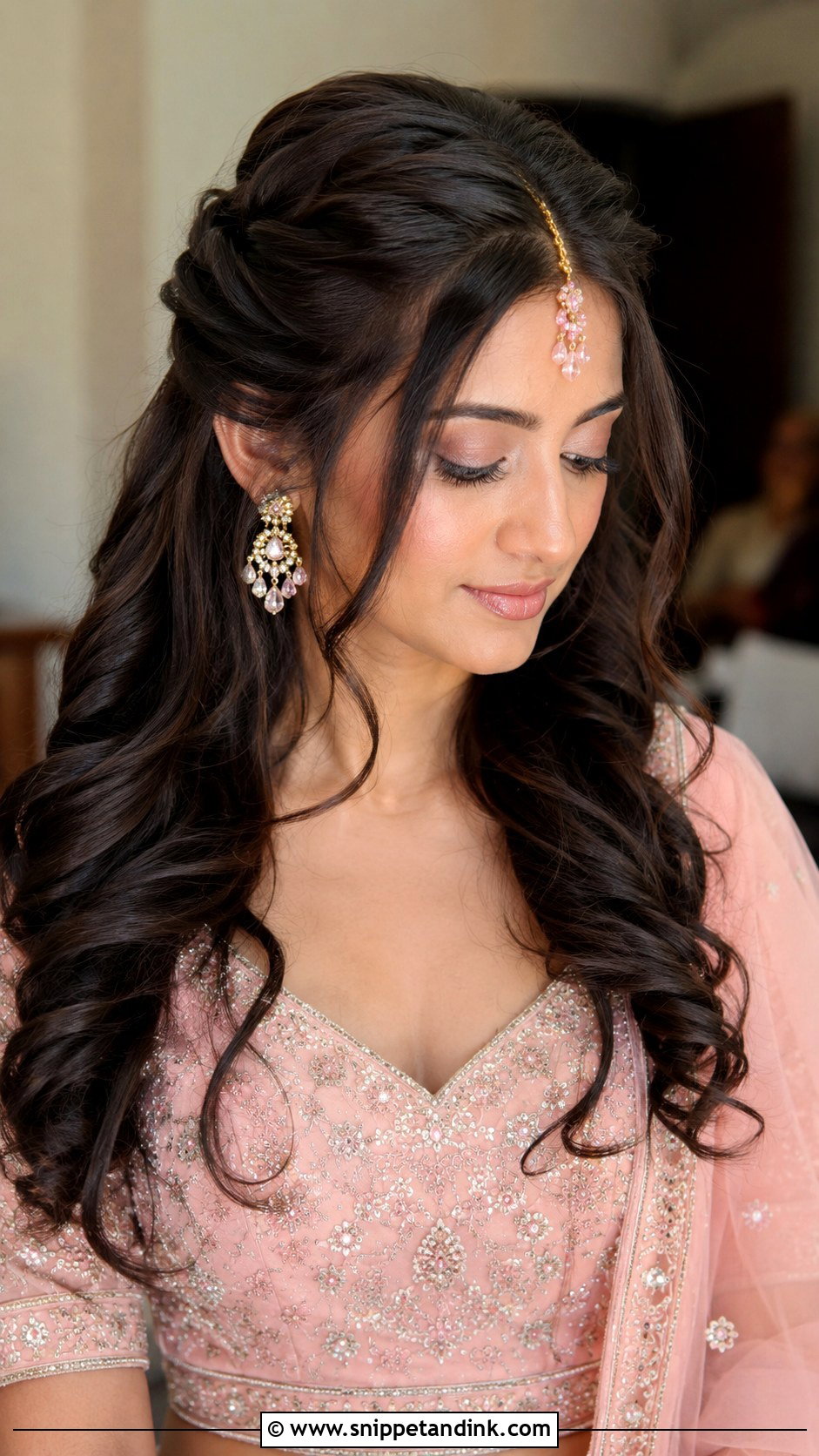
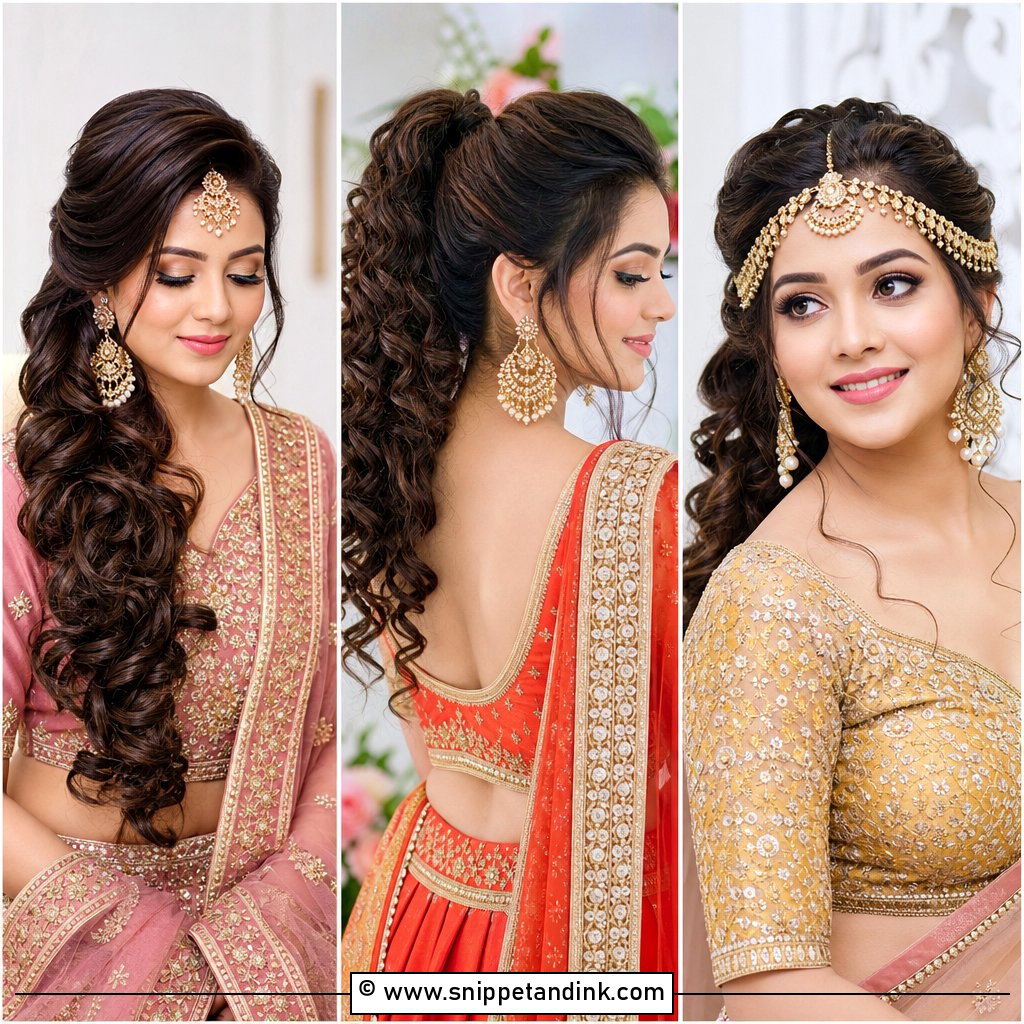
Desi wedding half up hair is the middle path: open hair below, structure at the crown. The top can be twisted, braided, puffed or pinned to hold a tikka or small ornament, while the length falls in curls or waves. It suits engagement, sangeet, mehendi and reception outfits. I keep the half-up section tight enough to bear a tikka’s weight, because a loose crown lets the tikka slide off-centre during the first hour. It also keeps face-framing hair from covering your earrings or the dupatta border.
4. Desi Wedding Hollywood Waves
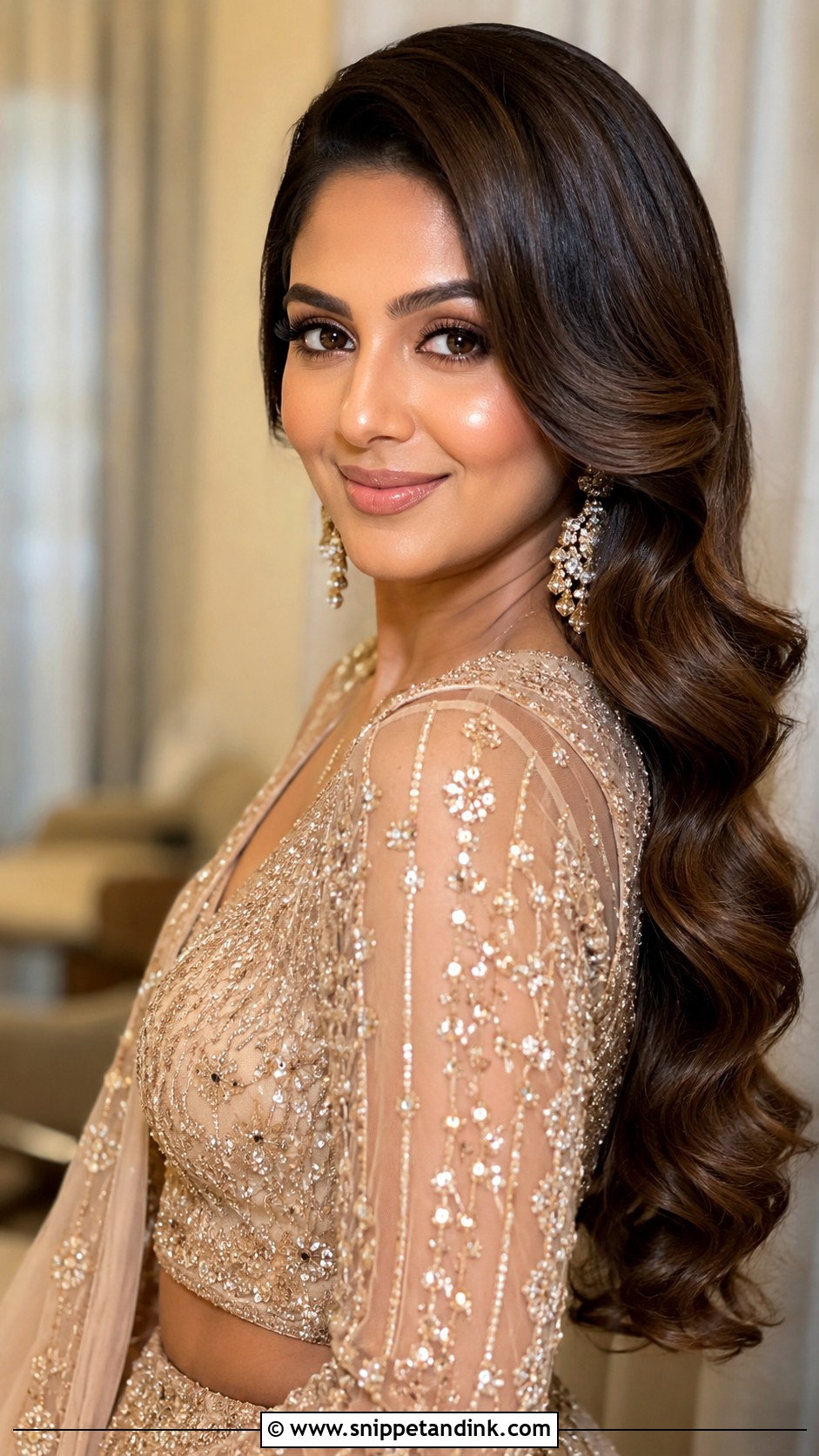
Hollywood waves give a reception look with real glamour: smooth, glossy and shaped in one direction. Gowns, modern lehengas and fitted blouses suit them. They need length and density to show the pattern, so I often add extensions. A deep side part balances heavy earrings; a center part works with a tikka for a fusion look. Bright stage and event lighting picks up every frizzy strand, so this is a style where I take the time to set each curl and let it cool before brushing.
5. Desi Wedding Messy Bun
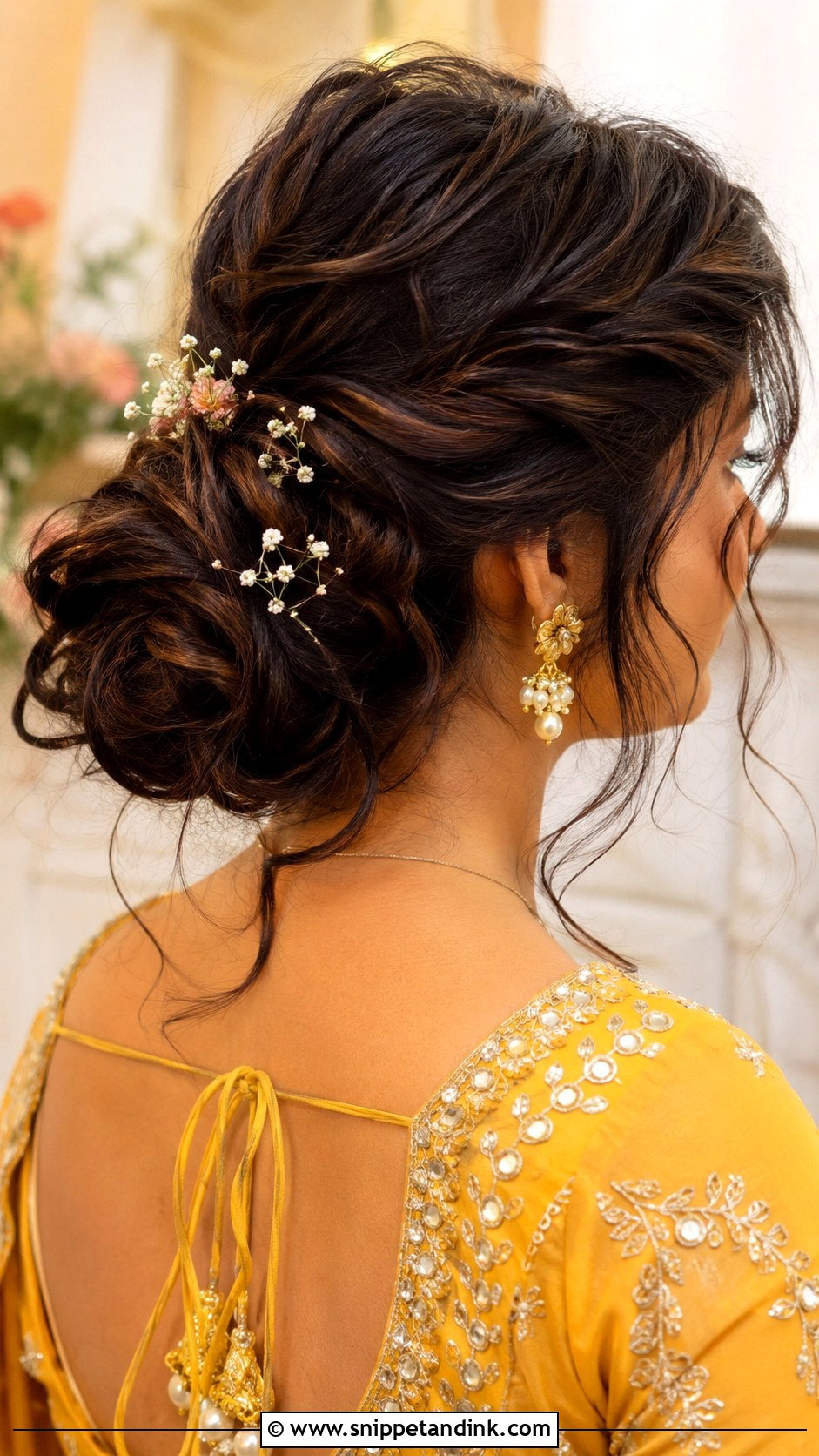
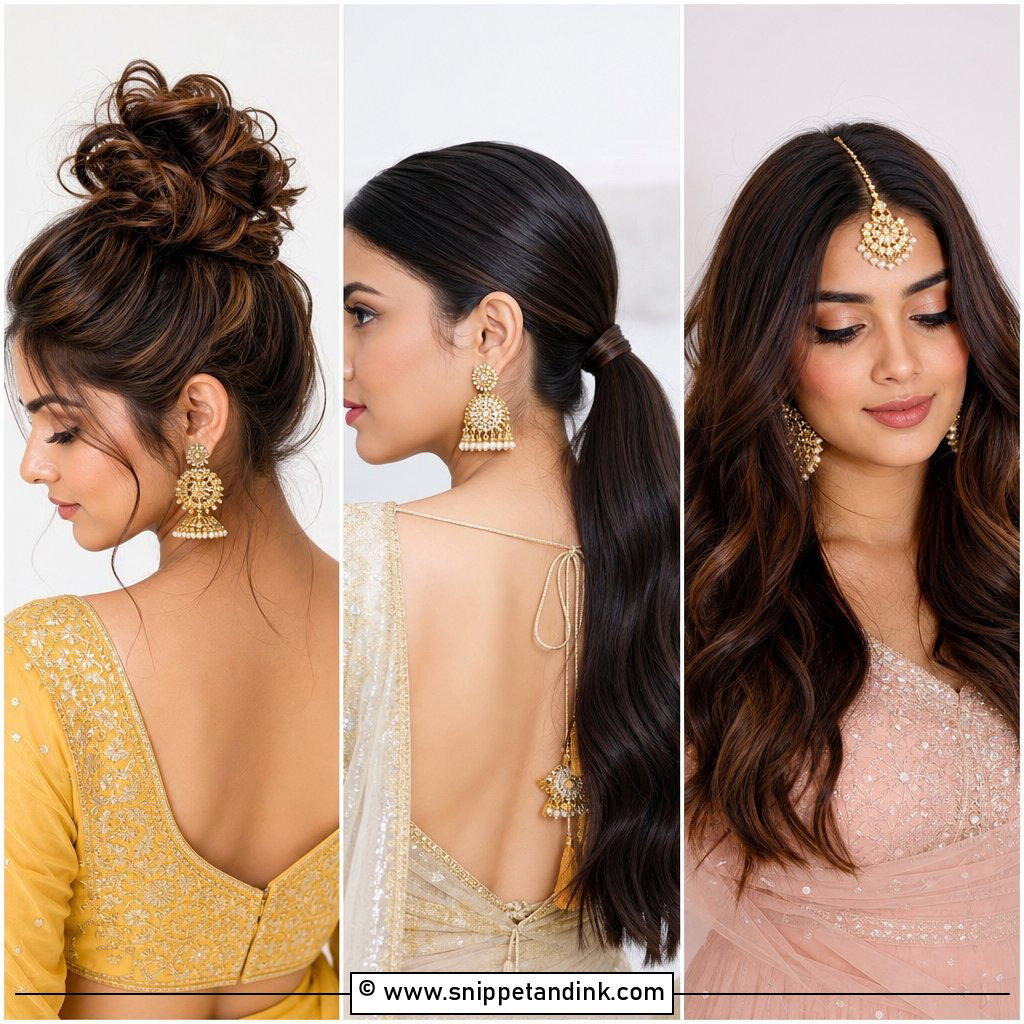
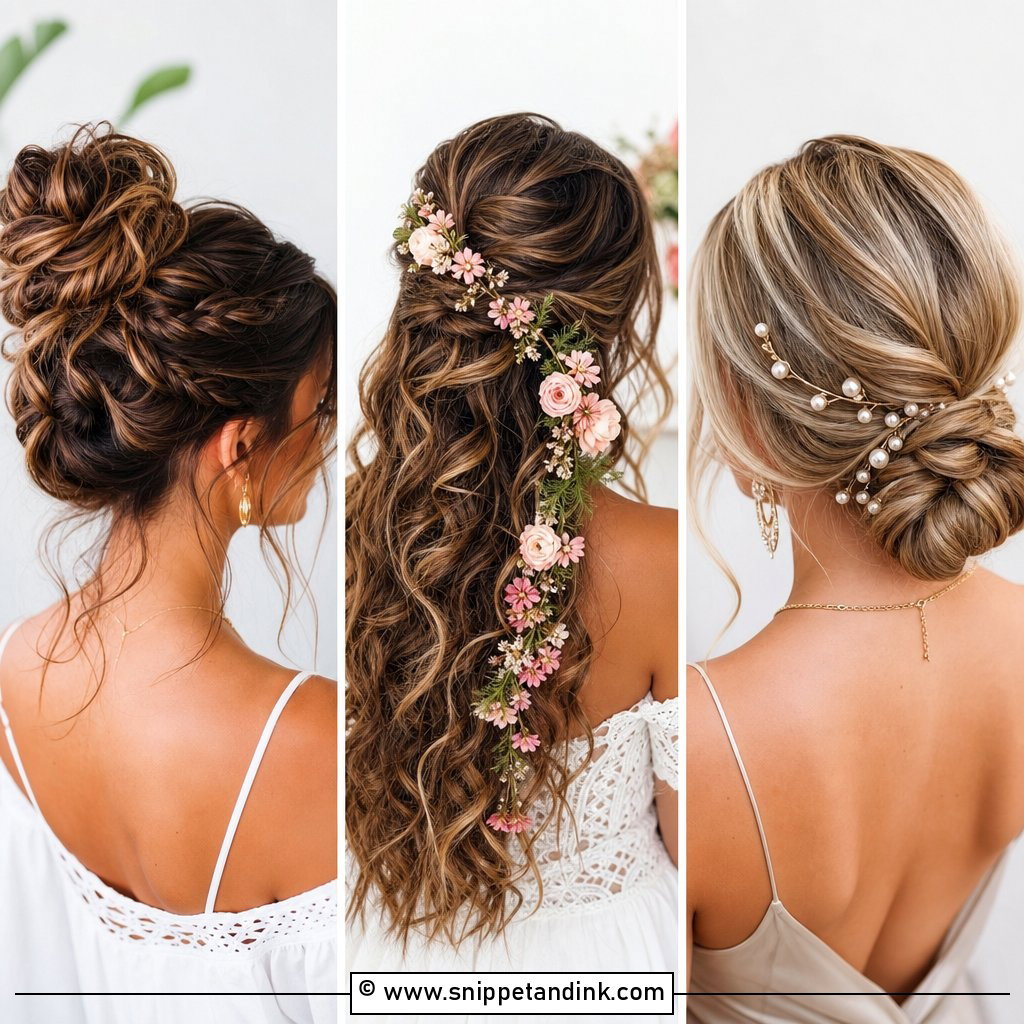
A messy bun at a Desi wedding shouldn’t actually be messy. It’s built with volume, loose pieces and pinned texture so it looks relaxed while staying put. I like it for mehendi, haldi, sangeet and daytime functions, where a sleek bun feels too formal and colourful, lighter outfits suit something softer. Baby’s breath, small roses, pearl pins or a light passa all sit well in it. I pin every loose piece I pull out, which is the difference between undone on purpose and falling apart.
6. Desi Wedding Sleek Bun
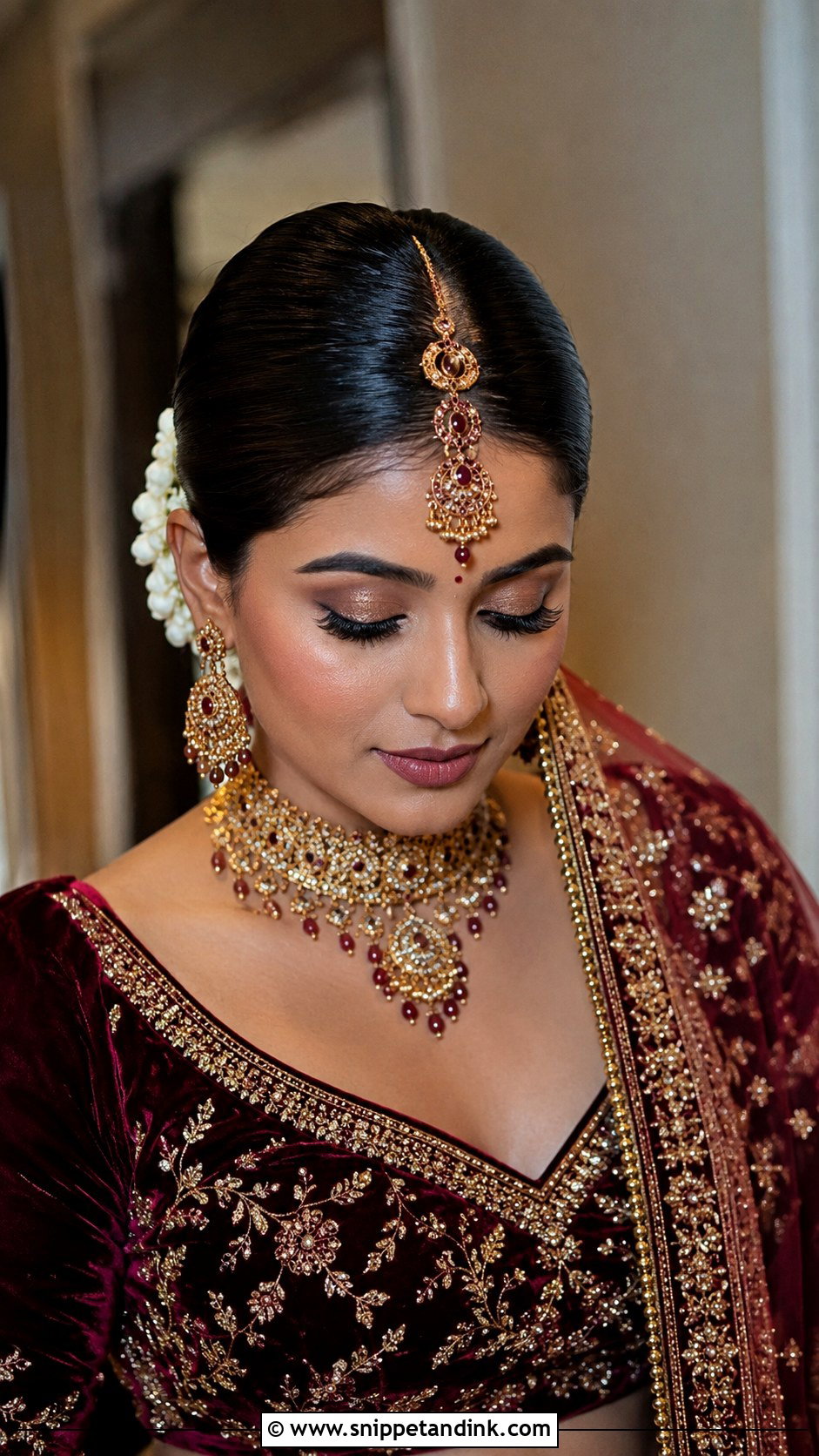
Heavy bridal jewellery needs a quiet background, and a sleek bun provides one. A middle part frames a maang tikka; a side part looks more modern with a jhoomar or big earrings. Velvet lehengas, Banarasi sarees and structured dupattas all suit it. In humid weather it’s my safest choice, because hair that’s smoothed with product and locked with strong pins has nothing left to frizz. A gajra wrapped round the bun brings tradition; leaving it bare looks modern.
7. Desi Wedding Side Braid
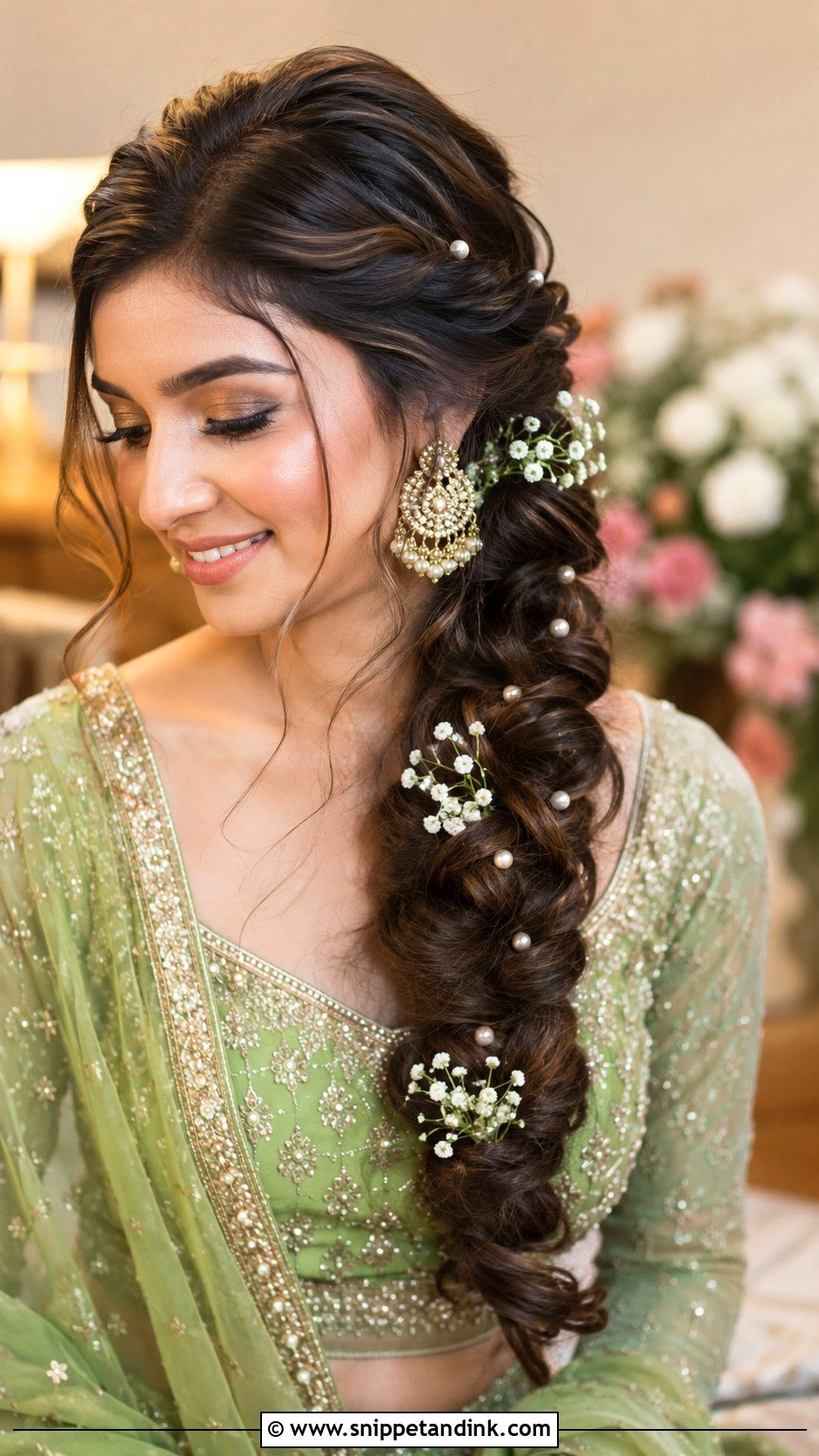
Since the braid sits over one shoulder, all its detail stays visible from the front, where most portraits are taken. Lehengas, shararas and anarkalis suit it, especially at mehendi or sangeet. Fishtail, Dutch, rope, or a braid pulled apart for volume all work. I start the braid slightly behind the ear rather than at the nape, so it falls forward naturally and doesn’t creep back when you turn your head. Tiny flowers, pearl pins or gold thread make it wedding-ready, and guests find it comfortable.
8. Desi Wedding Open Curls
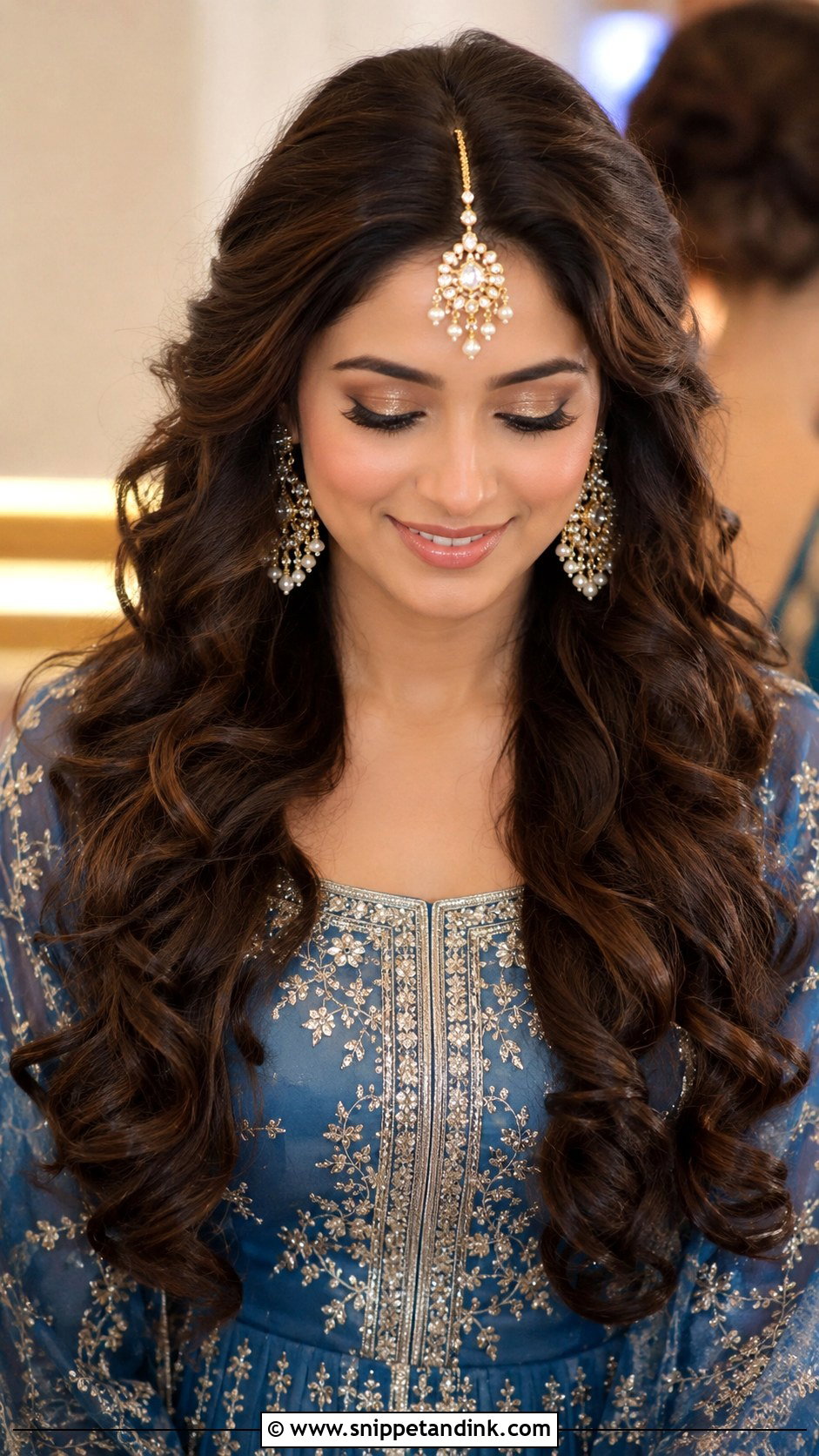
Open curls suit receptions, engagement parties and sangeet nights, where there’s no heavy dupatta pinned over the head. They can be soft and brushed out or more defined. A center part holds a tikka; a side part shows off statement earrings. Open curls are also the style that suffers most in heat and humidity. My routine is heat protectant, curls set on clips to cool, then a light setting spray. Clip-in extensions add fullness and help the curls last, since thicker hair holds a curl longer.
9. Desi Wedding Braided Bun
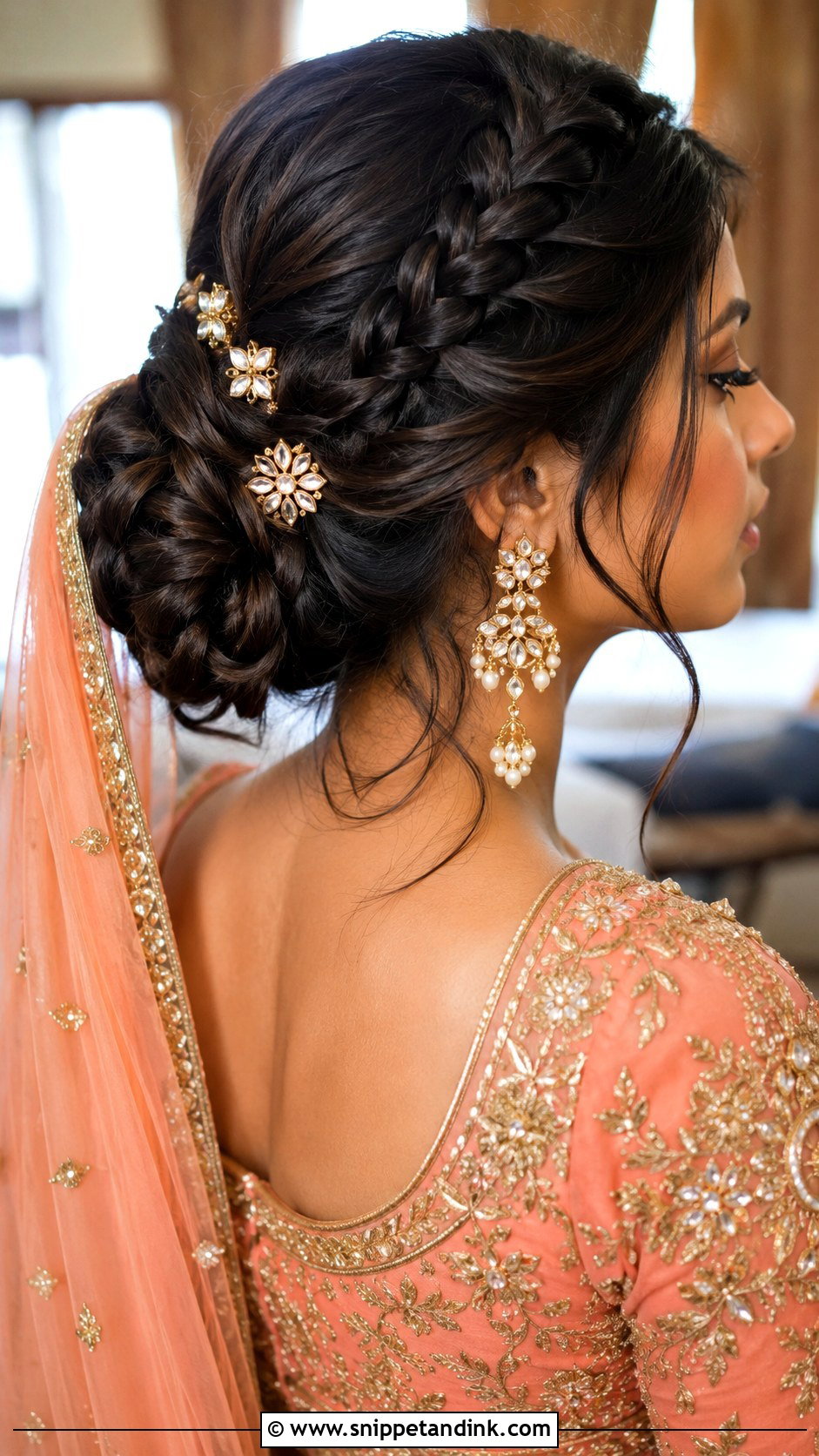
A braided bun gives you the security of an updo with the detail of a braid, without becoming bulky. The braid can wrap the bun, cross the crown or be woven into the bun itself. It pairs with gajra, pearl pins, kundan accessories, and dupatta draping. For long events, the braid is what I pin the dupatta into, since a braid holds a pin far more firmly than loose hair. With a detailed back or heavy blouse, it keeps hair tidy while still adding texture.
10. Desi Wedding Ponytail
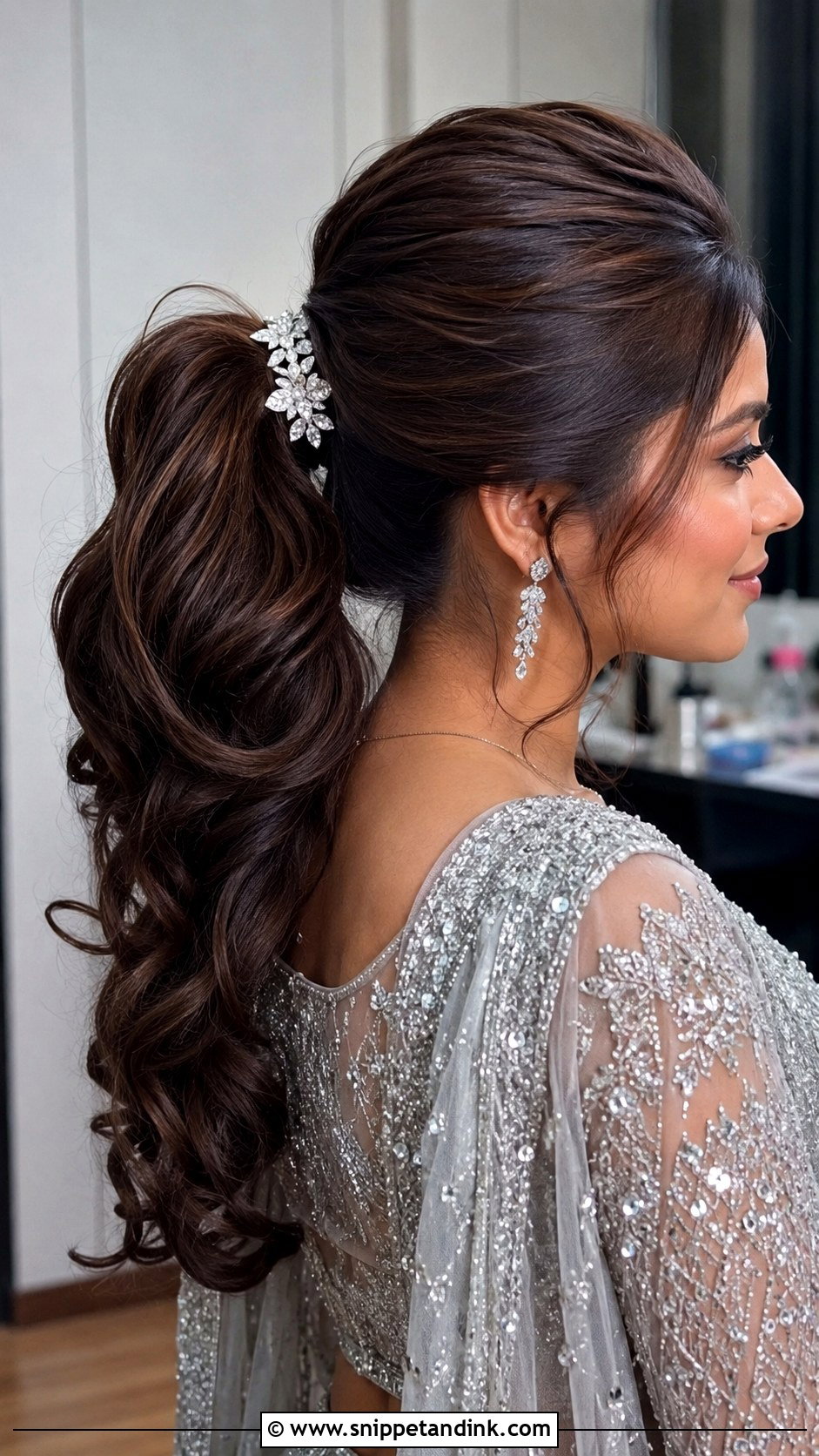
Ponytails come into their own on dancing nights. They suit sangeet, cocktail, reception or a contemporary bridal look with a lehenga or gown. Sleek and high is bold; low and wavy is softer. Lift at the crown makes it formal, and a strand wrapped around the base hides the elastic. I fix the base with two elastics and a couple of crossed pins underneath, because a heavy ponytail swinging through an hour of bhangra will loosen a single tie. Pearl pins or a jewelled clip add the festive touch.
11. Desi Wedding Front Puff Hair
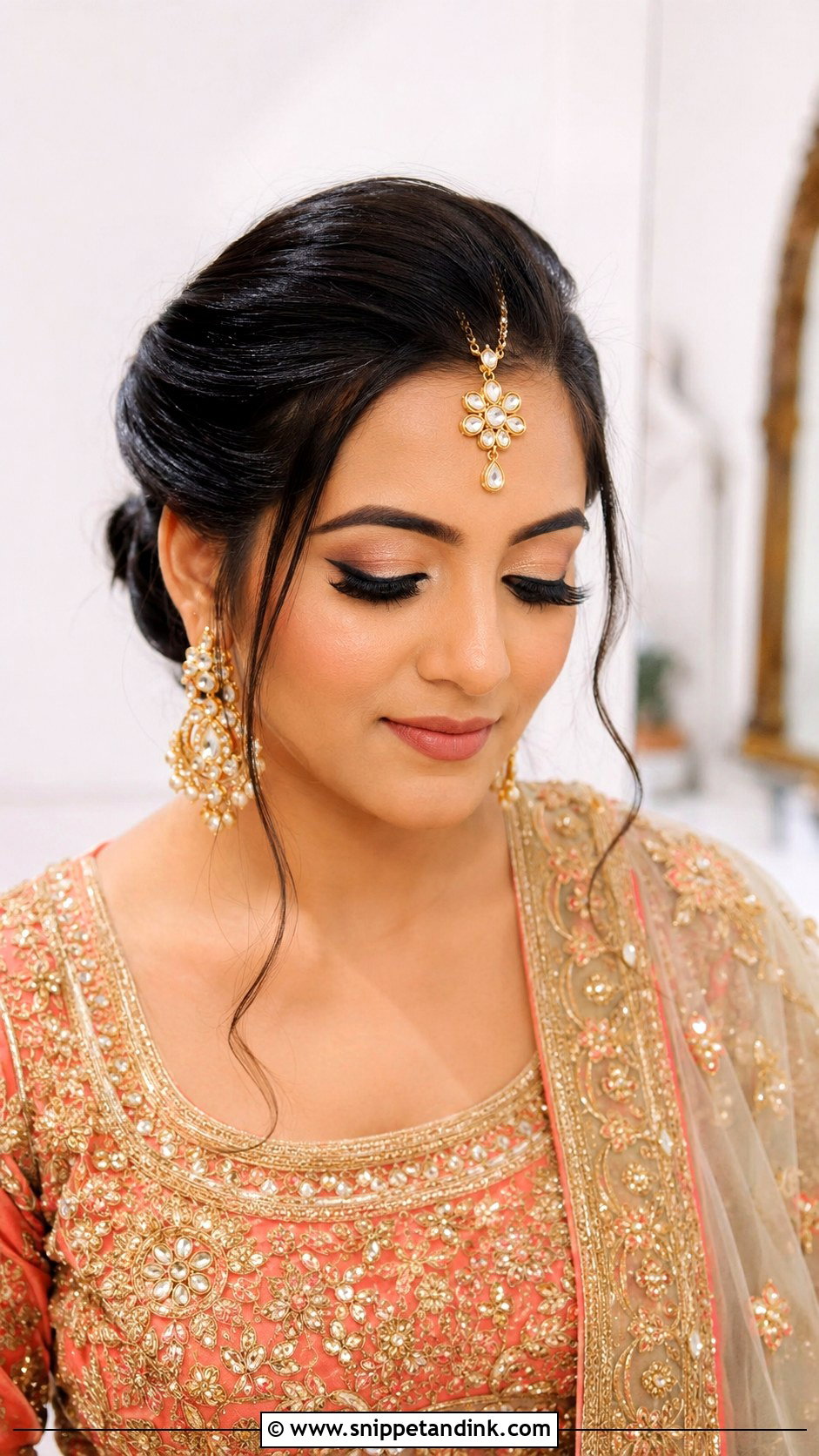
The front puff adds height at the crown and frames the face, and it pairs with a bun, braid, ponytail or half-up style, so it works across several events. On rounder faces it adds some vertical balance. For a bride, the puff should be smooth and controlled, not tall and stiff; an over-teased puff looks dated in photos. A tikka sits neatly at its centre, and a dupatta can be pinned just behind it. I tease only the underside of the section and smooth the top over it, so the surface stays glossy.
12. Desi Wedding Gajra Bun
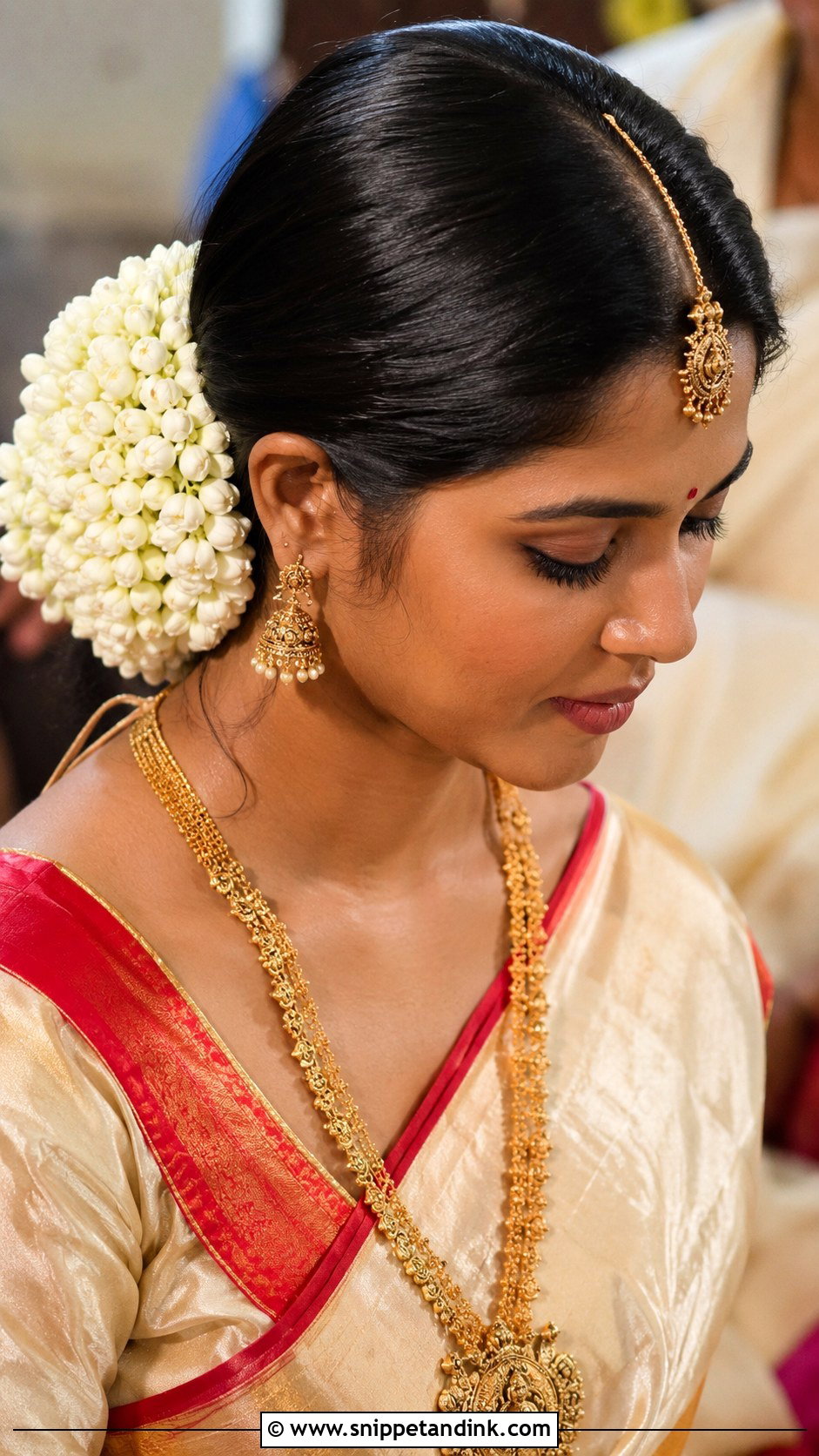
Fresh flowers make a gajra bun feel ceremonial in a way no ornament can, and it suits sarees and lehengas equally. Jasmine is the classic, though roses, mogra or mixed florals can match the outfit. The bun underneath can be sleek, braided or textured. A word on timing: fresh jasmine starts to brown and lose its scent after several hours in heat, so for long events I either add the gajra as late as possible or keep a spare one in a damp cloth. It pairs well with temple jewellery, and every strand needs its own pins so it doesn’t slide.
13. Desi Wedding Maang Tikka Hair
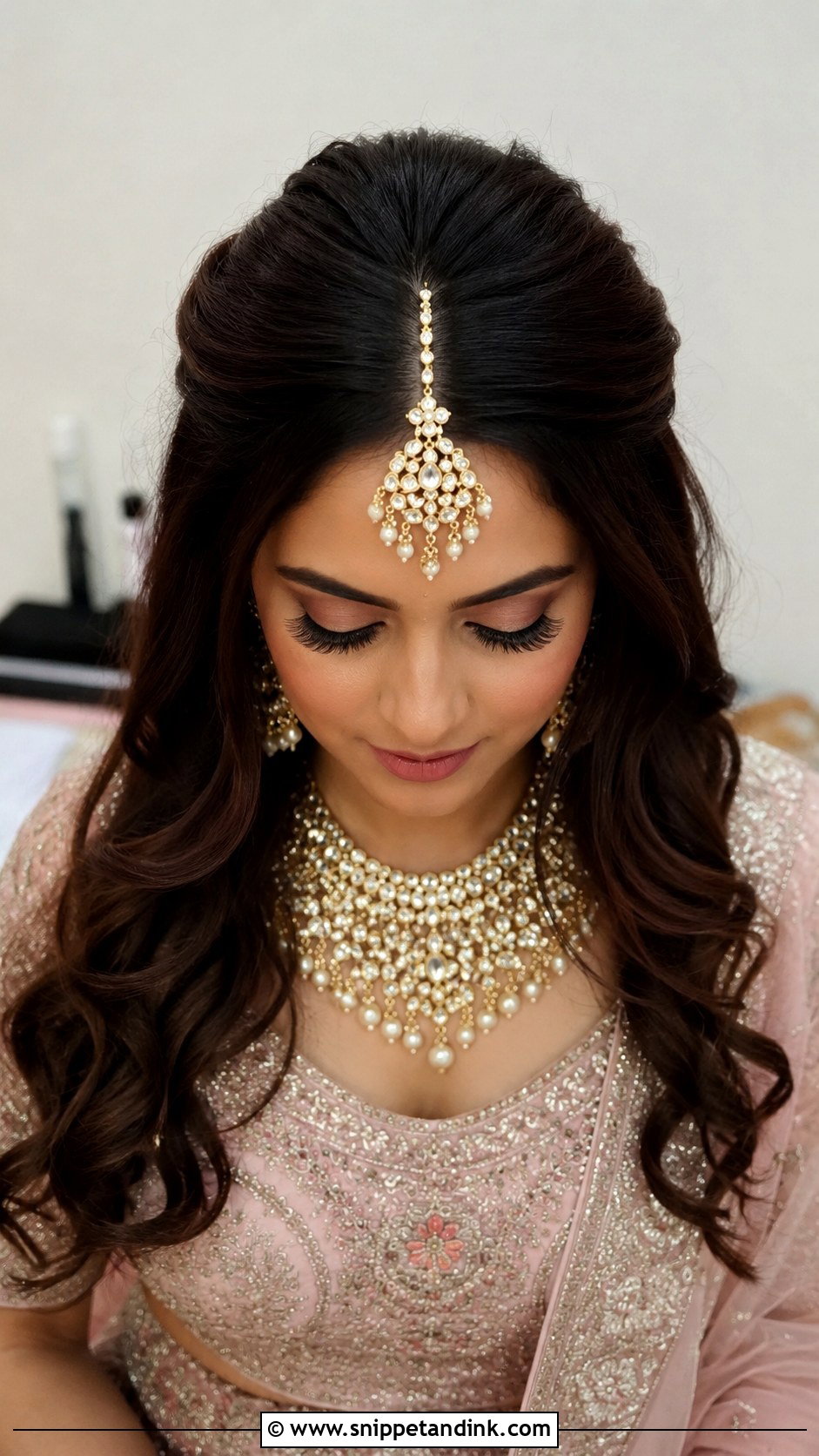
With maang tikka hair, the jewellery leads and the hair builds the base. Any style can work, from a bun to open waves, but the parting has to be dead straight so the tikka hangs centred. A middle part is the classic choice with bridal lehengas and dupatta draping. The front can be sleek for a royal look or lifted for volume. I hook the tikka chain into a tiny hidden braid or pinned knot at the crown, never into loose hair, which is what stops it creeping sideways. Keep clutter away from the crown so the tikka stands alone.
14. Desi Wedding Jhoomar Hair
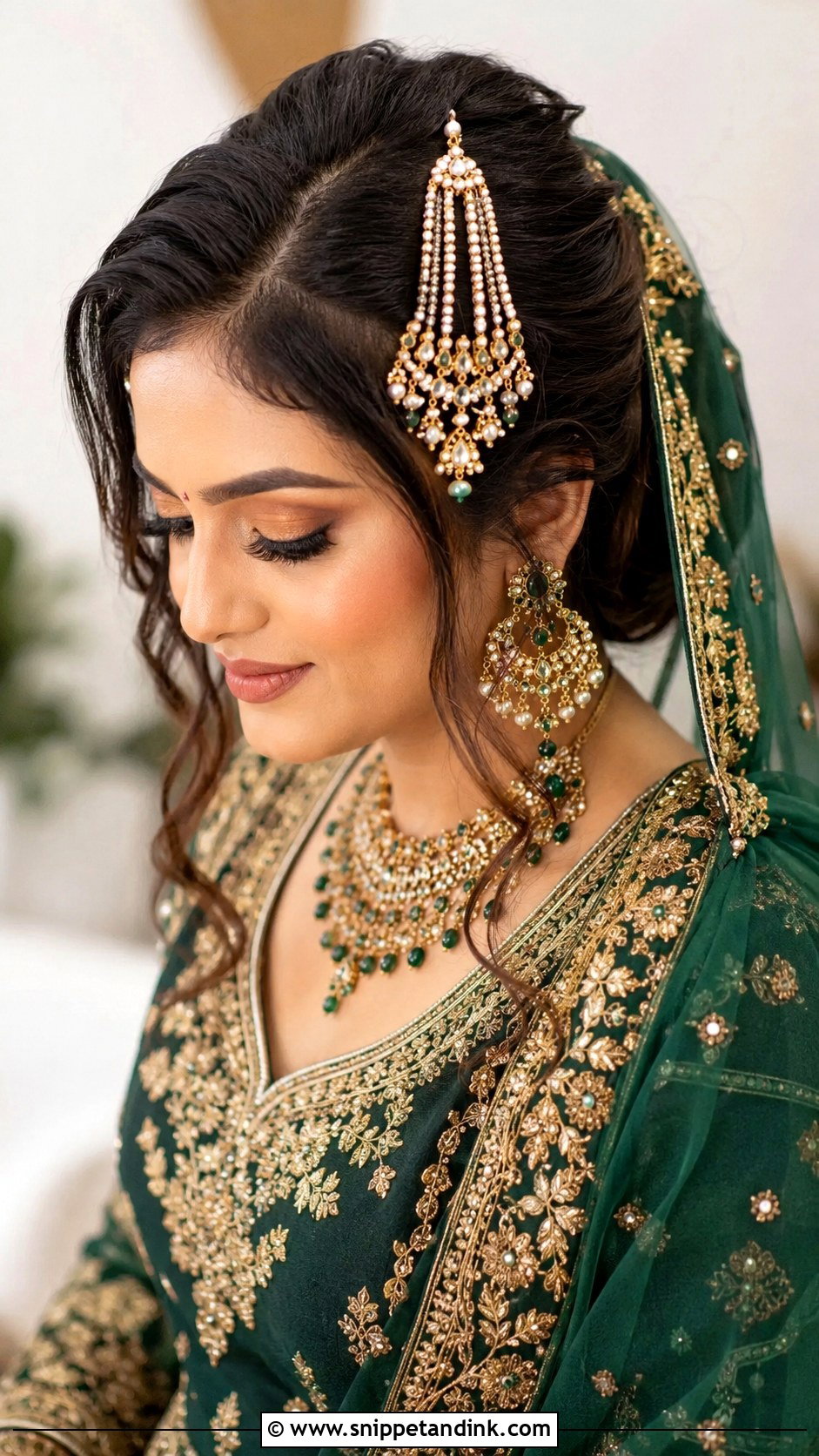
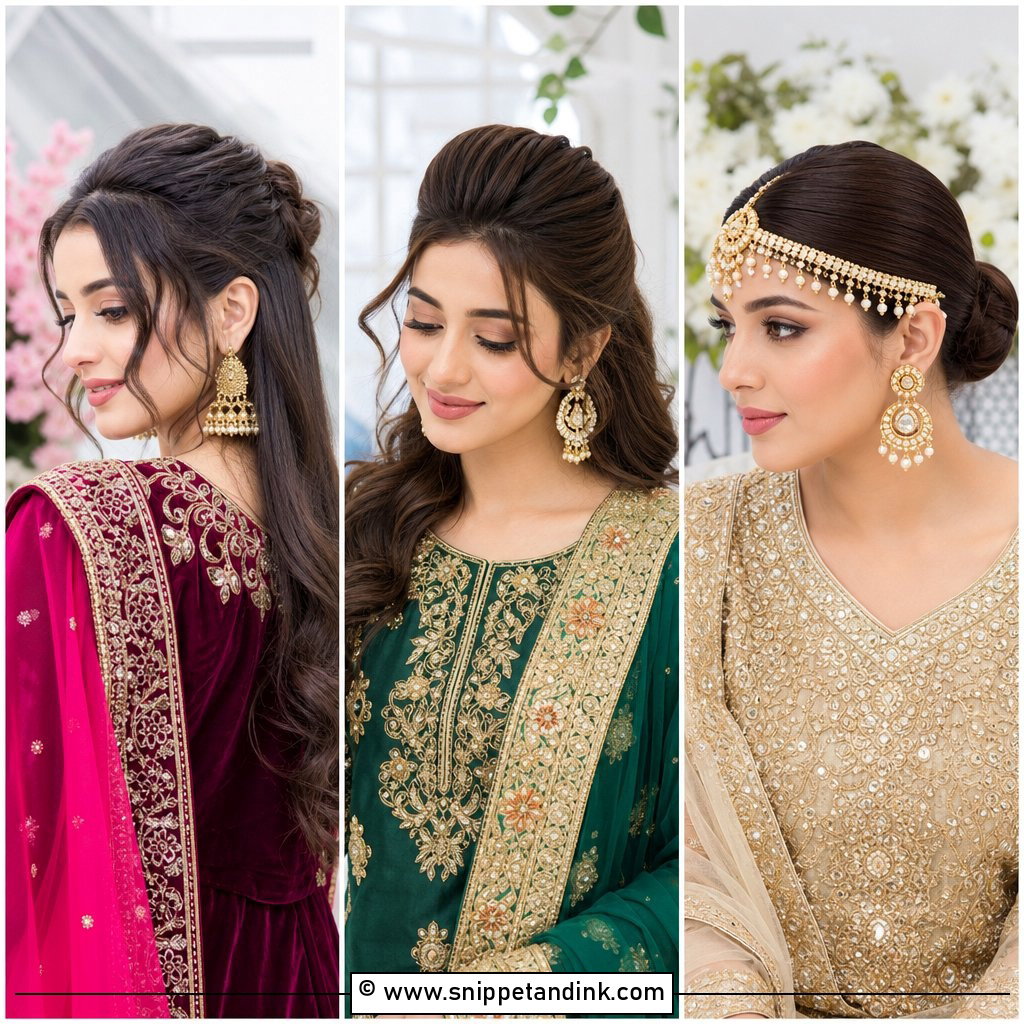
Desi wedding jhoomar hair has a regal, Mughal feel and suits shararas, ghararas, anarkalis and Pakistani bridal looks. Because the jhoomar sits on one side, the style needs weight and balance on that side: a low bun, side-parted waves or a soft updo all work. It’s especially popular for nikah, walima, engagement and reception. I keep the opposite side smooth with soft volume so the look doesn’t tip. A jhoomar is heavy for its size, so the hair beneath it needs texture spray and a firm pinned base.
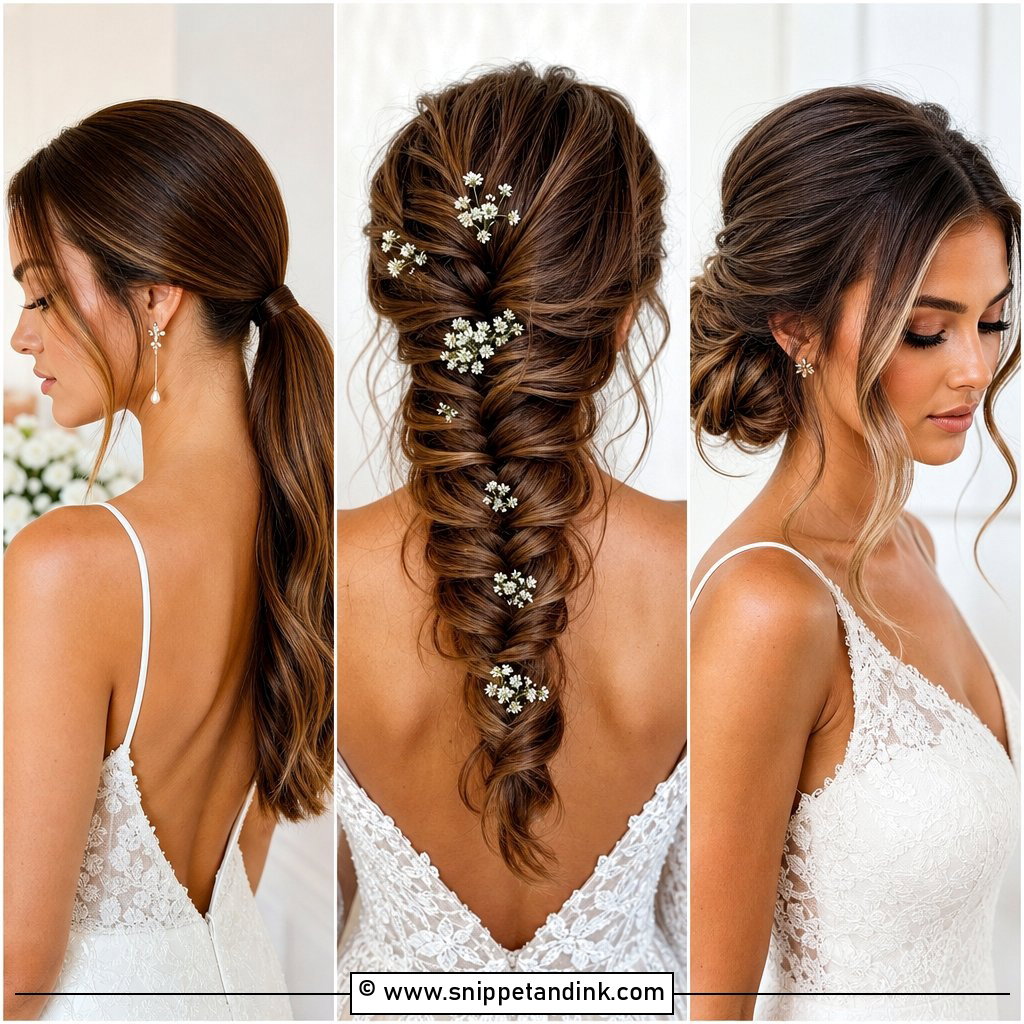
15. Desi Wedding Short Hair
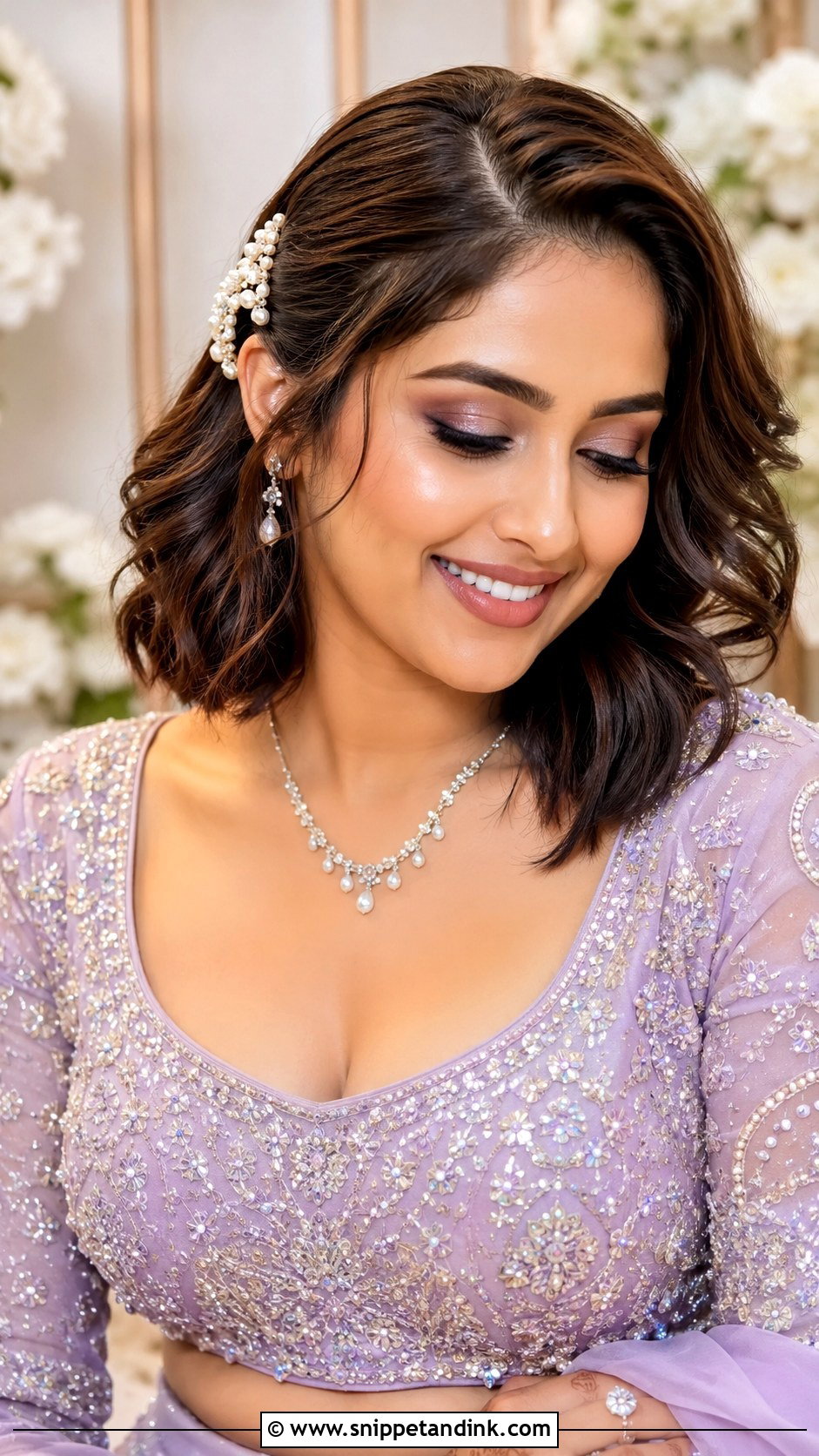
Short hair can carry Desi wedding jewellery as well as long hair can, it just needs clearer shape. A bob, lob or shoulder-length cut can be waved, pinned, slicked back, or styled into a mini bun at the nape. Accessories do a lot of the work: pearl clips, kundan pins, fresh flowers, a tikka or a fine hair chain tie the hair to the outfit. On short hair I pin accessories into small hidden twists, since a clip on short, smooth hair tends to slide. It suits modern receptions and intimate functions.
Carrying a Tikka, Jhoomar and Dupatta Without a Headache
Bridal jewellery and a heavily embroidered dupatta weigh far more than most brides expect, and by the third hour the pull on the scalp is what you notice most. I build comfort into the hair from the start, because it can’t be added afterwards.
- Ask for a small, firm base, such as a tiny braid or pinned knot, where the tikka chain and jhoomar hooks attach, so the weight sits on that base rather than on a few strands.
- Spread dupatta pins across the bun and the back of the head instead of crowding them at the crown. Several small anchor points hurt less than one tight one.
- Wear the actual jewellery and dupatta at your trial, or something close in weight. A style that holds a light chunni can collapse under a velvet dupatta.
- Plan when the heavy pieces come off. Many brides remove the jhoomar or swap the dupatta after the main rituals, so the style underneath should still look finished.
If a headache starts, don’t sit through it for hours. Loosening and repinning one or two pieces during a break makes the rest of the night far more comfortable, and nobody in the photos will see the difference.
One Look for the Rituals, Another for the Dance Floor
Each style here has its job. A bun handles dupatta support, a braid carries tradition, waves bring glamour to a reception, and half-up gives you some of both. Think about the event, your jewellery, your neckline, the weather and how many hours the hair has to last, and decide on extensions, fresh flowers or statement accessories before the trial, not on the morning. The most complicated look is rarely the right one. The right one frames your face, holds your outfit in place and lets you enjoy each ceremony without reaching for your hair.
You'll Like These Ideas:



Leave a Reply