
The havan kund is the sacred fire at the heart of a Hindu wedding, the fire the couple walks around during the pheras, so it carries real weight when a bride asks me to put it on her hands. On skin it can be a square altar with rising flames, a full mandap scene, or a small symbol tucked inside florals and paisleys. The hard part is not drawing it. The hard part is keeping a fire motif readable once the stain darkens and the filler work closes in around it. These twenty layouts range from full bridal storytelling to a single motif in the palm.
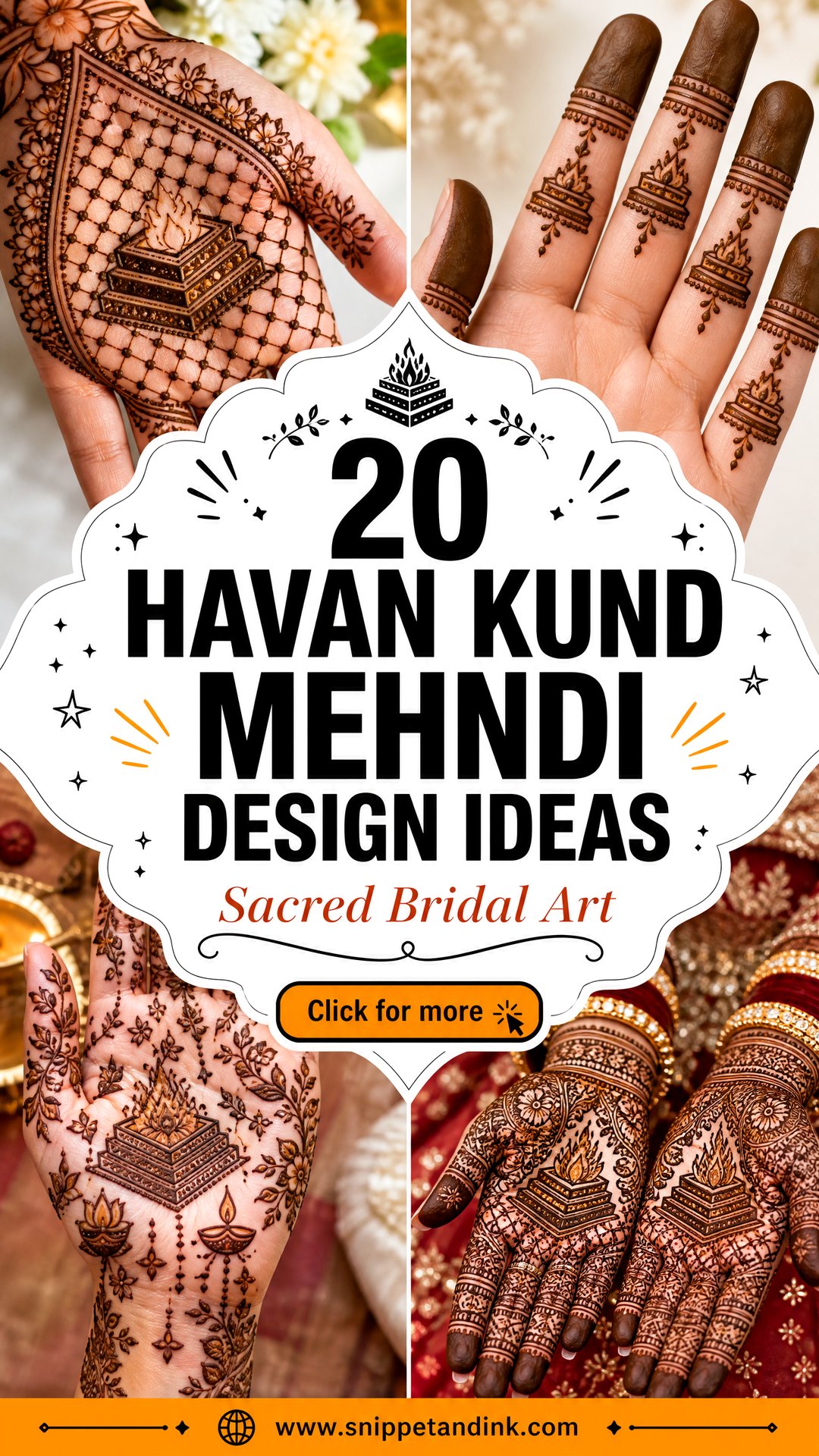
Sizing the Altar Before the Cone Touches Skin
Henna lines spread a little as the paste sits and the stain develops, so a design that looks crisp on paper can blur on skin if the motif is drawn too small. When I plan a havan kund layout, I decide the size of the altar first and fit everything else around it. As a rough guide, I want the fire box to be at least the width of two fingers on the palm. Smaller than that, I cut the number of flames rather than shrinking them.
What helps me at the booking
- Tell me which rituals matter to your family. Some brides want the pheras shown; others just the fire.
- Decide if the scene should continue from one hand to the other, so I can line the halves up.
- Show me your outfit and jewellery. Heavy haathphool or kaleere will cover part of the back hand.
- Say how long you can sit. A full storytelling design is several hours; a palm motif is far less.
Timing matters too. A natural henna stain keeps darkening for one to two days after the paste comes off, so I schedule bridal mehndi one or two days before the wedding. Applied the morning of the ceremony, the stain will still be orange when the fire is lit.
1. Full Hand Havan Kund Bridal Mehndi Design
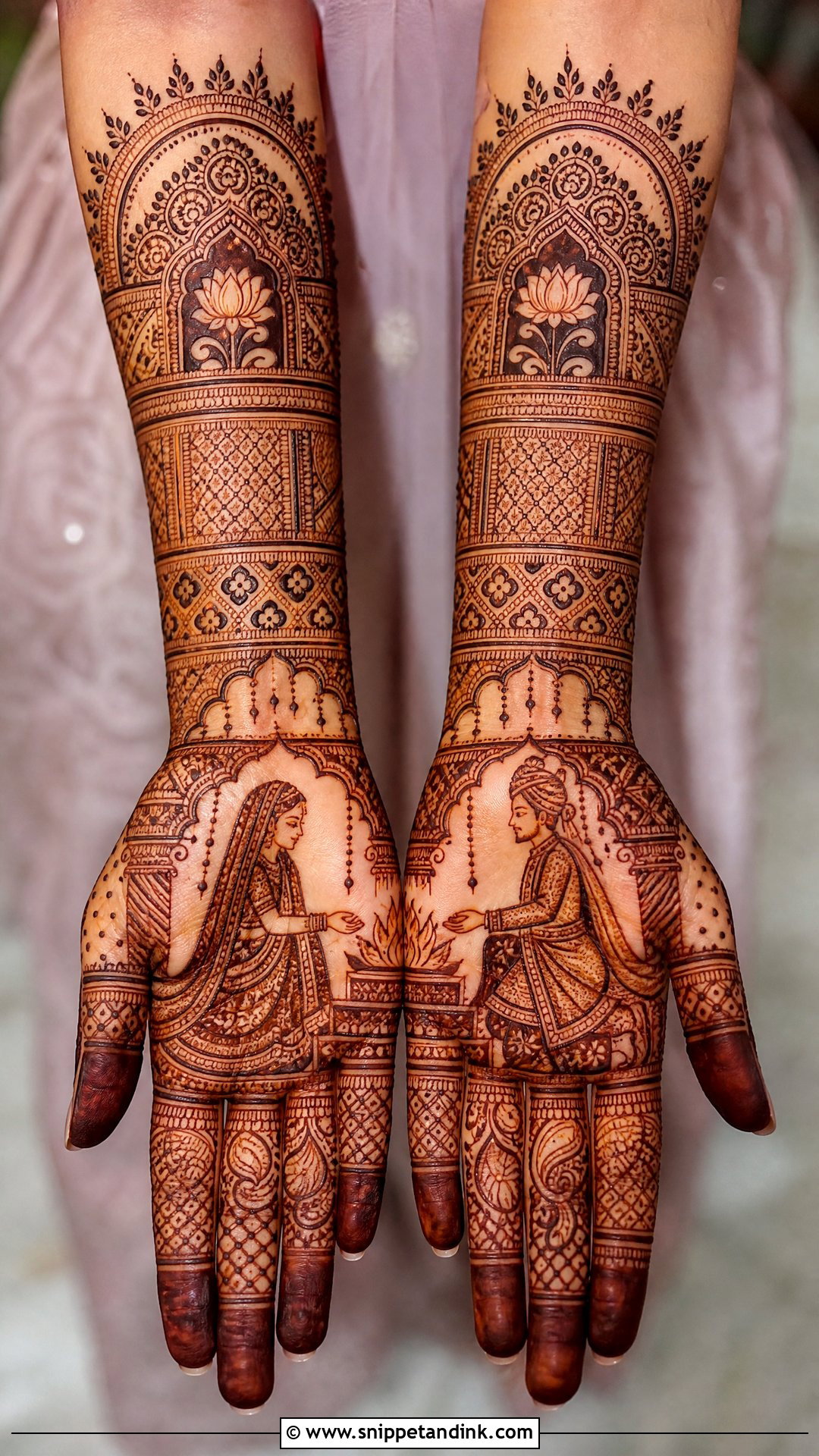
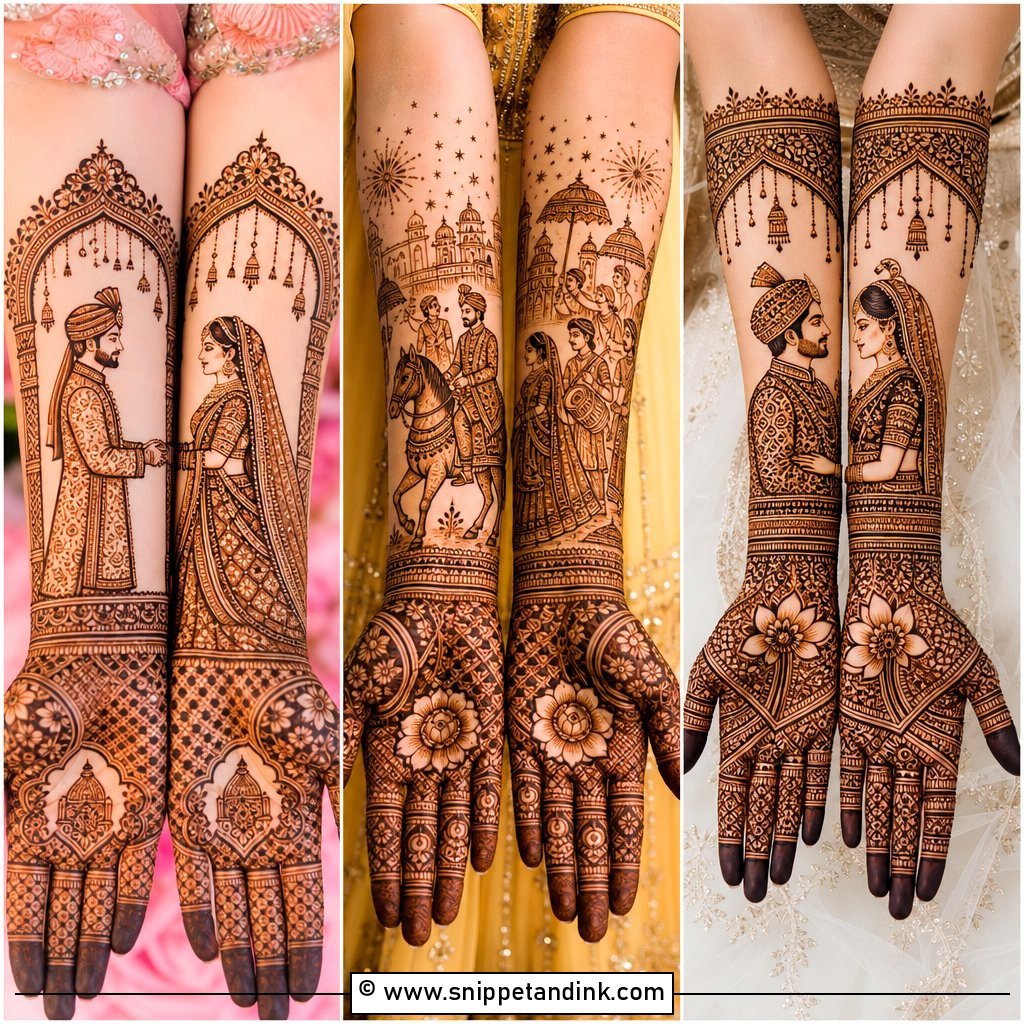
When the ritual is the whole story of your henna, I put the havan kund in the centre of the palm or just above the wrist and build outward. The rest of the hand can carry dulha-dulhan figures, mandap details, lotus and dense finger work. I draw the altar a size larger than anything around it, because fine flames inside a small square tend to merge into one dark patch as the stain deepens. Two hands that together make one wedding scene is the version brides tend to love most in photos.
2. Simple Havan Kund Mehndi Design
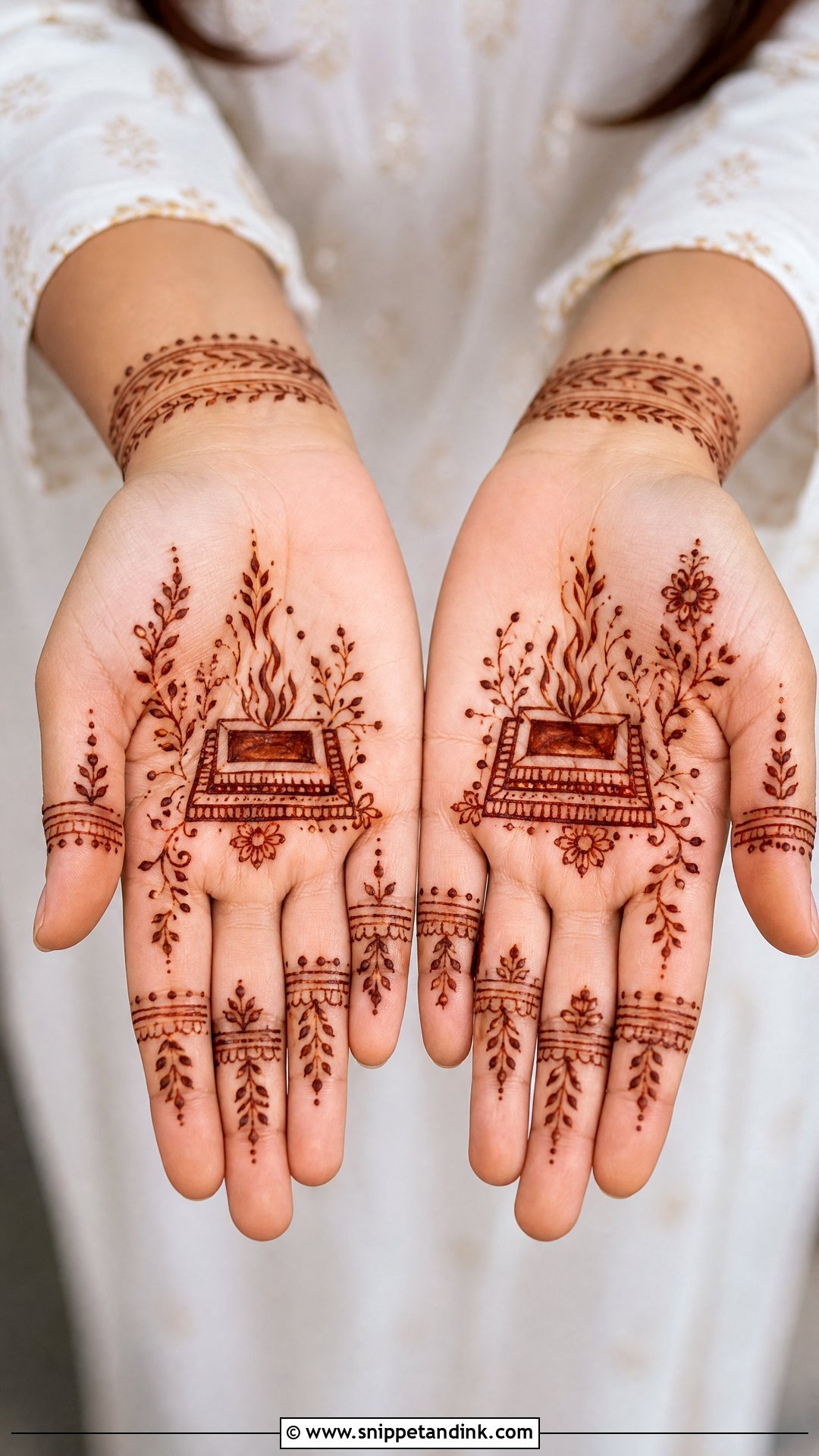
Simple still works here because the motif already means something. A clean square altar with three or four flames, a few vines, and open skin around it reads clearly from across a room. I keep the fingers to leafy bands and dots. It’s quick to apply, which is why I often suggest it for sisters and bridesmaids who are queuing behind the bride. Small hands suit it too: there’s room to draw the fire properly without squeezing it.
3. Havan Kund Mehndi Design For Palm
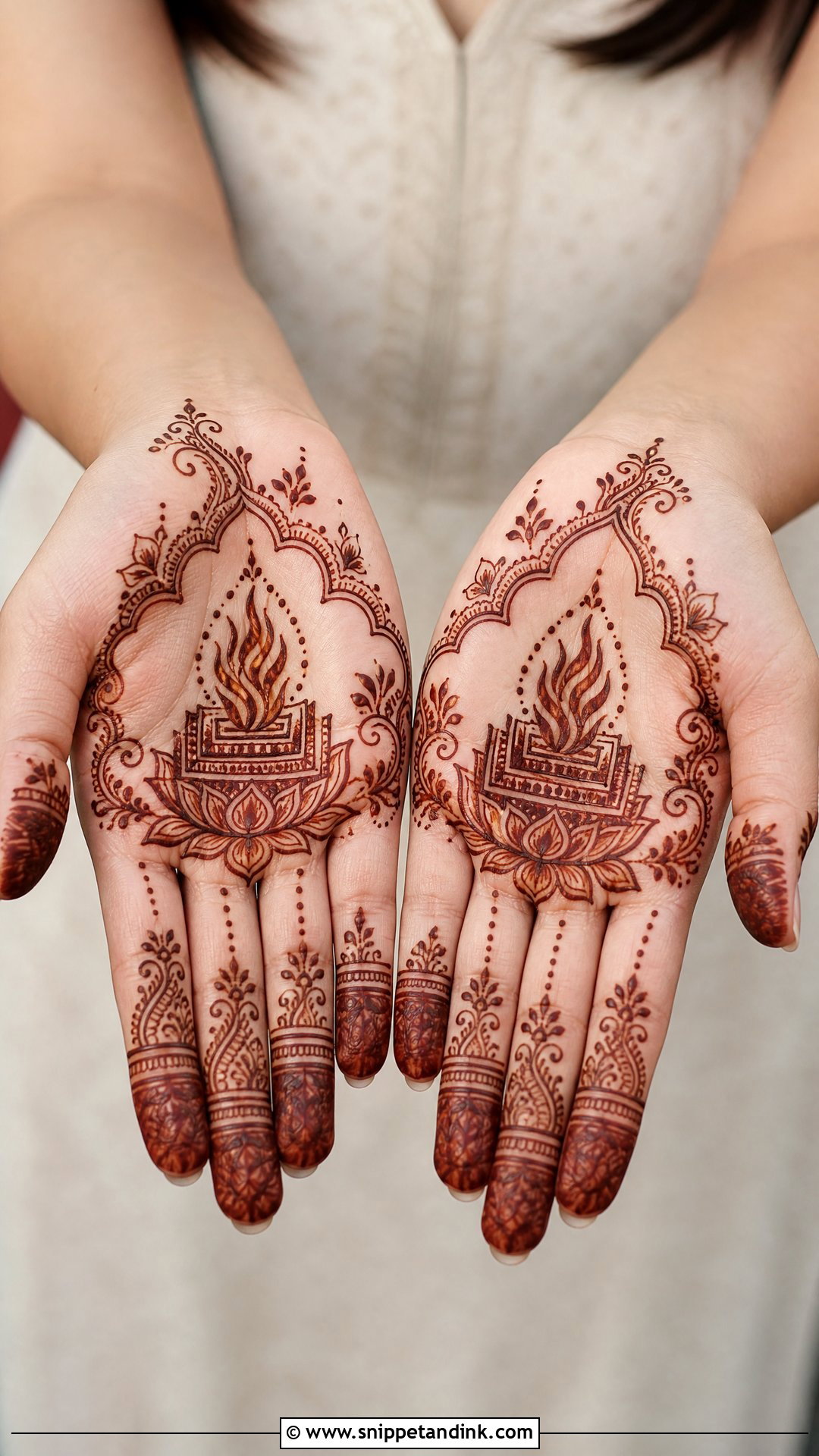
The palm takes stain more deeply than any other part of the hand, and it gives the flattest surface, so this is where my linework stays crispest. I frame the altar with a lotus or mandala outline and let the flames point toward the fingers. Fingers can echo the theme with paisleys or jaali, but they stay secondary. One thing I watch: the heel of the palm creases a lot, so I keep the fire above that crease or the flames distort every time the hand closes.
4. Havan Kund Mehndi Design Back Hand
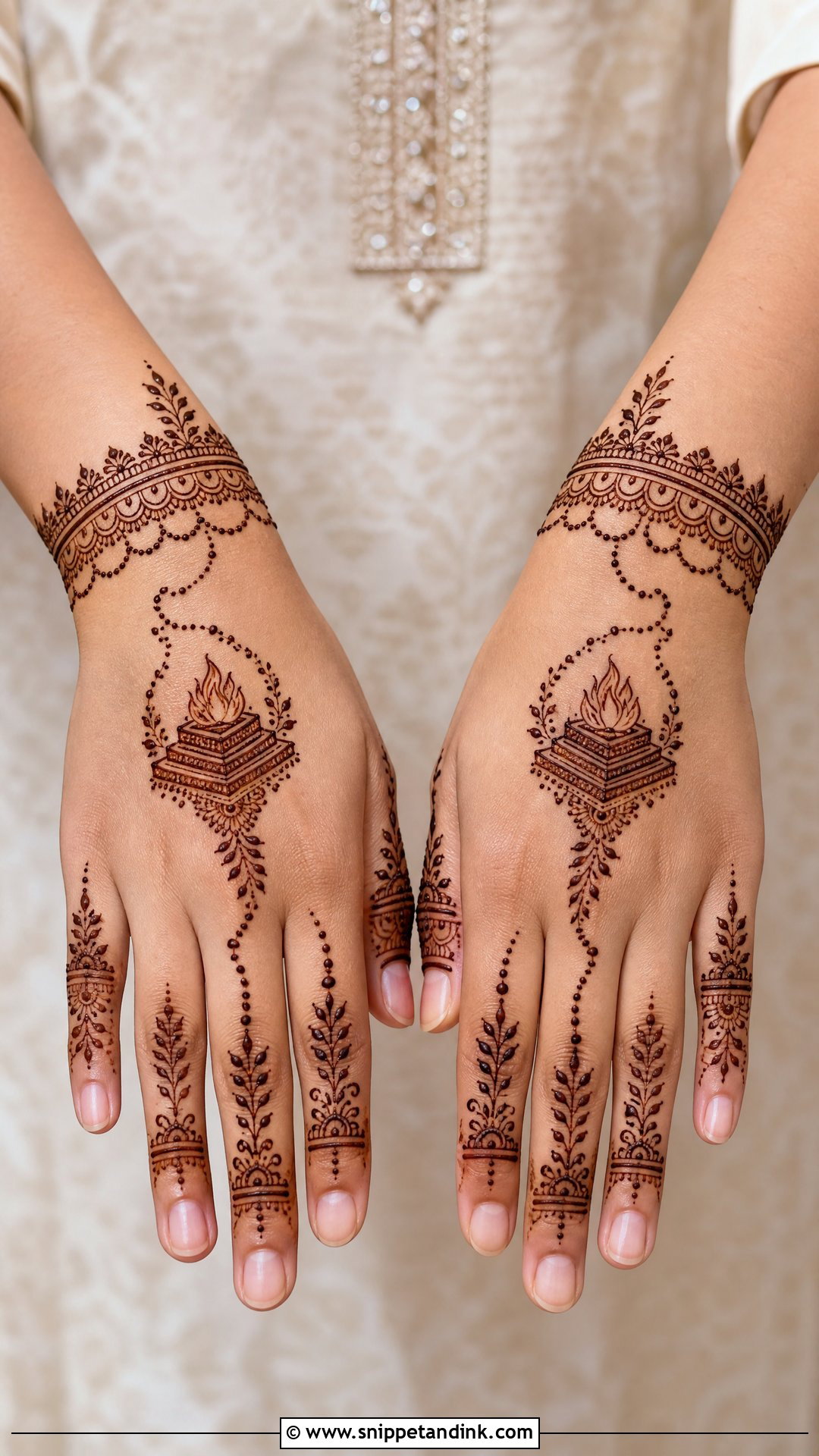
Back-hand placement shows the fire whenever your hands are resting in your lap, which is how they’re held during most rituals. The back of the hand stains lighter than the palm and the skin moves over the knuckles, so I simplify the altar here: a bold outer border, fewer flames, no tiny fill. Bracelet bands at the wrist and trails up the fingers finish it. It suits engagement and haldi wear, or a guest who wants a cultural detail without bridal coverage.
5. Havan Kund Mandala Mehndi Design
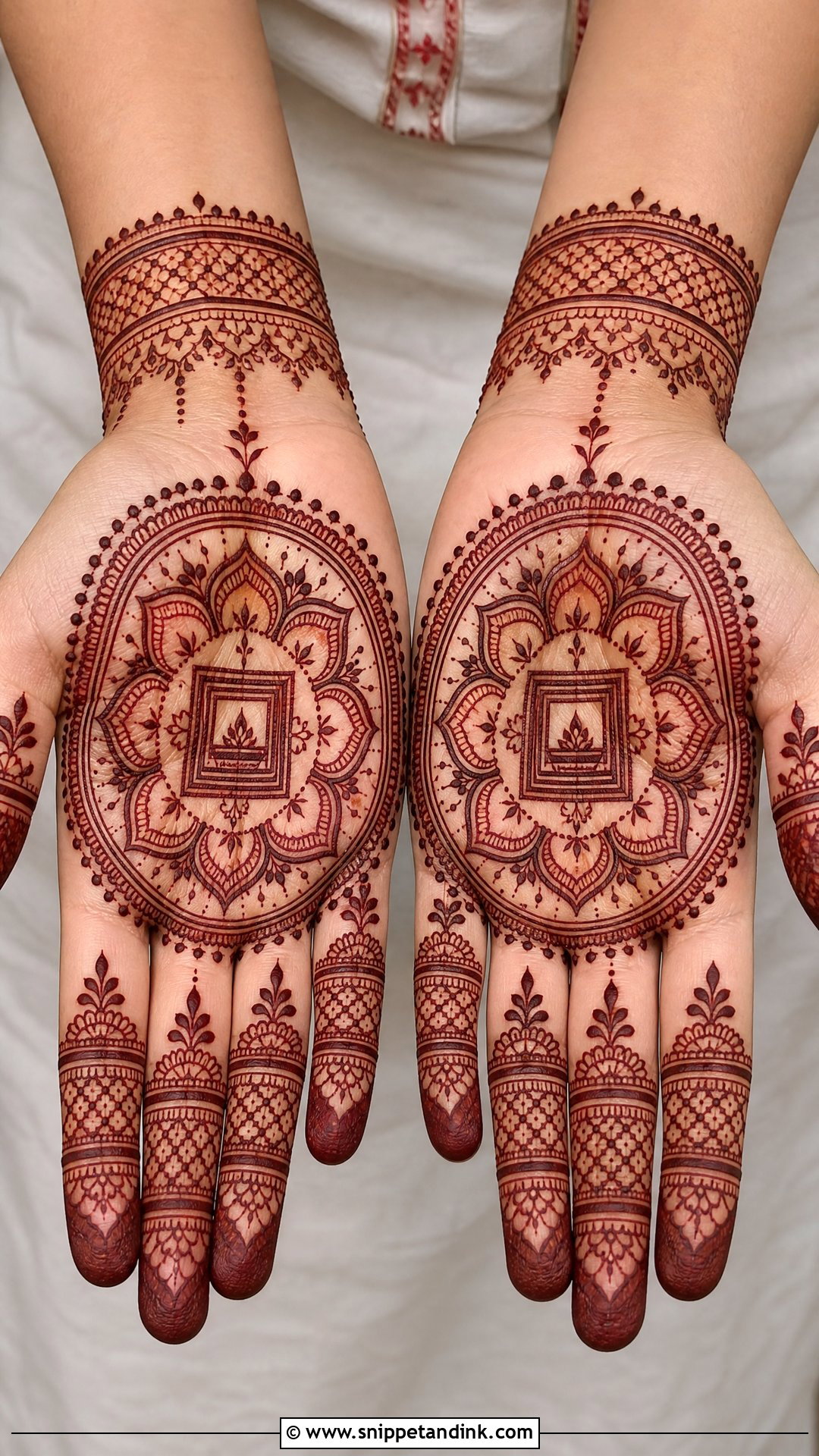
A square altar inside circular mandala rings is one of the most balanced compositions I draw. The square anchors the eye and the rings echo the round shape of the palm, so the whole thing sits naturally on the hand. For a bride I extend the outer rings toward the wrist with shaded florals and paisley vines. For a lighter version I stop at the outermost ring and leave the fingers mostly open. Even petal spacing matters more here than anywhere else; an uneven ring is the first thing people notice.
6. Havan Kund Dulhan Mehndi Design
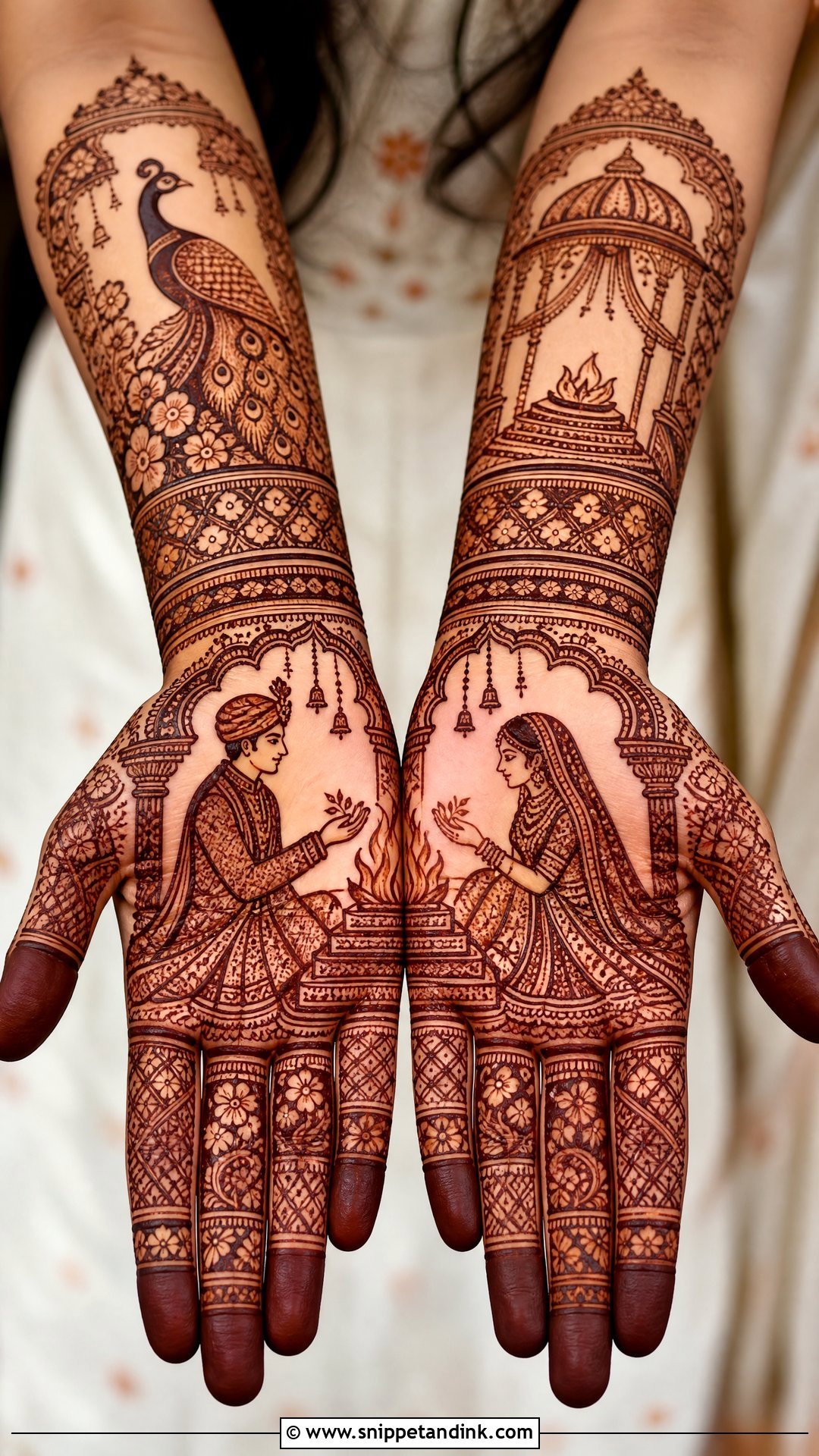
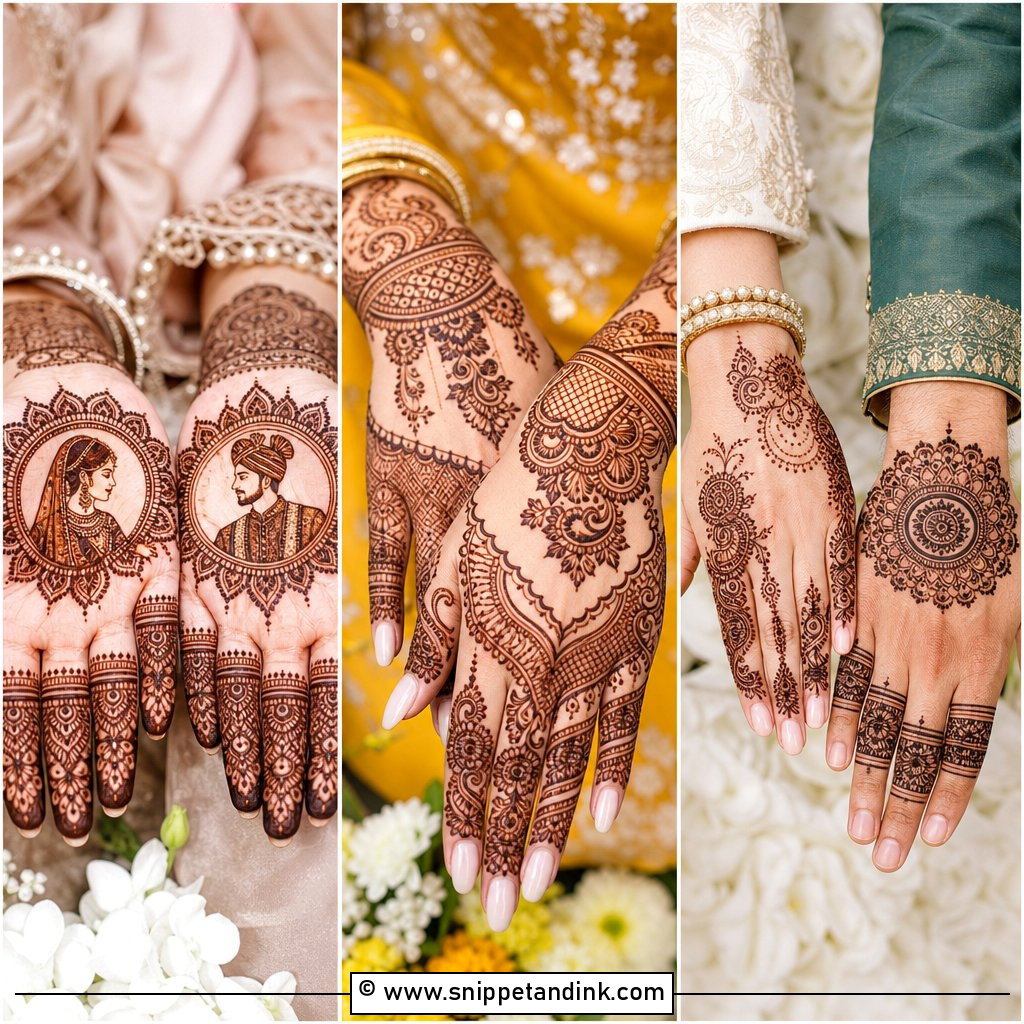
A havan kund dulhan mehndi design turns the fire into a scene rather than a symbol. One palm carries the altar and mandap; the other carries the bride and groom, the varmala or wedding bells. Wrist and forearm get peacocks, lotus and dense paisleys. This is several hours of work, so book it as a long appointment and plan to sit still. Faces and flames are where I slow down most, because a smudged face is the one detail you can’t hide in the stain.
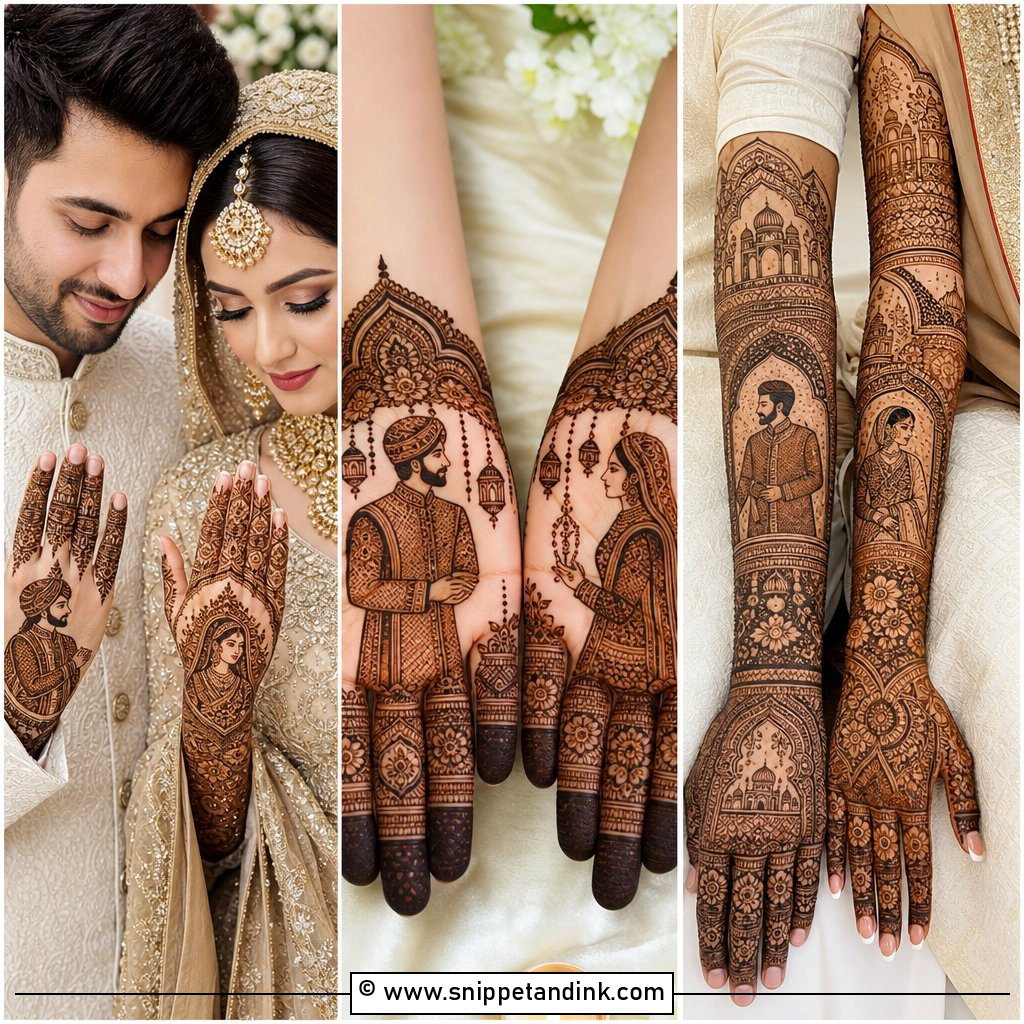
7. Havan Kund Mehndi Design With Bride And Groom
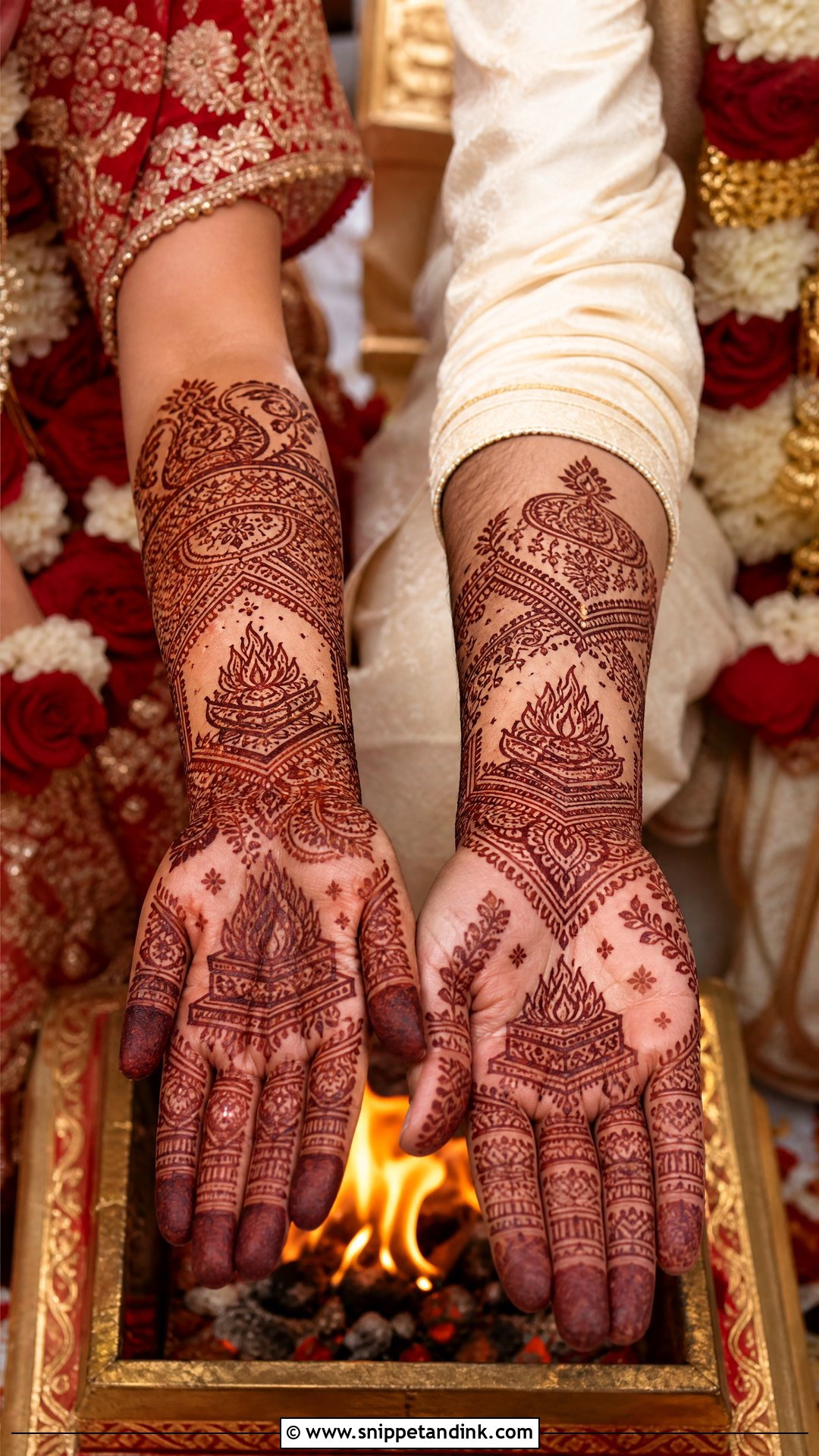
Sitting the couple at the fire is where the motif becomes personal. I draw the havan kund between or below the two figures so the ritual reads clearly, then add mandap pillars, garlands and filled fingertips. The bride and groom pairing can also be split, the bride on one hand and the groom on the other, with the fire completed only when the hands meet. I like that version for a cleaner look, but it only works if both halves are lined up at the same height.
8. Havan Kund Mehndi Design With Mandap
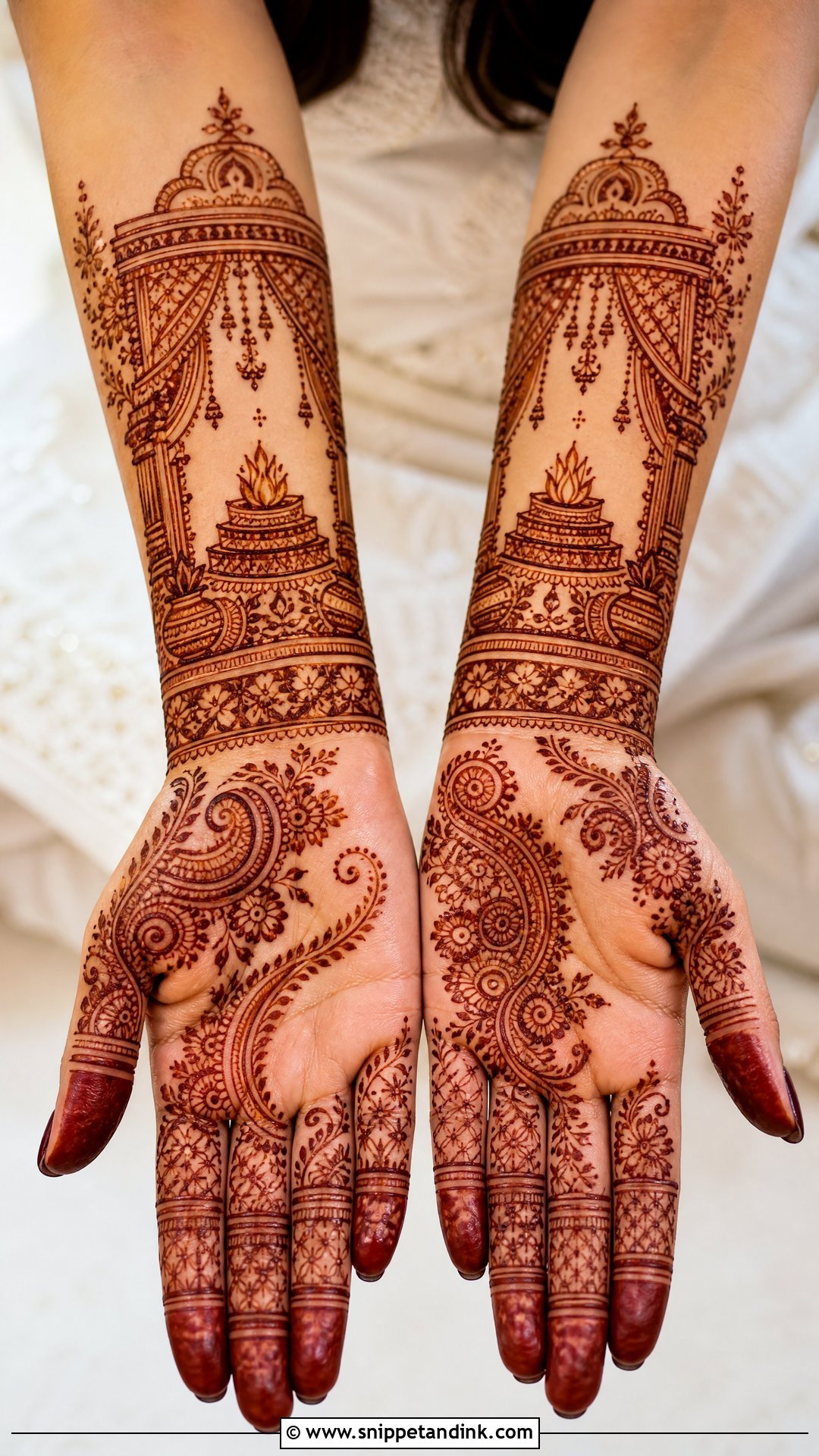
Arches, pillars and draped florals turn the motif into a full mandap. I usually draw the mandap frame across the wrist and lower forearm and place the fire beneath it, which leaves room for garlands, bells, shaded flowers and kalash motifs. The palm then carries a mandala or paisley layout that links up to it. It’s ceremonial and grand, and it reads well when the bride holds her hands together, because the two mandap halves meet at the wrist.
9. Havan Kund Arabic Mehndi Design
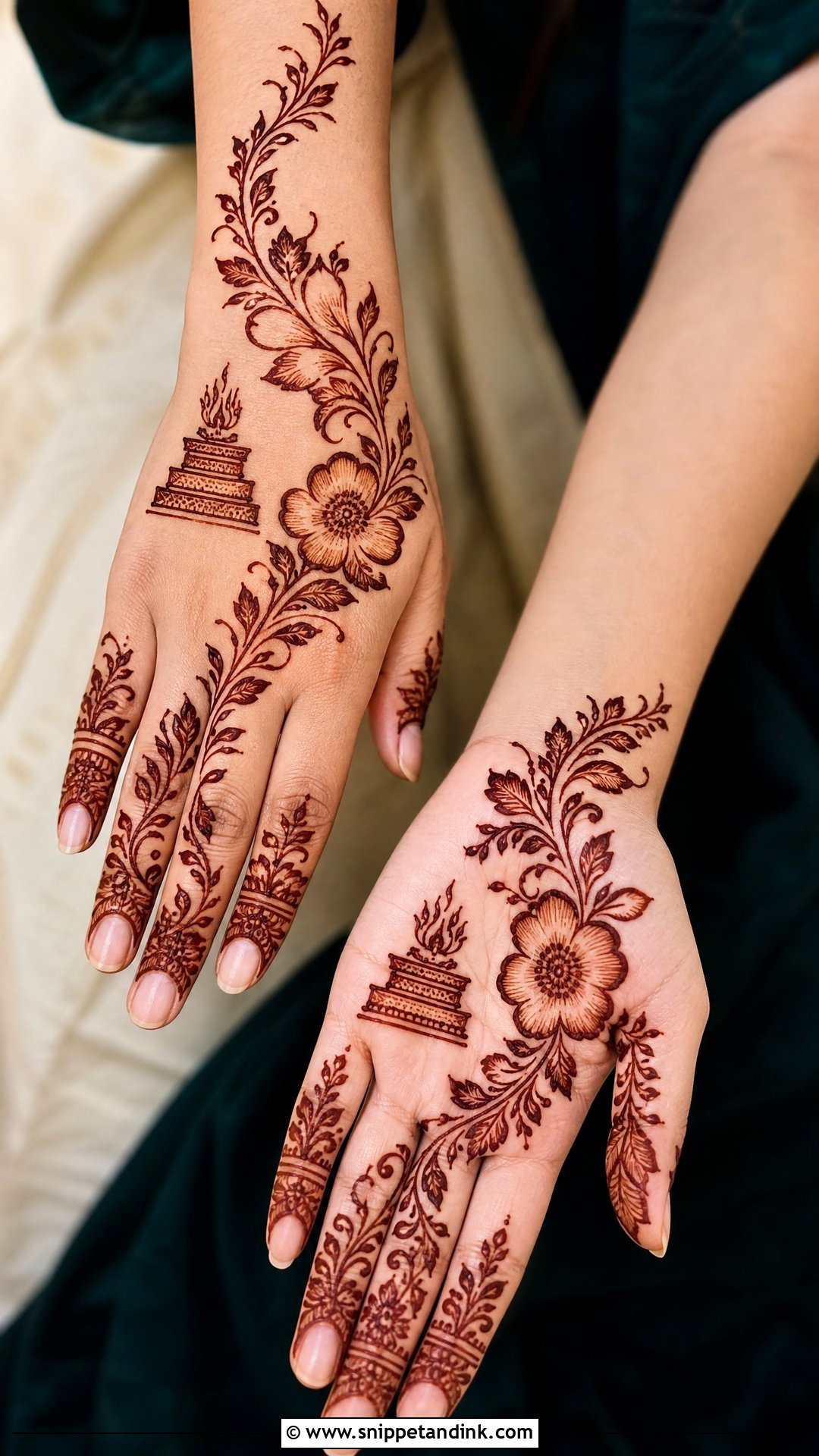
Arabic style runs on bold flowers, open skin and a diagonal trail, so I don’t try to pack the fire with detail here. The altar sits near the wrist or mid-palm, with big petals and leaf trails sweeping toward the index finger. Shading at the base of the flames links them to the petals so the fire doesn’t look stuck on. It’s lighter than traditional bridal work and much faster, which makes it a good fit for bridesmaids and guests.
10. Havan Kund Indo Arabic Mehndi Design
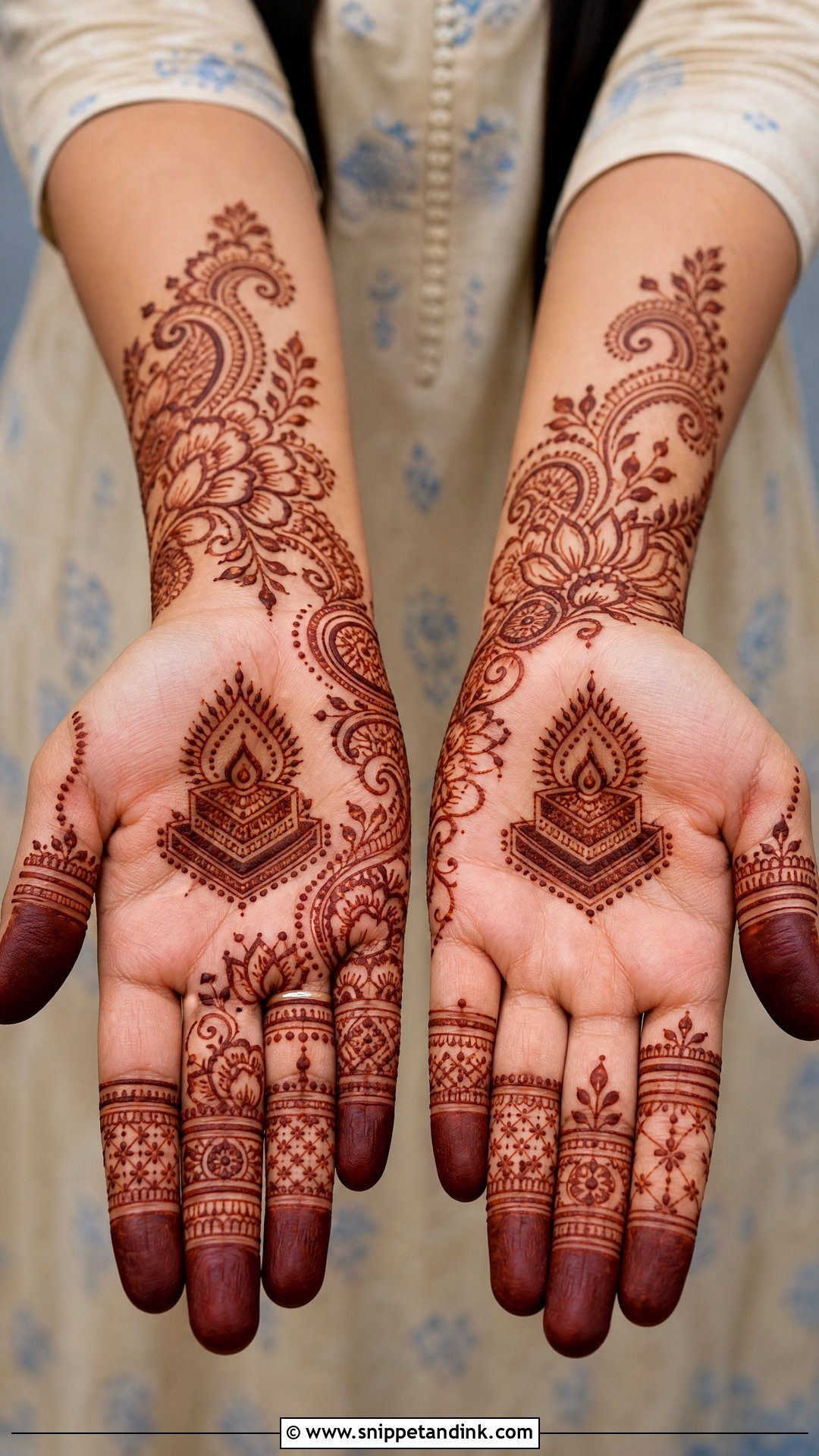
Indo-Arabic lets me draw the fire with fine Indian linework in the palm and then release the rest of the hand into a diagonal floral trail. Paisleys, lotus and leafy vines with gaps of bare skin keep it from feeling heavy. Fingers get a mix of mesh bands and floral tips. I find it the most forgiving layout for a bride who can’t decide between dense and airy, since the dense part is limited to the one motif that matters.
11. Havan Kund Jaali Mehndi Design
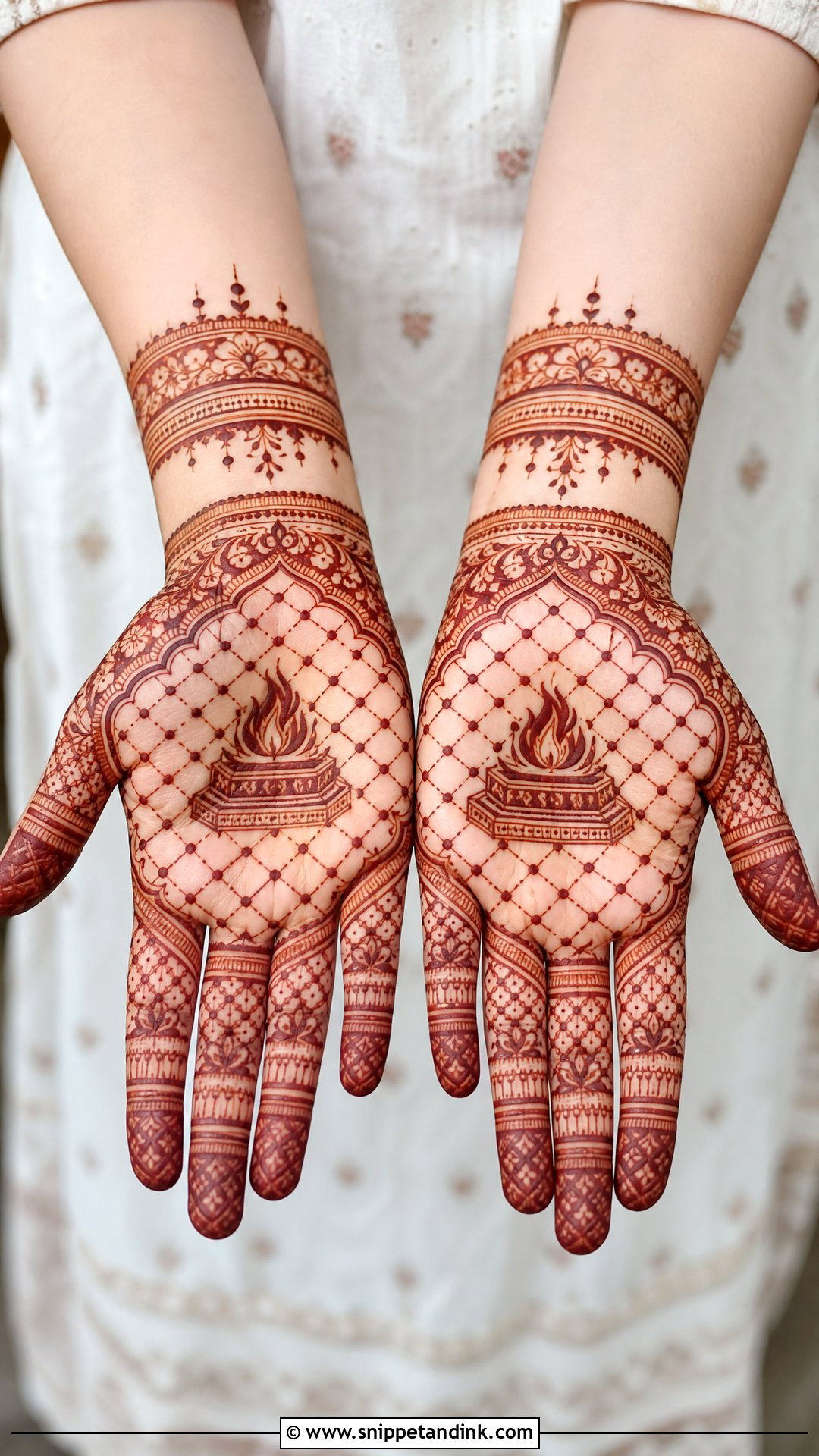
Jaali mesh and a square altar share the same geometry, so they sit together without fighting. The fire goes in the palm and the crisscross mesh runs over the wrist and fingers. I always leave a thin ring of bare skin around the altar before the mesh starts. Without that gap, the mesh lines and the flames merge into one dark grid once the stain matures. It’s a good choice for a bride who likes detail but prefers structure to a cloud of florals.
12. Havan Kund Lotus Mehndi Design
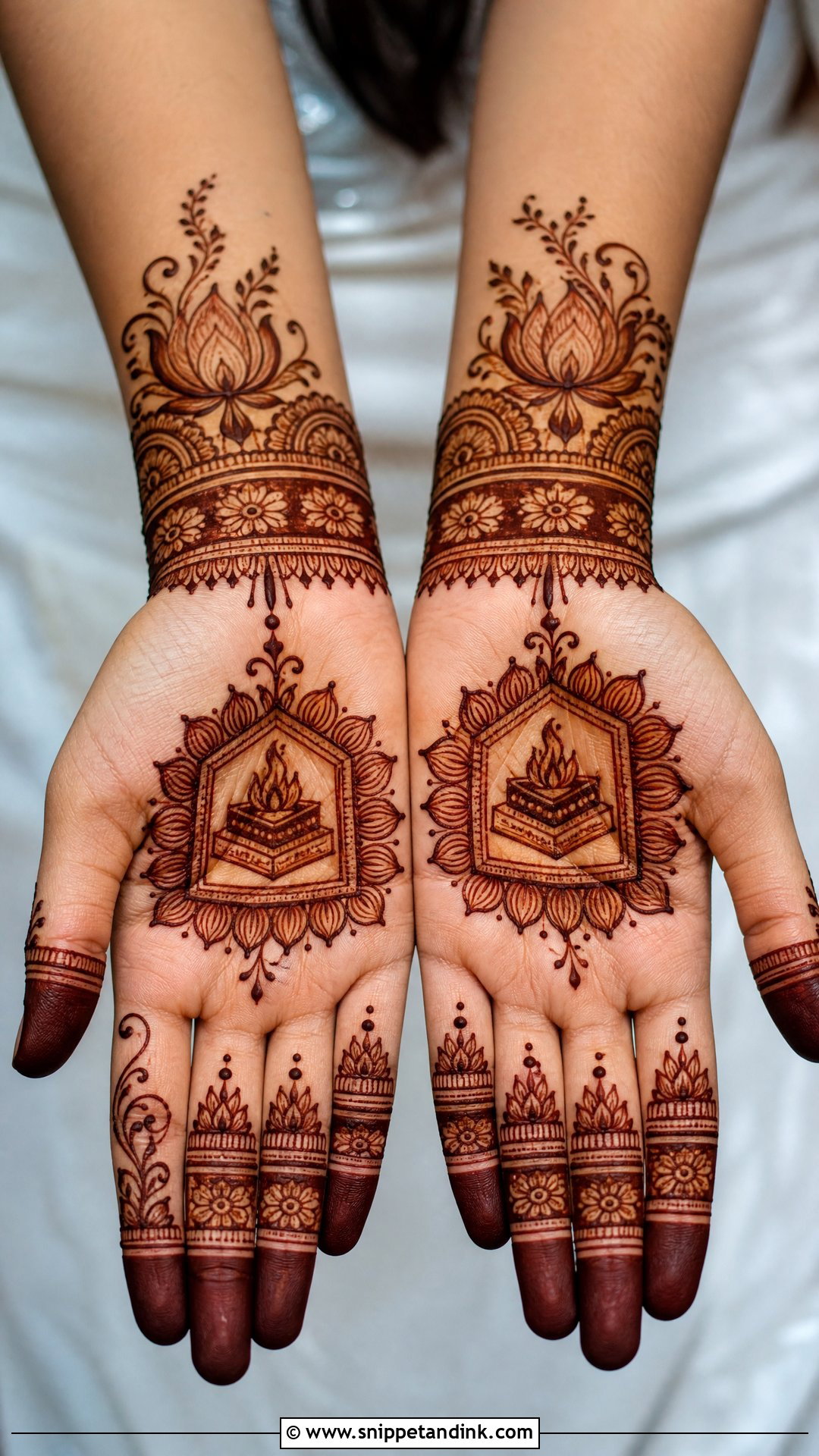
Lotus petals framing the altar is a quieter way to show the fire. Both symbols are auspicious and calm, and the petals give me a natural border. Vines can run toward the fingers and wrist. I can make it dense for the bride and open for her mother and aunts without changing the core motif, which keeps the family looking connected. If your lehenga has lotus embroidery, it’s worth bringing a photo so I can match the petal shape.
13. Havan Kund Peacock Mehndi Design
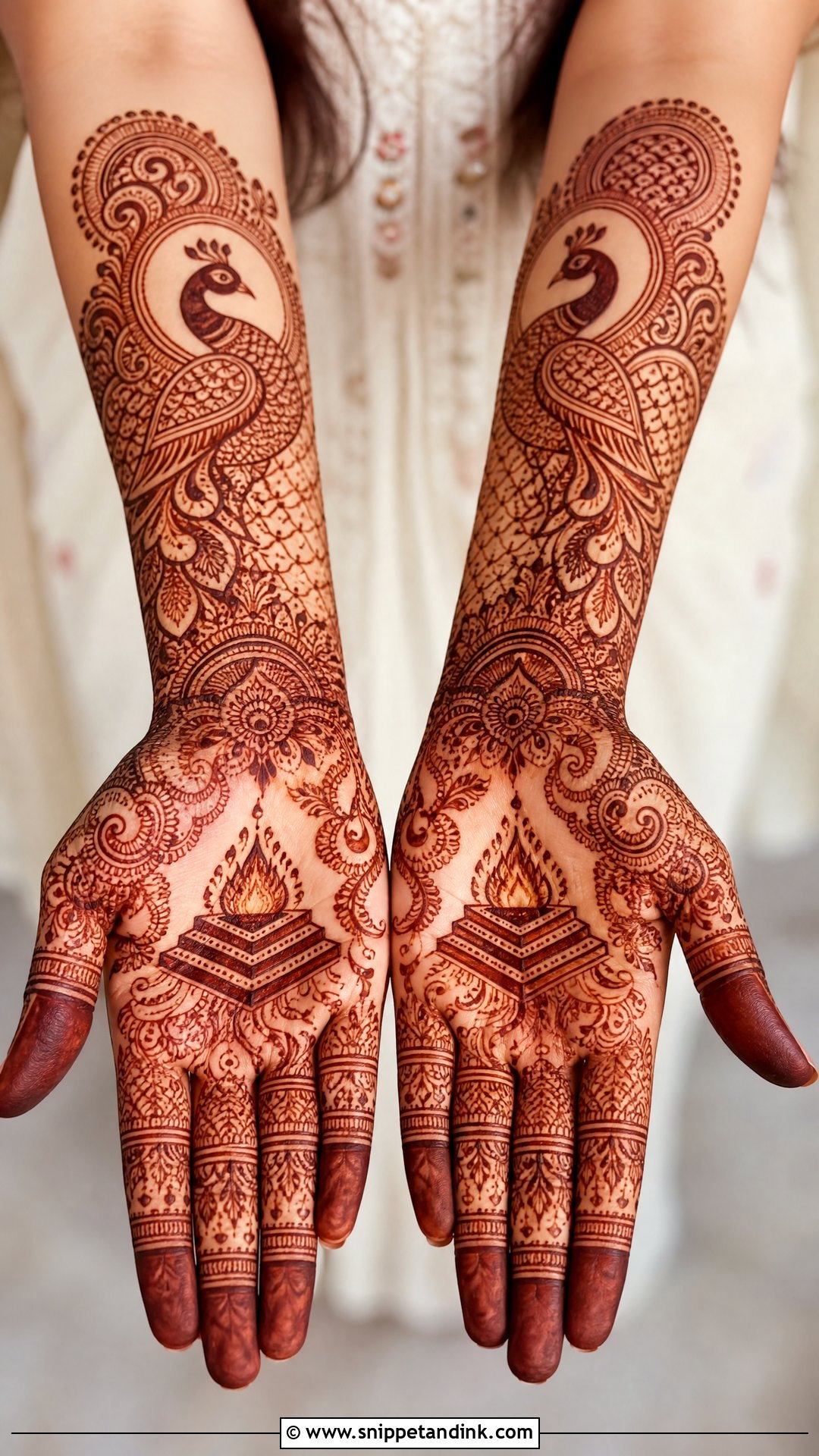
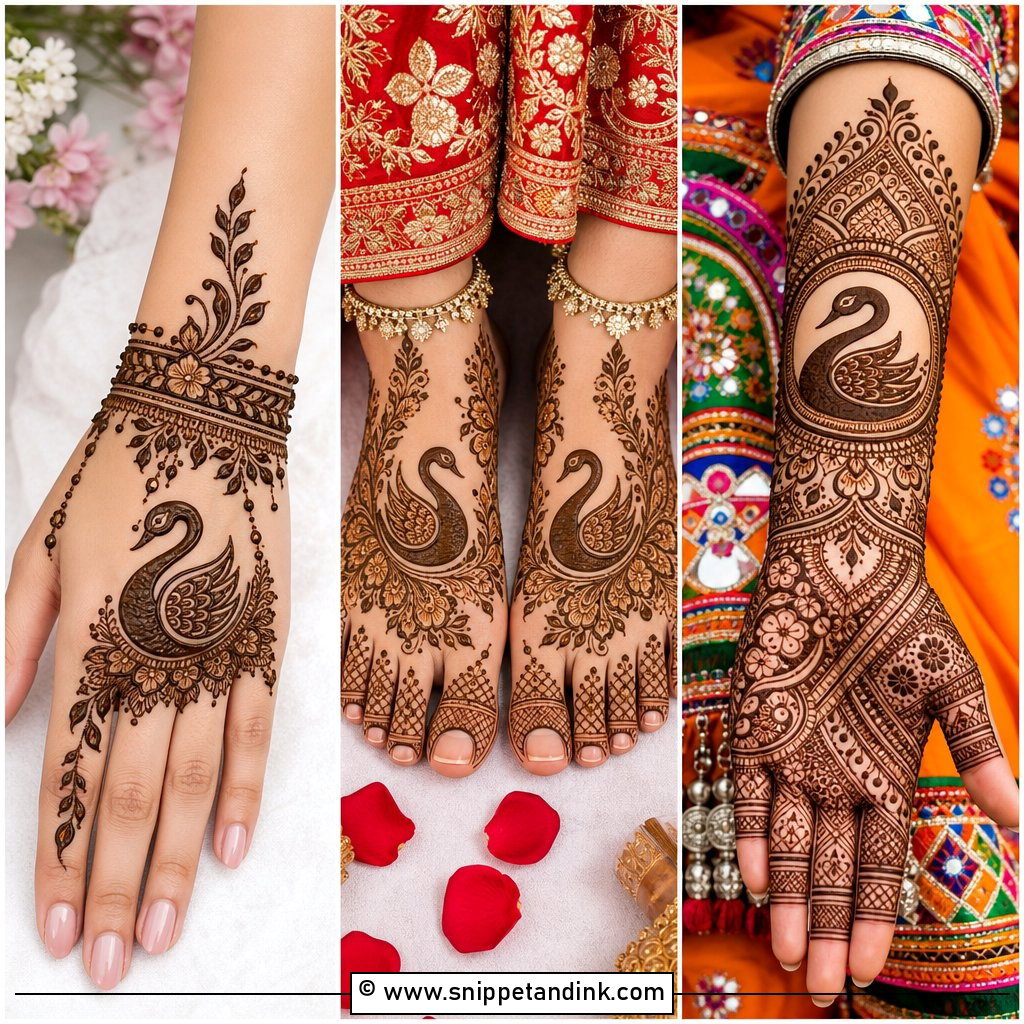
Peacocks bring movement, and their long feathers curve nicely around a rigid square. I place the fire on the palm or wrist and let the feathers sweep around it, filled with checks, dots and shaded leaves. Another layout I like: the fire on one hand, a large peacock on the other. Either way, I separate the bird and the altar with a clear border, because a peacock’s body is dense and will swallow small flames if they touch.
14. Havan Kund Paisley Mehndi Design
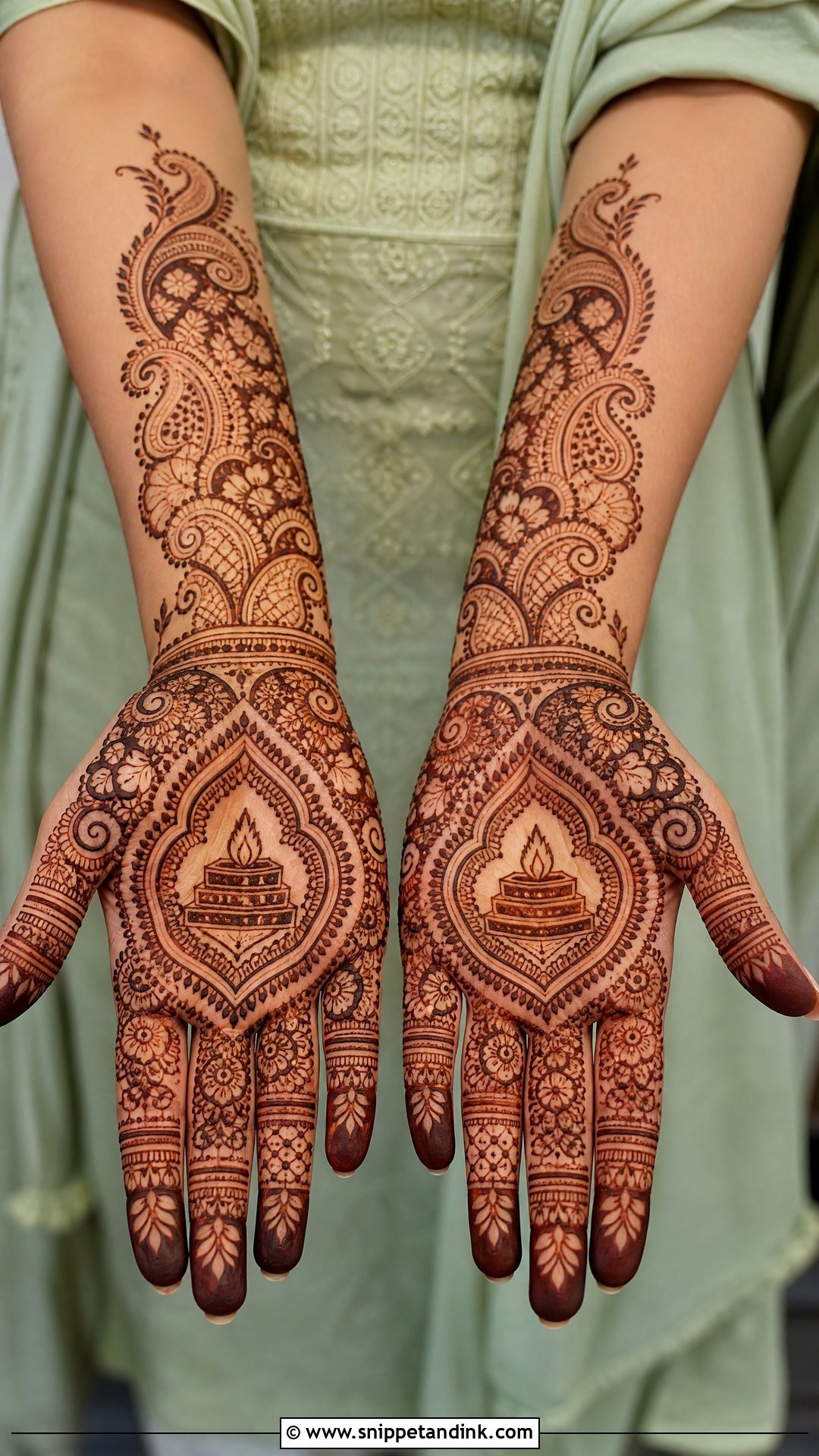
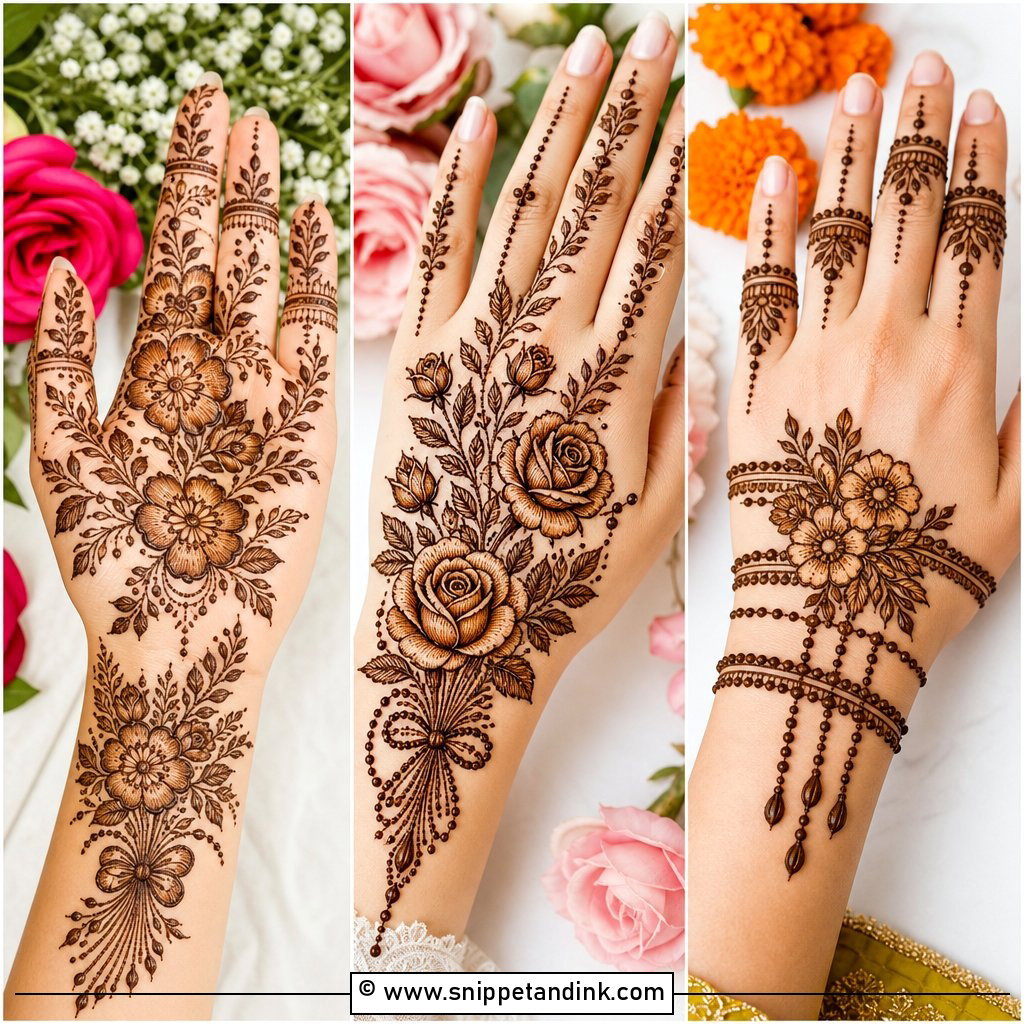
Paisleys frame the altar as a curved protective border and then flow outward with small flowers and leafy fill. This one adapts easily to hand size, which is why I reach for it so often. On a large palm I can stack two or three rows of paisleys; on a small hand I use fewer, bolder ones so the fire still has room. It works as full bridal coverage or as a medium design for a sangeet or festival.
15. Havan Kund Minimal Mehndi Design
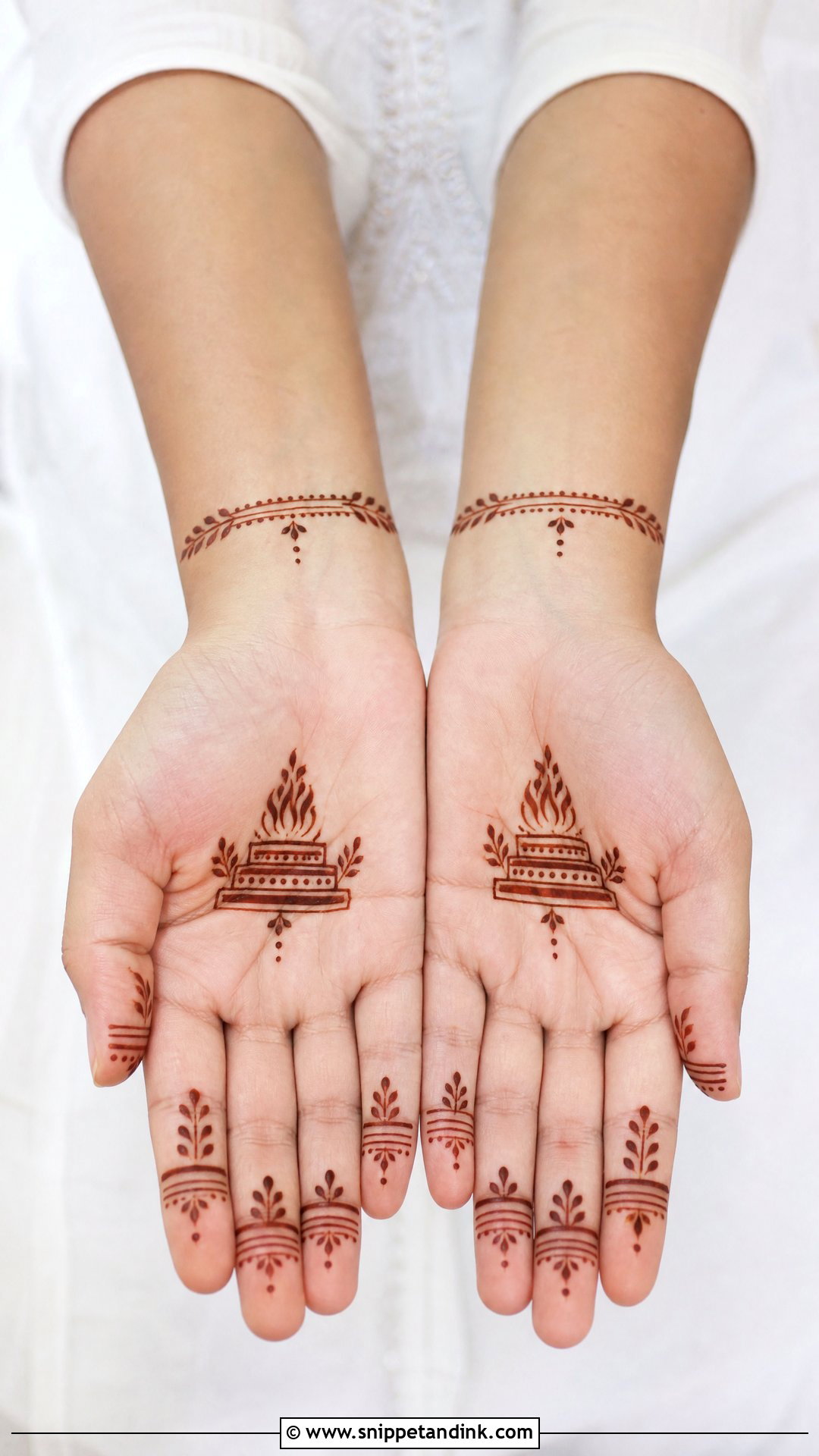
One strong motif can be enough. A minimal havan kund mehndi design puts a small altar in the palm or near the wrist with thin finger bands, a few dots and a bracelet line. It suits a roka, a pooja or an engagement. My one warning: very tiny flames can disappear once the stain spreads slightly, so I draw this version with fewer, slightly thicker flames and a clear outline.
16. Havan Kund Wrist Mehndi Design
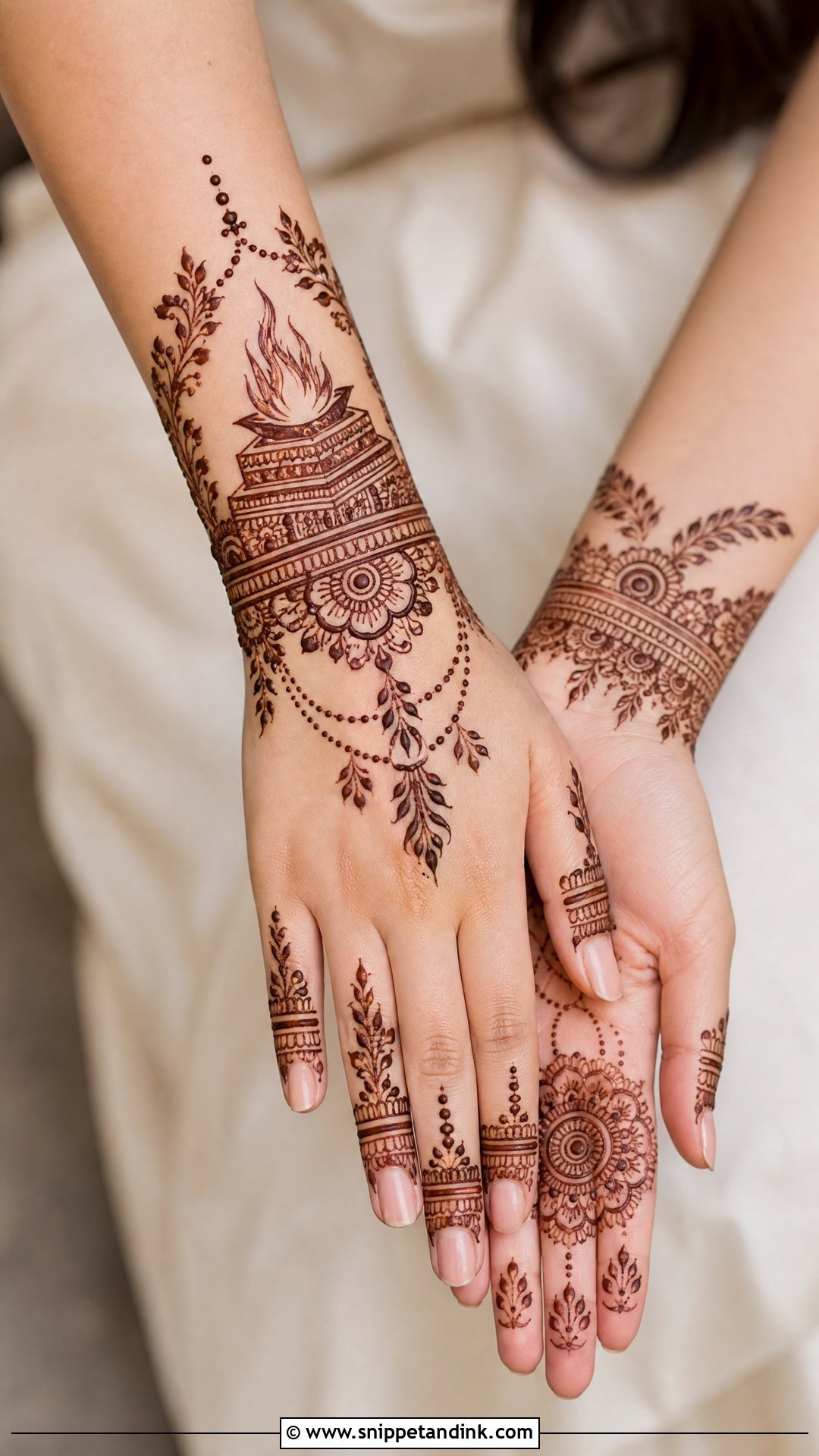
Centred on the wrist, the fire becomes a bracelet with meaning. I draw cuff-like bands either side of the altar with small florals and leaf chains, and keep the palm almost bare or give it a small mandala. Bangles sit just above, so I leave the top edge clean where they’ll rub. Wrists stain a little lighter than palms, which suits this more delicate look. For a bride, I extend it slightly up the forearm with jaali or paisleys.
17. Havan Kund Forearm Mehndi Design
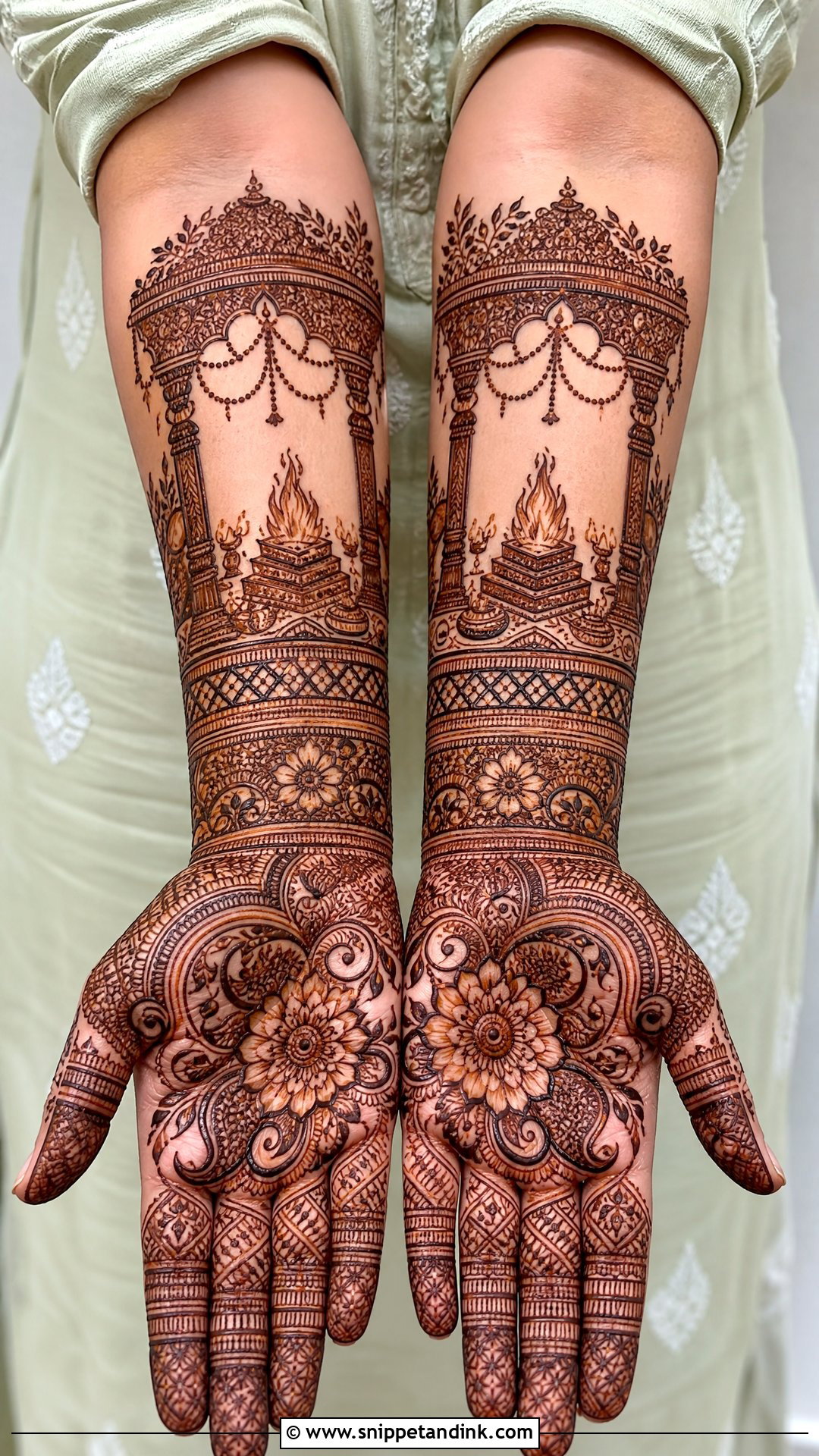
The forearm gives me the most room for a full scene: the altar inside the mandap, garlands and pillars above, small ritual details around it. The hand below carries florals and paisleys linked by a vine. Forearm skin is thinner on the inner side and stains lighter than the palm, so I use bold outlines and avoid shrinking the figures too small. Miniature detail looks impressive wet and turns muddy once it dries and darkens.
18. Havan Kund Finger Mehndi Design
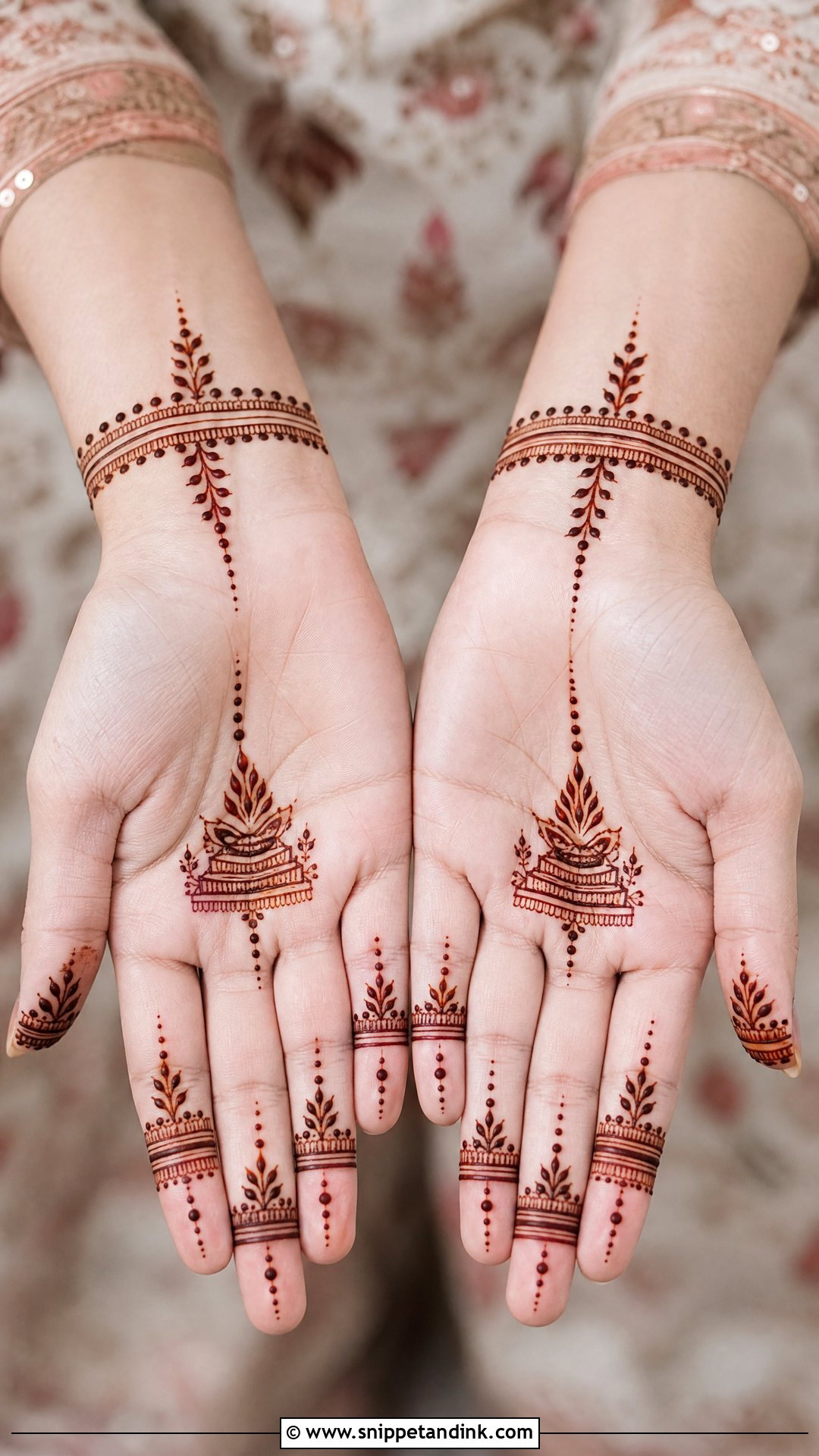
Flames on every finger look scattered, so I keep a single altar on the lower palm or wrist and give the fingers flame-shaped tips, dotted chains and thin bands that point back to it. It reads light and suits bridesmaids or a second-day look. Fingertips stain darkest of all, so I keep the tip shapes simple; detailed fill there often turns into a solid dark cap. Rings sit comfortably over the bands.
19. Havan Kund Front Hand Mehndi Design
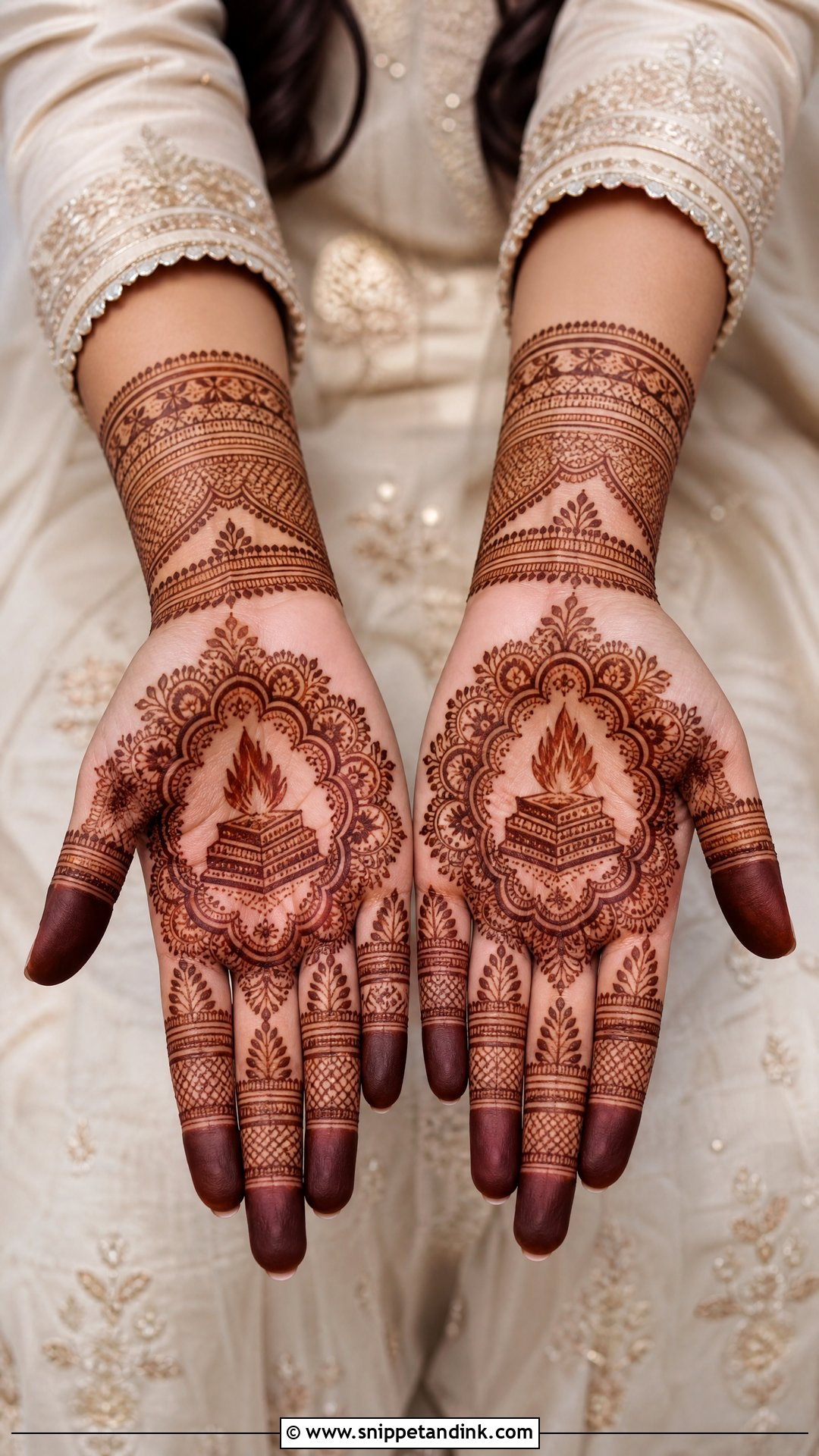
Front-hand placement is the classic way to show this motif, and placement is everything. I find the spot where the eye lands first, usually just below the centre of the palm, and put the altar there. Then I work in layers: the fire, then a ring of florals, then finger bands. That order keeps the hierarchy clear, so even a dense Indian layout with filled fingertips still has one obvious focal point. A cleaner version with open space works just as well.
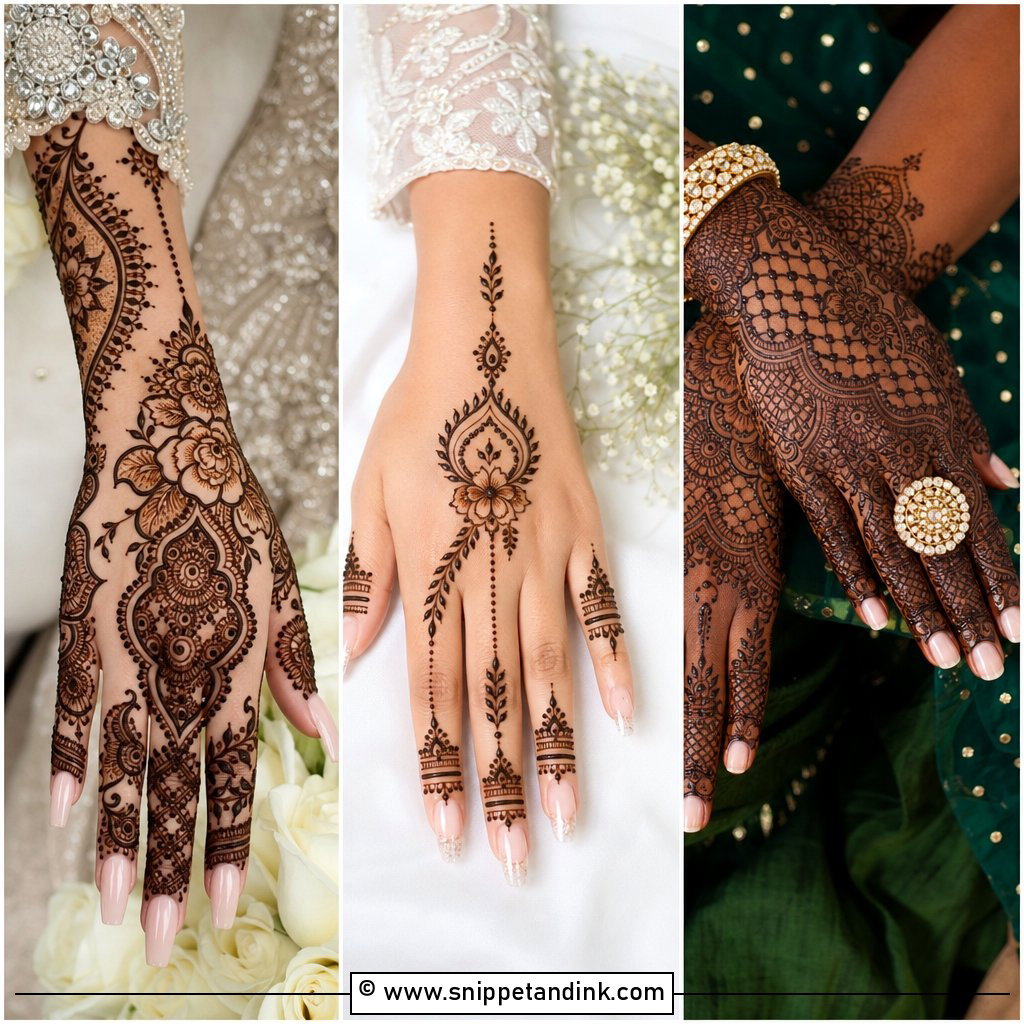
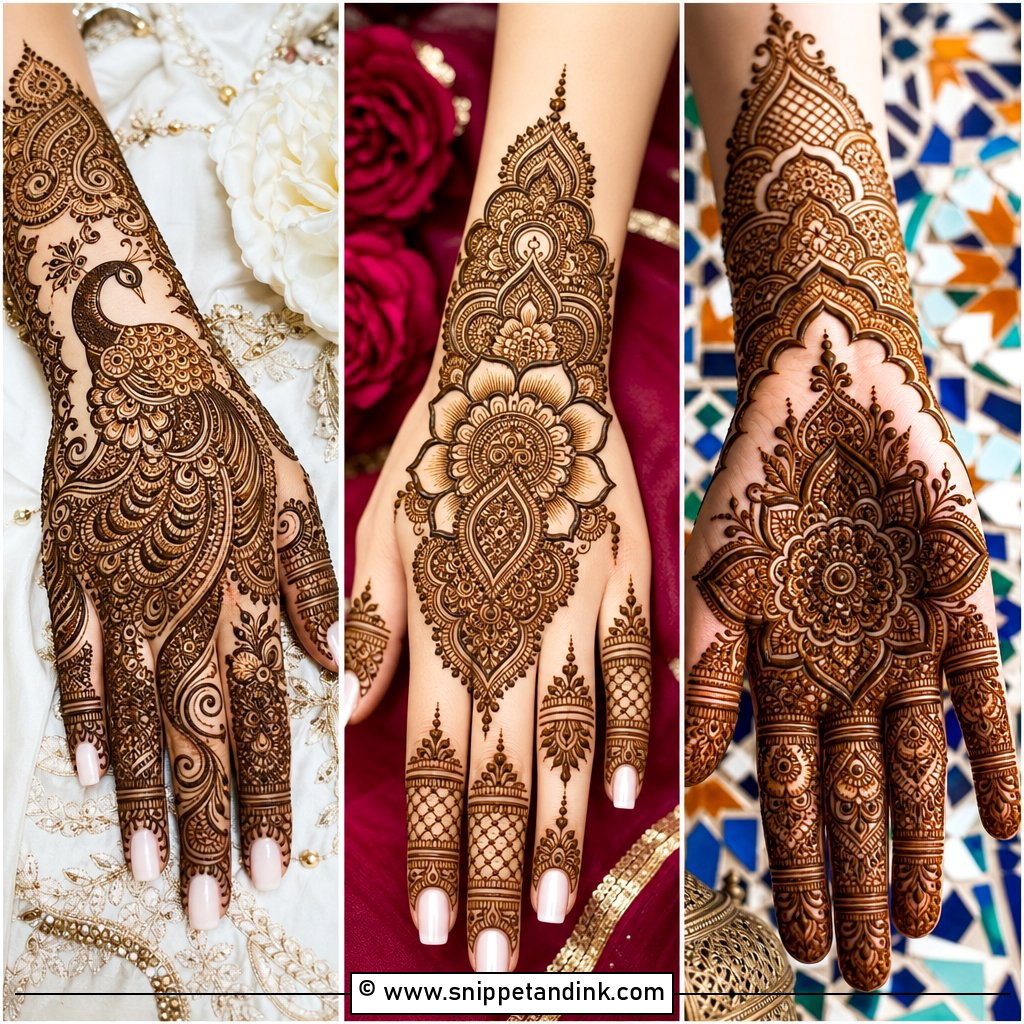
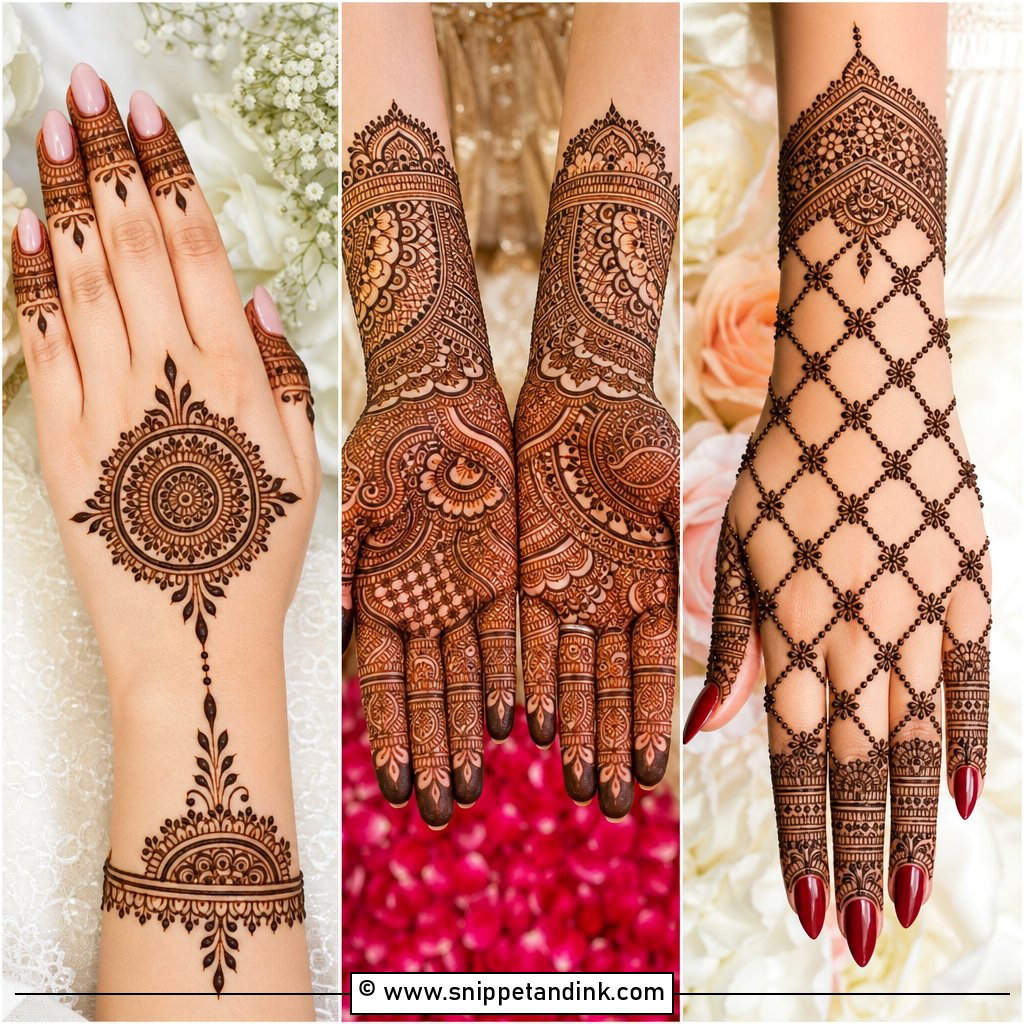
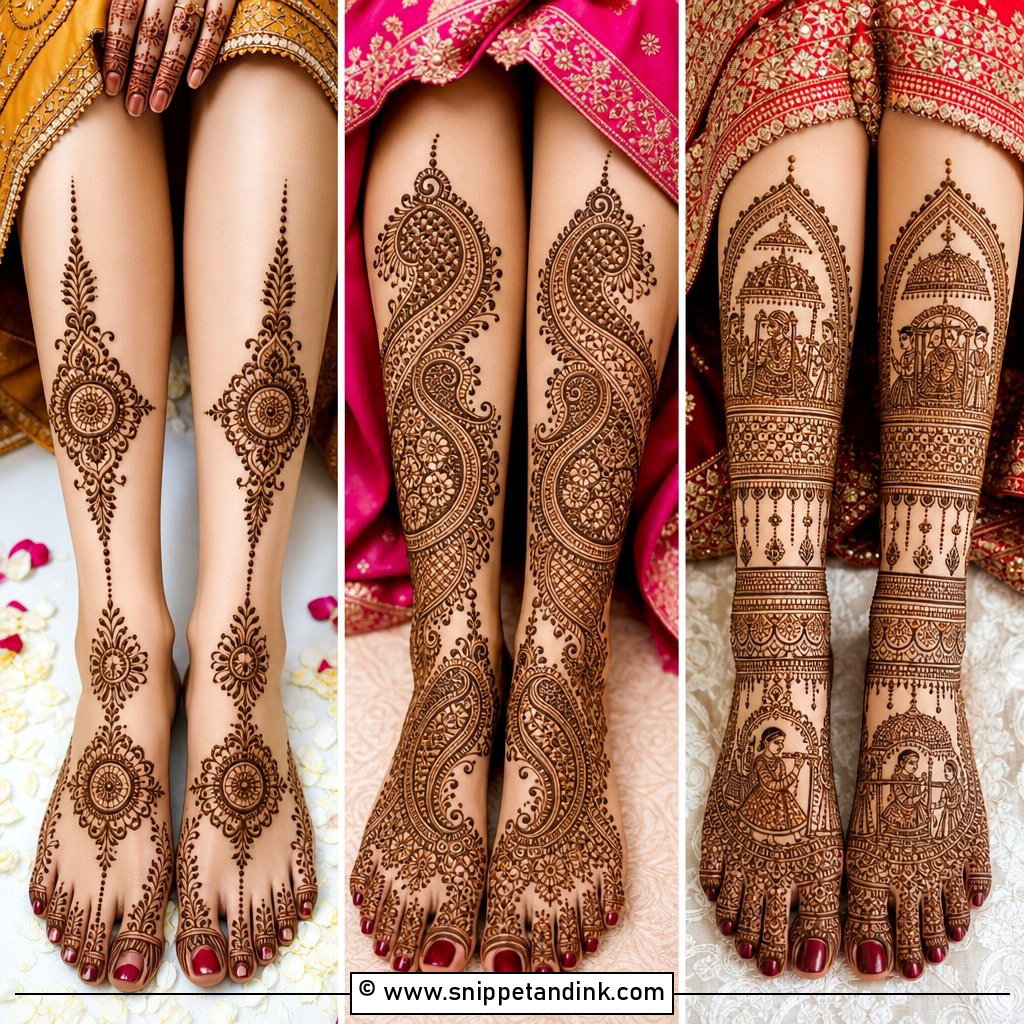
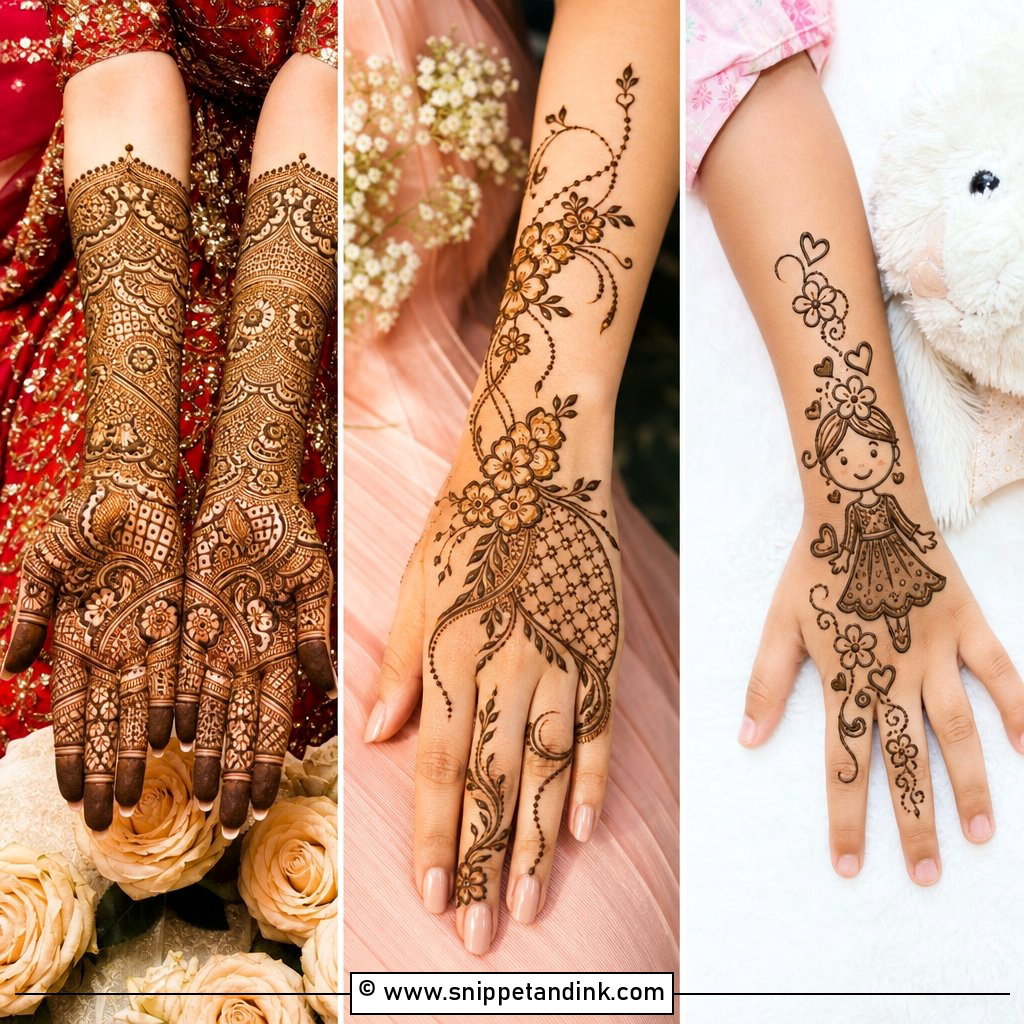
20. Havan Kund Wedding Mehndi Design
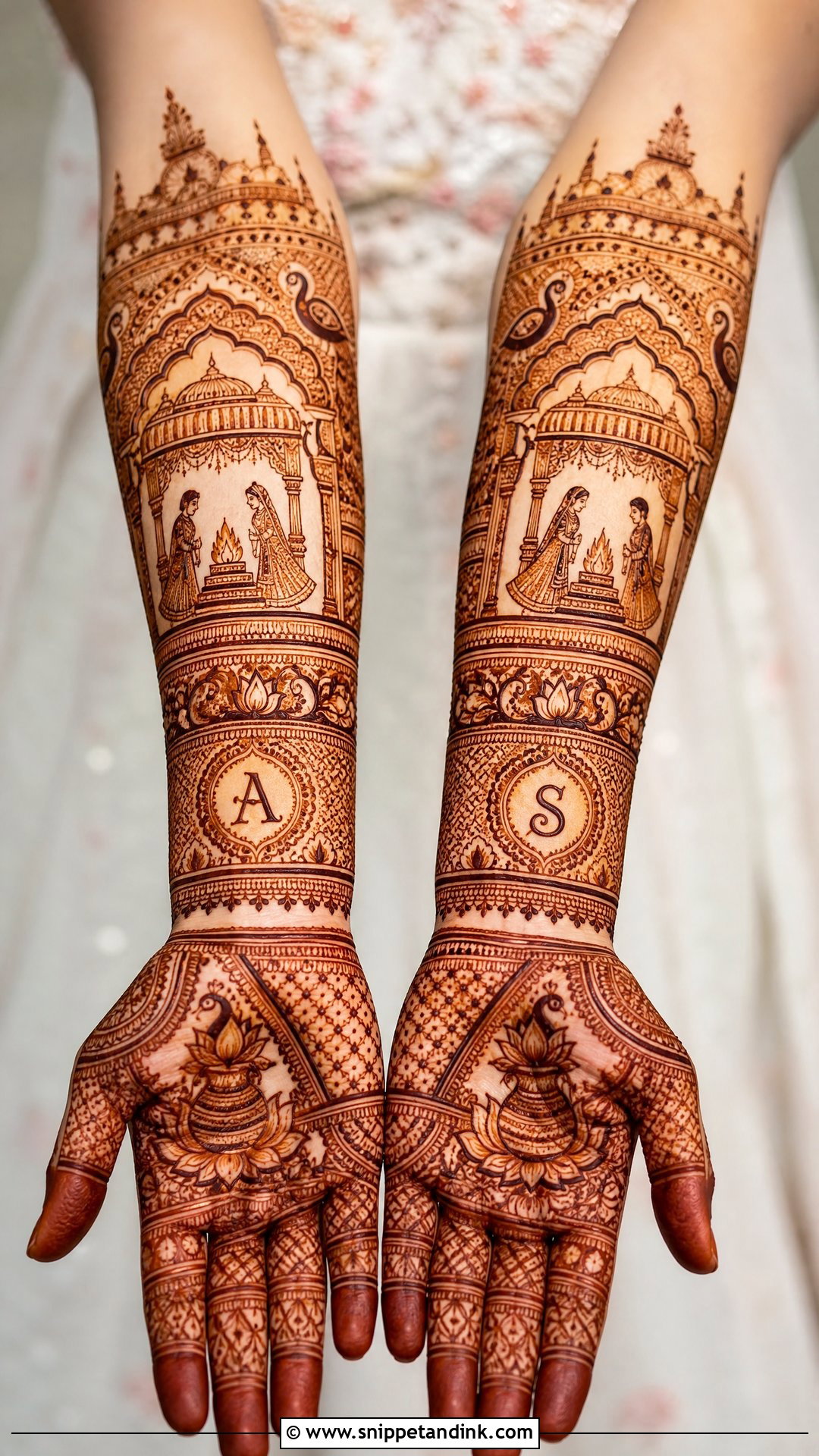
For the wedding itself the motif should be recognisable at a glance: the fire, mandap arches, the couple, lotus, peacocks and traditional borders. Brides usually go fingertips to forearm. Family members do well with one palm motif and light wrist work, which also keeps the queue moving on mehndi night. To personalise it, I can hide the couple’s initials or the wedding date in the border, or add a small kalash beside the altar.
Aftercare That Turns Orange Flames Deep Maroon
Fresh henna comes off bright orange and deepens over the next day or two. What you do in the first twelve hours decides how dark it gets. I ask brides to keep the paste on for at least six to eight hours, overnight if they can manage it. As it dries I dab on a little lemon and sugar so it stays stuck to the skin instead of cracking off early.
- Scrape the dry paste off with the back of a butter knife or your nails. Don’t wash it off.
- Keep water away from your hands for as long as you can, ideally until the next morning.
- Warmth helps the stain. Hold your hands near a gentle heat source, or rub a little mustard oil or balm over the design before bed.
- Avoid scrubbing, harsh soap, chlorine and hand sanitiser for the first couple of days, since they fade the top layer.
When a line smudges
If a flame smears while the paste is wet, wipe it straight away with a cotton bud dipped in a little water and let me redraw it. Once it has dried for a few minutes, it has already started to stain, so leave it alone. A thicker outline can usually disguise a small smudge. And please avoid any cone sold as instant black henna. The dark dye in those can cause serious skin reactions, and a real stain never comes out jet black.
Keeping the Sacred Fire the First Thing People See
This motif can be minimal, Arabic, Indo-Arabic or fully traditional. If you want a bold bridal look, mandap scenes, bride-and-groom art, peacocks and full coverage give the fire a stage. If you want something softer, a palm, wrist or mandala layout with clean negative space lets it stand alone. In every version I ask the same question while I draw: will the flames still read after the stain darkens? Plan the placement around that and the fire will hold its place on your hands.
You'll Like These Ideas:





Leave a Reply