
A bun is the hardest-working hairstyle at a Pakistani wedding. It anchors the dupatta, gives the matha patti and jhoomar something to hook into, and keeps the dulhan neat through stage portraits, family photos and a long evening of greetings. What changes it from one event to the next is the parting, the volume, the flowers and where it sits. From sleek nikkah buns to full gajra buns for the baraat, the fifteen below are the shapes I build most, with notes on who each one suits and where it tends to fail.
Thin Hair Can Still Carry a Full Bun
Most of the buns in bridal photos are bigger than the bride’s own hair could make. That’s normal, and there’s nothing to be embarrassed about. I build fullness in one of three ways, depending on how much hair I have to work with.
- A bun donut or mesh padding, wrapped in your own hair, for medium-thick hair that just needs shape.
- A hair rat, a small pad made from loose hair, which blends better than foam on dark hair because there’s no visible mesh if a section shifts.
- Clip-in wefts or a ready-made bun piece for fine or short hair, matched to your shade in daylight.
The padding has to be fully covered. I check the bun from below and both sides, since stage photos are often taken from a low angle and that’s where gaps show. If you’re buying extensions yourself, order them early so they can be colored or trimmed before the trial.
1. Pakistani Bridal Low Bun
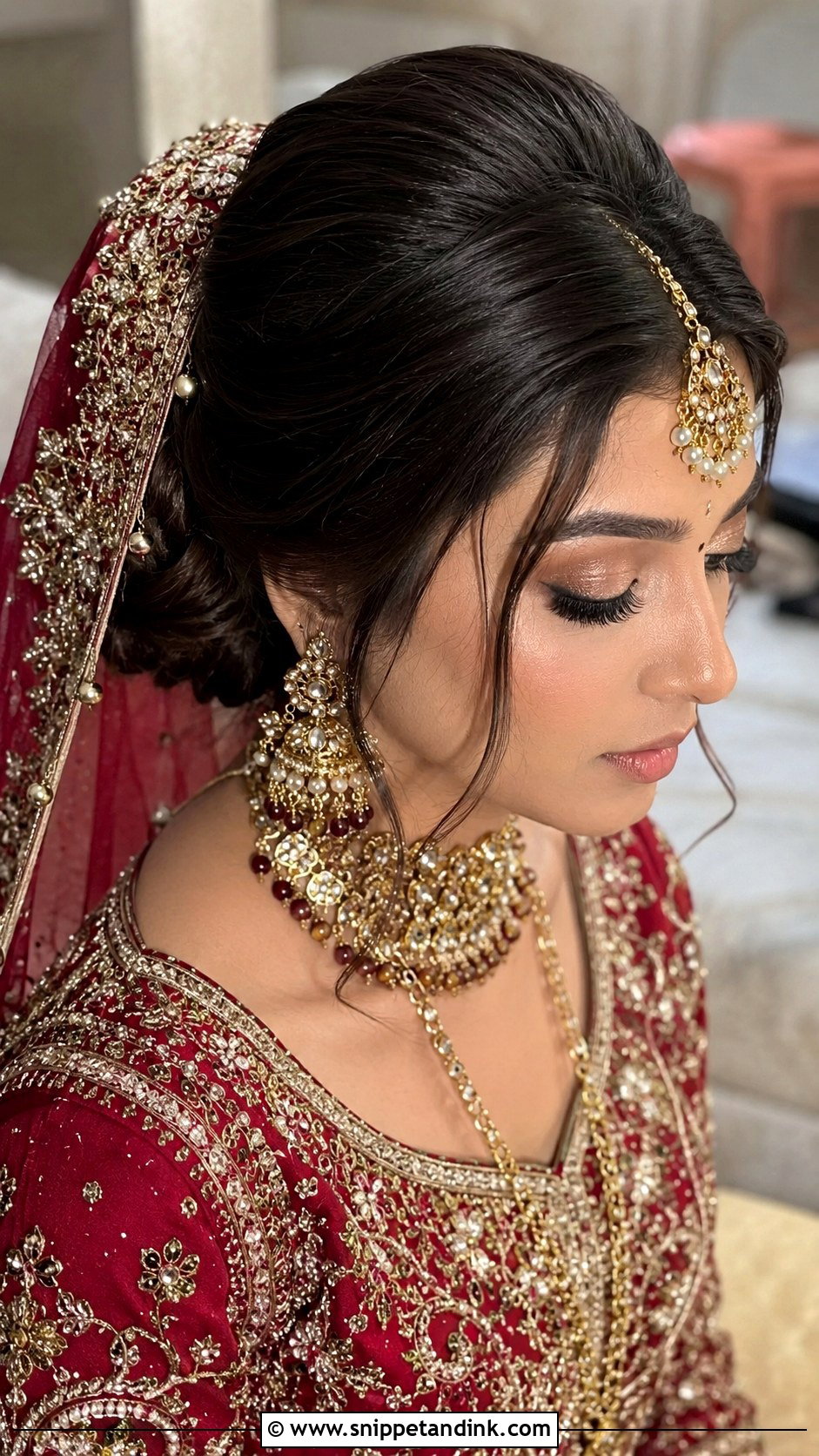
Low at the nape is the position I trust most under heavy fabric. It gives a dupatta pinned over the crown a firm place to rest, or lets it fall lightly behind. At the front I’ll do a clean center part, a soft side part, or two fine strands at the temples. The neck stays clear for statement earrings, and a matha patti, tikka or jhoomar has room above. With a heavy lehenga or gharara, it keeps the silhouette calm instead of adding more weight up top.
2. Pakistani Bridal Gajra Bun
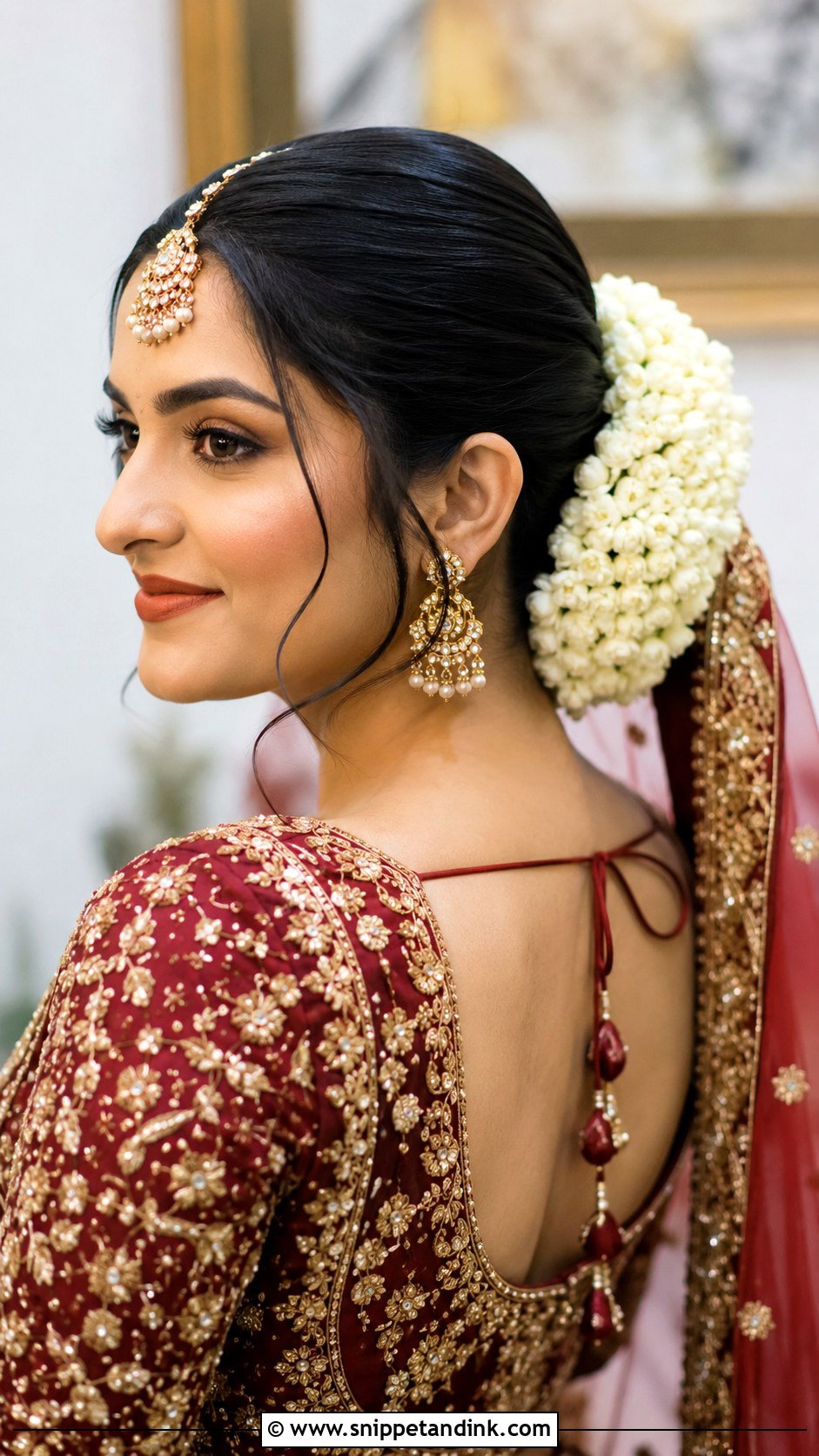
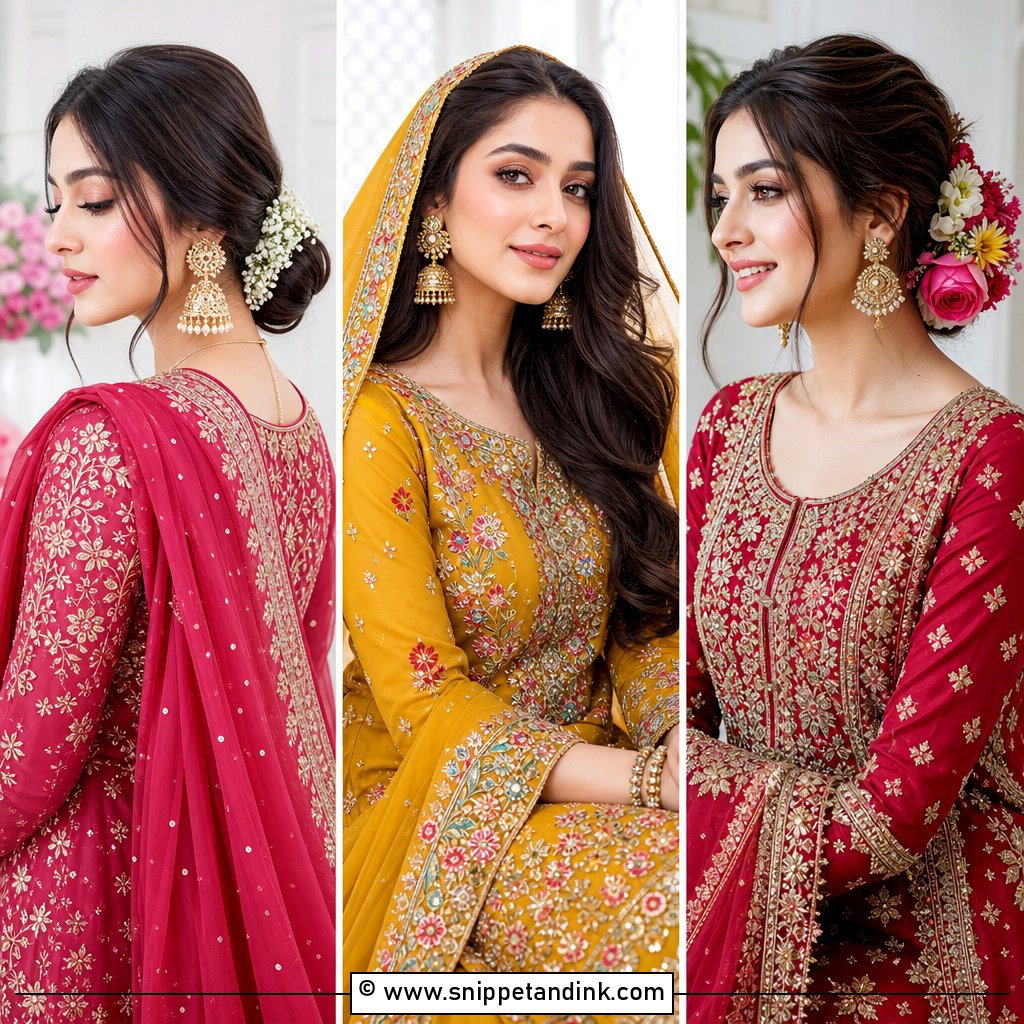
Nothing says dulhan quite like jasmine. The Pakistani bridal gajra bun wraps fresh strands around a smooth or textured bun, and I pin through the thread between the buds so the flowers don’t bruise. Baraat, mehndi and daytime weddings suit it; so do red, maroon, gold, ivory and deep green. Jasmine wilts in heat, so for an evening event in a warm hall I ask for the gajra to be kept chilled and added as the last step before you walk out. A center part with tikka keeps it regal.
3. Pakistani Bridal Sleek Bun
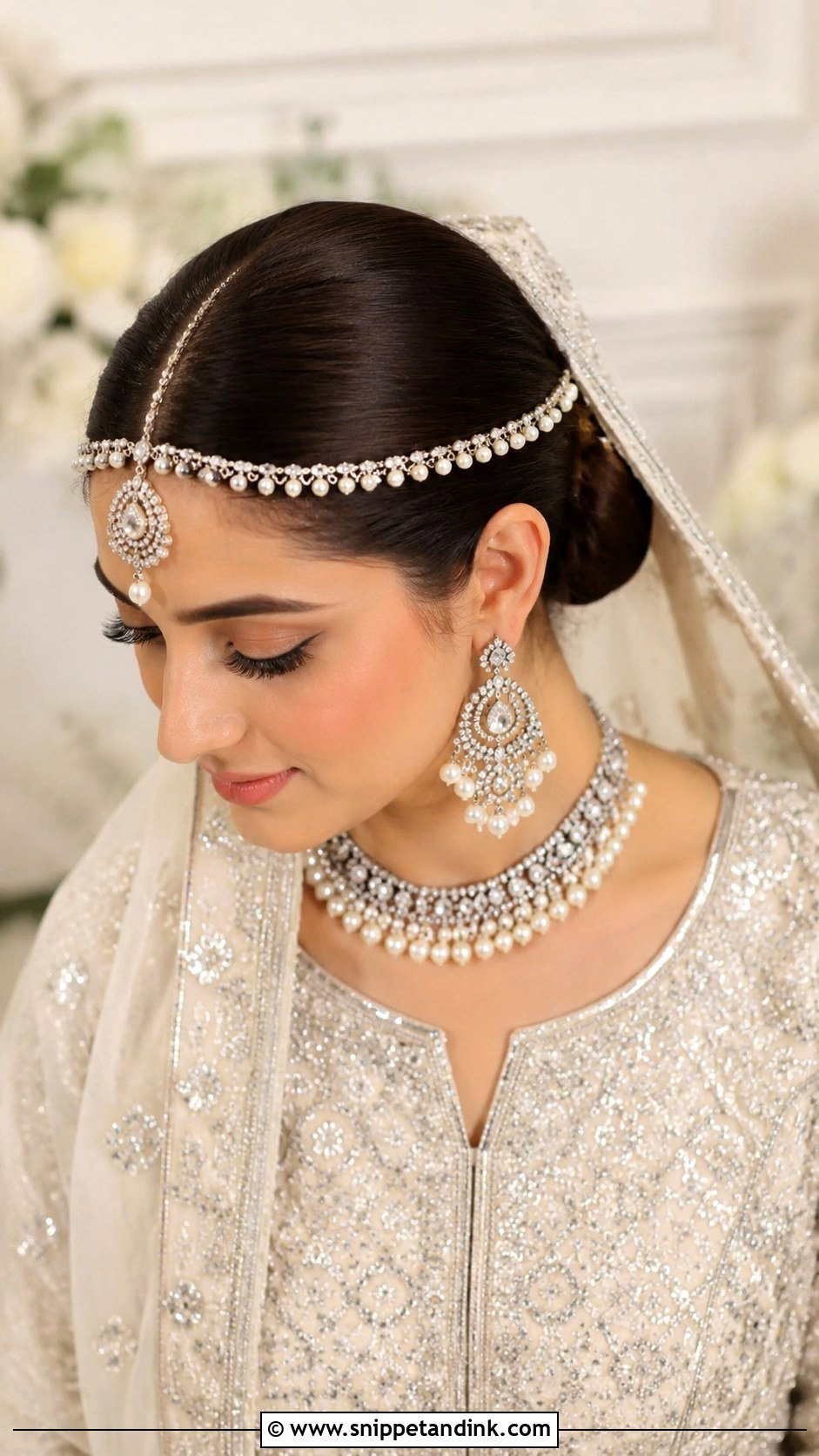
Sleek is the modern choice, and it puts every bit of attention on your makeup and jewelry. I smooth the hair close to the head, usually from a center part, and shape a firm bun at the back. With a heavy matha patti, bold earrings or a double dupatta there’s less volume competing with the accessories. Glossy, never stiff: I use a serum and a fine brush, not gel. For nikkah, walima or a minimal look it’s hard to beat, but on thin hairlines I soften the front so the scalp doesn’t show under stage lights.
4. Pakistani Bridal Bun With Dupatta
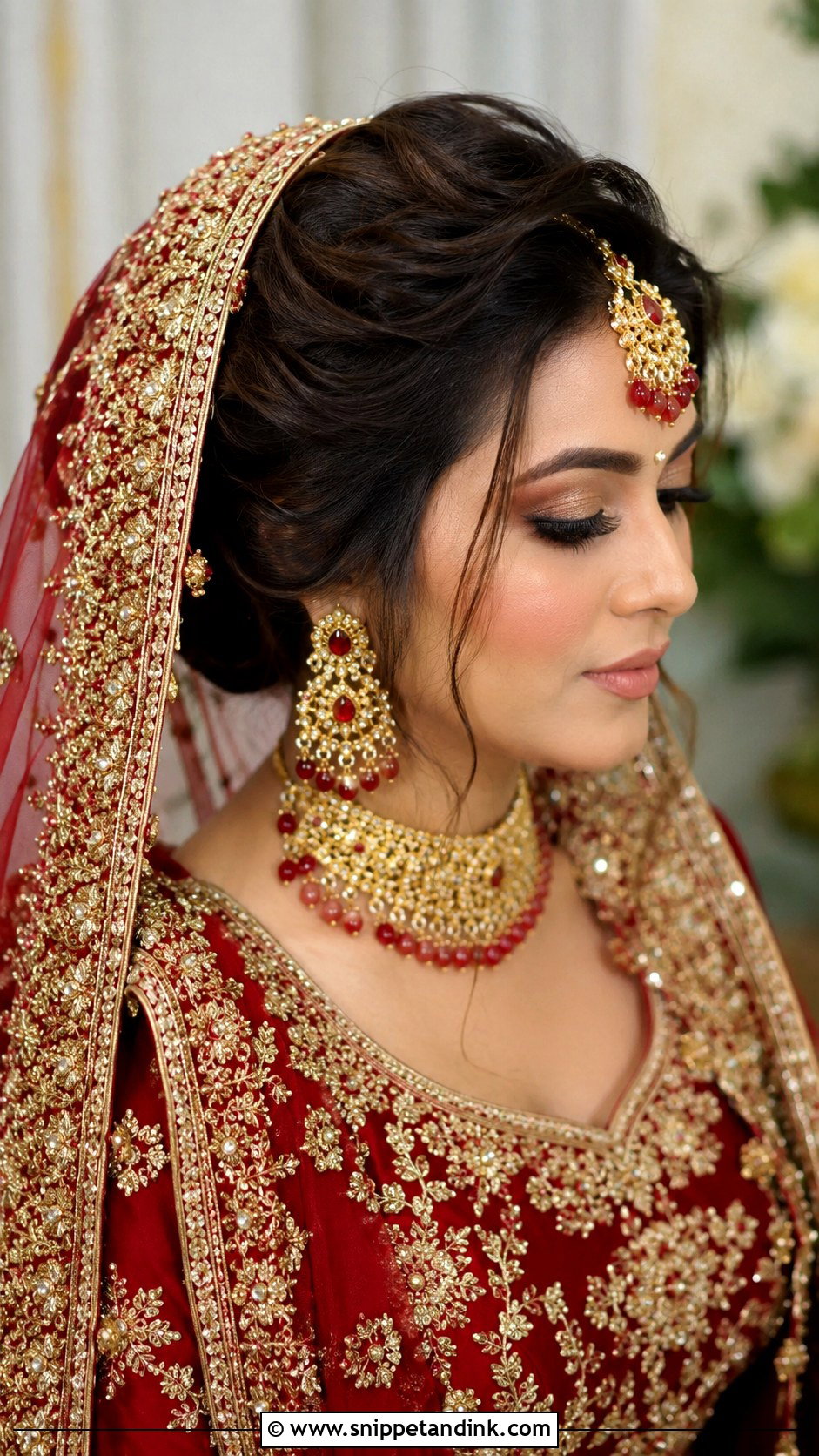
Under a dupatta, the bun is really a support structure. It has to take pins at angles and still look soft in photos. I usually place it low or mid-height, which gives the fabric a natural ledge to rest on, and build gentle crown volume so a heavily embroidered dupatta doesn’t press the top flat. The pins should go into the bun and the teased base, never into loose surface hair, which tears when the dupatta shifts. Tikkas, jhoomars and layered necklaces all pair with it.
5. Pakistani Bridal Bun With Matha Patti
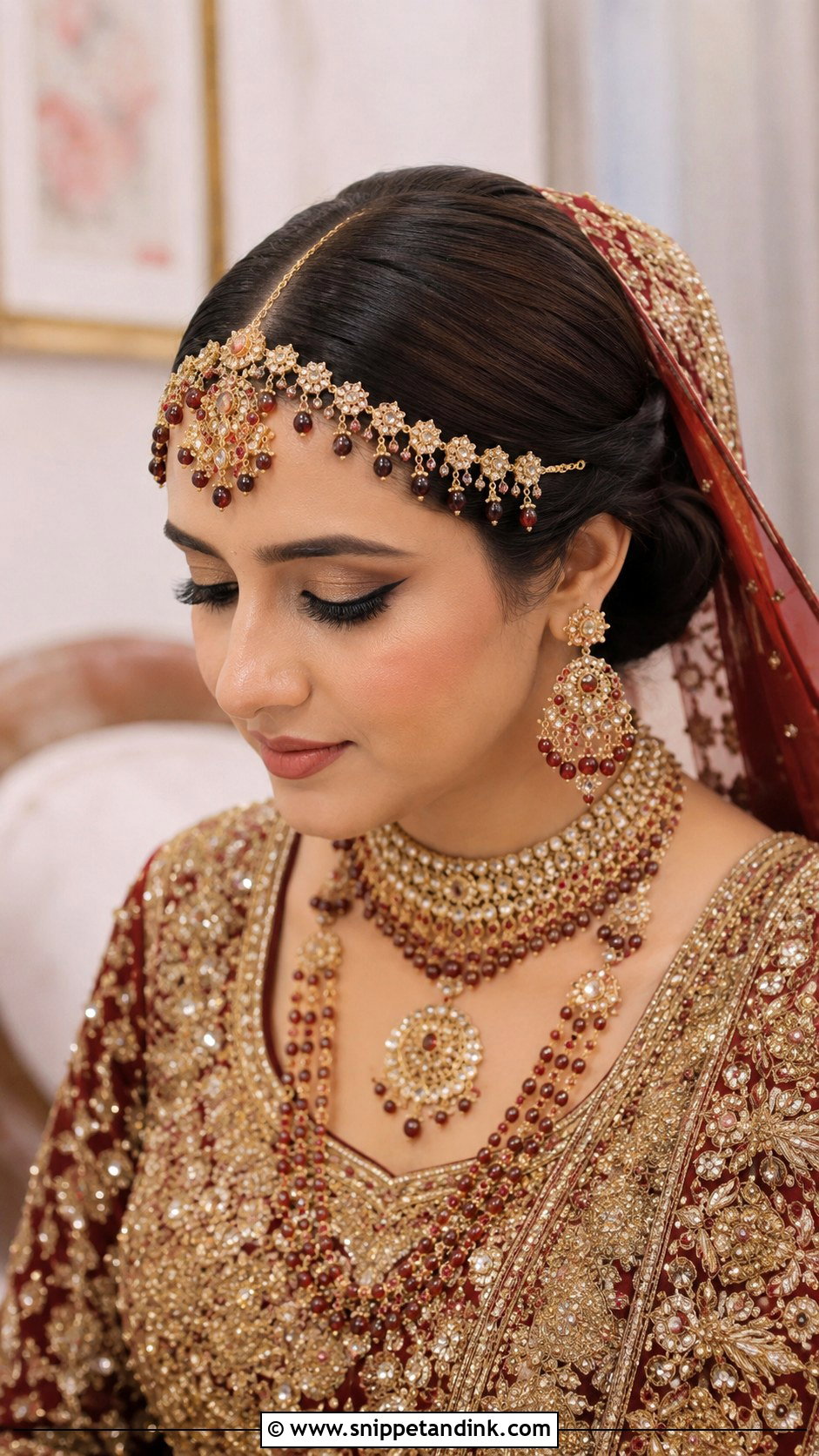
A matha patti already frames the forehead, so the bun behind it should be quiet. A center part lets the chains sit evenly on both sides, and that matters more than any detail at the back. I’ll make the bun smooth, braided or softly textured depending on the outfit. The side chains need pinning into hair, not just resting on it, otherwise they creep forward over the evening. Oval, heart-shaped and longer faces carry this framing well. On a very round face, I keep the bun a little higher to lengthen the outline.
6. Pakistani Bridal Bun With Jhoomar
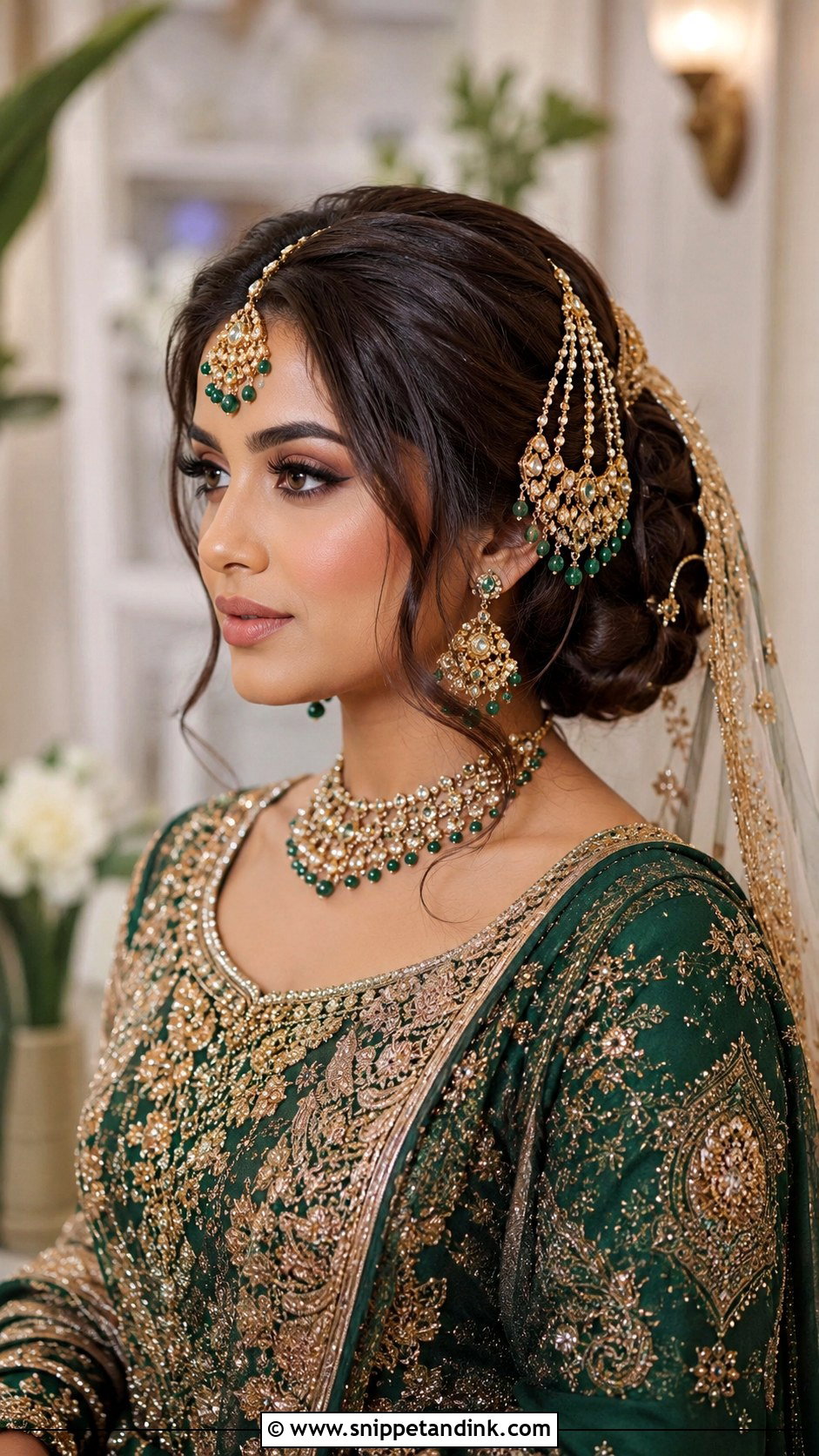
Because a jhoomar hangs on one side, the front of the hair has to balance it. I usually lift the crown a little or set a side part on the opposite side, so the jhoomar looks intentional rather than lopsided. The bun stays low or mid. Its hook goes into a pinned section above the ear, which I build first, since a jhoomar clipped to loose hair drags downward within an hour. Ghararas, shararas, farshi lehengas and Mughal-inspired outfits carry this old-world look best.
7. Pakistani Bridal Braided Bun
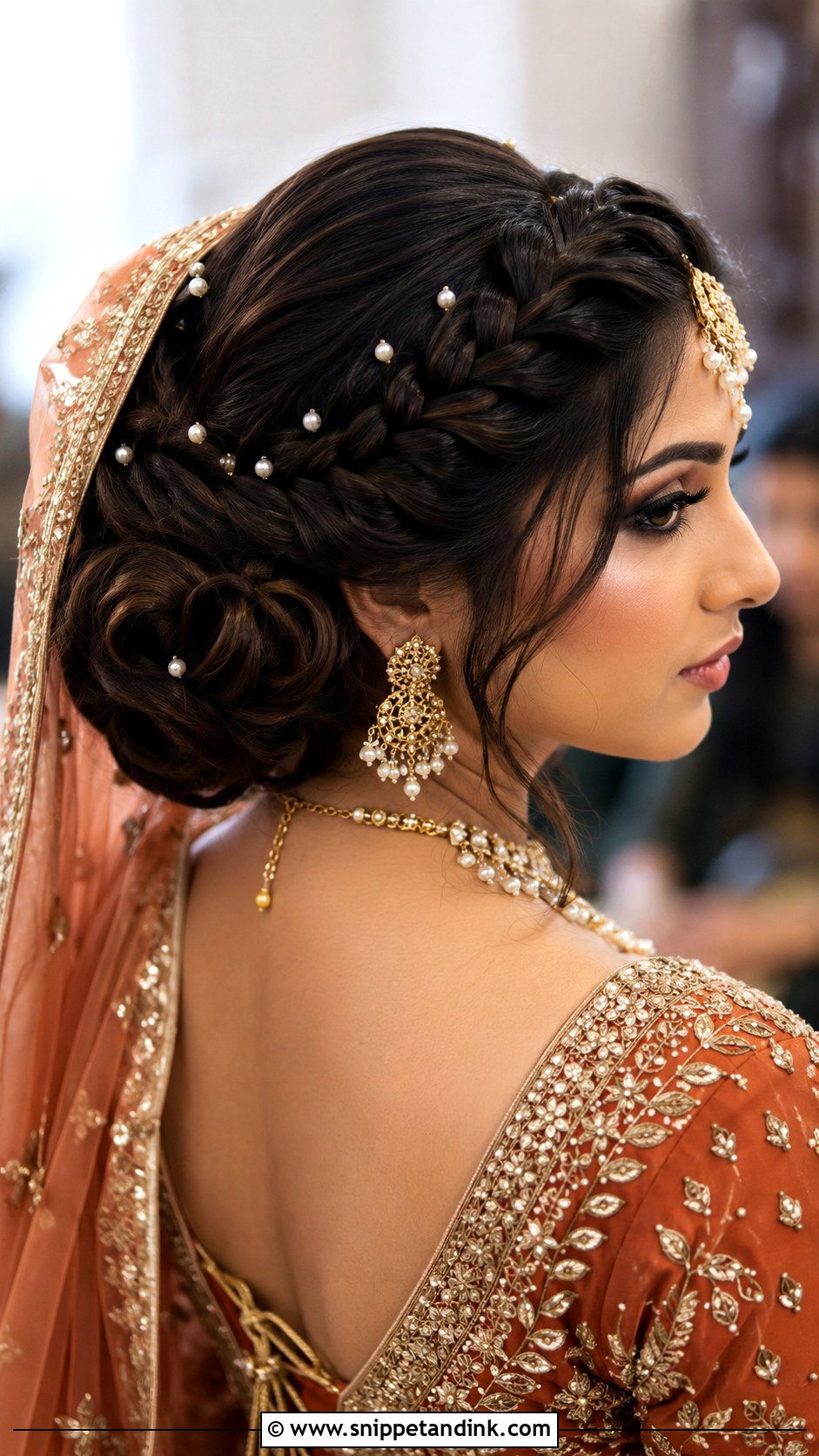
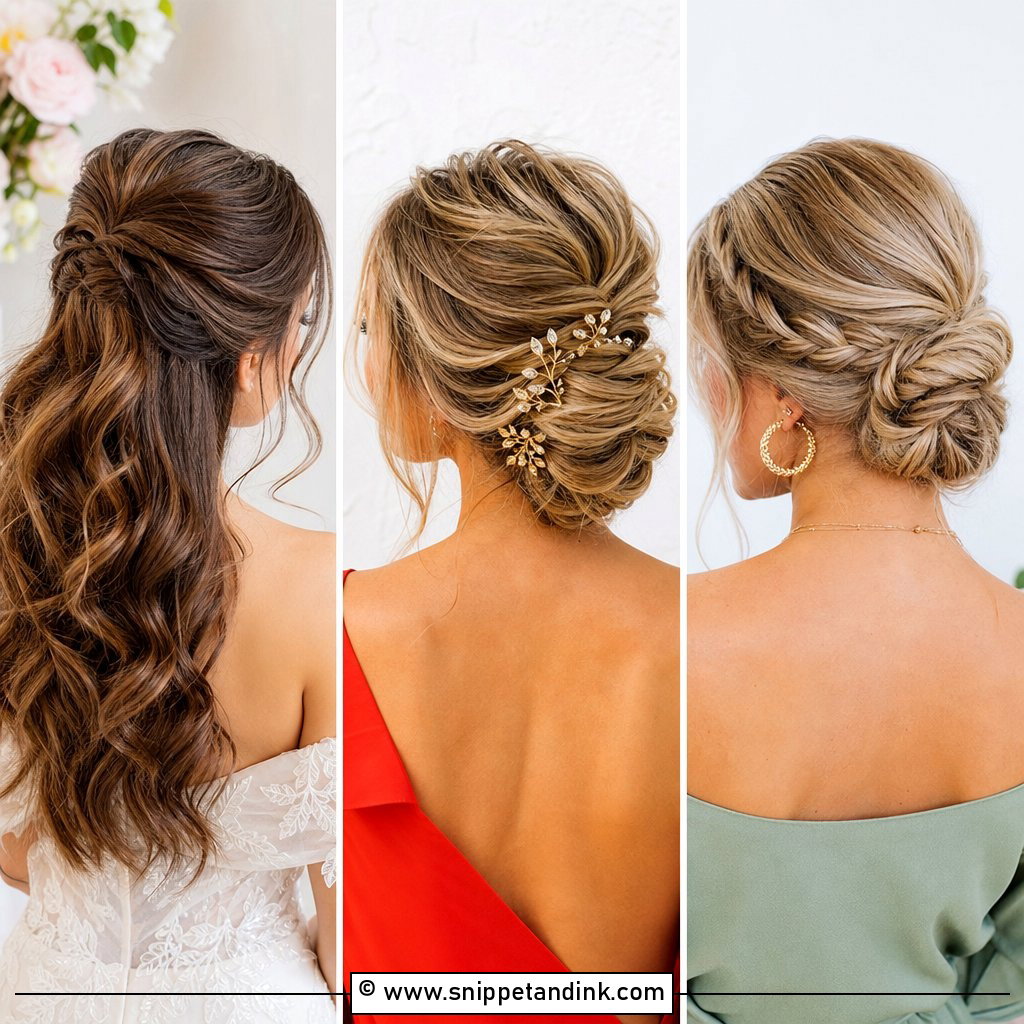
Braiding gives a bun more detail and more grip. The braid can wrap around the bun, run through the crown, or bulk out a thin back section. I like it on brides with fine hair because the braid fills space without padding, and a braided base holds pins far better than smooth hair over a long event. Floral pins, pearls, gajra or a sheer dupatta all sit on it. It works for mehndi, baraat and family ceremonies alike.
8. Pakistani Bridal Messy Bun
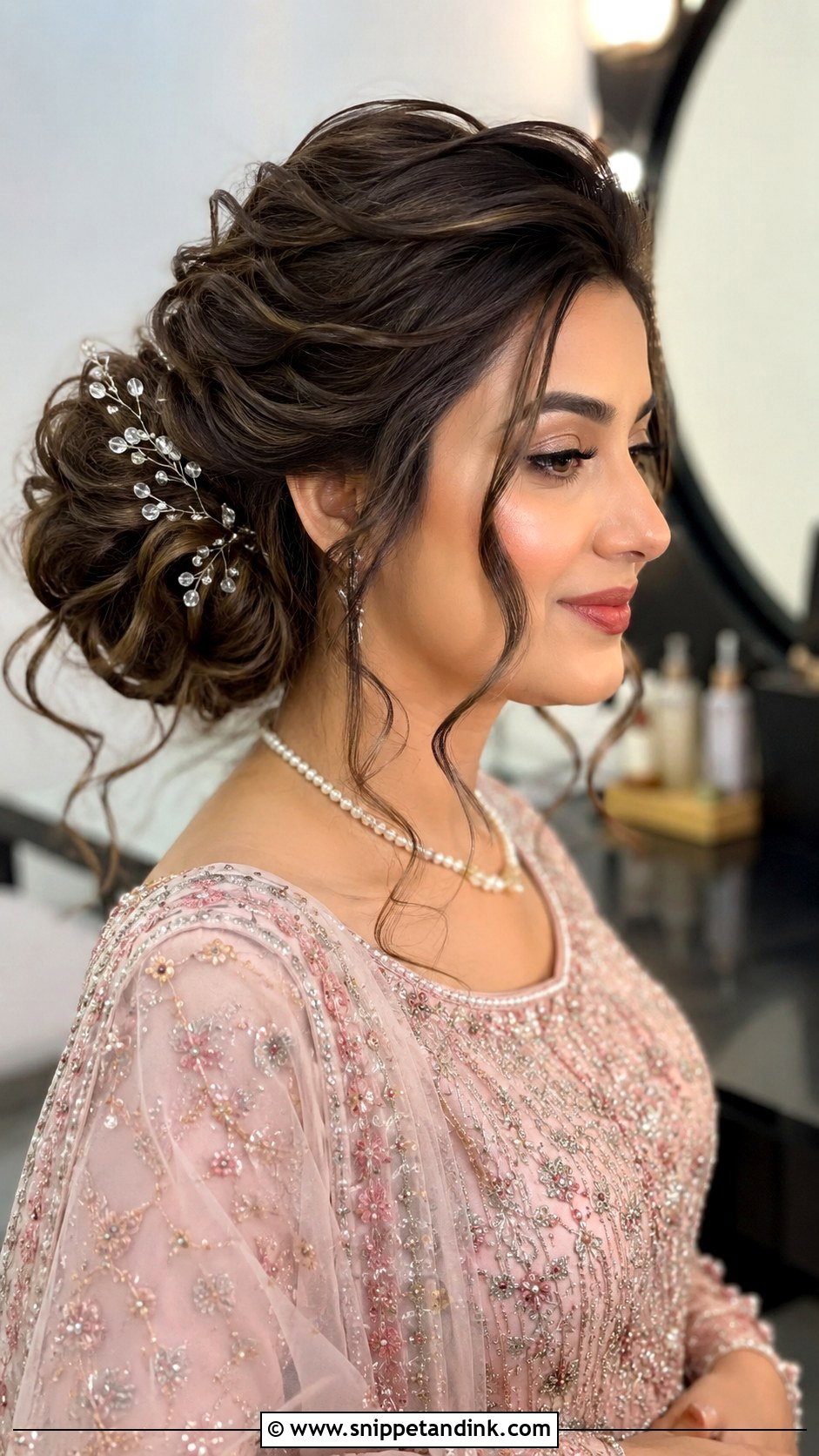
Messy is the hardest bun to get right, because loose has to look planned. I curl the hair first, tease gently at the roots, and pin the bun in loops so it looks airy and full without becoming heavy. Face pieces are placed, not pulled out at random. If you dislike tight hair or sleek finishes, this is the comfortable option, and it suits walima, engagement or pastel nikkah looks. I’d avoid it under a heavy baraat dupatta, which flattens the texture into something that just looks undone.
9. Pakistani Bridal High Bun
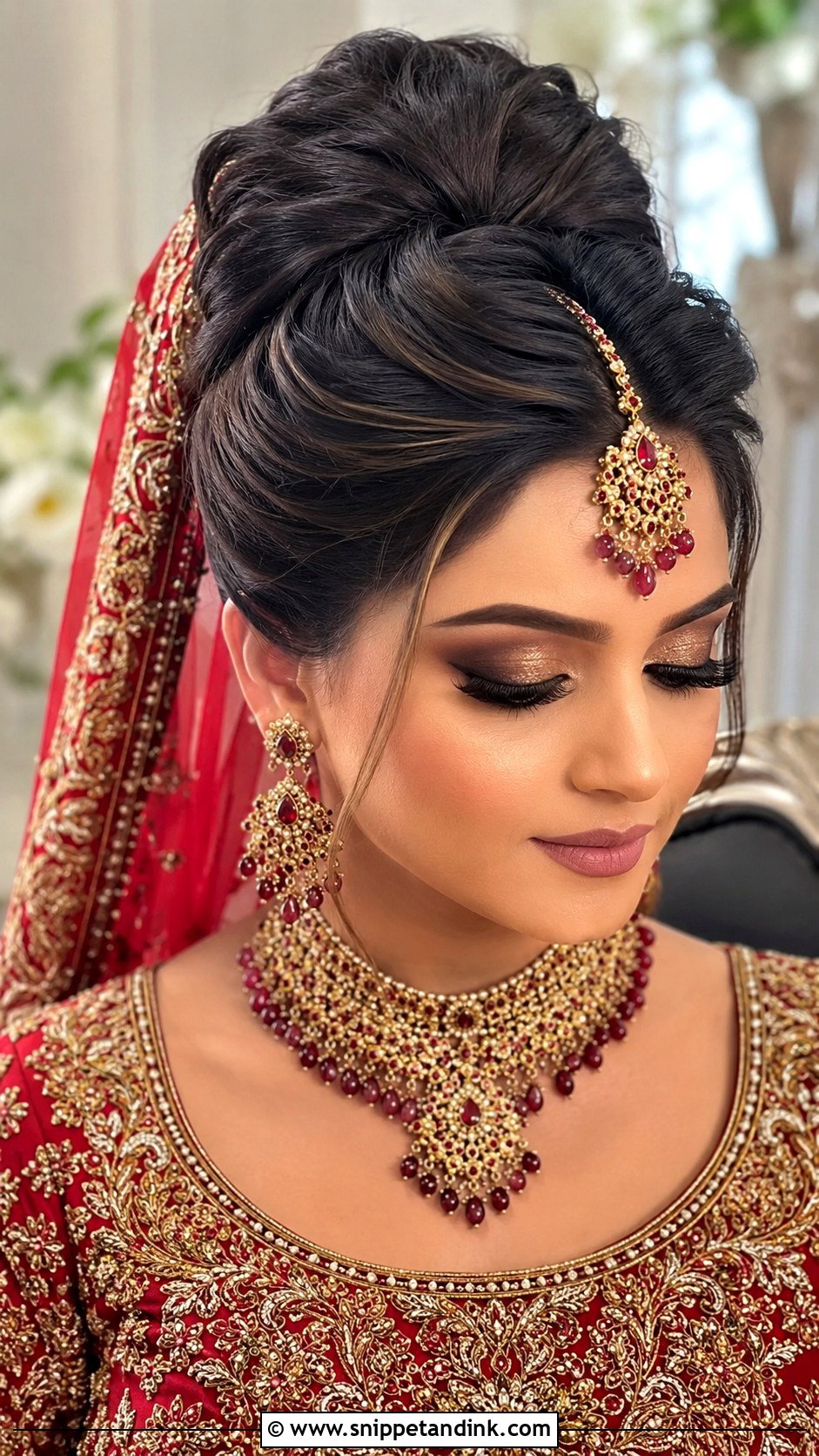
Height changes the whole shape of the bride. A high bun lifts the face and makes it look longer, which helps rounder faces, and it lets the dupatta sit behind it or works with a high neckline. The front can be sleek, center-parted or softly puffed. Earrings, neckline embroidery and layered necklaces all show clearly with the hair up and away. The drawback is comfort under weight, so I never pin it tight, and I put most of the anchoring pins underneath where the weight pulls.
10. Pakistani Bridal Side Bun
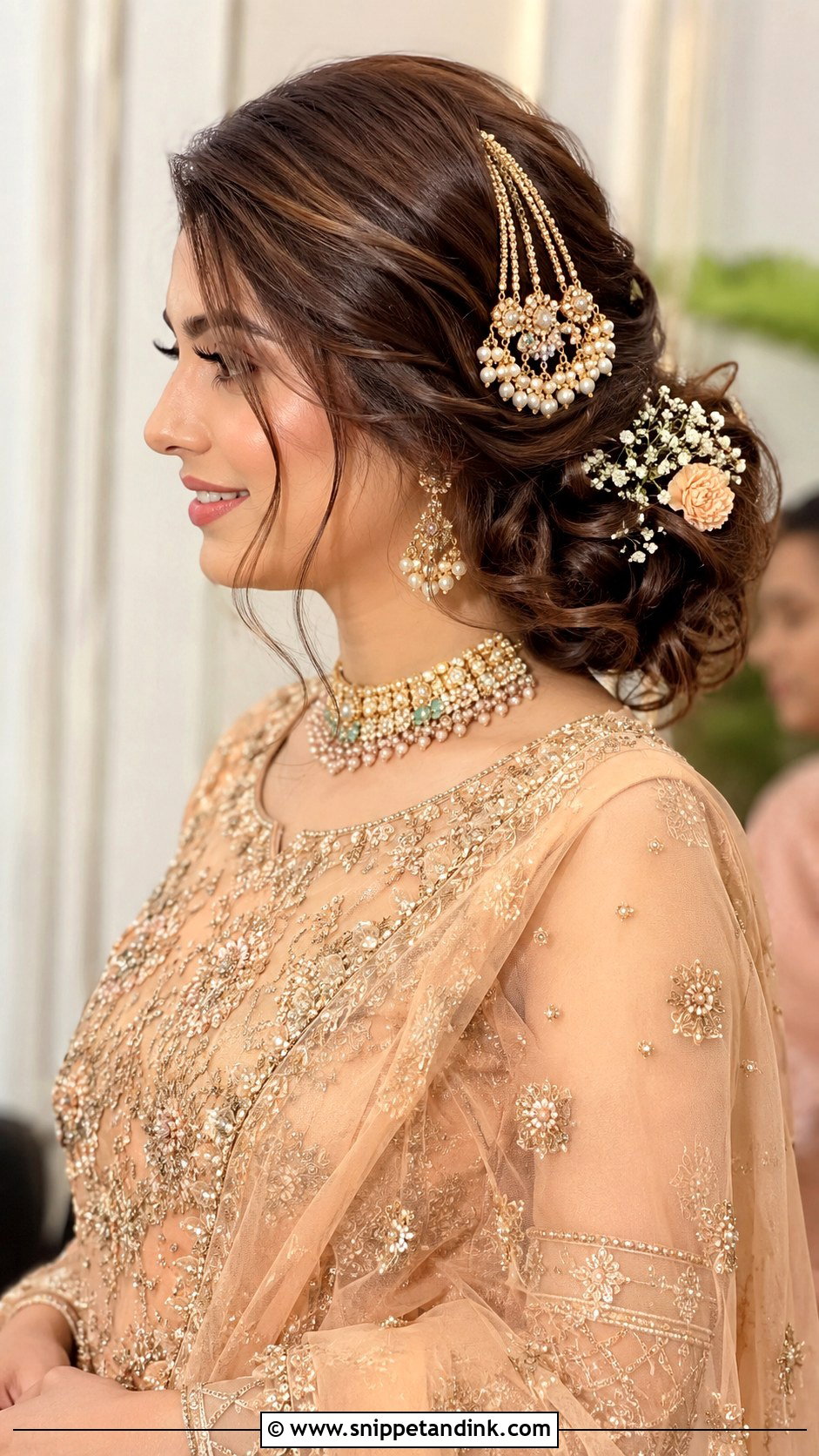
A side bun sits low near one side of the nape, which creates a soft asymmetry. I pair it with a jhoomar on the same side or a side dupatta drape, and it gives the photographer a strong angle for over-the-shoulder portraits. Front waves soften it further. For a bride bored of the usual center-back bun, it’s the simplest change that makes a real difference. Shararas, pastel walima dresses and detailed necklines suit it.
11. Pakistani Bridal Bun With Flowers
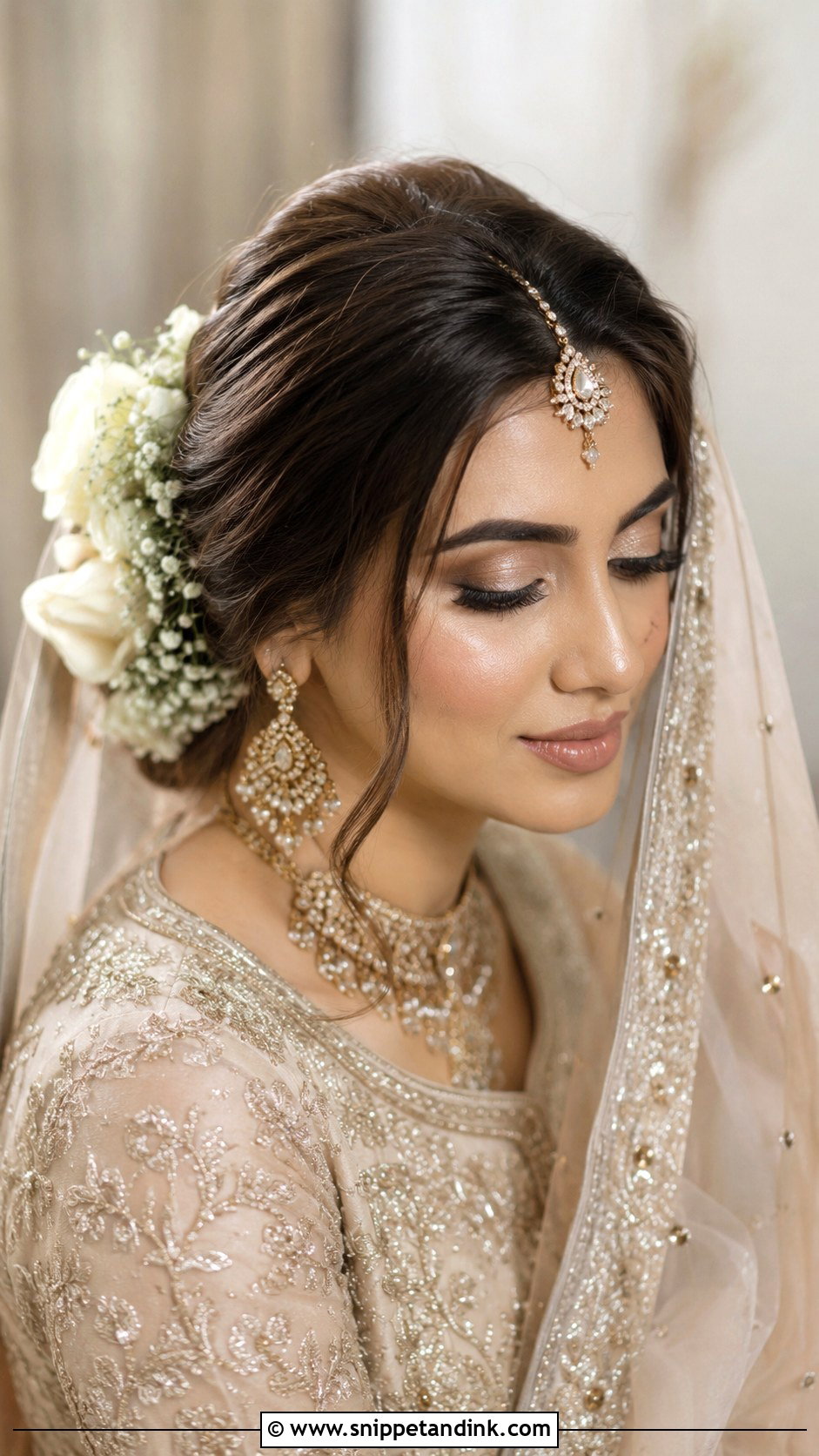
Flowers decide the mood. Jasmine gives the classic gajra effect; roses, baby’s breath or small white blooms read fresher. They can wrap the bun, sit on one side, or cluster at the back. For outdoor mehndi or nikkah events, I lean toward hardier blooms like spray roses, because jasmine and baby’s breath both droop faster in direct sun. Ivory, blush, mint, peach and champagne outfits suit lighter flowers. Keep them in proportion to the jewelry so the two don’t compete.
12. Pakistani Bridal Bun With Puff
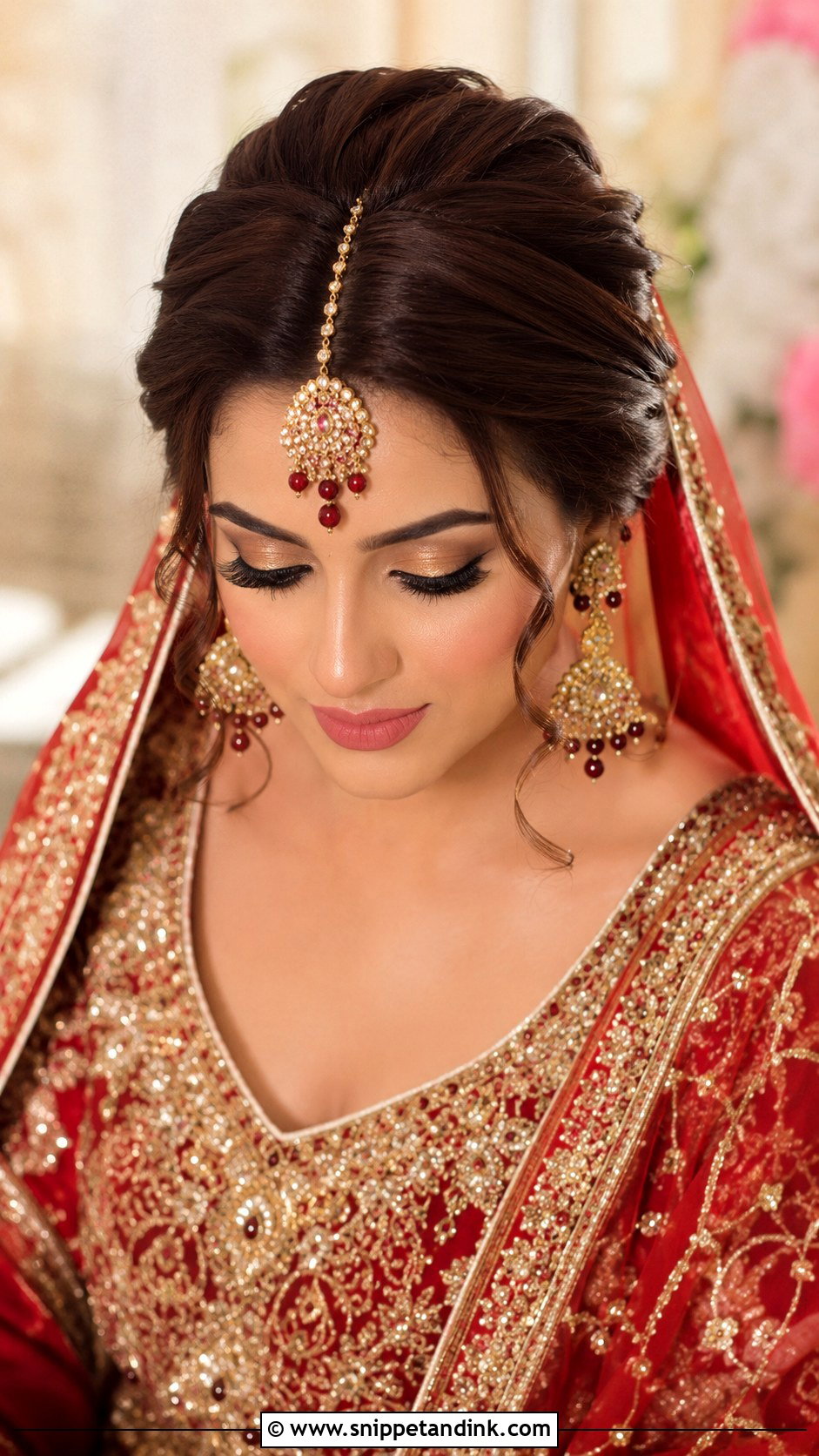
The puff is the traditional dulhan shape: lift at the crown, bun behind. It stops a dupatta from making the head look flat and gives height for tikka, matha patti, and jhoomar placement. I backcomb in thin sections and smooth a top layer over it, because a puff made from a few thick backcombed chunks collapses under fabric. Round or petite faces often like the added length. The bun itself can be sleek, curled, braided or dressed with flowers.
13. Pakistani Bridal Chignon Bun
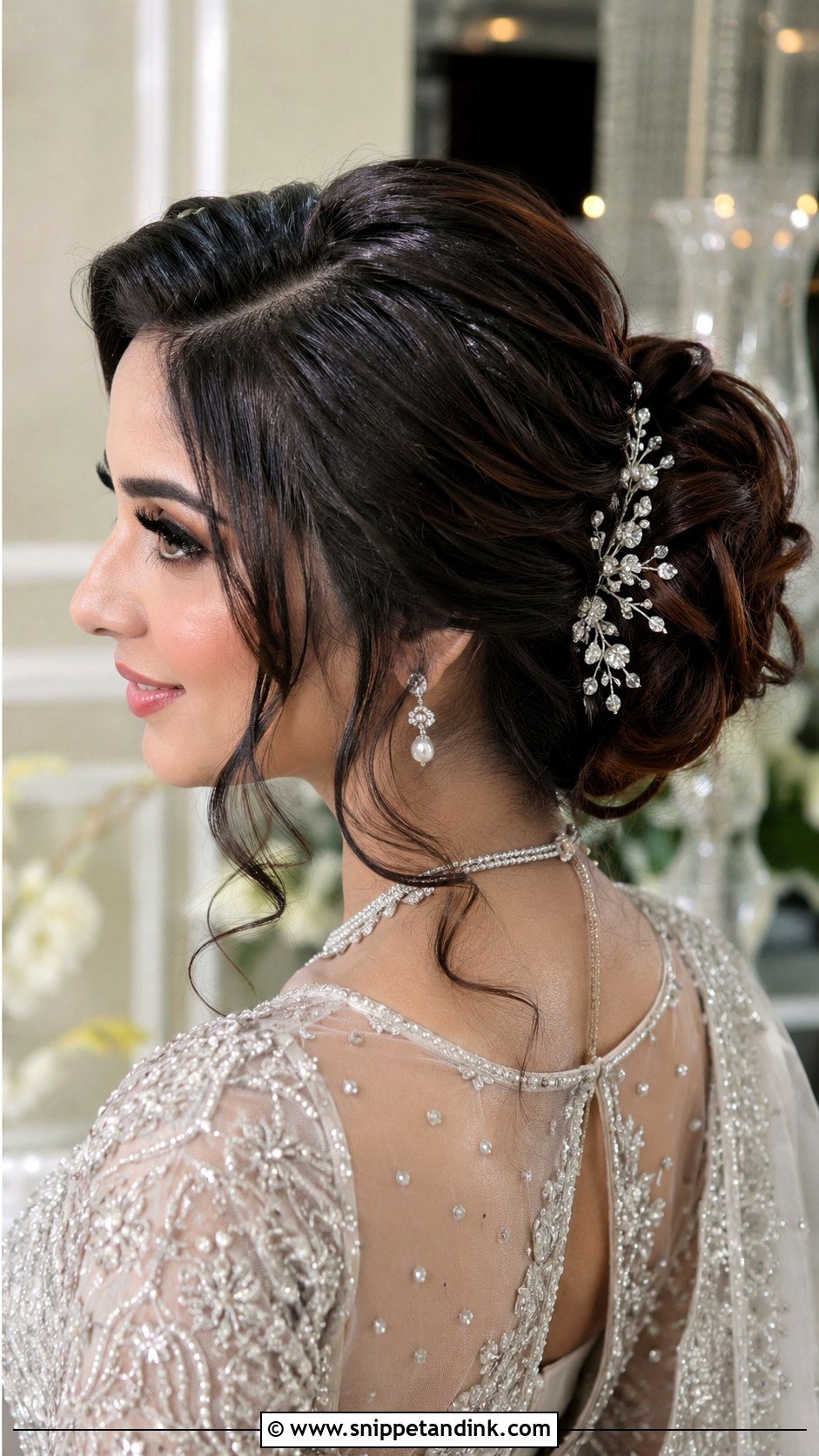
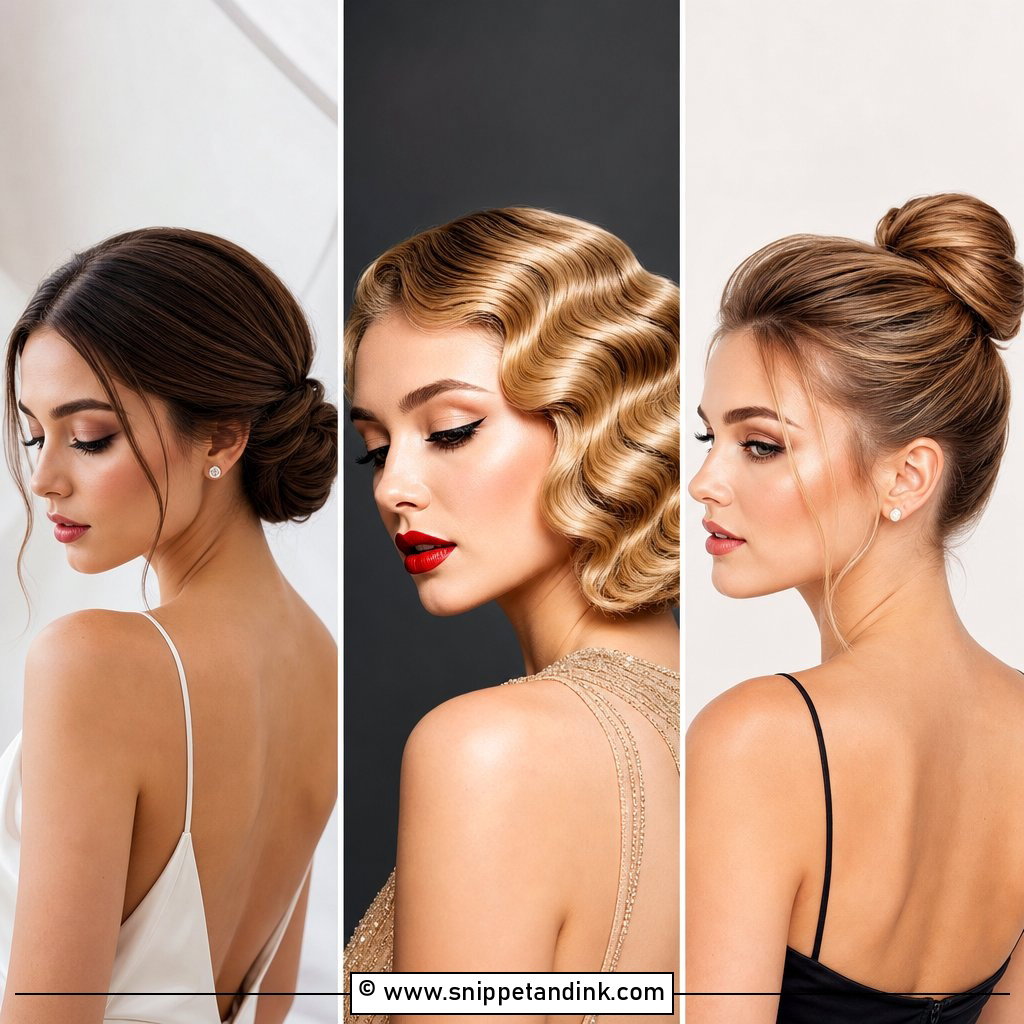
Smooth, low and quiet. A chignon is twisted, rolled or tucked into a neat shape at the nape, and it suits a bride who wants grace without much decoration. Walima gowns, nikkah outfits and pearl or diamond jewelry all sit well with it, and in close-ups the clean lines hold up. A sheer dupatta can be pinned above it, or it can be left visible. Very short layers are its weak spot; they escape from a roll, so I smooth them in with cream before shaping.
14. Pakistani Bridal Bun With Tikka
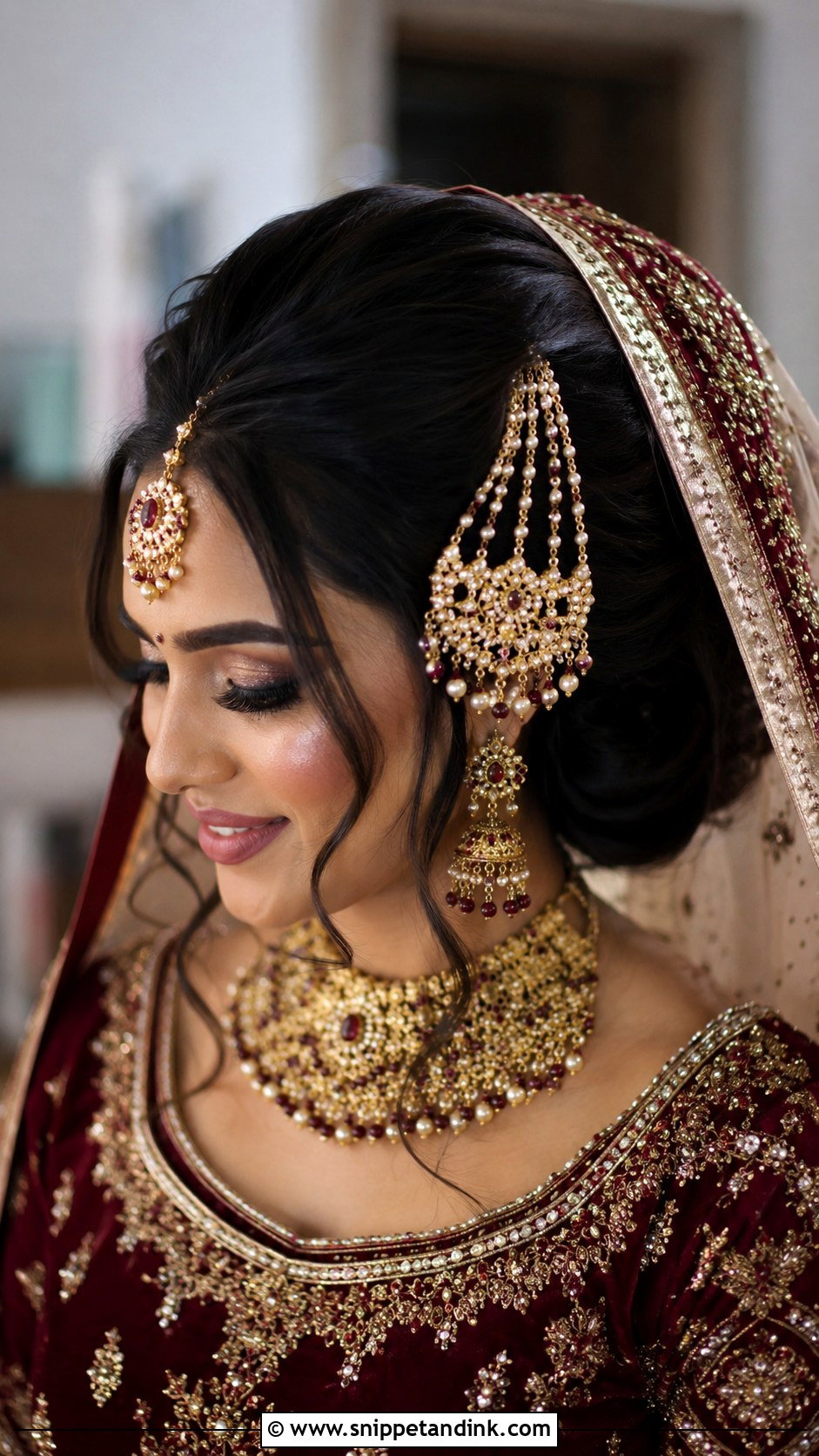
Simple in concept, and very easy to get wrong. A heavy tikka on a center part pulls the part open and slides off-center during the event unless the hair under it is pinned. I tease a small section at the crown, pin it flat, and hook the tikka into that. The bun behind can be low, high, sleek or textured, and the look works with almost any outfit, from red baraat lehengas to soft nikkah ensembles.
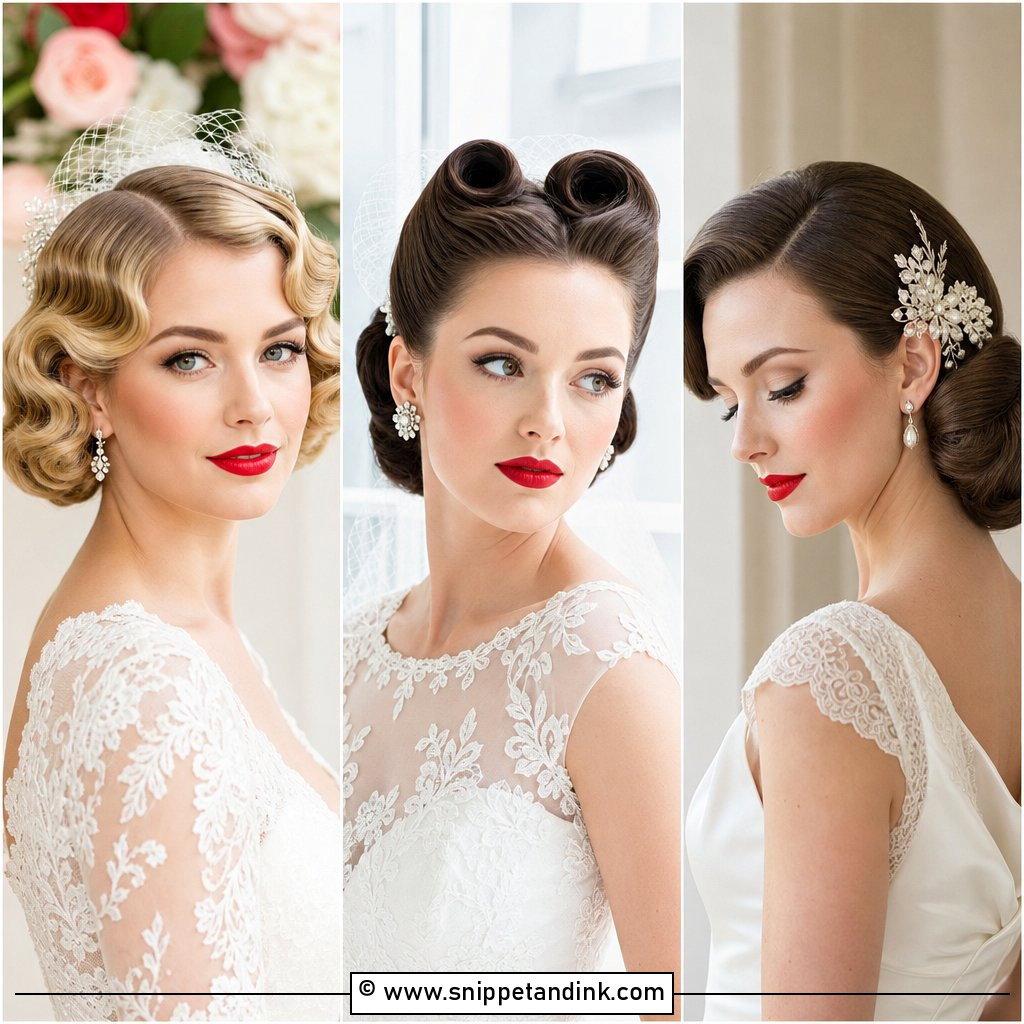
15. Pakistani Bridal Bun For Walima
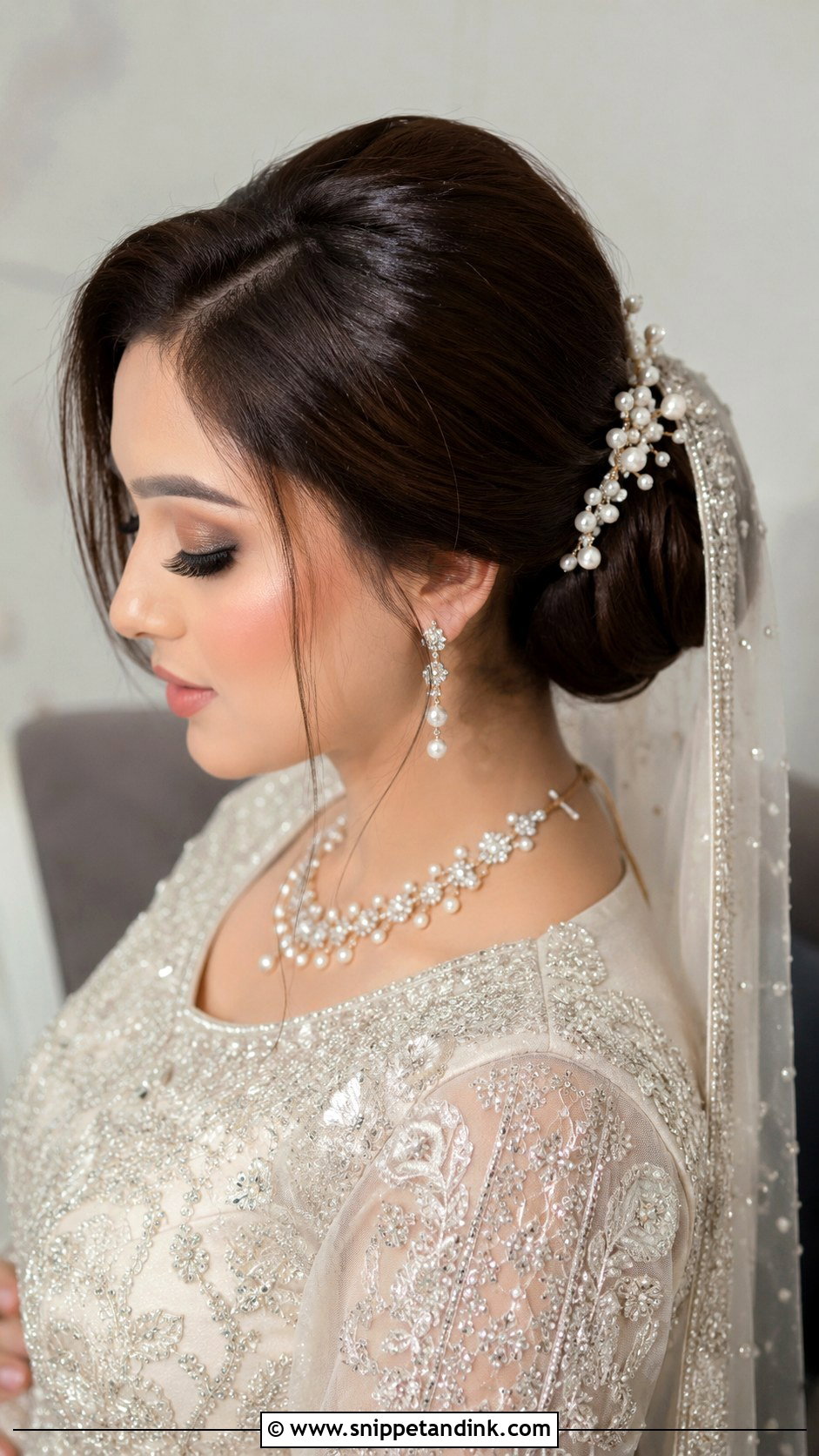
Walima hair is usually softer and lighter than the baraat hairstyle. I tend toward smooth chignons, low romantic buns, or textured buns with small pins instead of heavy floral wrapping. Ivory, silver, pastel, champagne and soft gold outfits pair naturally with this lighter finish. A side part, a few soft tendrils or gentle crown volume keeps it flattering without drama. Pearl jewelry, crystal accessories and sheer dupattas complete it for a calm reception entrance.
Mehndi to Walima Without Wrecking Your Scalp
Pakistani weddings mean several events in a row, often a bun at each one. Pins and tension in the same spot day after day leave the scalp sore and can break hair at the hairline. I plan the whole sequence together, not one event at a time.
- Move the bun’s position between events, low for one and higher or to the side for the next, so the same patch isn’t pulled every day.
- Take everything down each night. Never sleep in a teased bun.
- Oil or condition the teased lengths overnight, then wash or rinse the next morning.
- Choose the lightest style for the event closest to the next one, so your scalp gets a break.
Will a Bun Give You a Headache by Rukhsati?
It shouldn’t. A well-built bun feels secure, not tight. If you feel a pulling point at the trial, say so straight away, because it will be worse after hours of jewelry and dupatta weight. I’d rather loosen and re-pin at the trial than have you counting minutes on stage.
On the day, a tender spot usually comes from one pin pressing against the scalp, not the whole style. Ask a sister or bridesmaid to find it by pressing gently around the bun, slide that single pin out, and push it back in at a flatter angle. The bun won’t move.
Gajra for Baraat, Pearls for Walima
Buns earn their place because they solve problems: they carry dupattas, frame jewelry and keep you neat through very long events. Which one is right depends on the event, your outfit, your face, the thickness of your hair and the accessories you’ll wear. Gajra reads traditional, sleek reads modern, braids add texture and grip, and a soft chignon suits walima. Before the trial, write down your dupatta weight, where the tikka will sit and how much volume you want in photos, then bring the actual jewelry so it can be placed and tested.
You'll Like These Ideas:


Leave a Reply