
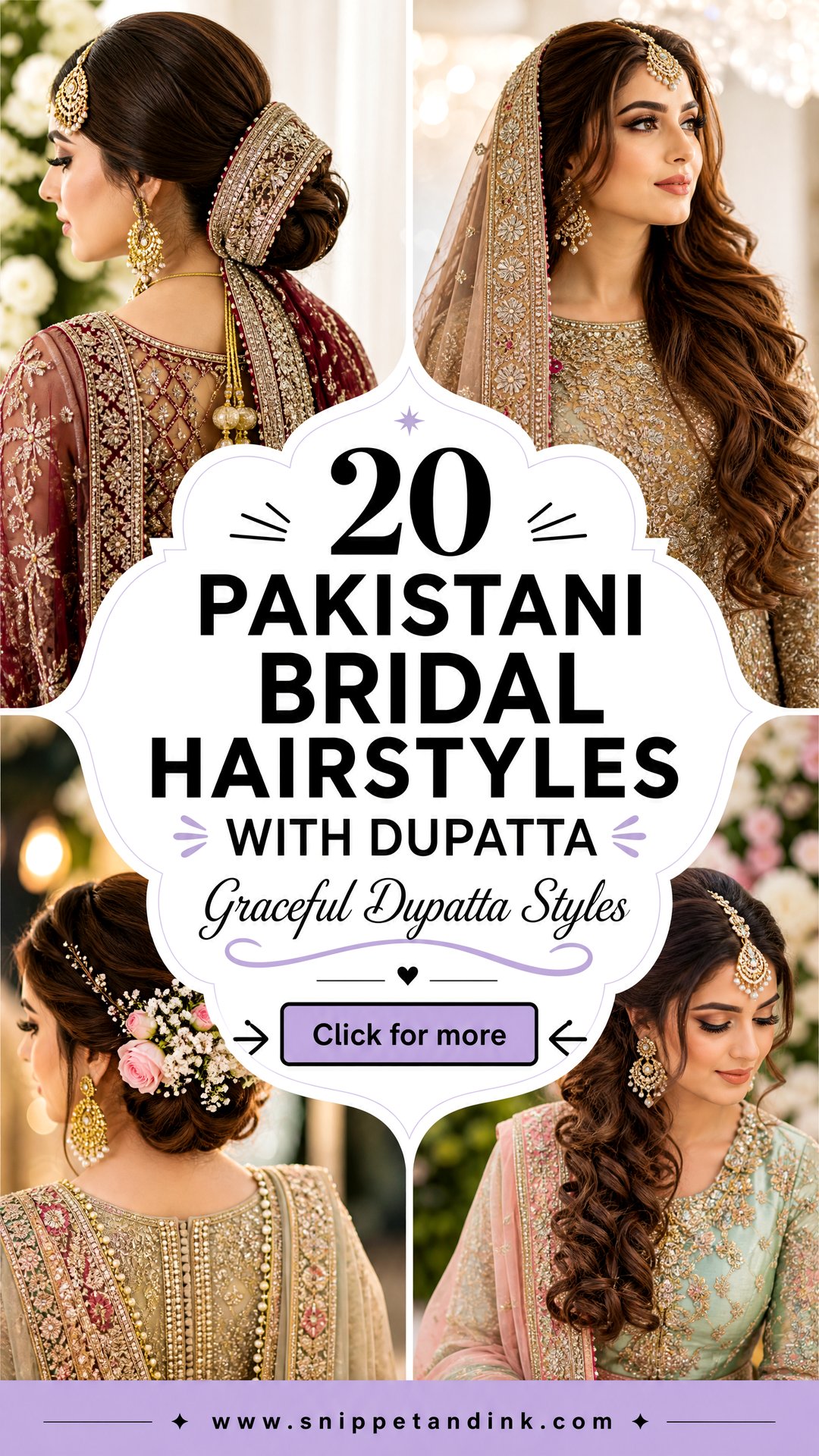
In a Pakistani bridal look, the hairstyle is really the scaffolding for the dupatta. If the base is wrong, the fabric slides, bunches or sits crooked in every photo, no matter how good the hair looked before it went on. I’ve put together 20 Pakistani bridal hairstyles with dupatta setting in mind, from puffs and high buns for the baraat to softer braids and curls for mehndi and nikah. For each one I’ve noted where the dupatta pins, how much weight it can take and which hair it actually suits.
How I Actually Pin a Dupatta Into Hair
Most dupatta problems are pinning problems. Fabric pinned to loose hair or to other pins slides; fabric pinned into a braid or a firm bun stays. Here’s the order I follow for most brides:
- Finish the hair and jewelry first. Maang tikka and matha patti go on before the fabric, or you’ll be lifting the dupatta to fix them.
- Find the anchor. That’s the bun, a crown braid or a small hidden braid at the top of the head. Every pin goes into that anchor.
- Place the dupatta and pin through the border, not the thin centre fabric, which tears.
- Cross two bobby pins in an X at each anchor point, then check by gently tugging the dupatta forward.
- Pin the drape at the shoulder separately so the weight hanging down doesn’t pull on the head.
For a baraat with two dupattas, one over the head and one over the shoulders, I pin the head piece to the hair and the second one only to the outfit. Putting both on the hair is the fastest way to a headache.
1. Low Bun With Dupatta Pinned at the Nape
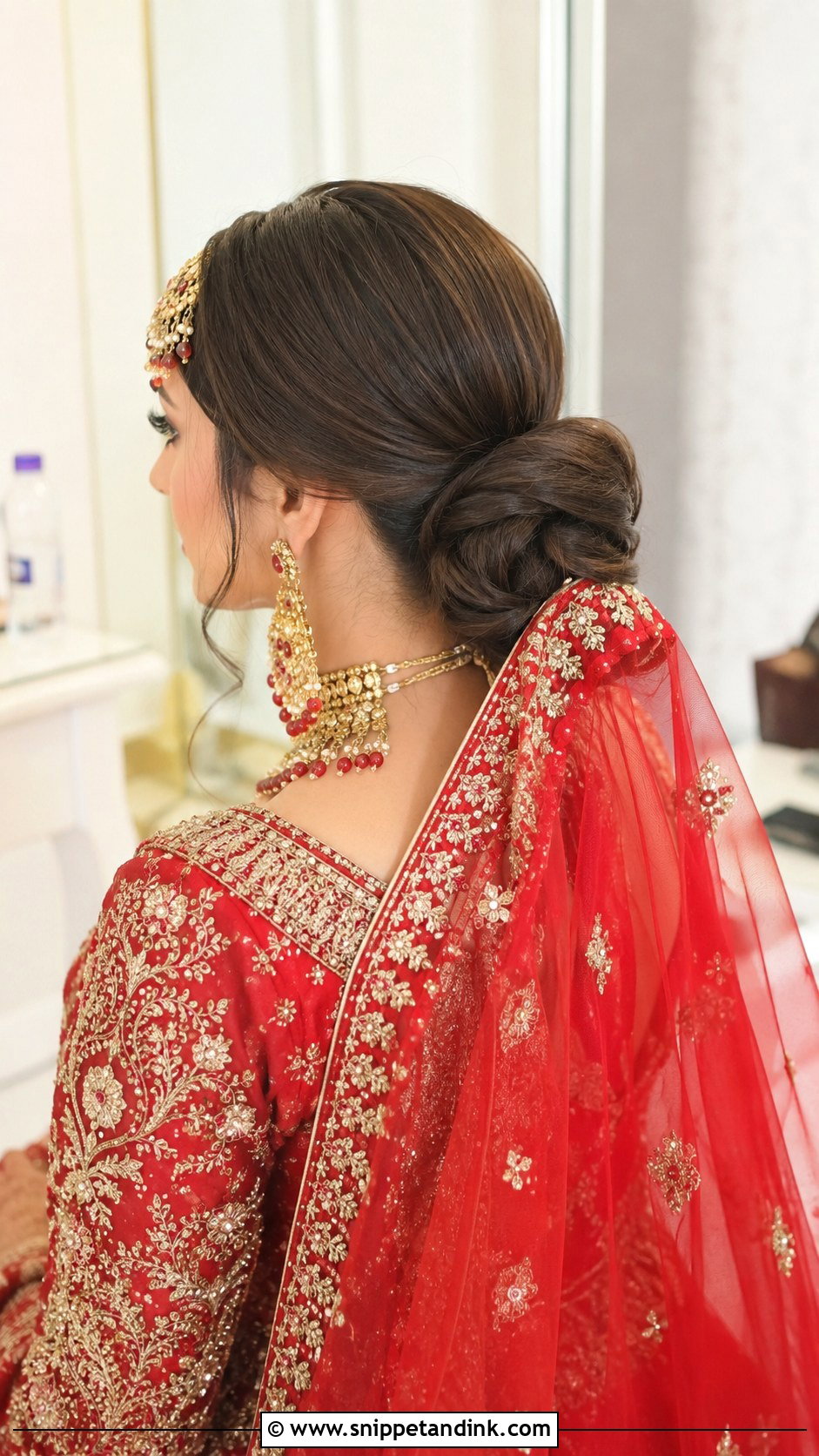
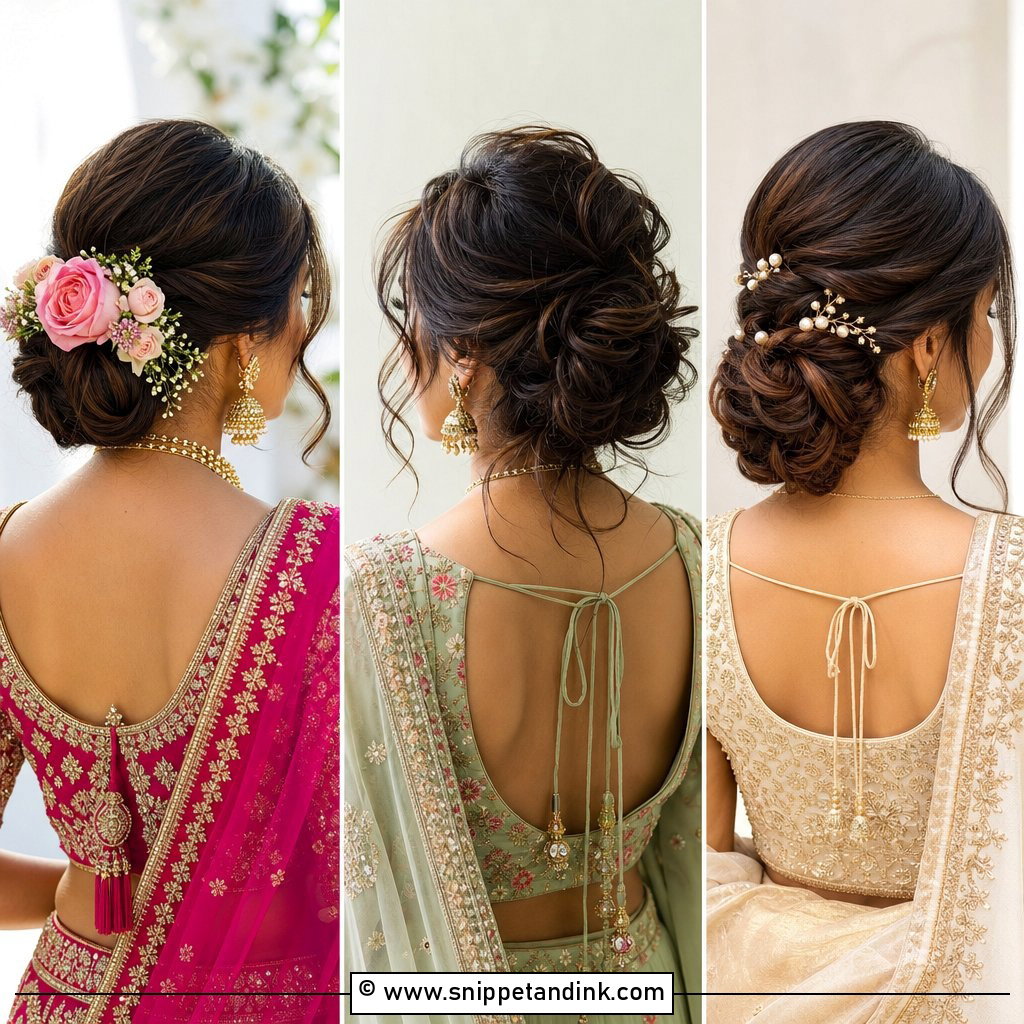
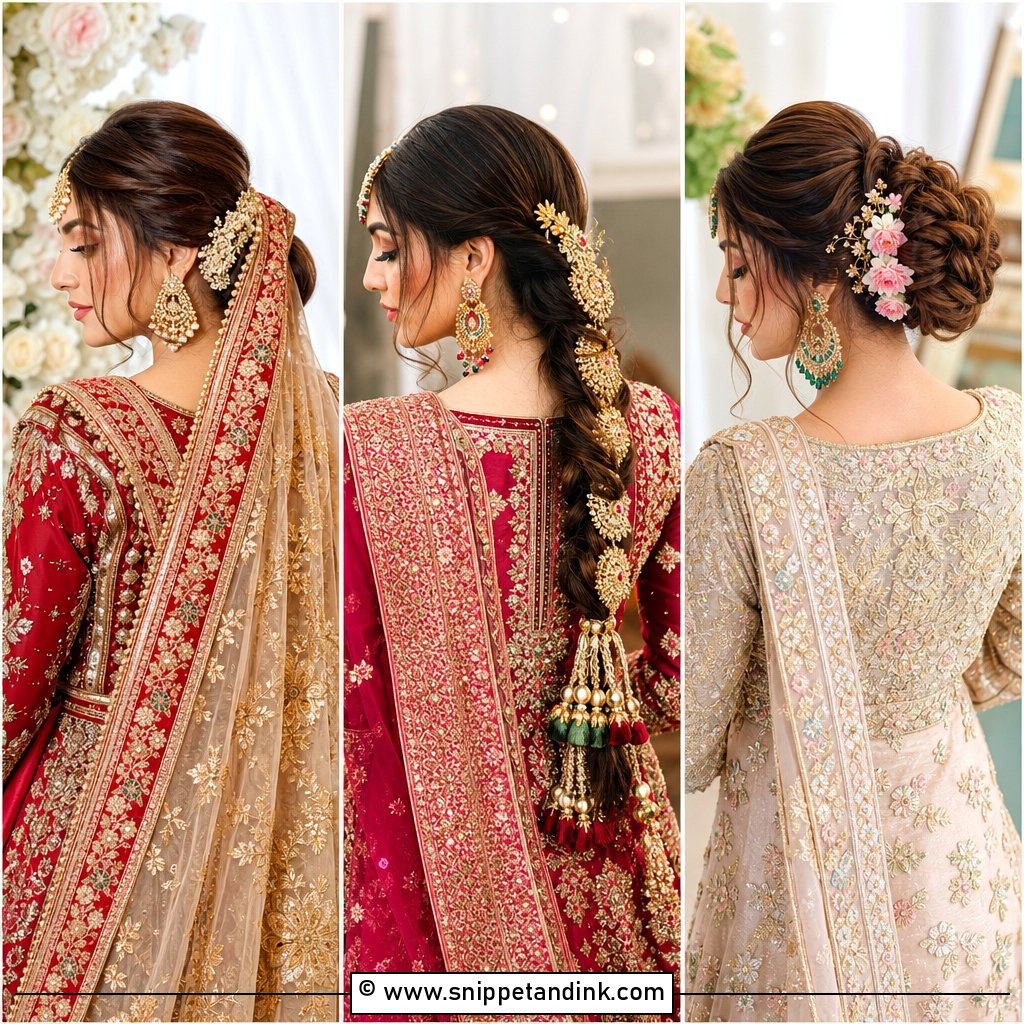
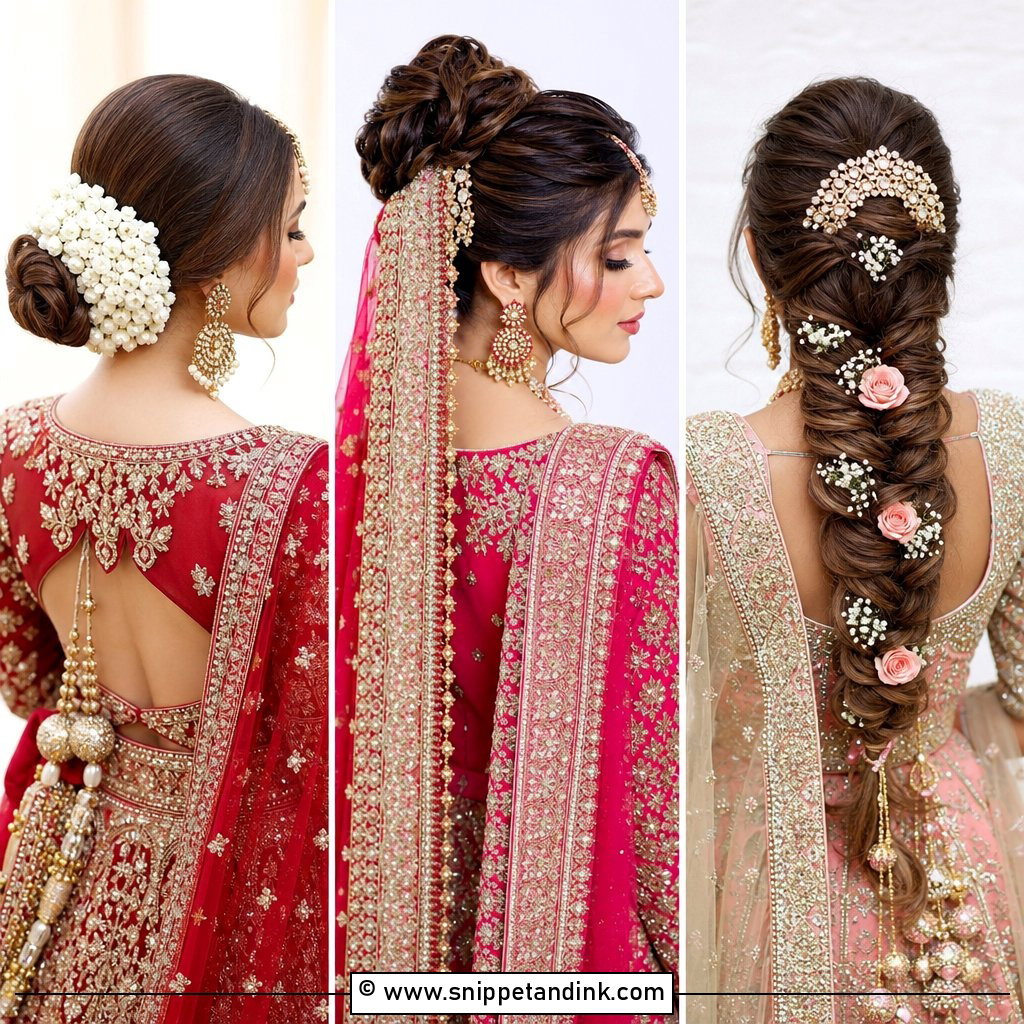
The low nape bun is the base I use most, because it gives the dupatta a solid point to pin into without adding height. Your jhumkas and necklace stay in full view, and pinning the fabric low keeps the shoulders and neckline clean. A sheer embroidered dupatta sits smoothly over it; a gajra around the bun adds the traditional finish. It flatters round, oval and square faces. For long hair I split the ponytail and wrap it in two halves so the bun is wide enough to grip the pins properly.
2. High Bun With Front Puff
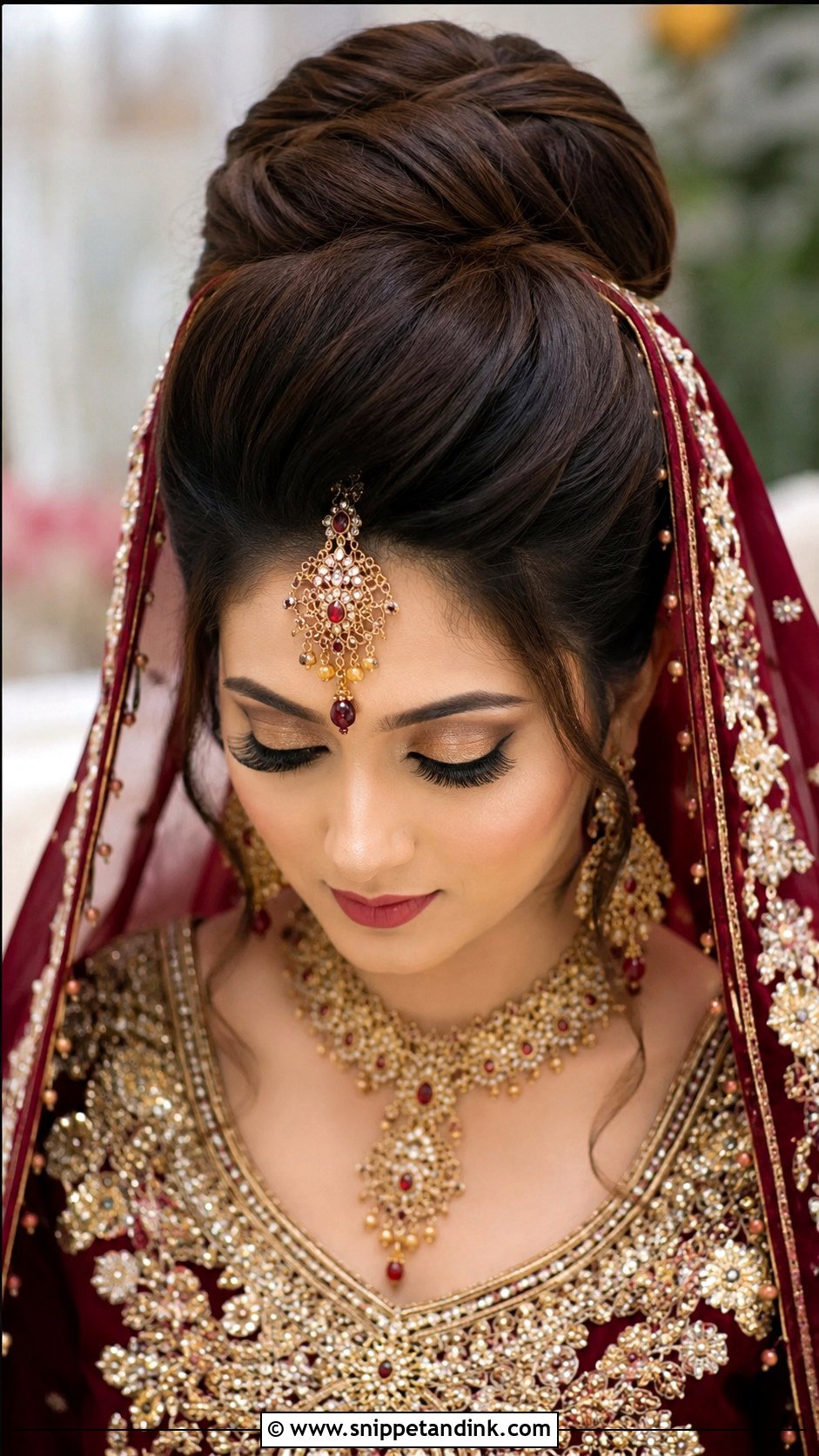
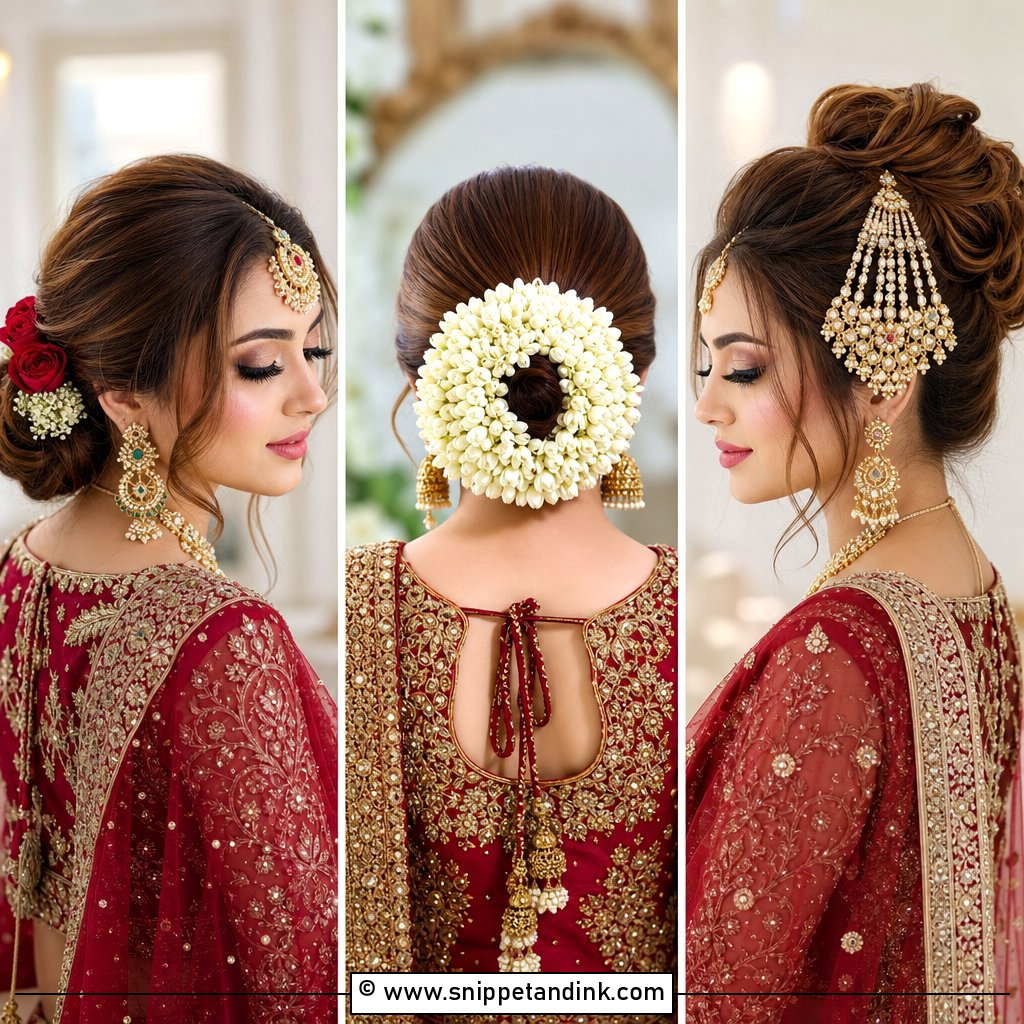
Height and drama for the baraat come from a front puff and a large high bun. The puff lifts the hairline area so a heavy maang tikka or matha patti doesn’t sink into flat hair, and the dupatta draped over the bun falls down the back like a veil. Fine hair benefits most, since backcombing builds the volume it lacks. The high bun also acts as a shelf, which is why a heavy dupatta stays put even when you turn your head. For a baraat entrance under a heavy red dupatta, it’s still the classic shape.
3. Fishtail Braid With Dupatta
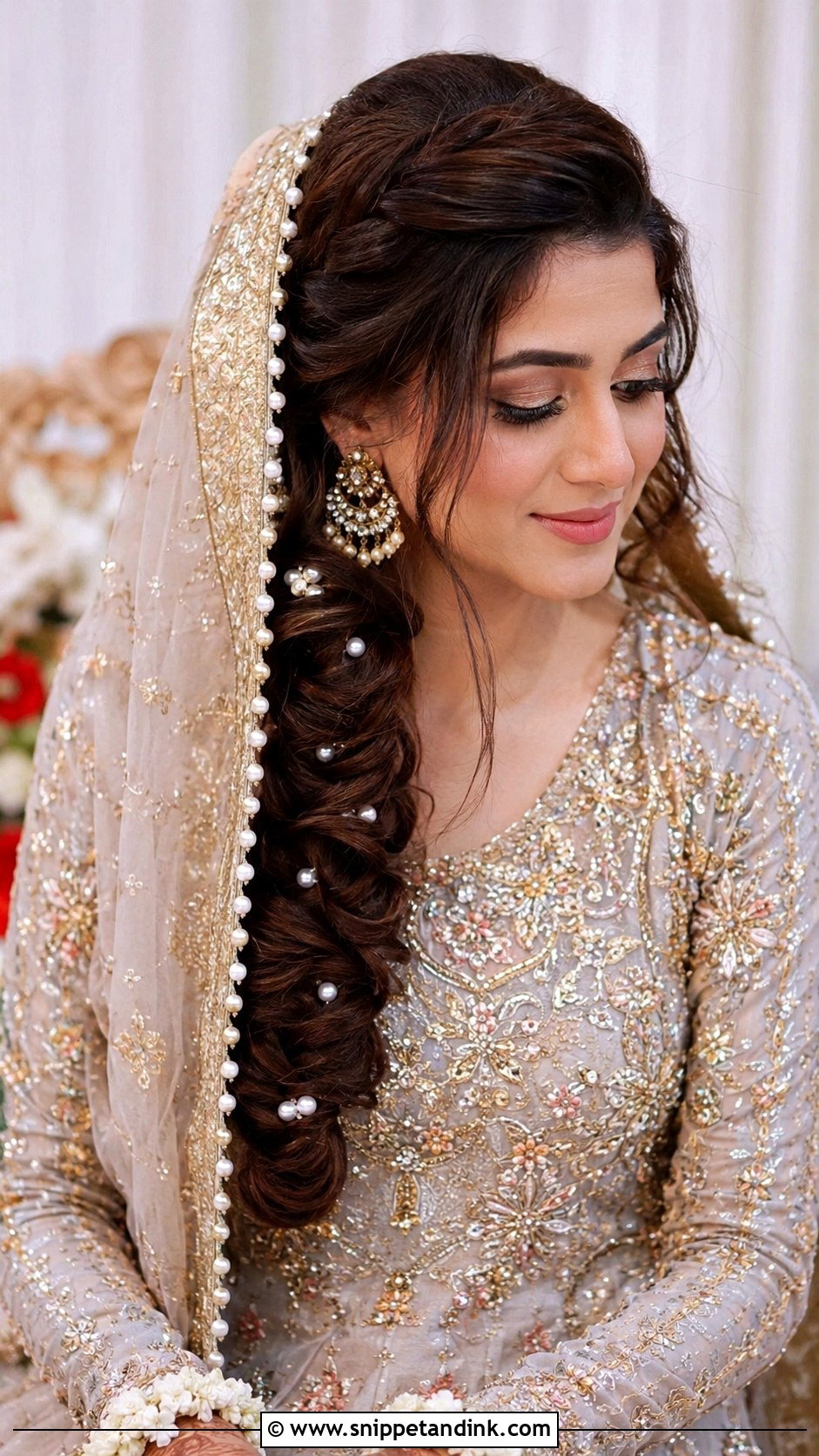
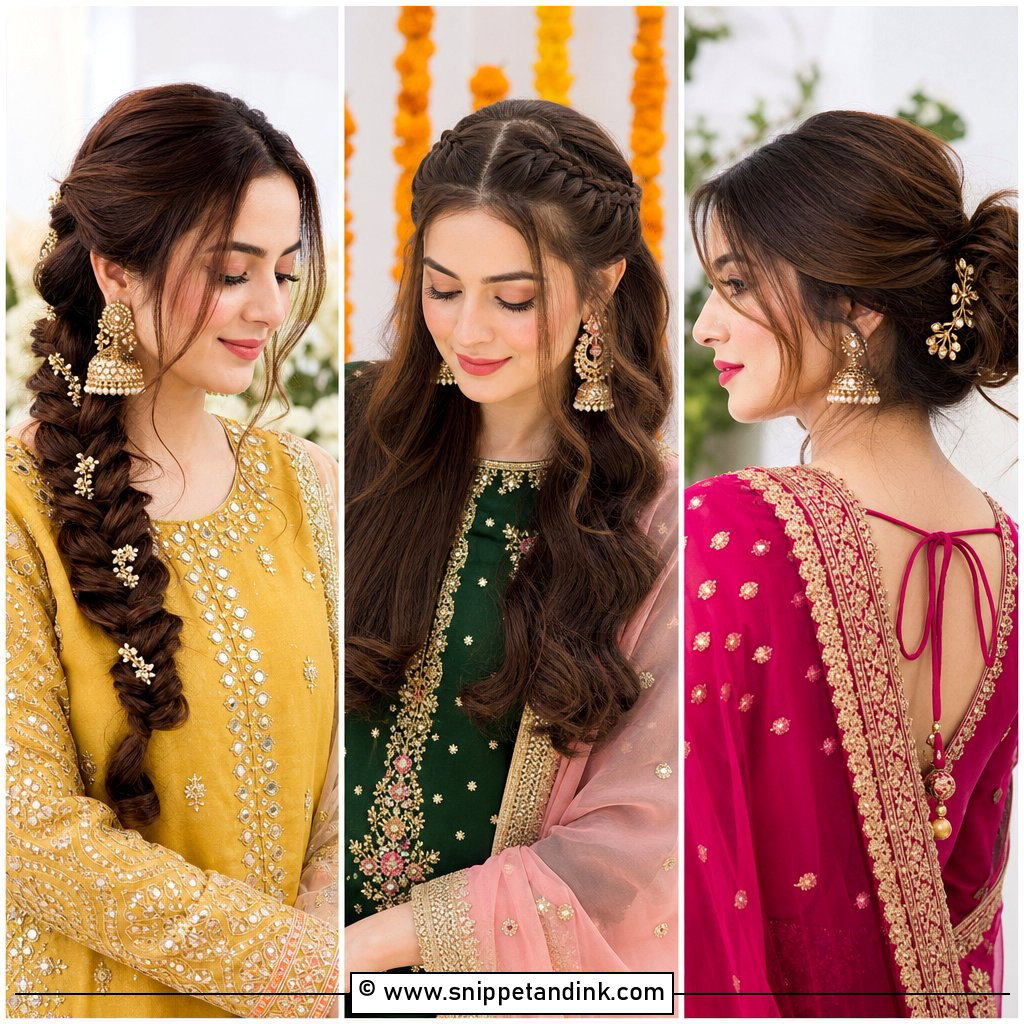
A fishtail over one shoulder is the softer route, and it suits mehndi and nikah better than a formal baraat. I braid it firmly, then loosen the edges, and pin the dupatta high near the crown so it frames the face while the braid stays visible on the opposite side. Tiny flowers or pearls along the weave catch light in close-ups. One honest catch: the dupatta has nowhere strong to anchor except the crown, so very heavy embroidered fabric isn’t a good match. Medium to long hair needed.
4. Side-Swept Curls Over One Shoulder
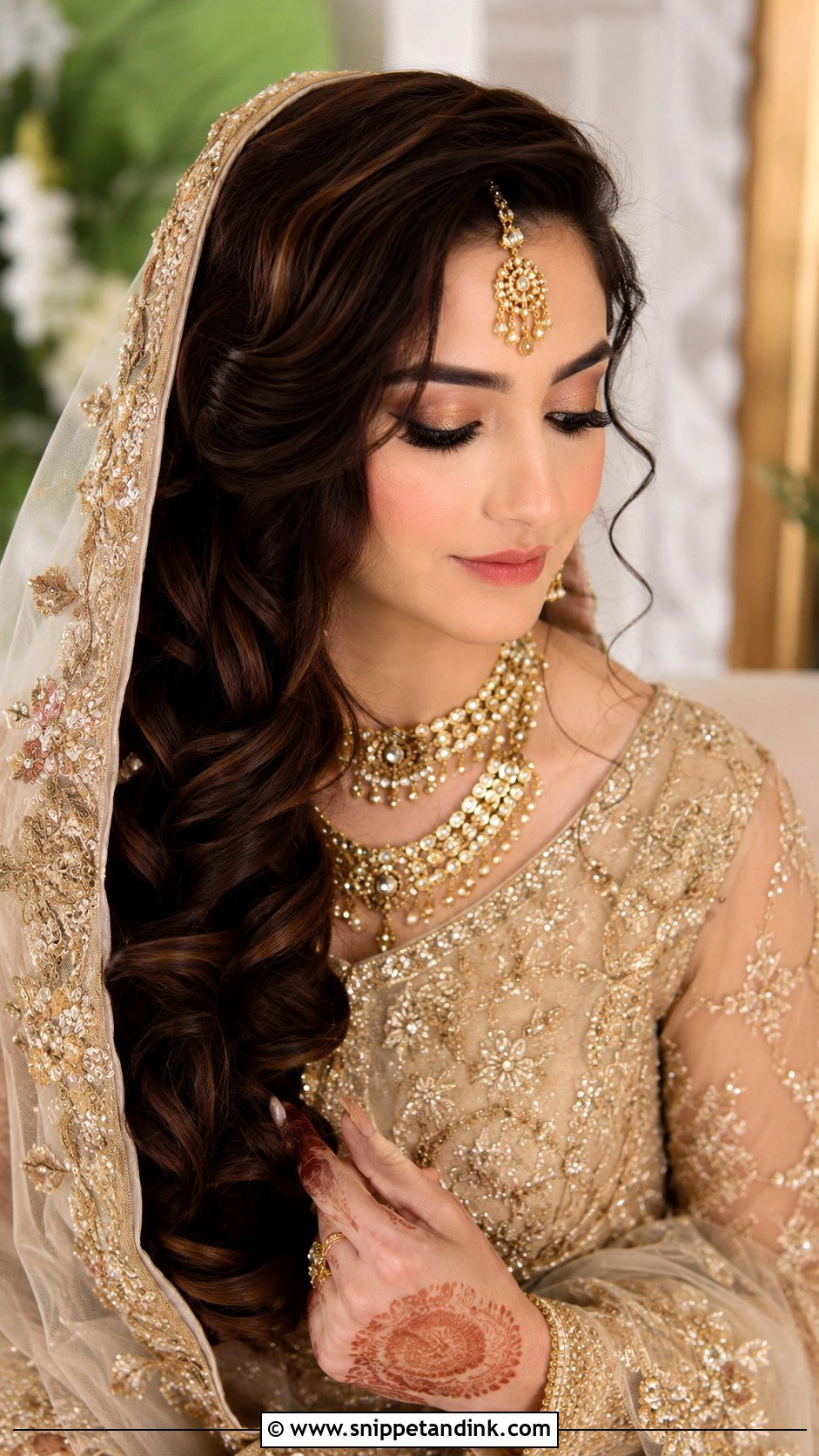
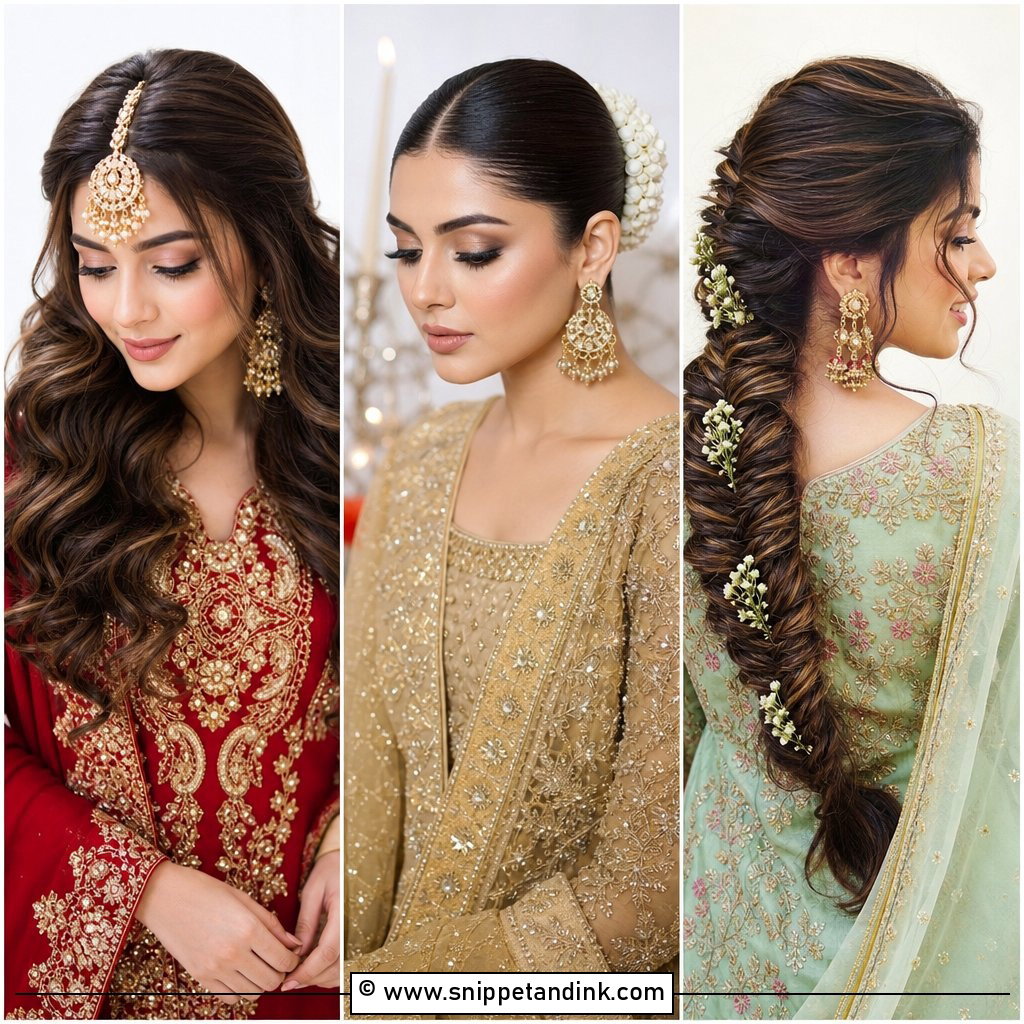
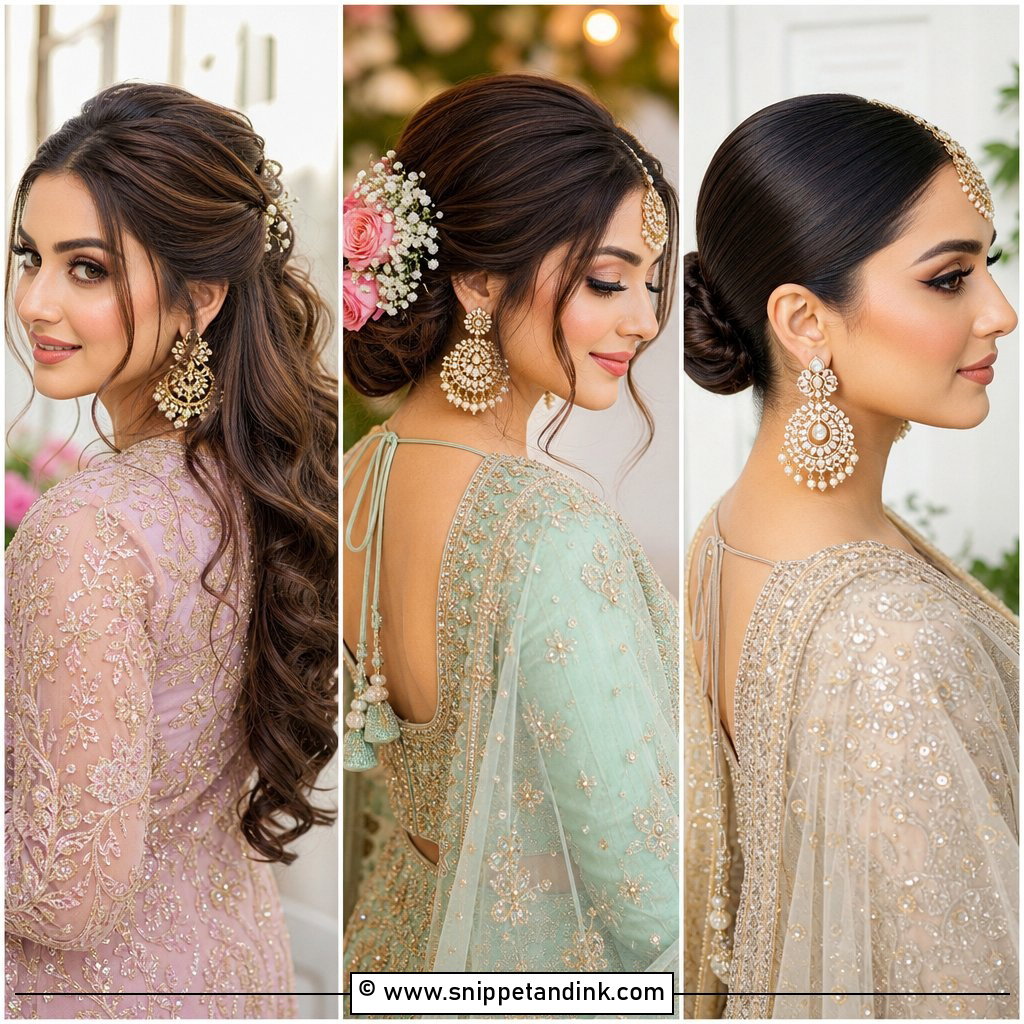
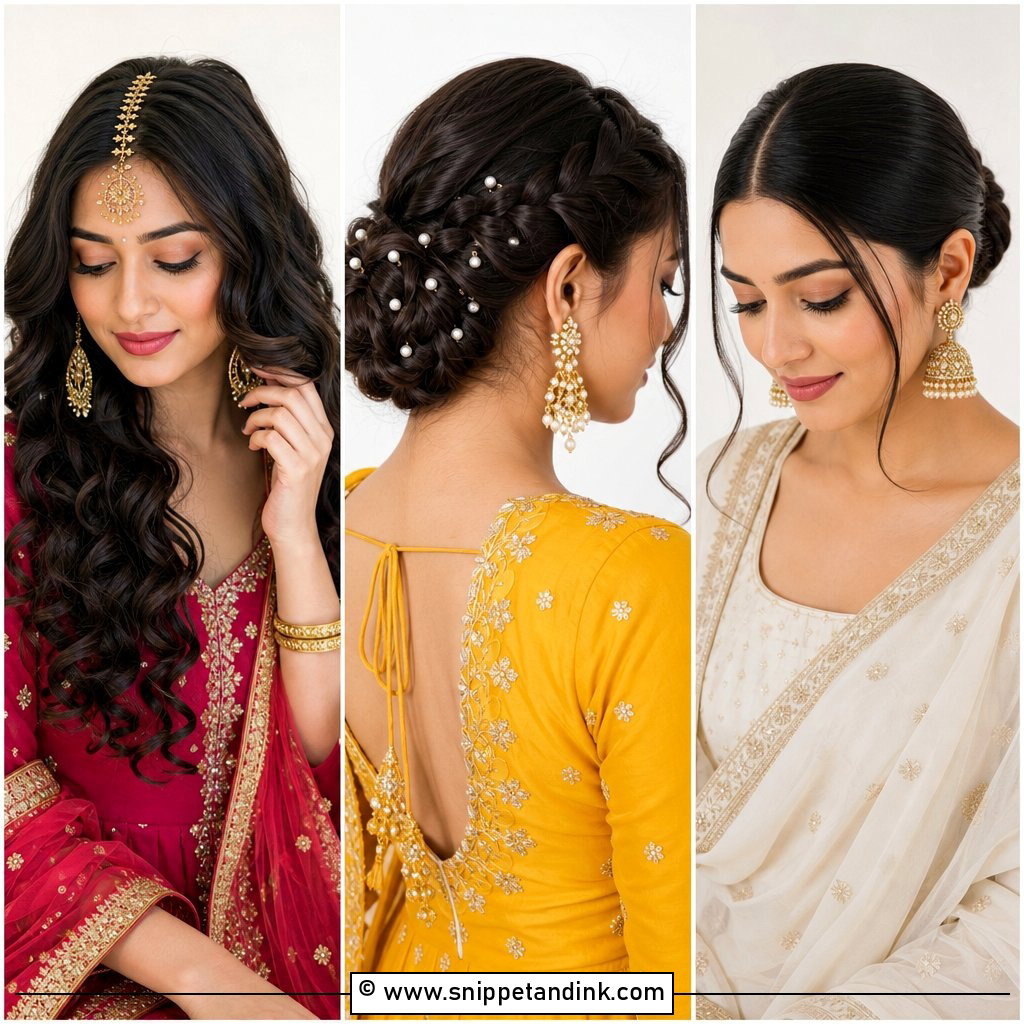
Curls swept over one shoulder show off the hair itself, with the dupatta pinned up and back on the other side. That split, flowing hair on one side and embroidery on the other, is what gives this style its impact. A maang tikka along the centre part grounds it in desi tradition. It suits thick, wavy or already curled hair and works for walima or reception, and the open neckline leaves room for layered necklaces. I set the curls with plenty of spray before the dupatta goes on, because the fabric brushing past them all evening slowly pulls them straight.
5. Braided Crown With Cascading Curls
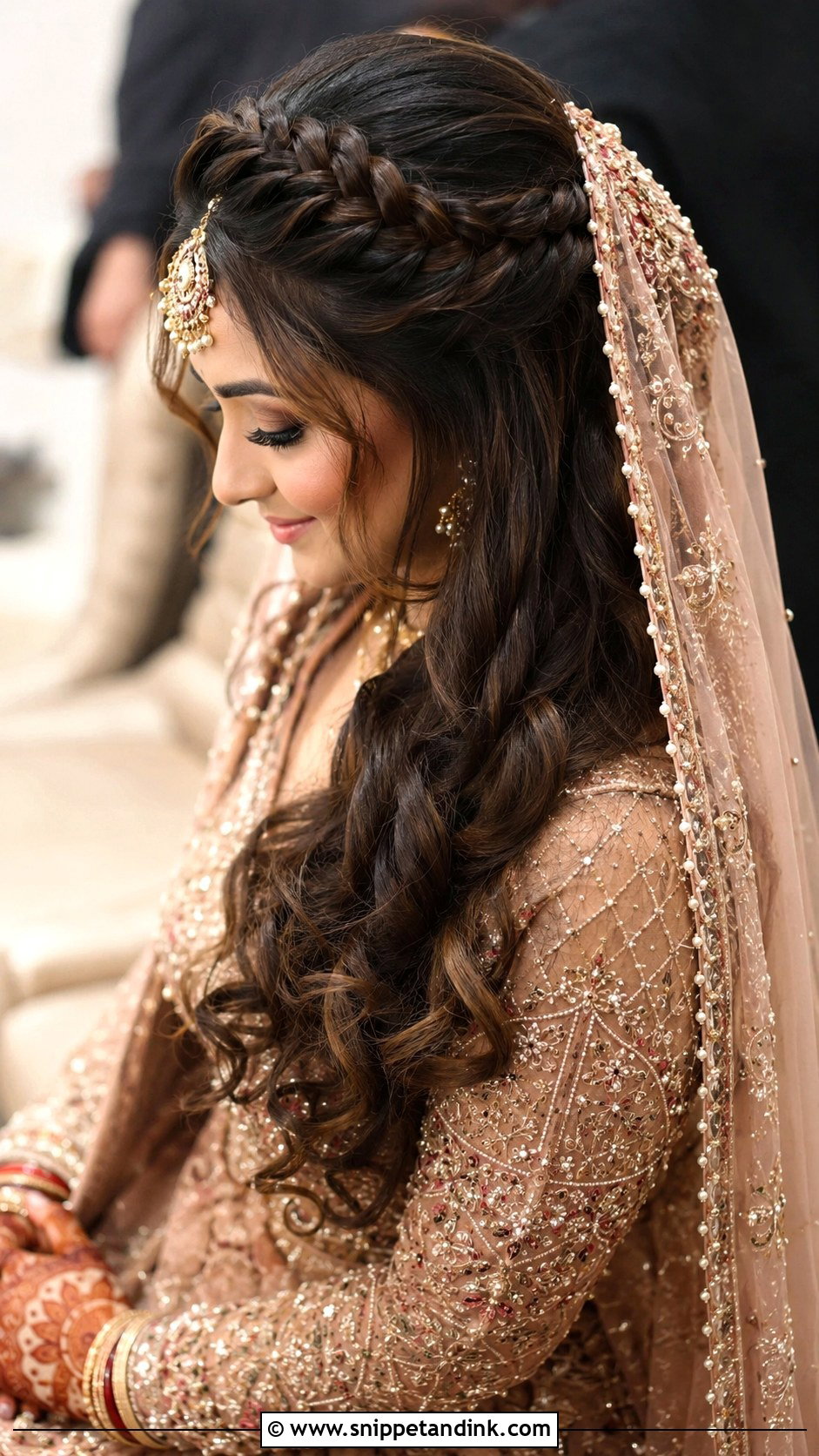
A braided crown with curls below is a practical pick, not only a pretty one. The braid gives me a firm line to pin the dupatta behind, so the fabric stays secure without flattening the curls underneath. Matha patti and maang tikka also hook neatly into it. It suits medium-length hair and younger brides who want something soft for mehndi or nikah celebrations. If your hair is layered, short pieces can escape the crown braid, so I use a little wax on the braid before pinning.
6. Dutch Braid With High Bun
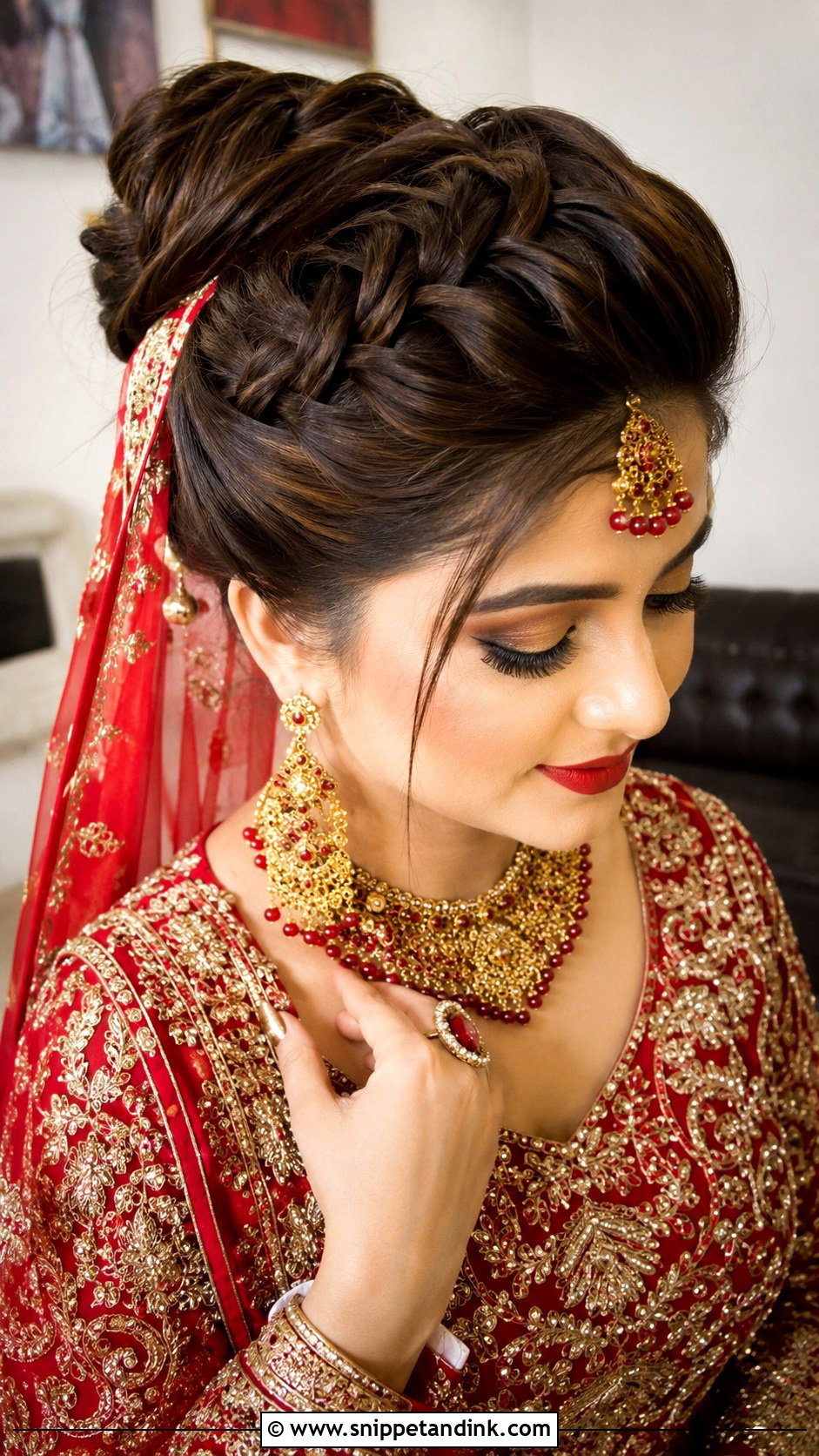
Want something with a modern edge? A Dutch braid running from the front into a sleek high bun gives raised texture along the hairline and a strong base for the dupatta at the back. The braid holds a matha patti so it doesn’t slide down the forehead, which is a common complaint with heavier pieces. I’d use it for a baraat or reception where you’ll be moving and greeting people for hours. Thin or very short front hair won’t braid neatly, so check this one at your trial.
7. Loose French Braid With Matha Patti
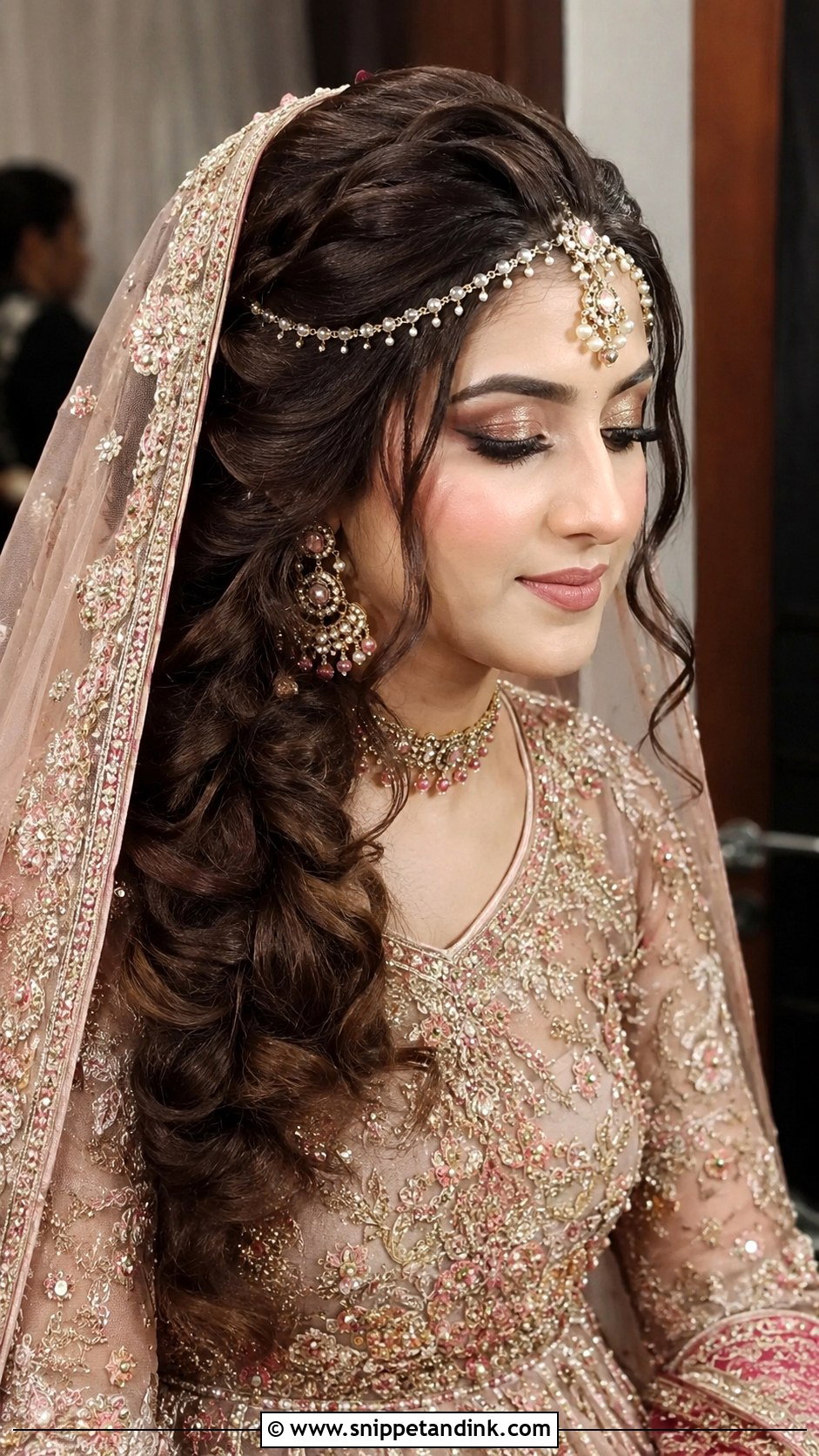
A loose French braid at the front turns a simple blowout into a bridal look. It frames the face and sits under a delicate matha patti nicely, while the dupatta drapes over the back and leaves the braid visible. I loosen the braid gently with my fingertips after pinning, never before, otherwise it falls apart by the second hour. It suits medium to long hair and lighter mehndi or nikah outfits more than a heavy baraat set.
8. Sleek Center-Parted Bun
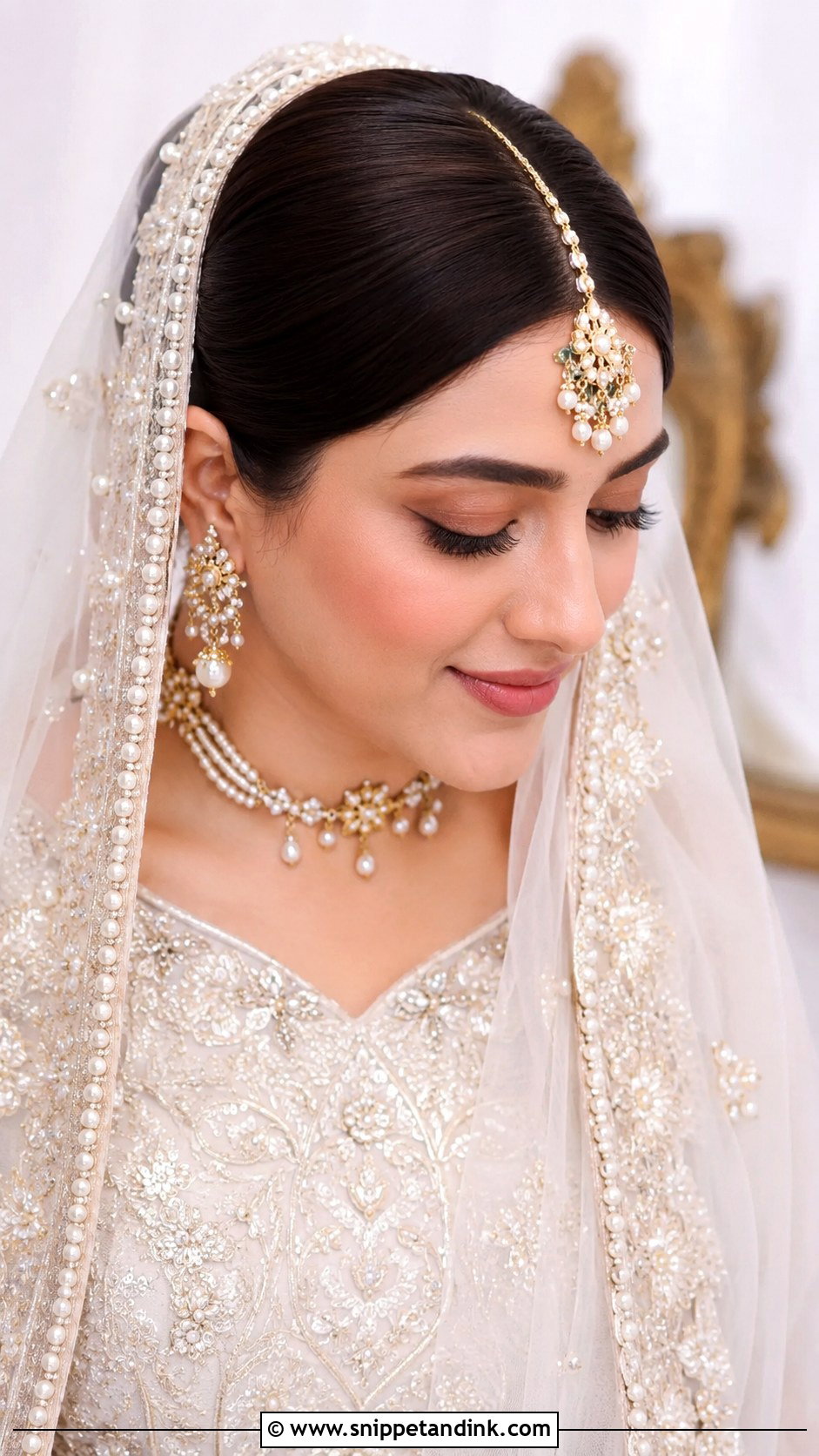
Symmetry is what makes a sleek centre-parted bun work, and it’s surprisingly kind to most face shapes. The hair is smoothed into a neat low bun and a sheer dupatta goes straight over the crown, sitting flat without bumps. Nothing competes with the maang tikka. It’s a calm, refined choice for walima or nikah ceremonies. A single pearl pin near the bun is enough detail. I check your natural part first; forcing a centre part against a strong crown swirl means it splits open by evening.
9. Voluminous Open Hair With Dupatta on Head
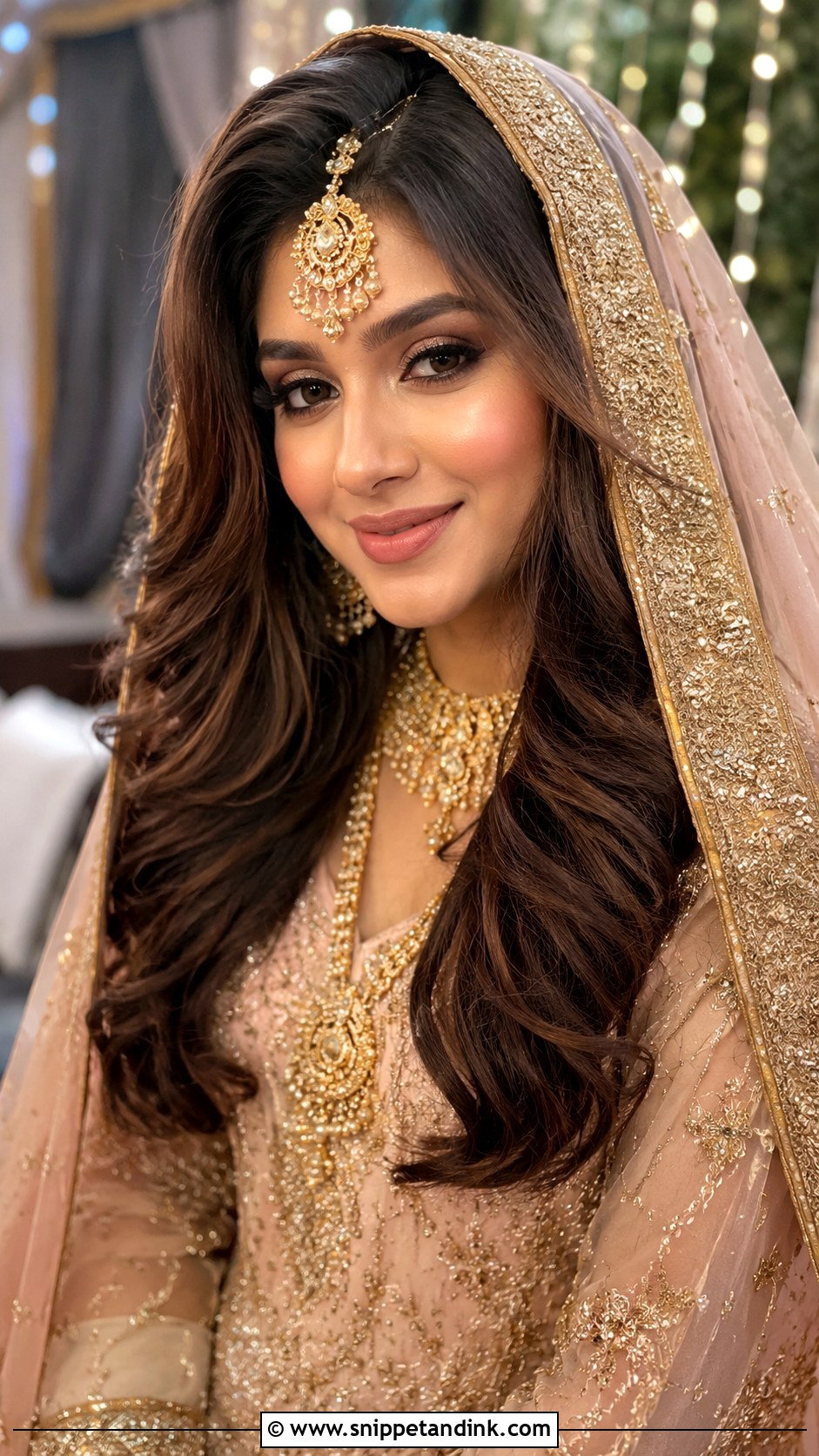
Open hair under a dupatta is lovely but needs more structure than it looks. I add loose waves for body and pin the dupatta at a side-swept point, usually into a small hidden section braided at the crown, so the fabric doesn’t slide back. Long, thick hair suits it best; thin open hair tends to disappear under a heavy dupatta. With a maang tikka at the centre, the fabric frames the face almost like a hood. It works best for nikah, when the outfit is lighter.
10. Bridal Bun With Fresh Flowers
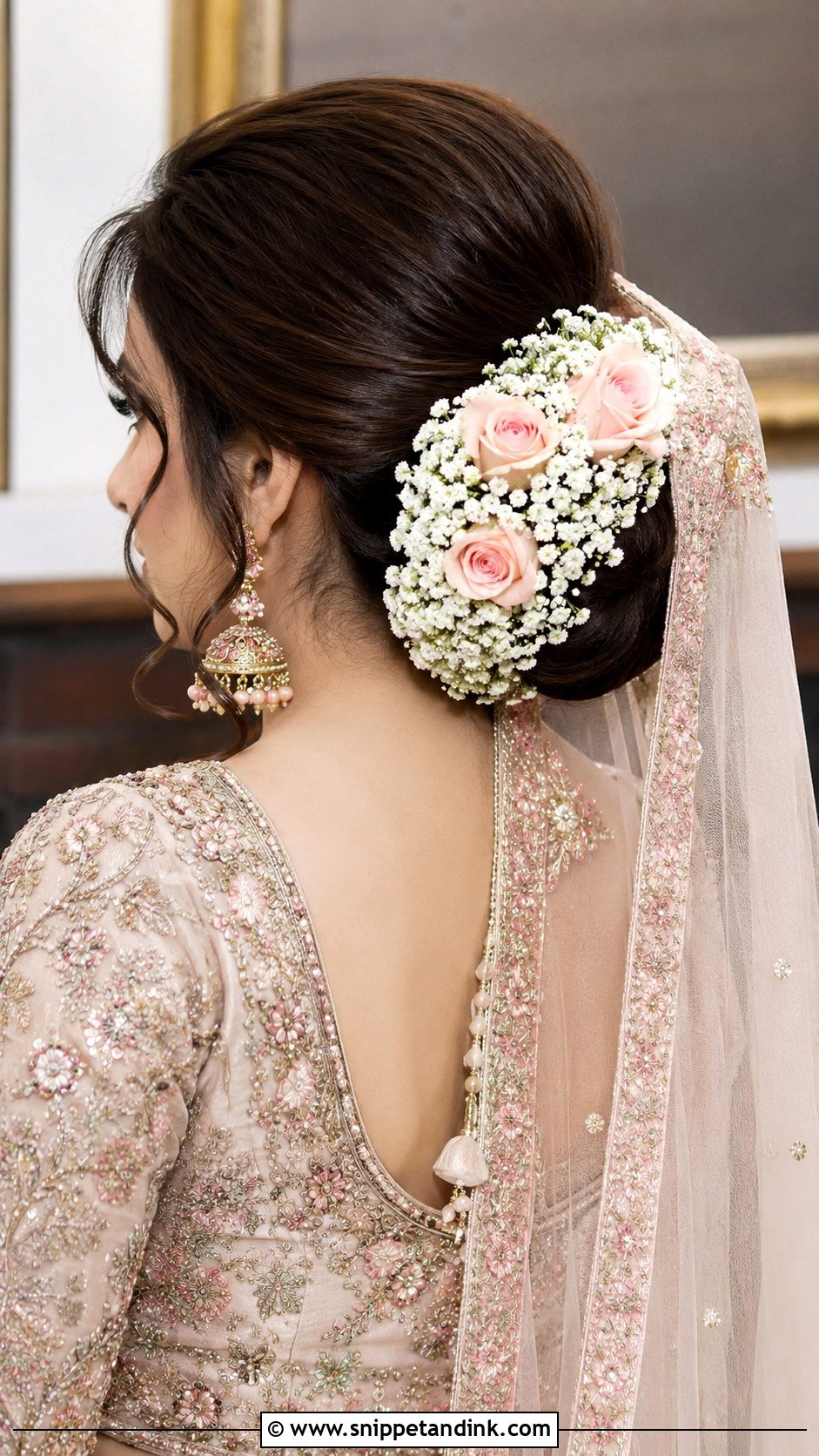
Real flowers wrapped round a bun bring colour and scent that fabric can’t quite match. I wrap them around a low or side bun and pin the dupatta just below, so the flowers sit on show above the fabric. White jasmine and soft pink roses are the usual picks, matched to the outfit. Fresh blooms wilt in hot halls, so I put them in last and keep spares in the fridge until then. Mehndi and nikah suit this most.
11. Side Bun With Embroidered Dupatta
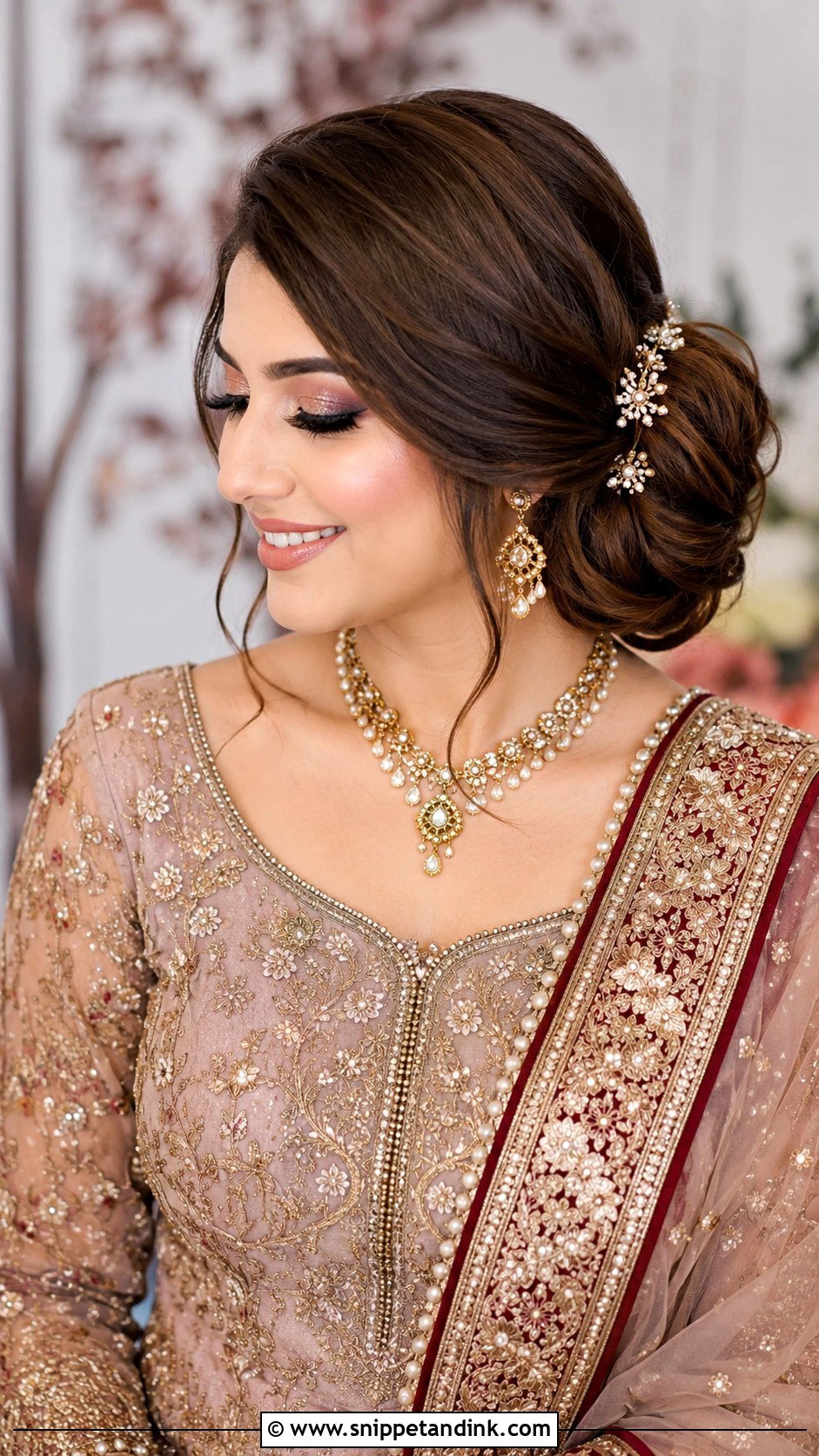
A low side bun adds asymmetry and balances an embroidered dupatta draped over the opposite shoulder. The placement softens the jawline. I pin the bun on whichever side your photographer will see most at the stage, usually decided with the couple’s seating in mind, and keep the dupatta fixed firmly on the other side so it frames the face without slipping. A few jeweled pins near the bun are plenty. Walima and reception are where I use it most.
12. Half-Tied Curls With Maang Tikka
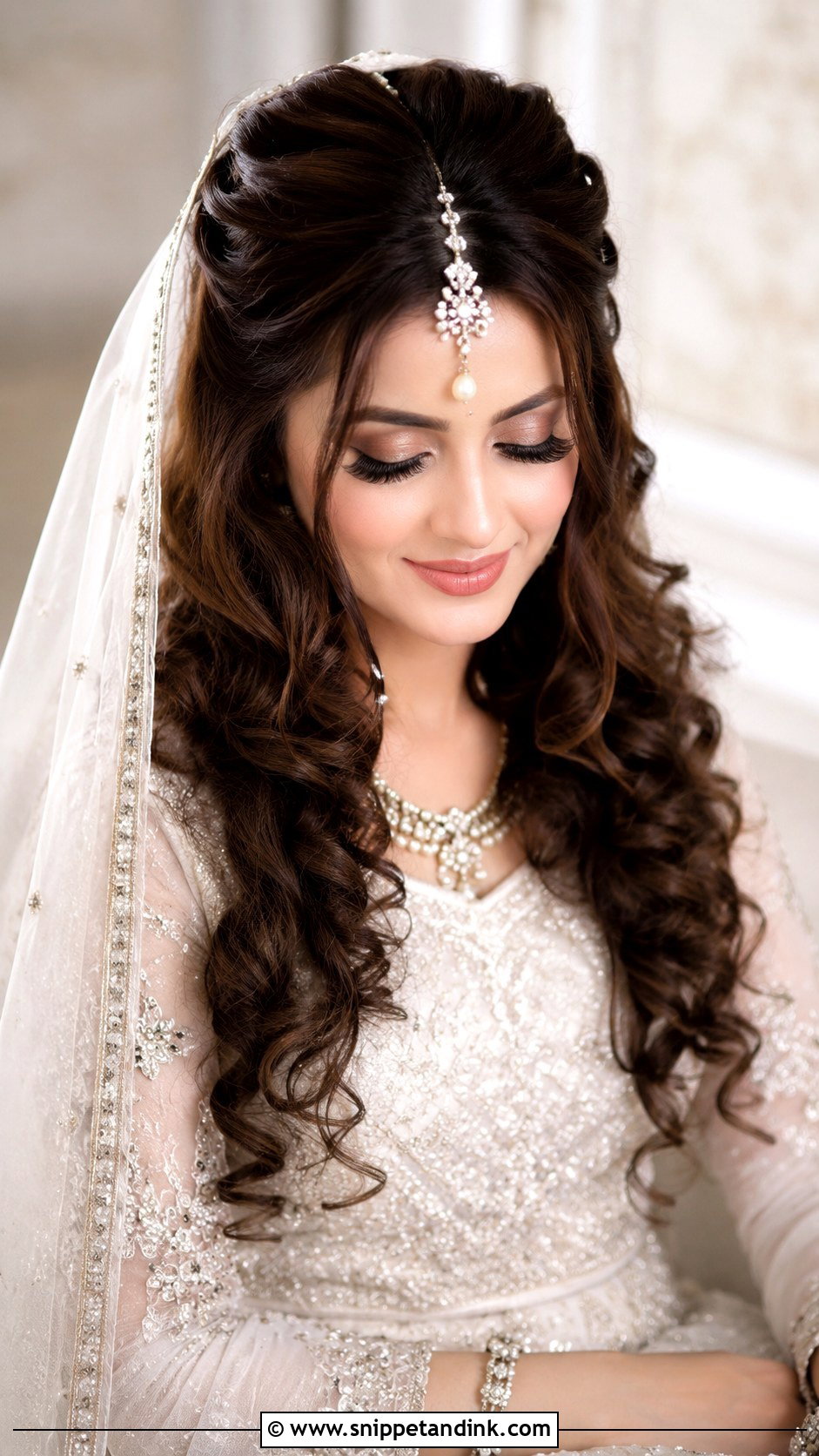
Half-tied curls give a little structure on top while the rest flows. I pull the upper section back, secure it with crossed pins, and that tied point becomes the anchor for a light dupatta over the head. A bold maang tikka sits along the centre part. It suits naturally wavy or curled hair and lighter nikah or mehndi outfits. A heavy dupatta pinned to such a small section will drag it backward, so keep the fabric light.
13. Braided Bun With Dupatta
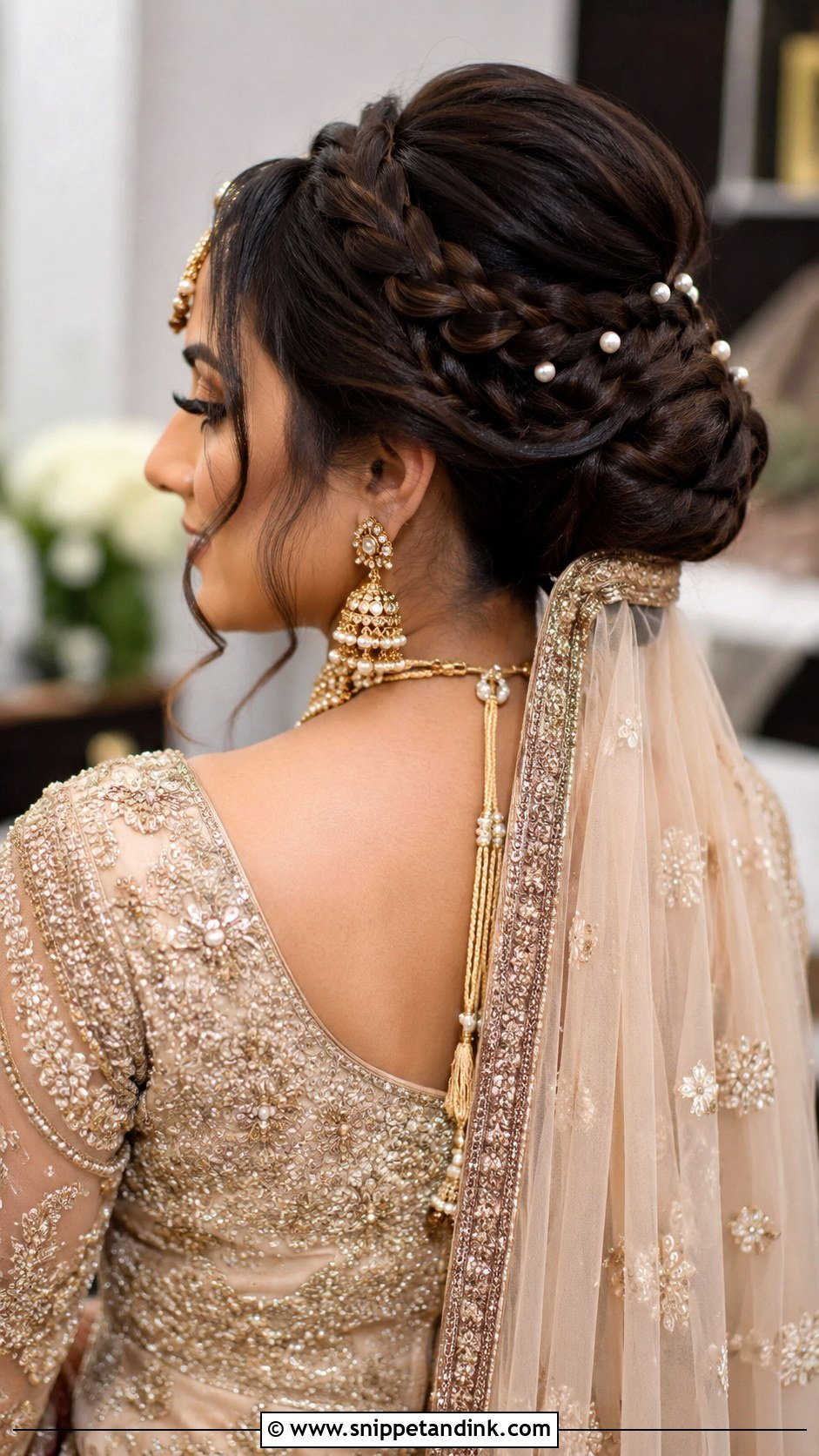
Braiding the hair before coiling it adds texture and, more importantly, grip. A braided bun holds a heavier dupatta better than a smooth one because the pins catch in the plaits instead of sliding. I pin the dupatta low so the neckline stays clear and the braid detail still shows at the back. Pearls or tiny flowers along the braid add something extra. It’s a strong base for walima or baraat when you’re facing long hours on stage.
14. Puff With Long Open Hair
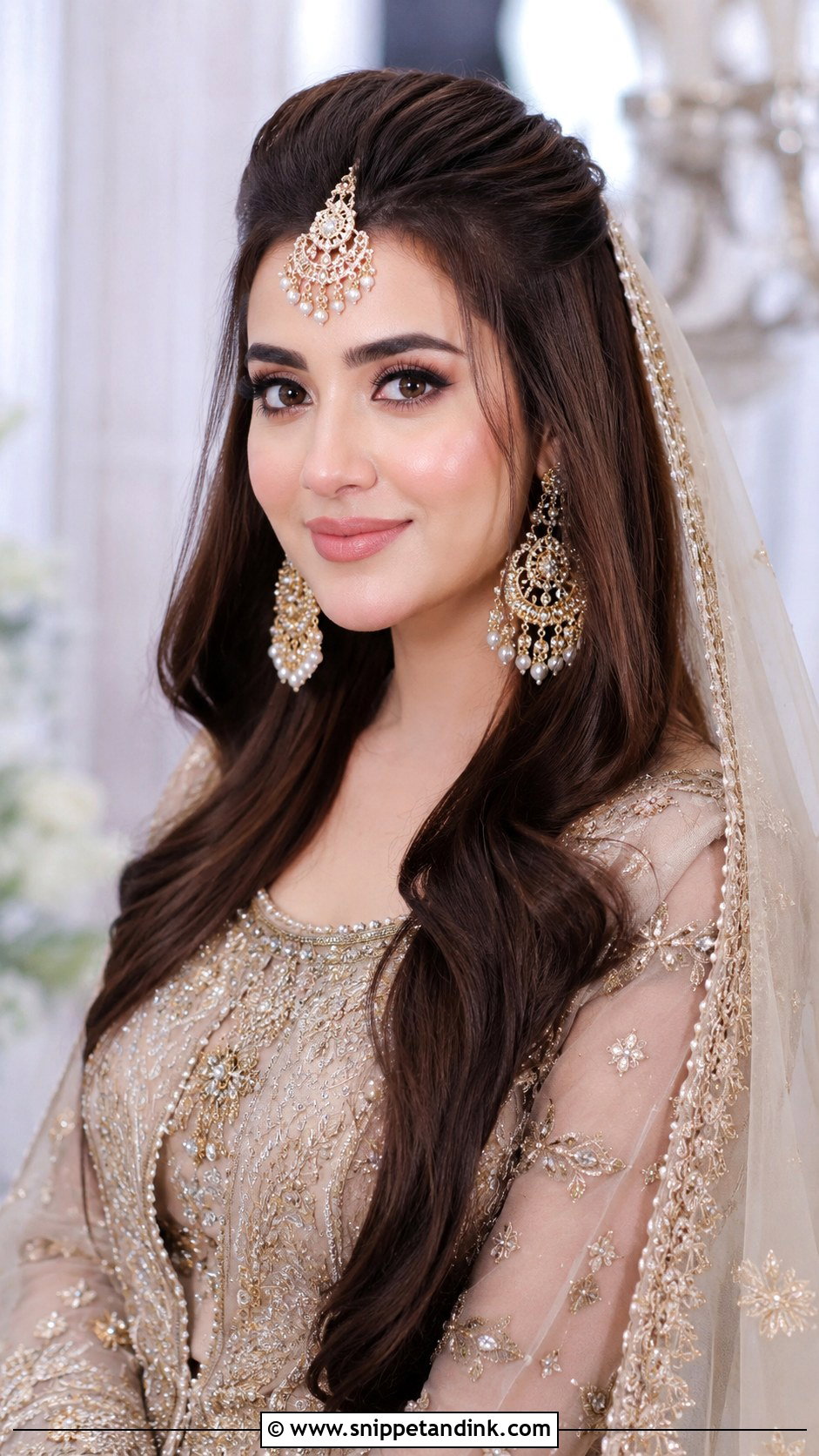
A front puff with long hair left open gives height and length together. I tease the crown gently, smooth over the top, then leave the lengths down with soft movement. The dupatta sits behind the puff, which keeps it lifted off the face. It needs long, healthy hair to look full below, and it balances heavy jewelry by lengthening the face. My only warning: open lengths under a heavy dupatta can tangle against the embroidery, so I lightly spray the ends with shine spray to reduce friction.
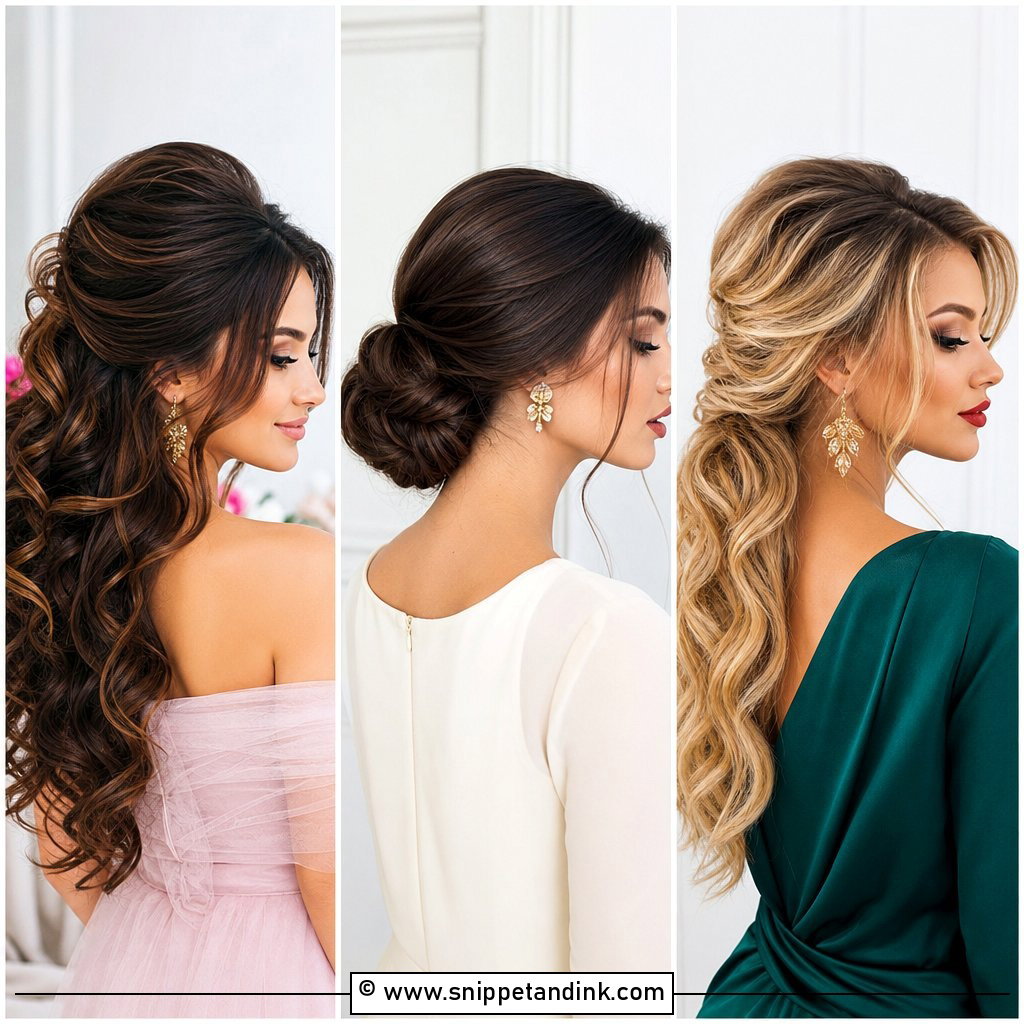
15. Low Chignon With Sheer Dupatta
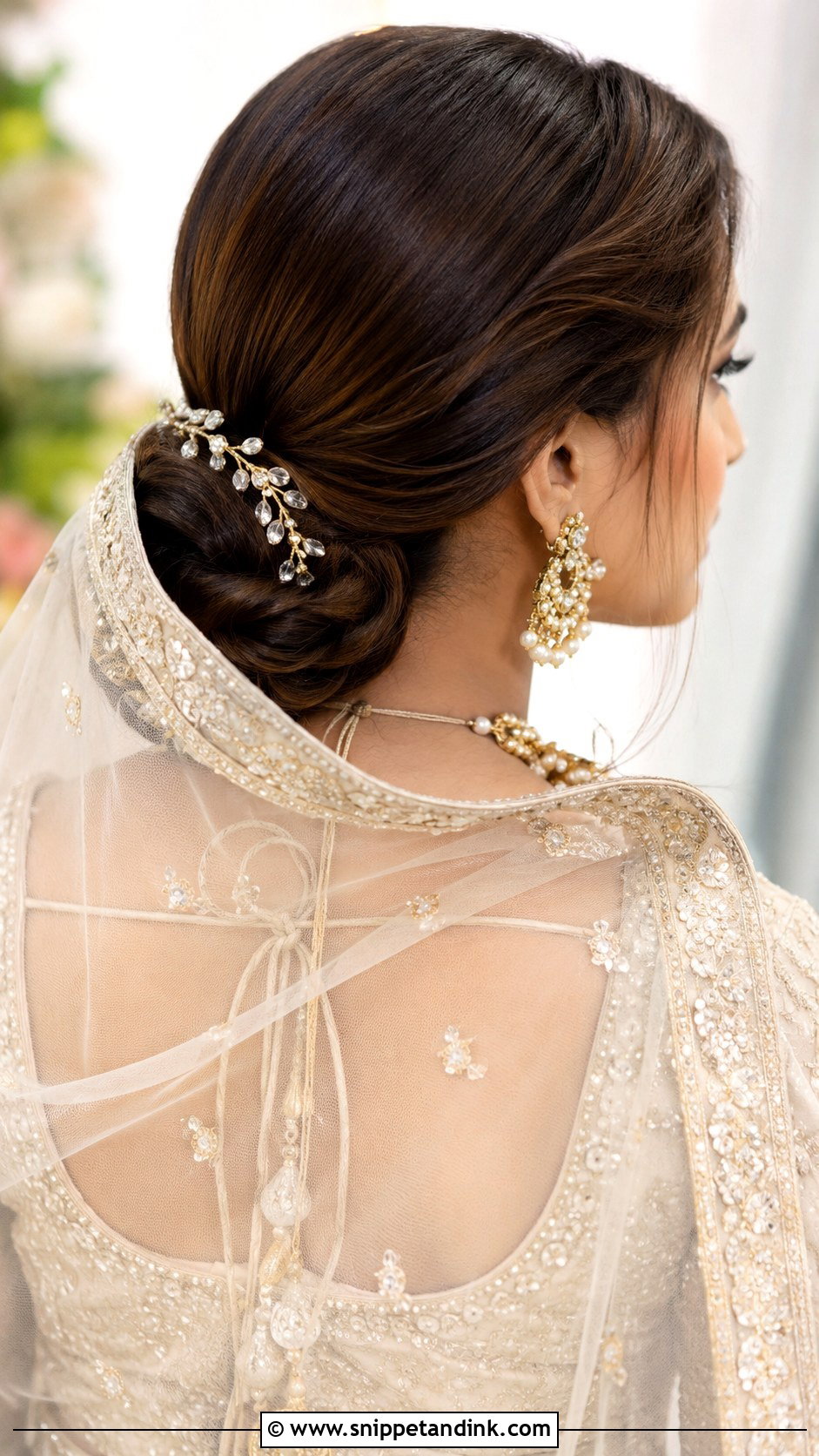
A low chignon is a smooth, twisted knot at the nape, and it pairs naturally with a sheer, lightweight dupatta. The transparency of the fabric lets the shape of the knot show through, so I keep the twist neat and tuck every end. Pin the dupatta gently; heavy pinning creases sheer fabric. It suits oval and heart-shaped faces and formal walima looks. One jeweled pin or small flower finishes it.
16. Crown Braid With Dupatta
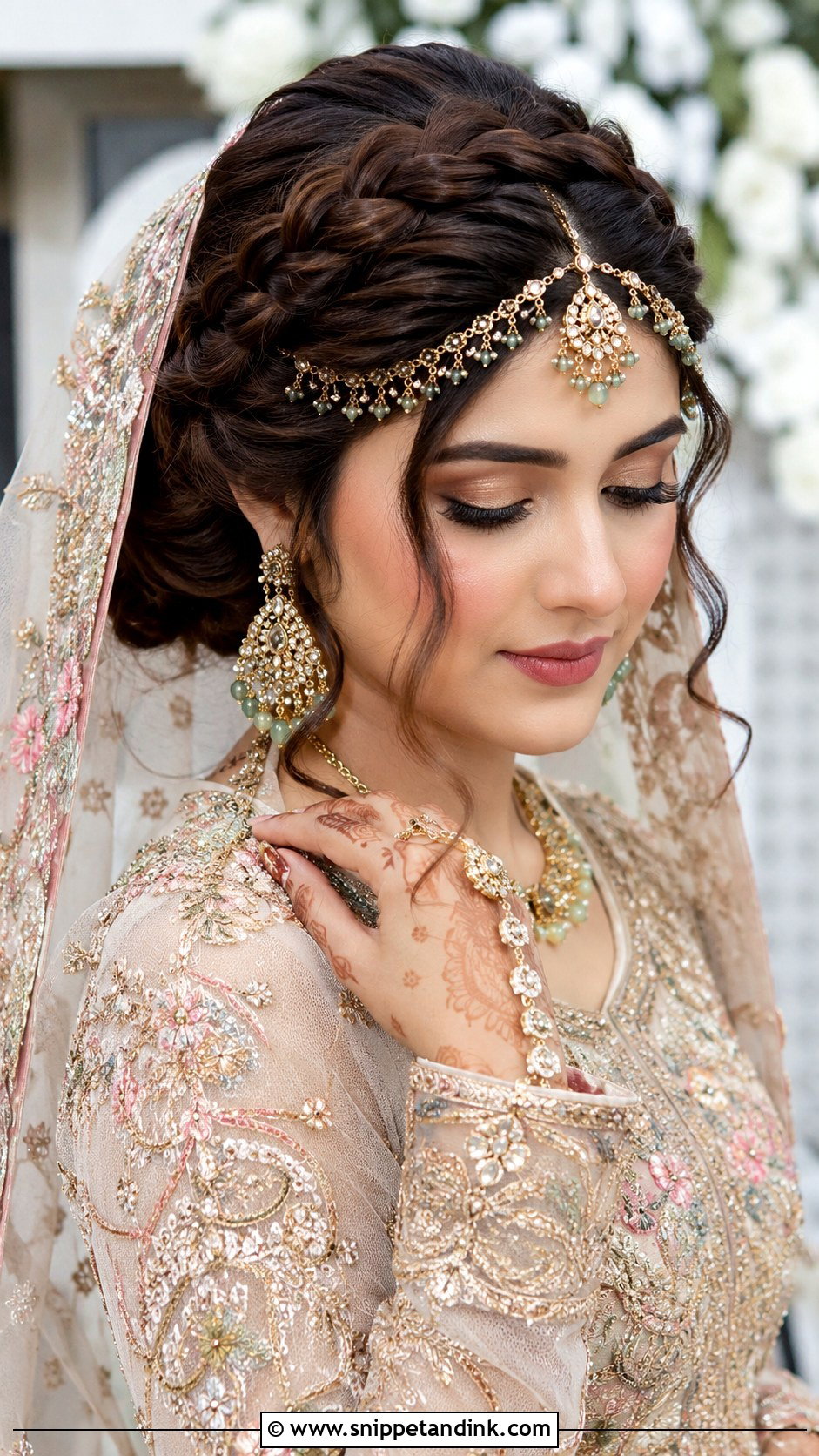
The crown braid wraps round the head like a tiara and gives me the firmest pinning line of any style on this list. The dupatta sits behind the braid, flowing down without flattening anything. Matha patti or maang tikka hook in easily. It suits long, thick hair, because the braid has to circle the whole head. Mehndi and nikah are its natural setting, and loose strands stay in place all day.
17. Twisted Updo With Jhoomar
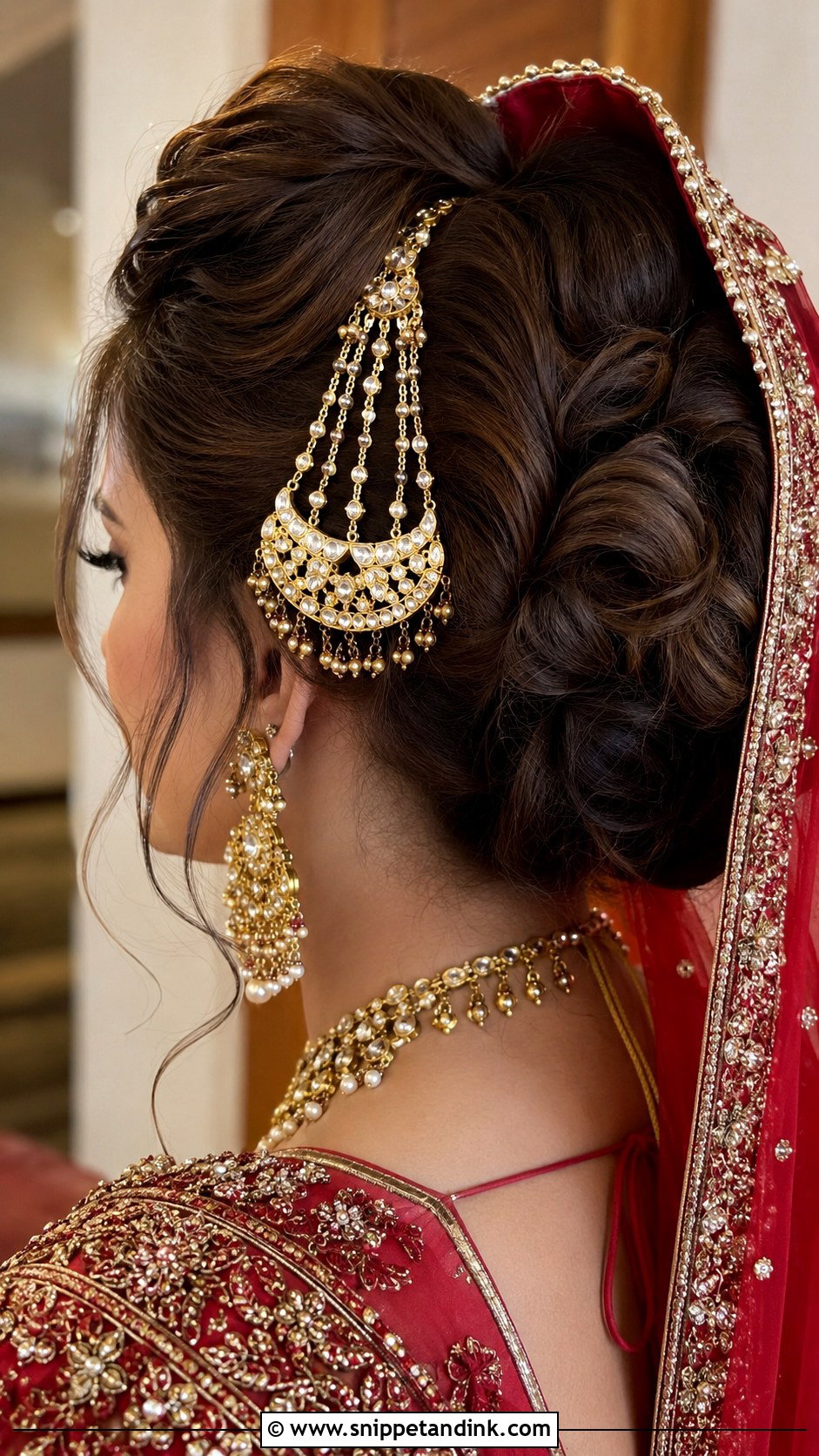
Soft twists gathered into a structured updo hold heavy accessories well, which is why I pair this one with a jhoomar on the side. The dupatta goes over the head and anchors near the twists, and the neckline stays clear for layered necklaces. It suits brides wanting detail without a full braid, especially for walima or baraat. Plan which side the jhoomar hangs before draping, so the fabric falls back on that side and doesn’t hide it.
18. Messy Bun With Soft Tendrils
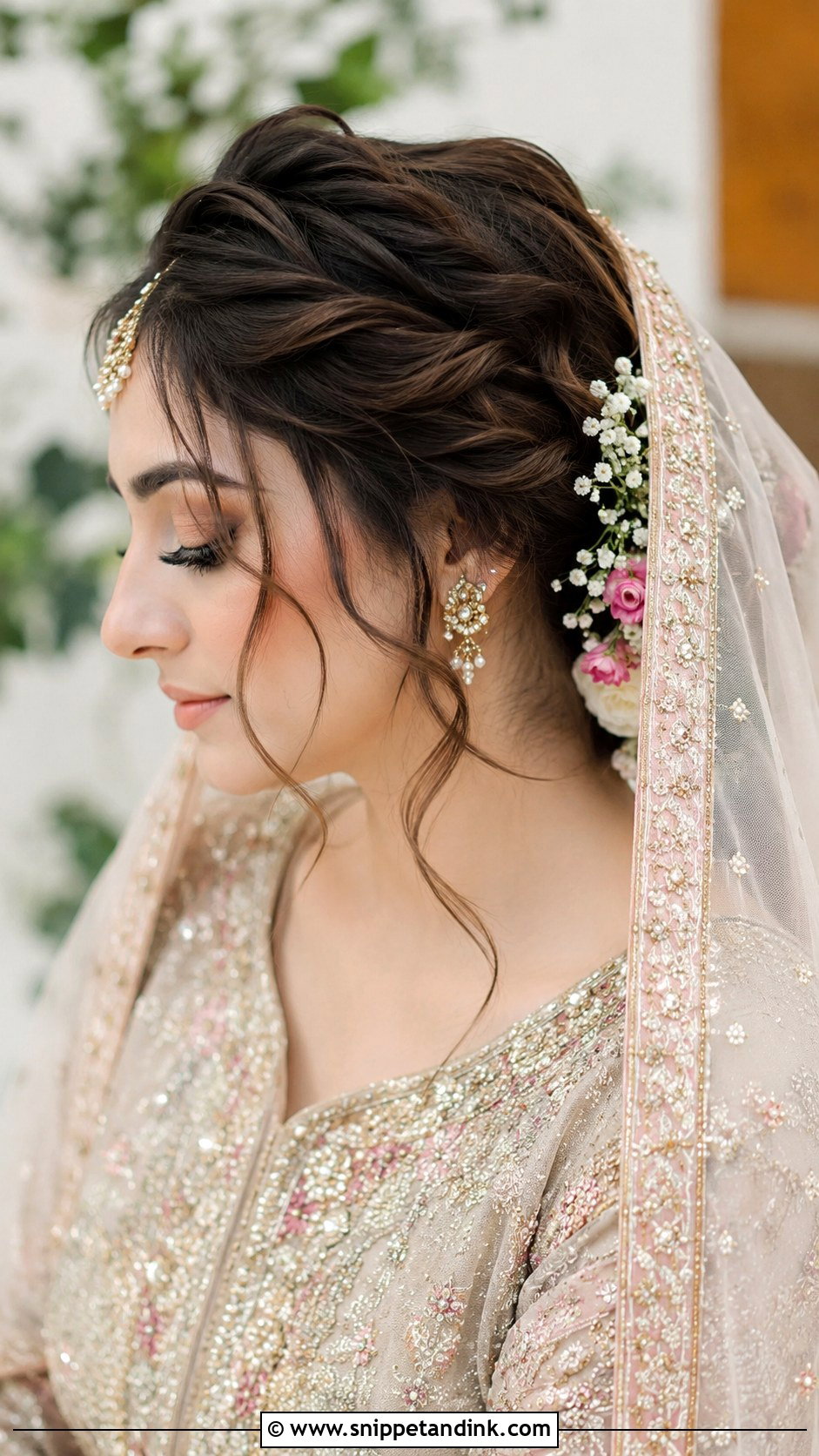
A messy bun is my mehndi favourite, since it’s comfortable and doesn’t mind a dupatta being taken off and on for dancing. I gather the hair loosely, then pull a few tendrils around the face. The dupatta is pinned gently over the head to match the relaxed feel. Small flowers tucked into the bun keep it fresh. It does need some texture to stay soft rather than limp, so slippery hair gets a dry texture spray first.
19. Bouffant With Long Curls
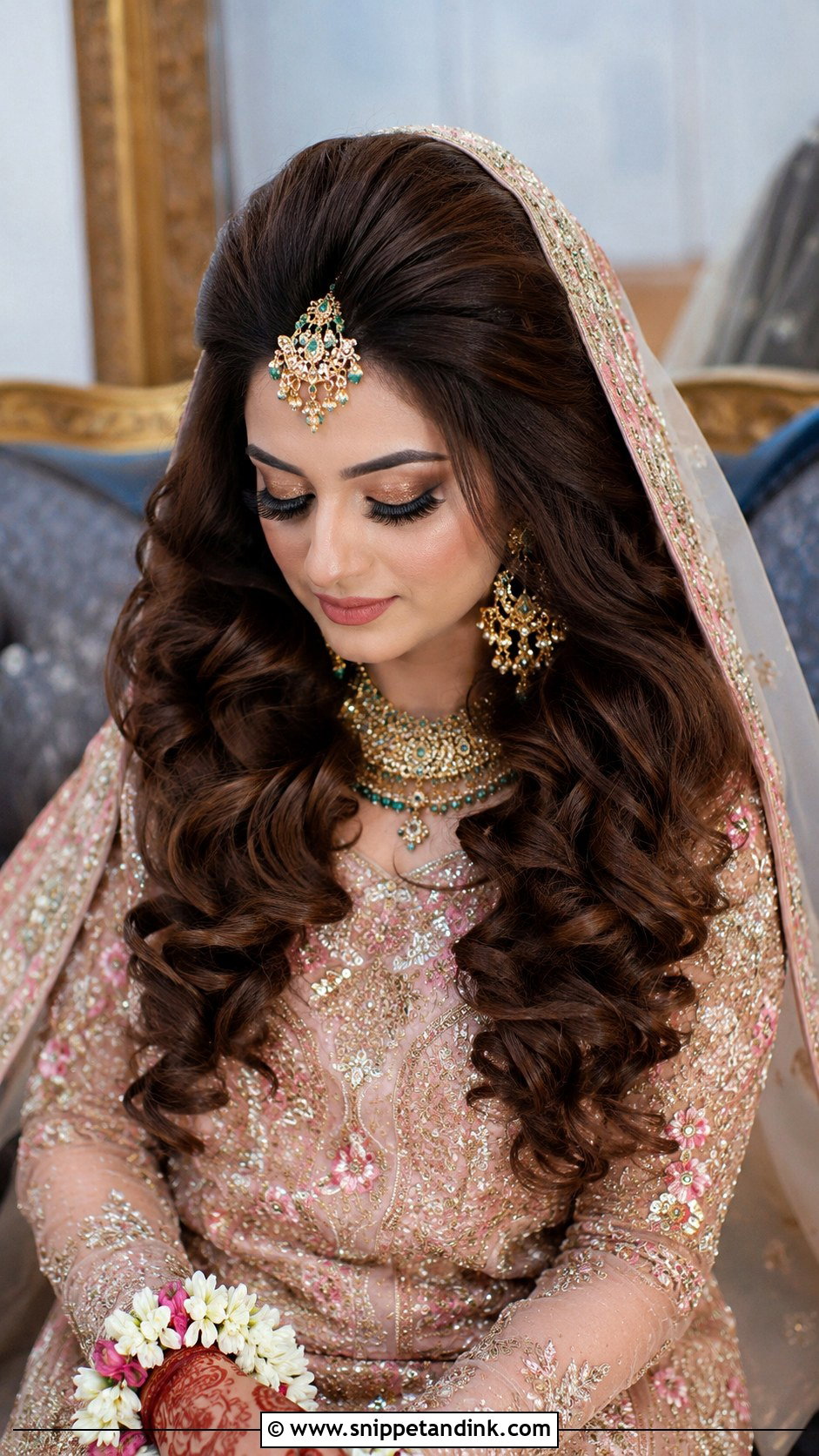
A bouffant gives the dramatic height grand baraat looks often call for. I tease the crown for fullness and let long curls fall down the back, and the dupatta sits behind the bouffant, held up and secure. The lifted crown balances a heavy maang tikka and statement jewelry. It suits brides with long, voluminous hair. If your face is long, I keep the height modest, since a tall bouffant can stretch the face further in photos.
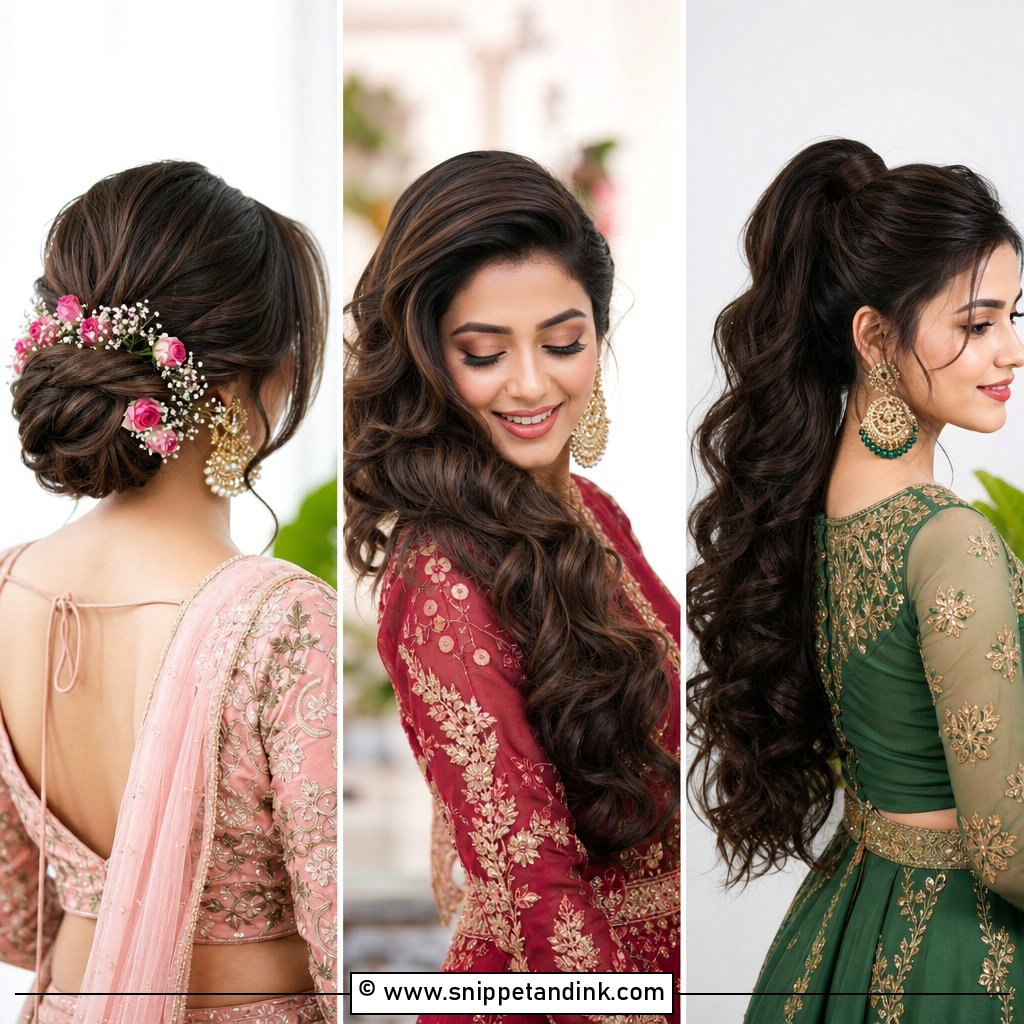

20. Sleek Ponytail With Dupatta
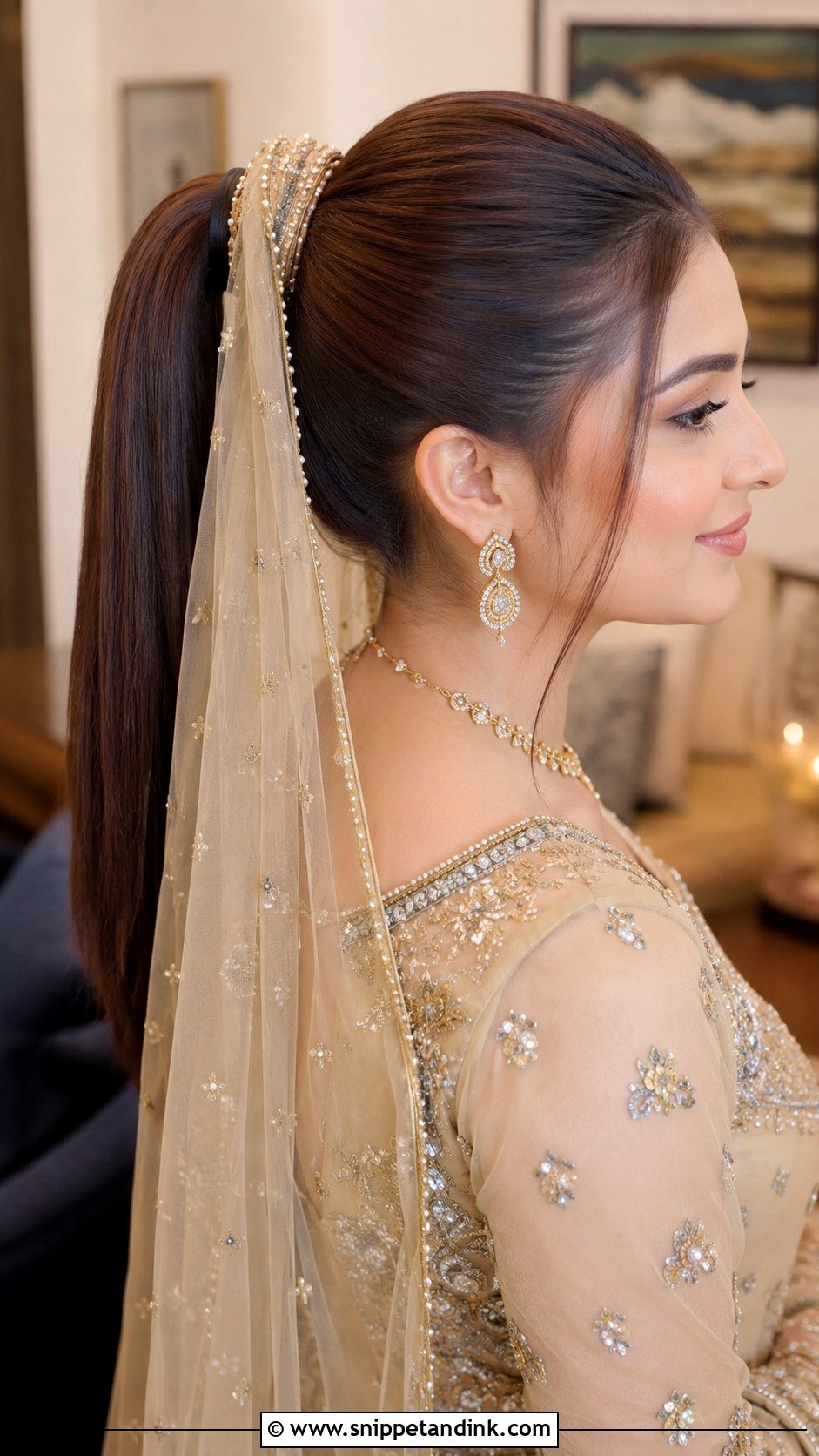
A sleek ponytail is the modern outlier here. I pull the hair back smoothly into a high or mid ponytail and wrap a section around the base to hide the elastic. The dupatta drapes over the head and anchors near the ponytail base, which is firmer than you’d expect. It suits reception or walima, and the clean finish lets jewelry and makeup do the talking. A high ponytail under a heavy dupatta can push the fabric outward at the back, so I usually go mid-height when the fabric is weighty.
Is One Hairstyle Enough for Nikah, Baraat and Walima?
Each event usually comes with a different dupatta, and that should drive the hair. The baraat dupatta tends to be the heaviest, so a high bun or puff with a firm base makes sense. Walima outfits are often lighter in colour and weight, which opens up chignons, side buns and sleek ponytails. Mehndi is the most forgiving and suits braids and messy buns that survive dancing.
If you’re doing your own hair for one event, choose the style with the simplest anchor, like a low bun, and practise pinning the dupatta yourself in front of a mirror at least twice.
If the dupatta slips during the event
Don’t pull it back into place from the front; that drags the pins out. Ask someone to lift it slightly at the back, re-pin into the bun or braid, and add one extra crossed pair. Keep a small pouch with bobby pins in your hair colour, a few safety pins and a travel hairspray with whoever sits nearest you on stage.
Test the Fabric on Your Hair Before the Wedding Week
Your hairstyle and dupatta work as one piece, so plan them together. A bun, braid or crown that looks right on its own may sit very differently once embroidered fabric is pinned to it. Bring the real dupatta to your trial, decide which events need which style, and ask whoever is setting the dupatta on the day to be there. Add your maang tikka, jhoomar or flowers at that point, and you’ll know exactly how the whole look holds up before the first event.
You'll Like These Ideas:


Leave a Reply