
Most Nikah hair I do ends up under fabric for at least part of the day, whether that’s a soft updo, waves, or a braid tucked beneath a delicate dupatta. So I judge a style on two things: how it looks in the mirror, and how it looks after three hours of a dupatta resting on it and a long line of relatives hugging you. Some of the twenty styles here are quiet and structured, others are open and romantic. For each one I’ve noted the hair type it suits, how it behaves through a long day, and where it can go wrong.
Hair Oil, Mehndi Night and the Last Wash Before a Nikah
The week before a Nikah is usually full of events, and a few of them affect how well the hair will hold. These are the habits I ask my brides to plan around.
Oiling
Many brides oil their hair regularly, and it’s good for the hair. But oil left in the hair makes pins slide and curls drop. Stop oiling a few days before, and if you do oil, wash it out thoroughly with a clarifying shampoo.
Washing
Wash the evening before or on the morning of the Nikah, and skip heavy conditioner on the roots. Very clean, silky hair is actually harder to pin, so I add a little texture spray or dry shampoo before styling. Don’t arrive with wet hair; drying it properly takes time out of the styling slot.
Mehndi
If your mehndi is the night before, you won’t be able to use your hands while it dries. Plan to wash your hair before the mehndi, not after. Sleep with your hair loosely braided so it isn’t tangled in the morning.
1. Low Floral Bun for Nikah Bride
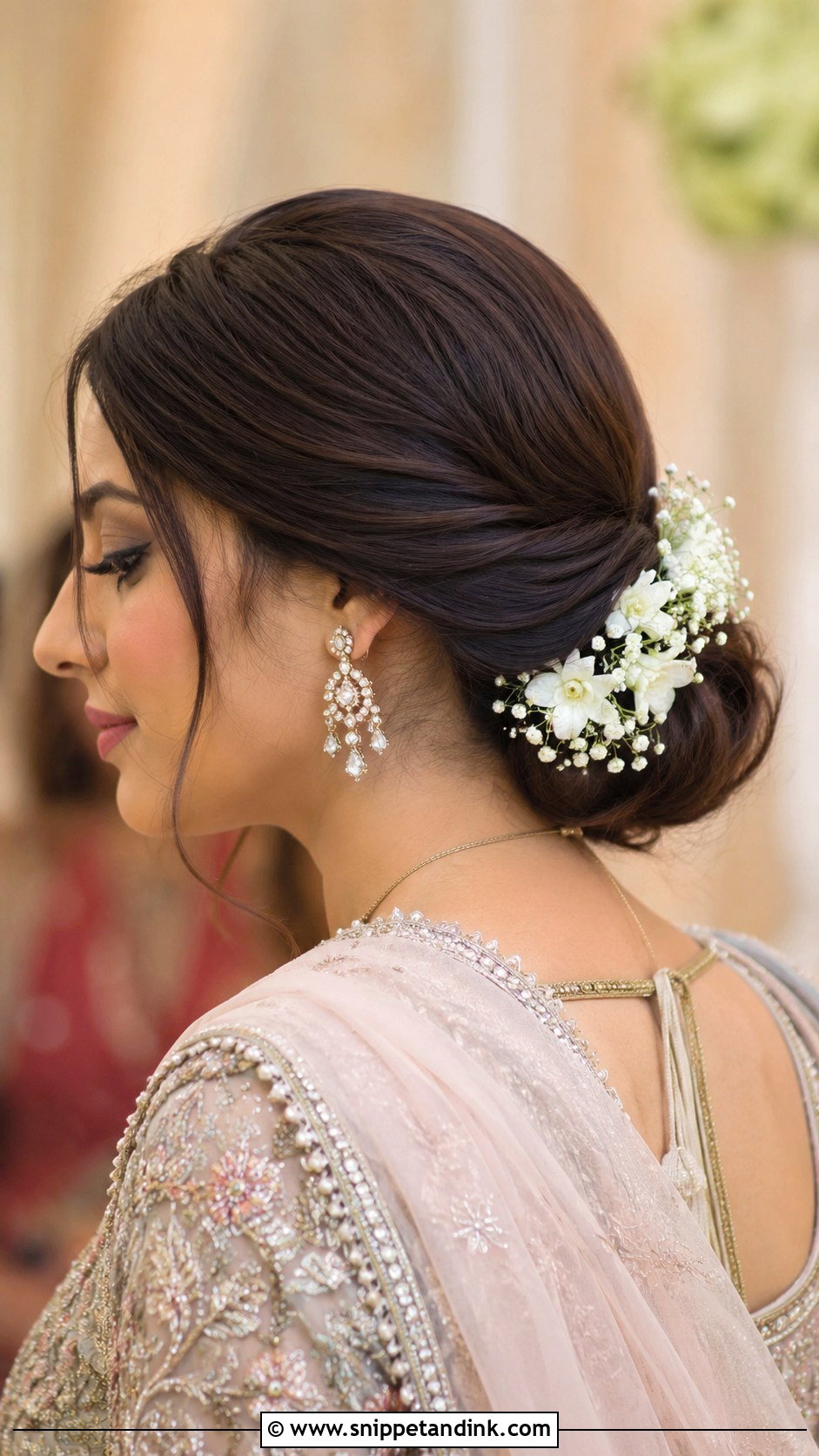
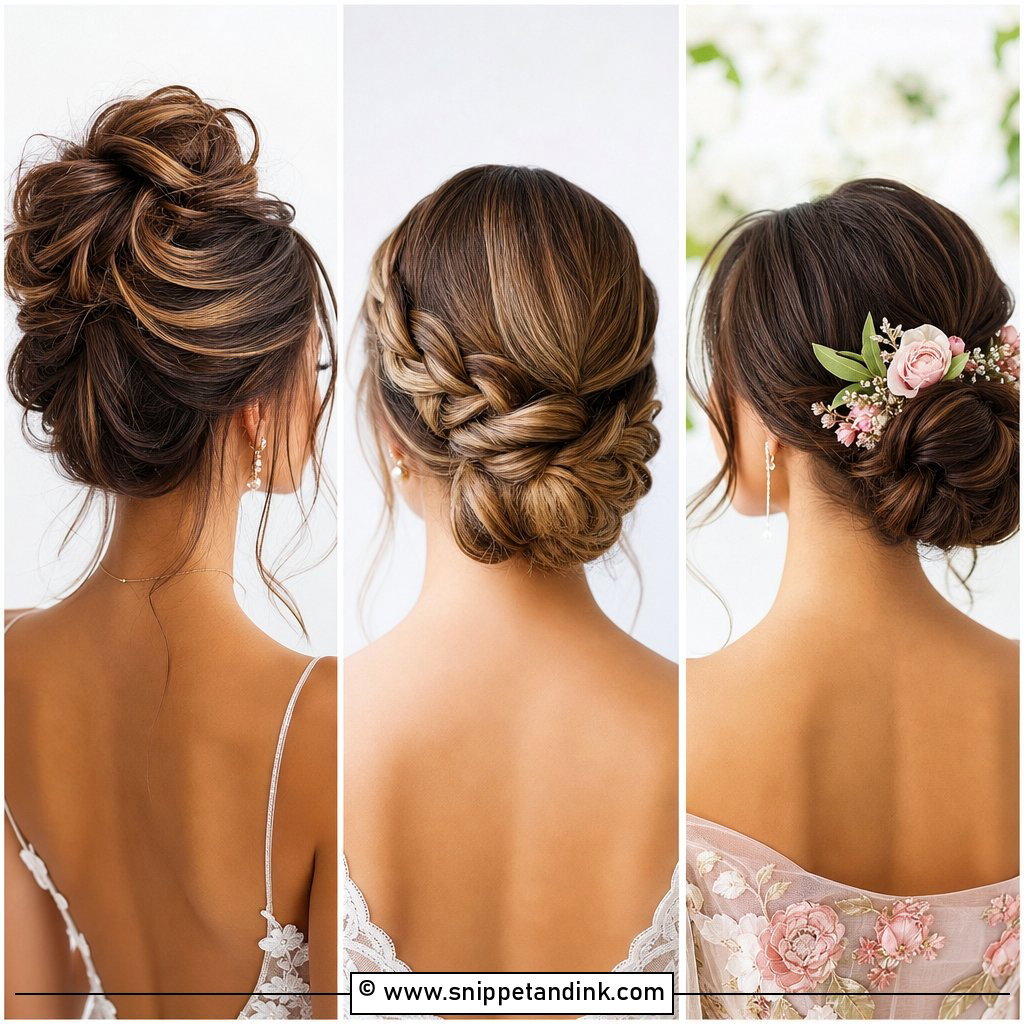
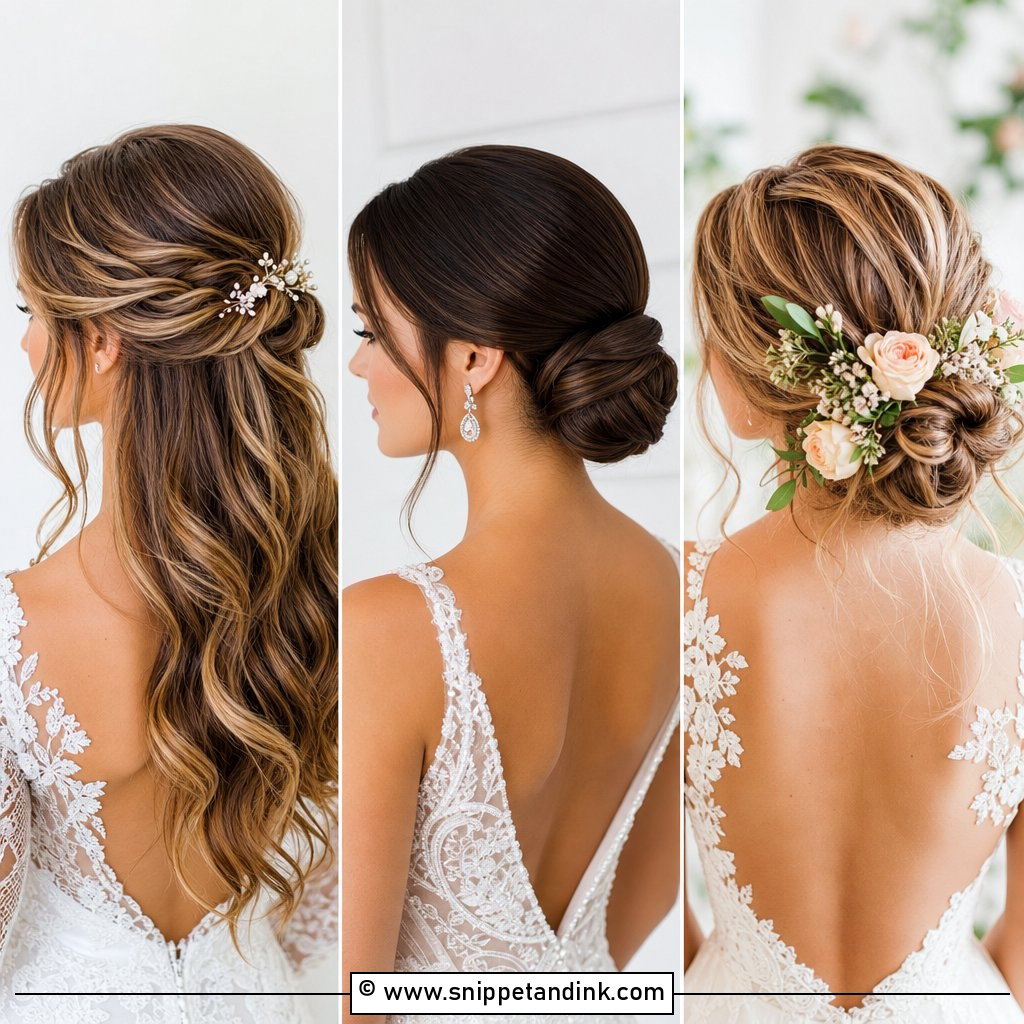
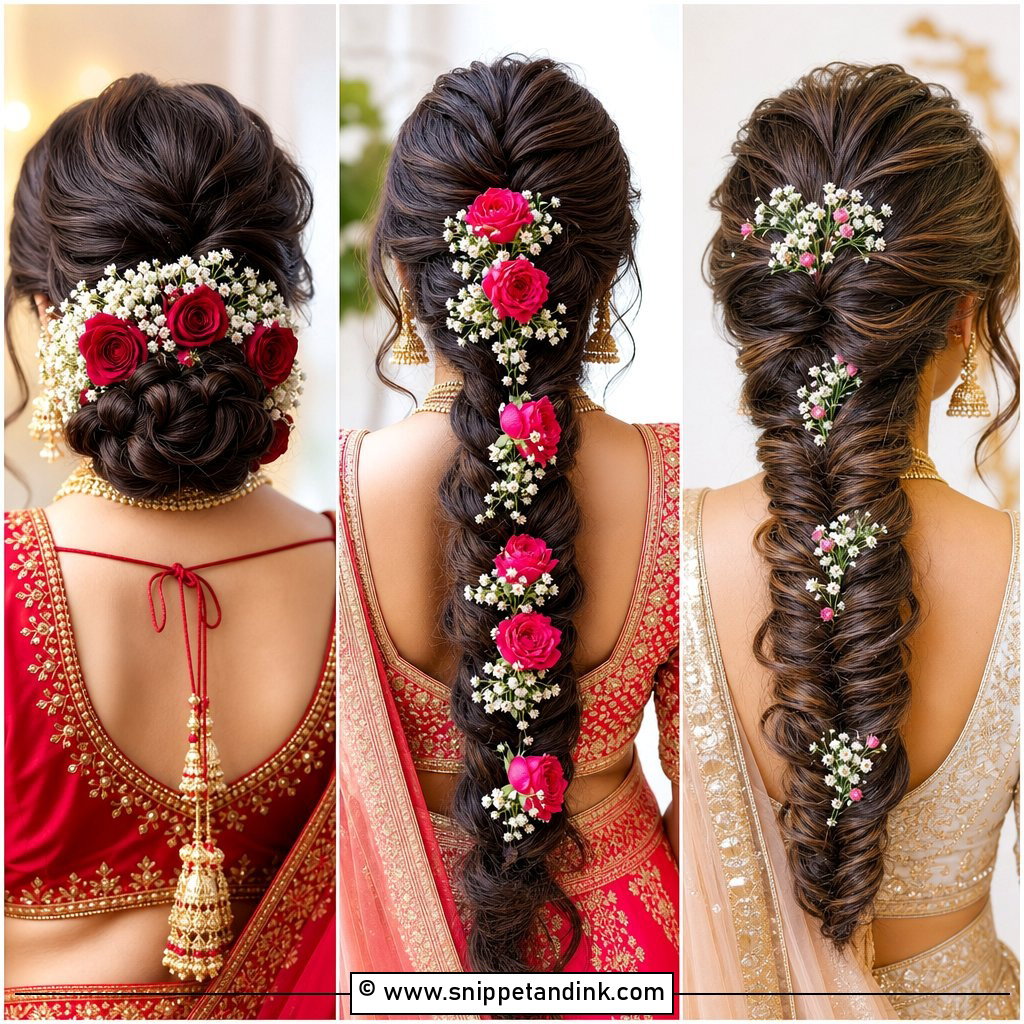
Flowers set into a low bun are a classic Nikah choice, and the low placement is what makes it practical: the dupatta drapes over the crown and falls around the bun instead of pressing on it. Fresh flowers look softer, but they wilt in heat, so for a summer ceremony I often mix a few fresh blooms with good silk ones. Keep the bun sleek for a polished finish, or pull a few strands loose at the temples. It suits heavy and light outfits equally.
2. Half-Up Half-Down Nikah Hairstyle
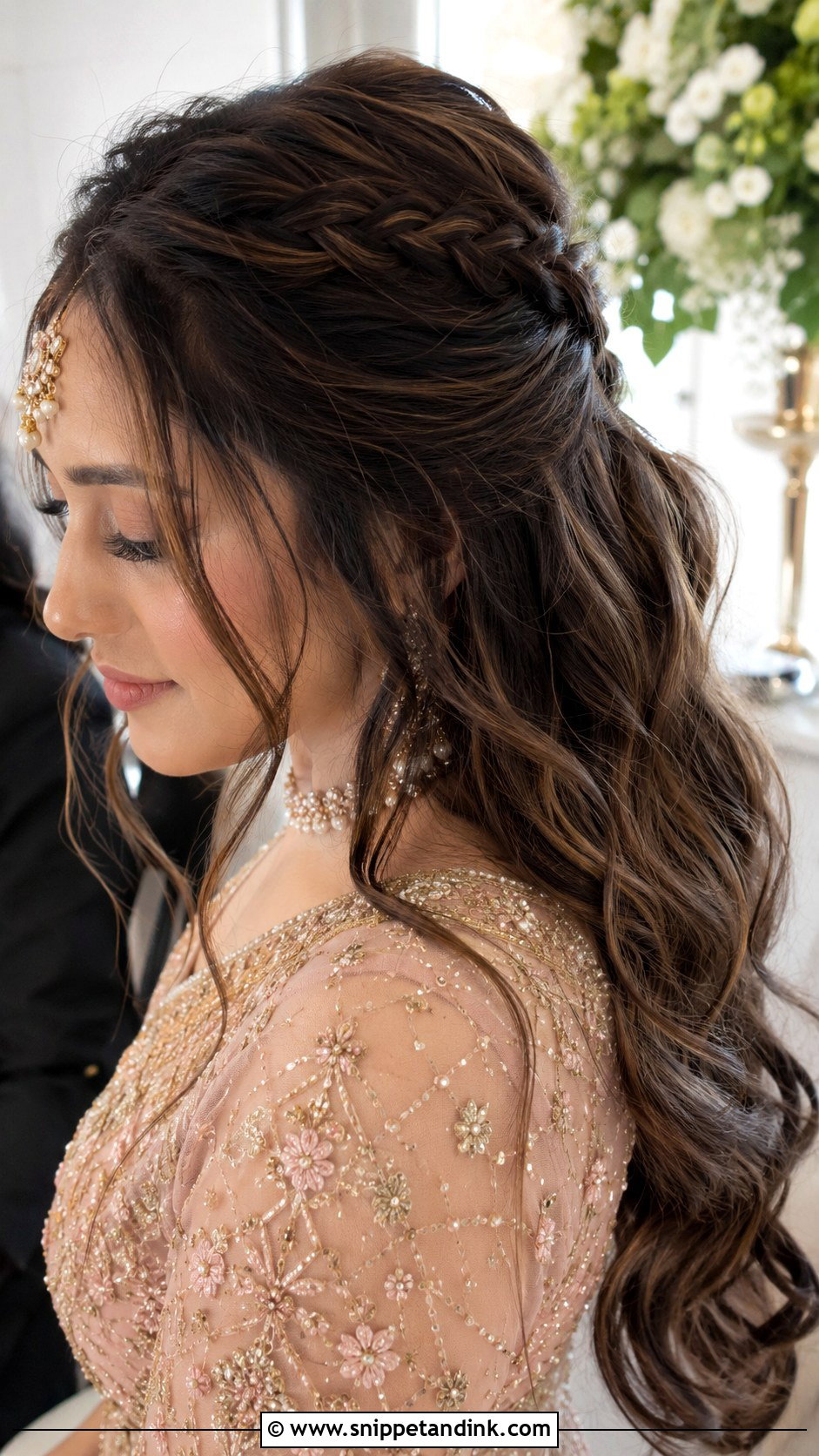
Half-up, half-down is the answer for brides who can’t decide between an updo and open hair. The top section is secured at the back and the rest falls in waves. Its weak point is the join: if the top section is pinned into slippery, freshly washed hair, it sags by the afternoon, so I backcomb lightly underneath and pin into that. A small braided crown or a clip can hide the join. It needs medium to long hair and suits a light dupatta better than a heavy one.
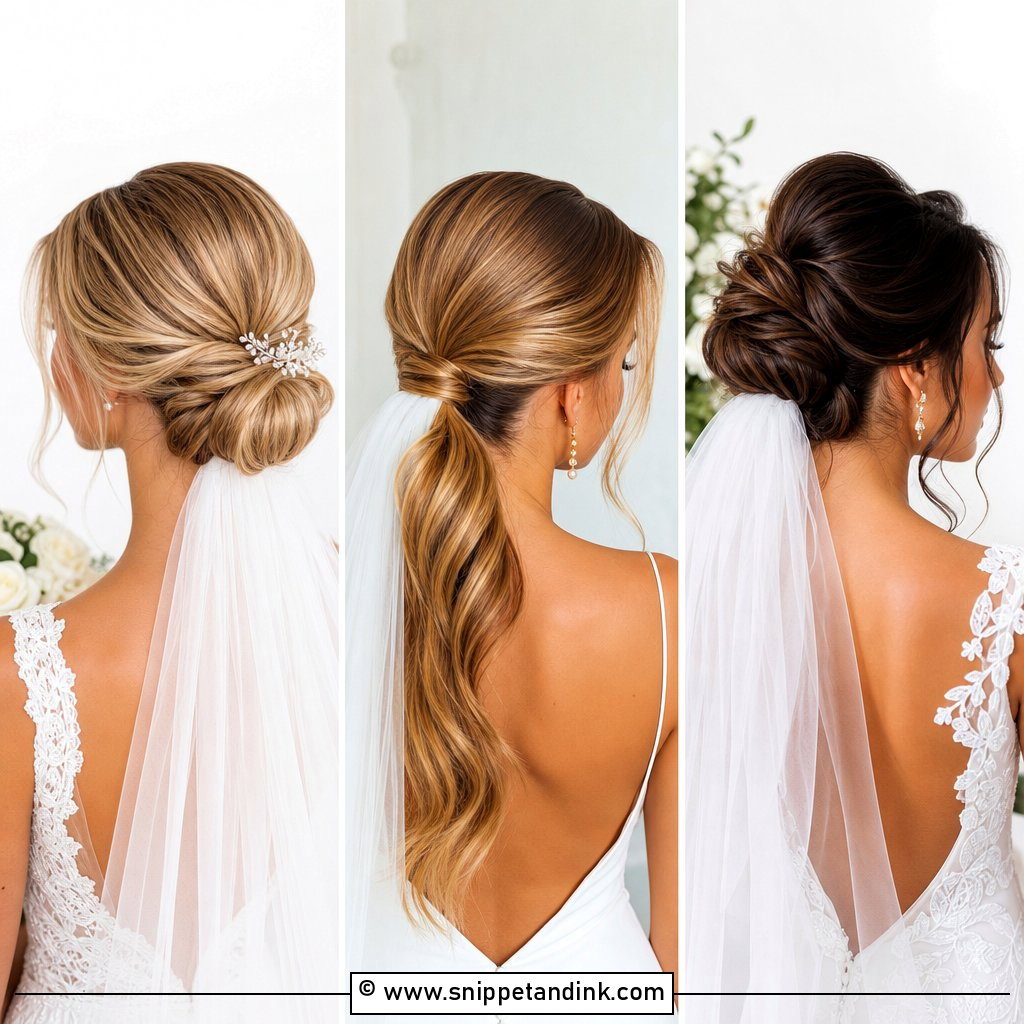
3. Sleek Low Bun With Dupatta
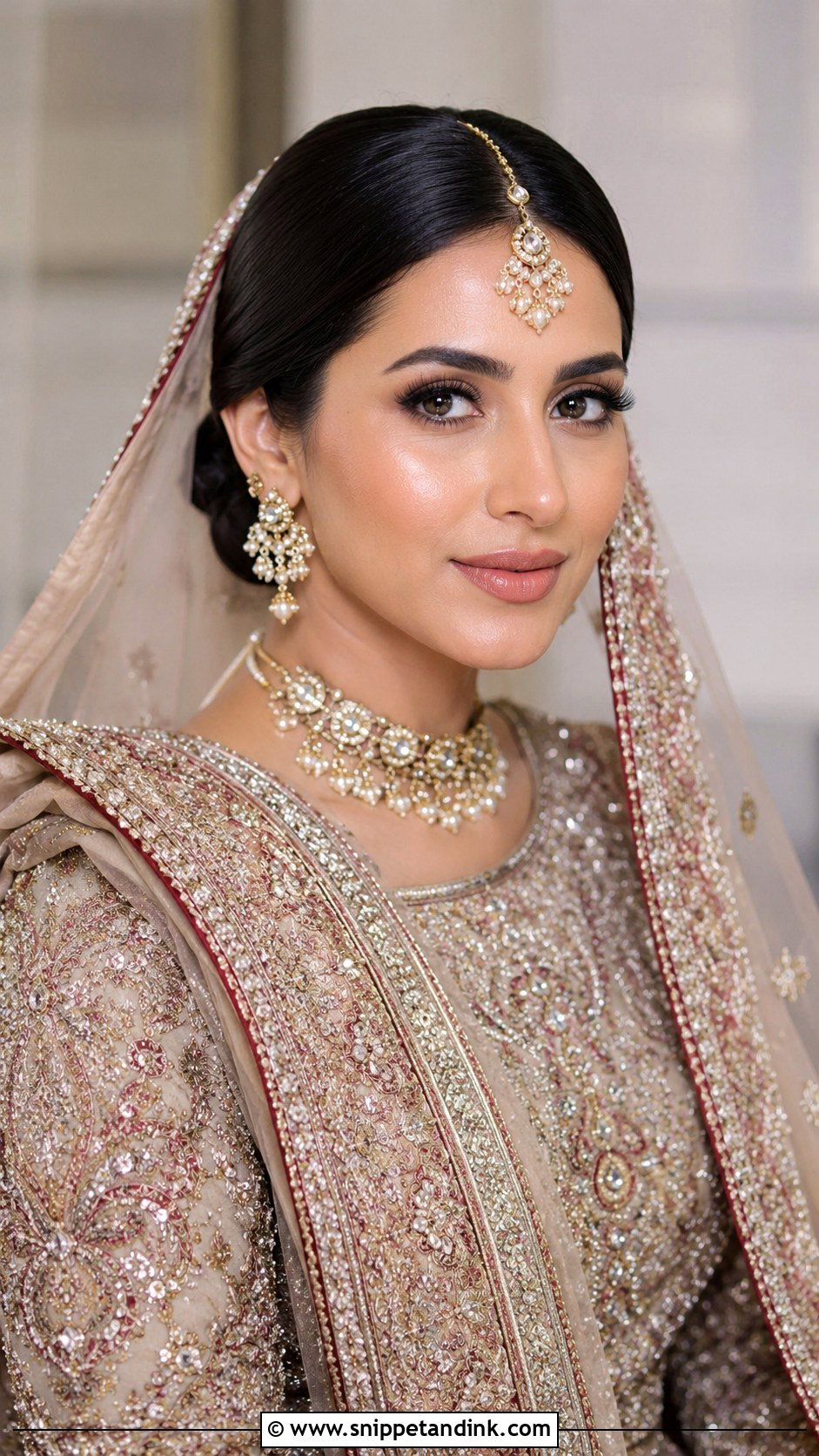
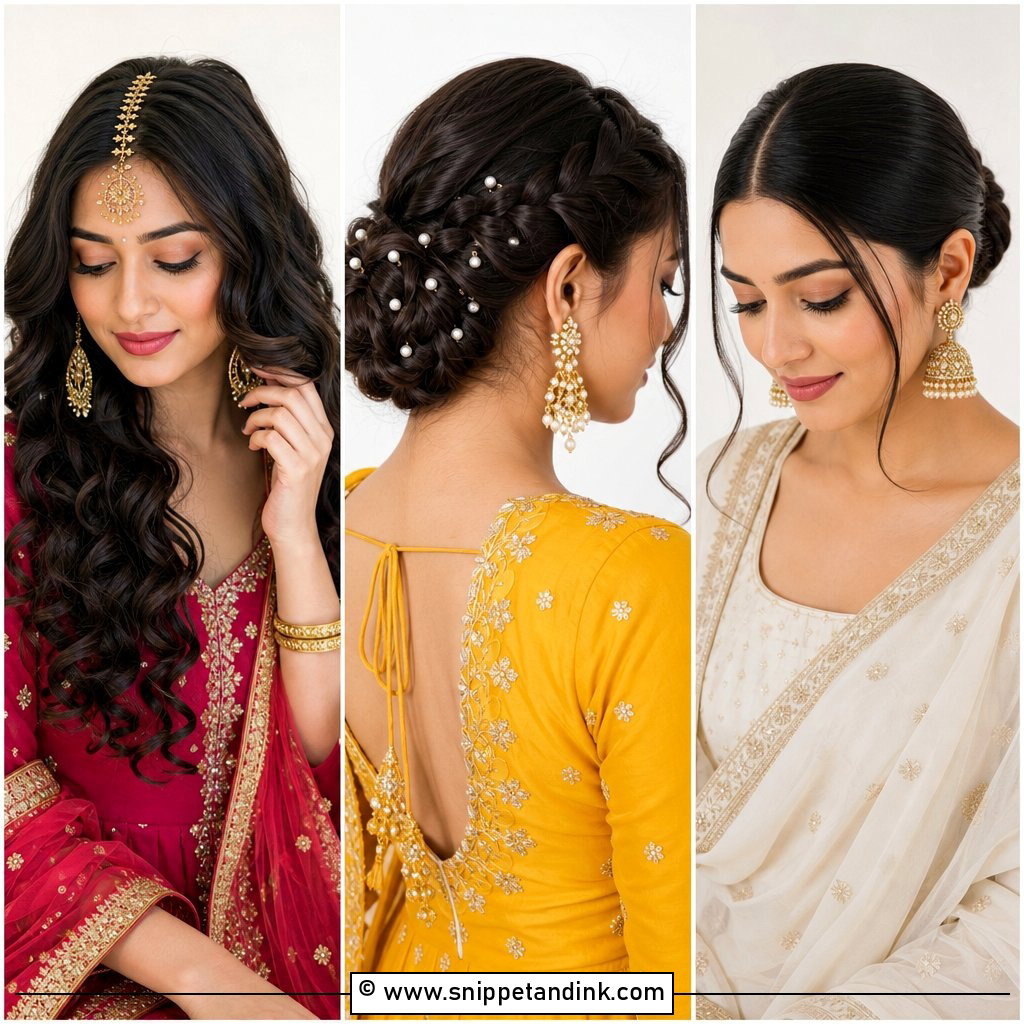
A sleek low bun pulls everything back into a neat knot at the nape. Its strength is how well it shows off jewelry, and a jhoomar or maang tikka sits cleanly against that smooth surface. The difficulty is flyaways. I smooth with a little cream rather than a lot of gel, because heavy gel dries crunchy and flakes under a dark dupatta. Choose a center or side part to suit your face. It’s simple, and that’s the point.
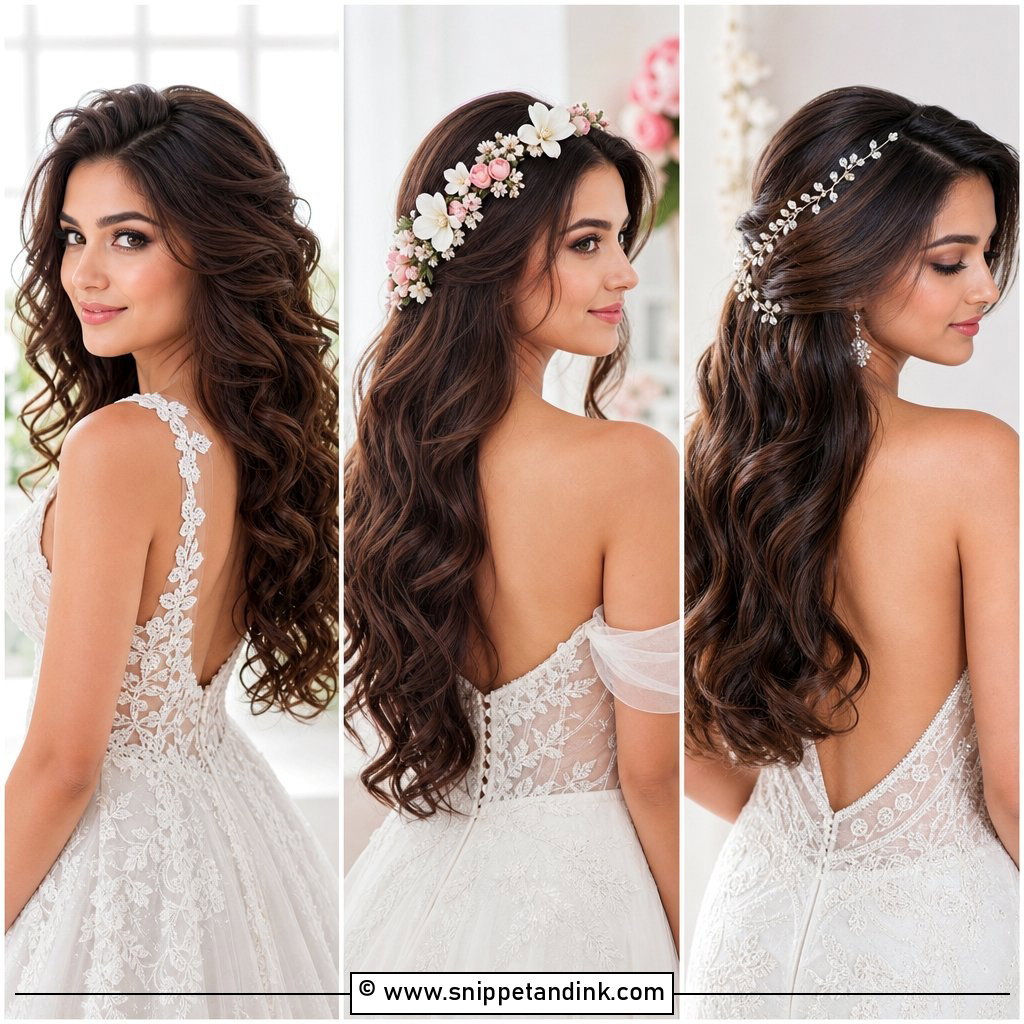
4. Romantic Curls for Open Hair
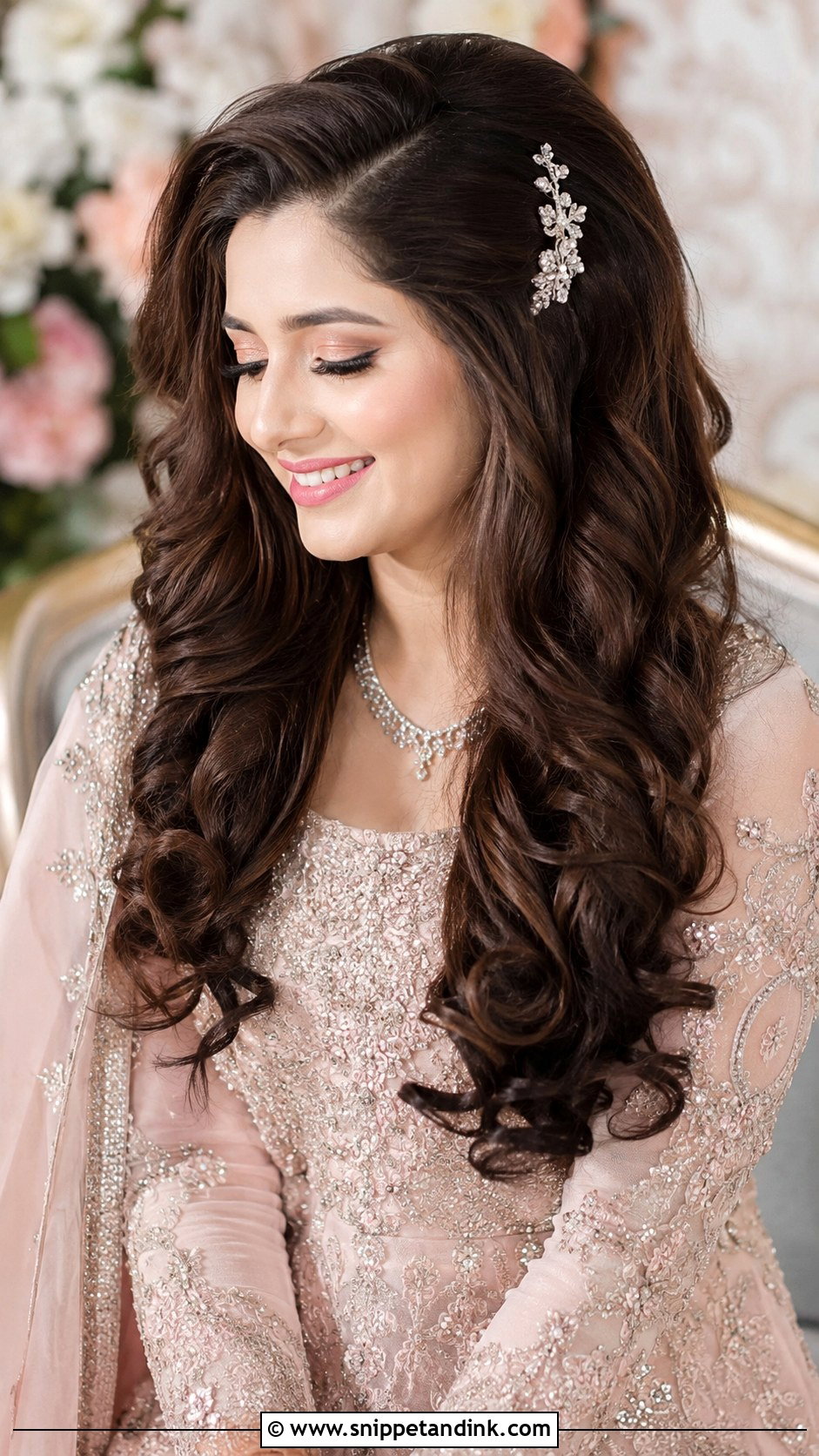
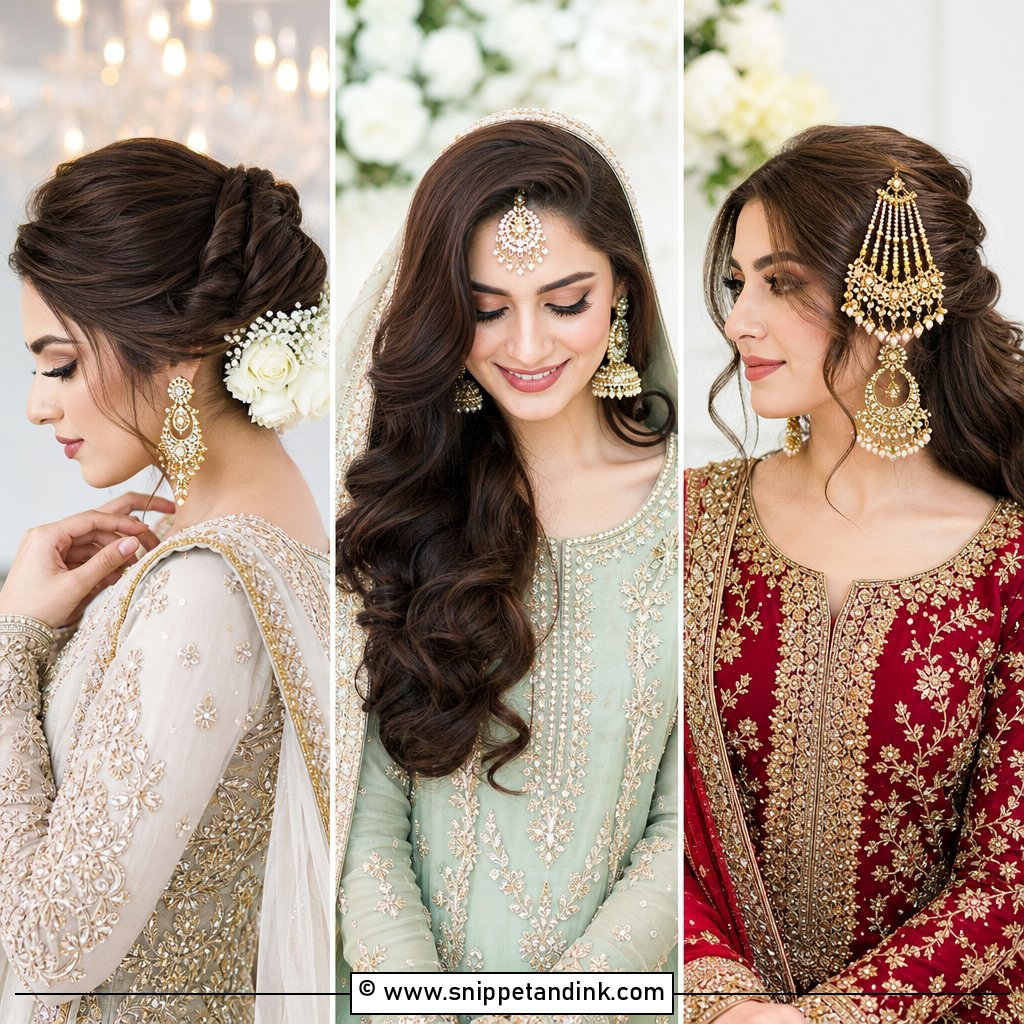
Open curls let the hair be the main feature, with volume and movement down the back. I set the curls with pins while they cool, then brush them out just before the dupatta goes on, so they have time to settle into soft waves rather than tight ringlets. A light, sheer dupatta pinned behind the crown is what keeps them visible. One side can be swept back with a jeweled pin. It suits medium to long hair, and it’s the style most affected by humidity, so plan for that if the venue is warm.
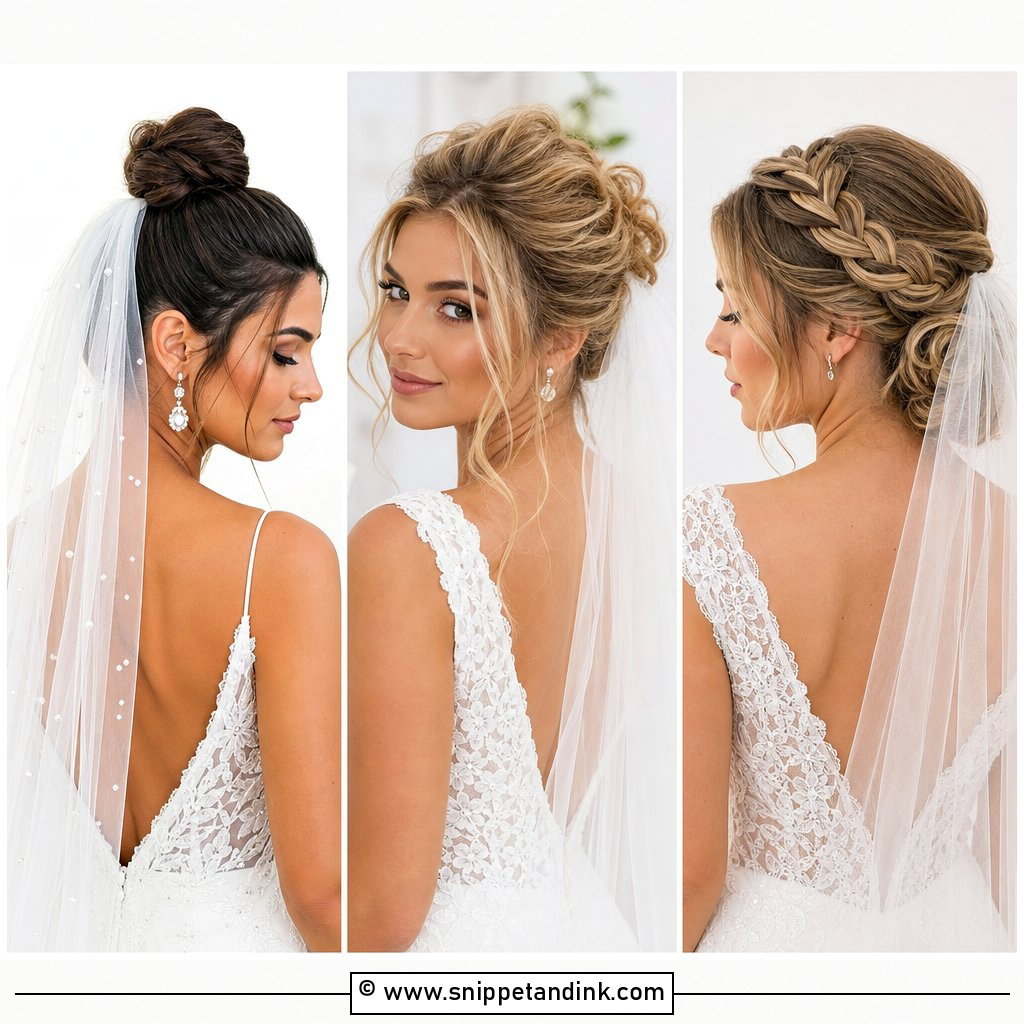
5. Braided Crown Nikah Hairstyle
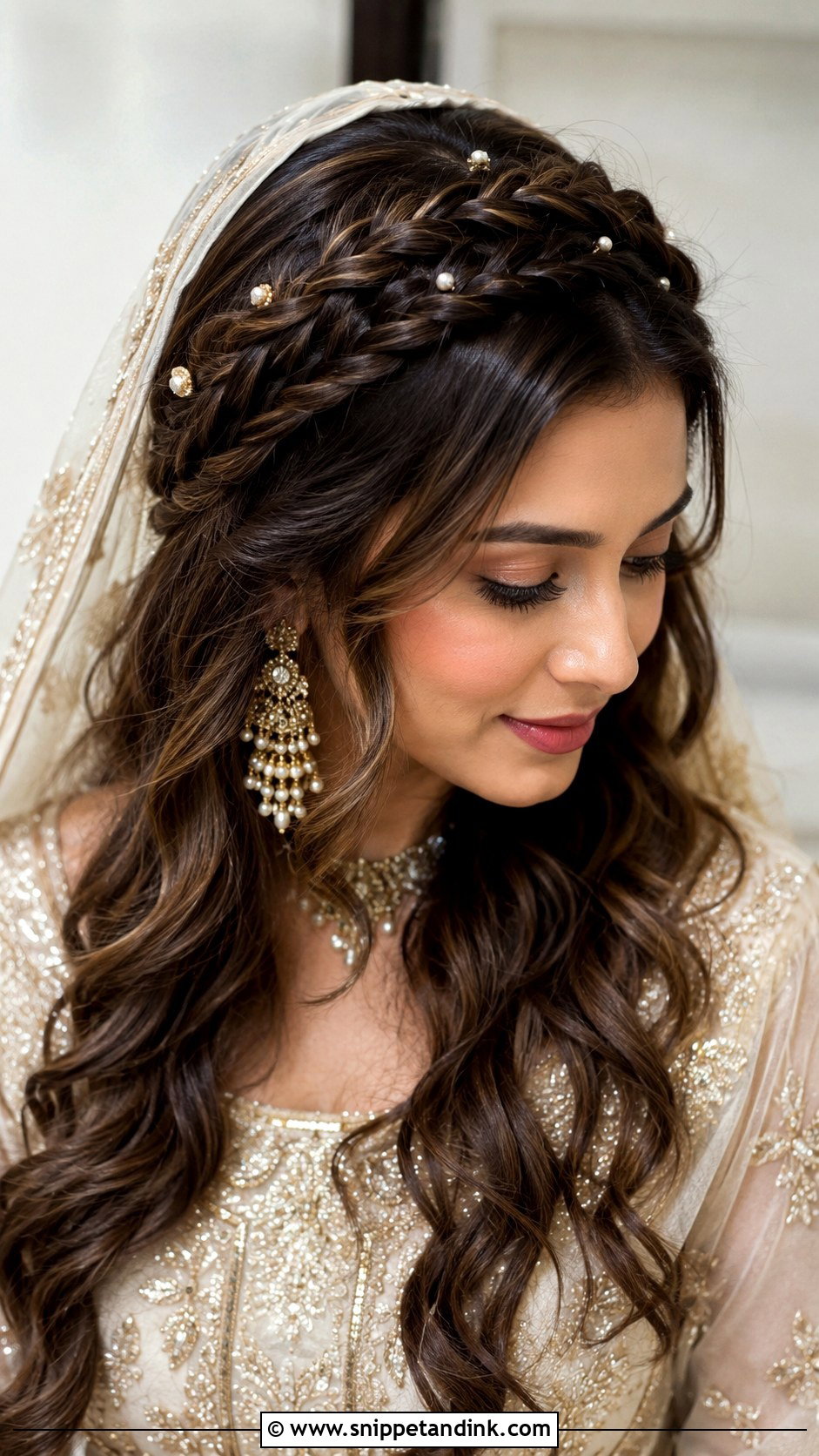
A braided crown wraps around the head and keeps hair off the face for a long ceremony. The rest can stay in waves or go into a bun. Pearls or small flowers can be tucked along the braid. It works on most lengths, since extensions blend into a braid easily. The one thing I watch for is the dupatta: a thick crown braid lifts the fabric, so with a heavy dupatta I make the braid flatter and closer to the head.
6. Side Swept Curls With Maang Tikka
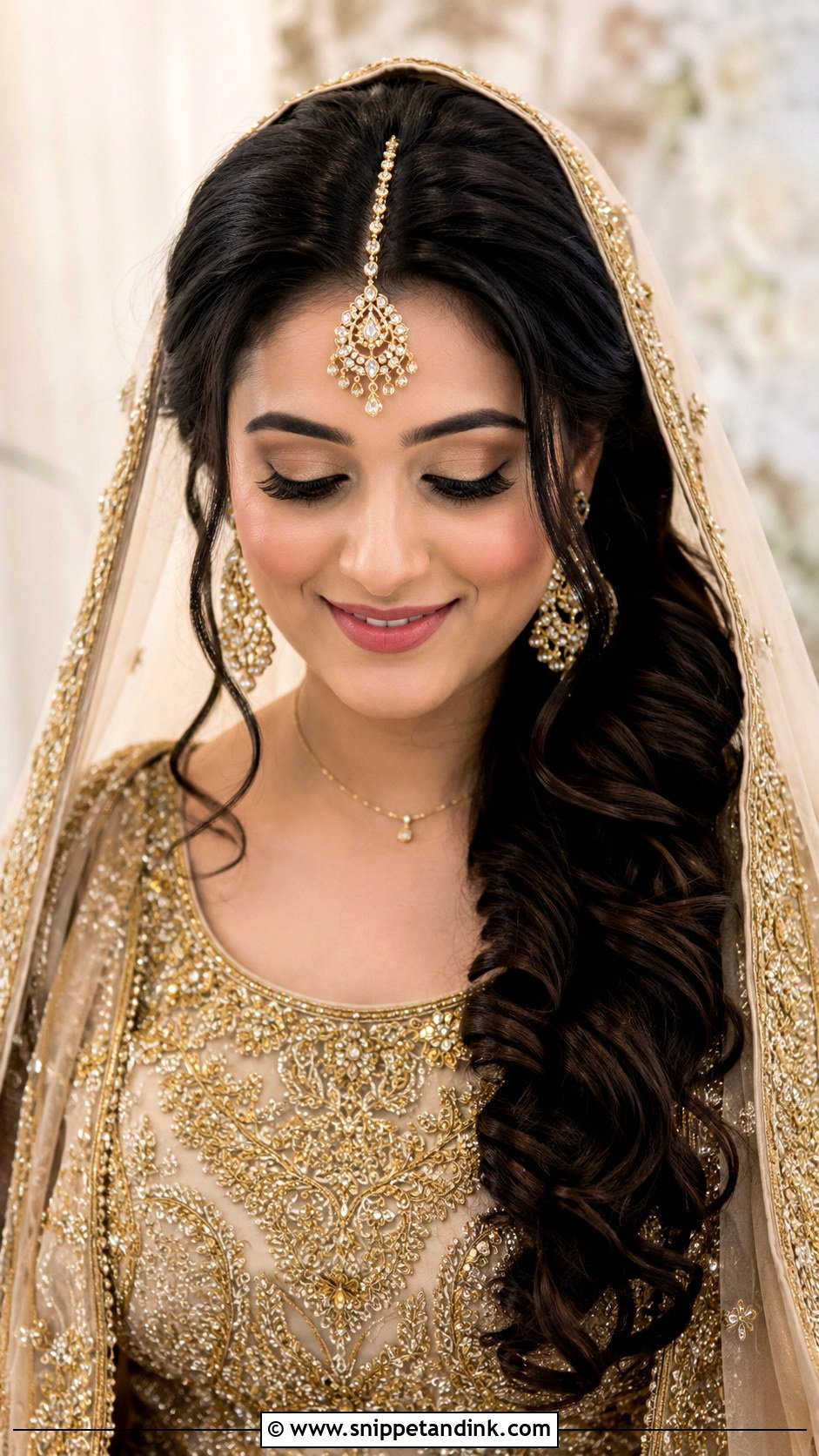
Curls swept over one shoulder with a maang tikka centered on the forehead create a soft asymmetry. The bare side is where statement earrings show best. The curls need body to stay on one side, so I pin the hair firmly behind the ear on the bare side; without that anchor, the curls slowly drift back to the middle. This look needs medium to long hair. A lightly draped dupatta balances the weight on the other side.
7. Messy Bun for Nikah Bride
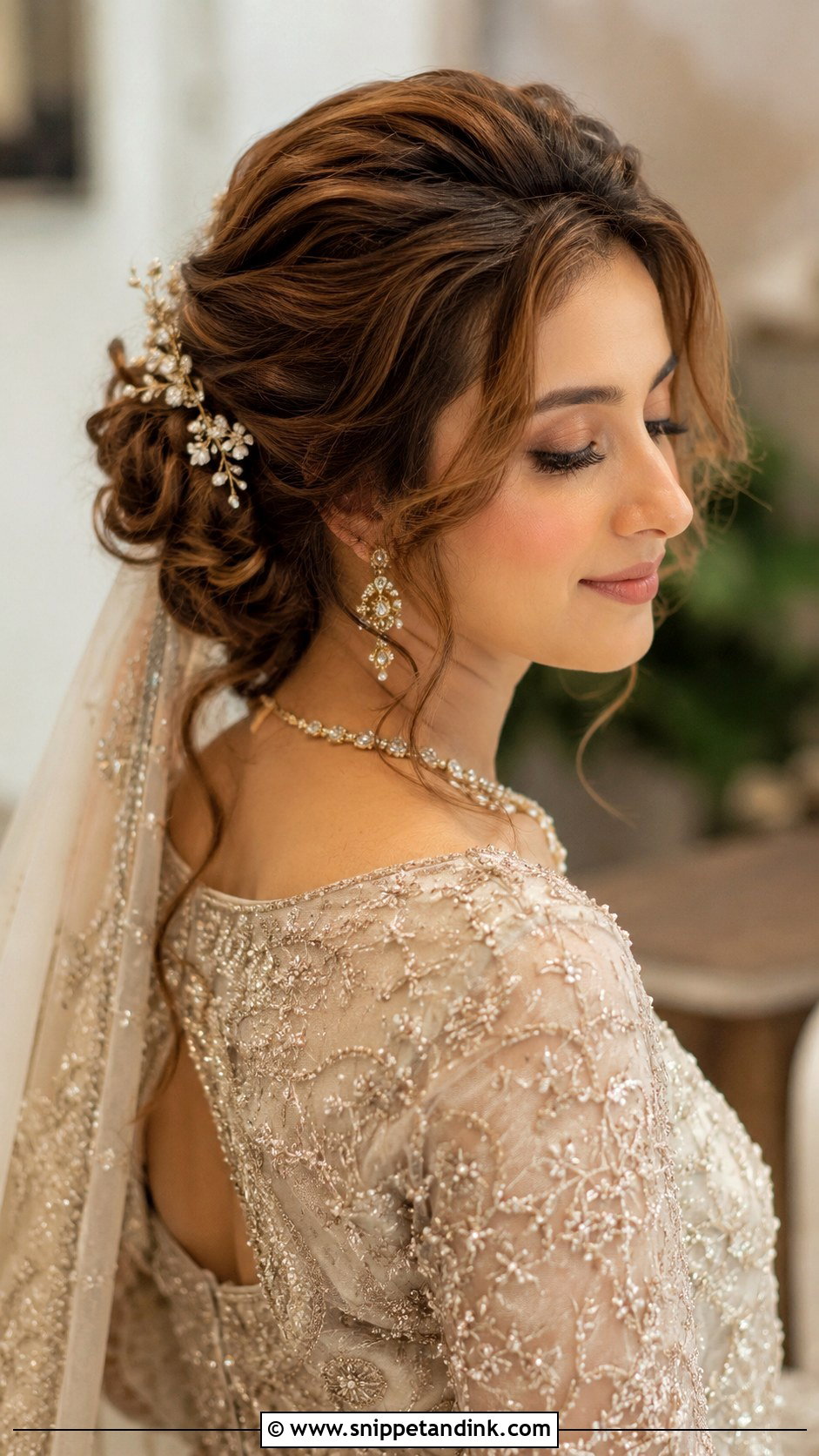
A messy bun at a Nikah isn’t actually messy. It’s a structured bun with loose strands and soft volume pulled out on purpose. I pin the base firmly, then loosen the surface, because a bun that’s truly loose won’t survive a dupatta and a day of hugs. Pull a few face-framing pieces free and add a small flower or pin to finish. It suits intimate ceremonies and warm weather, and most hair lengths and textures.
8. Hijab Nikah Bride Hairstyle
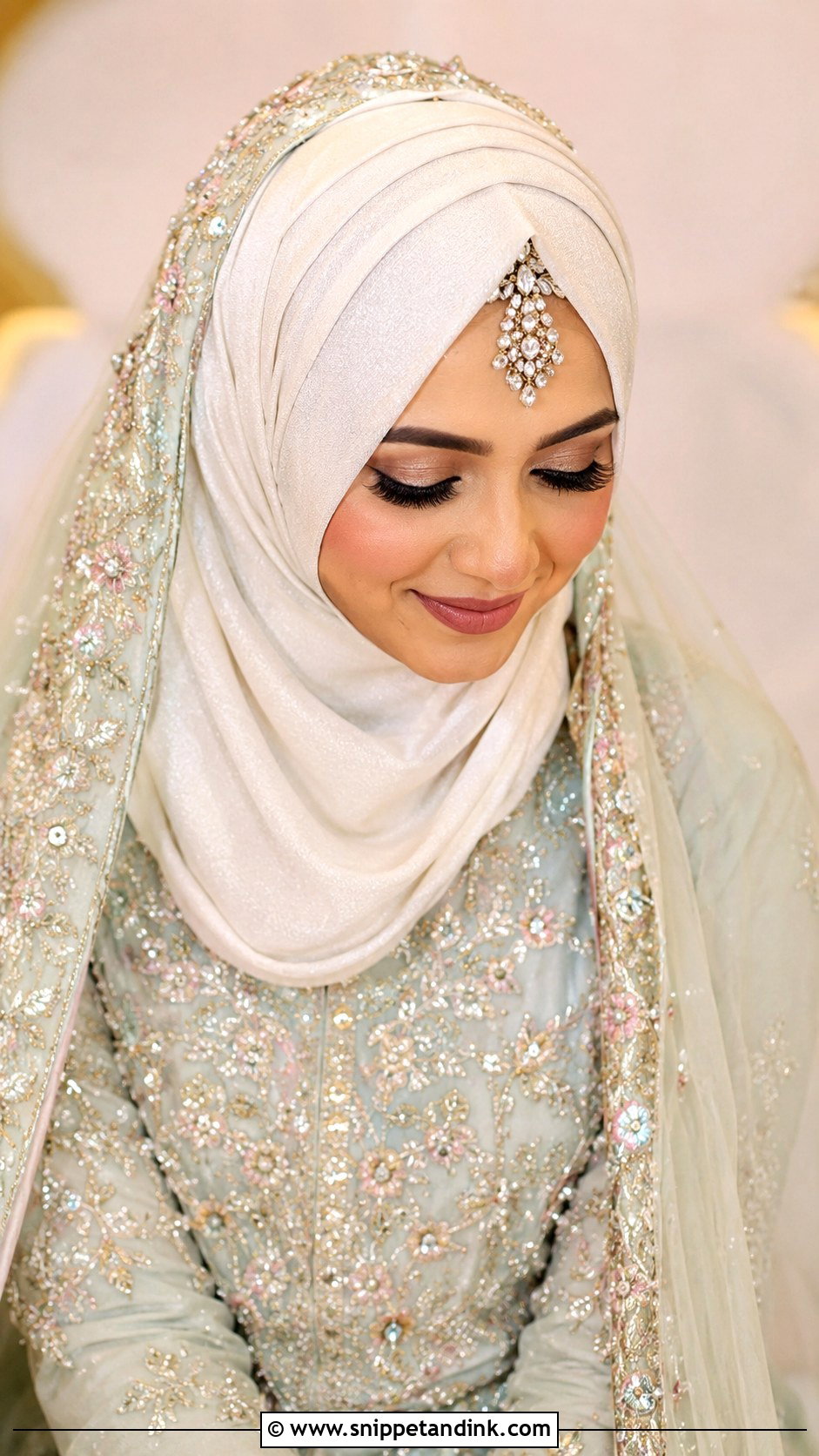
When a bride wears hijab for her Nikah, I focus on the shape underneath. A polished hijab style sits on a smooth base, usually a low bun or a volumizer at the crown, which gives the fabric a rounded silhouette. Soft pleats at the front and careful pinning keep it secure all day. A jhoomar, brooch or jeweled pins along the front add a bridal touch. Choose a color that matches or complements your dupatta. The result is modest and refined, and with good pinning it holds from the ceremony to the last photo.
9. Twisted Updo With Pearls
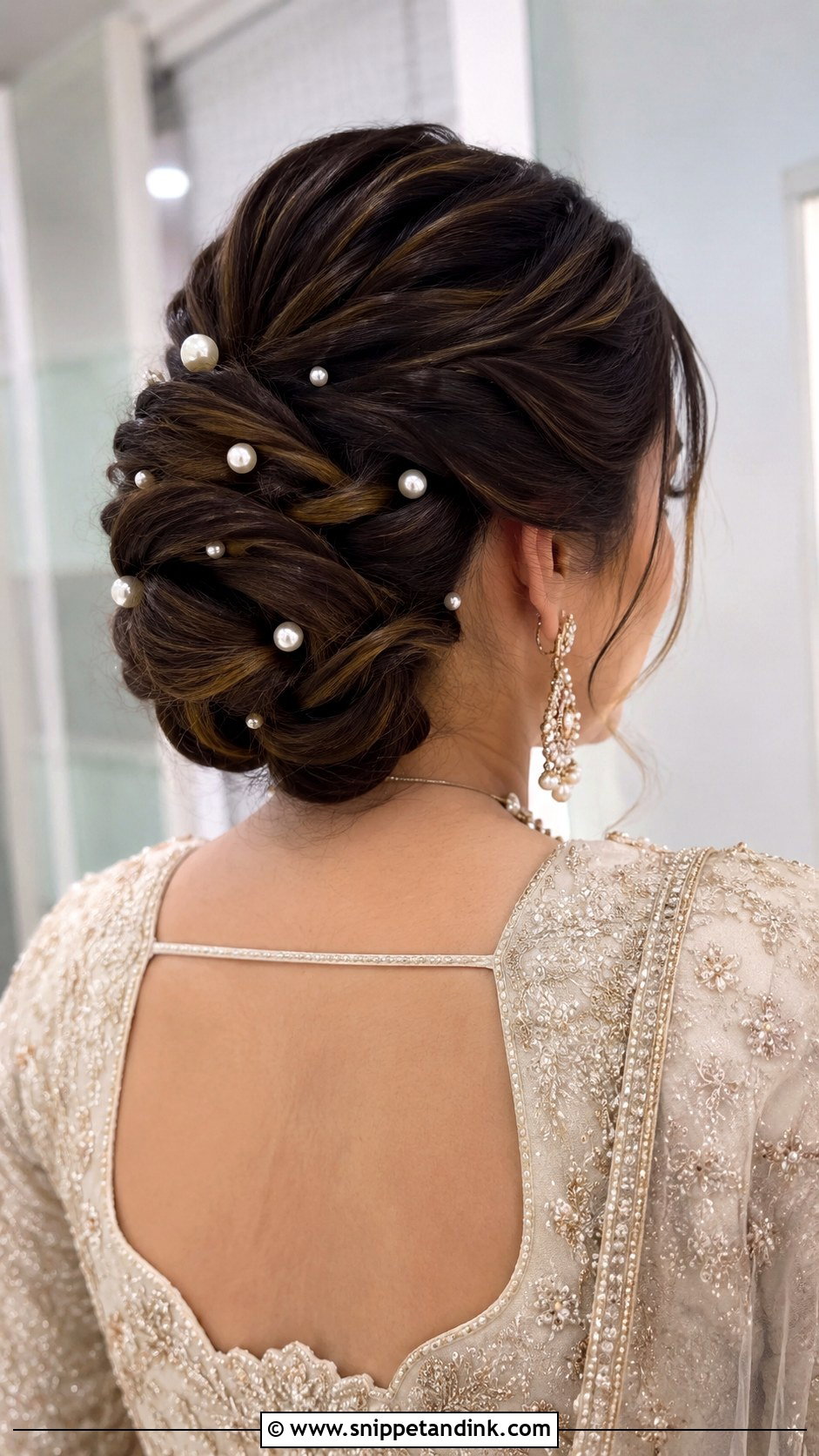
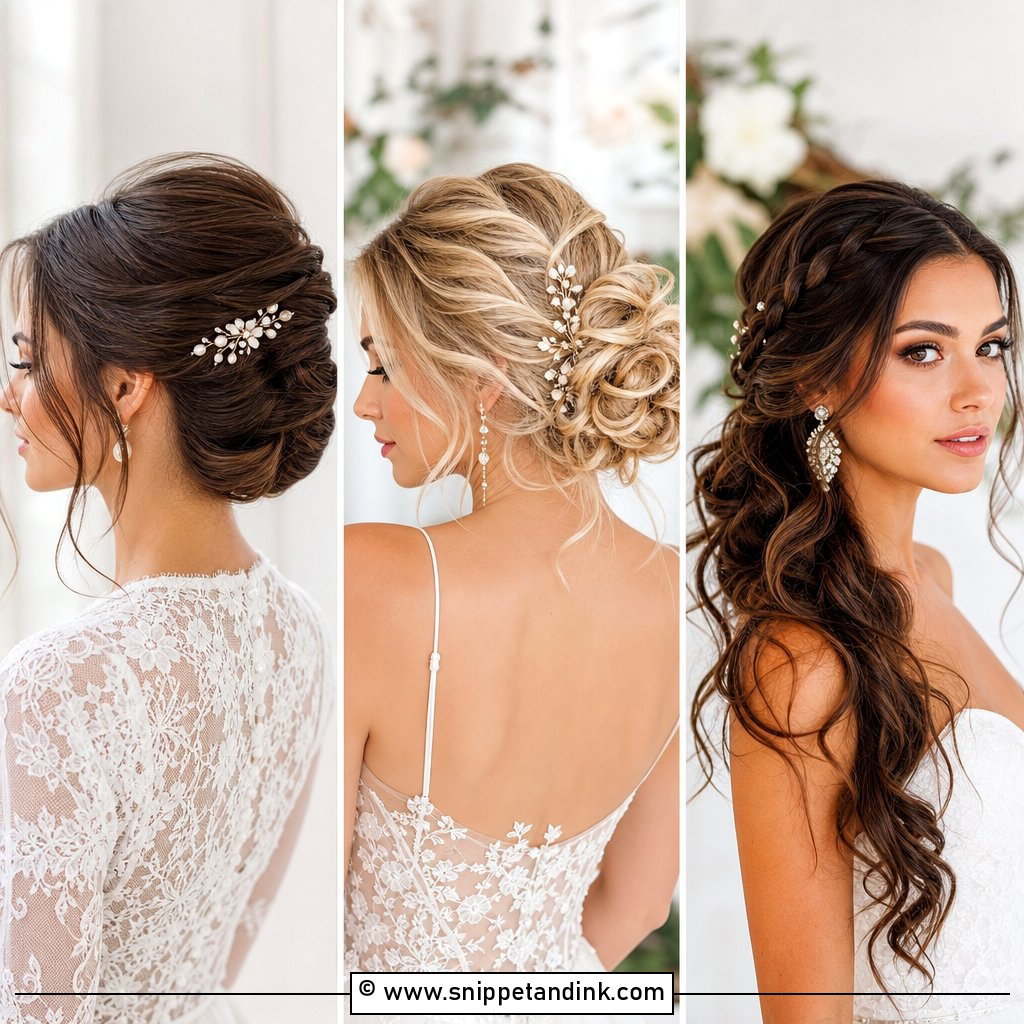
A twisted updo is built from sections twisted and pinned close to the head, which gives it texture and depth. Pearls scattered through the twists make it look especially bridal. It keeps everything off the neck for a long celebration. I place it low under a heavy dupatta, slightly higher if the fabric will sit farther back. Fine hair can look sparse in twists, so I’d add a little texture spray or clip-ins first.
10. Soft Waves With Side Part
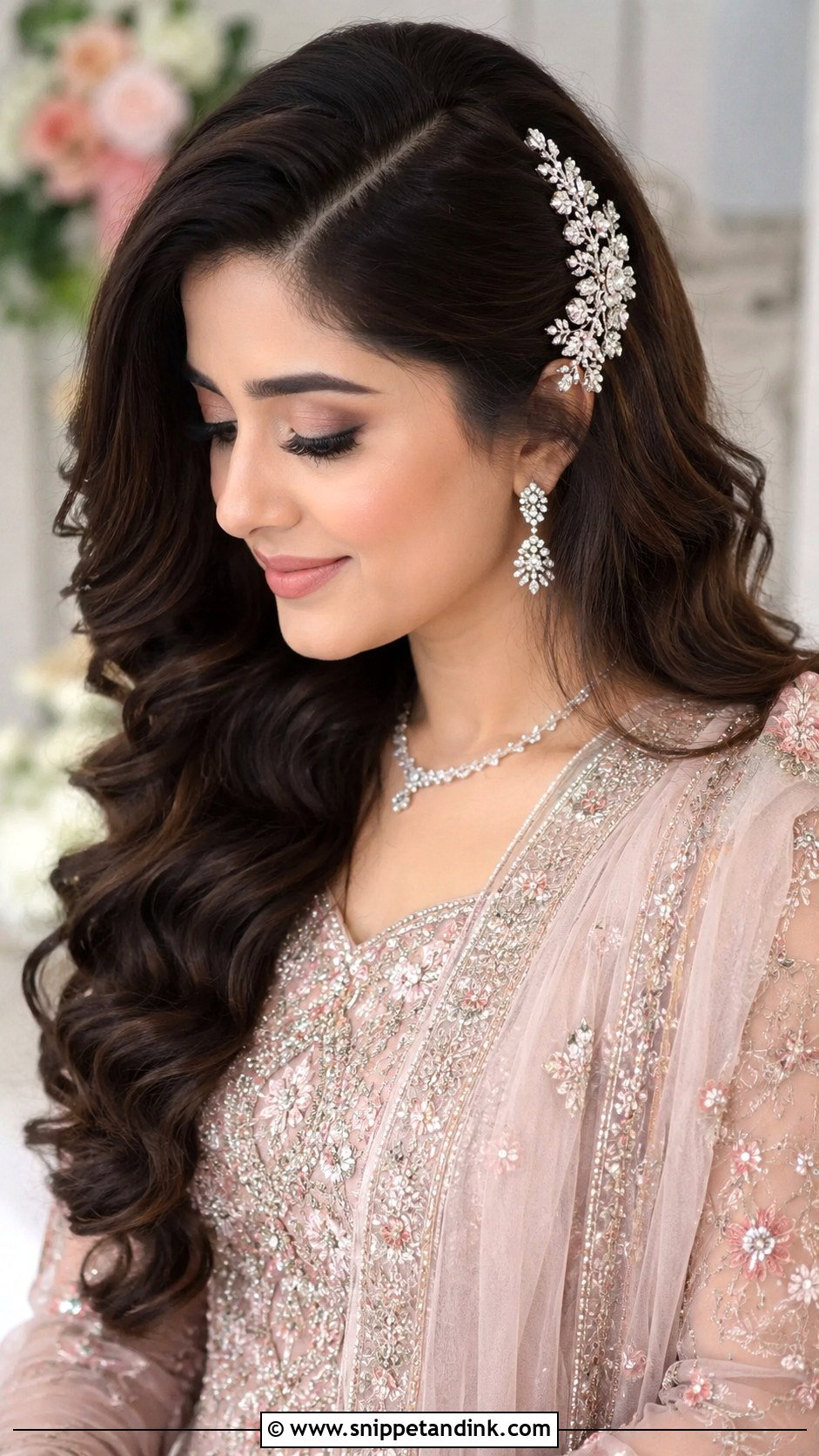
Soft waves with a deep side part suit almost every bride, and the side part adds a little old-Hollywood glamour. Open waves look polished without being overly styled, which is why they’re so popular. I pin back the heavier side with a jeweled clip, or the hair keeps falling into the face during the ceremony. This look needs medium to long hair and works with light and detailed outfits.
11. Low Chignon for Nikah Ceremony
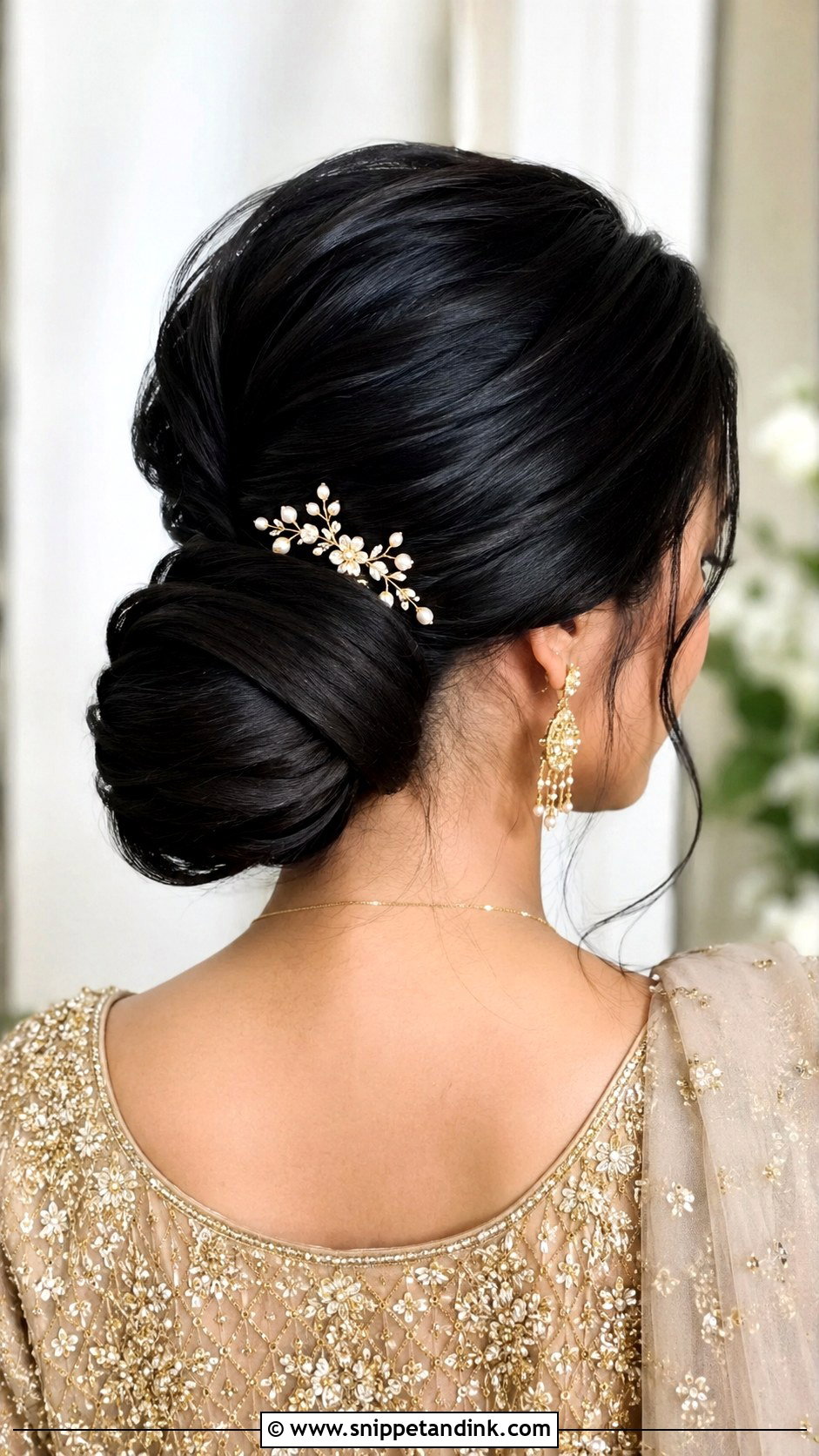
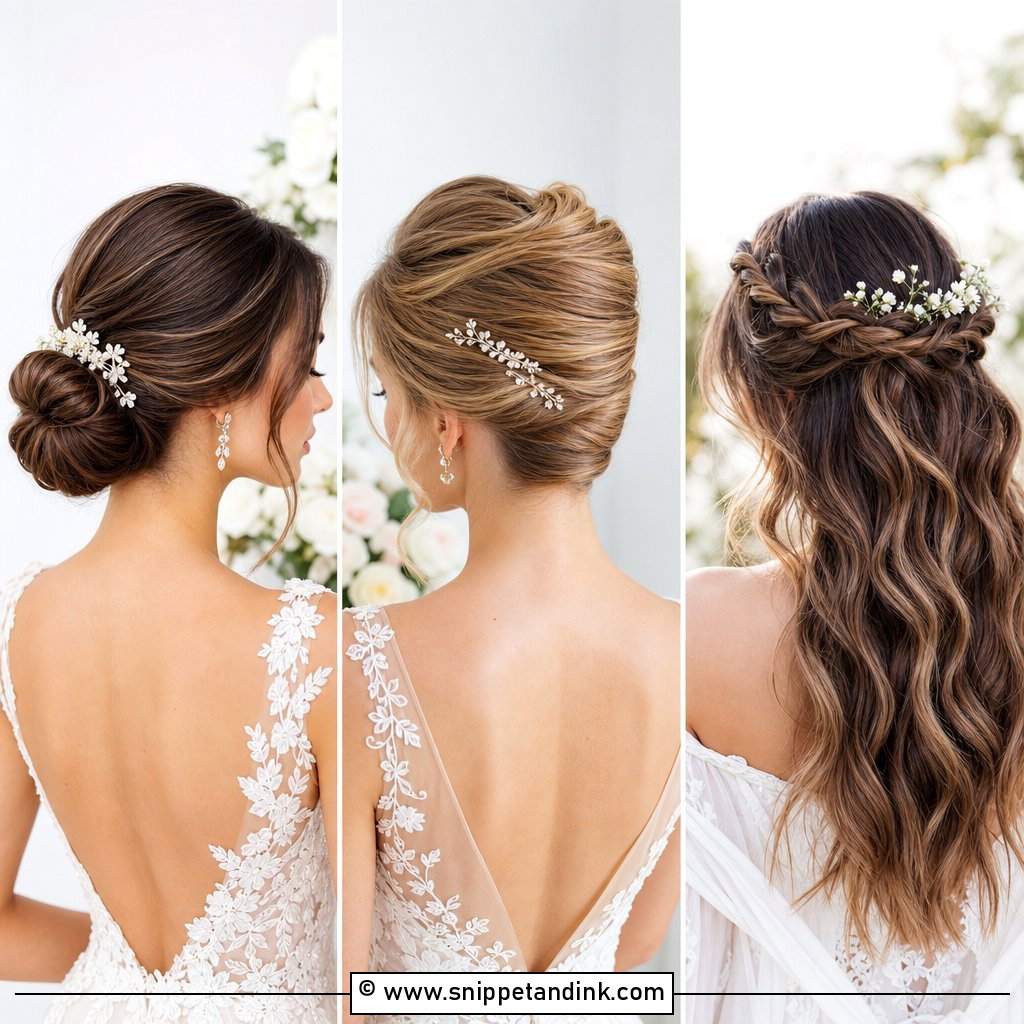
A low chignon sits as a neat coil at the nape. It’s a clean silhouette that shows off jewelry and lets the dupatta drape well. I usually add a little volume at the crown, since a fully flat top looks severe once fabric sits on it. A delicate pin or small flowers near the knot finish it. It works with both modern and traditional outfits.
12. Braided Bun With Flowers
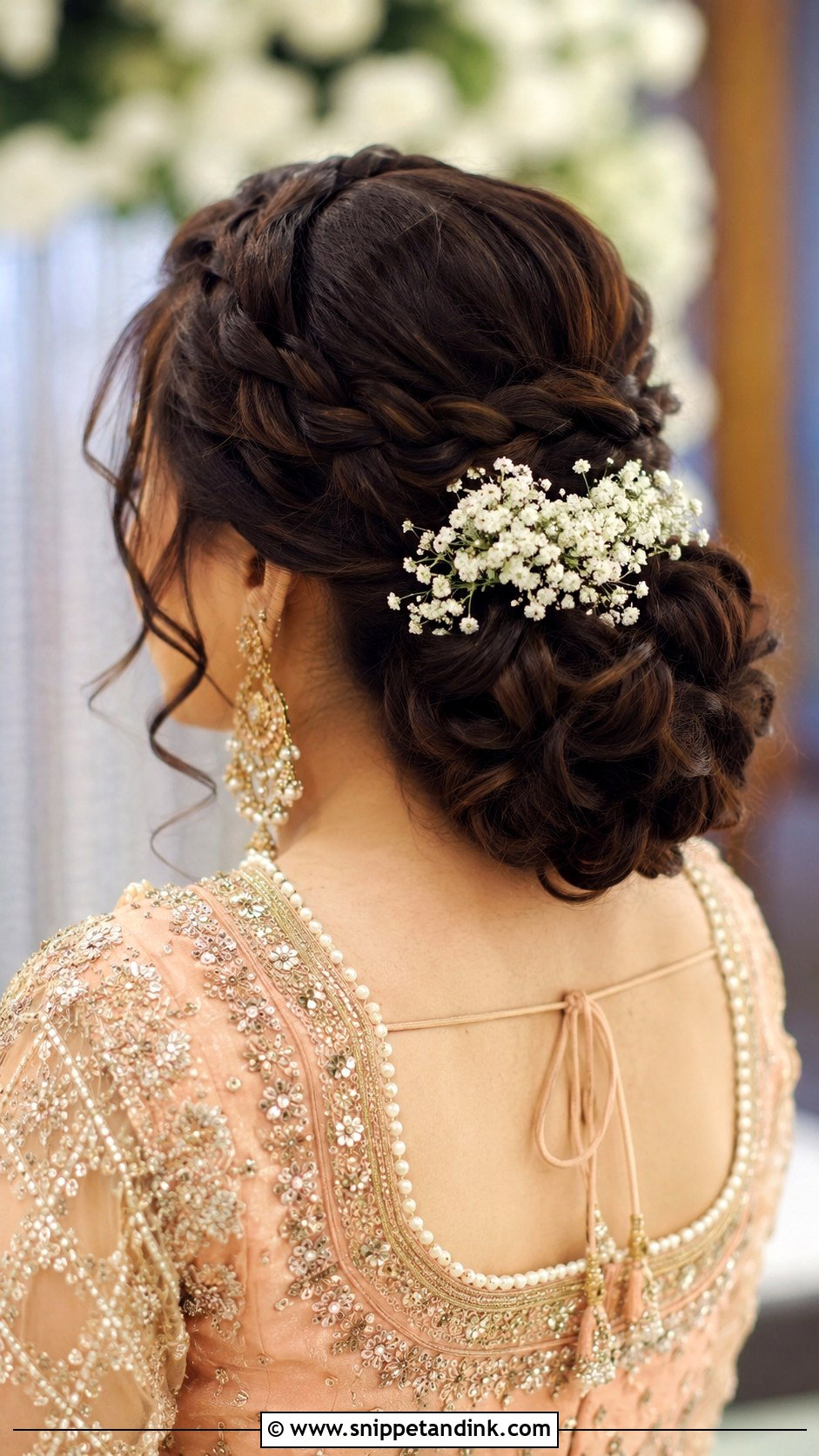
A braided bun combines braids with an updo, so the braids wrap and coil into a full, detailed bun. Small flowers tucked into it add softness. It’s very secure, which matters on a long day. Braiding also adds visible volume, so this is one of the better choices for fine or thin hair. Position it low for a classic feel or slightly higher if your dupatta sits back.
13. Open Hair With Front Twists
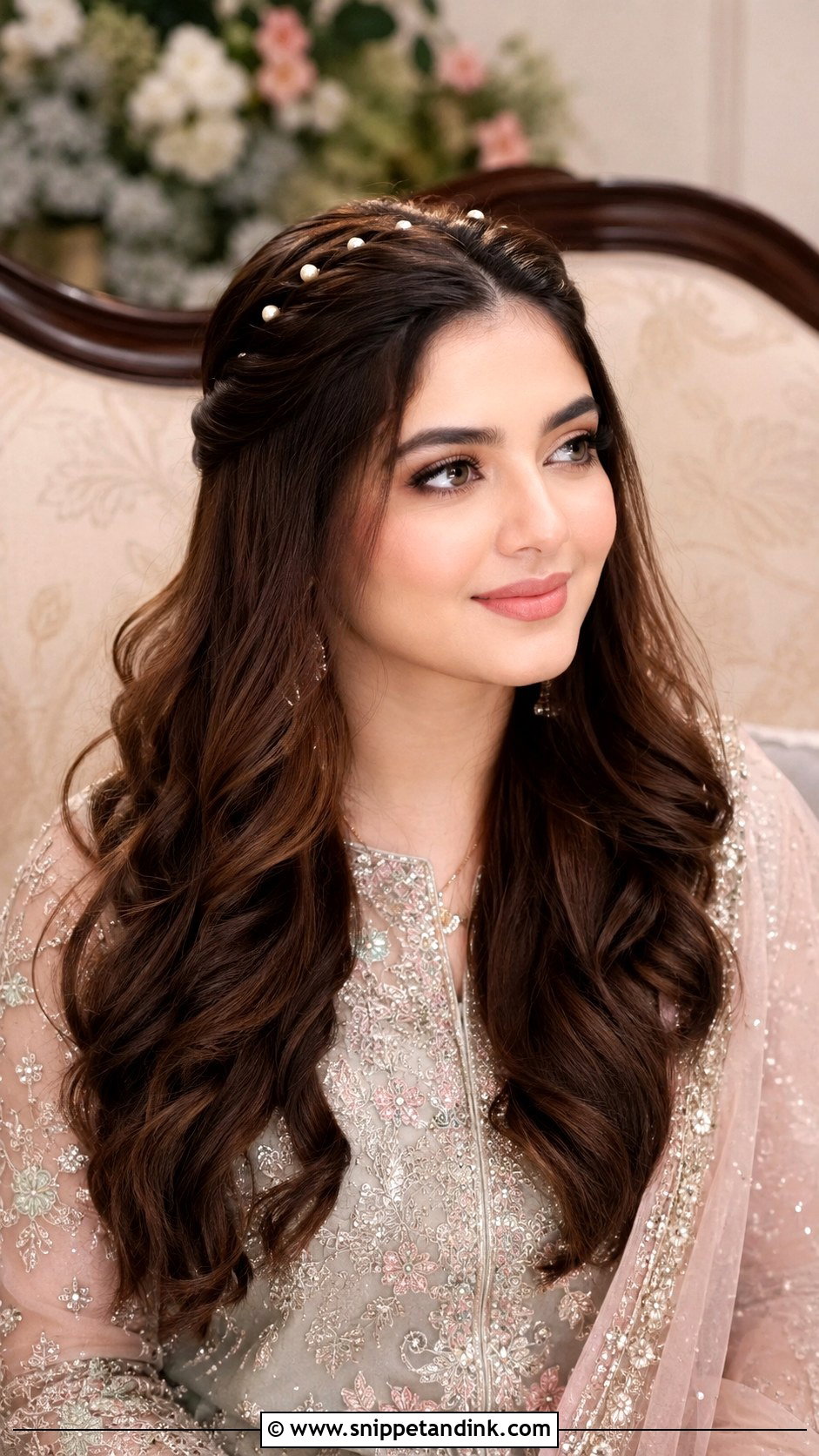
Front twists keep open hair off the face. Small sections at the front are twisted and pinned back, and the rest flows freely. It’s a good middle ground for a bride who wants open hair but doesn’t want strands in her face during the signing. Tiny pins or pearls can sit along the twists. It needs medium to long hair with some wave or curl, because straight hair shows every bump in the twist.
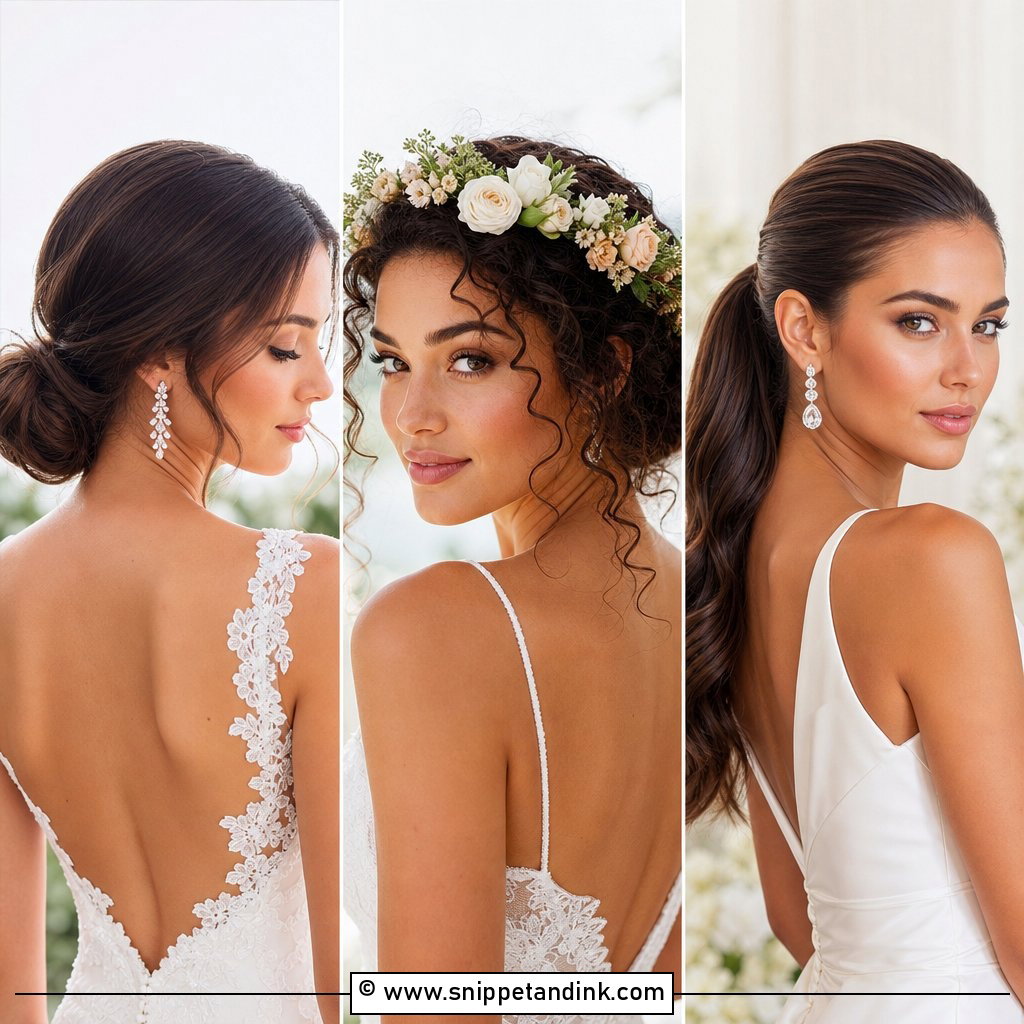
14. Curly Ponytail for Nikah Bride
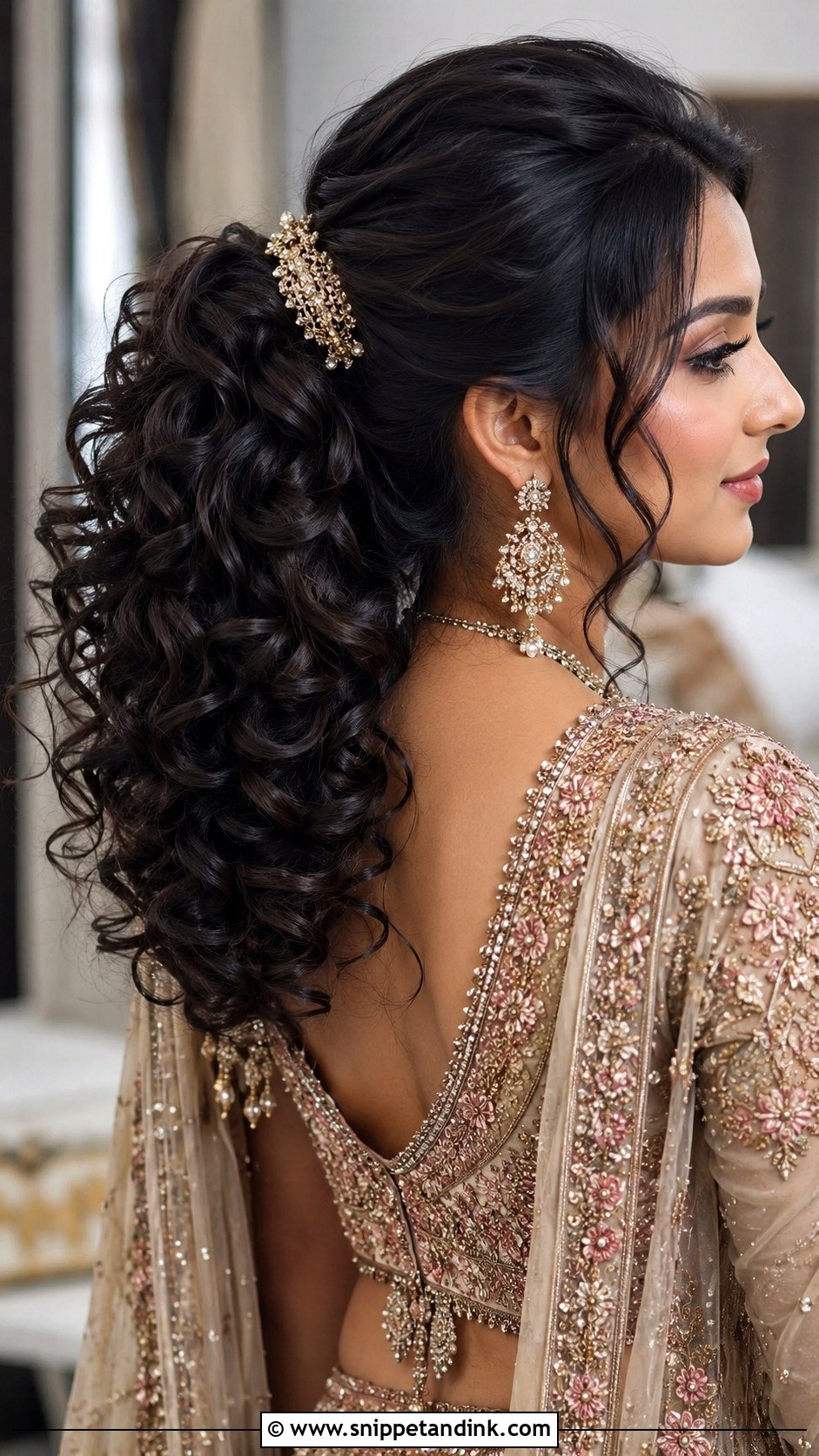
A curly ponytail brings volume and movement, and it keeps hair off the neck. A section of hair wrapped around the base hides the elastic, and a cuff or pin adds shine. I’d keep it at mid-height rather than high under a dupatta, as a high ponytail lifts the fabric off the head. It suits thick, curly or wavy hair best, since the natural texture gives it fullness.
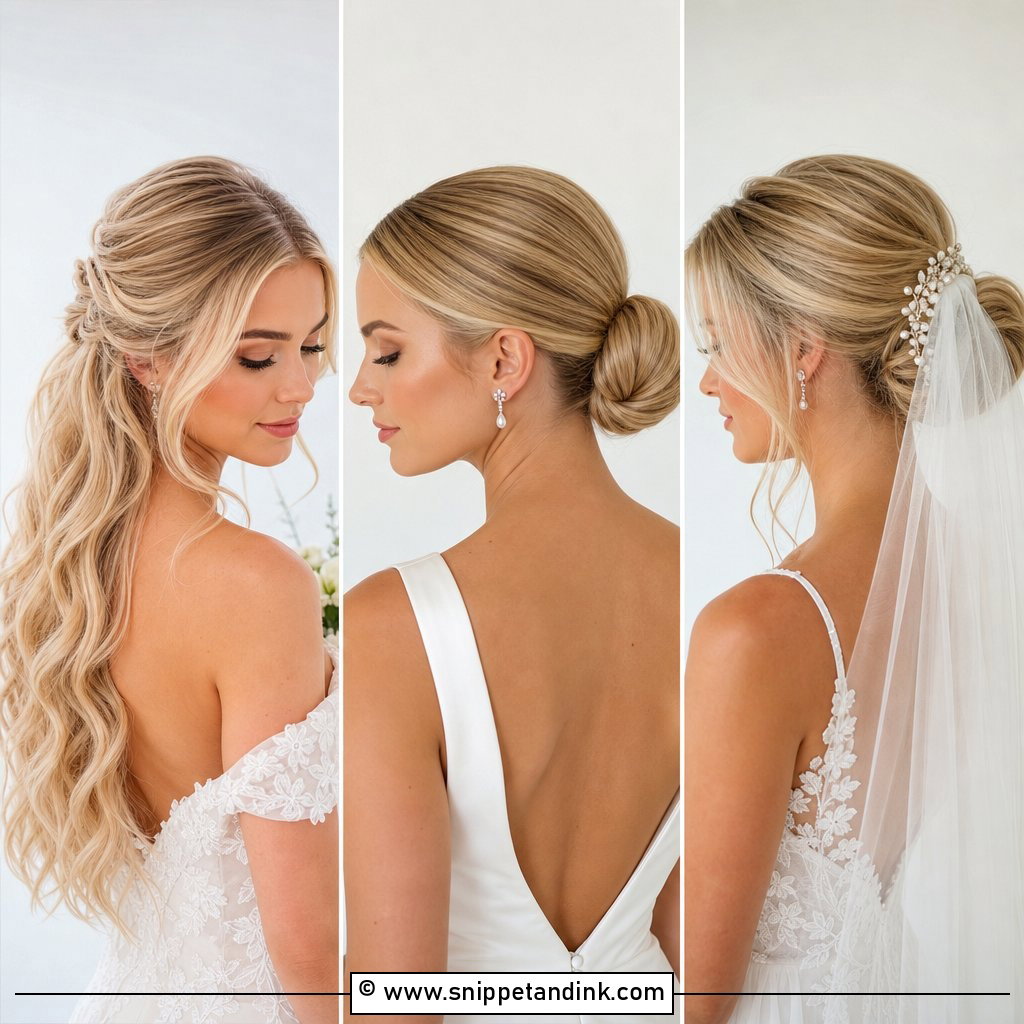
15. Vintage Finger Waves Updo
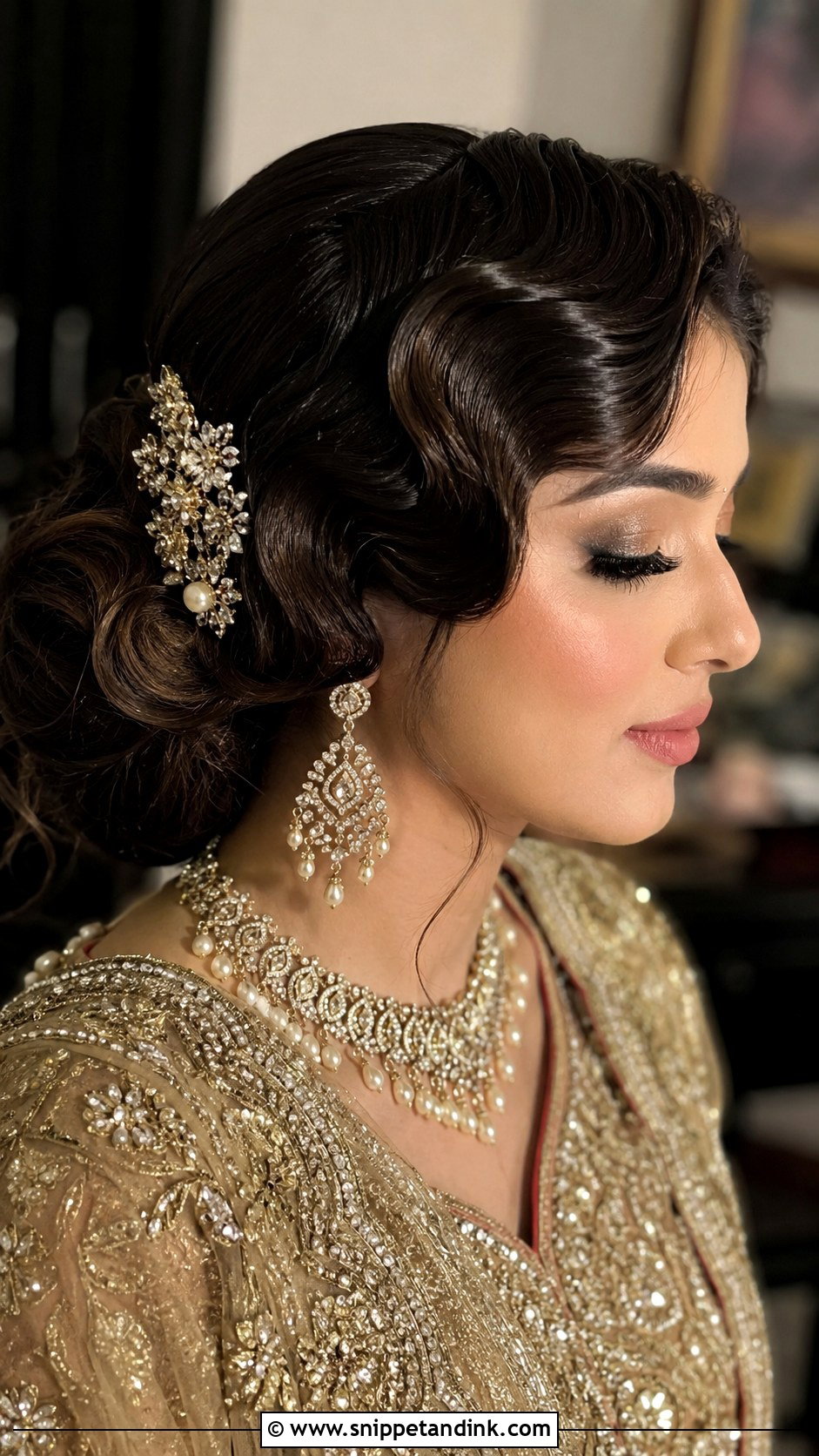
Finger waves are sculpted ripples set close to the head, usually with a soft updo at the back, and they bring old-Hollywood glamour. They need smooth, medium-length hair that holds a shape, and a lot of setting product, so I wouldn’t recommend them for very curly or very fine hair without a trial. They pair well with bold jewelry and a structured outfit. A jeweled pin on one side completes it. Since the waves sit at the front, I’d show them off by setting the dupatta well back.
16. Loose Braid Over the Shoulder
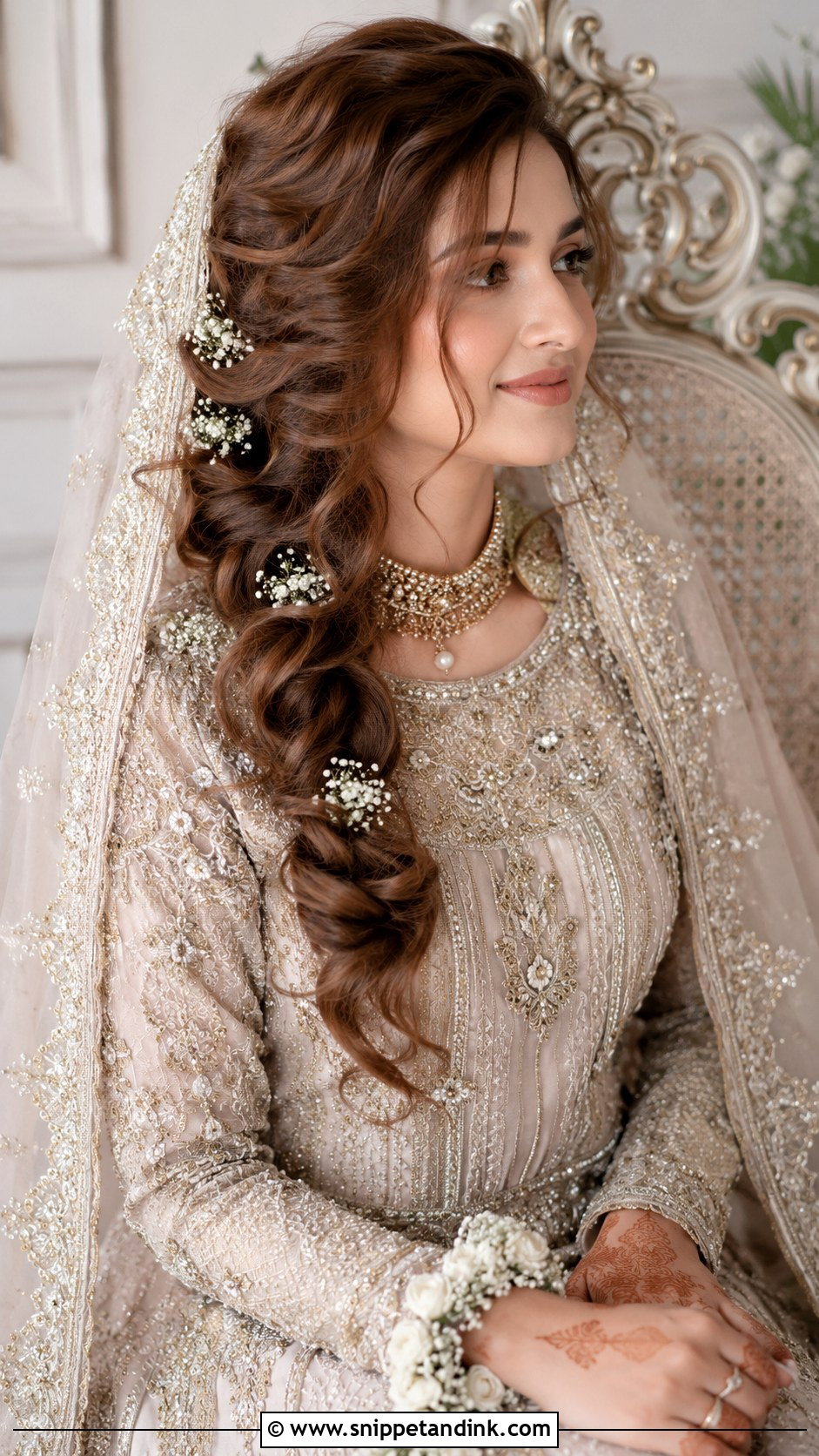
A loose braid over one shoulder feels relaxed and still bridal. The plait is pulled apart a little for fullness, and small flowers or pearls can sit along it. The other side shows off statement earrings. I braid it slightly tighter at the top, so it doesn’t unravel as the bride moves her head, and loosen it toward the ends. It suits medium to long hair and both small and large celebrations.
17. High Bun With Maang Tikka
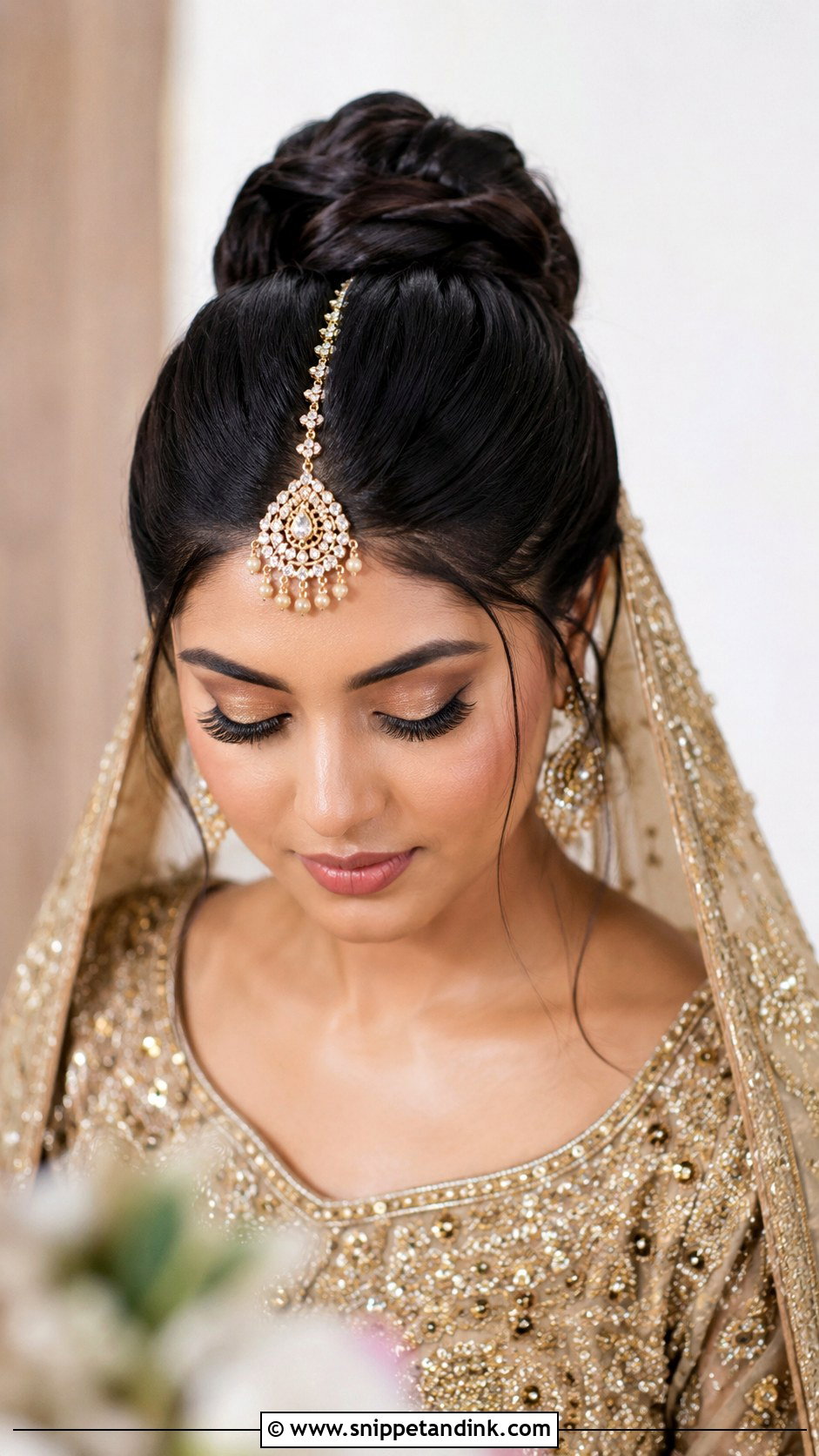
A high bun lifts the hair into a knot at the crown and lengthens the neck. With a maang tikka, it feels traditional and makes a strong statement. The catch is the dupatta, which won’t sit naturally over a high bun; brides who choose it usually pin the dupatta behind the bun or wear it over the shoulders. Keep it sleek or soft, and add flowers or pins around it. Padding or a donut helps shorter hair reach the volume.
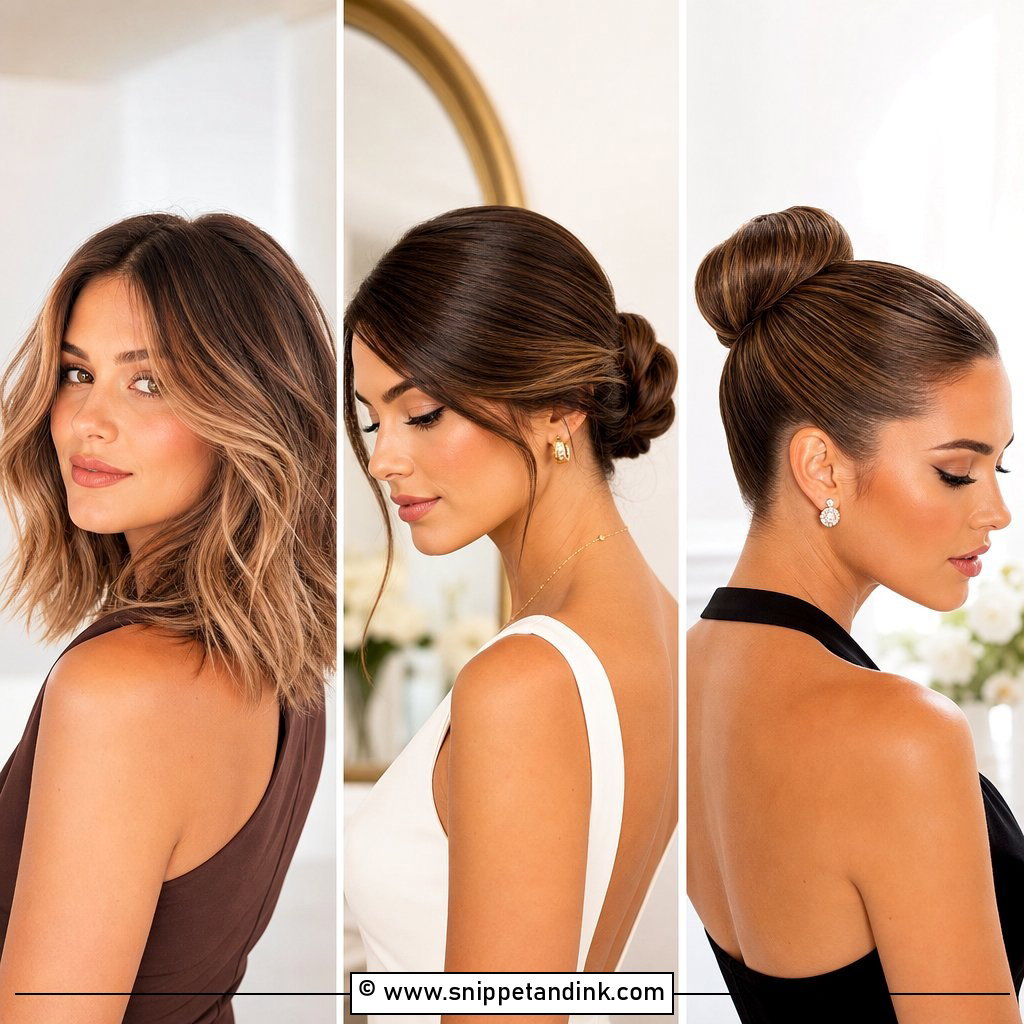
18. Wavy Lob for Nikah Bride
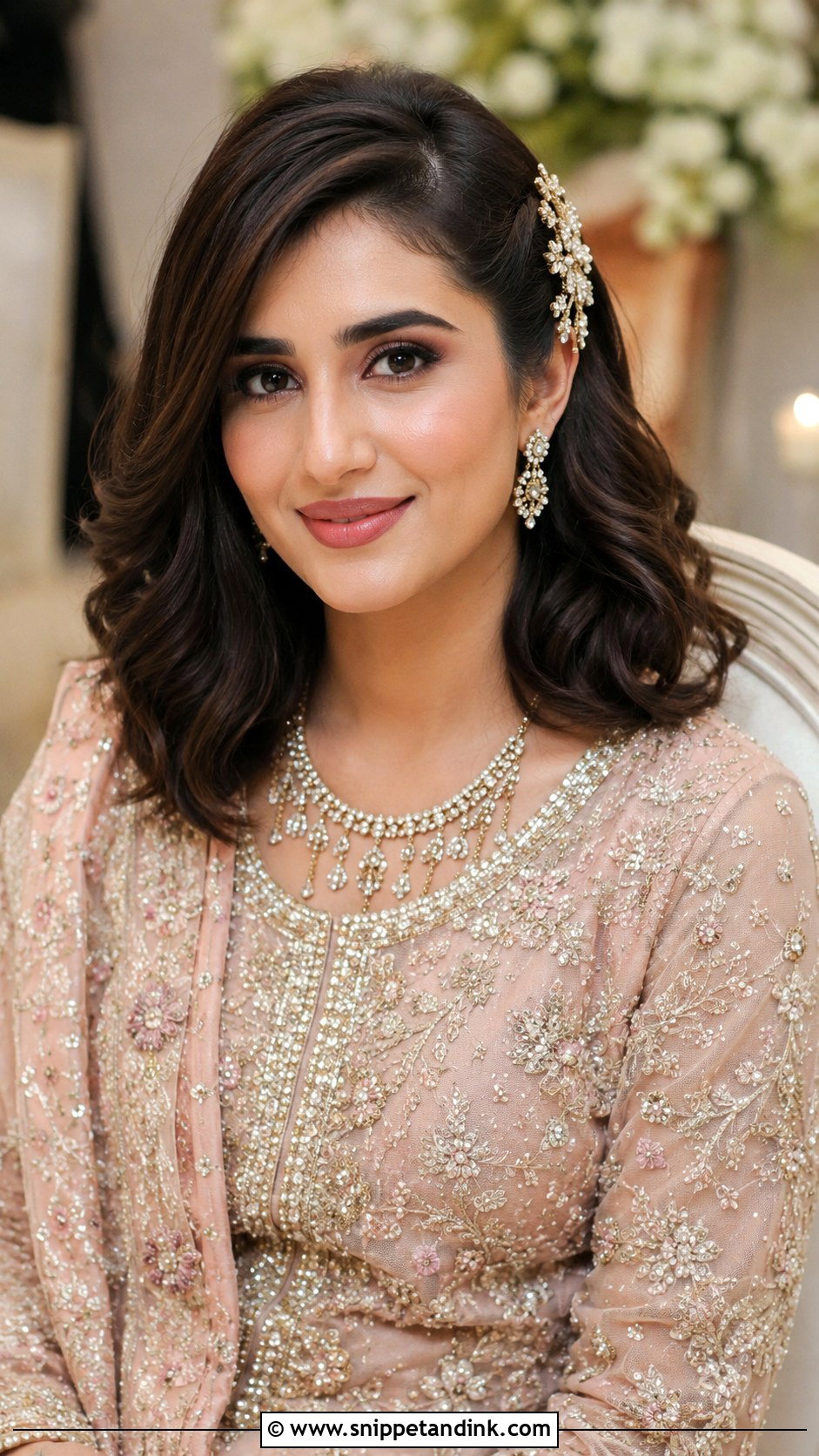
A shoulder-length lob styled in soft waves shows you don’t need long hair for a bridal look. Waves add movement and frame the face. I tuck one side behind the ear with a jeweled pin, which also gives a dupatta something to rest against. A light dupatta works best; a heavy one presses the waves flat. It’s quick to style and easy to maintain through the day.
19. Pull-Through Braid Updo
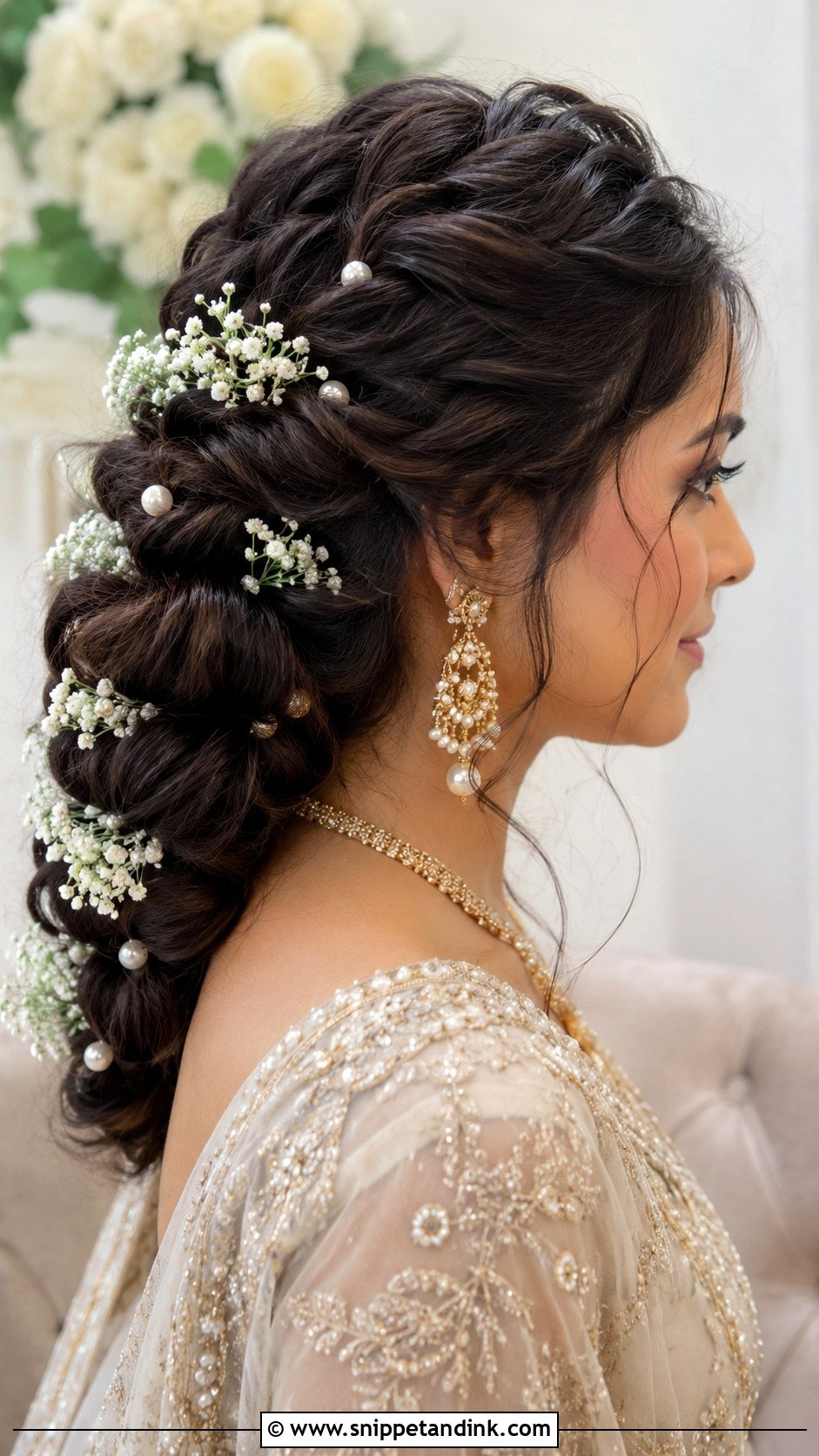
A pull-through braid looks complicated but is built from simple ponytail sections pulled through each other, which gives a full, rope-like texture. Gathered into an updo, it adds volume and detail. Pearls or small flowers suit it. It works on medium to long hair and even on fine hair, because pulling the loops apart makes the hair look much thicker than it is. Each loop needs a clear elastic, so I hide them under the pulled-out sections.
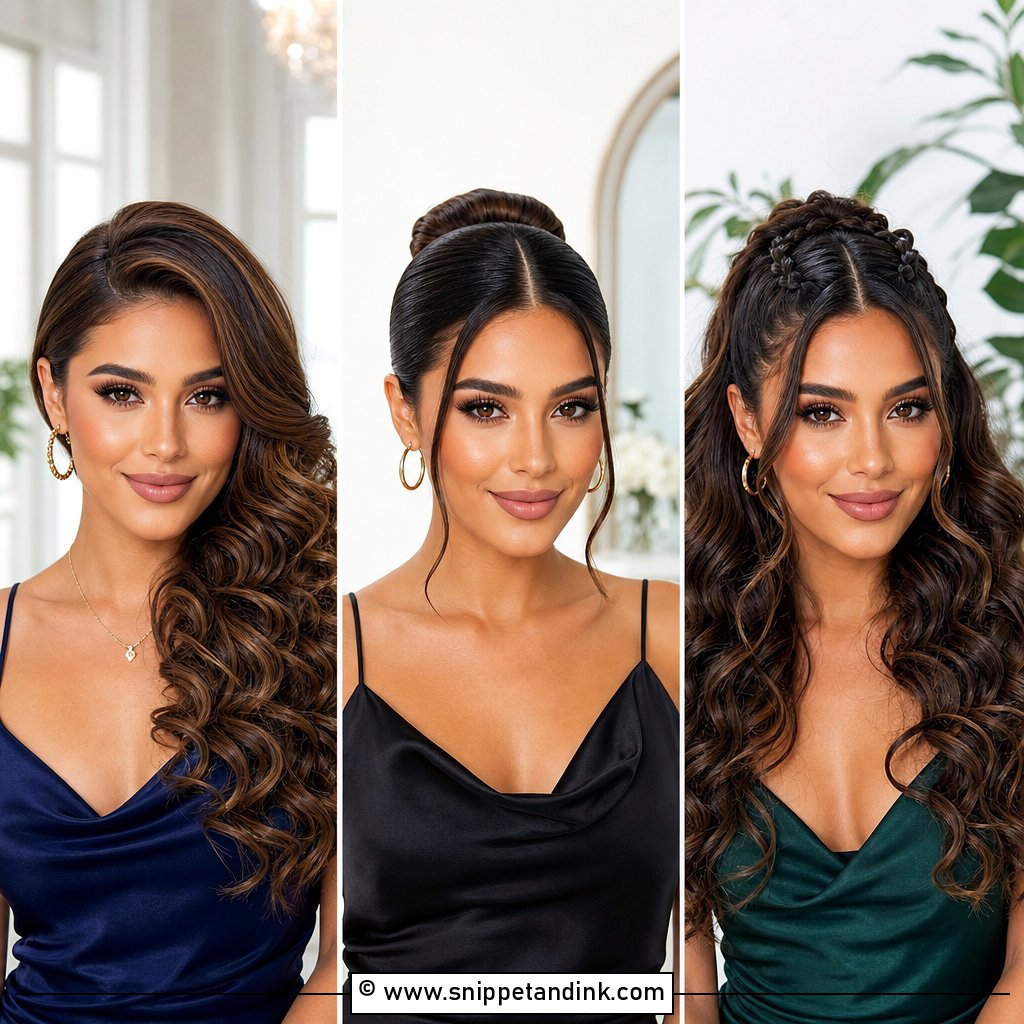
20. Accessorized Bun With Jhoomar
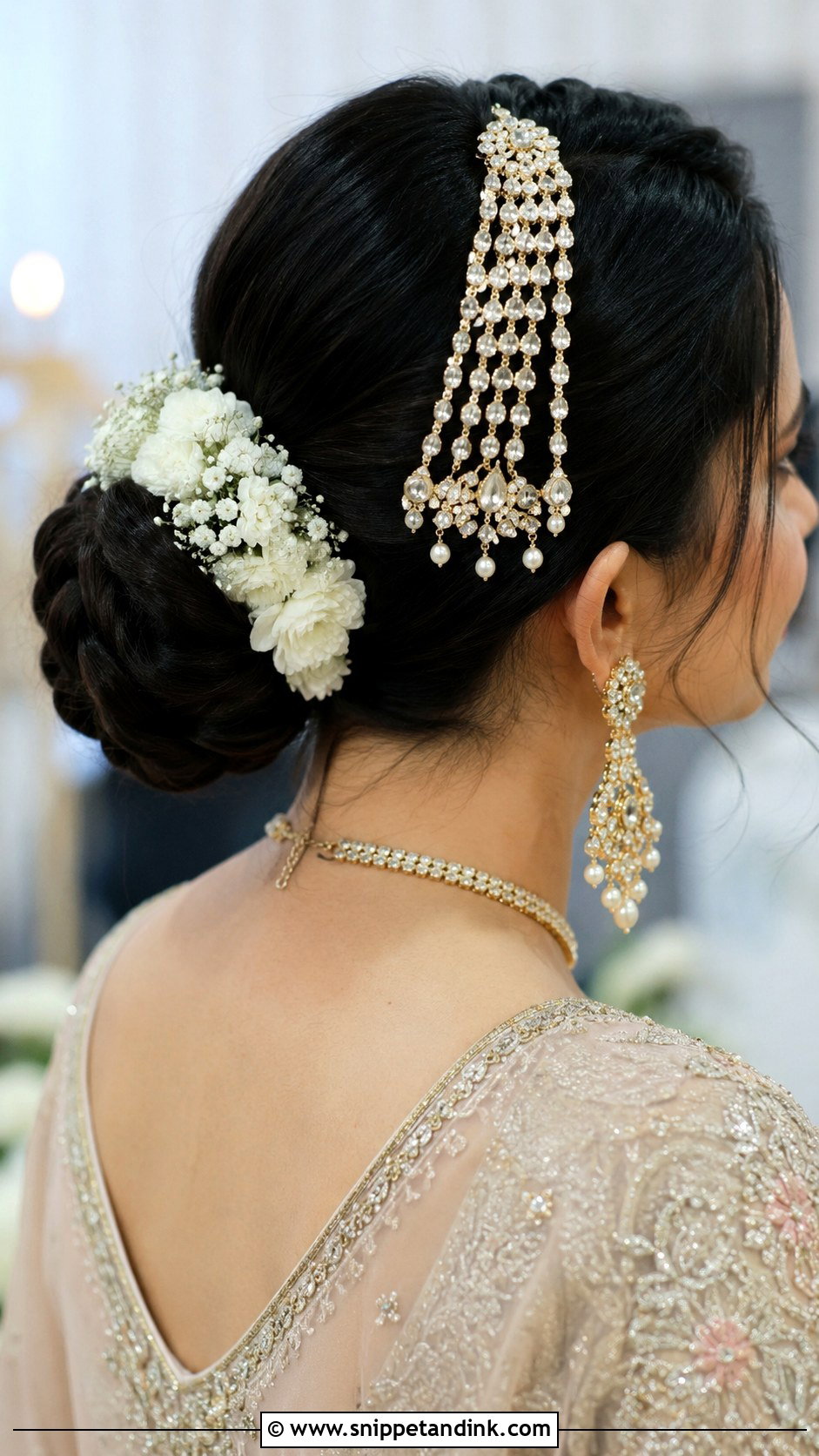
Sometimes the jewelry should lead and the hair should simply hold it. An accessorized bun paired with a jhoomar uses a smooth or textured bun as the base, and the jhoomar becomes the focal point beside the face. Since a jhoomar is heavy on one side, I anchor it to the bun or to a small hidden braid, not just to loose hair. Keep the bun low and sleek, or add soft volume. Small flowers or pins can add more detail, but don’t crowd the jhoomar.
Curly, Fine or Very Thick Hair Needs Its Own Version
Almost every style in this list can be adapted, but the same style needs different handling on different hair. Here is what I change for each type.
Curly and coily hair
Natural curls hold shape far better than straightened hair. I often style with the curl pattern rather than against it, especially for buns and half-up looks. If you want a sleek finish, blow out the hair the day before, not the morning of, so it has time to settle. Humidity will bring the curl back, so a sleek style needs anti-humidity spray.
Fine hair
Fine hair struggles under a heavy dupatta. Braided and textured styles look fuller and hold better than sleek ones. Clip-in extensions add volume and give pins more to grip. Use texture spray and hold the curls with pins while they cool.
Very thick or long hair
A bun made from very thick hair can be heavy and pull at the scalp by evening. I braid or twist the length before pinning, which makes the bun smaller and more secure. Set aside extra styling time, because curling thick hair takes longer than most brides expect.
Which Nikah Style Suits Your Dupatta, Jewelry and Hair Type?
Look for a style that feels like you and works with your outfit, your dupatta and the length of your day. A sleek low bun, open curls, a braided updo or an elegant hijab setting can all be right; it depends on your hair type and how the fabric and jewelry will sit. Think about your face shape and where you want attention to go. Do a trial with the actual dupatta and jewelry, and the style will hold from the vows to the final photos.
You'll Like These Ideas:


Leave a Reply