
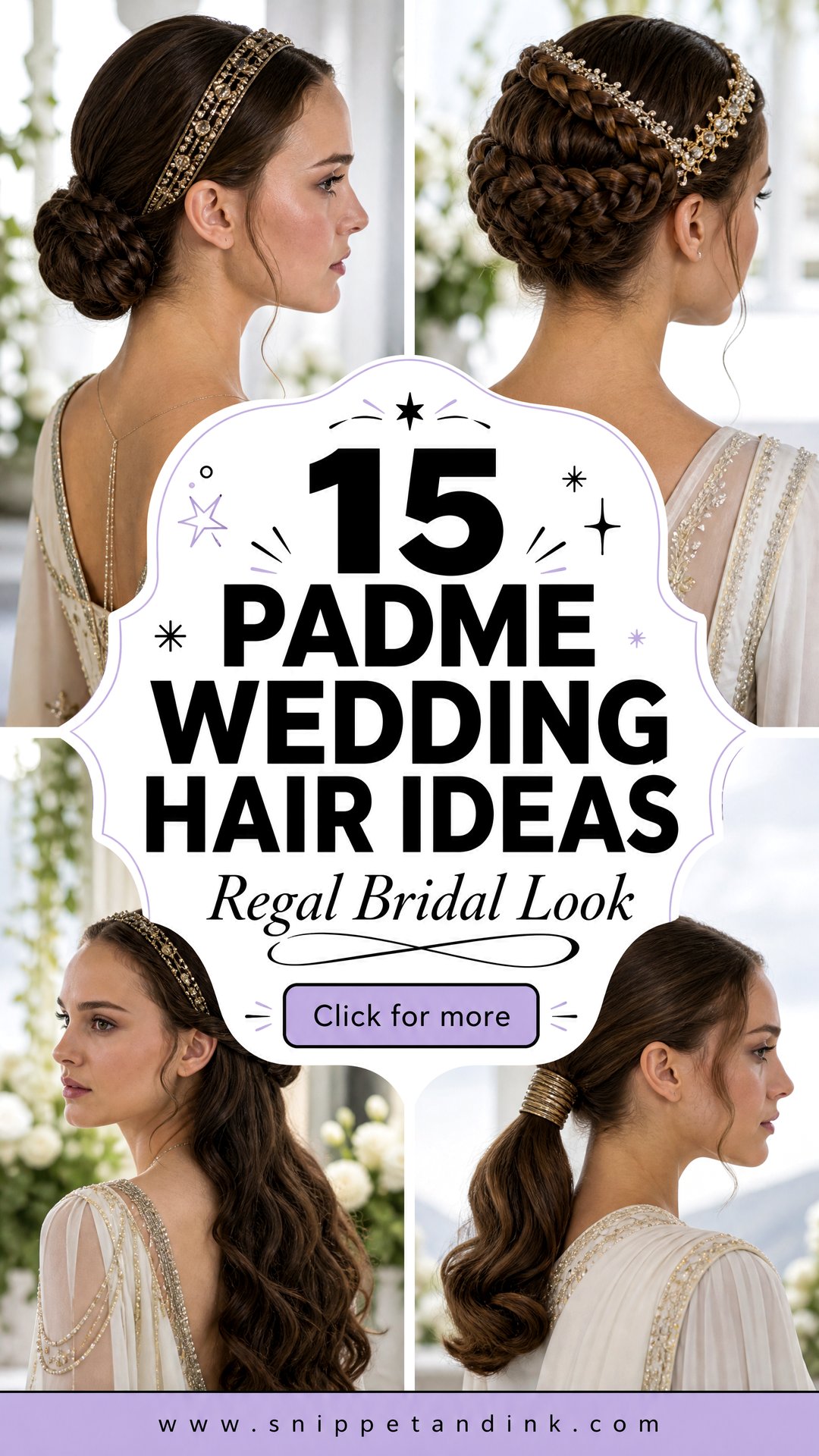
Brides who bring me a Padmé reference almost never want a costume. They want the feeling of that lakeside scene: low weight at the nape, braids worked into the shape, lace falling over everything. The work is taking Padmé Amidala’s Naboo wedding look and turning it into hair that survives a real ceremony, a receiving line and a dance floor. Low buns, fine braids, center parts, pearl pins and soft curls carry the reference best. They sit naturally with long gowns, sheer sleeves, embroidered veils and vintage-style dresses, and they suit garden or lakeside venues where a quieter, older kind of glamour makes sense.
Screen Hair Gets Redone Between Takes; Yours Won’t
Film hairstyles are built to look right for a few minutes at a time, under controlled light, with someone stepping in to fix them between shots. Many are partly made from hairpieces. A wedding asks for something different: twelve or more hours of hugging, sitting, dancing and wind, with no one on hand to repair it.
So when I translate the Naboo look, I keep the elements that carry the reference and simplify the engineering underneath. Braids get anchored into a firm base instead of pinned loosely over the top. Loops become smaller and lower, where they don’t pull. The weight sits at the nape, where the neck supports it, not halfway up the head.
If you have short or fine hair and love the fuller braided shapes, say so early. A color-matched braid piece or a couple of clip-in wefts can be ordered in advance and blended at the trial, and that’s far easier than trying to stretch thin hair around a crown.
1. Padme Wedding Low Braided Bun
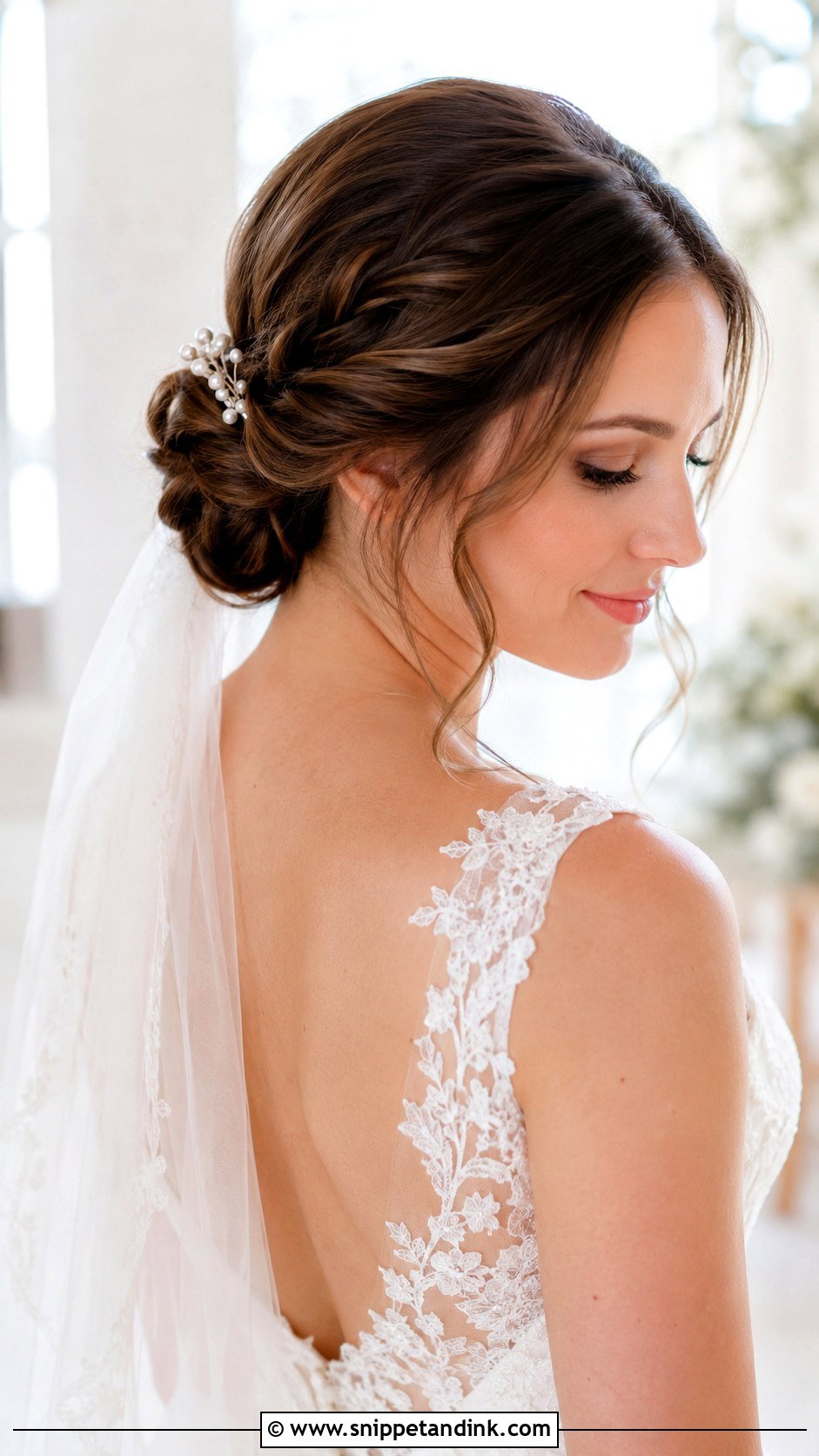
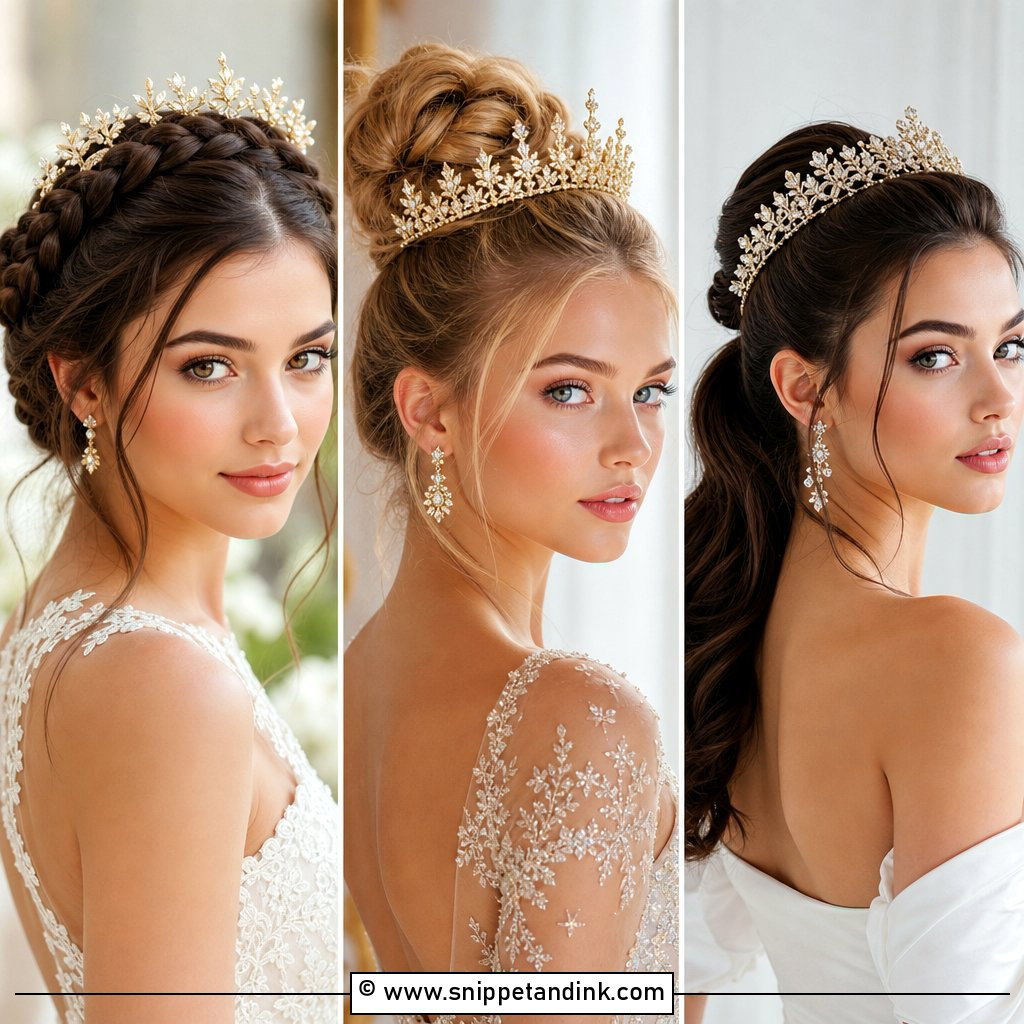
This is where I start most Padmé trials, because it reads as the reference without any props. I part the hair in the center or just off it, gather it low at the nape and wind braided sections wrapped into the bun, so the texture comes from the braids rather than teasing. The bun should be firm but never tight; a tight base pulls at the hairline and gives you a headache by the speeches. Lace sleeves, pearl earrings and a sheer veil all sit happily with it. I leave two fine pieces at the front so the face isn’t scraped bare.
2. Padme Wedding Lace Veil Updo
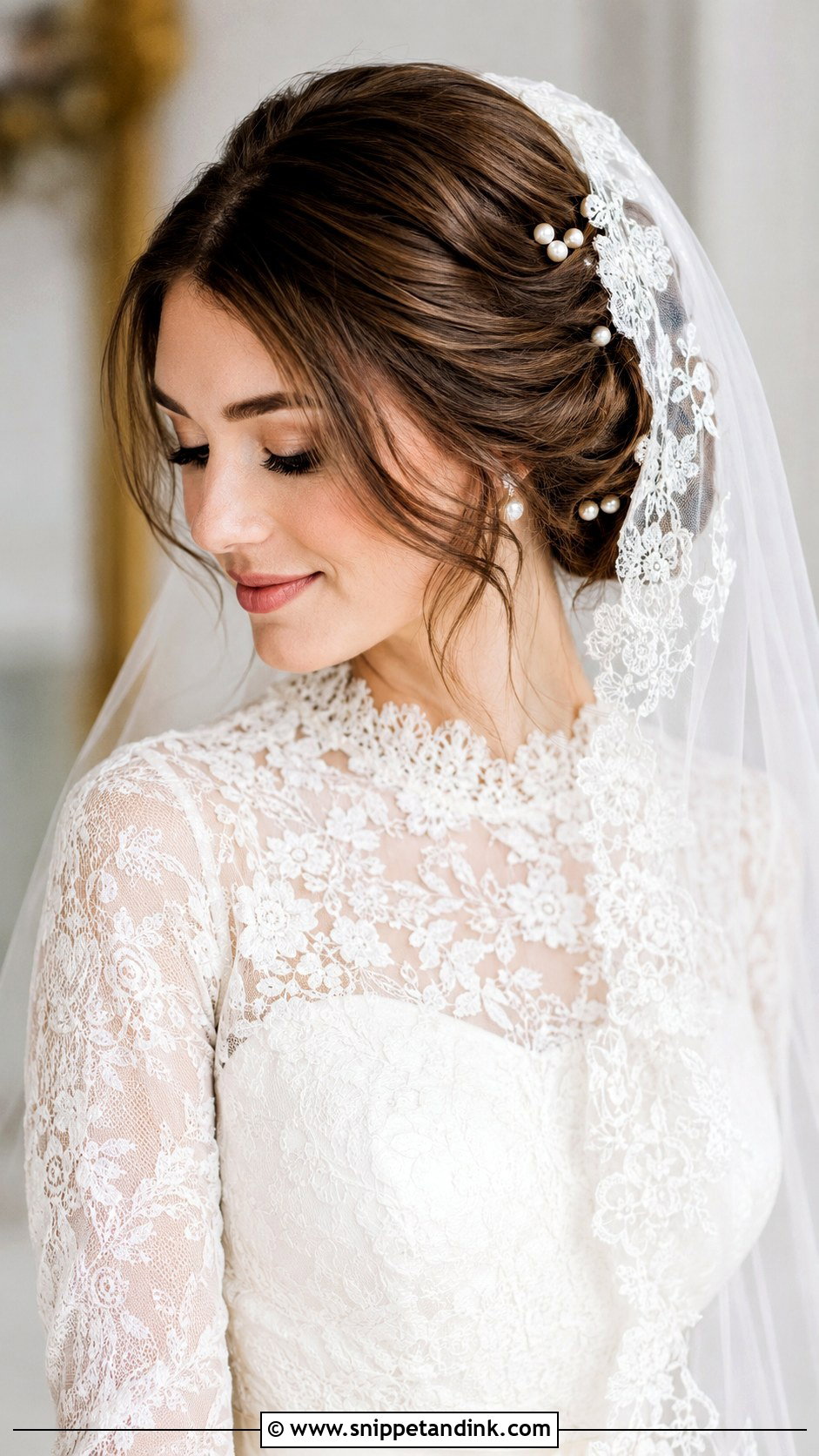
The veil has to look like part of the hairstyle, so I build the two together at the trial instead of adding the veil at the end. The hair goes into a low twisted updo with gentle height at the crown, and the lace is anchored just above or just beneath the bun depending on how much of the twist you want visible. High necklines, vintage lace and sheer sleeves suit this most. Any harsh shine fights the lace. I keep the finish soft and slightly matte so the fabric reads as the detail.
3. Padme Wedding Twisted Chignon
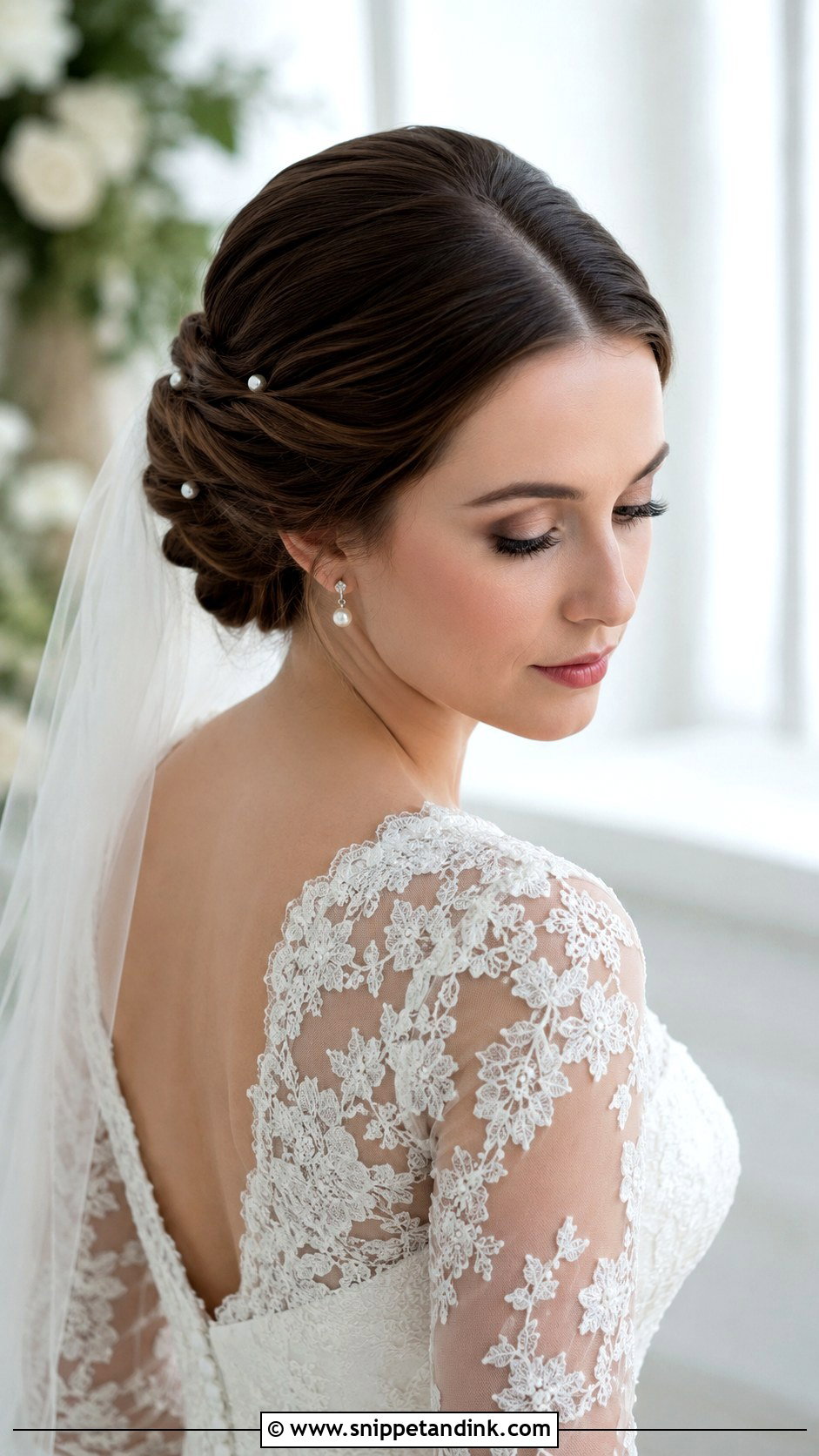
A twisted chignon sits low and close to the nape, with smooth twisted sections crossing into the bun. It’s the version I recommend when the gown already carries a lot of embroidery, because the back of your head is what guests watch for most of the ceremony and this gives them a clean, calm shape. Medium to long hair works; a few clip-in wefts fill it out if the twists look thin. I tuck pearl or tiny floral pins along the line of each twist rather than scattering them, so they follow the shape.
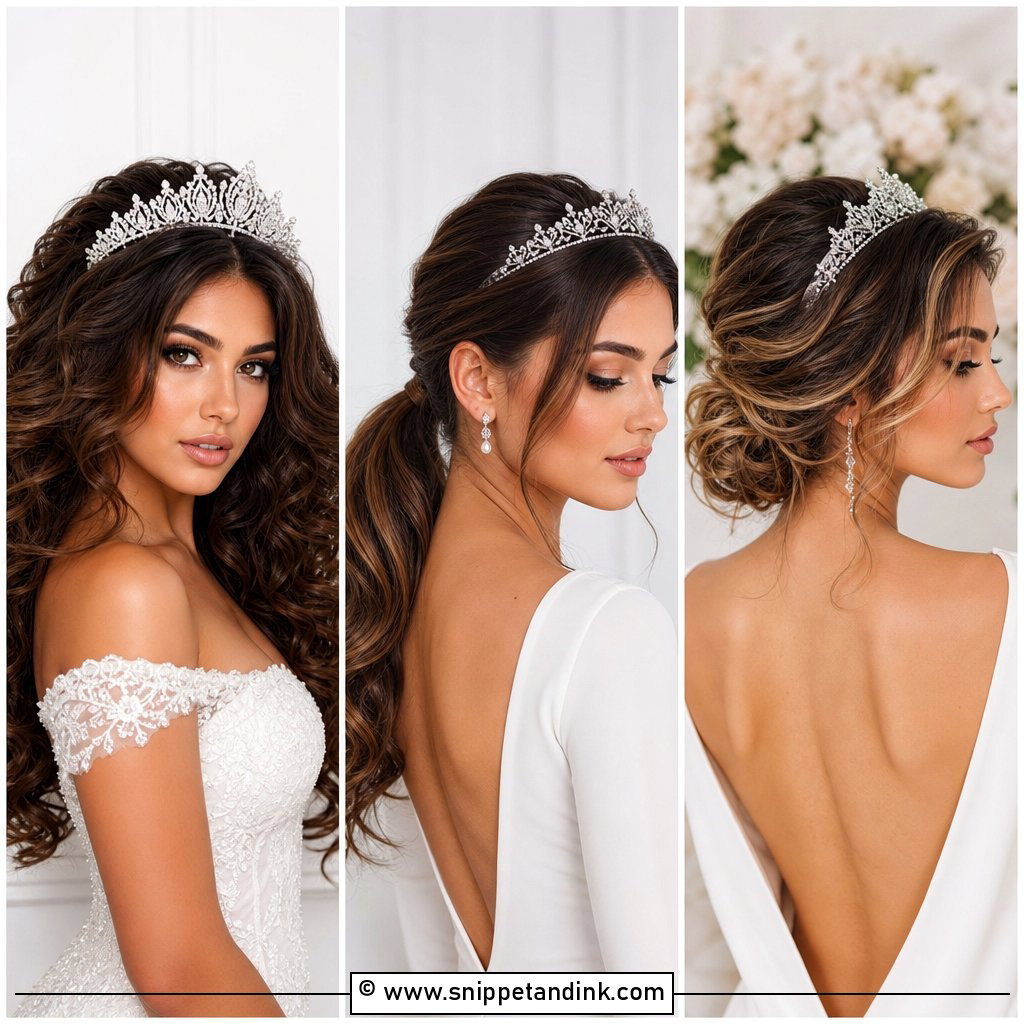
4. Padme Wedding Half Up Curls
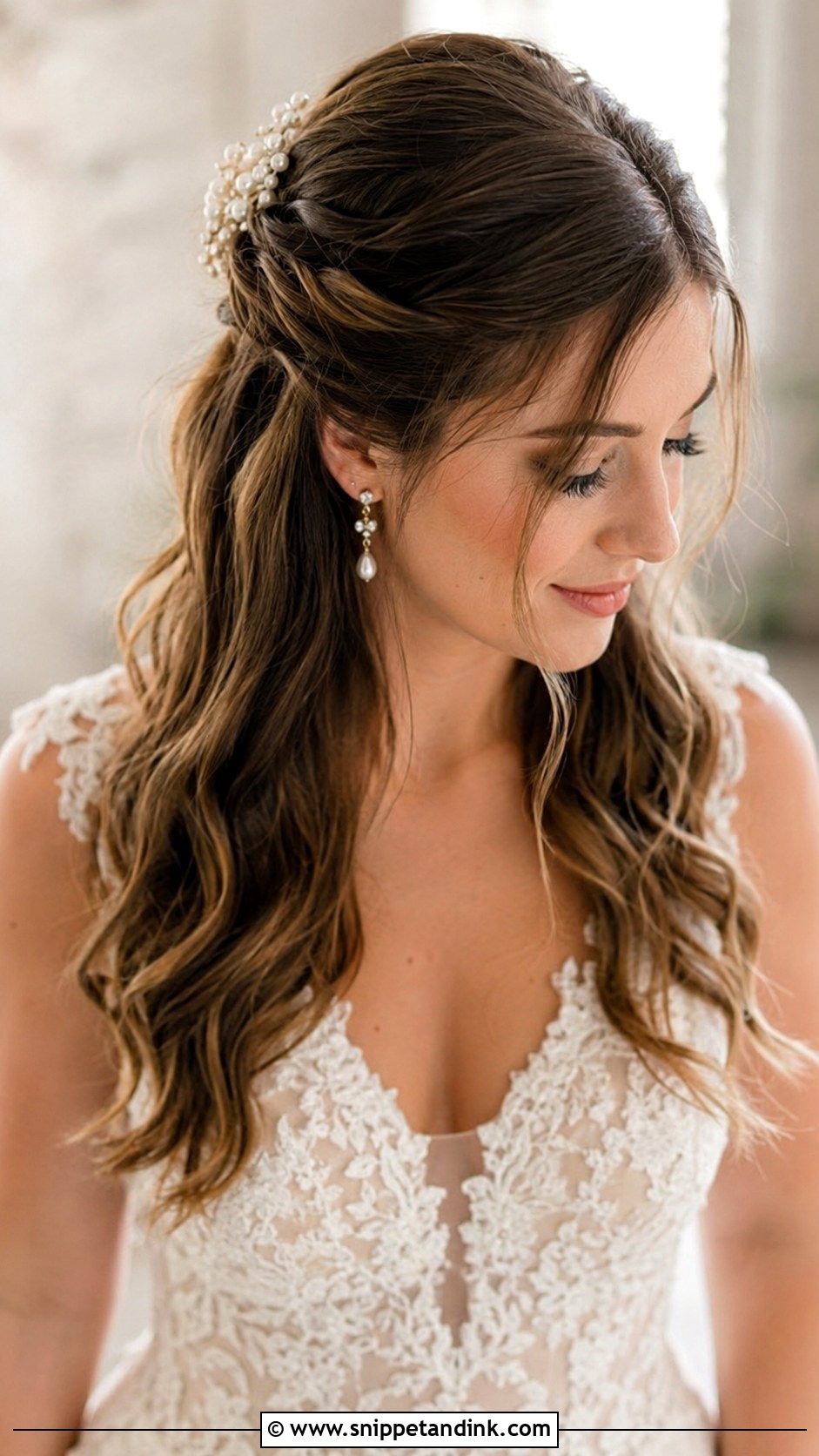
Half up curls give you softness around the shoulders with a formal top. I twist or braid the top section back and pin it at the crown, often with a small pearl comb hiding the join. The lengths are curled into smooth, brushed waves, not beach texture, which is closer to the softer lake scenes in the film. The trade-off is hold: loose lengths drop faster than anything pinned. On fine hair I set the curls with pin clips and brush them out late, and I’d only suggest this for long hair and an open neckline.
5. Padme Wedding Crown Braid
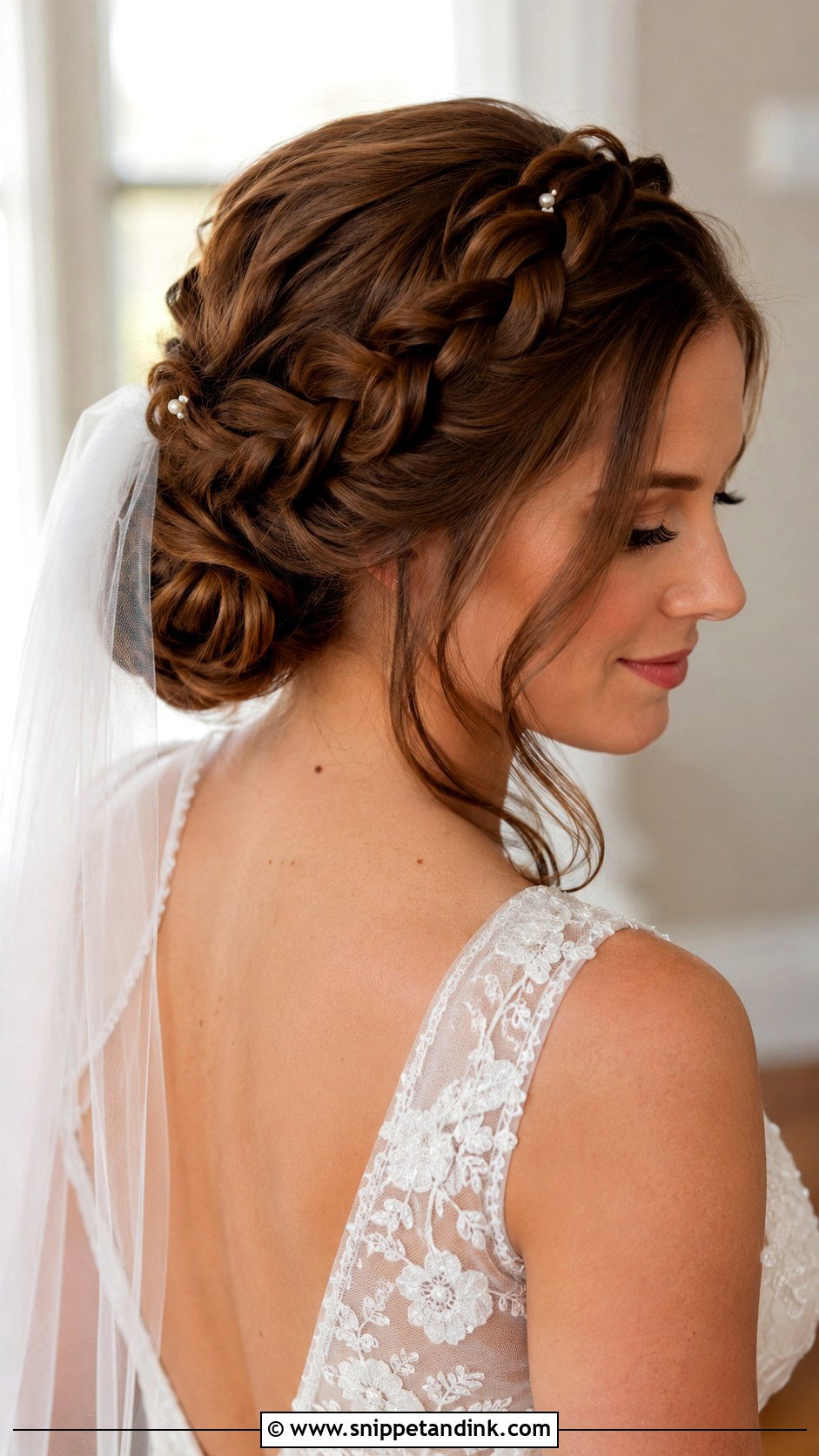
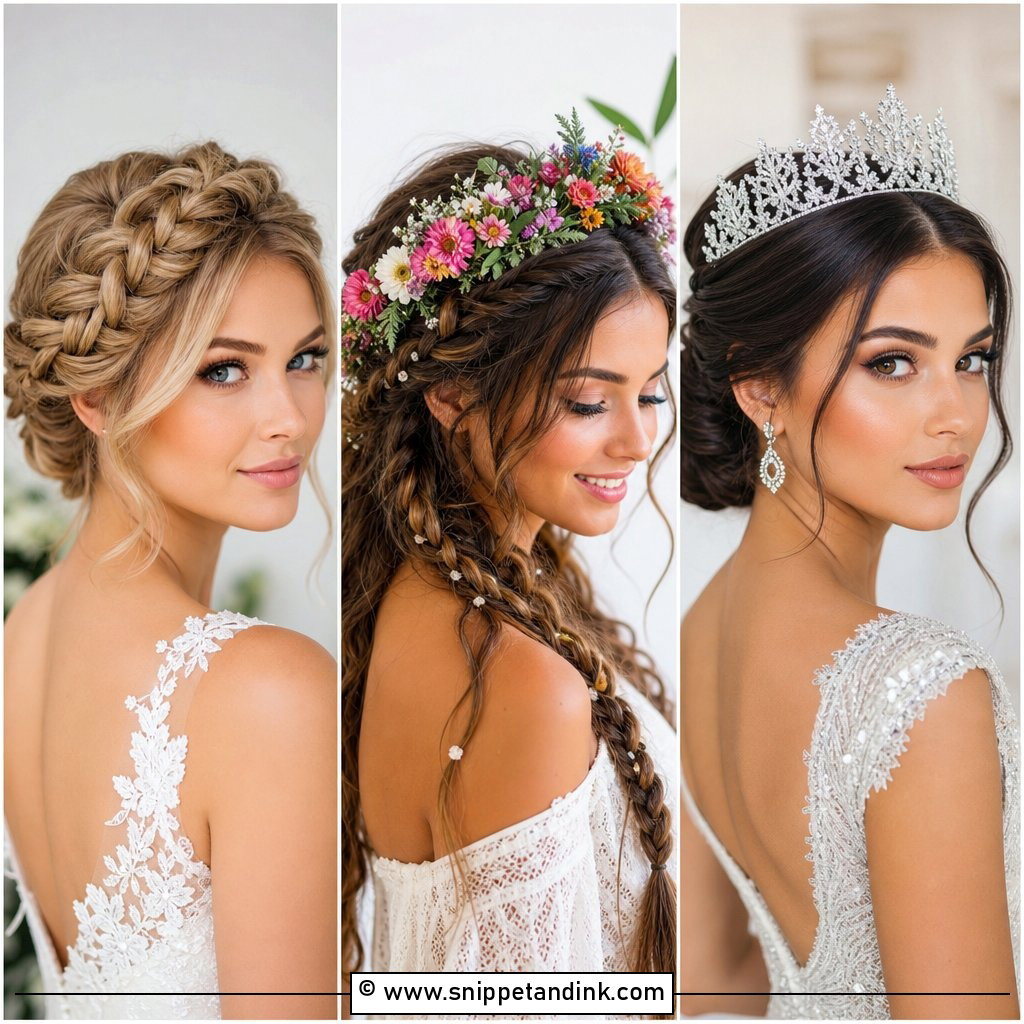
A crown braid gets the regal outline into the look without any headpiece at all. It wraps around the head and blends into a low bun or a tucked braid at the back, which keeps everything secure at an outdoor ceremony and gives a veil comb solid hair to grip. I pull the braid only slightly wider after securing it. Pulled too far, it looks fluffy and loses the clean edge that makes it read as Padmé, so a smooth braid with a few small pearls is my preference.
6. Padme Wedding Braided Halo Bun
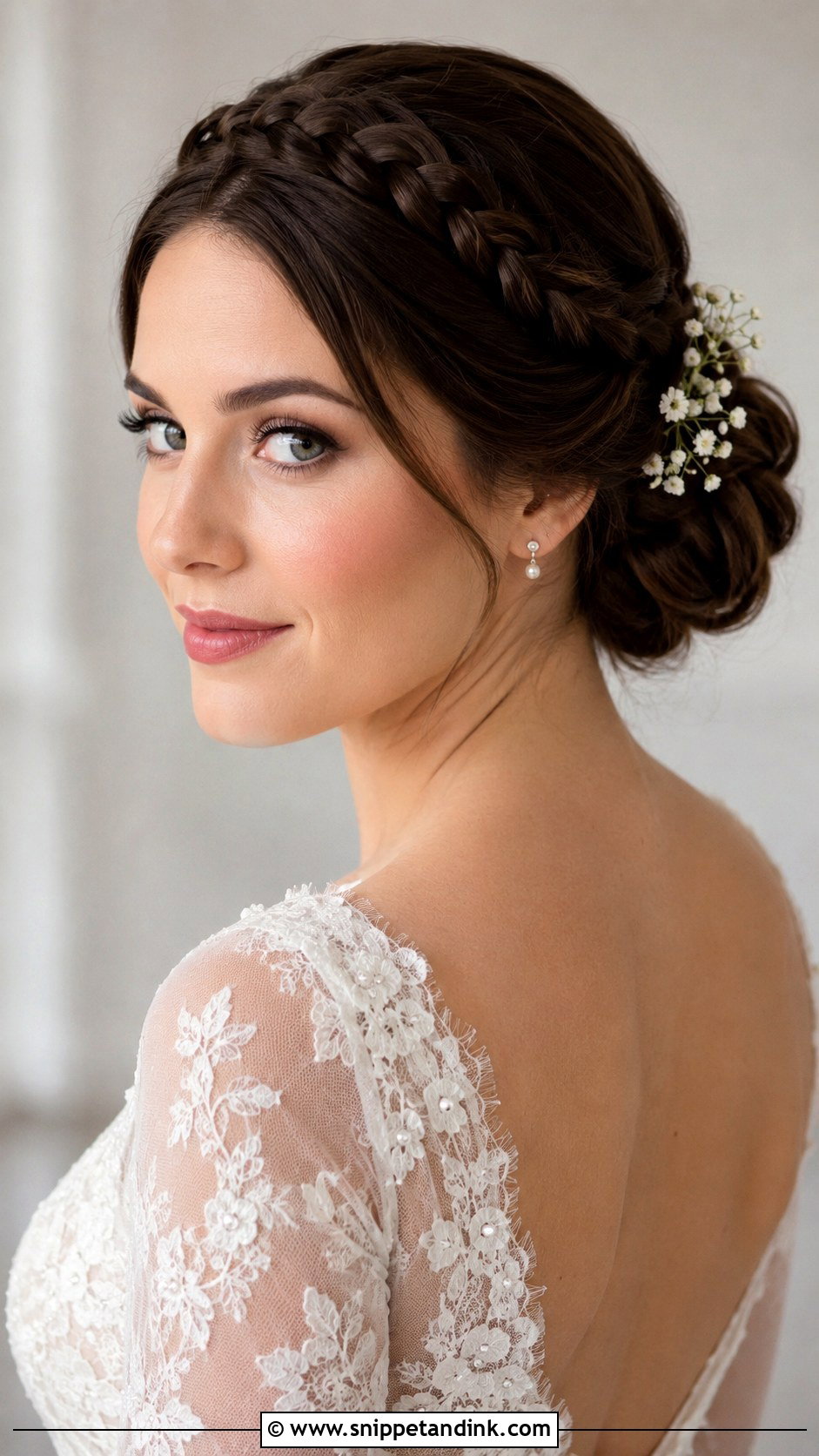
A braided halo bun puts detail all the way around the head. The halo braid sits just behind the hairline, and the rest of the hair gathers into a rounded low bun, so the style looks finished from the front, the side and the back. With a plain gown, this is the one I’d choose, because the hair does the decorating. A veil tucks in neatly under the bun. The halo needs enough length at the front to travel around, so heavily layered hair may need a hidden braid piece.
7. Padme Wedding Soft Waves
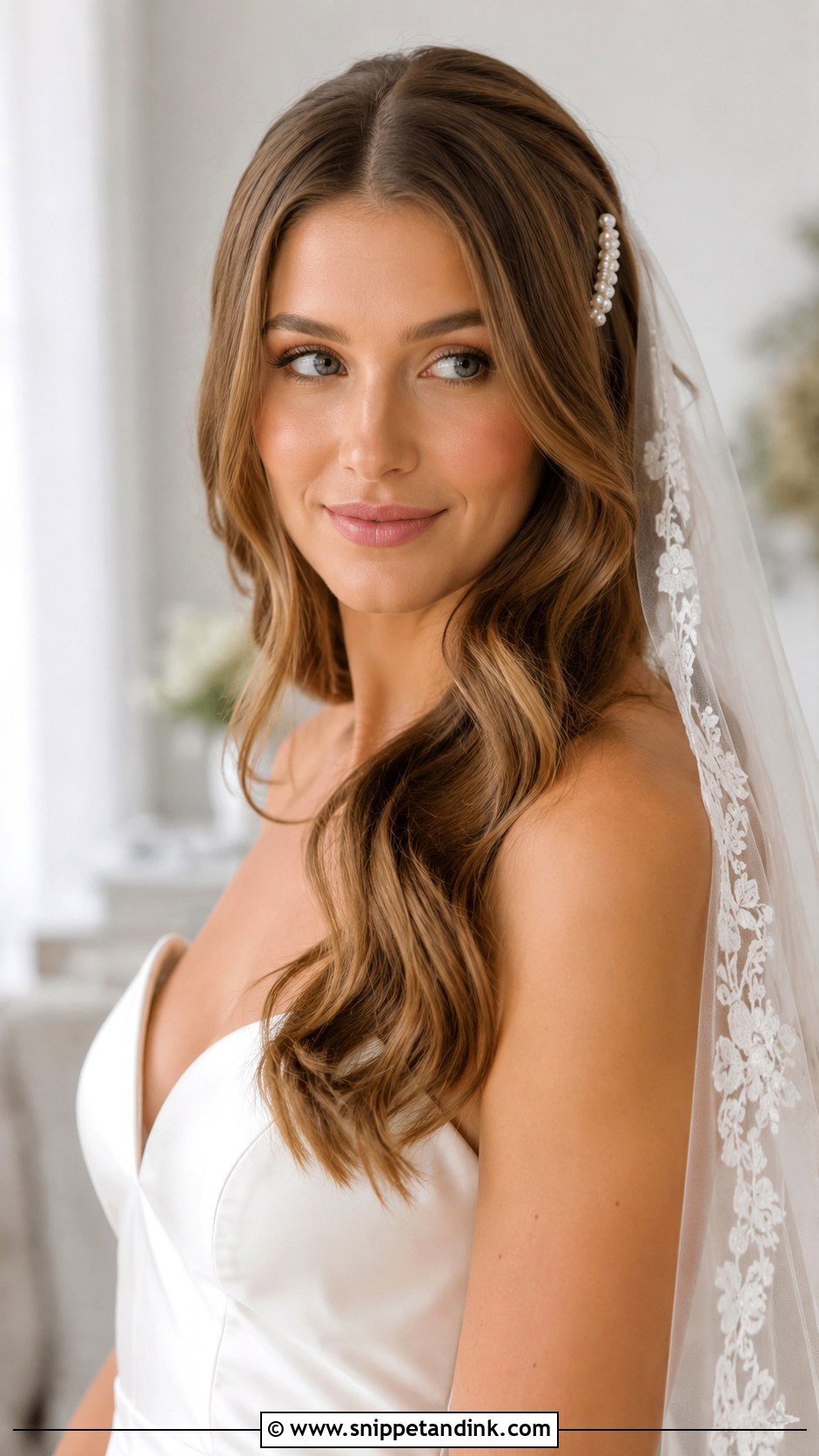
Hair worn down is the most relaxed take on the reference, but it still needs polish. I set a center or soft side part, then shape the lengths into brushed waves that fall over the shoulders as one smooth curtain; this is not beach hair. A small lace headpiece or a pearl comb ties it back to the Naboo mood. Waves worn down move with a long veil outdoors, which looks lovely. The honest catch is humidity: a lakeside venue on a damp evening will loosen them, so pack a mini spray.
8. Padme Wedding Center Part Updo
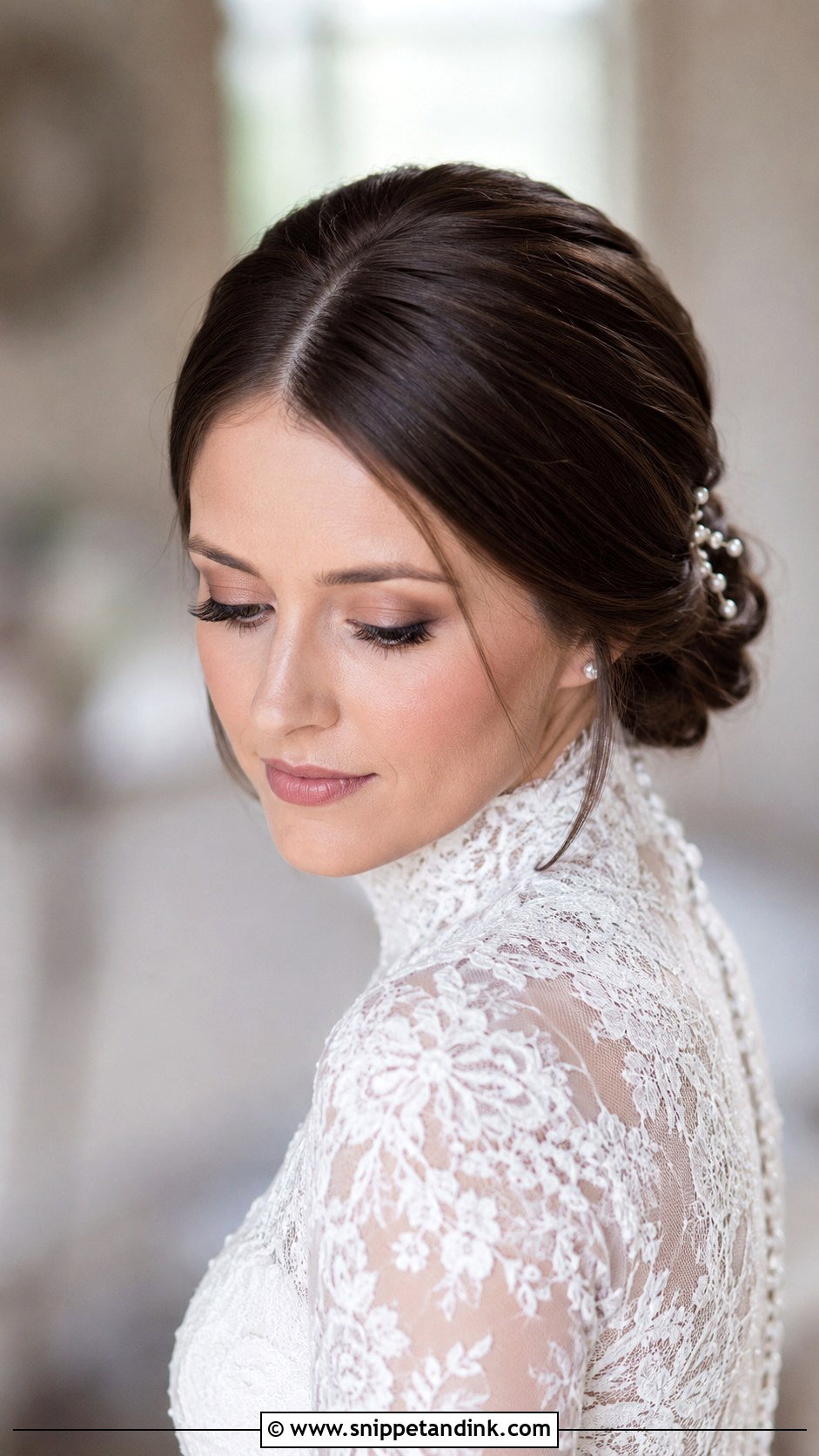
A clean center part is the single quickest signal of this whole reference. The front is smoothed flat into the part and the back goes into a low bun, chignon or twisted updo. Symmetry matters, but it shouldn’t look severe, so I let the hair sit with a slight softness over the temples rather than slicked to the scalp. One caution from the chair: a center part shows every difference between the two sides of your face, and some brides find that confronting in close-ups. Try it at the trial before committing. Lace veils, drop earrings and detailed bodices pair well.
9. Padme Wedding Pearl Bun
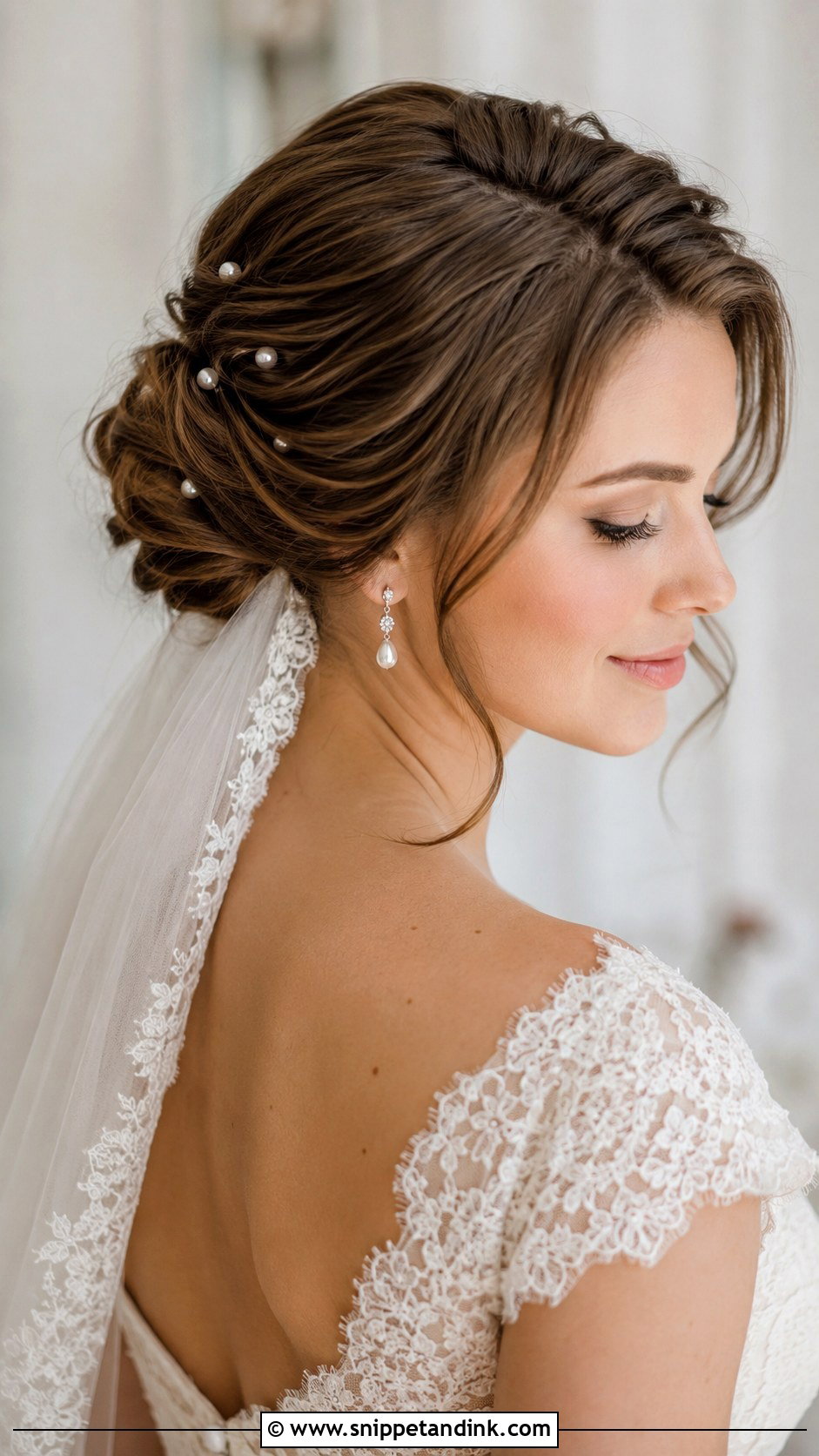
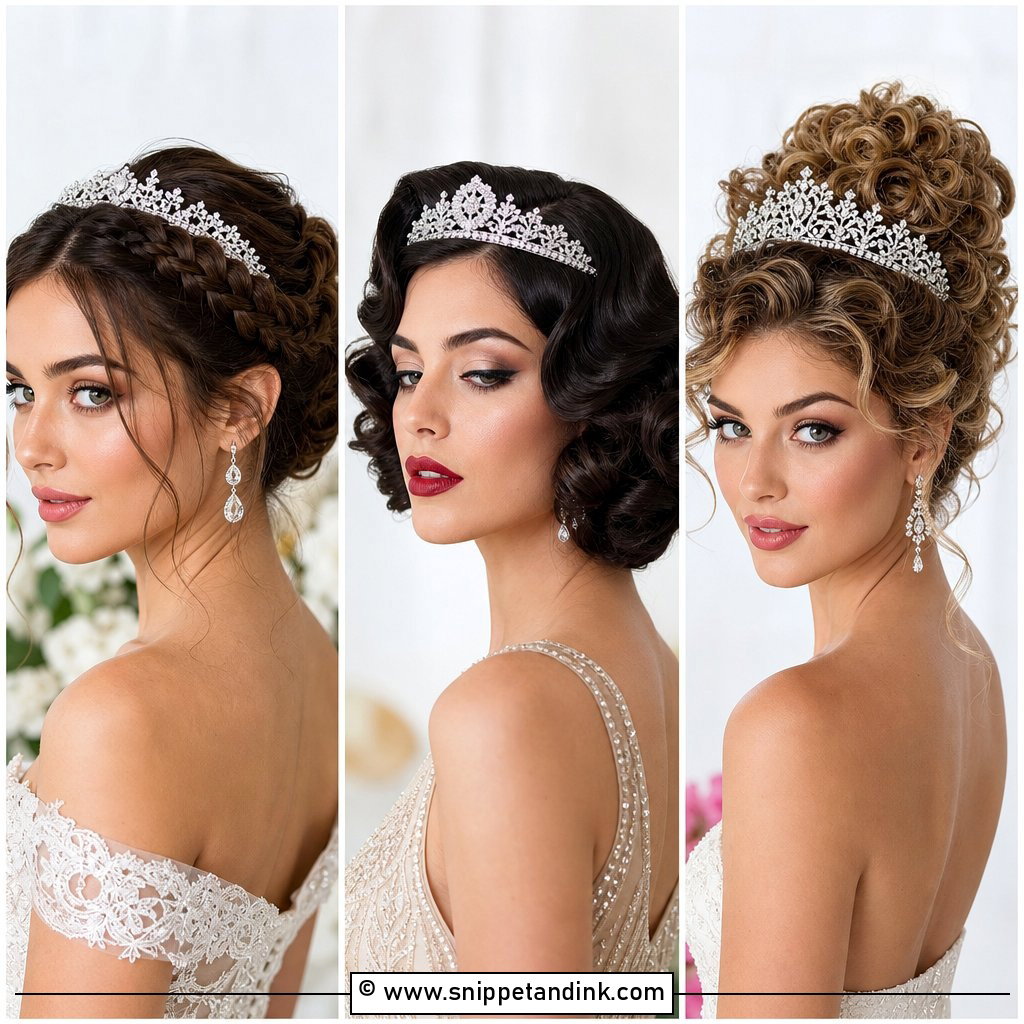
Pearls are how I add detail when a bride is skipping a big headpiece. I build a low or mid-low bun, then place small pearl pins through the twist and around its base, spaced unevenly so they look scattered rather than lined up. Too many and the bun looks crowded. On a lace gown the pearls pick up the texture of the fabric. I keep the bun rounded with a touch of texture, because a perfectly sleek surface makes the pearls look stuck on.
10. Padme Wedding Low Ponytail
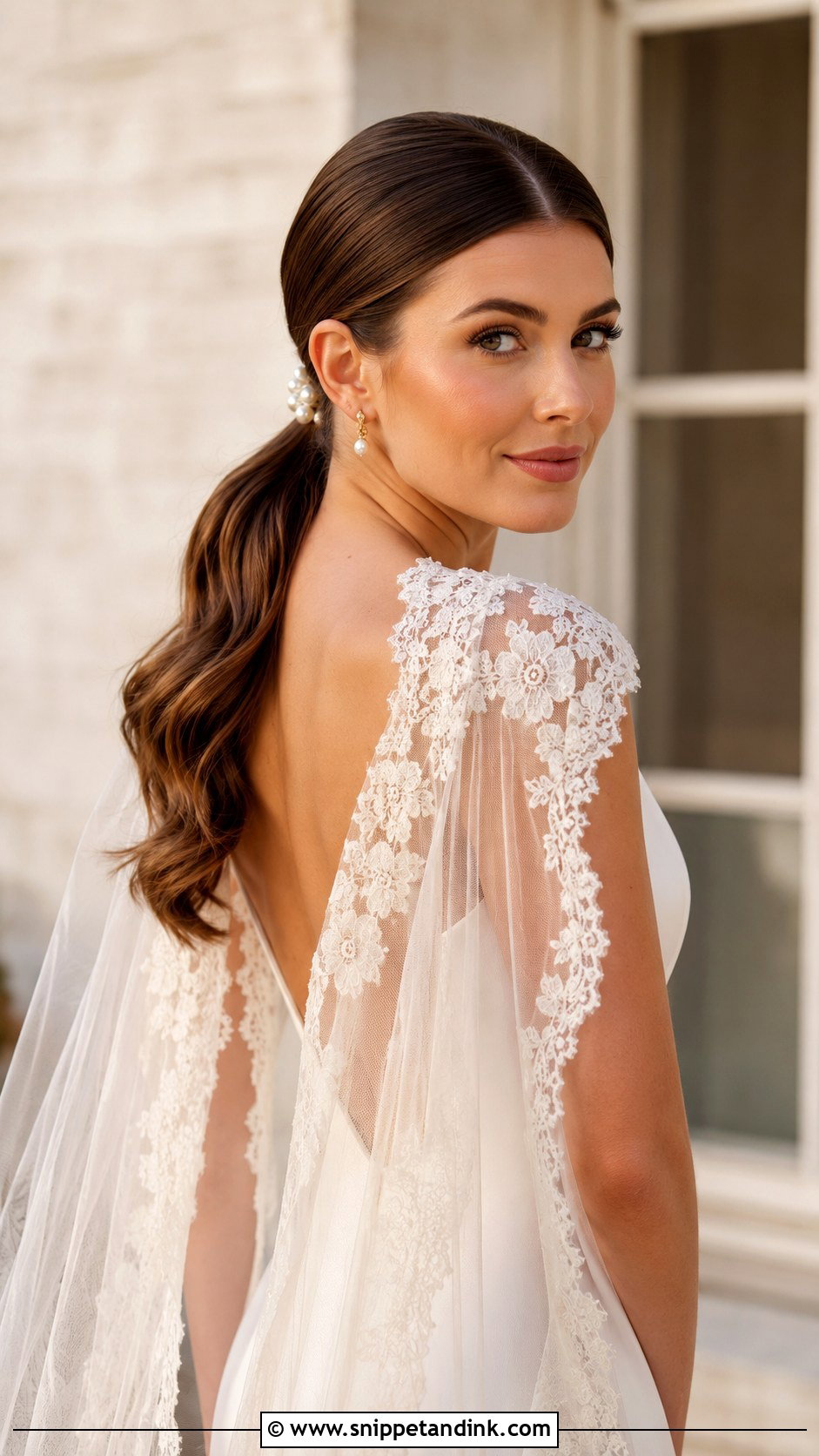
Less structure, same mood. The hair is parted in the center, smoothed at the crown and tied low at the nape, then the length is curled into polished waves or plaited into a loose braid. I always wrap a strand of hair around the elastic and pin it underneath, since a visible band ruins the vintage feeling in back-view photos. With a cape or high neck it keeps the front clean and lets the length show. A few pearl pins near the base finish it.
11. Padme Wedding Side Braid Updo
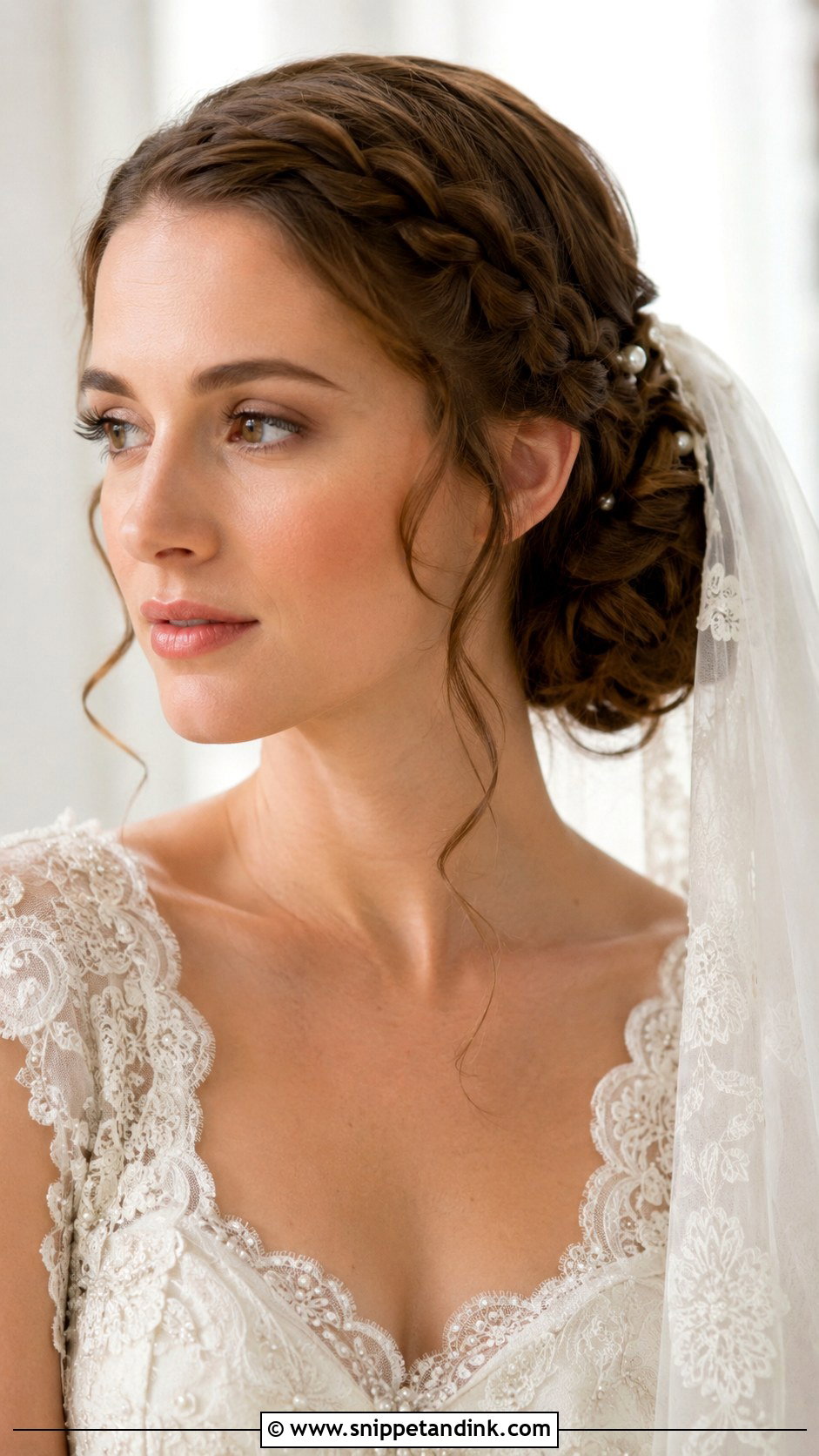
One braid starts near the temple, travels along the side of the head and disappears into a low twisted bun. It adds detail around the face but keeps the security of an updo, which is why I like it for brides who are nervous about hair falling in their eyes. I braid it sleek for a formal room and loosen it a little for a garden. Decide which side it goes on by checking where you’ll stand at the ceremony; the braid should face your guests, not the officiant. A lace veil or tiny floral pins complete it.
12. Padme Wedding Juliet Cap Hair
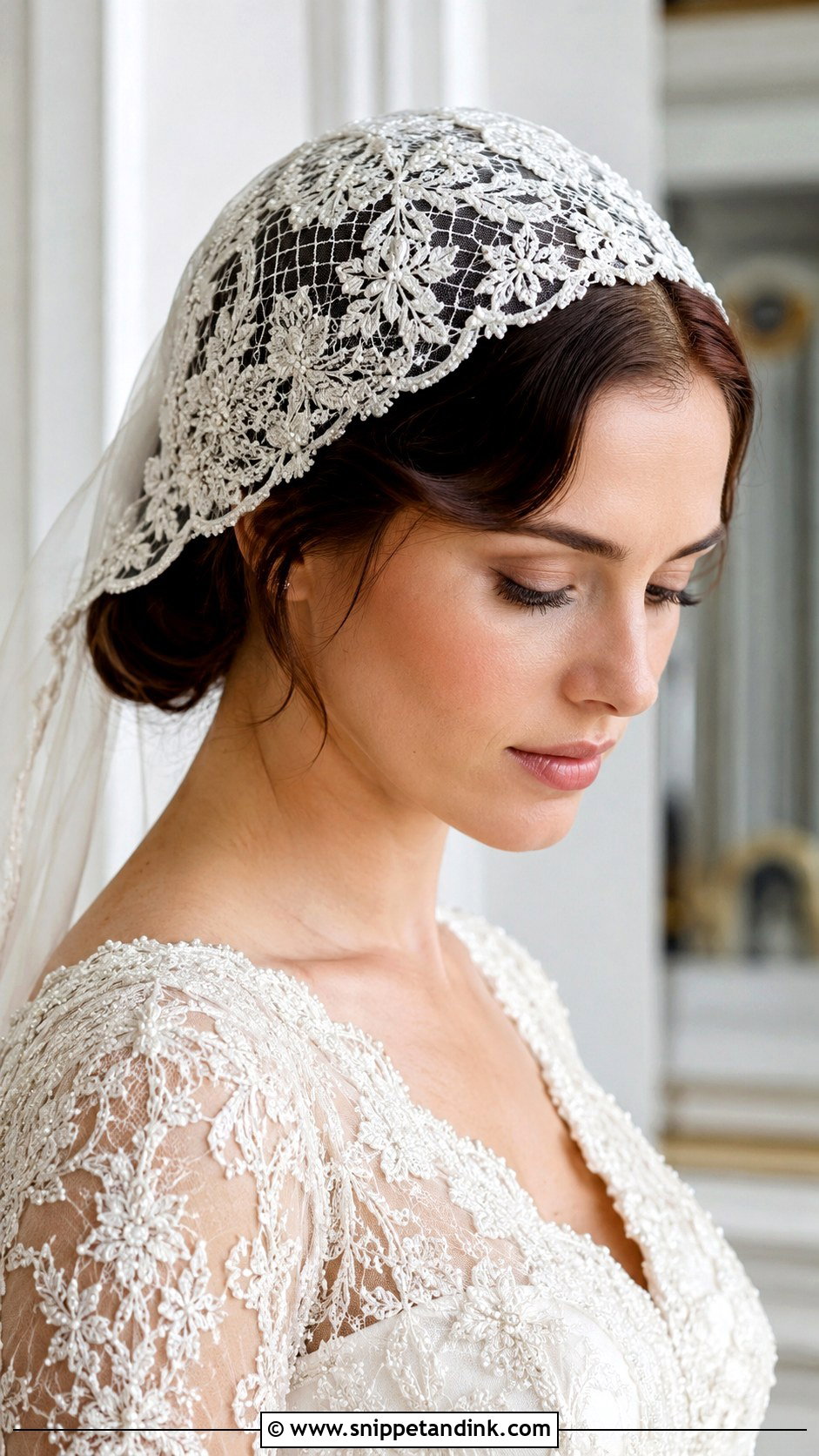
A Juliet cap veil sits close to the head, so anything with height underneath it will push the cap up and distort the shape. I keep the hair low and flat: a low chignon, a tucked bun or soft waves pinned close to the nape. The cap frames the face; the hair simply supports it. Lace, embroidery and long sleeves suit this vintage approach. At the front I use a center part or a gentle wave at the temples, and I test the cap at the trial, since every one fits a little differently.
13. Padme Wedding Curly Updo
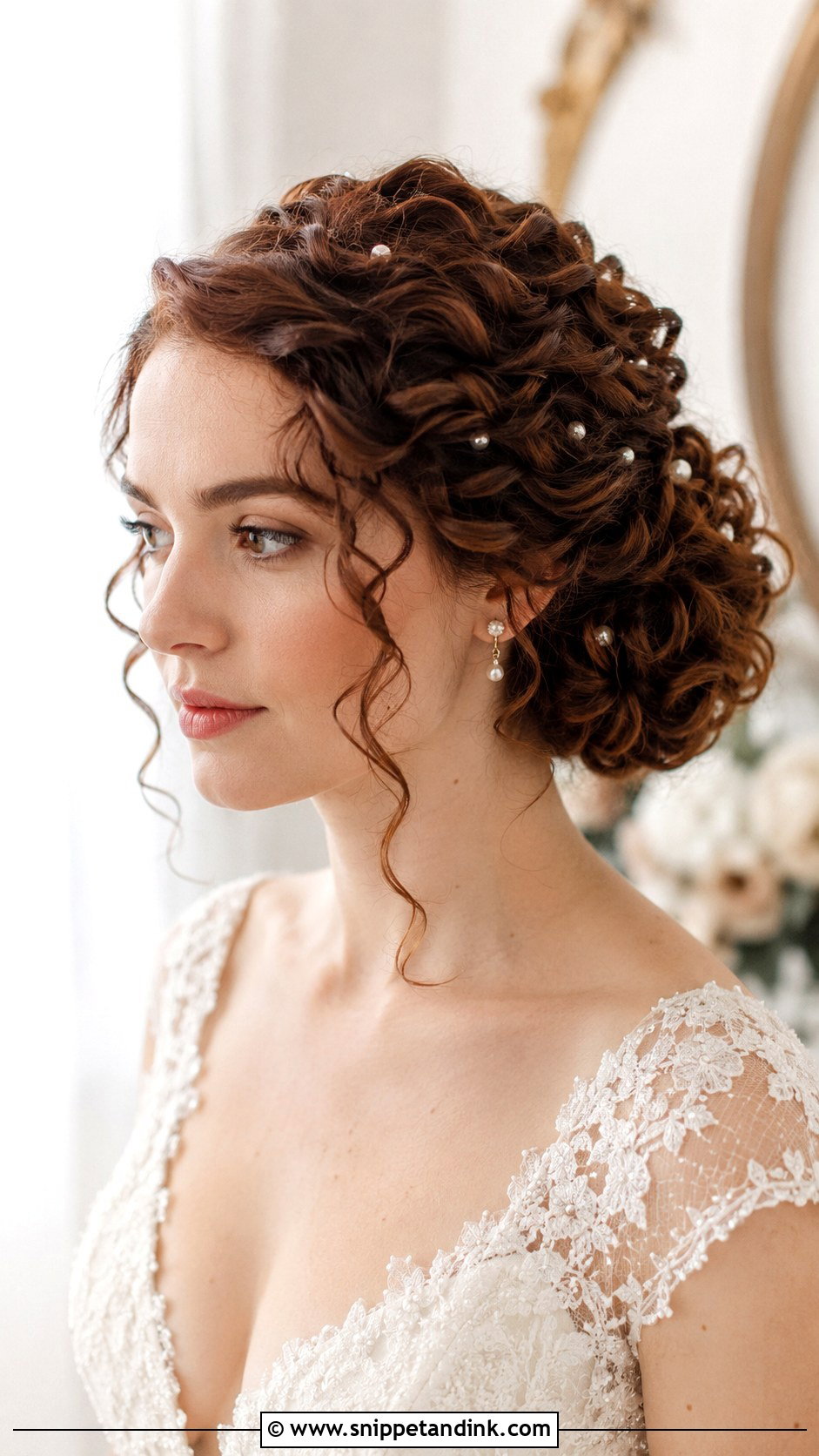
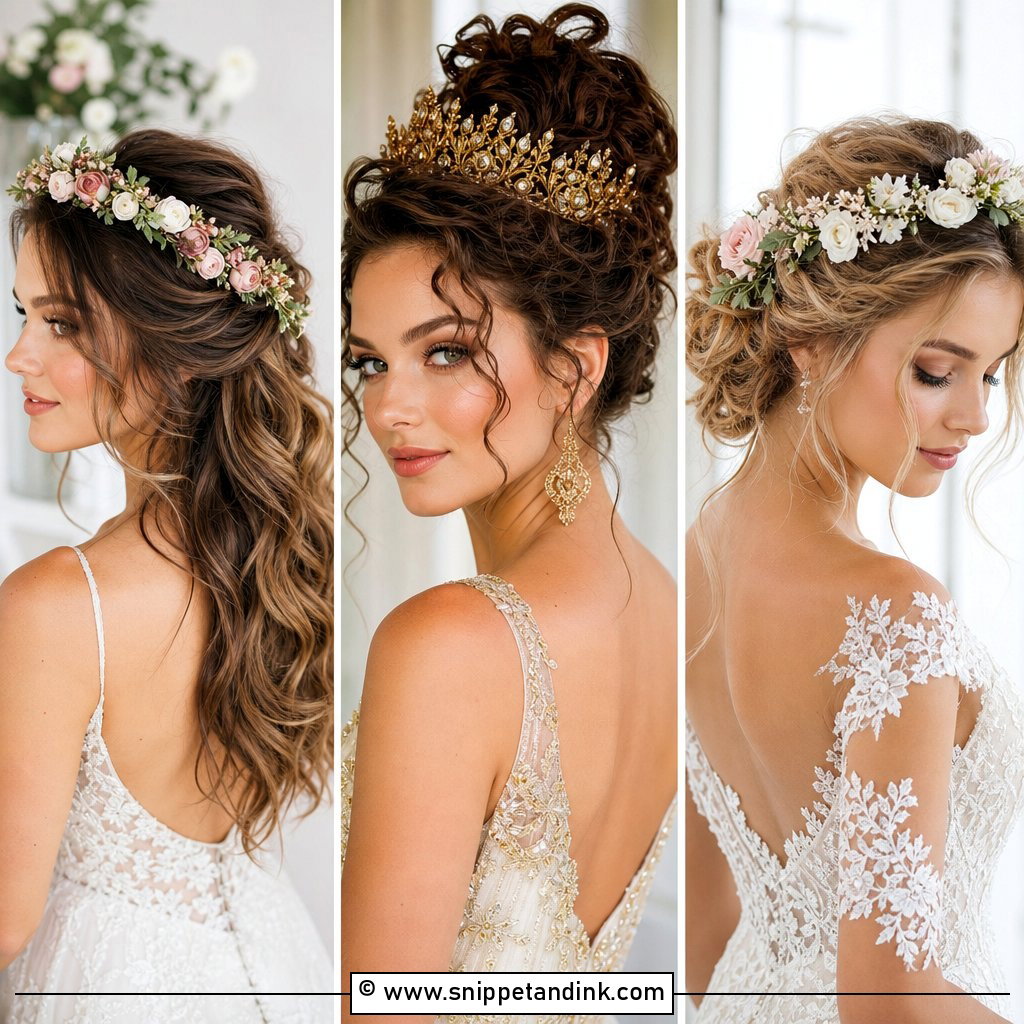
Naturally curly hair doesn’t need straightening for this reference. I let the curl pattern create the texture of the bun, gathering it low, pinning in sections, and leaving a few defined curls near the face. The prep matters more than the pinning: curls should be hydrated and set with a hold product, then fully dry, or they frizz through the afternoon. Pearl pins, lace combs or small white flowers bring it close to Padmé. I aim for control without stiffness, so I never brush curls out once they’re defined.
14. Padme Wedding Long Braided Waves
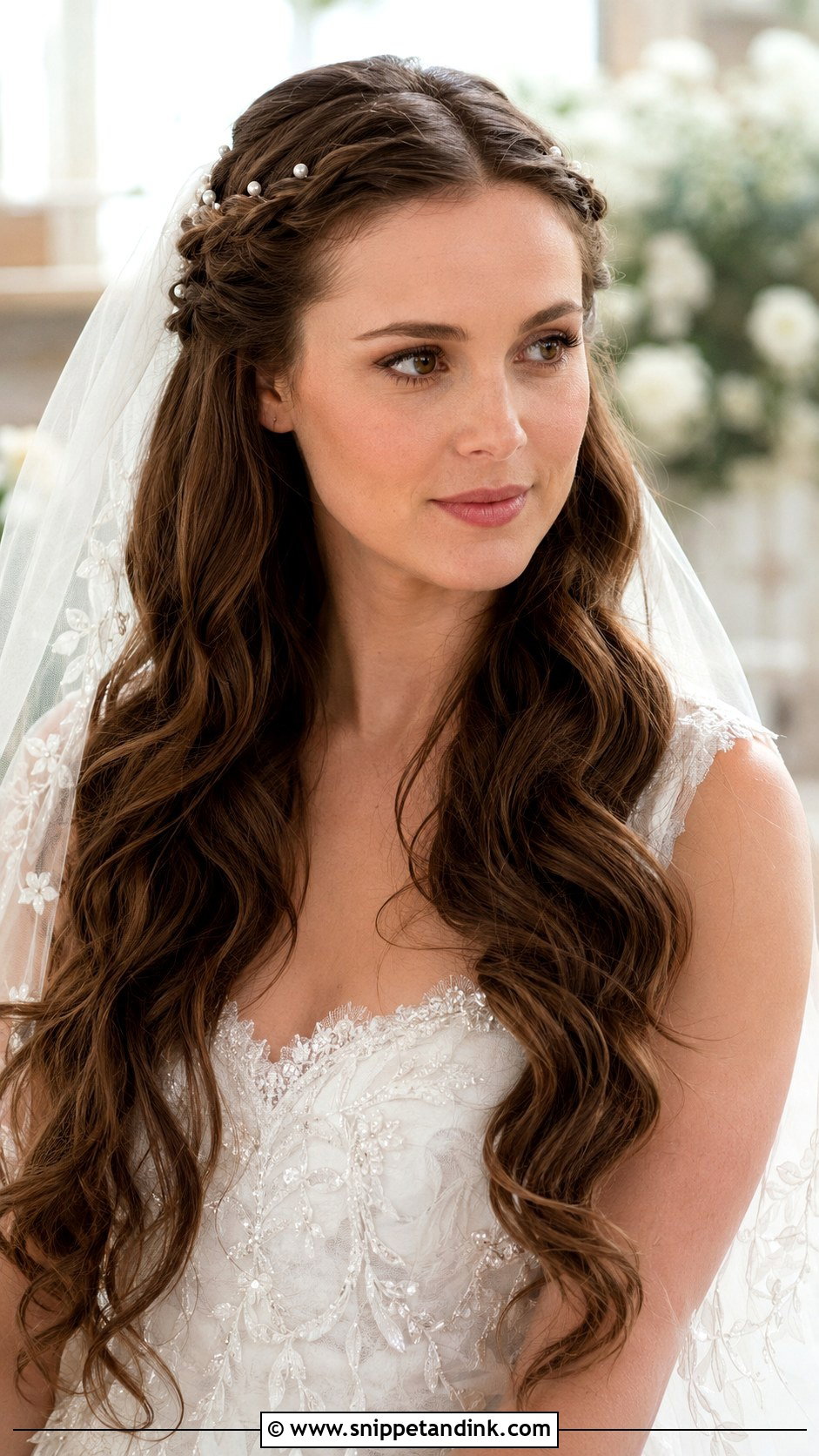
Long hair, a few braids and a lot of softness. I put smooth waves through the lengths first, then add two or three small braids at the front or crown and pin them back into the style, which frames the face and leaves most of the hair down. With a long veil, the braids keep the top controlled while the waves move underneath. Ask for brushed curls, not messy ones. Finish it with pearl pins or a delicate lace hairpiece.
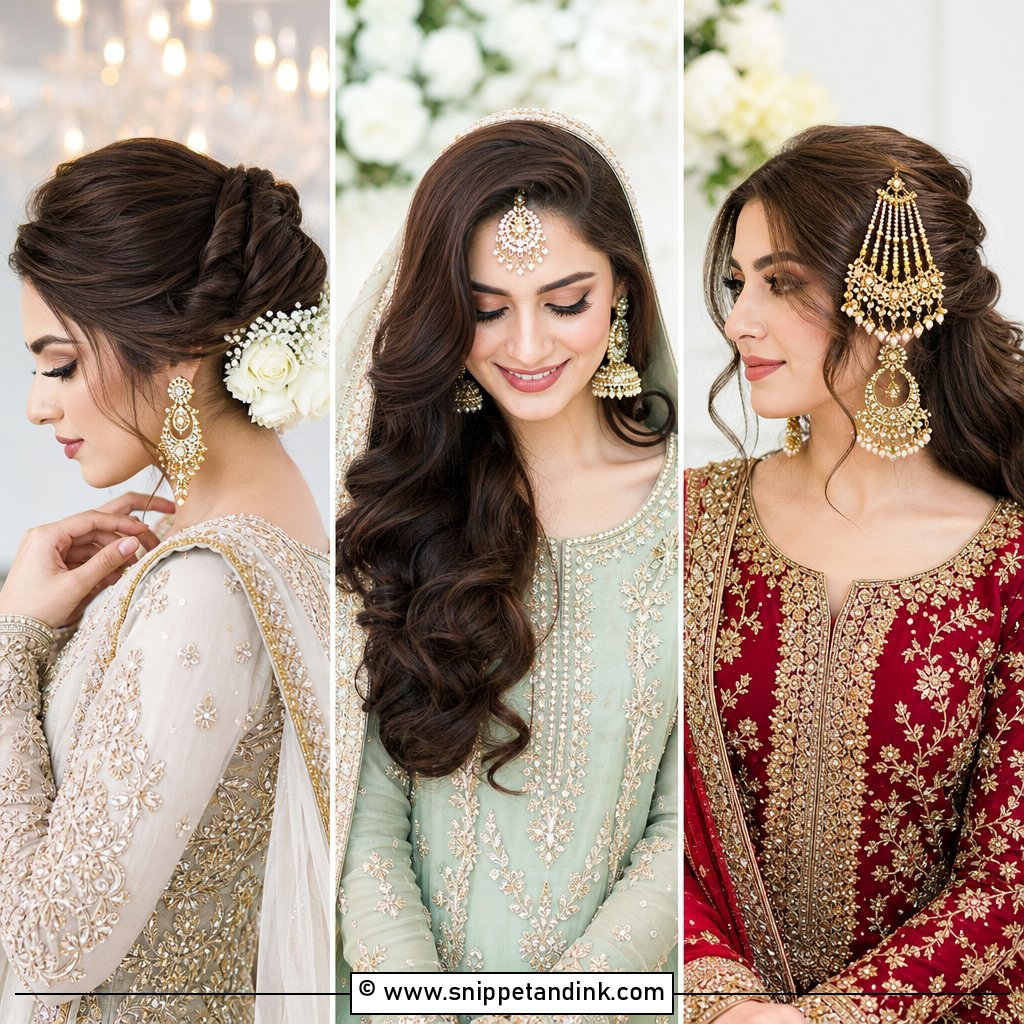
15. Padme Wedding Sleek Bun
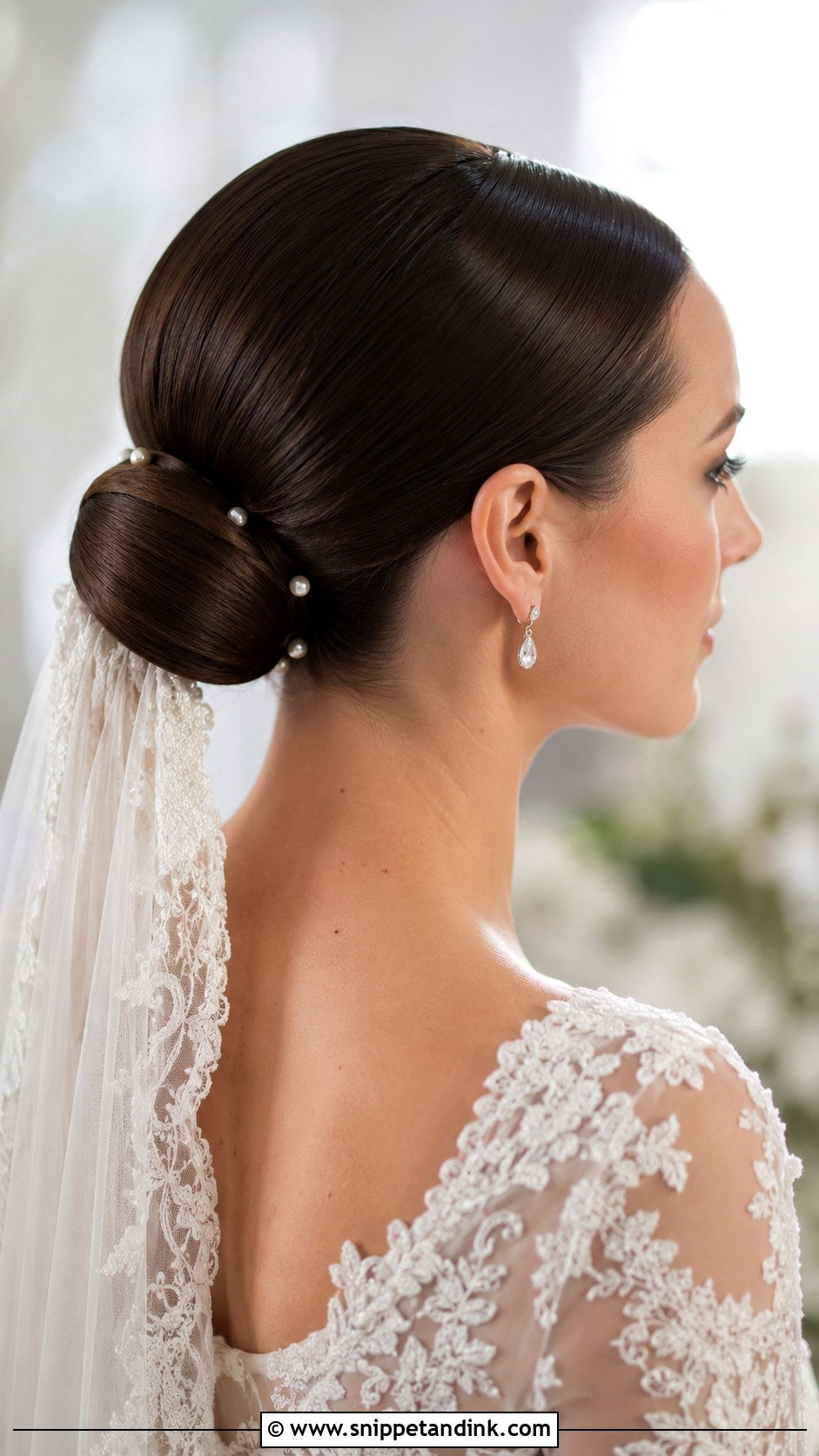
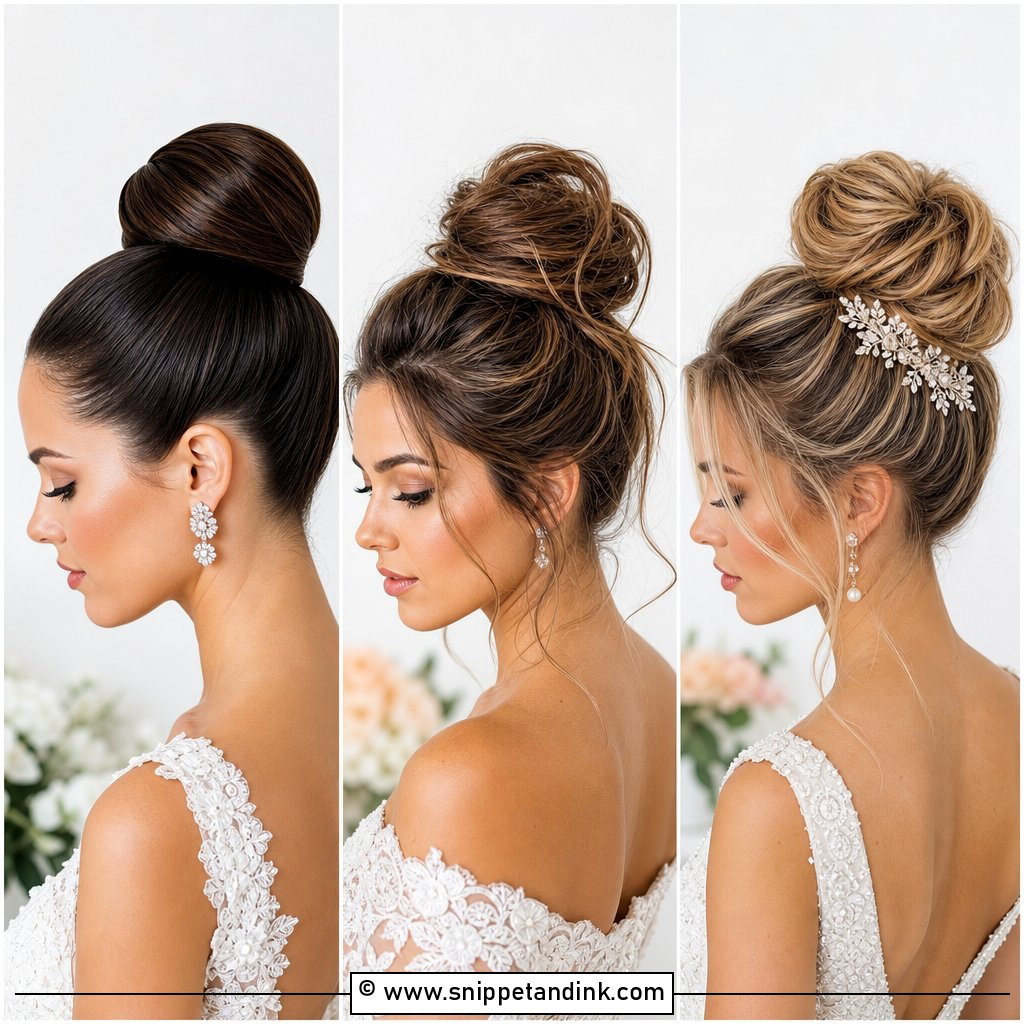
The most polished option here. Hair is smoothed straight back or parted cleanly, then gathered into a neat low bun at the nape, which opens the face and leaves the gown, veil and jewelry to do the talking. I suggest it for heavy lace, statement sleeves or a cathedral veil. To stop it looking plain, I twist the bun rather than wrapping it, or add a few tiny pearl pins. A glossy finish suits it, but I avoid gel, which looks wet under a flash.
Lace Snags on Pearl Pins, So Plan the Order
Nearly every look above pairs lace with pins, braids or pearls, and lace catches on all three. A scalloped edge hooked on a pearl pin can tear when the veil comes off for the first dance. I work in a fixed order so the veil sits cleanly and comes out cleanly.
- Finish the hair and set it completely, including spray, before the veil comes near it.
- Place the veil comb into a solid, pinned section, ideally the top of the bun or a braid, never loose hair.
- Add decorative pearl pins last, and keep them away from the strip where the lace rests.
- Show a bridesmaid how the comb comes out, pulling straight back and slightly up.
A heavy embroidered veil drags on whatever holds it. If yours is long or beaded, I sew a couple of small loops into the comb and pin through them as well, which spreads the weight across more of the hair.
If the veil is a Juliet cap or mantilla
These sit on the head rather than behind it, so the hair underneath must be flat. I’d skip crown braids or halos with a cap, because the cap rides up on them and looks lumpy. A mantilla works with a low bun or chignon, with the comb sitting just above it.
Two Elements Carry the Whole Reference
Padmé hair works when it stays soft enough to wear for a whole day. You don’t need every element at once: pick two, perhaps a center part and a braid, or a low bun and lace, and the reference reads clearly. Let your neckline, your veil placement, your hair texture and the venue decide the rest. A detailed gown wants simpler hair; a plain dress can carry braids and pearls. Bring your veil and a photo of your dress to the trial so your stylist can judge the balance with everything in place.
You'll Like These Ideas:



Leave a Reply