
An Indian wedding rarely asks your hair to do just one thing. It has to sit under a dupatta through the pheras, hold a maang tikka dead center for hours of photos, survive a sangeet dance floor and sometimes change shape between outfits. When I plan a bride’s hair, I start with her lehenga or saree, her earrings and her neckline, and only then look at reference photos. Below are classic jasmine buns, long South Indian braids and softer reception waves, with notes on who each one suits, from the bride to her sisters to any wedding guest. Save the ones you like and bring them, together with your outfit, to your salon trial.
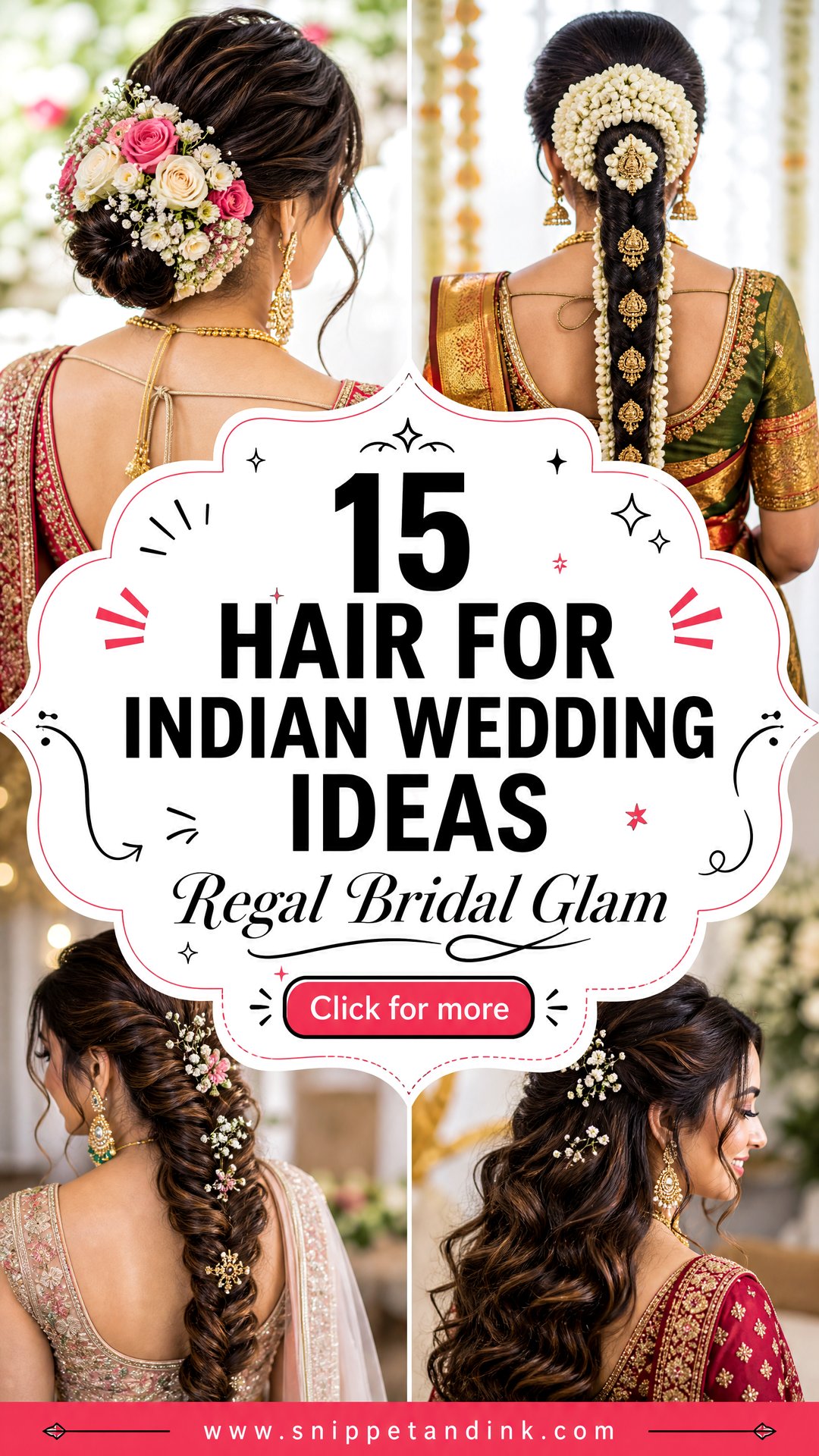
Mapping a Different Look to Each Function
Most Indian weddings run over several days, and the mistake I see most often is a bride pouring all her energy into the wedding-day look and improvising the rest. Each function puts different demands on your hair, so I sketch the whole week with brides before the trial.
- Mehendi: you’ll be sitting still for hours with your hands out of action, so wear something that won’t need touching, like a fishtail braid or a loose bun with flowers.
- Haldi: turmeric paste stains light hair and fabric, so go simple and pinned up, and skip expensive extensions or a fresh blow-dry that day.
- Sangeet: the dancing night. A ponytail, half up style or curls with plenty of hold will move with you.
- Wedding ceremony: the heaviest look, built as a base for the dupatta and head jewelry. Comfort over three or more hours matters more than drama.
- Reception: the moment to wear it open or in waves, since the dupatta often comes off or moves to the shoulder.
Laid out like this, it also shows you where a second hair appointment is worth paying for and where a quick restyle by a cousin will do.
1. Indian Wedding Low Bun
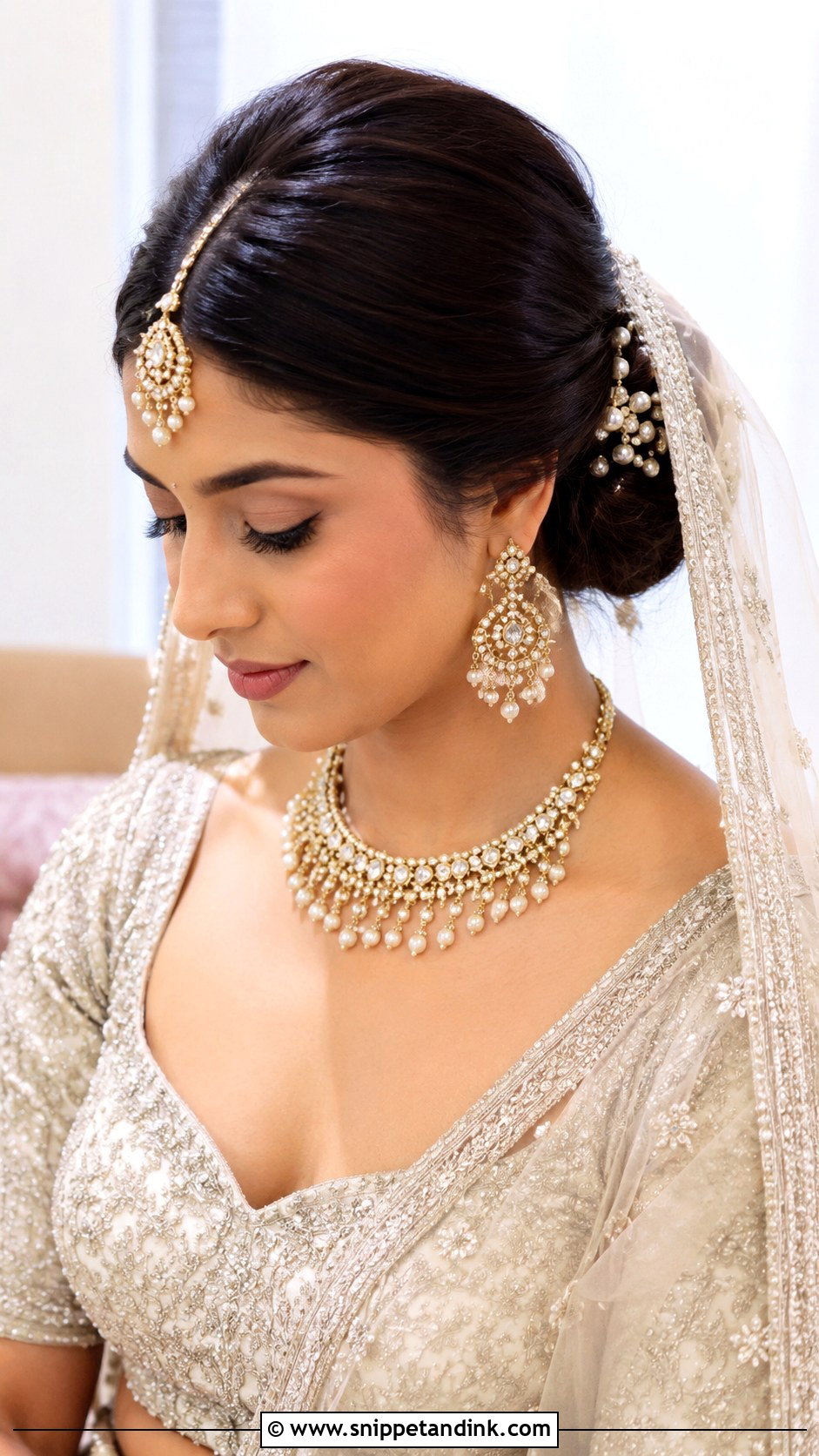
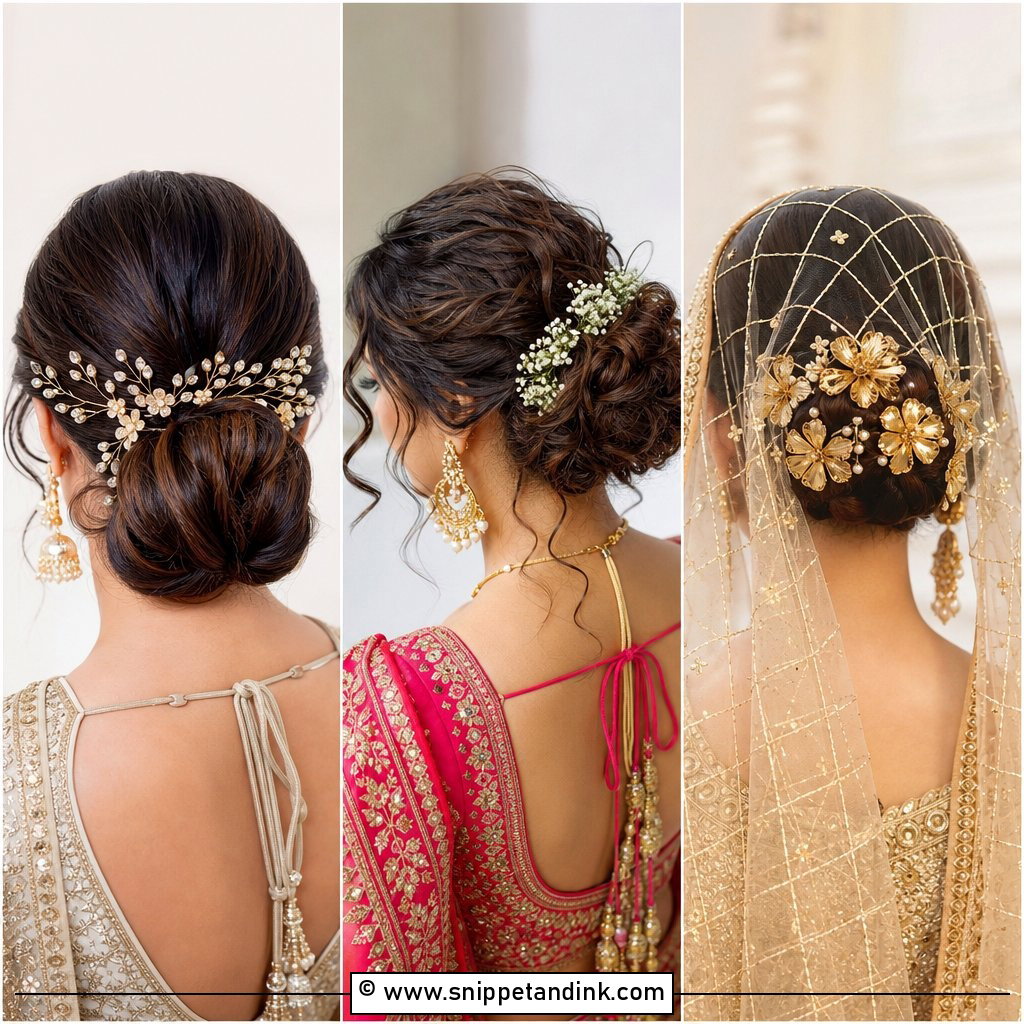
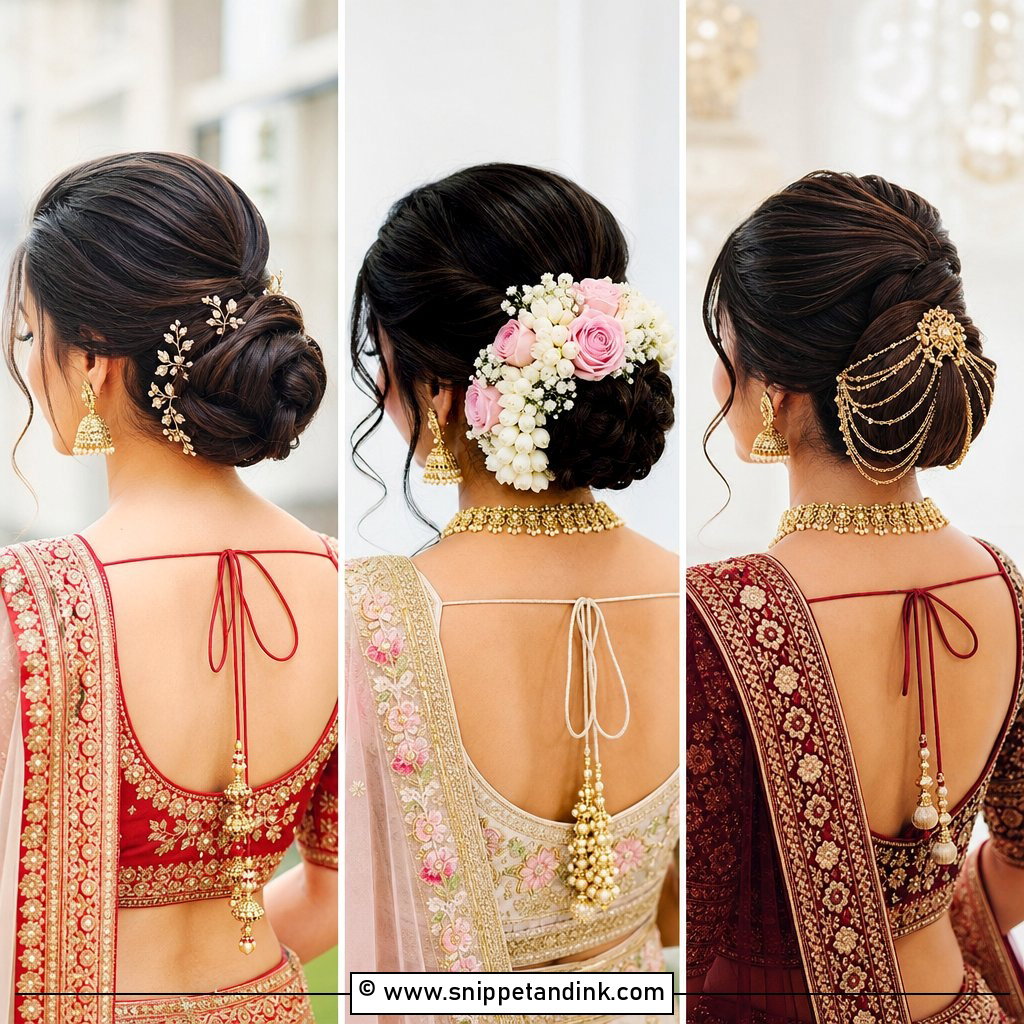
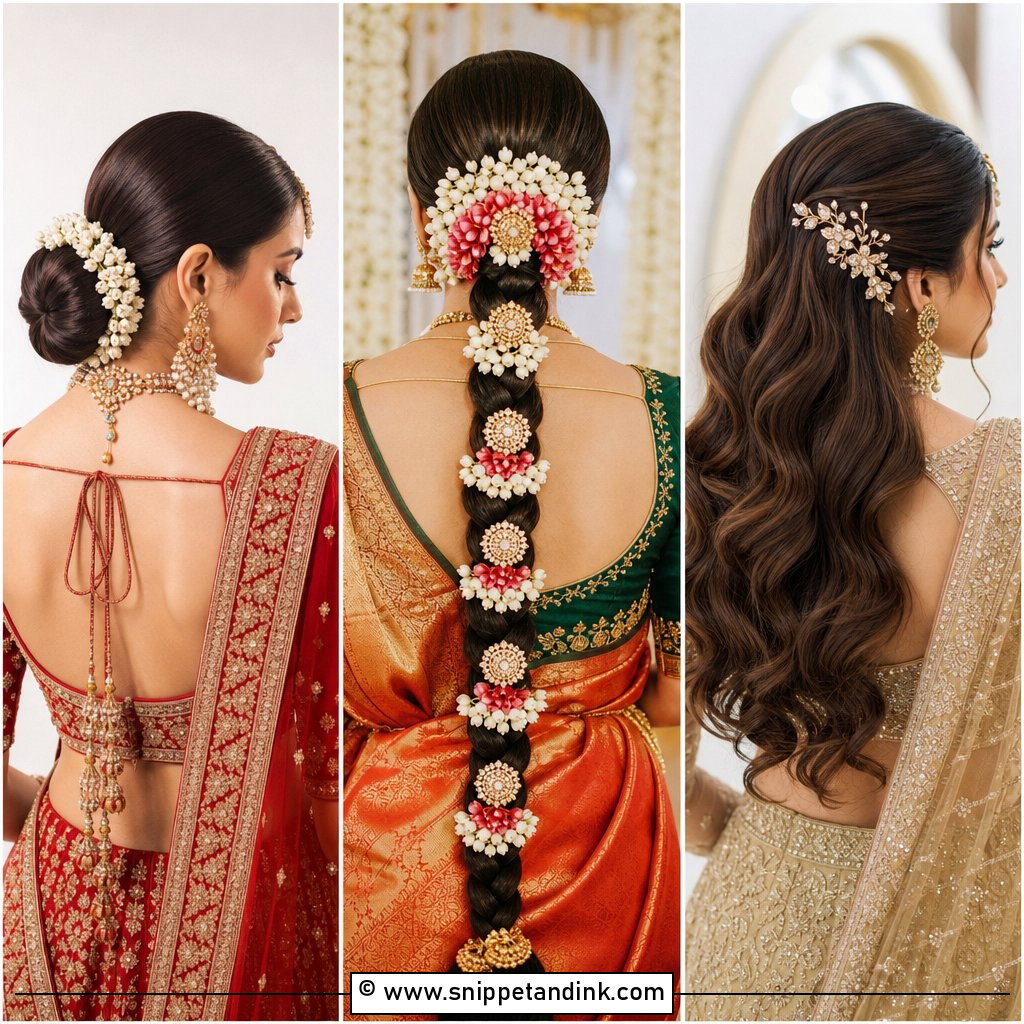
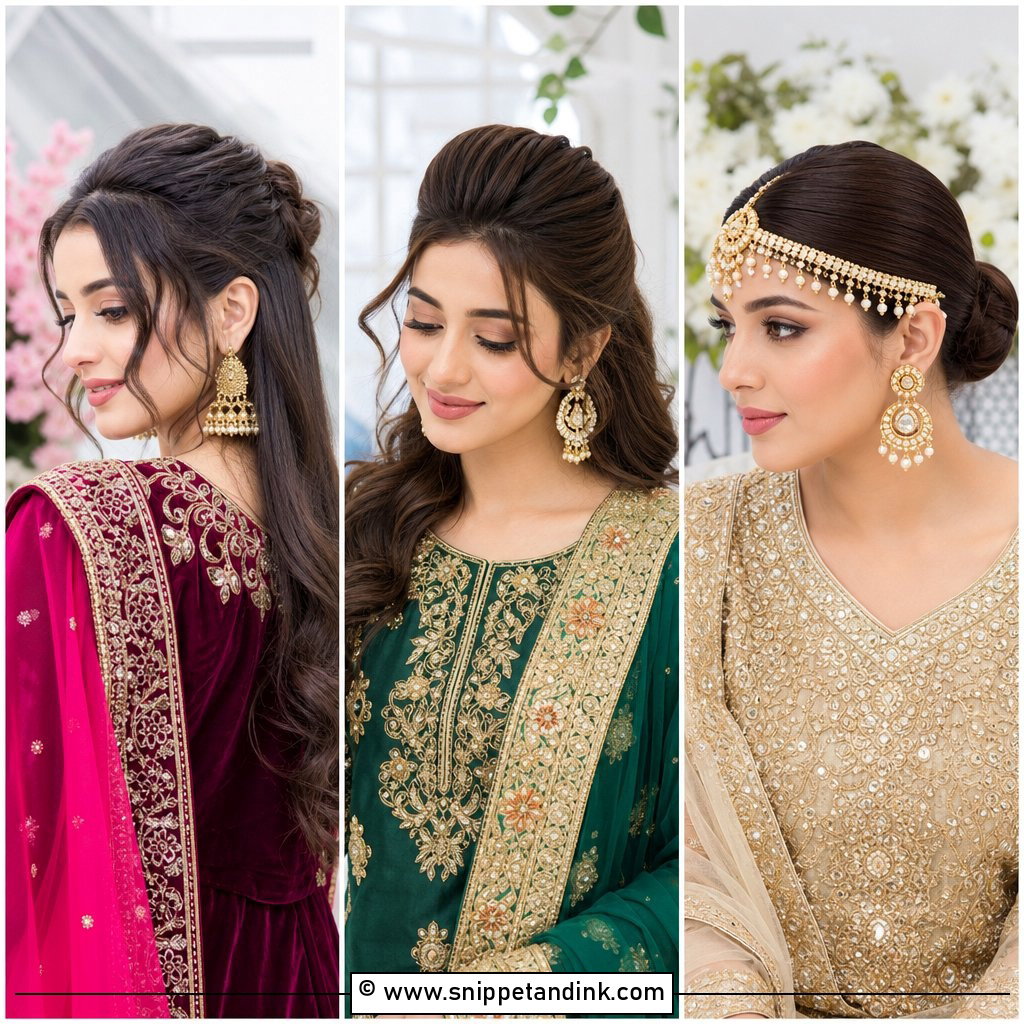
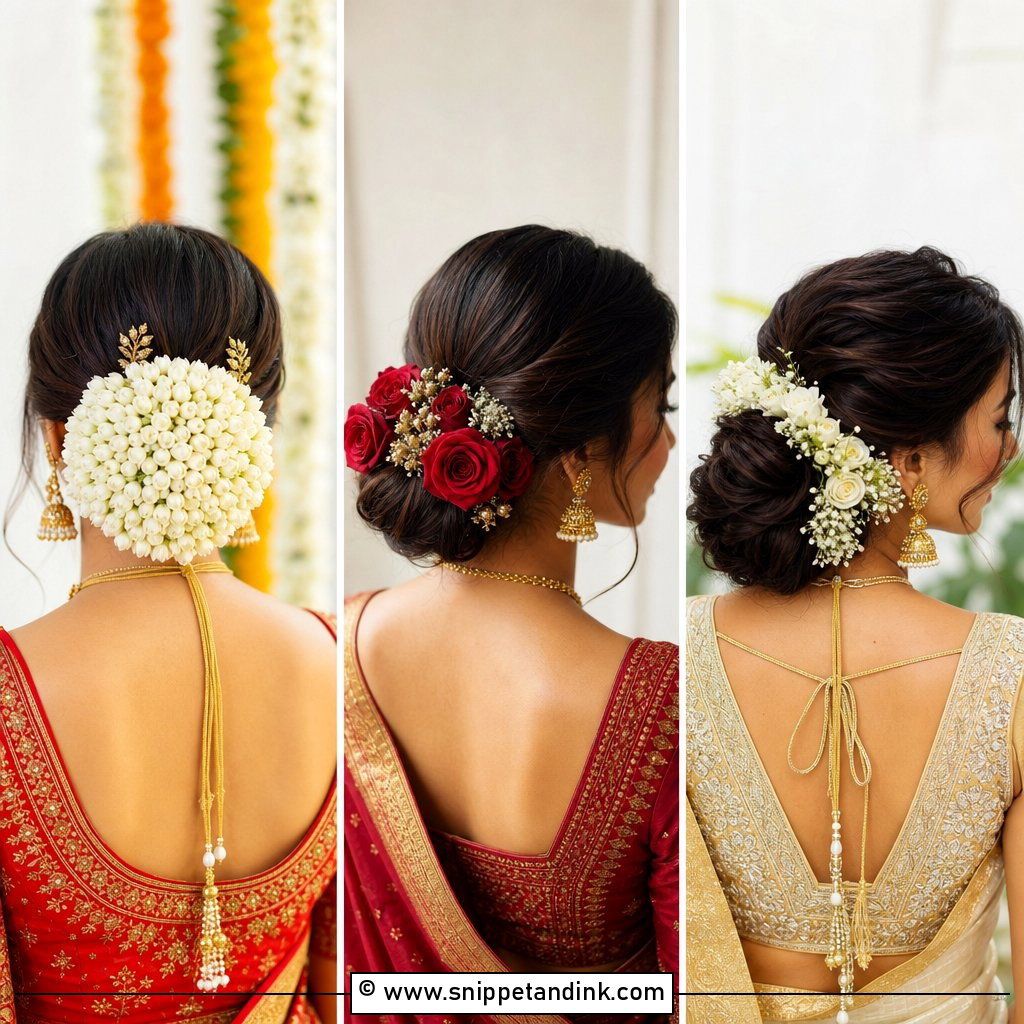
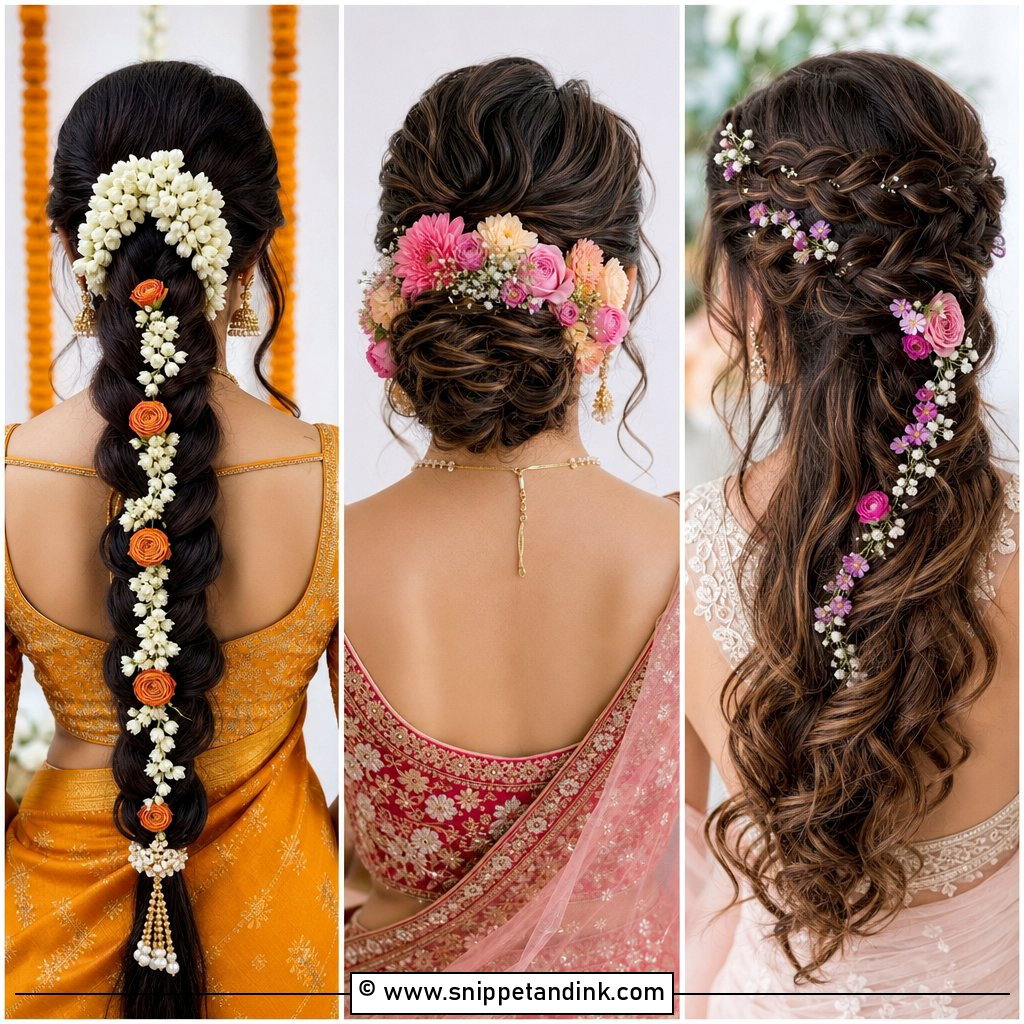
If a bride can’t decide, I usually steer her here first. A bun sitting at the nape gives me a solid anchor for dupatta pins and takes the drag of heavy earrings off the face, so the jewelry reads clearly in photos. It suits sarees, lehengas and blouses with a worked back, because the neckline stays visible. I smooth the roots, build a little lift at the crown and pad the bun with a donut or a small braid inside so it doesn’t collapse by evening. Ask for it secure but not tight; a bun that aches at hour one will be unbearable at hour six. Jasmine, roses, pearl pins or a gold bun cover finish it without tipping into overdone.
2. Indian Wedding Floral Bun
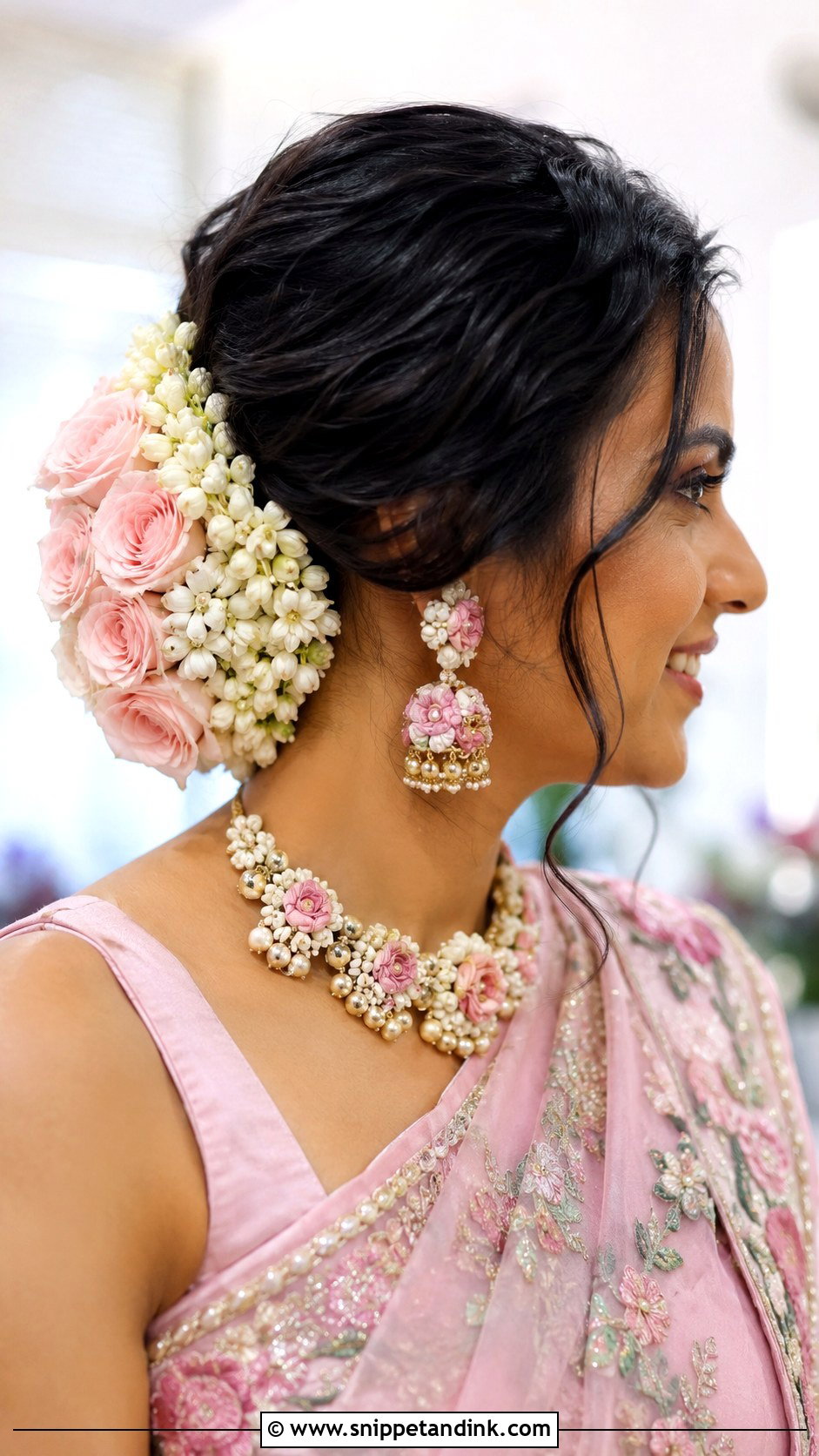
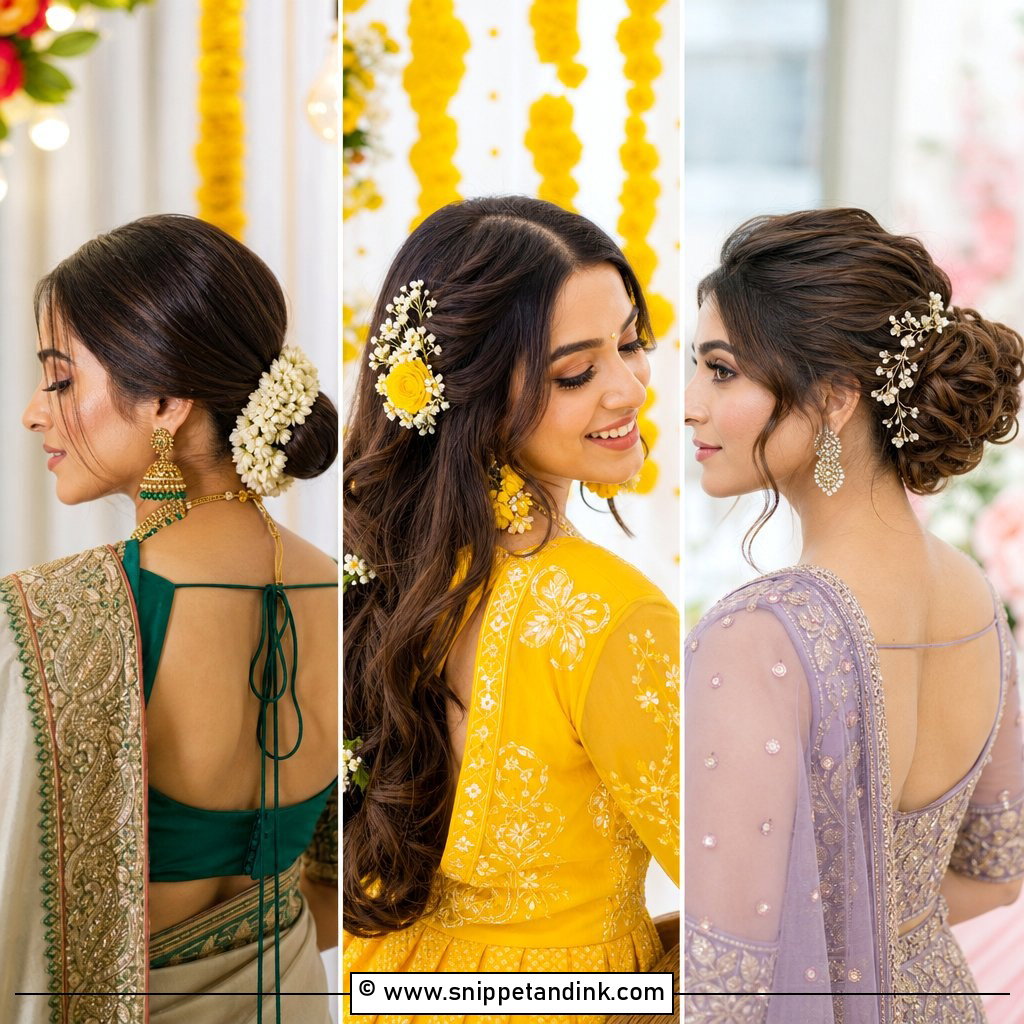
Fresh flowers change how a bun feels the moment they go in, partly because of the scent. The bun underneath can be neat, textured or full, depending on the outfit and the ritual. White jasmine is the classic South Asian finish, while roses, baby’s breath or pastel blooms sit better against modern lehenga colors. One practical note from the chair: jasmine strings wilt and brown at the edges within a few hours in heat, so I keep a spare gajra in the fridge for the reception. Keep the front smooth if your jewelry is heavy, or loosen a couple of face-framing pieces if it’s light.
3. Indian Wedding Braided Bun
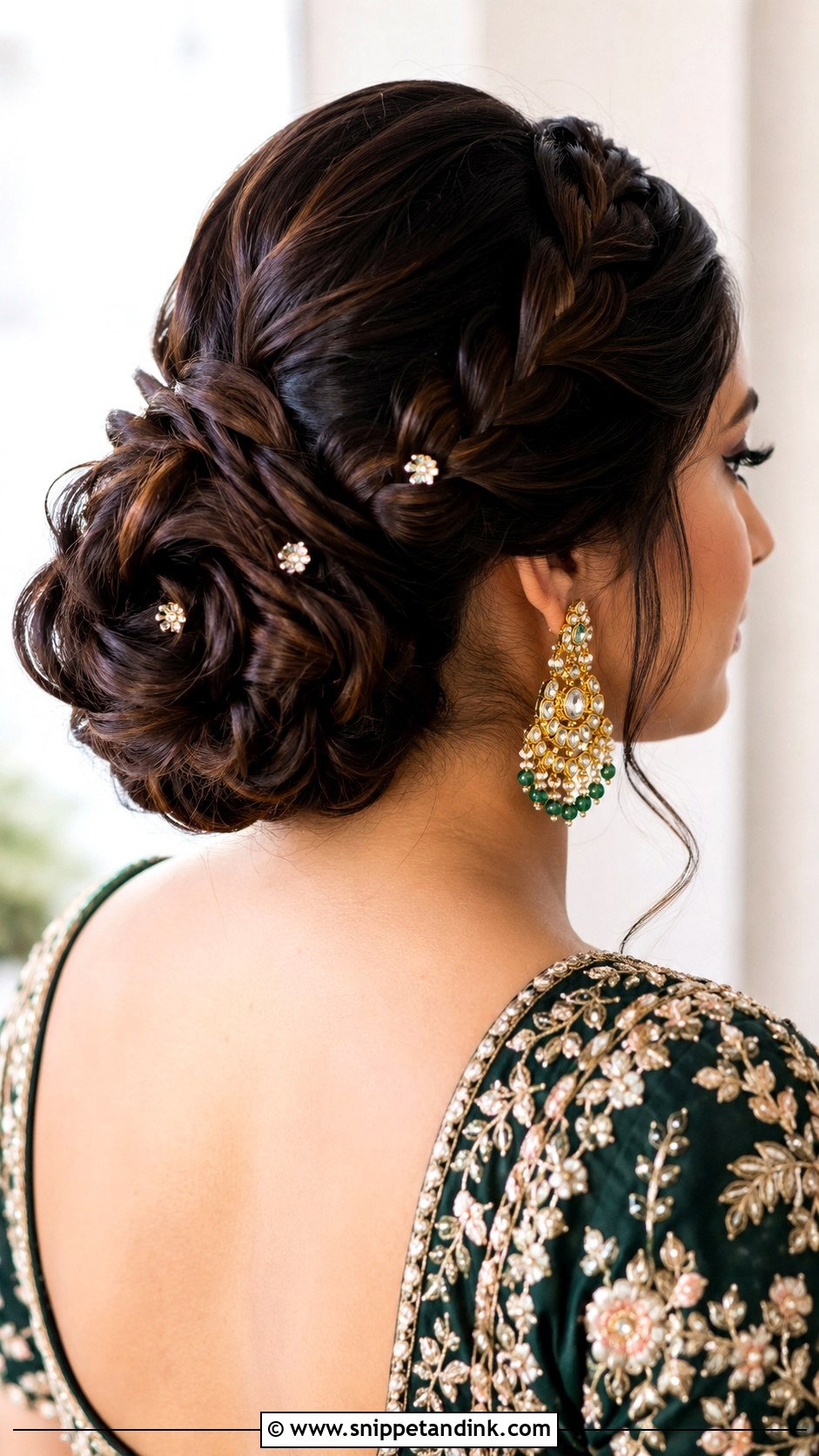
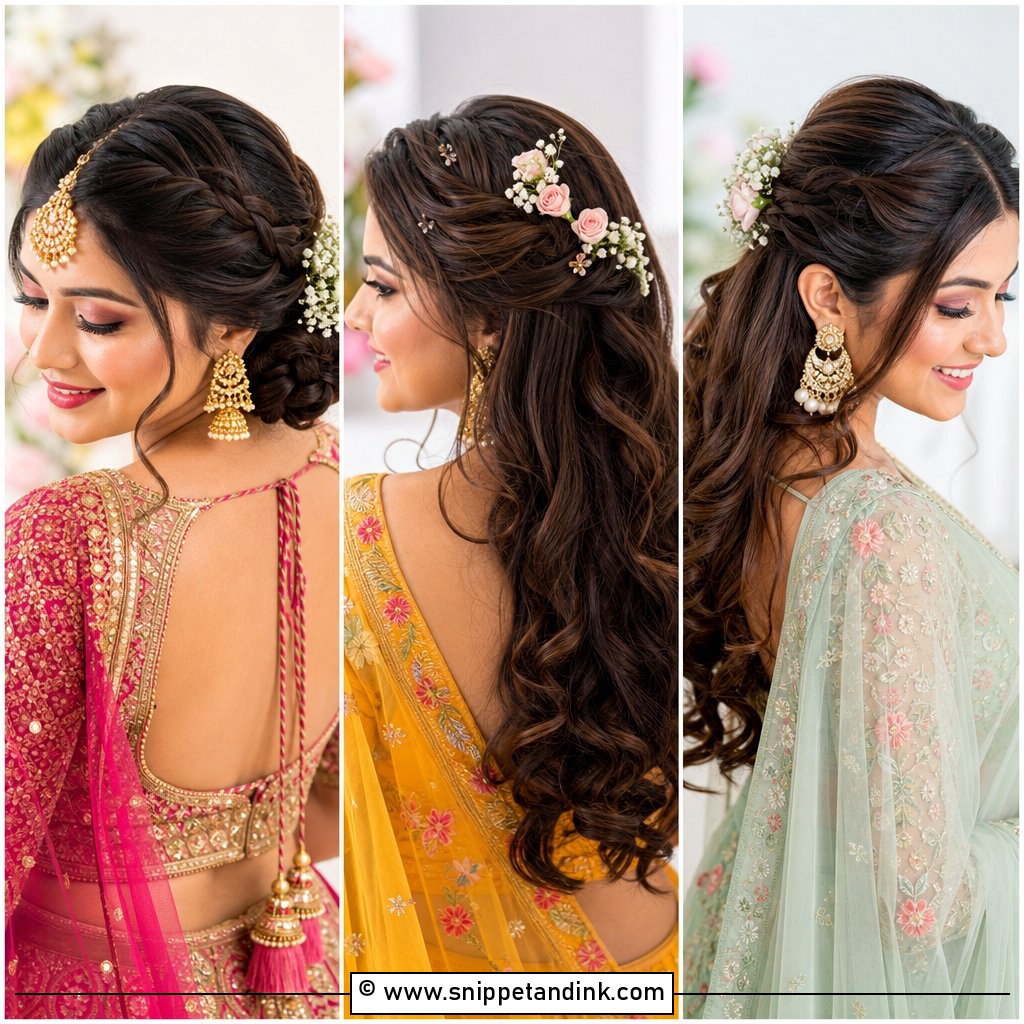
This is my go-to for fine hair on a long day. The braid can wrap around the bun, run across the crown or melt into the base, and once I gently pull the loops apart before pinning, the whole updo looks a good deal thicker than the hair really is. Because the braid locks the sections together, it holds its shape better than a smooth bun when you’re bending through rituals. It sits well with embroidered lehengas and silk sarees that already carry a lot of detail. Tiny pearls, kundan pins or small flowers tucked into the plait are all it needs.
4. Indian Wedding South Indian Braid
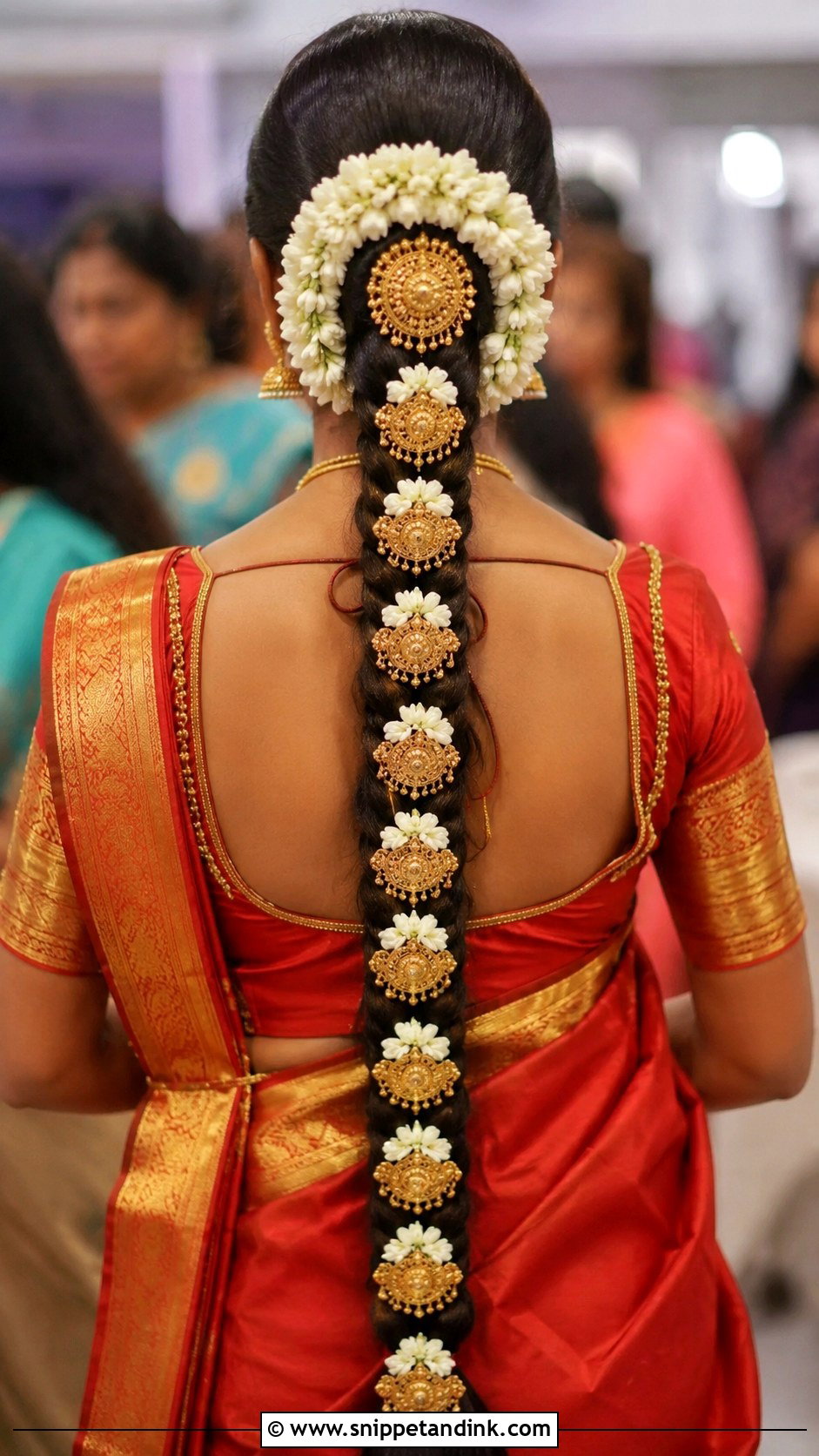
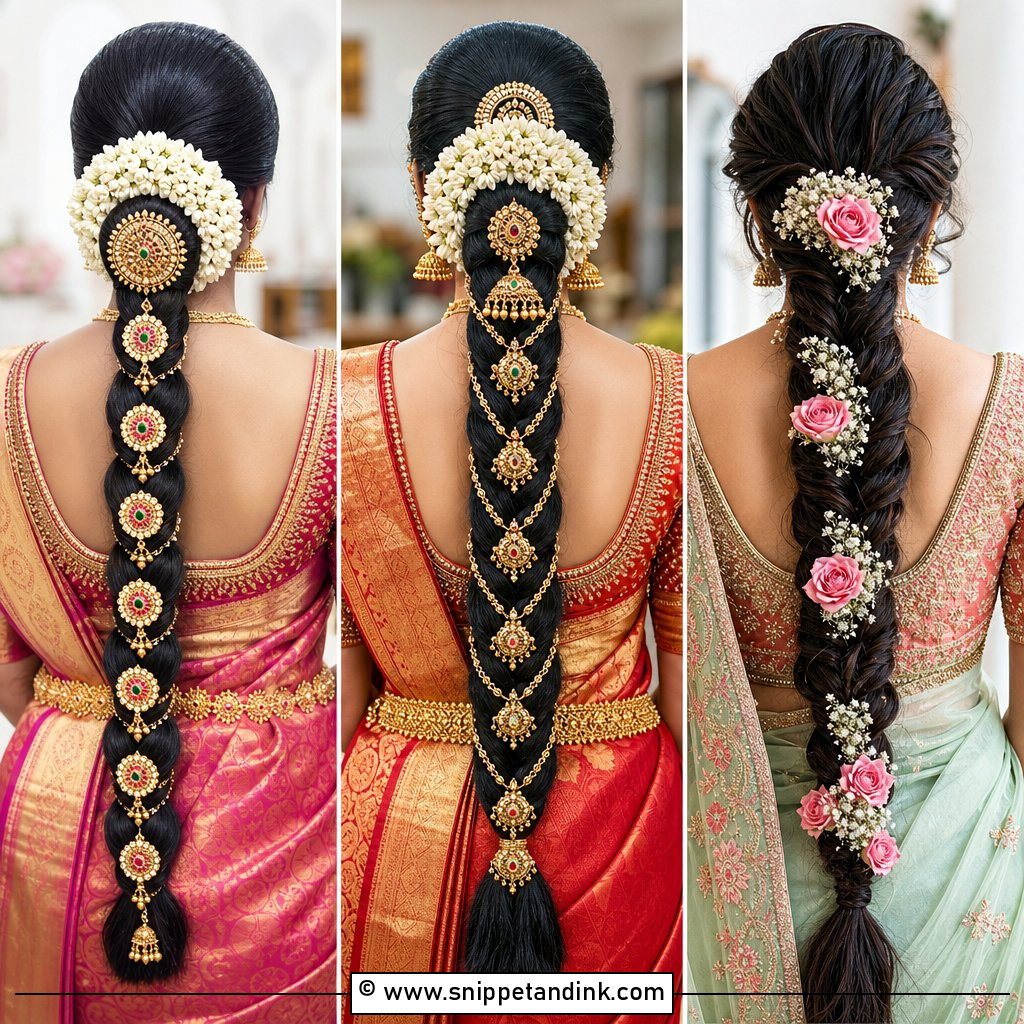
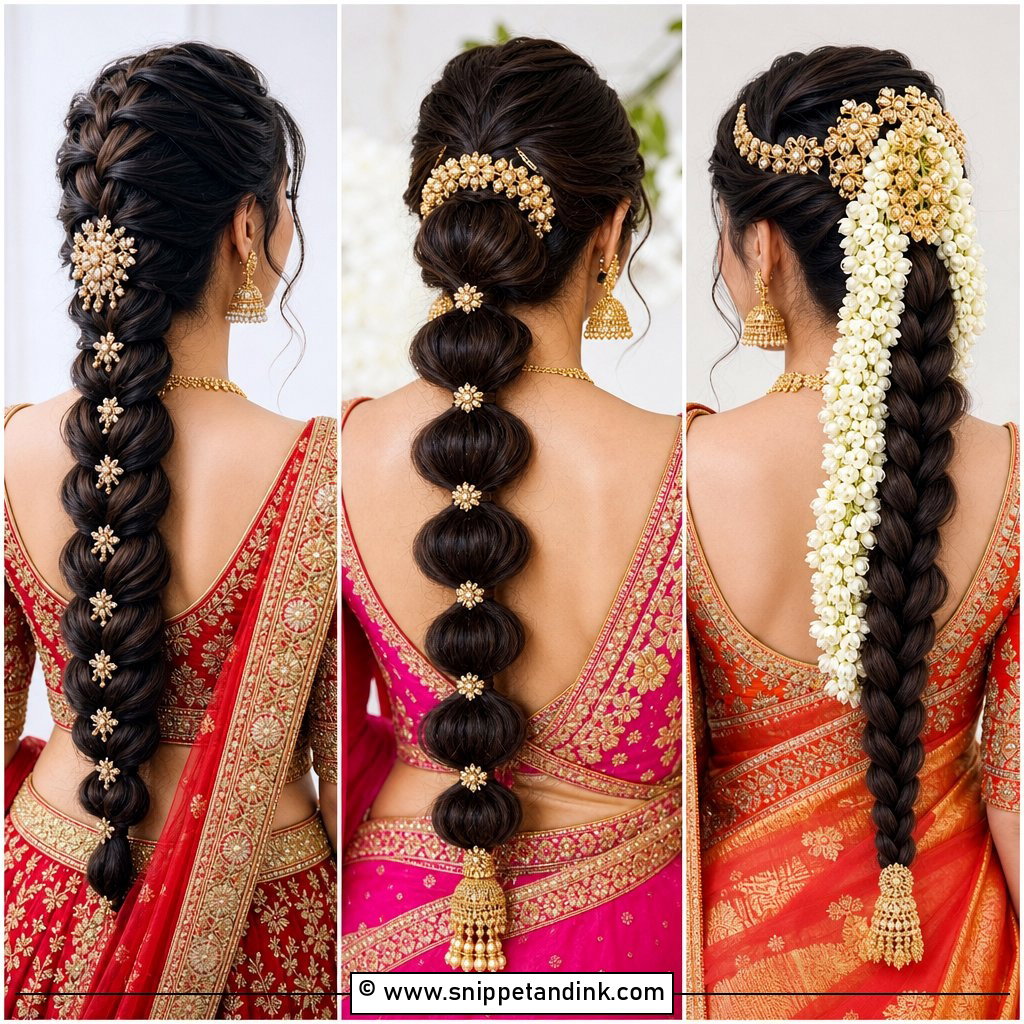
A South Indian braid is iconic for a reason, especially with a silk saree, temple jewelry and a center part. It’s long and sleek, decorated with flowers, gold accessories or a jada piece that follows the full length. Most brides need extensions to reach the length this braid wants, and the join is where it goes wrong: I braid the bride’s own hair into the wefts from the nape so nothing shows when she turns. Keep the crown glass-smooth so the jewelry sits flat. If your hair is very layered, warn your stylist early, because short layers poke out of a long braid unless they’re tucked as it’s built.
5. Indian Wedding Poola Jada
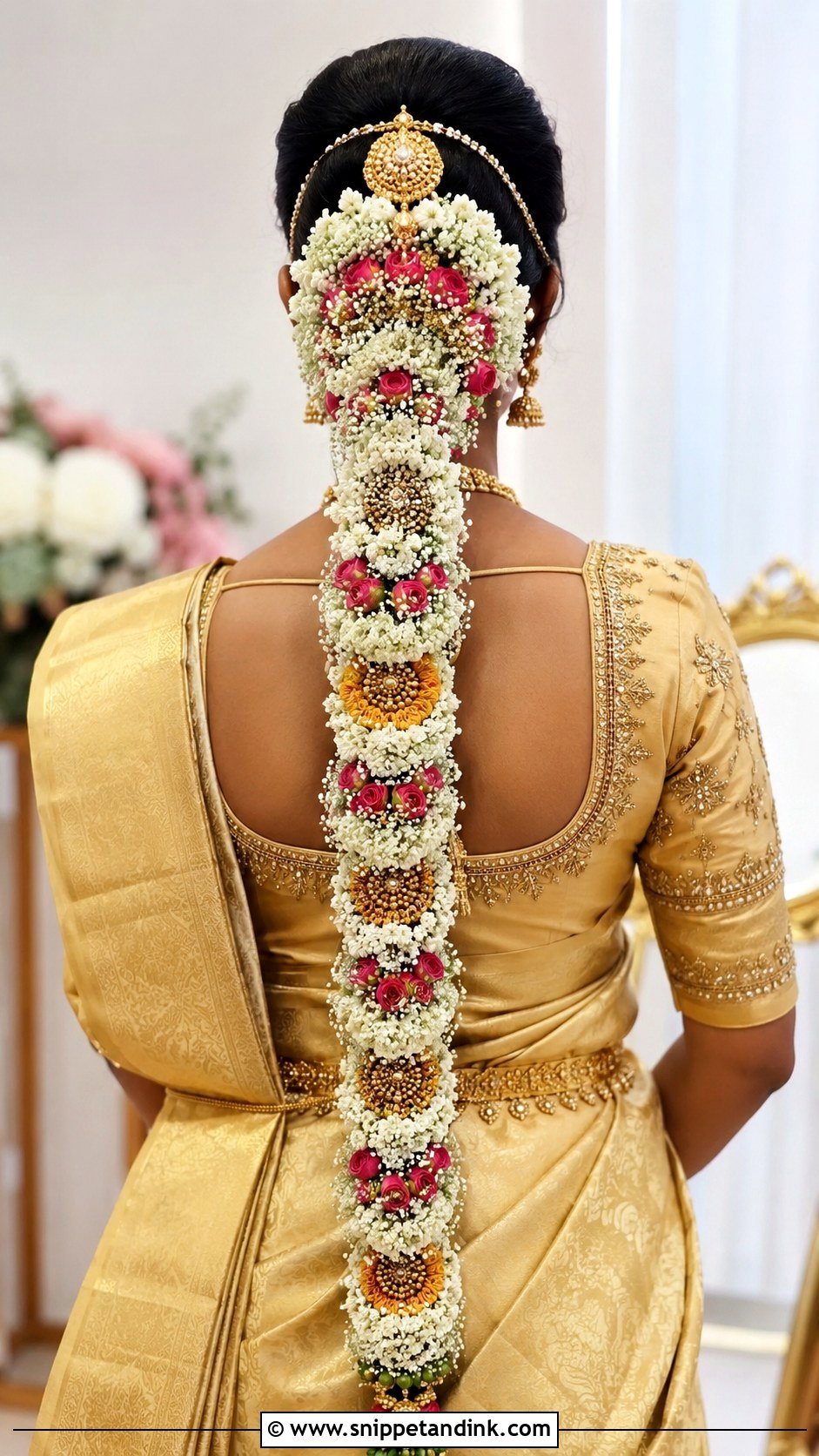
Poola jada is the flower braid that has dressed South Indian brides for generations, and from the back it is hard to beat. The braid gets covered in layered flowers, so its whole length becomes decoration. Jasmine, roses, marigolds or artificial floral panels are all used, depending on the season. The thing nobody warns you about is weight: a full fresh-flower jada is heavy, so I stitch or tie it to the braid in sections instead of hanging it from one clip at the top. Balance the front with a center part and a maang tikka or traditional head jewelry.
6. Indian Wedding Fishtail Braid
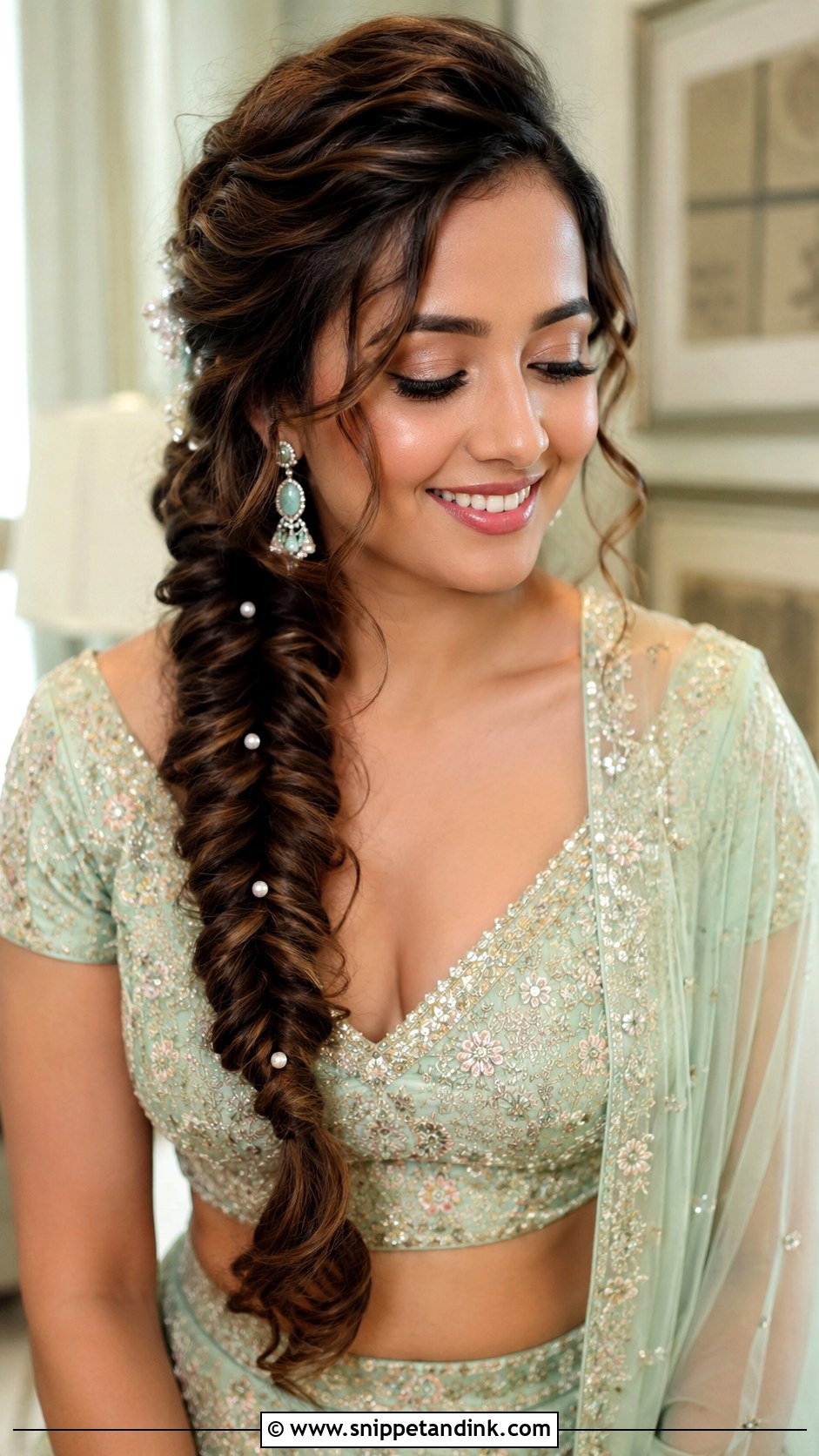
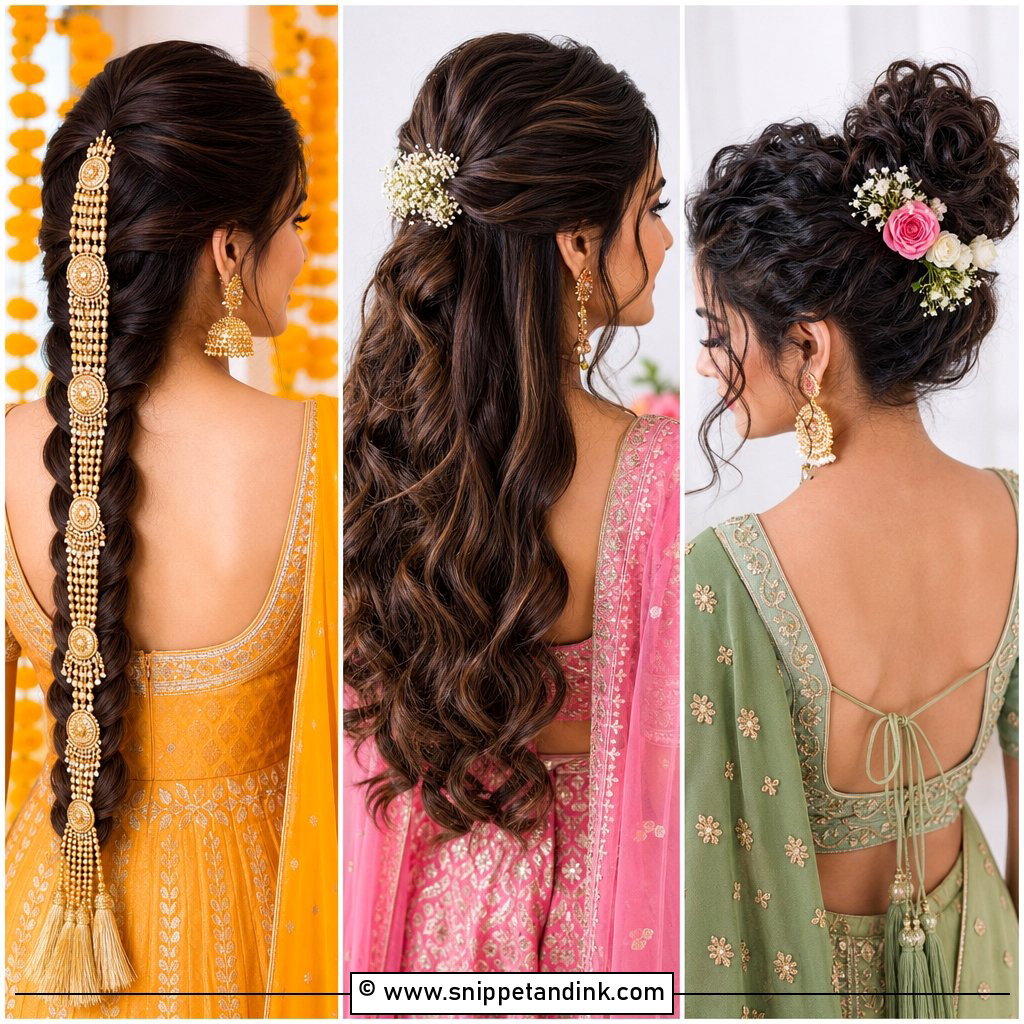
For mehendi, haldi and sangeet, a fishtail braid is my quiet favorite. It looks dressed up but asks nothing of you once it’s done, which matters when your hands are covered in henna for hours. Worn down the back or swept to one side, it gets fuller if your stylist pancakes the edges after tying off. The tiny weave also hides frizz better than a three-strand plait in humidity. Pearl pins, floral sprigs or a delicate paranda make it festive, and it sits nicely with lighter lehengas and flowing dupattas.
7. Indian Wedding Side Braid
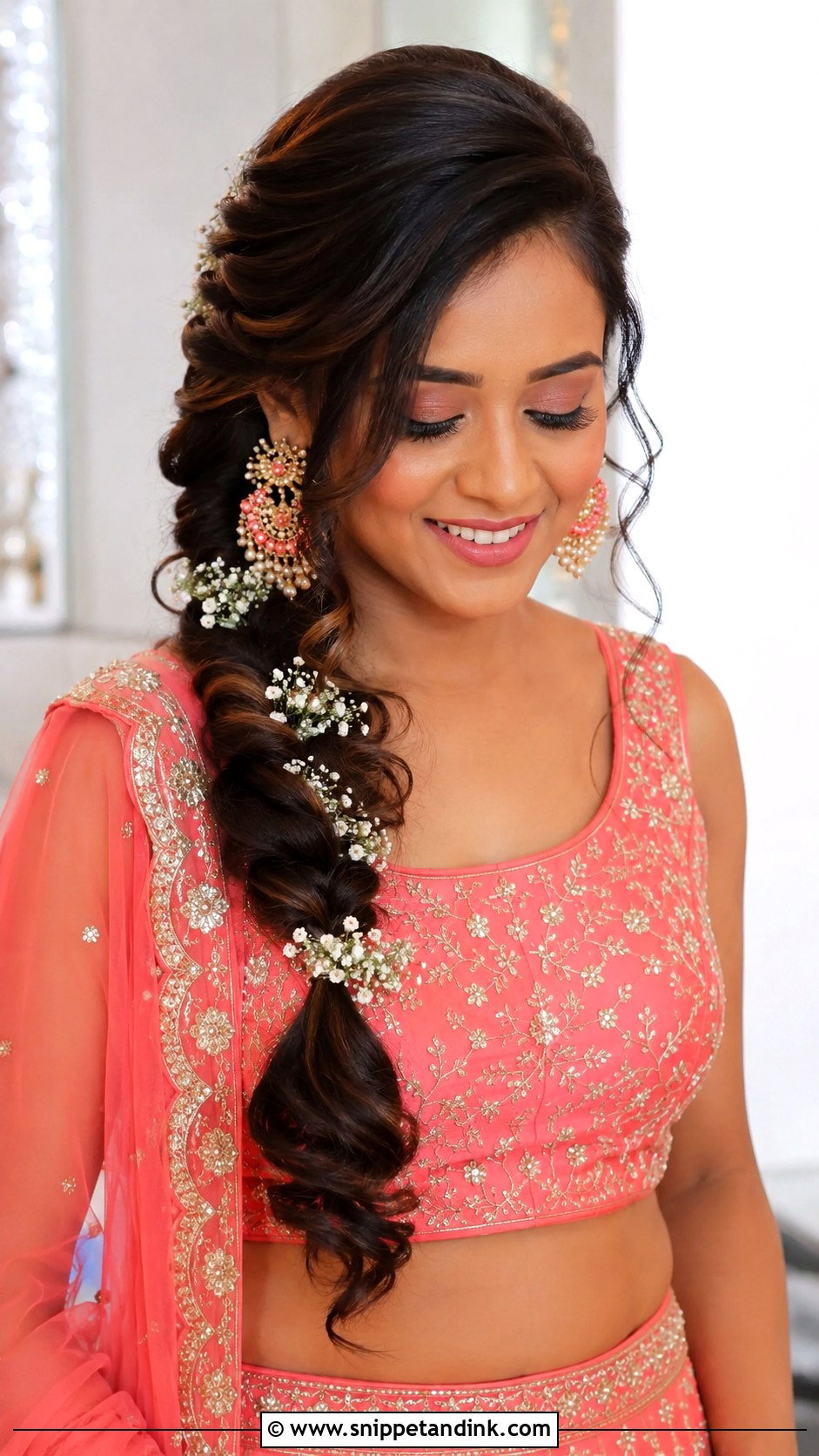
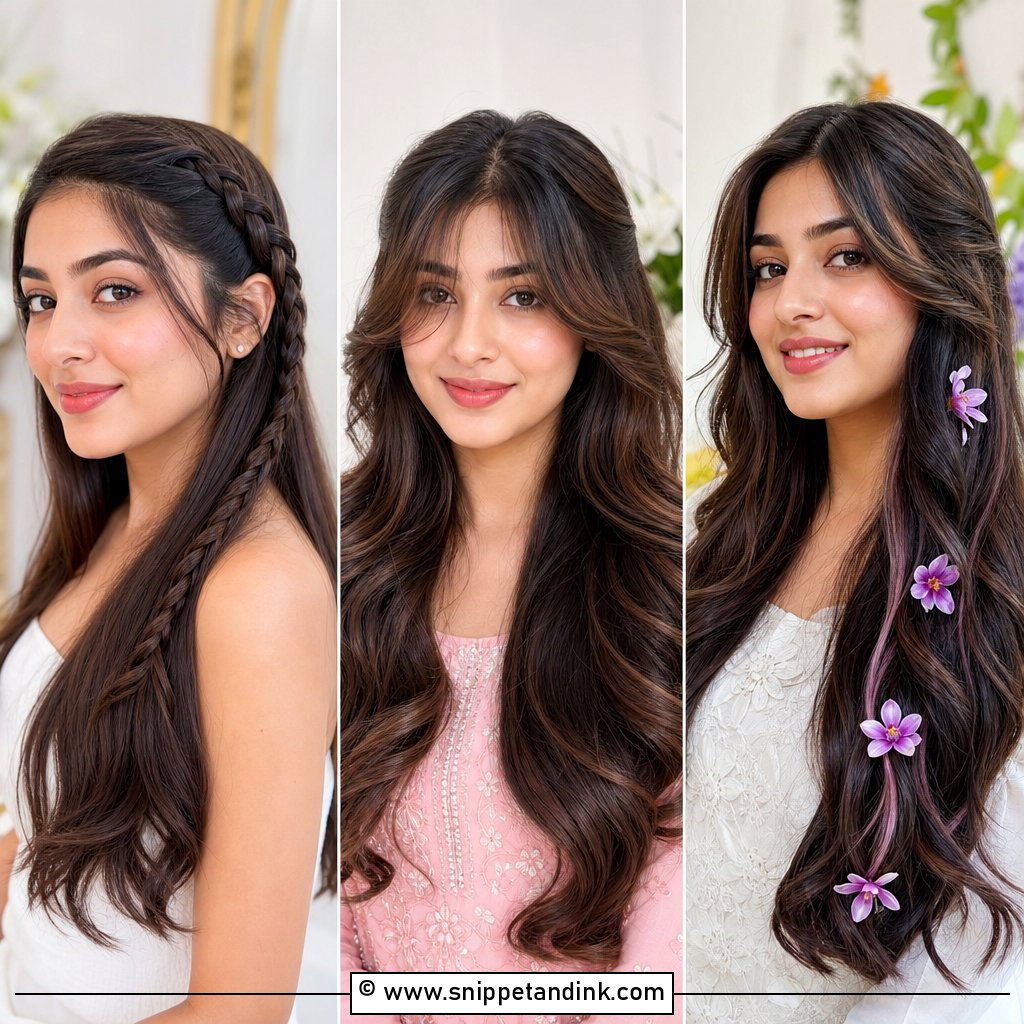
Pulling the hair forward puts it in every portrait and selfie, which is why sisters and bridesmaids love this one. It can be loose, textured or polished, and it handles a dupatta draped over one shoulder because the braid sits on the opposite side. What I watch for is the weight of the braid dragging the part flat by evening, so I set a small hidden pin at the nape to take the strain. Curl the ends for movement and leave a few face-framing pieces if you want it softer. Finish with pearls, flowers or a thin gold hair chain.
8. Indian Wedding Half Up Hair
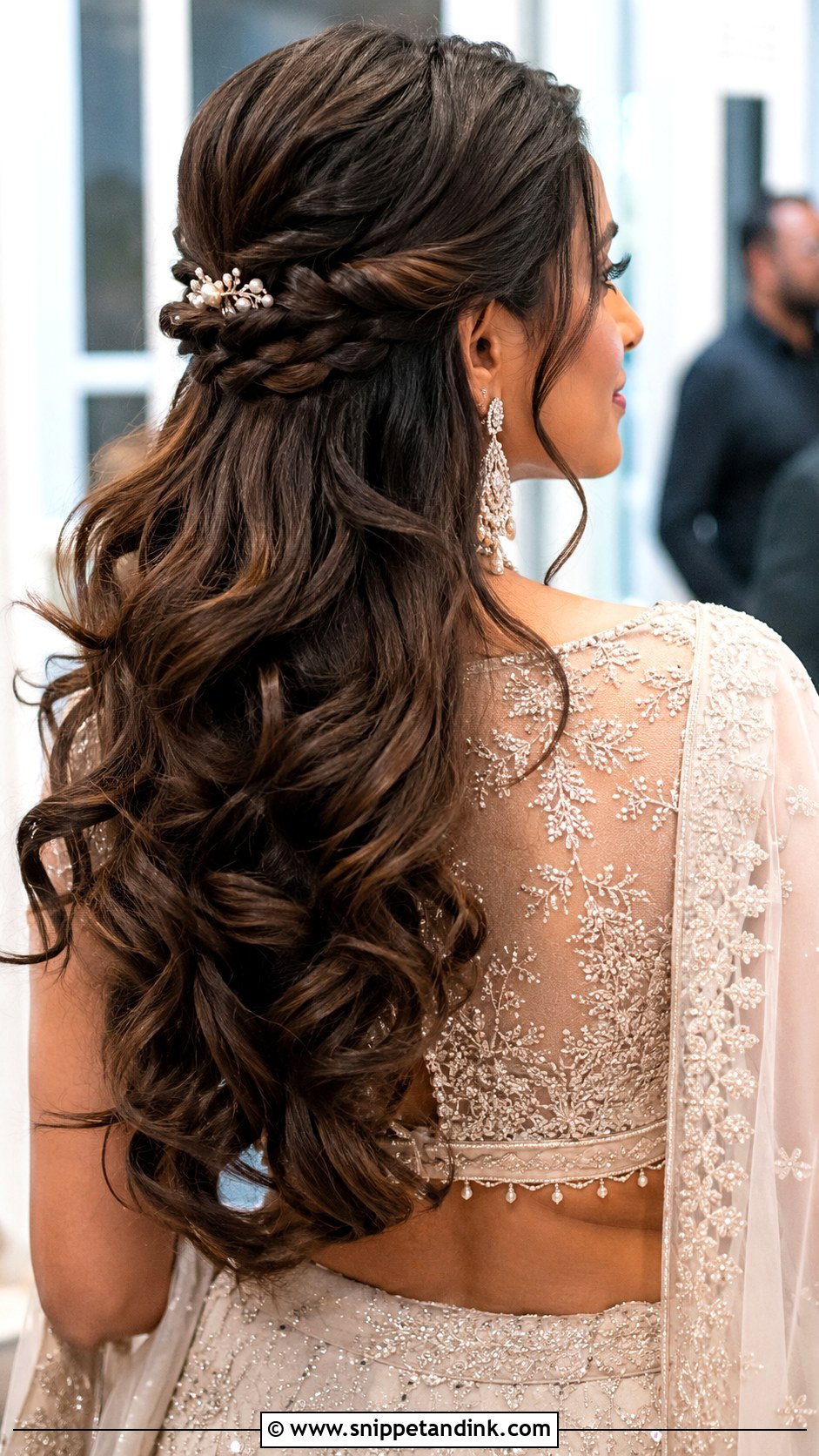
Half up hair is the middle ground: down, but with structure. The top section is pinned back, keeping the face clear for jewelry and makeup, while the lengths stay loose. I save it for receptions, sangeet nights, engagements and guests, not the main ceremony, since there’s no solid base to pin a heavy dupatta into. Loose waves keep it polished, and a small braid or twist at the back adds detail. If the outfit is plain, a pearl pin or floral clip at the join earns its place.
9. Indian Wedding Open Curls
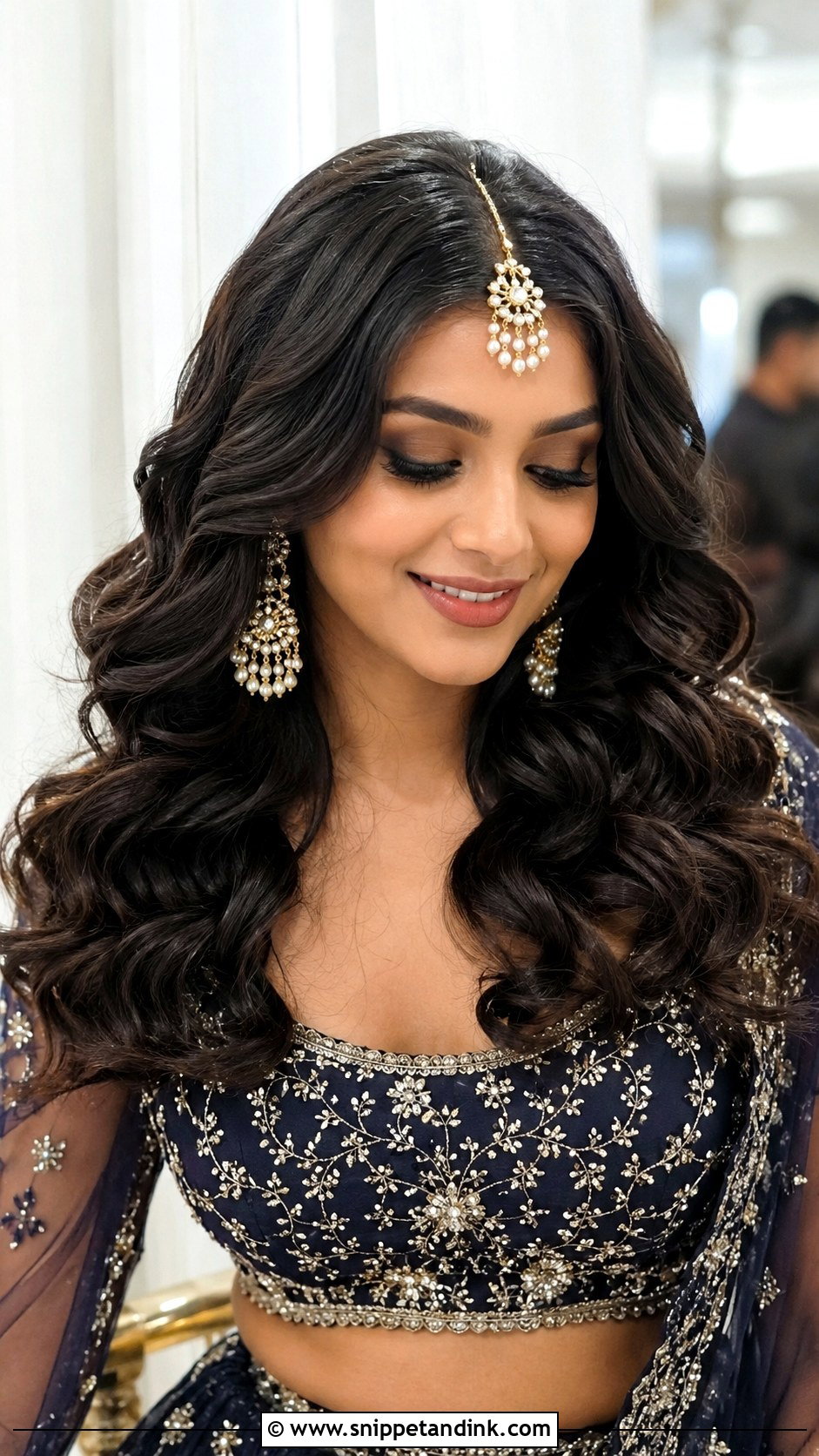
Open curls only work at an Indian wedding when they have real hold behind them. I set each curl with heat, let it cool fully in a pin curl, and only then brush it out; skip the cooling step and the curls are gone before the first photo set. Keep this look for receptions, cocktail events and sangeet, when no dupatta needs anchoring to the head. Ask for smooth roots and a frizz-control finish. A side part reads more glamorous, a center part sits better under a maang tikka, and if the curls are full, keep accessories minimal.
10. Indian Wedding Soft Waves
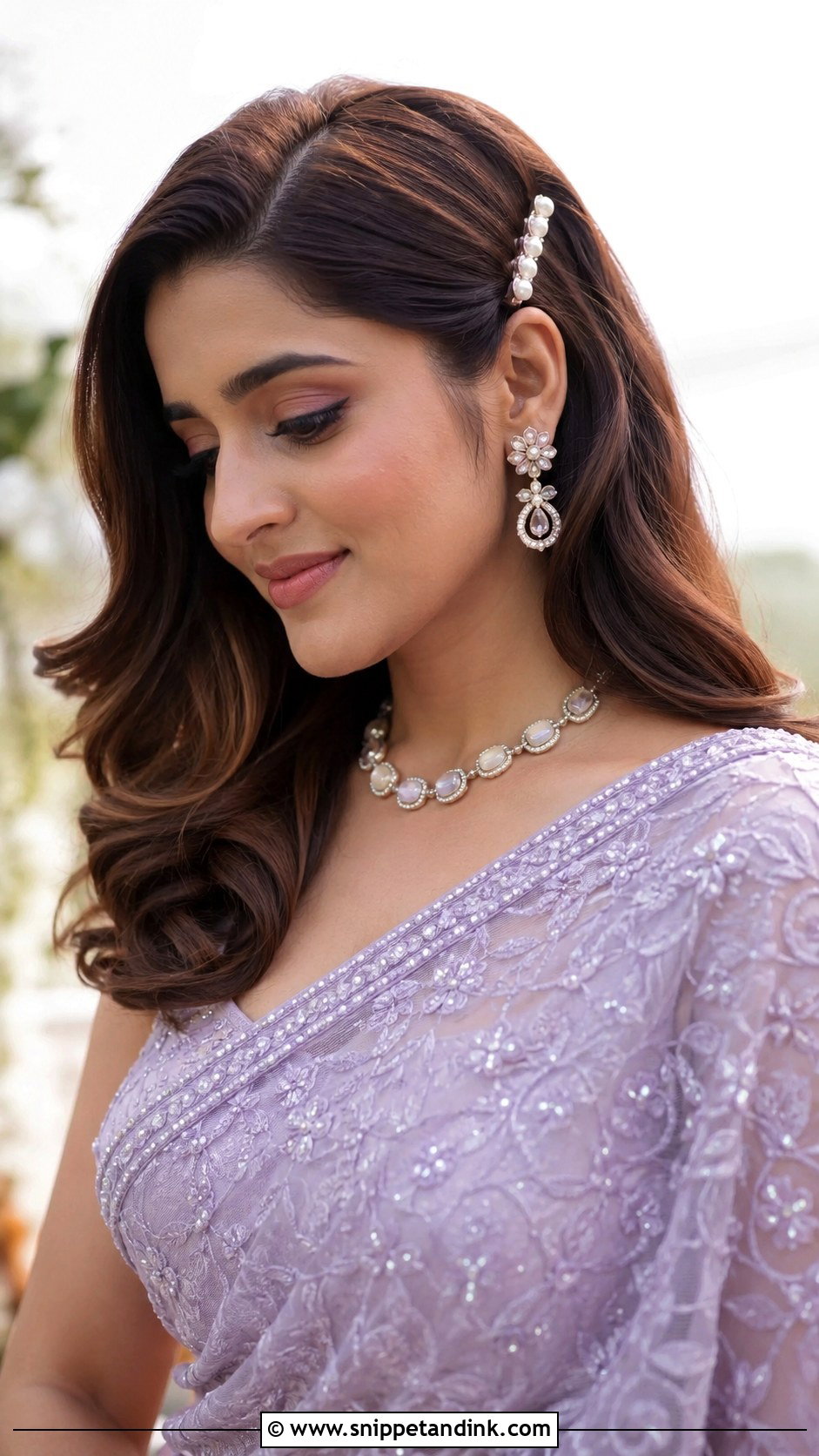
Waves suit almost every Indian wedding outfit, and they’re easy to personalize. The trick is control: for embellished fabrics and heavy jewelry I want smooth, glossy bends, not beachy texture, which looks unfinished next to zardozi. They come into their own with reception gowns, pastel lehengas and pre-wedding events. Fine, straight hair drops these fastest, so I prep with a light mousse at the roots and finish with a flexible spray rather than a stiff one. Lift the crown if your face needs height, keep it sleek if it doesn’t, and tuck a crystal clip or a single flower behind one ear.
11. Indian Wedding Sleek Ponytail
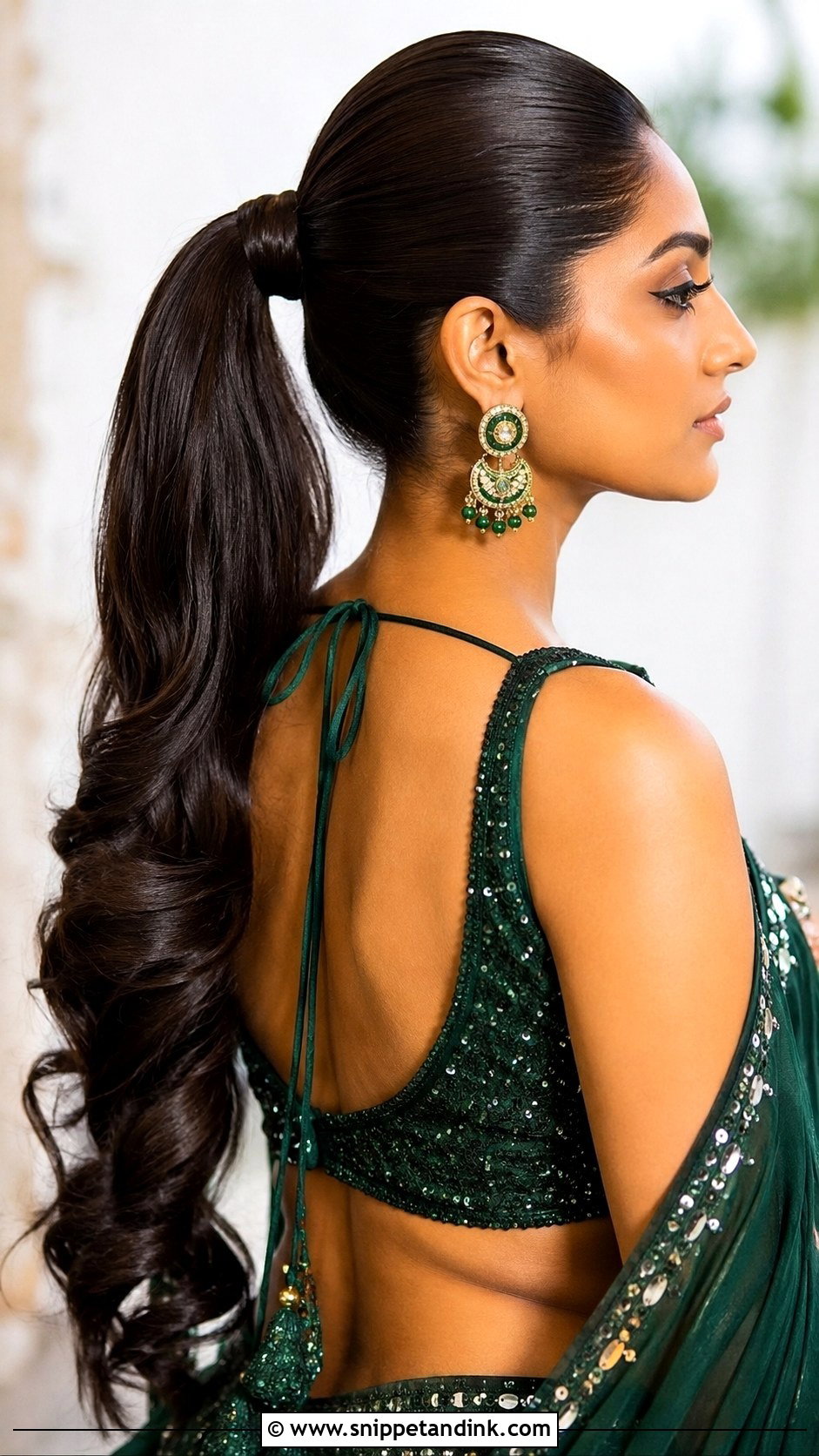
For a bride who wants to dance without thinking about her hair, I’ll suggest a ponytail before anything else. The crown is pulled smooth and tied at the middle or low point, then finished with waves, curls or straight glossy lengths. It keeps the face open, so statement earrings, a choker or a bold blouse get all the attention. I wrap a section of hair around the elastic and hide the pin underneath; a bare band looks unfinished in close-ups. If your hair is fine, a clip-in ponytail piece adds thickness. Low ponytails also sit more comfortably against a high-back chair at the reception table.
12. Indian Wedding High Bun
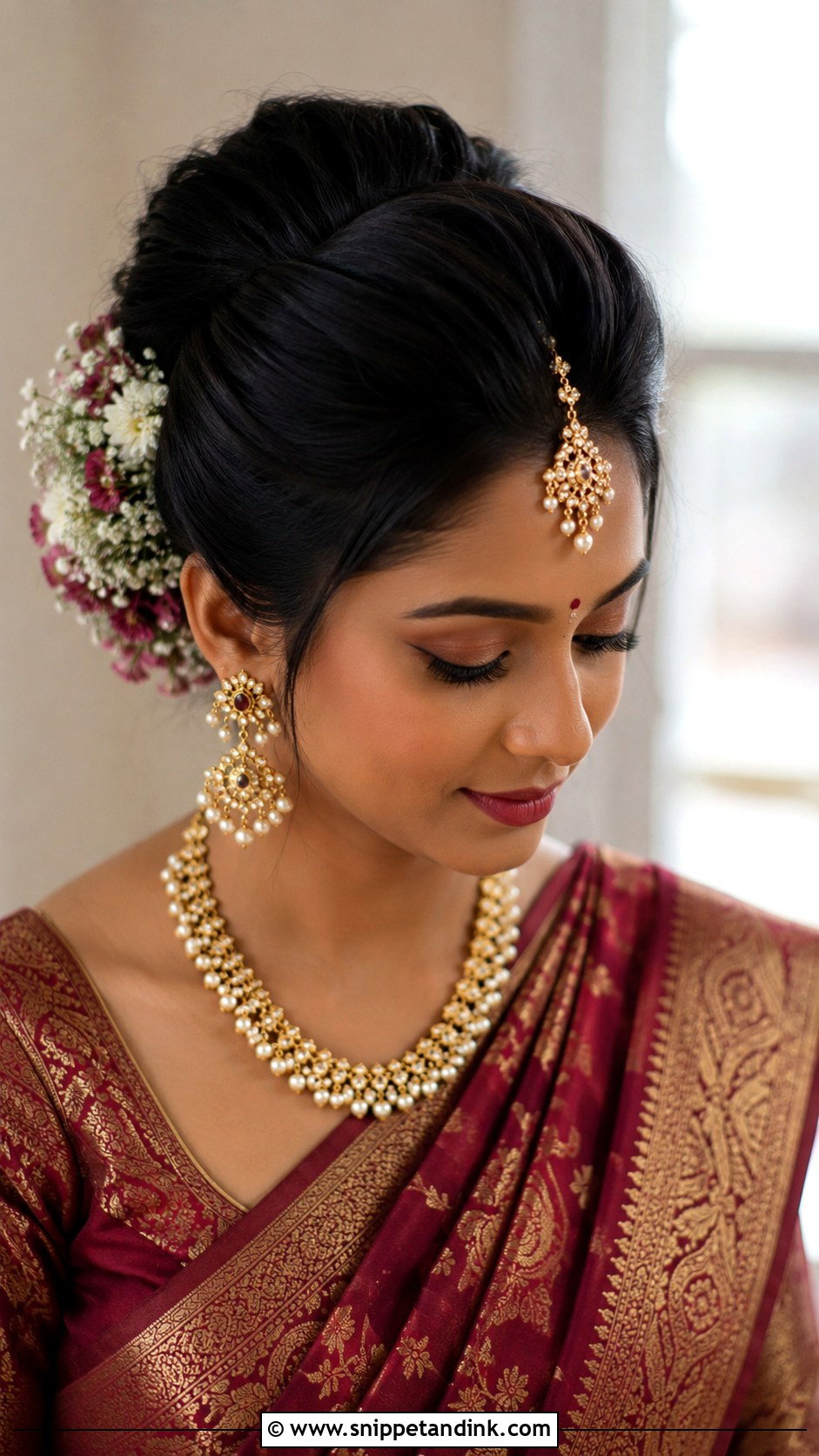
A high bun adds height and a strong silhouette, particularly with high-neck blouses, heavy necklaces or structured sarees. It lifts the face and lets the dupatta sit lower or drape around the shoulders. It can be smooth and round, braided or softly textured. The catch is that a dupatta pinned over a high bun tends to tent and slip, so I only recommend it if yours will be worn on the shoulders for most of the ceremony. Add a maang tikka, matha patti or small floral accents around the base. Secure, yes; painful, never.
13. Indian Wedding Messy Bun
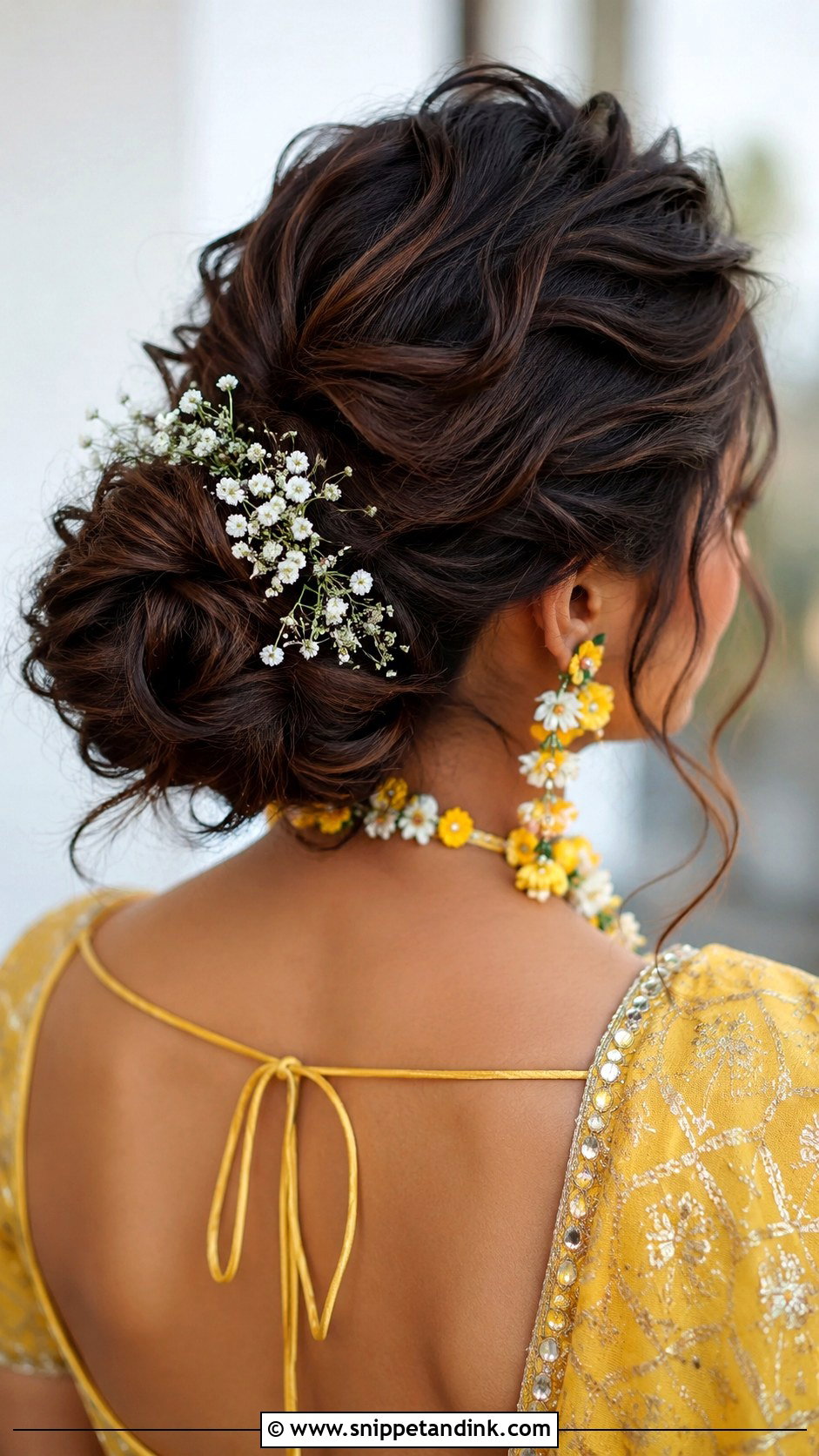
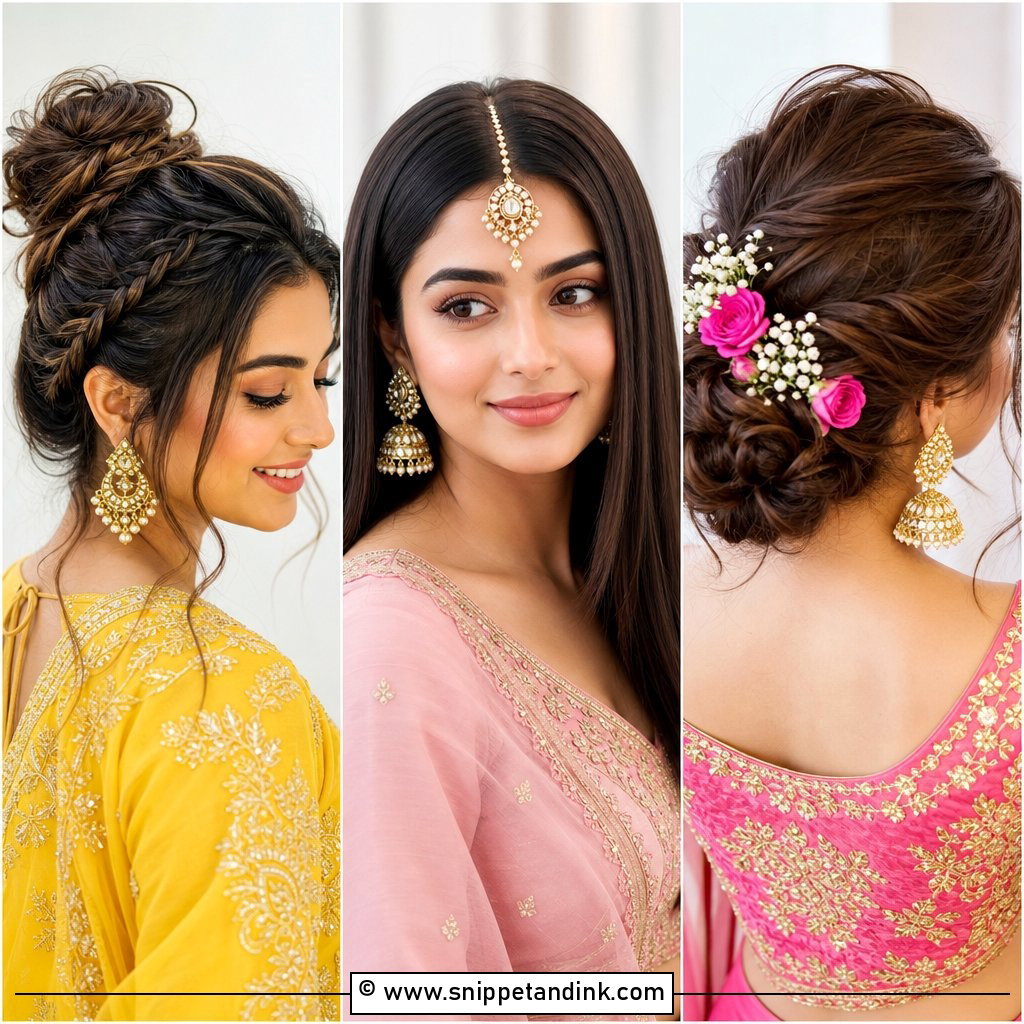
A messy bun at a wedding still has to look intentional, which takes more pinning than a smooth one. Mehendi, haldi, beach weddings and garden events are its natural home, along with bridesmaids who want something relaxed. The version I aim for has crown volume, loose tendrils and a textured bun that doesn’t look flat from the back, since that’s the angle most guests see. On haldi day, keep extensions out of it; turmeric paste stains light synthetic hair and won’t wash out. Tiny flowers or pearl pins make it festive, and it keeps your neck cool in warm weather.
14. Indian Wedding Maang Tikka Hair
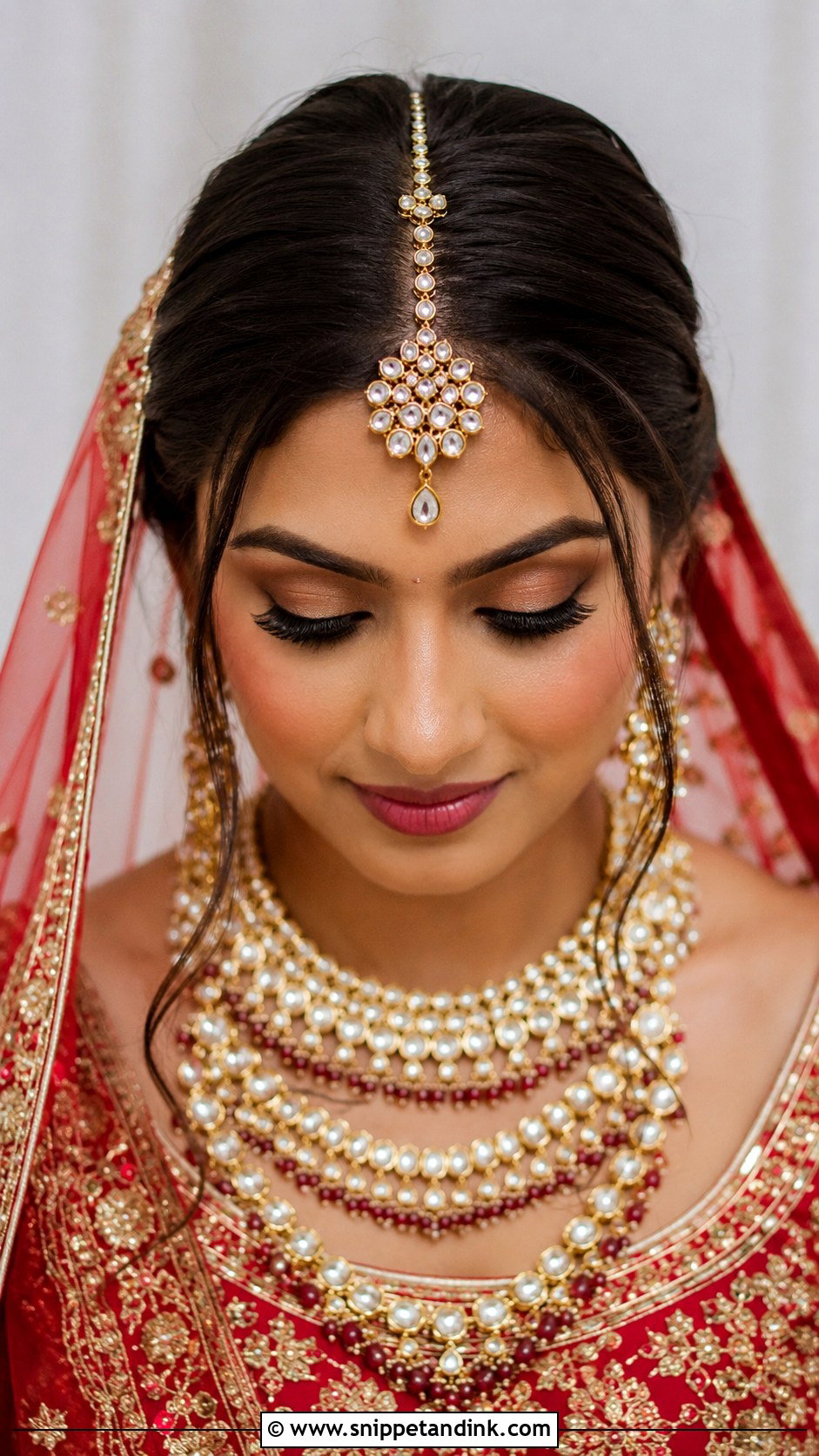
Everything here depends on the front section. The tikka needs a clean center part and enough structure underneath to keep it steady, whether the back is a low bun, braid, half up style or waves. I anchor the chain with two crossed bobby pins hidden under the hair, so it stays centered while you bow, turn and get hugged. If the tikka is large, keep the rest of the hair a little simpler. If it’s delicate, you can afford curls, braids or flowers at the back. Getting that proportion right is most of the work.
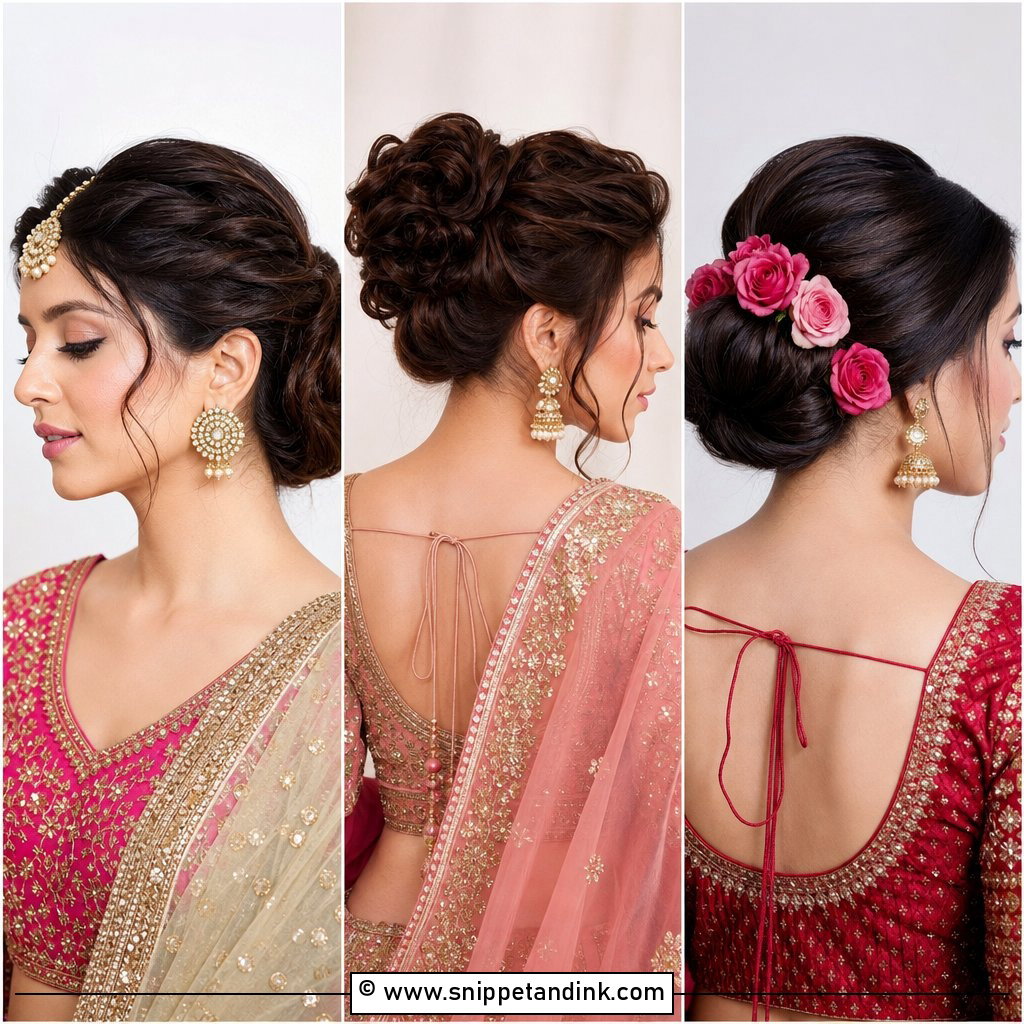
15. Indian Wedding Dupatta Hair
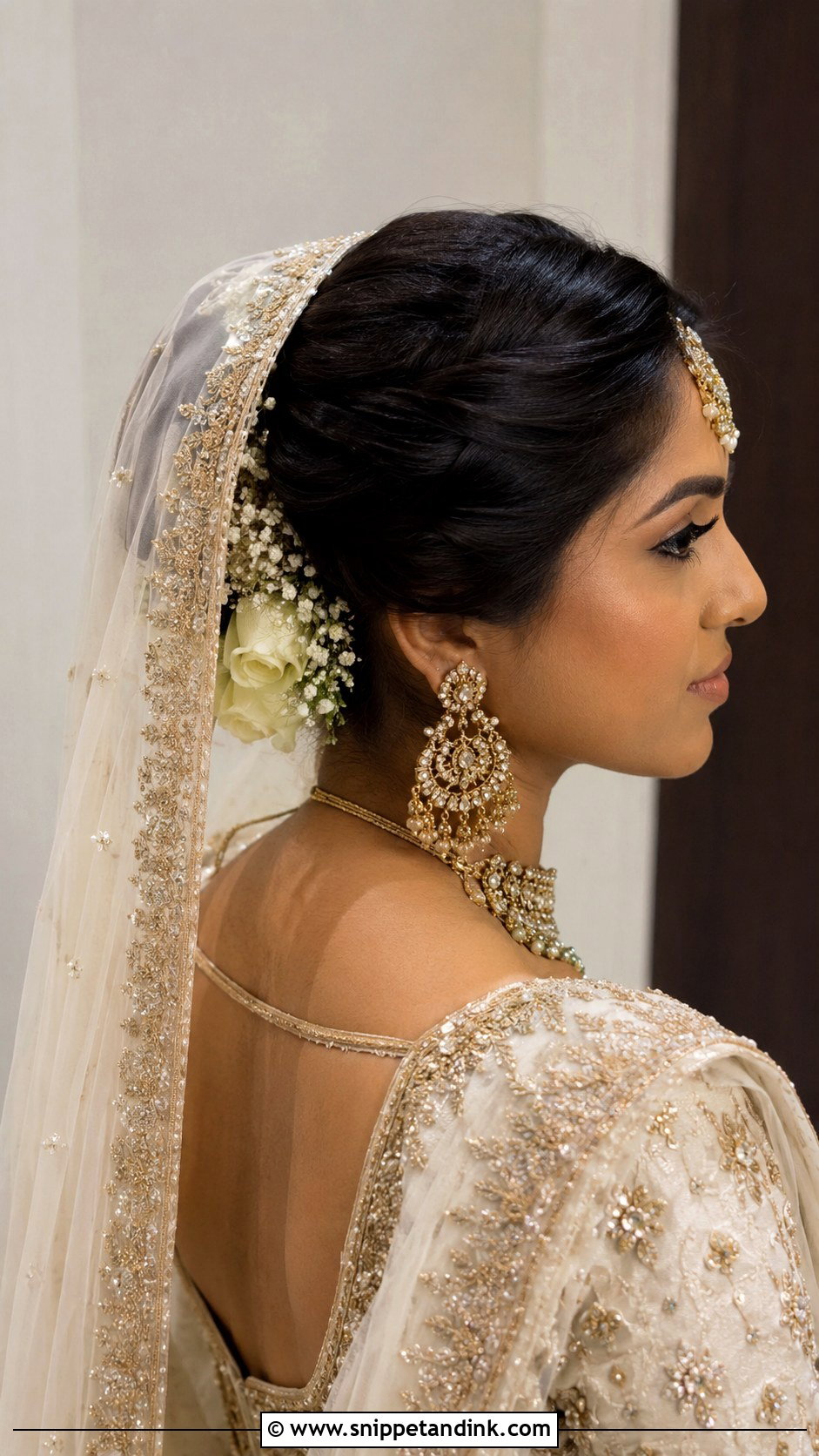
Plan this one from the back and the pins, not the front view. A low bun, braided bun or secure braid gives your stylist something solid to pin into, and that matters most if the dupatta stays over your head through the ceremony. Before you leave the chair, I’ll have you turn your head side to side while someone tugs the dupatta gently; if it shifts, more pins go in then, not at the mandap. Nothing should pull at the scalp. A little volume at the crown keeps the fabric from flattening the whole look.
Heavy Jewelry, Warm Mandaps and Long Rituals
A maang tikka, matha patti, jhoomar and dupatta add up to real weight sitting on a few pinned sections of hair. Under hot lights or in a summer venue, that weight starts to pull by the second hour. These are the habits I rely on.
- Build a firm base first, a small hidden braid or a tight bun core, and anchor the jewelry to that rather than to loose strands.
- Hook the tikka chain into the part with crossed bobby pins under the hair, never a single pin sitting on top.
- Pin the dupatta with U pins into the bun, then have someone tug it gently while you turn your head. If it shifts, add pins before you leave the chair.
- Wear the full jewelry set for an hour at your trial. A headache that starts at minute forty is far better discovered then.
Adding Length for a Jada or Long Braid
South Indian braids and poola jada look their best at waist length or longer, which few people have naturally. Clip-in or braided extensions are completely normal here. Match them to your darkest shade rather than your ends, wash and detangle them a few days before, and have your own hair braided into them so the join disappears under the flowers. Fresh flowers are heavier than they look, so ask for the jada to be tied on in sections.
Your Heaviest Outfit Sets the Rules
If I could give you one piece of advice, it would be this: plan your hair around the outfit carrying the most weight, usually the ceremony dupatta and jewelry, and let the other events be the playful ones. A floral bun or braid handles the rituals. Waves or a sleek ponytail can wait for the reception, when nothing needs pinning to your head. Book a trial if you possibly can, and wear or bring the real dupatta, tikka and any extensions to it. Then on the morning itself you’ll already know the pins hold, the part is straight, and you can stop thinking about your hair until the last song.
You'll Like These Ideas:


Leave a Reply