
Nikah hair has a job most wedding hair doesn’t: it has to sit under a dupatta, carry forehead jewelry, and still look neat after the signing, the family photos and hours of hugging relatives. When a bride shows me her inspiration, my first questions are about the dupatta, not the hair. How heavy is it, where will it sit, and will your hair be visible, partly covered or fully covered? Those answers decide the shape before anything else. The twenty styles below cover low buns, chignons, open waves and jewelry-led looks, with notes on what each one needs underneath to stay put.
How Much Your Dupatta Weighs Changes the Whole Hairstyle
A light chiffon or net dupatta can sit on almost any style. A heavy one with a wide embroidered border, beadwork or a velvet base is a different story: it drags backward, flattens the crown and pulls on every pin. I treat it like a second layer of hair that has to be anchored.
- For a heavy dupatta, I build a firm base at the crown, often a small hidden braid or bun, and pin the fabric into that rather than into loose hair.
- Pins go in crossed pairs, which hold far better than single pins pushed straight in.
- The dupatta is set after the hair and jewelry are finished, and the front is checked again once it’s on.
- If the fabric is slippery, a few pins that grip both the fabric and the base underneath stop it sliding over the course of the day.
This is also why the trial matters so much for a Nikah. Bring the actual dupatta, not a photo of it. A style that looks perfect on its own can collapse within minutes once a heavy border goes on.
1. Nikah Bridal Low Bun
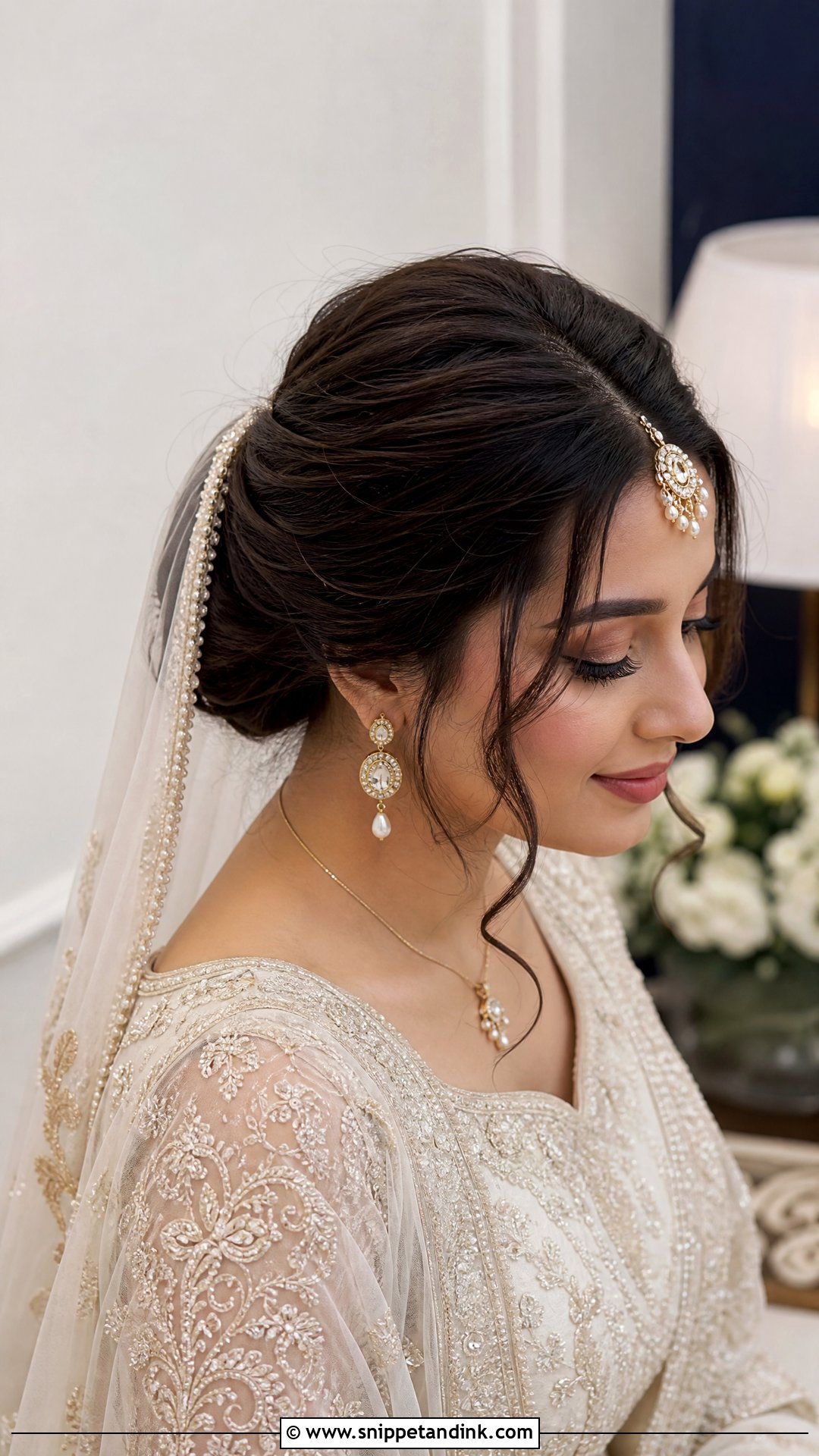
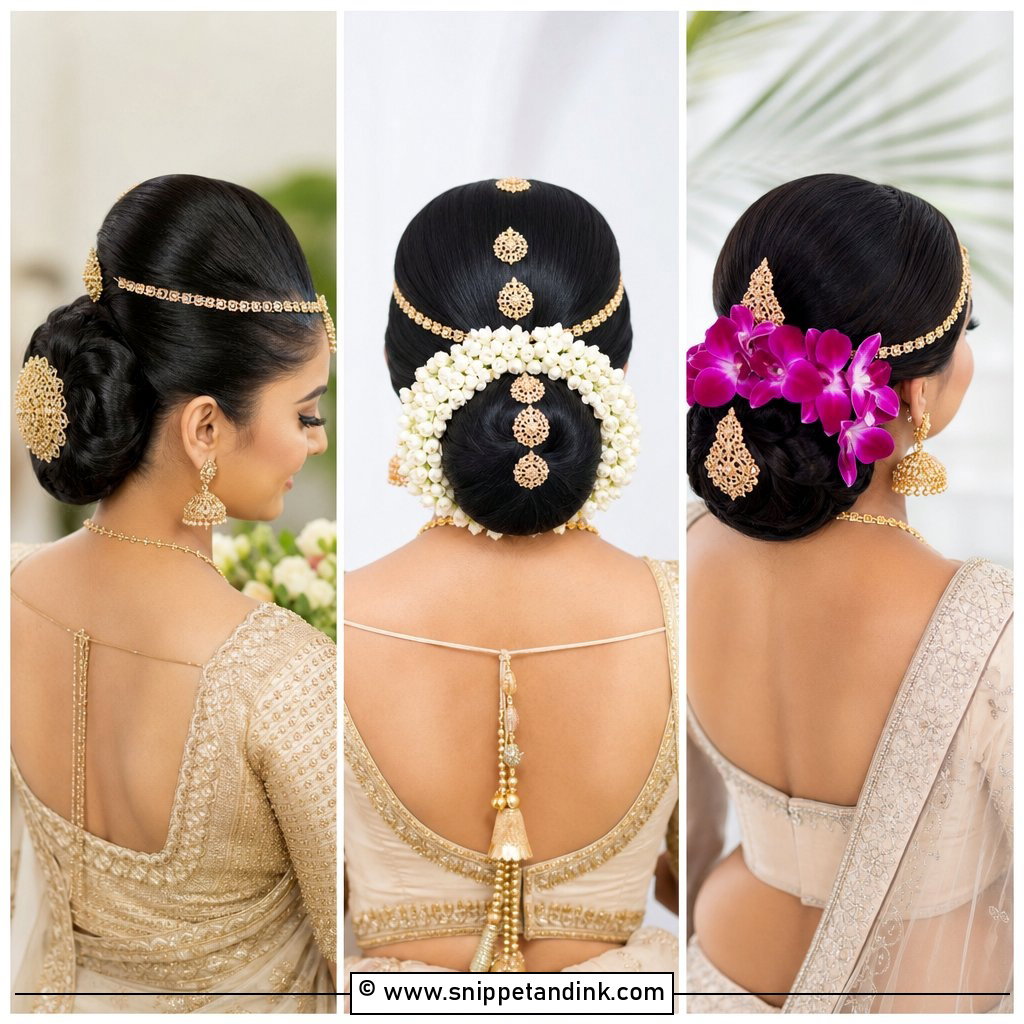
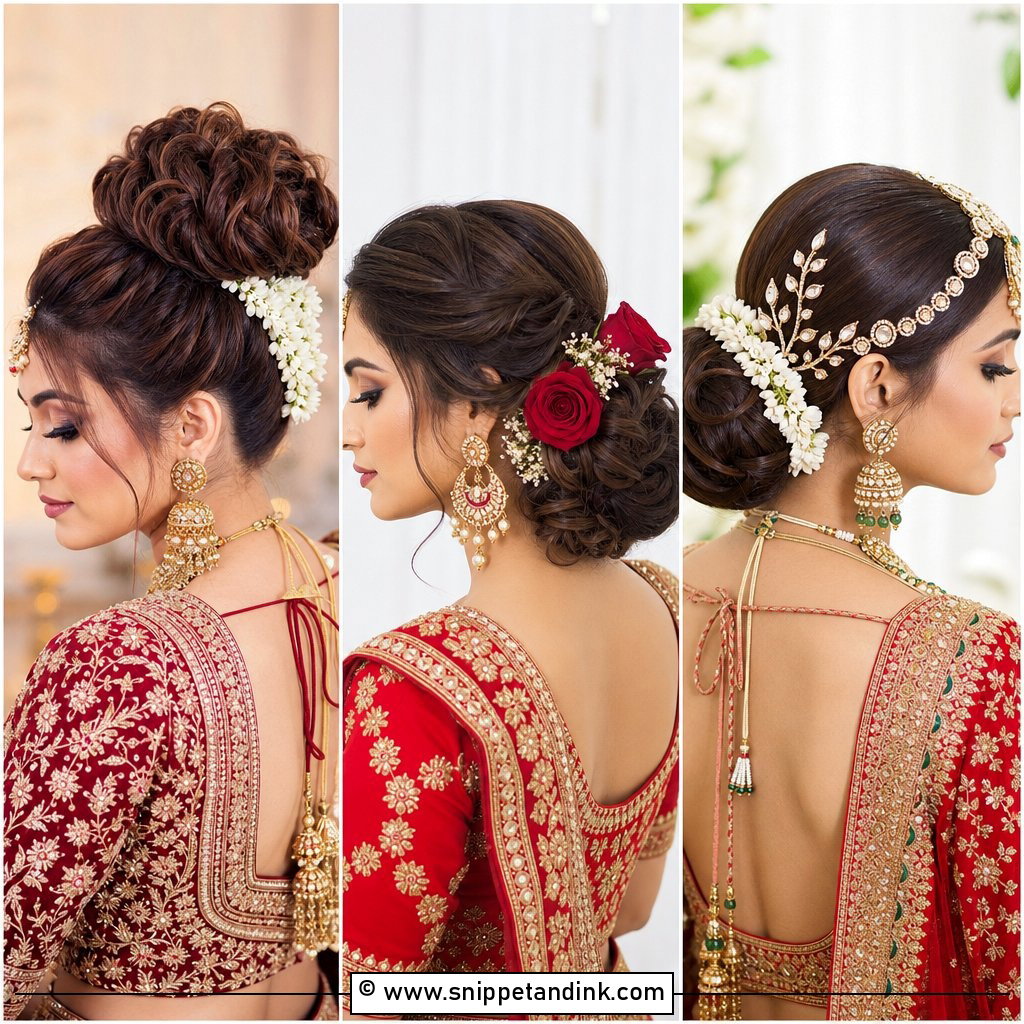
The low bun is the style I trust most under a dupatta, because the fabric can rest on the crown and drape over the bun without pushing it out of place. It sits at the nape, which also leaves room for a matha patti and heavy earrings. I build it on a firm base, usually a small ponytail or a pinned cross of bobby pins, so it doesn’t sag after a long ceremony. Leave a few face-framing pieces out if you want the look softer around the cheeks.
2. Nikah Bridal Middle Part Bun
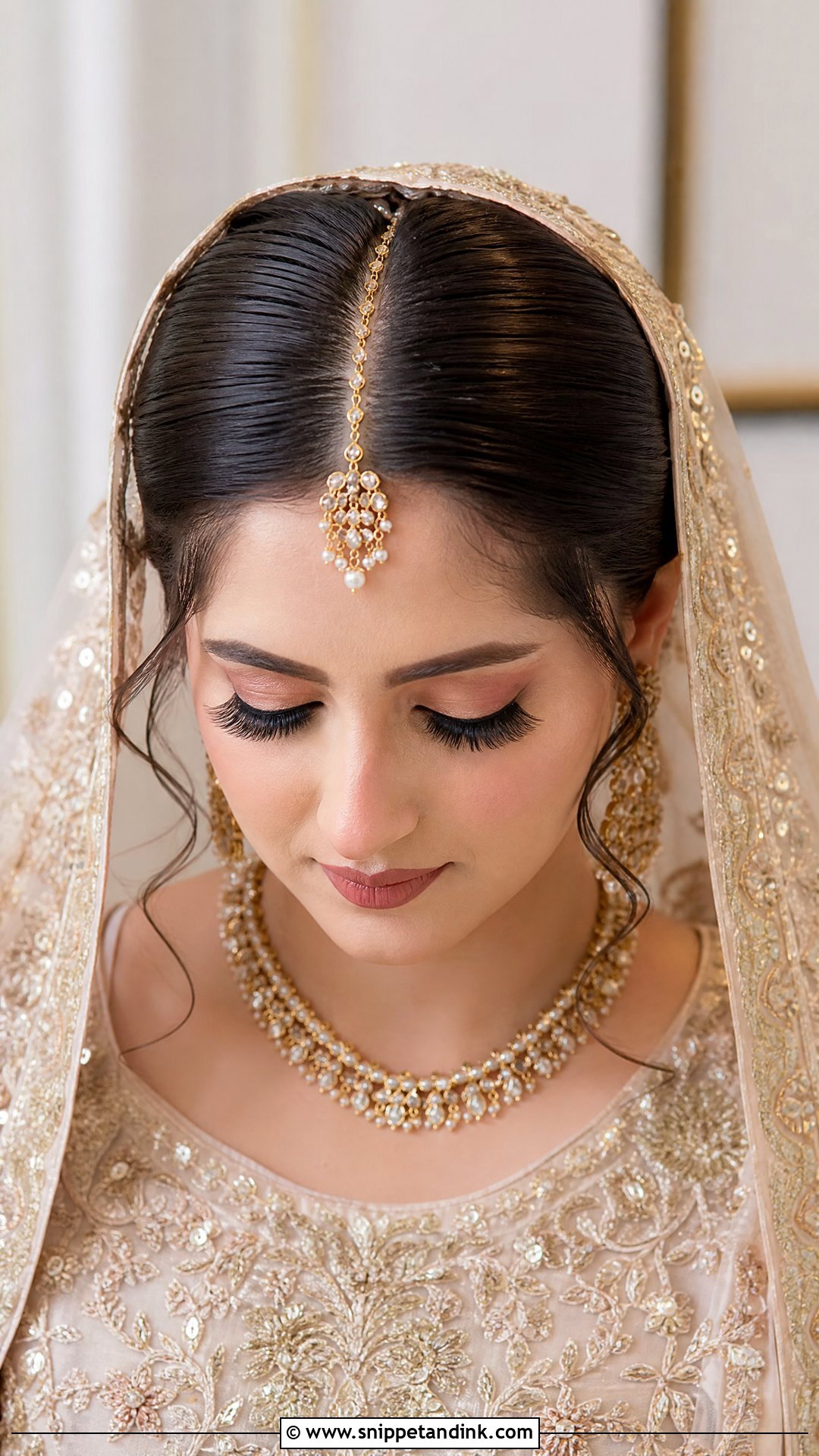
A center part gives the face symmetry, and it’s the natural line for a tikka, jhoomar or any forehead piece that needs to hang straight. I check the part at the trial with the jewelry on, because a part that’s even slightly off-center makes a tikka look crooked in every front-facing photo. Lightly waving the front before pinning it back keeps it from looking too severe. With a heavily embroidered dupatta, this quieter shape stops the hair from competing with the outfit.
3. Nikah Bridal Sleek Bun
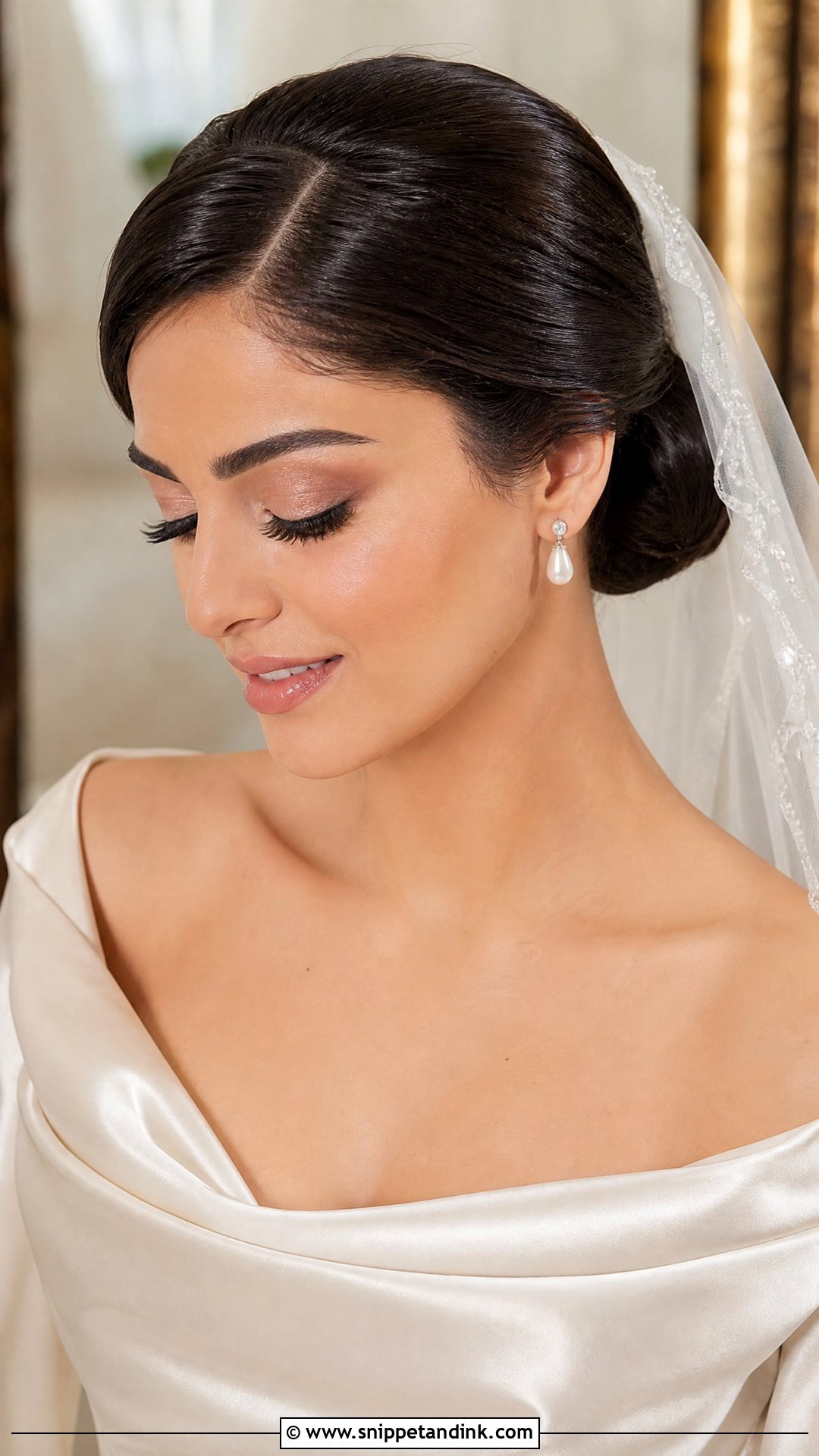
A sleek bun only reads as sleek if the dupatta doesn’t flatten or rumple it, so I pin the fabric farther back than usual to keep the smooth sides visible. The hair is brushed back with a sharp center or soft side part and pinned into a compact bun, low or at mid-height. Fine hair needs a little texture spray before smoothing, otherwise the pins slip. Ivory, champagne and pastel outfits suit the polish of this look, and it pairs well with clean, glowing makeup.
4. Nikah Bridal Soft Bun
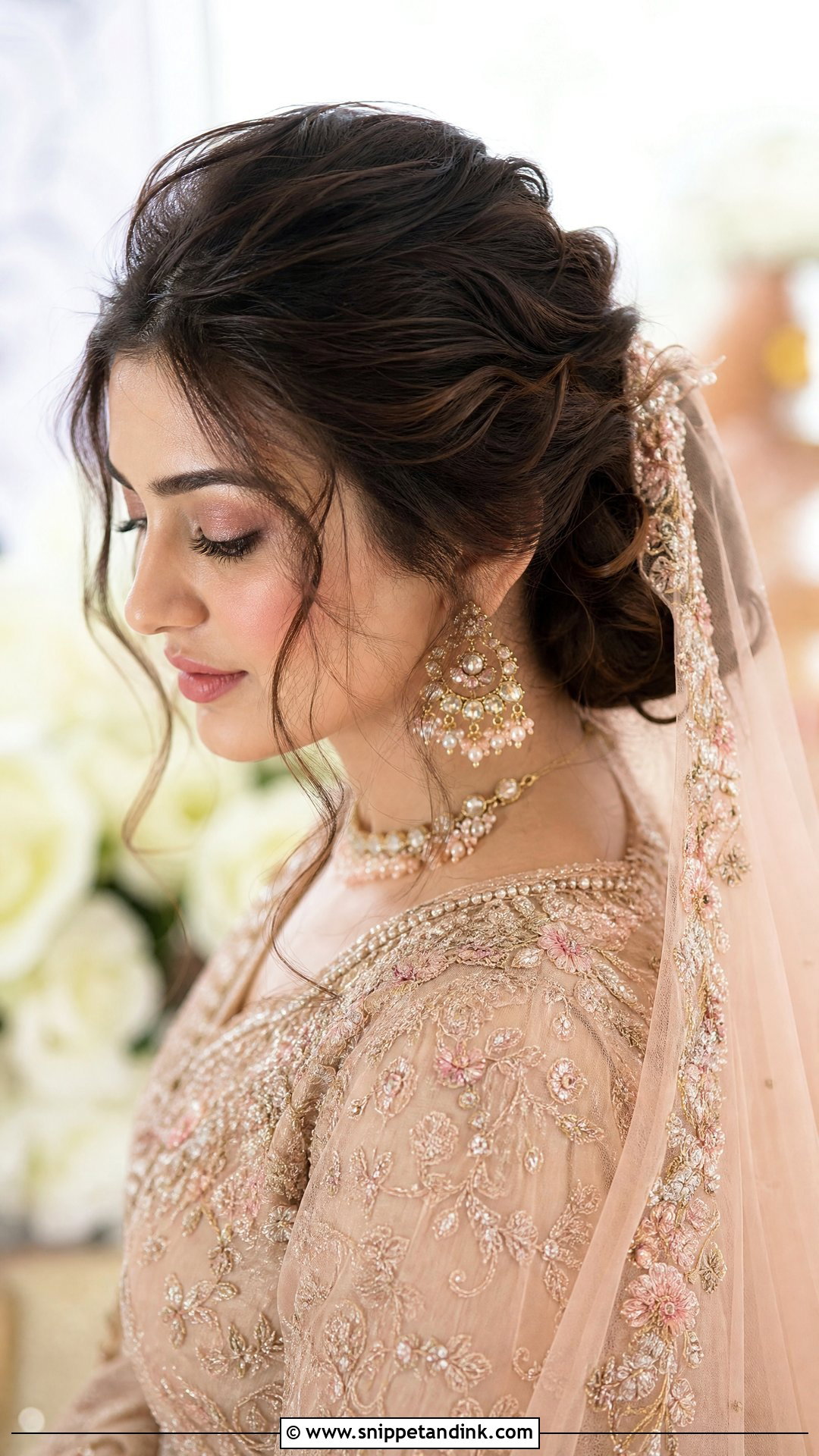
A soft bun keeps the shape controlled but lets the texture move, with loose bends and a little air through the sides. I curl the hair first and let it cool fully before pinning, because a bun made from warm curls drops and loses its shape within hours. Soft tendrils or a lifted crown keep it gentle at the front. It suits lace, organza, chiffon and pearl-detailed outfits and works with soft makeup.
5. Nikah Bridal Floral Bun
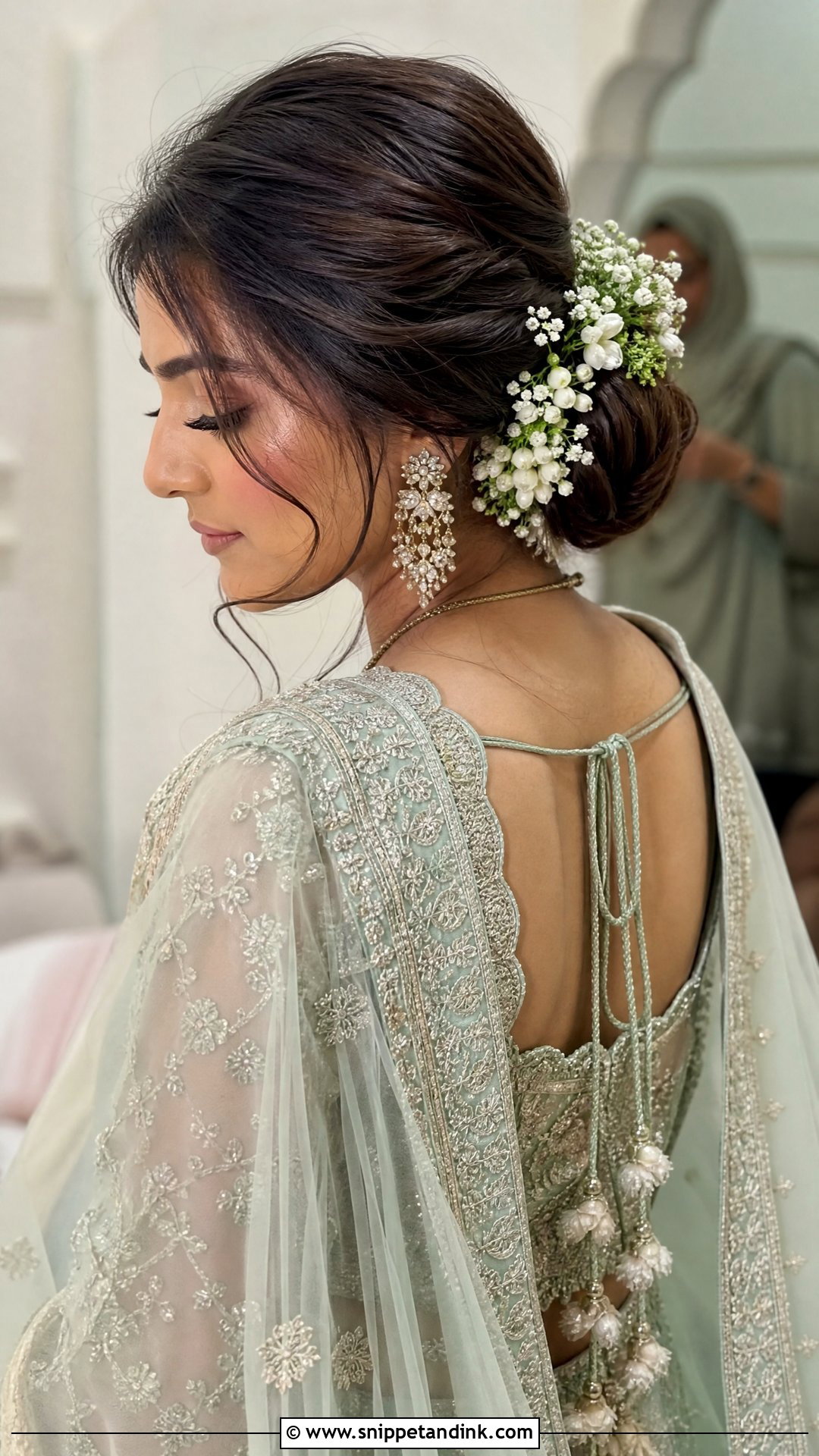
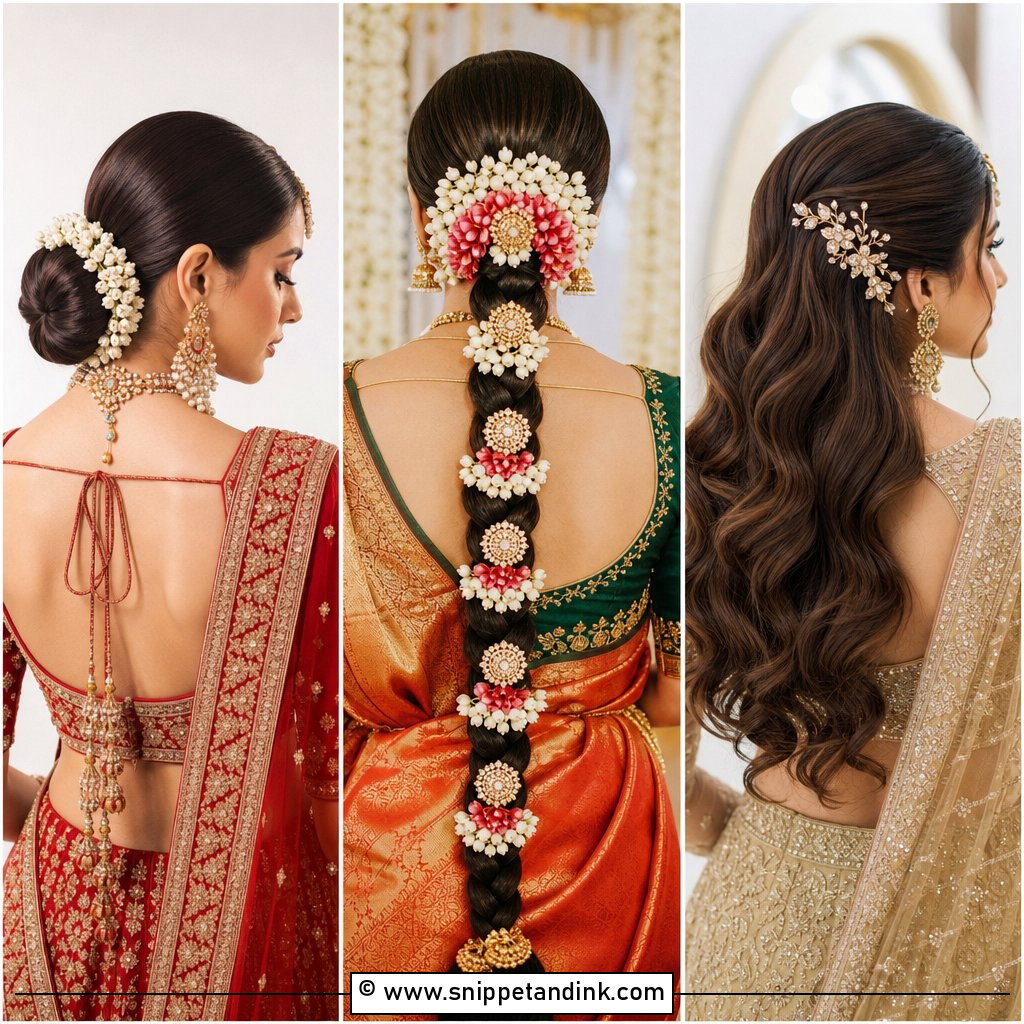
Flowers around a bun feel traditional without looking dated, as long as they’re small. Jasmine, baby’s breath, small roses or pastel blooms can echo the jewelry or the embroidery. Fresh flowers wilt, especially in a warm room, so I wire them and keep them in a cool place until the last moment. If the dupatta or outfit is already busy, I use fewer blooms rather than more. A low floral bun is especially sweet at a daytime Nikah because the flowers show through a sheer dupatta in close-up portraits.
6. Nikah Bridal Braided Bun
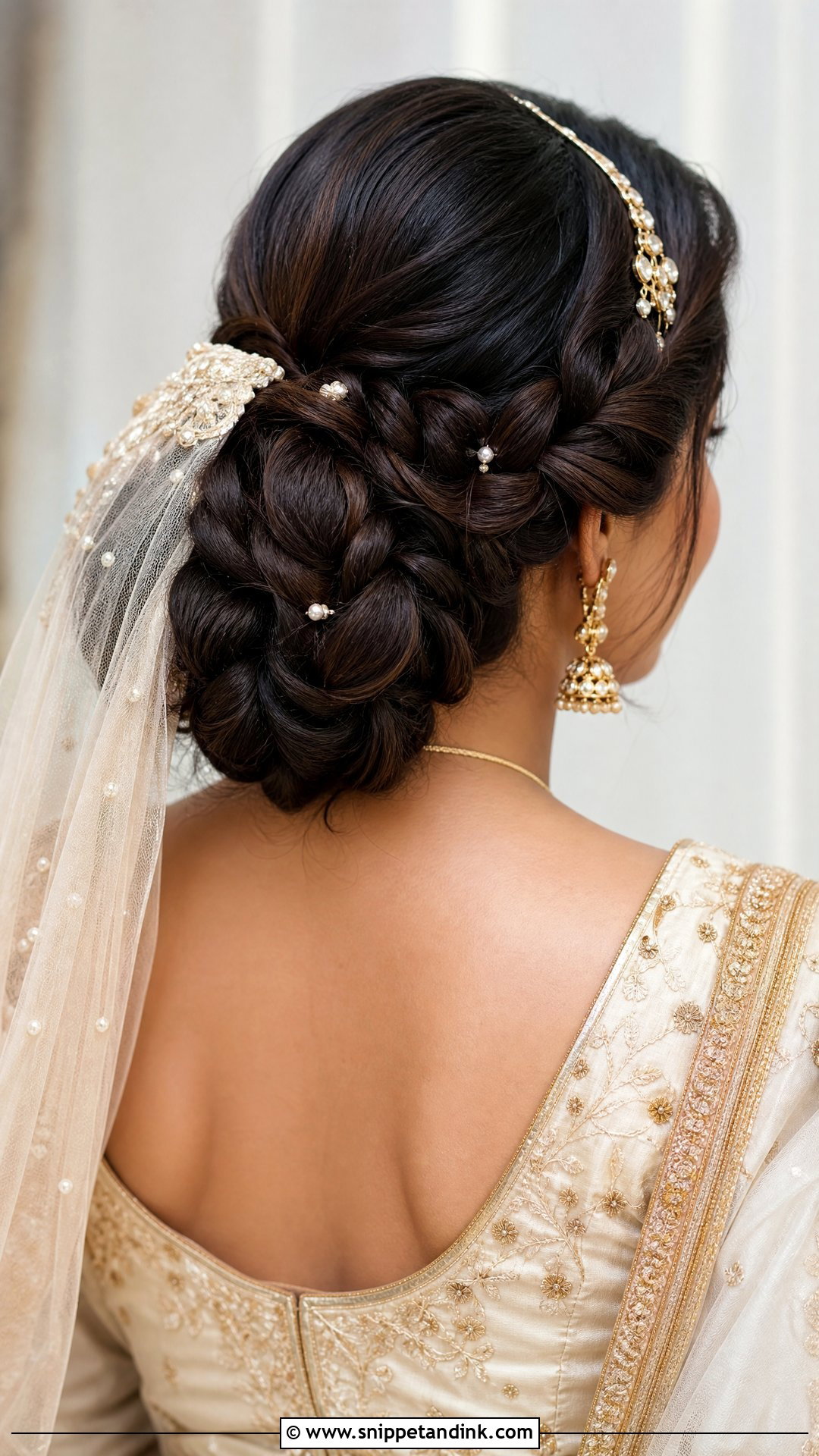
A braided bun gives texture and also does something practical: on thick or very long hair, braiding the length first makes the bun far smaller and lighter, so it sits flatter under the dupatta. The braid can wrap around the bun, run from the crown into it, or sweep along one side. Pearl pins or tiny floral accents add a bridal touch. It’s one of the most secure shapes in this list.
7. Nikah Bridal Side Bun
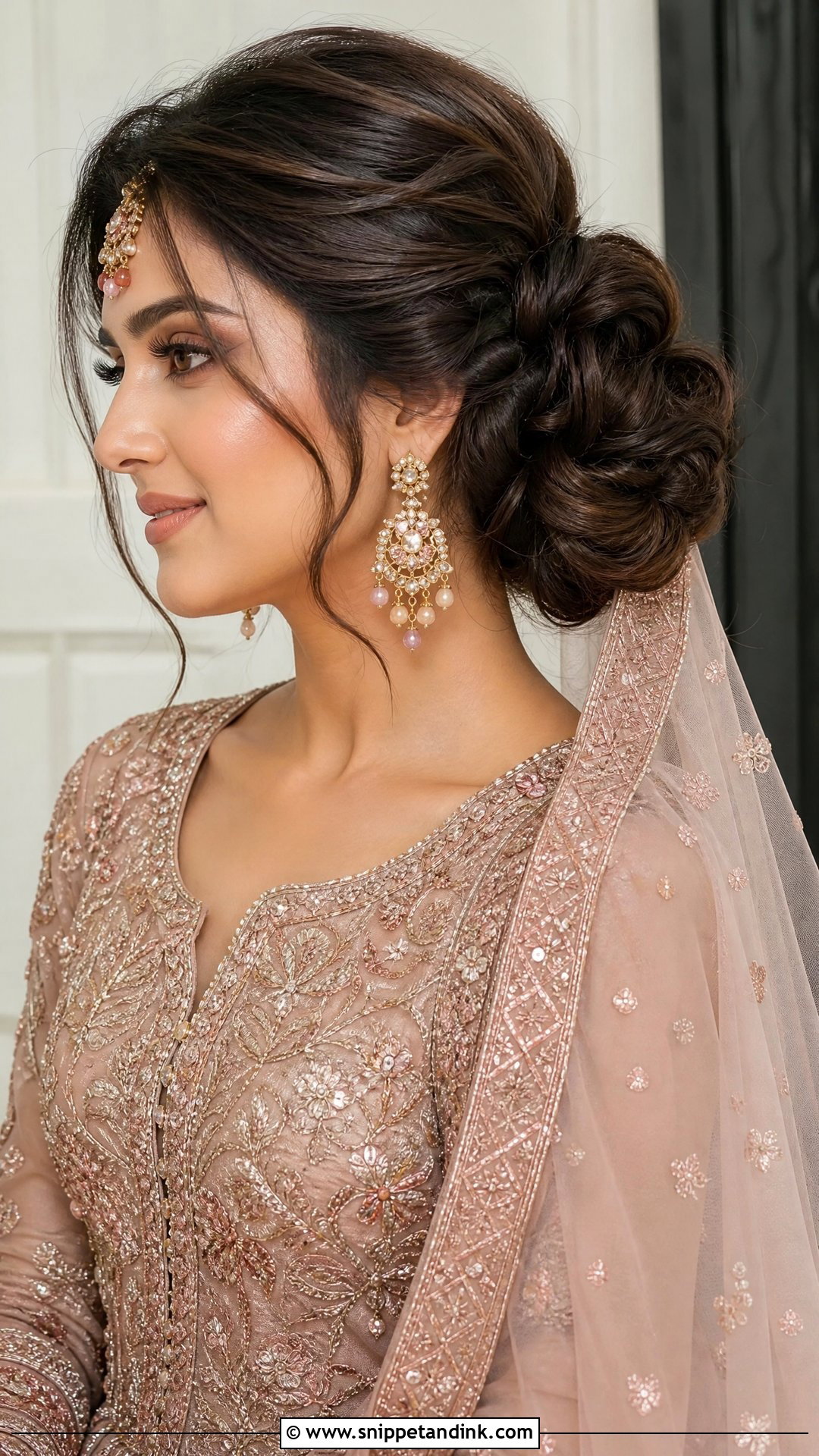
A side bun works when the dupatta is draped to one side, or when you want one side of your jewelry to stand out. I place it just behind the ear rather than directly under it, so it doesn’t push the earring forward or catch on the dupatta border. It can be smooth, twisted, braided or curled. It adds interest without height, which suits brides who don’t want volume on top.
8. Nikah Bridal Chignon
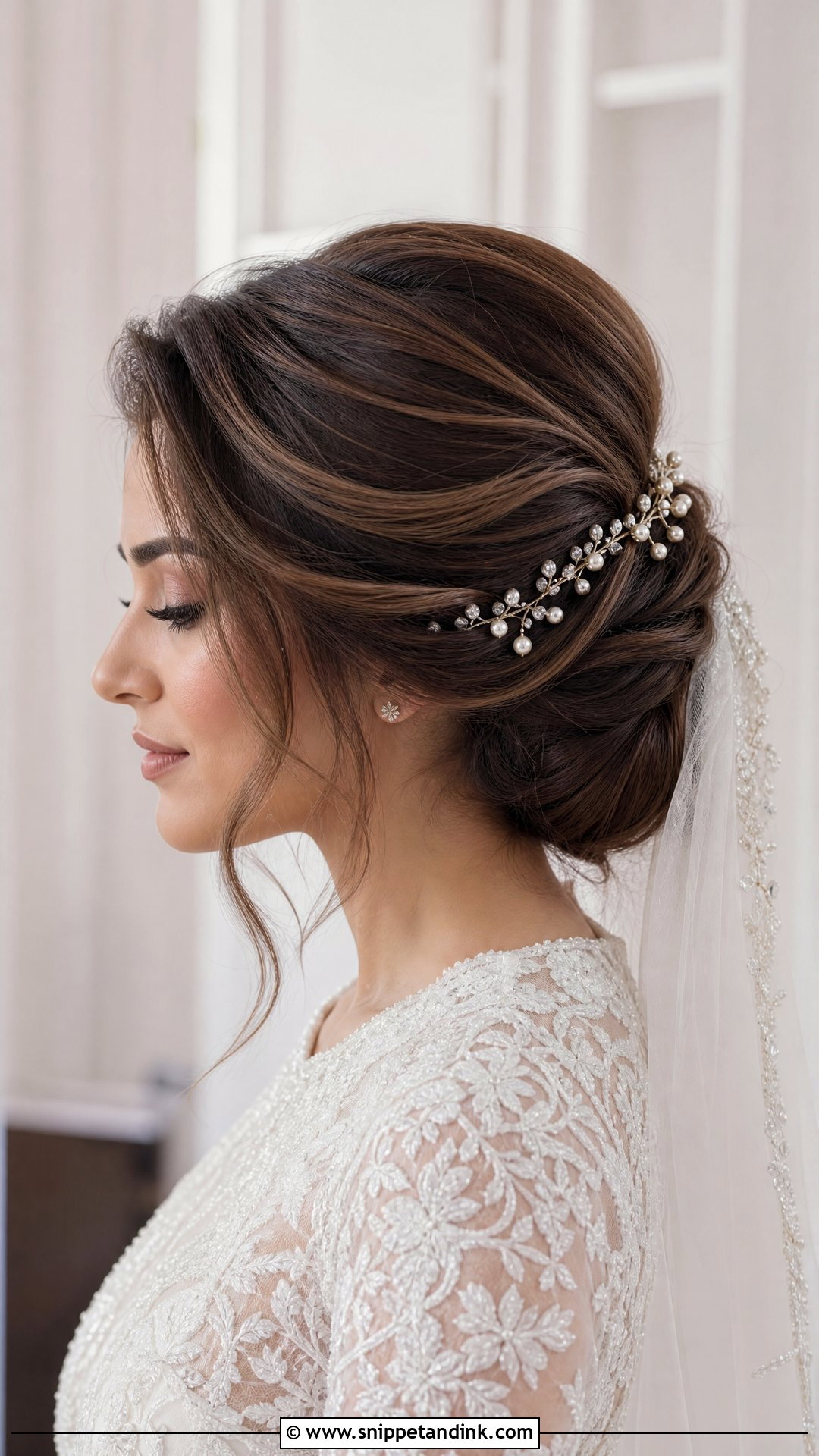
A chignon is a rolled or tucked low knot, more structured than a regular bun. It pairs well with veils, dupattas, pearl pins and hair vines. With a high neckline or heavy earrings, it clears the shoulders and keeps the focus on the face. I add a little lift at the crown before pinning, since a fully flat top can look severe once the dupatta sits on it. A few soft pieces at the front keep it from feeling stiff.
9. Nikah Bridal French Twist
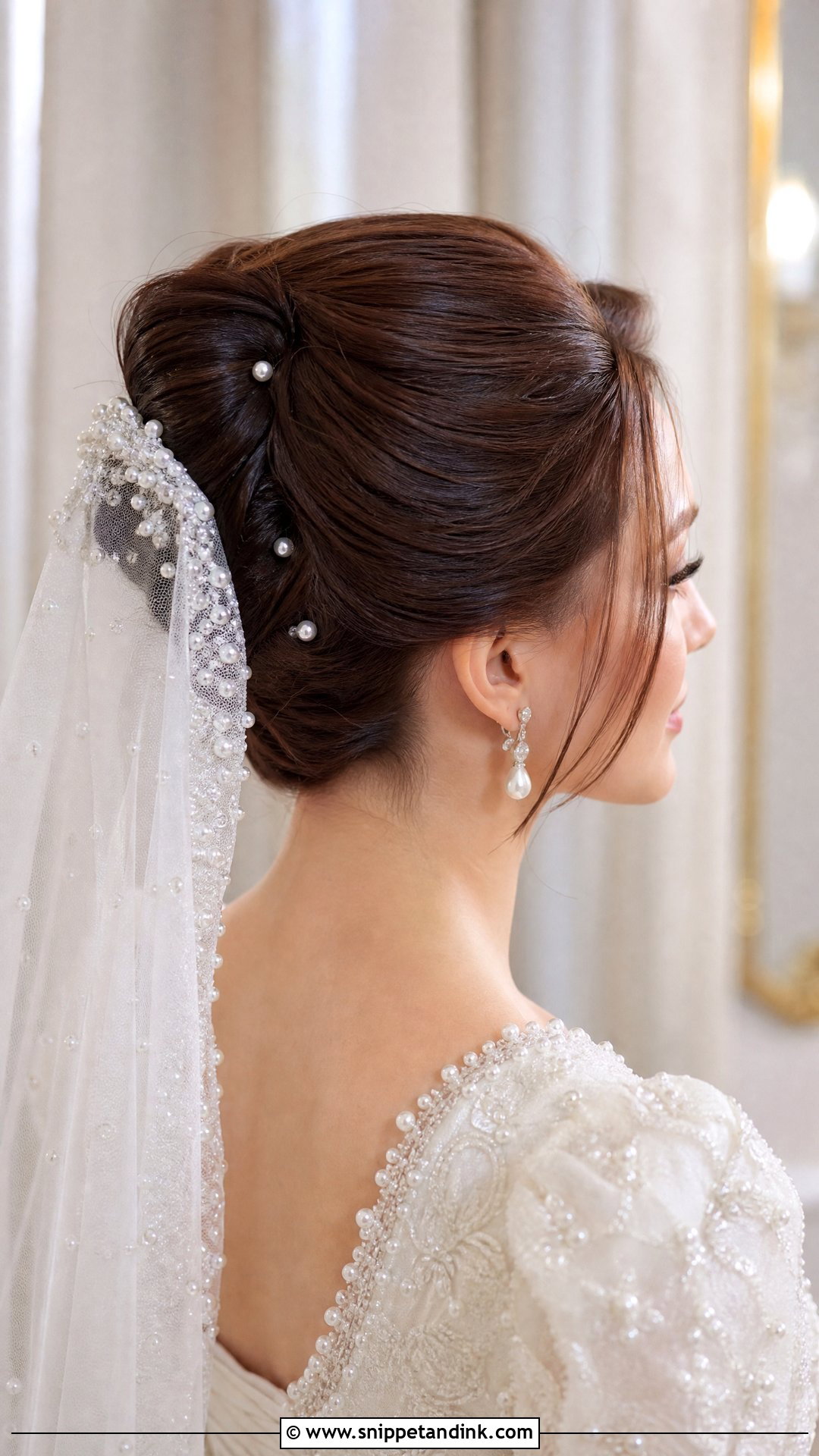
A French twist sweeps the hair upward into a vertical fold, giving clean height at the back. Under a dupatta, it needs to be set slightly lower than usual, or the fabric sits on the top of the twist and tilts forward. The pins must be fully hidden, so I work in sections and cross the pins inside the fold. Face-framing strands or pearl pins soften it. It looks right with structured outfits, satin and long veils.
10. Nikah Bridal Half Up Hair
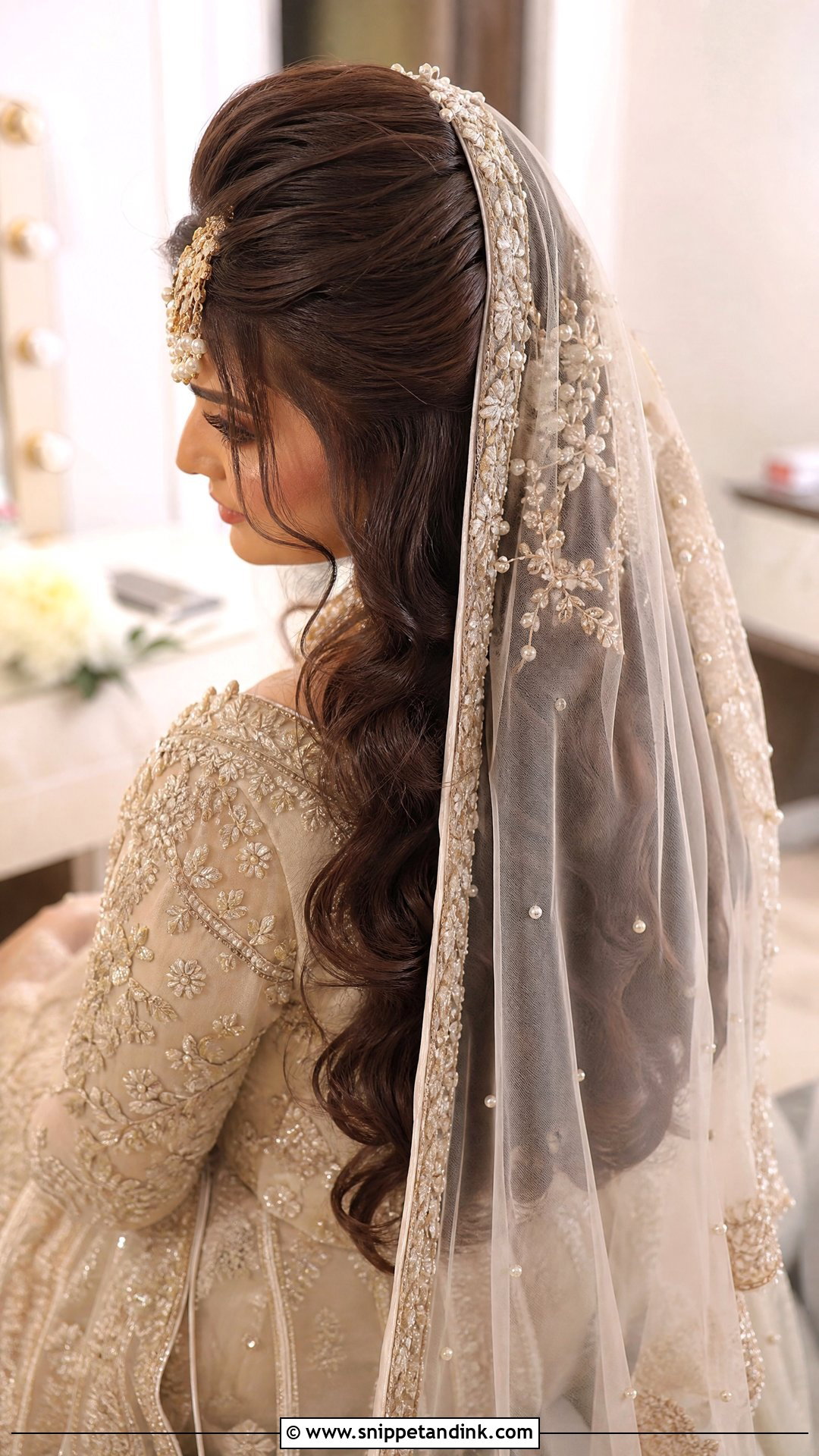
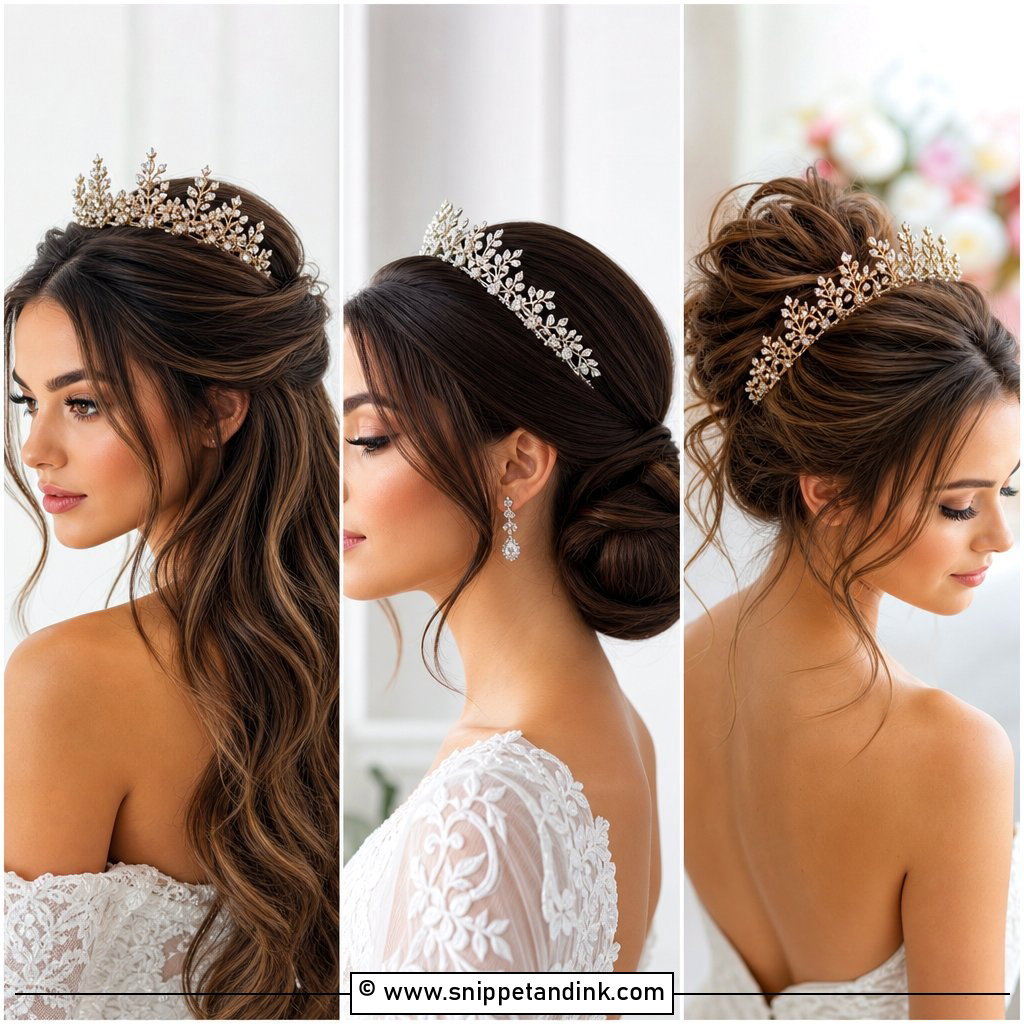
Half-up hair gives the movement of open hair with the comfort of pinned styling. The top section is secured away from the face and the rest falls in curls or waves. This makes it easier to wear a dupatta, because the pinned section gives the fabric something to grip. Crown volume and soft length around the shoulders are its strengths. Keep accessories light: a pearl pin, a small tikka or a delicate vine is enough.
11. Nikah Bridal Half Up Curls
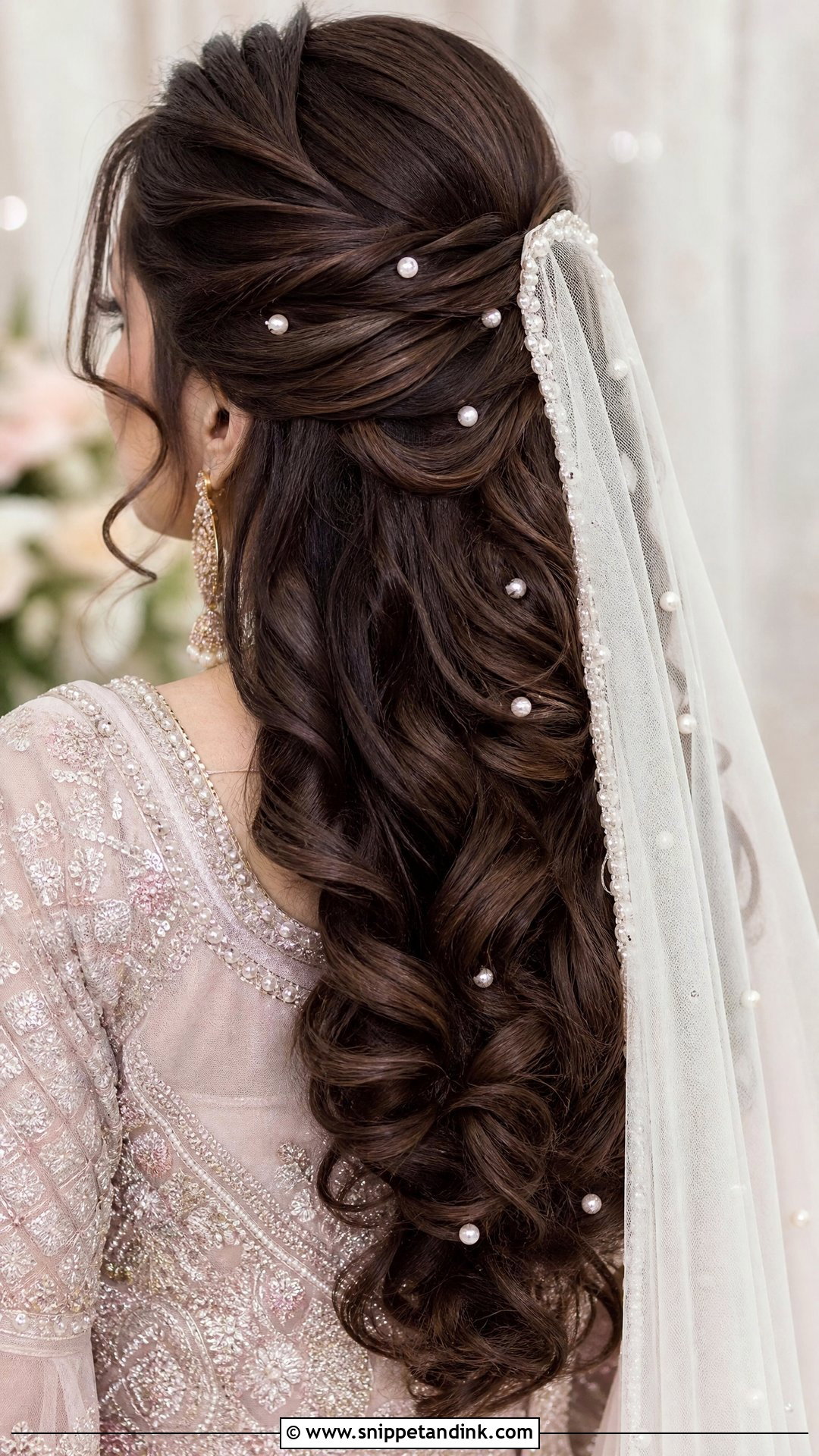
Half-up curls show off length in photos. The top section can be twisted, braided or simply pinned, while the curls fall down the back or over one shoulder. I brush curls out into soft glossy waves rather than leaving tight ringlets, which look dated and separate as they drop. If your hair doesn’t hold a curl, extensions help with both fullness and hold. A lighter dupatta suits it best, since a heavy one presses the top flat.
12. Nikah Bridal Open Waves
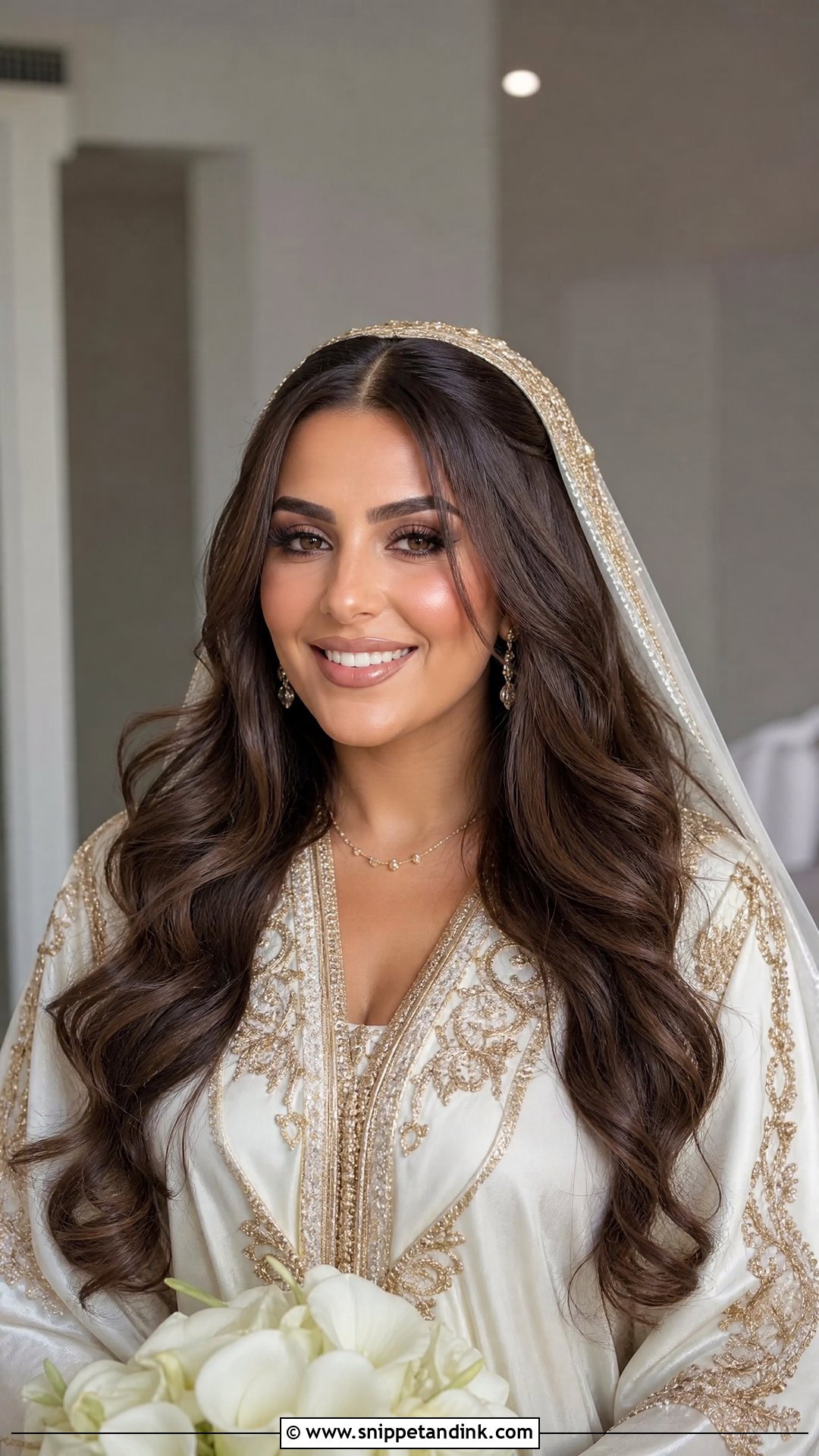
Open waves feel natural but need to be shaped enough to hold through the ceremony. I curl in larger sections, set them with pins while they cool, and brush them out only once they’re completely cold. A sheer dupatta set lightly over the crown, or pinned farther back, keeps the waves visible. This style needs medium to long hair. A middle part feels classic; a side part reads more dramatic. Keep accessories minimal so the movement is the focus.
13. Nikah Bridal Hollywood Waves
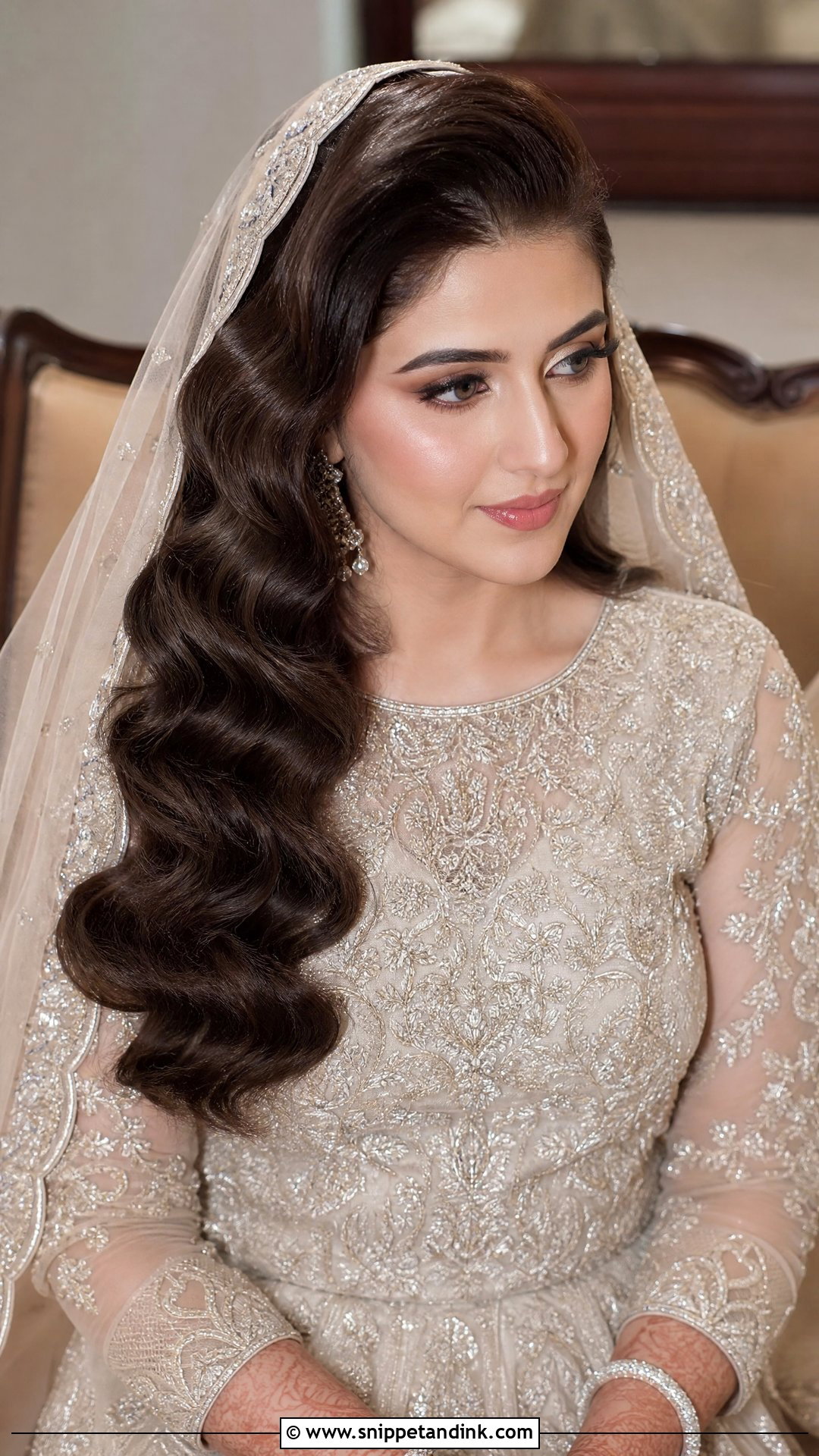
Hollywood waves are smoother and more structured than loose curls, all flowing in one direction, and they take a confident side part. They suit statement earrings and elegant lehengas or gowns. For a Nikah, a lightweight dupatta placed behind the crown keeps the wave pattern visible. The technique matters: every section is curled in the same direction, pinned to set, then brushed together into one smooth ripple. Strong hold spray is needed, but the hair should still move when touched.
14. Nikah Bridal Side Swept Waves
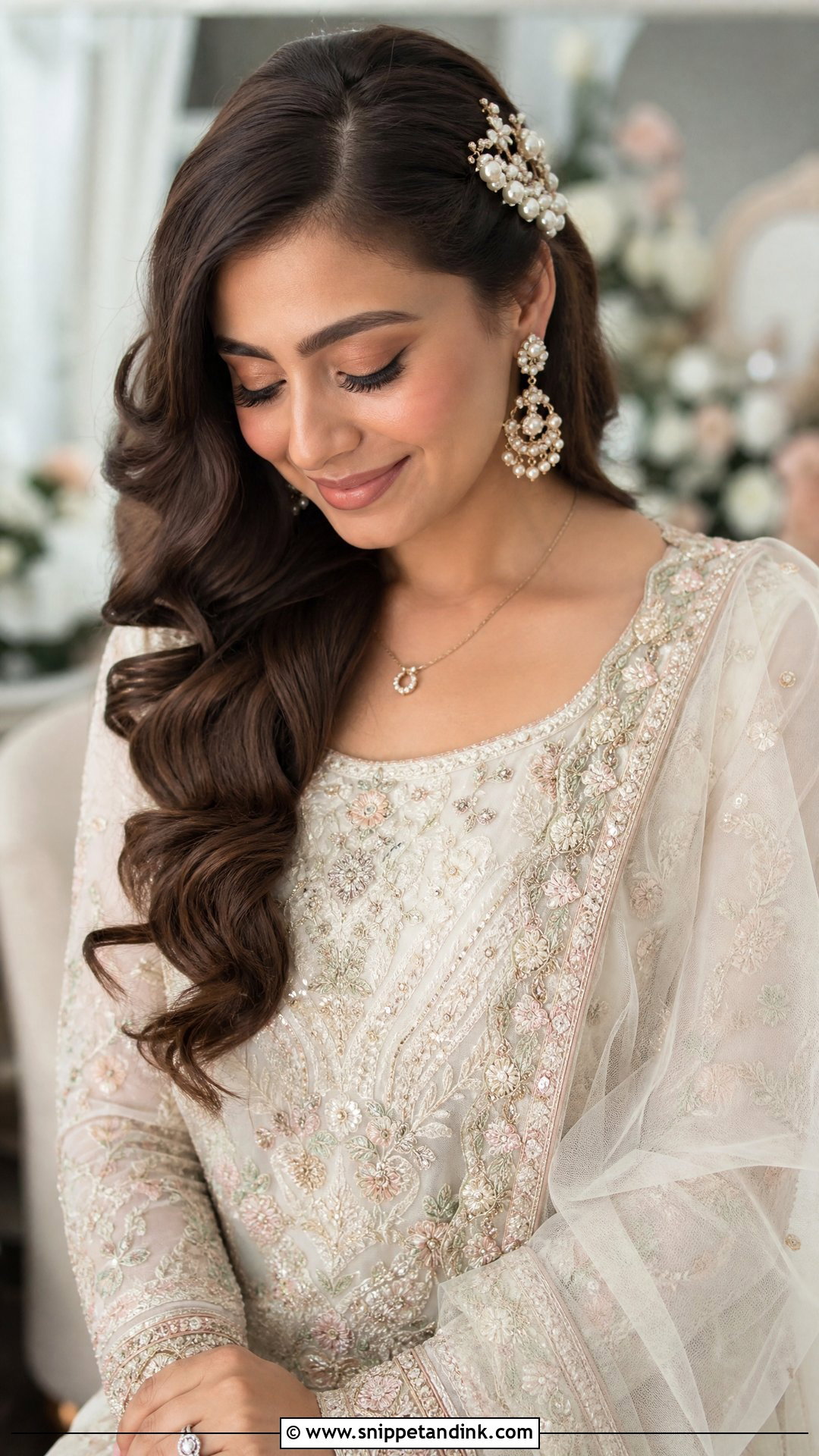
Side-swept waves bring the hair over one shoulder, so the curls show up clearly in front-facing photos. They pair well with one-sided dupatta draping, statement earrings and detailed necklines. The side with less hair needs to be pinned firmly behind the ear, since that’s what keeps the whole style from drifting back to center during the day. Small pearls along that pinned side make it look finished in close-up portraits.
15. Nikah Bridal Ponytail
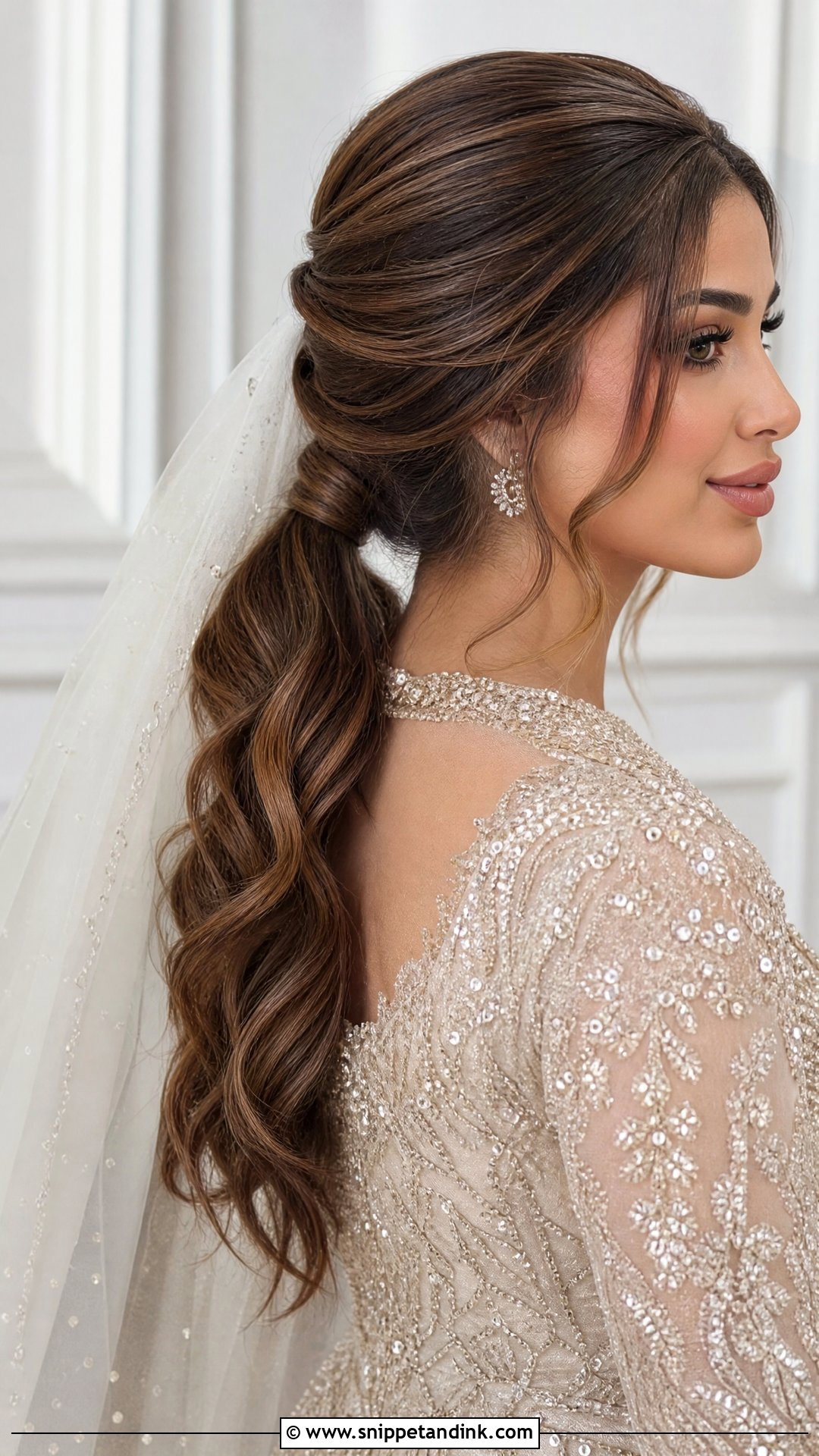
A bridal ponytail is a modern choice for brides who don’t like hair around their face. It can sit low for elegance or mid-height for more swing. Waves through the length make it feel bridal, and a section of hair wrapped around the base hides the elastic. Under a dupatta, I’d keep it low; a high ponytail lifts the fabric and makes it slide backward. Subtle crown volume and a couple of face-framing pieces soften it for the ceremony.
16. Nikah Bridal Braided Ponytail
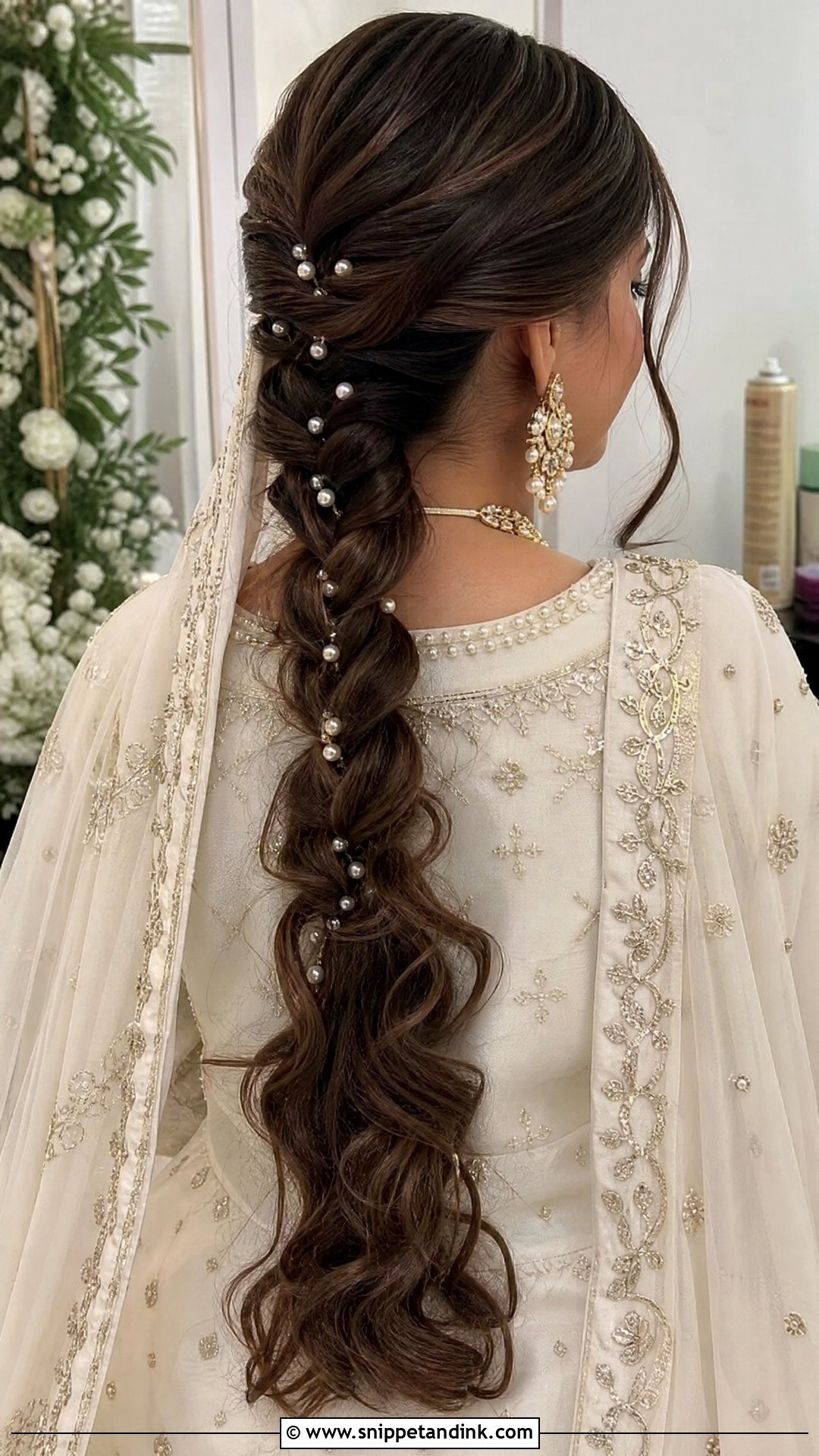
A braided ponytail mixes tradition with a modern line. The braid can be loose and full, wrapped with pearls, or finished with soft waves at the ends. It works on long hair and suits fitted outfits, shararas and modern lehengas. I pull the braid apart gently so it looks fuller, but not so much that it frays by evening. For a softer Nikah look, keep the front smooth with a middle part and a little volume at the crown.
17. Nikah Bridal Dupatta Hairstyle
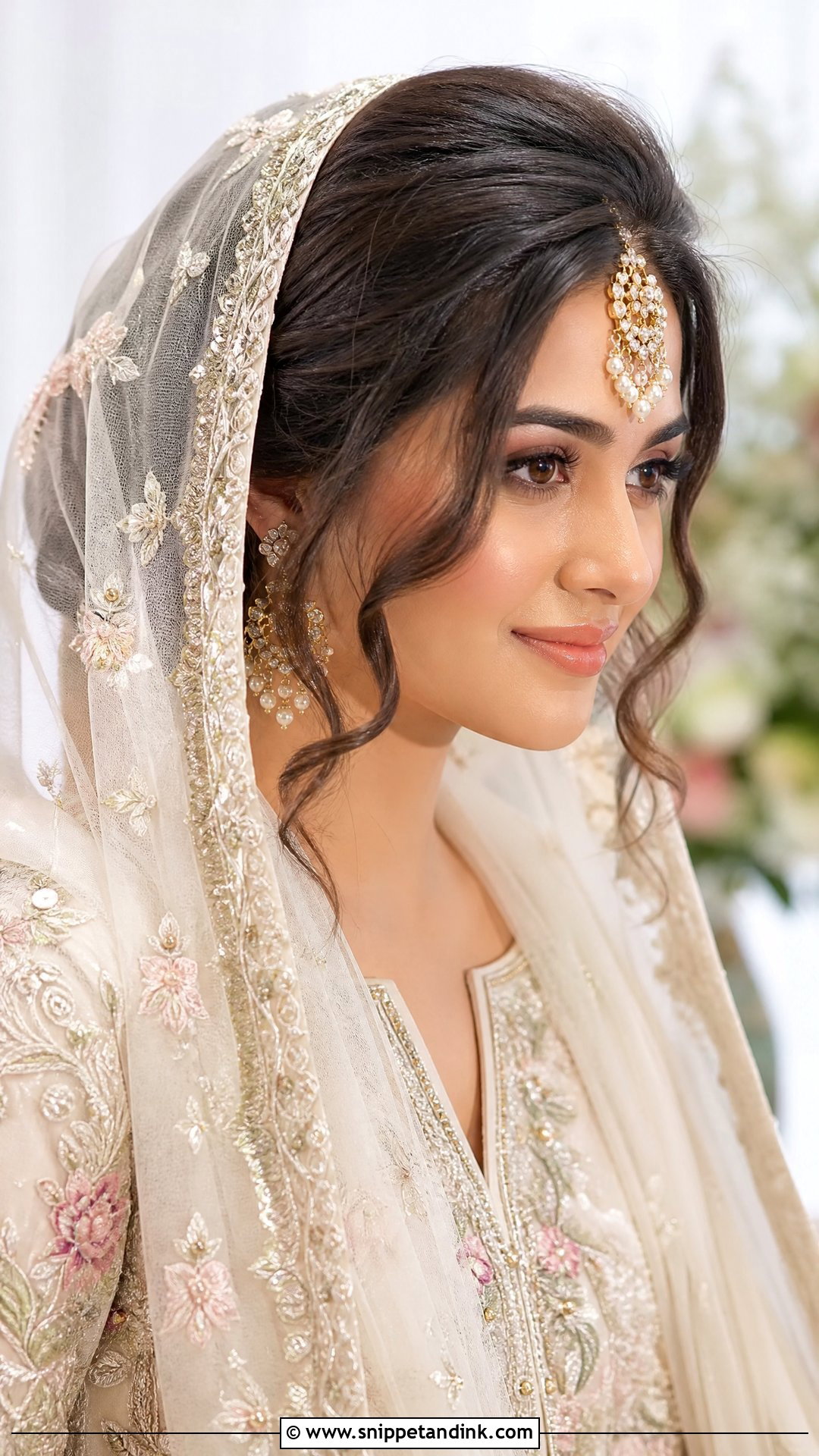
When the dupatta is the main event, the hair underneath is built for grip and balance. The best bases are a low bun, soft bun, chignon or half-up style, because they all hold pins well. I style the front first, so the part, volume and face-framing pieces stay neat once the fabric goes on. Bring the actual dupatta to your trial. A heavy border, beadwork or embroidery changes everything about how many pins are needed and where they go.
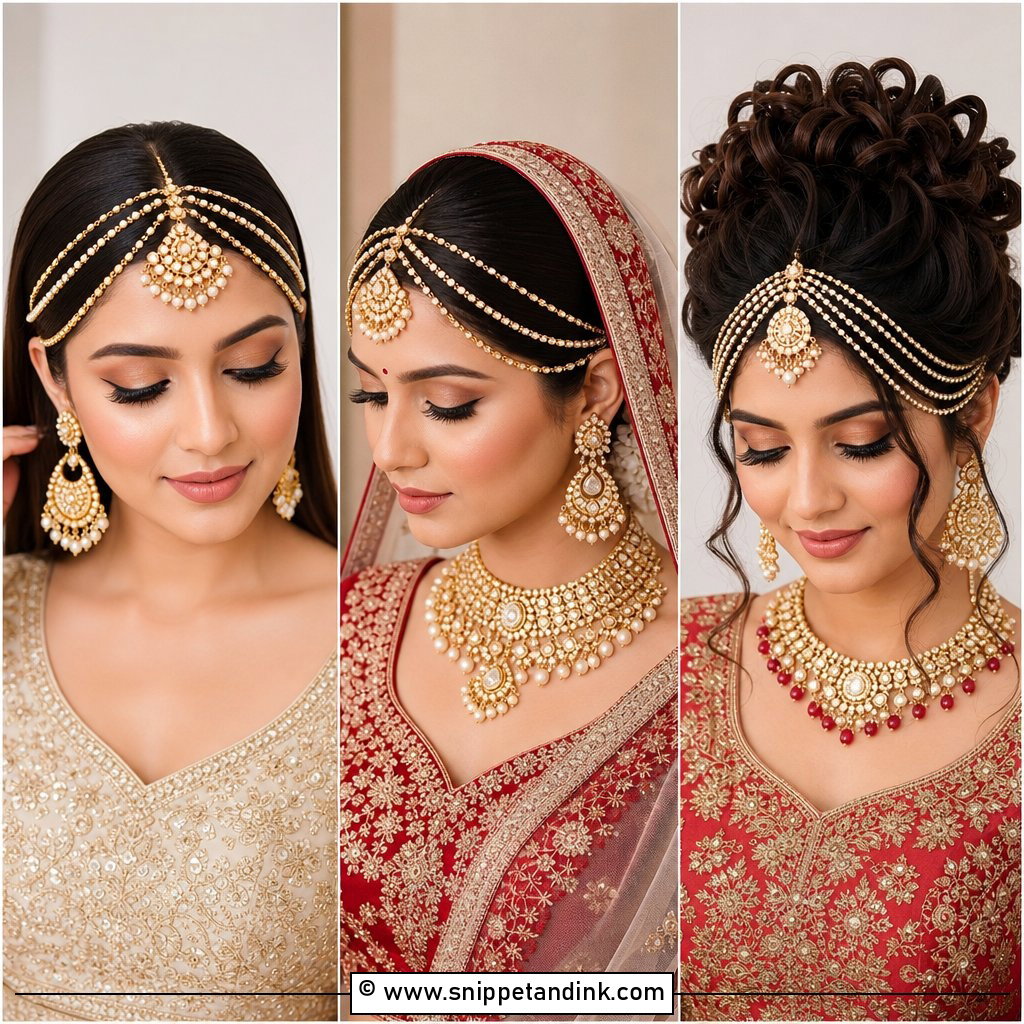
18. Nikah Bridal Tikka Hairstyle
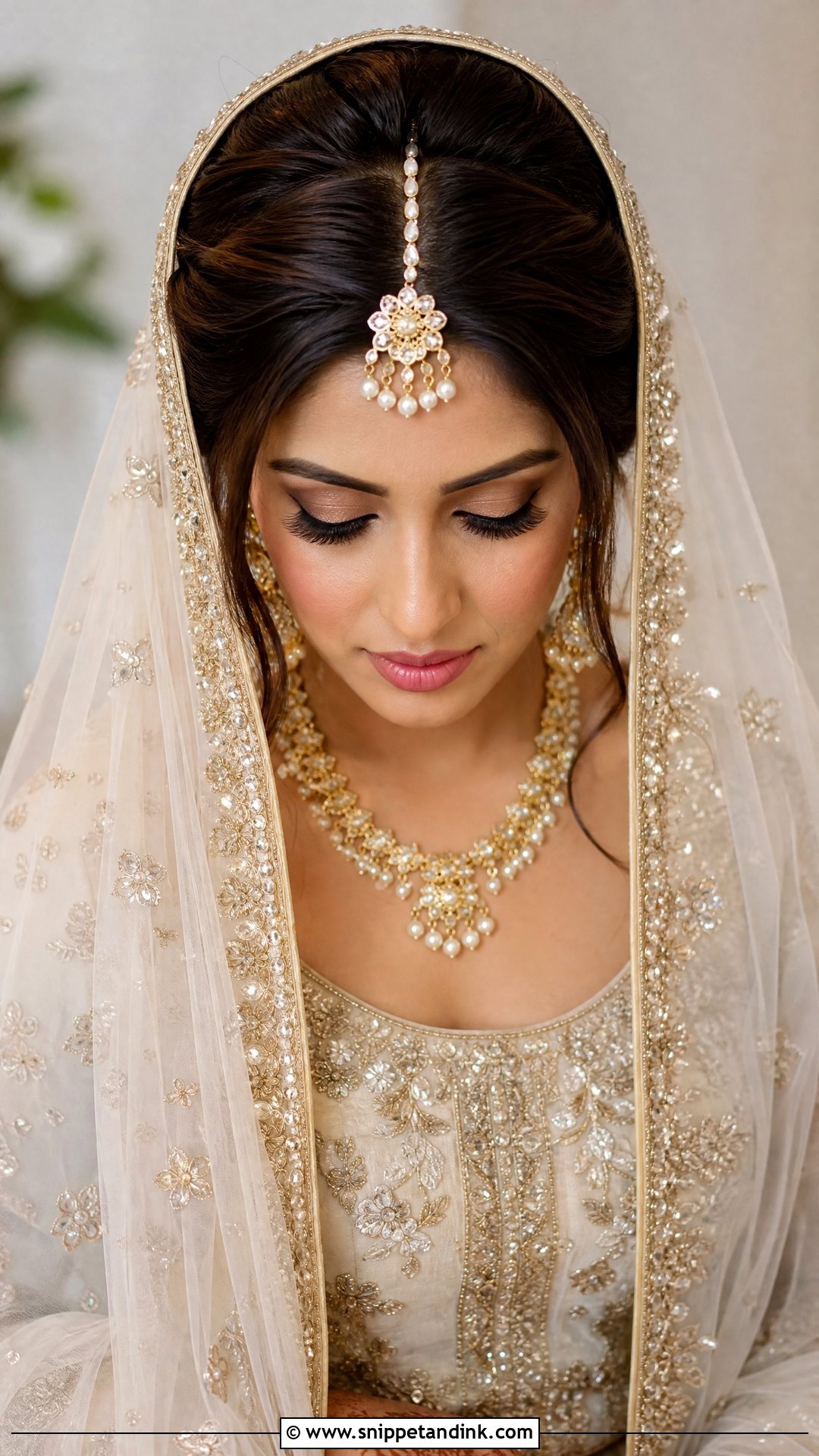
A tikka hangs from the center of the forehead, so the hairstyle has to keep it straight. A middle-part bun, center-part waves or half-up curls all work. The front should be smooth enough to hold the chain flat but not so tight that it looks harsh. If your tikka is heavy, I pin it to a small hidden anchor at the crown, usually a tiny braid or a cross of pins, so the weight pulls on that anchor instead of on the parting. Soft makeup and delicate earrings keep the face balanced.
19. Nikah Bridal Jhoomar Hairstyle
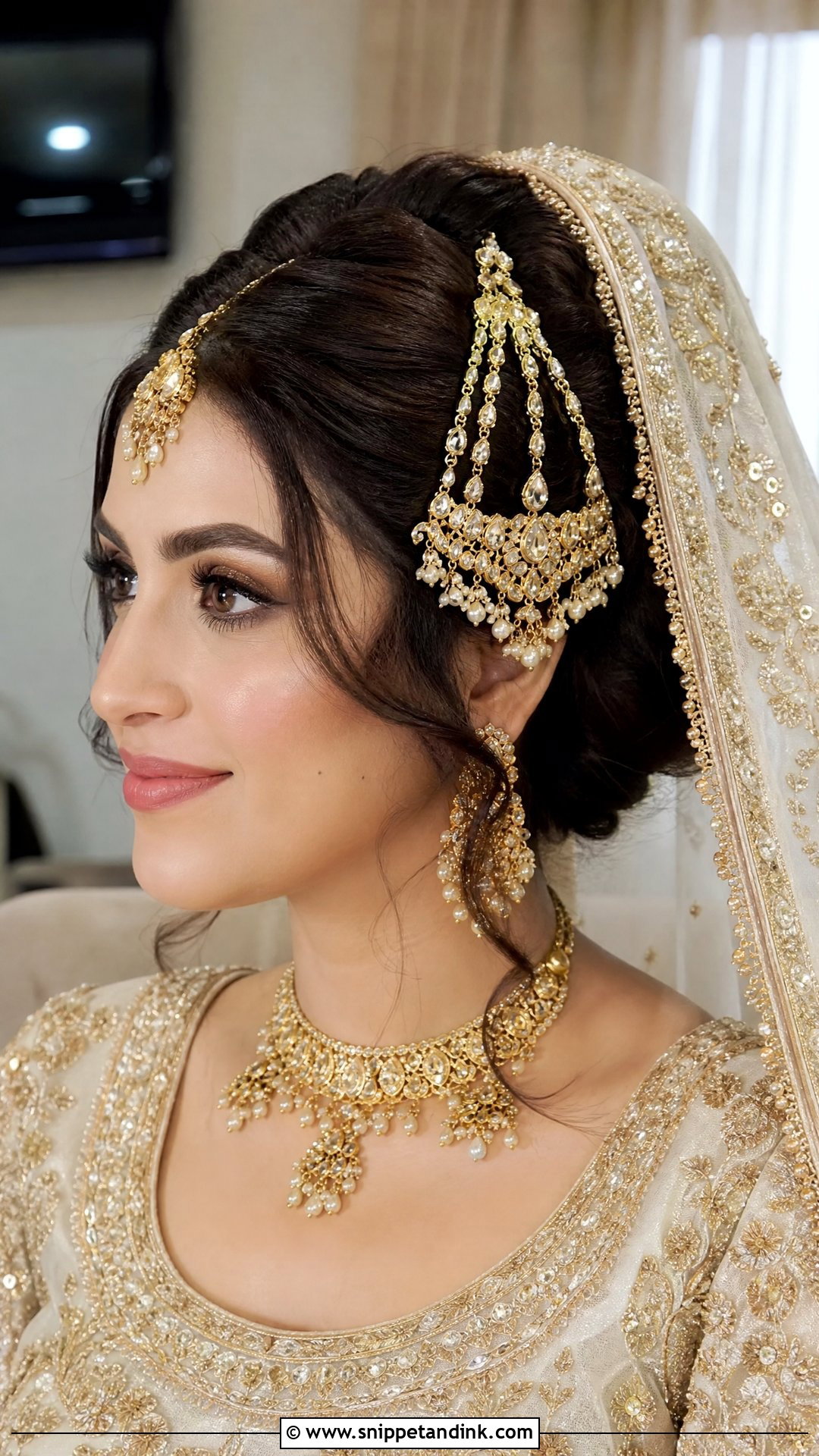
A jhoomar sits on one side of the head, so the hairstyle has to support that weight without tipping the look off balance. A low bun, side bun or softly pinned half-up style works well. The opposite side can stay smooth or carry a few soft waves. It sits naturally with Pakistani and South Asian bridal outfits, especially with a dupatta draped over the head. I secure the jhoomar at two points, not one, so it doesn’t swing forward every time the bride bends to sign.


20. Nikah Bridal Short Hair
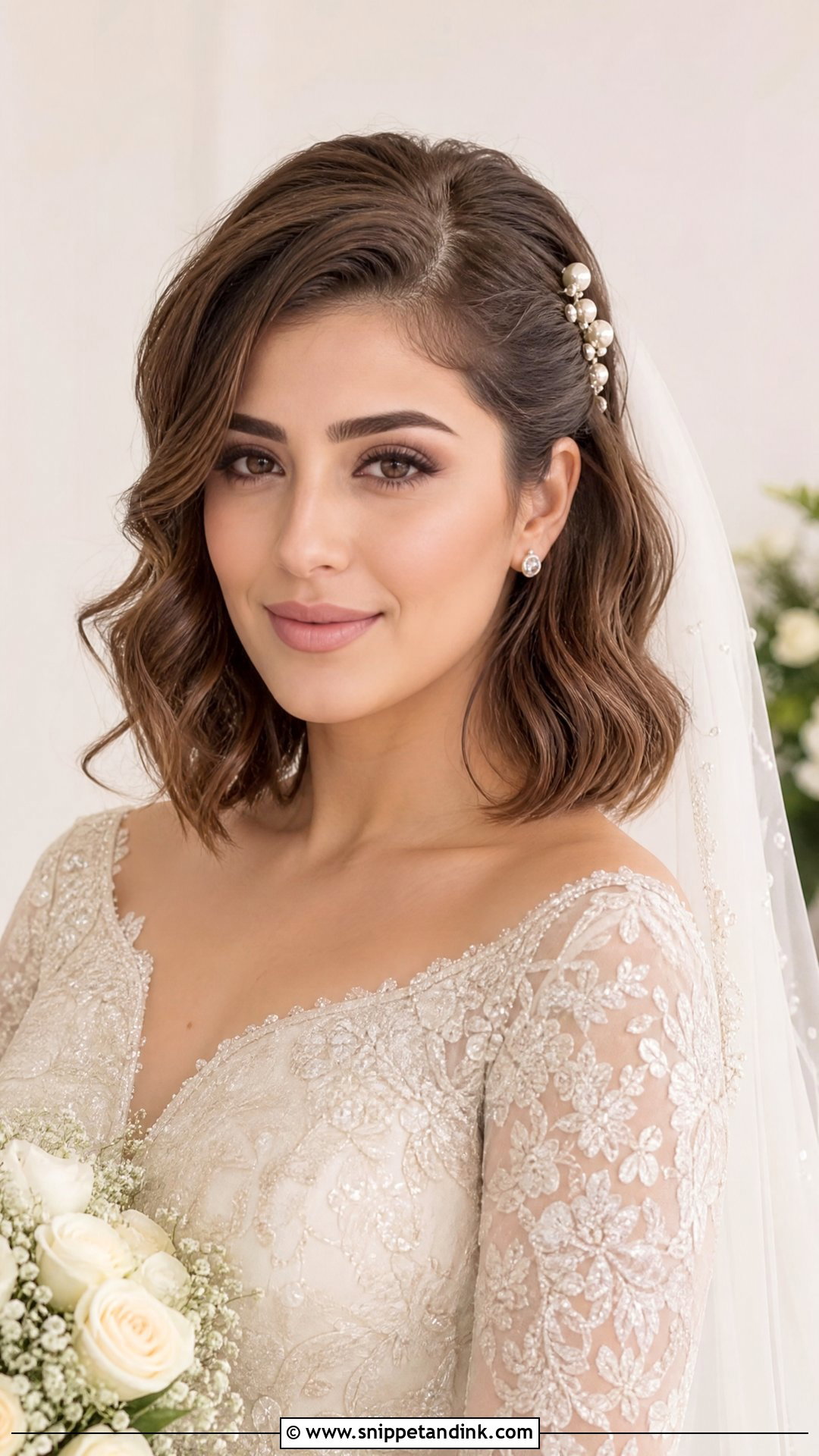
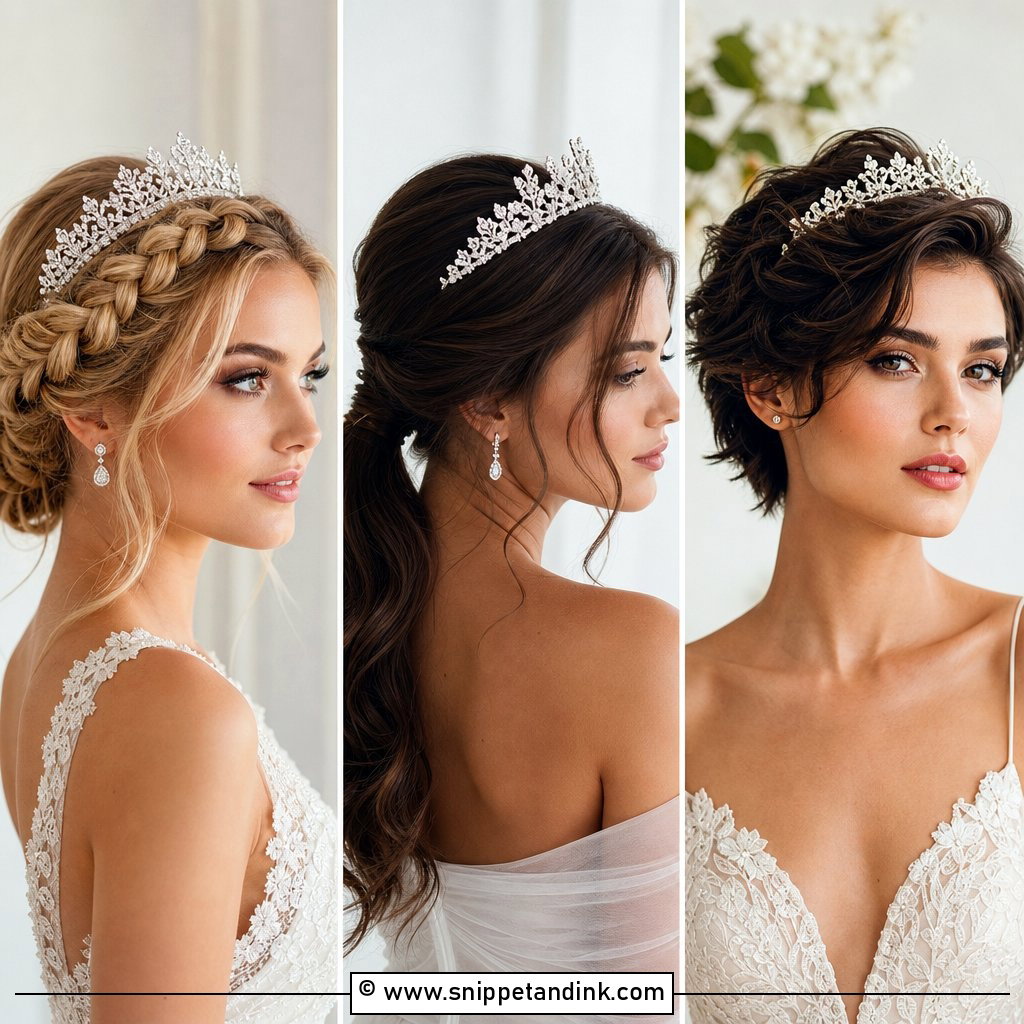
Short hair can look just as bridal as long hair. A bob takes soft waves, a tucked side part or a mini half-up with pearl pins. A lob can hold Hollywood waves or a low pinned twist at the back. Clip-in extensions add fullness if you want a bun, but they aren’t necessary. The real challenge with short hair is the dupatta: it can flatten the style quickly, so I add volume at the crown and set the fabric a little farther back.
Brides Who Wear Hijab for the Nikah
Some brides cover fully for the ceremony and want their hair styled for a women-only part of the celebration, or for photos with close family. Others keep the hijab on all day. In both cases, the hair underneath still matters.
- Under a hijab, a low or mid-height bun gives the fabric a smooth rounded shape at the back. A high bun creates a visible bump that some brides like and others don’t, so decide at the trial.
- Keep the hair dry and smooth; damp hair under a hijab frizzes and makes the fabric slip.
- If you’ll uncover later, I style the hair fully first, then wrap it gently with an underscarf so the shape is protected until the reveal.
- Bring your hijab pins and underscarf to the trial so your stylist can see how they sit with the hairstyle.
Keeping Jewelry Steady While You Sign and Greet Guests
A Nikah involves a lot of leaning forward: signing the nikahnama, bending to greet elders, looking down at the mehndi on your hands. Forehead jewelry swings forward every time, and a tikka or jhoomar pinned at a single point will slide.
I pin jewelry at two points where possible and hide the pins under the part or behind the dupatta border. For the bride, the simplest check is to bend forward and turn your head both ways at the trial. If anything moves, it gets another pin.
Start With the Dupatta, Then Decide the Hair
The right Nikah hairstyle supports your whole bridal look, not just one inspiration photo. Think about the dupatta weight, the jewelry, the neckline, your face shape and how many hours the style needs to last. Low buns, chignons, half-up curls, soft waves and jewelry-led styles each have their place, so choose the one that feels comfortable and meaningful to you. Book a trial and bring the dupatta and jewelry with you, so you can test pins, volume, curl hold and fabric placement before the day.
You'll Like These Ideas:






Leave a Reply