
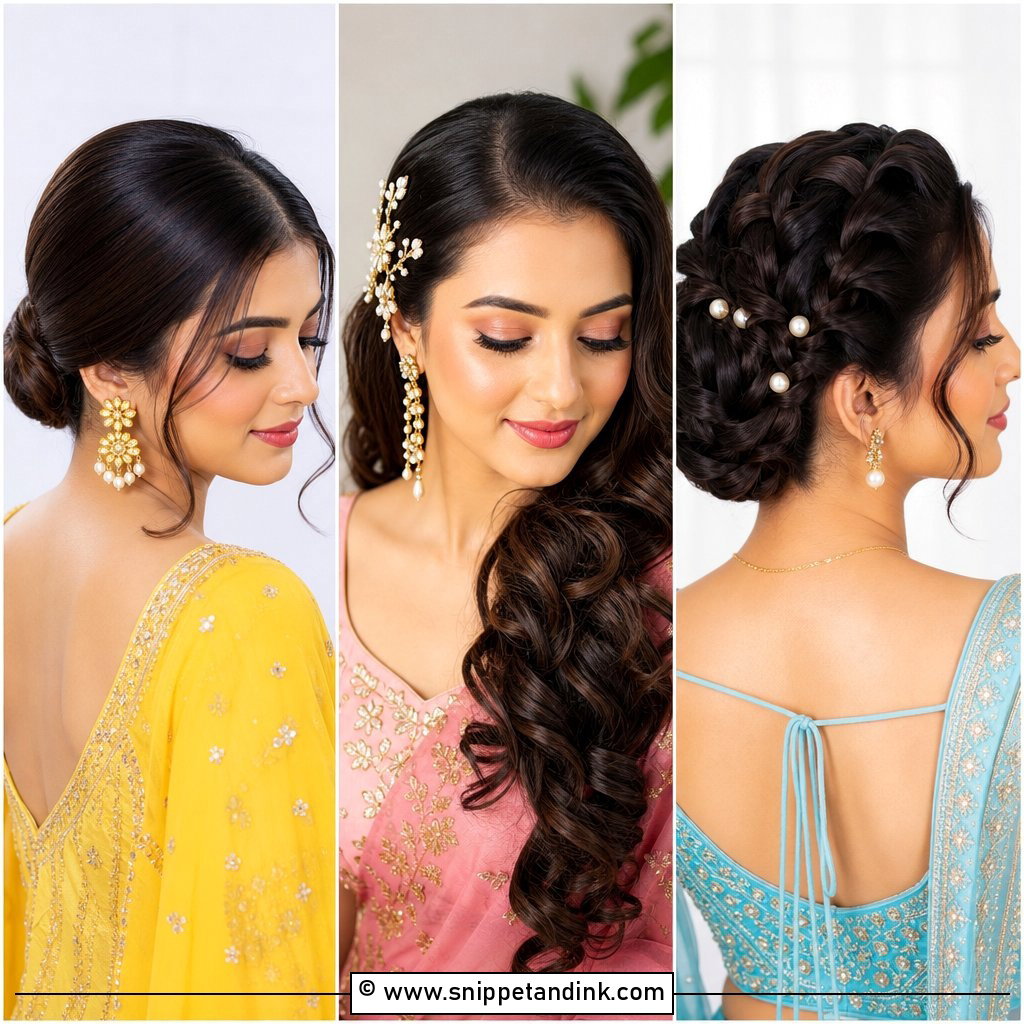
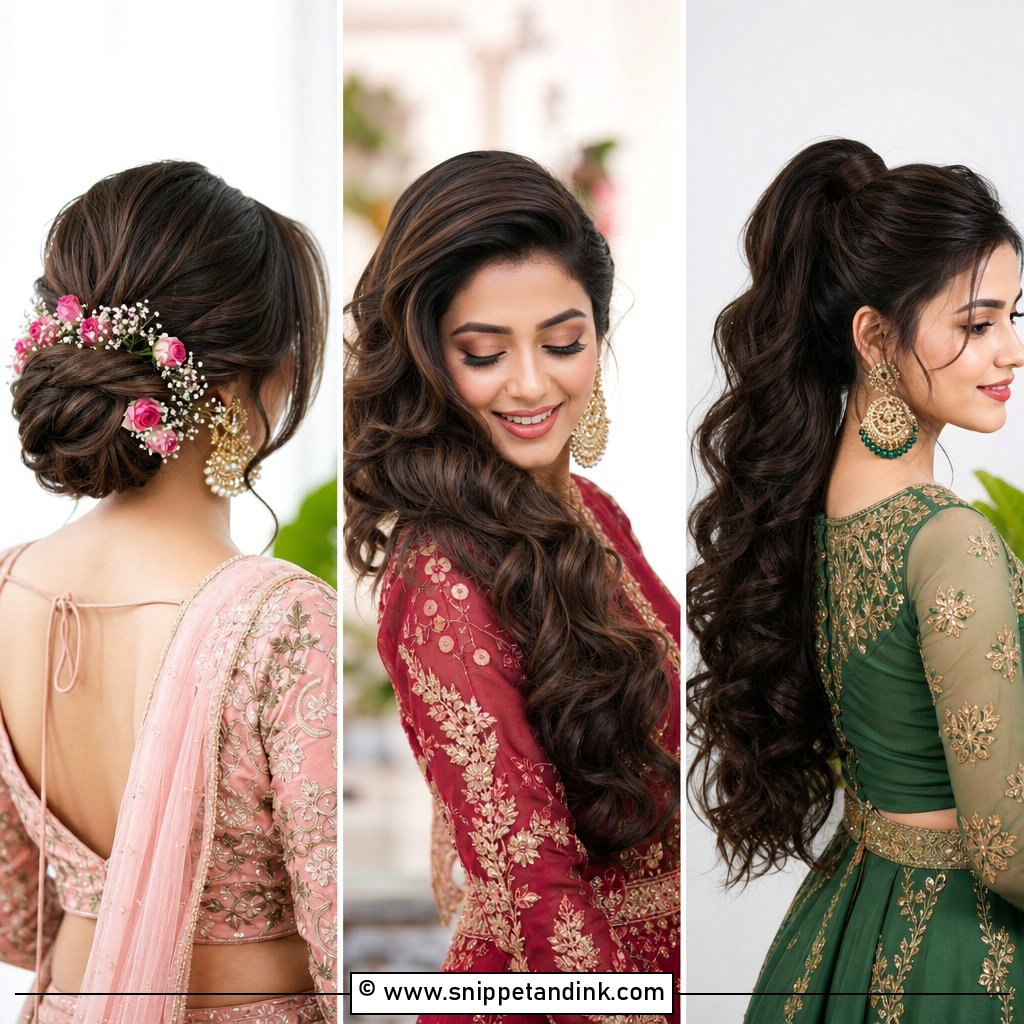
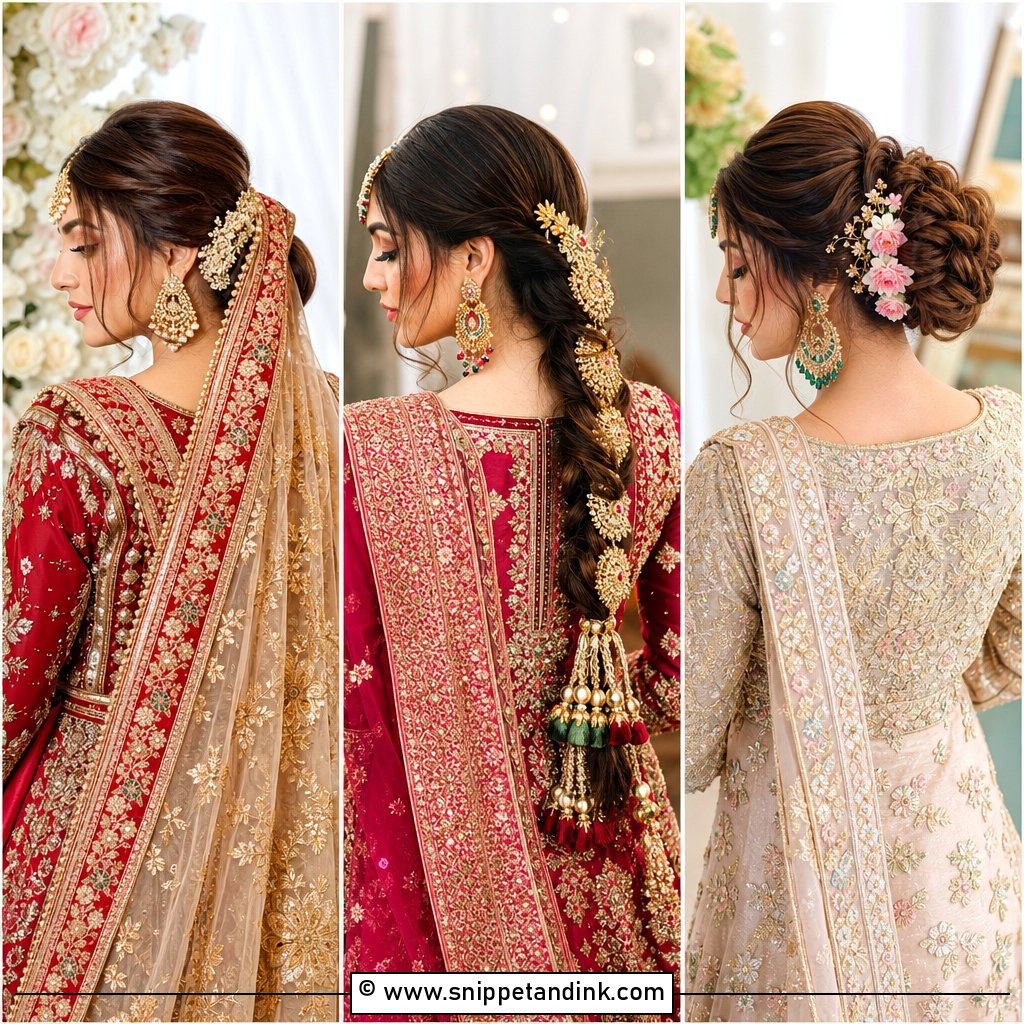
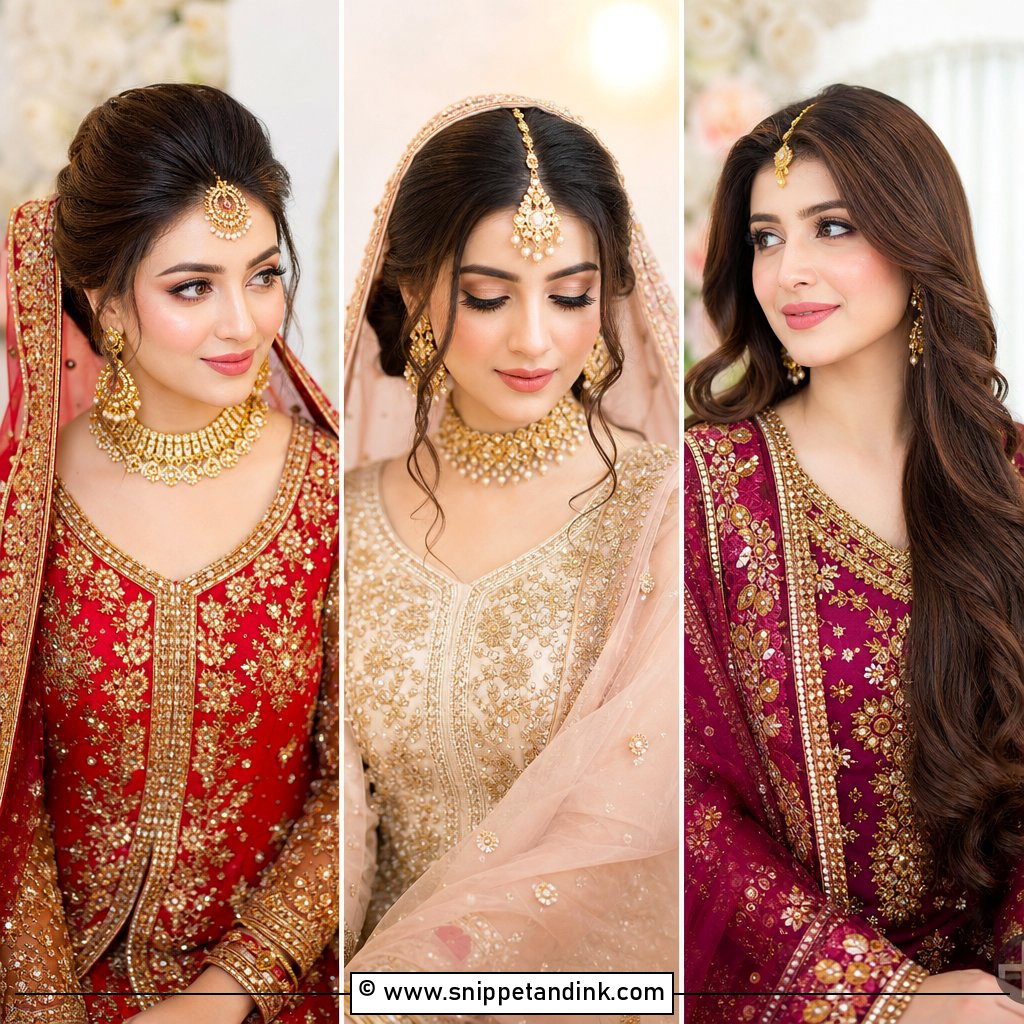
On Barat day your hair sits underneath almost everything else you wear. The lehenga is heavy, the dupatta is pinned straight into the style, and the jewelry hooks into it at three or four points, so a hairstyle that only looks good in a photo will not last the evening. I’ve gathered 20 Pakistani Barat bridal hairstyles here, from sleek buns to open curls, and for each one I’ve added what I’d tell you at the trial: who it suits, how it carries a maang tikka, passa or jhoomar, and where it tends to give way.
Adapting Barat Styles to Fine, Thick or Curly Hair
The photos below mostly show long, thick, straight hair. Most brides I style don’t have exactly that, and almost every look here can be adapted if your stylist knows what she is working with.
Fine or thinning hair
Fine hair struggles to hold pins and looks small under a heavy dupatta. Ask for a bun filler or a few clip-in wefts, and a texture spray at the roots before styling. Buns and braided buns are kinder to fine hair than open curls, which go flat faster.
Very thick or long hair
Thick hair holds curls and braids well but gets heavy. A full low bun can start to drag at the nape after a few hours, so I split the hair and build the bun from two anchored sections instead of one. Expect styling to take longer, too.
Naturally curly or wavy hair
You don’t have to straighten it. Curly hair makes some of the most secure buns, because the texture grips pins on its own. If you want a sleek finish, have it blow-dried smooth the day before rather than on the morning, and tell your stylist your hair reverts in humidity so she can seal the hairline.
1. Low Bun With Maang Tikka
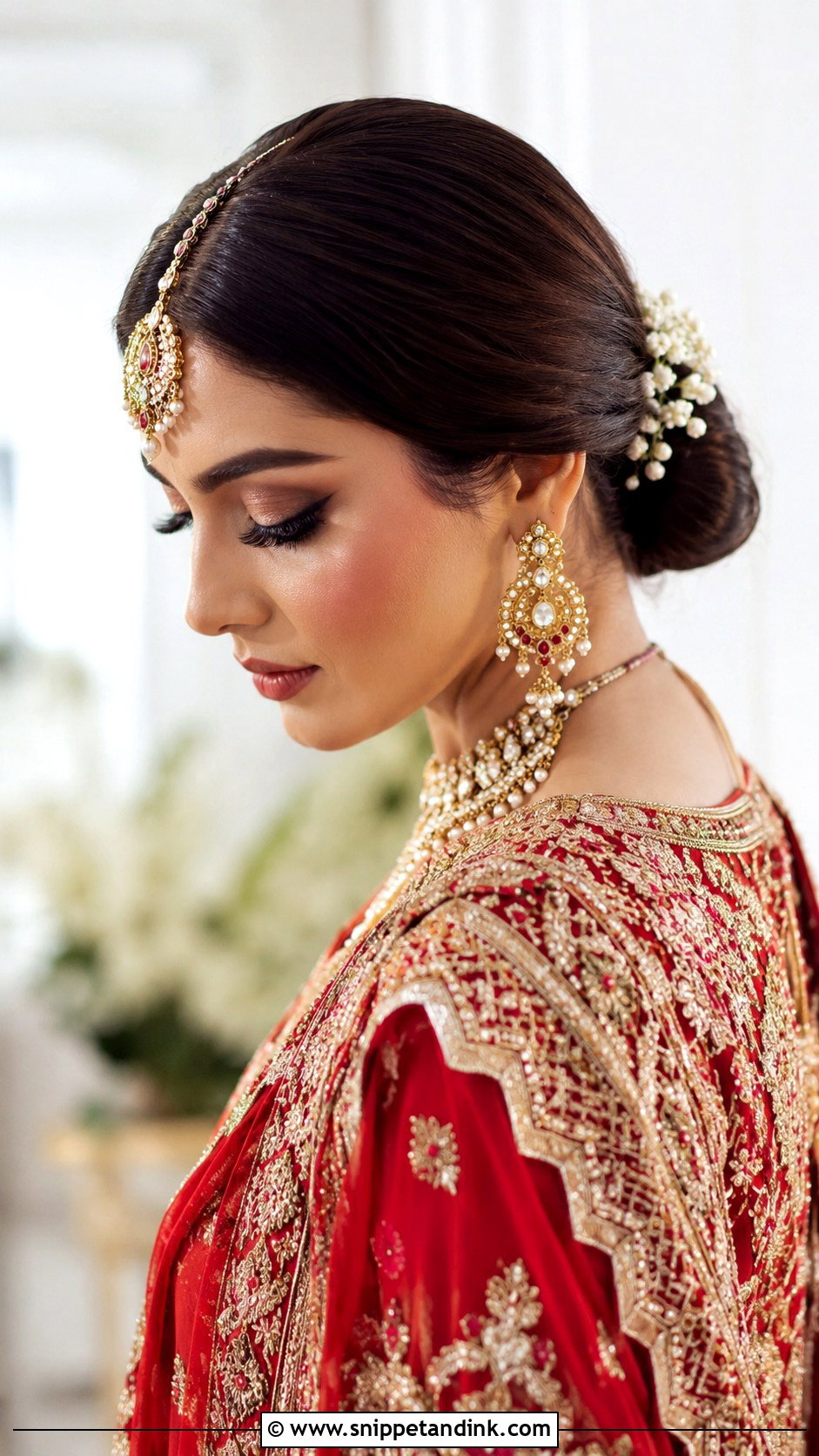
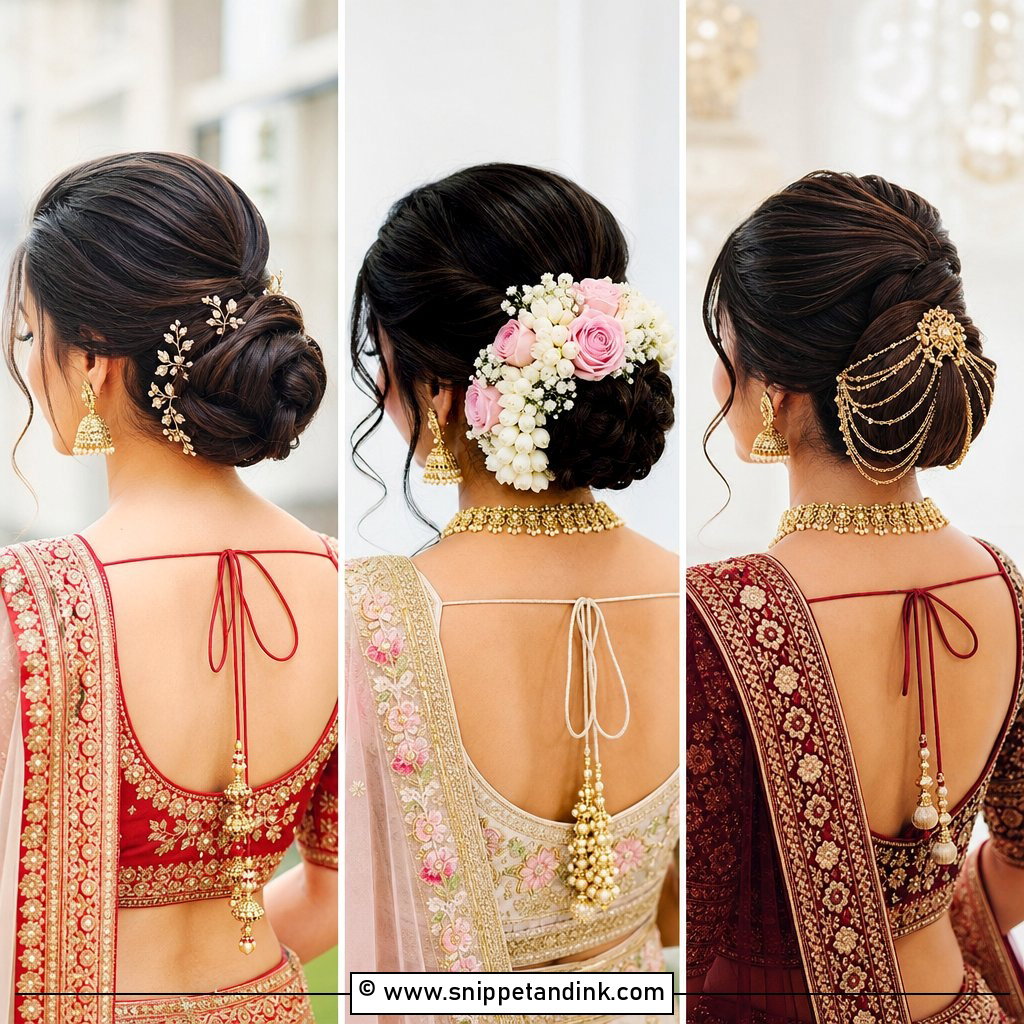
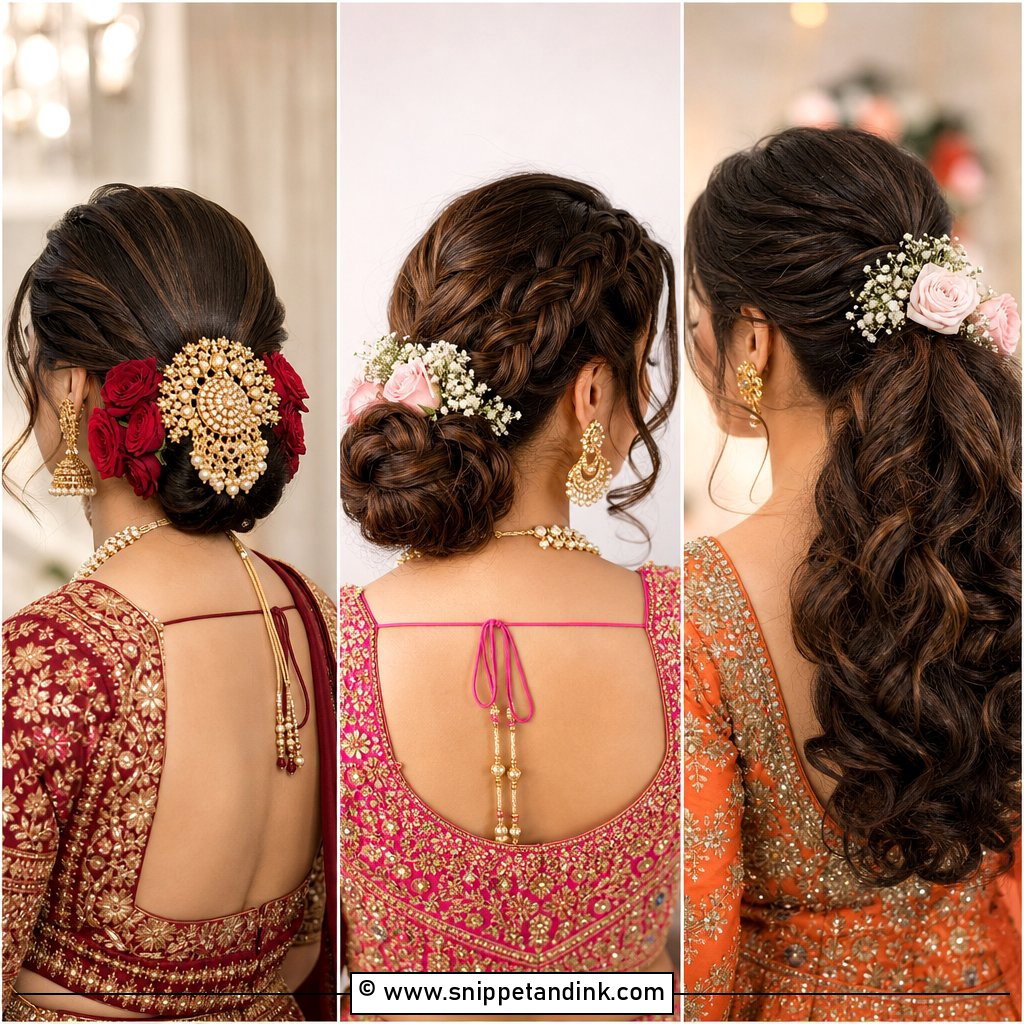
A low bun is the safest Barat choice I know. Sitting at the nape, it leaves the crown free for the dupatta pins and gives the tikka chain a firm point to hook into just above it. Round, oval and square faces all suit it. You can keep it sleek or pull out a few face-framing pieces, though on humid days I’d keep those strands minimal because they frizz first. Fresh roses or pearl pins around the base finish it, and a gold-kundan tikka on the forehead draws the eye up to your makeup.
2. Side Swept Curls With Passa
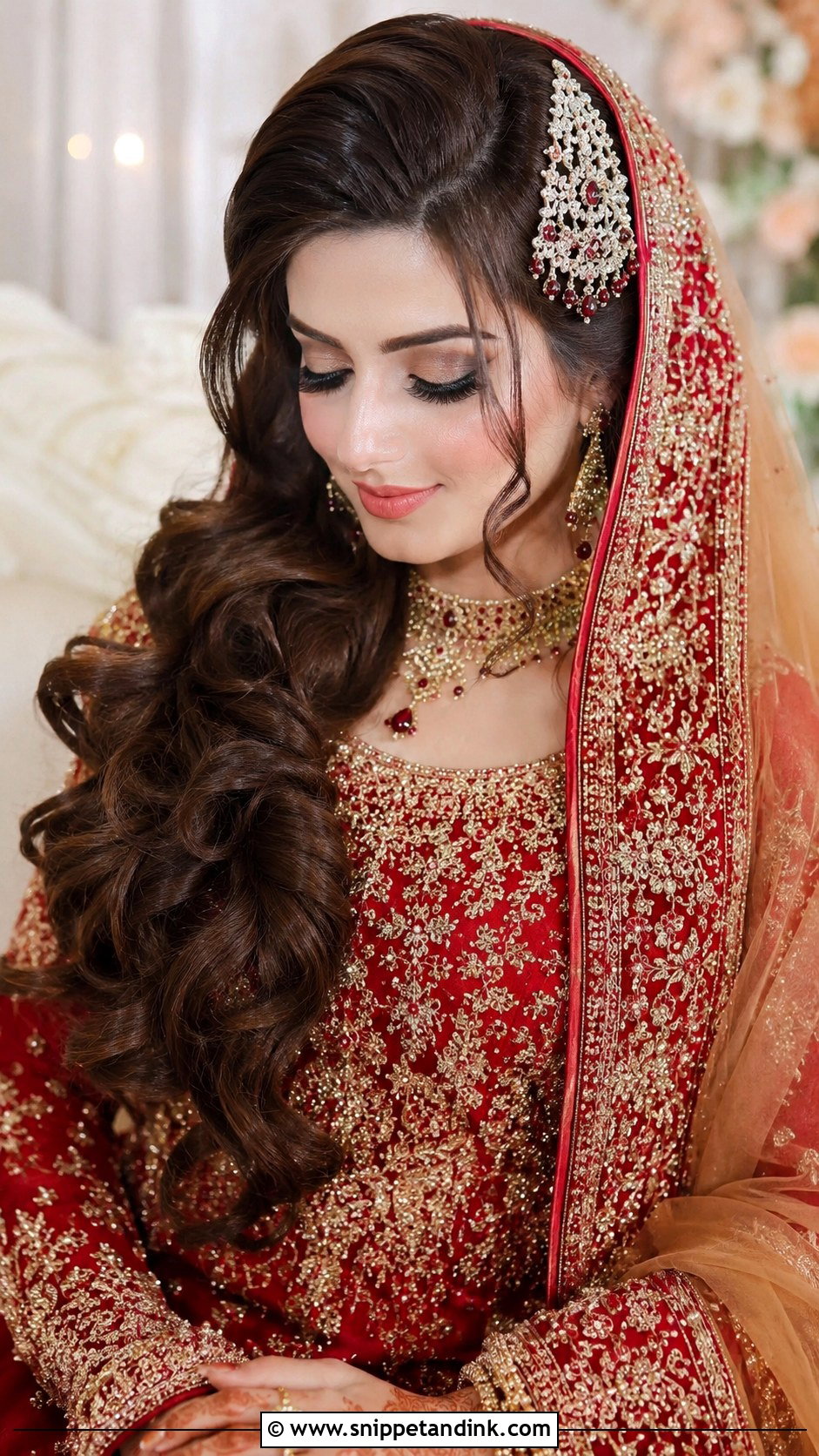
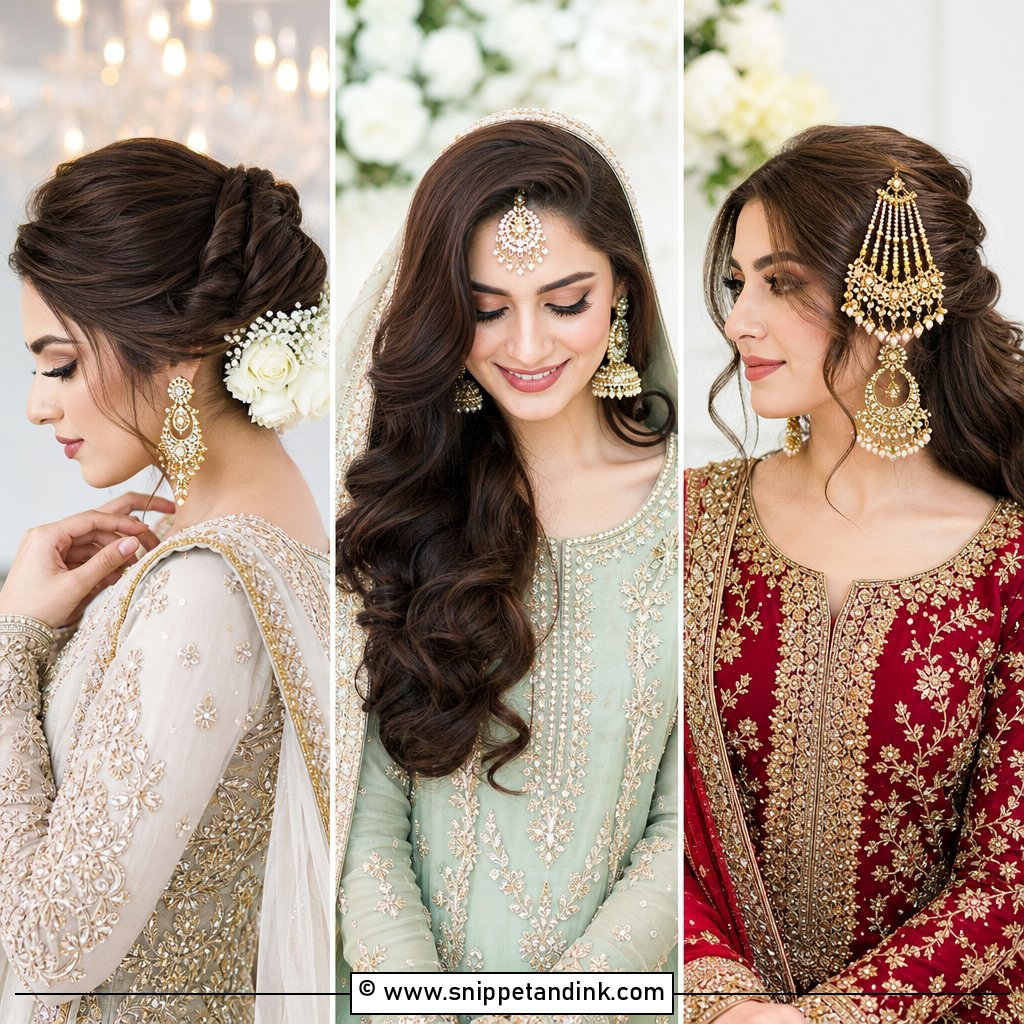
Curls over one shoulder with the other side pinned under a sparkling passa give you movement without the risk of fully open hair. The pinned side is the anchor. I set it with crossed bobby pins behind the ear before the passa goes on, so the passa sits on structure rather than loose hair. Medium to long hair works best. Use a light setting spray at the end, but the real reason curls last is setting them with enough heat and letting them cool in pin curls before brushing.
3. Braided Crown Bun
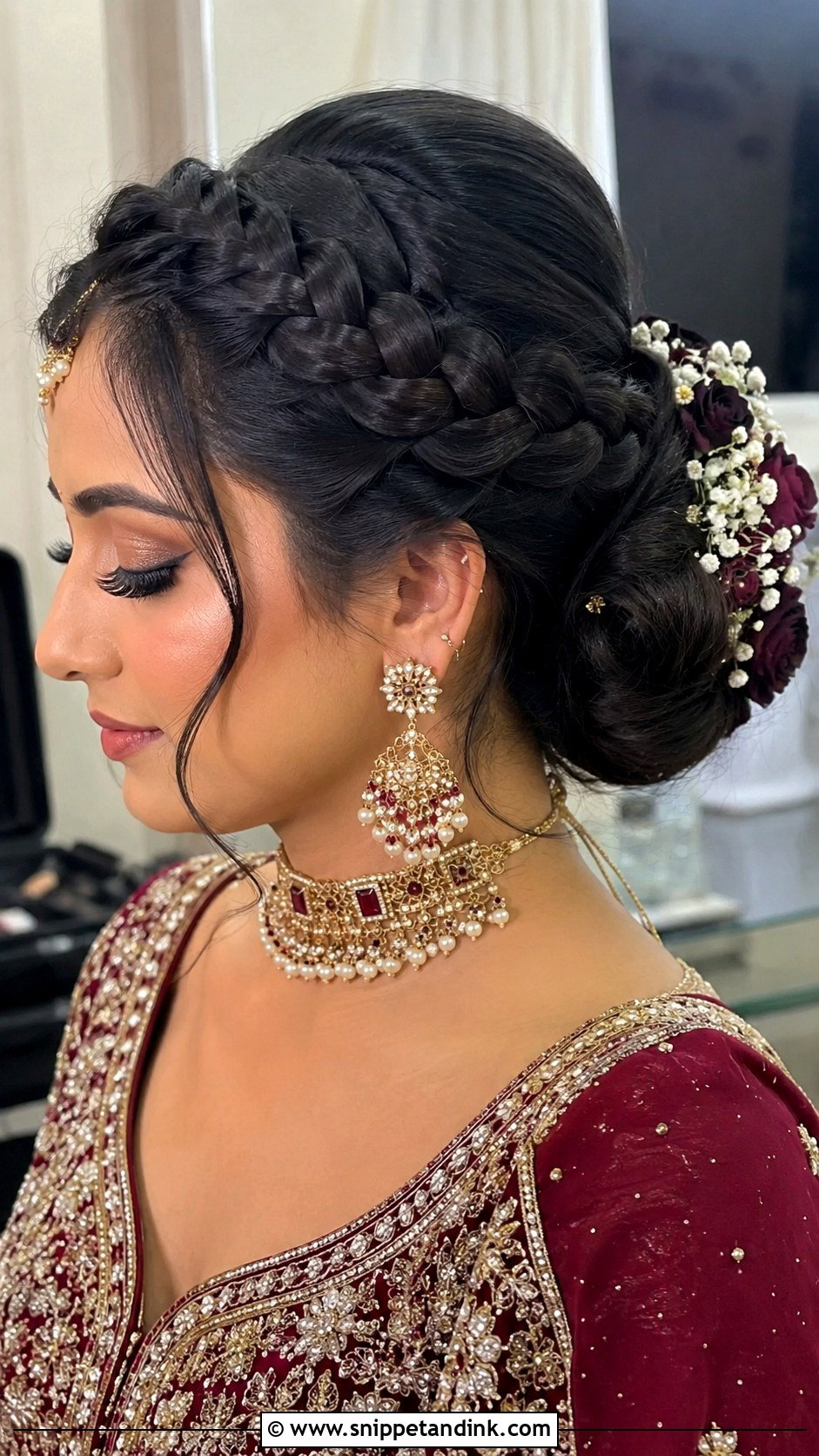
Here a braid wraps around the head like a halo and a neat bun sits at the back, and the combination is one of the most practical under a heavy dupatta. The braid catches flyaways and gives the dupatta pins something solid to bite into. Small flowers or gold pins tucked along it add shine. Most face shapes carry it. One thing to know: a crown braid needs length to wrap all the way around, so on shoulder-length hair I’ll build it from two shorter braids joined at the back instead.
4. Messy Bun With Loose Strands
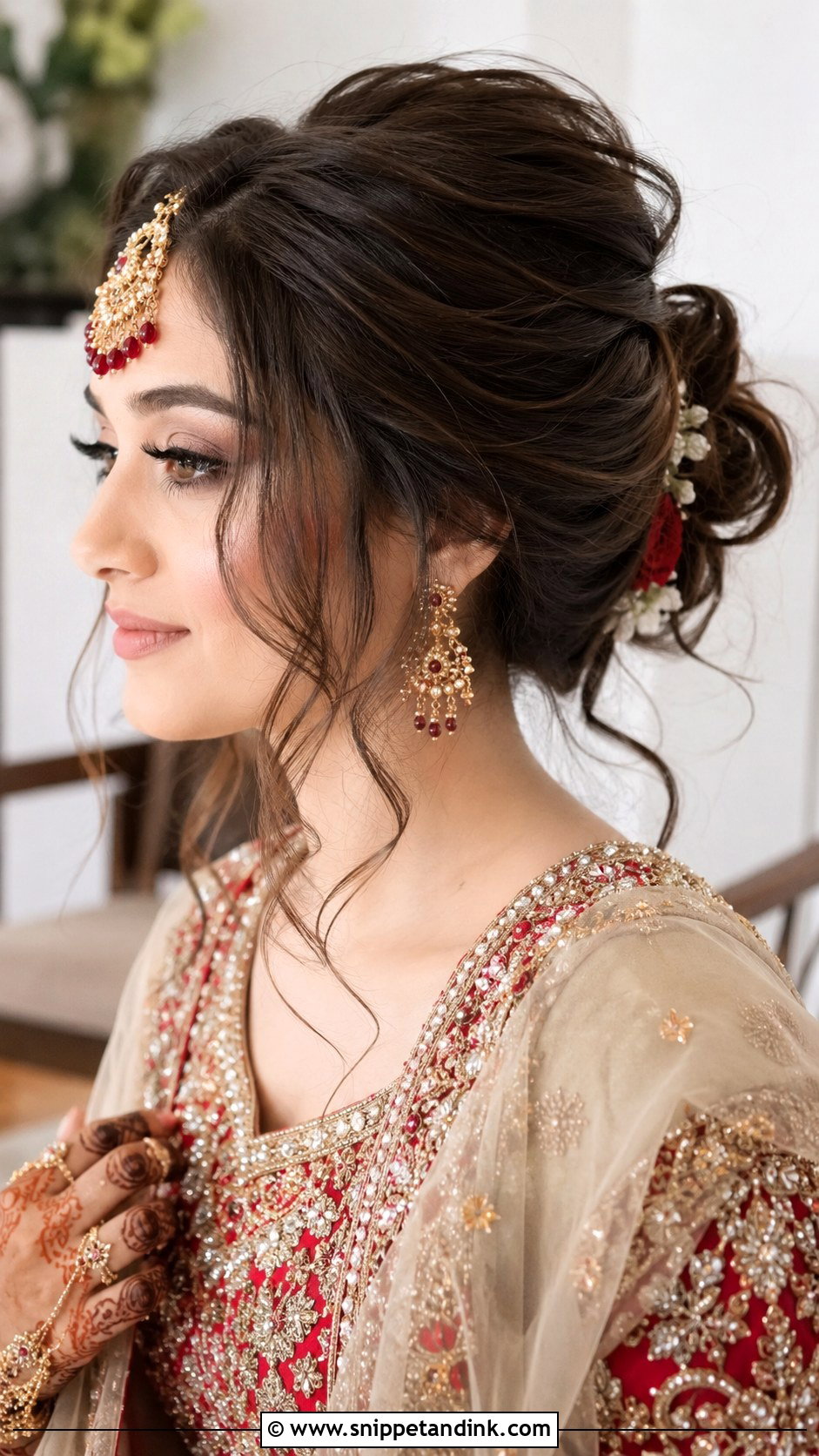
Not every bride wants sleek, and a messy bun is the answer for the ones who don’t. The pulled-out strands frame the face and suit soft glam makeup and a lighter dupatta drape. A delicate jhoomar or a few scattered flowers keep it bridal. Here’s the catch: a messy bun is only messy on the surface. Underneath it needs the same firm base and pins as a sleek one, or a heavy dupatta will flatten the texture within the first hour. It keeps hair off your neck, which helps on a warm night.
5. Fishtail Braid With Flowers
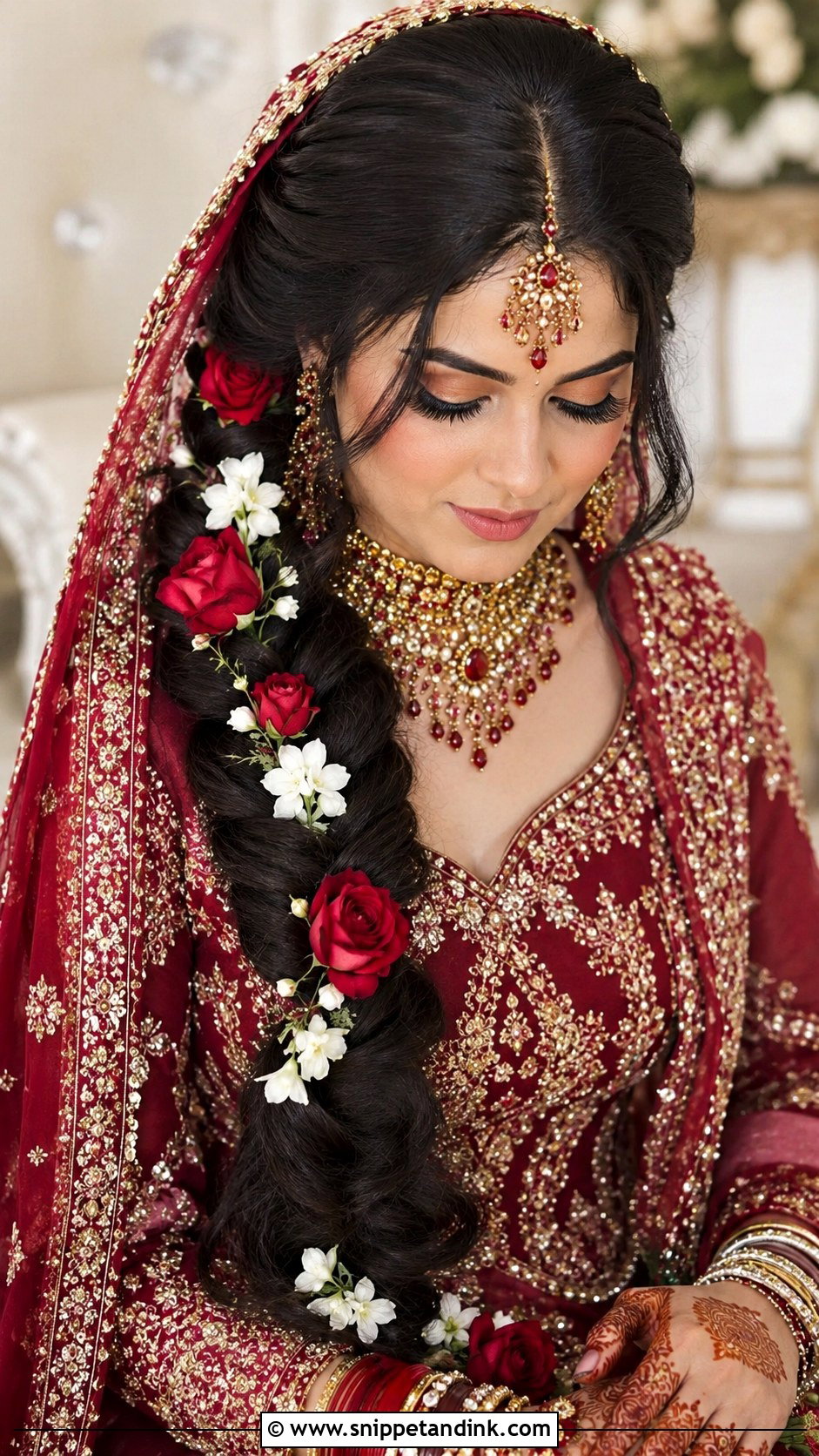
Fishtail plaits look intricate because they are made of many tiny crossings, and that is also why they hold so well. Long, thick hair gives the fullest result; on finer hair I braid it a little loose and gently widen each section afterward so it reads from a distance. Worn over one shoulder, it pairs with a dupatta pinned to the opposite side. Fresh roses, jasmine or small gold flowers can be tucked into the crossings. Oval and heart-shaped faces suit the long line it creates.
6. High Bun With Jhoomar
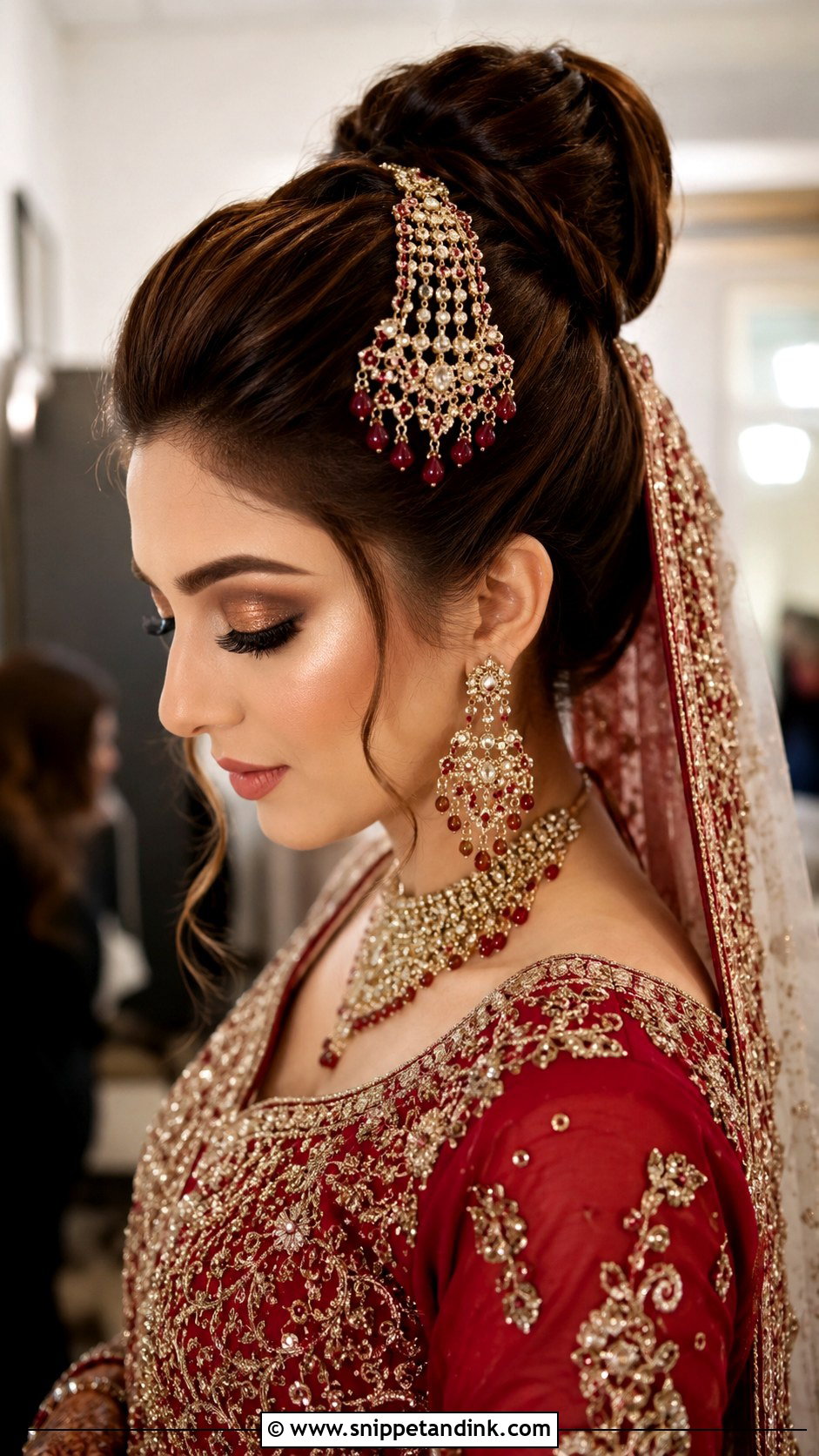
Height is what a high bun gives you, and it lengthens the neck nicely above a heavy necklace. The jhoomar is pinned to one side near the hairline, where it can hook into the base of the bun. Because the neck stays open, chandelier earrings have room. I usually smooth the front sleek for this one; soft waves at the front can work, but they compete with the jhoomar. Do check your dupatta plan before choosing it, since a very high bun changes how the fabric falls at the back.
7. Half Up Half Down With Curls
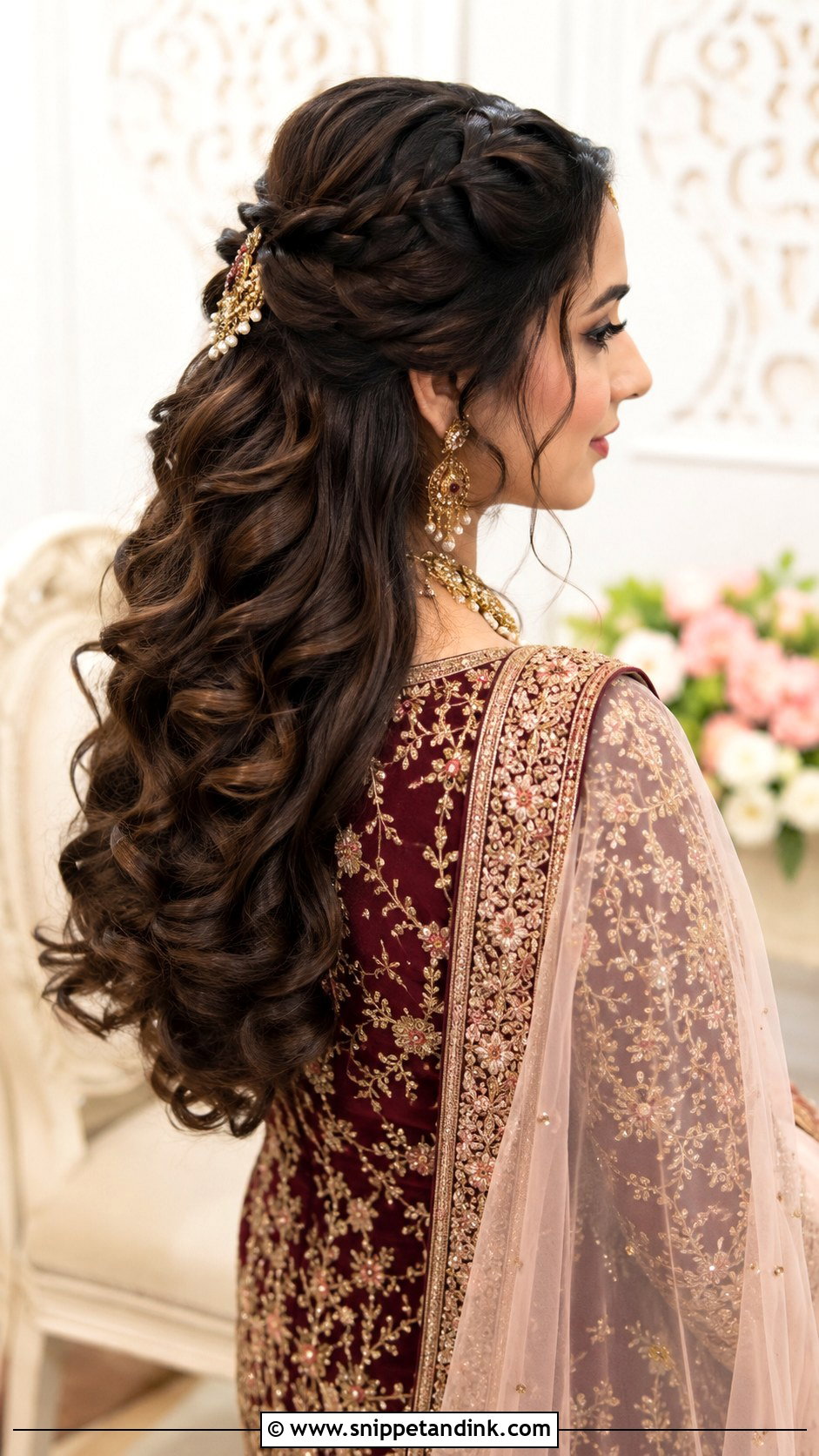
The half up, half down style keeps your face clear while still showing your length. I secure the top section with a small elastic before any pins go in, then add a braided crown or a decorative clip at the back. The curls below give volume and movement in photos. It works with a lightly draped dupatta; a heavy one tends to squash the half-up section, so it’s worth testing at your trial. Most face shapes suit it.
8. Sleek Bun With Center Part
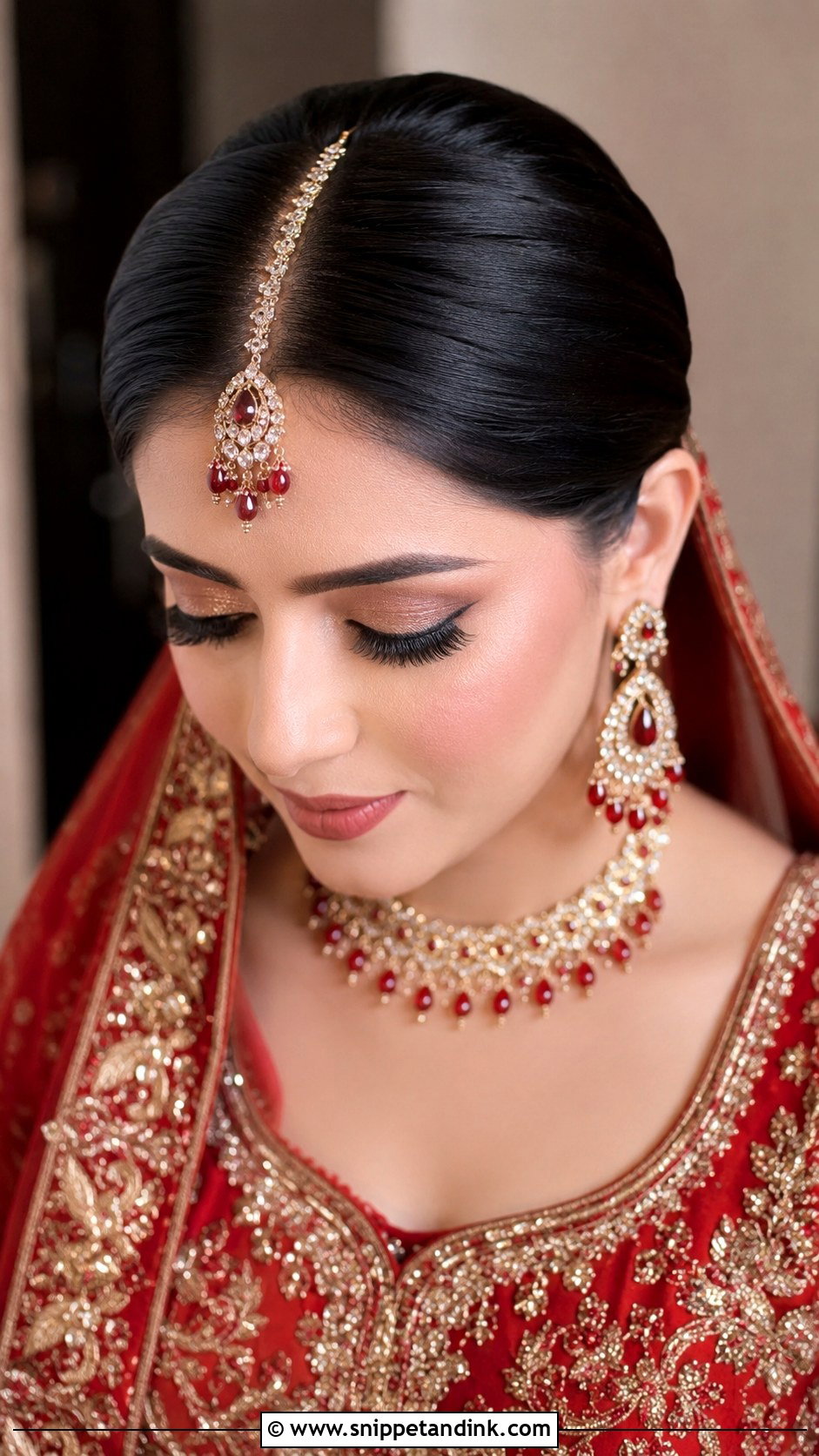
Minimal can be the most striking look in the room. A sharp center part and smooth, pulled-back hair let your jewelry and makeup do the talking. The part has to be perfectly straight, so I map it with the tail of a comb from the nose bridge back before anything else. It holds a dupatta firmly and stays neat for hours. A delicate maang tikka along the part is enough. Oval and long faces carry it best; on a round face I’d soften it with a slightly lower bun. Bold earrings complete it.
9. Voluminous Braid With Gota
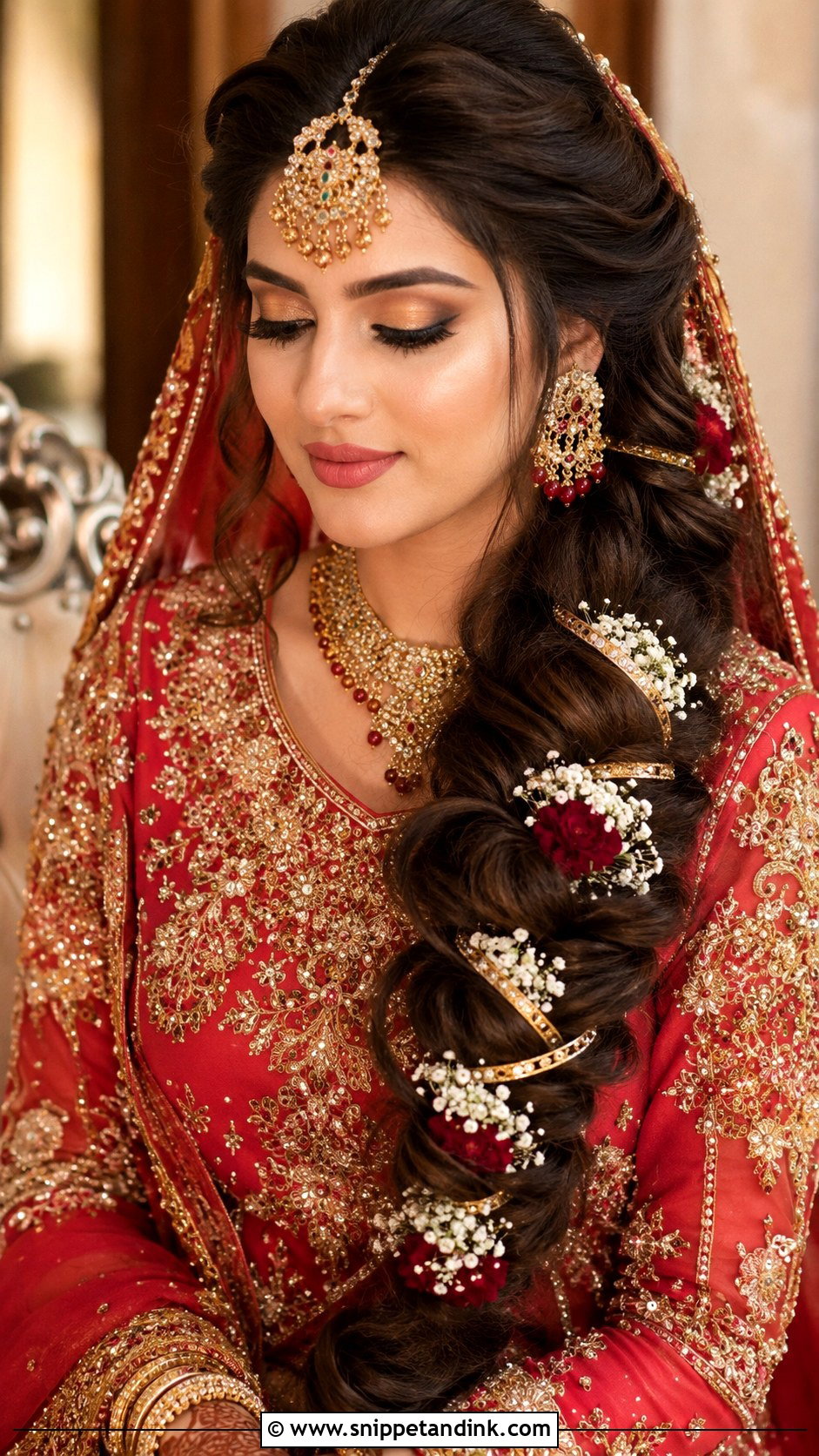
A thick, voluminous braid is the boldest way to wear long hair on Barat day. I tease each section lightly at the root before braiding, then pancake the finished braid so it looks twice as full. Gota ribbon or small flowers woven through the plait give it a festive, traditional finish. It drapes over one shoulder and suits a side-pinned dupatta. If your hair doesn’t reach the middle of your back, a matching braid extension makes a big difference, but get it color-matched in daylight, not under salon lights.
10. Bun With Fresh Roses
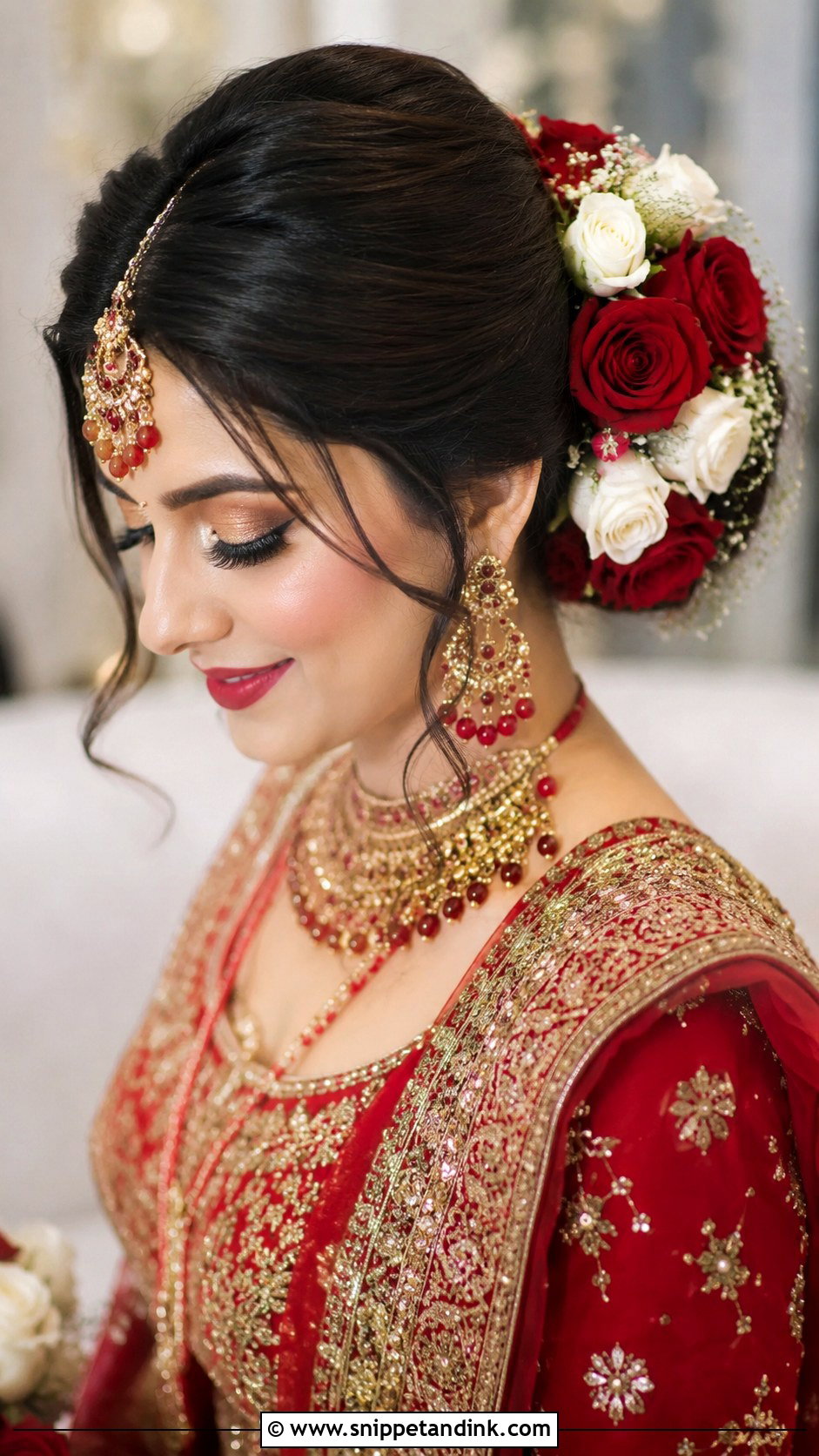
Real flowers carry a scent and softness that no ornament can copy. Red or white roses are the usual Barat choice because they sit well against a red lehenga, and they can be clustered at the base of the bun or scattered across the crown. They pair easily with a maang tikka and passa. Practically, I wire or pin each rose stem into the bun rather than tucking it, because a tucked flower falls out the first time you hug someone. Ask for roses just opening; fully open ones drop petals by dinner.
11. Twisted Updo With Pearls
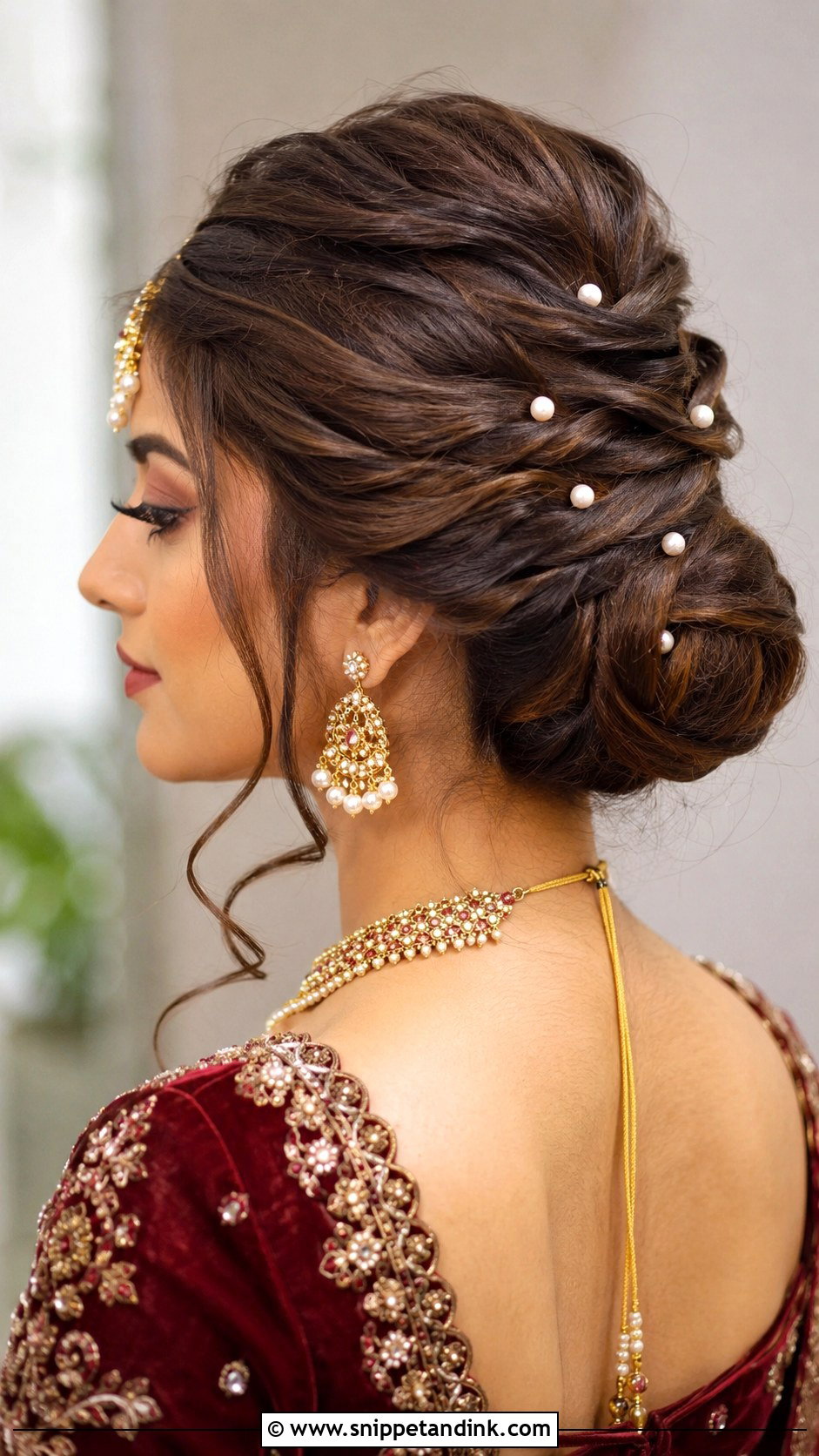
A twisted updo gives texture without the busy look a braid can have. Sections are rope-twisted and pinned into a sculpted shape at the back, and pearl pins tucked between the twists catch the light. It holds a dupatta well and keeps your face open. I find it works with both heavy and delicate jewelry, which makes it a good choice when you haven’t finalized your set. Fine hair needs a little texture spray first, or the twists slip loose.
12. Open Curls With Maang Tikka
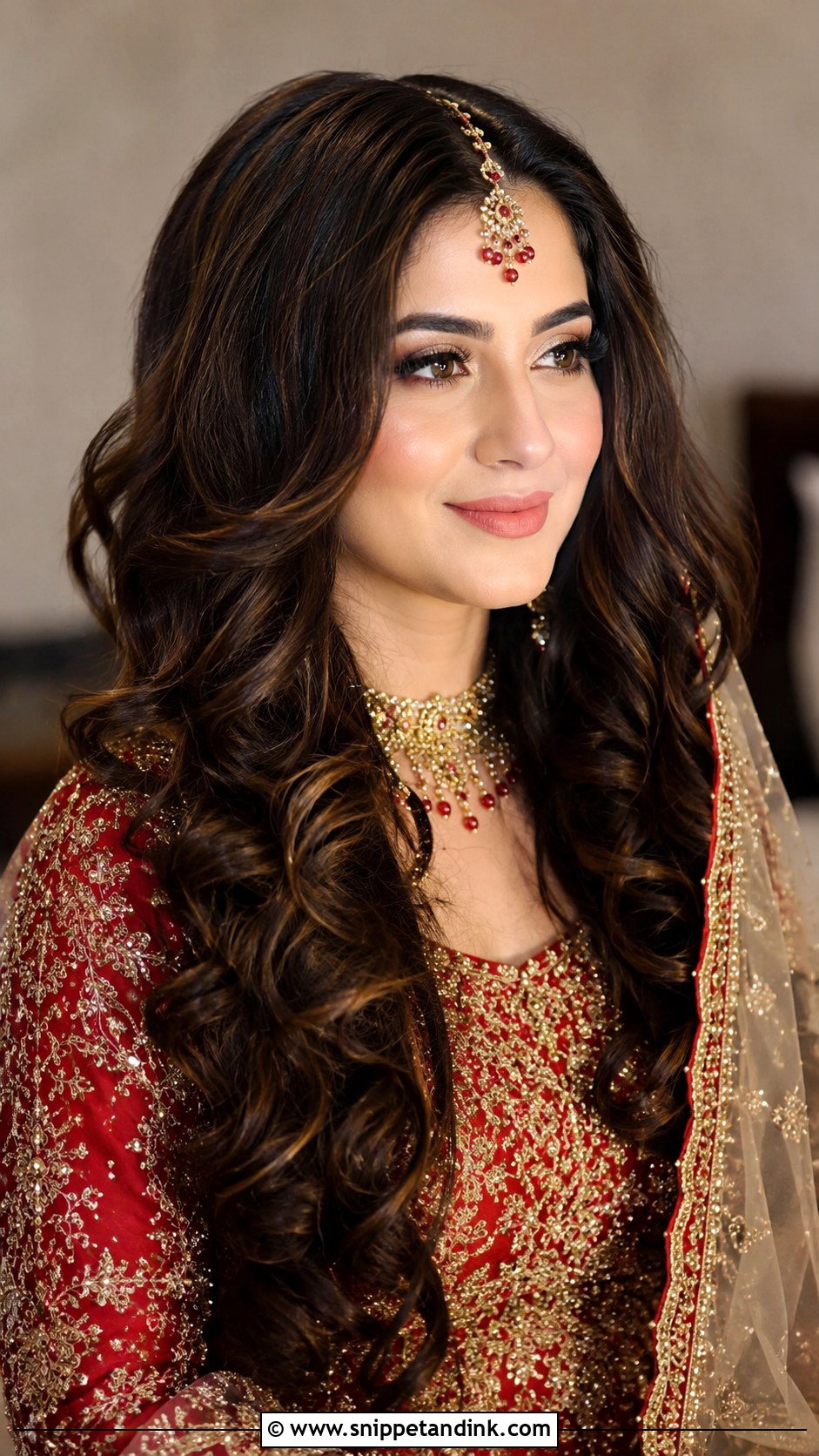
Open curls are the most romantic option, and the one I’m most careful with. Loose hair carries no structure, so the curls have to be set firmly and the dupatta kept light; a heavy embroidered dupatta pressing on open curls will flatten them. Thick, long hair holds them best. A delicate maang tikka at the parting keeps it traditional. If you want a little security, pin one side back for a side-swept shape, which also gives a passa or jhoomar somewhere to sit.
13. Bun With Side Braid
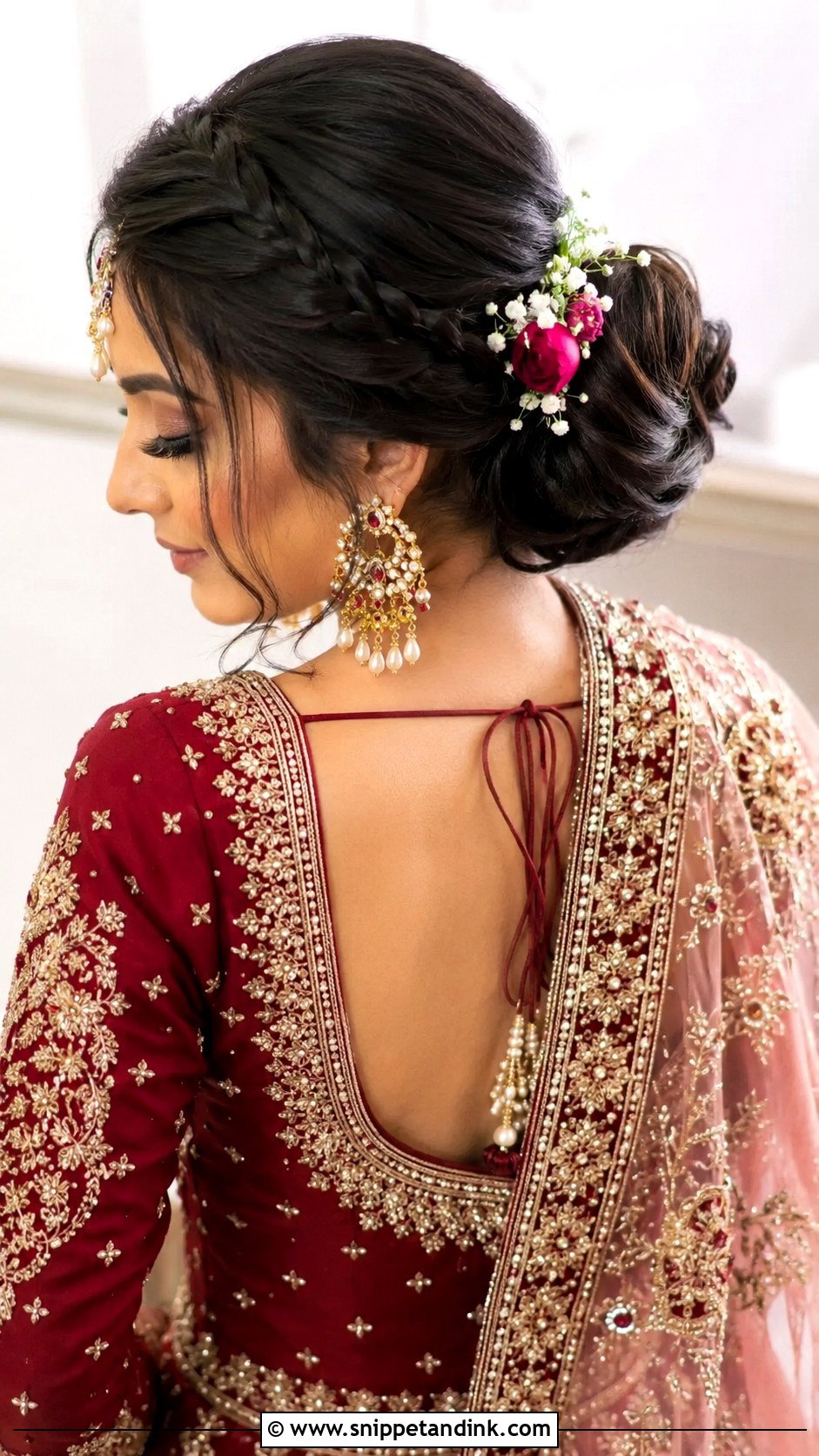
A neat bun with a side braid running into it adds detail without fuss. The braid starts near the temple, travels along one side of the head and joins the bun at the back. It’s useful in a practical way too: it keeps short front pieces locked down, which helps hold the dupatta in place. Small flowers or gold pins can decorate the bun. Round and oval faces suit it. Start the braid on the side you want photographed, since that is the side your stage photos will show most.
14. Soft Waves With Side Dupatta
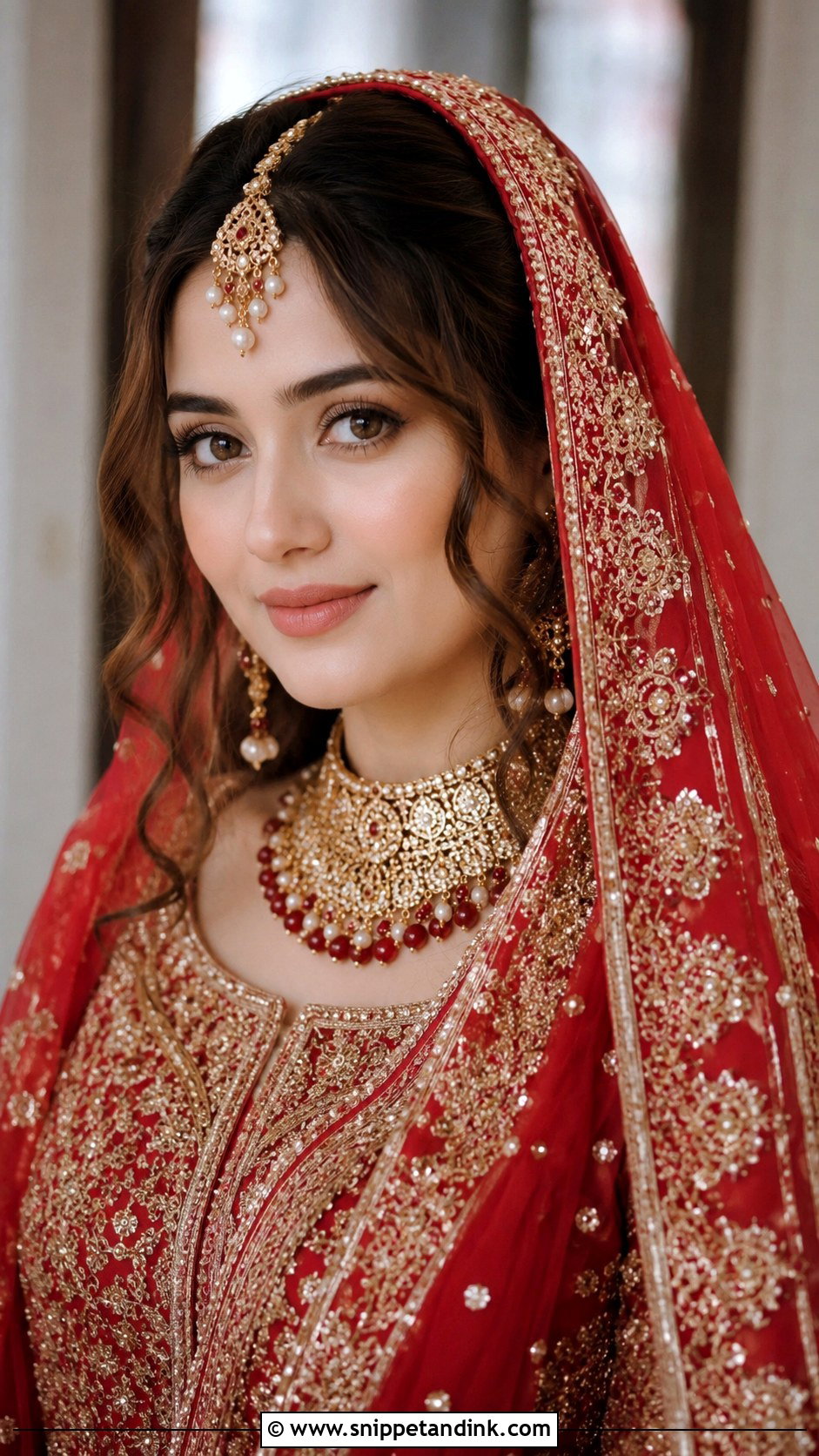
Soft waves rely on the dupatta being draped to one side; pin it over the top of the head and the waves get hidden and squashed. With the side drape, the texture frames your face and stays visible. A small jhoomar or decorative pin near the temple adds the traditional sparkle. Most hair lengths and face shapes can wear it. Waves loosen through the evening, so I set them slightly tighter than the final look you want.
15. Bridal Bun With Gajra
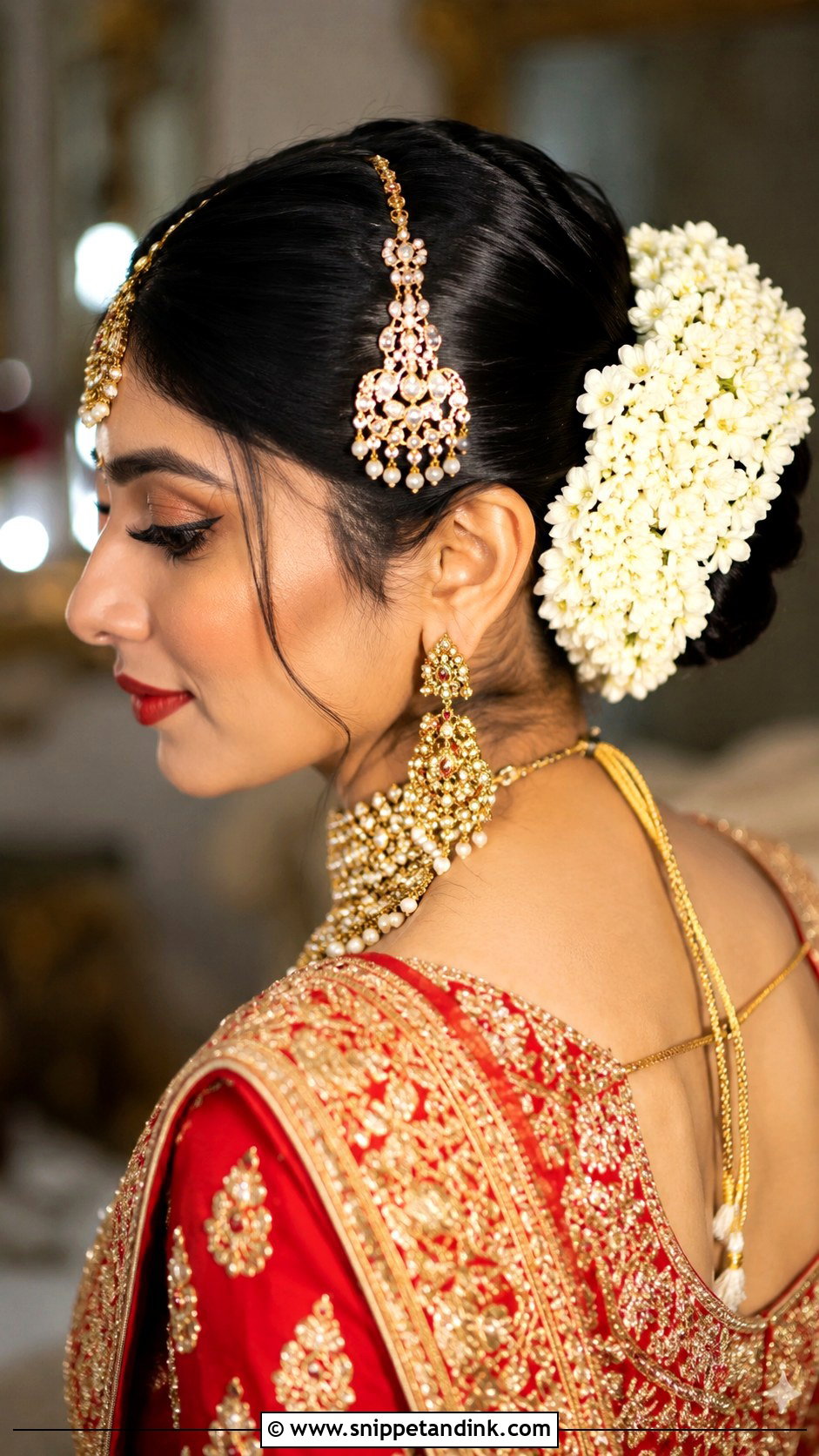
The gajra, a string of fresh jasmine, has been part of South Asian bridal hair for generations, and wrapped around a bun the white flowers stand out against dark hair. It pairs well with a red lehenga and gold jewelry, and with a maang tikka and passa it makes a complete traditional set. I pin through the thread of the gajra, never through the blooms, and keep it chilled in a damp cloth until the bun is finished. The jasmine scent lasts for hours, though the flowers themselves will soften by the end of the night.
16. Curly High Ponytail
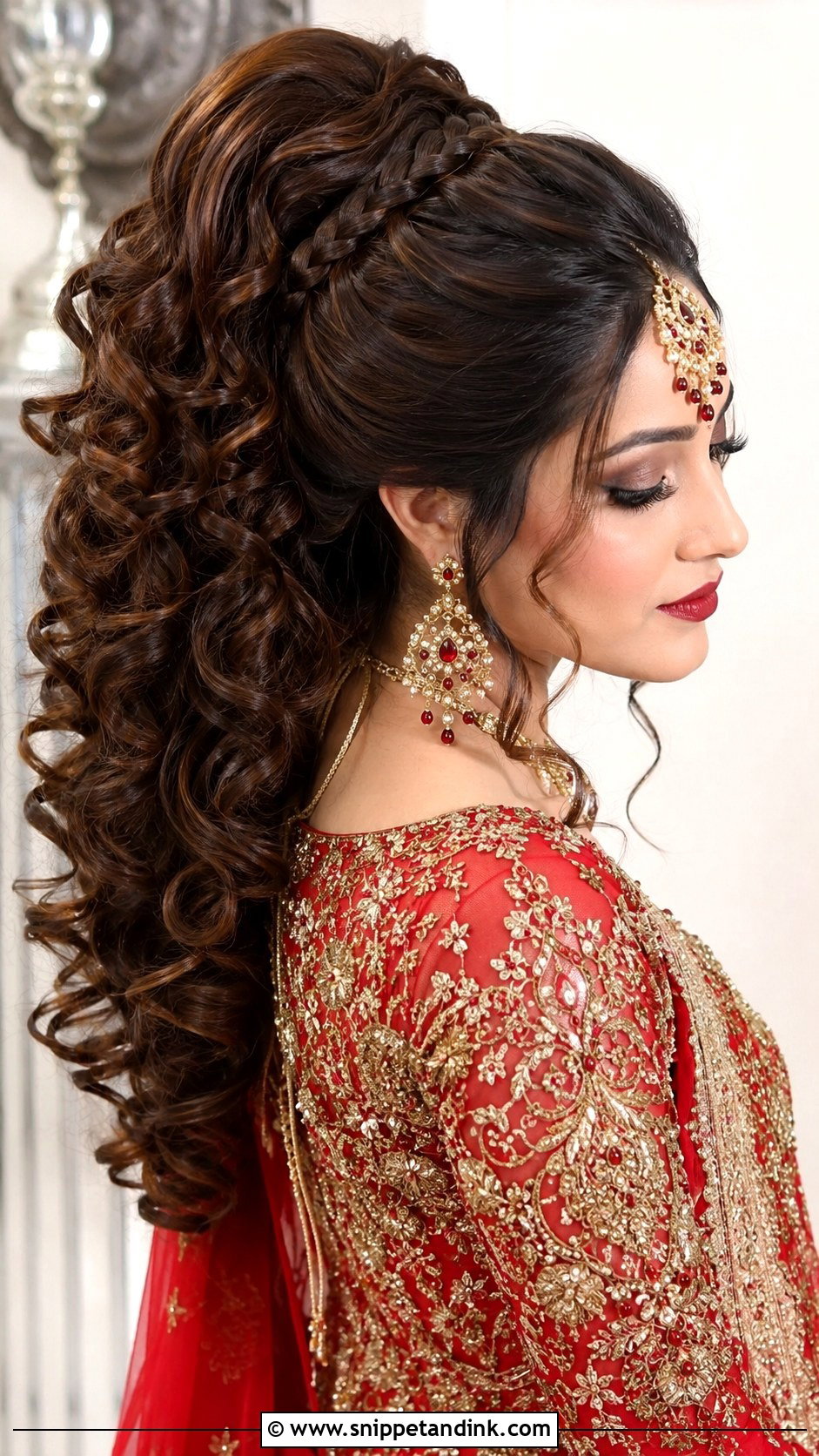
A curly high ponytail is the least conventional look here, and it suits a bride who wants energy for her entrance. Lifted on the crown, the curls move every time you turn. It keeps hair off your neck, which helps in warm weather. I wrap a thin braid or decorative cord around the base, and use two stacked elastics so the pony doesn’t sag under its own weight. A passa or maang tikka keeps the balance traditional. Oval and heart-shaped faces suit it. Plan the dupatta carefully, as it has to sit in front of the pony or be pinned to one side.
17. Layered Updo With Jewels
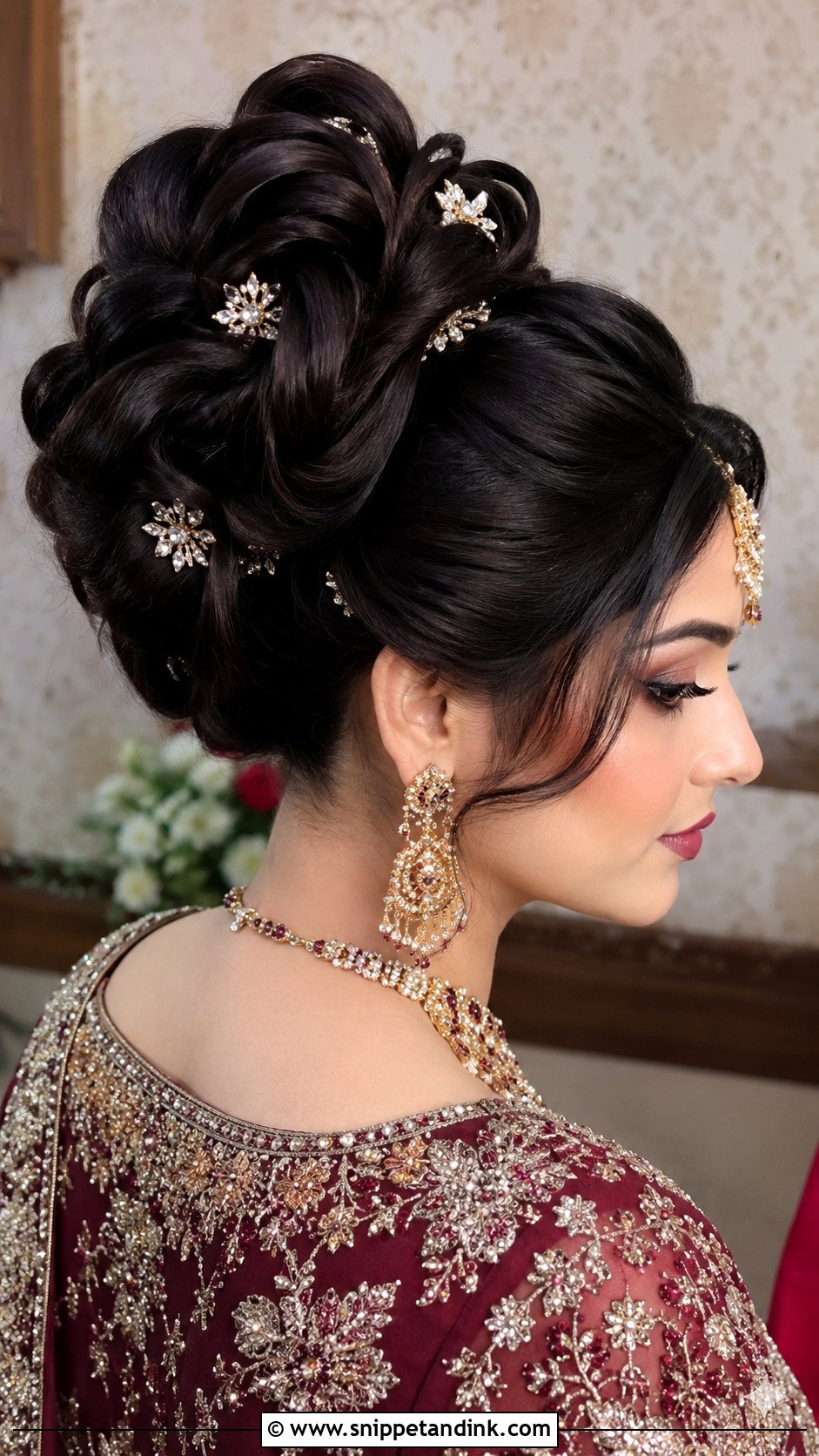
A layered updo is sculpted from several sections pinned at different heights, which gives it depth from every side. It takes longer than most styles on this list, so allow extra time. Small jewels or crystal pins scattered through the layers catch the light. The updo keeps your face open and secures a dupatta well, and it pairs with statement earrings and a maang tikka. Most face shapes suit it. My honest view: it is a showpiece style, and it suits medium to thick hair far better than fine hair, which can look sparse when divided into so many sections.
18. Braided Bun With Maang Tikka
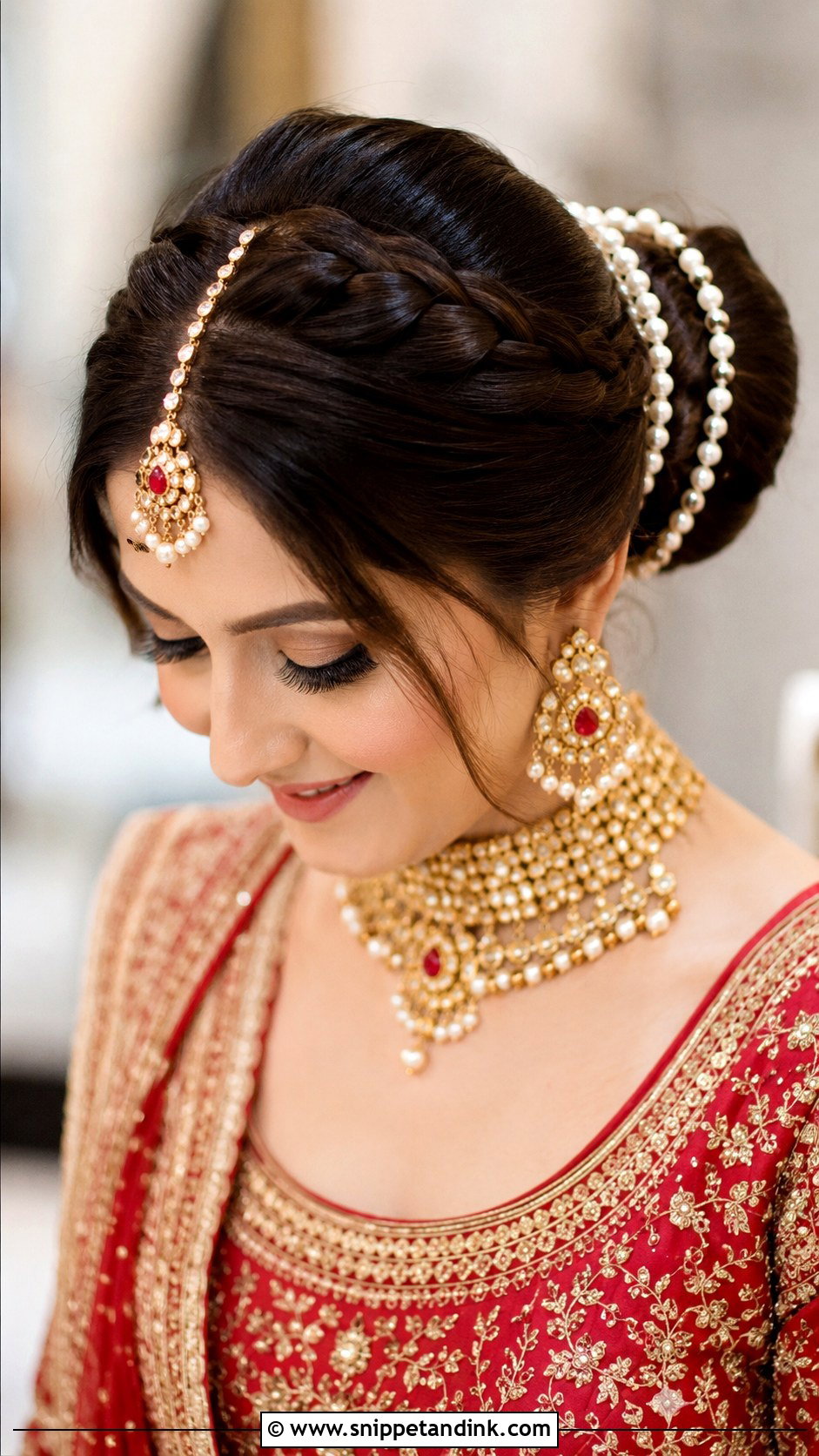
Wrapping a braid around a bun gives you a full, rounded shape with no loose strands. Under a dupatta the braided texture grips pins well, so everything stays put. A maang tikka along the part completes the traditional look, and small flowers or pearls along the braid add detail. Round and oval faces suit it. If you want polished and secure over soft and loose, this is the style made for a classic Pakistani Barat bride.
19. Loose Bun With Front Curls
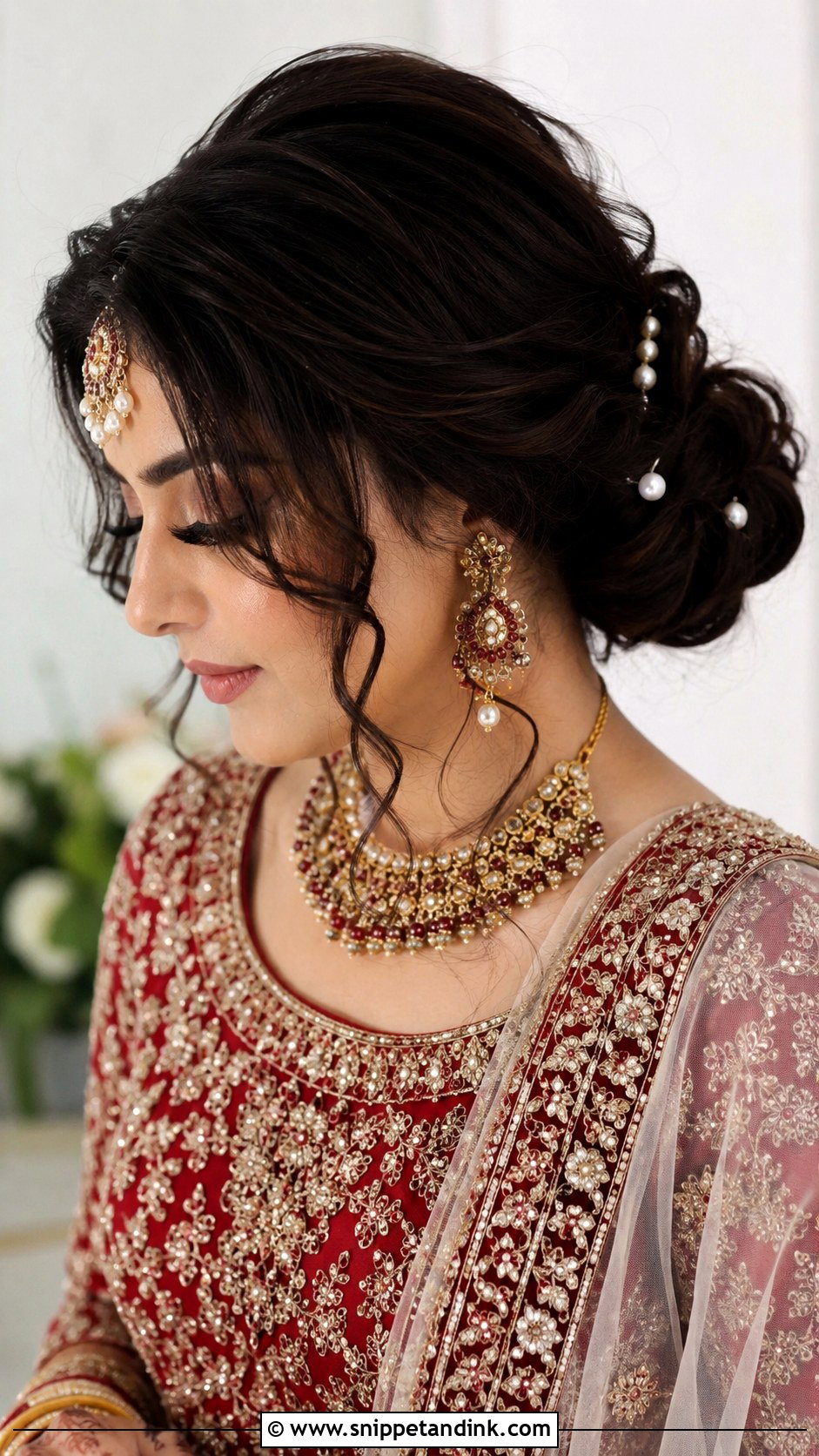
A loose bun sits low at the back while curled front strands frame the face. The trick is to make the bun look relaxed while it is actually pinned firmly; I build a tight base first, then loosen the outer layer with my fingers. It pairs with a lightly draped dupatta and delicate jewelry. Small flowers or pearl pins can decorate the bun. Most face shapes suit it. Keep the front curls out of your lashes, since they catch on false lashes and get pushed back all night.
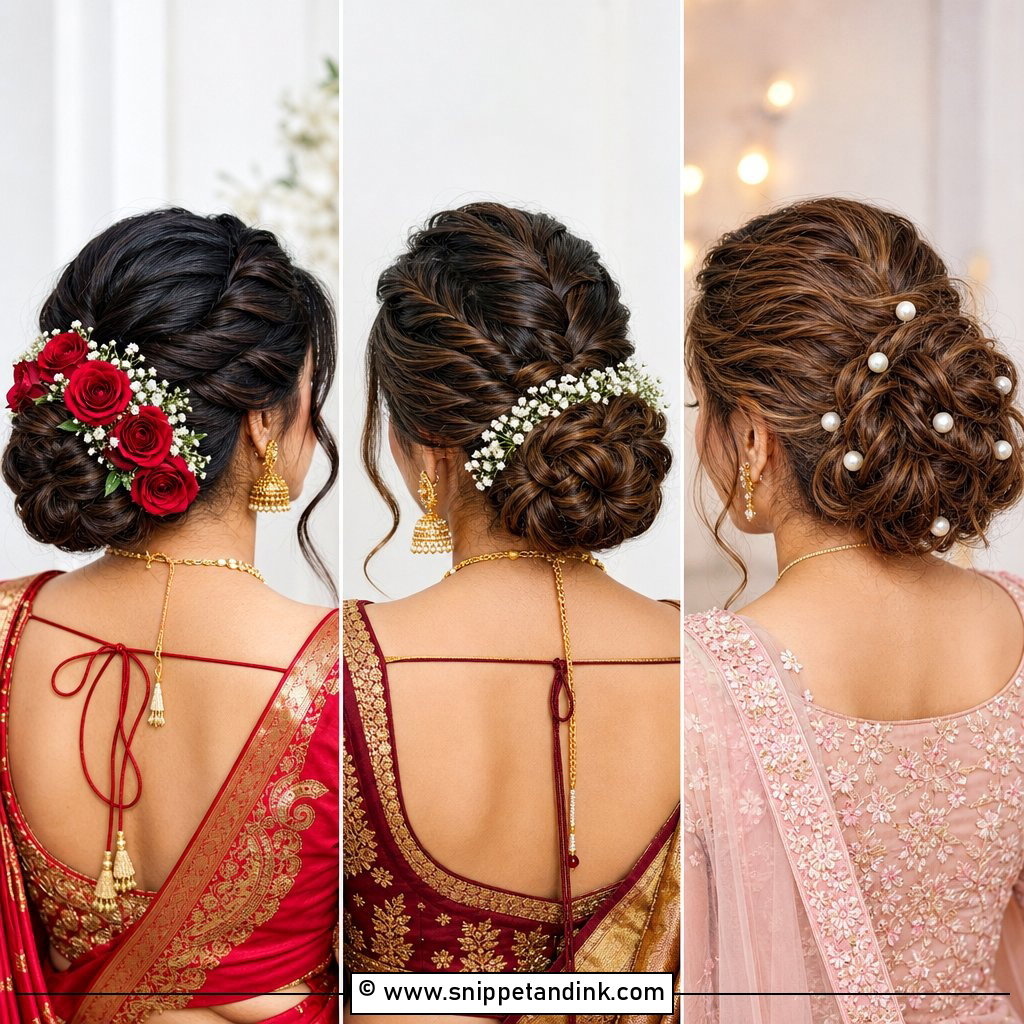
20. Crown Braid With Open Hair
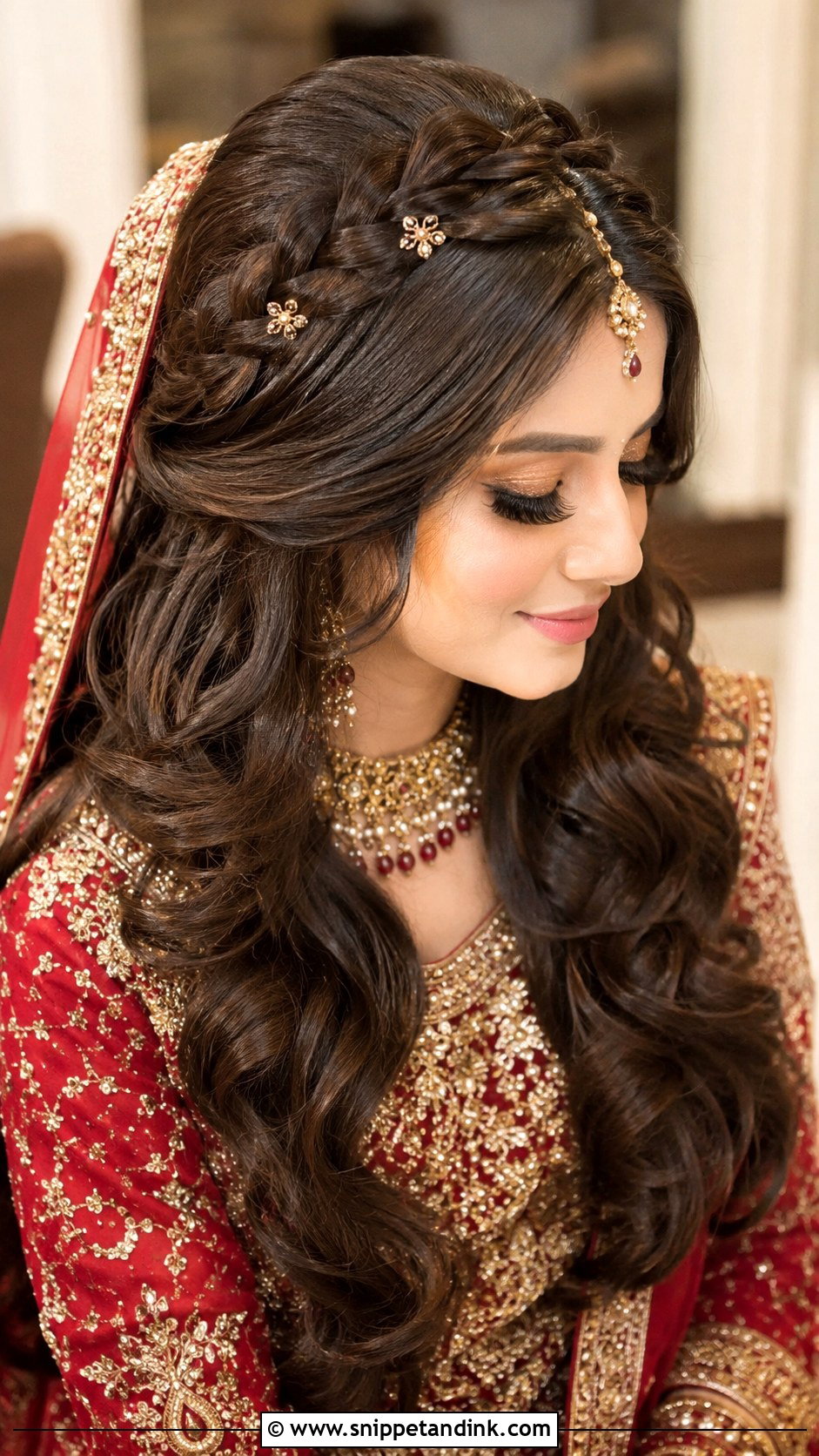
A crown braid with open hair below gives you structure at the top and flow underneath. The braid crosses the crown like a tiara, keeps the front strands neat and gives a dupatta something to hold. Small flowers or gold pins along the braid make it festive. Most face shapes suit it. It is a softer, more bohemian Barat look, so I’d pair it with a lighter dupatta; a heavily embellished one will sit right on the braid and hide it.
How Long Barat Hair Takes, and Where It Fits in the Day
Brides tend to underestimate this. A detailed Barat style with jewelry and dupatta setting can easily take one and a half to two hours, and layered updos or extensions take longer. Timings vary by salon, so ask yours directly when you book.
- Wash your hair the day before, not on the morning. Freshly washed hair is slippery and doesn’t hold pins as well.
- Skip conditioner on the roots that wash, and arrive with hair fully dry and brushed.
- Wear a button-front shirt so nothing has to come off over your head once the style is done.
- In most bridal salons the makeup goes on first and the hair second, with the dupatta and jewelry set together at the end. Allow time for that last step; it is where rushing shows.
- Leave a cushion before you have to leave. Pins get adjusted, flowers arrive late, and a dupatta sometimes needs resetting.
Once you’re dressed, try sitting, turning your head and lifting your arms before you leave the salon. If anything pulls or slides, it’s far easier to fix there than on the stage.
What I’d Ask You at a Barat Hair Trial
Before I suggest any style, I ask three things: how heavy is your dupatta, how long is your hair, and which jewelry pieces go in the hair? Those answers narrow the list quickly. Sleek buns and braided styles suit heavy dupattas and long evenings; open curls and loose waves need a lighter drape. From there, flower-adorned styles or plain sleek ones come down to taste. Bring your real tikka, passa or jhoomar to the trial, wear the result for a few hours, and you’ll know whether it is the one.
You'll Like These Ideas:




Leave a Reply