
In my chair, an Indian bridal hairstyle is doing a job before it is decoration. It frames the face, holds the dupatta, carries jewelry that can weigh more than you expect, and has to look the same in the last photo as in the first. Long rituals, warm venues and outfit changes all test it. Some brides arrive certain they want a classic bun with fresh jasmine. Others want soft waves, a dramatic braid or a ponytail with a traditional finish. Below are fifteen I build for lehengas, sarees, shararas and reception gowns, with notes on what each one asks of your hair.
Heirloom Jada, Kundan Pins and Borrowed Family Pieces
Many brides wear hair jewelry that belonged to a mother or grandmother, and those pieces deserve planning. Older ornaments are often heavier than modern ones, the hooks may be worn, and some were made to be sewn into hair rather than pinned.
Here is what I ask brides to do with family pieces:
- Bring them to the trial, not the wedding morning. I need to see the fastenings and feel the weight.
- Have a jeweler check clasps and hooks a few weeks before. A loose link can drop a stone during the ceremony.
- Expect heavier pieces to need a firmer base: a bun or braid rather than open hair.
- Decide in advance who takes the jewelry off and keeps it safe after the ceremony.
If an heirloom is too heavy for the whole day, wear it for the rituals and photos, then swap to a lighter pin for the reception.
1. Indian Bridal Bun With Gajra
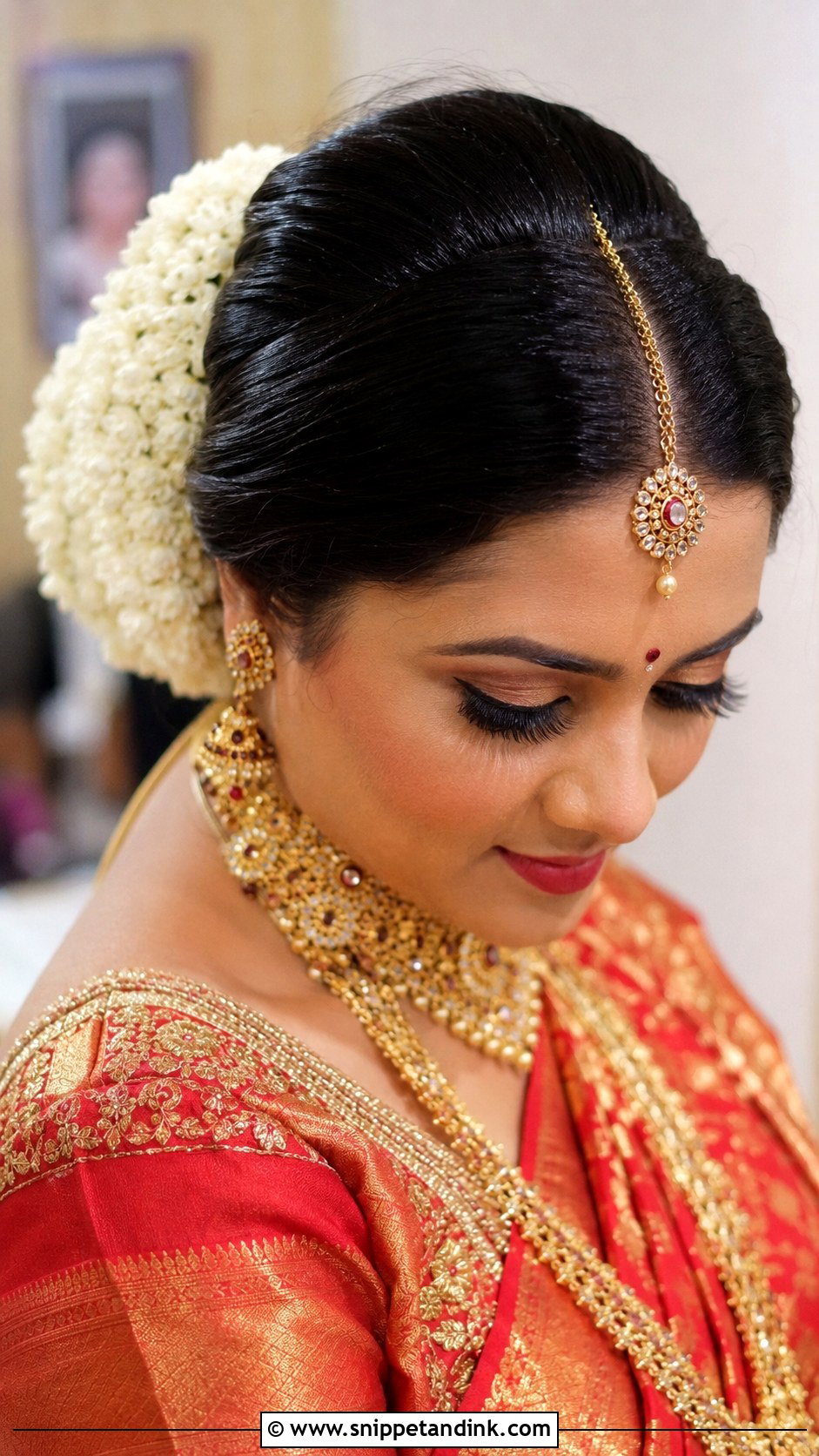
The gajra bun has lasted because it solves real problems. I part the hair in the centre, smooth it back and shape a low or mid bun, then wrap fresh jasmine around it as a white frame that also hides the pins. Under a maang tikka, matha patti, veil or heavy dupatta, the bun is a solid anchor. It is especially common in South Indian, Maharashtrian and classic Hindu bridal looks. Sleek at the front feels regal; two soft face pieces make it lighter.
2. Indian Bridal Low Bun
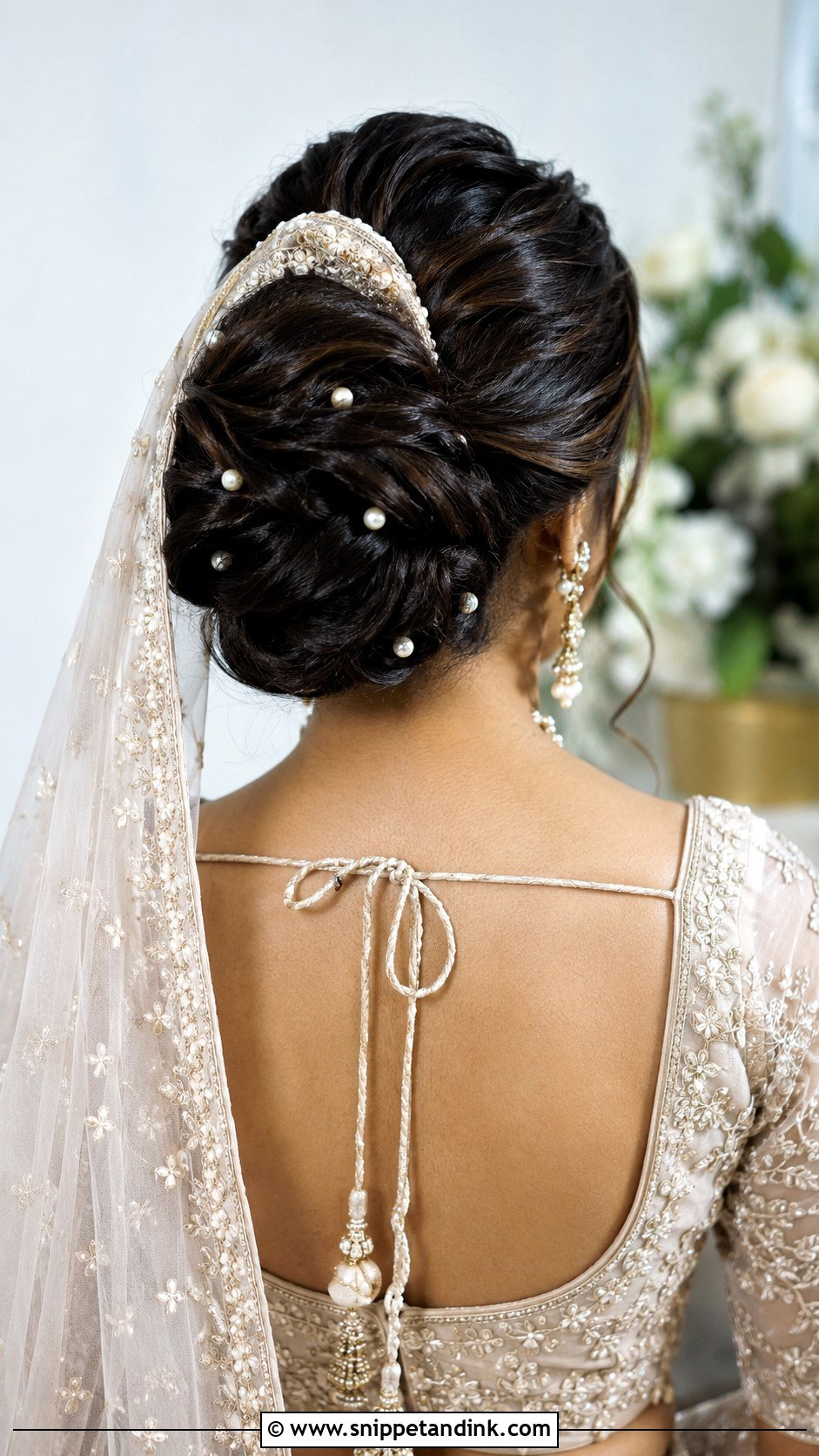
A low bun is the style I recommend to brides who are unsure what they want. Its weight sits at the nape, so it stays comfortable through long ceremonies and never pushes a dupatta or saree pallu out of shape. Statement necklaces lie flat because nothing presses on the back of the collar. I can finish it smooth, twisted, braided or lightly textured. A centre part reads classic, a soft side part gentler. Pearl pins, small flowers or gold accessories add richness without weight.
3. Indian Bridal Messy Bun
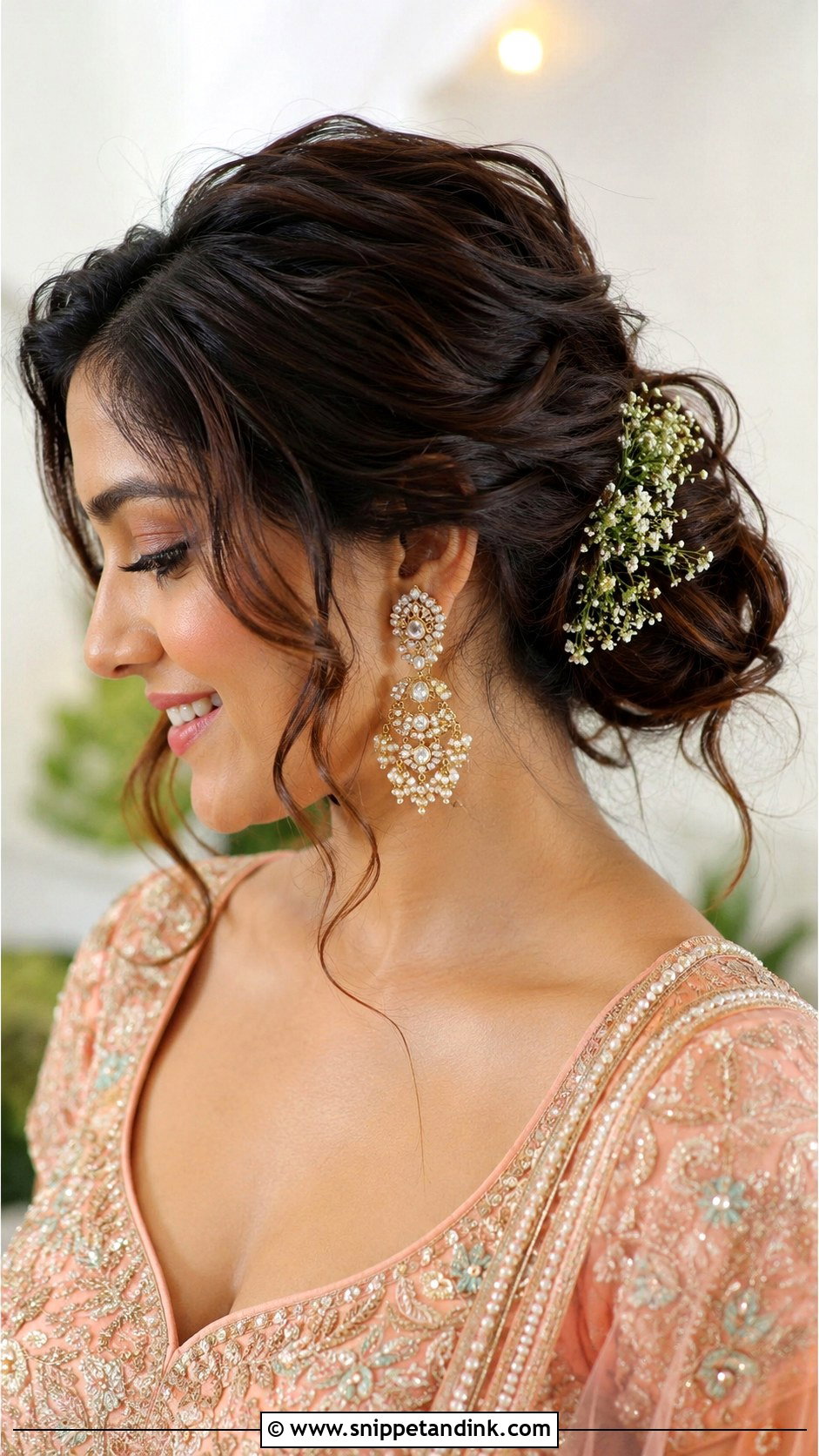
A messy bun at a wedding is built, not tossed. I curl every section first, pin it with deliberate gaps for texture, and only then pull a few curls loose at the face. Those face curls soften heavy jewelry and suit round, oval and heart-shaped faces. Engagement, mehendi and haldi looks suit it, and so can the wedding itself with flowers or pearls added. Pastel and modern embroidered lehengas sit well with it. The thing to ask for is hidden structure: strong pins inside the bun and a flexible spray on the surface.
4. Indian Bridal Juda Hairstyle
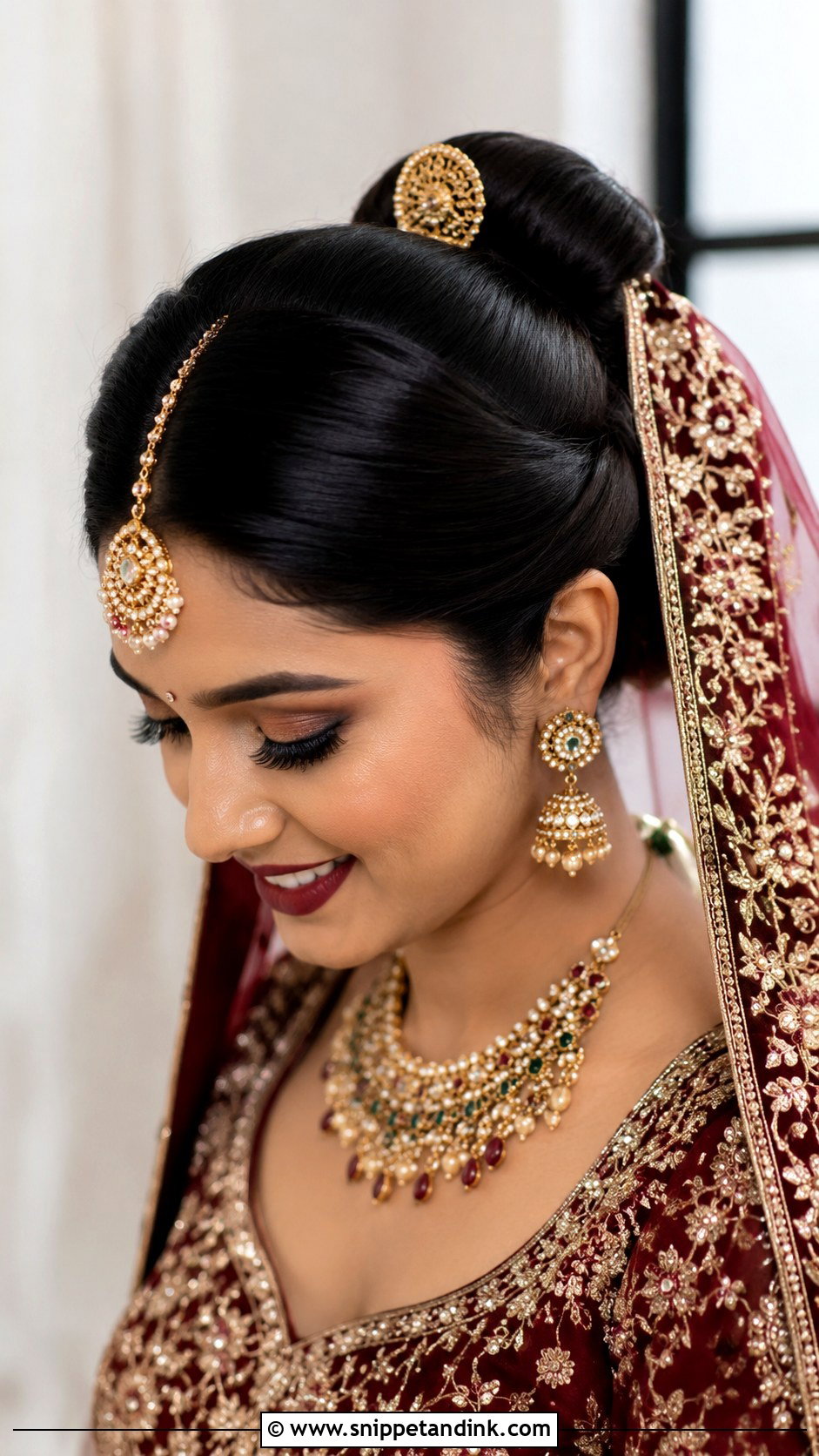
The juda is fuller and more architectural than a simple bun. To get that size, I usually pin it around a padded base or a donut in your hair colour, then dress it with flowers, gold pins, kundan pieces or a traditional juda pin pushed through several layers. It holds a dupatta very well and stays neat through long rituals. The front can take a centre part, side part or a soft puff. Silk sarees, red lehengas and heavily embroidered outfits suit its scale. On a petite bride with a small face, I keep the juda a size down so it doesn’t overpower her.
5. South Indian Bridal Braid
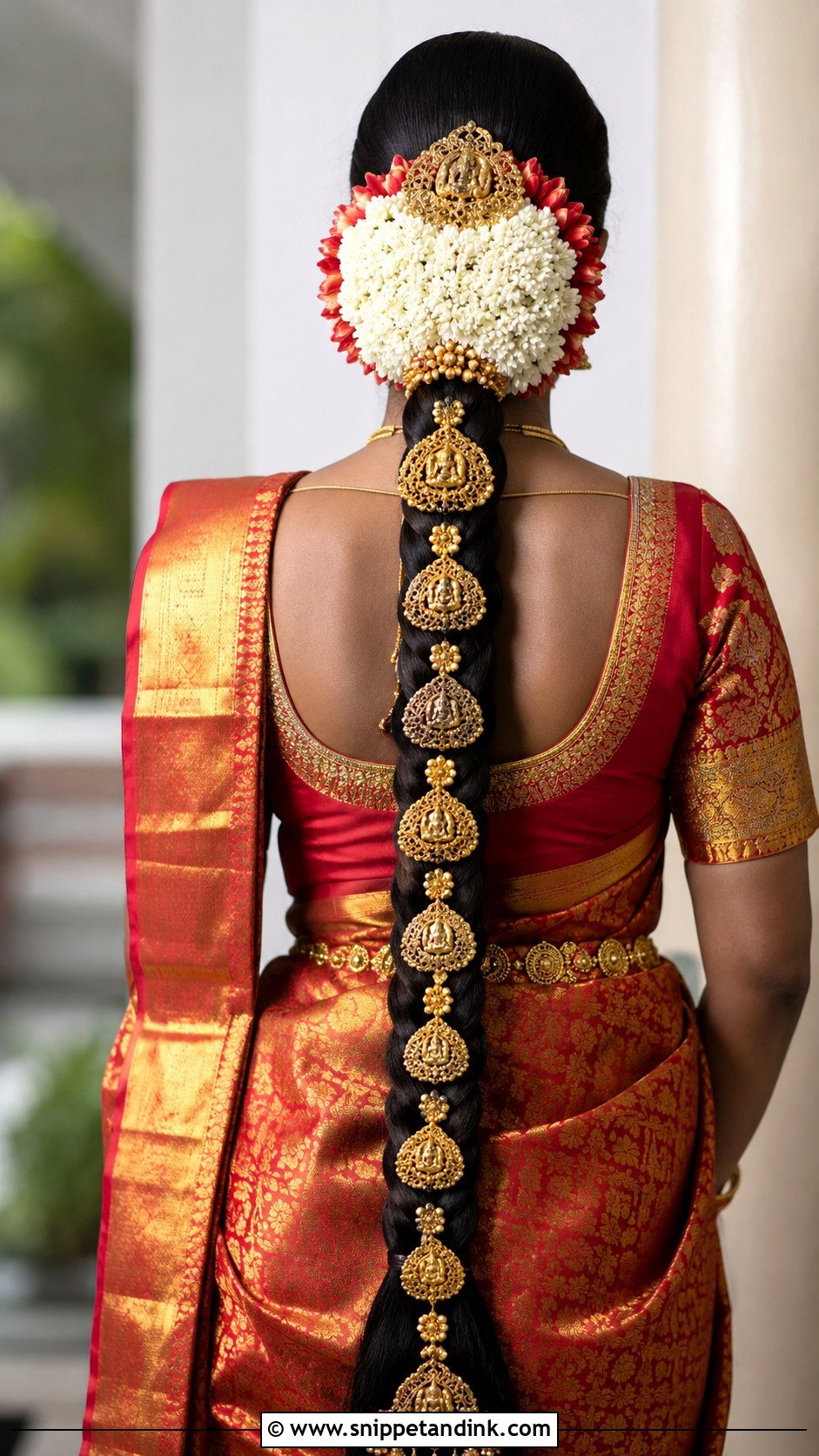
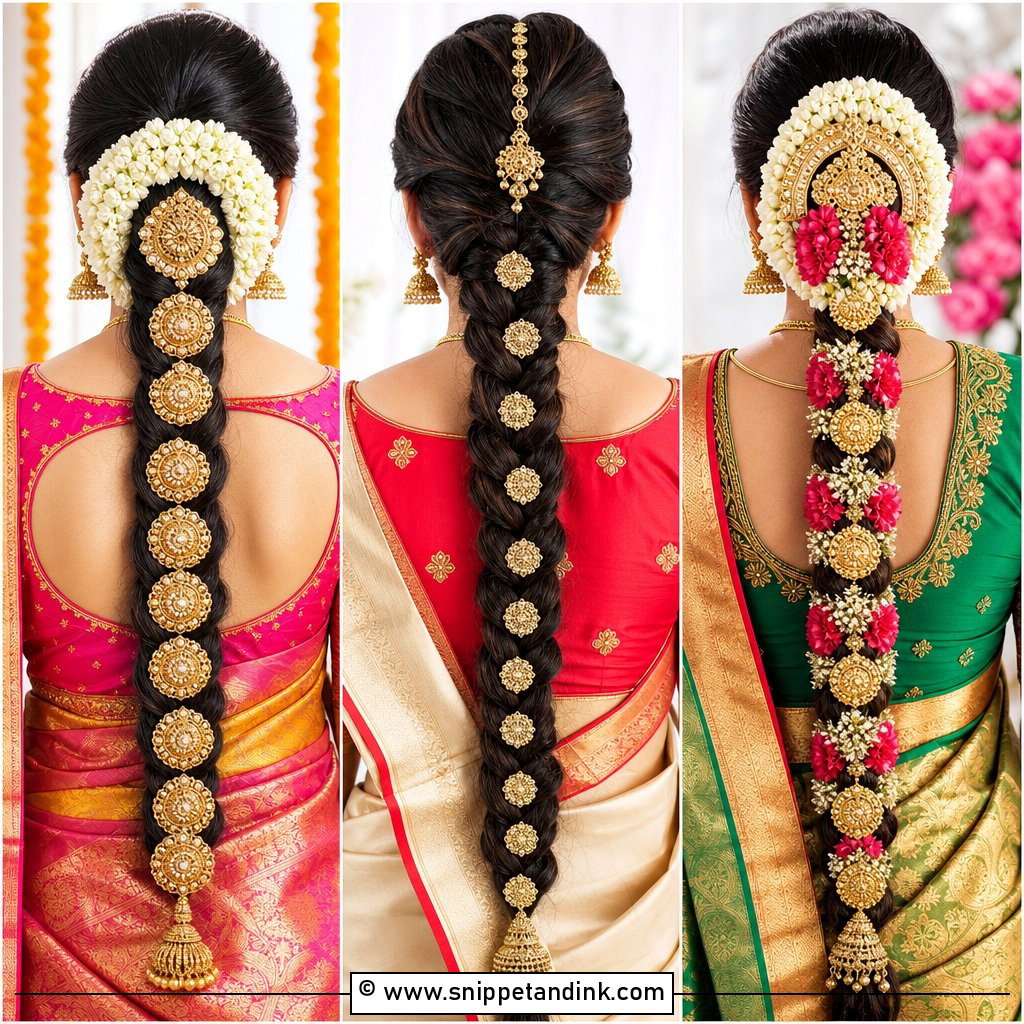
Built on one long plait, a South Indian bridal braid is dressed with flowers, gold jewelry, jada billalu or other traditional ornaments, and finished with a centre part for a maang tikka or netti chutti. Silk sarees and temple jewelry belong with it. Most brides need extensions or a braided hairpiece to get the length. I braid the ornaments into place as I go rather than clipping them on after, because jada pieces are heavy and tend to twist the braid sideways otherwise. Jasmine, roses or floral strings add fragrance and colour.
6. Indian Bridal Braid With Flowers
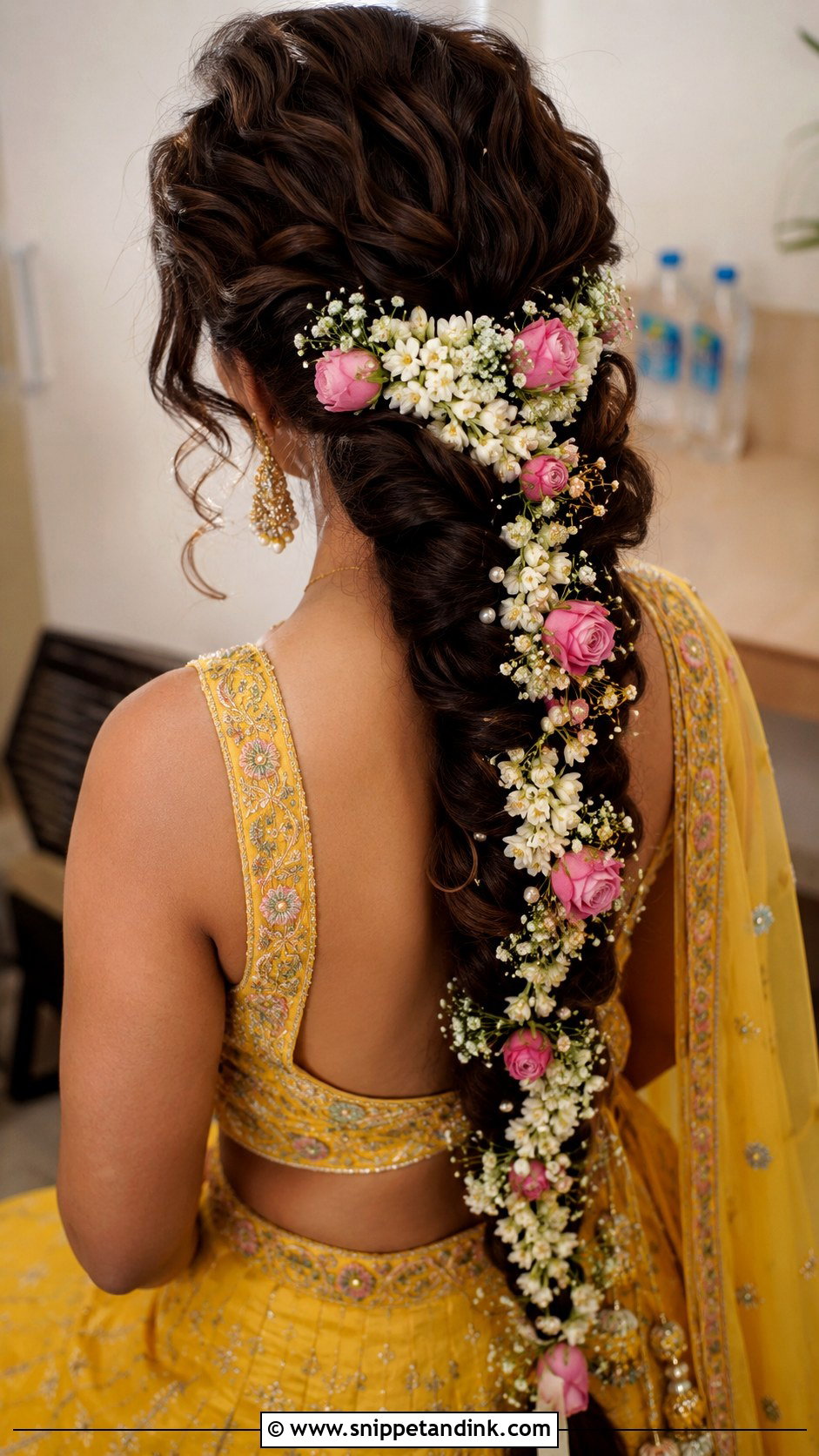
A plain braid becomes festive the moment flowers go in. I work with a three-strand, fishtail, bubble or loose textured braid, then tuck small roses, jasmine buds, baby’s breath or marigold accents between the sections. Mehendi, haldi, temple weddings and outdoor ceremonies suit it. Flowers stay more secure in a braid than in open hair because each stem sits between two plaits. Hair padding or extensions give a fuller finish. Keep the crown smooth or slightly lifted.
7. Indian Bridal Fishtail Braid
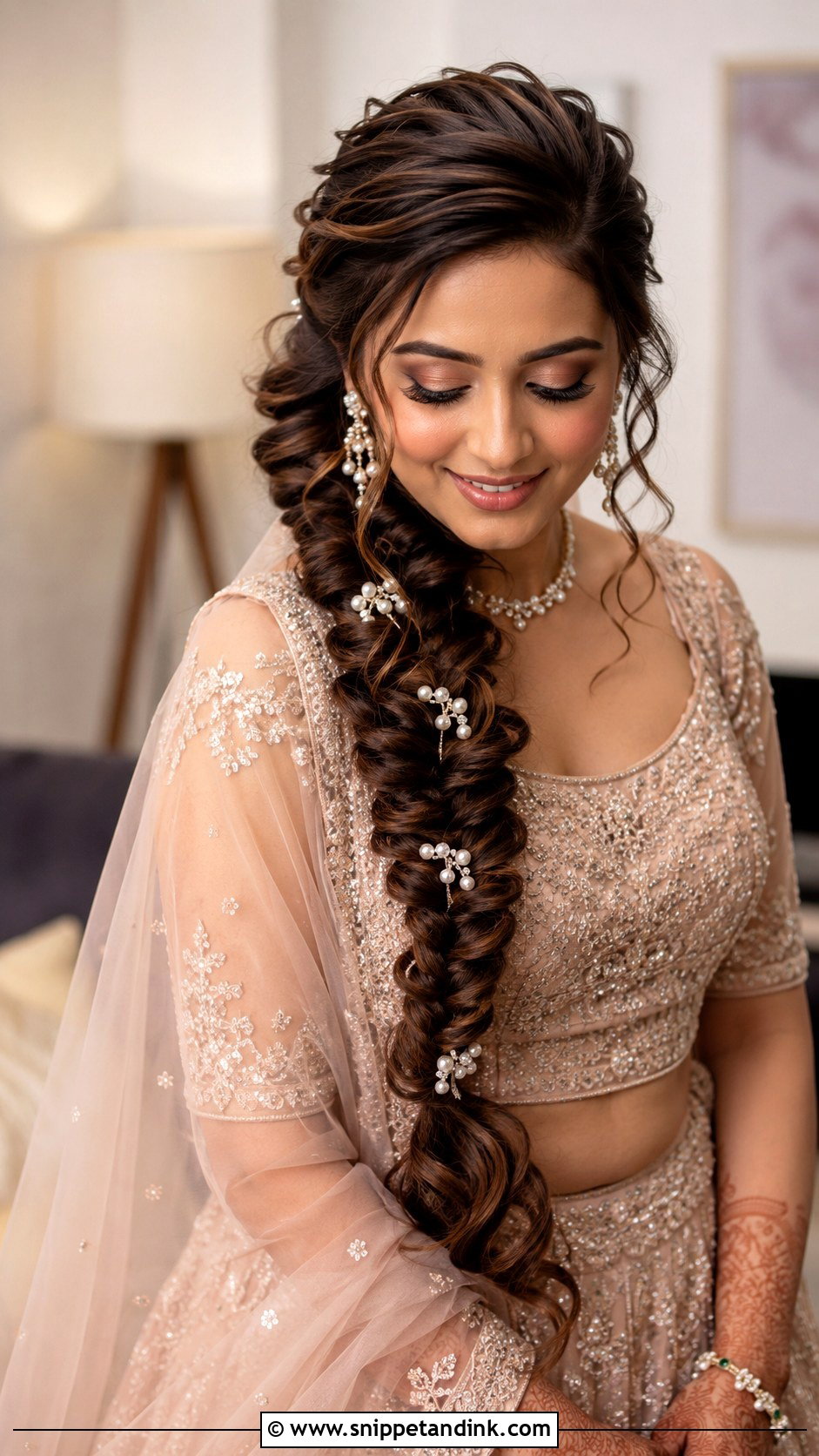
Up close, a fishtail shows a fine woven pattern that a three-strand braid can’t. Pearls, flowers or small gold pins sit nicely in the weave. Worn down the back, it feels traditional; pulled over one shoulder, softer. It needs at least medium length, and extensions help a lot, since fishtails use up length faster than regular braids. Sangeet, engagement and reception outfits suit it. I tie it off firmly before loosening the edges, which keeps it from unravelling while you dance.
8. Indian Bridal Side Braid
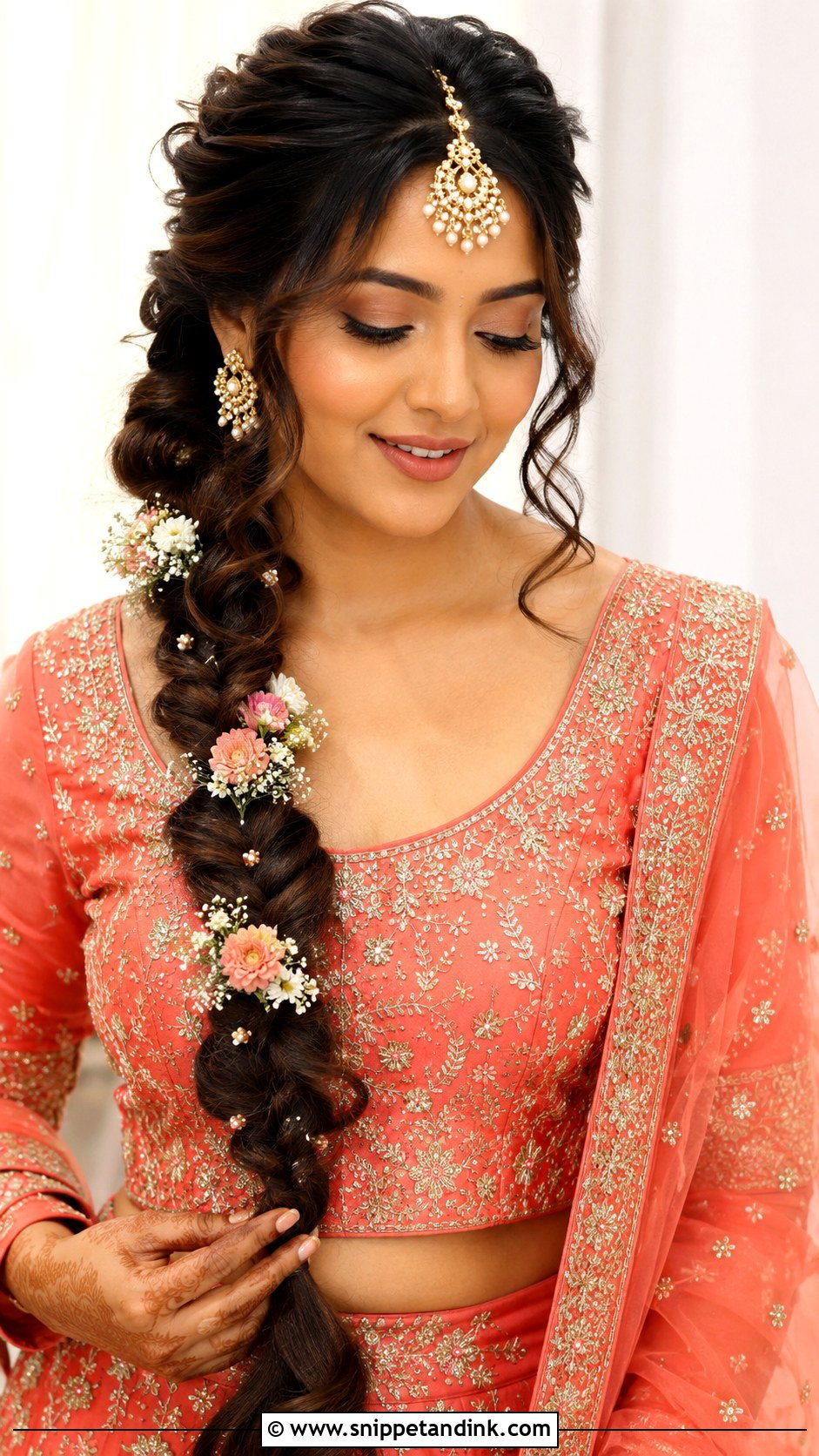
Brides who want their hair seen from the front usually end up with this one. A side braid falls over one shoulder, so length, texture, flowers and jewelry all show in portraits. It suits lehengas, shararas and pre-wedding outfits. Neat and traditional or loose and romantic both work. I anchor the start of the braid behind the ear with a couple of pins so it doesn’t slide to the back as you move. Floral clusters, pearl pins or one accessory near the crown finish it.
9. Indian Bridal Open Hair Curls
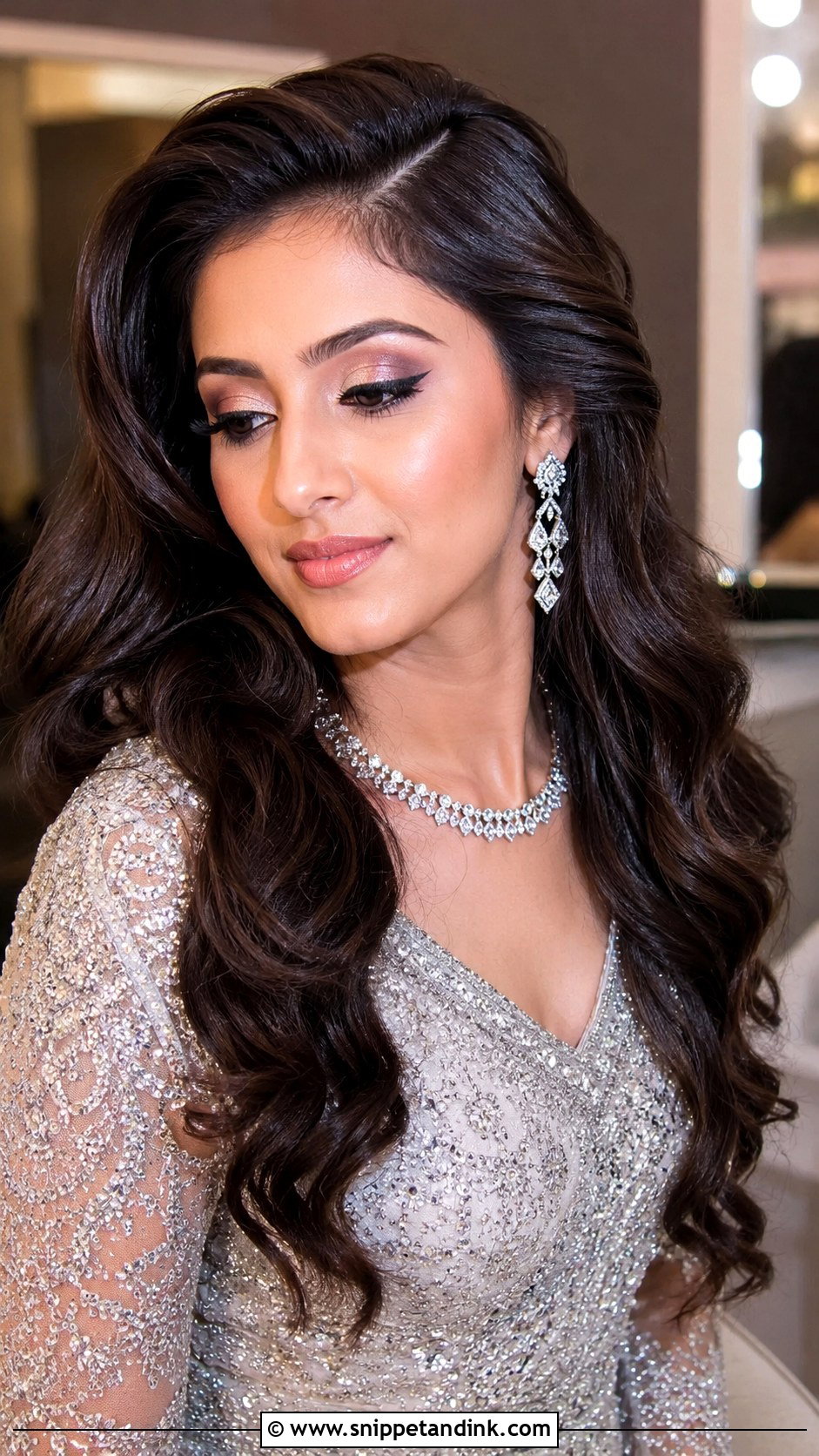
Curls are only as good as their hold, and I’m upfront with brides about that. I use heat protection, set each curl and let it cool pinned, then finish with a setting spray. For receptions, engagements, cocktail functions and some modern ceremonies, open curls give the most movement in photos. A centre or side part both work, and a maang tikka can still sit well if the crown is set with a little backcombing. Lighter dupattas, gowns and contemporary lehengas suit it. Fine hair benefits from extensions for fullness and longer-lasting shape.
10. Indian Bridal Half Up Hairstyle
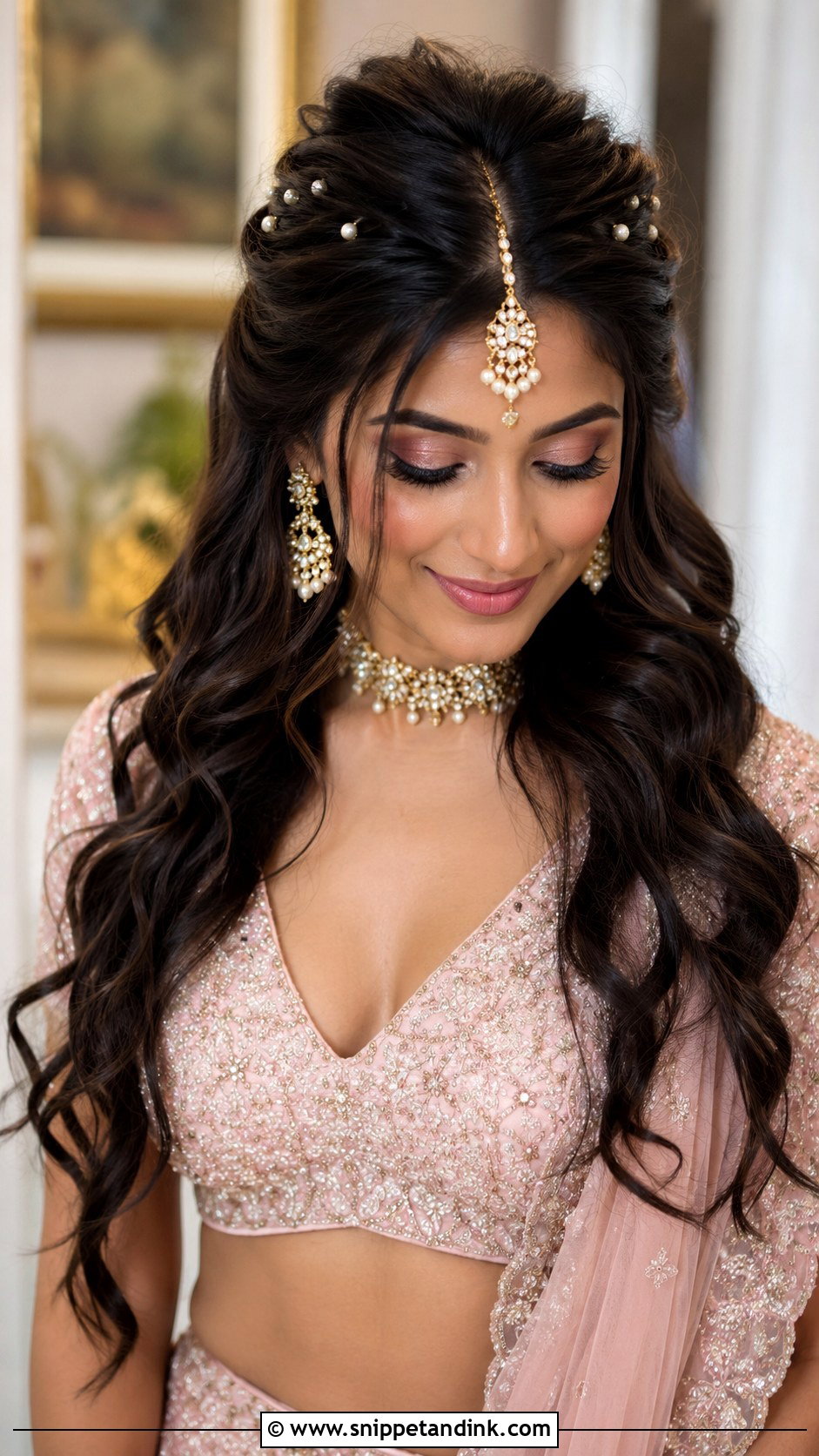
Half up keeps the front secure and the back open. The top section holds jewelry and volume, and the lower lengths fall in curls or waves. I twist, braid, puff or pin the crown section with pearls and flowers. Engagement, reception and sangeet looks suit it, and it keeps hair off the face during photos and dancing. On layered hair, shorter pieces can escape from the pinned section, so I curl them first and use small U-pins rather than bobby pins to tuck them in.
11. Indian Bridal Ponytail
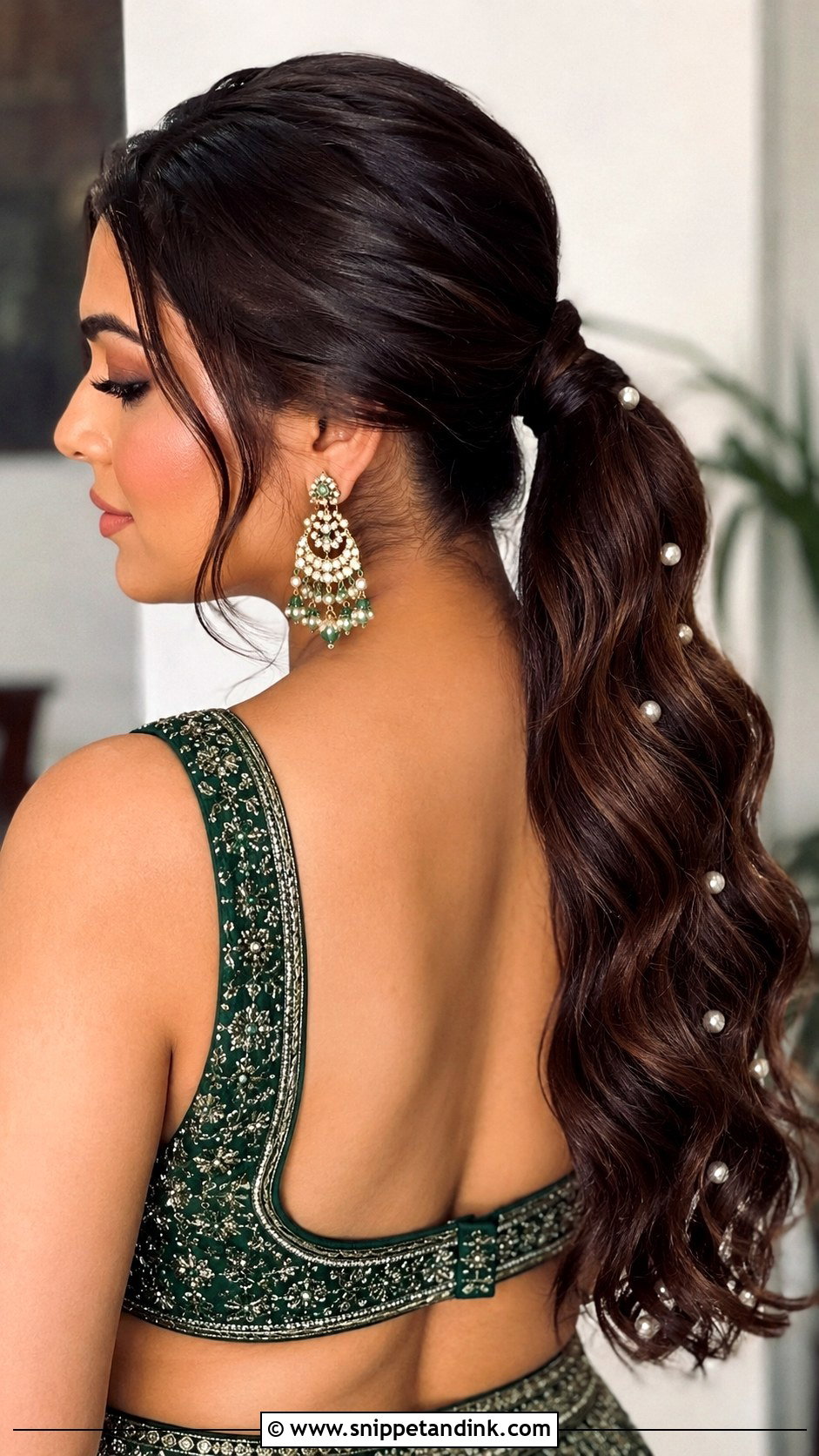
A ponytail gives a modern bride a clean, lifted outline. It can be sleek, curly, high, mid-height or low. A wavy ponytail sits well with reception gowns and contemporary lehengas; a sleek one with structured blouses and statement earrings. I wrap the base with a strand of hair, pearls or a decorative cuff to hide the elastic. Because the face is fully open, makeup and jewelry get attention. It moves when you dance but never falls into your face. On very heavy hair, I use two elastics so the tail doesn’t sag.
12. Indian Bridal Sleek Bun
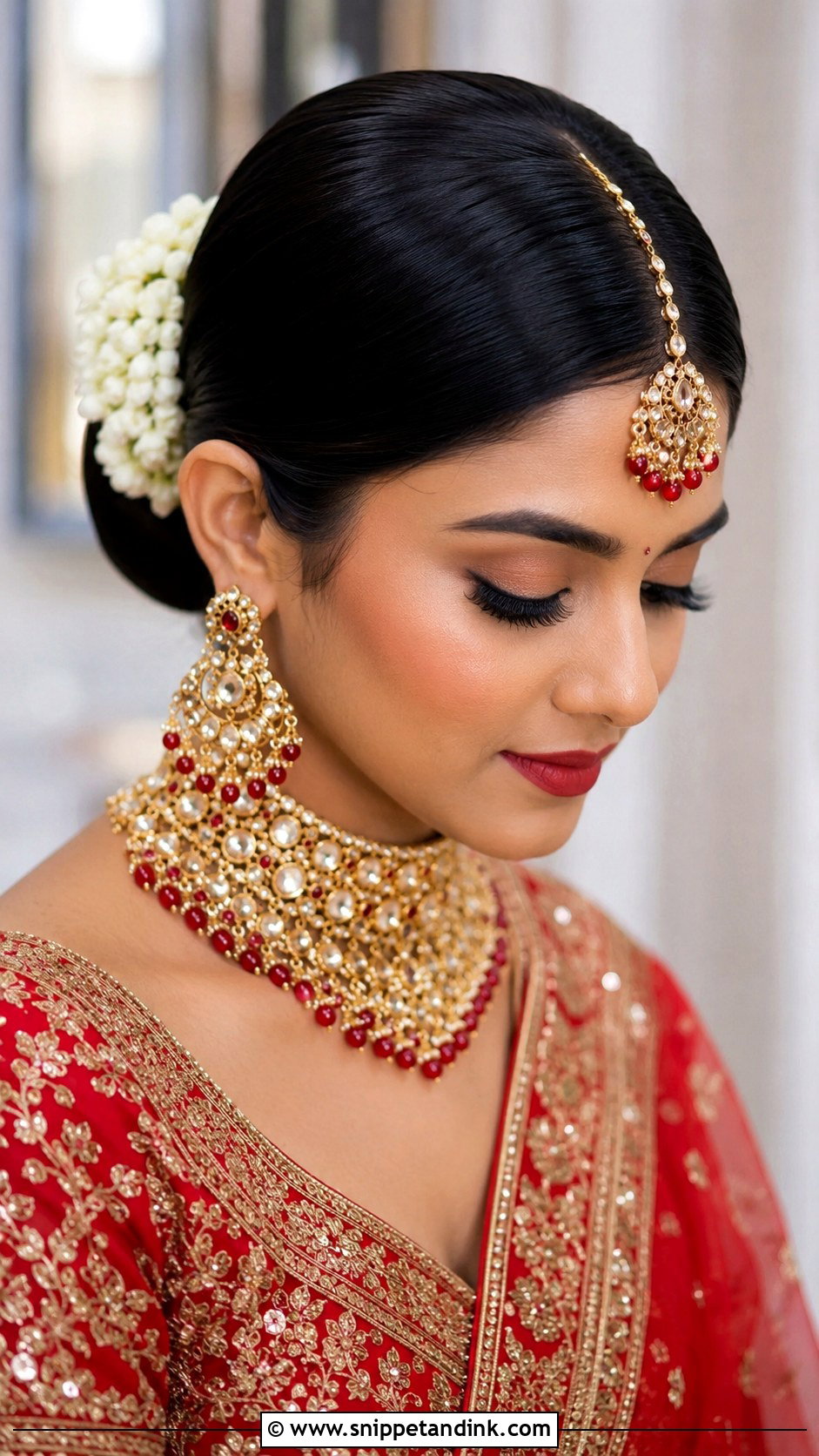
There is nowhere for mistakes to hide in a sleek bun. I part it cleanly, blow-dry every section smooth before pinning and shape a neat bun with no loose strands. With bold eye makeup, heavy jewelry and richly worked outfits, its plainness is the point. Low or mid-height both work, finished with a single flower, pearl pins or a traditional accessory. It is also one of the firmest anchors for a dupatta through the whole ceremony. If your hairline is fragile, ask for it smoothed rather than pulled.
13. Indian Bridal Puff Bun
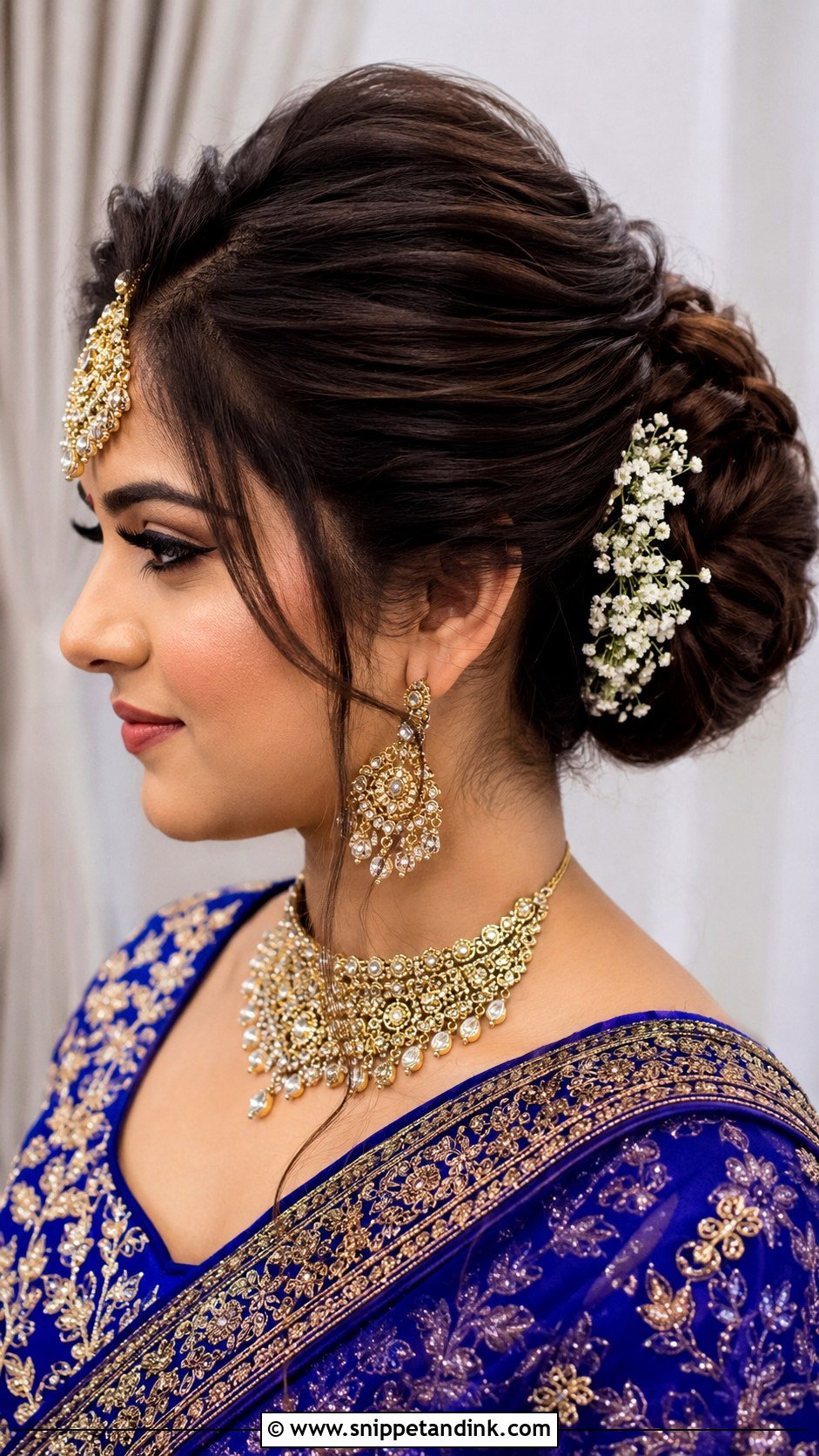
Fine or flat hair benefits most from a puff bun, because the height at the crown creates volume the hair cannot hold on its own. The puff can be subtle or dramatic, depending on face shape and outfit. It sits well under a maang tikka, matha patti or a dupatta over the head. I backcomb only the underside of the puff section and smooth the top over it, which keeps it soft rather than helmet-like in close-ups. The bun below can be smooth, curled or dressed with flowers.
14. Indian Bridal Flower Bun
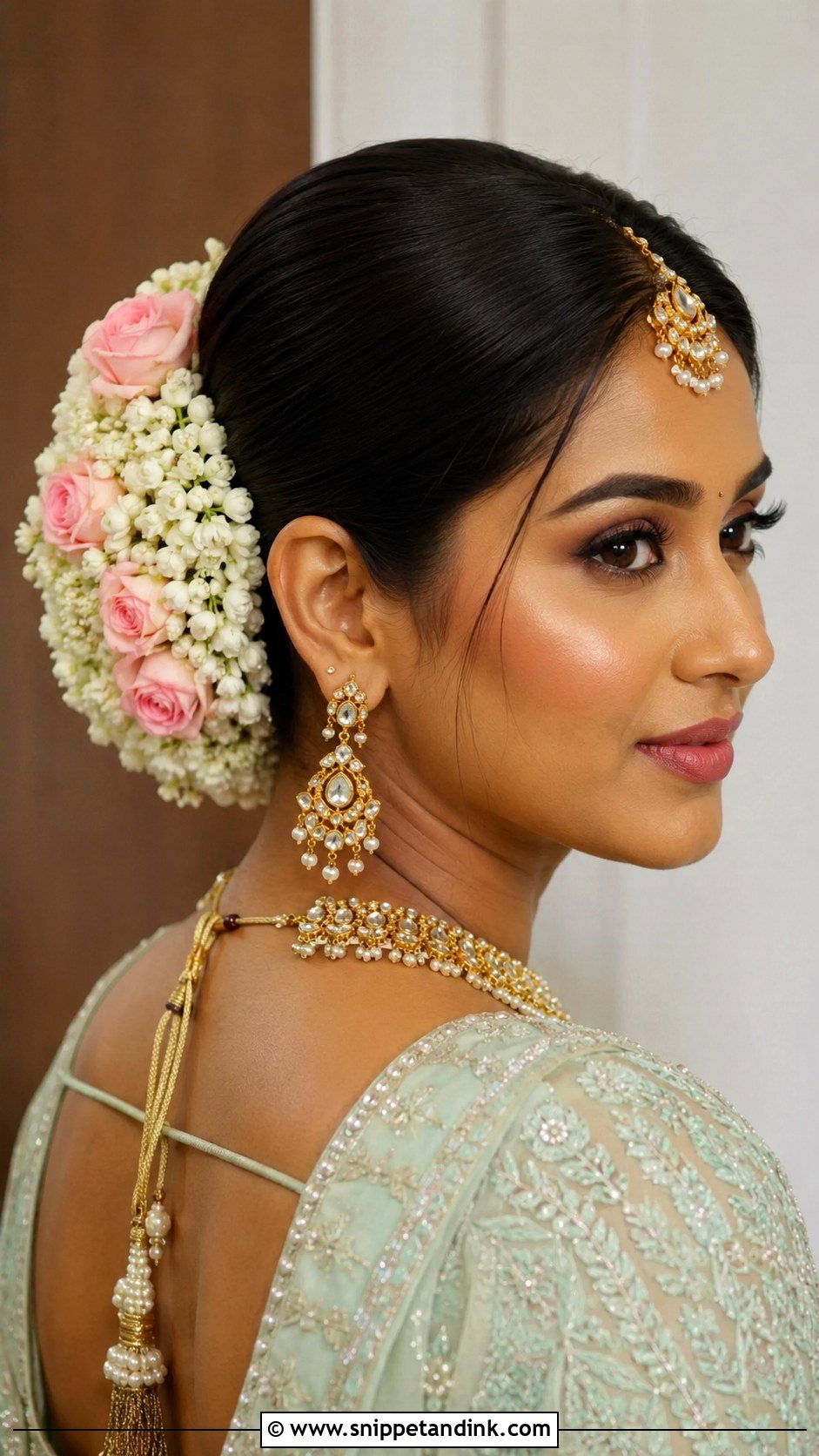
A flower bun puts the blooms in charge. Rather than a single wrap, the flowers cover part of the bun, run along one side or form a full circle. Roses, jasmine, orchids and baby’s breath all work. I match the colour to the outfit or use white for a classic finish. Day weddings, garden venues and traditional ceremonies suit it. The trade-off is weight and heat: a fully covered bun gets warm and heavy, so on summer days I’d cover part of it and leave the rest as hair.
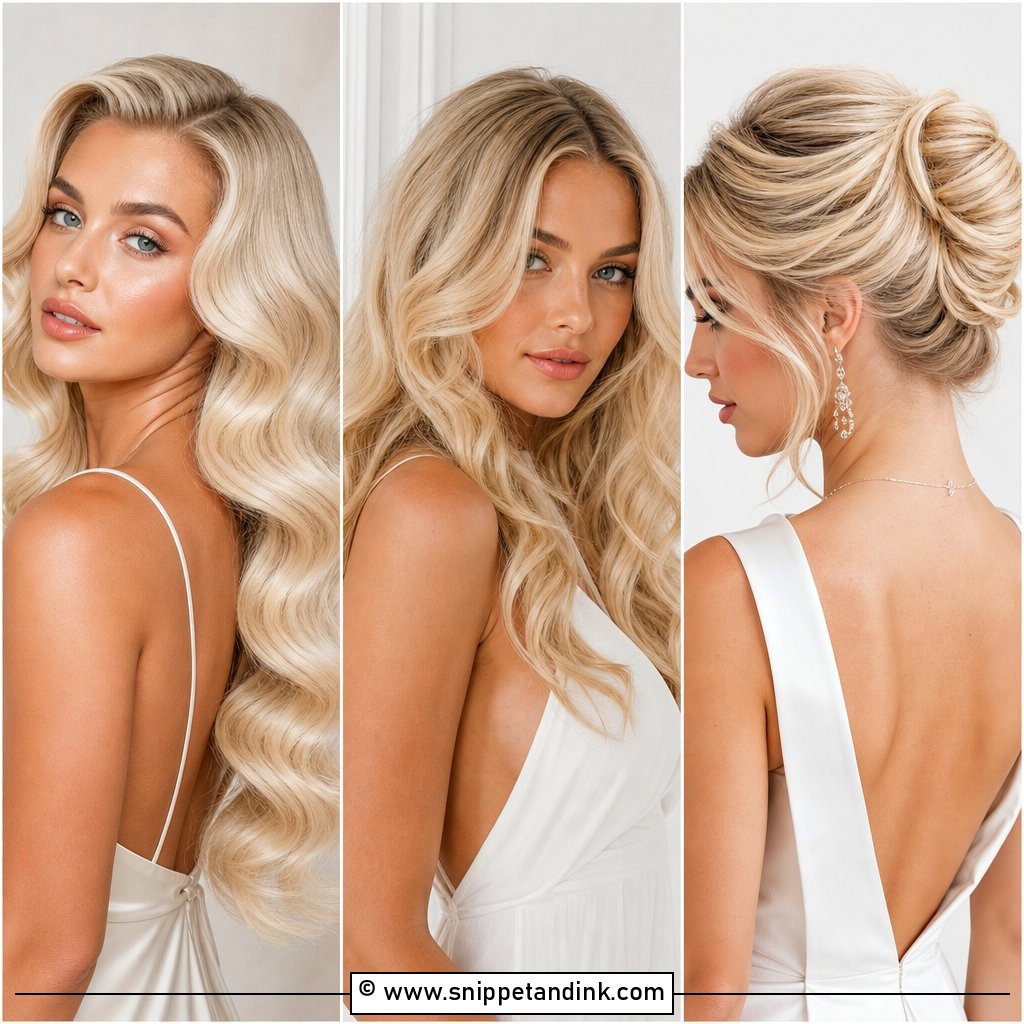
15. Indian Bridal Waves With Maang Tikka
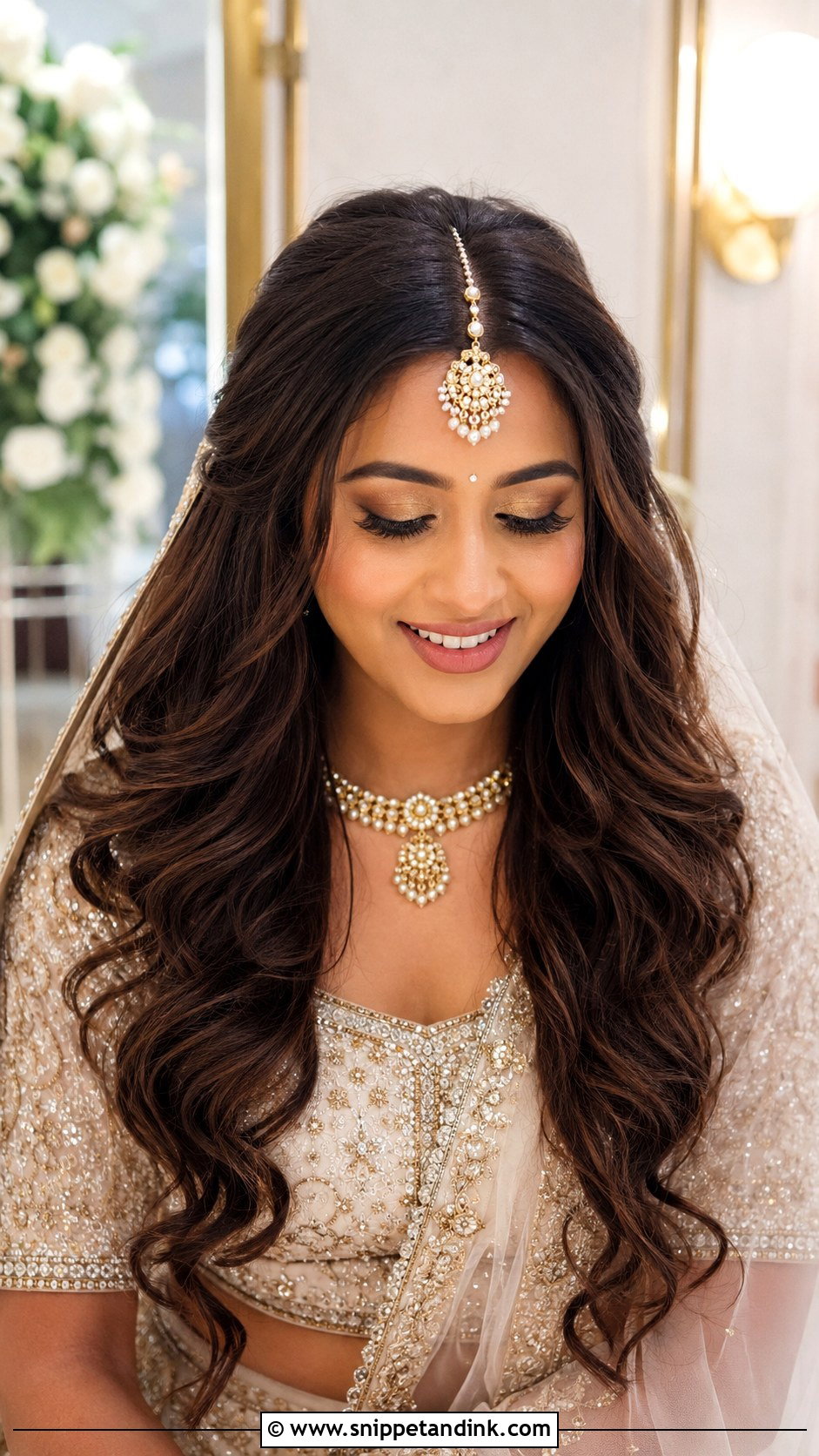
Waves with a maang tikka keep a traditional piece of jewelry in an open-hair look. The centre part gives the tikka a straight line to sit on, and the waves add movement. Engagement, reception, sangeet or a lighter ceremony suit it. I keep the crown smooth and curl the lengths away from the face so they don’t catch on the tikka chain. Extensions add volume and length. Use a lightweight dupatta, or pin it behind the crown so the waves stay visible in photos.
A Tender Scalp by the End of the Ceremony
The complaint I hear most after a wedding is not about how the hair looked. It’s that the scalp was sore. Tight elastics, pins pressed into the same spot and the pull of a heavy dupatta all add up over a long day.
A few things help. I spread the weight across several pin points rather than one anchor, use U-pins where the hair only needs guiding and keep elastics off the most sensitive spot at the crown. If you have a tender scalp or a history of tension headaches, tell your stylist at the trial and wear the style for a few hours afterwards to see how it feels. A slightly softer bun that you forget about is better than a perfect one you are counting the minutes in.
Brides who have had hair fall or thinning at the hairline should ask for a style that sits lower and avoids tight pulling at the temples. Constant tension there is exactly what fragile hair dislikes.
Ask whoever is helping you on the day to keep a soft scrunchie and a wide-tooth comb in the bag. Once the last photo is done, taking out the heaviest pins first gives almost instant relief, even if the rest of the style stays in until you get home.
Gajra, Braid or Waves Depends on the Hours It Must Last
Your hairstyle has to work with your outfit, jewelry and comfort as much as your taste. A gajra bun or bridal juda still carries a traditional ceremony best. A braid with flowers brings cultural detail. Open curls, half up waves and ponytails suit receptions and pre-wedding events. The question I ask every bride is how many hours the style must last and under how much weight. Bring your saved photos to your stylist, then test the favourite with the real dupatta and jewelry at a trial. That answer tends to choose the hairstyle for you.
You'll Like These Ideas:


Leave a Reply