
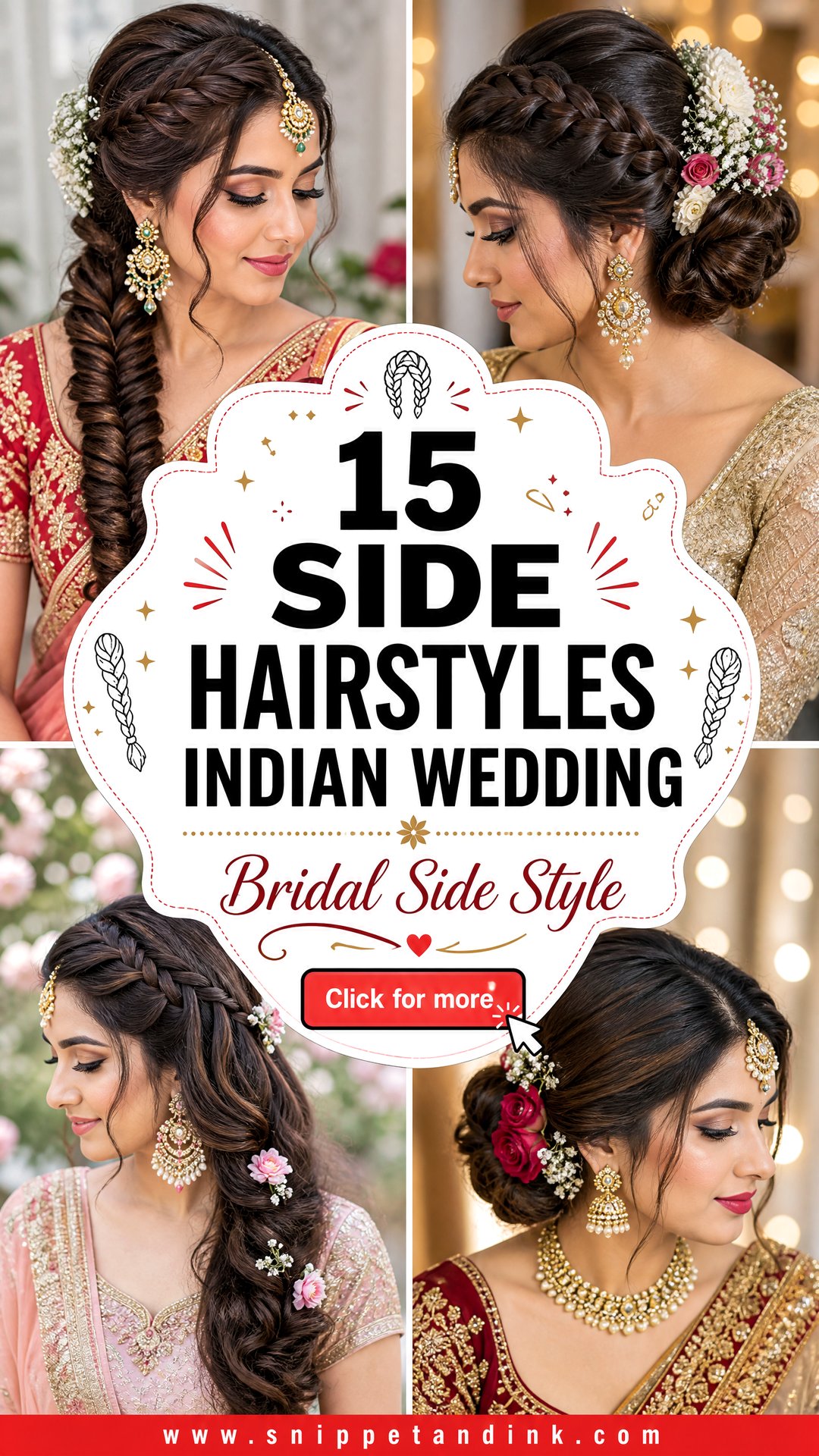
An Indian bridal look carries more on the head than almost any other: maang tikka, sometimes a passa or jhumar, a dupatta pinned over the crown, gajra and heavy earrings pulling at the ears. Moving the hair to one side changes how all of that sits. I like side styles because they clear one ear for the jewelry and still give the dupatta a firm base to pin into. They also travel well across functions, from a braid that survives sangeet dancing to a bun that holds through hours of rituals. These Indian wedding side hairstyles cover both, and I’ve noted where each one needs extra support.
Which Ear Gets the Passa and Which Gets the Hair
With Indian bridal jewelry, the side you sweep your hair to is not only a style choice. A passa or jhoomar usually hangs on the left, and heavy jhumkas with sahare chains hook into the hair above the ear. If the hair and the jewelry pile onto the same side, the earring hooks catch in the curls and the passa gets buried. So I plan the two together at the trial.
Opposite sides for balance
Put the passa on one side and the hair on the other, and both stay visible. This is my default when the jewelry is heavy and the hair is long.
Same side for drama
If you want one side loaded and the other bare, I build a smooth pinned base under the passa first. The jewelry hooks into that base, not into loose curls, and the hair falls below it.
Where the dupatta lands
A dupatta worn over the head falls unevenly over a side bun. That’s fine, but pin it at the crown and again near the bun so the weight isn’t hanging from one spot. Bring the real dupatta to your trial; a heavy velvet or zari one needs far more pinning than a light net one.
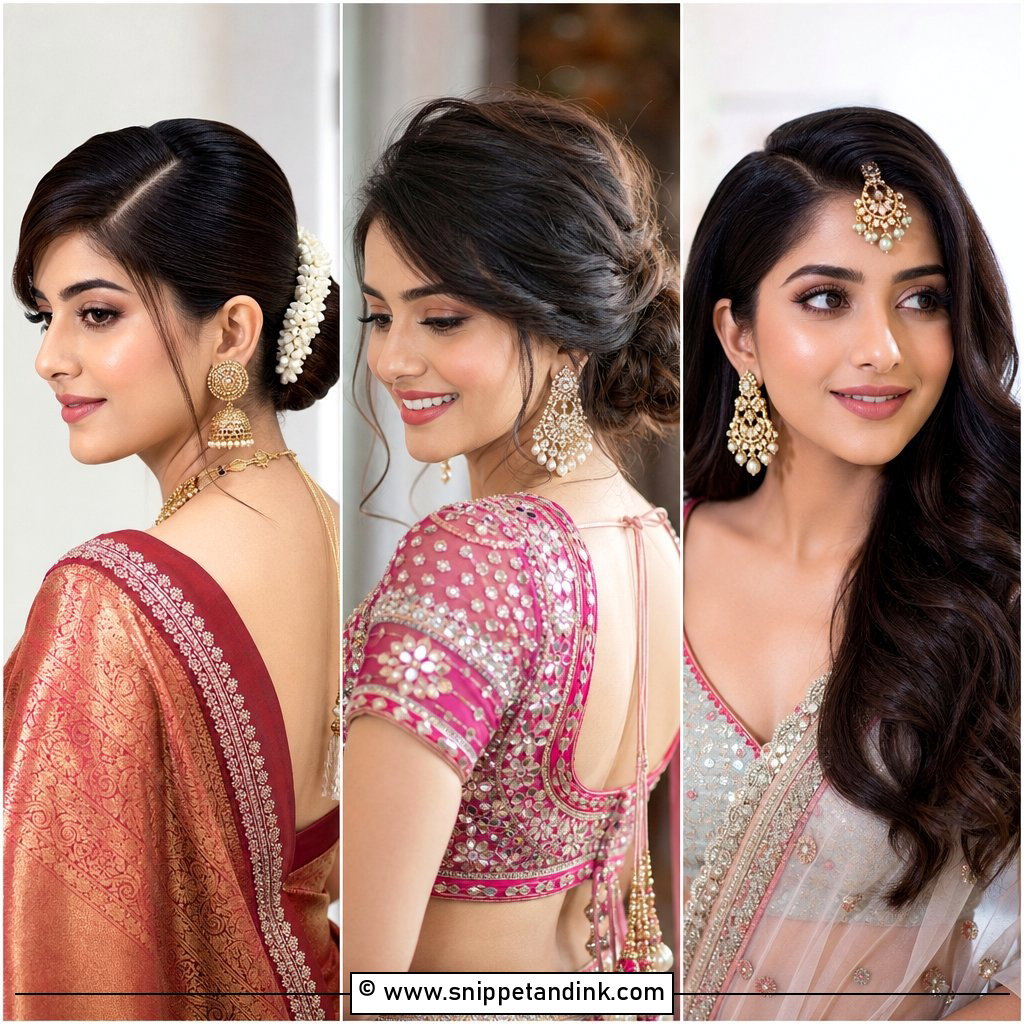
1. Side Bun Hairstyle For Indian Wedding
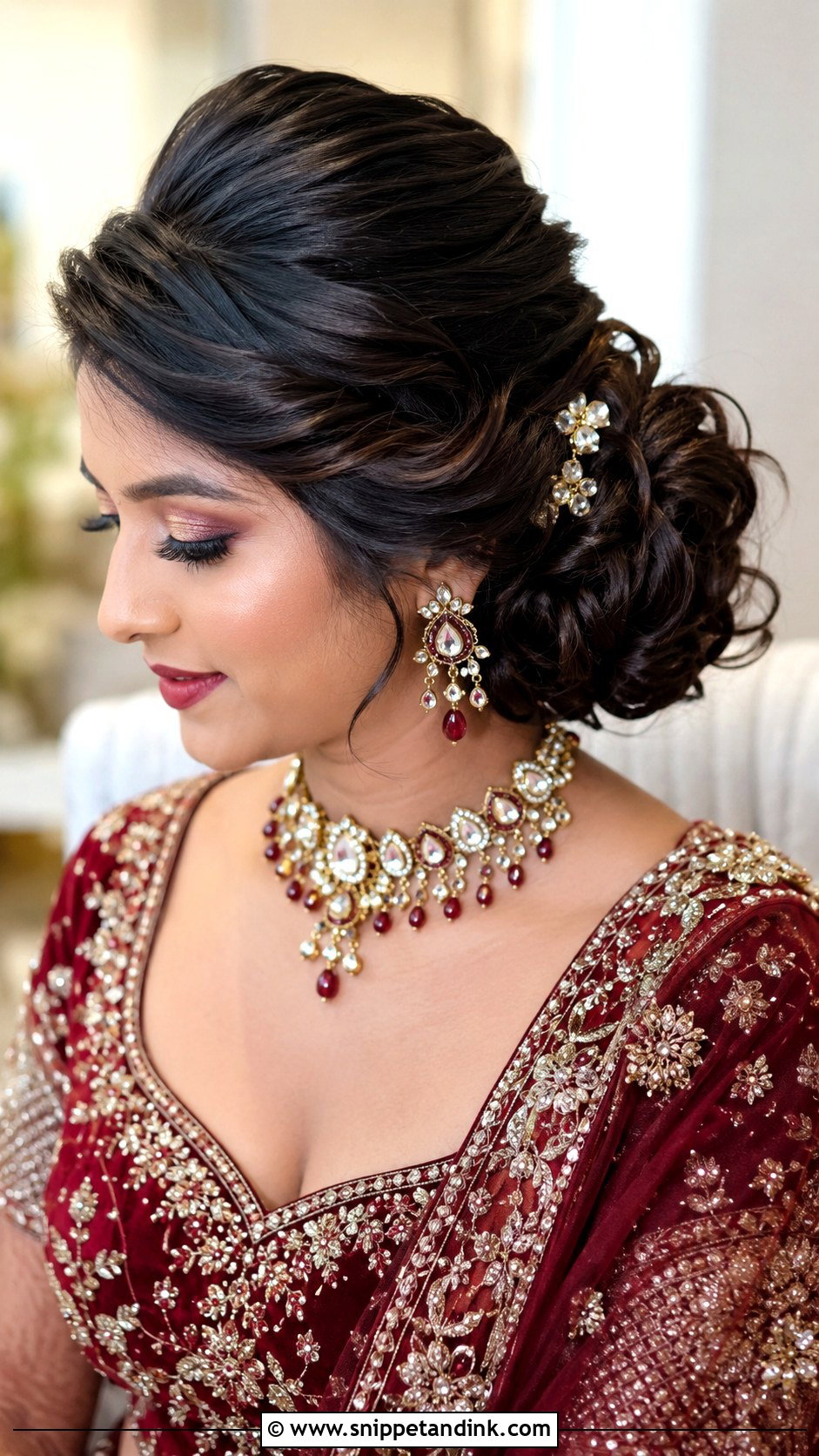
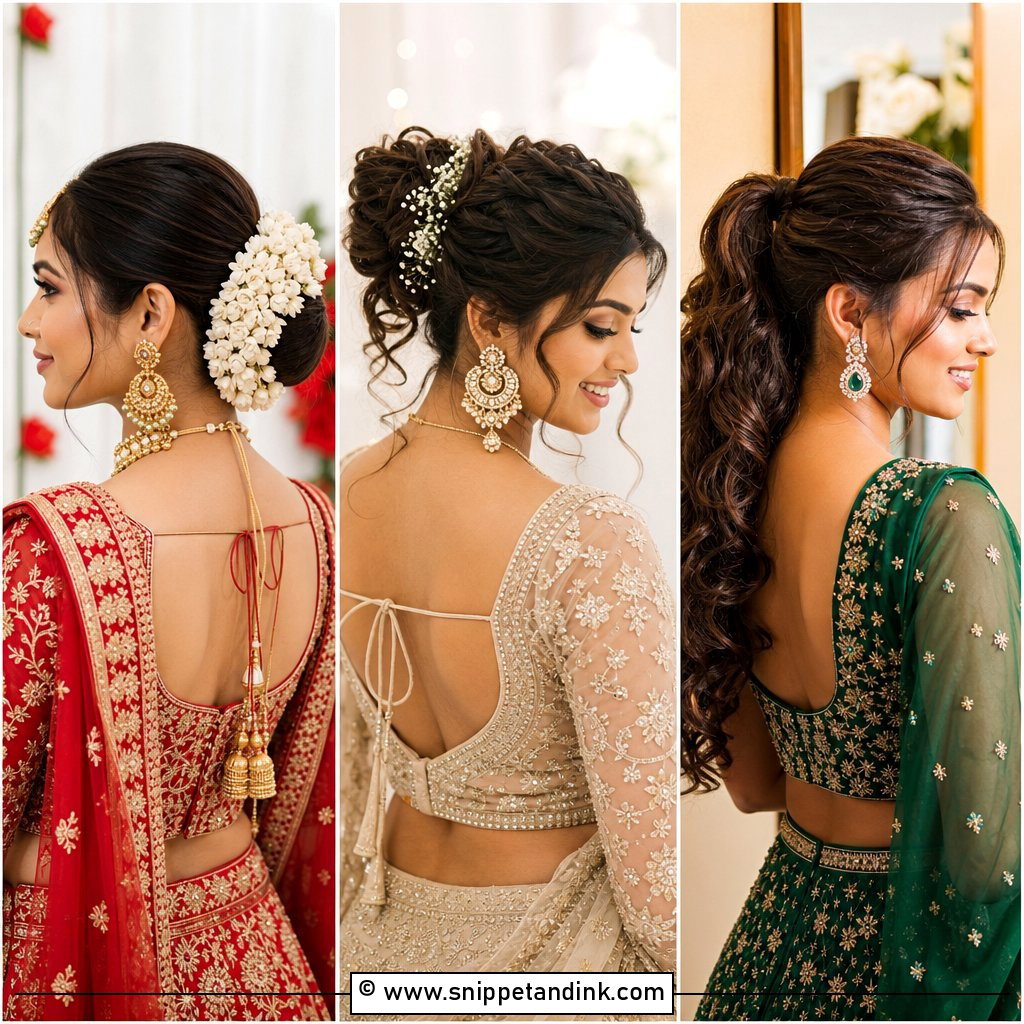
Low at the nape and pushed toward one side, this bun works under sarees, lehengas and heavily embroidered dupattas because it gives the pins a solid mass to grip. I’d use it for the bride as well as mothers and sisters, since it doesn’t need much upkeep once it’s set. A center part reads traditional, a side part more contemporary. Roses, a gajra wrap, pearl pins or a gold juda pin all sit well on it. If your necklace and earrings are already heavy, keep the hair decoration to one piece.
2. Side Braid Hairstyle For Indian Wedding
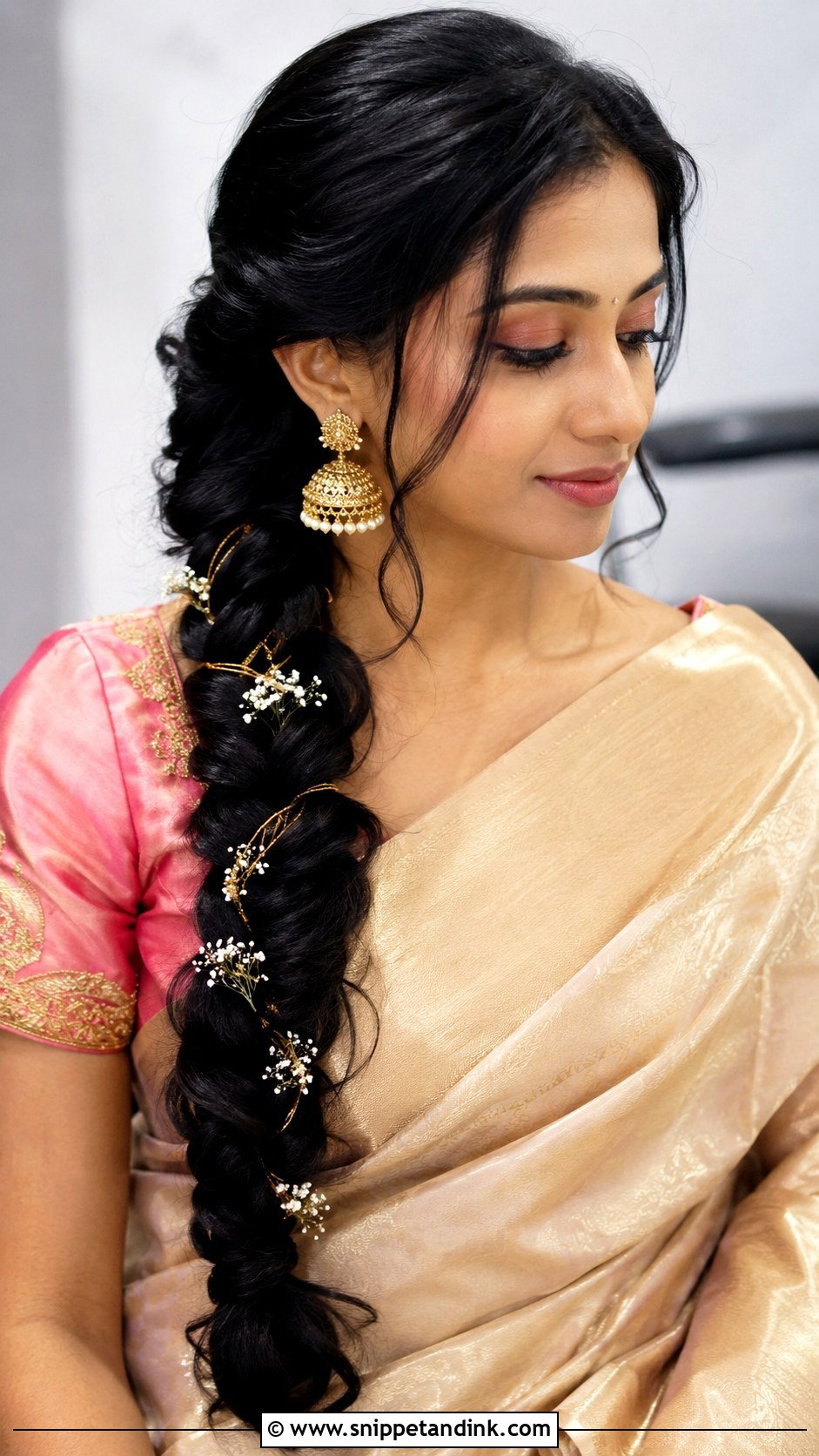
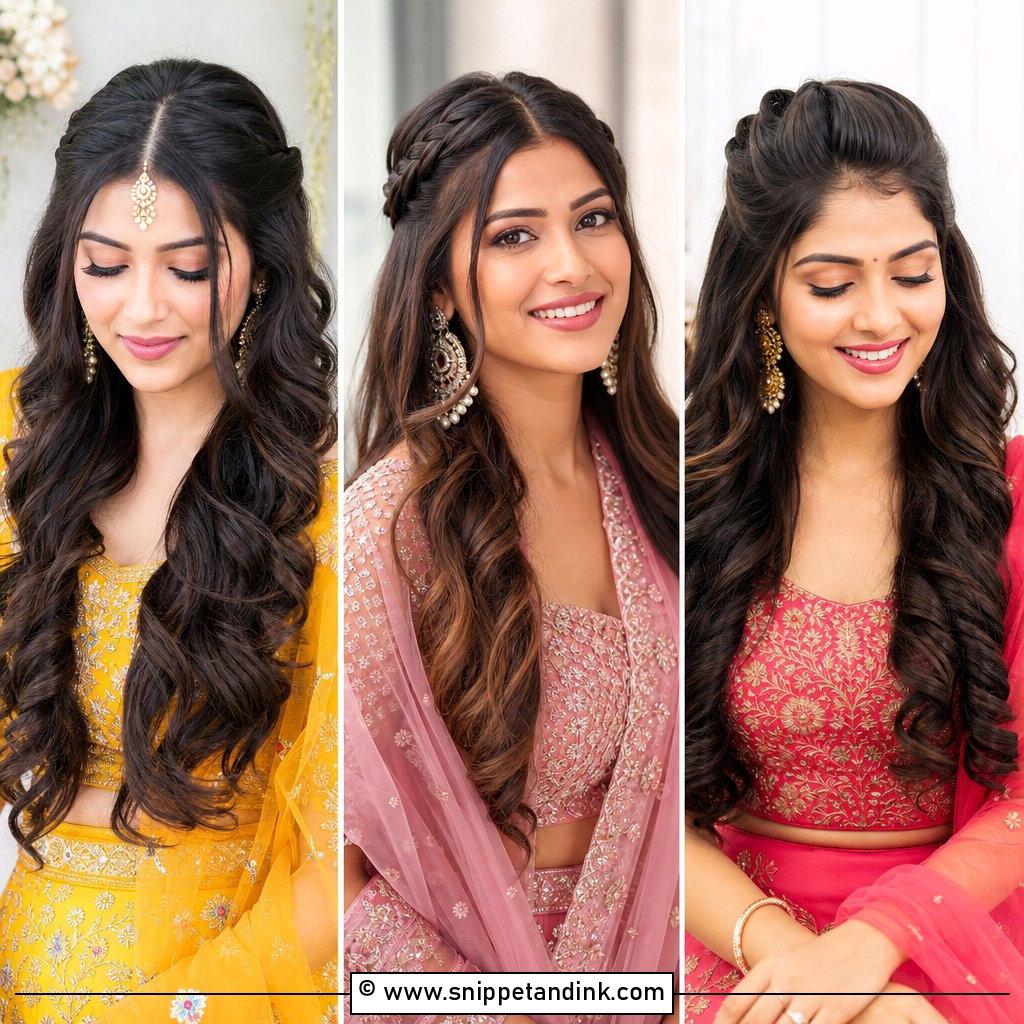
Braids are the most secure way to wear long hair through a full day of functions. I start this one high at the crown and bring it over one shoulder, which shows it off from the front, where most of your photos are taken. Extensions or a paranda can add length and weight if your own hair is shorter. It sits well against matha patti and jhumkas, and it fills the bare space of a deep-neck blouse. Braid it firmly; a loose braid looks fuzzy after hours of rituals. Flowers, beads or a gold hair chain can be threaded through after.
3. Side Swept Curls Indian Wedding Hairstyle
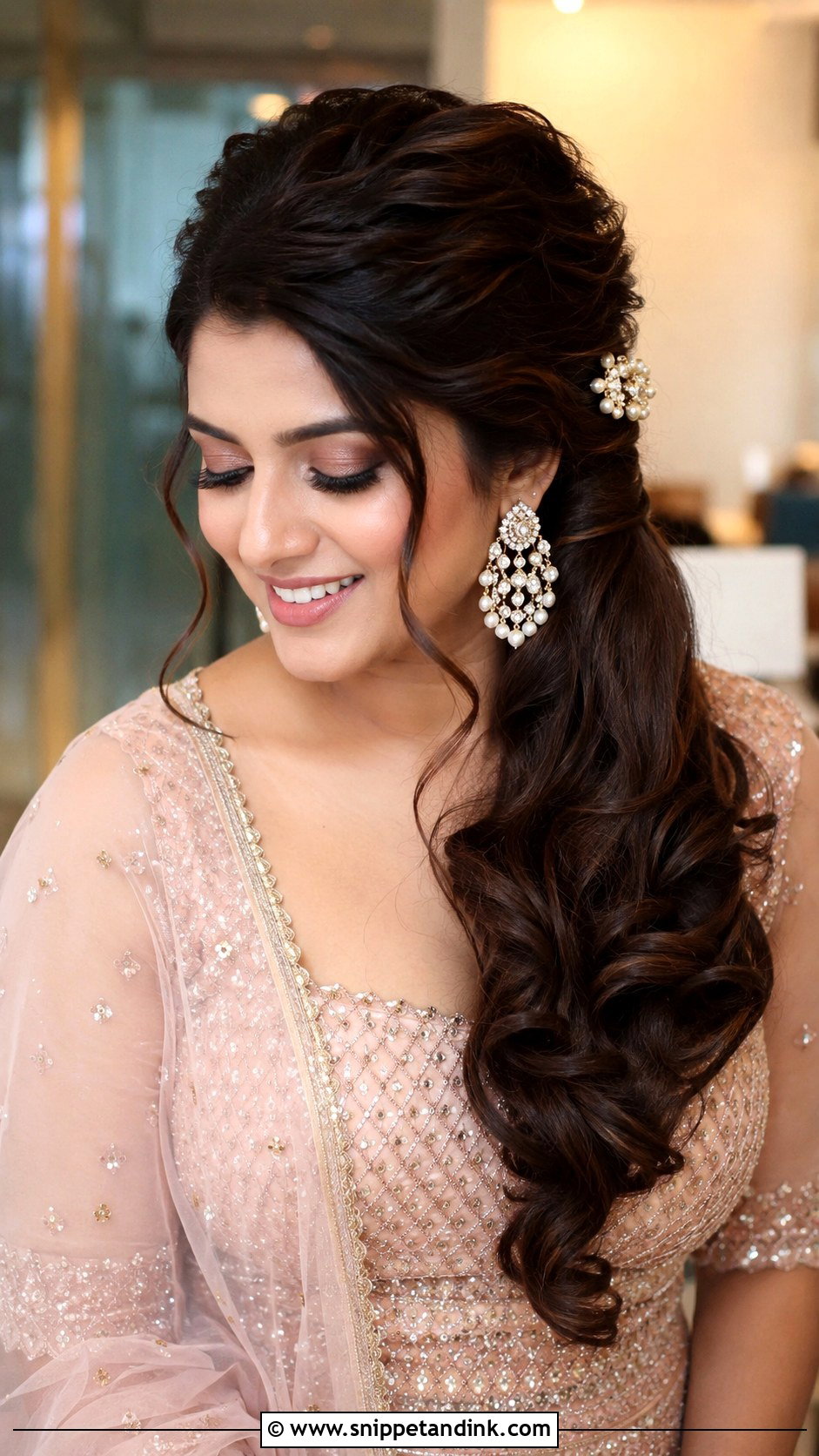
Receptions and cocktail nights are where curls swept over one shoulder make the most sense. I take small sections, use heat protectant, curl and pin each one to cool, and only brush through once they’re completely cold, which is what keeps them from dropping. Off-shoulder blouses and sweetheart necks show the sweep best. A deep side part gives more volume on the full side, and a jeweled clip or passa holds back the thin side. Very straight, silky hair needs a texturizing spray before curling, or the curls slide out by the second hour.
4. Side Juda Hairstyle For Indian Wedding
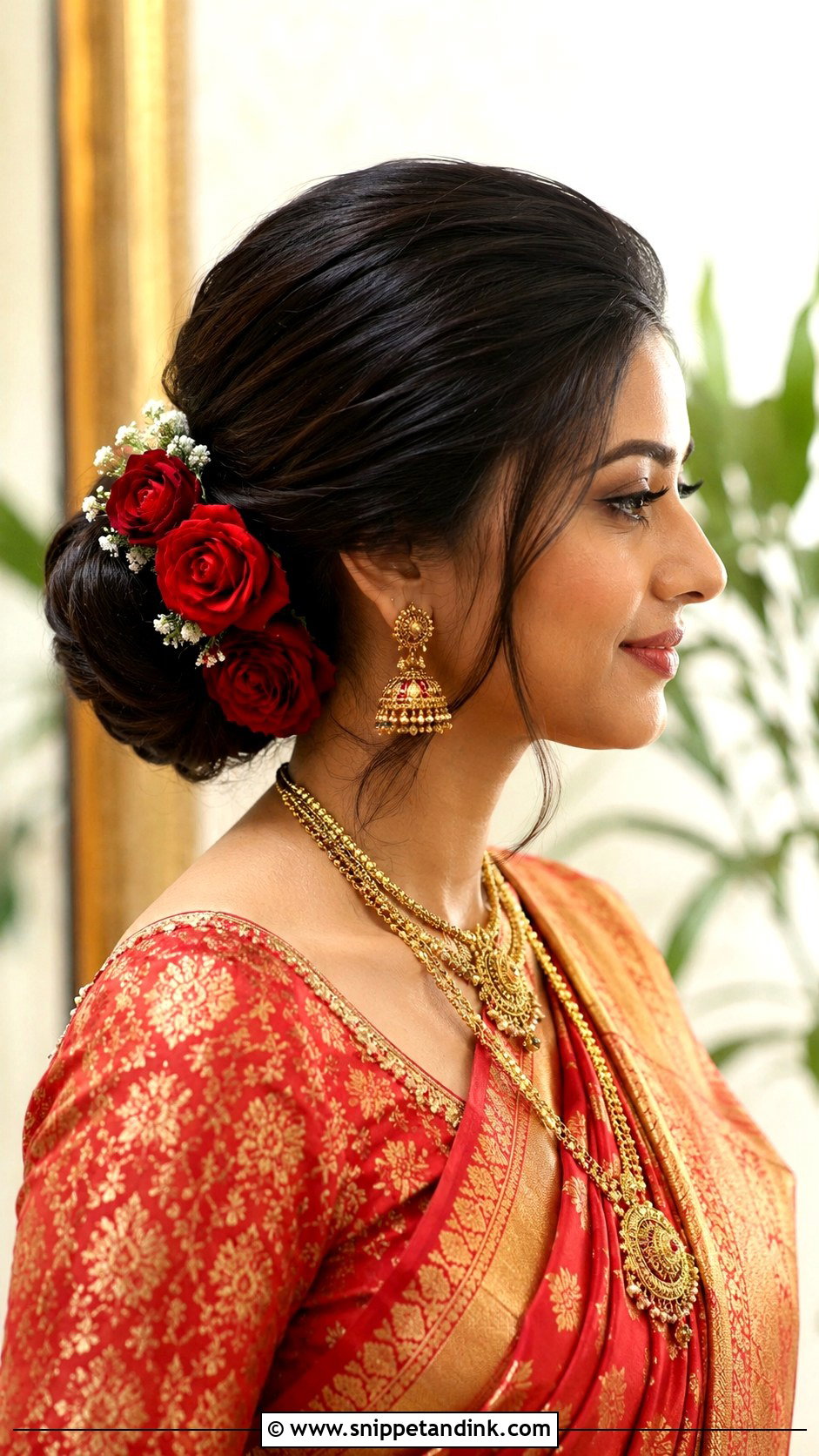
Moving the bun off center turns a standard juda into something visible from the front. A side juda hairstyle suits Banarasi lehengas and sarees with heavy borders, since the hair stays compact and doesn’t compete with the fabric. I’d style the front with a middle part, a soft puff or a few side pieces. Mogra, roses, baby’s breath or a kundan pin decorate it well. Build the juda over a small donut or filler if your hair is fine, so it keeps its round shape under a dupatta.
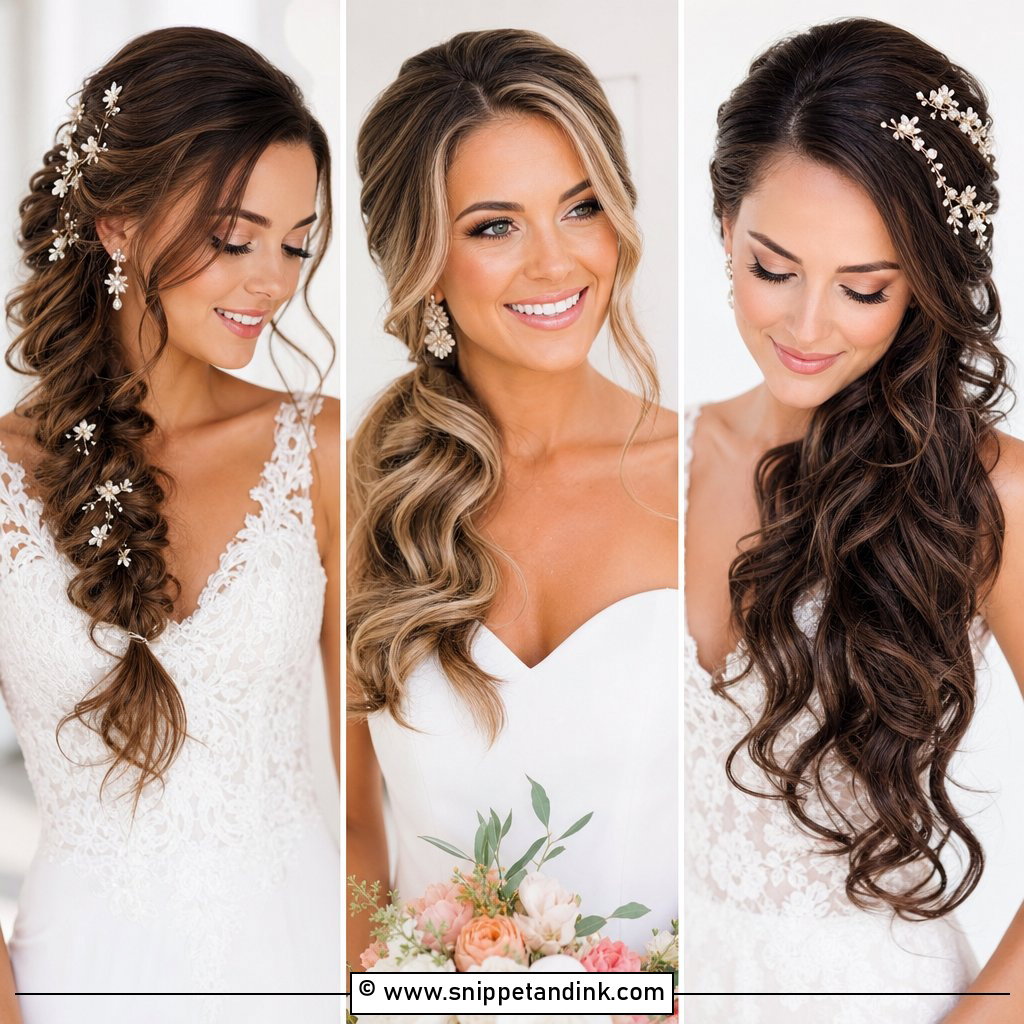
5. Side Fishtail Braid Indian Wedding Hairstyle
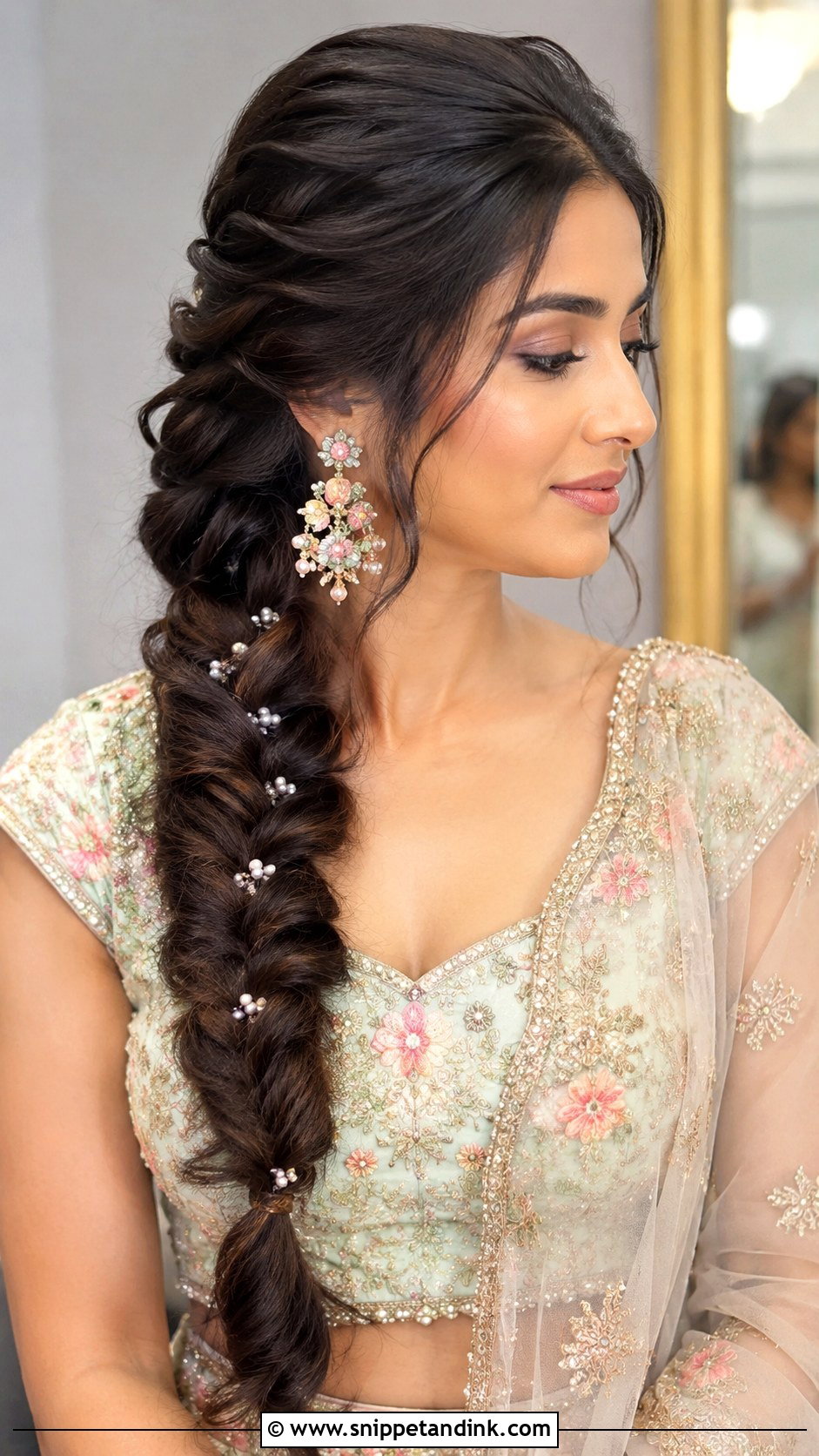
Fishtails look more intricate than a three-strand braid and need medium to long hair, or extensions added before braiding. I braid snugly and widen the edges afterward with my fingers, which gives the full finish without loosening the core. This is my pick for mehndi, haldi and daytime functions, where you want detail but not a formal updo. Small flowers, pearls or gold thread sit nicely in the weave. If you have highlighted or light hair, keep it well away from haldi paste; turmeric can leave a yellow tint.
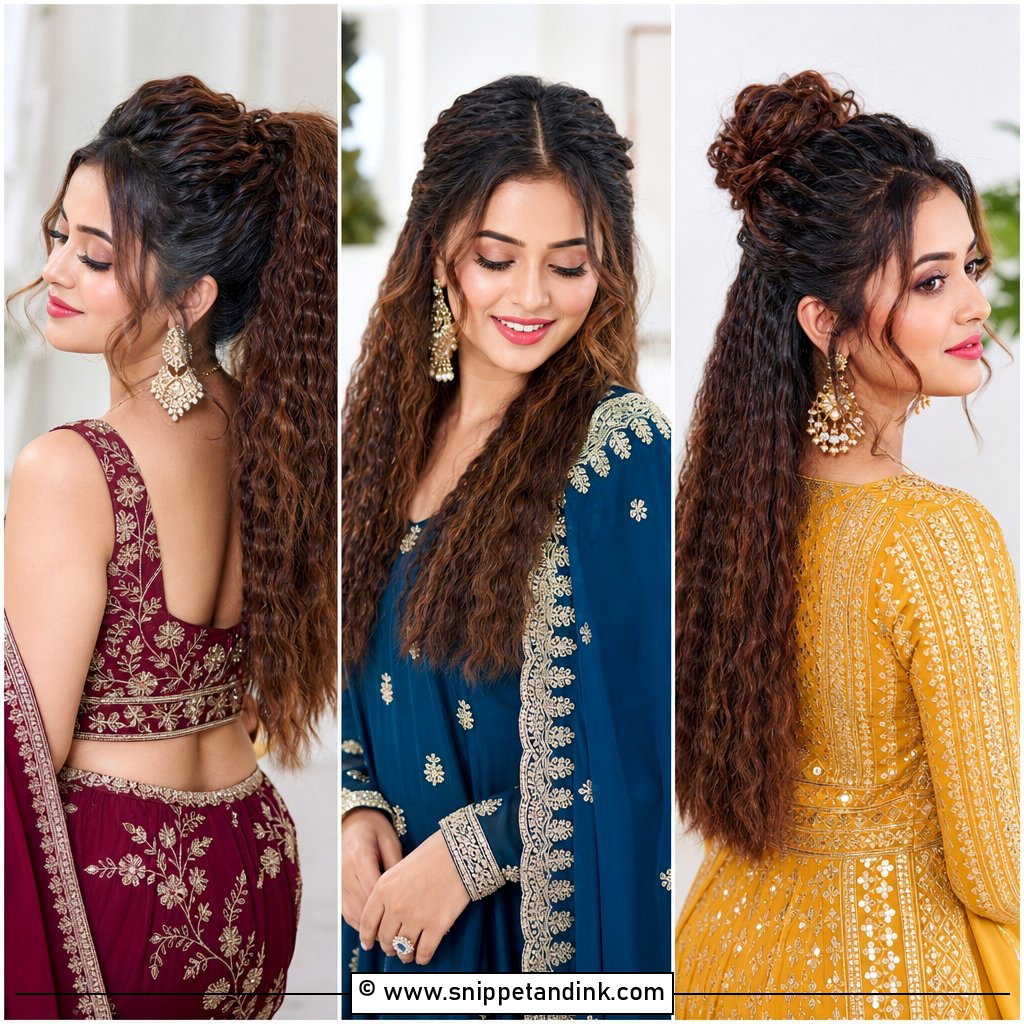
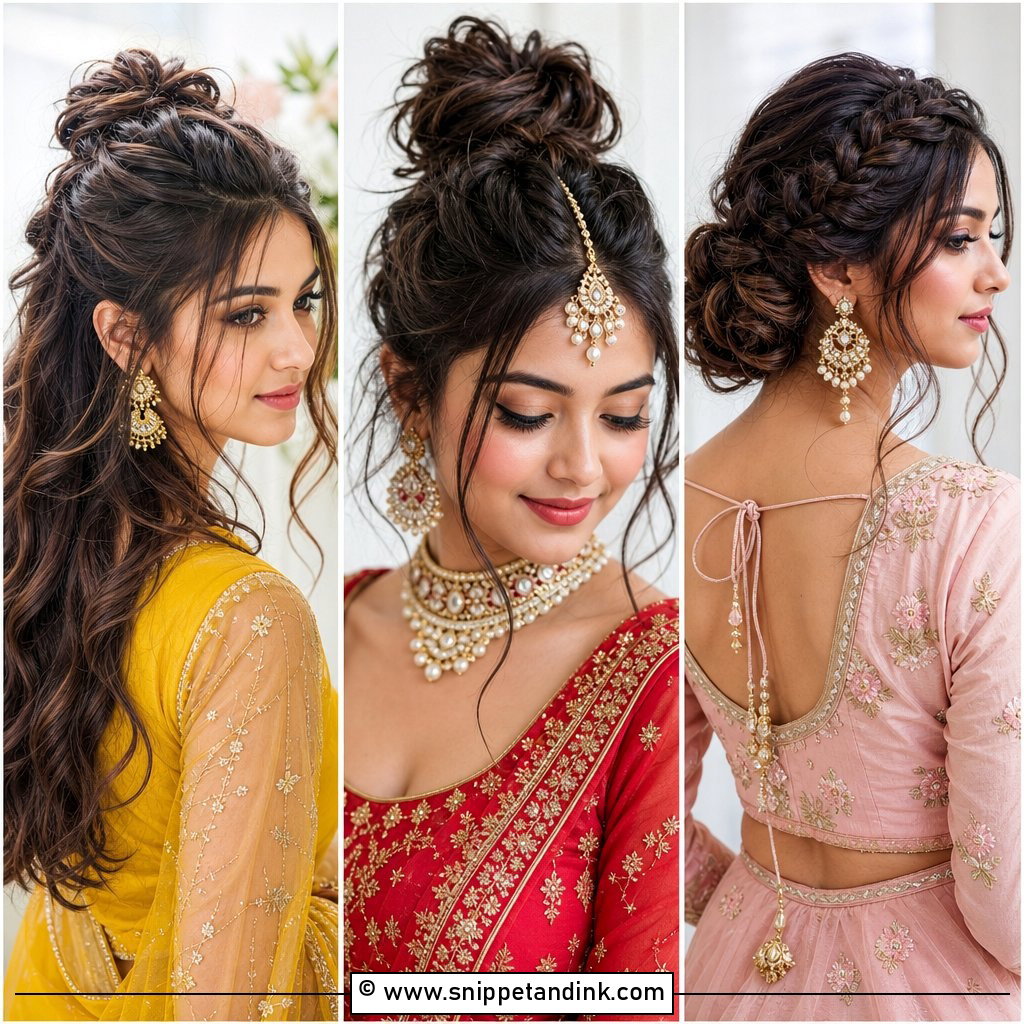
6. Side Puff Bun Indian Wedding Hairstyle
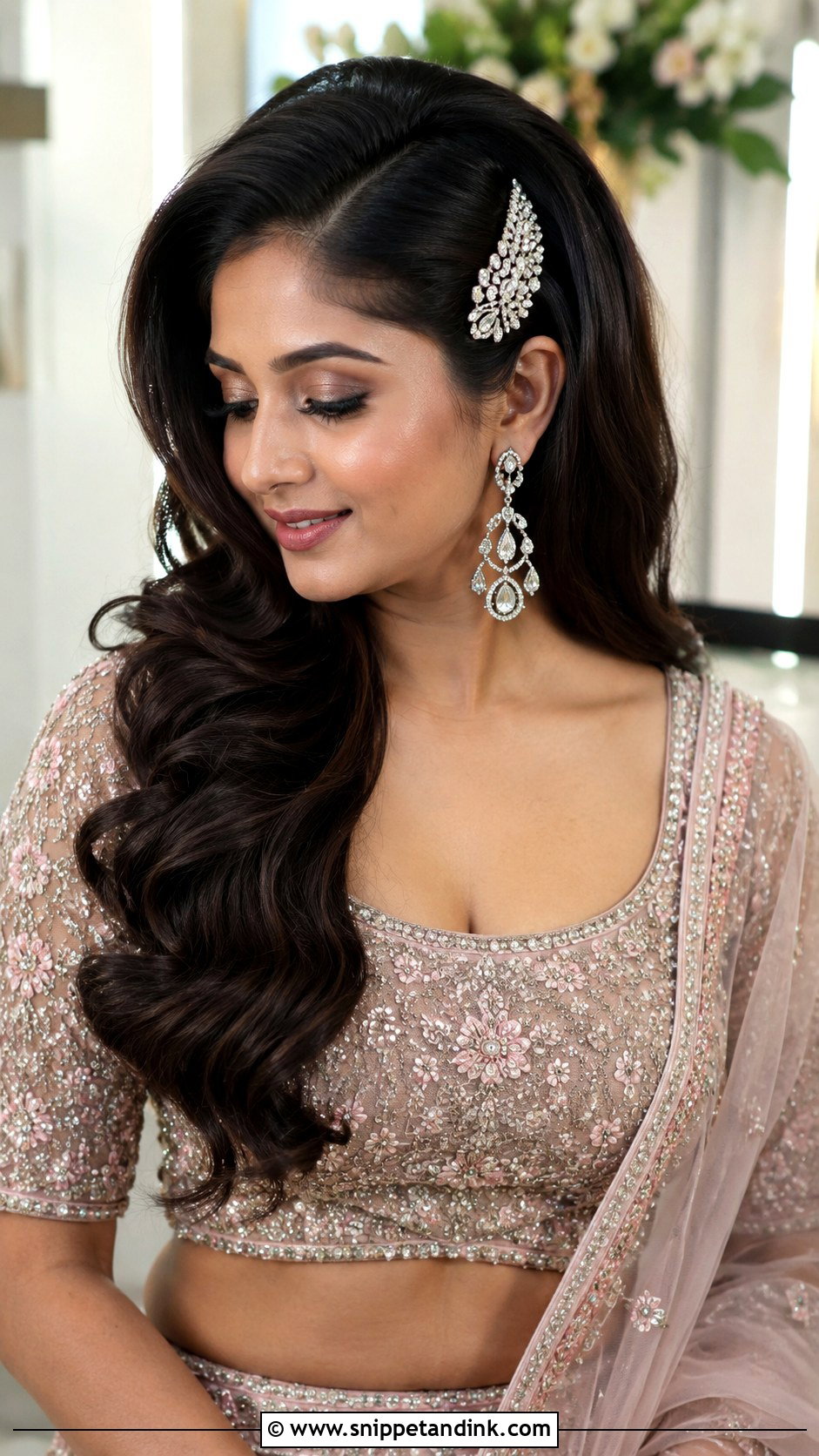
Height at the crown lengthens the face, and a side puff bun pairs that lift with a neat bun to one side. Round faces especially benefit from the extra height. I backcomb the puff at the root, smooth the top layer over it and lock it with pins in an X, then set it with spray. The bun itself can be sleek, braided or twisted. It works with a maang tikka and a choker. A puff that’s too tall starts fighting the dupatta, so I keep it moderate when the dupatta goes over the head.
7. Side French Braid Bun Indian Wedding Hairstyle
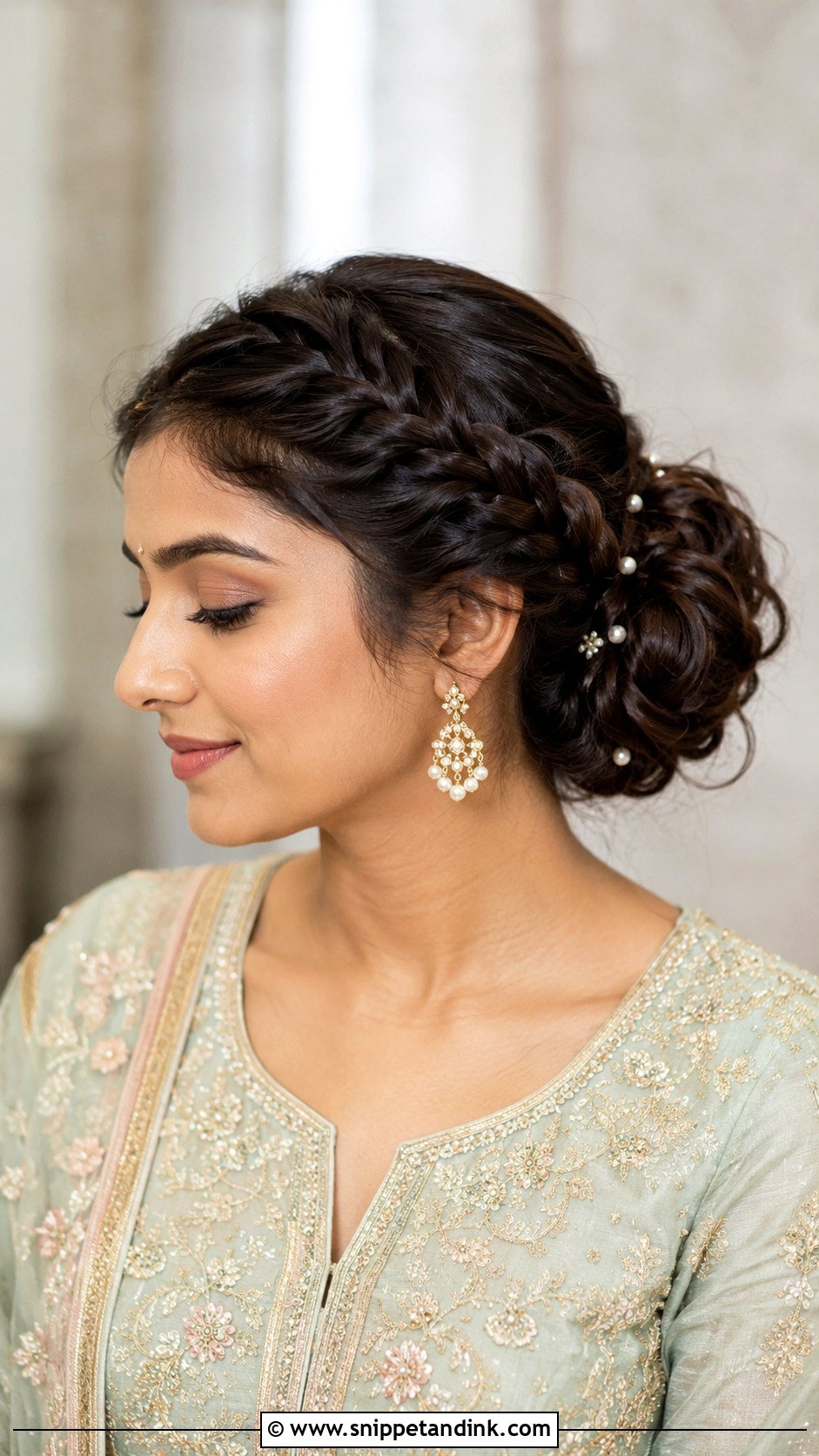
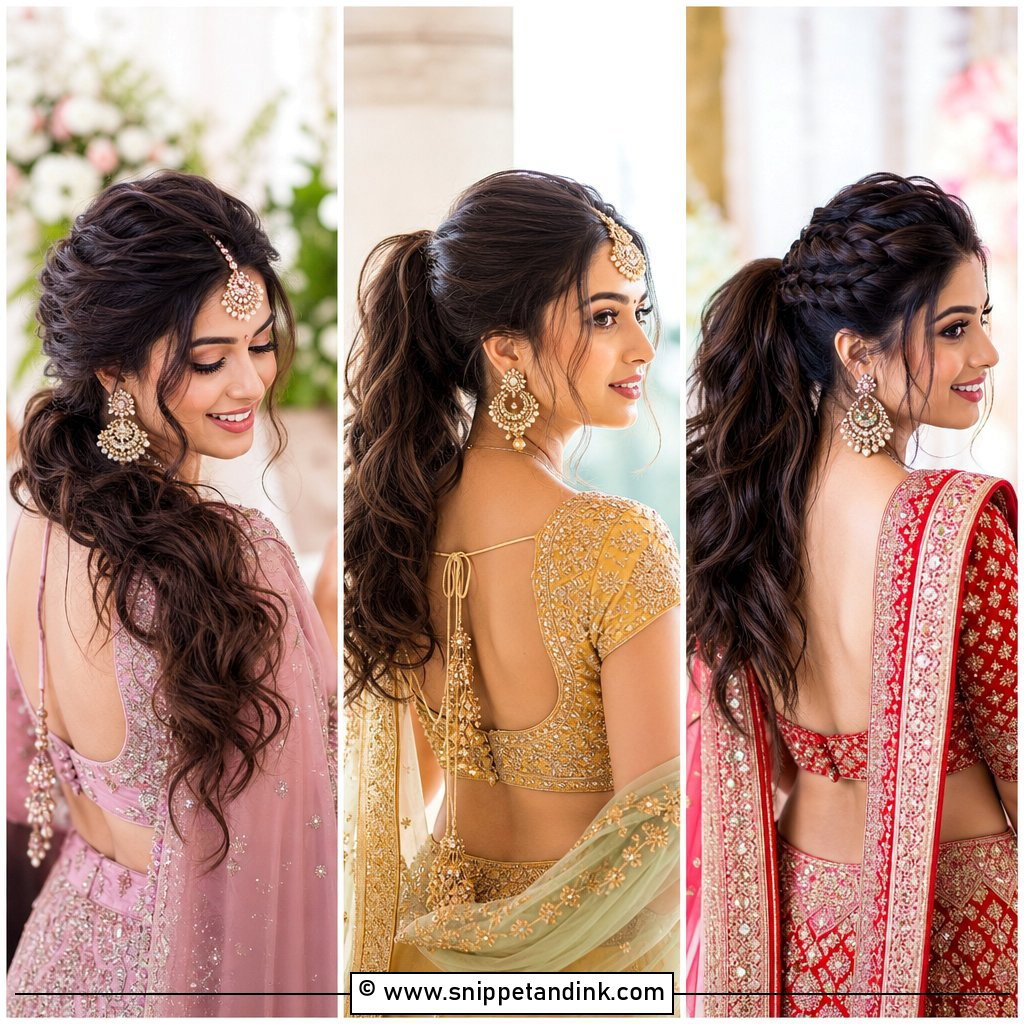
Starting with a French braid along one side and finishing in a low bun gives you detail from every angle, which helps when the photographer is moving around the mandap. The braid also tucks away short layers that would otherwise poke out around the ear. Sisters of the bride and bridesmaids often choose this one. I braid tight against the scalp so it doesn’t sag, then add small white flowers, pearl pins or a thin vine along the plait.
8. Side Open Hair Indian Wedding Hairstyle
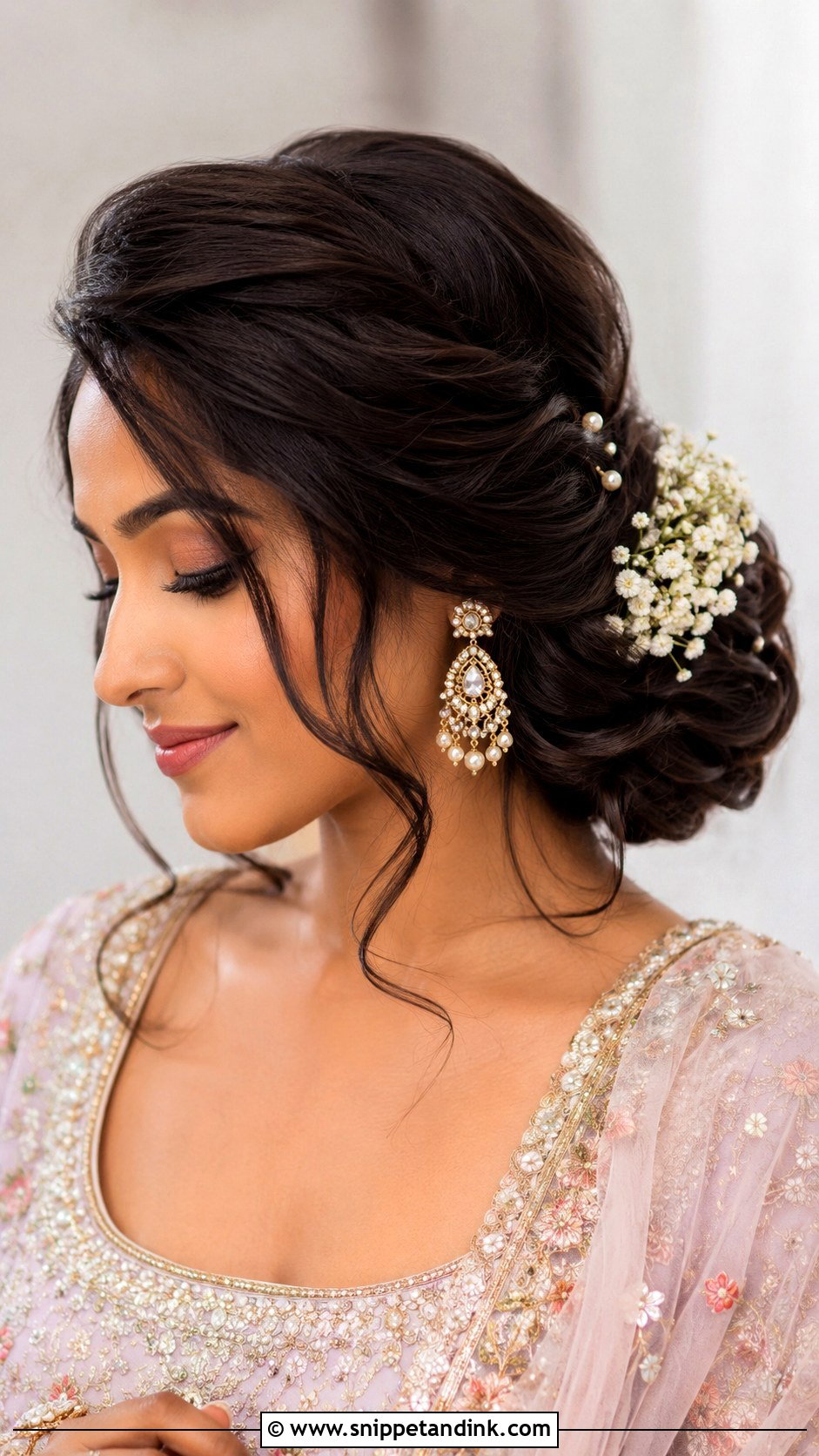
Open hair worn to one side is a reception, sangeet or engagement look. Smooth blowout ends, brushed waves or soft curls all work. I pin the lighter side back with a jeweled clip, fresh flowers or a passa so it doesn’t drift forward, and let the full side fall over the shoulder. The honest trade-off: open hair catches on embroidered blouses and earring hooks, so I wouldn’t choose it for an outfit covered in zari or stonework.
9. Side Low Bun Indian Wedding Hairstyle
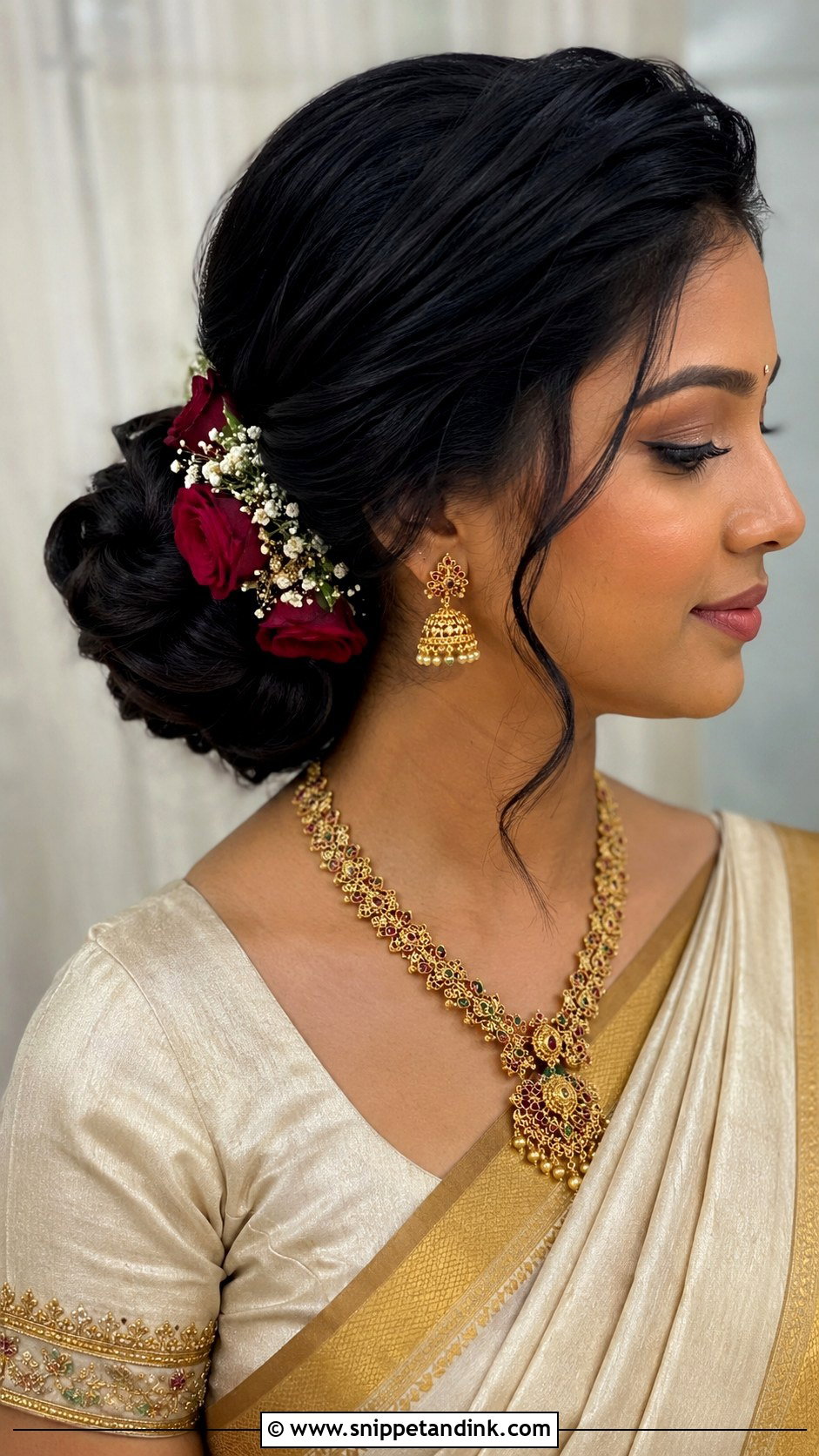
This bun sits lower on the neck than the first one on the list, which makes it more comfortable to sit with through long ceremonies. It’s also my preference when a heavy dupatta has to be pinned in place, because the bun takes the weight of the pins at the back instead of pulling at the crown. A sleek front suits sarees; soft waves suit lehengas. Wrap a gajra around it, tuck roses on one side or use a gold ornament. Mothers and guests find it easy to wear.
10. Side Ponytail Indian Wedding Hairstyle
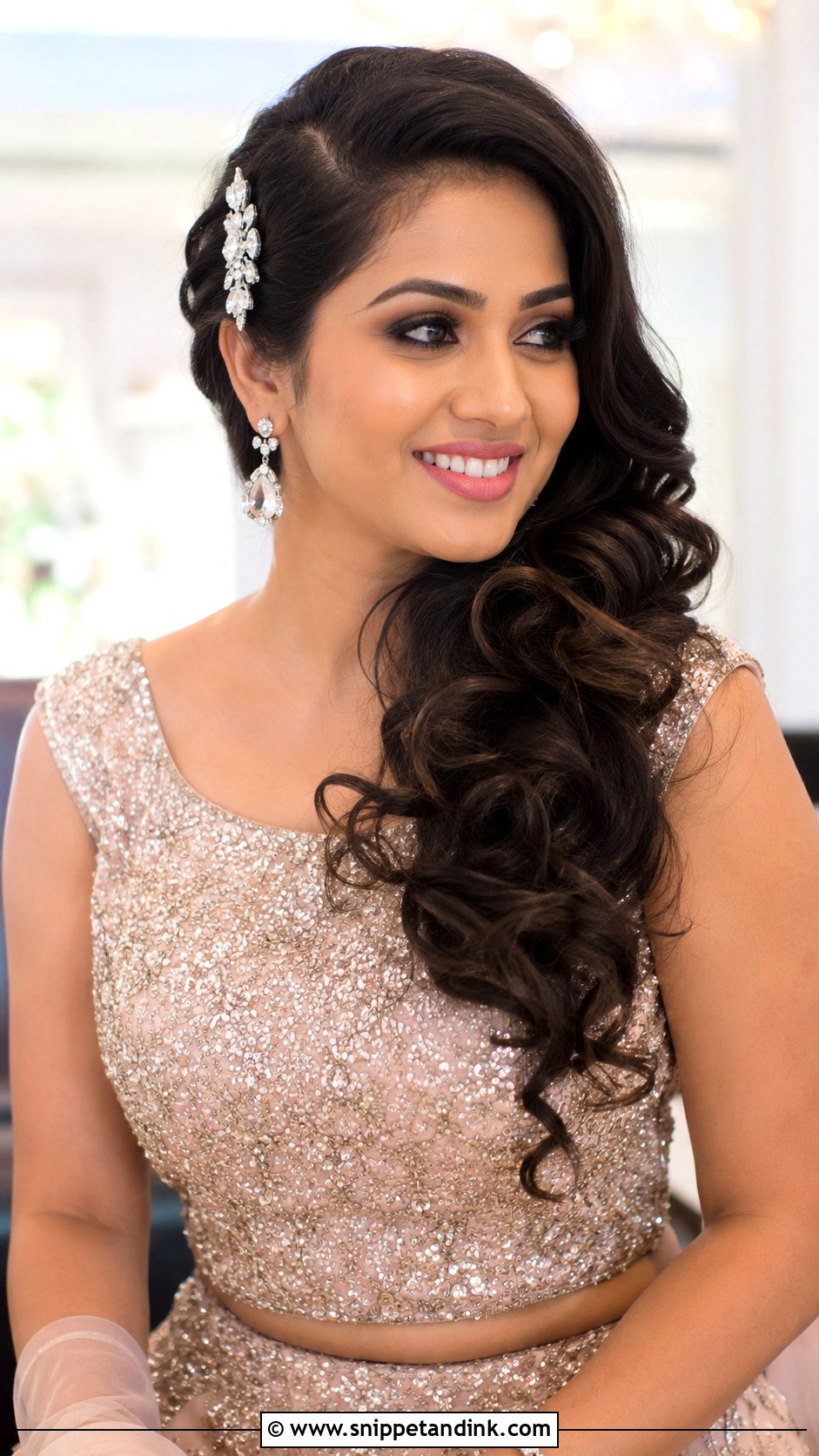
When the dancing is the point, as at sangeet, mehndi or a reception dance night, a ponytail over one shoulder is the most comfortable thing you can wear. I curl or wave the length, add volume at the crown so it doesn’t look casual, and wrap a strand of hair around the elastic to hide it. A small braid underneath keeps the tail from swinging behind you. Pearl pins or a brooch near the part dress it up. It suits lighter lehengas, fusion outfits and modern saree drapes.
11. Side Gajra Bun Indian Wedding Hairstyle
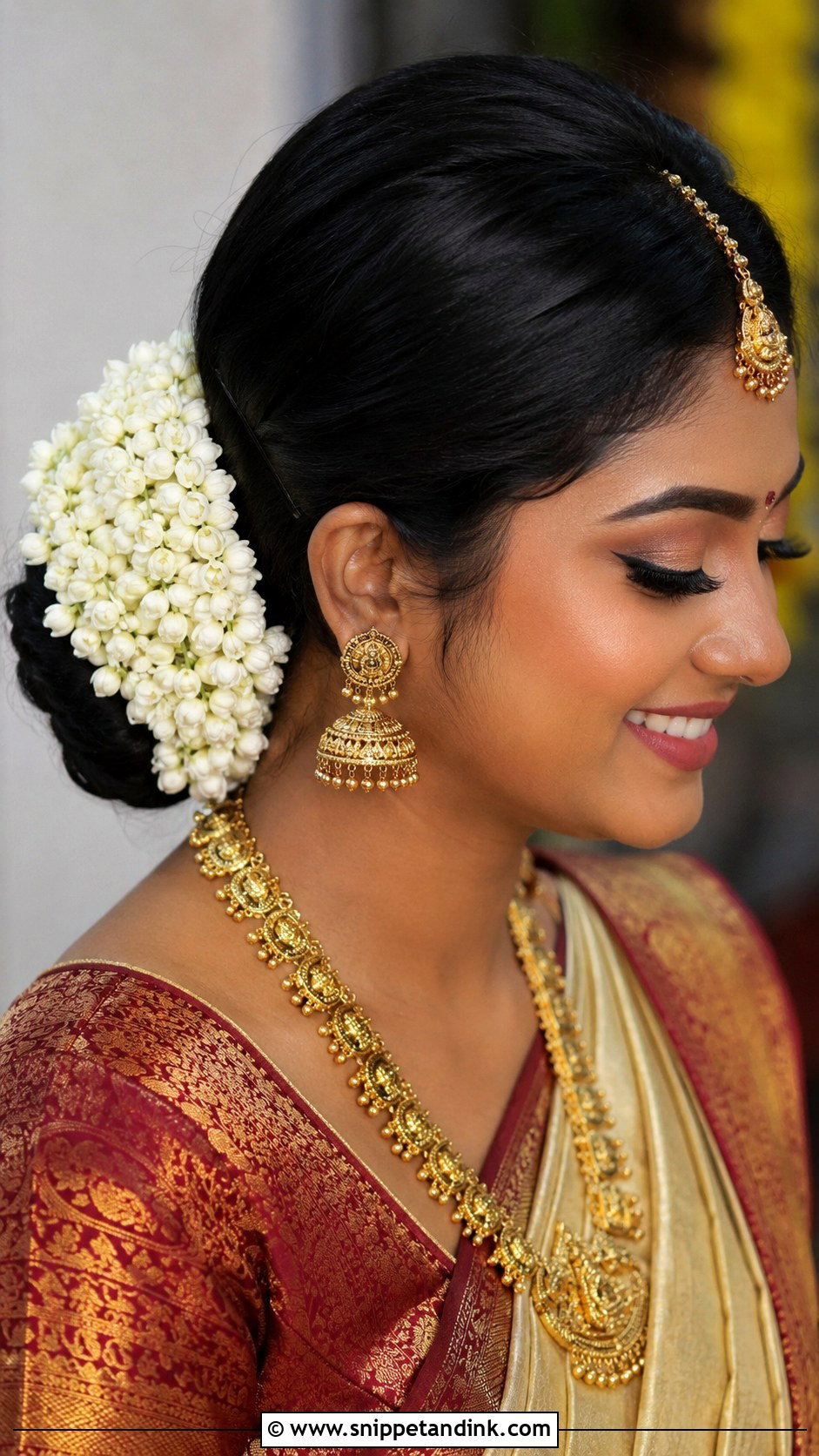
Jasmine wrapped around a low side bun is traditional for temple weddings and South Indian bridal looks, and the fragrance is part of the experience. It pairs with silk sarees and gold temple jewelry. The side placement means the gajra shows clearly in front-facing photos. I pin the gajra in several places, not just at the ends, because fresh jasmine is heavier than it looks. Keep the bun smooth under a rich silk saree or slightly textured for a softer look.
12. Side Twist Bun Indian Wedding Hairstyle
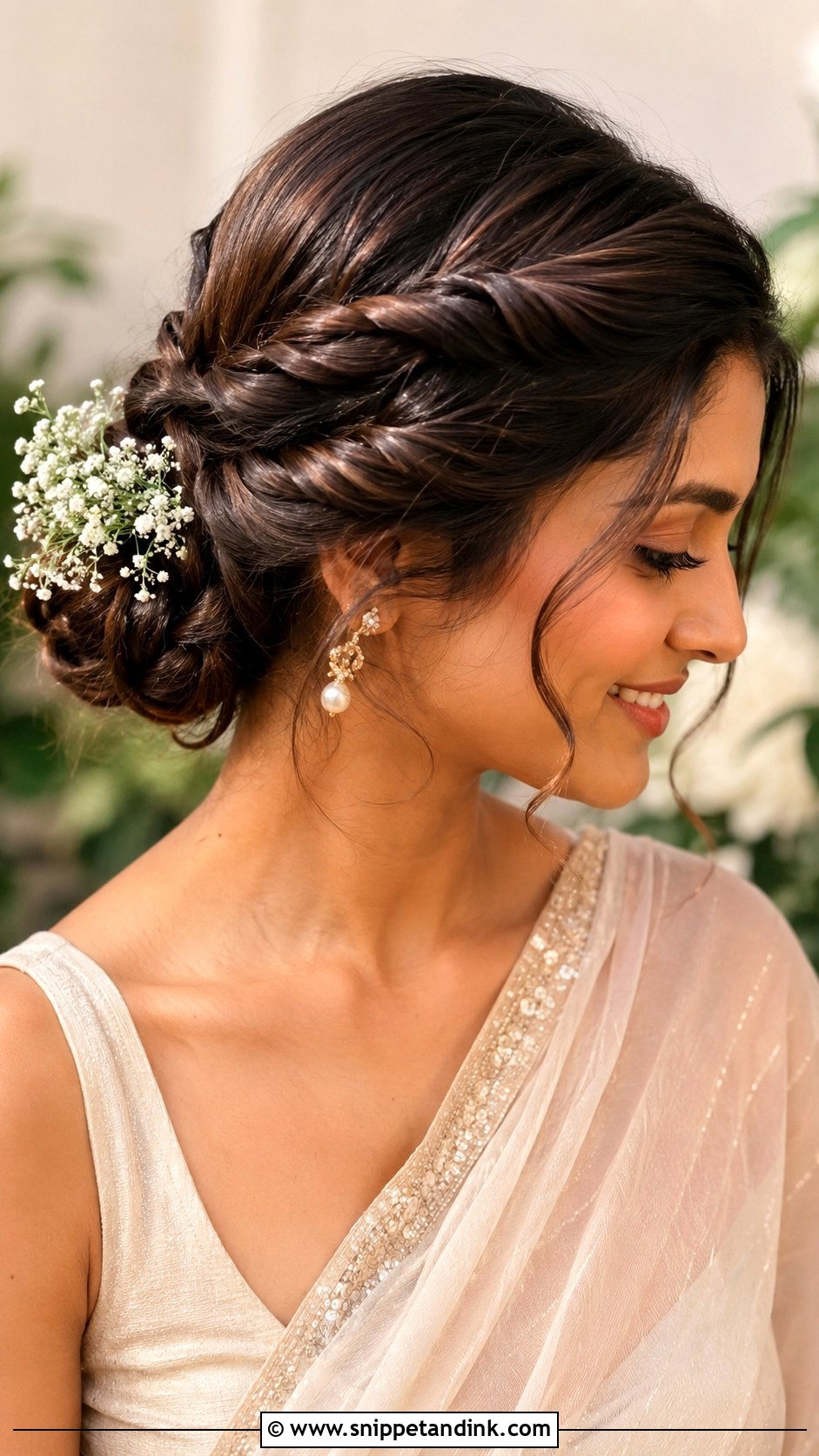
Front sections twisted back and joined into a low side bun add detail without the busy look of braids. Pastel lehengas, organza sarees and floral jewelry suit it. Twists loosen with movement more than braids, so I spray each one lightly before pinning it, and I’d choose a braid instead if you have a long day of dancing. A few soft pieces at the face keep it relaxed. Pearl pins or baby’s breath can go along the twists.
13. Side Waterfall Braid Indian Wedding Hairstyle
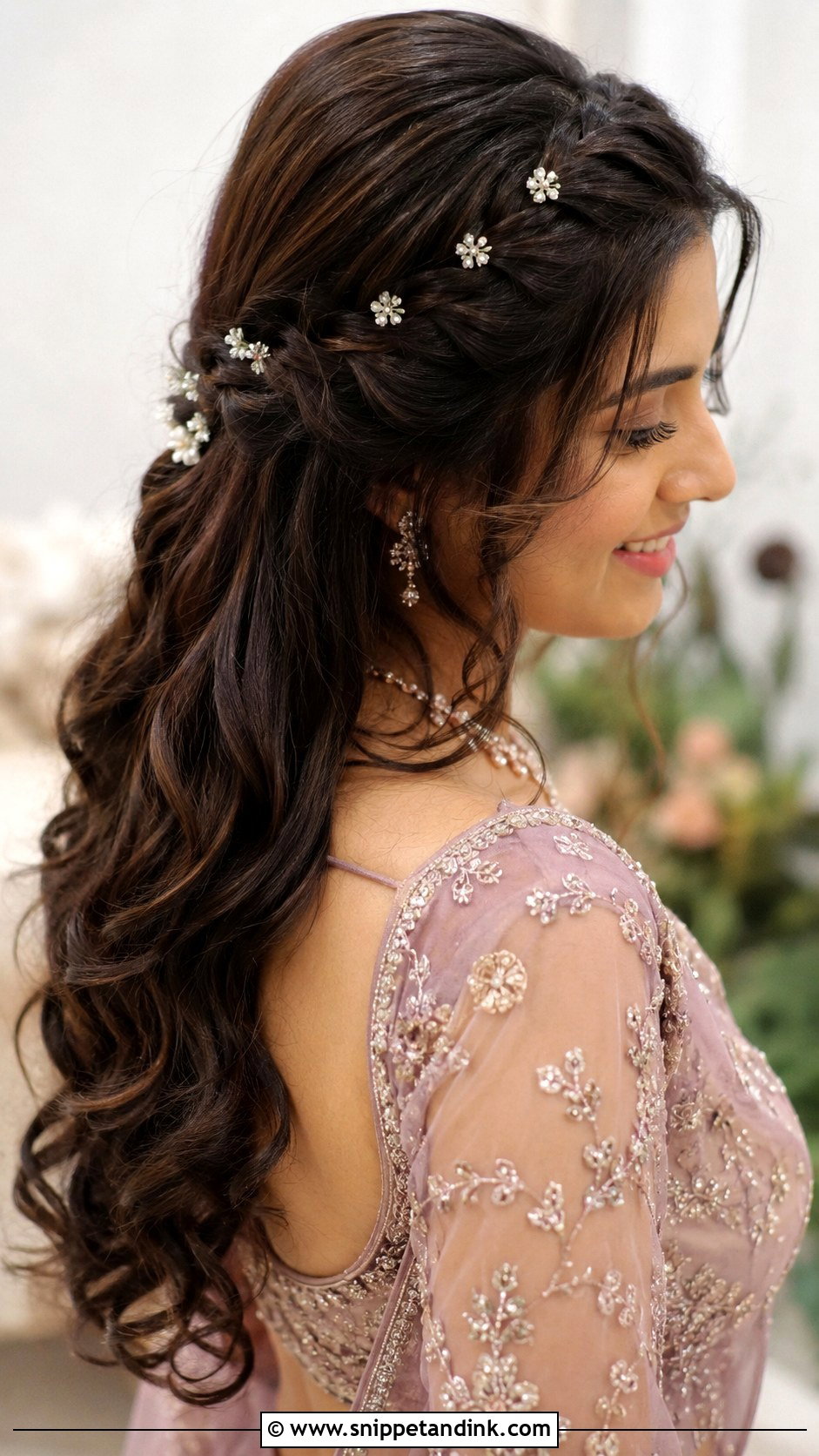
A braid that drops strands through each stitch, with curls falling underneath, gives you open hair with a decorative band across one side. It’s noticeable enough for engagement parties and mehndi functions. The falling curls need medium to long hair to show. On very straight hair I curl the dropped strands, or they disappear into the rest. Tiny flowers or a delicate clip can mark where the braid ends.
14. Side Part Bun Indian Wedding Hairstyle
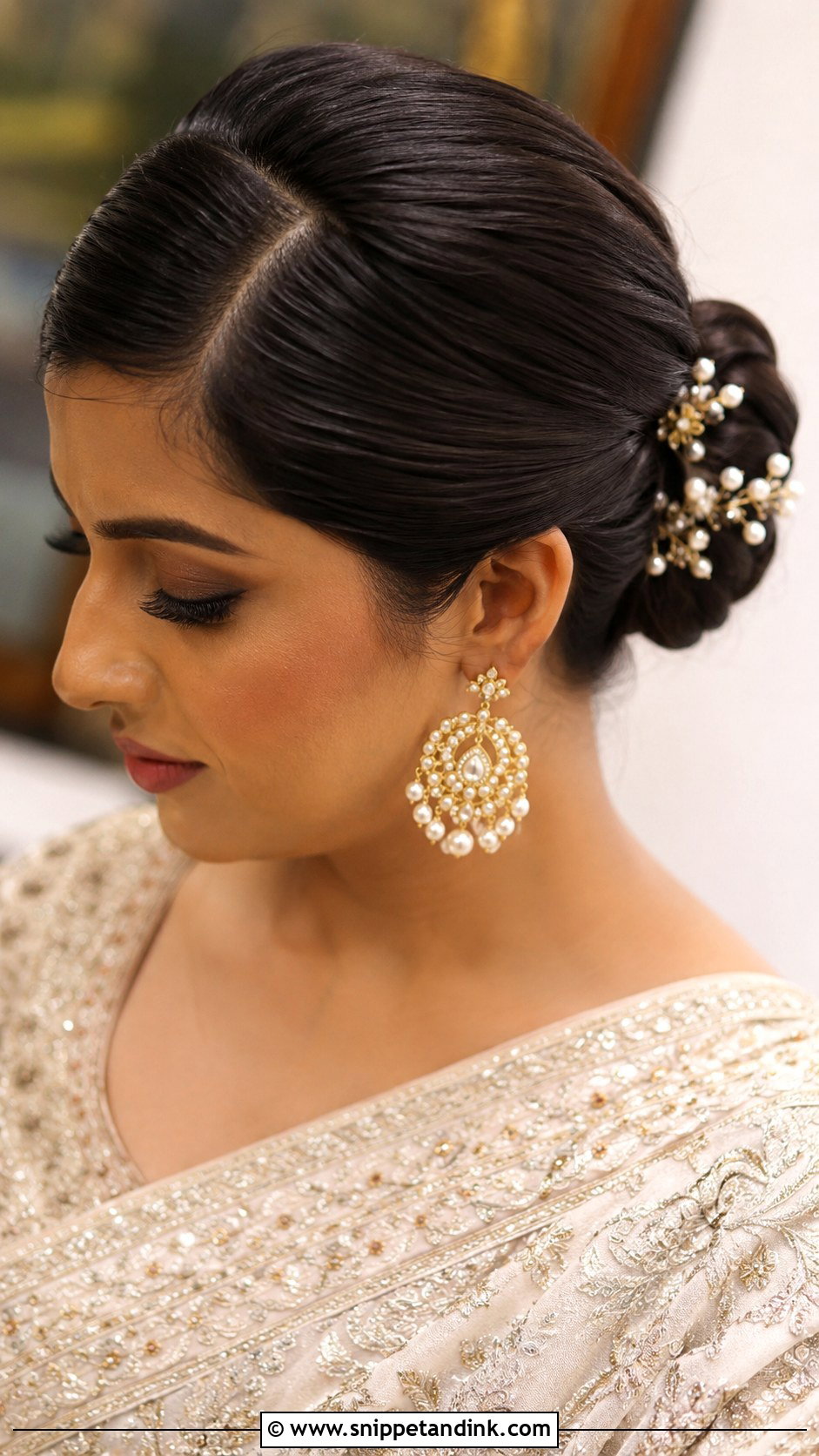
A deep side part with a secure bun is the simplest style here, and it’s the one I’d recommend for jewelry-heavy looks. The clean parting gives a maang tikka a straight line to sit along, and a passa or heavy earrings stand out against the smooth sweep. The bun can be smooth, twisted or braided. Gajra or roses for the ceremony, pearl pins or a jeweled clip for the reception. It’s quick to set, which helps on a crowded getting-ready morning.
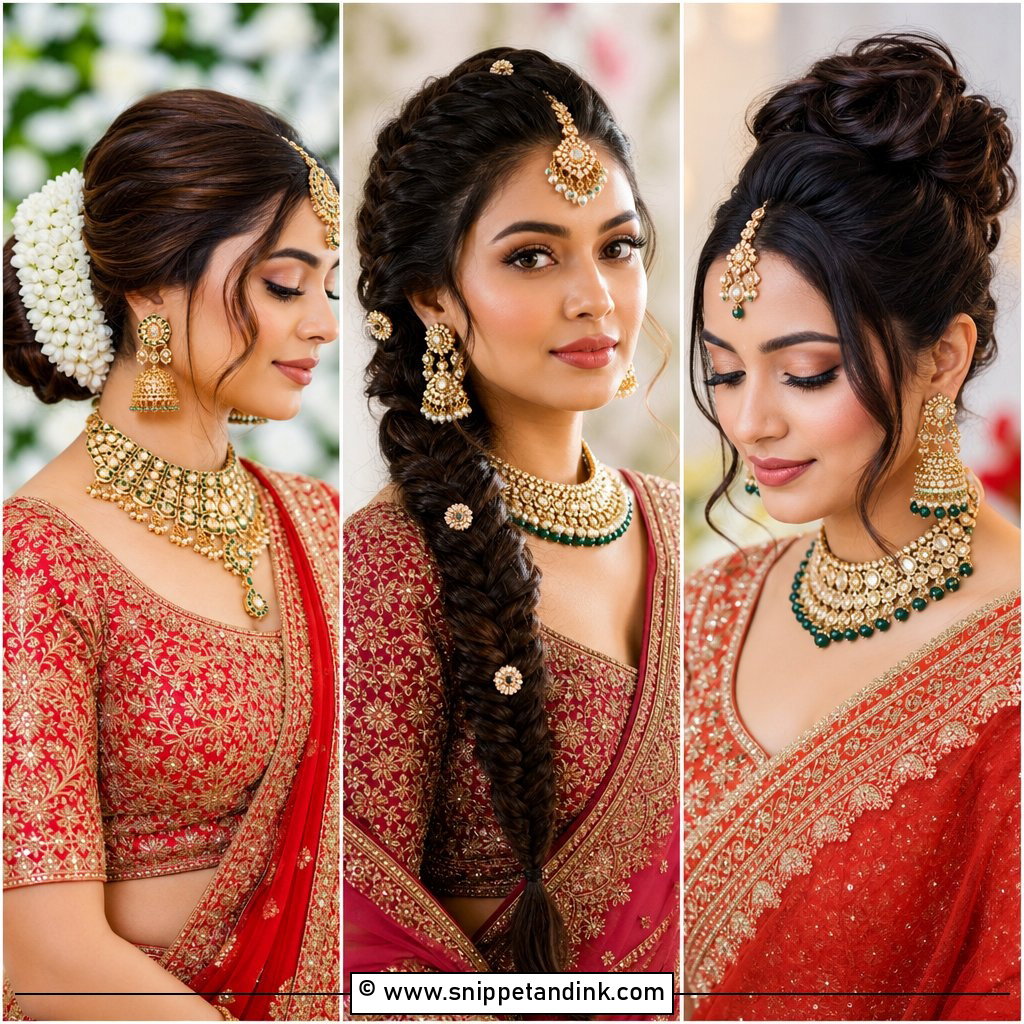

15. Side Swept Bridal Bun Indian Wedding Hairstyle
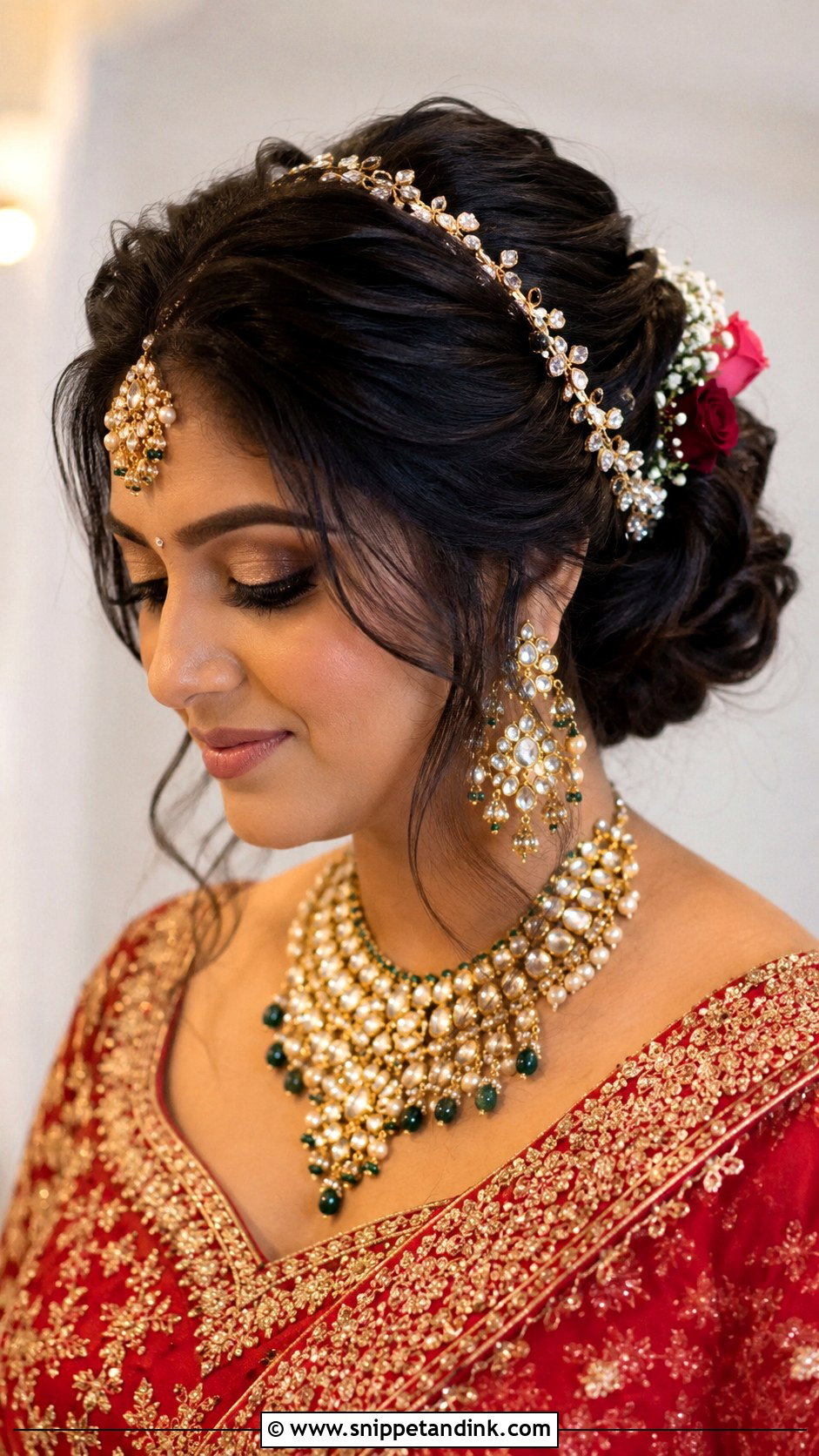
For the main wedding, this bun gives the fullest finish. The front is swept softly to one side and gathered into a voluminous bun, low or slightly off-center, which leaves a smooth area at the crown for the dupatta. I use fillers or extensions if your hair needs more volume, since the bun has to look substantial in photos from the front. Face-framing strands soften it; a sleek front makes it look more regal. Fresh flowers, kundan pins or a hair vine finish the look.
Hours Under a Dupatta Near the Havan Fire
The main ceremony is hard on hair. You sit for long stretches, the havan throws off heat and smoke, the dupatta adds weight at the back, and the pheras mean standing up and walking with the dupatta tied to your partner’s shawl. Heat softens hairspray and drops curl faster, so for the ceremony I’d lean toward a bun or a braid rather than open curls.
- Keep the gajra in the fridge wrapped in a damp cloth until the last minute. Jasmine browns quickly in heat, and a gajra pinned an hour early looks tired by the pheras.
- Ask for a few extra U pins hidden near the bun so a family member can re-pin the dupatta without touching the hair.
- Use a firm-hold spray for the ceremony and a lighter, flexible one for the reception, when movement matters more.
From pheras to reception without a full restyle
Plenty of brides want a different look for the reception. If you know that in advance, tell your stylist; they can pre-curl the hair before building the ceremony bun. Later, the bun comes down into waves that only need a quick pass with the iron, which is far faster than starting again from straight hair.
Match Each Function to the Hair It Can Handle
A braid holds best through dancing and rituals. A bun gives jewelry and dupattas a firm base. Curls are best saved for the reception, when there’s less on your head. Match the style to your outfit weight, how your dupatta will be pinned, your jewelry and each event. Brides should always do a trial with the actual jewelry and dupatta. With the right pins, texture and finishing spray, any of these will last from the first photos to the last function.
You'll Like These Ideas:


Leave a Reply