
Mathapatti hairstyles live or die at the hairline. The piece is three chains, one down the parting and one along each side of the forehead, and all three have to sit level for hours while you move, bow and get hugged by every aunt at the wedding. A hairstyle can look perfect at the back and still fail if the front can’t hold the hooks. So in the fifteen styles below I’ve paid as much attention to the front as to the bun or braid, and noted where a heavy dupatta, a passa or open hair makes things harder. Brides, bridesmaids and guests can all borrow from them.
Hooks, Chains and the Hidden Pins Underneath
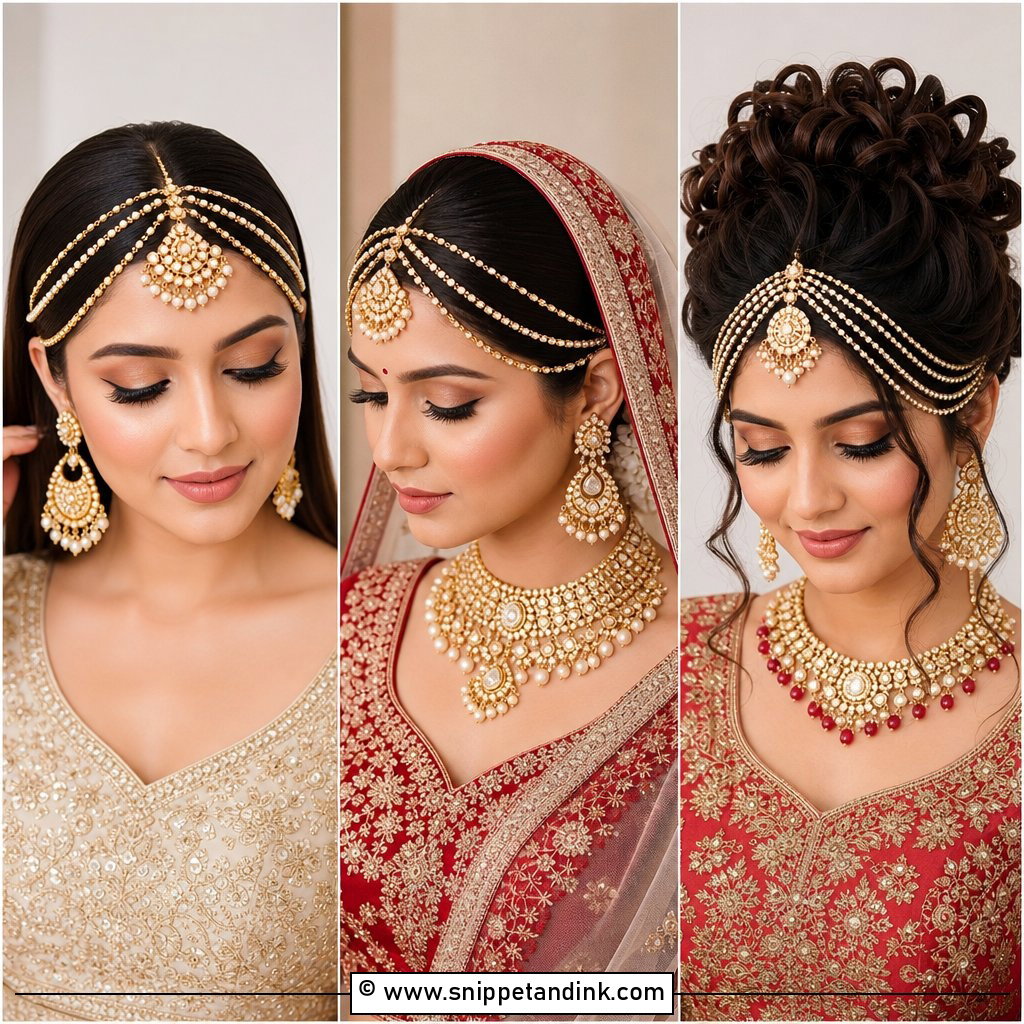
Most mathapattis have a center chain with a pendant, like a maang tikka, plus two side chains that run along the hairline and end in hooks near the ears. The hooks are the weak point. Hooked straight into loose hair, they slide down as soon as you start moving, and the whole piece tilts toward whichever side is heavier.
So I build anchors into the hair first and attach the jewelry to those:
- Pin the center chain at the top of the head with two bobby pins crossed over its hook, hidden under a small section of hair.
- Make a tiny pin curl or set a pair of crossed pins above and slightly behind each ear. That’s where the side hooks go.
- Lay the side chains along the hairline and check that both pendants hang at the same height before hooking them in.
- Pin a section of hair lightly over each hook to hide it.
Many mathapattis have side chains that are too long for a smaller head, and the extra length droops below the ear. Ask your jeweller whether the chains can be shortened or fitted with an adjustable hook. A few links less makes a real difference to how level the piece sits.
1. Mathapatti Bridal Bun
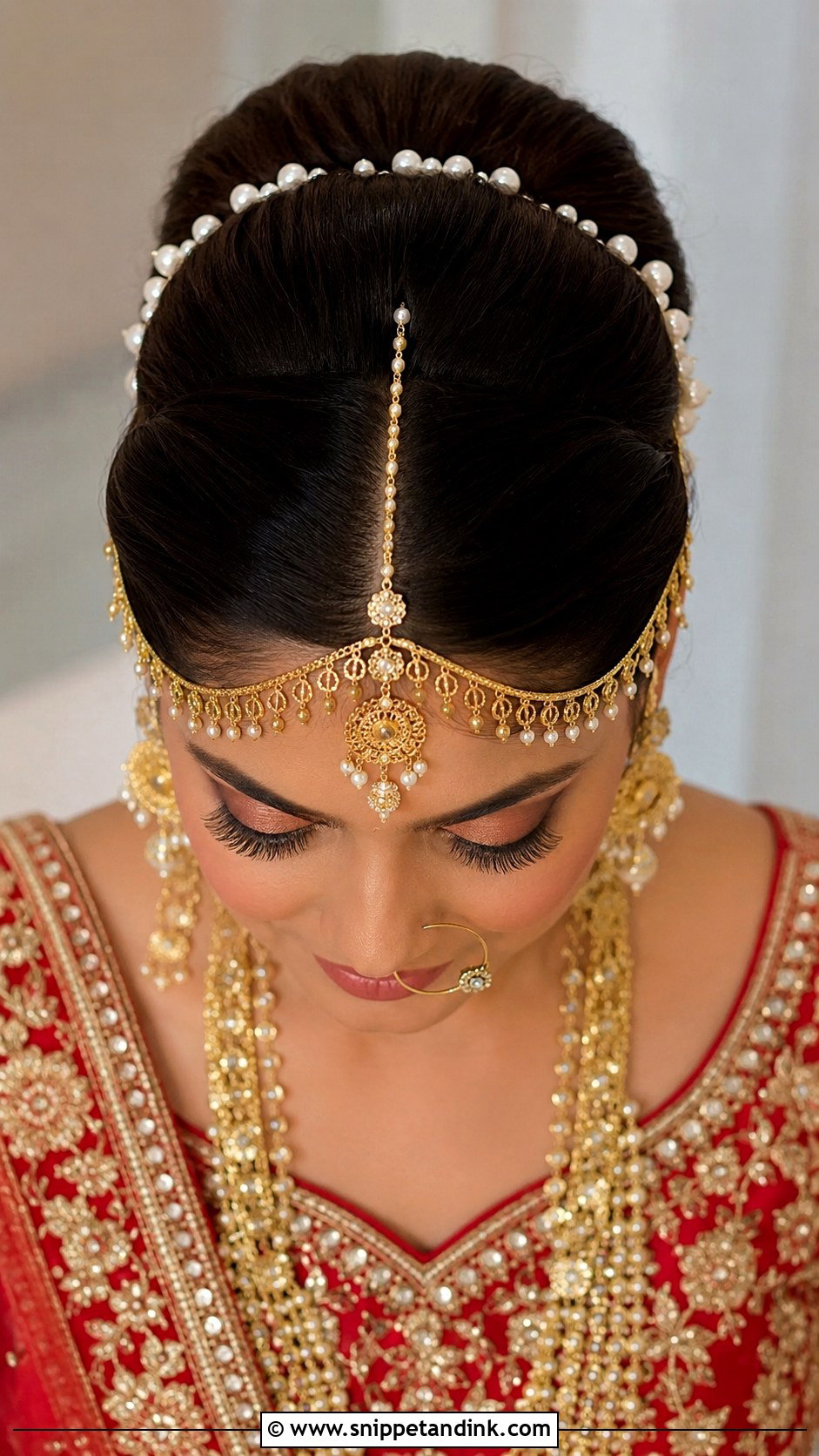
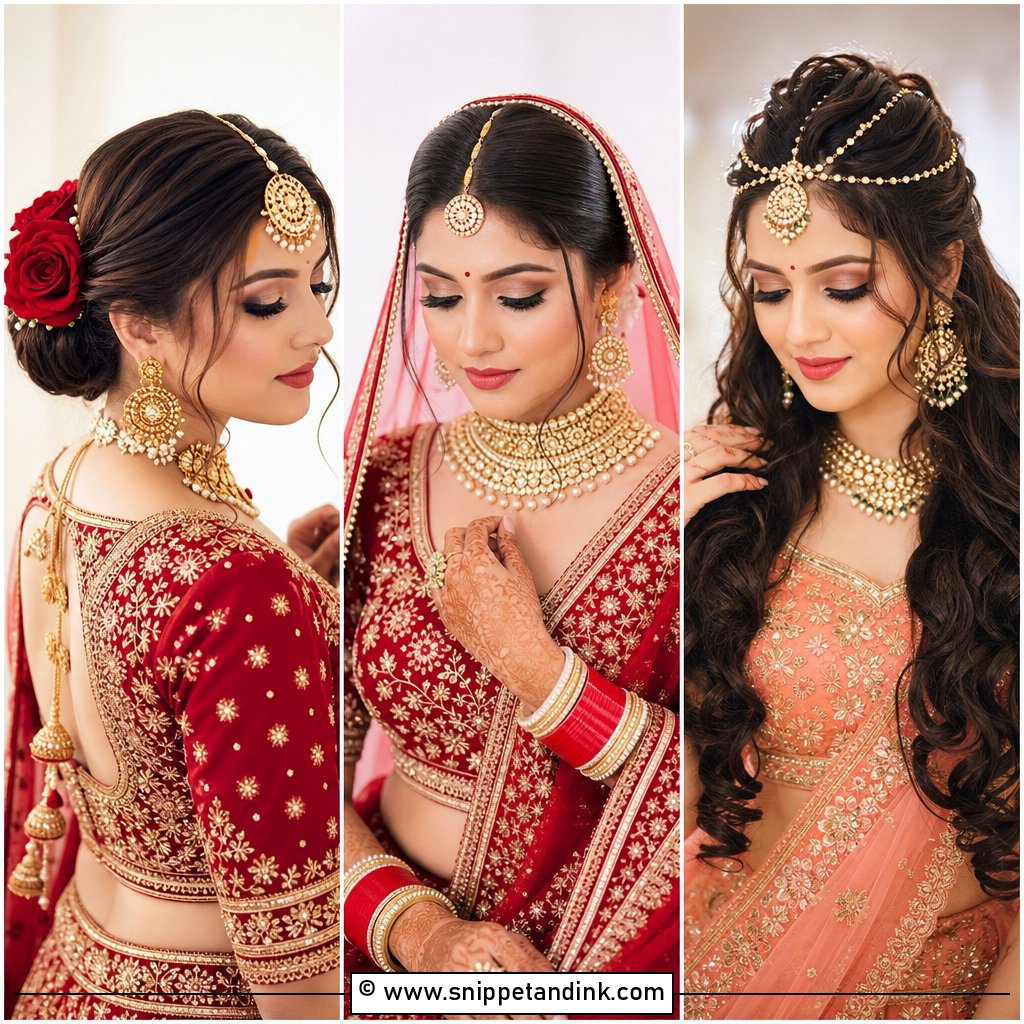
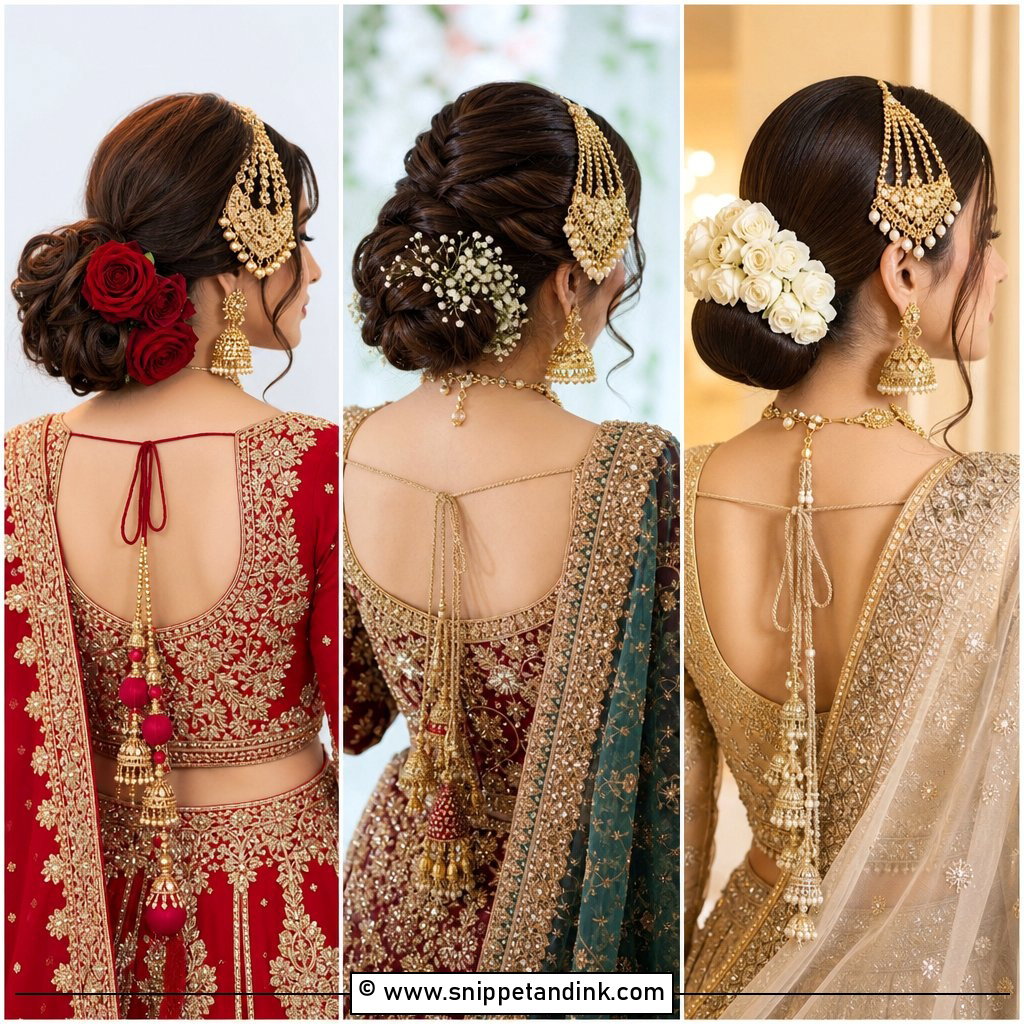
A classic bun keeps everything behind the ears neat, which leaves the mathapatti as the main event. The center part gives the middle chain a straight line to follow. I add a little volume at the crown first; on a completely flat head, the chains look painted on rather than worn. A low or mid bun takes jasmine, roses or pearl pins around its base. With a heavy dupatta and a long ceremony, this is the safest starting point.
2. Mathapatti Low Bun
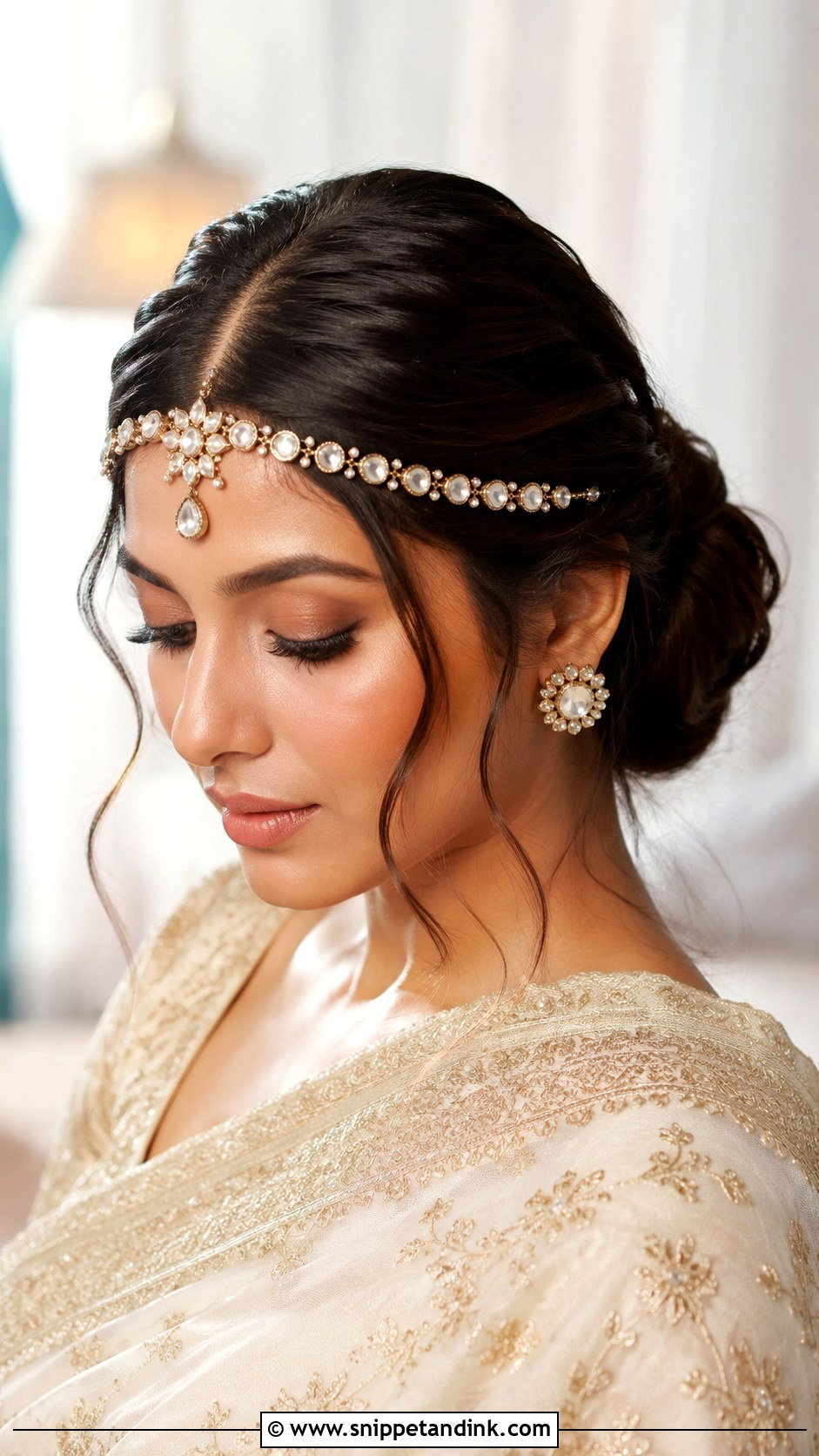
With the bun close to the nape, there’s nothing at the crown for a veil or dupatta to tent over, so the fabric lies flat over the side chains instead of lifting them. I suggest it when the jewelry is heavy and the bride doesn’t want height. A sleek center part keeps the mathapatti even. Soft side pieces can relax the face, but keep them behind the side chains, not over them, or they’ll tangle with every turn of the head.
3. Mathapatti Sleek Bun
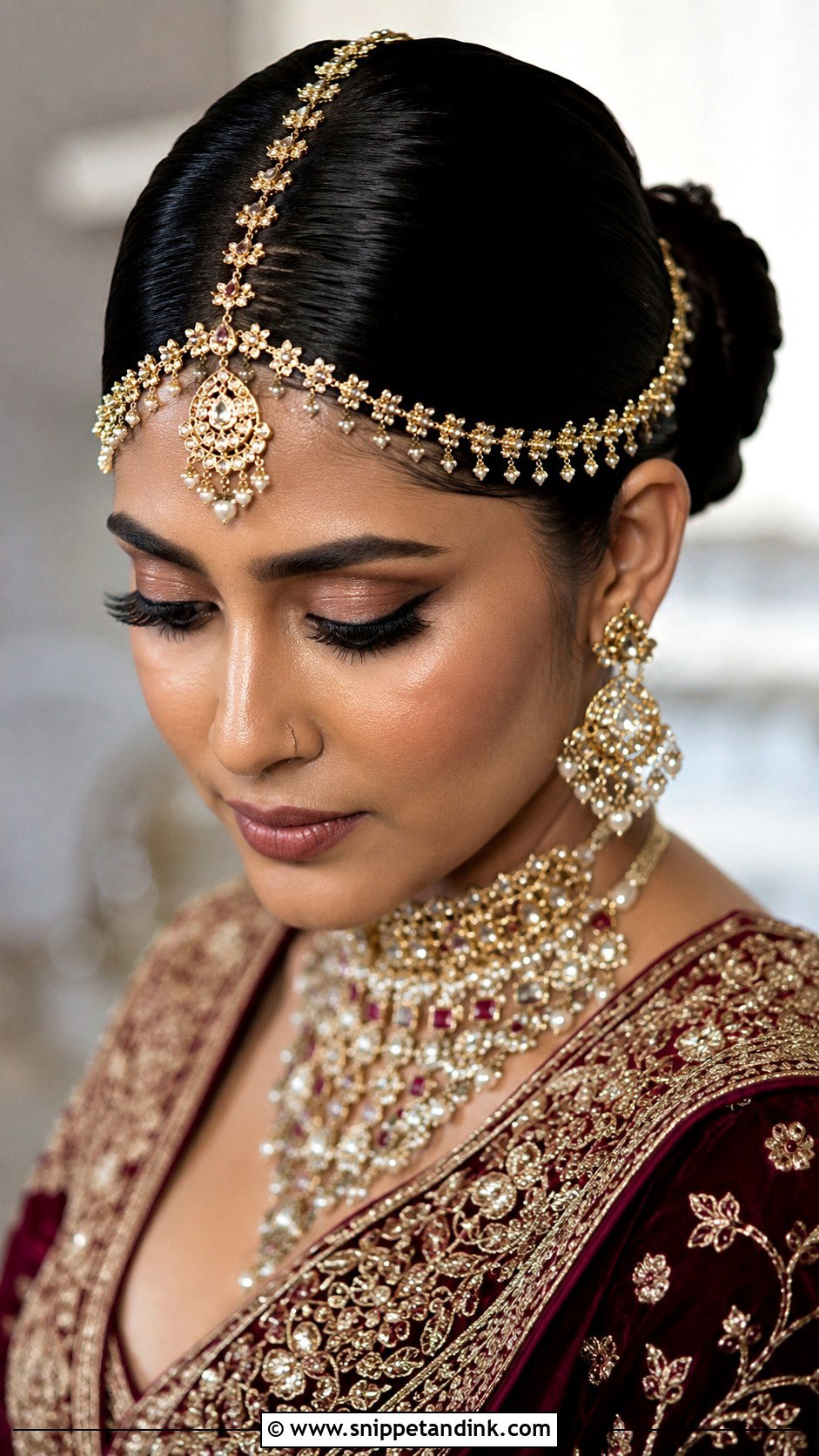
Smoothed back from a precise center part, a sleek bun makes the mathapatti the only detail on the head. It suits bold eye makeup, structured lehengas, silk sarees and big necklaces. There’s no texture to hide behind, though, so a lumpy hairline or a crooked part shows instantly. I set the front with a firm gel while the hair is slightly damp, then hide two pins under each side chain before the jewelry goes on. It photographs especially well under evening lighting and at receptions.
4. Mathapatti Messy Bun
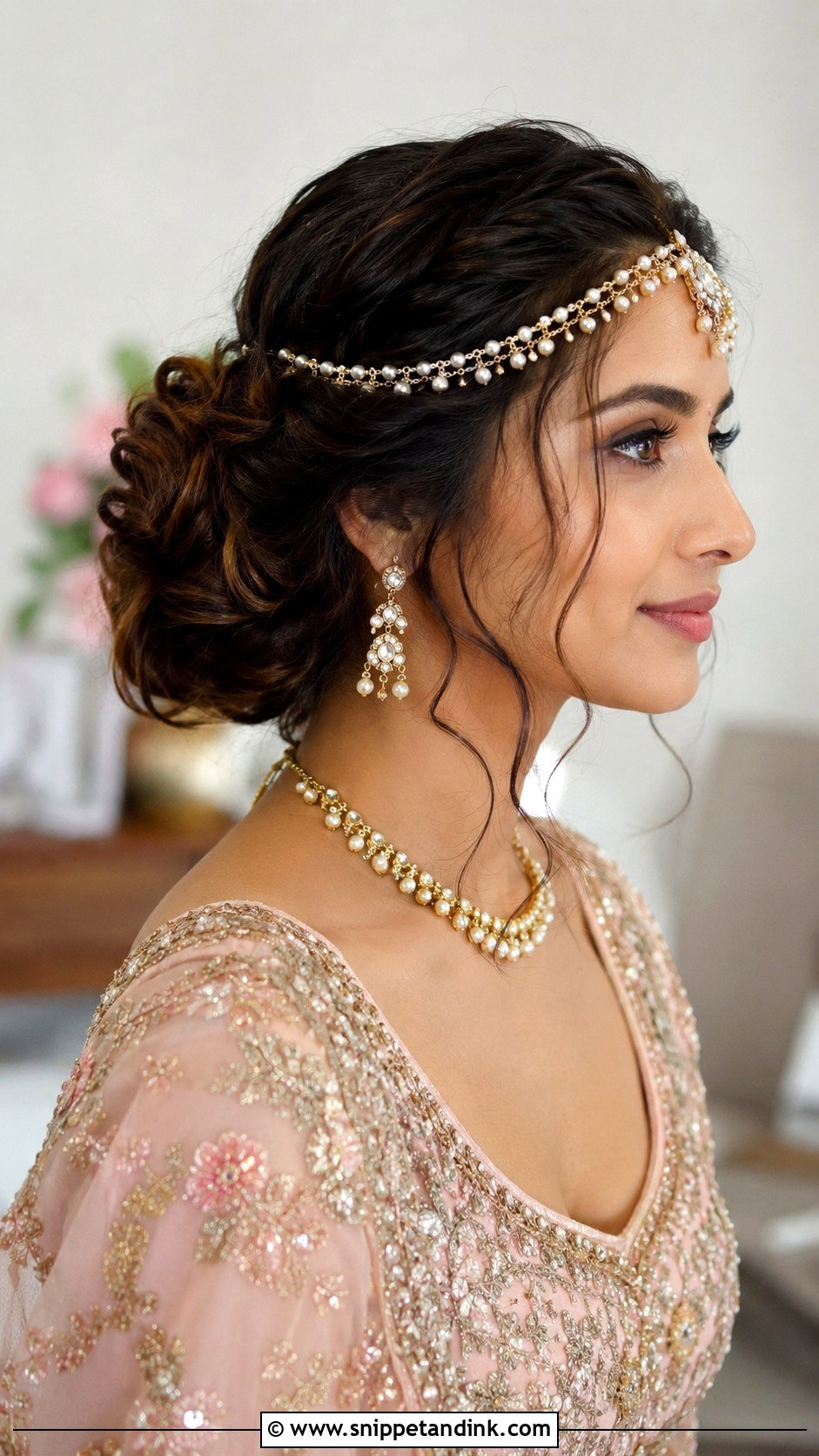
Loose texture around the bun with a structured mathapatti at the front gives you a nice contrast: soft at the back, precise at the face. It suits outdoor weddings, pastel lehengas and floral jewelry. Keep the front tidy enough to hold the side chains, then add soft twists or pinned curls behind. The word messy is misleading here. A good textured bun needs more pins than a sleek one, because each loose section has been placed on purpose.
5. Mathapatti Bun With Gajra
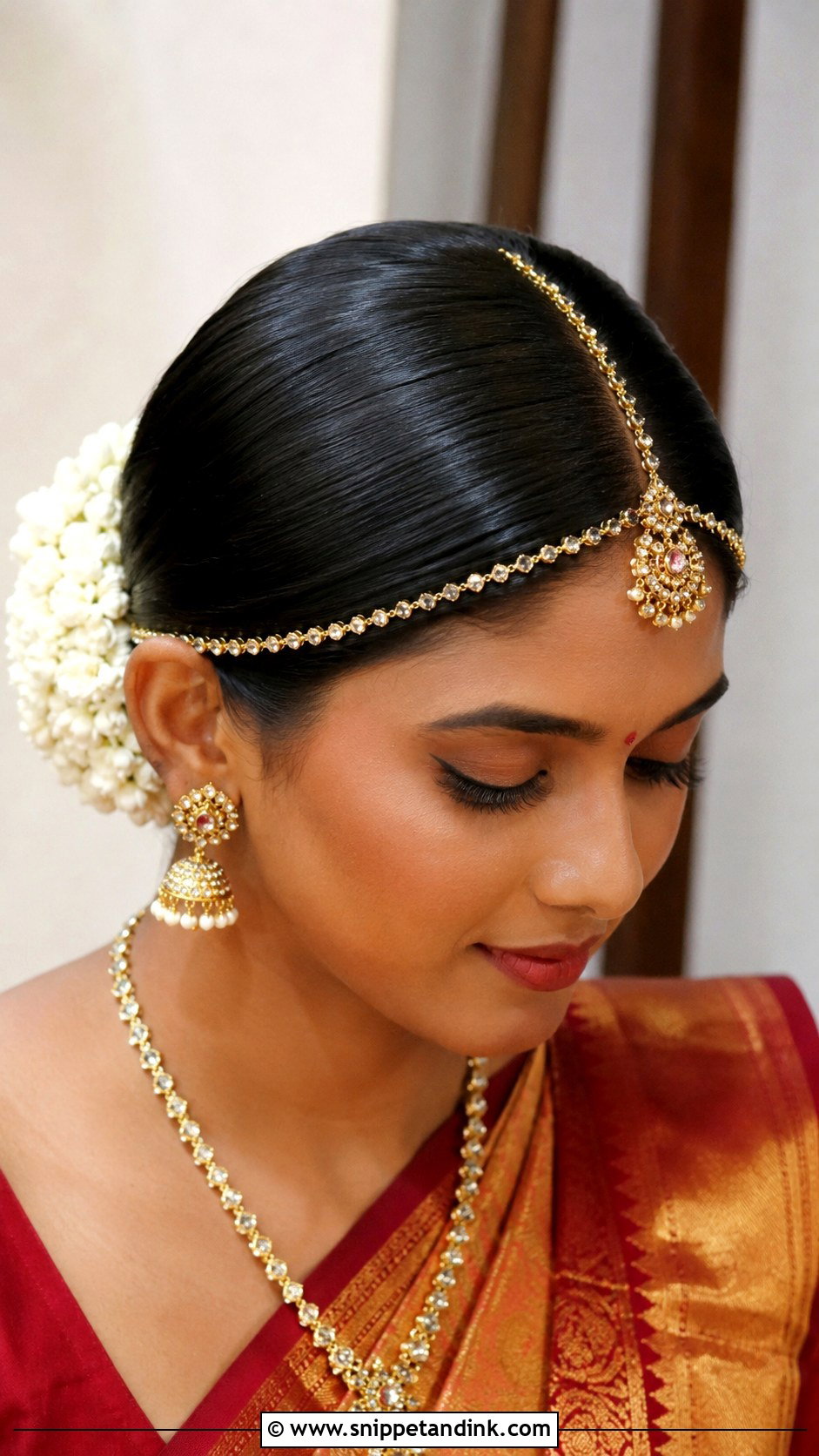
A mathapatti bun with gajra is the most traditional pairing on this list. The mathapatti frames the face and the jasmine wraps the bun, so the head reads as detailed from every side. It’s a natural fit for pheras, temple weddings, South Indian ceremonies and bridal saree looks. The bun has to be firm to carry the flowers, so I pad it on medium hair. A full jasmine ring looks richer; a small crescent of flowers looks lighter and lets the side chains show more. Expect strong fragrance in a closed hall.
6. Mathapatti Braided Bun
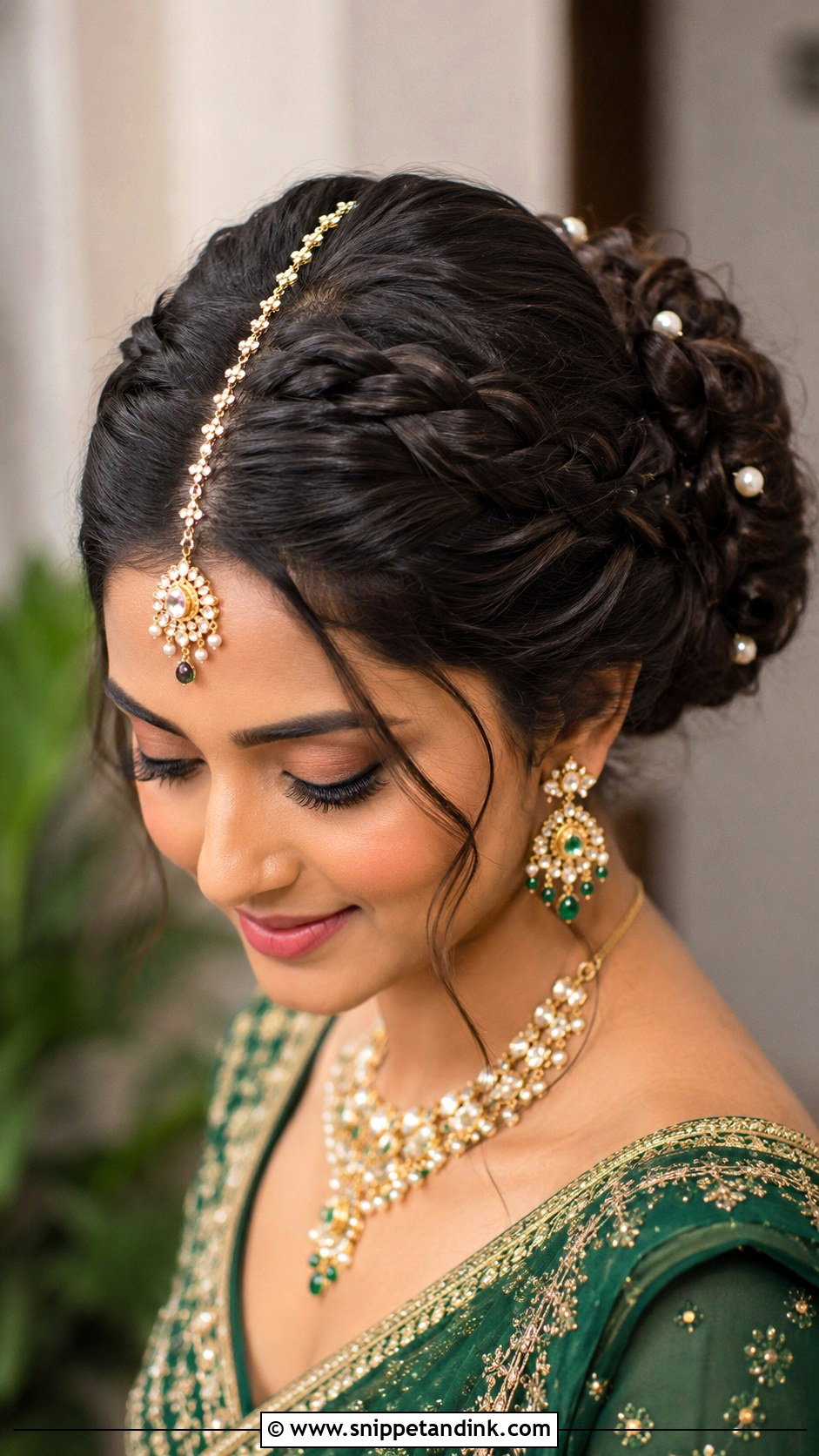
Wrapping a braid into the bun, or running one across the crown before pinning it at the back, gives more texture than a plain bun. That texture shows up most on dark, glossy hair, where light catches each ridge. A braid across the crown has a practical bonus: it gives the side hooks something firm to catch, so the mathapatti sits tighter. Pearl pins, tiny flowers or gold accessories can go along it.
7. Mathapatti Long Braid
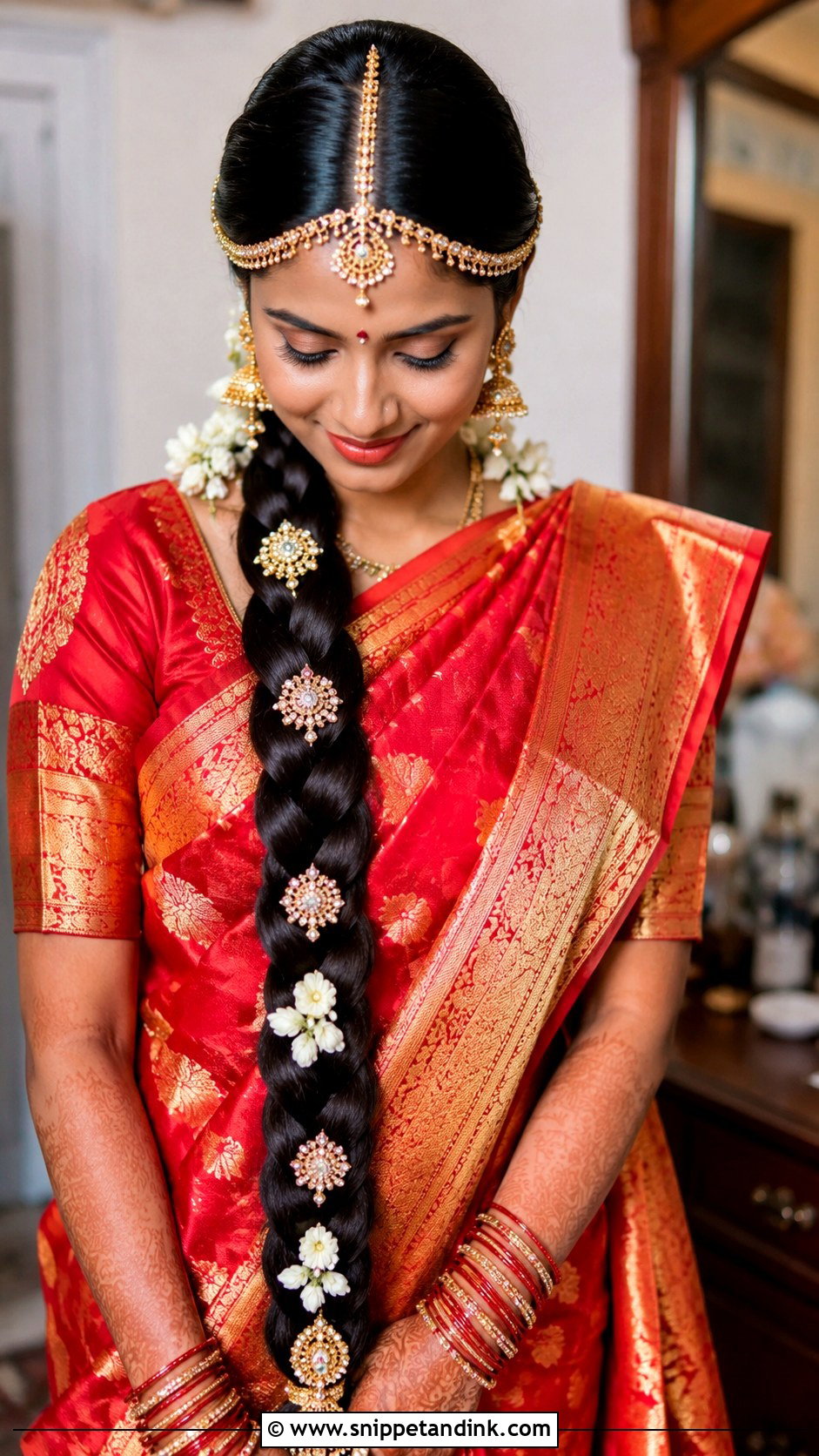
A long braid pulls the eye down the back while the mathapatti holds attention at the face, so the look has two strong points rather than one. It needs long hair or extensions, ideally thick and smooth, with flowers or jewelry along its length. It’s comfortable at ceremonies because nothing falls around the shoulders. With a lehenga, silk saree or embroidered dupatta, it looks traditional and grand. Anchor the top of the braid firmly, because decorations pull it down over the day.
8. Mathapatti Side Braid
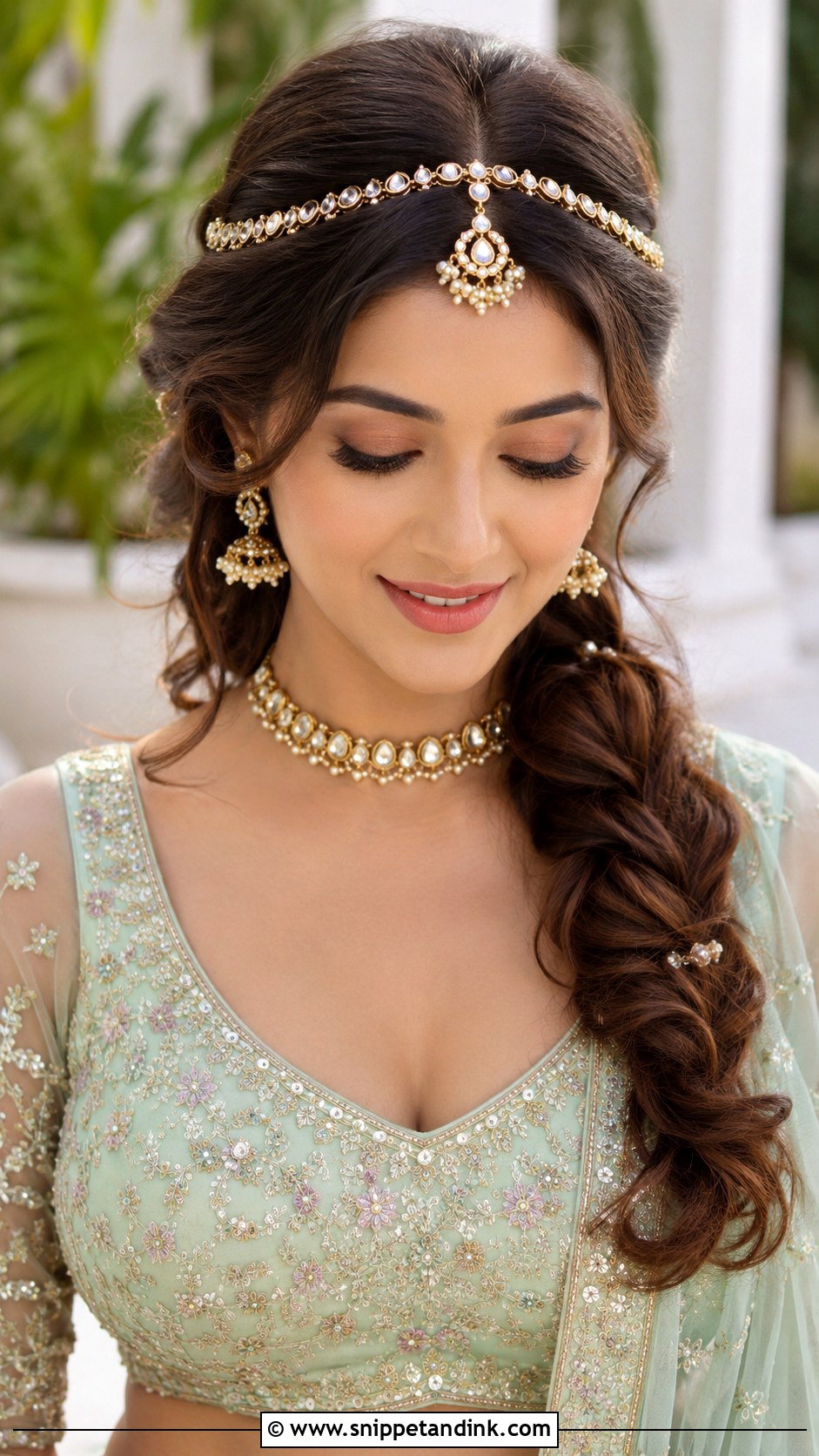
Over one shoulder, the braid appears in every front-facing photo. I often suggest this to bridesmaids, the bride’s sisters, or brides at pre-wedding events. Keep the center part, since the mathapatti still needs it, and leave the braid a little textured so it doesn’t look flat. Small flowers, beads or pearl pins finish it. One caution: the side chain on the braid side can catch on the braid’s top as you turn, so I pin that side chain slightly higher.
9. Mathapatti Fishtail Braid
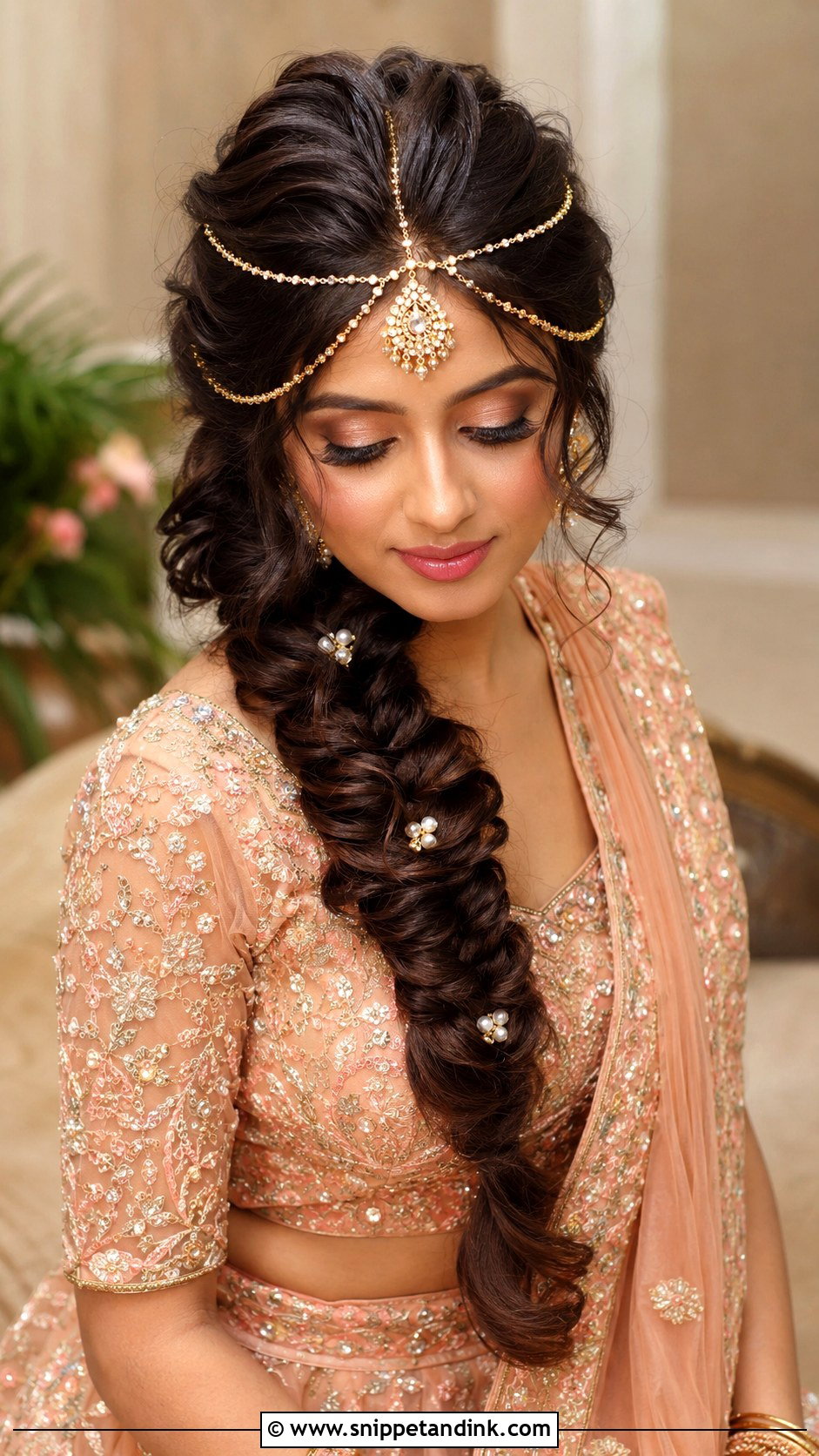
A fishtail’s fine weave gives rich texture, especially once its edges are loosened a little for width. With a mathapatti at the front, the whole look feels finished. I’d use it for the mehndi, sangeet, engagement ceremonies, or for a bride who wants a fashionable braid. It works best on medium to long hair, with extensions if needed. Fishtails loosen faster than three-strand braids on slippery hair, so prep with a texture spray first.
10. Mathapatti Open Hair
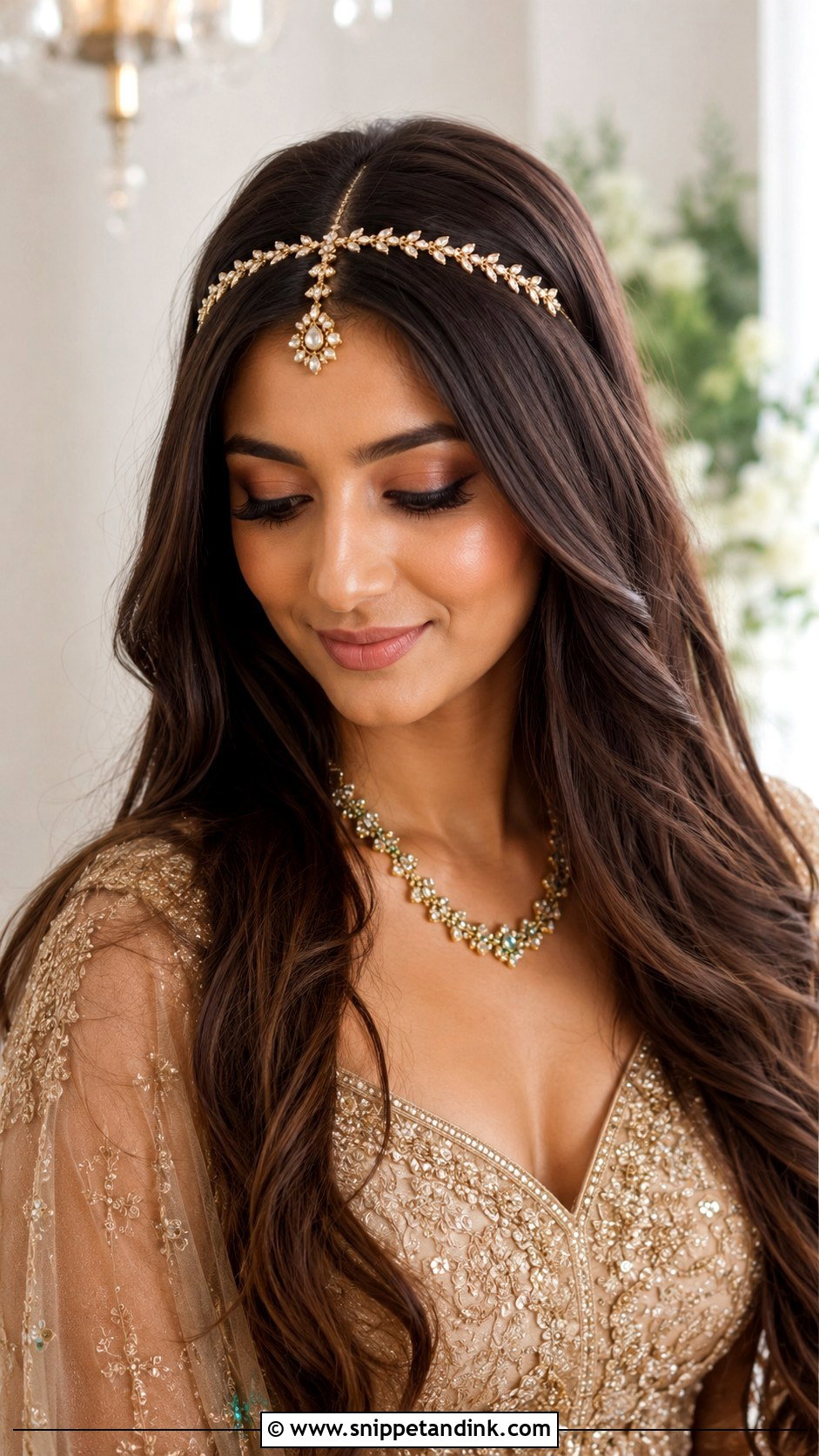
Open hair can carry a mathapatti, but the piece has nothing solid to hook into unless I build it. The center part has to be clean so the middle chain lies flat. I then make two small hidden anchors above the ears, either pin curls or crossed bobby pins, for the side hooks. The rest falls in smooth layers or soft curls. Choose a lightweight mathapatti here; a heavy one drags loose hair down and the side chains start to droop within an hour. It suits engagements, receptions and lighter dupattas.
11. Mathapatti Soft Curls
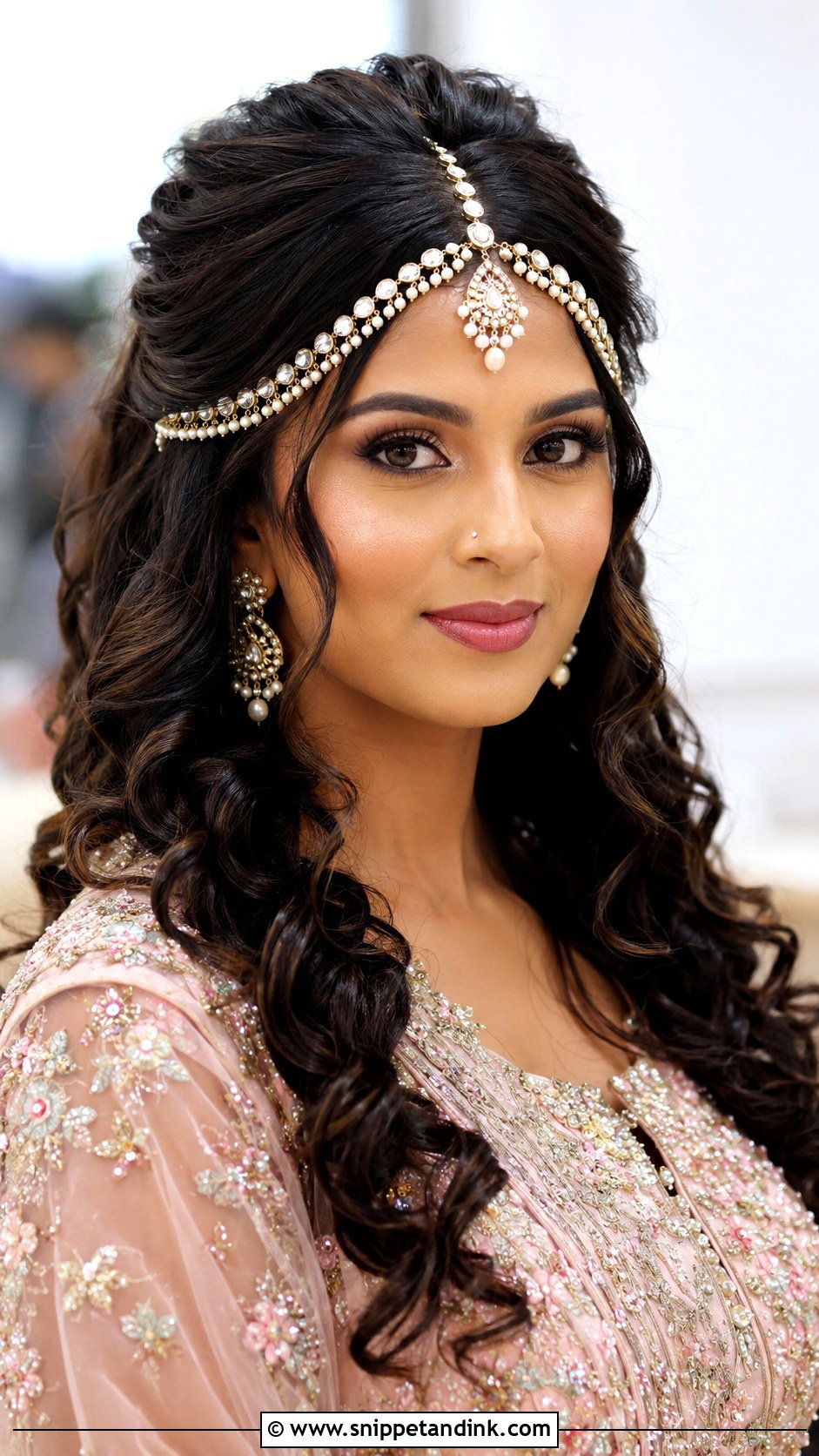
Curls add volume around the shoulders while the mathapatti keeps the front bridal. The difficulty is that soft curls and side chains compete for the same space by the ears. I pin the crown lightly to support the jewelry and start the curls below the level of the side chains. Pastel lehengas and shimmer sarees suit this look. Use a long-lasting setting spray and let each curl cool before brushing, or the dancing will flatten them.
12. Mathapatti Half Up Half Down
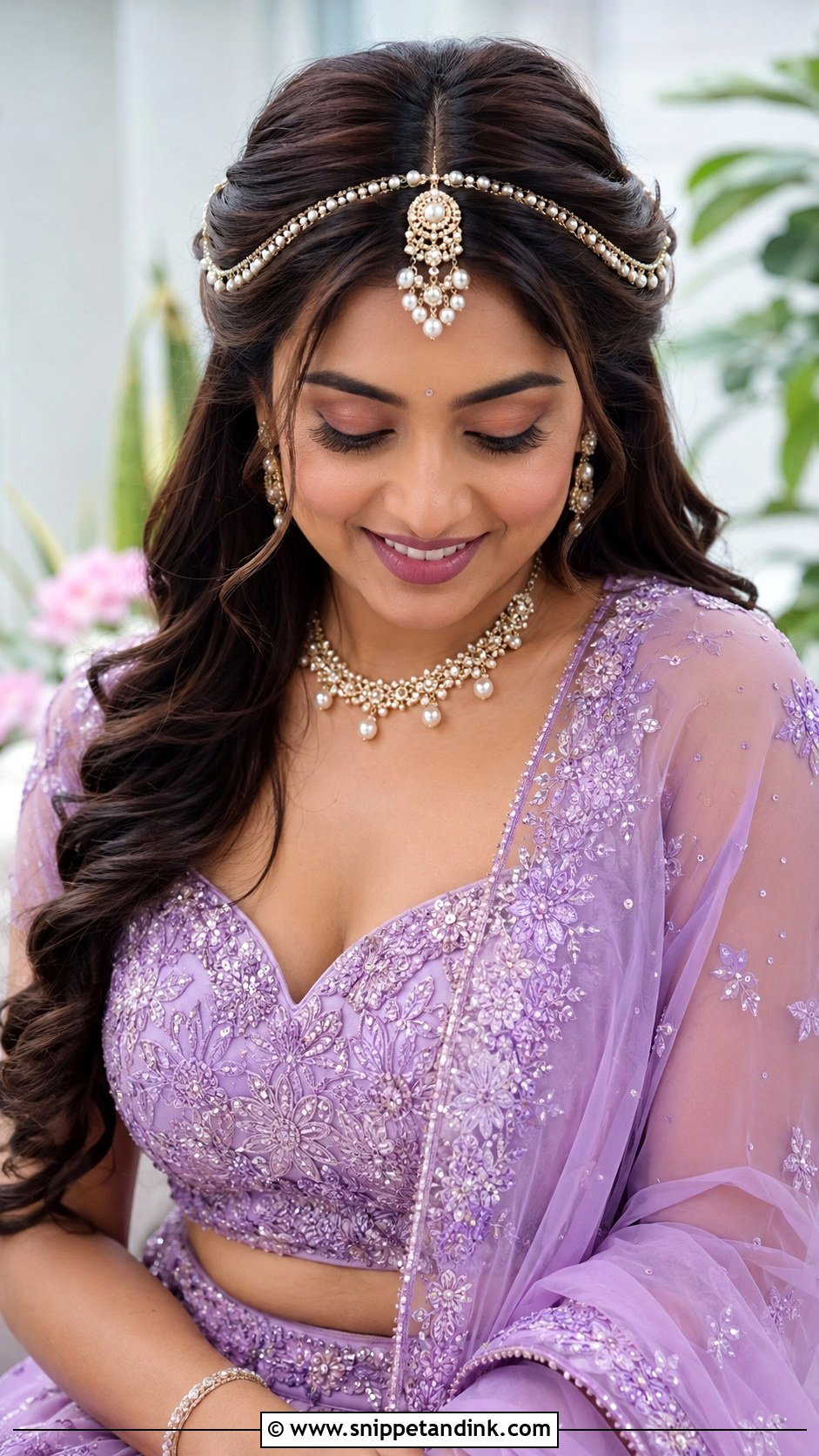
Twisting, braiding or pinning the top section back gives the mathapatti a secure base, while the lower hair stays curled or waved. It’s my usual answer when a bride wants open hair but has a long event ahead. It suits bridesmaids and guests too, because it feels festive without heavy jewelry. Layered hair, pearl details and open necklines all work with it. I’d keep the twisted section above the side chains so the hooks have firm hair to grip.
13. Mathapatti Front Puff Hairstyle
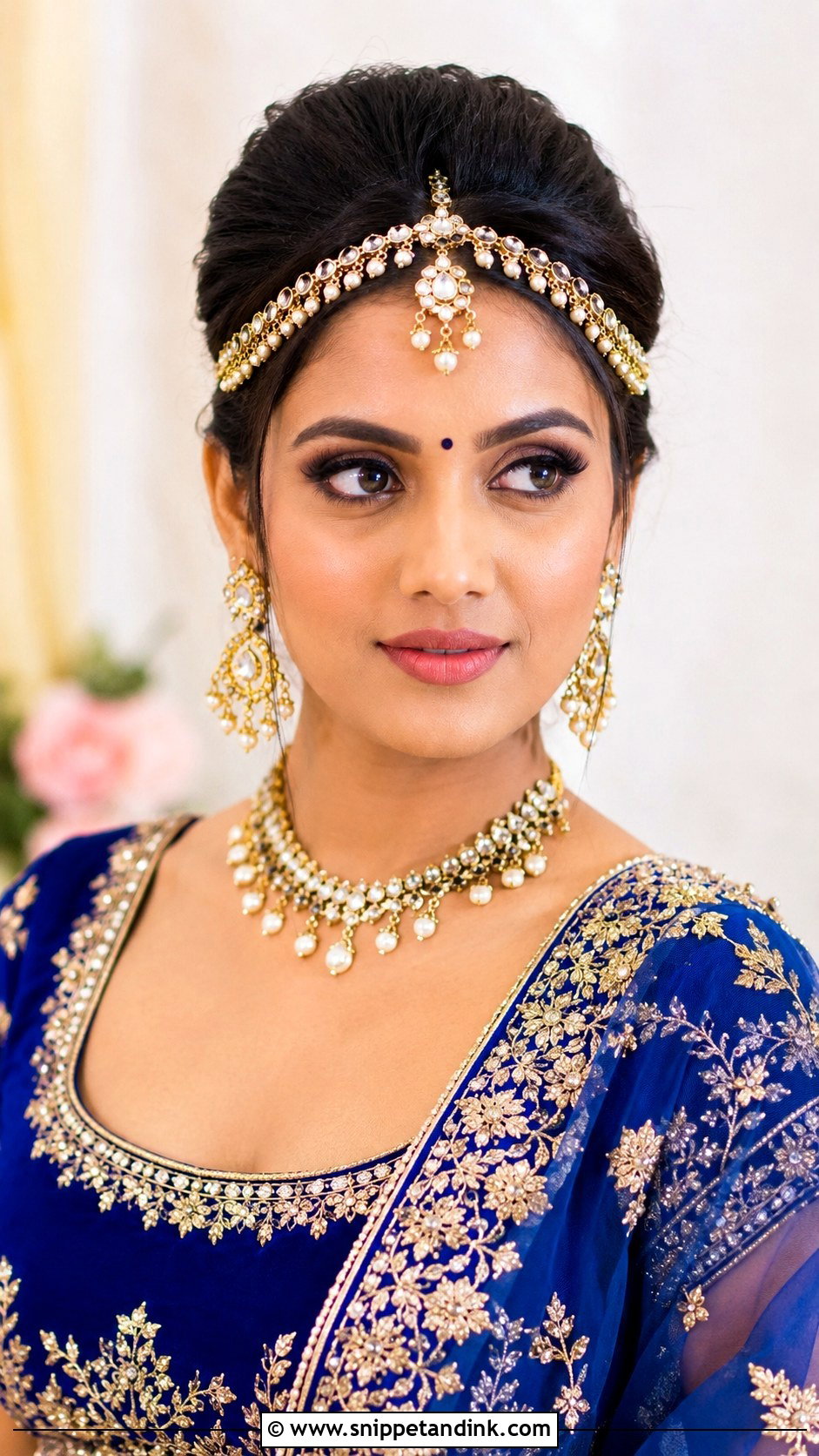
A mathapatti front puff hairstyle adds height at the crown while keeping the parting clear for the center chain. Height is the risk here. A tall puff pushes the mathapatti forward and the middle pendant ends up hanging too low on the forehead, so I keep the puff soft and set it slightly behind where the chain starts. Backcomb lightly underneath, smooth the surface and pin firmly. It works with a bun, braid or half-up finish, and suits dramatic lehengas and big earrings.
14. Mathapatti Ponytail
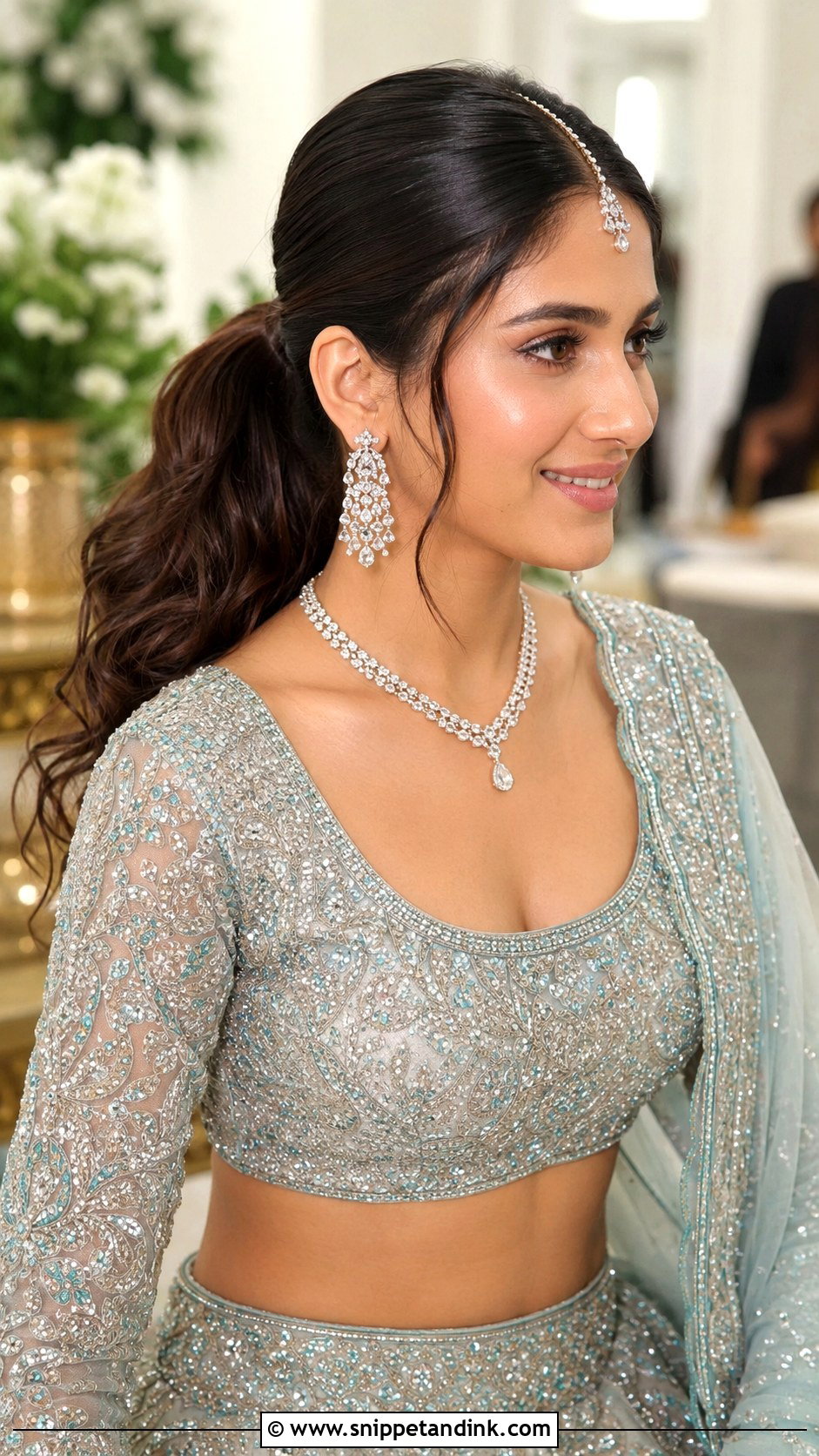
For a reception, cocktail or sangeet looks, a ponytail feels fresh. The front stays sleek with a center part so the mathapatti frames the face, while the ponytail adds length behind. Low reads more traditional; mid-height looks modern. Waves add volume or you can keep it smooth. Avoid a high ponytail with a mathapatti, though: it pulls the hair at the temples tight and the side chains lose their grip. It’s comfortable and easier to manage than loose hair.
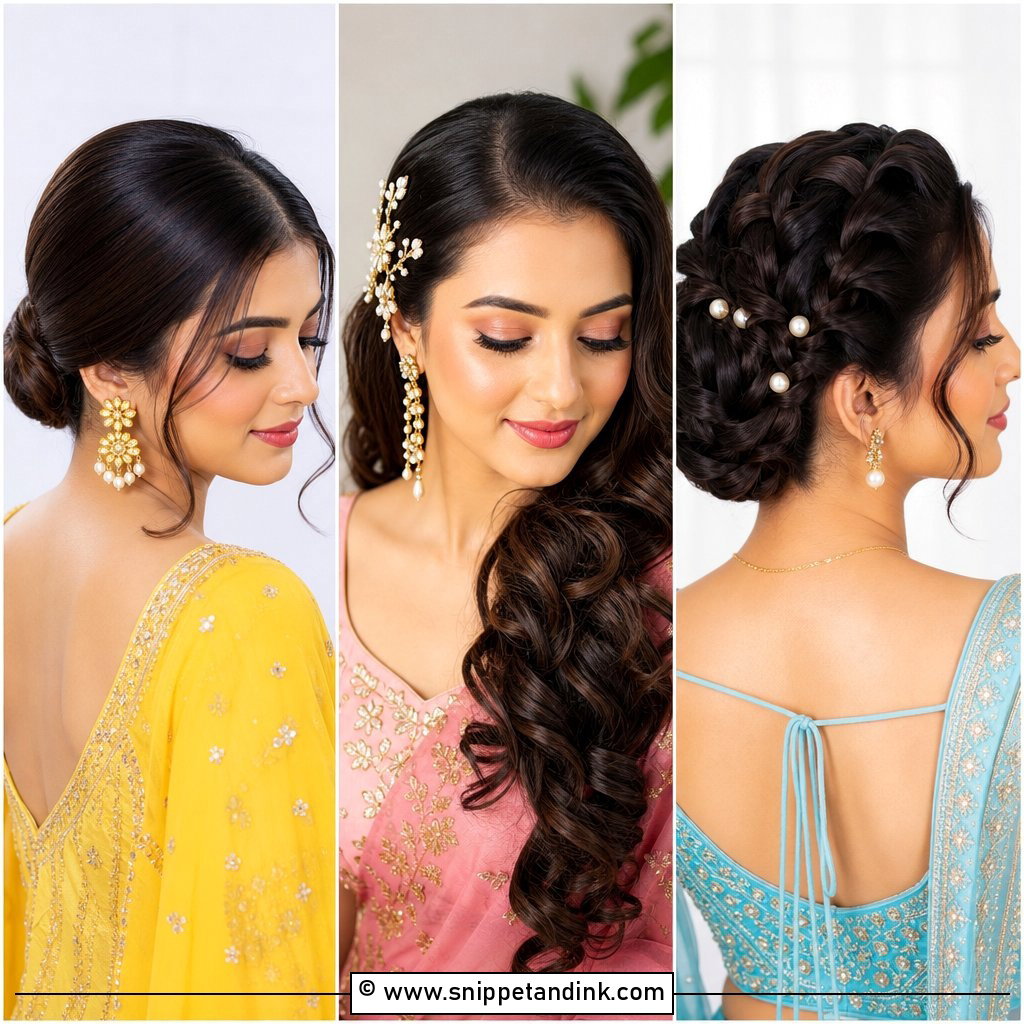
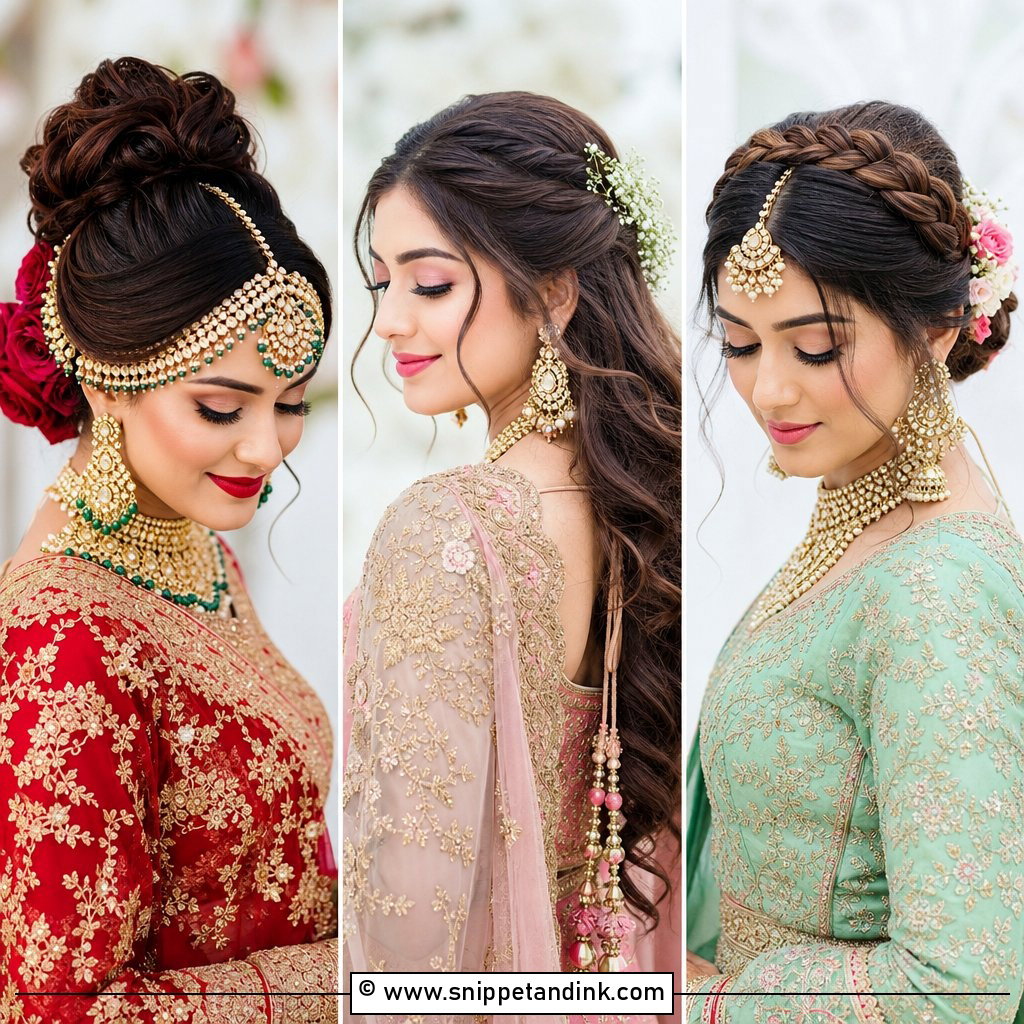
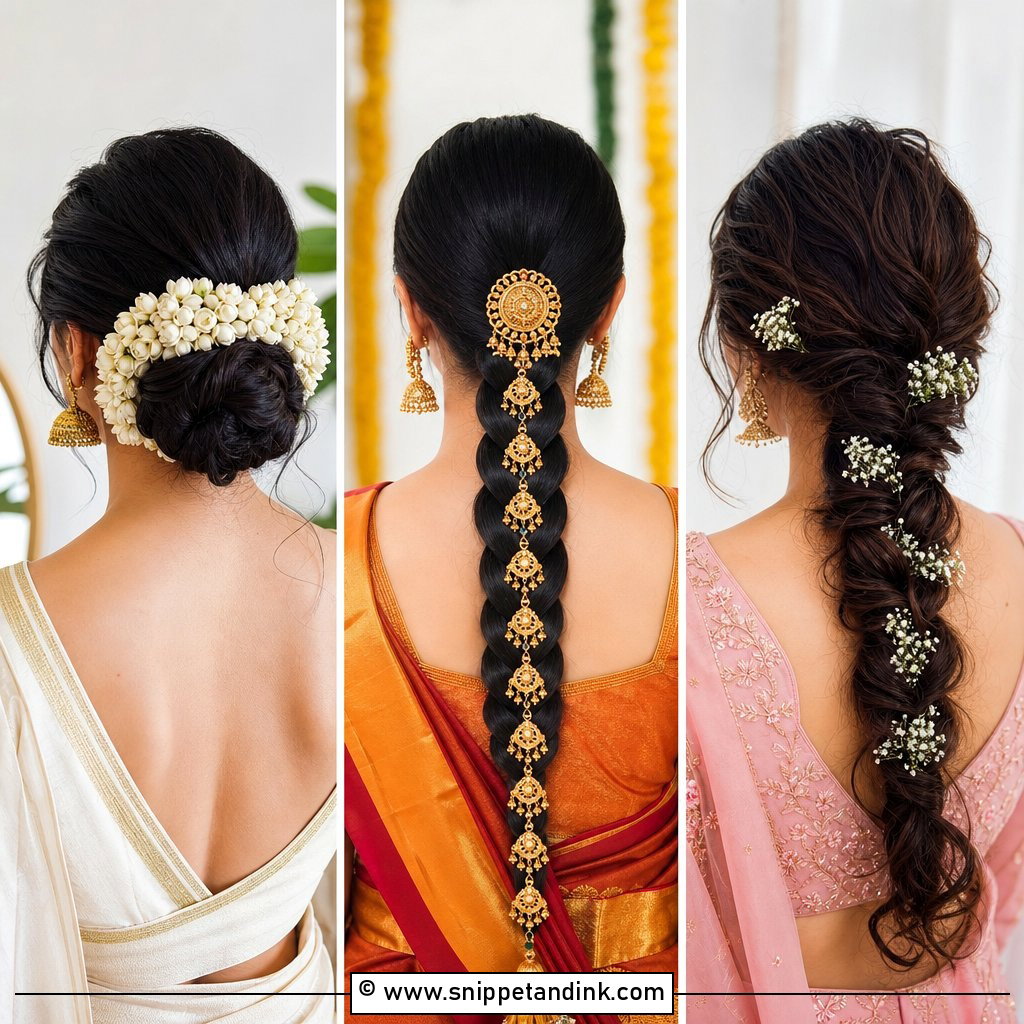
15. Mathapatti With Passa Hairstyle
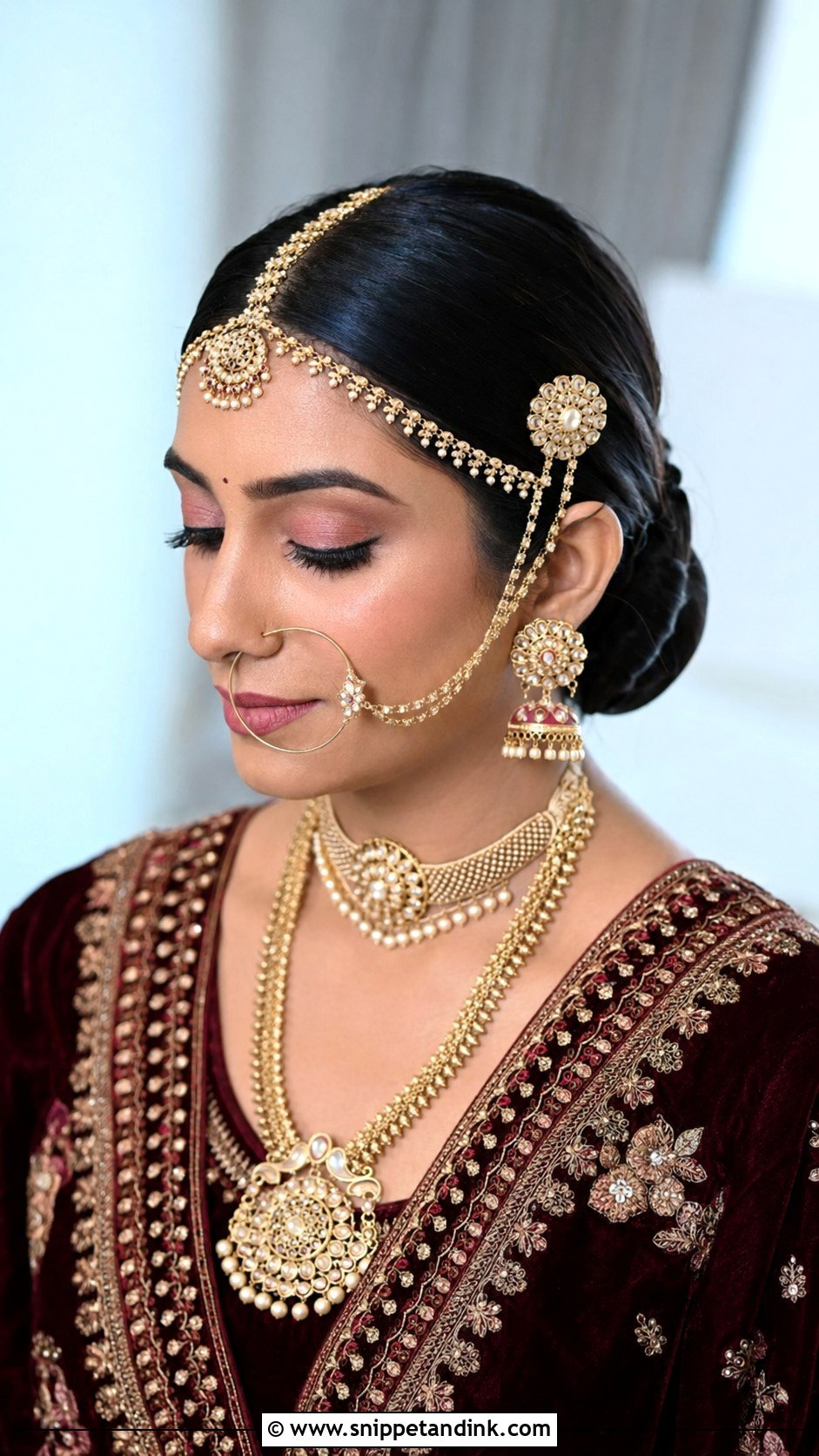
Wearing a passa beside a mathapatti stacks two statement pieces on the head, so the hairstyle has to stay quiet and strong. The passa usually sits on one side near the temple, and its weight pulls that side down. A low bun, a textured bun or a smooth braid gives firm support without competing. I anchor the passa separately from the mathapatti, with its own pins, so one doesn’t drag the other out of line. Keep the earrings and necklace in proportion. It suits Mughal-inspired outfits and velvet lehengas.
A Heavier Kundan Piece Needs a Different Base
Mathapattis vary a lot in weight. A fine gold or pearl chain barely registers, while a kundan or polki piece with large stones and pendants can press noticeably on the forehead and temples after a few hours. The weight changes which hairstyles I’d recommend.
Light pieces
These work with almost anything on this list, including open hair, soft curls and ponytails. They’re what I’d suggest for bridesmaids and guests too, since a light piece is far easier to wear through a long evening of dancing.
Heavy pieces
Heavy jewelry needs a bun or a braided base with firm anchors at the sides. Open hair simply doesn’t give enough grip. If you’re prone to tension headaches, wear the piece around the house for an hour or two in the weeks before the wedding. Some brides find the side chains press on the temples, and a jeweller can often loosen or reshape them slightly.
Face shape matters too. A narrow forehead can look crowded under wide, heavy side chains, and a finer piece usually sits better there. A broad forehead carries a wider mathapatti well. Whichever you choose, plan to take it off before the reception if it’s uncomfortable. Your hair can stay the same and simply be swapped to a lighter tikka.
Try the Mathapatti On Before the Hair Is Final
A mathapatti can look traditional, modern or grand depending on what the hair does around it. A sleek bun keeps it clean; open curls make it softer. Braids add cultural richness, and gajra buns make it festive. What matters most is that the hair supports the jewelry, suits the outfit and stays comfortable all day. Bring the actual mathapatti, earrings and dupatta to your trial and wear them for at least an hour. That’s long enough to feel whether the side chains pinch and whether the style is holding them.
You'll Like These Ideas:








Leave a Reply