
Most brides arrive at a first appointment with a screenshot of a gown on a model, and what I end up showing them is how that gown behaves once they sit, walk and lift their arms. The dresses I pull most often this year lean on texture and shape rather than sparkle: lace, drop waists, sculptural details, bows, floral appliqués, pearls and very plain minimalist cuts. There is no single correct bridal look any more, which is freeing and also makes the decision harder. Below are 25 shapes and finishes, from courthouse minis to lace ball gowns, each with what I would pair it with and the fitting detail I would watch.
Ordering a Gown Without Racing the Calendar
Almost every trend on this list is sold as made-to-order, which means the shop takes your measurements and the gown is cut for you. That production time is the part brides underestimate. Many designers quote somewhere around four to six months, some longer, and rush fees can apply if you order late. I would aim to say yes to a dress roughly eight to ten months out, which leaves room for delays and alterations.
Alterations usually start six to eight weeks before the wedding and take two or three fittings. Bring the exact shoes and undergarments to every one, because a different heel height changes the hem and a different bra changes the bodice.
- First fitting: hem, straps and overall shape are pinned.
- Second fitting: you check movement, bustle points and any sleeve or neckline work.
- Final fitting: you practise the bustle with whoever will do it on the day and take the gown home.
If you are buying off the rack or a sample, the timeline shrinks, but the alteration window stays the same.
1. Lace Wedding Dress
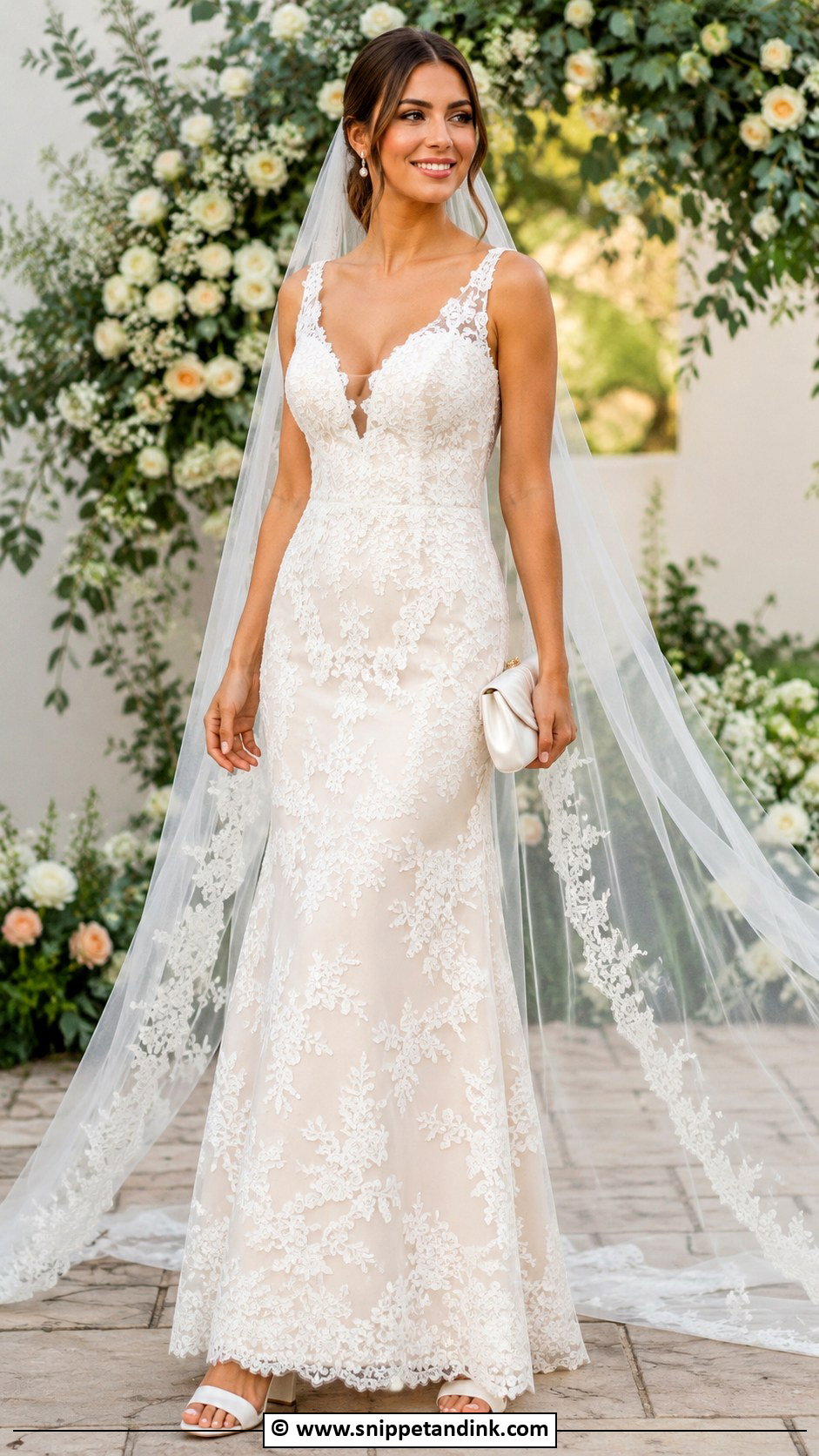
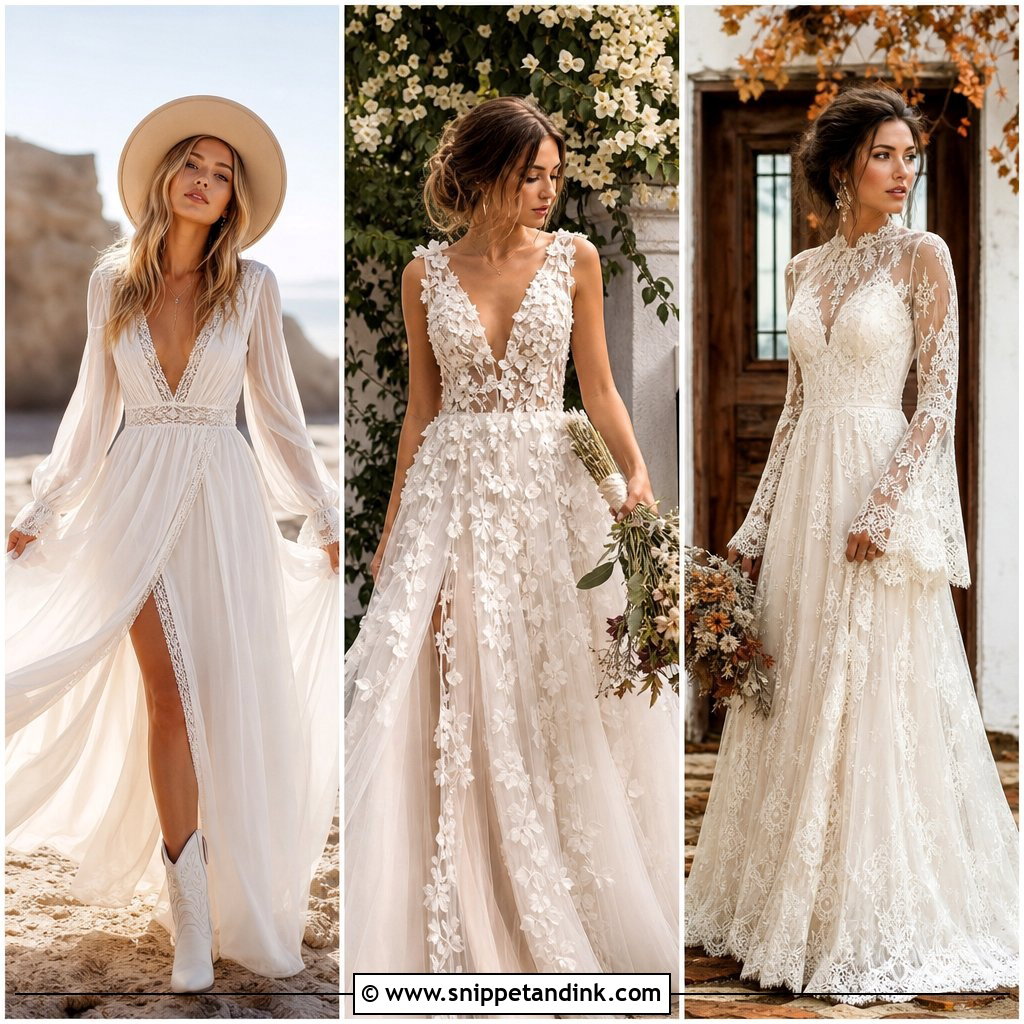
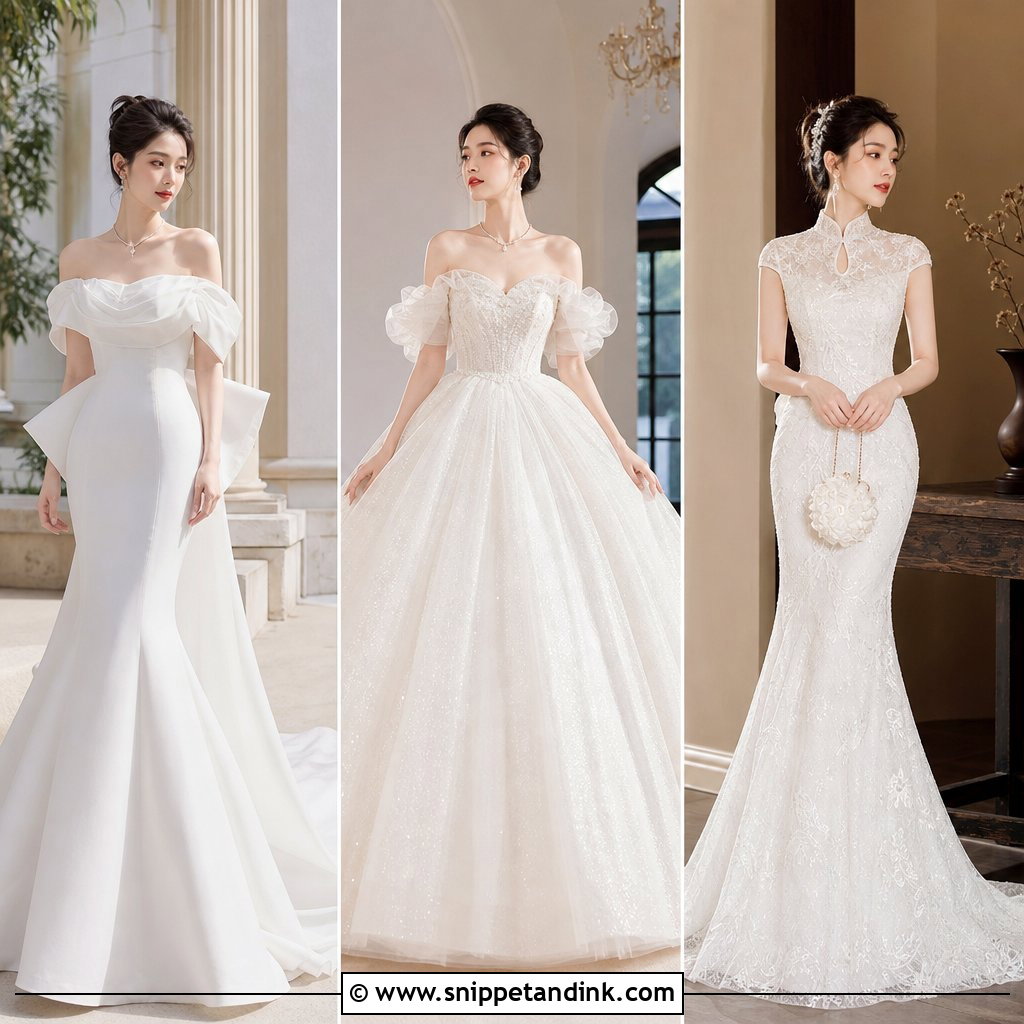
Lace is the fabric brides keep coming back to after trying everything else, partly because it forgives small fit issues that satin would show. A fitted lace bodice over a soft A-line skirt gives shape without much volume. At the fitting I look at where the motifs meet the seams: a good seamstress hand-cuts and overlaps the lace flowers at the hem instead of sewing a straight line through them, which is why lace hems take longer to shorten. I would style it with a sheer cathedral veil, pearl drops, ivory block heels and a small satin clutch. Long sleeves or a high neck add coverage, and in a garden a plain bouquet of white roses keeps the lace as the focus.
2. Drop Waist Wedding Dress
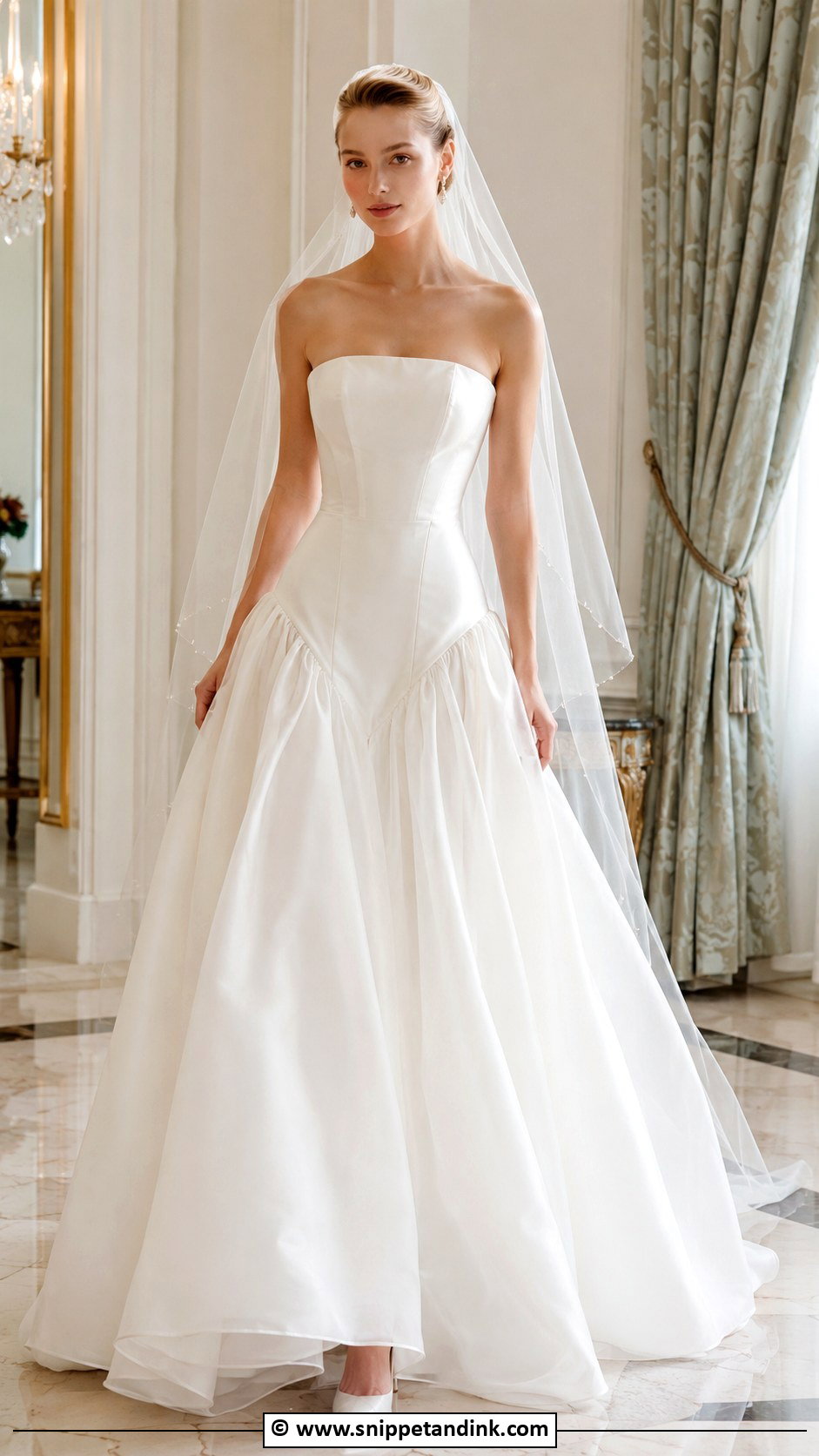
The bodice of a drop waist wedding dress runs past the natural waist before the skirt opens, so the torso looks longer. It is the silhouette I handle most carefully on petite brides with a short torso, because if the seam lands too low it can shorten the legs instead. Satin, taffeta and organza all hold the line well. Pointed ivory heels, a clean low bun and a fingertip veil keep it sharp, and light ruching along the seam softens it. Hotel ballrooms give the shape the room it needs.
3. Basque Waist Wedding Dress
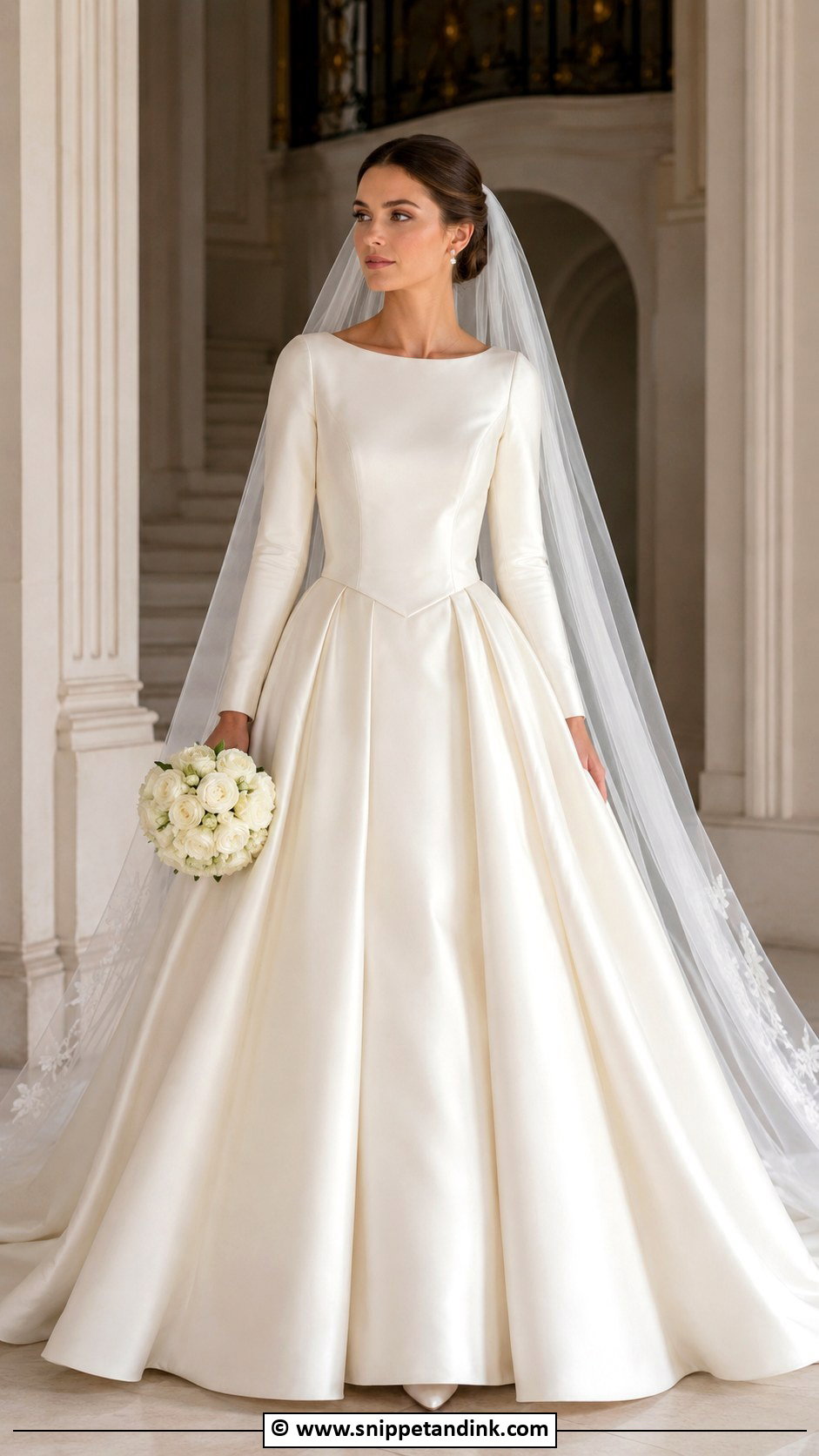
A basque waist wedding dress dips into a V at the front waist, and that point draws the eye inward to create an hourglass. It needs a boned bodice to keep the V flat; on a soft bodice the point buckles the moment you sit down. A full skirt in mikado or tulle is the classic partner. I keep everything else quiet: long veil, pearl studs, satin pumps. Fine embroidery on the bodice is enough decoration. Historic venues and formal indoor ceremonies suit it best.
4. Corset Wedding Dress
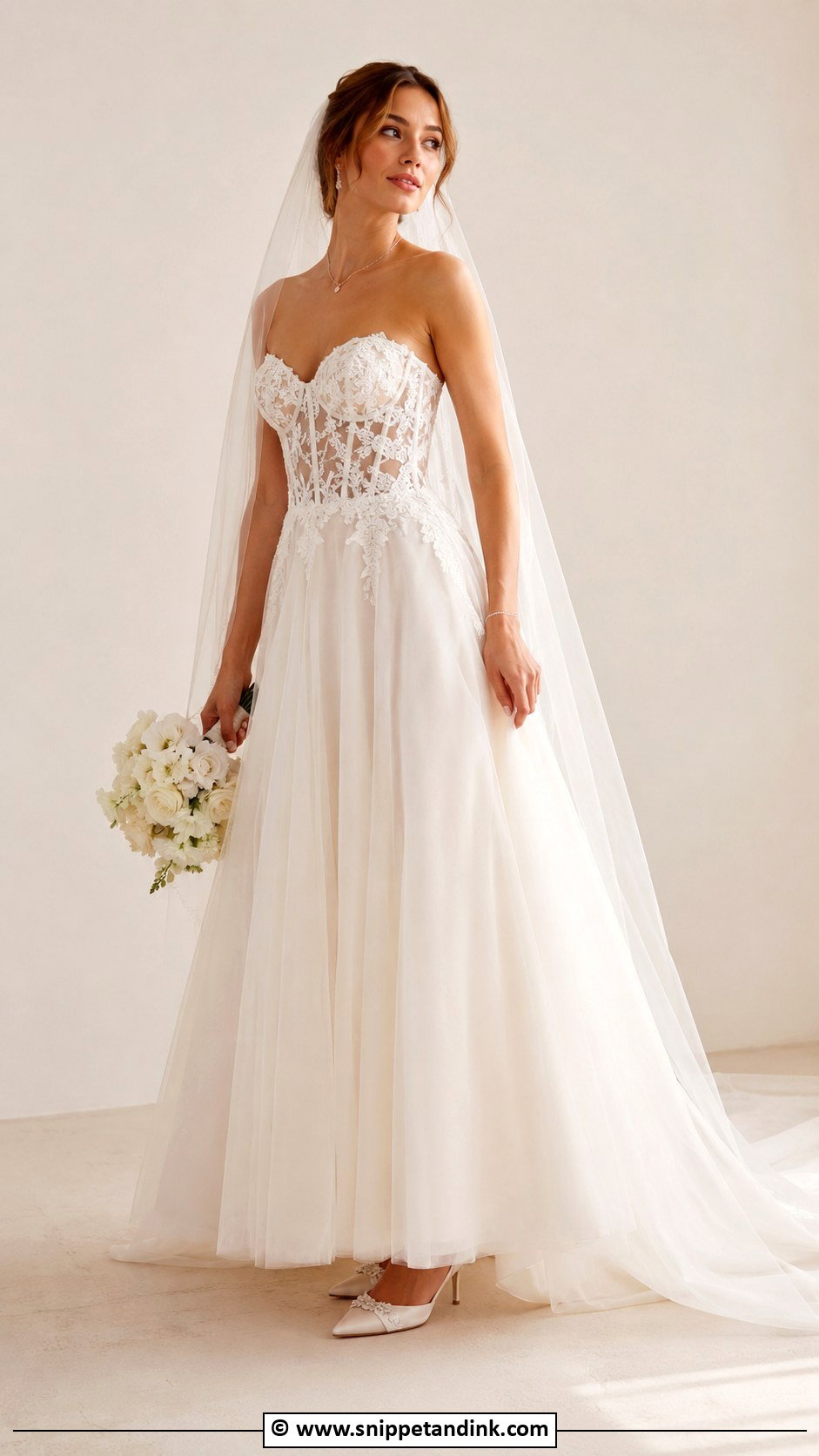
Structure is the whole point of a corset bodice, and the fabric sets the mood: lace over tulle reads soft, plain satin reads sleek. The first thing I ask about is the boning. Cheap plastic bones can bend out of shape with hours of body heat, while spiral steel holds the line and still lets you sit and breathe. A firm lining matters for the same reason. Simple heels, a sheer veil and small earrings stop the bodice from looking busy. If you cannot take a deep breath and lift your arms to hug someone in the fitting room, ask for it to be let out, because it will not feel looser by evening.
5. Strapless Satin Wedding Dress
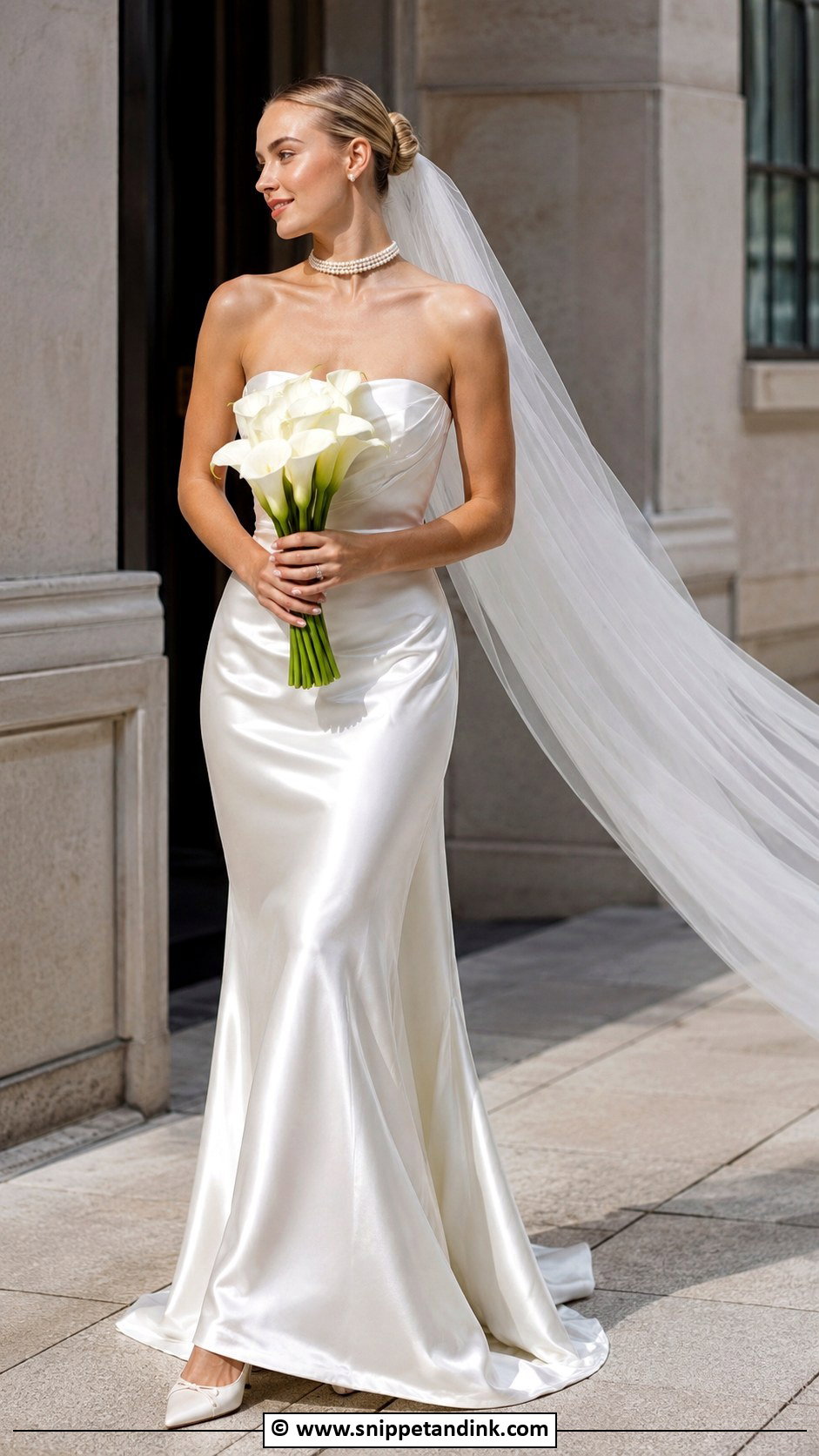
Satin hides nothing, so a strapless satin gown depends almost entirely on tailoring. I look for a structured bodice with a straight or slight sweetheart neckline and an internal waist stay, the grosgrain band that anchors the dress at your waist so the top does not slide when you dance. A pearl choker, slingback heels and a smooth bun keep it modern. Long veil for the ceremony, short veil for a looser feel. One honest warning: satin creases across the lap when you sit, so expect some soft wrinkles by the reception.
6. Off Shoulder Wedding Dress
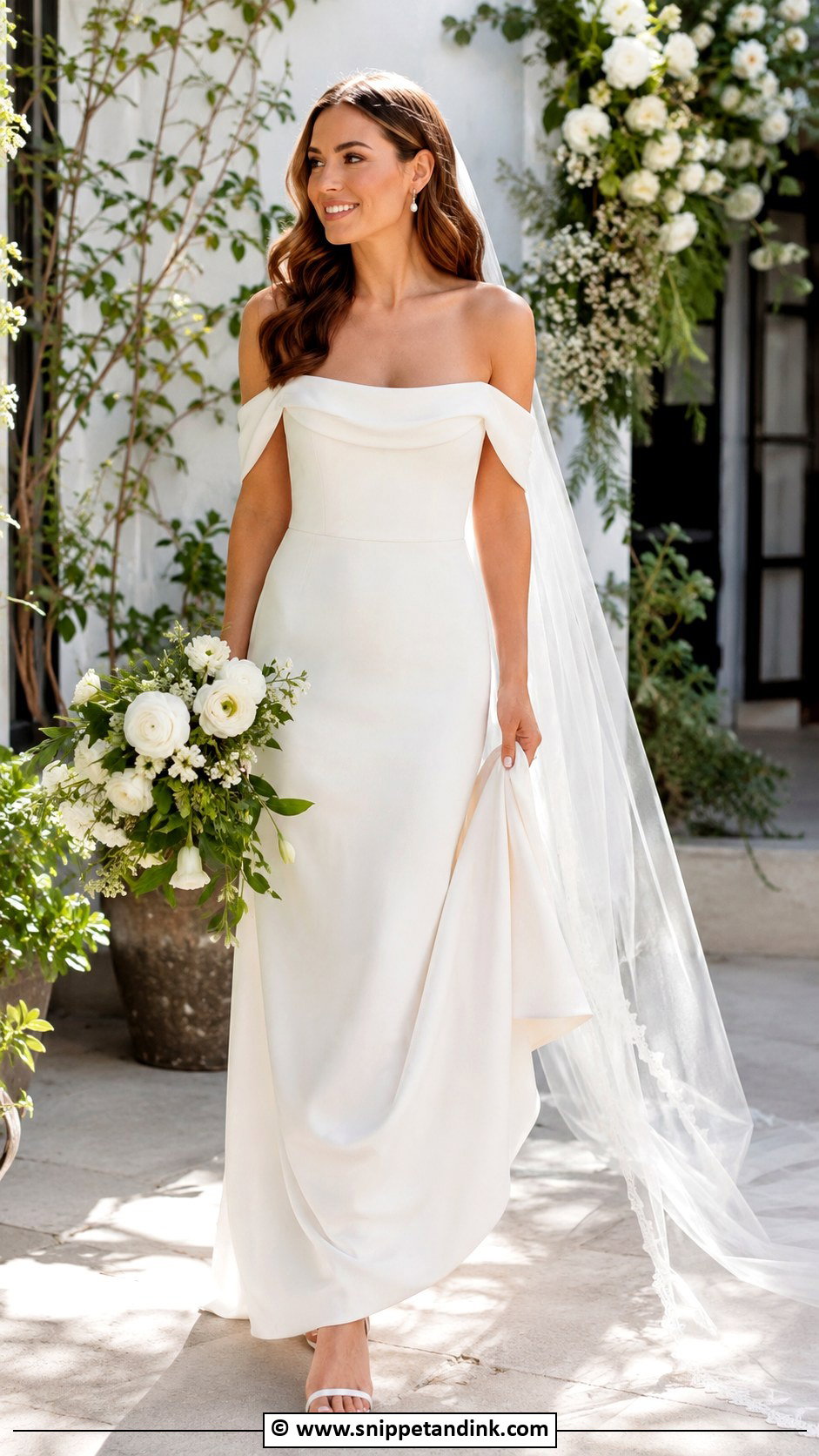
The off shoulder line frames the collarbone and sits well on fitted gowns, A-lines and ball gowns. What I watch is arm movement. A tight band across the upper arms can stop you lifting your hands above chest height, so I ask brides to mime a hug and a bouquet toss before we decide. Lightweight crepe keeps it comfortable in summer; detachable off shoulder sleeves help in cold weather. Drop earrings, loose waves, ivory heels and a delicate veil finish it.
7. Square Neck Wedding Dress
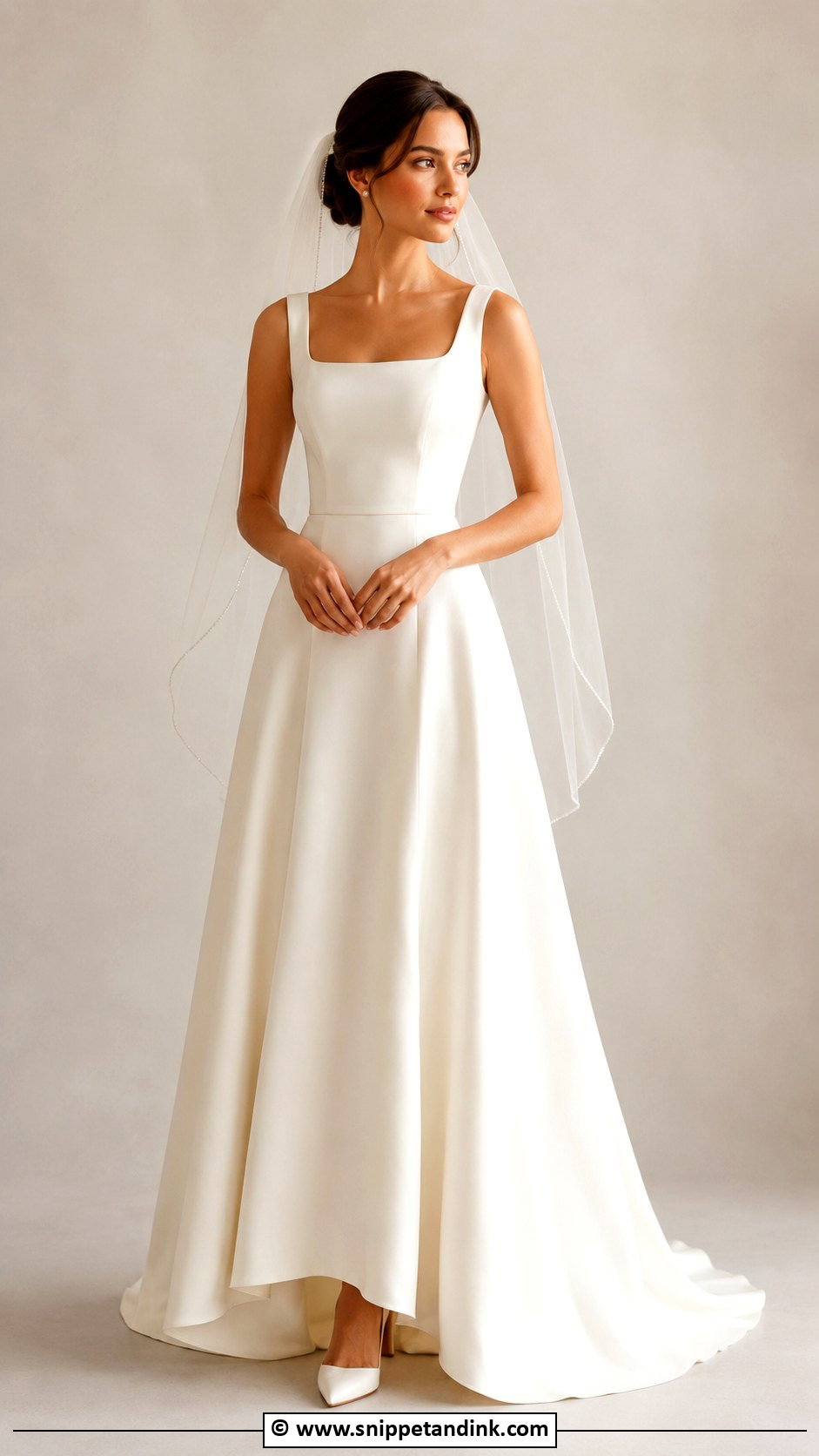
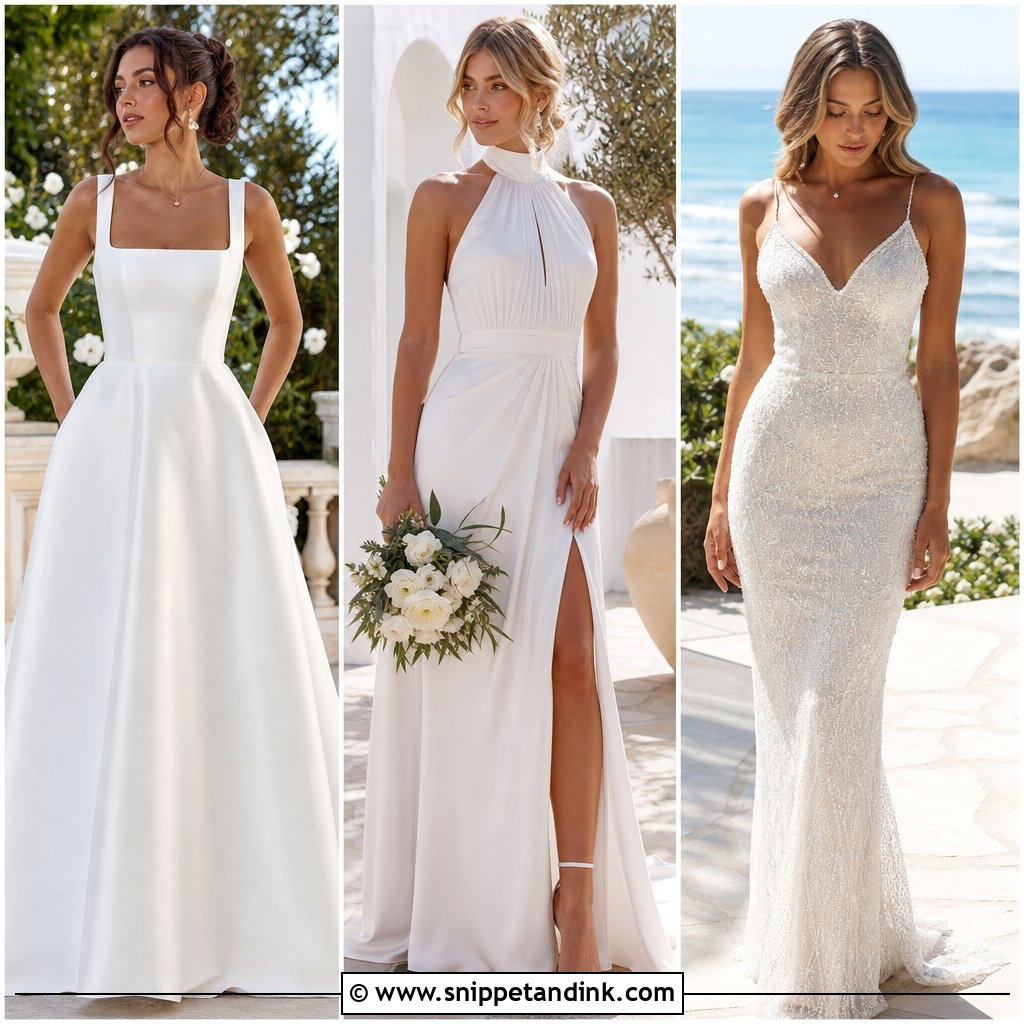
A square neck is my go-to when a bride asks for clean lines with a hint of vintage. The straight edge gives the upper body structure without looking severe, and it sits well on fitted crepe, satin A-lines and long lace sleeves. Check for gaping: the corners of a square neckline should stay flat when you lean forward, so bend toward the mirror during the fitting. Pearl studs, a low bun and pointed pumps are all it needs, and a narrow veil leaves the neckline visible from the front.
8. Long Sleeve Lace Wedding Dress
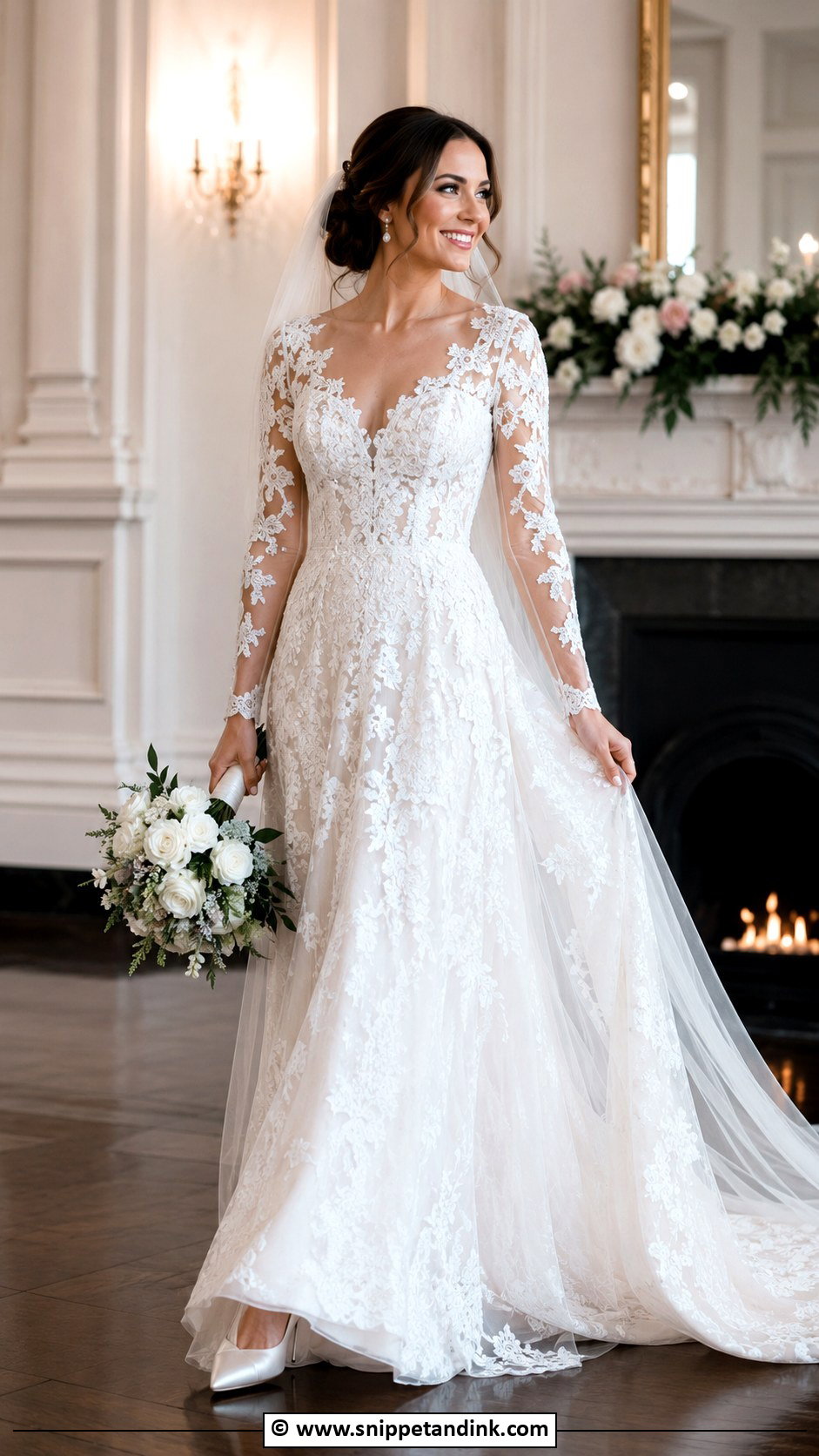
Long lace sleeves make the most sense at fall and winter weddings, where candlelight picks out the texture. Sheer sleeves feel lighter; lined ones give modest coverage. Sleeves are the alteration I flag earliest, because lace sleeves often need narrowing at the forearm and the cuff motif has to be lifted and reapplied rather than cut off. Satin heels, pearl earrings and a plain veil stop the lace competing with itself. A fitted bodice with a flowing skirt balances the sleeves, while a sheath shape reads more modern.
9. Floral Applique Wedding Dress
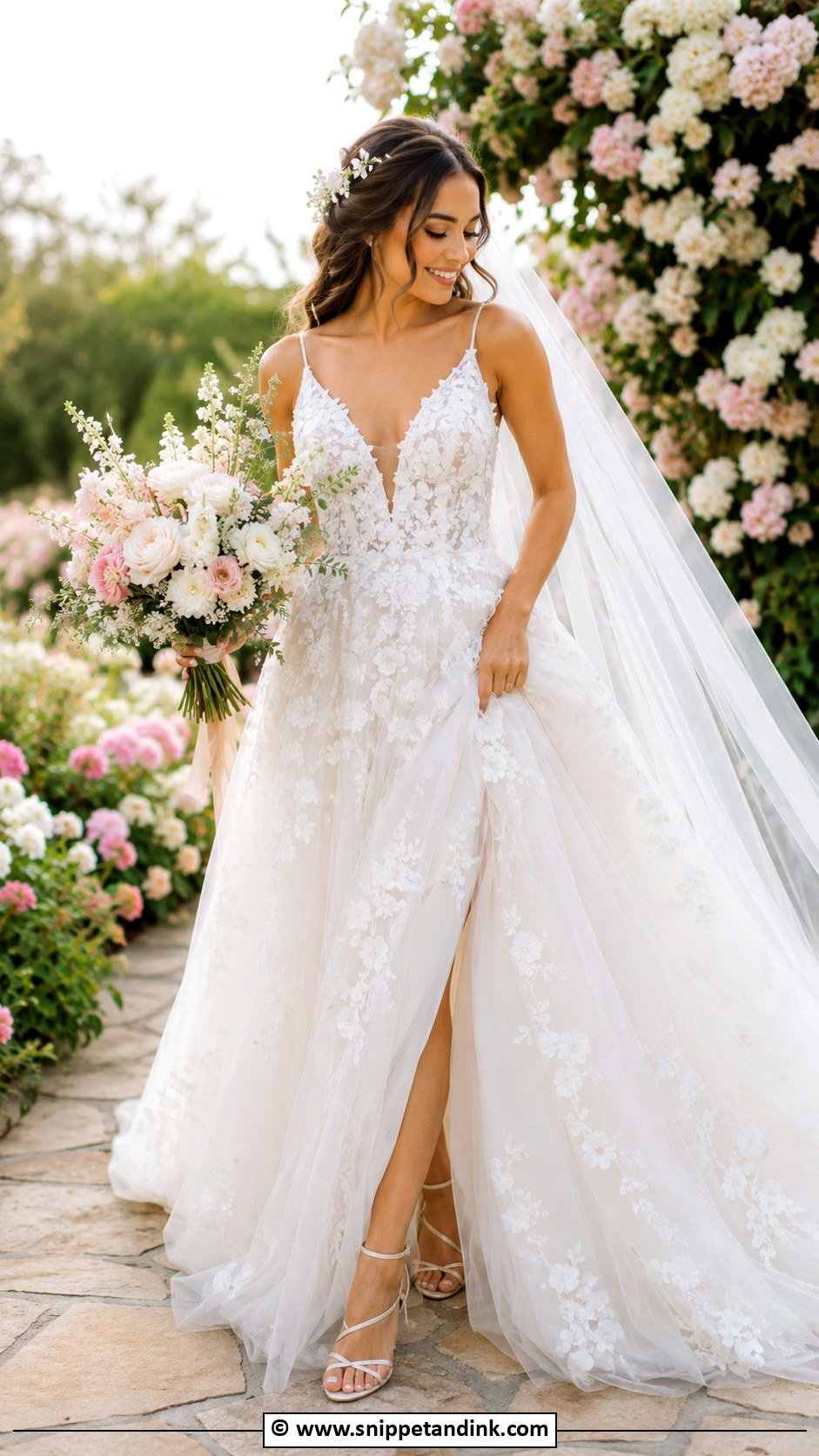
Appliqués range from flat lace flowers to raised, three-dimensional petals. With the raised kind I warn brides about snagging: a long veil with a comb will catch on them all day, so I lean toward a shorter veil or none. A tulle A-line with scattered flowers suits a garden ceremony with strappy heels and floral hair pins. Oversized appliqués on a clean structured gown feel more modern. Keep jewelry minimal, since the dress already carries the detail.
10. Pearl Wedding Dress
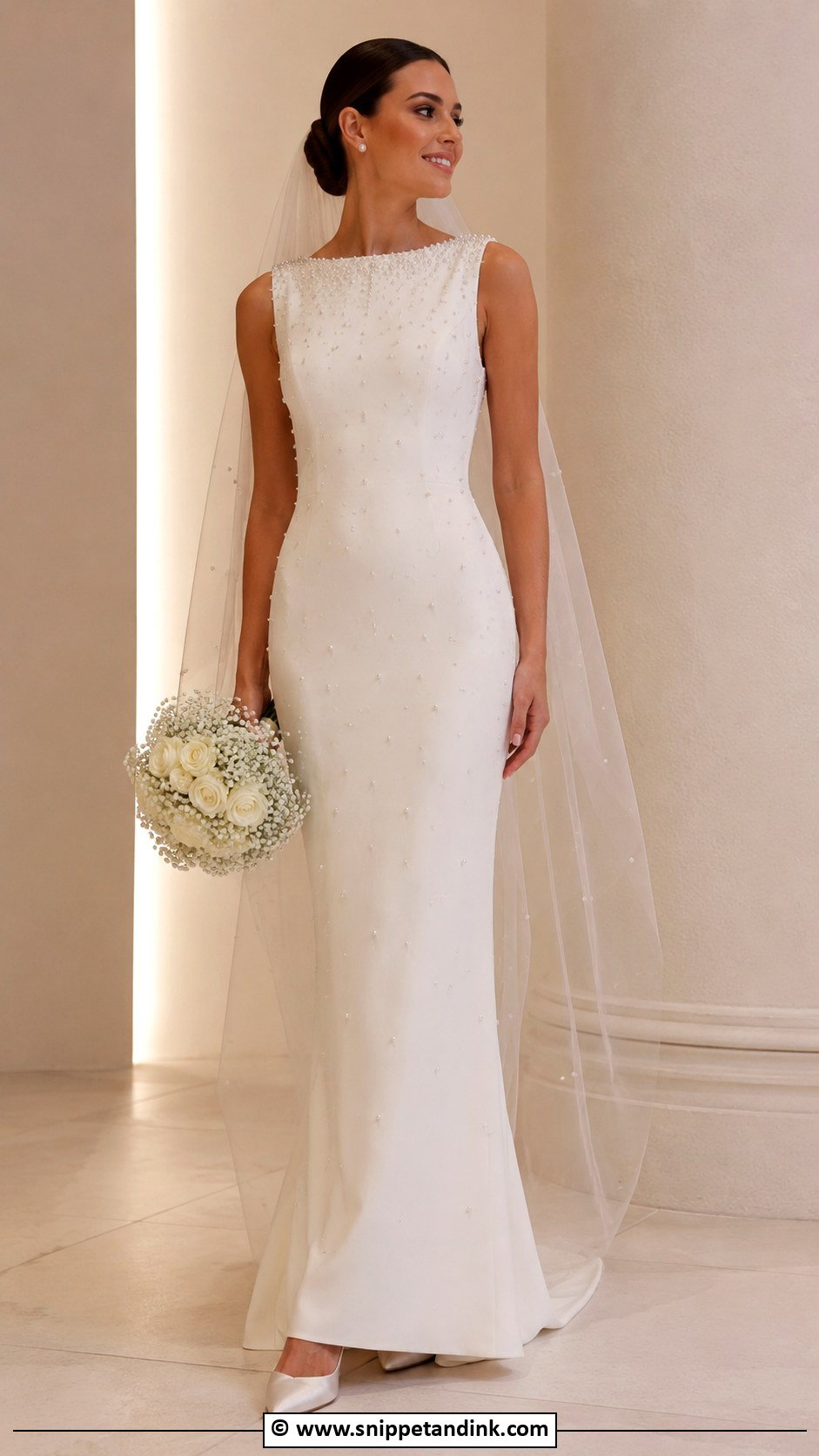
Pearls give a soft glow that rhinestones do not, and they can sit on the bodice, the sleeves, the veil or the skirt. My rule is one pearl feature per outfit, otherwise the look tips into costume. A pearl-trimmed sheath with satin heels, studs and a sleek bun stays clean; a pearl-scattered tulle ball gown goes softer with a long veil. Ask how they are attached. Hand-sewn pearls can shed a short run if one thread breaks, so I always pack a needle and matching thread. Evening light catches them gently.
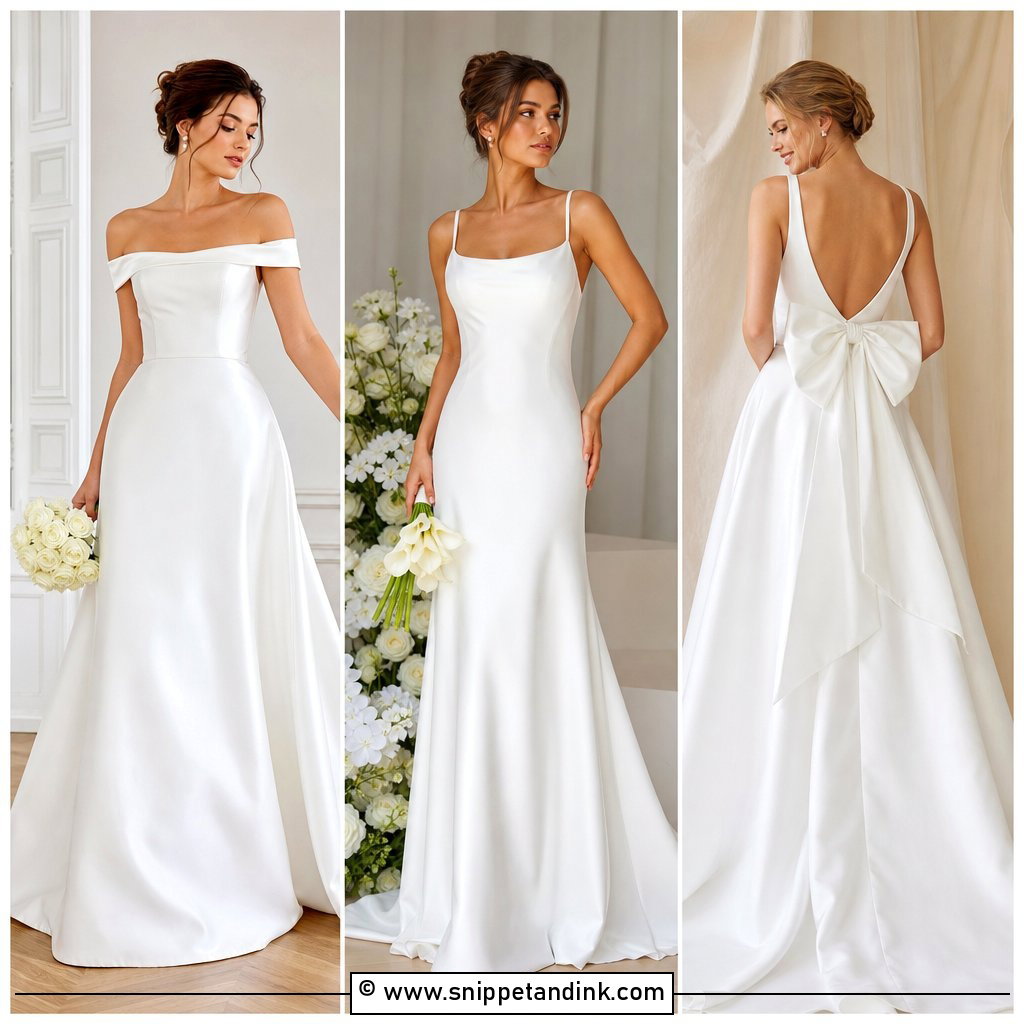
11. Bow Wedding Dress
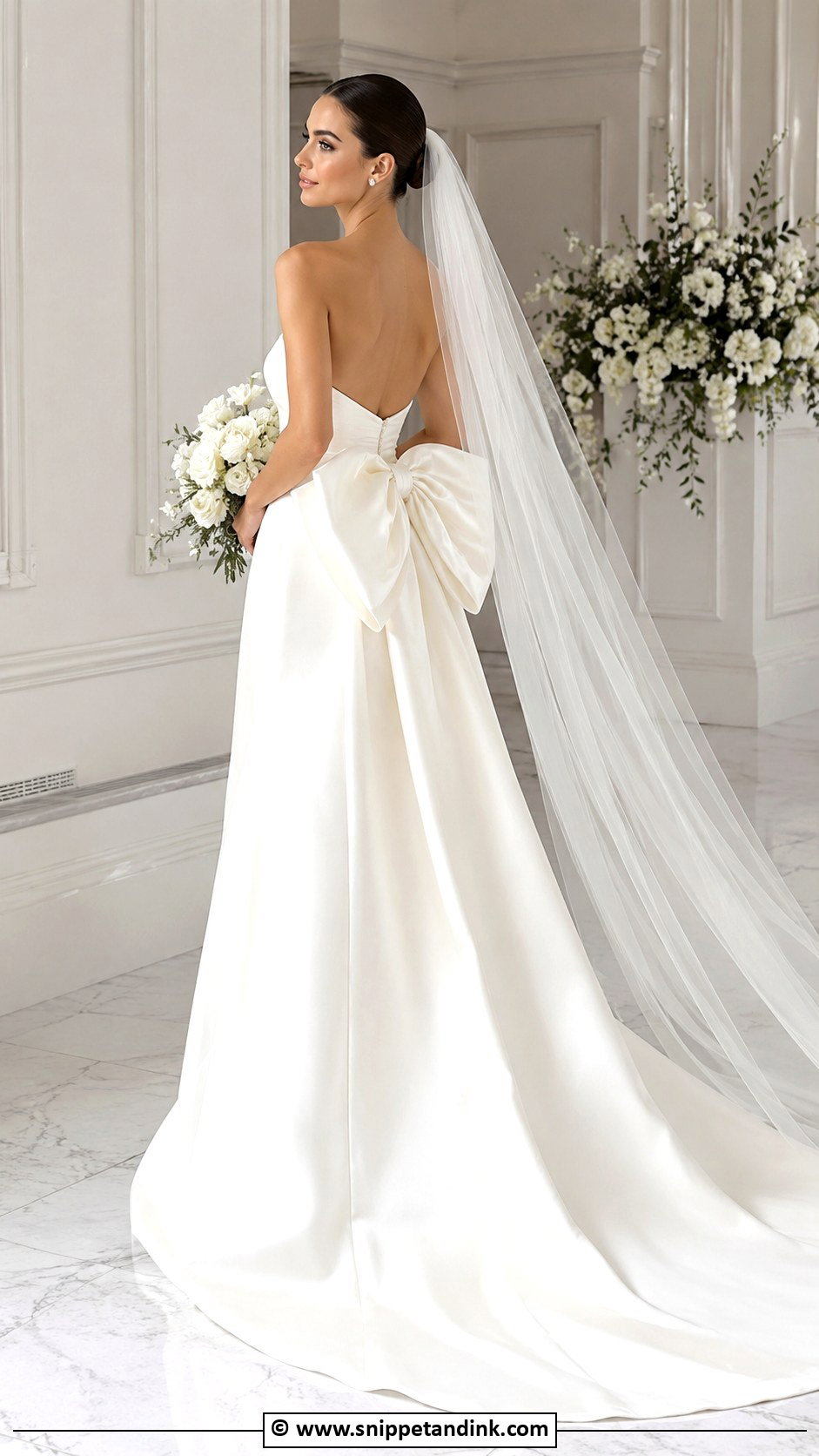
Where the bow sits decides how bold it feels: back waist, shoulder, neckline or train. One oversized back bow on clean satin is the version I see age best in photos, and bow straps on an A-line are the softer option. The practical question is the bustle. A large back bow often lands exactly where the bustle points need to go, so ask your seamstress how the two will work together before you order. Keep shoes and veil plain and plan a back-view shot during portraits.
12. Minimalist Crepe Wedding Dress
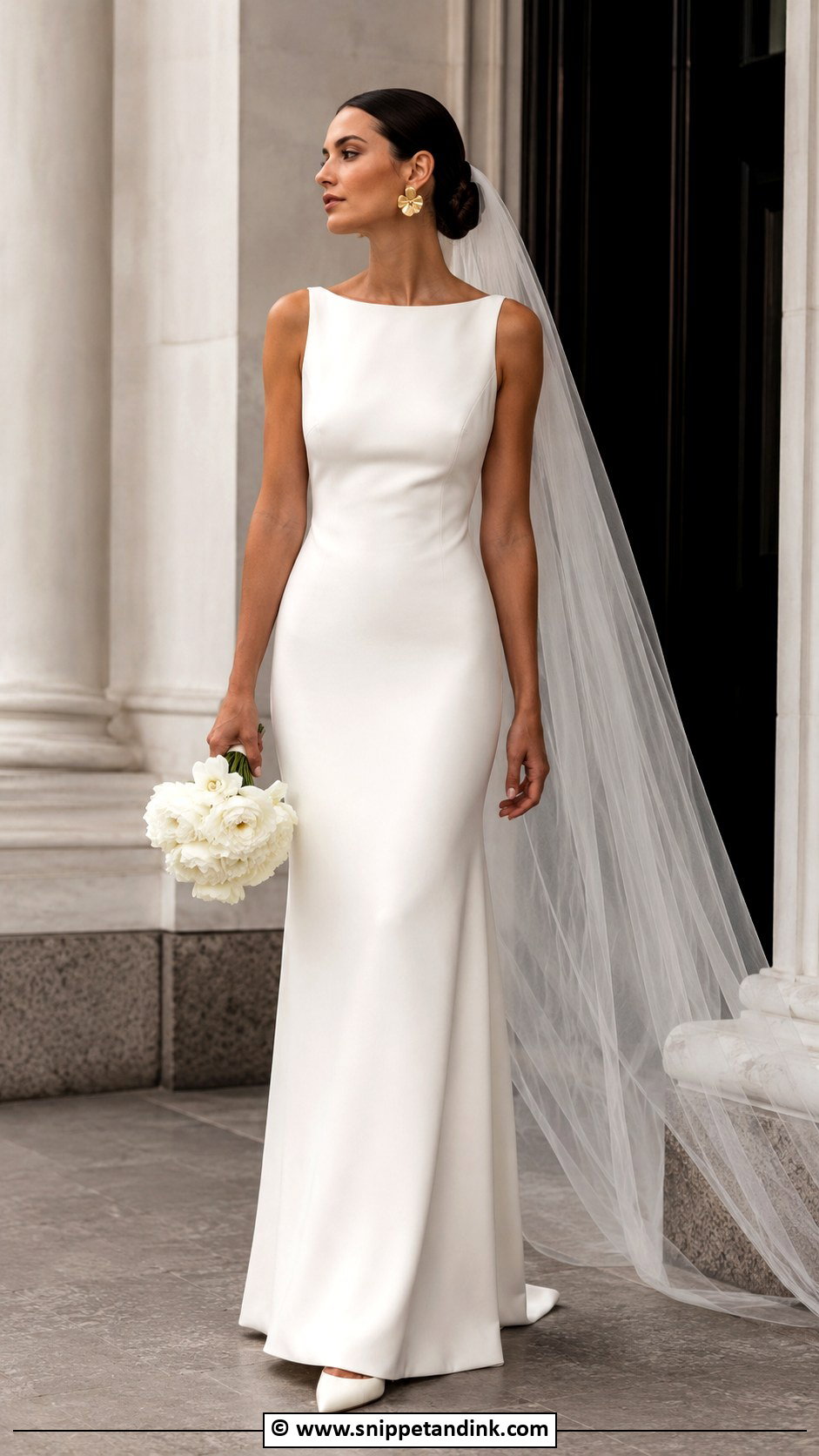
Crepe has a matte face and a heavy drape, so it skims the body without the shine that shows every seam. That also means fit is everything: the hem, bust, waist and hip all need to lie flat, and I would plan on at least two fittings. A sheath or fit-and-flare with a simple neckline, pointed heels and sculptural earrings suits rooftops and city receptions. Because the dress is quiet, it leaves room for a statement veil or a polished updo. Crepe also travels better and creases less than satin.
13. Mikado Ball Gown Wedding Dress
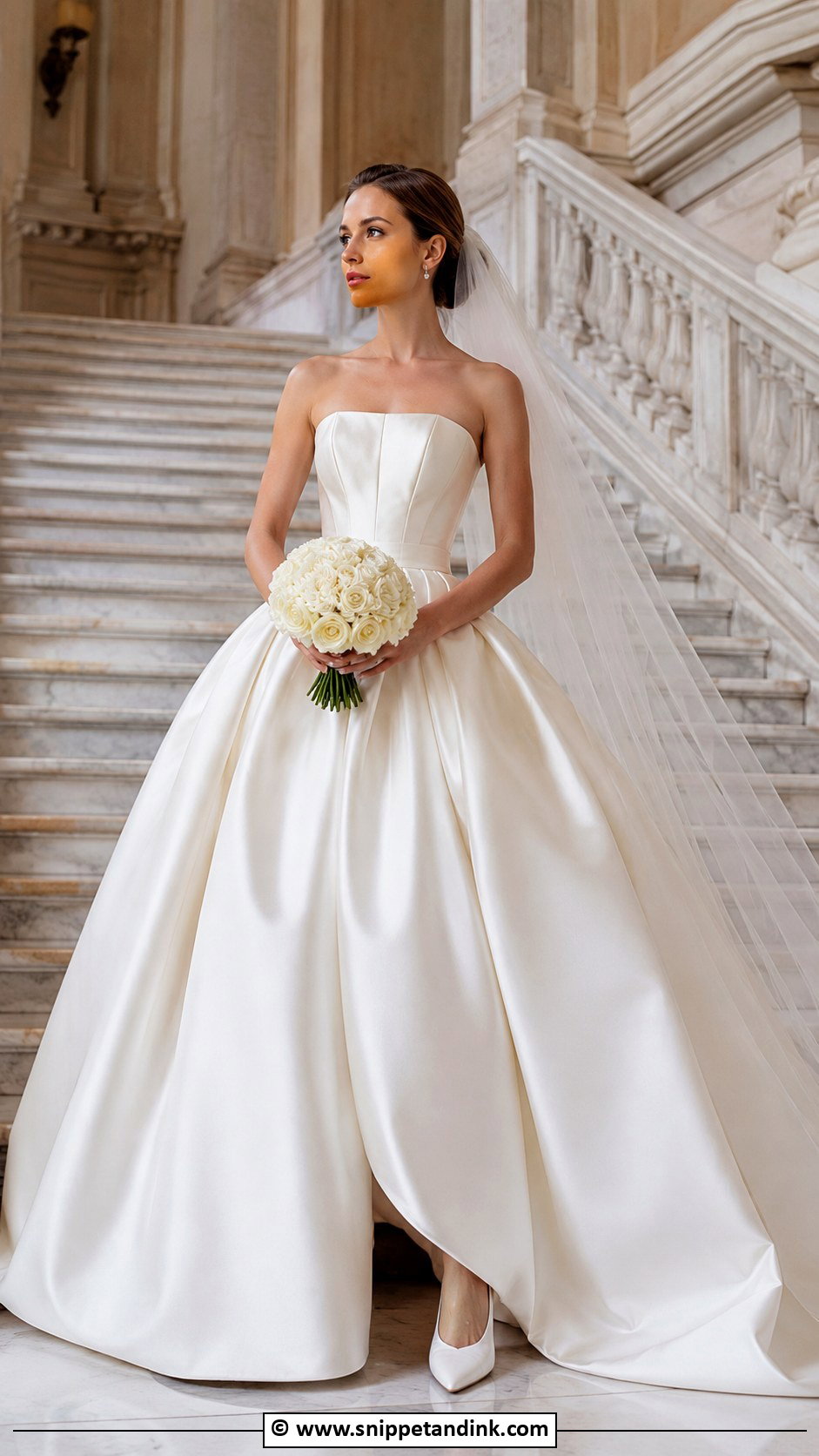
Mikado is a crisp, heavy weave with enough body to hold a full skirt without layers of netting, so the shape stays clean in photos. The trade-off is weight. A full mikado ball gown can feel heavy by the sixth hour, so walk around the shop in it for longer than feels necessary. Strapless, square or bateau necklines all suit it. Satin pumps, a long veil and simple jewelry, plus a medium bouquet so the flowers are not fighting the skirt. Grand staircases and formal receptions are where it belongs.
14. Short Wedding Dress
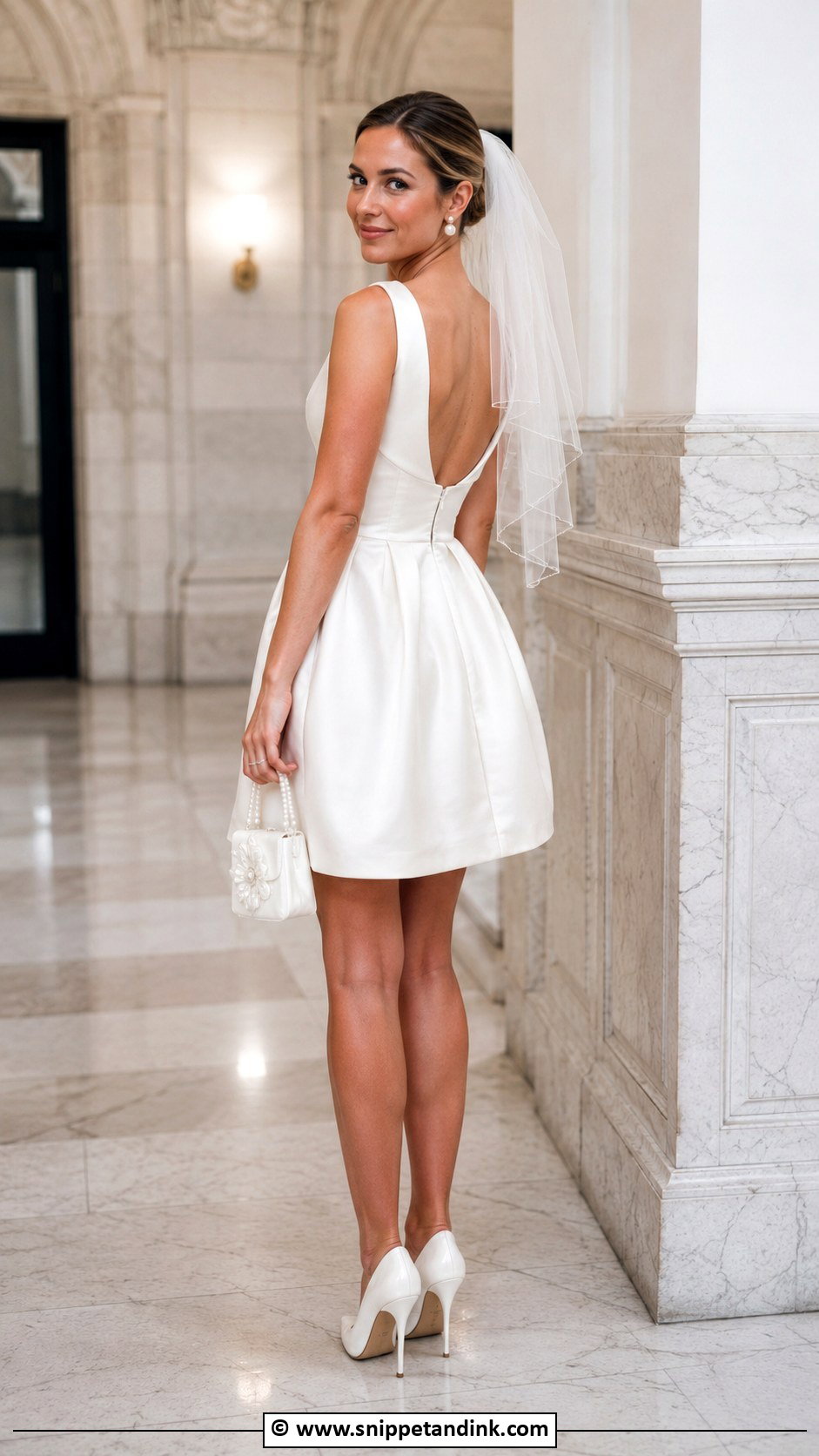
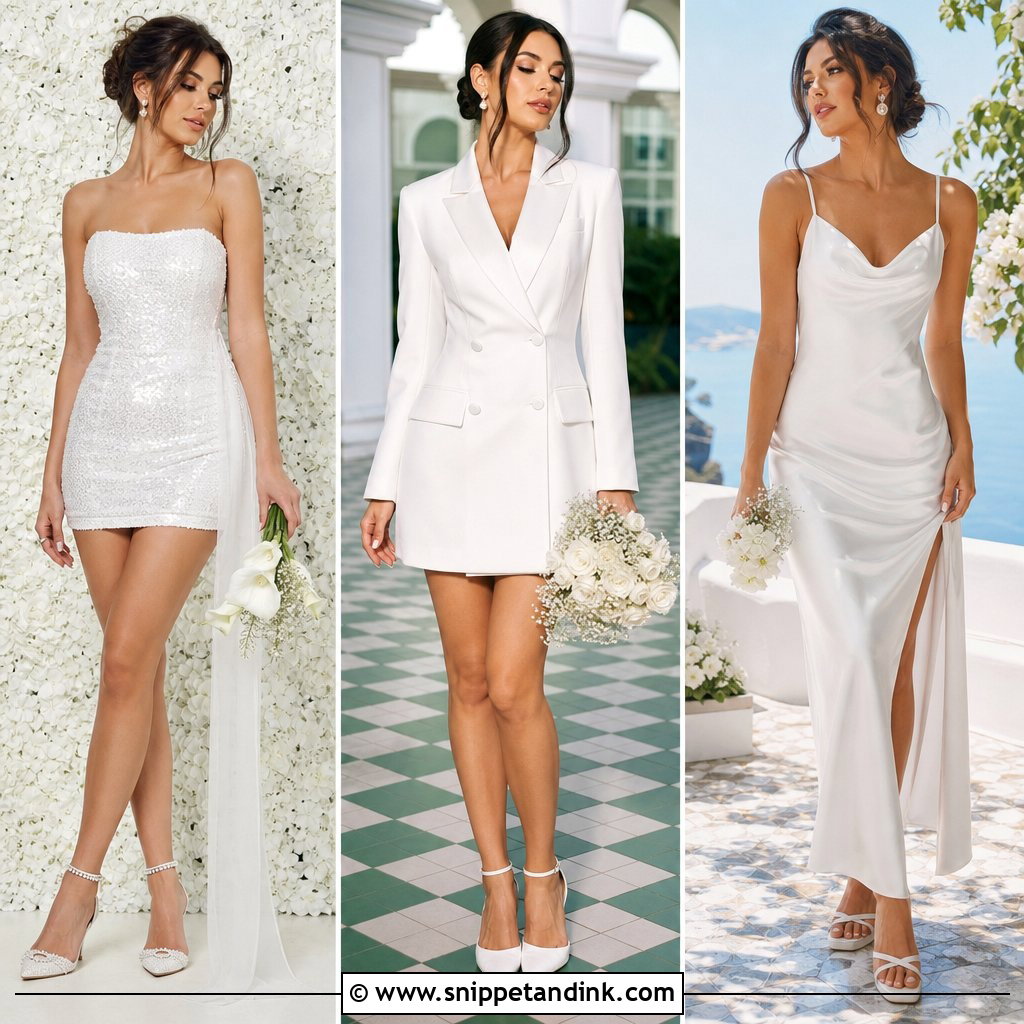
Courthouse ceremonies, civil weddings, welcome parties and receptions are where a short dress makes the most sense. A structured mini with a square neckline reads modern; a lace tea-length reads vintage. Pointed heels, a small veil or bow headband and a mini bag finish it. I always do a sit test: minis ride up when you sit at a signing table, so try it in a chair and decide whether you need an extra inch. Long sleeves or a high neck add coverage, and you finally get to show your shoes.
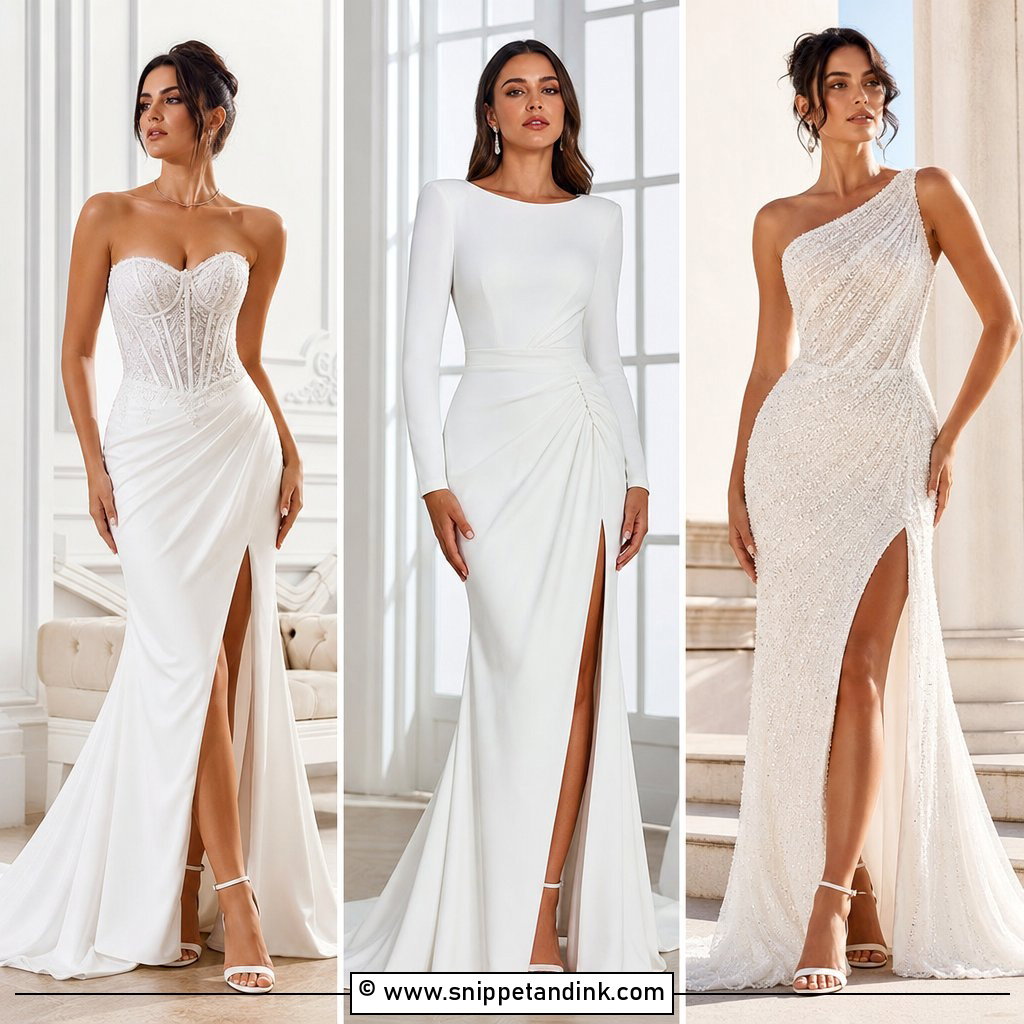
15. Tea Length Wedding Dress
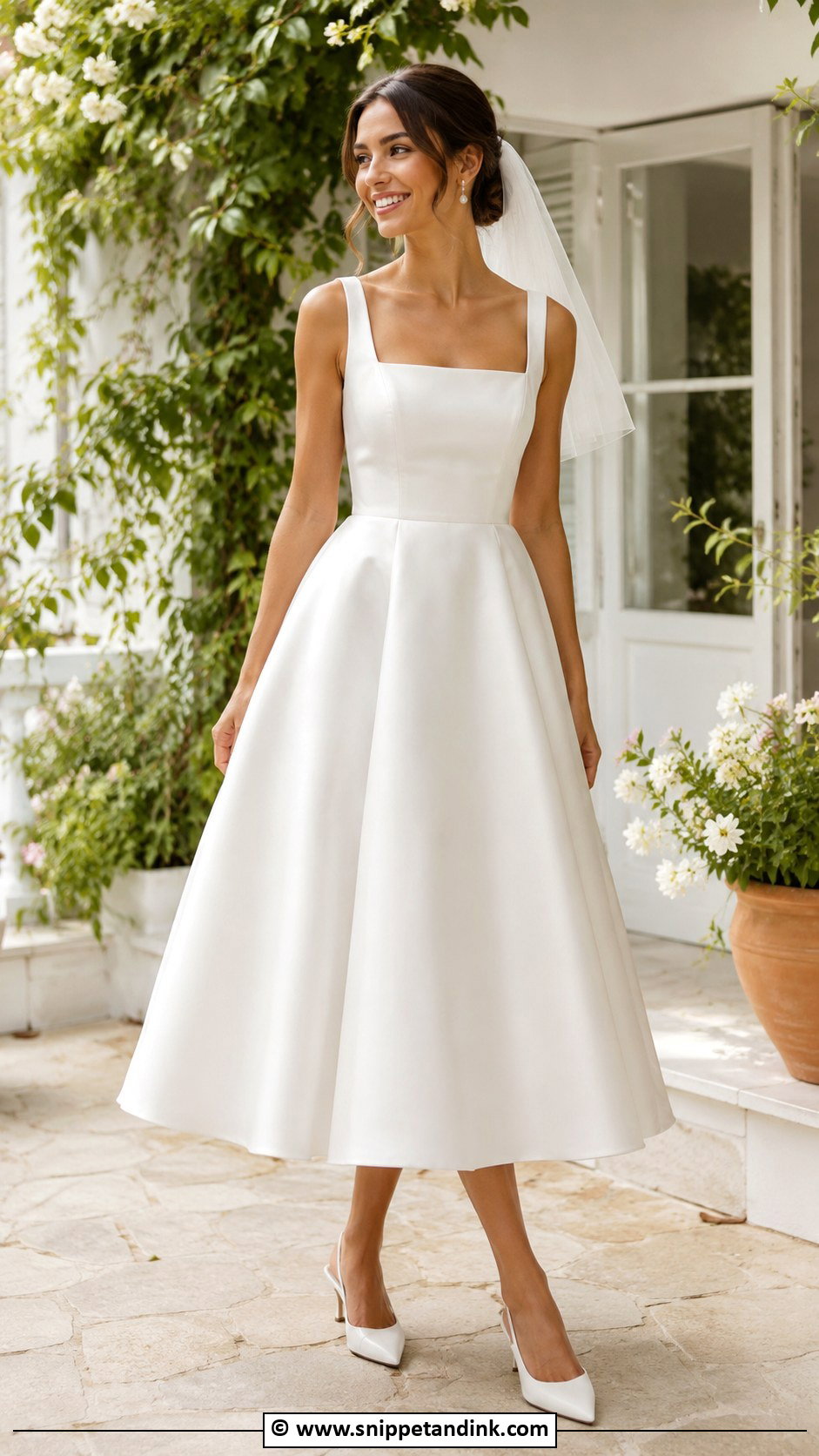
Tea length falls between the knee and the ankle, and the exact hem point matters more than brides expect. Just below the widest part of the calf is usually the most flattering place, so I pin it at the fitting instead of accepting the stock length. Satin, lace or tulle depending on the venue, with slingback heels, pearl earrings and a short veil. It is easy to dance in and suits garden weddings, brunch receptions and smaller celebrations.
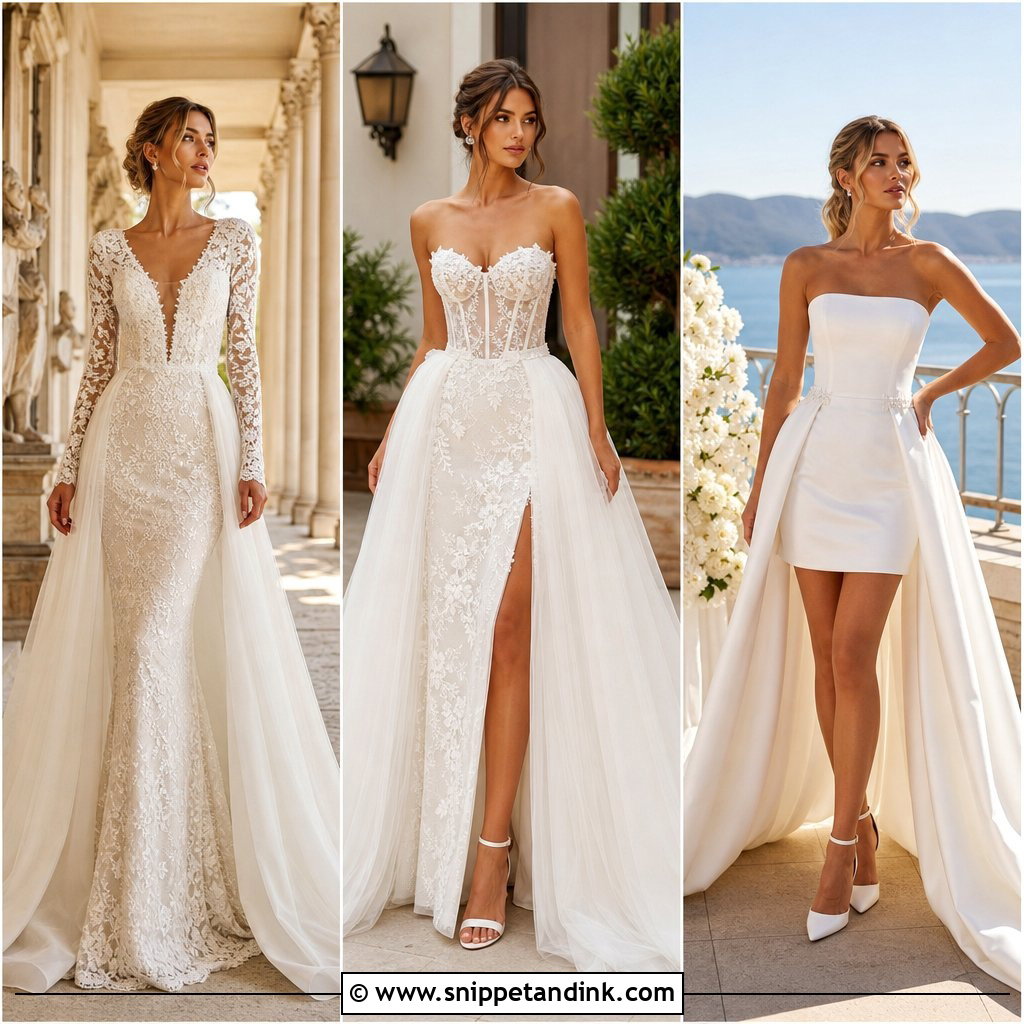
16. Convertible Wedding Dress
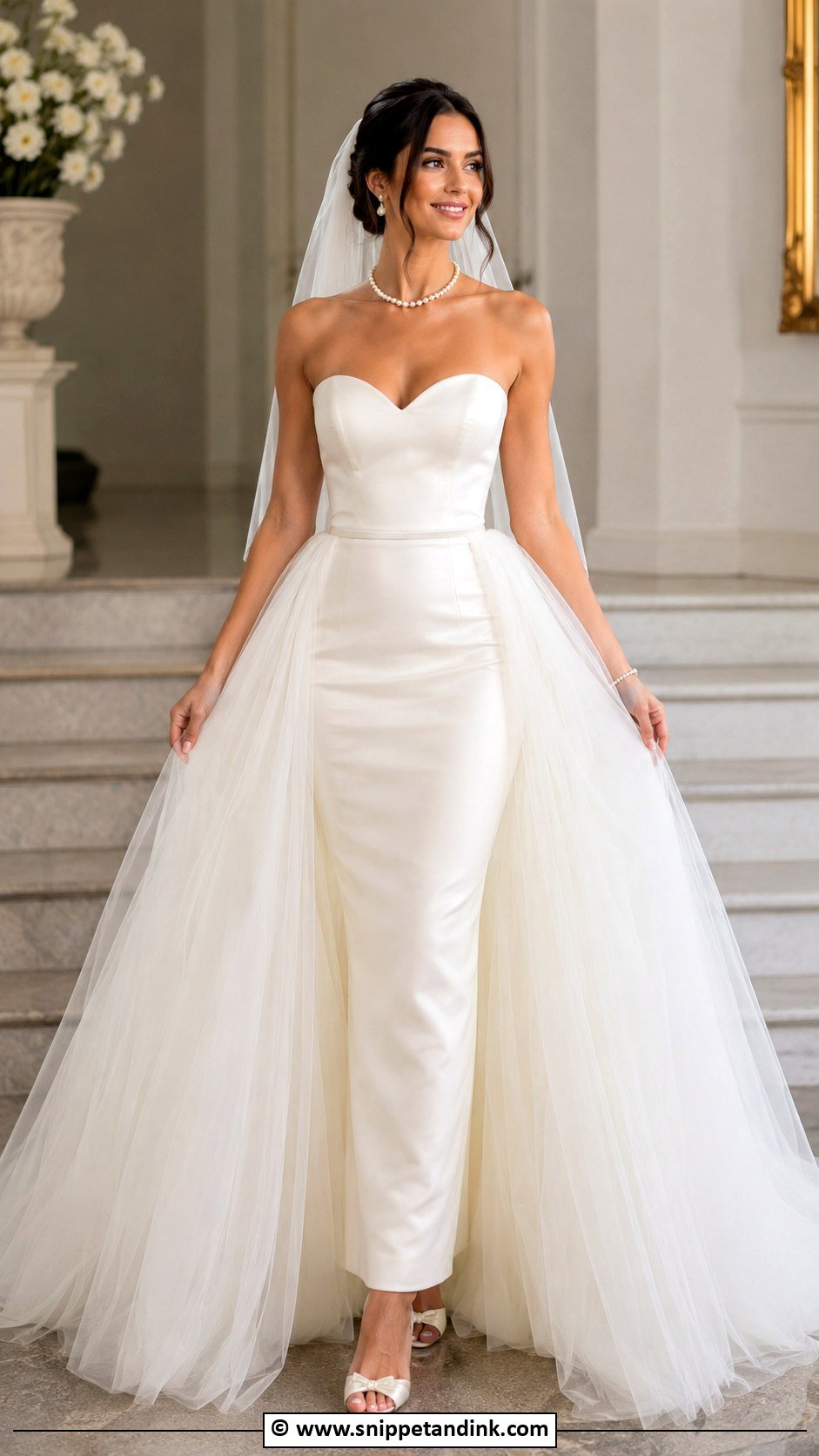
A convertible wedding dress gives you two looks from one gown through a removable overskirt, detachable sleeves, a cape or a changeable train. Wear the full version for the ceremony and strip it back for dancing. I check the attachment method first. Hidden snaps and hook-and-eye bars sit flatter than buttons, and you want a bridesmaid who has practised the change before the day, because a rushed change in a small restroom is where seams tear. Pick a veil that works with both versions.
17. Wedding Dress With Overskirt
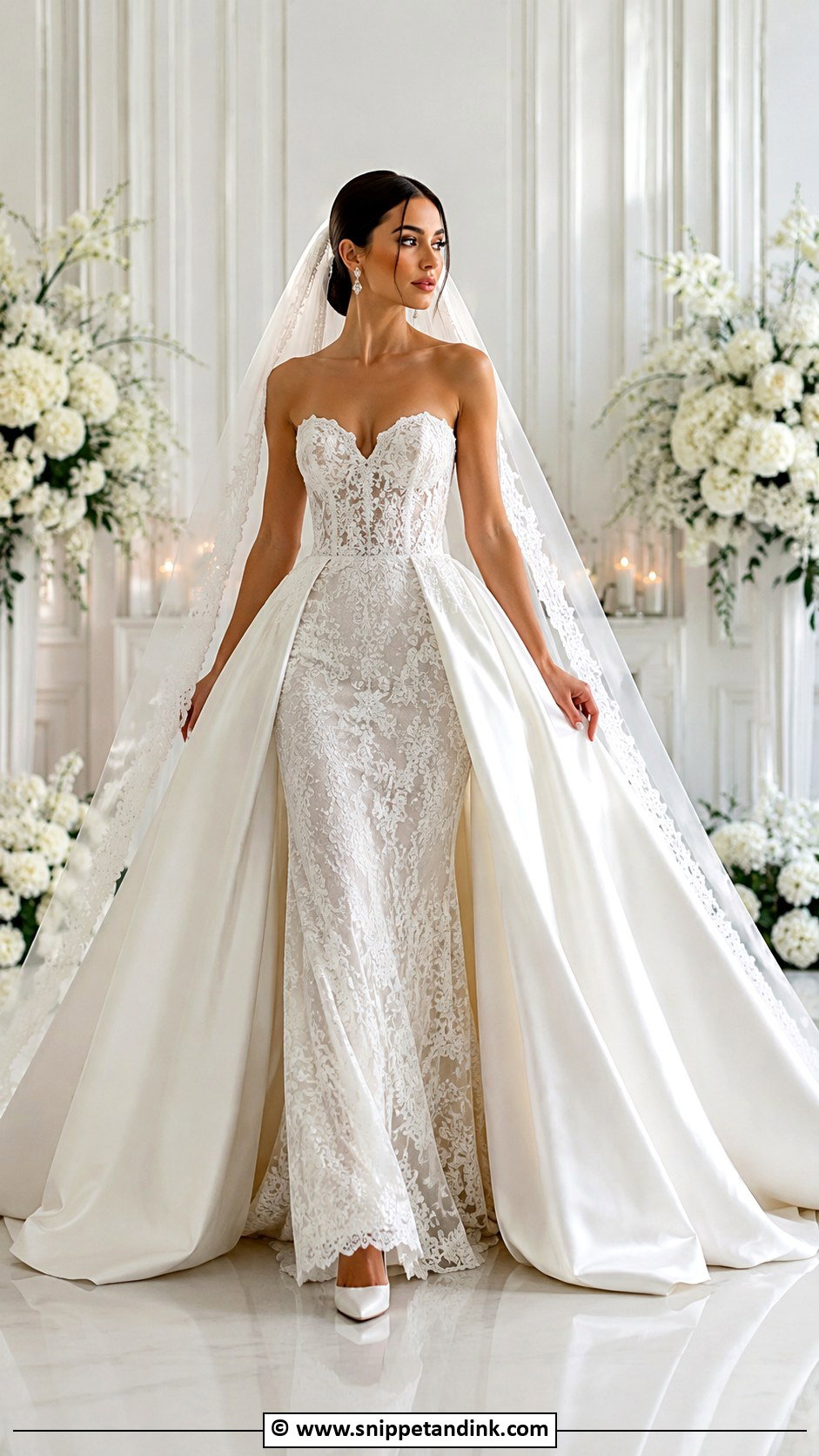
Under an overskirt, the base dress might be fitted lace, a satin sheath or plain crepe; the overskirt adds volume for the aisle and comes off later. My check here is color. An overskirt cut from a different fabric batch can look a shade off next to the base dress in daylight, so see both pieces together by a window before the final fitting. Cathedral veil and satin pumps for the ceremony, then statement earrings or a shorter veil afterward. The entrance shot is the payoff, since the skirt moves as you walk.
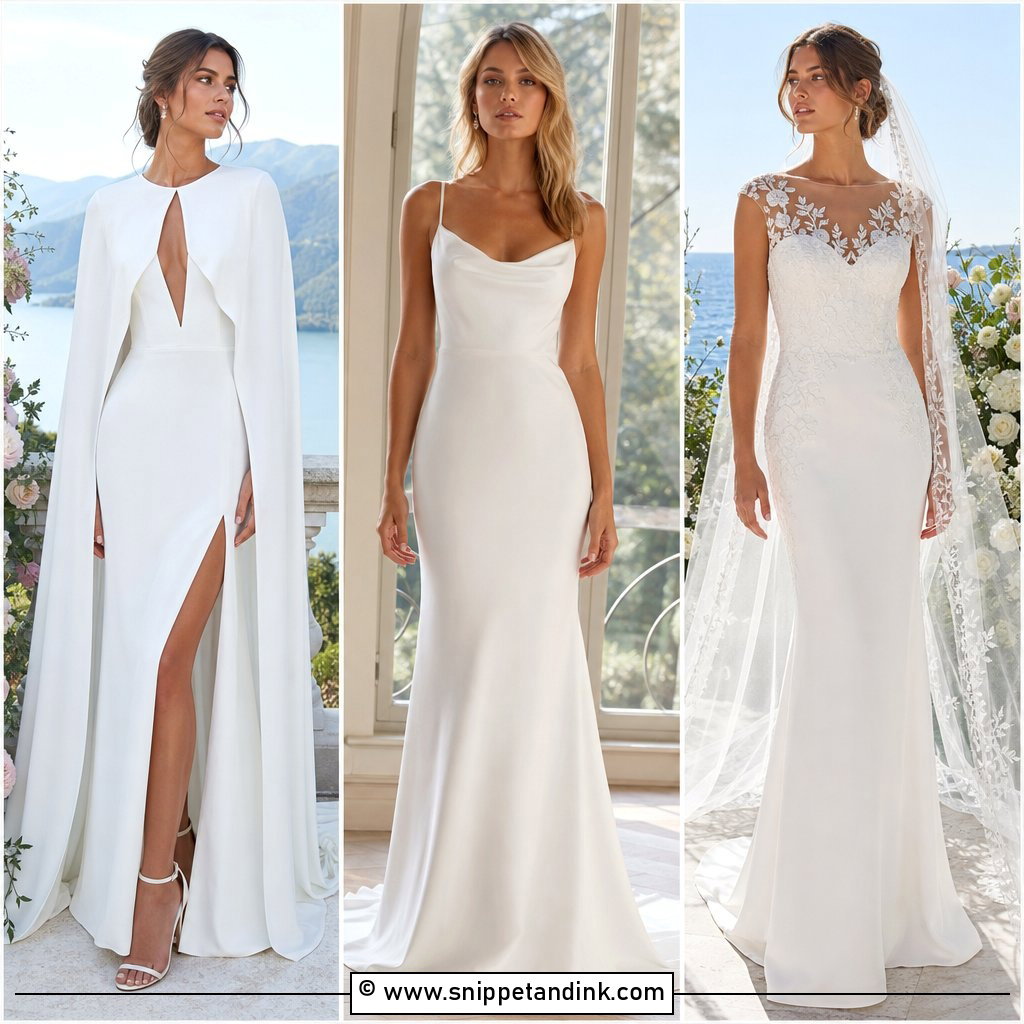
18. Cape Wedding Dress
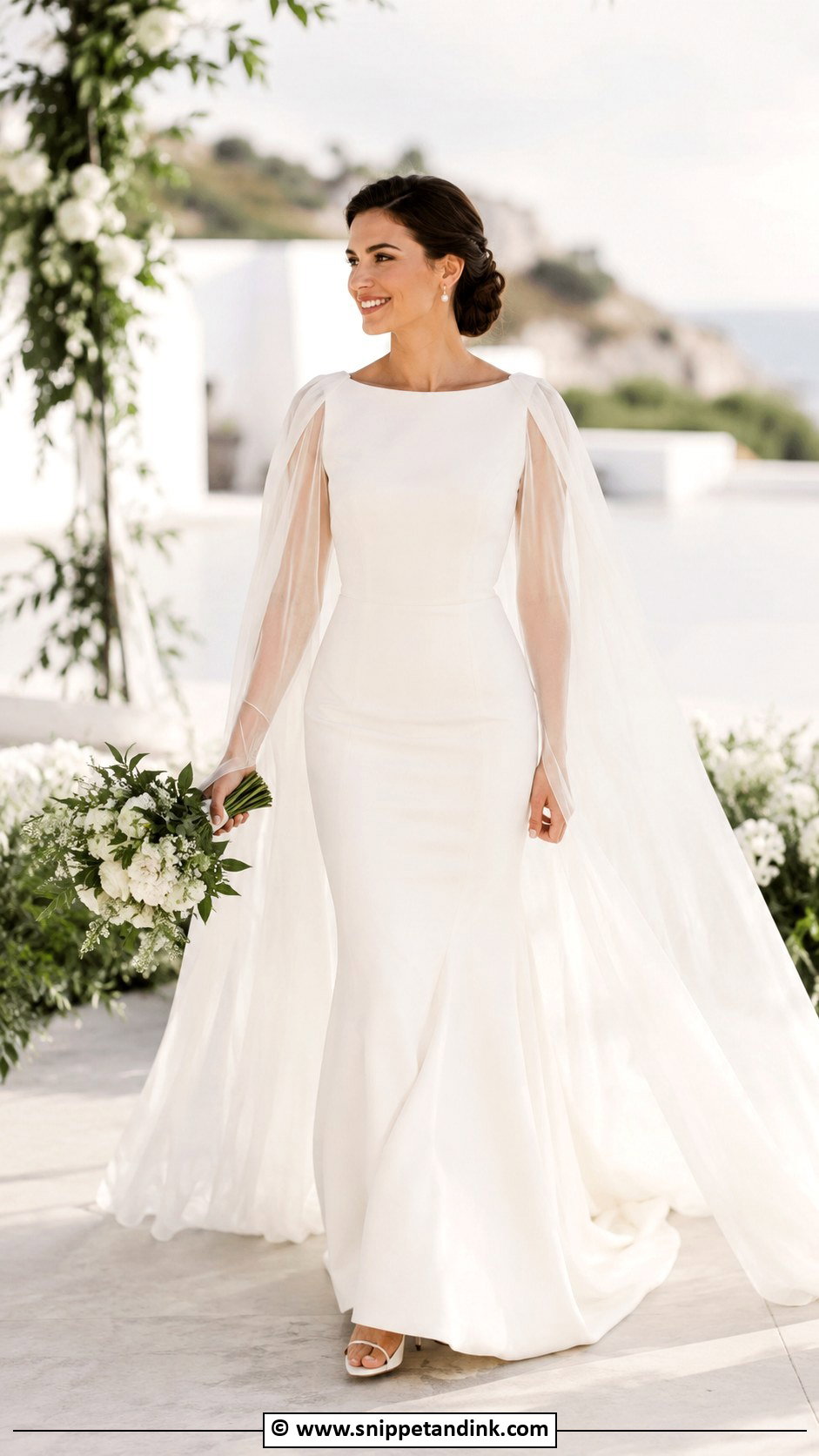
A cape takes the place of a veil and falls from the shoulders, giving movement down the back in photos. Sheer, lace, pearl-studded and tulle versions all exist. A simple fitted gown under a sheer cape keeps it balanced, while a lace cape adds texture to a minimalist satin dress. Outdoors, a long cape catches the wind, which looks wonderful in pictures and less so when it wraps around your face. I ask for small wrist loops on long capes so the bride can hold them in a gust. Keep earrings small if the cape is heavily detailed.
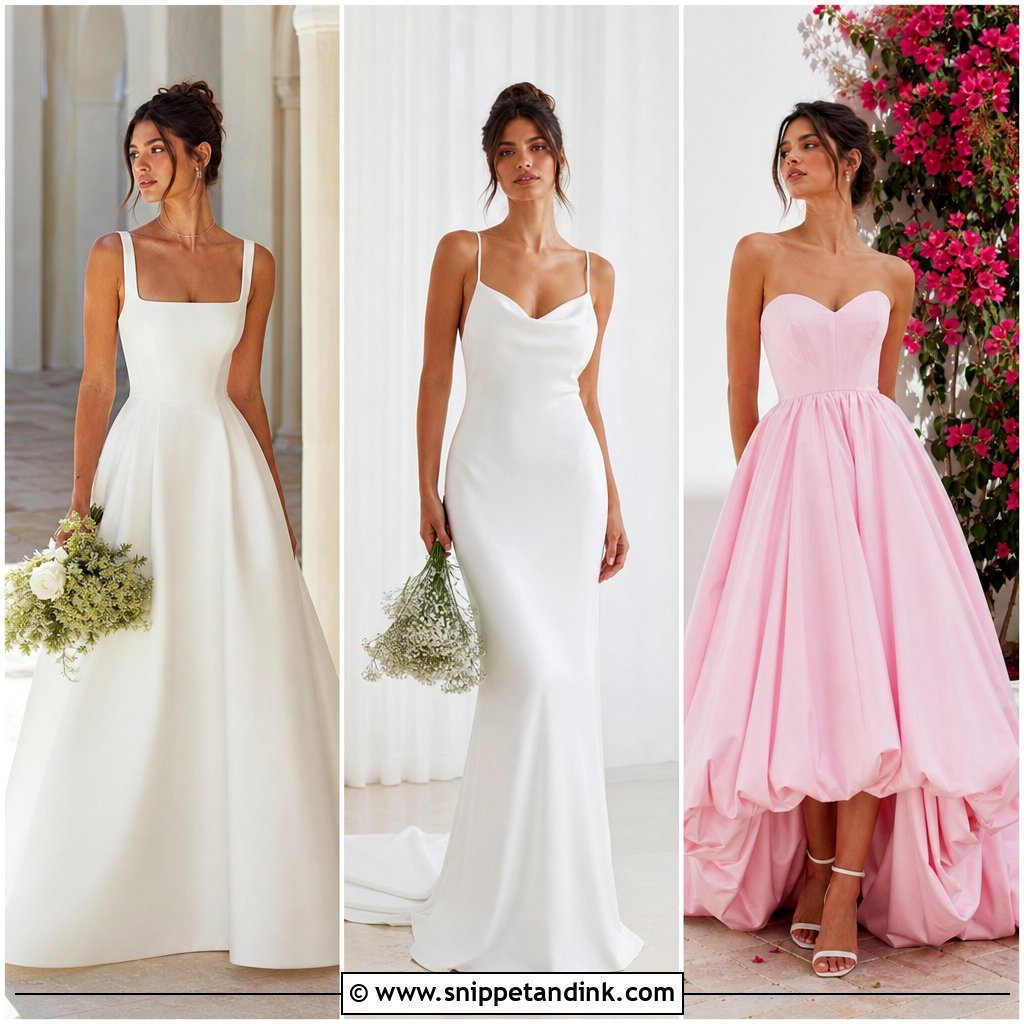
19. Blush Wedding Dress
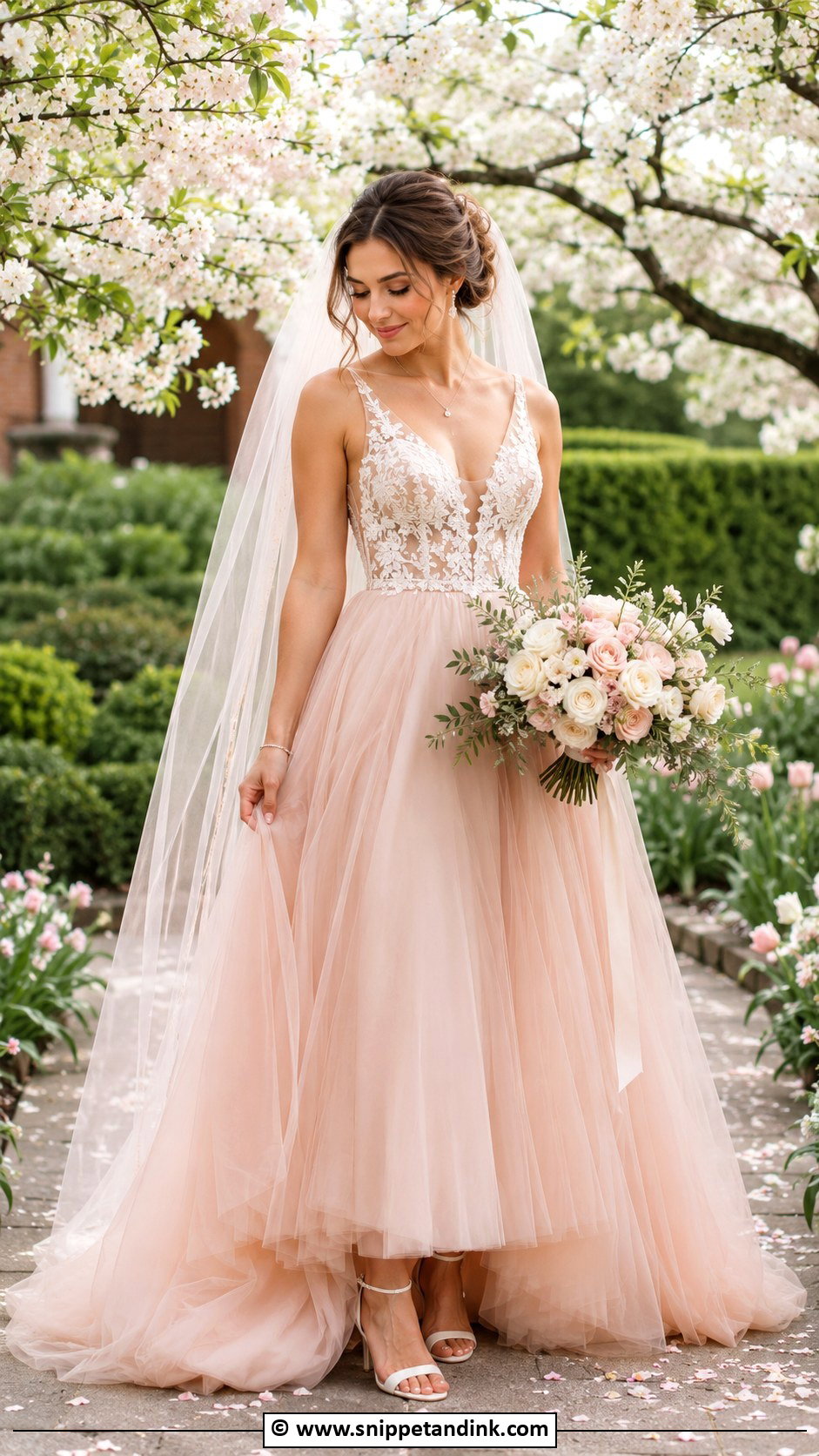
If bright white drains your complexion, blush is worth trying, because pink, champagne and nude undertones sit warmer against most skin. Try it near a window. Some blush tulle looks almost white under shop lighting and noticeably pink outdoors. Tulle reads softer, satin sleeker. Ivory heels, rose gold jewelry and a veil in a matching tone work, with a white, cream or pale pink bouquet to keep the palette together.
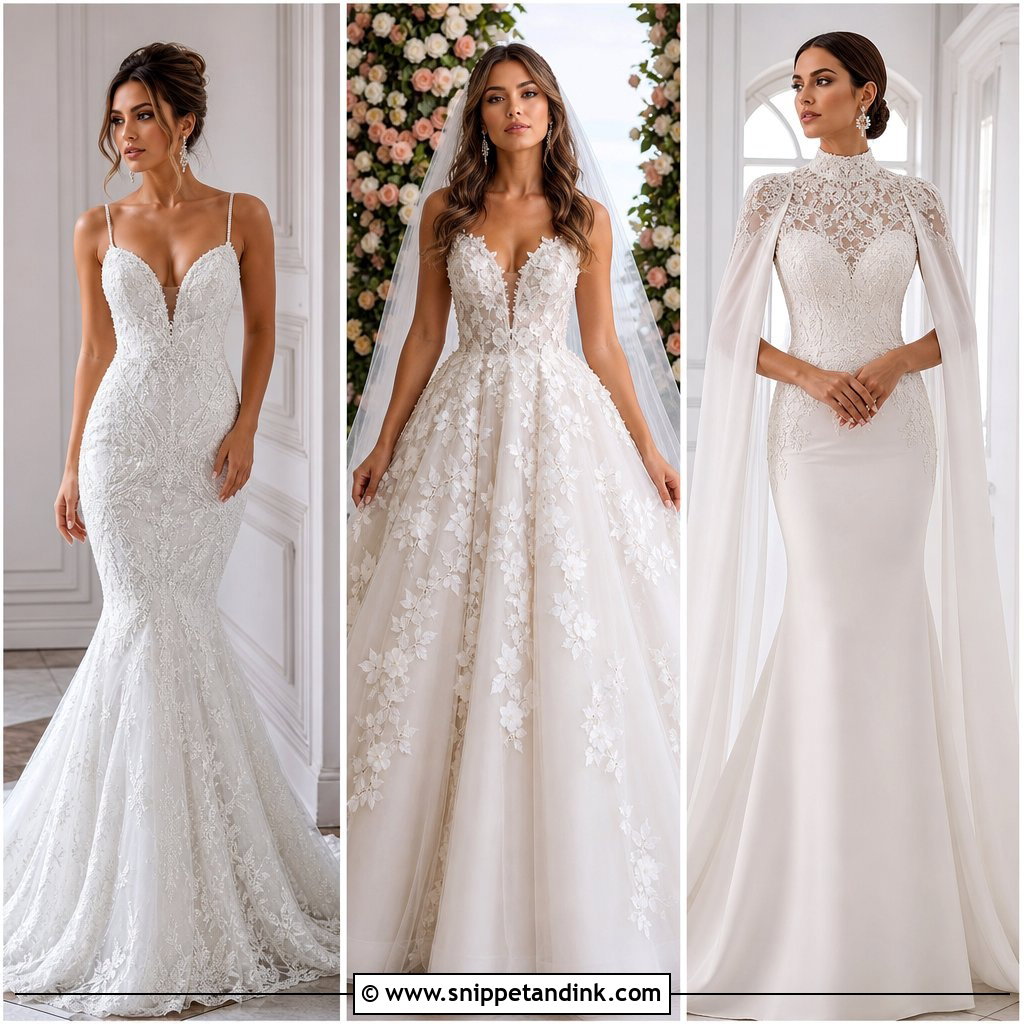


20. Blue Wedding Dress
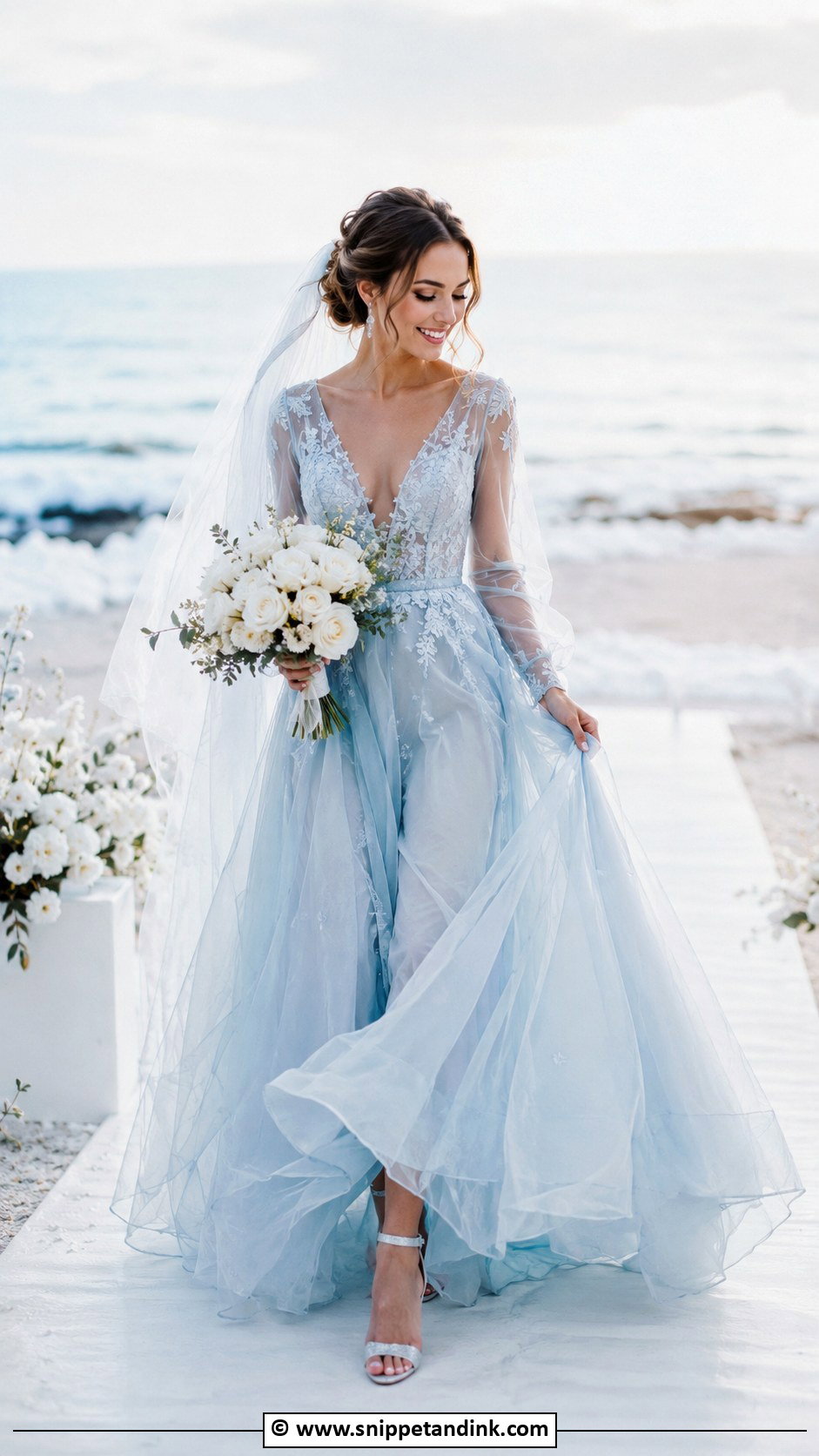
Pale, powder and icy blue read bridal rather than costume, especially in tulle, organza or satin. Blue is the color I most want brides to see on camera before committing, because cool tones shift between daylight and warm reception lighting, sometimes toward grey. Silver or ivory heels, delicate earrings and a sheer veil suit it. A white bouquet anchors it as a wedding dress, while blue accessories make it look more styled. Coastal and winter weddings are a natural fit.
21. High Neck Wedding Dress
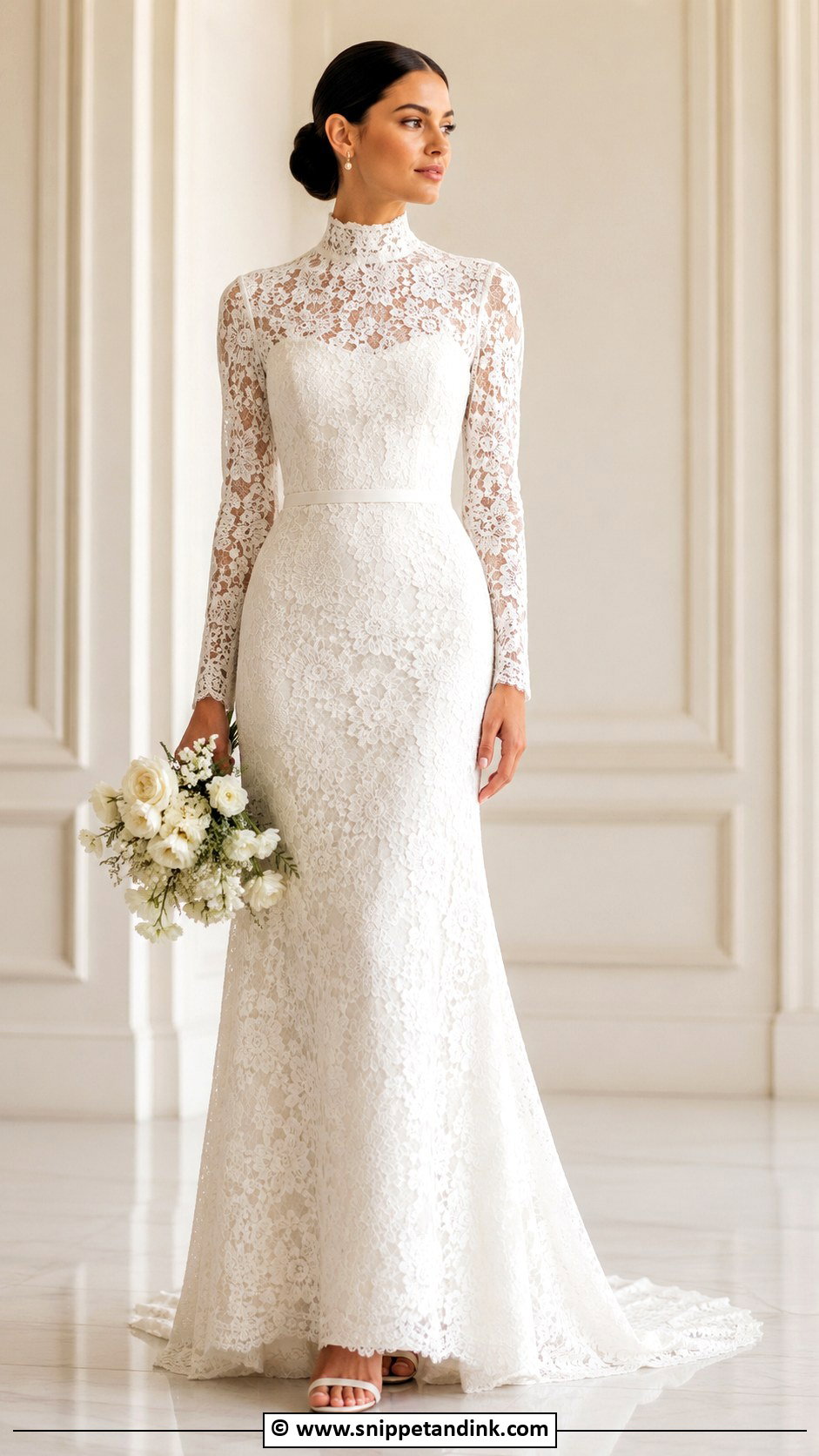
A high neck frames the face on its own, so I tell brides to skip the necklace entirely. Lace, crepe or satin in a slim or A-line silhouette works best, and a defined waist or open back keeps it from feeling heavy. Small earrings, a low bun and simple heels are enough. Check the closure at the back of the neck, usually tiny buttons or a hook, in profile: it should not pull when you turn your head toward the officiant. It gives coverage without looking plain.
22. Sheer Sleeve Wedding Dress
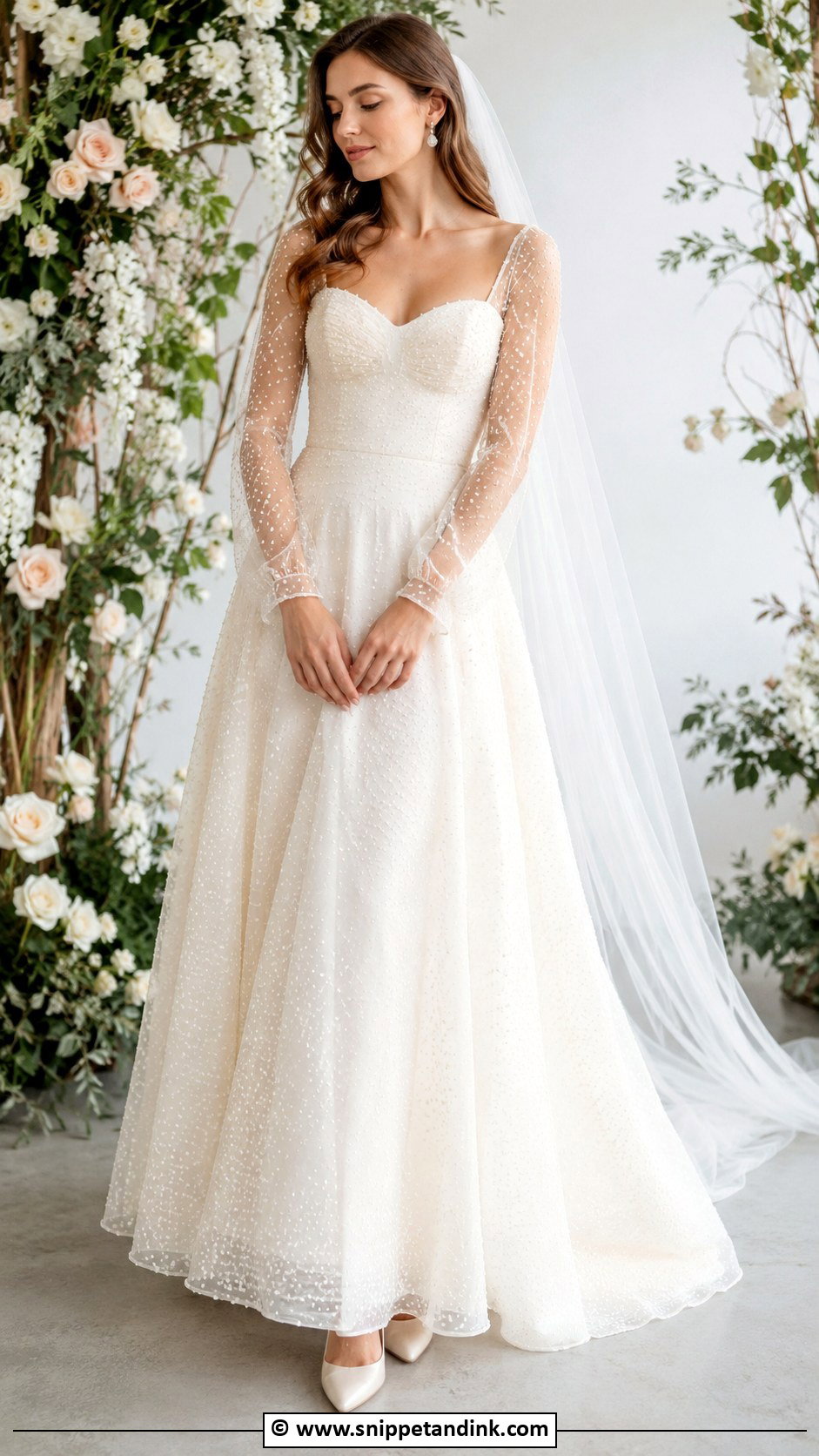
Sheer sleeves in plain tulle, lace, dotted mesh or tiny florals cover the arms without the warmth of lined sleeves. Mesh can scratch at the underarm seam after a few hours, so rub the inside of the sleeve against your skin in the fitting room before deciding. A fitted bodice with an A-line or flowing skirt balances the sleeves, finished with delicate earrings, ivory heels and a soft veil. It works in almost any season.
23. Two Piece Wedding Dress
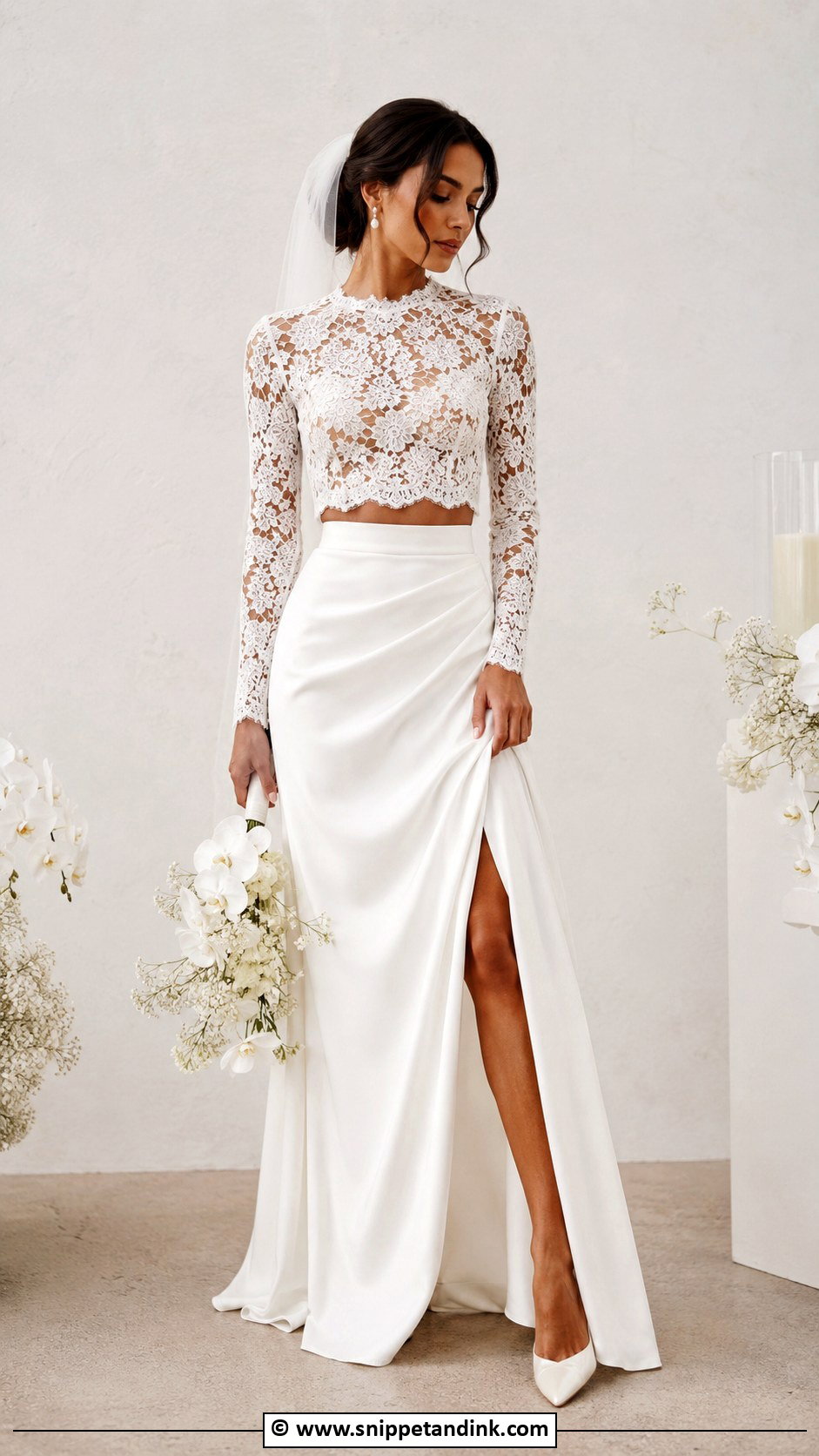
A cropped top with a high-waisted skirt, a lace bodice over satin, a structured top on full tulle: two-piece bridal looks feel personal. Both pieces need to match in color and fabric weight, or a heavy skirt makes a light top look flimsy. I like them for alterations, because top and skirt are fitted separately, but plan the gap so it does not widen when you raise your arms. Simple heels, pearl earrings and a veil tie it together, and it suits beach weddings and reception changes.
24. Bridal Jumpsuit Wedding Outfit
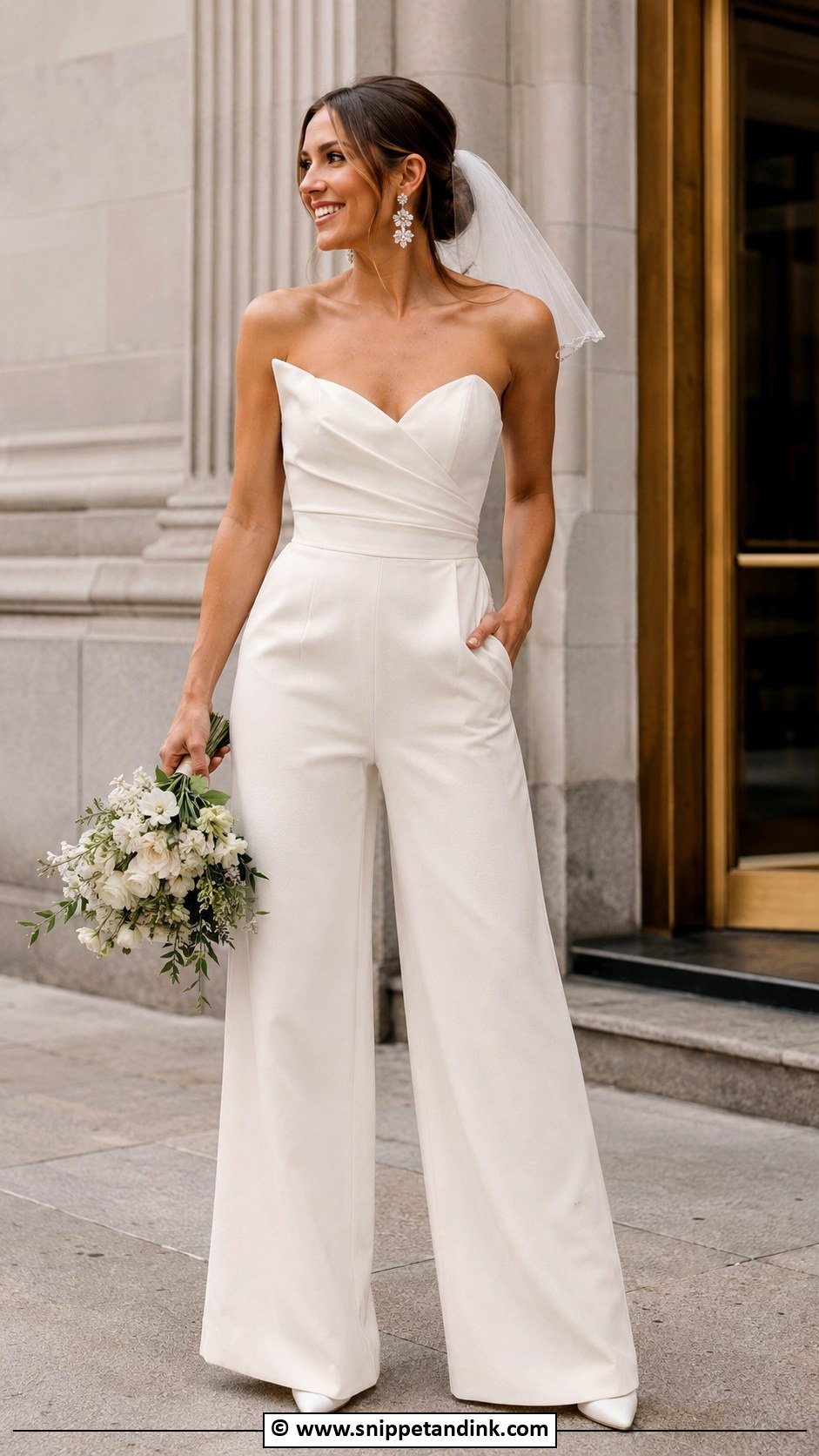
A bridal jumpsuit wedding outfit suits brides who want to move freely and skip the train. Tailored ivory with wide legs, a structured bodice or draped sleeves all work, and pointed heels with a short veil or cape keep it clearly bridal. The fitting detail is torso length. A jumpsuit that is even slightly short through the body pulls when you sit, and that is the hardest part to alter, so sit, squat and climb a step before buying. Choose a substantial fabric such as crepe, satin or mikado so it looks special.

25. Reception Wedding Dress
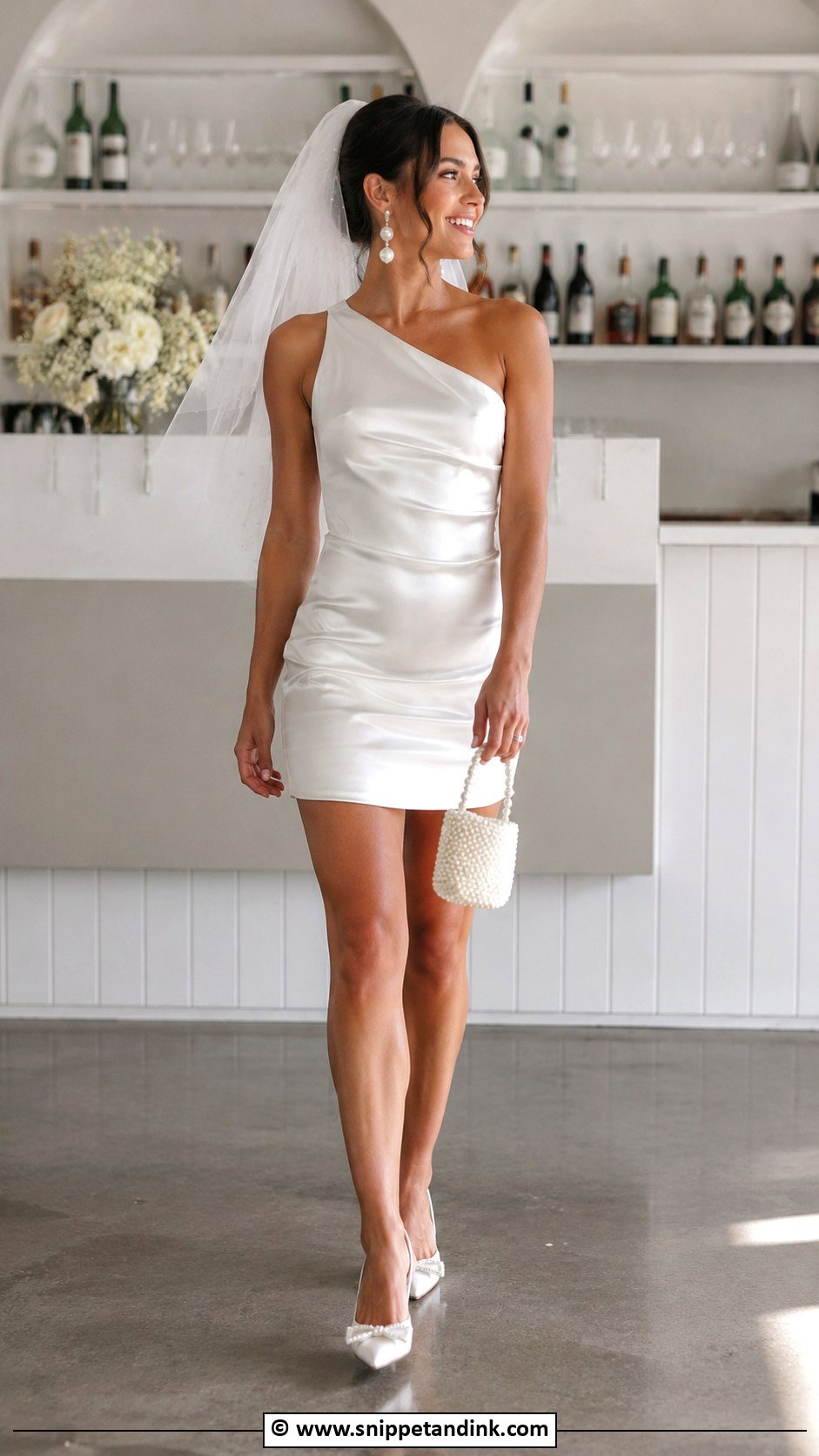
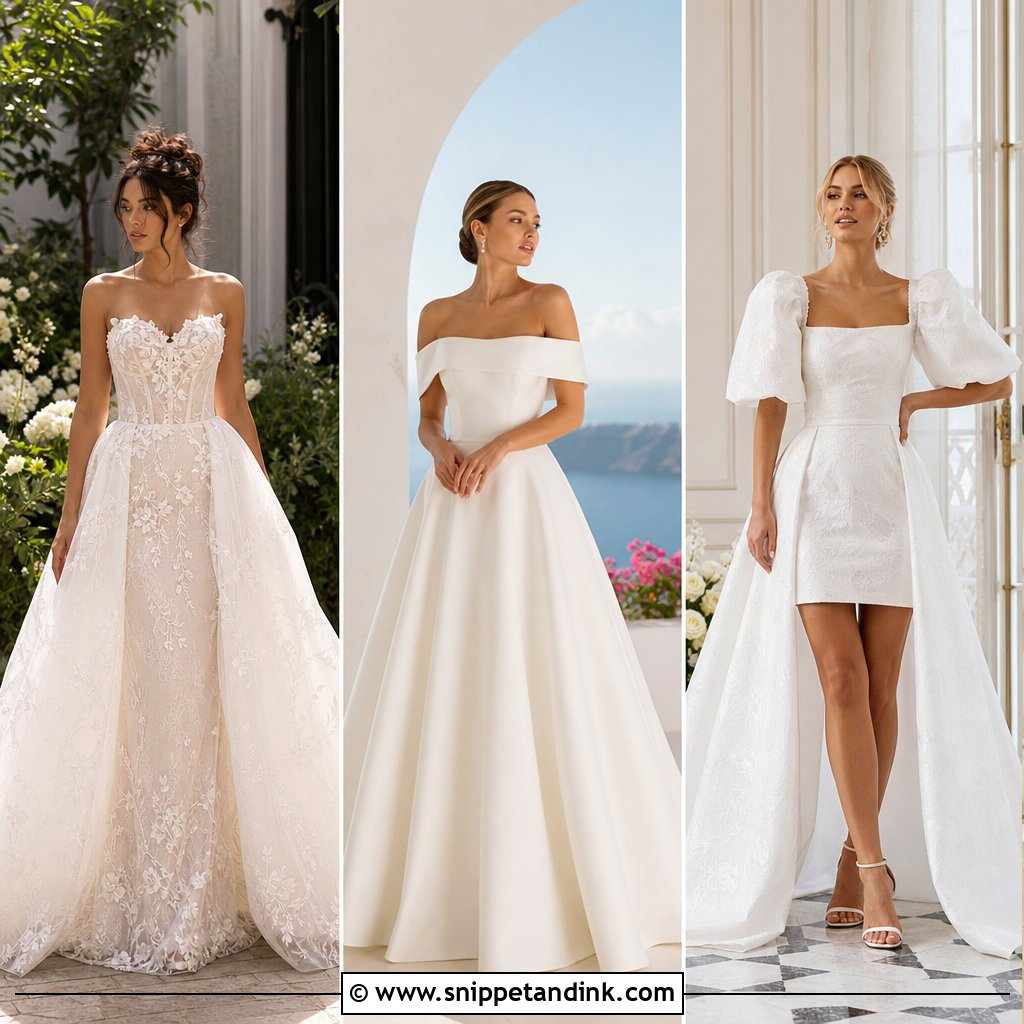
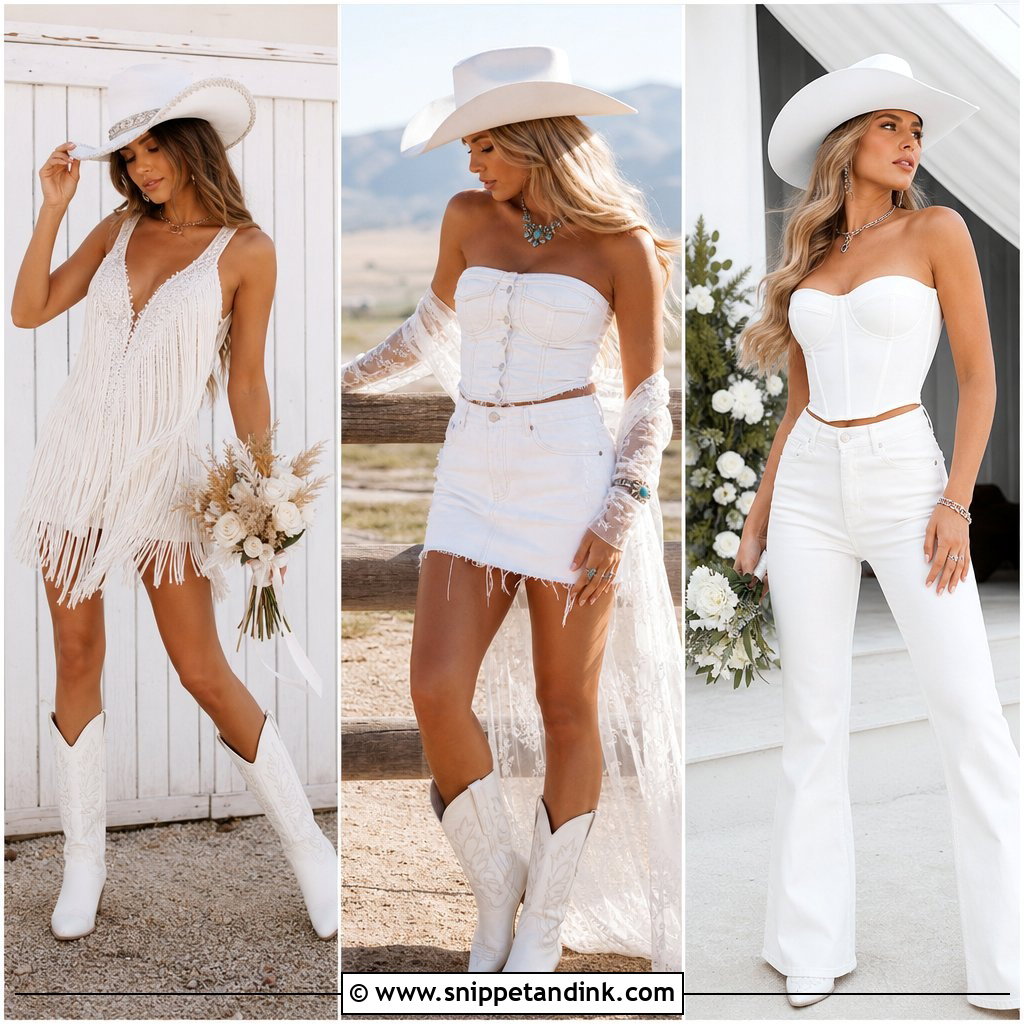
A second dress lets you dance without a train. Minis, slip dresses, a feather-trimmed hem, short lace and satin midis are the usual picks, with comfortable heels, a small bag and fun earrings. If the ceremony gown is formal, keep the reception dress in the same color family so the photos still look like one wedding. Warm venues and long days are where it earns its place. Schedule the change, with help, and choose a closure someone can do up quickly.
Sit, Reach, Climb: The Fitting Room Test I Give Every Bride
A mirror shows you standing still, and you will spend very little of the day doing that. Before you commit to any of the shapes above, run through this in the dress:
- Sit on a hard chair for a full minute. Watch for a bodice that digs in, a mini that rides up, or satin that creases sharply across the lap.
- Raise both arms as if hugging someone taller than you. Off shoulder bands and fitted sleeves show their limits here.
- Climb a step or two holding the skirt. Full skirts and long trains need a hand free, so think about where your bouquet goes.
- Ask the consultant to show you a bustle, even a temporary one. A heavy train hooked up badly drags the whole back down.
- Turn slowly and look at the back in a hand mirror. Guests watch your back for the entire ceremony.
Satin, Lace and Crepe After the Last Dance
On the day, a small kit saves most mishaps: white chalk to cover a light mark on ivory, a lint roller for tulle, safety pins and that needle and thread. Blot spills, never rub them, since rubbing pushes the stain into satin and roughens the surface.
After the wedding, get the gown professionally cleaned within a few weeks. Sugary drinks and sweat can dry invisible and then turn yellow or brown over months, so a dress that looks clean is not necessarily clean. For storage, I suggest acid-free tissue in the folds and a breathable cotton bag or acid-free box, kept somewhere cool and dark. Avoid plastic, which traps moisture, and do not hang a heavy gown by its shoulder straps for years; use the inner hanging loops or store it flat so the bodice does not stretch.
The Gown That Still Works at Midnight
Trends give you a starting point, not a verdict. Lace, bows, pearls, drop waists, color, sleeves, capes and short hemlines are all on the table this year, and the right one is the dress that still feels comfortable after hours of sitting, hugging and dancing. Think about your venue, your season and how long you will be in the gown, then try on at least one shape you would never have picked from a photo. It is often the one you scrolled past online that works.
You'll Like These Ideas:




Leave a Reply