
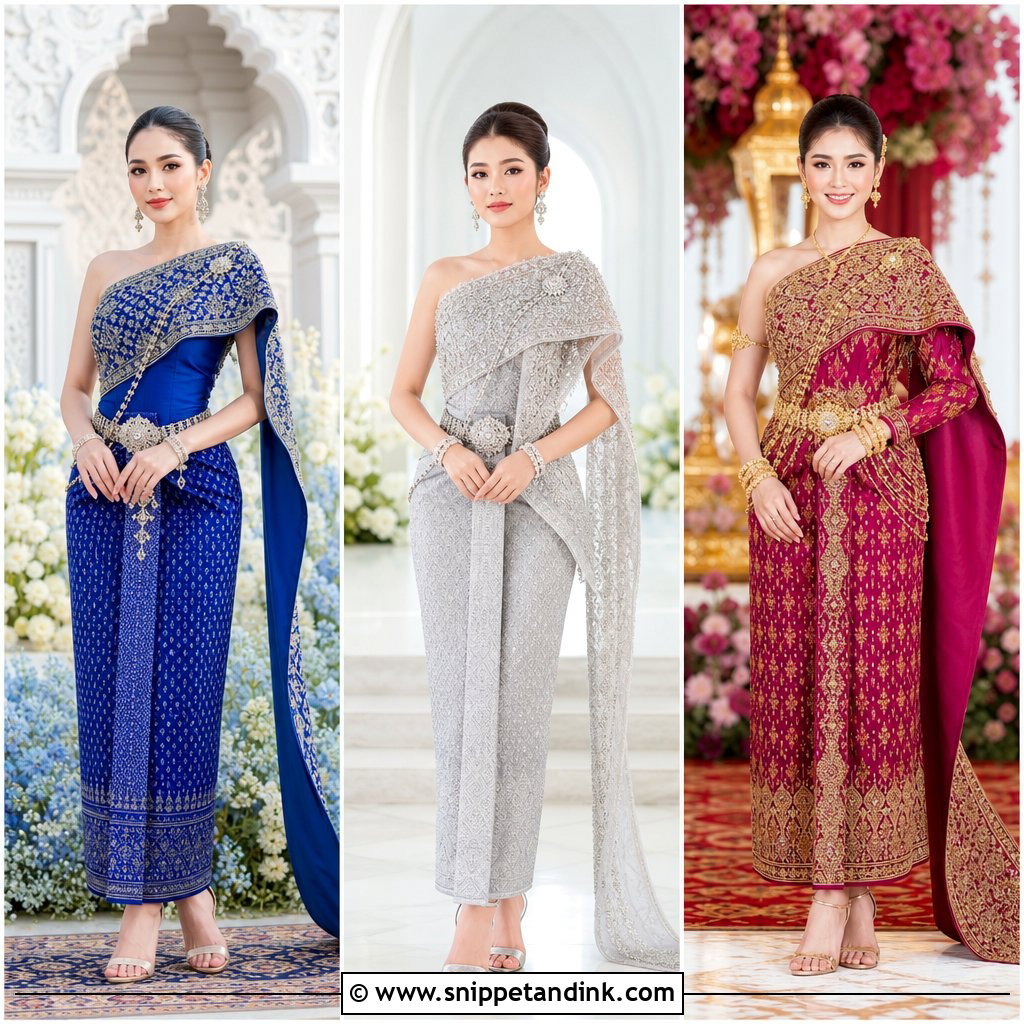
A Thai bridal outfit is built in layers: a fitted blouse or bodice, a pha sin wrapped and pleated at the front, and often a sabai draped across one shoulder. Each layer changes how you move, kneel and sit, which matters far more on the day than it does on a hanger. Many brides wear a strictly traditional Chut Thai for the morning rites and the water-pouring ceremony, then change into something lighter for the reception or a beach celebration. The ideas below run from heavy gold brocade to plain silk and modern gowns, and I’ve added notes on fit, fabric and wear so you can judge each one as a garment, not only as a picture.
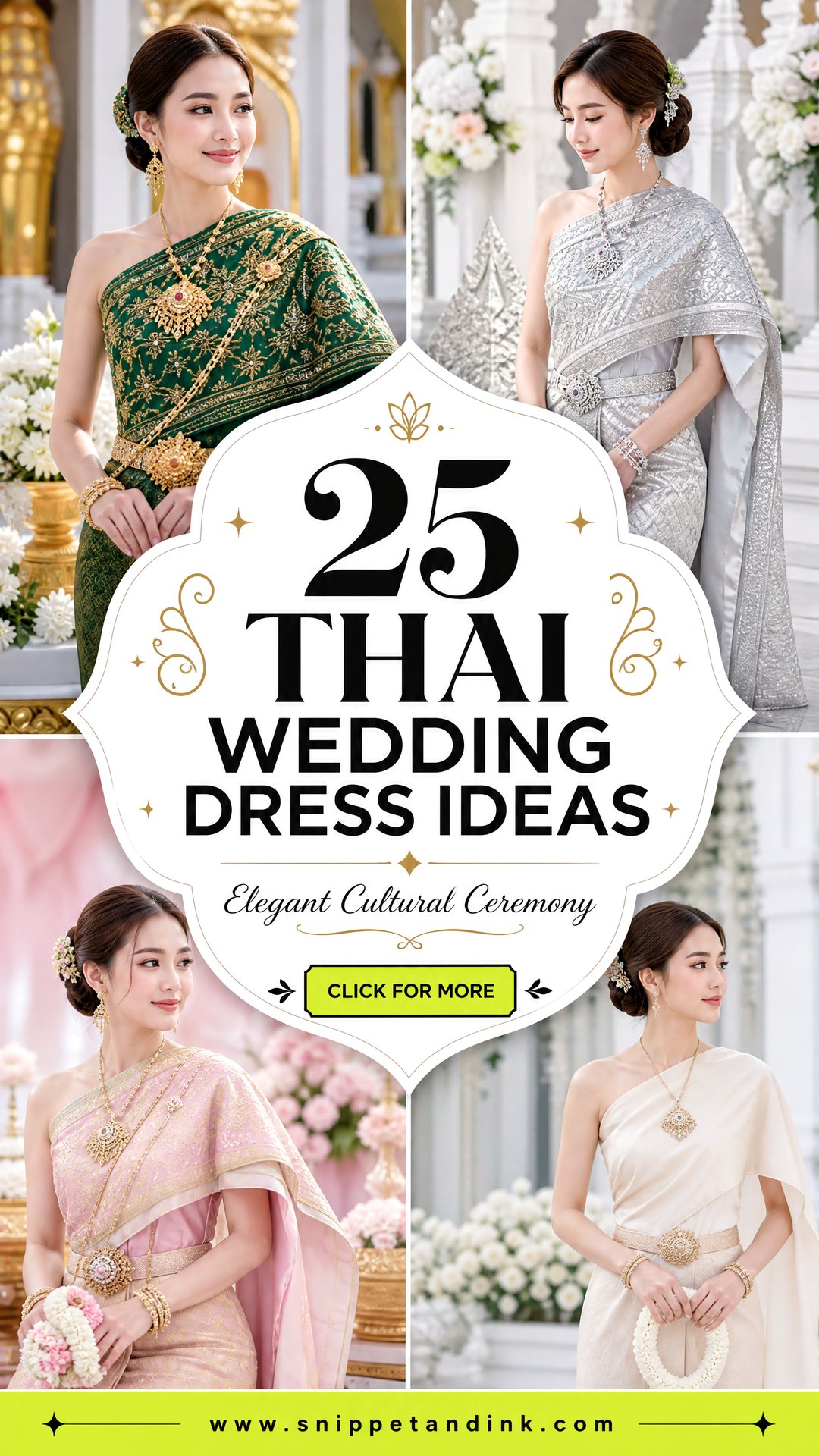
Matching the Outfit to Each Thai Ceremony of the Day
A Thai wedding often runs in stages, and a single outfit rarely suits all of them. The morning can include the Khan Maak procession and merit-making with monks, followed by the water-pouring ceremony, then a reception in the evening. Each asks something different of the clothes, so I plan the wardrobe around the schedule before anyone looks at colour.
- Monks and merit-making: covered shoulders and knees, a skirt you can sit sideways in on the floor, and shoes that come off quickly at the door.
- Water-pouring ceremony: you kneel or sit while elders pour blessing water over your joined hands, so sleeves should sit clear of the wrist and the sabai should be pinned high, away from the water.
- Portraits: this is when the full brocade, belt and jewelry are worth their weight, because you only need to hold still.
- Reception: lighter silk, a shorter or detachable drape and comfortable shoes, since you will be greeting guests for hours.
If you only want one outfit, I’d choose a two-piece set with a detachable sabai. It adapts to most of these moments with one small change rather than a full dress swap.
1. Thai Wedding Dress With Gold Sabai
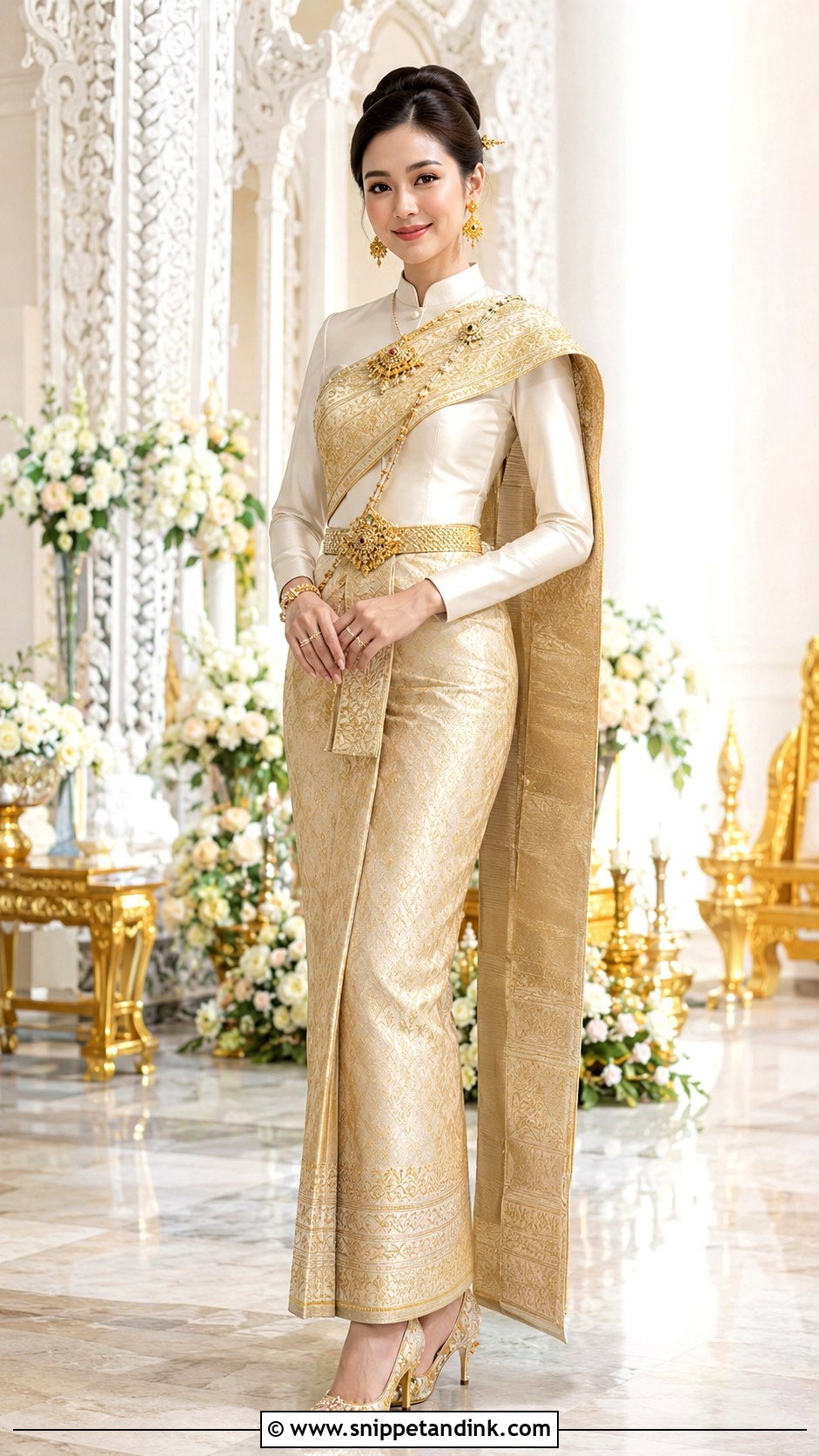
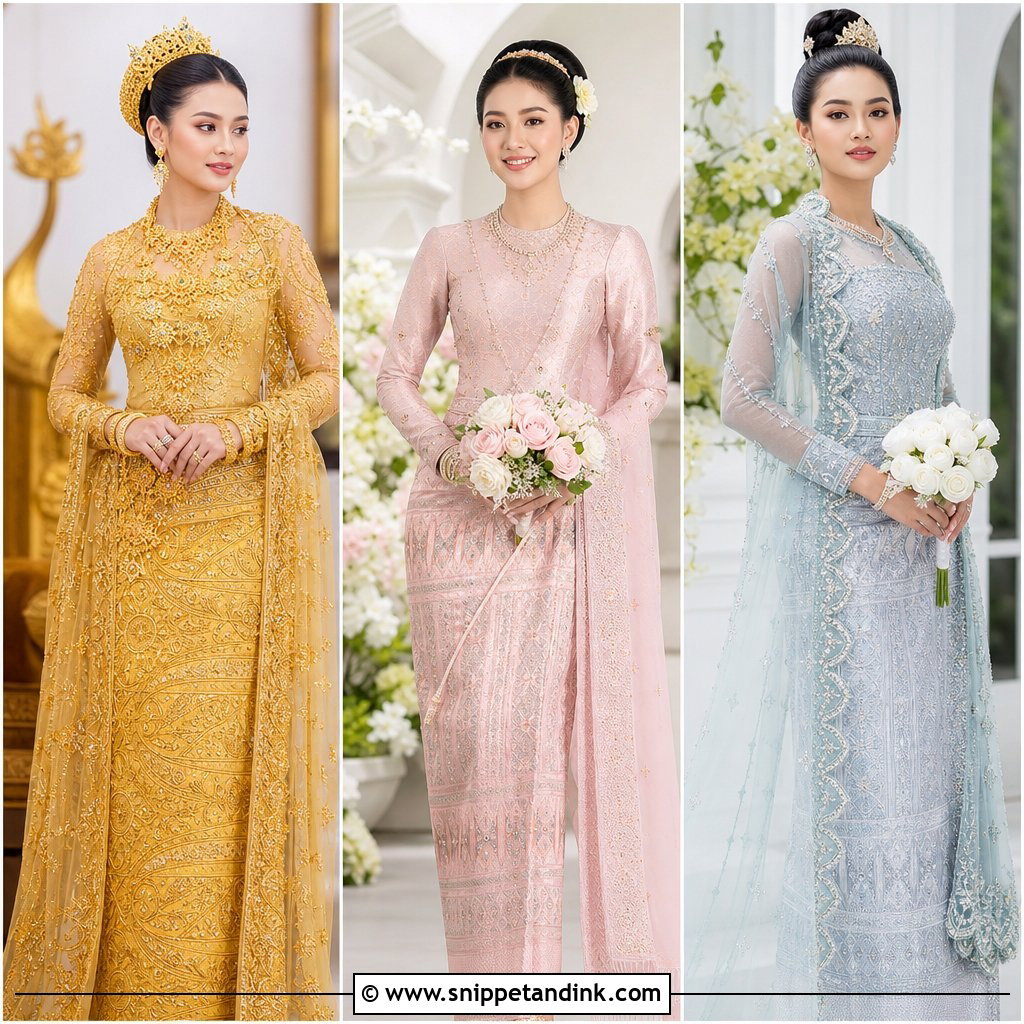
Gold sabai over a fitted bodice is the shape most people picture first, and it earns its place at formal ceremonies. The drape crosses the body and falls over one shoulder, so the bodice underneath has to be snug or the sabai drags it sideways by midday. I pair gold with ivory, champagne or cream because the metallic thread warms the face without overwhelming a pale skirt. Keep jewelry traditional: gold earrings, a necklace and a belt if the pha sin has a waistband to sit on. A smooth bun with floral pins keeps hair off the drape, and gold heels or embroidered flats finish it.
2. Thai Wedding Dress With Ivory Silk Skirt
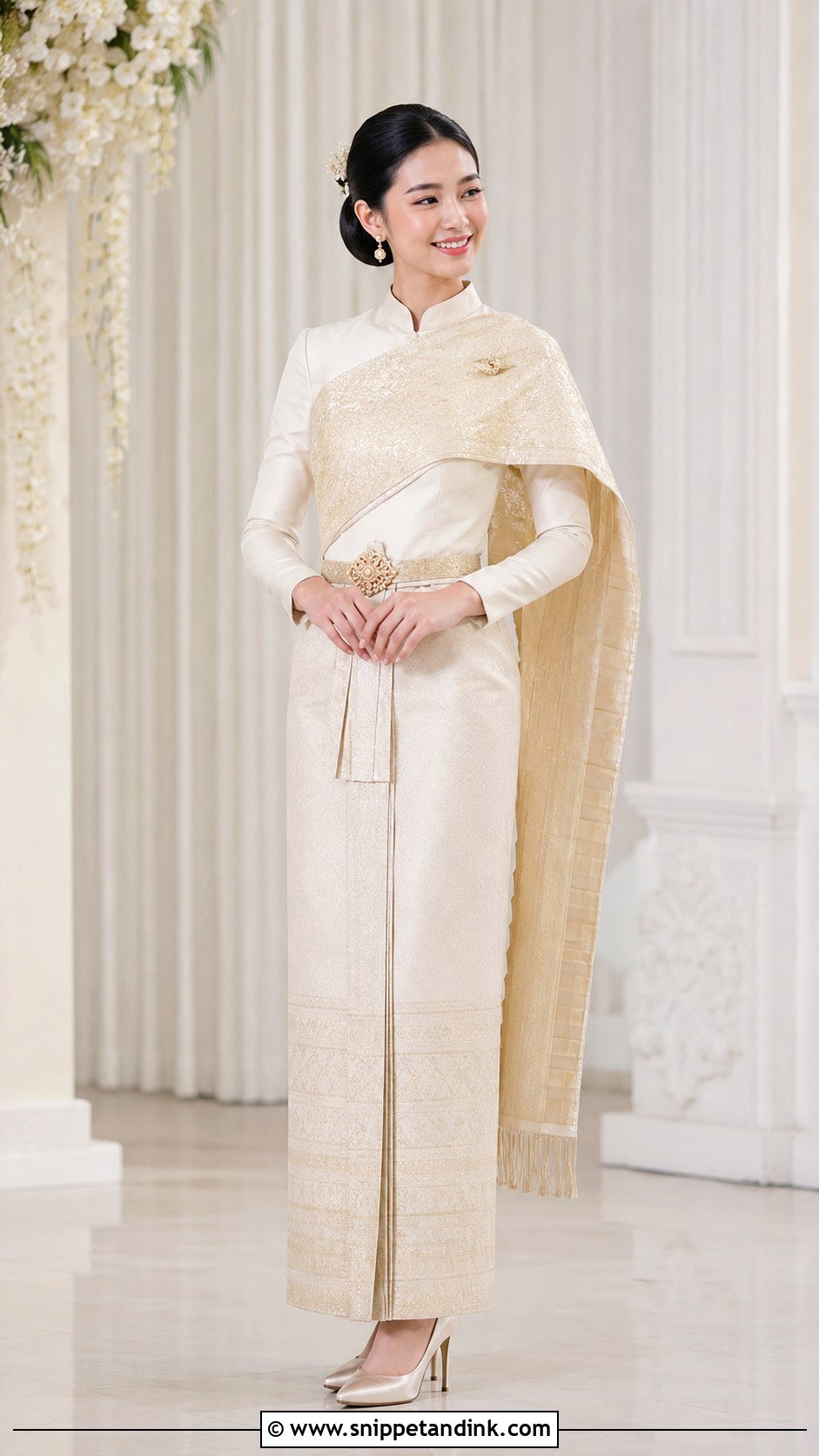
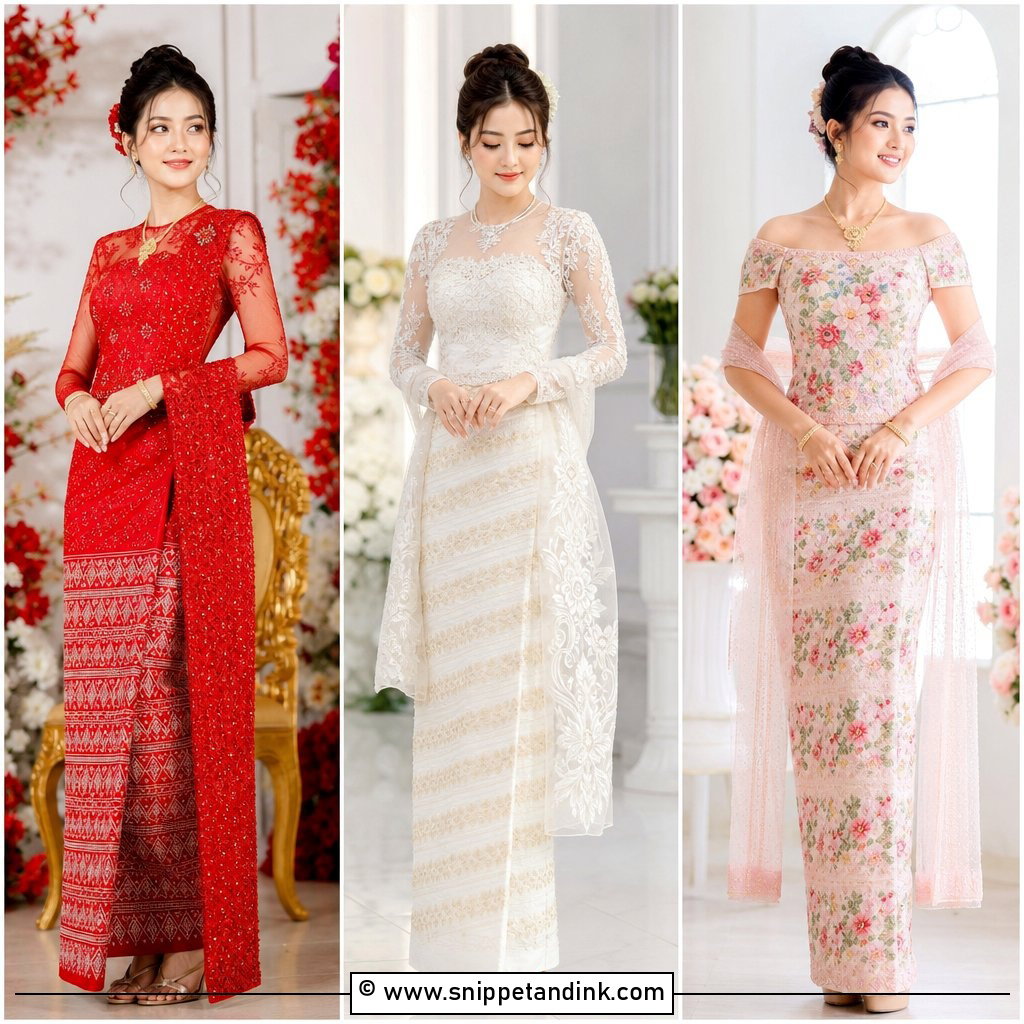
An ivory pha sin gives you a quiet base that still reads as ceremonial. Pair it with a fitted top and a modest neckline, and let subtle woven detail in the skirt do the work. A pale gold or pearl-toned sabai adds a second layer of sheen without breaking the palette. One thing I check on ivory silk is the lining: unlined ivory can show the waistband seam and the line of the pleats in bright indoor light. Pearl earrings, a fine bracelet and satin heels are plenty, with rose lips and glowing skin keeping the face fresh against all that pale fabric.
3. Thai Wedding Dress With Pink Sabai
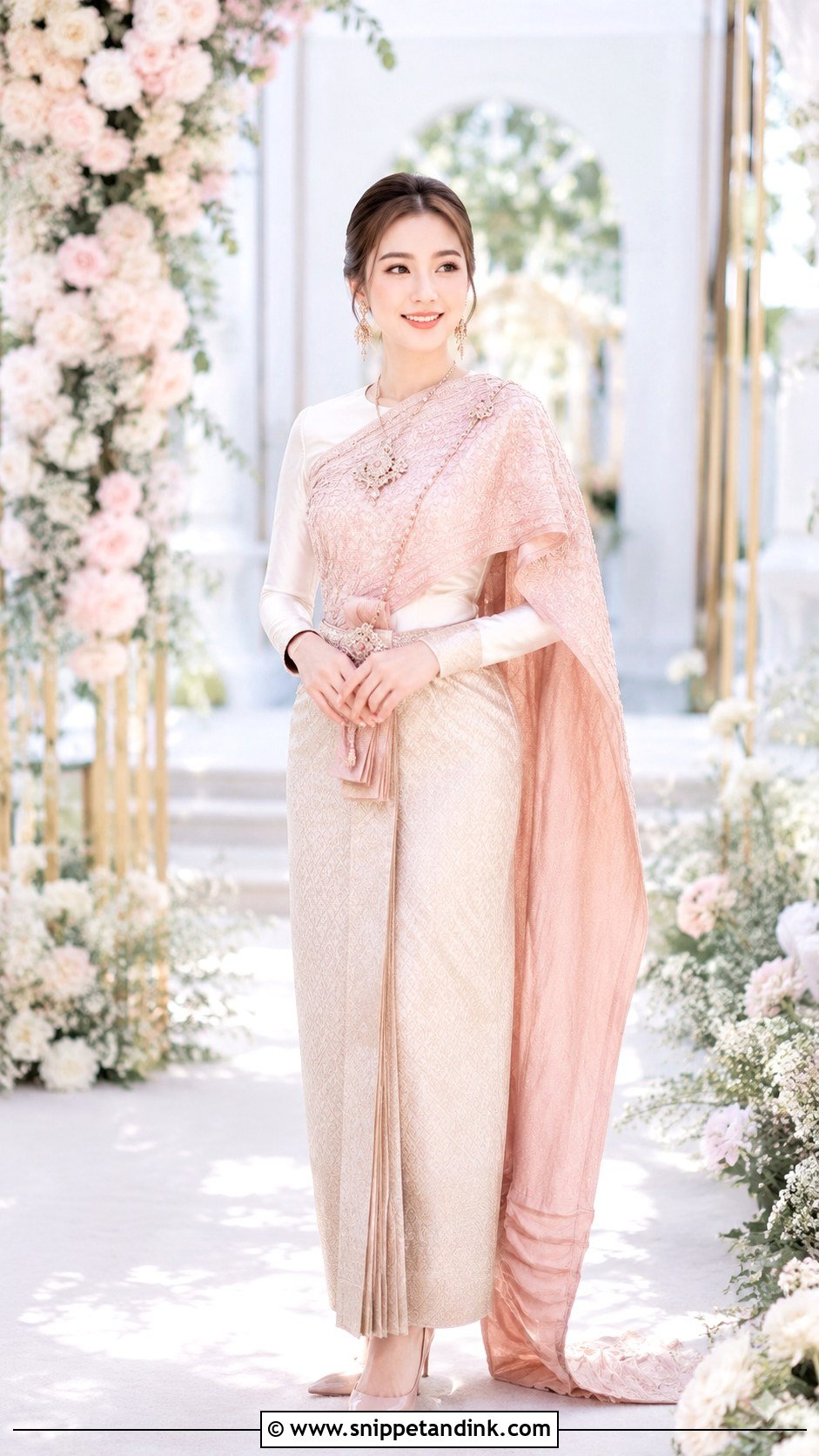
Pink is my usual suggestion for engagement ceremonies and early morning rituals, where full gold can feel heavy before breakfast. Blush, dusty rose, lotus pink or pale peach all work on the sabai, with the skirt in ivory, champagne or a matching woven pink. Keep the bodice in the same colour family so the outfit doesn’t split into separate pieces at the waist. Rose gold jewelry pulls it modern; yellow gold keeps it traditional. Be careful with very pale pinks on fair skin, because they can wash the face out in daylight photos unless the makeup carries a little warmth.
4. Thai Wedding Dress With White Lace Blouse
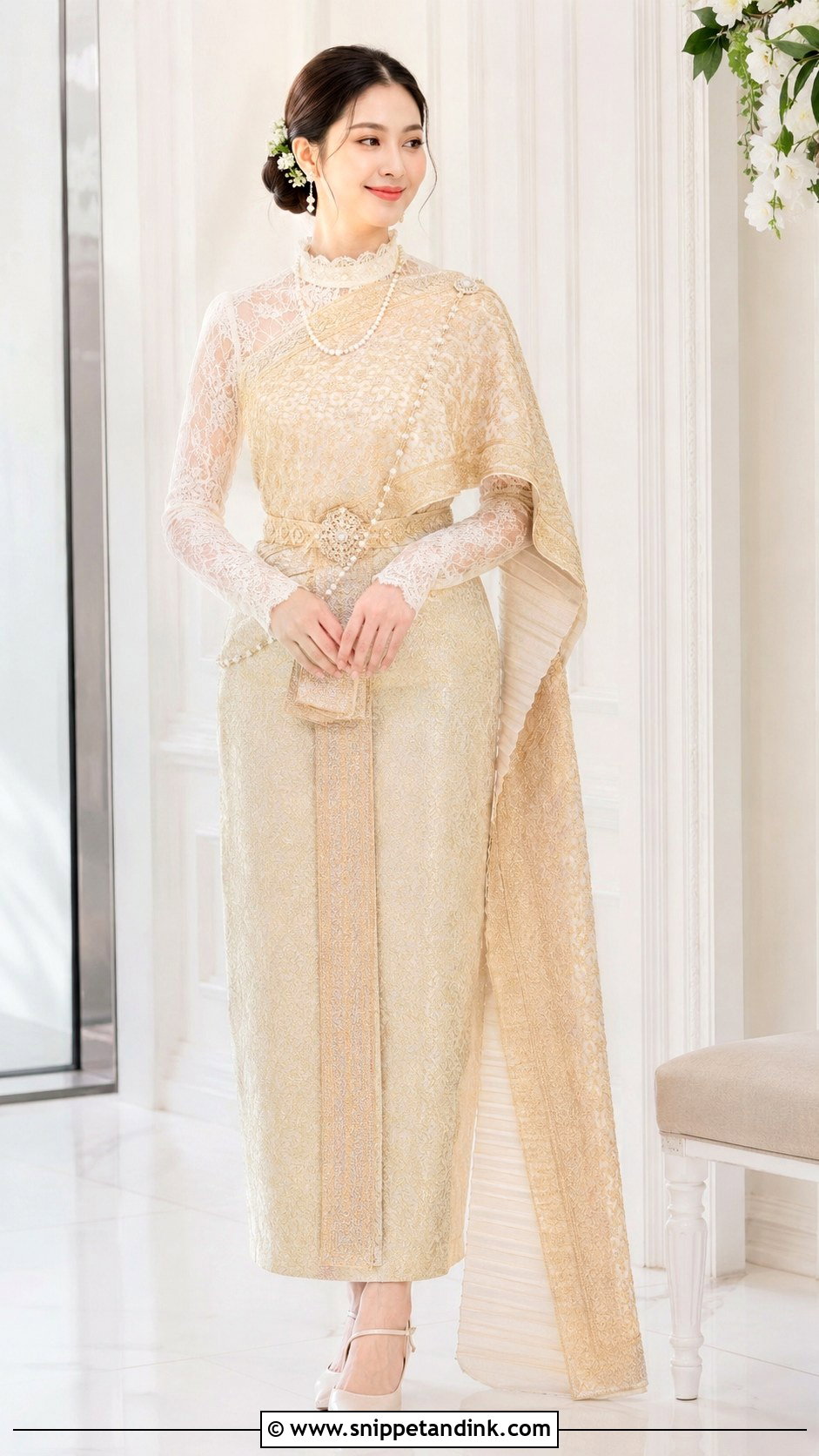
Lace on the blouse softens a Thai outfit and gives coverage without heavy silk on the arms. A white lace blouse with long or elbow sleeves sits well over an ivory, gold or silver pha sin. Add a sabai in matching silk or brocade if you want the traditional finish. The rule I follow is simple: lace needs a plain skirt, because lace above brocade fights for attention at the waist. Lace also catches on sabai pins and on brocade edges, so ask for a tightly woven lace or a lining panel where the drape will rest.
5. Thai Wedding Dress With Champagne Silk
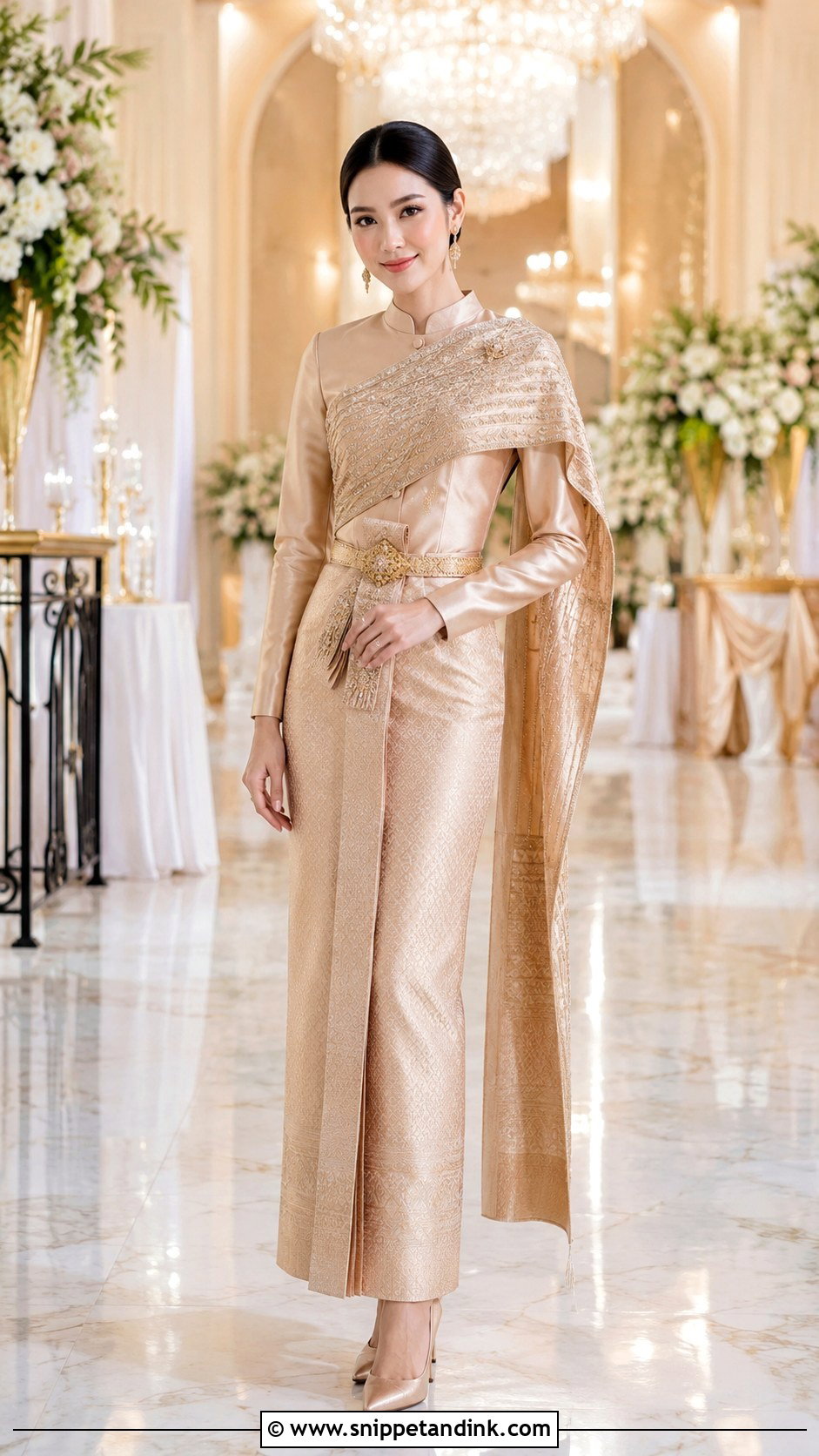
Champagne silk sits between ivory and gold and flatters a wide range of skin tones in both daylight and evening. A matching blouse and pha sin give one long, unbroken column, which lengthens the body. Layer a gold, ivory or slightly deeper champagne sabai over it for texture. If the fabric already carries brocade, keep the accessories to gold drop earrings, a slim necklace and a traditional belt. I always look at champagne under the venue’s own lighting at a fitting, because some shades turn grey-beige under cool LED bulbs.
6. Thai Wedding Dress With Red Silk Skirt
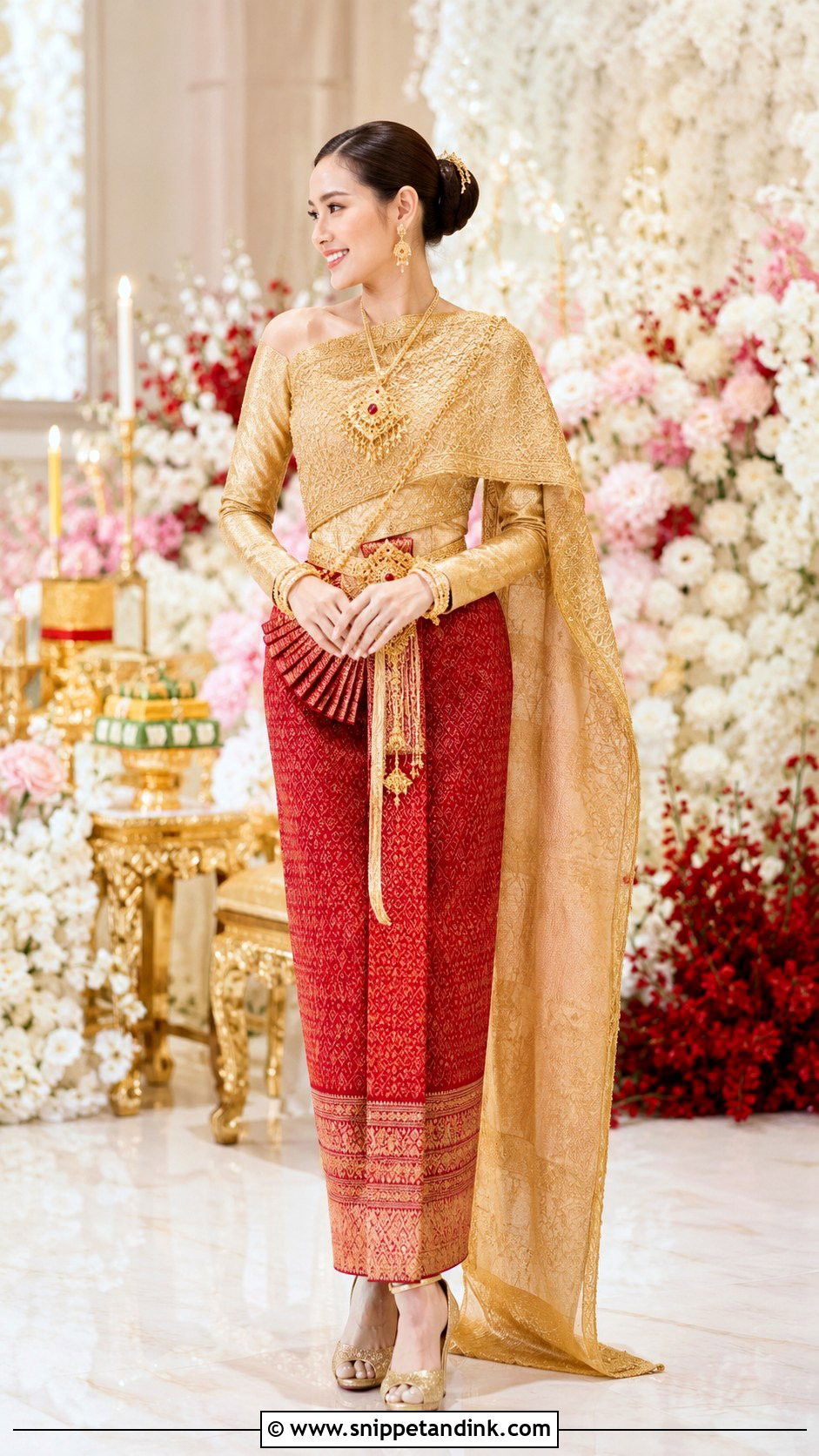
Red is a colour of luck and celebration, and a red pha sin makes that meaning visible. I soften it with a gold blouse or an ivory fitted top. A gold sabai makes the outfit grand; blush gives a gentler contrast. Red and gold already carry the eye, so I’d choose either a heavy necklace or large earrings, not both. Deep red silk can also read almost brown in dim reception light, so ask your photographer about flash or bring the outfit outdoors for portraits. A sleek updo and classic heels keep it composed.
7. Thai Wedding Dress With Emerald Green Sabai
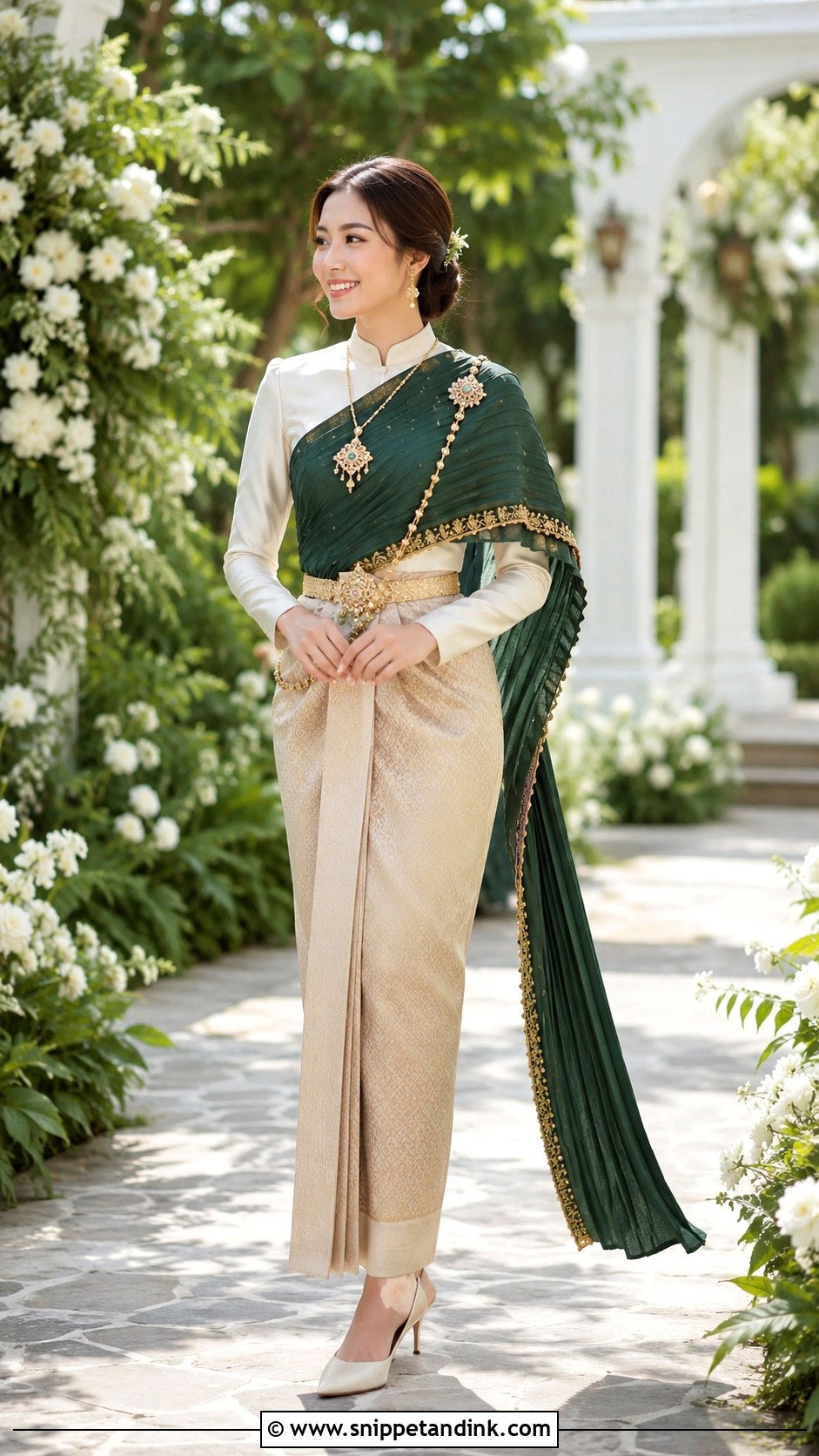
Emerald on the sabai is less common and very rich against ivory, champagne or gold silk. Keep the blouse in a matching neutral so the green stays on the drape where it moves. Gold statement earrings and a fine necklace sit well with emerald; silver tends to look cold against it. Dark green silk shows water marks clearly, which is worth knowing before a water-pouring ceremony, so I’d keep the sabai high on the shoulder and away from the hands when the blessing water falls. Soft bronze eyes and a natural lip balance the colour in garden or heritage settings.
8. Thai Wedding Dress With Blue Silk
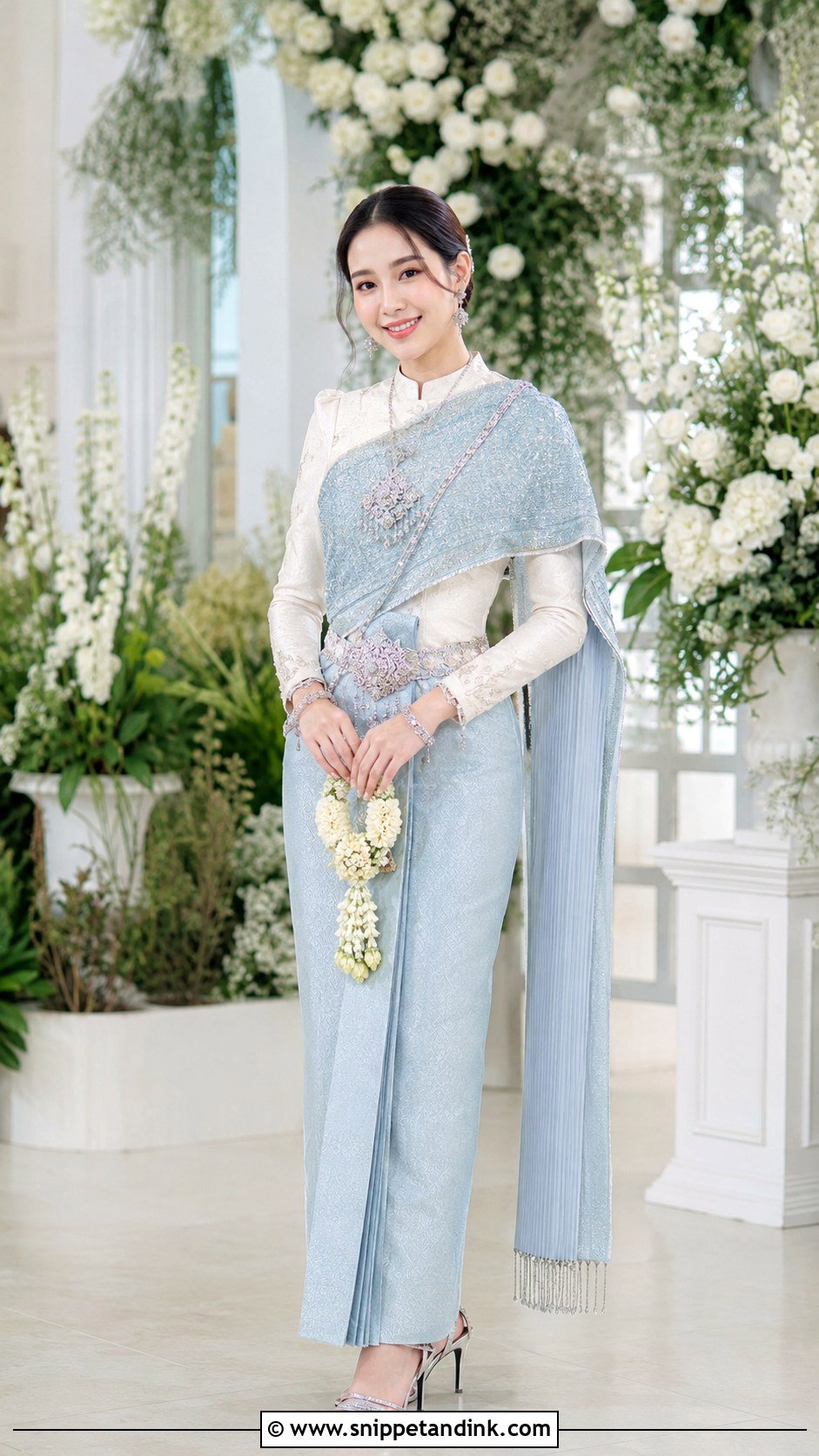
Blue gives a calm mood. Powder blue and silver-blue suit daytime ceremonies, while navy or sapphire carry an evening event. A blue pha sin with a fine metallic weave pairs with an ivory blouse and matching sabai, and silver jewelry keeps the whole look cool. Gold works too if you want more warmth and tradition. If you’d like a serene bridal look without white, blue is the easiest colour I know to wear well. Pale blue silk does show sweat at the underarm quickly in heat, so dress shields inside the blouse are worth the small effort.
9. Thai Wedding Dress With Silver Brocade
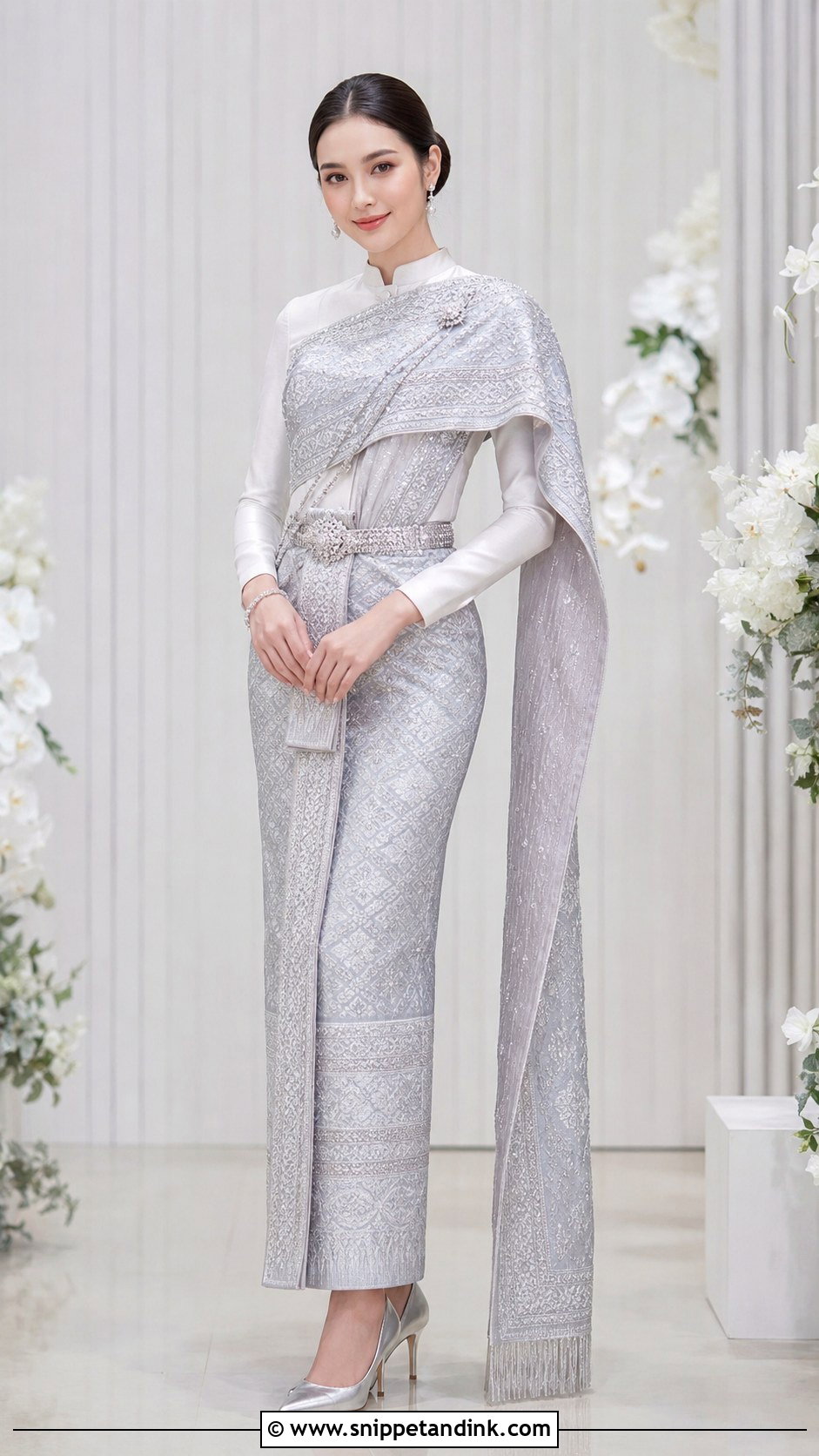
Silver brocade is the cool-toned answer to gold. Choose a silver pha sin with a delicate woven pattern and pair it with a white or pale grey blouse, then add a silver or ivory sabai. Brocade is stiff, so it holds pleats crisply but doesn’t fold softly when you sit; I’d have the front pleat panel pressed and checked while you are seated, not only standing. With that much shine, pearl earrings, a slim bracelet and silver heels are enough. Soft shimmer on the eyes and a pink lip complete it.
10. Thai Wedding Dress With Long Sleeve Bodice
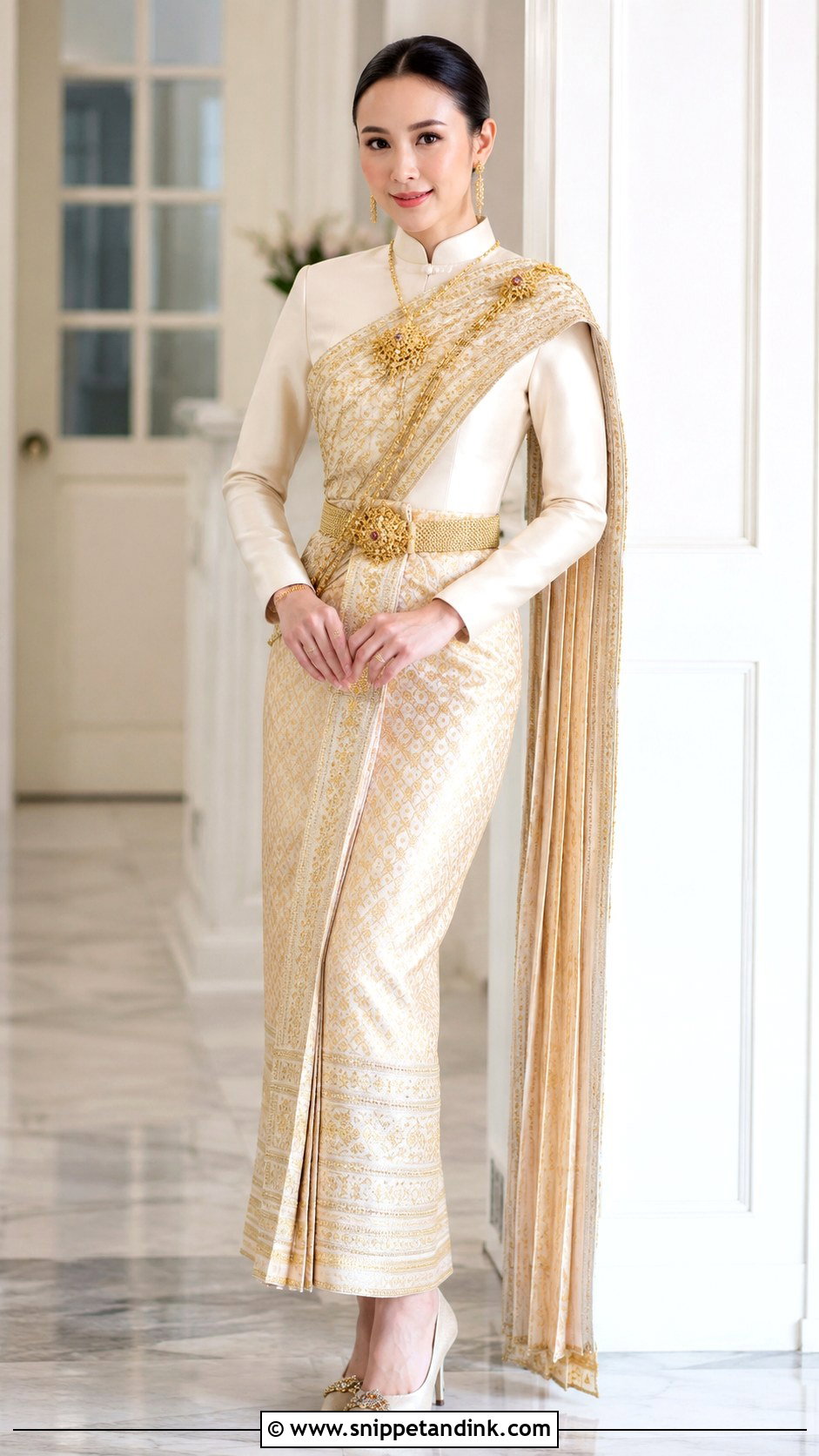
Long sleeves give coverage for formal family ceremonies and cooler venues. The bodice can be silk, lace or brocade over a fitted pha sin, with or without a sabai on top. A long sleeve paired with a high or boat neckline looks especially composed. My fitting note here is about the armhole: set it too low and you can’t raise your hands for the wai or to receive blessings without the whole bodice lifting. If the neckline is detailed, swap the necklace for delicate earrings and keep the bun smooth.
11. Thai Wedding Dress With Off Shoulder Sabai
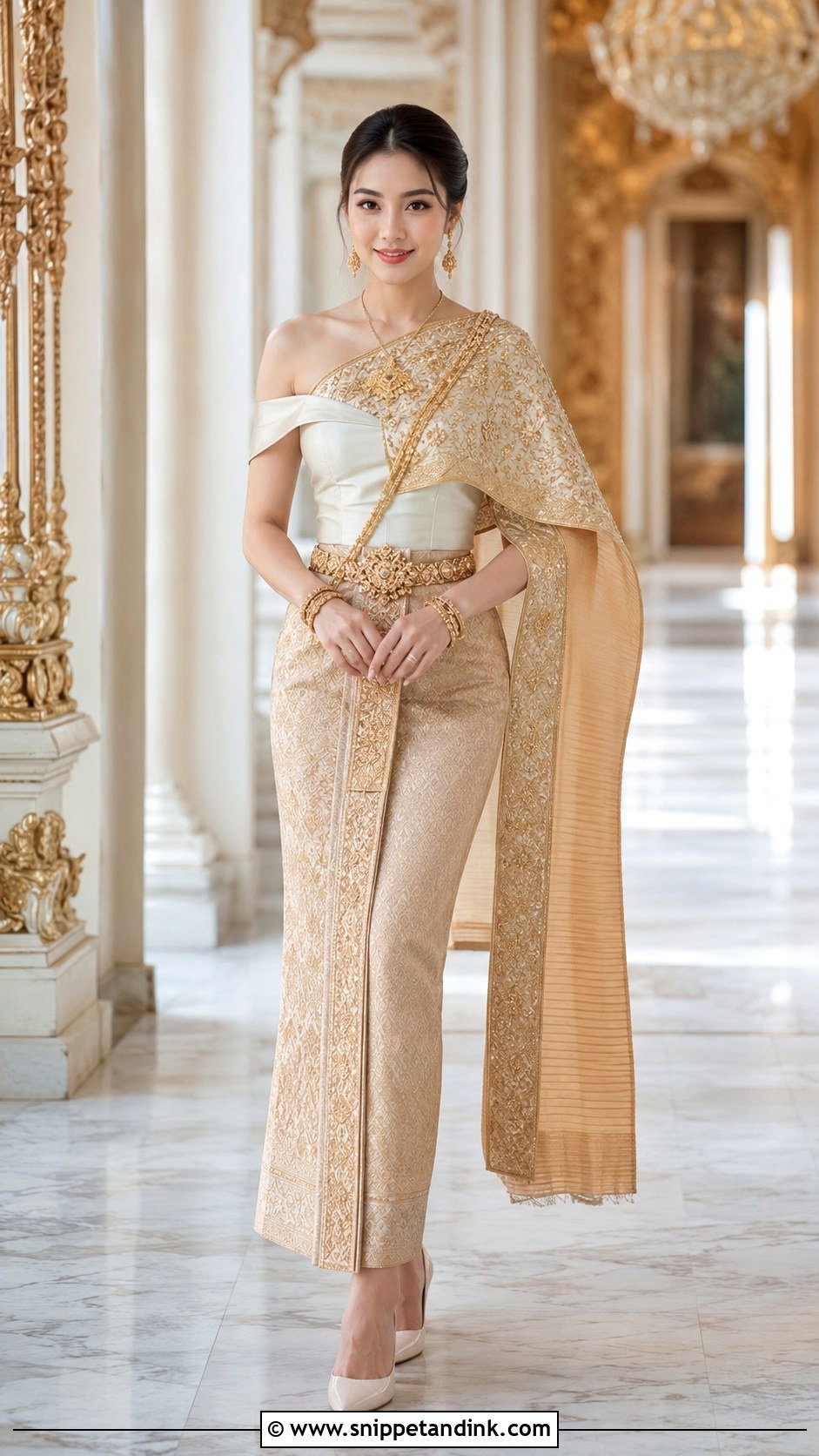
The one-shoulder line of an off shoulder sabai is the most recognisable Thai bridal silhouette and the most photographed. Pair it with a structured bodice, a fitted silk skirt and a traditional belt. Ivory and gold remain the classic choices, with blush, silver or pastel blue as softer options. The bare shoulder is what frames the face, so choose earrings that sit close and don’t swing into the drape. A smooth updo keeps the neckline clean. Expect the sabai to need a re-pin after the ceremony, since it shifts every time you bow.
12. Thai Wedding Dress With High Neck Blouse
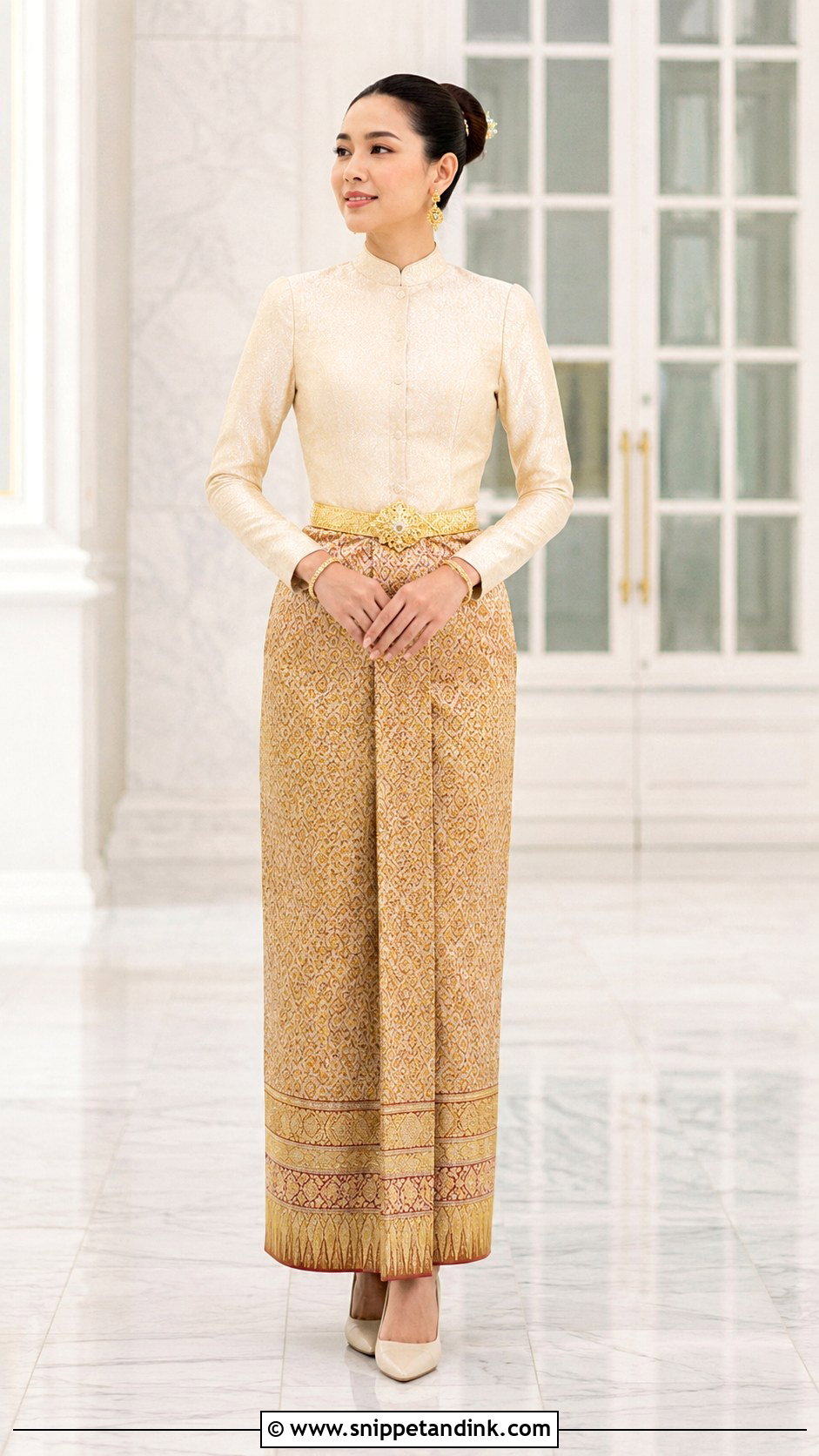
A high neck blouse gives a dignified, formal finish with full coverage. Make it long-sleeved and fitted in silk or brocade, then decide between a matching pha sin for one continuous colour or a contrasting skirt for depth. A belt defines the waist and brings back the traditional polish a plain blouse can lose. High necks feel warm, so I ask brides to sit in theirs for twenty minutes at a fitting; if it presses on the throat while seated, it needs a fraction more ease. A neat bun, gold earrings and soft makeup keep the focus where it belongs.
13. Thai Wedding Dress With Modern Fitted Gown
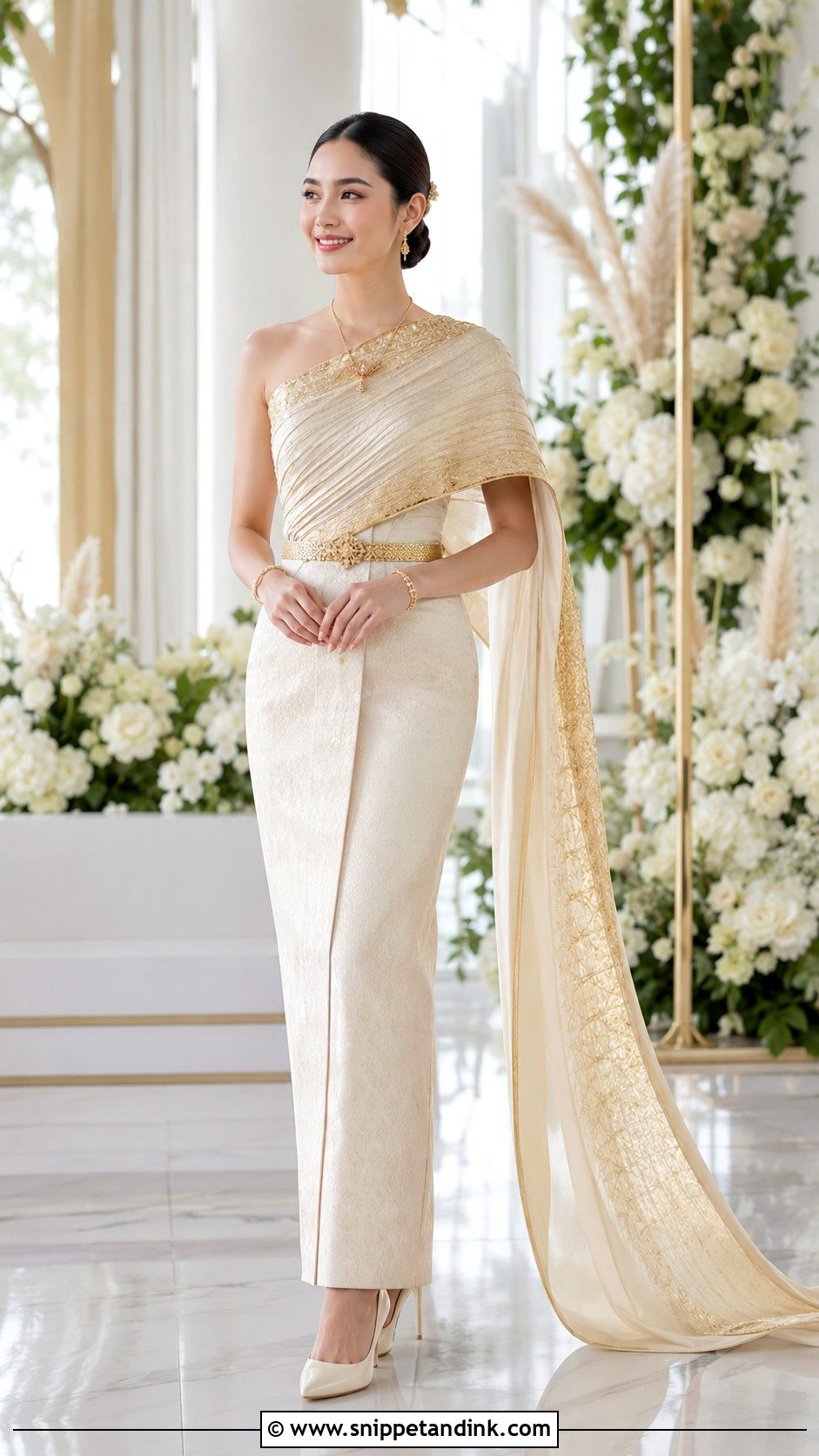
Some brides want Thai silk without separate pieces, and a fitted one-piece gown answers that. A detachable sabai or a draped shoulder panel keeps the reference to traditional dress. Ivory, champagne and soft gold suit the shape. The risk with a close-fitting gown is the skirt: if it is too narrow at the knee you can’t kneel for the water-pouring or climb temple steps comfortably, so I’d ask for a hidden pleat or a modest back slit. Minimal gold jewelry, pointed heels and a clean bun carry it from ceremony to reception.
14. Thai Wedding Dress With Detachable Sabai
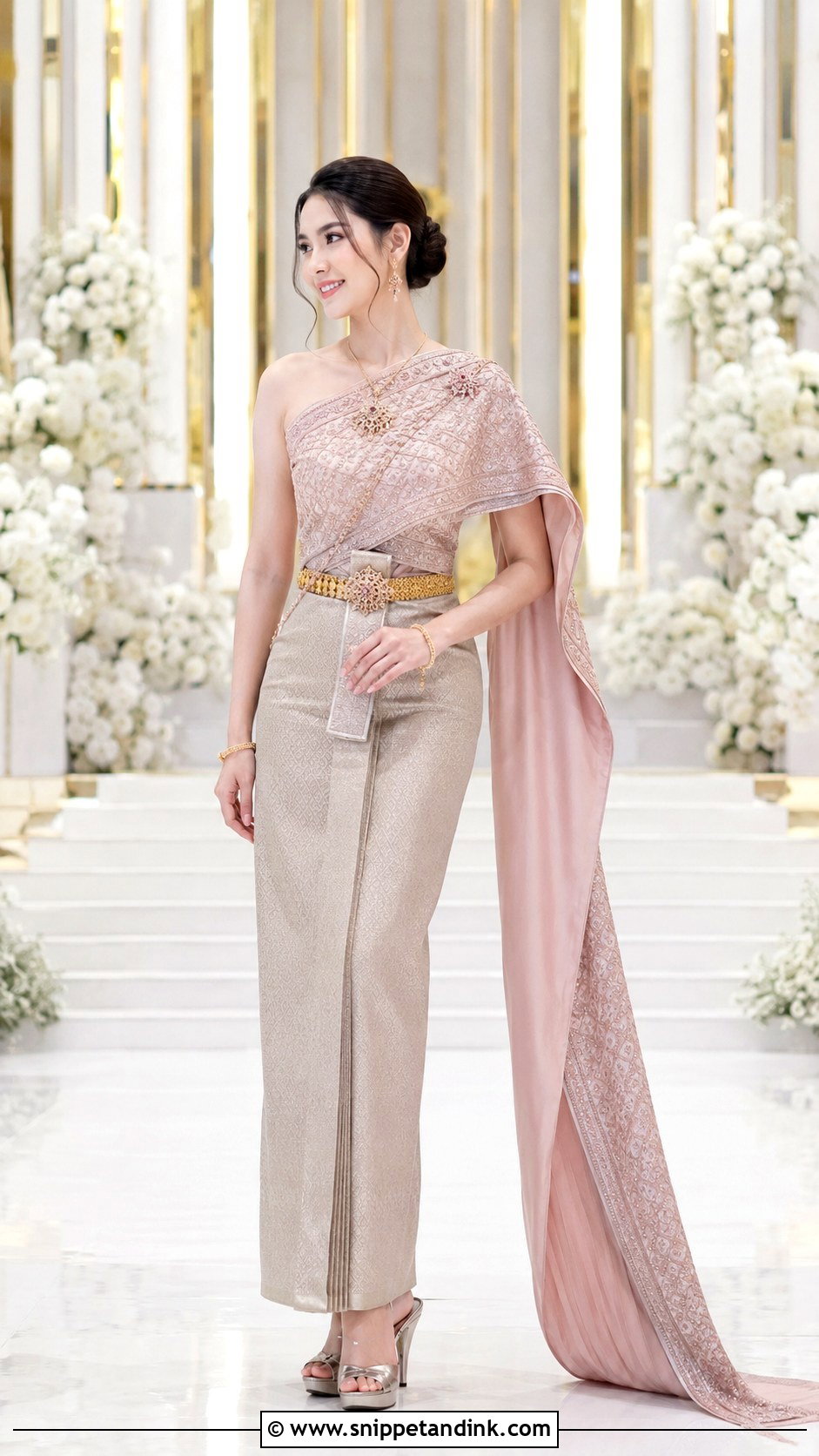
A detachable sabai is the most practical idea on this list for a long day. Wear it for the ceremony and family portraits, then unhook it for dinner and dancing. Start with a fitted silk dress or a blouse-and-pha-sin set in ivory, gold or champagne, and let the sabai match the skirt or contrast in blush, silver or soft blue. I prefer hidden hooks and thread loops over large snaps, because snaps show as small bumps under thin silk. Add a belt, gold jewelry and heels, and you have two looks without a full change.
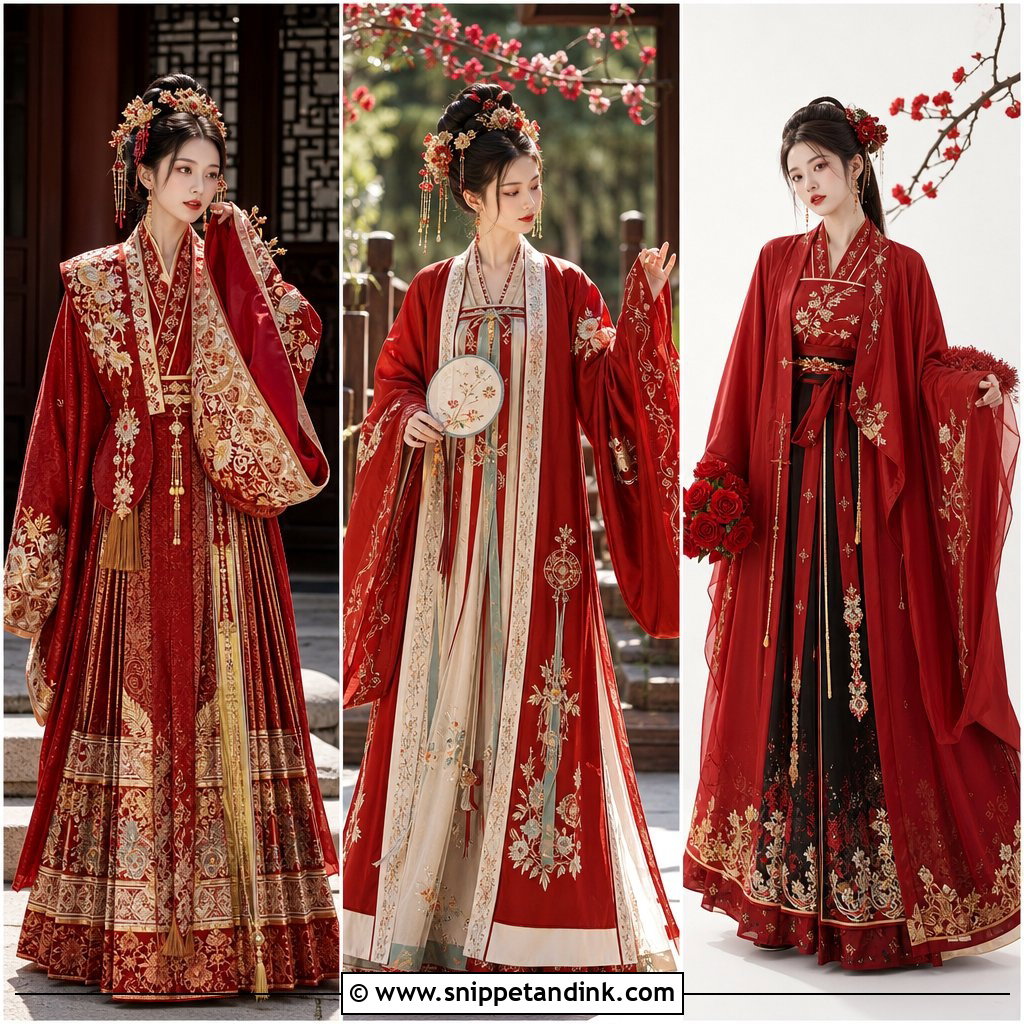

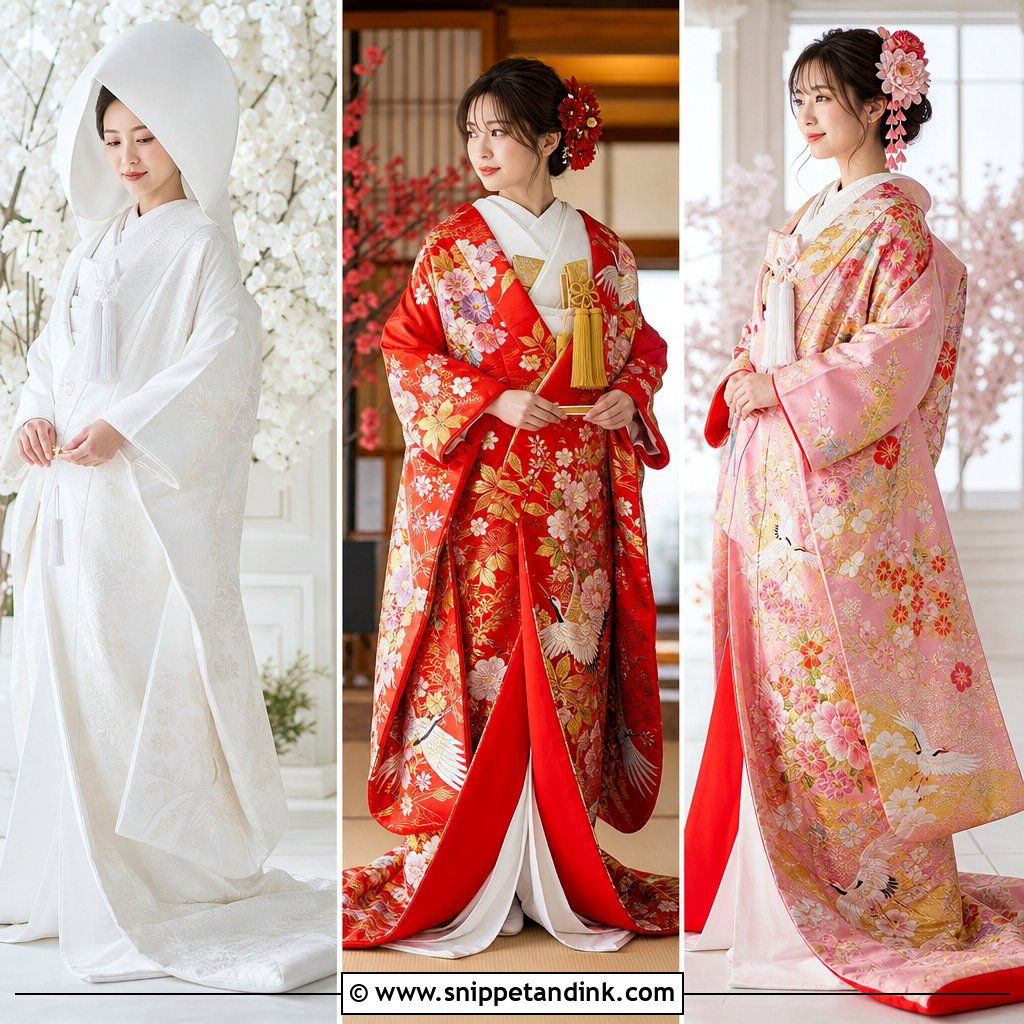
15. Thai Wedding Dress With Pearl Details
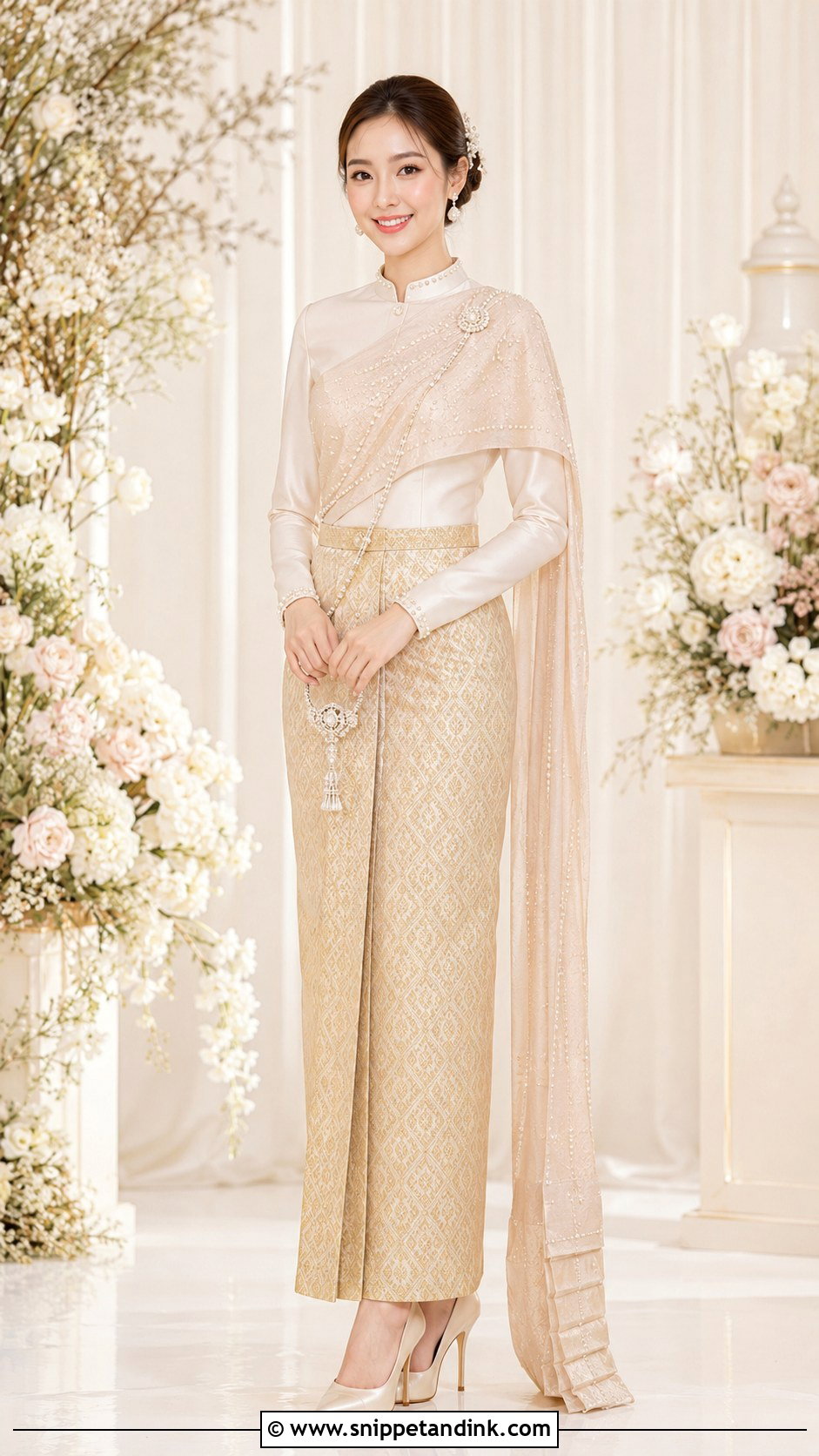
Pearl details can sit on the blouse, the neckline, the belt, the hair or the sabai border. They read best on a simple base such as ivory silk with a pale gold skirt. Placement matters more than quantity, because a scatter of pearls everywhere looks busy from a distance. Hand-sewn pearls on silk also pull the fabric slightly with their weight, so I’d keep them on structured areas like the neckline and waistband, not on the soft drape. Pearl studs, a small comb and satin heels finish it, with luminous skin and pink tones on the face.
16. Thai Wedding Dress With Floral Embroidery
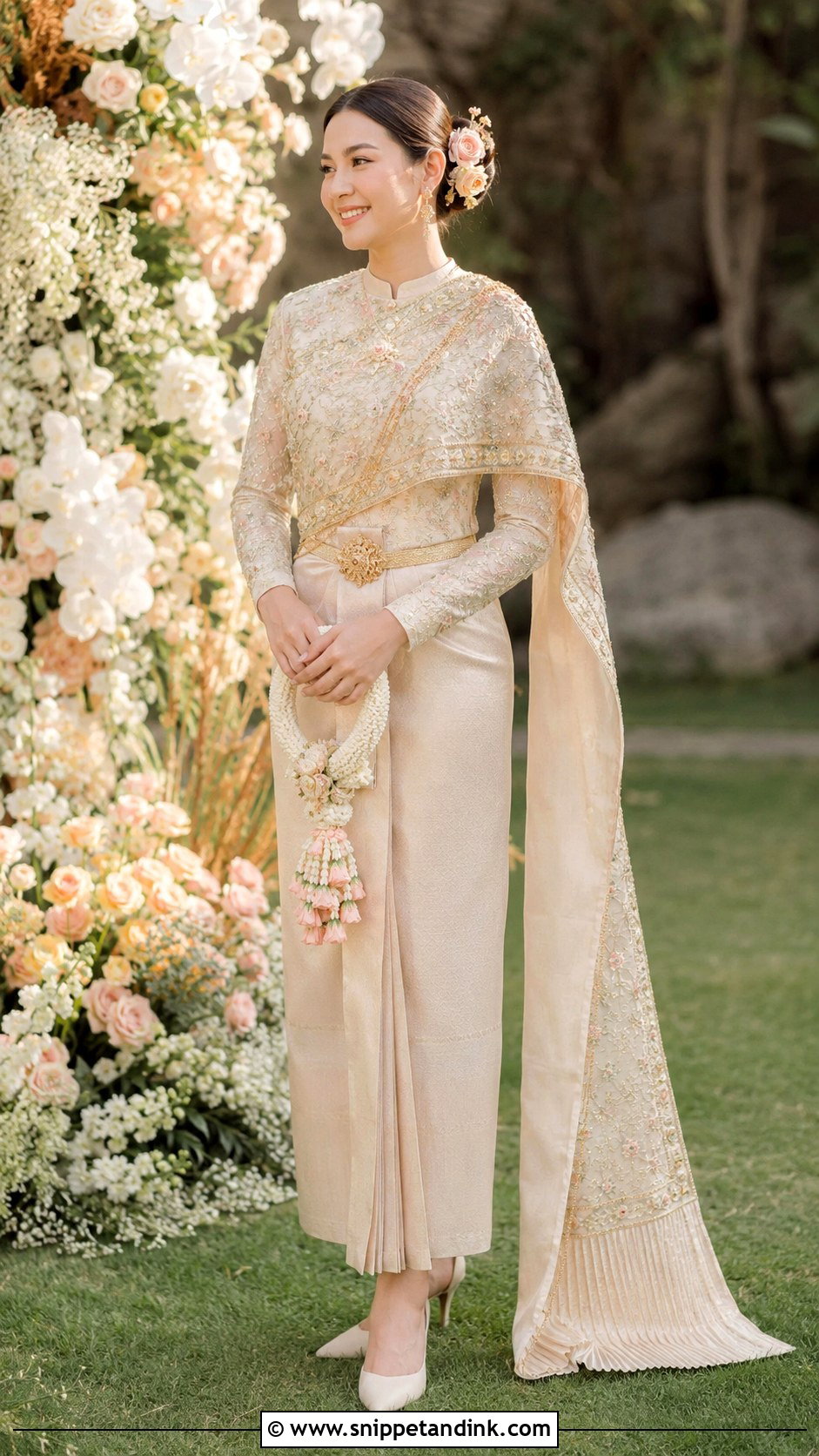
Embroidered flowers in soft gold, ivory, blush or pastel thread bring a handmade feel to a blouse, a sabai edge or a skirt panel. A fitted blouse with floral detail pairs well with a plain silk pha sin, while an embroidered skirt wants a simpler top. Keep accessories light so the needlework is what people notice. Fresh flowers in the hair can echo the motif, though I’d test them with the outfit first: some blooms stain silk if they are pressed against it in heat. This one suits garden ceremonies and cultural venues especially well.
17. Thai Wedding Dress With Pastel Silk
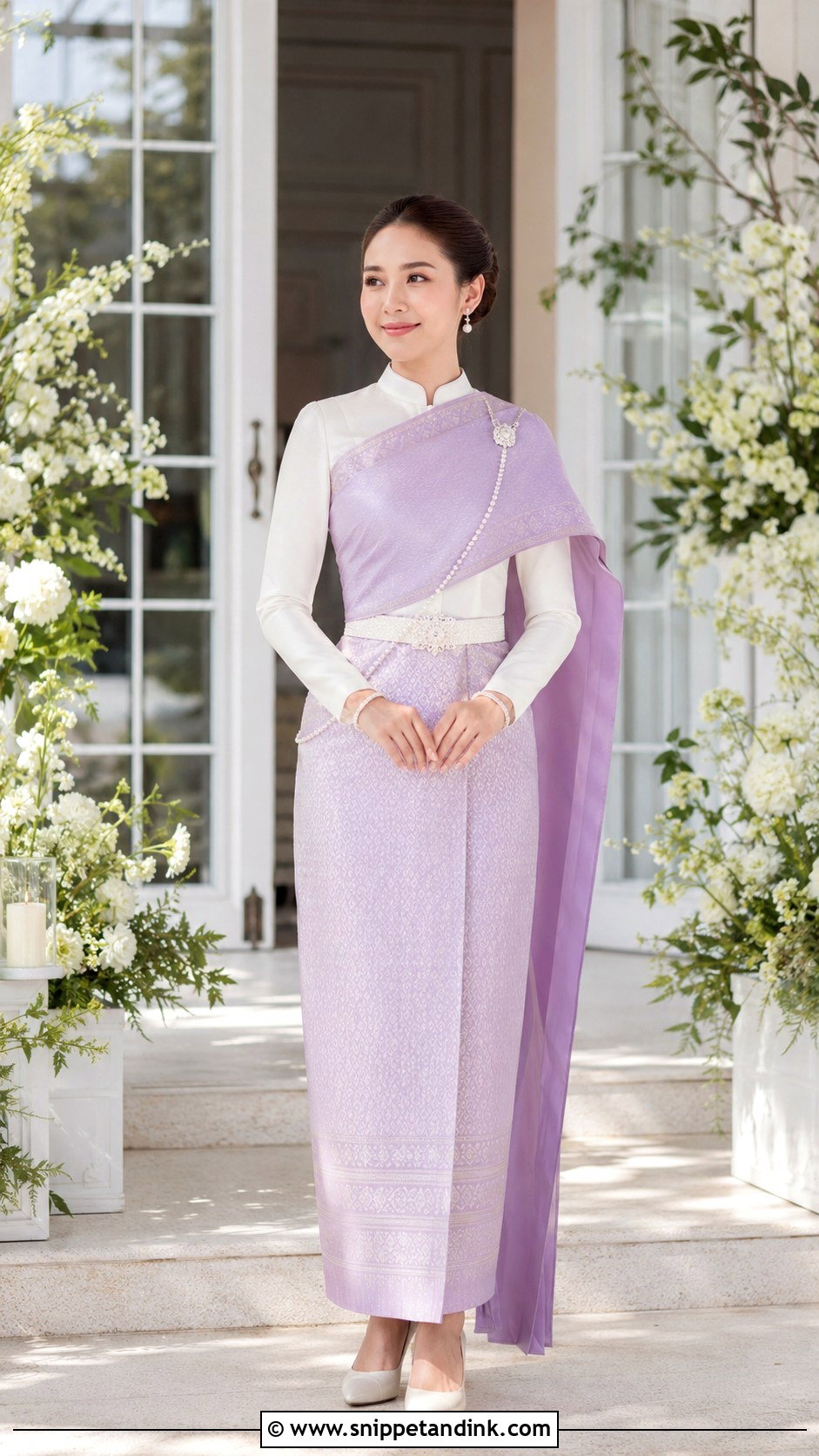
Pastel silk works for morning ceremonies and outdoor weddings. Shades like lavender, mint, powder blue, pale yellow and blush can be paired with an ivory blouse and a matching sabai. Gold jewelry adds warmth; pearls keep it delicate. My caution with pastels is the camera: pale yellow and mint can drift toward white or grey in strong sun, so look at a phone photo of the fabric outdoors before you commit. Clean makeup, soft brows and ivory or metallic heels keep the colour light from head to toe.
18. Thai Wedding Dress With Gold Belt
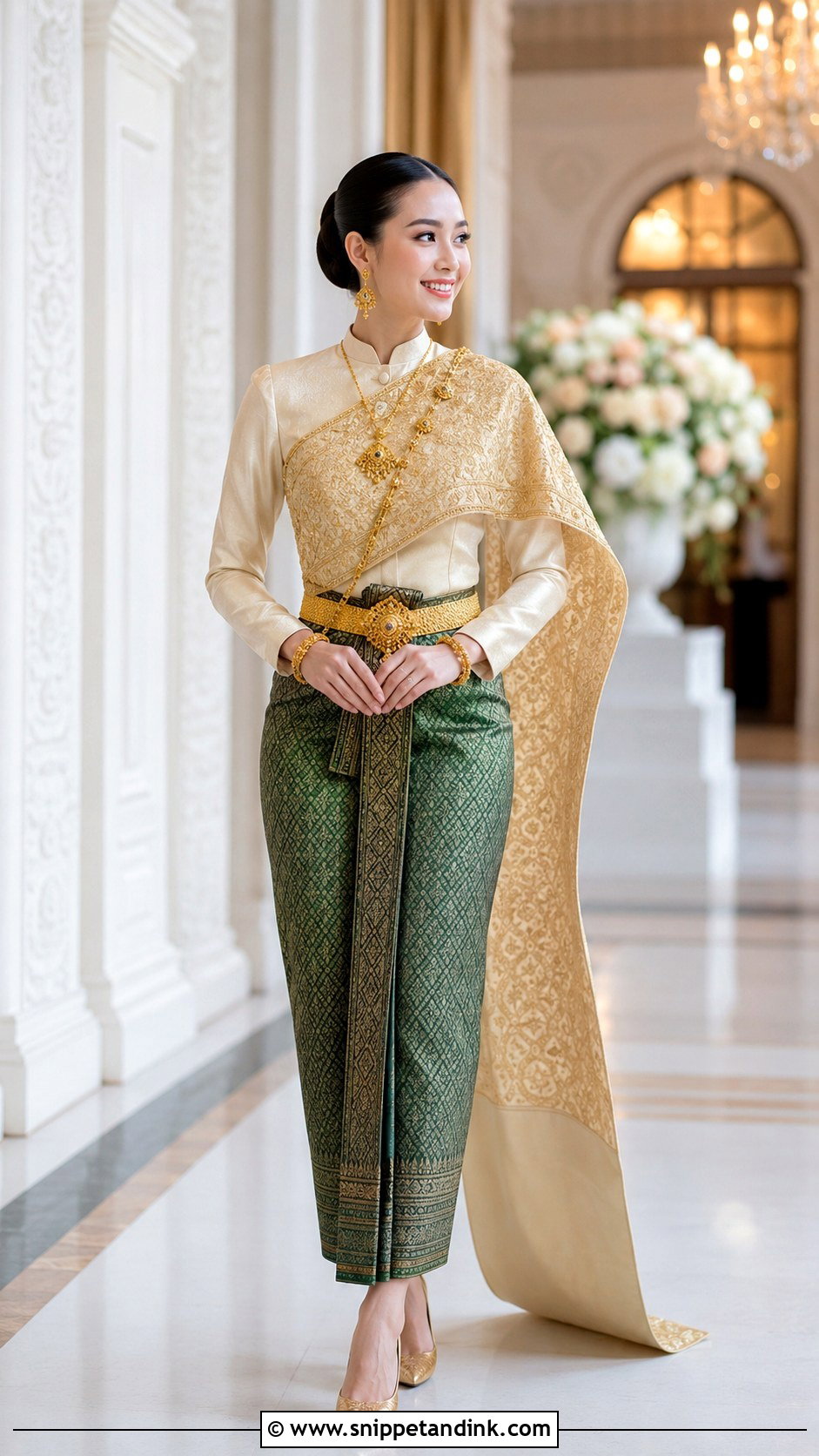
A gold belt ties the blouse, sabai and pha sin into one outfit. It defines the waist and adds structure, especially over ivory, champagne, red, emerald or blue silk. Match the belt’s finish to your jewelry so the metals agree. On heavily brocaded skirts I’d go slim; on plain silk, a more ornate belt carries the ceremony. Traditional belts are rigid, so sit in it at the fitting and check that the buckle doesn’t dig in when you lean forward. Gold earrings, a neat updo and heels in the skirt’s tone complete the look.
19. Thai Wedding Dress With Temple Ceremony Outfit
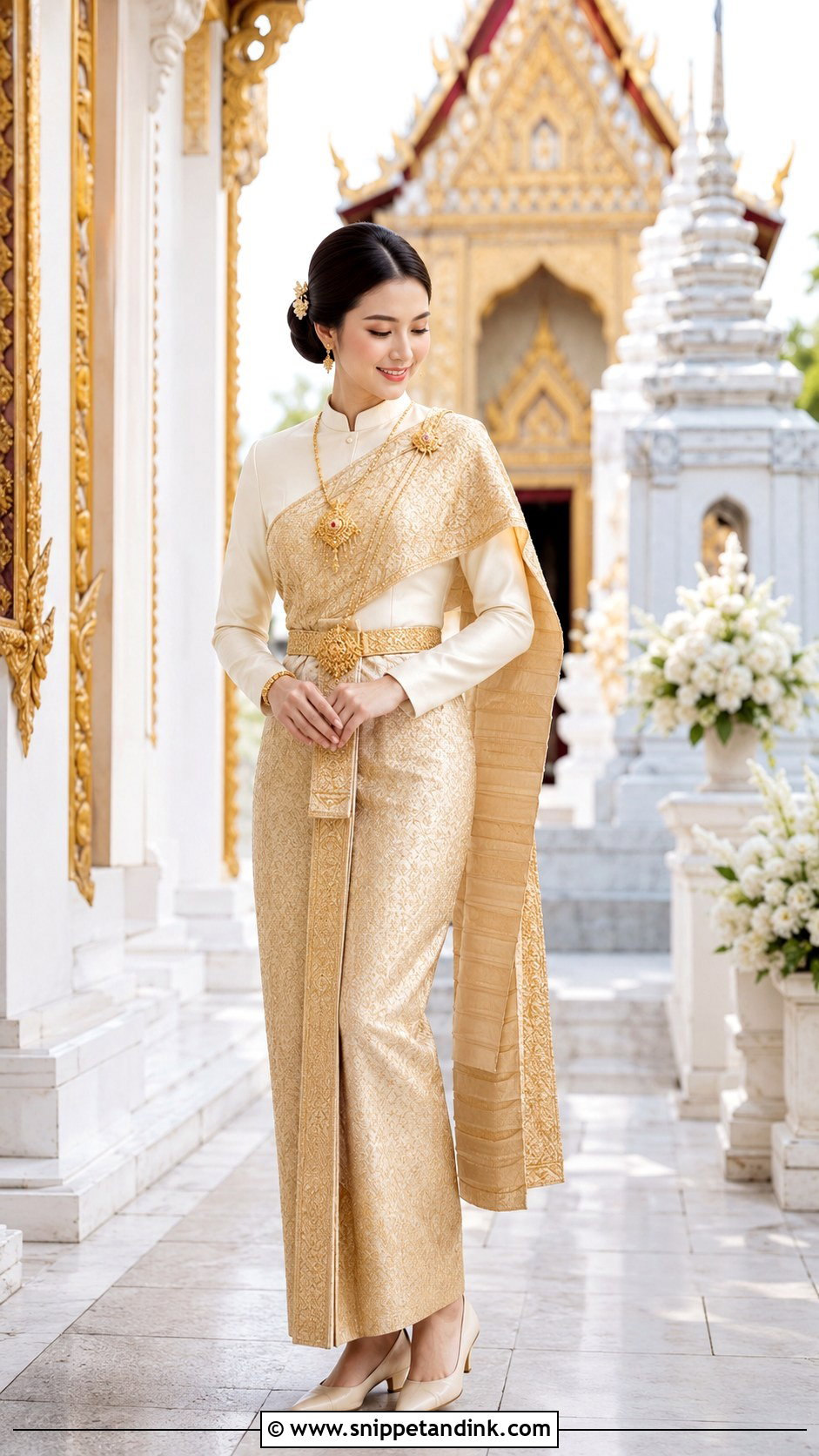
For a temple setting I start from respect and practicality. A modest blouse with sleeves, a long pha sin and a sabai that stays securely pinned is the base. Ivory, gold, champagne and soft pastels all suit, while sheer fabrics and low necklines don’t belong in a formal or family-centred rite. You may stand, walk barefoot and kneel, so choose shoes that slip off easily and a skirt with room in the front pleat. Keep jewelry graceful and quiet, and pin the hair smoothly so nothing needs adjusting in front of the monks.

20. Thai Wedding Dress With Beach Wedding Outfit
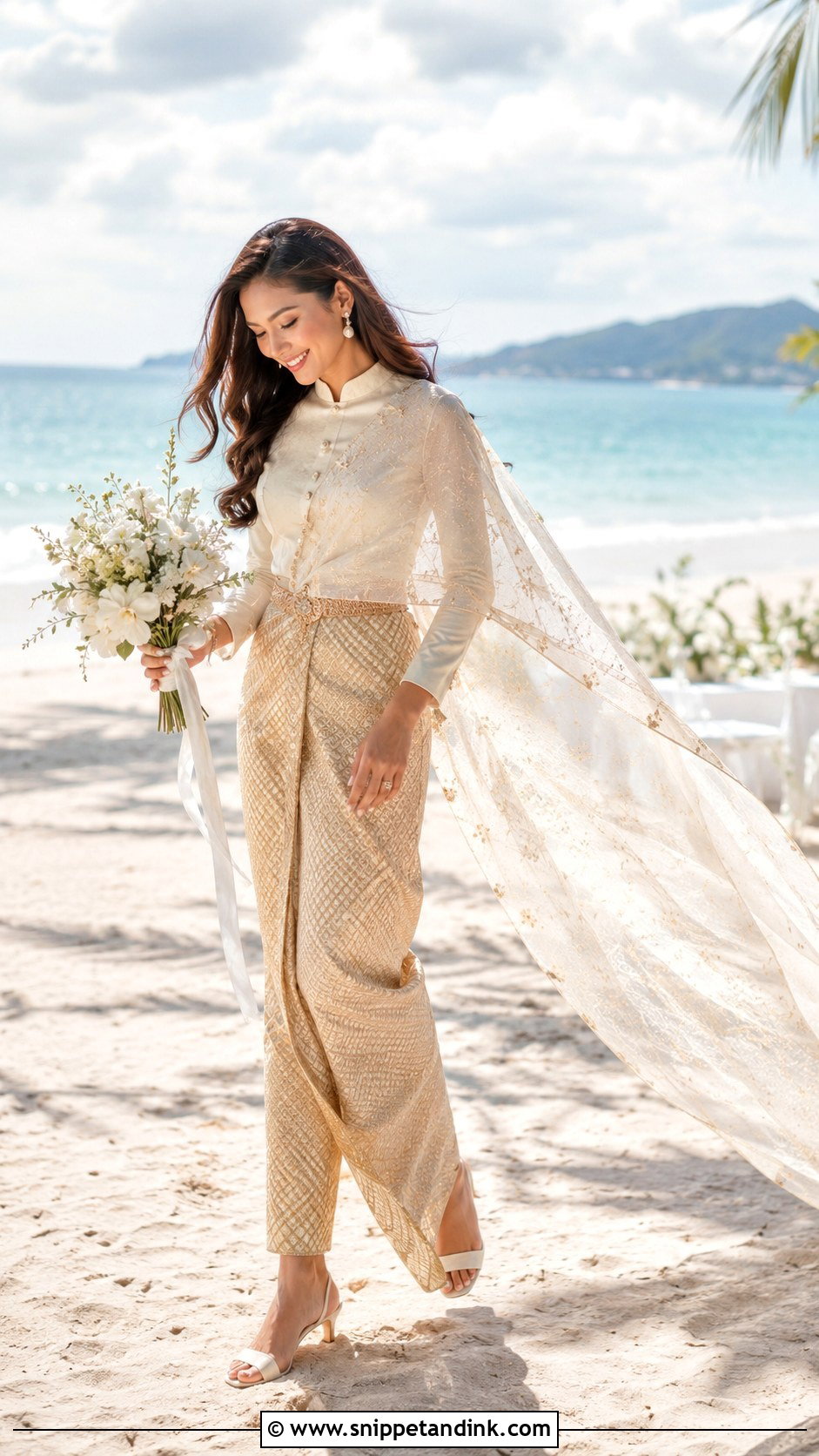
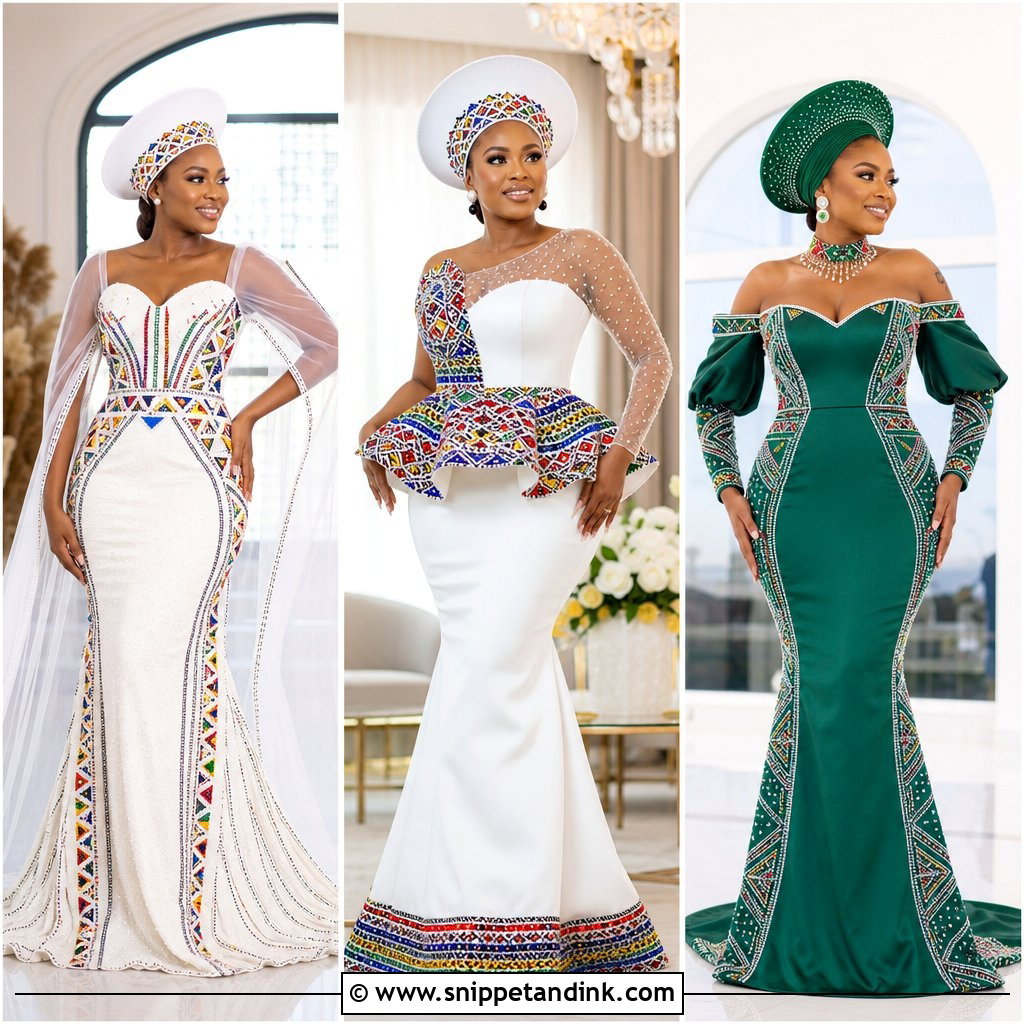
Sand, wind and heat change everything about a Thai outfit. I’d move to breathable silk, satin or a light woven fabric in ivory, pale gold, blush or sea blue, with a fitted blouse and a flowing skirt inspired by the pha sin rather than a tightly wrapped one. A soft sabai or sheer draped panel keeps the Thai reference. Flat sandals, low block heels or barefoot sandals work far better than stilettos on sand. Pin a sheer panel in two places, not one, because sea breeze lifts it like a sail. Small pearls or gold and loose waves suit a Thailand destination wedding.
21. Thai Wedding Dress With Reception Gown
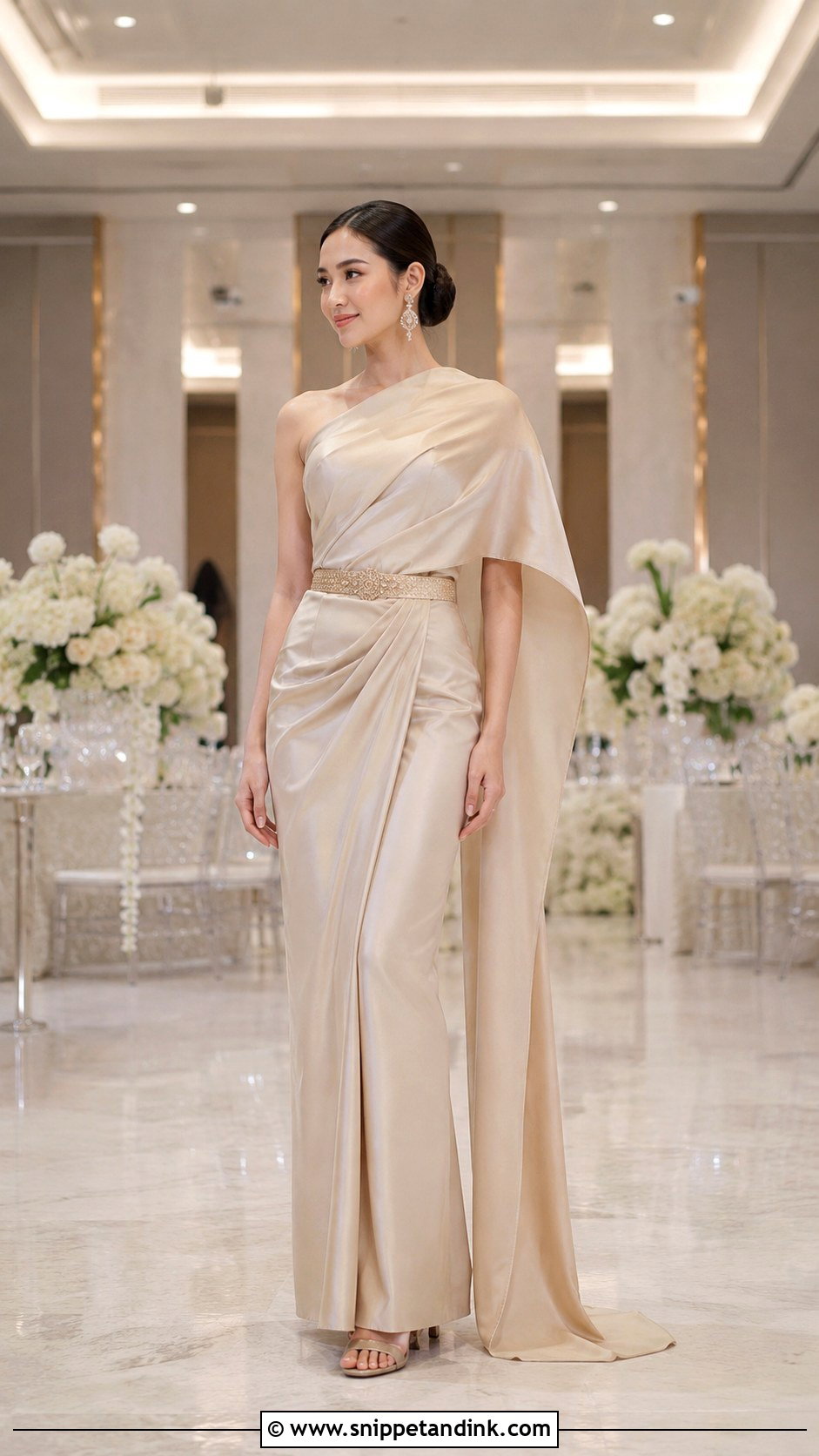
The reception is where I let brides relax the rules while keeping a cultural thread. A fitted or softly flared gown in Thai silk, satin or a brocade-style fabric, with a sabai-style drape, an asymmetric neckline or a woven waistband, gives that reference. Ivory, champagne, gold and blush all suit evening. You will greet guests, walk between tables and dance, so test the hem length in the exact shoes you’ll wear for hours. Statement earrings and a sleek bun make it feel festive.
22. Thai Wedding Dress With Two Piece Set
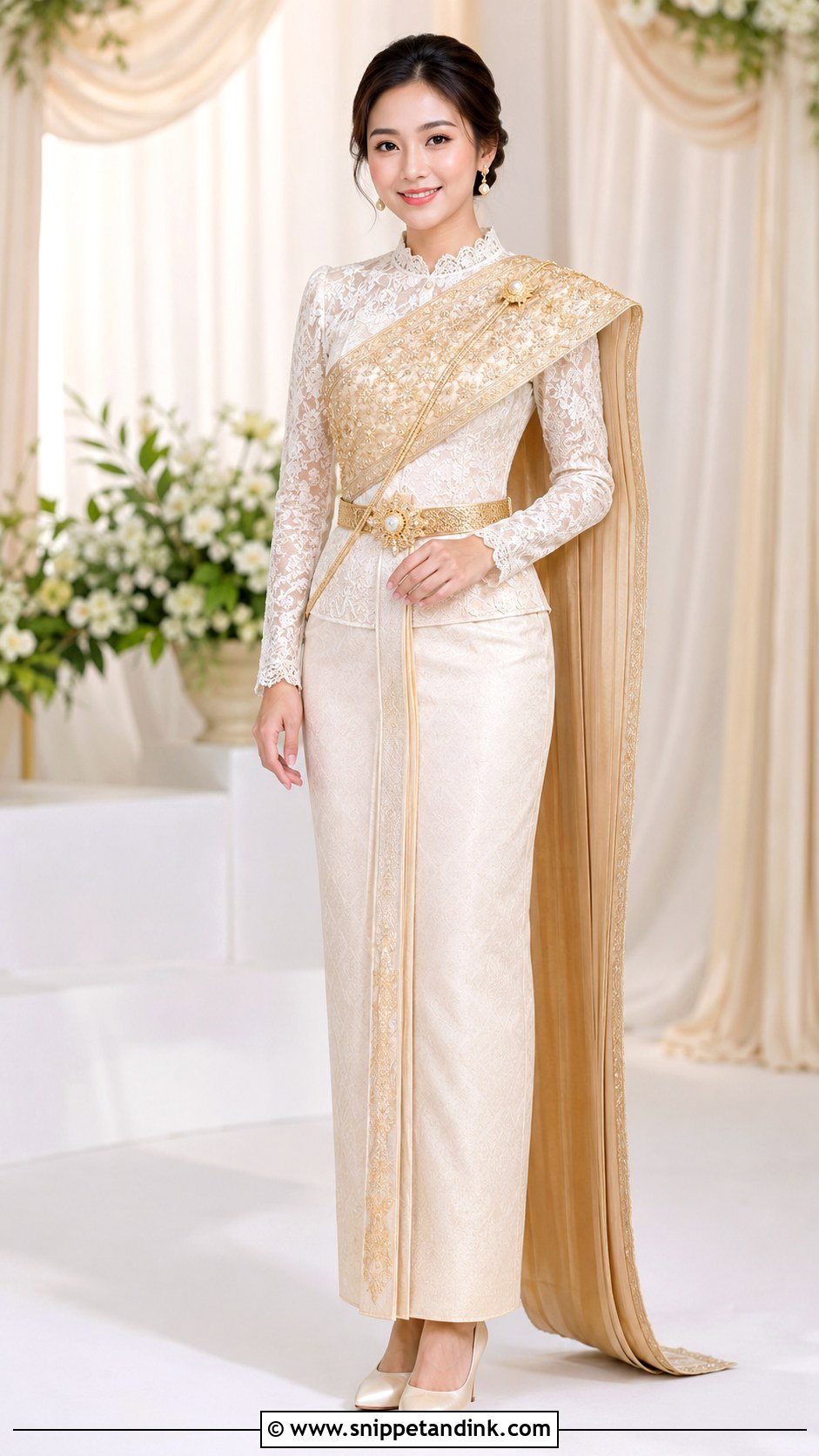
Separates are the easiest Thai outfit to fit well. A fitted blouse and a separate pha sin, with or without a sabai, can each be altered on their own, which matters if your top and bottom are different sizes. You can pair a lace blouse with a silk skirt, a brocade top with a plain skirt, or a matching set for one continuous colour. I always check the gap at the waist when the arms are raised, since a two-piece can open slightly there. A gold belt closes that line and adds ceremony, with earrings, heels and a polished hairstyle to finish.
23. Thai Wedding Dress With Lanna Inspired Outfit
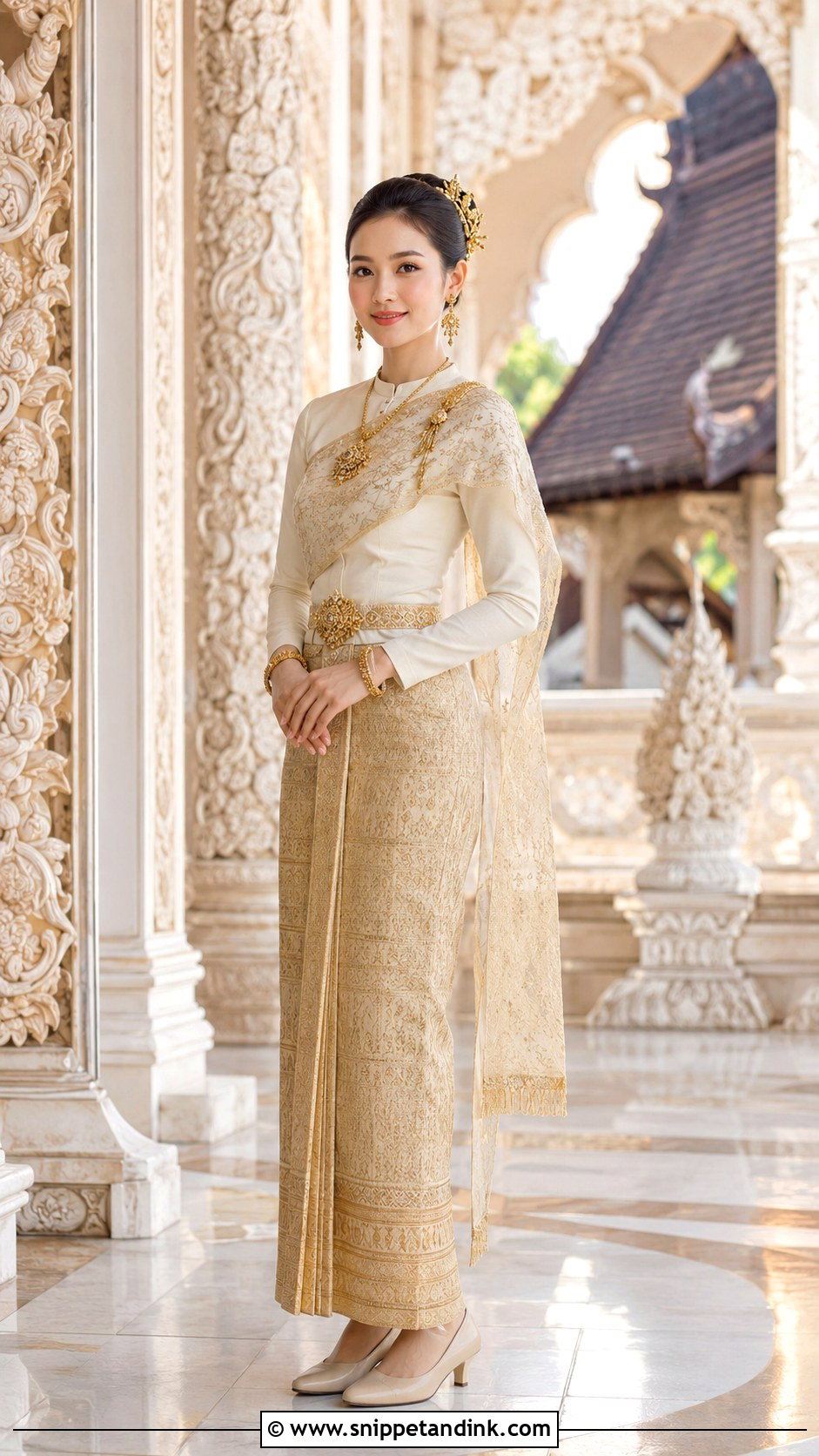
Lanna dress draws on Northern Thai textiles: handwoven skirts with metallic thread, a sinh-style skirt with a decorative hem band, and a delicate shoulder cloth or sabai over a fitted blouse. Ivory, gold, soft green, dusty pink and muted silver are typical. Traditional gold jewelry, a decorative hairpiece and low heels or sandals complete it. The difference between heritage and costume is in the cloth and the tailoring, so I’d spend the budget on a well-woven skirt and a properly fitted blouse before any accessories. It suits brides with Northern Thai roots or anyone drawn to a softer regional style.
24. Thai Wedding Dress With Minimal Silk Outfit
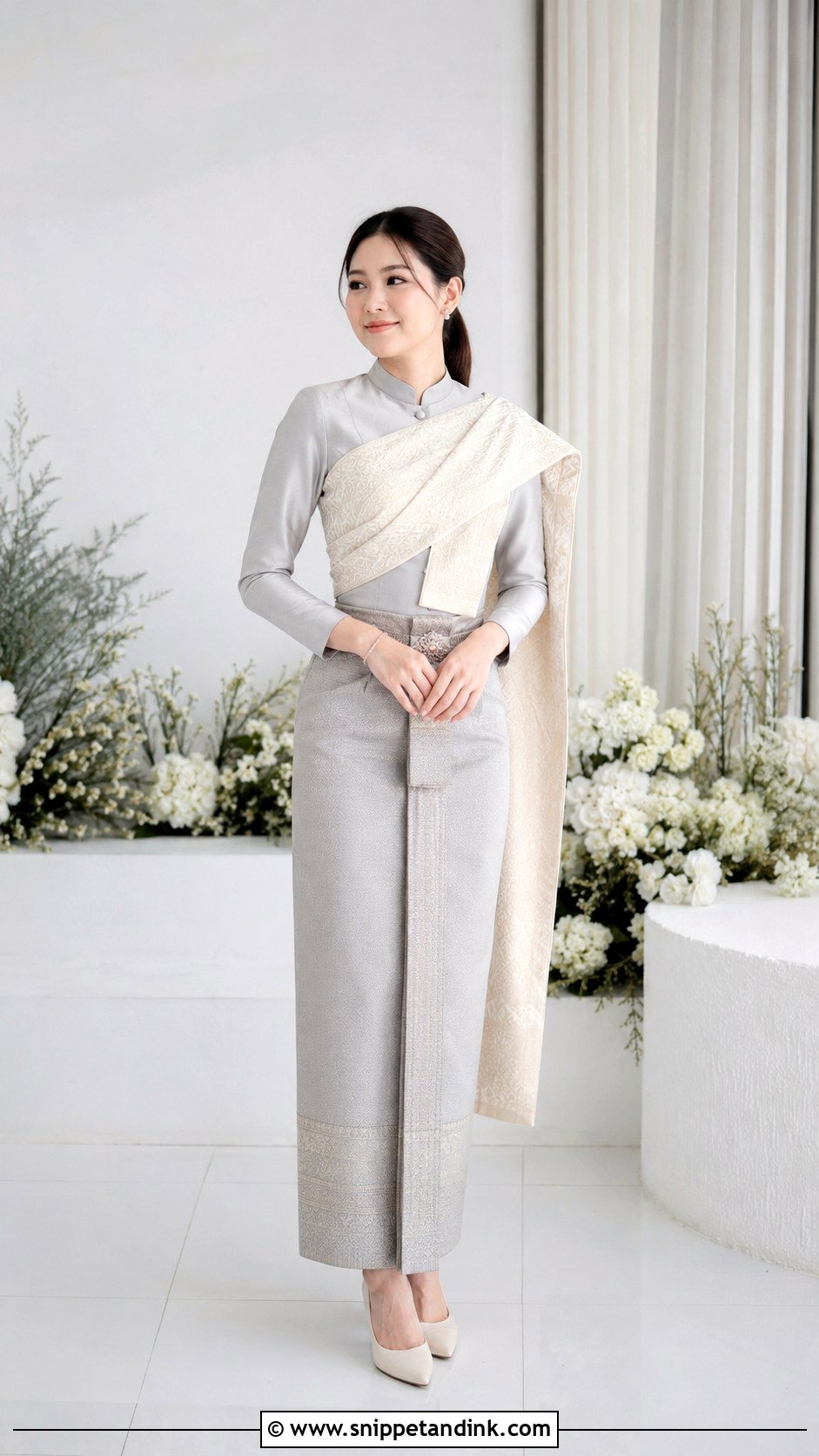
A minimal outfit lives or dies on tailoring. Choose a smooth silk blouse, a fitted pha sin and a plain sabai with little or no embellishment, in ivory, champagne, pearl grey or pale gold. With nothing to distract the eye, every wrinkle and badly placed seam shows, so I’d book an extra fitting and ask for the pleats to be steamed on the morning itself. Small earrings, a thin bracelet and plain heels are enough. A sleek bun or polished low ponytail suits intimate ceremonies and civil celebrations.

25. Thai Wedding Dress With Luxury Bridal Jewelry
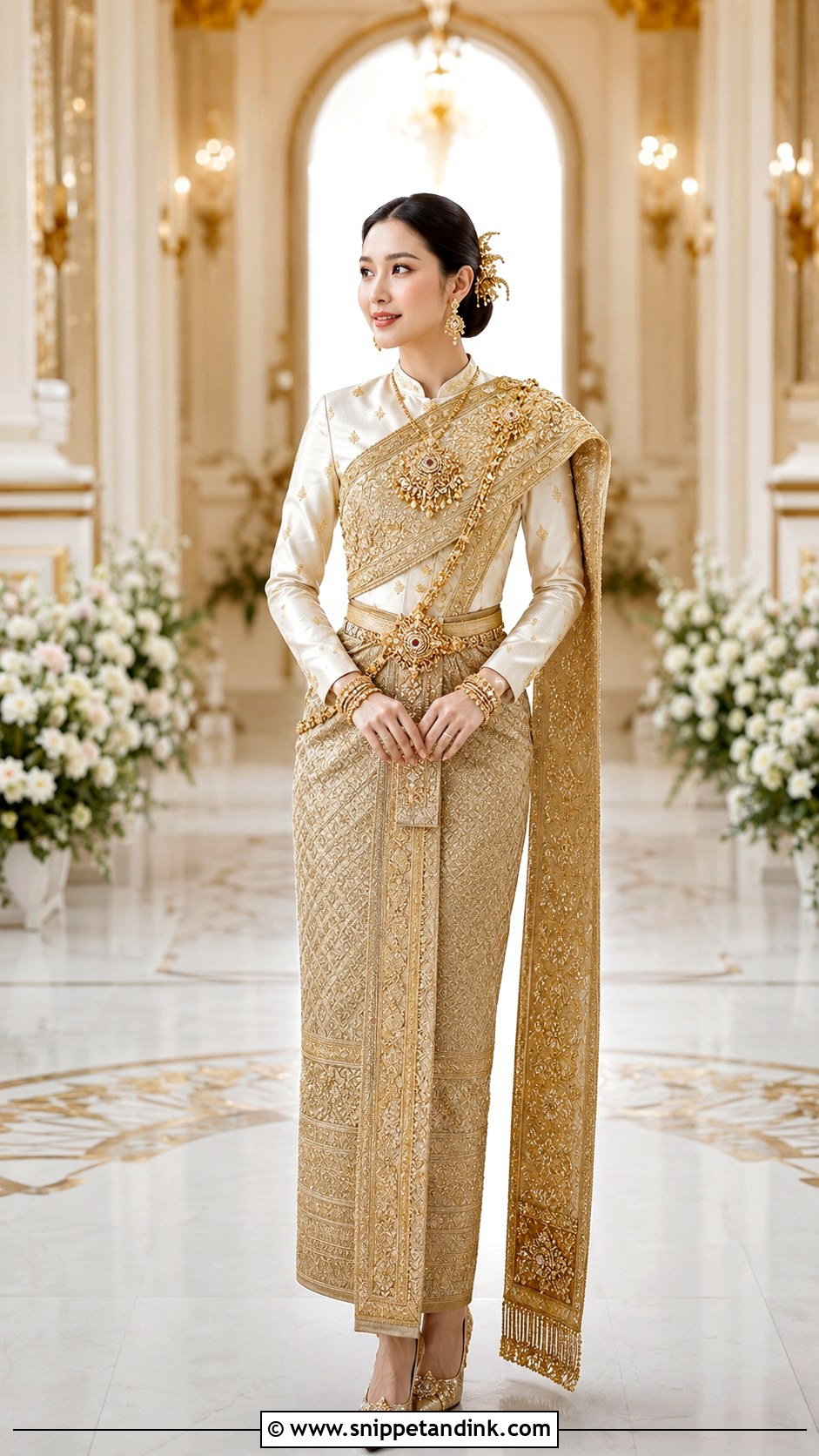
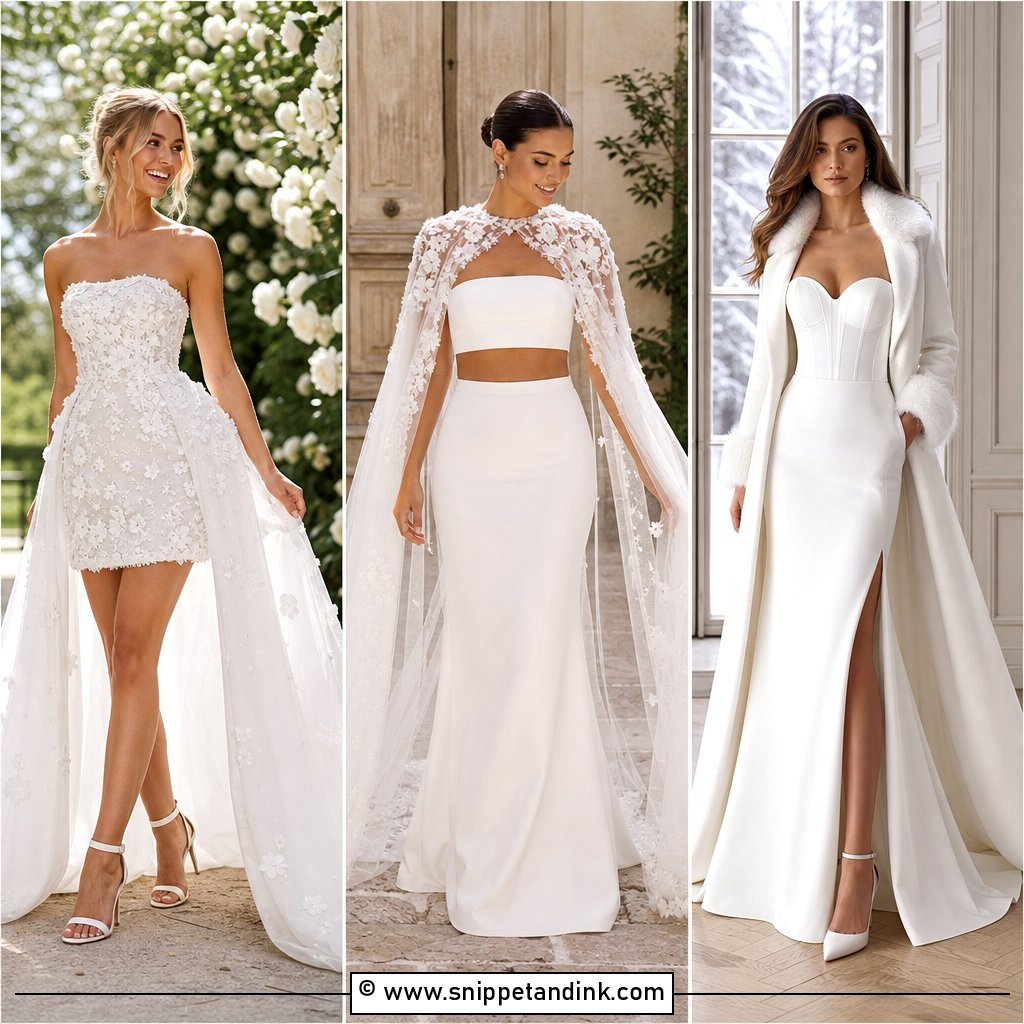
Full bridal jewelry turns a Thai outfit into its grandest version. Start with a beautifully fitted silk blouse, a brocade pha sin and a structured sabai, then layer gold earrings, a necklace, bangles, a belt and a hairpiece if they suit. Balance is what I watch for. Heavy embroidery calls for fewer pieces; a plain dress can carry more ornate ones. Heavy necklaces also drag a sabai off line, so I fix the drape first and place the necklace over it. Gold suits ivory, red, emerald, champagne and deep blue, and a sleek hairstyle keeps the jewelry visible in portraits.
Pinning a Sabai So It Survives Bowing and Blessings
A sabai is a long cloth, and it only looks right when it is folded and pinned with care. Most of the outfits above go wrong in the same place: the drape slides off the shoulder by early afternoon. This is how I dress a bride in one.
- Put the blouse or bodice on first and check it is snug at the side seam under the draped arm. A loose bodice lets the sabai pull everything sideways.
- Fold the sabai lengthwise to the width you want, usually narrower at the waist and fanned out at the shoulder.
- Anchor it under the arm with a hidden safety pin into the bodice seam, then a second pin at the top of the shoulder, through the strap or a sewn loop.
- Let the tail fall down the back and check it in a mirror while seated, because the length shortens noticeably once you sit.
- Bring a few spare pins and a small strip of fashion tape for the reception. Someone close to you should know how to re-pin it.
Silk slips more than brocade does, so a plain silk sabai usually needs one more pin than a stiff woven one. If the venue is hot and humid, a thin cotton lining on the inside face of the drape keeps it from clinging and sliding.
Storing Thai Silk and Brocade Once the Celebrations End
Thai silk and metallic brocade are heirloom fabrics, and they age badly if they are folded away damp. I’d have the outfit professionally cleaned soon after the wedding, especially if blessing water, makeup or food touched it, since sugar and oil stains darken with time.
For storage, roll the pha sin around acid-free tissue rather than folding it on the same crease, because silk weakens along permanent fold lines. Wrap brocade in plain cotton, not plastic, so it can breathe, and keep it out of light to slow tarnish on the metallic threads. Keep pinned jewelry and belts separate, since metal resting on silk leaves marks. Take everything out once a year and refold it on new lines.
Silk, Drape and the Moment You Kneel
Thai bridal dress runs from formal Chut Thai to modern gowns with only a draped shoulder as reference, and every version on this list can be right for someone. What I’d ask you to judge is how it behaves: whether you can kneel for the water blessing, raise your hands for the wai, sit through dinner and still look composed in the evening photos. Gold sabai suits grand ceremonies, pastel silk suits morning rites, lace softens and plain silk depends on its tailoring. Get the fit and the pinning right first, and the jewelry and colour choices become far easier.
You'll Like These Ideas:




Leave a Reply