
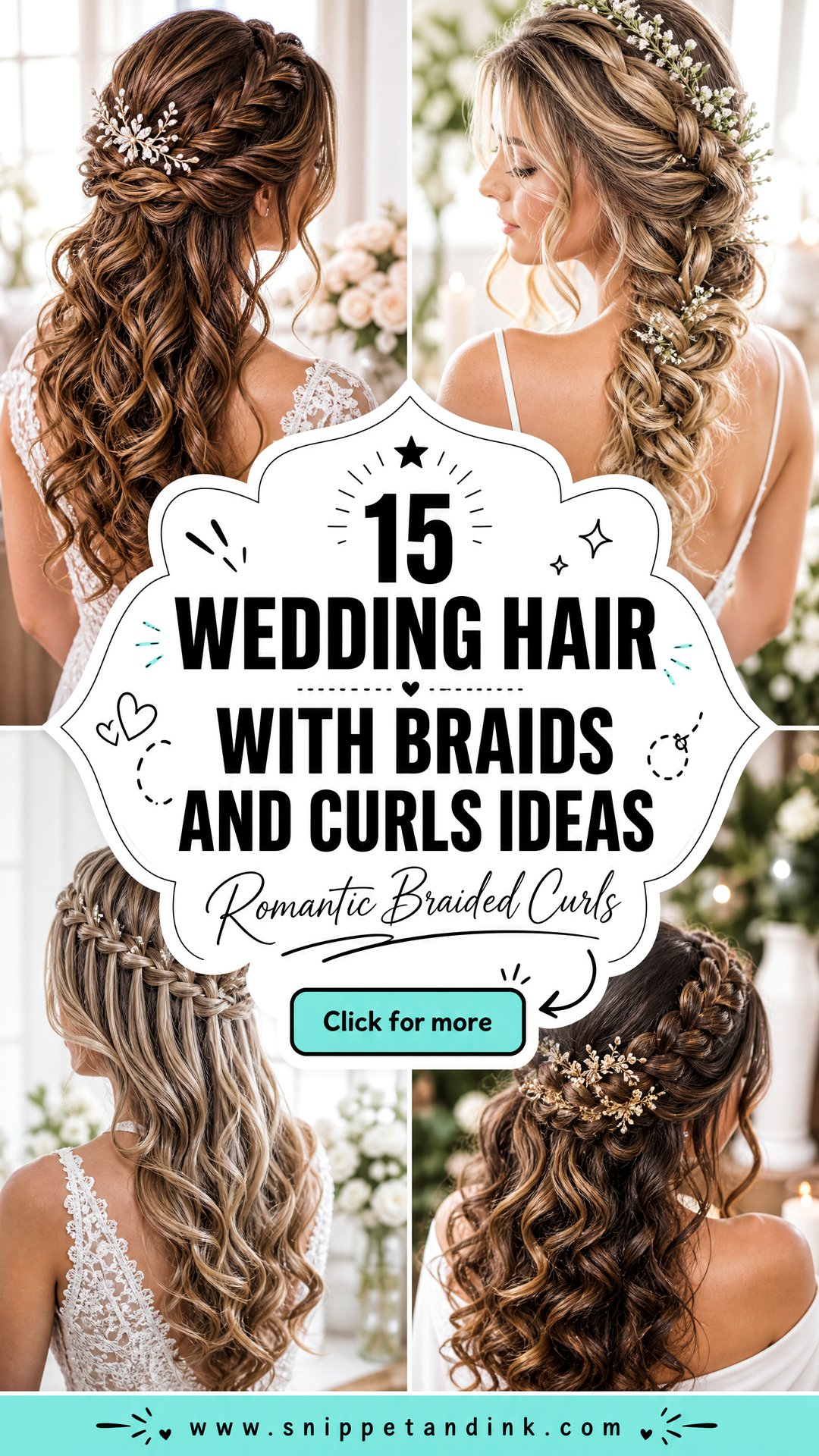
Braids and curls solve each other’s problems. Curls on their own drop, frizz and get crushed by hugs; a braid on its own can look severe in portraits. Put them together and the braid does the structural work, holding the front off your face and giving a veil comb something to grip, while the curls carry the softness. I build most of these looks the same way at a trial: decide where the braid needs to anchor, then decide how much loose length the dress and the weather can handle. The fifteen versions below range from a single fishtail accent to full goddess braids, and I’ve noted where each one holds up and where it struggles.
Which Goes In First, the Braid or the Curls?
It depends on the braid. For anything that grips the scalp, like a French, Dutch or crown braid, I braid first on dry, day-old hair and curl the free lengths afterward. Braiding over fresh curls on those styles just flattens the curl and makes the braid slippery. For loose braids, fishtails and boho styles, I do it the other way round: curl everything, brush it out, then braid over that texture so the braid looks fuller and holds better.
Freshly washed, silky hair is the hardest to braid. If your hair is very fine or very smooth, wash it the night before rather than the morning of, and skip heavy conditioner on the lengths. I’ll add a texturizing spray before braiding so the strands have some grip.
Adjusting for your hair type
- Fine hair: smaller braids pancaked wider, and a clip-in behind a half-up section for body.
- Thick or heavy hair: split one big braid into two, and use more pins at the anchor points.
- Natural or coily hair: work with your own curl pattern and keep heat to a minimum.
- Layered or shoulder-length hair: braids close to the scalp catch short layers best; loose braids let them escape.
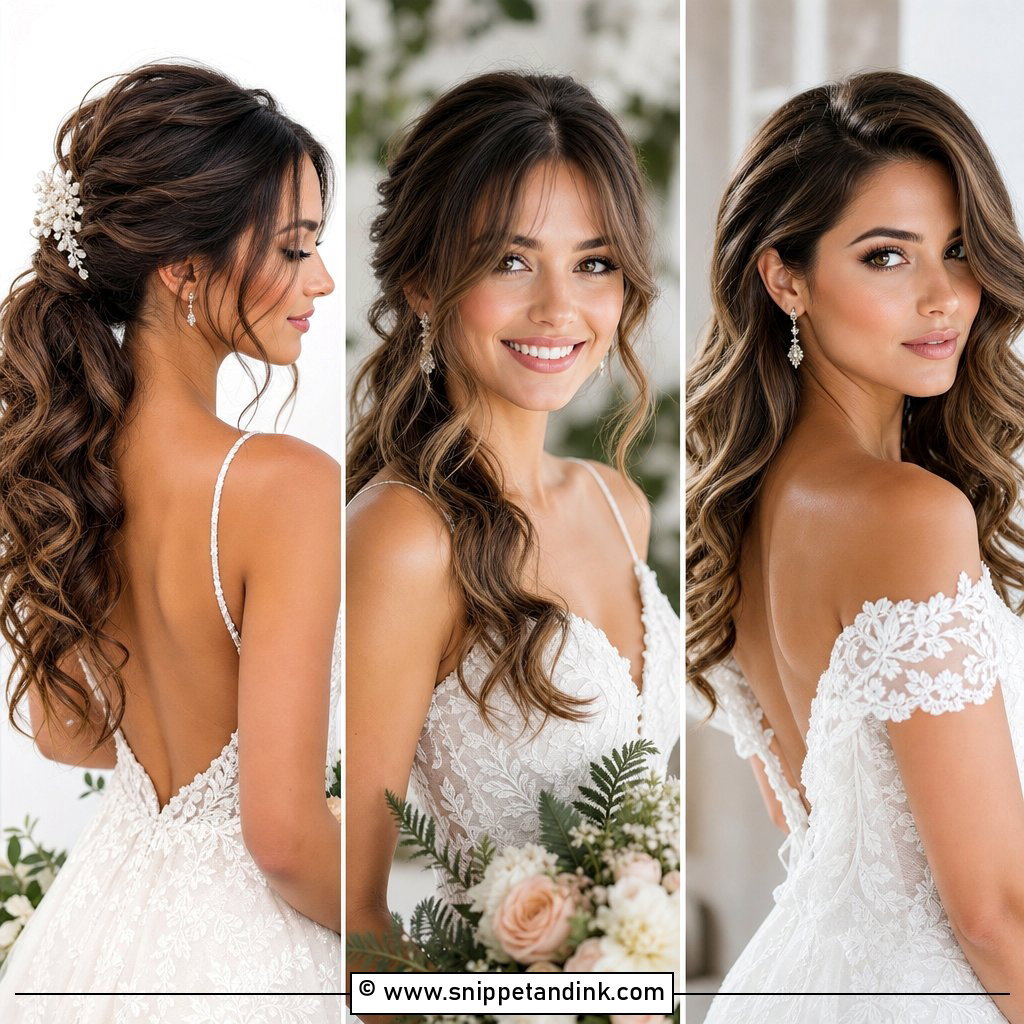
1. Half Up Wedding Hair With Braids And Curls
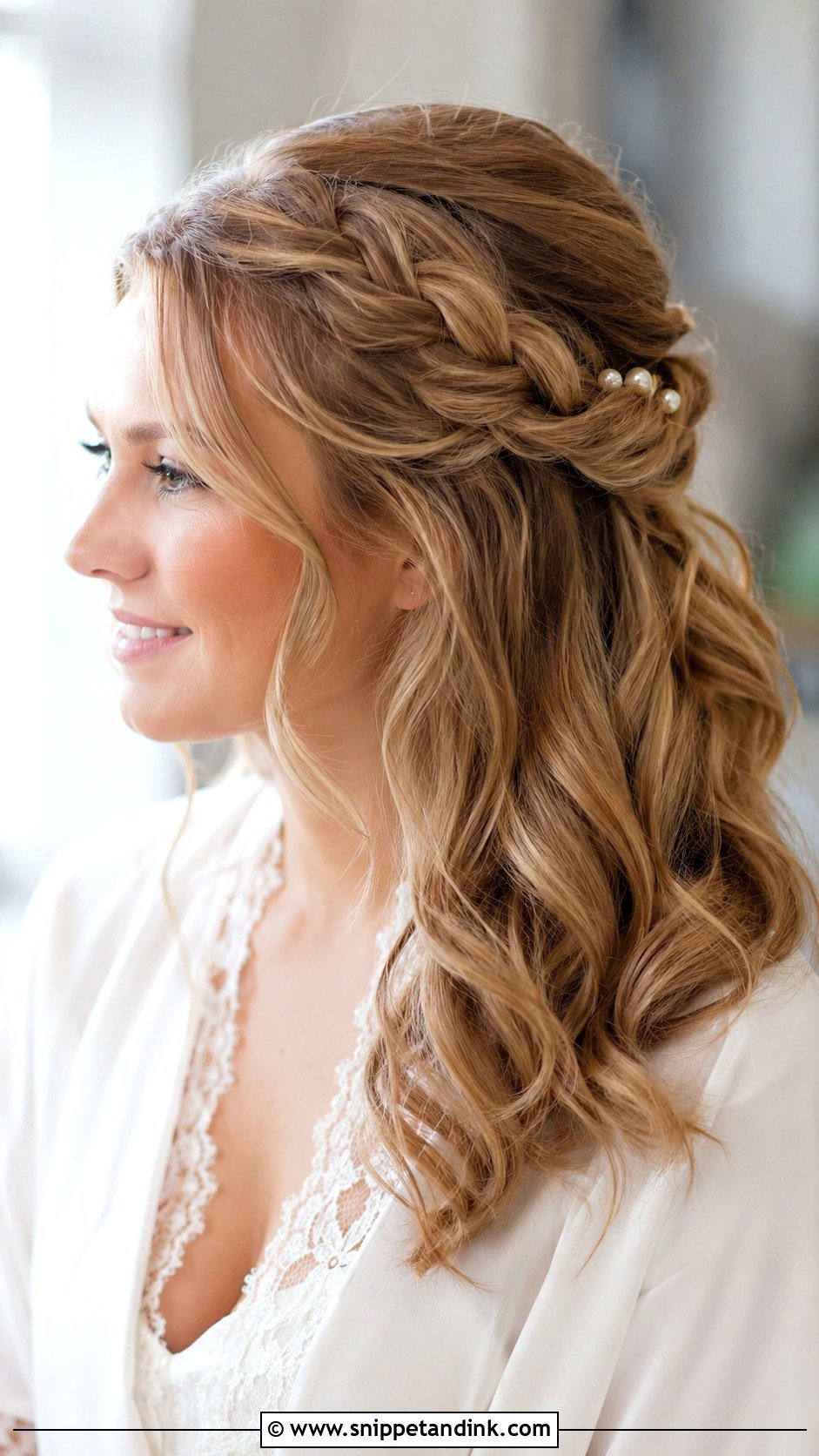
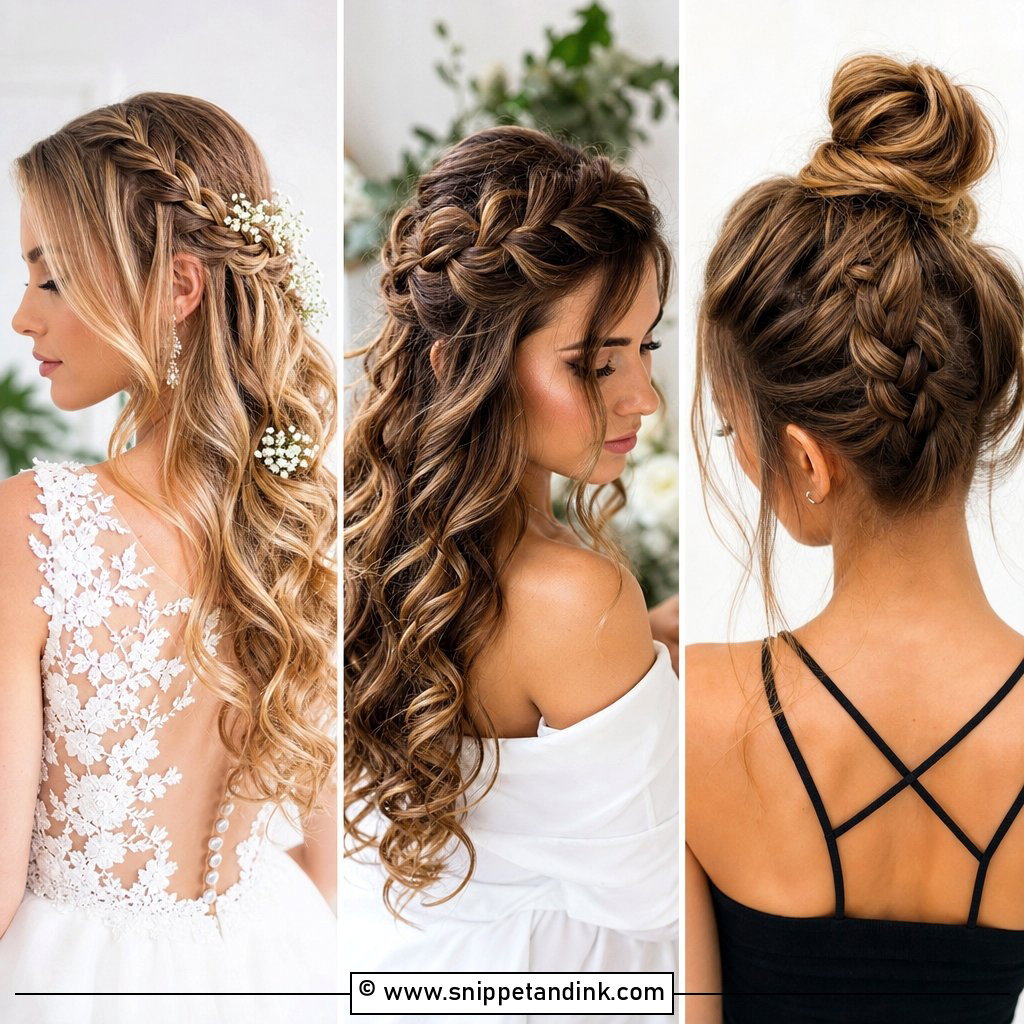
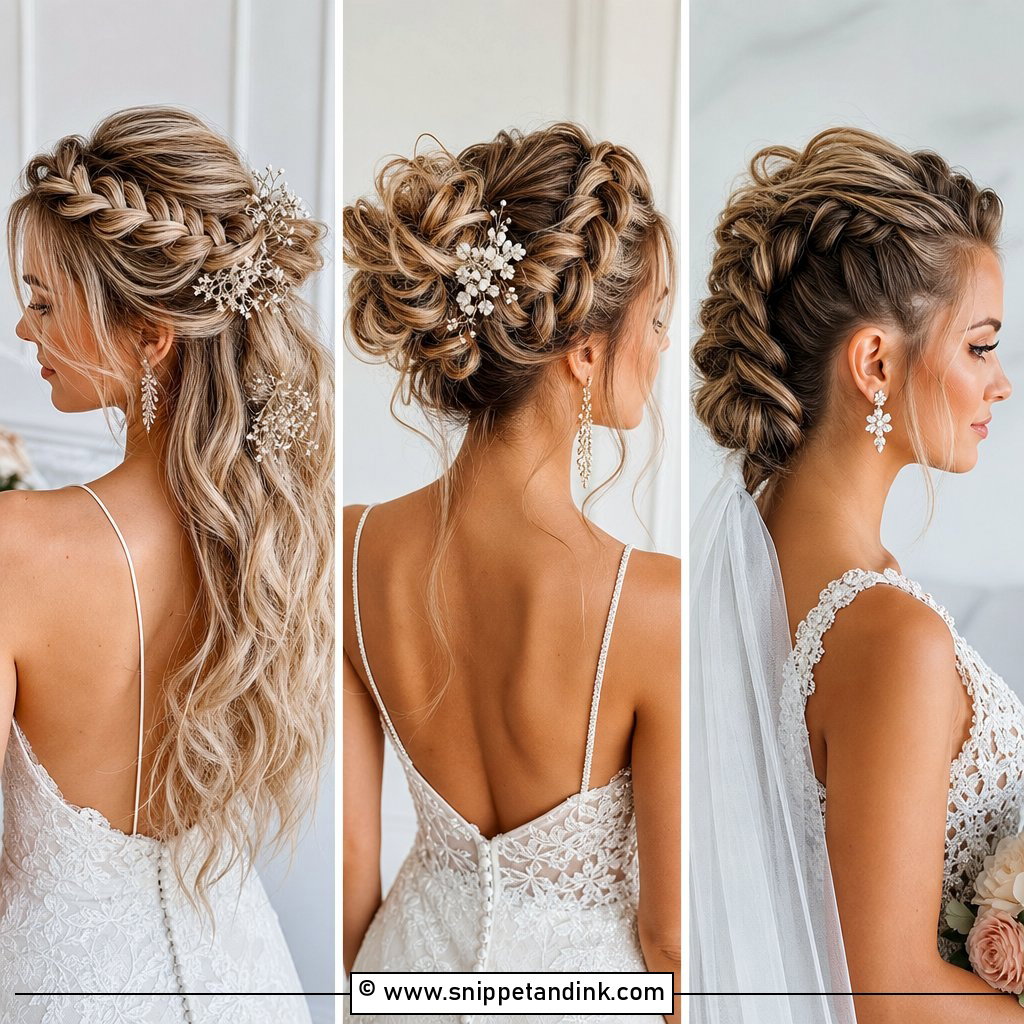
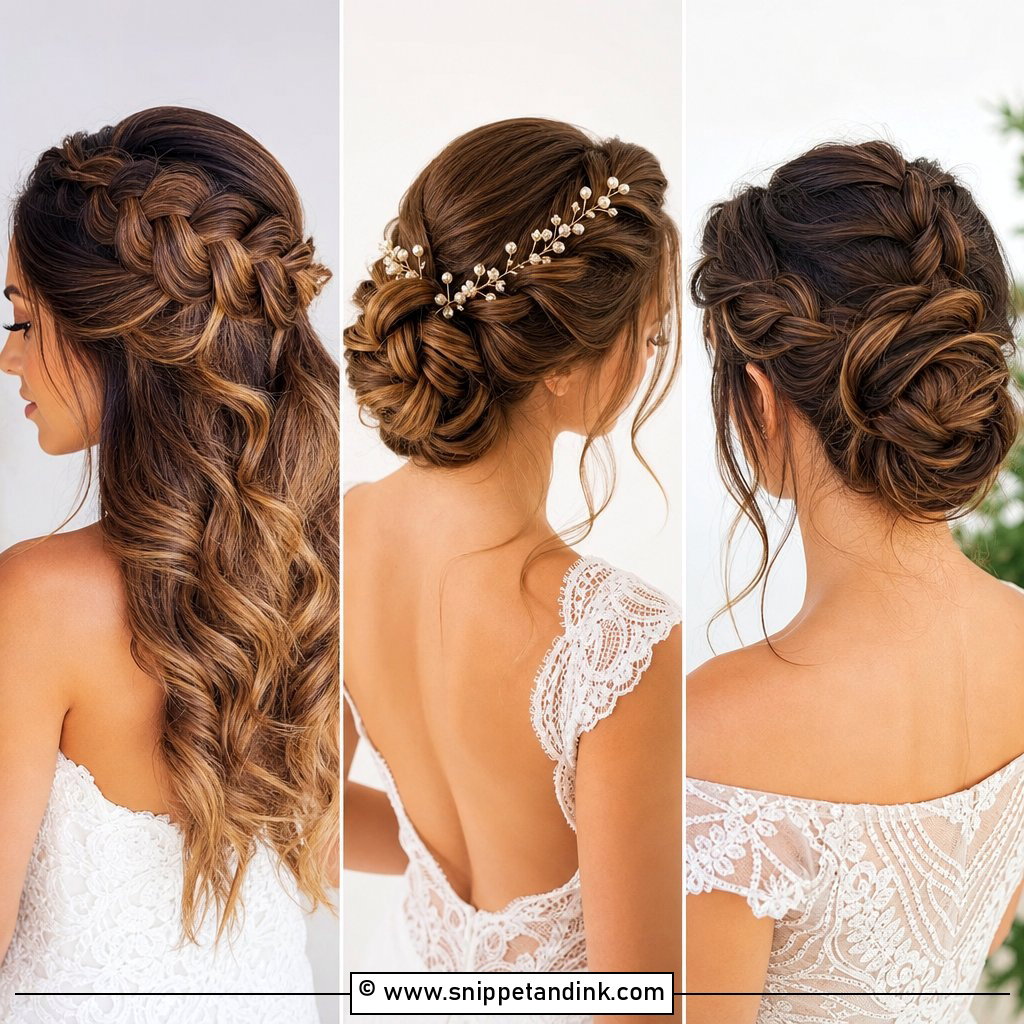
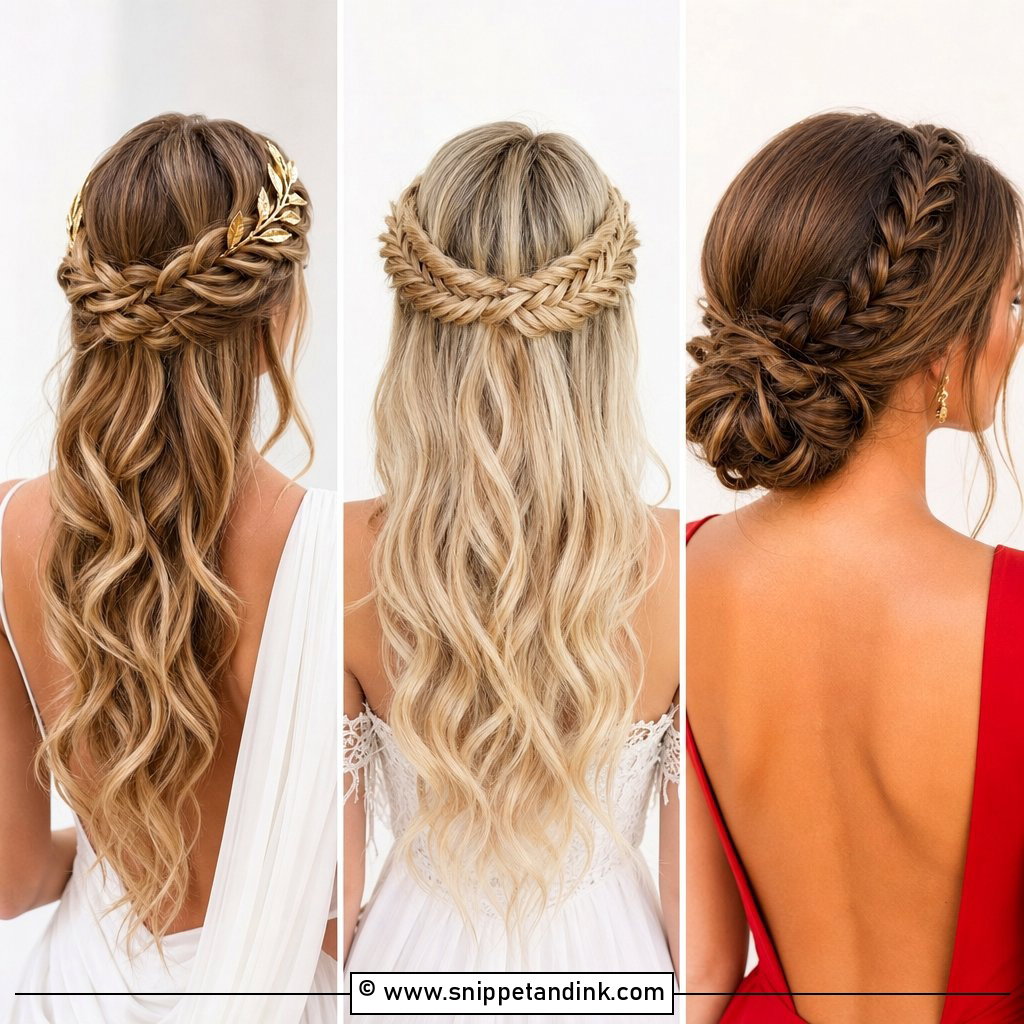
This is the style I’m asked for most, and the one I’m most careful with on very fine hair. The pinned top section is where everything is anchored, so I braid a small Dutch braid or a loose three-strand on each side, cross them at the back of the crown and lock them with two bobby pins in an X. That crossing point is exactly where a veil comb wants to sit. The curls below should be set a little tighter than you want them at the ceremony, because they will relax by the first dance.
2. Side Braid Wedding Hair With Curls
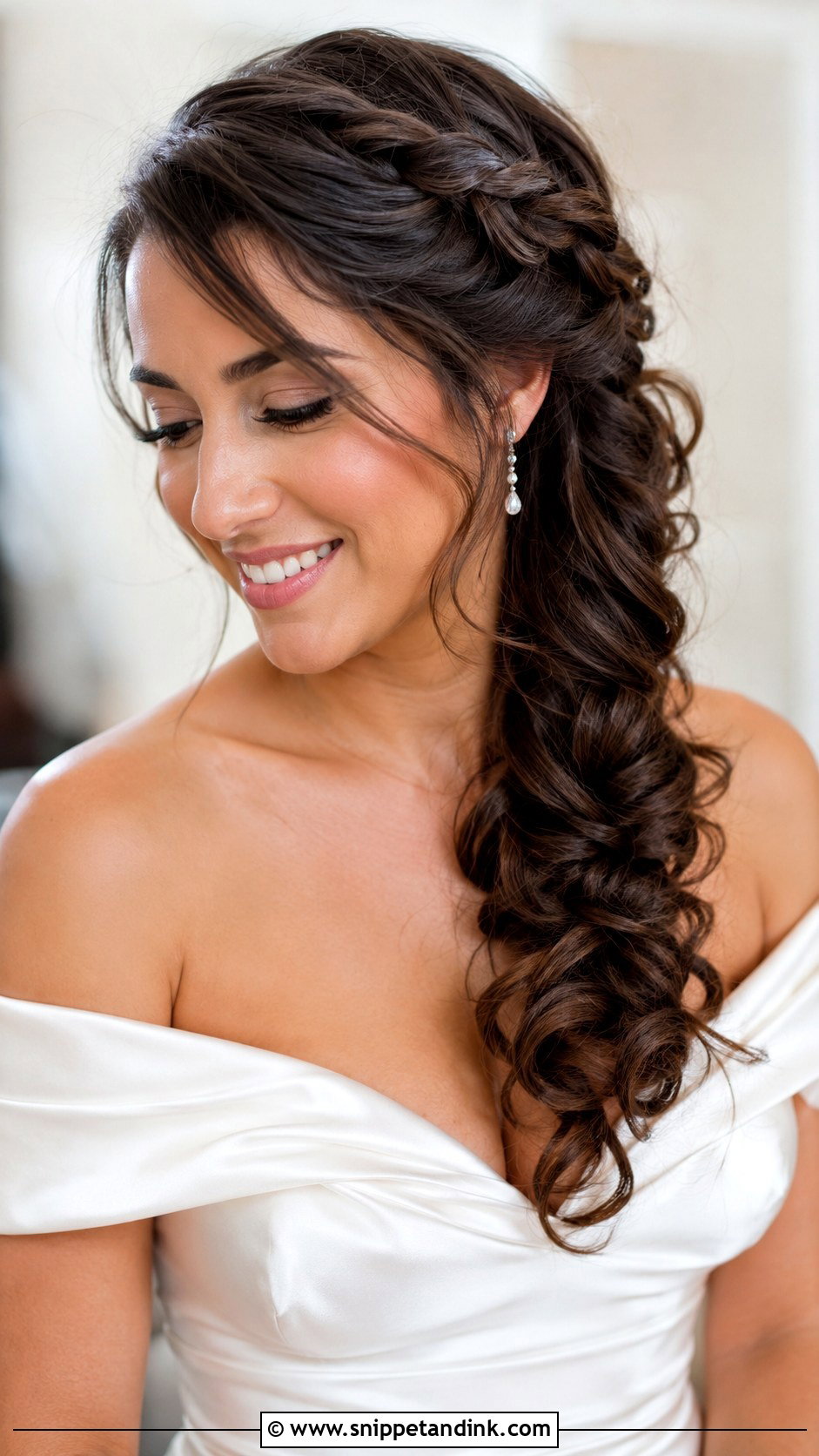
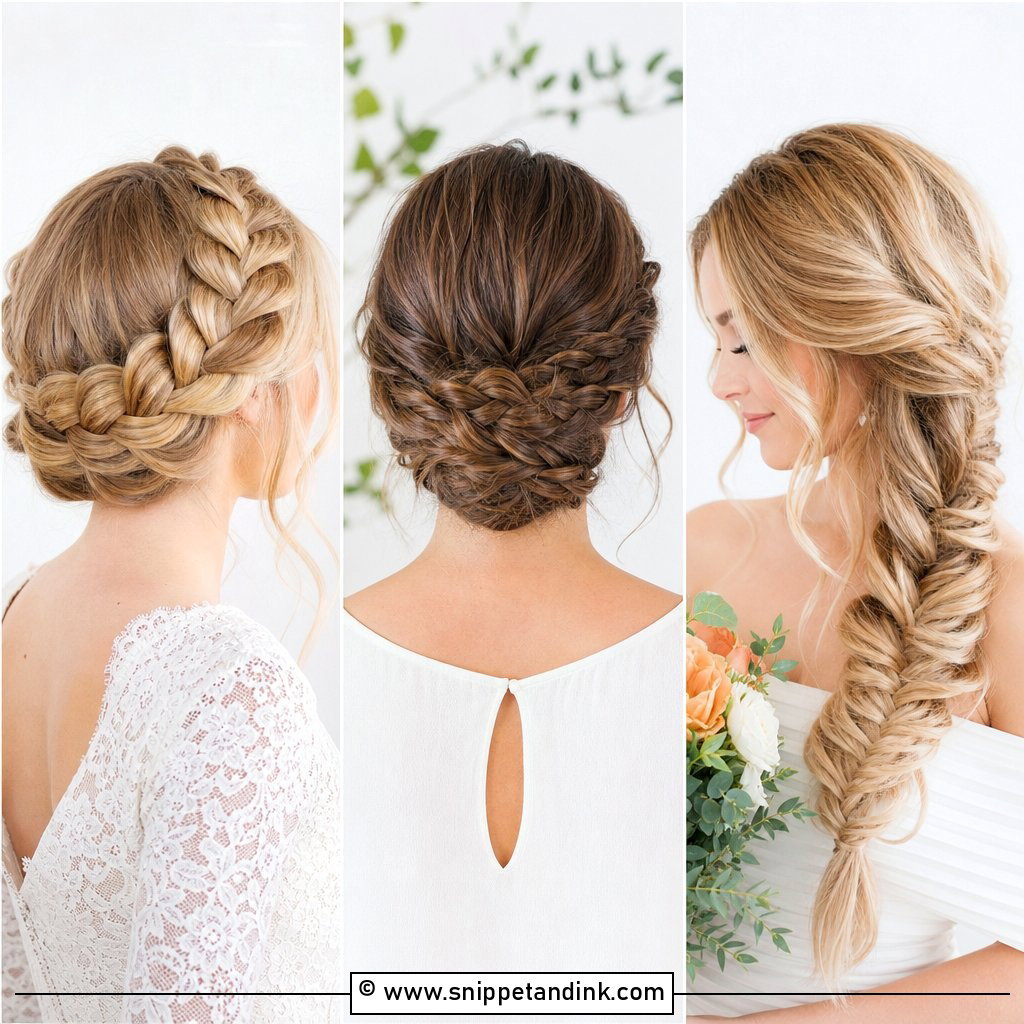
A side braid shifts all the weight to one shoulder, so I start it a touch further back than most people expect, behind the ear rather than at the temple, or it pulls the part flat. It suits one-shoulder and off-the-shoulder necklines because it fills the bare side and leaves the jewelry side open. Once it’s secured I pancake the edges with my fingertips so it reads fuller from the camera. Brides who sit a lot during a long dinner should know the braid can rub against a chair back and frizz; a hair-safe shine spray at the reception touch-up helps.
3. Braided Crown Wedding Hair With Curls
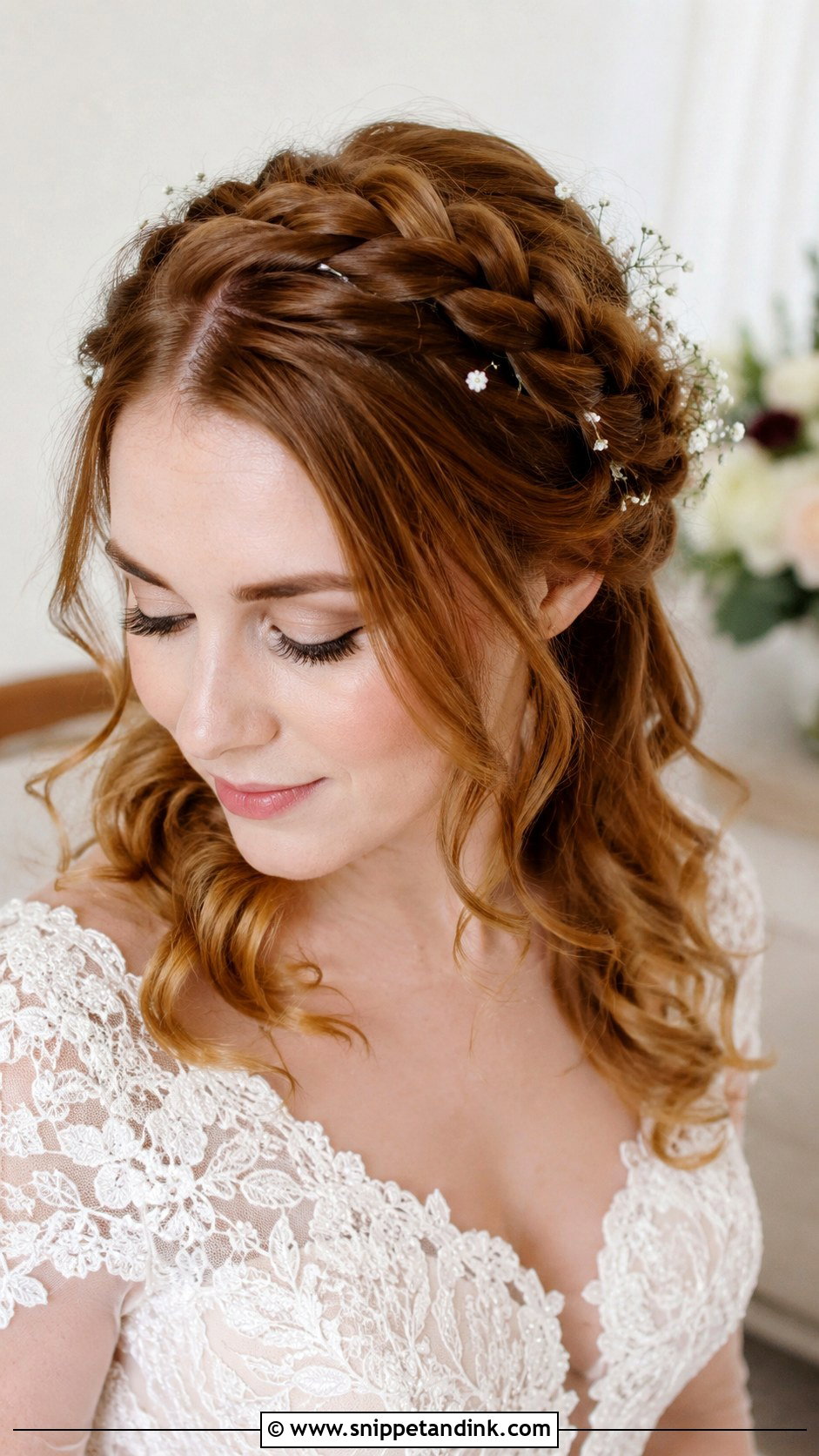
A crown braid sits at the widest point of the head, which is why it gives that halo outline in photos and why it can feel heavy if it’s built wrong. On thick hair I make two separate braids and pin them over each other at the back rather than wrestling one long braid around. It suits garden and outdoor ceremonies, and anyone after a fairy-tale feeling without a rigid updo. Leave out a few face-framing pieces before you start braiding, not after; pulling them out later breaks the braid’s line. Flowers or tiny pearls go on the outer edge of the braid where they won’t shift.
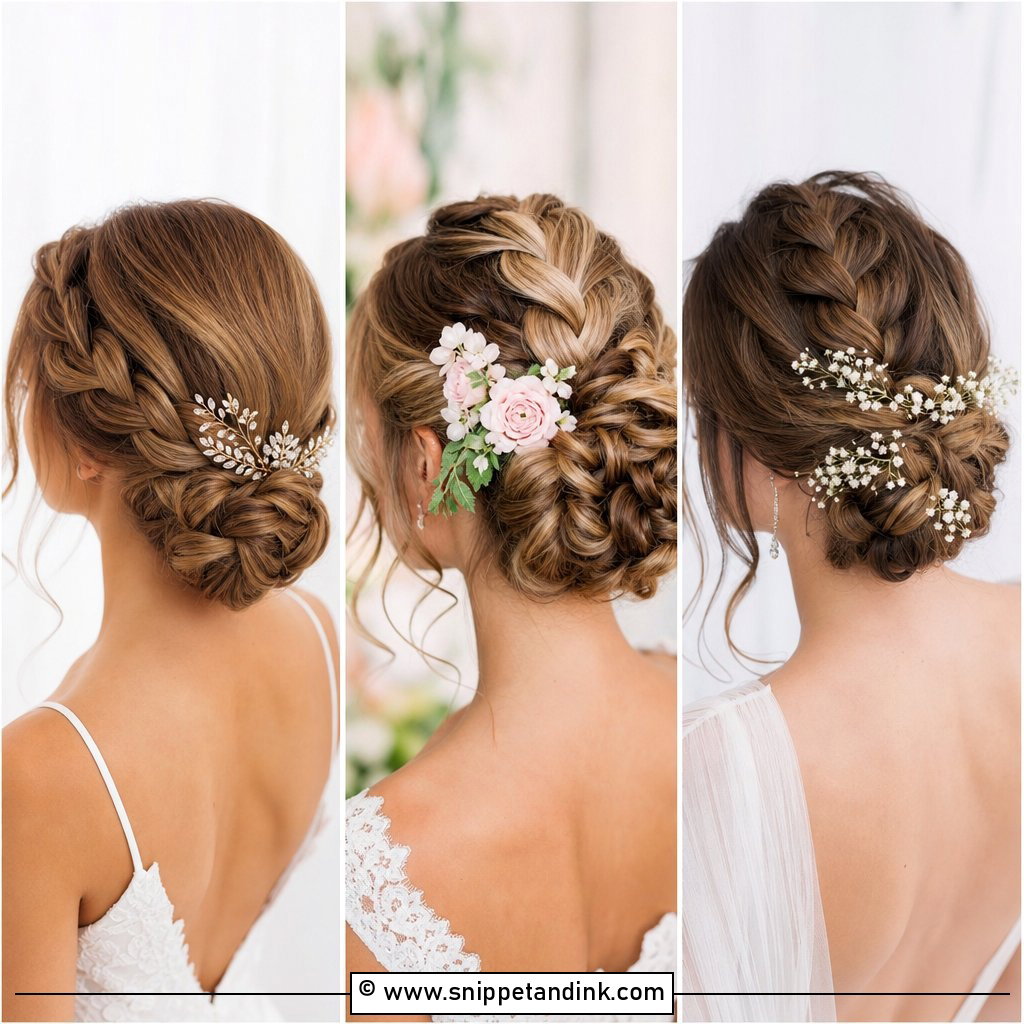
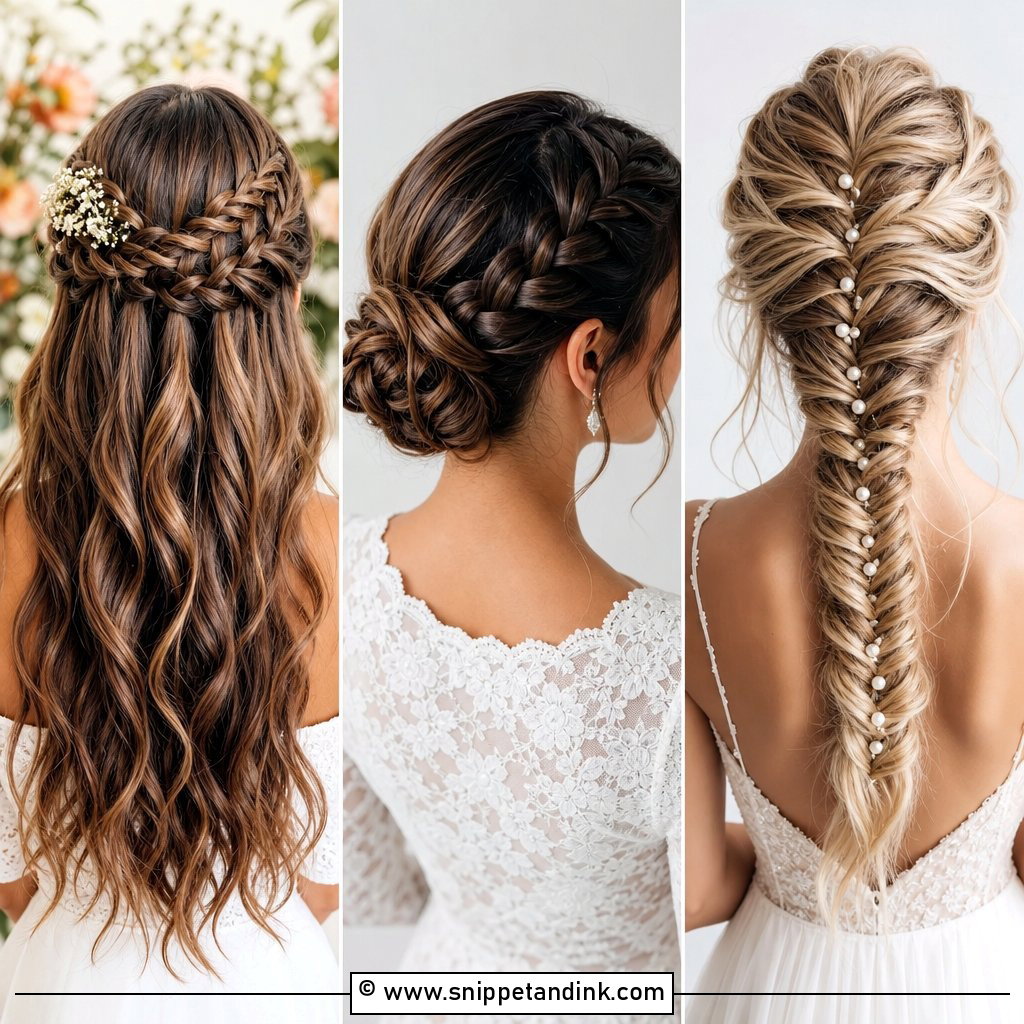
4. Braided Low Bun Wedding Hair With Curls
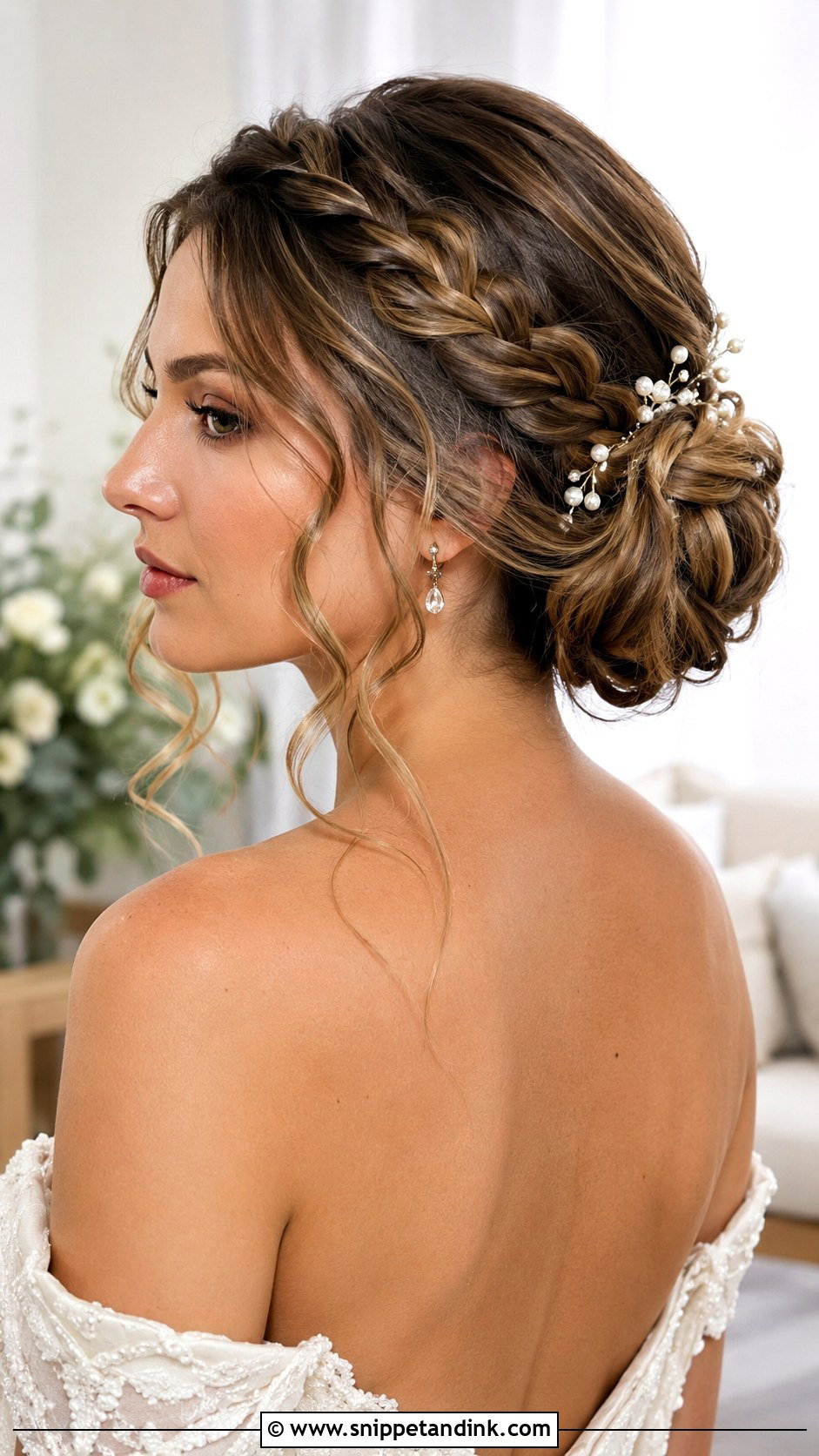
For a long day in heat, this is the one I recommend first. Hair off the neck keeps you cooler, and a low bun built from curled sections has far more grip than a smooth bun made from straight hair. I braid along the crown or sides, then pin each curl into the bun individually so the shape stays round. Leave a couple of curled tendrils near the face to keep it from looking strict. A veil goes above the bun, not into it, so the bun keeps its shape when the veil comes out after the ceremony.
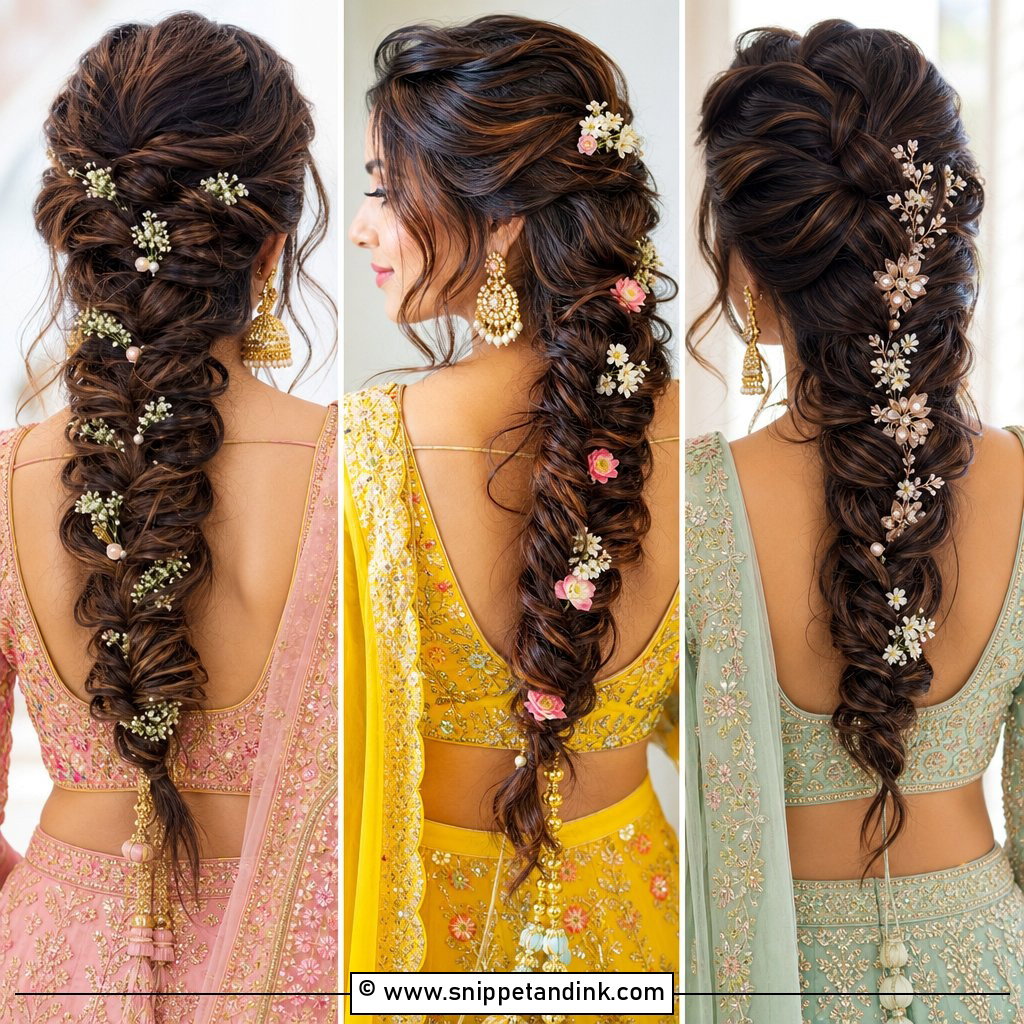
5. Boho Wedding Hair With Braids And Curls
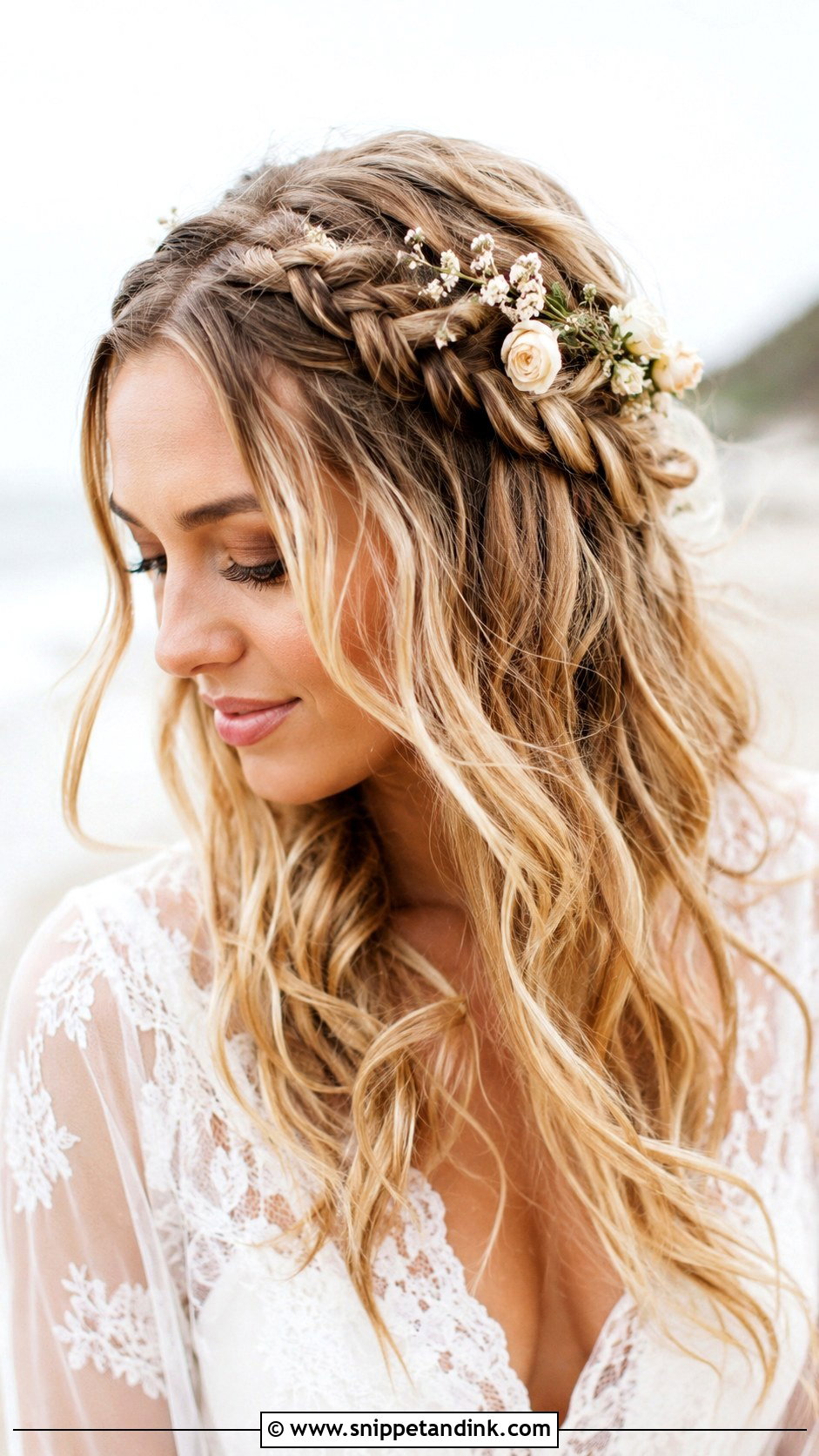
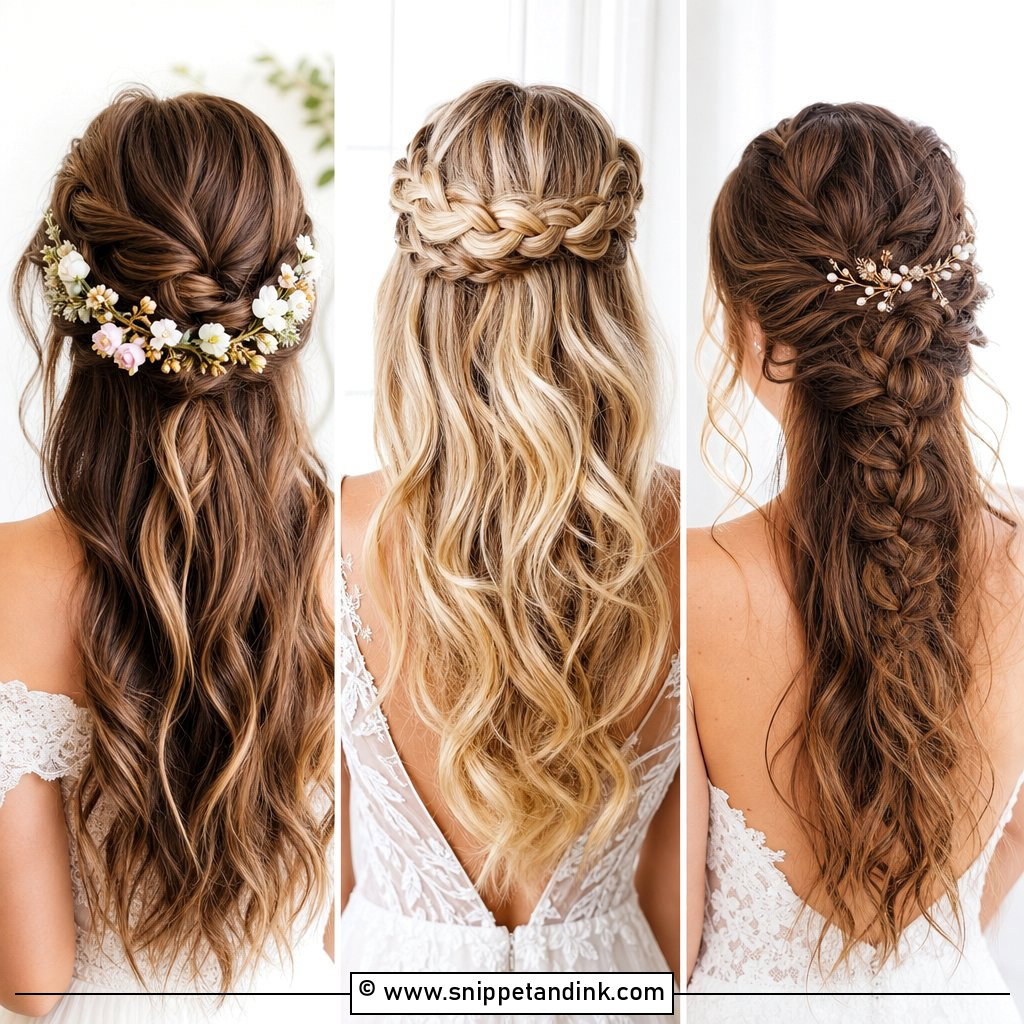
Boho hair is harder to do well than polished hair, because the undone look still has to survive ten hours. I curl with a larger barrel and brush the curls out, then braid over that texture so the braid grips instead of sliding. The braid might cross the crown or sit off to one side, and I gently pull it apart after pinning. It belongs at barn weddings, desert venues and beach ceremonies, where a sleek updo would look out of place. One honest warning: at the beach, wind finishes the job for you, so keep the braid a little tighter than you think.
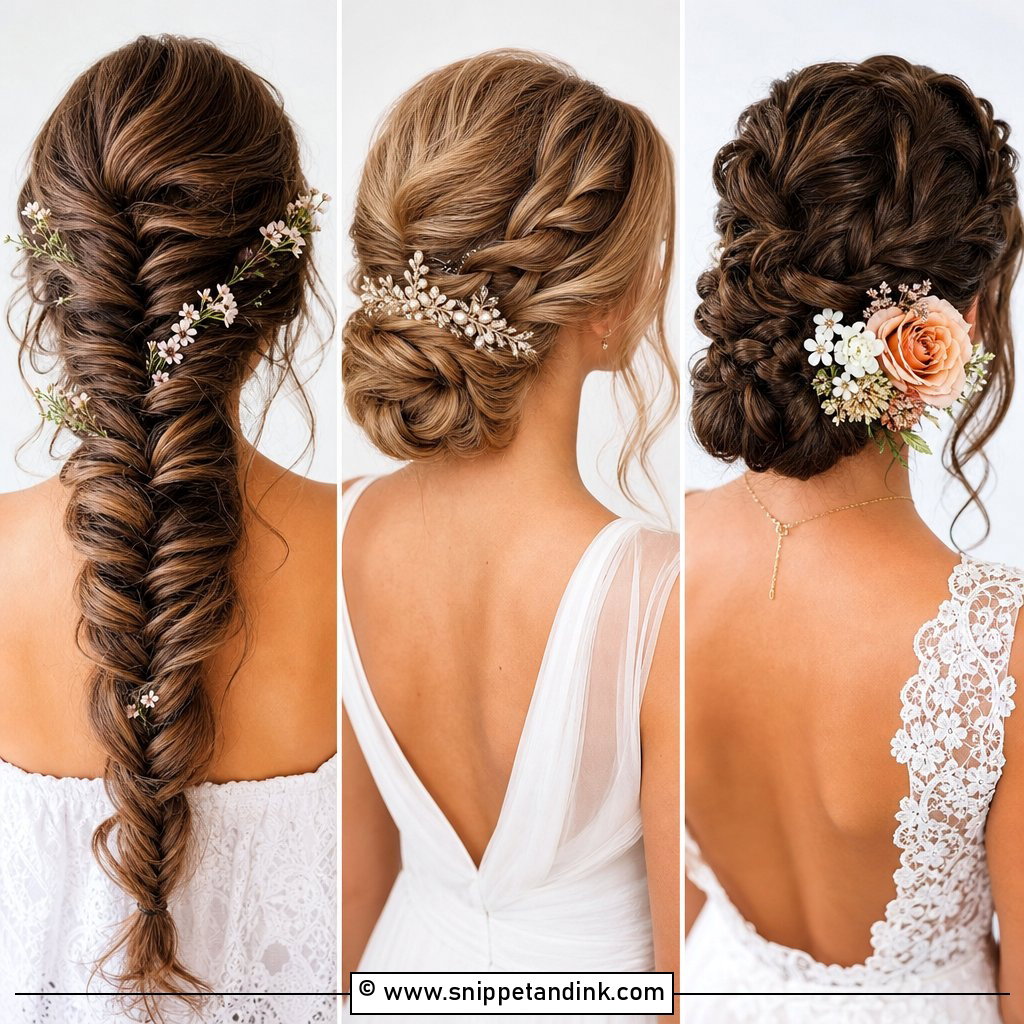
6. Fishtail Braid Wedding Hair With Curls
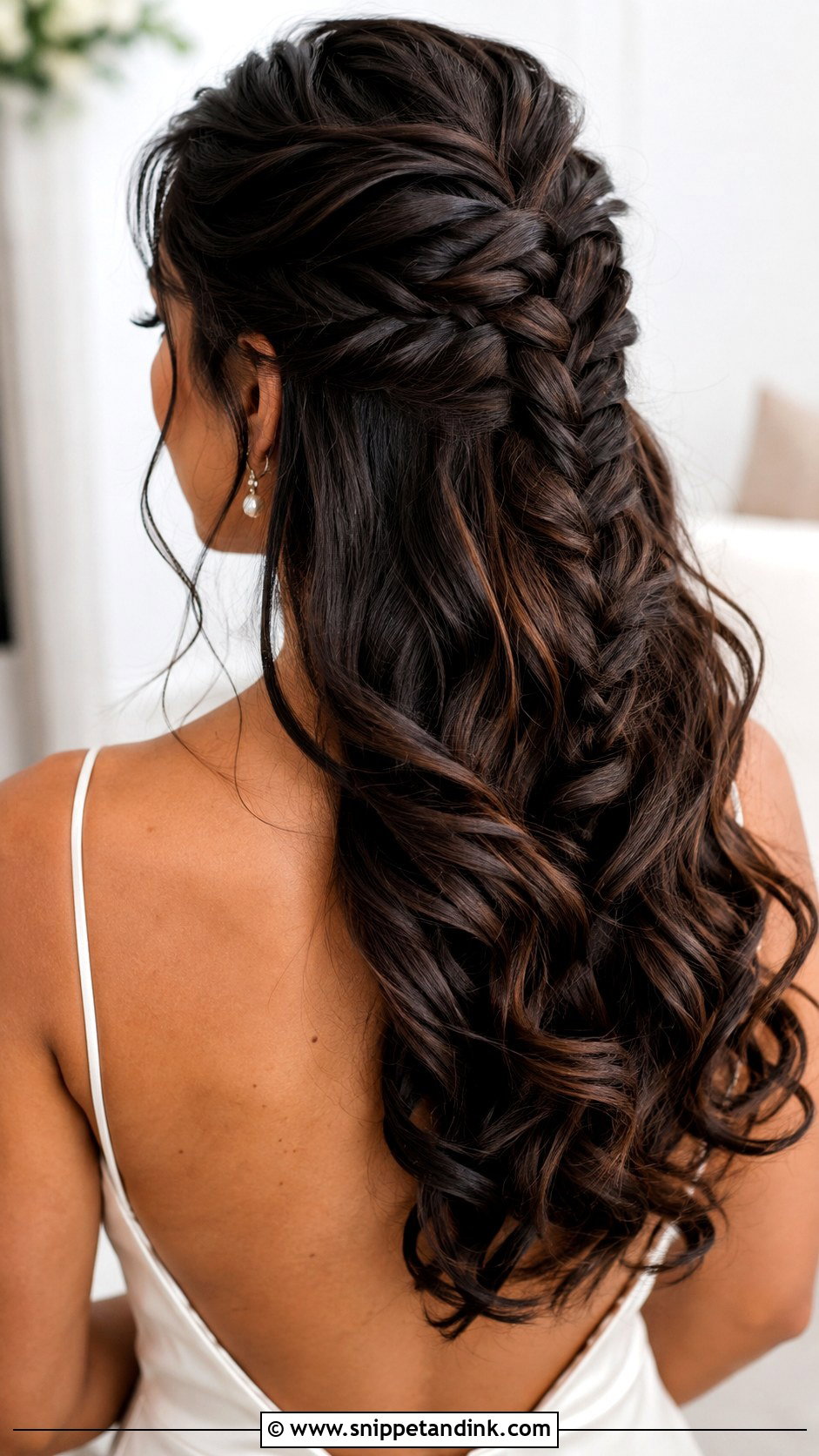
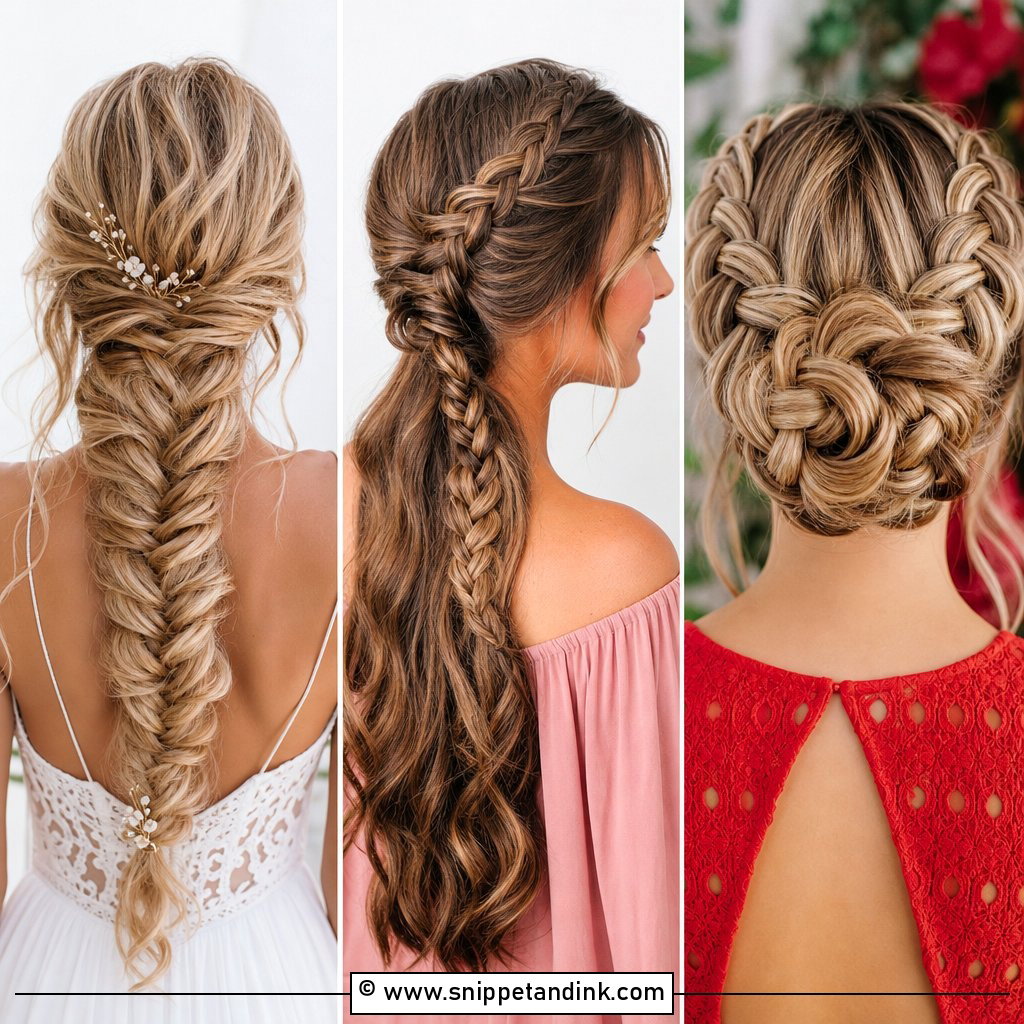
A fishtail only needs two strands, but it uses tiny pieces, which is why it takes longer and why it shows up so clearly in close-up photos. I use it as an accent, a side braid or a half-up detail, rather than the whole style. After securing it I pull the outer edges out evenly from top to bottom; if you pull harder at the top it looks lopsided once you’re standing. It needs very little decoration because the woven pattern already carries the detail, and the curls around it keep it from looking too neat.
7. Loose Braid Wedding Hair With Curls
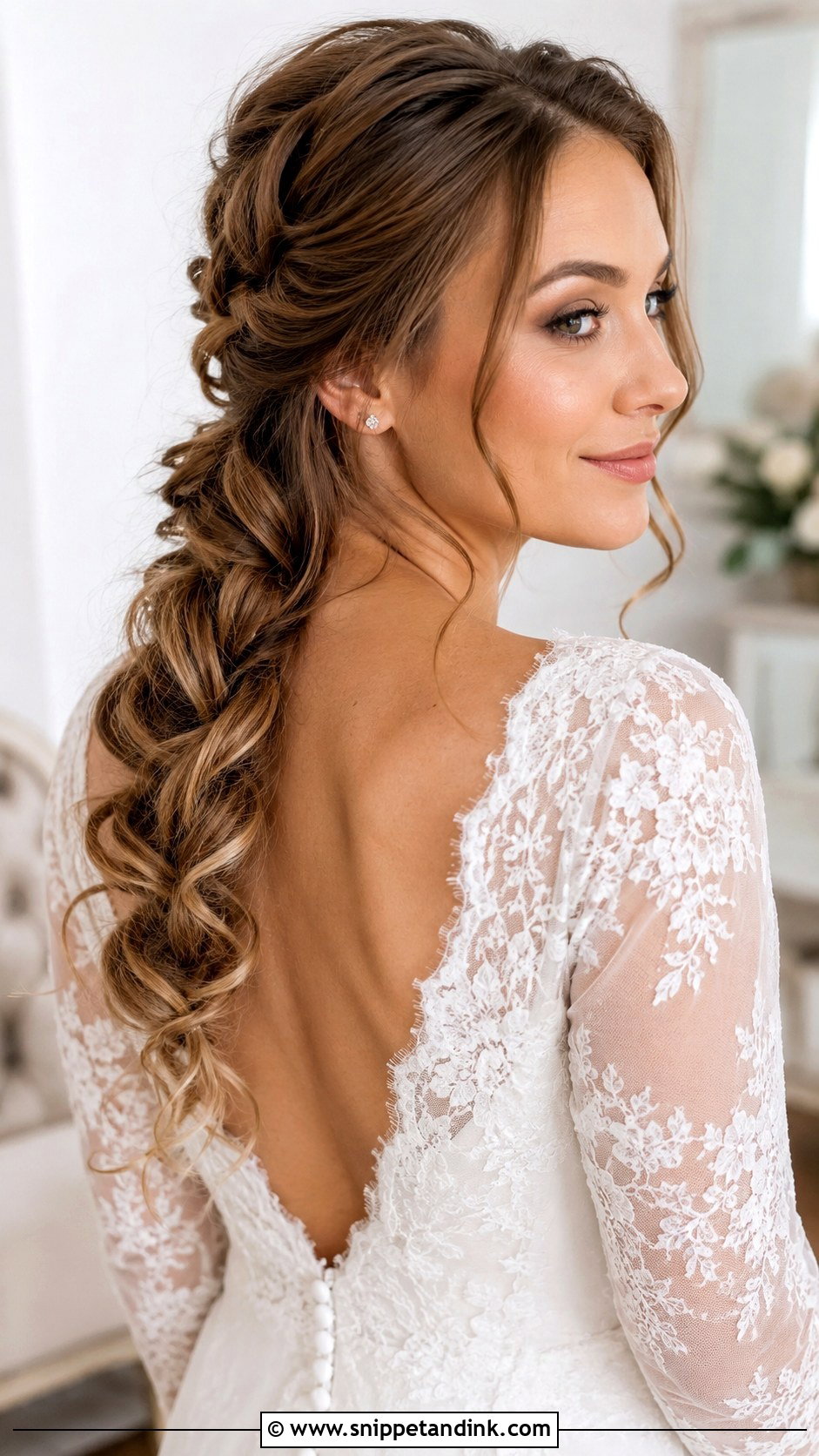
A loose braid is a judgment call about how loose. Too tight and it fights the relaxed mood; too loose and it falls apart before the speeches. I braid at a medium tension, secure it with a clear elastic, and only then pull out pieces around the face and crown. It can trail down the back, sit over one shoulder or feed into a half-up shape. Keep the curls on the soft side, because tight ringlets next to a loose braid look like two different hairstyles. It sits well against lace and simple gowns. A flexible hold spray lets the curls move without making the braid crunchy.
8. Waterfall Braid Wedding Hair With Curls
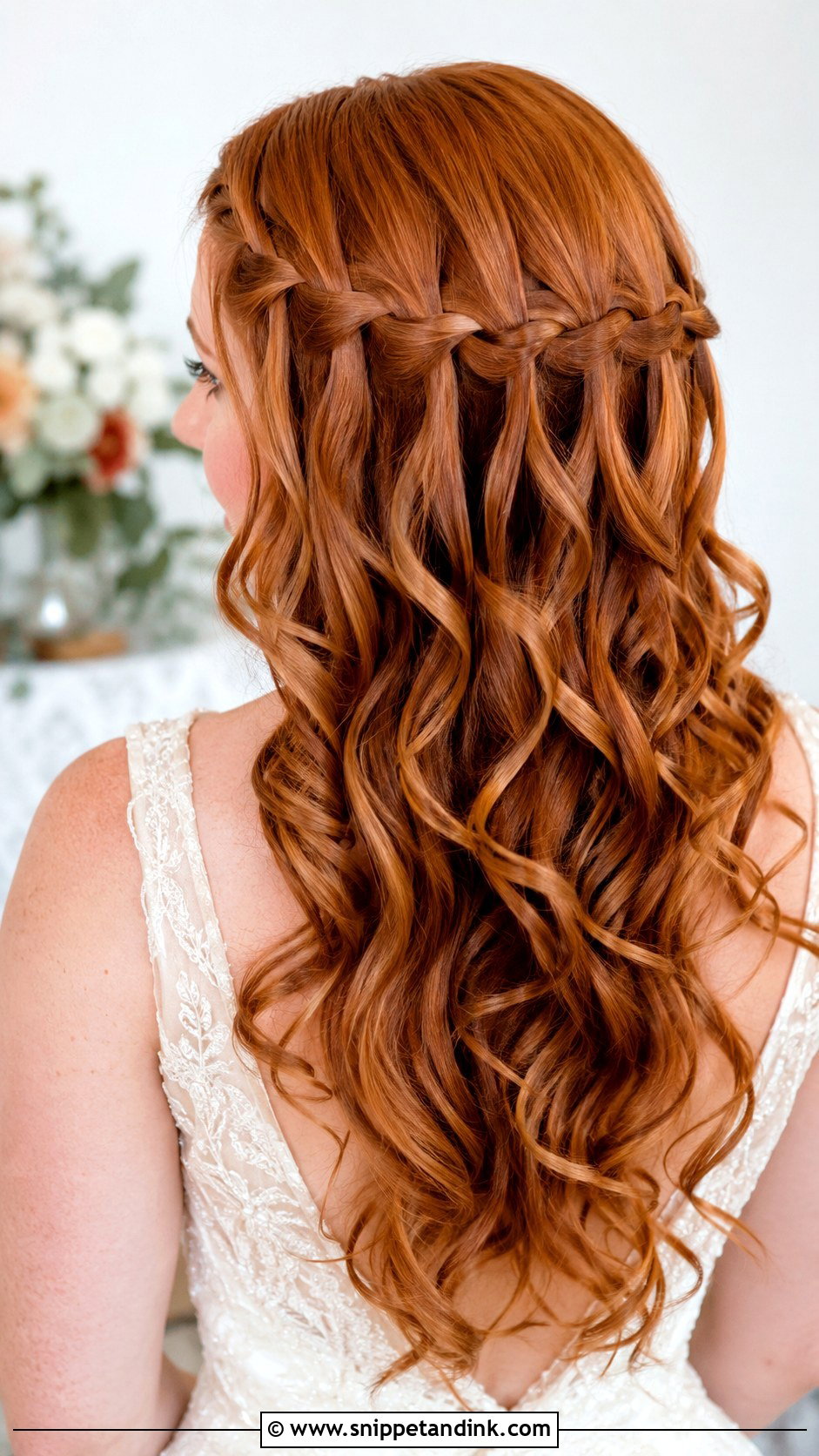
The Waterfall braid wedding hair pattern drops a strand out with every cross, which is what lets curls fall through it and keep the length visible. That also means it has fewer anchor points than a French braid, so I finish both ends with a hidden pin and a small elastic under the hair. It needs at least shoulder-length hair for the curls to show below it. It also works nicely for bridesmaids, because it looks finished without competing with the bride’s style.
9. French Braid Wedding Hair With Curls
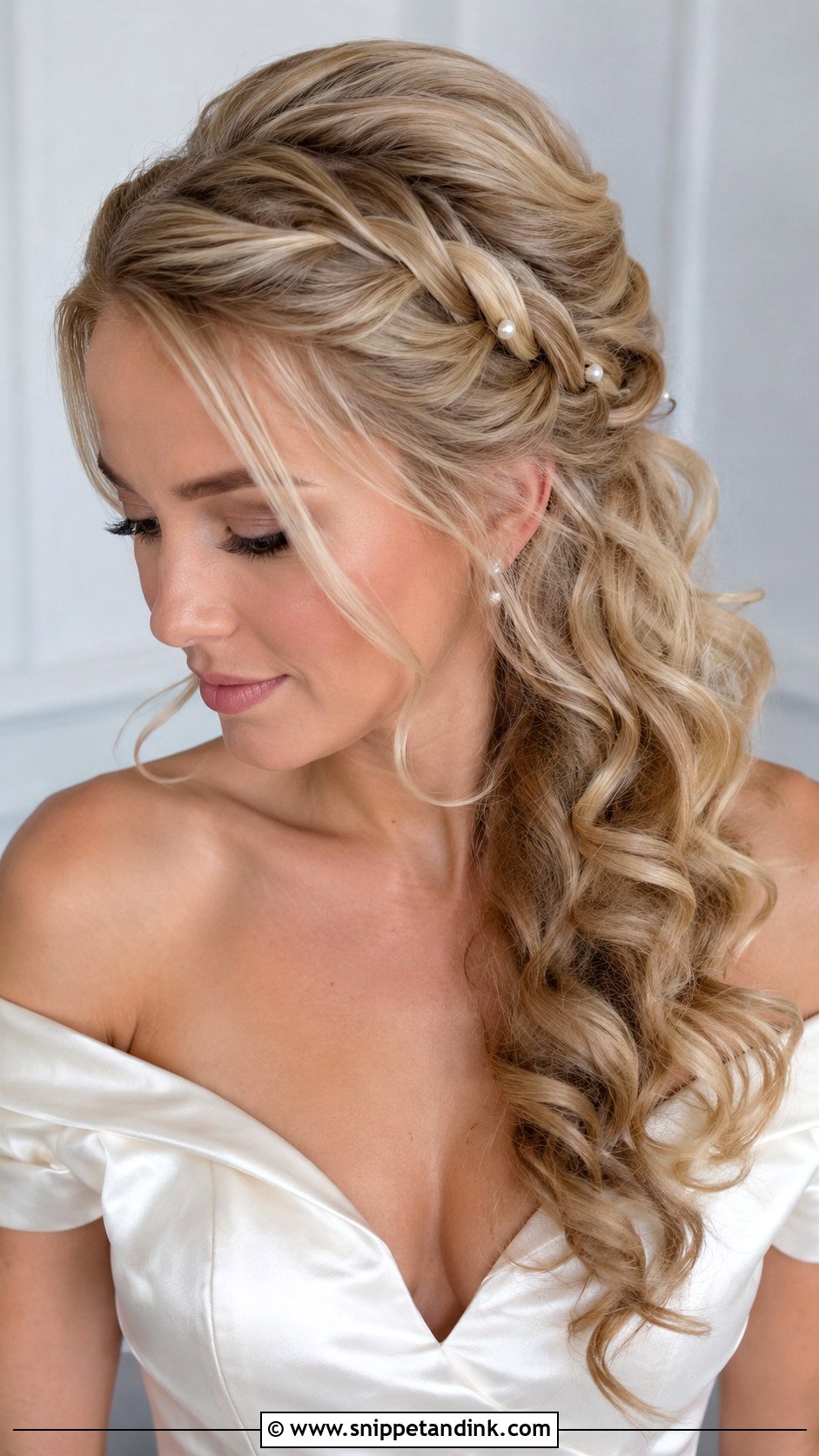
A French braid tucks strands under, so it lies flatter against the head than a Dutch braid and reads quieter in photos. That flatness helps at an outdoor ceremony, where the face needs to stay clear but a visible braided ridge would be too much. I’ll run it from the crown into curls, or down one side so the part stays soft. Sleek for a classic gown, pulled apart for a looser one: the same braid can do either, it just depends how much I loosen it at the end. Veils and combs slide into it easily.
10. Dutch Braid Wedding Hair With Curls
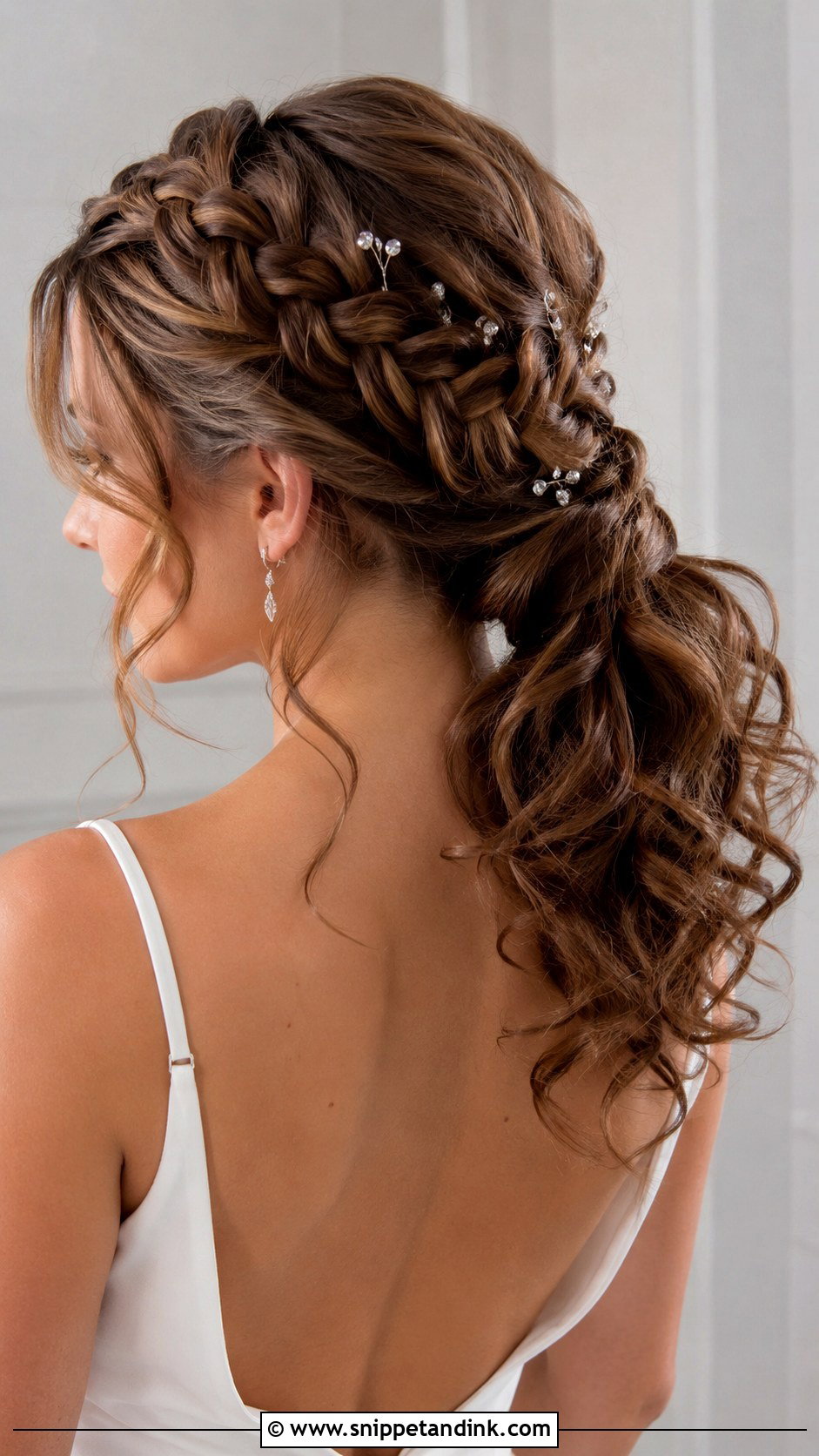
Because a Dutch braid crosses strands over rather than under, it sits raised on the hair, and that ridge shows from the side and back better than any other braid here. It’s my first pick for thick hair, since the extra bulk gives the braid width. On fine hair it can look thin unless I pancake it carefully or add a clip-in behind it. It can frame the crown, sweep into a ponytail or lead into a curly low bun. Soften the edges and add a few face-framing curls, or it can tip toward gym hair.
11. Curly Ponytail Wedding Hair With Braids
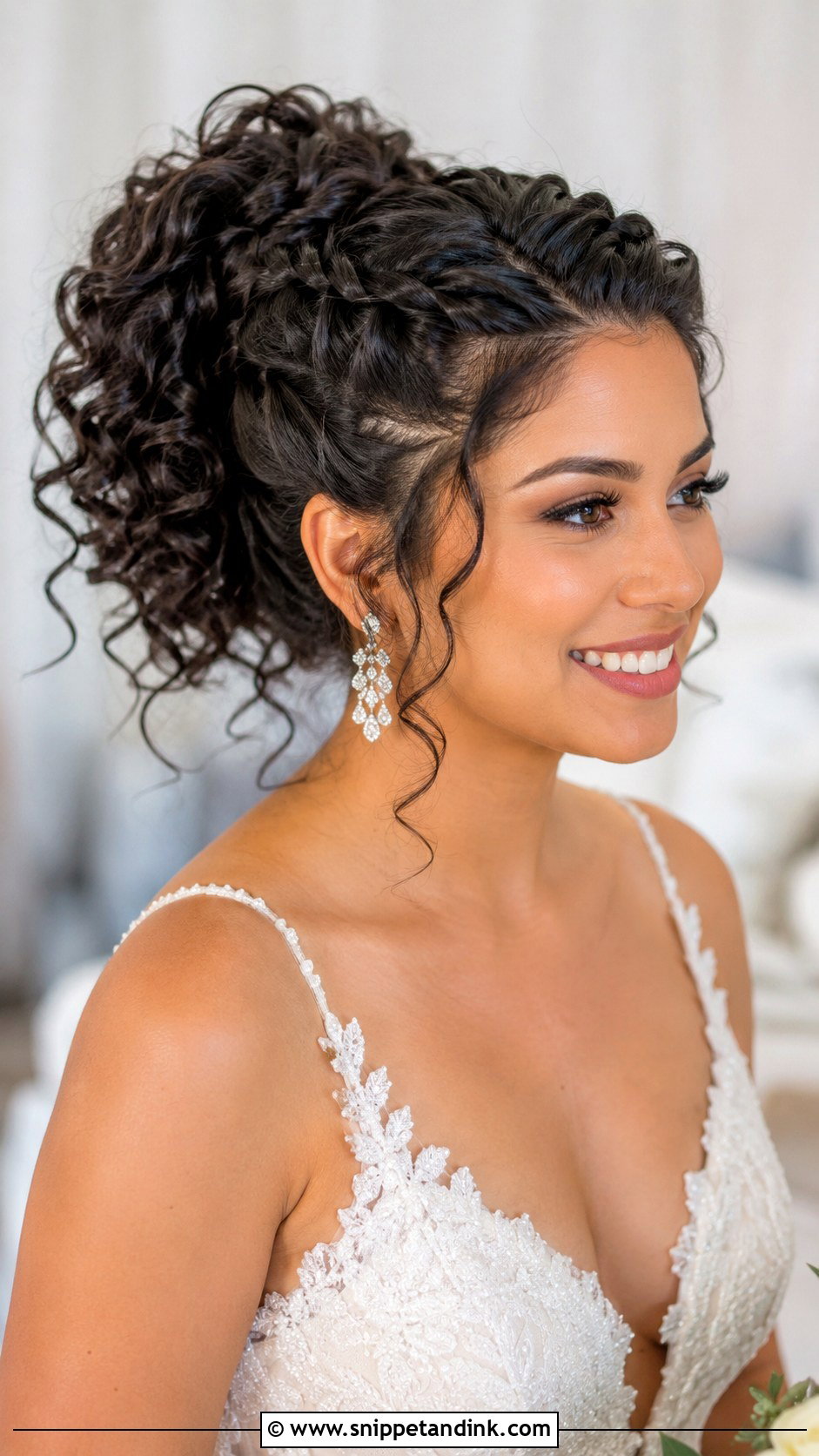
Ponytails look easy and are not. The base has to be secured with two elastics and a pin wrapped through, or it slowly drops through the evening. Braids can wrap the crown, run along the sides, or wind around the base to hide the elastic. I curl the ponytail in sections and brush them together so it reads full rather than stringy. It sits well with open backs, high necklines and statement earrings because nothing covers them. Most ponytails at weddings are fuller than the bride’s natural hair; a clip-in weft or padding underneath is normal, and I blend it in with the curls.
12. Braided Updo Wedding Hair With Curls
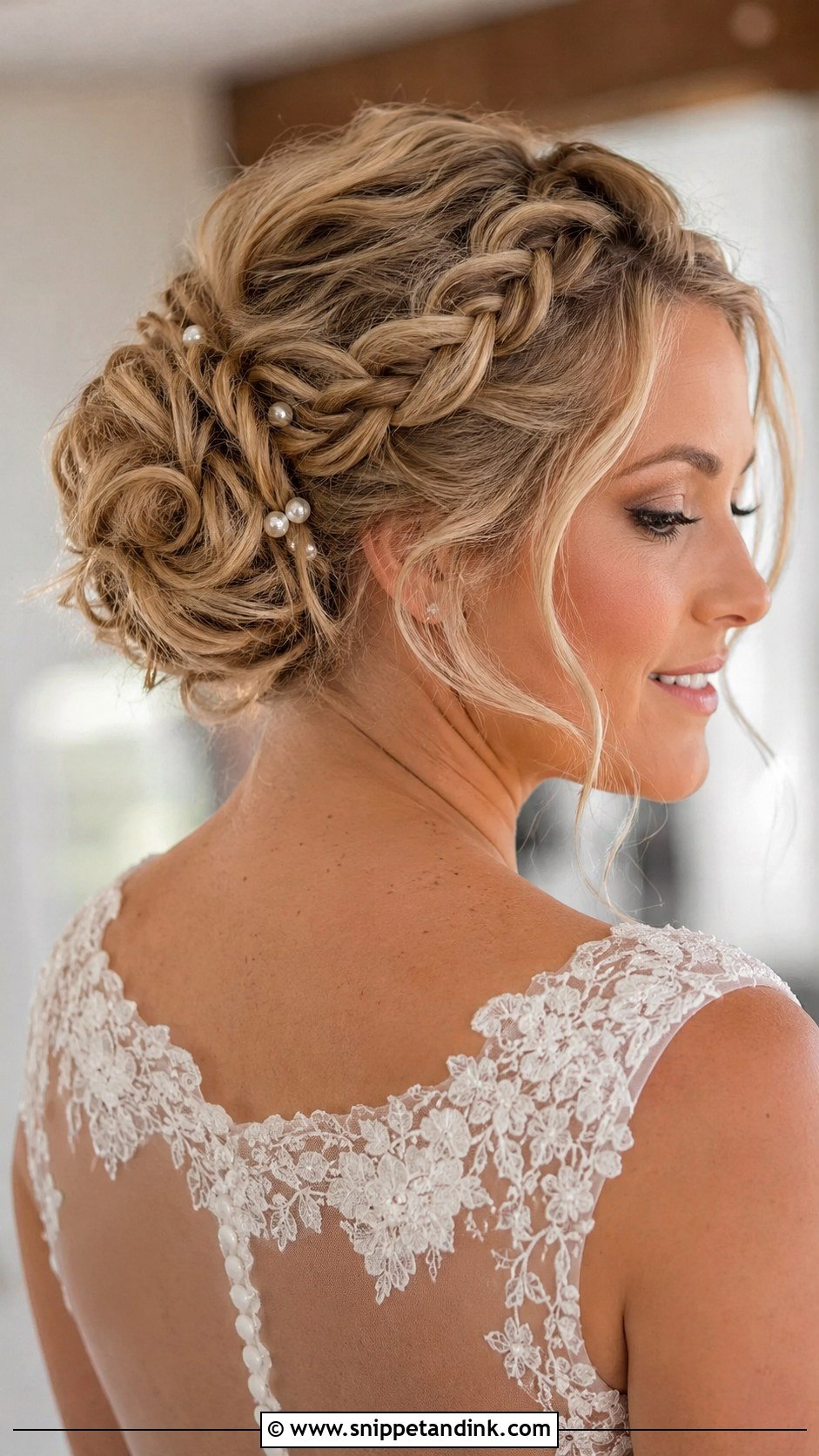
Hair off the face all day, with texture still showing: that’s what a braided updo gives you, and it’s the safest pick here. The braid frames the crown or sides; the curls are pinned into the shape one by one, which gives the updo movement instead of a solid helmet. It lasts through a ceremony, photos and dancing if the base is right. Layered hair actually helps here, since shorter pieces can be tucked into the braid instead of poking out. I keep the hairline slightly soft, because a scraped-back edge ages a look in photos. Hair vines and veils both anchor well to the braid.
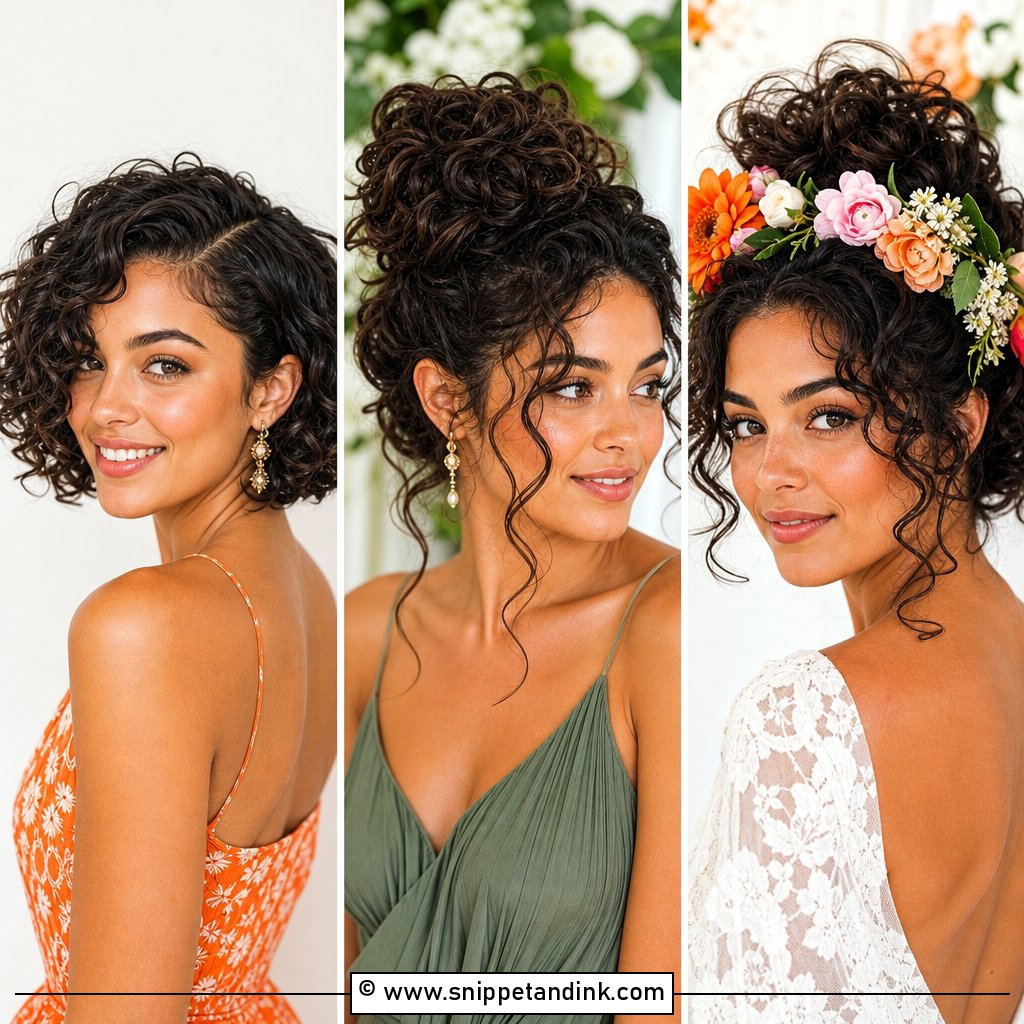
13. Natural Wedding Hair With Braids And Curls
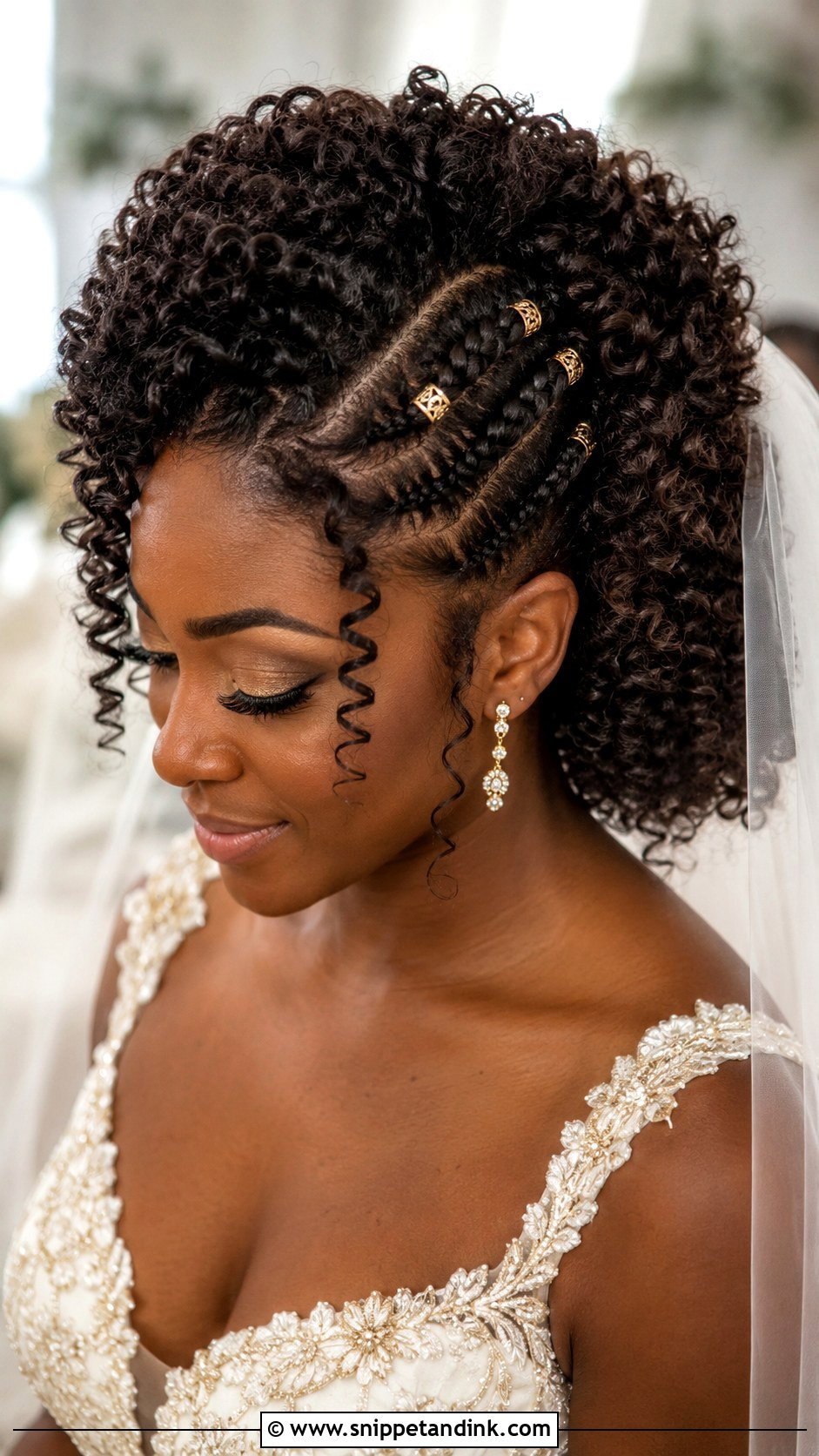
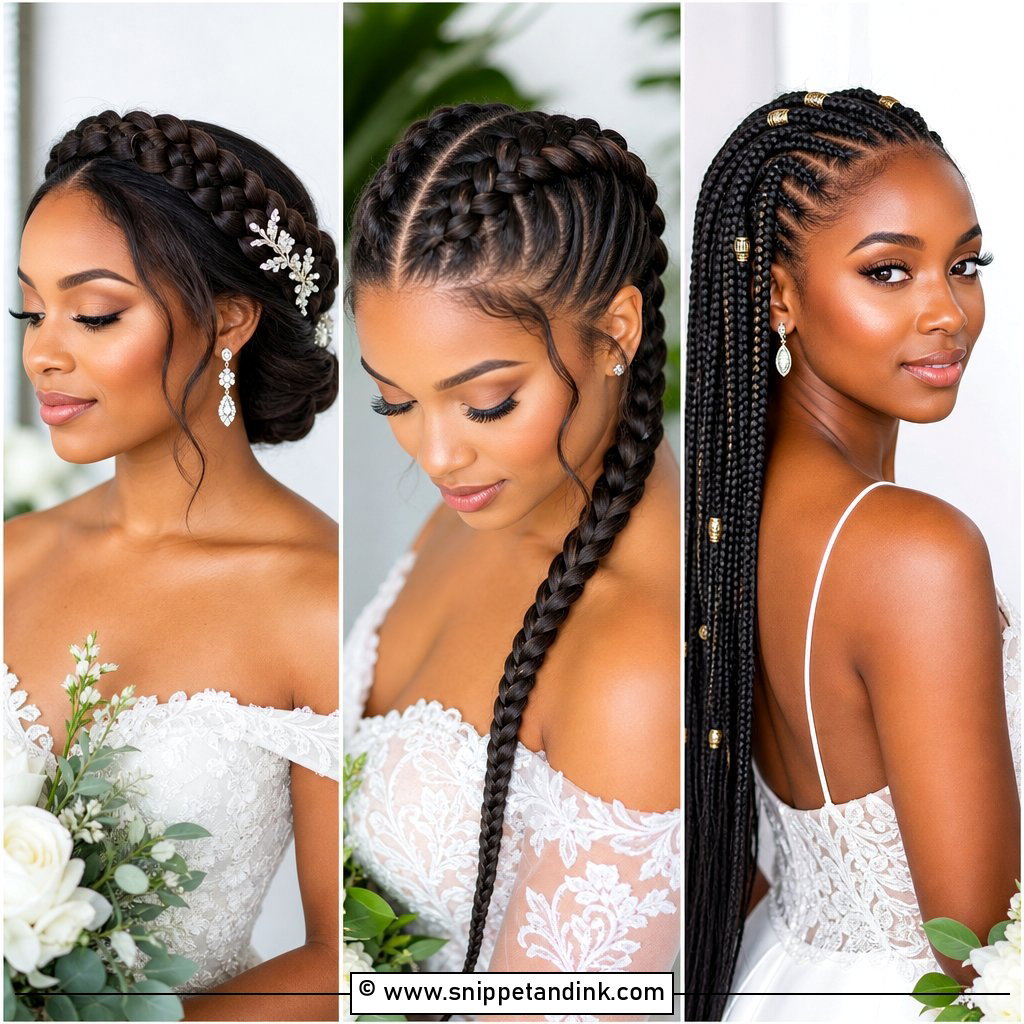
With natural texture I’m working with the curl pattern you already have, not replacing it with an iron. Prep starts the day before: wash, deep condition and set the curls the way you normally do, so they’re defined and moisturized going into the styling. On the day I braid at the front, crown or sides and leave the rest of the curls full. Heavy oils can make curls look wet and greasy under a flash, so I use a light shine product sparingly. Pearl pins, gold cuffs or a few small flowers are enough for the bridal finish.
14. Goddess Braids Wedding Hair With Curls
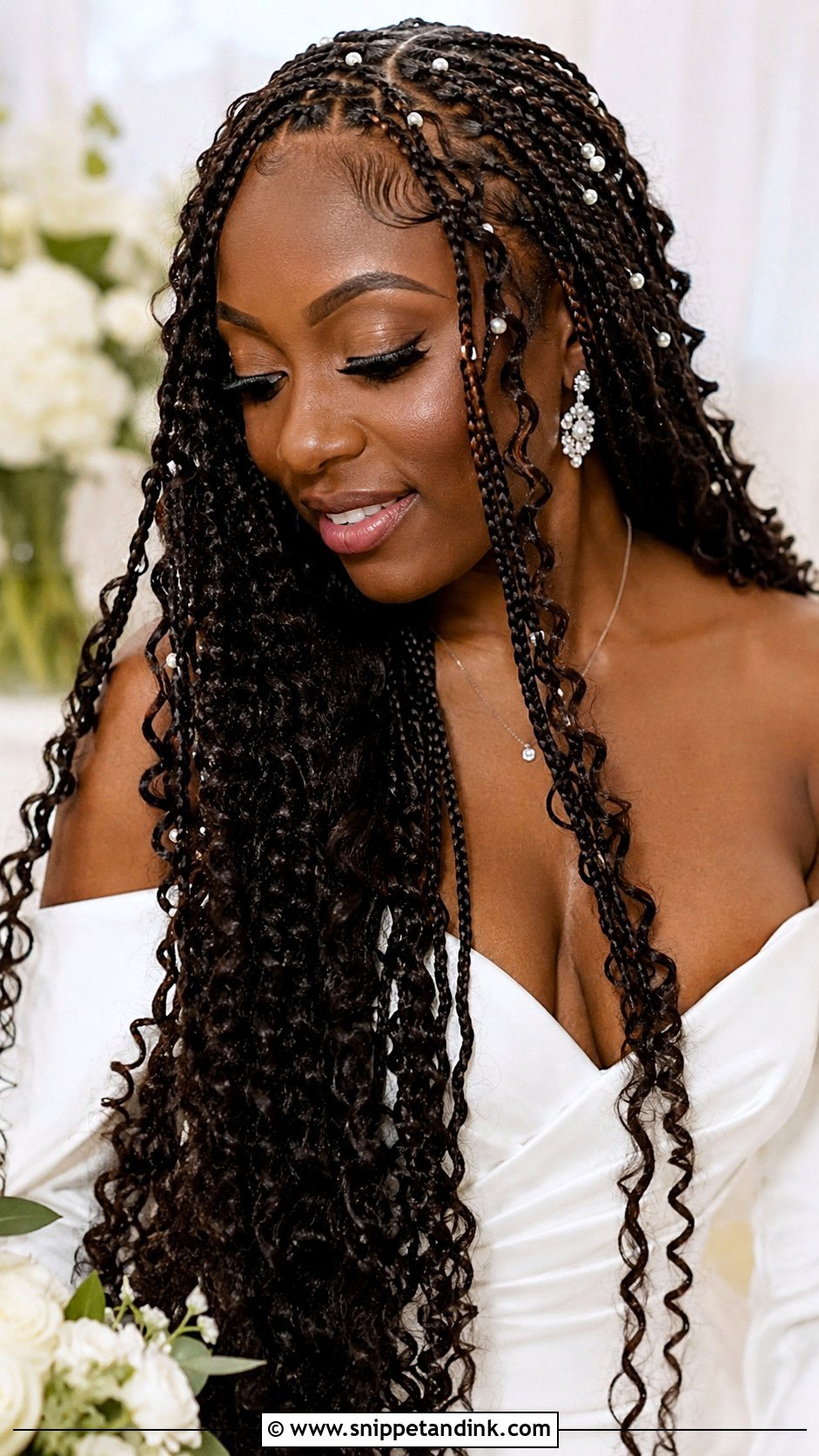
Goddess braids wedding hair is usually installed a few days ahead by a braider, which takes the morning pressure off completely. The braids are thicker than box braids and often have curly pieces left loose through the length or ends. I’d schedule the install close enough to the wedding that the roots still look fresh, but not so close that a tight install is still sore on the day. Worn down, side-swept or pinned into a low bun, they hold all day. Add small cuffs or pearls, but let the braid pattern be the main detail.
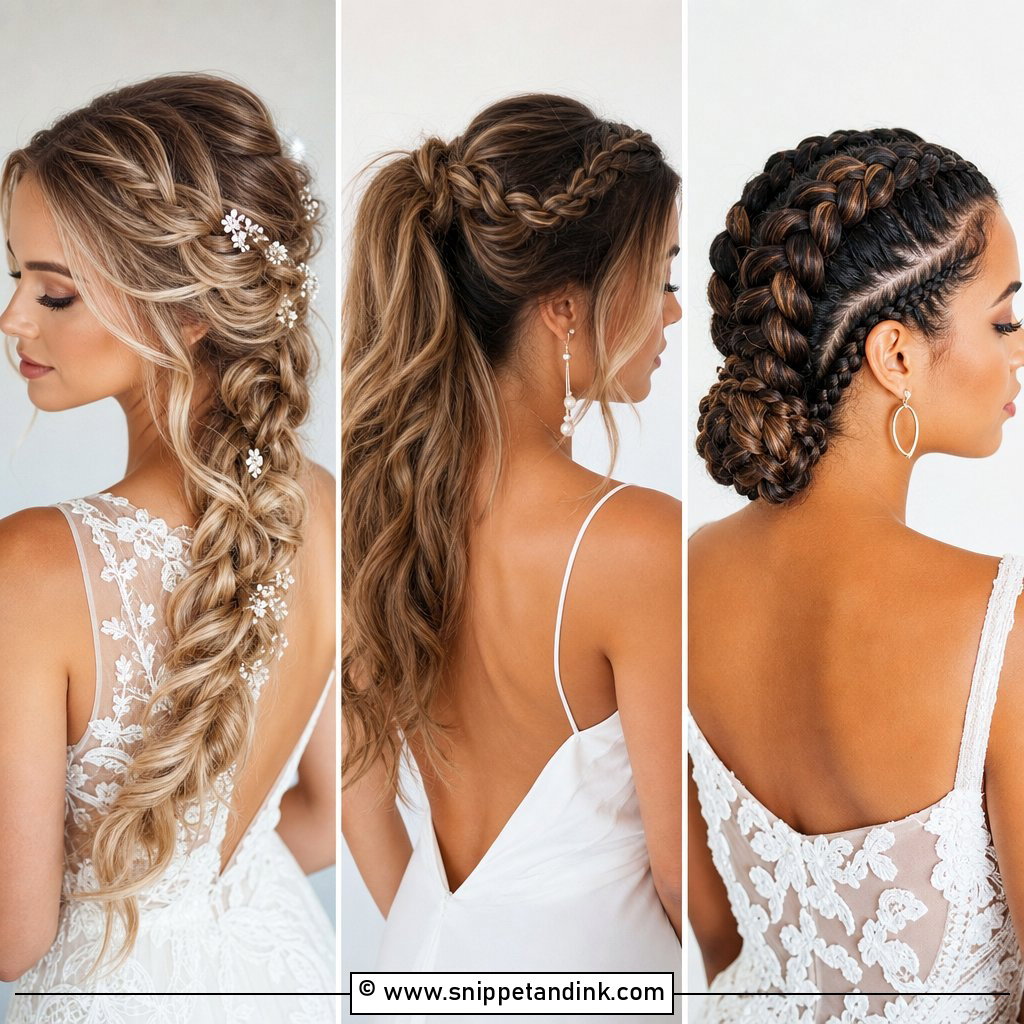
15. Long Wedding Hair With Braids And Curls
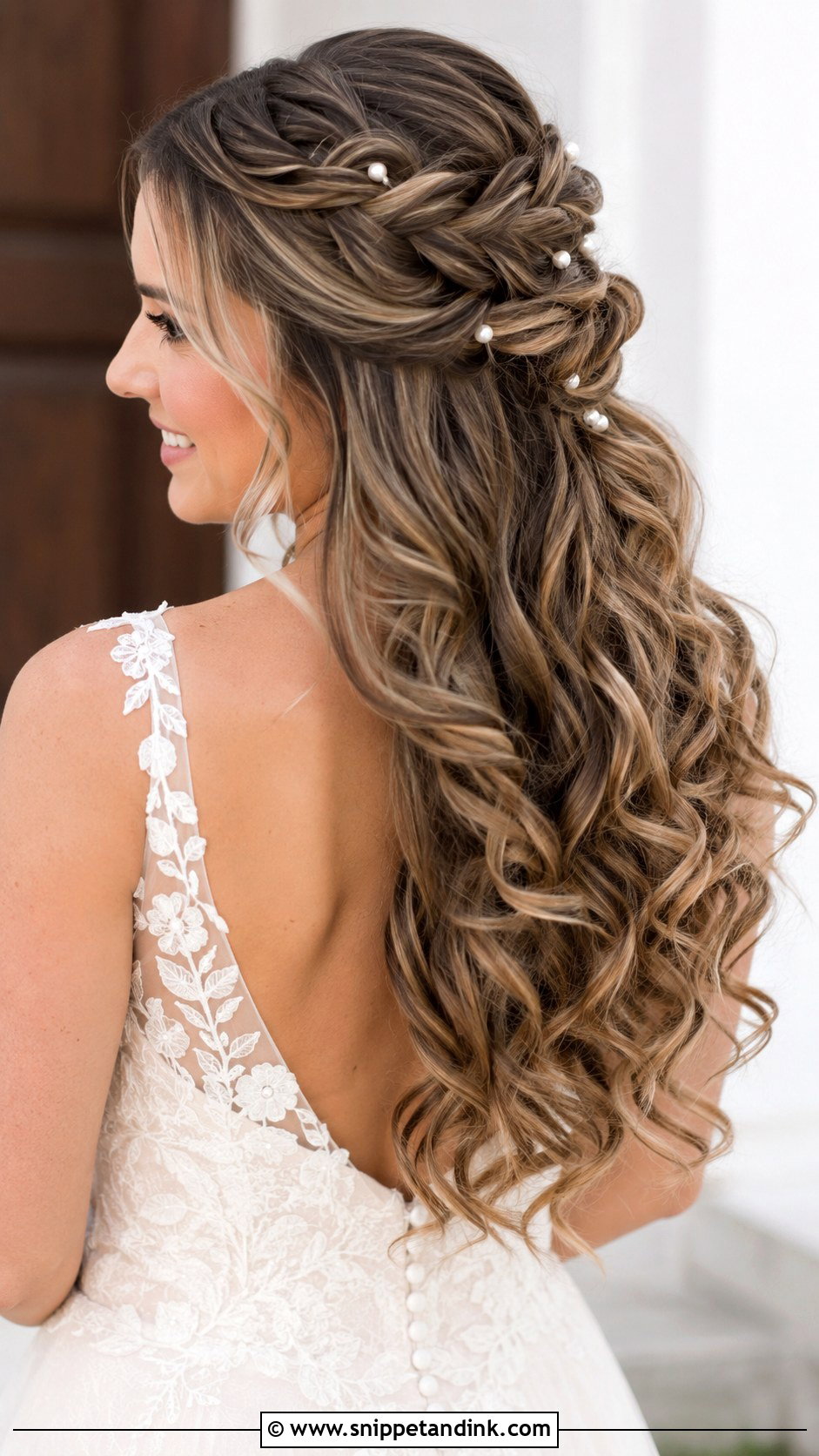
Long hair has room for everything on this list, and it also has the weight problem. Hair past the bra strap pulls curls out faster and drags pins downward, so I set the curls with a strong-hold product and pin them to cool before brushing out. A braid at the crown takes some of that weight and stops the whole style sliding back. Hidden pins under the braid are what keeps it up. A veil, flower comb or a few pearl pins finish it without adding much load.
How Braided Curls Wear Through a Ten-Hour Day
Braids rarely fail outright. What happens is quieter: the curls relax, the face-framing pieces go flat, and a loosened braid starts showing a pin or two by the reception. Humidity speeds up all of it, and so does a hot room full of dancing.
I set curls a little tighter than the trial photos and let them drop into the final shape over the first hour. Pins go in crossed pairs, hidden underneath the braid instead of across it. If I’m not staying for the evening, I leave someone with a small touch-up bag:
- A few bobby pins in your hair color and two clear elastics
- A travel-size flexible hairspray
- A small mirror for checking the back
- One spare flower or pin, if the style uses them
If a face-framing curl falls completely, twist it around a finger, pin it flat for ten minutes during dinner, then take the pin out. It won’t come back exactly as it was at 2 p.m., but it will look intentional again. And if a braid comes loose at the end, tuck the tail under the braid and pin it rather than trying to redo it in a bathroom.
The Braid Holds It, the Curls Soften It
Every look here is the same partnership: a braid for structure and curls for movement. Which version suits you depends on your dress, your hair texture, the venue and how much you’ll move during the day. Bring photos from the front, side and back to your trial, and wear a top with a similar neckline so we can judge it properly. Then live in the trial style for a few hours before you decide. If it still feels secure and still looks like you at dinner, that’s the one.
You'll Like These Ideas:


Leave a Reply