
A braid is the most hardworking thing I can put in a bride’s hair. It holds thick hair still, gives fine hair a structure to grip, anchors a veil comb, and turns a protective style into something formal without asking you to change how you normally wear your hair. The catch is that a braid is seen from every side, and the back is what guests stare at for the whole ceremony. Below are twenty braided looks I’d happily build, with notes on what each one needs from your hair and where each one tends to go wrong.

Clean, Slippery Hair Is a Braid’s Worst Starting Point
Freshly washed, conditioned hair is lovely to touch and miserable to braid. The strands slide past each other, the stitches loosen within an hour, and pins fall straight out. For most brides I ask for hair washed the day before, without a heavy conditioner on the lengths, and dried completely. Fine hair can be washed the morning of, as long as it gets a texture spray or dry shampoo at the roots before I start.
On the morning I prep in this order, and the order matters:
- Curl or wave first if the style has loose sections. Curling after the braid is in disturbs it.
- Spray texture into the sections I’m about to braid so the hair has grip.
- Braid firmly, pin the braid’s core, and only then pull the outer loops wider.
- Set with a flexible hairspray. A hard lacquer cracks and flakes when the braid moves.
When extensions make sense
A braid shows how much hair you have. If yours is fine or shoulder length and you want a thick fishtail or a long braided ponytail, clip-in wefts do the work that pancaking can’t. Bring them to the trial, already colour matched, so the stylist can see how they blend into the braid instead of guessing on the day.
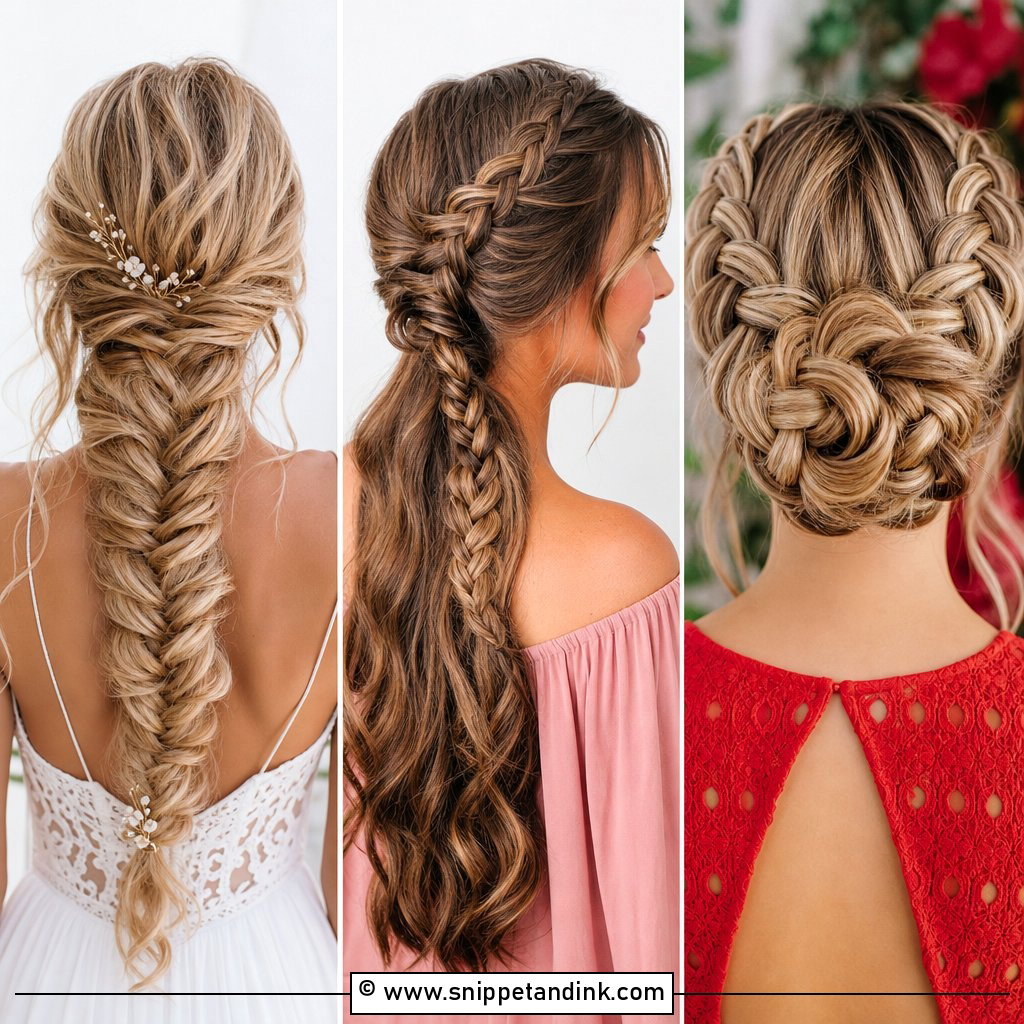
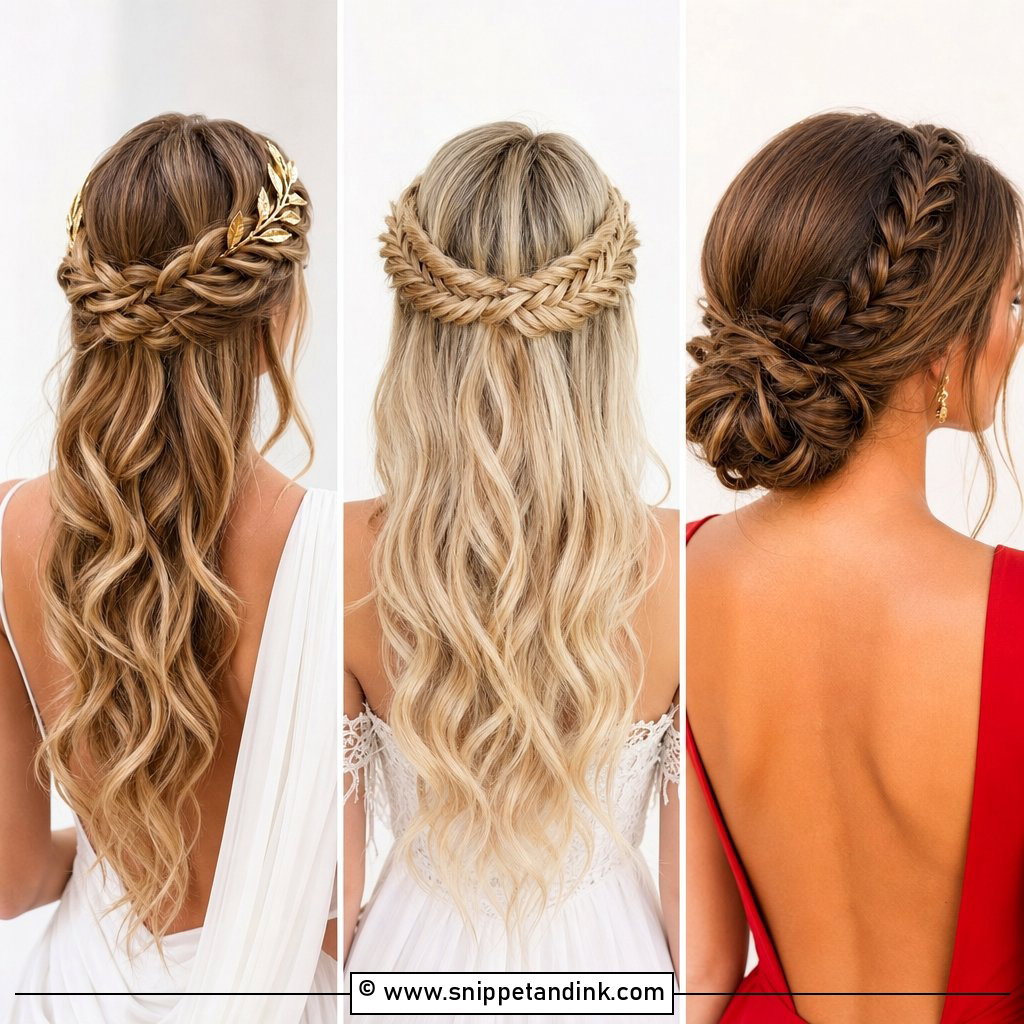
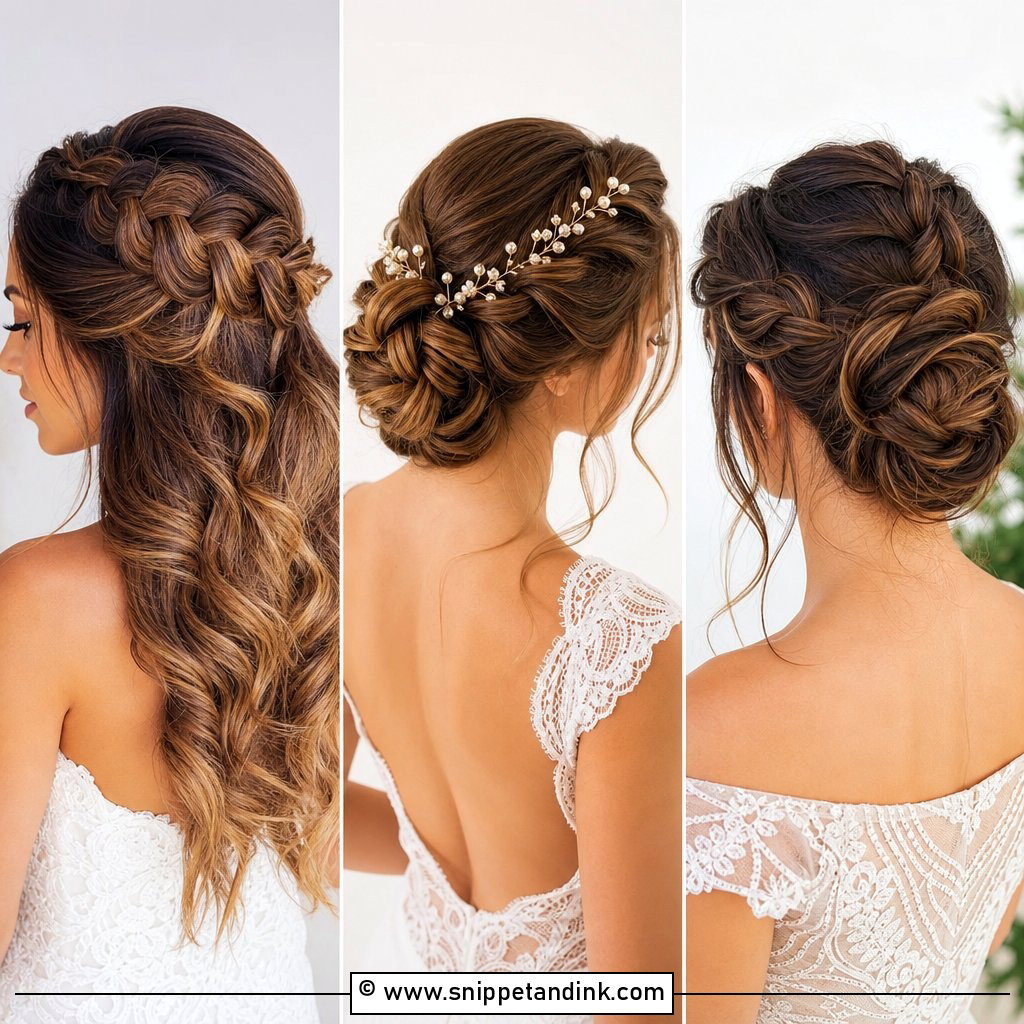
1. Braided Low Bun Bridal Hair

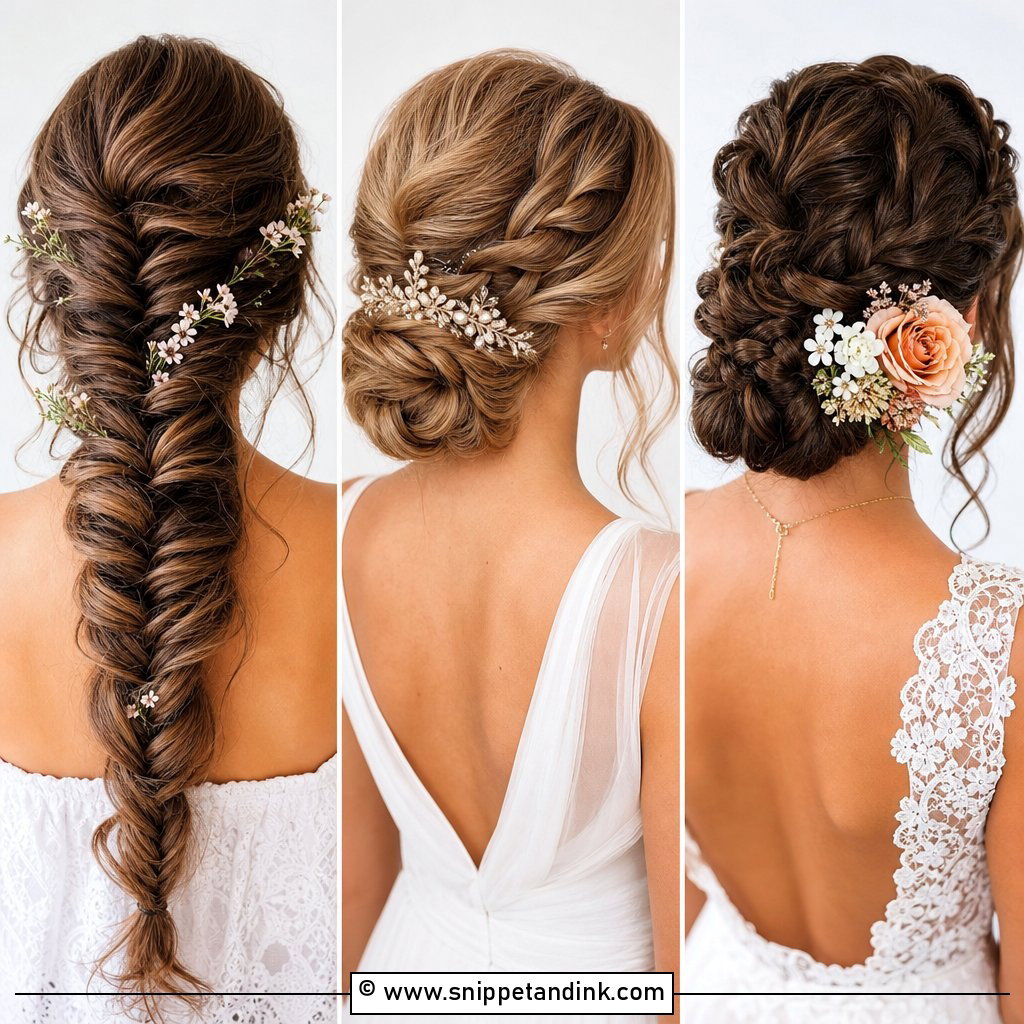
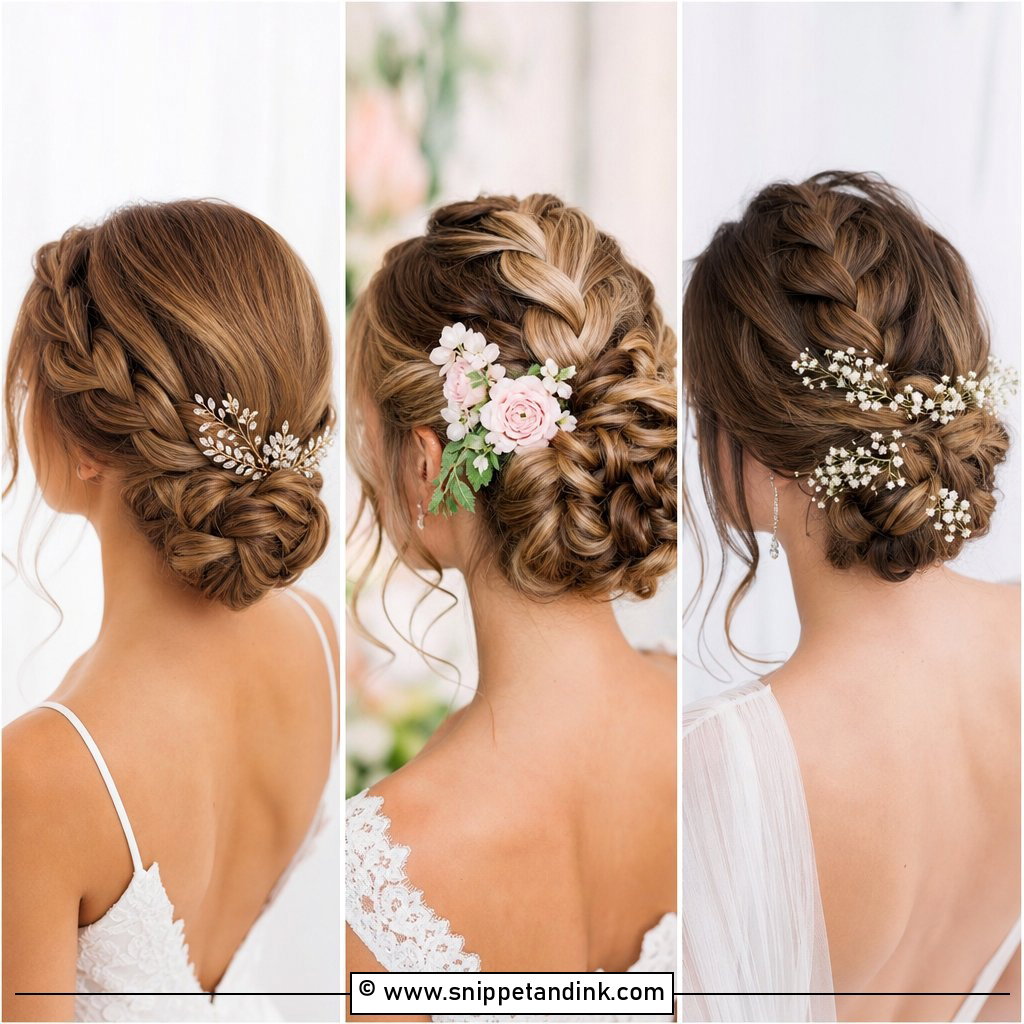
A braided low bun is the style I reach for when a bride is nervous about hold. The bun gives me a solid base to sink pins and a veil comb into, and the braid can wrap the bun, cross the crown, or sweep along one side before it gathers at the nape. Watch the height: if the bun sits right on the collar of a high-backed dress, it gets pushed up every time you lean back in a chair. Keep the braid smooth for a ballroom, or loosen it and add a few pearl pins for a garden.
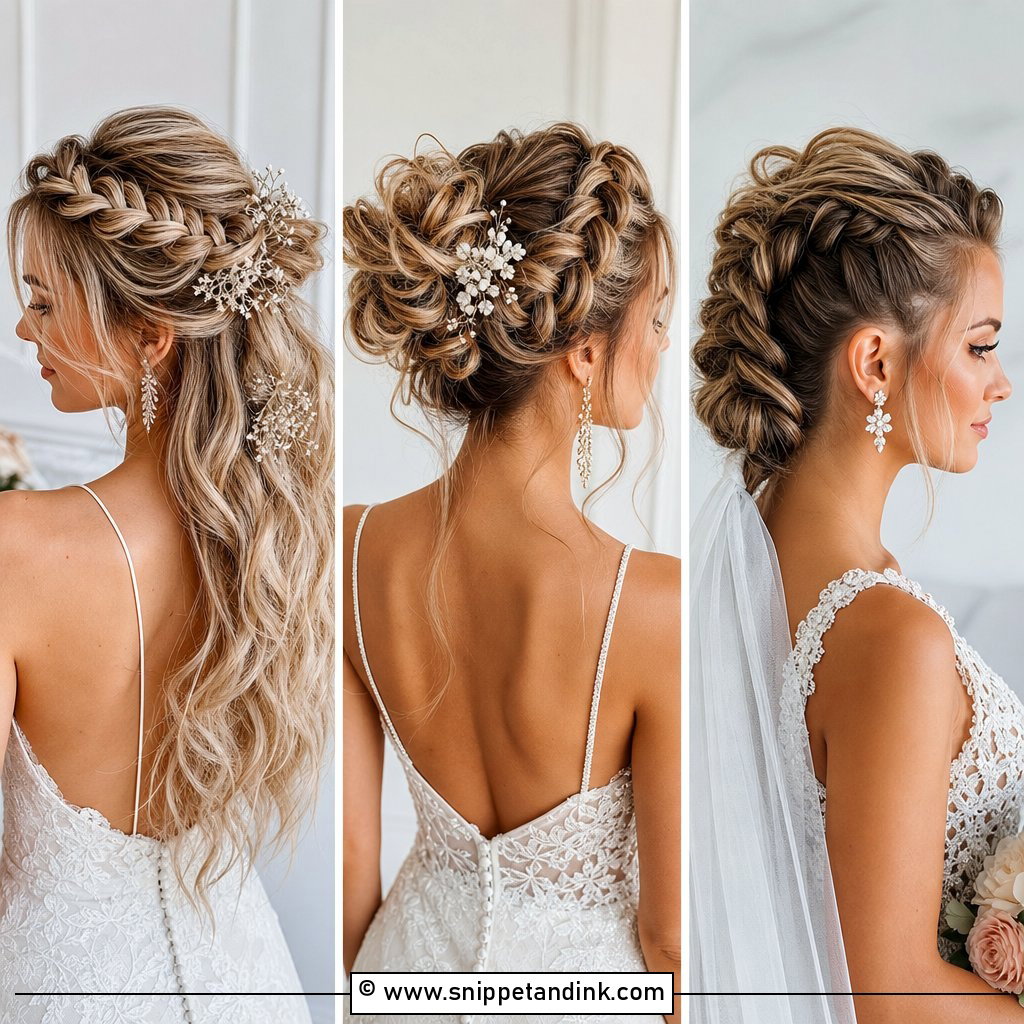
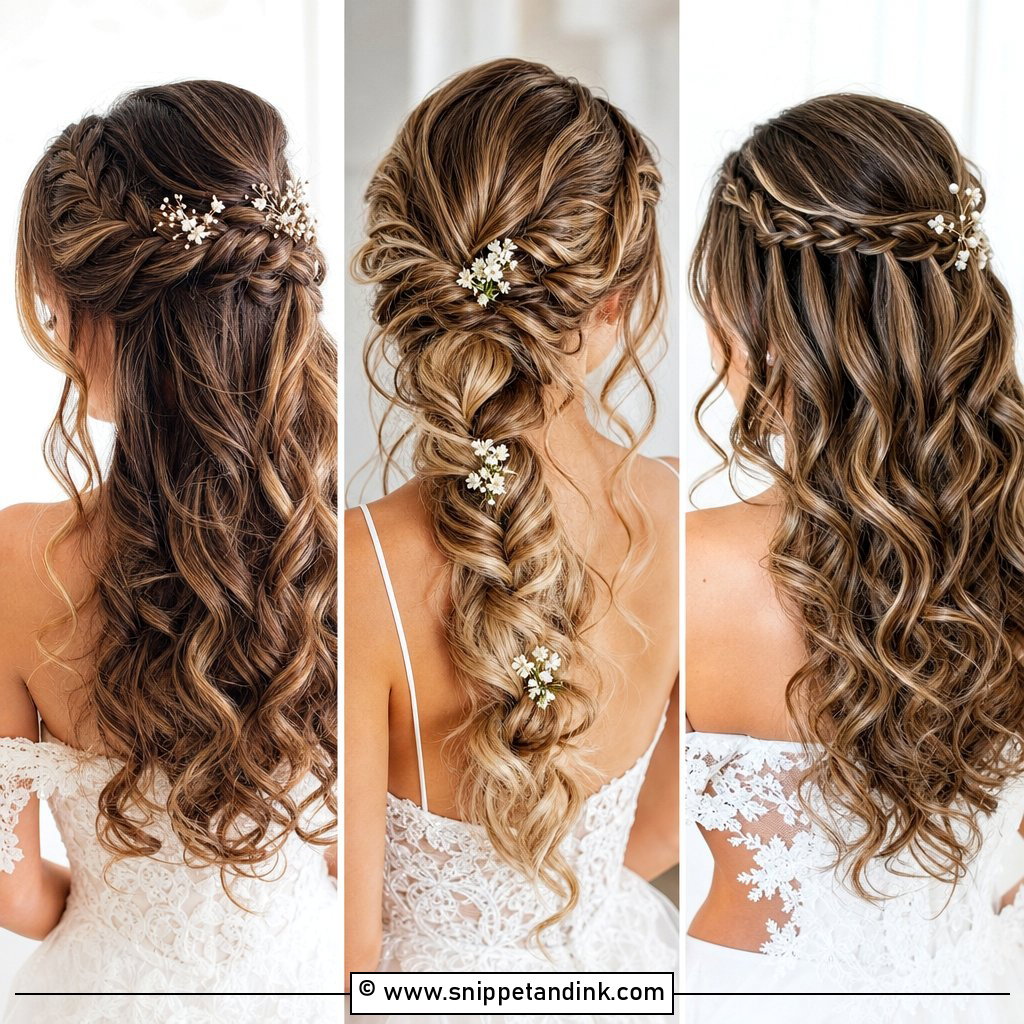
2. Half Up Bridal Hair With Braid

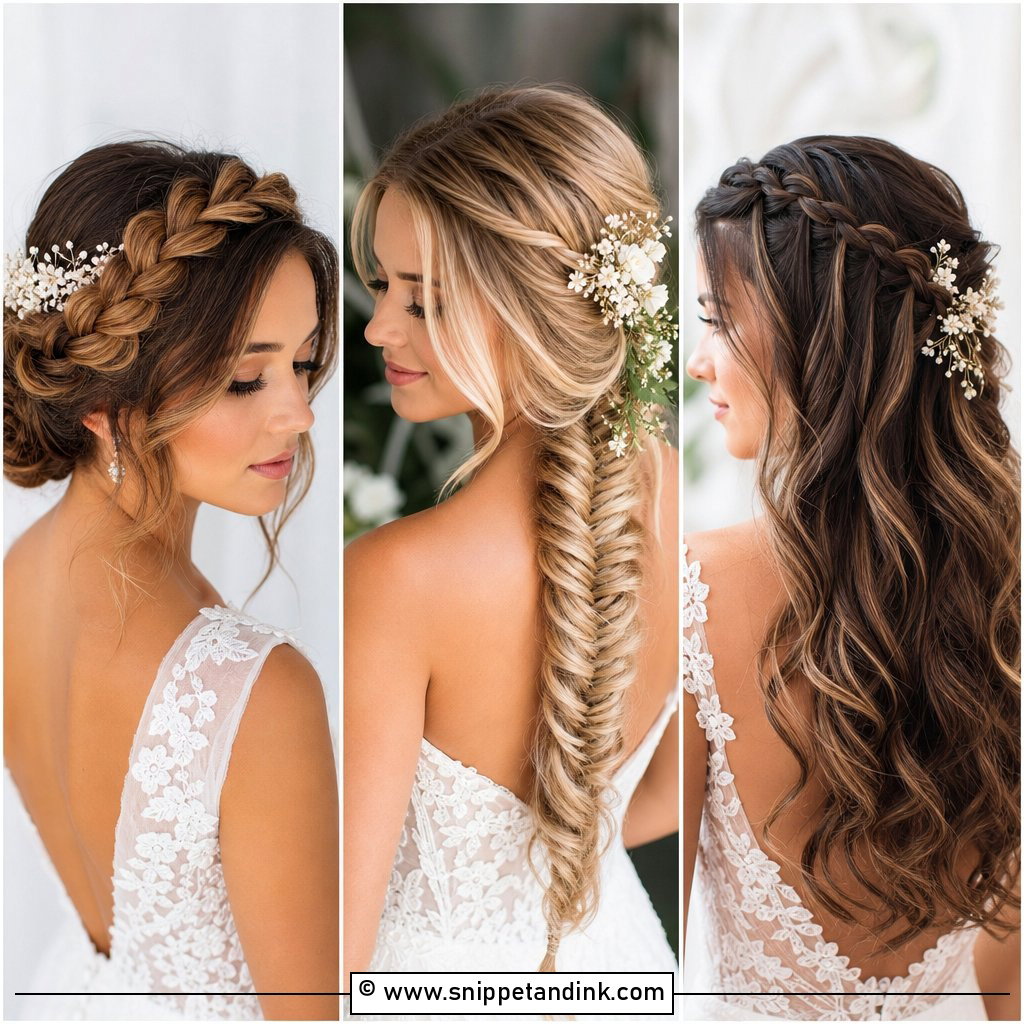
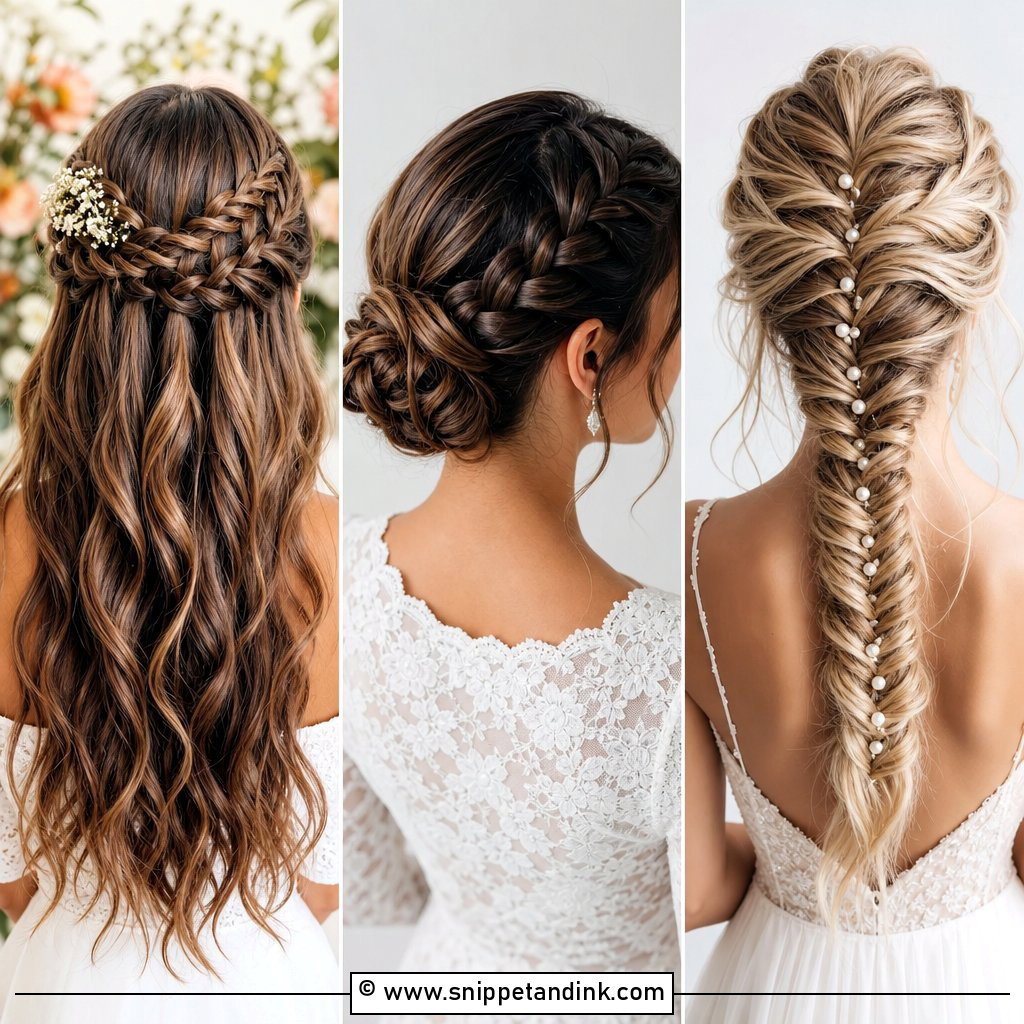
Half up with a braid gives you loose length plus enough control around the face that hair won’t blow across your lips during the vows. I usually braid back from each temple and join the two at the back with a small twist or a comb that hides the pins. The weak spot is the top: without a little lift at the crown it flattens by the evening, so I tease lightly underneath before the braids go in. Medium and long hair carry it best, and it sits nicely over strapless, square or off-shoulder necklines.
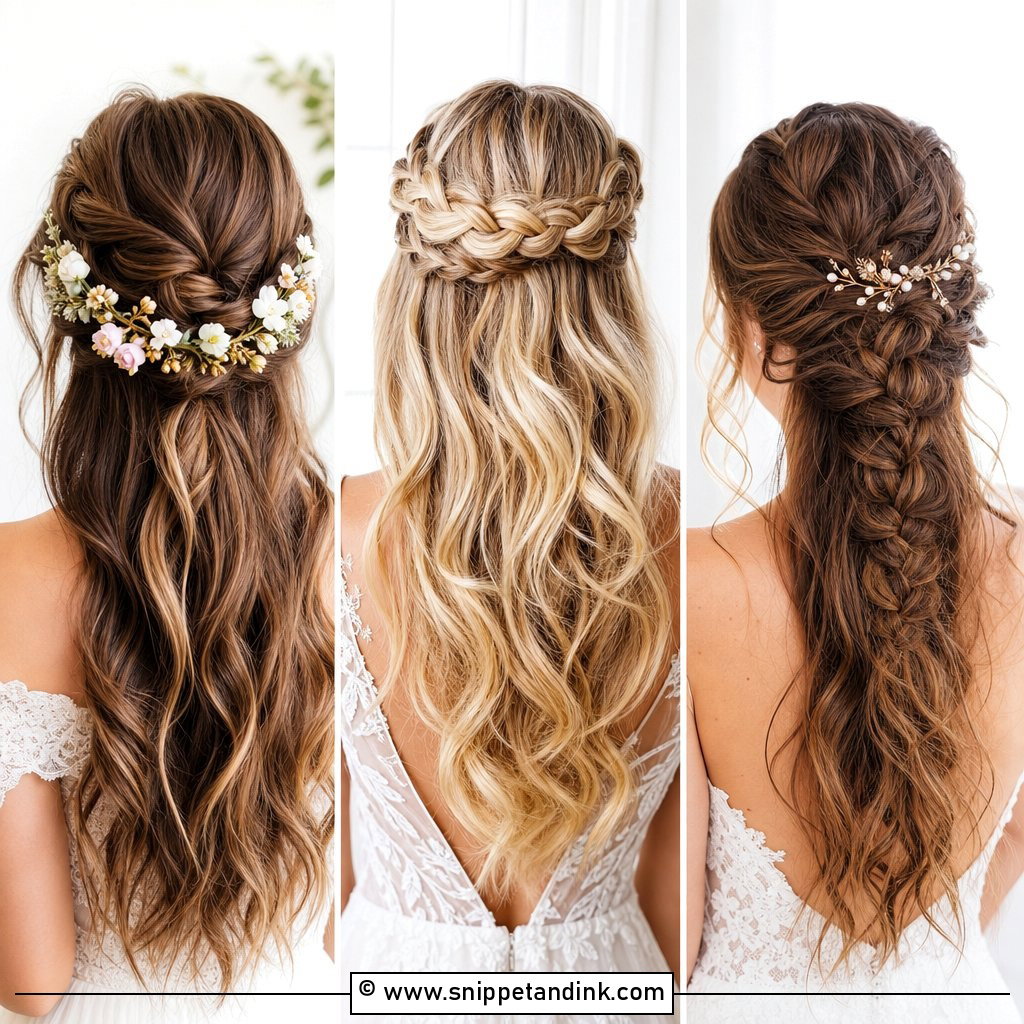
3. Boho Bridal Hair With Braid

Boho braids are harder to get right than they look, because the line between relaxed and unfinished is thin. I build them with a tight, hidden foundation and then pull the outer loops loose, so the texture is deliberate and nothing actually moves. Too neat and the mood disappears; too loose and the first breeze undoes it. Dried flowers or a fine vine finish it for beach, barn or mountain ceremonies, and it suits airy lace far better than structured satin.
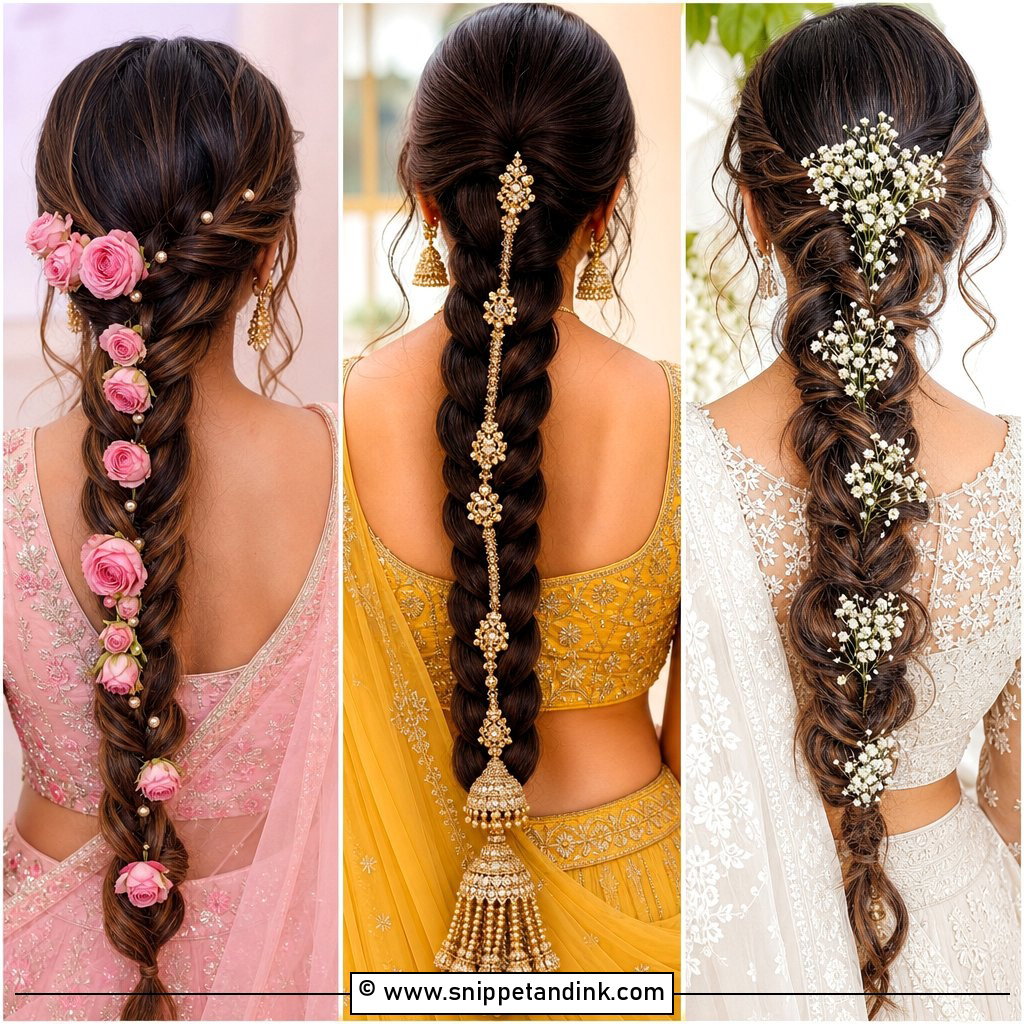
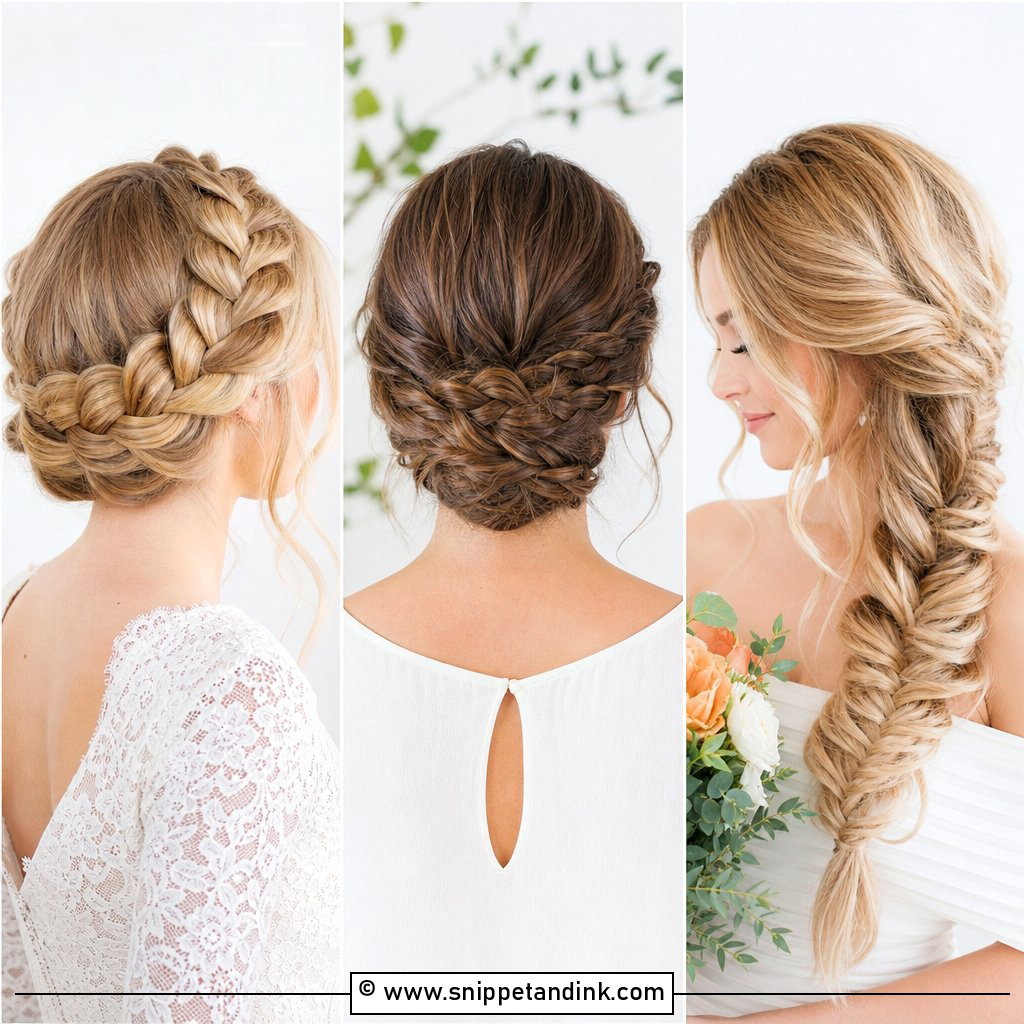
4. Fishtail Braid Bridal Hair

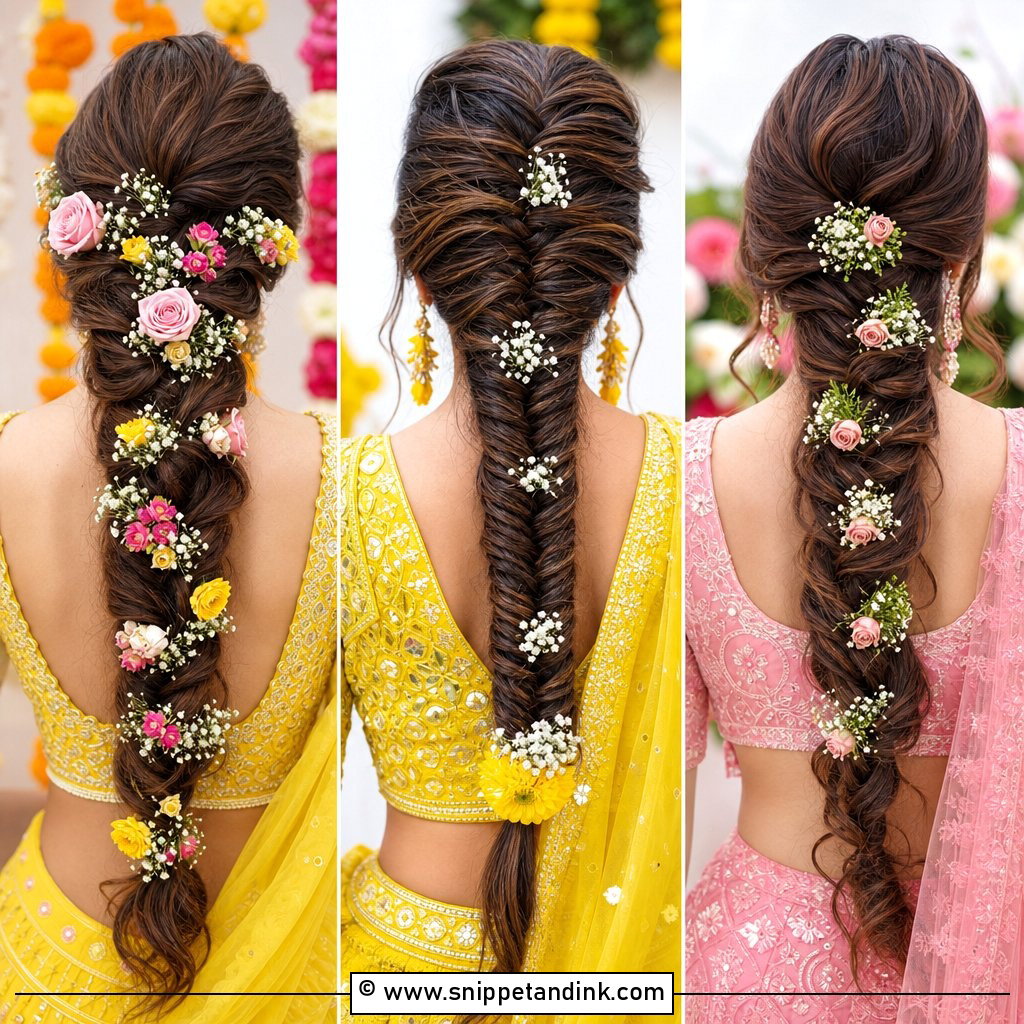
The fishtail has more, smaller sections than a three-strand braid, which is why it reads so detailed in close-ups. It also takes longer to plait and can’t be rushed, so I schedule extra time for it on the morning. Pulled apart gently, it doubles in width; on fine hair I’d add a weft of extensions first, because pancaking thin hair only shows scalp. Wear it down the back, over one shoulder, or folded into an updo, with a few pearls along the weave.
5. Crown Braid Bridal Hair

A crown braid takes all the hair up and off the neck, which is a relief in July heat. It does need length: the braid has to reach around the head, so shoulder-length hair usually needs two braids pinned to meet, or a clip-in to finish the loop. I pin it every few centimetres from underneath, crossing pins in an X, otherwise the weight drags it down at the back by the reception. Smooth or slightly loosened, it leaves the ears clear for earrings, and the veil comb should be tested at your trial because there’s less loose hair for it to bite into.
6. Waterfall Braid Bridal Hair

A Waterfall braid bridal hair look shows braid detail while letting most of the hair hang down. The braid travels across the back of the head and drops a curled section through each stitch, which is why highlights and balayage look so good in it: the dropped pieces show off the colour. The honest drawback is that it is the least secure braid on this list. On silky, freshly washed hair it slips, so I prep with texture spray and set the curls before braiding, then brush them out loosely.
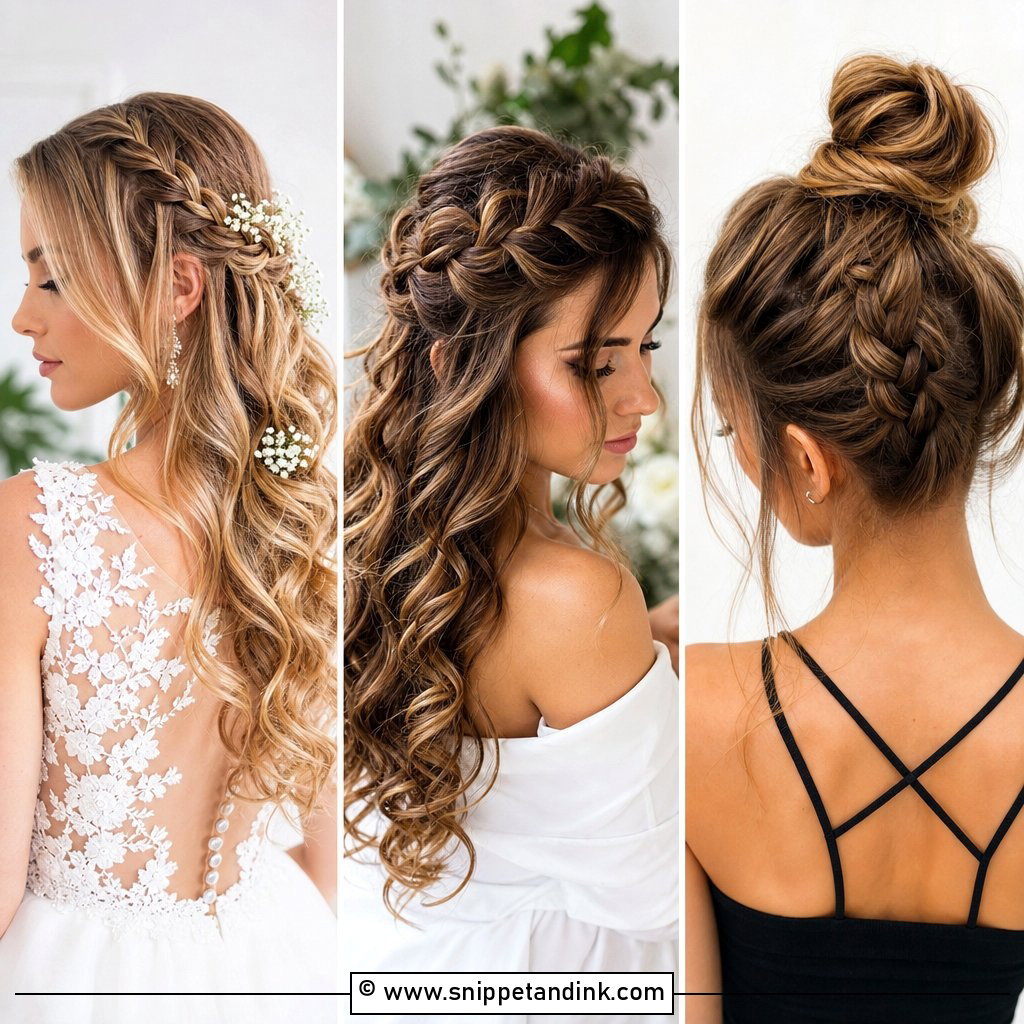
7. Side Braid Bridal Hair

Unlike a back braid, a side braid is visible from the front, so it shows up in nearly every photo taken face-on. It’s my usual suggestion when the dress has an open back you don’t want covered. Sleek or textured, it needs one firm anchor behind the ear on the braiding side, or it creeps forward over the shoulder during the day. It also travels well to a beach, since all the length is gathered and the wind has less to grab.
8. Braided Ponytail Bridal Hair

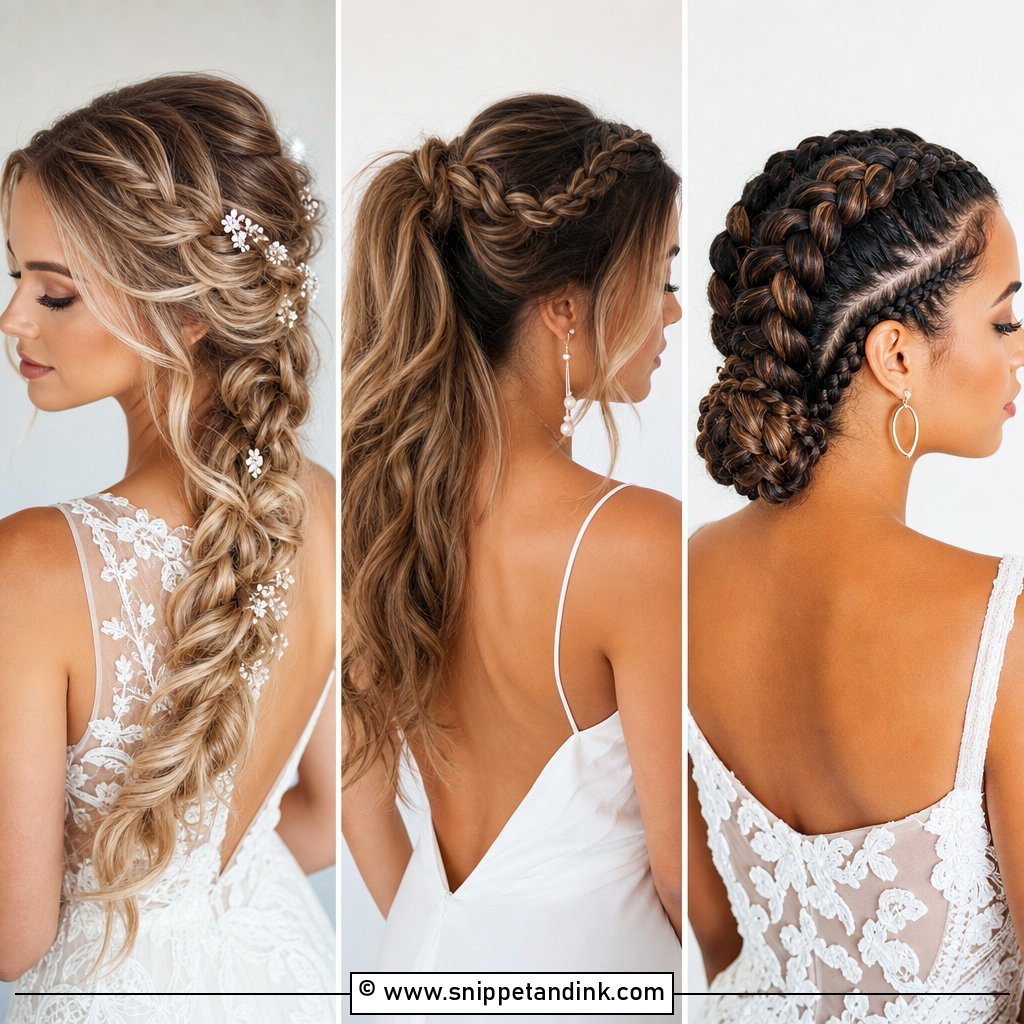
A braided ponytail is the most comfortable formal style I know, and it moves when you dance. The braid can start at the crown, wrap the base, or run through the tail itself. Every ponytail depends on a base that doesn’t sag, so I secure it with two elastics and a pair of crossed bobby pins under the wrap. It suits high necklines, clean satin and dramatic sleeves, and with clip-ins it can reach the waist.
9. Dutch Braid Bridal Hair

In a Dutch braid the strands cross under rather than over, so the braid sits raised on top of the hair and casts a small shadow that cameras pick up. That raised pattern does a lot of the decorative work on its own. It’s my pick for thick hair because it locks volume down. On finer hair I pancake the outer loops to widen it, but only after the braid is pinned, otherwise the stitches loosen as you pull. Lead it into a bun, a ponytail, or around the crown.
10. French Braid Bridal Hair

Strands in a French braid cross over, so it lies flatter and blends into the surrounding hair. That softness is why I suggest it to brides who want braid detail they barely notice. It slides under a veil comb easily because nothing bulky sits in the way. Most bridal versions run into a bun, down the full back, or along one side into curls. I always add a little volume at the crown first, since a flat French braid can make the head shape look small in profile.
11. Braided Updo Bridal Hair

Braided updos keep hair controlled for twelve hours or more, which is why I trust them for long days. The braid can circle a chignon, cross the back, or add texture at the crown. Thick hair loves this style; fine hair can wear it too, but I’d build it over a small padding or a few wefts so the shape doesn’t shrink as it settles. Leave something soft at the hairline, because an updo with no loose pieces can look severe in close-ups.
12. Loose Braid Bridal Hair

The difference between a loose braid and a messy one is what’s happening inside it. I braid snugly, secure the core with small pins pushed through the stitches, and only then loosen the outside. Length helps a lot, so extensions are common with this look. It pairs naturally with lace, outdoor venues and light makeup. Skip heavy accessories here; a couple of tiny pins is plenty.
13. Braided Chignon Bridal Hair

A braided chignon sits low at the nape, with the braid adding pattern so it reads as more than a plain bun. The braid can lie across the back, wrap the chignon, or be woven into it. I like it with veils and structured gowns because the low weight keeps everything balanced. A soft side part frames the face better than a severe middle part for most brides, and the low anchor point means it rarely shifts during a long day.
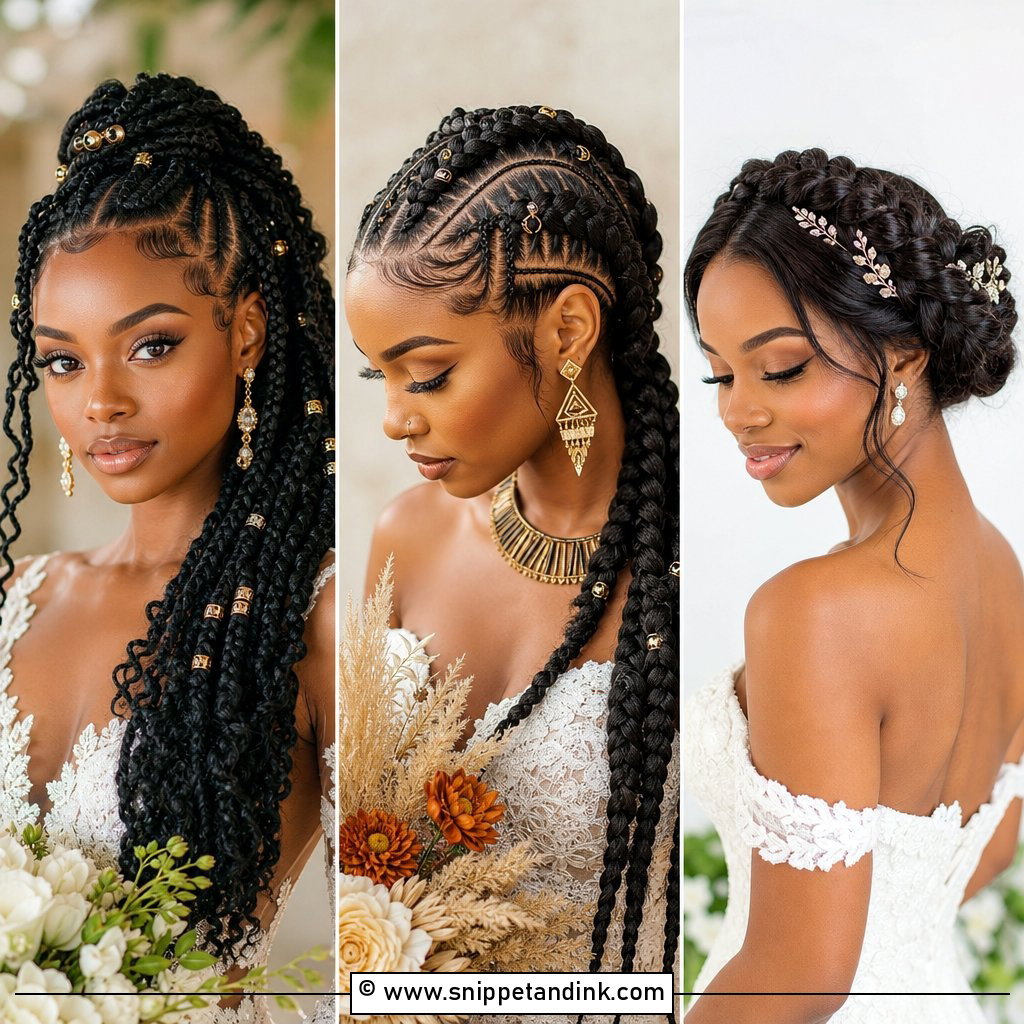
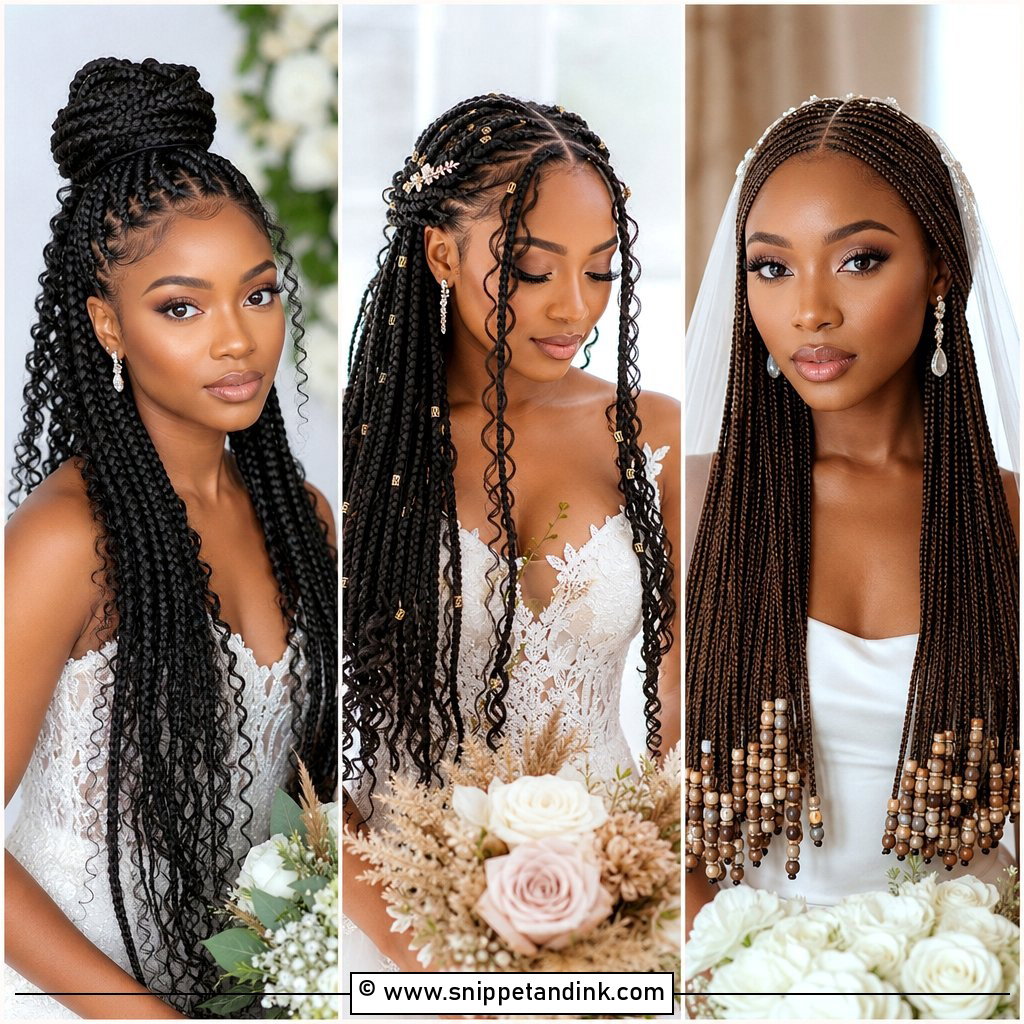
14. Box Braids Bridal Hair

If you already wear braids and feel most like yourself in them, Box braids bridal hair lets you keep that and still look formal. They can go into a high or low bun, half up, swept to one side, or hang long. The bridal touch comes from finishing: gold or pearl cuffs, a few flowers, a cleanly placed veil. Book the install close enough to the day that the roots look fresh, but not so close that your scalp is still tender for photos.
15. Goddess Braids Bridal Hair

Goddess braids bridal hair mixes braids with loose curly strands left out along the length, so the style has movement as well as structure. Wear it down, half up, or gathered into a bun. Those loose curls are the part that fades first; humidity and touching both frizz them. I define them with a light mousse on the morning rather than the day before, and bring a small bottle for a mid-day refresh. Use your trial to decide where the veil sits and where the parting goes.
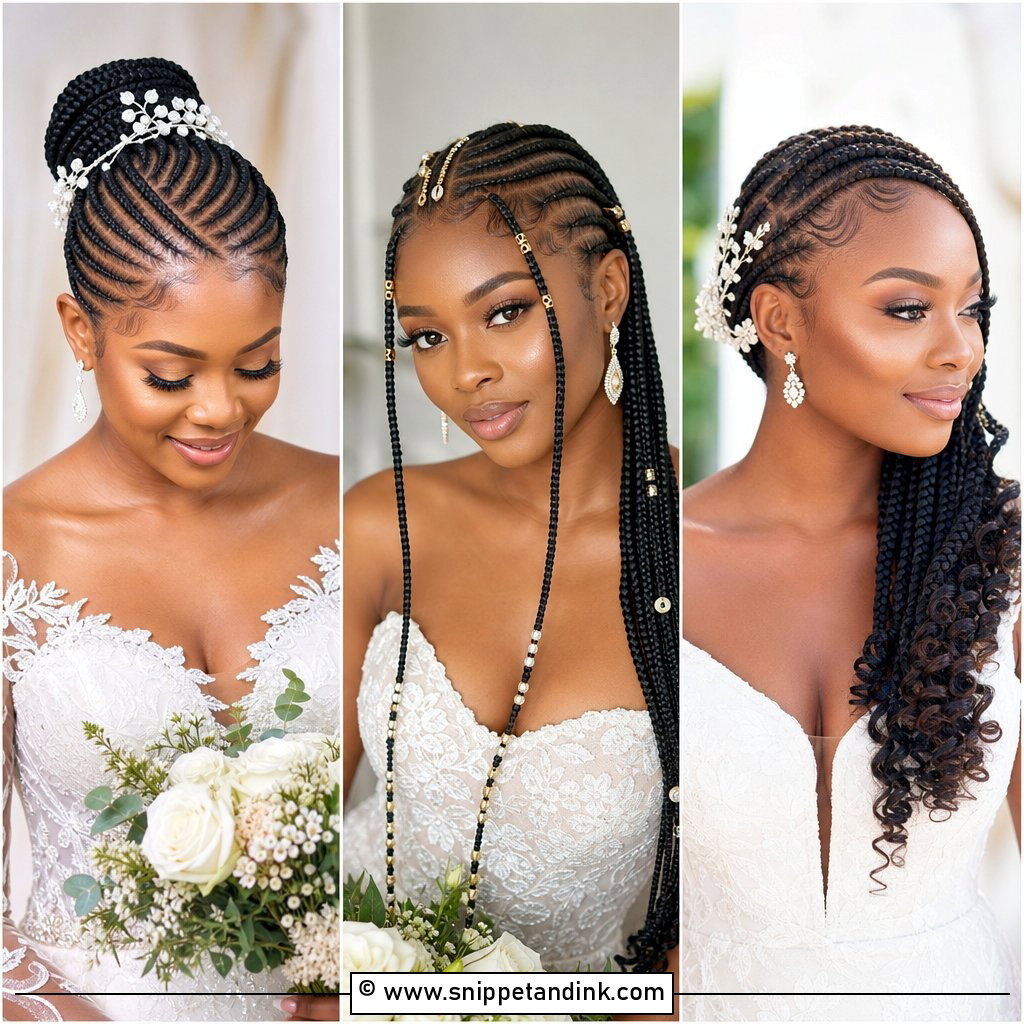
16. Cornrow Bridal Hair

Cornrow bridal hair lets the parting become part of the design. Cornrows can lead into a bun, a braided ponytail, a crown, or an updo. Because they’re braided close to the scalp, they’re one of the most secure styles a bride can wear. Bring clear photos to your braider so the pattern suits your face, and settle where a veil comb will sit before the final appointment, since the comb needs a braid to slide behind. Gold cuffs or pearls soften it beside a minimalist gown.
17. Braided Bun Bridal Hair

A braided bun can be sleek or soft, and high or low. High reads modern; low reads classic. The braid can form the bun itself, ring its base, or feed into a twist. What I check first is whether your hair has enough length to braid before coiling, because a short braid makes a small, tight bun. Keeping hair off the shoulders also protects a detailed neckline and helps on a hot day.
18. Braided Bridal Hair With Veil

Veils and braids need planning together, and the result can be gorgeous. A low braided bun takes a comb easily, but flat braided styles give the comb nothing to grip, so I pin a hidden anchor of two crossed pins first and slide the comb behind it. Bring your actual veil, or one with a similar comb, to the trial so we test the real weight. The bonus is that when the veil comes off for the reception, the braid gives your hair something to show.
19. Braided Bridal Hair With Flowers

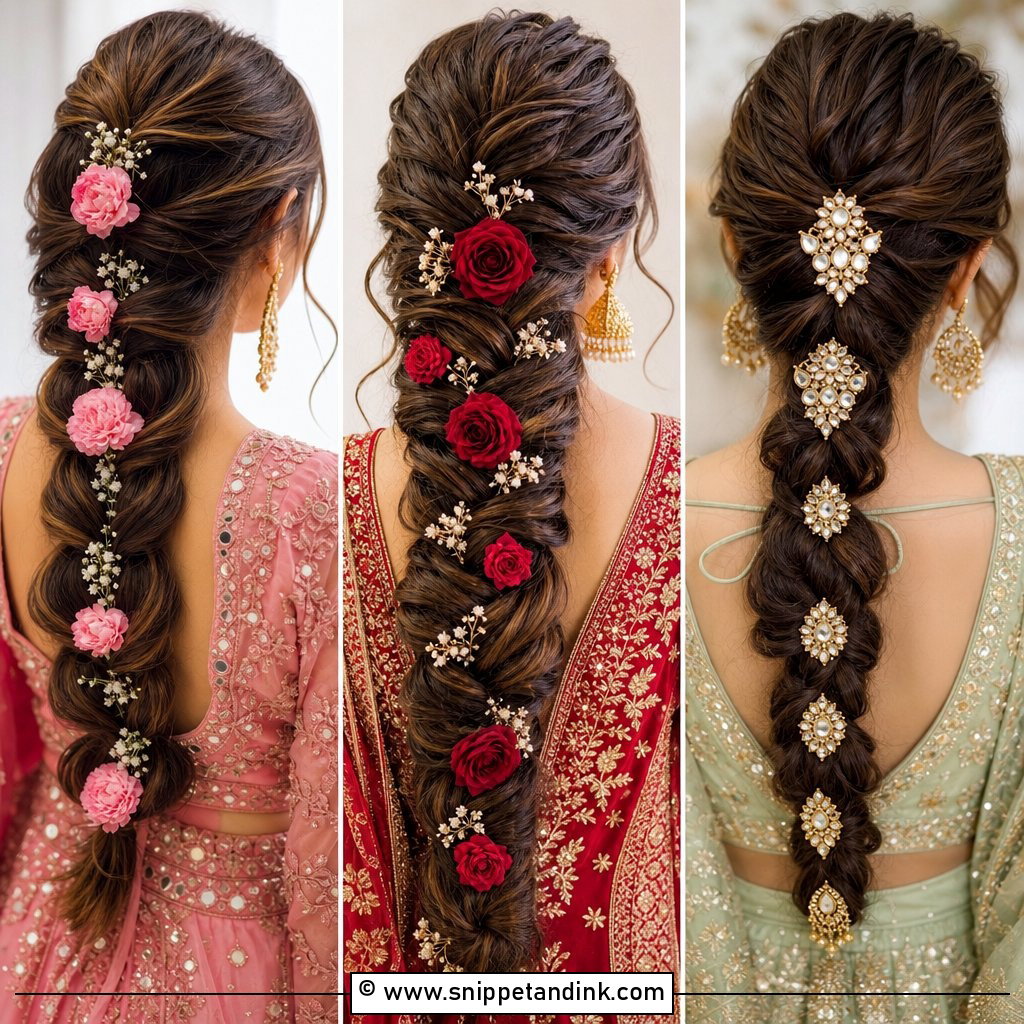
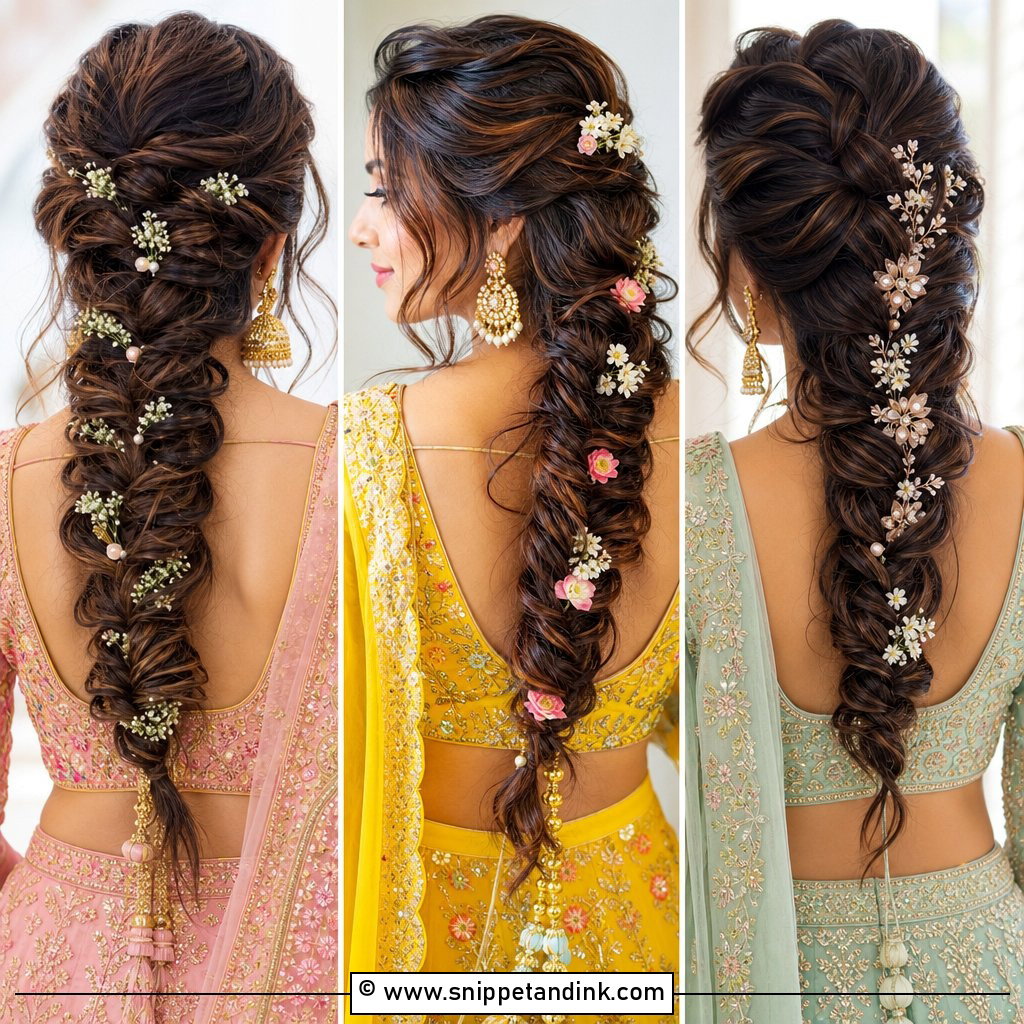
Flowers and braids work together because the stitches give stems a place to hide. Tuck blooms into a loose braid, ring them around a bun, or line them along a half up style. Choose small heads; big ones droop and pull the braid sideways by evening. Baby’s breath, mini roses, small orchids and soft greenery all hold up well. I ask the florist to wire and tape each stem and deliver them in a cool box, then pin them in last.
20. Braided Bridal Hair For Short Hair

Short hair can absolutely carry a braid. A small crown braid, a side braid behind the ear, a braided detail on a pixie, or a braided half up bob all work. The trick is making the braid part of the whole style rather than a lonely strip. Root volume and soft waves help the finished look feel fuller, and on very short layers I use texture spray, tiny pins, or a few clip-ins so the ends don’t poke out of the braid.
Protective Styles Need Their Own Calendar
Box braids, cornrows and goddess braids follow a different schedule from styles done on the morning. An install takes hours, and a tight new install can leave your scalp sore and your edges strained. I’d book it a few days before the wedding, not the night before, so any tenderness settles and the parts look crisp but not raw.
- Ask your braider to keep tension light at the hairline. Pulling there shows up as bumps in close photos and can damage edges.
- Sleep in a satin scarf or bonnet from the install night onward to keep frizz down.
- Plan the bridal finishing, cuffs, flowers and the veil, with your wedding stylist separately if your braider isn’t doing the morning.
- Try the veil on the installed braids before the day; heavy braids can change where a comb sits.
Between the Ceremony and the Last Dance
Most braids hold far better than loose curls, but a few things happen to them over a long day. Hugs push the back of an updo; a veil removed in a hurry drags the stitches with it. When the veil comes off, someone should slide it out in the direction it went in, while holding the braid steady with a flat hand.
Give a bridesmaid a tiny kit: six bobby pins in your hair colour, a travel hairspray and a fine-tooth tail comb. That’s enough to re-anchor a loosened bun or tuck a stray section. At night, take the pins out before you undo any braid. Pulling a braid apart with pins still in it is how hair gets snapped.
Tension, Texture and One Honest Trial Run
A braid earns its place when it does a job: holding the veil, keeping hair off your neck, giving the back of your head something worth looking at. Start from your dress, your venue and your hair texture, then pick the braid that suits all three. A loose fishtail makes sense on sand; a braided chignon suits a ballroom. Book the trial, bring the veil and pins, and tell your stylist honestly if anything pulls.
You'll Like These Ideas:


Leave a Reply