
Indian wedding hair has to hold up to more than most: hours of rituals, heavy jewellery, a dupatta pinned on top and then a night of dancing. That’s why I keep coming back to the messy braid. Done properly it’s polished at the root, loose through the lengths and anchored firmly enough to carry flowers, pins, a matha patti, a paranda or fresh jasmine. It works with lehengas, sarees, shararas and anarkalis, and with lighter pre-wedding outfits too. It also shows from every angle, which matters when photographers and family phones are circling you all day. These fifteen lean towards glam, with fuller shapes and more finish than an everyday braid.
Blouse Backs, Dupatta Drapes and Where the Braid Should Fall
Before I decide on a braid, I ask to see the outfit, or at least a photo from behind. The blouse and the drape decide more about the hairstyle than the inspiration picture does.
- Deep or tie-up blouse backs with tassels: a back braid hides the detail you paid for. A side braid or a high crown braid keeps the back clear.
- A dupatta pinned over the head for the ceremony: keep the crown and the braid’s starting point flat. A high puff or a raised Dutch braid lifts the dupatta and makes it slide.
- A saree pallu over one shoulder: put a side braid on the other shoulder.
- High necks and chokers: braids that sit away from the neck, like a crown braid or a half up braid, keep the jewellery visible.
Bring the actual dupatta and a pin or two to your trial. Pinning it over a finished braid takes practice, and it’s much better to discover any problems then than on the morning of the wedding.
1. Messy Fishtail Braid For Indian Wedding
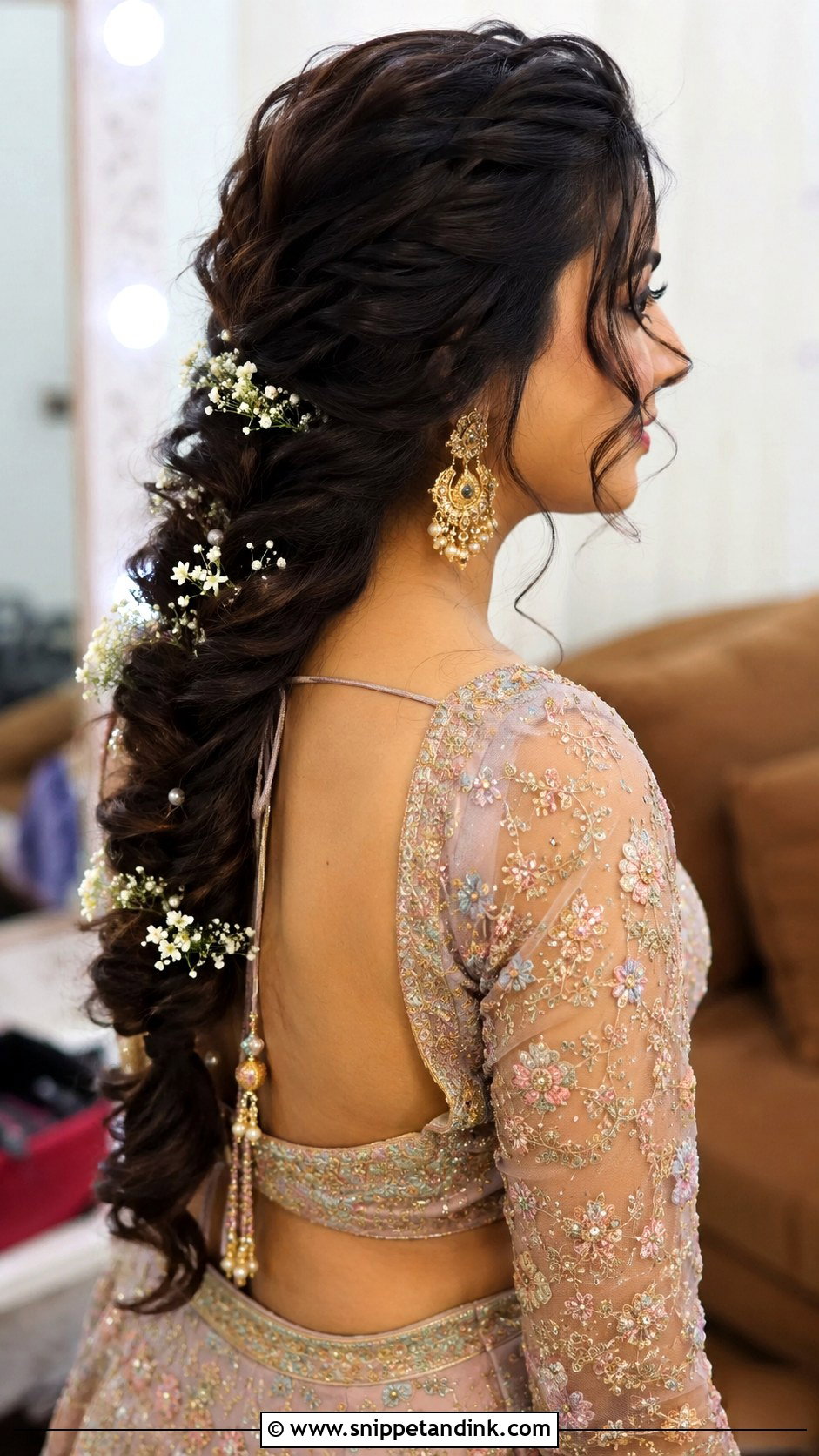
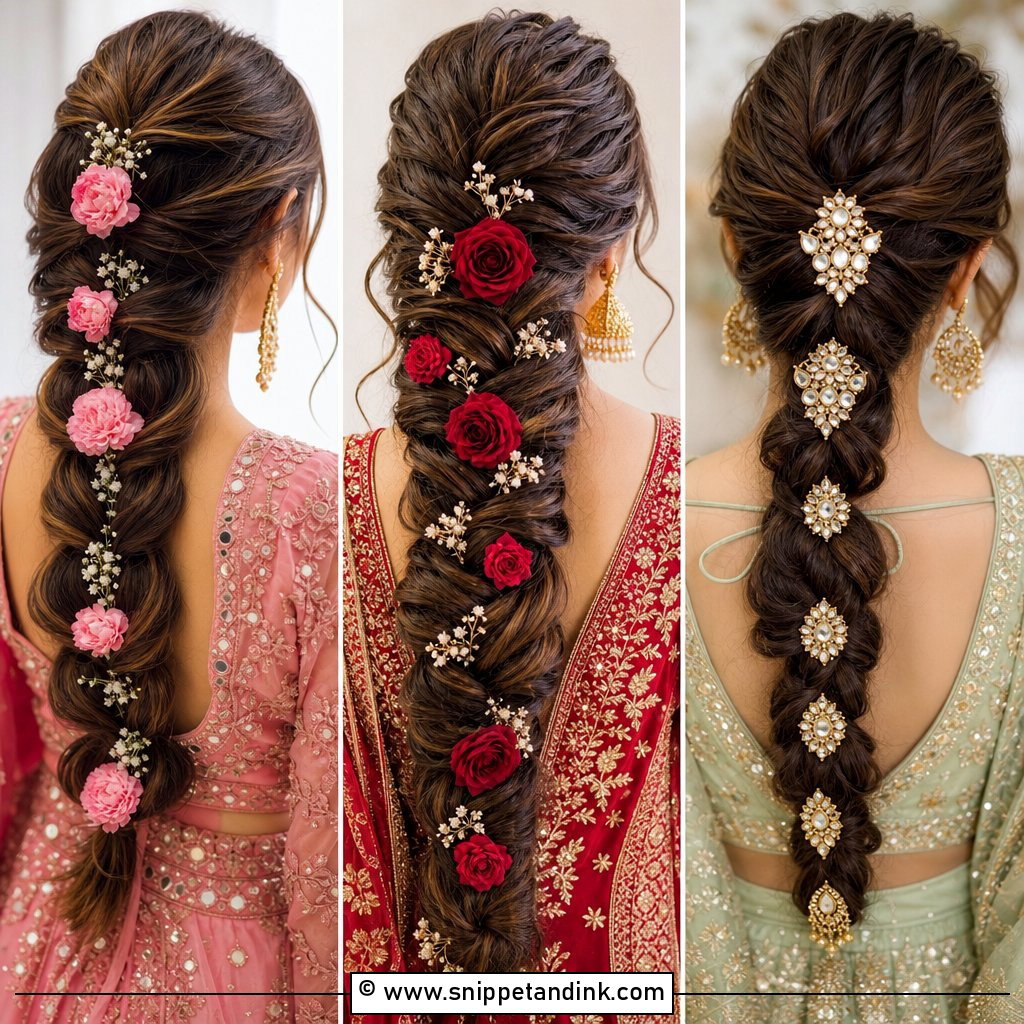
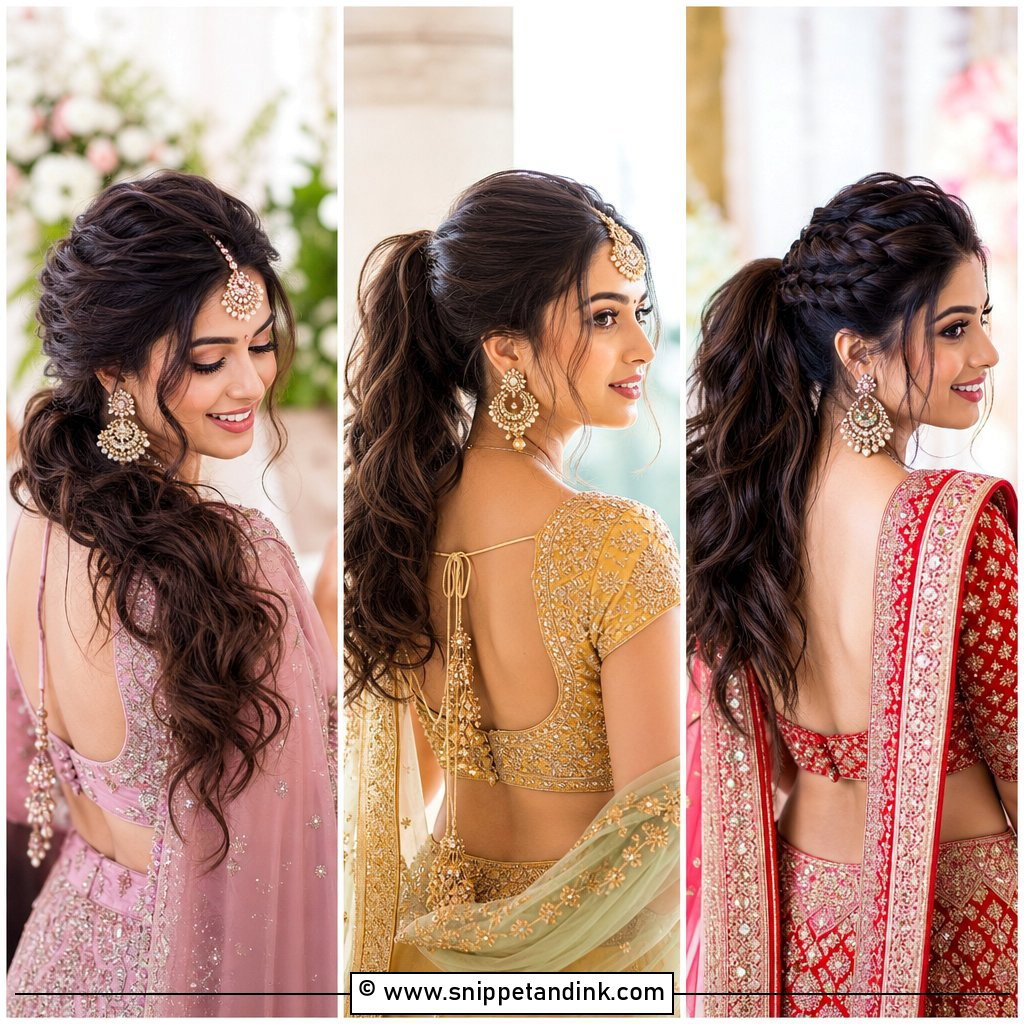
Of all the braids on this page, the fishtail gives the most texture for the least effort, which is why it turns up at mehndi, sangeet and reception alike. I build some lift at the crown first, braid fairly firmly, then pull the edges apart so the pattern widens and reads thicker in photos. A couple of loose front pieces soften heavy jewellery. Baby’s breath, pearl pins or small roses can go into one side. Long hair carries it best; on shorter or thinner hair I’d add extensions, because a fishtail on sparse hair looks narrow no matter how much it’s pulled.
2. Messy Side Braid For Indian Wedding
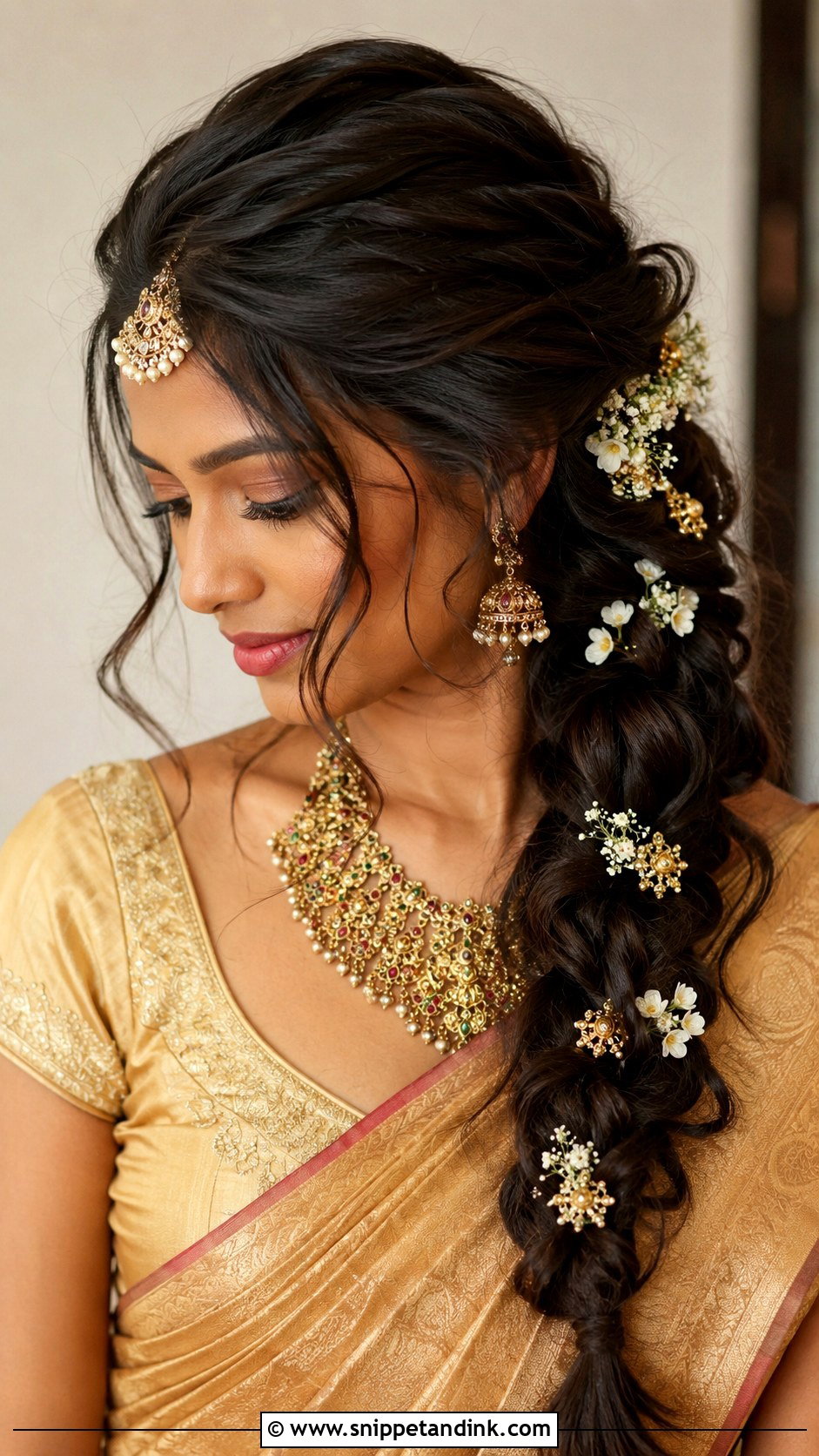
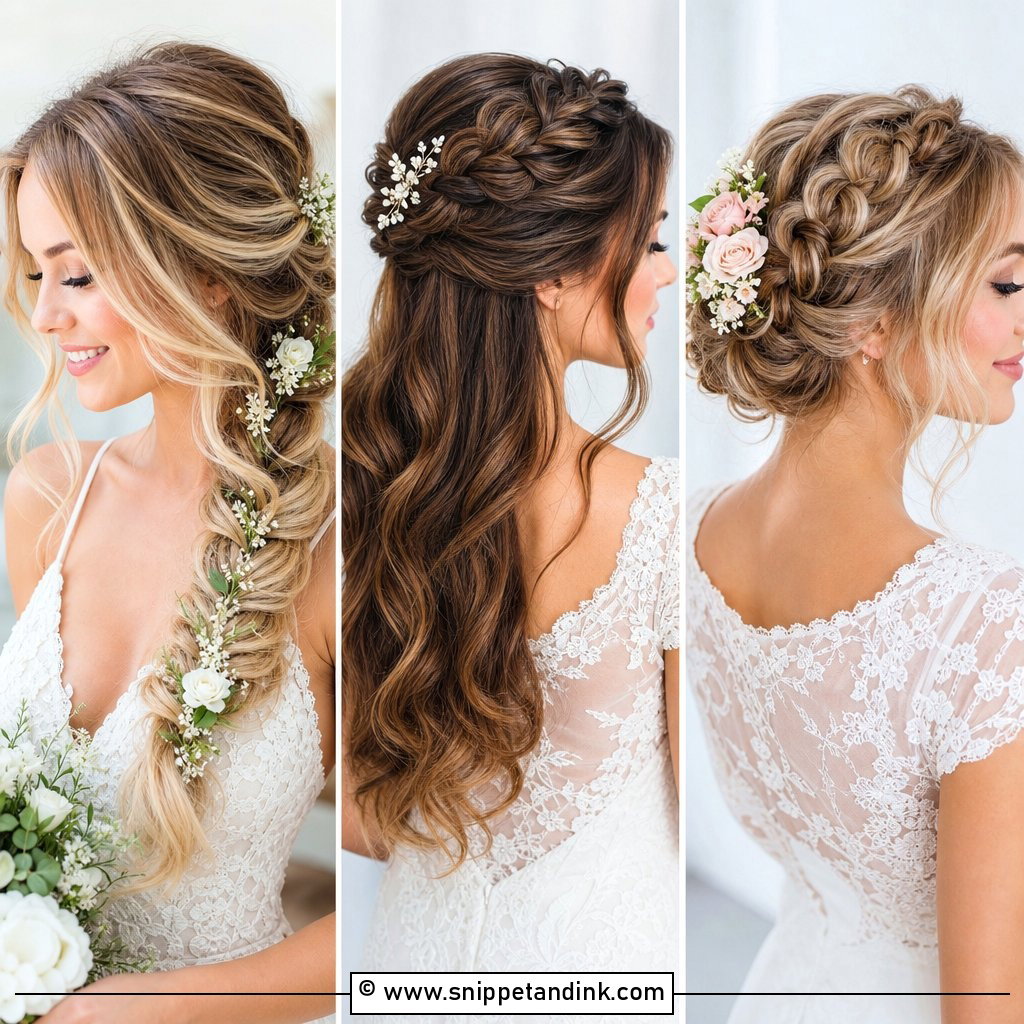
Want your braid seen in every front-facing photo? Wear it over the shoulder. The side braid keeps texture, flowers and accessories visible even with a dupatta, a veil or a detailed blouse back, since nothing sits on top of it. It lies comfortably with lehengas and sarees. I tease the crown lightly and keep the braid wide through the ends. Just check your drape first: if the saree pallu or dupatta falls over the same shoulder, move the braid to the other side or the two will bunch together all day.
3. Messy Dutch Braid For Indian Wedding
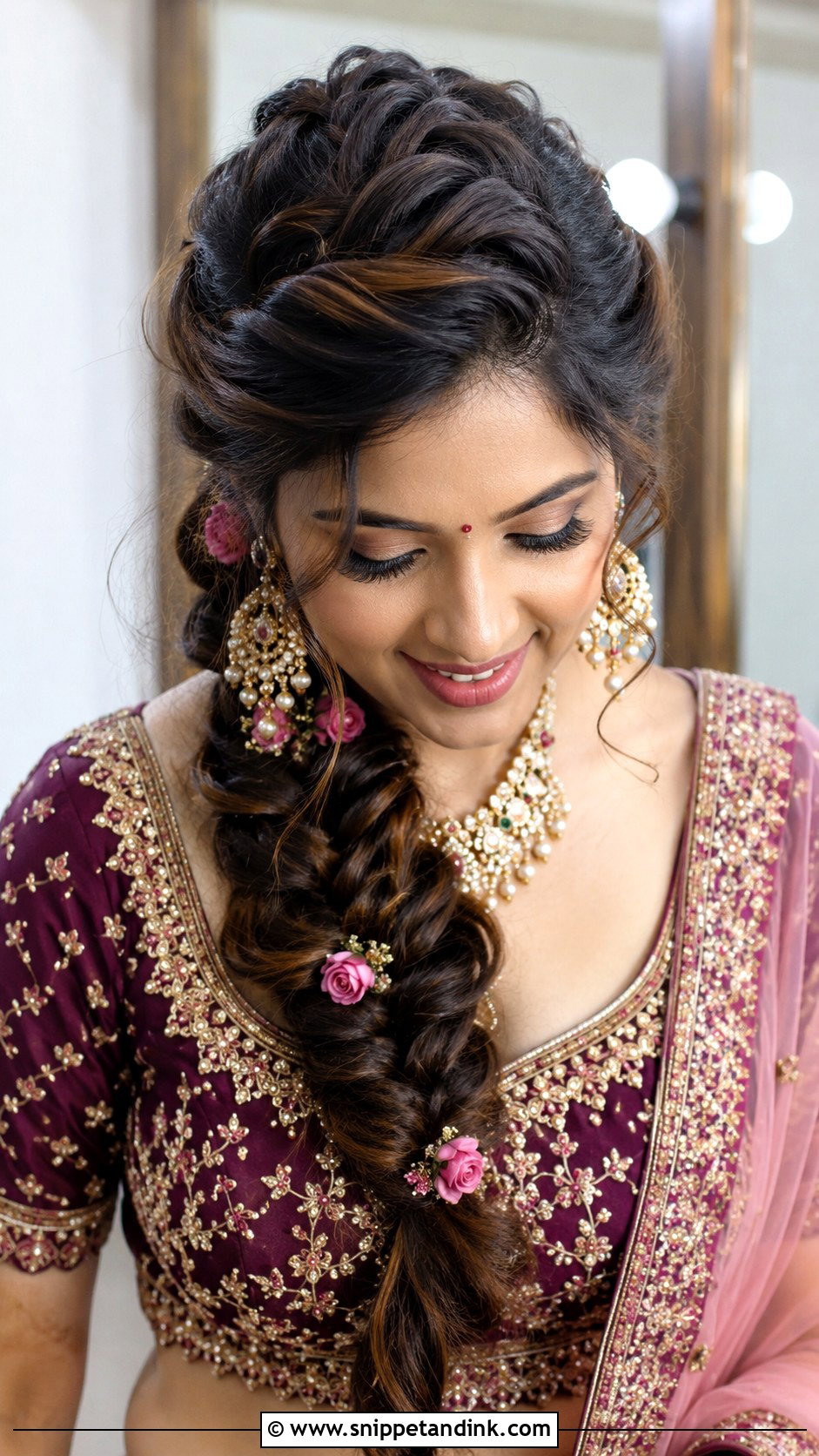
A Dutch braid sits raised on top of the hair, so it keeps its outline even next to heavy embroidery. I keep the roots neat enough to carry accessories, then loosen from the top of the braid downward so the shape stays even. It suits bridesmaids, sisters of the bride and brides who want some structure. With a maang tikka, I part cleanly and start the braid slightly behind the tikka’s anchor point, so the chain sits flat instead of riding up on the braid. Tiny flowers along the ridge finish it.
4. Messy French Braid For Indian Wedding
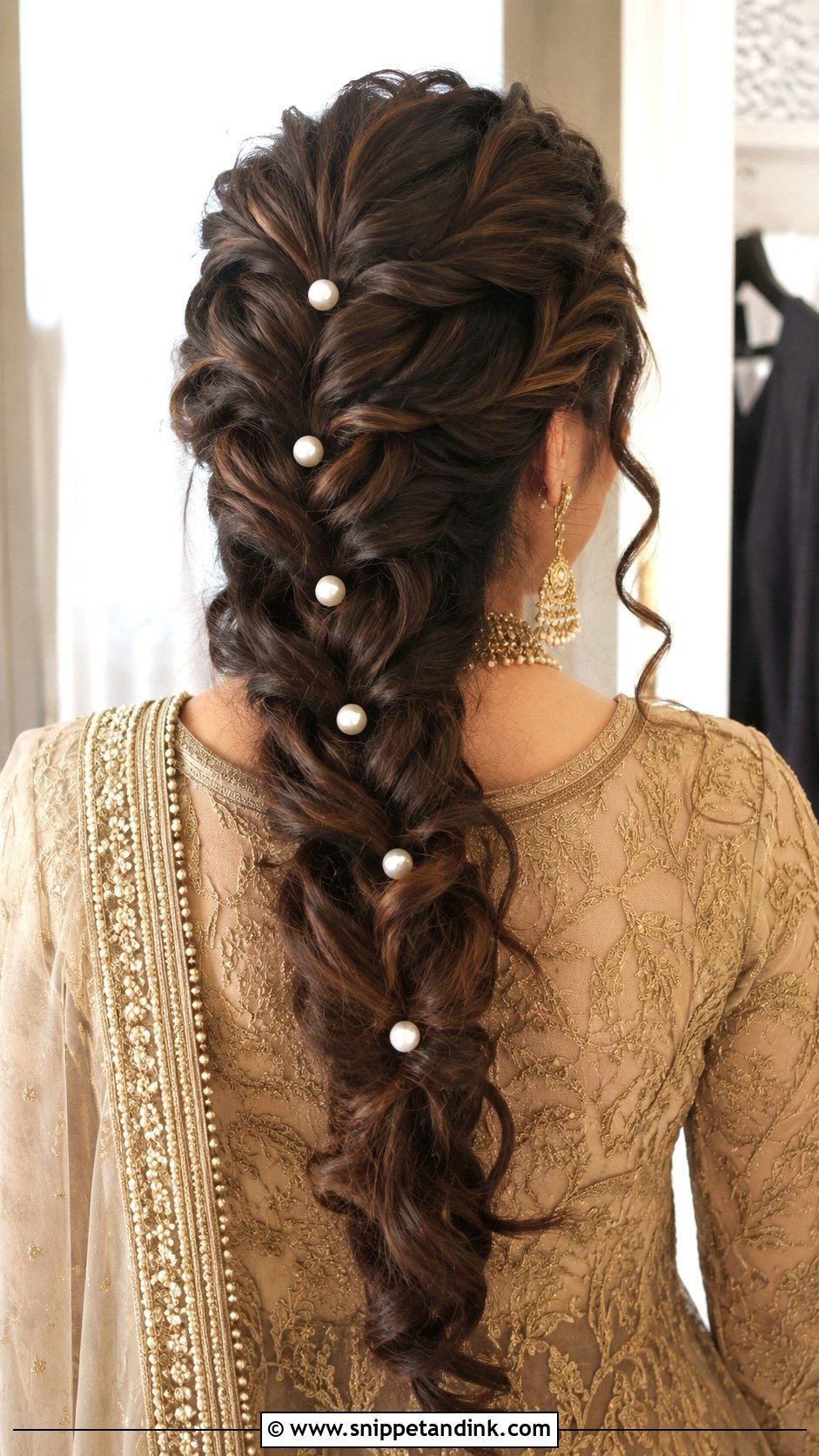
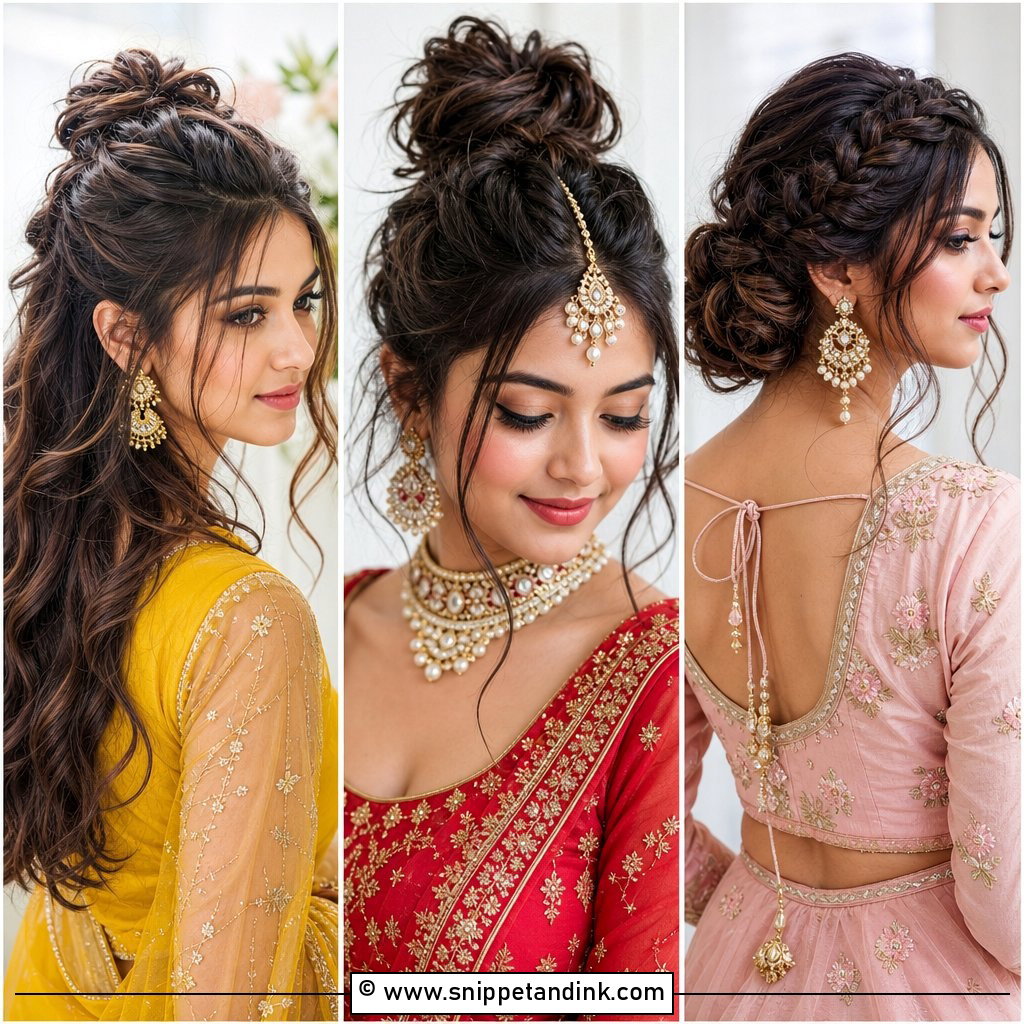
For a function that runs for hours, the French braid is the most comfortable choice here. It starts flat against the scalp, which means a dupatta or hair jewellery lies smoothly over it, then opens into a soft braid through the length. Medium to long hair works well. Give the crown a little height before you start; a completely flat crown under a dupatta can look severe in photos. Pull out a few tendrils at the temples and nape, and finish with a line of pearl pins, kundan clips or small fresh flowers.
5. Messy Bubble Braid For Indian Wedding
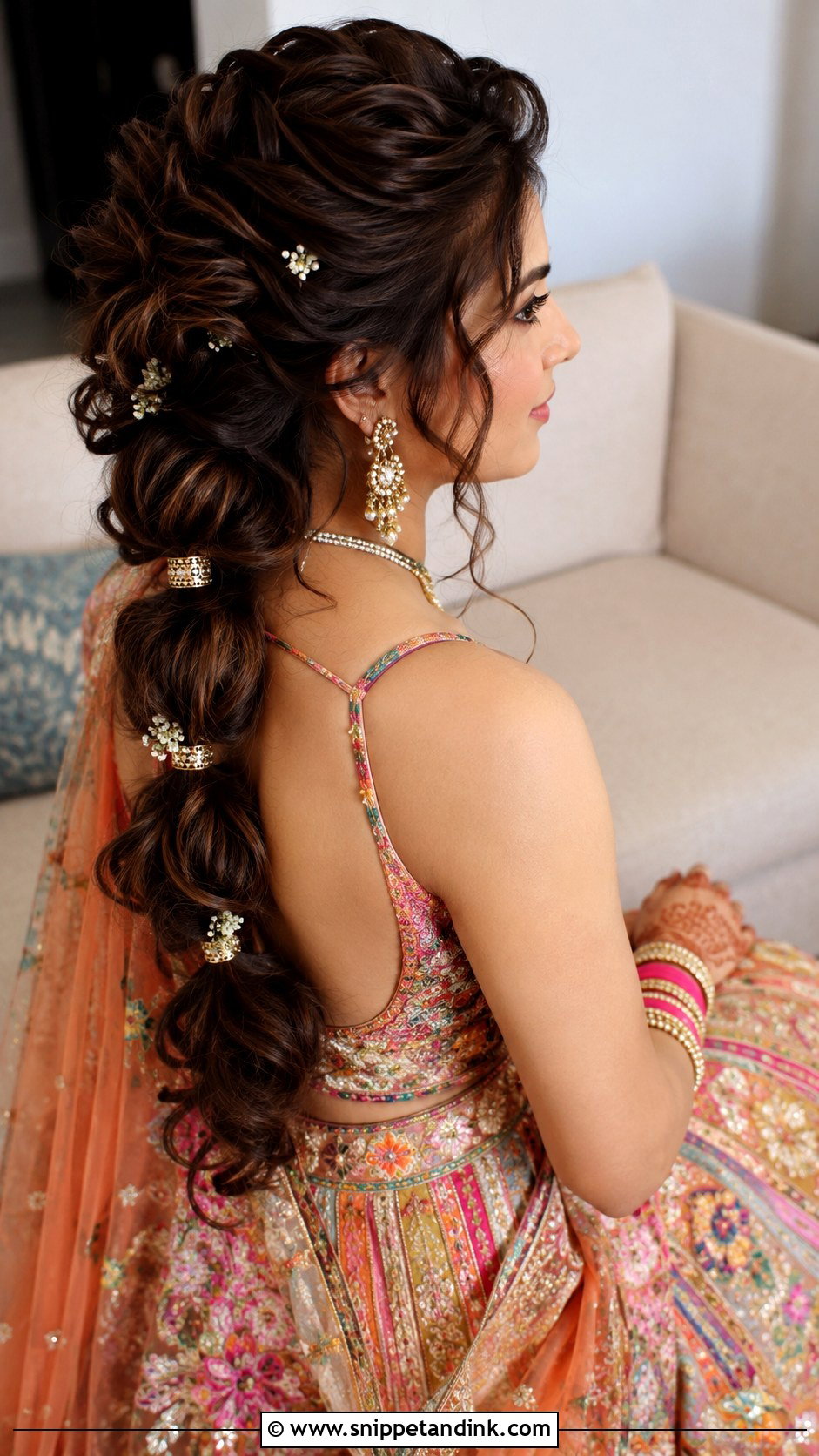
Haldi, mehndi and sangeet are where the bubble braid makes most sense. It isn’t woven at all: the hair is tied off in sections and each one is pulled wider into a bubble, so it reads as a braid with a lot more volume. That volume needs thick hair or extensions; on fine hair the bubbles look small. With colorful outfits, I like covering each elastic with coloured thread, a small flower or a slim gold band. For haldi, skip anything delicate, since turmeric stains pale pieces quickly.
6. Messy Rope Braid For Indian Wedding
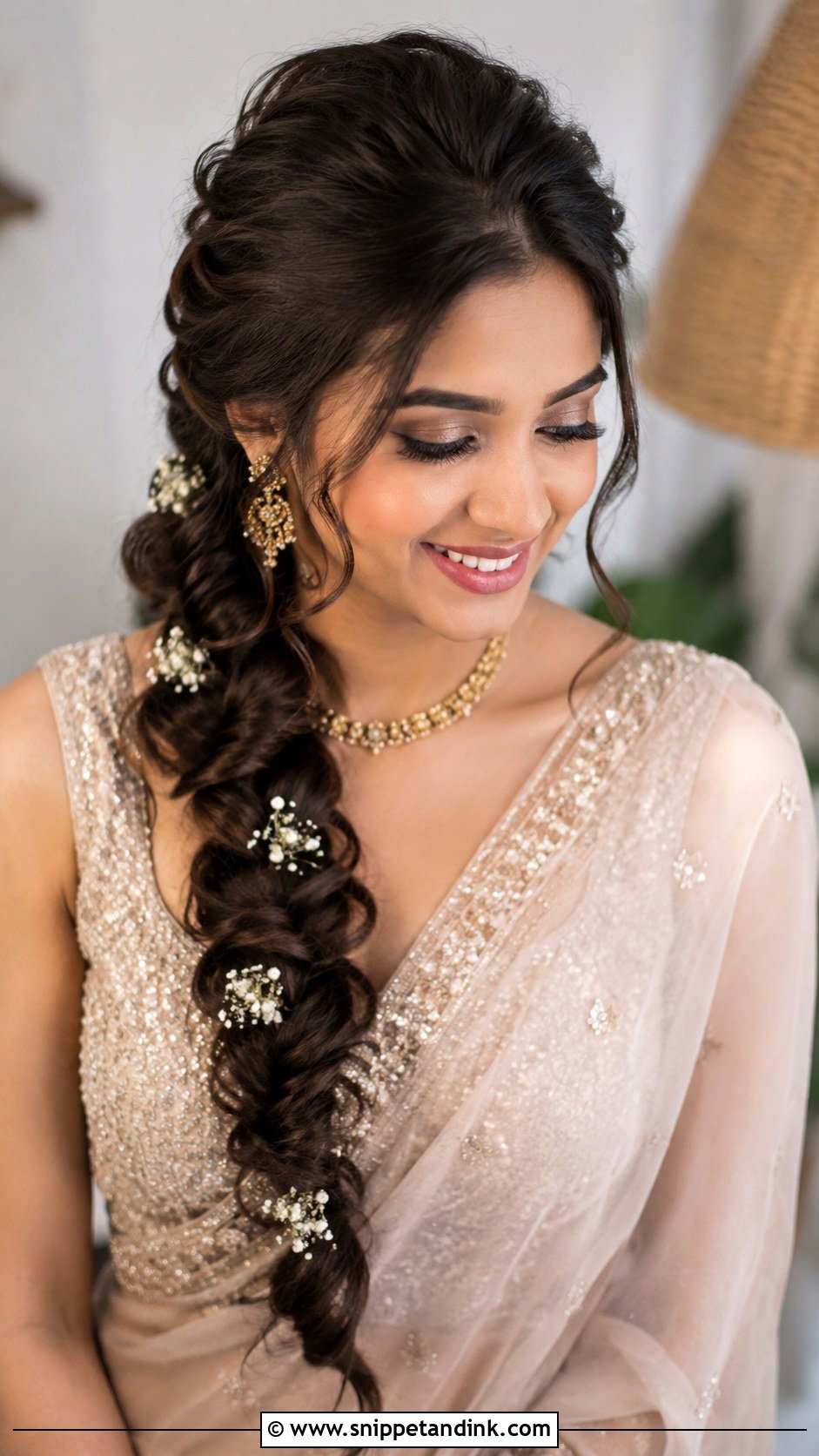
A rope braid is just two strands twisted around each other, which gives it a rounded, almost sculpted shape. It’s softer than a fishtail and less familiar than a three-strand plait. The thing to know is that each strand must be twisted in the opposite direction to the wrap, or the rope unwinds within an hour. I smooth the top lightly before twisting and add crown volume. Fresh flowers placed in the turns look neat. It suits engagements, receptions and smaller events, worn down the back or over one shoulder.
7. Messy Flower Braid For Indian Wedding
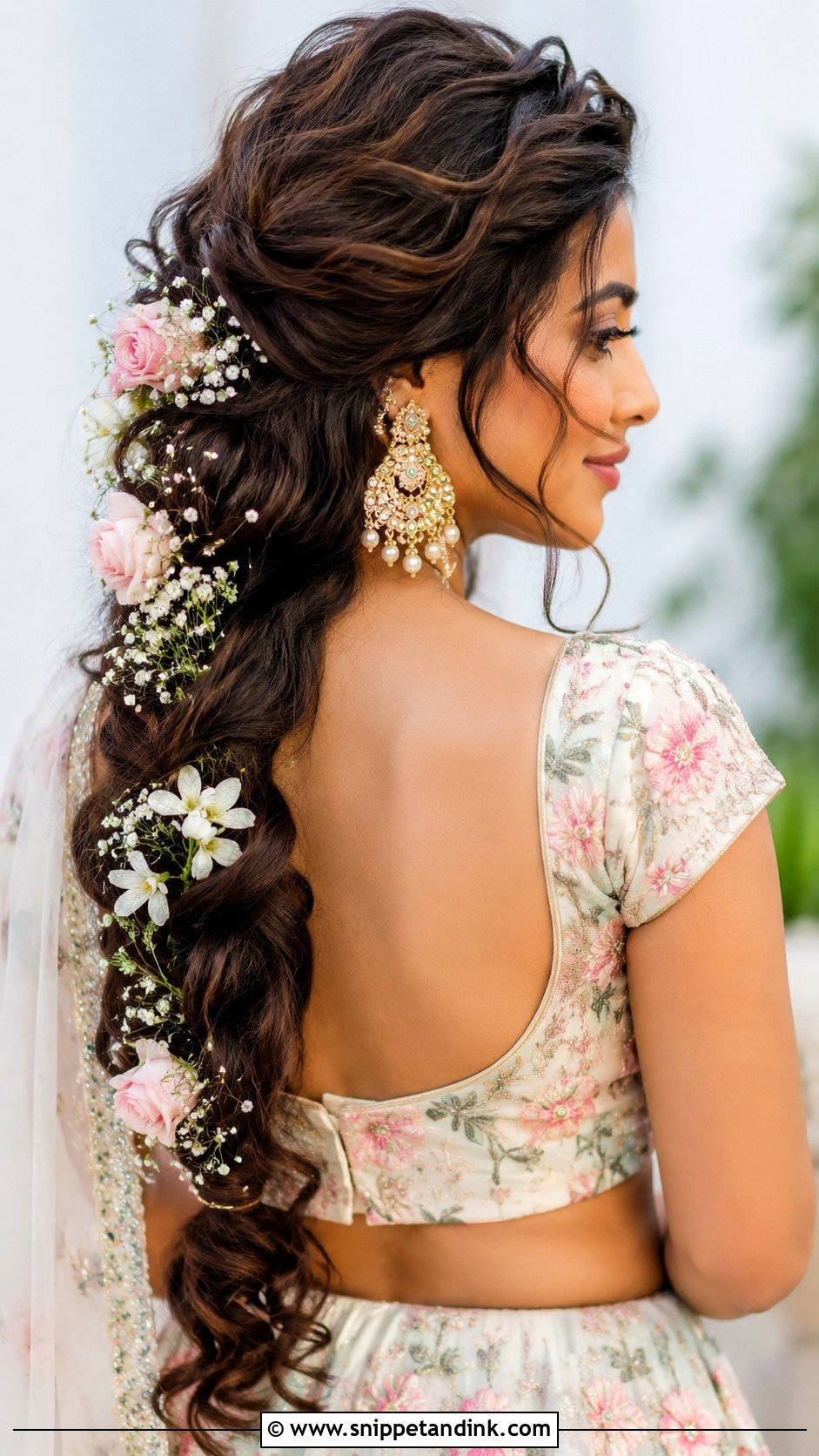
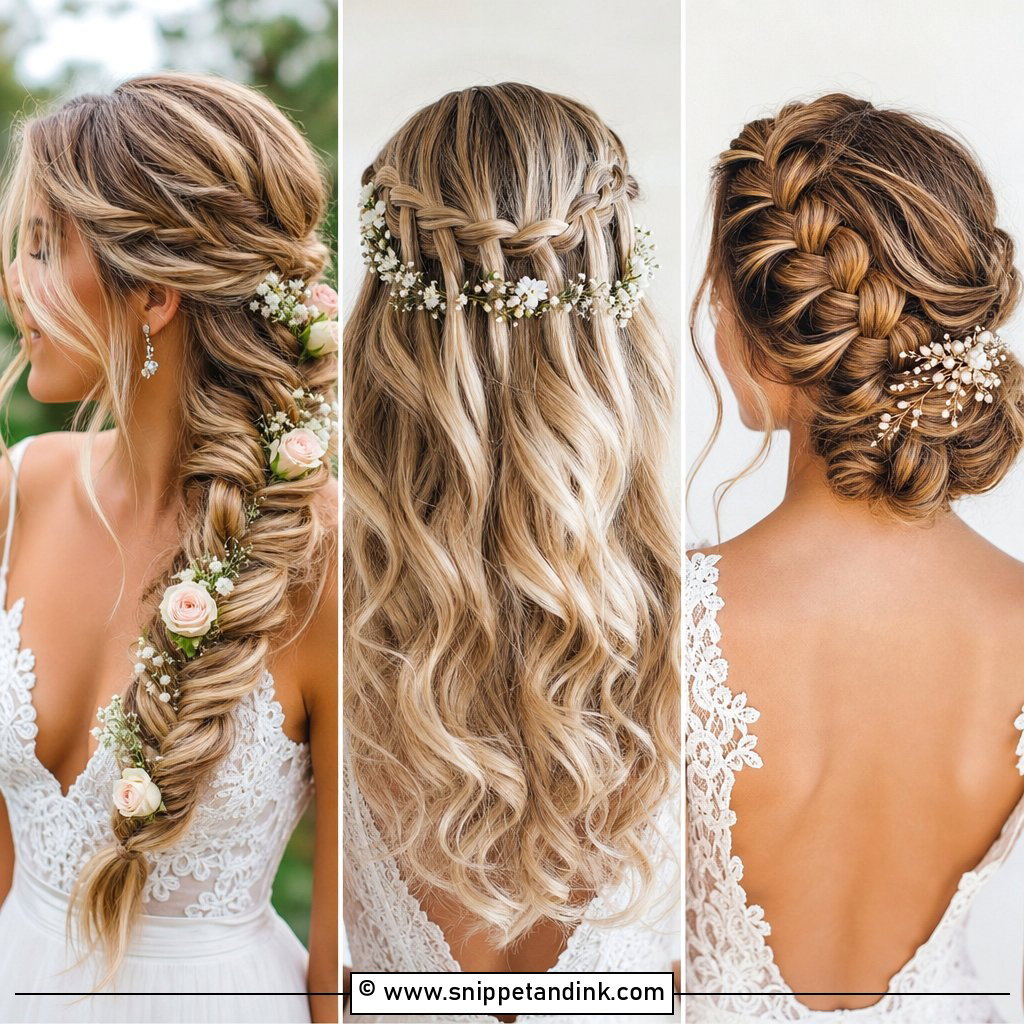
Flowers tucked into a braid are about as Indian-wedding as hair gets. The braid itself can be a loose three-strand, a fishtail or a Dutch; small jasmine buds, roses, baby’s breath or mogra go in afterwards without covering the texture. I don’t pack the braid solid with flowers. A few spaced clusters show the braid between them and weigh far less. It sits well with pastel lehengas, silk sarees and floral jewellery. Soft curls at the face keep the front from feeling heavy.
8. Messy Jasmine Braid For Indian Wedding
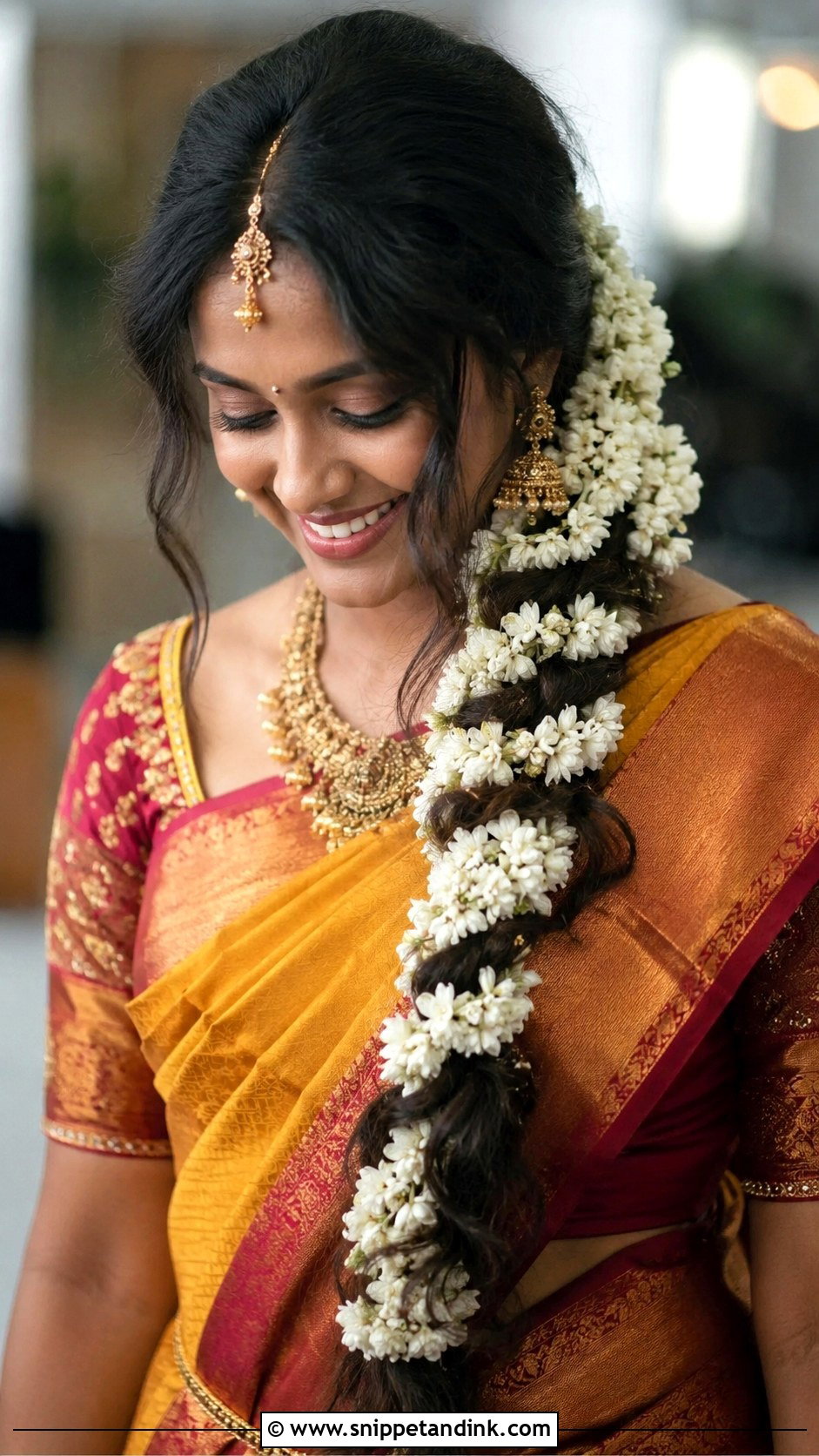
Jasmine has a long connection with Indian wedding hair, especially in South Indian bridal looks, and a loose braid makes it feel lighter and more current. Instead of winding the strings tightly around the whole braid, I lay them along it or tuck small clusters into the texture. Jasmine browns and loses its scent as the day warms up, so ask your florist to deliver it as close to styling time as possible, and keep a spare string chilled. Waving the hair first gives a fuller braid. A centre part with a maang tikka frames the face in the classic way.
9. Messy Bridal Braid With Maang Tikka
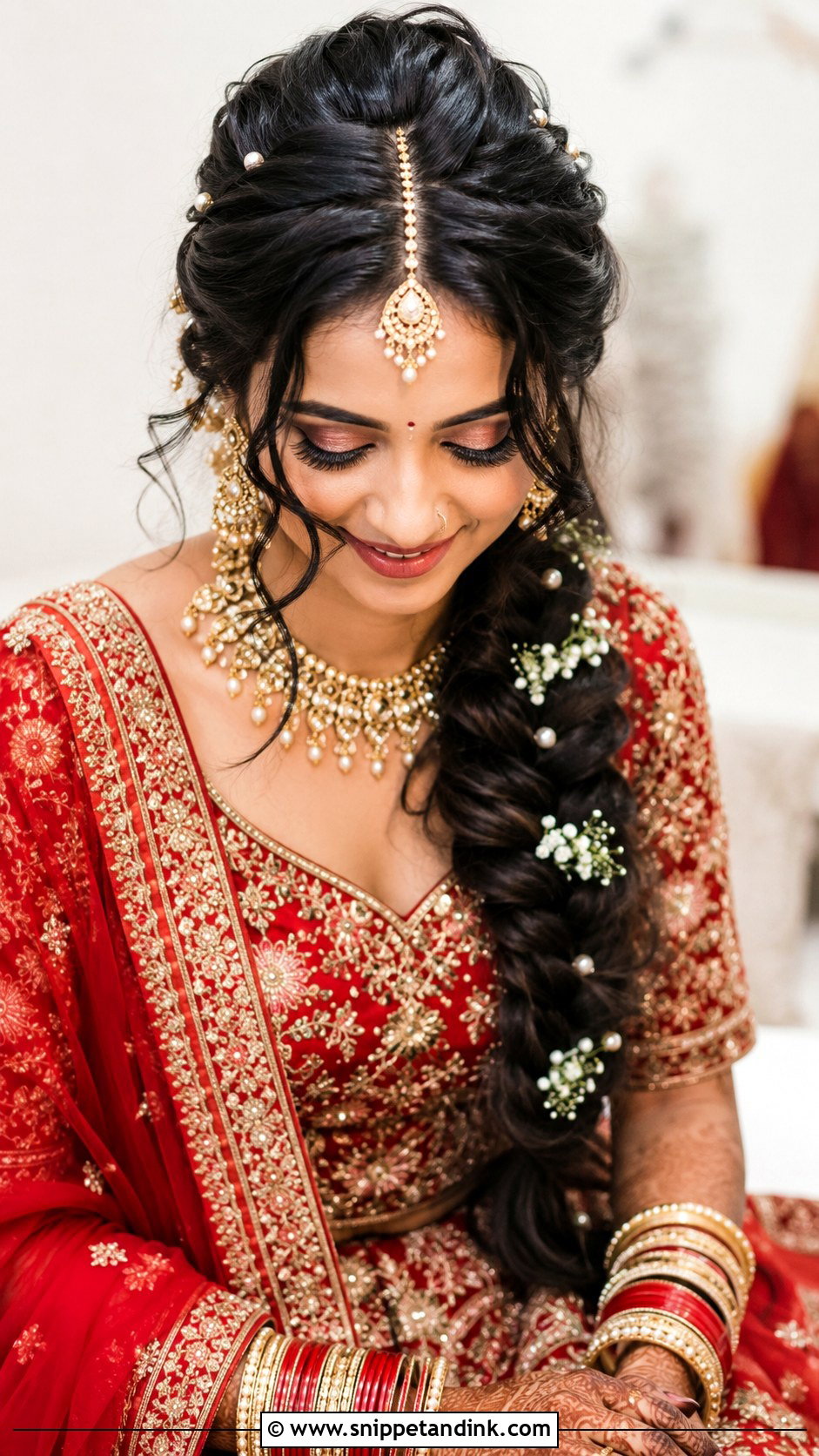
The tikka needs a smooth, firm centre parting to sit straight, while the braid behind it can stay soft. That contrast is what this style is about. I lightly gel the front, set the tikka’s hook into a small pinned section at the crown, and then build some lift behind it so the head doesn’t look flat. The braid can be a fishtail, a Dutch or a three-strand depending on your outfit and length. It suits lehengas and dupattas because the jewellery stays centred. Keep a few loose curls at the face to stop it looking strict.
10. Messy Braid With Paranda For Indian Wedding
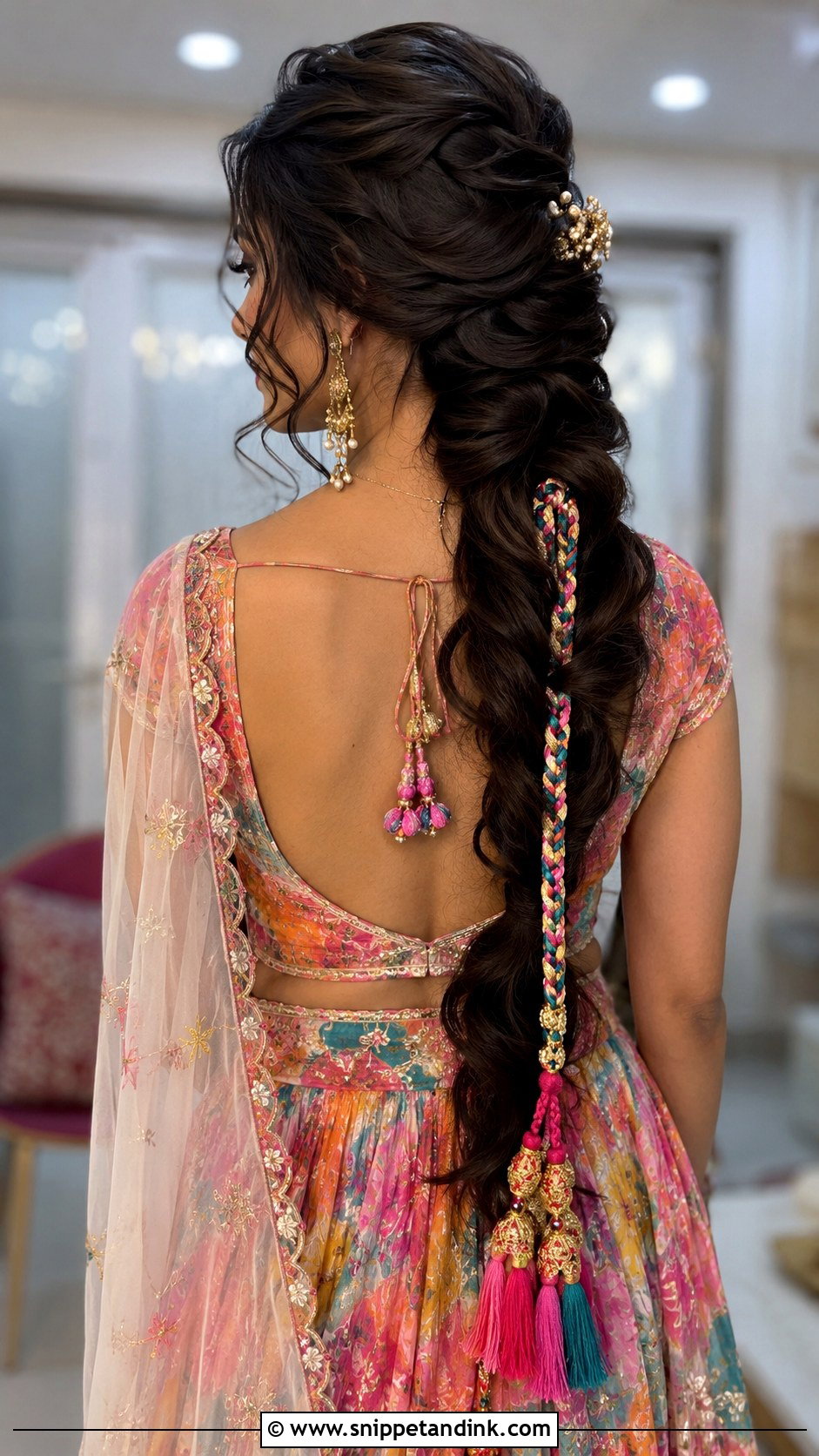
The paranda is the signature of Punjabi celebrations, and a messy braid with paranda keeps that tradition while looking softer than the tight classic version. The paranda adds length and swing. Match it to your outfit, or go for gold, mirror work or tassels for a festive contrast. Because it’s woven in from near the nape, the braid has to be firm at the top even if it’s pulled loose lower down; that’s what holds the paranda’s weight. Bright lehengas, patiala suits and sharara sets all suit it. Add a little crown volume to balance the length.
11. Messy Half Up Braid For Indian Wedding
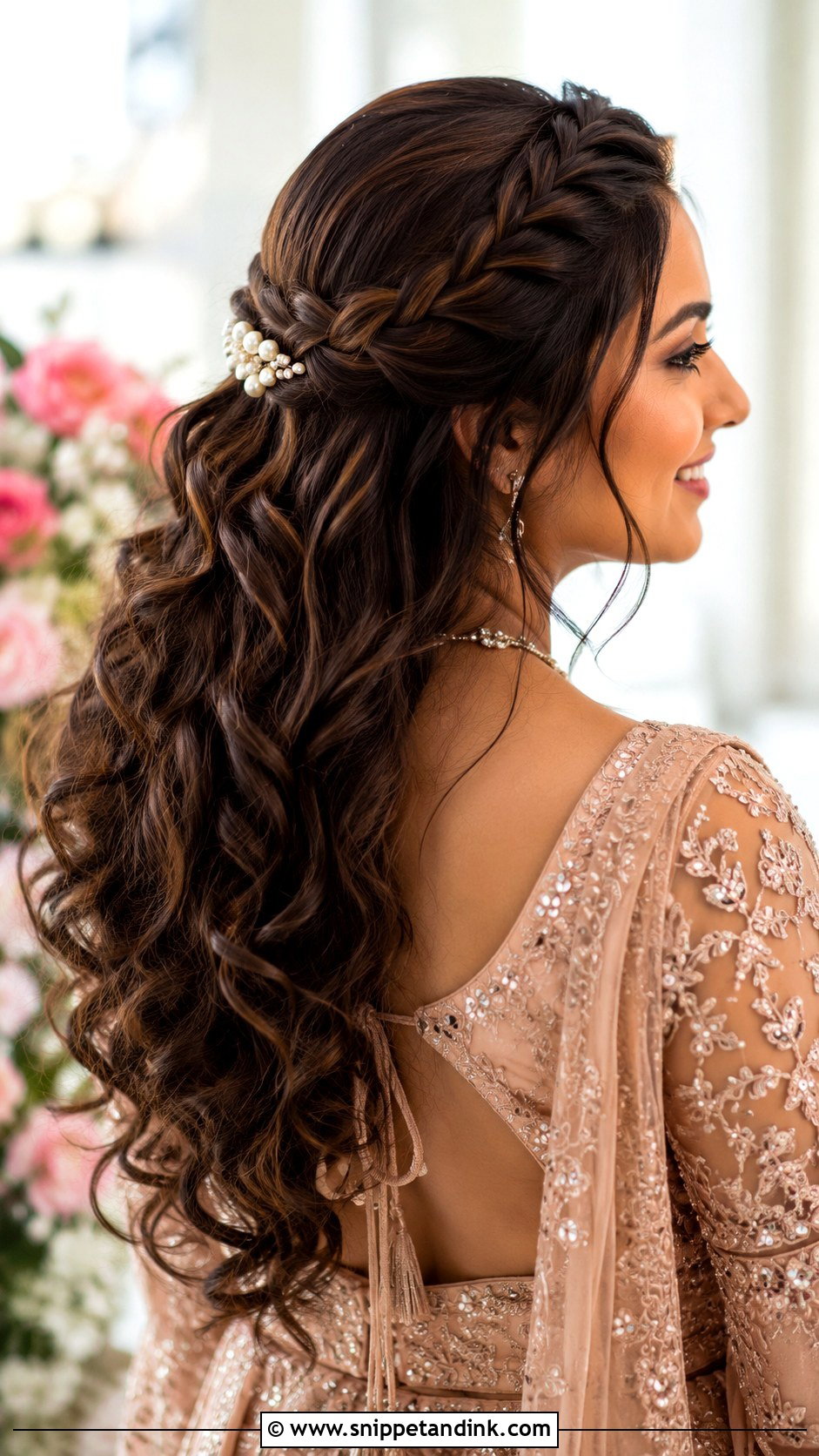
Love open hair but still want it styled? The half up braid braids only the top section and lets the rest fall in waves or curls. It’s my usual pick for engagement parties, cocktail events, bridesmaids and a bride’s lighter reception look. The braid can sit at the crown or sweep in from both sides to meet at the back, where a small flower or jewelled pin hides the join. Open lengths do pick up frizz in humid weather, so I set the waves with a proper hold spray before releasing them.
12. Messy Waterfall Braid For Indian Wedding
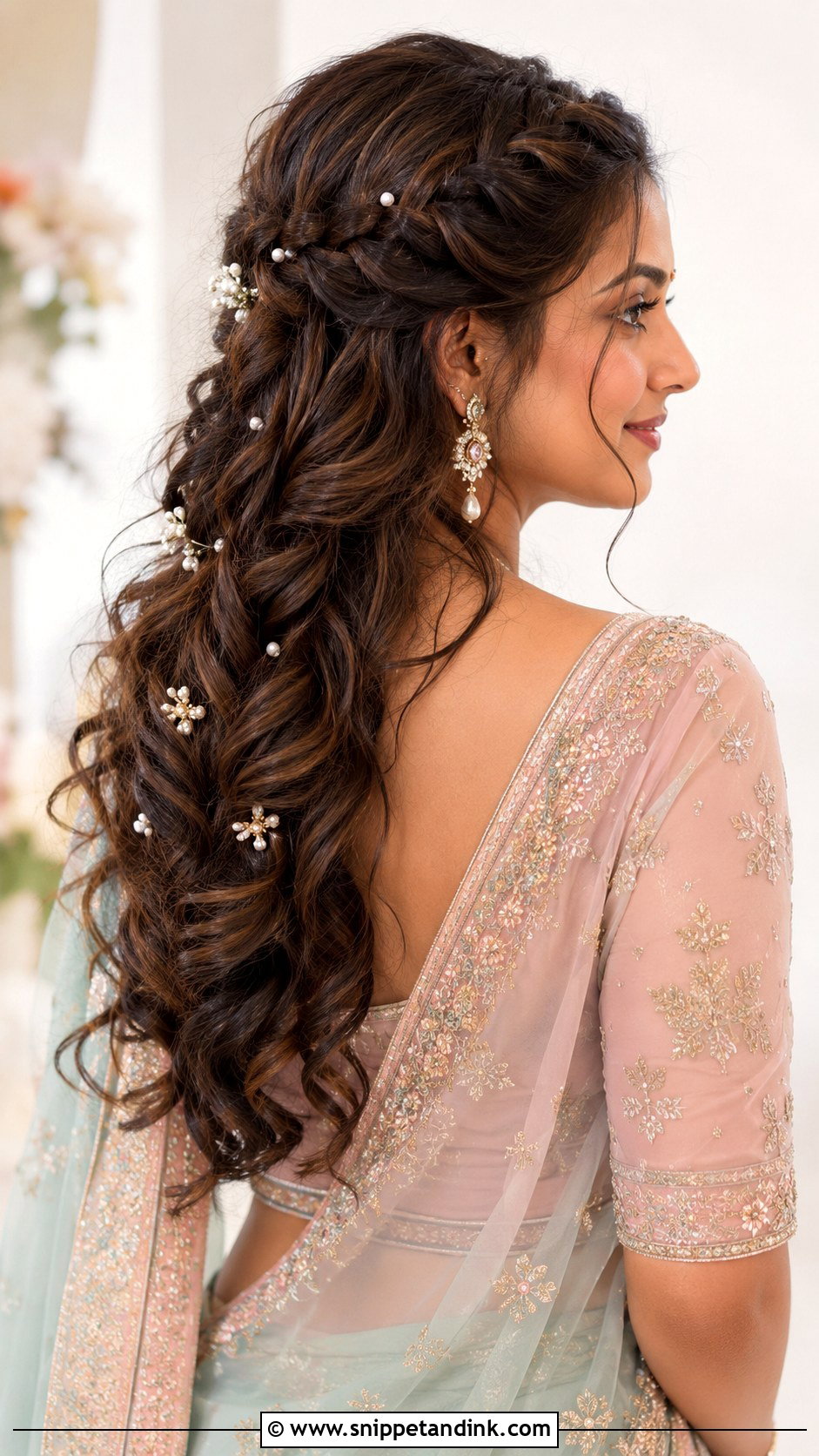
A waterfall braid drops sections of hair through the plait, giving a layered pattern that shows best from the side and back. It needs waves underneath, since the falling pieces should move, and medium or long hair. It’s delicate, which makes it a good match for mehndi, an engagement or a day wedding, and less suited to a long night of dancing; the dropped strands aren’t locked in. Keep the braid loose so it blends into the curls. A few floral pins or pearls along it are enough.
13. Messy Crown Braid For Indian Wedding
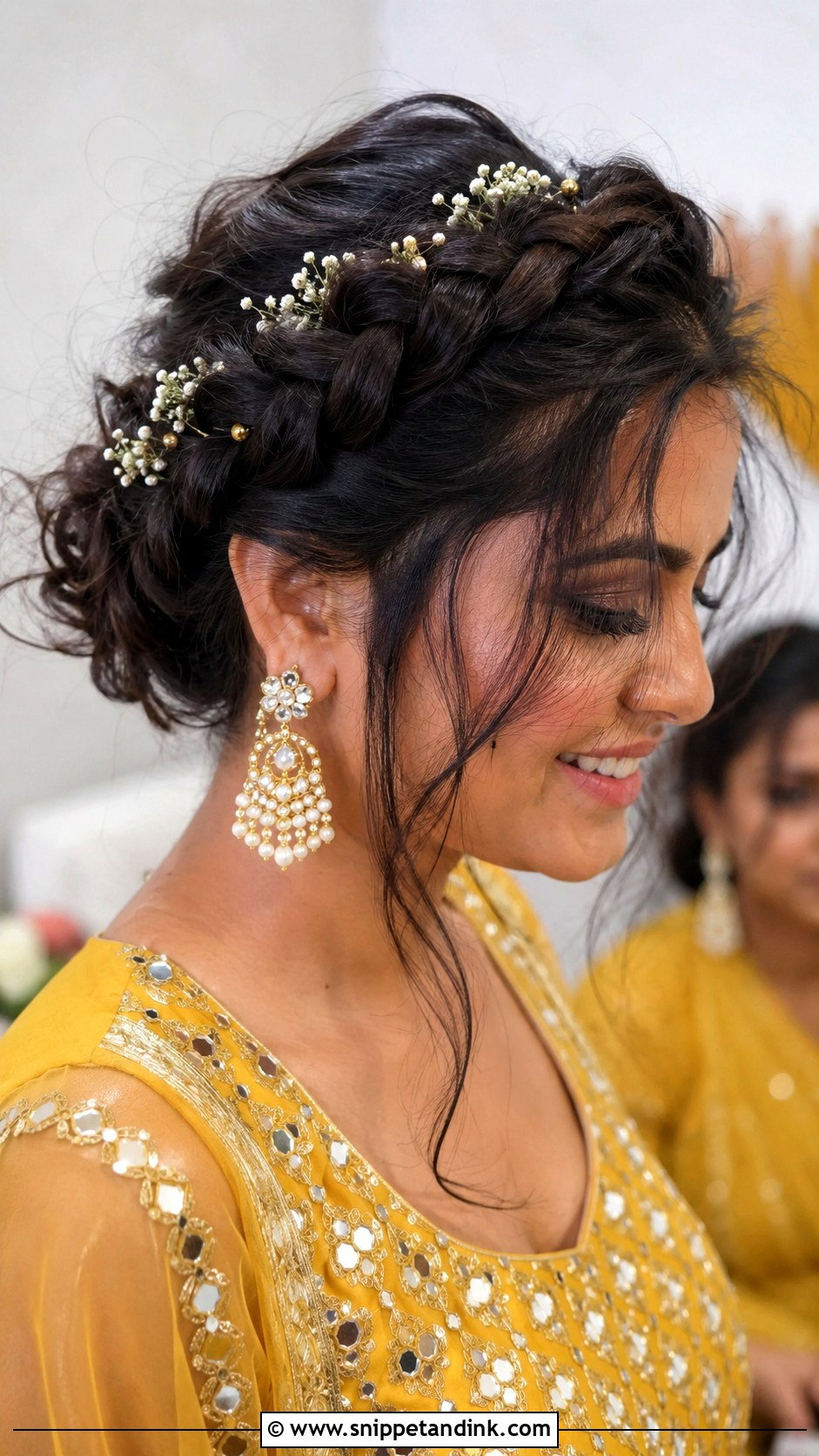
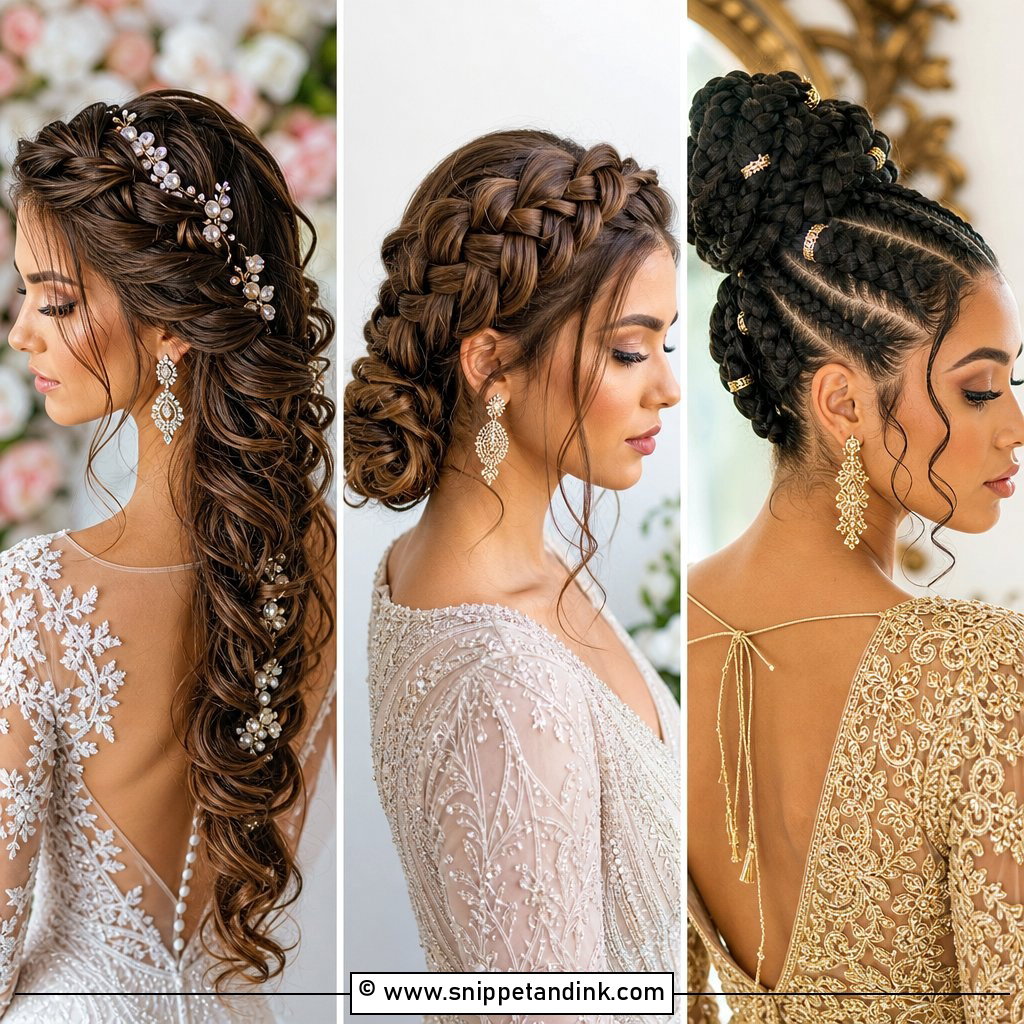
A crown braid wraps around the head and keeps every strand off the face, which is exactly what you want for outdoor ceremonies, haldi, mehndi or a bridesmaid who’ll be running around all day. Your neckline and earrings stay visible. I pin it every few centimetres so the weight is spread, and I avoid pulling tight at the hairline, which leaves a headache and a red line by evening. Keep the texture full and airy. Tiny flowers, pearls or slim gold pins can sit along the wrap.
14. Messy Pull Through Braid For Indian Wedding
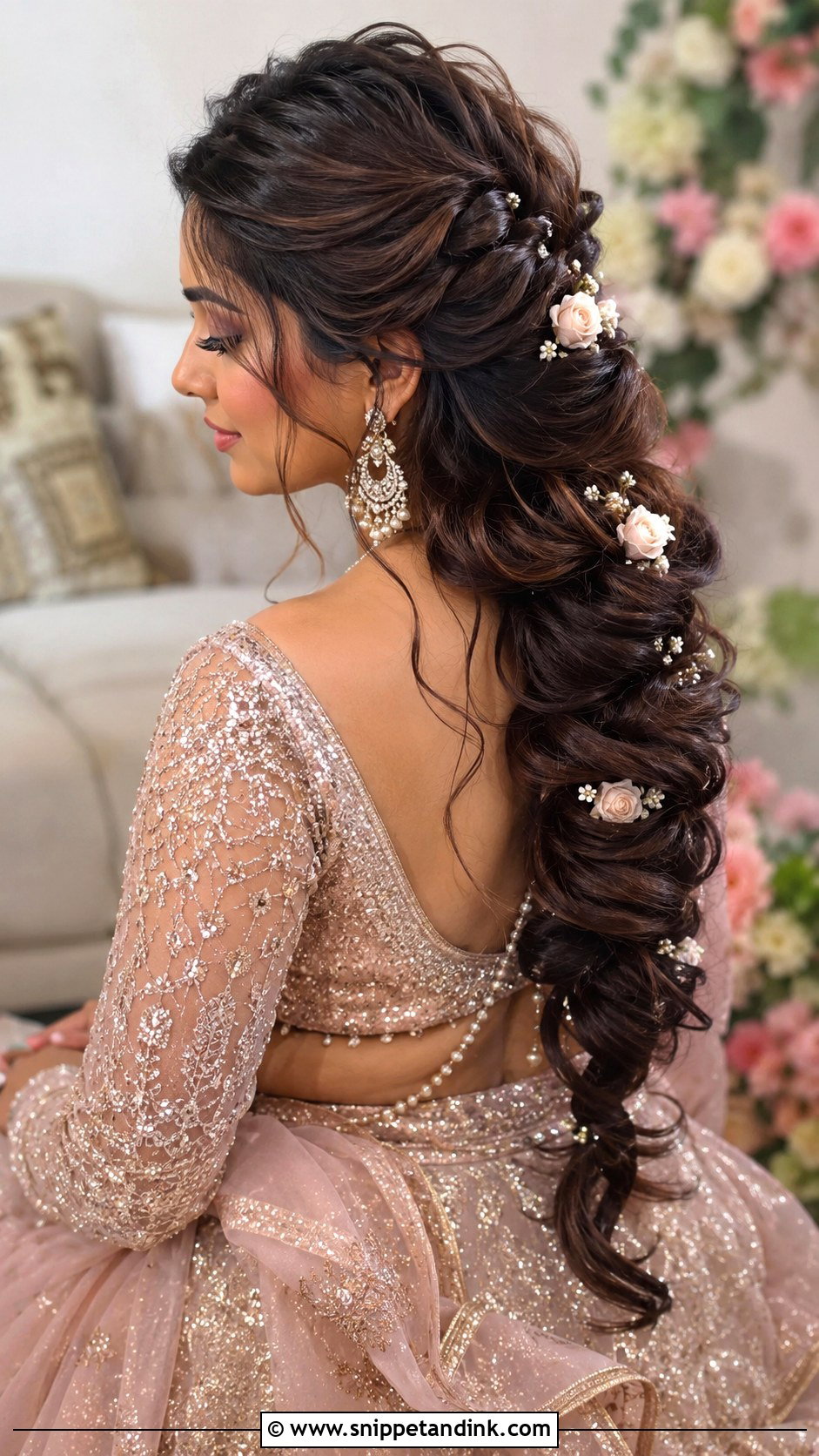
A pull through braid isn’t woven; it’s built from sections tied off and looped through each other, then pulled wide. That gives the thickest shape here and it suits fine hair well, especially with a few extensions added. Short layers that would escape a plait get caught in the elastics instead. I curl the hair first for body. It looks full in reception and sangeet photos from every angle, worn down the back or over one shoulder. A jewelled clip at the top hides the first elastic.
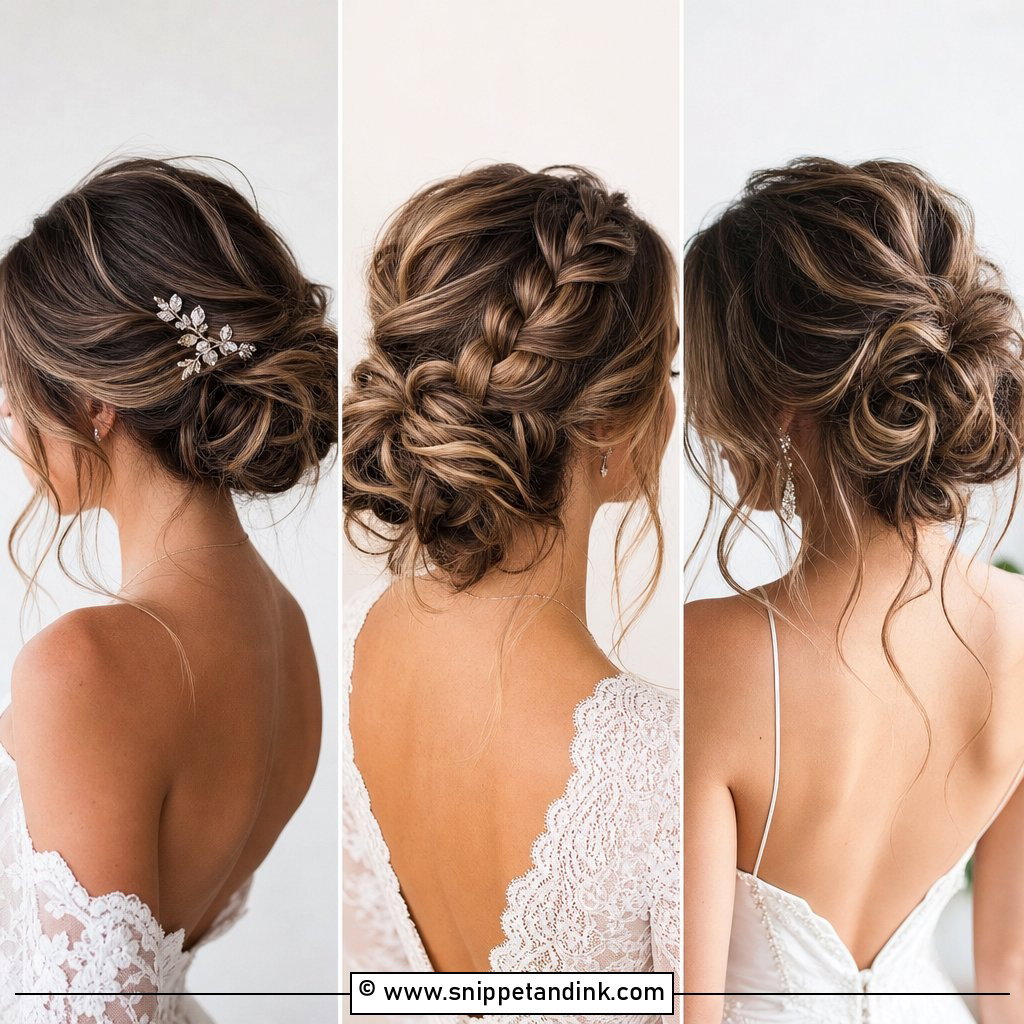
15. Messy South Indian Braid For Wedding
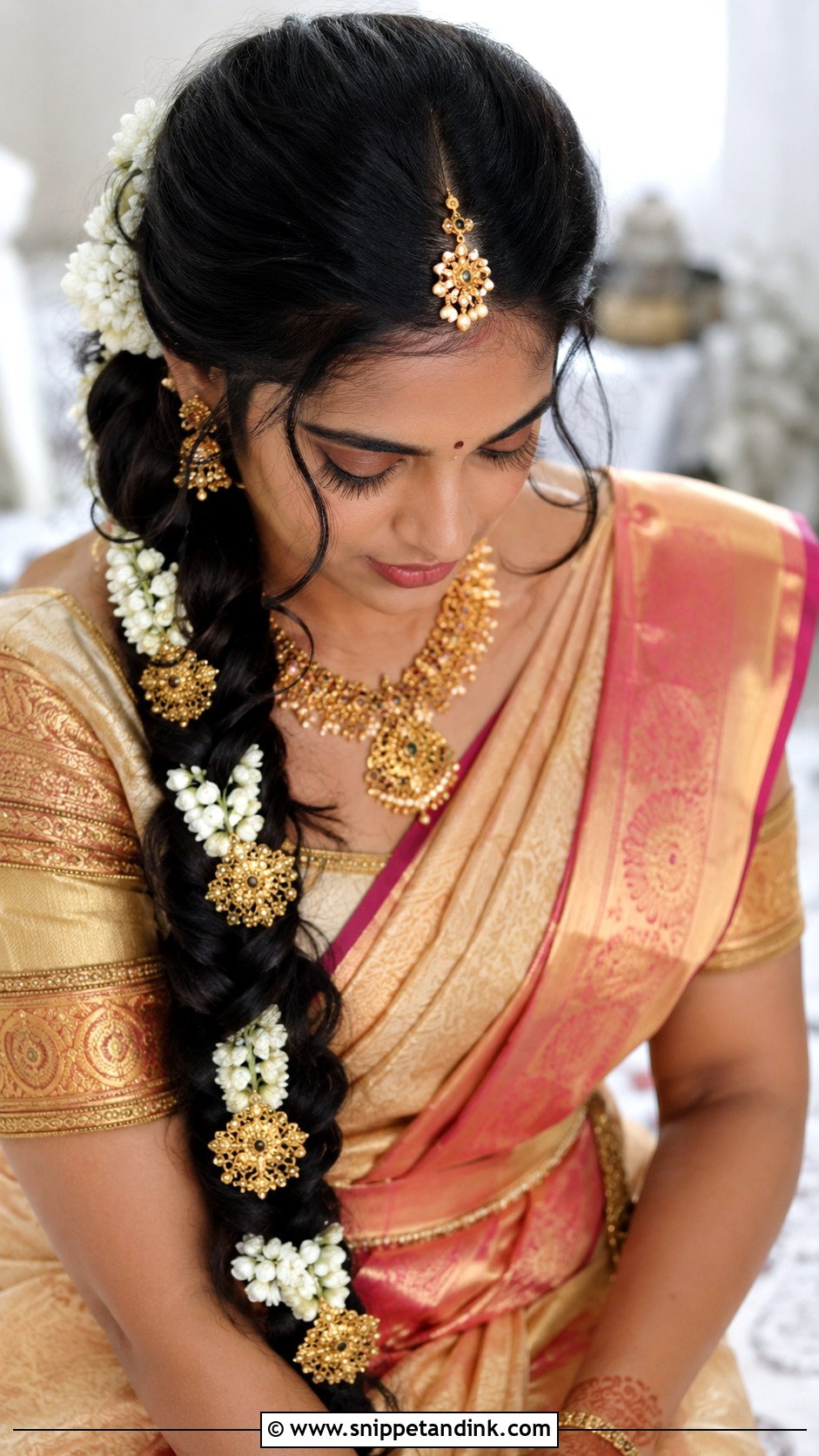
A messy South Indian braid for wedding keeps the long bridal braid but drops the sleek, heavily lacquered finish of traditional versions. I keep a firm core braid, because South Indian ceremonies are long and often involve sitting on the floor, then pull only the surface apart for fullness. Jasmine, gold and temple pieces are sewn or pinned along that core. It sits well with kanjeevaram sarees and temple jewellery. A centre part with a maang tikka or traditional hair ornament completes it, and it photographs with real depth.
Borrowed Length for a Thicker Bridal Braid
Many of the fullest braids you see at Indian weddings have extensions woven in, and there’s nothing to be shy about. A braid shows thickness more than almost any other style, so a few added wefts make a visible difference.
Getting extensions to disappear into a braid
- Match the colour in daylight. Very dark hair often has a brown tint that a jet black extension won’t match, and the difference shows at the ends of a braid.
- Pick human hair if you’ll be curling it. Synthetic fibre can frizz or melt under heat.
- Attach the wefts below the crown and braid over them. Extensions placed too high show at the parting when the braid moves.
- Remember the weight. Long wefts plus a jada or a heavy paranda can pull at the scalp, so wear the whole set for a few hours before the wedding.
Traditional choti extensions and ready-made braided pieces are an option too, especially for South Indian styles where length matters. Ask your stylist to blend them in at the trial and check the join from both sides, since that’s where photographers and guests will be looking.
Which Braid for Which Function?
Messy braids can be soft and floral for mehndi, bold and textured for sangeet, or polished and bridal for the main ceremony. Match the braid to your outfit, your jewellery, your hair length and the mood of the event. Fishtail, Dutch, jasmine, paranda and South Indian braids each bring something different, and most brides end up wearing two or three of them over the week. Whichever you choose, ask for a firm foundation and loose texture on top. That’s what keeps it looking relaxed in photos and secure through every function.
You'll Like These Ideas:



Leave a Reply