
A classic white wedding asks the hair to sit quietly alongside a lot of white: the gown, the veil, often pearls or a satin bow. In my chair, the brides who end up happiest are the ones who choose a style for the neckline, the veil and their own texture first, and the accessories second. Below are the fifteen shapes I build most for traditional white weddings, with notes on how each one holds, who it suits and where it tends to go wrong. Save the ones you like and bring them to your trial, along with the actual veil and pins you plan to wear.
Holding Every Hair Piece Against the Gown in Daylight
White is never one colour. Bridal gowns come in optic white, soft white, ivory, champagne and blush, and hair accessories come in just as many. Under a salon light they all look the same. Outside, an optic white bow next to an ivory dress makes the dress look yellowed, and that’s very hard to fix in editing.
- Ask your bridal shop for a fabric swatch, or photograph the gown by a window on its tag colour.
- Hold each pin, comb, bow or veil against that swatch in natural daylight, not under shop lighting.
- If in doubt, go one shade warmer than the dress rather than brighter. A slightly warmer pearl reads as a soft glow; a brighter one reads as a mismatch.
- Check metal finishes too. A gold comb next to silver earrings is one of the details brides notice in their photos months later.
Your veil should match the gown’s shade exactly, since it sits directly against it in every photo. Smaller hair pieces can be a step off as long as they lean warmer.
1. White Wedding Low Bun
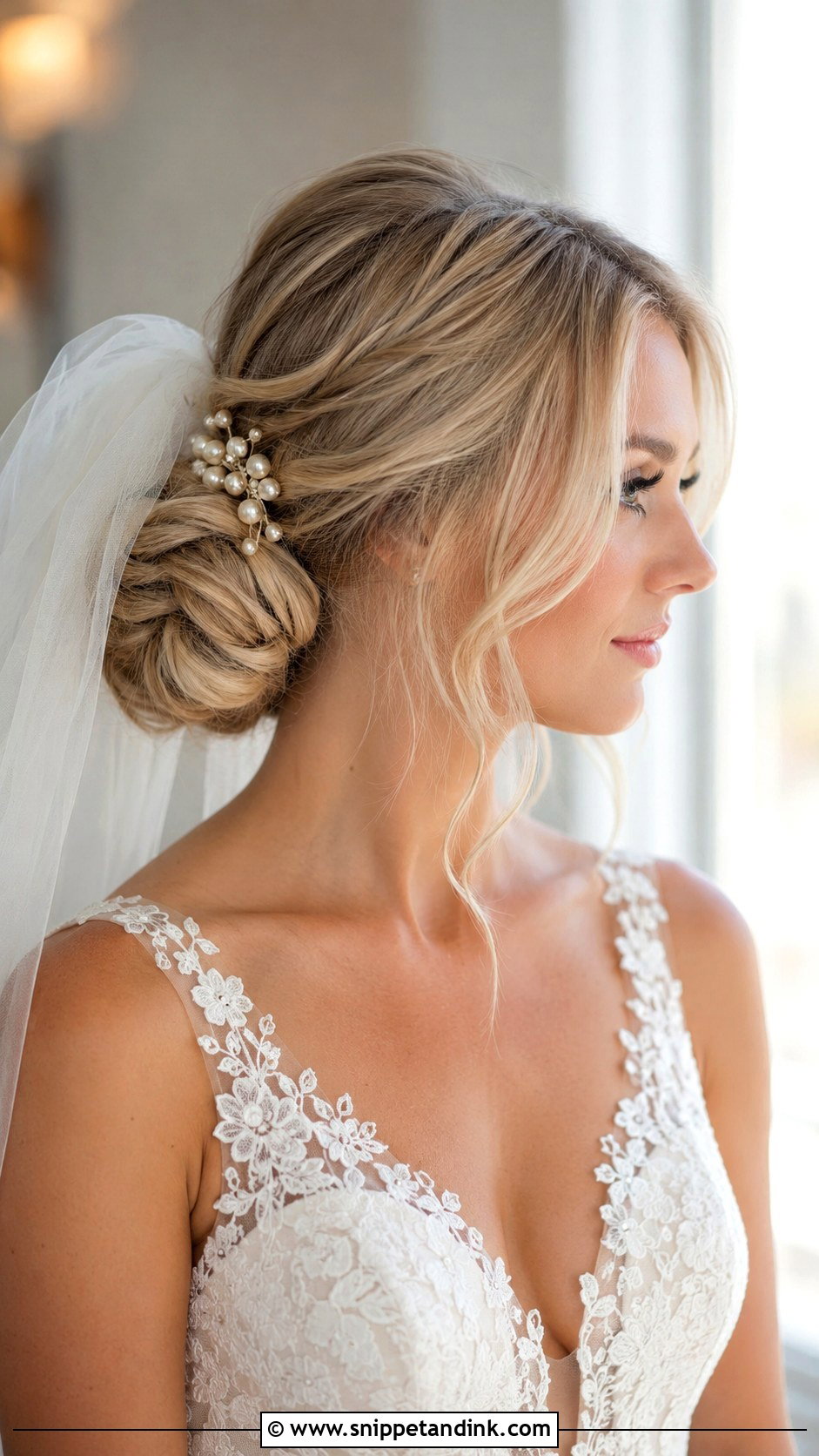
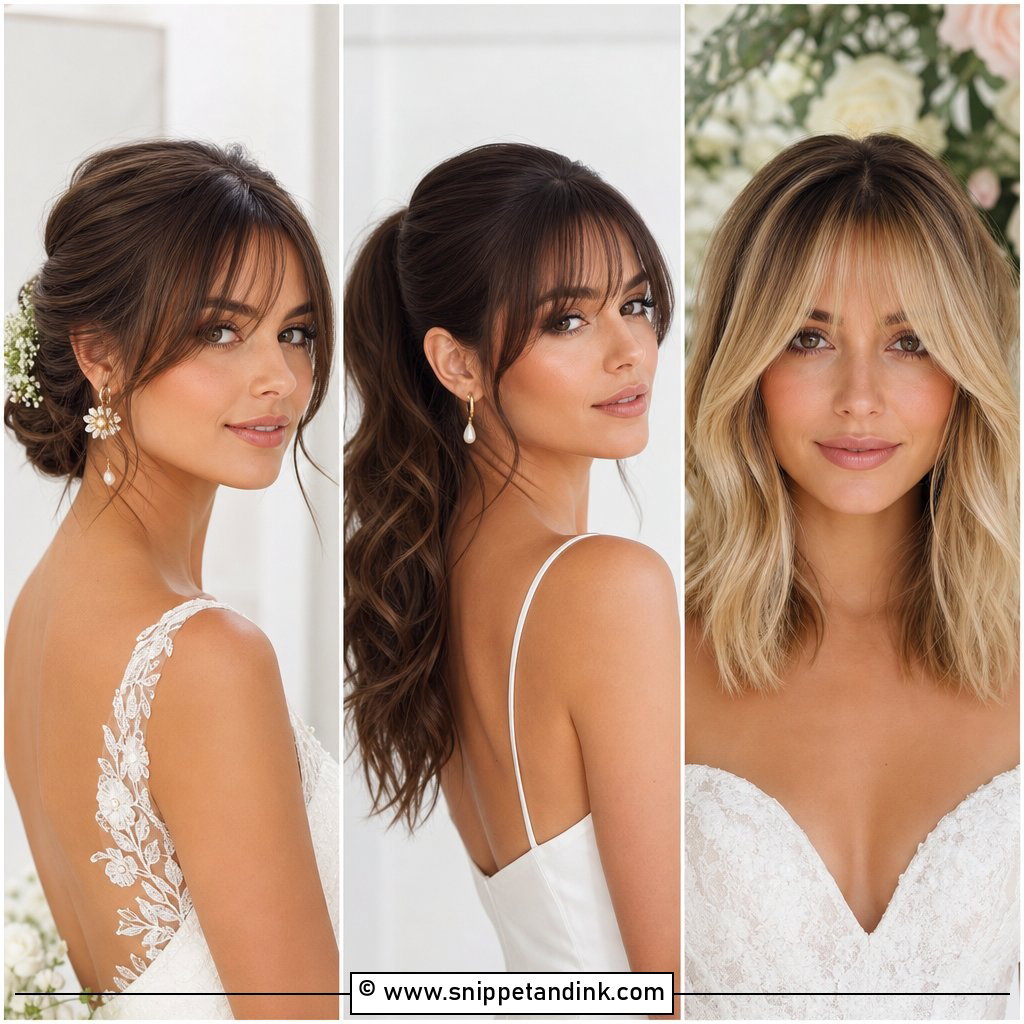
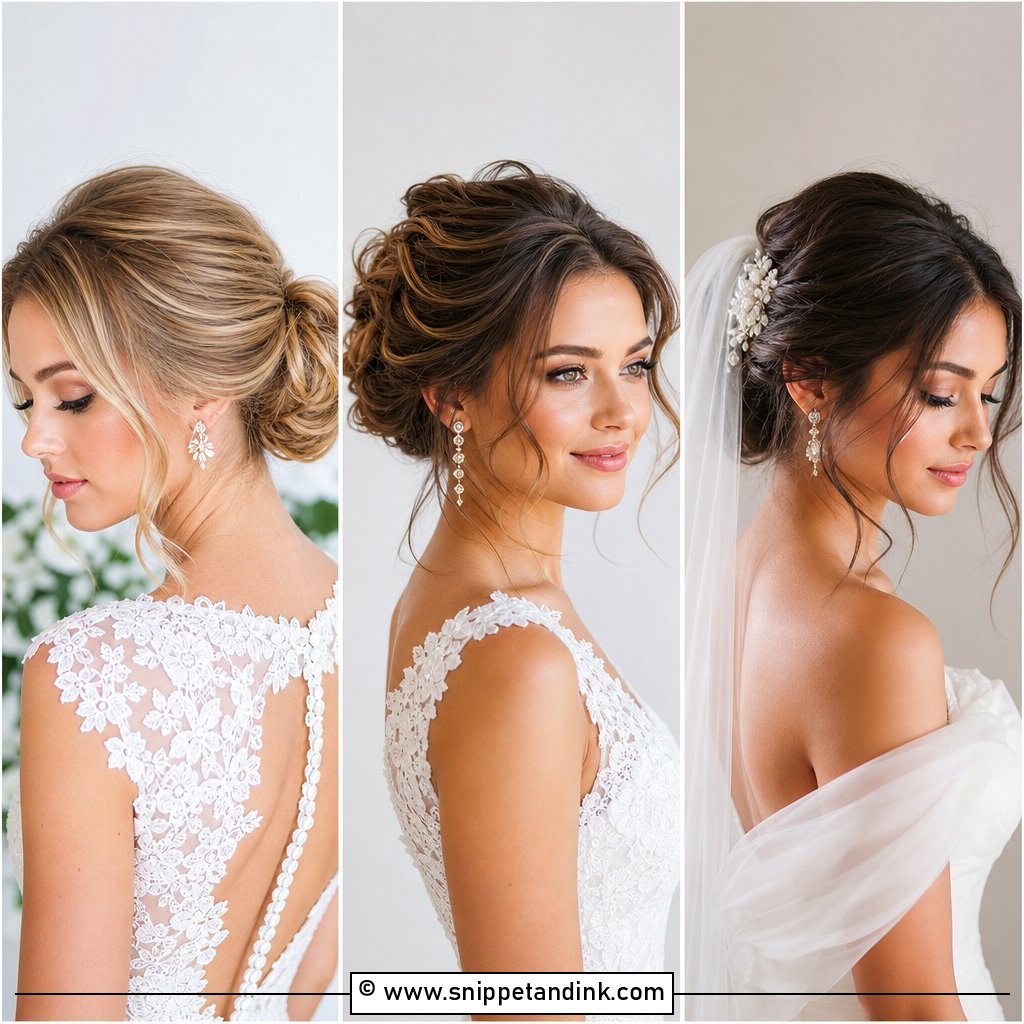
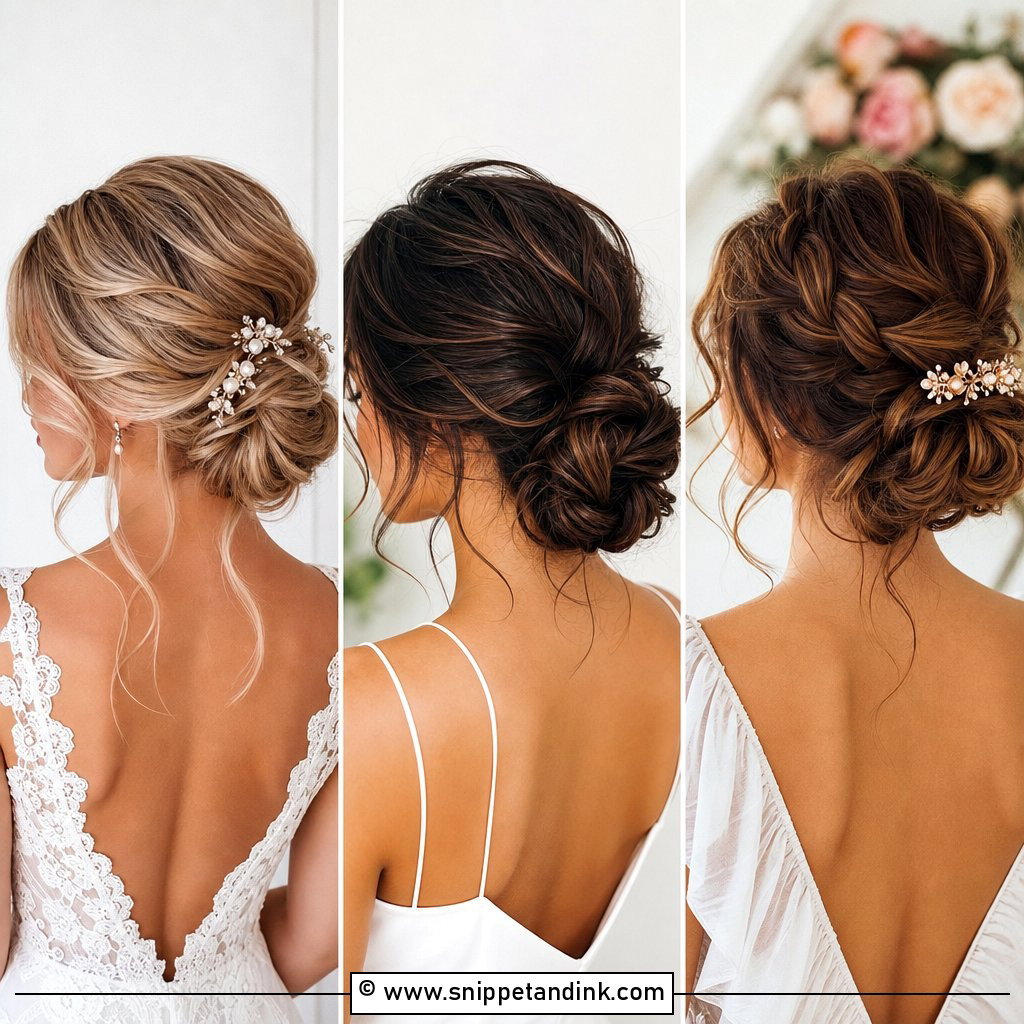
I’d call the low bun the most reliable shape in bridal hair, because it keeps the face open and leaves the dress to do the talking. It sits well under strapless gowns, high necks and lace sleeves, and a long veil comb has a firm base to grip just above it. I build some soft lift at the crown first, then set the bun right at the nape. Two or three loose face pieces stop it from looking severe. Once it’s pinned properly it barely moves between the ceremony and the last dance.
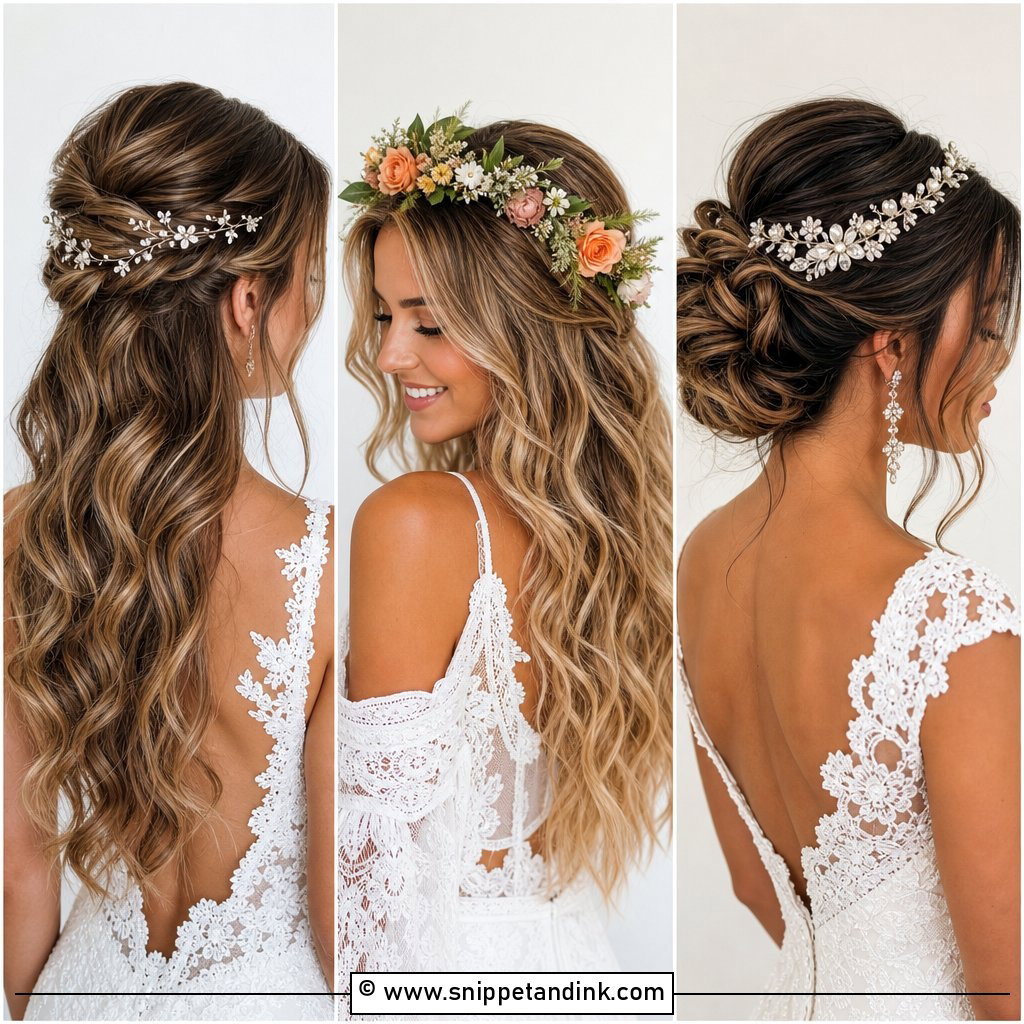
2. White Wedding Half Up Hair
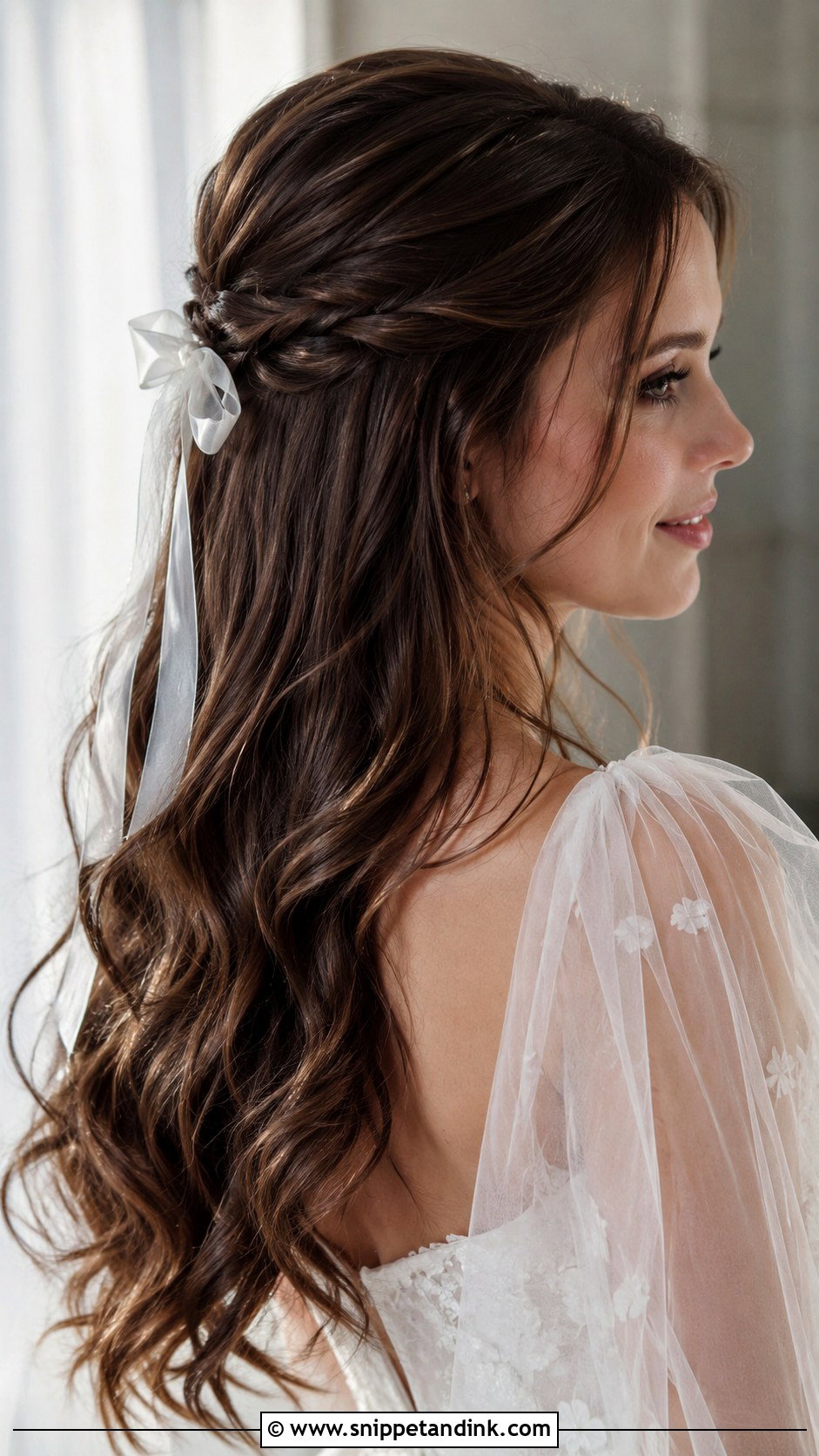
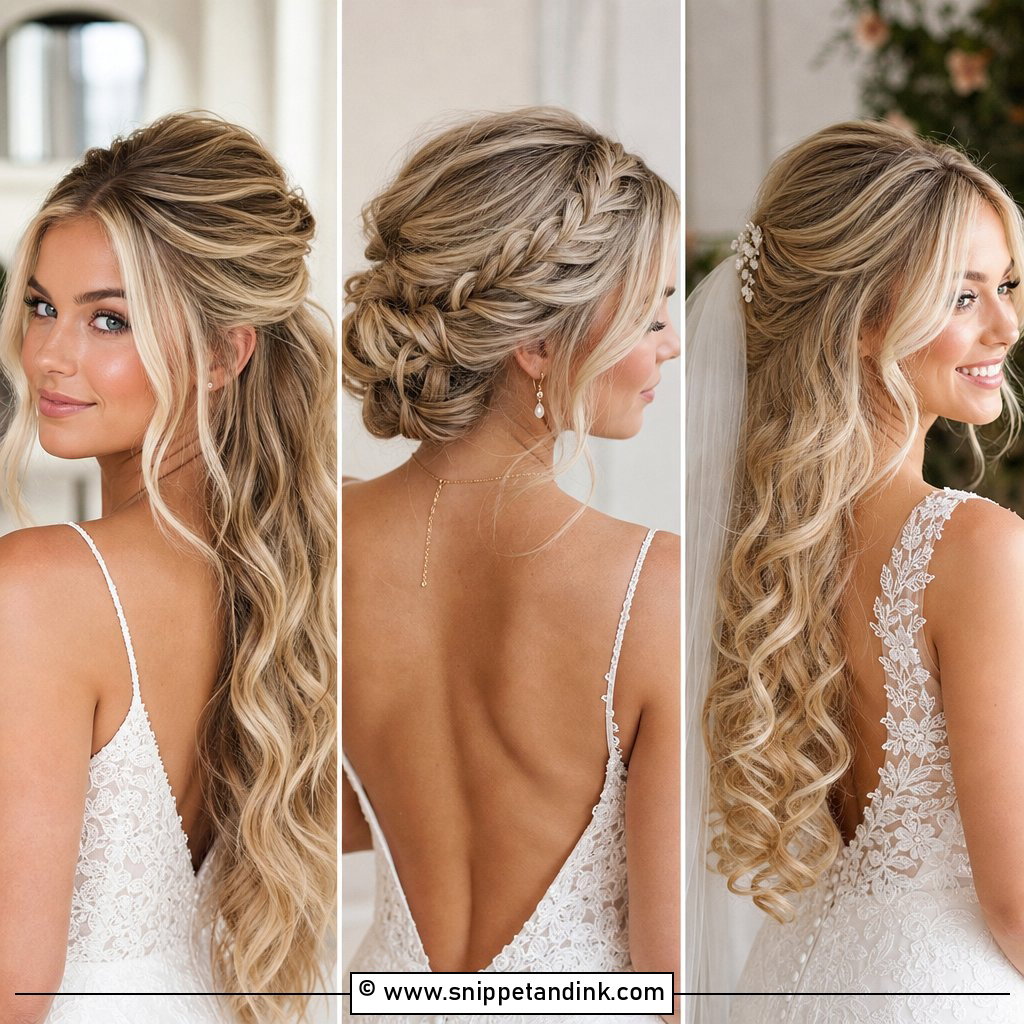
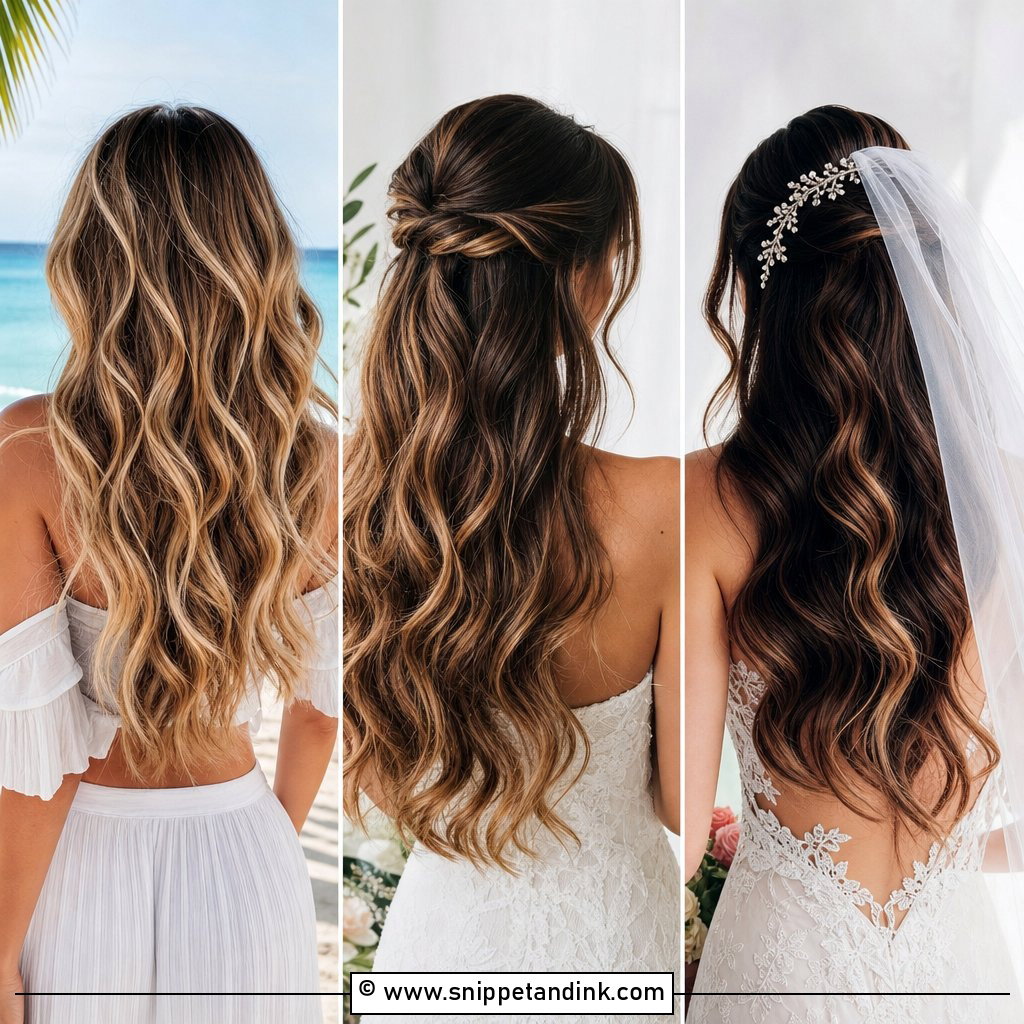
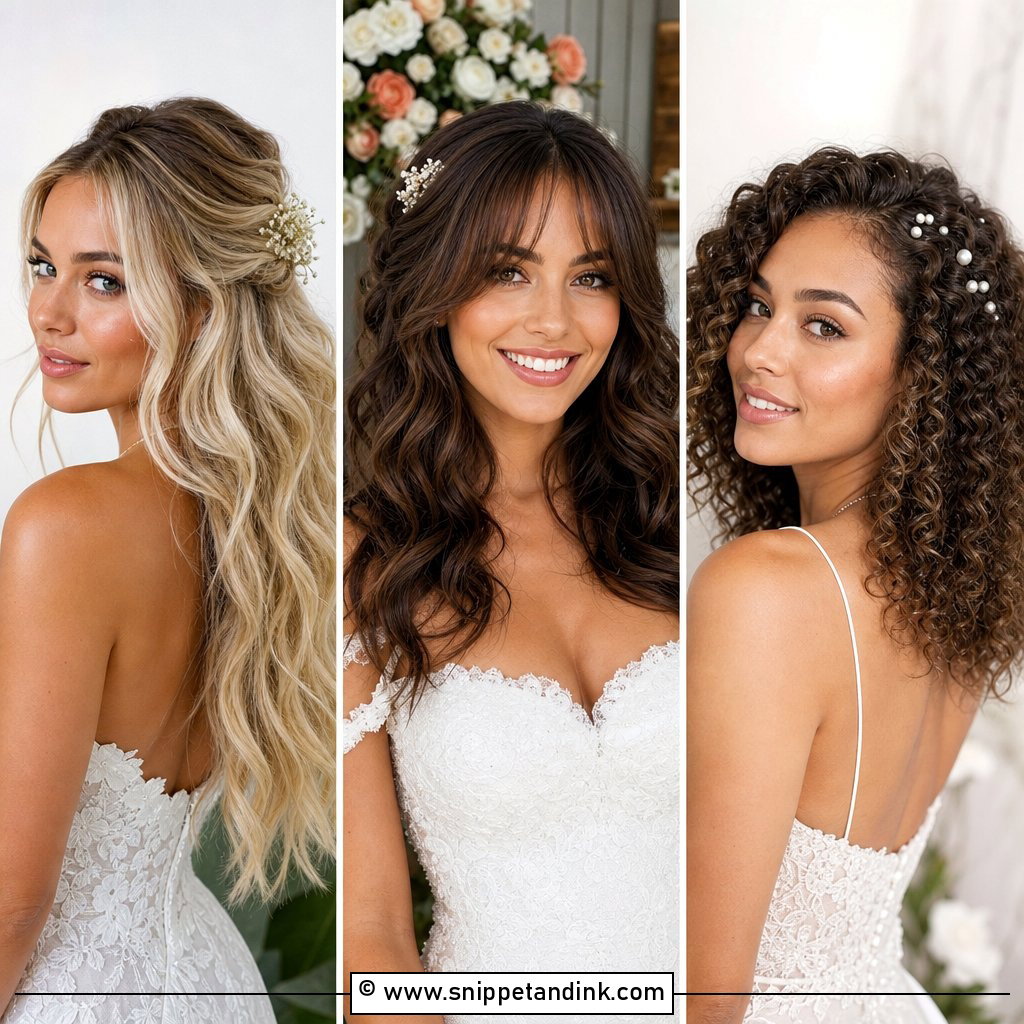
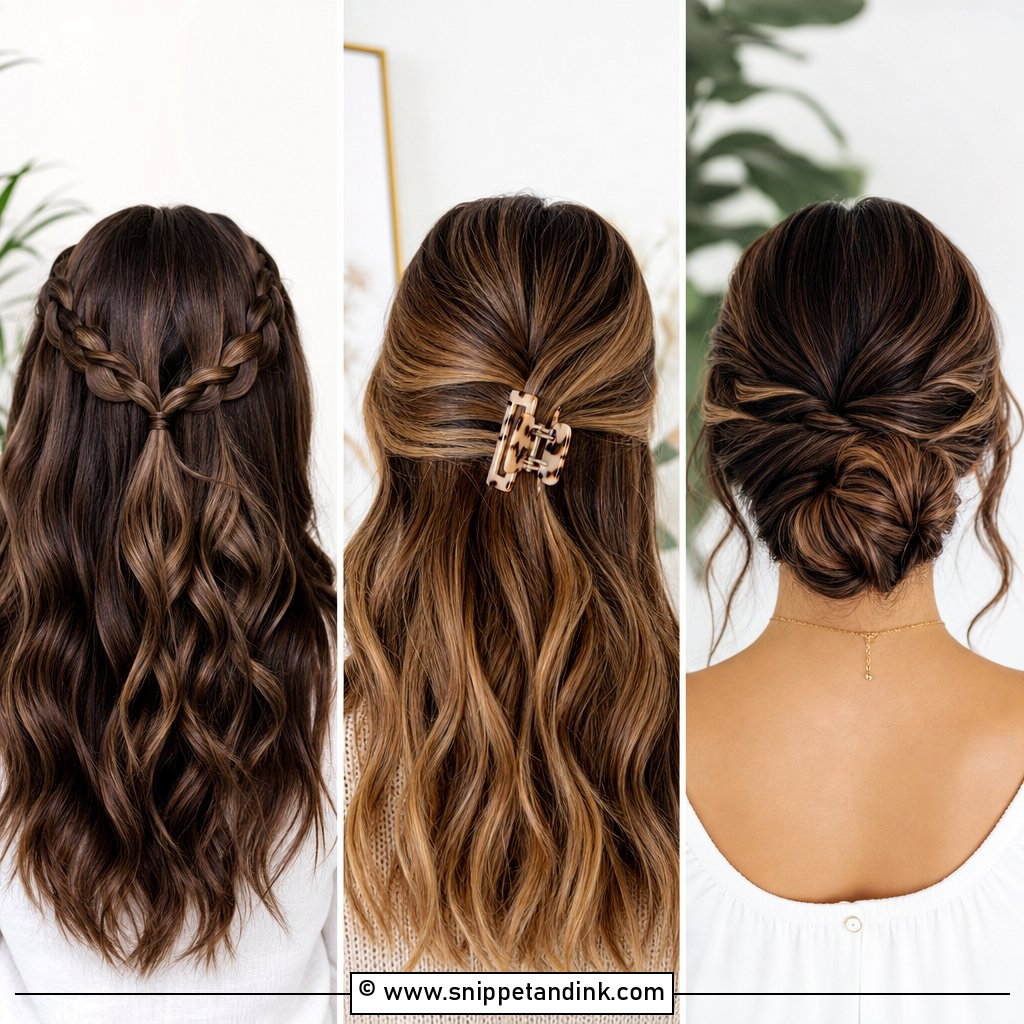
Half up gives you hair moving around the shoulders with enough of it secured that wind and hugs don’t wreck it. The top section can be twisted, braided or simply pinned back, and the lengths are curled. What I watch for is tension: if the pinned section is pulled too tight, the crown flattens and the style starts to look like a school photo. Keep it soft at the top. It’s a sensible pick for garden ceremonies, but in high humidity the curls in the lengths will relax faster than an updo would.
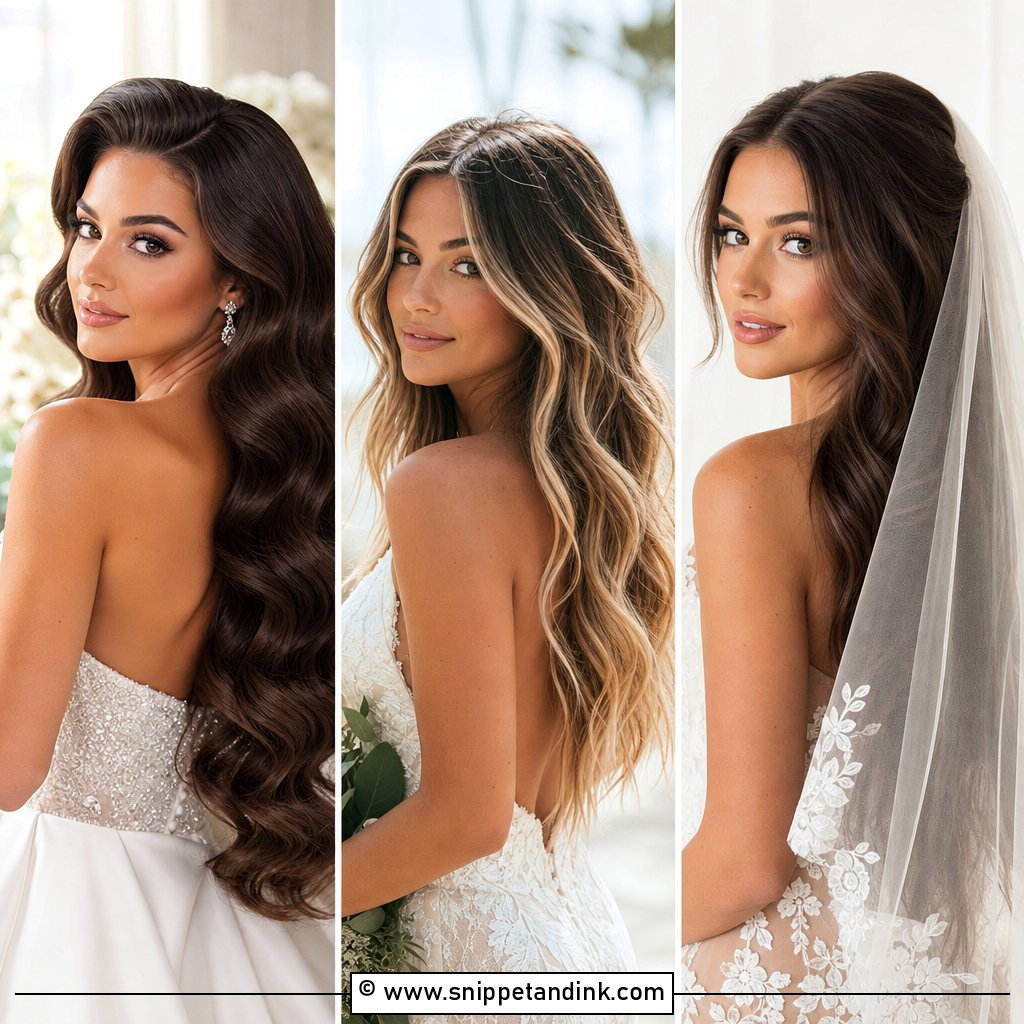
3. White Wedding Hollywood Waves
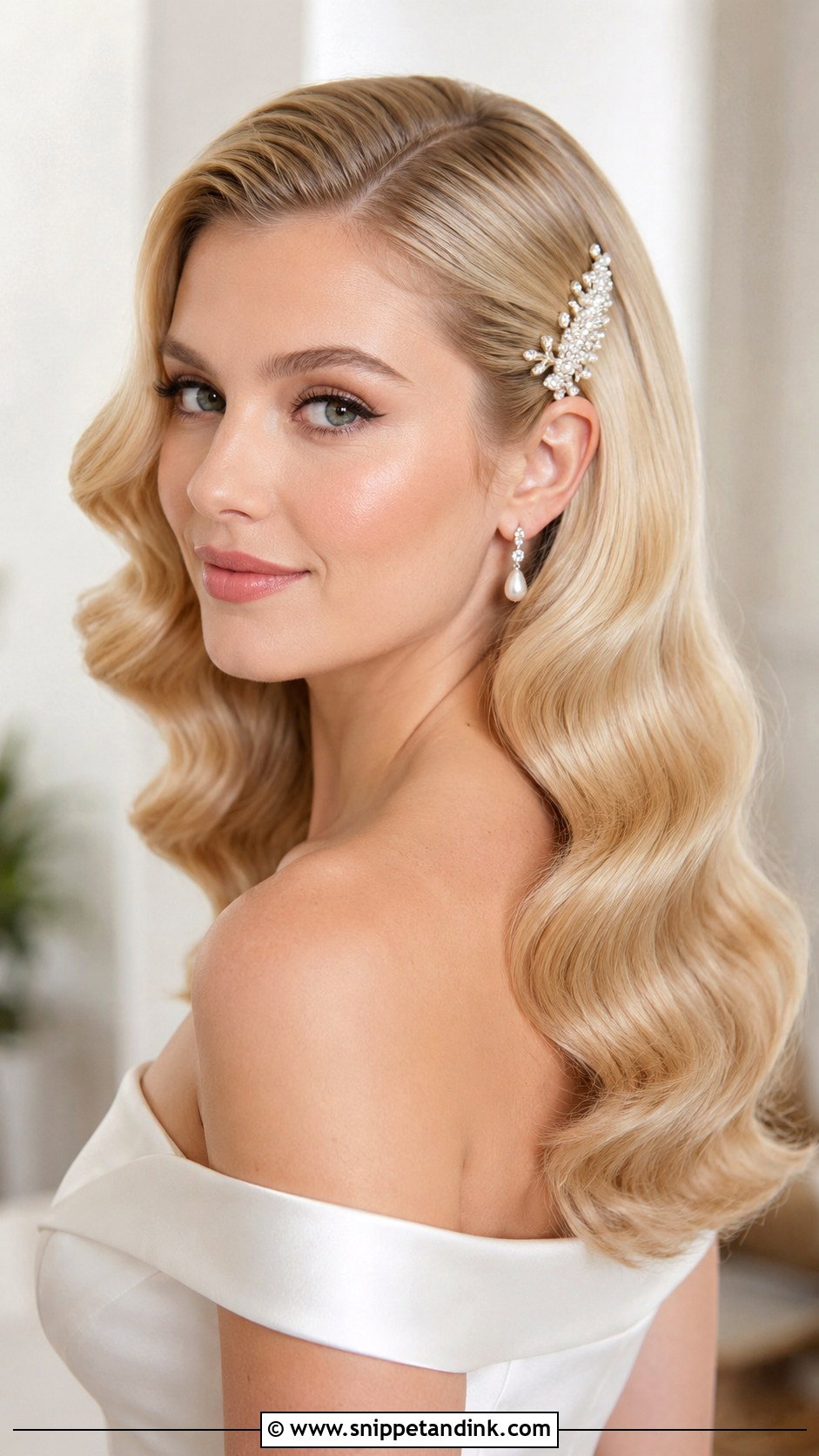
Hollywood waves are all prep. Every section gets curled in the same direction, pinned to cool, then brushed out and pressed into one continuous S with clips while the spray sets. Done well, the hair looks glassy and sculpted next to a satin gown or an off-the-shoulder neckline. A deep side part gives the vintage version; a centre part looks more current. If you add a crystal barrette, place it where it won’t break the line of the wave, usually just behind the ear on the heavier side.
4. White Wedding Chignon
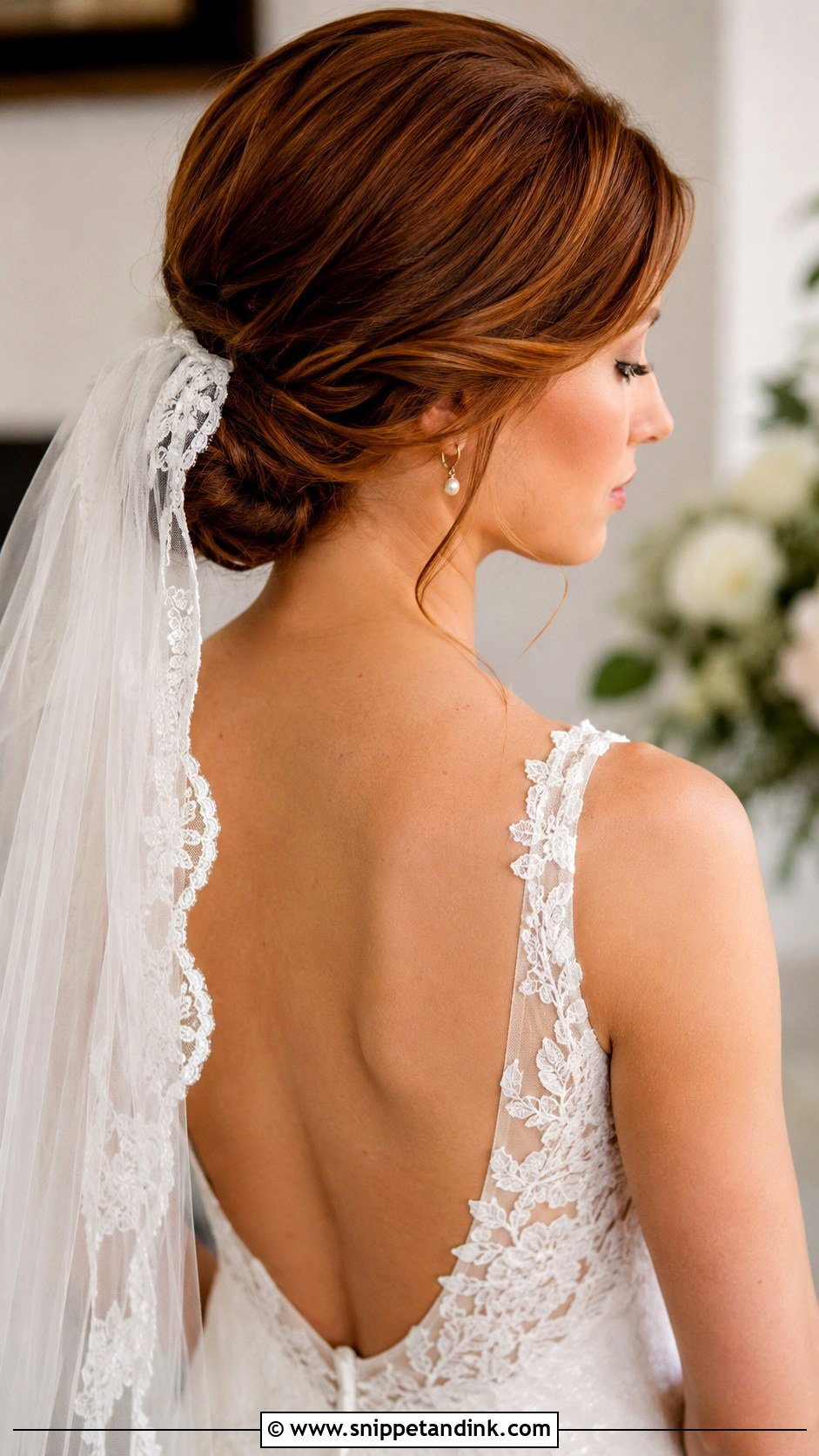
A chignon is a bun with more shaping: tucked twists and folded sections rather than a single wrapped coil. I usually set it at the nape or slightly off to one side. It keeps hair lifted off the shoulders, so it suits gowns with a detailed back, and it gives a lace veil or pearl comb plenty to anchor into. Ask for a little texture through the crown. A completely flat crown above a chignon reads stiff in profile shots.
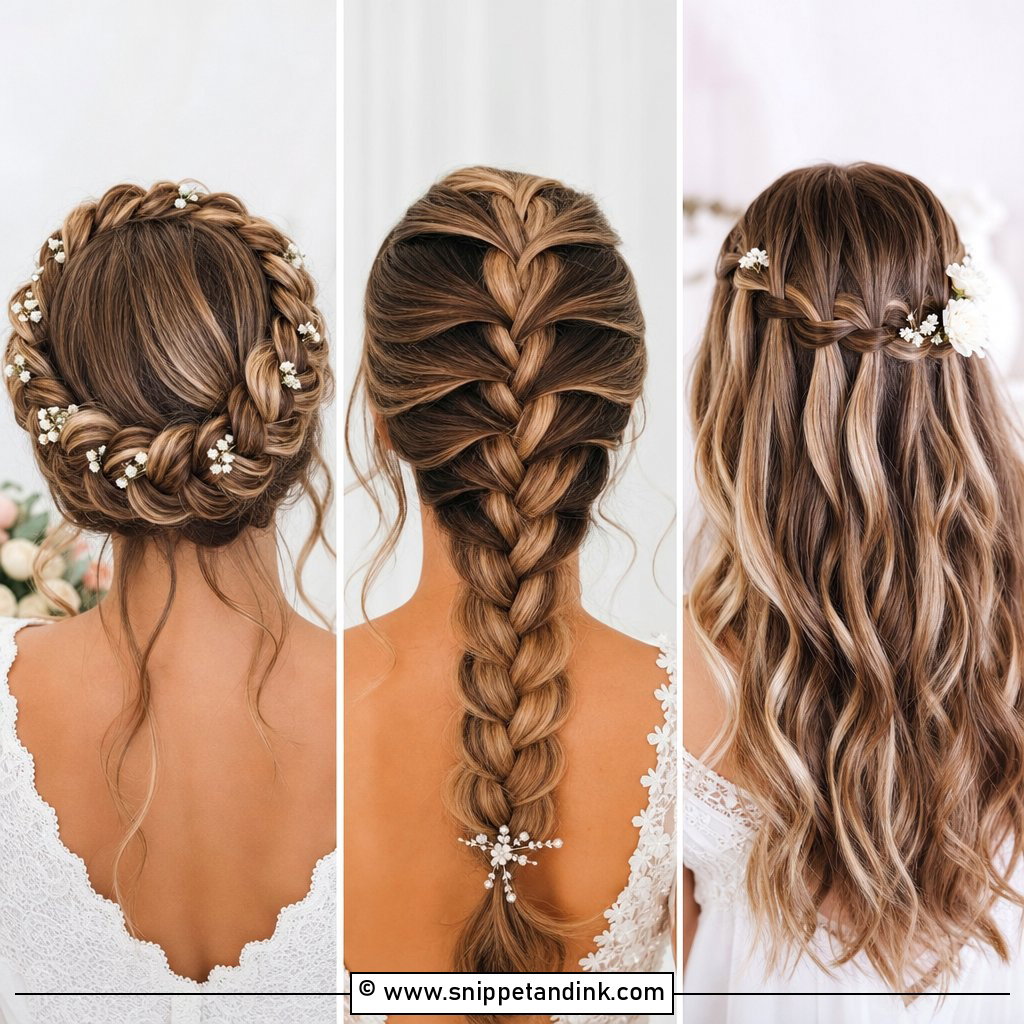
5. White Wedding Braided Updo
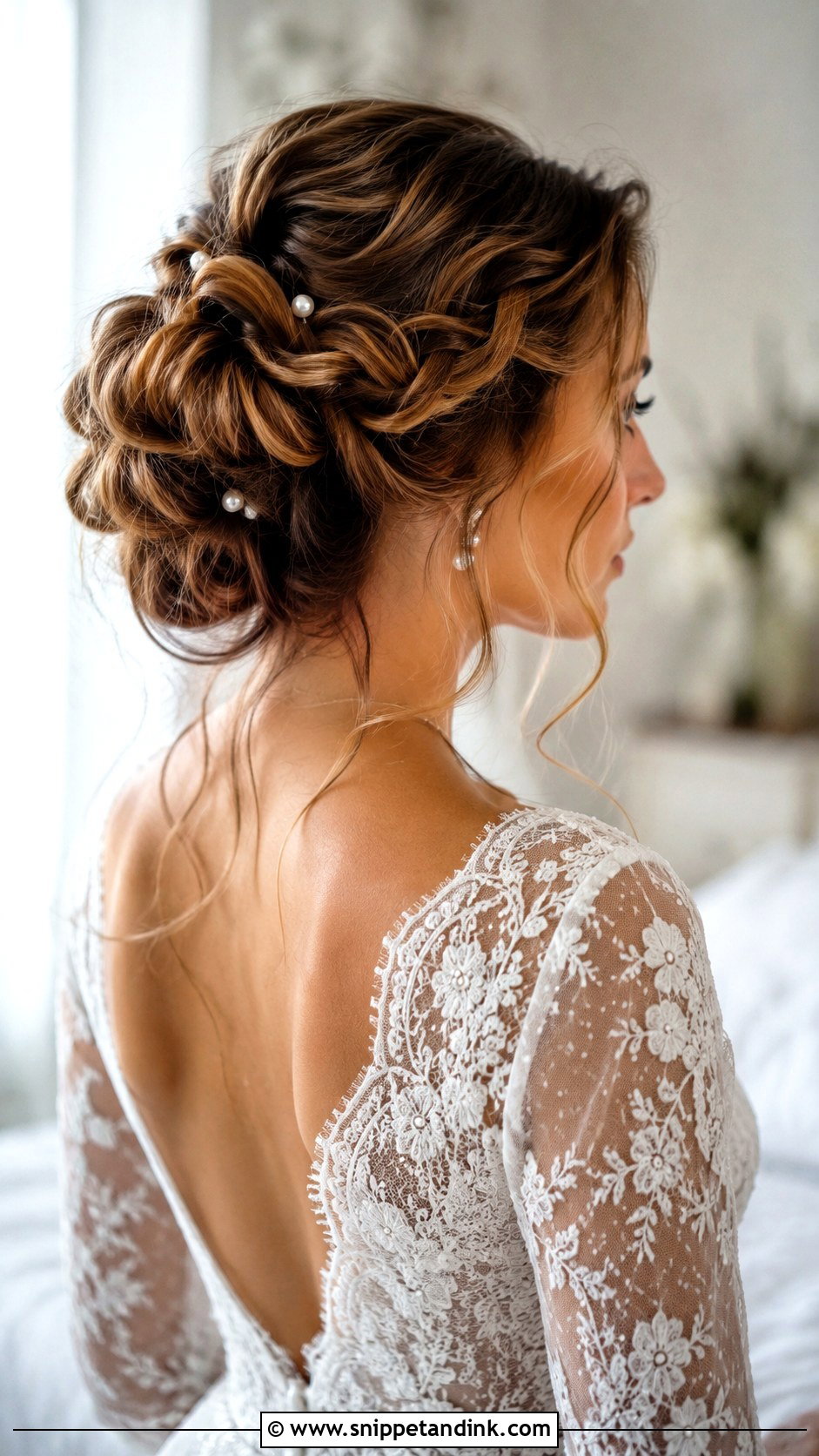
Braided updos give you detail built into the hair itself, so you need fewer accessories. The braids can wrap into a bun, run across the crown or fold into a low updo. I rely on them for very long or very thick hair, because the braid carries the weight that pins alone would struggle with by evening. Gently pull the braid edges wider after it’s secured so it reads full in photos. Tiny white flowers or pearl pins along the braid line are plenty.
6. White Wedding Ponytail
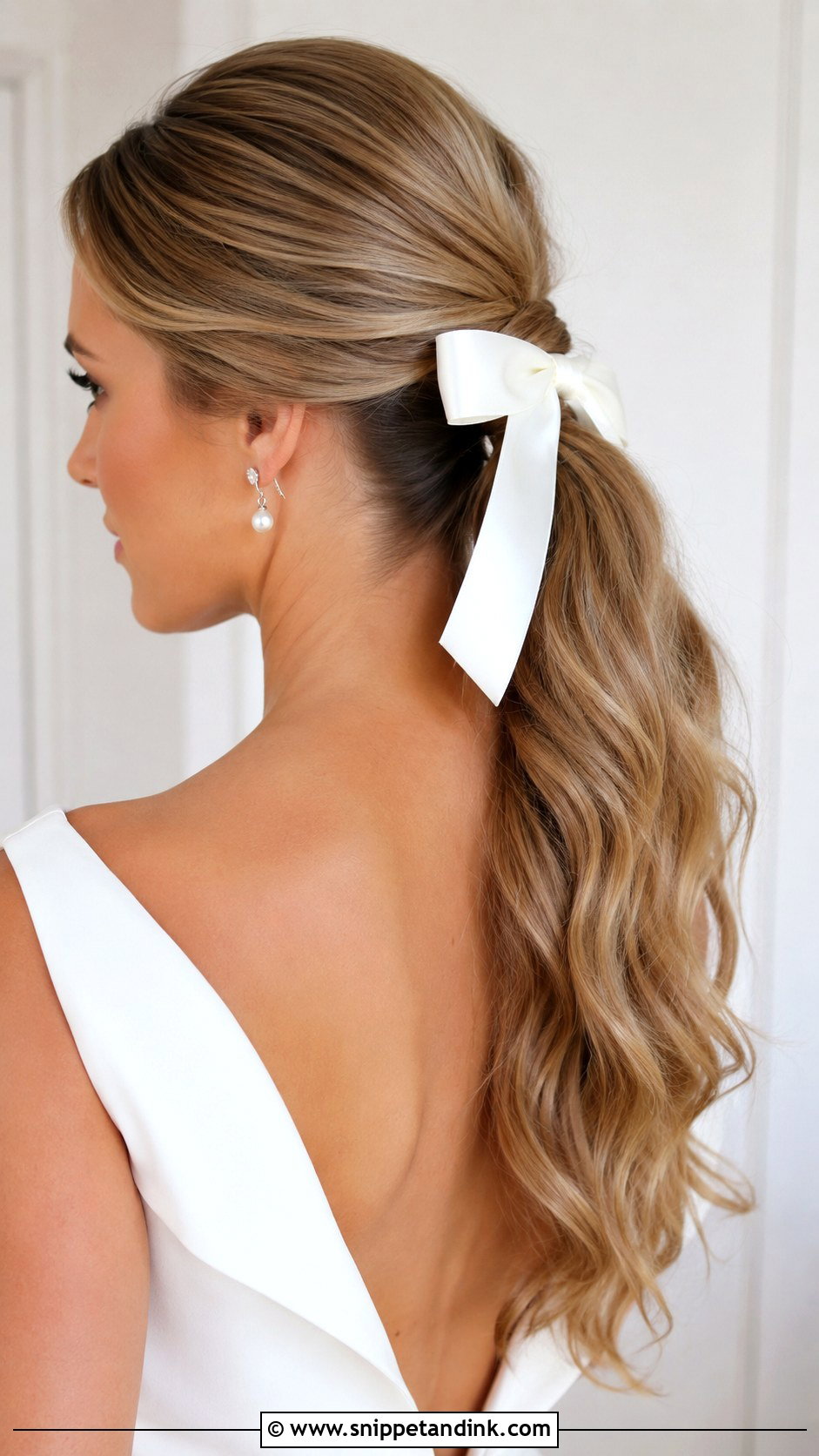
A ponytail looks bridal when the base is wrapped, the crown has lift and the tail is curled. High reads glamorous, mid-height balanced, low quite minimal. I always wrap a strip of hair around the elastic and pin it from underneath, then add a satin bow or pearl wrap if the bride wants more. Brides who plan to dance hard love this one because nothing falls in their face. The trade-off is weight: a long, heavy high ponytail can give some people a headache after six or seven hours, so test it at the trial for a full afternoon if you can.
7. White Wedding Hair With Pearls
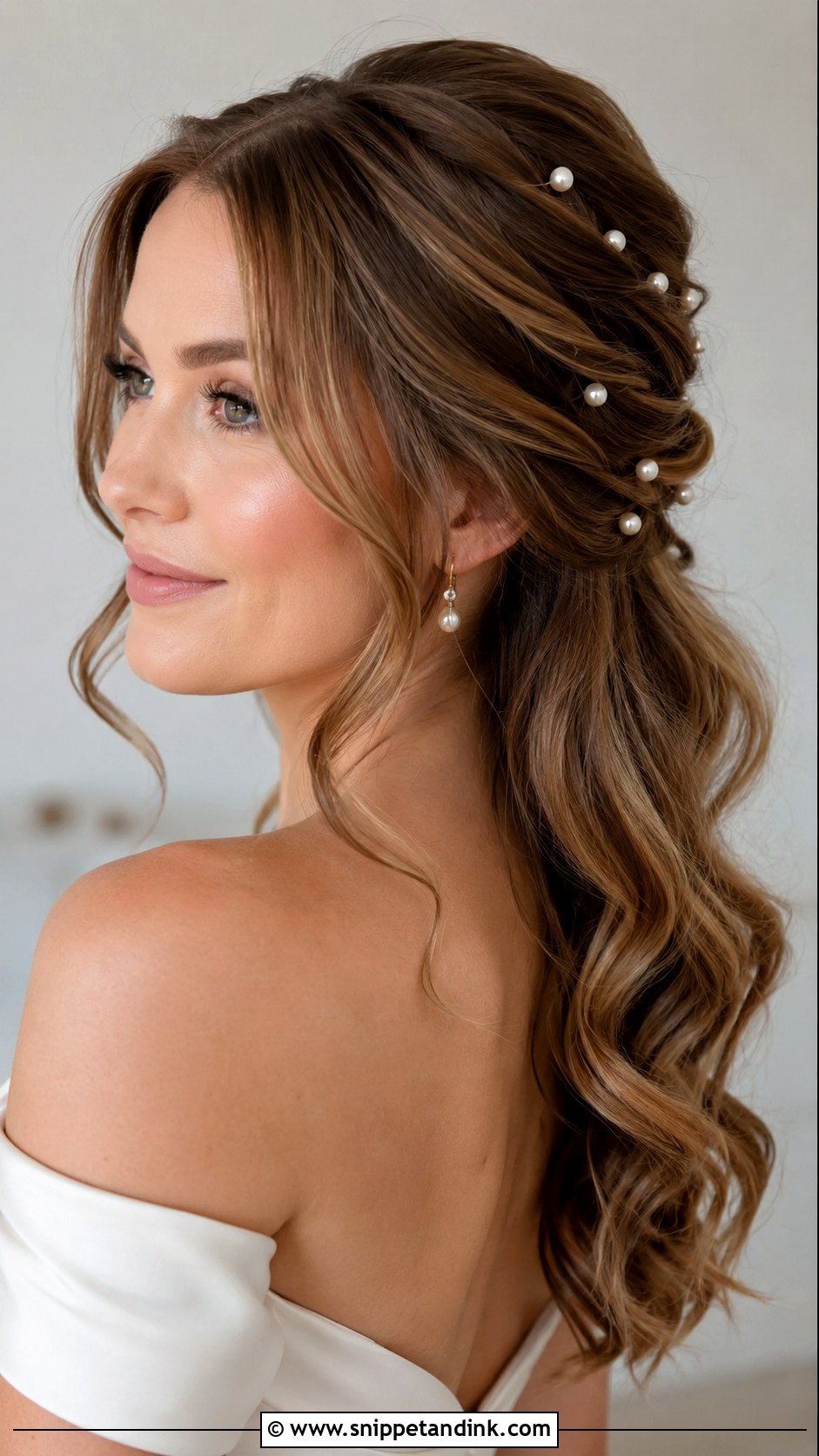
Pearls work in almost any style here: scattered through waves, pinned into a low bun, set along a braid or clustered at a half up gather. The mistake I correct most often is too many. Five or six well-spaced pins look deliberate; twenty look like a hairnet. They sit well with lace, satin, tulle and plain crepe gowns. Check the pearl tone against your gown in daylight, since a bright white pearl next to ivory fabric can look slightly blue in photos.
8. White Wedding Hair With Veil
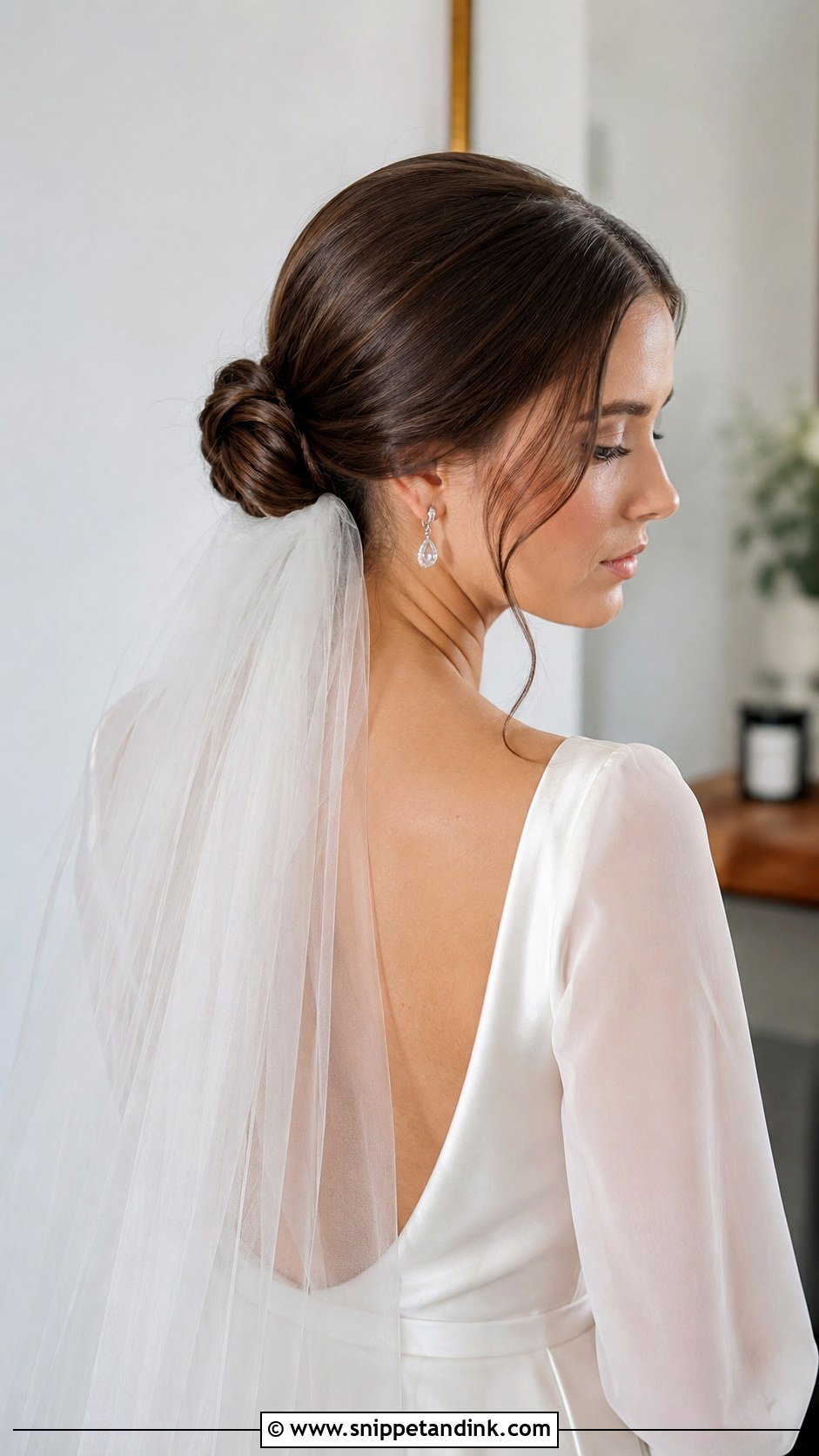
Placement changes everything with a veil. Tucked above a low bun it falls in a long, traditional line; slipped under the bun it sits softer and closer to the head. For hair worn down I build a small hidden base of crossed pins or a tiny braid for the comb to grip, or the veil slides back within the hour. Bring the actual veil to the trial and practise taking it out, because the hair has to look complete once it’s gone at the reception.
9. White Wedding Hair With Flowers
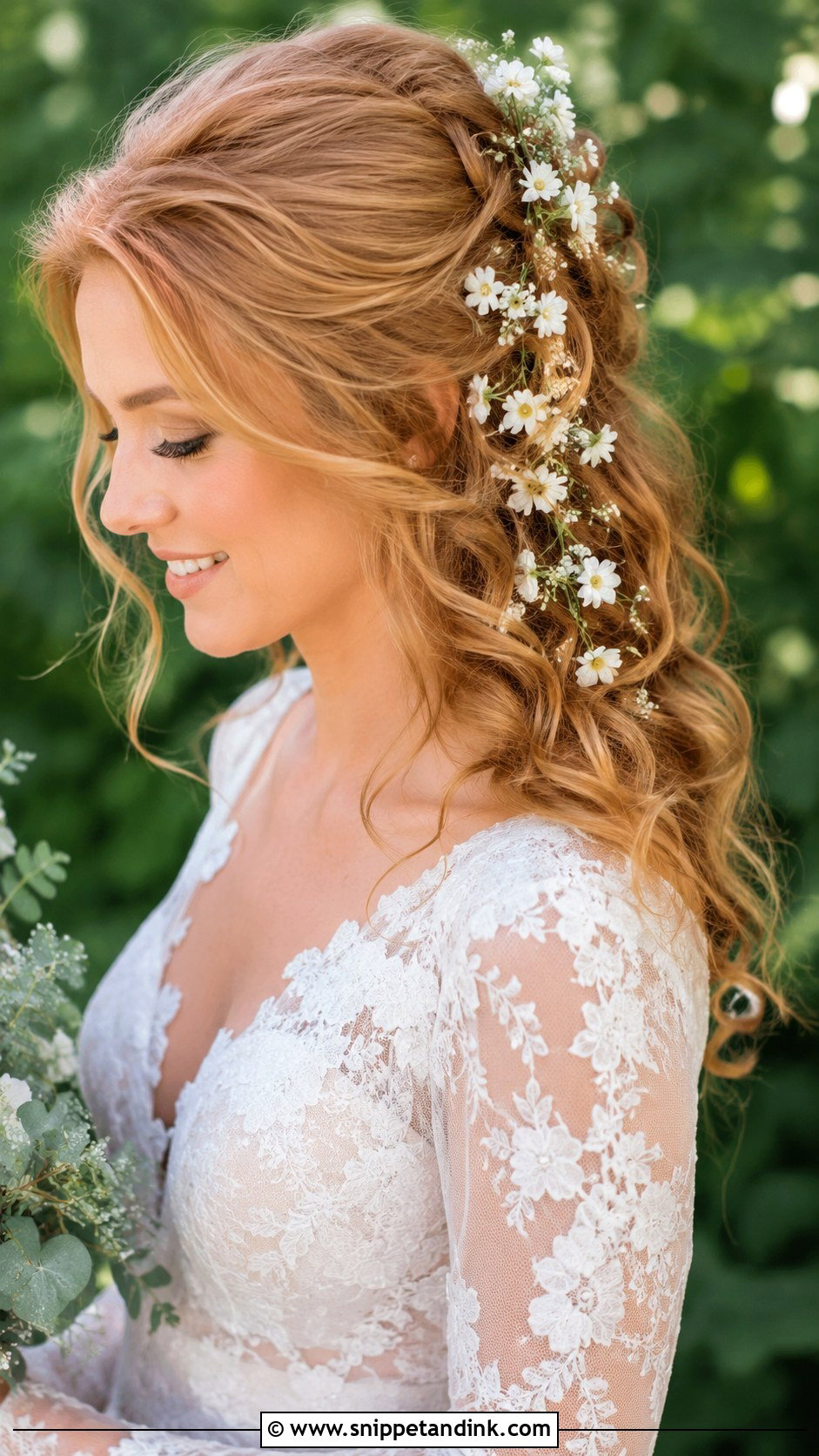
Flowers suit spring, summer, garden and beach ceremonies. Tiny white blooms tuck into braids, around a low bun or through curls; larger heads need a plain style around them or the look gets crowded. Fresh flowers need wiring and taping by the florist, and even then soft petals brown at the edges against warm hair. For a long hot day I’d usually suggest silk flowers or a mix. Place them slightly unevenly so they look gathered rather than lined up.
10. White Wedding Sleek Bun
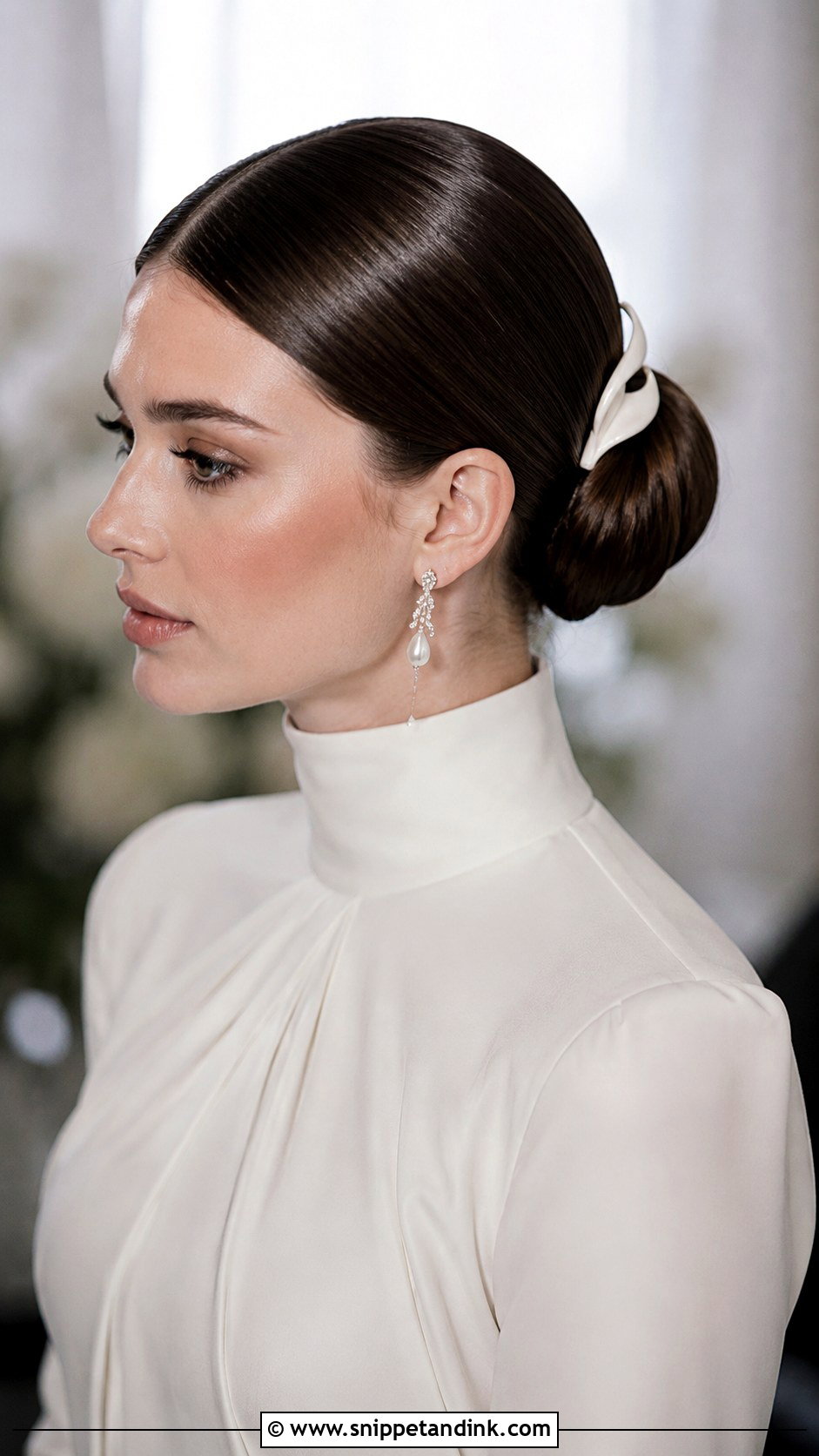
A sleek bun has nowhere to hide, so the finish needs to be flawless. I smooth the hair into a centre or deep side part, then set the bun at the nape or mid-back of the head. Shine spray, a little edge control and a firm-hold gel along the hairline keep every section flat. It’s the cleanest choice for minimalist gowns, statement earrings and city weddings. It isn’t kind to very fine hair at the temples, which can look sparse once pulled back, so I sometimes leave a soft side sweep there.
11. White Wedding Loose Curls
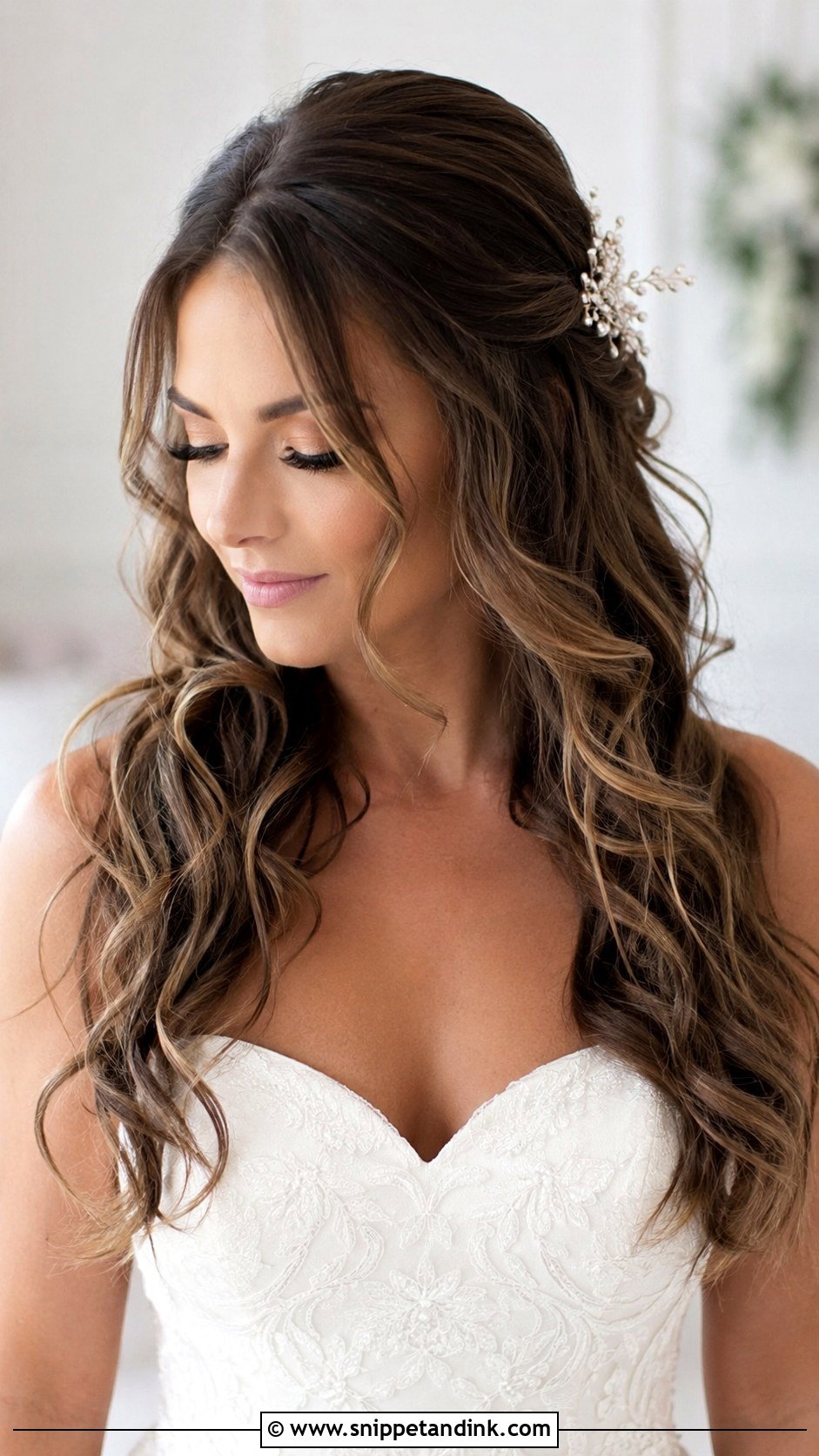
Loose curls work at nearly any length, brushed out for movement or left more defined for volume. They pair with veils, white floral clips, pearl pins and thin headbands. Prep matters more than the curling iron here. Freshly conditioned, very soft hair won’t grip a curl, so I add a texture or volume product first. Layered cuts hold curls longer because the shorter pieces carry less weight.
12. White Wedding Short Hair
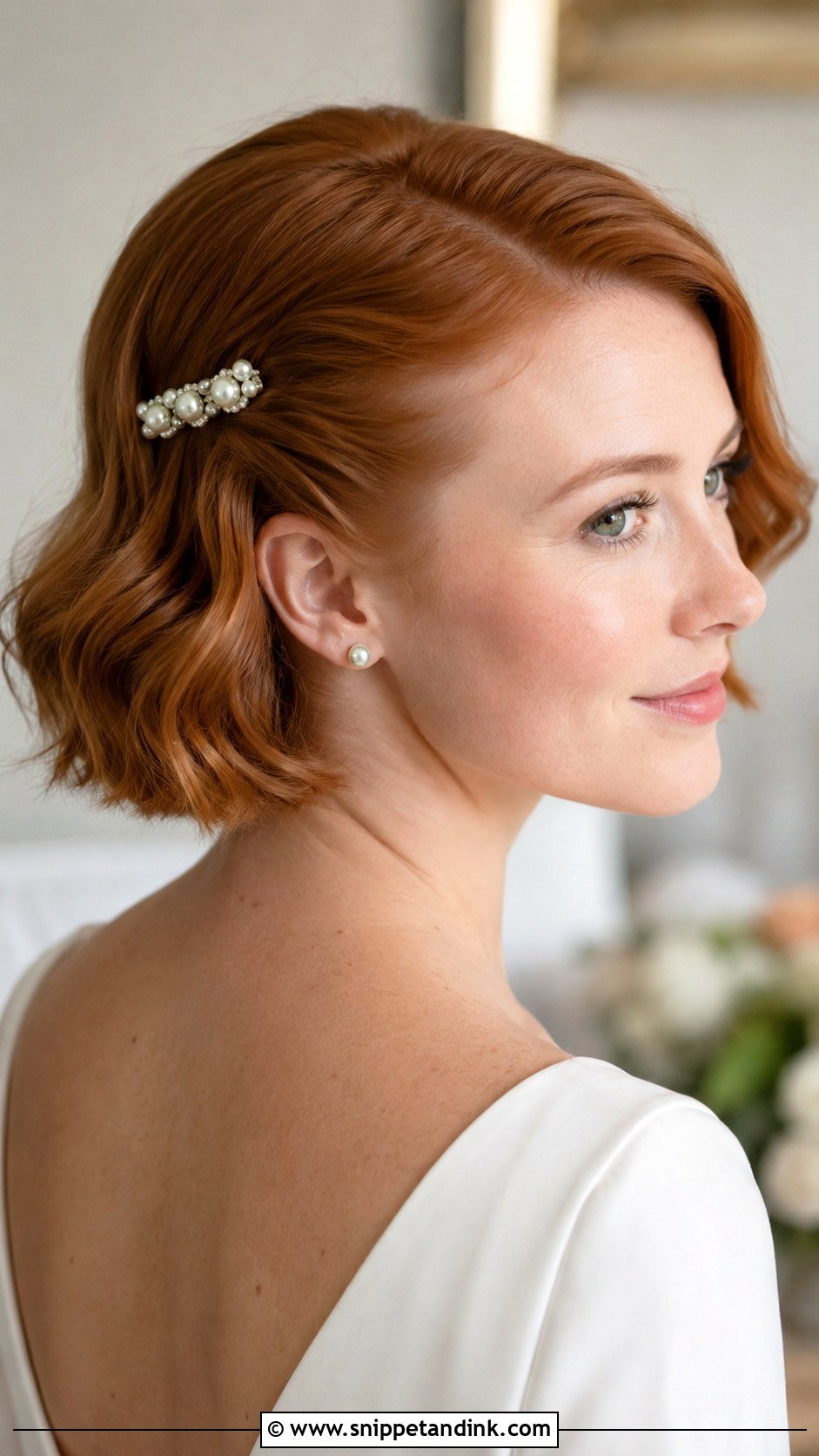
Short hair looks fully bridal when the shape is deliberate. A bob can be waved, tucked behind one ear or worn sleek with a white clip; a pixie can be textured and side swept with a pearl headband. My rule is one strong accessory, since on short hair it’s at eye level and does a lot of work. A birdcage veil, a white bow, a crystal comb or a few pearl pins will each finish the look on their own. Get your last cut two or three weeks out so the edges have softened.
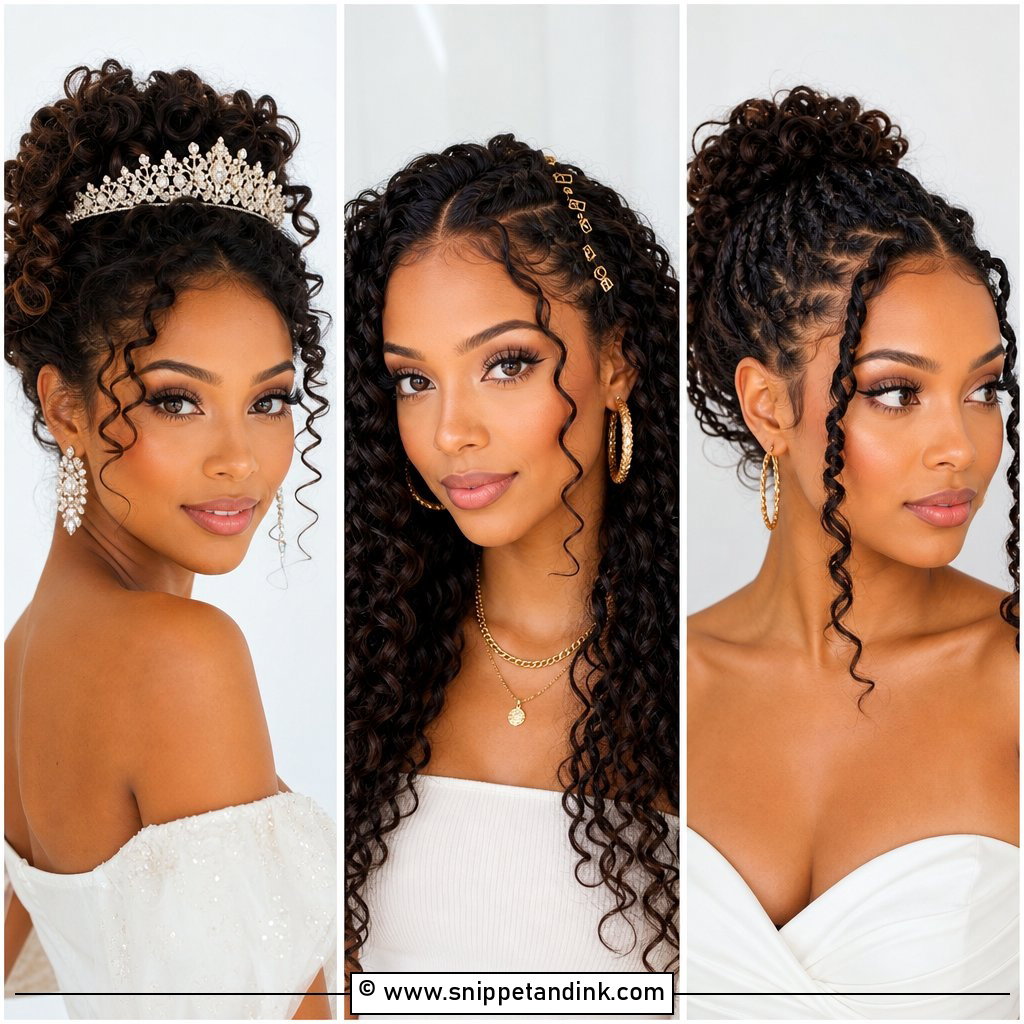
13. White Wedding Natural Curls
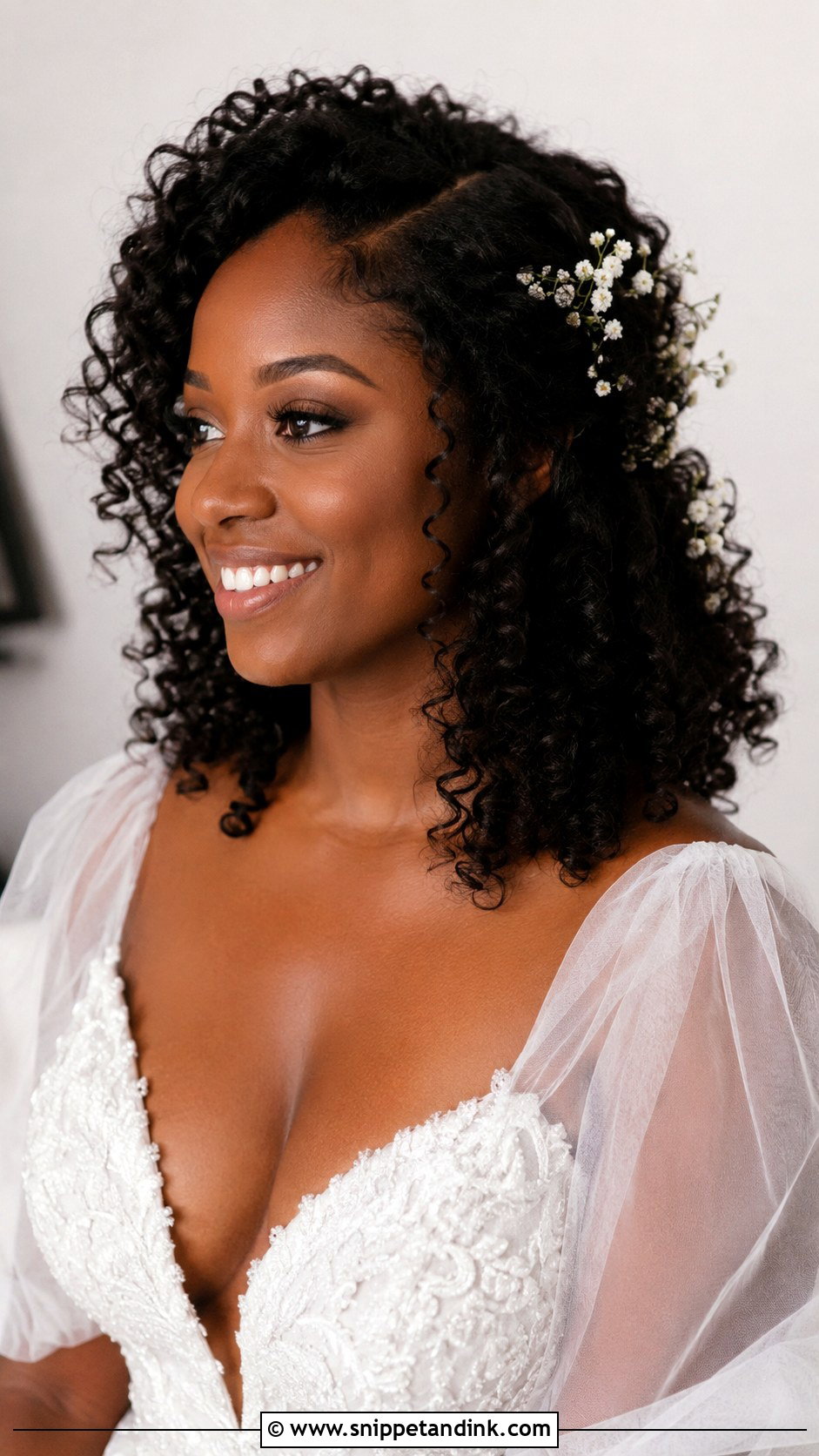
Natural curls deserve a stylist who works with them rather than over them. They can be worn down, pinned to one side, set into a soft updo or half up. Hydration starts weeks before, not that morning, and I prefer the bride to arrive with curls washed and defined the way she normally wears them so I’m not disturbing the pattern. White flowers, pearl pins and small combs look best placed where the curls naturally open. Brushing through curls to make them uniform is the most common mistake I see, and it leaves frizz that photographs as a halo.
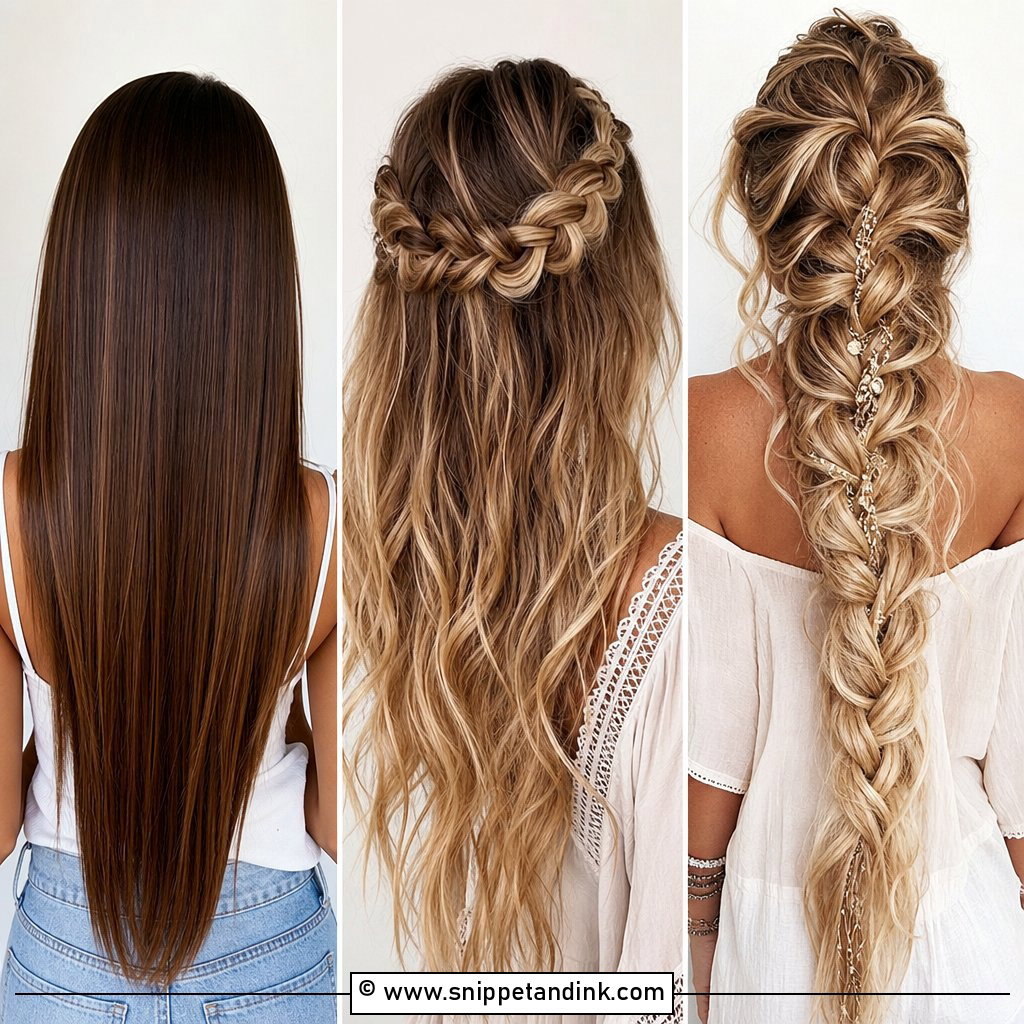
14. White Wedding Side Braid
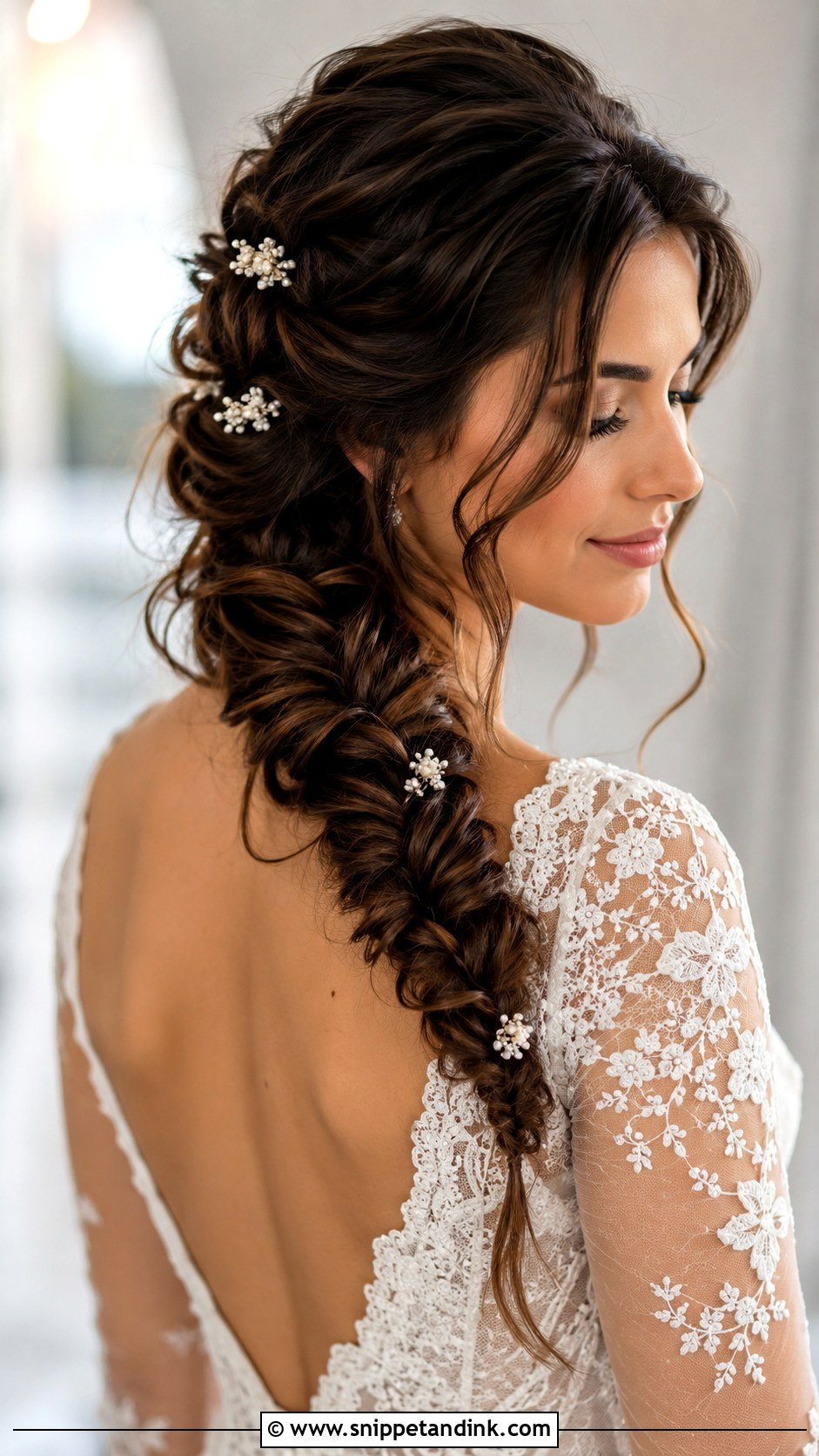
Side braids belong at boho, beach, garden and countryside weddings. I curl the hair first, build a little crown volume, then braid loosely and pull the edges out by hand so it looks full in photos. It keeps long hair controlled in wind while still showing the length. Weave tiny white flowers or pearl pins in once the braid is set, and leave curled face pieces at the front. Lace gowns and open backs both work with it, though put the braid on the side away from your partner at the altar.

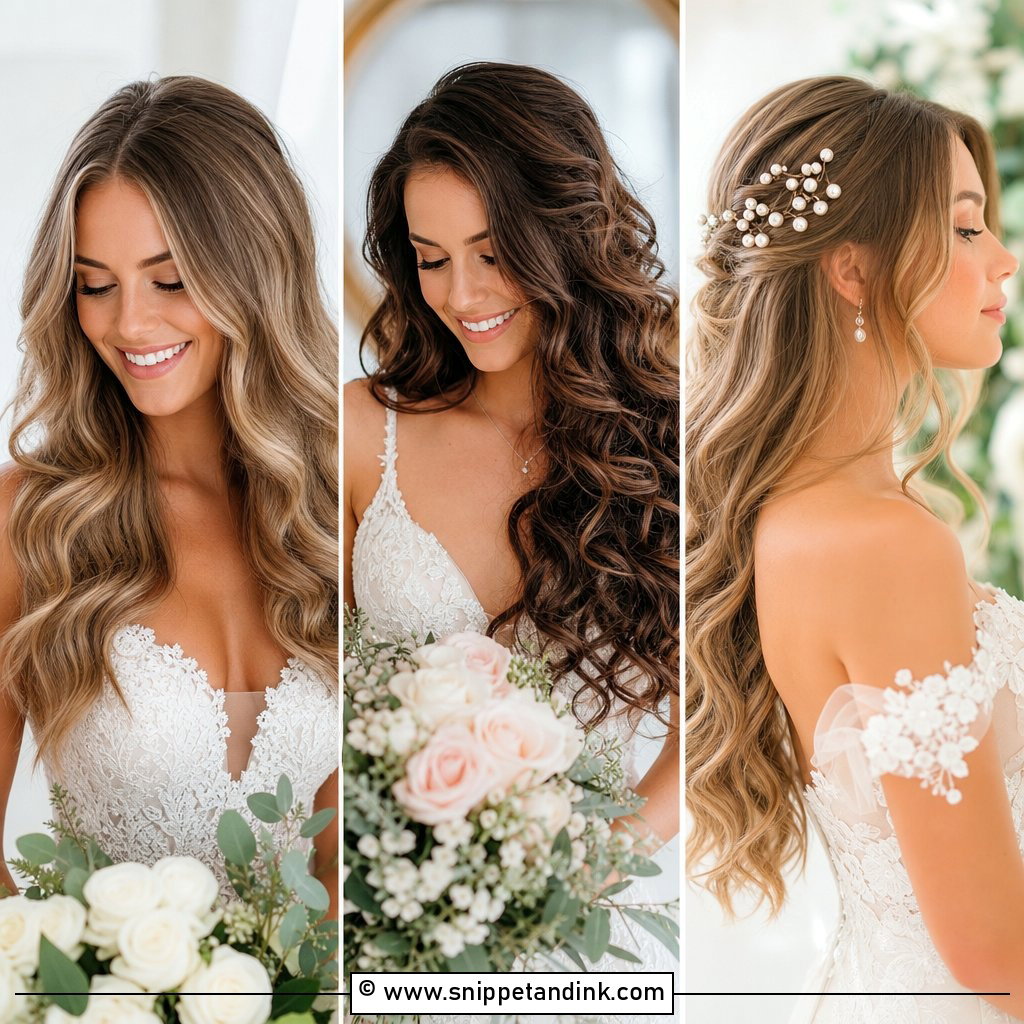
15. White Wedding Bow Hair
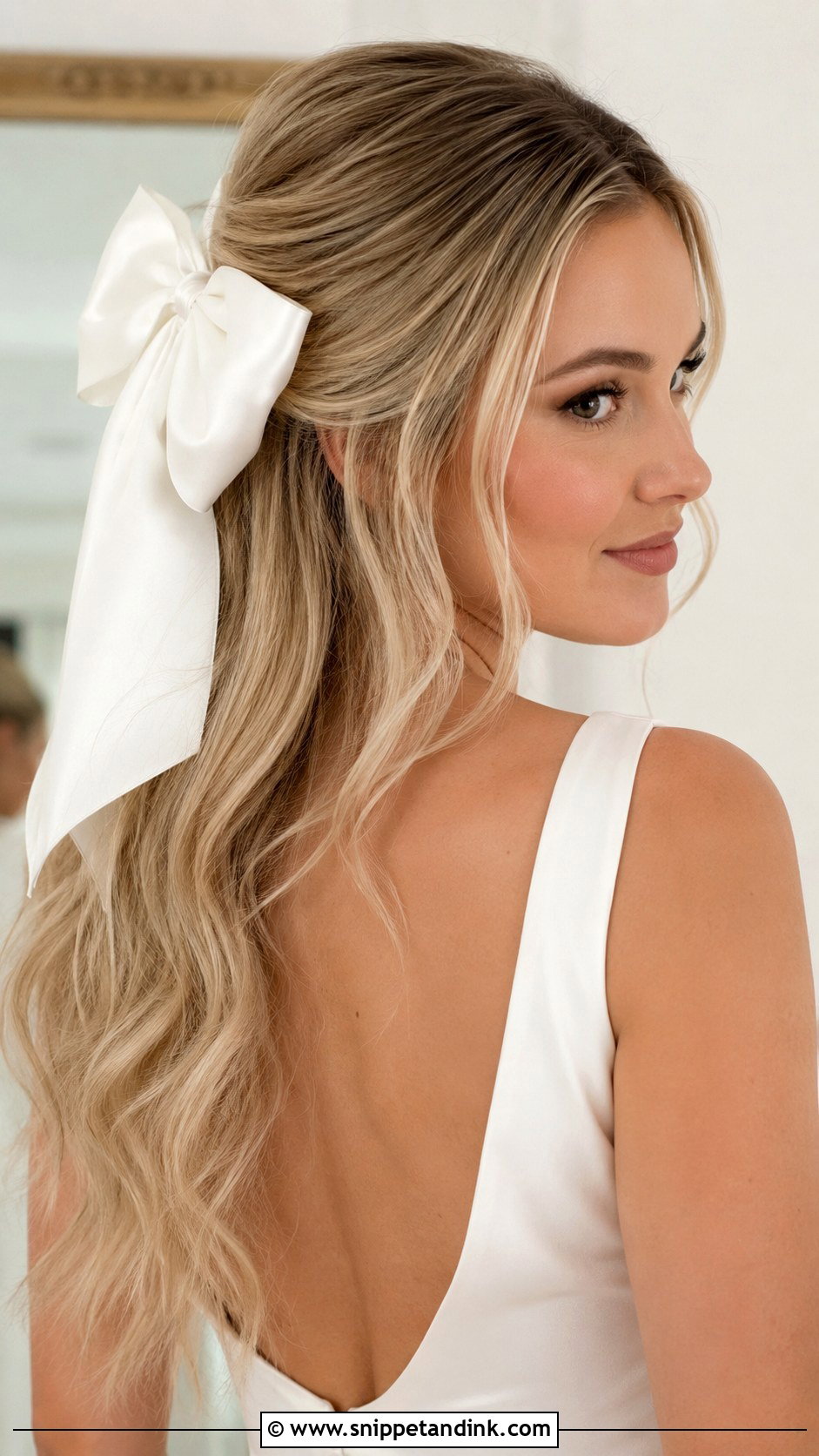
A white satin bow can tie off a half up style, sit at the base of a ponytail or rest above a low bun. Match the fabric to the dress: satin with satin, organza with a tulle skirt, velvet for a winter or vintage gown. Because the bow is the statement, I keep the hairstyle underneath clean and simple. Secure it with pins through the knot, not just the elastic, or it twists sideways by the cake cutting.
When White Accessories Disappear Into Blonde or Silver Hair
On dark hair, a white flower or pearl pin shows clearly from across the room. On platinum, pale blonde or silver hair, the same piece can vanish completely, and the bride wonders afterwards why her expensive comb isn’t visible in a single shot.
For very light hair I lean toward accessories with some contrast built in: champagne or gold-toned pearls, a crystal comb with a metal frame that catches light, or white flowers with green leaves around them. Placement helps as well. Set the piece where it has shadow behind it, such as tucked into the fold of a chignon, rather than flat against a smooth section of light hair.
How Far Ahead Should the Trial, Cut and Colour Happen?
- Trial: roughly two to three months before, once you have the dress and veil. Later than that leaves no room to rethink.
- Colour: one to two weeks before, so the tone settles and any scalp sensitivity has passed.
- Trim: two to three weeks out, a dusting only. A dramatic cut right before the wedding is the change brides regret most.
- Wash: most styles grip better on hair washed the night before. Very fine or oily hair is the exception, and your stylist should tell you which you are at the trial.
A Cathedral Veil, a Garden Lawn and Your Own Texture
Start from the gown and the veil, not from a photo of someone else’s hair. A cathedral veil wants a low bun or chignon to anchor into; a relaxed garden ceremony suits loose curls or a side braid. Sleek buns lean modern, braided updos lean romantic, and a few pearls can soften almost any of them. Book your trial, bring every accessory, and wear the style for a few hours afterwards so you know how it feels at hour six, not just in the mirror.
You'll Like These Ideas:



Leave a Reply