
Most brides walk into their first appointment with a picture of one dress and leave in something quite different. That’s normal: silhouette, fabric and neckline behave differently on a real body than on a screen, and the venue, season and how much you want to move all narrow things down. Current bridal shops carry everything from clean satin and romantic lace to basque waists, pearl detail, removable sleeves, coloured gowns and short reception dresses. Below I’ve grouped thirty styles by shape, neckline, fabric and mood, with what I check at a fitting for each, plus simple notes on shoes, veils and jewellery.
Go Into the First Appointment Ready to Be Surprised
The first appointment is for learning which shapes your body likes, not for finding the dress. I always ask a bride to try at least one silhouette she’s sure won’t suit her, and a fair number end up choosing it.
- Wear smooth underwear in your skin tone and bring a strapless bra if you have one.
- Bring shoes close to the heel height you plan to wear, so the hem falls where it will on the day.
- Keep the group small. Two or three trusted people give clearer advice than a crowd.
- Expect samples to be clipped or pinned at the back. They’re often a standard sample size, so focus on the shape rather than the fit.
- Take photos from the side and back as well as the front, if the shop allows it.
Move in every gown. Sit, walk, raise your arms. A dress that’s beautiful standing still and uncomfortable moving will feel that way all day.
1. A Line Wedding Dress
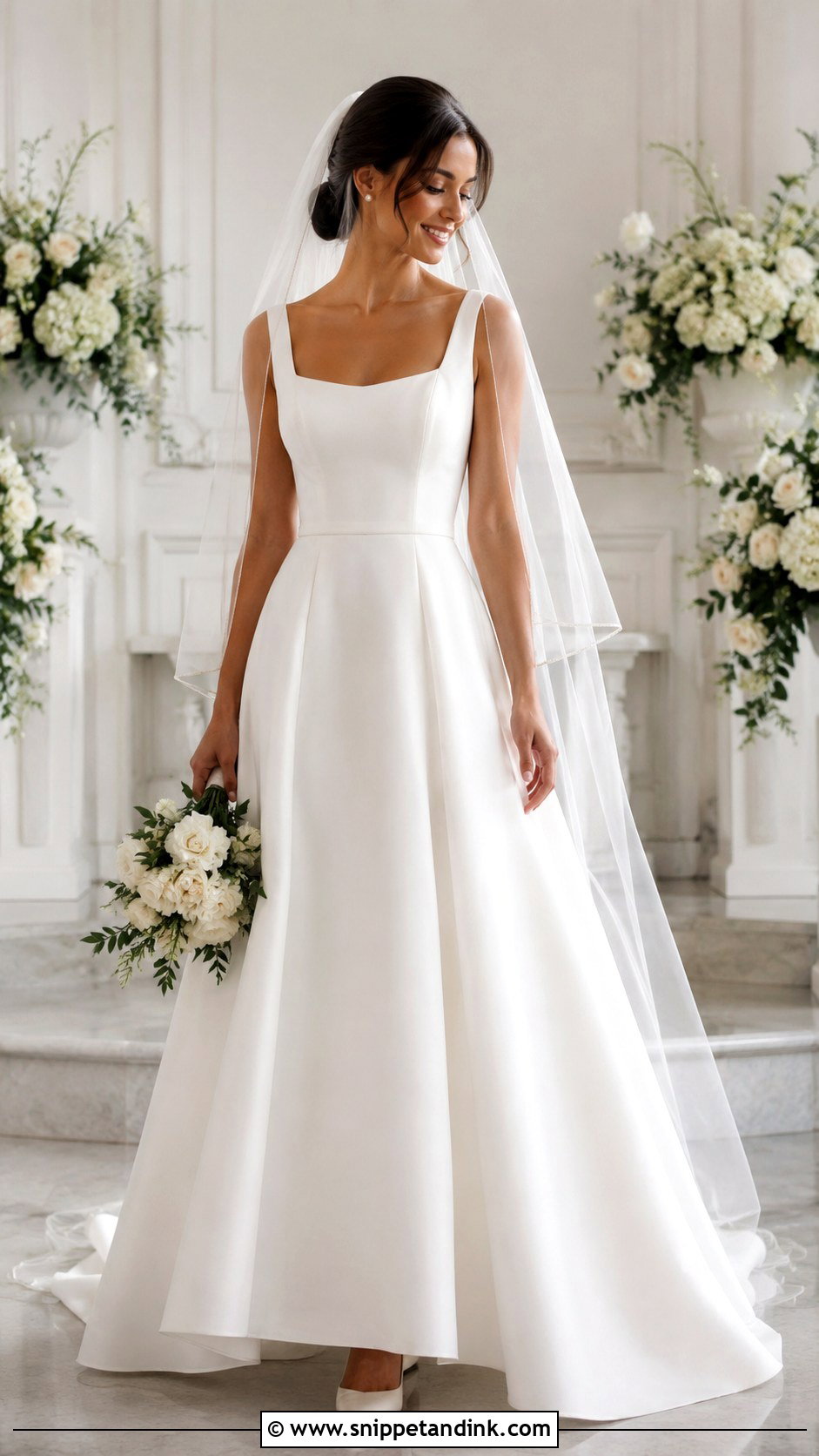
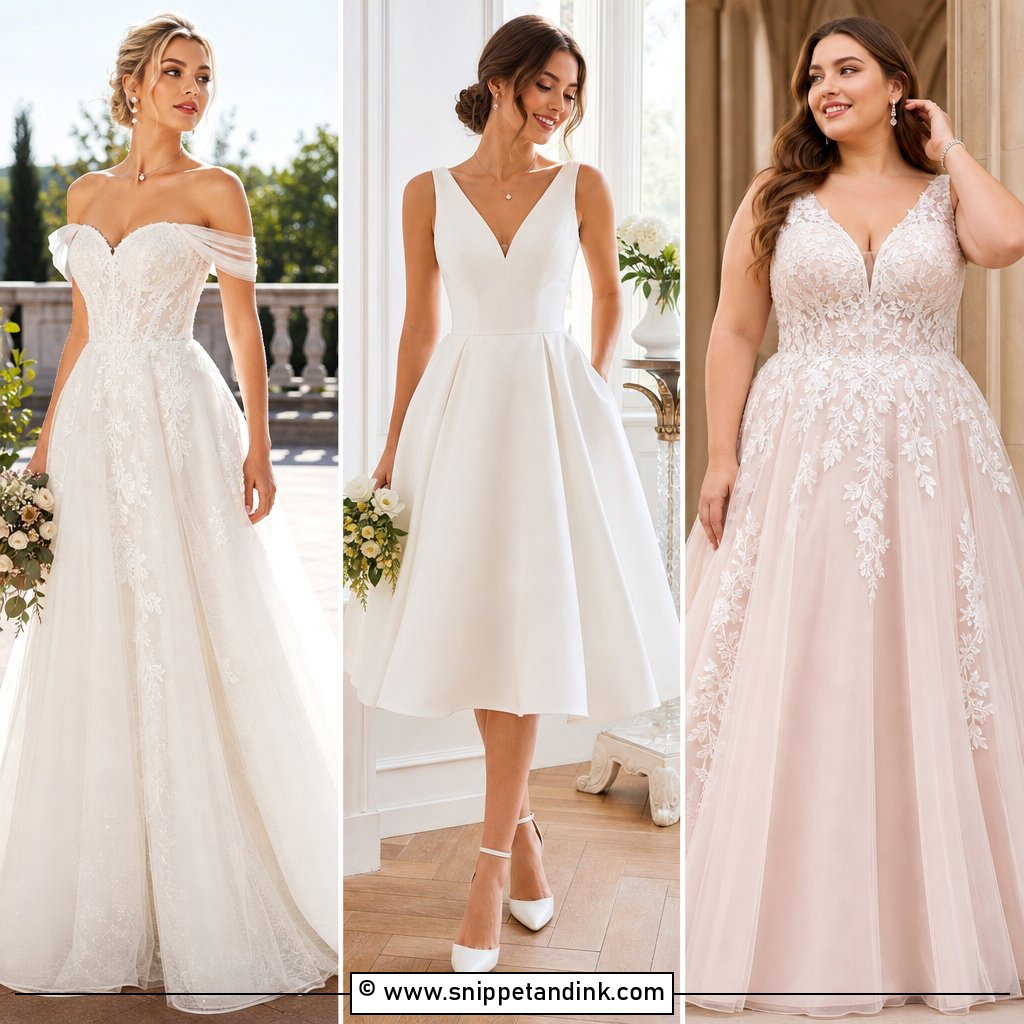
An A-line is the shape I pull first for almost every bride, because a fitted bodice and a skirt that widens gradually from the waist suit most figures and let you walk, sit and dance normally. Satin reads formal, lace romantic, tulle light enough for a garden. Pointed pumps, pearl studs and a fingertip veil keep it classic. If you need more support, ask for wider straps or an internal corset; most A-line bodices can take either during alterations. It’s the safe choice, and safe here is a good thing.
2. Ball Gown Wedding Dress
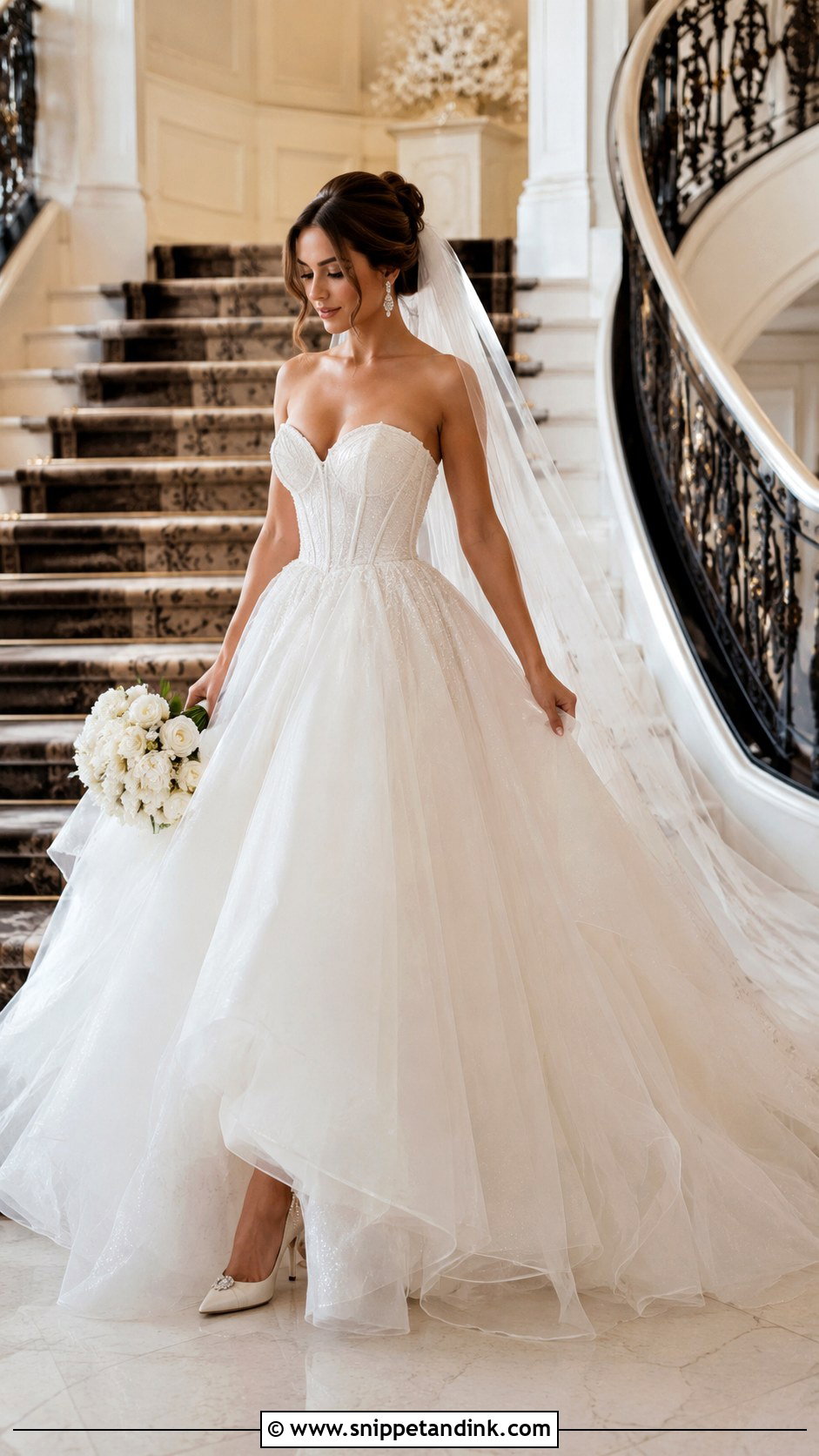
Nothing makes an entrance quite like a ball gown wedding dress, with its full skirt and fitted bodice. It suits grand venues and formal receptions. Keep the accessories polished but few: a cathedral veil, crystal earrings and satin heels. The thing I warn every ball gown bride about is weight. Layers of satin and crinoline can be genuinely heavy by evening, so ask the shop for a tulle or organza skirt and try sitting in it at the appointment. You’ll also need a bustle and a little help in the bathroom.
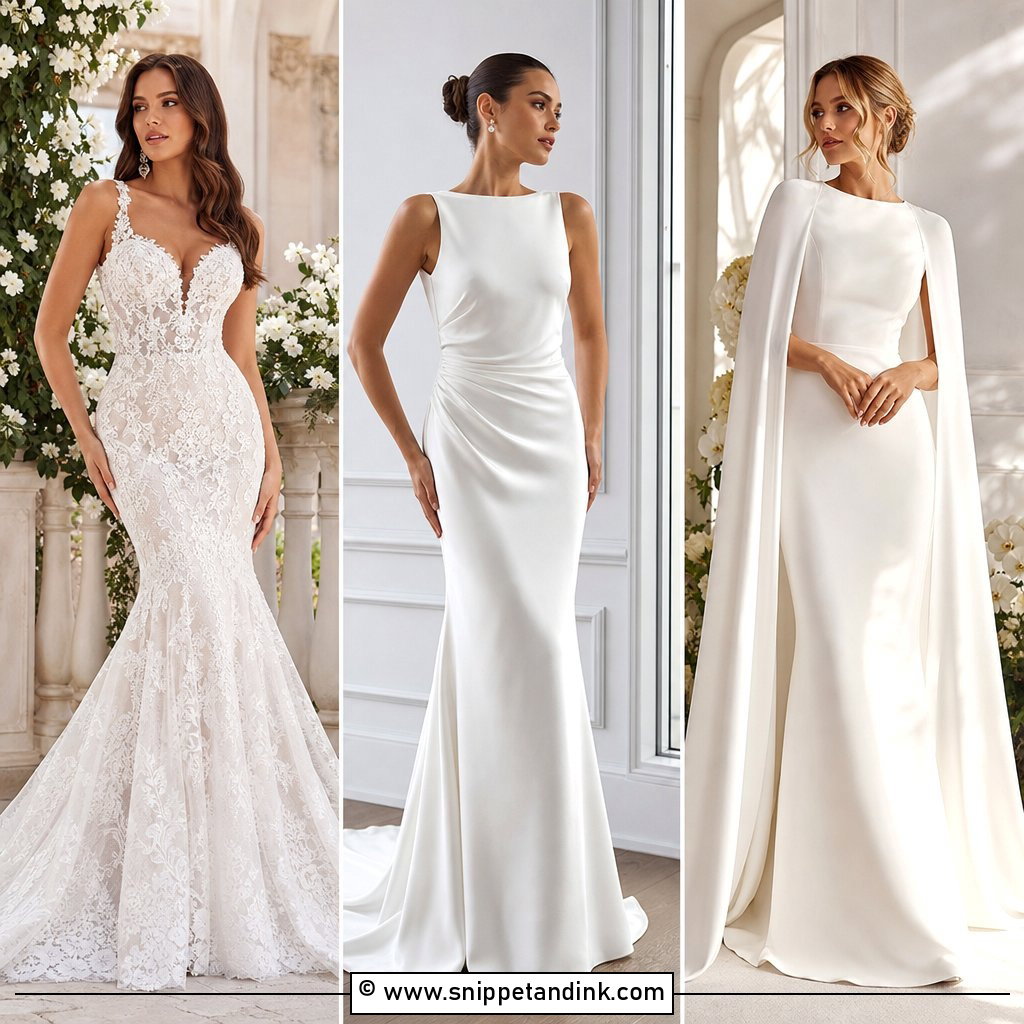
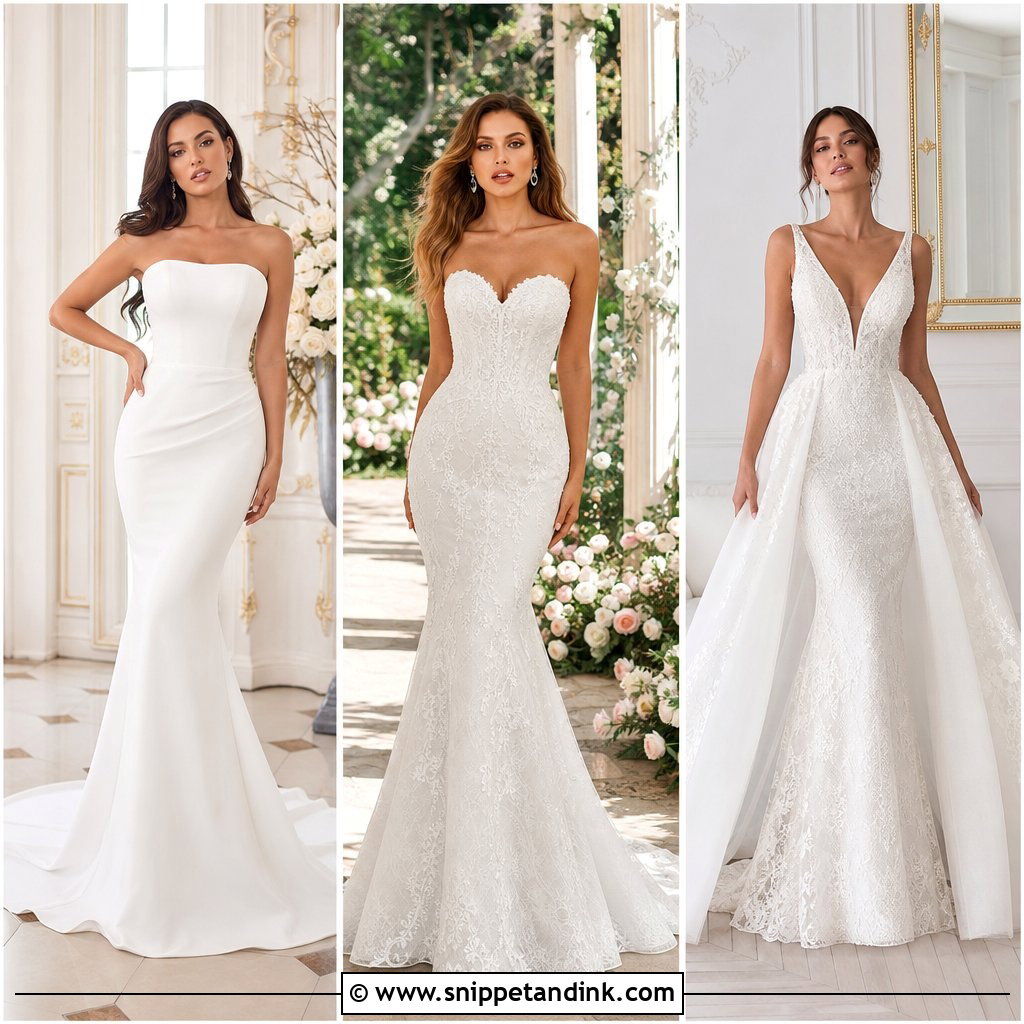
3. Mermaid Wedding Dress
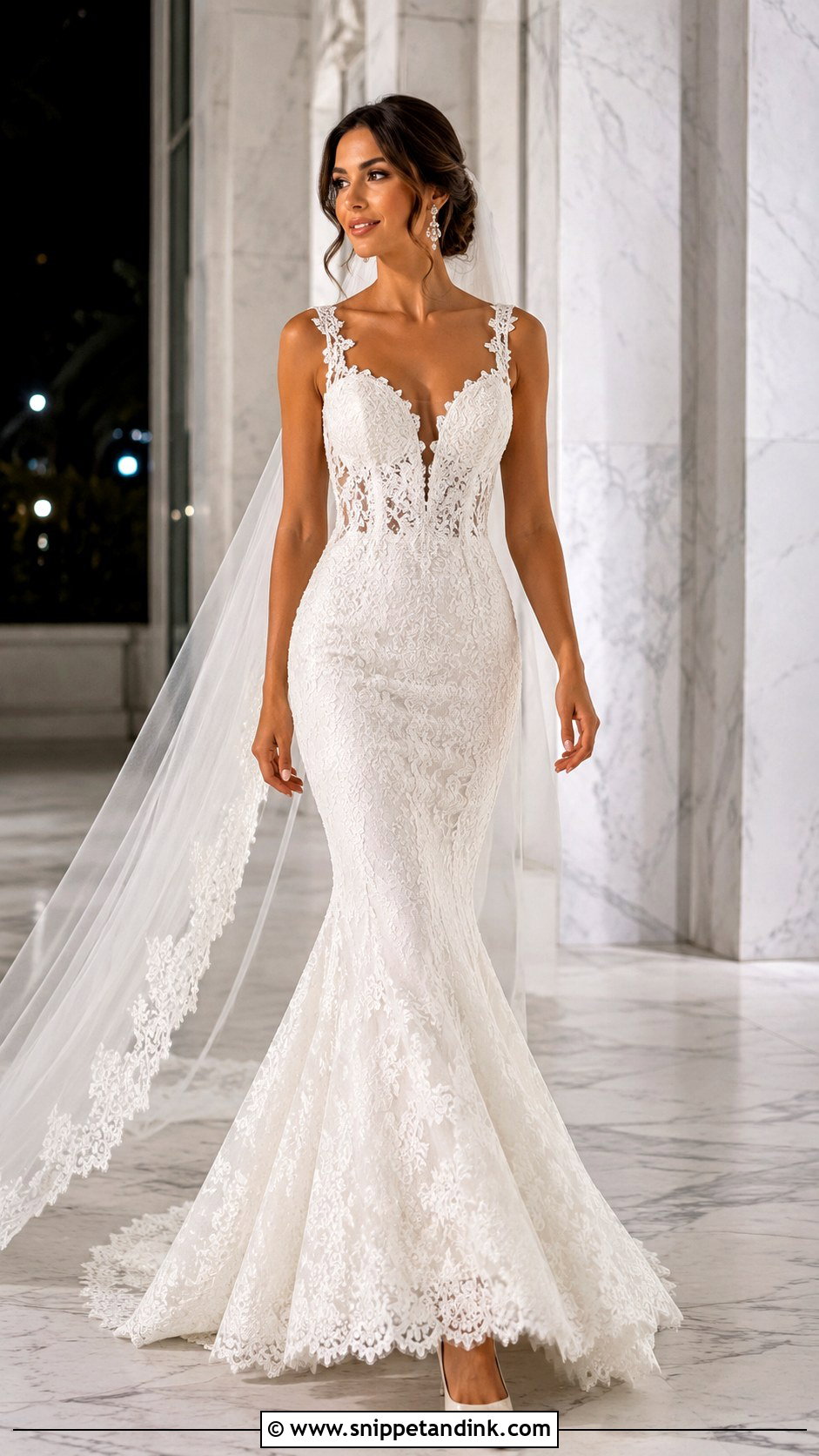
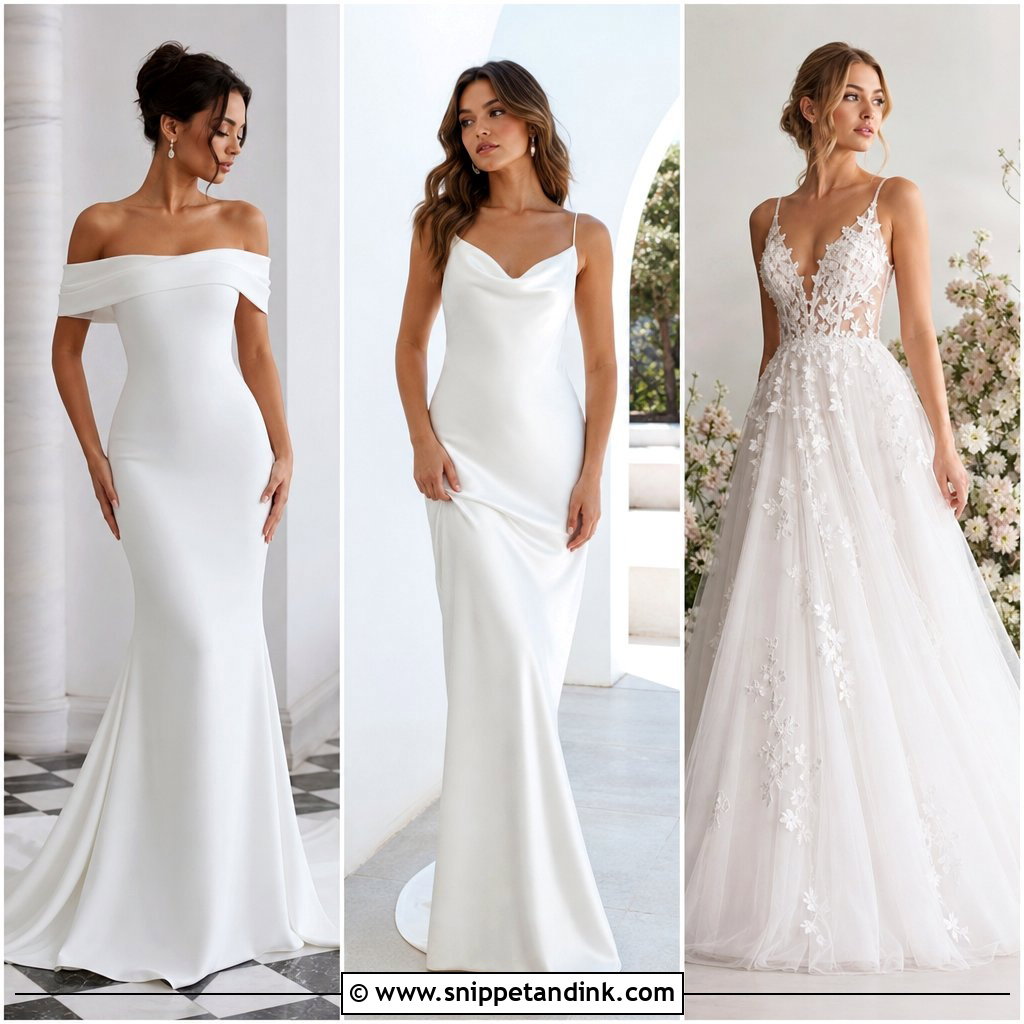
Mermaids hug the bodice, waist, hips and thighs and then flare near the knee, which makes them the most sculpted silhouette here. Crepe, lace, satin and beaded fabric all work. Fit is everything: I check the flare point first, since too high reads as a trumpet and too low means you shuffle. Walk, climb a step and sit at the appointment. Sleek heels, drop earrings, a long veil and a low bun or soft waves finish it. It suits evening weddings, hotel venues and formal celebrations.
4. Sheath Wedding Dress
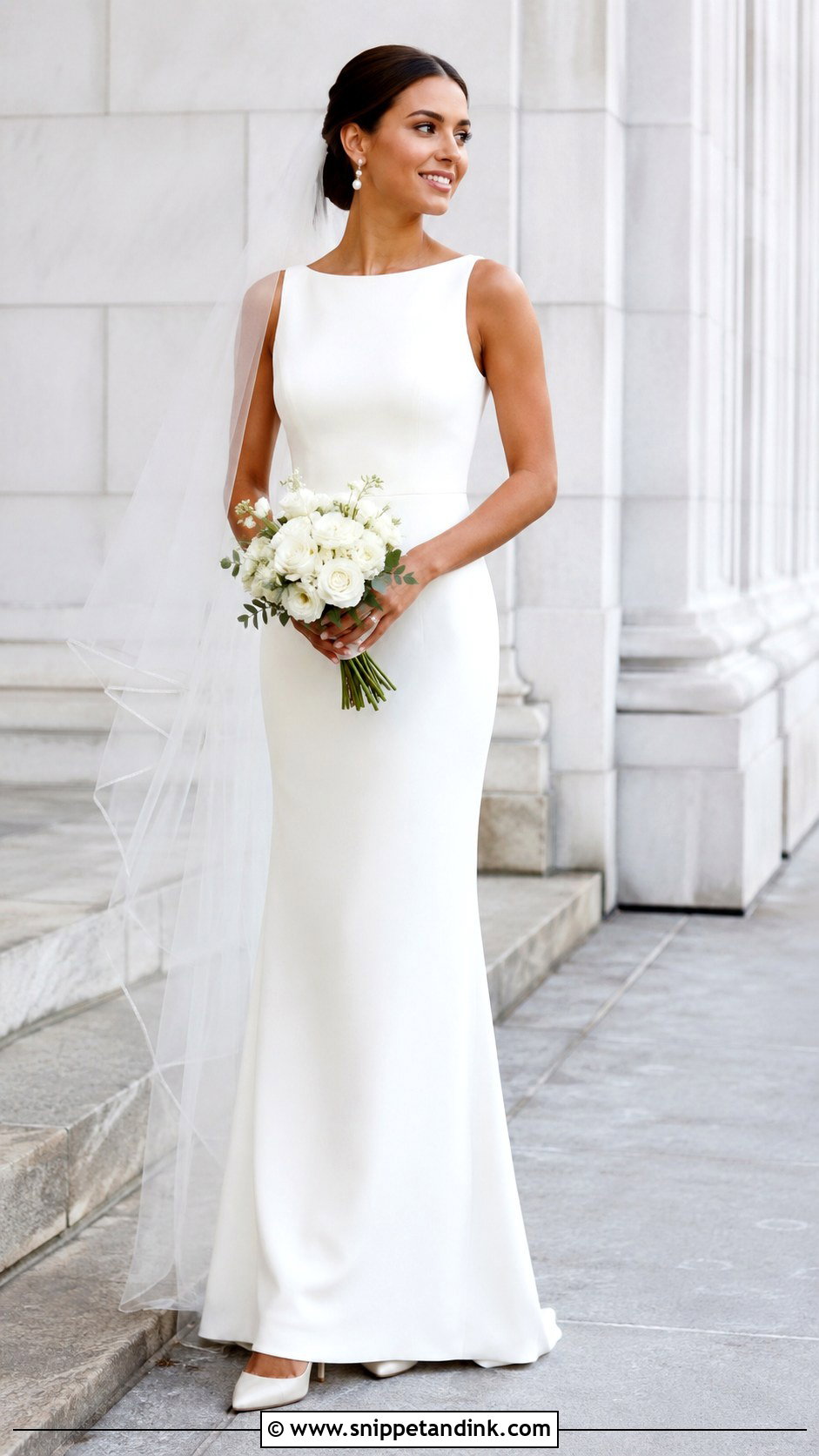
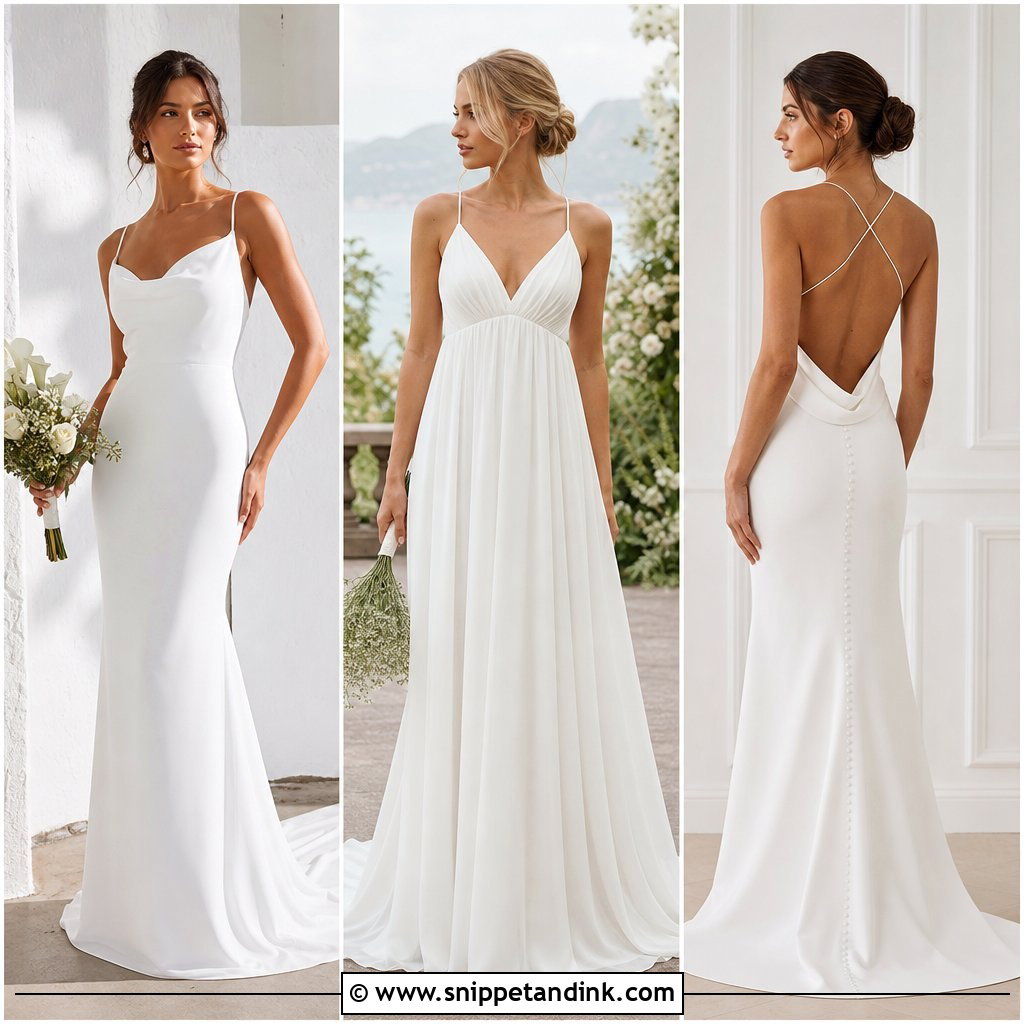
Clean lines and easy movement are what a sheath wedding dress offers. It follows the body without a flare, so crepe and satin look sleek and lace looks softer. Sheaths pack well, which makes them my go-to for destination and city weddings, courthouse ceremonies and small receptions. Slingback heels, delicate earrings and a slim veil keep it polished. If you want more shape, look for waist seaming or a soft cowl neck. The one practical check is the knee: make sure there’s a slit or enough ease to take stairs.
5. Satin Wedding Dress
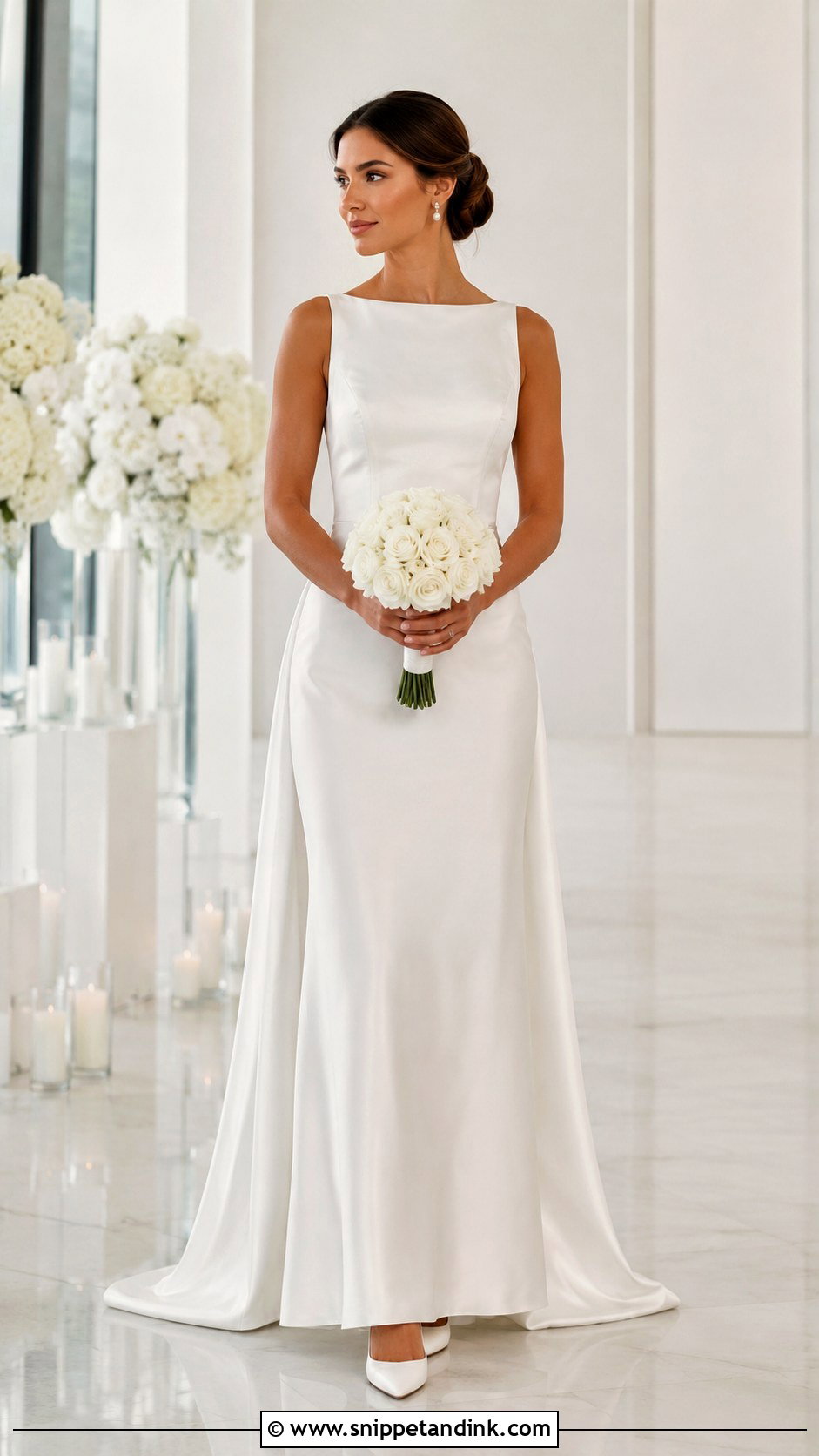
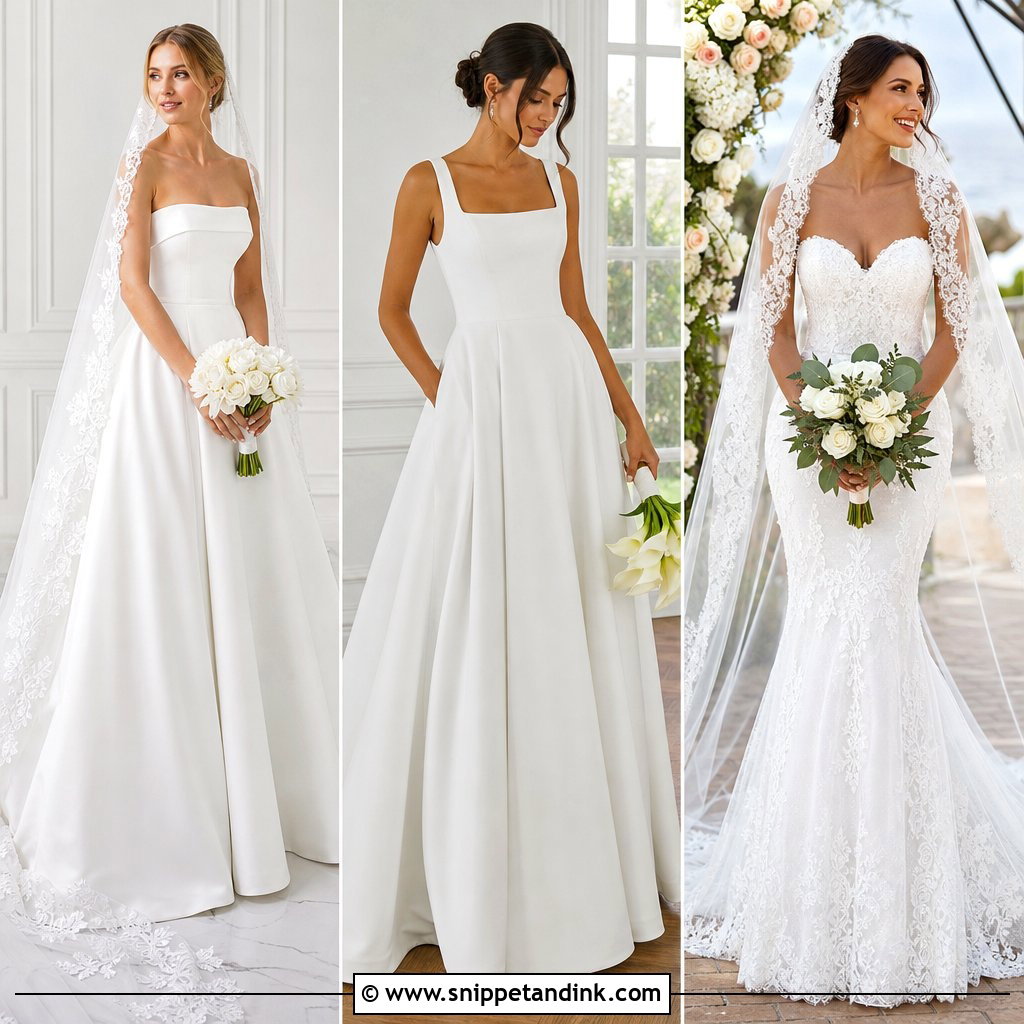
Satin has a smooth sheen that makes even a plain cut look expensive. It’s strongest in clean shapes: A-line, ball gown, slip and column. A square neckline feels fresh; off-shoulder, romantic. Satin pumps, a structured clutch and pearl or diamond-style jewellery finish it. Two cautions from fittings: satin shows every line and pull, so tailoring has to be precise, and it creases when you sit, so someone needs a steamer on the morning of the wedding.
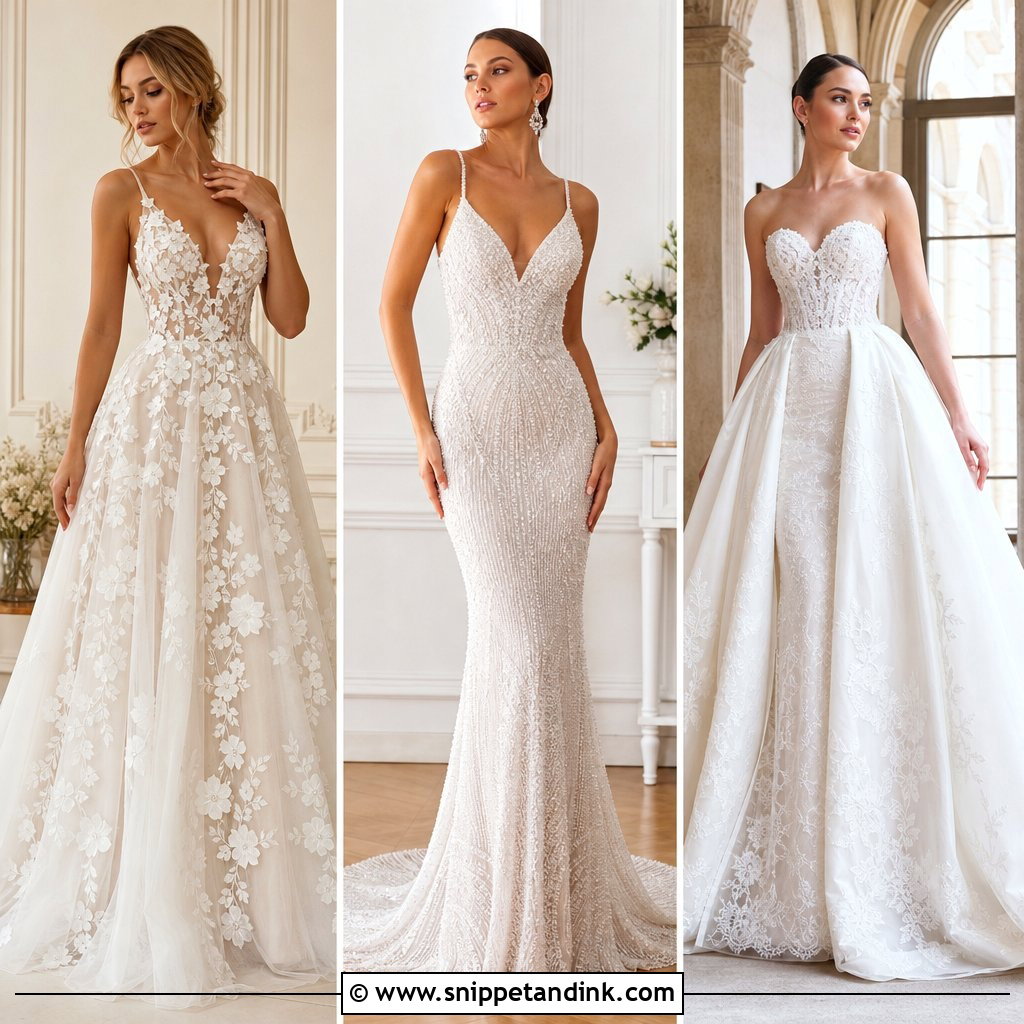
6. Lace Wedding Dress
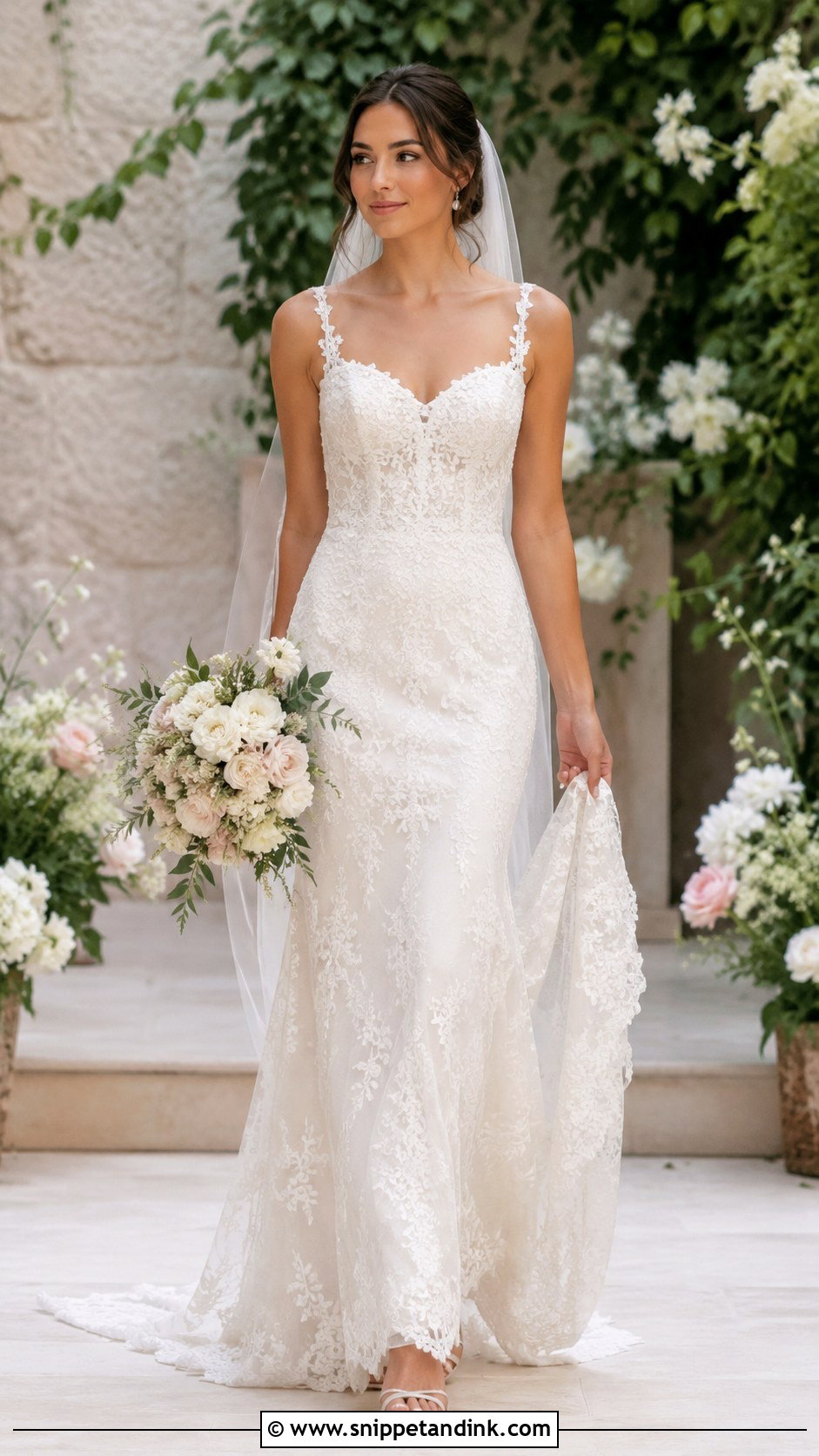
Lace changes character with the pattern. Floral lace is romantic, geometric lace modern, Chantilly fine and delicate, guipure heavier and more graphic. A simple veil, nude or ivory heels and small pearl earrings keep the focus on it, and with detailed lace I’d skip a necklace. Long-sleeve lace suits cooler months; sleeveless lace is lighter for spring and summer. Before you commit, rub the lace gently against your inner arm: some lace is soft, and some is scratchy enough to irritate after ten hours.
7. Off Shoulder Wedding Dress
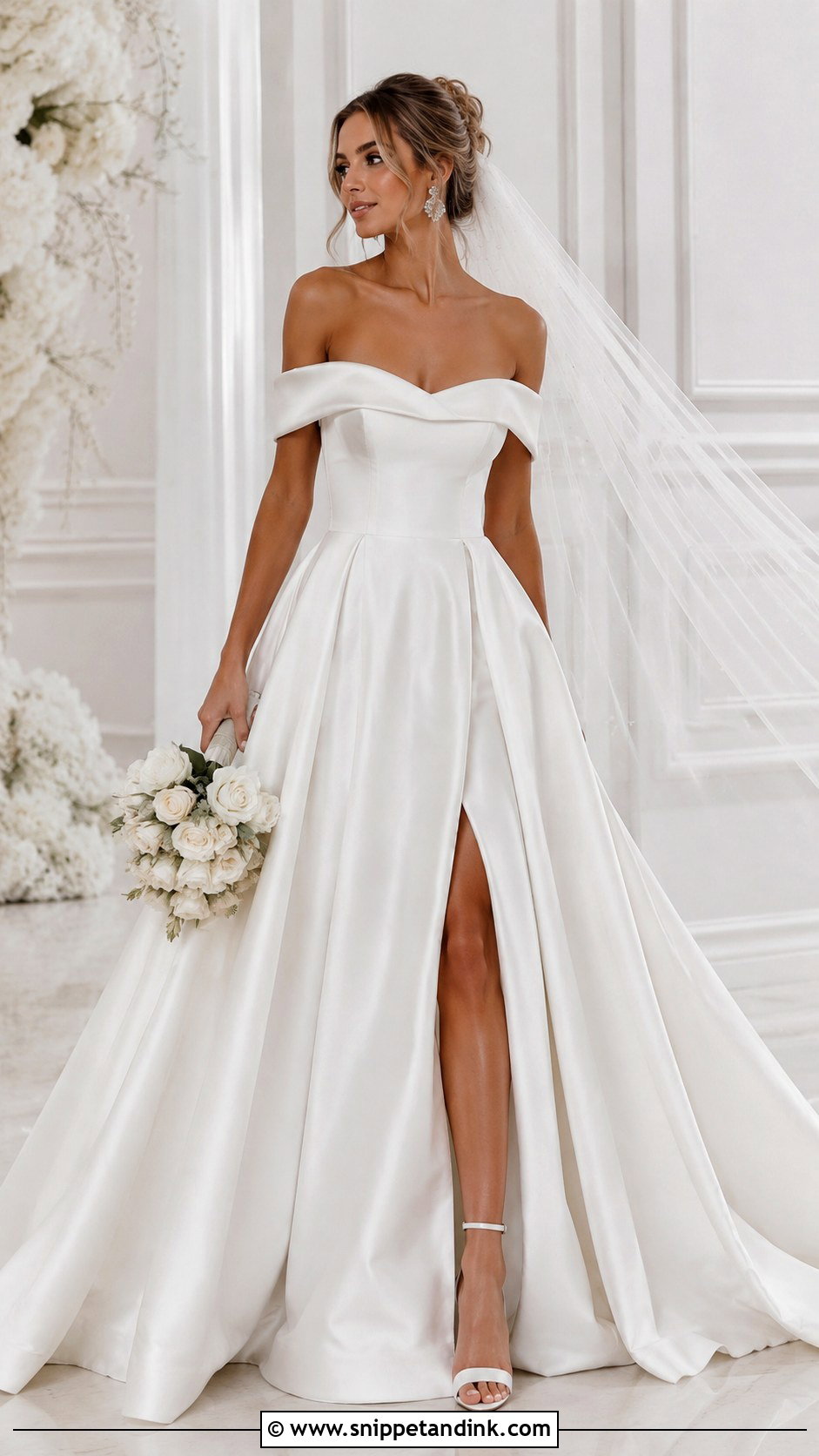
Off-shoulder necklines frame the collarbone without needing embellishment. They pair with A-line, mermaid, satin, lace and ball gown shapes. Wear a delicate necklace or skip it for statement earrings, and a low bun shows the line clearly. If you plan to dance, the construction matters: secure cups, a firm band or detachable straps. My standard test is lifting both arms as if hugging someone taller; if the neckline moves, it needs more structure.
8. Long Sleeve Wedding Dress
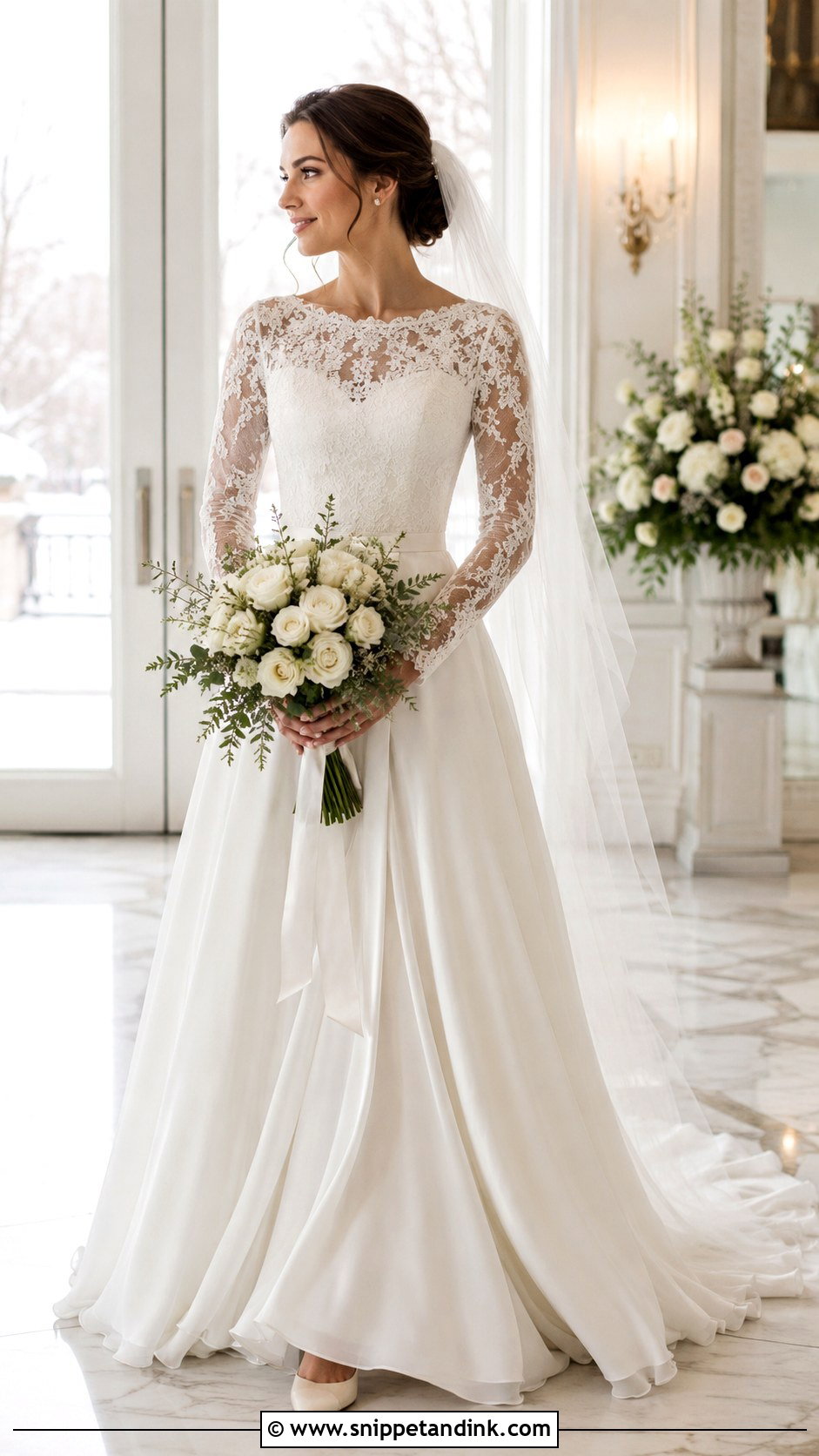
Sleeves set the tone for the whole gown. Sheer lace sleeves feel romantic, satin sleeves regal, fitted crepe modern. With the sleeve as the feature, keep accessories simple: closed-toe heels, pearl studs, a soft veil. Long sleeves suit autumn and winter, and lightweight illusion sleeves can work in warm months. I always check the armhole height, because a low armhole lifts the whole bodice whenever you raise your arms. Hug, lift and sit in the dress before you say yes.
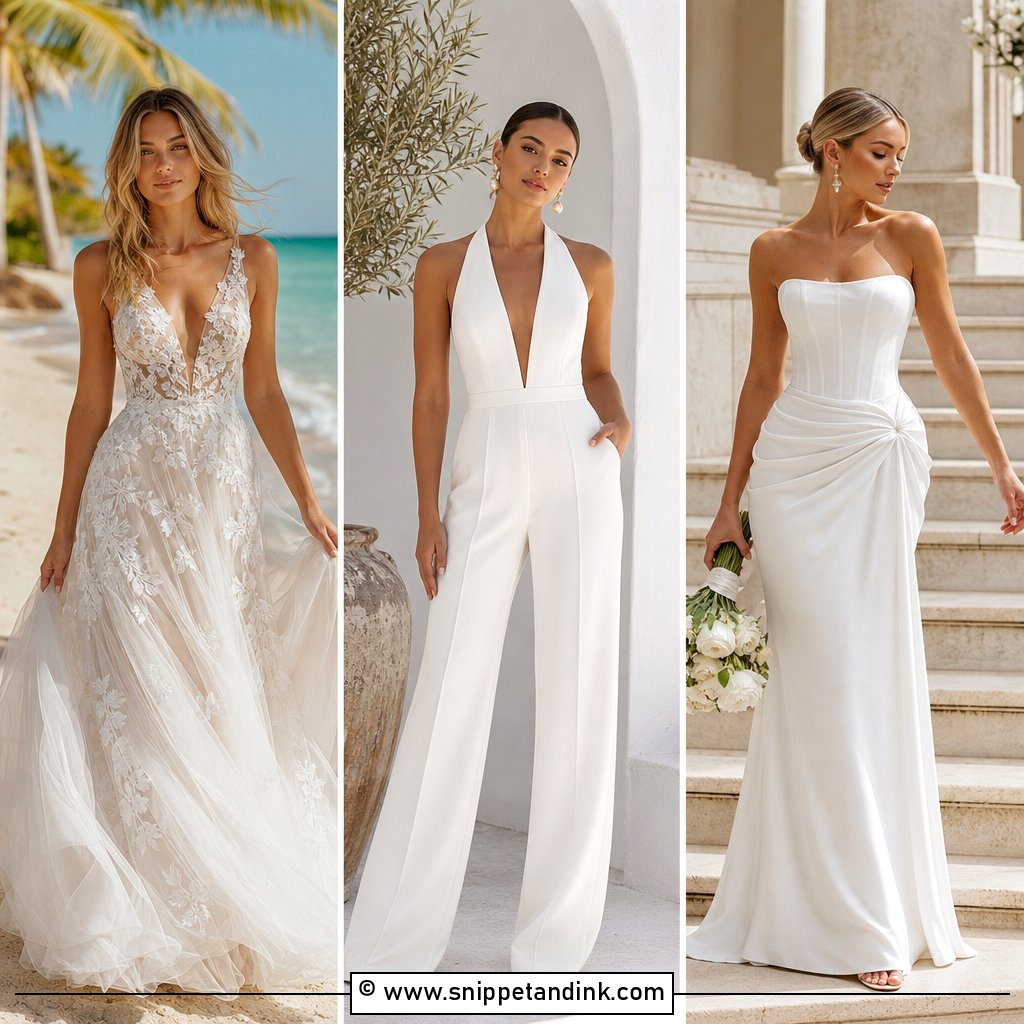
9. Strapless Wedding Dress
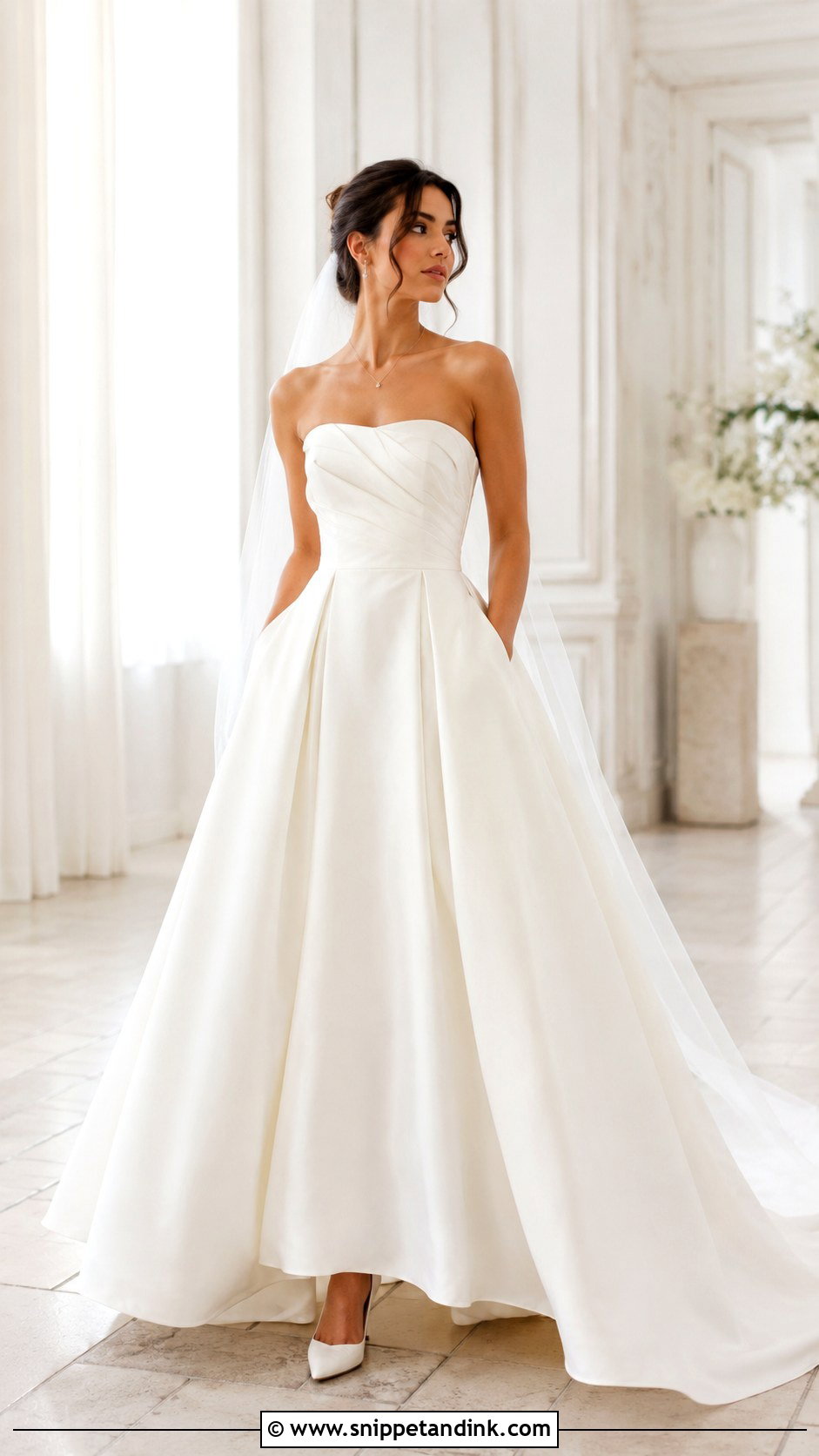
Strapless gowns put the attention on the shoulders and face, and they can be sleek in satin, romantic in lace or dramatic with a full tulle skirt. Structure decides everything. A good strapless bodice has boning and a grip strip inside the top edge, and it stays put without hitching. A statement necklace makes it formal; earrings and a veil keep it clean. Gloves, a bolero or a detachable overskirt change the mood without changing the gown.
10. Square Neck Wedding Dress
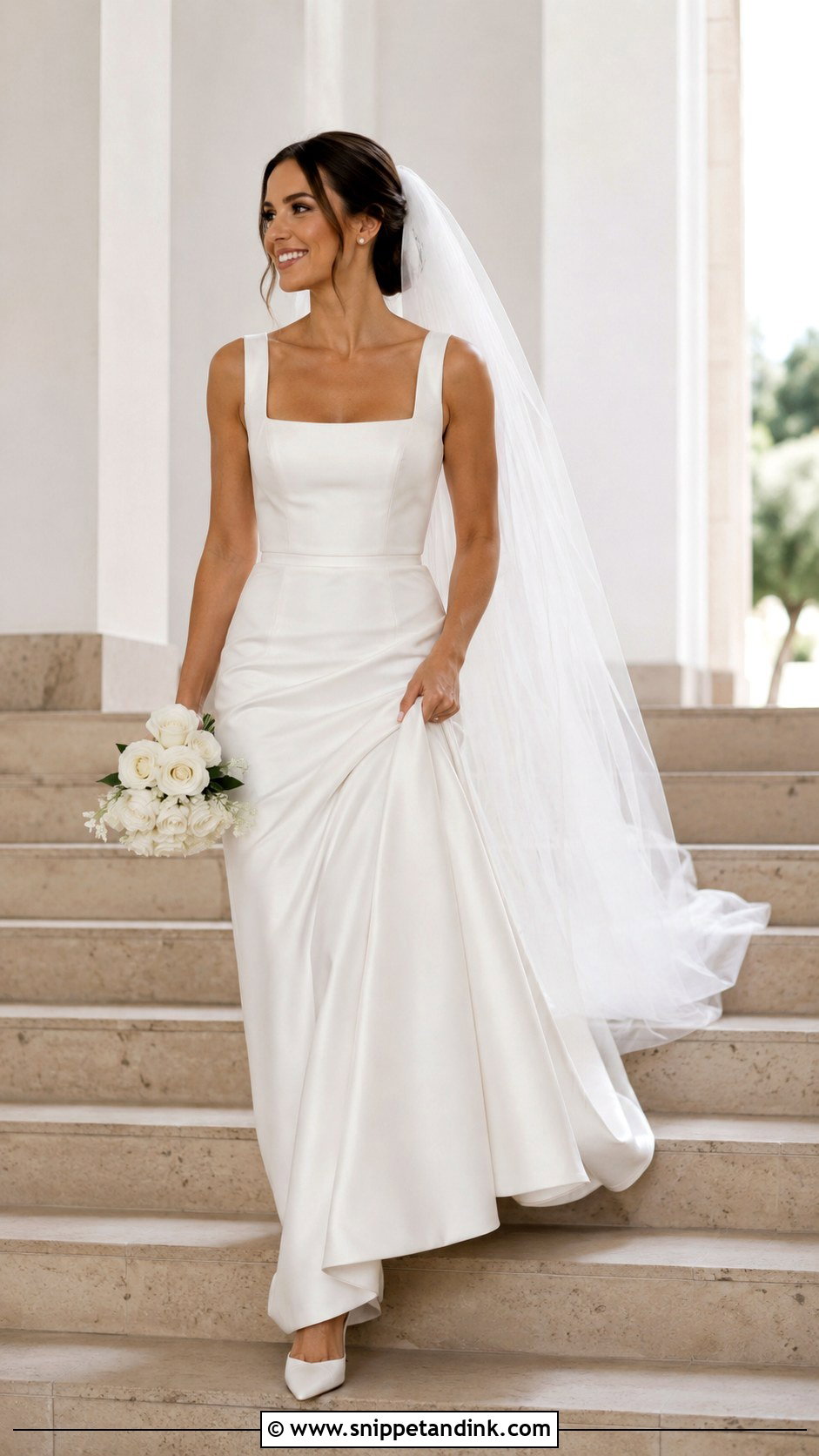
Square necklines frame the upper body with a straight, clean line, and they’re at their best in satin, crepe or mikado, though lace or tulle softens them nicely. A sleek veil, small hoops or pearl studs and pointed heels finish it, and both updos and loose waves suit the shape. Strap width is the detail I fuss over: straps set too wide slide off the shoulder, too narrow and they can make the shoulders look broader. Wider straps or a structured bodice add support.
11. V Neck Wedding Dress
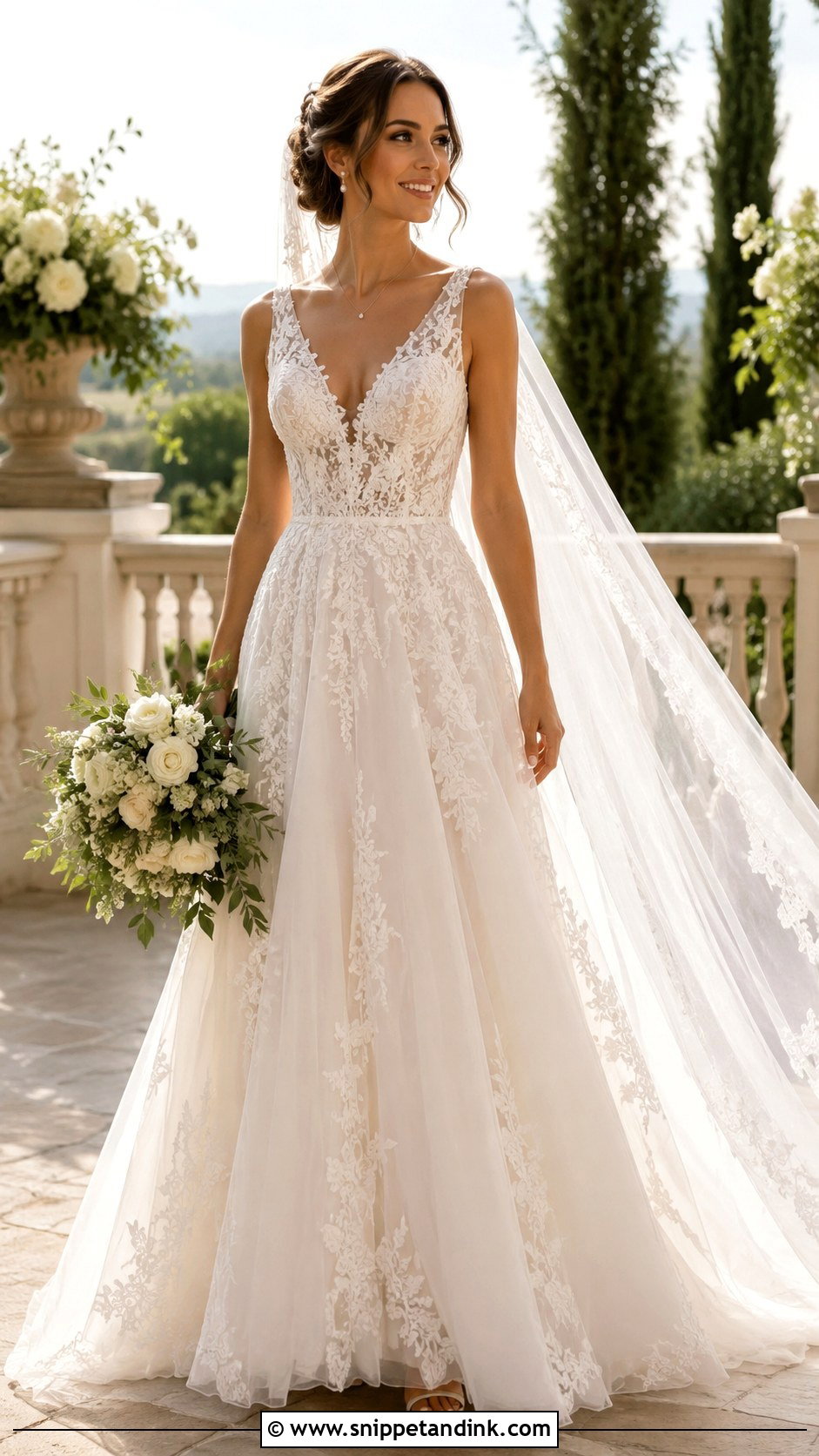
V necklines lengthen the upper body, and the depth decides the mood. A soft V is modest and classic; a deep V is more fashion-led and needs mesh or boning to stay put. It pairs with A-line skirts, fitted crepe and flowing chiffon. A simple pendant, dainty earrings and slim heels finish it, though with lace or beading I’d drop the pendant. Lean forward at the fitting as if signing the register; a V that gapes there will gape in photos.
12. High Neck Wedding Dress
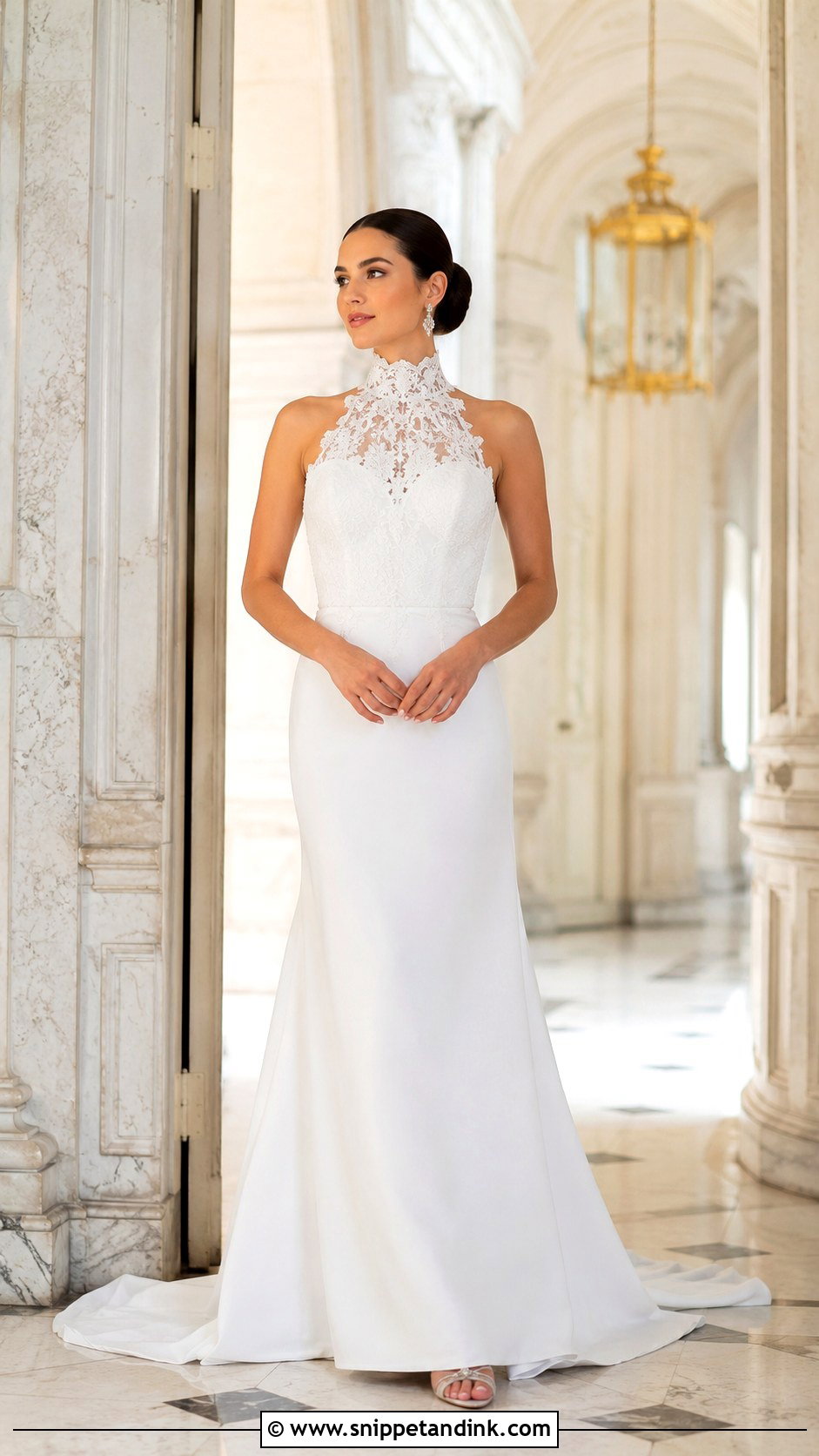
High necks give coverage and draw the eye to the face and posture. Lace versions read romantic; satin and crepe look sleek and editorial. Skip the necklace and choose earrings, with a smooth bun, soft ponytail or tucked-back waves. Simple heels and a long veil balance it. In non-stretch fabric, a high neck needs a little room at the throat, so check you can turn your head and swallow comfortably; a tight collar gets miserable by the speeches.
13. Corset Wedding Dress
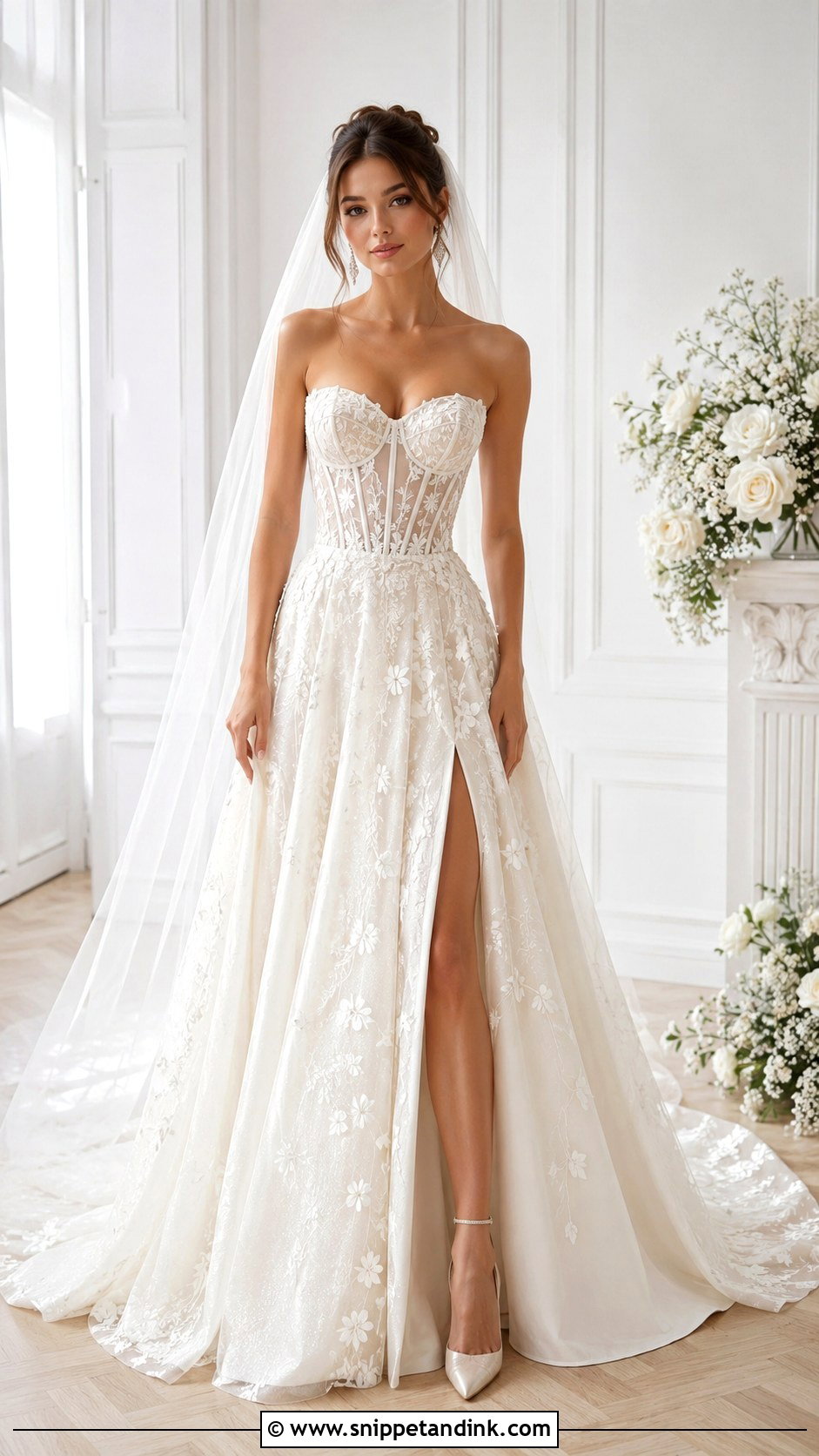
Corsets shape the waist and give the bodice real support, which is why so many brides ask for them. Lace makes them romantic, satin modern, exposed boning dramatic. A good corset feels secure without stopping you breathing, sitting or eating. Soft waves, delicate earrings and a veil matched to the mood finish it, and with a detailed corset I keep jewellery simple. A corset bodice pairs with A-line skirts, basque waists and full ball gowns. Lace-up backs adjust by a centimetre or two on the day, which helps if your size shifts before the wedding.
14. Basque Waist Wedding Dress
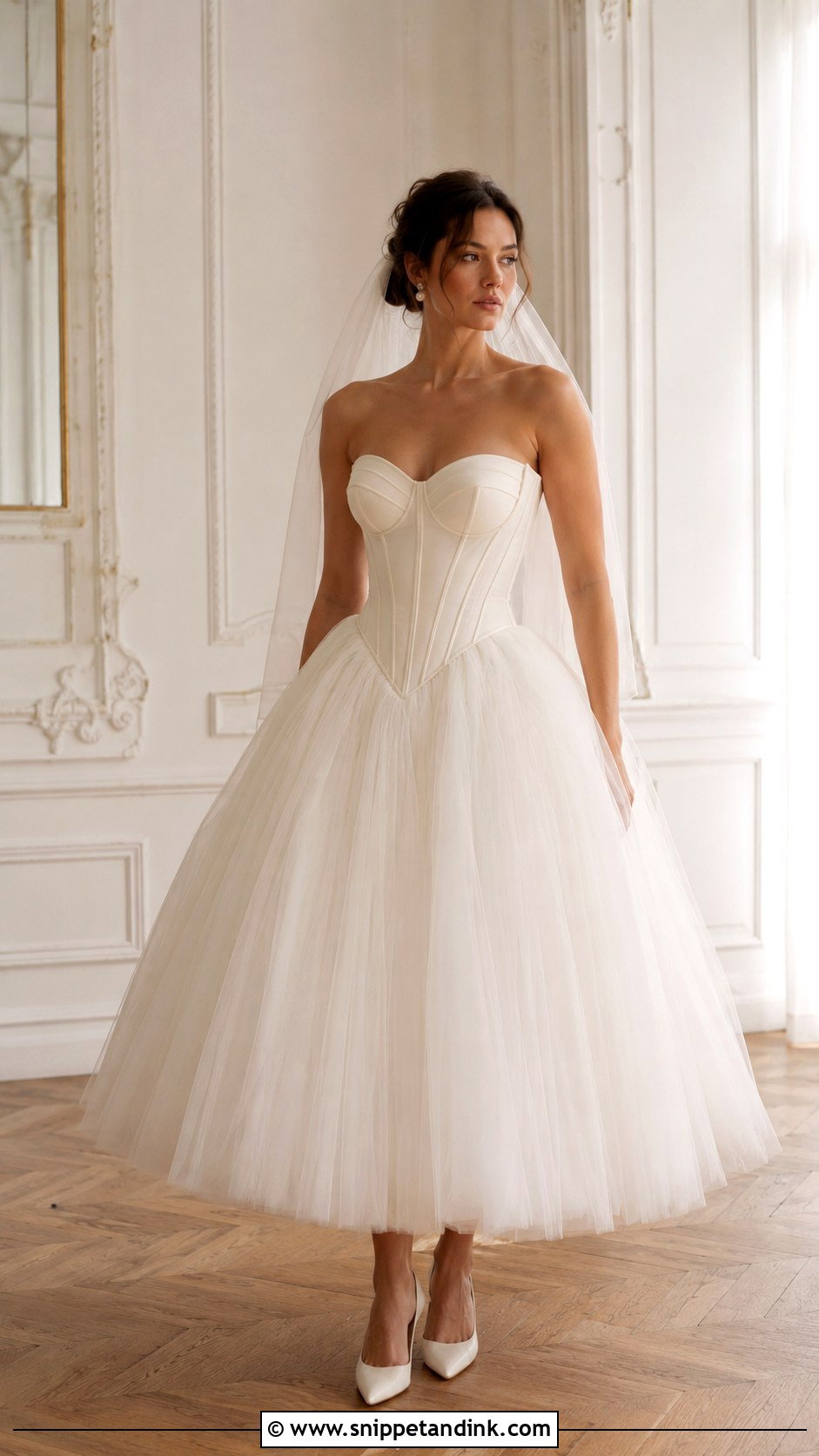
The basque waist dips into a V or U below the natural waist, which lengthens the torso and gives a full skirt a dramatic start. It suits tulle layers and structured bodices. Pointed heels lengthen the line further, and pearl earrings or a simple veil soften it. Brides who want a defined waist without a tight skirt usually love it. The point of the V has to sit exactly at the centre front, so I check it with the bride sitting as well as standing; a dip that rides up when seated looks crooked in photos.


15. Drop Waist Wedding Dress
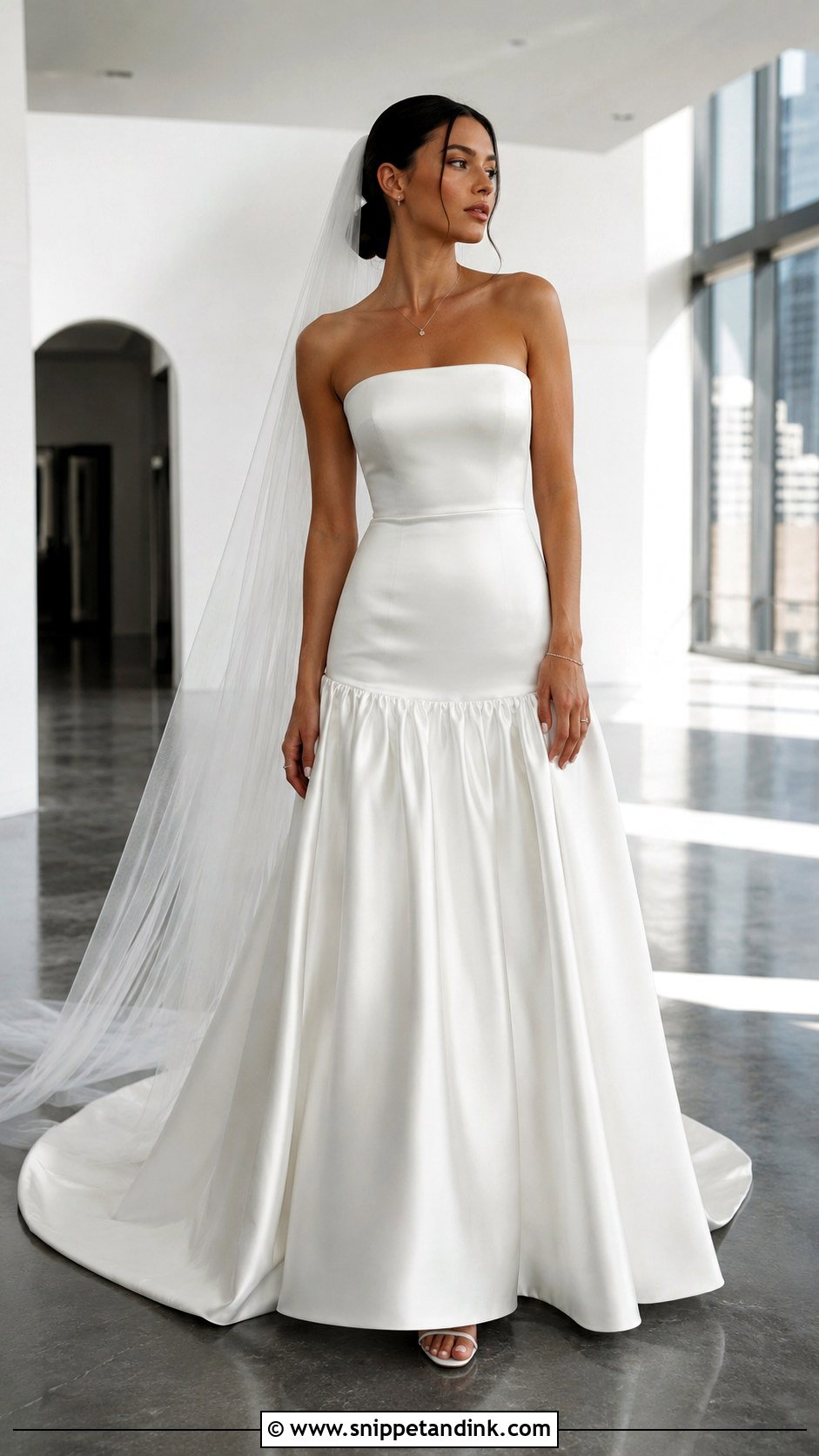
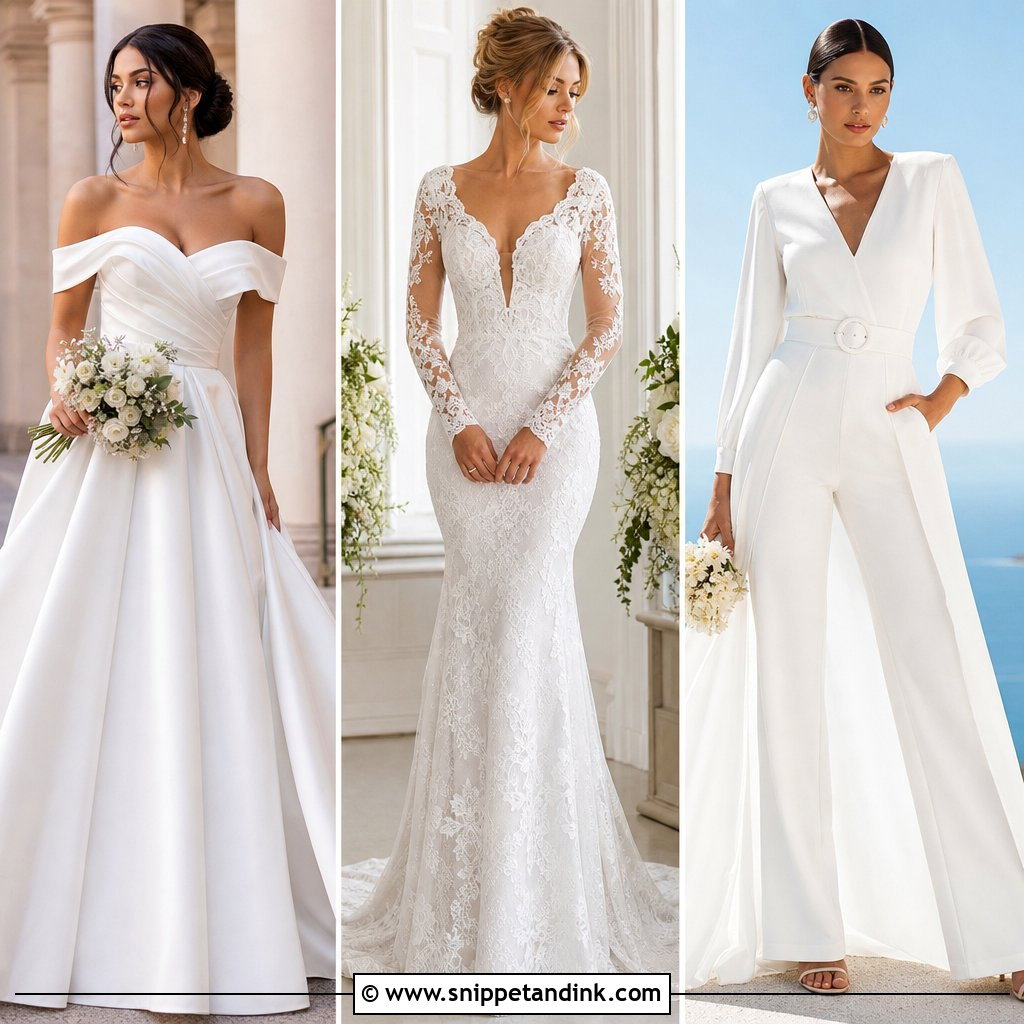
Drop waists sit lower, around the hips, before releasing into the skirt, so the torso looks long and lean. Satin makes it sleek; tulle and organza make it playful. Minimal heels, a clean veil and delicate jewellery keep it polished. Because the seam is the main feature, it has to land at the right spot on your body. On shorter torsos, a drop waist placed too low can make the legs look short, so try a couple of heights during alterations before the seamstress cuts.
16. Slip Wedding Dress
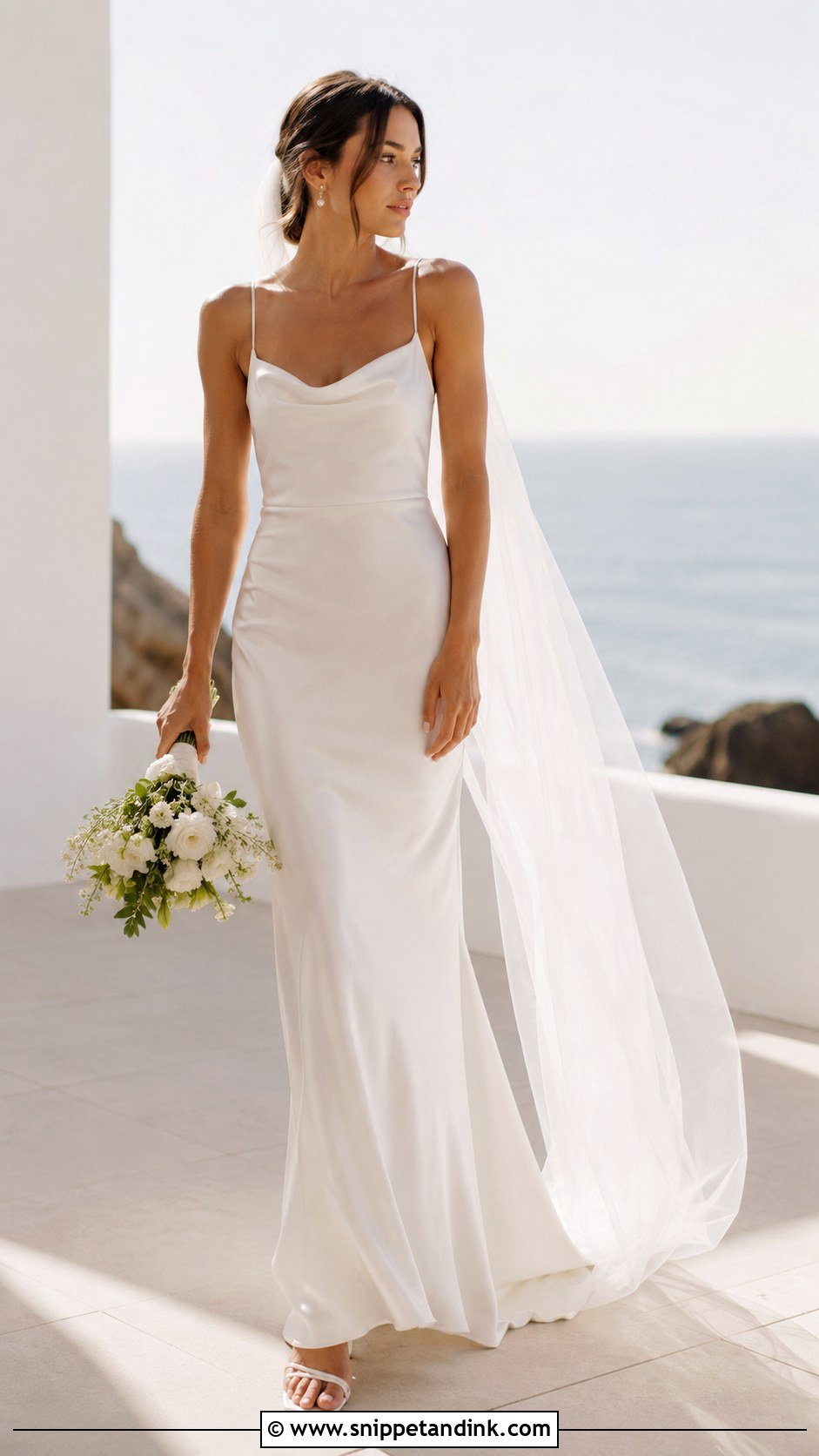
Slips skim the body with thin straps and a soft neckline, and satin, silk and crepe give the smoothest finish. They suit destination weddings, city ceremonies, elopements and minimalist receptions. Strappy heels, small earrings and a sheer veil finish it, and a tailored blazer or cape adds coverage. The fit should glide, not cling. Slips show everything underneath, so bring the exact underwear you’ll wear to every fitting; most brides end up with a smooth, no-line set in their own skin tone.
17. Minimalist Wedding Dress
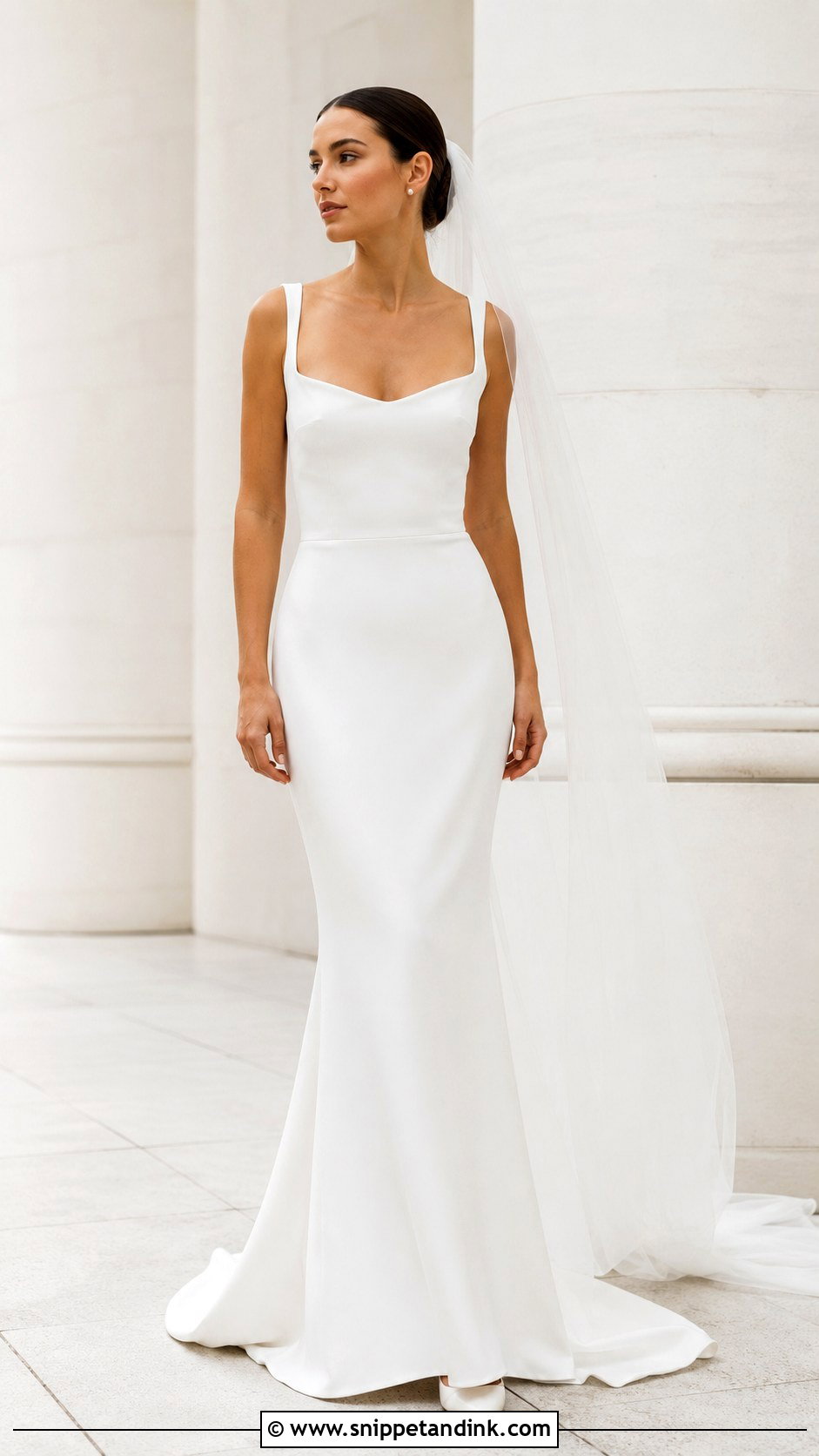
Minimalist gowns let fabric, tailoring and the neckline do the work. Interest comes from one detail: a square neck, a sculpted bodice, a slit or a low back. Sleek heels, pearl studs, a smooth veil and a low bun or polished waves finish it. I’d put more of the budget into alterations here than with any other style, because nothing hides a loose seam. Minimalist gowns also age well in photos, since they aren’t tied to one season’s trend.
18. Pearl Wedding Dress
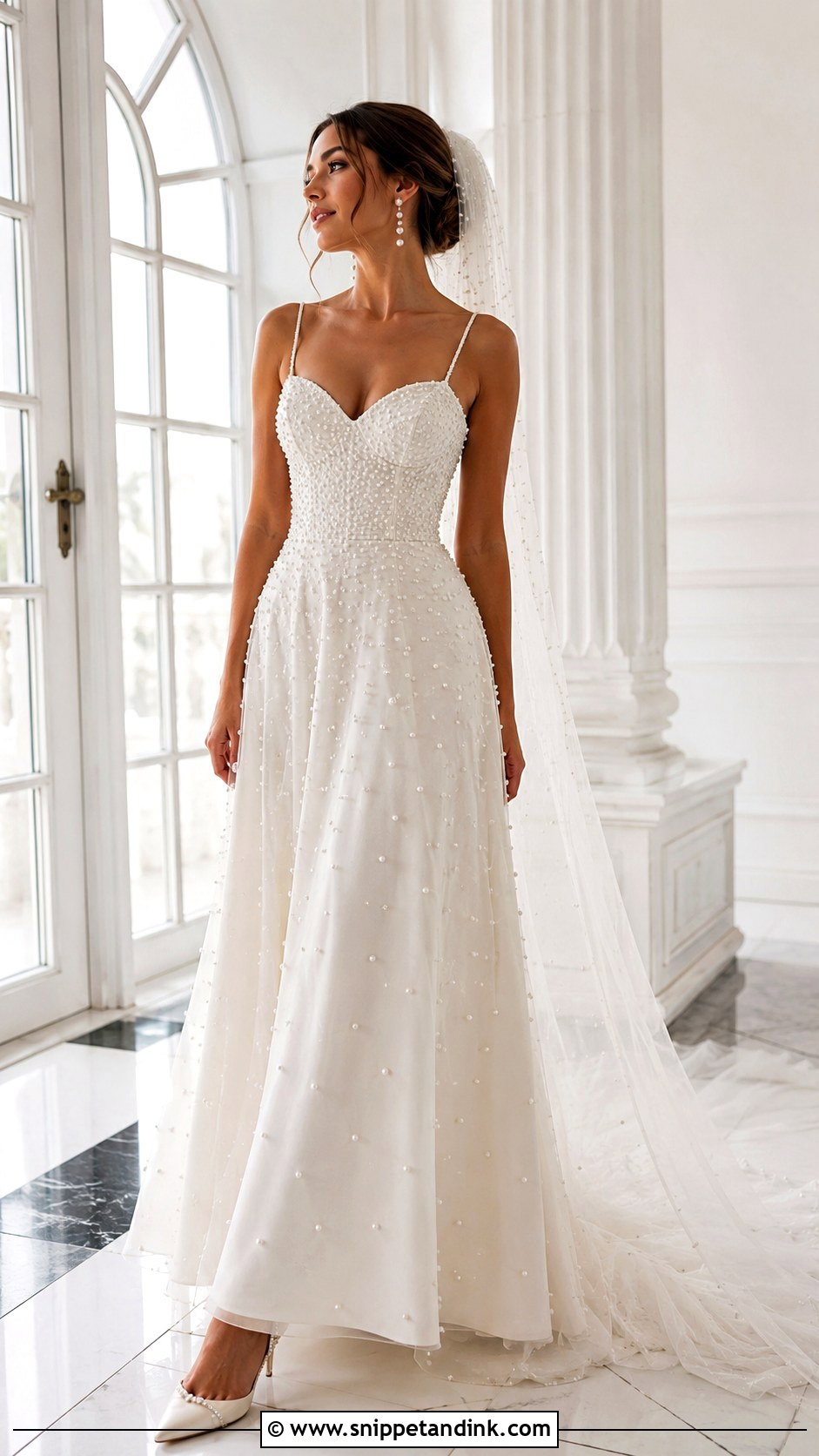
Pearls give soft shine rather than sparkle. They can be scattered, run along the straps, sit on the bodice or cover the whole gown. Simple ivory heels, pearl studs and a sheer veil keep it modern, and I’d hold back on other accessories. Pearls are heavier than sequins, so ask about the weight of a densely pearled bodice; it can drag the straps down by evening. They suit fitted shapes, A-lines and short reception dresses.
19. Beaded Wedding Dress
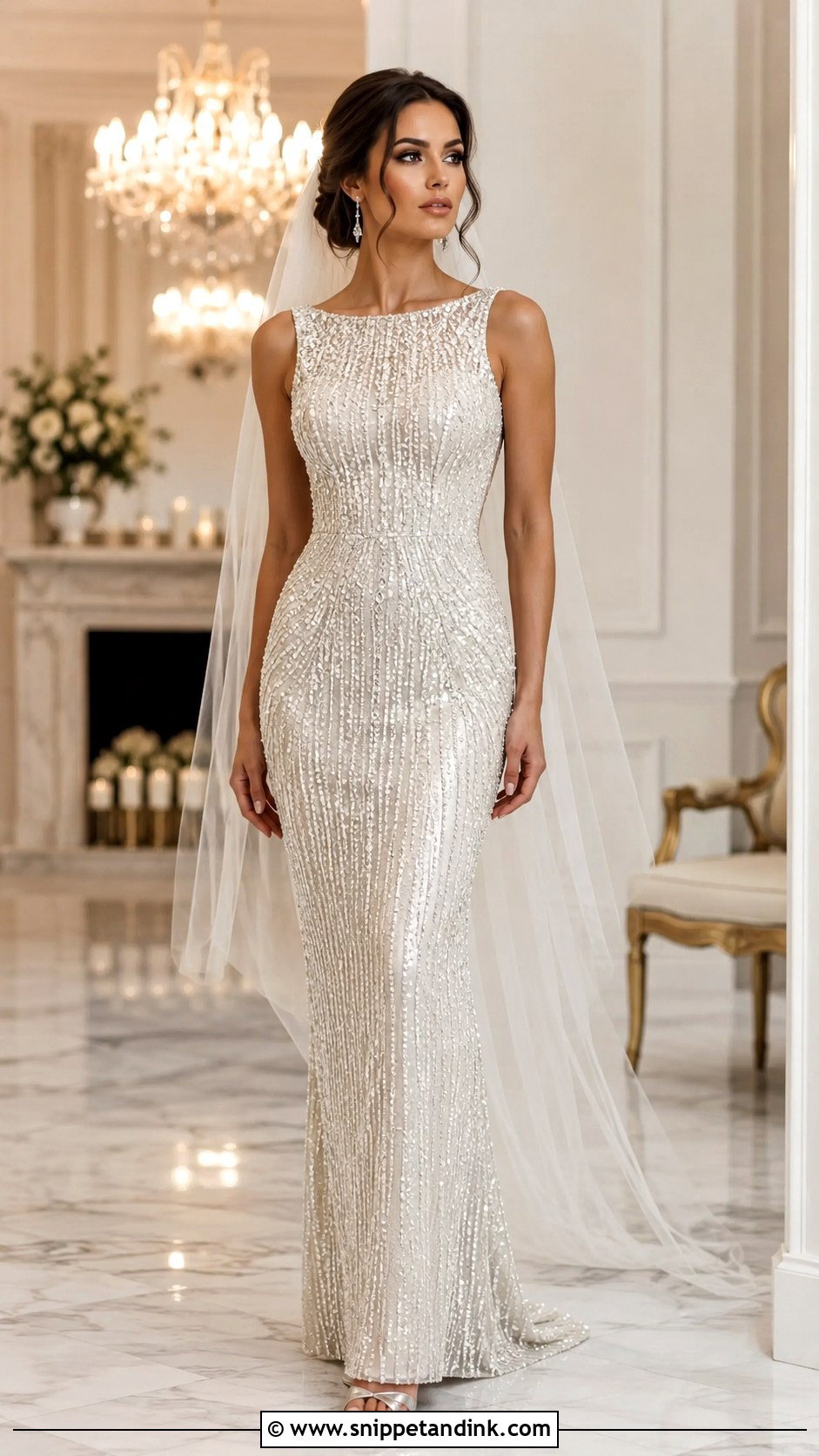
Evening glamour and movement are what a beaded wedding dress does best. Beading can be light across the bodice or run from neckline to hem, and a fitted sheath, mermaid or soft A-line balances the shine. Metallic or ivory heels, simple earrings and a light veil finish it; with heavy beading, skip big necklaces. I check the inside seams of every beaded gown for loose threads before it leaves, because one broken thread can unravel a row of beads on the dance floor.



20. Floral Wedding Dress
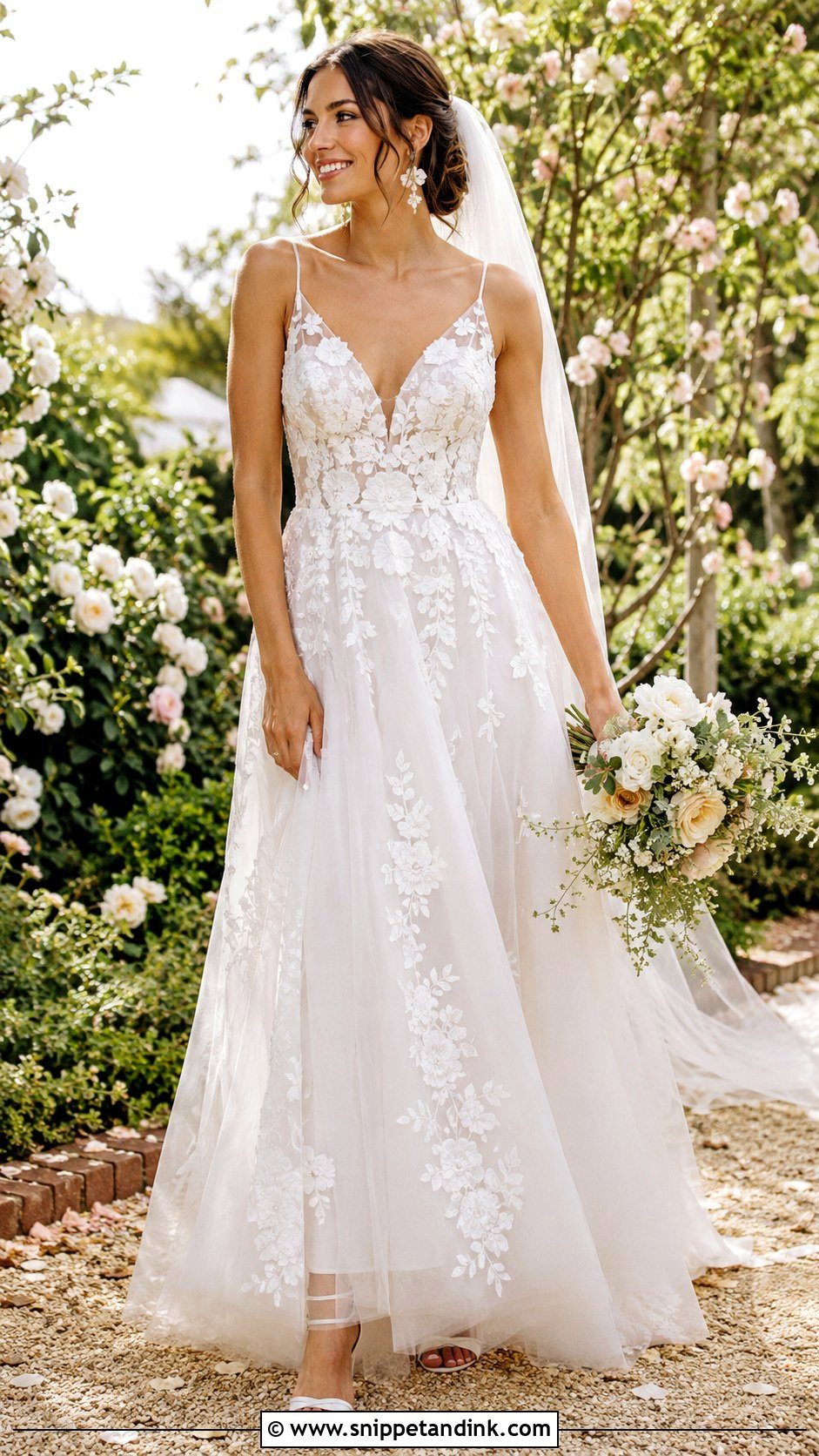
Florals come through lace, embroidery, appliqué or printed fabric. White-on-white feels classic; pastel flowers are more playful and personal. Delicate heels, floral-inspired earrings and a soft veil or hair accessory finish it, and with a detailed gown I’d keep the bouquet simple so the flowers don’t compete. Spring, summer and garden weddings suit it best. Raised 3D flowers on the skirt can catch on rough chairs and stone, so look at the venue’s seating before choosing a heavily appliquéd hem.
21. Tulle Wedding Dress
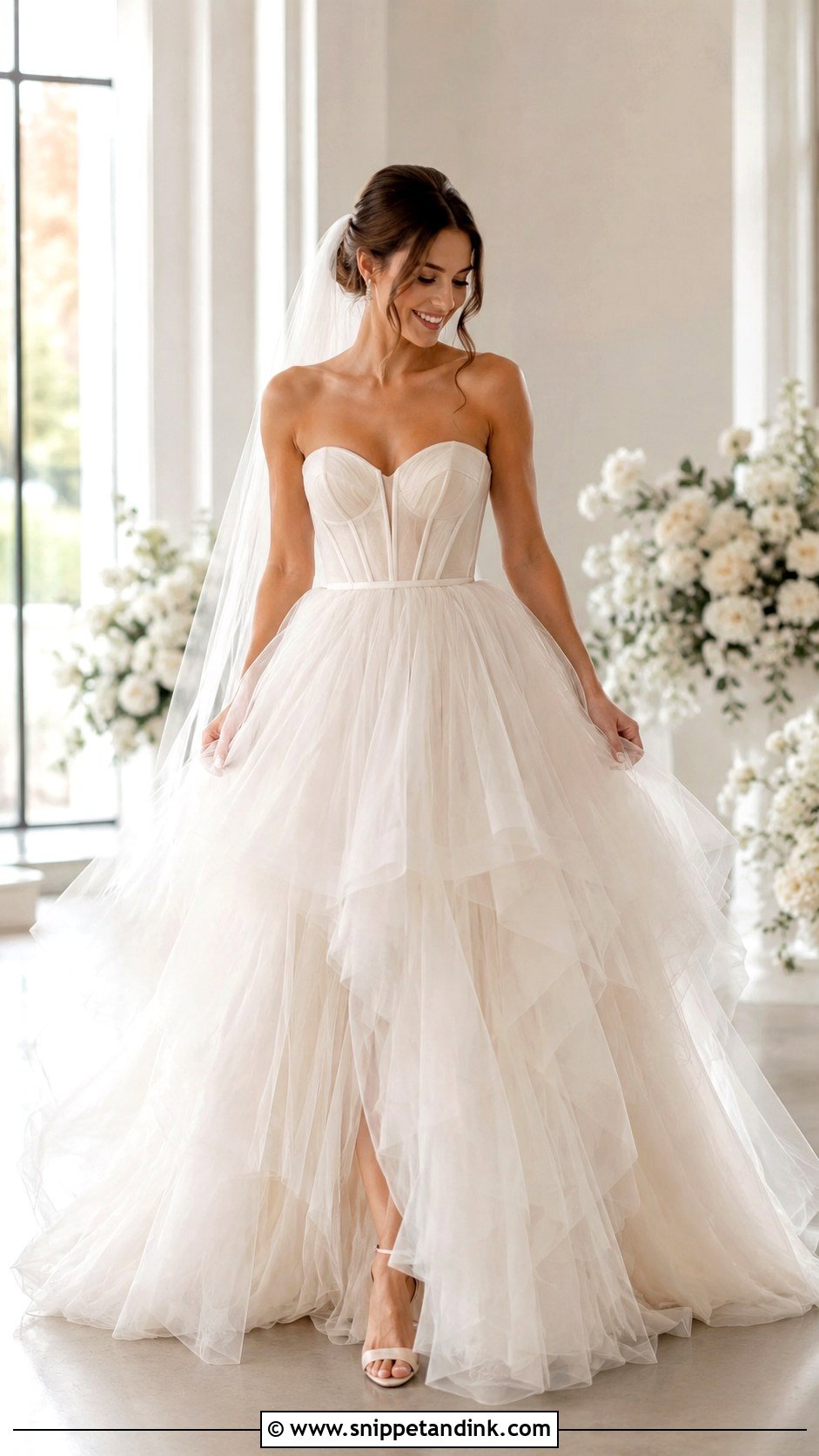
Tulle adds volume with very little weight, and it can be dramatic in a ball gown, soft in an A-line or modern over a structured bodice. Simple heels, dainty earrings and a veil as soft as the skirt finish it. With many layers, keep the bodice clean. Fine tulle snags easily on rough surfaces, including bark, stone walls and beaded clutches, so I’d keep jewellery smooth and check the route from car to ceremony.
22. Chiffon Wedding Dress
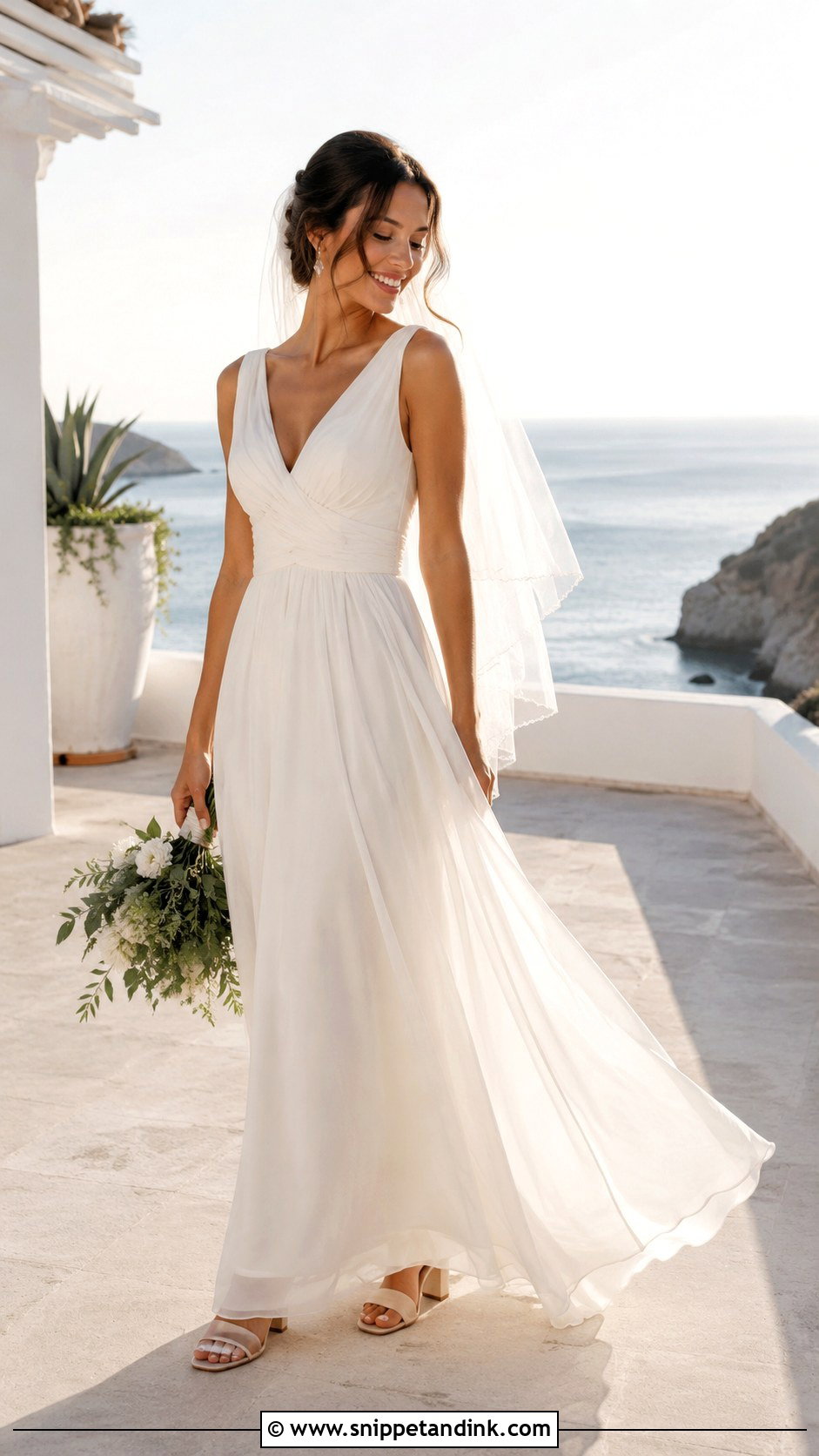
Chiffon is light and flowing, which makes it the comfortable choice for warm weather and destination weddings. It works in empire waist, A line, sheath and beach-friendly shapes. Block heels, sandals or simple pumps suit the venue, with delicate earrings and a soft veil. Chiffon frays and snags more easily than satin, and a single layer can be sheer in sunlight, so I’d check that the gown is properly lined. Draped well, it skims the body instead of clinging.
23. Crepe Wedding Dress
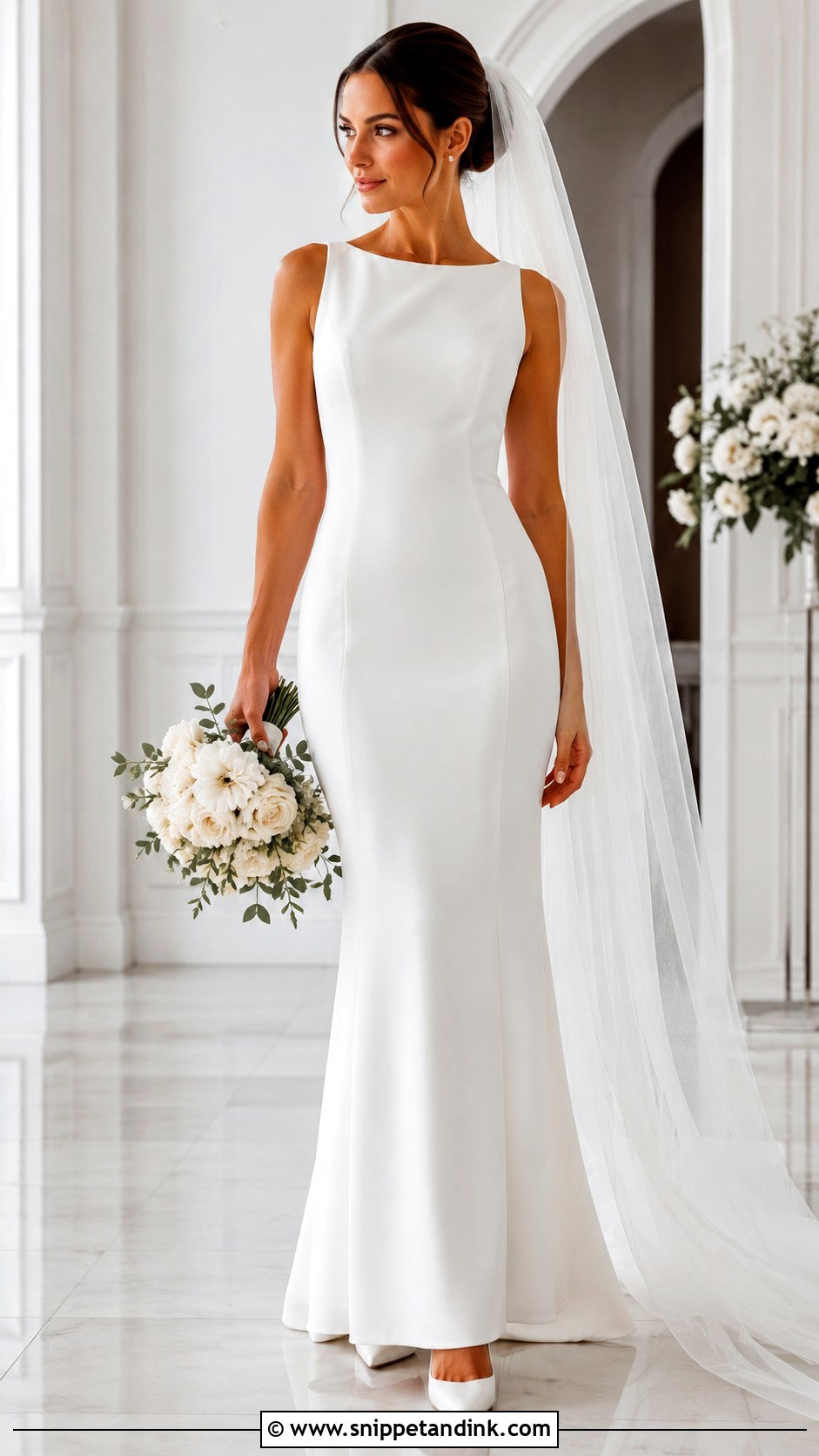
Crepe has enough weight to smooth the silhouette while staying soft and matte. It’s strongest in sheath, mermaid, column and minimalist shapes, with pointed heels, simple earrings and a long veil. A low back, buttons down the train or a structured neckline add detail. Crepe creases less than satin through a long day of sitting, which brides appreciate. It does show lines underneath, though, so the right underwear and a precise fit matter more than any decoration.
24. Boho Wedding Dress
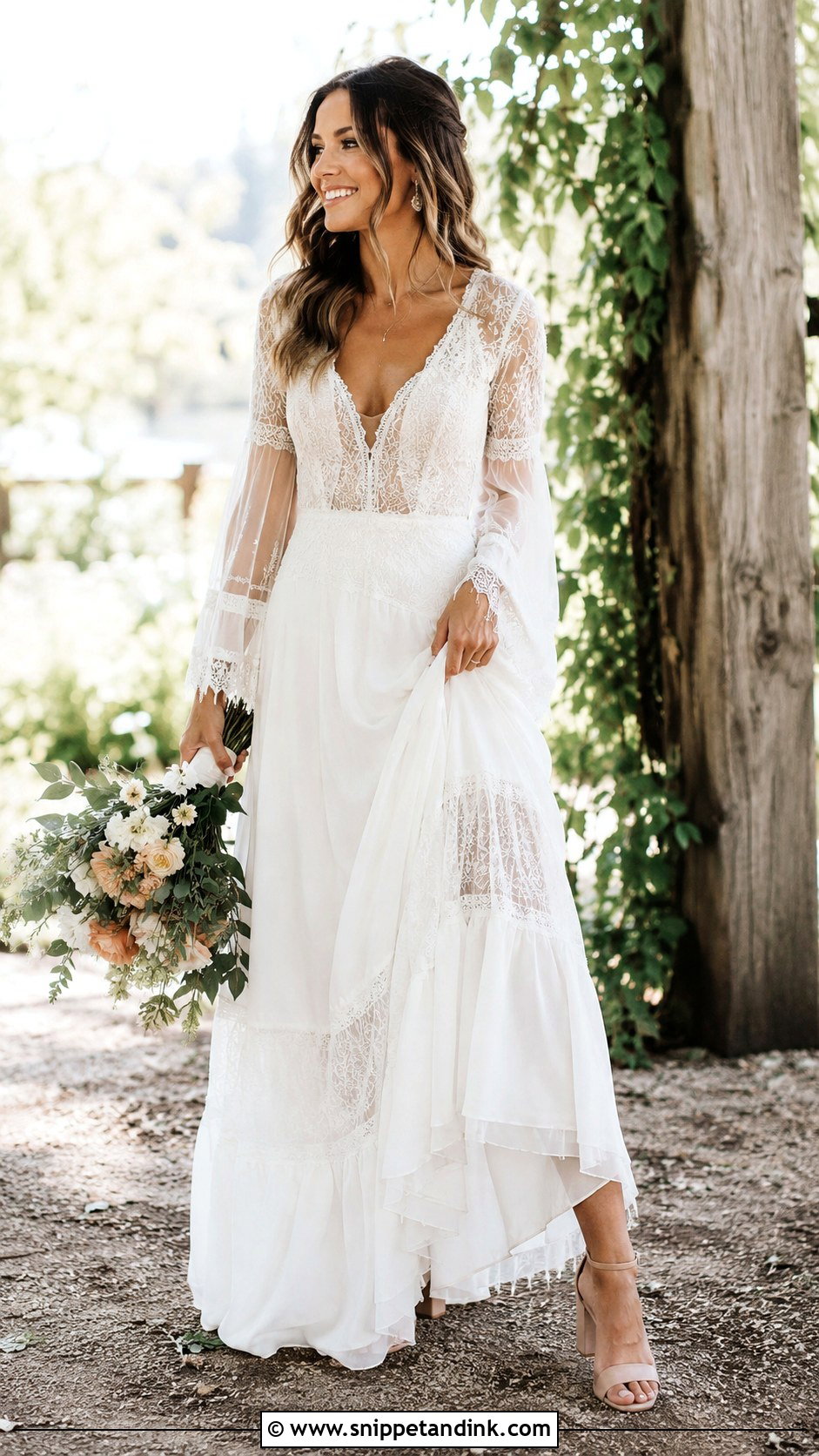
Boho gowns bring texture: lace, flowing sleeves, soft skirts, fringe or crochet. They suit outdoor weddings, desert venues, rustic spaces and beaches. Block heels, woven accessories, loose waves and natural makeup tie the look together. A flower crown can work, but a simple veil or hair comb usually looks more current. Crochet lace is heavier than it looks, especially in long sleeves, so lift your arms and walk around in it before deciding.
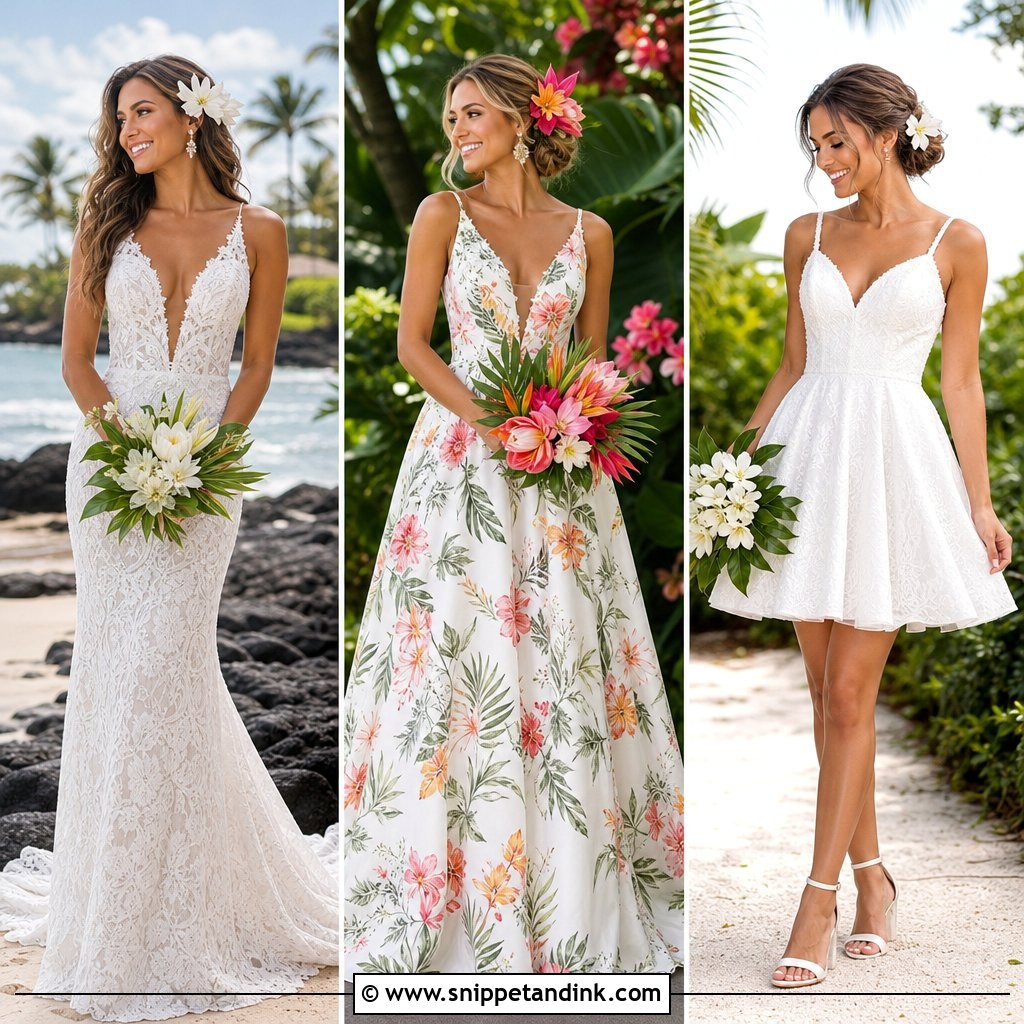

25. Beach Wedding Dress
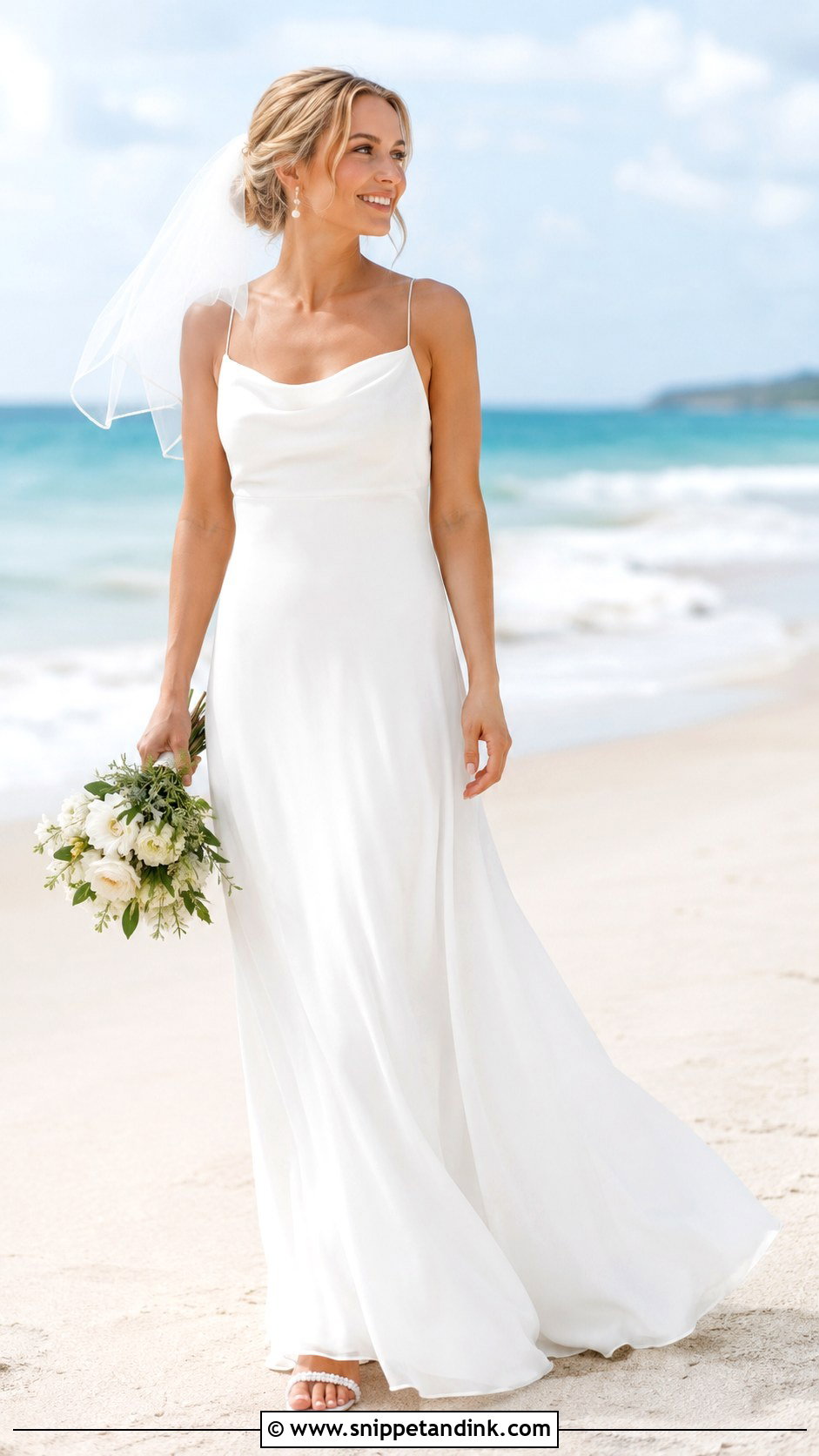
On a beach, heavy trains and stiff fabrics fight the sand and wind, so lighter is better. Chiffon, crepe, organza or lightweight lace in a sheath, slip or soft A-line works well. Flat sandals, low block heels or barefoot sandals suit the setting, with pearl earrings and soft waves. A short or fingertip veil copes with a breeze; a cathedral veil turns into a sail. Sand clings to any hem, so plan on a quick brush-down before the reception.
26. Plus Size Wedding Dress
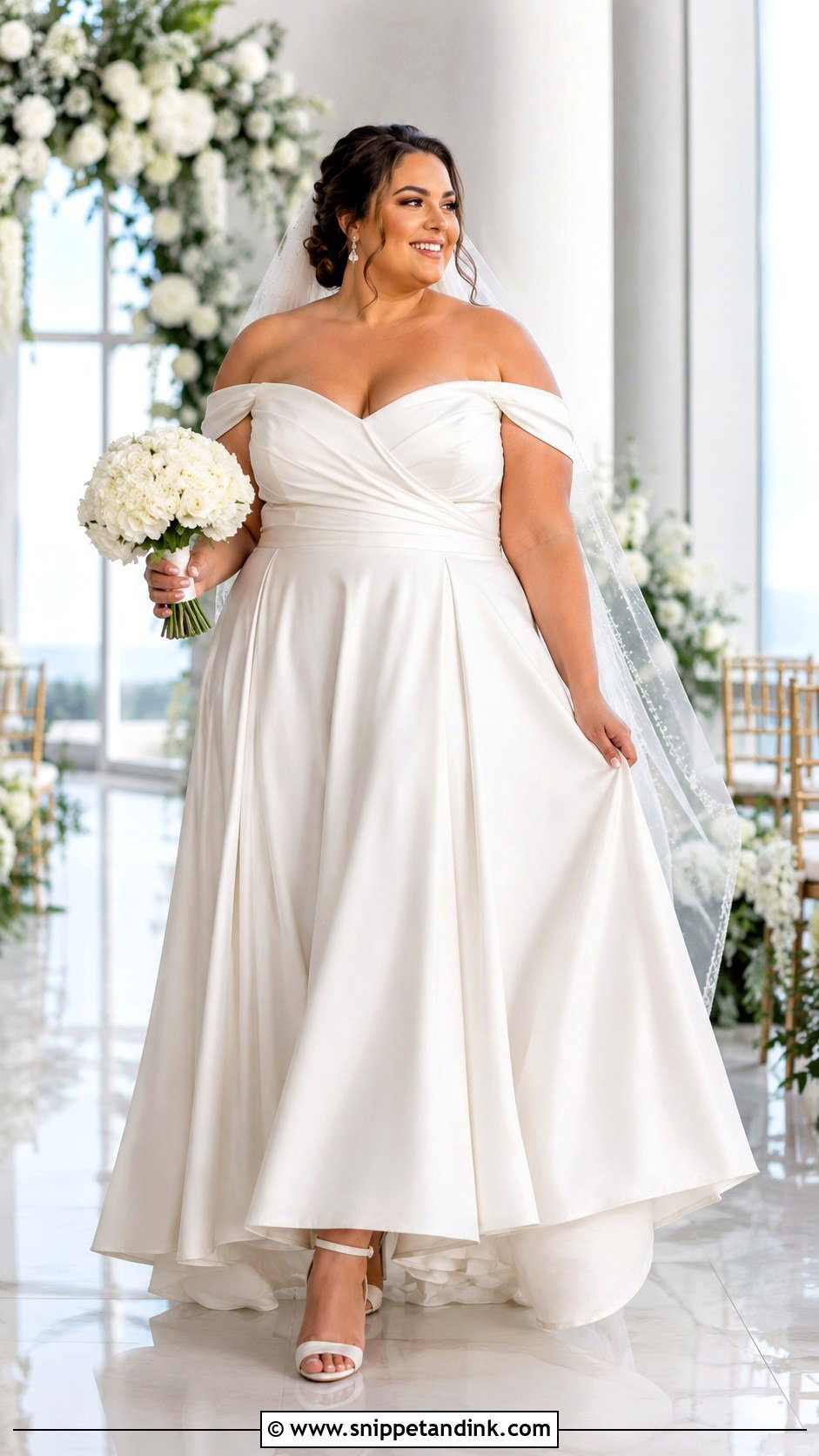
Plus size gowns should support and shape rather than hide. A-lines, corset bodices, off-shoulder dresses, wrap shapes and fit-and-flare all work well. I look for strong tailoring, a comfortable lining and a bodice that stays in place when you sit. Supportive heels, balanced jewellery and a veil matched to the gown’s detail finish it. Don’t settle for the so-called safe designs; lace, satin, sparkle, slits, sleeves and fitted shapes can all look wonderful when the structure inside is right. Ask the shop for samples in your size, since trying a gown clipped onto you tells you very little.
27. Modest Wedding Dress
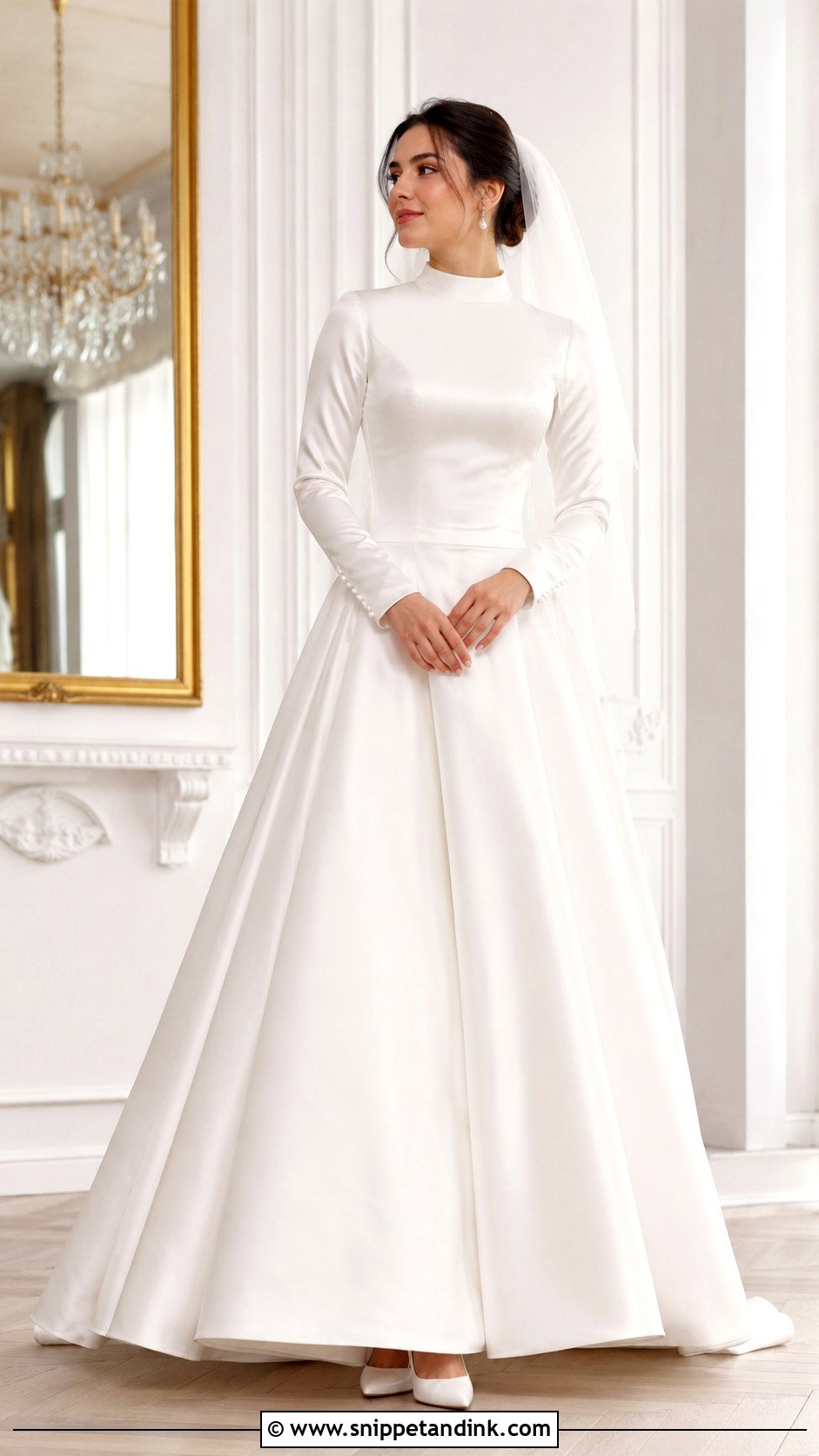
Modest gowns can be just as fashionable as anything else here. High necklines, long sleeves, lined bodices and full skirts all give coverage. Lace sleeves are soft, satin structured, crepe clean. Closed-toe heels, pearl earrings and a veil that complements the neckline finish it, and with a high neck I’d suggest an updo or waves pulled back. If you’re adding sleeves or a lining to a gown that didn’t come with them, order early; matching fabric can take weeks to arrive.
28. Short Wedding Dress
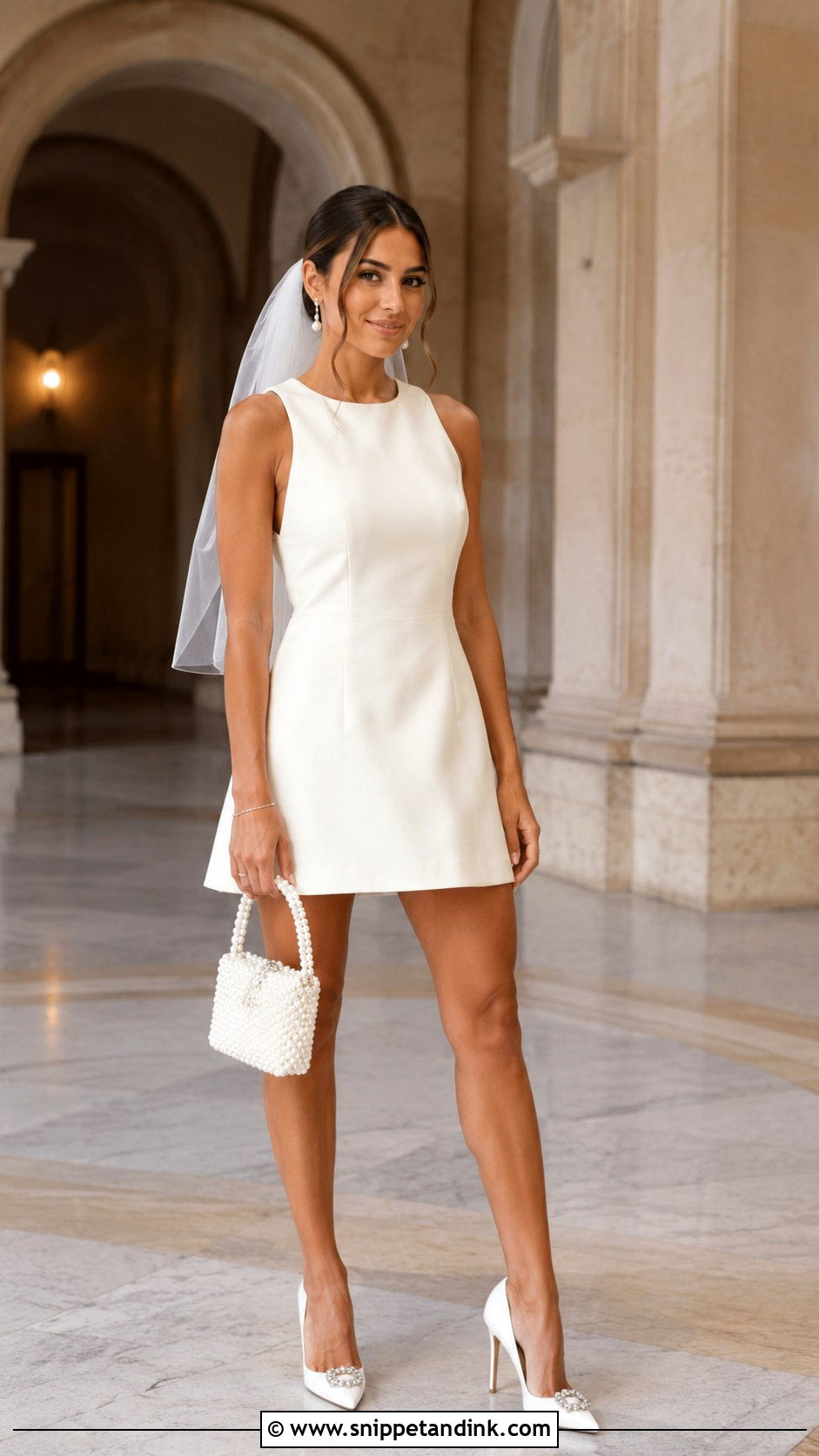
Short dresses suit civil ceremonies, receptions, after-parties and brides who want to move freely. Mini and tea-length versions can be classic, modern or playful. Satin is polished, lace sweet, and feathers or bows add personality. Statement heels, pearl earrings and a small veil or hair bow make it bridal. Your shoes and legs show here, so this is where to spend on footwear and break the shoes in beforehand.
29. Colored Wedding Dress
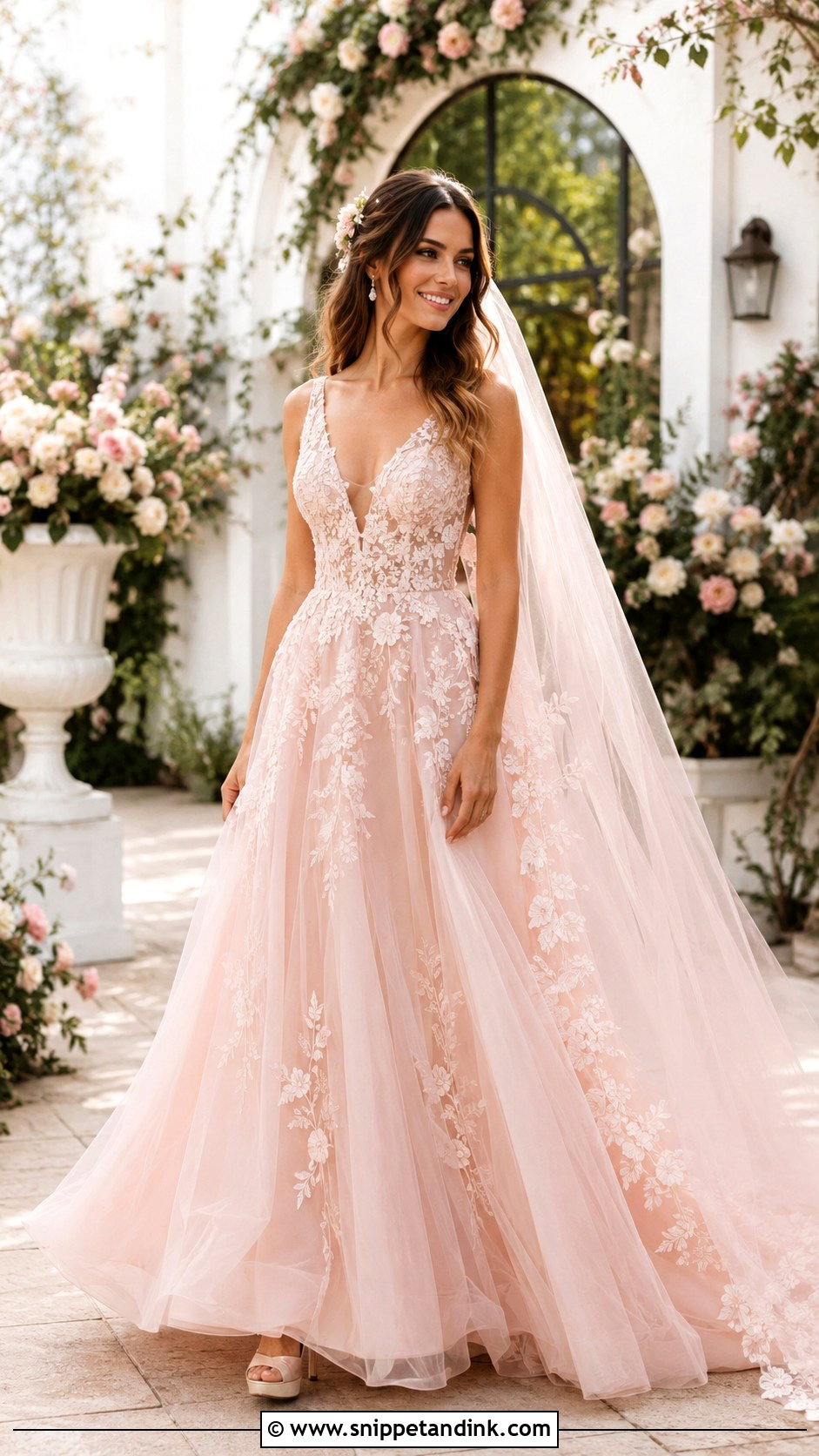
Colour is for the bride who wants to step away from white without losing the bridal feel. Blush, champagne, pale blue, silver and buttercream all still read as wedding gowns. The colour can sit in the lining, cover the whole gown or come through embroidery. Neutral heels, simple jewellery and a veil that matches or contrasts softly finish it, and the bouquet should stay balanced. Test the shade against your skin in daylight; some pale colours look lovely in the shop and wash out completely outdoors.
30. Wedding Dress With Cape
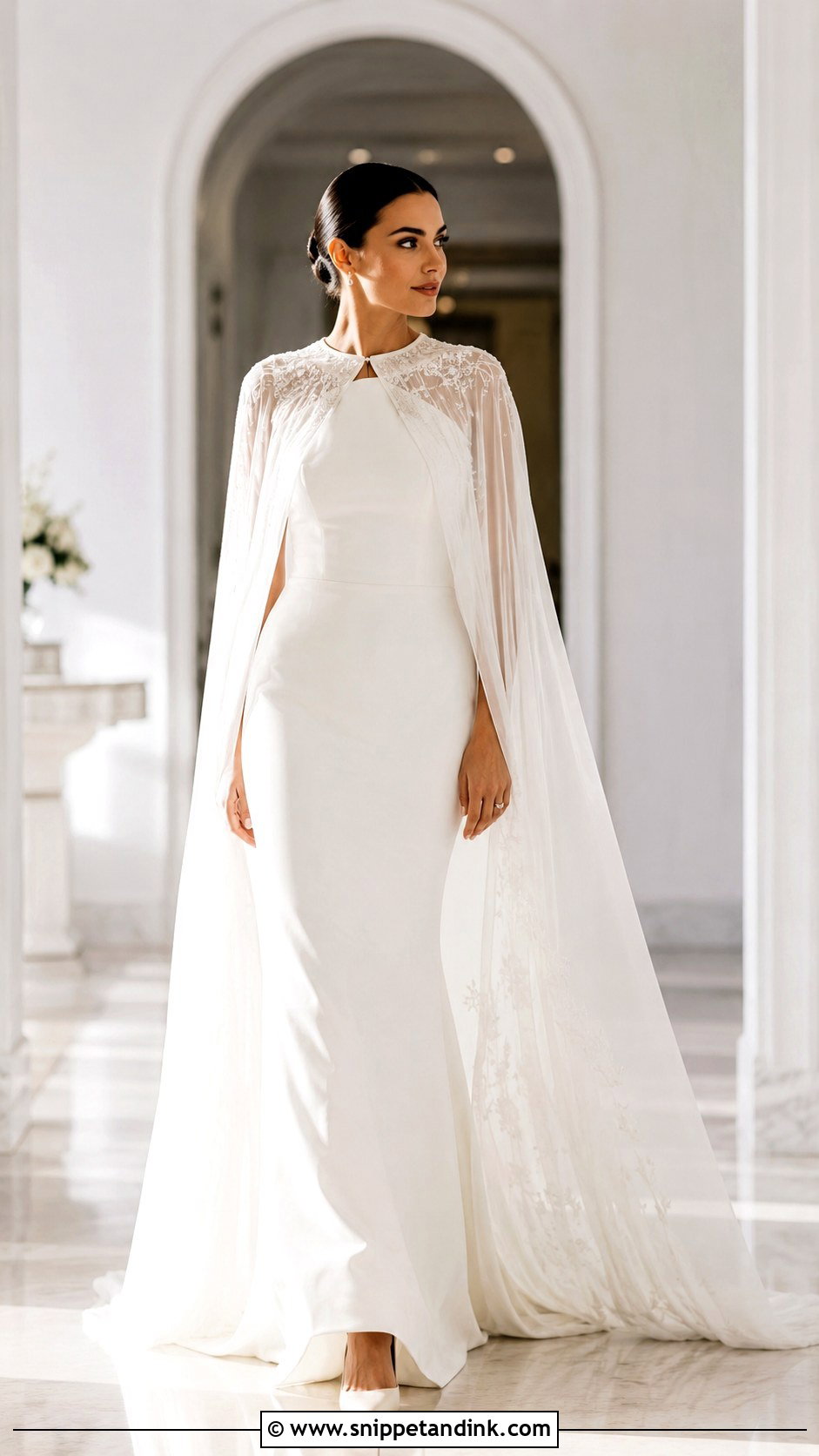
Capes give the drama of a long veil without the weight on your head. They can be sheer, lace, pearl-trimmed, satin or detachable, and they suit minimalist gowns, fitted crepe, bridal jumpsuits and sleek satin. Simple heels and small earrings let the cape lead. A detachable cape gives coverage for the ceremony and a lighter look for the reception. Check how it fastens; capes attached at the shoulders are steadier in wind than those tied at the neck.
A Realistic Calendar From First Appointment to Final Fitting
Many brides start shopping later than the process really needs. Made-to-order gowns are produced after you order them, and delivery times vary a lot between designers, often several months. Alterations then take their own time on top.
- Start appointments roughly nine months to a year out if you want a made-to-order gown. Off-the-rack and sample gowns can be bought much later.
- Order as soon as you’ve decided. Ask the shop for the expected delivery date in writing.
- Book the first alteration fitting for about two to three months before the wedding.
- Plan for two or three fittings in total, with the last one a week or two before the day.
- Bring the same shoes and underwear to every fitting, and collect the gown pressed and bagged.
What a Seamstress Can Change, and What She Can’t
Alterations can take a gown in, shorten the hem, add a bustle, add straps or sleeves, adjust a neckline and add cups or boning. Letting a dress out is far more limited, because gowns usually have only small seam allowances, so order for your current size rather than a hoped-for one. A seamstress can’t turn a mermaid into an A-line or change the basic shape of a skirt, and hems on lace or beaded edges cost more because the trim has to be removed and reattached. Ask what’s possible before you buy, not after.
Fit, Fabric and the Venue Decide More Than Any Trend
The gown you end up loving will be the one that supports your body, suits the setting and feels like you. Trends are useful for discovering shapes you hadn’t considered, but comfort should make the final call. Try silhouettes you think you won’t like, pay attention to how each fabric feels after twenty minutes, and picture the whole outfit from veil to shoes. A simple gown with perfect tailoring looks extraordinary; a dramatic one looks right when the styling around it stays balanced. Satin, lace, tulle, pearls, colour, sleeves or a short reception look: any of them can be the right answer.
You'll Like These Ideas:








Leave a Reply