
A gown on a hanger tells you very little. I’d much rather a bride picture the whole outfit: the dress on her, the shoes, the veil, the jewelry and the room she’ll be standing in. That’s how the looks below are set out, covering classic, modern, romantic, modest, beach, courthouse, garden, plus-size, minimalist, vintage and statement styles, each with its shape, accessories, shoes, veil and the setting where it works. Lace, drop waists, sculptural shapes, bows, minis, separates and soft color are everywhere in bridal right now, but a well-fitted classic still beats a trend that doesn’t suit you. Use the list to sort out which silhouettes and fabrics you want to try before your first appointment.
Your First Bridal Appointment, Step by Step
Most brides arrive at their first appointment with a folder of pictures and no idea what to expect. A little preparation makes the hour far more useful.
- Bring a strapless or low-back nude bra, smooth underwear and shoes close to the height you’ll wear. Samples are pinned to fit, and the wrong underwear changes everything.
- Bring two or three people at most. More opinions usually mean less clarity.
- Try at least one silhouette you think you’ll hate. I’ve watched plenty of brides change their mind once a shape is actually on their body.
- Ask each gown’s lead time, what alterations usually cost there, and whether the sample size runs large or small.
- Photograph every dress from the front, side and back, and write the name down before you forget it.
Samples are often a different size from yours, so imagine the fit rather than judging the clips. Judge the shape, the fabric against your skin and how you feel walking toward the mirror.
1. Lace Wedding Dress
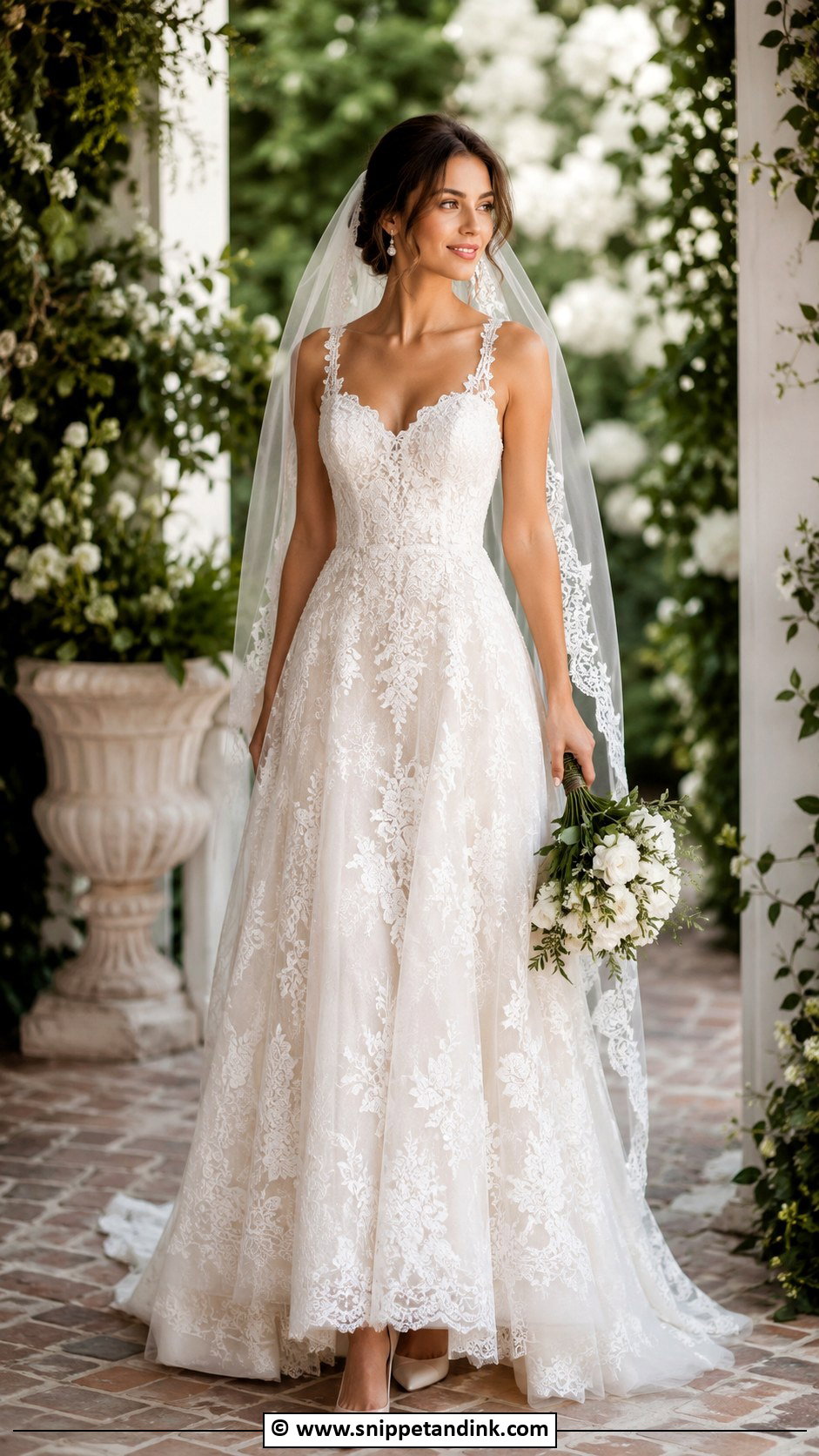
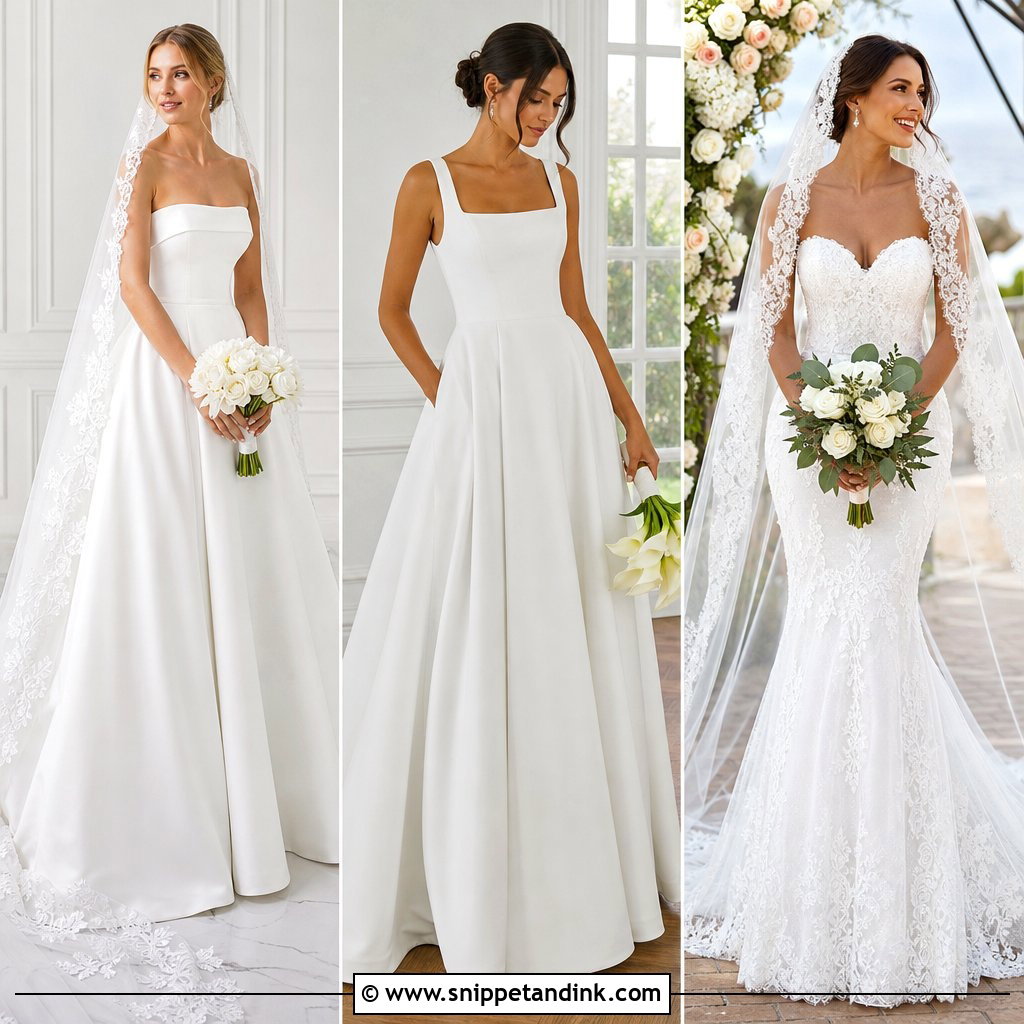
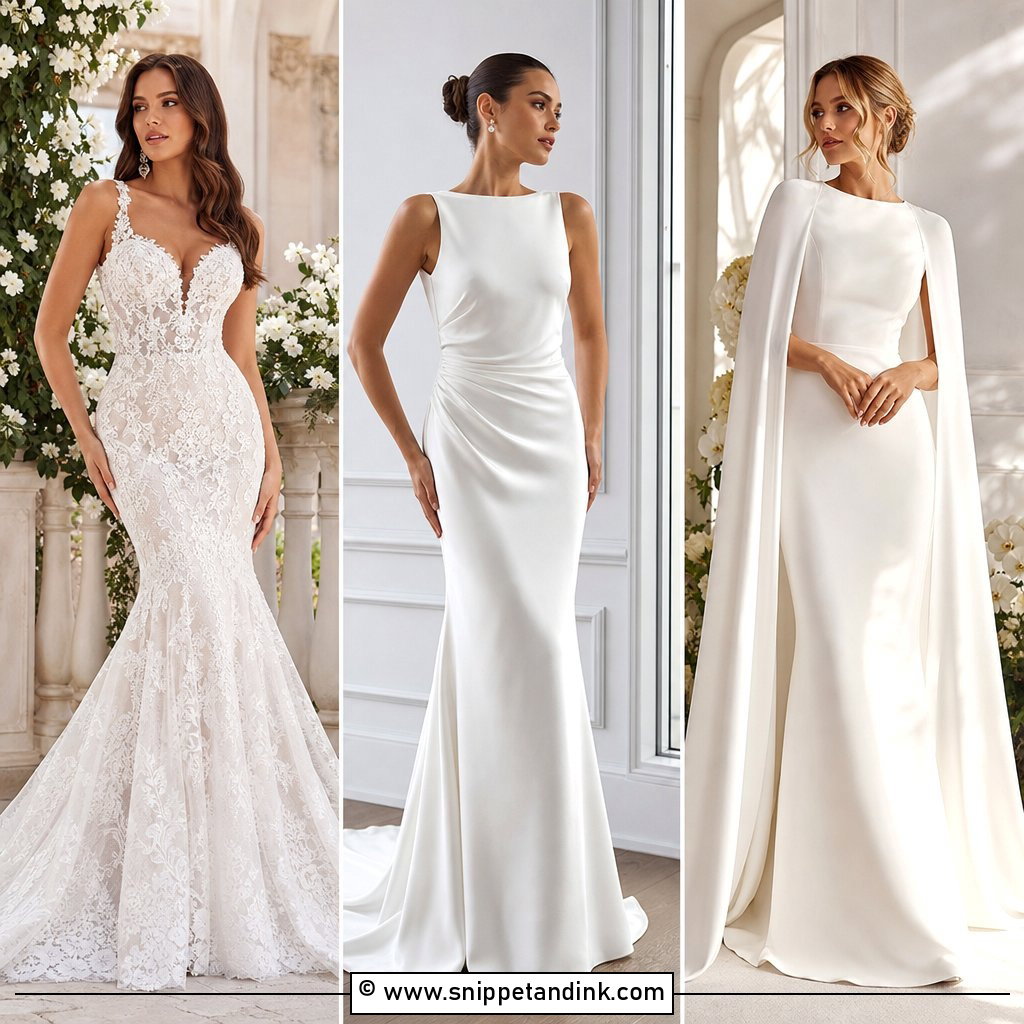
Lace gives detail and romance at once, and an A-line or fit-and-flare with a soft lining, defined waist and delicate sleeves or straps is the easiest way in. Ivory lace looks softer than bright white on most skin. I’d let the neckline breathe if the lace is heavy, so skip the big necklace and wear pearl earrings with a sheer lace-trimmed veil. Pointed satin heels or block-heel sandals, and a low bun or soft waves. Check where the lace motifs fall on the bodice; a good seamstress can move or trim them so a flower doesn’t land somewhere awkward.
2. Satin Ball Gown Wedding Dress
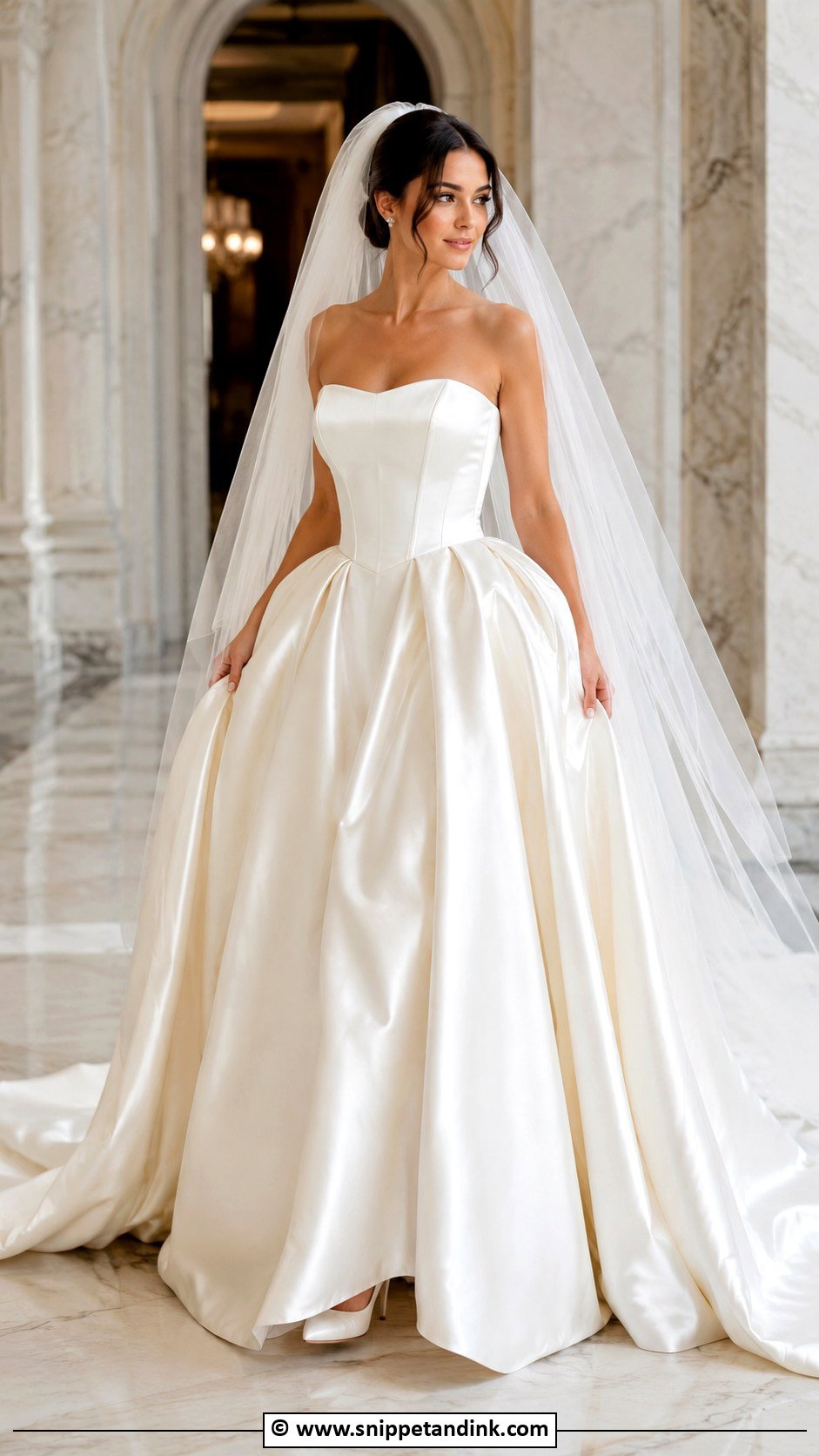
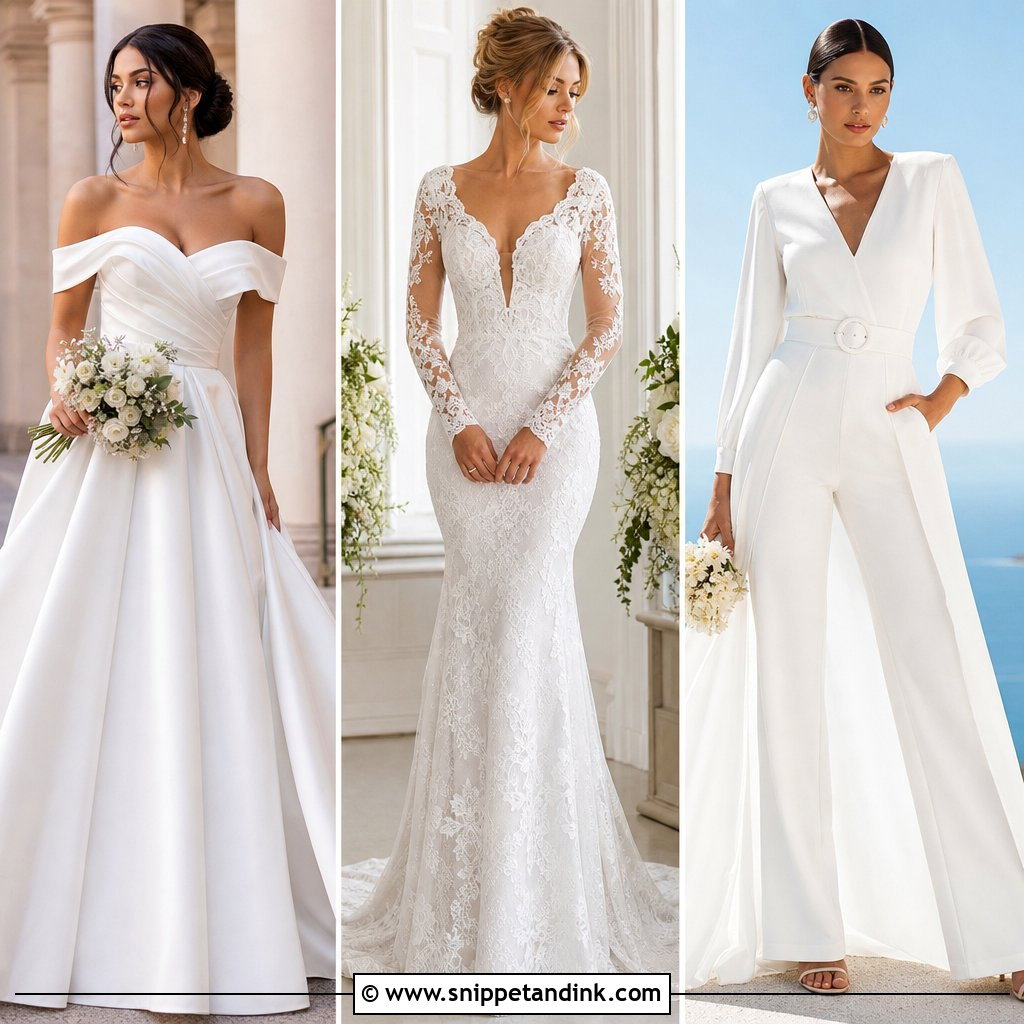
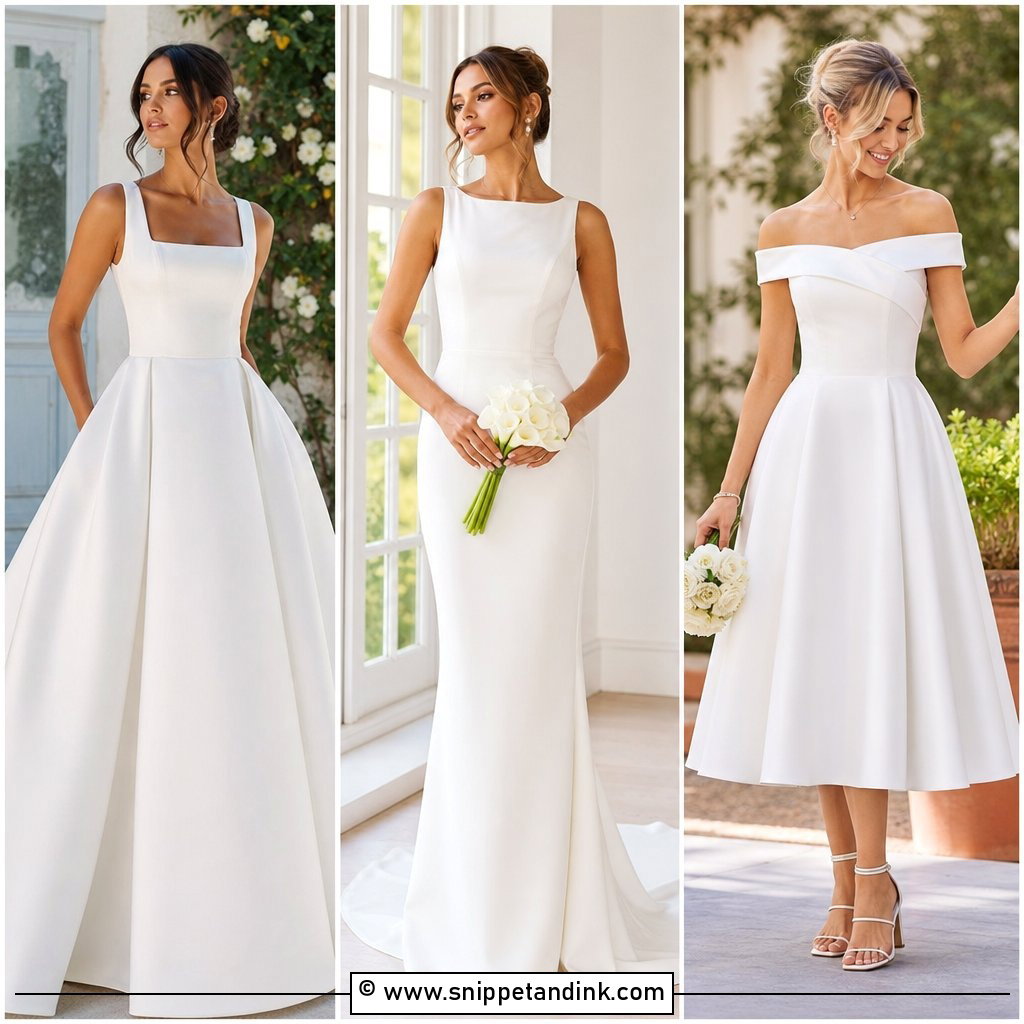
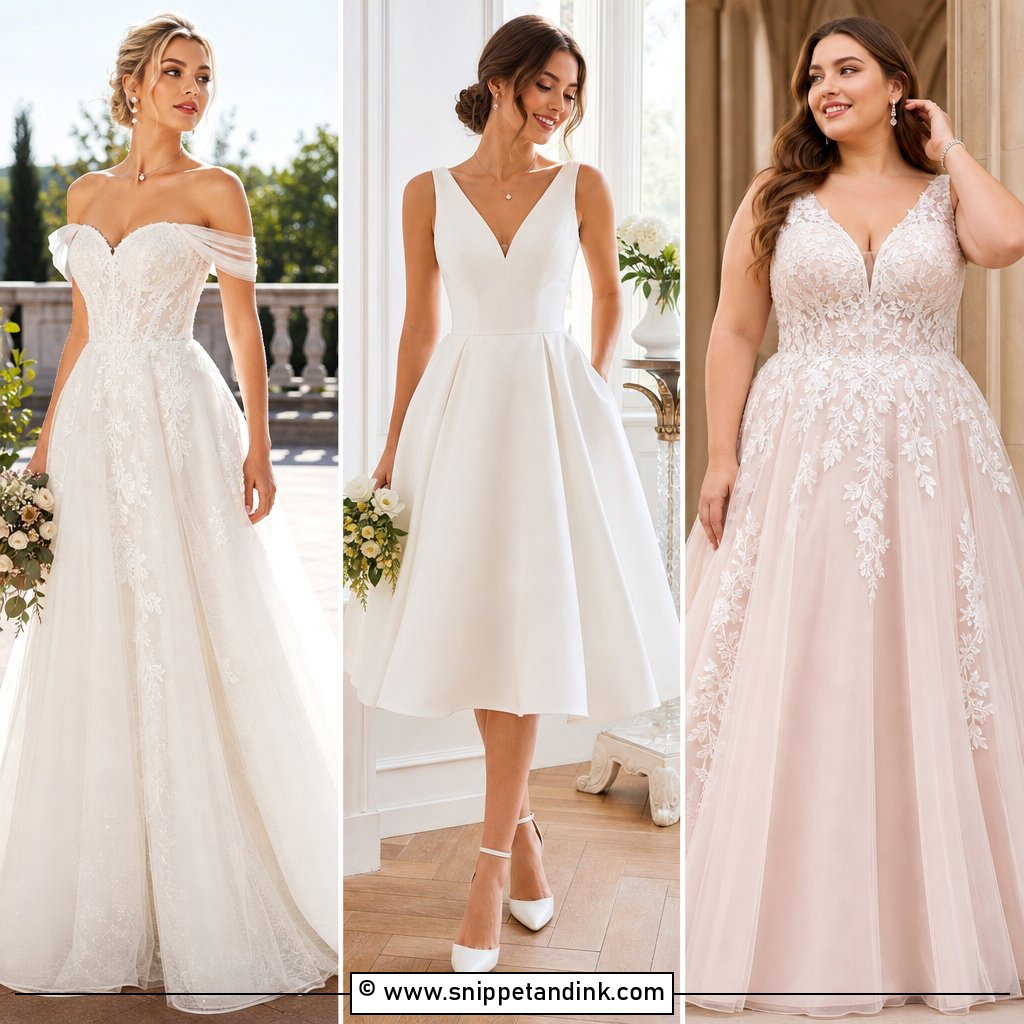
Satin reflects light, so a ball gown in it looks expensive even without a single bead. A structured bodice, a full skirt and a strapless, square or off-shoulder neckline give you the grand entrance. Cathedral veil, crystal studs and ivory pumps for a traditional ceremony, with a slim bracelet or tennis necklace if you want a little shine. Hotels, mansions and large ceremony spaces suit its scale. Two things I always ask the salon about: hidden pockets and a proper internal corset, because a full satin skirt is heavy and the bodice has to hold it up for hours.
3. Simple Crepe Wedding Dress
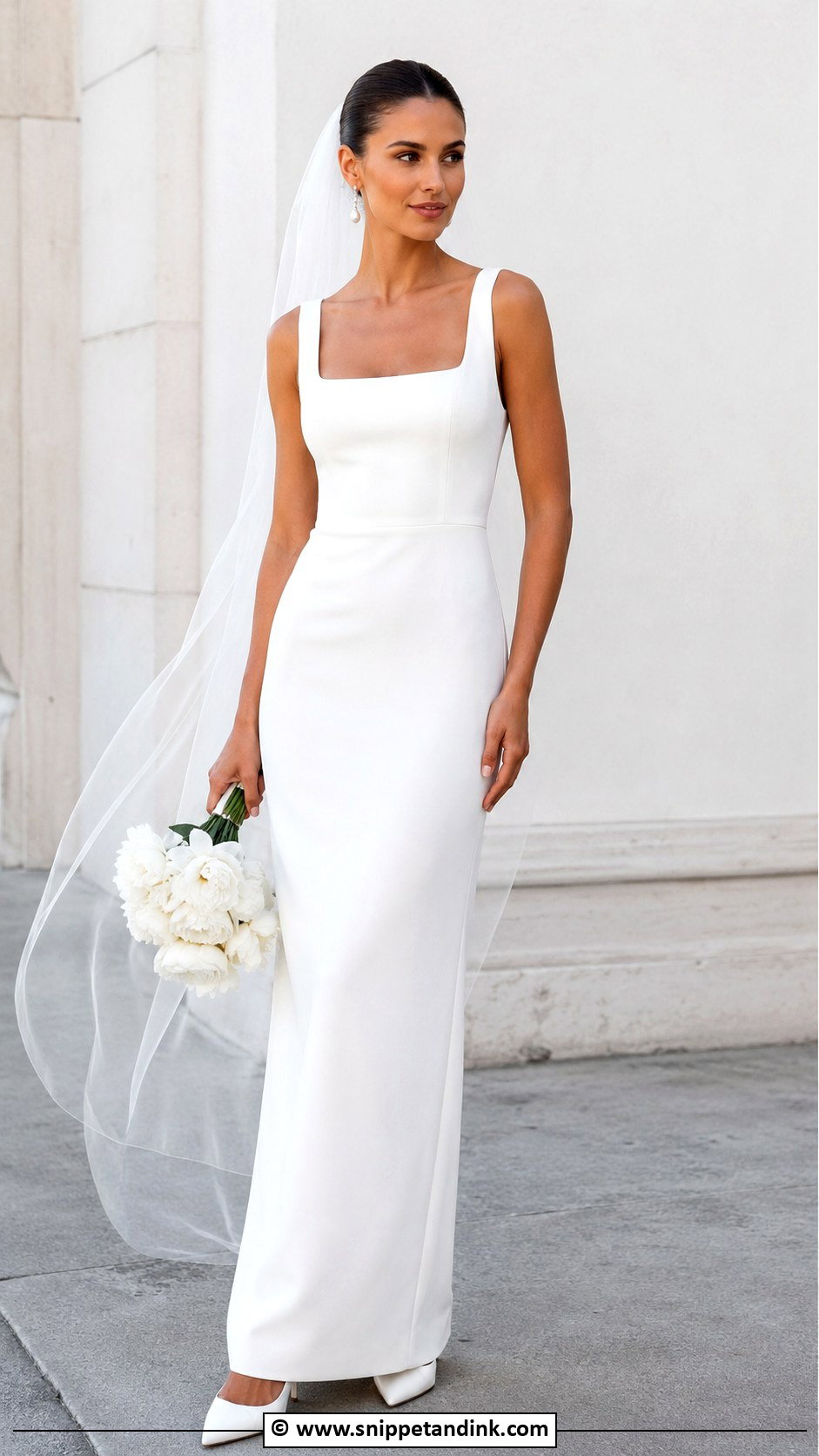
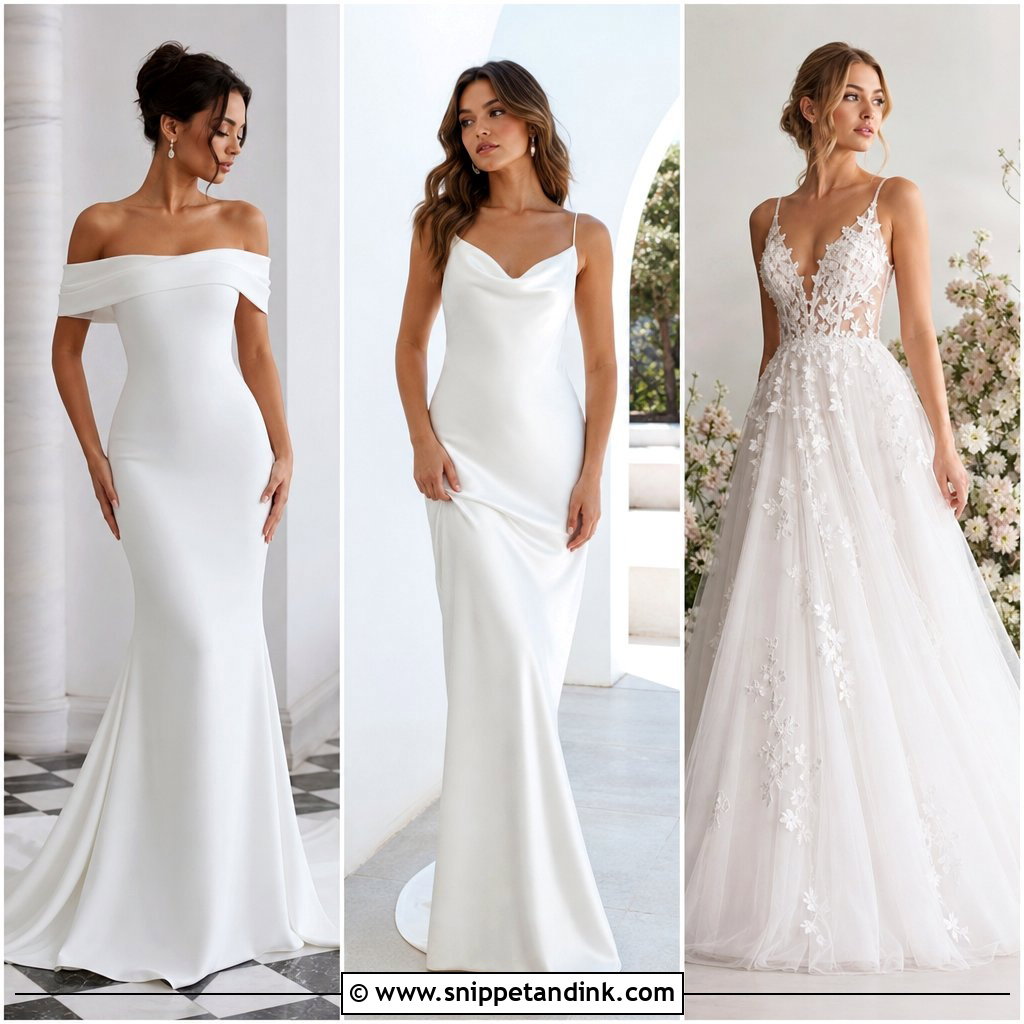
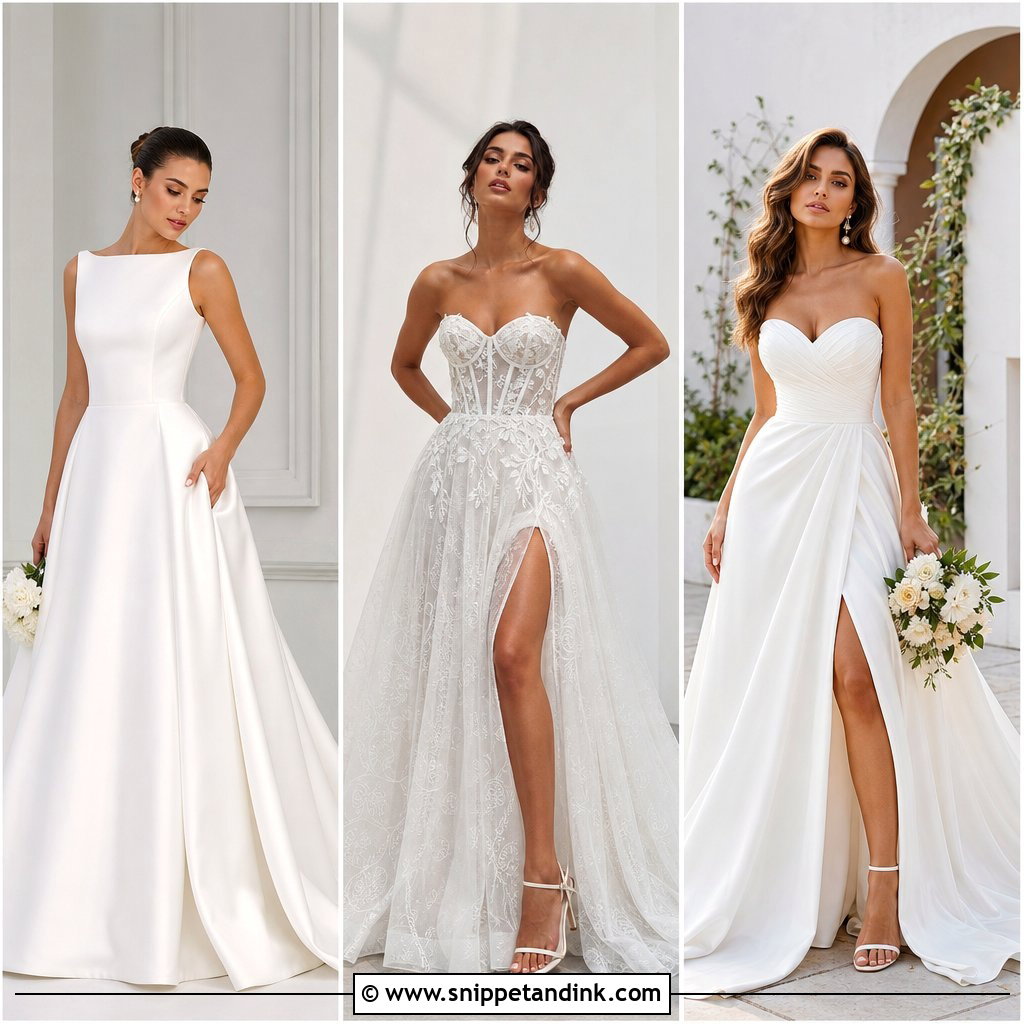
A simple crepe wedding dress has nothing to hide behind, which is exactly why I love fitting one. Crepe skims the body with a soft matte face, so a sheath, column or fit-and-flare with a strong bateau, halter, square or V-neck is all the design you need. Pearl drop earrings, a smooth veil, sleek white heels and a low chignon. Because there’s no embellishment, every alteration shows. The hem, waist and bust have to sit exactly right, and that’s where I’d put the budget.
4. Drop Waist Wedding Dress
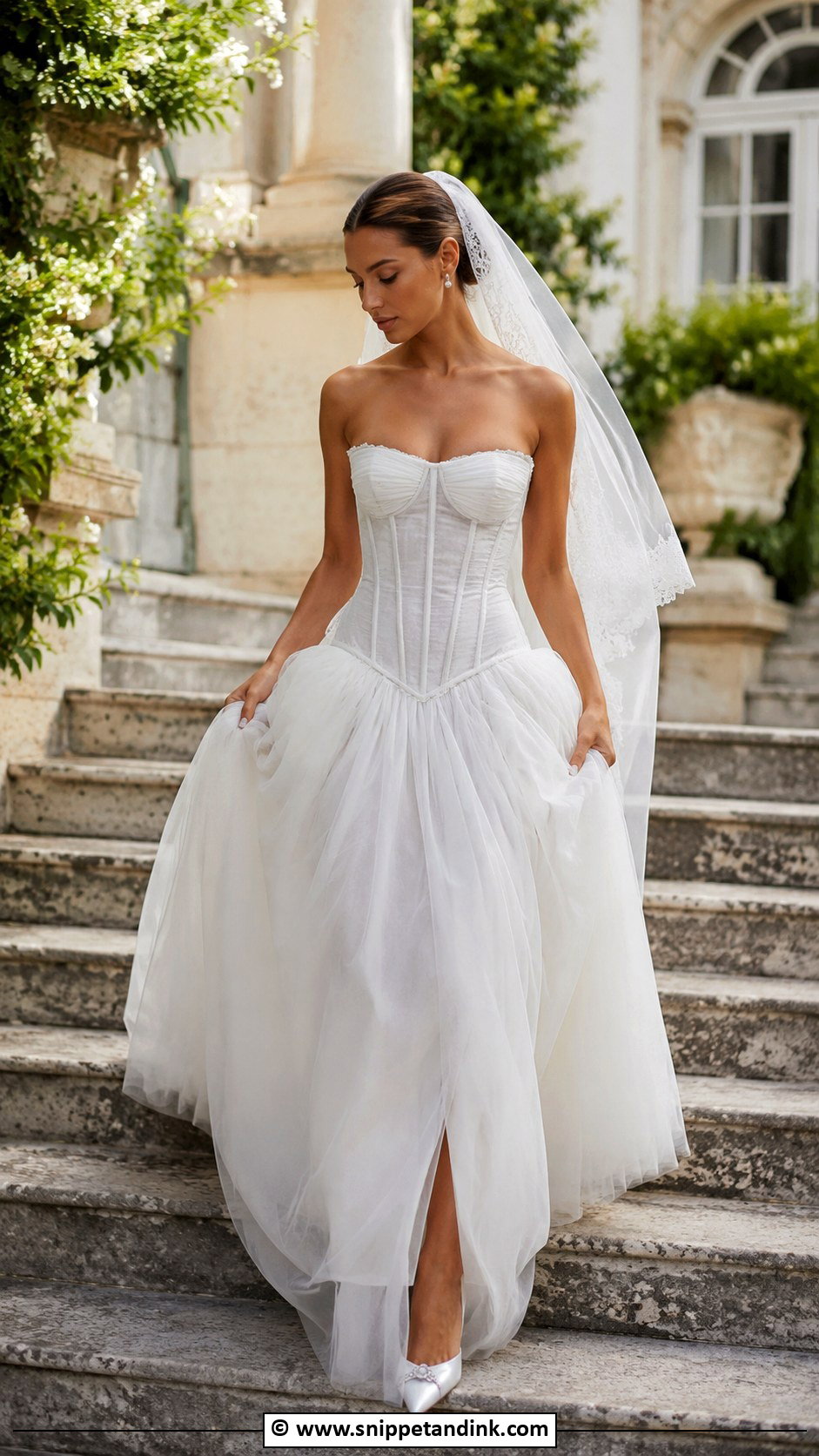
A drop waist wedding dress runs the fitted bodice below the natural waist before the skirt opens, which makes one long, sculpted line. It pairs with basque points, corset bodices and soft tulle or satin skirts. Pointed heels, small pearl earrings and a chapel veil, with no belt and no bold jewelry fighting the waistline. It looks strong on staircases, among columns and on garden paths. On a short torso, I’d try it in person before falling for it, because a seam set too low can shorten the legs.
5. Mermaid Wedding Dress
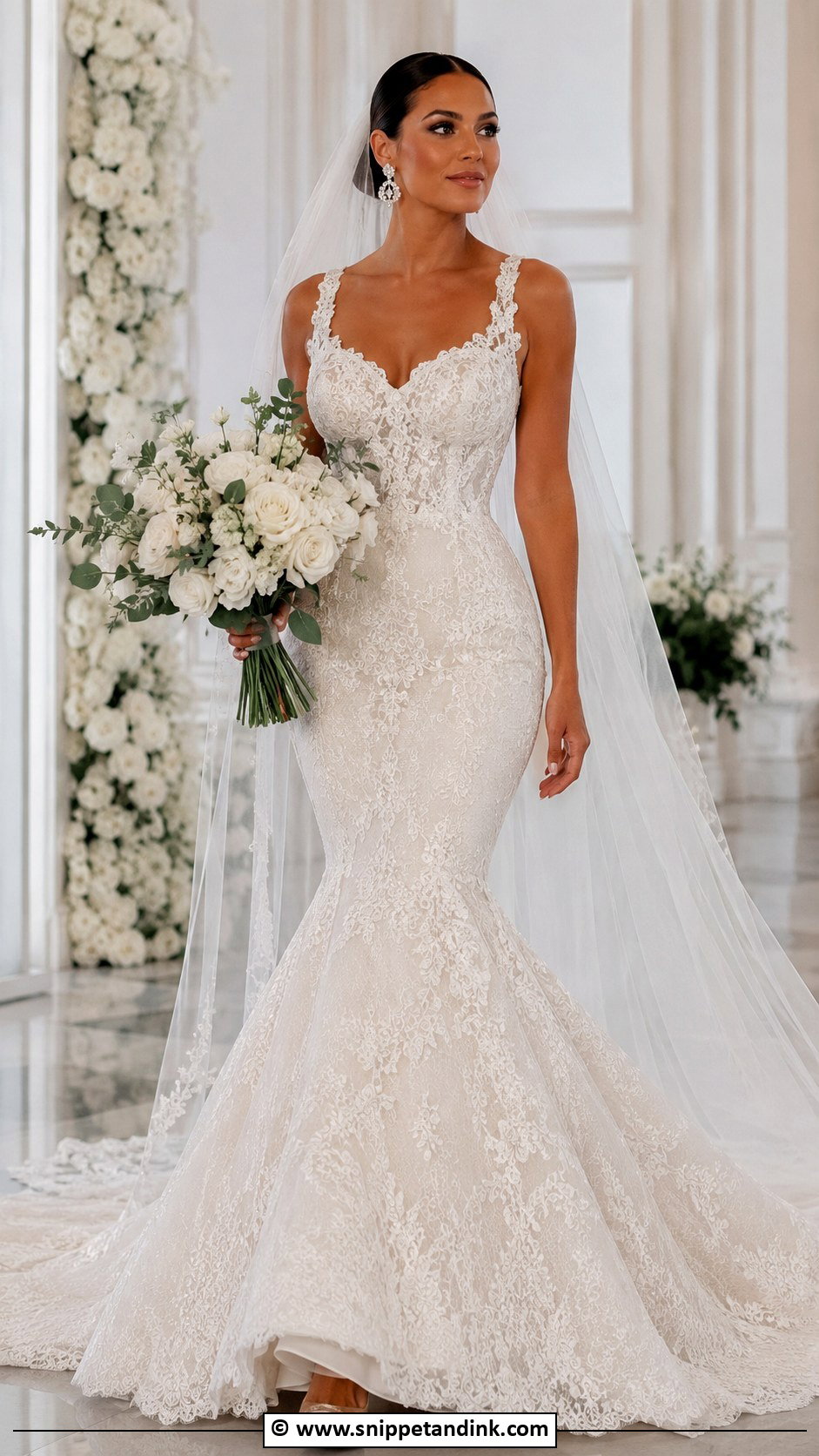
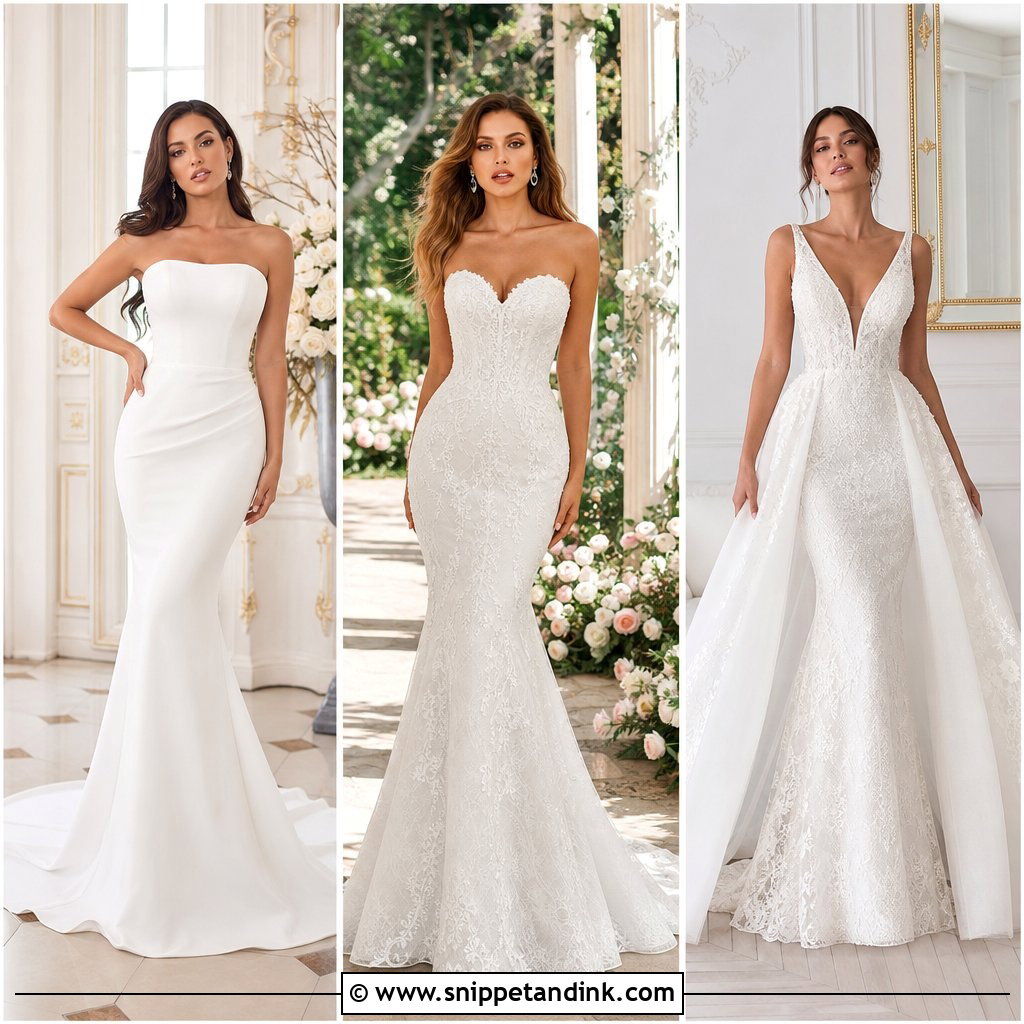
Mermaid gowns fit through the bodice, waist, hips and thighs, then flare at or below the knee. Stretch crepe is the most forgiving; lace, mikado and satin are more structured and less giving. A long veil, statement earrings and sleek heels lengthen the body, and a neat bouquet beats a big loose one against such a defined shape. Black-tie receptions and evening ceremonies suit it. At every fitting I make the bride sit, walk and do a few dance steps. If any of those feels restricted, the flare point or the hip ease needs changing.
6. A Line Wedding Dress
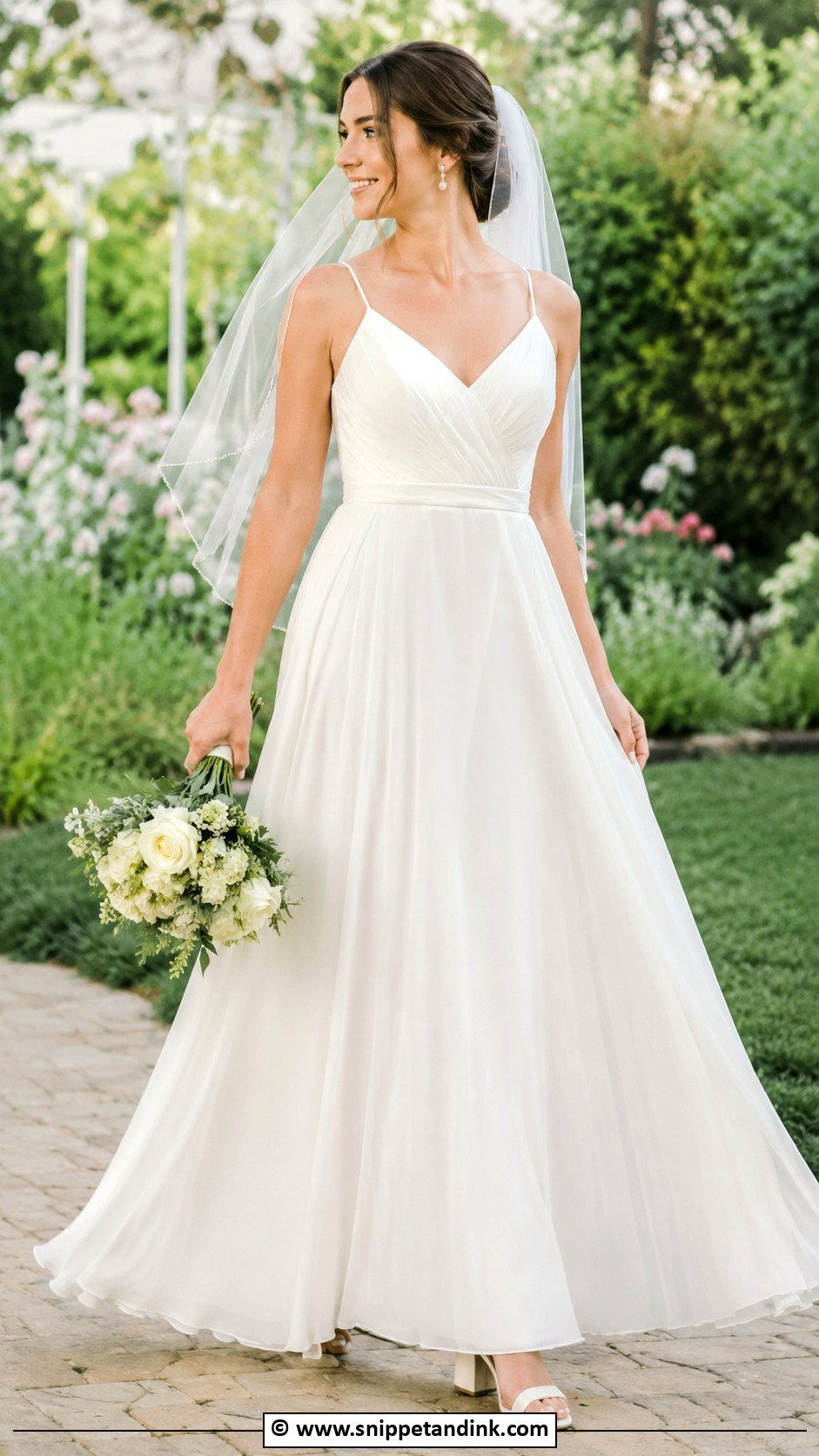
The A-line suits more figures than any other shape I fit: the bodice defines the waist and the skirt falls away gently. It works from beaches and gardens to ballrooms and country clubs. Chiffon gives softness, satin structure, tulle romance and lace detail. A fingertip veil, comfortable heels and delicate earrings, or block heels and bridal flats for an outdoor ceremony. Sleeves, straps and strapless all work on it. If you’re unsure where to start, start here.
7. Strapless Wedding Dress
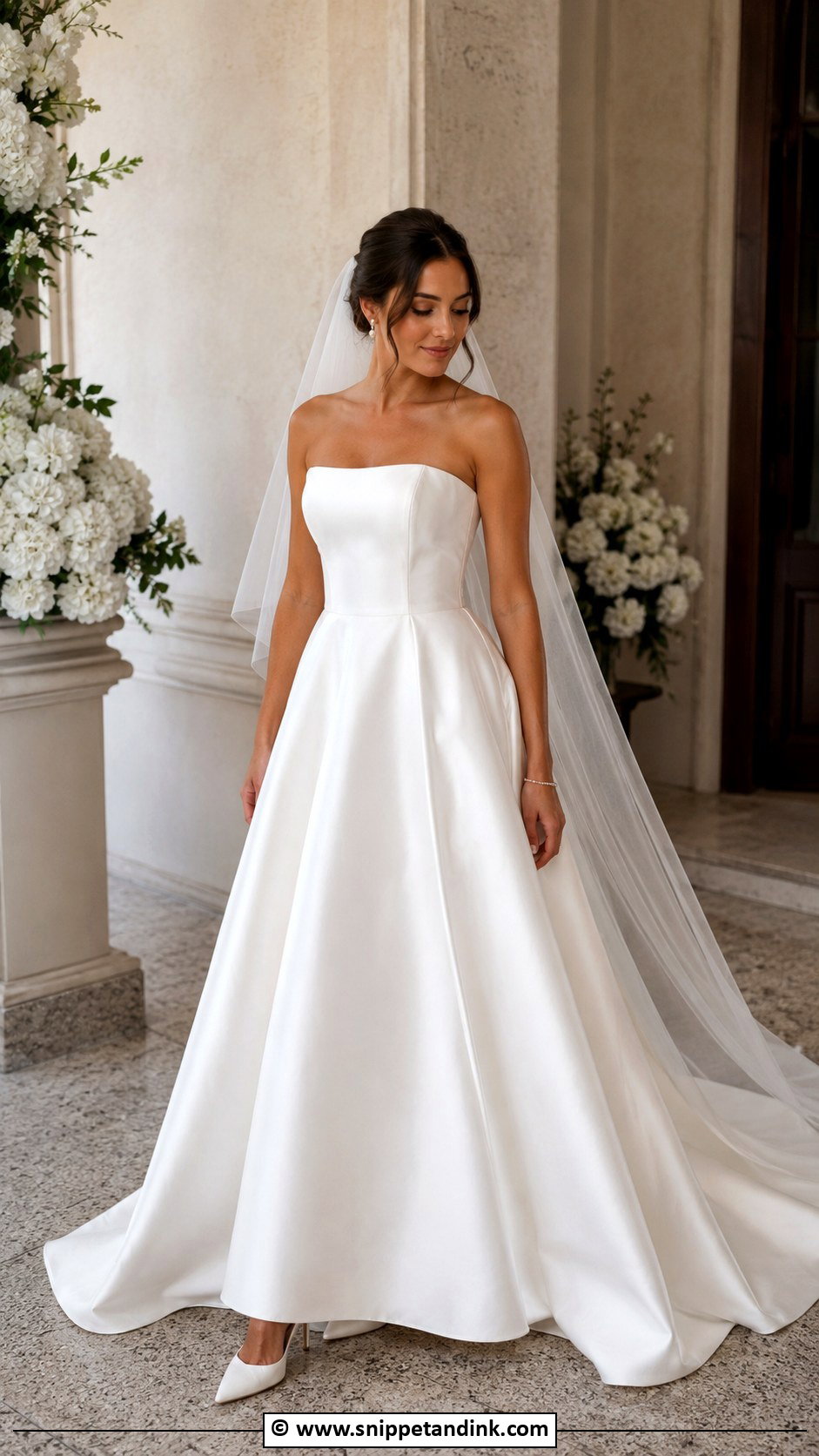
Strapless works across nearly every silhouette, from a satin ball gown to a lace fit-and-flare, minimalist column or tulle A-line. Structure is everything. The bodice should support without slipping or digging in, and I test that by having the bride lift her arms and hug me. A soft veil, pearl or diamond-style earrings and a fine bracelet. For a covered ceremony, add a removable bolero, lace topper or sheer cape. Loose waves, a sleek bun or half-up all suit it, and the open neckline puts your face and collarbone front and center in photos.
8. Long Sleeve Wedding Dress
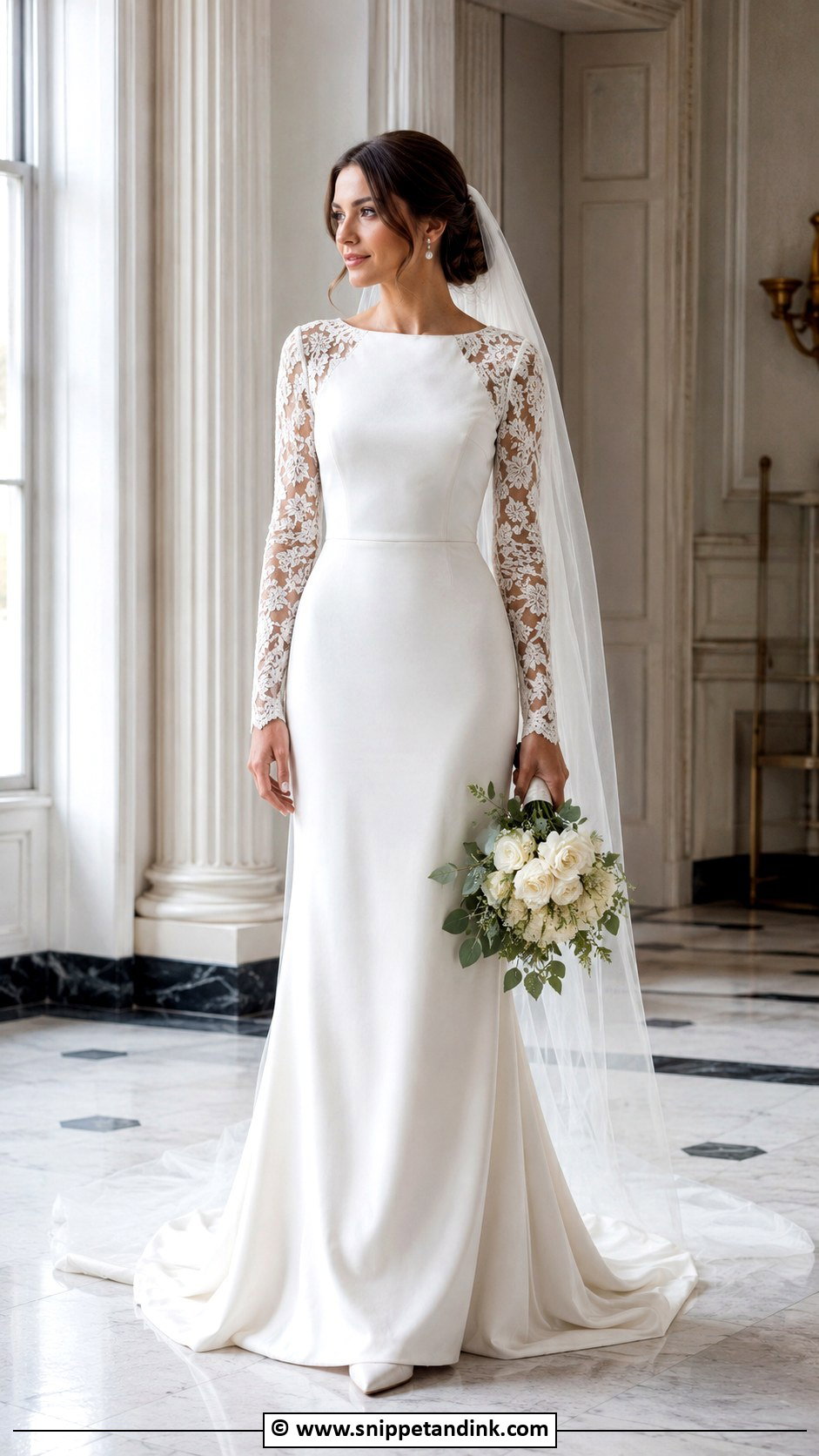
A long sleeve wedding dress gives coverage and balances an open back, deep neckline or fitted skirt. Lace sleeves feel romantic, crepe modern and sheer beaded sleeves catch light. Fitted sleeves look polished; bishop sleeves are softer. Closed-toe heels, pearl earrings and a smooth veil, for autumn, winter, mountain or formal indoor weddings. Reach forward and lift your arms at the fitting. A fitted sleeve set into a fixed bodice can stop you raising your hands above shoulder height, which matters for hugging and dancing.
9. Off Shoulder Wedding Dress
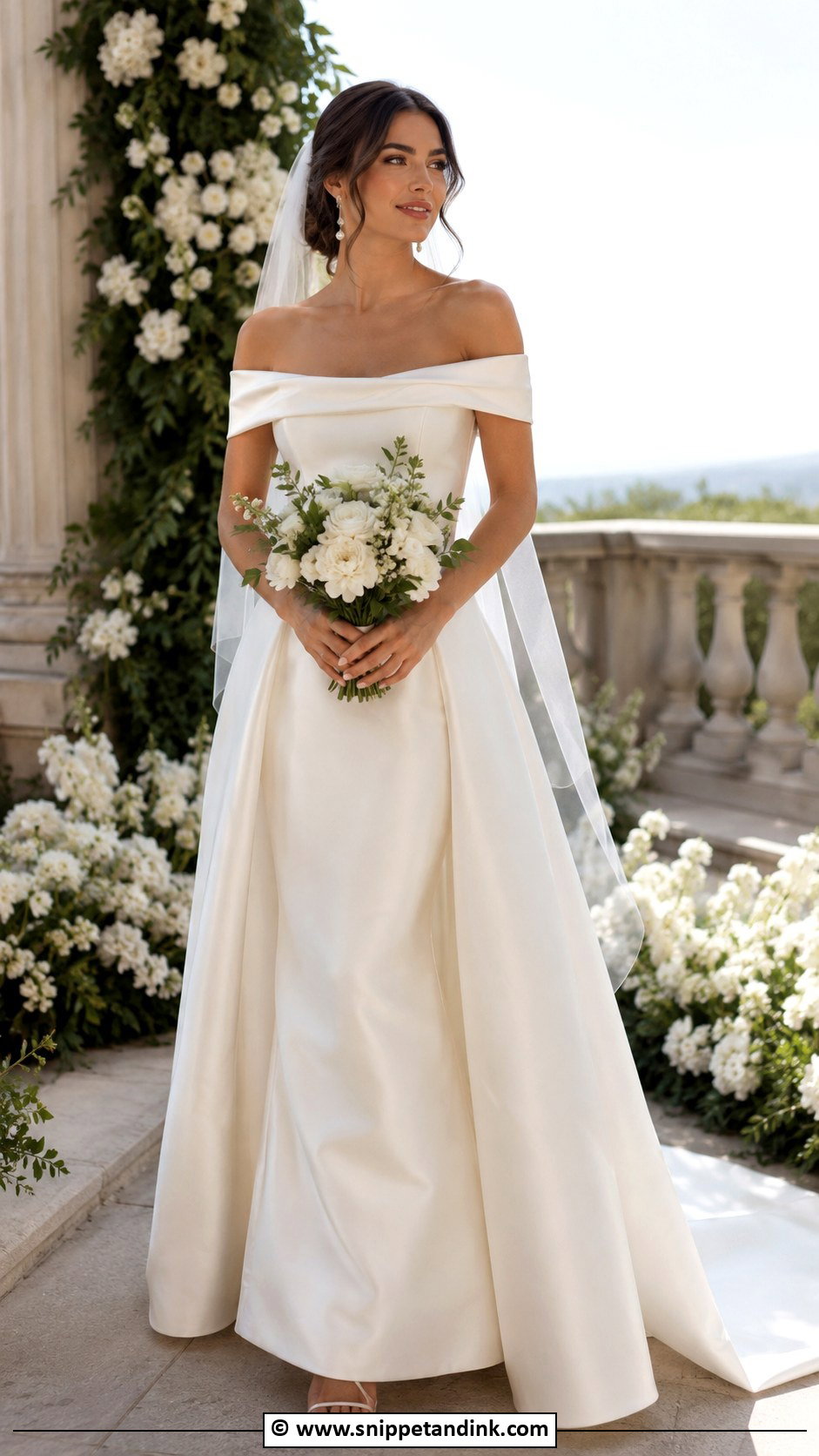
Off-shoulder necklines frame the collarbone and give more structure than thin straps, on satin ball gowns, lace A-lines, mermaids or soft tulle. Drop earrings, a simple veil and elegant heels; skip a heavy necklace and let the shape lead. A loose bun or brushed-out waves keep the mood soft for gardens, ballrooms and terraces. If you’ll dance a lot, ask about hidden straps or a flexible band. Fixed off-shoulder sleeves pin the upper arms, and that gets tiring by the third song.
10. Square Neck Wedding Dress
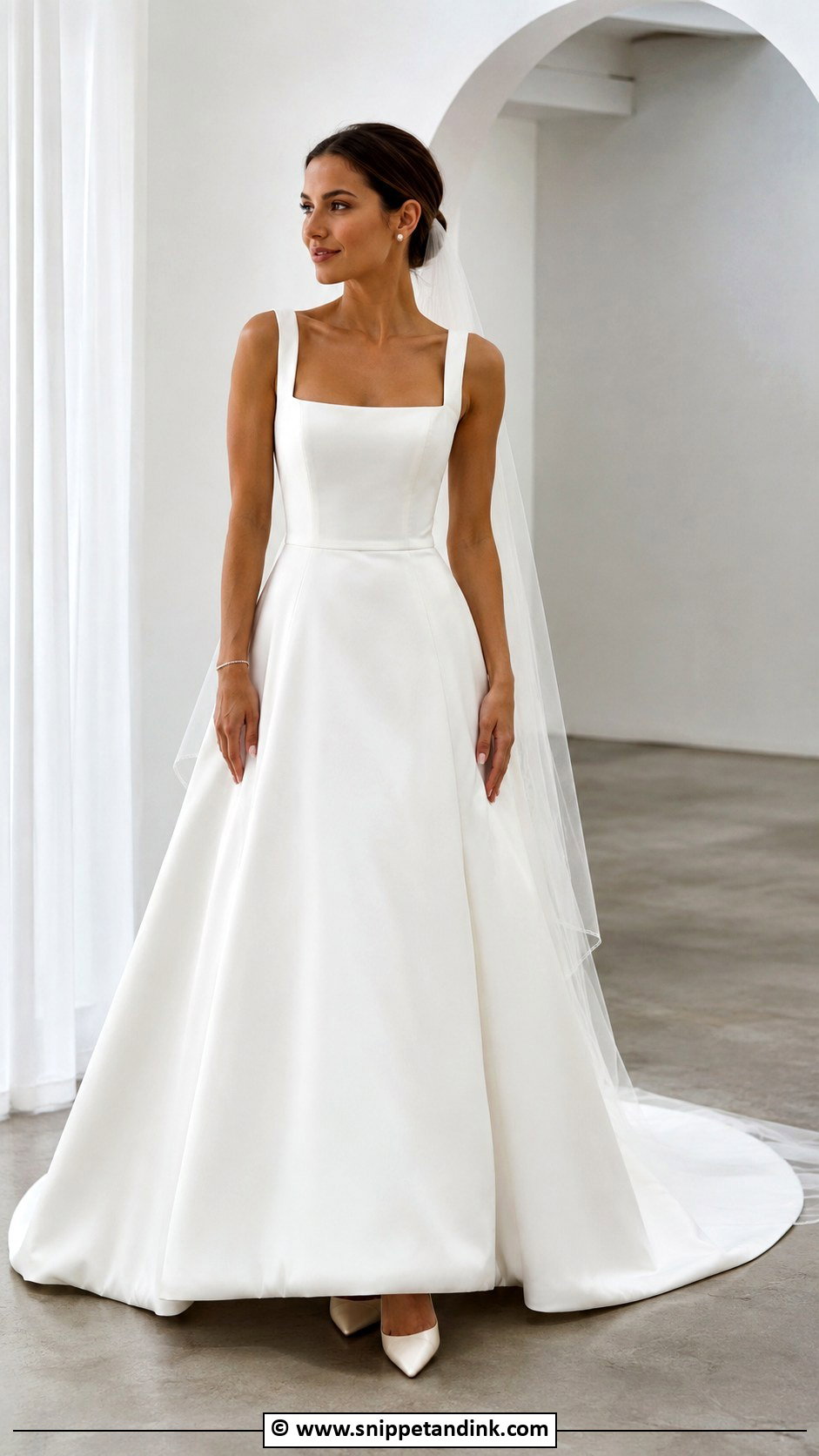
A square neck opens the chest with a straight, tidy line and gets strong support from its straps. It suits crepe columns, satin A-lines, lace and minimalist ball gowns. A thin veil, pearl studs, pointed heels and a center-part bun or smooth waves bring out the neckline. It reads modest without feeling covered up. I check the strap placement carefully, because straps set too wide will slide off the shoulders, and too narrow will show your bra.
11. V Neck Wedding Dress
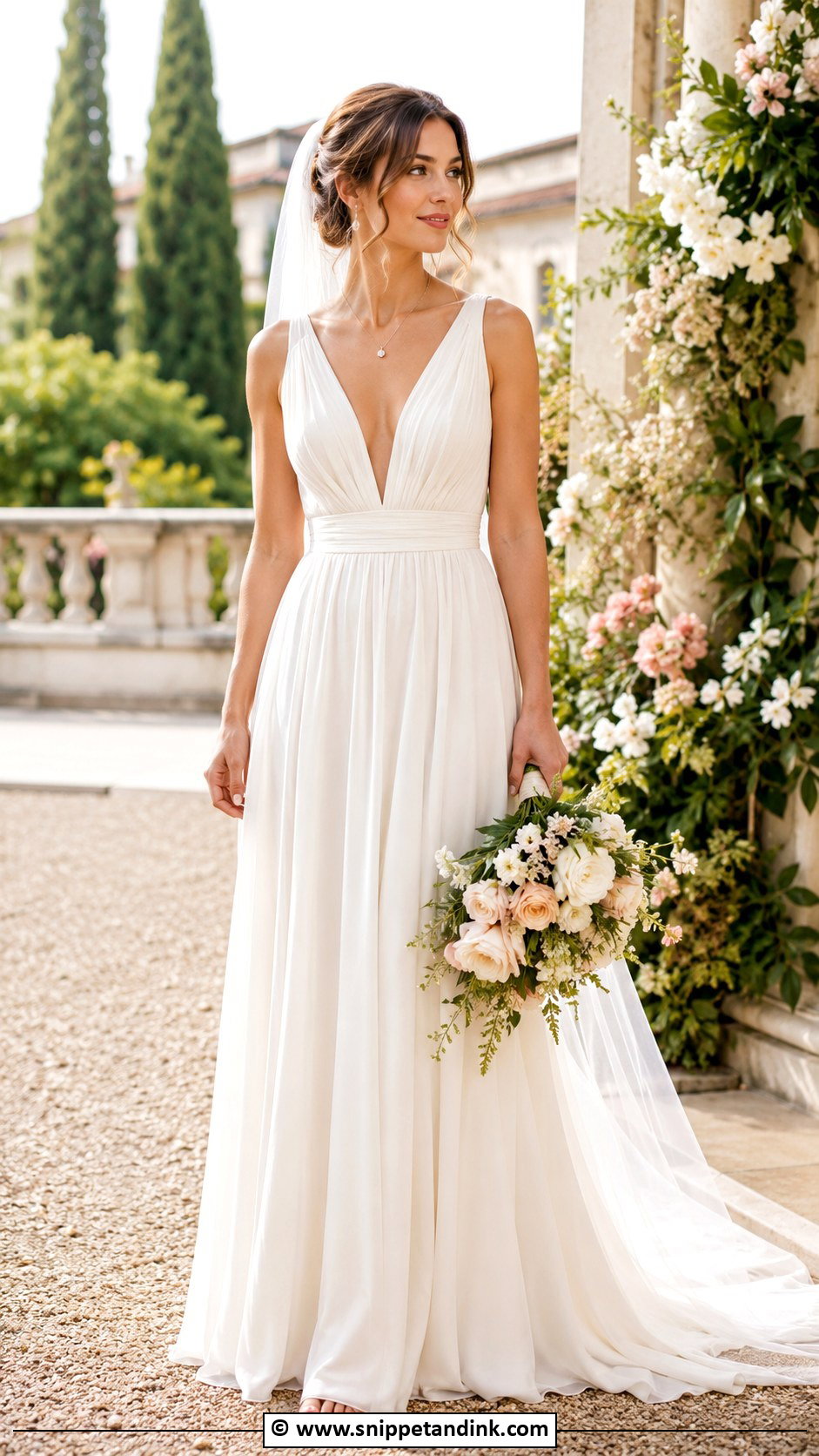
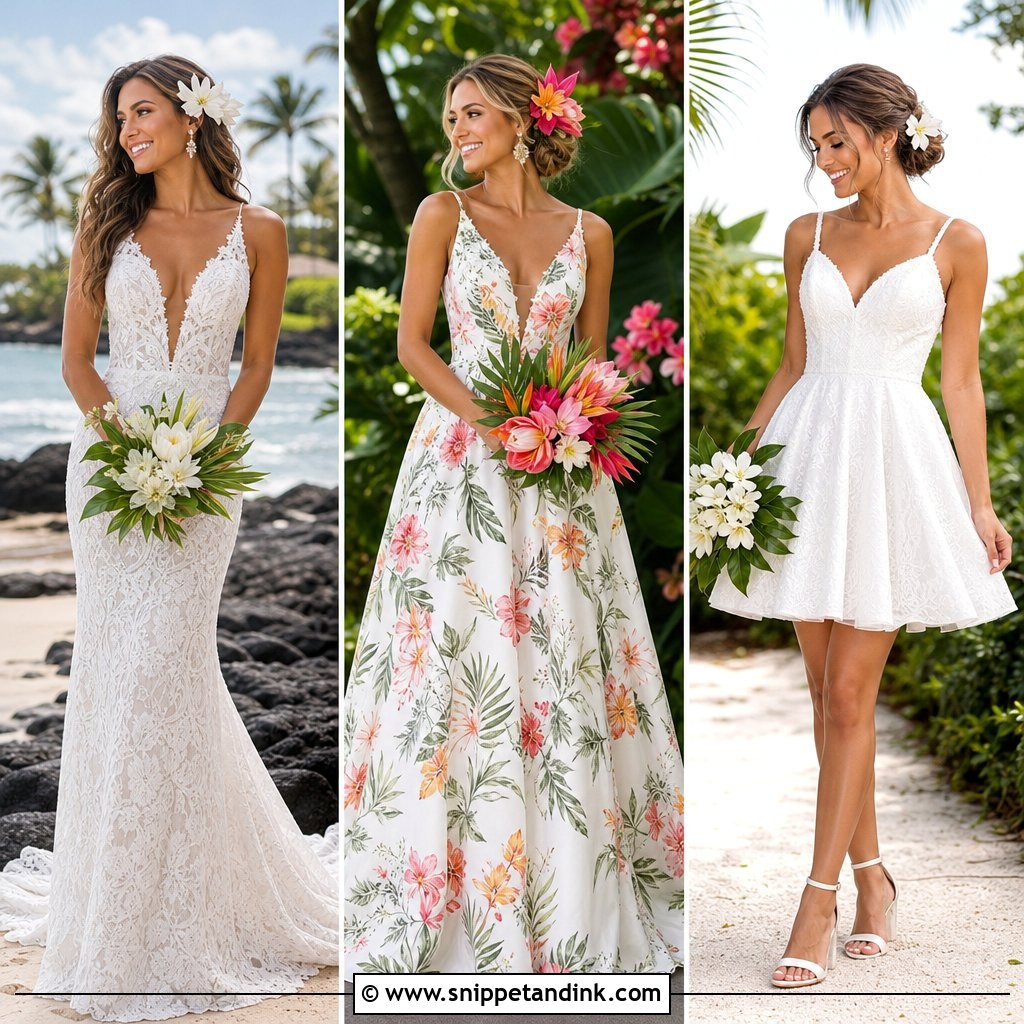
A V neck lengthens the body. Soft and shallow is classic; deep is modern and dramatic. Lace, chiffon, crepe or satin, depending on venue and comfort. Wear a pendant only with a plain neckline, otherwise let earrings do the work. A waist-defining belt, slim veil and elegant sandals suit beach, garden, estate and formal ceremonies. For support in a deeper V, I’d look for illusion mesh, wider straps or built-in cups, and test it bending over to pick something up.
12. High Neck Wedding Dress
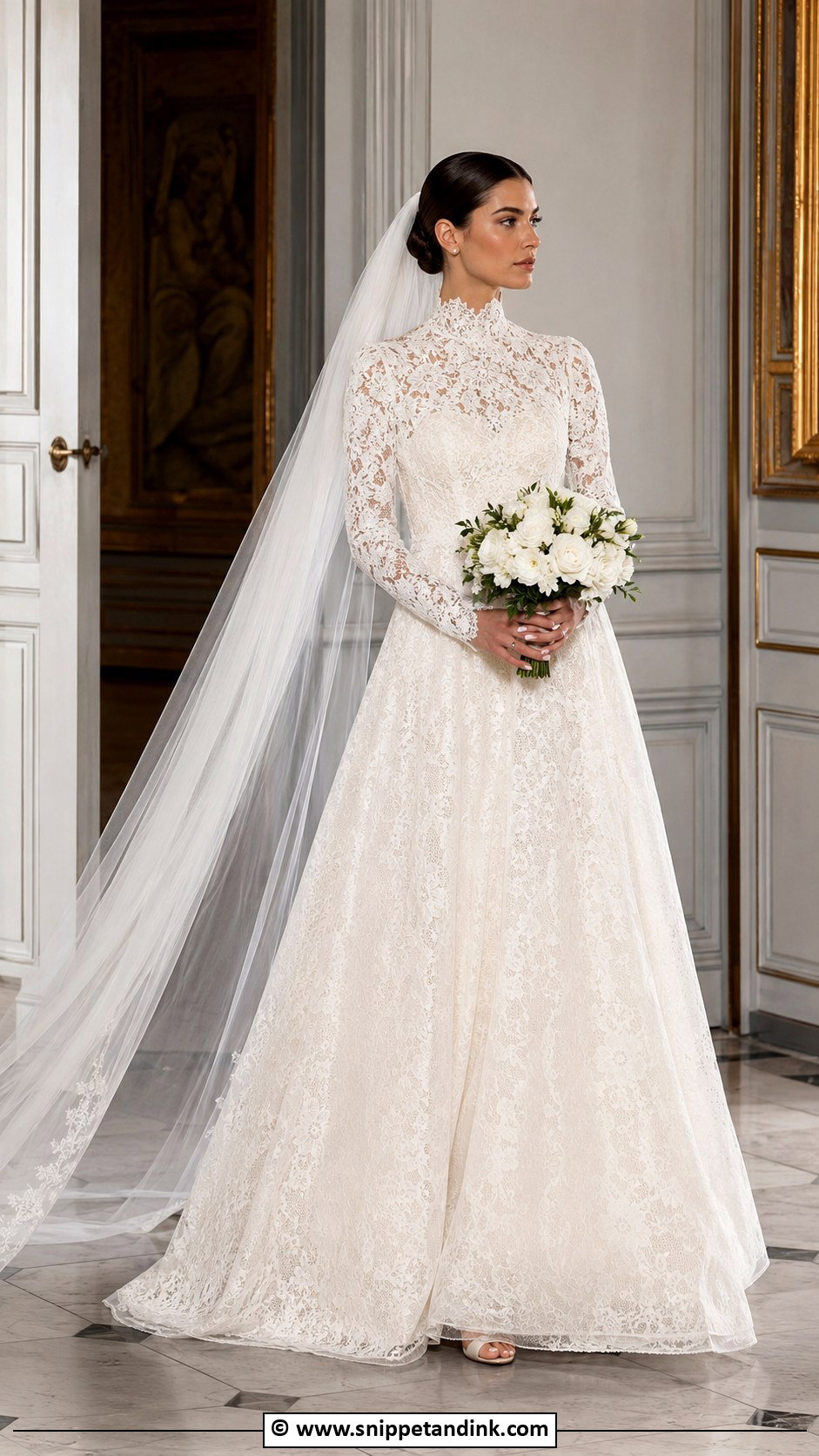
High necks cover the chest and push the drama elsewhere: into the fabric, the back, the sleeves or the skirt. Lace versions feel vintage; satin or crepe look sleek and modern. Studs, a smooth bun and slim heels, with a long, simple veil that doesn’t crowd the collar. Museums, estates and formal rooms suit it. It shows posture more than any other neckline, so stand tall at the fitting while the collar is marked.
13. Halter Wedding Dress
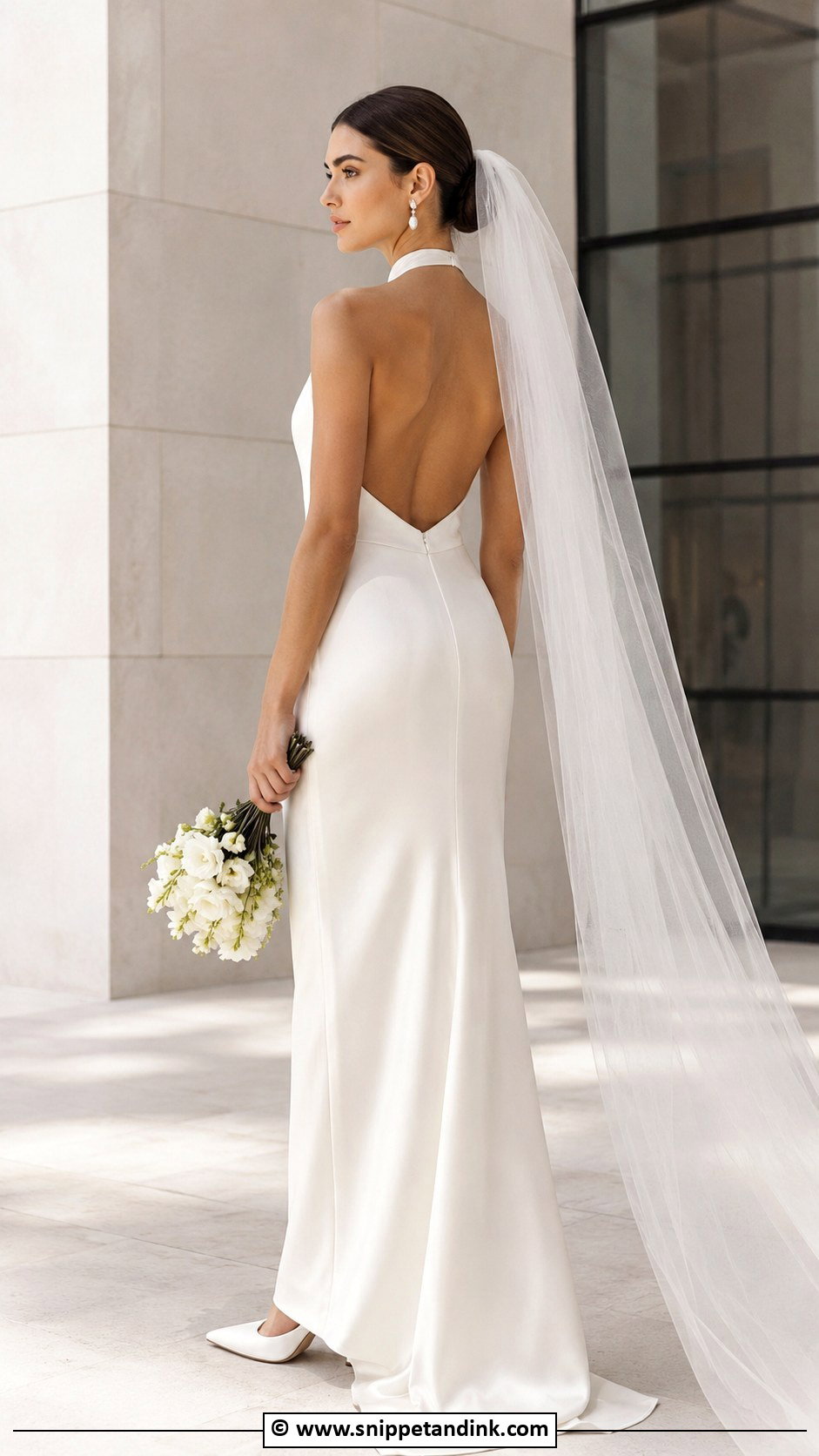
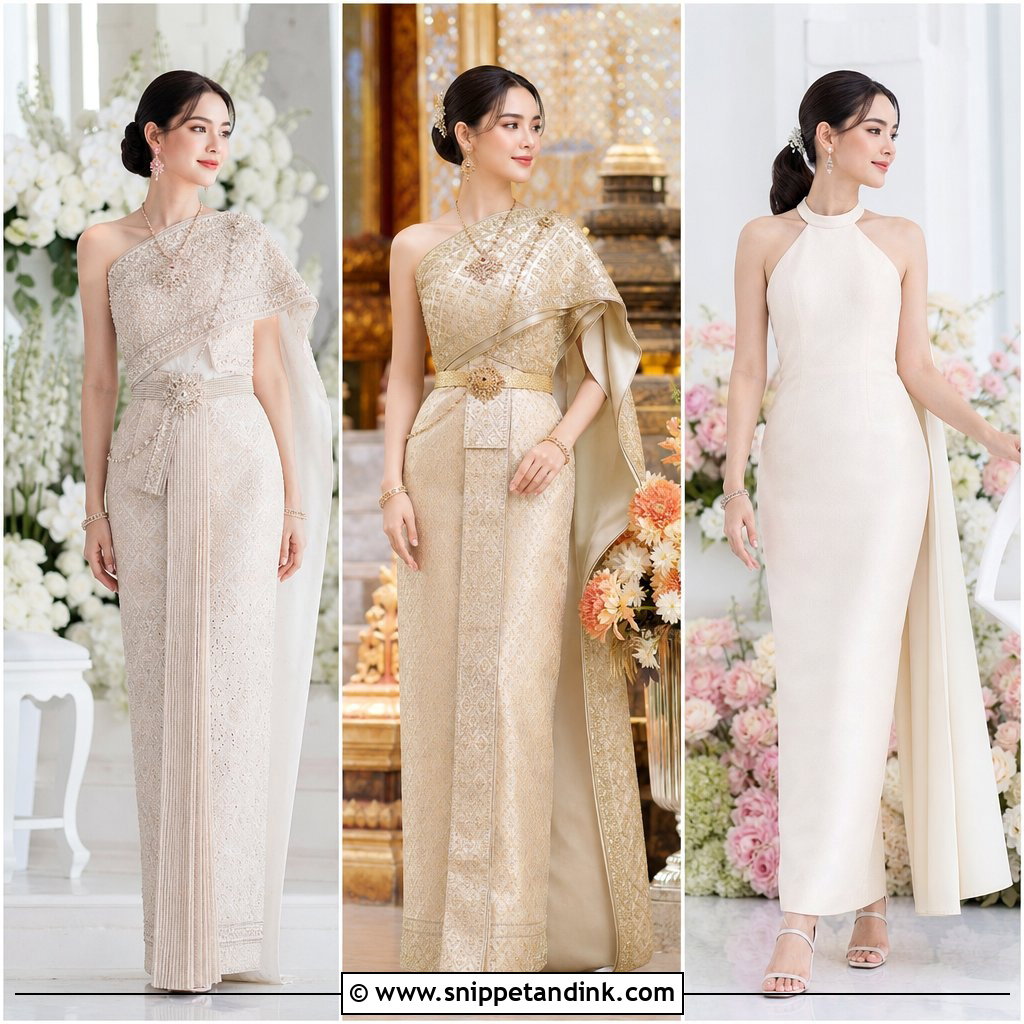
A halter shows off the shoulders and upper back, in crepe, satin, silk or clean lace, usually on a column, sheath or fit-and-flare. Sleek earrings, a low bun and strappy or pointed heels. The neckline comes up toward the throat, so no necklace. A long veil softens the lines for the ceremony. It suits destination and city weddings, and gives support without sleeves. Heavy fabric pulls on the back of the neck, so I ask for an internal bodice to take some of the weight.
14. Corset Wedding Dress
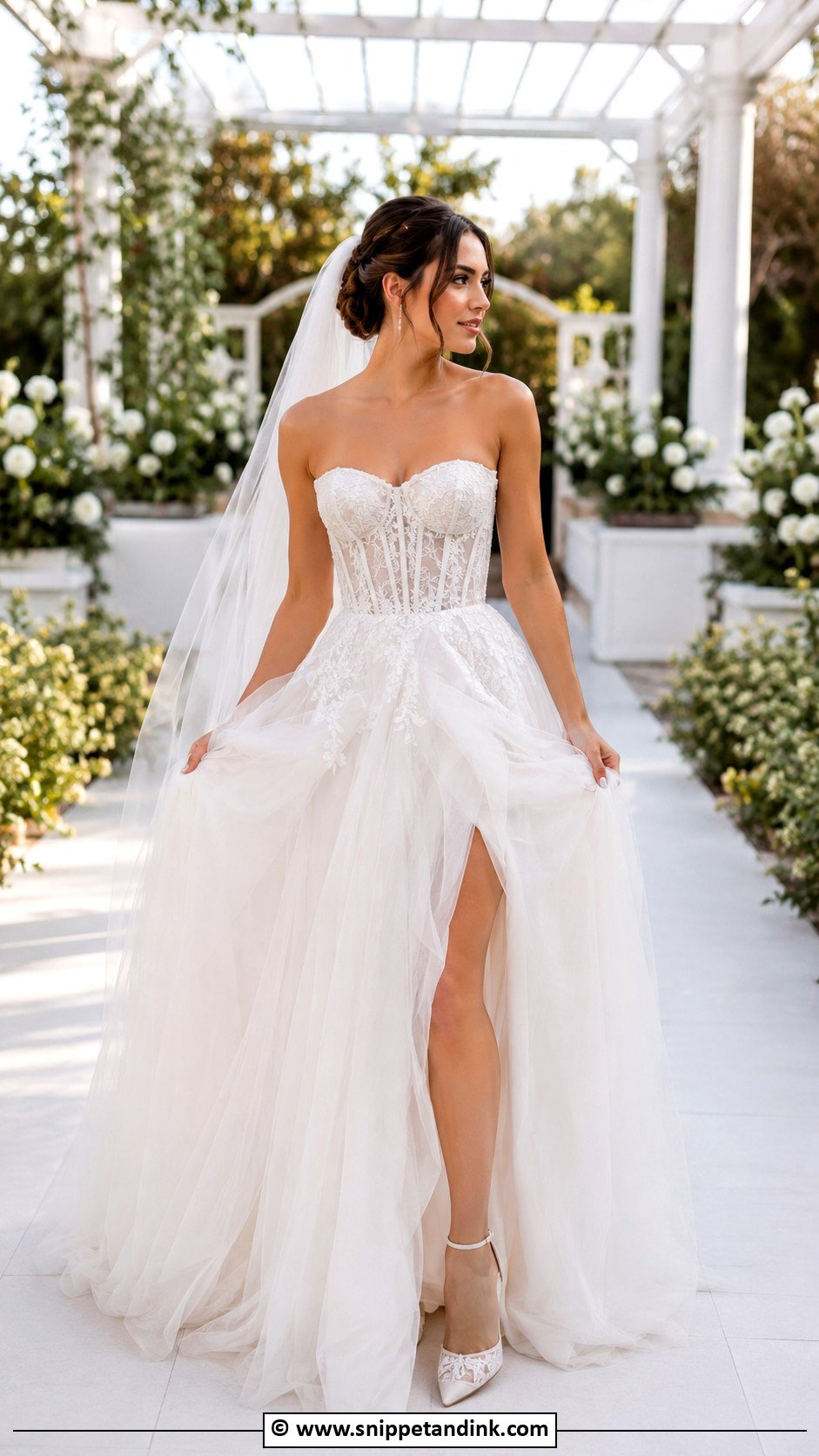
A corset bodice gives structure, shape and a clear waist. Lace makes it soft, satin elegant, and visible sheer boning more fashion-led. Pair it with a full tulle skirt, a slim crepe skirt or a drop waist. Delicate earrings, a veil that matches the mood and supportive heels. The construction is the decoration, so I keep accessories simple. During alterations, it should feel snug but let you breathe deeply and eat a meal. If either is a struggle, it’s too tight for a whole day.

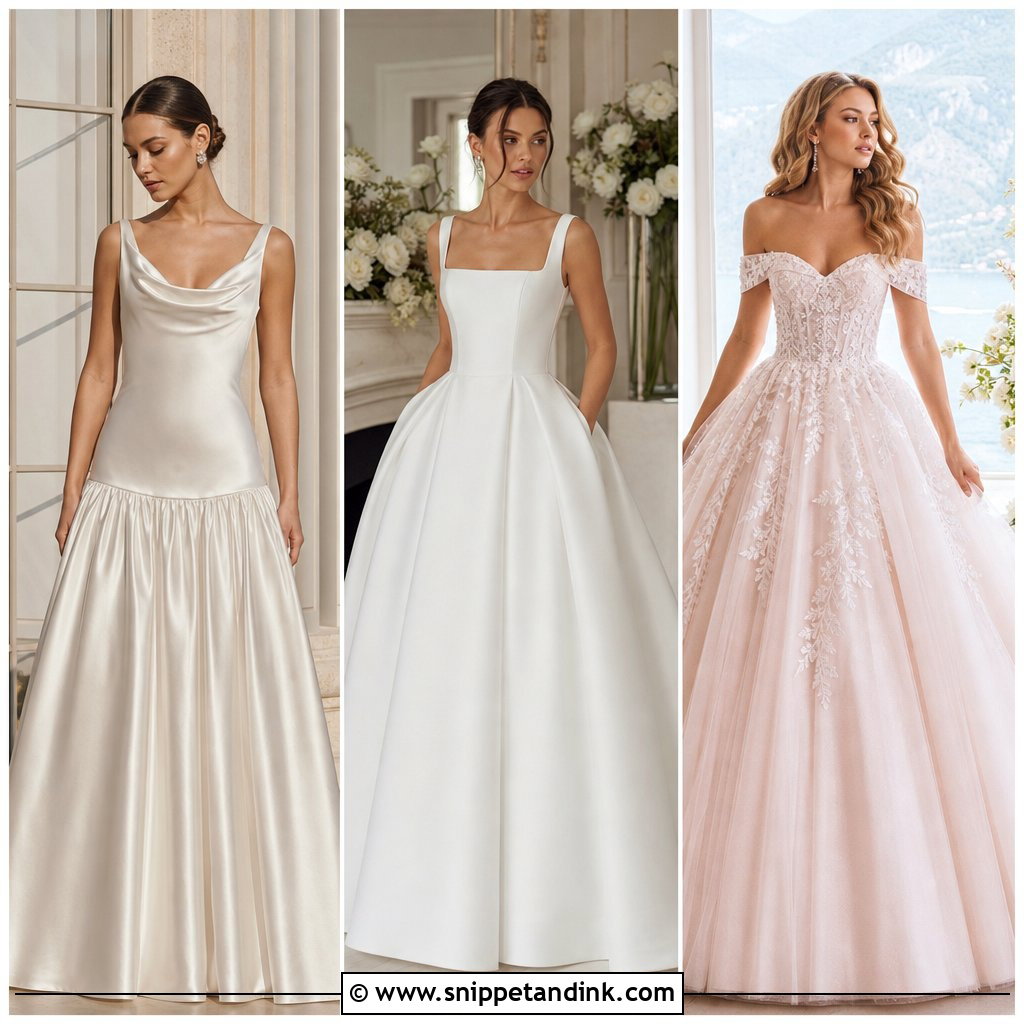

15. Tulle Wedding Dress
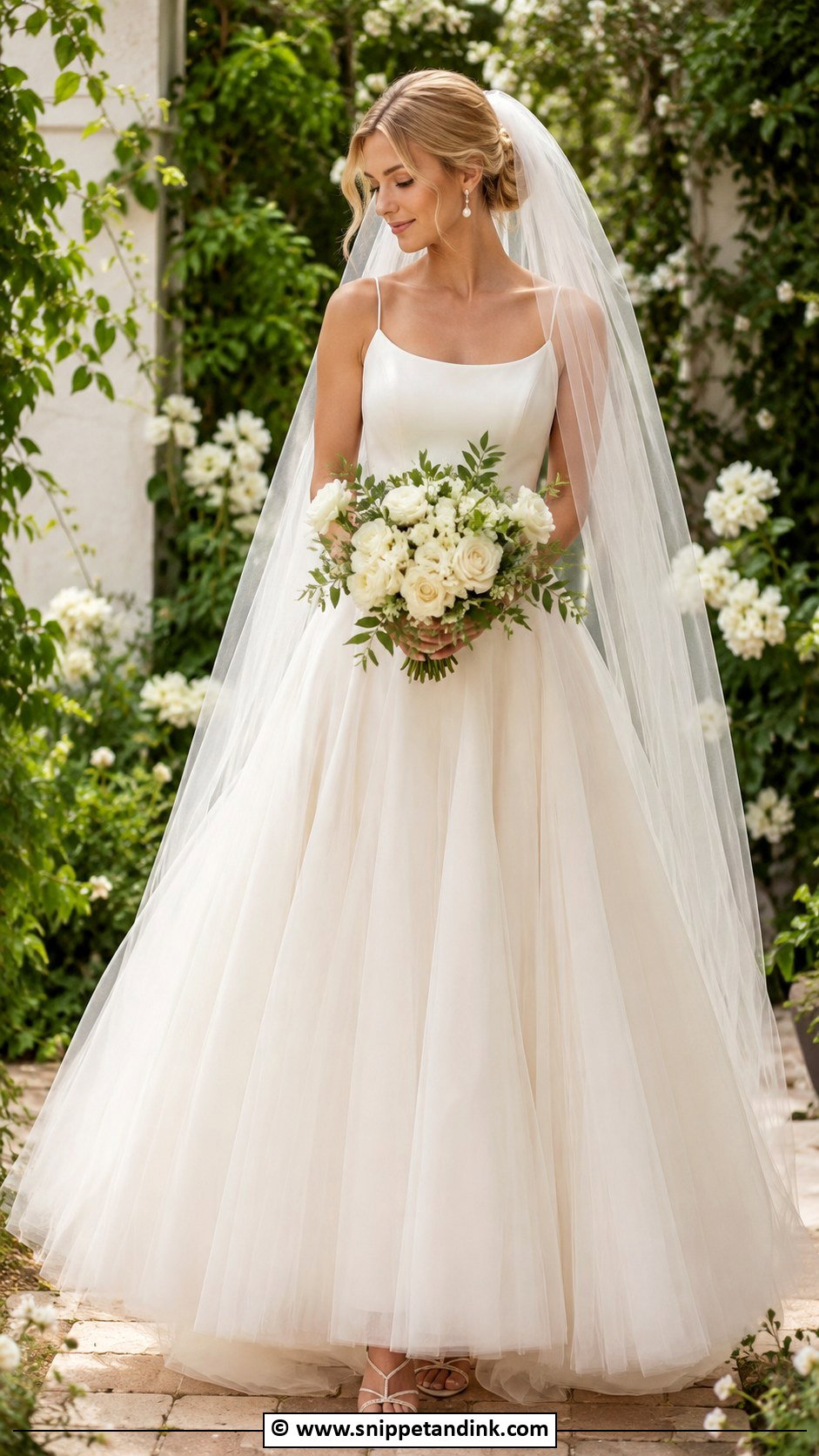
Tulle is airy and full of movement: dreamy as an A-line, dramatic as a ball gown, playful at tea length. Choose layers that float rather than swamp your frame. Delicate heels, pearl earrings and a veil that blends into the skirt. A soft updo or loose curls suit the texture, and gardens and estates suit the dress. For a modern twist, a plain bodice over a full tulle skirt works well. Tulle snags on jewelry clasps and rough stone, so mind your bracelet and the venue’s walls.
16. Chiffon Wedding Dress
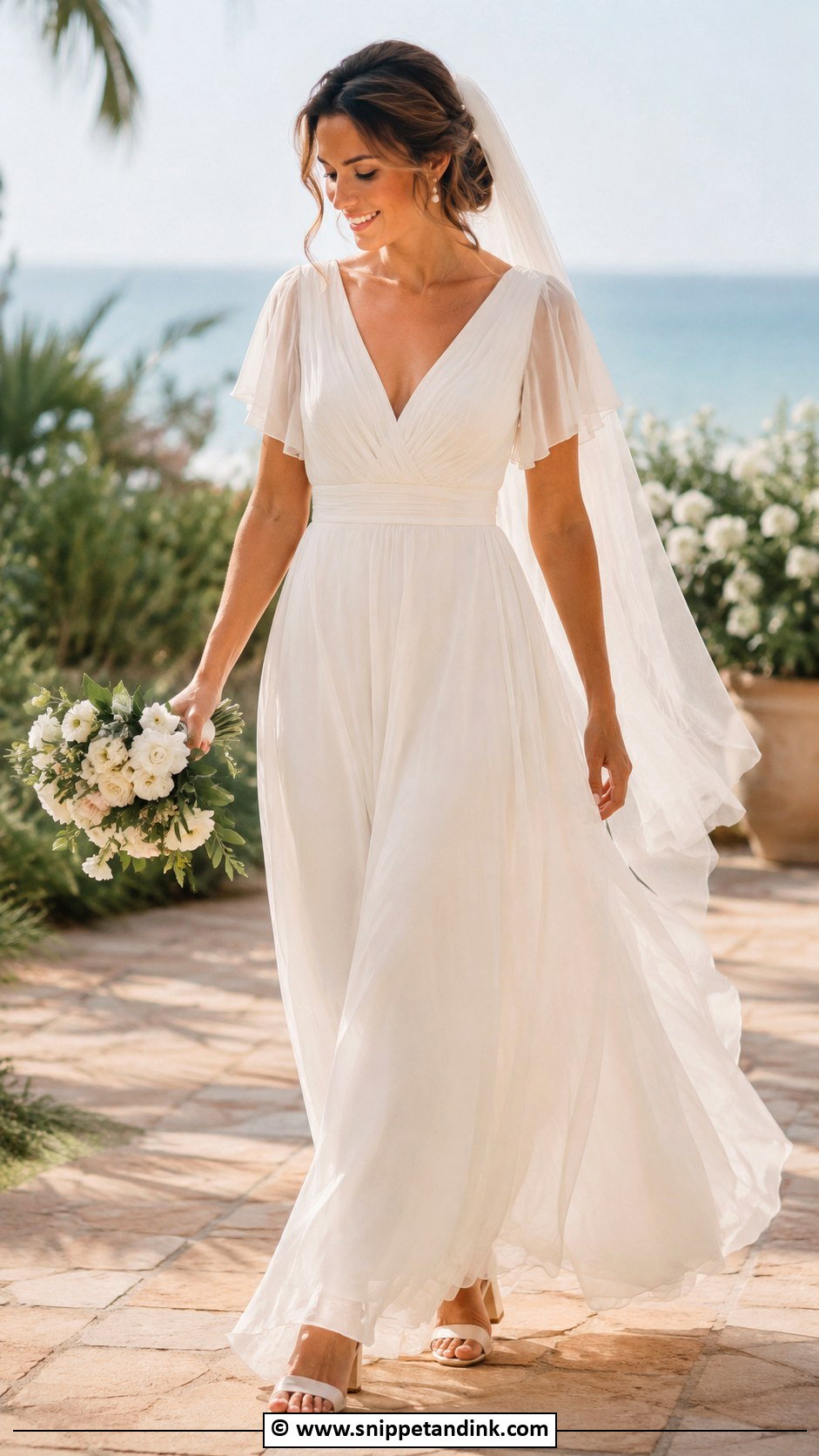
Chiffon moves easily and stays comfortable for long hours, which is why I suggest it for beaches, outdoor ceremonies and warm weather. An empire waist, A-line skirt, flutter sleeves or a gentle V suit it. Low block heels or delicate sandals, pearl earrings, a lightweight veil, natural makeup and soft waves. It’s forgiving on grass, sand and uneven paths. The trade-off: chiffon frays and pulls easily, so I’d keep sharp-clasped jewelry away from the skirt.
17. Silk Slip Wedding Dress
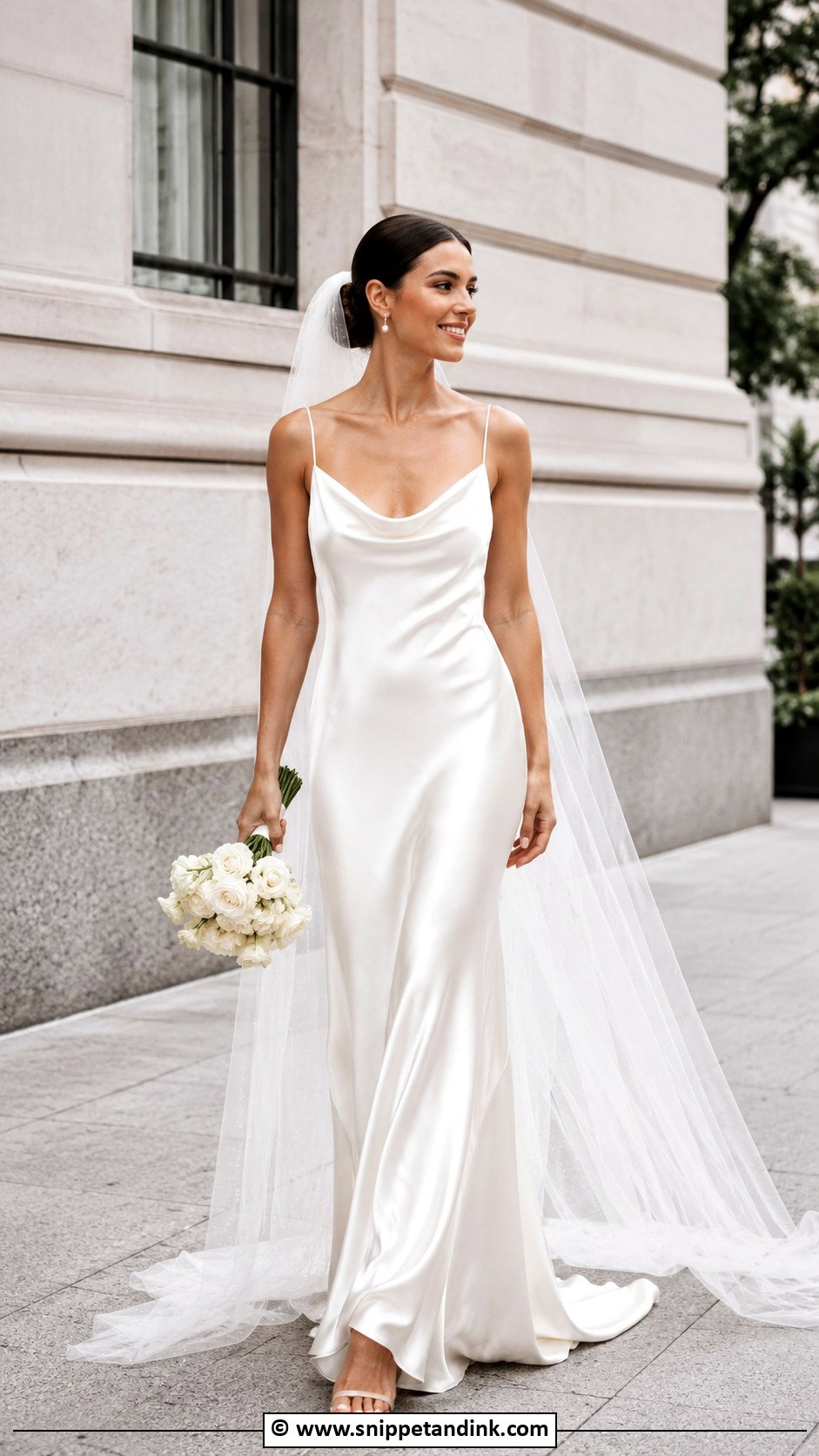
A silk slip skims the body with thin straps, a soft neckline and fluid fabric. With so little design, fit and fabric quality are the whole look. Pearl drops, barely-there heels and a long sheer veil for the ceremony, with a sleek bun or soft waves. In cool weather, add a tailored bridal blazer or a fine cashmere wrap. Courthouses, rooftops and small gatherings suit it. Silk shows water and sweat marks, so I’d keep a few blotting papers in the clutch and avoid ice-cold drinks with condensation dripping onto your lap.
18. Tea Length Wedding Dress
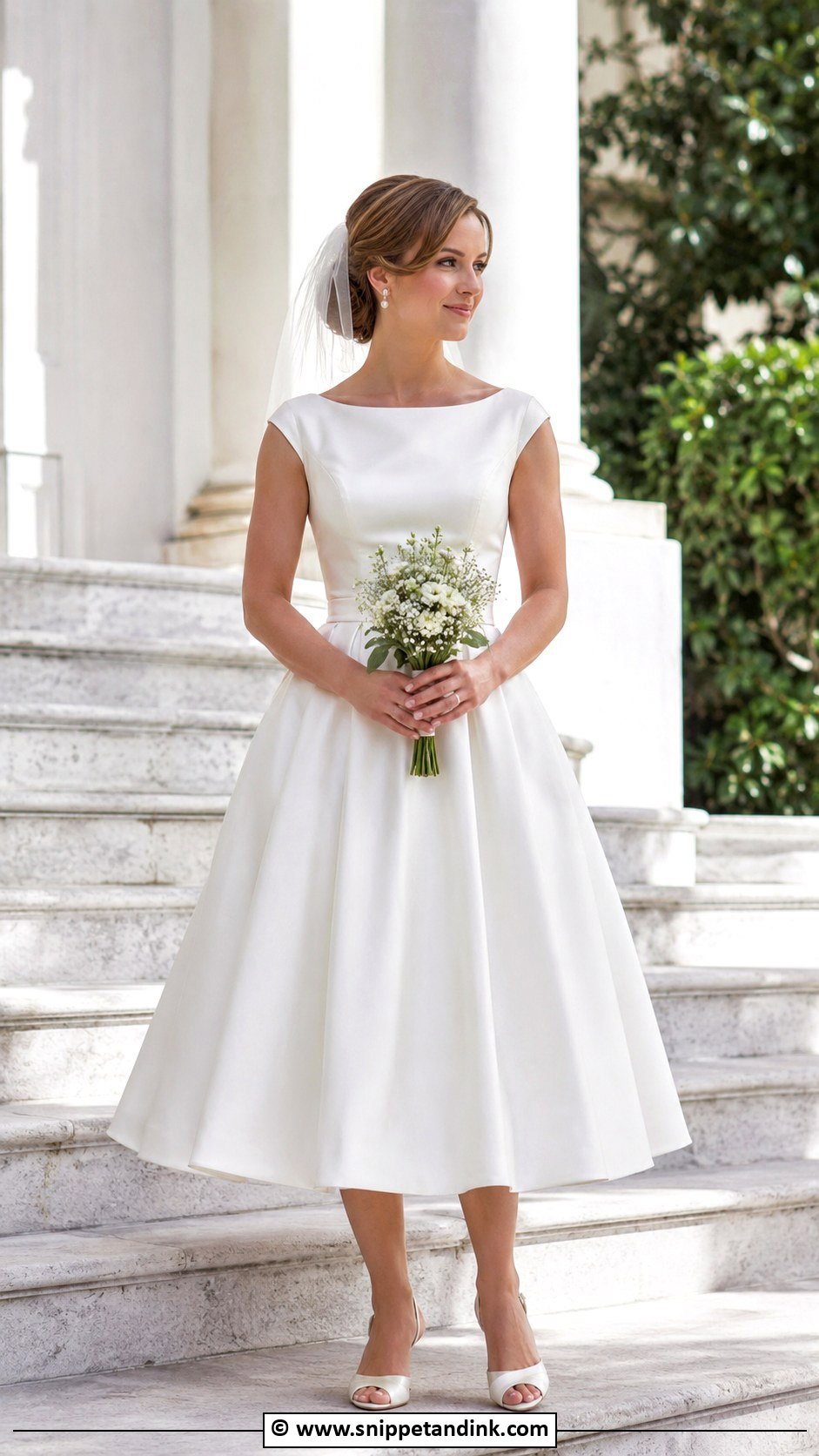
With a tea length wedding dress, the hem lands between knee and ankle, so the shoes become a real part of the outfit. Pointed pumps, satin block heels or embellished flats all work. A fitted bodice with a fuller skirt is classic; a slim tea-length is modern. Pearl studs, short gloves for a vintage note, and a birdcage or fingertip veil. It’s bridal but less formal, so courthouses, gardens and brunch receptions suit it. I always set the hem with the bride in her actual shoes.
19. Short Wedding Dress
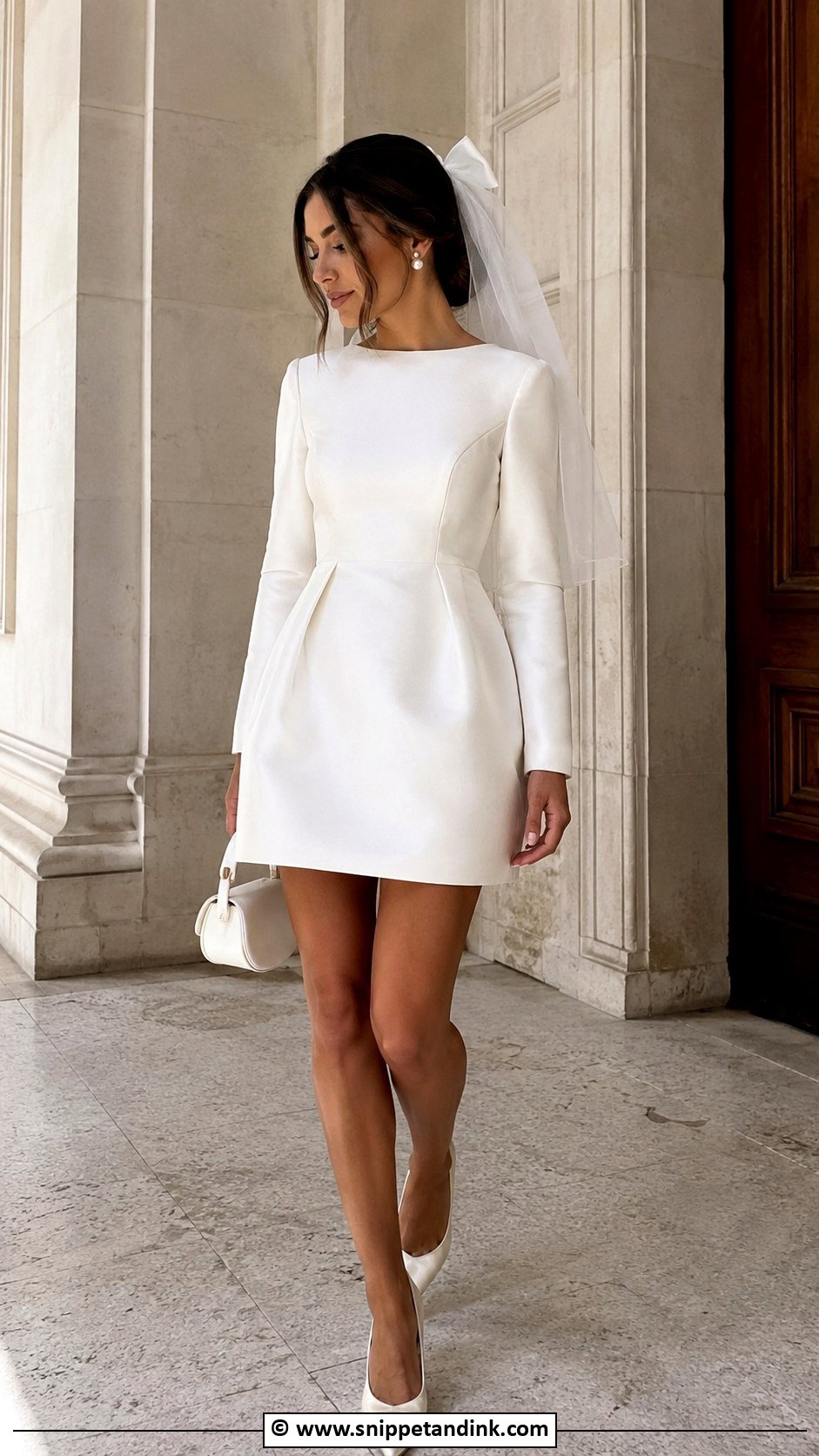
Short dresses are playful and practical for a civil ceremony, a second look or a small celebration. A structured mini with long sleeves, a satin shift, a lace A-line or a feather hem all work. Balance the short length with polished accessories: pointed pumps, pearl earrings and a small bridal bag, plus a bow veil or headband. Sharp tailoring is what makes it look intentional, because short hems show every uneven proportion. Sit down in front of a mirror before you buy; a mini that’s right standing can be too short seated.



20. Bridal Suit Wedding Dress
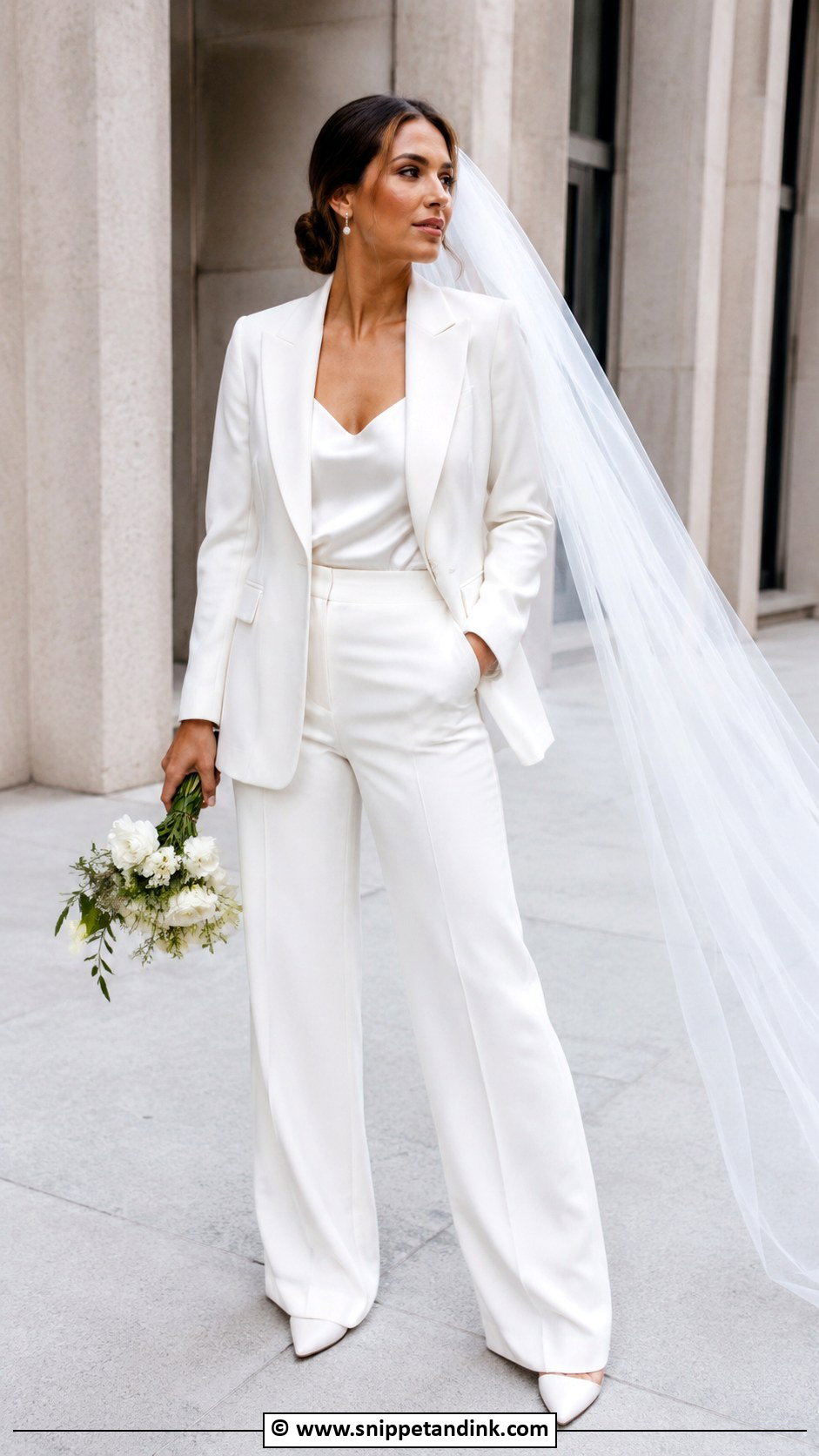
Some brides prefer tailoring to any gown. Ivory wide-leg trousers with a fitted blazer, a silk camisole and pointed heels make a clean ceremony outfit, and a long veil leaves no doubt who the bride is. A lace bodysuit under the blazer adds texture; pearl earrings soften the lines. Courthouses, city ceremonies and reception changes all suit it. Fit decides everything here: shoulders, waist, trouser length and sleeve length should look custom, and trousers should be hemmed in the shoes you’ll wear.
21. Bridal Jumpsuit Wedding Dress
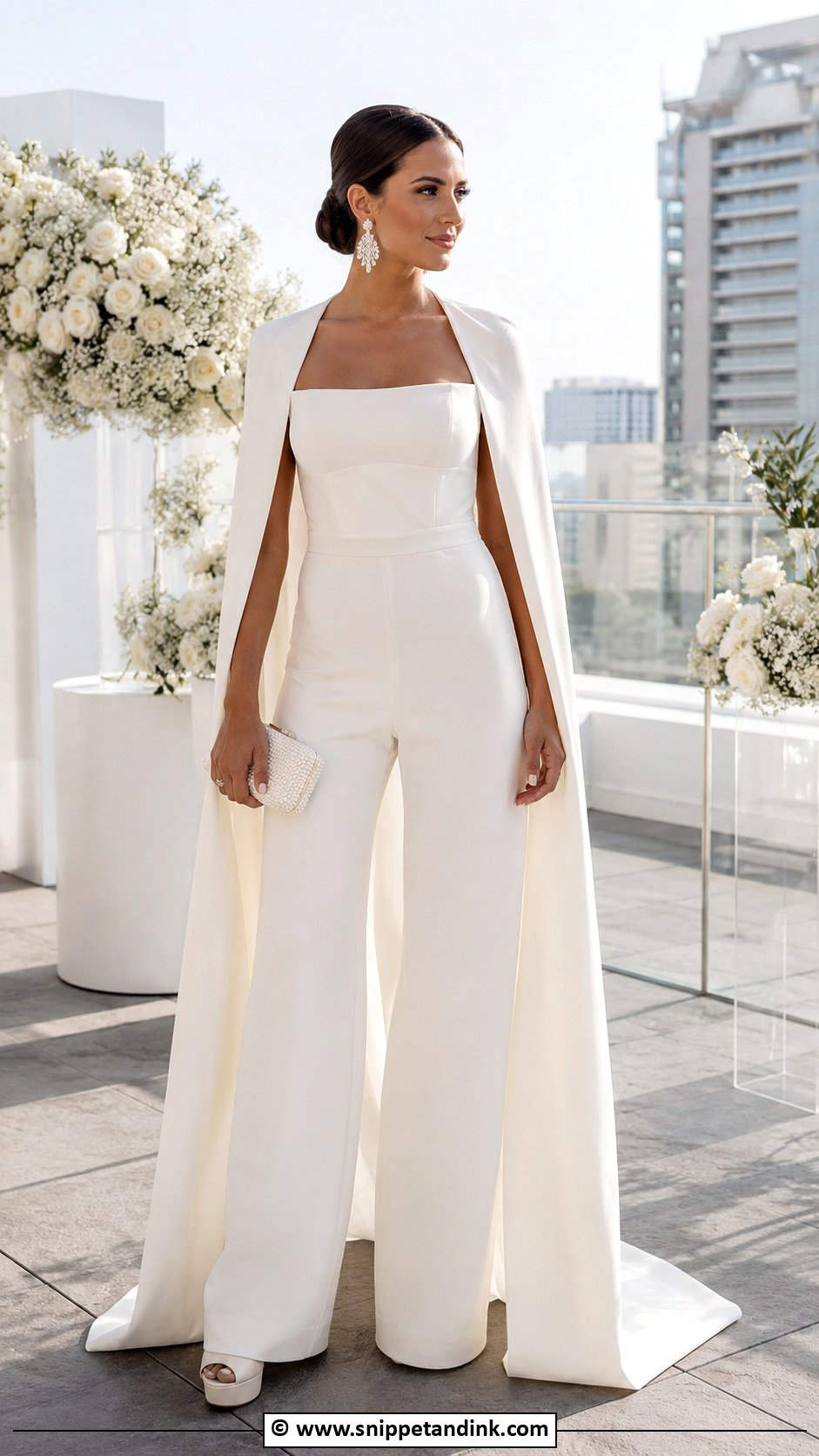
A bridal jumpsuit wedding dress look gives comfort and a modern edge. White or ivory, with wide legs, a defined waist and a structured bodice. Lace sleeves, a cape detail or a satin bow make it more bridal. Platform heels or pointed pumps, statement earrings and a sleek clutch. A detachable overskirt turns it into a ceremony look and comes off for the party. Torso length is the measurement I check first in any jumpsuit; too short and it pulls when you sit, too long and it sags at the crotch.
22. Two Piece Wedding Dress
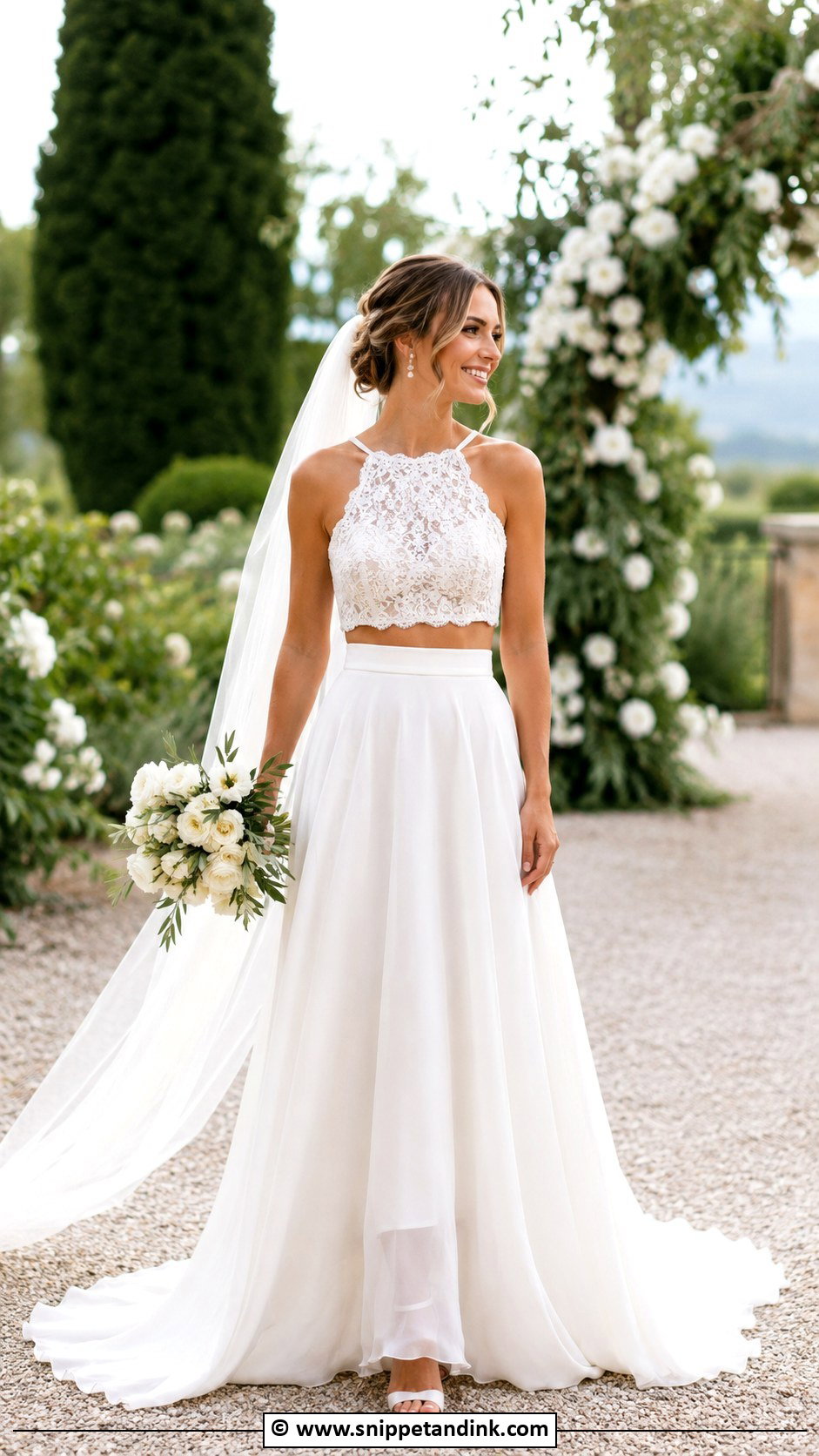
Two pieces, usually a crop top or fitted bodice with a high-waisted skirt, give you flexibility. Lace looks romantic, satin sleek and crepe modern. Match the skirt to the venue: a flowing A-line outdoors, a slim column in the city. Pearl earrings, clean heels and a simple veil tie the pieces together. The small gap at the waist looks fresh without being revealing if proportions are right, and I check it with the bride’s arms raised. You can wear the separates again afterward, which few gowns allow.
23. Detachable Skirt Wedding Dress
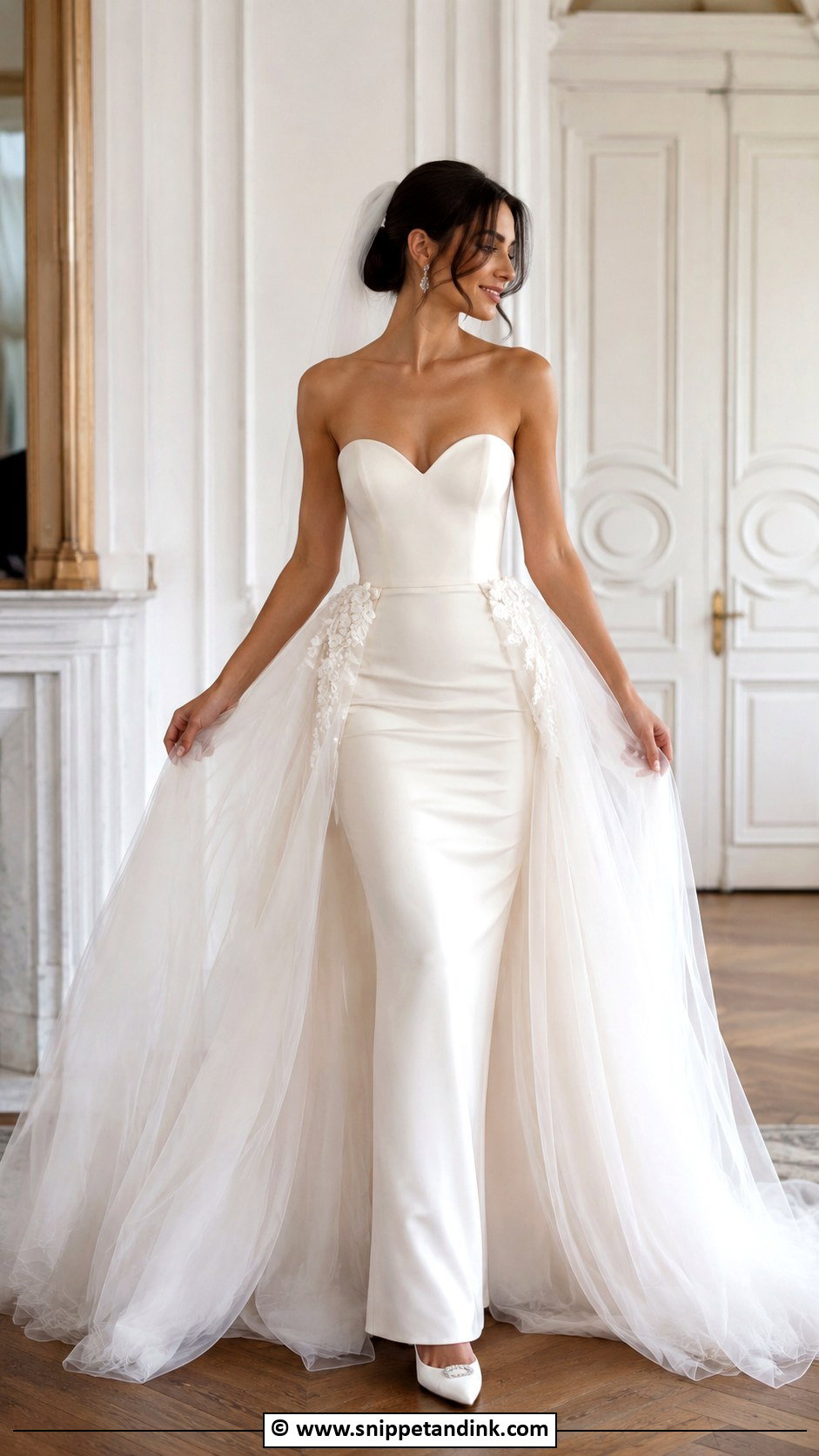
A detachable skirt wedding dress gives you two looks without buying two outfits. A fitted base gown, mini, jumpsuit or column takes a removable overskirt for the ceremony: tulle for romance, satin for structure, organza for light volume. Remove it for the reception. Elegant heels, a long veil and simple jewelry keep both versions consistent. Practice attaching and removing the skirt at your fittings, with the person who’ll actually do it on the day, until it takes a couple of minutes.
24. Floral Wedding Dress
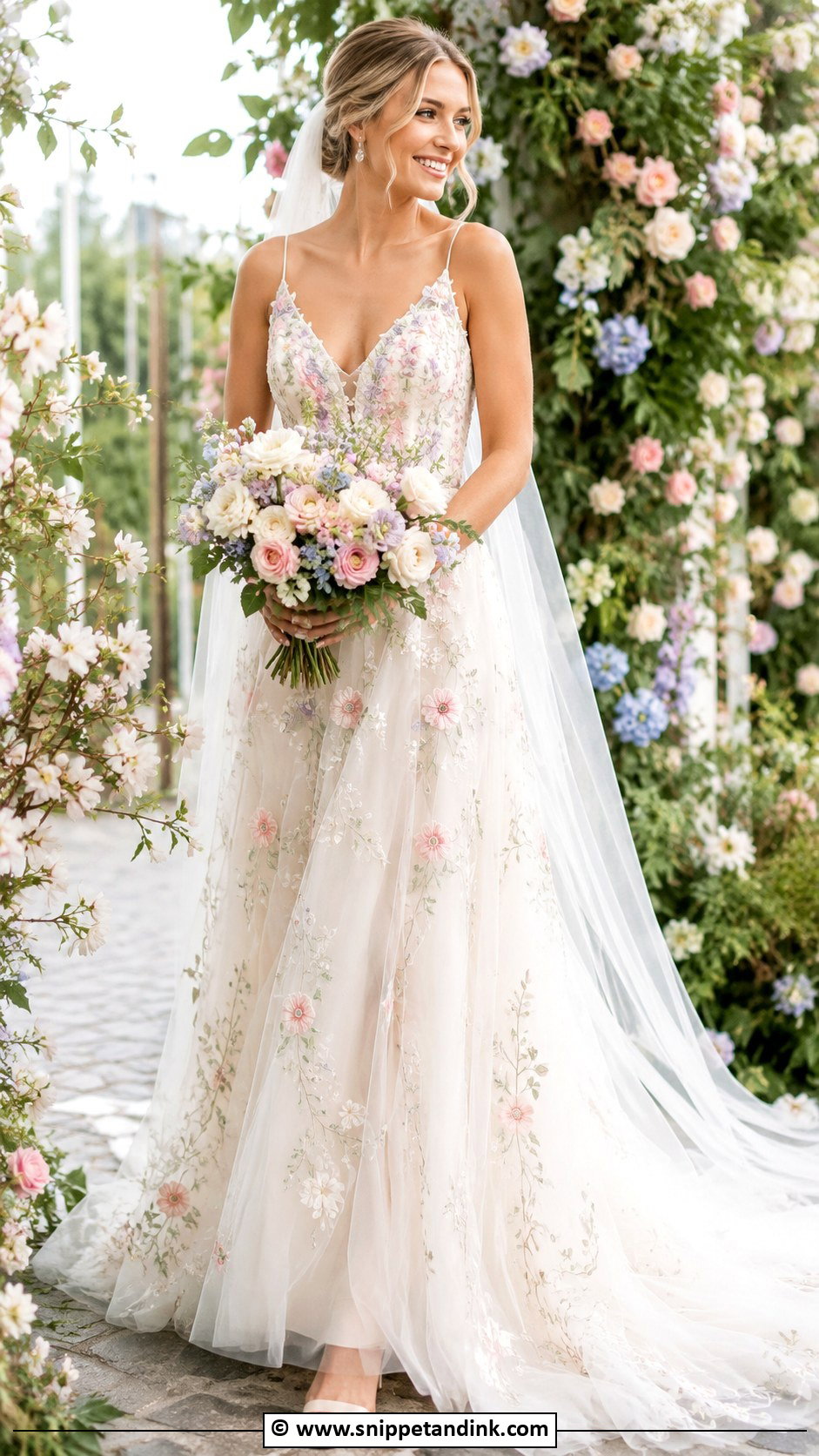
Flowers can appear as lace applique, embroidery, 3D petals, a soft print or subtle pastel detail. Simple shoes, delicate earrings and a veil that doesn’t hide the work keep it balanced. Gardens, greenhouses and outdoor estates suit it, especially in spring and summer. With colored flowers on the dress, I’d choose a bouquet that complements rather than matches; an exact match flattens both. 3D petals crush easily, so ask how the dress should be packed and steamed.



25. Bow Wedding Dress
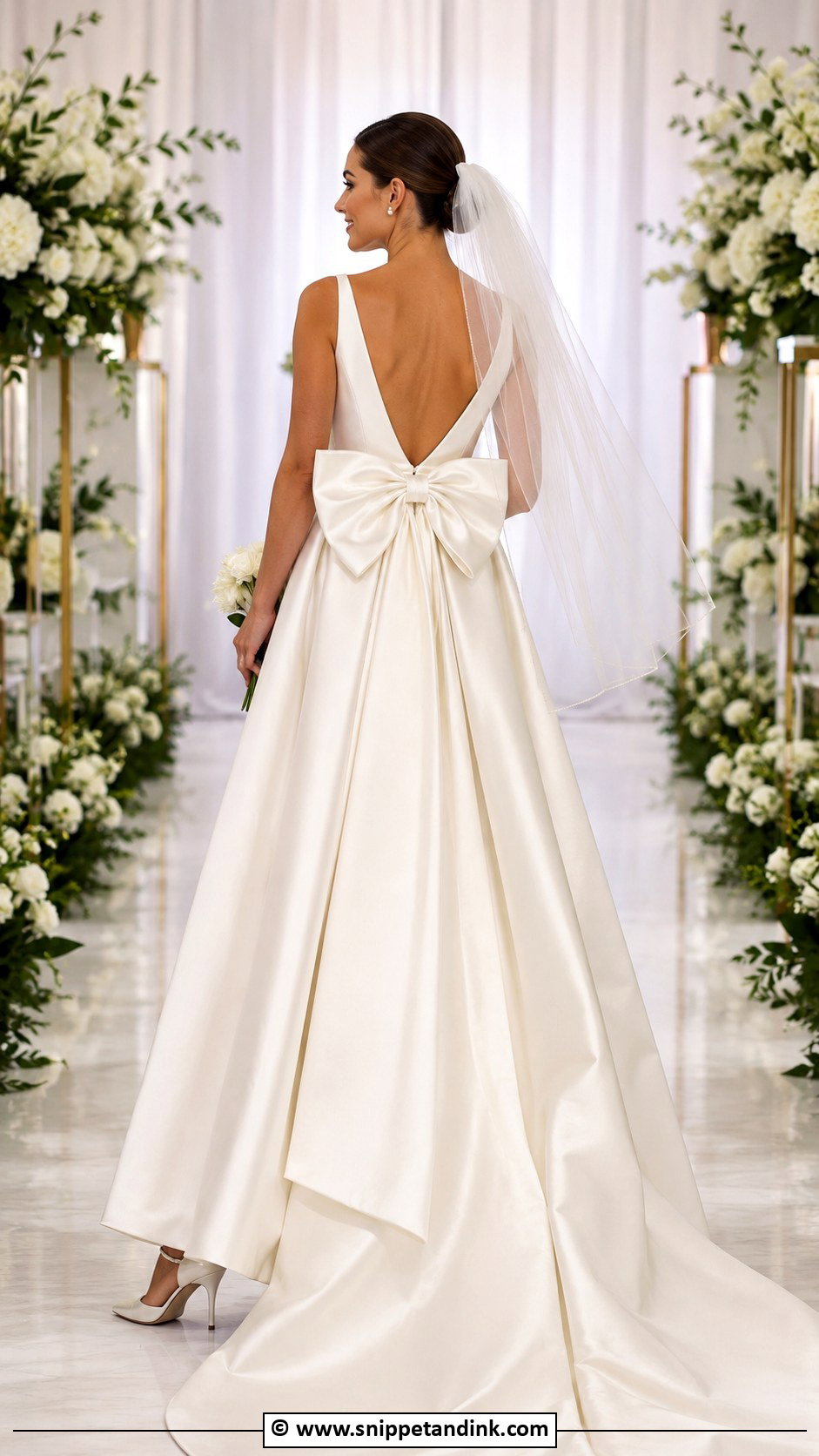
A bow can sit at the back waist, shoulder, neckline, sleeve or train. For classic, a satin A-line with one large back bow; for modern, a slim crepe dress with a sculptural shoulder bow. Pearl studs, sleek heels and a simple veil keep the bow as the focal point. It’s at its best from behind, during the aisle walk and portraits. If you’d like it removable for the reception, ask at the first alteration appointment, since the attachment has to be built in.
26. Beaded Wedding Dress
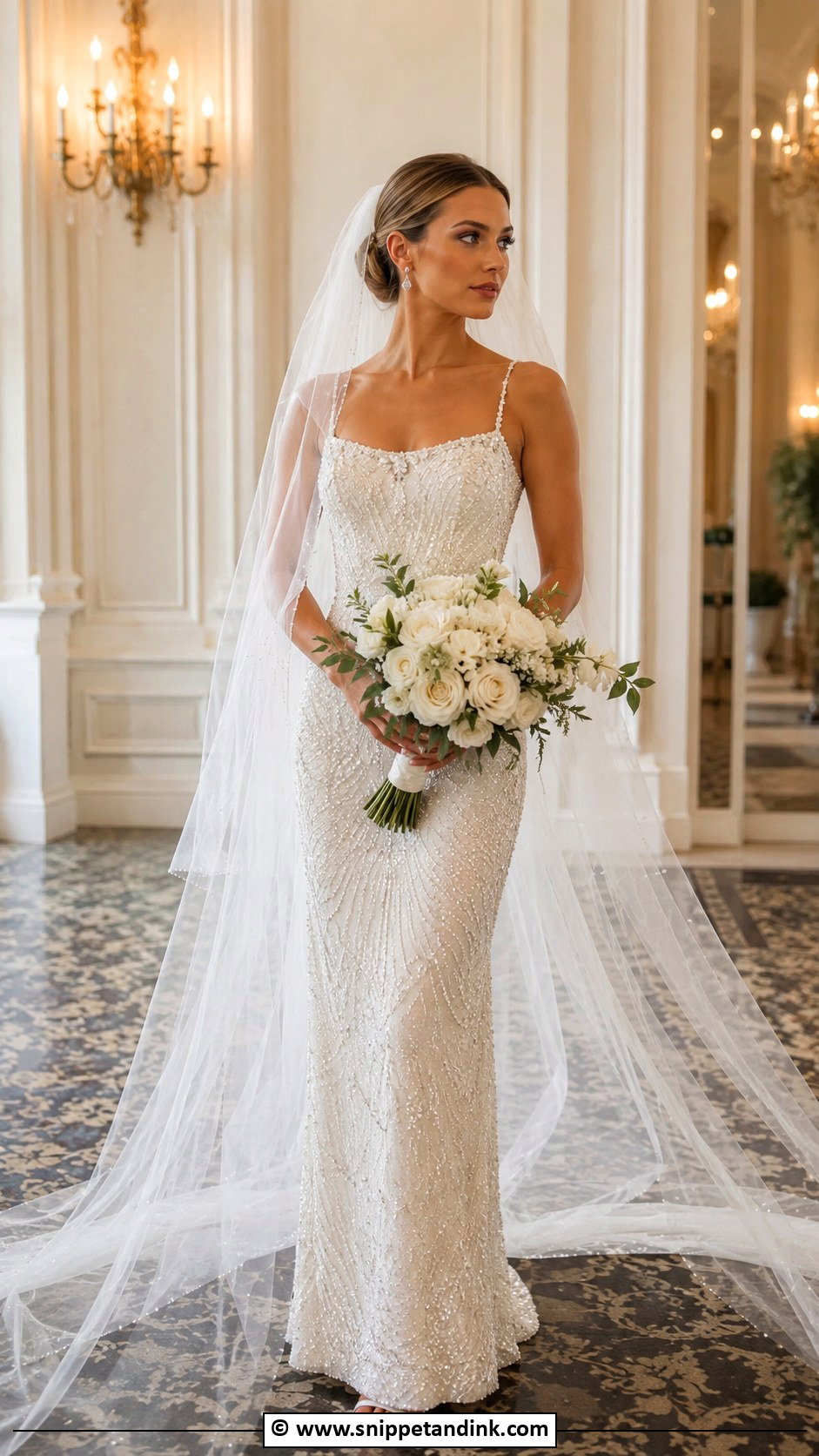
Beading brings light and texture: delicate pearls, crystal accents or allover shimmer. A beaded sheath is glamorous, a beaded A-line softer. With the dress already shining, small earrings, simple heels and a sheer veil are usually enough. Ballrooms and evening receptions with good lighting suit it. Run your inner arm along the bodice at the fitting. Some beading scratches, and that becomes very noticeable by the speeches.
27. Pearl Wedding Dress
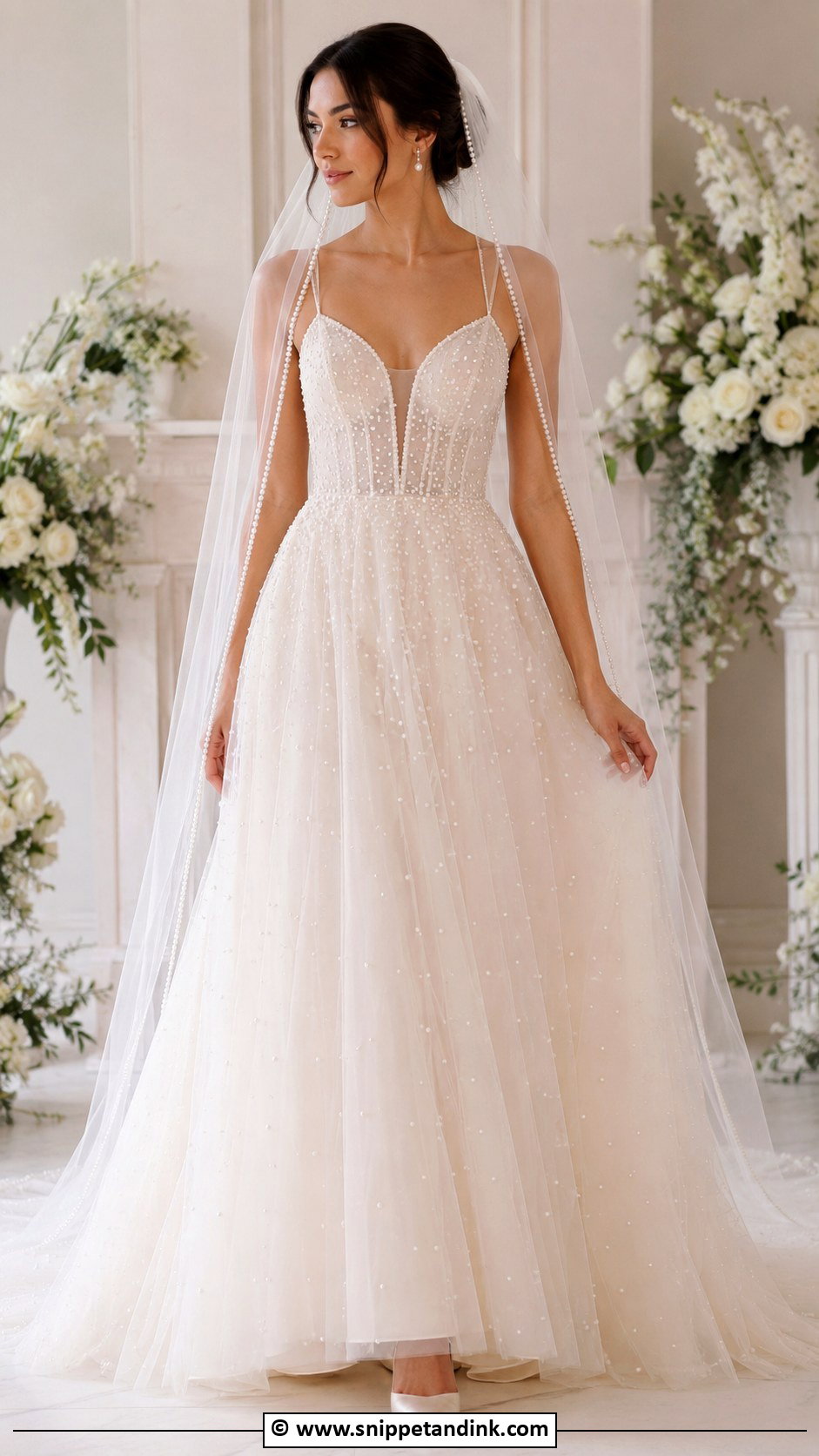
Pearls can be scattered across tulle, placed along straps, added to sleeves or used as trim. They work best on a simple silhouette, where they become the main design feature. Pearl earrings, satin heels and a veil with subtle pearl edging for a coordinated look, but stop there; too many pearls turn busy. Traditional venues and garden ceremonies suit it. You get a soft glow without heavy sparkle.
28. Vintage Wedding Dress
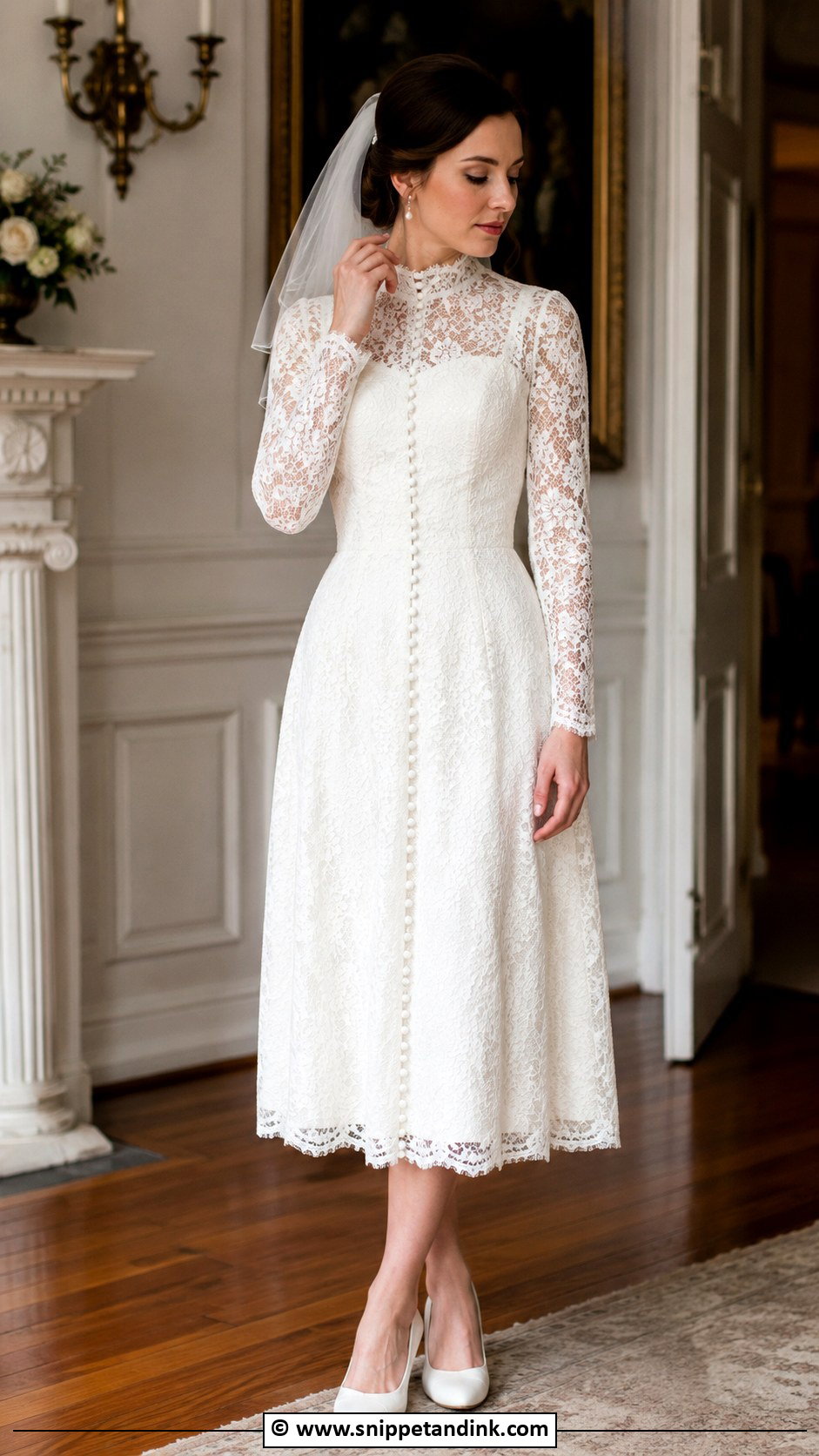
You can go vintage with an original gown, a redesigned family dress or a new gown inspired by a past decade. Lace sleeves, high necks, tea-length hems, covered buttons and satin bias cuts all set the mood. Pearl earrings, low heels, a short veil or a soft Juliet-style headpiece. Tailoring matters most with an older gown or delicate fabric. Have it cleaned professionally before alterations, not after, and test how it moves before the day. It’s also the most sustainable choice on this list.
29. Boho Wedding Dress
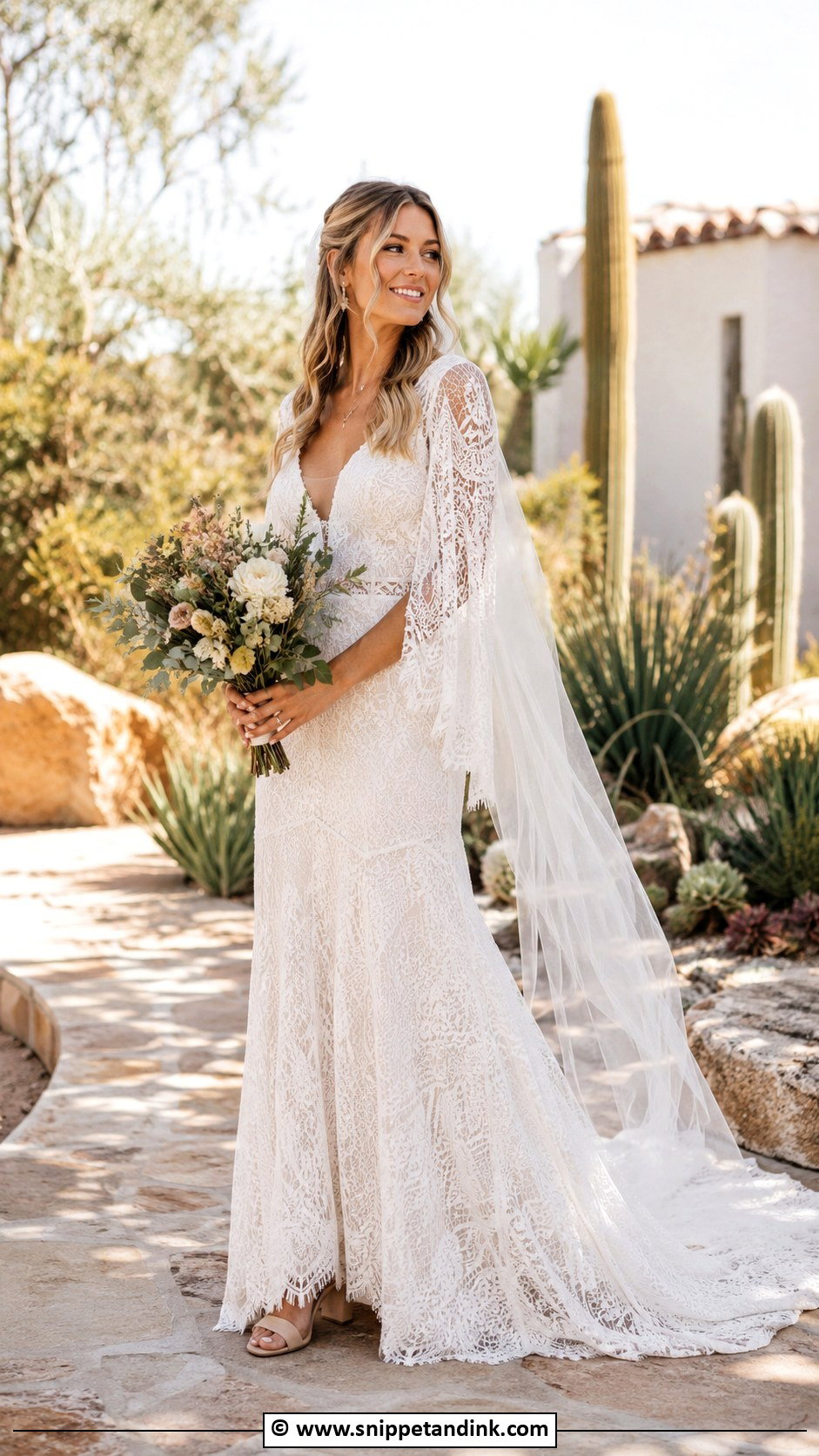
Boho dresses are relaxed and easy to make your own: soft lace, flowing sleeves, open backs, crochet-style detail or an easy A-line. Low block heels or simple sandals, loose waves and natural-looking jewelry, with a floral pin or light veil. Outdoor ceremonies, deserts, beaches, barns and gardens suit it. Choose breathable fabric for warm weddings and avoid a heavy train on natural ground. I’d want it to feel like a dressier version of your everyday style, not a costume.
30. Beach Wedding Dress
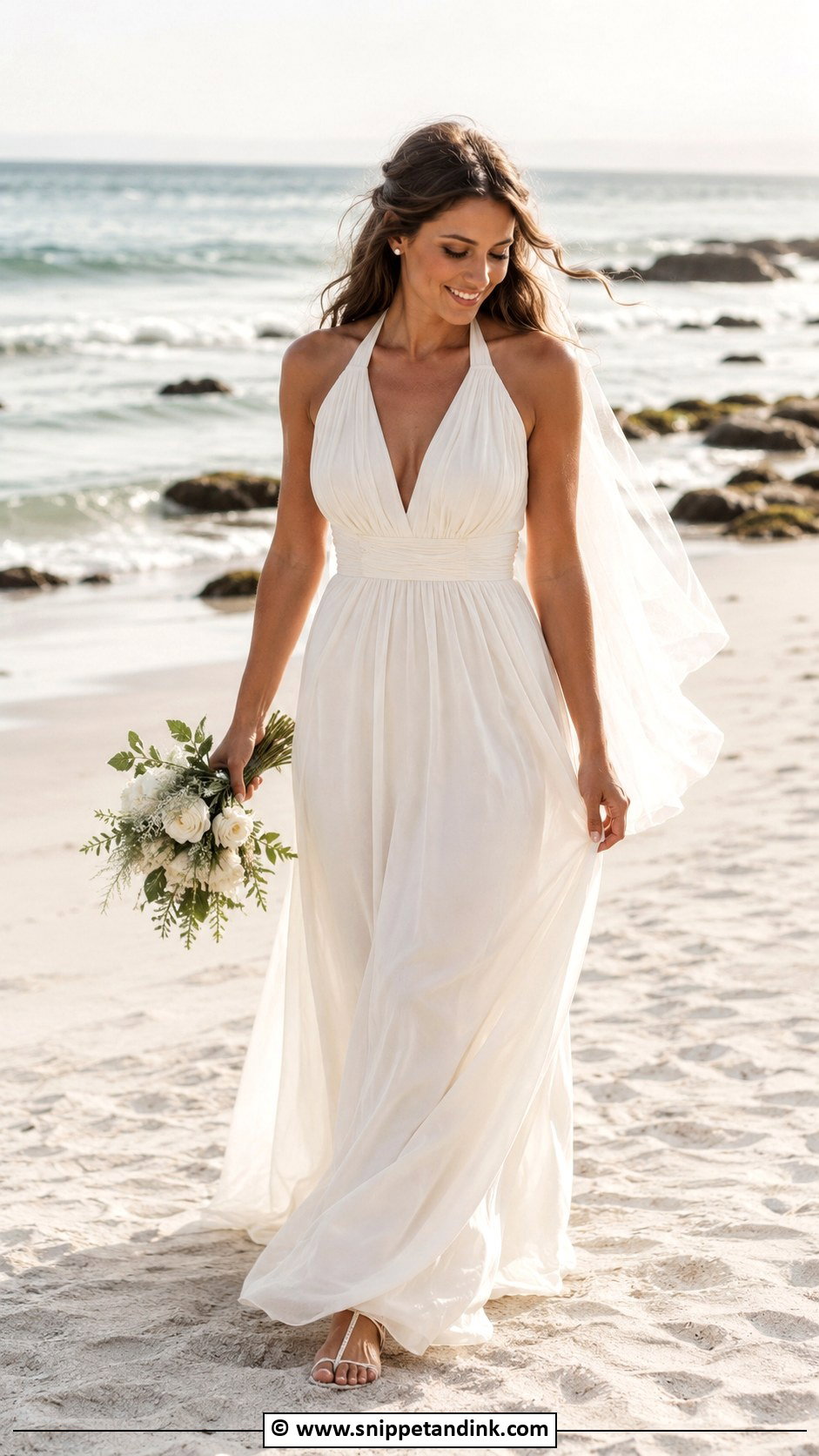
On a beach, the dress has to be light and easy to walk in. Chiffon, organza, silk and lightweight crepe move with the breeze; A-line, slip, sheath or simple halter shapes beat a heavy ball gown. Flat sandals, pearl studs, and a soft veil or a comb that can handle wind. Directly on sand, skip stilettos for barefoot sandals or low wedges. A short train collects less sand, and I always pack a lint roller and a small towel for the hem after the ceremony.
31. Courthouse Wedding Dress
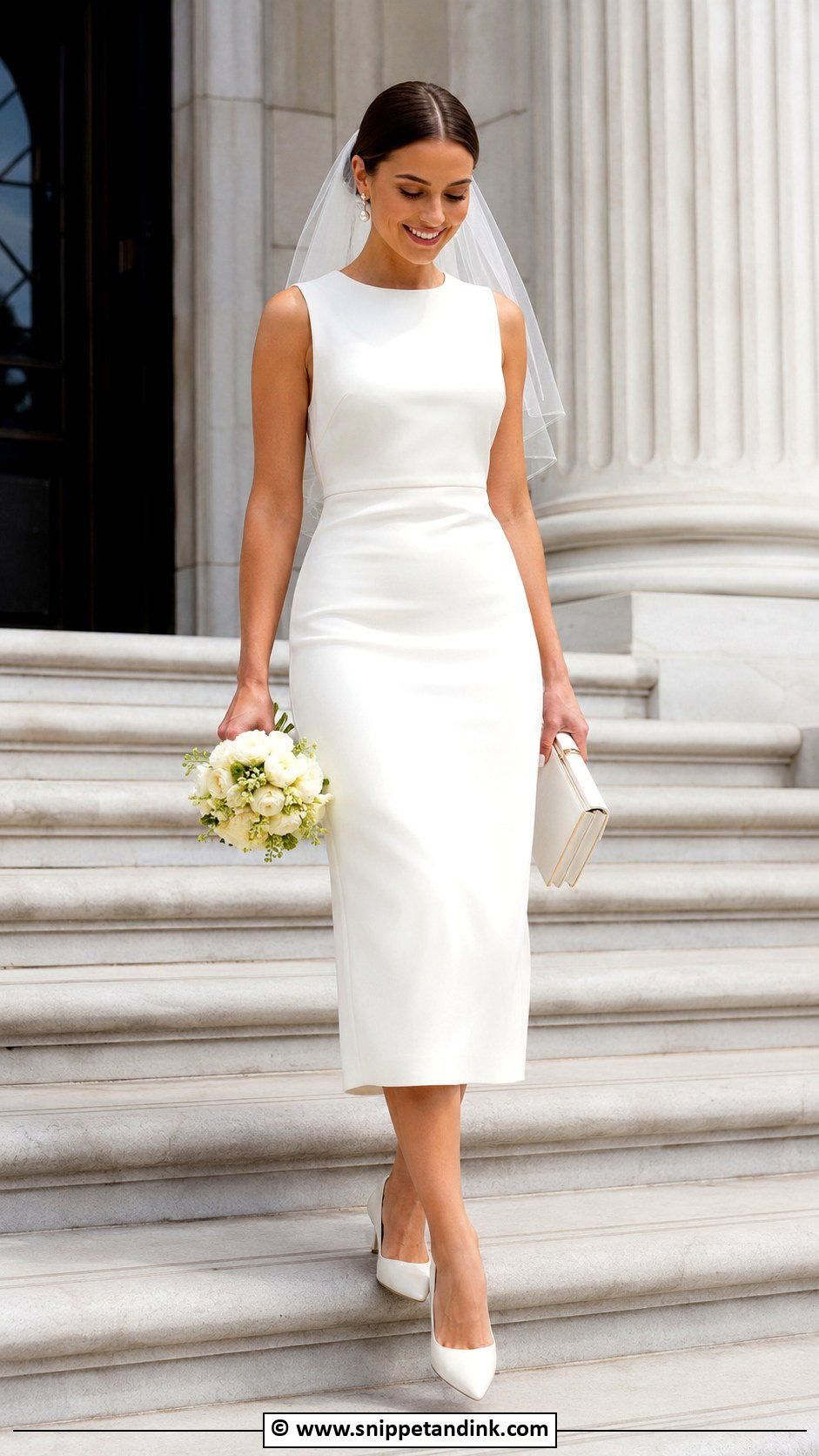
For a courthouse, aim for polished and practical: a short white dress, sleek midi, tailored suit, silk slip or structured mini. Pointed pumps, a small bouquet, pearl earrings and a clean clutch, plus a short veil, bow headband or simple clip. City hall steps and downtown portraits suit it. Simple outfits need sharp proportions, so tailoring still matters. I’d choose a fabric that resists wrinkling, because there’s often travel and a wait before your turn.
32. Plus Size Wedding Dress
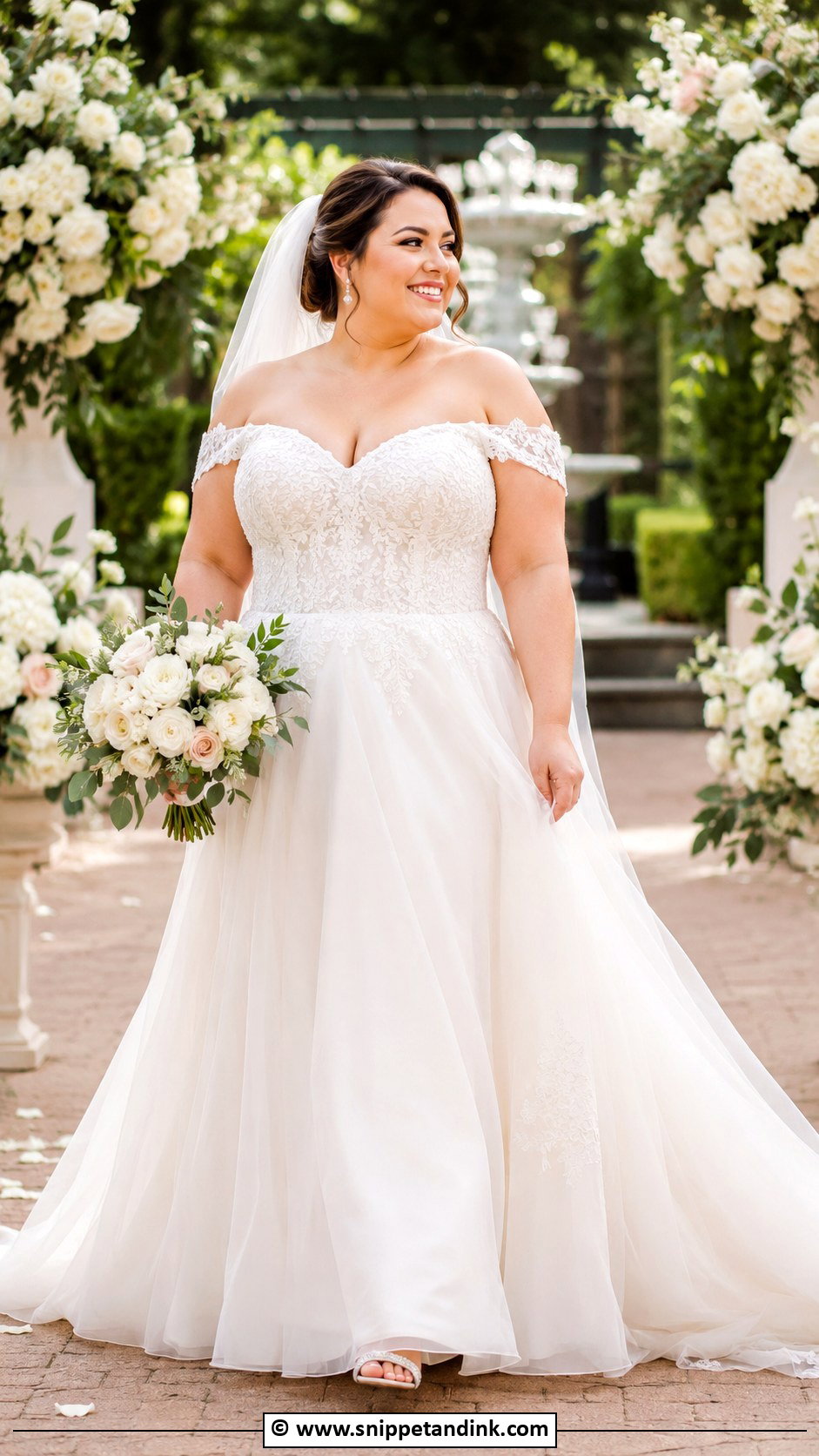
Choose for fit, comfort and the shape you genuinely love. A-lines, ball gowns, fit-and-flares, corset bodices and off-shoulder necklines can all be right for a plus size bride. Look for supportive construction, smooth lining and tailoring that lets you sit, hug and dance. Don’t feel limited to plain styles if you love lace, beading, bows or a big skirt. Bring your actual undergarments and shoes to every fitting so alterations are accurate, and never size down hoping to slim into it; a dress let out at the seams rarely sits as well as one taken in.
33. Modest Wedding Dress
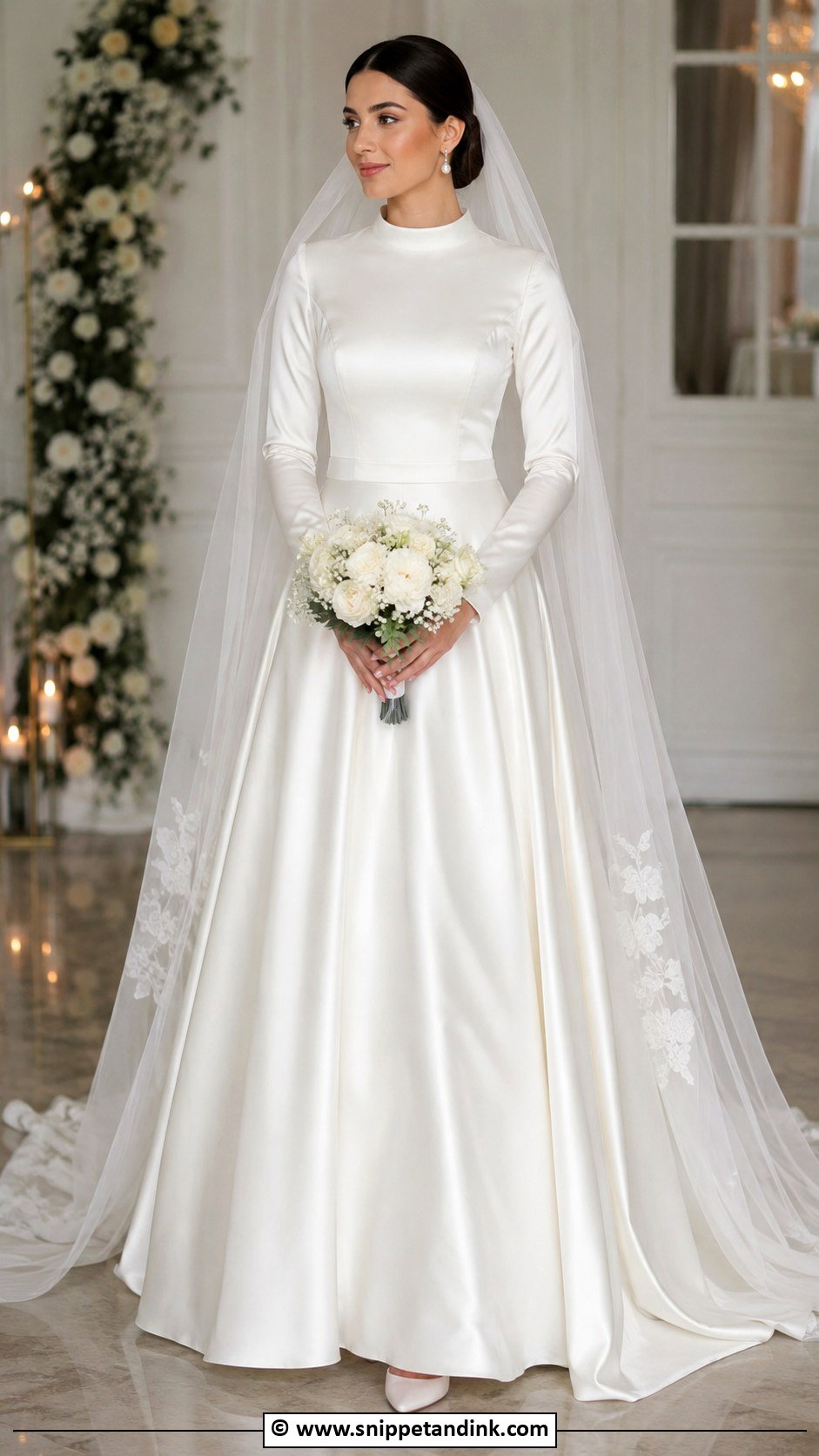
Modest doesn’t mean plain. Long sleeves, higher necklines, illusion panels, lined bodices or fuller skirts give coverage, in lace, satin, crepe or chiffon. Closed-toe heels, pearl earrings and a veil that suits the neckline. For more shape, choose a defined waist, structured bodice or soft belt. Embroidery, buttons, bows, texture and a long train all still belong here. Illusion mesh comes in several skin-tone shades, so match it to your skin at the fitting or it will look grey in photos.
34. Black Wedding Dress
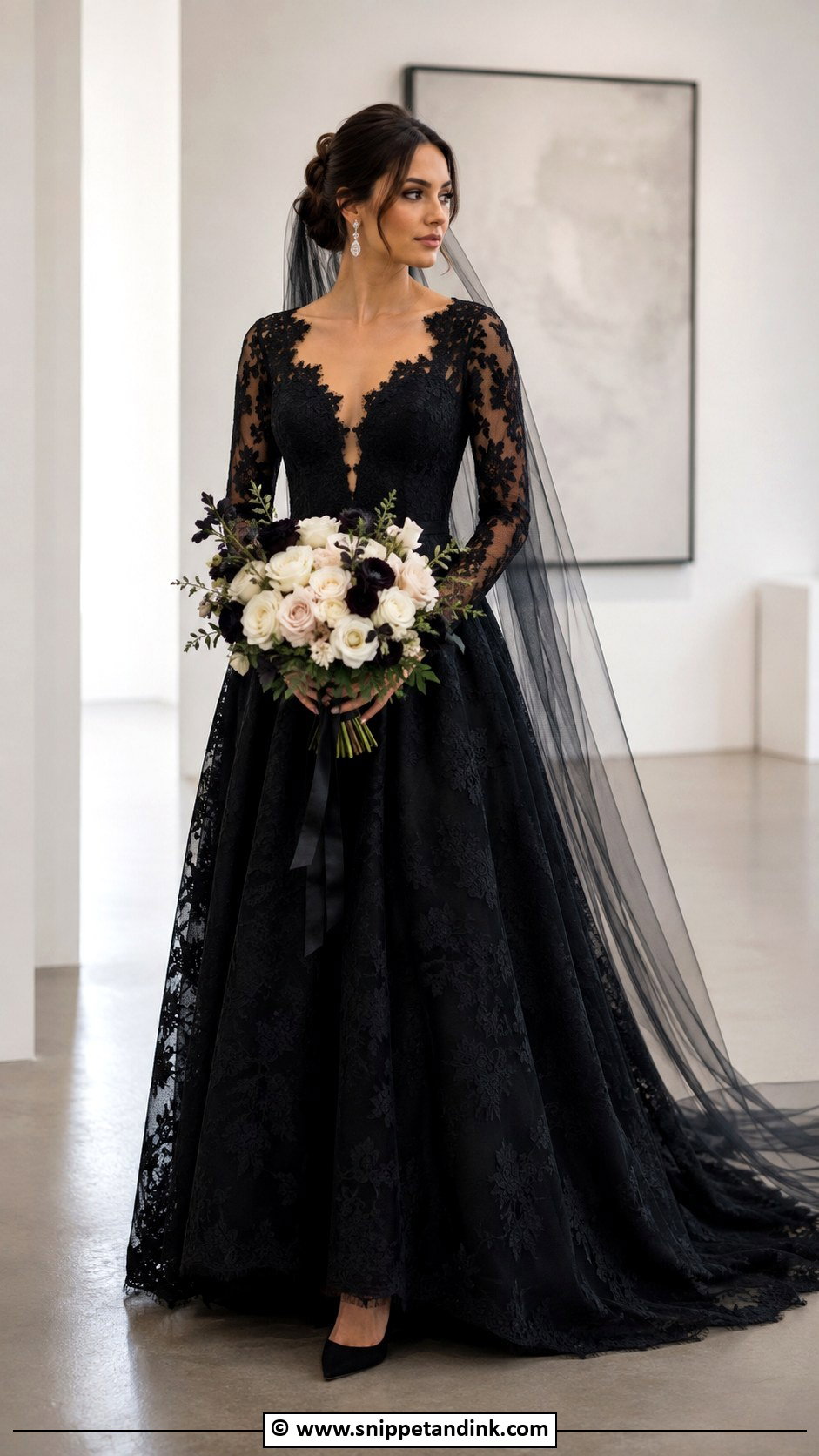
Black is bold, and it works when every choice around it is deliberate. Black lace reads romantic, black satin dramatic, black tulle softer. Crystal earrings, black or ivory heels and a structured bouquet in white, cream or soft blush keep it bridal. A black veil is dramatic; ivory creates contrast. Modern venues, evening ceremonies and art spaces suit it. Black shows lint, dust and every flaw in fit, so the tailoring has to be exact and a lint roller belongs in your bag.
35. Blush Wedding Dress
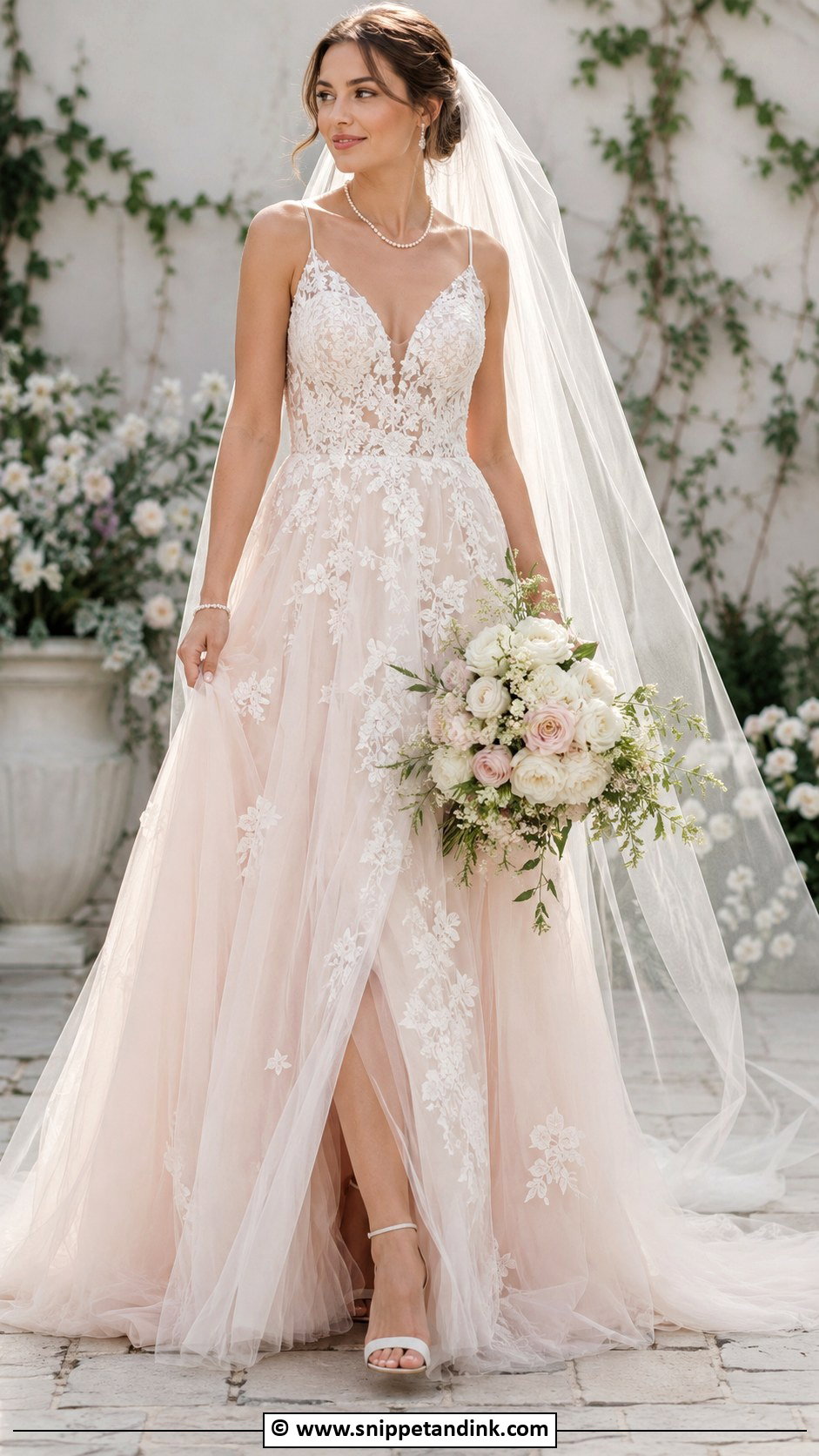
Blush adds a hint of color: anything from barely pink to warm rose, champagne blush or a nude underlay under ivory lace. Tulle, lace, satin and embroidered fabrics all take it well. Ivory heels, rose gold or pearl jewelry and a veil matched to the gown’s undertone. Keep the bouquet soft. It suits gardens, spring ceremonies and romantic indoor venues, and adds warmth to many skin tones. I’d still check it in daylight, since some blushes read beige on camera.
The Calendar From Yes to Final Fitting
Made-to-order gowns usually take several months to arrive, and alterations come on top of that. I’d start shopping nine to twelve months before the wedding where you can, and ask each salon for its current production time before you say yes. Rush orders exist but often cost extra and narrow your choices.
Once the dress lands, plan for two or three fittings, beginning around two to three months before the day. The first sets the big changes, hem and bustle; the second refines them; the final one is a full rehearsal with shoes, underwear, veil and jewelry. Bring whoever will bustle you to that last fitting so they can practice.
Costs That Never Show on the Price Tag
The ticket price is rarely the total. Budget separately for alterations, which vary a lot with fabric and hand work, plus the veil, undergarments, shoes, steaming or pressing before the wedding, and cleaning afterward. Ask the salon for typical alteration costs on the specific gown you love, since a beaded hem costs far more to shorten than a plain crepe one.
Walk, Sit, Turn, Then Decide
Trends are useful for discovering shapes you hadn’t considered, but the dress you choose has to work for your venue, how you move, your budget and your confidence. Try more than one silhouette, photograph each from the front, side and back, and notice how you feel walking, sitting and turning. Accessories should finish the gown, not compete with it. Lace, satin, suits, minis, color or a classic ball gown, I’d pick whichever one you keep forgetting you’re wearing.
You'll Like These Ideas:






Leave a Reply