
Sleeves are one of the most common changes brides ask me about once the dress is bought. Some want coverage for a religious ceremony, some want warmth in winter, and some simply feel more like themselves with something on their arms. Whether it can be done well depends on the gown more than the idea: the neckline, how the bodice is built, the weight of the fabric and how much you need to move. A sleeve can be sewn permanently into an armhole, or it can live on a separate piece such as a topper, bolero or bodysuit that never touches the original seams. The twenty looks below cover both routes, with the fitting checks I’d run on each before any fabric gets cut.
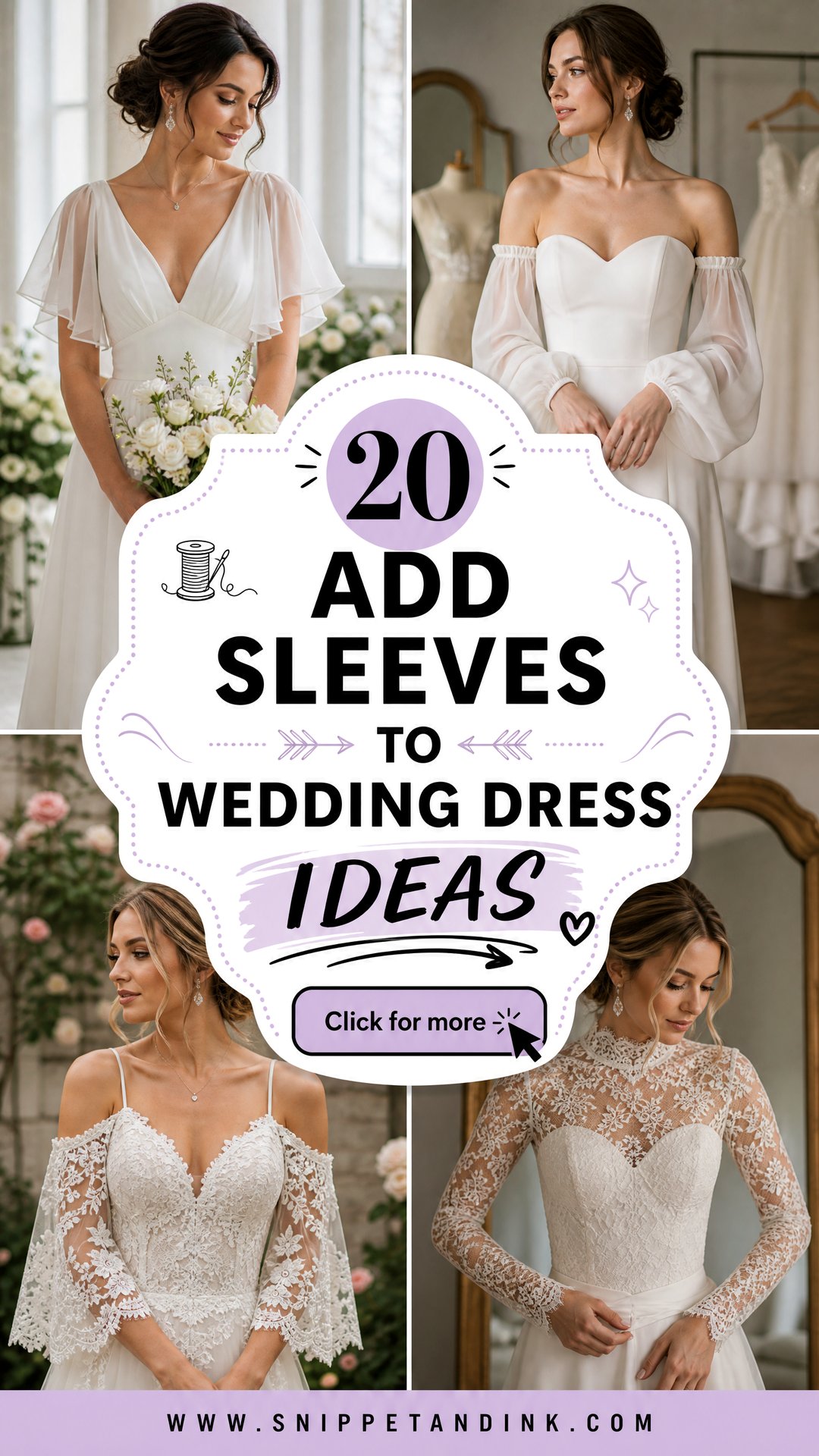
Sewn In or Removable? Ask What the Bodice Can Carry
The first thing I look at is not the sleeve you want but the bodice you have. A sleeve hangs from something, and that something has to take its weight and the pull of your arm moving all day.
Gowns that take a set-in sleeve well
Dresses with straps, a structured bodice and a real armhole are the easiest to work with. The seamstress opens the side seam a little, sets the sleeve in, and the dress keeps its shape.
Gowns that are better left alone
A strapless corset bodice relies on its top edge sitting firmly against the body. Sewing sleeves into it can pull that edge away and undo the fit, so for these I nearly always suggest a topper, bolero or detachable pair instead. The same goes for designer gowns you might sell later, since a permanent alteration usually lowers resale value.
If you’re unsure, ask the seamstress to pin muslin sleeves onto the dress first. It costs very little and shows you the shape and the strain before any lace is touched.
1. Strapless Wedding Dress With Detachable Lace Sleeves
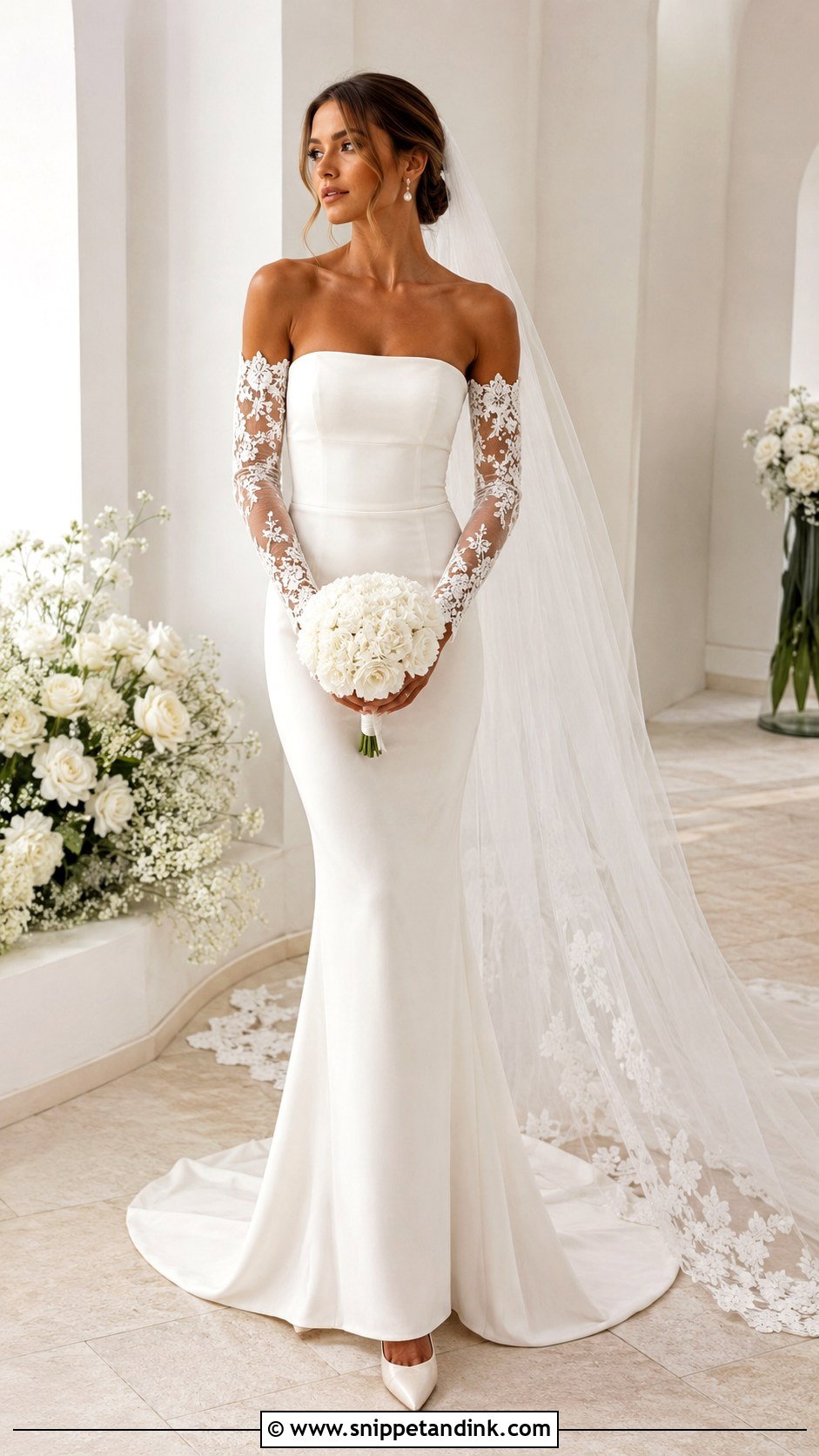
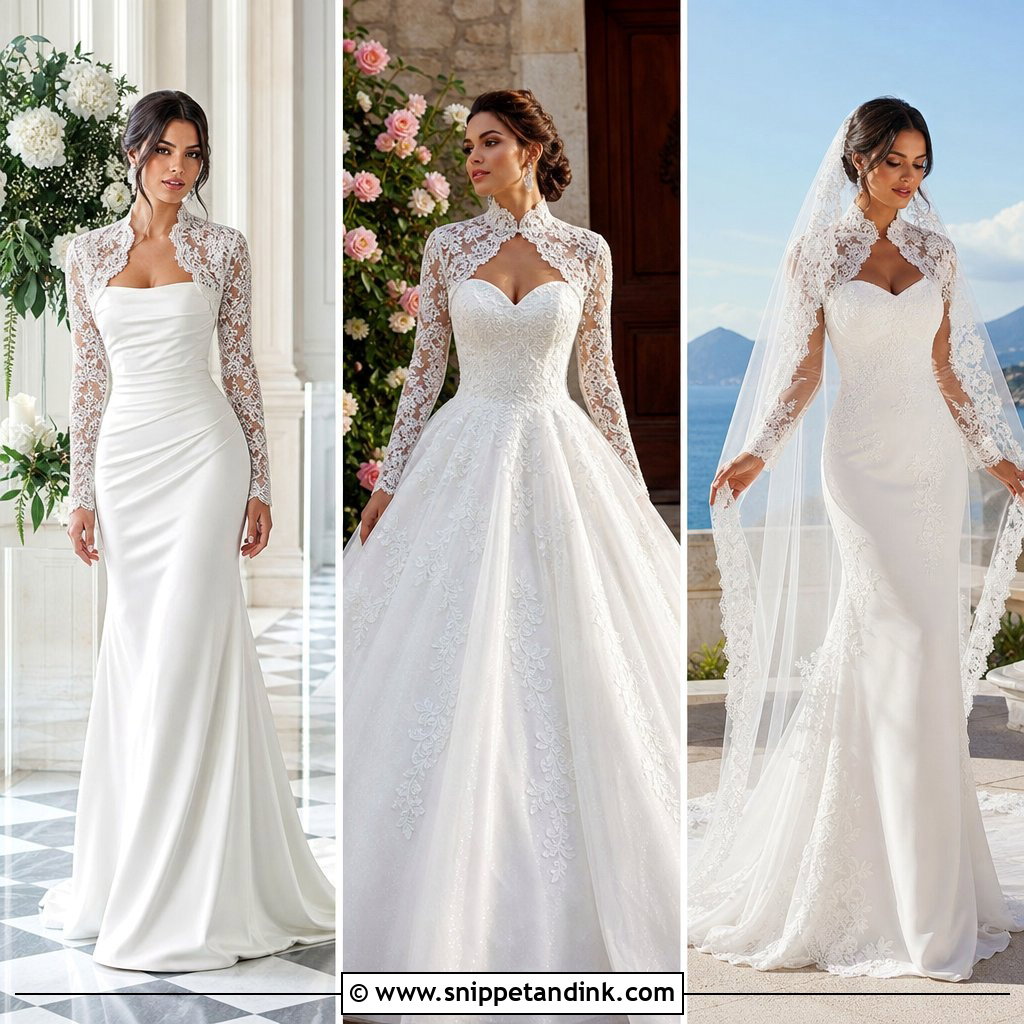
Detachable lace sleeves give a strapless gown two personalities: covered for the vows, bare-shouldered for the dancing. The lace should repeat the dress’s own motif or scalloped edge, and the fixings (fabric loops, hidden snaps or hooks and eyes) need to sit under the bodice edge where nobody sees them. A cathedral veil, pearl earrings and pointed ivory pumps suit the ceremony version. My test is a full hug with both arms. If a snap pops, the attachment is too tight or too few, and it’ll fail on the dance floor too. Compare the lace beside the dress at a window as well, since ivory and soft white look identical under shop lights and different outdoors.
2. Wedding Dress With Illusion Lace Sleeves
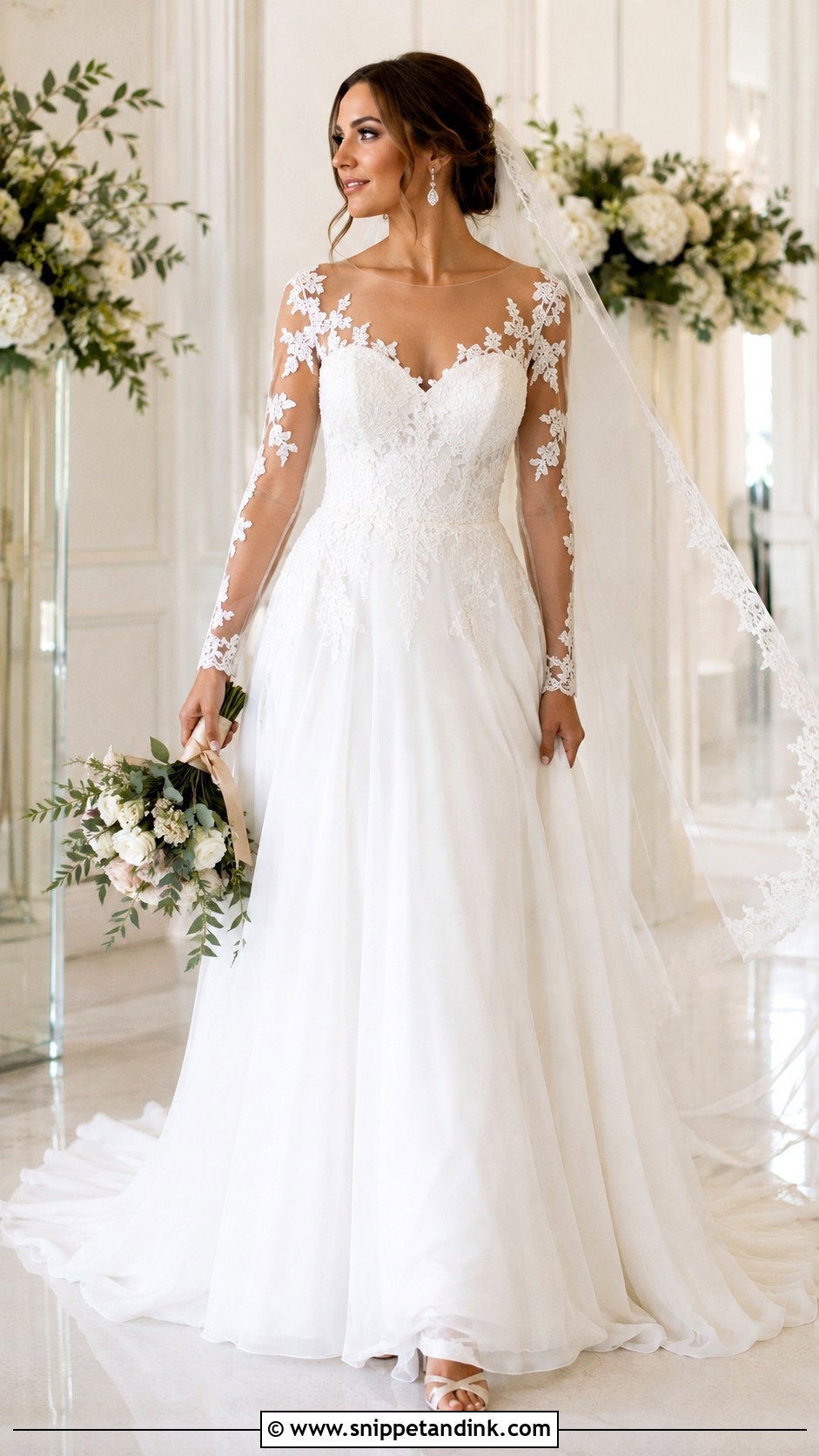
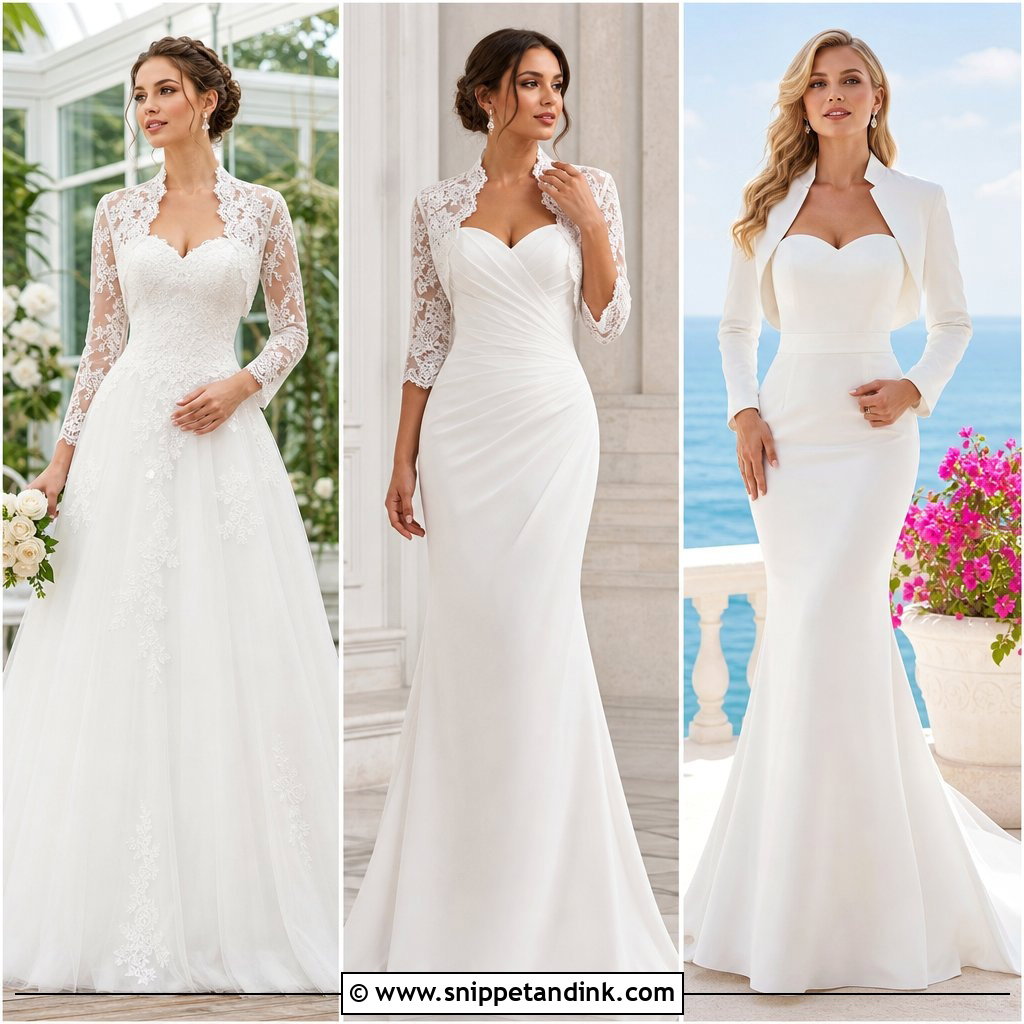
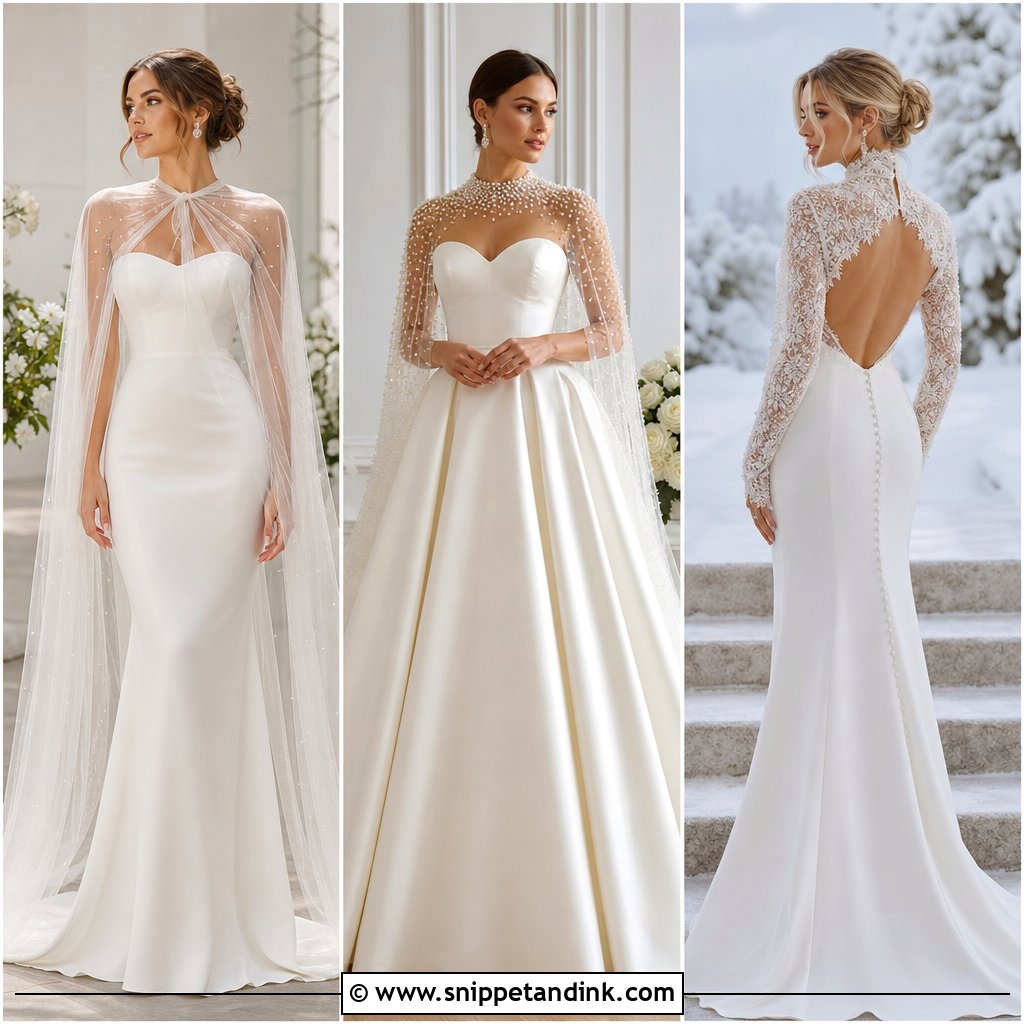
Illusion sleeves work because the tulle almost disappears, leaving lace that seems to sit directly on the skin. That effect depends entirely on the tulle shade. It should match your skin tone or the dress lining, and a mismatch shows as a visible band around the shoulder in photos. Appliqués placed across the arm and onto the bodice make the new sleeves look original to the gown, which is why they suit illusion necklines, sweetheart bodices and low backs that need extra support. A lace-edged veil and small drop earrings keep it light. Fine tulle has very little give, so watch the elbow and underarm for pulling the moment you bend.
3. Wedding Dress With Off-the-Shoulder Tulle Sleeves
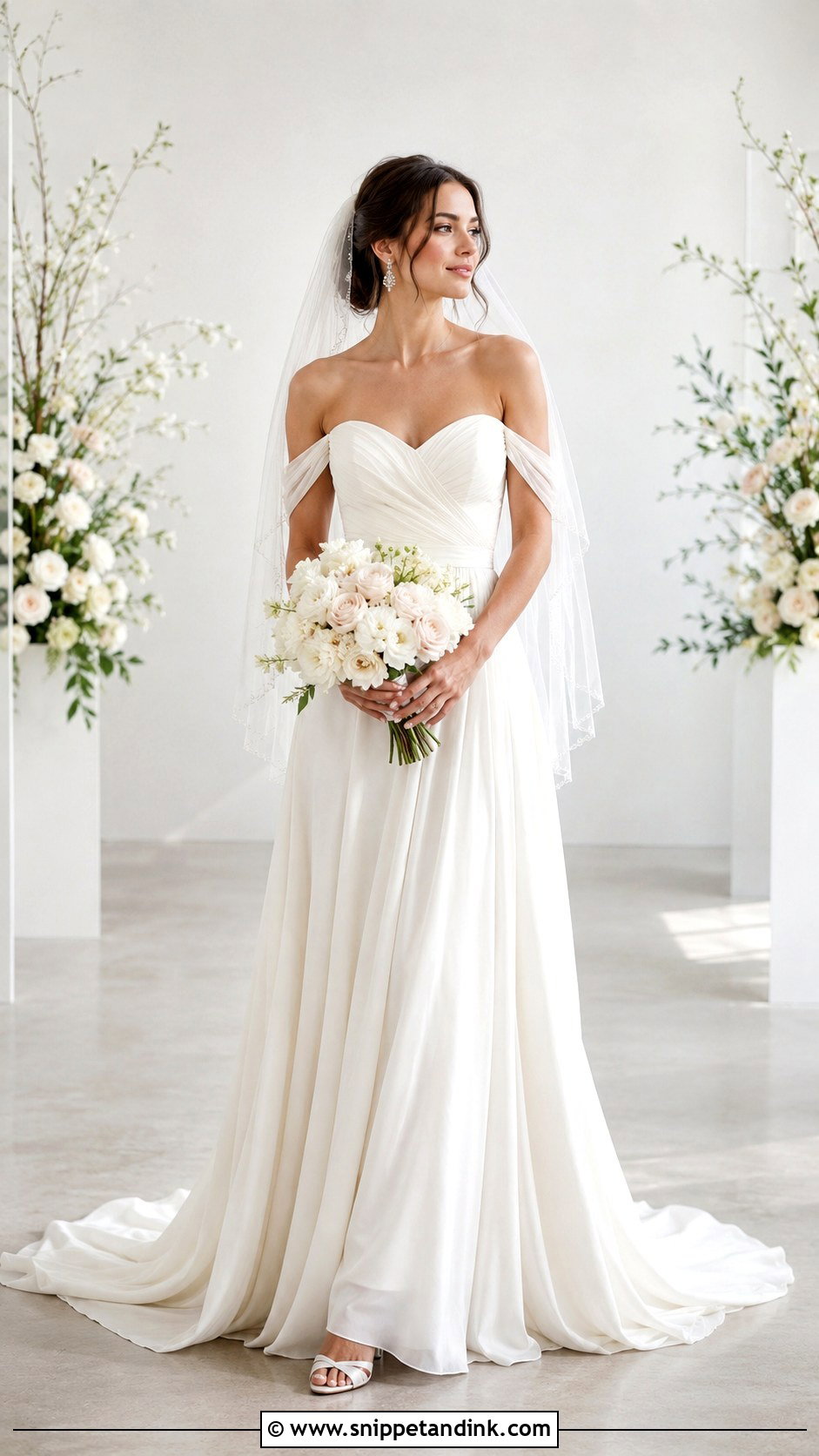
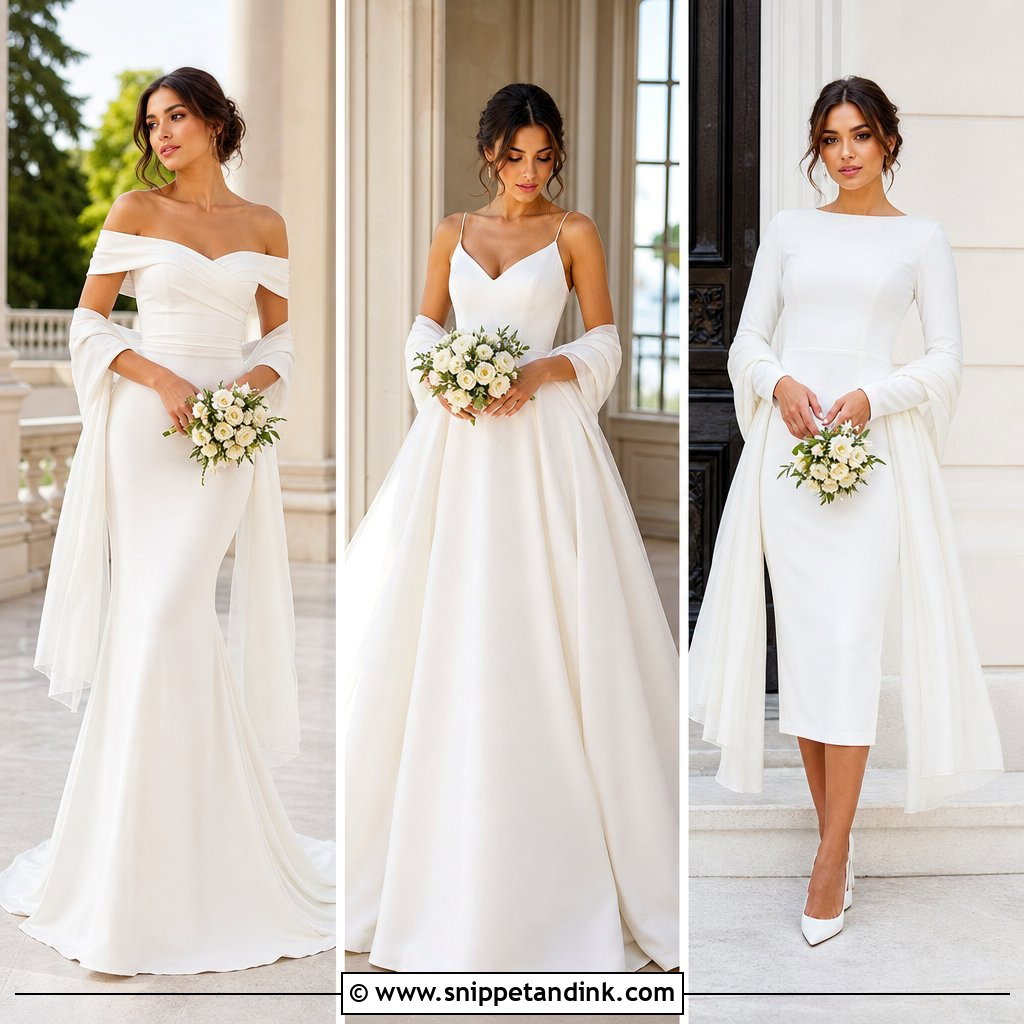
Tulle resting just below the shoulder softens a strapless gown, especially one with a sweetheart or gently curved neckline. It can be gathered loosely, folded into a smooth band or made fuller, but it has to stay light; heavy tulle drags the bodice down over the evening. A fitted waist, a flowing skirt, crystal earrings and a fingertip veil complete it. Make it detachable if you’d like bare shoulders later. Off-shoulder sleeves are the ones I see brides regret most when they’re fitted too snugly, because you can’t lift your arms to shoulder height. Reach forward and up at the fitting and ask for a little more ease if they bite.
4. Wedding Dress With Lace Cap Sleeves
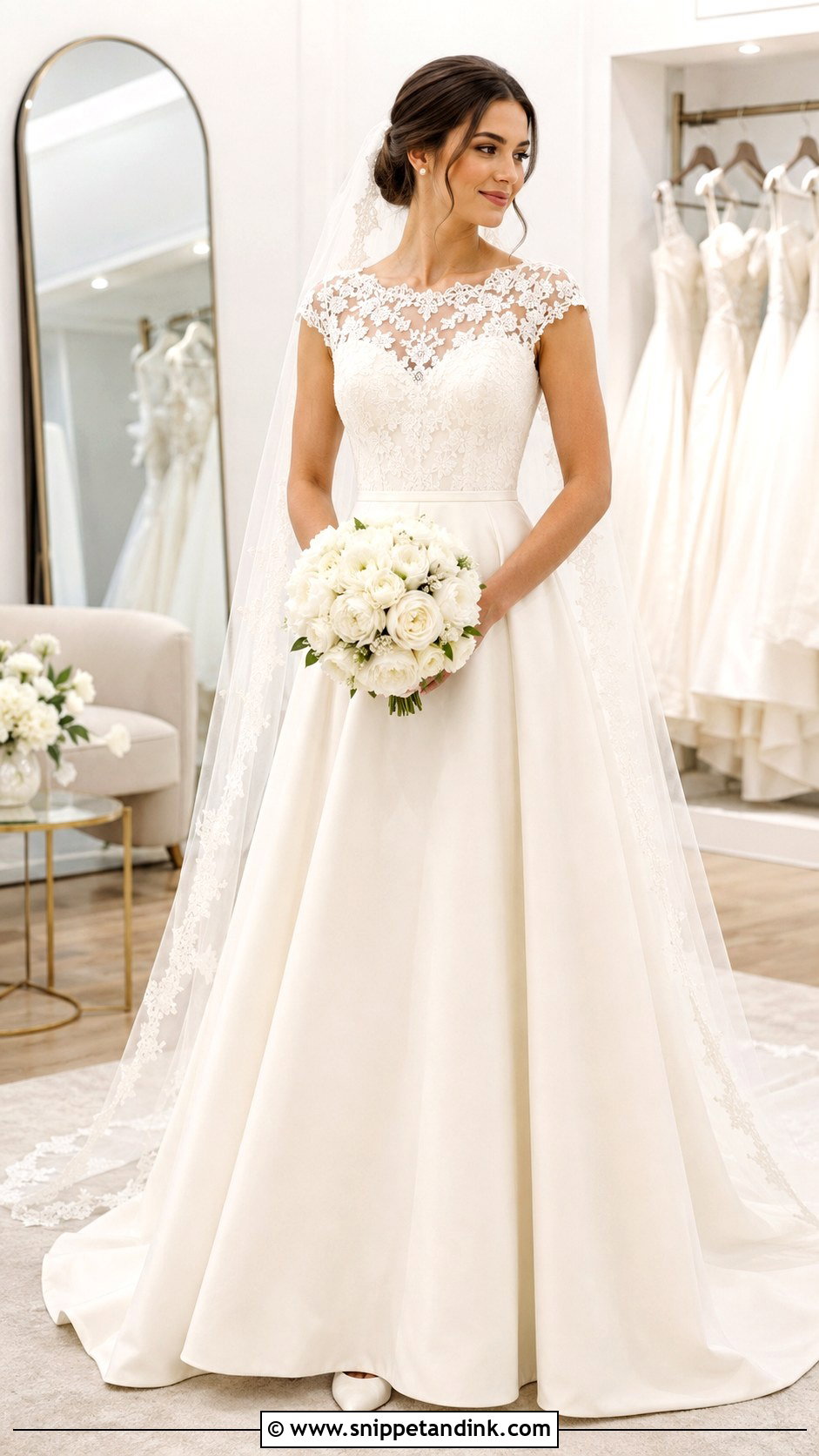
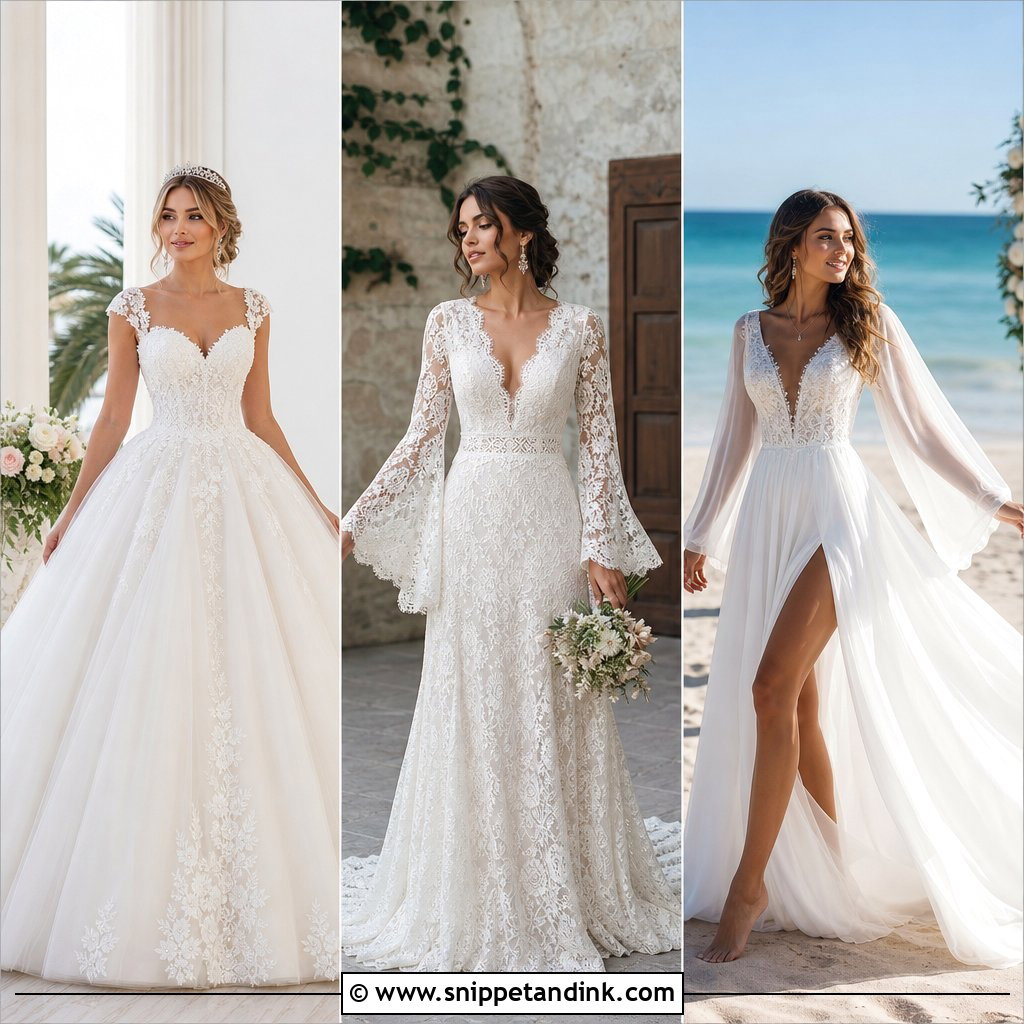
Cap sleeves are the gentlest change on this list. They add shoulder coverage to a spaghetti-strap or sleeveless gown without making it feel heavier, and they usually need only an existing armhole to attach to. The best lace for them is often already in the dress: when the hem is shortened, the cut-off lace or spare motifs can be reused, which guarantees a colour match. Finish the edge with a scallop or a clean line. A chapel-length veil, pearl studs, a low bun and closed ivory shoes complete the look. Angle is everything here; a cap set too straight clamps the arm against the body, so have the seamstress pin it while your arms are relaxed at your sides.
5. Wedding Dress With Chiffon Flutter Sleeves
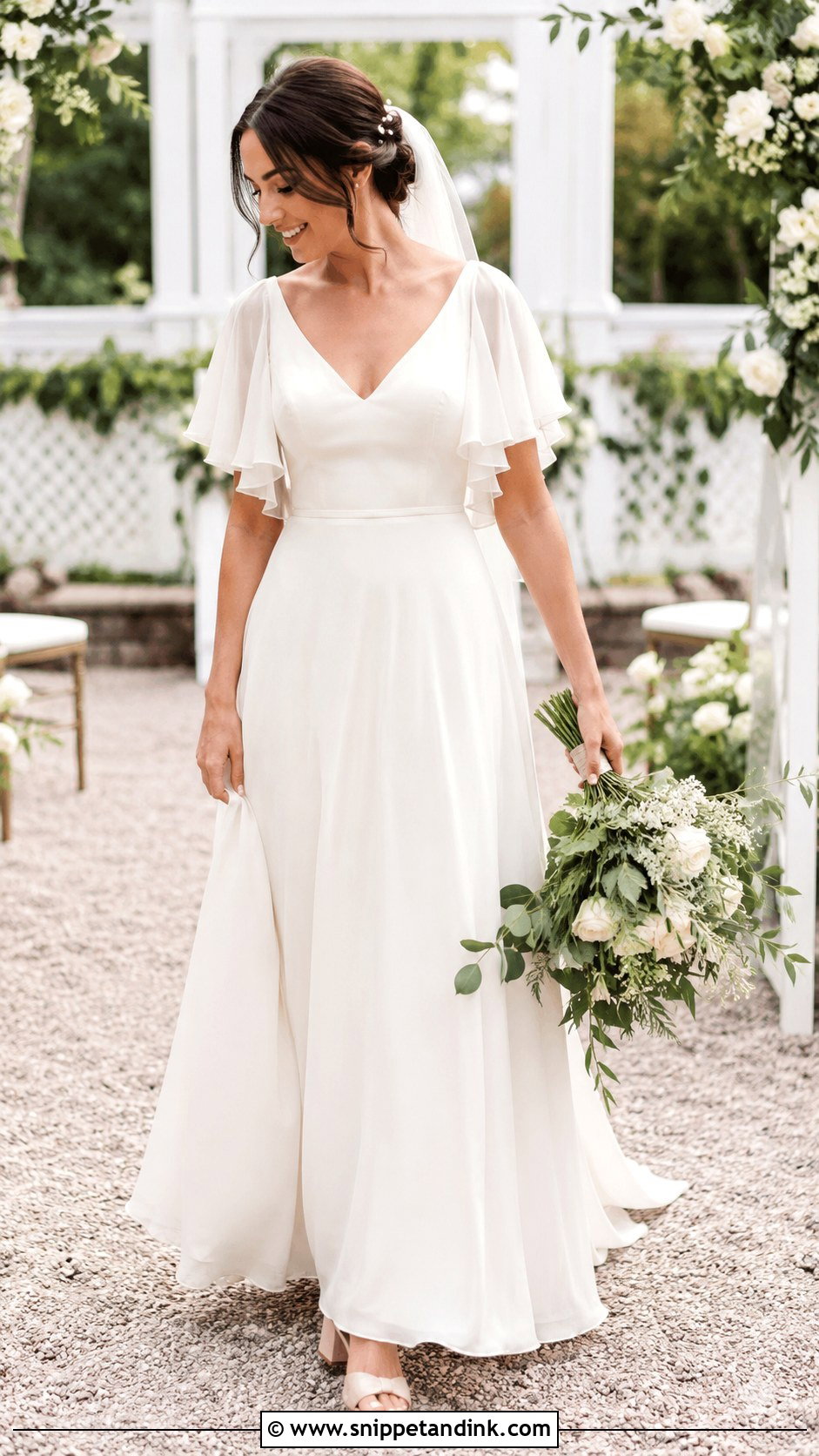
Flutter sleeves fall from the shoulder in one or two loose layers, so they give coverage without touching the arm at all. They’re kindest on A-lines and flowing skirts. Match the chiffon by softness as well as shade: a stiff chiffon stands out from the shoulder like a wing rather than falling. Pearl hair pins, a simple veil, low block heels and a loose, green bouquet keep the outfit relaxed. On a petite frame I’d keep the flutter short, finishing above the bicep; a longer layer adds drama to a plain gown, but on a smaller bride it can make the shoulders look wider than they are.
6. Wedding Dress With Detachable Bishop Sleeves
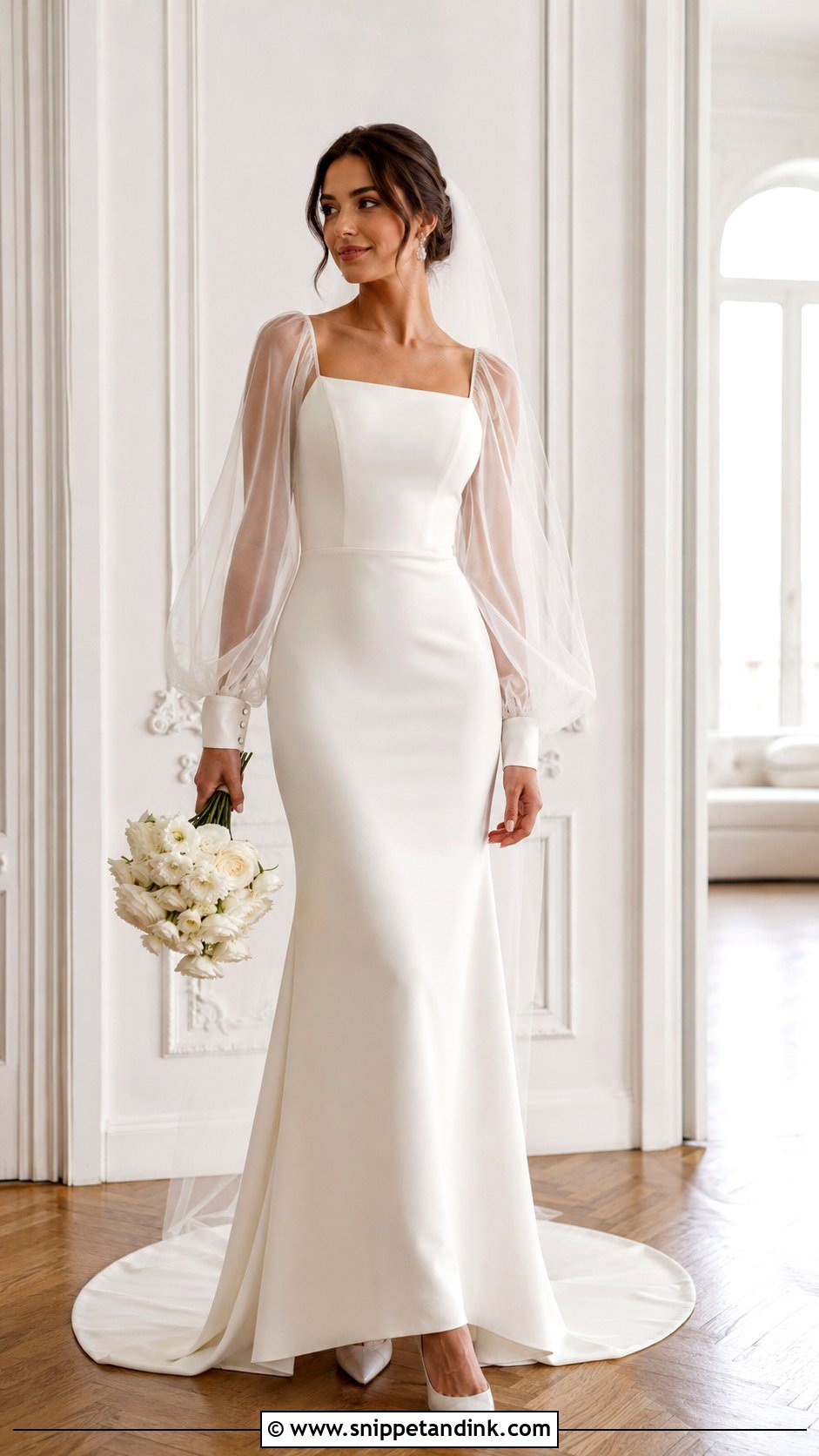
Bishop sleeves billow through the forearm and gather into a cuff, so the volume sits low on the arm instead of at the shoulder. Sheer tulle, chiffon and light organza hold that shape without weight. Dress the cuff with covered buttons, lace trim or a few beads borrowed from the bodice, and keep the veil and bouquet simple so the sleeves stay the feature. They can attach at the shoulder or sit just off it, depending on how the gown is built. Bend both elbows at the fitting: too much fabric bunches into a lump at the crook. And leave a finger’s width in the cuff, as wrists swell a little in warm rooms over a long day.
7. Minimalist Wedding Dress With Fitted Crepe Sleeves
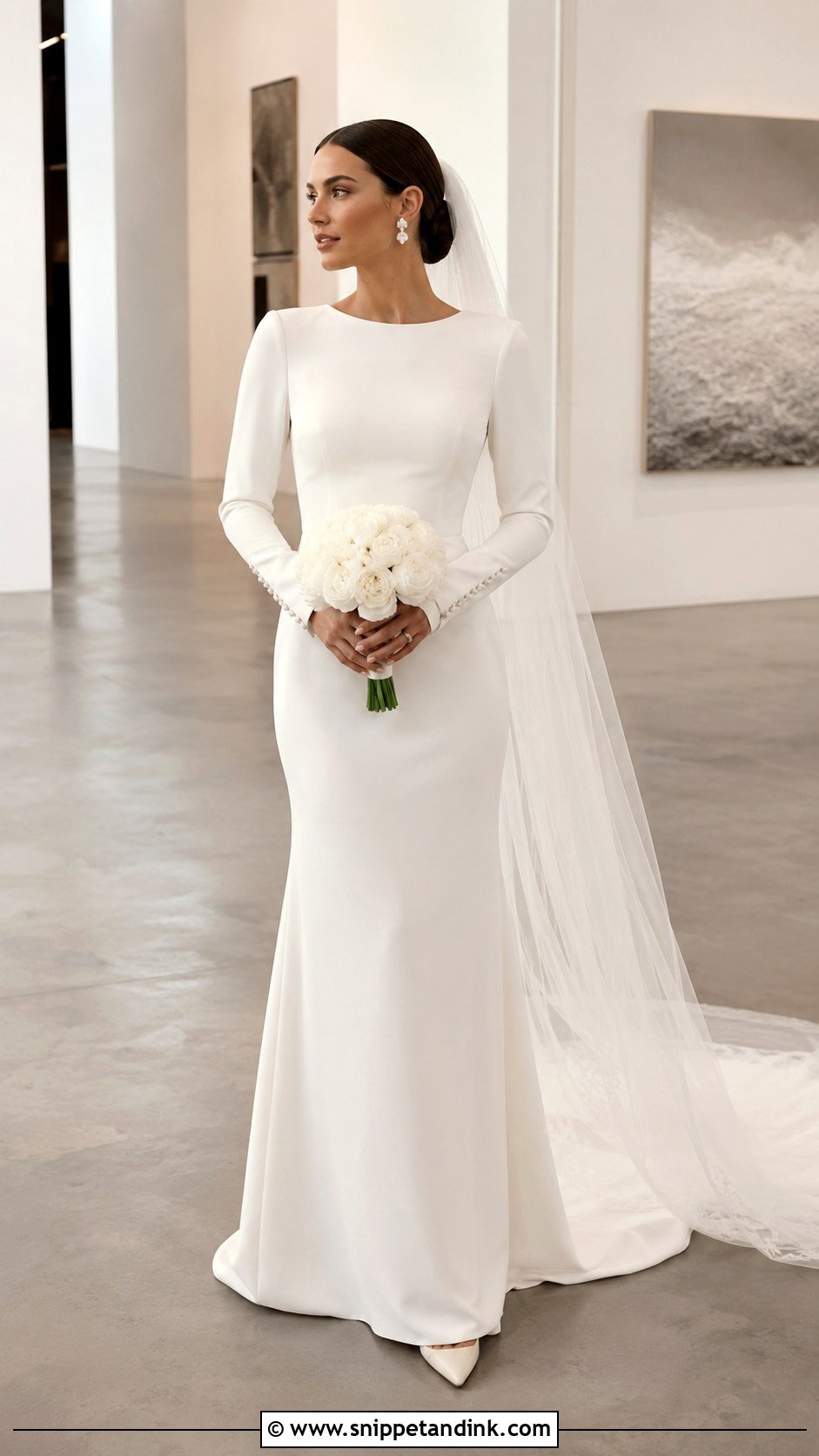
Plain crepe sleeves are harder to add than lace ones, which surprises people. There’s no pattern to disguise a seam, and crepe shows every bit of tension as a ripple. The bodice needs enough structure to carry a true set-in sleeve, and the new crepe has to match the original in weight, stretch, texture and shade, not just colour. Wrist length with covered buttons reads classic; a plain cuff reads modern. Sleek hair, sculptural earrings, a long veil and pointed ivory heels finish it. I’d ask whether the dress designer sells matching fabric before searching anywhere else. Then sit and reach forward at each fitting, watching the shoulder and underarm for diagonal pull lines.
8. Wedding Dress With Three-Quarter Lace Sleeves
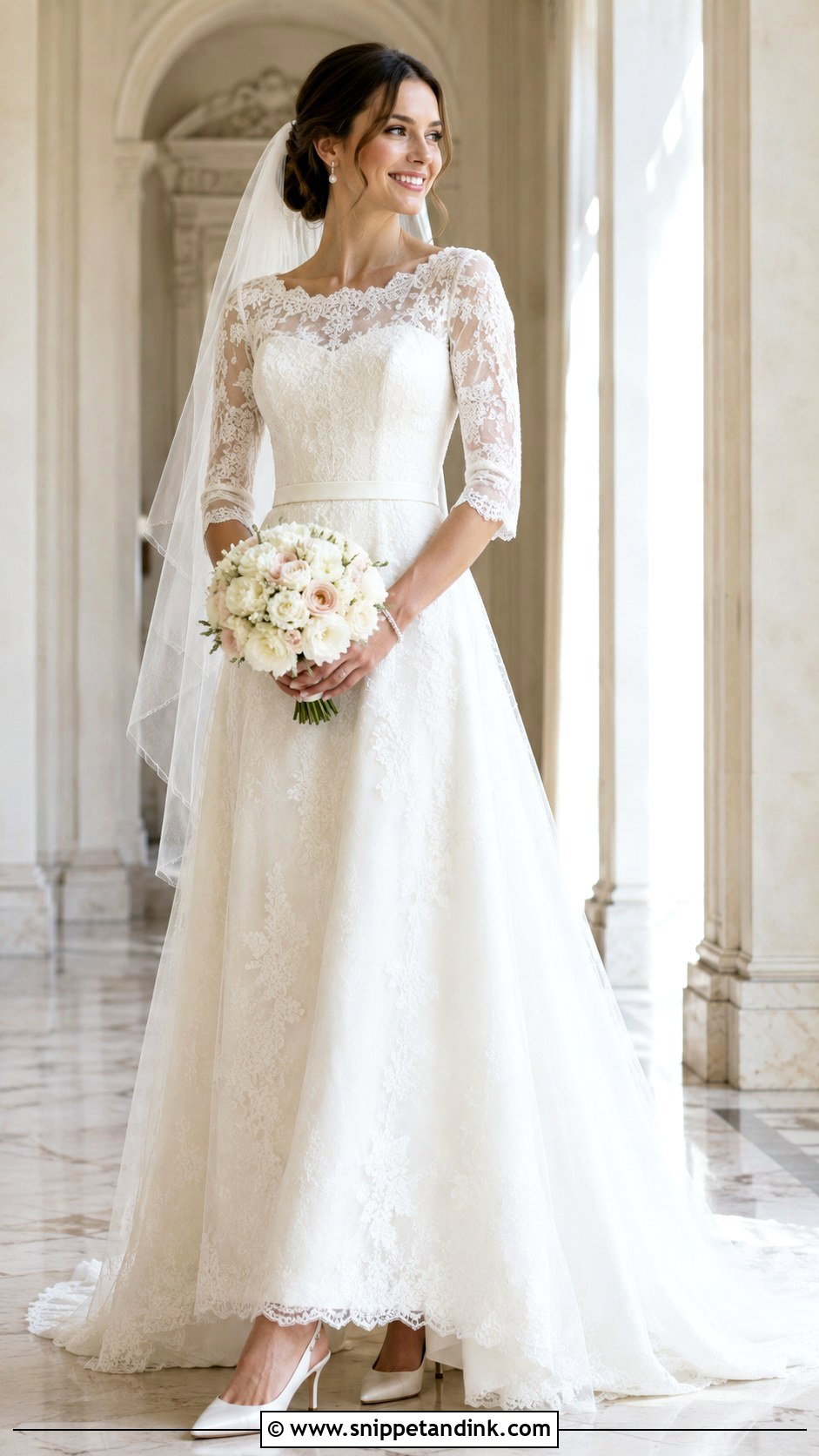
Three-quarter lace sleeves stop between elbow and wrist, which gives real coverage and leaves the hands free. That bare forearm is a good place for a bracelet or short gloves. This length suits A-lines, tea-length dresses and fitted gowns, especially when there’s lace on the bodice or hem to borrow motifs from. Pearl earrings, a waist-length veil, slingbacks and a rounded bouquet keep it classic. Lace with no stretch can feel tight at the forearm once you start gesturing, so I ask brides to wave and lift a glass during the fitting; it sounds silly and catches the problem every time.
9. Wedding Dress With Sheer Puff Sleeves
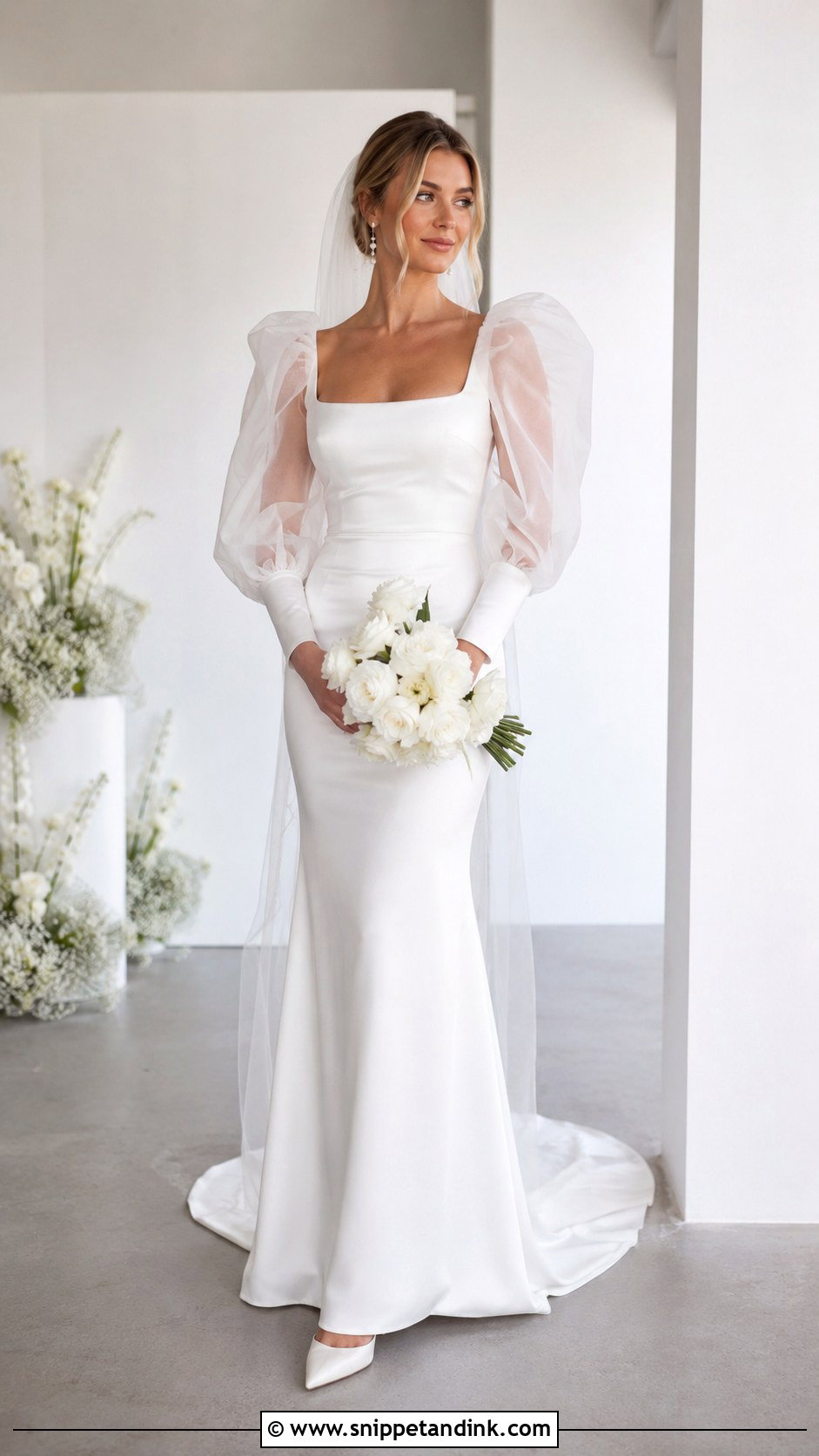
Puff sleeves change your outline more than any other style here, so proportion is the whole job. Organza, tulle or fine chiffon form the volume, gathered into a cuff at the elbow or wrist. They’re strongest on a plain satin dress, where they add texture without any beading. Keep the rest calm: defined waist, clean skirt, quiet veil, sleek shoes. The puff should start at the same point on each shoulder and hang evenly. On petite brides, or over a detailed neckline, too much volume takes over. The method I use is simple: the seamstress pins two or three fullness levels, and we look from the front, side and back before cutting.
10. Satin Wedding Dress With Draped Sleeves
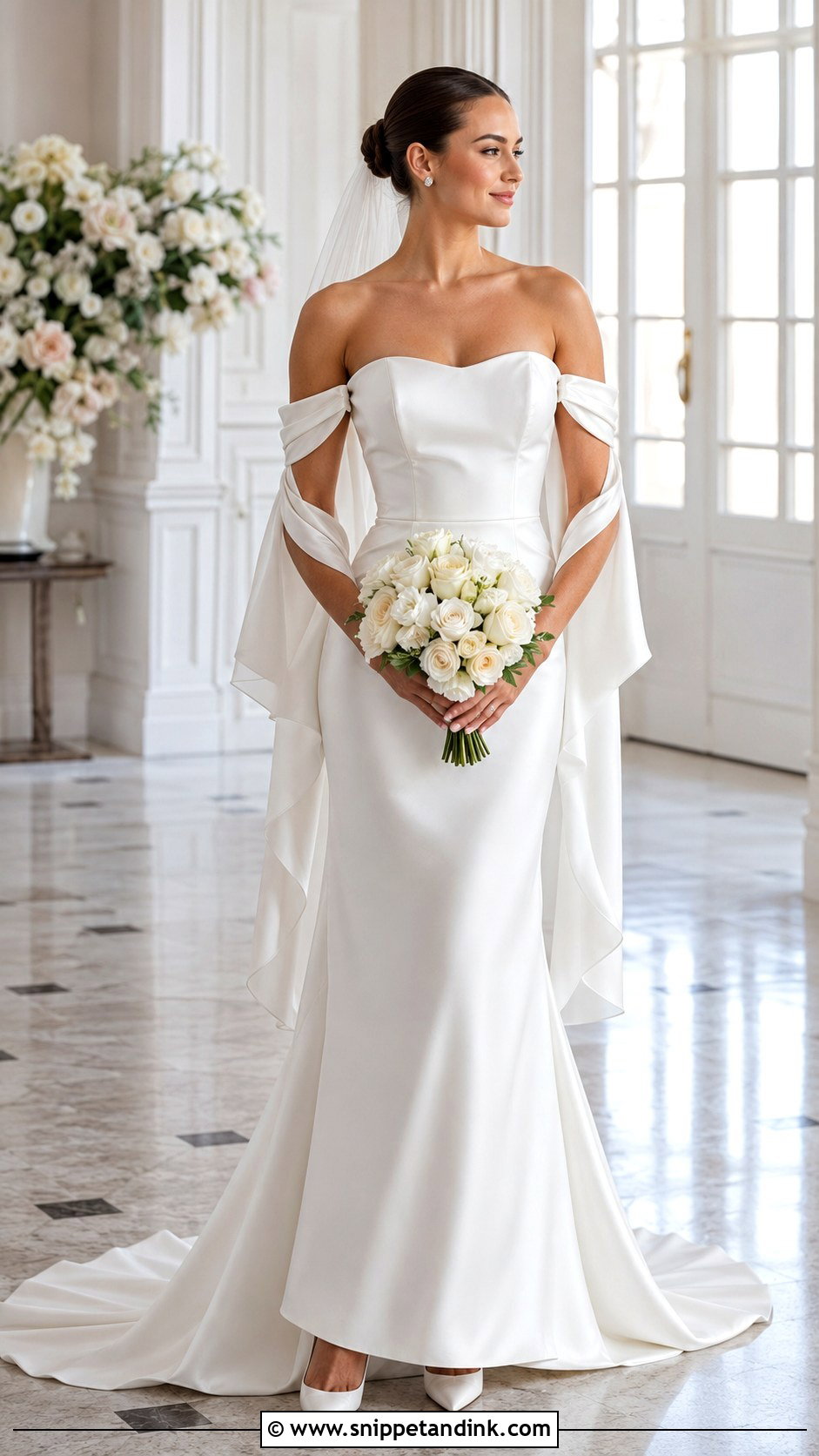
Draped satin sleeves curve around the upper arm in a smooth band, soft pleats or a loose cowl. The fabric needs to come from the same source as the gown if at all possible, because satins vary in sheen and camera flash makes a mismatch obvious. A polished bun, crystal studs, satin pumps and a structured bouquet suit the formal feel. Draped sleeves are easy to make removable, so the bodice can go back to strapless after the ceremony. Satin slips, so ask for a strip of silicone grip or a small hidden stay inside the sleeve. Watch the back as you walk; a drape cut too short tightens across the shoulder blades and tugs the neckline.
11. Wedding Dress With Beaded Illusion Sleeves
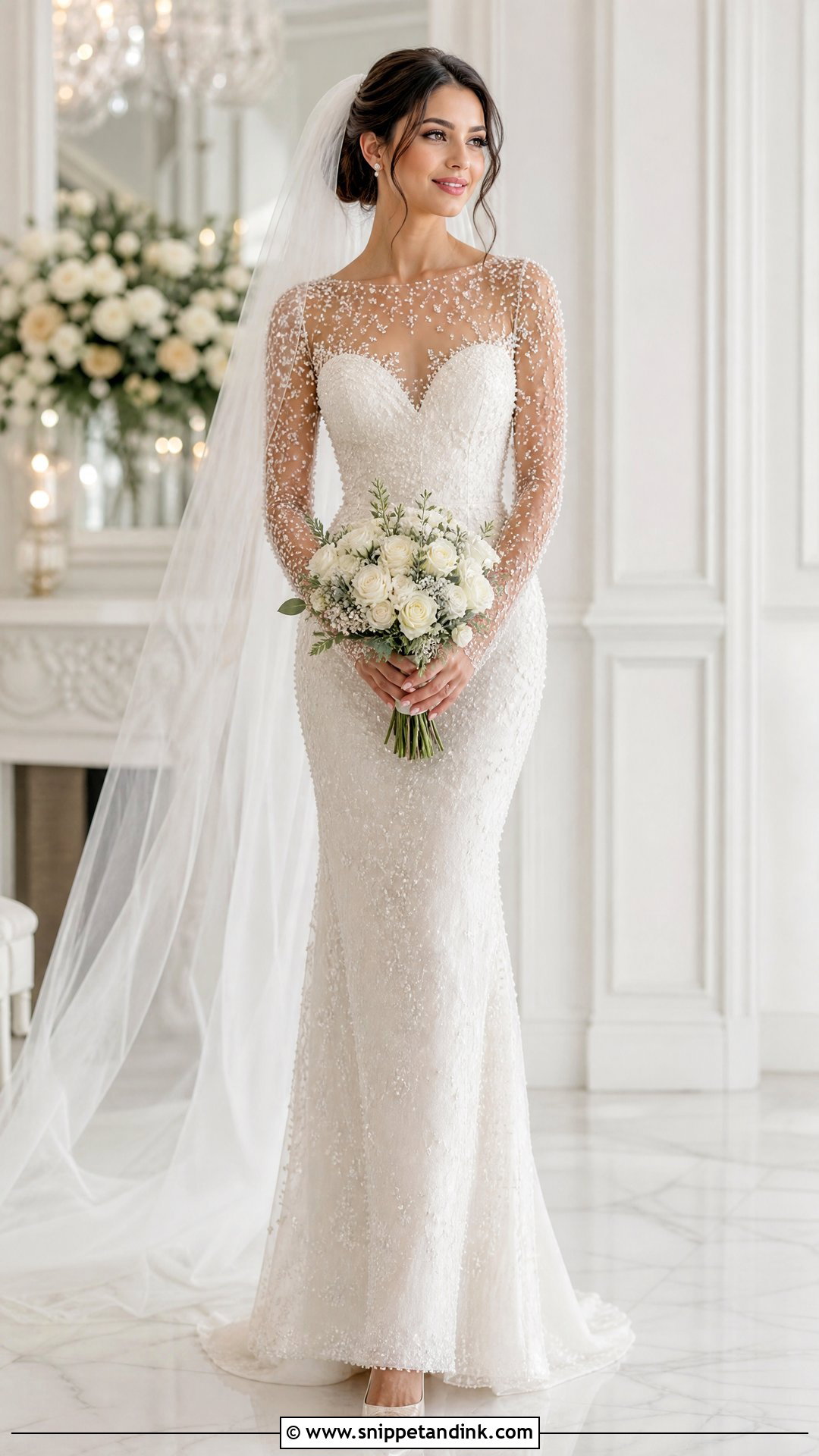
Beaded illusion sleeves carry a heavy bodice’s sparkle down the arms. The tulle base holds pearls, crystals, sequins or embroidered motifs, ideally dense at the shoulder and thinning toward the wrist so the new section melts into the dress. A plain veil, small studs and metallic heels let the beadwork lead. Weight is the risk: beads stretch delicate tulle out of shape, so the base may need a second layer. I also keep beading away from the inner arm, where it rubs against the bodice all evening. Hold your bouquet and wear your rings with the sleeves on before the day, as ribbons and prongs snag easily on loose beads.
12. Wedding Dress With Lace Bell Sleeves
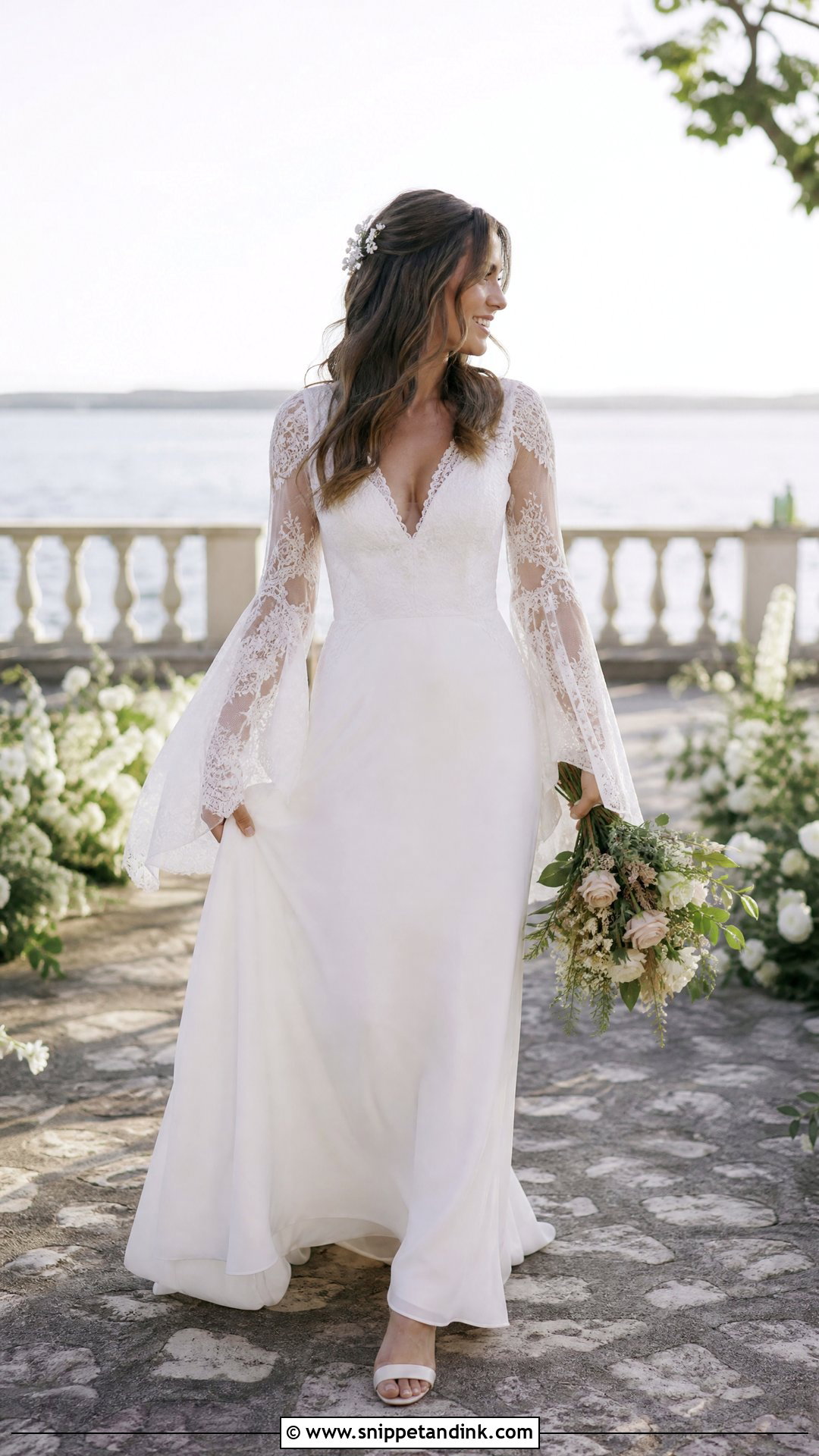
Bell sleeves stay narrow to the elbow, then flare over the forearm, which gives a relaxed, slightly vintage line. They sit well with a flowing skirt or an open back. Choose lace with a finished border so the flared hem ends in a proper edge rather than a cut one. Loose waves, a simple comb, low heels and a hand-tied bouquet suit the mood, and bracelets aren’t needed. Length matters most. If the bell hangs past the wrist, it covers your hands and catches in the bouquet stems, so practise holding your flowers and walking at the fitting before the hem is finalised.
13. Wedding Dress With Cold-Shoulder Lace Sleeves
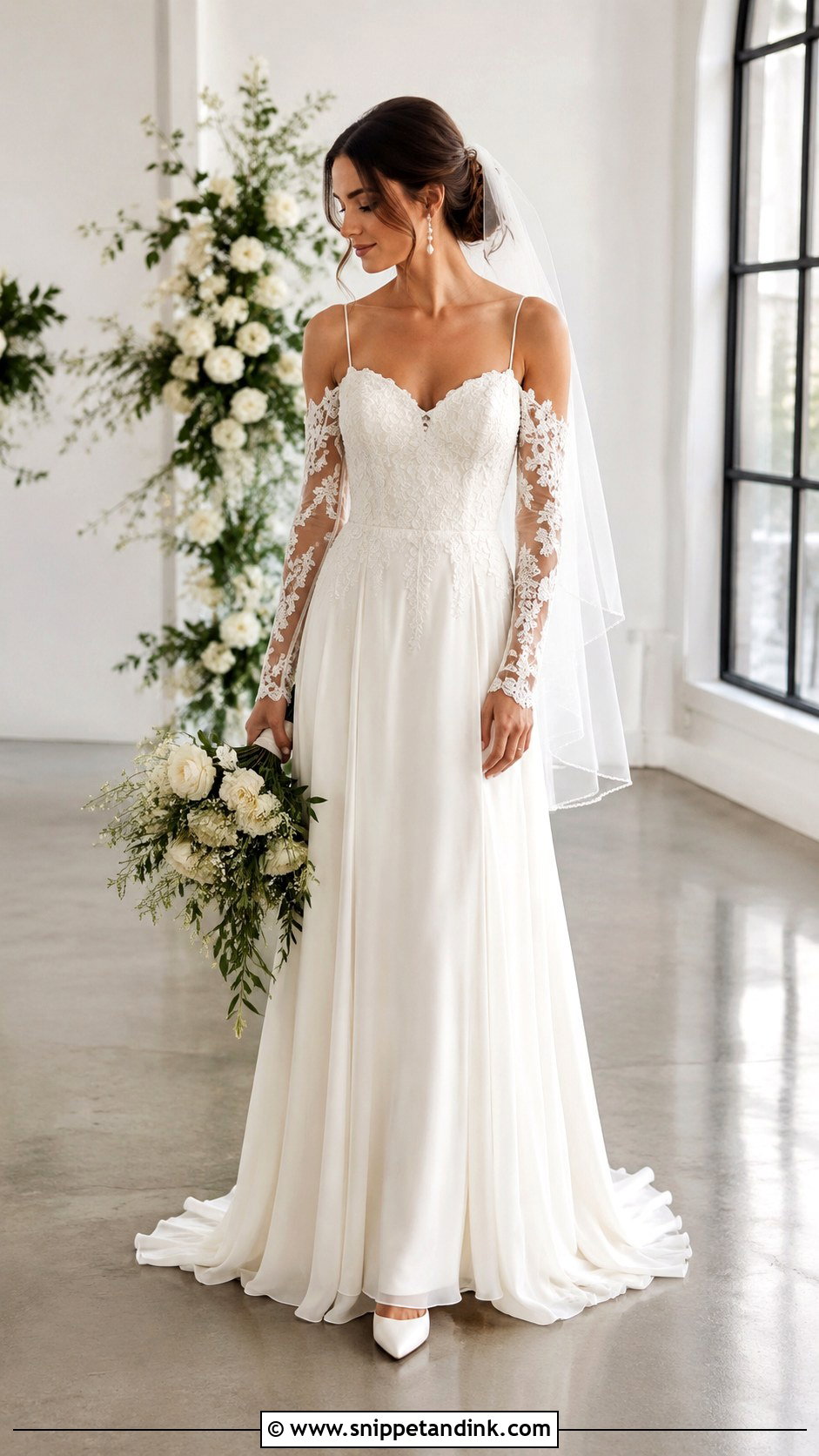
A cold-shoulder sleeve leaves a deliberate gap at the top of the arm, attaching under existing straps or to a narrow band around the upper arm. It’s a clever option when a set-in sleeve would mean rebuilding the bodice. Use matching lace around the arm and repeat a small appliqué near the neckline so the addition feels planned. A soft updo, drop earrings, a fingertip veil and a loosely arranged bouquet complete it. The band is the hard part. Too loose and it slides down your arm; too tight and it digs in and leaves a mark in photos. I fit it with the bride lifting her arms and twisting at the waist a few times.
14. Strapless Wedding Dress With Lace Bridal Topper
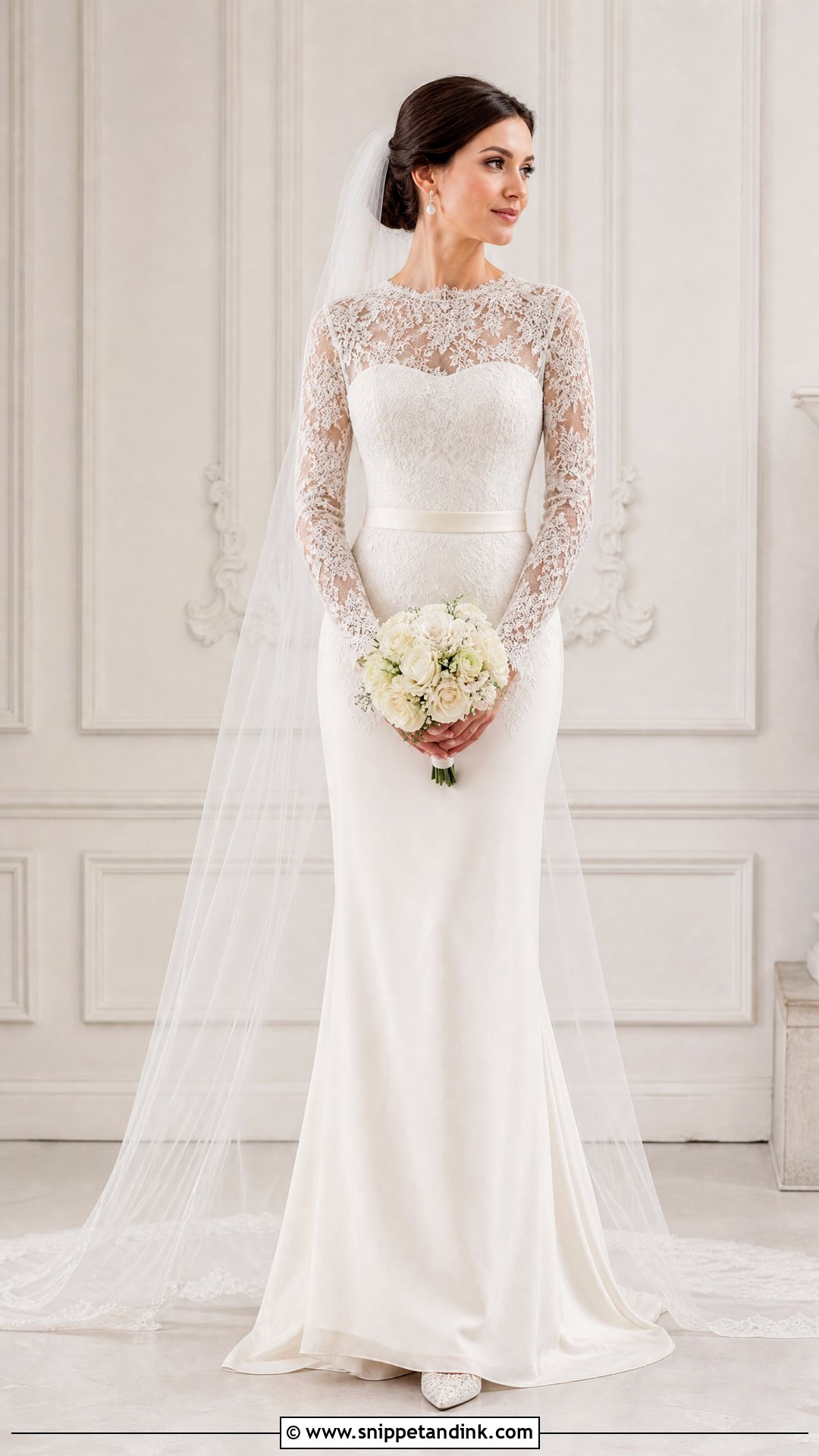
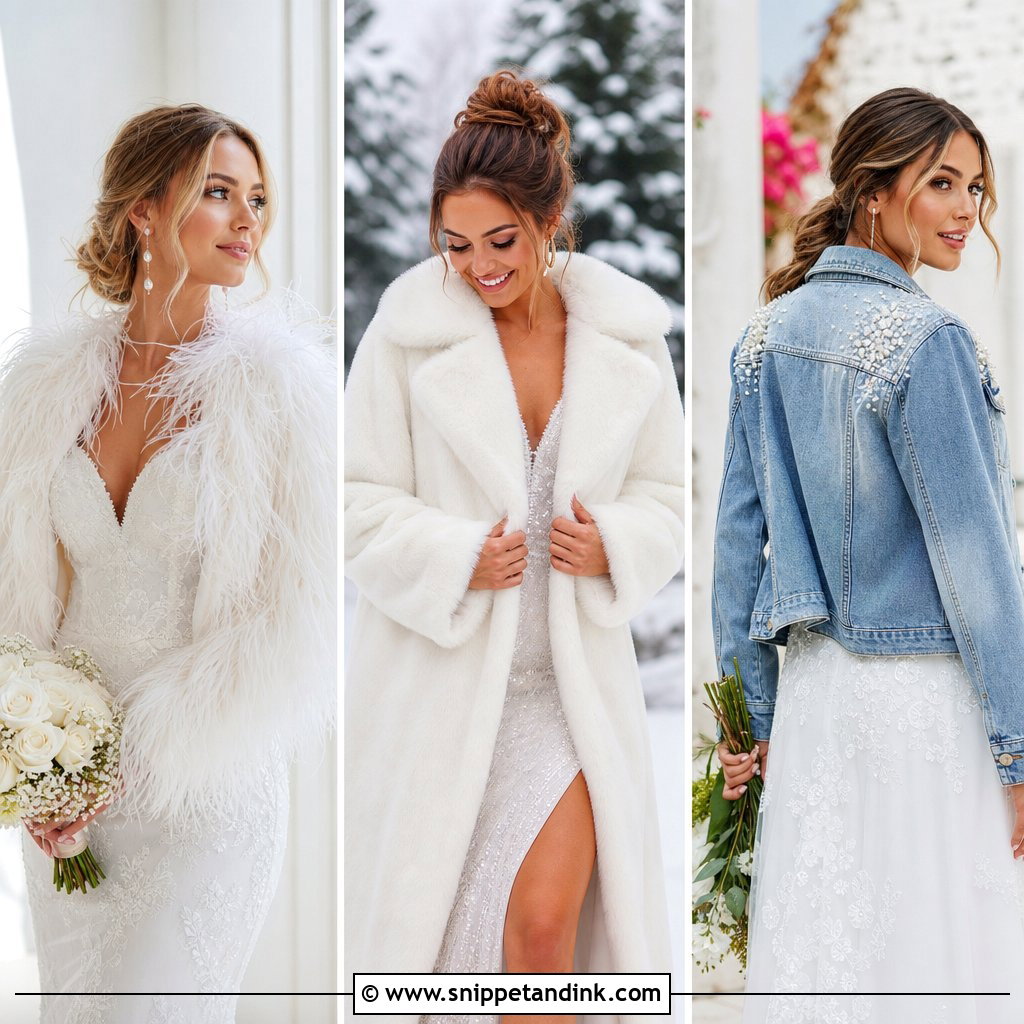
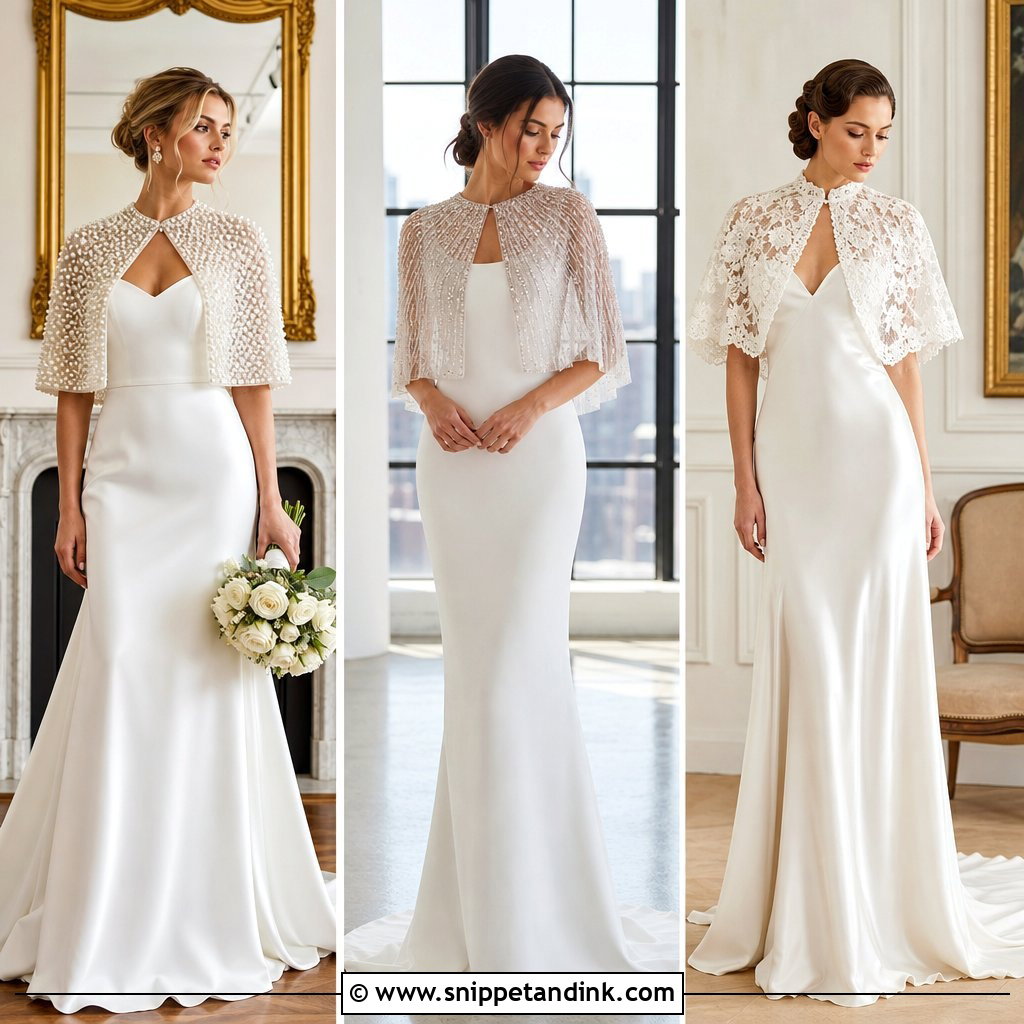
A lace bridal topper adds sleeves and a new neckline without a single stitch going into the dress. It’s a fitted lace layer worn over a strapless gown, its lower edge tucked into a belt or lined up with the bodice seam, and it can have cap, elbow or full sleeves. This is the route I suggest to brides who want to resell the gown, or who aren’t sure about altering a designer piece. Pick lace that sits alongside the gown’s embroidery instead of fighting it, and add a narrow satin belt to hide the join. Bring the actual dress to every topper fitting. Length, sheerness and how it fastens all depend on the bodice beneath.
15. Sleeveless Wedding Dress With Lace Bolero
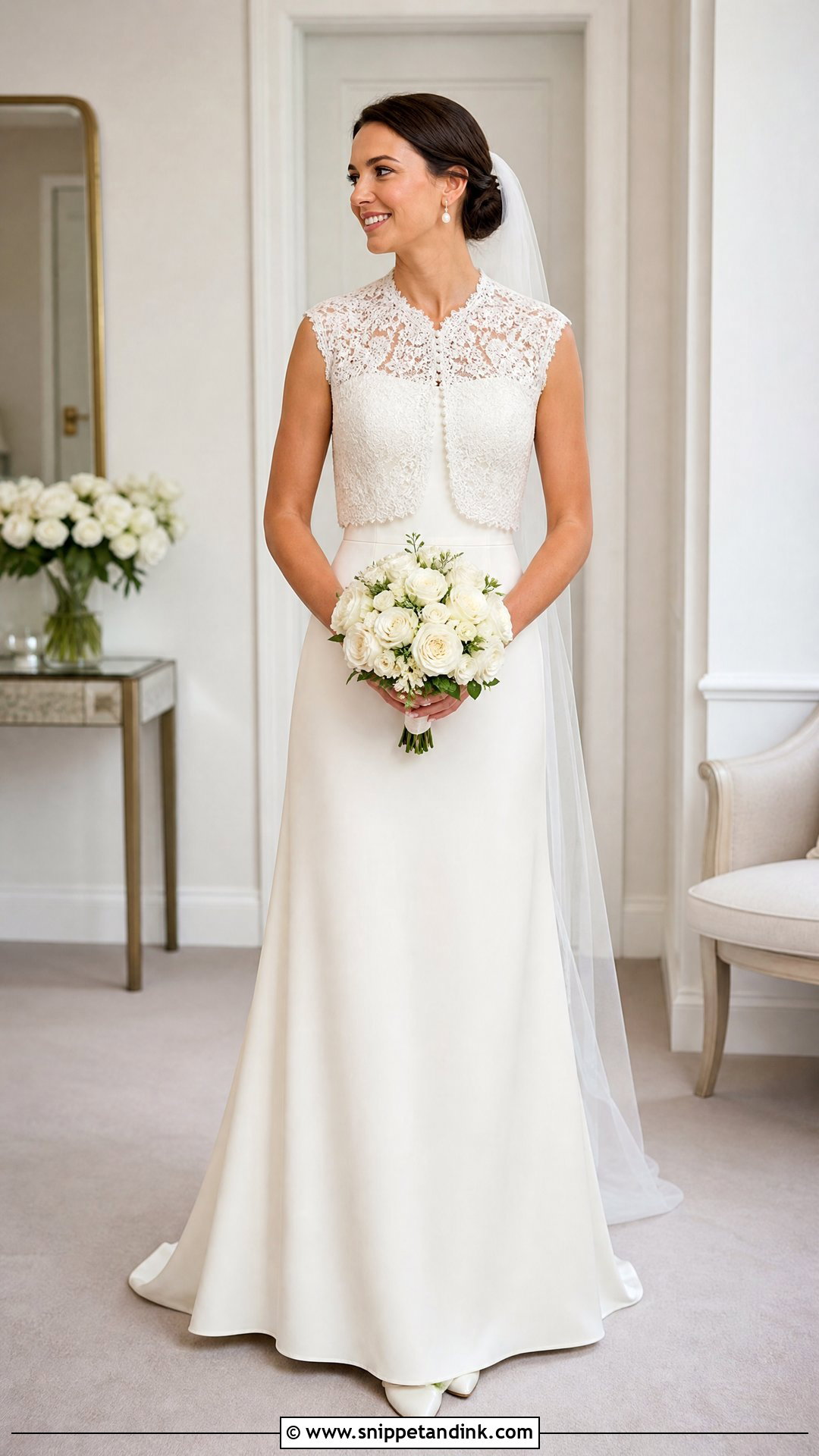
A bolero is the simplest way to cover the arms, and it comes off in seconds. Unlike a topper, it ends above the waist and usually stays open at the front or closes with a few covered buttons. It suits a plain sleeveless dress when you need a covered ceremony look and don’t want to alter anything. A neat chignon, pearl drops, a chapel veil and a traditional bouquet keep it classic. Go close-fitting: a loose bolero hides your waist and looks borrowed. The shoulder seams should sit on your shoulder points, and the back should lie flat. Over beading, check that the lining doesn’t snag or add bulk.
16. Wedding Dress With Long-Sleeve Lace Bodysuit
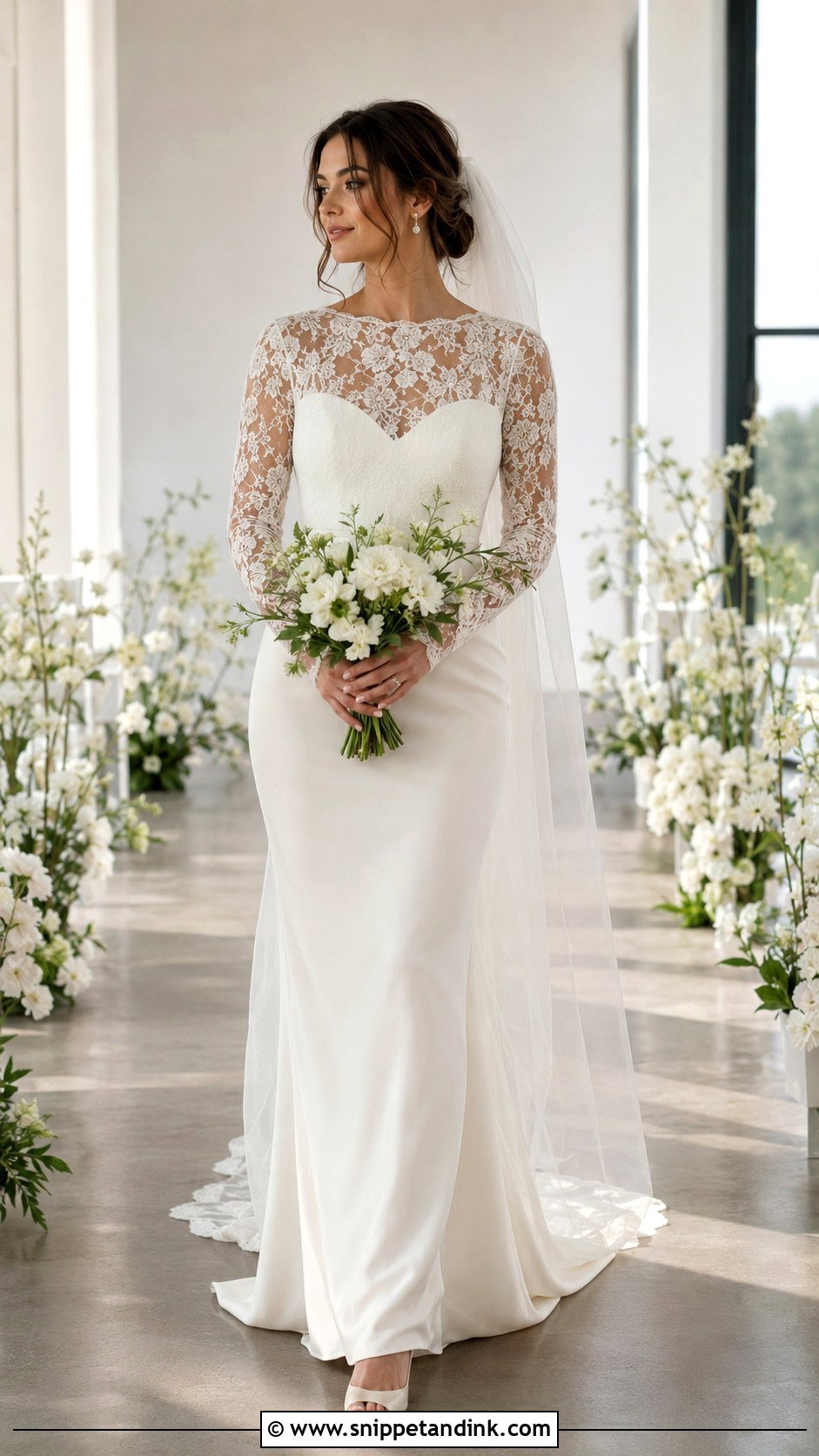
Wearing a lace bodysuit under the dress creates the look of built-in sleeves with almost no alteration. It works under strapless, square, V-neck and sleeveless gowns, as long as its edges stay hidden. Choose a smooth lace or illusion tulle that coordinates with the gown, and have the neckline and back shaped so they frame the bodice rather than cover it. A simple veil and understated earrings suit it. This trick comes with one honest caveat: under thin silk or crepe, the bodysuit’s seams and closures can show through. Try them together, then sit and bend; it shouldn’t roll at the waist or change how the dress hangs.
17. Spaghetti-Strap Wedding Dress With Flutter Sleeves
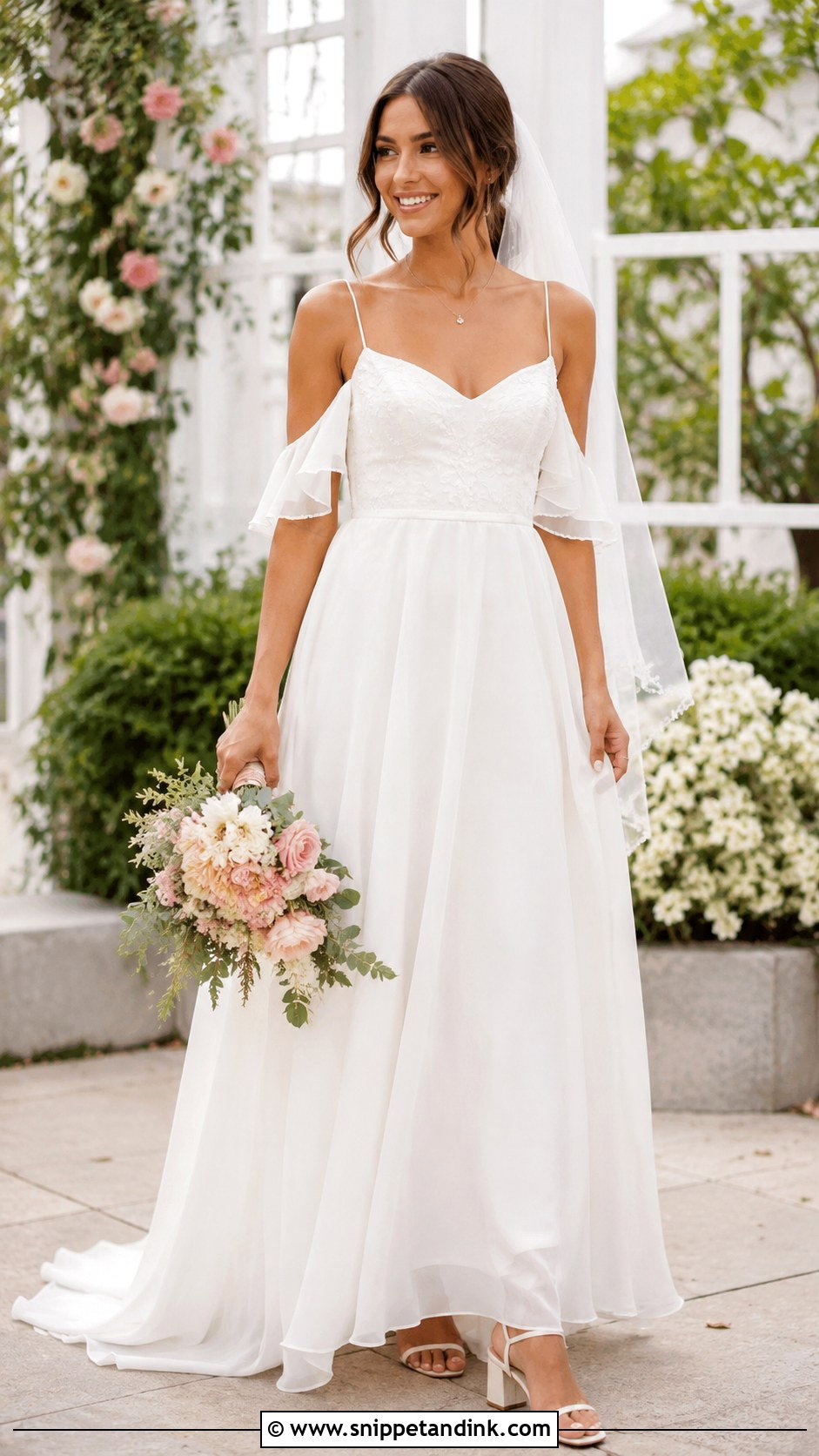
Thin straps make a handy anchor. Light tulle, chiffon or lace sewn along them can fall softly over the shoulder, adding coverage while keeping the dress’s delicate neckline. Keep the flutter narrow on a heavily beaded bodice and a little longer on a plain gown. A fingertip veil, a fine necklace, block-heel sandals and an airy bouquet finish it. Spaghetti straps were never designed to carry extra fabric, so they may need reinforcing with a stronger inner strap first. I’d check from behind as well as the front, because added weight can pull the straps outward and open the back neckline.
18. Wedding Dress With Pearl Tulle Sleeves
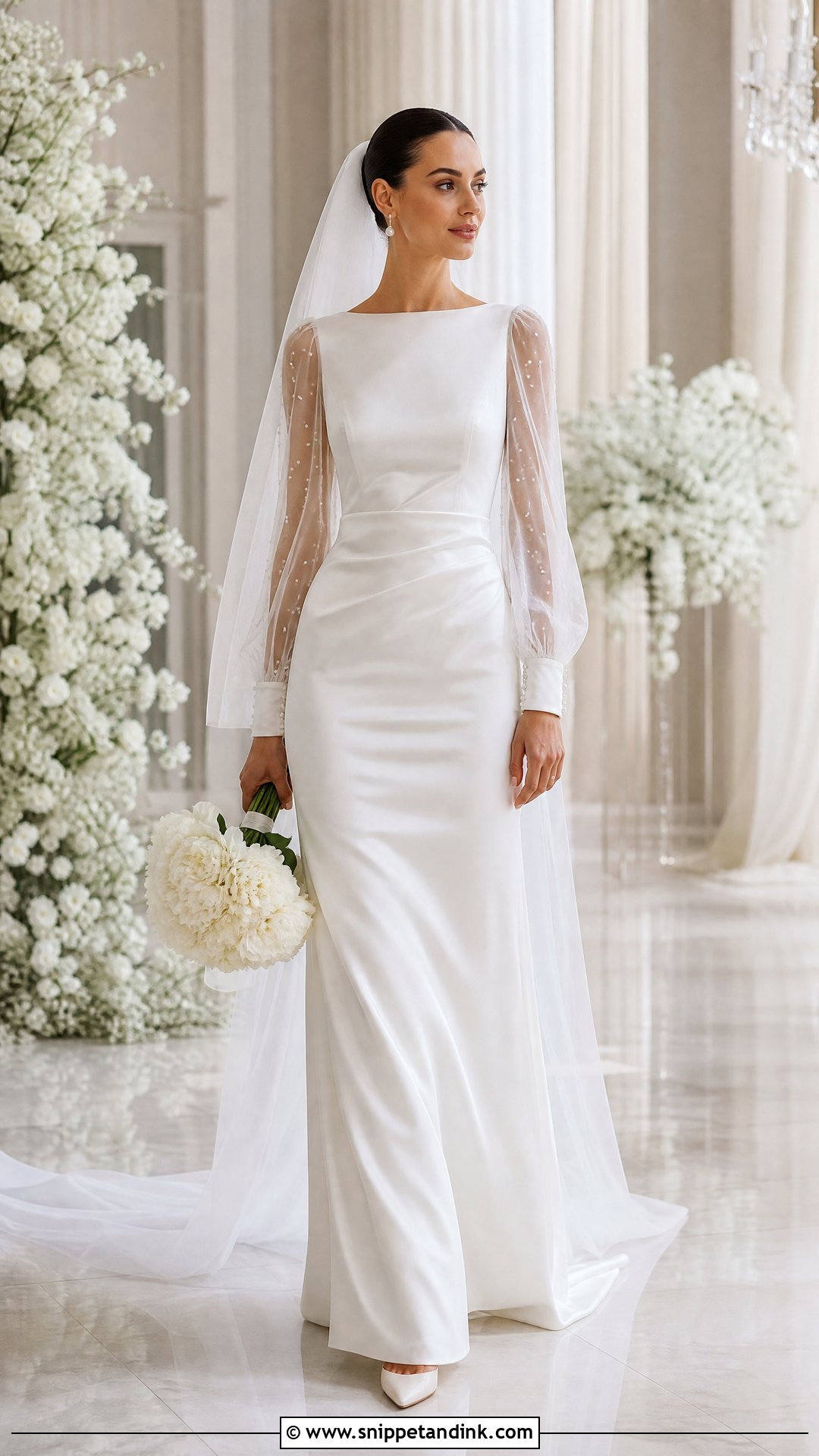
Pearl-studded tulle adds texture to a plain satin, mikado or crepe gown. The pearls can be scattered evenly or clustered at the shoulder and thinned toward the cuff. Pearl earrings, a plain-edged veil, sleek heels and white flowers suit it; any more sparkle crowds the sleeves. Pearls are hand-sewn or glued, and glued ones fall off, so ask which. Keep them clear of the elbow crease and underarm, and run a hand inside the sleeve before you approve it. Rough pearl backs and knotted threads scratch over a long day.
19. Wedding Dress With Detachable Tulle Balloon Sleeves
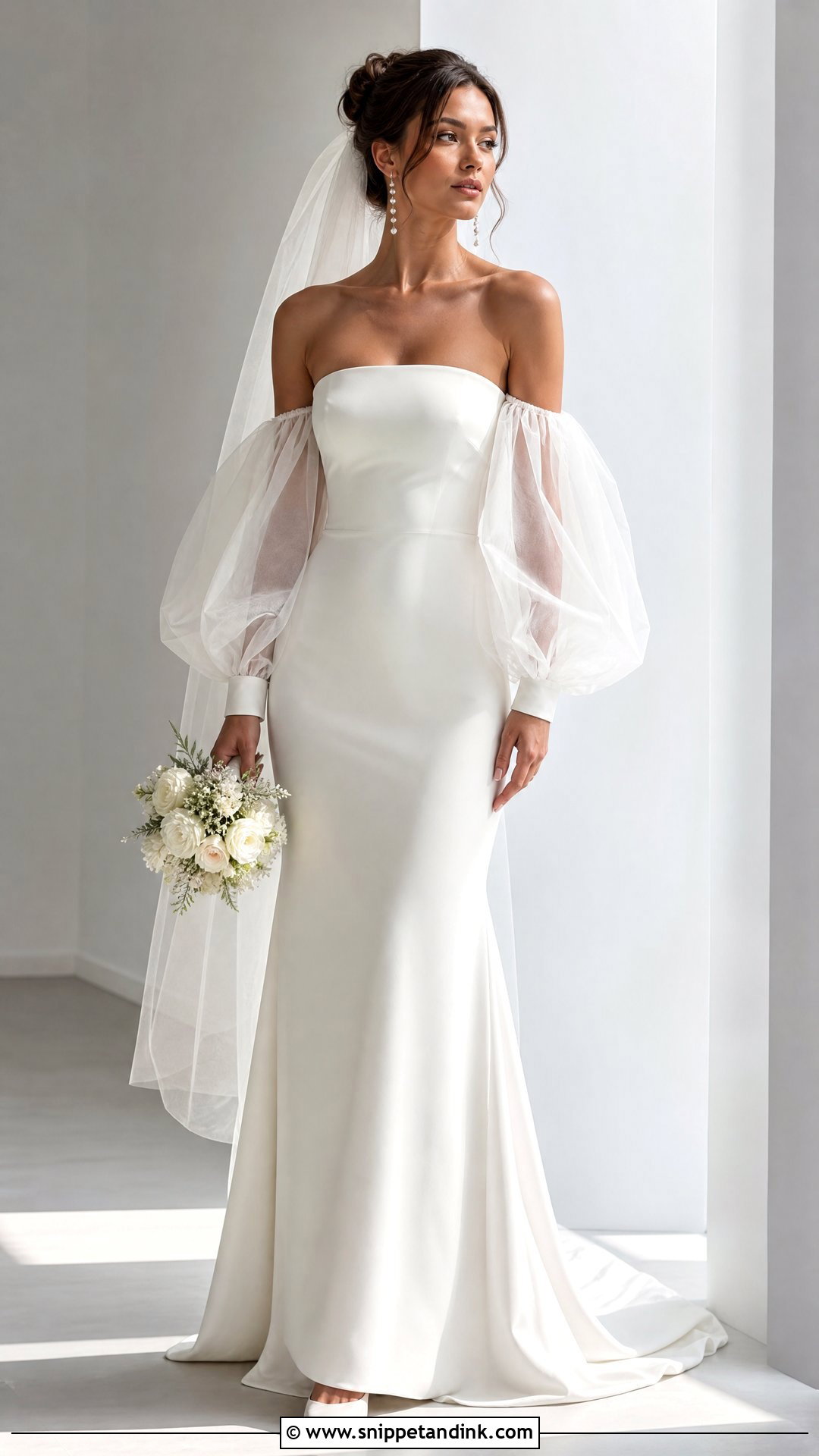
Balloon sleeves are the most fashion-led choice here, with a lot of volume through the arm and a narrow cuff. Sheer tulle keeps them airy, and organza gives a crisper shape. They suit a clean strapless gown and want very few other accessories: drop earrings, a plain veil, pumps and a compact bouquet. Hide the attachment under the bodice edge or around the upper arm. My main fitting check is symmetry; both sleeves must have the same fullness and sit at the same height, which is harder than it sounds with soft tulle. Hold the bouquet too, because big sleeves can swallow small flowers in photos.
20. Wedding Dress With Convertible Ceremony Sleeves
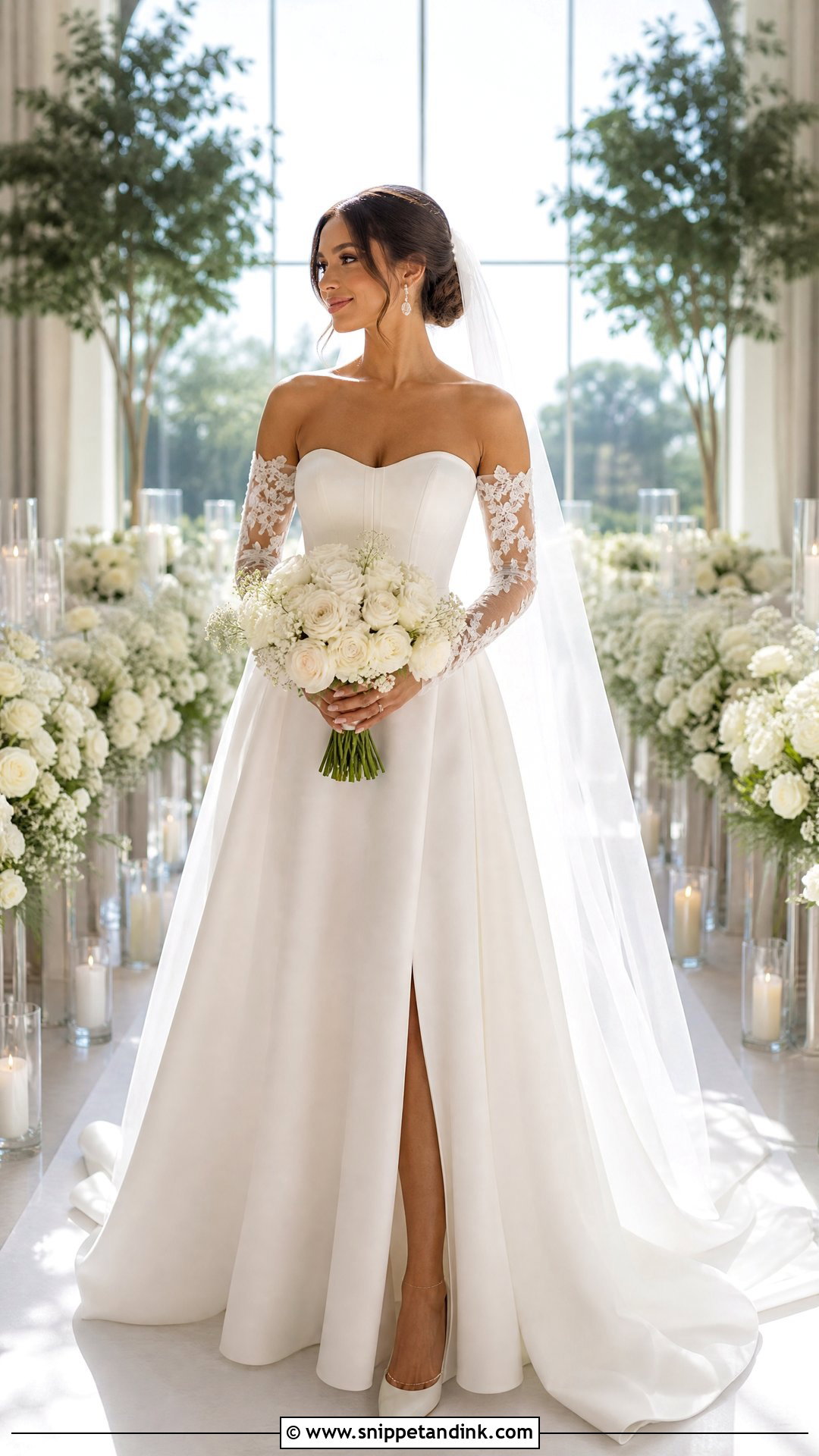
Convertible sleeves let you dress for the ceremony and then for the party. That might mean detachable lace sleeves, off-shoulder drapes, beaded straps or a removable sleeved topper. Whatever the method, nothing should show once the sleeves are off: no loops, no thread marks, no snaps peeking at the neckline. Wear a long veil and pearl earrings for the ceremony, then swap to bolder earrings or a hair piece for the reception. Teach the fastenings to a bridesmaid in advance, since tiny snaps are fiddly in a hurry. Keep the removed sleeves flat in a clean bag so the edges don’t crush.
Where the Matching Lace Comes From
A sleeve in the wrong lace looks added on, however well it’s sewn. There are a few places I look, in this order.
- The dress itself. Hem and train trims often leave usable lace, and motifs can sometimes be lifted from inside a full skirt where nobody will miss them.
- The designer or bridal shop. Many can order a length of the same lace or tulle if you ask early, though it can take several weeks to arrive.
- A specialist lace supplier, with a cutting of your dress in hand. Match in daylight, and expect the closest match rather than an identical one.
- Dyeing. Lace and tulle can be tinted toward ivory or champagne, but test a small piece, because synthetic and natural fibres take dye differently.
A Timeline That Leaves Room for a Second Try
Sleeves add work and waiting to the normal alteration schedule. Fabric may need ordering, and new sleeves often need a fitting of their own before the final one. I’d raise the idea at your first alteration appointment, ideally three months or more before the wedding, and allow longer for custom toppers or beaded sleeves made by hand. That buffer matters: if the first version isn’t right, there’s still time to recut it instead of settling.
On the day, keep a small sewing kit with matching thread and a few spare snaps in the emergency bag. Detachable sleeves get handled more than any other part of the outfit, and a lost hook is a two-minute repair if the thread is already there.
Sleeves That Look Like They Came With the Dress
Adding sleeves to a wedding dress is about more than coverage. Done well, sleeves balance a silhouette, bring in texture, support a neckline and give one gown two looks. Start with what the dress can physically take: how the bodice is built, where things can attach and how heavy the fabric is. Then weigh fitted, illusion, detachable, draped or layered options with a seamstress who does bridal work every week. Look at the result from all sides and move in it at each fitting. Match the colour and detail closely, and the sleeves will look as if they were always part of the dress.
You'll Like These Ideas:


Leave a Reply