
Theatrical bridal dressing is having a moment, with dimensional lace, sculpted bows, feathers, jeweled bodices, bubble hems and capes all turning up in new collections. Wearing it well is a styling problem more than a shopping one. I build these looks around one dominant feature and let everything else, from earrings to bouquet, step back. Your venue, how much you want to move and how you’ll be photographed should all shape which gown you take home. Expect couture-level textures, statement trains and full head-to-toe styling in the twenty looks that follow, from sparkling mermaids to royal ball gowns.
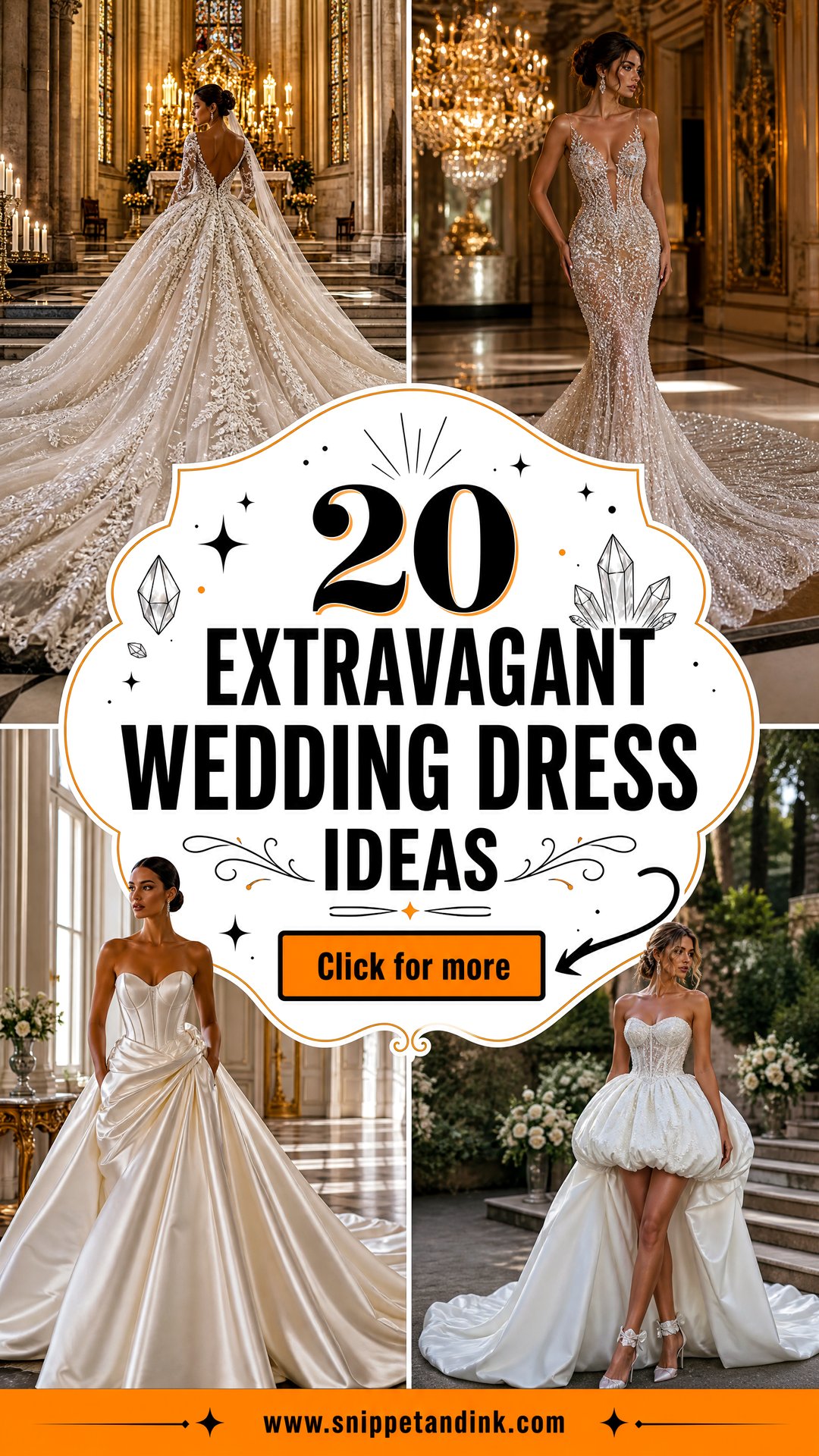
Sewn-In Cups, Petticoats and Shapewear Under a Statement Gown
The gowns in this list rely on what’s underneath them more than simpler dresses do. Bring the exact underwear and shoes to every fitting, and settle on them before the first one, because the seamstress fits the dress to whatever you’re wearing that day.
A properly built corset bodice usually needs no bra at all; ask the salon to sew cups into the lining if you want extra shape. Illusion backs and sheer sleeves are less forgiving. Low-back adhesive bras and nude, seam-free underwear in your own skin tone are the usual answer, and anything with a visible strap will show through tulle in flash photos.
Ball gowns and tiered skirts often need a petticoat or crinoline to hold their shape. Ask whether the gown has one built in. If it doesn’t, buy the one the salon recommends and wear it at fittings too, since it changes the hem length. Mermaid and column shapes are where I’d consider light shapewear, mostly to smooth the line at the hips where heavy beading clings.
1. Cathedral Train Ball Gown Wedding Dress
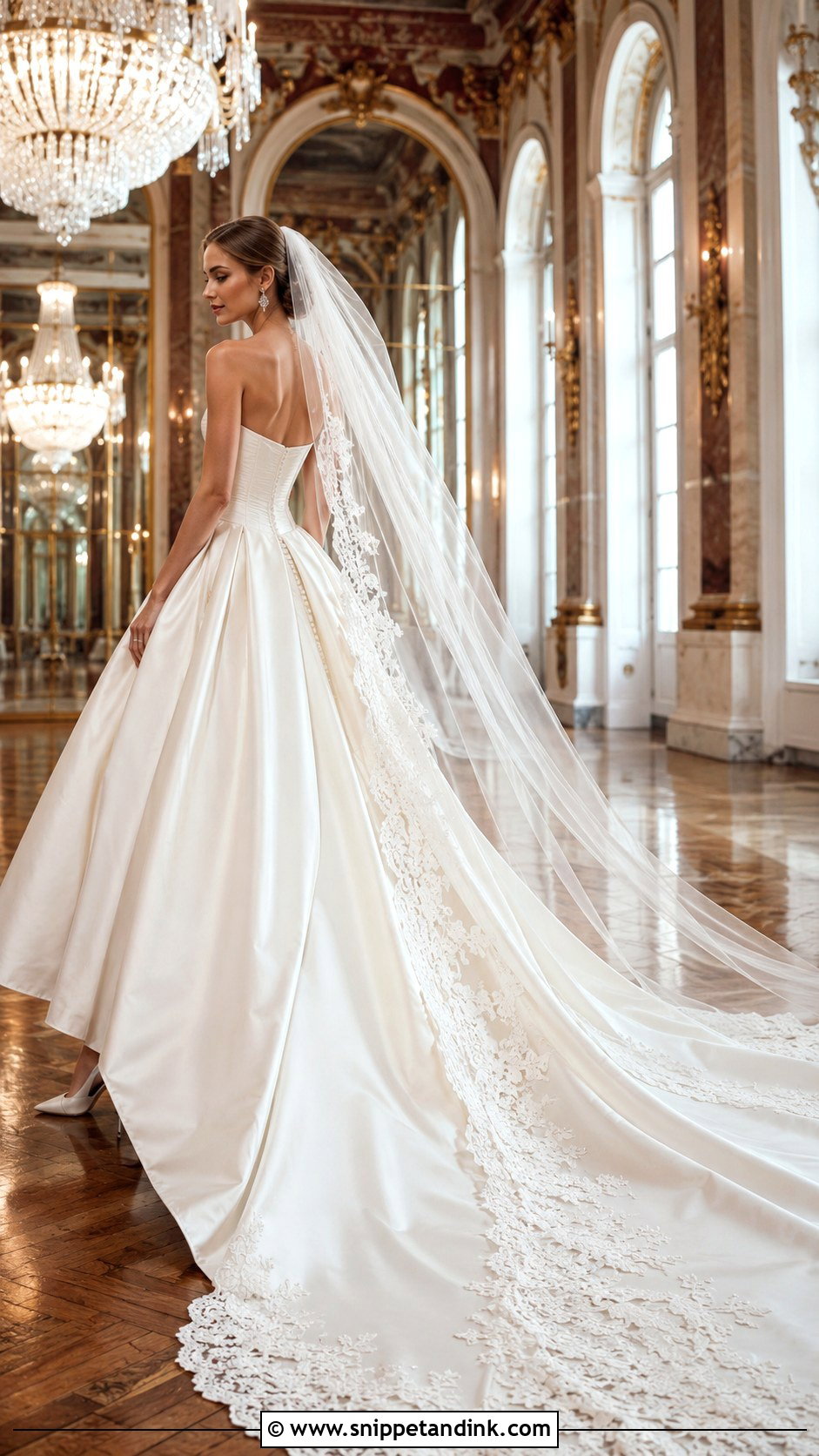
A cathedral train needs space, and it needs people. In a narrow aisle or a small registry room, it simply bunches up behind you, so I only suggest it where there’s room for it to lie flat. Build the gown on a structured corset with a full satin or layered tulle skirt; lace edging or scattered crystals on the train give the back view something to show. Keep the rest light: a long sheer veil, crystal drops, pointed satin pumps and a low bun. Someone needs to be assigned to arrange the train at every stop, from the altar to the portrait spot.
2. Crystal Beaded Mermaid Wedding Dress
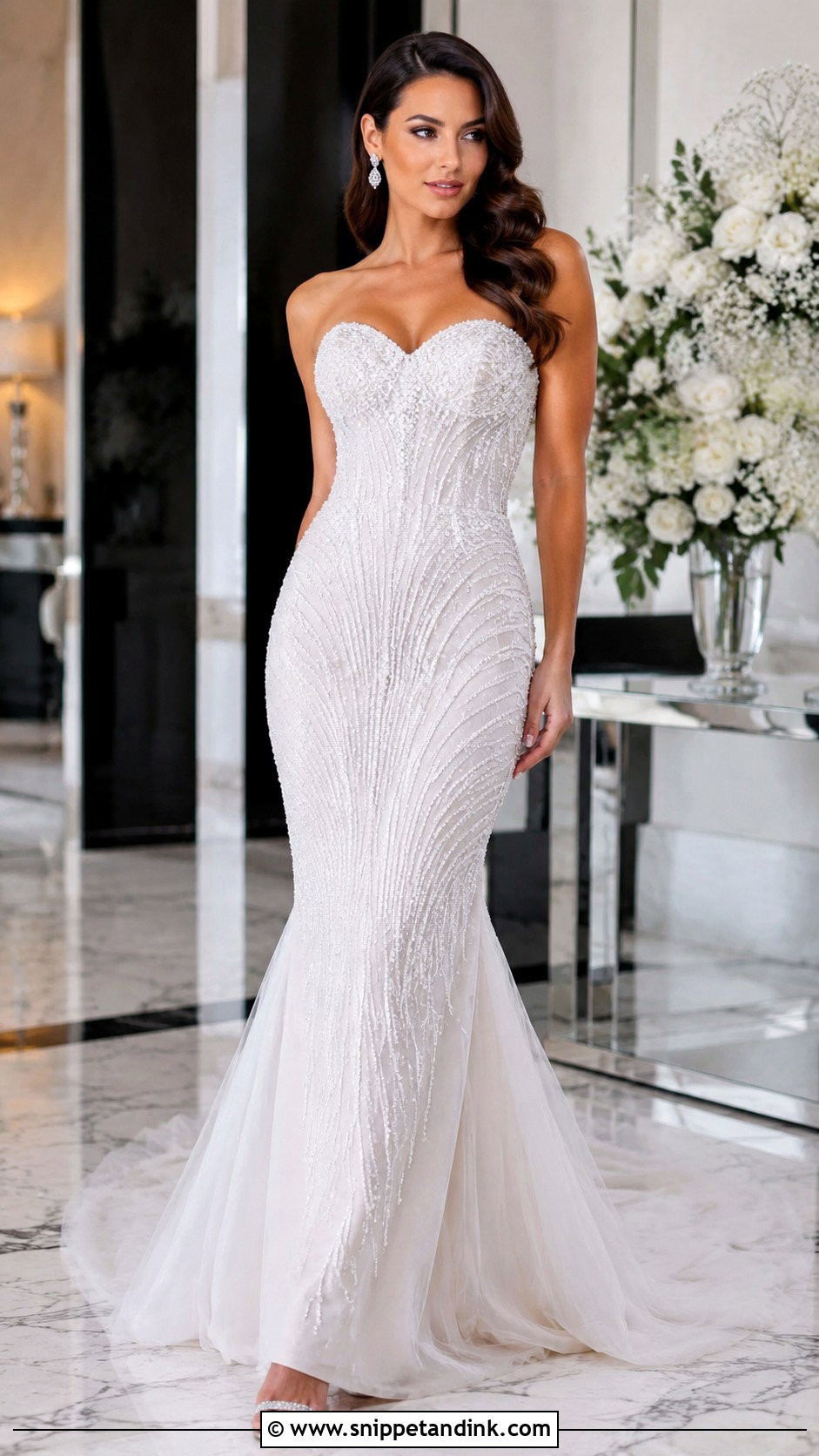
Crystals placed in vertical or curved lines do more for a mermaid than an even scatter, because they pull the eye along the waist and lengthen the body. Heavy beadwork drags on a fitted gown, though. If it feels weighty at the first fitting, ask about a reinforced lining and a strong bustle before it gets any heavier. Silver earrings, metallic heels and a small structured clutch keep the red-carpet feel. A sleek ponytail or side-parted waves suit it, and ballroom lighting is where the crystals finally earn their weight.
3. 3D Floral Applique Wedding Dress
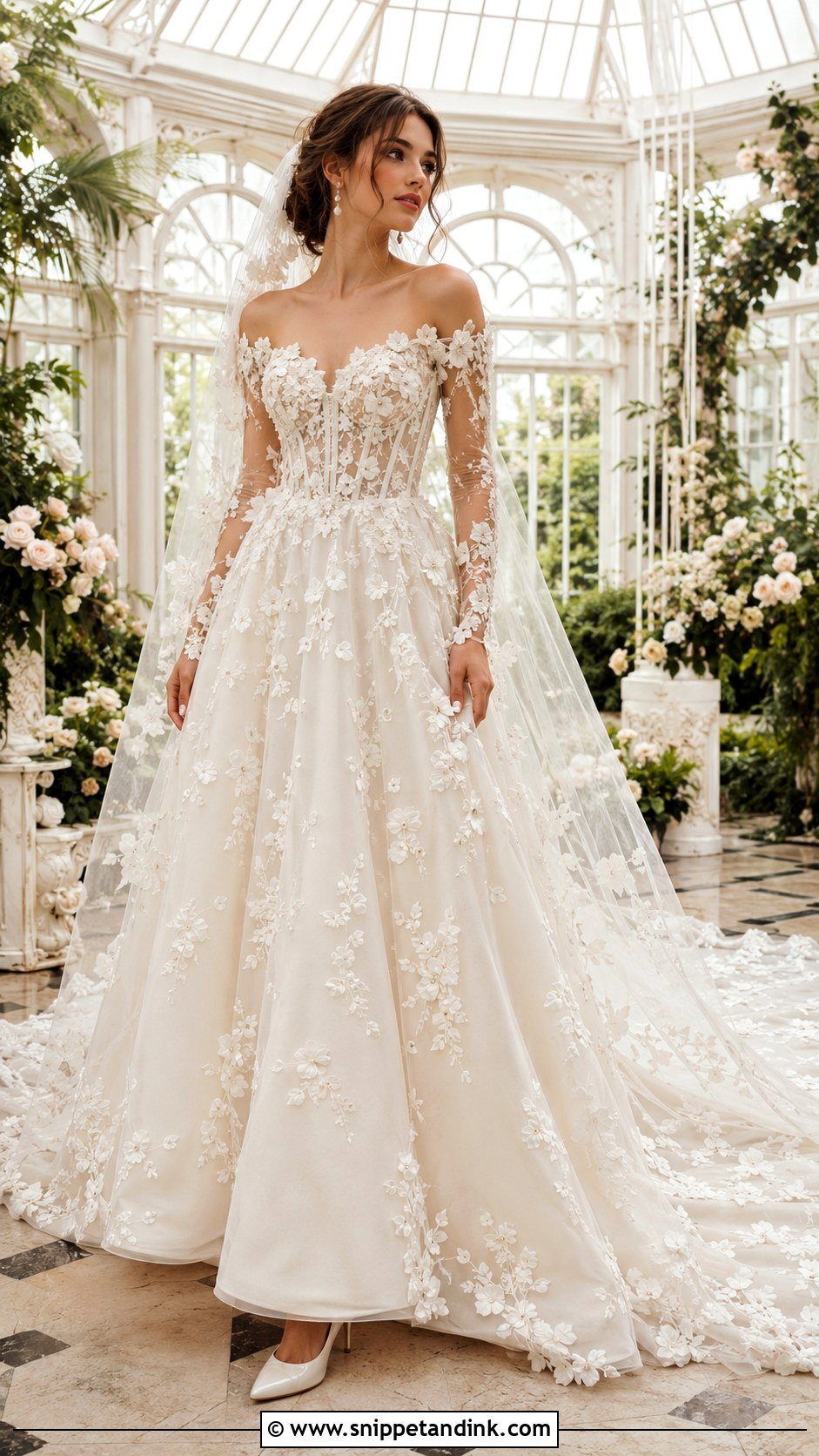
I prefer flowers concentrated on the bodice, sleeves and train over a gown covered head to toe. The blank spaces are what make the petals stand out. A floral corset over a flowing A-line gives each appliqué room. Choose lightweight appliqués with smooth lining behind them, since heavy ones scratch and pull when you sit. Pearl earrings, ivory heels and a veil with a few matching flowers suit it, with a loose chignon or a curled half-up style. Estate lawns and conservatories are its natural home.
4. Pearl Embellished Corset Wedding Dress
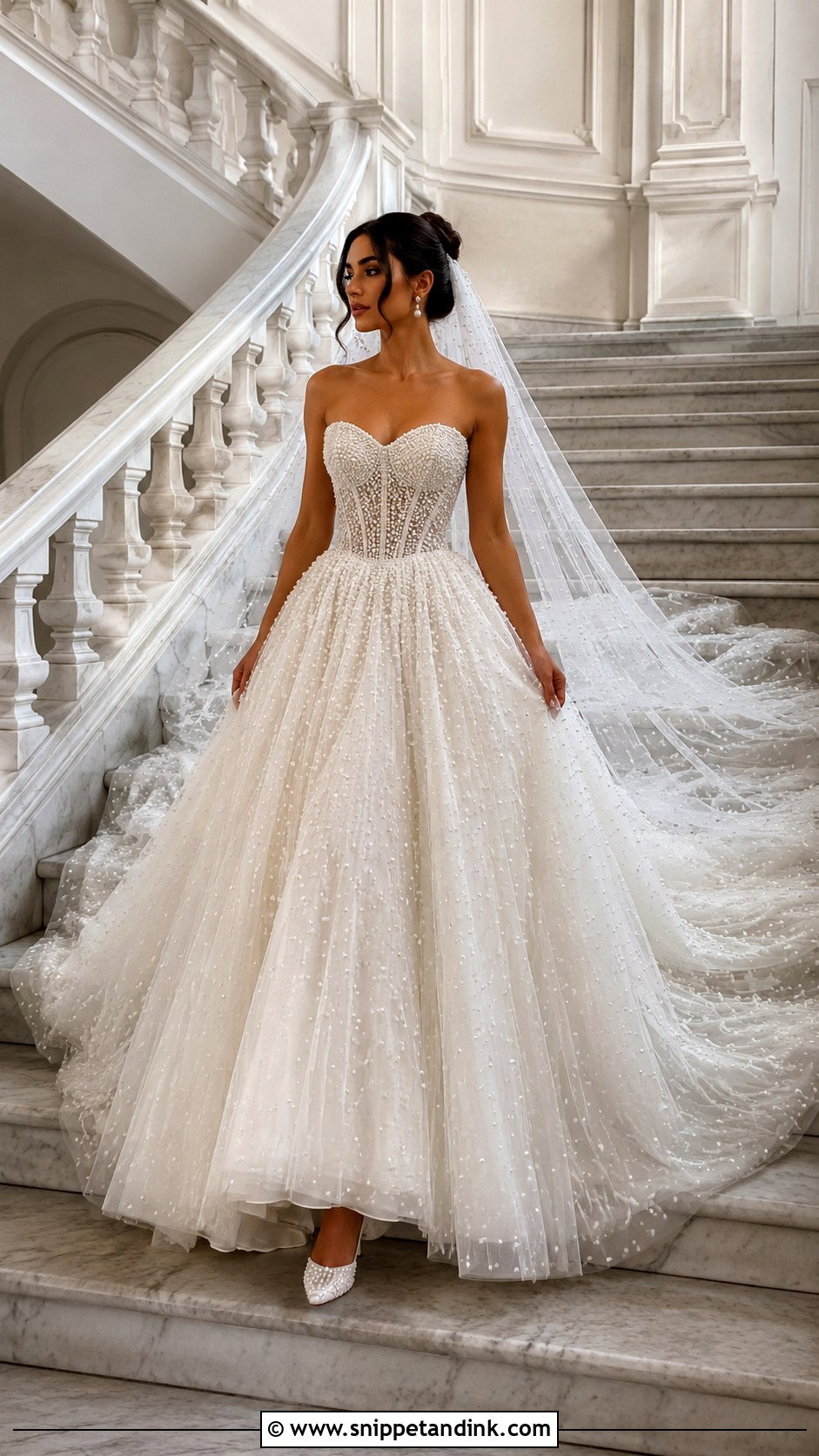
Pearls give an ornate finish with a softer glow than crystal, and on a visible corset they make the structure look deliberate rather than underwear-like. Ivory tulle reads romantic; smooth satin gives a cleaner, more modern result. A carefully fitted corset bodice flatters many figures, but the pearls have to be stitched individually, not strung, or one snag will unravel a whole line. Pearl drops, a simple bracelet and closed-toe pumps continue the theme. Pick a fingertip veil if the back is detailed, a cathedral one if you want maximum formality.
5. Feather Trimmed Wedding Dress
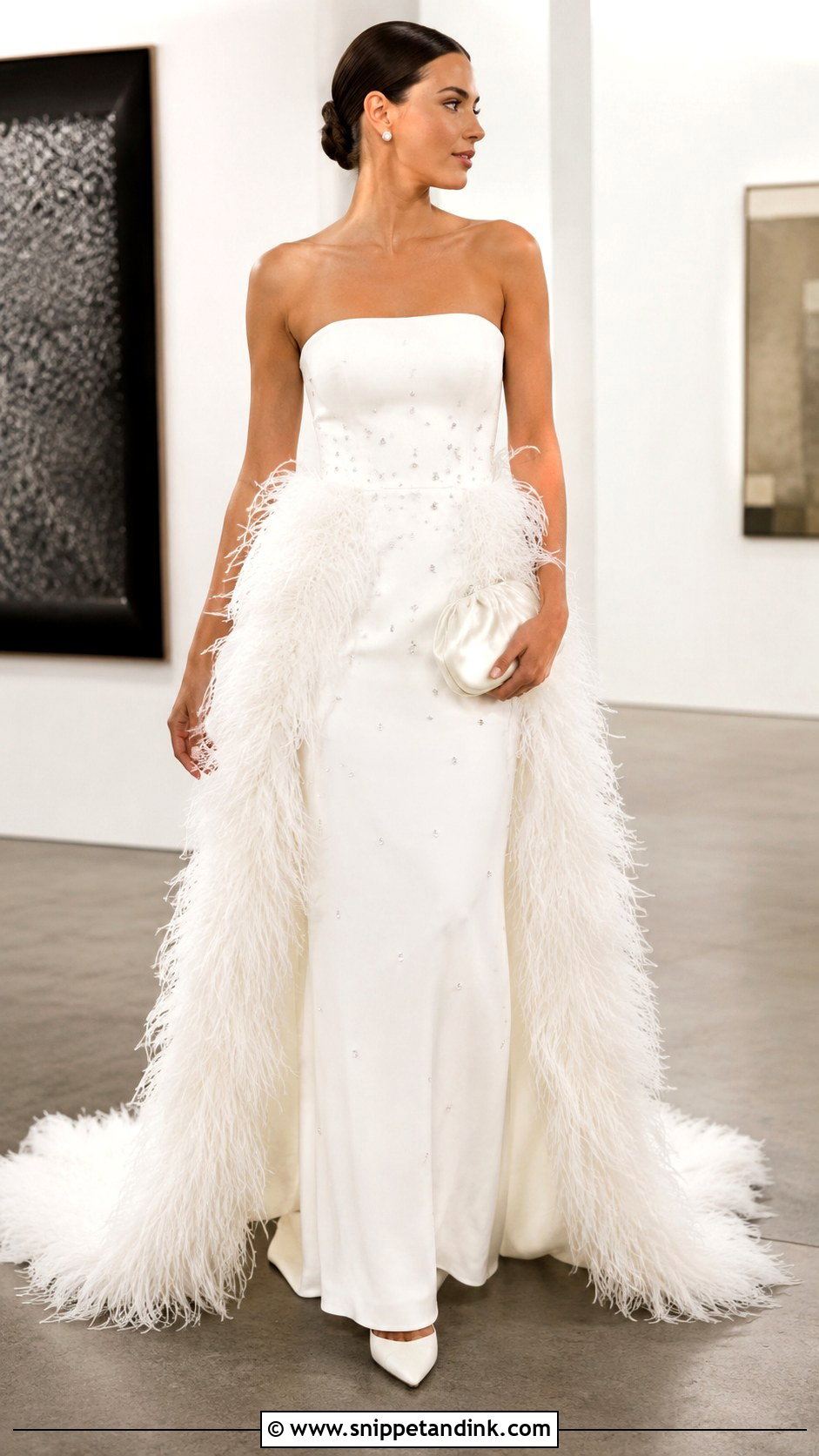
Feathers look best at the edges: the neckline, the sleeves or the lower skirt. A fitted column gown with a feathered overskirt reads sophisticated, while an all-over feather dress is a full fashion statement that only suits some brides. They’re warm to wear and they shed, so I’d think twice for a summer ceremony. White pointed pumps, crystal studs and a sleek bun contrast with the soft texture. Removable feather cuffs or a detachable cape let you lighten the look for dancing.
6. Sculptural Bow Wedding Dress
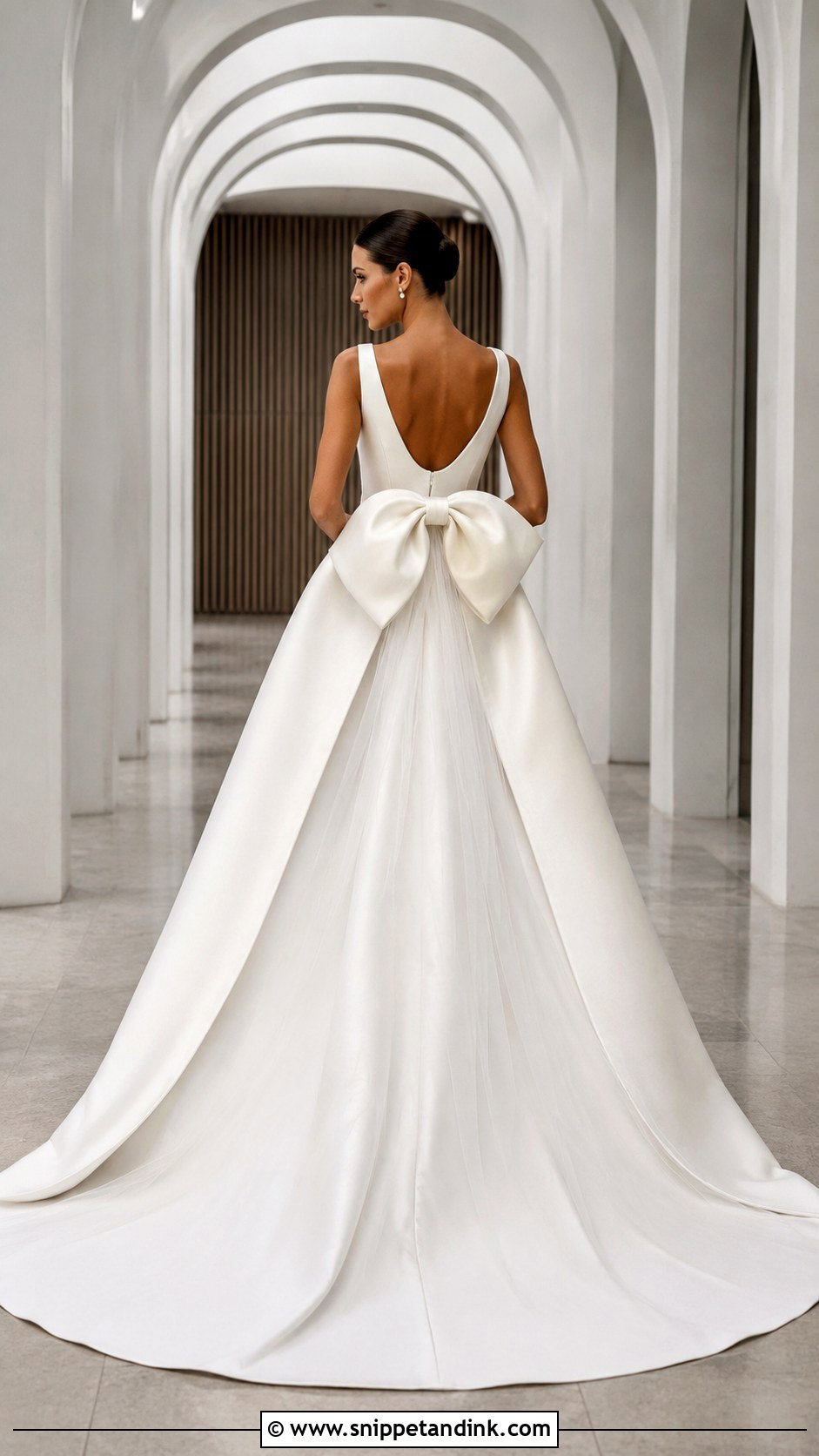
Bow placement changes the whole gown. At the back waist it gives you a dramatic exit; on one shoulder, asymmetry; across the bodice, the boldest version. Mikado, duchess satin and faille all hold a crisp loop, while soft satin wilts by evening. A back bow is the one I test most, by having the bride sit in a chair for several minutes, because a big bow at the waist can push you forward on the seat. Understated pearls, satin pumps and a neat updo keep the bow in charge, and the veil should fall beneath it.
7. Detachable Overskirt Wedding Dress
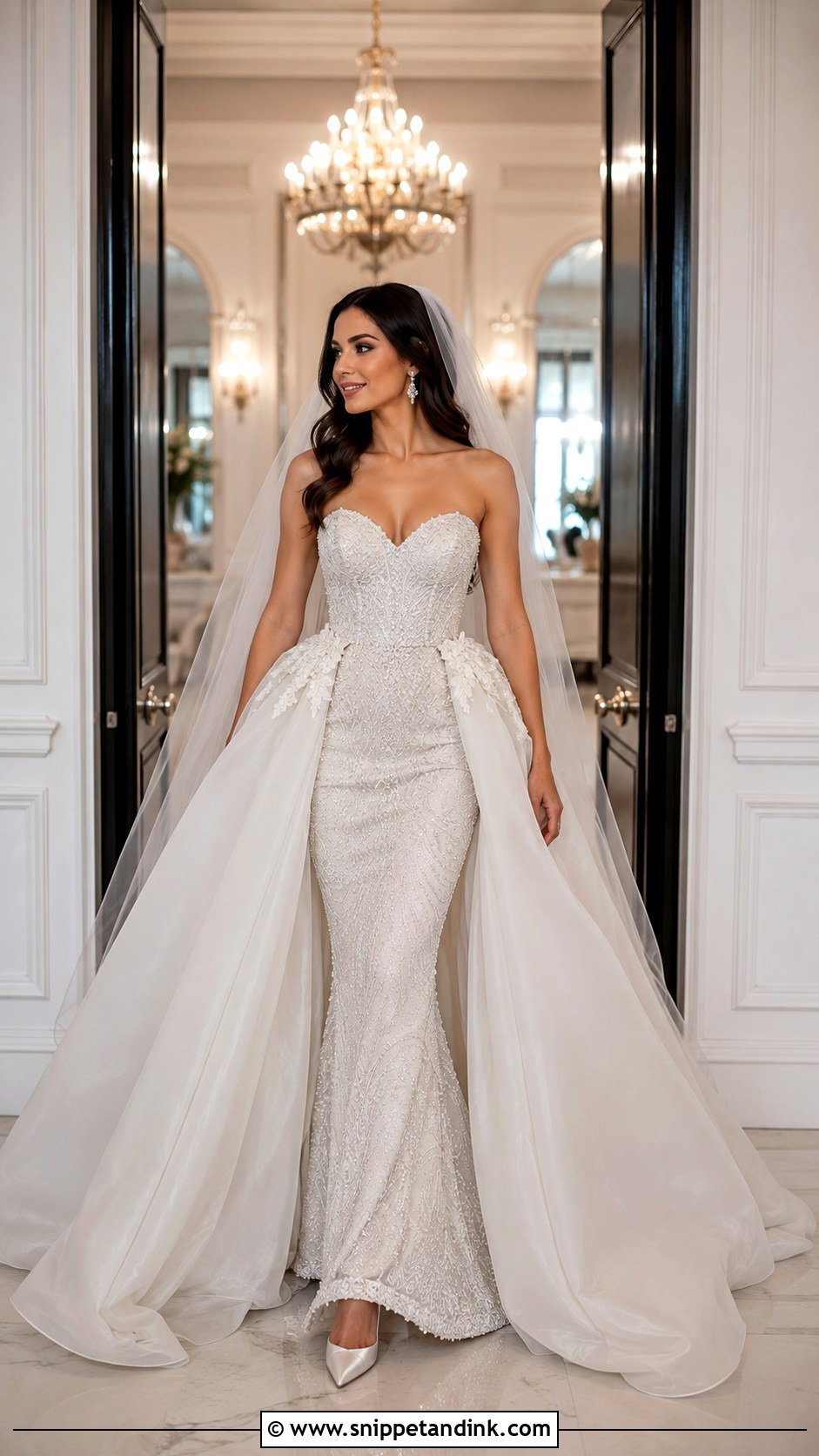
Here’s how to get two silhouettes without a full change. A voluminous organza, satin or embroidered tulle skirt goes over a fitted column or mermaid for the ceremony, then comes off after portraits. The reveal works best when you also swap something small, like statement earrings or embellished heels. The waist is the giveaway on cheaper versions, so check that the attachment points lie flat and vanish once the overskirt is off. Your photographer will want both versions, so tell them when the switch happens.
8. Royal Lace Long Sleeve Wedding Dress
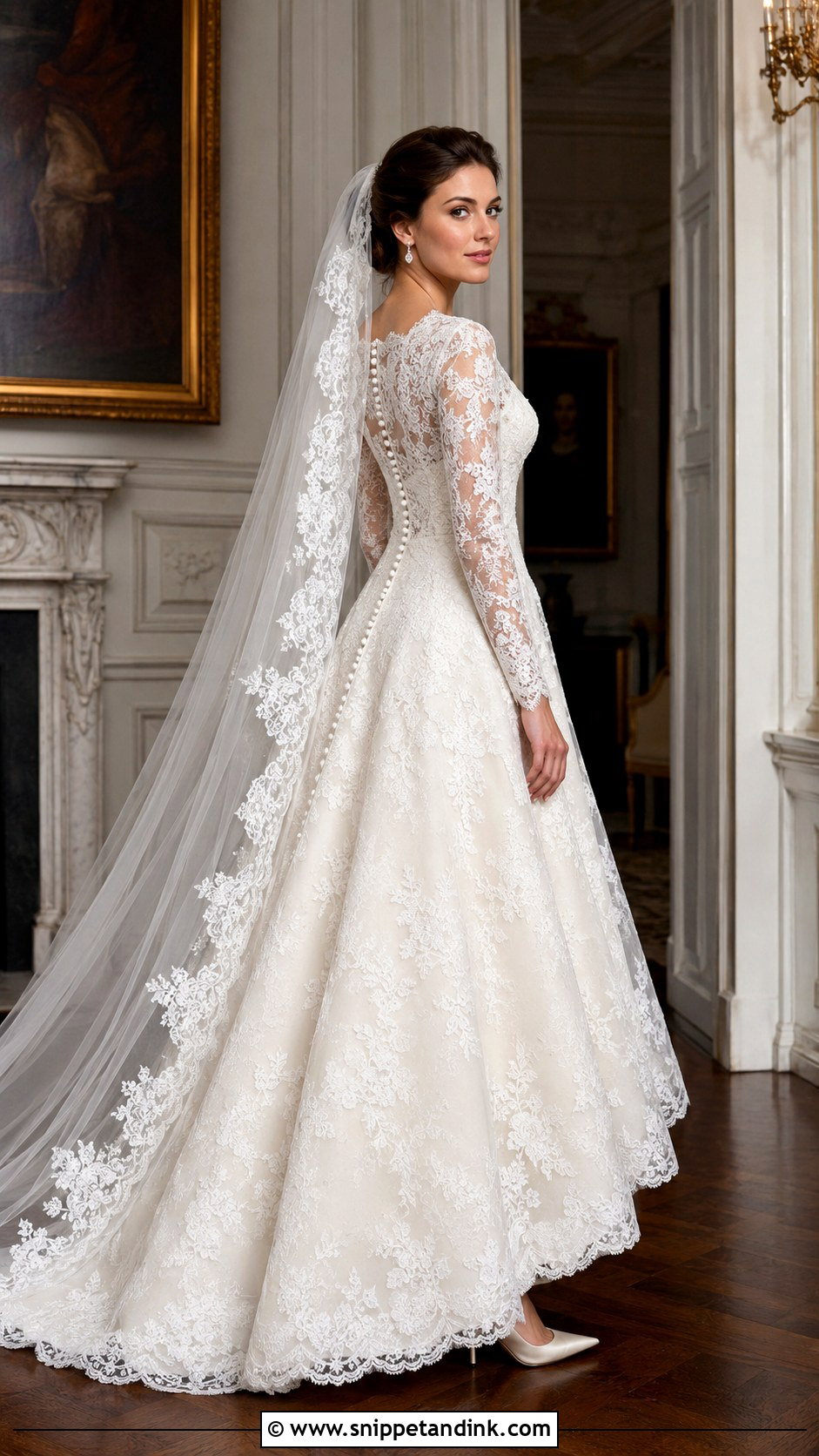
Lace from neckline to cuff over a fitted bodice and full A-line skirt has a royal feel, especially with covered buttons down the back. Rough lace at the neck is the most common complaint I hear, so press the neckline against your skin at the try-on and ask whether it can be lined with soft tulle. A polished low bun stops hair catching on the lace. Pearl earrings, a lace-edged cathedral veil and ivory pumps finish the outfit, and cooler months make the long sleeves a pleasure rather than a burden.
9. Victorian High Neck Wedding Dress
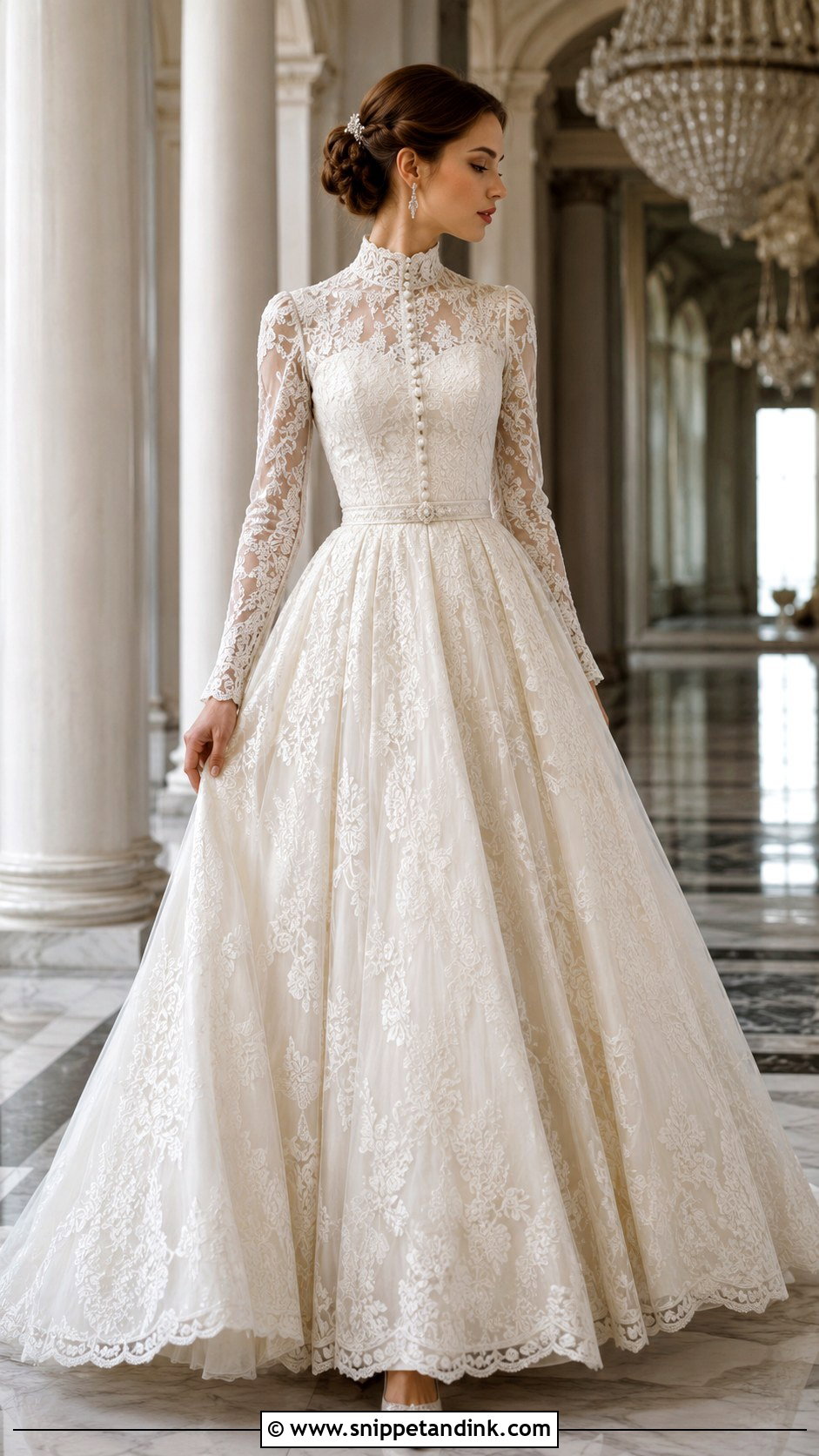
A high neck can go two ways. Long sleeves, covered buttons and a full skirt lean Victorian; a smooth column with embroidered tulle at the collar and cuffs feels current. The trick for both is a sharply defined waist, otherwise the coverage reads heavy. Small drops, pointed shoes and a structured bouquet keep things crisp, with a braided bun or a center-parted updo. I’d skip the necklace altogether. Fall and winter weddings suit the extra coverage best.
10. Dramatic Cape Wedding Dress
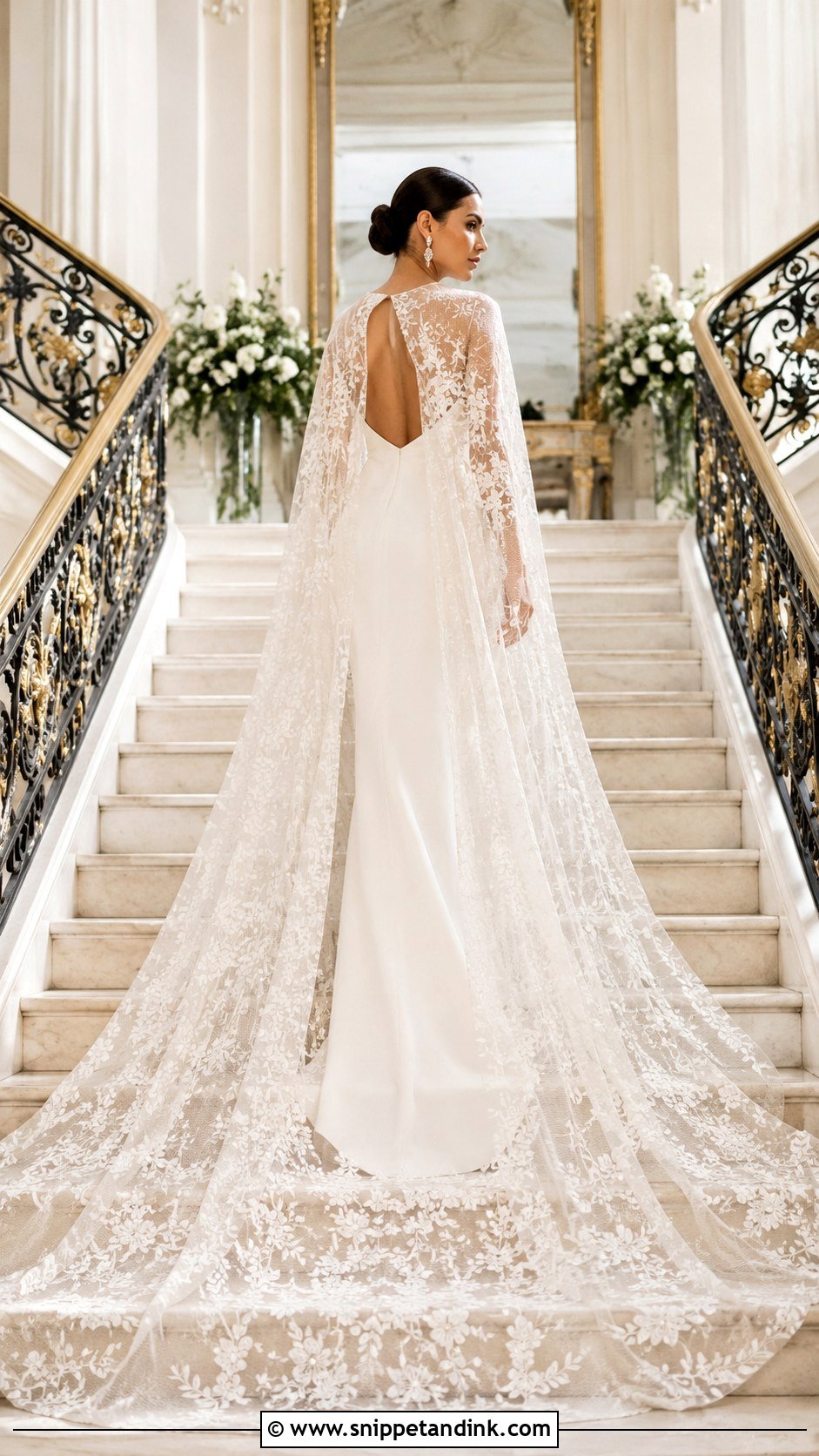
A cape gives you the impact of a veil with more movement. A floor-length chiffon or embroidered tulle cape over fitted crepe feels light, while a structured satin cape over a ball gown is grand and noticeably heavier. Where it attaches, at the shoulders, neckline or back bodice, decides how freely your arms move, so try both if the designer offers them. Crystal earrings, sleek heels and a polished bun finish it. If the cape is already beaded or trailing, drop the veil.
11. Basque Waist Satin Wedding Dress
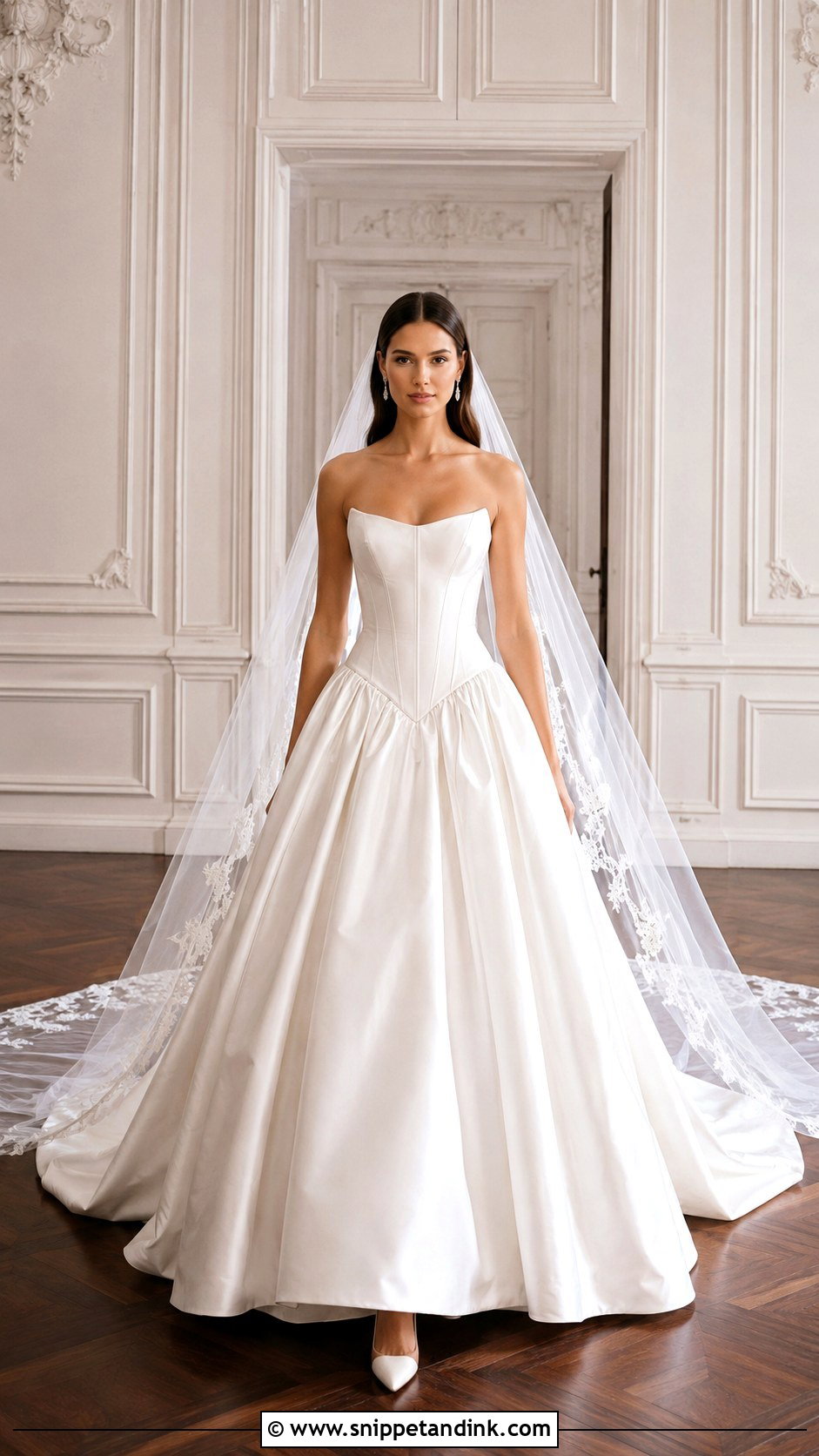
The basque point extends the bodice below the natural waist and makes a full satin skirt look sculpted. Clean fabric shows the construction off best; subtle embroidery or pearl buttons can add richness if you want more. Fit is everything here. An experienced seamstress will set the point so it defines the waist without stopping you from breathing deeply or sitting for a long dinner. Pair it with a cathedral veil, drop earrings and closed-toe satin heels under a smooth updo.
12. Ruffled Organza Wedding Dress
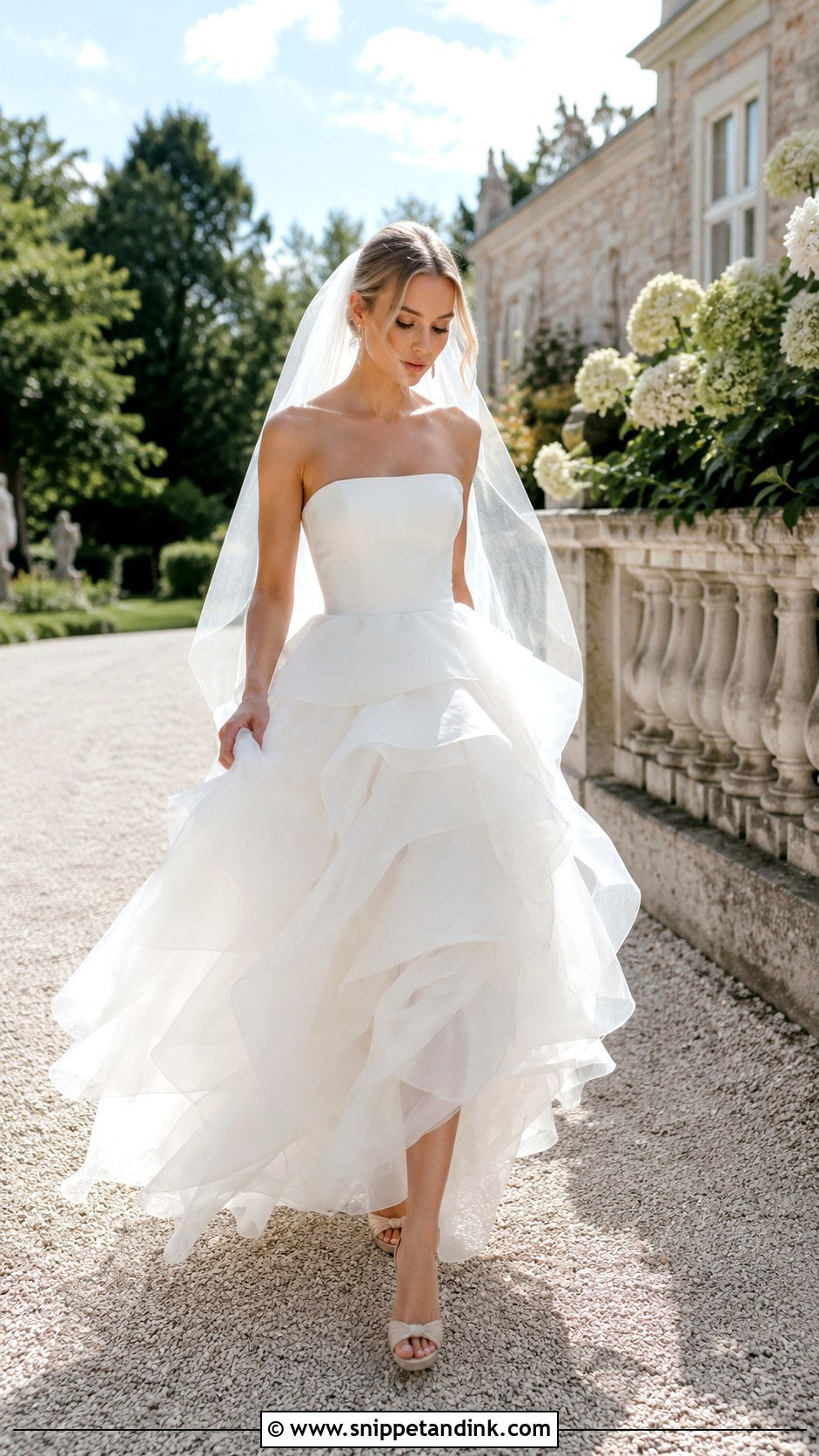
Ruffles in organza give big volume without big weight, whether they cascade down an A-line, tier across a ball gown or wave asymmetrically over a fitted shape. Keep the bodice simple so the skirt leads. Organza’s one weakness is rough ground; gravel paths and brick edges will pull threads, so plan your route or bustle up first. Every layer must lift into the bustle correctly, or the ruffles look bulky rather than sculptural. Delicate earrings, understated heels and a sheer, unedged veil suit soft waves or a relaxed updo.
13. Gold Embroidered Wedding Dress
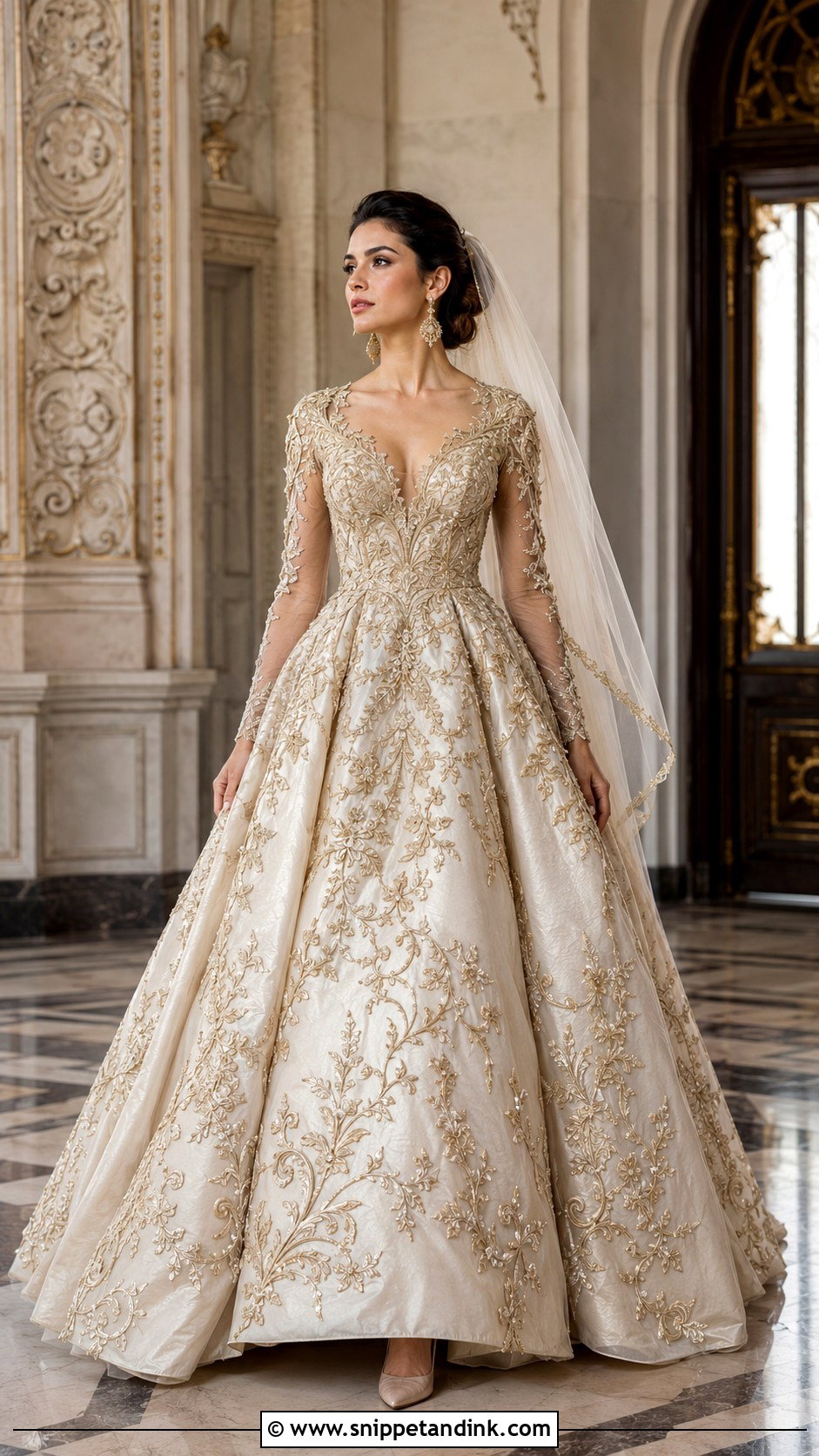
Gold thread warms an ivory or champagne base and gives a ceremonial richness that suits many cultural traditions as well. Fine metallic vines on the bodice and sleeves are subtle; heavier baroque-inspired patterns over a full skirt are anything but. Limit gold accessories to two pieces so the embroidery doesn’t get lost among them. Metallic thread changes a lot between daylight, flash and warm indoor bulbs, so ask the salon to let you see it under different light and match your makeup’s warmth to it. Ornate ballrooms and evening receptions suit it.
14. Black Lace Wedding Dress
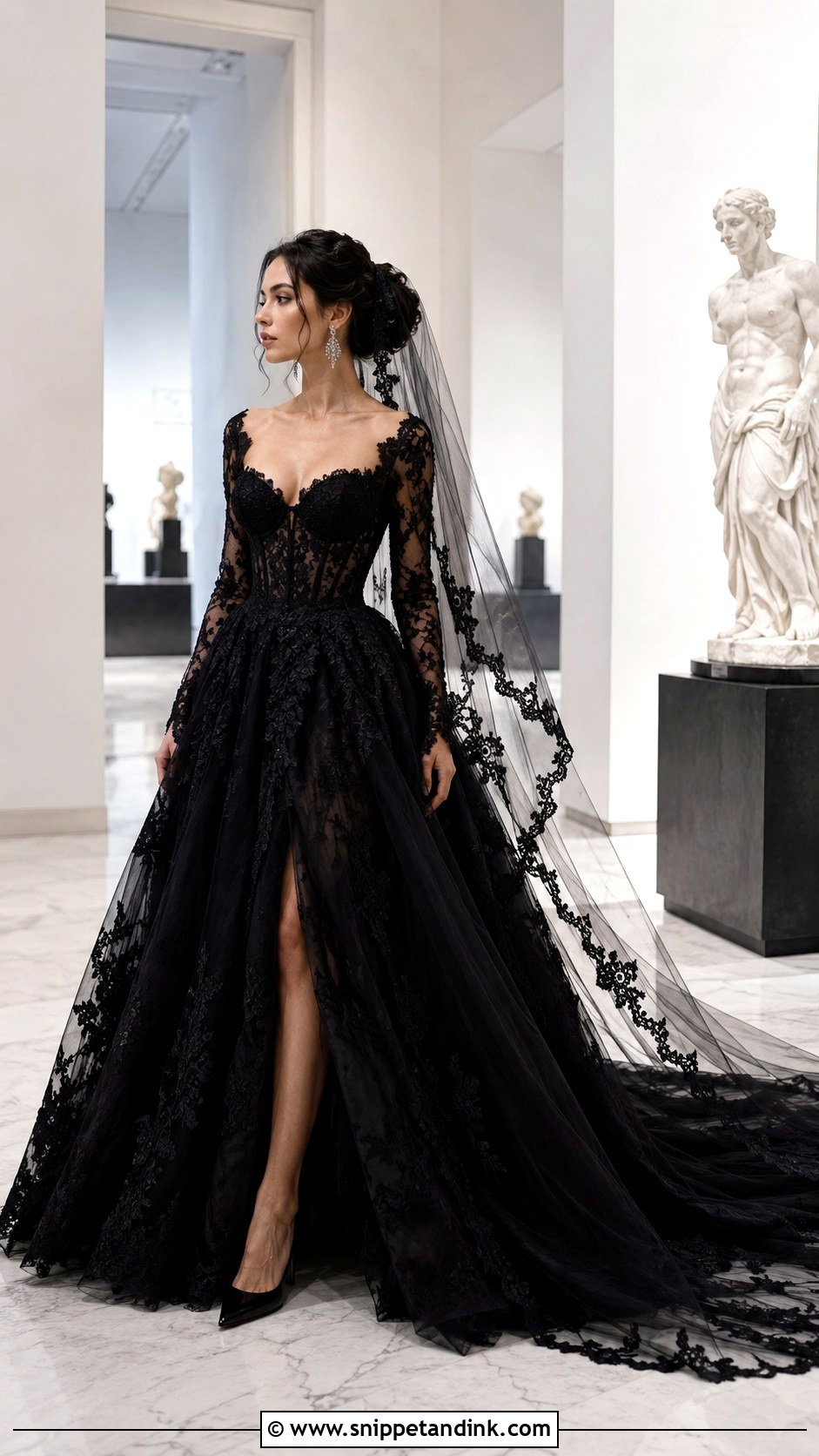
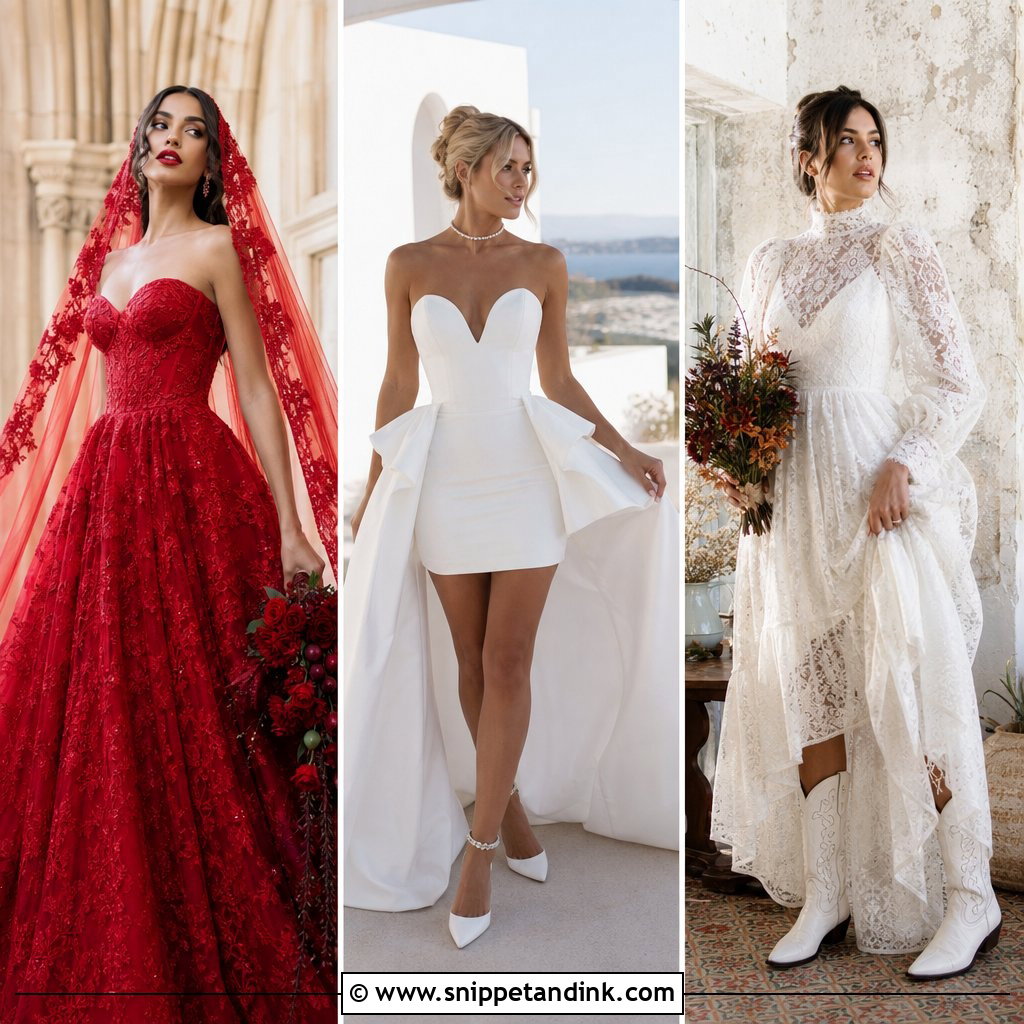
Black lace is a big decision, and I’d only steer a bride toward it once she’s sure it sits comfortably with her family and the ceremony. An all-black ball gown is the most dramatic version; black lace over an ivory lining gives the pattern definition and softens the overall effect. Pair a corseted bodice and long sleeves with a sweeping train, black or crystal earrings and a veil edged in black. A sleek bun keeps it chic rather than costume. Charcoal or black floral embroidery on a pale gown is a gentler route.
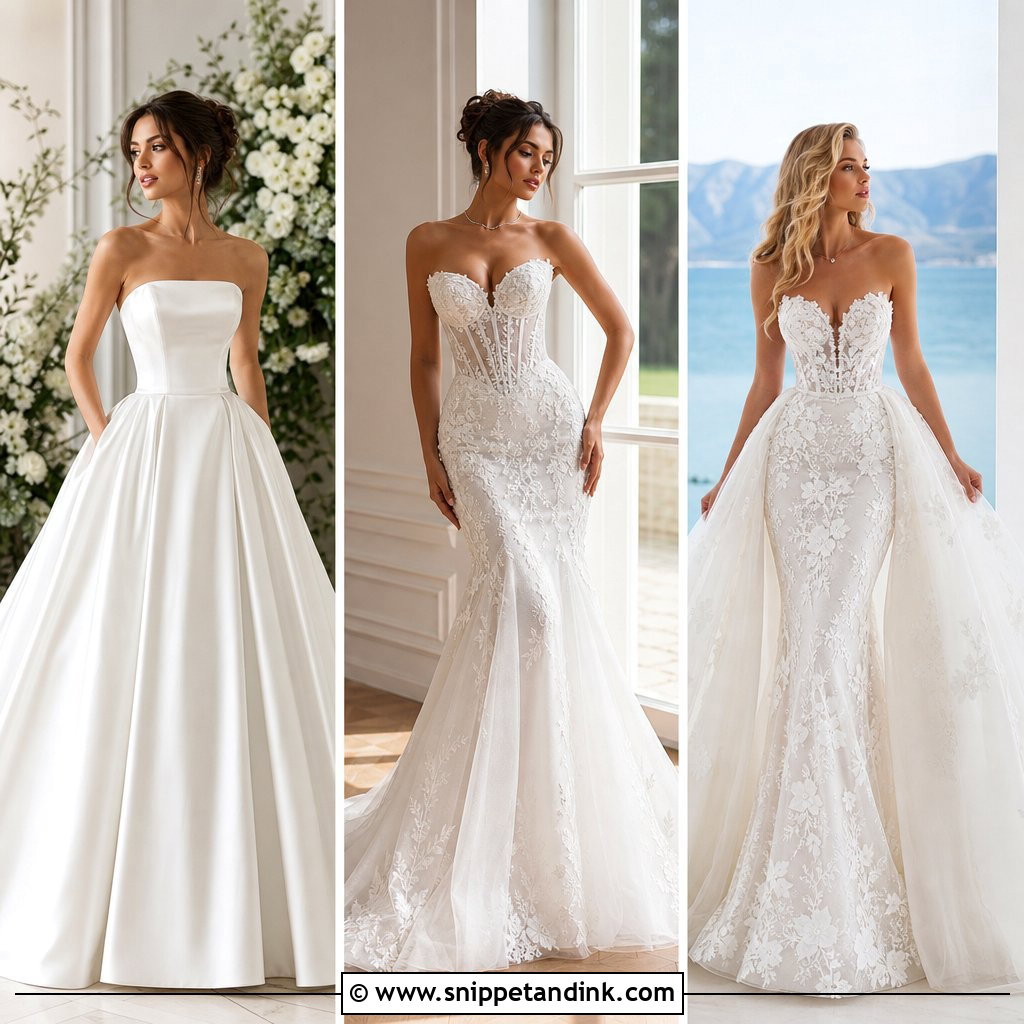
15. Off Shoulder Brocade Wedding Dress
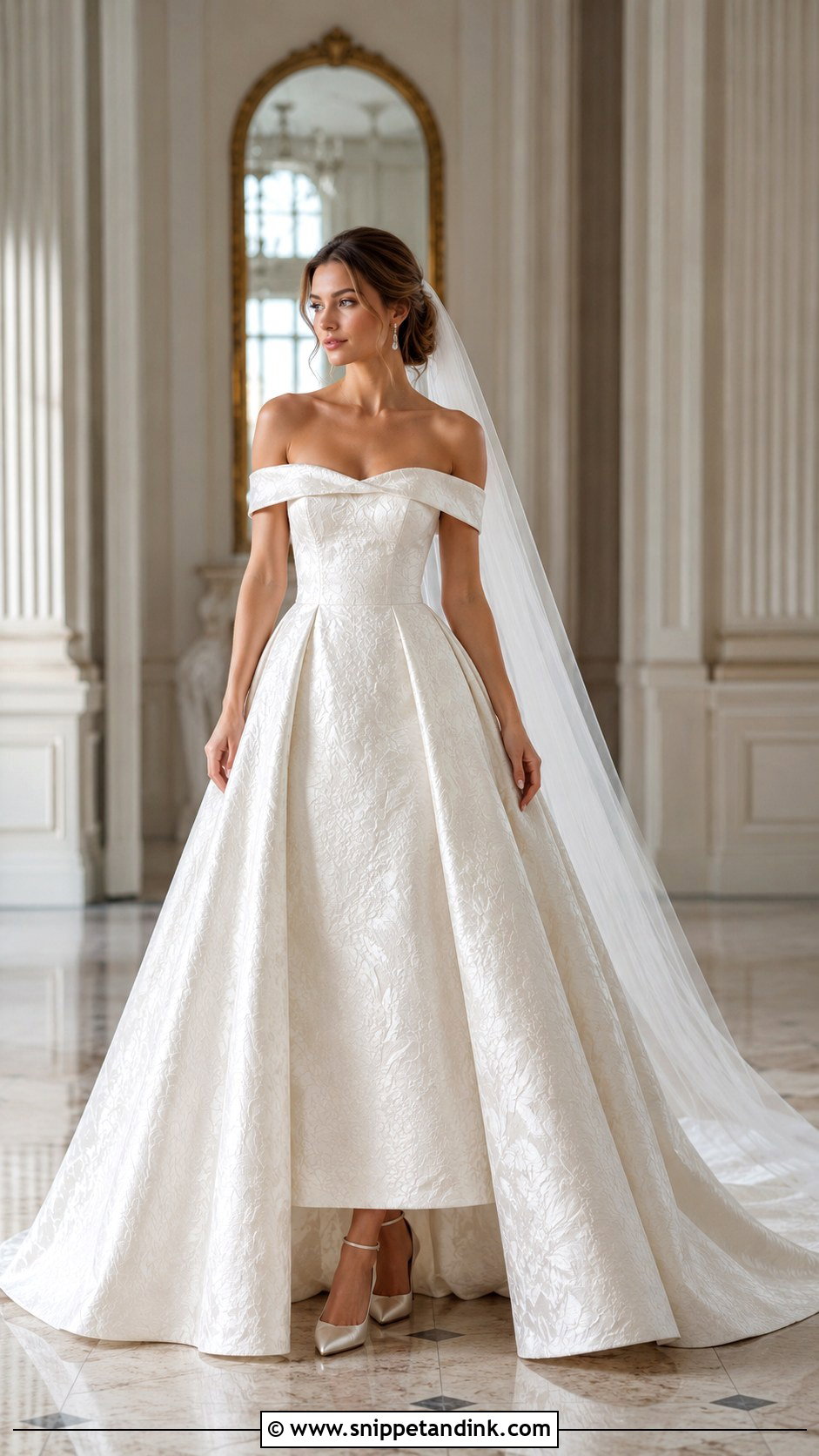
Brocade is woven, not embroidered, so the pattern is part of the fabric, and its woven pattern makes even a plain off-the-shoulder cut look expensive. It’s also heavier and warmer than tulle or chiffon, which is why I keep it for indoor and cool-season weddings. A fitted bodice and full skirt shows the most fabric; a structured A-line is easier to walk in. The seamstress should control the volume so it holds its shape without going stiff. A short necklace or drops, satin heels and hair swept back from the shoulders complete it.
16. Bubble Skirt Wedding Dress
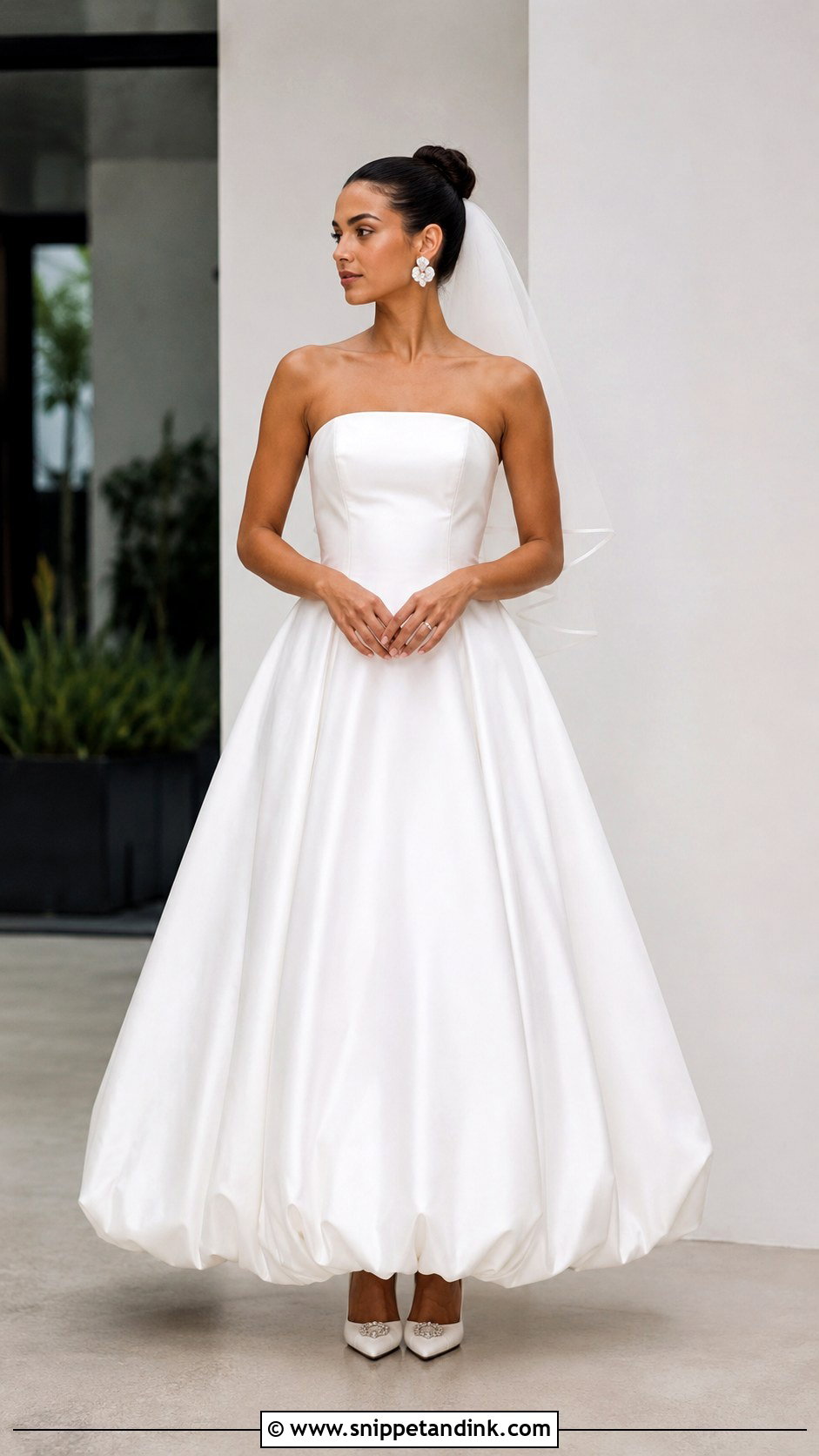
A bubble hem is playful, and it’s harder to walk in than it looks, because the turned-under edge can catch your shins. Practise on stairs before the day. Full-length, high-low and short reception versions all exist, and for a ceremony I’d choose a fitted bodice with a crisp satin or light taffeta bubble that keeps its round shape. Sculptural earrings, pointed heels and a shoulder-length veil keep it modern, with a smooth ponytail or bun. Clean architectural backdrops show the silhouette best.
17. Sheer Illusion Sleeve Wedding Dress
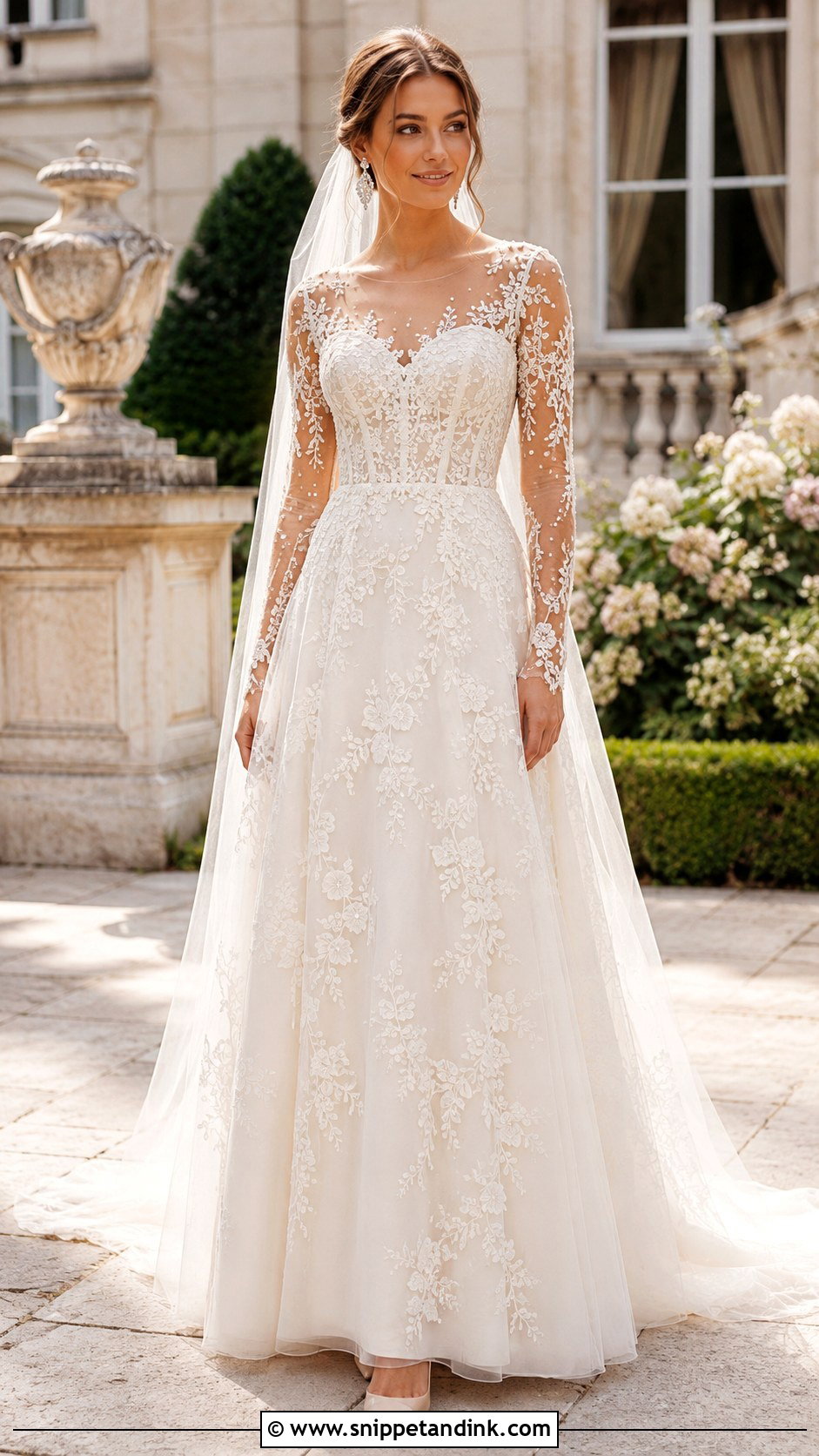
The most important choice with illusion sleeves is the tulle colour. It should be matched to your skin tone in daylight, not under shop lights; get it wrong and the sleeves show up as a pale grey film in photos. Once the base is right, lace vines, pearls or crystals can run from shoulder to cuff. A lined corset bodice and flowing A-line keep the balance. Raise your arms at fittings to check for pulling. Small crystal earrings, neutral pumps and a veil set beneath a soft bun finish it.
18. Colorful Floral Wedding Dress
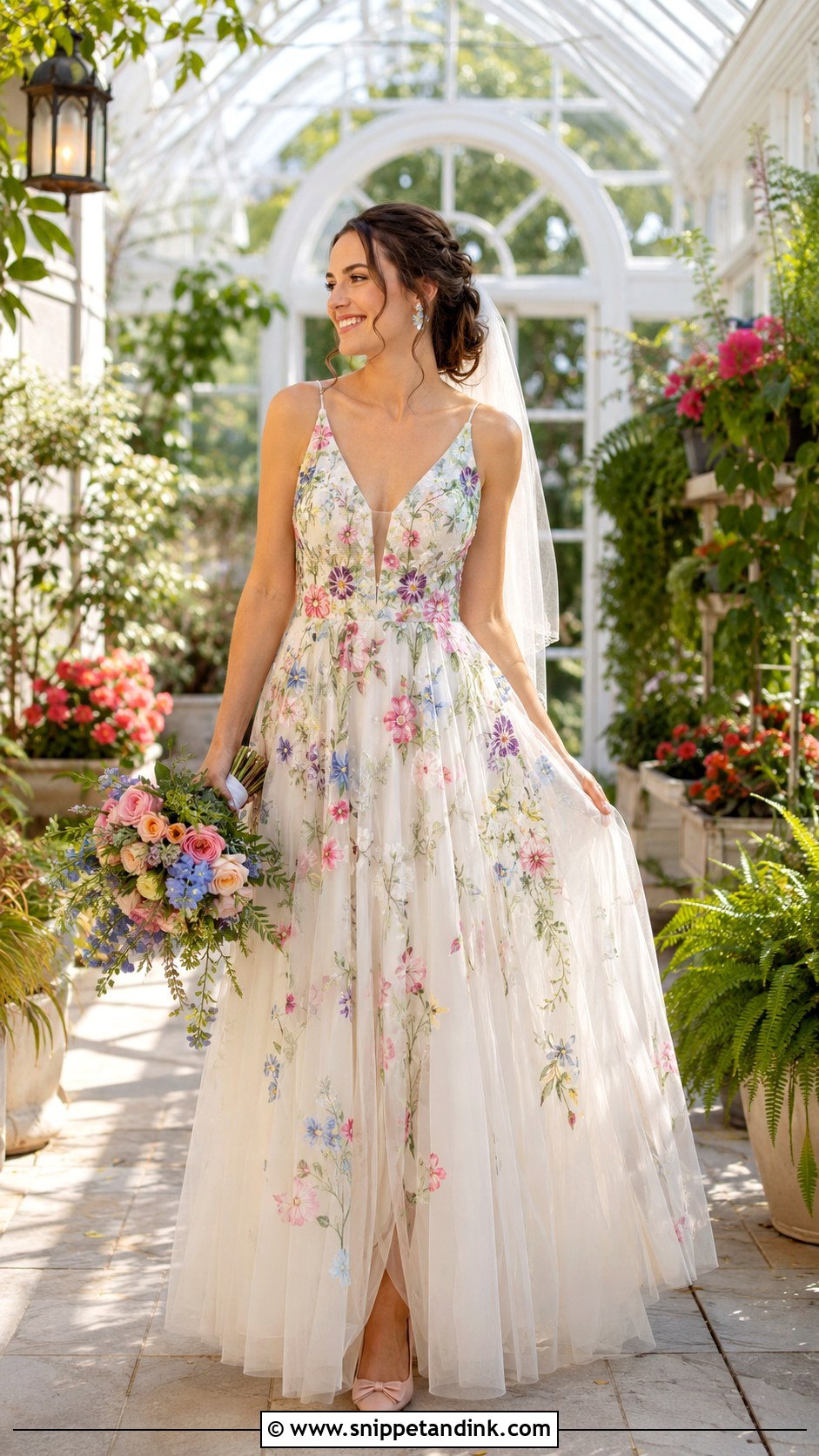
Embroidered flowers in pink, blue, lavender or green can cover a sheer skirt, frame the neckline or trail across the train. An ivory or soft blush base keeps it bridal. Repeat one colour only in your accessories, maybe pale blue earrings or blush heels, and leave the rest neutral. Brief your florist with a fabric swatch or close-up photo so the bouquet complements the gown instead of matching every shade. A simple veil and loosely pinned curls suit gardens and bright indoor rooms.
19. Art Deco Fringe Wedding Dress
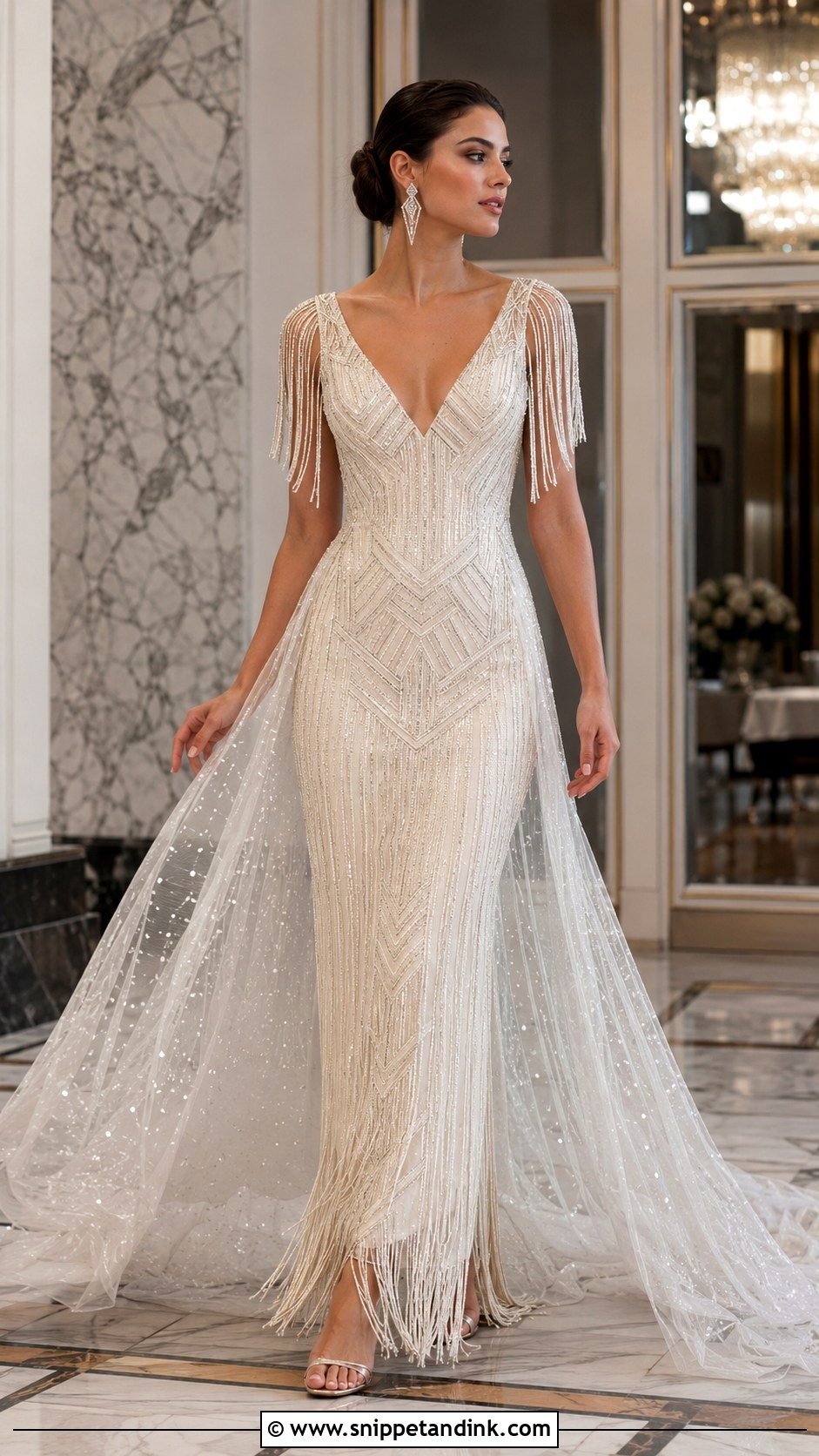
Fringe is all about movement, and beaded fringe swings with real weight, giving the gown a glamorous Art Deco influence. Put it on a fitted column with geometric beading, along the sleeves or the skirt, and add a detachable tulle train or embellished cape for the ceremony. Check that the fringe ends well above your shoes and won’t tangle with a bracelet or ring. Metallic heels, geometric earrings and finger waves or a sleek low bun keep it polished, not fancy dress. Decorative hotels and lounges suit it.


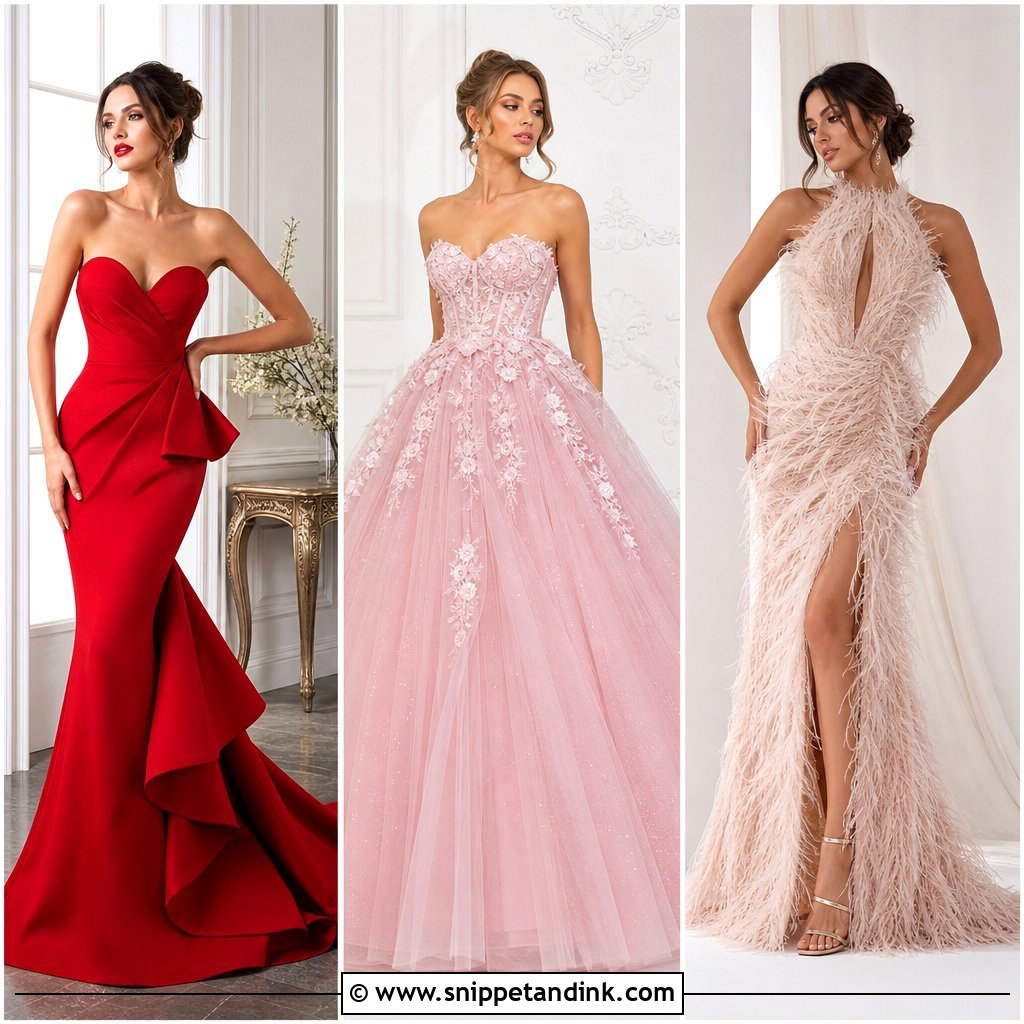
20. Short Wedding Dress With Long Train
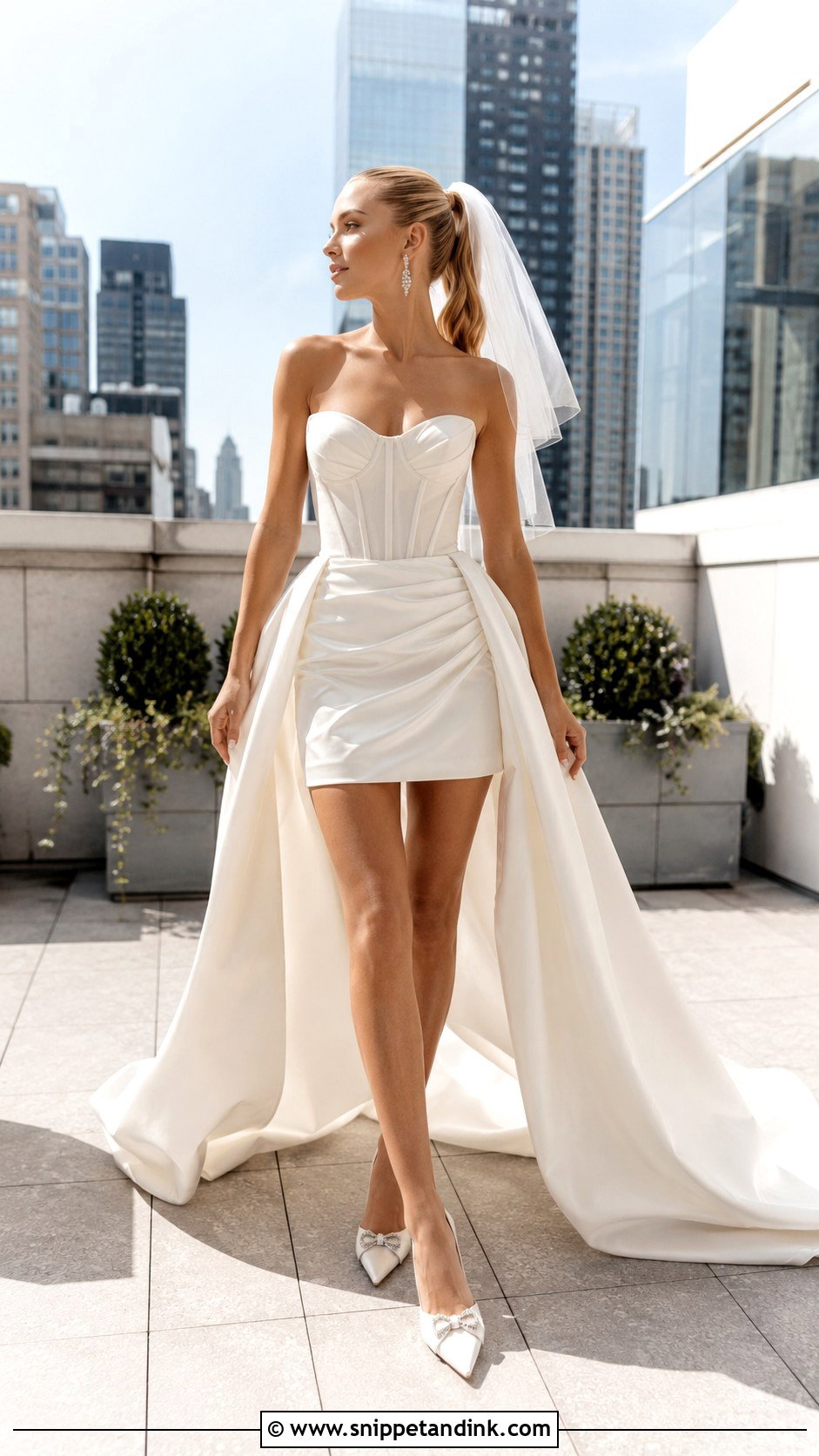
A short dress with a long detachable train shows off your shoes and still gives the ceremony its sweep. Start with a structured mini or knee-length dress with a corset bodice, then attach a full satin or embroidered tulle train at the waist. When the train comes off after portraits, you’re in a party dress. Sit and walk in it to make sure the hem stays put, and pick shoes you can stand in all night, since they’ll be on show. Crystal earrings, a short veil and a sleek ponytail or bun suit rooftops and city venues.
How Crystal, Gold Thread and Black Lace Read on Camera
An extravagant gown spends most of its life in photographs, and some details change once they’re on camera. I mention these at the first appointment so nobody is surprised by the gallery.
- Crystal and sequins need a point light to sparkle. In flat daylight they can look grey or simply textured, so if sparkle is the reason you chose the gown, ask your photographer about some evening or flash portraits.
- Gold and metallic thread can turn brassy under warm tungsten bulbs and greenish under some LED lighting. A short test photo at the venue at the hour you’ll marry is worth the trip.
- Black lace loses its detail against dark backgrounds. Light stone walls, pale drapes and open sky show the pattern off far better than dark wood panelling.
- Bright white satin can lose its detail in strong sun, so a slightly softer ivory is often easier to photograph outdoors.
- Volume flattens when shot from above. Long trains and ball skirts look their best from a low, front-on or three-quarter angle with the skirt spread out.
Give your photographer the list of the gown’s features in advance: the bow at the back, the removable overskirt, the embroidered train. They’ll make time for each one.
One Grand Feature, Then Let the Gown Breathe
A memorable gown comes down to drama, good tailoring and comfort working together. A cathedral train, crystal beadwork, dimensional flowers, bold colour or sculpted fabric can each make the dress, as long as they aren’t all fighting for attention. I’d start with the detail that thrills you and choose hair, shoes, jewelry and veil around it. Think about weather, walking surfaces and your timeline before committing to anything complicated, and book enough fittings to practise moving in the finished gown. It should look extraordinary and still let you forget you’re wearing it.
You'll Like These Ideas:





Leave a Reply