
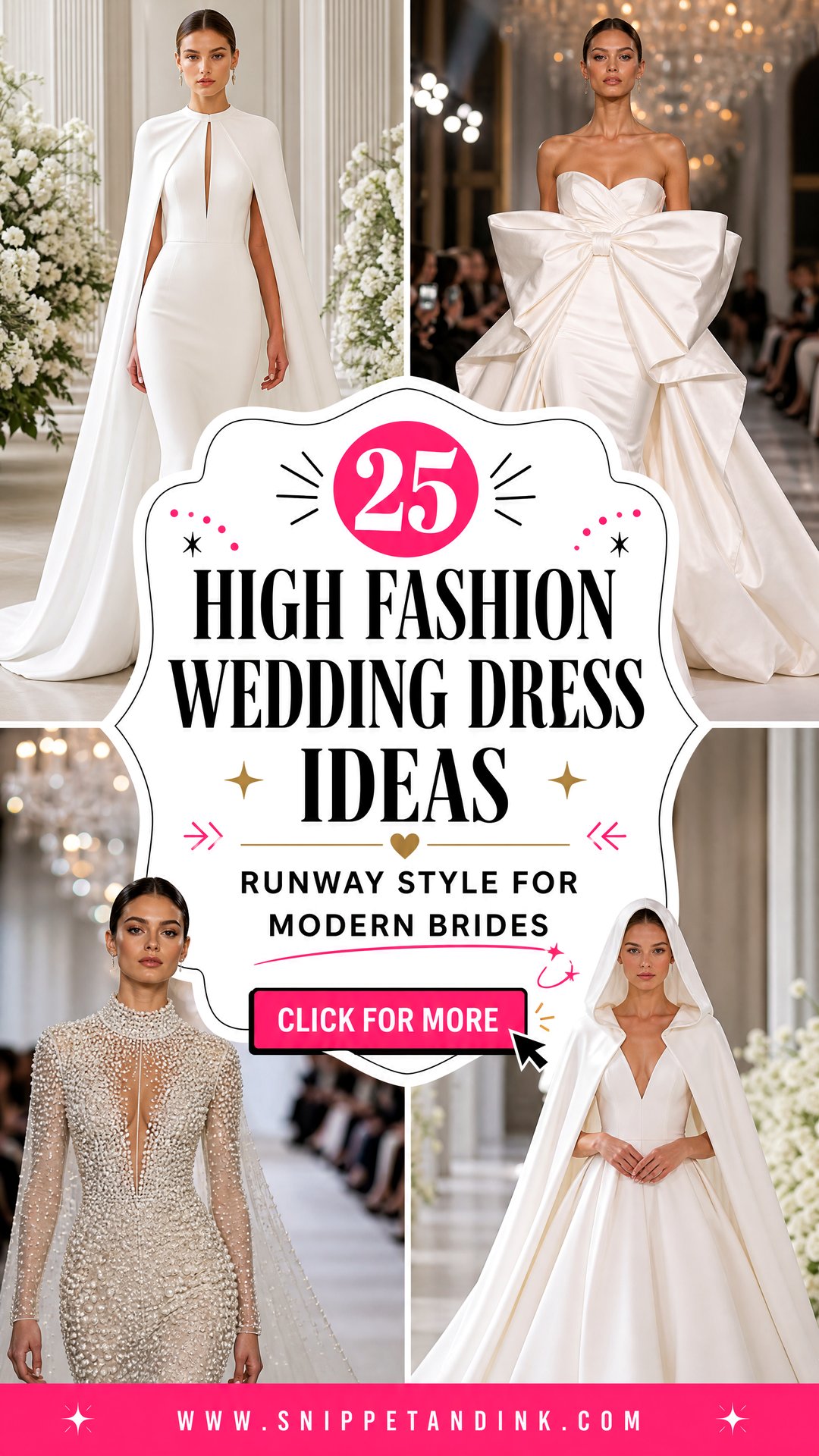
A high fashion wedding dress is mostly engineering. The sculpted skirt, the unusual texture, the precise waistline: all of it depends on boning, interlining and fit that you never see on the runway. Bridal design right now leans toward bolder embellishment, draping, sculptural shapes, dimensional lace and more volume. What I do when a bride brings me a runway photo is ask how she wants to move in it, because a gown built for a thirty-second catwalk has to be adapted for a day of sitting, hugging and dancing. Venue, season, undergarments and alteration time matter as much as the sketch. Each of the ideas below comes with the fitting notes I’d give you before you commit.
Reading a Runway Gown for What Holds It Up
Before I fall for a sculptural dress with a bride, I turn it inside out. The drama you see on the outside is carried by things you don’t see: boning, horsehair braid at the hem, interfacing in a peplum, an internal waist stay that keeps the bodice anchored while the skirt pulls down.
Questions I ask the boutique or designer about any high fashion gown:
- What is the gown’s weight once it’s made up in my size, and where does that weight hang from?
- Is there an internal corset or waist stay, or do the straps carry everything?
- Which seams can be altered without disturbing pleats, beading or lace motifs?
- How will the train bustle, and how many bustle points does the design need?
- Can I see the fabric in daylight before I order?
Made-to-order and couture-style gowns typically take several months to arrive, with alterations on top. If you’re drawn to structure, start shopping earlier than you think, because the rush fee usually costs more than the fabric difference between two dresses.
1. Sculptural Ball Gown Wedding Dress
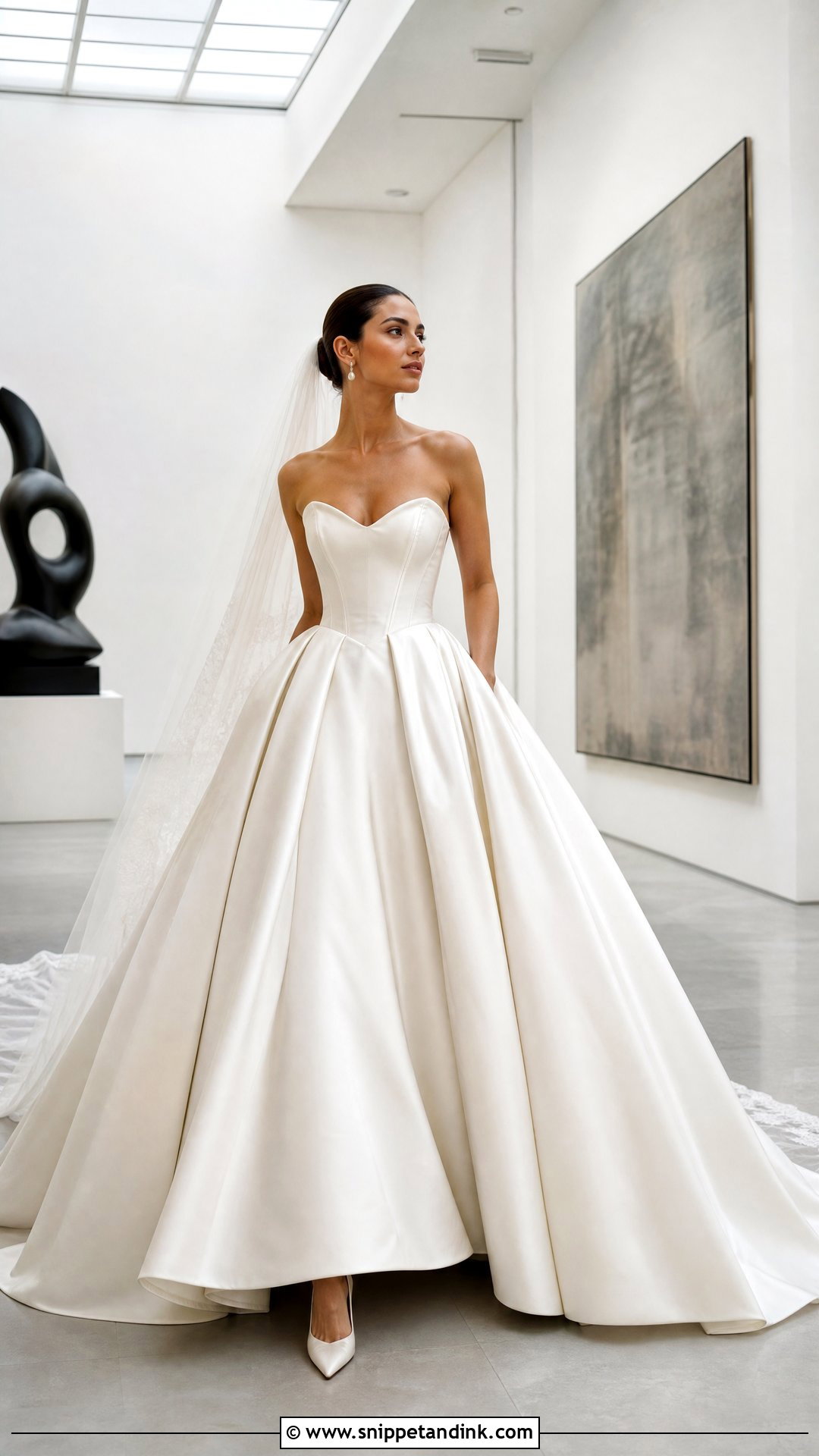
The drama here comes from the cut, not sparkle, so the fabric has to hold a shape on its own. Mikado and heavy duchess satin do that; softer satins collapse. Underneath, a sculptural skirt usually relies on a structured petticoat or horsehair braid at the hem, and I always ask the boutique to show me the inside of the gown. Curved seams, architectural pleats and folds give it couture character, and they’re also what makes bustling tricky, since every bustle point pulls on that structure. Keep accessories quiet: a sleek bun, pearl drops, a plain cathedral veil and pointed ivory pumps.
2. Basque Waist Wedding Dress
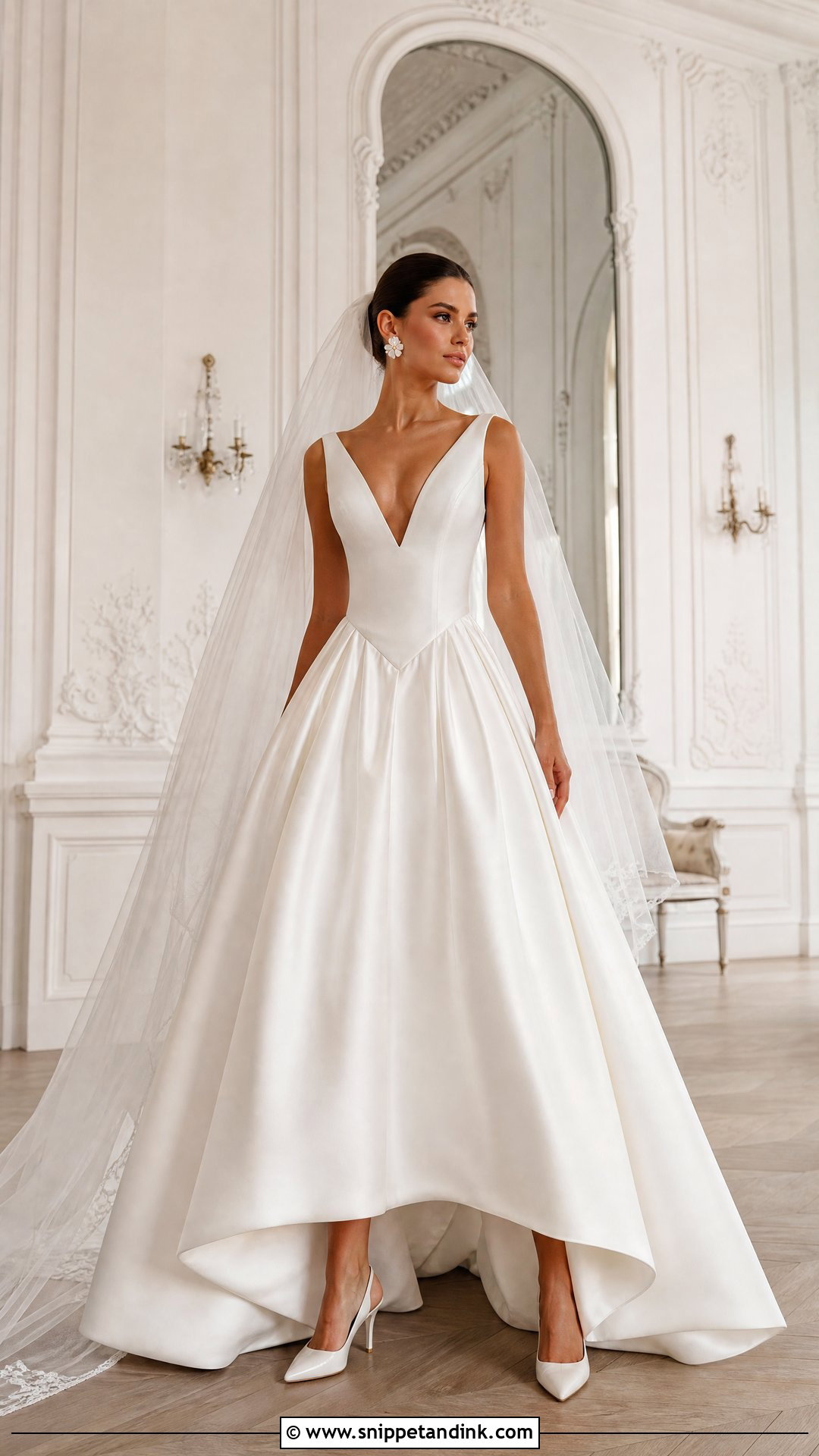
A Basque waist dips into a V below the natural waist, which lengthens the torso and makes a full skirt look sharper. That V only works if the bodice follows your body exactly. I have brides sit, bend and reach during every fitting, because a Basque bodice that is a fraction too long rides up into the stomach when you sit. Silk faille or mikado shows off the point; layered tulle softens it. A long sheer veil set beneath a chignon and pointed slingbacks keep the line clean. Budget for expert alterations here, not optional ones.
3. Drop Waist Wedding Dress
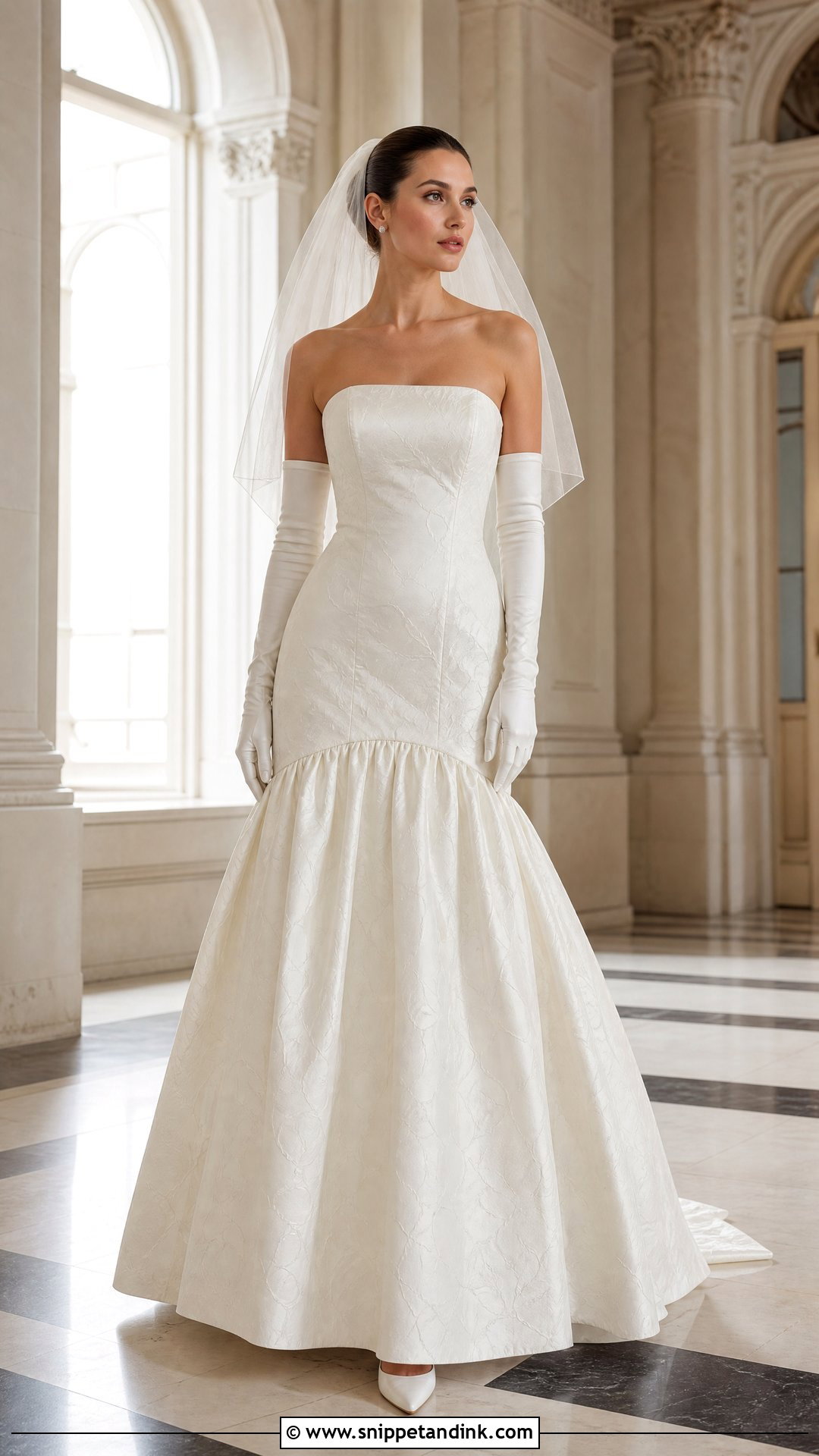
Drop waists are less forgiving than they look in photos. The fitted section runs past the natural waist and releases at the upper hip, so any pulling across the hips shows immediately as horizontal drag lines. When I fit one, I check the hip measurement while the bride is seated, not standing. Lustrous satin keeps it minimal; jacquard adds depth. Opera gloves, crystal studs and a small top-handle bag lean into the vintage evening reference, and a fingertip veil keeps the waistline visible. Slim ankle-strap heels suit the elongated line.
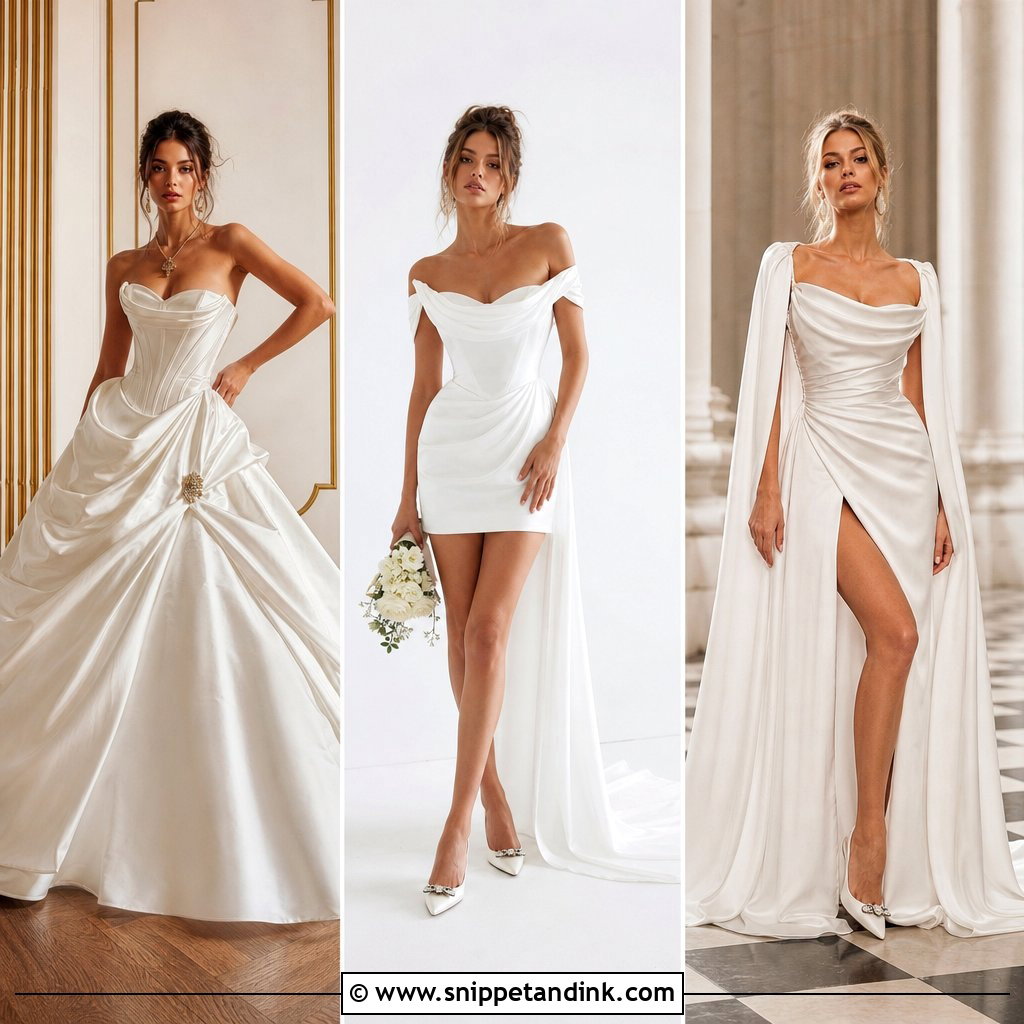
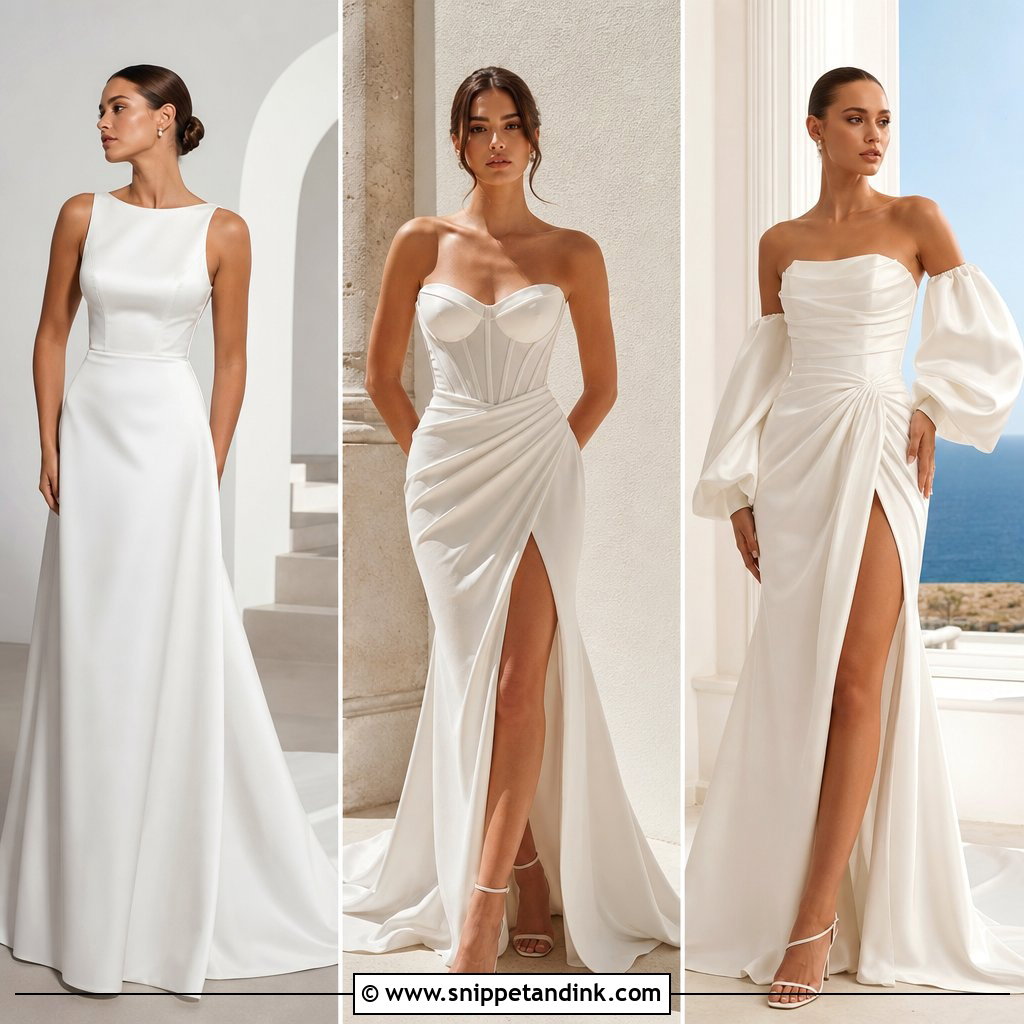
4. Draped Satin Column Wedding Dress
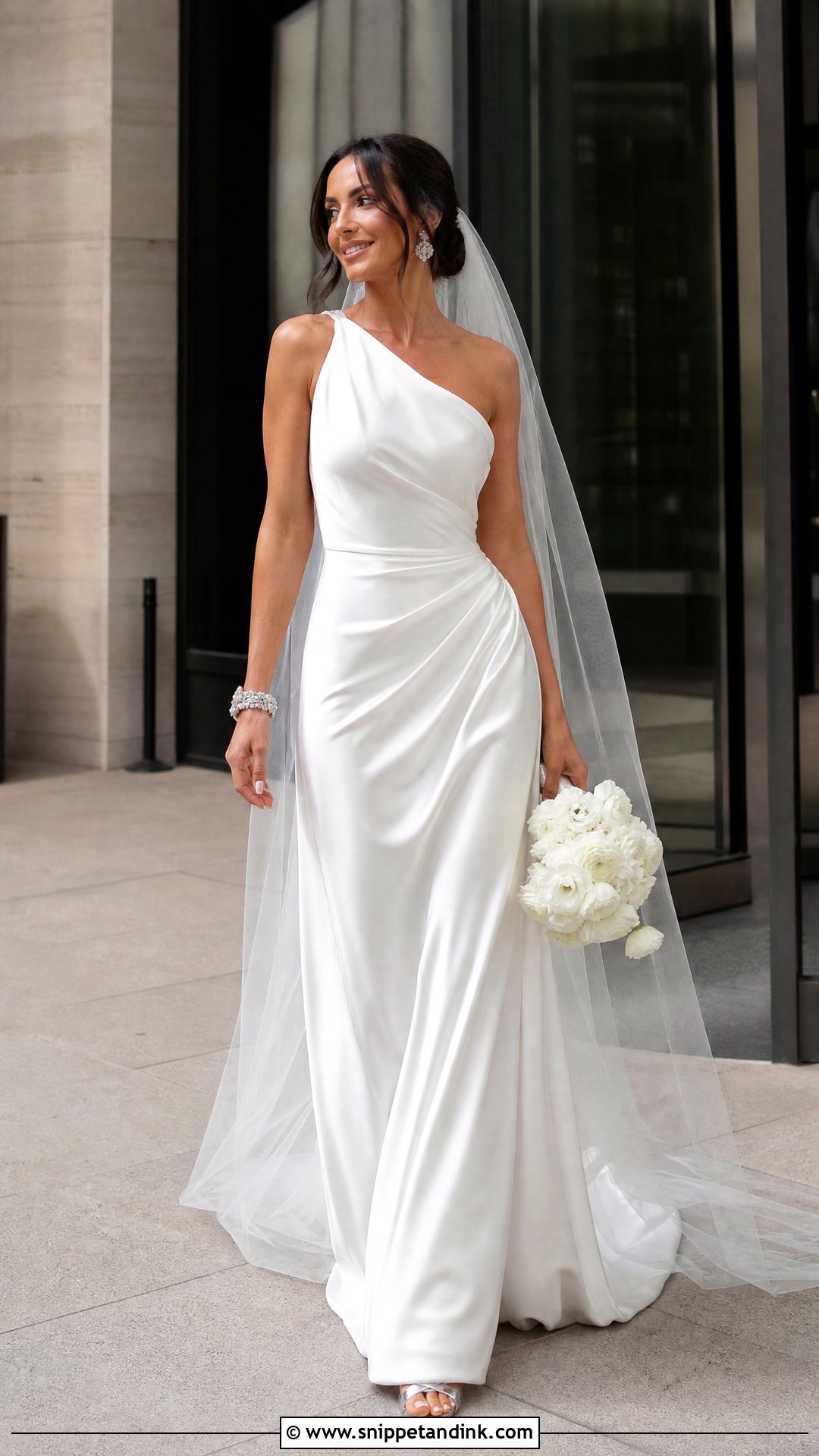
Draped satin is honest fabric: it shows everything underneath, including the edge of a bra or a pantie line. So with a draped column, I sort undergarments before the first fitting, often a smooth bonded bodysuit or cups sewn into the gown. Diagonal ruching across the bodice and a gathered hip give shape without stiffness, and an asymmetric or one-shoulder neckline pushes it toward high fashion. A low twisted bun shows the neckline. Pair a sheer, raw-edged veil with metallic heels and a slim crystal bracelet. Galleries and city venues suit its restraint.
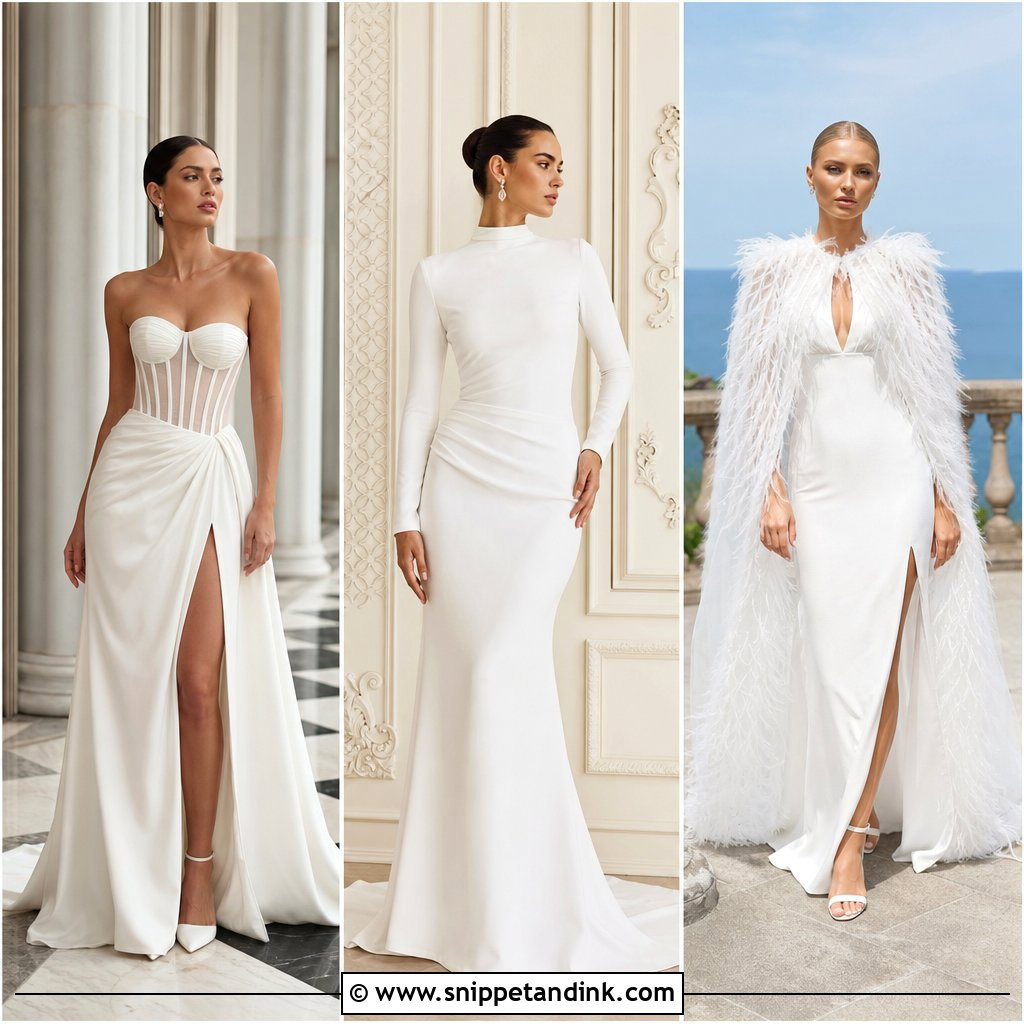
5. Exposed Corset Wedding Dress
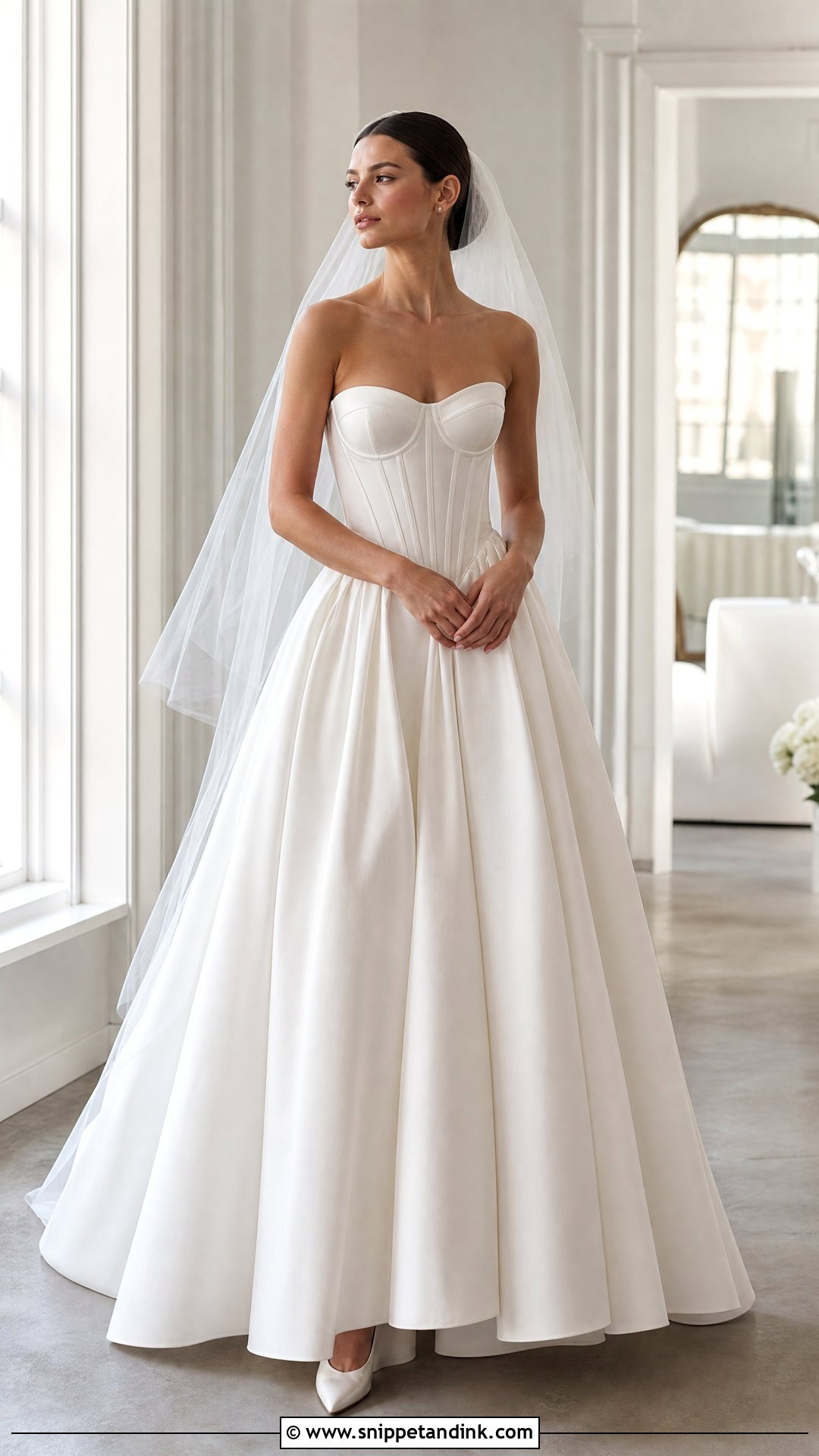
An exposed corset only reads as couture when the construction is excellent. I look at three details: boning channels that sit flat, seams that line up across the cups, and cups that actually support rather than merely sit on the bust. Badly made, it looks like lingerie. A full silk skirt softens it; a fitted crepe skirt makes it editorial. Make sure the boning ends above the hip bones, or it digs in every time you sit. A good fitter can add discreet lining or coverage if you want it. Keep jewellery small and hair smooth so the corsetry stays the focus.
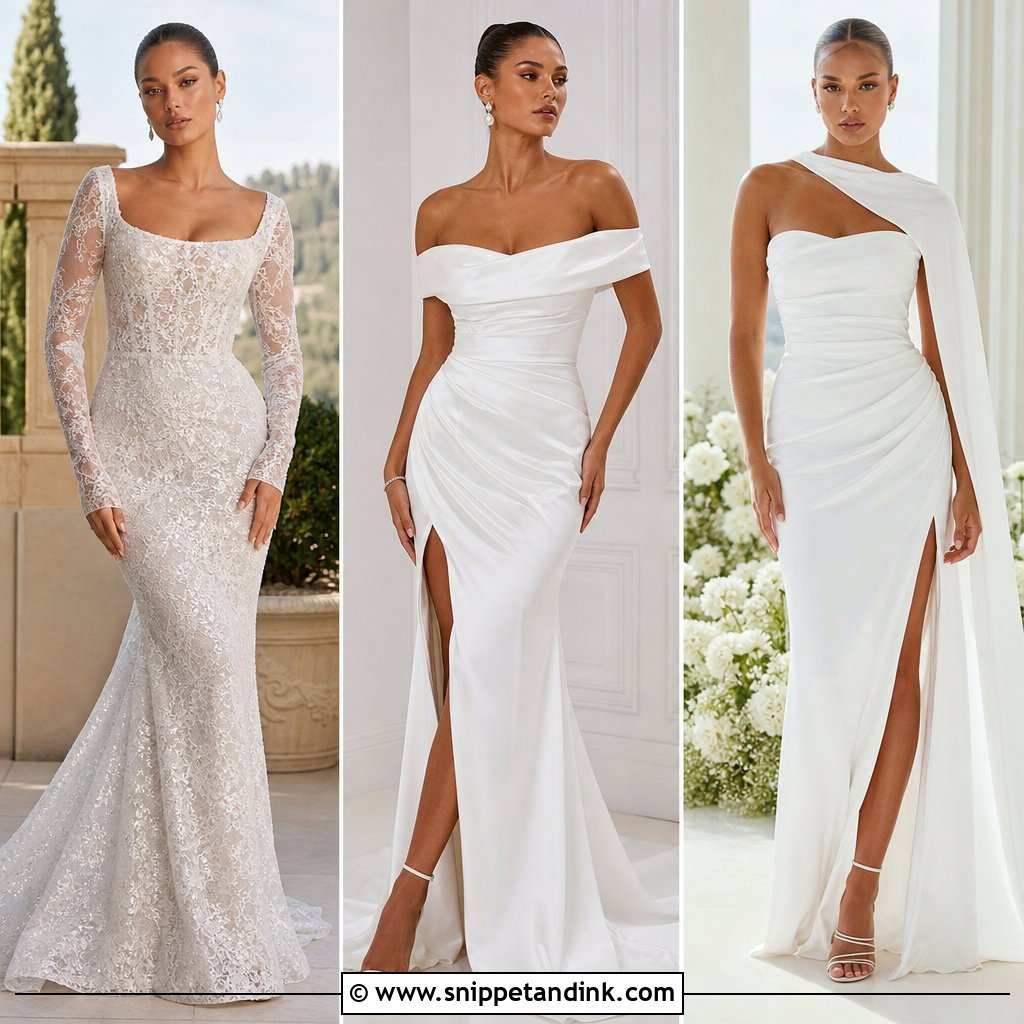
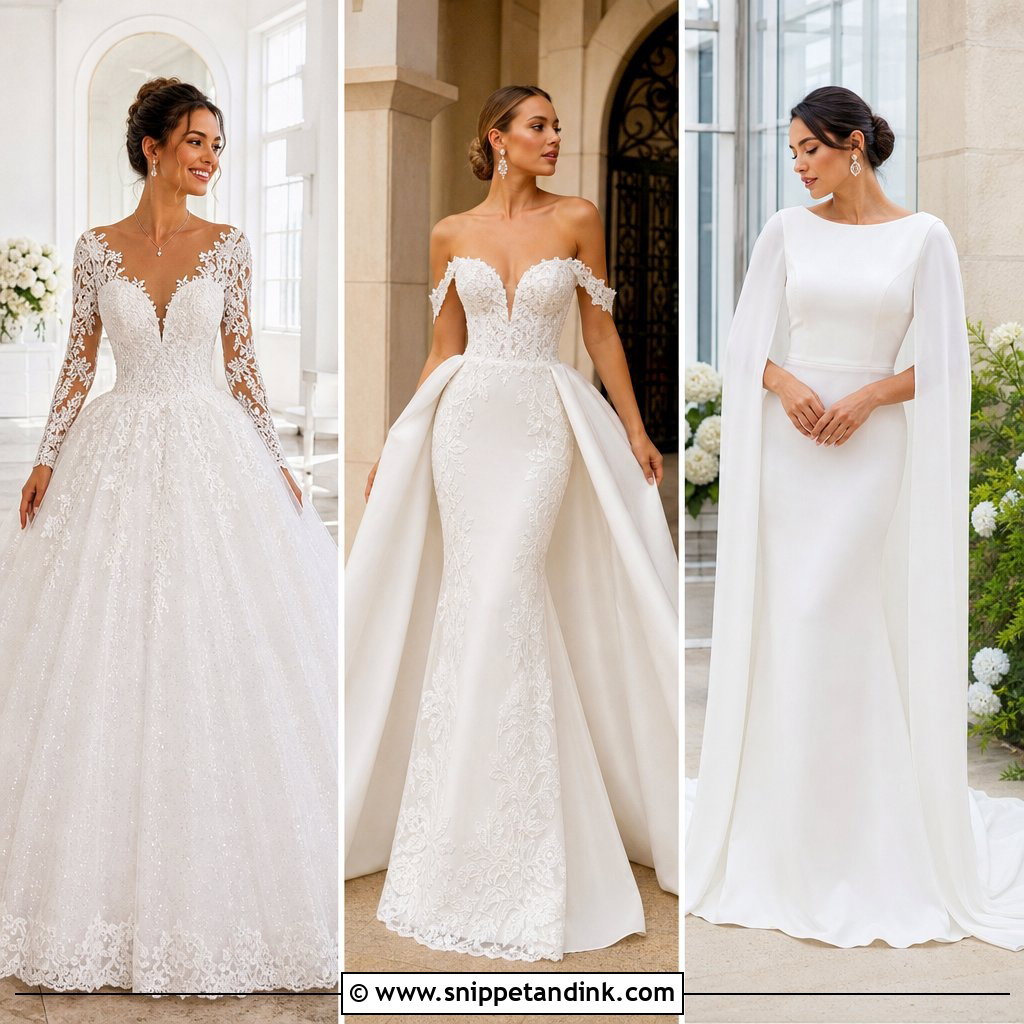
6. High Neck Lace Wedding Dress
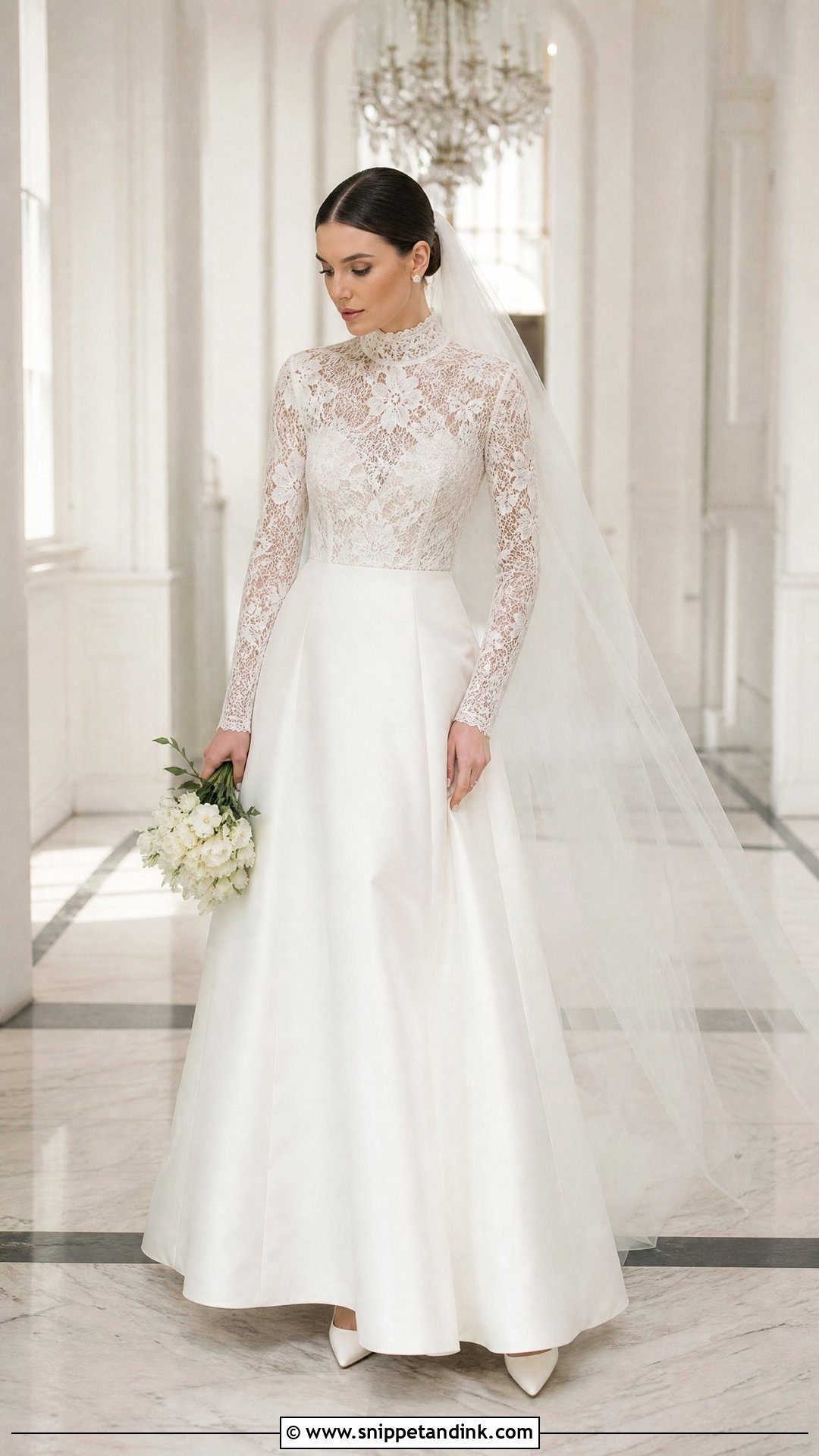
High necklines have become a real alternative to plunging bodices in bridal design, and lace is the fabric that carries them best. Look for clearly defined motifs and hand-finished edges at the collar, shoulders and cuffs, since machine-cut lace edges look rough up close. A fitted long-sleeve bodice can flow into an A-line or a column. Skip the necklace entirely. Pearl studs, a centre-parted bun and an extra-long veil set low behind the head frame it properly. My one fitting check: turn your head fully left and right. If the collar scratches or pulls, it needs easing before the day.
7. Cape Sleeve Wedding Dress
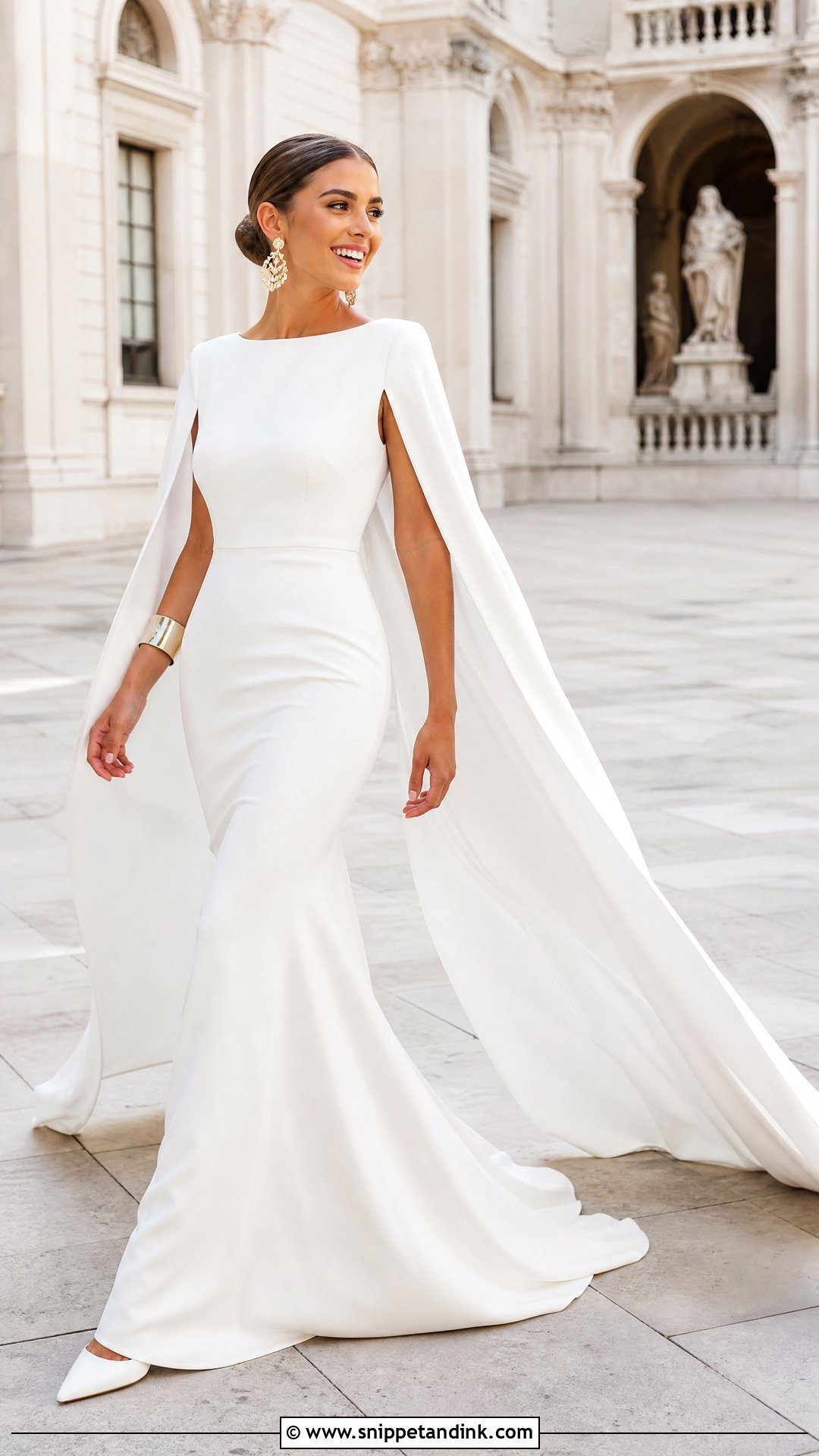
Cape sleeves give you the movement of a veil without needing one. The panels attach at the shoulder and can fall to the elbow or run into a train. The weight of the cape is what decides whether it hangs well: too light and it flies up in any breeze, too heavy and it drags the shoulders back. I ask for the cape to be stitched to an internal shoulder stay rather than the outer fabric alone. A square or bateau neckline holds the front. Practise walking and turning outdoors before the wedding, and skip bracelets that catch.
8. Detachable Overskirt Wedding Dress
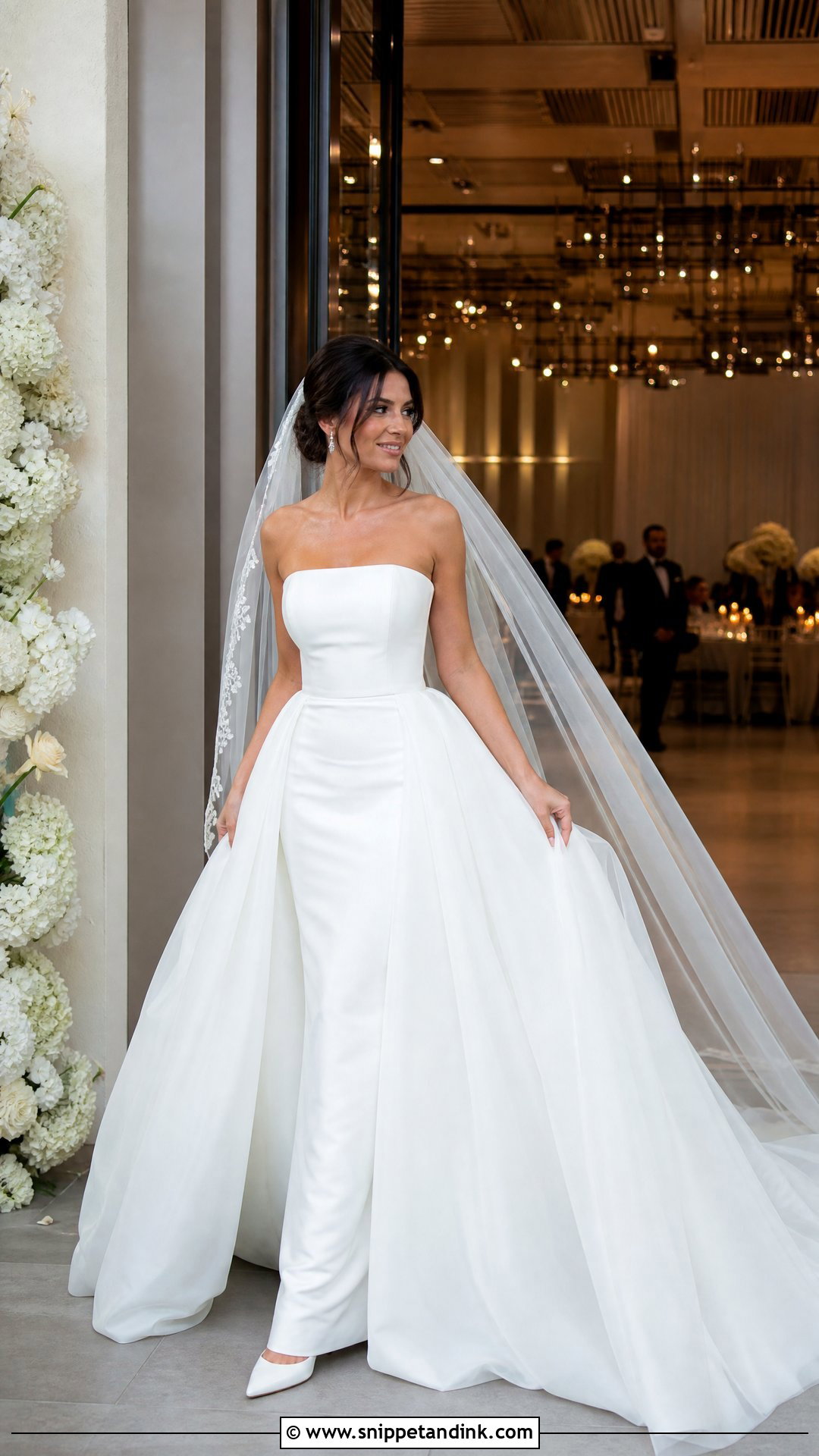
A detachable overskirt is two dresses, and both have to stand on their own. The base should be a column, sheath or mini that you’d be happy to wear all evening. The overskirt attaches at the waist with hooks, buttons or a hidden band, and I check that the join doesn’t leave a ridge under the bodice. Colour match matters more than you’d think: satins from different dye lots shift slightly in tone. Have your helper rehearse removing it at least once before the day so nobody fumbles with hooks in a corridor.
9. Feather Trim Wedding Dress
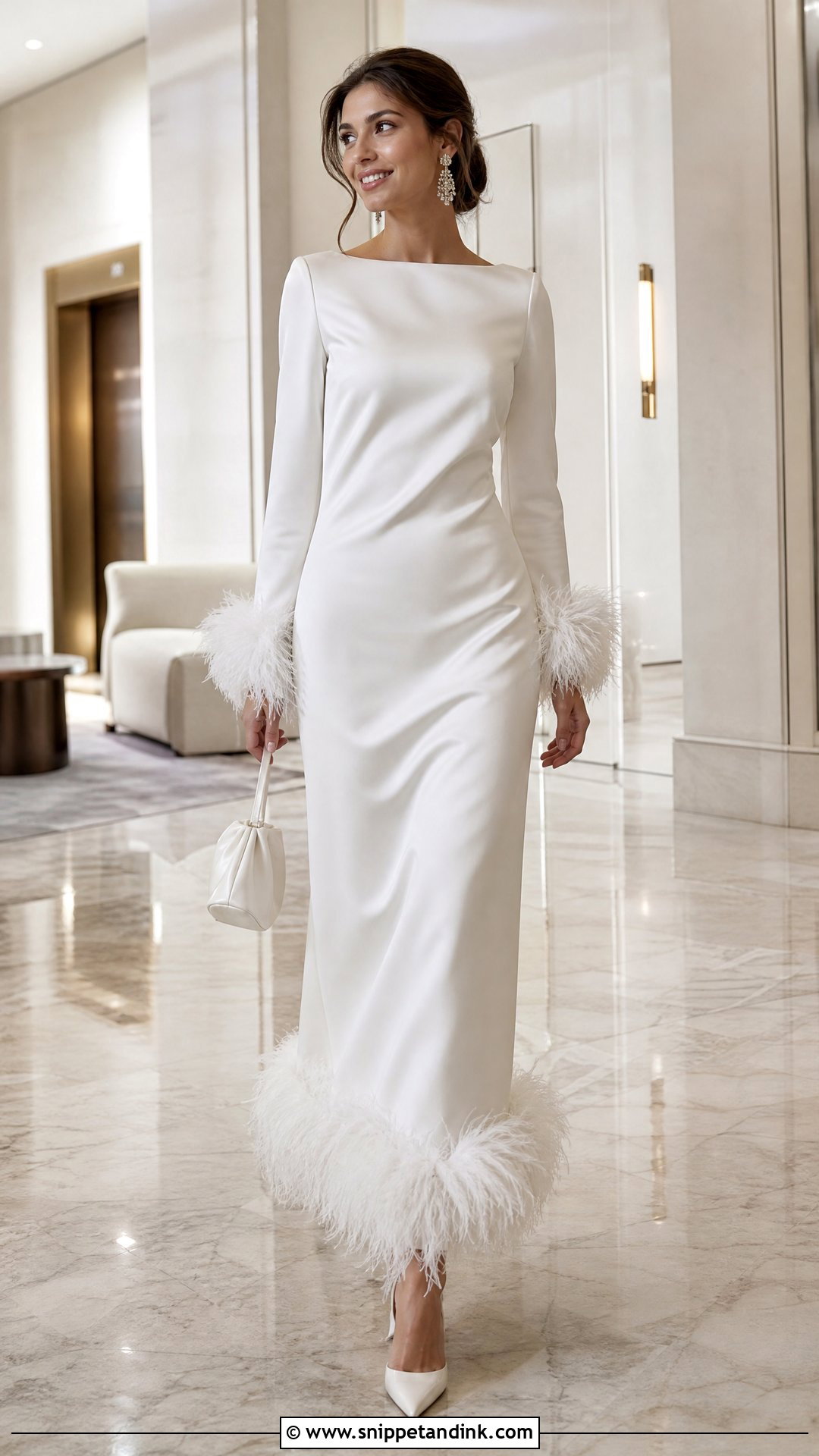
Feather trim moves with every breath of air, which is the appeal. It is also fragile. I keep feathers to the neckline, cuffs, hem or a removable cape and away from the underarm and inner elbow, where friction breaks them down by evening. Steam can flatten some feathers and humidity makes others droop, so ask the maker how to refresh them. Over a simple satin column or a structured mini, the texture stays controlled. A sleek ponytail or compact bun keeps hair out of the trim. Receptions and ballroom venues let it move.
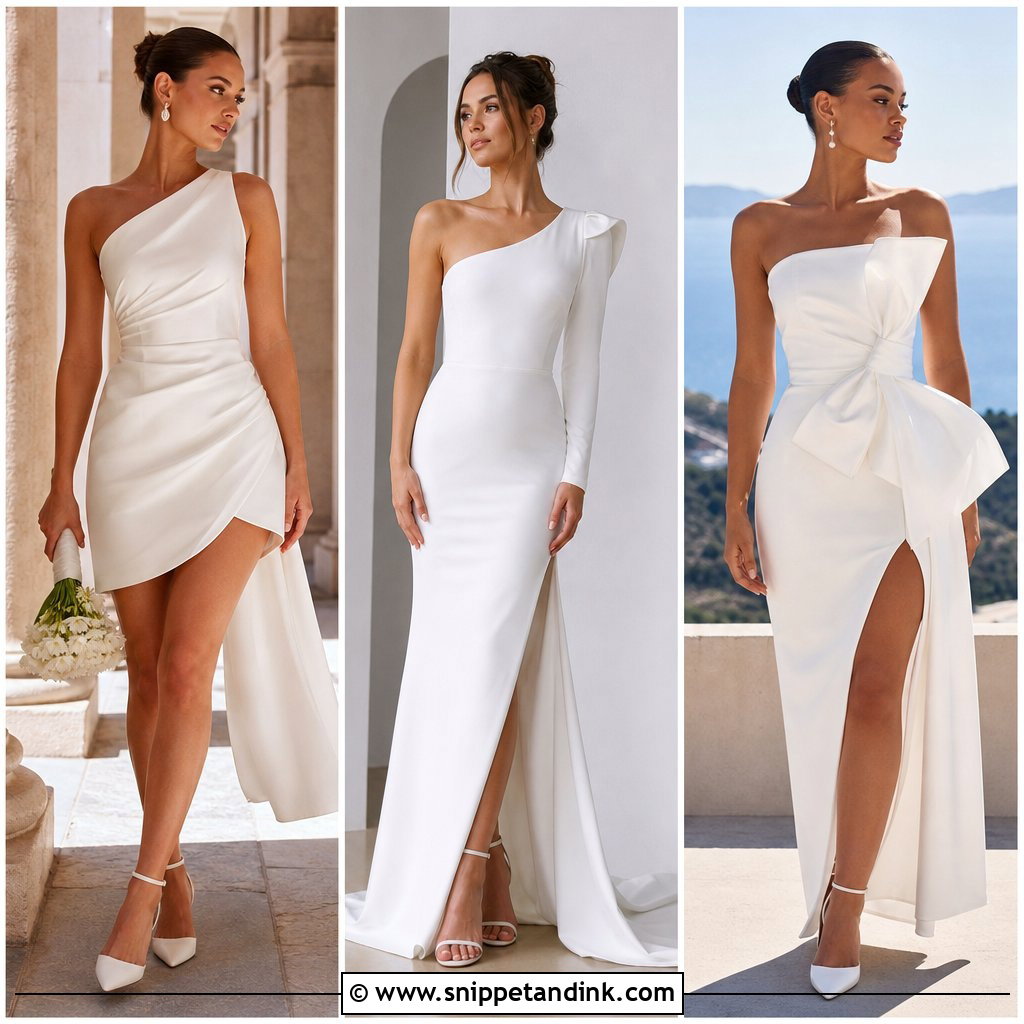
10. Oversized Bow Wedding Dress
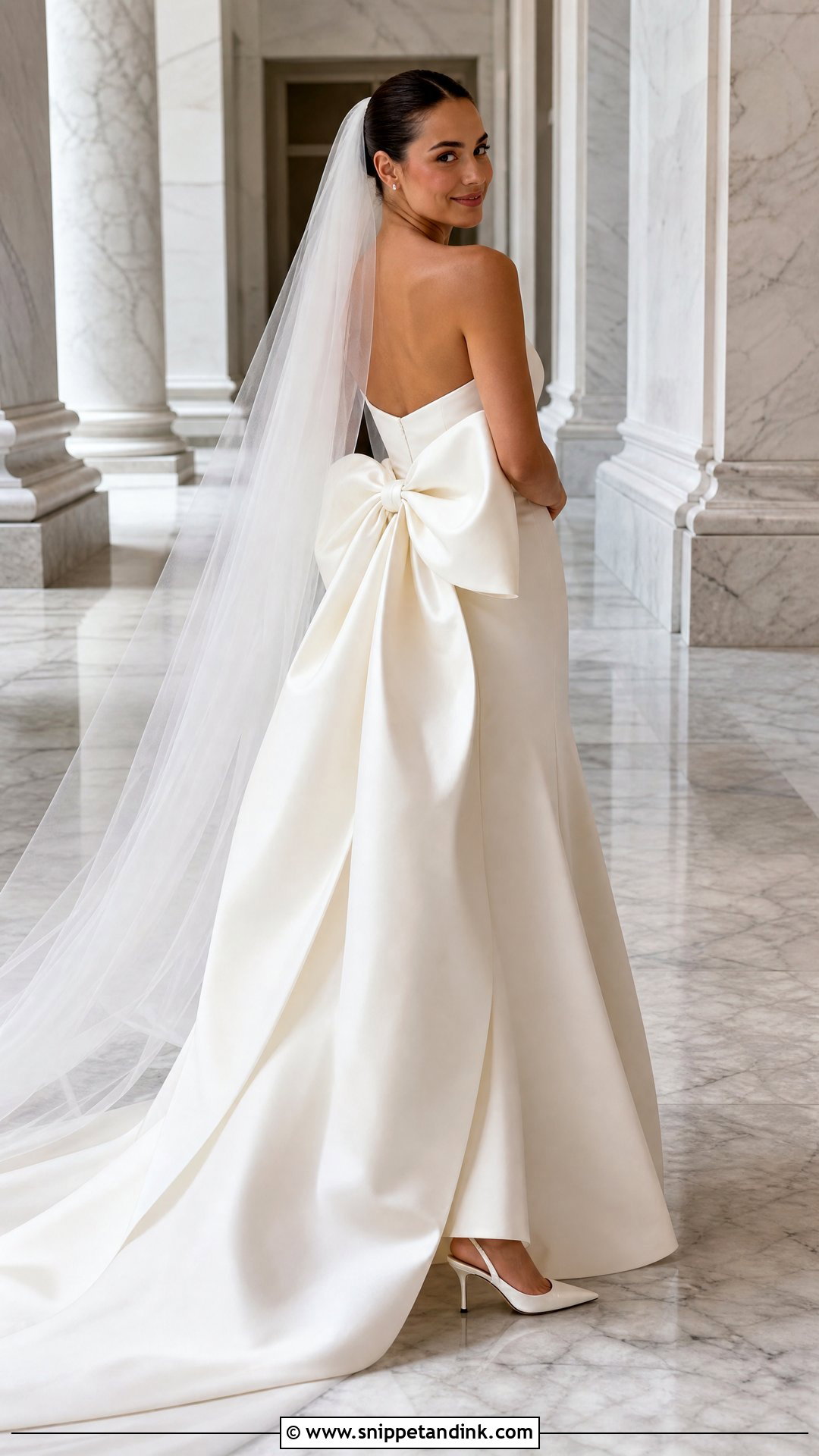
An oversized bow gives a minimal gown a focal point, usually at the back waist where guests see it during the ceremony. Scale is everything: on a petite frame, a huge bow can swallow the silhouette, so I’d mock it up in paper or spare fabric at a fitting before the maker commits. Mikado and faille hold the loops crisply. Decide early where the veil sits, above or below the bow, so neither hides the other. Sit down in it, too, because a back-waist bow gets crushed against a chair all through dinner.
11. 3D Floral Wedding Dress
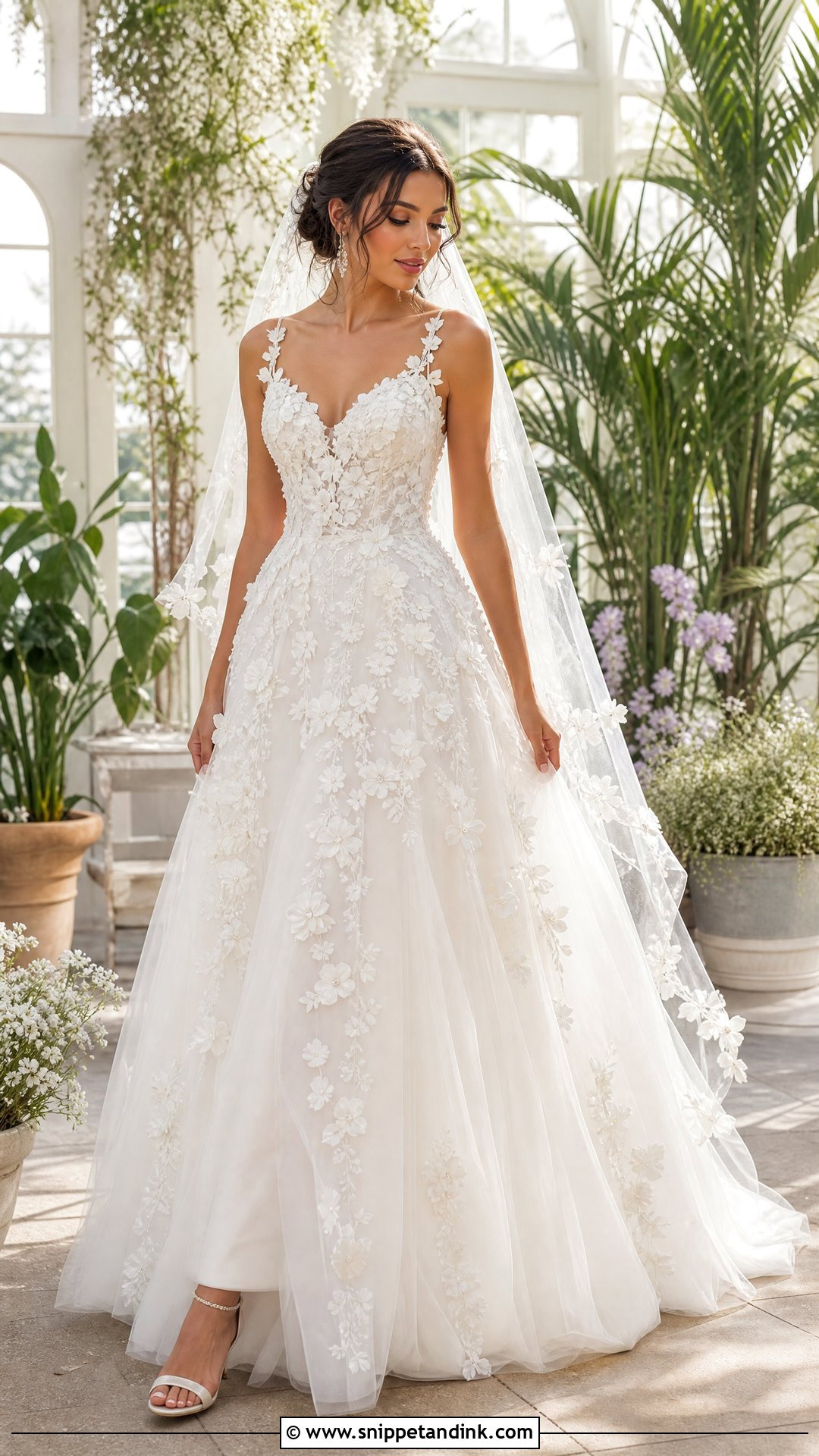
Raised floral appliqués give a dress depth that reads up close and across a room. I look for placement that follows the body, flowers clustered at the neckline and waist and thinning out down the skirt, rather than random scattering. Check every flower’s stitching at fittings; a loose petal snags on a bouquet or a sleeve button. Simple drop earrings, satin sandals and a fine tulle veil with a few matching flowers keep it from getting busy. Outdoors, raised petals pick up grass and damp at the hem, so I’d consider a shorter train for a garden wedding.
12. Pearl Embellished Wedding Dress
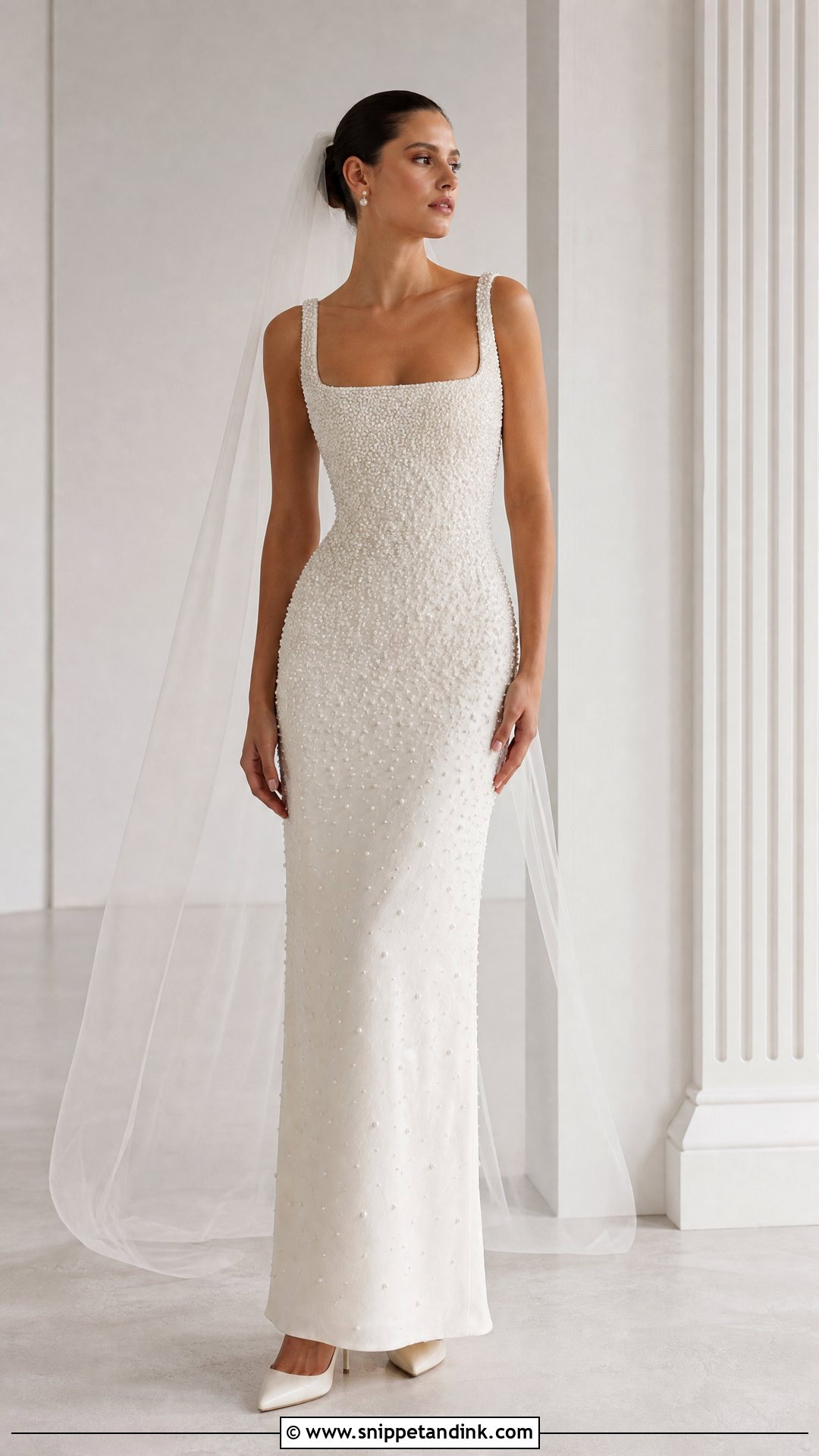
Pearls feel modern when they follow the structure of the dress: corset seams, a square neckline, the line of a sleeve. Scattered all over, they turn fussy. Pearlwork is heavy, so I check the bodice support and the strap anchors before anything else. Run your arms along your sides at the fitting; beads under the arm can rub skin raw by midnight. Choose earrings in a different pearl size from the dress so they don’t look matched from a kit. A plain veil keeps the beadwork visible.
13. Crystal Embellished Wedding Dress
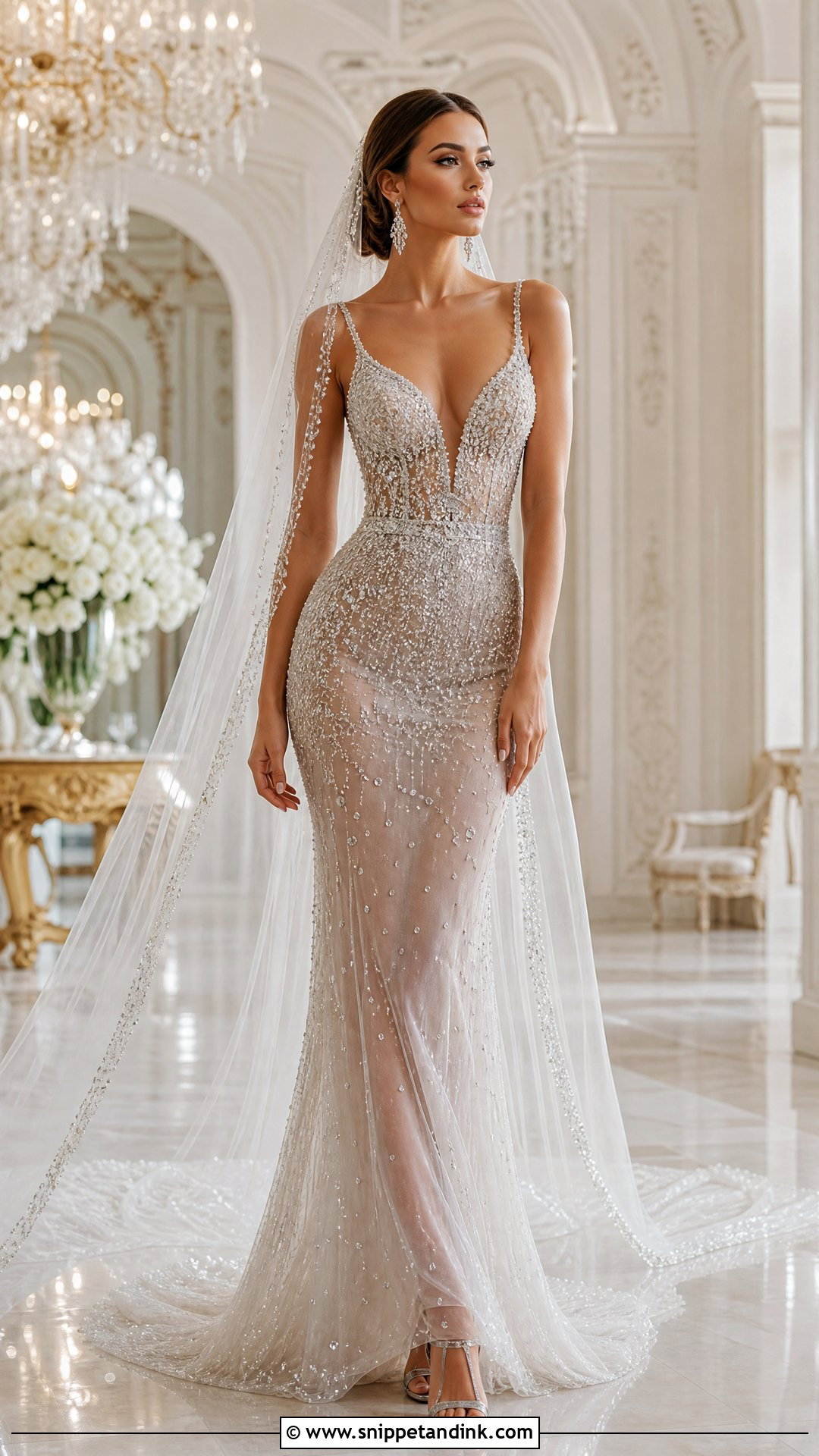
Crystal work belongs to evening. Concentrated on the bodice and fading down the skirt, it defines the waist and keeps the eye up near the face. Dense crystal adds real weight, so I check whether the gown has an inner corset doing the work or whether everything hangs from the straps. A smooth side-parted bun and silver heels keep it controlled. Leave the textured clutch at home; it snags crystal mesh. Under reception lighting, the gown catches light with each step on its own.
14. Lace Column Wedding Dress
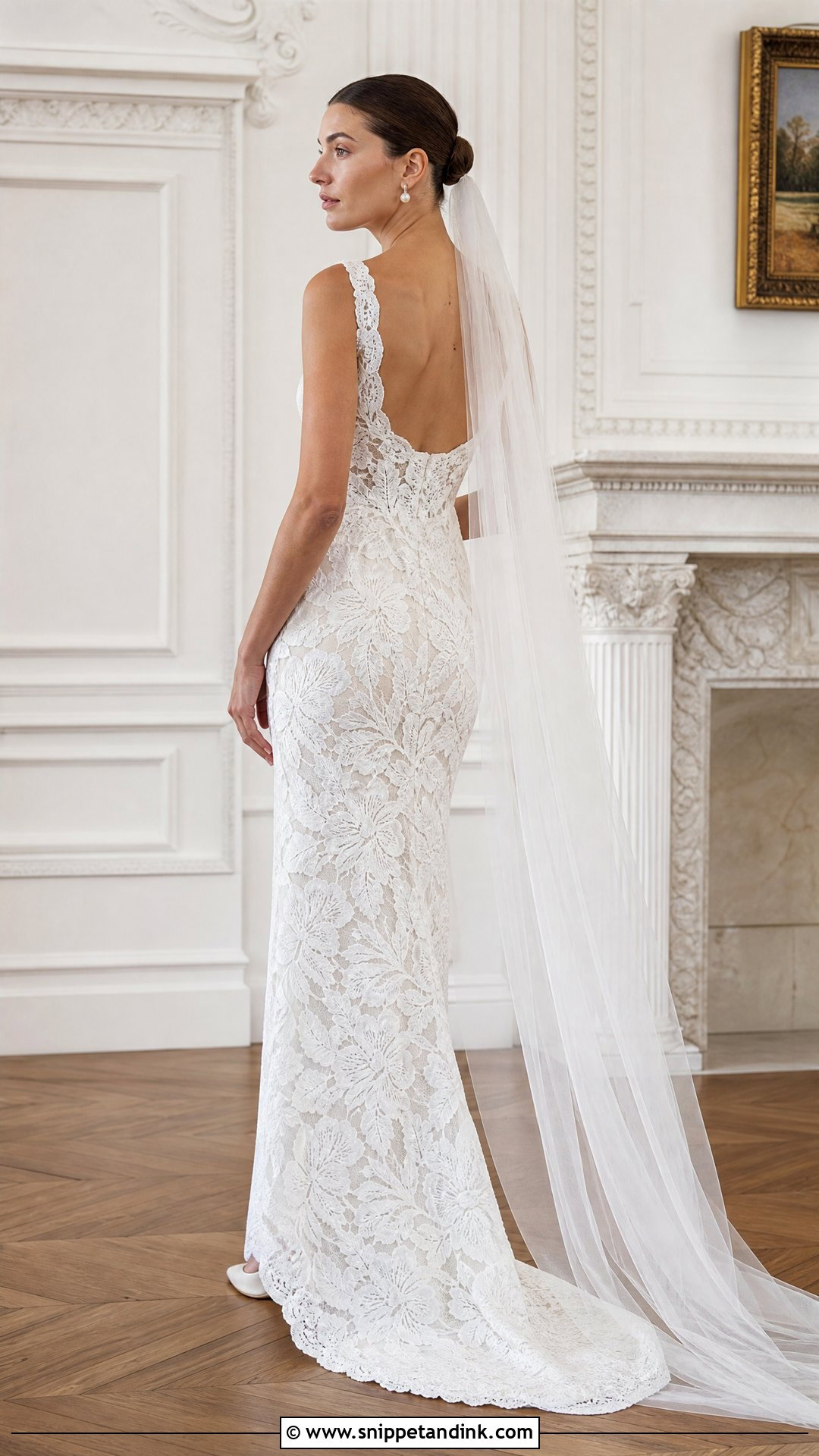
A lace column is long and lean, so the lace pattern does almost all the talking. Fine vines suit a slight frame; bold botanical or geometric lace suits a taller bride. Traditional lace is sitting next to handmade and crochet-like textures in bridal collections right now. A square or bateau neckline gives structure and a low back gives contrast. I check the lining in daylight and indoor light, because the skin-tone lining that looks invisible in a boutique can turn grey or pink outdoors. The hem should end on a lace border, not cut through a motif.

15. Crochet Wedding Dress
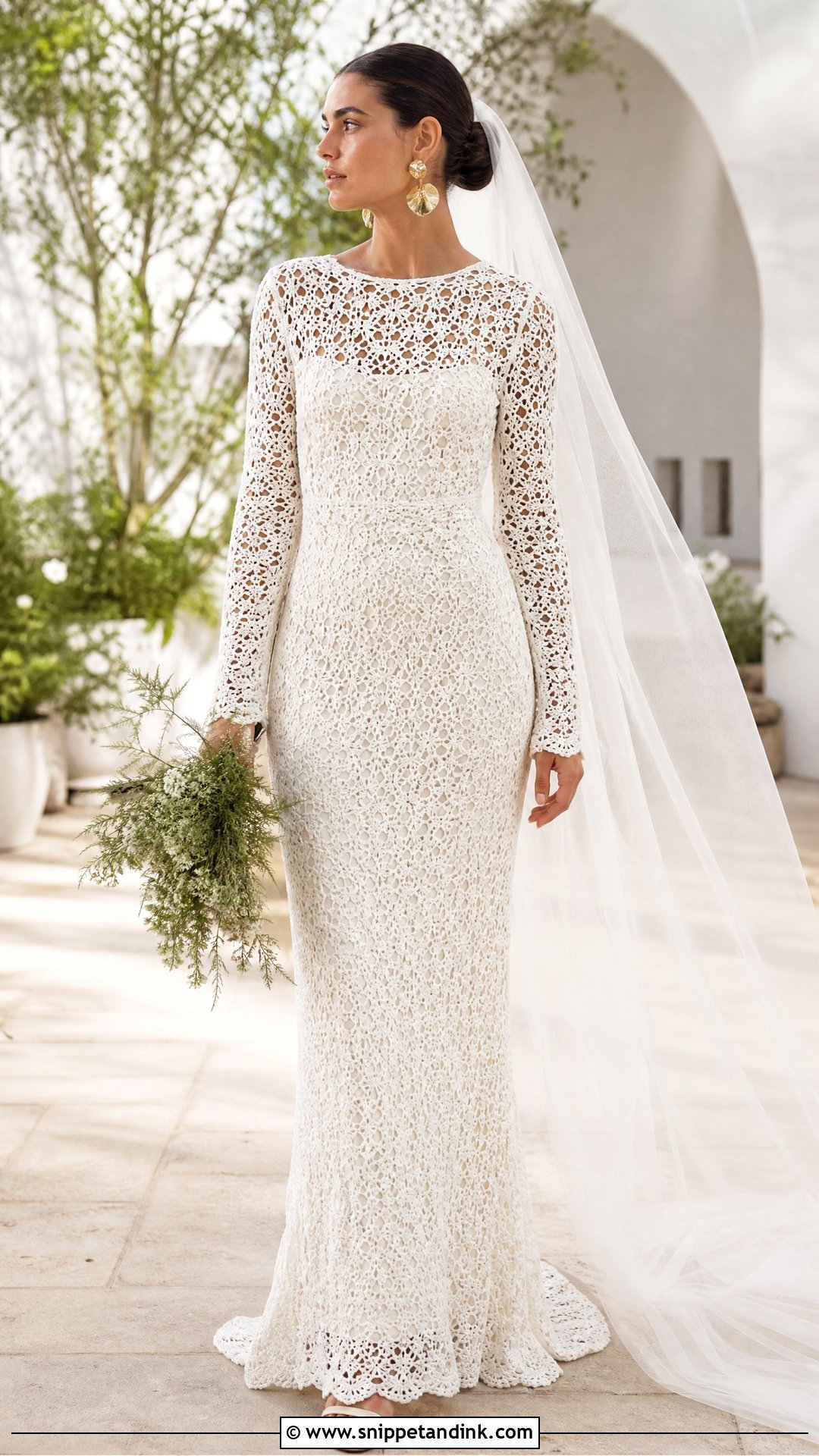
A crochet wedding dress brings handmade texture into a modern shape, and openwork like this has had a real revival at the couture end of bridal. Fine crochet over a smooth lining keeps it from reading like a beach cover-up. Crochet stretches over a day of wear, so I ask for stays at the shoulders and a lining that takes the weight. During fittings, I look at where the motifs land on the bust, waist and hips; a motif centred on the wrong spot is very hard to fix later. Gold sculptural earrings and leather sandals suit it.
16. Sheer Organza Wedding Dress
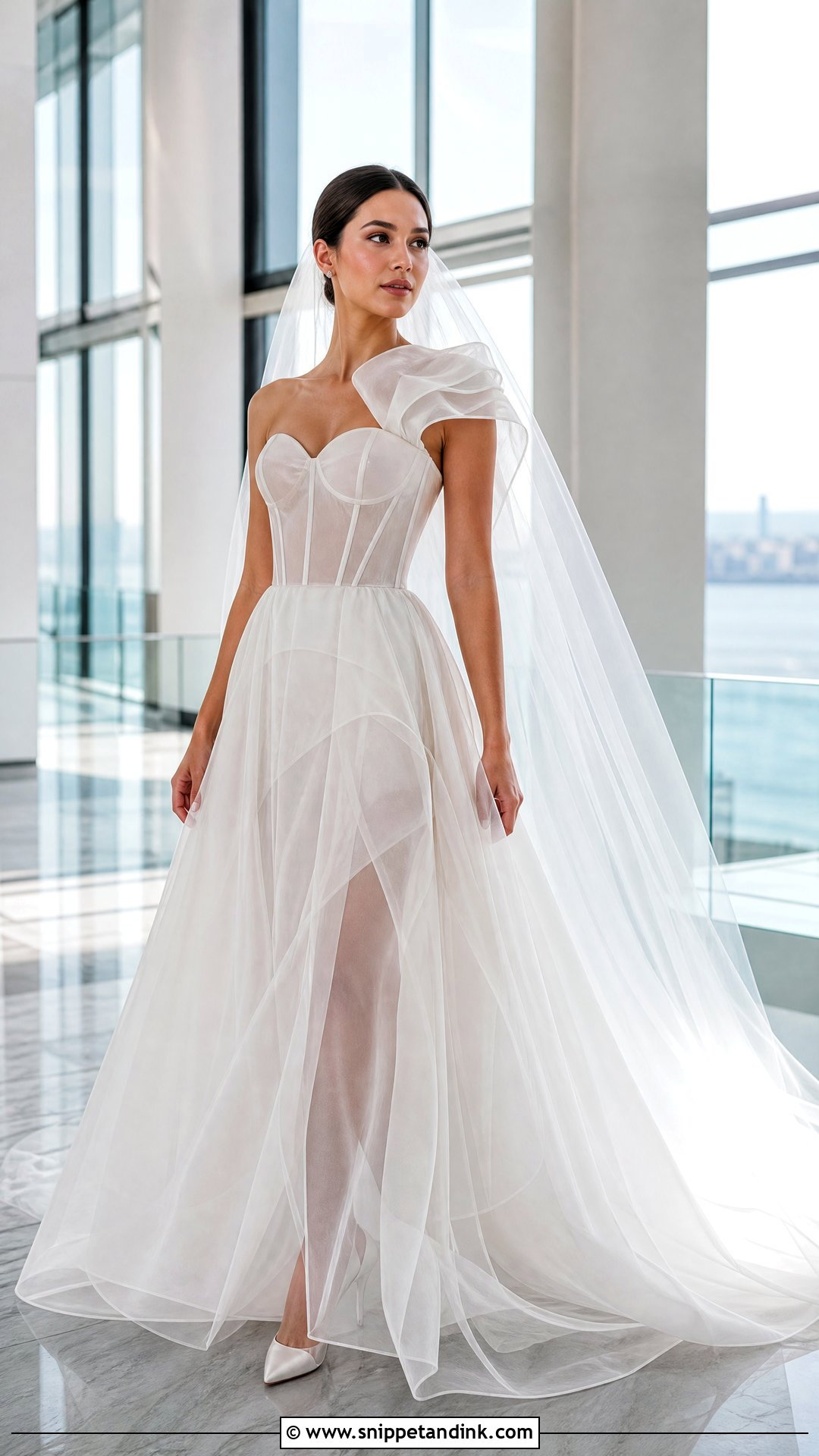
Layered organza gives volume without the visual weight of satin, because light passes through it. A structured ruffle, a sculptural shoulder or a floating overskirt pushes it toward a runway effect. The trade-off: organza is crisp, and raw seams scratch. I run my hand inside every seam at the first fitting. In strong sun or camera flash, a single organza layer turns see-through, so ask about an extra underlayer. Keep the bouquet compact, since hugging crushes the layers.
17. Pleated Wedding Dress
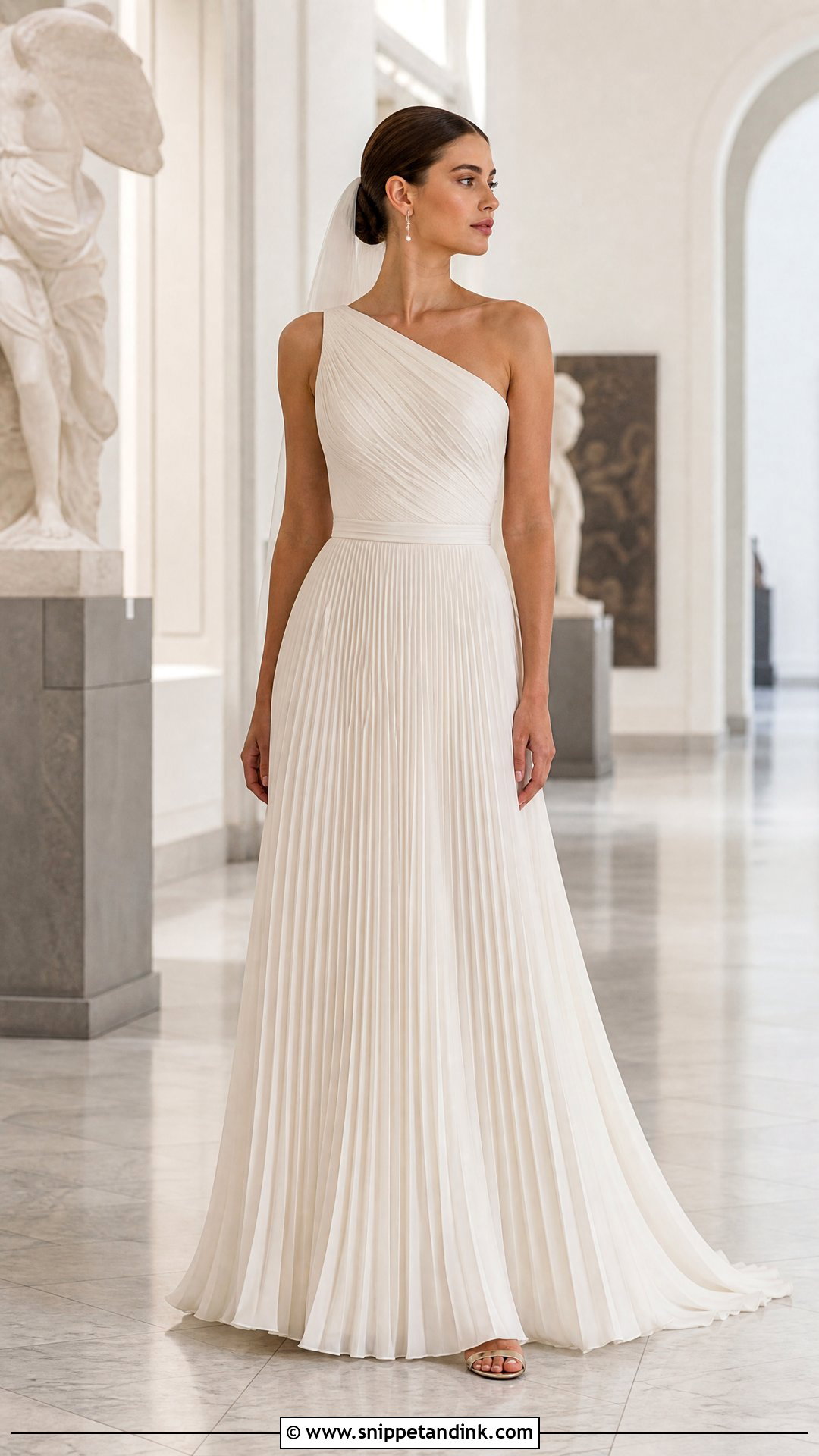
Pleats are set with heat at the mill, and that tells you how to treat them. Fine accordion pleats soften a skirt; wide sculptural pleats give an architectural line. Alterations are where pleated gowns go wrong: taking in a seam can break the pleat spacing, so I only let a tailor alter at the plain bodice or at a seam the maker designed for it. Pressure flattens pleats too, so transport the gown hanging. A halter or strapless bodice balances the detail below, and a sleek bun keeps the look minimal.
18. Bubble Hem Wedding Dress
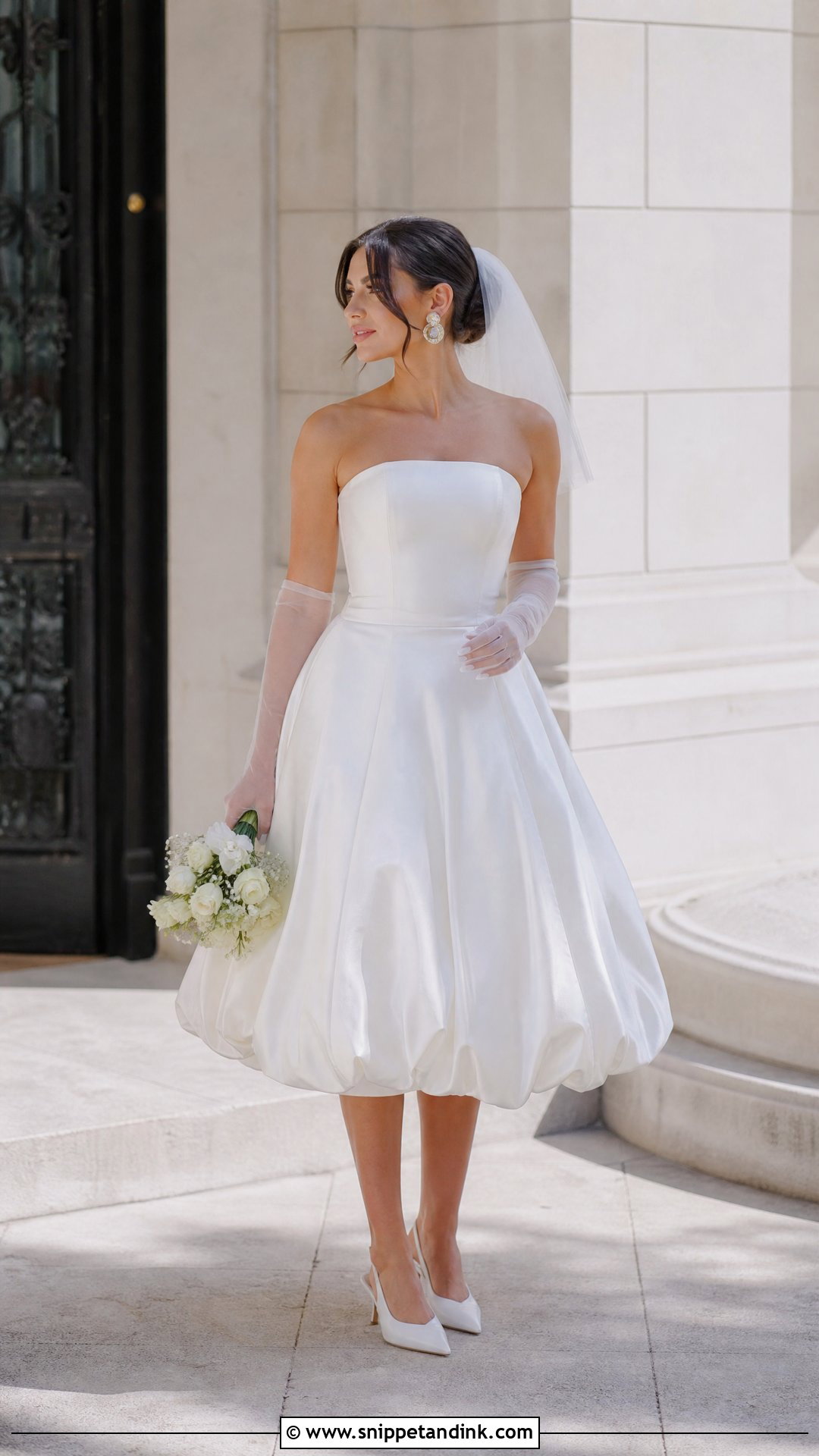
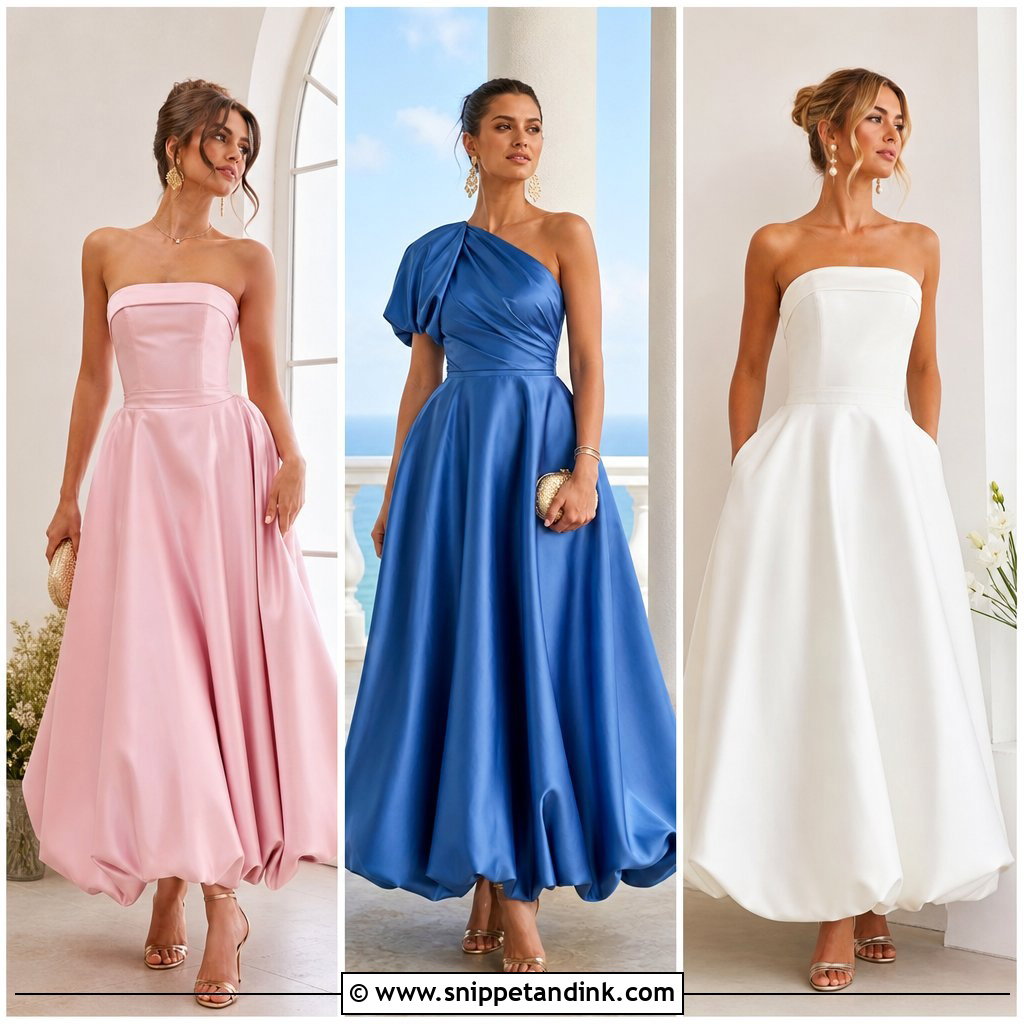
A bubble hem gathers the skirt back in at the hem, so you get volume with a short, playful outline. It needs body to hold the shape, which means taffeta, faille or crisp satin. Because the length is mini or tea, your shoes become a main feature and deserve the same care as the dress. I check the inner hem lining: too tight, and you shuffle. Gloves, pointed slingbacks and a short veil suit it. I usually suggest this as a second look for the reception or a civil ceremony.
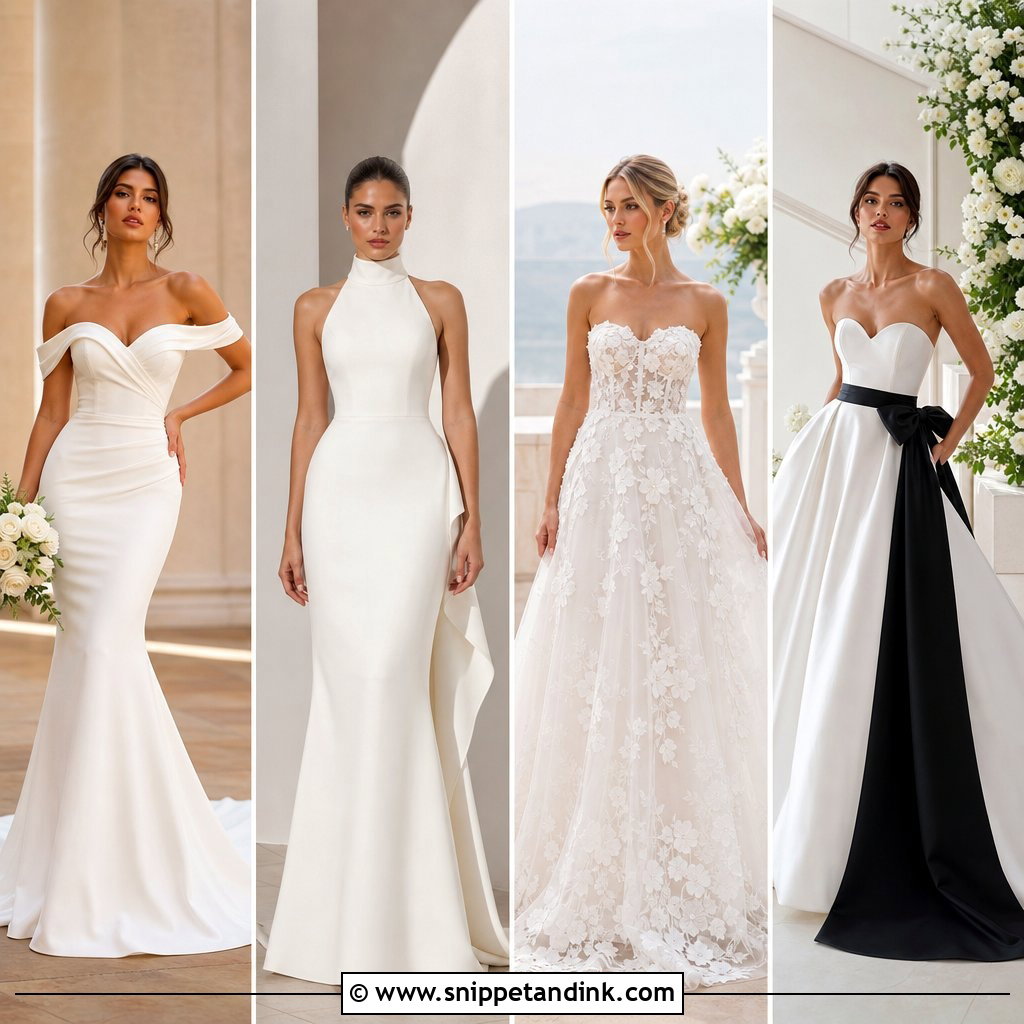
19. Asymmetric Wedding Dress
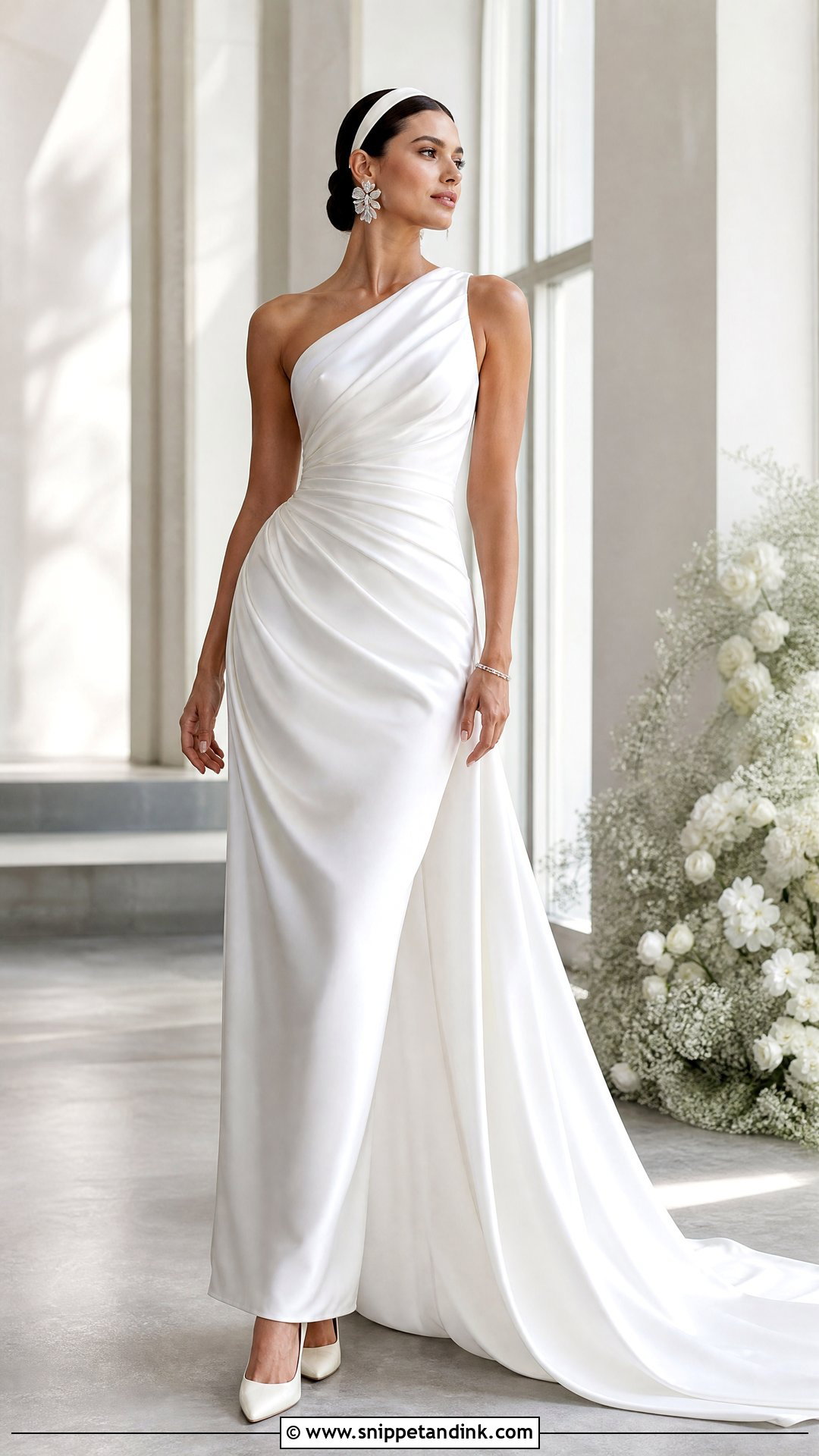
Asymmetry creates movement through an uneven neckline, diagonal drape or a skirt that falls differently on each side. A one-shoulder satin gown with a side train is the strongest version for a formal venue. The fitting challenge is counterintuitive: the dress has to hang evenly while looking uneven, so I check it on a mirror from both sides and from behind. Wear one sculptural earring and set the bun on the side away from the shoulder detail. The bustle must hold without pulling the line off course.

20. Peplum Wedding Dress
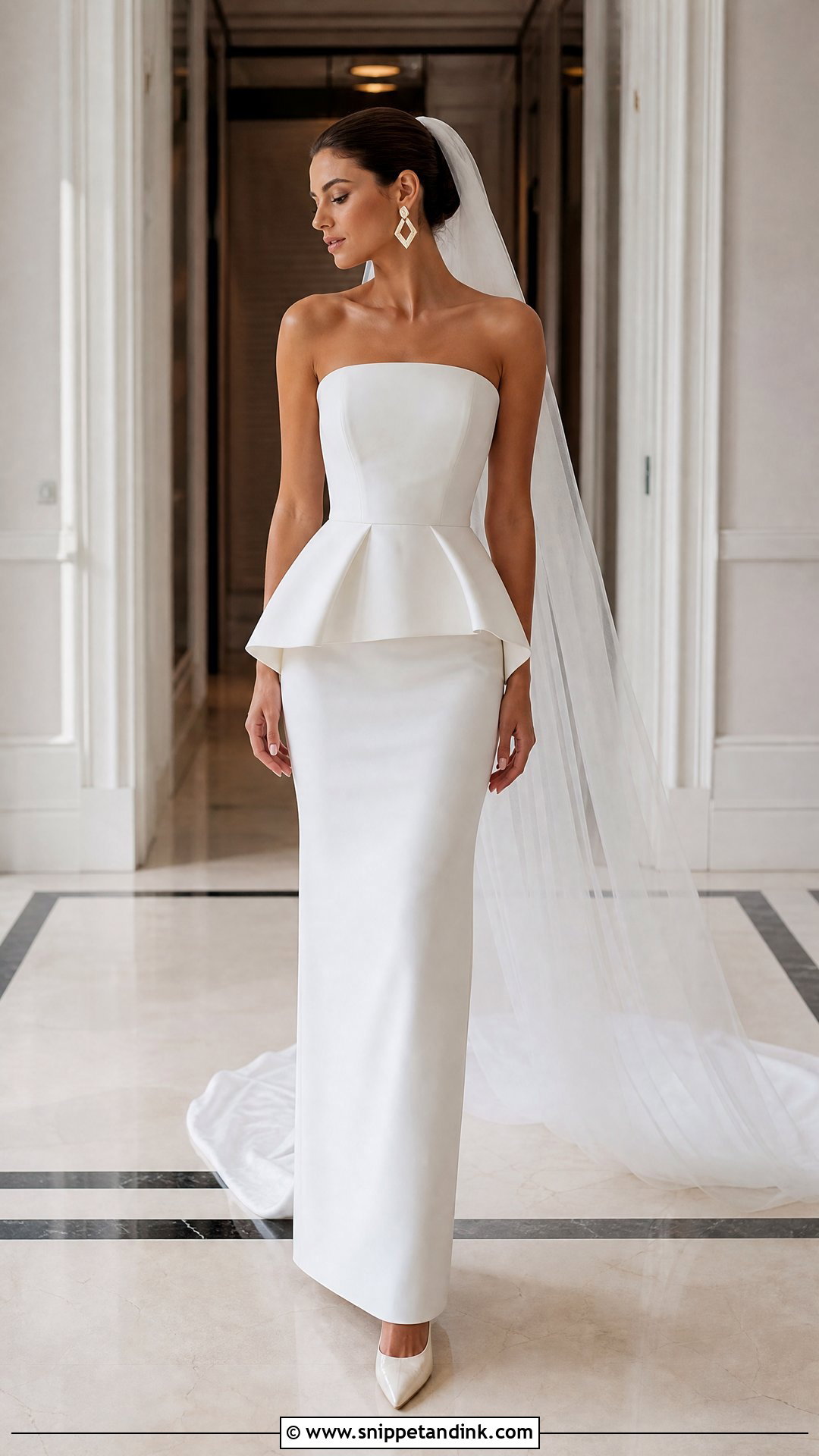
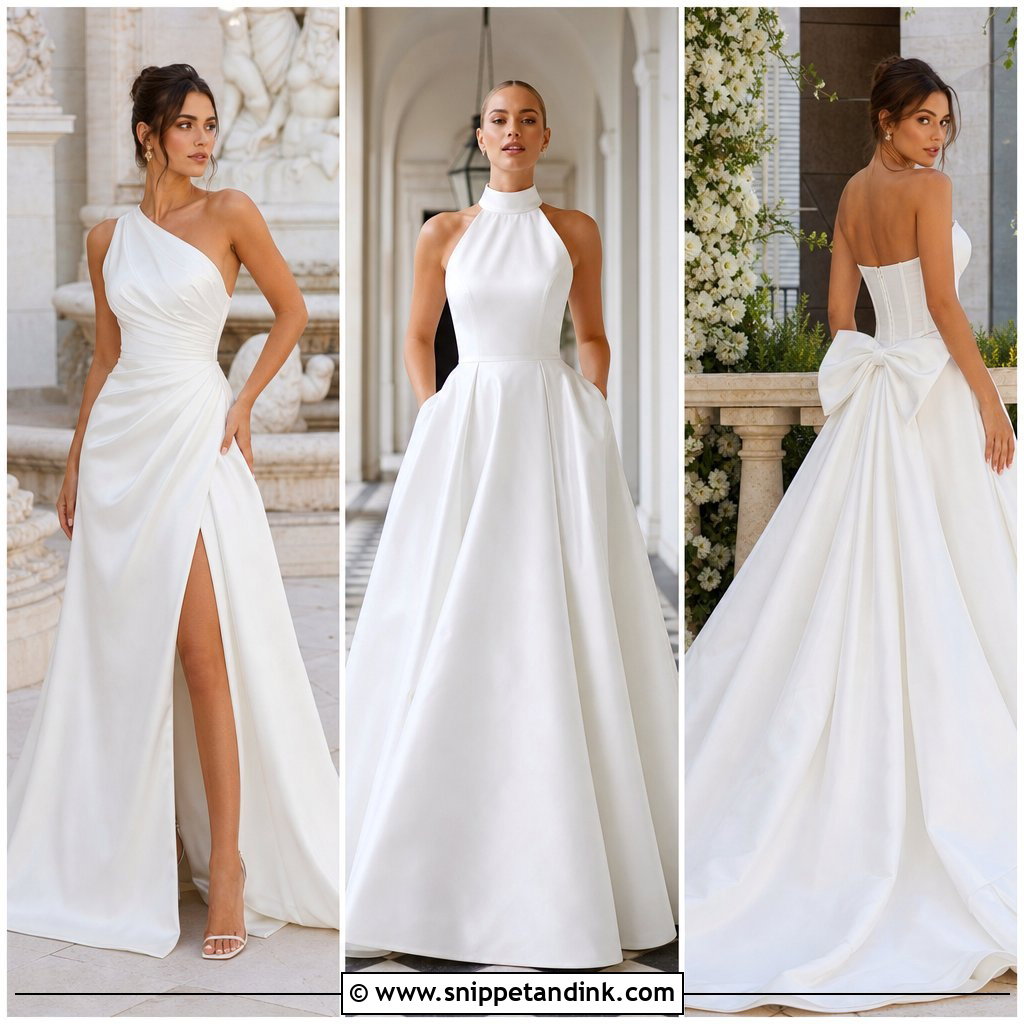
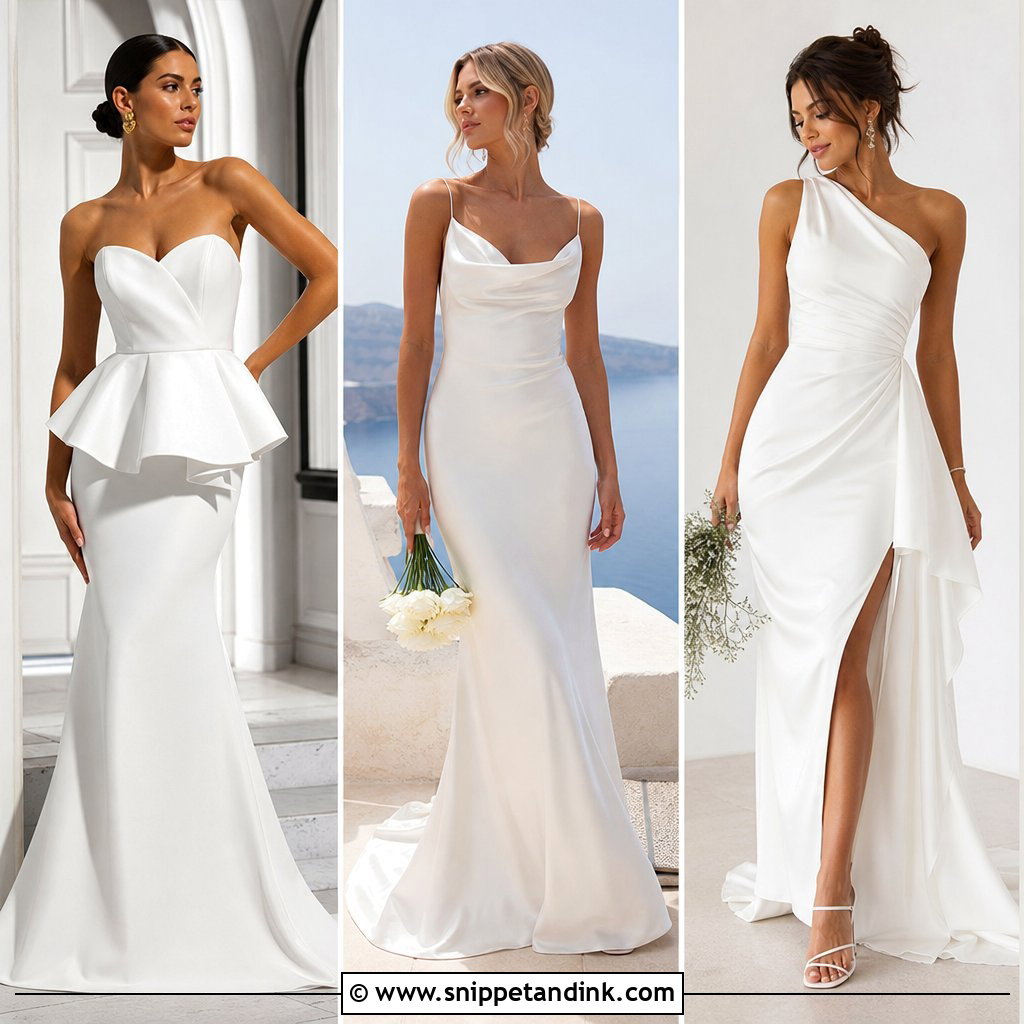
A peplum adds a sculpted flare at the waist. Over a narrow column skirt it reads couture; over an A-line it softens. The peplum needs interfacing or a structured lining to hold its curve, and without it the shape droops by the evening. Skip any extra belt; another horizontal line breaks the silhouette. I’d have you sit for at least a few minutes at the fitting, because a stiff peplum can poke out at odd angles when seated. With good proportion, it suits a wide range of body shapes.
21. Hooded Wedding Dress
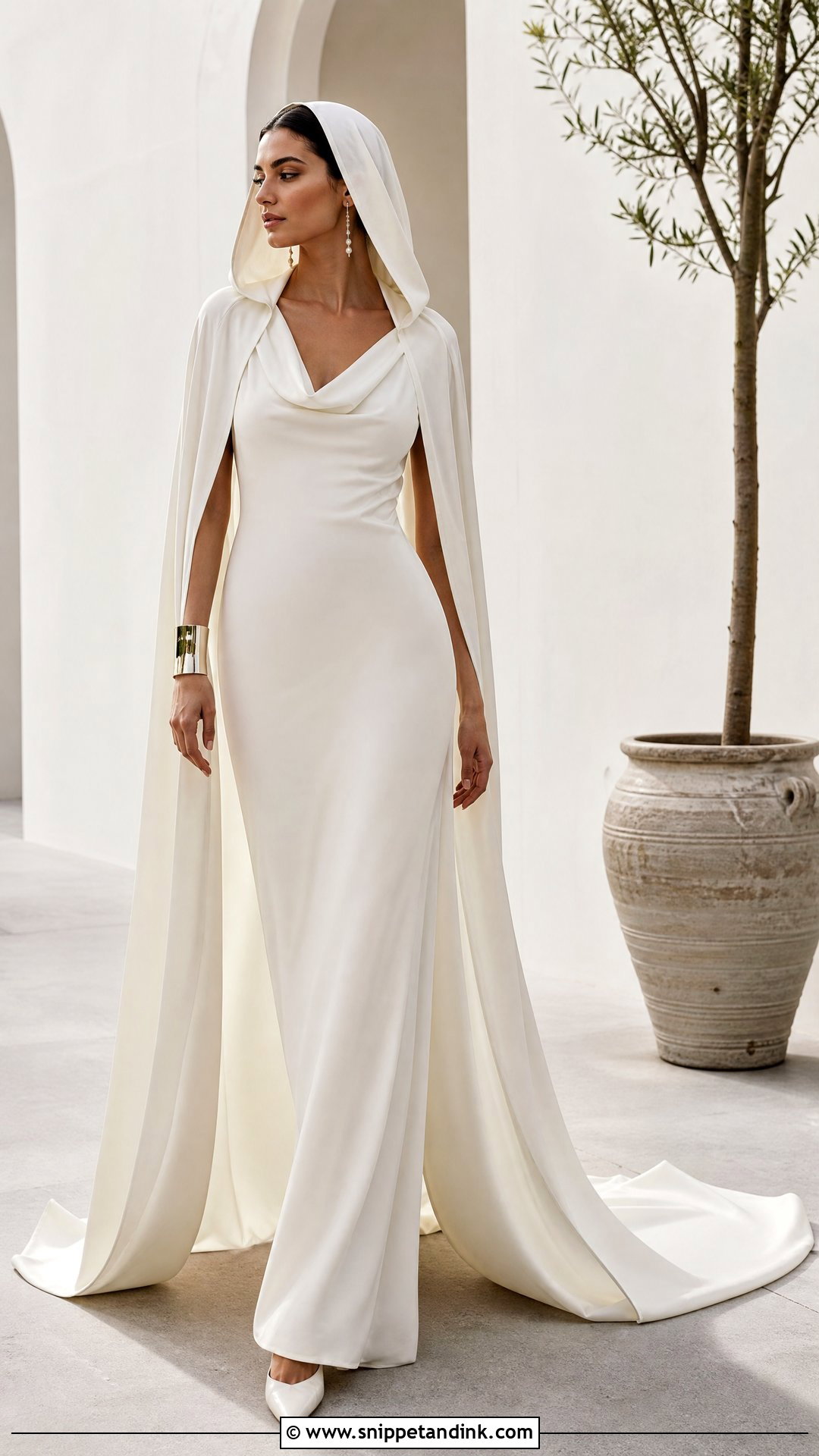
A hooded wedding dress frames the face and can stand in for a veil. The hood should attach to the neckline or a detachable cape and drape without pulling the bodice backward, which happens when it’s cut from a heavy fabric. I always coordinate with the hairstylist: hair has to stay low and compact so it fits under the hood, and the bride should practise raising and lowering it a few times without catching pins. A defined eye or a bold lip gives editorial contrast. If the cape becomes a train, double-check its fastening.
22. High Low Wedding Dress
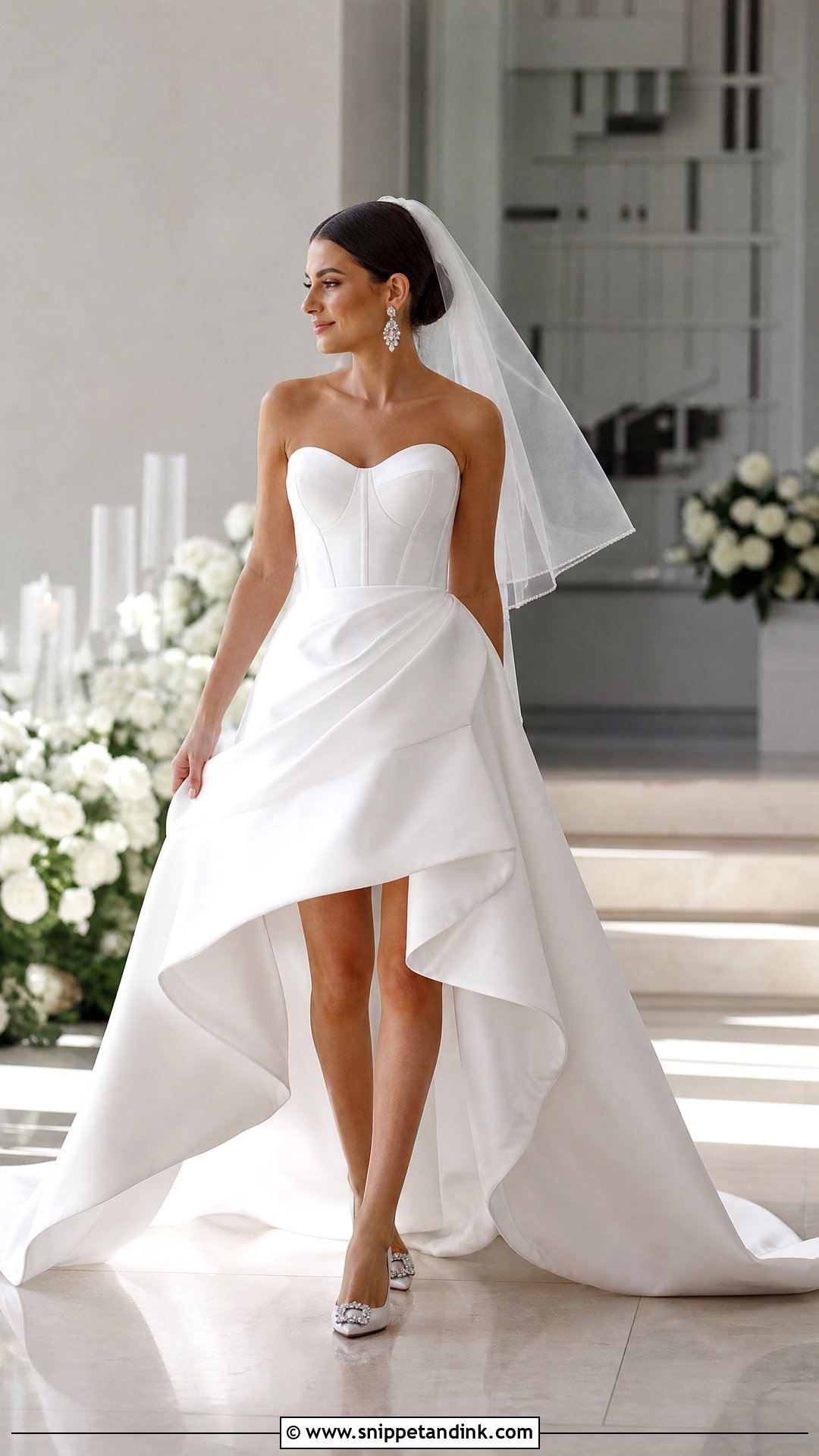
High-low hems show off your shoes and keep the train behind you. The front usually finishes above the ankle and sweeps longer at the back. The shoes now get as much attention as the gown, so I’d choose them before the final hem is set. A strapless corset or off-the-shoulder bodice balances the uneven proportion. Walk across grass, stairs and polished floors during fittings, because a stiff front hem can catch on a step. Pick a fingertip veil, not a cathedral, so it doesn’t fight the train.
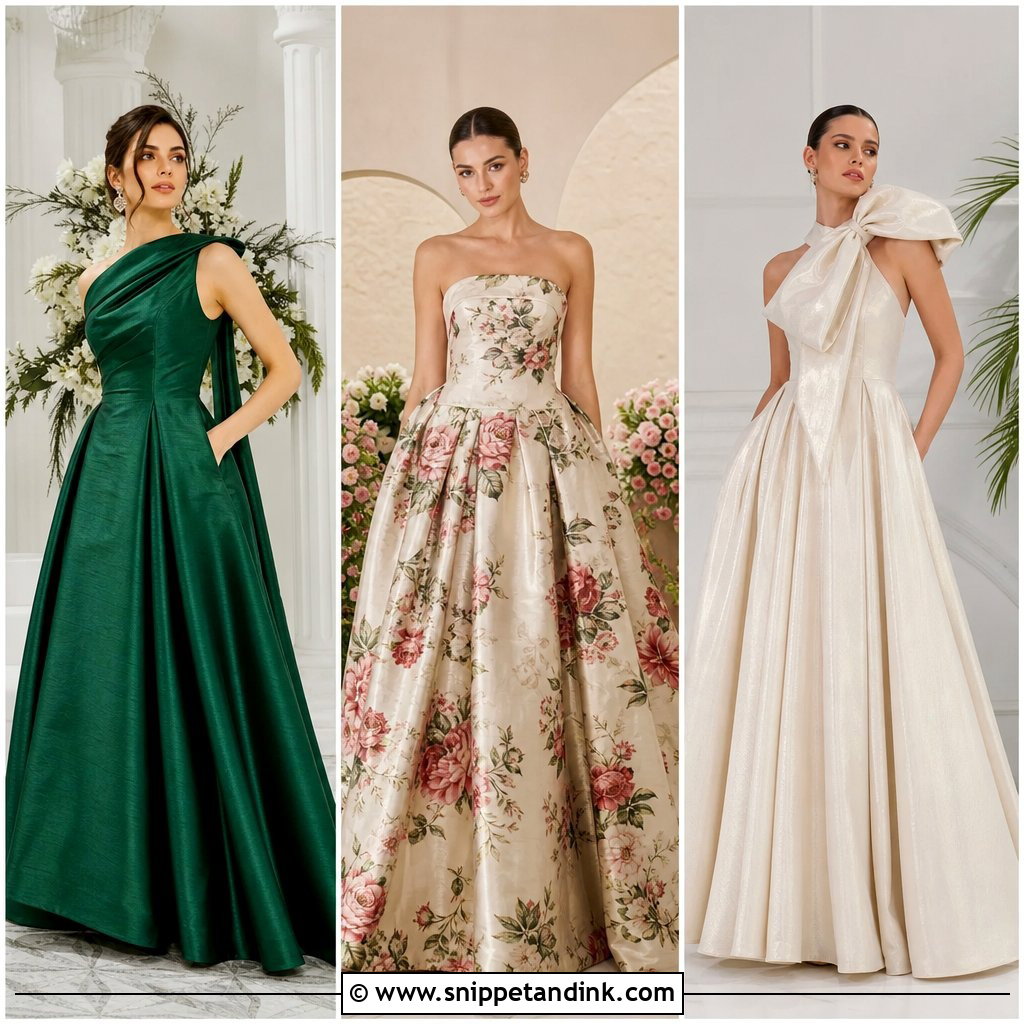
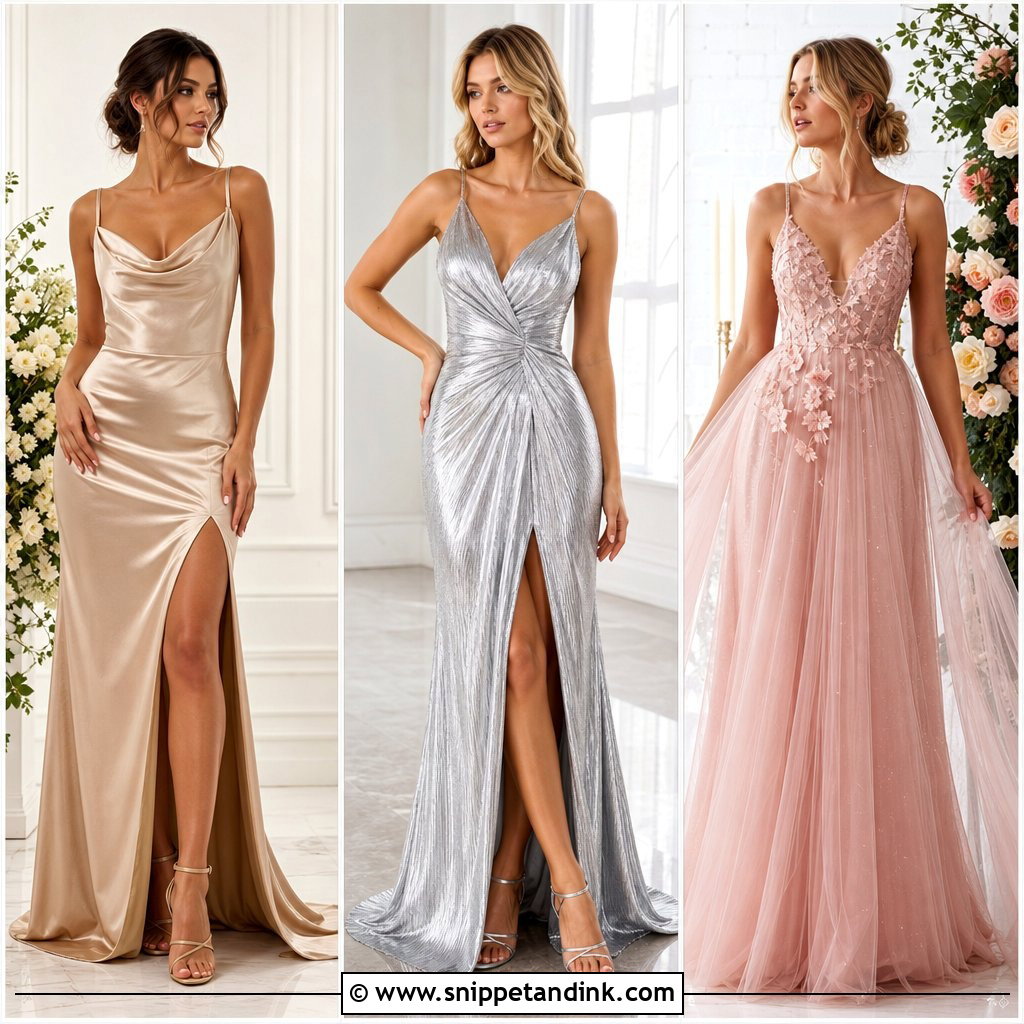
23. Silver Wedding Dress
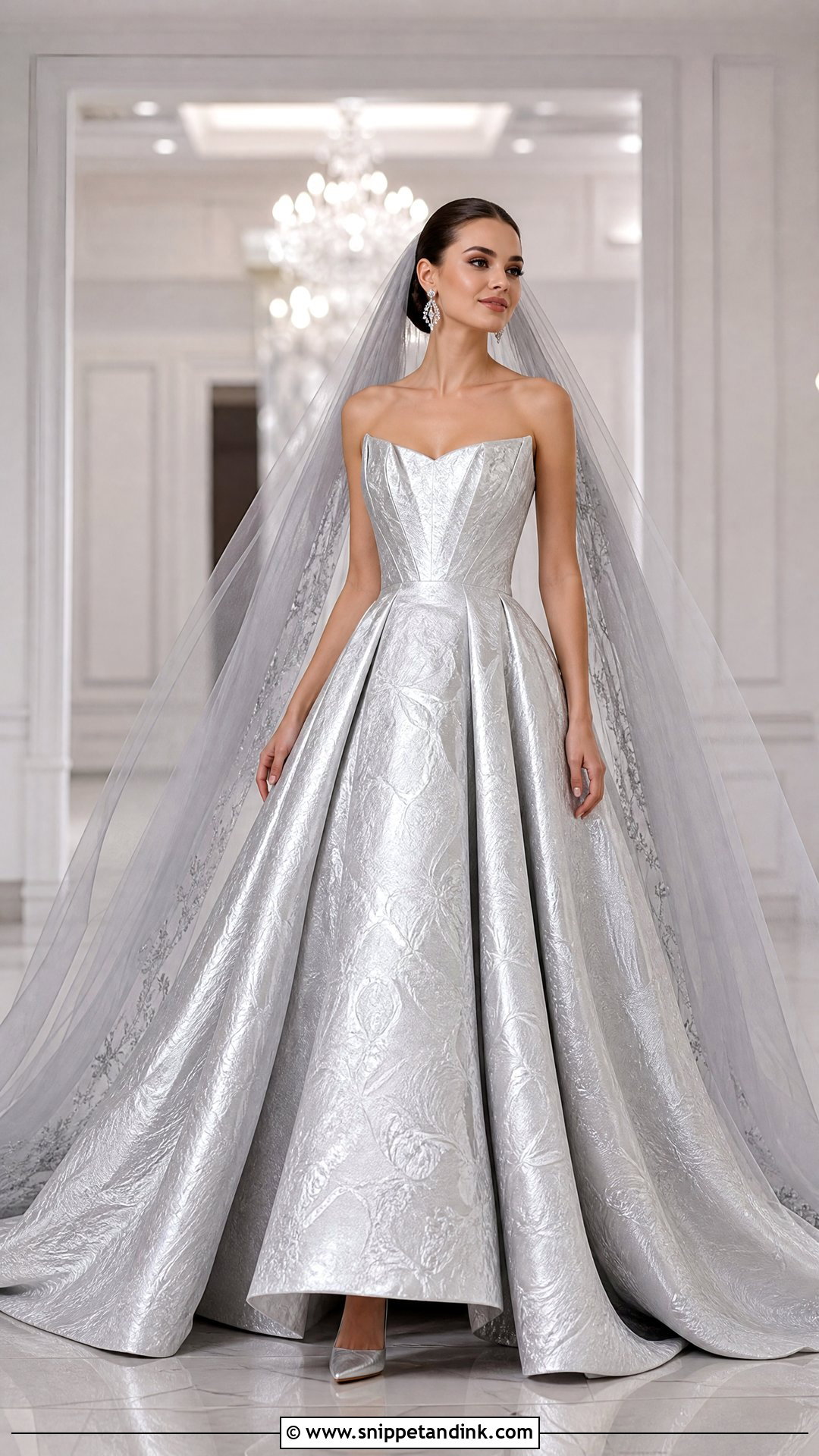
Silver is the most temperamental colour on this list. Metallic jacquard, crystal tulle and liquid satin all change tone dramatically between daylight, warm indoor light and flash, so I look at a swatch in all three before ordering. Pale silver is easier to wear than mirror-bright silver, which can flatten the skin in photos. A column or ball gown can both carry it. Match the veil, shoes and jewellery in the same lighting, or the shades will clash. Cool, luminous makeup and a smooth bun suit it.
24. Black And White Wedding Dress
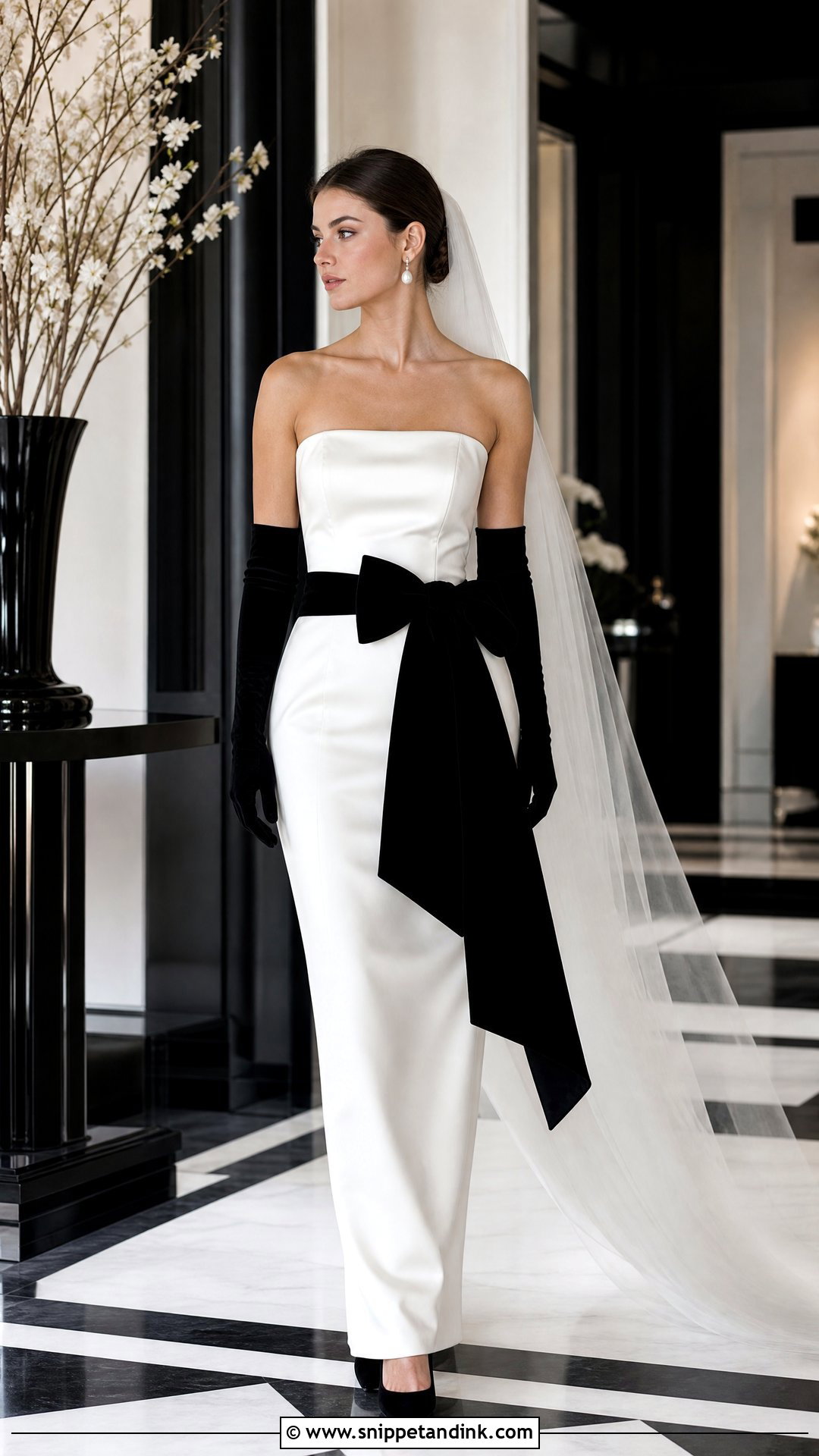
Black and white works when the black is used in one or two places only: a velvet waist bow, opera gloves, a few appliqués or a detachable overskirt. Put it everywhere and it starts to look costume. I’d test black velvet against ivory satin before committing, because some dark trims shed lint or bleed dye onto light fabric. Black pointed pumps, pearl earrings and a plain ivory veil keep the contrast clean. It reads well in minimalist spaces, historic hotels and monochrome venues.
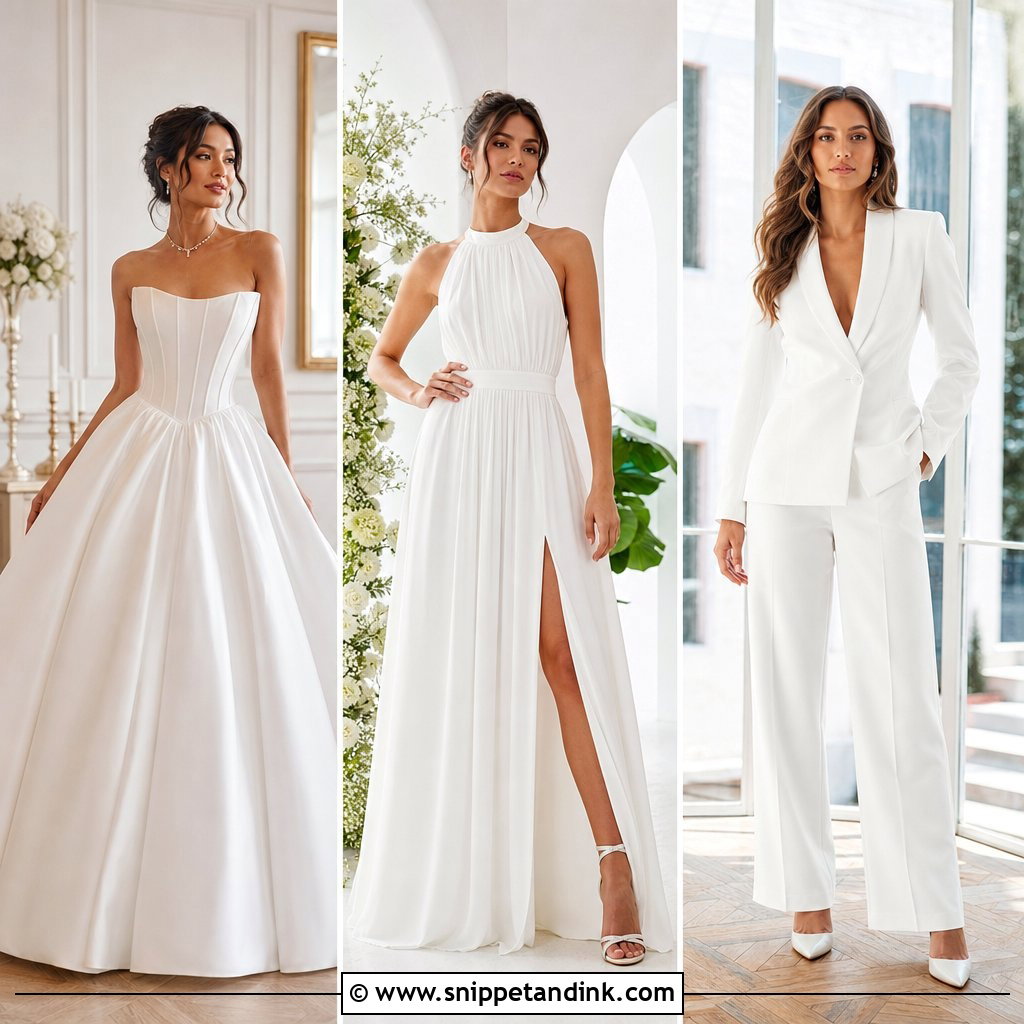
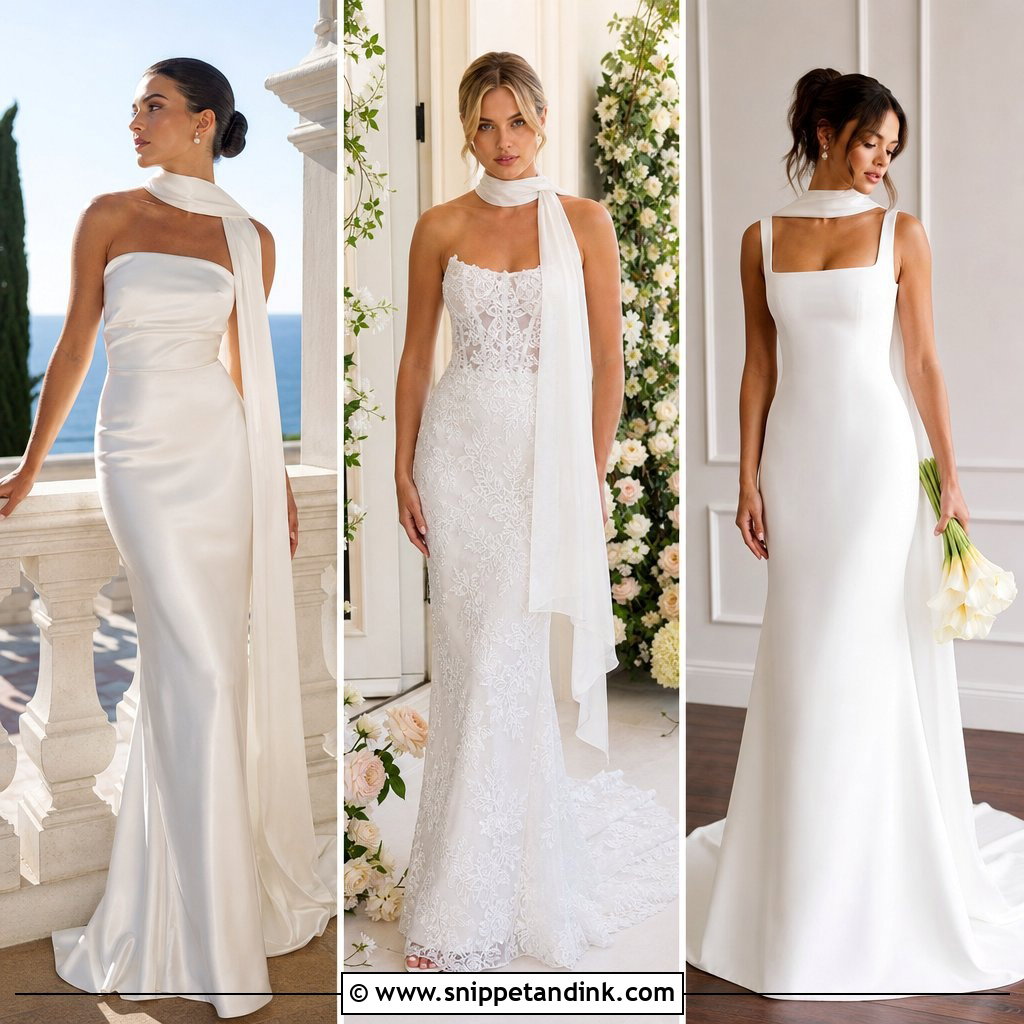

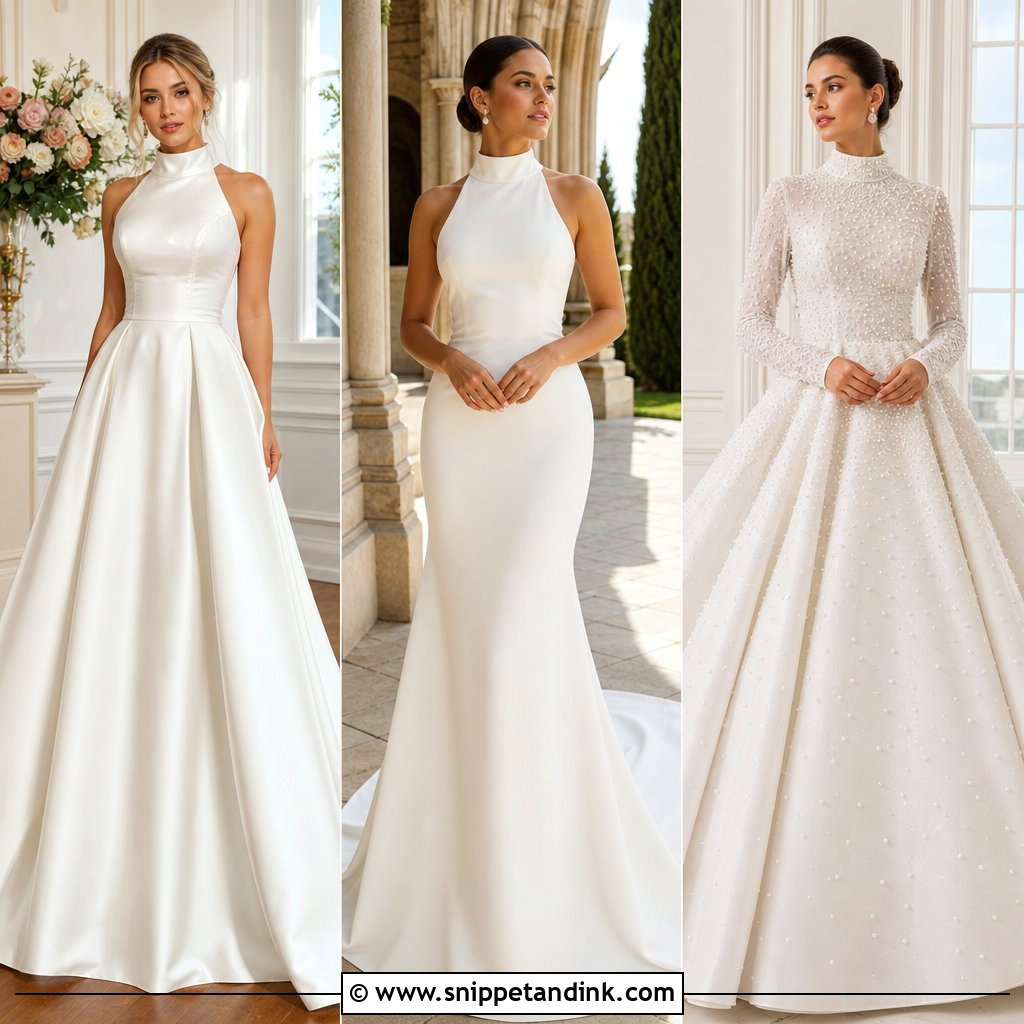

25. Transformable Wedding Dress
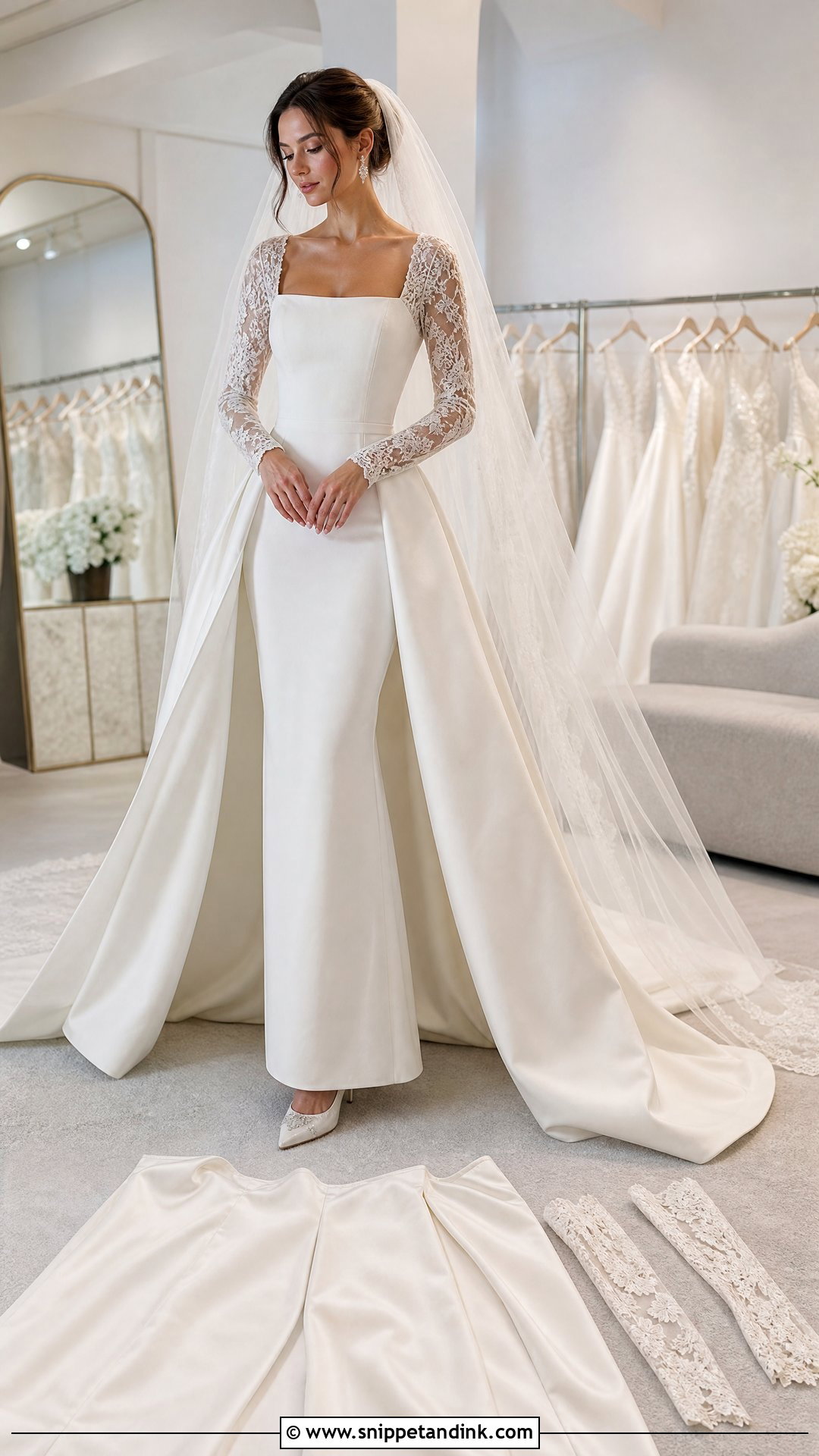
A transformable dress changes shape without a full outfit change. A fitted base gown takes removable sleeves, a cape, an overskirt or a train for the ceremony, then sheds them for the reception. Adaptable bridal looks have grown because brides want a ceremony look and a party look without a second dress. Every piece has to match the base in colour and texture. I label the fastenings and walk a trusted helper through the change before the wedding. The best transformable gowns look complete in every version, never half-dressed when a piece comes off.
Three Fittings a Structured Gown Usually Needs
Simple gowns can get away with one or two fittings. Corsets, pleats, overskirts and detachable pieces can’t, because each change shifts the balance of the dress. This is the rhythm I aim for, though every seamstress works a little differently.
First fitting, about two to three months out
Bring the exact shoes and undergarments. The fitter pins the bodice and sets the hem, and you test sitting, stairs and arms overhead. Anything structural, like boning length or cup fit, gets decided here.
Second fitting, roughly a month later
Check the changes, rehearse the bustle and any removable pieces with the person who’ll help on the day, and look at the dress in natural light near a window.
Final fitting, one to two weeks before
Wear the full look: veil, jewellery, hair accessories. Move around for at least ten minutes, then sit for five. If something pinches now, it will hurt by the reception, so say so. Take the gown home hanging in a breathable bag, never folded, especially if it has pleats or feathers.
Will a Runway Gown Hold Up From Aisle to Last Dance?
A strong high fashion look balances design, construction and real movement, with accessories that support the gown. From architectural ball gowns and Basque waists to crochet, metallic fabric and removable overskirts, each idea can be adapted to your body, venue and taste. Bring reference photos, but stay open when your fitter suggests lighter fabric, less volume or more support, because a runway gown is built for minutes, and yours has to last all day. The ideas here are a starting point. Work with a stylist and seamstress who will tell you honestly what the fabric can do.
You'll Like These Ideas:




Leave a Reply