
Haute couture bridal fashion is less about decoration than about how a dress is built: the corsetry inside, the way fabric is cut and the hours of hand finishing nobody sees. The gowns below range from sculpted satin and fine lace to dimensional flowers, detachable trains and softly tinted embroidery. Bridal collections lately have leaned into texture, refined corset work and pieces you can take off between ceremony and party, and that flexibility is worth asking about. Whatever catches your eye, judge it against your proportions, your venue and whether you can walk, sit and hug people in it. I always look at a gown as a whole outfit, with veil, shoes, jewelry and bouquet, so that’s how each one is described here.
Couture, Made to Measure and Sample Size
The word couture is used loosely in bridal shops, so it helps to know what you’re being offered. True couture is cut for your body from scratch, with a pattern drafted from your measurements and several fittings. Made to measure takes an existing design and adjusts the pattern to your measurements before cutting. A sample-size gown is ordered in a standard size and altered afterwards.
In a genuine couture process, the first fitting is often in a toile, a mock-up in plain cotton, so the shape can be corrected before the real fabric is cut. If a designer skips that step on a heavily structured dress, I ask how they’ll adjust the corset later.
- Ask how many fittings are included and what happens if you need more.
- Ask whether embellishment is applied by hand, and whether it’s added before or after the final fit.
- Ask for the full timeline in writing. Custom gowns commonly need many months, and rush fees vary widely.
- Plan your last fitting close to the wedding so small weight changes don’t undo the work.
1. Lace Ball Gown Wedding Gown
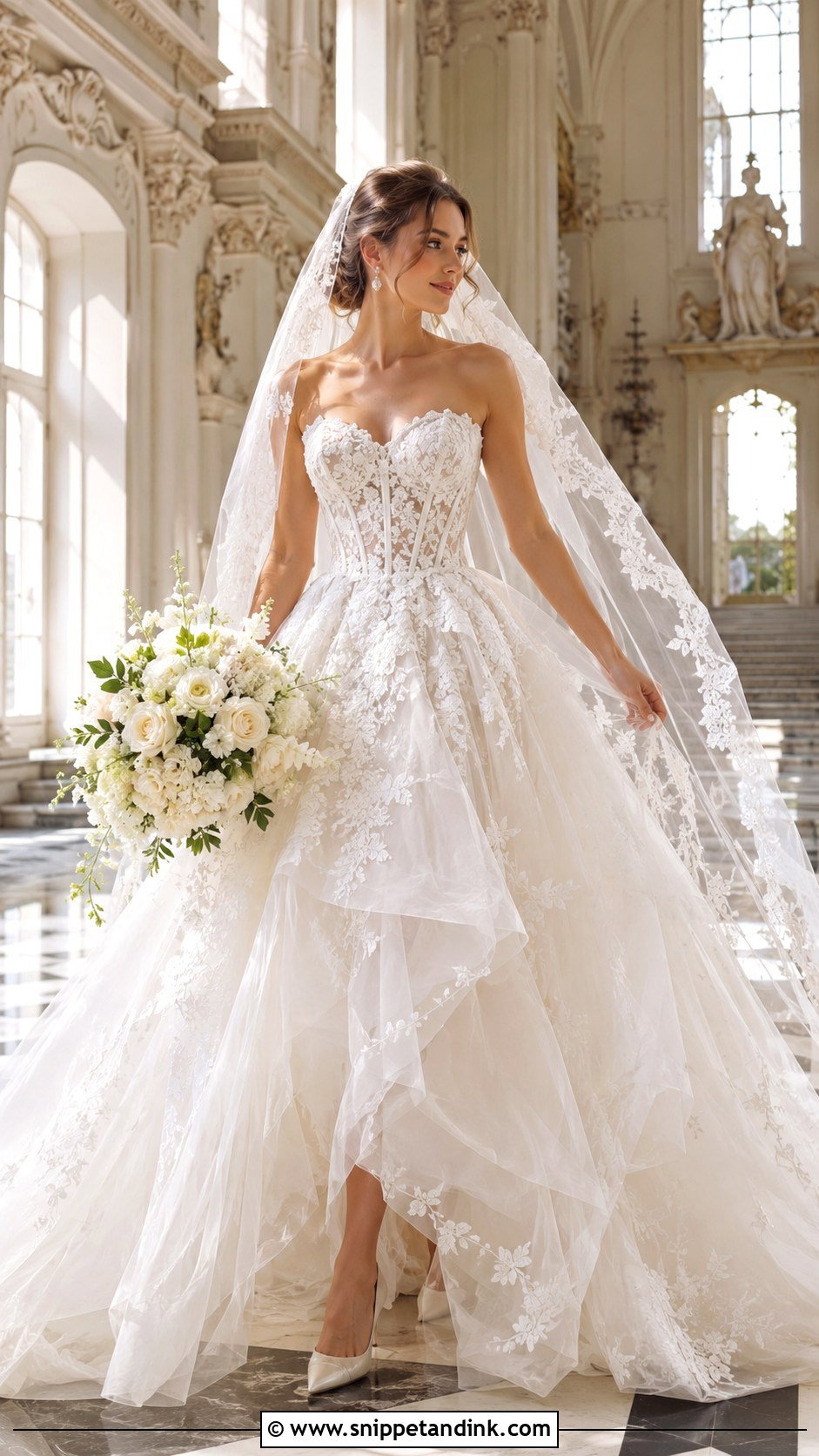
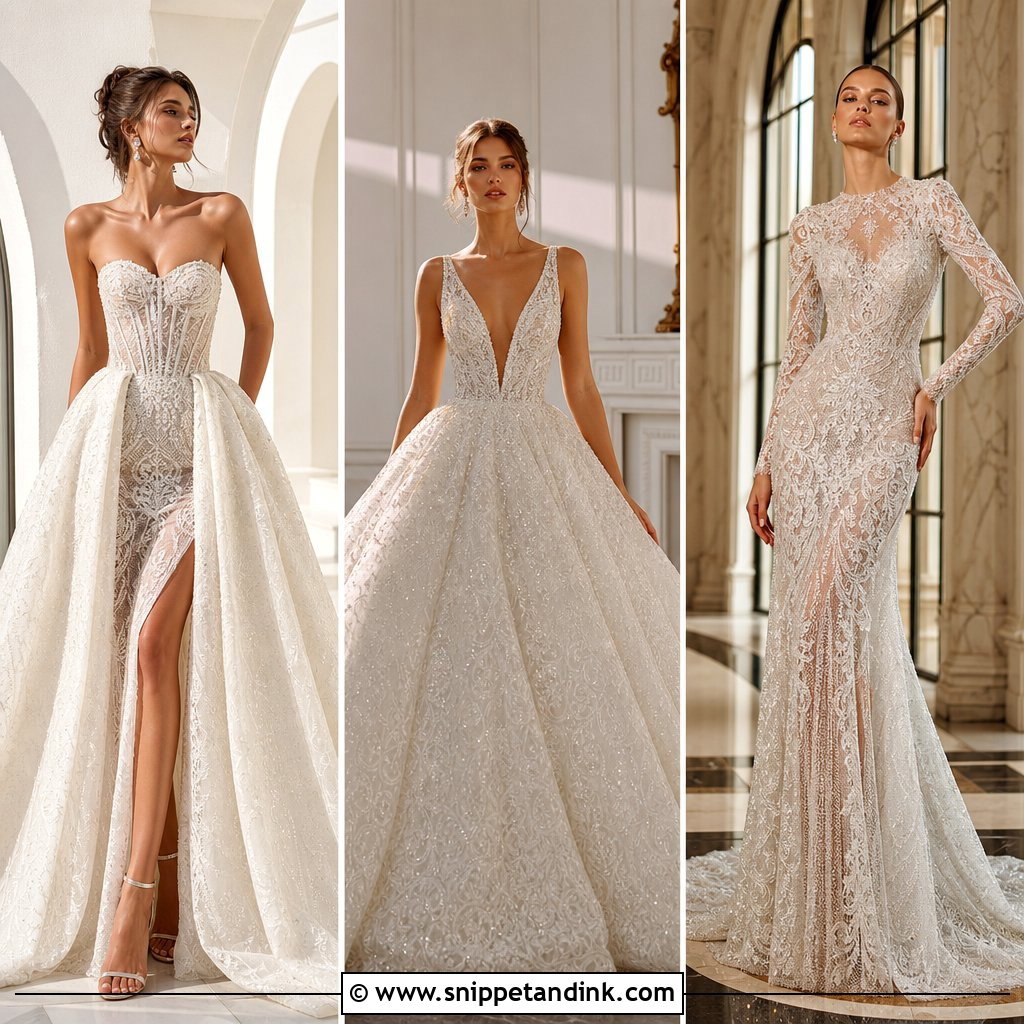
Lace ball gowns are the grand romantic option, and the corset is what makes them wearable. A structured bodice with a gently dipped waist holds you in place while layers of lace and tulle expand below. Hand-applied floral motifs add depth; if they’re machine-made and glued, they’ll lift at the edges after a day of movement, so ask. A strapless scoop or a soft sweetheart keeps the eye on the lace. A cathedral veil edged in matching lace, pearl drops and pointed ivory pumps finish it, with a simple bouquet of white garden flowers. Ballrooms, historic estates and grand indoor venues give the skirt room. In a narrow aisle it’ll brush every chair.
2. Sculpted Satin Wedding Gown
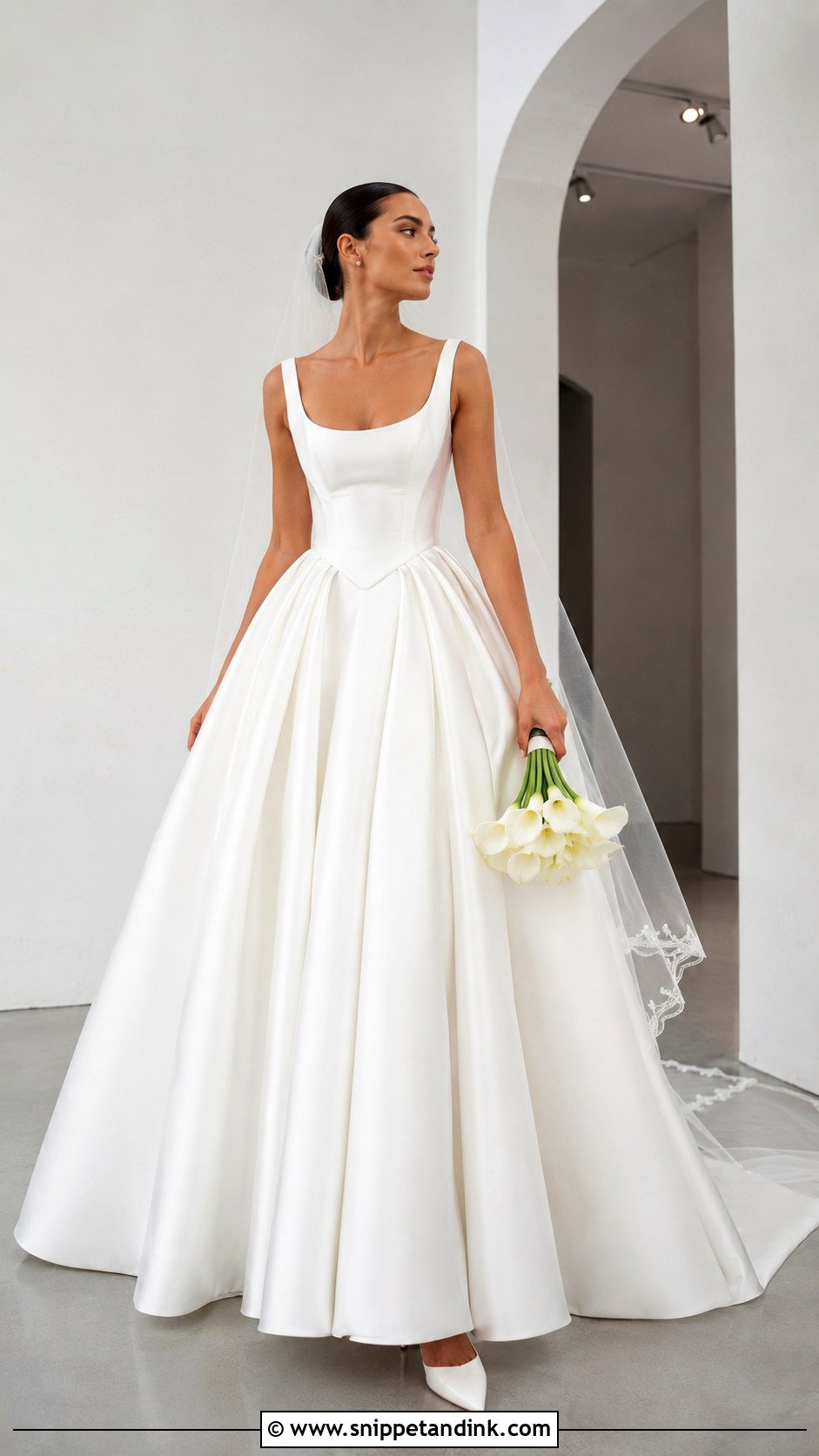
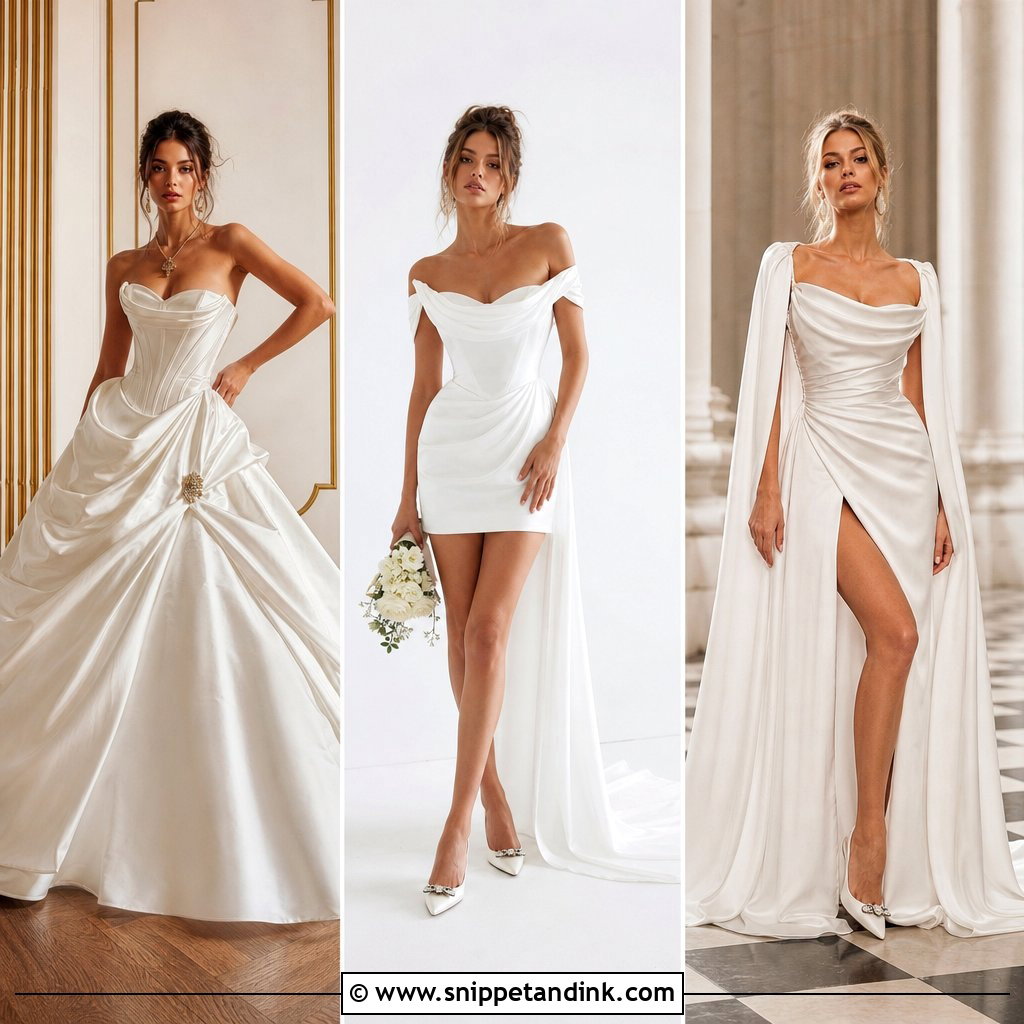
Satin is the fabric I’m most careful with, because it shows everything: every seam, every pull, every crease from sitting in the car. A fitted bodice with internal corsetry and contouring seams, a clean neckline and a full skirt with crisp pleating give a strong architectural shape. With the fabric doing all the talking, keep the extras sharp and few: a sleek bun, crystal studs, pointed satin heels and a long raw-edge veil, plus a compact bunch of white calla lilies. Hotels, galleries and city weddings suit it. Ask the atelier about bustle placement early, and plan to steam the skirt after you arrive rather than before you travel.
3. Basque Waist Wedding Gown
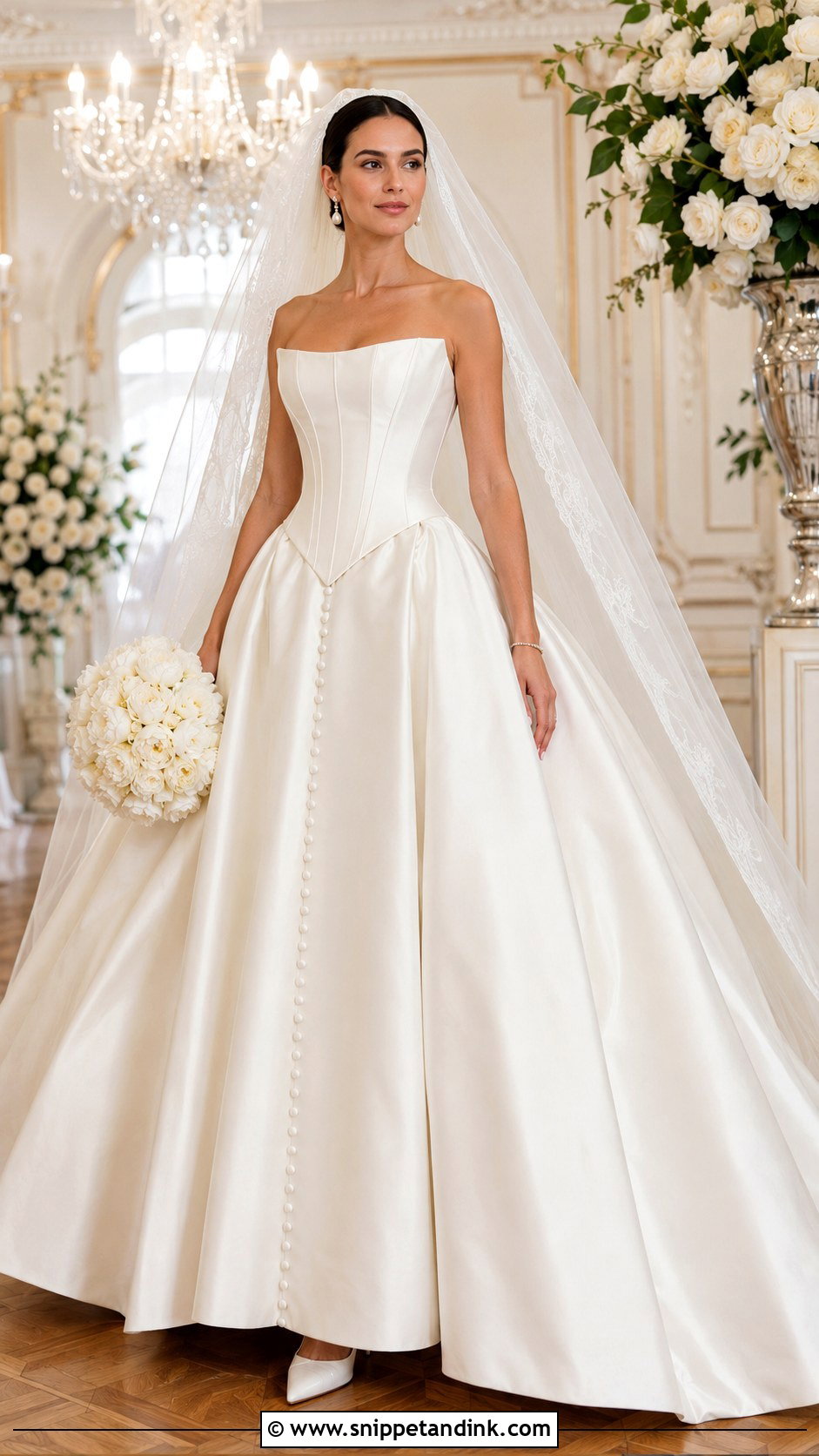
The elongated point of a basque waist lengthens the torso and gives a regal line, and it’s one of the most flattering shapes for a bride with a short waist. It looks best with a fitted corset, a softly curved neckline and a full skirt in silk faille or duchess satin. If you want detail, keep embroidery on the bodice and let it fade into the skirt. A fingertip or cathedral veil depends on the venue. Pearl earrings, a slim bracelet and closed pumps are enough. The point has to clear your hip bones when you sit; if it digs in at the fitting, it’ll be painful by the meal. Good boning shapes you without pinching.
4. Floral Appliqué Wedding Gown
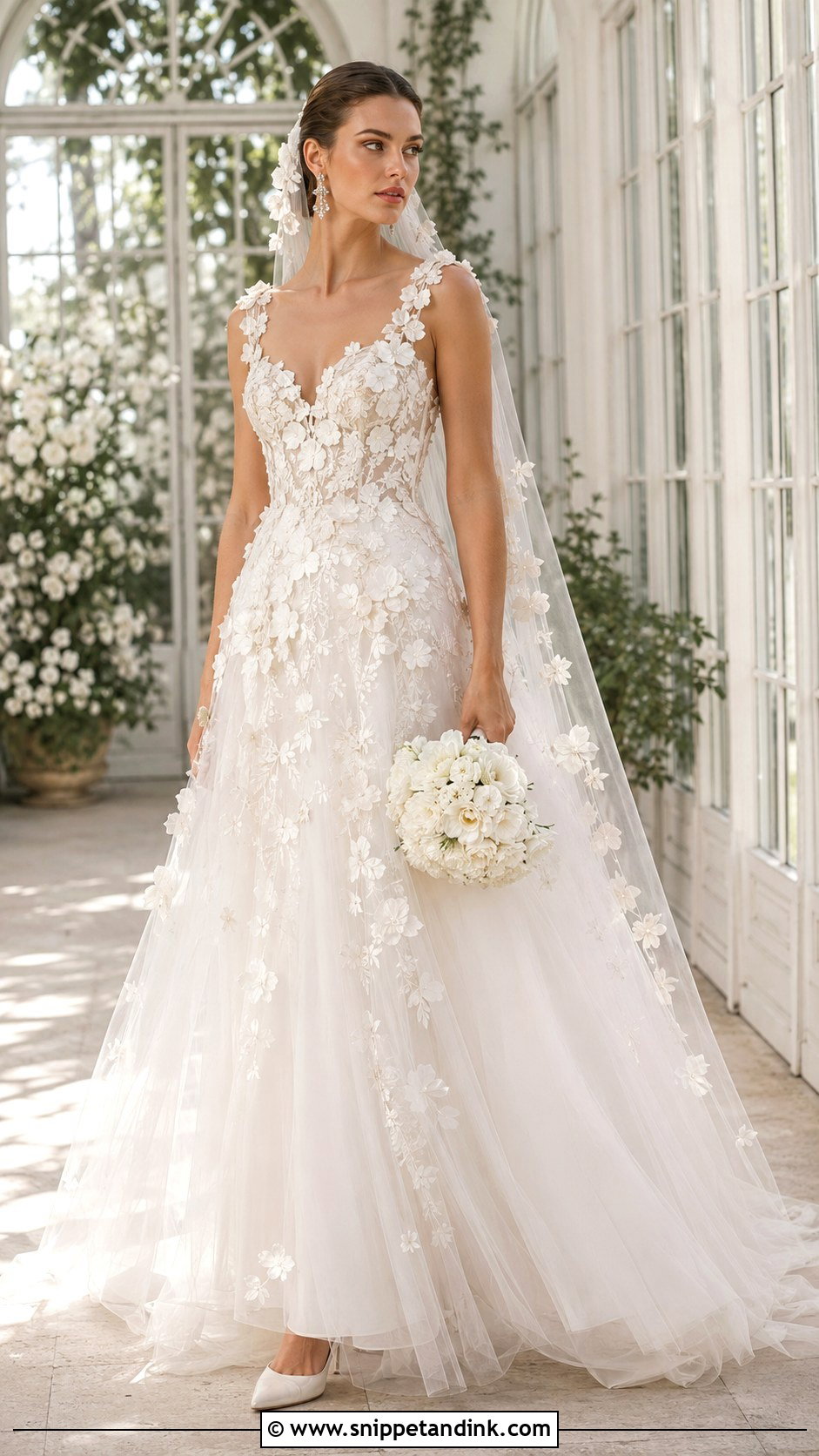
Dimensional appliqués are where couture shows its hand. Flowers that vary a little in size but stay in one color family look natural rather than stuck on. A fitted bodice into an A-line or ball gown skirt gives them space, and they can gather at the neckline, scatter over the skirt and continue onto the veil. Delicate crystal earrings, understated heels and a low textured bun keep things calm. Use a bouquet with one or two varieties so flowers aren’t fighting flowers. Gardens and conservatories suit it. Before you leave a fitting, run your hands over every raised petal near the arms and waist; those are the ones a bracelet or bouquet wrap will catch.
5. Off-The-Shoulder Wedding Gown
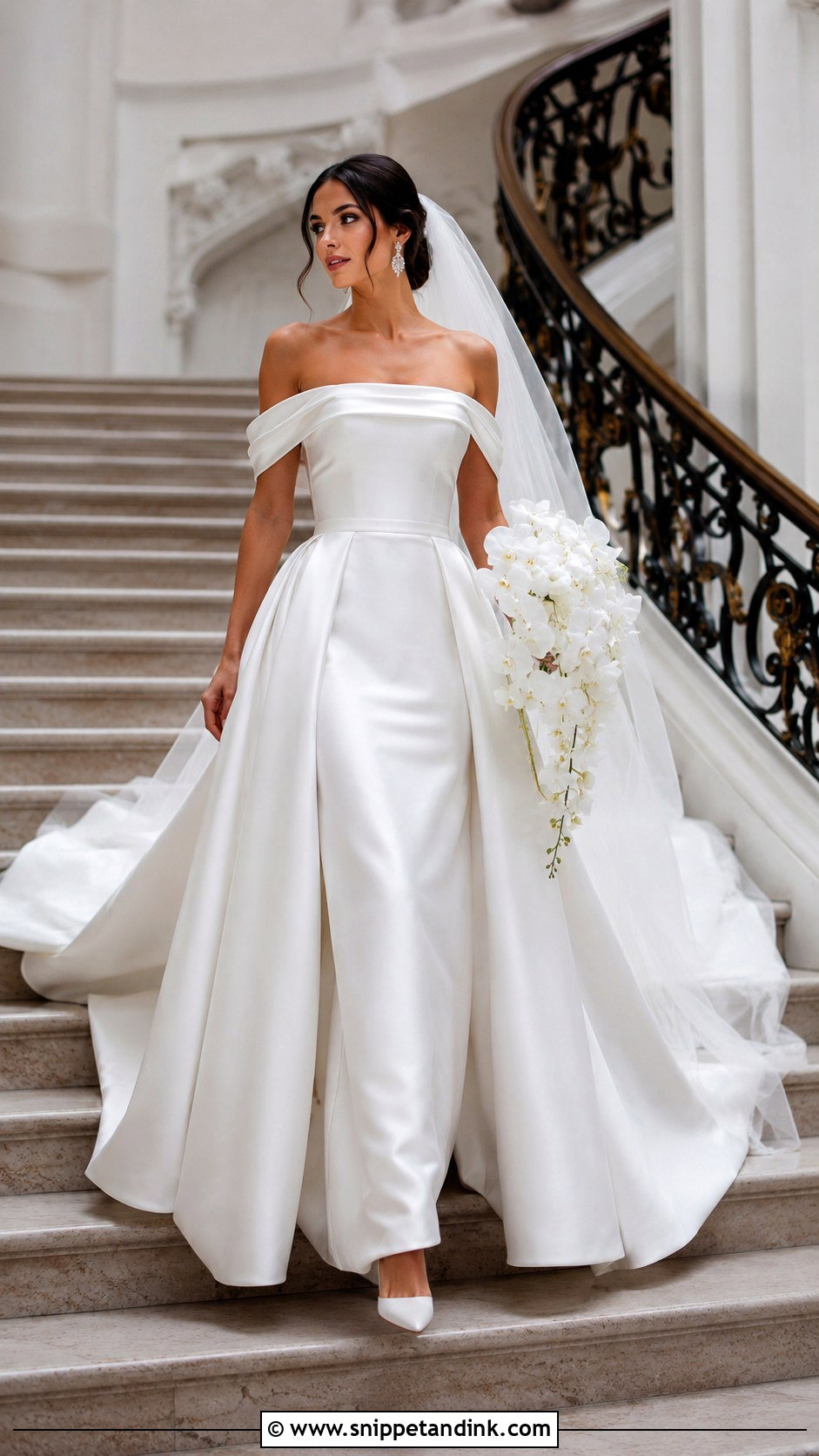
An off-the-shoulder neckline frames the collarbone, but the sleeves should never be what holds the dress up. A well-fitted corset carries the weight so the sleeves just rest. Draped satin bands look clean; lace or floral sleeves feel romantic. A full A-line skirt and a sweeping train balance the shoulders. A necklace only works if there’s open skin to sit on; otherwise choose statement earrings, a smooth updo, pointed pumps and a sheer cathedral veil, with a cascading white bouquet. Raise your arms at every fitting. Off-the-shoulder sleeves stop you lifting your arms above shoulder height, which matters for hugs and the first dance.
6. Long Sleeve Lace Wedding Gown
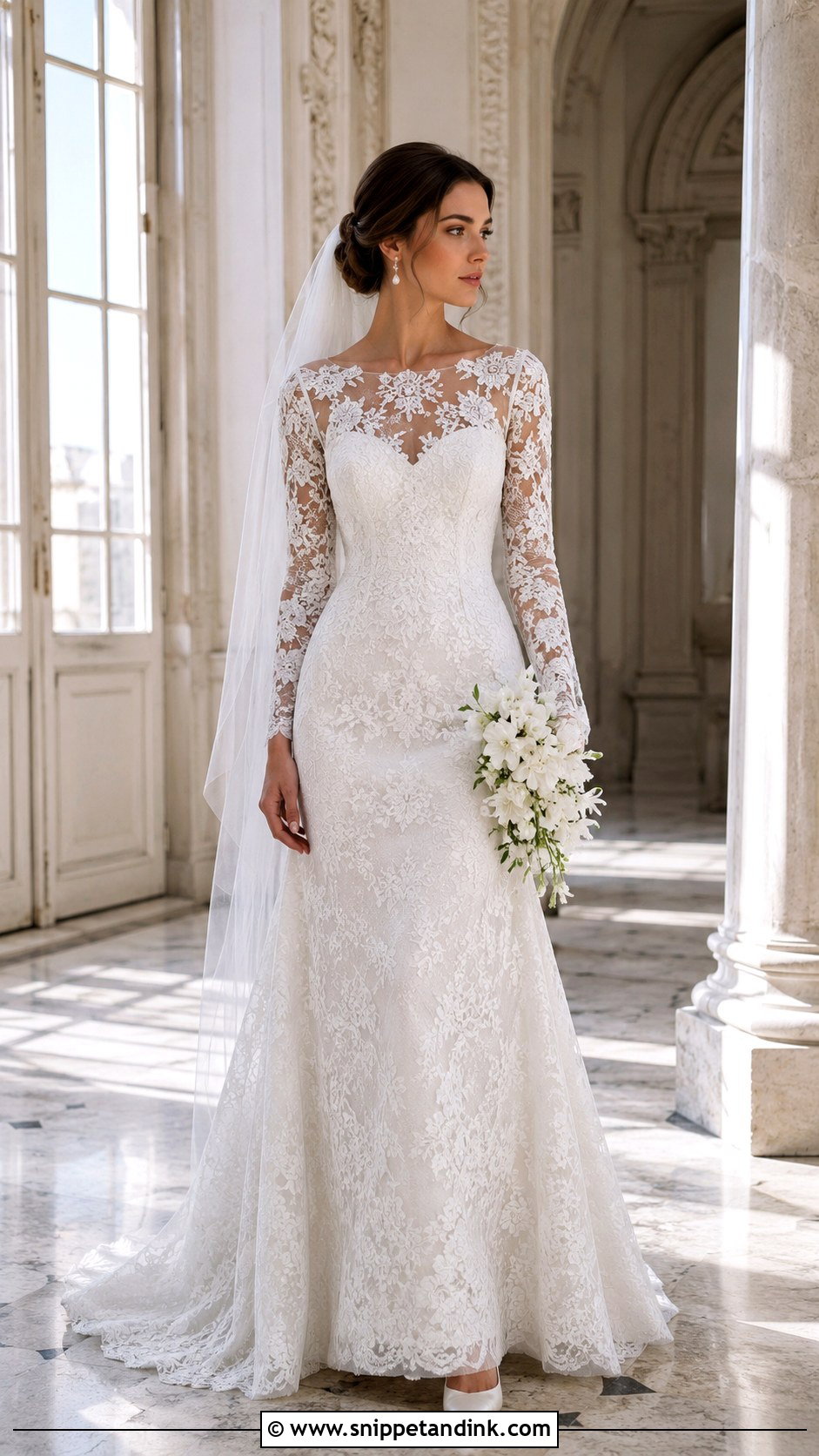
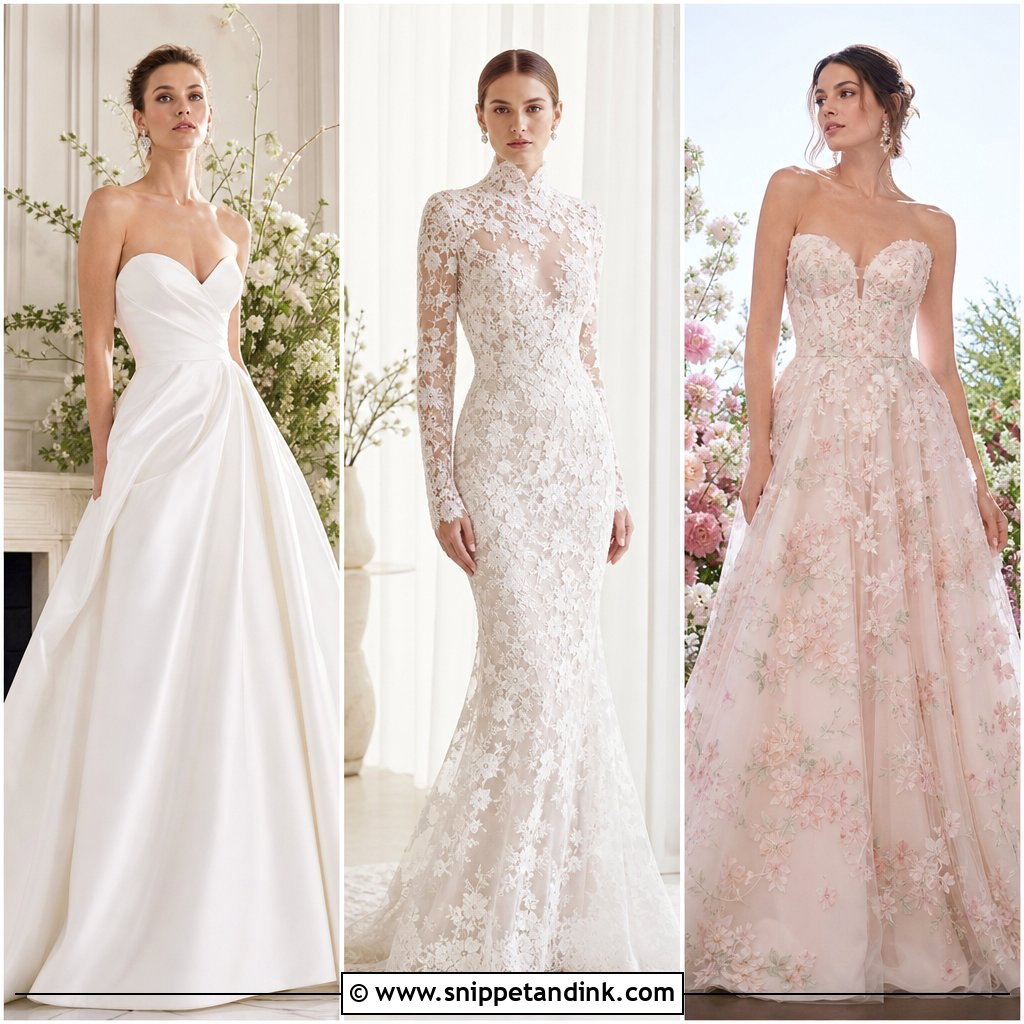
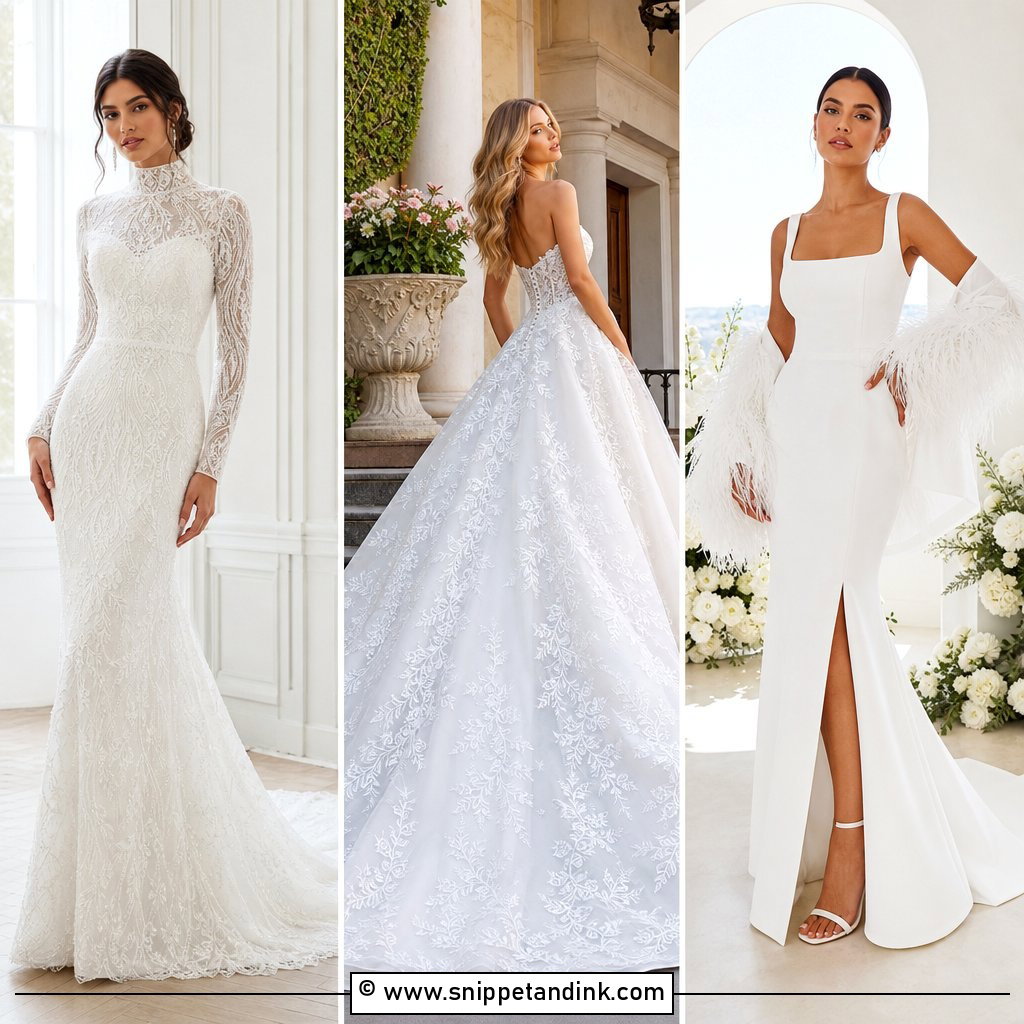
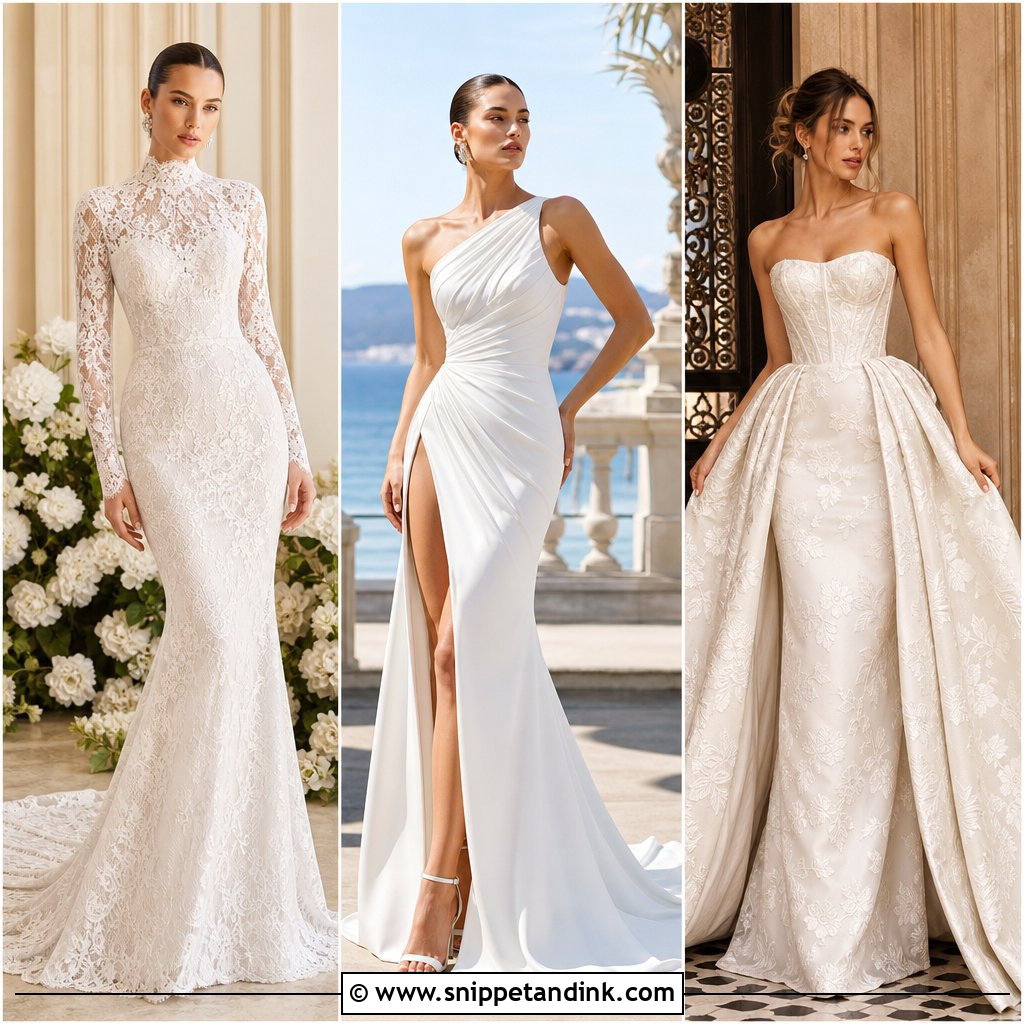
Long lace sleeves give coverage and still look delicate. Fine illusion mesh makes the lace look as if it’s floating on skin; a lined sleeve is more traditional. A fitted bodice and gently flared skirt keep it from feeling heavy. A high neck is regal, a soft V opens the upper body. Pearl earrings, a neat chignon, satin pumps and a light veil that doesn’t hide the sleeves complete it, with a narrow white bouquet. Tight lace sleeves are the most common fitting complaint I hear, because brides try them standing with arms down. Bend your elbows, reach forward and hold a glass; the armhole and elbow need ease built in. Cooler seasons and formal venues suit it.
7. Mermaid Wedding Gown With Overskirt
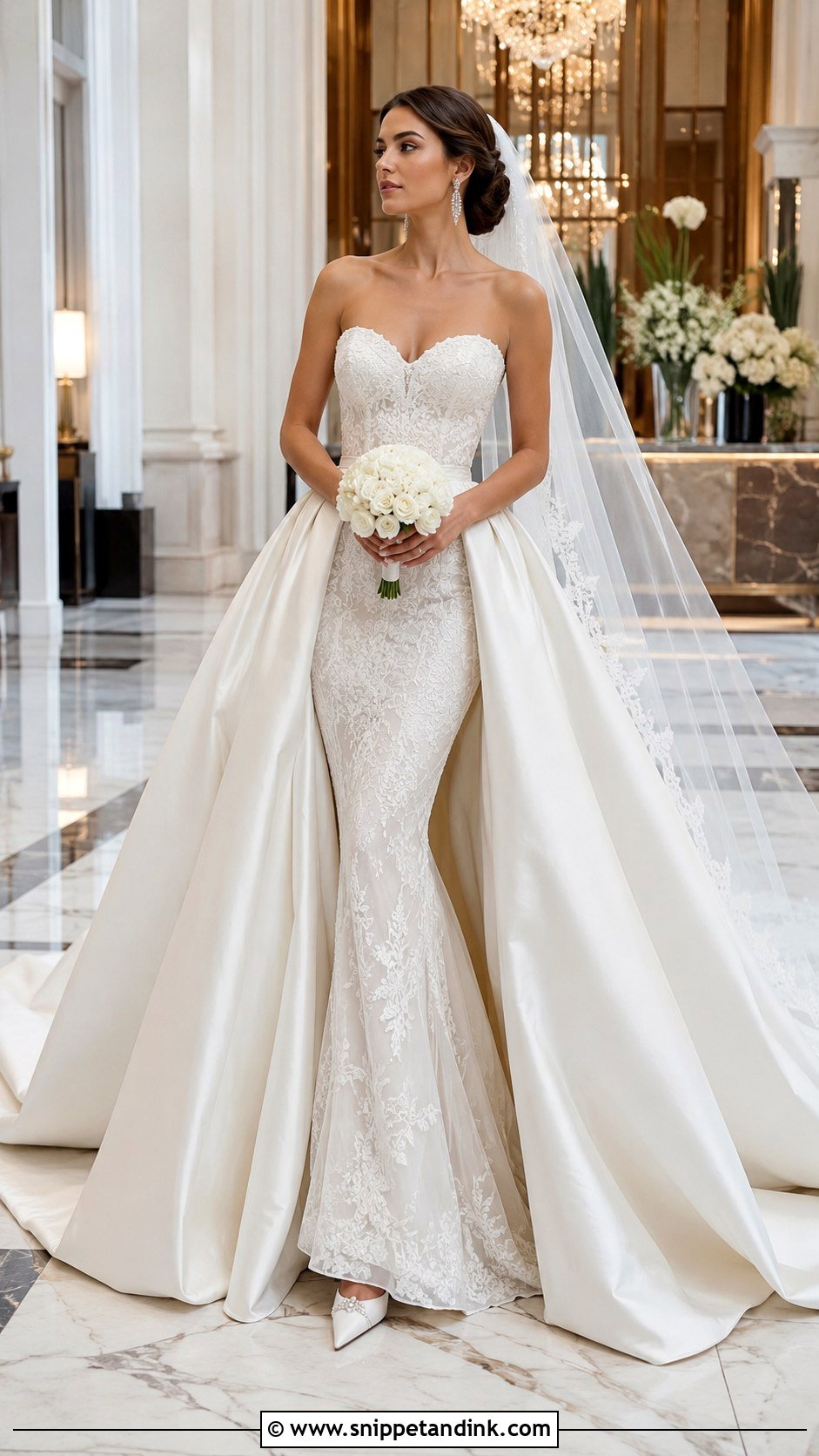
A fitted mermaid with a detachable couture overskirt gives you two silhouettes for one budget. The base gown hugs the hips and flares around the knee, with lace, beadwork or embroidered tulle; the overskirt adds ball-gown volume for the ceremony and comes off for the reception. A long veil, crystal drops, pointed heels and a compact bouquet should suit both versions. Check that the overskirt fastening is invisible from every angle. And practise walking in the mermaid alone: the flare point restricts your stride, so you take smaller steps and climb stairs sideways.
8. Beaded Column Wedding Gown
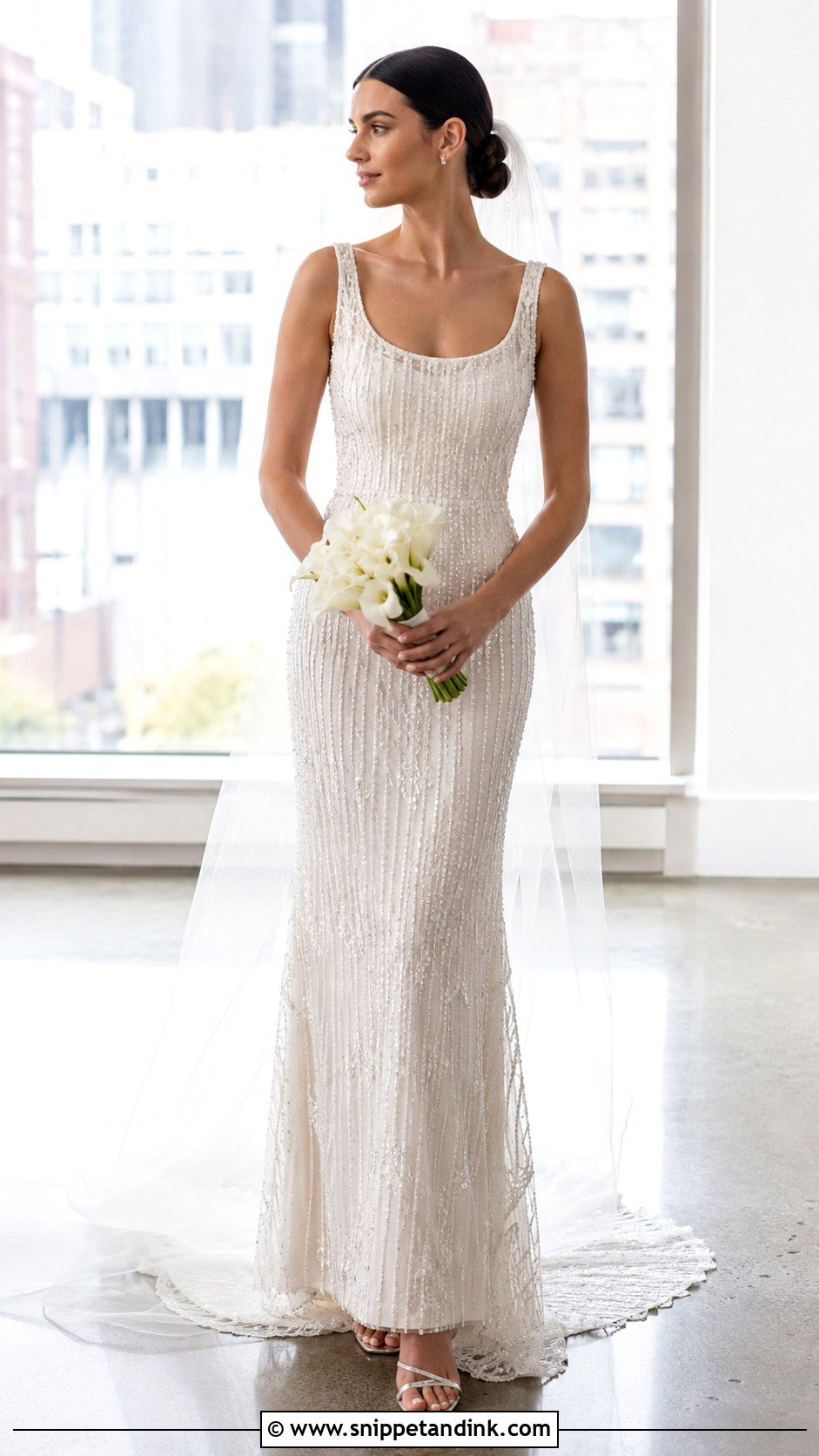
Beaded columns are sleek, and heavy. Embroidery that follows vertical or gently curved lines lengthens the body, and pearls, crystals and translucent sequins in a controlled pattern add glow without glitter. A square, bateau or modest scoop neckline gives the narrow shape structure. Metallic ivory sandals, small diamond-style earrings, a smooth low bun and a plain tulle veil finish it, with a narrow bouquet that doesn’t hide the bodice. City venues and indoor ceremonies suit it. Beading on the underarm seams rubs skin raw over a long day, so I check the lining there first, and I lift the whole dress to judge its weight before a bride commits. A strong bustle protects the beaded train on the dance floor.
9. Square Neck Wedding Gown
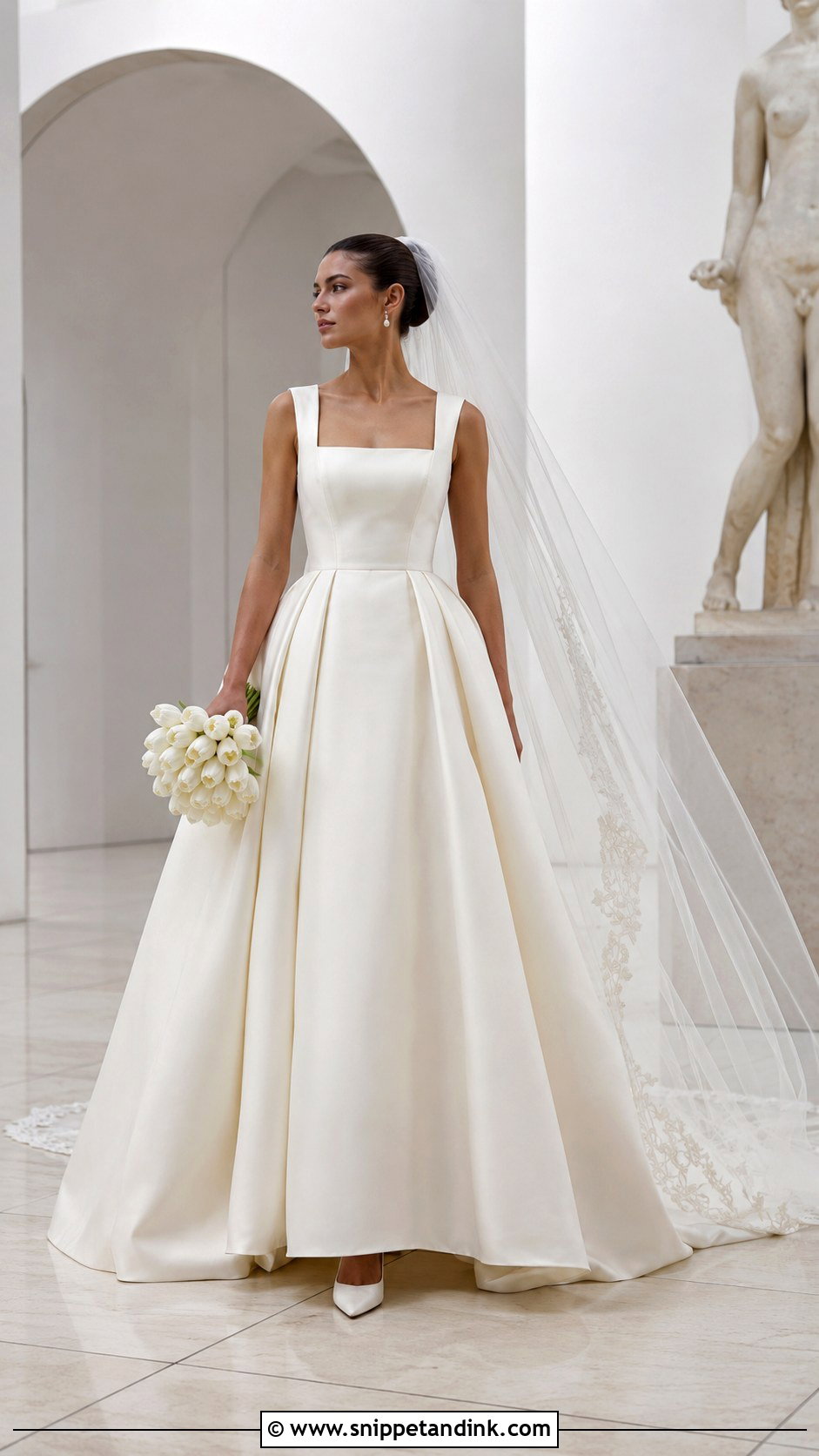
A square neckline is clean, modern and very hard to fake. It has to lie flat against the chest; if it gapes when you lean forward, the bodice needs taking in, not tape. Wide straps, a fitted bodice and a full satin or mikado skirt suit it, with a low back or a row of covered buttons behind. A center-parted bun, pearl drops, ivory pumps and a long veil set below the hairstyle finish it, with white roses or tulips. It works from a formal estate to a museum. For more coverage, ask for illusion fabric or a slightly higher line while keeping the geometry.
10. High Neck Wedding Gown
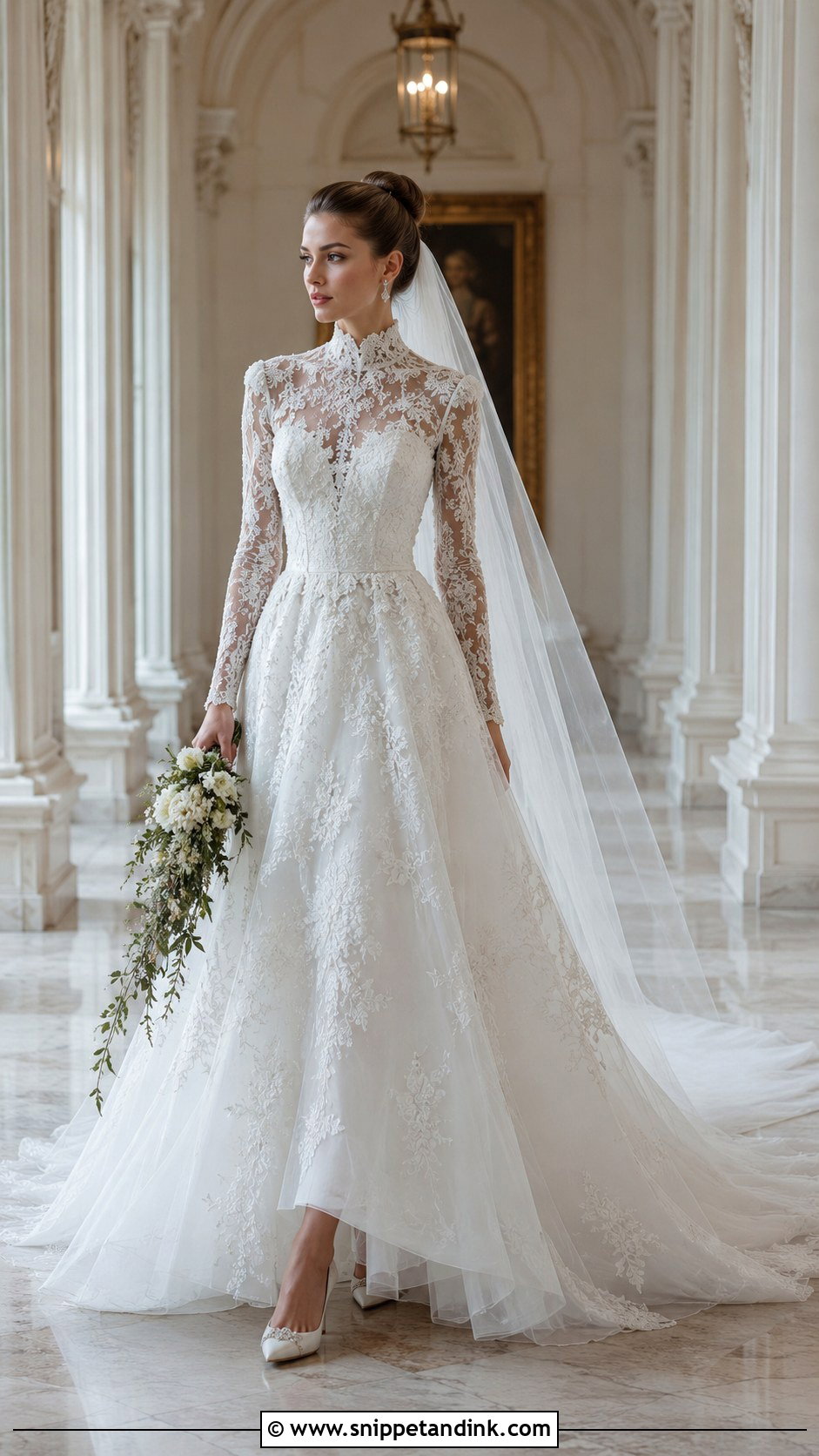
A high neck puts the attention on the face and shoulders. Fine lace, embroidered tulle or smooth crepe change the mood from romantic to modern. Balance the covered top with a fitted waist and an A-line, column or soft flare. No necklace; refined earrings, an elegant updo, pointed heels and a veil placed beneath the bun keep the line clean. A slim bouquet with trailing greenery suits the vertical shape. The collar should be soft. Turn your head and look down at your bouquet in the fitting; a stiff collar rubs the jaw and leaves a red line by evening, which shows in close-up photos.
11. Cape Sleeve Wedding Gown
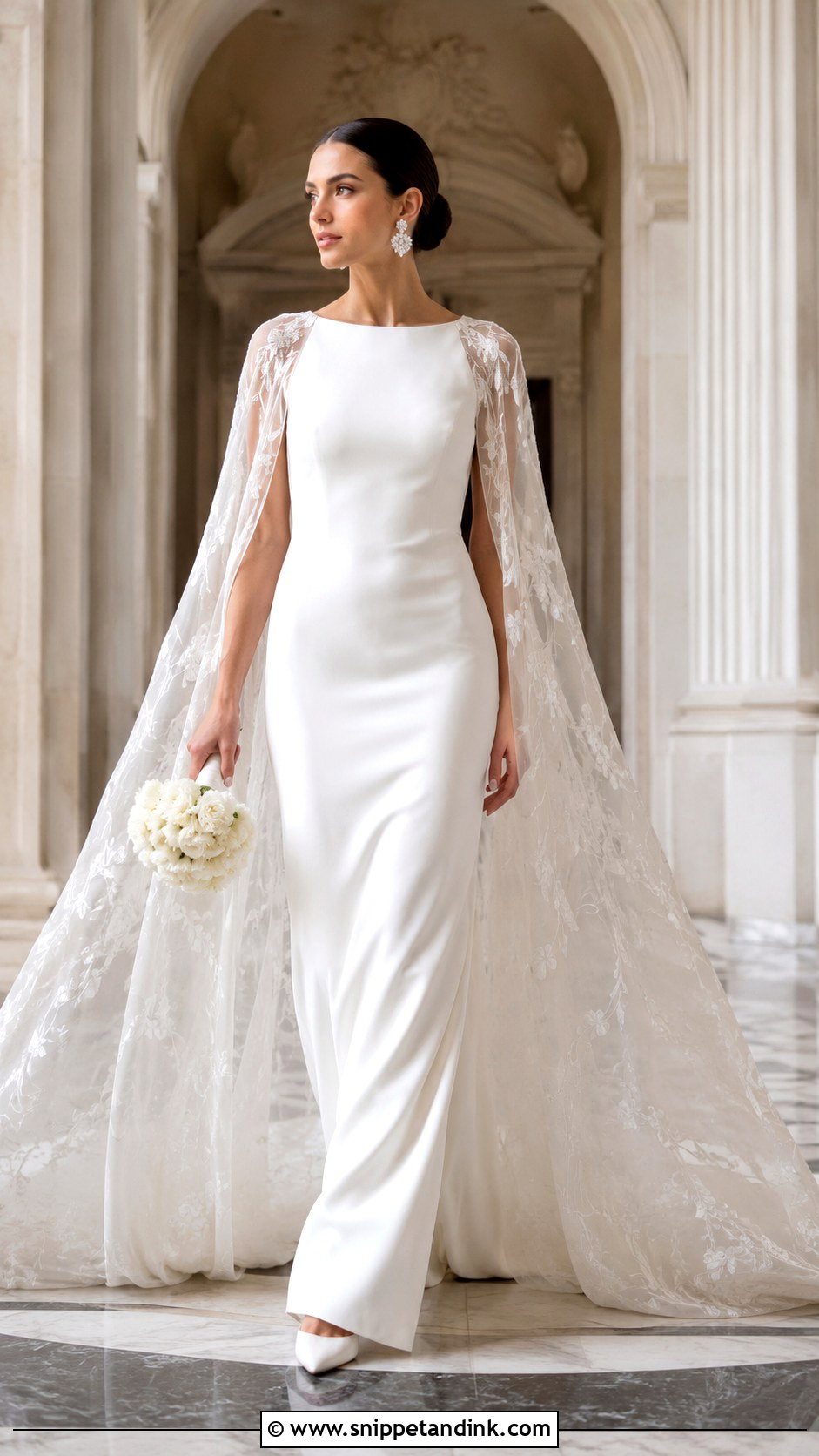
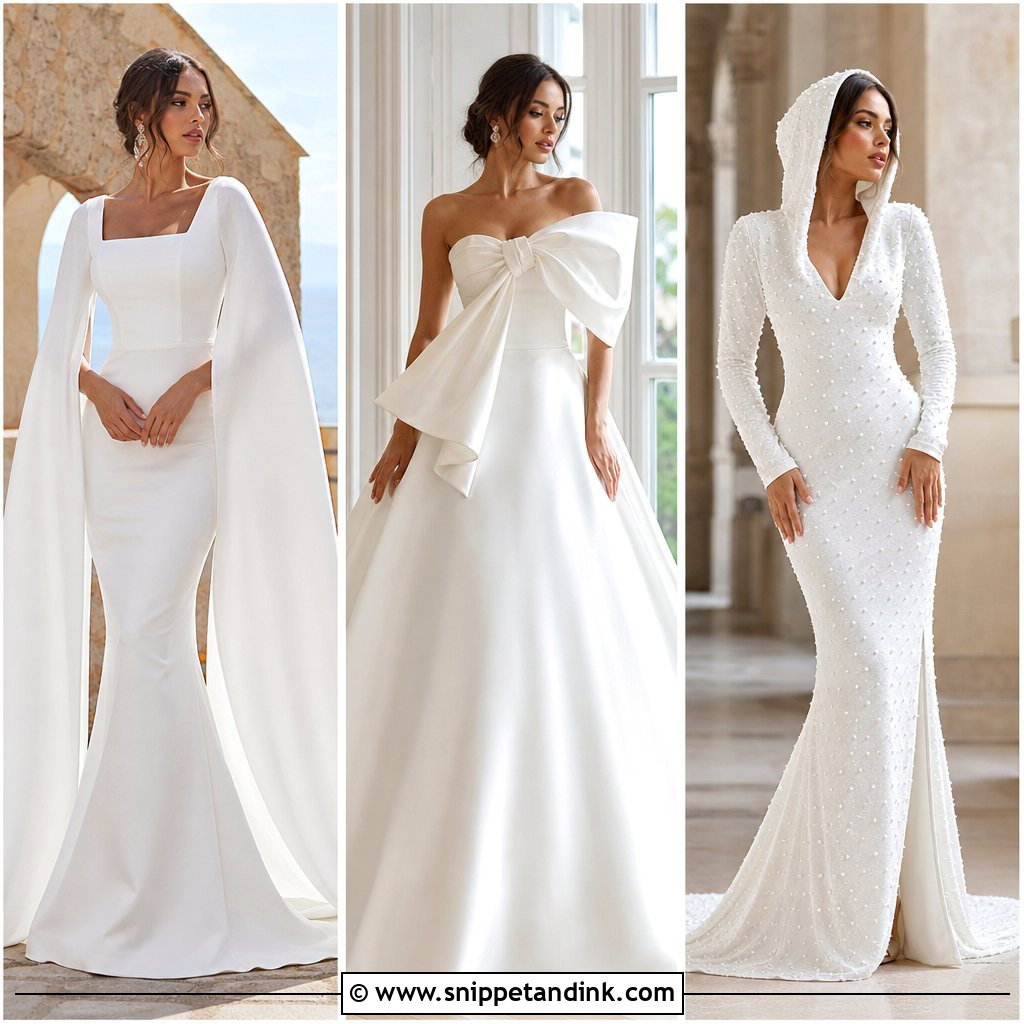
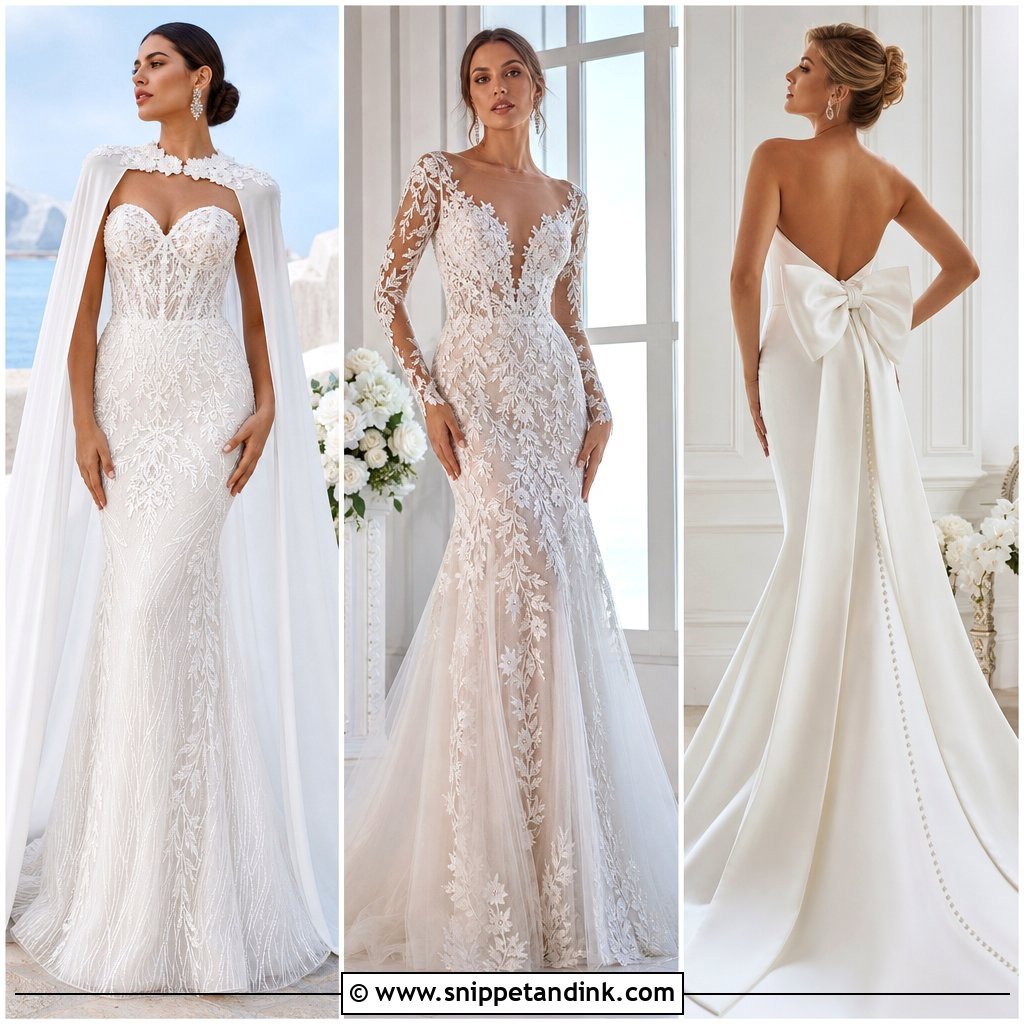
A cape gives you ceremony drama without a veil. It can fall from the shoulders, attach at the neckline or grow out of the bodice. Sheer embroidered tulle feels airy; smooth crepe looks statuesque. Under it, a simple column or A-line is best, so you don’t have volume stacked on volume. Sculptural earrings, a sleek bun, pointed pumps and a compact bouquet finish it. If the cape detaches, take it off after the ceremony. A cape longer than the dress can catch under your heels when you turn, so the hem length needs checking in your shoes. Staircases and dramatic entrances are where it earns its place.
12. One Shoulder Wedding Gown
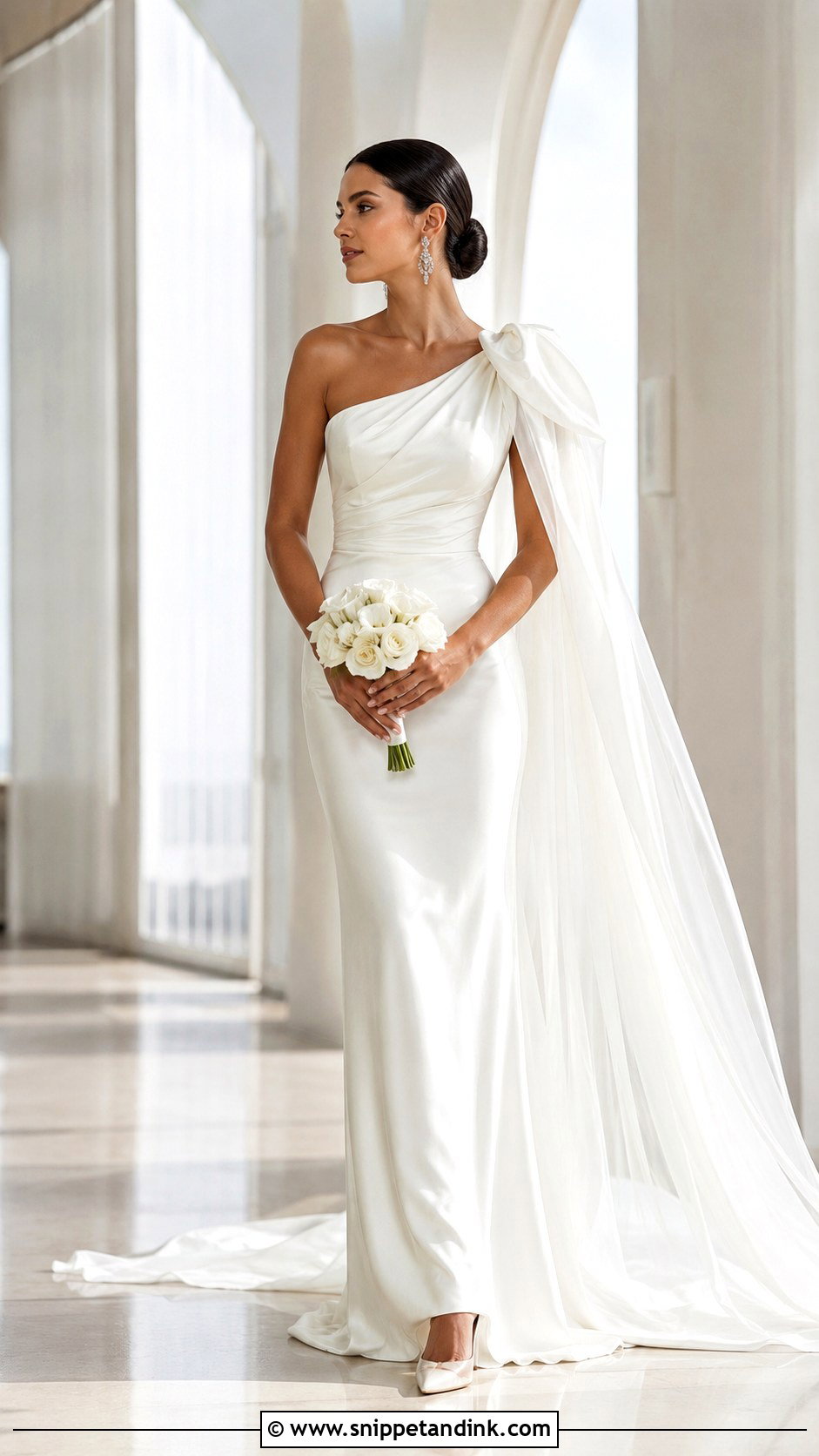
An asymmetrical one-shoulder neckline brings a fashion edge. Diagonal draping across the bodice pulls the eye to the waist. A column skirt keeps it modern; a fuller skirt makes it formal. A detachable shoulder bow or panel adds drama. Skip the necklace; wear crystal studs or one statement earring on the bare side. A low bun, pointed heels and a veil secured behind the head so it clears the shoulder finish it. Everything rests on one shoulder, so alterations have to be exact. If your shoulders sit at slightly different heights, as most do, the seamstress should fit the strap to your higher one.
13. Pearl Embellished Wedding Gown
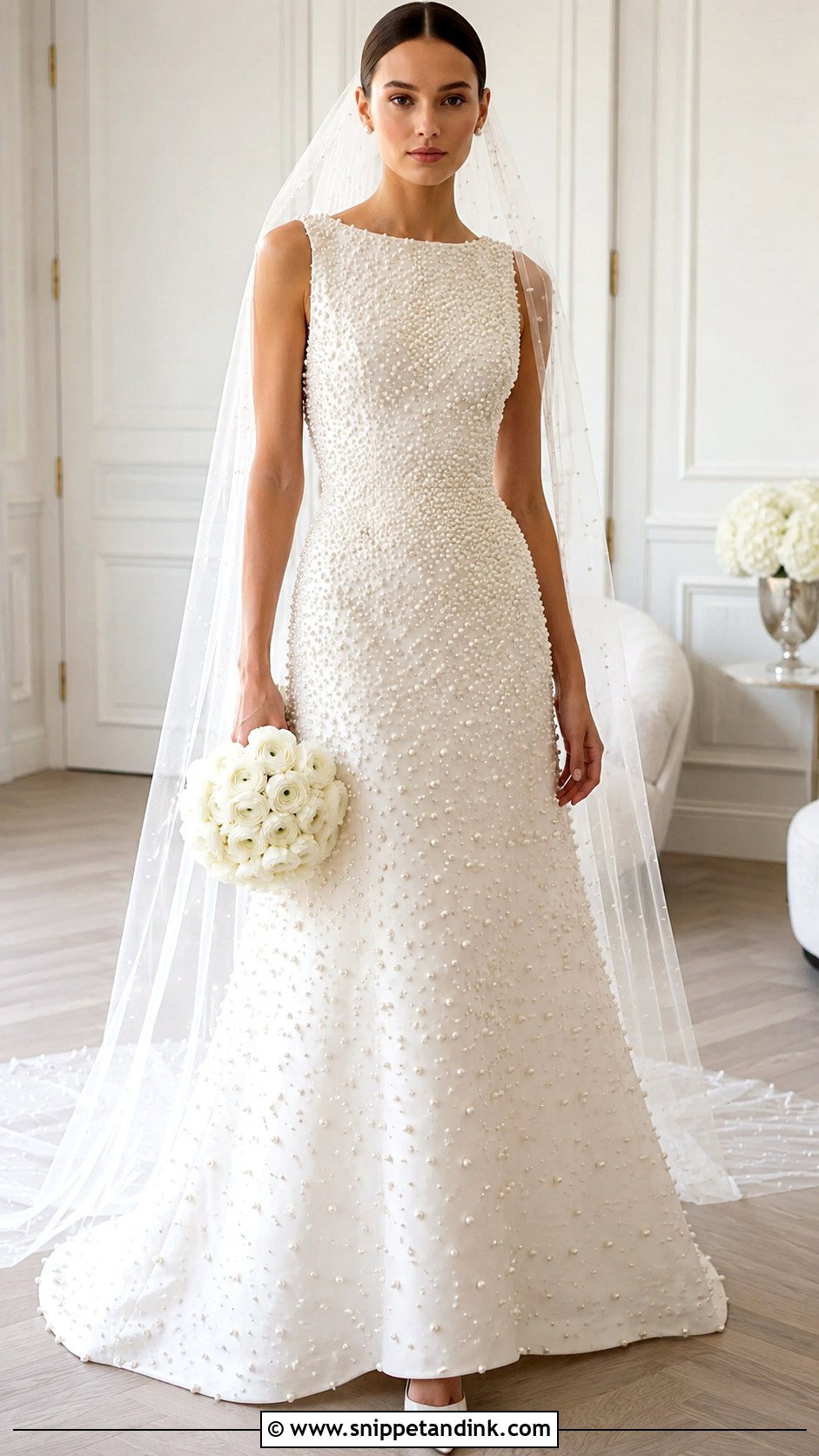
Pearls give a soft glow that sequins can’t. The most refined layouts use mixed sizes, dense at the bodice and spacing out toward the skirt. A fitted A-line or column keeps it sophisticated, with a simple neckline. Pearl studs, ivory satin pumps, a clean updo and a sheer veil with scattered pearls at the border finish it. No heavy necklace or big hairpiece. White ranunculus or roses suit it. Raised pearls catch on tulle and on bouquet ribbon, so check the underarms and veil placement. Ask the atelier for a small bag of spare pearls and thread; one or two always come loose during alterations or travel.
14. Blush Embroidered Wedding Gown
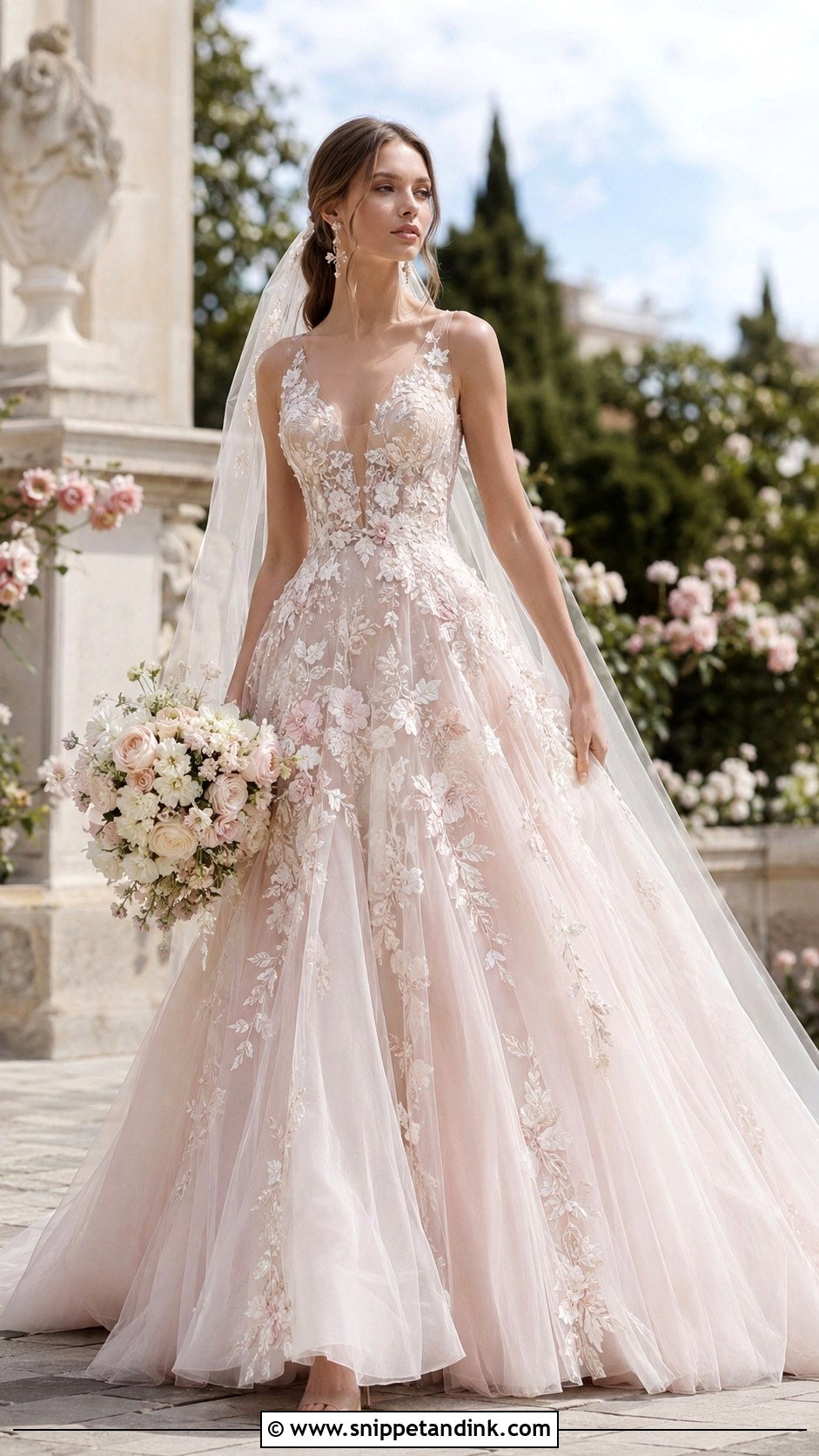
Blush comes from what’s underneath. A pale nude, champagne or rose lining under ivory tulle gives soft color rather than pink fabric. Floral embroidery in muted pink, silver or ivory thread adds depth. A fitted bodice and flowing A-line move nicely. Champagne heels, rose-gold earrings and a sheer ivory veil that shows the embroidery finish it, with white and pale pink flowers and little greenery. Garden venues and bright rooms suit it. Look at the lining sample in daylight, indoor light and under a phone flash; blush on a nude lining can vanish against fair skin and turn peach against deeper skin.
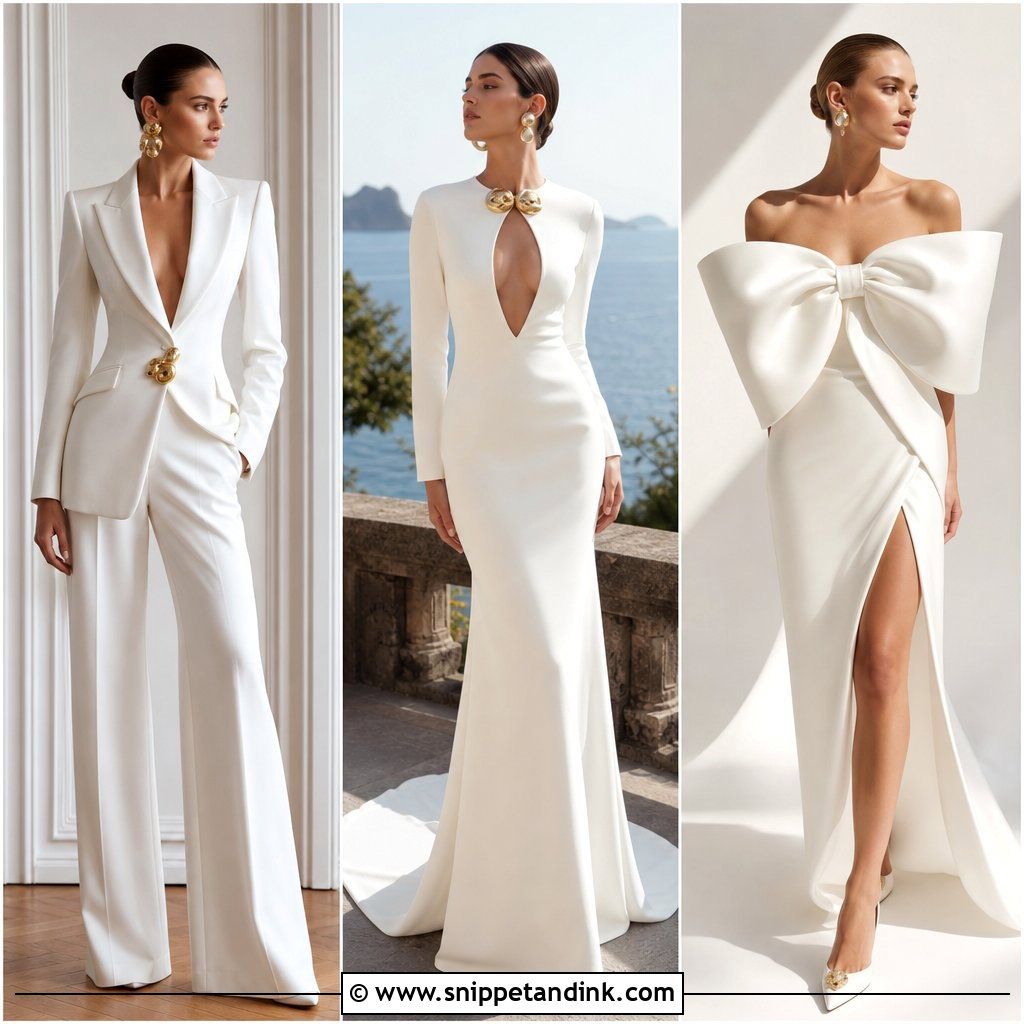


15. Drop Waist Wedding Gown
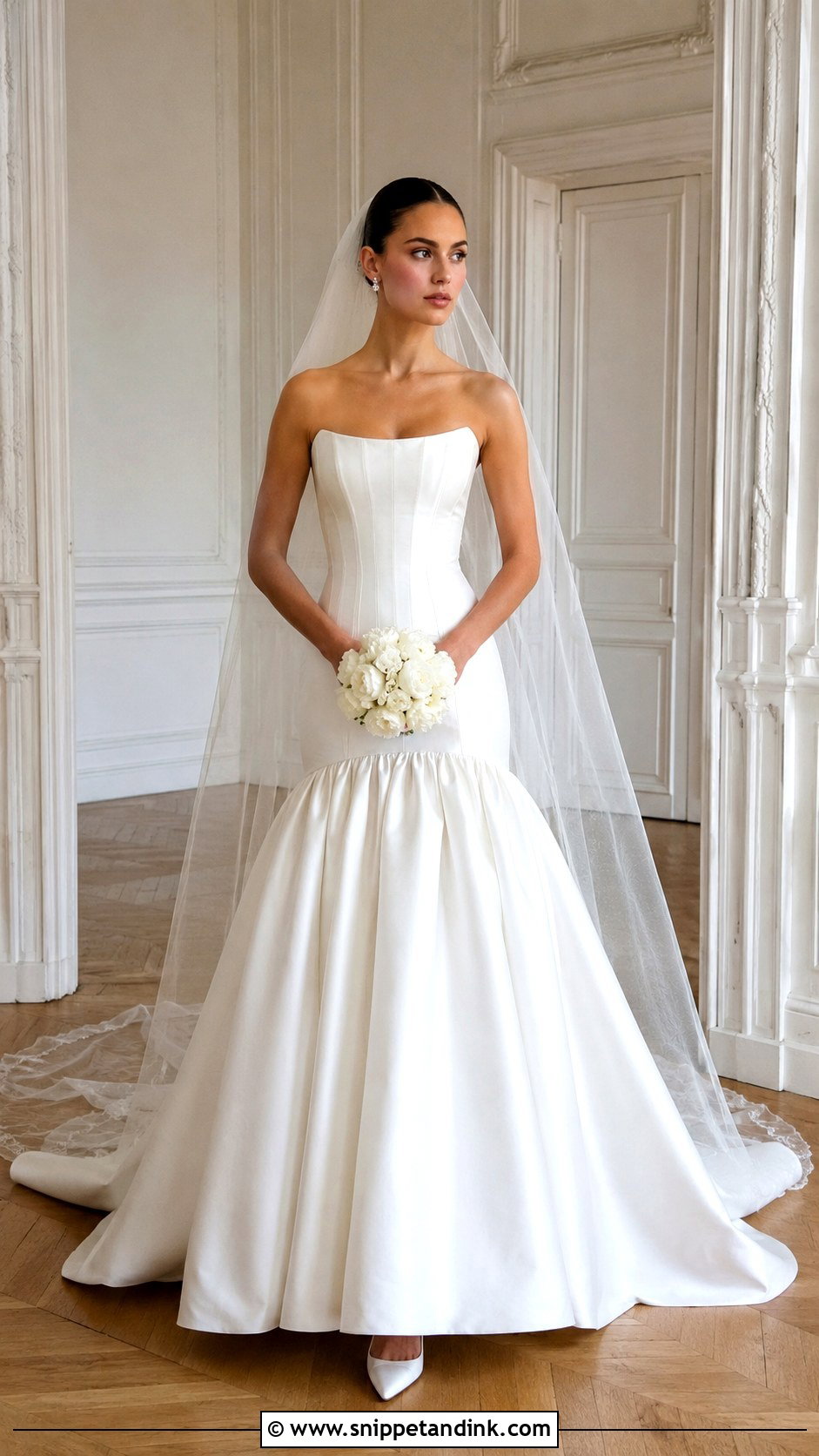
A drop waist runs the bodice past the natural waist before the skirt opens, which makes for a long, unusual line. It needs precise corsetry and well-placed seams so the extended bodice follows the body smoothly. Silk faille, mikado and satin hold the shape; tulle softens it. A long veil, understated earrings, pointed pumps and a small rounded bouquet keep the proportions in front. The skirt should start at a flattering point on the hips, and that point is different on every body. I’d only recommend it to a bride with a longer torso; on a short waist the drop can make the legs look shorter. Sit and bend in it before you agree.
16. Pleated Tulle Wedding Gown
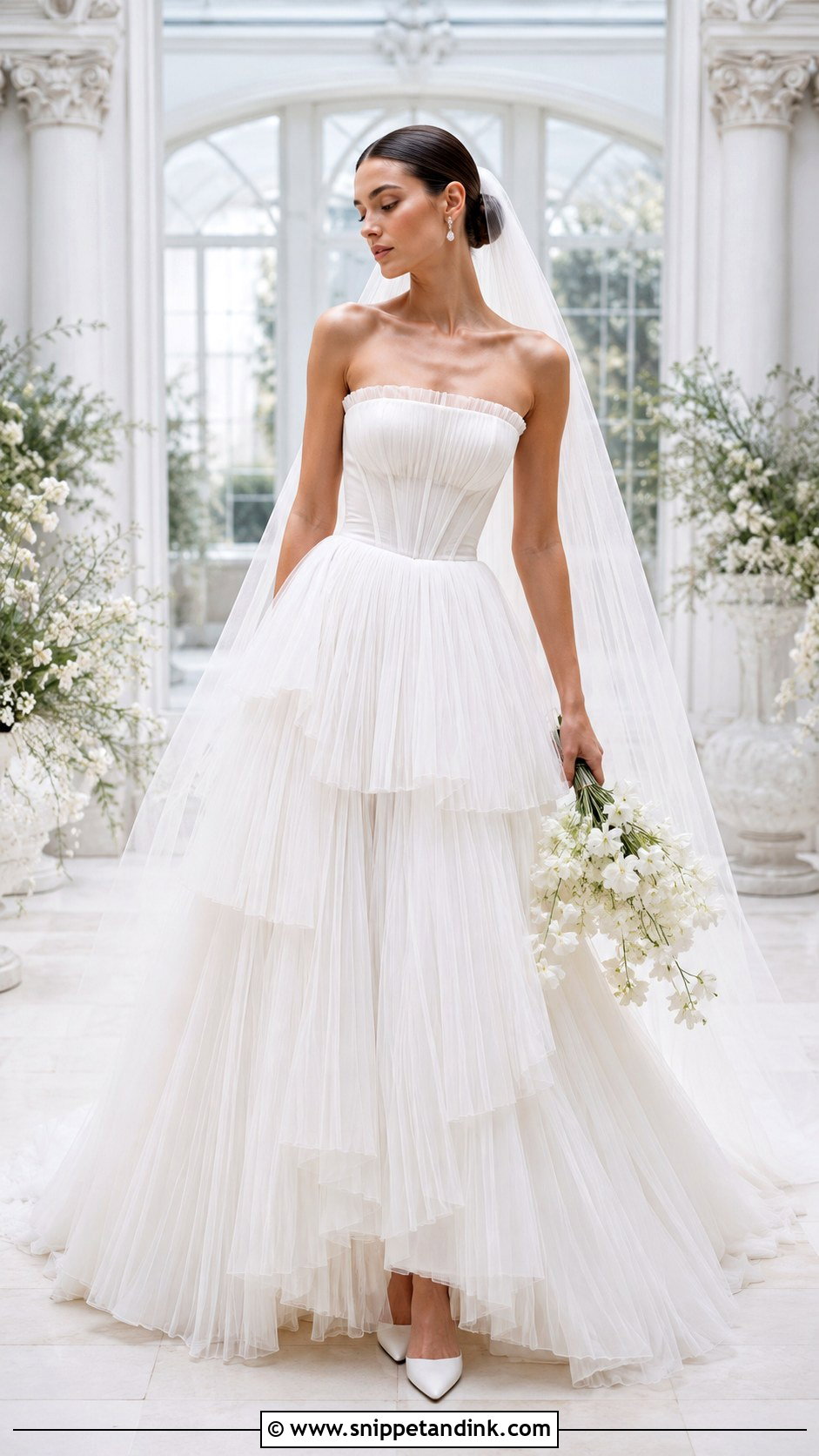
Fine pleated tulle catches light and moves without heavy embellishment. A couture version might combine a corseted bodice with pleats radiating toward the waist before falling into a full skirt, strapless or with sheer sleeves. Delicate earrings, satin pumps and a plain tulle veil avoid clashing textures, with sweet peas or other airy flowers. Spacious venues let it move. Pleats flatten if they’re pressed wrong, so ask how the atelier wants them steamed and stored. The hem should float just above the floor in your shoes; tulle that drags picks up dust and tears quickly.
17. Bow Back Wedding Gown
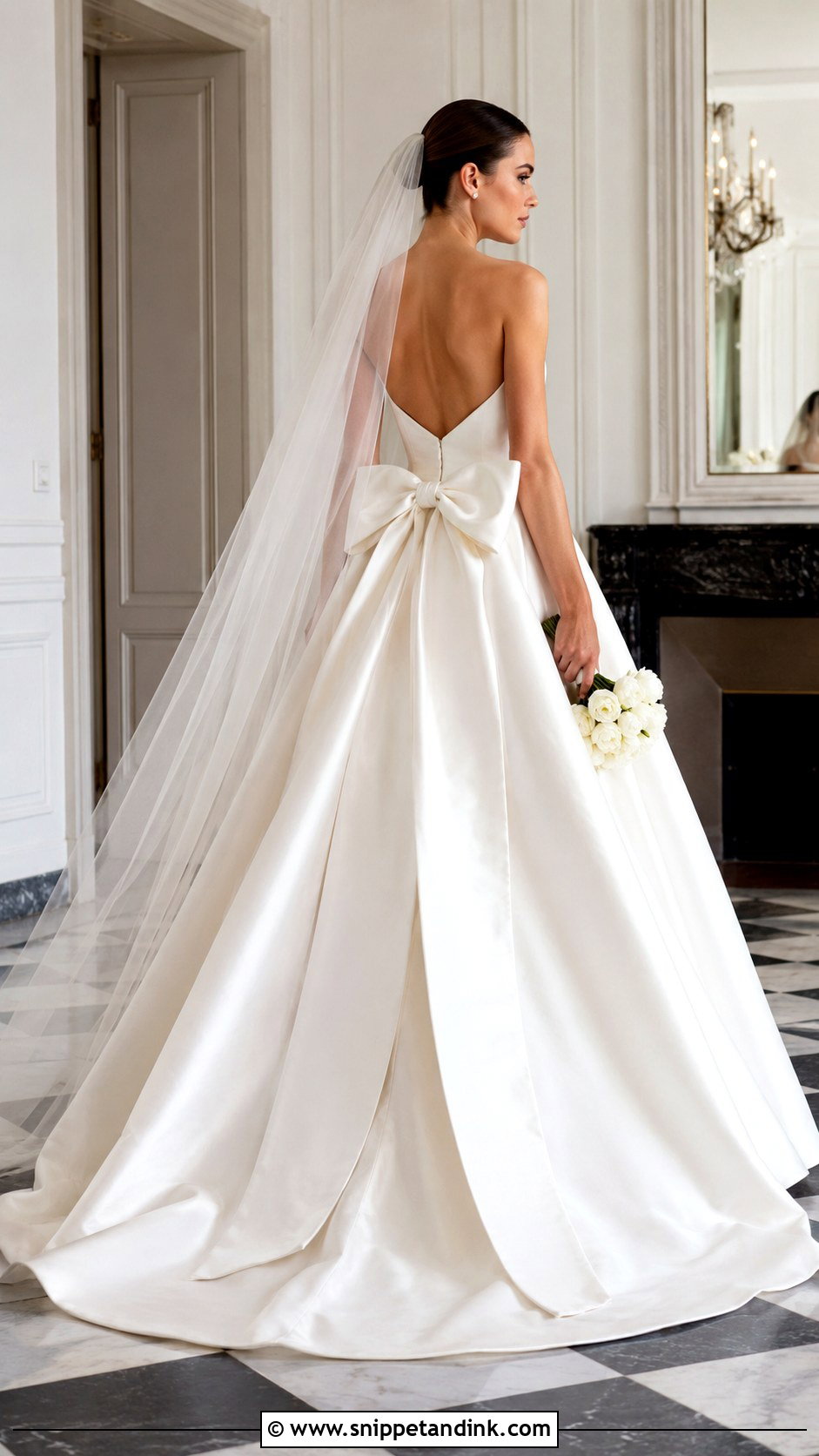
A bow at the back gives guests something to look at during the vows, while the front stays clean. A structured satin column, A-line or ball gown with an oversized bow at the waist or upper back works, and long tails can run into the train. Small earrings, a smooth bun, classic pumps and a sheer veil placed above or below the bow, depending on its size, keep it balanced. Carry a minimal bouquet. A detachable bow simplifies bustling and the reception. Look at it from behind and from the side in the mirror; big satin bows tend to droop on one side after a few hours unless they’re stiffened inside.
18. Feather Trim Wedding Gown
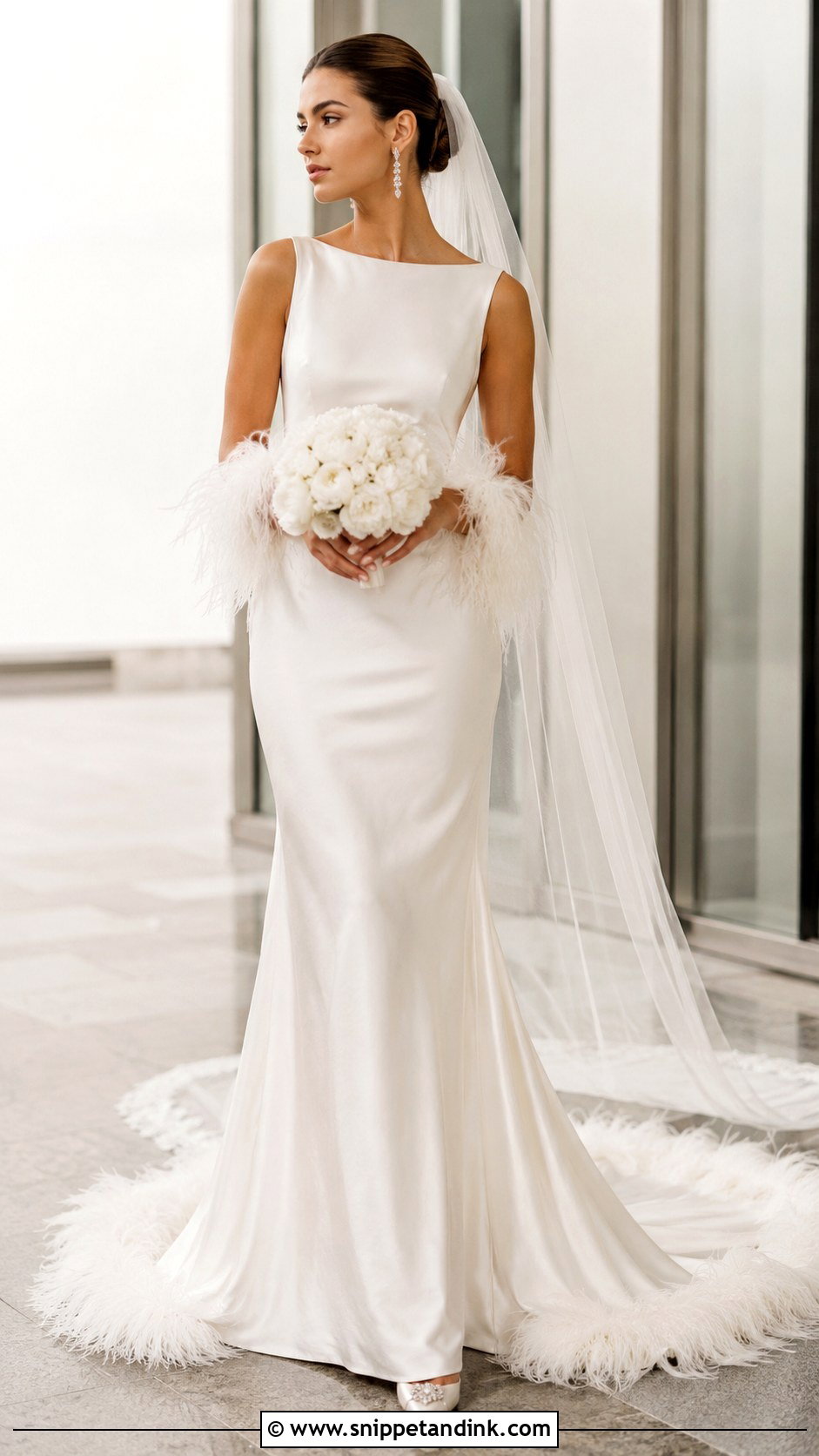
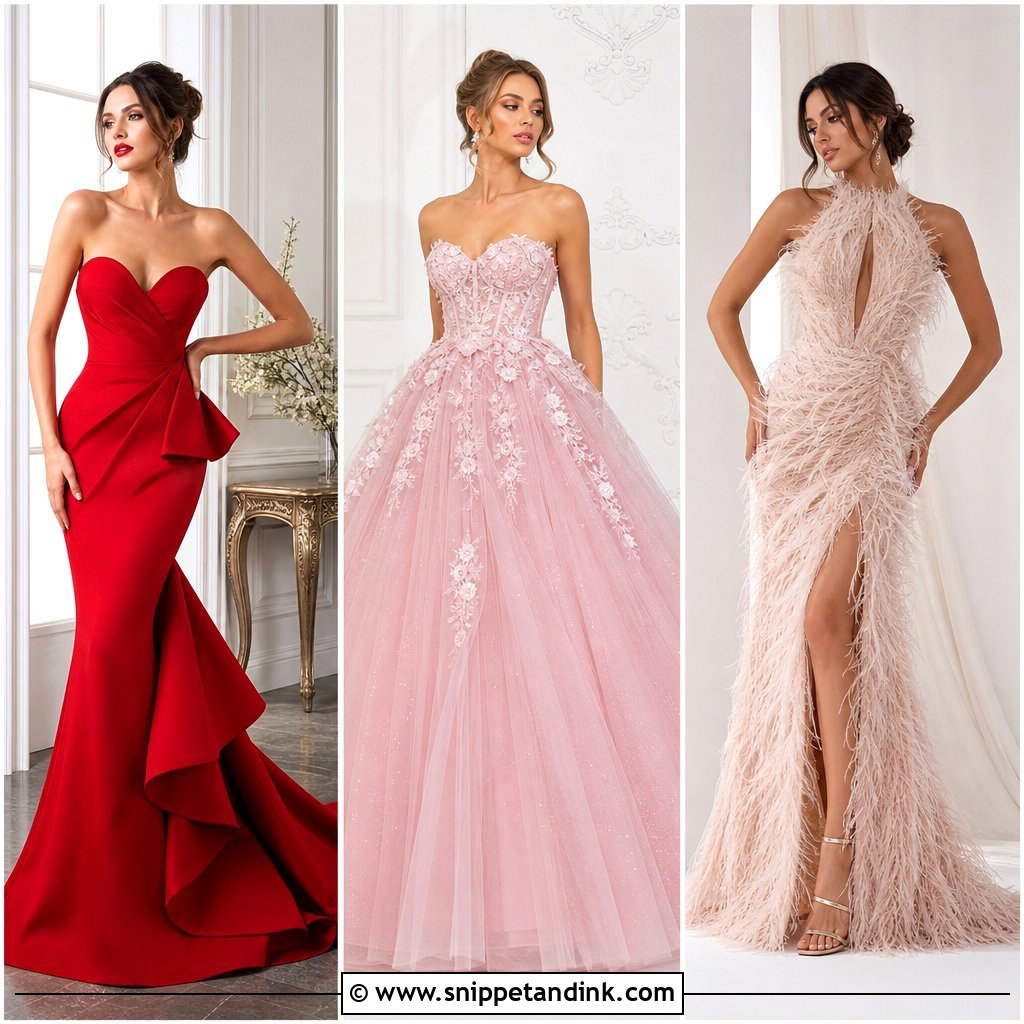
A feather-trim wedding gown adds softness and movement, and the most wearable ones use feathers sparingly at the neckline, cuffs, hem or train. Pair the trim with a plain silk column or fitted satin gown. Delicate crystal earrings, sleek heels, a clean veil, smooth hair and a compact white bouquet keep it controlled. Fashion-forward indoor venues suit it. Feathers shed and bend where they rub, so keep them away from the inner arm and the hip. Rain flattens them completely, which makes an outdoor ceremony risky. A removable feather cape or cuff gives you the effect without the worry.
19. Two-Piece Couture Wedding Gown
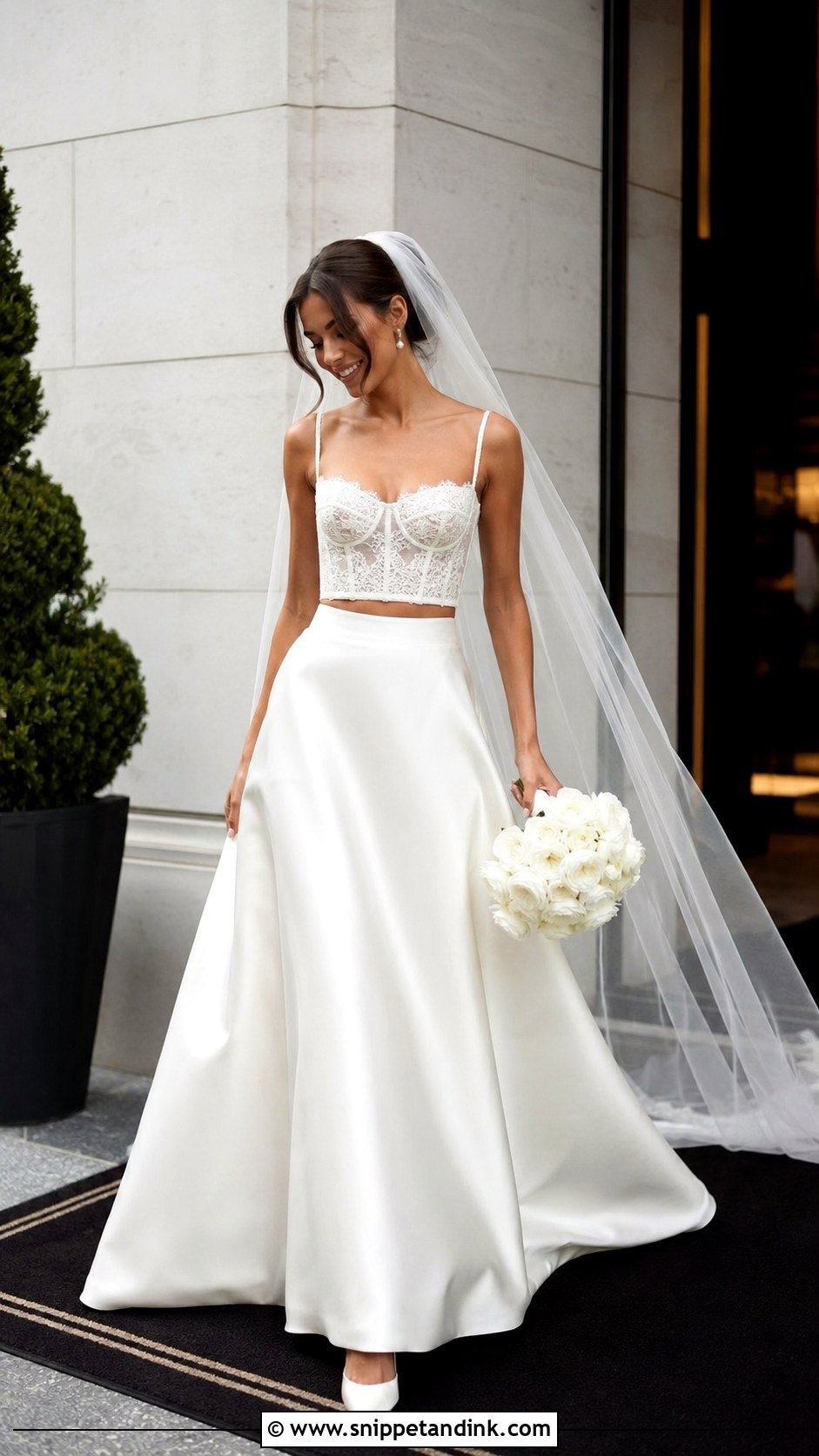
A two-piece pairs a fitted bridal top with a full-length skirt. The join can be almost invisible or show a narrow band of skin. A corseted lace top with a silk skirt feels romantic; structured satin over a column skirt looks clean. Pearl earrings, pointed pumps and a long veil bring traditional formality, with a neat bouquet. Fitting the pieces separately makes alterations more precise. Raise your arms and check the top stays down, and walk a few laps to see whether the skirt waistband turns; a small hook-and-bar or grip tape inside the band fixes rotation.
20. Detachable Train Wedding Gown
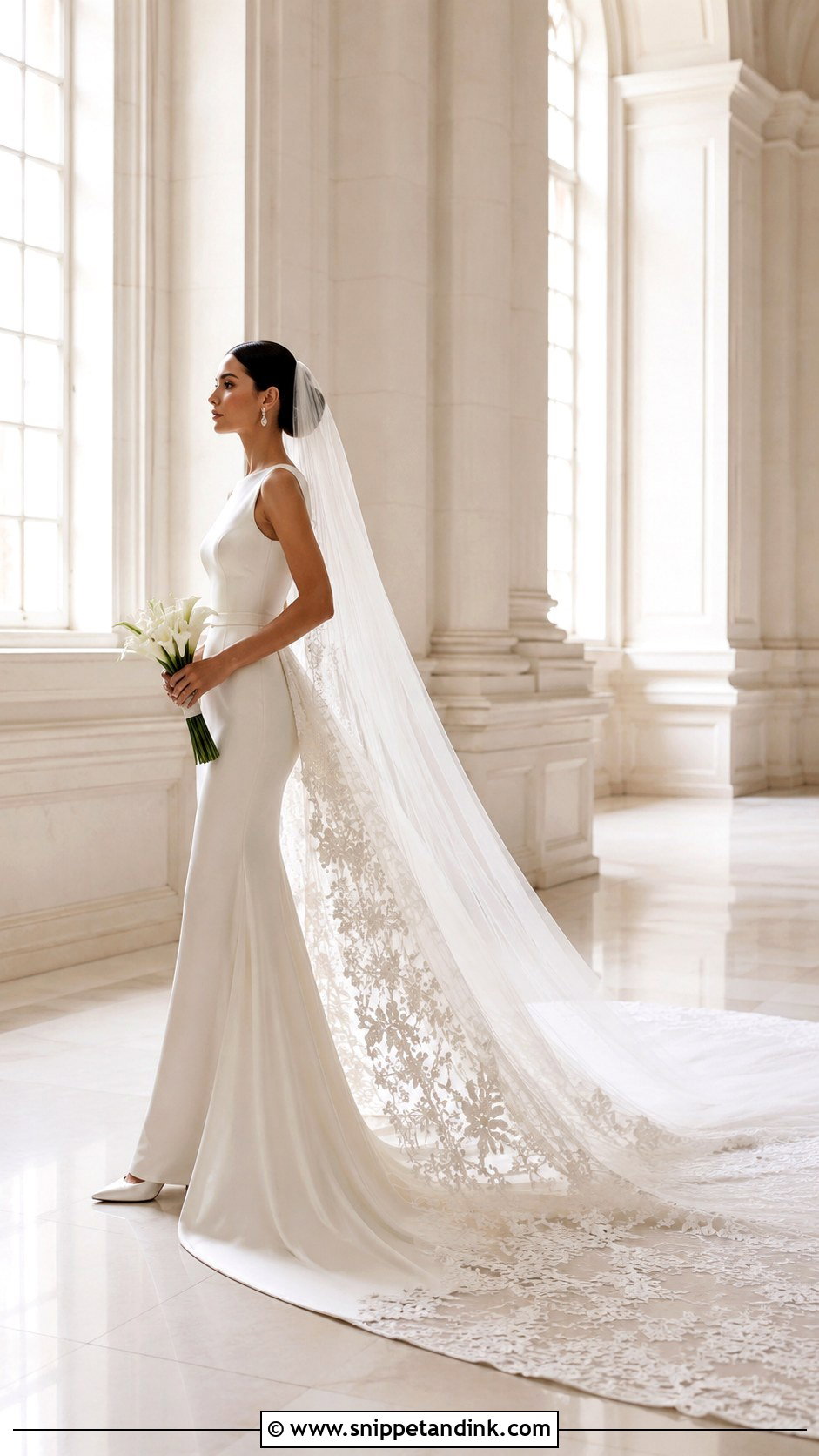
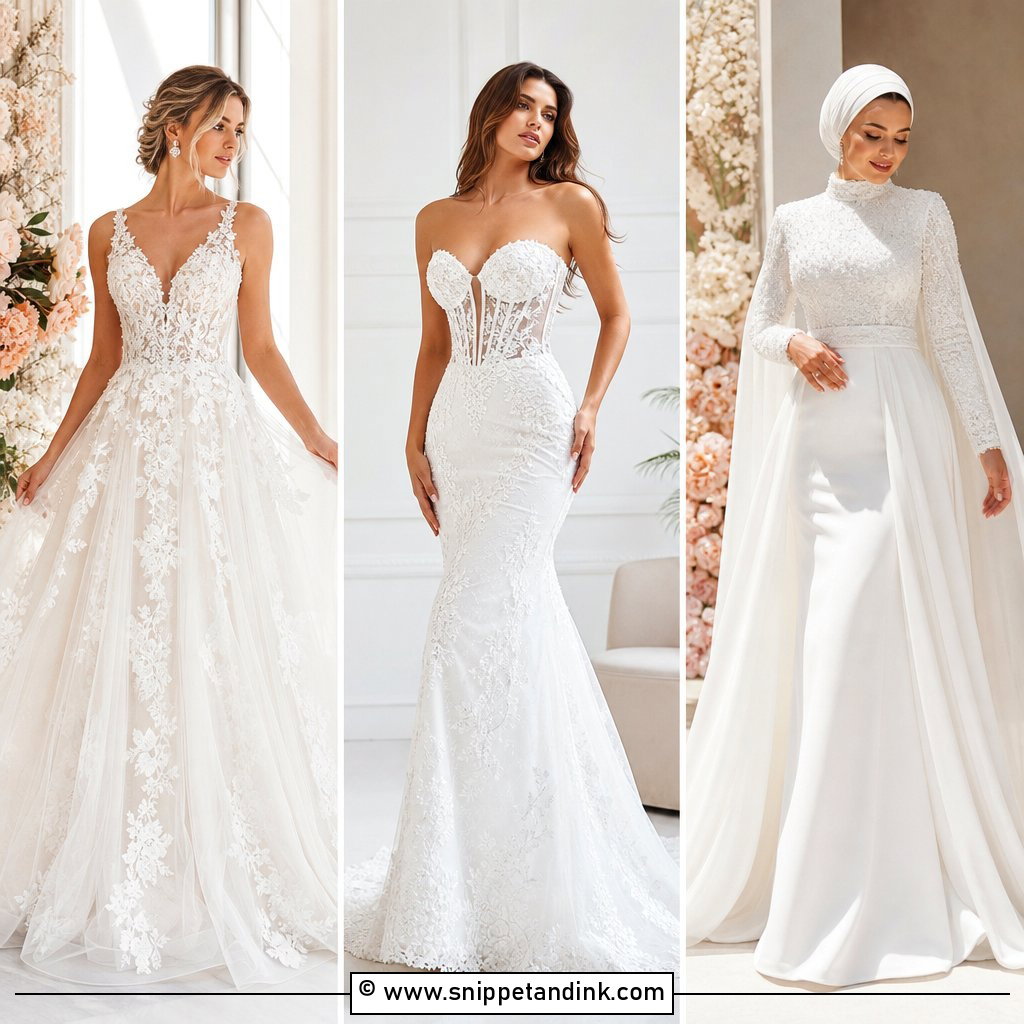
A detachable train gives you a dramatic entrance and an easier party. Start with a column, sheath or mermaid that looks complete on its own, then a cathedral train attached at the waist, hips or lower back. Matching fabric looks unified; lace or embroidered tulle creates contrast. Drop earrings, elegant pumps, sleek hair and a fingertip veil that won’t fight the train finish it, with a narrow bouquet. Choose one attendant and have them practise taking the train off twice before the day; hidden hooks are fiddly under pressure. Once it’s off, the attachment points should vanish so the base gown looks finished in reception photos.
French, American or Ballroom: Bustling the Train
Almost every gown in this list has a train, and how it’s bustled decides how the dress looks at the party. It’s added by your seamstress during alterations, so choose the style while the dress is still being fitted.
- An over bustle, sometimes called American, hooks the train up onto the back of the skirt. It’s quick and suits lighter fabrics.
- A French bustle tucks the train under and ties it with ribbons inside, which creates soft folds. It works well on satin and on heavy skirts.
- A ballroom bustle lifts the train under the skirt all round so the hem looks even. It takes more ties but gives a clean line for dancing.
Ask the seamstress to number or color-code the ribbon ties, then have your attendant bustle the dress at least once at a fitting. Lace and beaded trains are heavy, and a bustle with too few points will sag or tear the fabric during dancing. A wrist loop is a fair backup for a short train, but it gets tiring on a long one.
Getting Into the Gown on the Morning
Finish hair and makeup first, then step into the dress rather than pulling it over your head. Corset lacing should be tightened gradually from the middle outwards. Put shoes on before the final lace-up so the hem sits right, and leave jewelry until the dress is fully closed so nothing snags.
Construction First, Decoration Second
Couture rewards brides who judge silhouette, construction, comfort and venue before decoration. Satin, hand-finished lace, flowers, pearls, feathers or a detachable train should all serve one idea of how you want to look. Bring the shoes and underwear you’ll actually wear to every fitting, sit and walk in the gown, and look at it from behind as well as the front. Let accessories frame the dress rather than cover its best features. A ball gown, column, lace sleeve or two-piece can all be right, provided it’s well built and you forget you’re wearing it by the second hour.
You'll Like These Ideas:





Leave a Reply