
A dessert table earns its space when guests keep drifting back to it between the speeches and the dancing. The ones I build that work best look full without looking crammed, and they mix heights and textures so the eye has somewhere to land. Small portions matter more than people expect: a guest holding a drink will take a macaron or a tart, but rarely a slice that needs a fork. Below are twenty ways I’d set one up, from a single mini cake surrounded by bites to a jar-filled candy bar, with notes on what actually holds up once the room warms.
How Many Sweets per Guest the Table Actually Needs
The question I get first is quantity, and the honest answer depends on what else is being served. When there is also a cutting cake, I plan around two to three small pieces per guest. If the dessert table replaces cake entirely, I lean toward three to four. Late-night tables after a long open bar tend to go faster than the post-dinner one, so I keep a reserve tray back in the kitchen rather than putting everything out at once.
- Count bites, not dessert types. Six kinds sounds modest, but six kinds at forty pieces each is already 240 sweets.
- Offer roughly one item in three that is light or fruit-based, because plenty of guests want a taste and nothing heavy.
- Give the most popular flavour about double the count of the novelty ones.
- Plan two serving sides on long tables so a queue never forms at one end.
Plates, napkins and tongs belong at the start of the table, not the end. I also leave a small bare patch of cloth near the front for guests to set a glass down, which saves the platters from wet rings.
1. Mini Wedding Cake Dessert Table
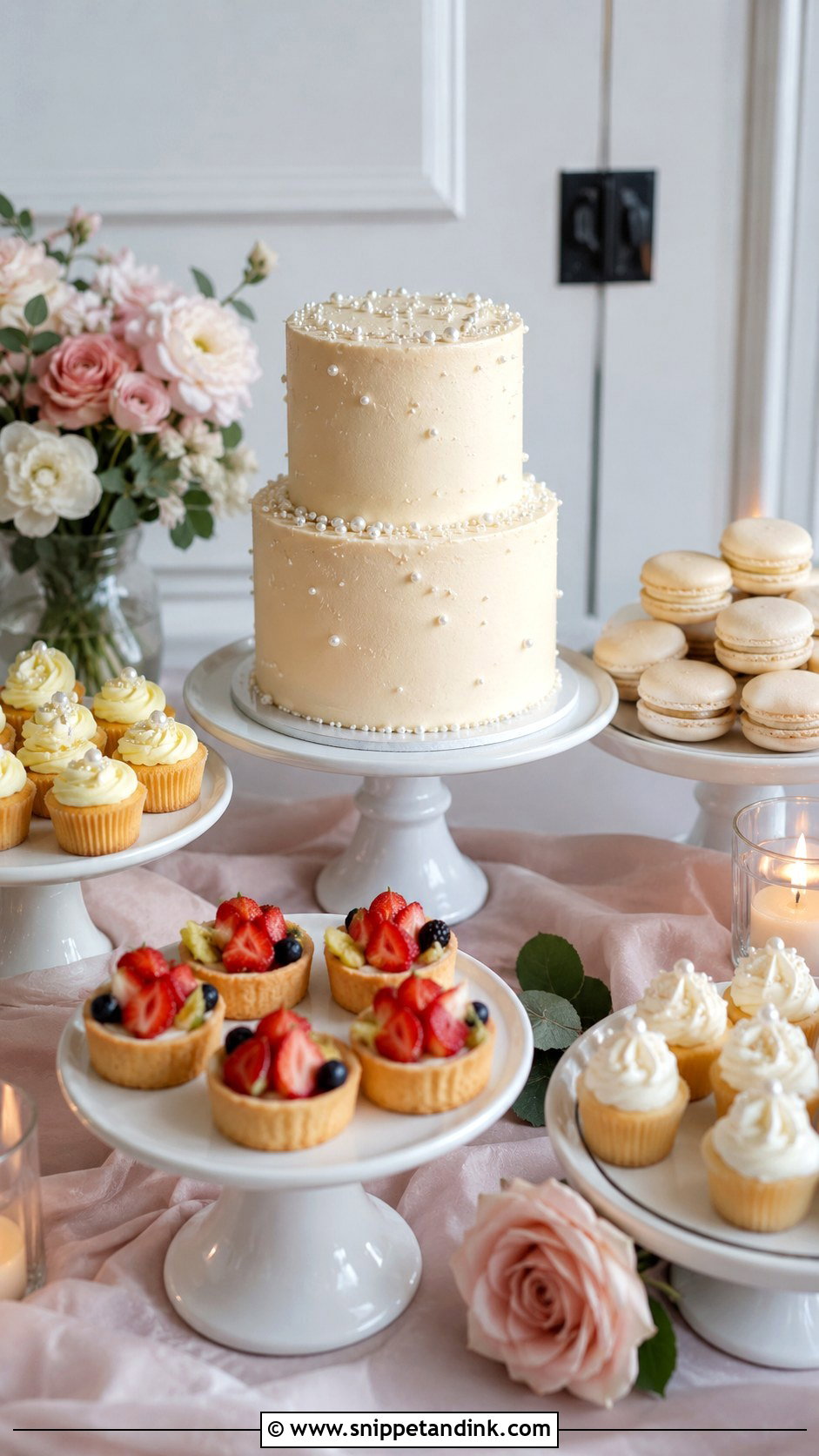
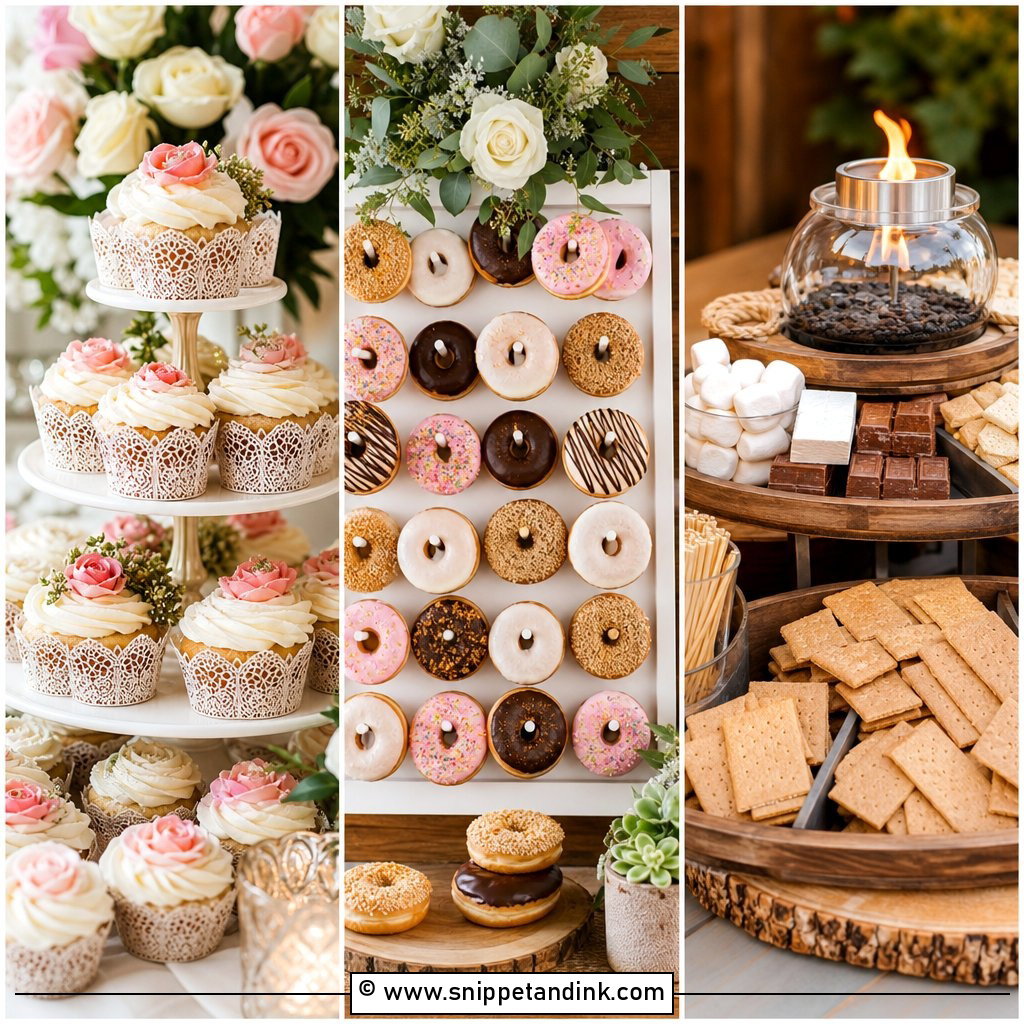
Keep a small cake in the middle when you still want the cutting moment but don’t need a cake that feeds two hundred. A two-tier or single-tier cake sits at the centre, with mini cupcakes, cake bites, macarons and petite fruit tarts built around it on stands of different heights. I keep every sweet inside the same three or four colours (ivory, blush, champagne or sage) so the spread reads as one design. The thing I check first is the cake’s footprint: a six-inch top tier looks lost on an eight-foot table unless it sits on a tall stand.
2. Rustic Wedding Dessert Table
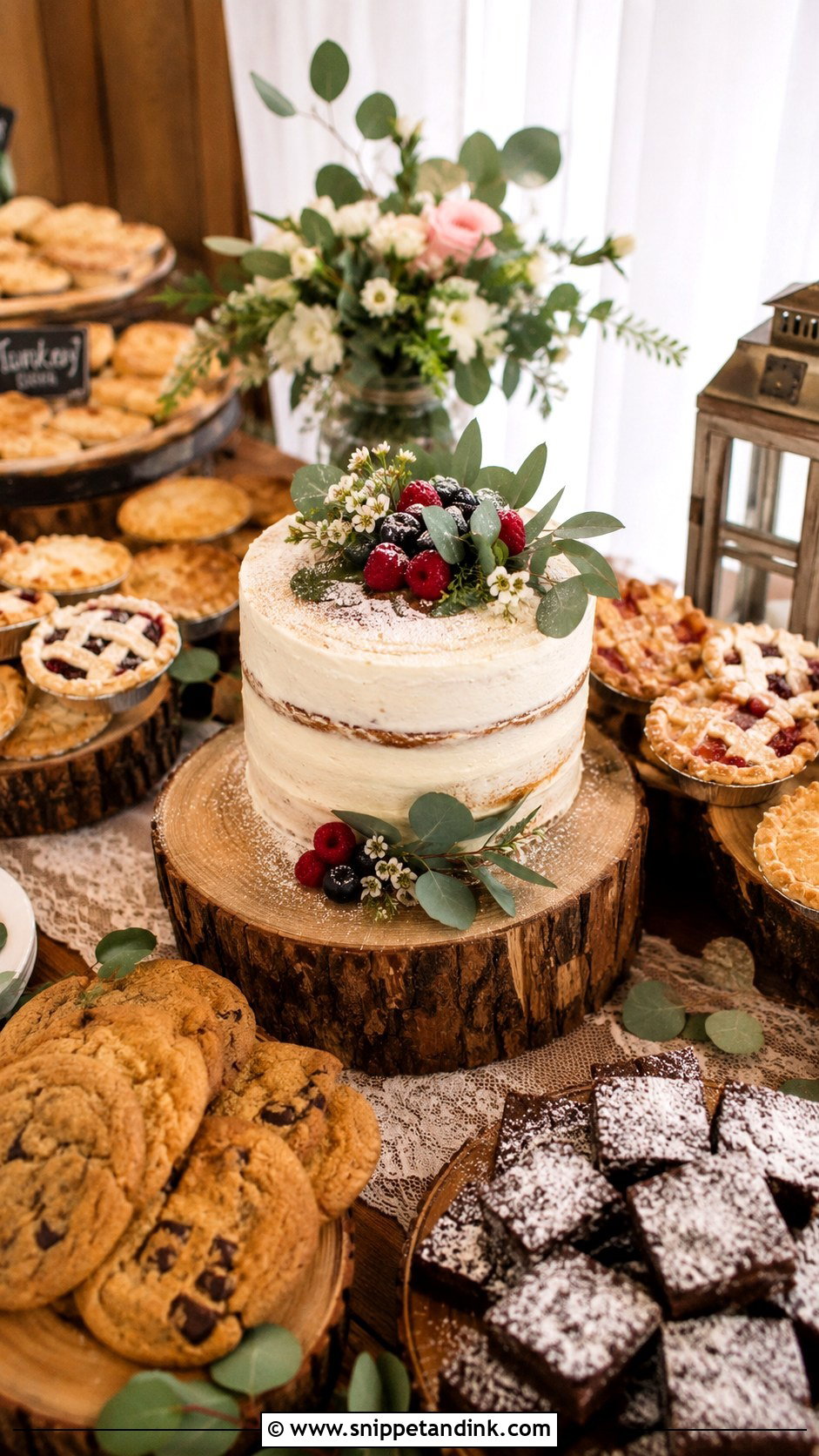
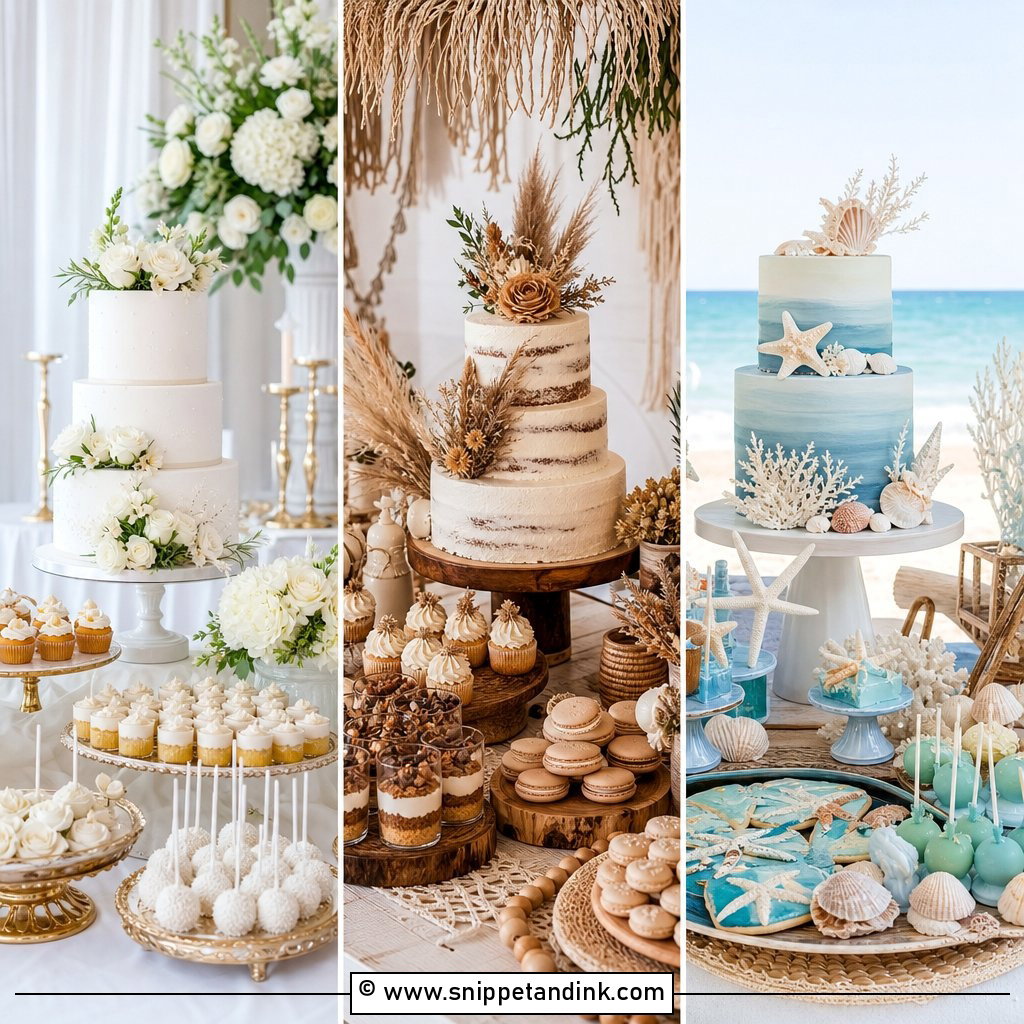
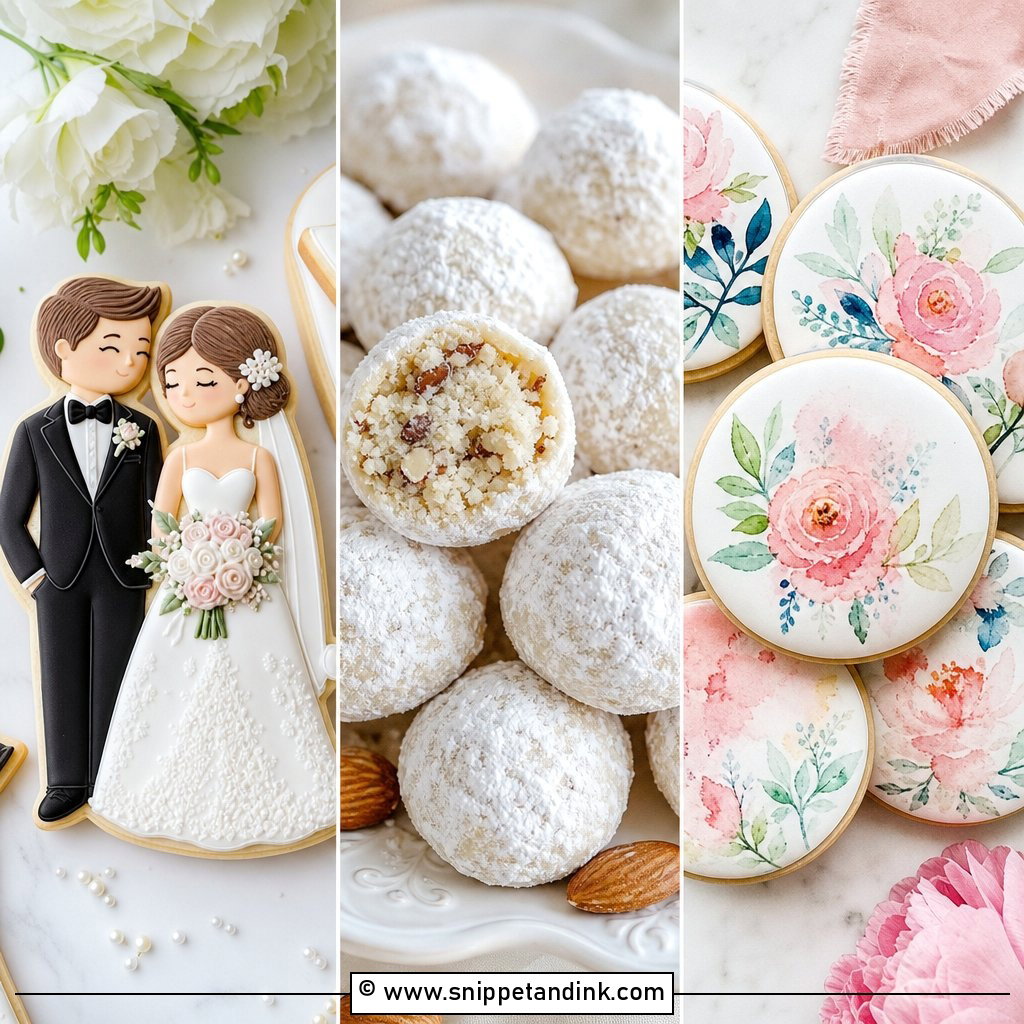
Wood slices, linen runners and plain white platters give this table its warmth, and the desserts can look homemade while still being wedding-tidy. Mini pies, brownies, cupcakes, cookies and a small buttercream cake suit the style. Group them in clusters rather than one flat row, and add little flavour signs. One practical warning from setting these up in barns and vineyards: raw wood slices shed bark and can carry moisture, so I put a doily or parchment under anything sticky. Vanilla bean, apple, caramel, lemon and chocolate keep the spread broadly liked.
3. Elegant Wedding Dessert Table
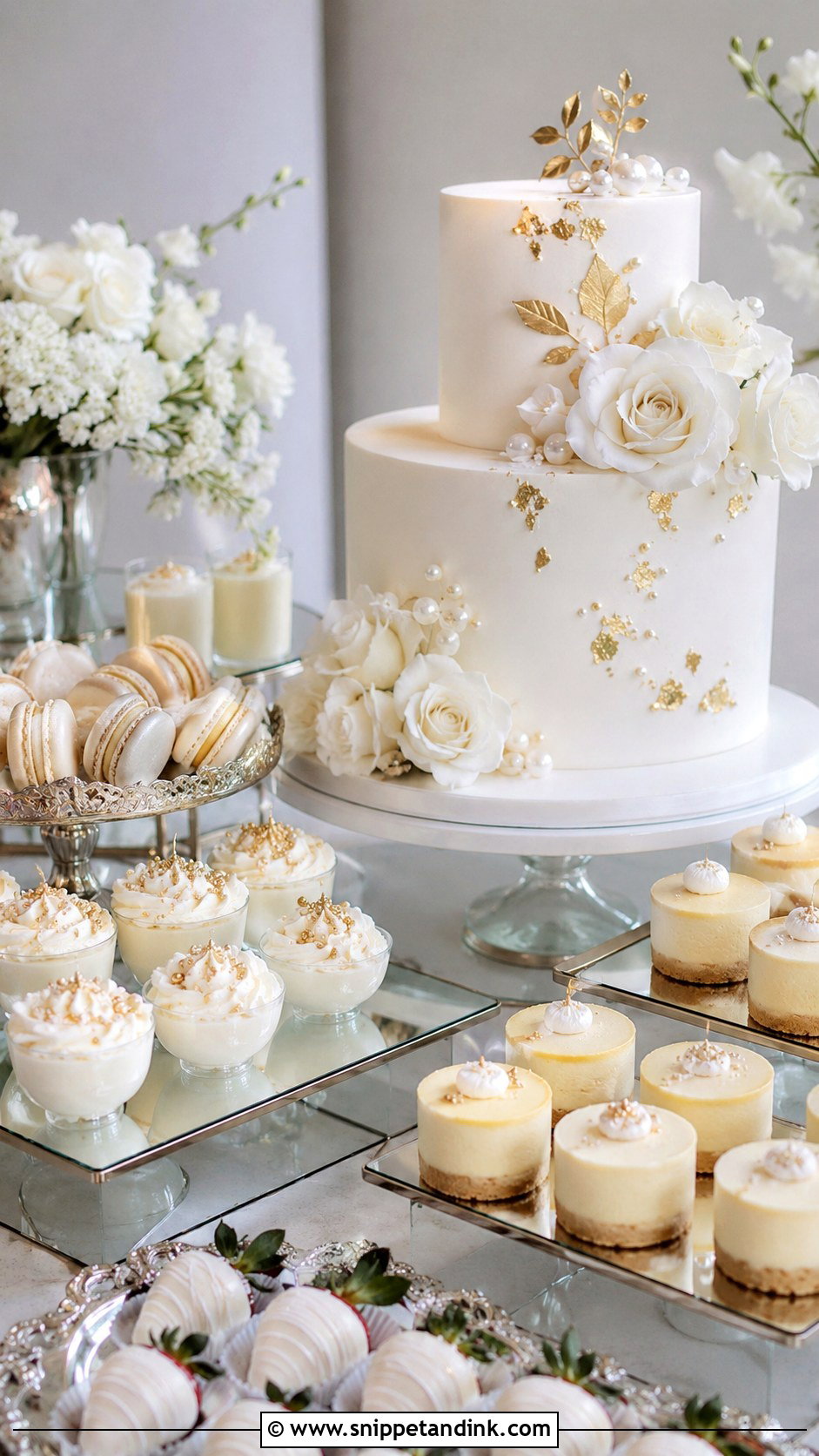
Restraint is the whole trick here. White cake stands, glass trays, mirrored risers or gold-edged platters set the tone, and a smooth fondant or buttercream cake holds the middle with macarons, mini cheesecakes, mousse cups and chocolate-dipped strawberries around it. Stay inside a short palette of white, cream, gold and soft pink. I leave a hand’s width of empty cloth between groups and repeat the same shapes, because gaps are what make it look expensive. Mirrored risers do have one catch under hotel spotlights: they bounce light straight back into the lens, so I angle them slightly away from where the photographer will stand.
4. Boho Wedding Dessert Table
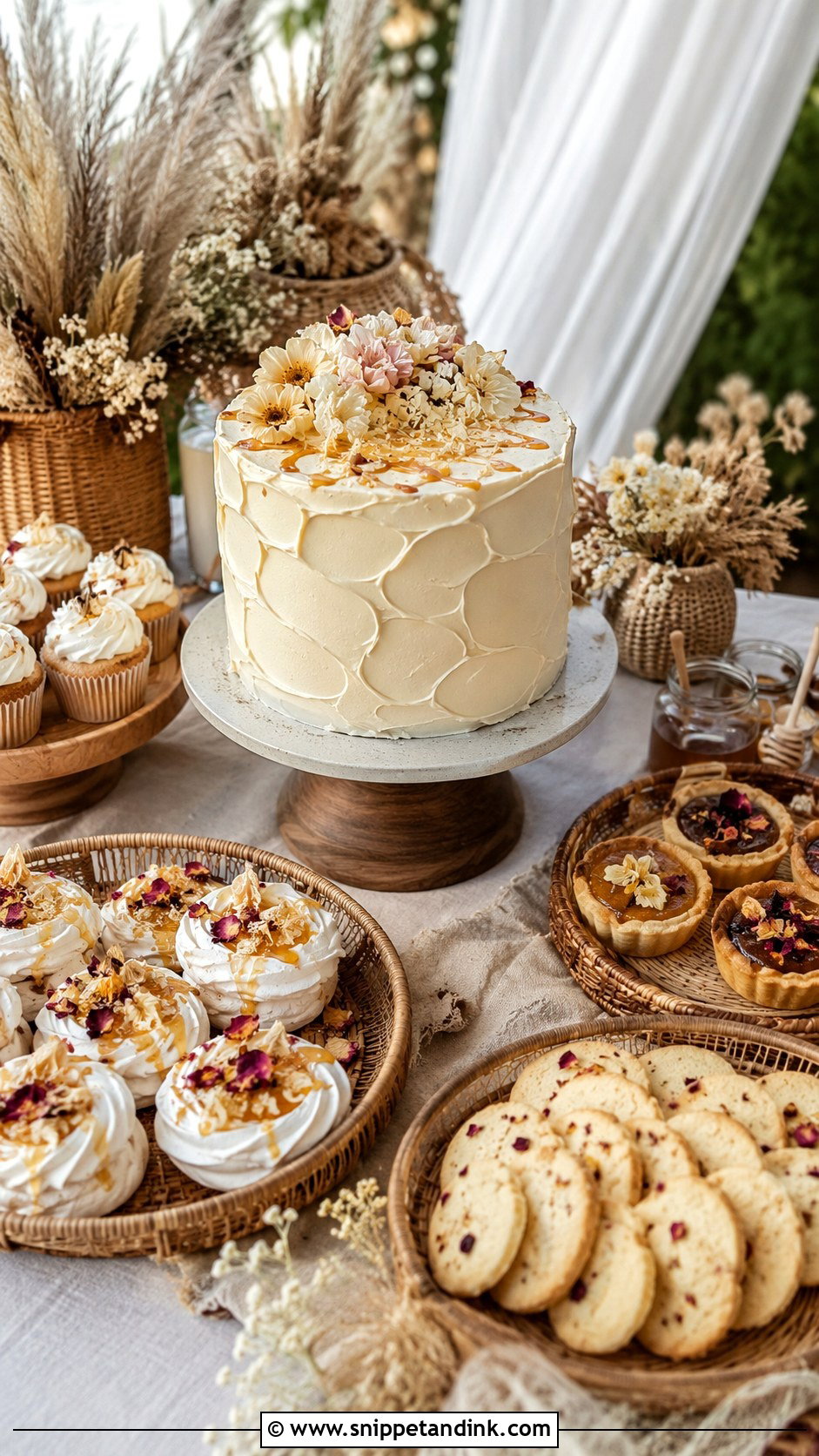
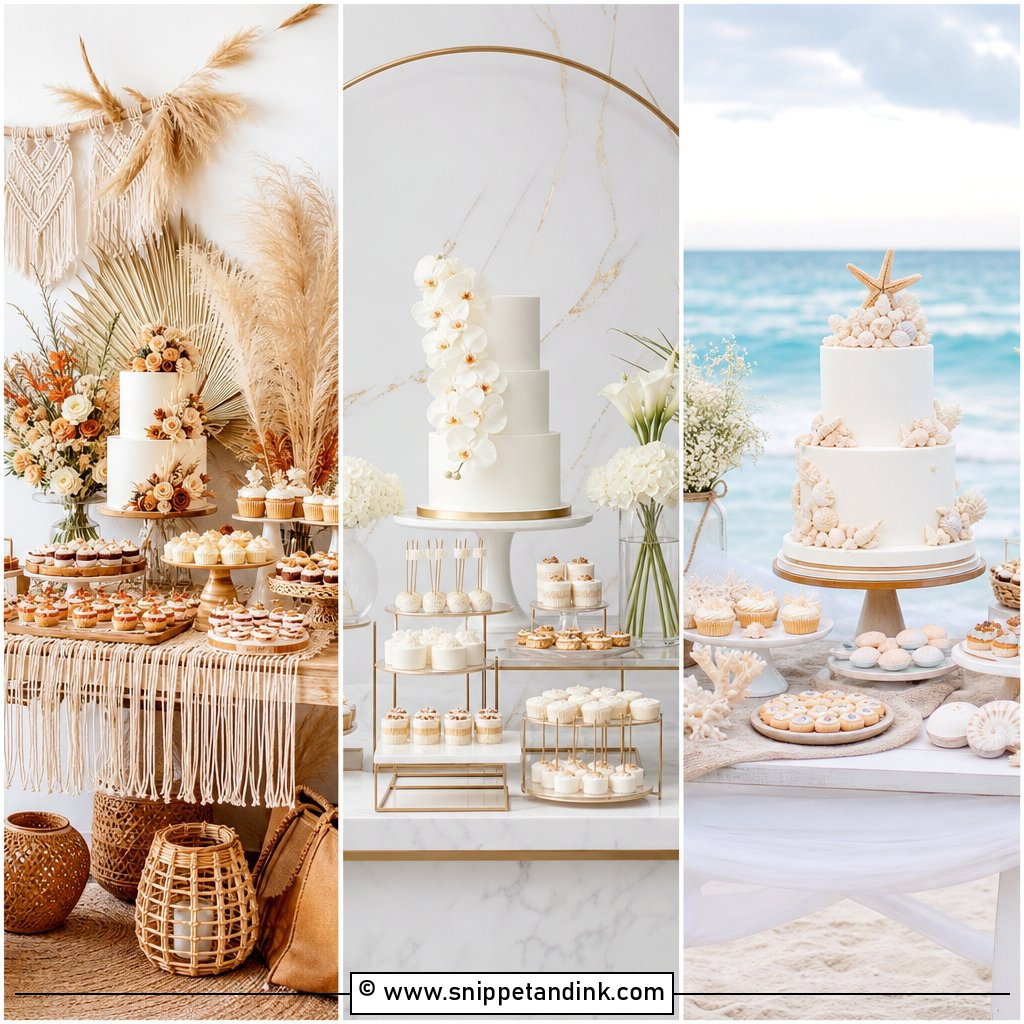
Earthy and loose, this one starts with a textured buttercream cake, then mini pavlovas, frosted cupcakes, cookies and small tarts in warm neutrals and terracotta on woven trays. Skip strict symmetry and let the desserts flow in mixed heights. Pampas grass, pressed flowers and rattan finish it. Dried grasses shed, though, and I never let them touch exposed frosting; I tuck them behind the stands instead. Honey, almond, coconut and citrus flavours suit the look, and pavlova is the one I’d skip at a humid beach venue because meringue softens fast in damp air.
5. Garden Wedding Dessert Table
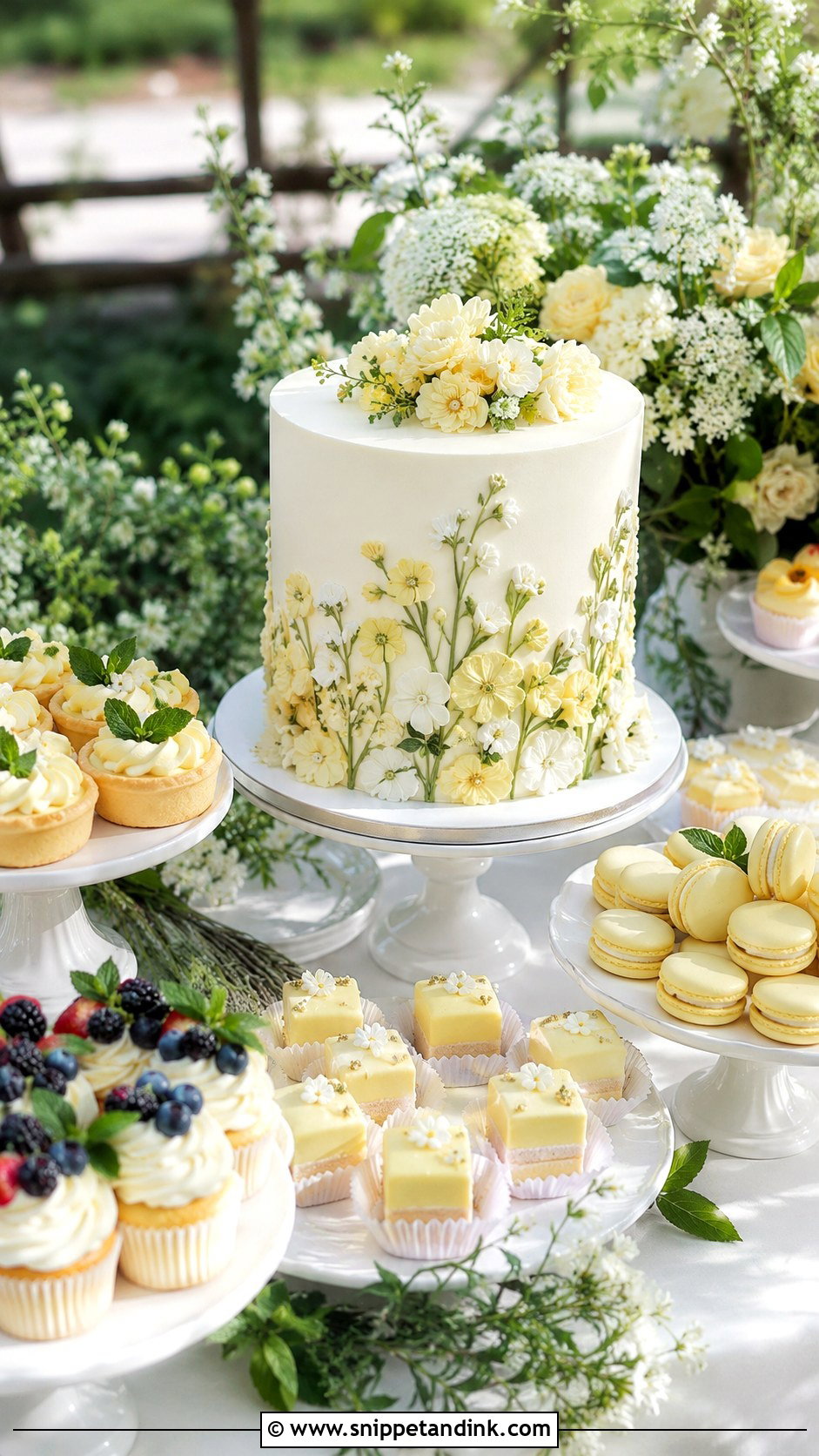
Fresh flowers do most of the work at a garden table. A floral buttercream cake anchors it, with lemon tarts, berry cupcakes, macarons, petit fours and sugar cookies around it on white ceramic or clear glass. Edible flowers are welcome, but only ones grown for eating, never florist stems, which are often sprayed. Let the desserts follow the season (strawberries in spring, peaches in summer) and the table blends straight into a tent or greenhouse setting. Outdoors, I keep a mesh food cover on standby until guests arrive, because bees find sugar quickly.
6. Modern Wedding Dessert Table
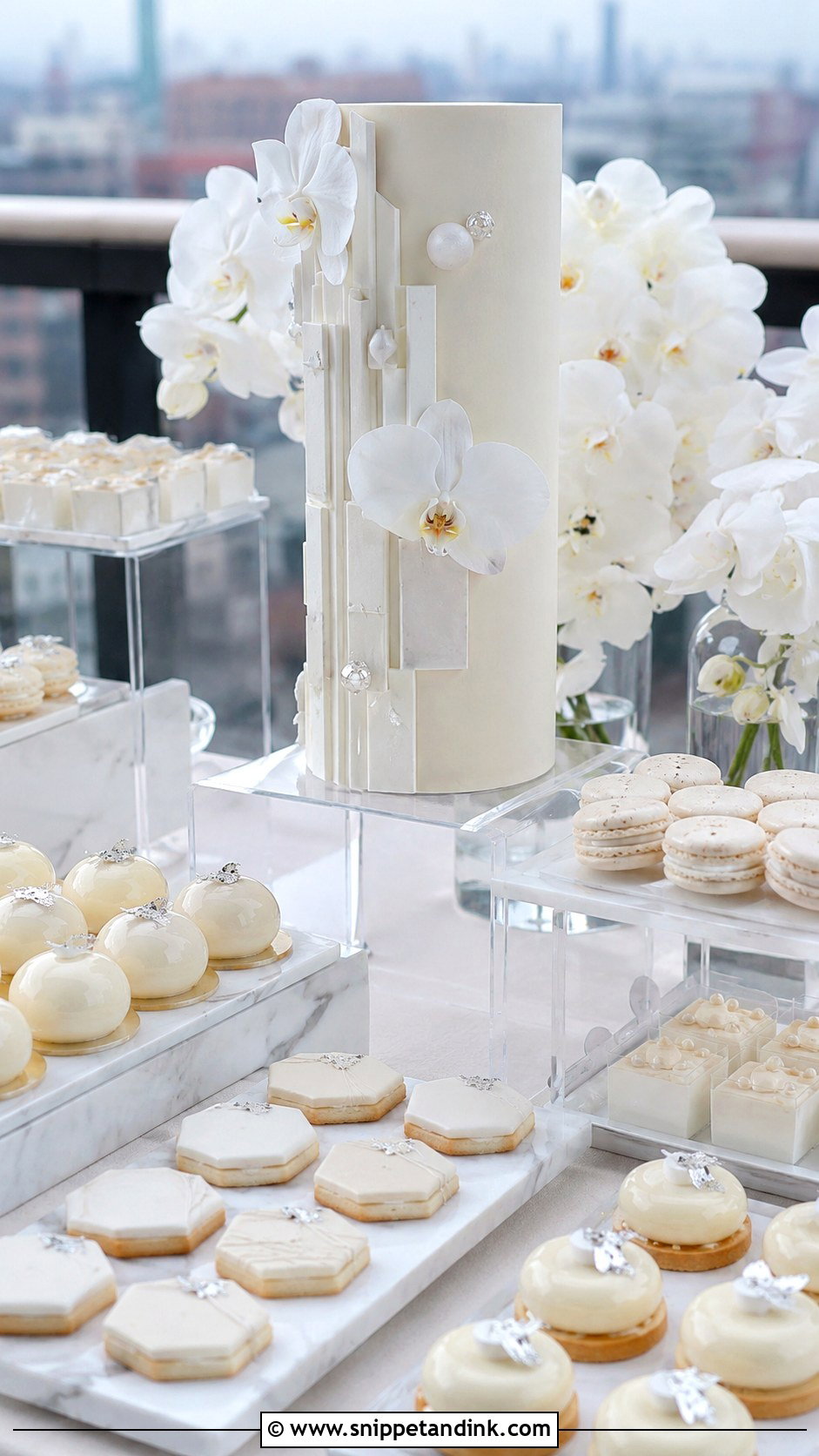
Clean lines and very few colours define the modern table. A tall white buttercream cake or a square cake gives the centre presence, surrounded by geometric sugar cookies, mini mousse cakes, macarons and glossy tartlets on acrylic risers. Black, white, beige and metallics are enough. Left alone it can feel cold, so I add one soft element, usually candlelight or a few orchids. A sharp-edged square cake is harder to keep crisp than a round one; the corners are where buttercream slumps first in a warm loft, so I’d ask your baker whether a firmer ganache coat makes sense.
7. Vintage Wedding Dessert Table
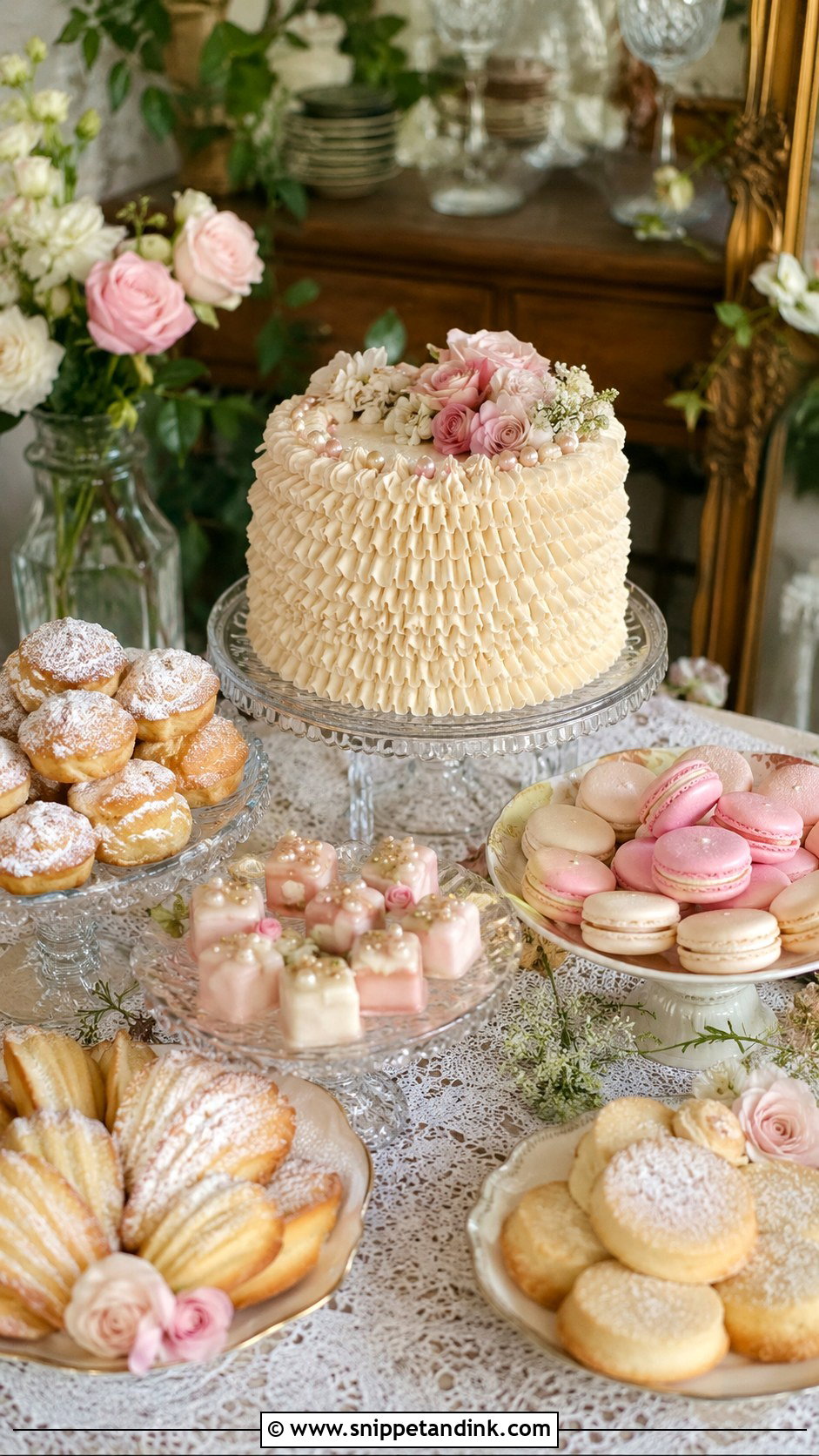
Antique-style cake stands, lace linens and pressed glass dishes carry the vintage look. A small ruffled buttercream cake sits at the centre with madeleines, macarons, shortbread, mini cream puffs and petit fours, all in gentle shades like dusty rose or butter yellow. Handwritten labels or framed signs add the old-fashioned note. Mismatched stands are part of the charm, but I level-check every one before anything goes on it; old pressed glass is often slightly warped and a wobbling stand is how a tier of cream puffs ends up on the floor.
8. Cupcake Wedding Dessert Table
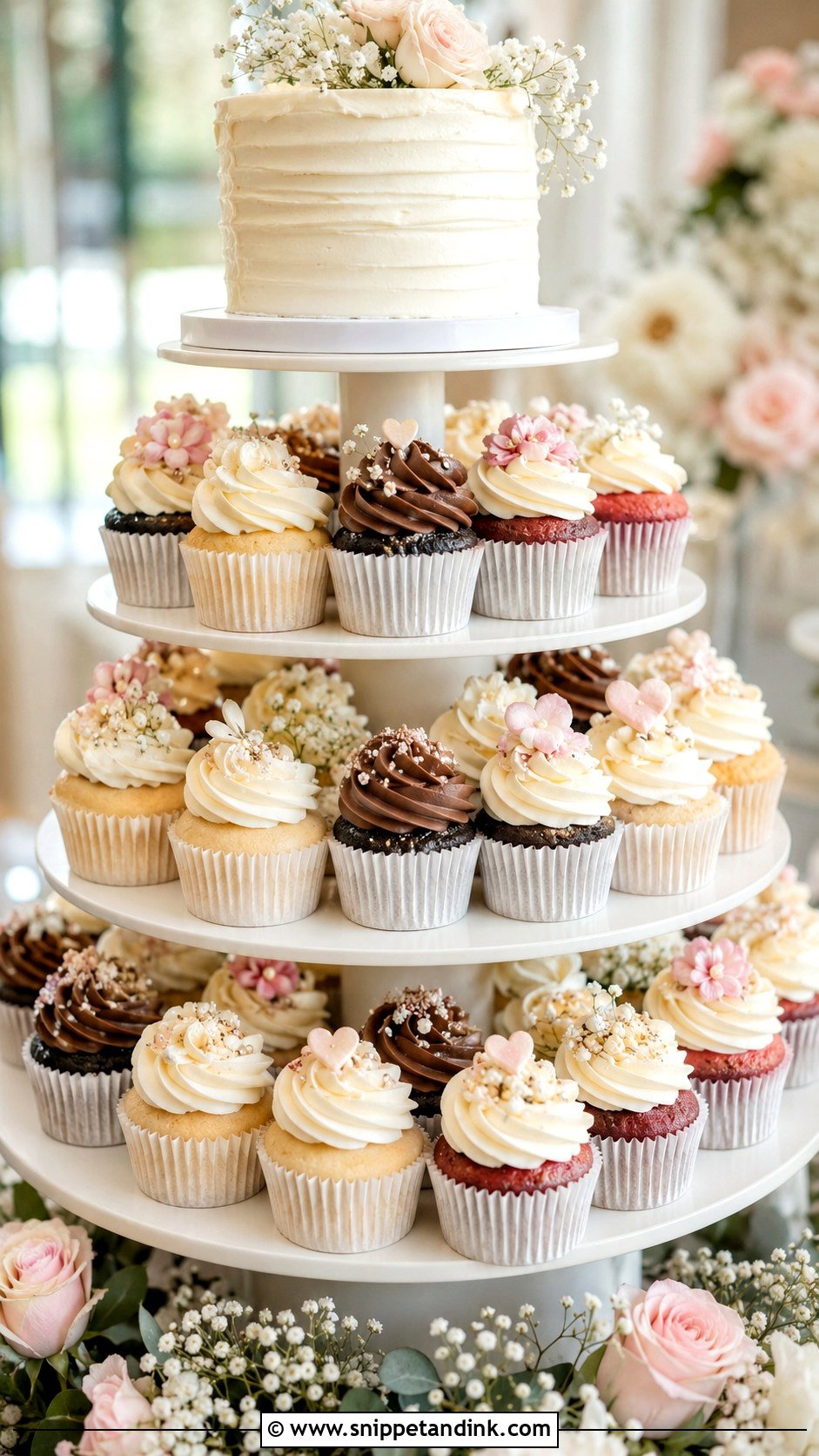
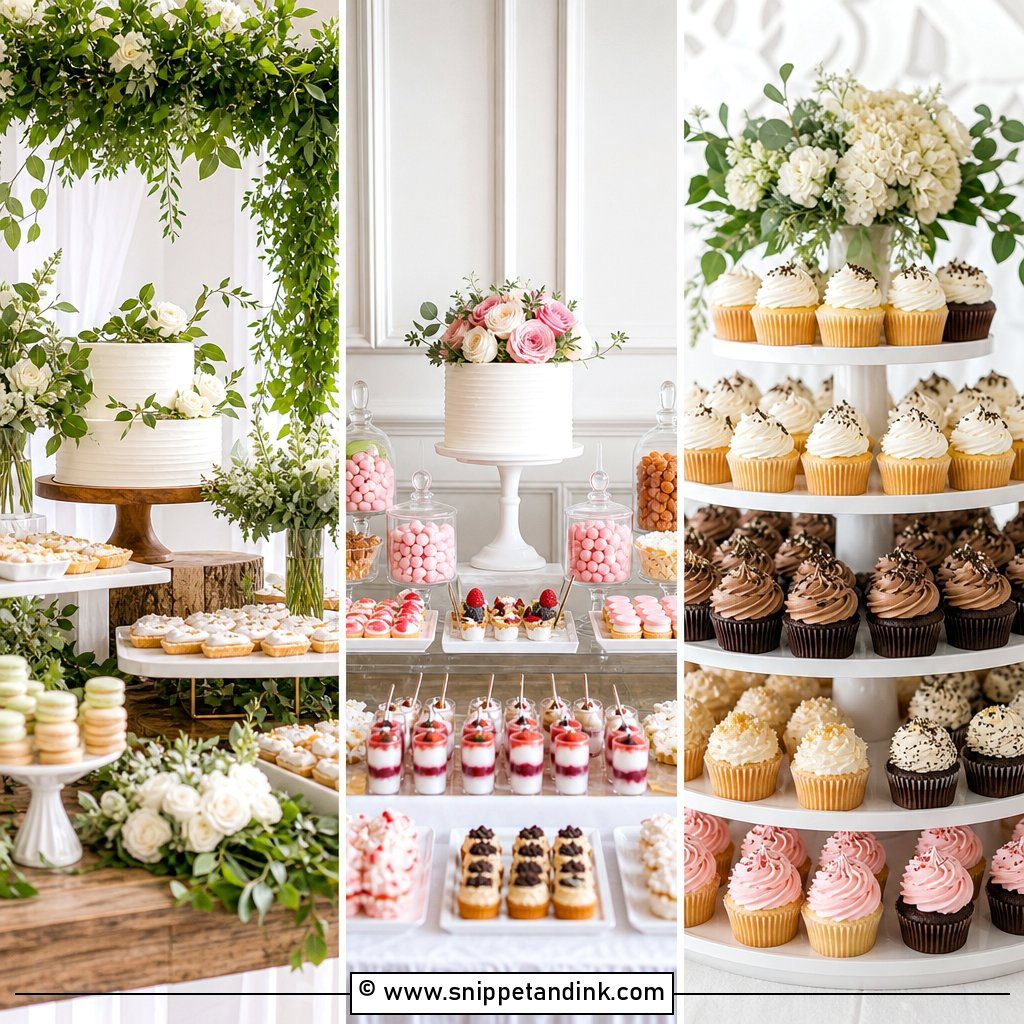
Cupcakes solve the serving problem. Nobody waits for slices, and you can offer vanilla, chocolate, lemon, red velvet and almond while keeping every frosting in the wedding colours. A tiered tower gives height, with a small cutting cake on top if you want the photo. Toppers, edible pearls or piped flowers finish them. When I plan flavours, I bake a few more of the plain vanilla and chocolate than the adventurous ones, because those are what children and cautious guests reach for first, and the lavender ones are the ones left at the end.
9. Macaron Wedding Dessert Table
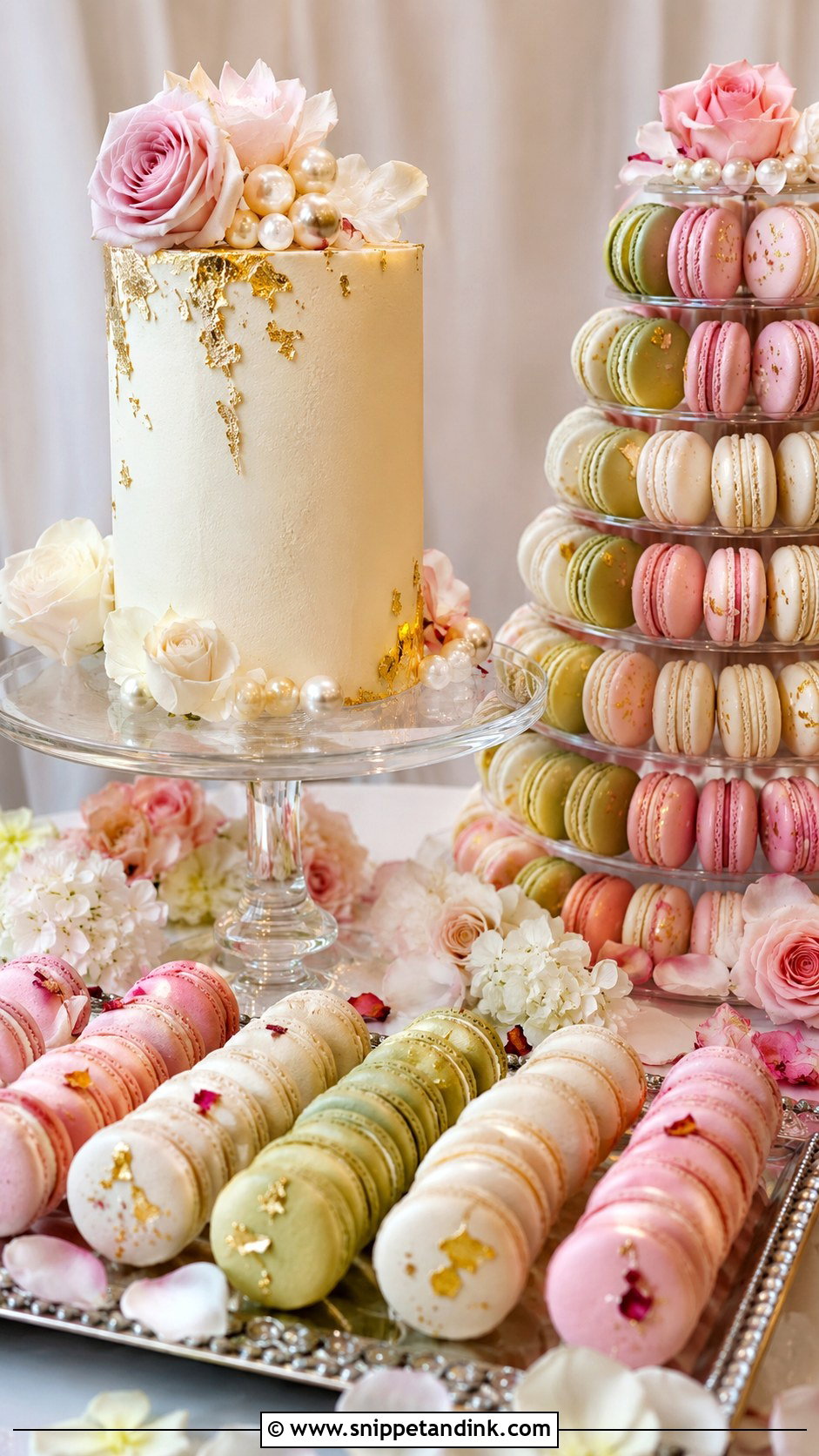
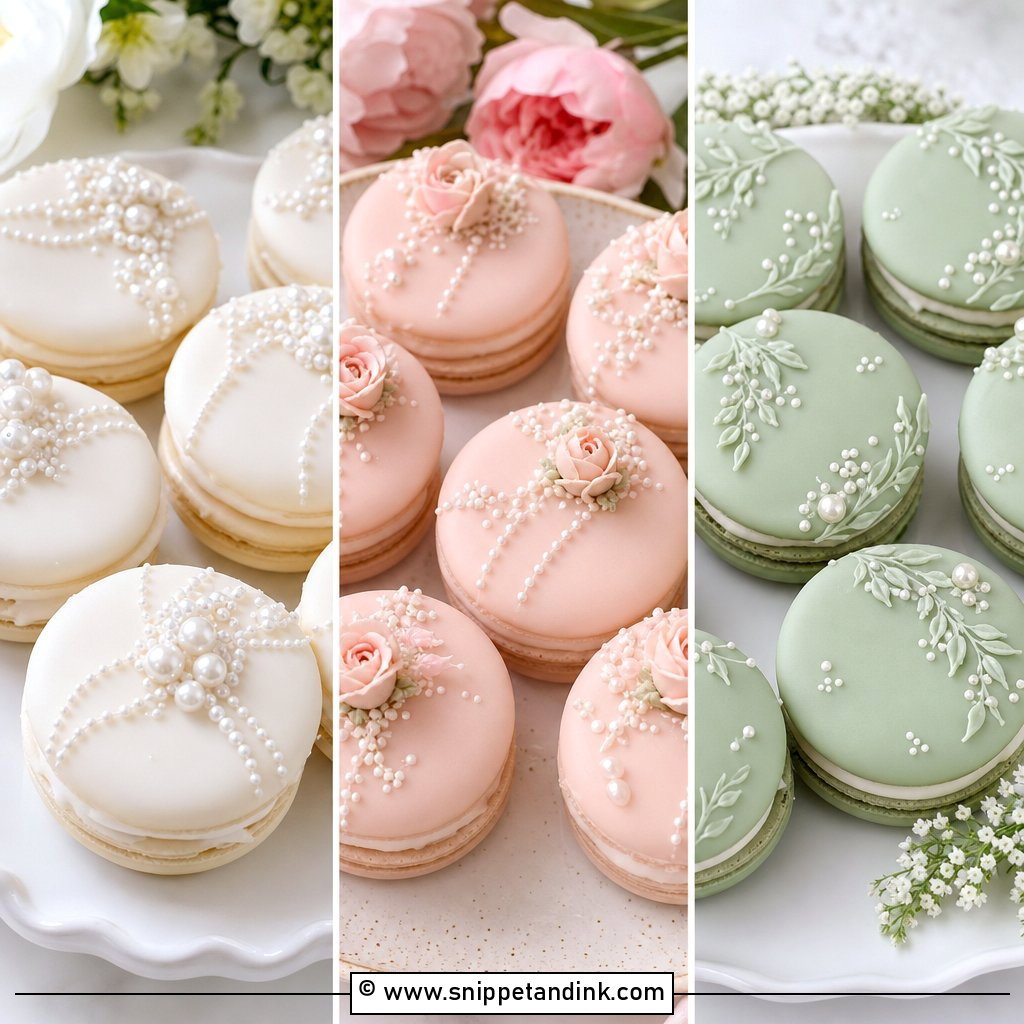
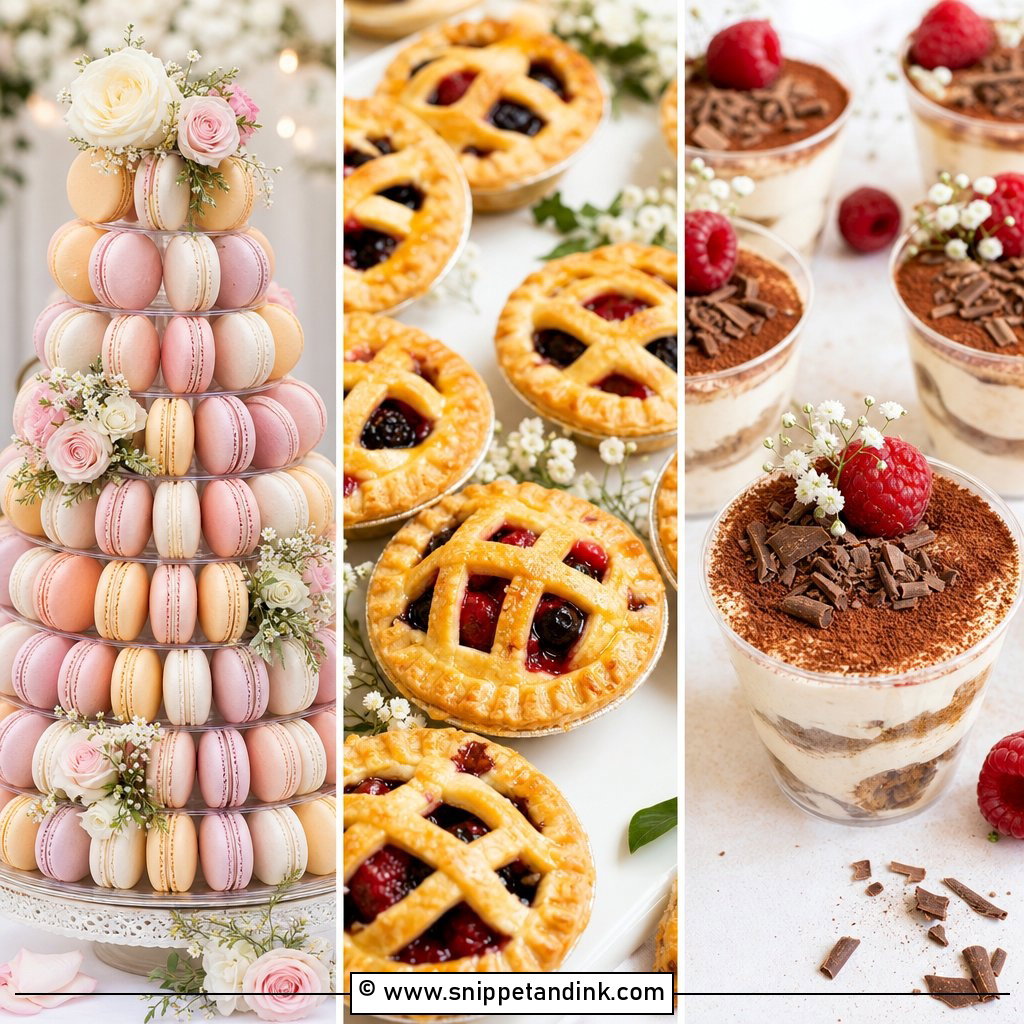
A tray of macarons looks refined almost by itself. Stack them in towers, glass boxes or neat rows around a smooth cake, and repeat two or three shades instead of every colour available. Vanilla, raspberry, pistachio, lemon and salted caramel make a balanced spread, and boxed pairs double as favours. Two things I always flag: macarons are made with almond flour, so they need a clear nut label, and their shells turn chewy in humidity, so I keep them boxed and cool until the table goes out.
10. Donut Wedding Dessert Table
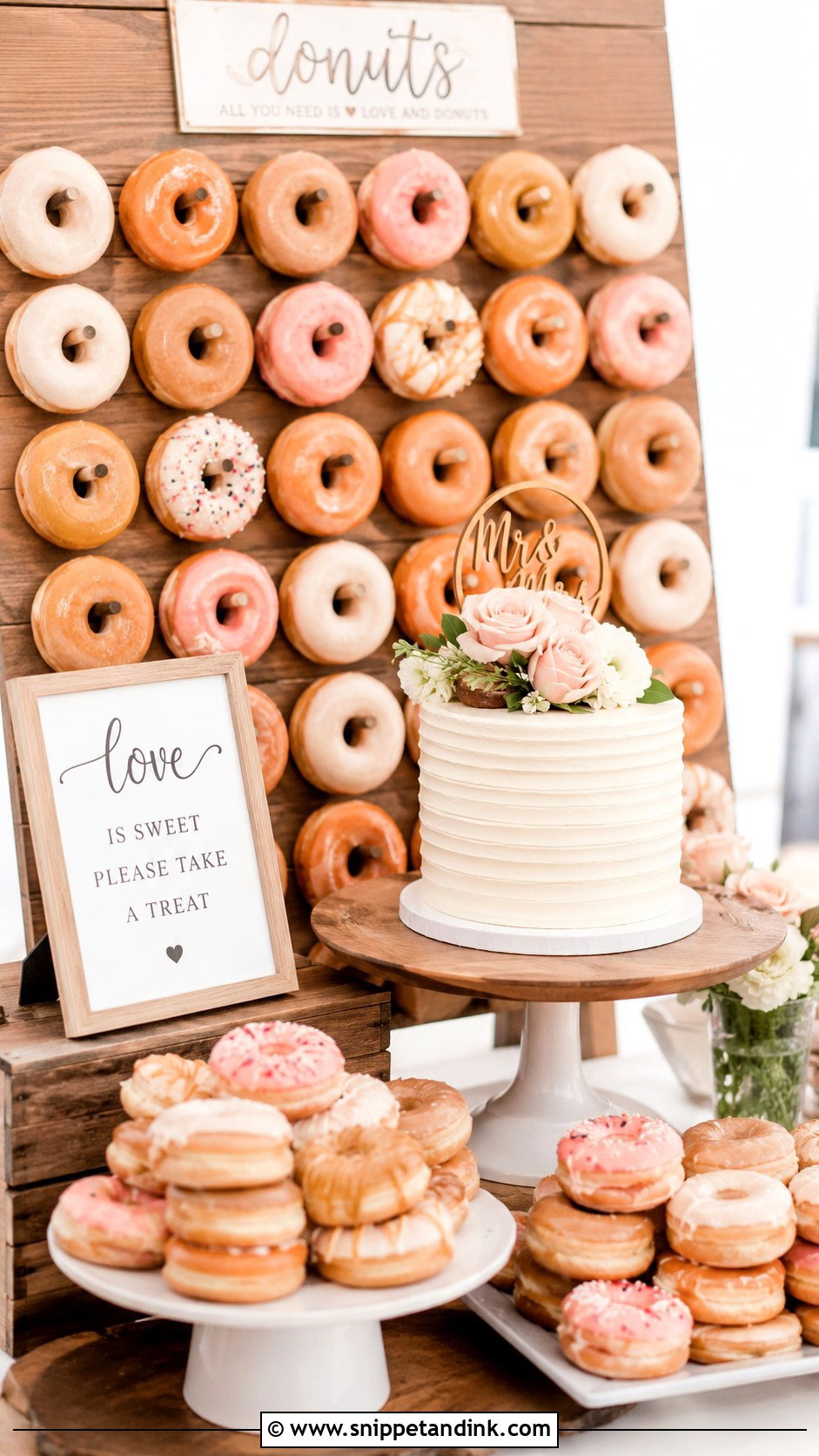
Donuts relax the whole reception without looking sloppy, provided the display stays tidy. Use a donut wall, a stacked donut tower or trays beside a small cake, and pick glazes that echo the palette: white vanilla, blush strawberry, chocolate or caramel. Label the filled ones and any allergy-friendly options. Donuts are best eaten within hours of frying, so I schedule delivery as close to service as the venue allows. Coffee or milk alongside turns it into a brunch-wedding highlight.
11. Cookie Wedding Dessert Table
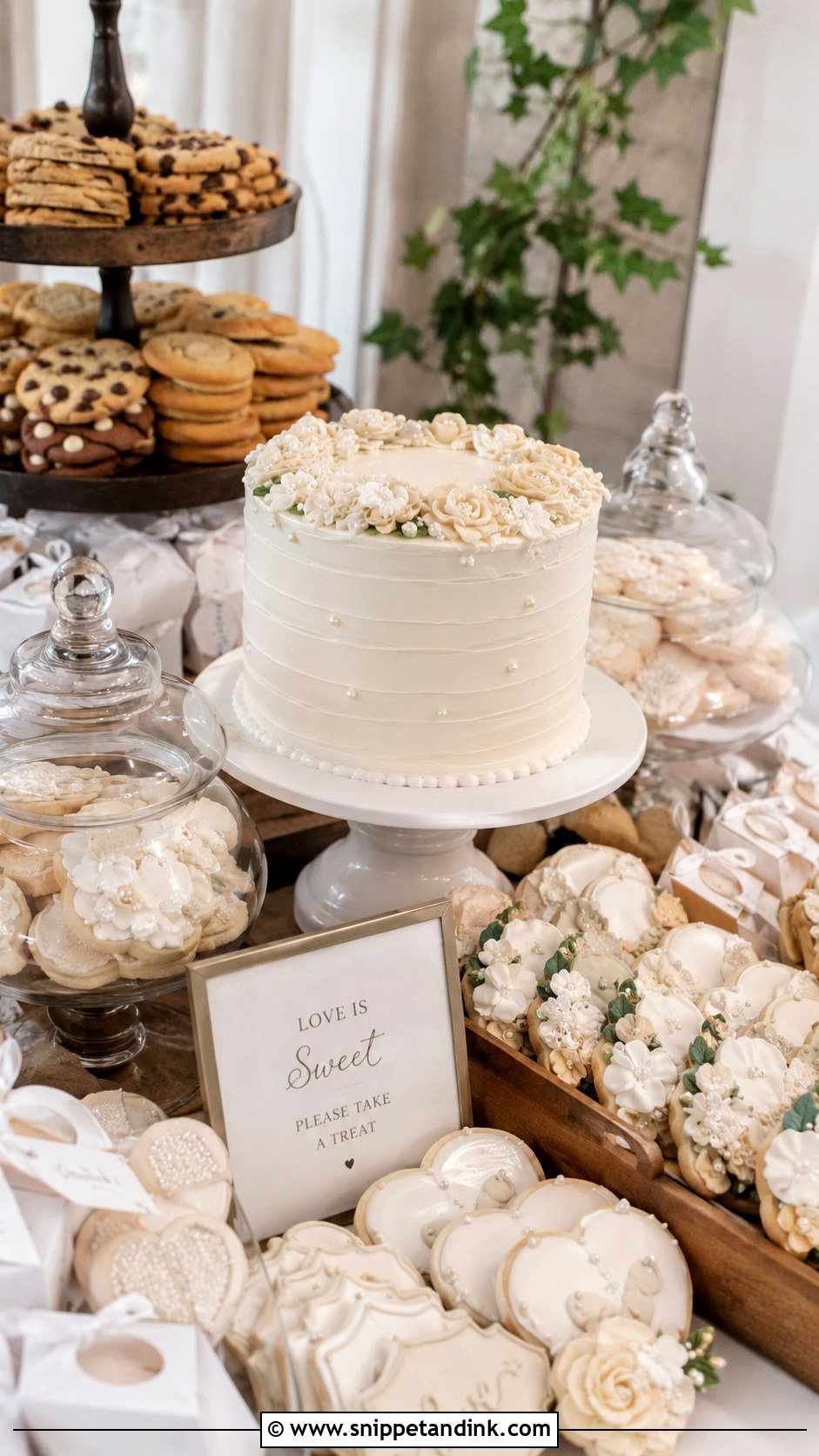
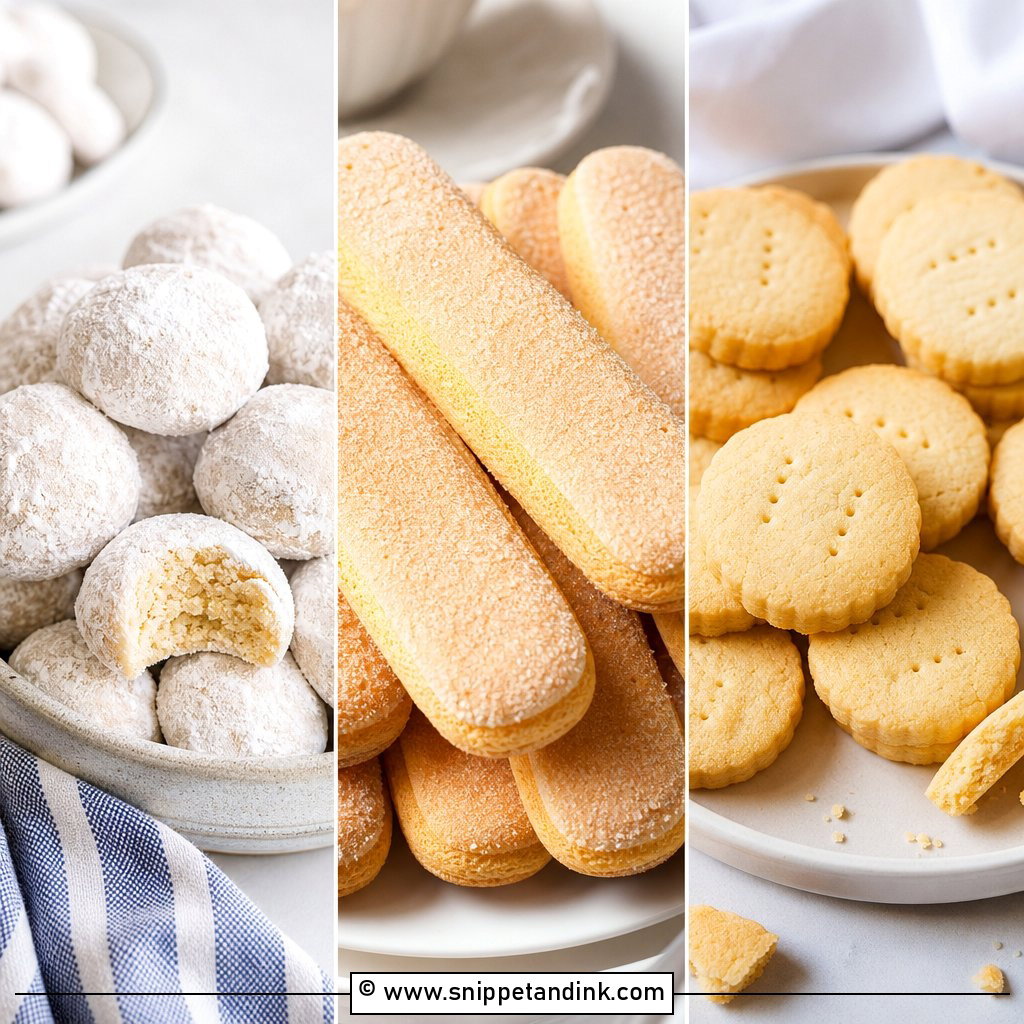
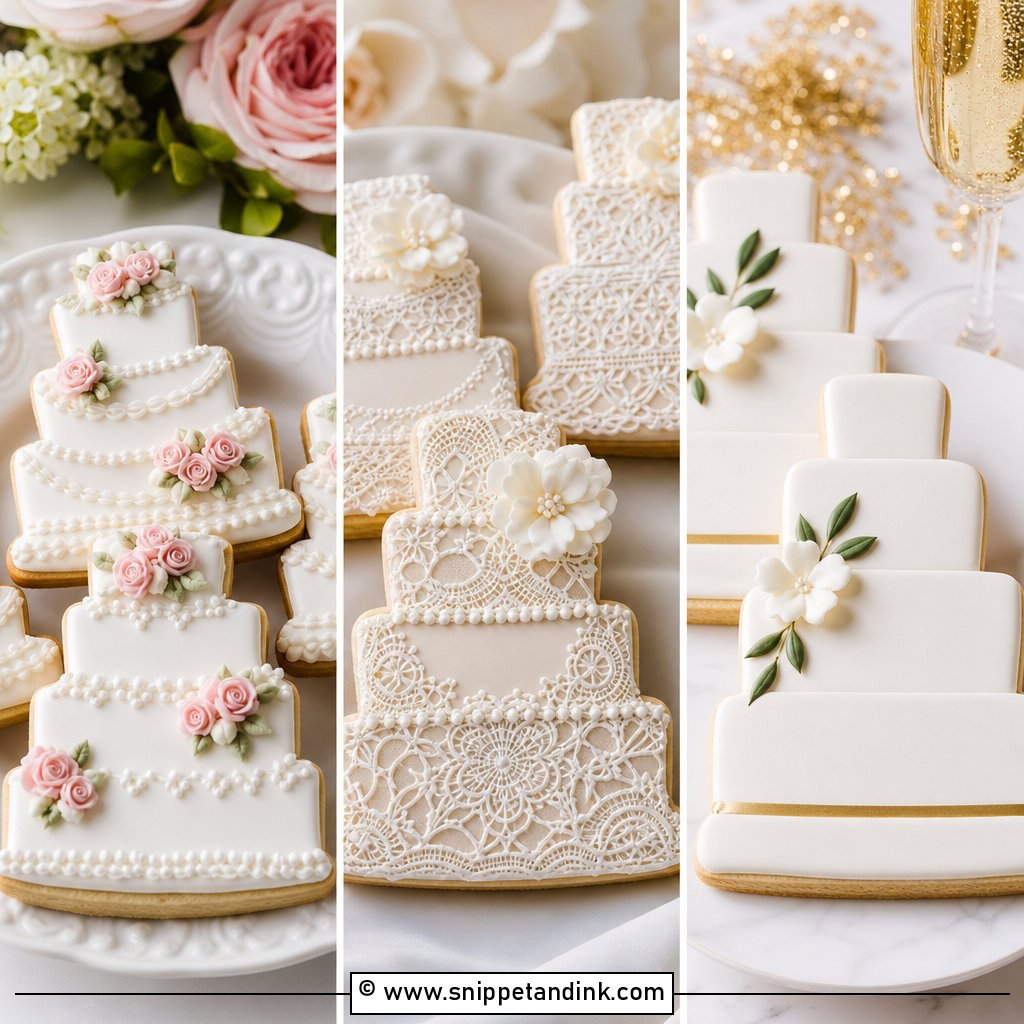
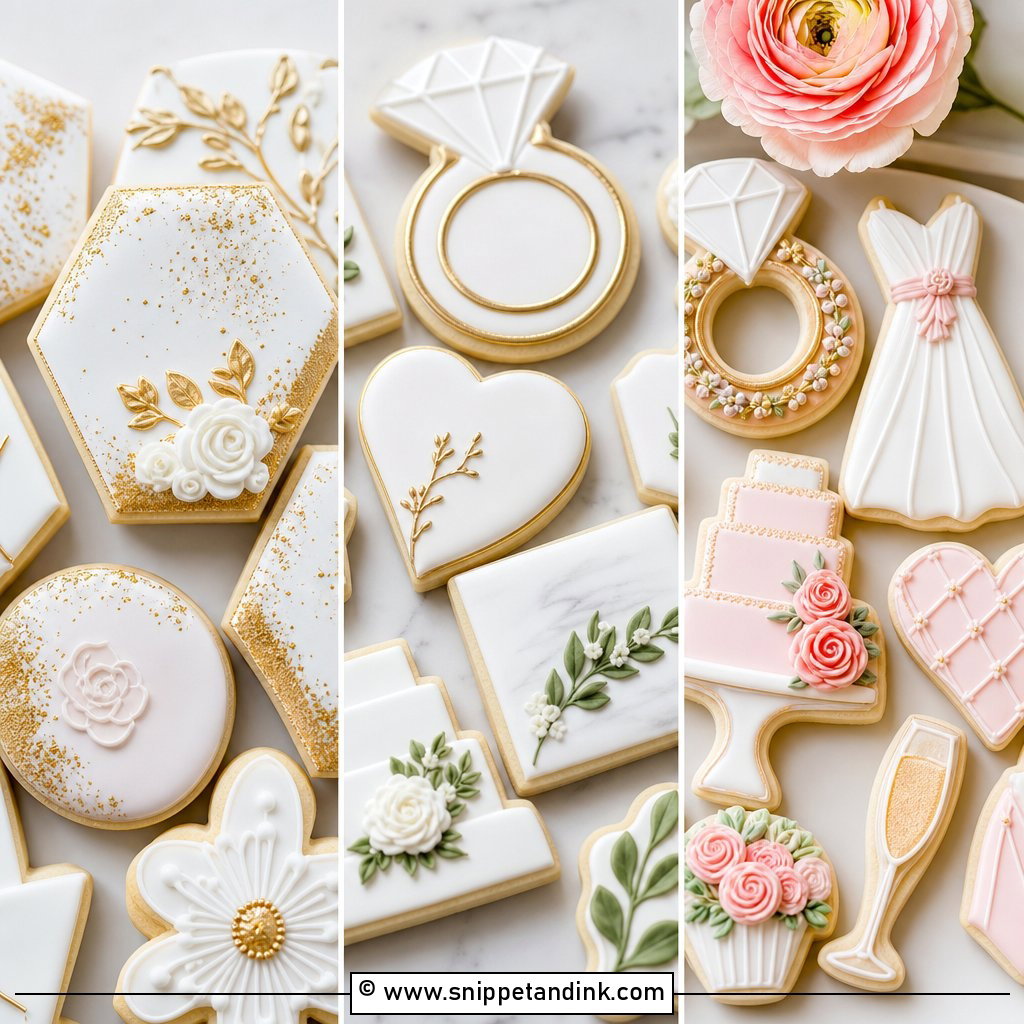
Cookie tables feel generous, especially when family recipes sit next to bakery treats. Sugar cookies, chocolate chip, shortbread, sandwich cookies and decorated wedding cookies fill trays, jars and tiered stands, with a simple buttercream cake anchoring the middle. Take-home bags cut waste. If relatives are baking, I ask for one shared tray size and one label style; it is the easiest way to make twenty different home kitchens look like a single table. Royal-iced cookies need about a day to dry hard, so those are baked earliest.
12. Mini Pie Wedding Dessert Table
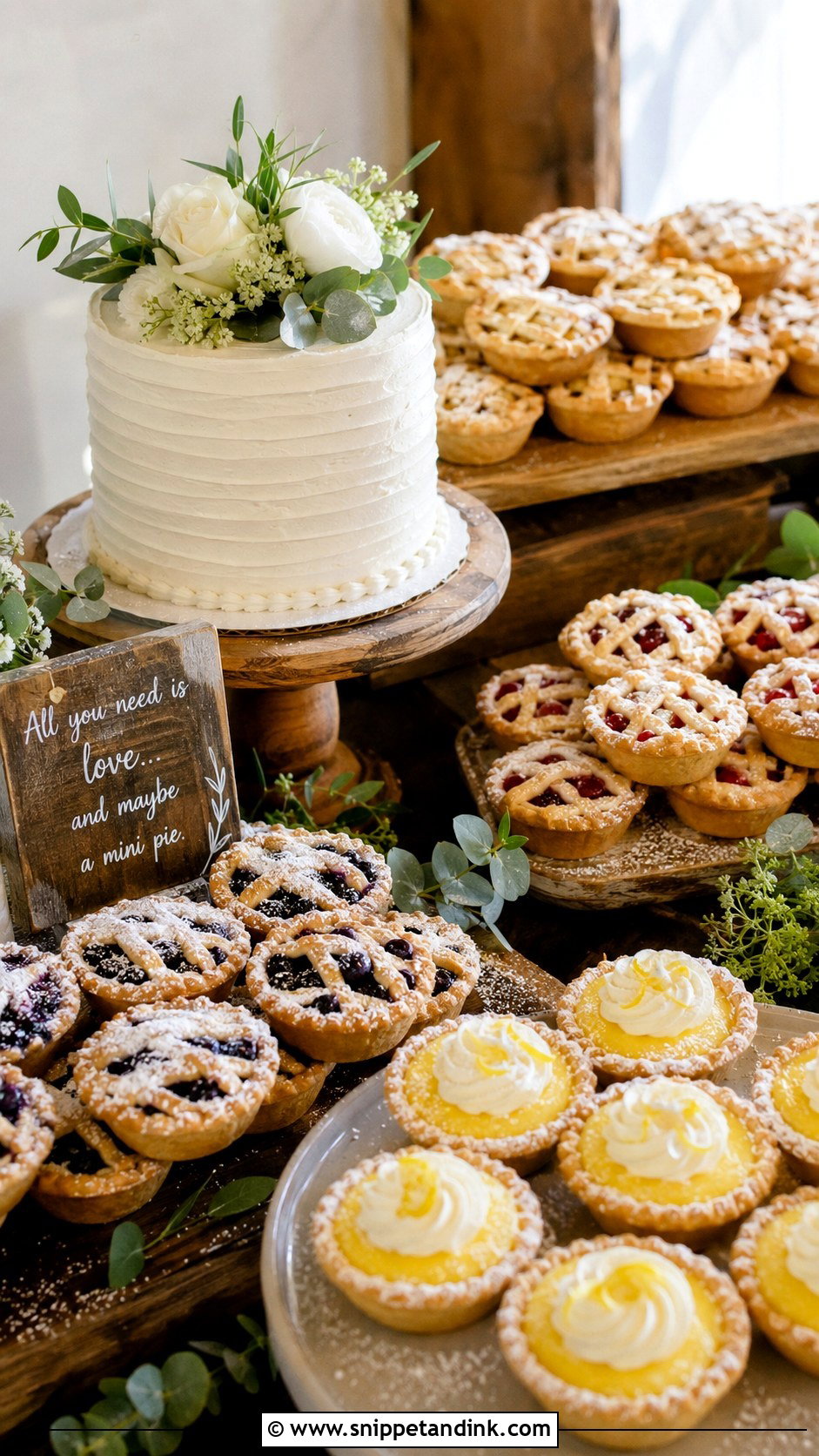
Mini pies are cosy and easy to grab: apple, cherry, blueberry, pecan, lemon and chocolate cream on wood boards or tiered stands around a rustic buttercream cake. From above, a dozen lattice pies look identical, which is why flavour tags matter more here than on almost any other table. Fall and farm venues suit it most naturally, though fruit pies feel fresh in summer too. Cream pies are the exception to leaving things out; they need the fridge until the last minute, while fruit and pecan sit happily at room temperature.
13. Cheesecake Wedding Dessert Table
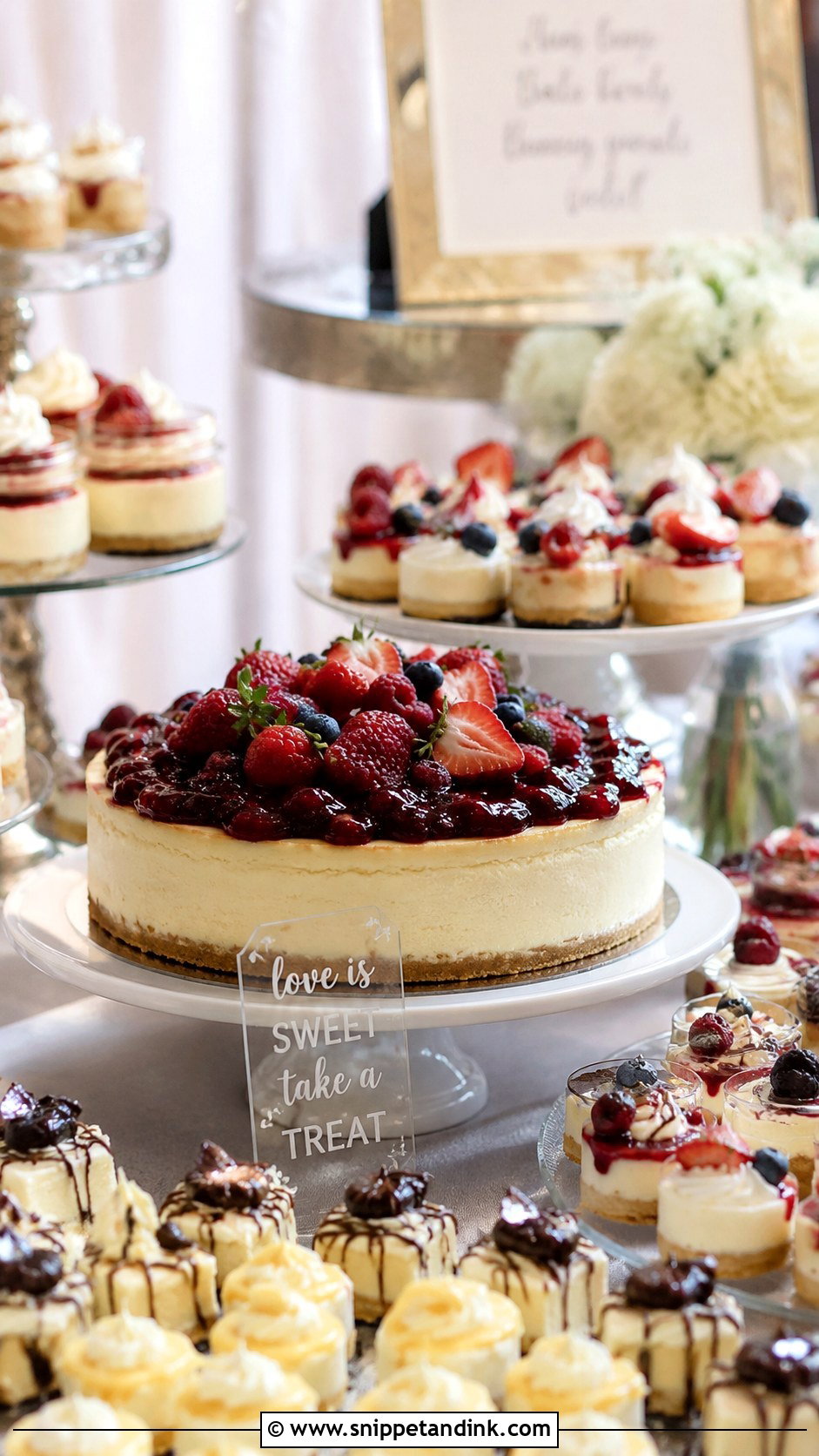
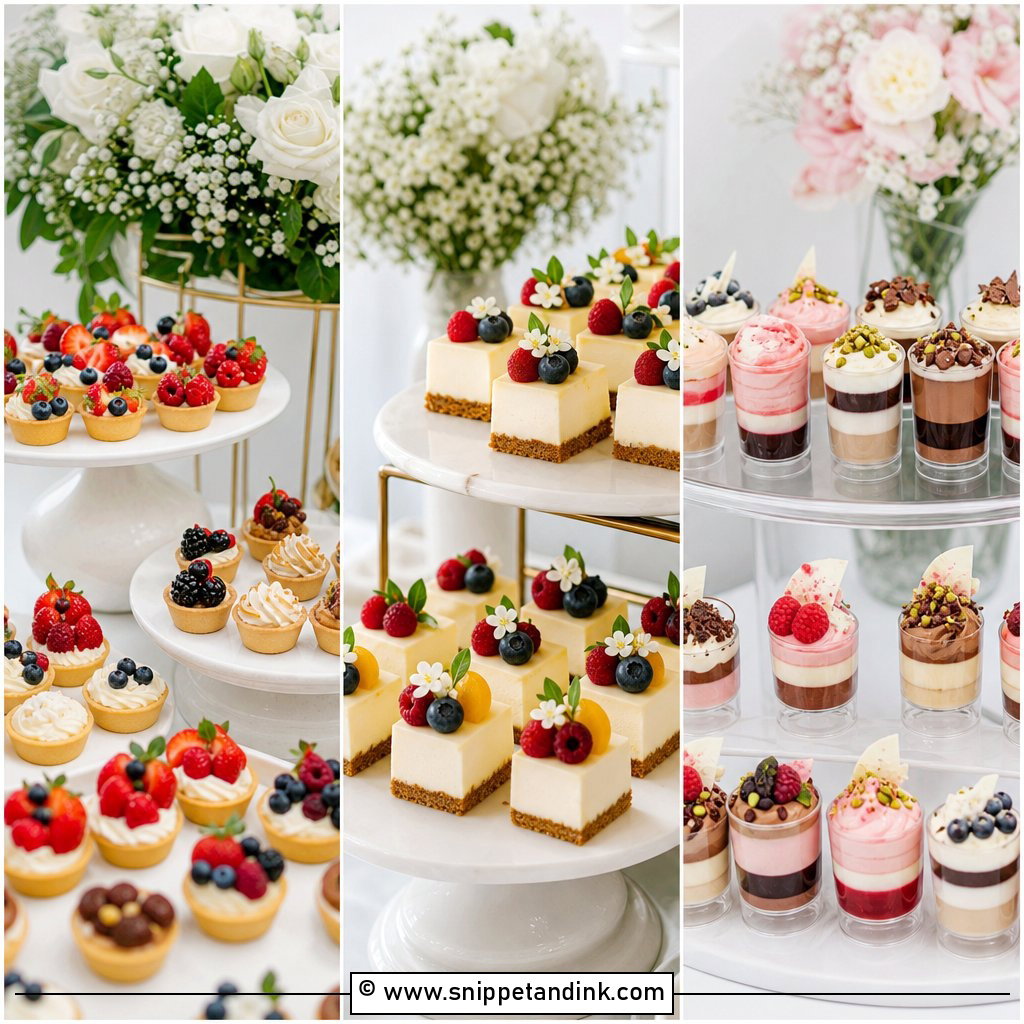
You don’t need a big traditional cake when cheesecake carries the table. Mini cheesecakes, jars and bites surround one small whole cheesecake, topped with berry compote, lemon curd, ganache or caramel. Glass cups and white stands keep it clean. Cheesecake is dairy-heavy, so it must stay chilled until service and shouldn’t sit out for hours in a warm room; I bring half out, then swap in a fresh chilled tray. It pairs naturally with a coffee bar or late-night dessert, because one small piece satisfies.
14. Brownie Wedding Dessert Table
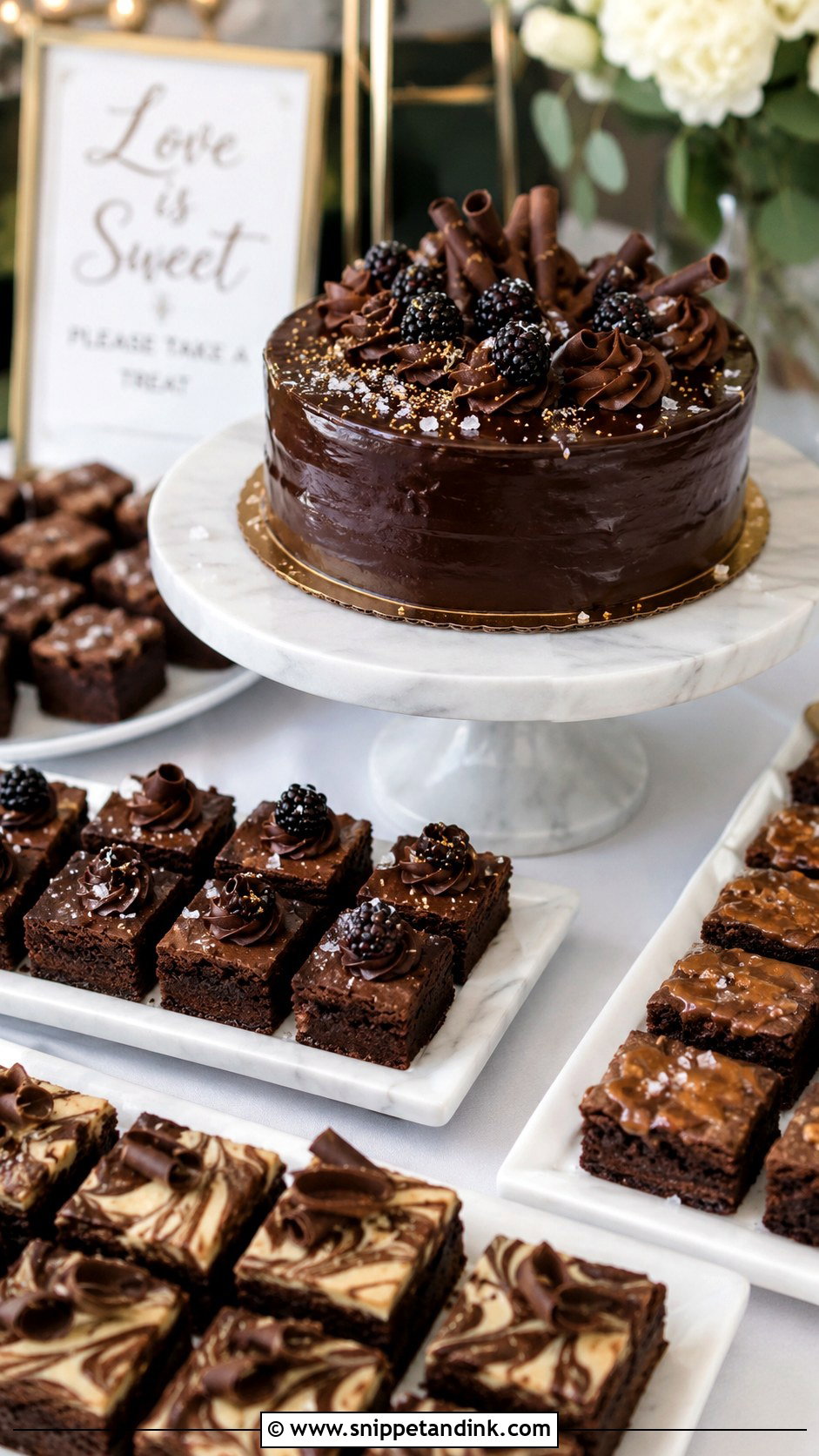
Chocolate lovers head straight for brownies, and they scale easily for a large guest list. Cut them into neat squares, triangles or bars so they look deliberate, and offer fudge, cheesecake swirl, salted caramel brownies and frosted bites. A small ganache cake on a stand gives the table height. For clean edges, I chill the slab fully and cut with a hot, wiped knife; warm brownies tear and leave crumbs all over the platter. A few berries soften all that brown.
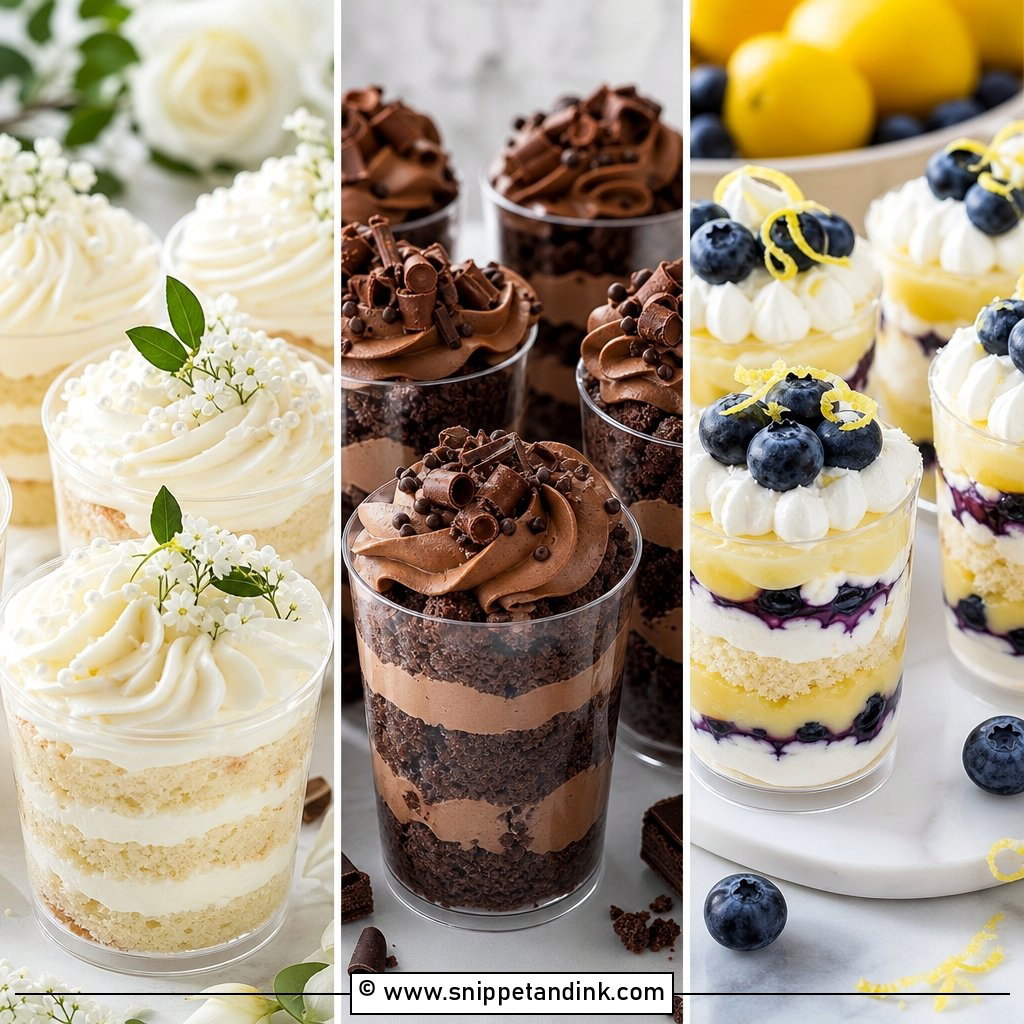
15. Fruit Tart Wedding Dessert Table
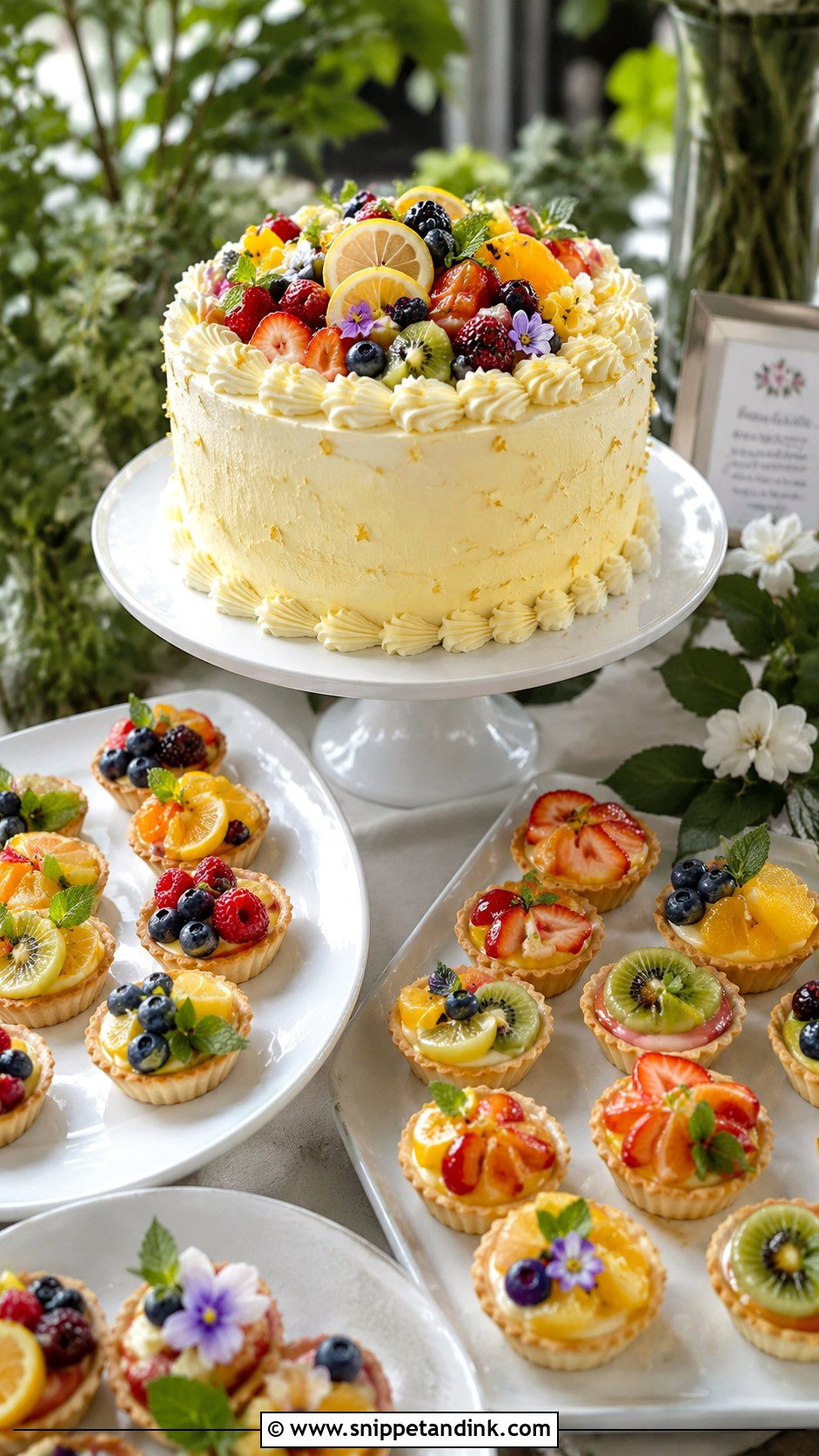
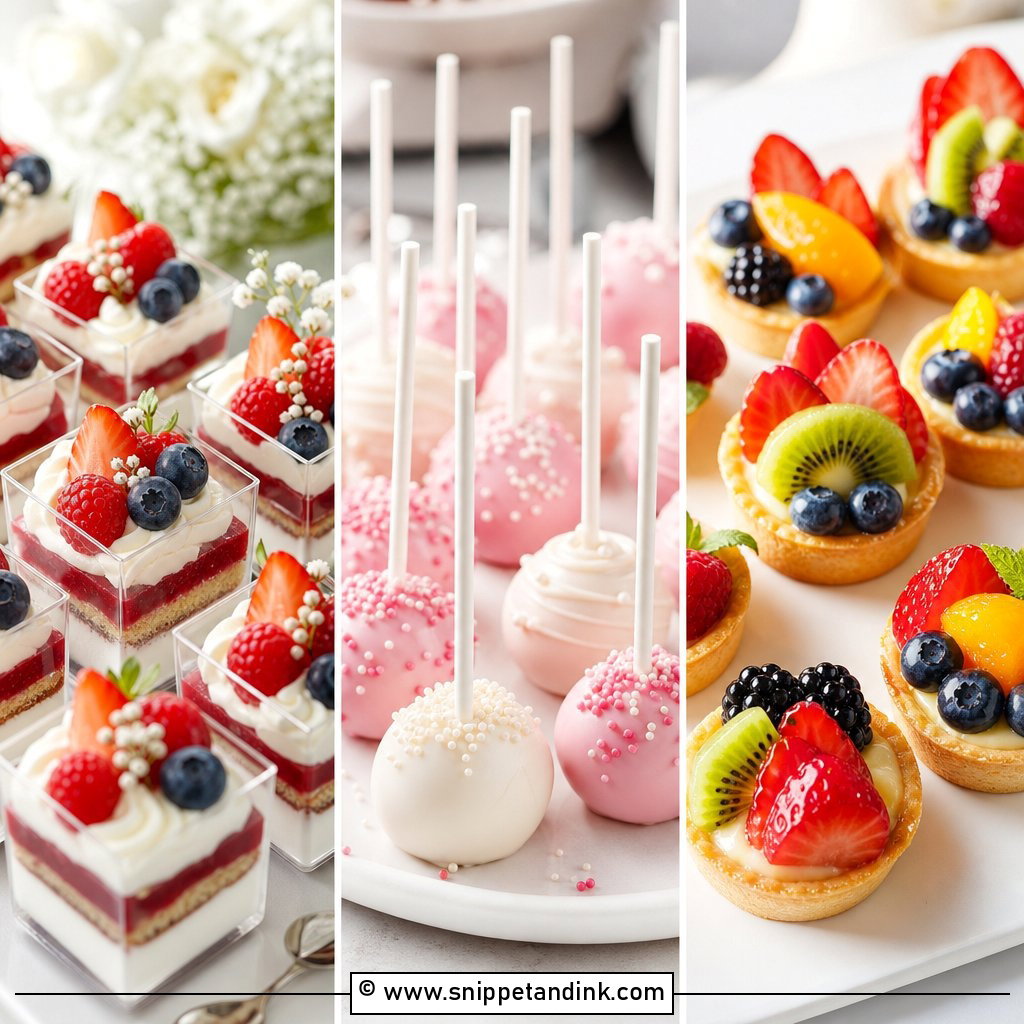
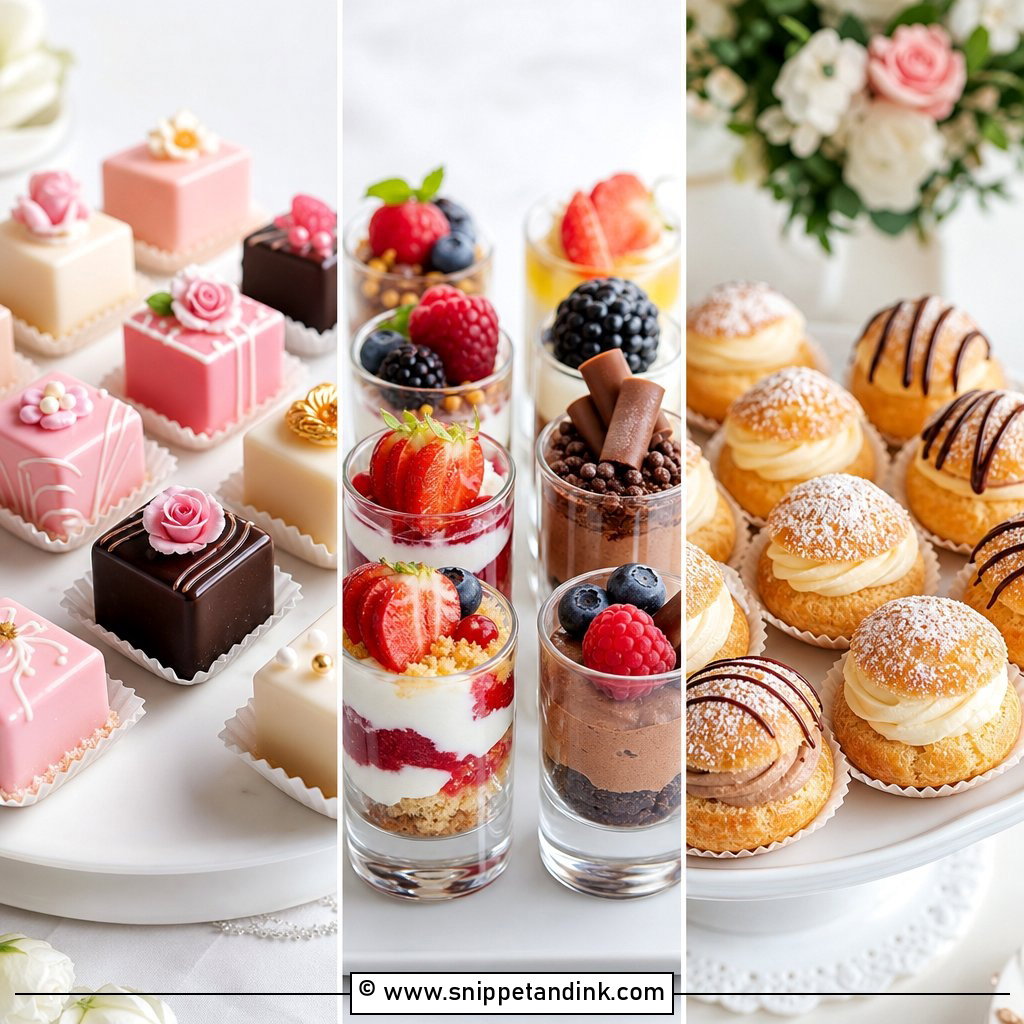
Fruit tarts bring the lighter option most dessert tables lack. Mini tartlets with berries, kiwi, citrus, peaches or figs, plus a lemon or vanilla cake at the centre, keep the flavours bright, and white platters let the fruit colours do the decorating. The weak point is the pastry: once cut fruit sits on it, juice soaks in. I brush the shells with a thin layer of melted chocolate or cocoa butter before filling, which keeps them crisp for the evening. Spring and summer gardens suit this table best.
16. Chocolate Wedding Dessert Table
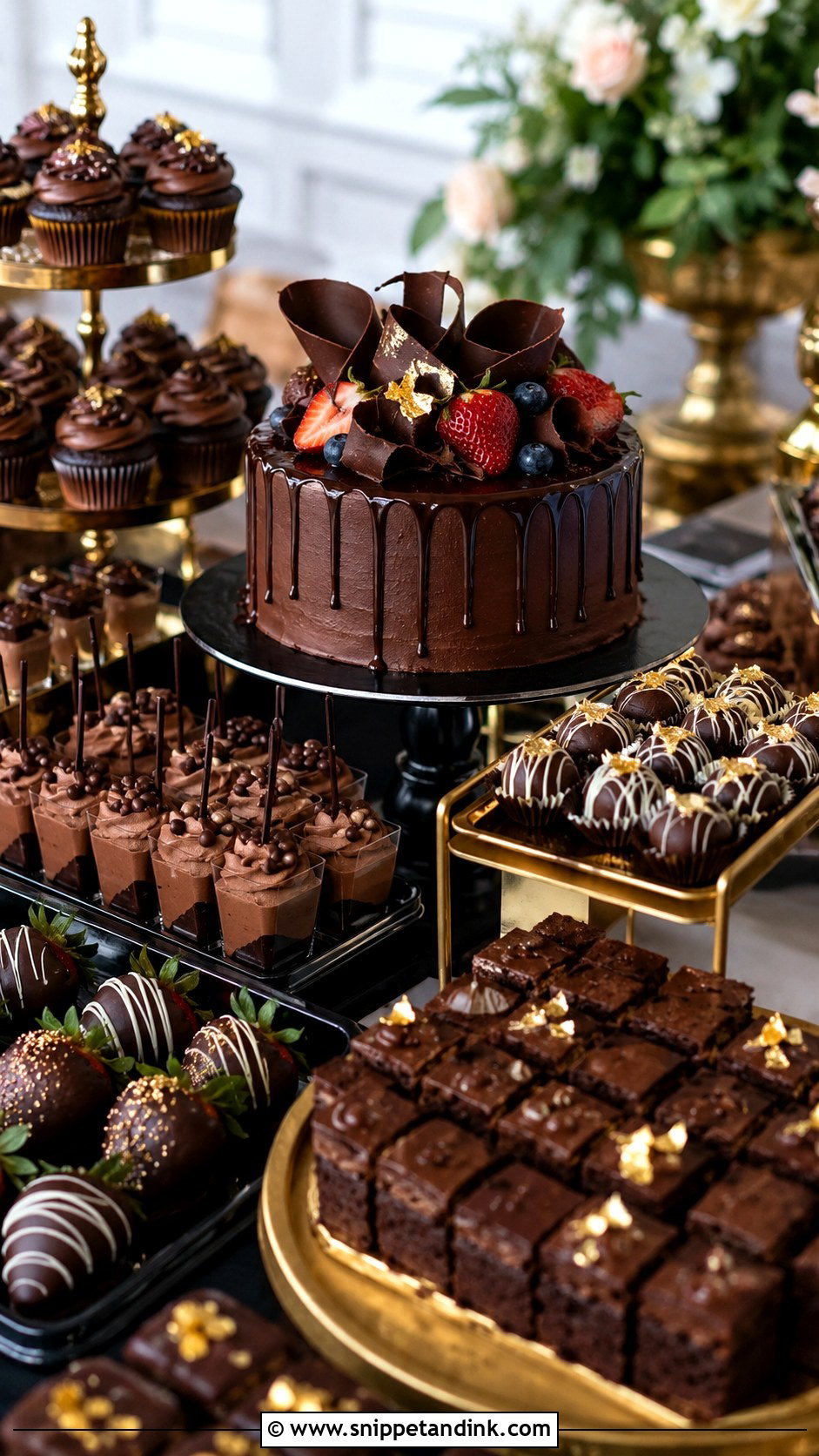
A chocolate table is dramatic, but all-dark can look like one brown block in photos. I vary shades and finishes: a ganache cake, truffles, brownies, chocolate cupcakes, mousse cups and dipped strawberries, then white chocolate drizzle, gold accents or berries for contrast on black, marble or metallic trays. Evening receptions suit it. Chocolate decorations bloom and go dull if they swing between cold and warm, so I keep them at steady room temperature rather than fridge-to-table. Include something light, like mousse, for guests who want only a taste.
17. Candy Wedding Dessert Table
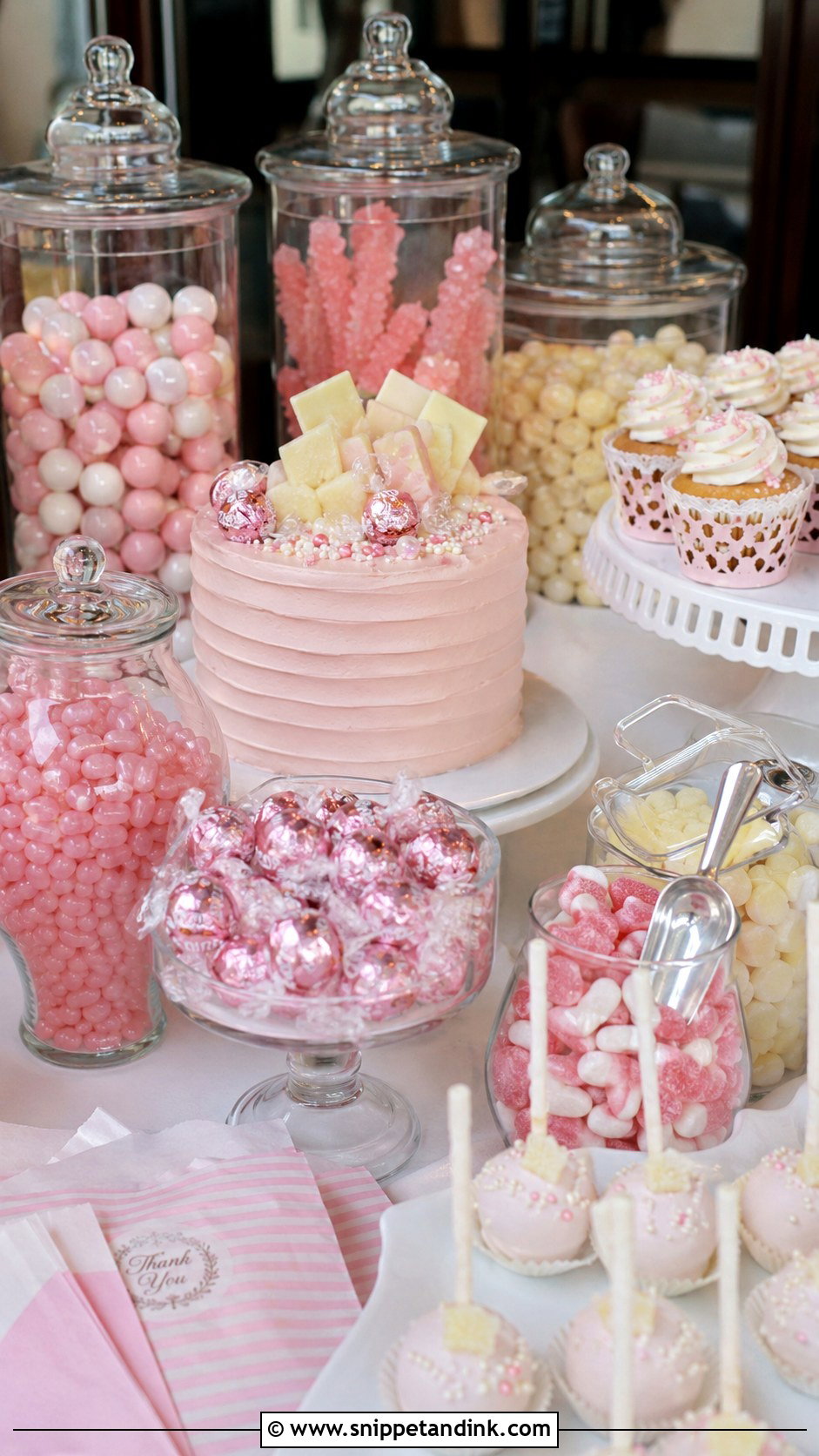
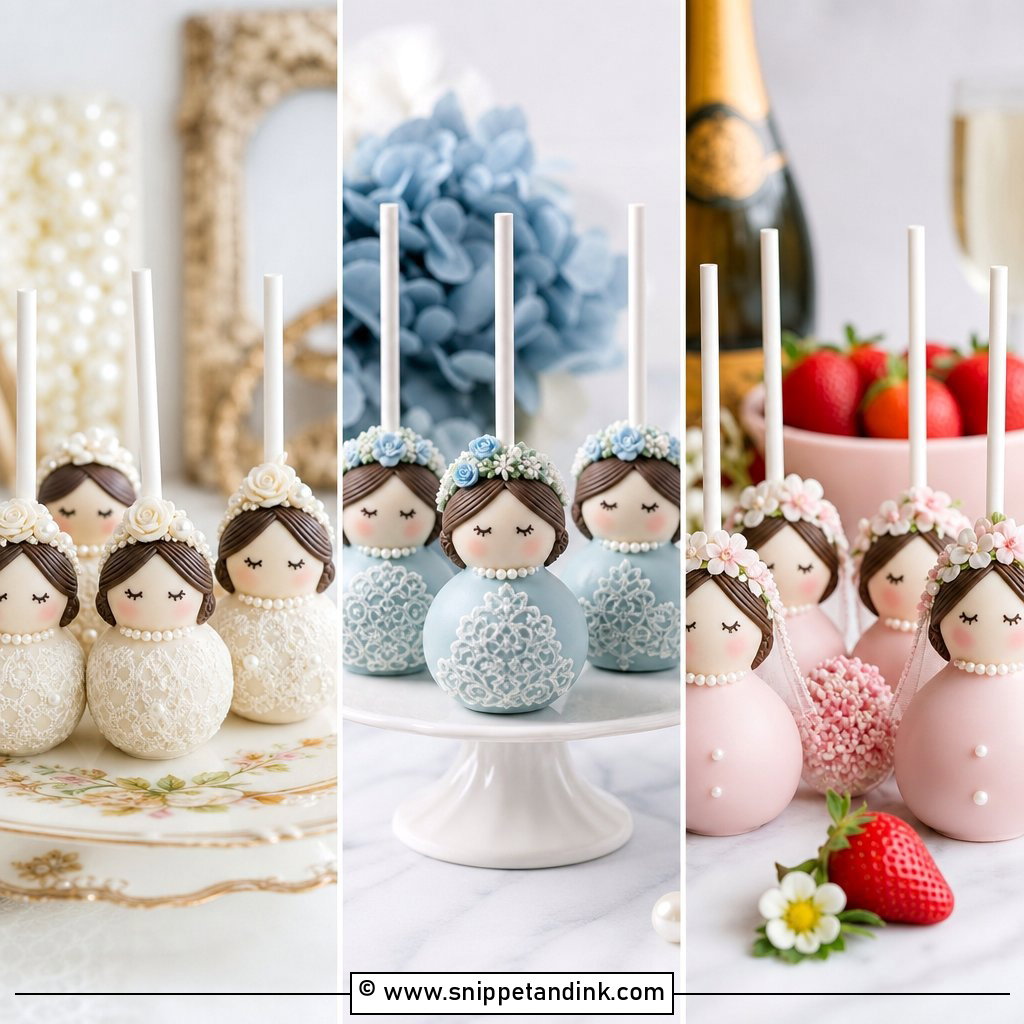
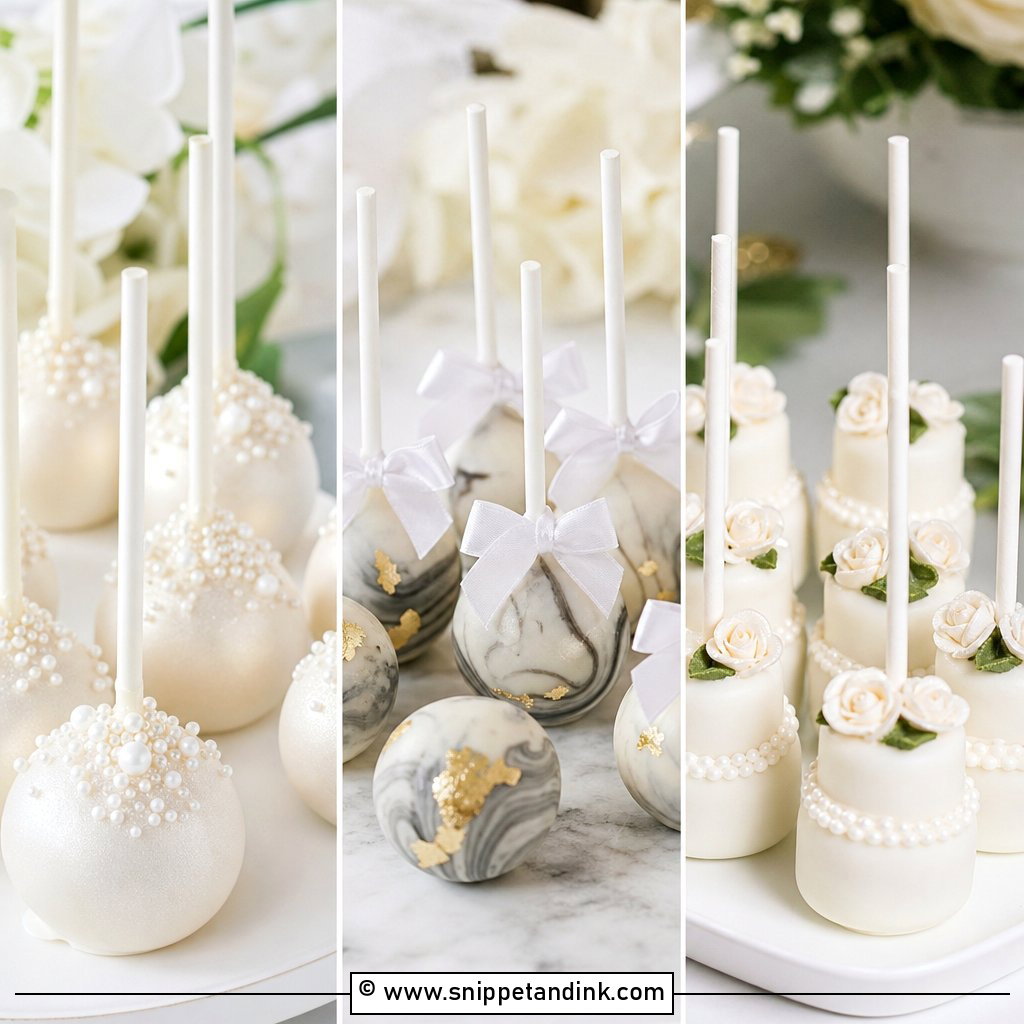
Candy jars bring colour and nostalgia, and they let guests serve themselves with scoops and paper bags. Keep the candy colour-matched to the palette, and add a small buttercream cake, cupcakes or cake pops so it still reads as a dessert table rather than a favour bar. Wrapped sweets, white chocolates, gummies and rock candy all display well. With kids around, I set the jars back from the front edge and use wide scoops instead of tongs, since small hands knock over tall glass faster than you’d think. Neatly bagged, it doubles as the favours.
18. Dessert Shooter Wedding Table
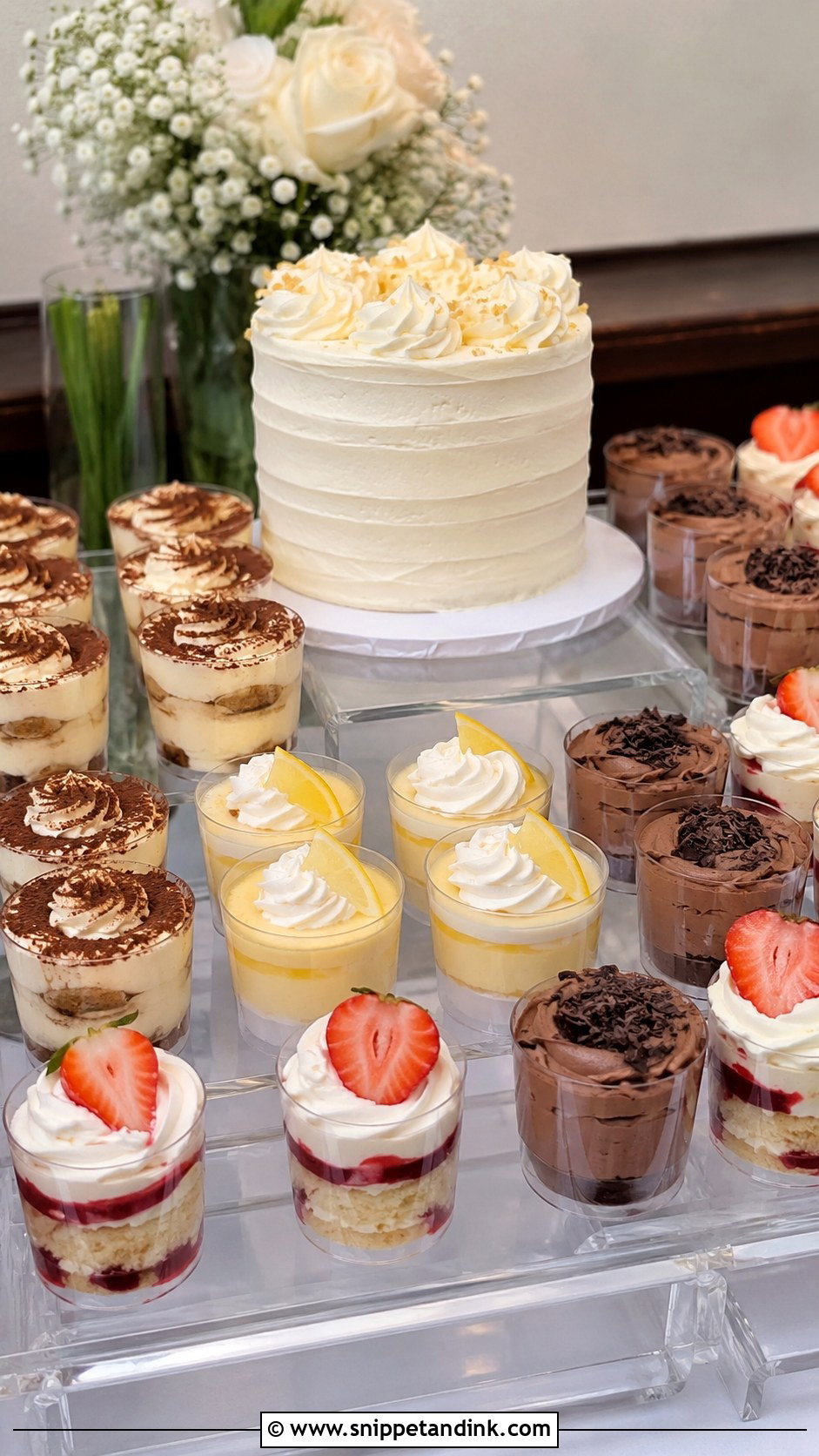
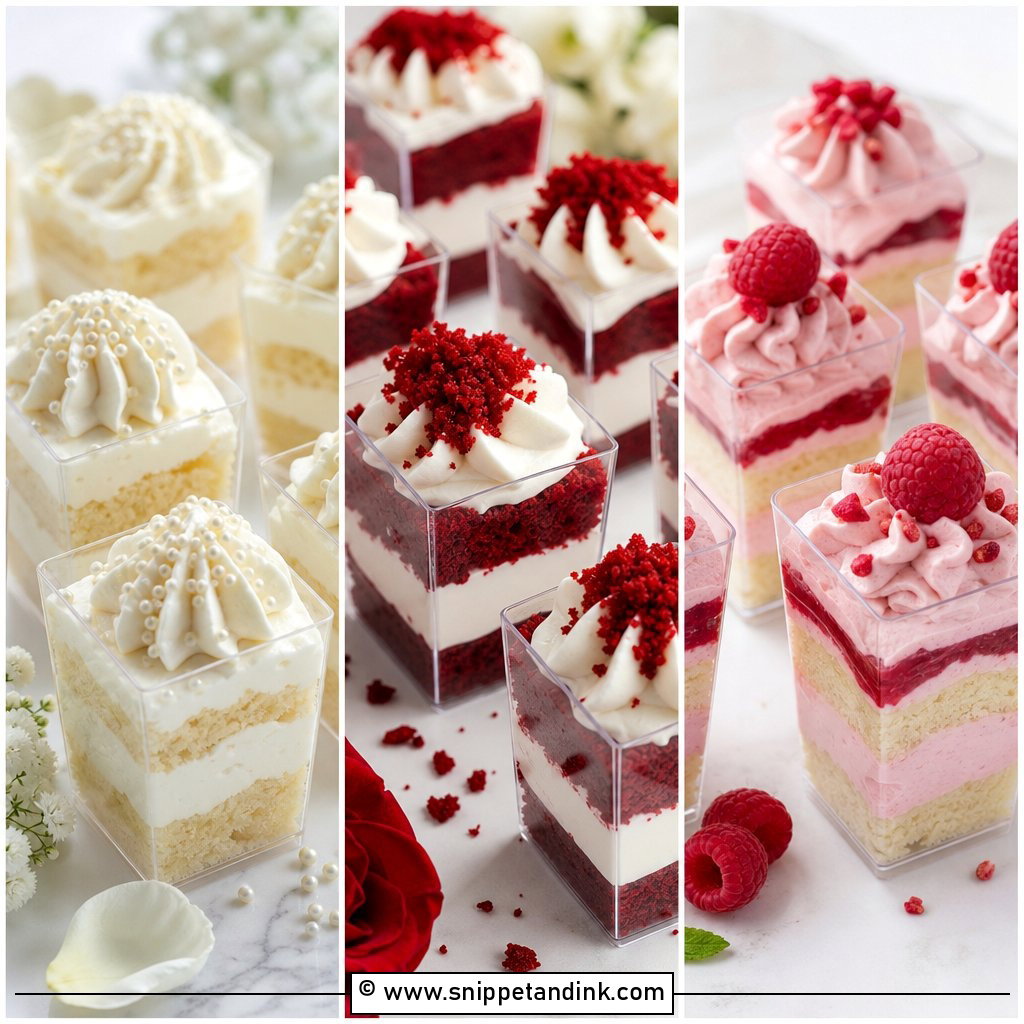
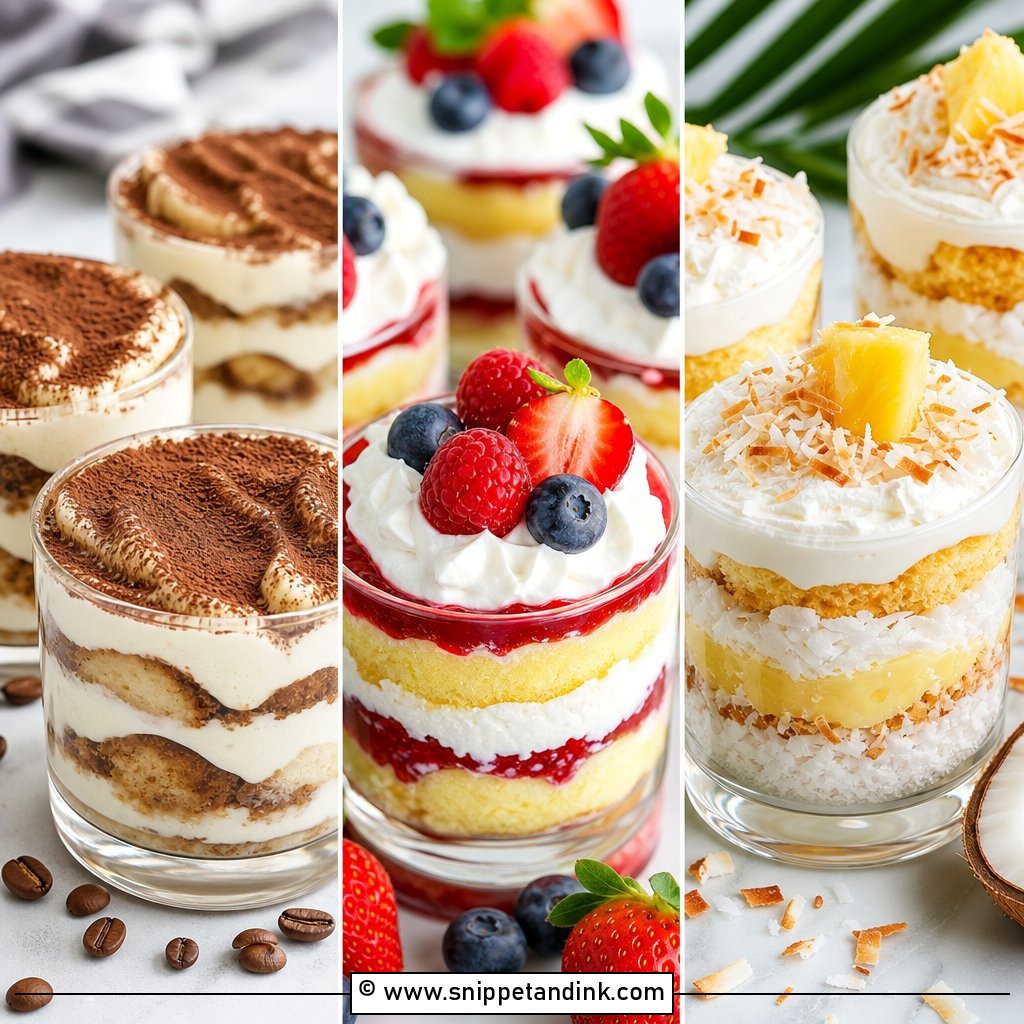
Shooter cups give you small, controlled portions with a lot of flavour variety: tiramisu, strawberry shortcake, lemon mousse, chocolate mousse, banana pudding or cheesecake. Clear risers or mirrored trays show off the layers, and a small cake in the centre keeps the wedding feel. Dessert shooters look sharpest in straight rows. I pipe the layers rather than spooning them, which keeps the lines clean against the glass, and I set out spoons in a cup at both ends so nobody has to reach across. Cocktail-style receptions and late-night service suit them.
19. Seasonal Wedding Dessert Table
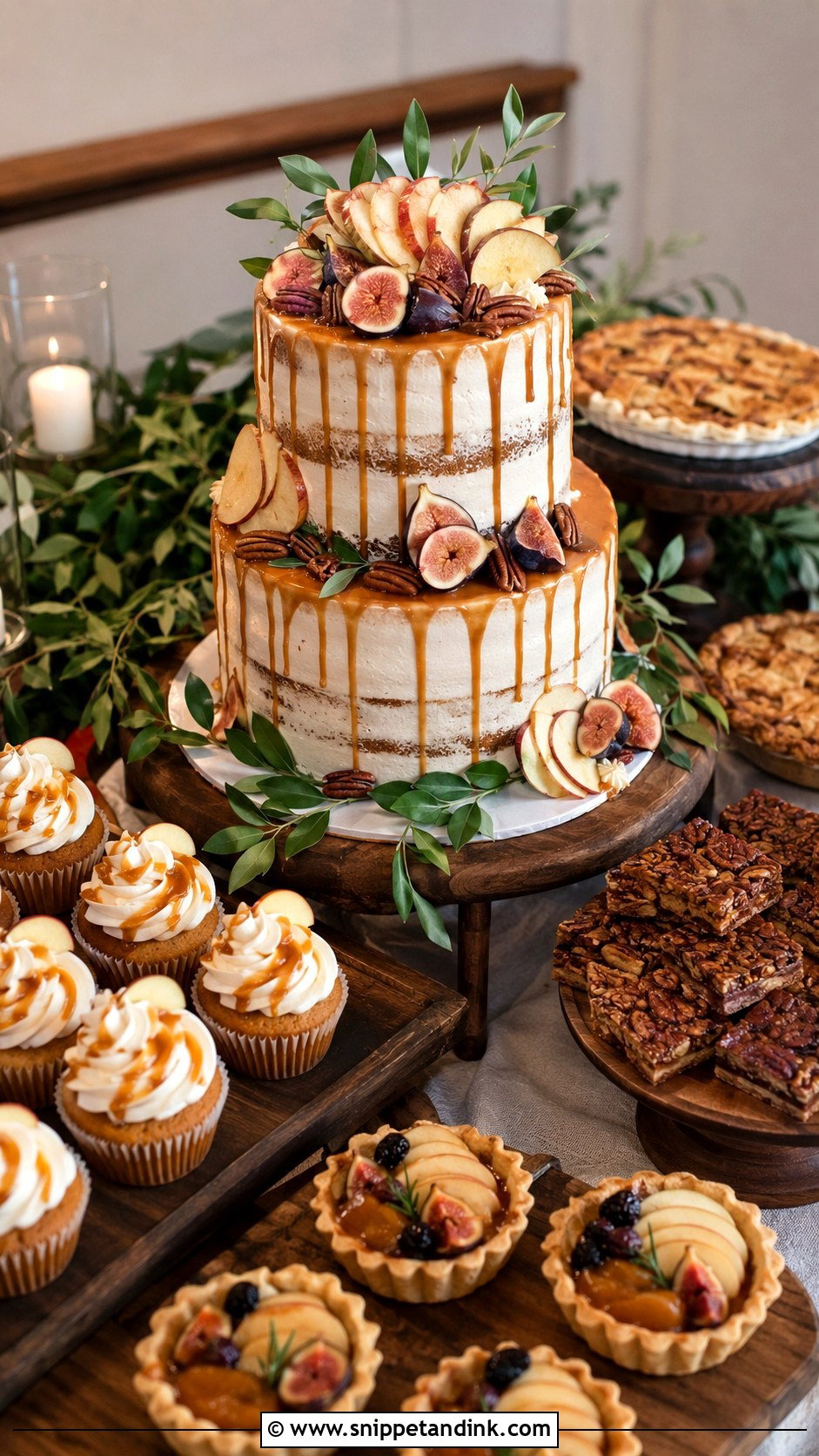
Matching the menu to the season is the easiest way to make a table taste better. Spring means lemon cake, berry tartlets and floral cookies; summer brings peach desserts, mini pavlovas and fruit cups; autumn calls for apple pie, caramel cupcakes, spice cake and pecan bars. Natural flowers, fruit and warm lighting are styling enough. In-season fruit also tends to cost less and taste fuller, which is why I build most quotes around what is in the market that month. Out-of-season berries look fine but often taste of very little.
20. Simple Wedding Dessert Table
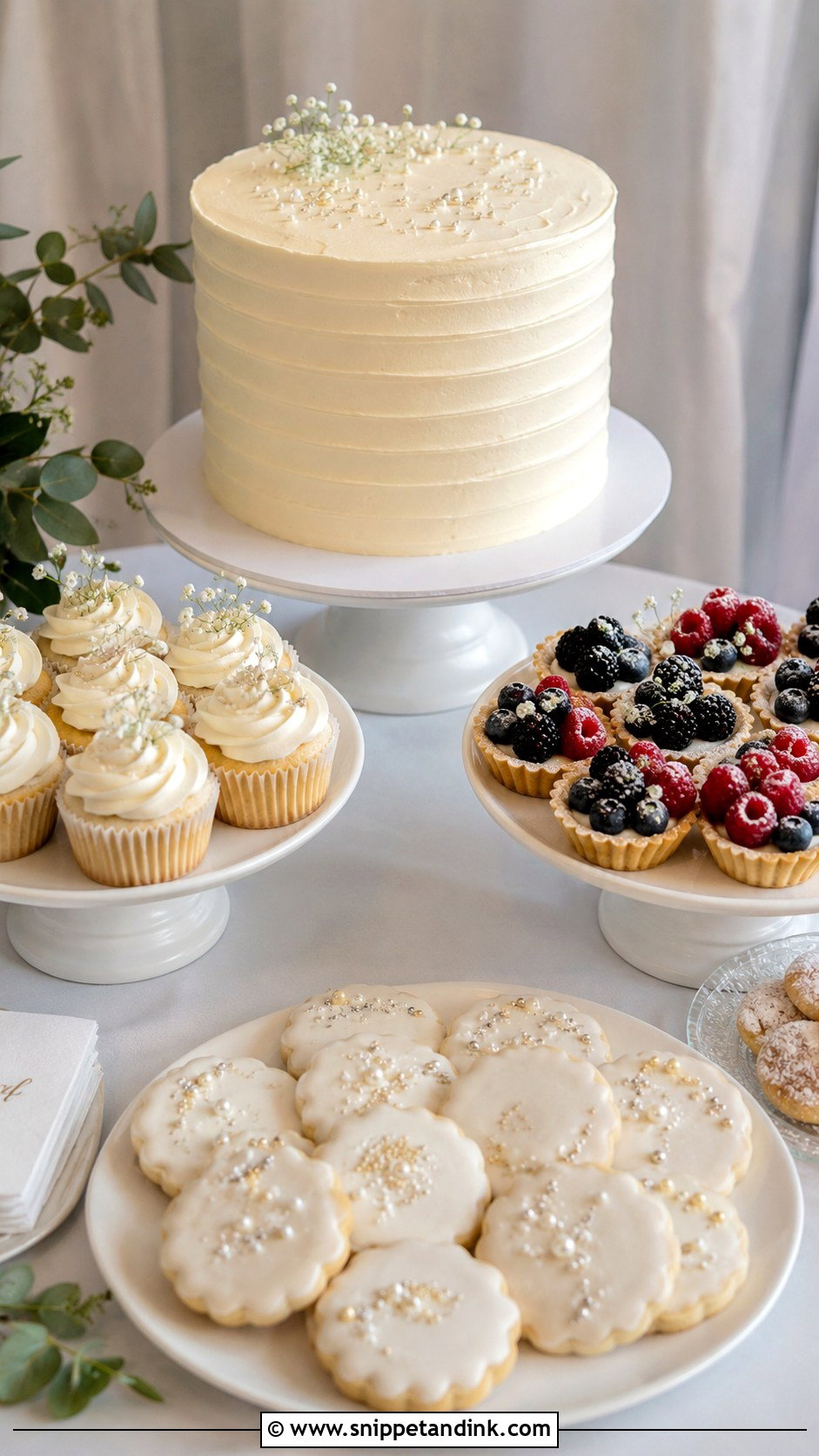
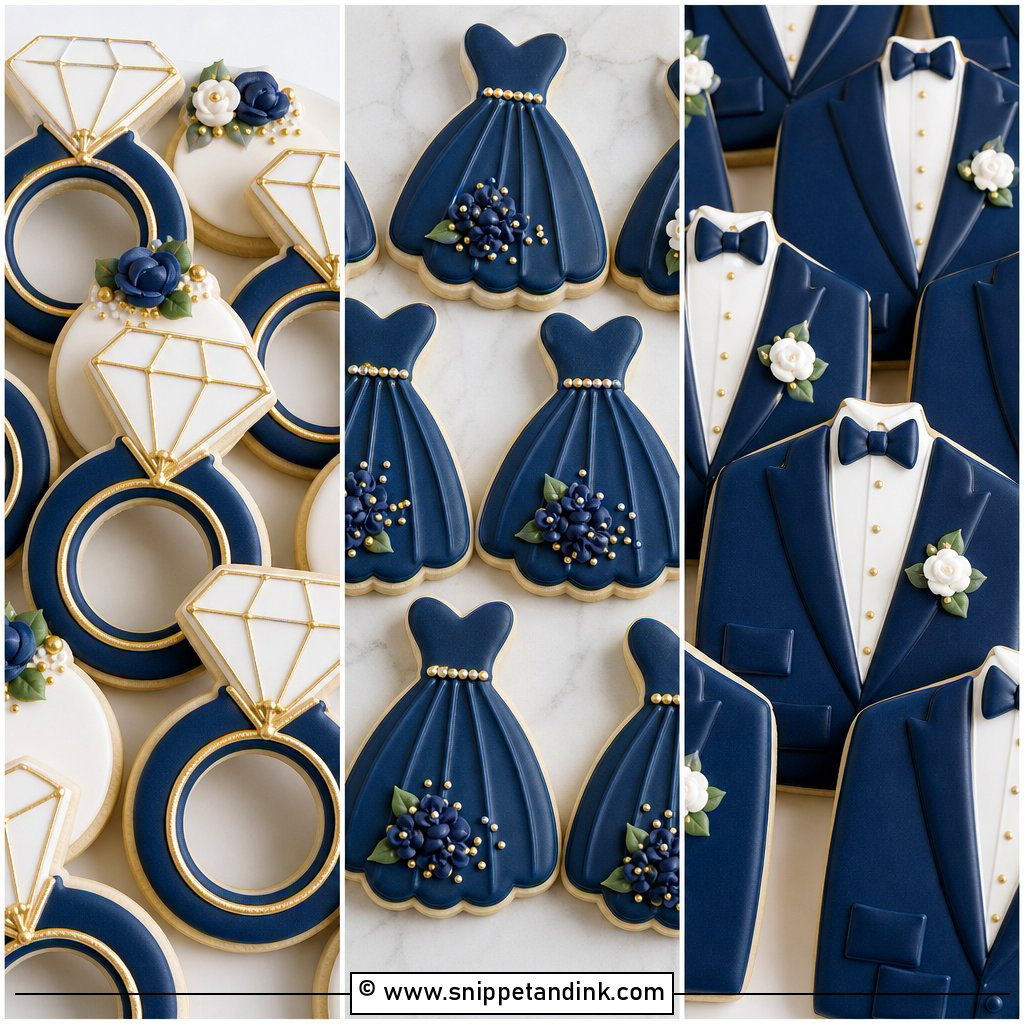
One small cake, two or three mini desserts and a plan for where each goes is all a simple table needs. Pair a white buttercream cake with cupcakes, cookies and fruit tarts on matching platters, one linen runner and a couple of low arrangements. Don’t overload it; refill from the kitchen. Simple is not plain when guests can understand the table at a glance. Small weddings and courthouse celebrations suit it, and so do tight budgets, because fewer kinds of dessert means less waste.
What Holds Up Through a Warm Four-Hour Reception
A dessert table is out in the room far longer than a plated course, and that is where most of them fall apart. Here’s how the common items behave from my side of the counter.
Safe at room temperature for hours
Cookies, brownies, fruit pies, pecan bars, wrapped candy, donuts and fondant-covered cake all sit happily. Buttercream holds if the room stays reasonably cool; American buttercream with a crusting finish copes better than silky meringue styles in heat.
Needs the fridge until the last minute
Cheesecake, mousse cups, cream puffs, shooters with fresh cream and anything with custard. General food-safety guidance is that chilled dairy desserts shouldn’t sit at room temperature for more than about two hours, so I set these out in small rounds and swap trays rather than leaving one big display.
Where the table stands matters as much as what’s on it
Keep it out of direct sun, away from uplights that throw heat, and off the edge of the dance floor where bodies warm the air. A spot near the kitchen door is unglamorous, but it is the one I ask for, because restocking takes thirty seconds instead of a trek across the room.
Labels That Stop Allergy Questions at the Table
Guests with allergies can’t ask a cake stand what’s inside. I label every dessert with its name and the main allergens, and nuts get called out plainly, since macarons, frangipane tarts and many brownies contain them. If you’re offering gluten-free or vegan pieces, put them on their own platter with their own tongs; sharing a tray with ordinary cookies defeats the point. And tell your baker about serious allergies when you order, not the week before, so they can plan production to avoid cross-contact.
Start With One Anchor Dessert, Then Edit
Every table on this list comes down to the same balance: enough choice to feel generous, not so much that the display scatters. I always start from the venue and the season, pick one anchor dessert (usually a small cake), then add bites that suit how guests will actually eat, standing and holding a glass. Height, labels and matching trays do the rest. Rustic or modern, keep the plan simple enough that the catering team can restock it without you.
You'll Like These Ideas:


Leave a Reply