
Cake pops get eaten. That’s my favorite thing about them: no plates, no forks, one or two bites and guests go back for another. They fit on dessert tables, favor displays, welcome trays and late-night sweet stations equally well. What separates a wedding batch from a birthday batch is consistency, so the coating color, size and finish should tie back to your flowers, linens or main cake. These twenty designs come with the practical notes I’d give anyone making or ordering them.
How Many to Order and When to Make Them
If cake pops sit beside a wedding cake or other desserts, one to two per guest is usually plenty. As the only dessert, plan on two or three. Favors are a separate count, one per guest plus a few spares for breakage.
Undipped cake balls freeze well for a few weeks, which spreads out the work. Once dipped and decorated, pops keep for several days in a cool room or about a week in the fridge in a sealed container. Make them no more than a few days before the wedding if you want the coating at its best.
The coating decides how forgiving the batch will be. Candy melts set quickly at room temperature with a smooth shell and come in many colors, which is why most bakers use them for weddings. Real chocolate tastes better but has to be tempered, or it sets soft and streaky and marks with every fingerprint. If flavor matters most to you, ask for real chocolate on a smaller number of pops.
1. White Wedding Cake Pops
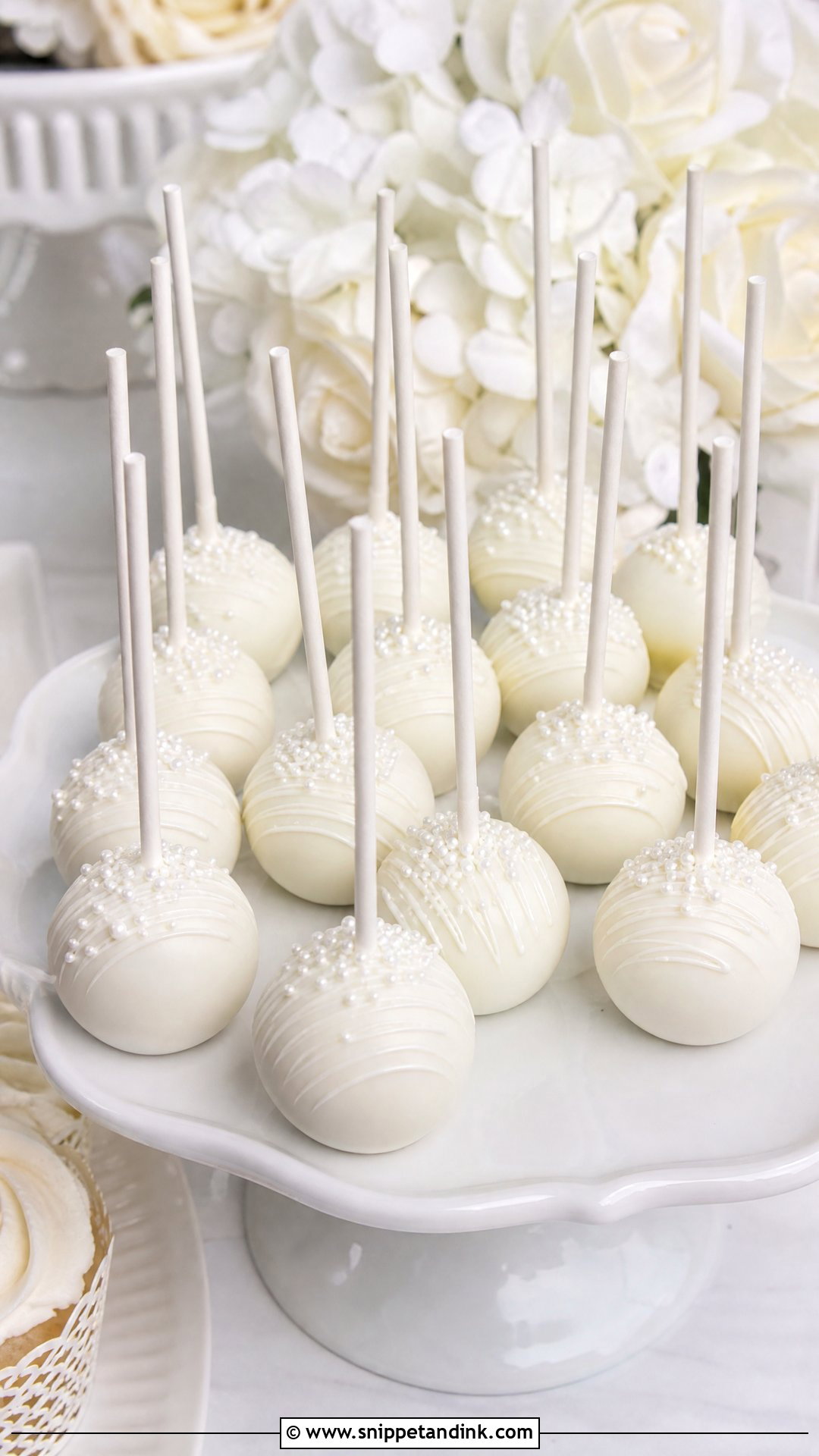
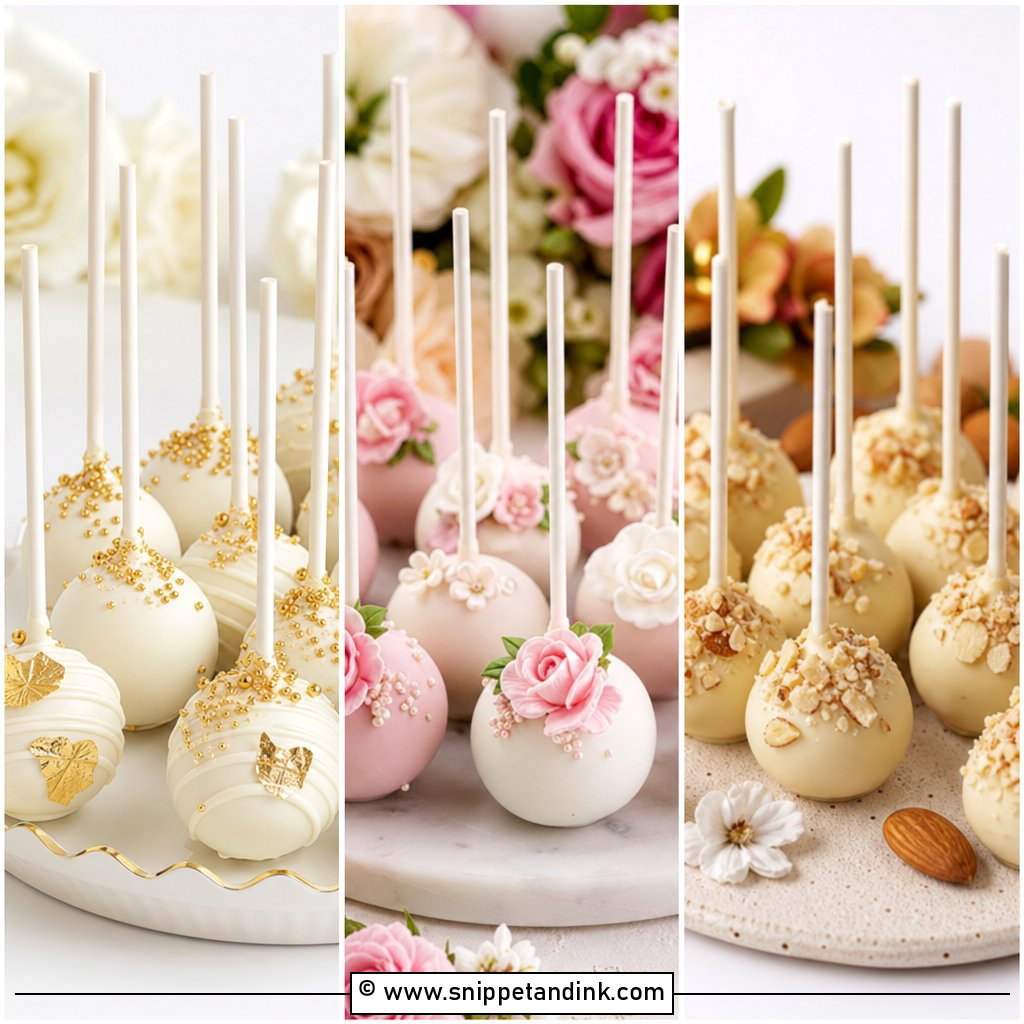
Bright white coating is harder to get than people think. Real white chocolate is ivory and yellows further when it’s overheated, so for a true white I use a white candy coating or add a little white food coloring made for chocolate. The inside should be soft but not wet: vanilla or almond cake bound with just enough buttercream to hold a ball. Pearl sprinkles or white sanding sugar need to go on while the coating is still tacky, within a few seconds of dipping.
2. Bride And Groom Cake Pops
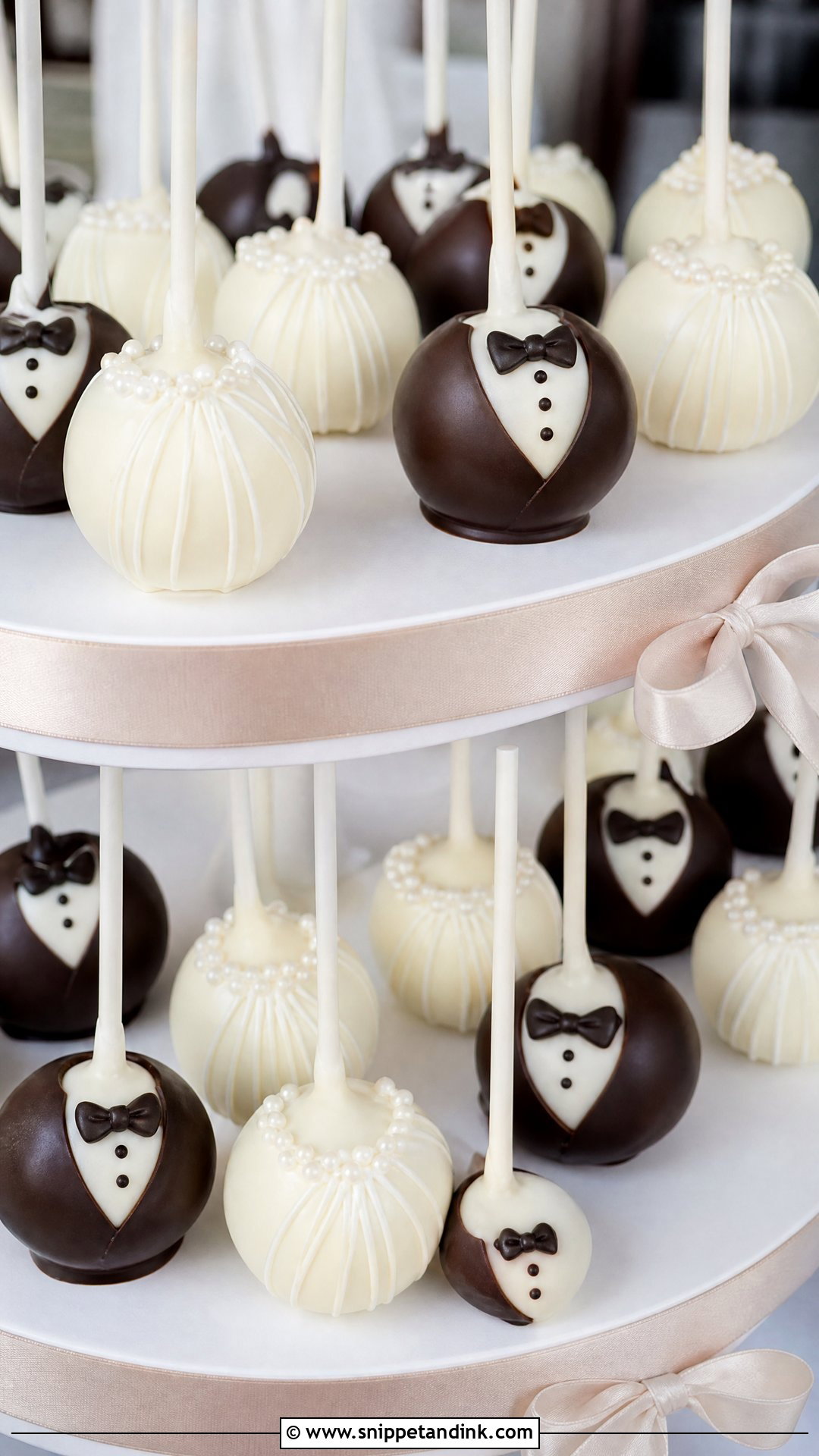
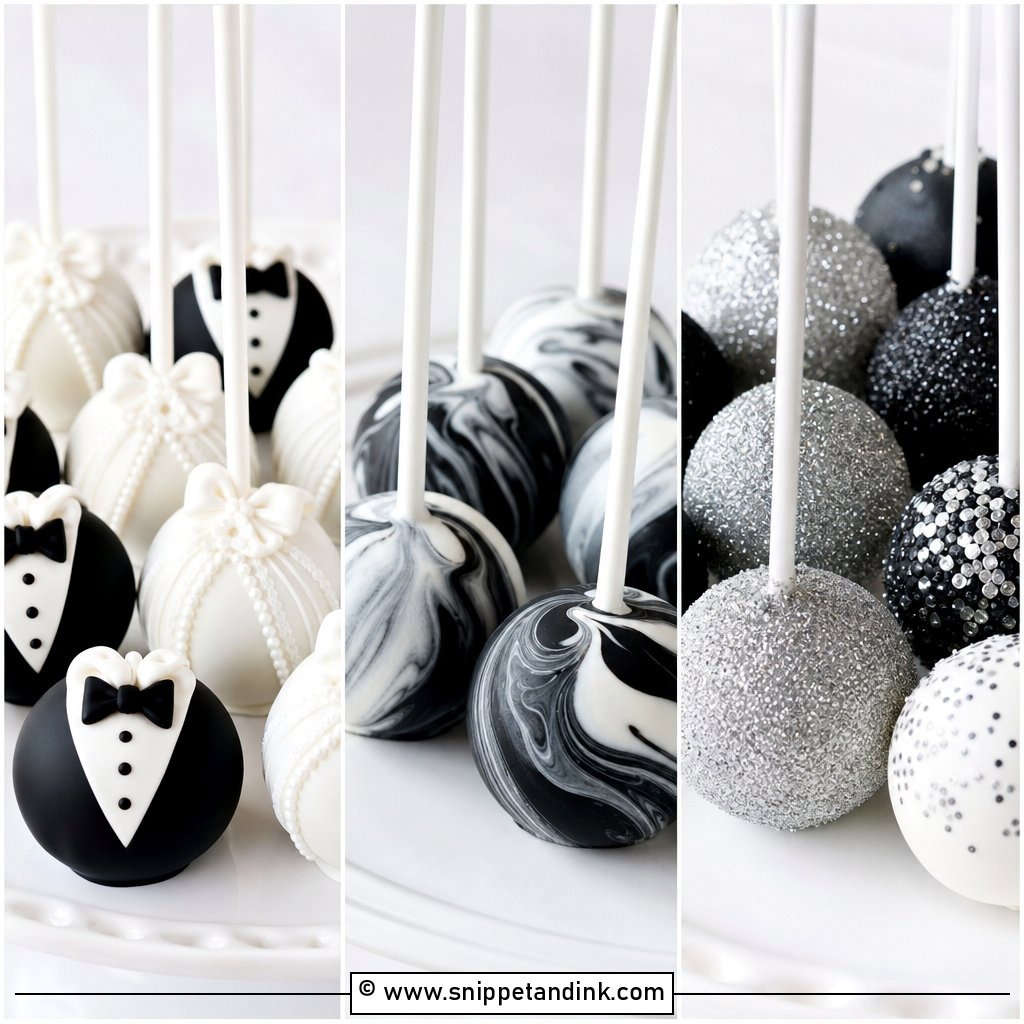
Matching pairs are what make this idea read at a glance. The bride gets white coating and a piped bodice or a drizzle veil; the groom gets dark chocolate with a piped bow tie and buttons. I’d skip faces altogether, because tiny piped eyes rarely look right and they shift the whole table toward a kids’ party. These suit showers and rehearsal dinners especially well.
3. Gold Wedding Cake Pops
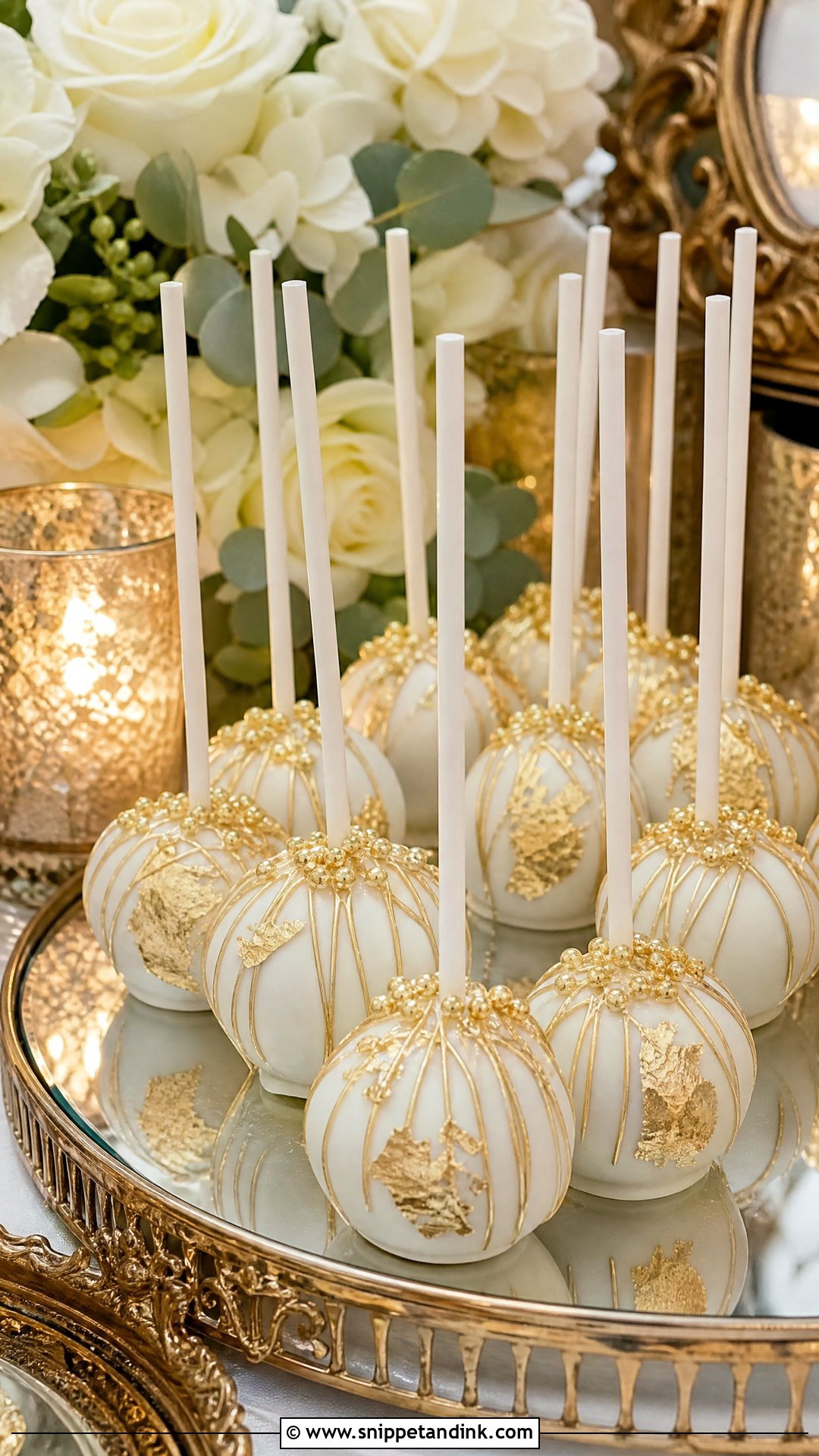
Gold leaf on a cake pop looks expensive and behaves badly: it sticks to fingertips, flies off in a draft and shows every crease. I apply it with dry tweezers once the coating has fully set. Gold sanding sugar or a painted gold drizzle are easier and travel better. One gold accent per pop, on ivory coating, is enough for a black-tie table.
4. Blush Pink Wedding Cake Pops
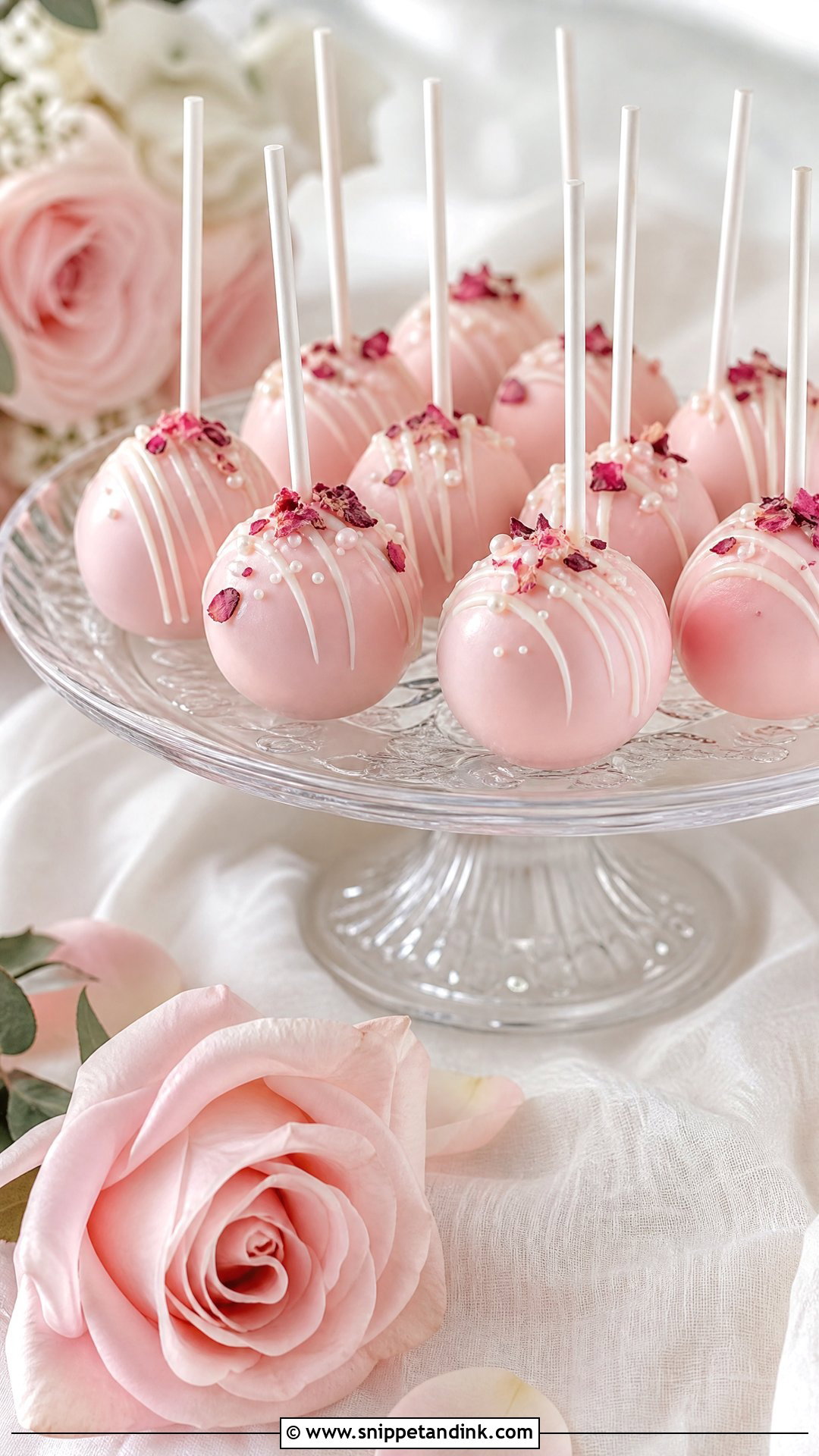
Pale pink coating is tricky to repeat across a large batch, since each fresh bowl of melted coating tints slightly differently. Mix all the pink you need in one go. Strawberry or almond cake inside suits the color, and rose flavor works if used very lightly. Dried rose petals should be food-grade, not from a craft shop. Clear sleeves make individual favors, which also keeps them from scuffing each other in transit.
5. Floral Wedding Cake Pops
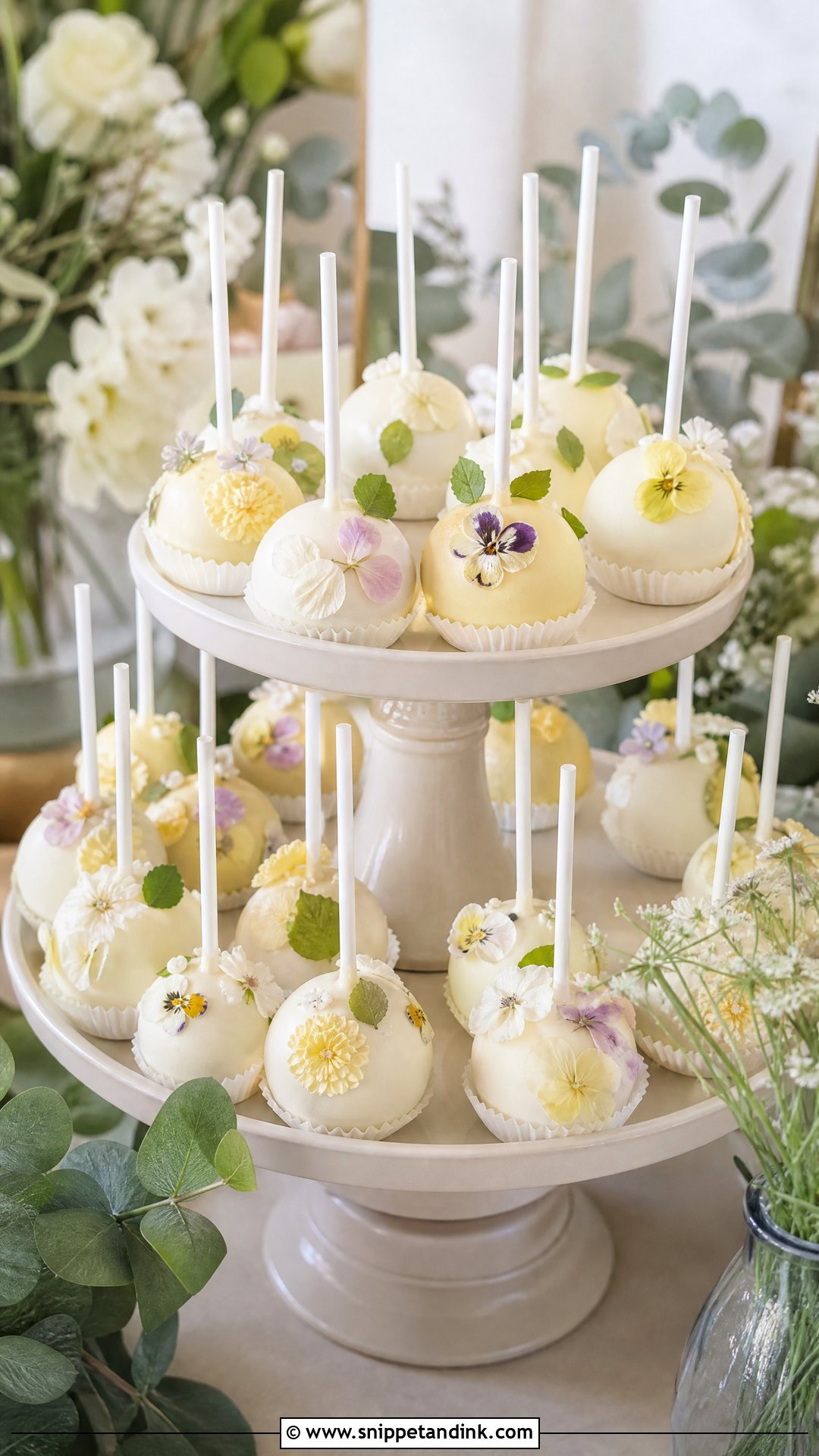
Small is the rule. A buttercream rose looks sweet on a cupcake but too heavy on a ball the size of a walnut; it can drag the pop off its stick. I use tiny royal icing blossoms made days ahead, pressed edible petals or painted details instead. Keep the base coating white or pastel and limit the flowers to two colors. Set the stand among bud vases so the pops look like part of the florals.
6. Pearl Wedding Cake Pops
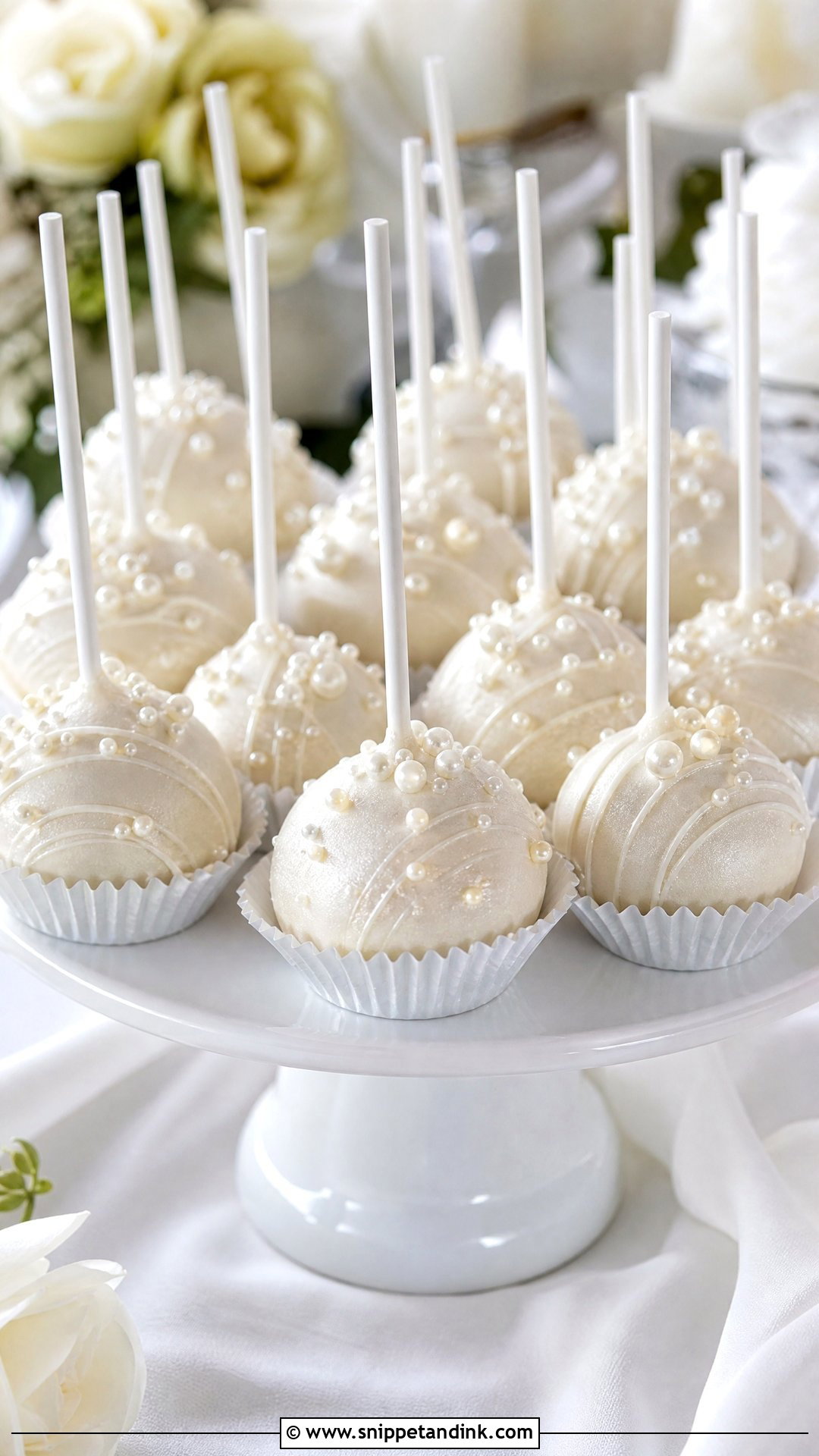
Mixing pearl sizes gives this design depth, from fine nonpareils up to larger sugar pearls. Pearl dust brushed on lightly makes the coating glow without the hard shine of metallic paint. Large sugar pearls are crunchy, so I keep them as accents rather than a full coating. Coconut or white chocolate cake suits the soft palette, and mini paper cups stop the pops rolling if you display them without sticks.
7. Marble Wedding Cake Pops
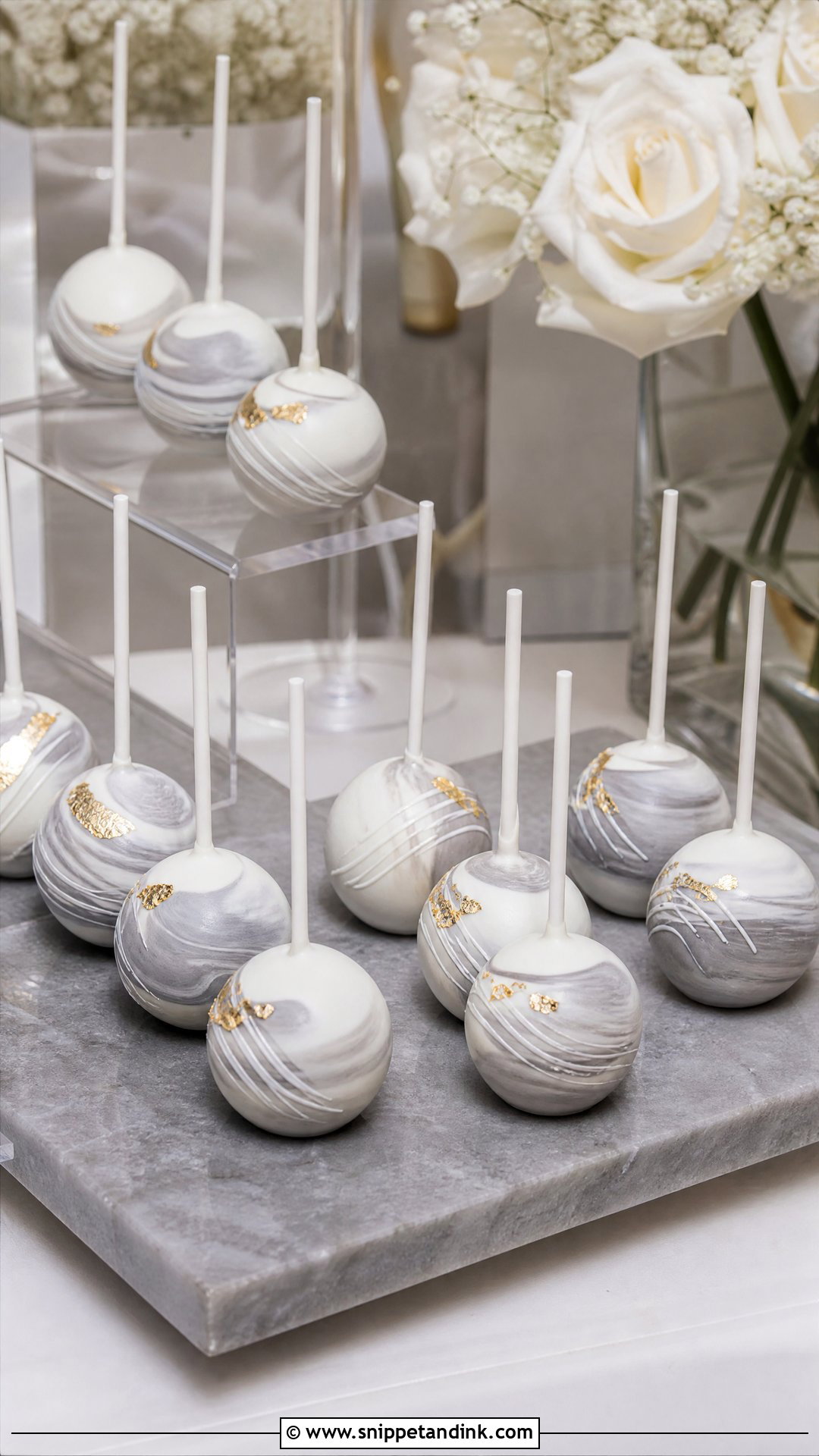
Marbling works because the two coating colors are swirled loosely together and each pop pulls up a different pattern. Stir the colors only once or twice; overmixing blends them into one muddy shade. Every pop comes out unique, which is part of the charm. White with grey or blush suits modern venues; a few gold flakes are plenty.
8. Rustic Wedding Cake Pops
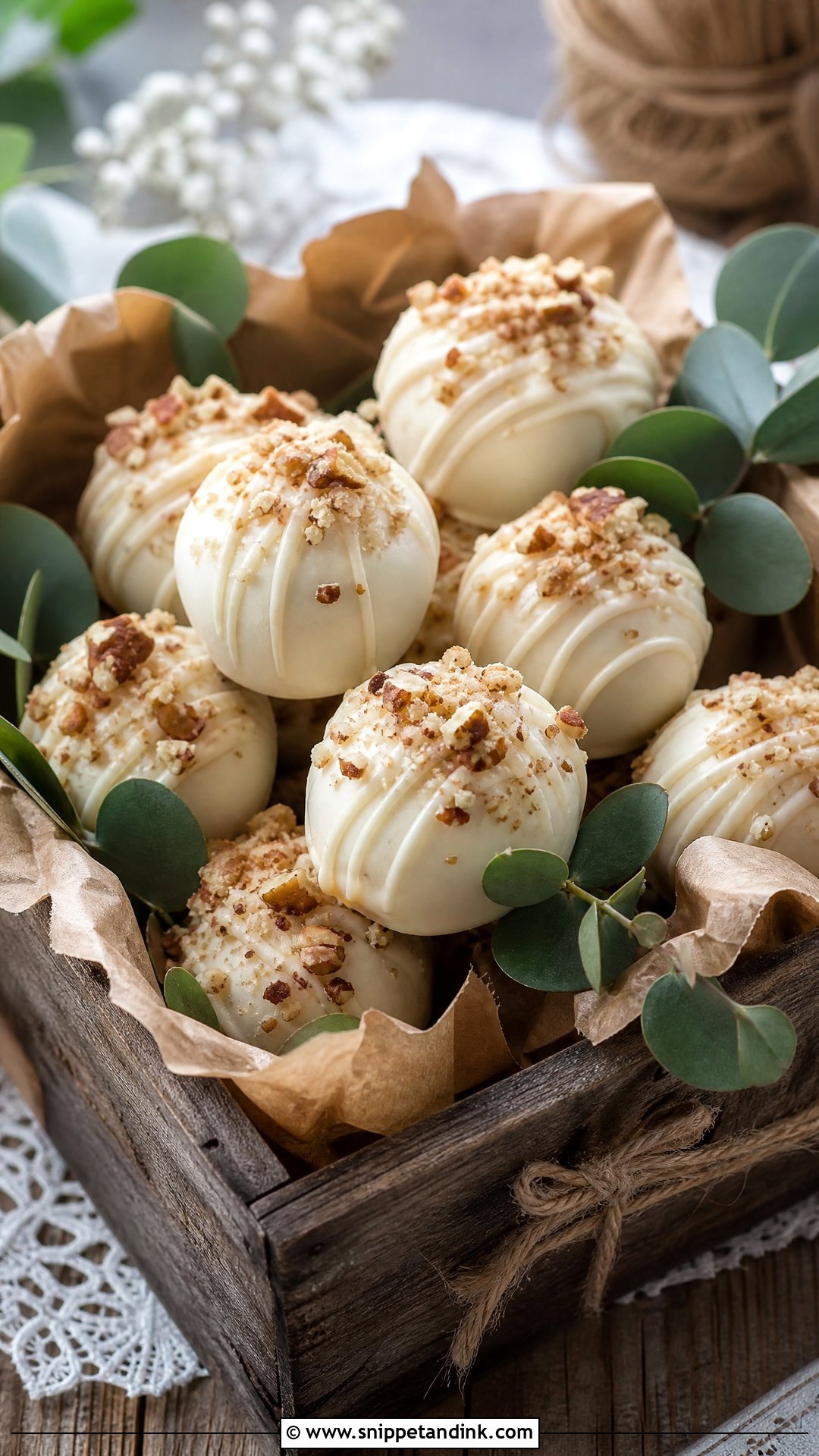
Rustic pops can be less glossy, but they still need a clean coat with no cracks or bare cake showing. Crushed nuts, cookie crumbs and dried flowers stick best when pressed on immediately after dipping. Spice, carrot and chocolate cake taste right for an autumn barn. A wooden box or kraft-lined tray suits the look; label any pops with nuts for guests with allergies.
9. Boho Wedding Cake Pops
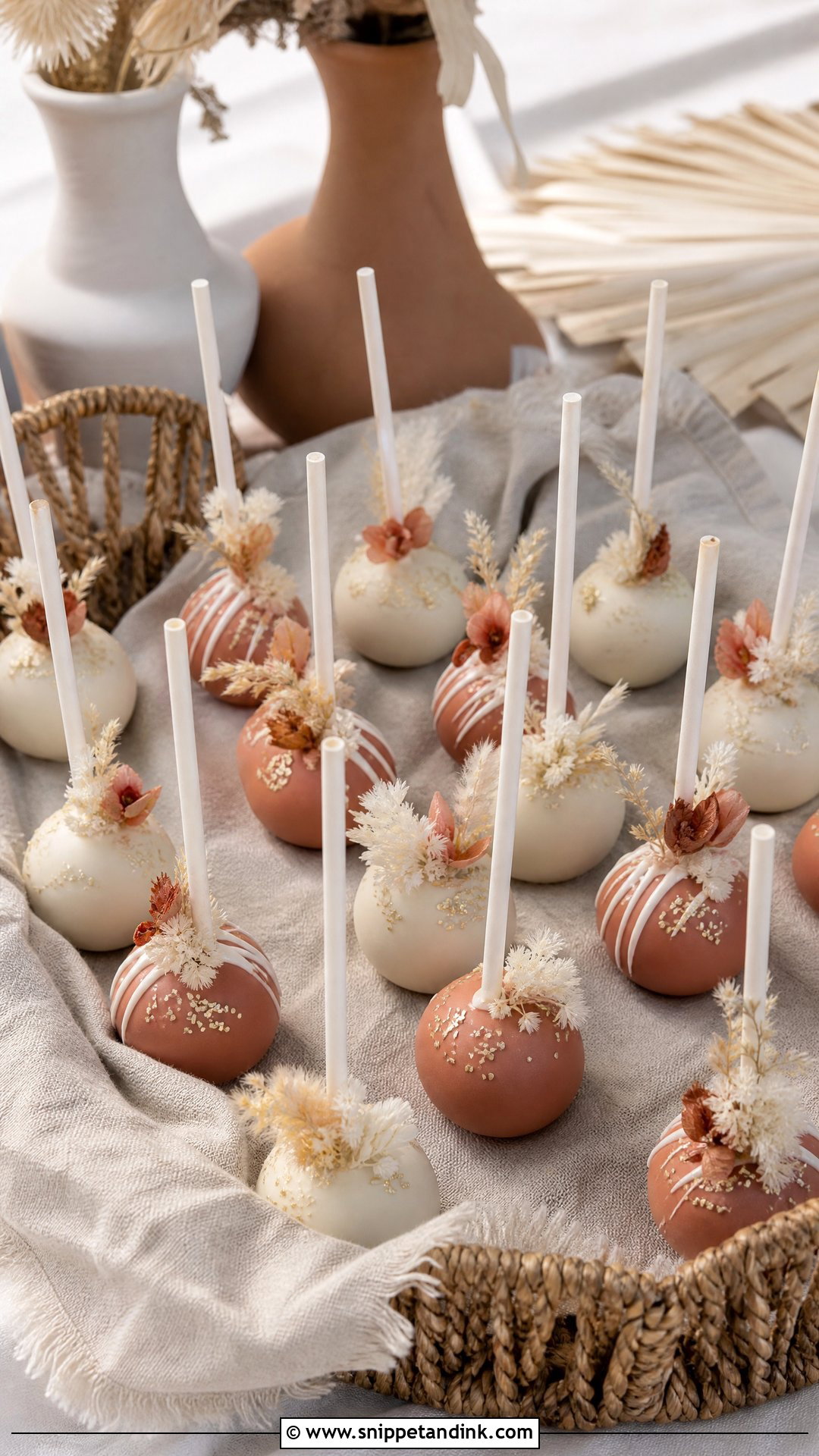
Terracotta and sand tones are what make boho pops read correctly, and those shades are easy to overshoot into orange or grey. Test a few drops of color in a small spoonful of coating first. Dried floral bits and tiny sugar shapes inspired by pampas look natural. Keep to three colors at most; boho styling gets messy fast once the palette widens.
10. Black And White Wedding Cake Pops
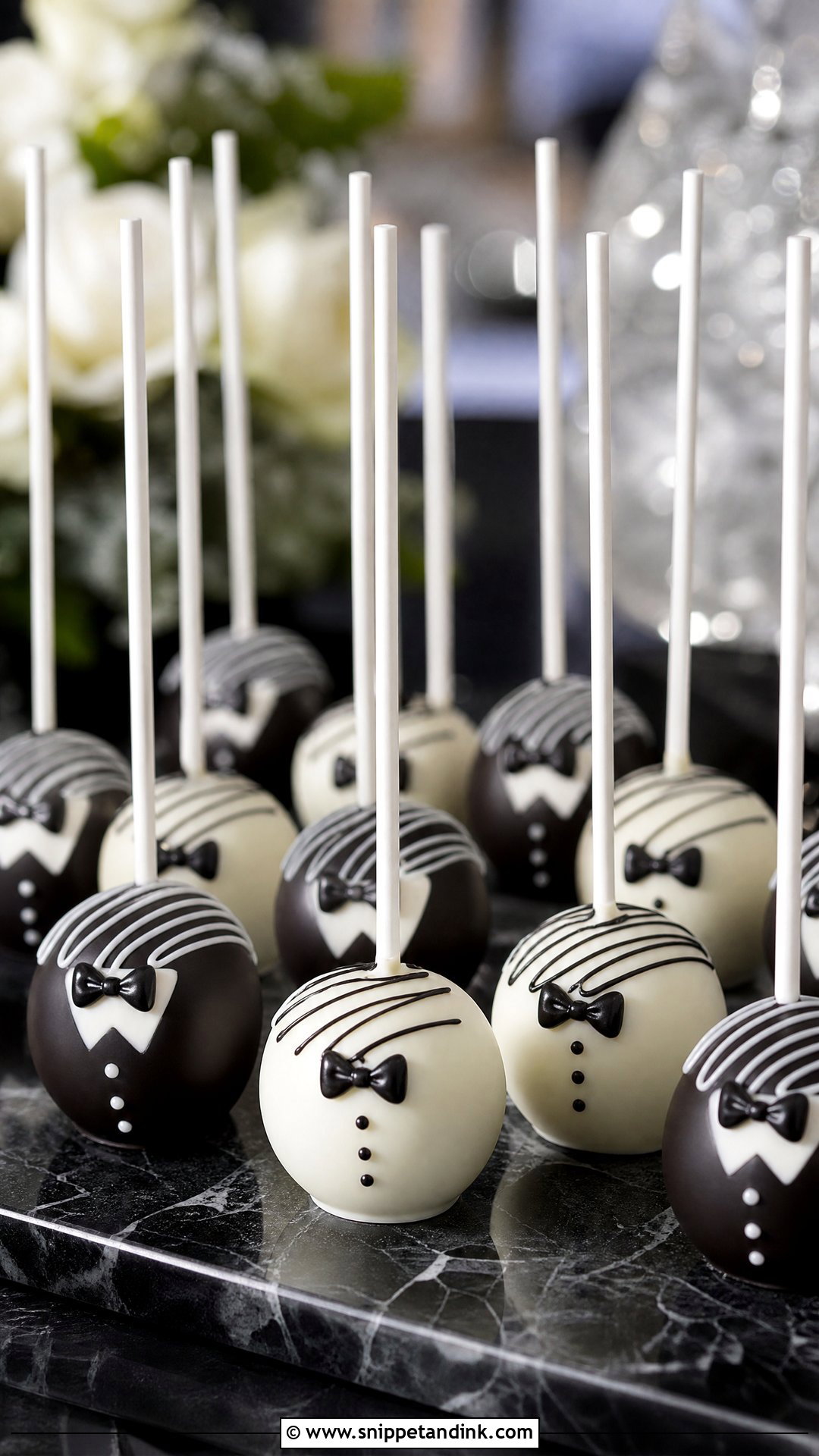
Contrast hides nothing, so Black and white wedding cake pops need very even coating and clean drizzle lines. True black coating takes a lot of coloring; starting from dark chocolate coating gets you closer with less. Alternating white pops with black drizzle and dark pops with white details looks sharp in straight rows. Piped bow ties or initials suit an evening reception.
11. Champagne Wedding Cake Pops
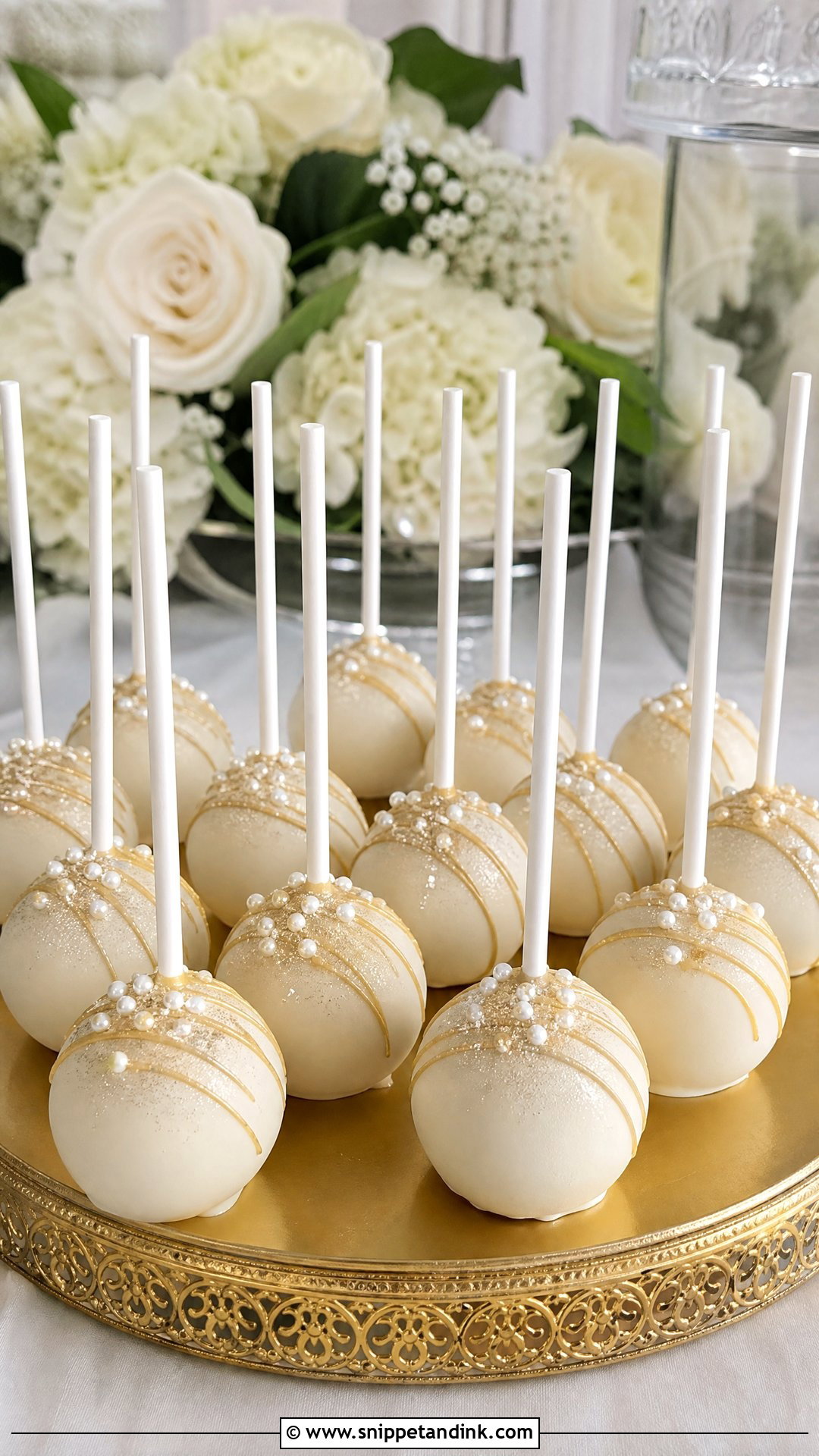
Champagne flavor comes through poorly in cake once baked, so a champagne cake pop usually relies on flavoring or a buttery almond cake with a hint of fizz in the name. The look matters more here: ivory or pale champagne coating, shimmer dust and soft gold drizzle. These work well passed at cocktail hour, when guests have a glass in one hand and want a one-bite sweet.
12. Rose Gold Wedding Cake Pops
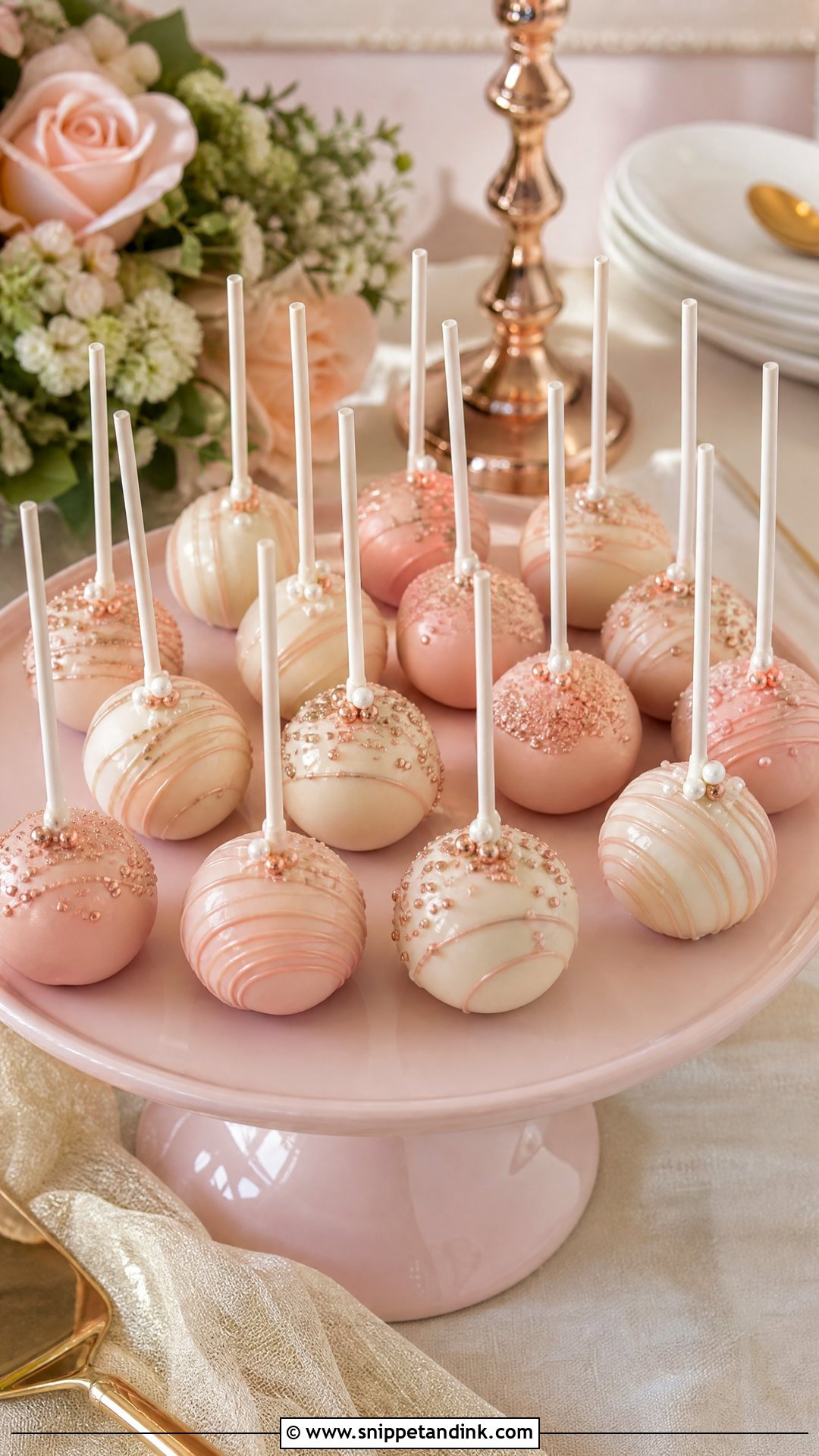
Rose gold is a blend of pink and gold, and the metallic finish depends on what’s under it. Paint it over a blush or peach coating and it reads warm; over white it can look patchy. I use rose gold sugar or a fine drizzle and stop at two or three accents per pop. Strawberry or red velvet cake inside suits the color.
13. Mini Wedding Cake Cake Pops
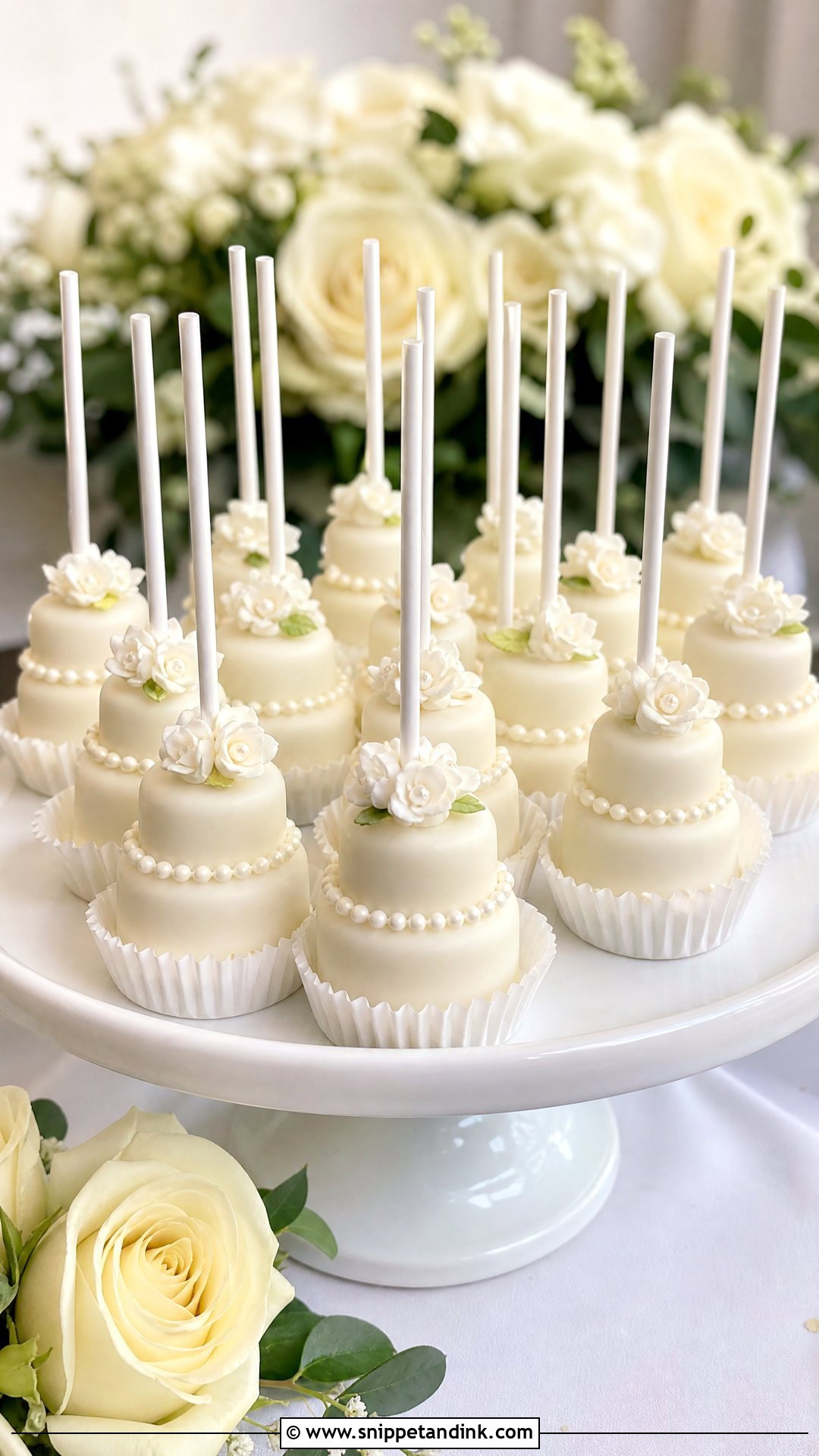
These take three to four times as long as a plain round pop, so plan accordingly or budget for them. Shaping tiny tiered wedding cakes works best with a small stacked silicone mold, chilled until firm before dipping. Piped lines and a single pearl on top complete the illusion. Without a stick they sit flat in mini cups, which makes them steadier on a busy table.
14. Heart Wedding Cake Pops
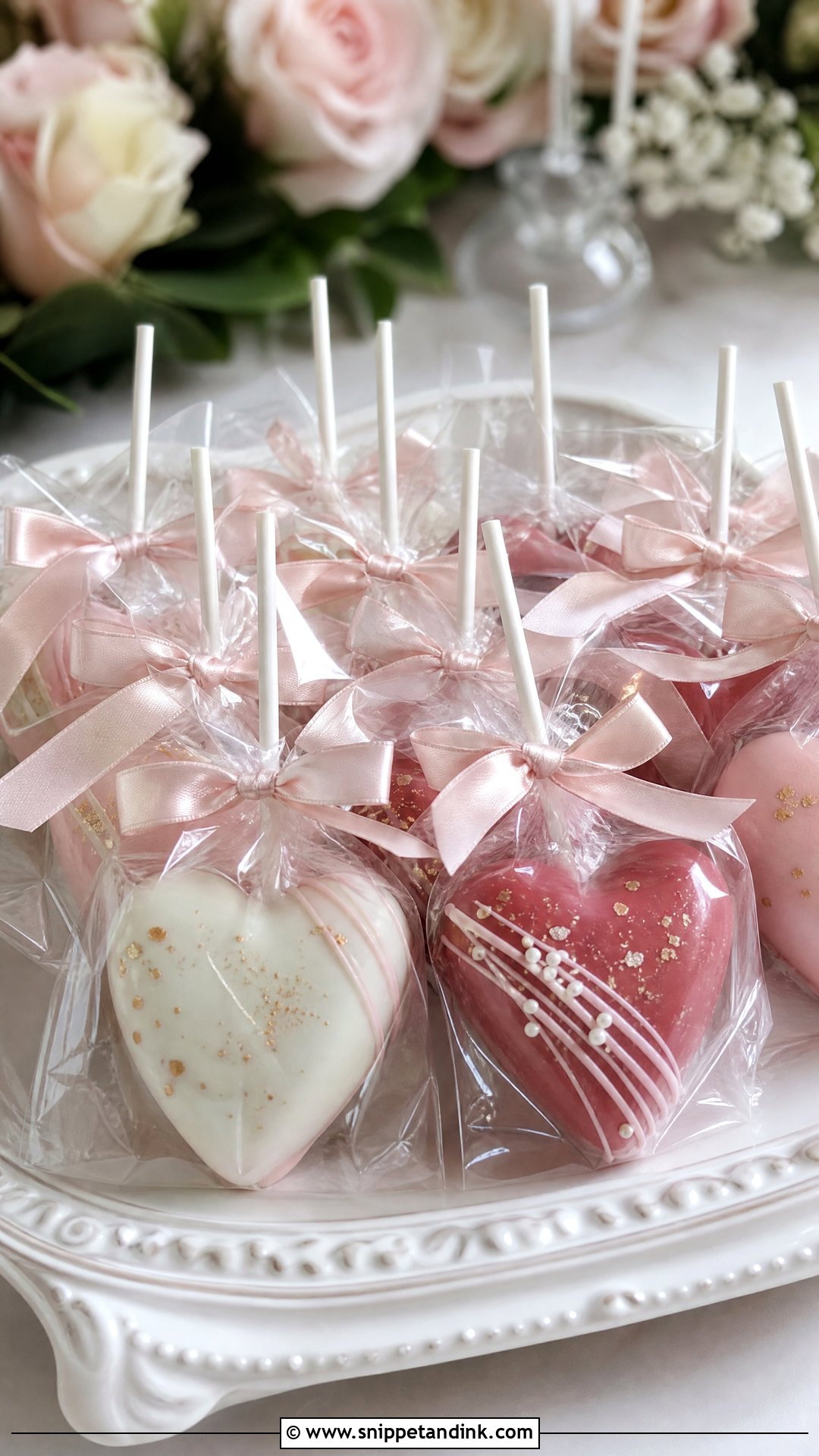
Heart shapes lose their outline if the coating is too thick. I thin the coating slightly and tap off the excess well so the point and the dip at the top stay crisp. Blush, ivory or a muted red read more bridal than bright red. Pressing the cake mixture into a heart mold and chilling it firmly gives the cleanest shape. Clear bags with ribbon turn them into favors.
15. Monogram Wedding Cake Pops
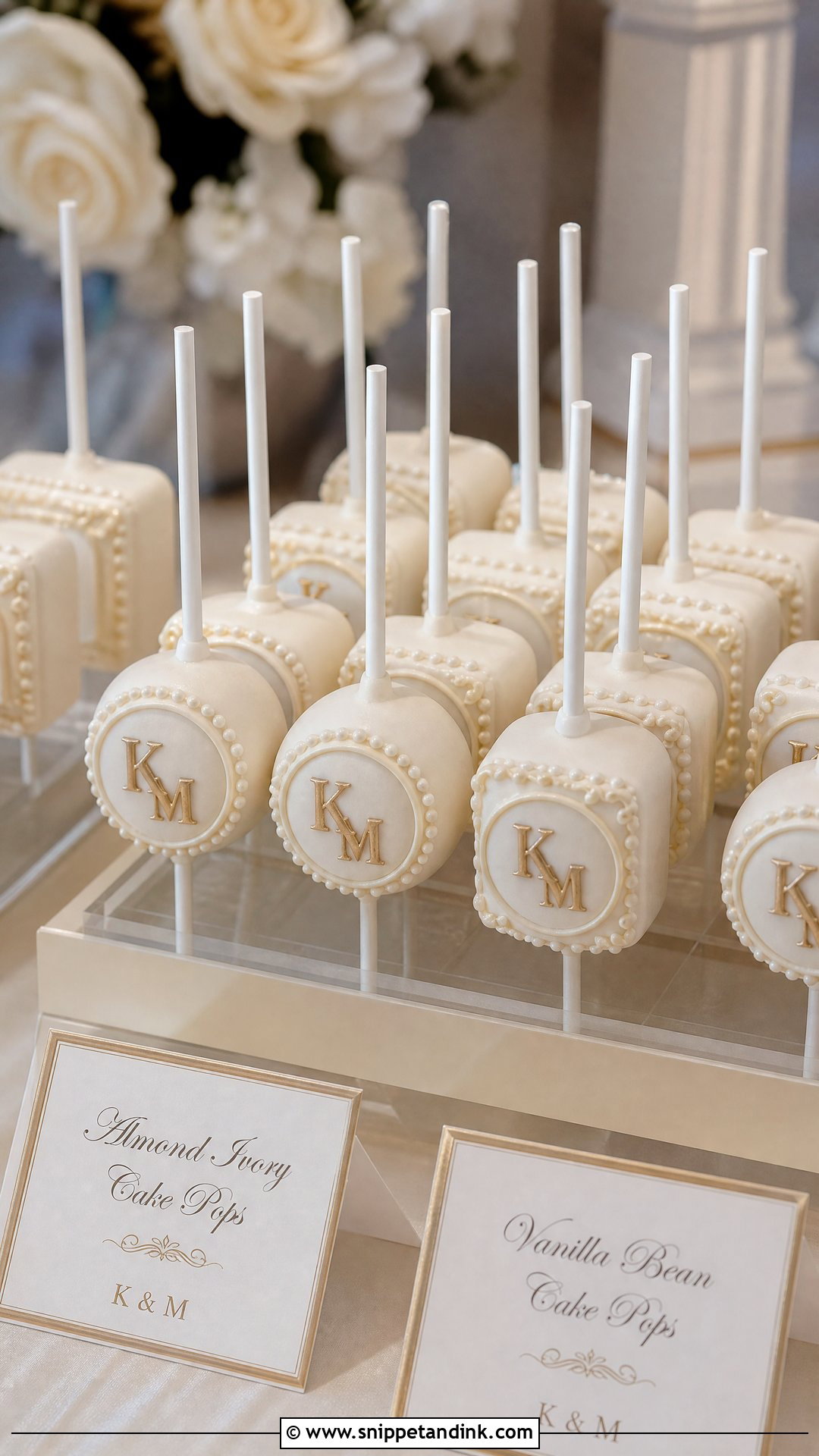
Lettering has to be readable at arm’s length, which means one or two initials, not names. Printing initials with edible ink on a wafer paper disc is the cleanest method, since writing straight onto a curved pop rarely looks even. Piped chocolate letters work for a looser hand-drawn look. Displayed in rows, they also double as edible place cards.
16. Greenery Wedding Cake Pops
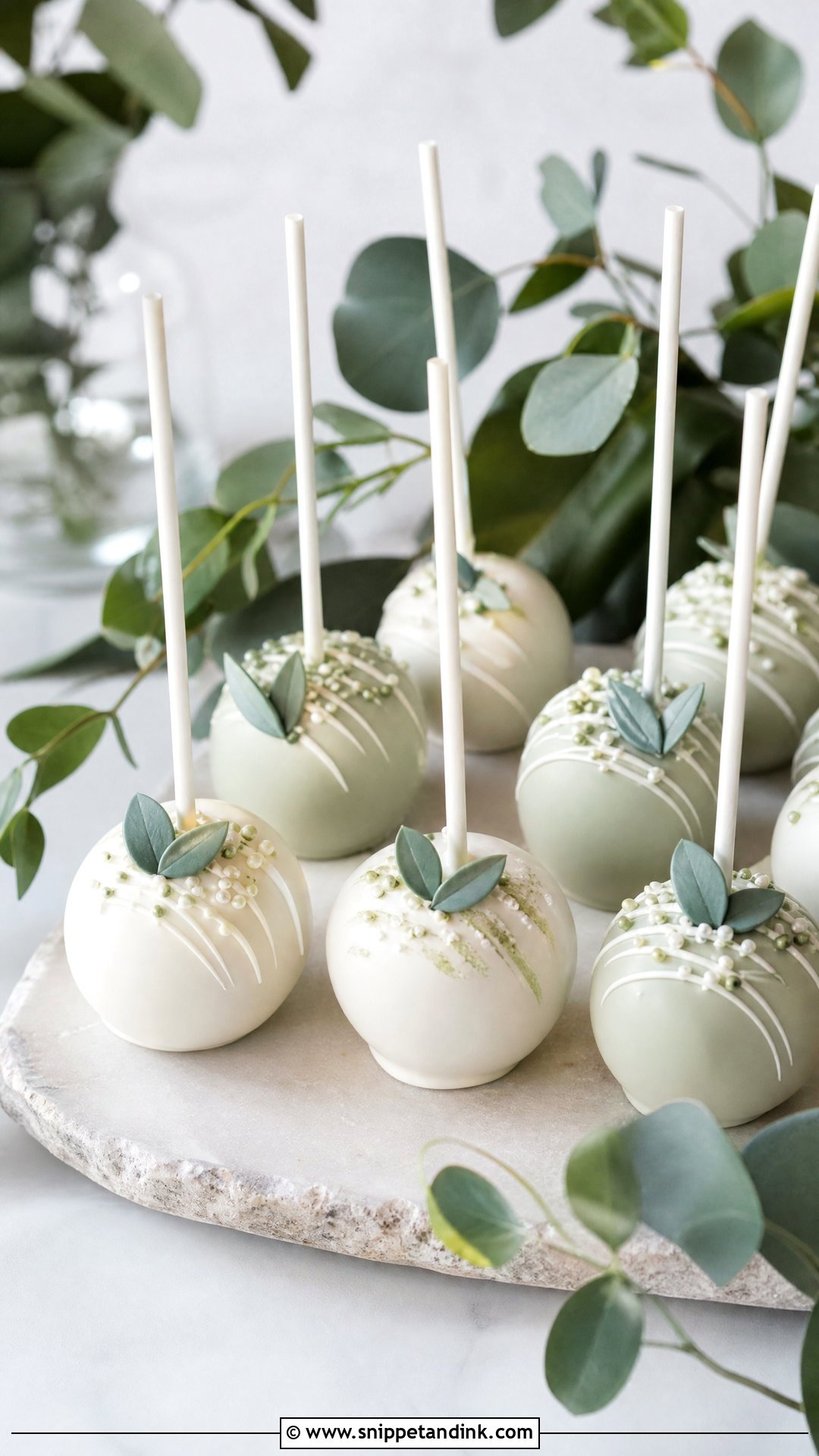
Fondant leaves, a painted vine or a sage drizzle give the greenery feel without anything raw. Pistachio or lemon cake fits the fresh color. Real foliage is fine beside the display, but not every plant is food safe; keep eucalyptus and anything sprayed away from the pops themselves. Wood and stone stands suit this table.
17. Beach Wedding Cake Pops
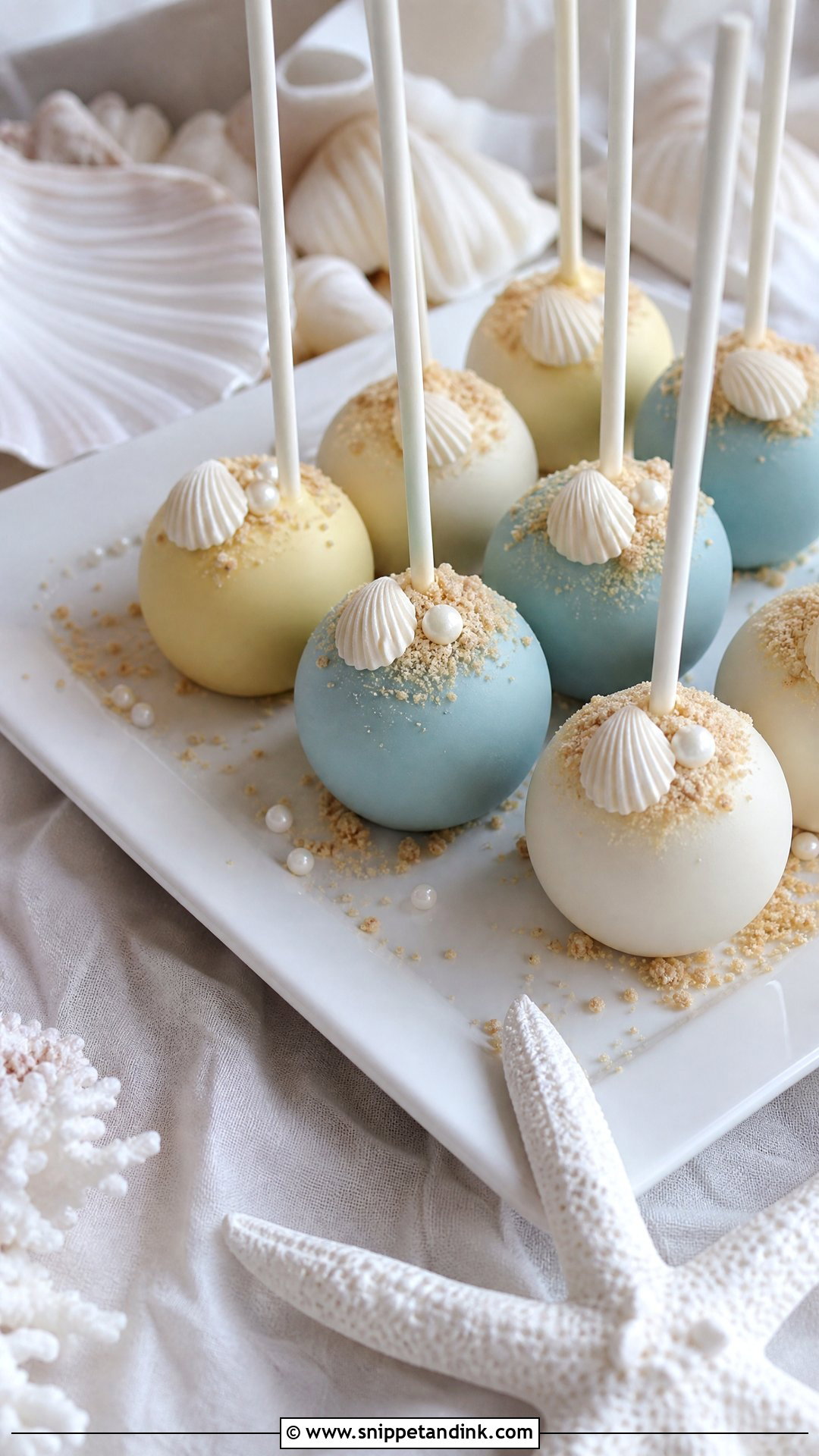
Heat is the problem at the coast, not the theme. Candy coating softens and gets tacky in direct sun, so these pops should stay in shade until guests take them. Crushed graham crackers make convincing sand, and small sugar shells or pearl candies finish them. Coconut and key lime cakes taste right in summer. Real shells are props only, kept apart from the food.
18. Vintage Wedding Cake Pops
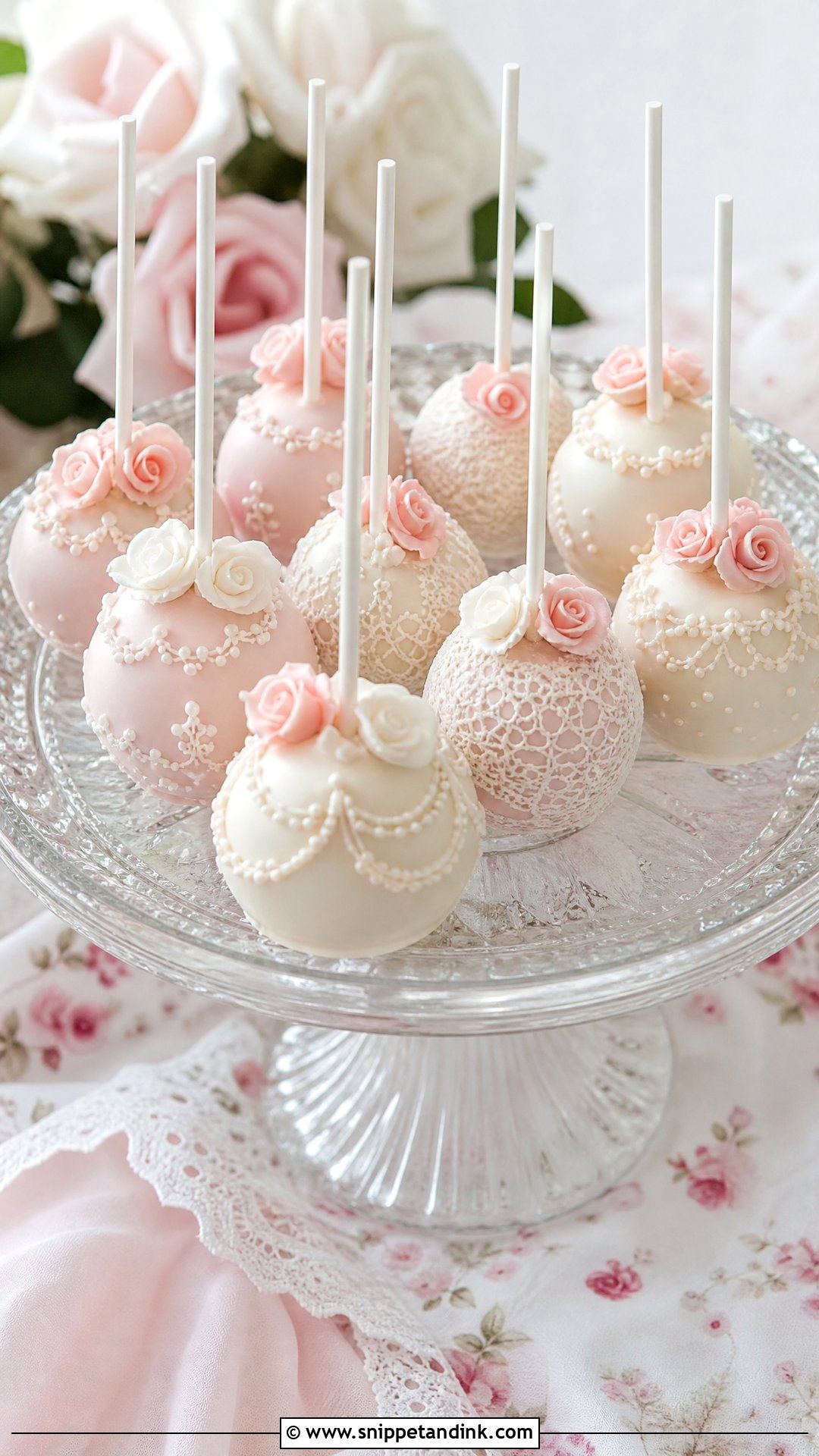
Vintage piping translates surprisingly well to a pop if you scale it down: a single tiny swag, a few pearl dots, a lace pattern in royal icing. I pipe with a very small round tip and practice the swag on parchment first. Buttercream yellow and pale blue coatings fit the style. A glass pedestal or silver tray completes the old-fashioned look.
19. Ombre Wedding Cake Pops
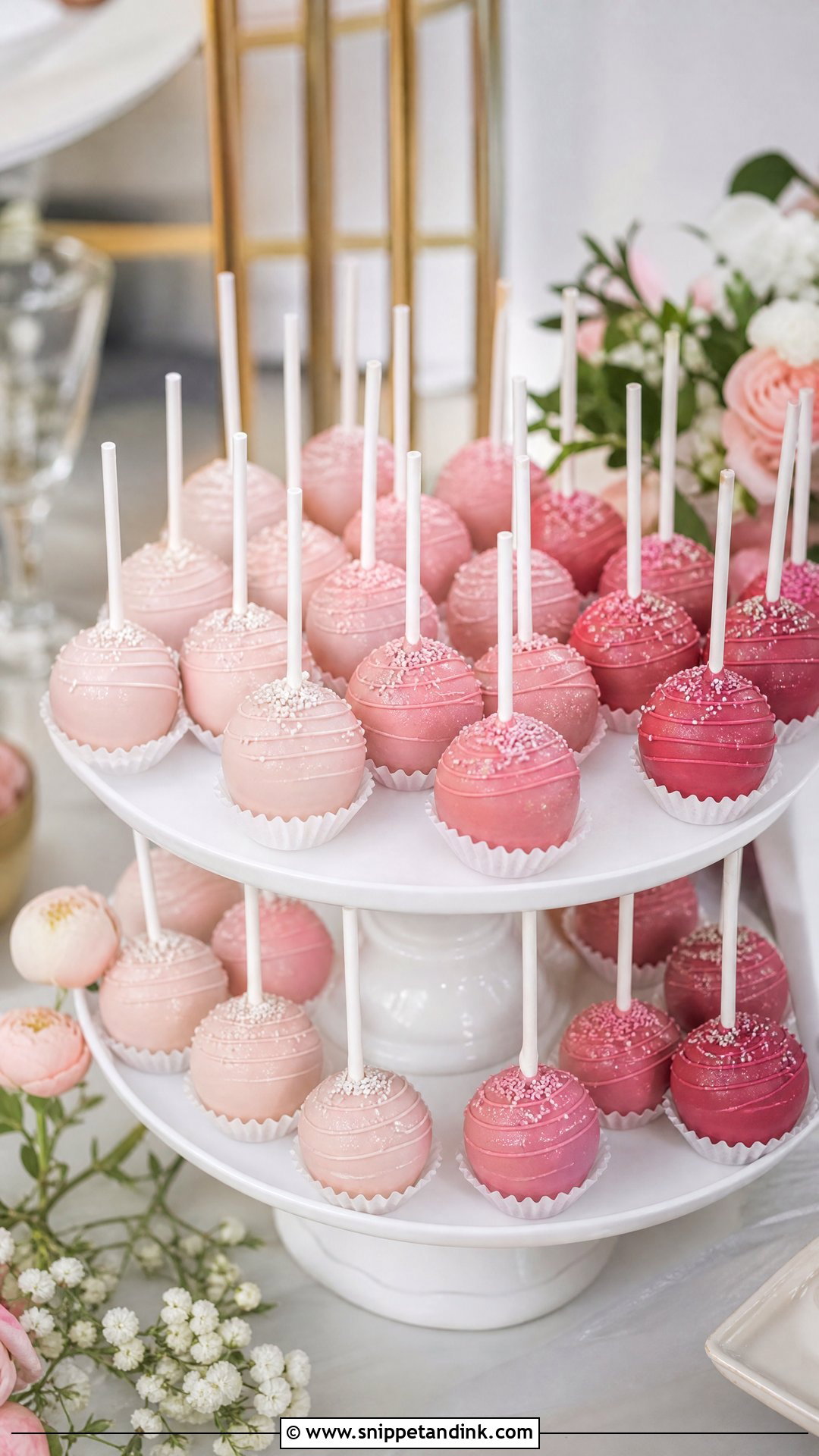
An ombre display needs at least four or five shades to read as a gradient. I start with the lightest batch of coating and add a little color for each new shade, rather than mixing them separately, so the steps stay even. Blush to rose, ivory to champagne and sage to forest all work. Arrange them in strict color order on a tiered stand.
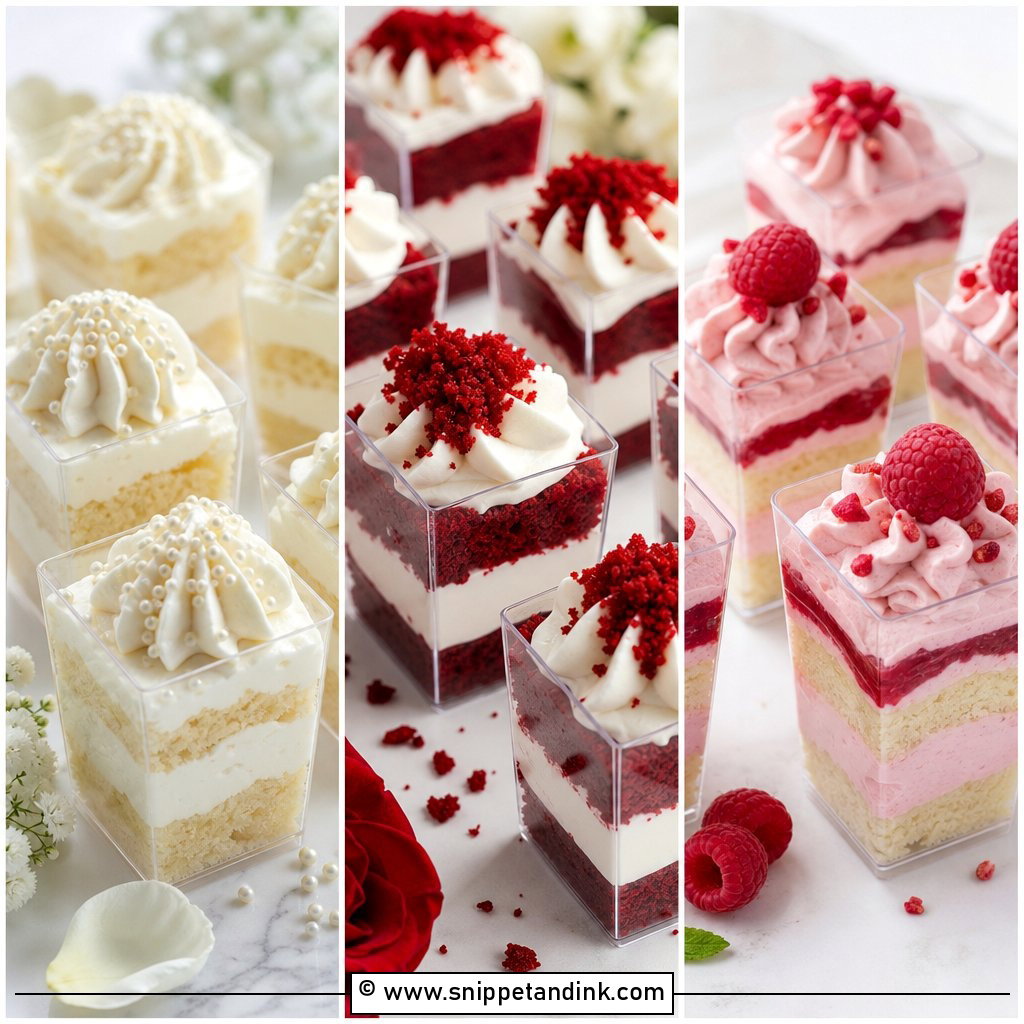
20. Dessert Table Wedding Cake Pops
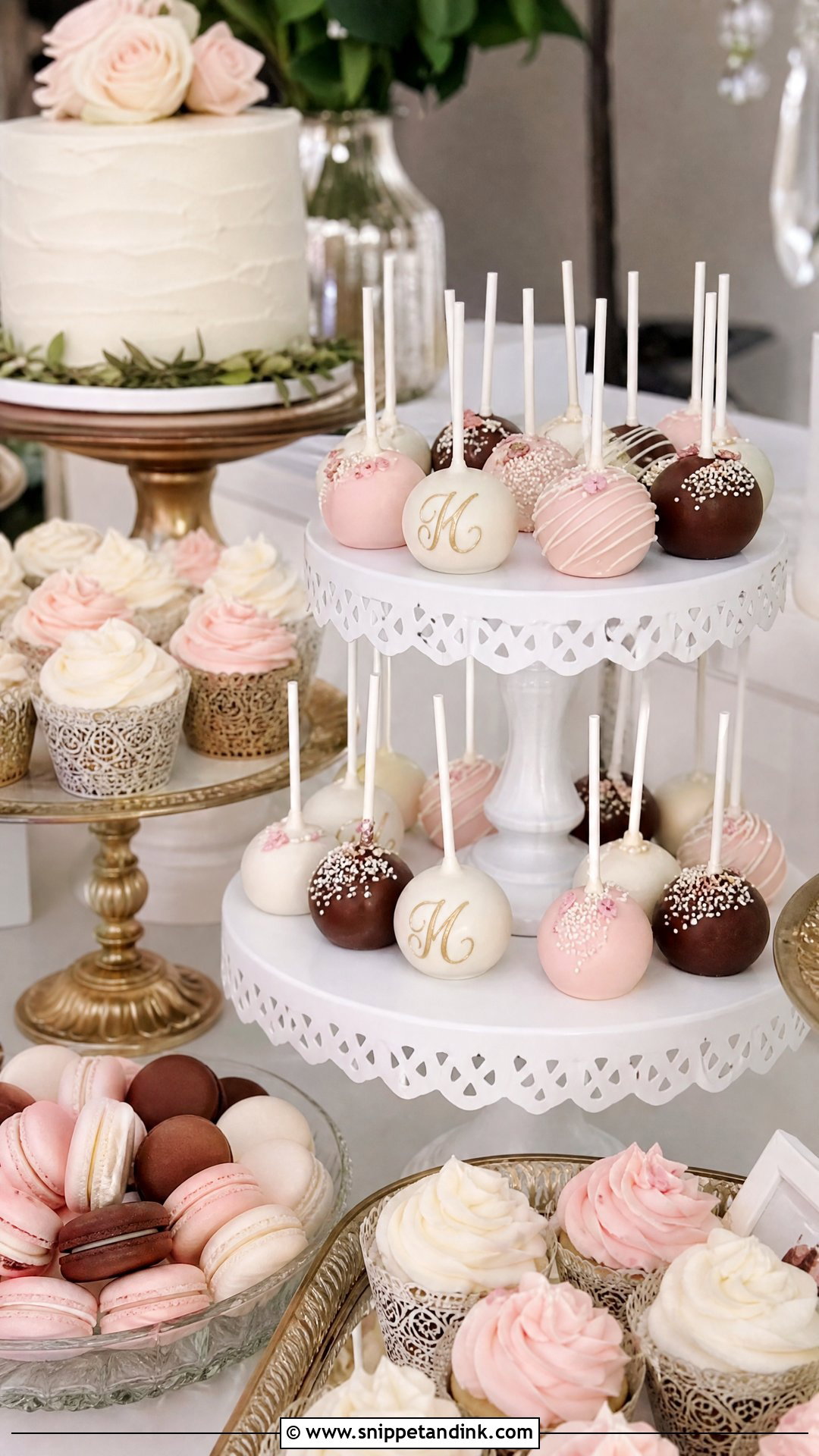
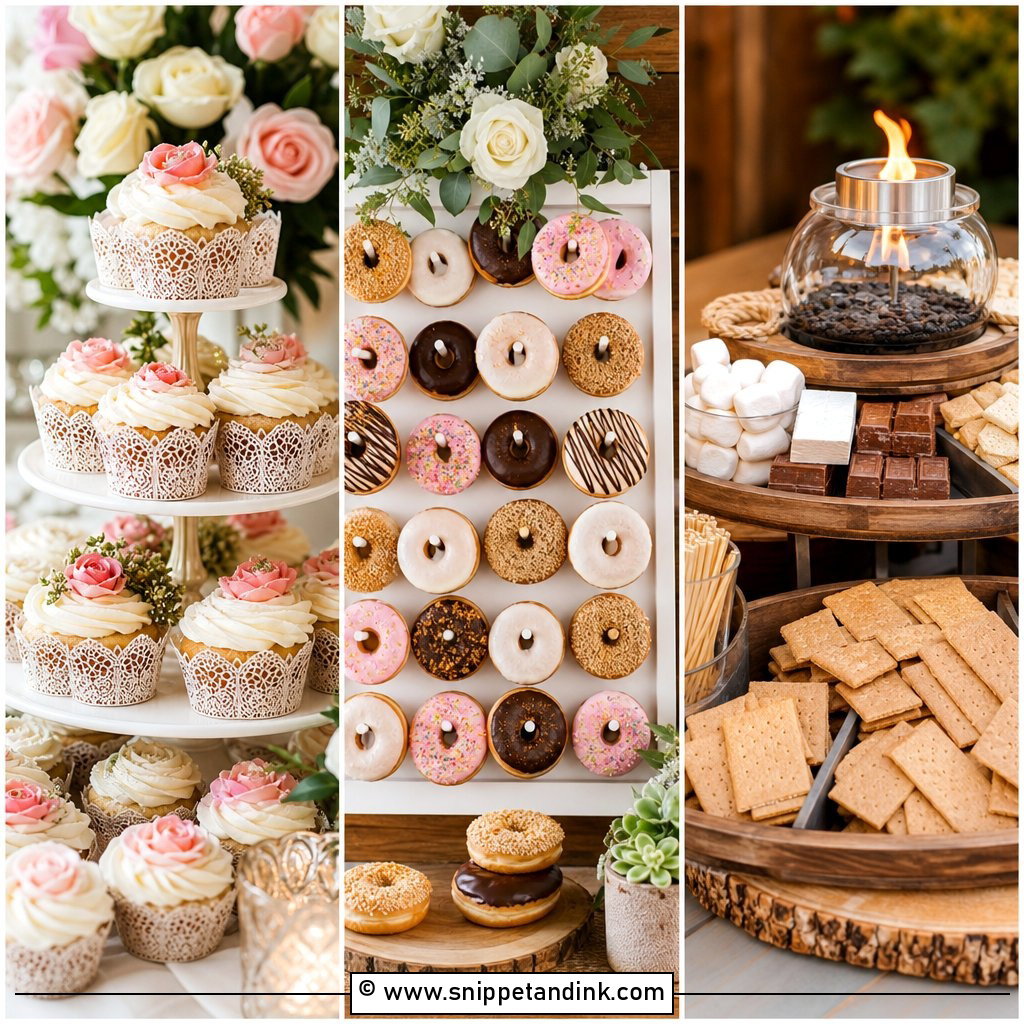
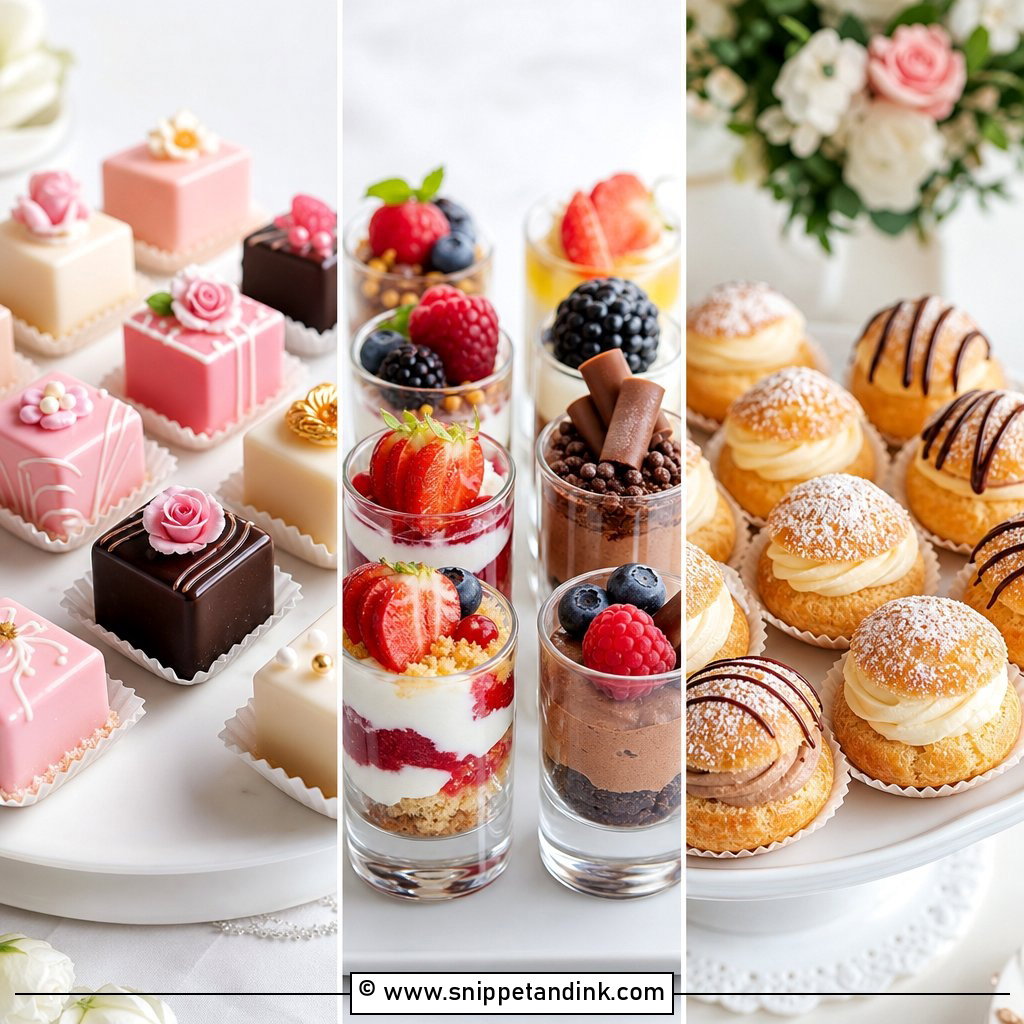
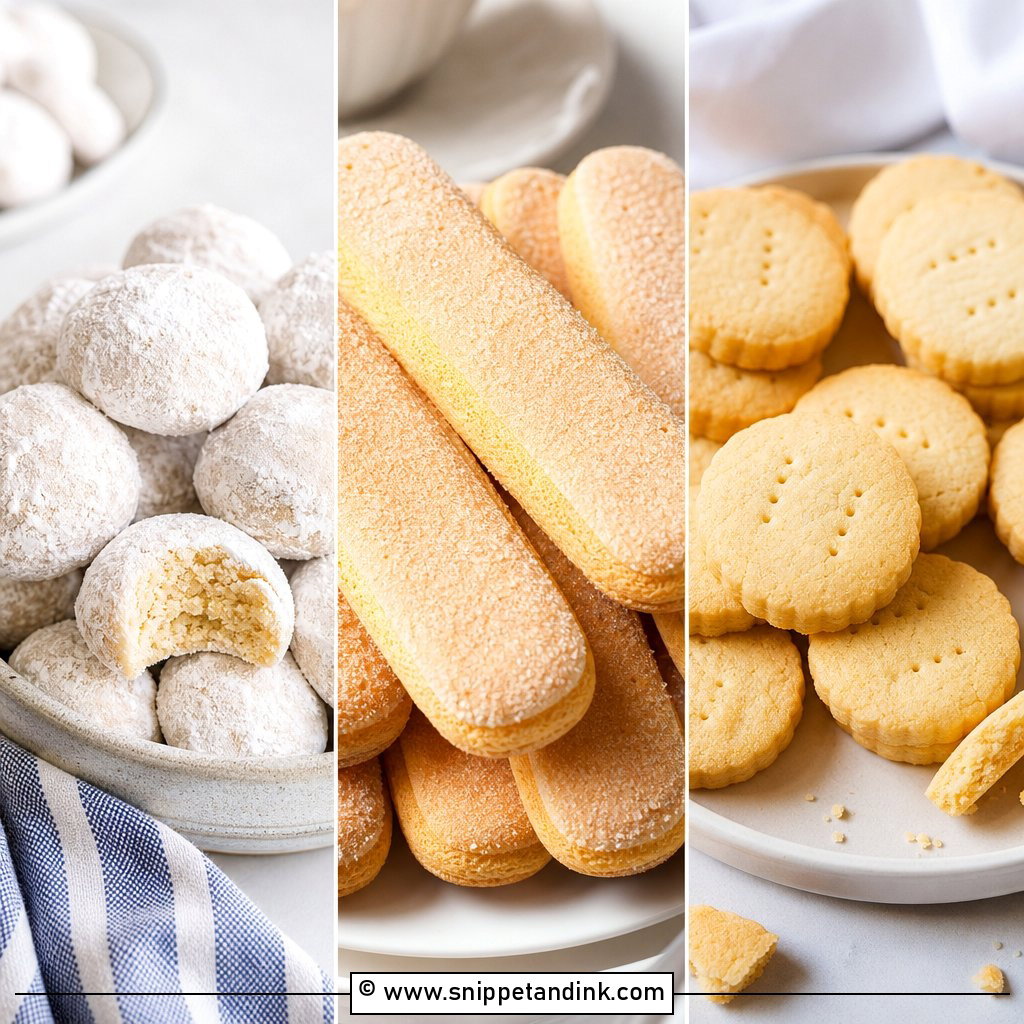
On a full table next to cupcakes, macarons, cookies, mini pies and a cutting cake, pops are the smallest item, so they need height. A cake pop stand or a block covered in fabric lifts them above the other sweets. Two or three coating colors repeated across the batch keep the table coherent. Vanilla, chocolate and red velvet are the flavors that disappear first.
Why Cake Pops Crack, Slide or Sweat
Most cake pop failures have the same few causes, and all are fixable once you know them.
- Cracked coating: the ball was frozen hard and expanded as it warmed inside the shell. Chill until firm, not frozen solid.
- Pops sliding down the stick: too much frosting in the mix makes them heavy and soft. Dip the stick tip in coating before inserting it, and let it set.
- Bumpy or thick coating: the coating is too cool or too thick. Thin it with a little coconut oil or a melting aid.
- Beads of moisture: pops moved straight from a fridge into a warm room. Let them come up to temperature in their closed box.
Getting a Batch to the Venue Intact
I transport pops standing upright in a foam block or a box with holes cut to size, never loose in a bag. Pack spare sticks, a small bowl of coating and the sprinkles so any chips can be patched on site. Ask the venue to set the display out of direct sun and away from heaters or uplighting, since candy coating softens well below the temperature where chocolate melts. Set it up close to when guests reach the dessert table, not first thing in the morning.
One Style, Two Flavors, a Neat Stand
Cake pops add variety to a dessert plan without any cutting or plating. Pick one clear look, repeat its colors and keep the display tidy; that’s what makes them look like part of the wedding rather than an add-on. Most guests reach for familiar flavors, so offer one of those and one more personal choice. Used as favors, table treats or a sweet beside the main cake, they rarely come home with you.
You'll Like These Ideas:


Leave a Reply