
I treat a dessert table as a piece of set design that happens to be edible. Guests see it from across the room long before they taste anything, so the first job is a single clear focal point, usually the cake, with everything else stepping down around it. The tables that fall flat are almost always crowded ones: too many props, too many colors, platters touching edge to edge. Below are twenty directions I’ve styled or would happily style, from formal and floral to rustic, coastal and monochrome, with the display choices that make each one hold together once the room fills up.
Sketching the Layout Before Any Dessert Arrives
I draw every dessert table on paper first, as if it were a small stage. It saves a frantic half hour of moving platters around on the day, and it tells you early whether your table is big enough.
- Measure the actual table. A standard rectangular banquet table fills up far faster than people expect once stands and flowers go on it.
- Place the tallest piece slightly back of center, then work down in three levels: tall, middle and table height. More levels than that starts to look like a shop window.
- Group platters in odd numbers and leave a hand’s width between them so guests can reach in without knocking a neighbor.
- Keep the front edge low and clear. People lean in to take things, and that is where sleeves catch.
- Order a cloth that reaches the floor. Boxes of backup desserts hide underneath, and the table looks finished from every angle.
Take a photo of a practice setup at home with the stands you plan to use. The camera shows gaps and clutter that the eye forgives.
1. Elegant Wedding Dessert Table
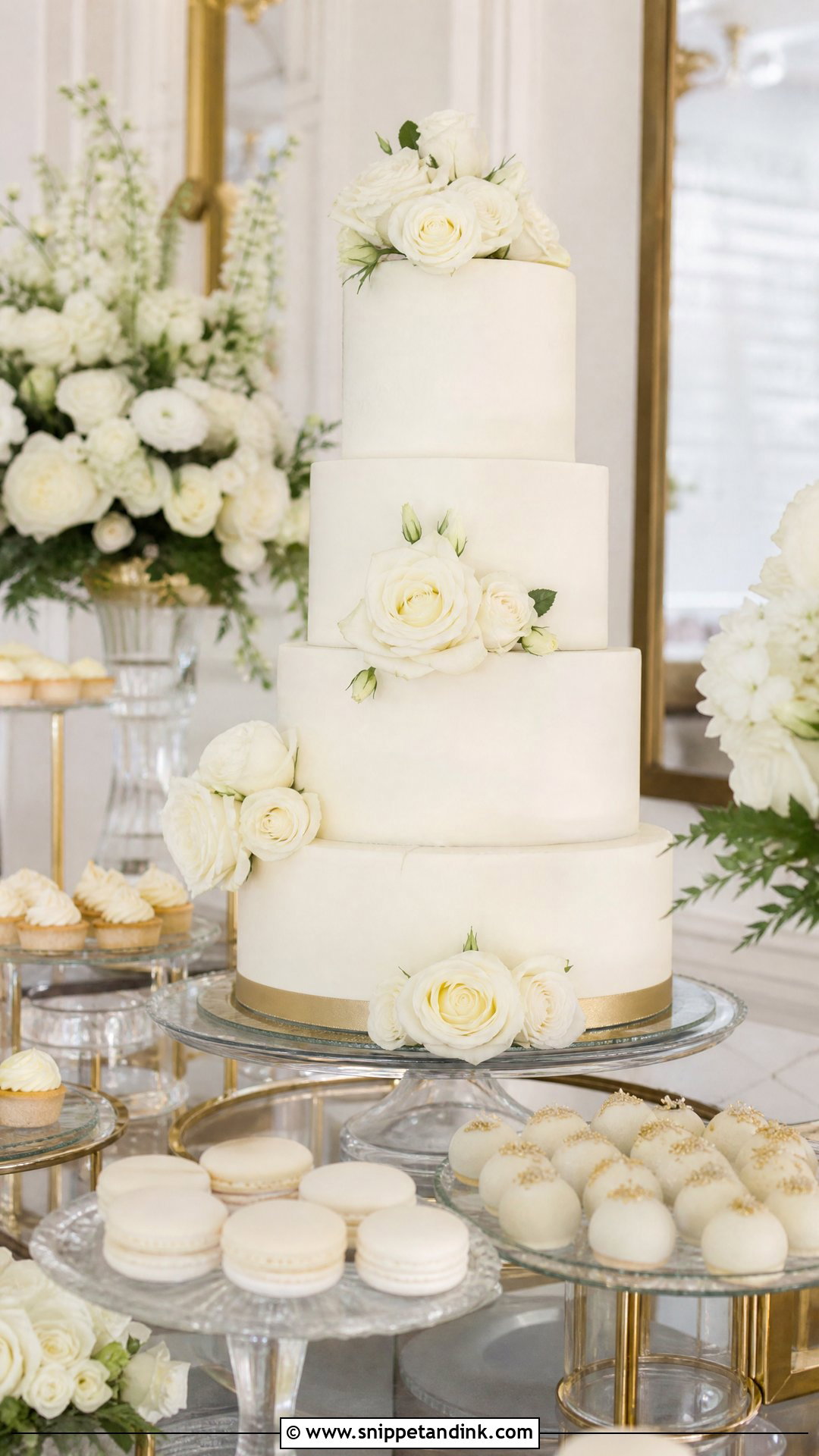
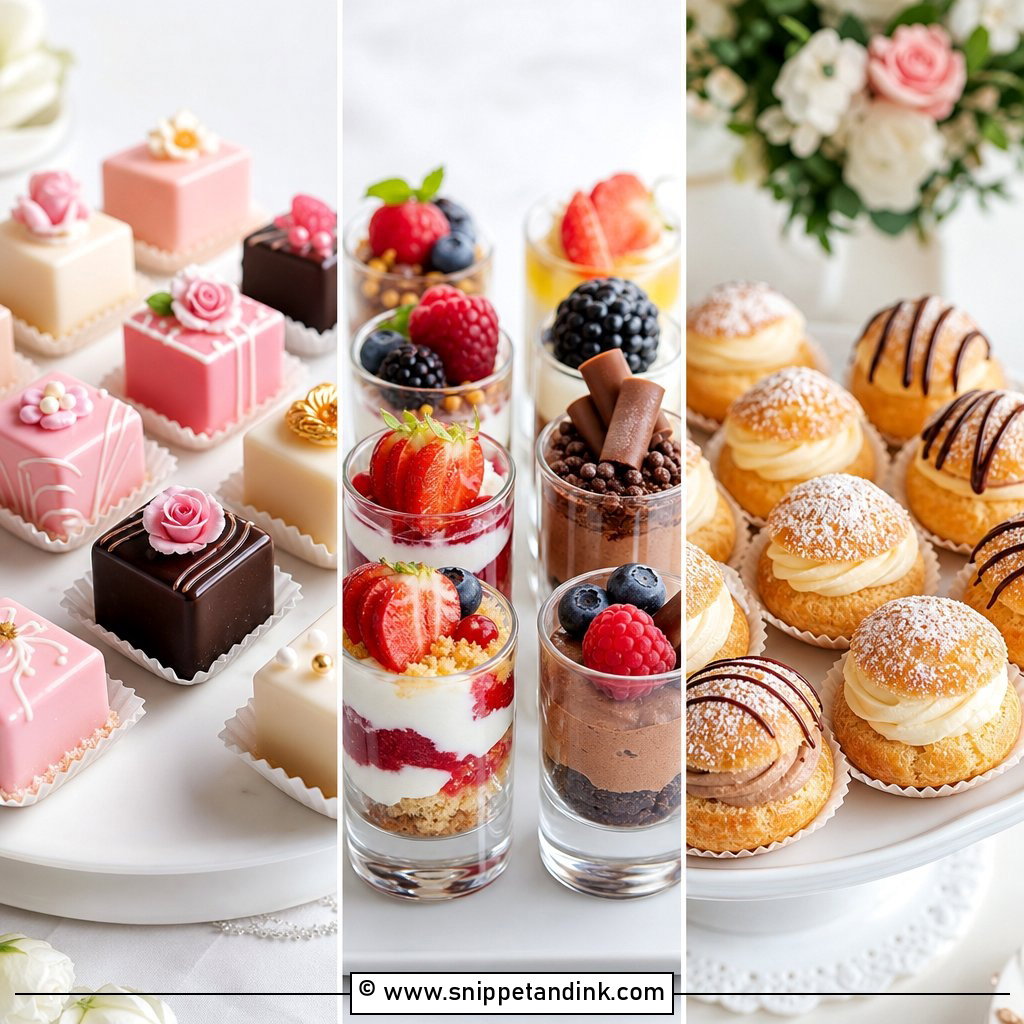
Calm is the goal here, and calm comes from restraint. I start with a smooth white or ivory cake in the center, then build outward with macarons, mini tarts, cake truffles and petit fours in two soft shades at most. Glass stands and white platters let the desserts carry the color, while gold accents stay small: a rim, a cake board edge, a few votives. Small floral clusters at the base give height without blocking the cake. Labels in one simple font matter more here than anywhere, especially if some items are allergy-friendly. Ballrooms, formal gardens and hotel receptions suit this one best.
2. Rustic Wedding Dessert Table
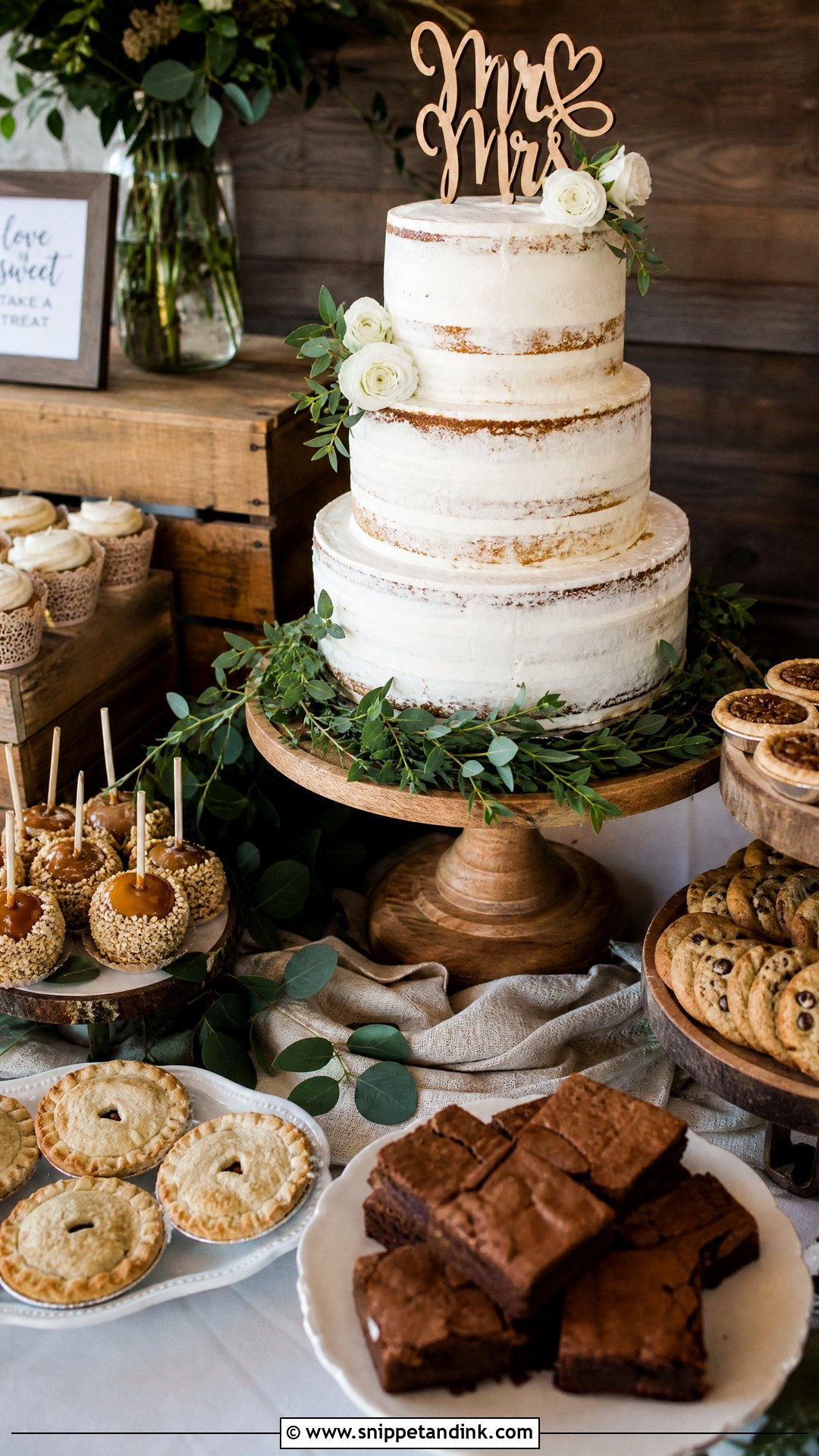
Rustic tables go wrong when they look like a bake sale, so the trick is grouping. I cluster mini pies, brownies, cookies and hand pies in odd-numbered groups on wood boards and ceramic plates, with a buttercream cake raised on a wooden stand behind them. Crates give real height, but only if they’re steady; I always check that a crate riser doesn’t wobble when a guest reaches across it. Linen runners, greenery and small jars of flowers fill the gaps. Caramel, cinnamon, berry and chocolate tones sit well in barns, outdoor venues and backyard receptions.
3. Boho Wedding Dessert Table
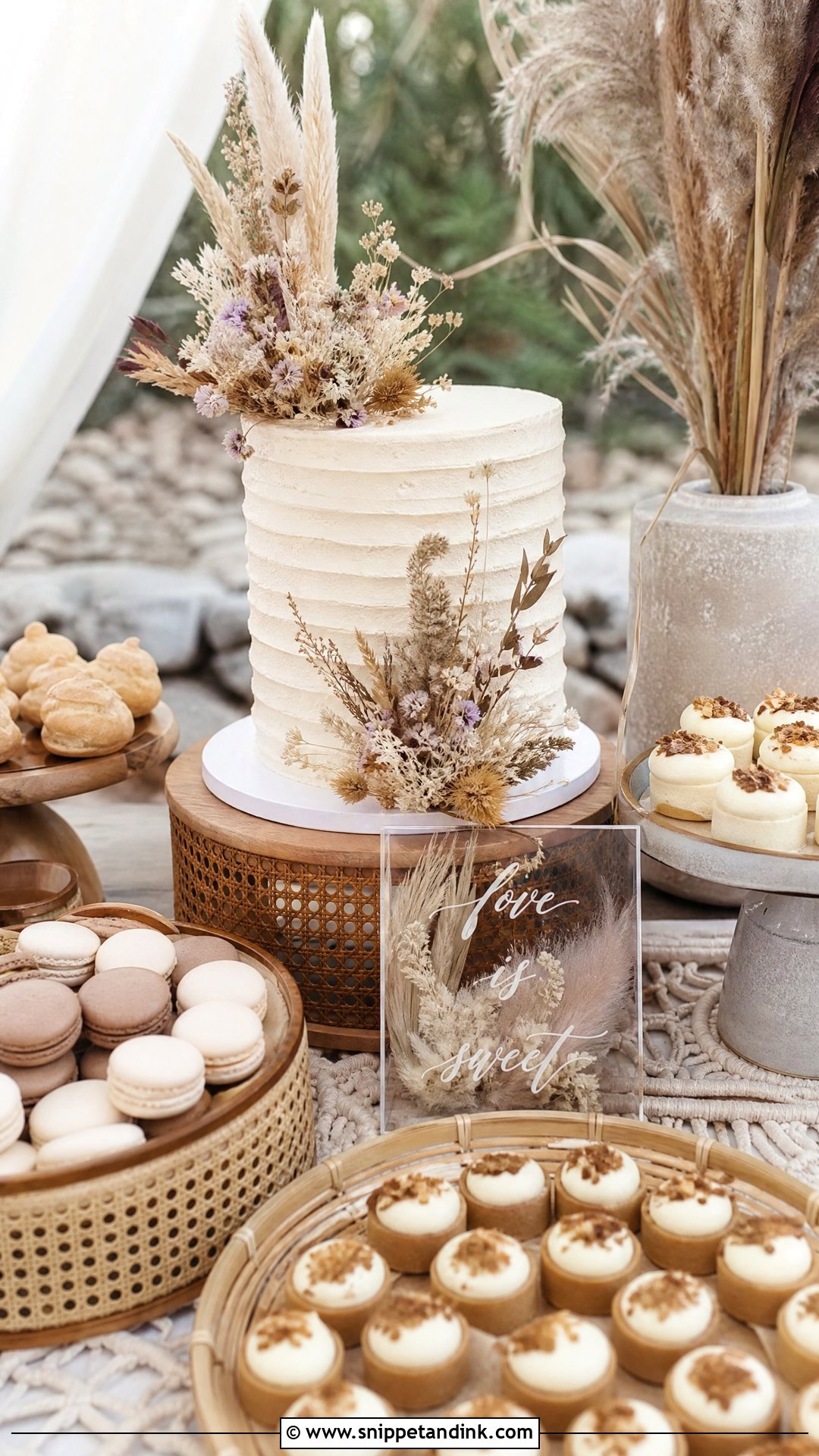
Boho styling lives at a lower height than most tables. A small semi-naked or textured buttercream cake anchors it, with mini cheesecakes, macarons, cream puffs and cookies in cream, blush, tan and muted peach around it. Rattan trays and ceramic stands carry the texture. Pampas grass and dried flowers shed, so I keep them behind or beside the food, never draped over it. This one suits tents and outdoor weddings, and because nothing is tall it reads well in photos taken from any side.
4. Modern Wedding Dessert Table
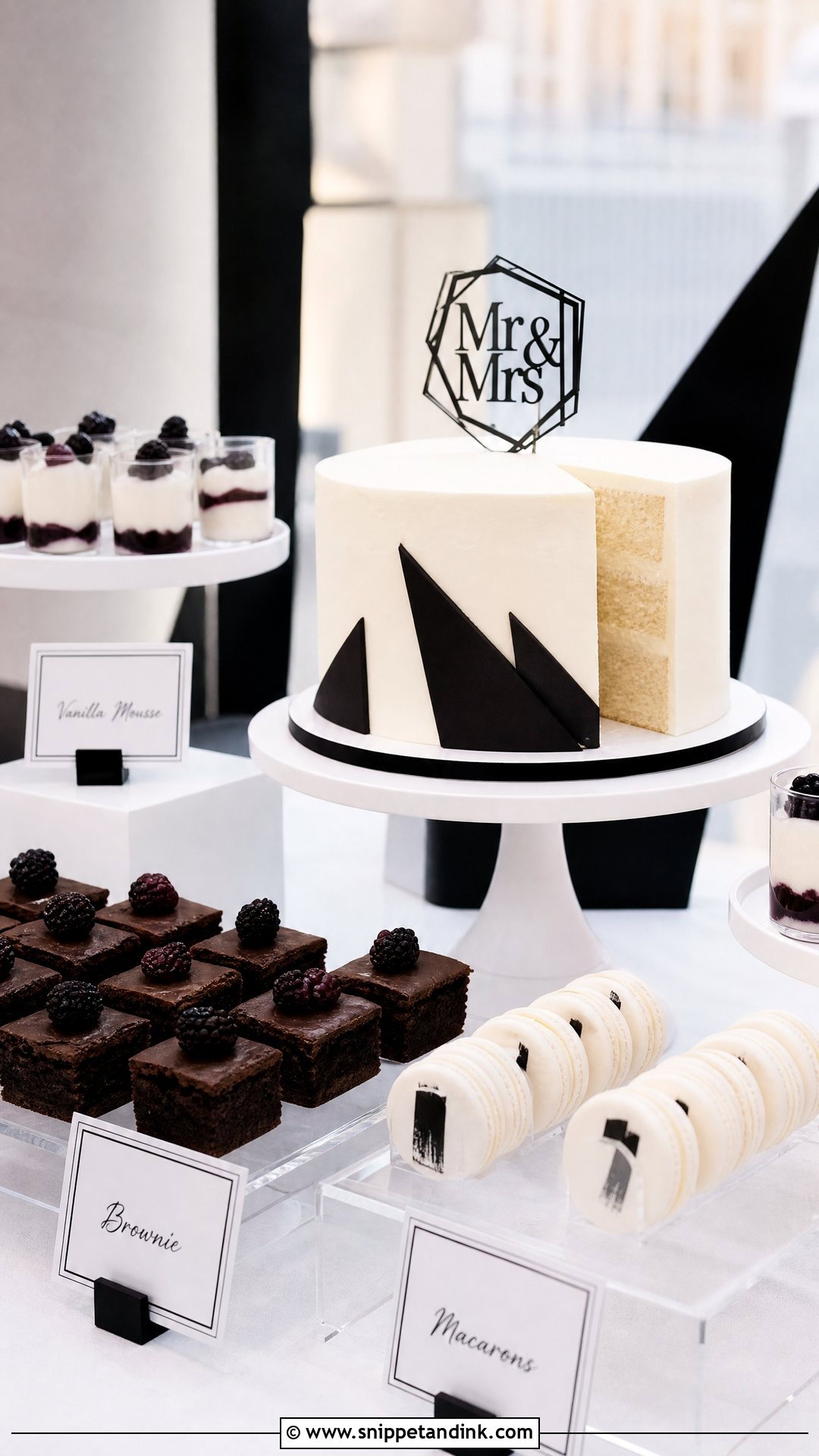
Modern tables depend on spacing more than on decoration. A sleek one or two-tier cake with smooth sides sits at the center, and the mini desserts, mousse cups, square brownies, macarons and tartlets, go in straight rows with equal gaps, like a gallery wall. Acrylic risers and white pedestals help, with black details or a soft metallic as accents. I hold the palette to white, beige, black and one accent shade; a fifth color is usually where it starts to look busy. City venues, lofts and minimalist receptions are the natural fit.
5. Small Wedding Dessert Table
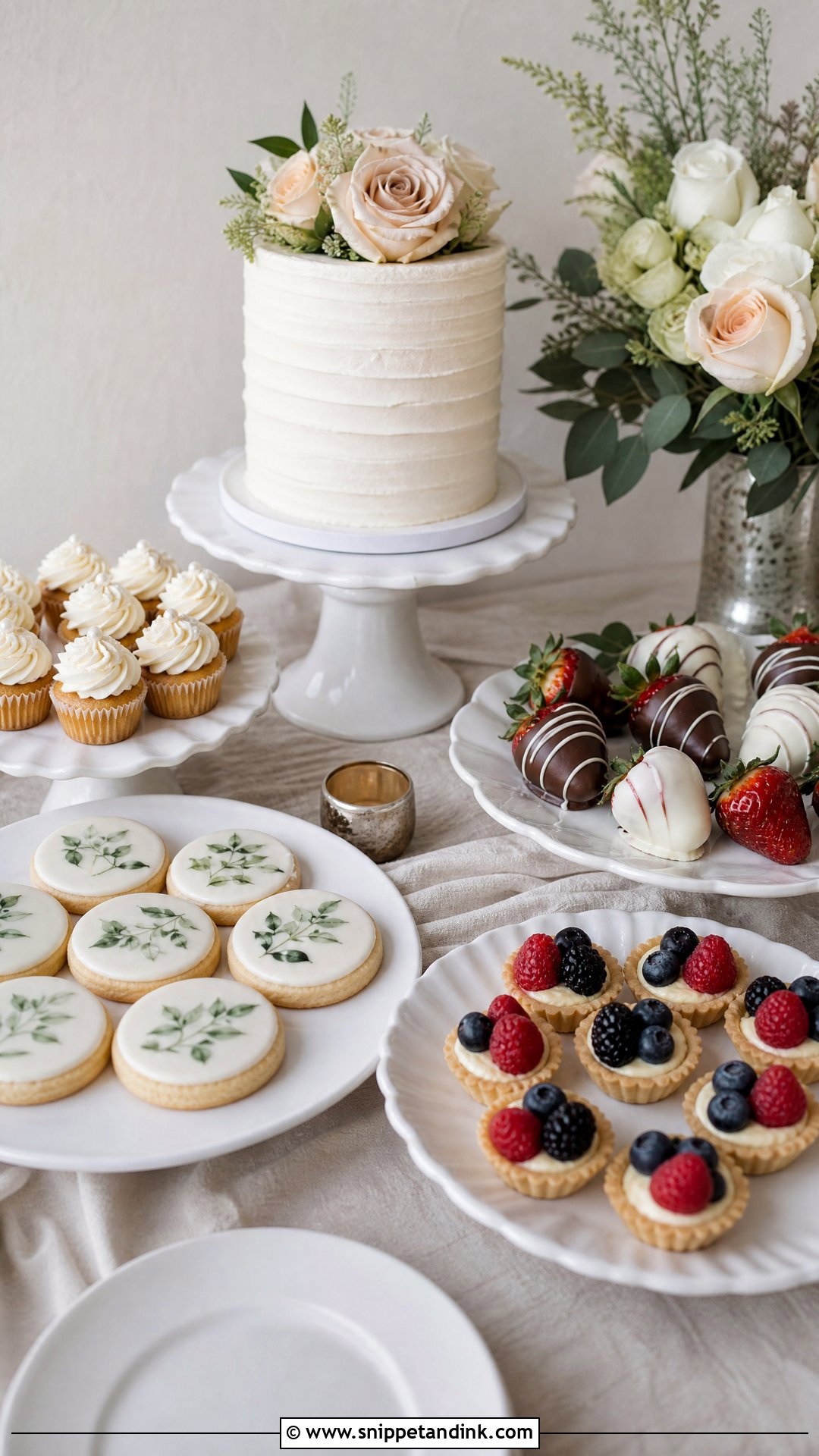
Small tables need one tall thing and very little else. I put a pretty cutting cake on the tallest stand, then add three or four small treats that guests can pick up without a plate, such as mini cupcakes, cookies, chocolate-dipped strawberries and tartlets, on trays below it. One flower arrangement, a fabric runner and simple labels finish it. Micro weddings and intimate dinners don’t need more than that, and you avoid paying for food nobody has room to eat.
6. Simple Wedding Dessert Table
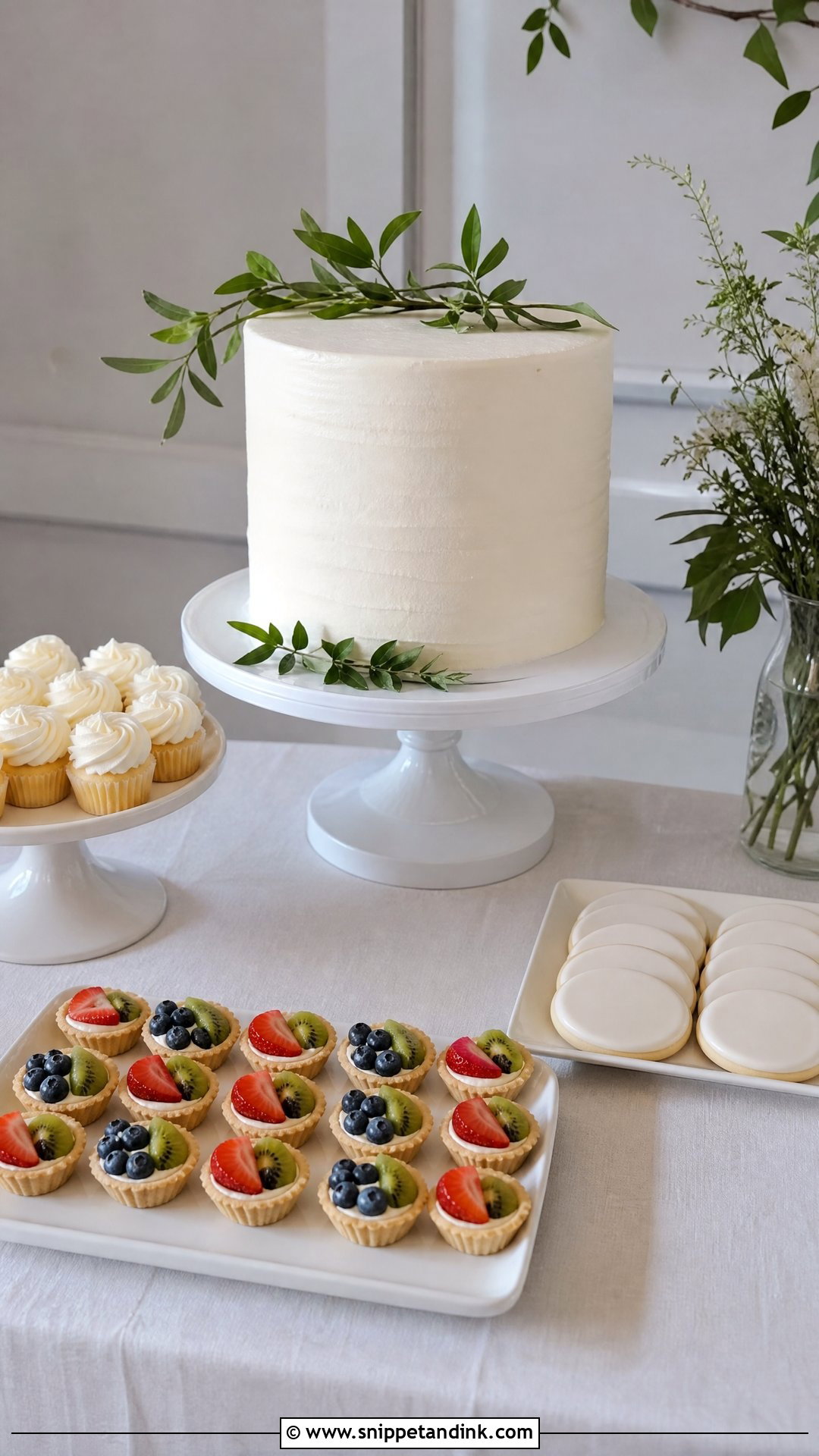
You don’t need ten dessert types. A white buttercream cake, mini cupcakes, sugar cookies and fruit tarts look complete when the platters match and the tablecloth is pressed, which is the detail people forget. A creased cloth shows up in every photo. Add one small floral arrangement, keep the colors close to your palette and resist extra props. For a smaller budget or a venue with limited dessert space, this is the version I’d recommend first.
7. Luxury Wedding Dessert Table
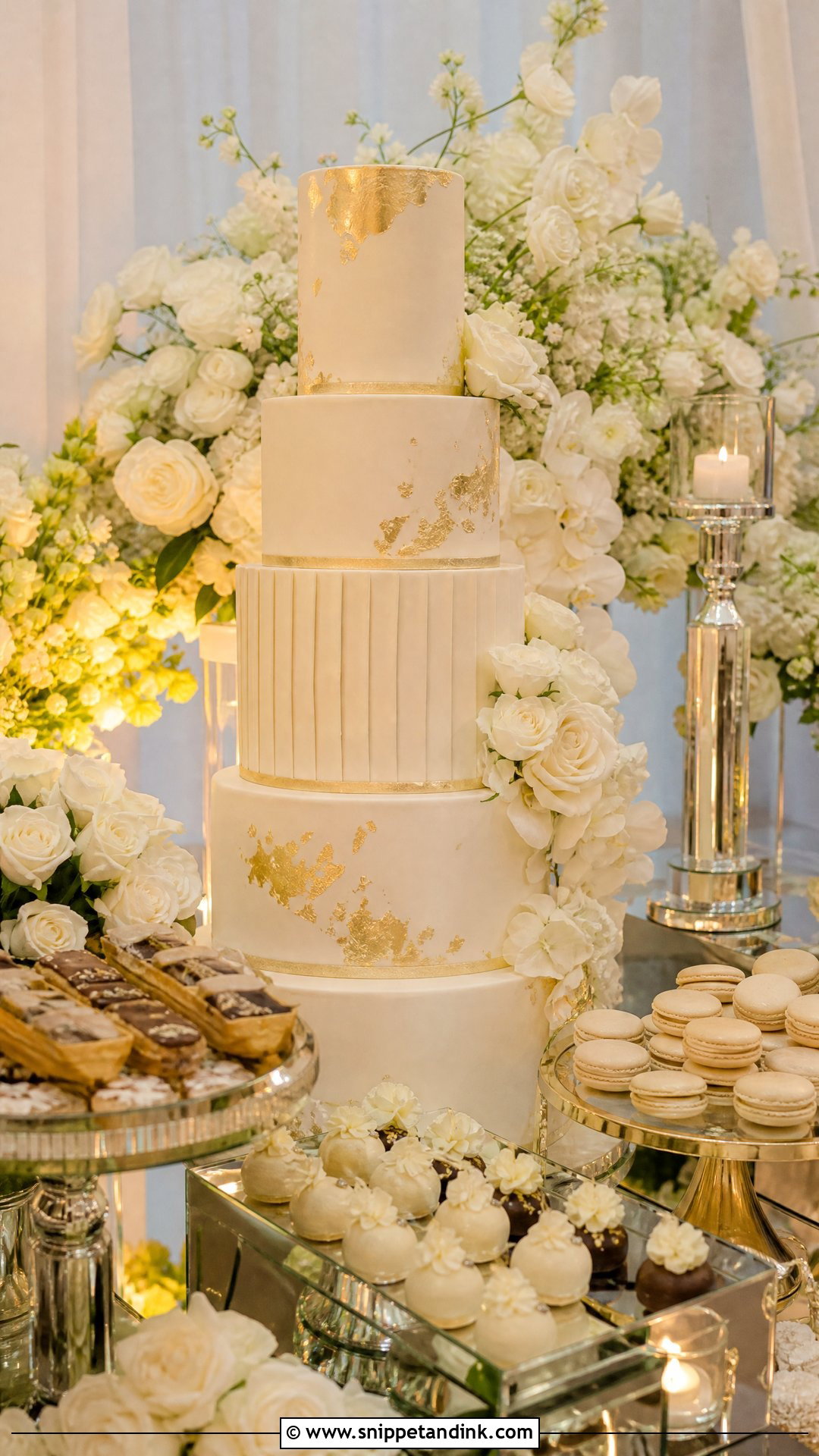
Abundance without chaos is the whole challenge of a luxury table. A tiered wedding cake takes the center, surrounded by macarons, eclairs, mini mousse cakes, truffles and gold-accented cookies. Raised stands, mirrored trays and soft lighting make the surface glow, though mirrors also reflect every fingerprint and crumb, so someone needs to wipe them during the evening. I keep flavors refined: vanilla bean, dark chocolate, raspberry, pistachio, lemon and almond. Matching finishes across the desserts and a little breathing room around each platter are what make it read as expensive rather than overloaded.
8. Vintage Wedding Dessert Table
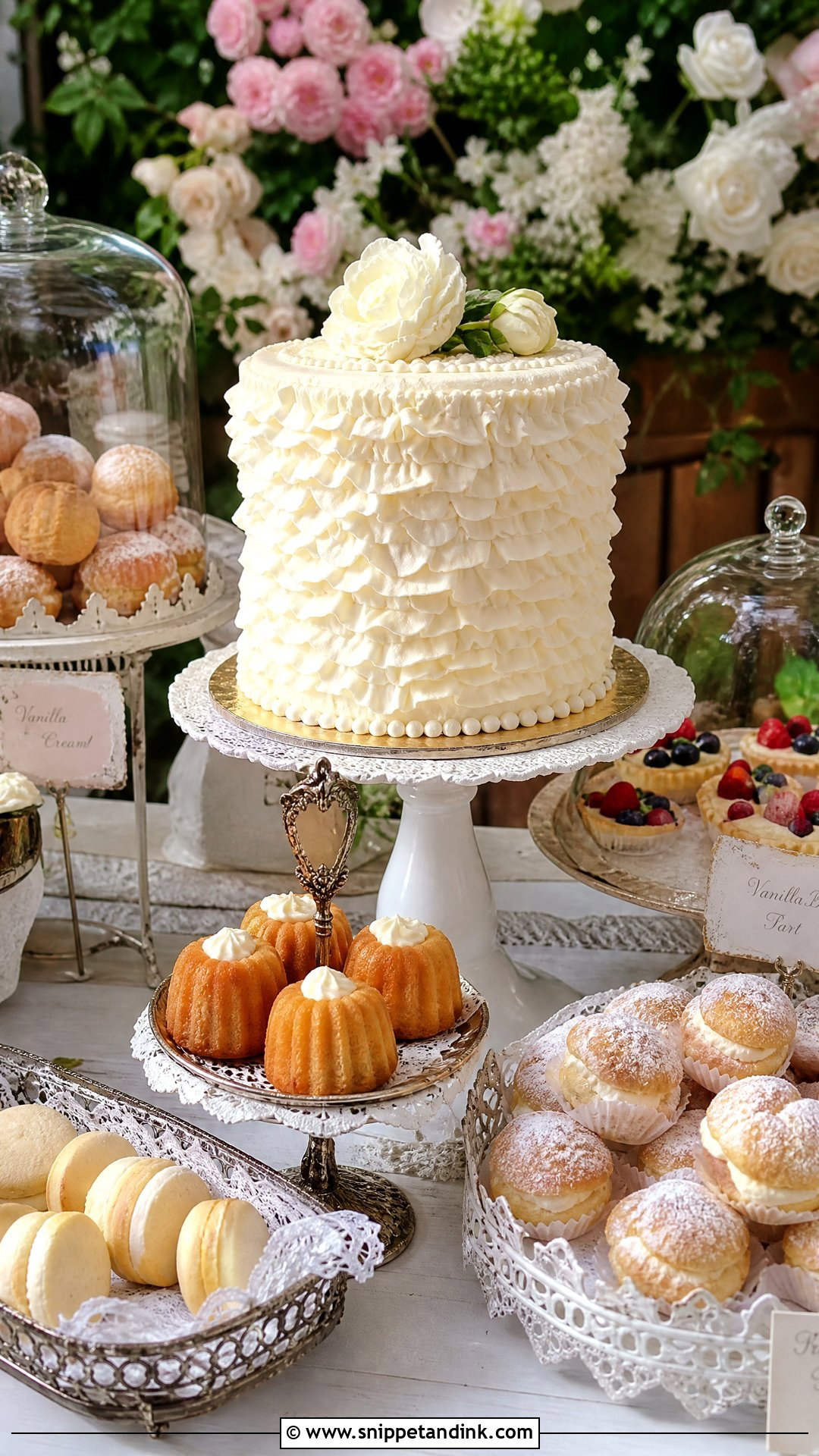
Vintage works when the pieces look collected over years rather than bought as a set. I mix footed cake stands, antique-style plates and glass cloches of slightly different heights, then fill them with mini bundt cakes, cream puffs, sandwich cookies and fruit tartlets on lace-lined trays. A classic white cake on the tallest footed stand anchors it. Ivory, dusty pink, pale blue and butter yellow belong here, along with pearl details and soft flowers. Cloches fog up if the desserts are cold and the room is warm, so lift them off once service starts. Historic venues and tea-party receptions suit it best.
9. Garden Wedding Dessert Table
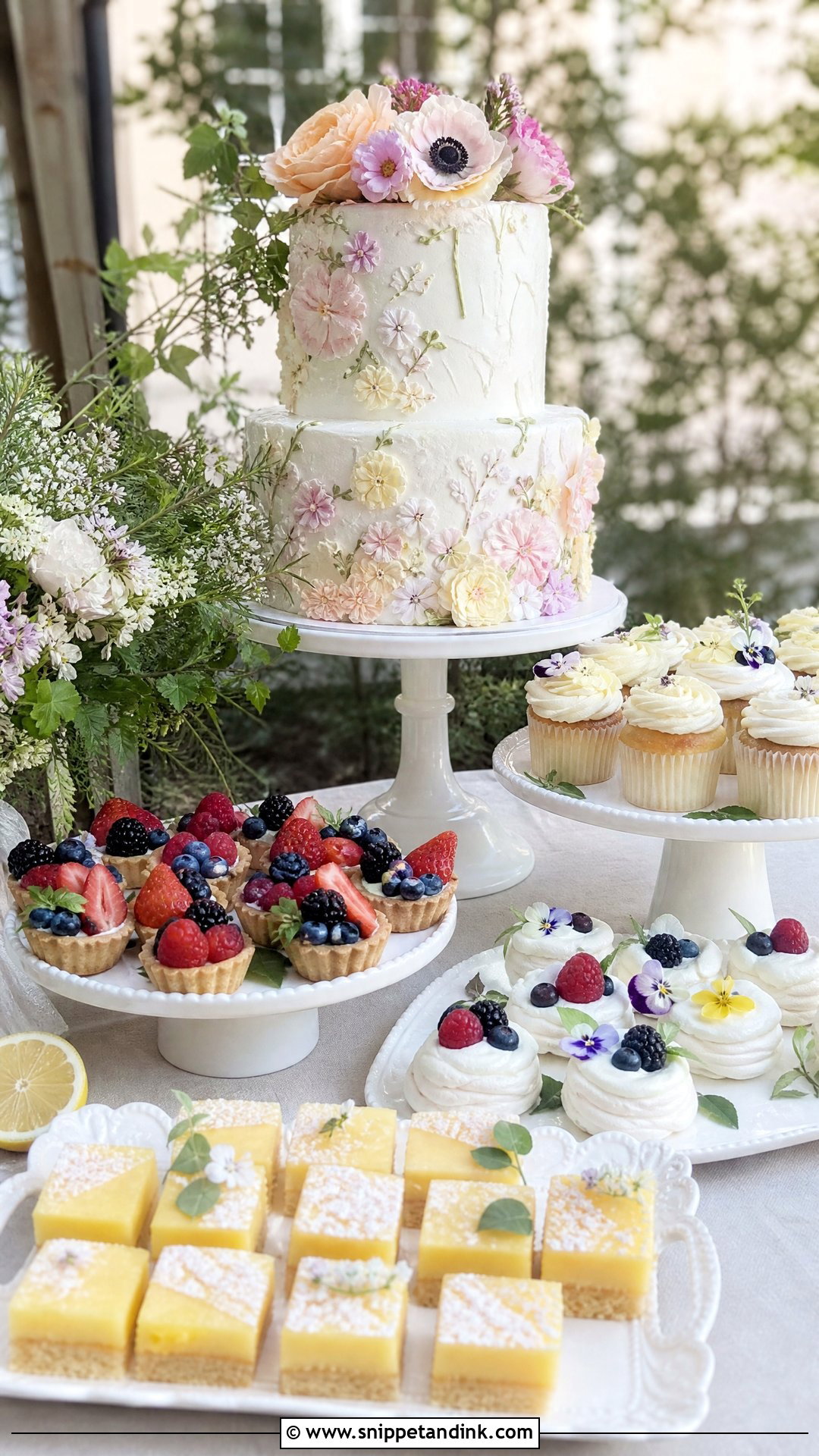
Fresh flowers and fruit let a garden table blend into its surroundings. A floral buttercream cake leads, with lemon bars, berry tartlets, mini pavlovas and softly piped vanilla cupcakes around it, on white stands and woven trays with greenery and seasonal blooms. Outdoors, shade is not optional. Pavlovas soak up humidity and buttercream softens in direct sun, so I put the table under a tree, a tent edge or a market umbrella, and choose items that hold up for the length of service. Spring and summer weddings get the most from this one.
10. Beach Wedding Dessert Table
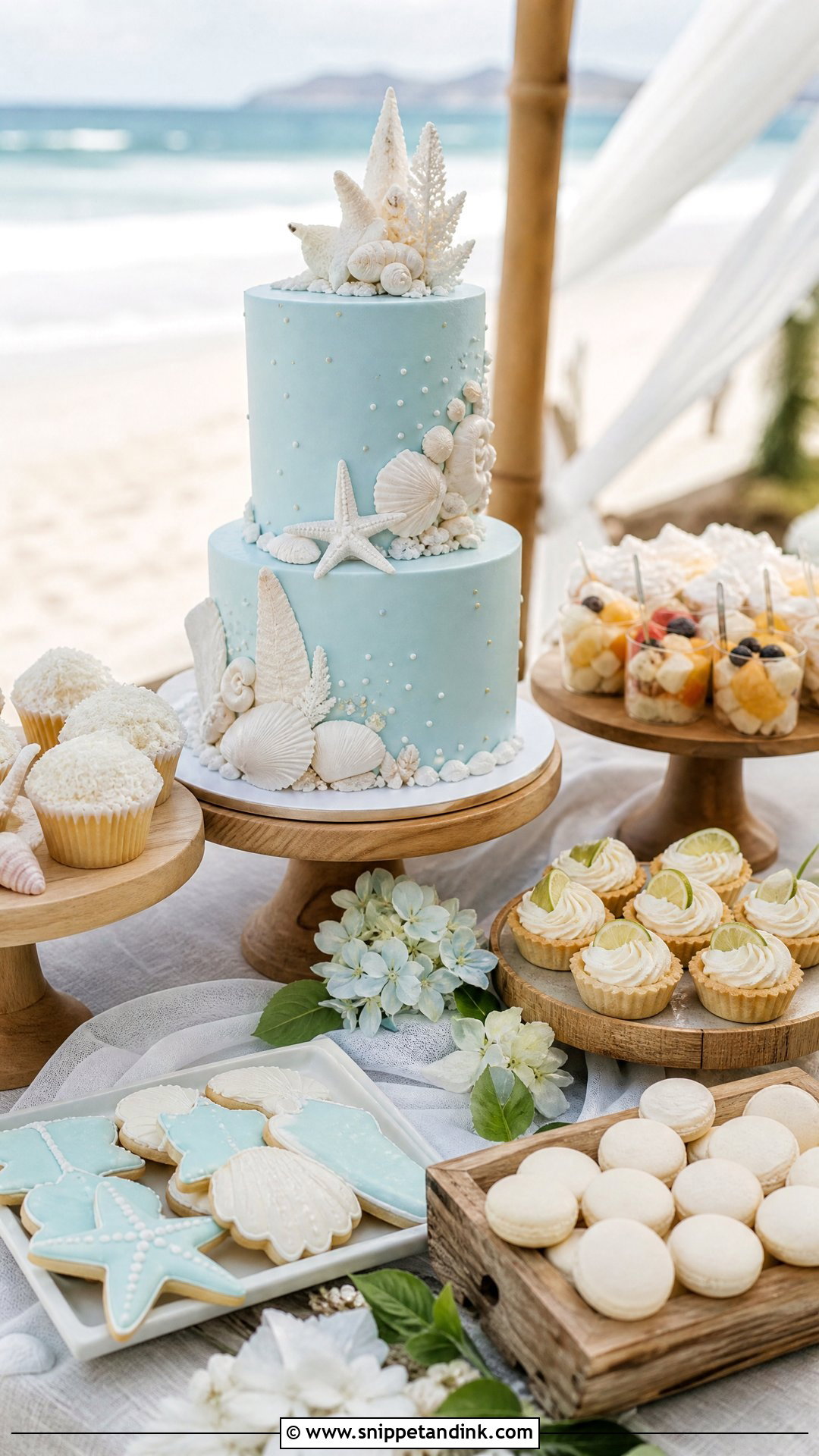
A beach wedding dessert table fights wind, sand and heat all at once, so I style it lighter than it looks. A smooth white or pale blue cake with coastal details sits on a heavy, wide stand that won’t tip in a gust. Coconut cupcakes, key lime tartlets, vanilla cookies and fruit cups are better choices than anything that melts. White platters, light wood, linen runners and a few shells or sea glass pieces are enough theming; I’d stop there. Ivory, sand, aqua and pale yellow keep it bright. Weigh down tablecloth corners with clips, or the cloth will lift into the desserts.
11. Black And White Wedding Dessert Table
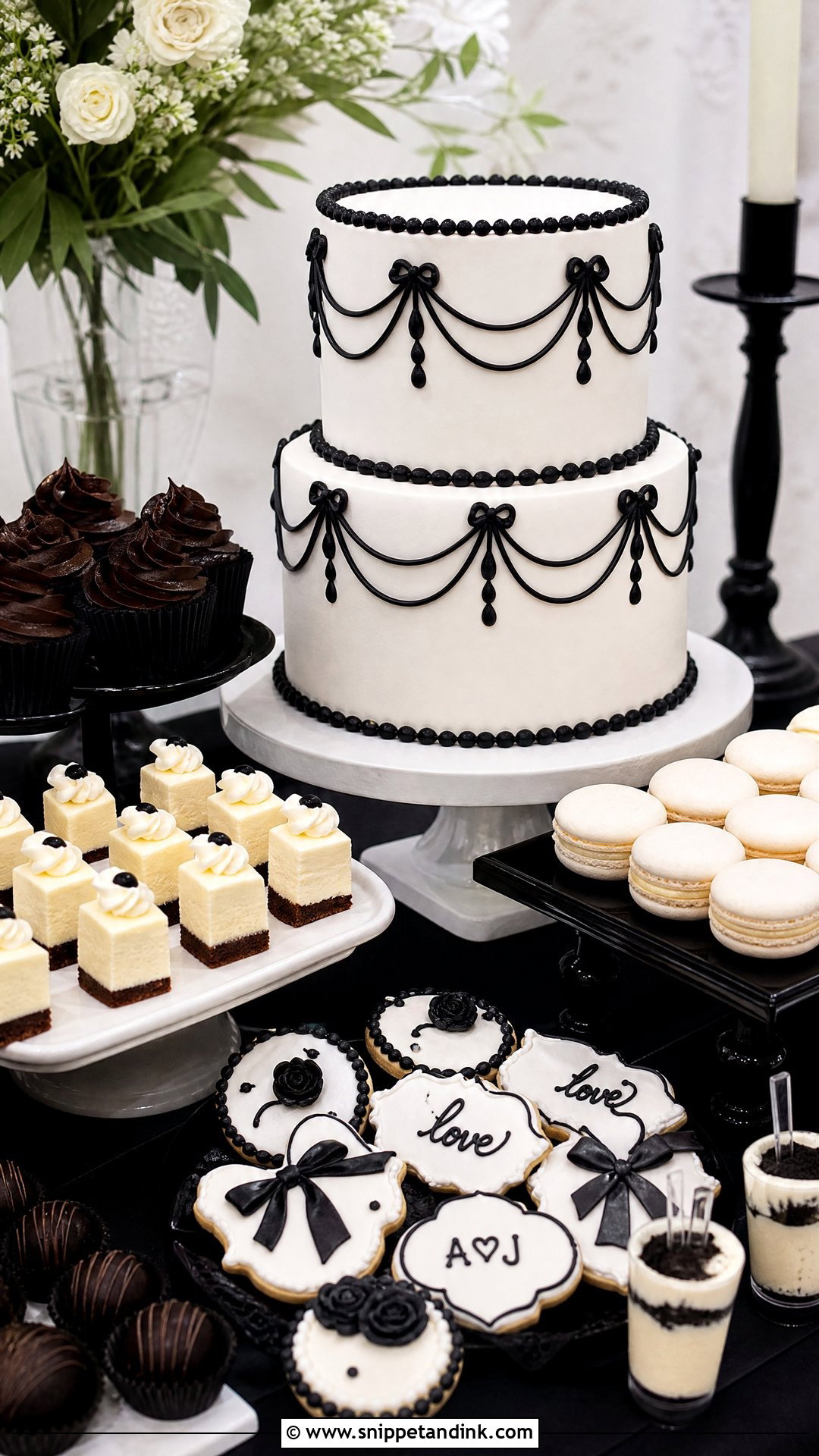
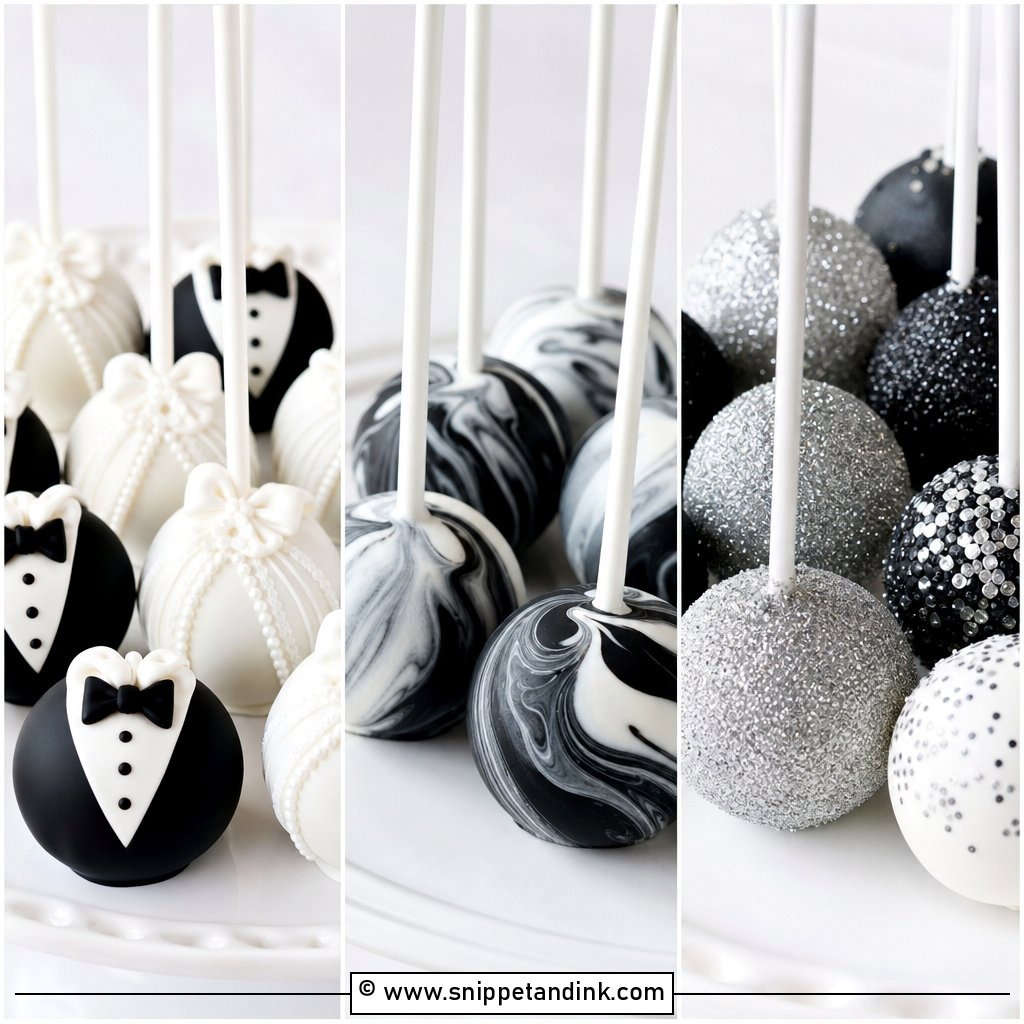
Two colors only, repeated everywhere. That’s the rule that keeps a black and white table looking sharp rather than random. A white cake with black ribbon detailing, black piping or a monochrome finish leads, with chocolate cupcakes, vanilla macarons, black-and-white cookies, mini cheesecakes and dark truffles around it. Black trays, white cake stands and a few clear glass pieces give contrast. Black surfaces show every speck of powdered sugar, so I avoid dusted desserts on black platters. Evening weddings and modern venues carry this best.
12. Pink Wedding Dessert Table
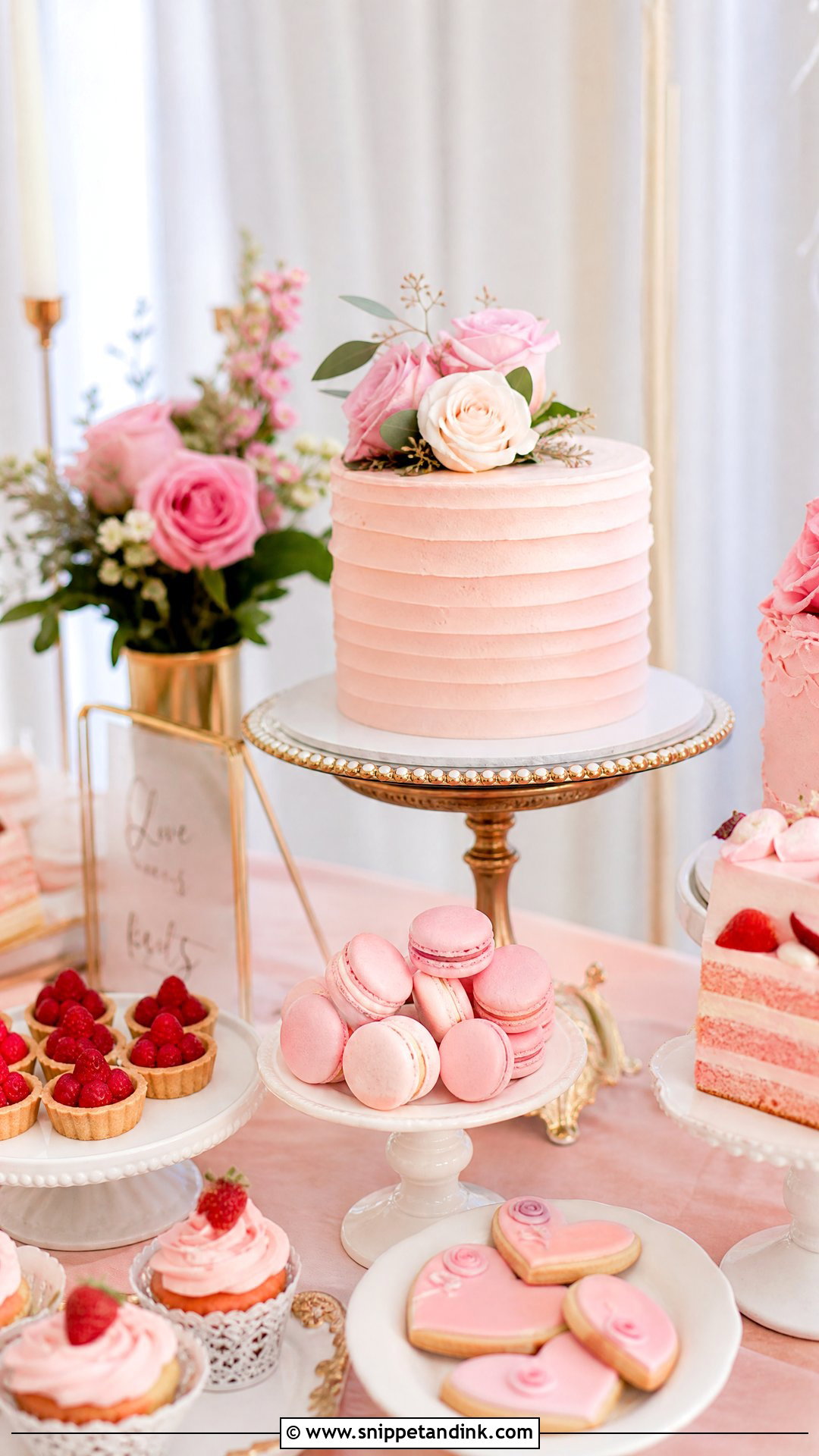
Pink tables can tip into childish fast, and depth is what prevents it. I mix blush, rose and soft berry rather than one flat pink, starting with a blush buttercream cake and adding strawberry cupcakes, pink macarons, raspberry tartlets and heart-shaped cookies. White platters and small gold accents keep it grown-up. Pull the flowers from the bouquet palette, roses, peonies or ranunculus, so the table connects to the rest of the room. Spring dates and romantic indoor venues suit it.
13. Blue Wedding Dessert Table
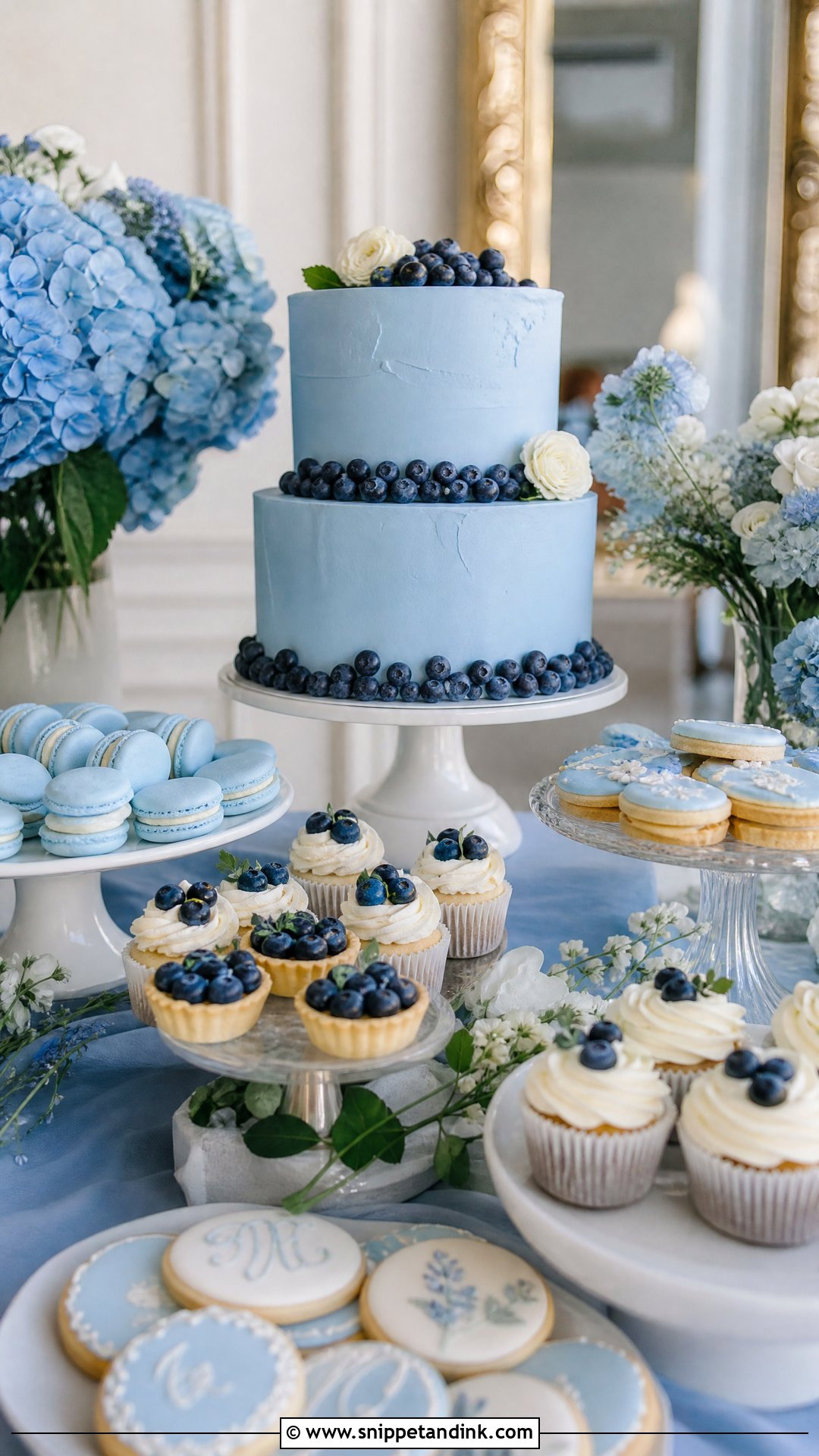
Blue is hard to find in nature and hard to get right in frosting, so I use it sparingly. A pale blue buttercream cake or a white cake with blue floral accents leads, with blueberry tartlets, vanilla cupcakes, blue macarons, sugar cookies and mini cheesecakes with fruit topping around it. Let the blue come mostly from the decor and the fruit; when every dessert is bright blue, the table looks artificial. White ceramic stands, clear glass plates and small blue flowers keep it consistent. Coastal and garden weddings with blue palettes are where it sits most naturally.
14. Donut Wedding Dessert Table
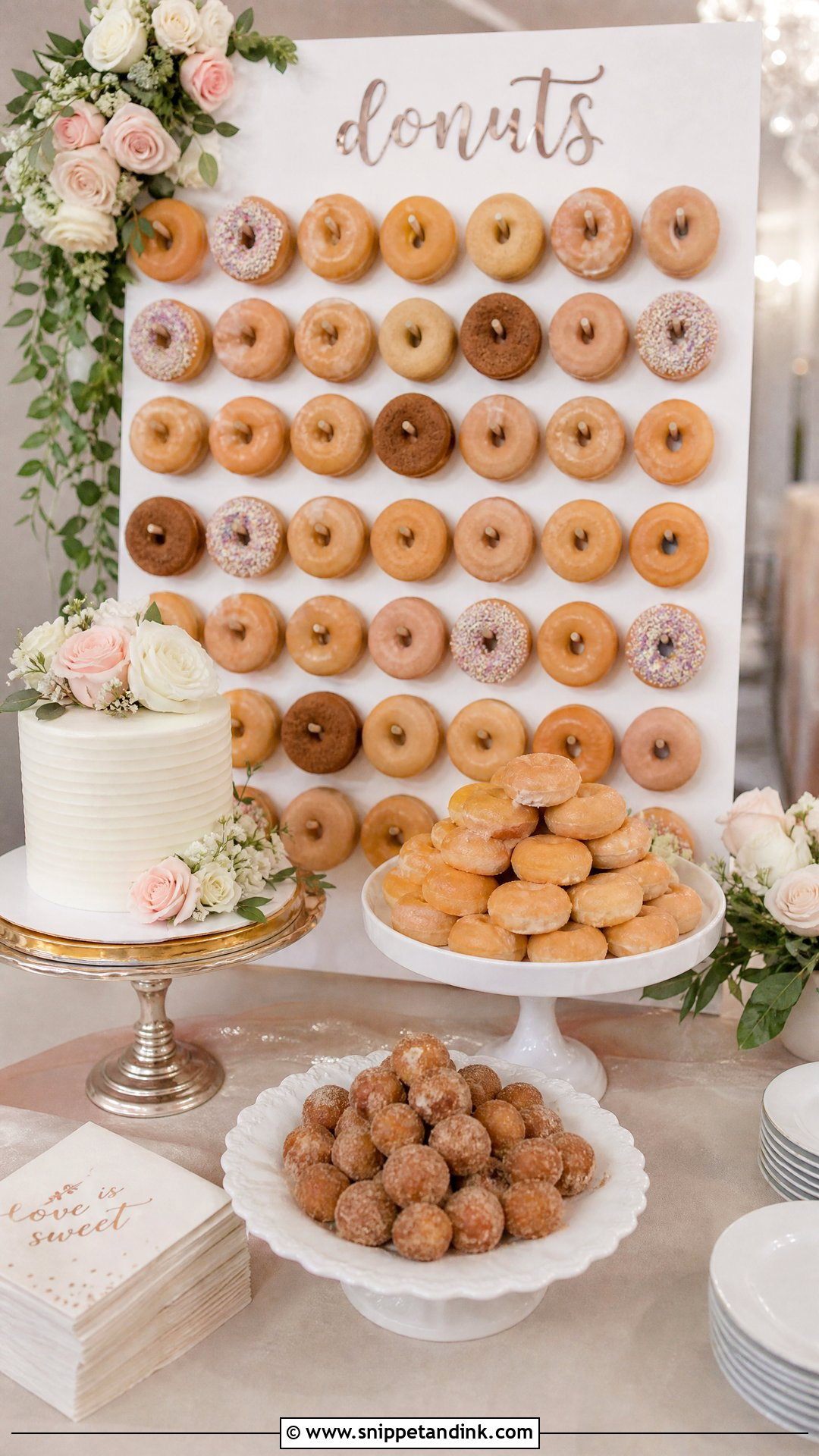
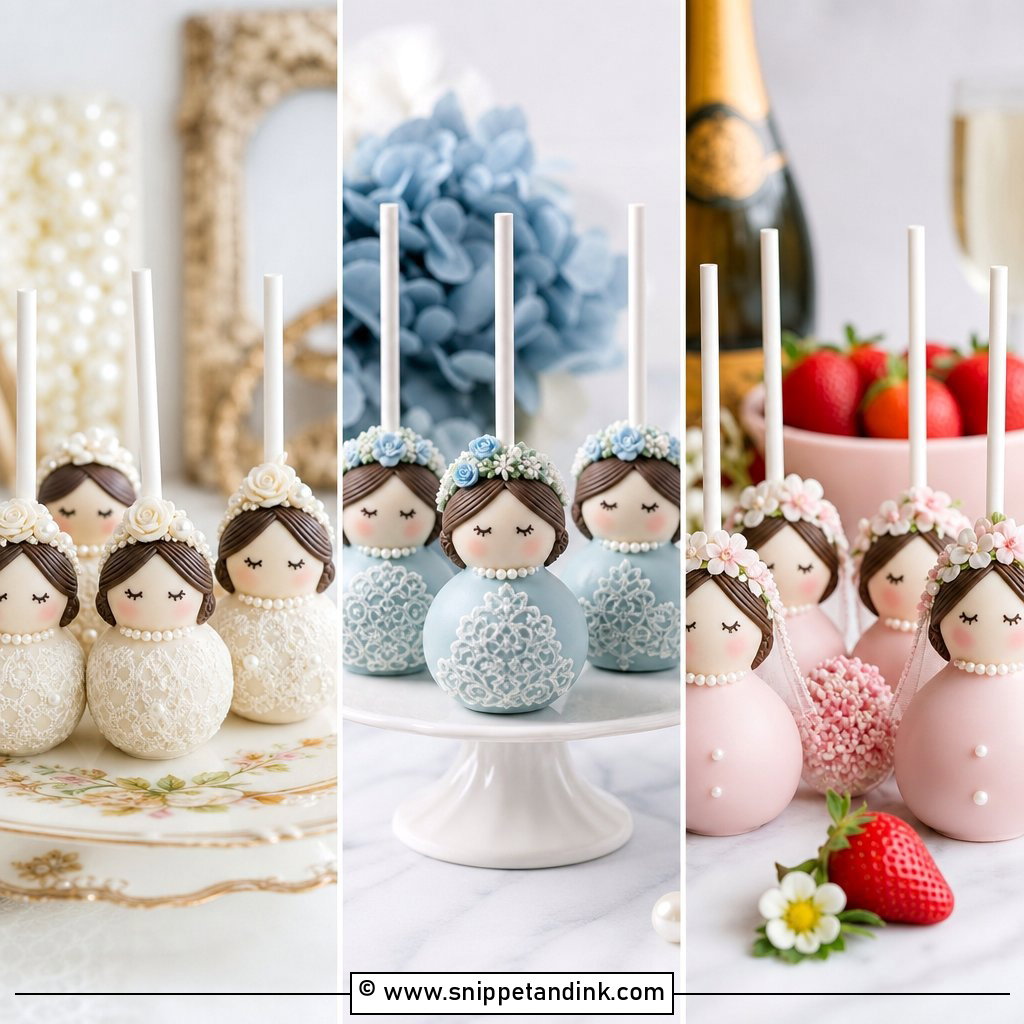
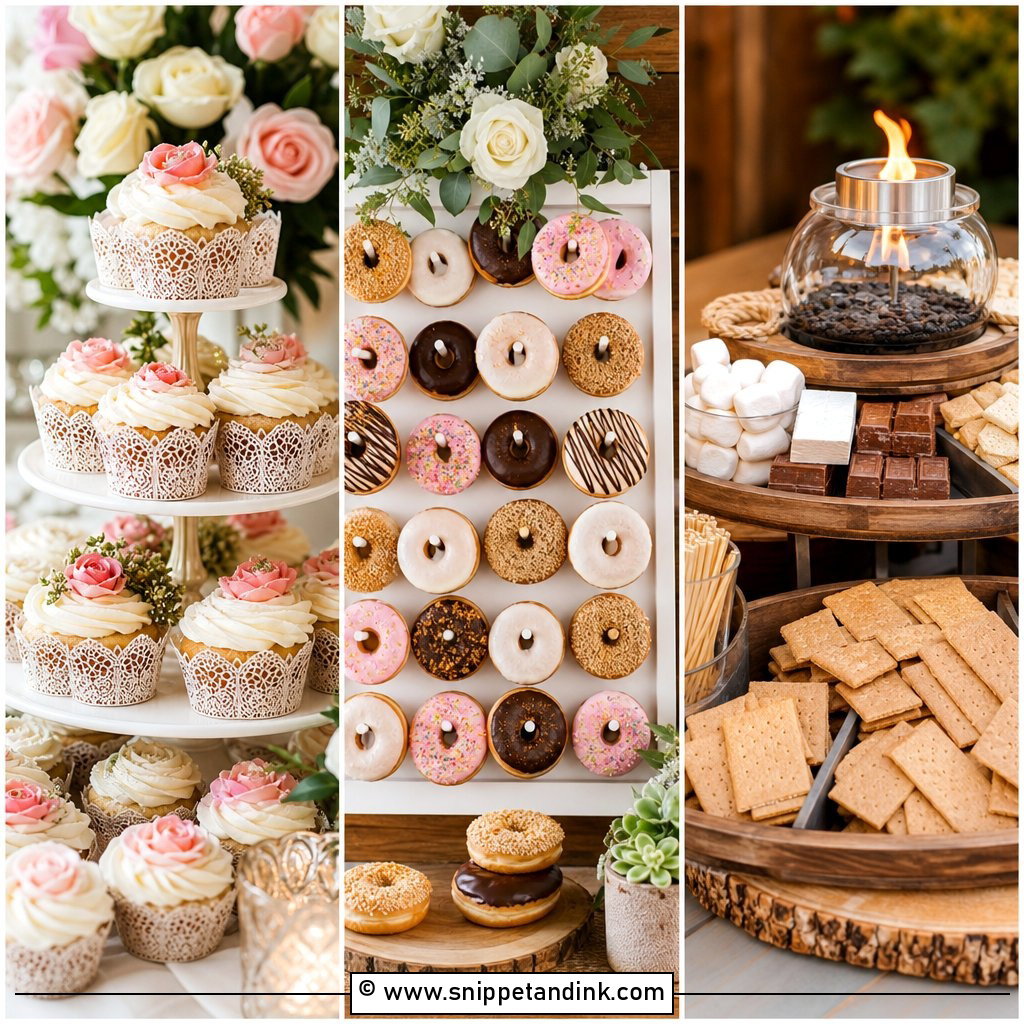
A donut wedding dessert table works because everyone knows what to do with a donut. I keep a small wedding cake at the center, then show glazed donuts, minis, filled donuts and donut holes on stands, trays or a donut wall behind the table. Vanilla glaze, chocolate, cinnamon sugar, lemon and strawberry can follow the season. Flowers, labels and matching napkins stop it looking like a breakfast buffet. Guests grab them on the way back from the dance floor, so leave a clear path to the front edge.
15. Cupcake Wedding Dessert Table
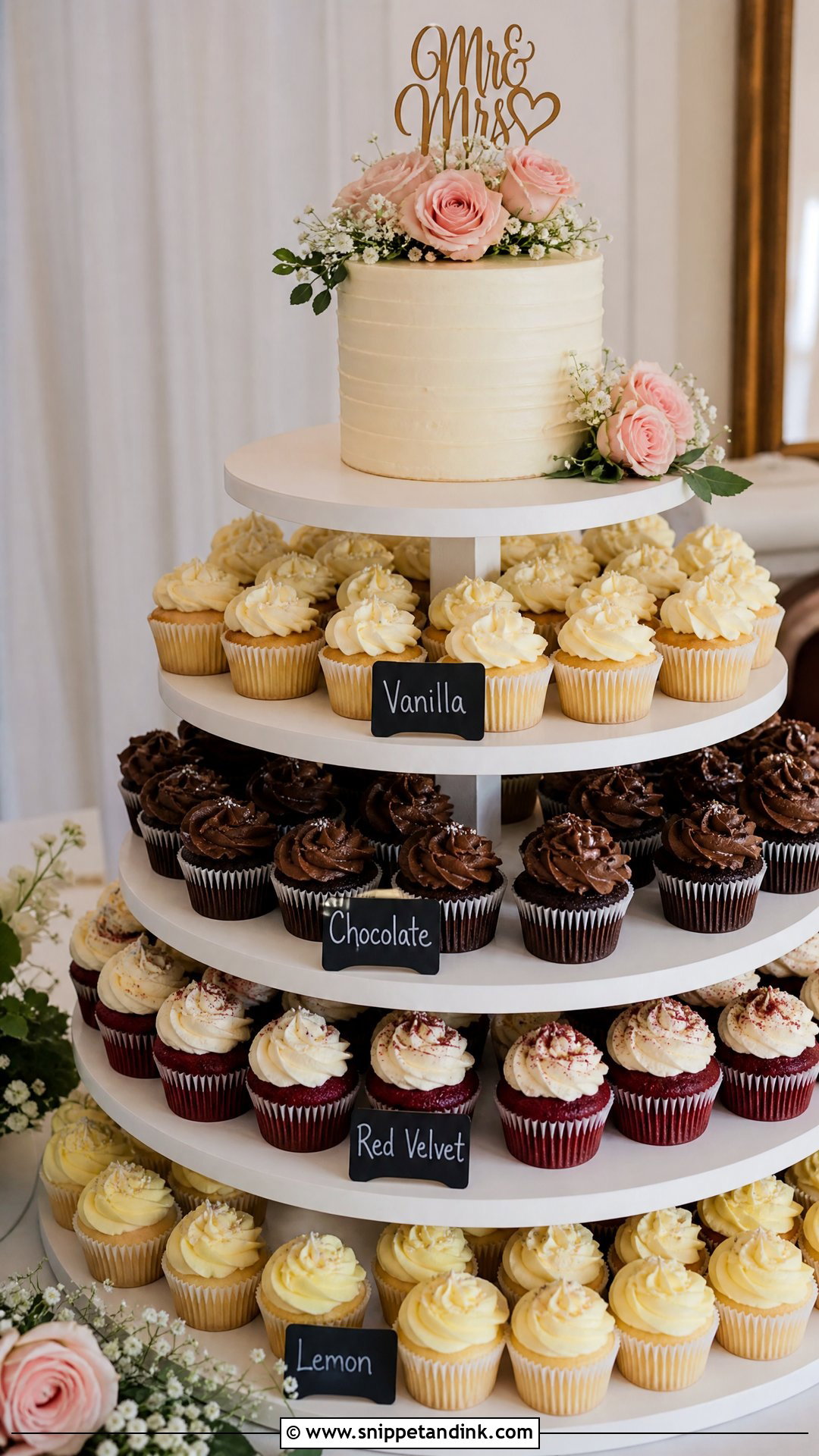
Tiered stands are the reason a cupcake table can feed a large guest list from a modest footprint. The cutting cake goes on the top tier or a center stand, with two or three cupcake flavors spiraling down around it; vanilla, chocolate, lemon, red velvet and almond rarely leave anyone out. Matching liners and frosting colors make dozens of cupcakes read as one display. I’d put a small sign for each flavor and keep backup cupcakes in the kitchen rather than crowding every tier at once. Casual and family-style receptions suit it well.
16. Cookie Wedding Dessert Table
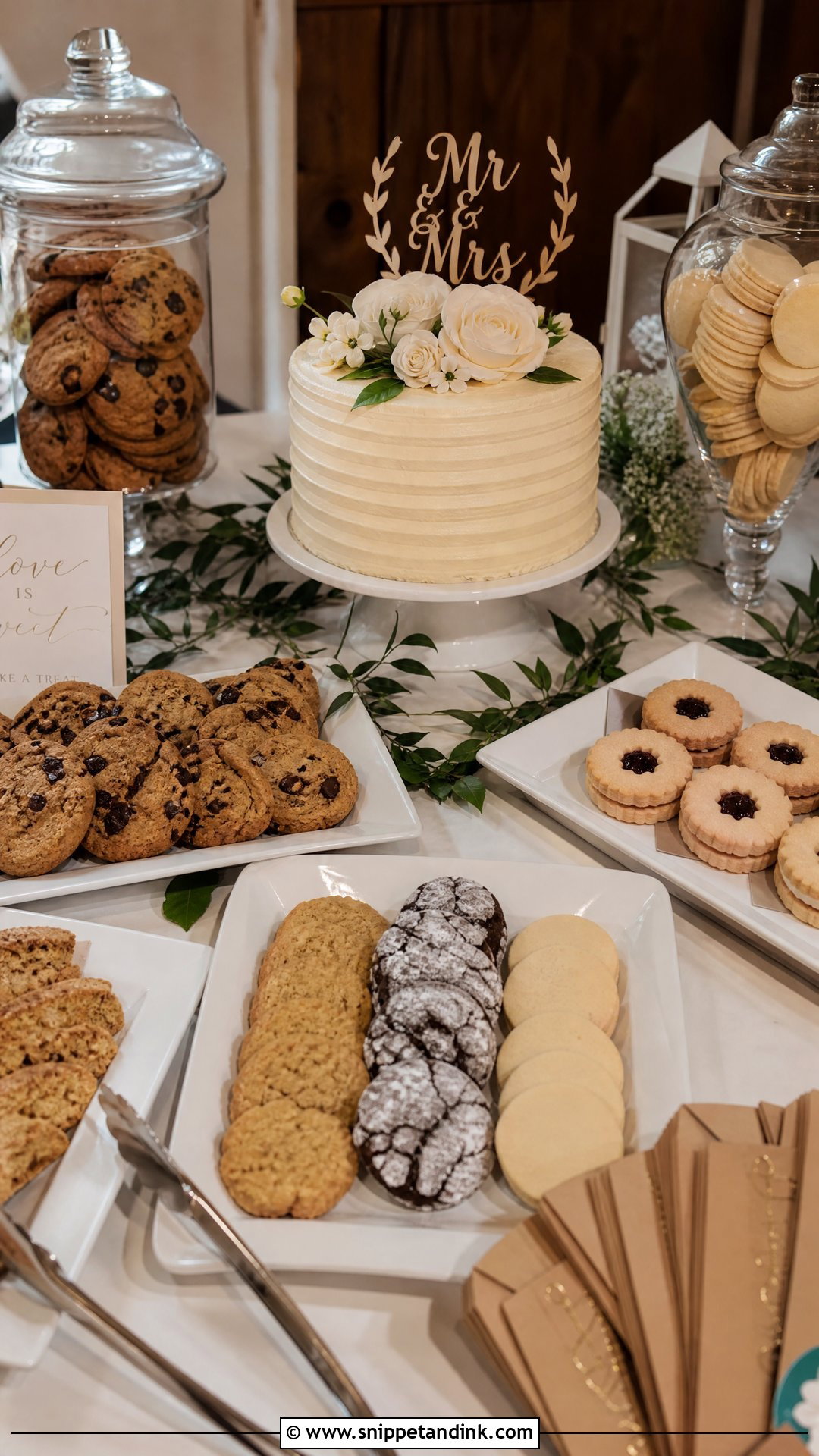
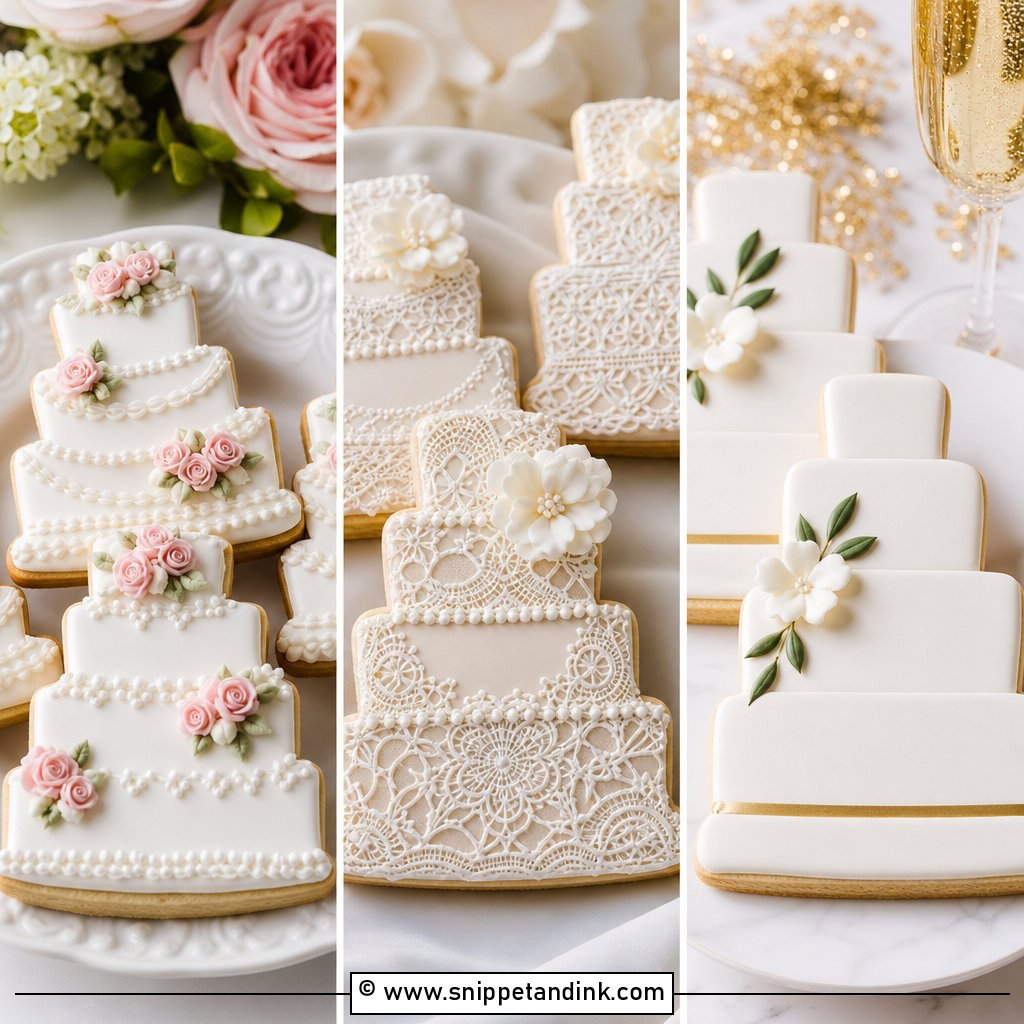
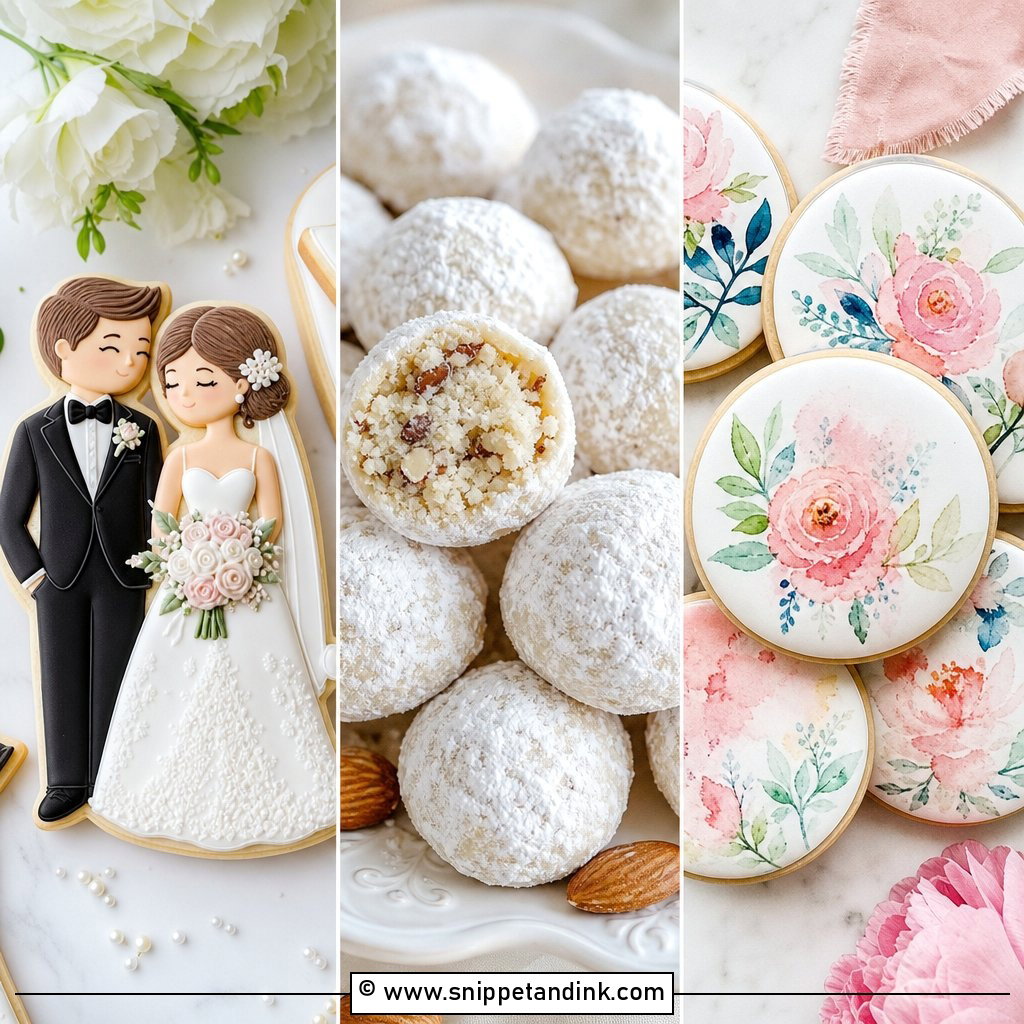
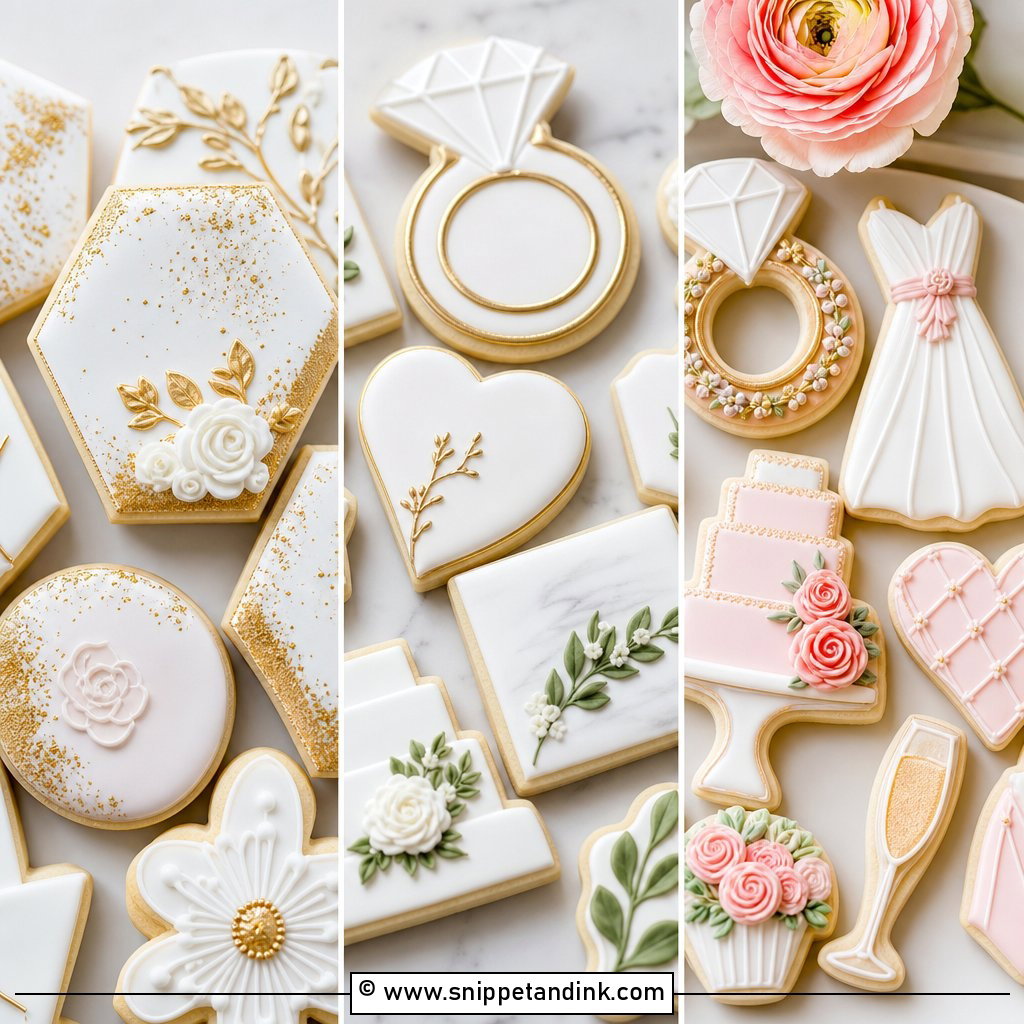
Cookie tables are cheap to fill and easy to make personal. A small cake or a cookie cake becomes the centerpiece, surrounded by decorated sugar cookies, chocolate chip cookies, shortbread, sandwich cookies and biscotti. Stacks, glass jars and trays with tongs keep hands off the food. Initials or floral icing in your wedding colors make it feel custom. If guests can take cookies home, put the bags at the far end of the table, so people browse first and pack second and the display stays tidy.
17. Mini Pie Wedding Dessert Table
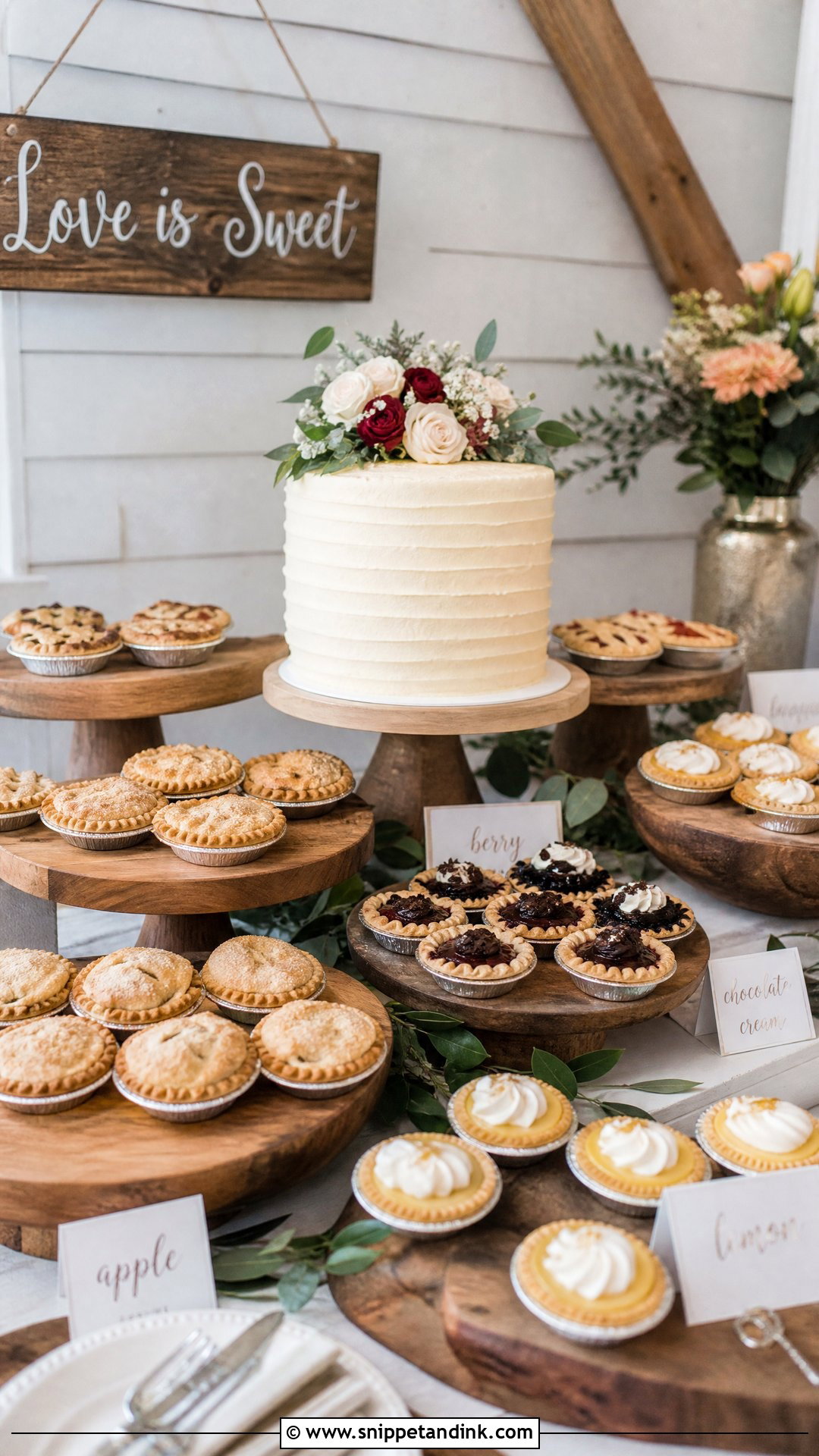
From above, most mini pies look the same, which is why labels matter more on this table than on any other. A simple buttercream cake anchors it, with apple pies, berry pies, pecan tartlets, lemon pies and chocolate cream pies on wood boards, white plates and raised stands. The cream pies need to stay chilled, so I bring them out last and keep them on their own tray. Linen napkins, greenery and warm-toned flowers suit fall, farmhouse and family-focused receptions.
18. Macaron Wedding Dessert Table
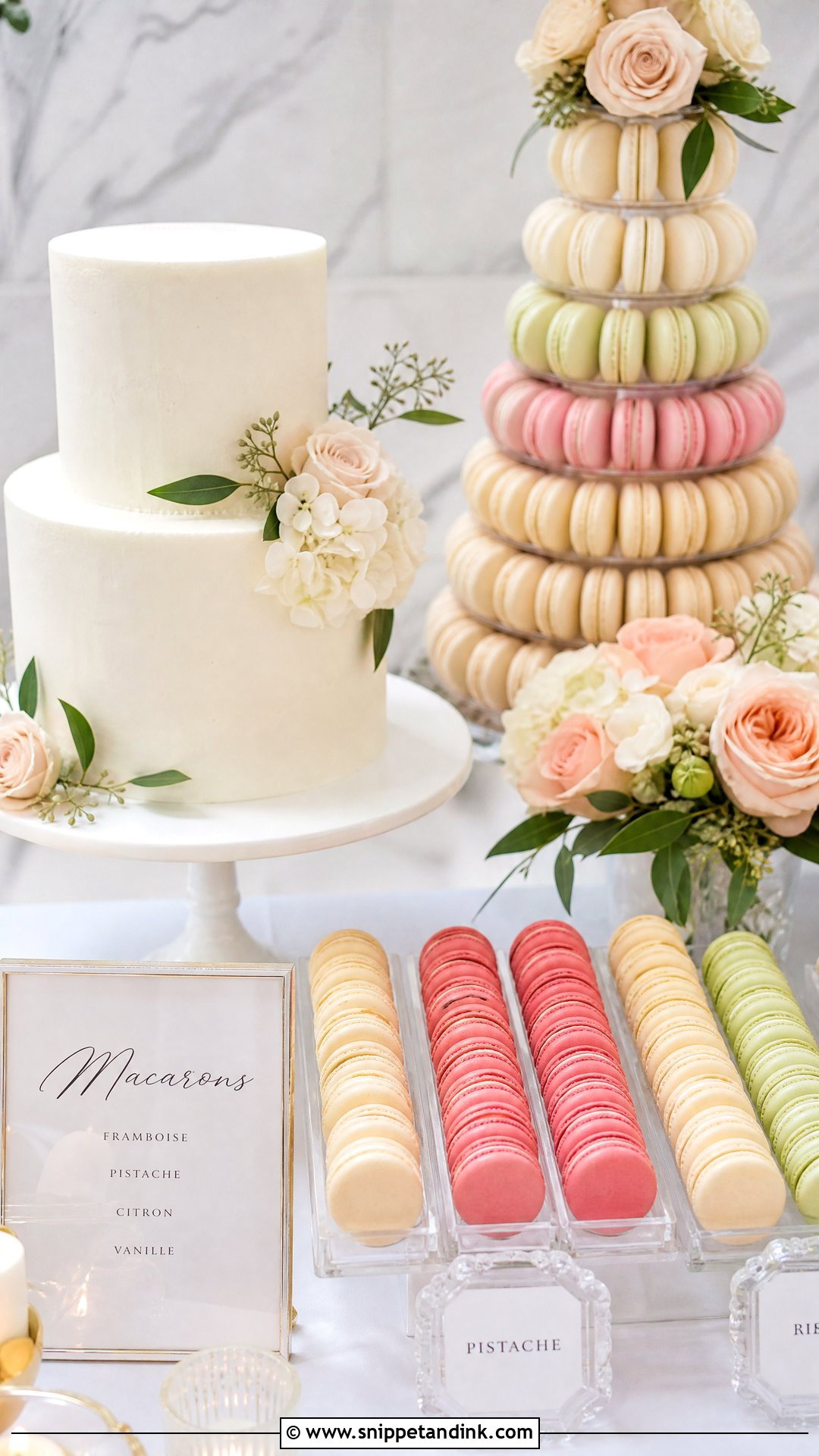
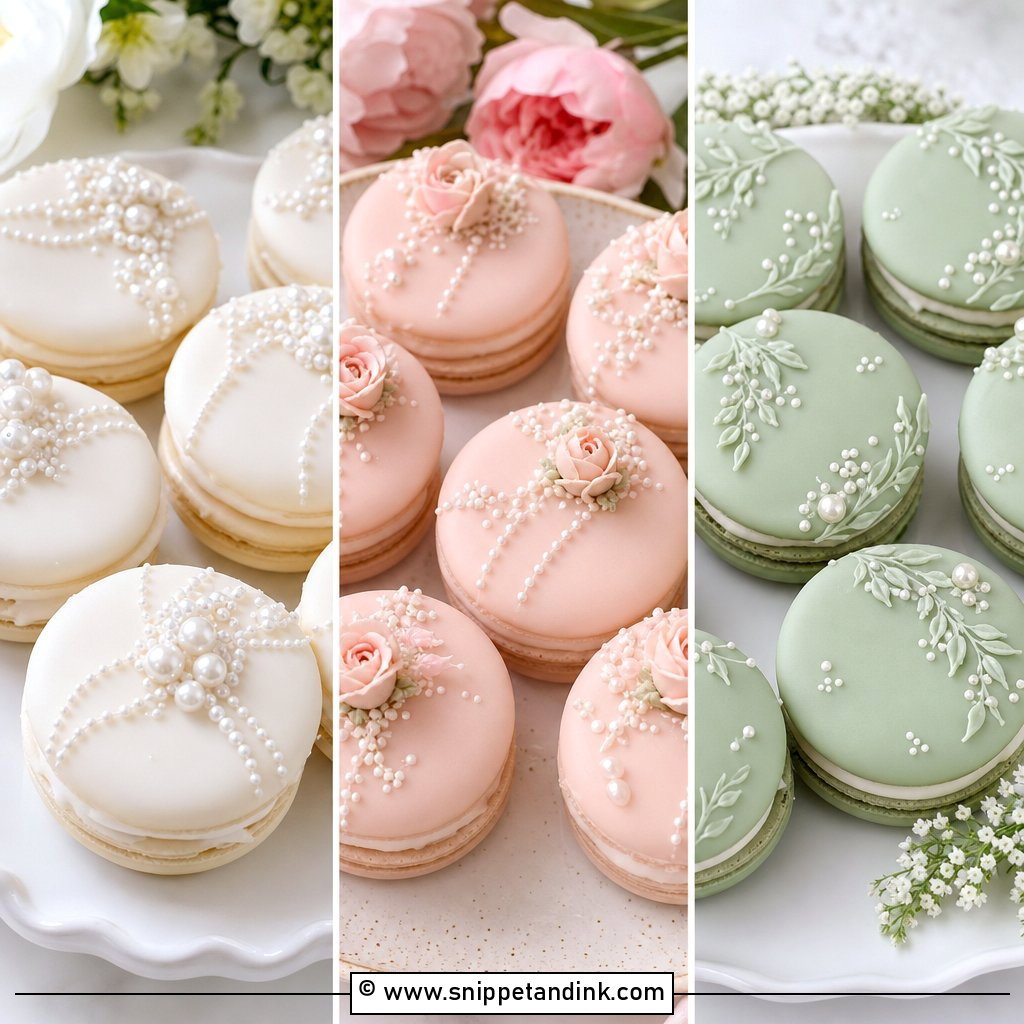
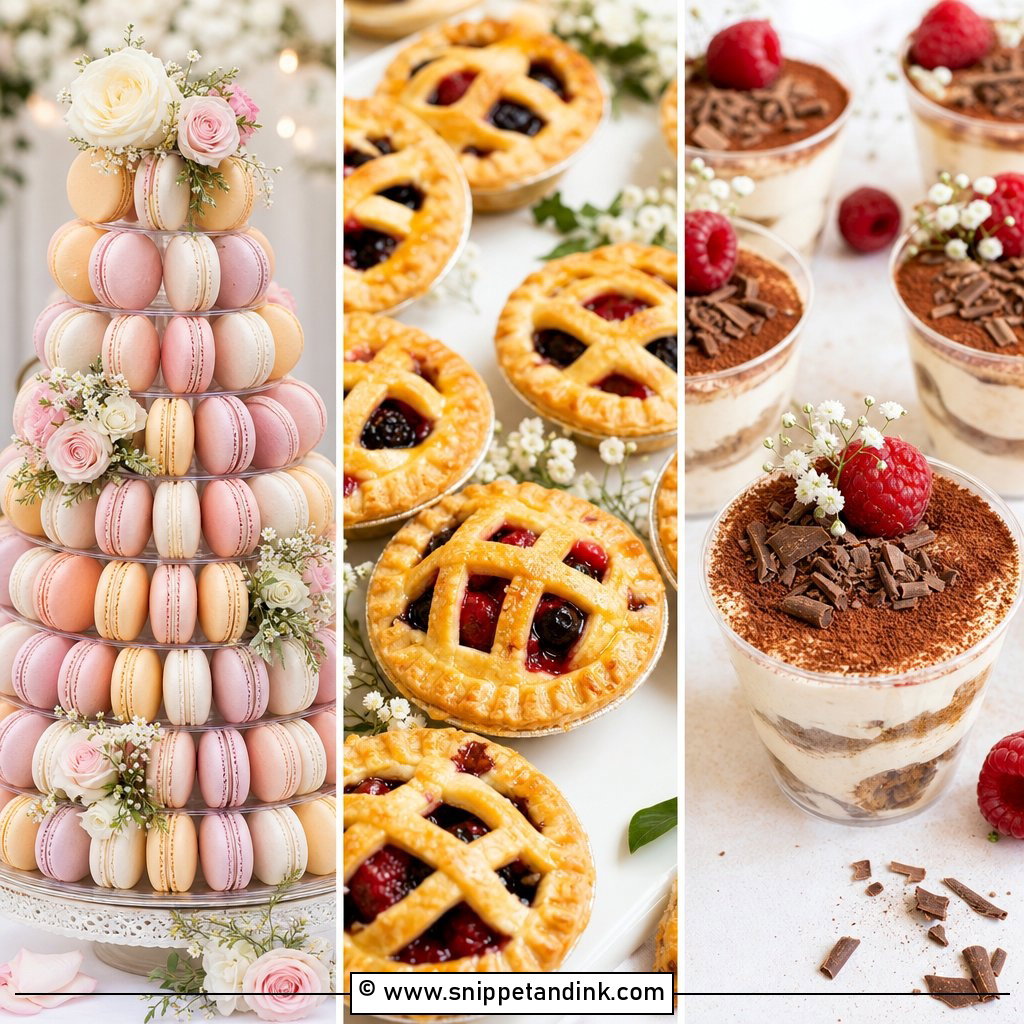
Macarons give you more color control than almost any other dessert, since every shell can be tinted. I arrange them by color in towers, trays or clear boxes around a smooth wedding cake. Vanilla, raspberry, pistachio, lemon, chocolate and salted caramel make a good spread. Match them to your palette, but keep at least one contrasting shade, or the whole table goes flat in photos. Clean white stands, a few flowers and simple signs are enough. French-inspired, garden and formal weddings suit it well.
19. Cheesecake Wedding Dessert Table
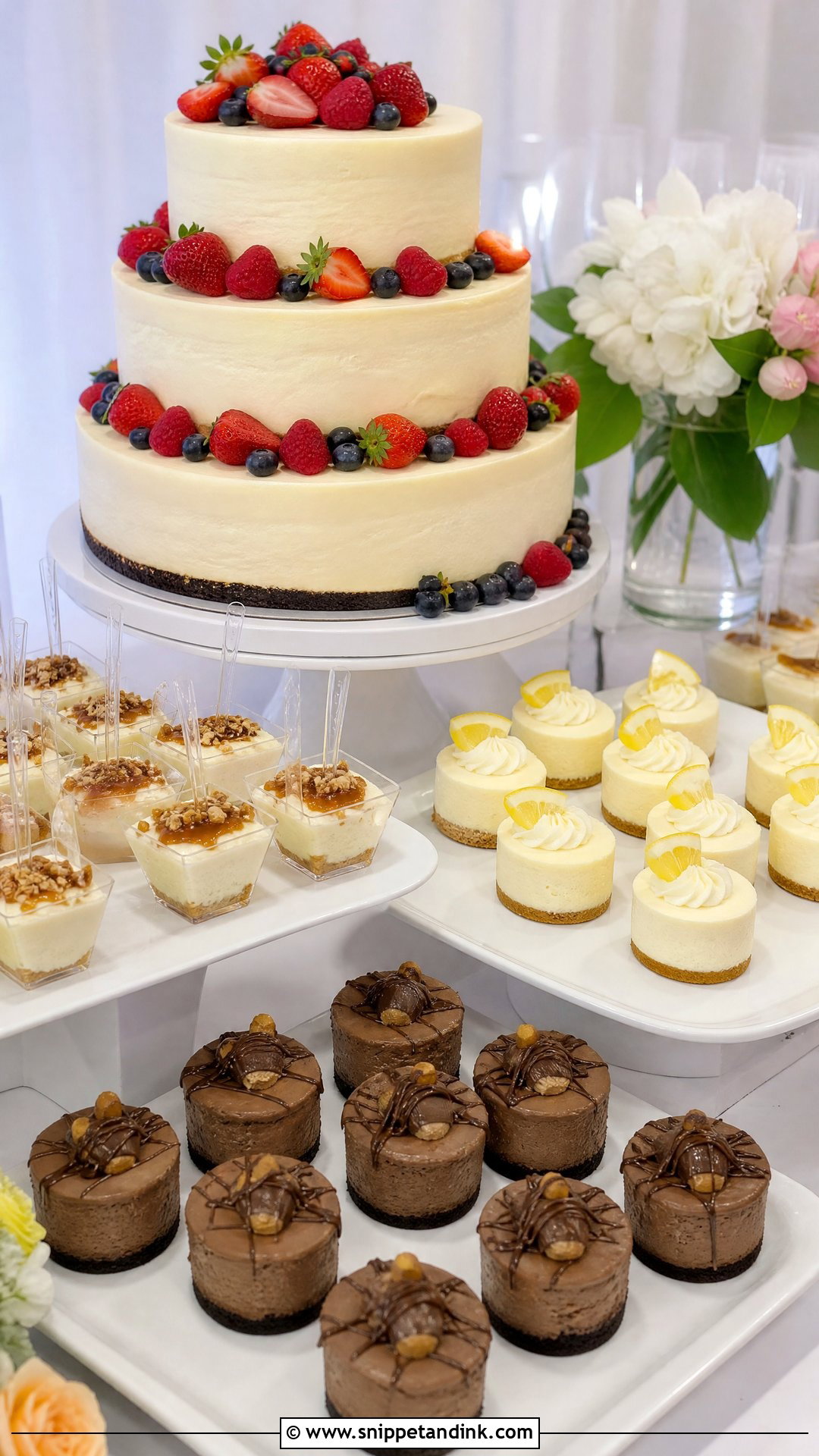
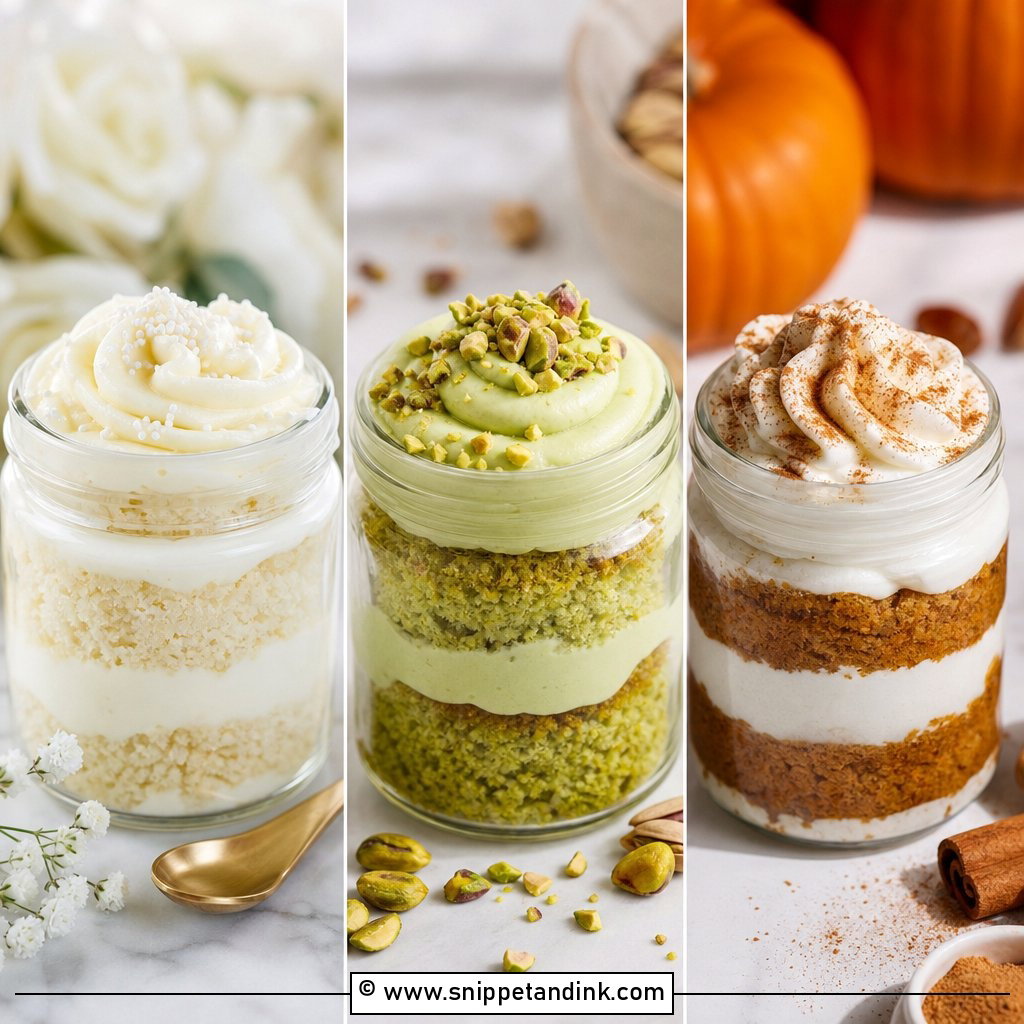
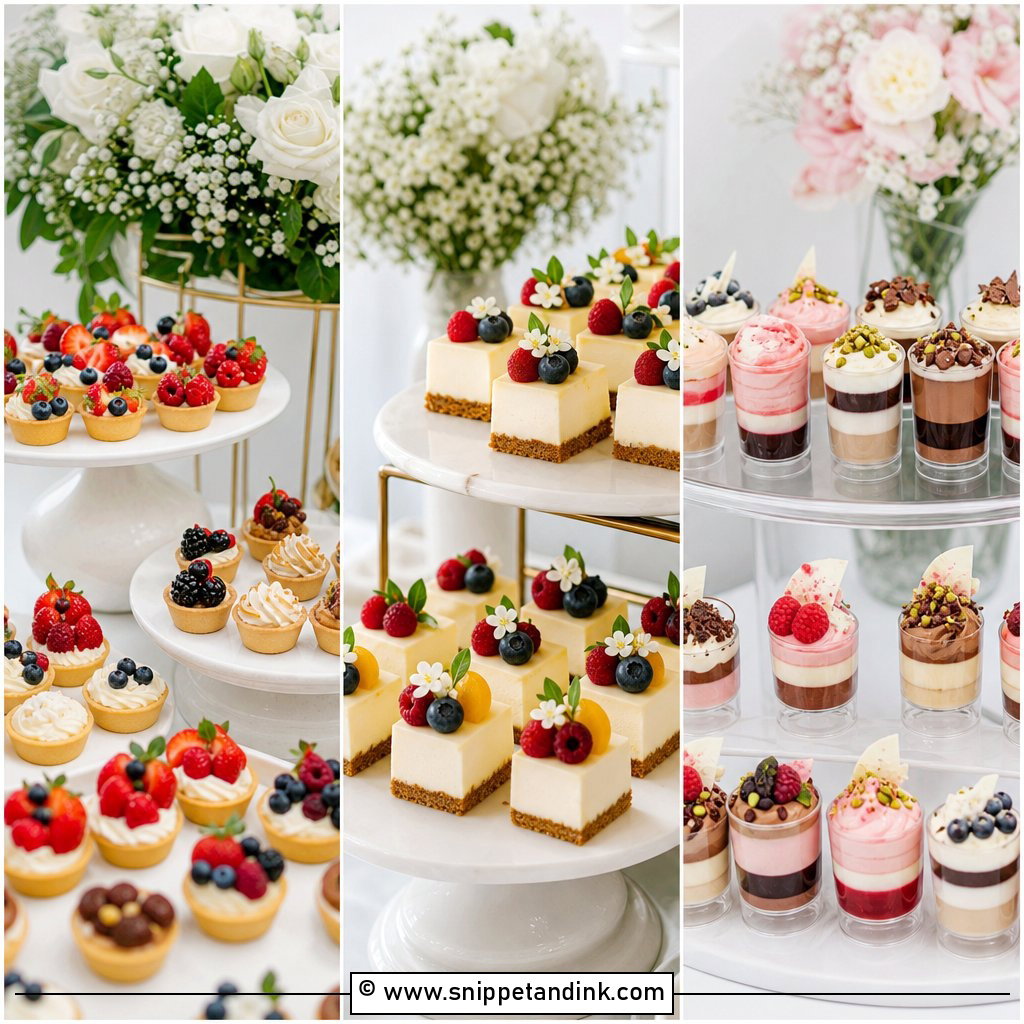
Cheesecake tables are a good answer for couples who don’t love traditional cake, but they come with a cold-chain problem. A small cheesecake-style wedding cake or a smooth buttercream cake goes at the center, with mini cheesecakes in vanilla, strawberry, chocolate, lemon and caramel around it, served in cups, jars or small rounds. Keep it all chilled until service, and in warm weather I’d only set out what will be eaten in the next hour. Fresh berries, fruit sauces and simple labels finish it. Indoor receptions handle this far better than outdoor ones.
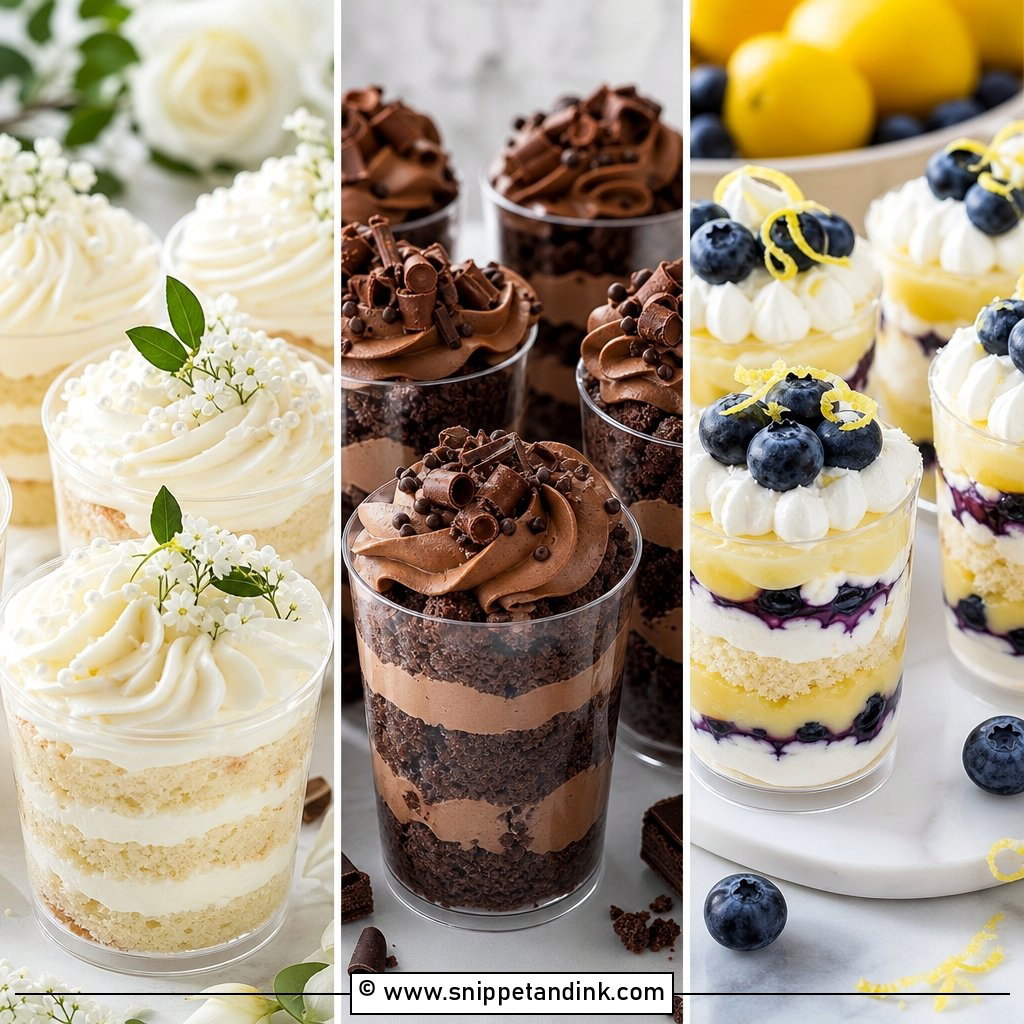
20. Dessert Trolley Wedding Table
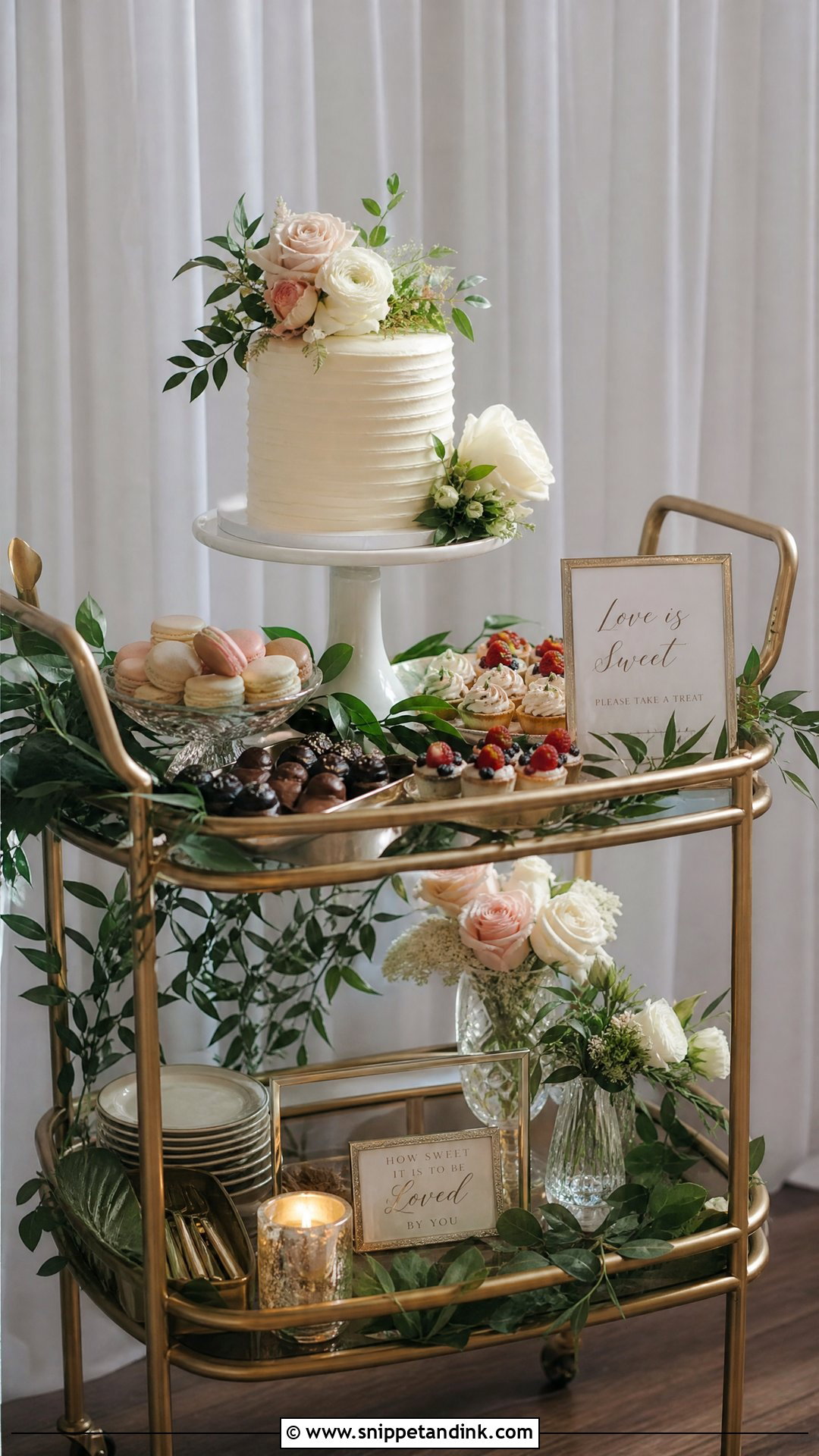
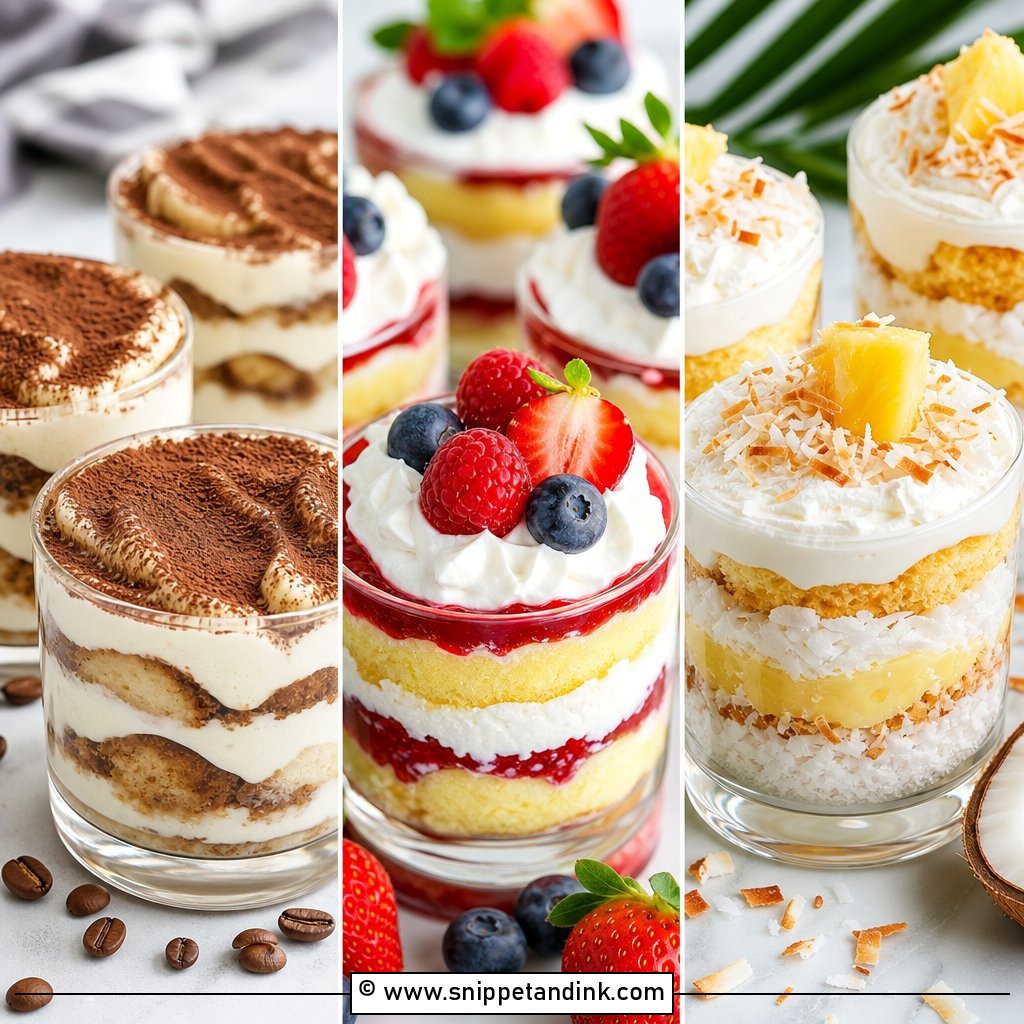
A dessert trolley wedding table suits venues where floor space is tight. A rolling cart or compact table holds a petite wedding cake on the top shelf with the taller desserts, and mini pastries, macarons, truffles and fruit tartlets on the lower shelf where hands can reach them. Lock the wheels before anything goes on it. Add flowers, a small sign and soft lighting if the venue allows. Cocktail-style receptions and intimate weddings get a focal point without giving up half a wall to a dessert station.
Where Should the Dessert Table Stand in the Room?
Placement does as much for a dessert table as styling does. I look for a wall with a clean background, because that wall will be in every photo of the table, and I avoid spots directly beside the band, the dance floor or a sunny window. Speakers and stage lights throw off heat, and buttercream notices.
Then think about traffic. If guests can approach from only one side, the line backs up into the dining tables. Pulling the table a little away from the wall, or splitting a long spread into two shorter tables, lets people move along both sides. Check where the nearest power outlet is if you want fairy lights or a lit sign, since an extension cable across a walkway is a hazard once the room goes dim.
Making It Still Look Full at Ten O’Clock
The first hour is easy. The trouble comes later, when half the platters are empty and the table looks picked over in the evening photos. I plan for that from the start.
- Put out about half of each dessert and keep the rest boxed under the table or in the kitchen.
- Use smaller platters for refills, so a half-empty tray can be swapped for a full small one instead of looking sparse.
- Assign one named person, usually from catering, to tidy and refill every half hour.
- Leave the flowers and the cake stand in place even after the cake is cut, so the table keeps its shape.
One Focal Point, a Few Heights and Room to Reach
The table that works is the one sized to your venue, guest count and budget, not the one that holds every dessert you’ve ever liked. Give it a clear centerpiece, a thoughtful mix of flavors, serving pieces guests can use with one hand, and styling that borrows from the rest of your decor. Then picture it at ten at night: half the trays emptied, people coming at it from both sides, the lighting lower. If it still makes sense then, whether it’s classic cake and cupcakes, pies and cookies, or macarons on a trolley, you’ve planned it well.
You'll Like These Ideas:


Leave a Reply