
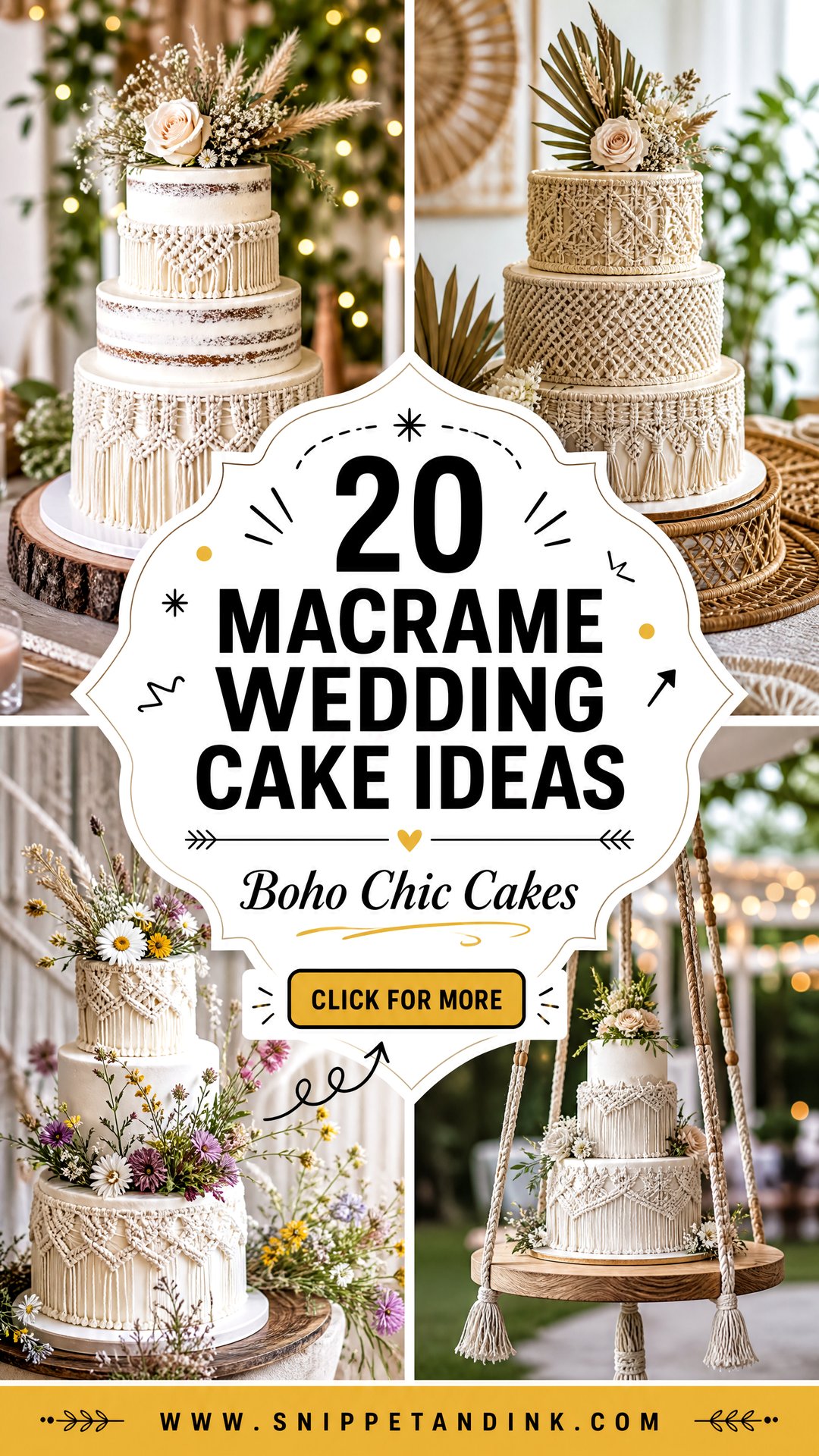
A macrame cake borrows the knots, loops and fringe of a woven wall hanging and recreates them in buttercream, fondant or sugar cord. It suits boho receptions in gardens, barns and on the sand, and it sits most naturally in warm neutral palettes. The versions I’m happiest with keep the tiers clean and let one woven panel carry the design; once every tier is knotted, the eye has nowhere to rest. Ivory alone is plenty, though terracotta, sage, blush and sand can bring in your wedding colors. Below are twenty directions, each with what I’d watch for if I were building it.
How a Baker Actually Builds the Woven Effect
Macrame on a cake is made in one of three ways, and the method shapes the price, the look and how the cake travels. Knowing which one you’re looking at in a photo makes the first conversation with your baker far easier.
- Piped buttercream: knots and loops piped freehand with round and rope tips. Softest look, cuts cleanly, but it is the most sensitive to heat.
- Fondant or gum paste cords: rolled or extruded strands laid over the cake and tied into knots. Sharper and more even, and it holds up better on a warm day, but it takes hours of hand work.
- Molded lace and wafer paper: pressed from silicone molds or cut from thin edible paper. Quick to repeat around a tier and very fine, though wafer paper dislikes humidity.
When I take a brief, I ask for one or two photos of the exact texture you like and one of the shape you want, because couples often love the knots from one cake and the tiers from another. Mention how many guests the cake must serve, since a woven panel needs a tier tall enough to show it. Piped work is usually finished within a day or two of the wedding, so book with time to spare in busy months; many designers take wedding orders several months out.
1. Macrame Wedding Cake With Buttercream Piping
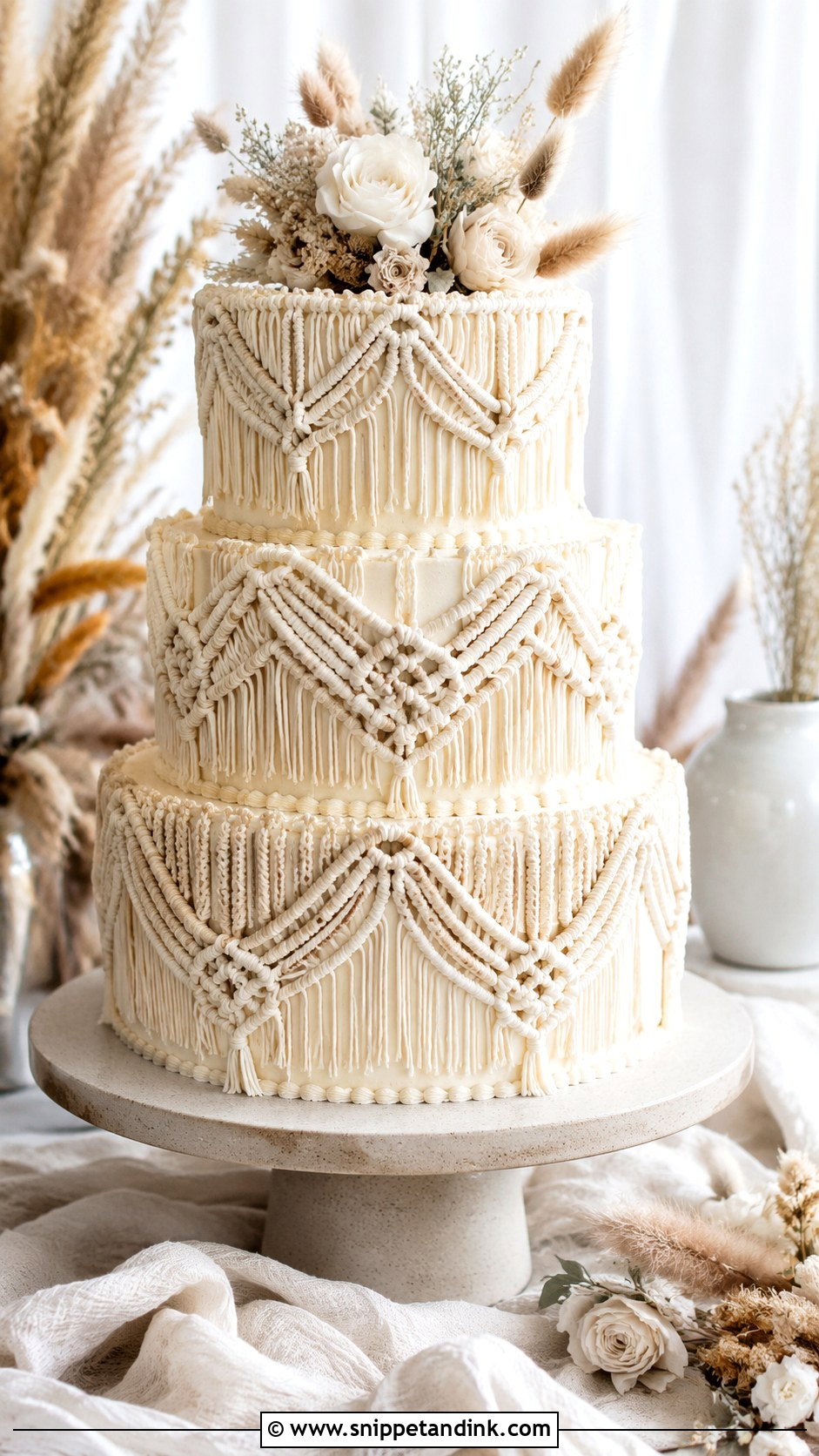
Piped buttercream is where I’d start most couples, because it reads as handmade and it cuts like any other wedding cake. I pipe the knots with a stiffer batch than the coating, otherwise the loops slump by the time the cake reaches the venue. Ask for the work to sit slightly proud of the surface so the raking light from a window picks out each strand. Finish with a few fresh stems or a plain wooden topper and leave the texture uncovered.
2. Macrame Wedding Cake With Fondant Lace
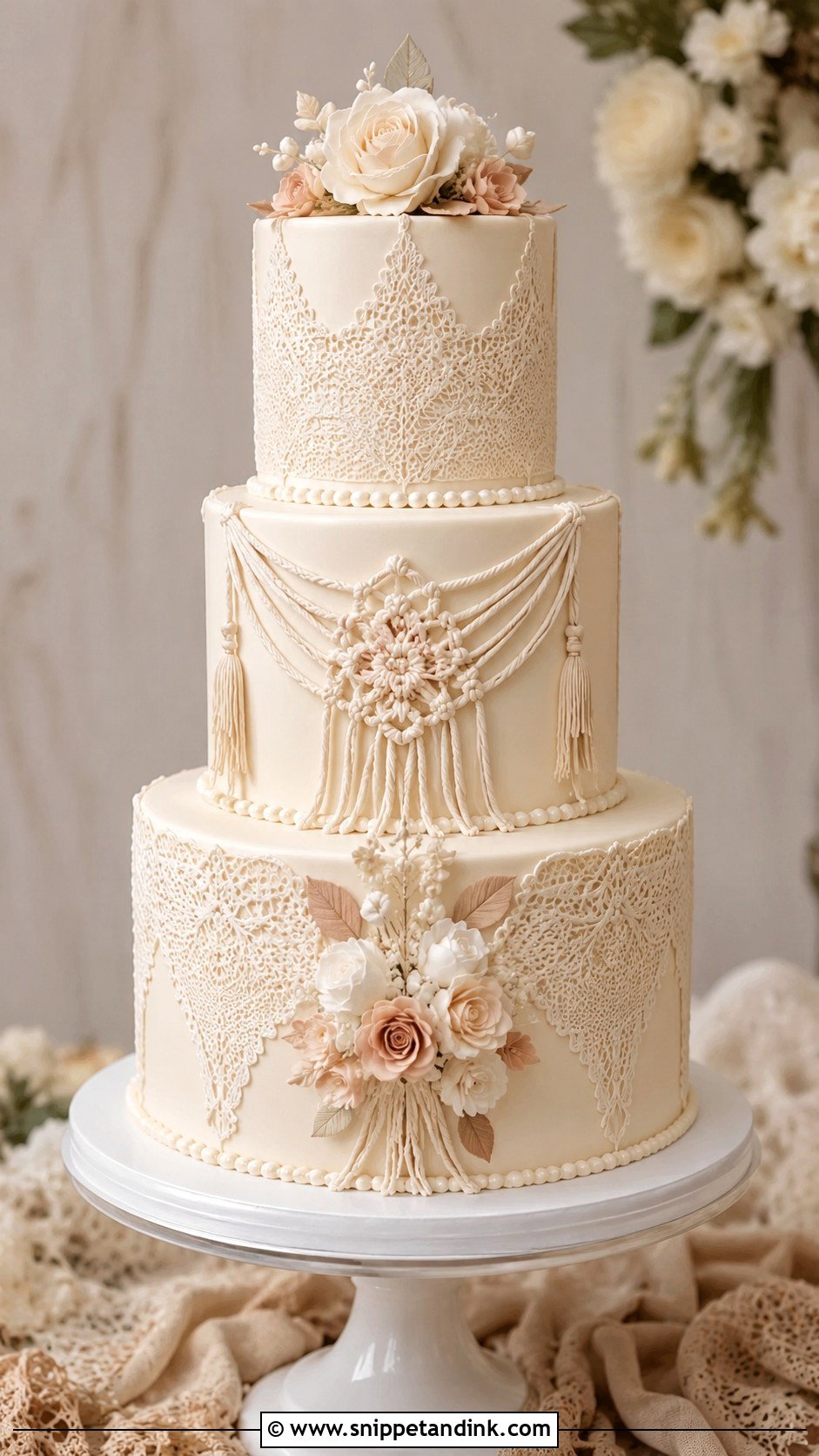
Fondant gives you crisp edges and a pattern that repeats evenly all the way round. The macrame pieces are usually pressed from silicone lace molds or cut by hand from modeling paste, then fixed with a dab of edible glue over a warm white base. It is slower work than piping, so expect it to show up in the quote. Keep the palette pale; a dark fondant swallows the shadow that makes lace visible. One or two sugar flowers are enough to soften the structure.
3. Macrame Wedding Cake With Pampas Grass
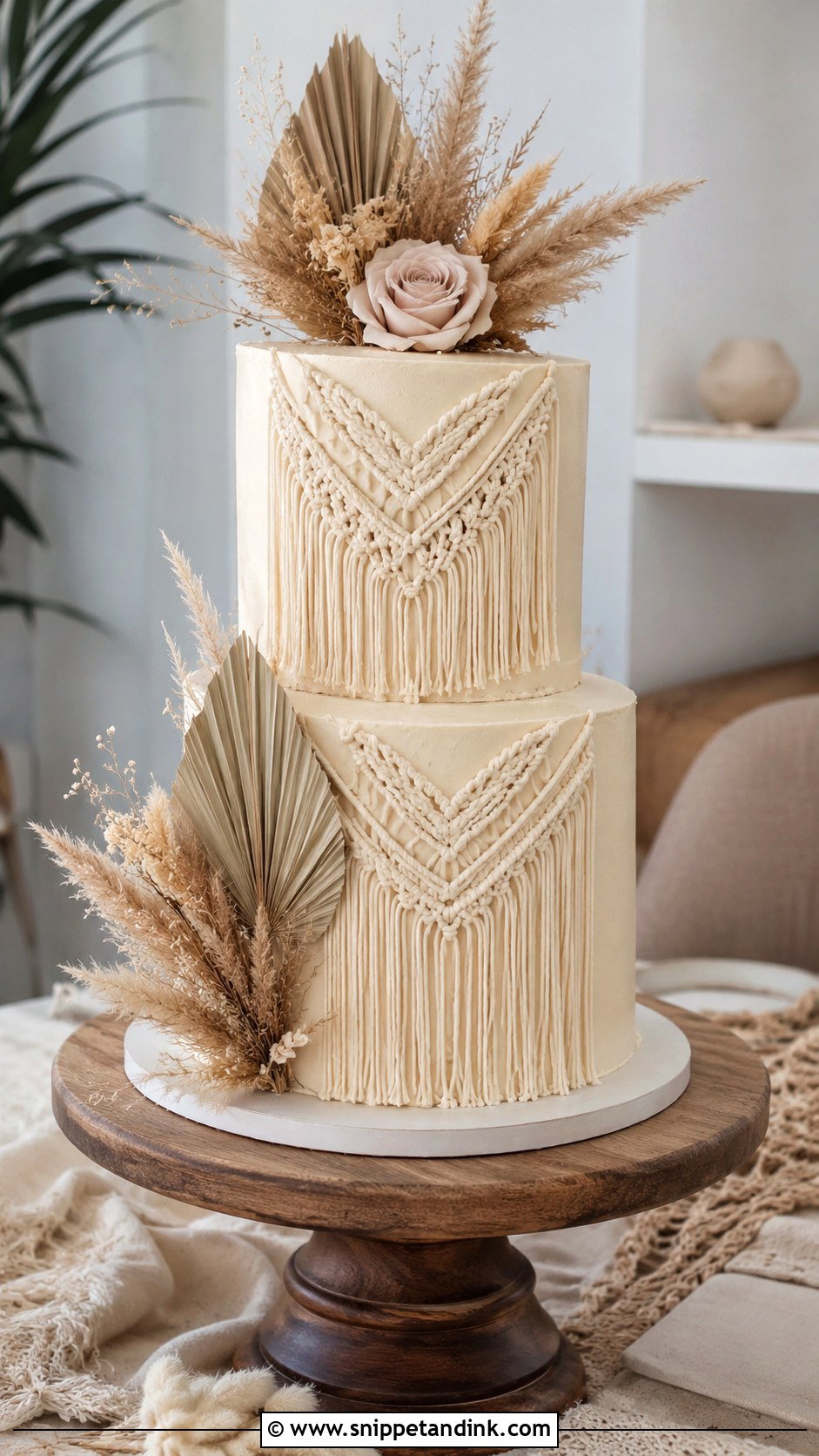
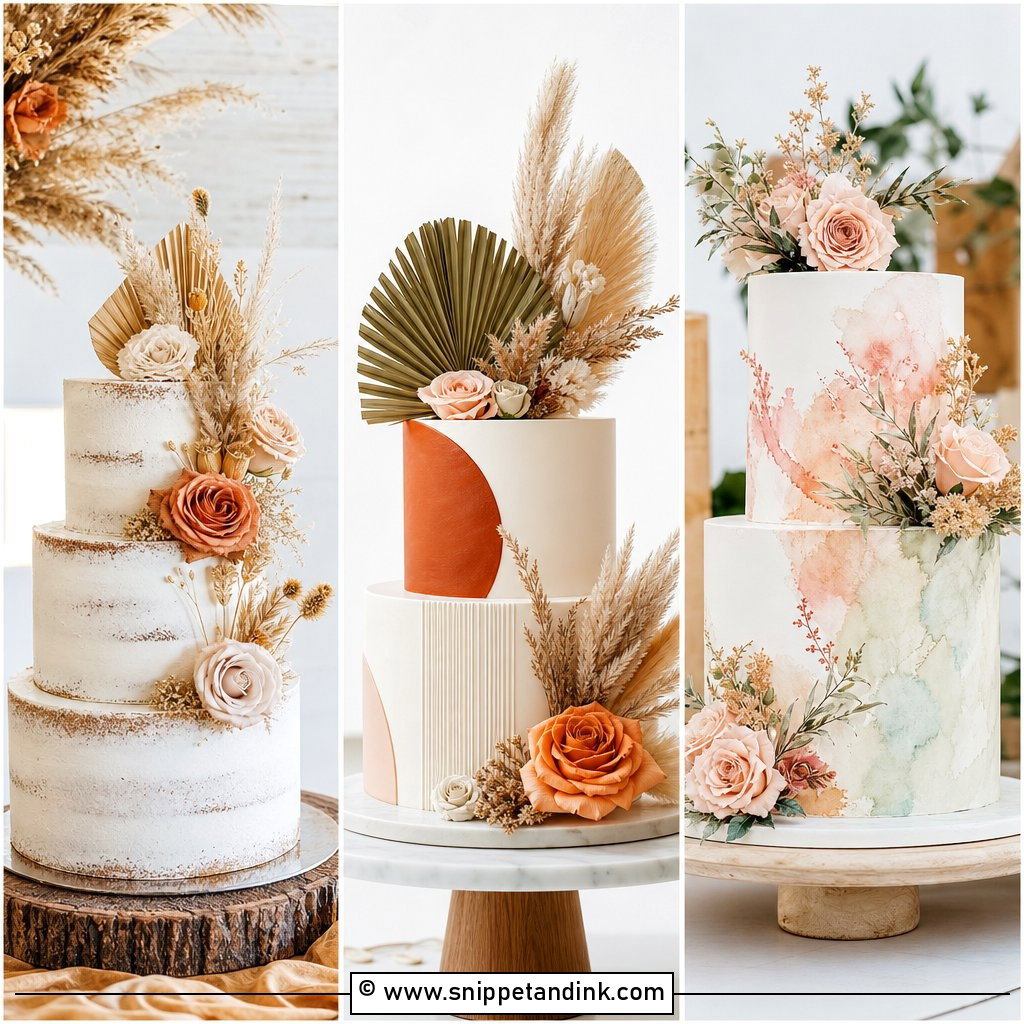
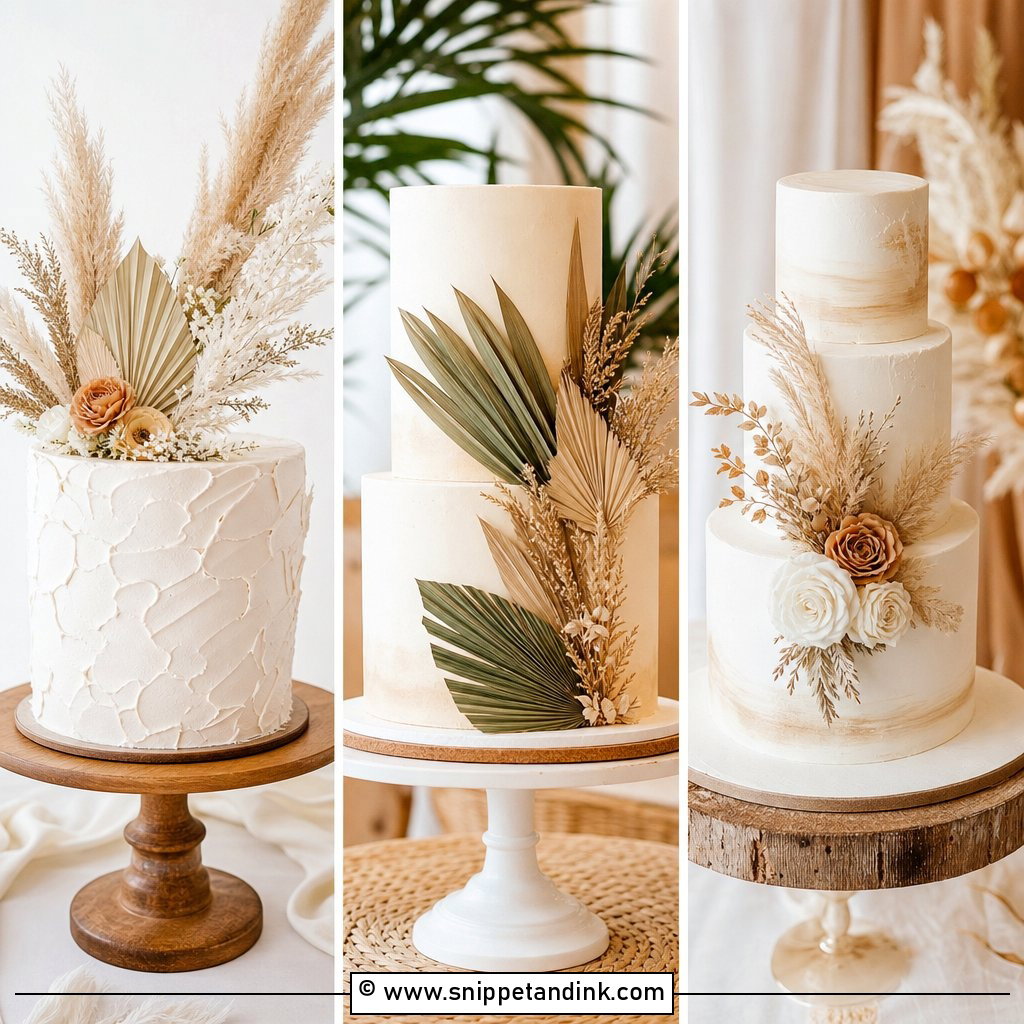
Pampas brings the airy, desert-boho feeling to a tiered cake, with the macrame piped across the front like a small hanging piece. The plumes add height without adding color, so they sit well beside ivory, taupe and caramel. Dried grass is not food, and it sheds. I wrap stems in floral tape, push them into a straw or pick so nothing touches the sponge, and keep them well away from the slices the caterer will cut. Preserved roses or bunny tails can fill the gaps once the plumes are in.
4. Macrame Wedding Cake With Dried Flowers
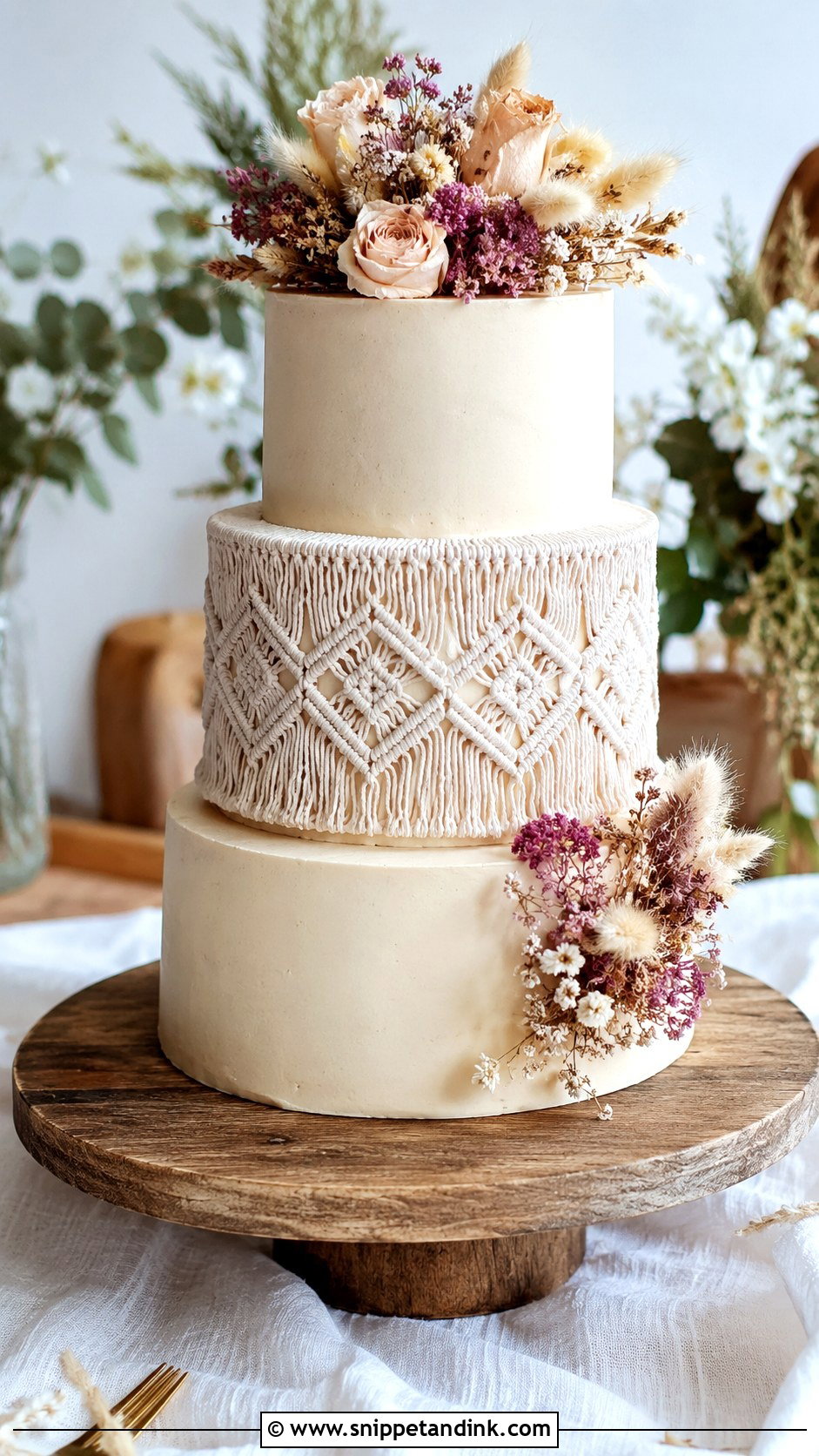
Dried flowers suit an outdoor reception better than fresh ones because they don’t wilt in the sun. Strawflowers, statice, bunny tails and small preserved leaves in rust, cream and blush all hold their shape on a tier. Placement decides whether this works: I tuck small clusters at the tier joins and leave the woven panel clear, rather than dressing the cake all over. Set it on a wooden stand and stop there.
5. Macrame Wedding Cake With Fringe
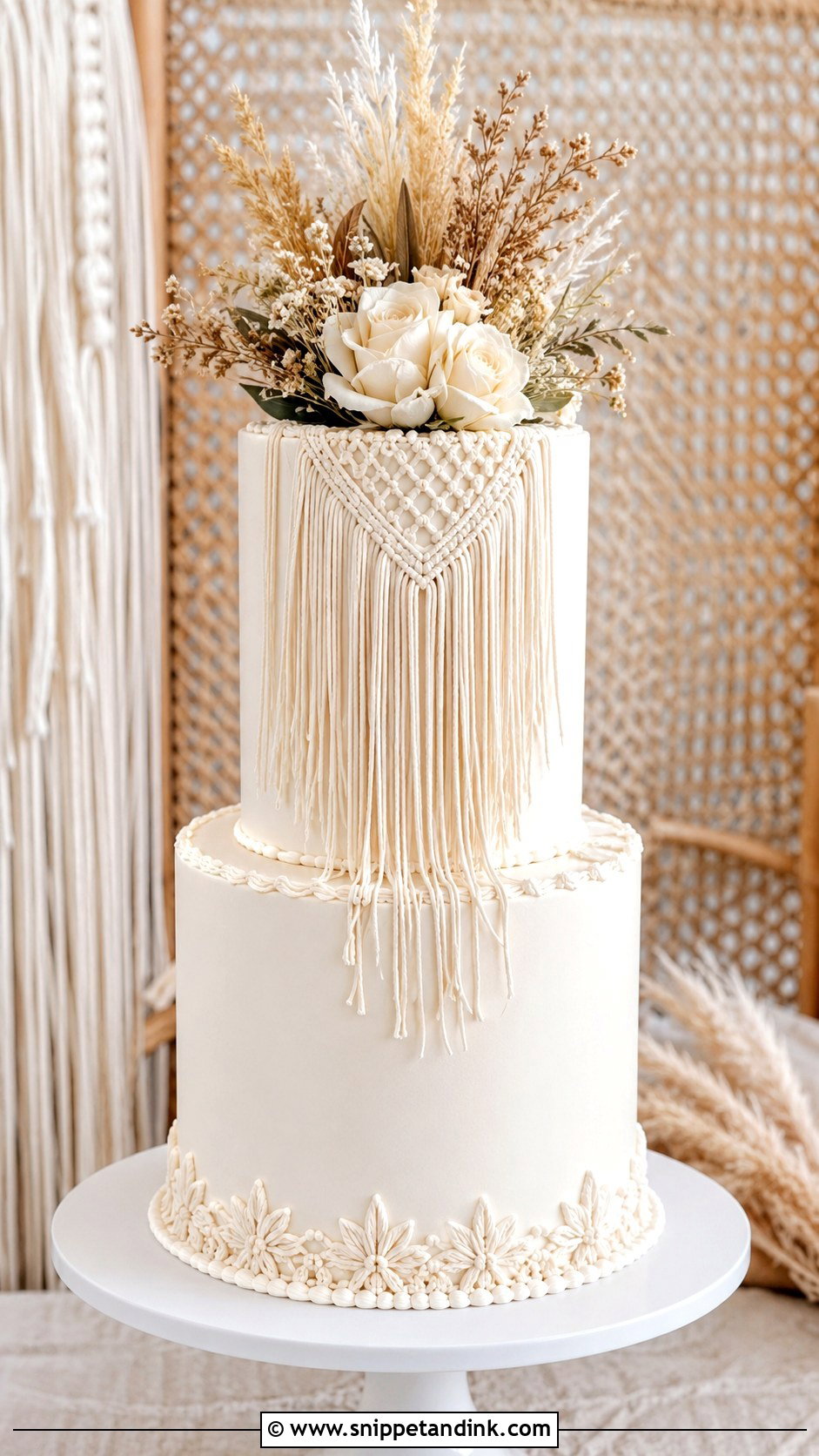
Fringe is the detail that makes guests say it looks like a real wall hanging. I make it from piped buttercream lines, rolled fondant cords or thin strips of wafer paper, and each behaves differently. Wafer paper moves beautifully but softens and curls if the room is humid, so I’d only choose it for a cool indoor reception. Let the fringe fall from the top tier or down one side, and keep the other tiers plain.
6. Macrame Wedding Cake With Terracotta Flowers
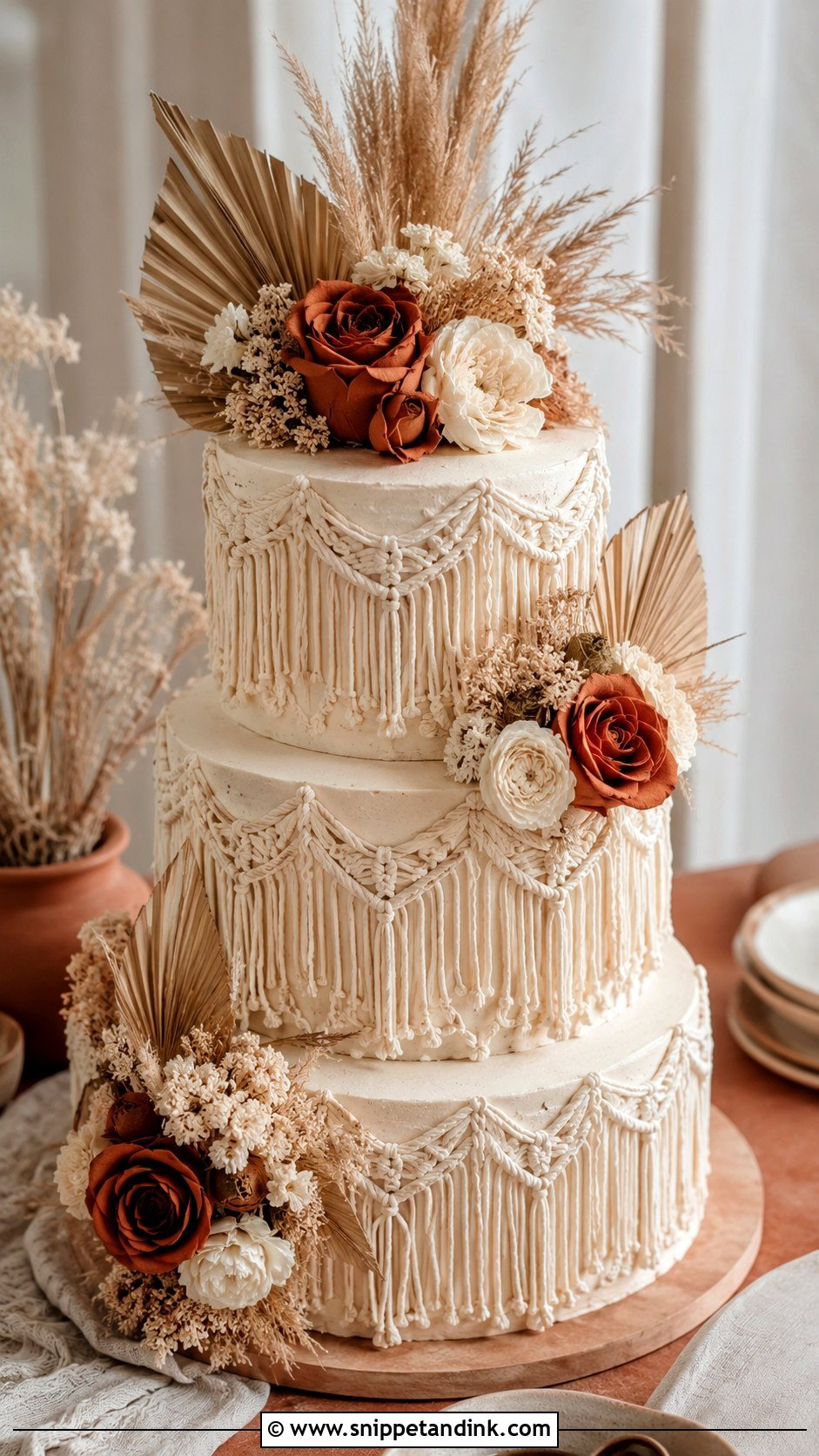
Using terracotta flowers warms up an ivory macrame pattern for desert and autumn receptions. The clay, rust and cinnamon shades look rich against buttercream, and they hold their color in photos better than bright orange does. Fresh, dried or sugar blooms all work; sugar costs more but survives a hot tent without drooping. I’d balance them with cream roses or a little pampas, and ask for a matte finish rather than a sheen.
7. Macrame Wedding Cake With Sage Green
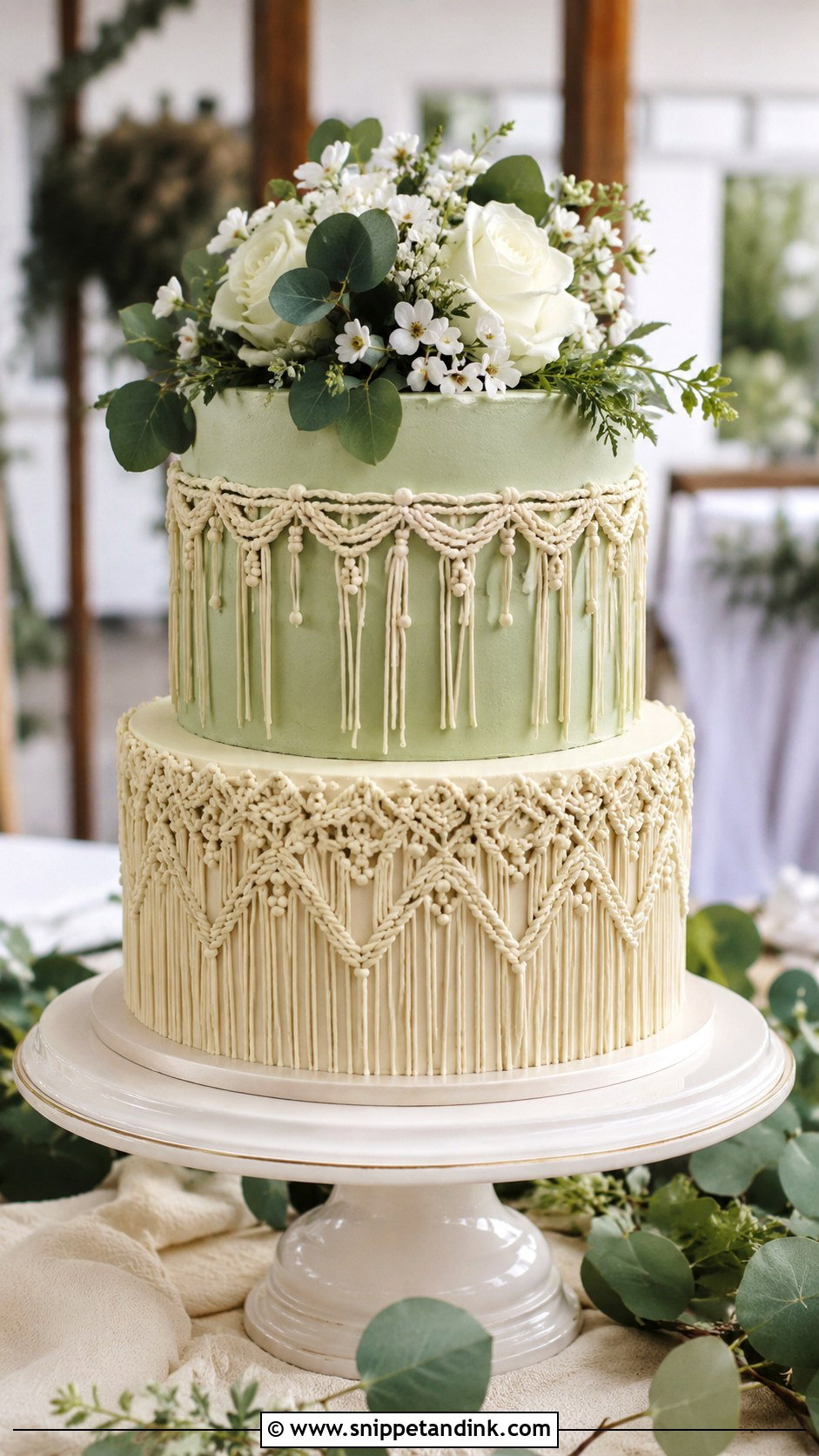
Sage is easier to get right on one tier than on four. A full sage cake can drift grey under warm reception lighting, so I usually suggest a single sage tier with ivory piping, or ivory throughout with green botanicals. Gel color goes darker as buttercream sits, so I mix the shade a little lighter than the swatch and let it develop overnight. Eucalyptus and olive leaves suit it well, but both need wrapping before they go near the icing. Round tiers keep the look calm.
8. Macrame Wedding Cake With Blush Roses
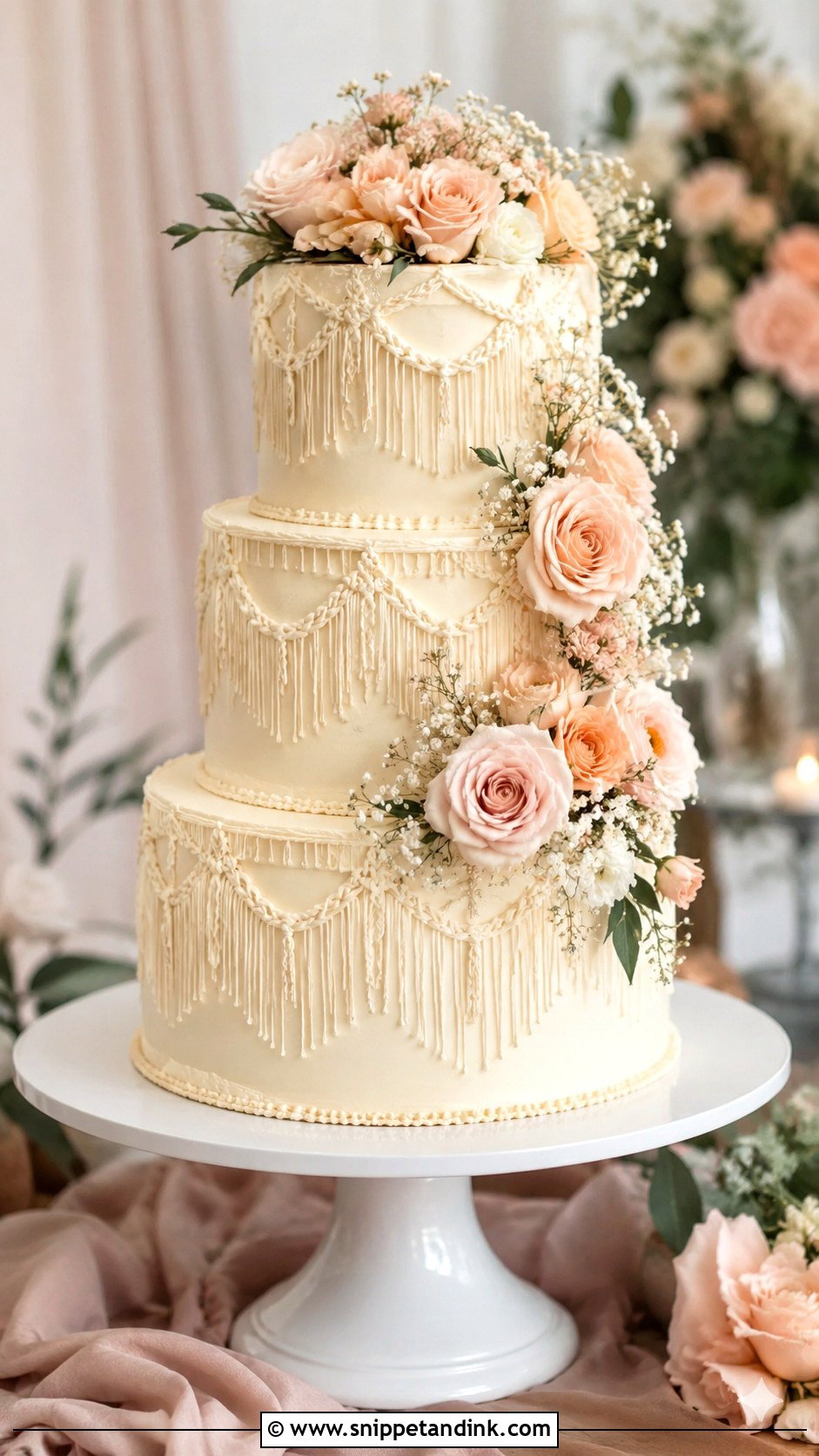
Blush roses bring a softer, more romantic side to the woven style. I place them between tiers or in one loose cascade so the knots stay readable. Fresh garden roses bruise where they press against buttercream, so I add them last, at the venue, with the stems sealed. A pale peach bloom or a little baby’s breath gives depth without hiding the texture, and a white stand keeps the whole thing bright.
9. Macrame Wedding Cake With Gold Accents
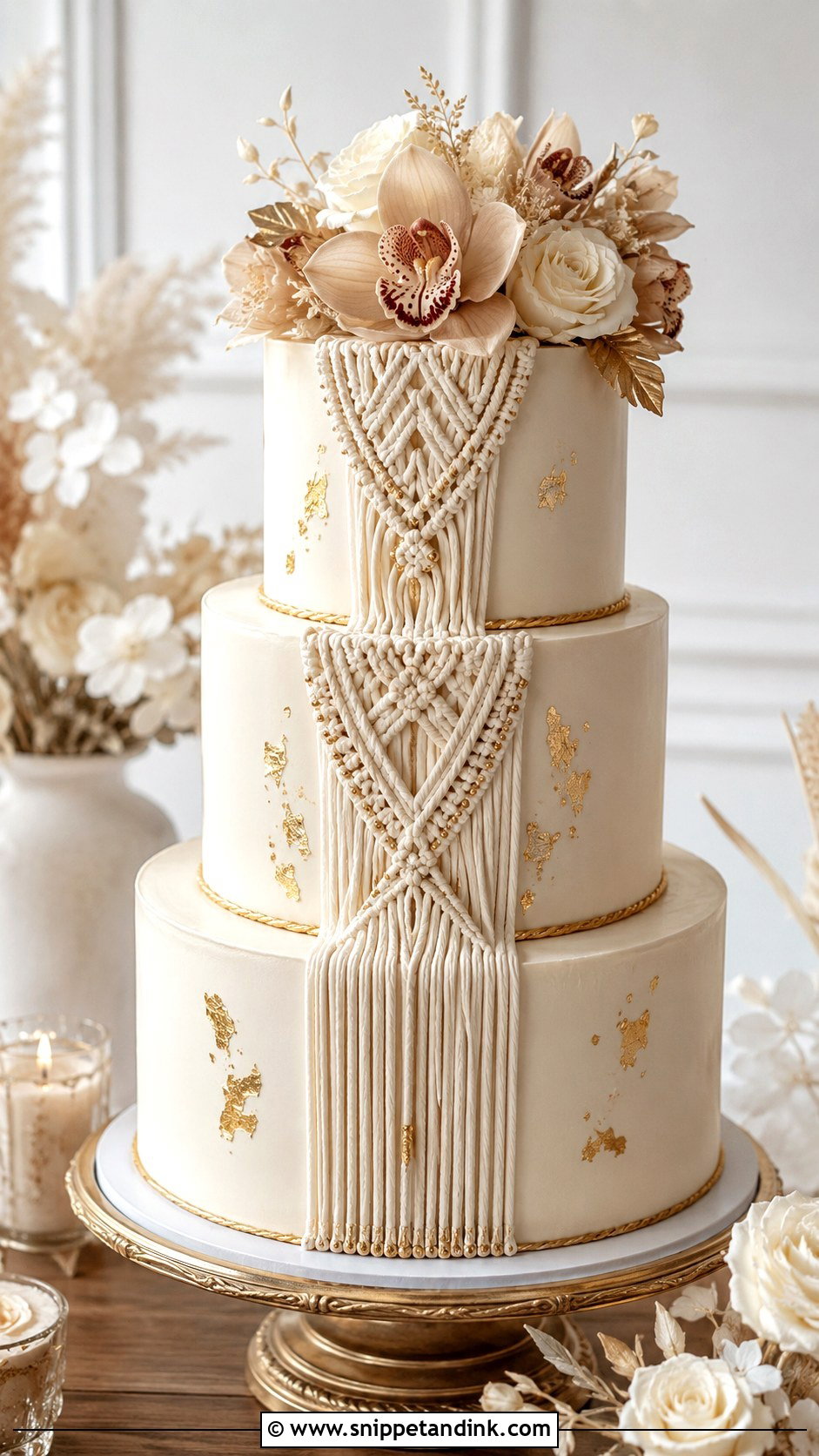
Gold makes the design feel more evening than barn, but it is easy to overdo. I apply leaf or hand-painted lines to only a few strands of the macrame, because a whole tier of gold flattens the shadows that make the weave look woven. Edible gold leaf needs a firm, dry surface, so it sits better on fondant or well-chilled buttercream. White roses or beige orchids round it off.
10. Macrame Wedding Cake With Wooden Topper
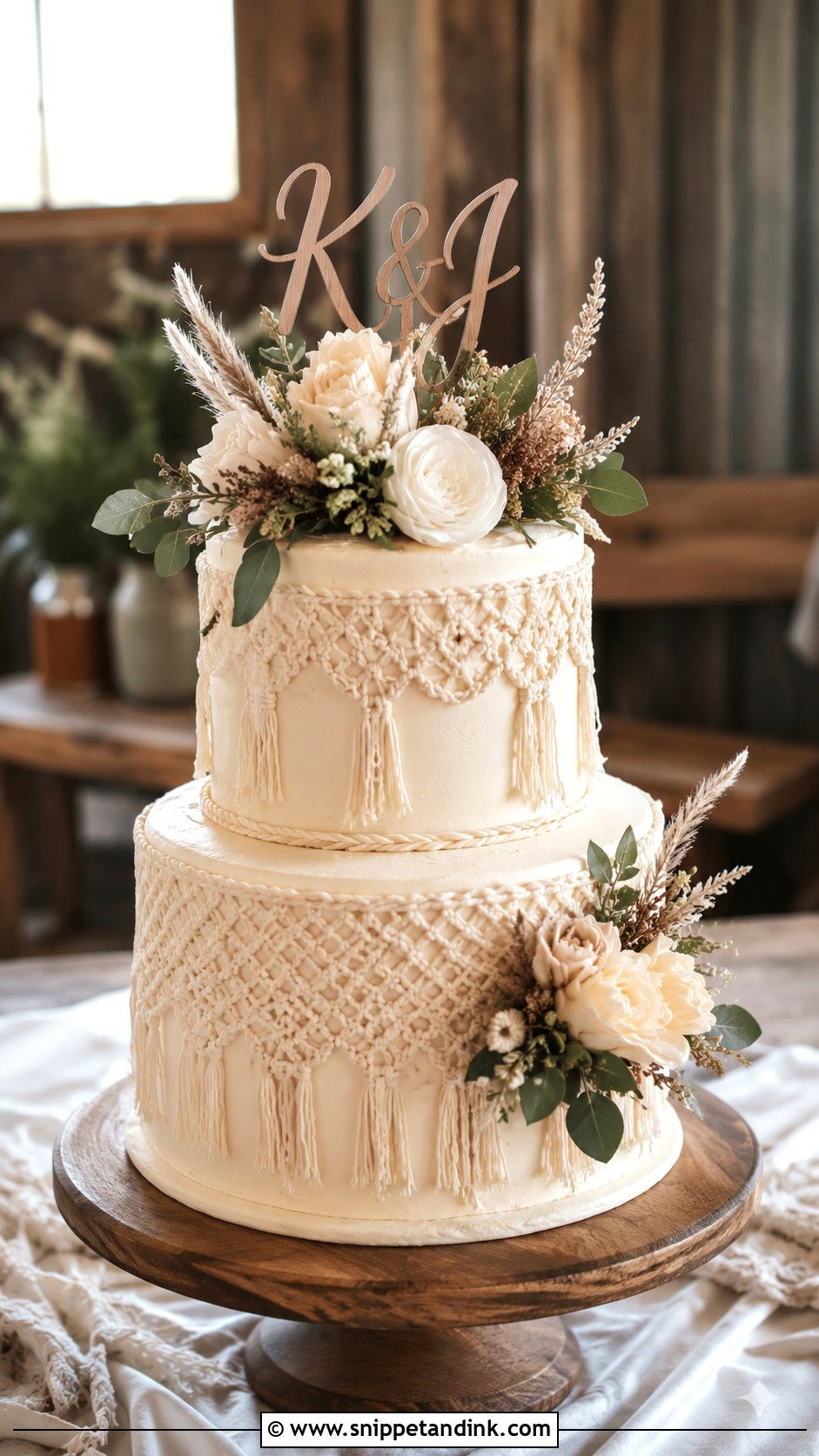
A wooden topper is the simplest personal touch on this list. Names, initials or a small arch all suit the boho theme, and the cake underneath can stay ivory with piped macrame. Check the topper’s size against the top tier before the day; a large one tips forward and blocks the woven panel. I’d ask for food-safe stakes or a skewer base so raw wood doesn’t sit in the icing, then keep the florals low around the bottom.
11. Macrame Wedding Cake With Semi Naked Frosting
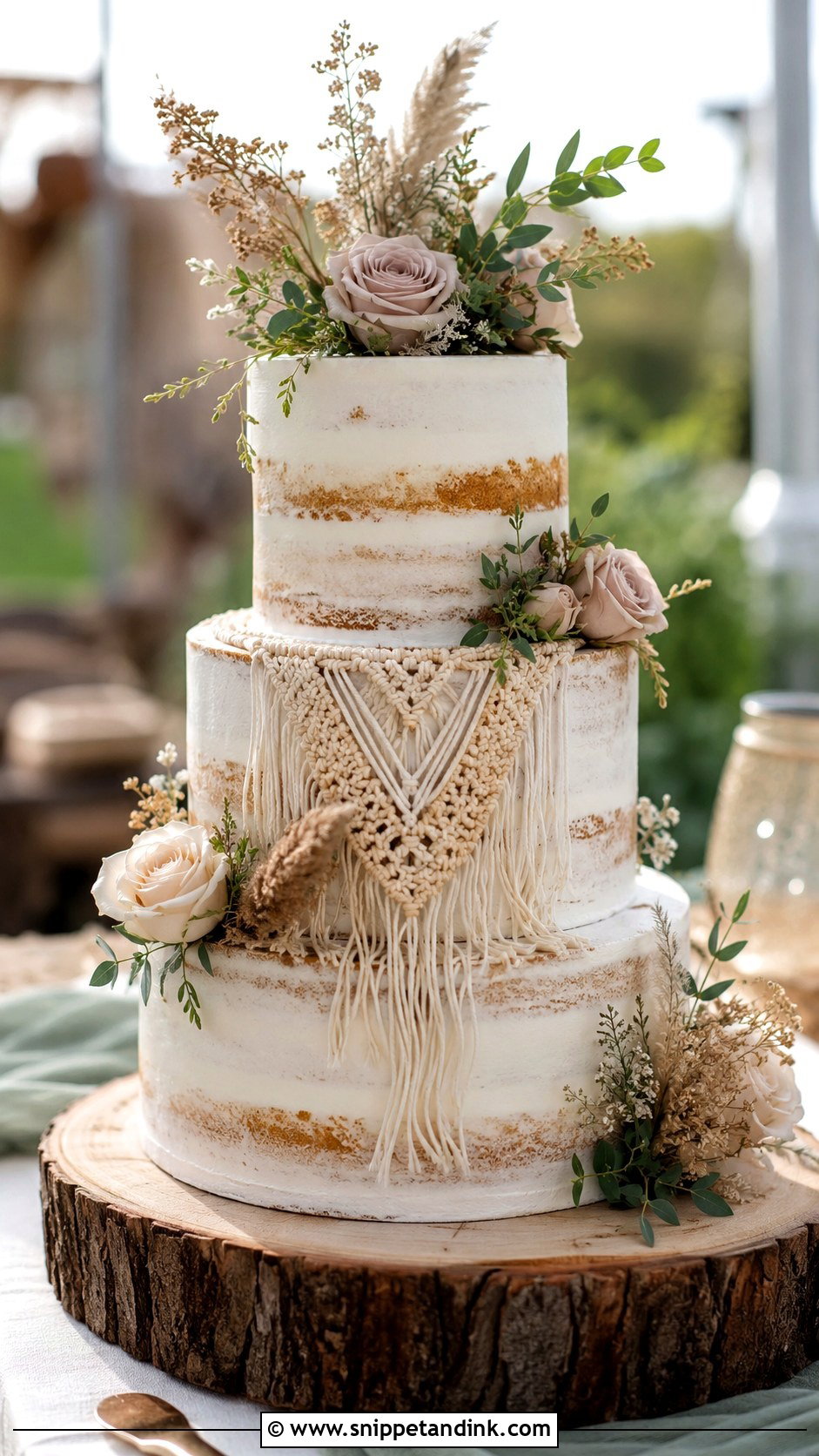
With semi naked frosting, the sponge shows through a scraped layer of buttercream and the macrame becomes a piped panel or an edible lace accent on the front. Exposed cake dries faster than a fully coated one, so I keep it chilled and assembled as late as the schedule allows. Vanilla, almond, honey and spice sponges suit it because their color becomes part of the design. A wood slice stand finishes it.
12. Macrame Wedding Cake With Pressed Flowers
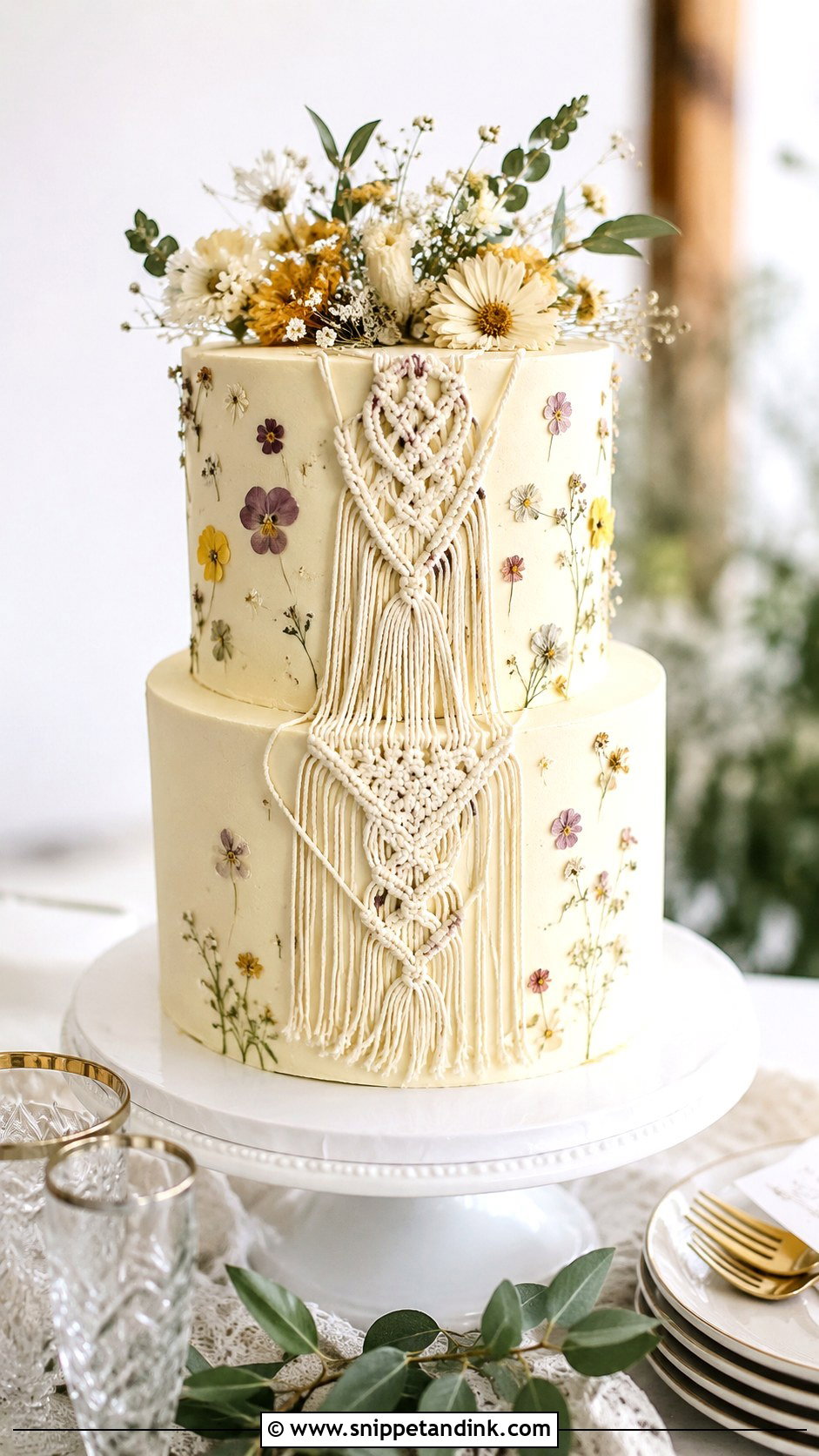
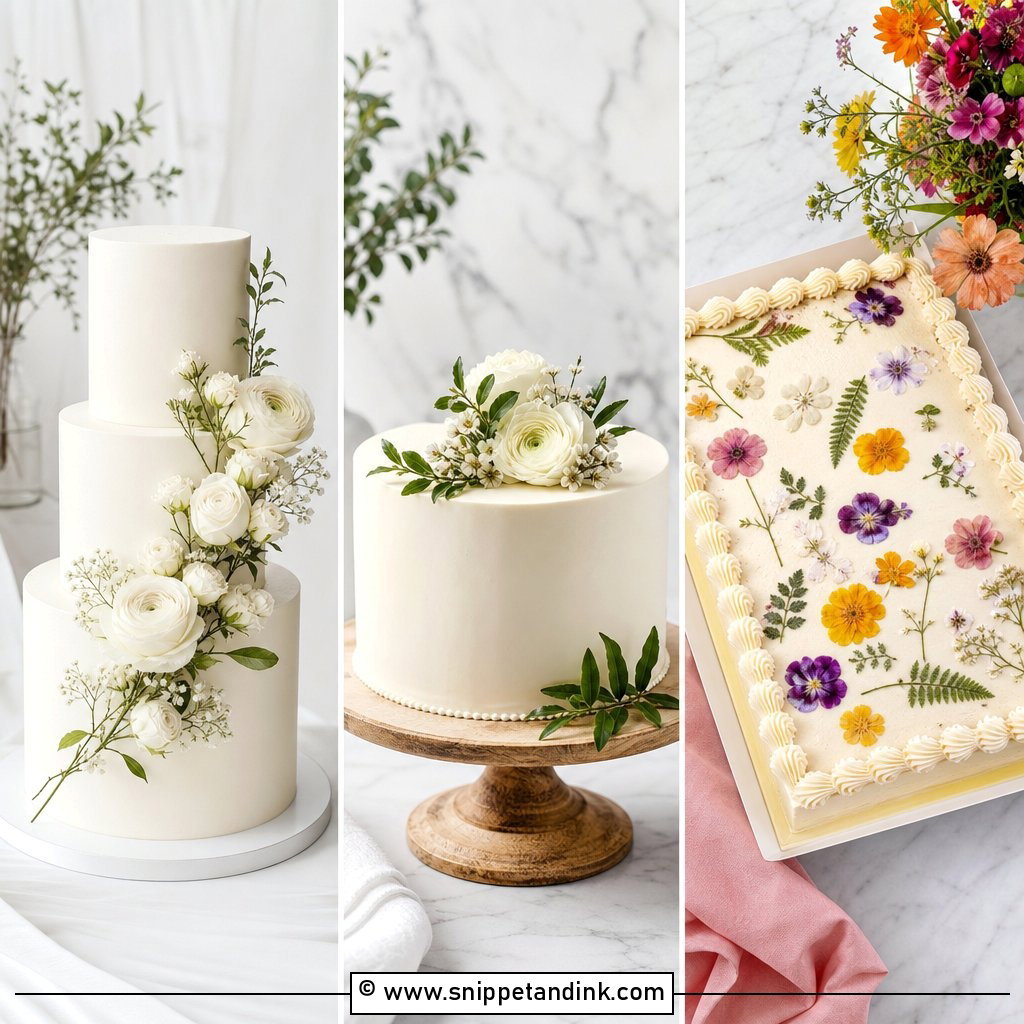
Pressed flowers and macrame are two boho ideas that share one cake well if each gets its own space. I press the edible blooms onto the sides while the buttercream is still slightly tacky, then pipe the weave on the front or lower tier. Not every pretty flower is edible; pansies, violas and cornflower petals are common choices, and they should come from a food-grade grower rather than a florist. Keep to pale shades so nothing fights the piping.
13. Macrame Wedding Cake With Rattan Texture
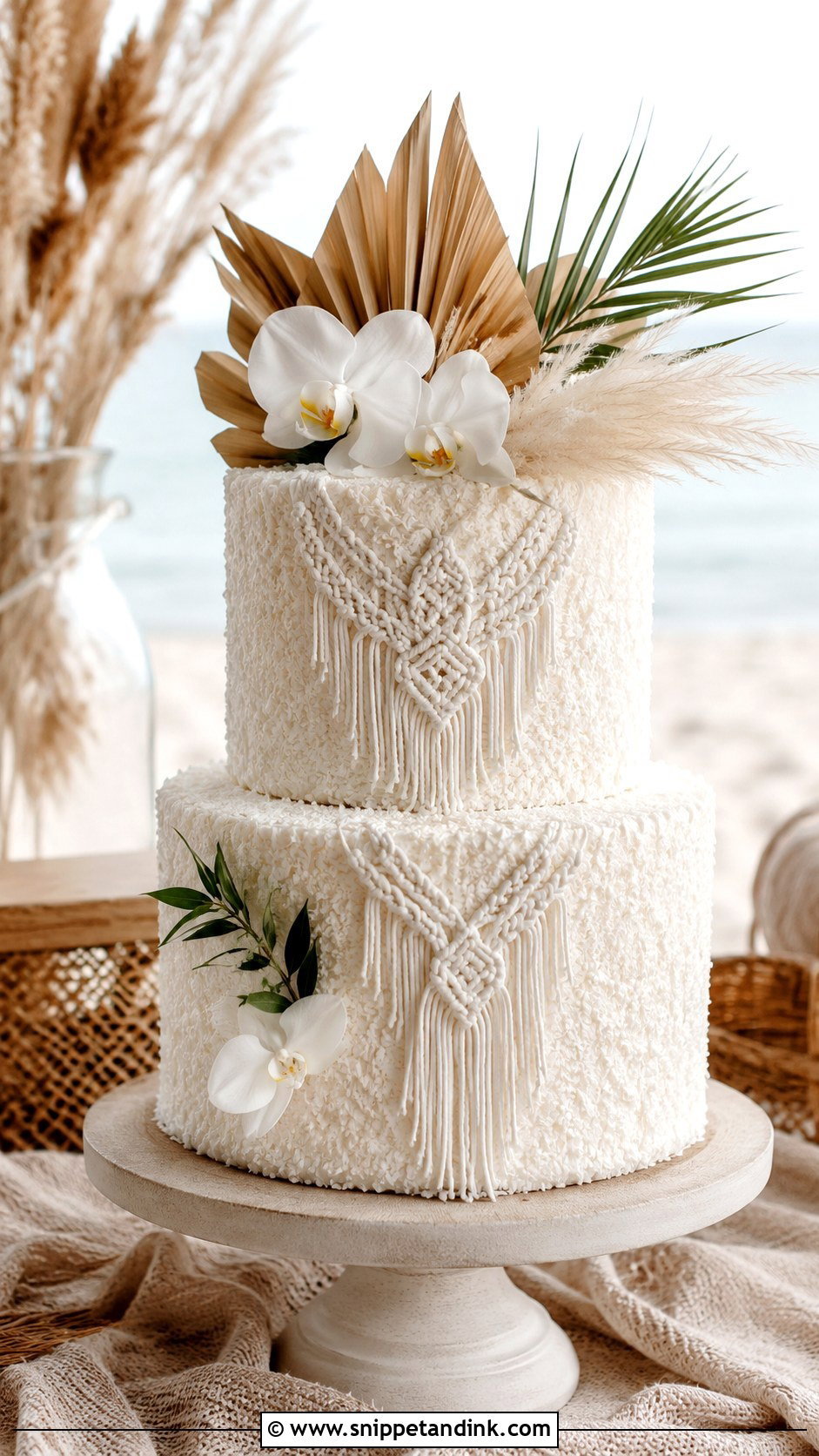
A rattan texture uses basket-weave piping or crisscrossed fondant strips to echo cane furniture. It is a busy pattern, so I confine it to one statement tier and leave the rest smooth. Basket-weave piping is time consuming and adds weight to the sides, which matters on a tall cake moving in a car. Sand, tan and ivory suit it, with dried palms or a single orchid for a finish.
14. Macrame Wedding Cake With Boho Arch
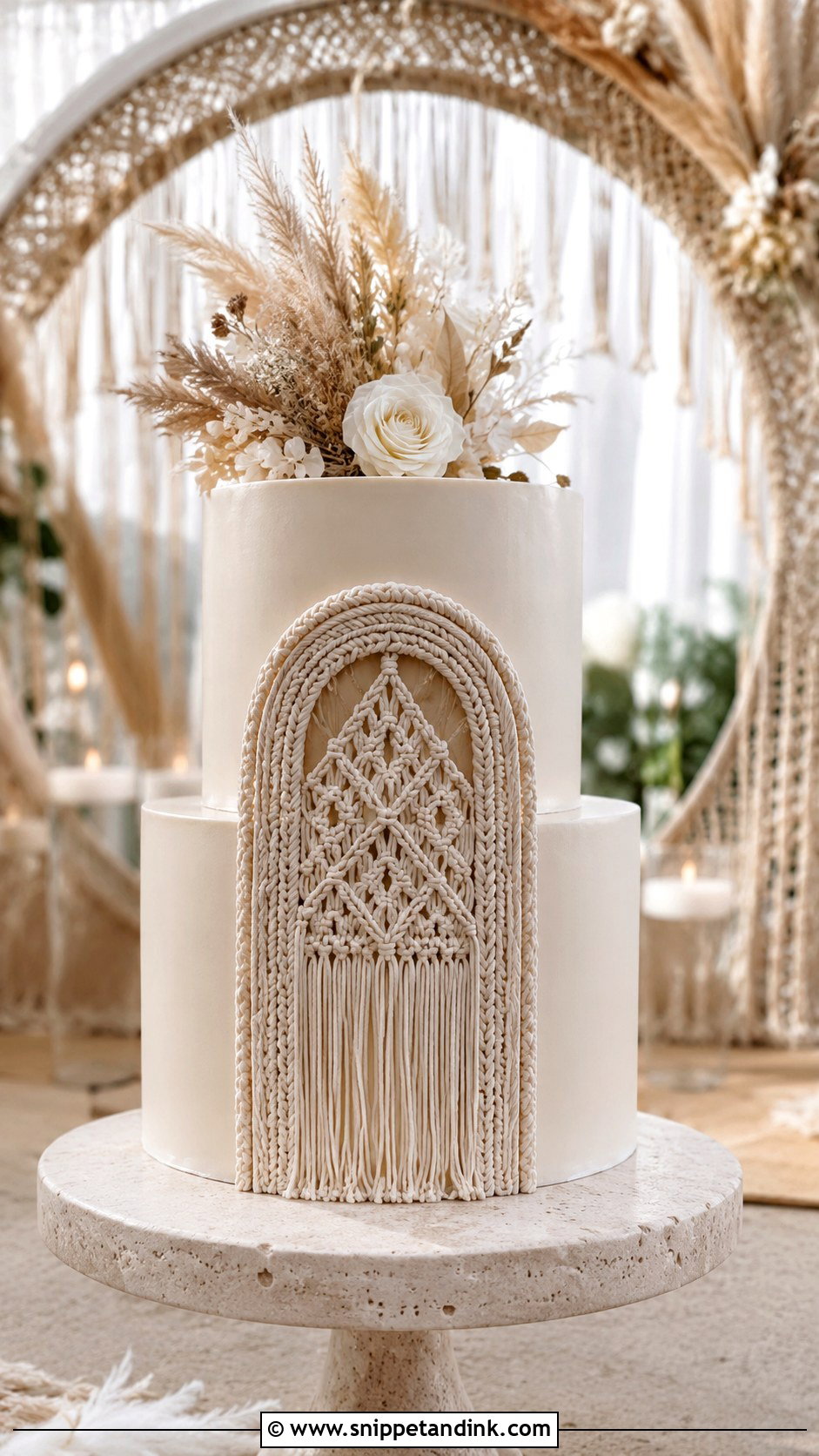
An arch on the front of a round tiered cake works like a miniature ceremony backdrop on the dessert table. I make it from dried gum paste a week or more ahead so it is rigid, then pipe macrame inside the frame and add a few dried florals. It earns its place when your ceremony already uses an arch or woven backdrop. A sugar arch is fragile, so I set it at the venue rather than transporting it attached.


15. Macrame Wedding Cake With Pearl Details
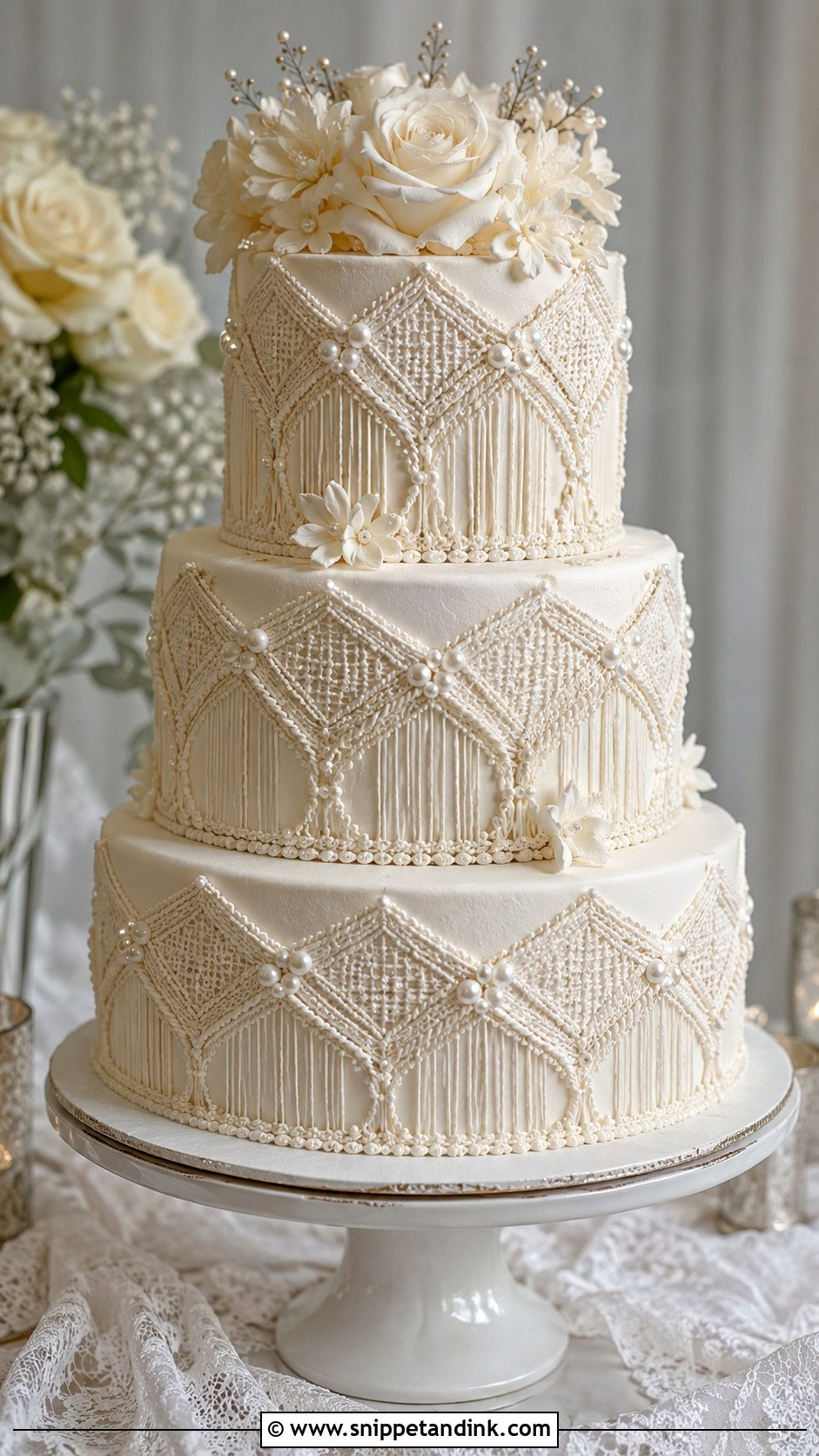
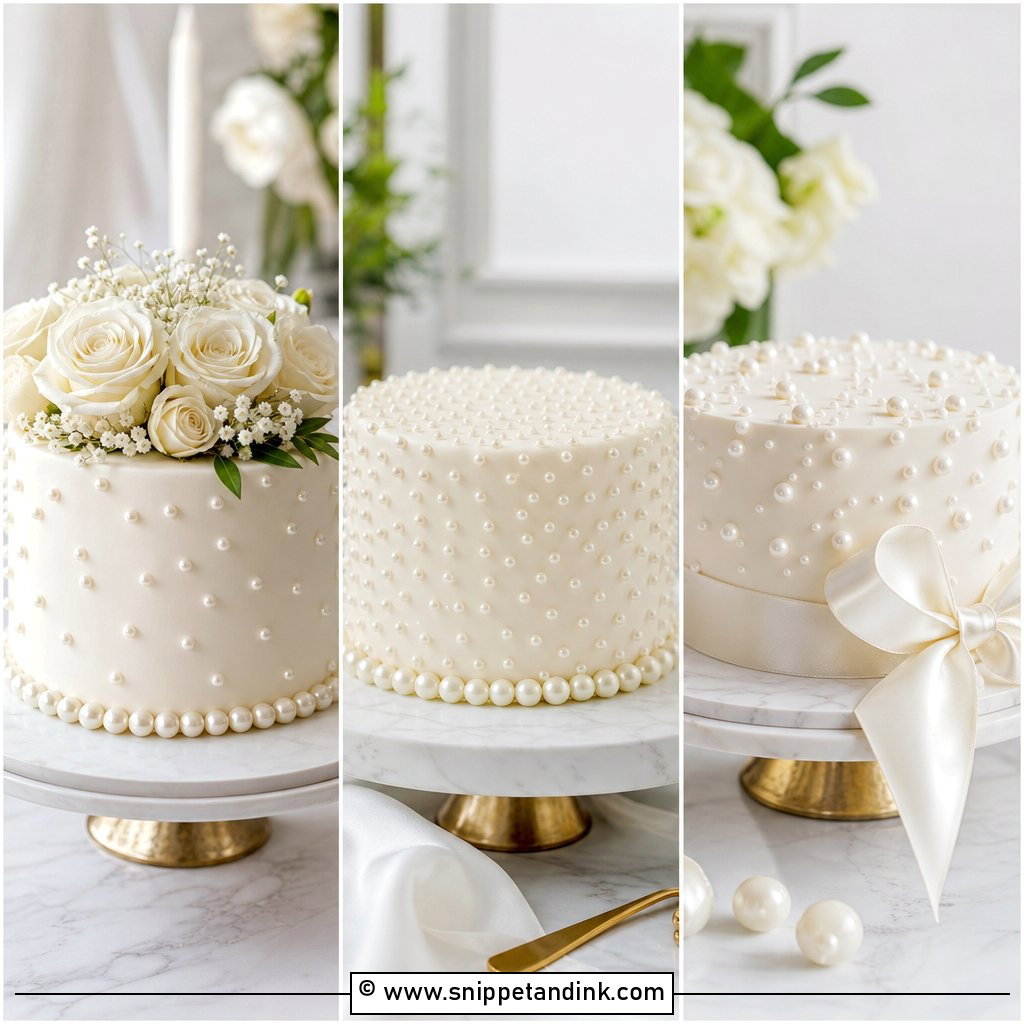
Edible pearls along the piping give the woven look a bridal finish that suits lace gowns and pearl jewelry. Use them lightly, on knots or tier edges, so they highlight the texture rather than turning the cake into a different design. Sugar pearls can bleed color in humidity and are hard to bite, so I keep them small. Ivory buttercream and soft white flowers are all this one needs.
16. Macrame Wedding Cake With Wildflowers
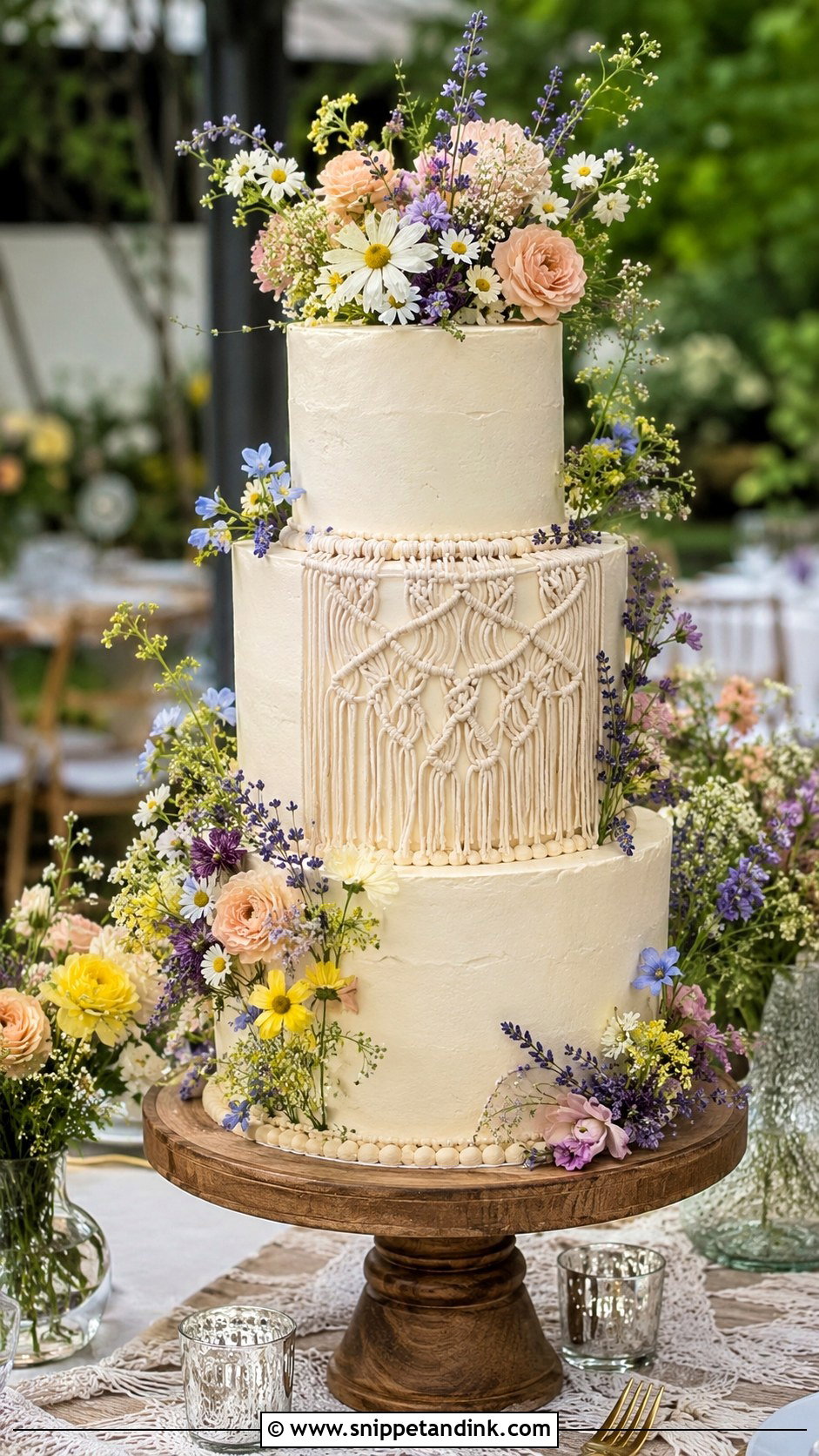
Wildflowers give the cake color and movement, while the macrame keeps it from looking scattered. Small yellow, lavender and dusty blue blooms make a cheerful palette. Many wildflowers wilt quickly once cut, so I’d ask your florist which varieties last a full afternoon out of water. The weave can go on one tier or hang down the side. Ask for a loose arrangement rather than a tight posy, and the cake will look gathered, not arranged.
17. Macrame Wedding Cake With Coconut Texture
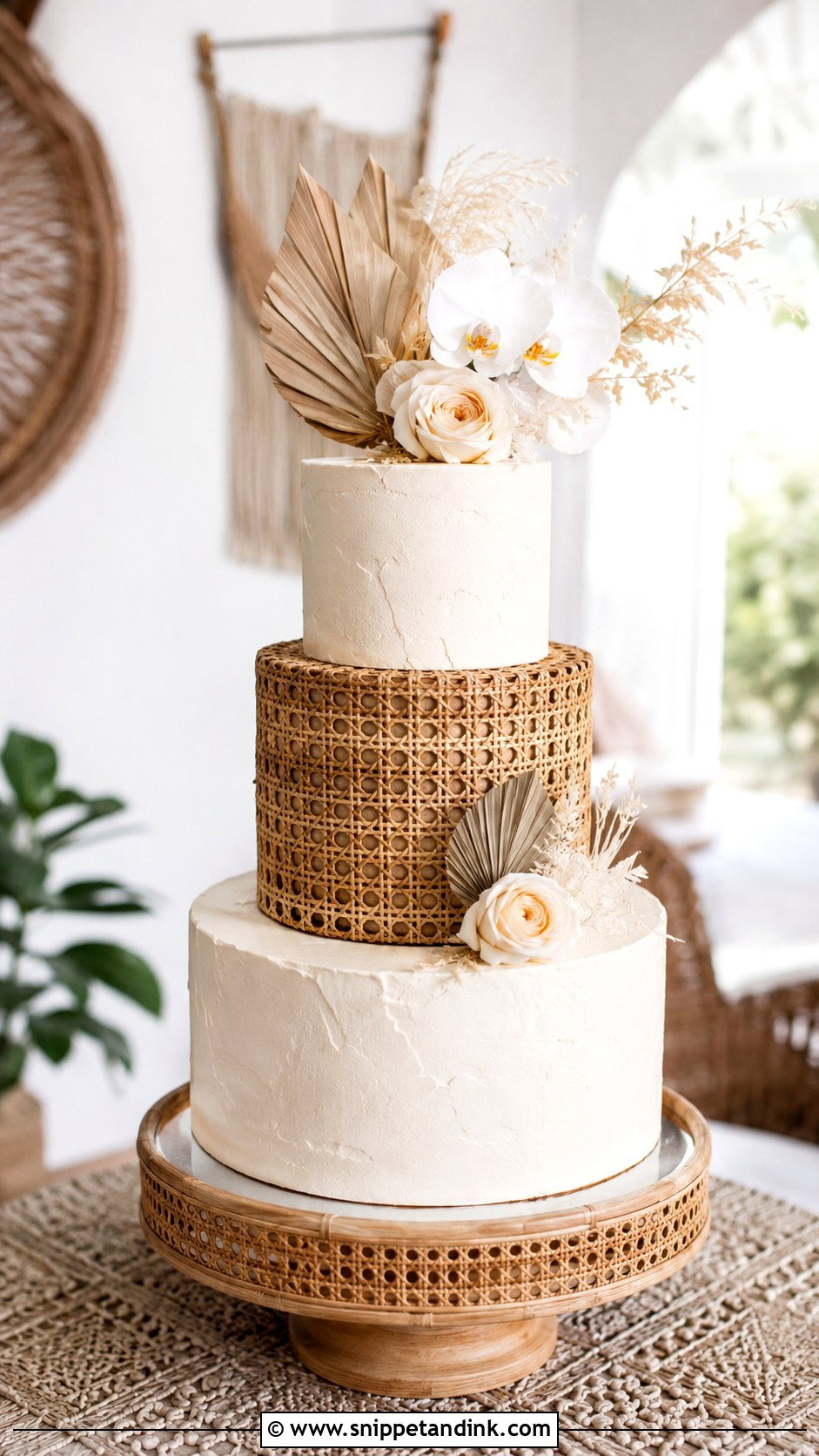
Fine coconut pressed onto parts of a white buttercream cake gives a fibrous look that suits beach and tropical receptions. I pipe the knots first and add the coconut around them, since it won’t stick to piping that has crusted. It pairs naturally with vanilla coconut, lime or almond sponge. Do check guests for coconut allergies and label the cake, because the texture can’t be scraped off once applied. White orchids and simple greenery keep it breezy.
18. Macrame Wedding Cake With Ombre Tiers
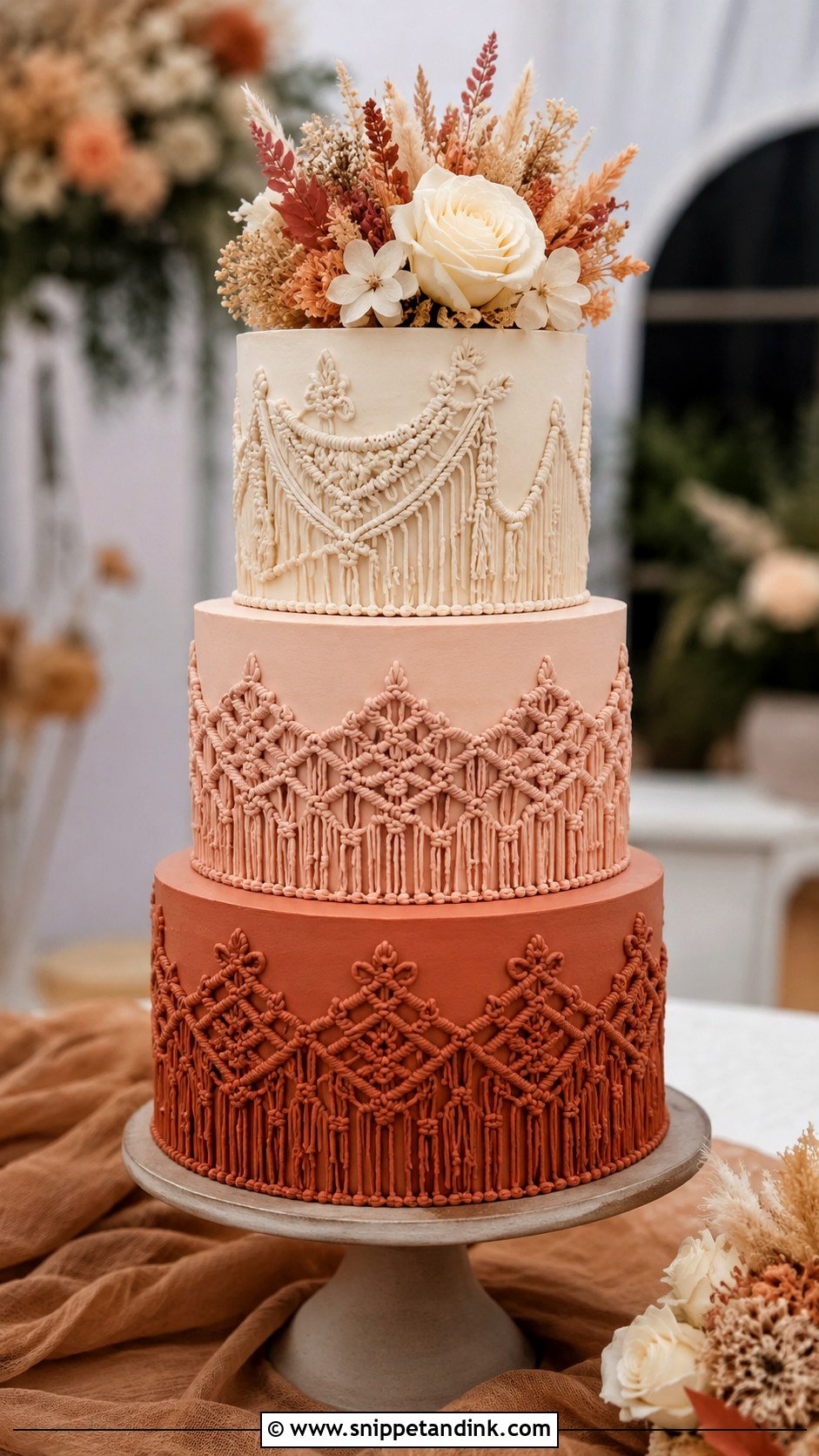
Ombre tiers fade from ivory to beige, blush to terracotta, or sage to cream, and the macrame piping laid over the gradient looks deeper than it would on a single color. Getting even steps is harder than it looks: I mix each tier’s buttercream separately and line them up in daylight before coating. Match any dried flowers to the darkest tier. Smooth frosting matters here, since texture breaks up the color transition.
19. Macrame Wedding Cake With Square Tiers
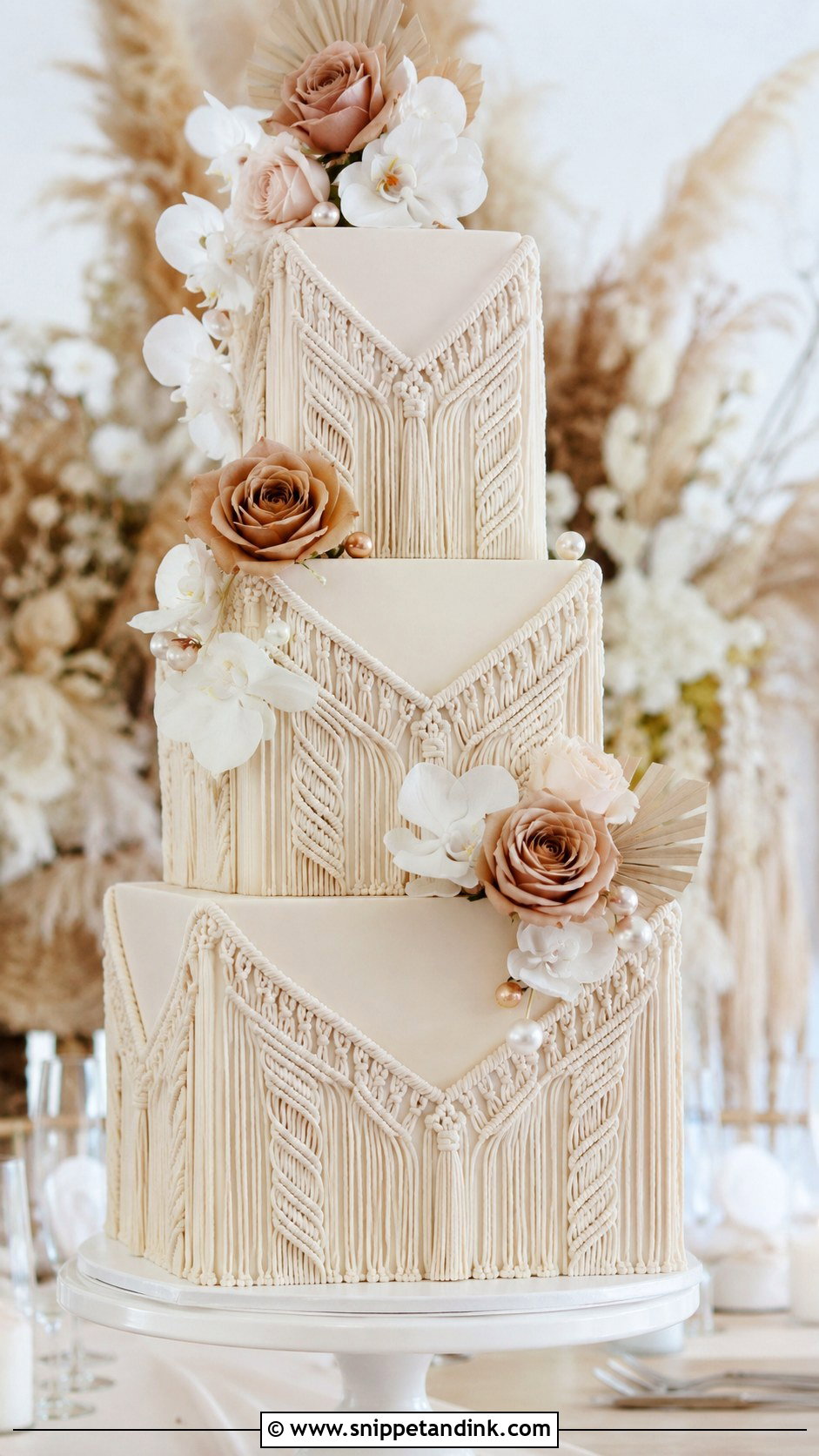
Square tiers frame the woven pattern with straight lines, so every macrame strand looks deliberate. They are less forgiving than rounds; corners need sharp fondant or very well chilled buttercream, and they bulge first if the cake warms up. I pipe the weave on the front face of each tier and add one floral cluster on a corner. Champagne, taupe and soft beige suit the modern shape.
20. Macrame Wedding Cake With Hanging Display
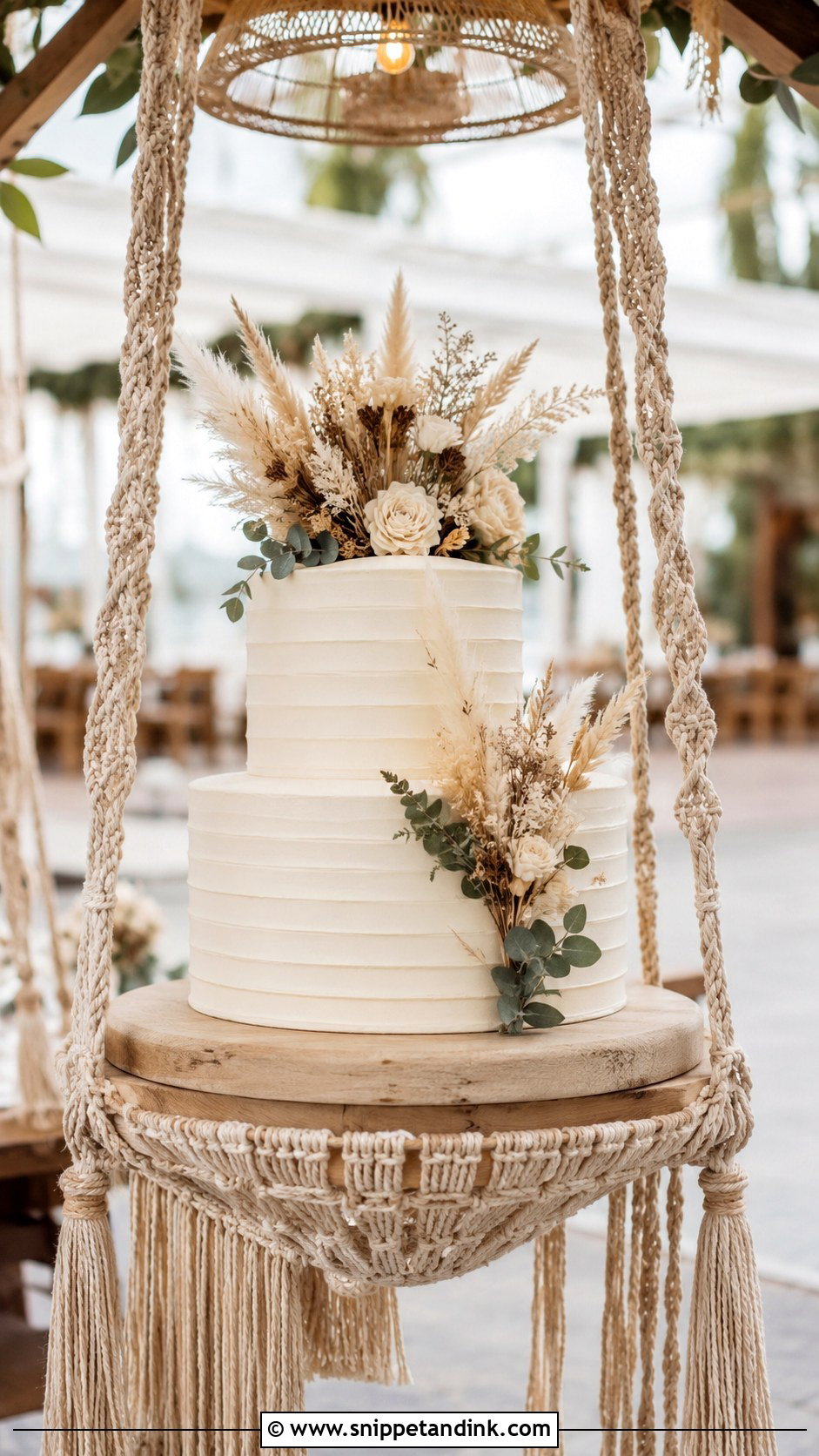
A hanging display, with the cake on a suspended shelf or swing frame wrapped in macrame cords, turns the dessert into a centerpiece guests will crowd around. It is also the riskiest idea here. A tiered cake is heavy and doesn’t tolerate swaying, so the frame must be rigid, properly rated and built by a decor team that has done it before, and I’d want to see it in place before the cake goes on. The cake itself should stay simple: ivory buttercream, woven piping, a few dried stems. If the venue can’t anchor it safely, a low stand with cords hung behind it gives a similar picture.
Dried Grass, Flowers and What Touches the Icing
Almost every cake on this list carries something that isn’t food. Pampas, dried palm, eucalyptus and many florist flowers are treated, dyed or simply not safe to eat, and some shed fibers. I never push a bare stem into sponge.
- Stems are wrapped in floral tape and set into a straw, flower pick or small food-safe tube.
- Dried pieces sit on top of the icing or between tiers, away from the slices that will be served.
- Flowers meant to be eaten come from a supplier who grows them for food, not from the centerpieces.
- Whoever cuts the cake is told which pieces to lift off first.
Agree who is responsible for the decoration, too. If your florist supplies the blooms, the baker needs to know when they’ll arrive and whether they’re wired.
Boho Receptions Are Usually Hot, Which Changes the Cake
Most of these cakes end up outdoors or in tents and barns, and buttercream softens fast in direct sun. Piped knots are the first thing to sag, followed by square corners. An American buttercream with a high butter content is the most vulnerable; Swiss meringue holds detail a little better, and fondant over a firm ganache is the most stable choice I know for a hot afternoon.
Ask the venue where the cake table will stand and when sunlight reaches it. Keep the cake indoors or in shade until shortly before it is displayed, and plan the cutting early in the reception rather than after a long evening. If the forecast is properly hot, it is worth switching the piped panel to fondant cords. It looks almost the same and keeps its shape.
Which Woven Cake Belongs at Your Reception?
Macrame cakes stretch from rustic to polished depending on the base finish and what surrounds the weave. For a clean look, keep to fondant lace or one piped panel on smooth buttercream. For something fuller, add pampas, fringe or dried flowers, but give each element room. Start from your venue and the season, then pick the finish that will survive both, and the decoration will follow.
You'll Like These Ideas:







Leave a Reply