
I make a lot of dessert cups for weddings, and the reason couples love them is practical: every guest gets a portion, nobody needs a knife, and the layers show through the glass without any extra decoration. They suit formal receptions and buffet tables equally well, and they let a small wedding offer several flavours without cutting three cakes. What separates a good cup from a sad one is mostly structure. The layers have to stay distinct, the toppings have to stay crisp and the whole thing has to hold its shape on a display for a couple of hours. Cheesecake, trifle, mousse, pudding, cobbler and layered cake all work in a cup, and below are twenty I’d build for a wedding, with notes on how each one behaves.
Glass or Plastic, and Why Cup Size Changes the Dessert
Couples spend ages on flavours and almost no time on the cup, but the container decides how a dessert looks, travels and eats.
Size
Small cups of a few ounces suit a table with several flavours, since guests take two or three. Bigger cups work when the cup replaces cake as the main dessert. Rich fillings like mousse, cheesecake and brownie parfait belong in the smaller size; light ones like trifle and fruit can go larger.
Material
Real glass looks best and doesn’t tip easily, but needs washing and someone to collect it. Clear, rigid plastic is lighter and disposable. Avoid thin, flimsy cups that crack when squeezed. Tall, narrow cups show more layers but are harder to eat from, and they topple on a crowded table.
Spoons and lids
Long mini spoons reach the bottom layer; short tasting spoons don’t. Lids are worth having for transport and fridge stacking, and come off just before display.
1. Tiramisu Dessert Cups
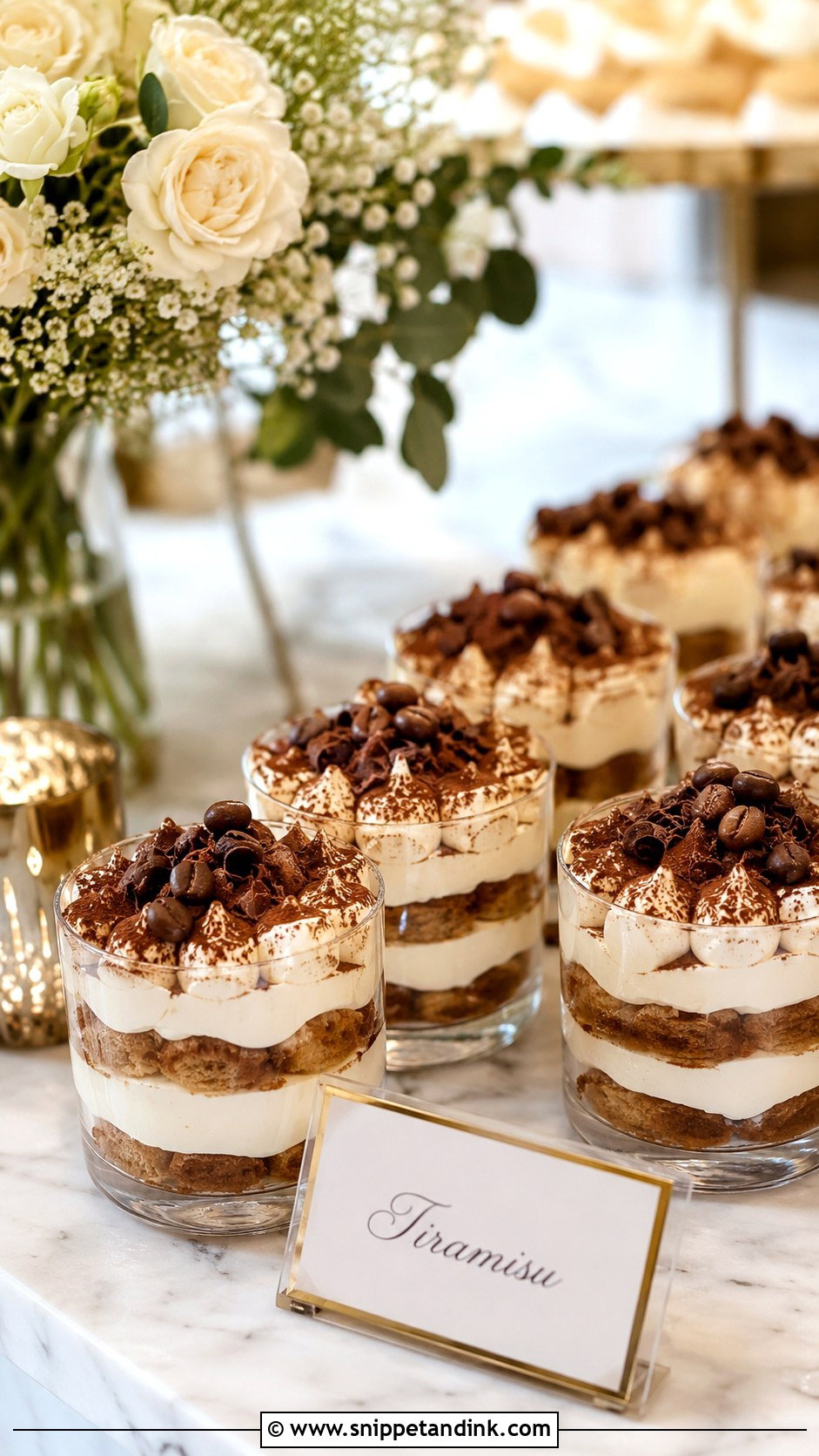
Tiramisu dessert cups are one of the best make-ahead cups I know, because tiramisu actually improves after a night in the fridge as the ladyfingers soften into the mascarpone. In a clear mini glass you see every layer. I dip the ladyfingers quickly rather than soaking them, or the bottom of the cup turns to a puddle of coffee. Keep portions small after a full dinner. Dust the cocoa just before serving, since it absorbs moisture and goes blotchy if added the day before, then finish with a chocolate curl or a single espresso bean.
2. Strawberry Shortcake Dessert Cups
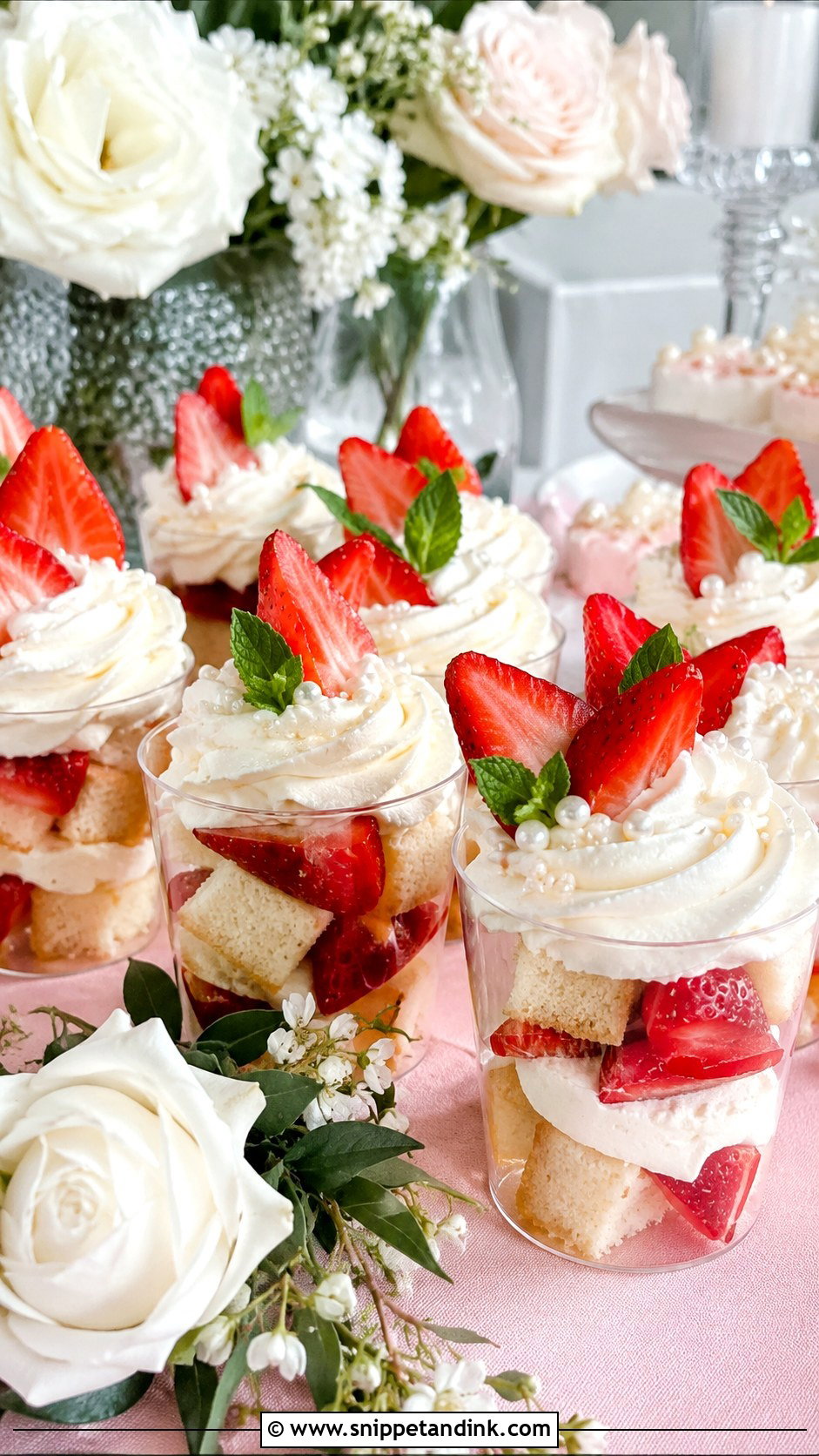
Strawberry shortcake cups look like spring on a table, especially beside white flowers and blush linens. I layer vanilla sponge or shortcake biscuit pieces with sweetened strawberries and lightly whipped cream. The real problem is juice: sugared strawberries release liquid, which soaks the cake and seeps into the cream. I macerate the berries only briefly and drain them before layering, so the cups stay neat on display. A strawberry slice, a tiny mint leaf or a pearl sprinkle finishes the top. Familiar flavours like this always empty first.
3. Lemon Cheesecake Dessert Cups
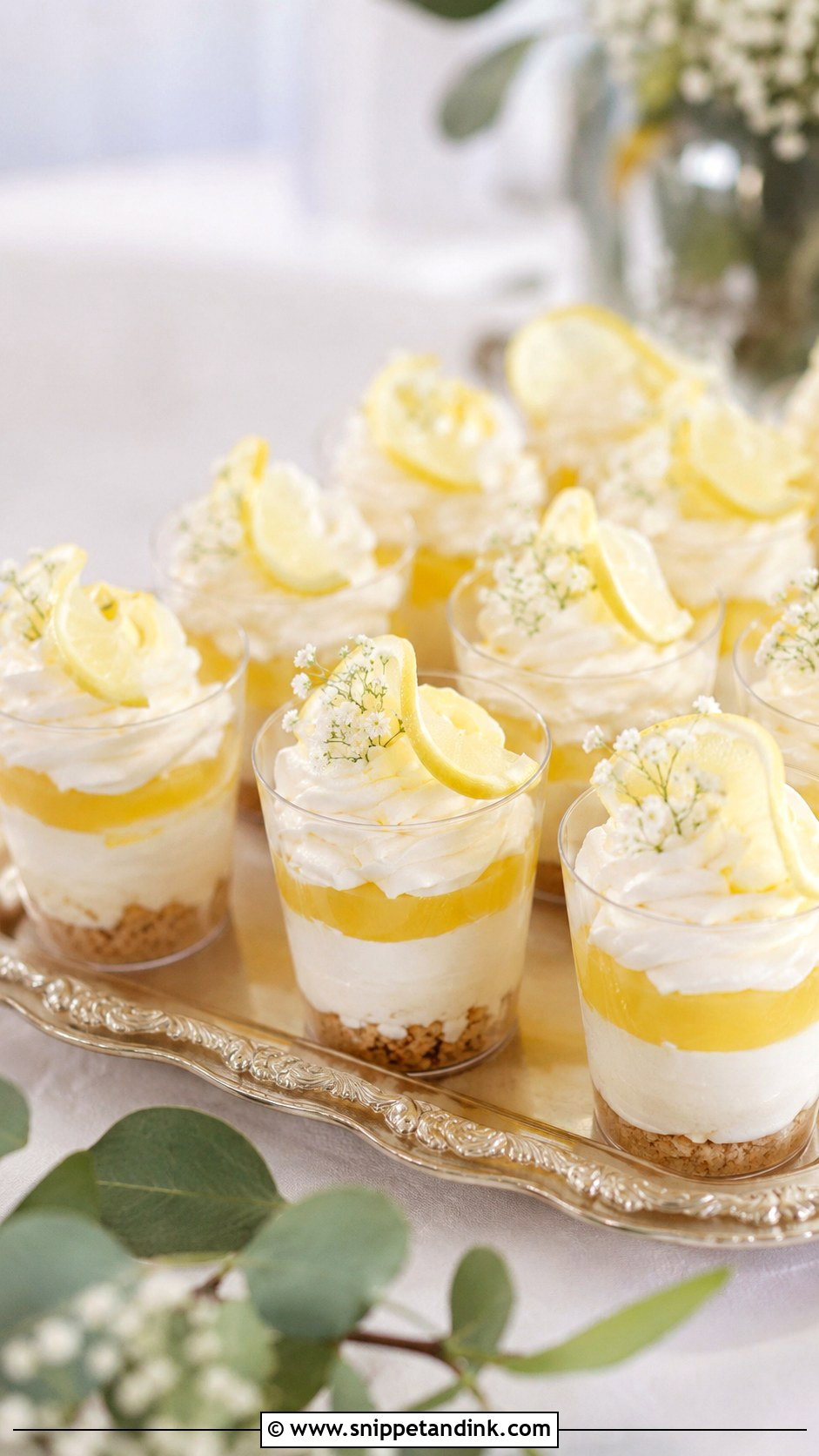
Lemon cheesecake gives you creaminess with a clean finish, which suits a dessert after a rich meal. A buttery graham crumb base, smooth lemon cheesecake filling and a layer of lemon curd or whipped cream on top. I aim for bright, not sharp; too much acid can make cream cheese taste chalky. The pale yellow sits nicely against ivory flowers and soft greens. These hold well made a day ahead, which takes pressure off the wedding week. Add a lemon twist, an edible flower or a white chocolate shard just before they go out.
4. Chocolate Mousse Dessert Cups
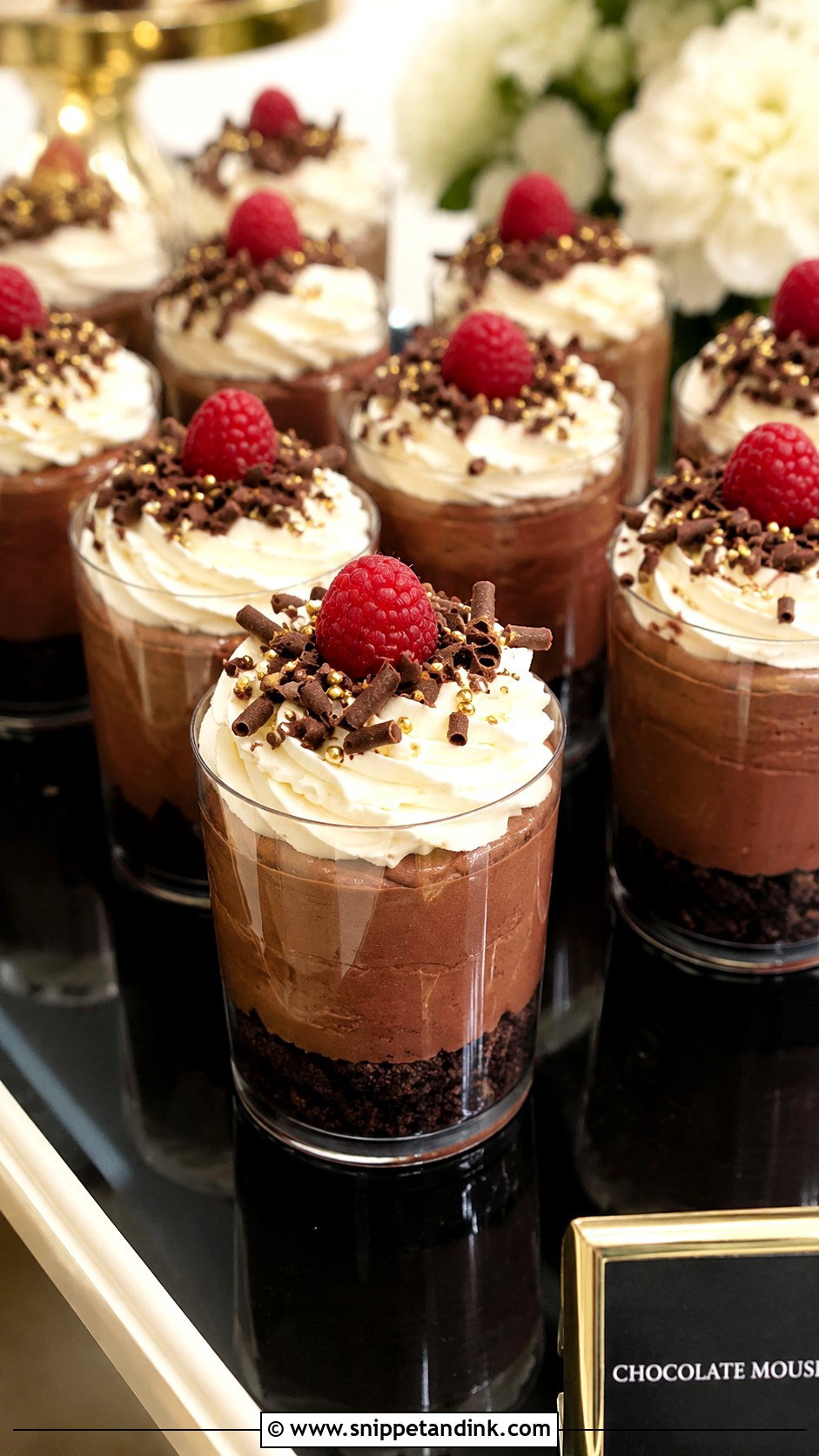
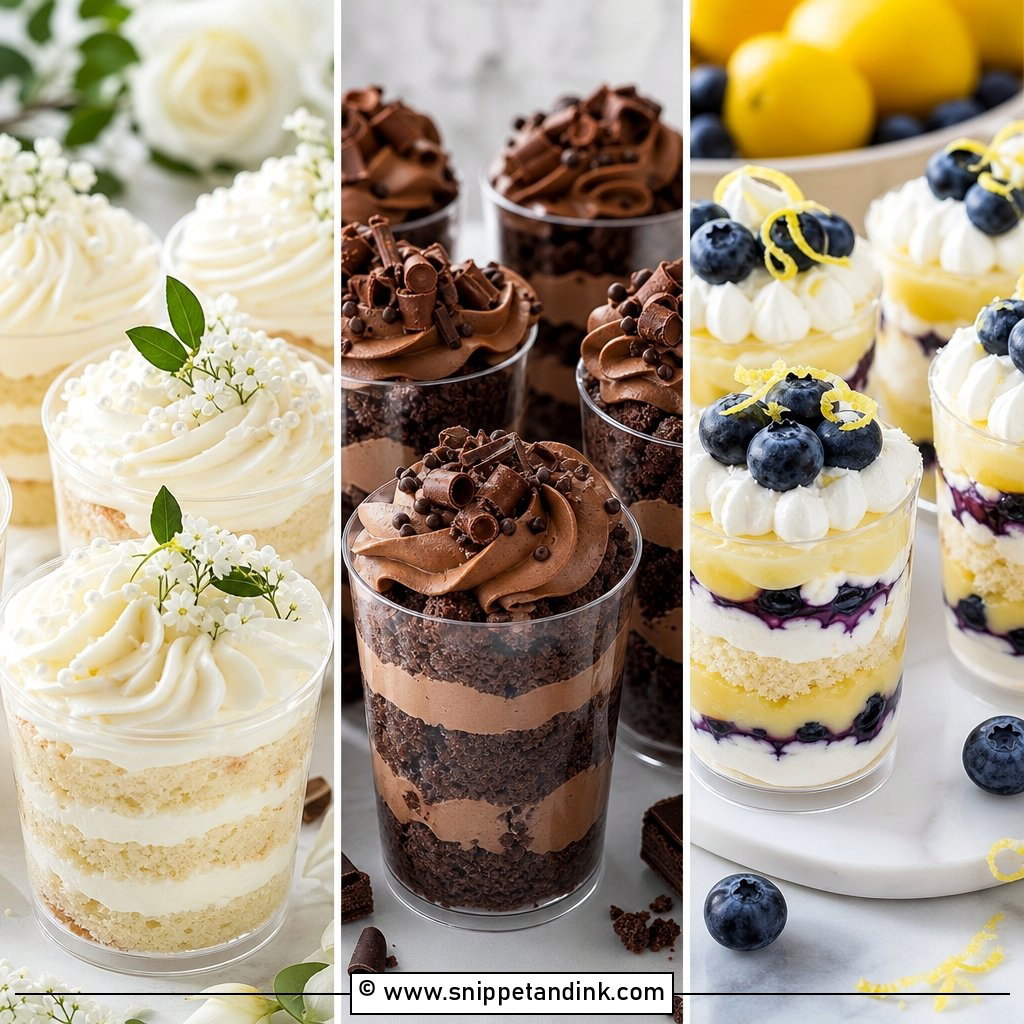
Chocolate mousse is where a cup really earns its place, because a mousse can’t be sliced like cake but sits perfectly in glass. I use a silky, airy mousse rather than a dense one so it doesn’t feel heavy after dinner. A thin cookie crumb base adds texture, though some couples prefer it fully creamy. Piped cream, chocolate shavings, gold sprinkles or a single raspberry go on top. Mousse needs to set firmly before it travels. A loosely set mousse slumps and smears the inside of the glass when the cup is moved, and that shows on a display.
5. Mini Trifle Dessert Cups
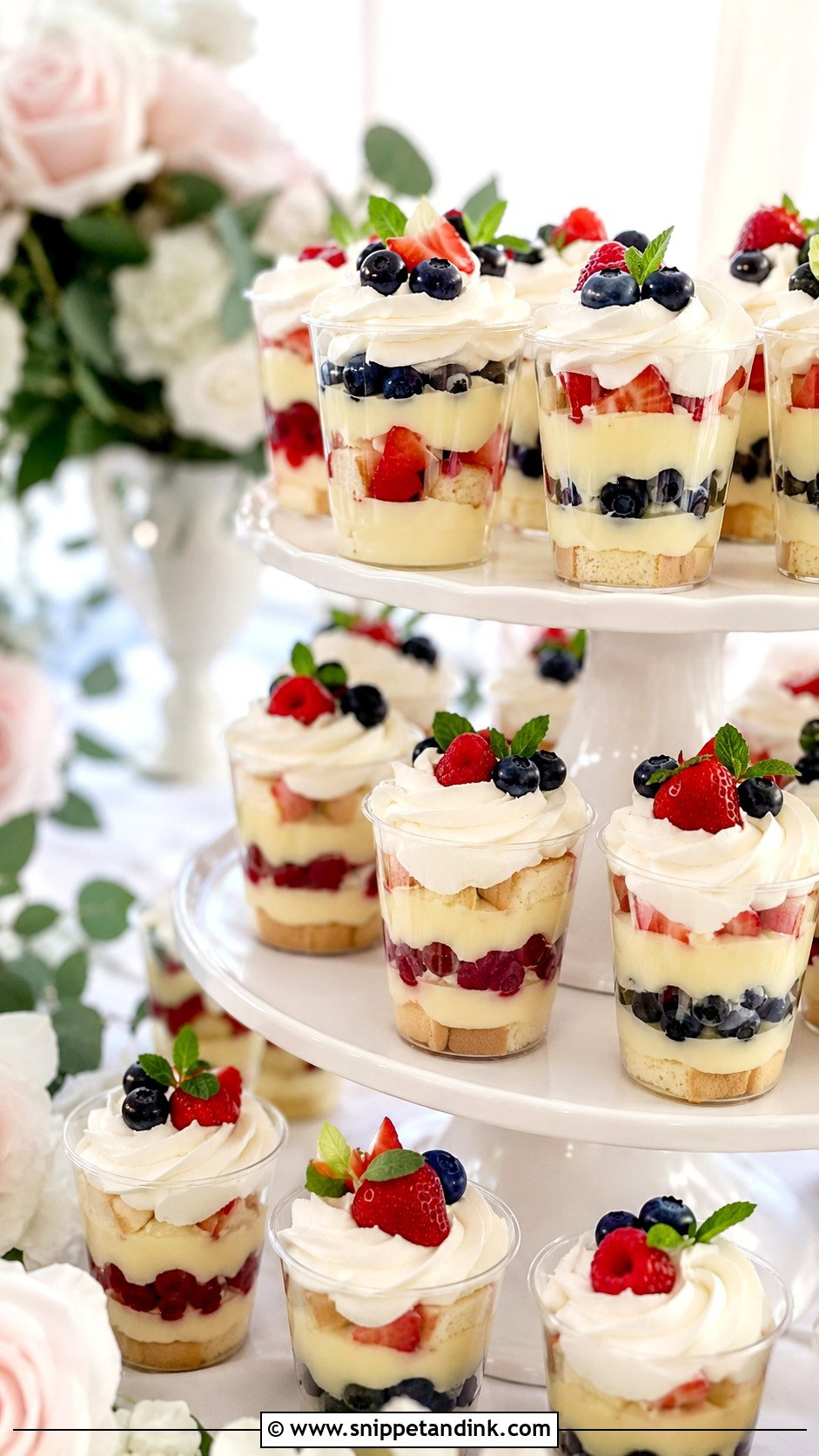
Trifle is the cup I’d choose when a wedding dessert table needs colour and height. Vanilla cake cubes, custard, whipped cream and fresh berries make even simple ingredients look special in layers. Match the fruit to the season: strawberries in spring, peaches in summer, mixed berries year round. Clear cups show every layer from every side. On a large order, I pipe each layer rather than spooning it, so every cup in the row looks the same. A single berry on top finishes it.
6. Raspberry Cheesecake Dessert Cups
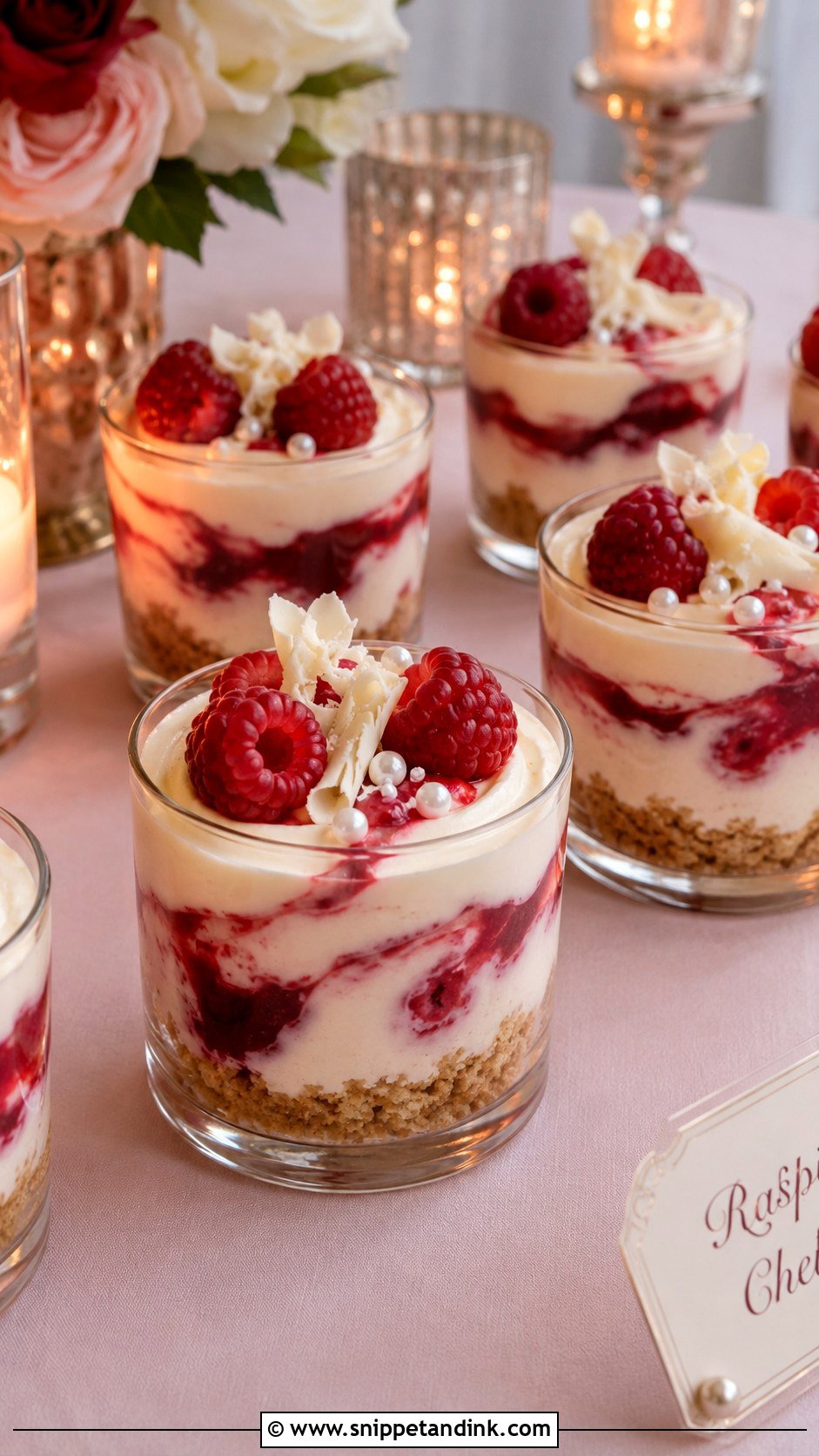
Raspberry cheesecake gives a soft pink-red that reads romantic rather than loud, and it sits well with ivory, blush, sage and gold. A crumb base adds crunch, the cheesecake filling gives the creamy middle, and raspberry sauce is either swirled through or spooned neatly on top. Swirled looks more relaxed; a clean top layer looks more formal. Raspberries are fragile and bleed onto cream after a few hours, so I place the fresh ones as close to serving as I can. Keep the cups cold until they go out.
7. Key Lime Pie Dessert Cups
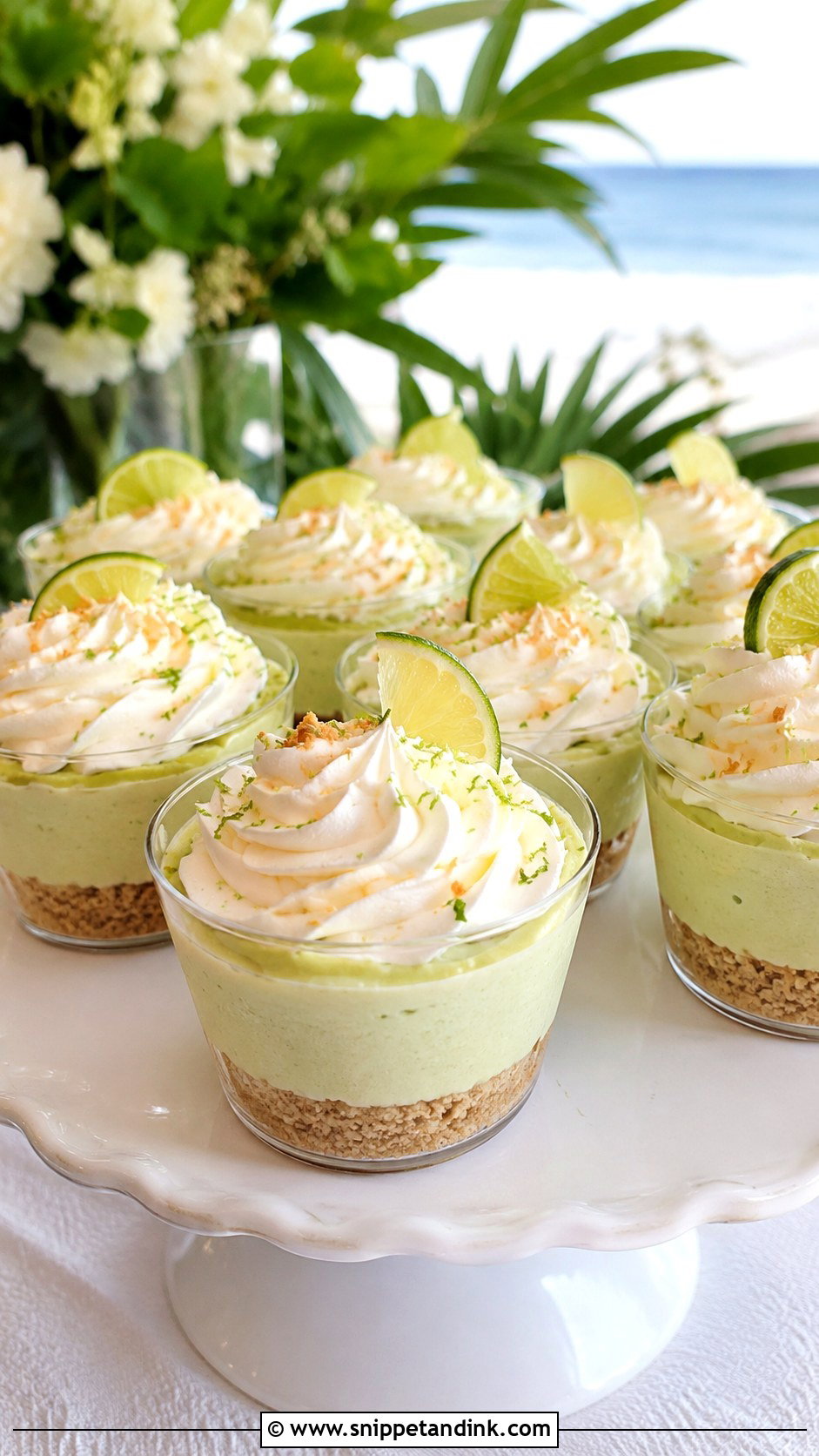
Key lime is tangy, so a small cup is the right size: enough to refresh, not so much that it puckers. Graham crumb base, pale green lime filling, a swirl of whipped cream. It suits beach, garden and warm-weather receptions, and it gives a table full of chocolate and vanilla something different. Add lime zest, a tiny lime wedge or toasted coconut. The filling sets through the reaction between the acid and condensed milk, plus chilling, so it needs proper fridge time before service and should stay cold to keep its clean edge.
8. Cookies And Cream Dessert Cups
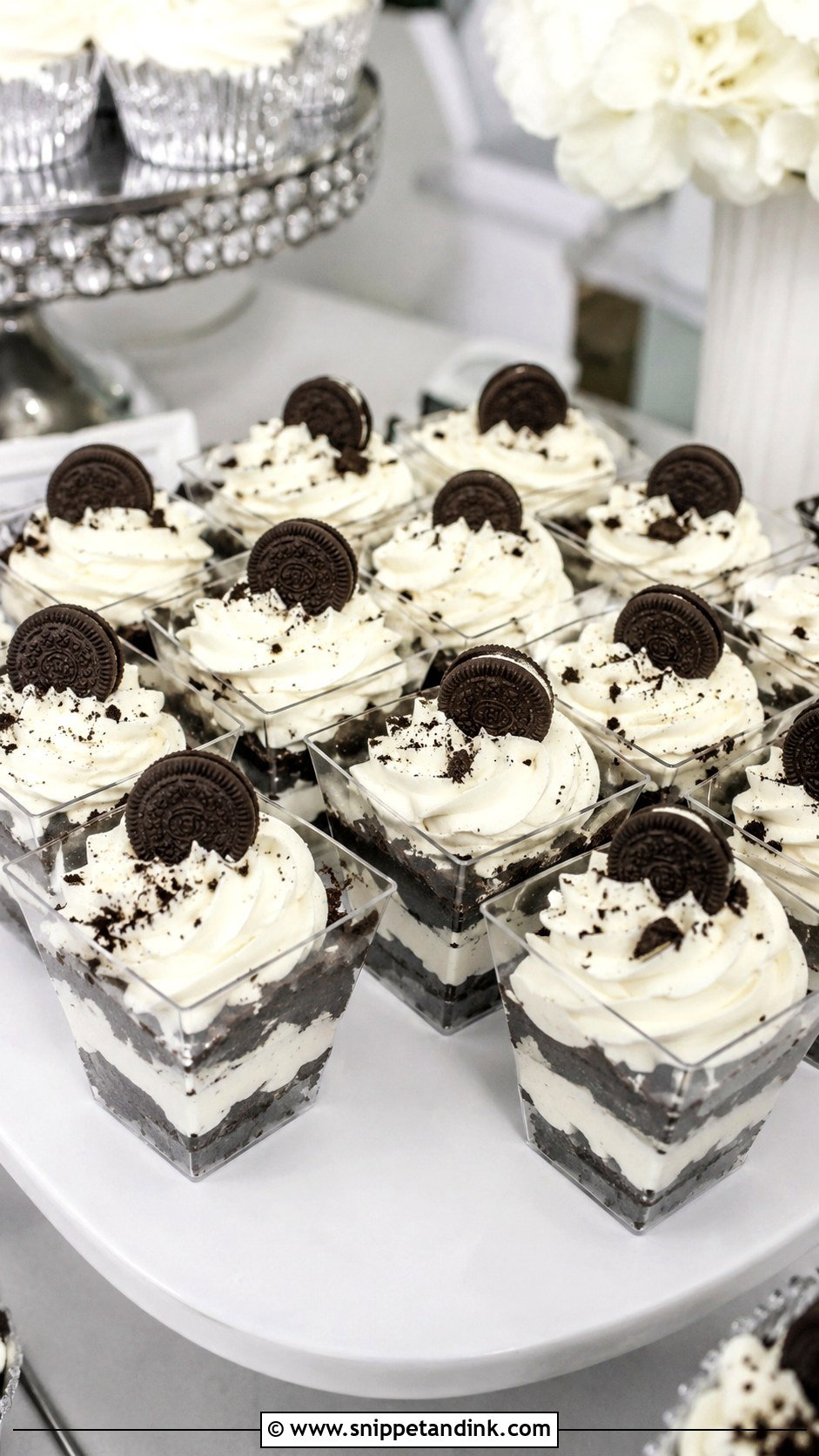
Cookies and cream is the cup guests of every age reach for. I use crushed chocolate sandwich cookies for the base, then layer vanilla cream, cookie mousse or a cheesecake filling. The black-and-white contrast suits modern palettes. Pipe the cream rather than spooning it for clean lines against the glass, and add crumbs and a mini cookie piece on top. Cookie crumbs go soft in cream within hours, so I keep the top crumbs separate and add them shortly before display.
9. Salted Caramel Cheesecake Dessert Cups
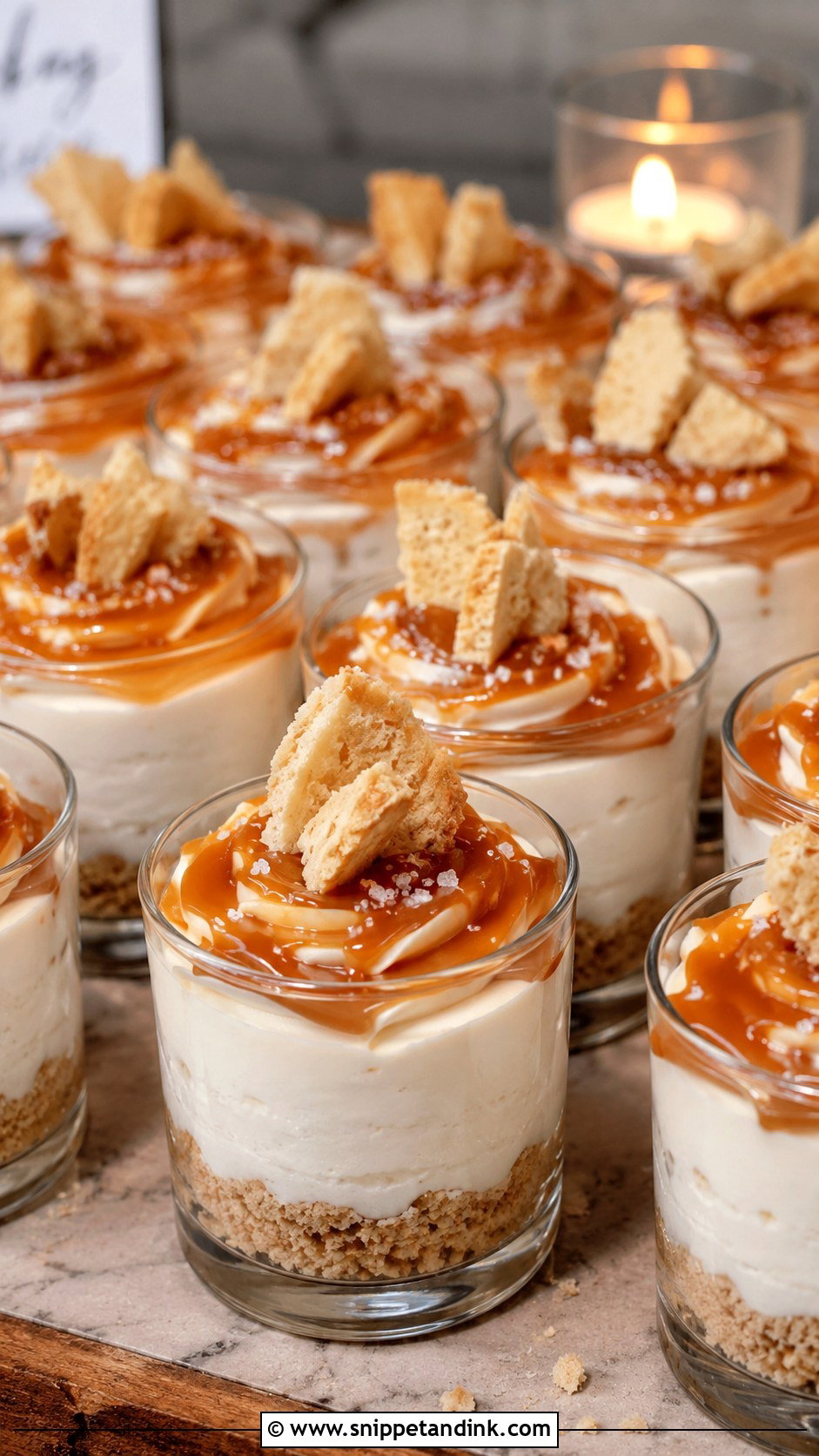
Salted caramel cheesecake suits warm, candlelit receptions with wood tables and cream flowers. A graham or shortbread base, vanilla cheesecake filling and a glossy caramel layer on top. A pinch of flaky salt makes it taste more grown-up and cuts the sweetness. Caramel firms up in the fridge, so I take these out a little before serving to let it soften back to a spoonable layer. Add the flaky salt last: it dissolves into the caramel if it sits too long. A thin caramel drizzle finishes it.
10. Red Velvet Cake Dessert Cups
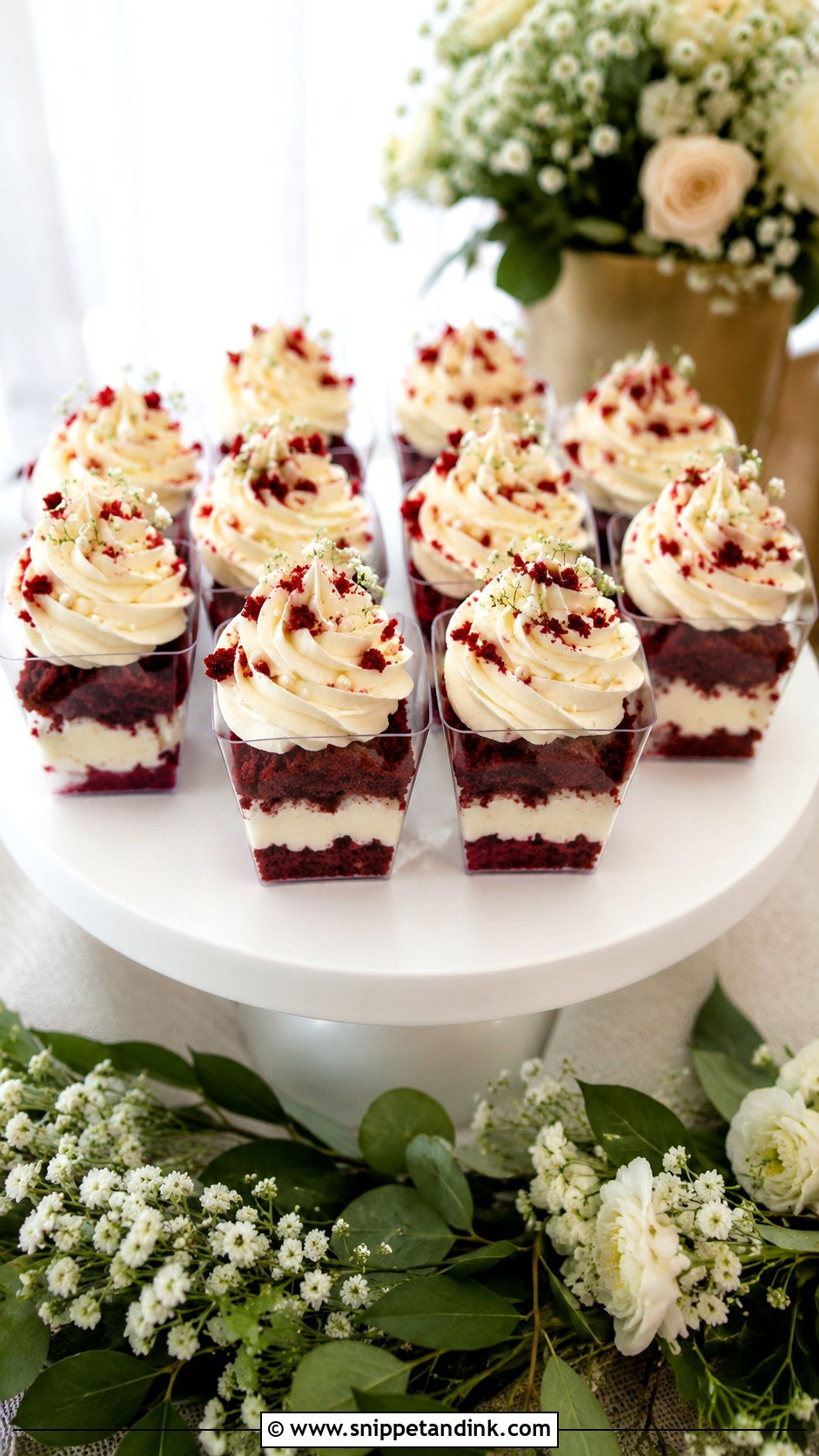
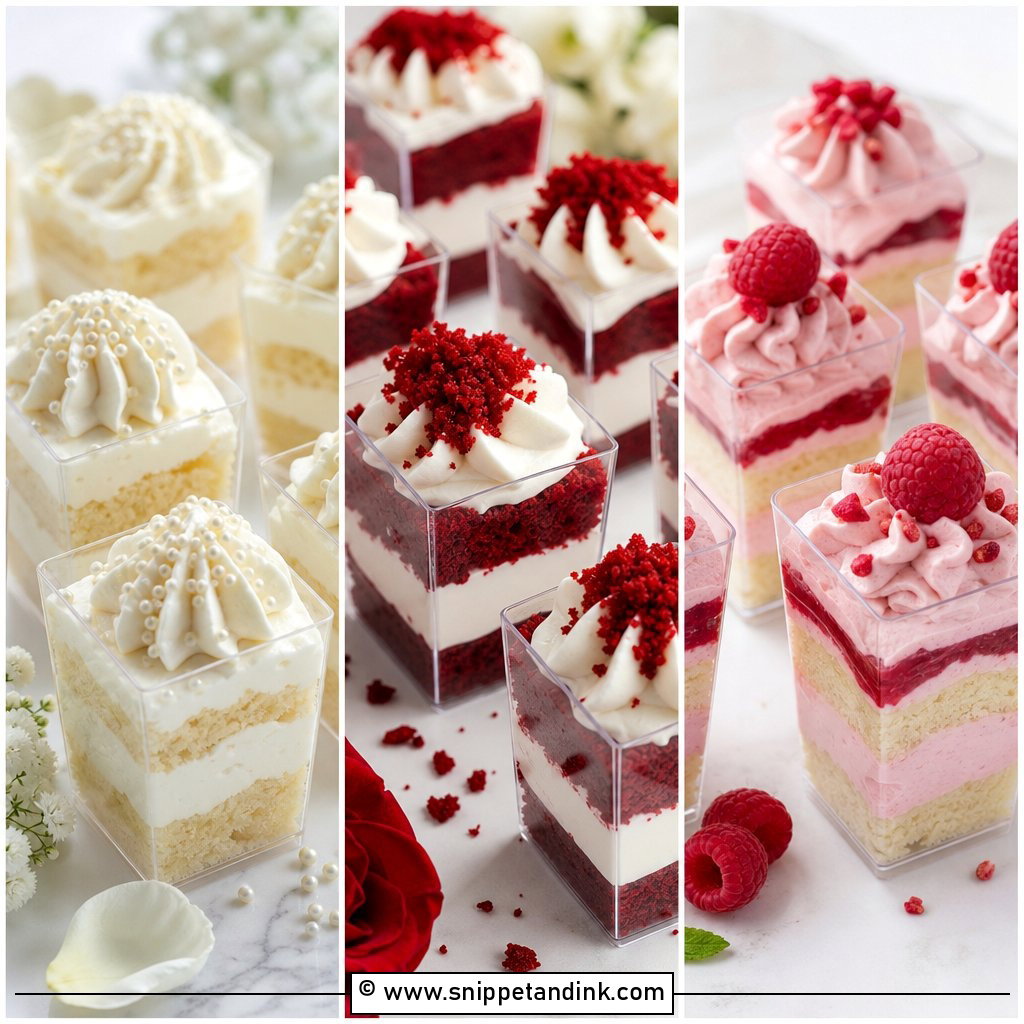
Red velvet in a cup gives you a mini layer cake without any slicing. The deep red crumb shows strongly through clear glass, especially against white cream cheese frosting. I alternate small cake cubes with smooth cream cheese filling and finish with a frosting swirl and a little red crumb on top so guests recognise it at a glance. Cream cheese frosting is softer than buttercream, so pipe it chilled and keep the cups cool. Messy layers look careless in this cup, so neat and even is the goal.
11. Banana Pudding Dessert Cups
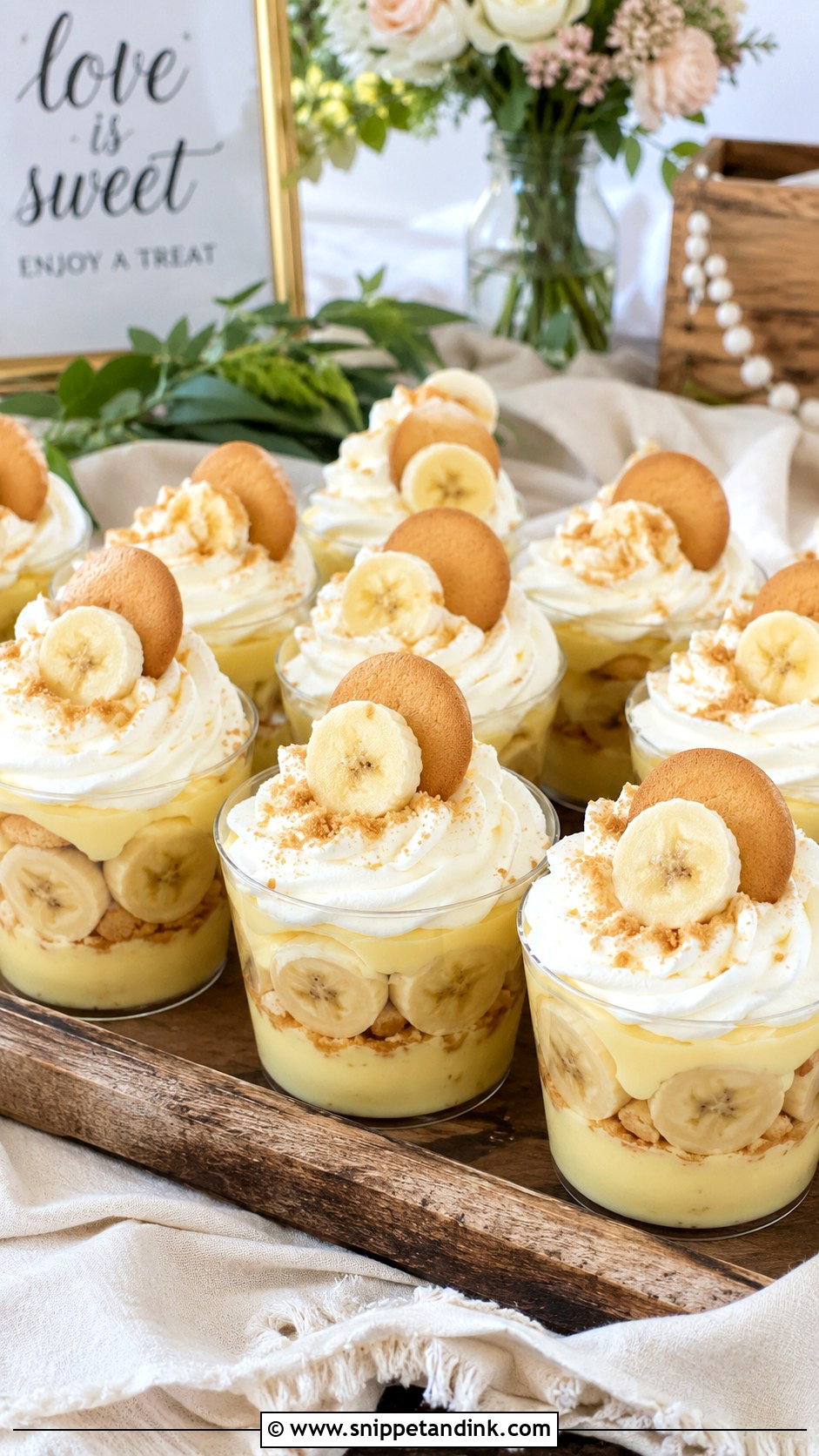
Banana pudding is comfort food, and it fits rustic, backyard and family-style weddings. Vanilla pudding, banana slices, crushed vanilla wafers and whipped cream on top. Bananas brown once cut, so I add them close to assembly and bury them between pudding layers where the air can’t reach them. The wafers soften as they sit, which many people actually like, so I add one whole wafer on top at the end for crunch and height. It’s easy to eat standing up, too.
12. Black Forest Dessert Cups
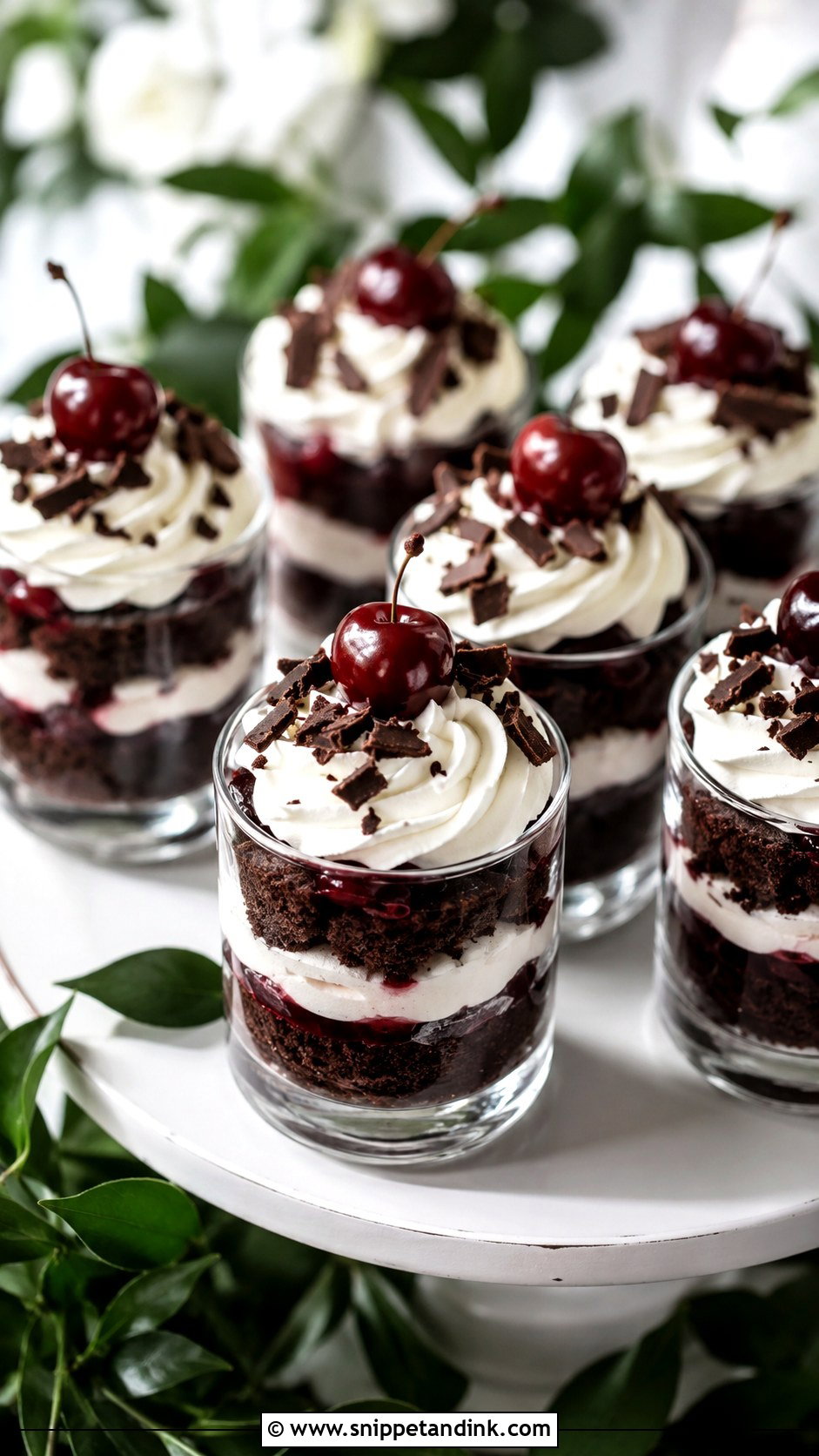
Black Forest dessert cups give chocolate lovers something richer. Chocolate cake cubes, a spoonful of cherry filling and fluffy whipped cream, with chocolate shavings and one glossy cherry on top. The dark cake and red cherries stand out against white flowers or deep greenery. Get the cherry layer right: enough to brighten the chocolate, not so much that the syrup runs down the sides of the glass and stains the cream. I stabilise the whipped cream for this cup so it holds above the wet cherry layer.
13. Peach Cobbler Dessert Cups
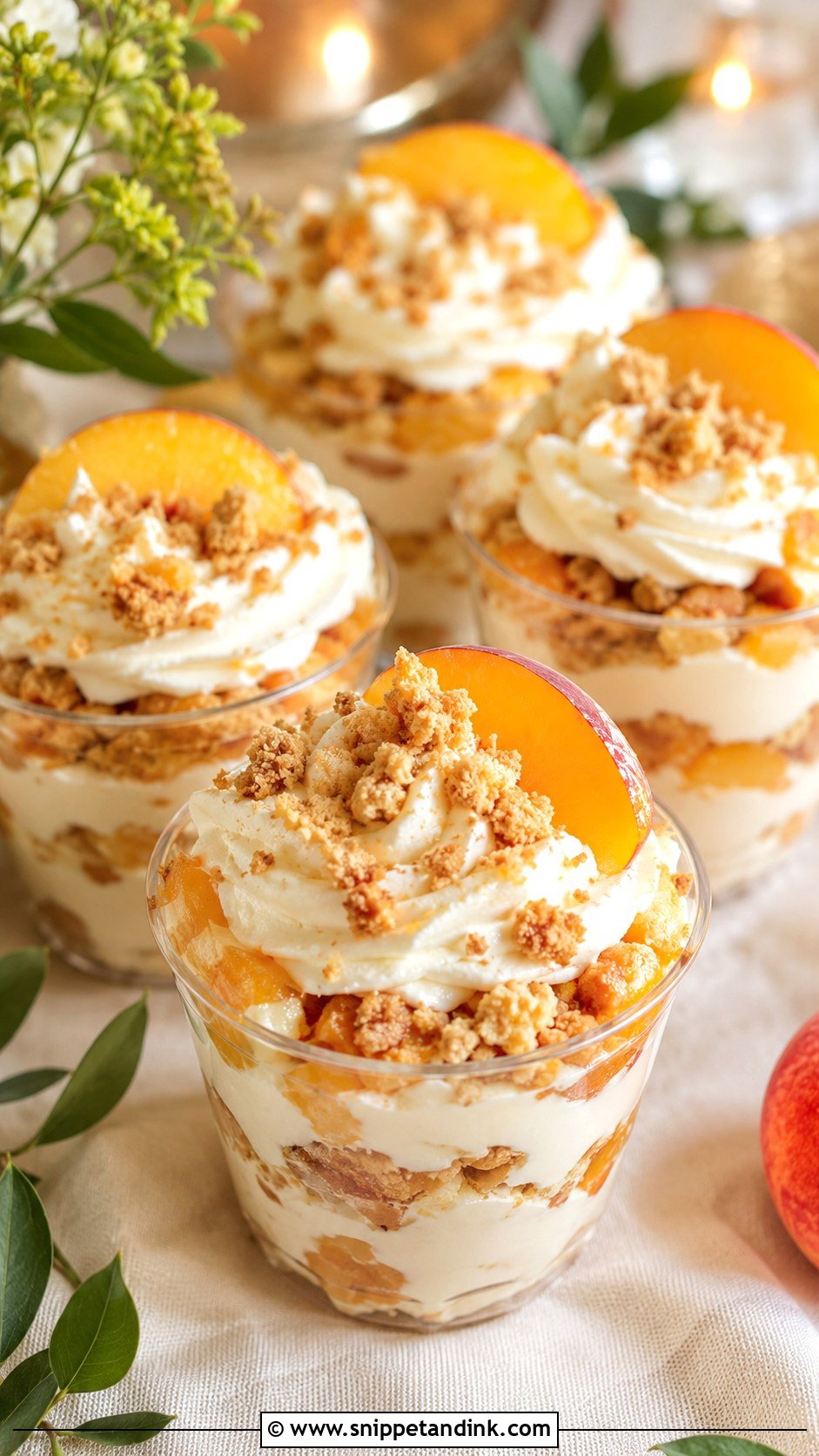
Peach cobbler suits summer and early autumn, outdoor receptions and Southern menus. Tender cinnamon peaches, a buttery crumble and whipped or vanilla cream. Decide warm or cold early, because it changes the cup: served warm, you need sturdy heatproof containers and the cream goes on at the last second; served cold, the crumble should go on close to display time or it turns soggy. The golden peach colour sits well with cream linens and candlelight. A spoonful of crumble on top makes it read as cobbler at a glance.
14. Coconut Cream Dessert Cups
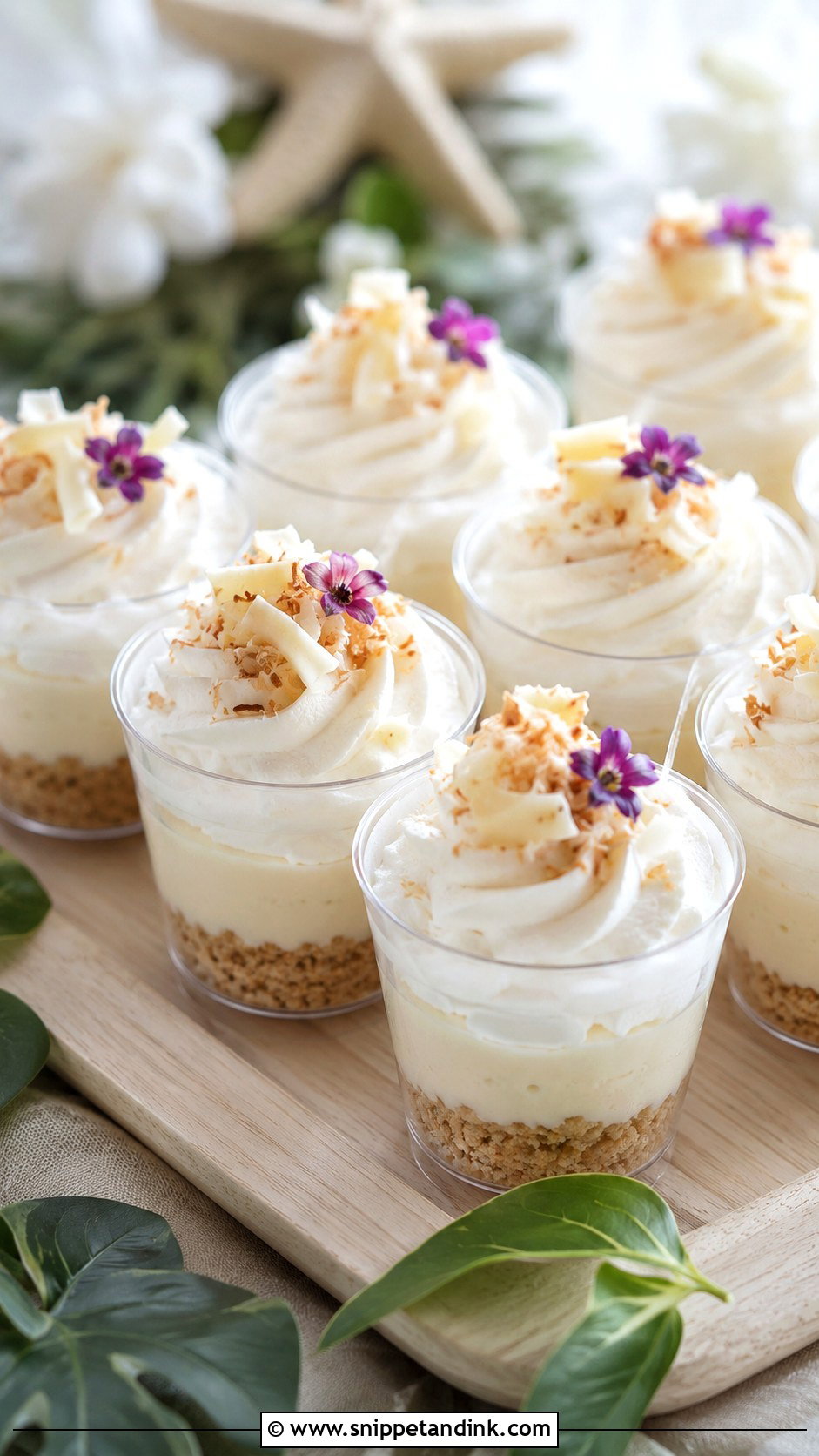
Coconut cream is light and quiet, which suits beach, garden and minimalist tables. A vanilla cookie crumb base, then coconut custard, coconut mousse or whipped cream, with plenty of toasted coconut on top for texture. Toast the coconut yourself and let it cool fully before topping, or the steam softens the cream. The white and ivory tones match almost any palette. White chocolate curls or a small edible flower finish it. Coconut can be divisive, so I’d always offer it alongside at least one chocolate or fruit cup.
15. Brownie Parfait Dessert Cups
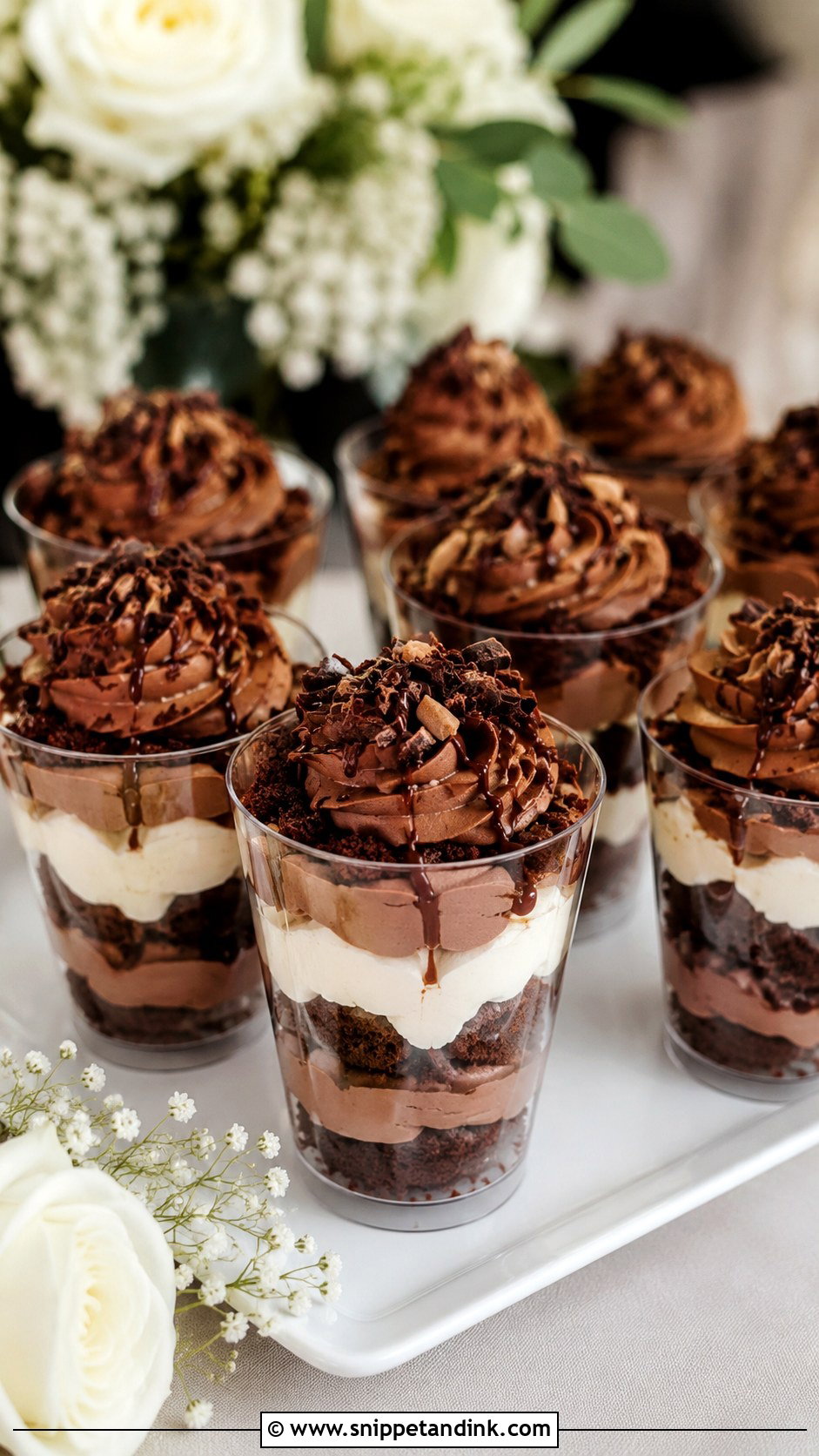
Brownie parfait dessert cups are the sturdiest cup on this list and the safest make-ahead option. Small brownie cubes layered with whipped chocolate cream, vanilla cream or ganache. Cut the brownies small enough that every spoonful gets cake, cream and topping together; big chunks leave guests chasing a brick around the cup. A drizzle of chocolate or caramel, brownie crumbs, chocolate curls or a small cream swirl finish it neatly.
16. Vanilla Cake Dessert Cups
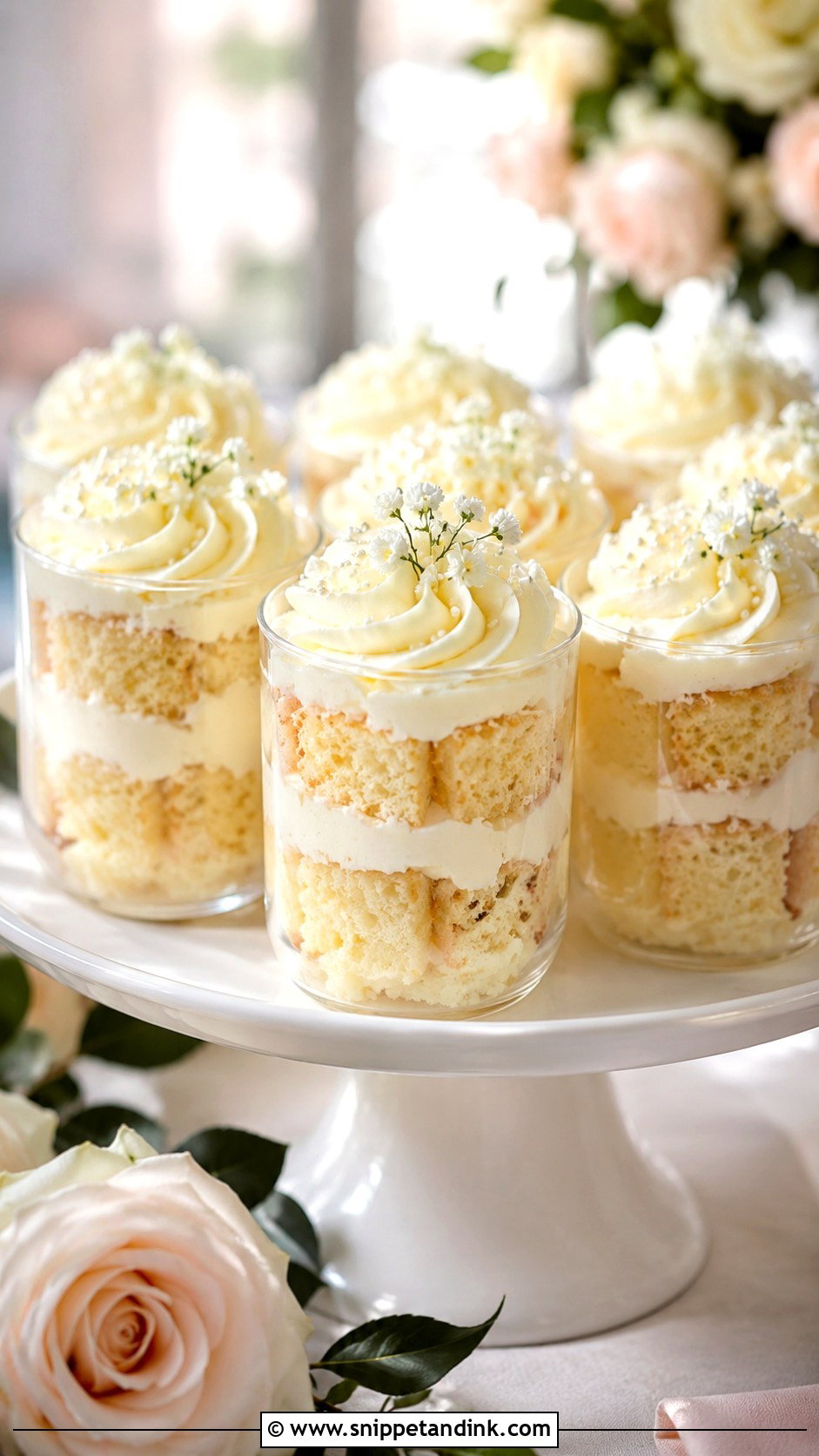
Vanilla cake cups give you the taste of wedding cake without any cutting or plating. Soft vanilla cake cubes with vanilla bean buttercream, whipped cream or pastry cream, plus a fruit layer or jam ribbon if you want colour. The pale cake and cream look clean in clear glasses and sit happily next to every other flavour on the table. I’d recommend pastry cream or whipped cream over buttercream in a cup, since a thick layer of buttercream eaten with a spoon can be too sweet. Finish with pearl sprinkles, tiny flowers or a buttercream swirl.
17. Pistachio Cream Dessert Cups
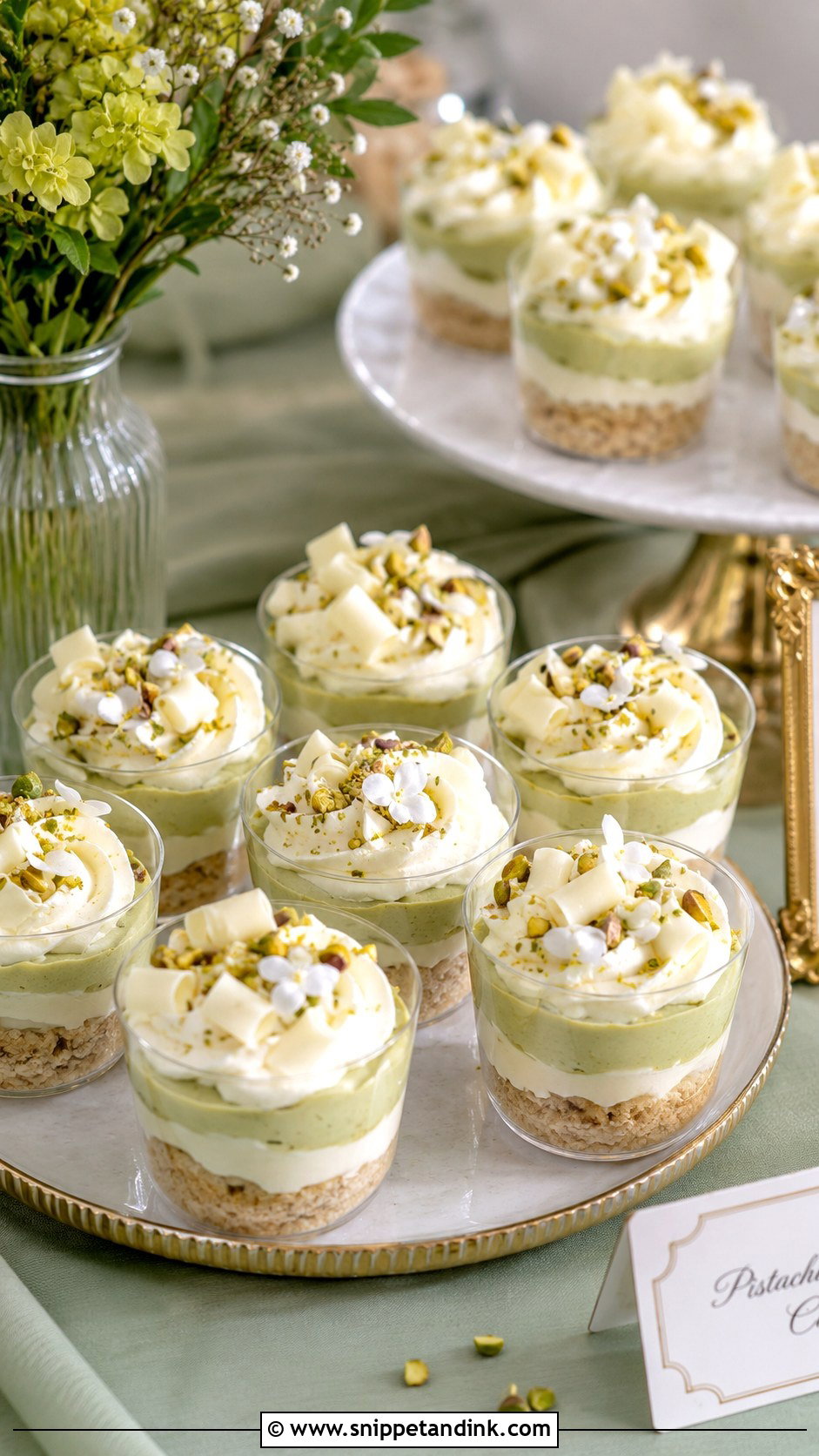
Pistachio is a little unexpected, and the soft green suits spring weddings with natural tones, ivory flowers and sage linens. I use pistachio pudding, mousse or a light pistachio cream layered with cake crumbs or shortbread, then whipped cream and chopped pistachios. Real pistachio paste gives a muted, natural green; some instant mixes turn out much brighter, which can look artificial. Taste for nuttiness rather than sweetness. And mark the cups clearly: tree nuts are a common allergy, and pistachio isn’t always obvious from the colour alone.
18. Blueberry Cheesecake Dessert Cups
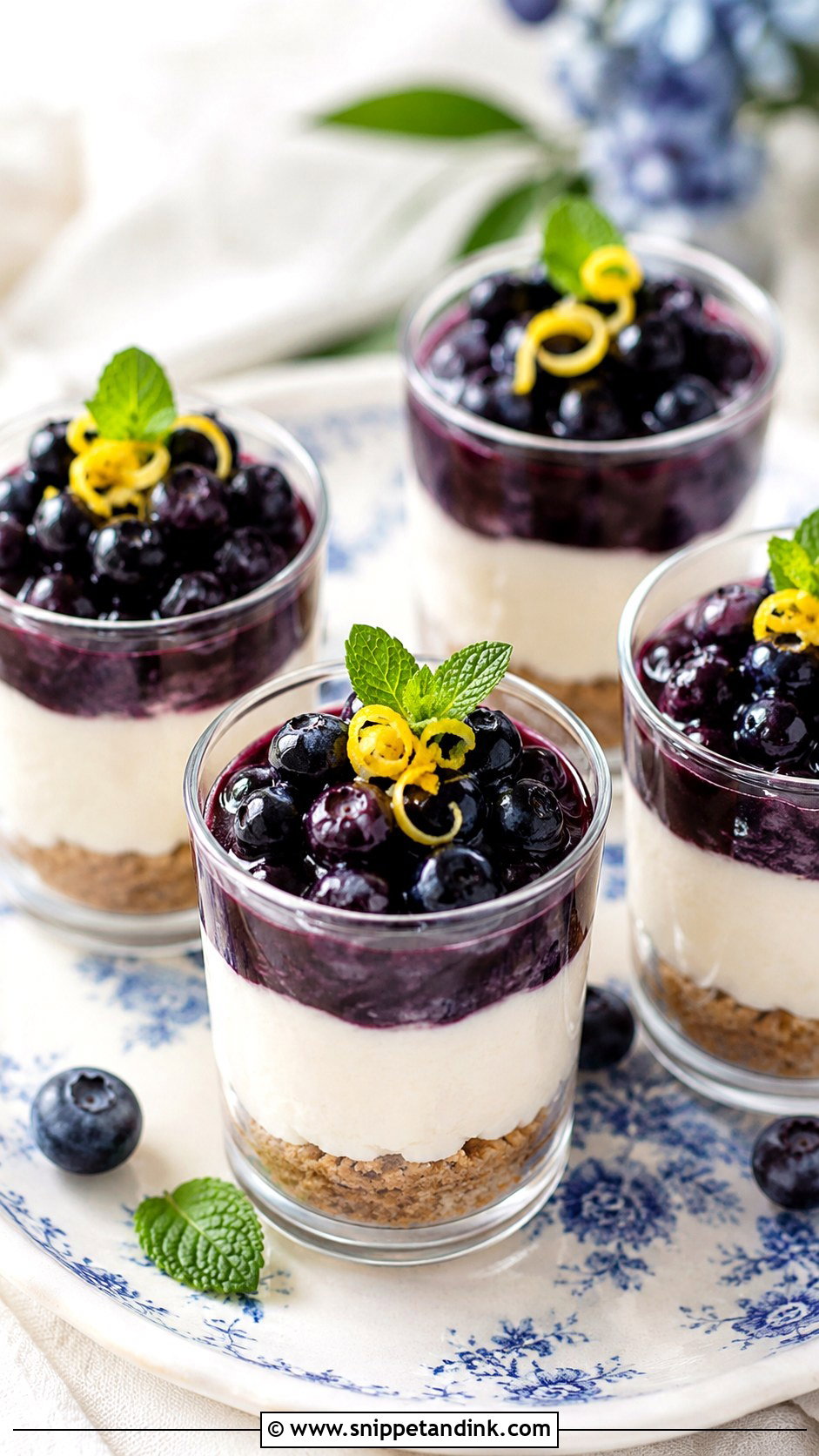
Blueberry cheesecake adds a deep blue-purple to the table. Graham crumbs, vanilla cheesecake filling and blueberry compote or fresh berries on top. The white cream against dark berries looks sharp in clear glass. Cook the compote thick, and cool it fully before it goes on; a thin or warm compote sinks into the filling and streaks the layers. These cups hold well made ahead, which helps a busy wedding schedule. Finish with a few fresh blueberries and a small curl of lemon zest.
19. S’mores Dessert Cups
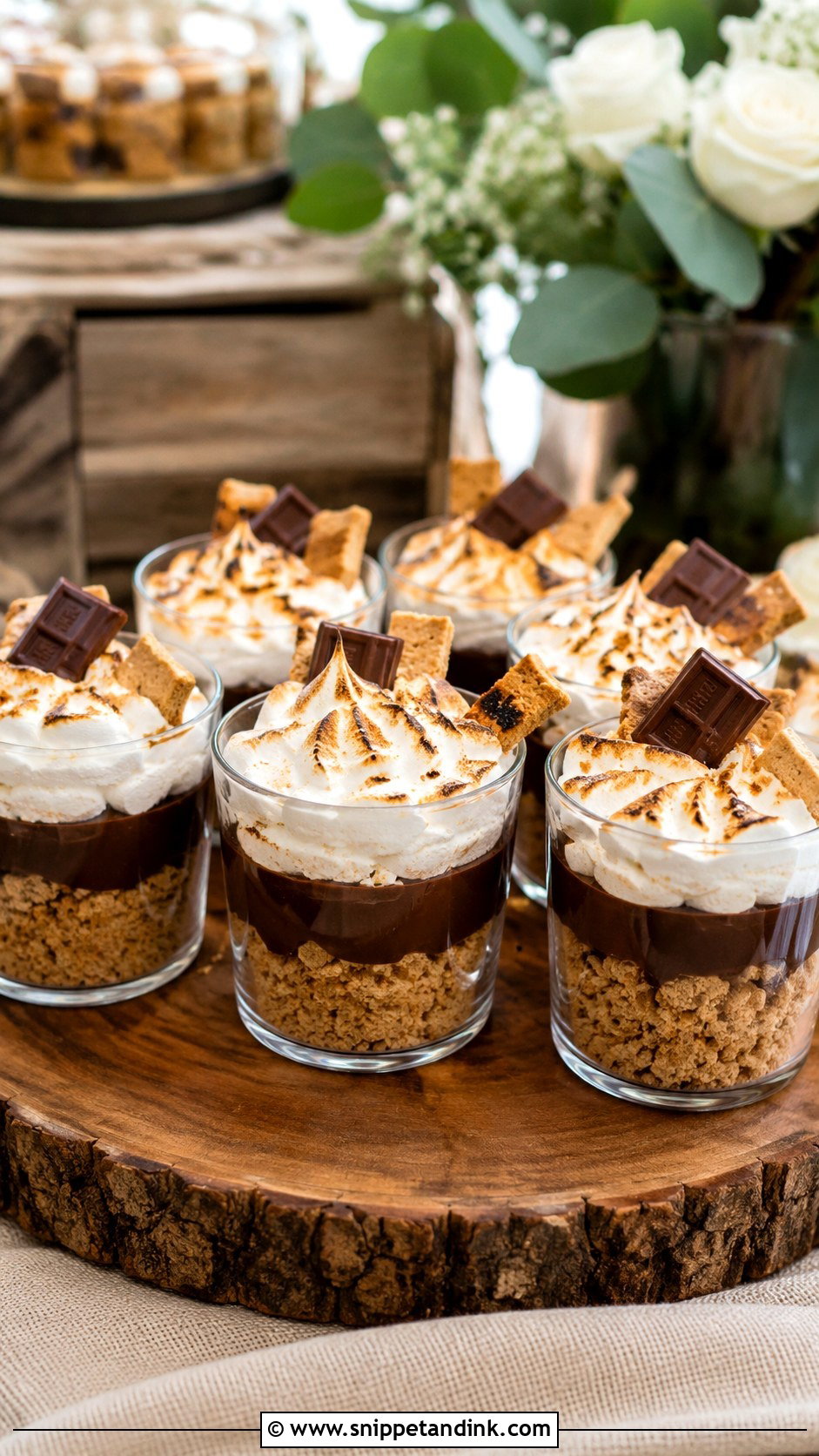
S’mores flavours without a fire pit. I build these with graham cracker crumbs, chocolate pudding or ganache, and a toasted marshmallow or meringue top. A torched meringue swirl looks more polished than loose marshmallows and holds its shape better on a display. Torch it the same day, since toasted meringue weeps if refrigerated too long. A small chocolate square or graham piece decorates the top. They suit rustic and outdoor receptions and avoid the sticky fingers of real s’mores.
20. Panna Cotta Dessert Cups
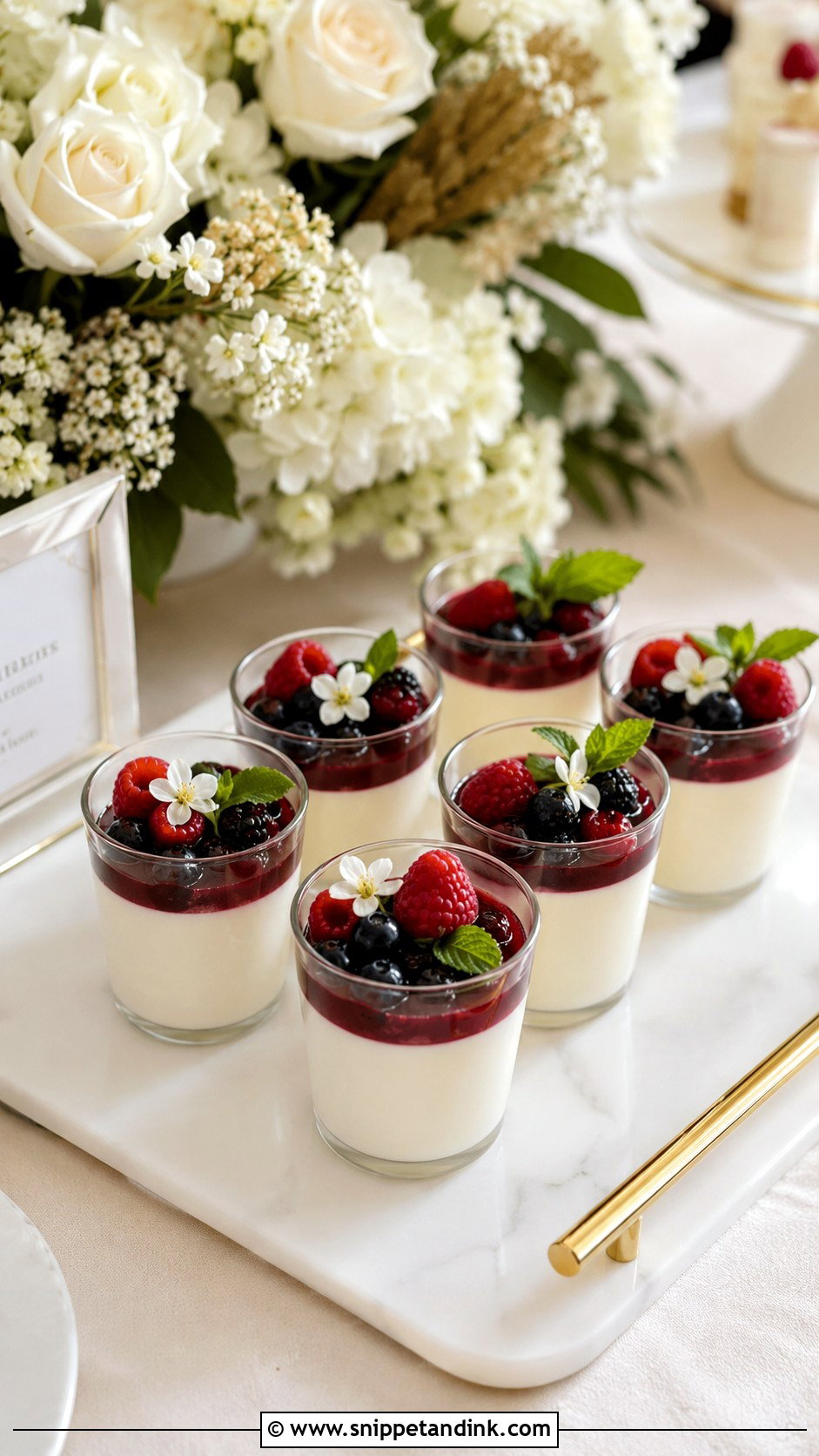
Panna cotta dessert cups are the simplest-looking cup on the table and need the most precision. Too much gelatine and the texture turns rubbery; too little and it won’t hold under a topping. Vanilla is the most versatile base, paired with berries, citrus, caramel or a mango or raspberry sauce, which also gives a strong colour contrast in clear cups. Let the panna cotta set completely before adding the sauce, then keep it chilled until service. Fruit, mint or edible flowers finish it.
What Can Be Layered Days Ahead, and What Goes On at the Venue
Most of these cups can be assembled well before the wedding, which is a big part of their appeal. The trick is separating the bases and fillings, which can wait, from the toppings, which can’t.
- One to two days ahead: tiramisu, cheesecake cups, key lime, panna cotta, brownie parfaits and mousse. These set better after a night chilled.
- The day before: trifle, banana pudding, Black Forest and vanilla cake cups, with stabilised cream so it holds.
- Day of, close to serving: fresh berries, cocoa dusting, cookie crumbs, crumble, flaky salt, toasted coconut and anything torched.
Cups with dairy, custard or cheesecake should come straight from the fridge to the table and not sit out much more than a couple of hours. On a warm day, put a smaller batch out and swap it rather than setting all the cups out at once.
For transport, I pack cups snugly in lidded boxes or trays with cut-outs so they can’t slide, and carry the toppings separately. Whoever sets up at the venue needs ten or fifteen minutes and a clear table to finish them.
A Row of Clear Cups Can Stand In for the Cake
Dessert cups give guests variety and keep the table tidy and easy to serve. They also let you mix flavours, colours and textures without committing to one large dessert. For the display, I’d balance creamy, fruity, chocolate and cake-based cups so everyone finds something, and use clear cups so the layers do the decorating. Keep portions small and toppings fresh, and lean on seasonal fruit when you can. Planned well, a full row of cups can feel every bit as celebratory as a tiered cake.
You'll Like These Ideas:


Leave a Reply