
Reformation wedding dresses sit somewhere between ready-to-wear and bridal: simple cuts, a lot of silk and satin, and shapes you could imagine wearing again. The current bridal collection takes in slip gowns, fitted satin, relaxed skirts, minis and two-piece sets. Because the dresses are so pared back, the styling does most of the talking, and a slip that looks plain on a hanger can read courthouse-casual or black-tie depending on the shoes, veil and hair you put with it. Below are twenty ways I’d dress them, from city halls to beaches to evening receptions, with the fitting and undergarment notes that matter most on fabrics this light.
Buying a Ready-to-Wear Bridal Dress Online Without Fit Regrets
Ready-to-wear bridal changes the timeline. Instead of a made-to-order gown that can take months, you often get a dress in standard sizes within weeks. That speed is a gift, but it moves more of the fitting work onto you and your tailor, and silk dresses this simple have very little room for error.
- Measure bust, waist and hips with a soft tape over the underwear you’ll actually wear, then compare with the size chart for that specific style.
- If you fall between sizes, size for your largest measurement. A tailor can take a dress in; letting out silk is often impossible because seam allowances are narrow.
- Check the return window before you order, and try the dress on the day it arrives, on clean skin, without removing tags.
- Book a tailor who works with silk and bias cuts before the dress arrives. Good bridal seamstresses get busy in peak season.
- Leave at least six weeks between delivery and the wedding for alterations and a final fitting.
One more thing: order your shoes early too. Your hem gets set in them, and a tailor can’t finish a floor-length dress without knowing the heel height.
1. Reformation Silk Slip Wedding Dress
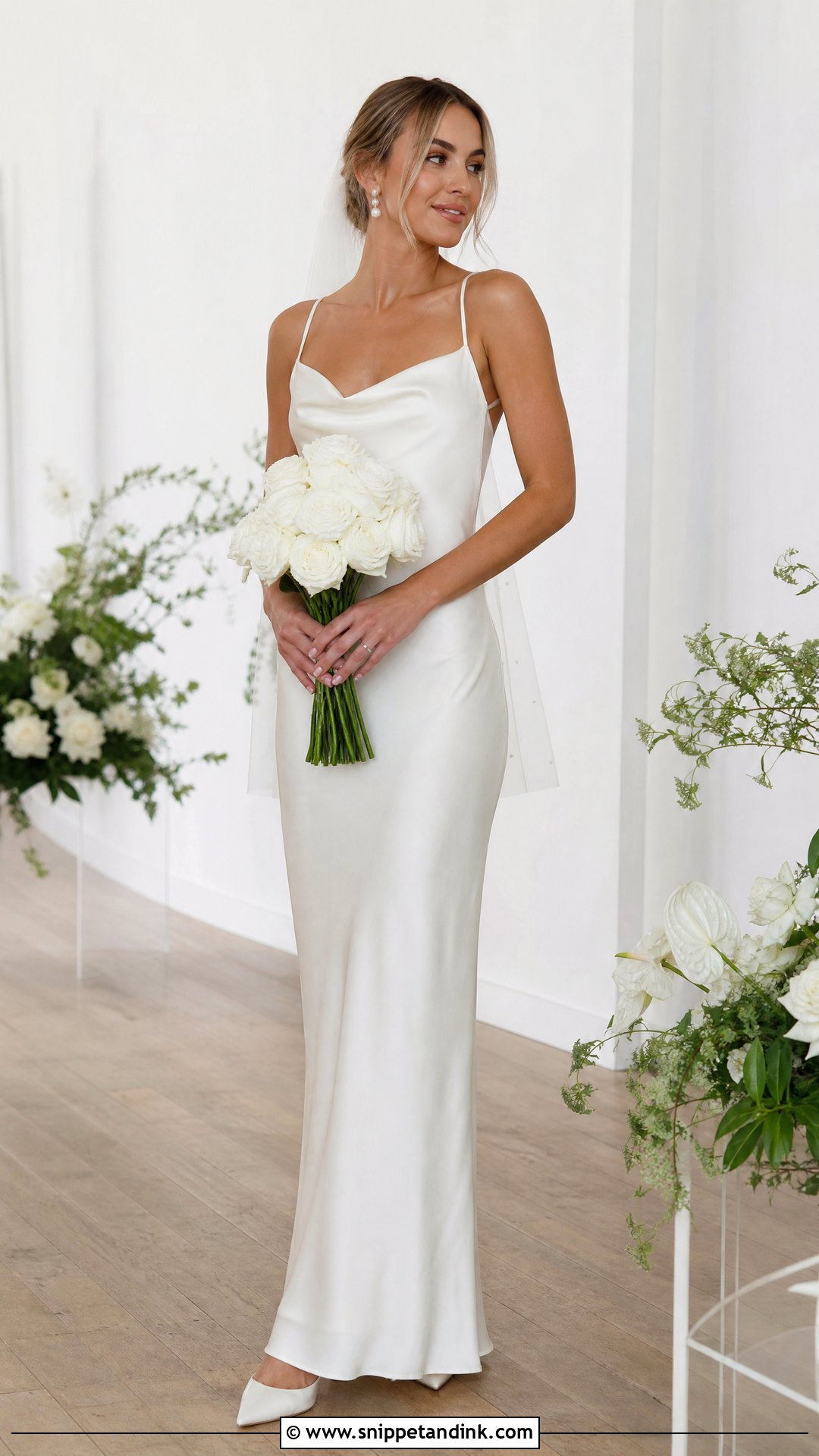
The silk slip is the dress most people picture first, and it’s the one that needs the most care underneath. A floor-length ivory slip with slim straps, a soft drape at the neck and a bias-cut skirt follows the body with no structure, so every line and edge below it shows. Choose smooth, skin-toned underwear or a light slip, and have the straps shortened if the neckline gapes when you lean forward. Pointed ivory pumps, a fingertip veil and pearl drops dress it up. A low chignon keeps the neckline clear, and a small bunch of white roses keeps things traditional. If you want more waist definition, a tailor can take in the side seams a little, but bias cuts don’t like being made tight.
2. Reformation Strapless Satin Wedding Dress
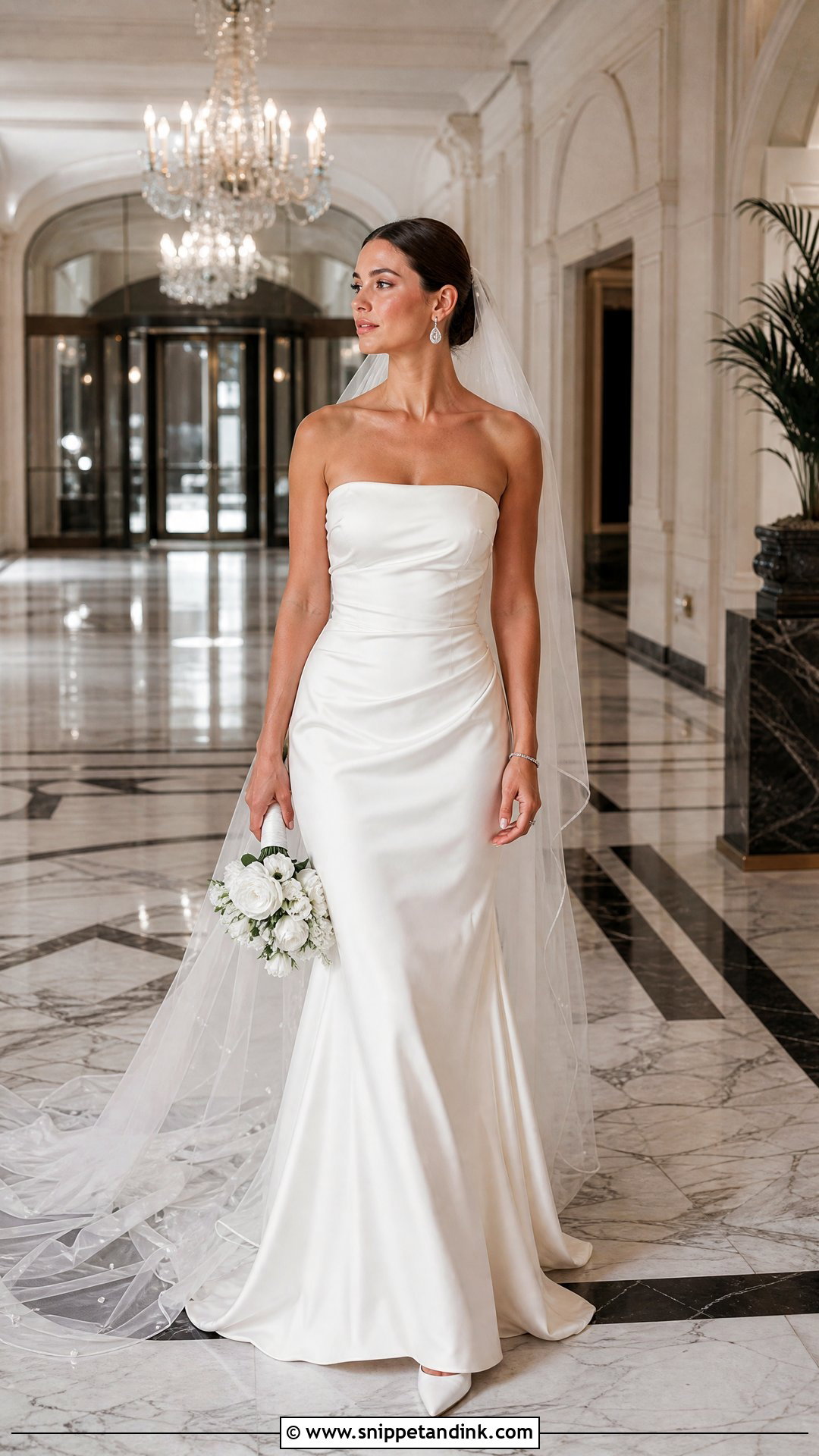
Strapless satin depends entirely on what’s built inside it. Look for a fitted bodice with real internal support, boning or a waist stay, and a long skirt that widens slightly at the hem. Bring your ceremony shoes and the exact strapless bra or shapewear to every alteration, because a strapless bodice fitted over different underwear will slip by the first dance. With so little decoration, you can wear stronger accessories: sculptural earrings, a tennis bracelet and pointed satin heels. A cathedral veil for the ceremony comes off later to show the neckline. A soft French twist or glossy shoulder-length waves both suit it, with a small structured bag for the evening.
3. Reformation Long Sleeve Lace Wedding Dress
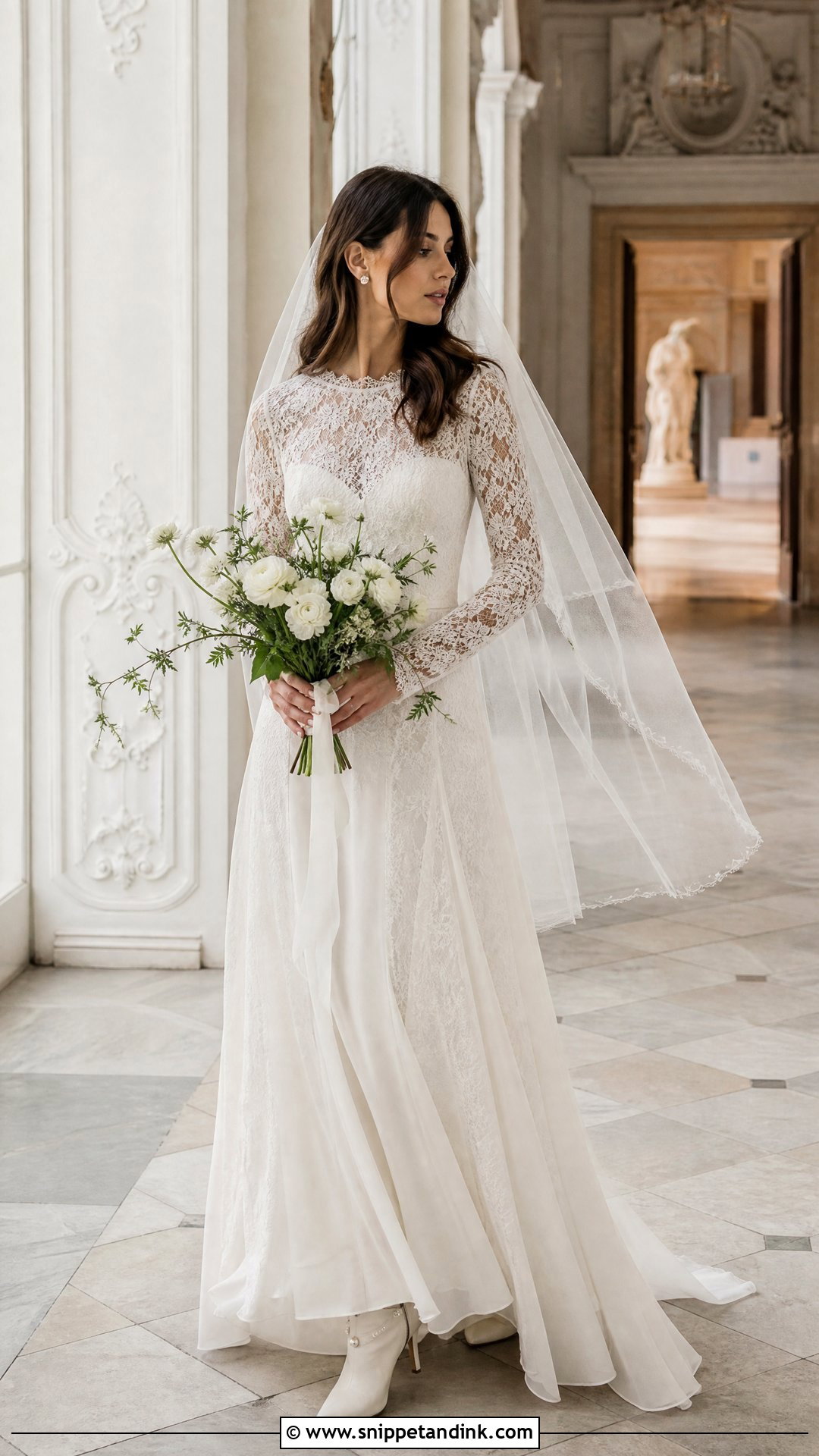
Sheer lace sleeves keep you covered in autumn and winter without the weight of a full ball gown. I’d pair a fitted ivory bodice with a fluid floor-length skirt rather than layered tulle, which can look bulky against delicate sleeves. Closed-toe pumps or pearl-trimmed ankle boots add warmth for outdoor photos. A plain raw-edge veil stops the lace from multiplying into busy pattern, and tiny diamond studs with a low bun keep the face clean. White ranunculus and soft greenery suit the season. If the sheer areas show more than you’d like, ask for a nude or ivory lining behind them; it’s a simple alteration. Candlelit restaurants and historic houses suit this one.
4. Reformation Halter Neck Wedding Dress
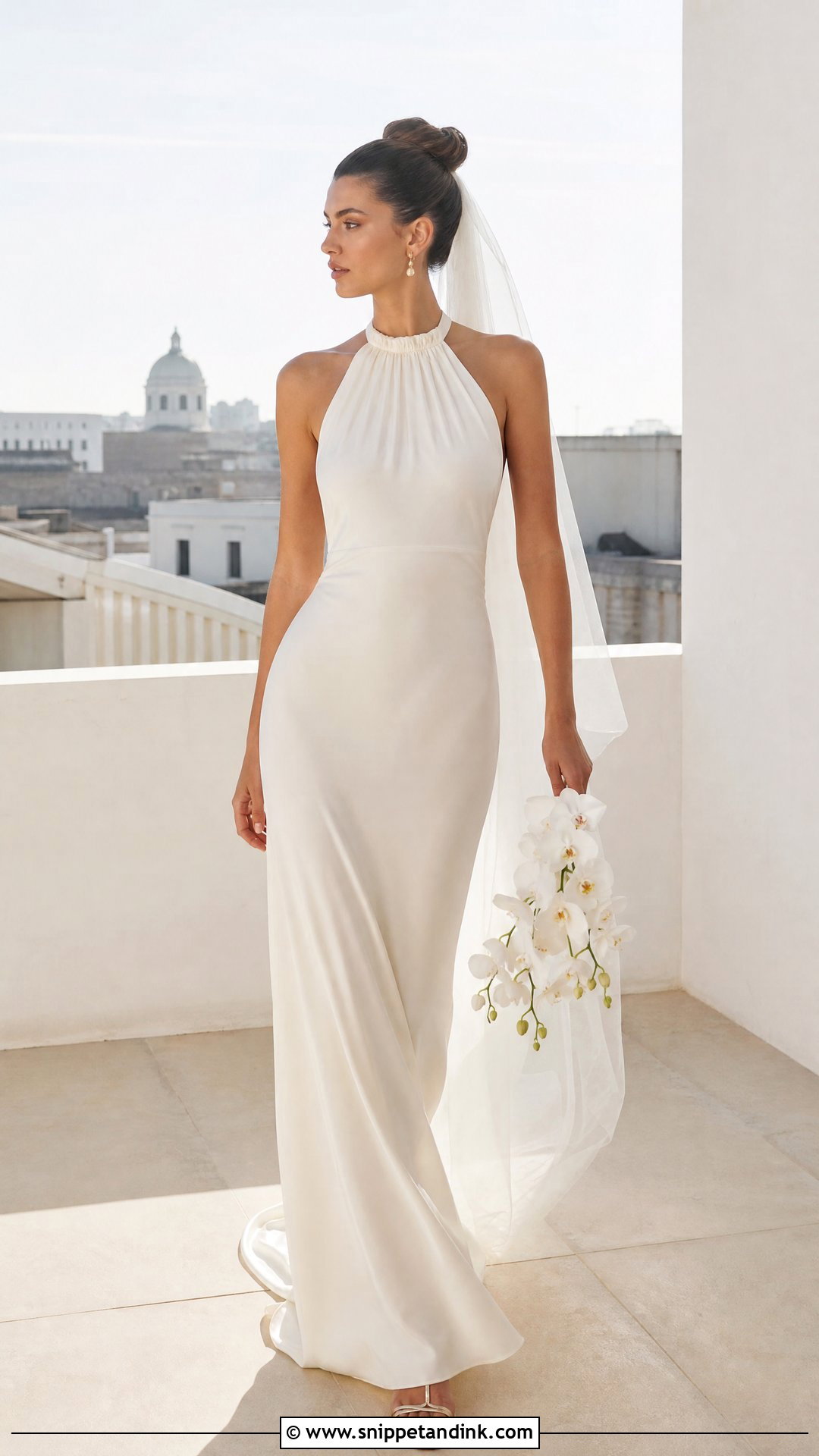
Halter necks draw the eye straight to the shoulders and upper back, so I treat those as the jewelry and skip the necklace entirely. A flowing ivory gown with a gathered neckline, a fitted waist and a column skirt gives the longest line. Slim drop earrings, one bracelet and metallic or ivory strappy sandals are enough. Wear your hair up, high bun or polished ponytail, because hair down hides the cut. A long narrow veil anchored under the hair moves without covering the back. One practical point: halter straps that tie or hook at the neck pull forward when you bend, so check the tension while you sit and lean. A small orchid bouquet suits rooftops, destinations and summer evenings.
5. Reformation Corset Wedding Dress
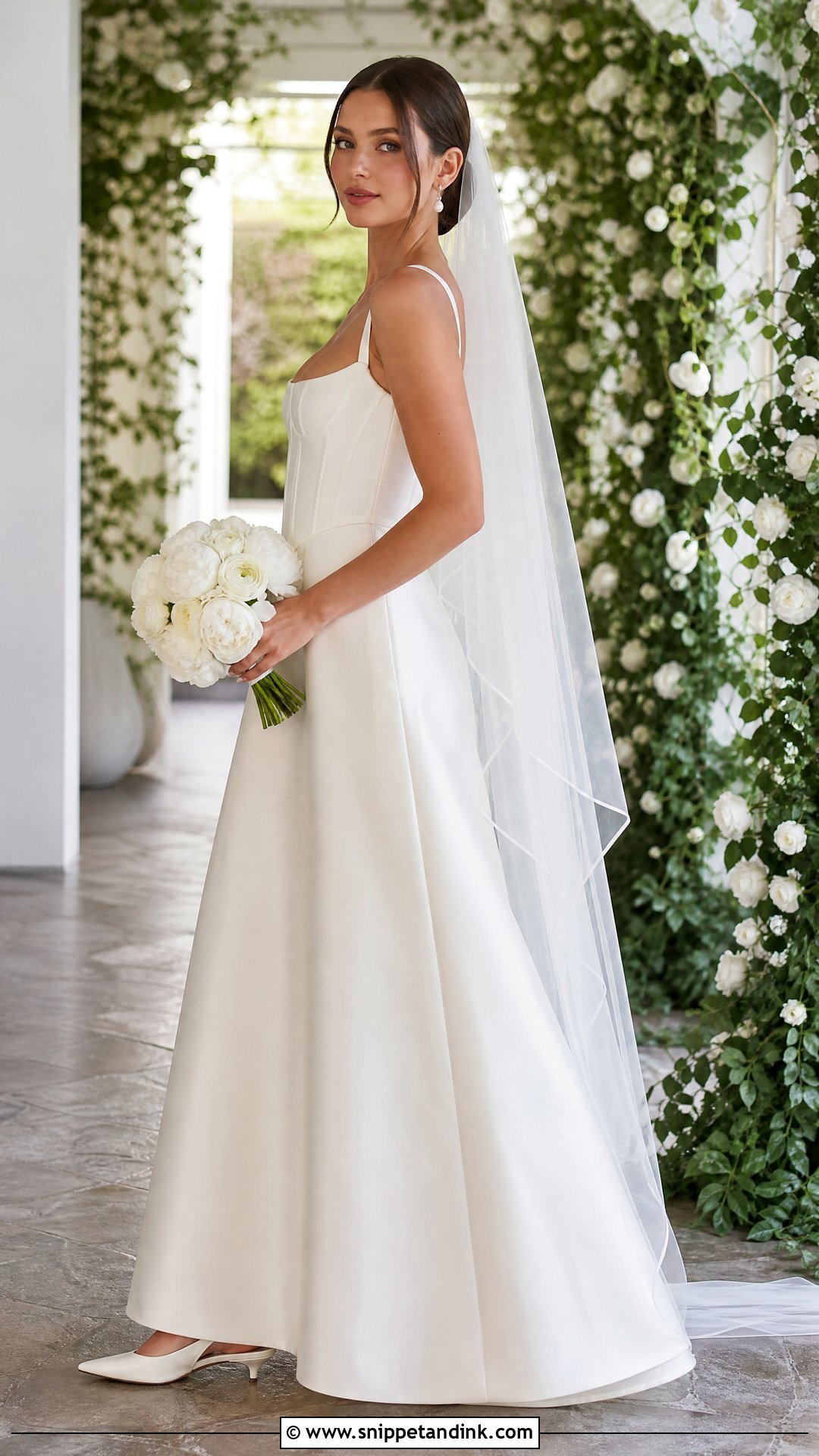
A corset bodice on a relaxed dress is a nice tension: structure on top, softness below. Pick a shaped bodice, a defined waist and a soft A-line skirt in ivory satin or drapey crepe. Take a deep breath at the fitting. If you can’t, the bodice is too tight, and it will feel worse after dinner. Low slingbacks, pearl earrings and a sheer chapel veil keep it feminine, and soft waves or a loose bun stop it looking stiff. A rounded bouquet of peonies or seasonal white flowers sits well against the bodice. Check the neckline while sitting, reaching up and dancing, and remember a tailor can adjust boning, cups and waist seams to suit your shape.
6. Reformation Square Neck Wedding Dress
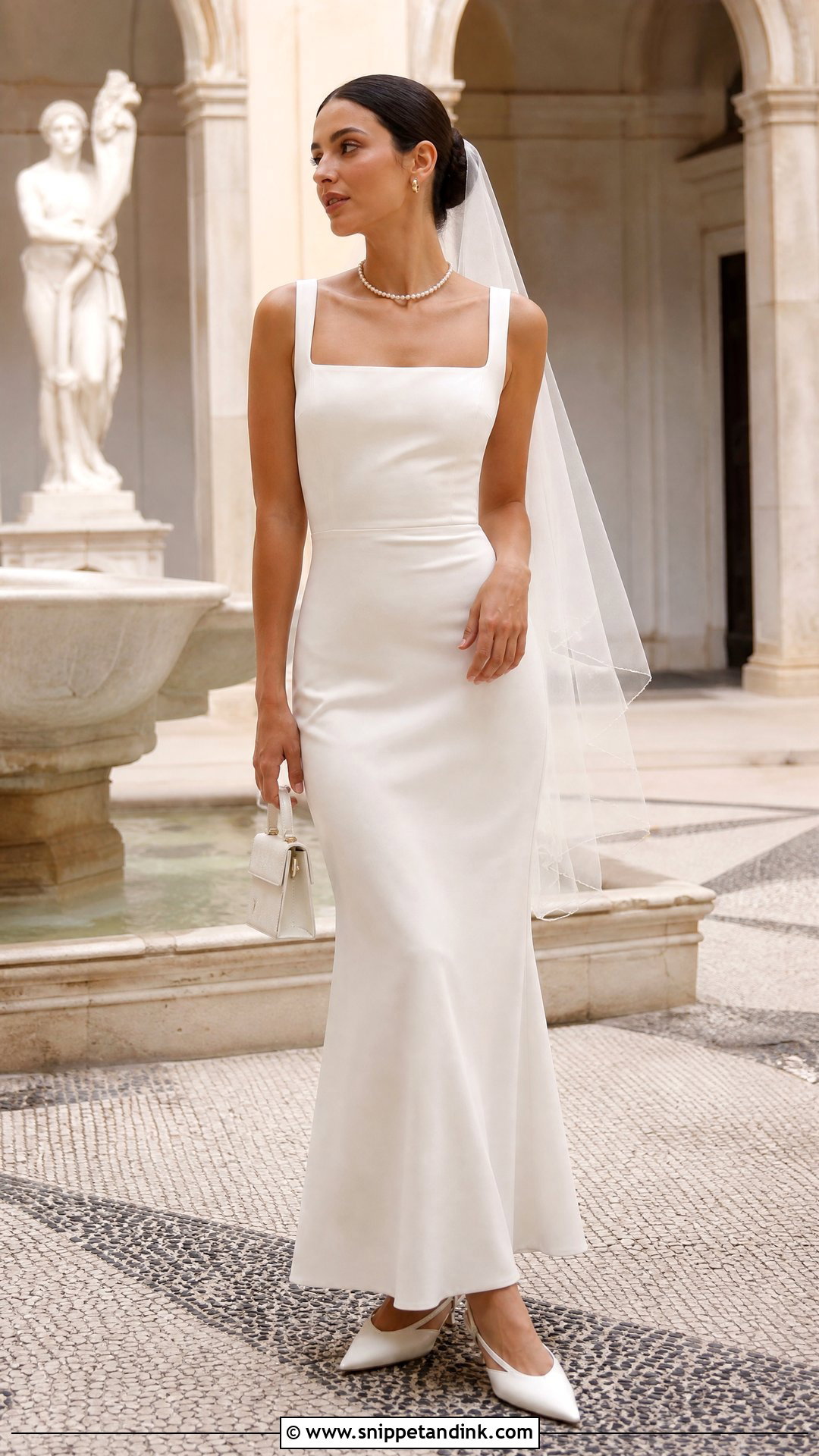
Square necklines frame the collarbone in a straight, graphic line, and that’s the shape to echo with jewelry. A short pearl strand or fine gold chain that sits inside the neckline works; a long pendant breaks it. Wide straps, a defined waist and a gently flared skirt keep the dress balanced. Slingback pumps, a structured mini bag and a fingertip veil complete it, with a centre-parted low bun or smooth waves behind the ears. Fuller busts usually need those wide straps plus careful bodice tailoring so the neckline stays flat, while petite brides can raise the waist slightly to lengthen the leg. Gardens, small hotels and restaurant weddings all suit it.
7. Reformation Backless Wedding Dress
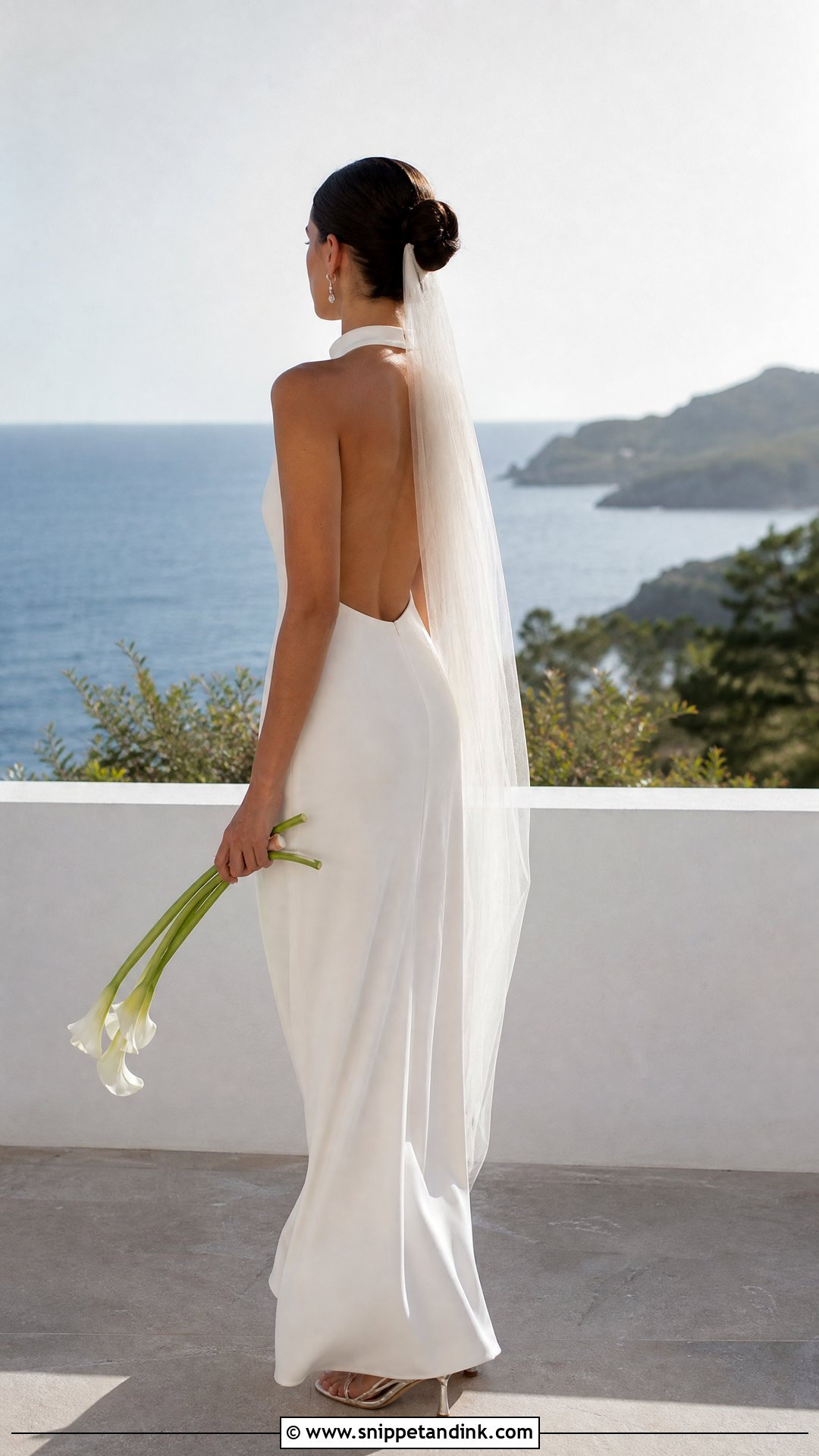
An open back on a simple dress is the detail guests watch during the whole ceremony. I like it paired with a high front neckline, a slim floor-length shape and a low back fastened with fine ties or covered buttons. Anchor the veil beneath a neat bun so the back stays visible. Small crystal earrings, a slim bracelet and clean-strapped low sandals are enough. Support is the real question: adhesive cups or fashion tape work for some brides, but sewn-in cups added by a tailor are far more reliable over a long day, especially in heat. A long-stemmed calla lily bouquet repeats the streamlined shape, and coastal terraces or warm evening ceremonies suit it.
8. Reformation Off Shoulder Wedding Dress
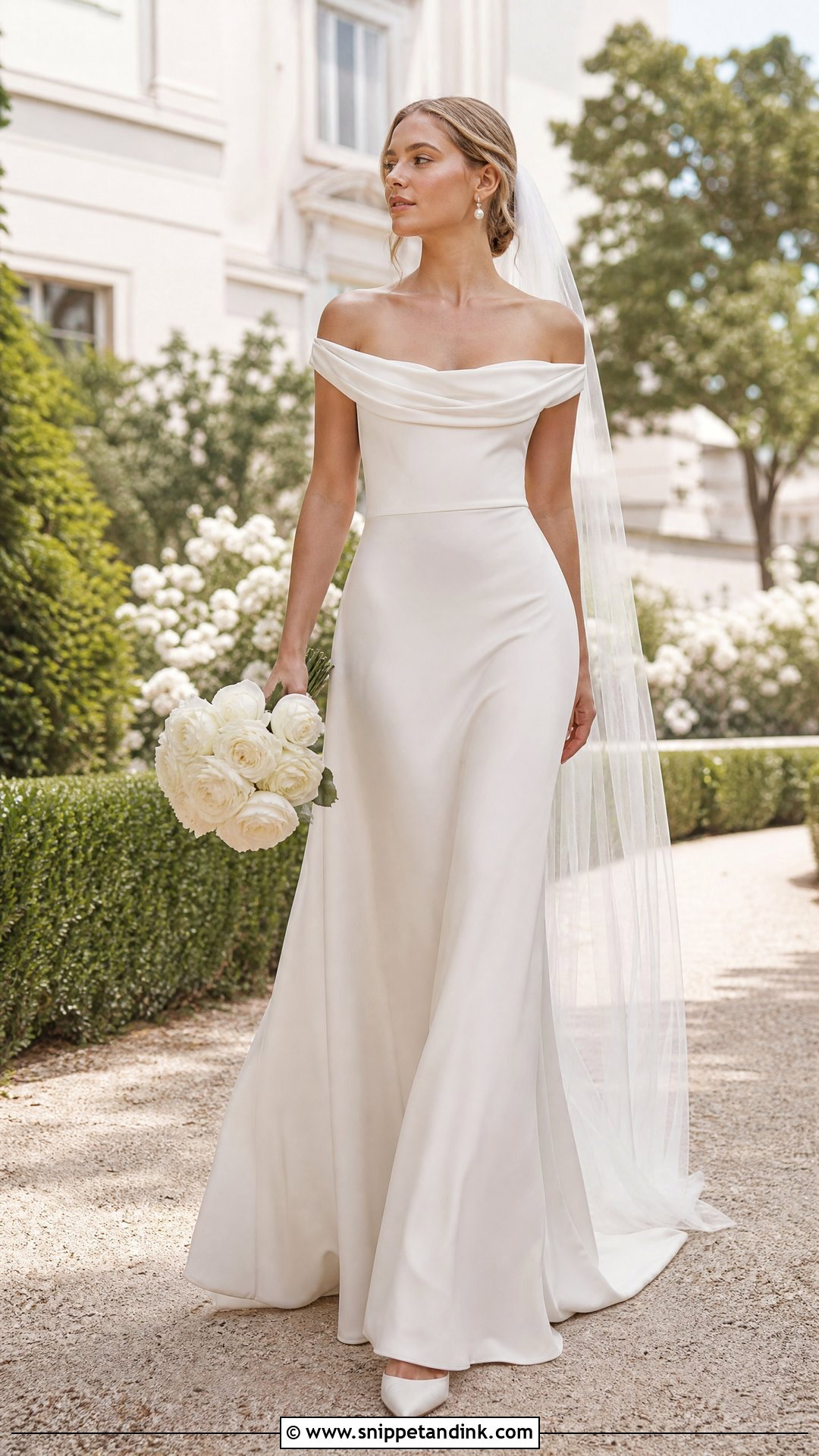
Off-shoulder necklines are kind to most shoulders and need little else. A fitted ivory bodice with a folded or softly draped neckline and a long skirt that moves easily is the base. Hair goes up so the shoulders stay bare, with pearl studs or short drops. Pointed pumps and a narrow chapel veil finish it. White garden roses and greenery bring texture to such a plain dress. Outdoors, bring an ivory wrap or tailored coat and take it off for photographs. The thing I test at every fitting is the arm: hug someone, hold the bouquet up, do a dance turn. Sleeves that ride up need a small stay tacked inside.
9. Reformation Cap Sleeve Wedding Dress
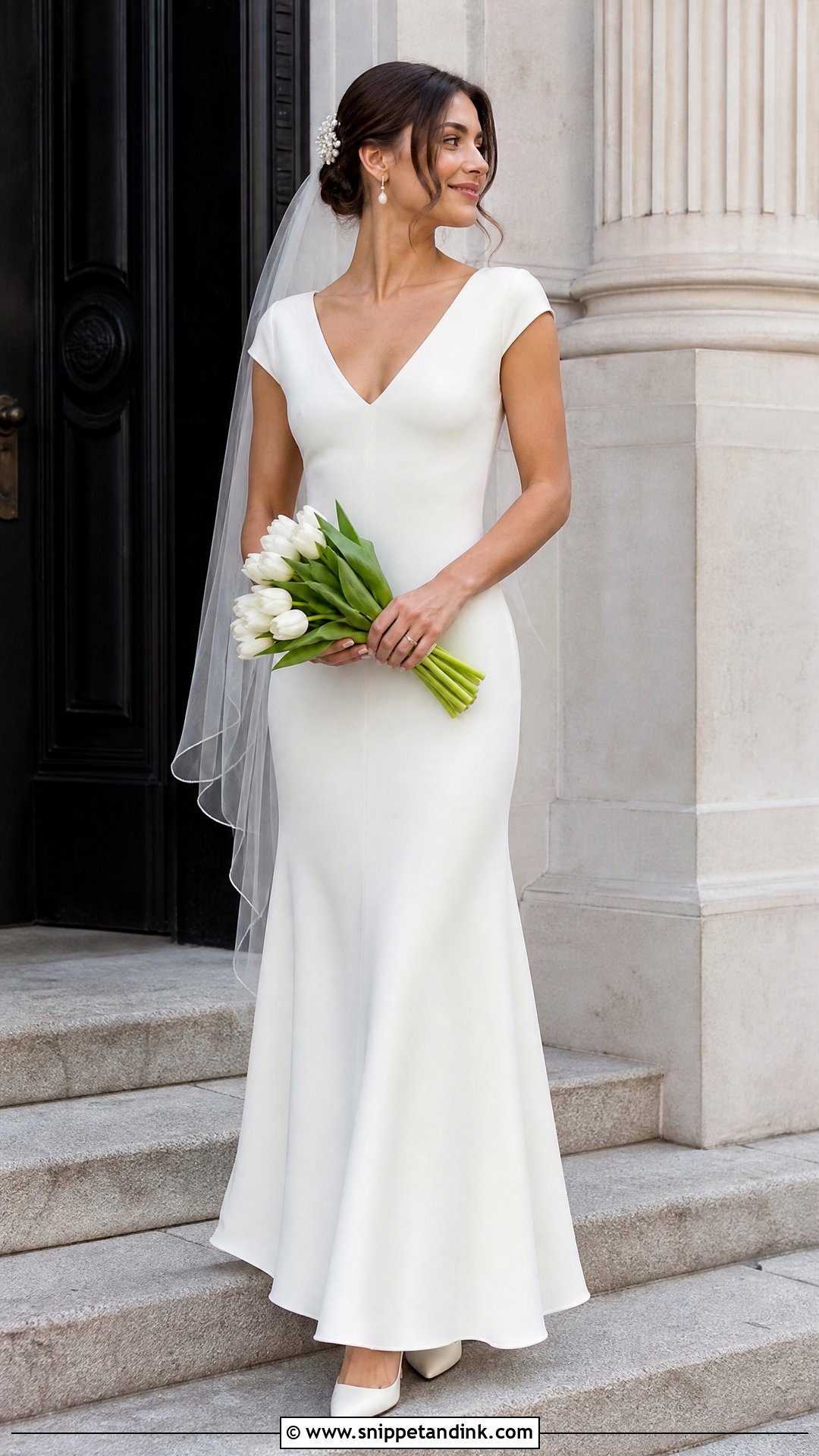
Cap sleeves are the middle ground: more cover than thin straps, much less fabric than full sleeves. A fitted crepe or silk gown with a V-neck, a shaped waist and a softly flared hem carries them well. Pointed kitten heels, a small pearl hair comb and a light tulle veil suit the scale. Fine drop earrings add movement near the face. Keep the bouquet small, white tulips or sweet peas. The armhole is what to check; a cap sleeve that’s cut too high pulls when you raise your arm, and one too low gapes. Spring gardens, courthouses and daytime receptions suit this one.
10. Reformation Bias Cut Wedding Dress
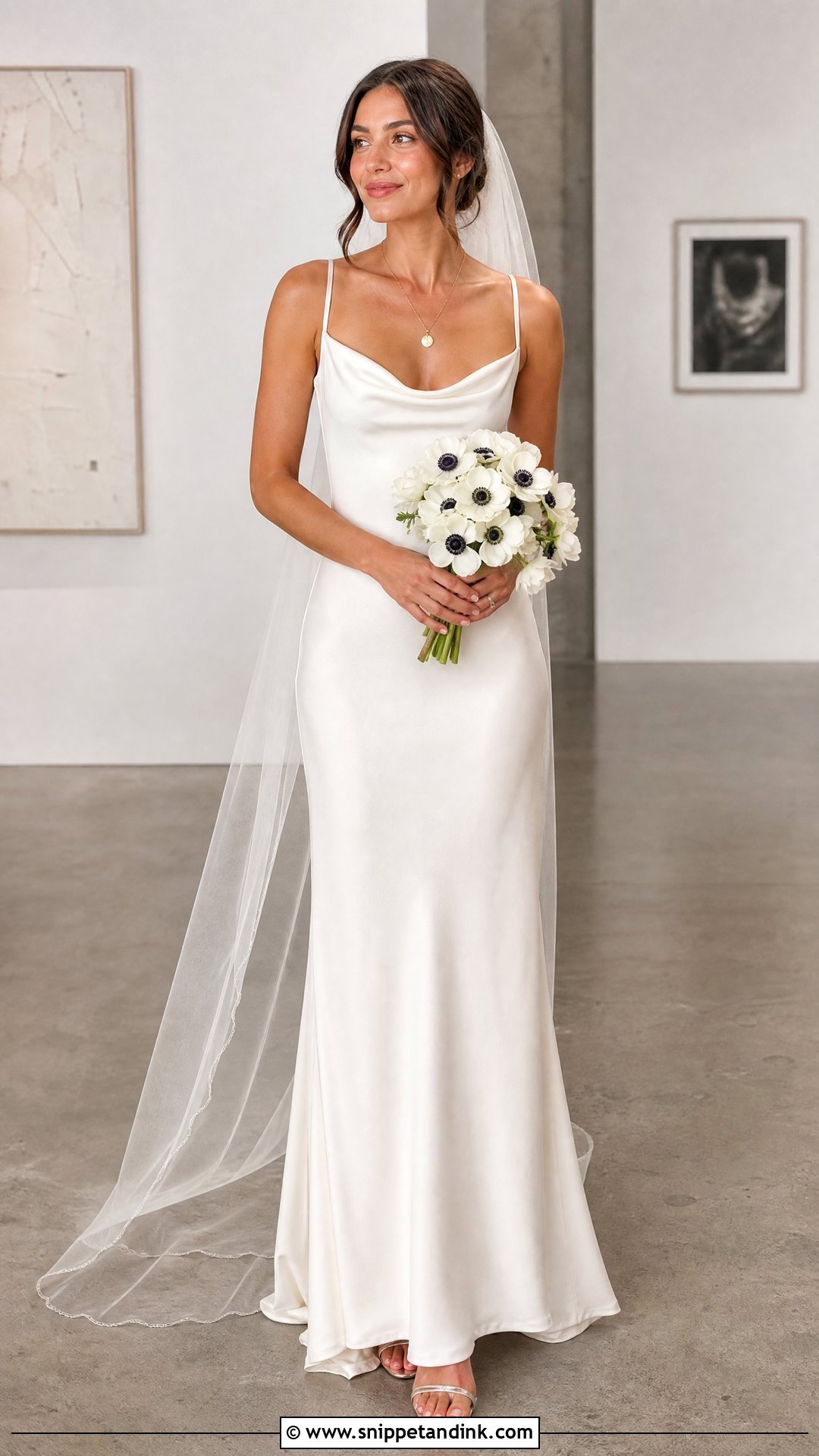
Bias cuts move with you rather than holding you in, and they reveal everything underneath, so they’re best for brides who are happy with minimal structure. I’d choose an ivory gown with a subtle cowl neckline, slim straps and a skirt that skims. Minimal strappy heels, a delicate pendant and a sheer veil with an unfinished edge keep it understated. Loose waves feel natural; a low knot looks cleaner. Underwear needs to be smooth-edged and lie flat, since bias fabric shows every seam. Small internal cups or a slightly raised neckline add security. A simple bouquet of white anemones finishes it.
11. Reformation A-Line Wedding Dress
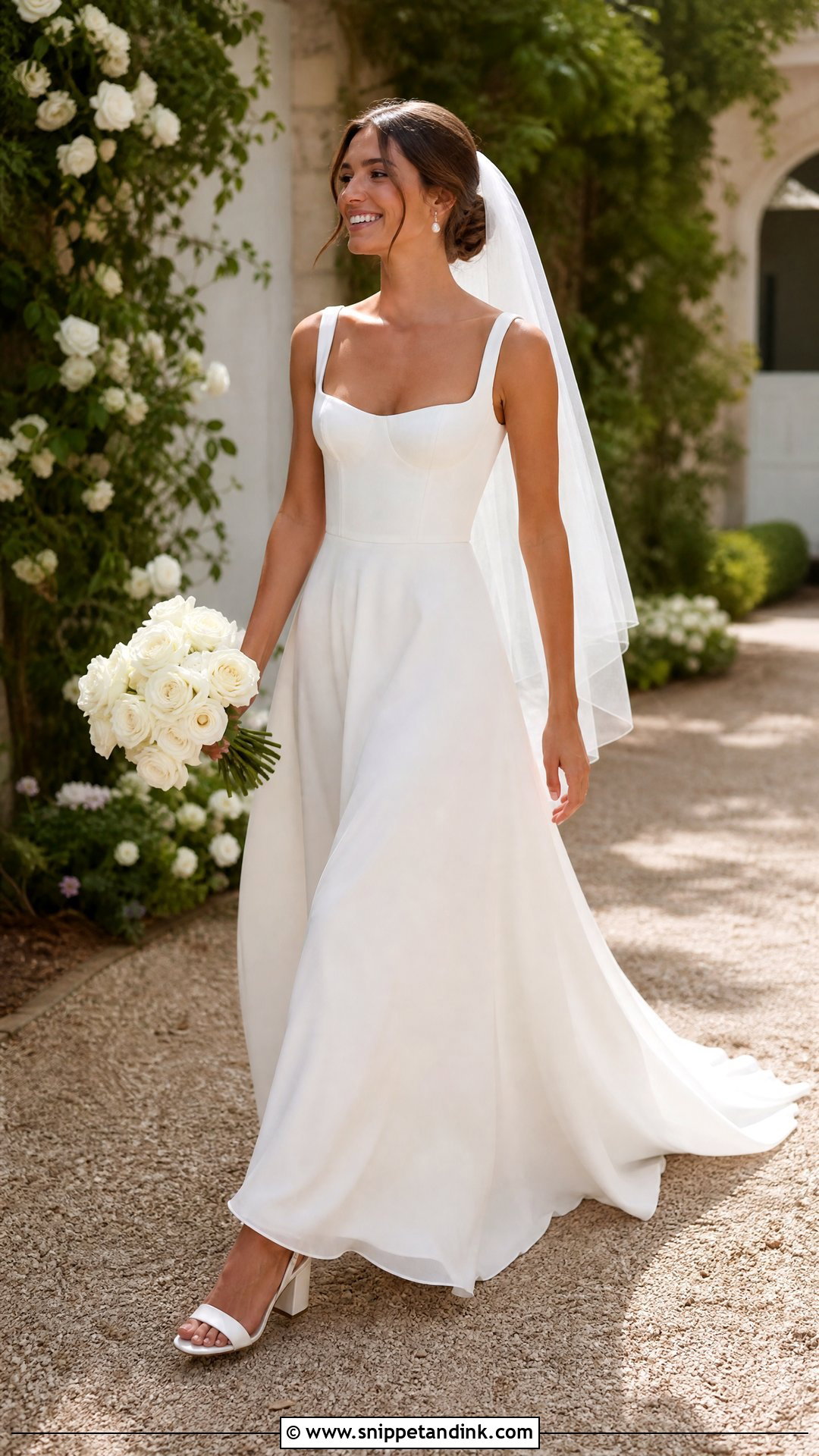
If you’re unsure what suits you, start with an A-line. The waist is defined and the skirt flows out from there, so it fits a wide range of body shapes without needing a close fit through the hips. An ivory gown with a fitted bodice, supportive straps and light fabric works. Block-heel sandals keep you steady on grass, with a waist-length veil and small pearl earrings. A structured white rose bouquet adds a classic touch. Half-up waves or a low bun both suit it. Hem it in the exact shoes you’ll wear, because block heels are often a different height from the pumps you tried the dress on with, and a vineyard or garden is unforgiving of a dragging hem.
12. Reformation Column Wedding Dress
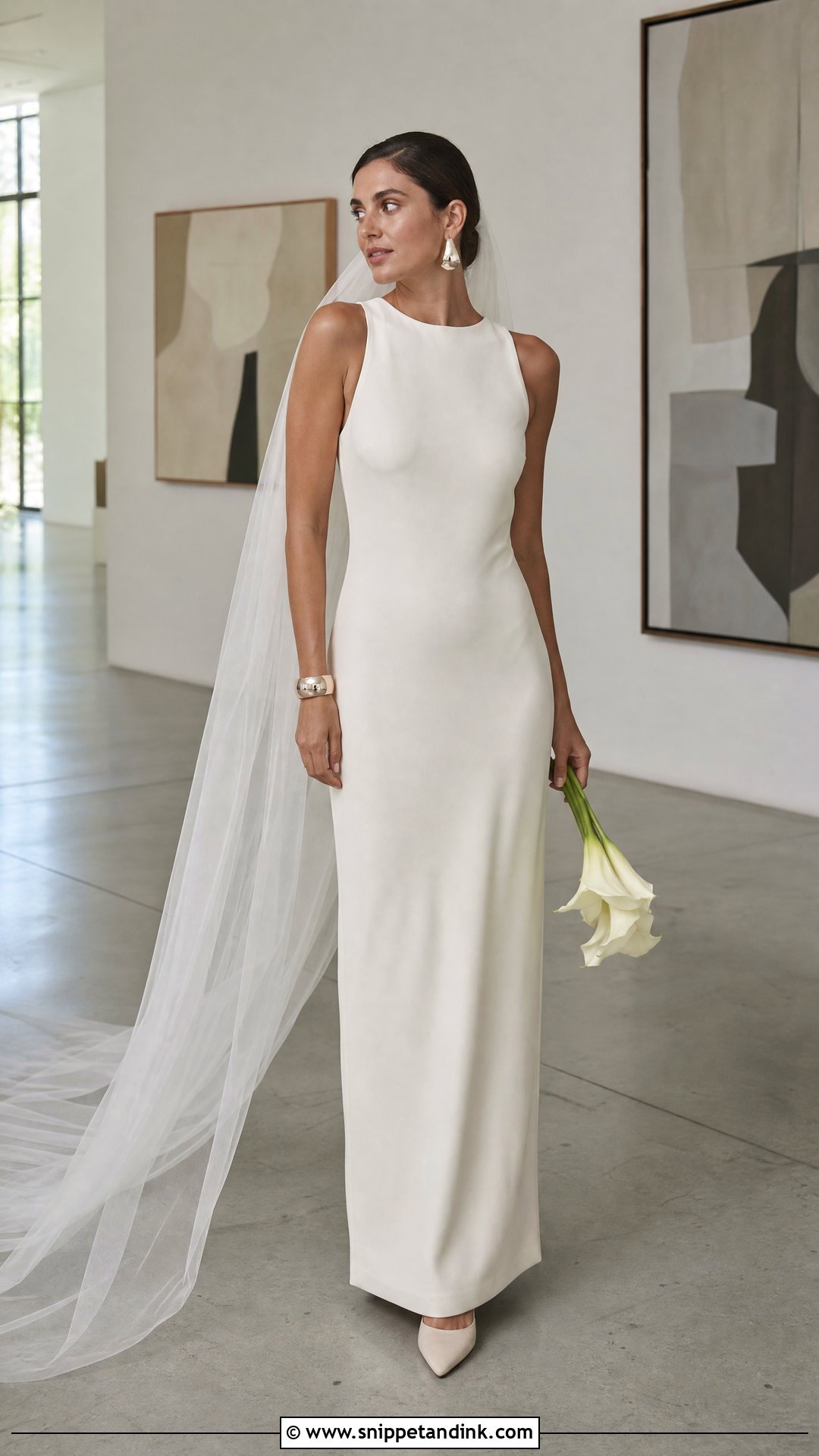
A column dress is one uninterrupted line from neck to floor, and any wrinkle or pull across it shows. A sleeveless ivory gown in smooth crepe or satin with a high neckline or subtle scoop front suits it. Pointed pumps in ivory, silver or champagne, geometric earrings and a slim metallic bracelet keep the look sharp. A long veil gives ceremony drama, and a structured clutch works for the reception. Wear your hair sleek, a centre-parted bun or smooth ponytail. Columns sit close through the hips and thighs, so alterations should leave room to walk upstairs and sit at dinner. Practise both before you approve the final fit.
13. Reformation Two Piece Wedding Dress
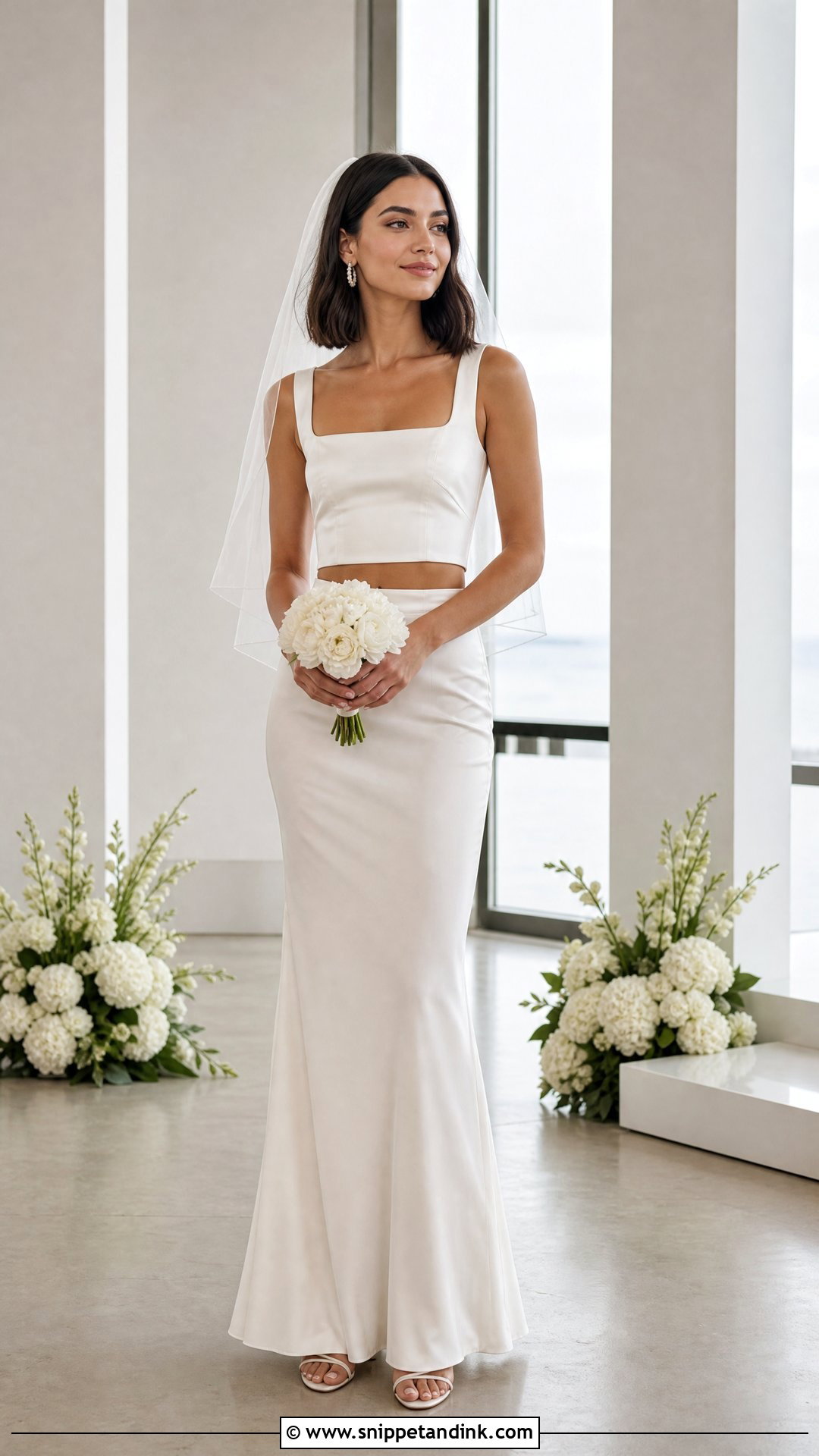
Two-piece sets look modern and give you two garments to wear again, but the gap between them needs planning. Pair an ivory silk top with a matching floor-length skirt; check the two pieces side by side in daylight, since separate fabrics can be a shade apart. A cropped top shows a sliver of waist, a longer fitted one gives more coverage. Sleek sandals, pearl hoops and a shoulder-length veil complete it, with a compact bouquet so the waistline stays visible. A neat low bun keeps the effect modern. Raise your arms at the fitting: if the top lifts away from the skirt more than you want, ask a tailor to add hidden snaps.
14. Reformation Mini Wedding Dress
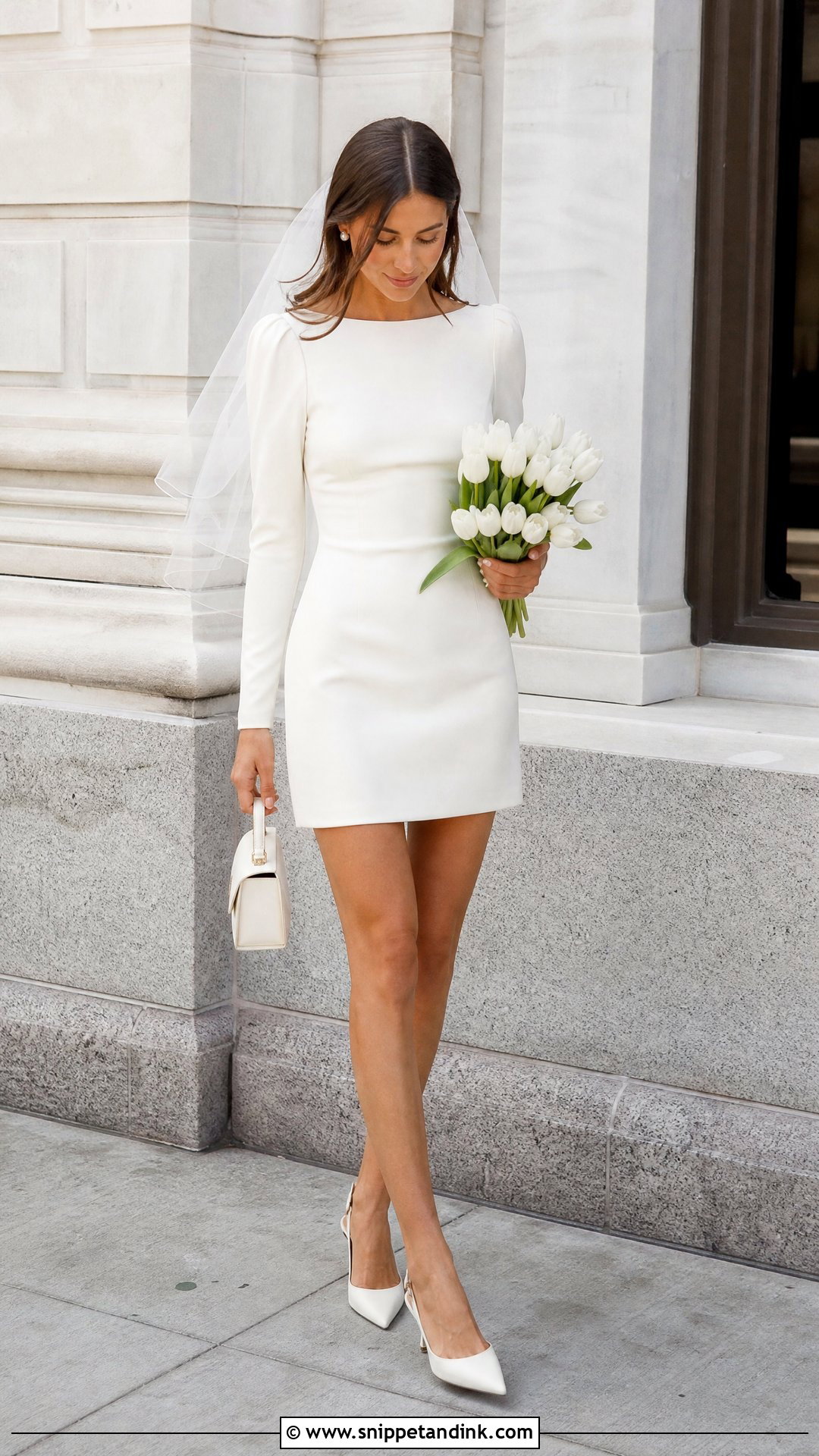
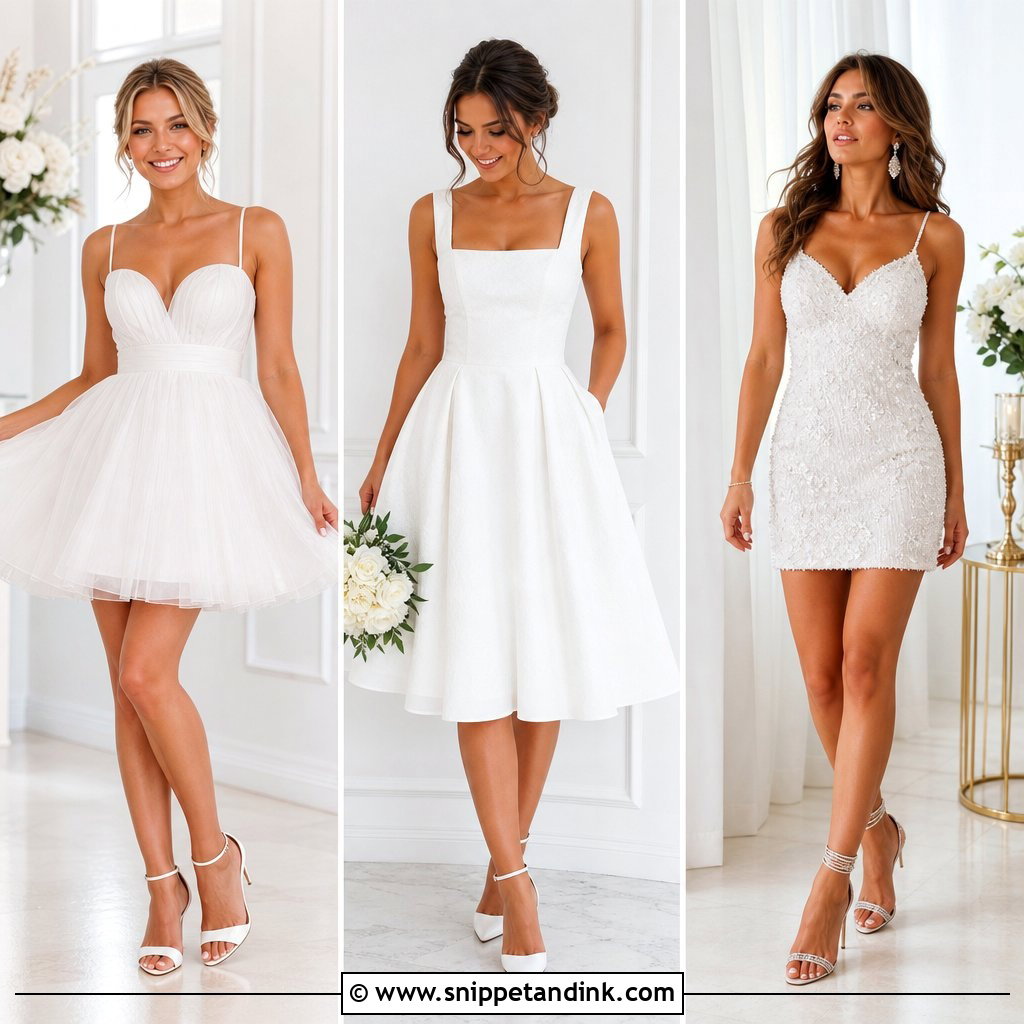
Minis are what I suggest for city halls, welcome parties and second looks. Choose an ivory mini with a fitted waist, a supportive neckline and clean long sleeves or wide straps. The short hem needs grown-up accessories to read bridal: pointed slingbacks, pearl earrings and a compact top-handle bag. A short veil or a structured bow makes the bridal point clearly. Sheer tights in cool weather, bare legs in spring and summer. Sit down in front of a mirror before you commit, since minis ride up several inches when seated and courthouse benches are low. White tulips and a tailored ivory coat for the walk between ceremony and photographs finish it.
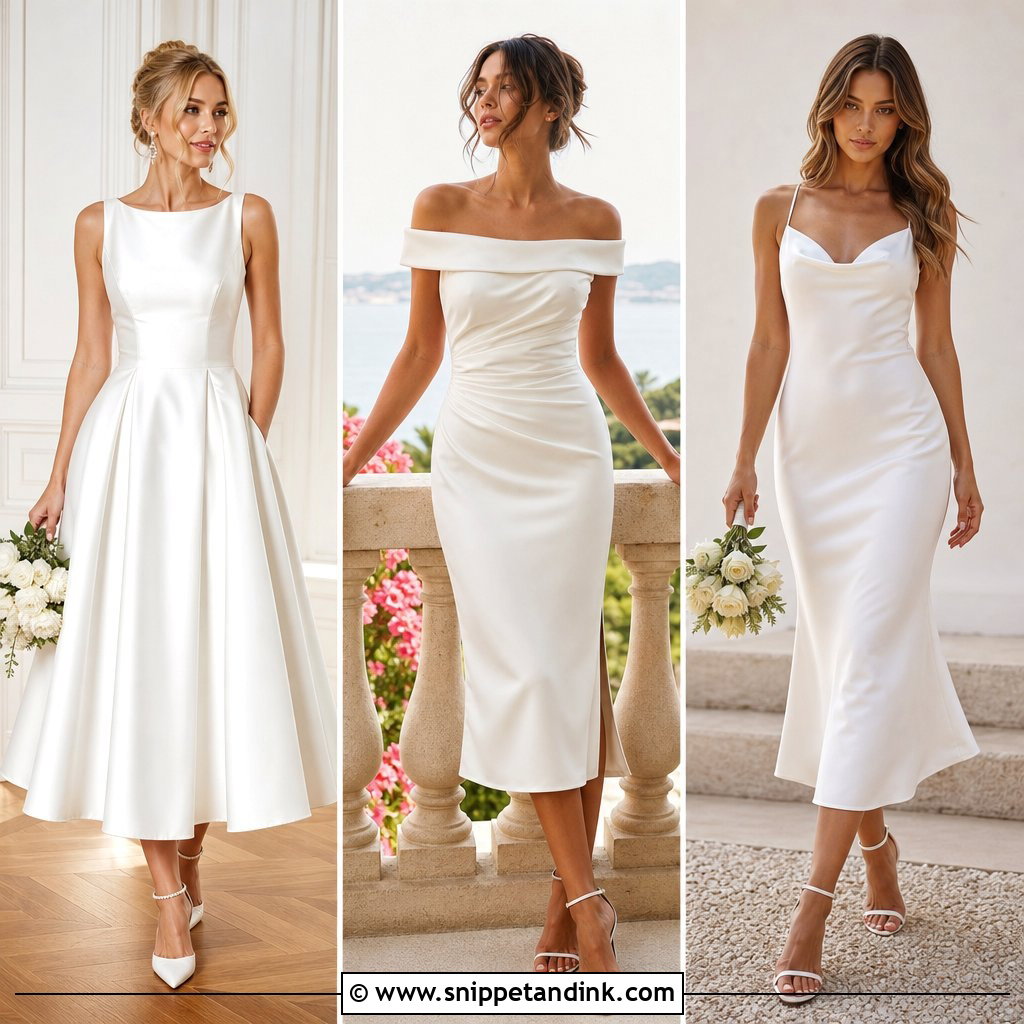
15. Reformation Tea Length Wedding Dress
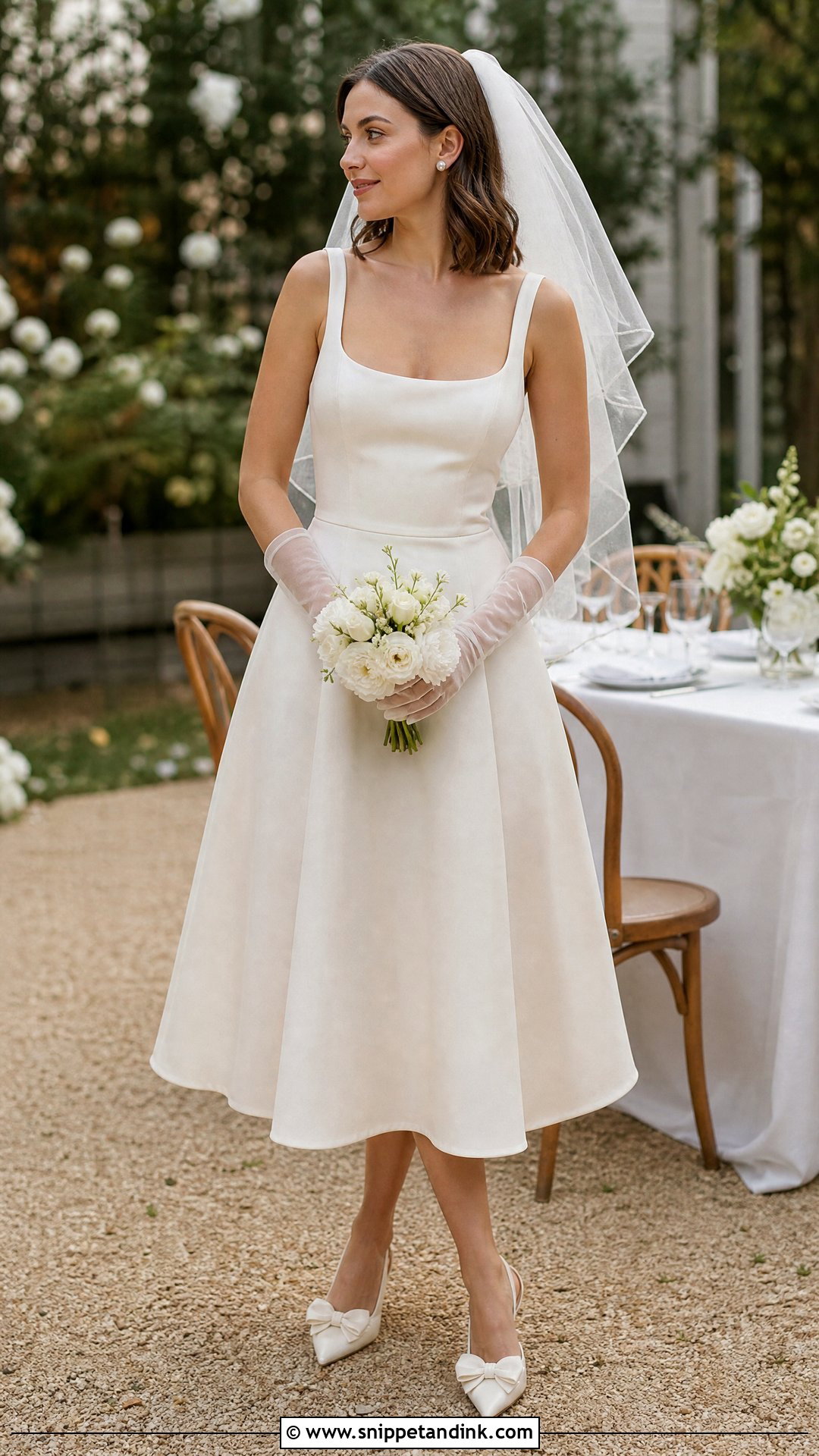
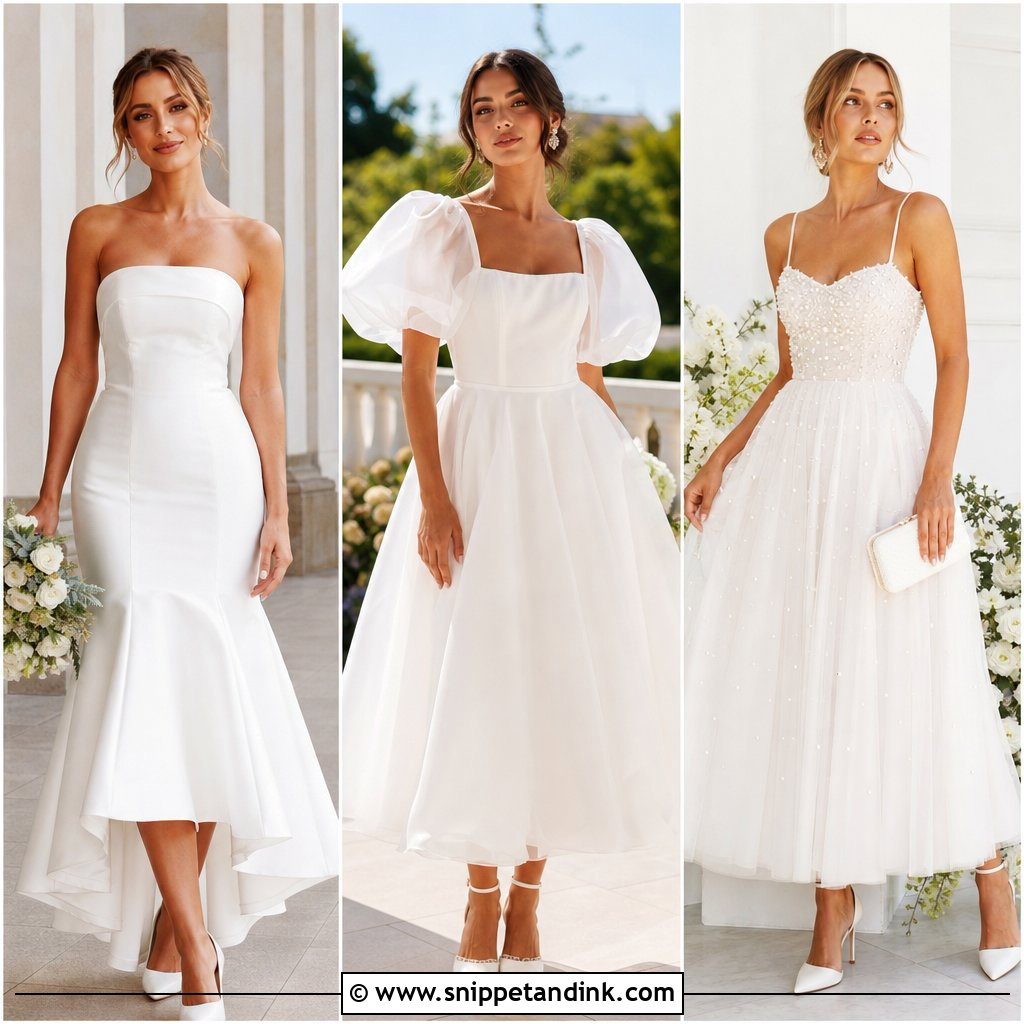
With a tea-length wedding dress, the hem lands between knee and ankle, so walking and dancing are easy and your shoes are on show all day. Pick an ivory dress with a fitted bodice and pick the shoes you’ll actually love looking at: pointed pumps, bow-topped slingbacks or pearl-trimmed heels. Short gloves, small studs and a shoulder-length veil complete it. A smooth bun or softly curled bob suits the proportion. Keep the bouquet compact so it doesn’t cover the waist. For petite brides, the hem matters most; ending at the widest part of the calf shortens the leg, so try an inch higher or lower until it looks right.
16. Reformation Floral Wedding Dress
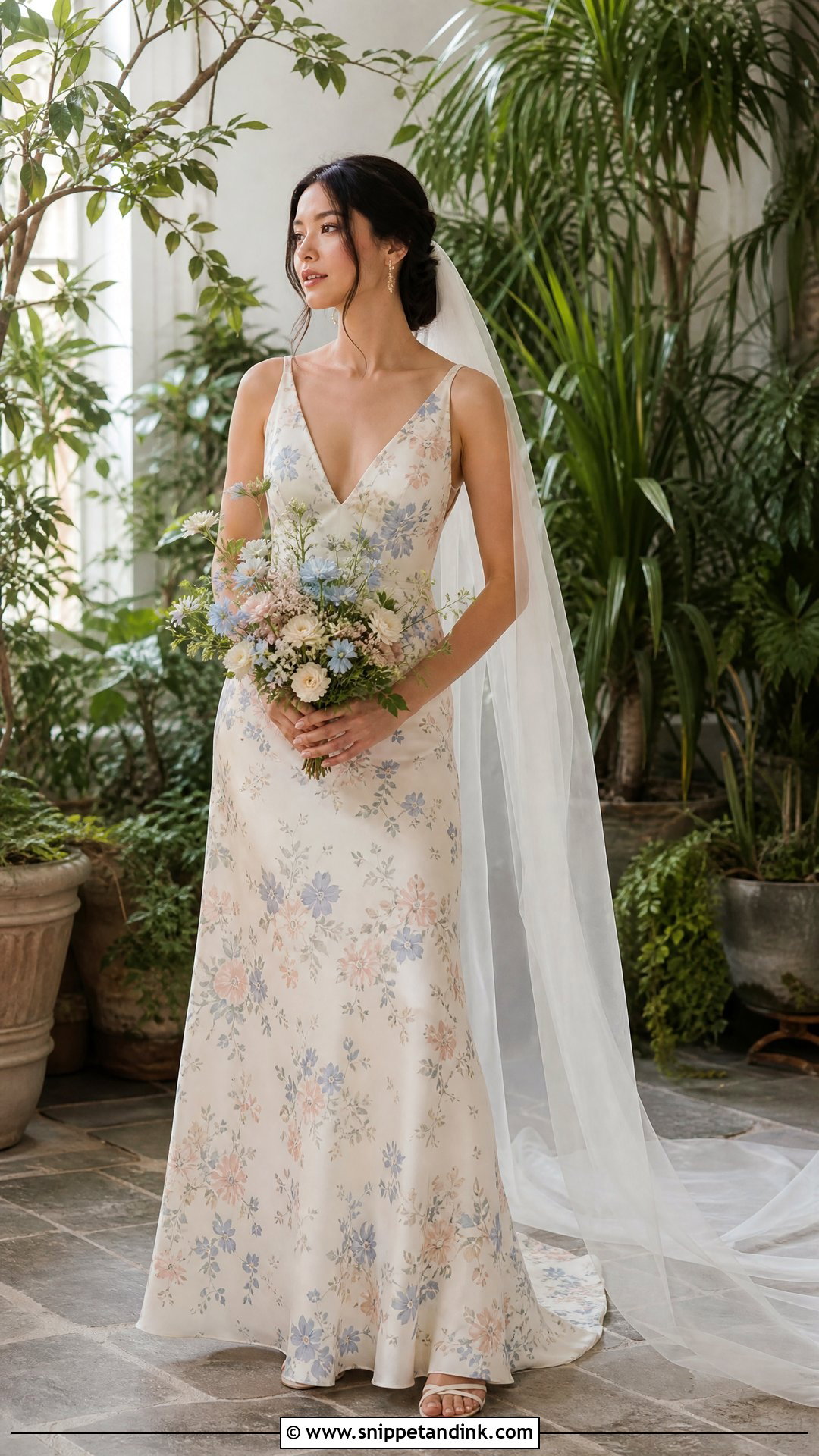
A floral print is for brides who’d rather not wear plain white. An ivory silk covered in soft blue, blush or green flowers, with a fitted bodice and flowing maxi skirt, still reads as bridal. Pull one or two colours from the print into the bouquet rather than trying to match every shade; matching all of them looks forced. Neutral sandals, fine gold earrings and a plain ivory veil balance the pattern. Loose waves or a relaxed braided bun suit the garden mood. If a veil feels too traditional, a floral comb using small blooms from the bouquet works instead. Botanical gardens, backyards and destination ceremonies all suit it.
17. Reformation High Neck Wedding Dress
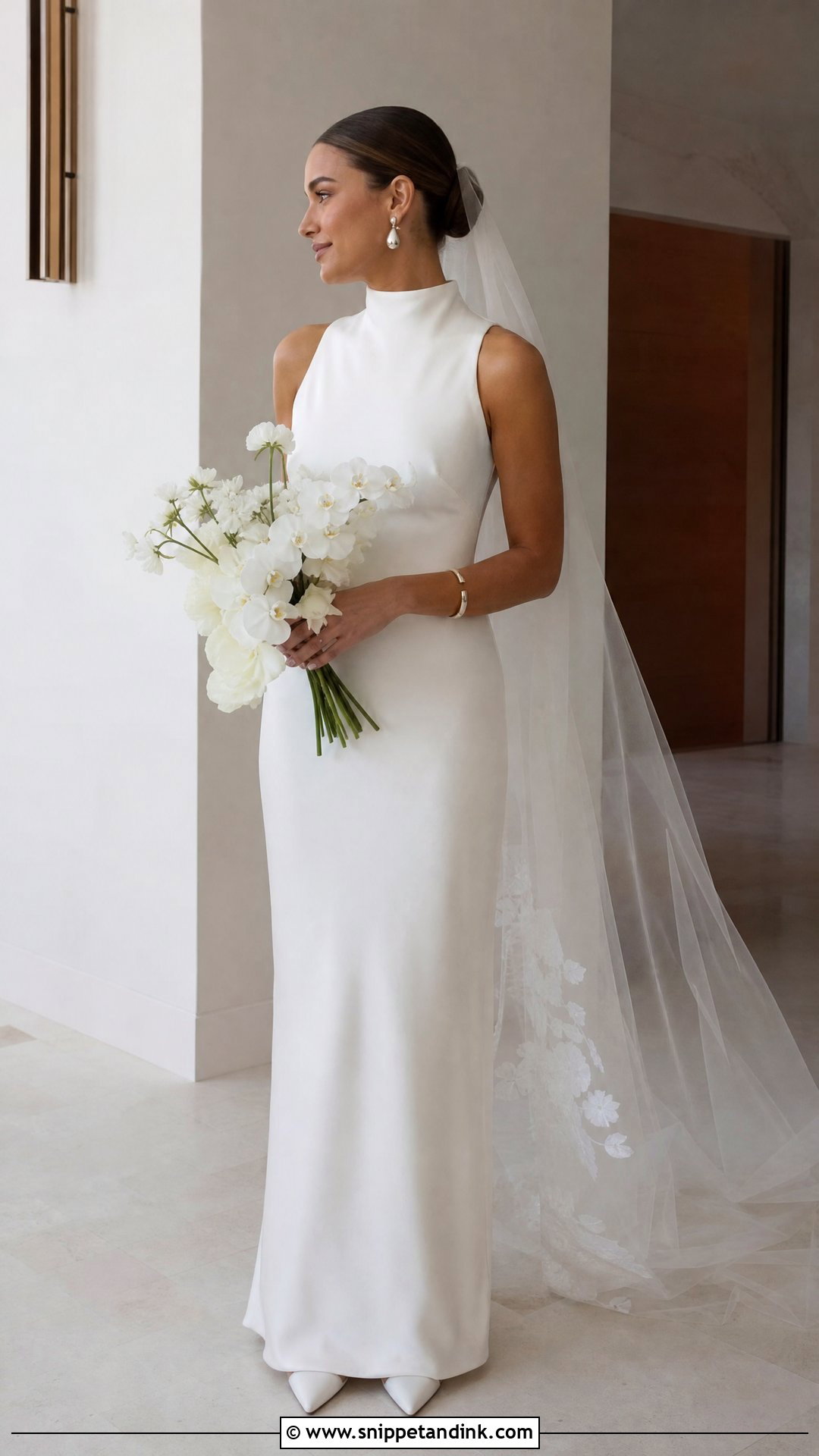
High necklines look polished, and they must fit closely without touching the throat. Sit down and turn your head both ways at the fitting; a collar that presses now will feel tight by the speeches. An ivory silk or crepe gown with clean shoulders, a slim skirt and an open or detailed back works best. Leave off the necklace and wear small statement earrings, a slim cuff and pointed pumps. A high bun or low twist shows the shape of the dress. Anchor the veil beneath the hair so it doesn’t cross the neckline at the front. A long-stemmed bouquet continues the long line.
18. Reformation Cowl Neck Wedding Dress
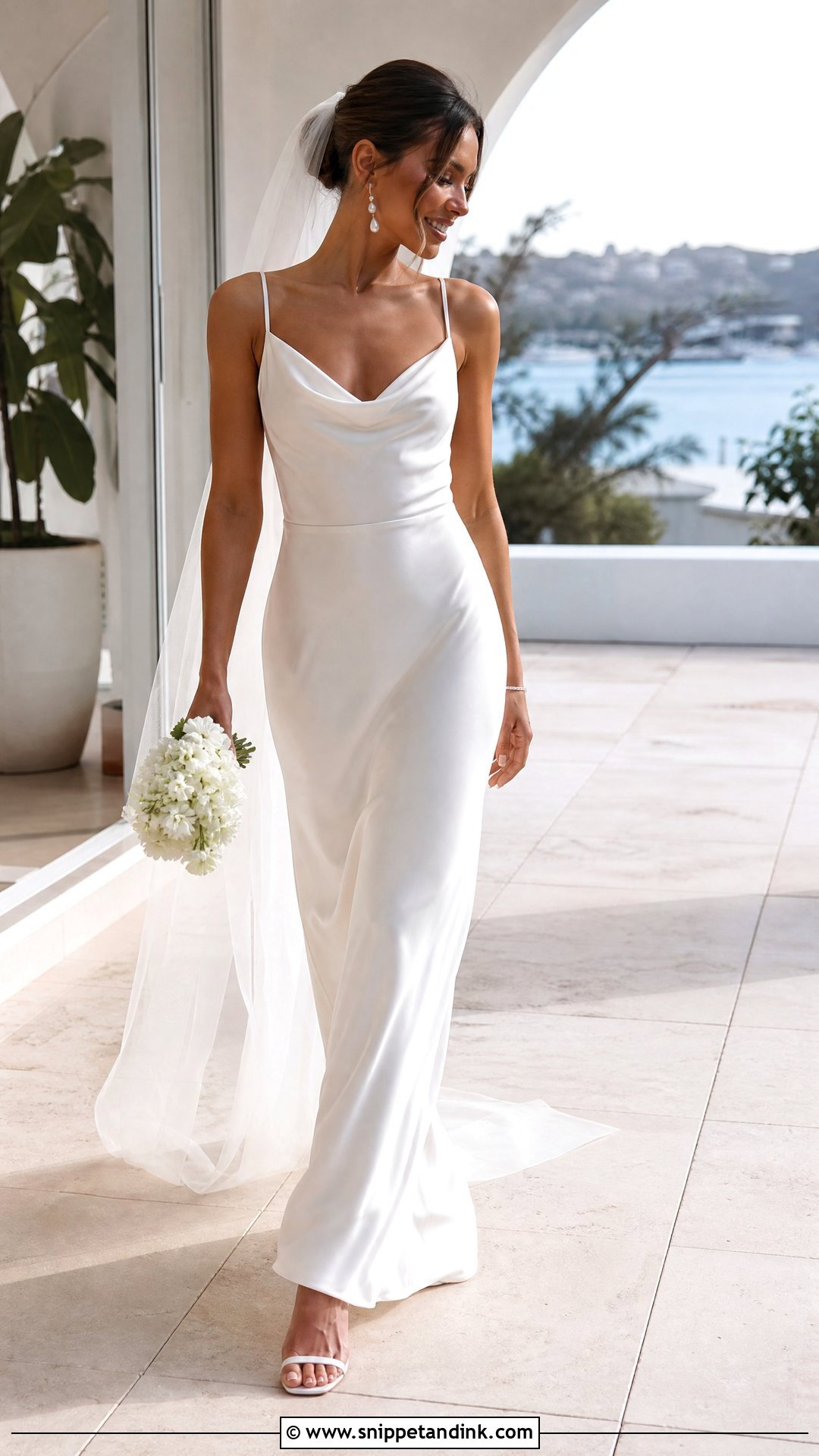
Cowl necks fall in soft folds across the chest, and those folds move whenever you do, which is both the appeal and the risk. Choose an ivory maxi with narrow straps, a lightly fitted waist and a fluid skirt. Simple drops, barely there sandals and a fine bracelet are enough, with a light chapel veil for the ceremony and a small satin clutch afterward. Hair should be soft but controlled, such as brushed waves tucked behind the ears or a loose low knot. Lean forward in the mirror at your fitting; if the cowl gapes, discreet fashion tape or a small tack at the strap fixes it. Underwear should be smooth so it doesn’t interrupt the drape. Coastal venues and warm evenings suit it well.
19. Reformation Fitted Wedding Dress
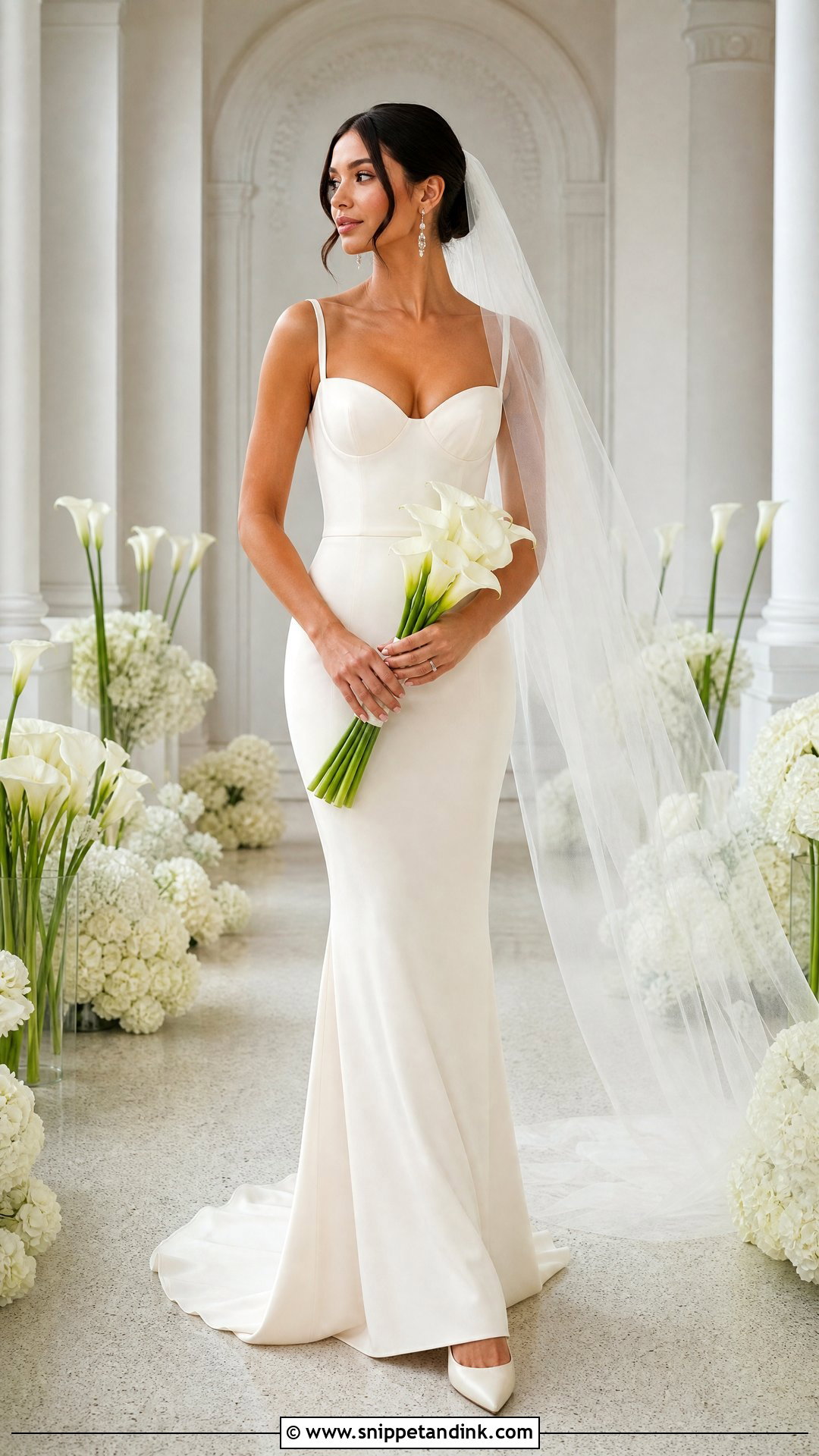
Fitted dresses show your shape, and they also show when the fit is wrong. Choose an ivory gown with a supportive bodice, a defined waist and a skirt that follows the hips before opening slightly near the ankle. Pointed heels, crystal earrings and a long sheer veil finish it, with a polished low bun and a narrow calla lily bouquet. At alterations, walk, sit and dance before anything is pinned tighter; a fitted skirt that’s comfortable standing can be impossible on stairs. A bustle helps if there’s a small train. For more coverage at the ceremony, a tailored cape or detachable sleeves come off before the reception.

20. Reformation Beach Wedding Dress
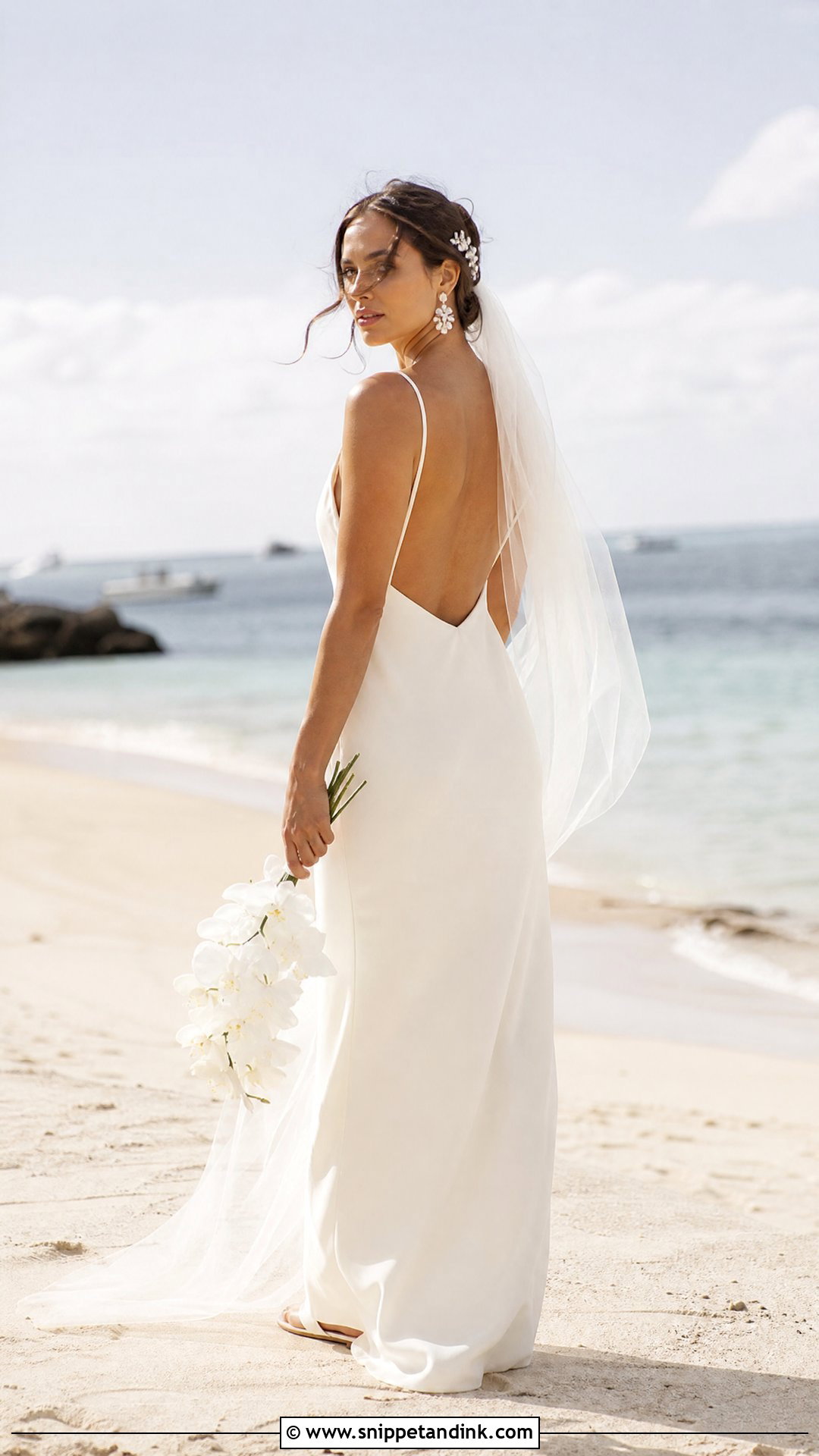
Sand, wind and heat set the rules for a comfortable beach wedding outfit. A flowing ivory silk or crepe gown with slim straps, an open back and a skirt that moves in the breeze is the base. Narrow heels sink, so wear flat leather sandals, low block heels or bridal flats. Delicate shell-inspired earrings, a simple hairpin and a veil no longer than fingertip length cope with wind better than anything longer. A relaxed bun keeps hair from whipping across your face. White orchids or tropical greenery hold up in heat. Have the hem set in your beach shoes so it clears the sand, since wet sand stains ivory silk quickly.
Silk Wrinkles, Water Marks and the Night Before
Light silk and satin crease faster than structured bridal fabrics, and they mark more easily. Most of the problems I see on the morning come from how the dress travelled and where it spent the night.
Getting it to the venue smooth
Hang the dress the moment you arrive, inside its breathable garment bag, from a door frame or rail rather than folded on a chair. Steam it on a low setting from the inside, keeping the steamer moving and never touching the fabric. Silk can scorch and pick up water spots from a steamer that spits, so test on an inside hem first. Avoid a hot iron unless it has a silk setting and you use a pressing cloth.
Small marks on the day
- Blot any spill with a dry white napkin. Rubbing silk raises the fibres and leaves a dull patch.
- Skip water on silk if you can; it often leaves a ring larger than the original mark.
- Put your makeup on and let it set before the dress goes over your head, and use a thin scarf over your face as you step in.
- Keep self-tan and body shimmer away from straps and the neckline, as both transfer onto ivory.
Is a Simple Dress Enough on Its Own?
With dresses this pared back, the finished look comes from accessories, alterations and practical details that suit the venue. The twenty ideas above range from silk slips and fitted satin to florals, two-piece sets and short courthouse dresses. Before you choose, think about how the fabric moves, where the neckline sits and whether the shoes work on the ground you’ll stand on. Sit, walk and raise your arms in every dress you try. Bring your real underwear and heels to alterations. Then choose the outfit that still looks like you, because a simple dress worn with confidence and a few well-chosen pieces is all it takes.
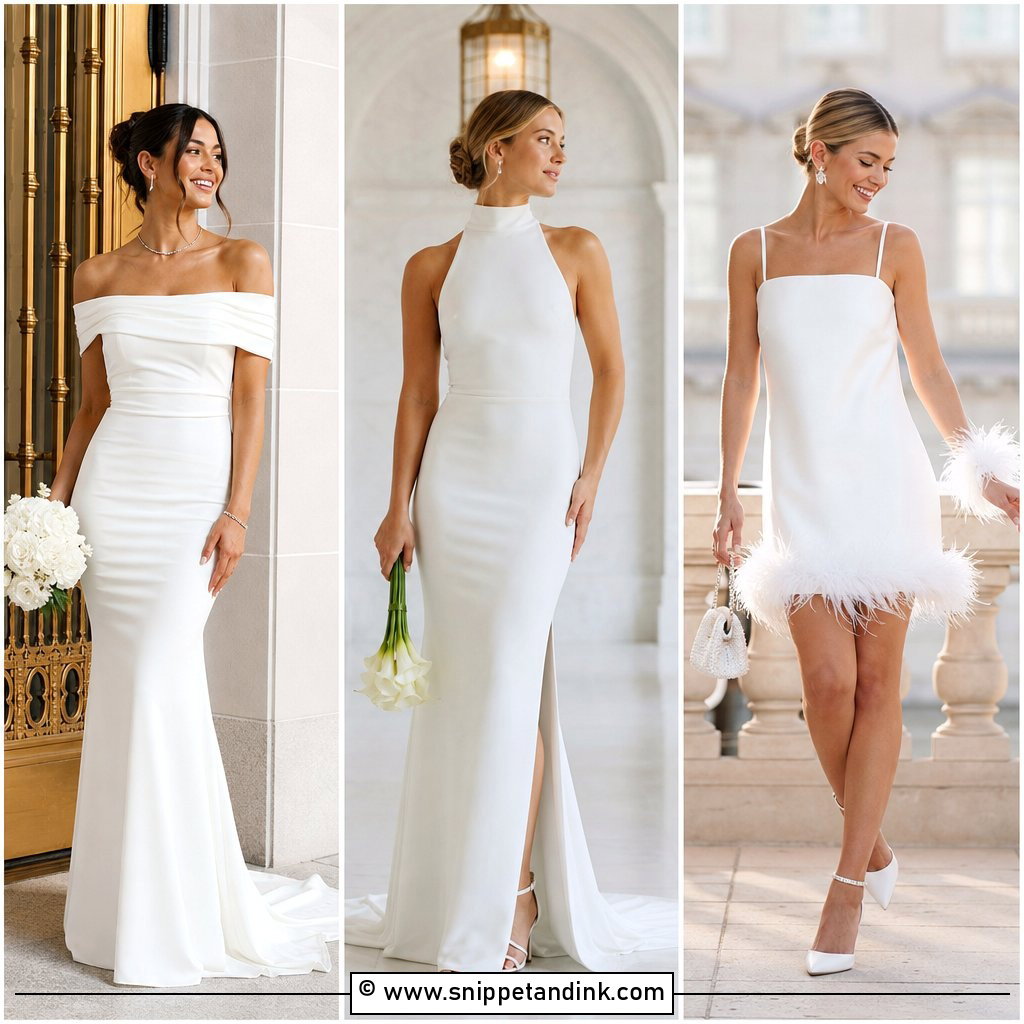
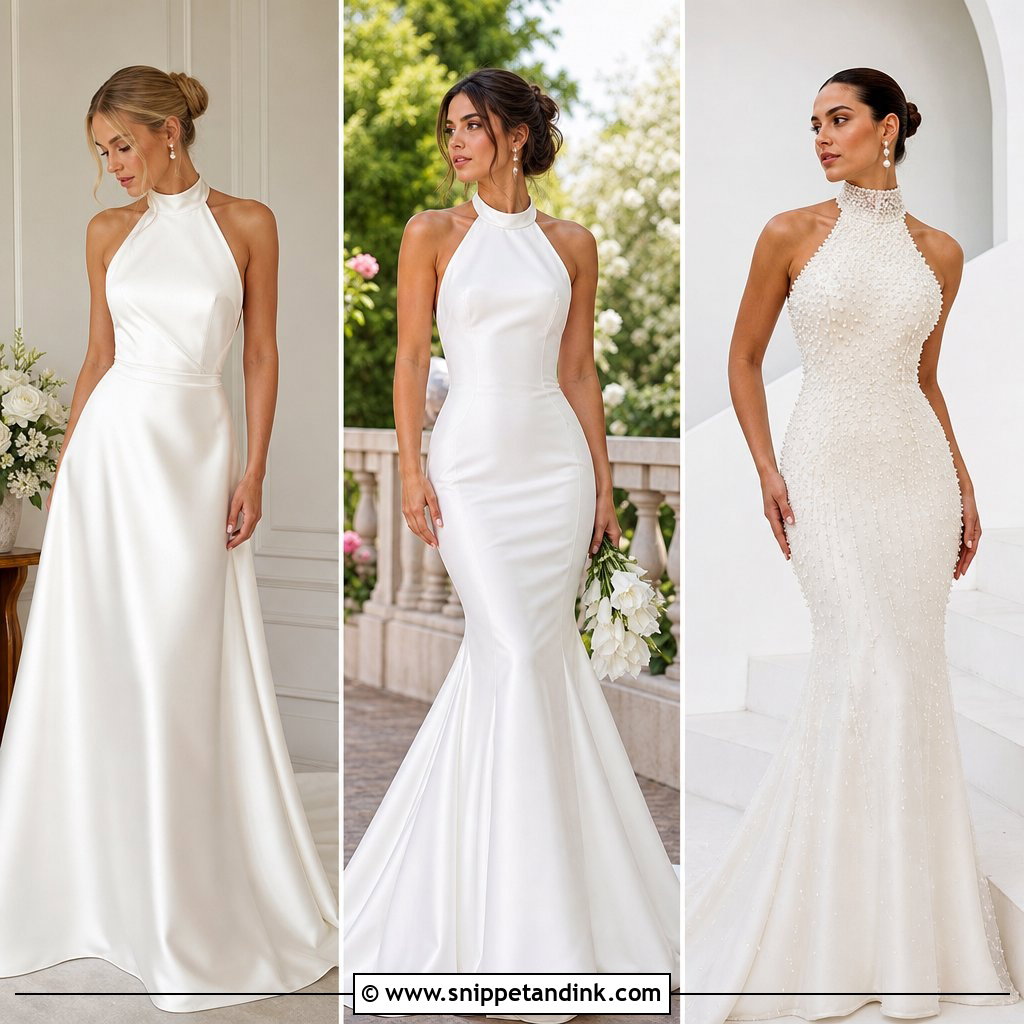
You'll Like These Ideas:










Leave a Reply