
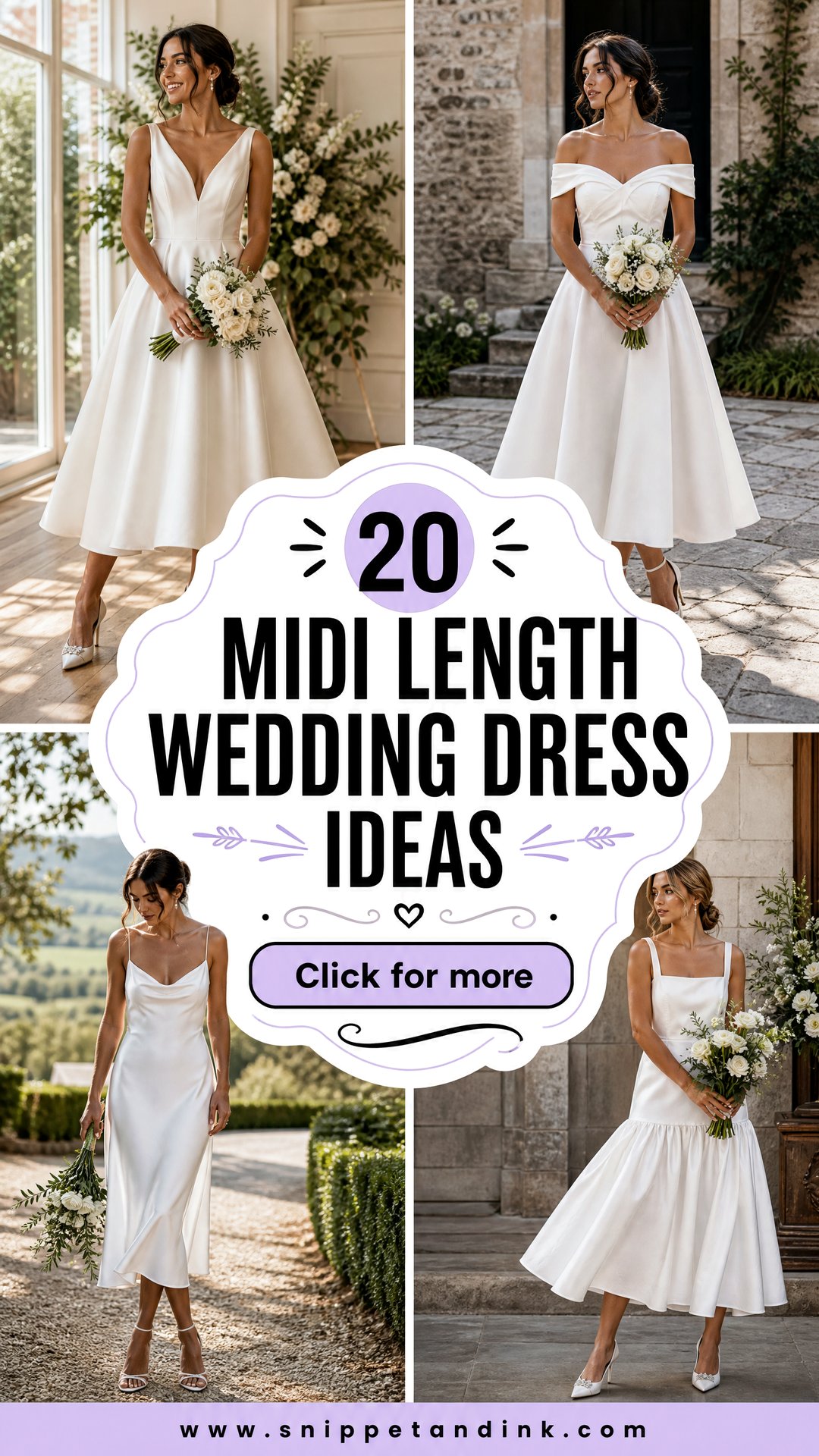
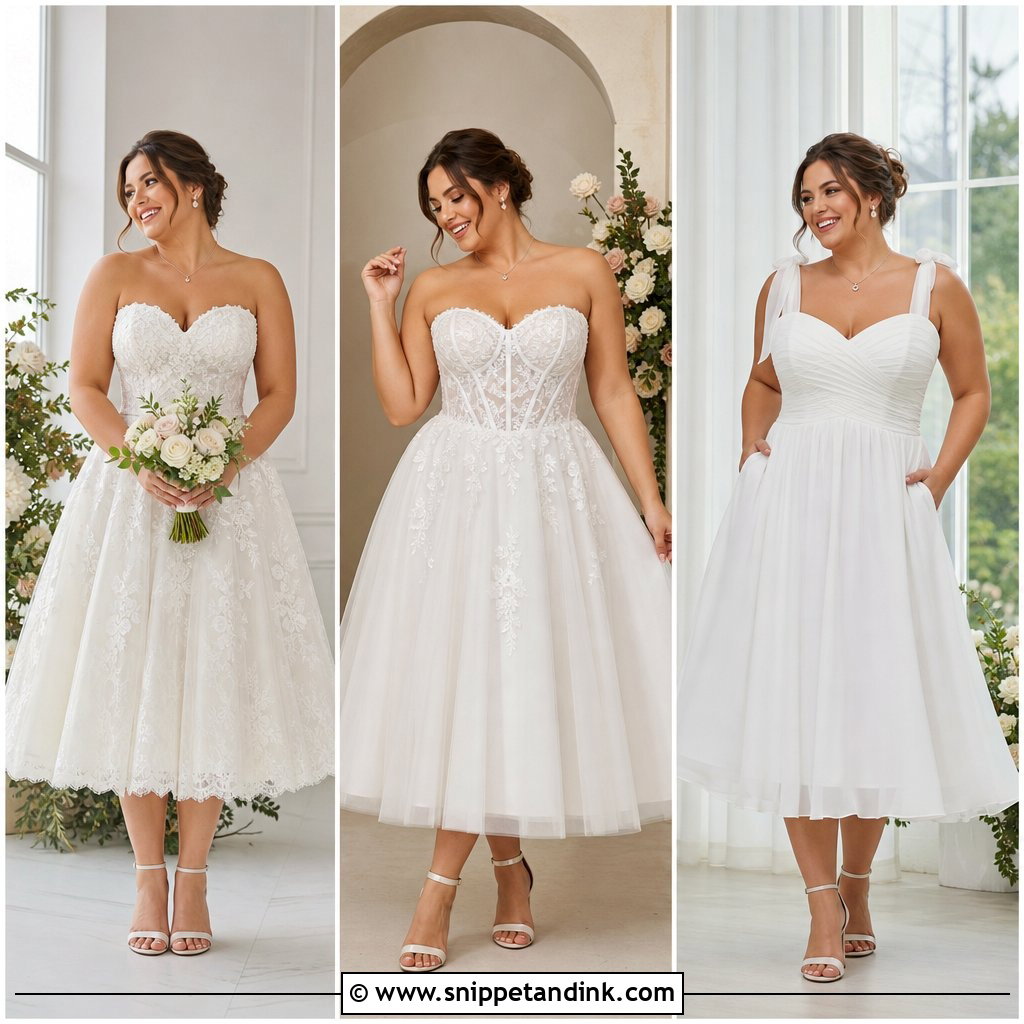
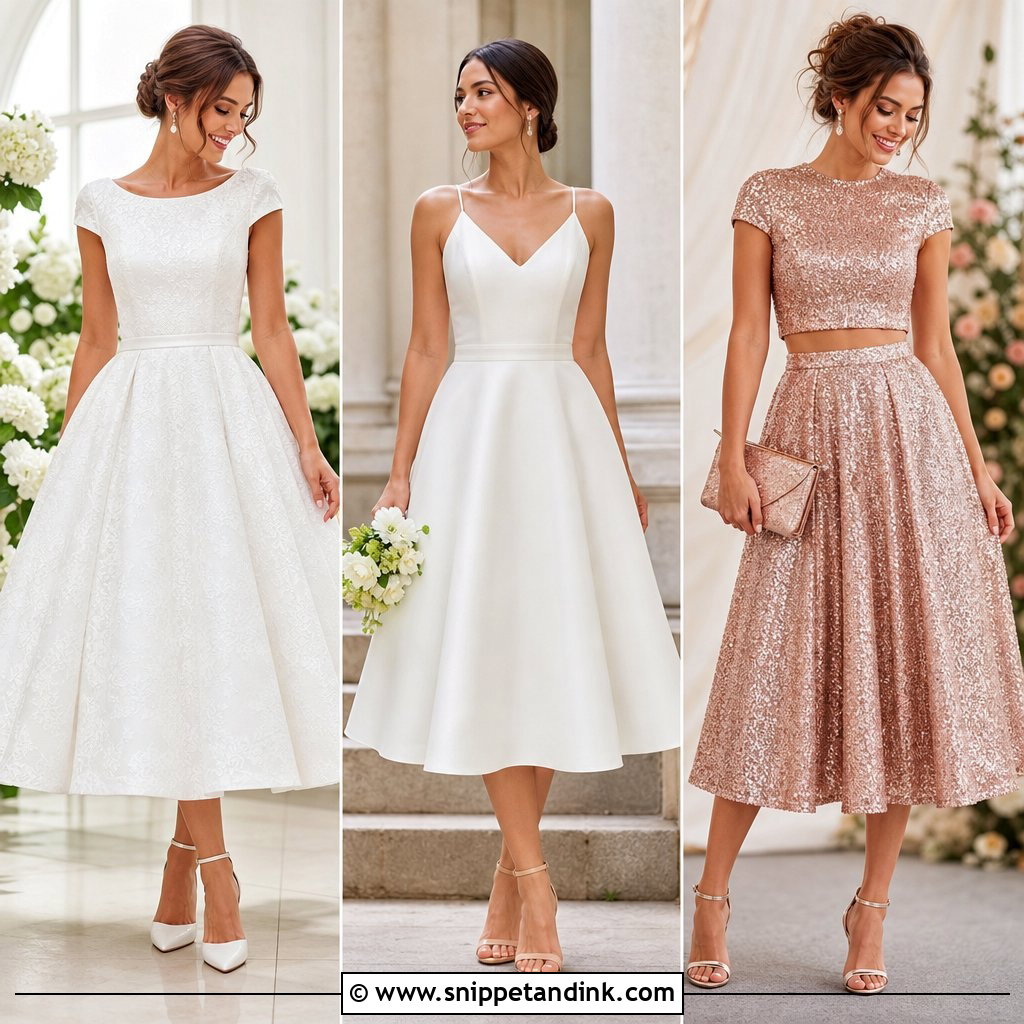
A midi hem lands somewhere between just below the knee and just above the ankle, and that small stretch of leg changes how a wedding dress behaves. You can walk without lifting your skirt, dance without a bustle, and your shoes become part of the outfit instead of a secret. I suggest this length often for courthouse ceremonies, garden lunches, destination weddings and second-look reception changes. It suits clean satin as easily as lace or vintage tulle. What decides whether it reads as bridal or simply as a nice dress is the fit at the waist and the exact point where the hem stops. Below are twenty shapes I’d put in front of a bride considering a shorter dress, with what I watch for in each one.
Setting the Hem Against Your Calf, Not the Size Label
Off-the-rack midi dresses are cut for a standard sample height, so nearly every bride I dress needs the hem adjusted. The calf is my reference point, not the label. A hem that cuts across the fullest part of the calf makes the leg look heavier and shorter, while one that stops just below the knee, or at the slim point above the ankle, draws the eye down a clean line.
Three Hem Heights and Who They Suit
- Just below the knee: lifts petite brides and suits structured skirts. It shows the most shoe, so the shoes need to be good.
- Mid-calf: the classic tea length, flattering on most heights once it avoids the calf’s widest point.
- Just above the ankle: the most formal of the three and the closest to a gown. I keep it for taller brides or very fluid fabrics that would otherwise look cropped.
When I pin a hem, the bride wears her wedding shoes and stands normally with her arms relaxed, and I check it from the side as well as the front. A heel tilts the body slightly forward and can lift the back of a skirt enough to make the hem look uneven in profile photos. If your shoes aren’t chosen yet, pin with a heel of the same height and settle on the real pair before the final fitting.
1. Satin A-Line Midi Wedding Dress
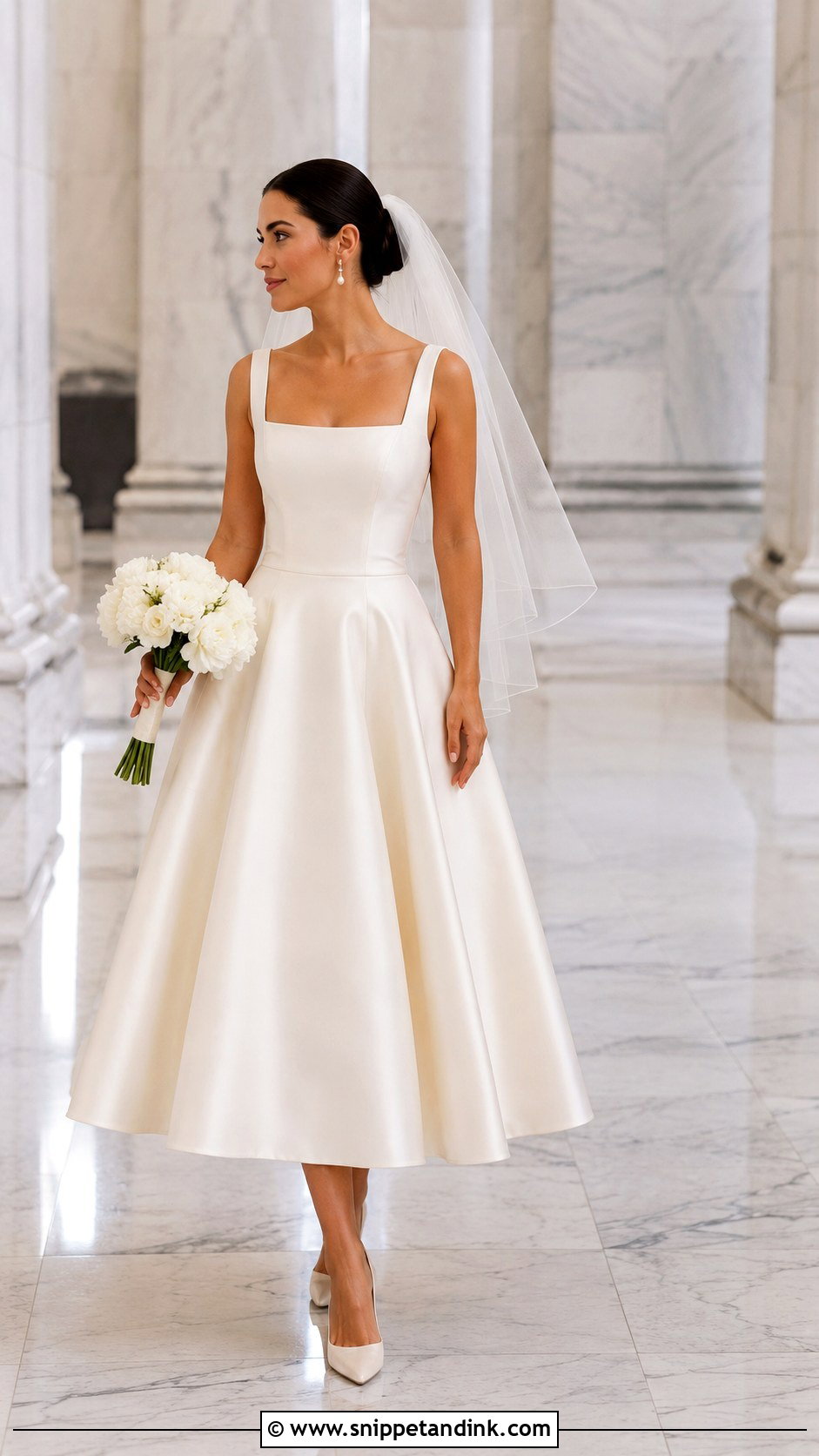
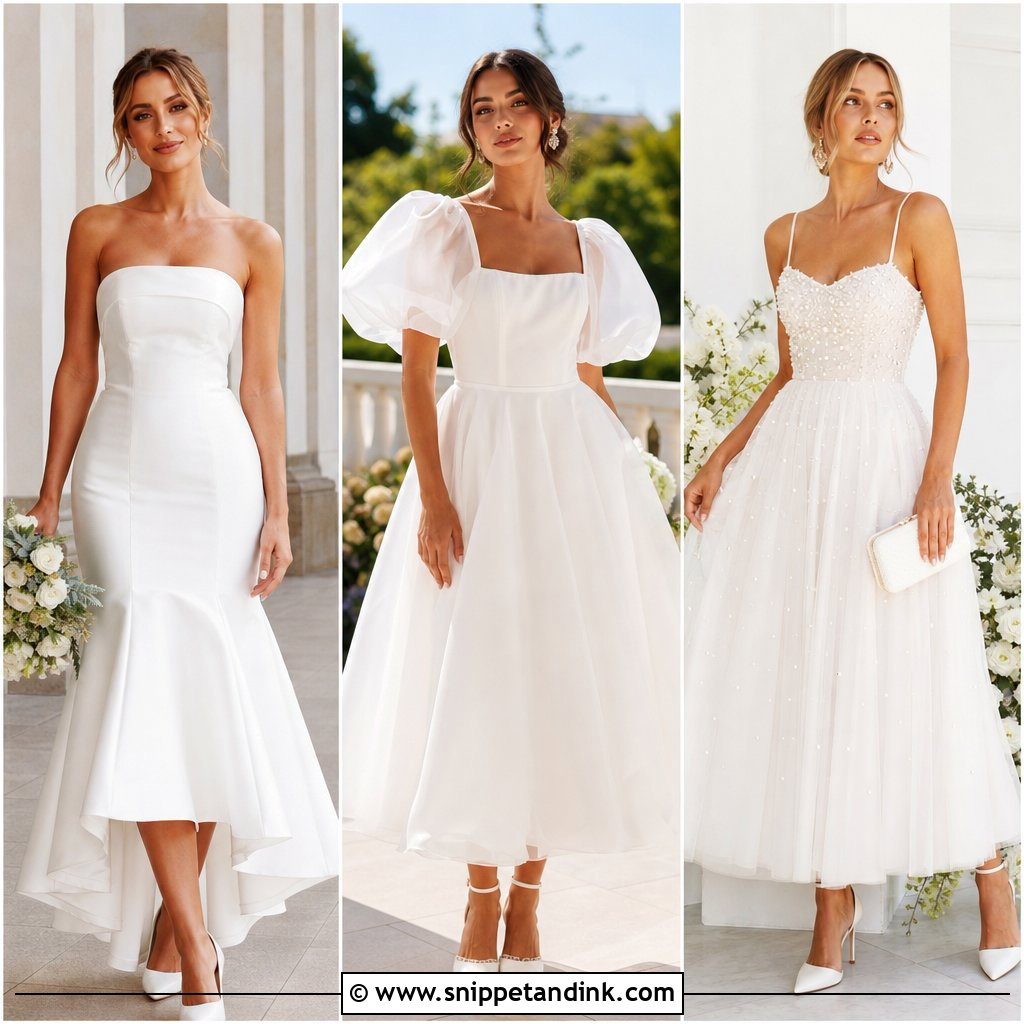
Satin A-line is the shape I pull first when a bride tells me she wants something unmistakably bridal, just shorter. A structured bodice with wide straps or a softly curved neckline, then a skirt that flares from the natural waist, gives the midi length enough body to look intentional. Ivory satin catches light along the skirt folds, so I like to see it under the venue’s own lighting, because thinner satins can look shiny rather than rich. Pointed pumps, pearl drops and a small structured bag finish it, and a fingertip veil keeps the ceremony feeling without hiding the hem. On a petite frame I’d set the hem just below the knee; taller brides usually look better at mid-calf.
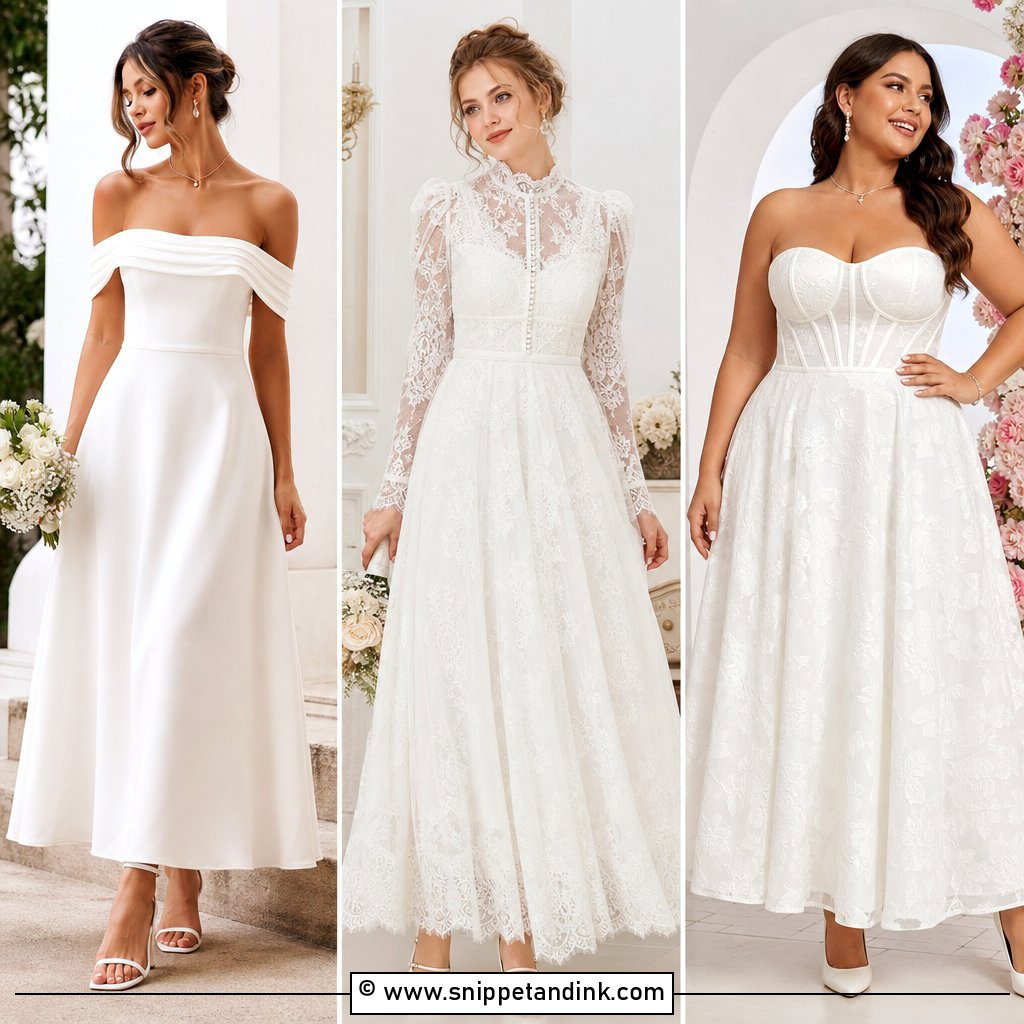
2. Lace Tea-Length Wedding Dress
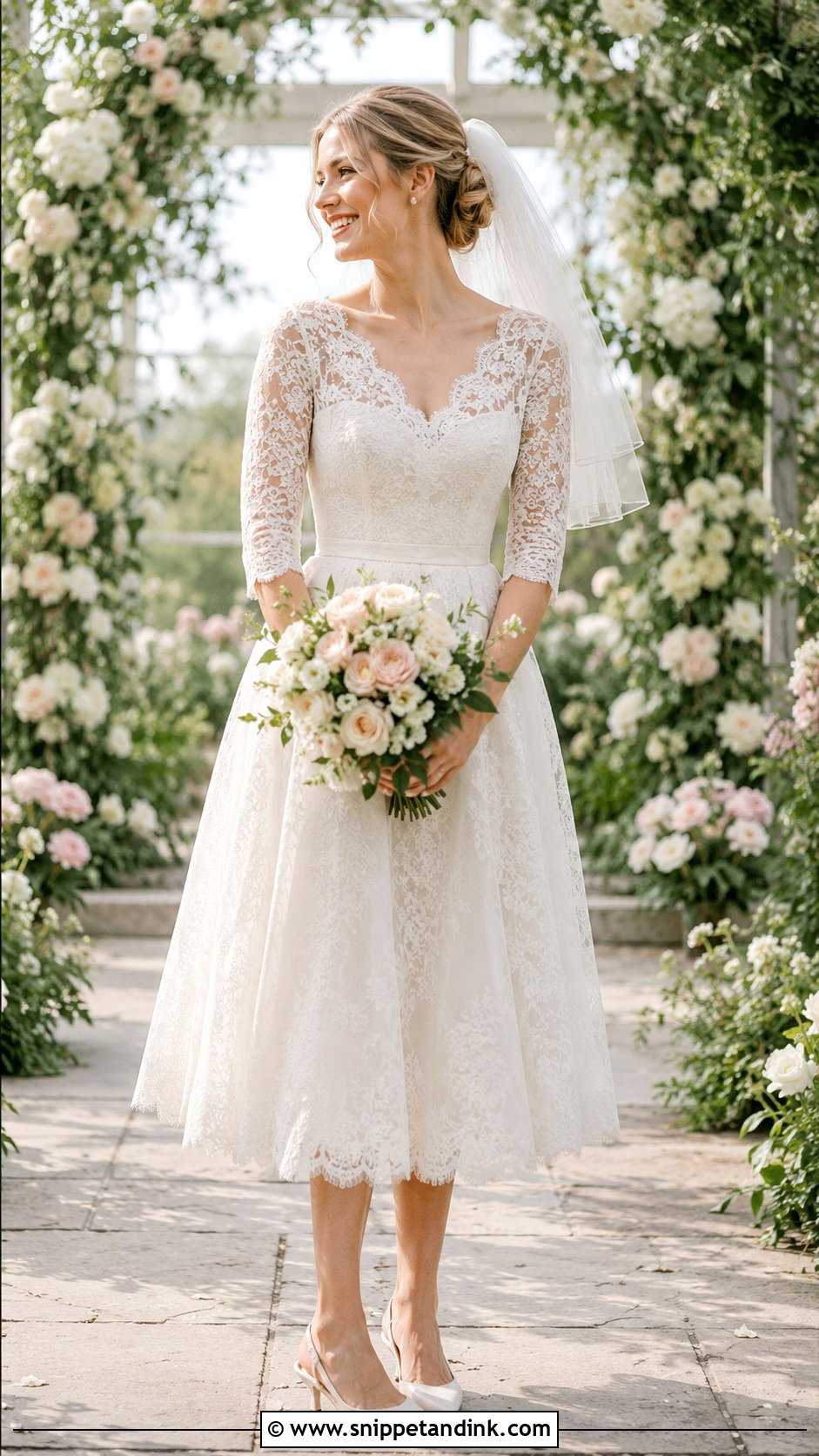
Lace softens a tea-length dress more than any other fabric I work with, but only when the lining underneath is smooth enough to let the pattern read. Look for a fitted lace bodice over a gently flared skirt. A sweetheart or bateau neckline keeps the shape classic, and scalloped edges at the hem give the shorter length a finished line. I always ask how the dress will be shortened, because cutting straight across loses that scallop entirely; the lace edge has to be lifted off and re-applied higher. Ivory slingbacks, pearl studs, a floral comb and a short tulle veil are plenty. Three-quarter sleeves add coverage for a church or historic venue, and curvier brides tend to prefer a defined waist with a slightly wider skirt.
3. Long-Sleeve Midi Wedding Dress
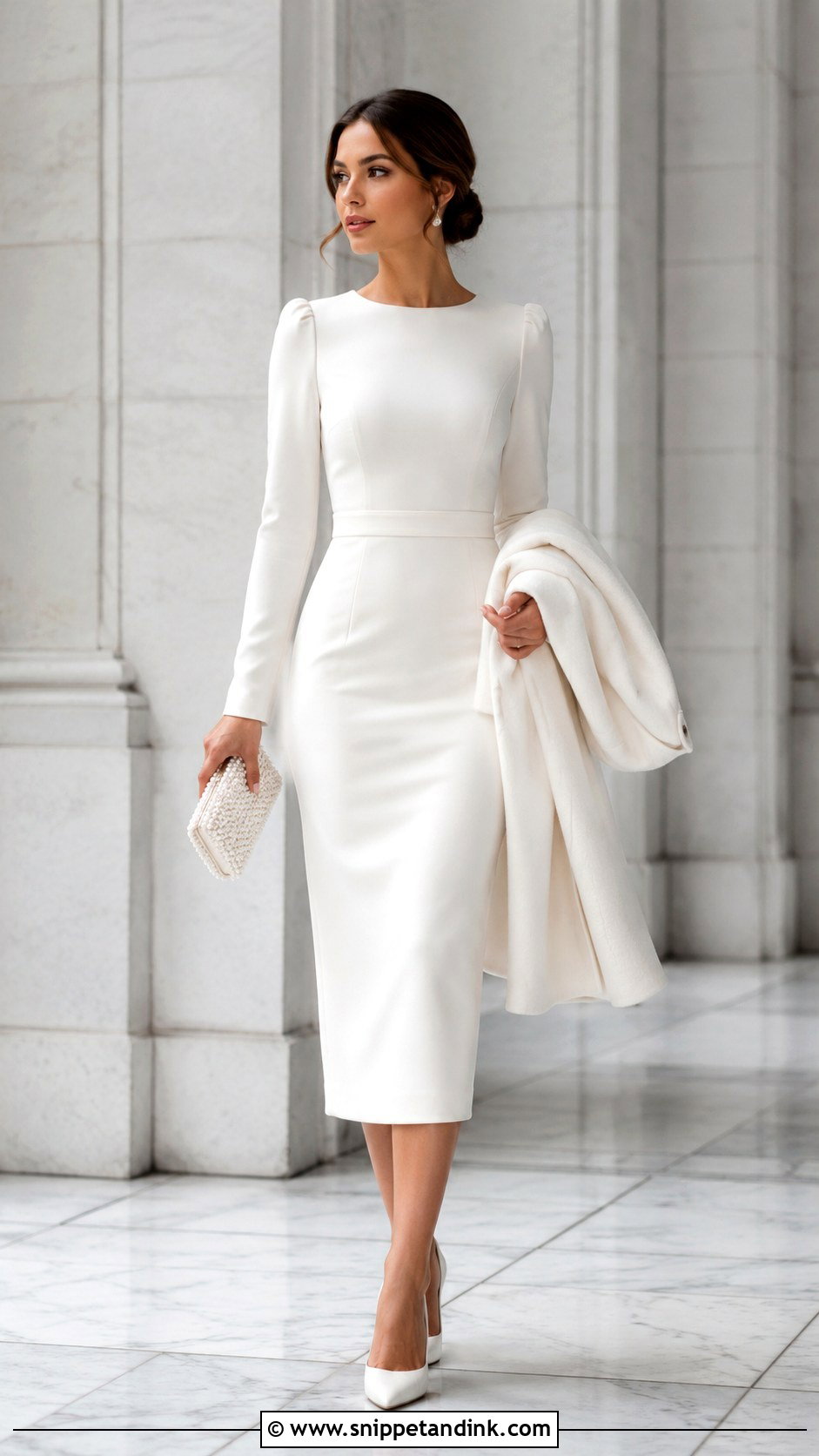
A long sleeve with a midi hem is one of the most practical cold-weather wedding dresses I know. Fitted crepe sleeves look sharp; lace or sheer tulle softens the arm. The risk is that full coverage on top plus a mid-calf skirt can feel heavy, so I look for a clearly defined waist and a skirt that skims rather than flares wide. When you try one on, raise both arms above your head. A sleeve set without enough ease in the armhole will drag the whole bodice up, and you’ll feel it every time you hug someone. Closed-toe heels, a pearl clutch and small earrings keep it neat, a tailored white coat covers outdoor portraits, and velvet shoes suit an autumn or winter date.
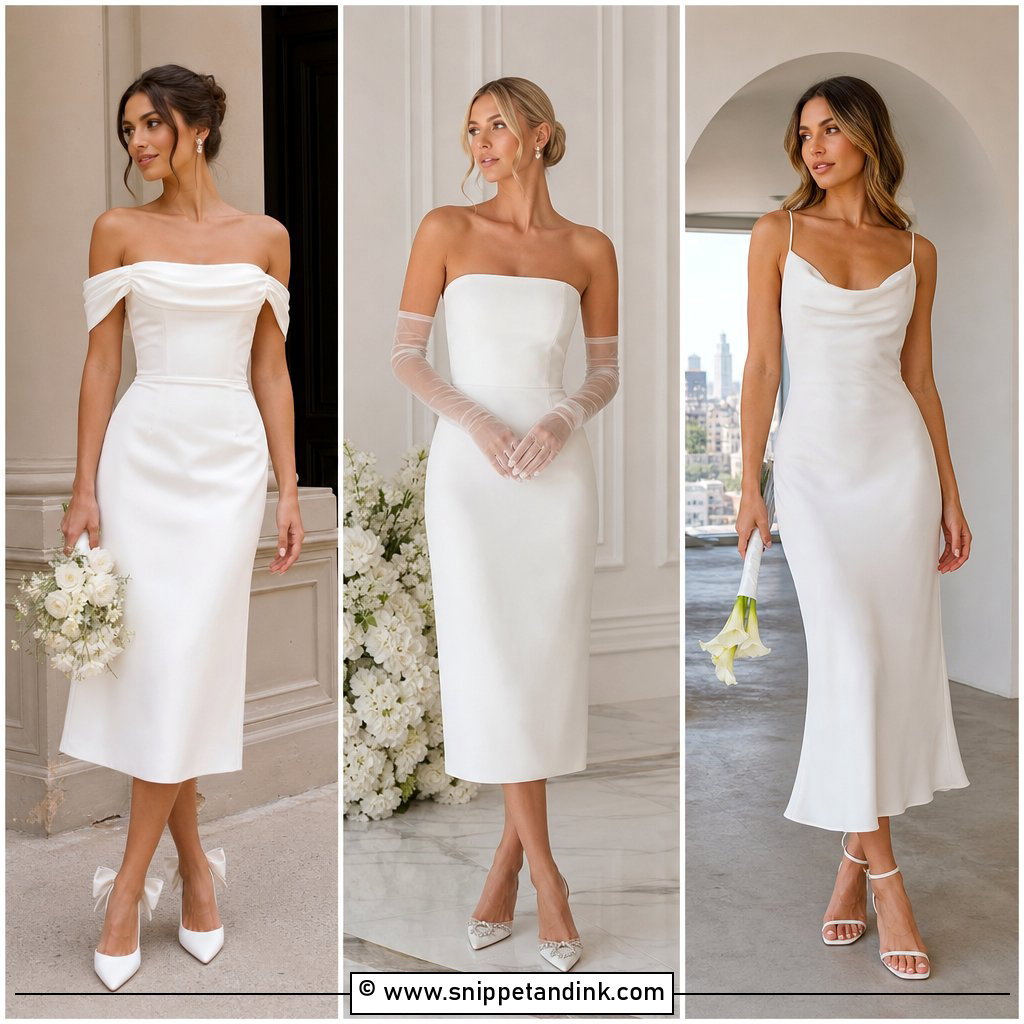
4. Strapless Bow Midi Wedding Dress
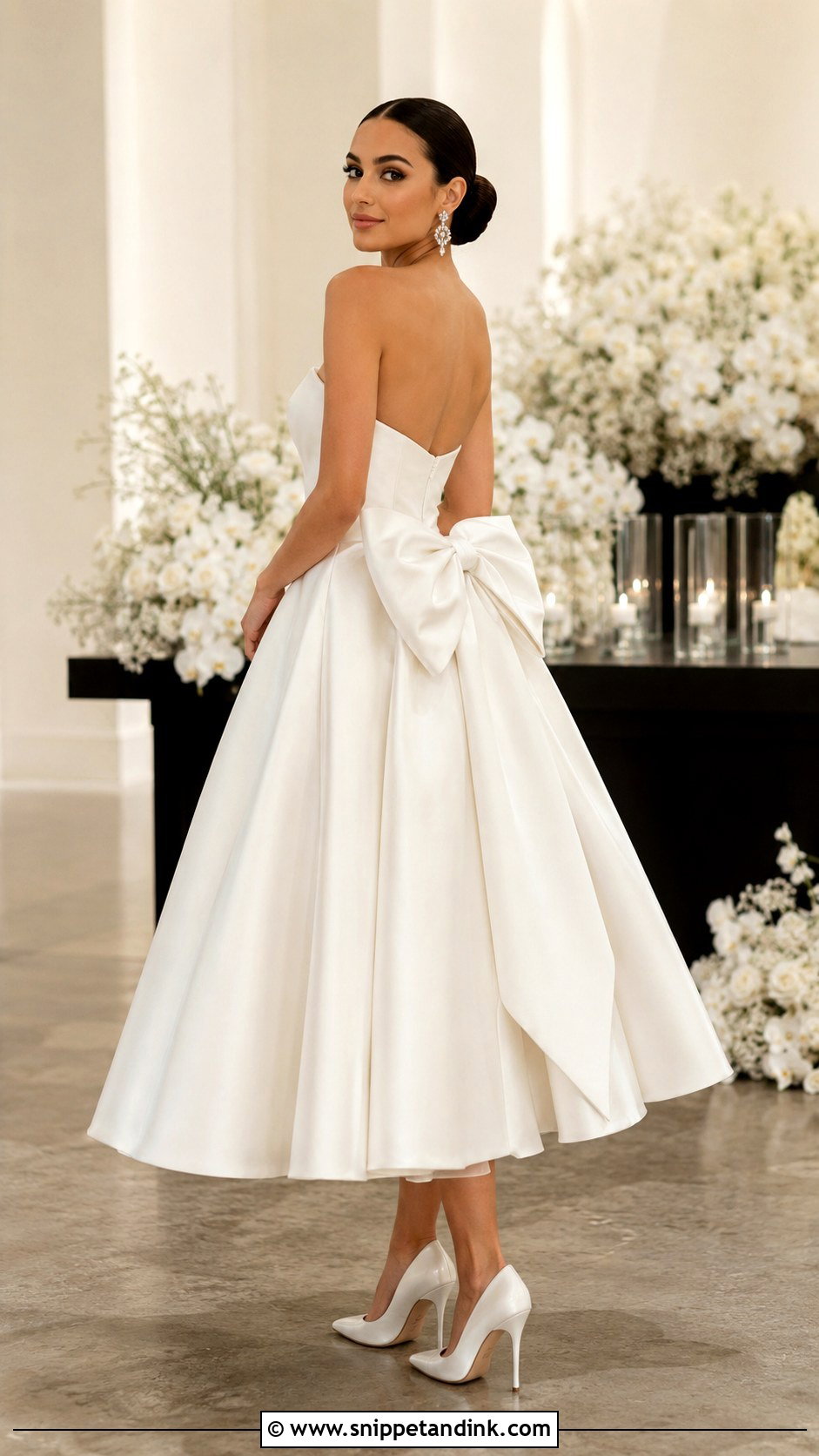
A bow on a strapless midi dress can read playful or polished, and the difference is almost always structure. Wherever it sits, across the neckline, at the waist or at the back, the bodice needs boning firm enough that the bow doesn’t drag the fabric down by mid-afternoon. A fitted bodice with an A-line skirt is easy to dance in. Pointed satin heels, small crystal earrings and a sleek low bun keep the focus in the right place. Skip the necklace, since the neckline is already busy, and wear a narrow bracelet instead. I often suggest a detachable bow for city weddings, because it gives you two looks from one dress and can come off before you sit down to dinner.
5. Square-Neck Midi Wedding Dress
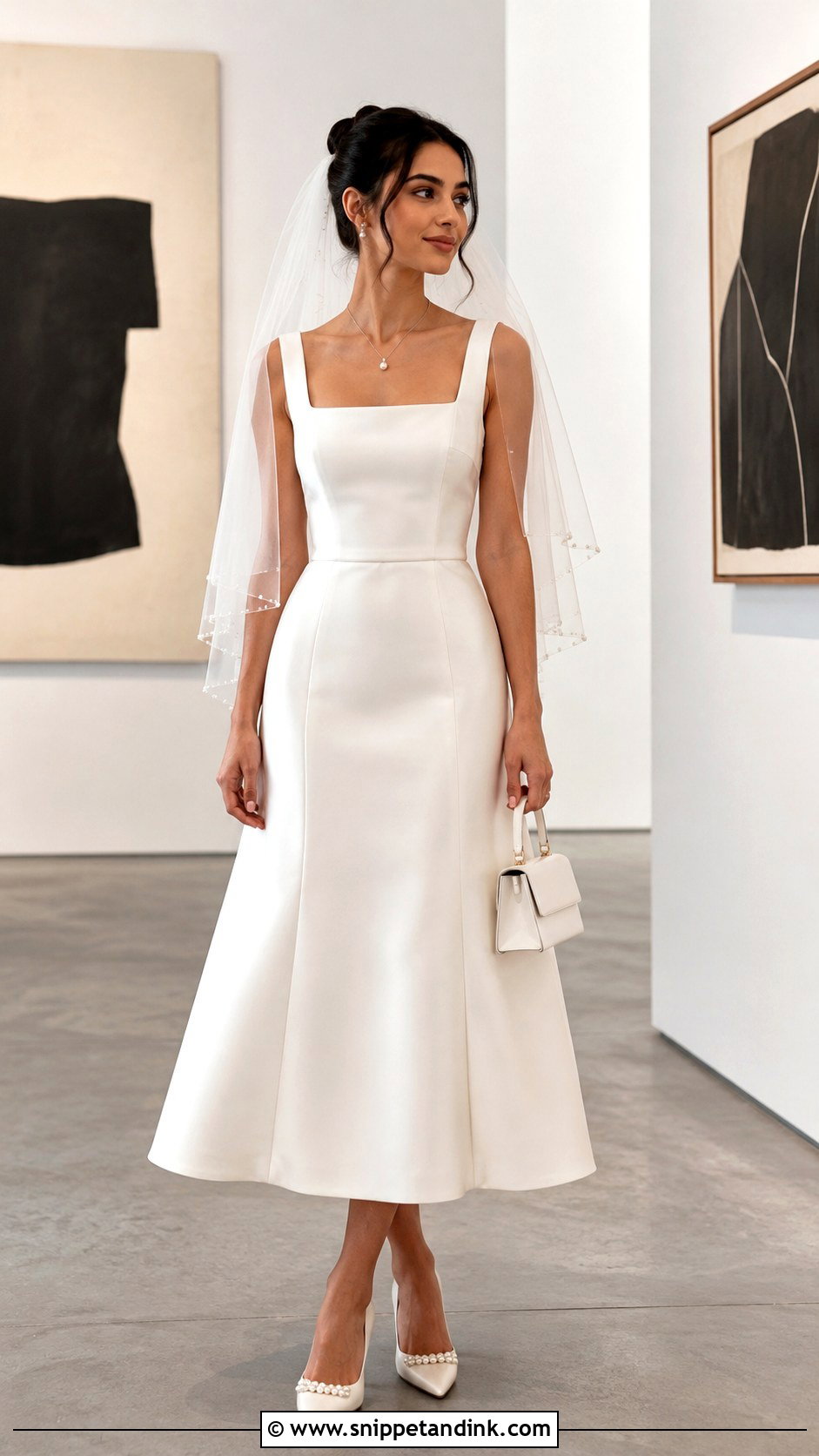
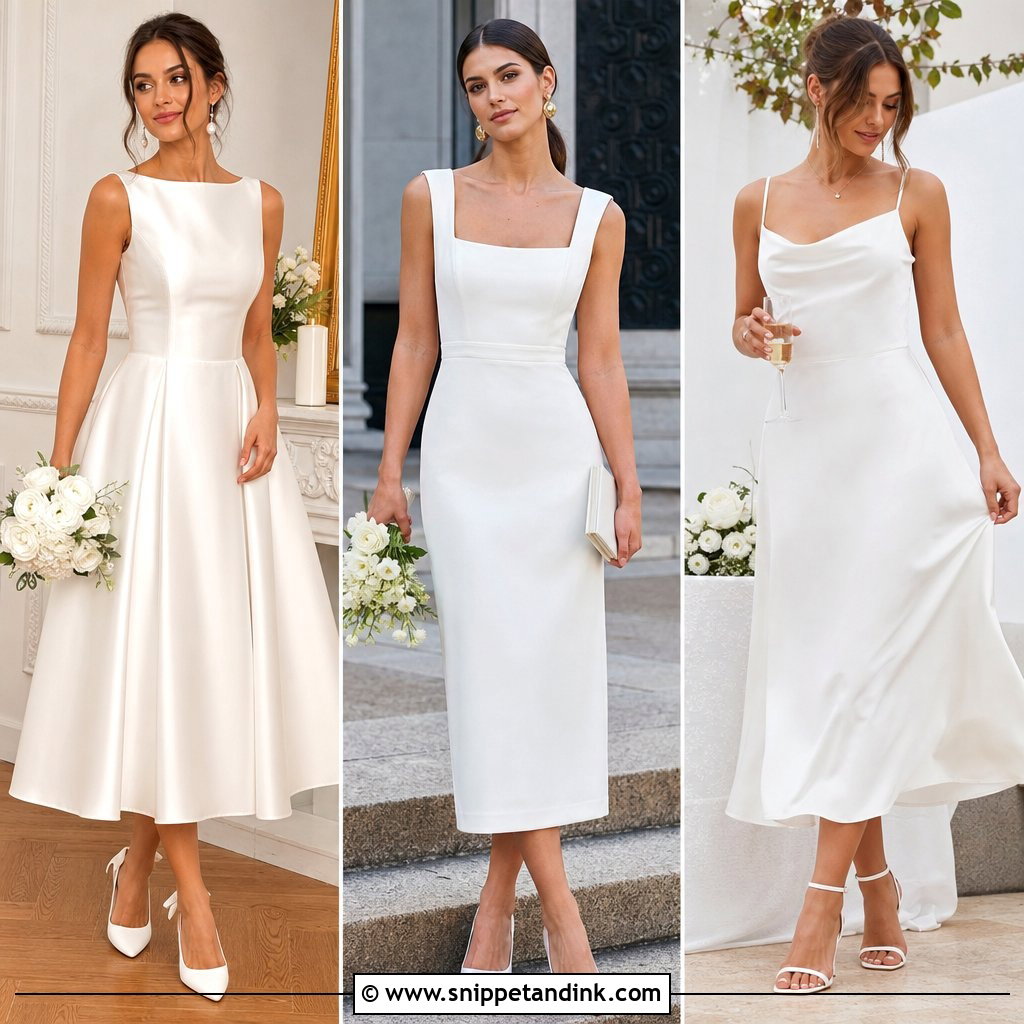
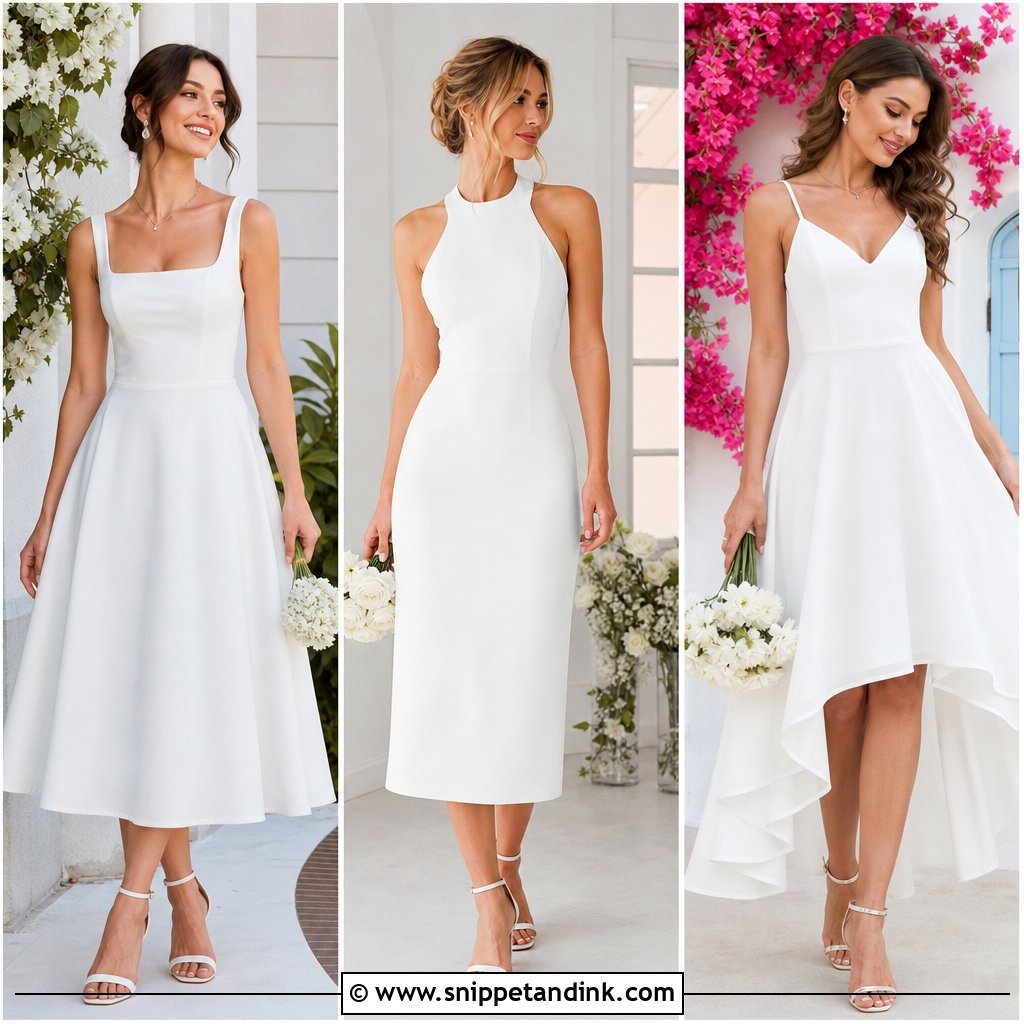
A square neckline frames the collarbones in a way rounded necks don’t, and I find it flatters most bust sizes because the straight edge sits flat instead of gaping. It pairs with wide straps, short fitted sleeves or long sleeves. Matte crepe keeps the line minimal; satin adds glow. A softly flared skirt offsets all that geometry. Pearl-accented pumps, a structured mini bag and a neat chignon suit it. The veil changes the mood more than brides expect: a cathedral length behind a midi hem makes a striking contrast at a gallery or city ceremony, while a shorter veil relaxes everything. The open neckline also leaves room for a fine pendant or a family piece.
6. Off-the-Shoulder Midi Wedding Dress
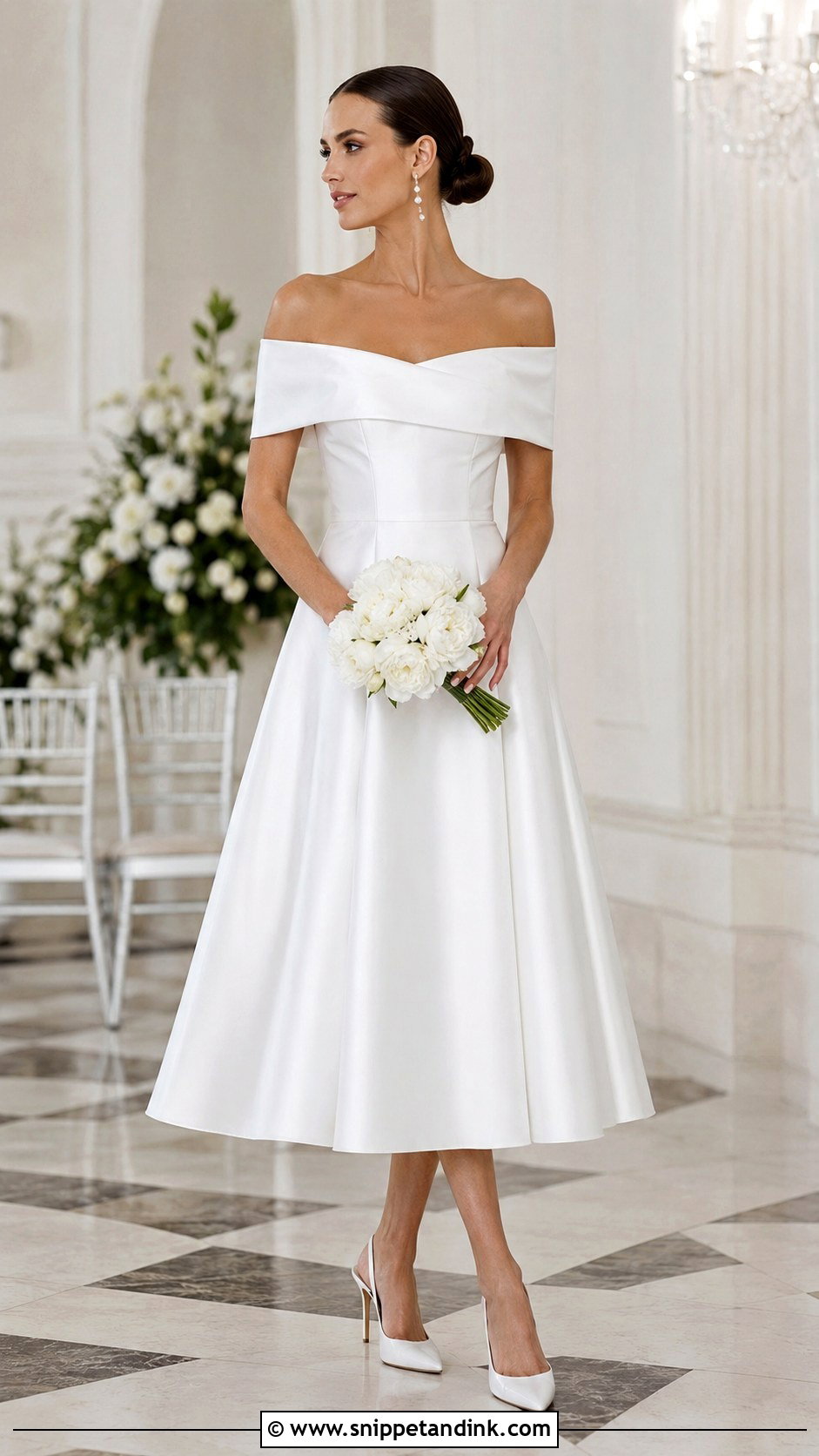
Off-the-shoulder necklines are the ones I fit most carefully, because they depend entirely on the band around the upper arm. Folded satin, draped crepe or lace sleeves need to grip without cutting in. A fitted waist with a full skirt gives a classic outline; a narrow column skirt is more modern. Slingback heels, drop earrings and a compact bouquet are all it needs, with hair in a low bun or side waves so the neckline stays visible. At every fitting, lift your arms as if you’re hugging a friend, then dance a little. If the band slides up or the bodice shifts, ask for silicone grip tape or a hidden elastic inside the band. It suits spring ceremonies and smart courthouse weddings.
7. Corset Tulle Midi Wedding Dress
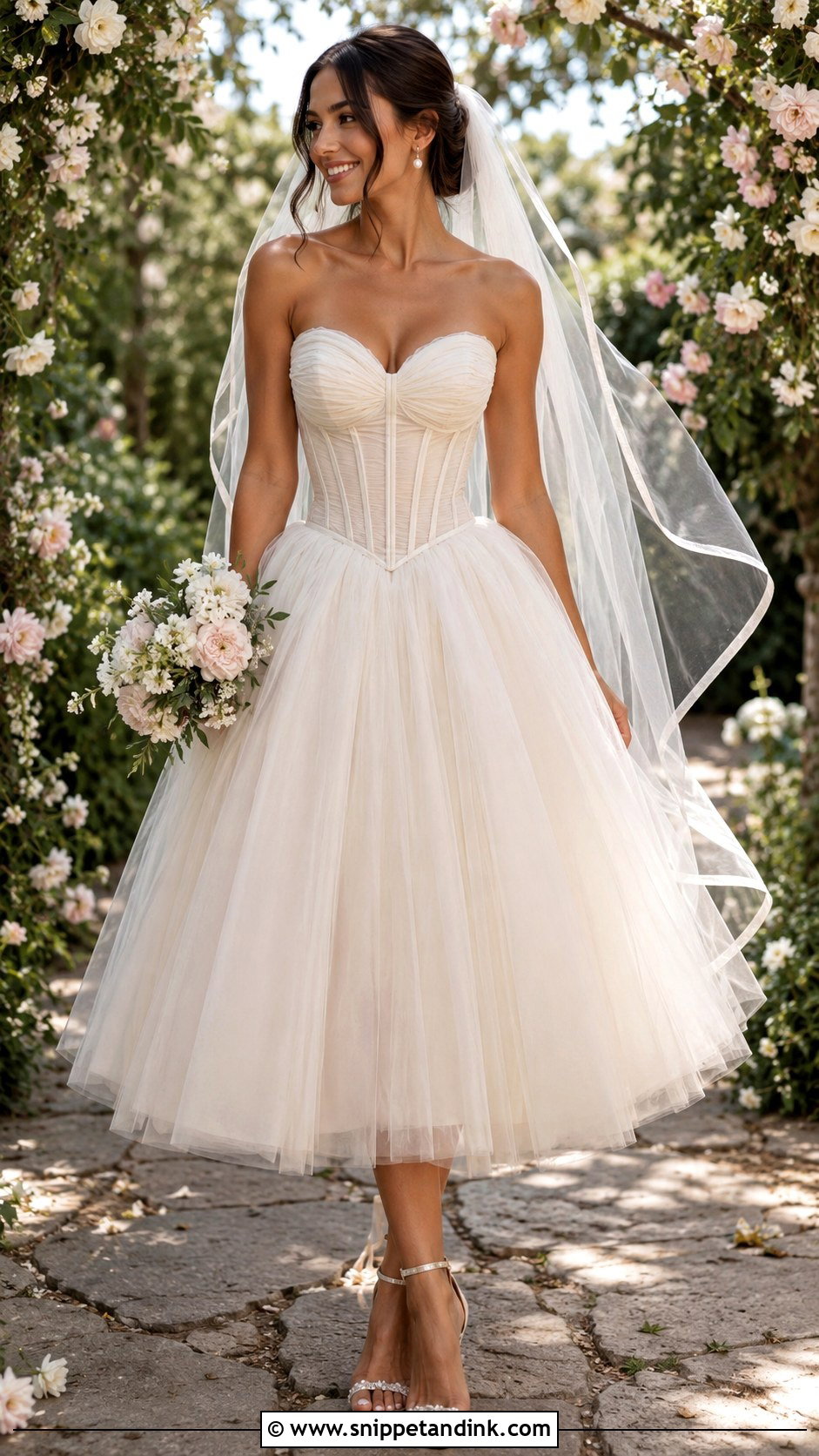
Tulle makes a midi dress read instantly as a wedding dress, even at a shorter length. I’d pair it with a corset bodice that has proper boning and a softly gathered skirt; too many layers at this length start to look like a costume. A light lining in the bodice gives coverage without losing the airy look. Crystal ankle-strap heels, small pearl earrings and a ribbon-edged veil complete it. A petticoat adds volume, though a softer skirt usually looks more current to me. Garden weddings, brunch receptions and anyone drawn to a romantic ballerina influence will get the most from it. Ask your tailor to set the hem at the narrowest part of the lower leg, never across the widest point of the calf.
8. High-Neck Lace Midi Wedding Dress
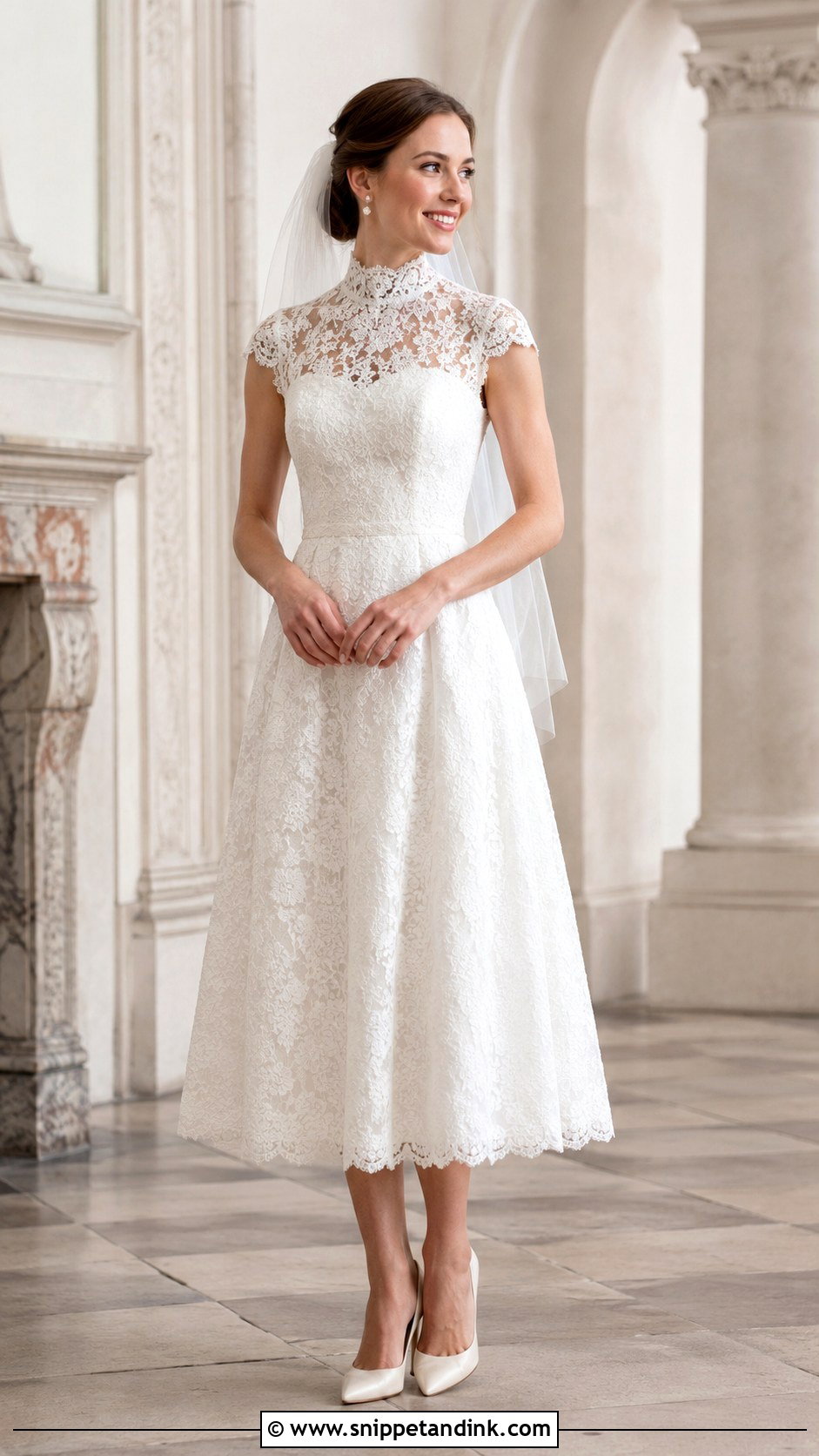
High necklines in lace need a lined front, otherwise the fit across the bust looks unfinished in daylight. I look for sheer lace across the shoulders only, a fitted bodice and a gently shaped A-line skirt. A row of covered buttons down the back adds a traditional note without dating the dress. With all that detail at the throat, leave the necklace in the box. Pointed pumps, pearl studs, a smooth low bun, a small bouquet and a plain veil are enough. One honest caution: a high lace neck can feel warm, so for an outdoor summer ceremony I’d wear the dress for a full hour at a fitting before committing. For a cool-season date or a historic property, it’s a strong choice.
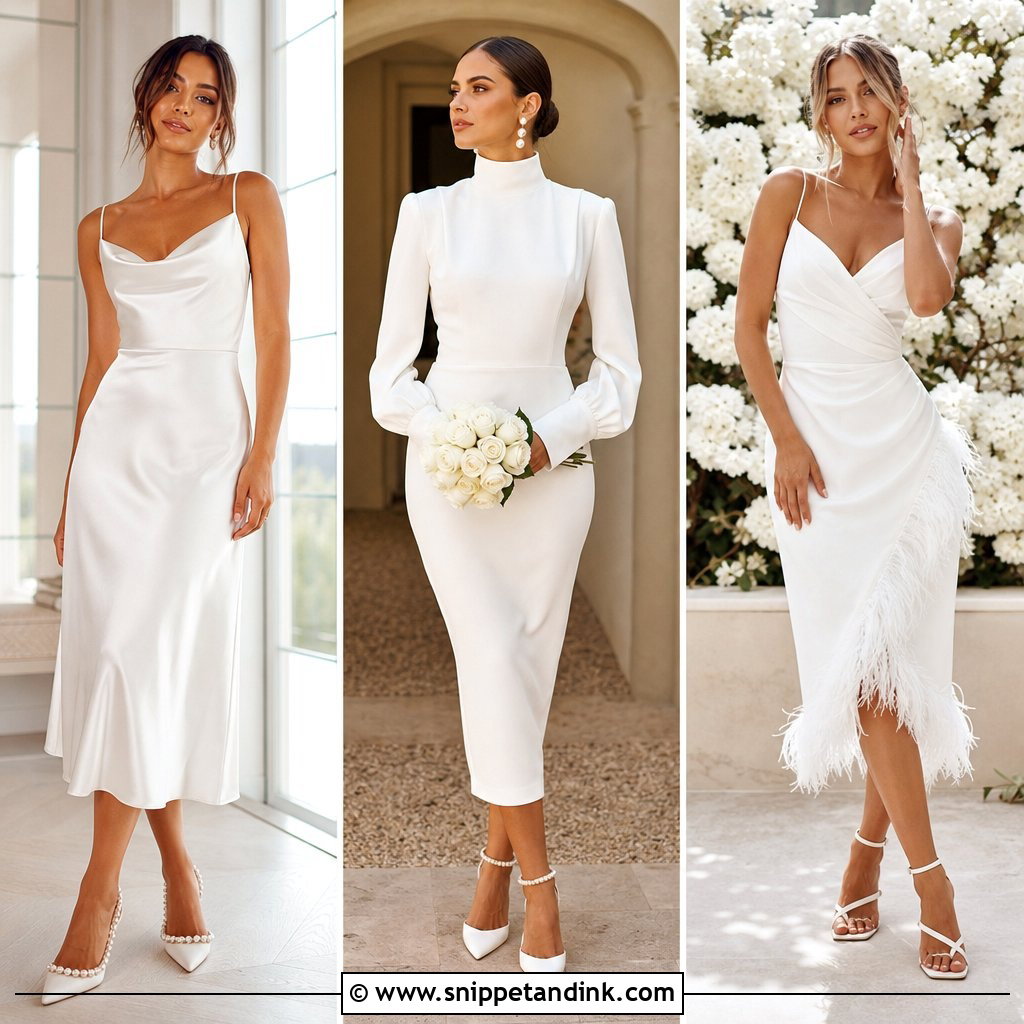
9. Minimal Sheath Midi Wedding Dress
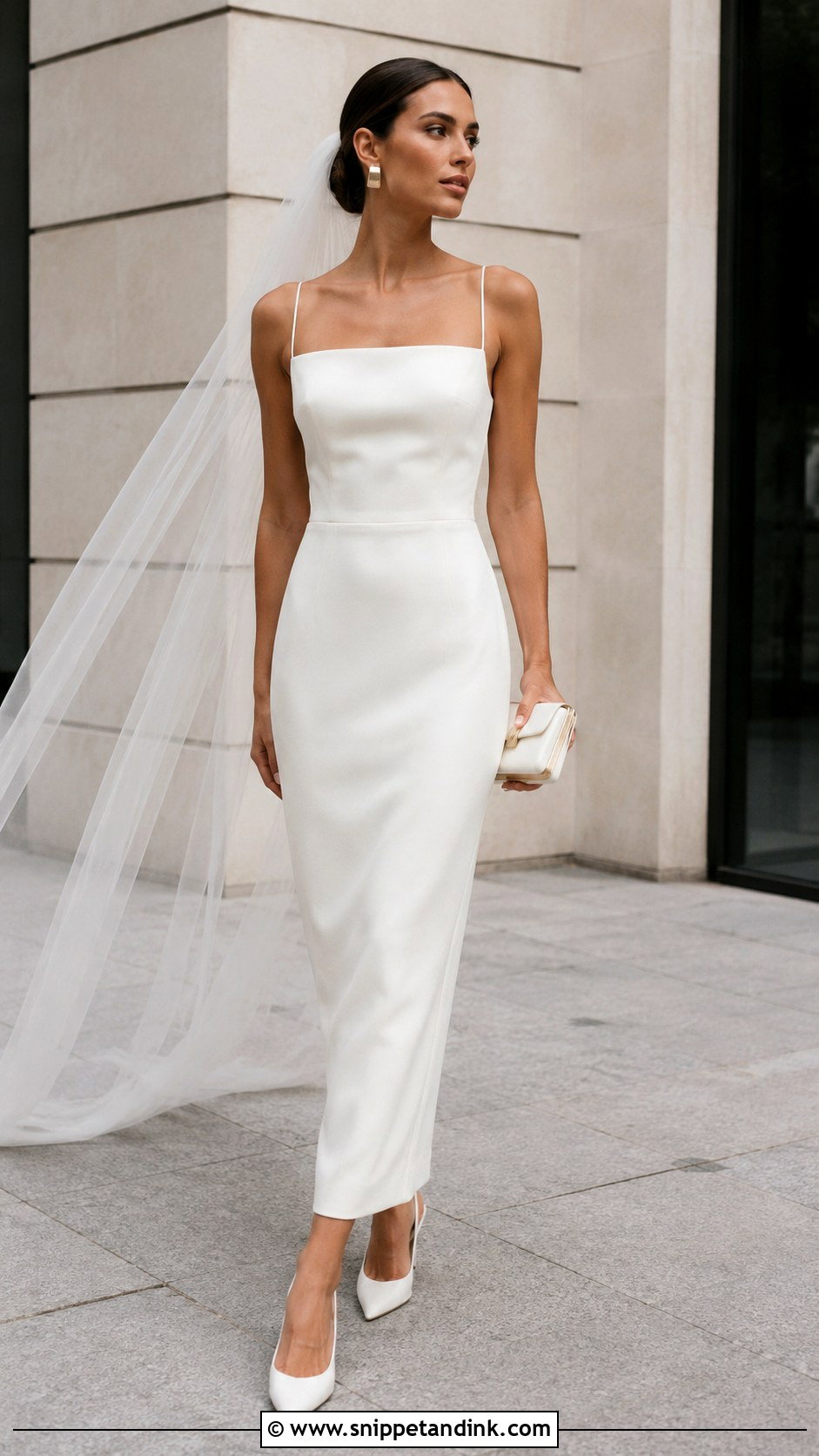
For a clean, contemporary outfit, a sheath midi wedding dress in smooth crepe or heavyweight satin is hard to beat. It should follow the body without gripping it, and that precise fit comes from seaming, so expect more than one fitting. A straight neckline, narrow straps or a boat neck keeps the line clean. Sculptural earrings, pointed slingbacks and a structured clutch finish it, and a long sheer veil makes it feel ceremonial before coming out for the reception. The part brides forget is underwear. Smooth crepe shows every edge, so I ask clients to bring the exact bra and briefs they’ll wear to the first fitting, not the last. City halls, rooftops and modern hotels suit it.
10. Floral Embroidered Midi Wedding Dress
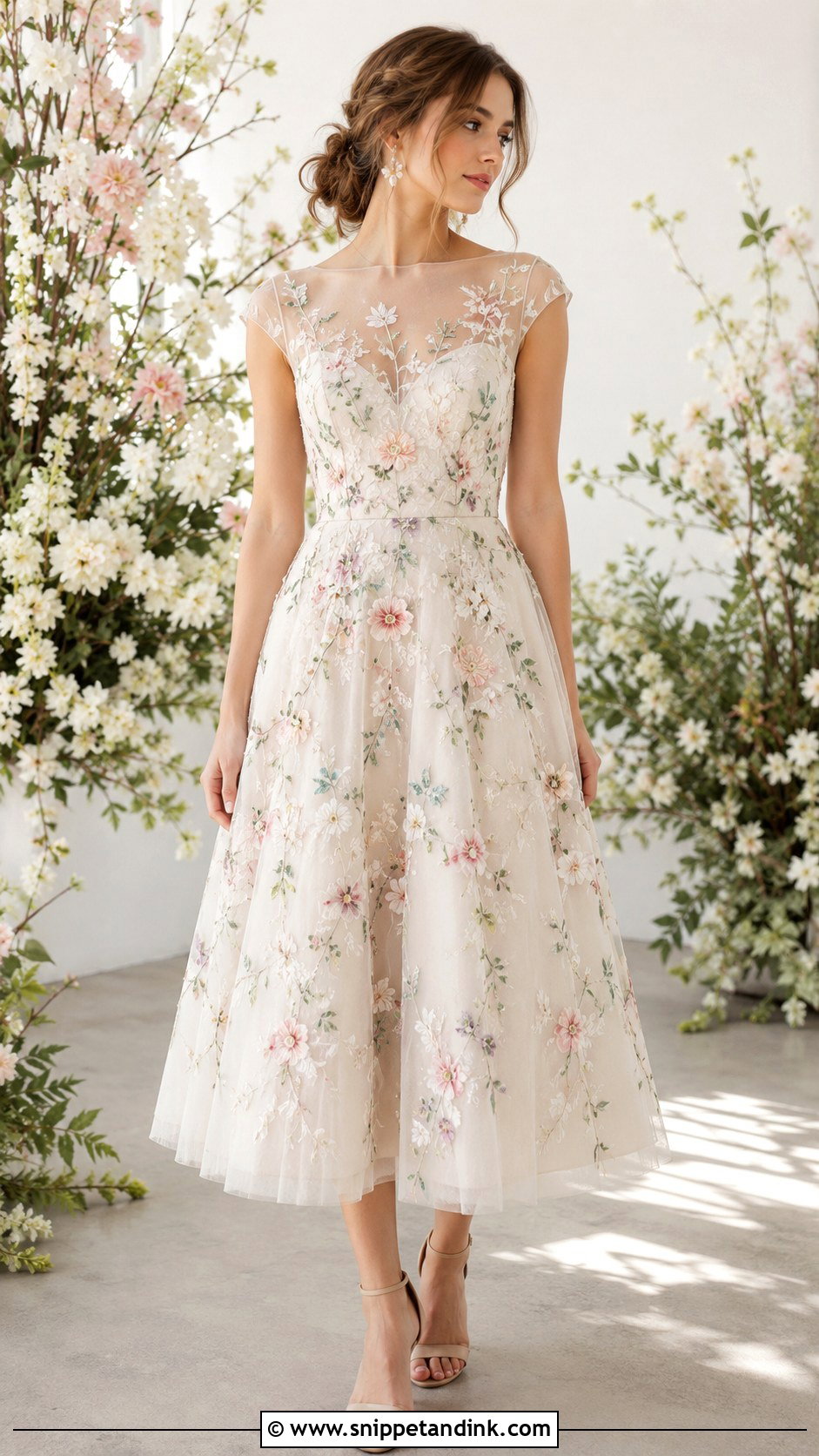
Floral embroidery is the easiest way I know to bring color into a bridal dress without it looking like a party frock. Ivory tulle with white appliqués stays quiet; blush, blue or sage flowers say more. A fitted bodice and gently flared skirt keep the embroidery visible as you move. Neutral heels, small floral earrings and a loose low bun are enough. The bouquet should be simpler than you think, because a busy bunch fights a busy dress. For a quieter result, look for embroidery concentrated at the hem. Raised flowers that climb from skirt to bodice and sleeves give more impact, but they catch on lace-edged veils, so I’d pair them with plain tulle.
11. Vintage 1950s Midi Wedding Dress
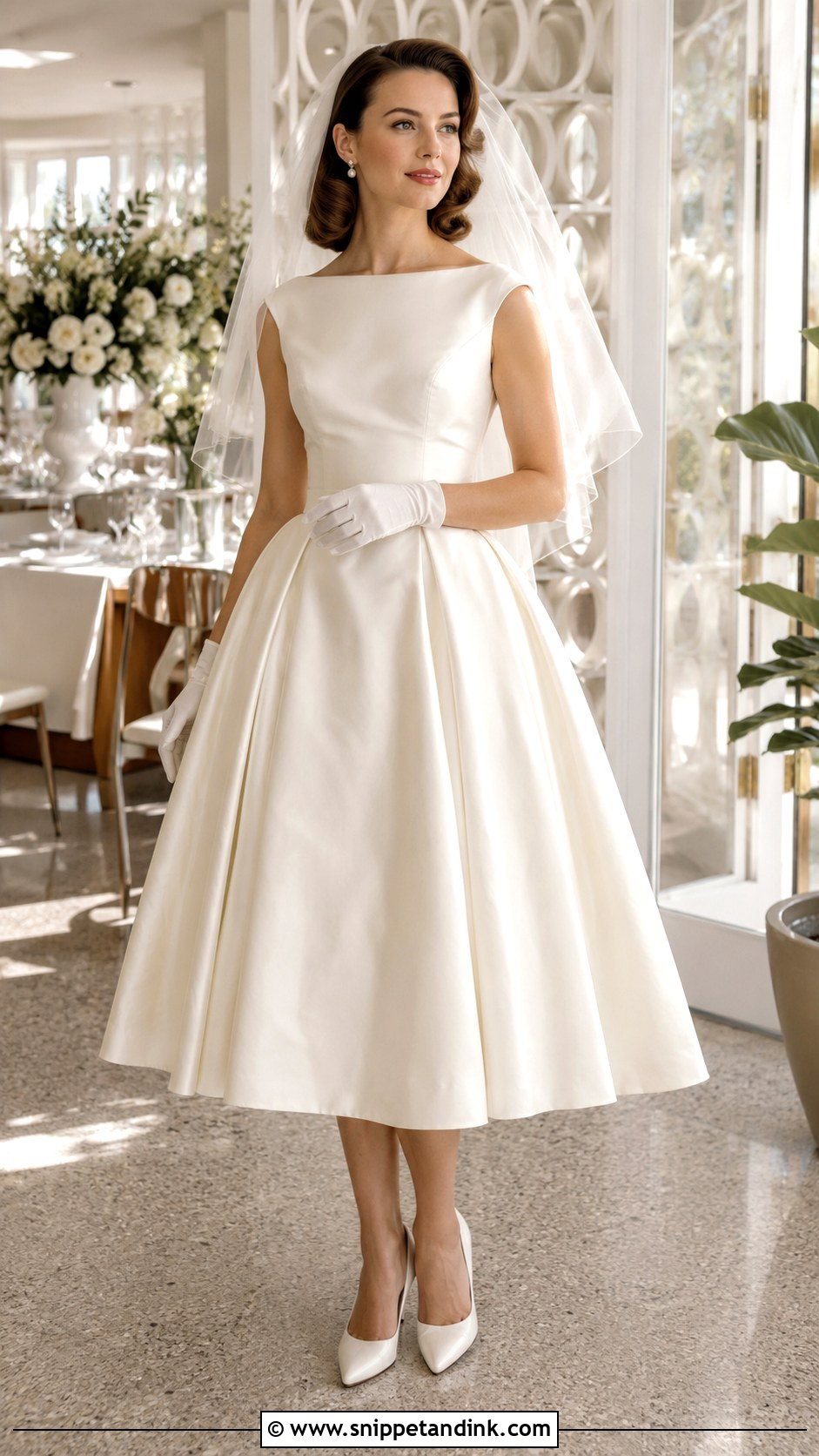
A cinched waist and a full tea-length skirt are what make a 1950s bridal silhouette recognizable, and the fabric has to hold that shape on its own: crisp satin, mikado, lace or organza. A bateau neckline, cap sleeves or a modest sweetheart supports the vintage feel. Pointed pumps, pearl earrings, short gloves and a birdcage or shoulder-length veil complete it, and a slim belt in the dress fabric defines the waist. Where I see this go wrong is when every accessory is period-correct and the bride ends up looking dressed for a theme party. My fix is simple. Keep the silhouette vintage and the makeup and jewelry modern.
12. Satin Slip Midi Wedding Dress
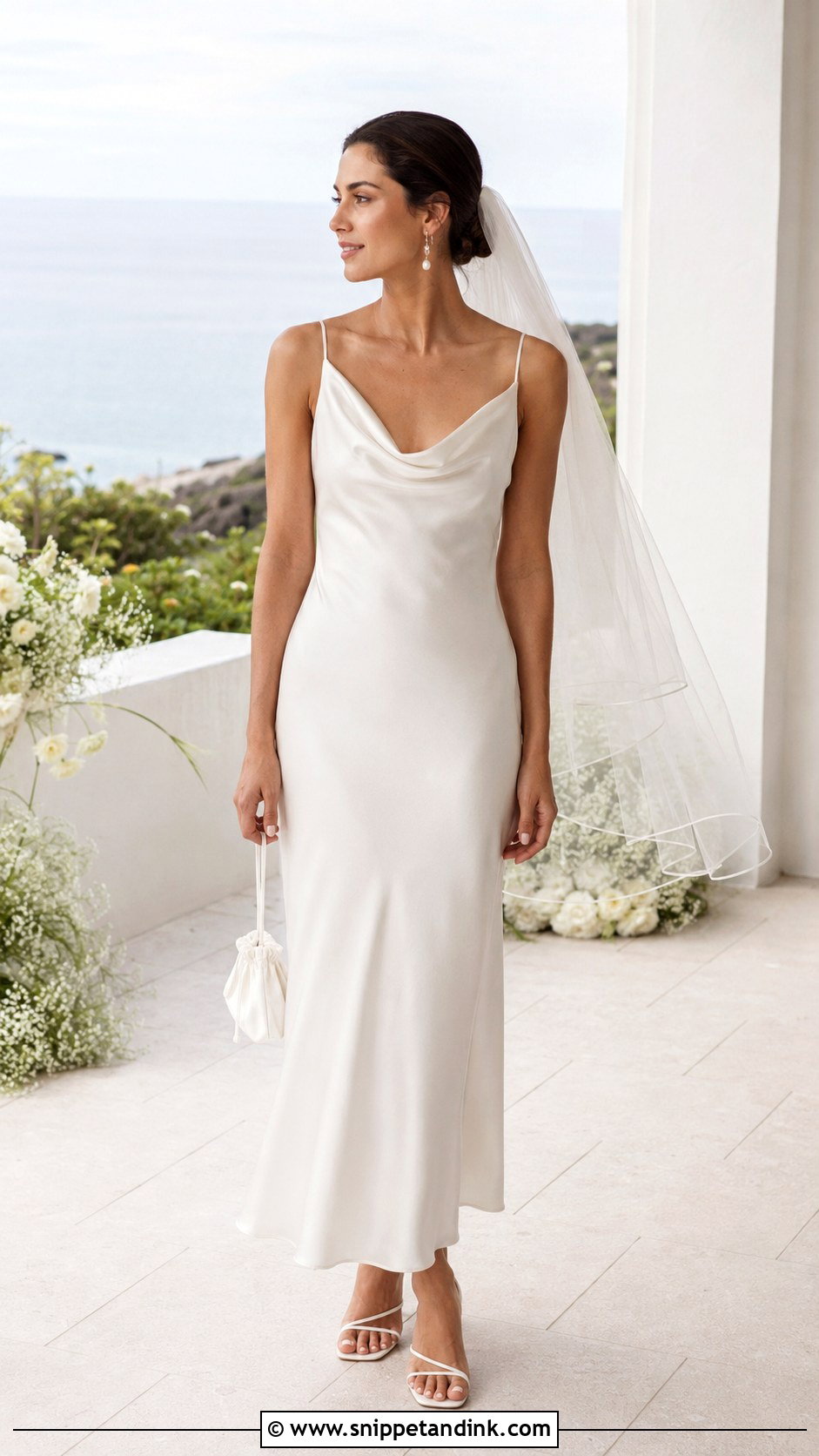
Bias-cut satin follows the body closely and shows everything underneath. That’s its appeal and its challenge. A cowl or softly curved neckline adds movement near the face, and adjustable straps with a proper lining make it far more comfortable over a long day. Minimal sandals, drop earrings and a small satin bag suit it, with a light fingertip veil for the ceremony and a cropped ivory jacket or sheer wrap if the evening turns cool. Because bias-cut fabric drops and twists after it’s cut, I always have the hem leveled with the bride standing in her wedding shoes, never on a hanger. Destination celebrations, coastal venues and intimate dinners are where I’d choose it.
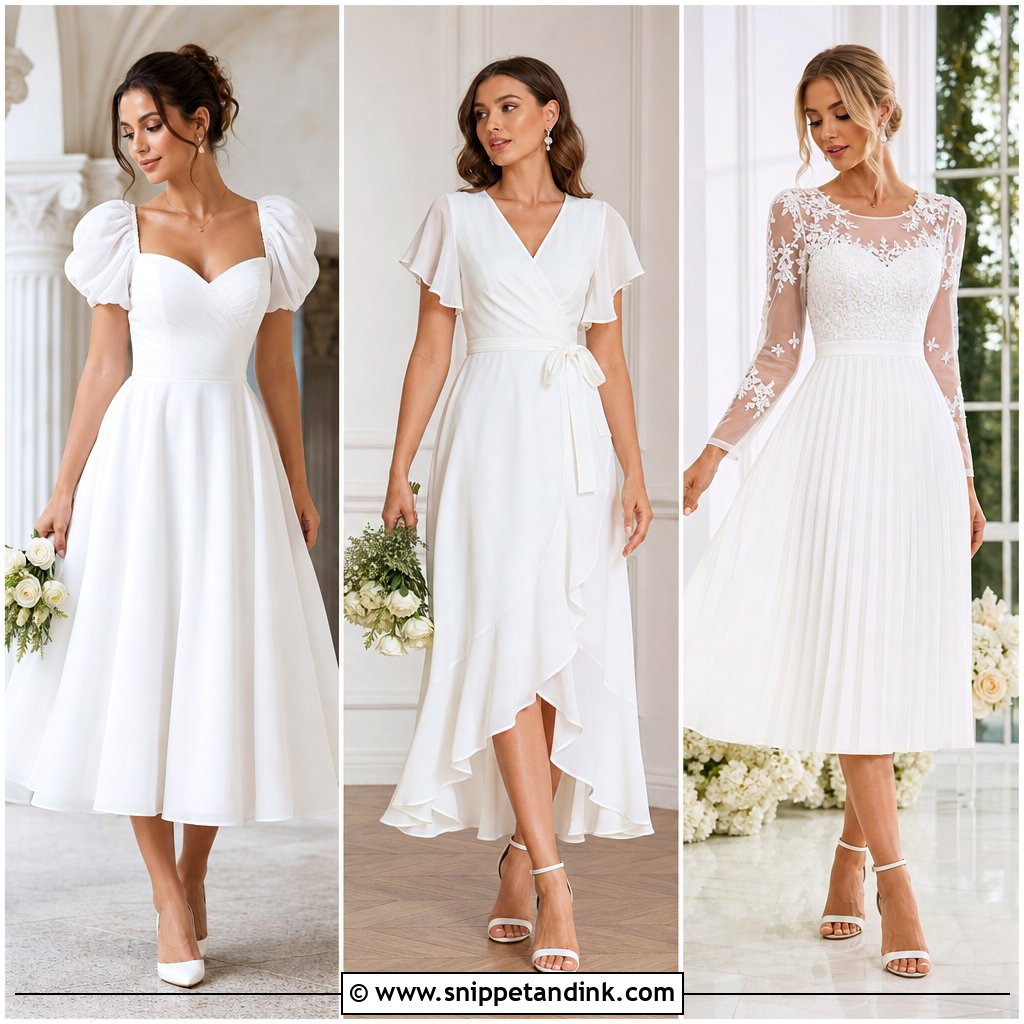
13. Puff-Sleeve Midi Wedding Dress
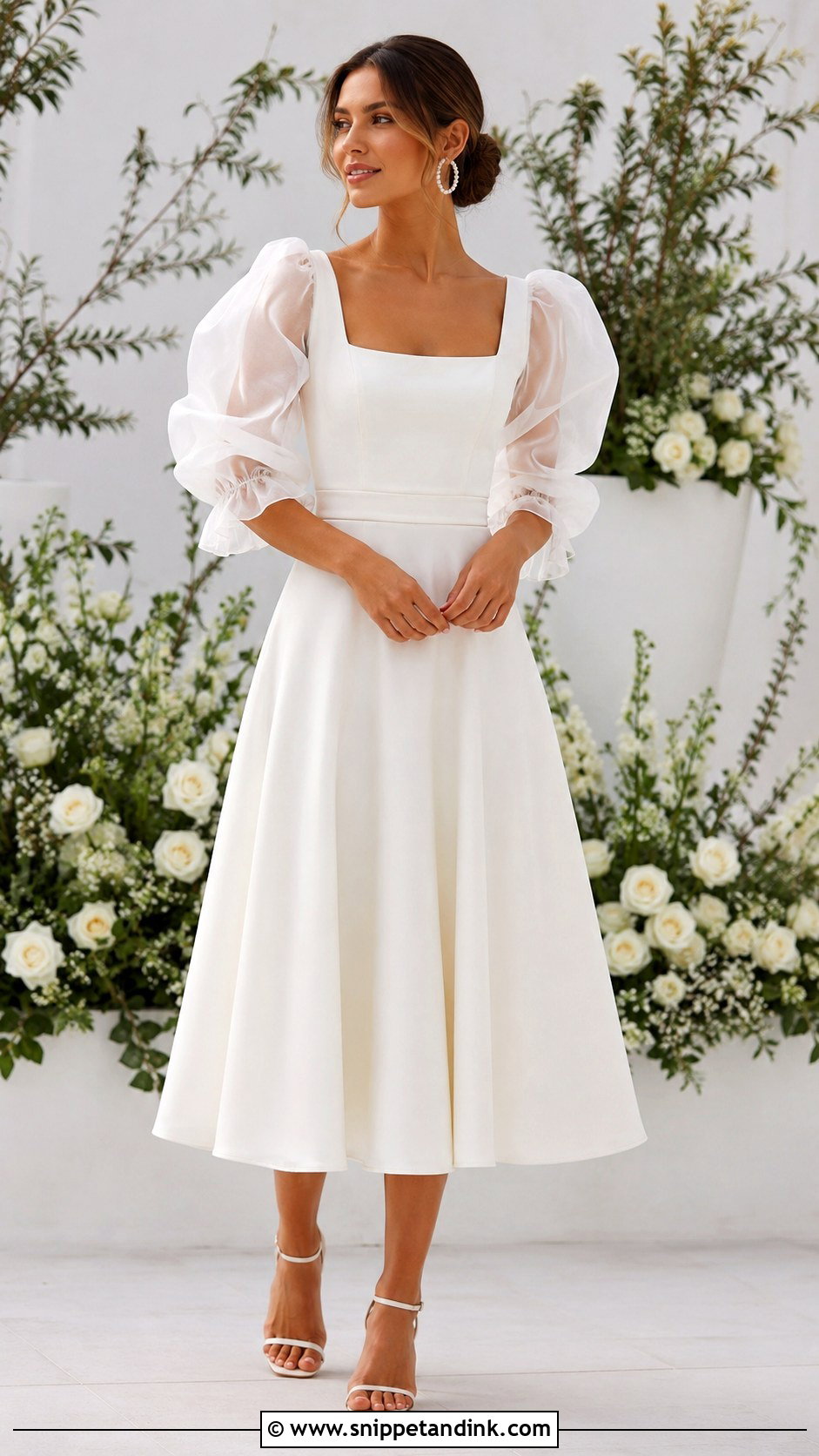
Puff sleeves give a plain midi dress a distinct personality. Sheer organza keeps them light; structured satin makes a bolder statement. A fitted bodice and defined waist balance the sleeve volume, and an A-line skirt keeps the proportions right. Understated heels, pearl hoops and a smooth updo are plenty. Leave out big necklaces and heavily decorated veils, since the sleeves already bring the drama; a plain tulle veil or small hair bow is enough. I scale the sleeve to the frame. Petite brides look best in smaller puffs that end above the bicep, while taller brides can carry fuller, architectural shapes.
14. Cape-Sleeve Midi Wedding Dress
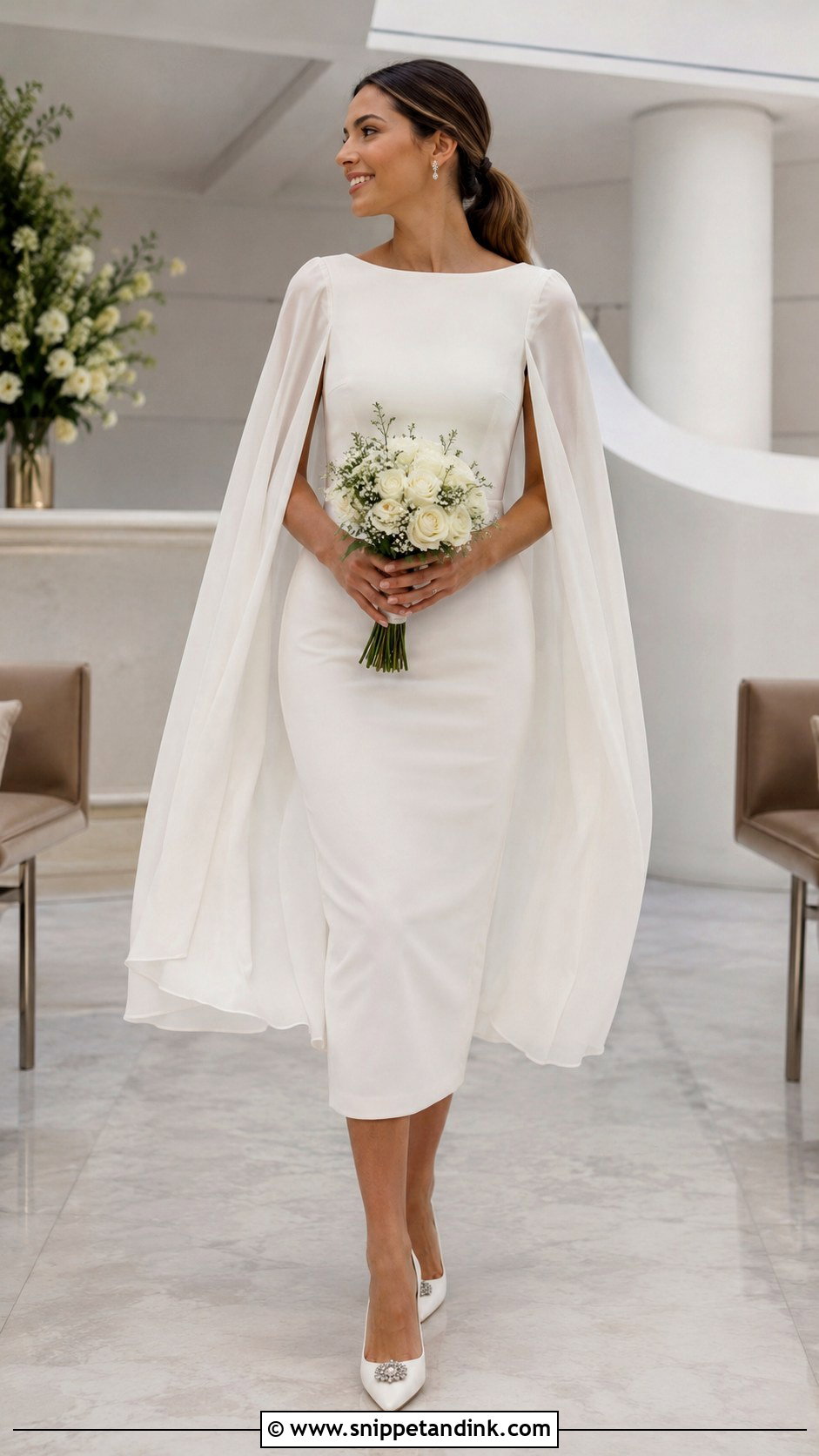
Cape sleeves give movement and coverage at once, and they look better in motion than almost any other detail I style. They can attach at the shoulder, drape from the back or come as a detachable cape. Lightweight chiffon floats; smooth crepe holds a crisper line. Keep the dress underneath to a plain column or A-line so the cape stays the feature. Pointed heels, crystal studs and a polished low ponytail suit it. If the cape trails behind you, skip the veil or keep it short, otherwise the two layers tangle every time you turn. A detachable version gives you a dramatic ceremony outfit and a cleaner reception look, useful for civil ceremonies and formal dinners.



15. Drop-Waist Midi Wedding Dress
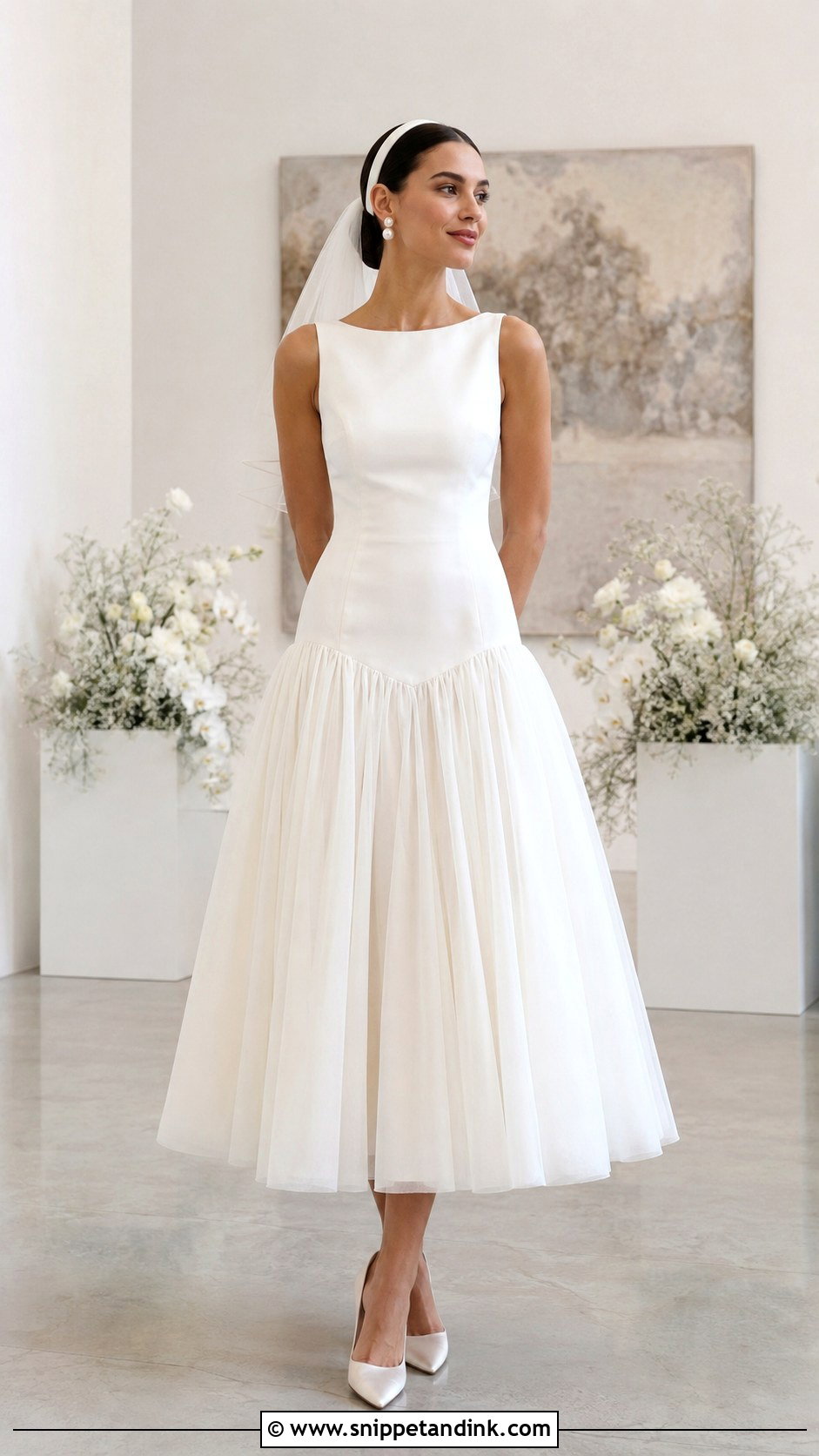
A drop waist lengthens the bodice and starts the skirt closer to the hips, which feels fresh while nodding to older bridal shapes. A structured satin bodice over a gathered tulle skirt gives contrast; matching mikado throughout is cleaner. Pointed pumps, pearl earrings and a narrow headband keep it uncluttered, with a short veil to balance the longer bodice. This is the silhouette where seam placement matters most. I mark the dropped seam with the bride standing, then check it again seated, because a seam set slightly too low makes the legs look short. Long-torsoed brides find it especially comfortable, but anyone can wear it once that line is right.
16. Peplum Midi Wedding Dress
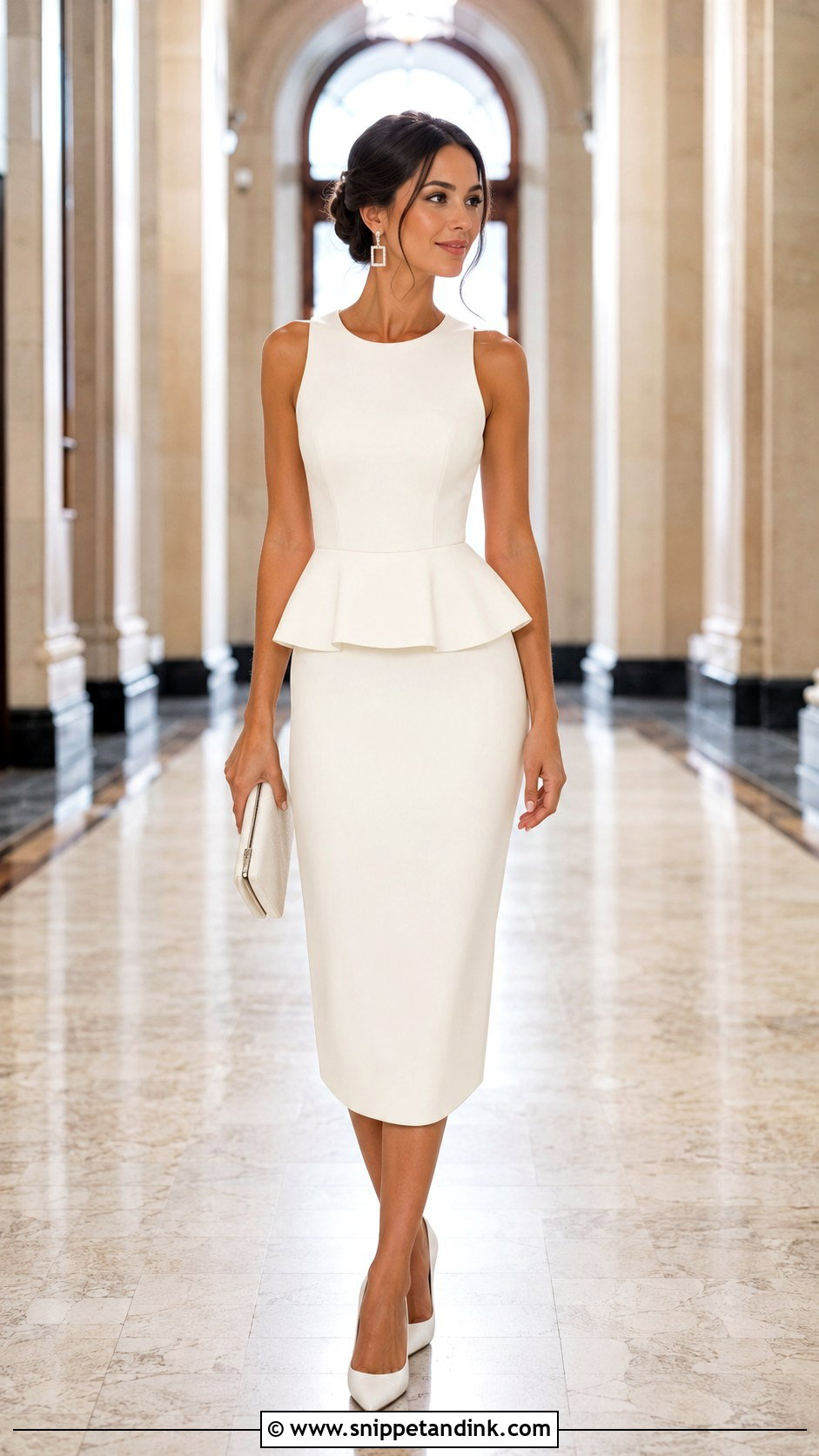
A peplum adds structure at the waist of a fitted midi dress, as a soft fold, a crisp overskirt or a removable layer. I pair it with a straight or gently tapered skirt; a full skirt under a peplum doubles the volume at the hip. Smooth crepe and mikado hold the flare best, while thinner satins tend to flop by evening. Sleek pumps, geometric earrings and a structured clutch finish it, and hair pulled back keeps everything polished. If your torso is short, choose a small peplum at your natural waist so it defines your shape rather than swallowing it. Courthouse ceremonies and reception changes are where I’d use it.
17. Two-Piece Midi Wedding Dress
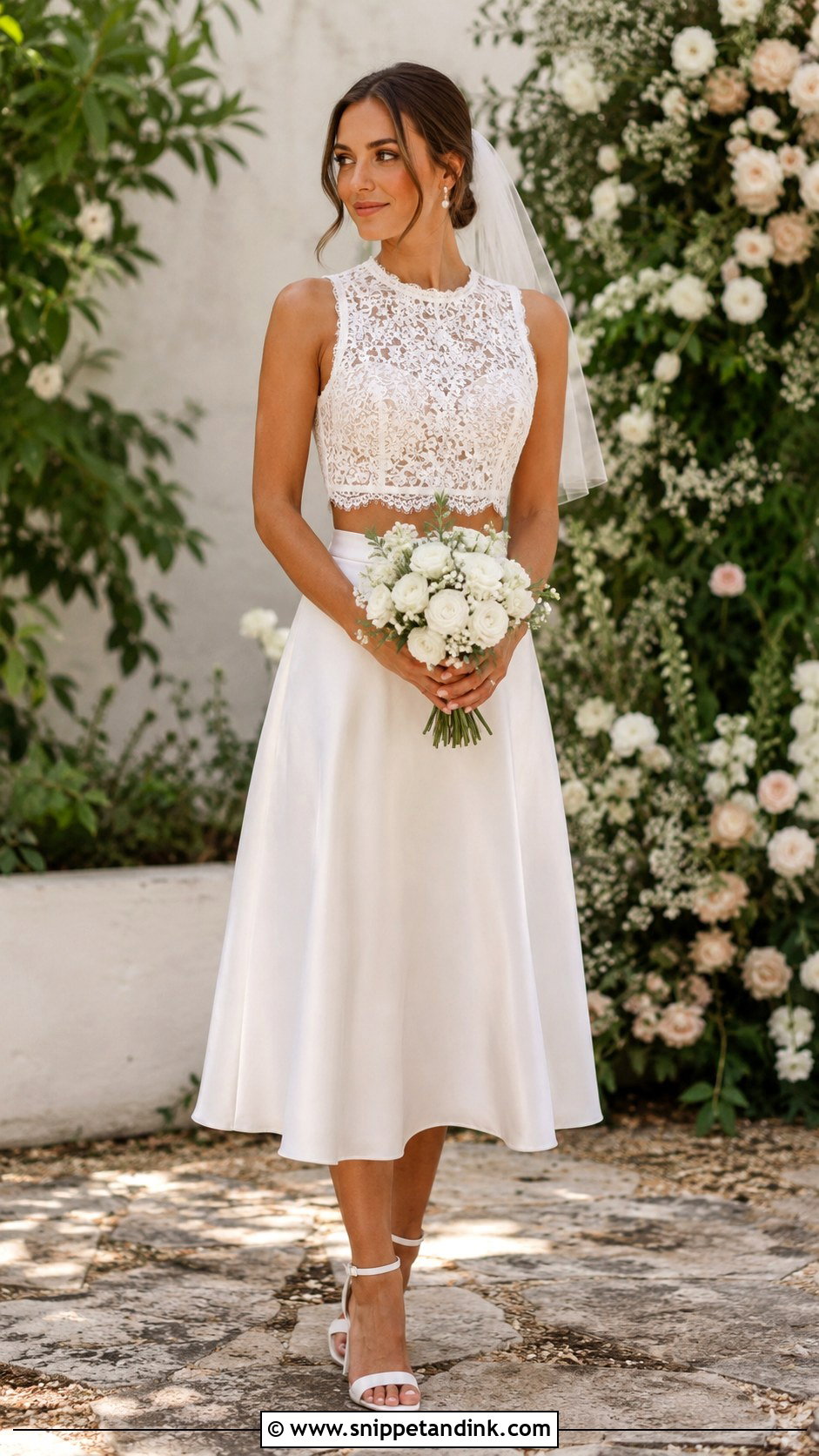
Two pieces solve a fitting problem I see often: a bride who needs one size on top and another below. A fitted lace or satin top with a high-waisted A-line midi skirt lets each piece be cut to its own measurements. They can meet at the waist for full coverage or leave a narrow strip of skin for a more modern look. Block-heel sandals, pearl earrings and a compact bouquet suit it; a cropped veil shows off the waistline, while a longer one makes the outfit feel traditional. Buy both pieces in the same ivory, ideally from one maker, because two whites from different fabrics look mismatched in photos. The skirt and top can also go out to dinner long after the wedding.
18. High-Low Midi Wedding Dress
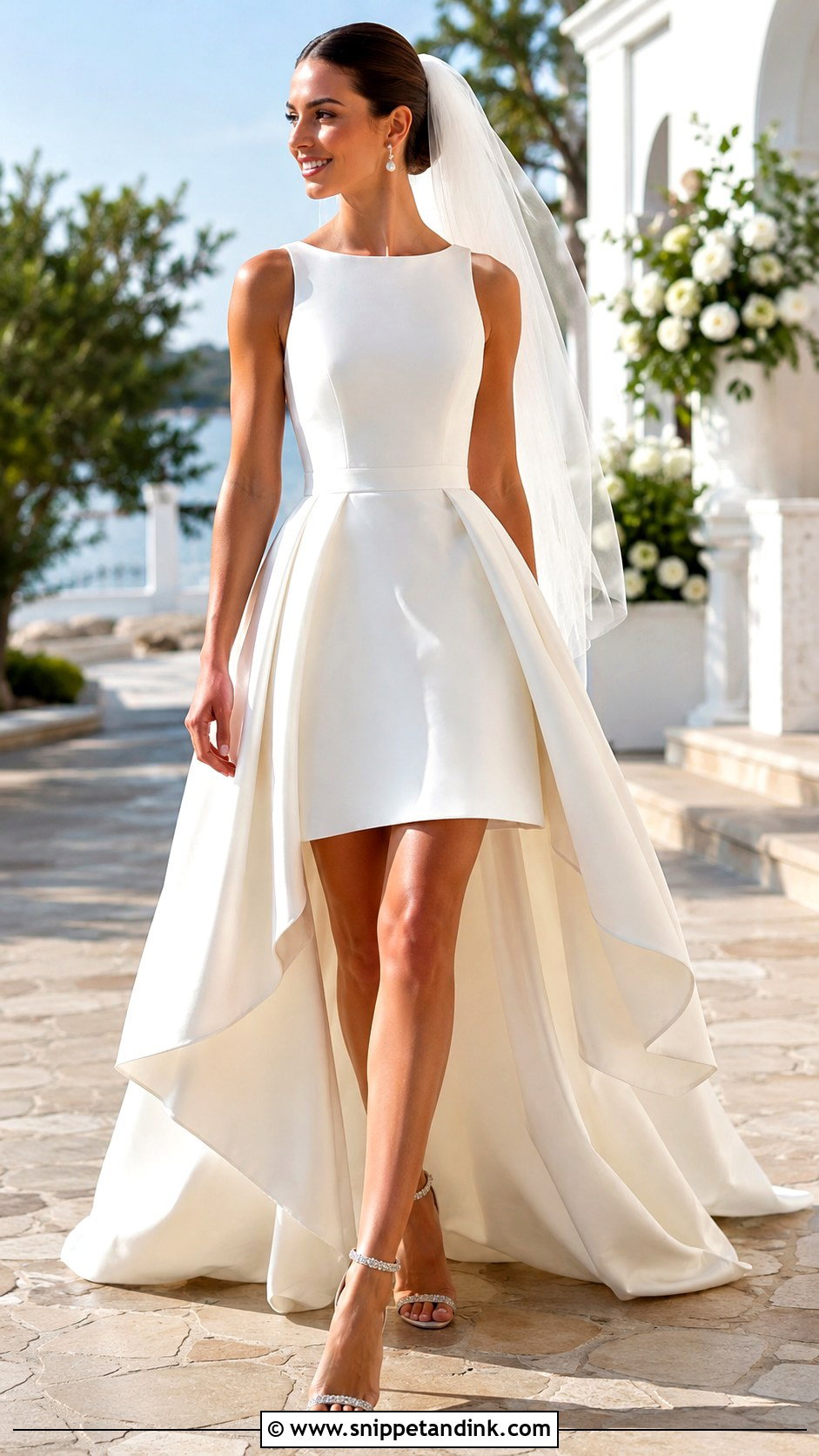
A high-low hem gives you the ease of a short front and the sweep of a longer back. Look for one that finishes near the knee in front and falls toward the ankle or floor behind. Structured satin and mikado hold a bold shape; chiffon moves more softly. Your shoes are fully on show, so embellished heels or elegant ankle straps earn their place. A smooth updo, simple earrings and a medium veil that stops above the back hem keep the layers from competing. I’d walk up and down a staircase in it at the final fitting, because the longer back catches under a heel on the way down. Outdoor ceremonies and lively receptions suit it.
19. Wrap Midi Wedding Dress
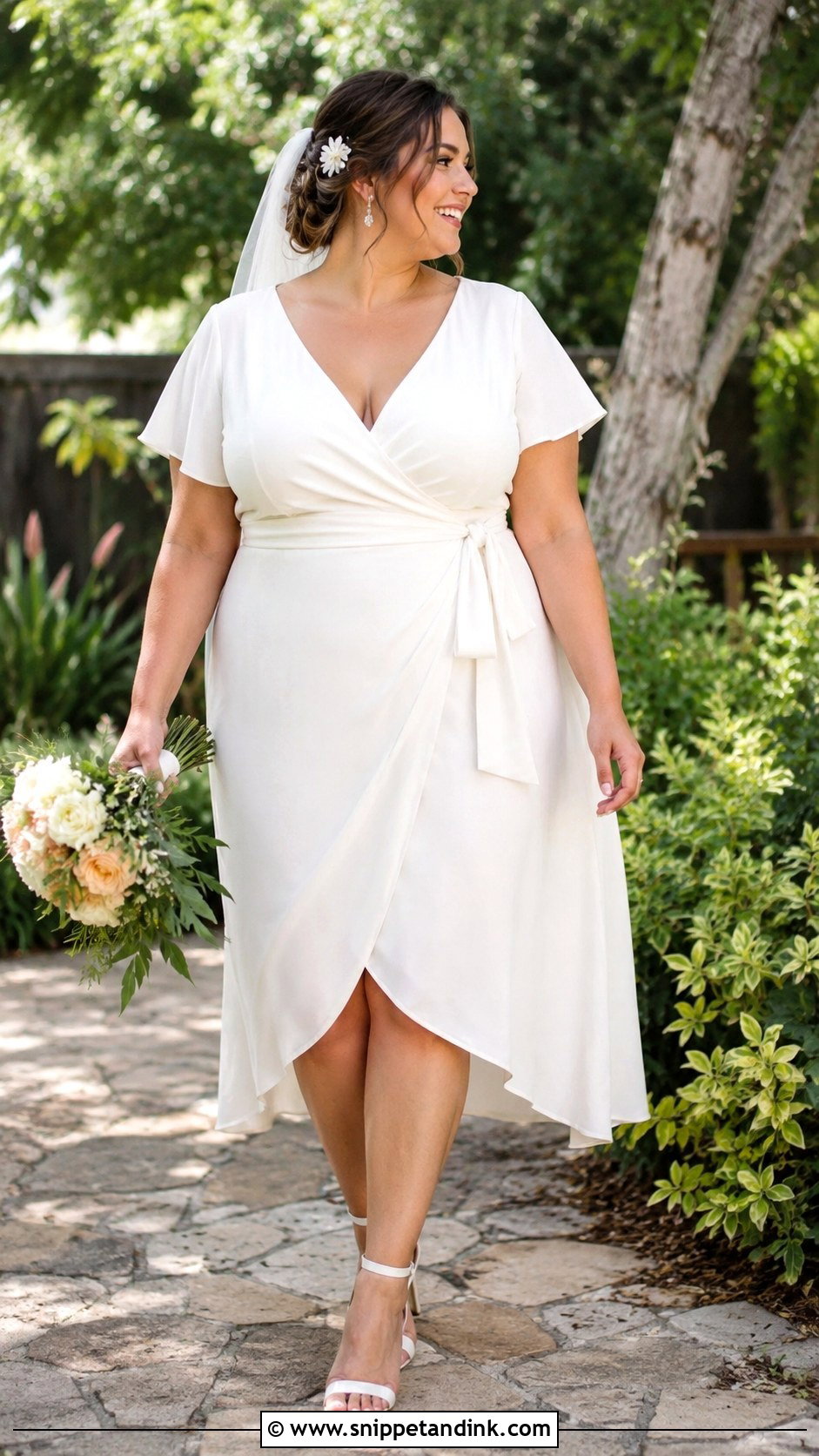
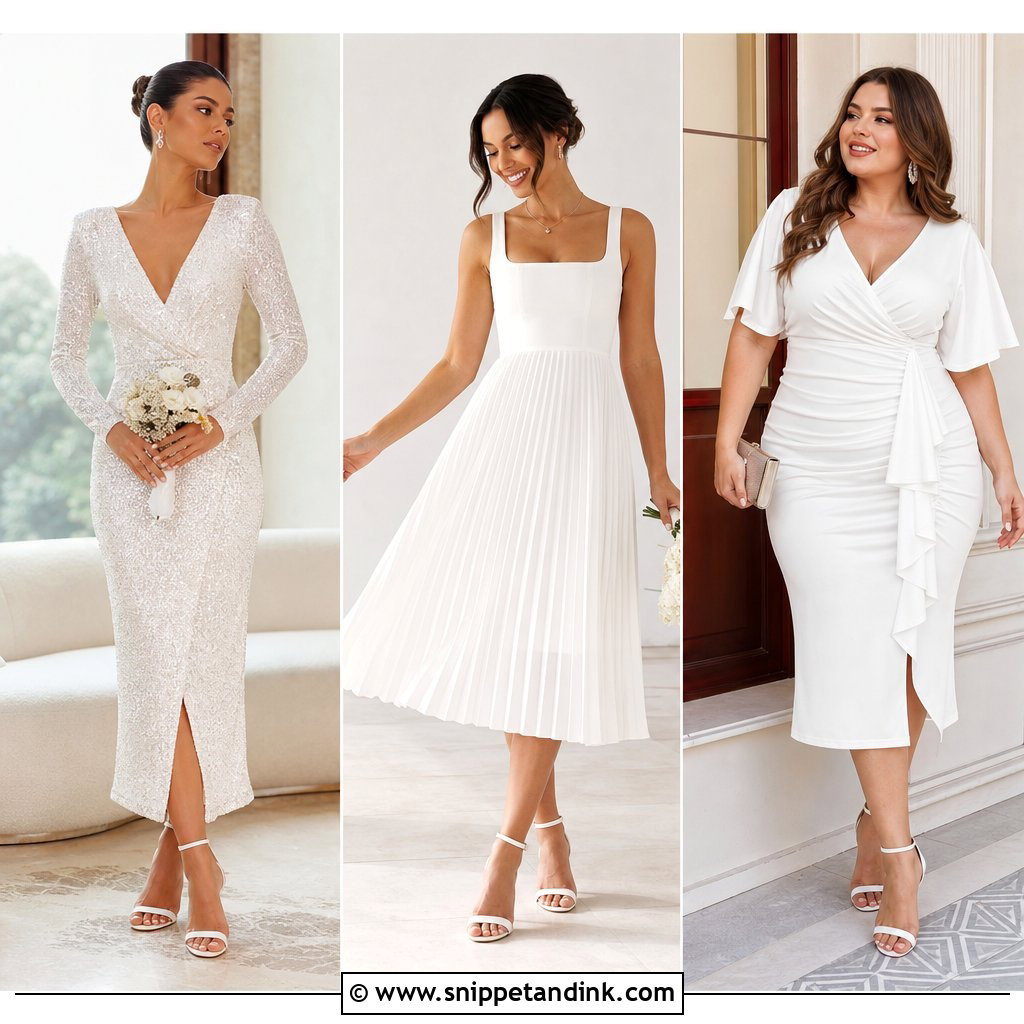
A wrap dress adjusts to the body, which is why I reach for it when a bride’s measurements may shift in the months before the wedding. Check for a secure internal tie or snap, a defined waist tie and a skirt with enough overlap that it stays closed when you walk. Crepe looks polished; lace or chiffon feels softer. Block heels, delicate earrings and a small floral hair accessory suit it, with a short veil or a draped shoulder veil. Because the waist is so easy to place, it works on straight, curvy, petite, tall and plus-size figures alike. Before the day, sit down in it and cross your legs. If the skirt parts higher than you’d like, a hidden snap at the overlap fixes it.
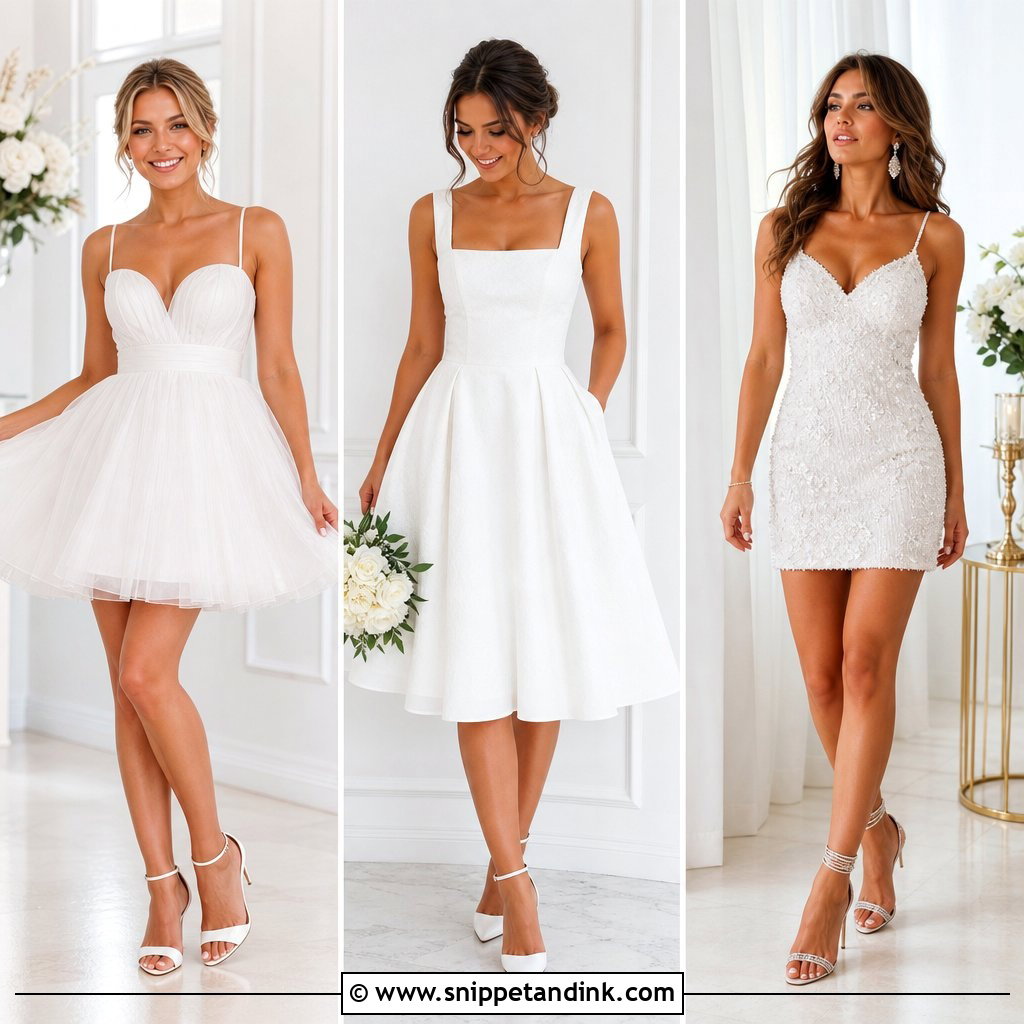
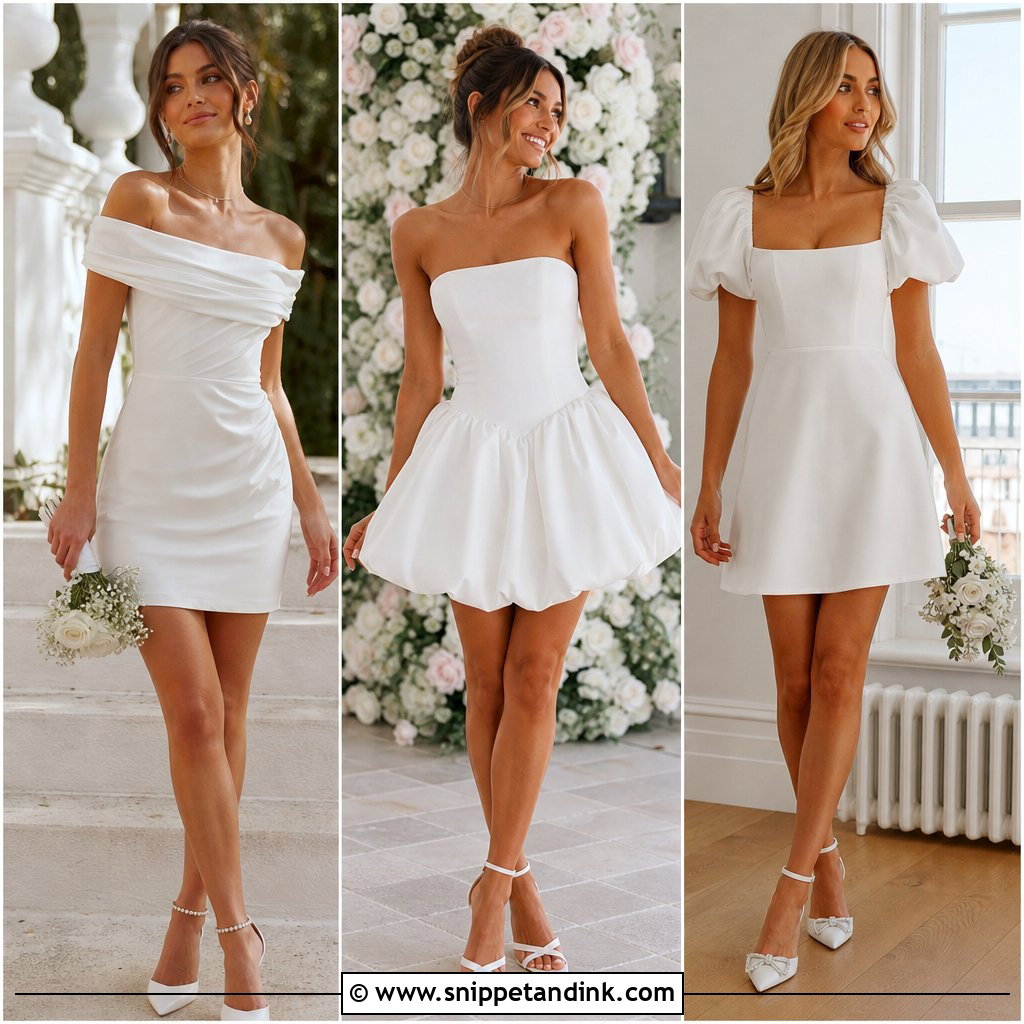
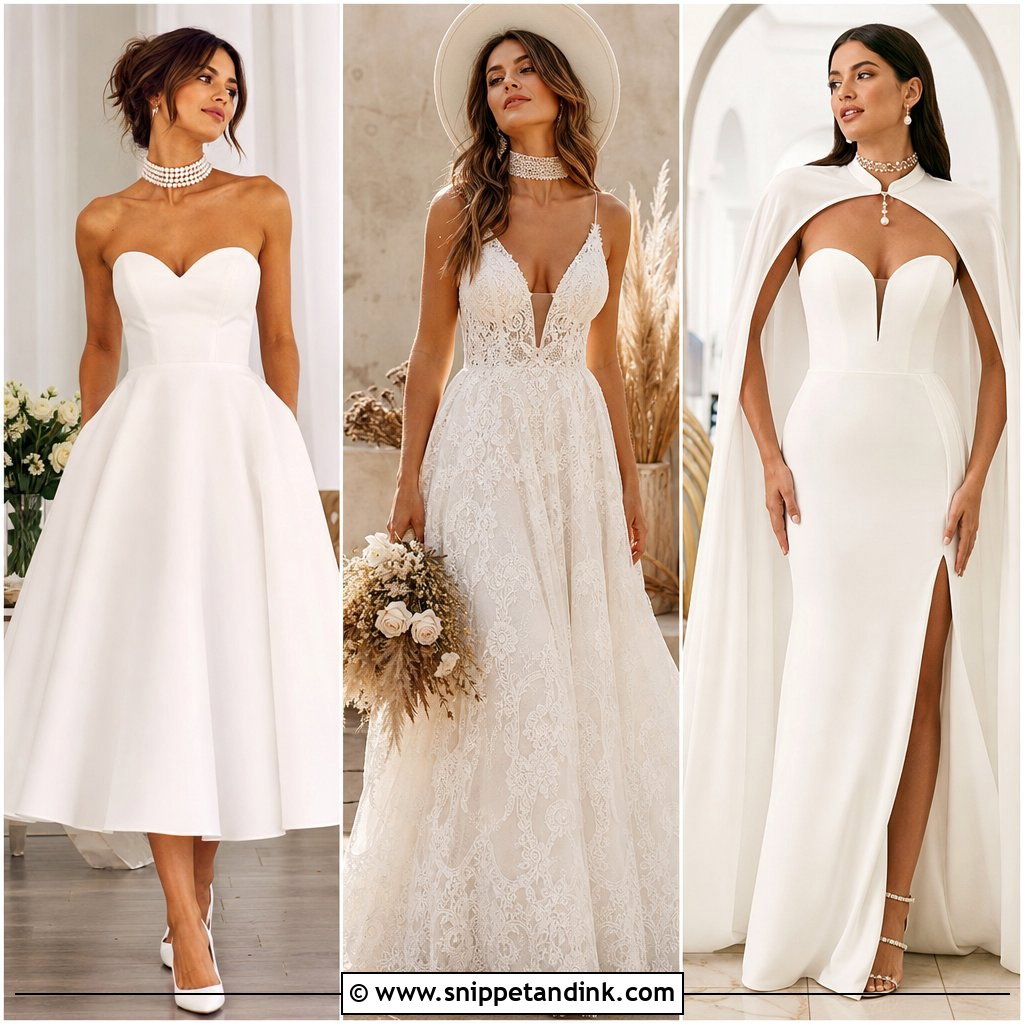

20. Button-Front Midi Wedding Dress
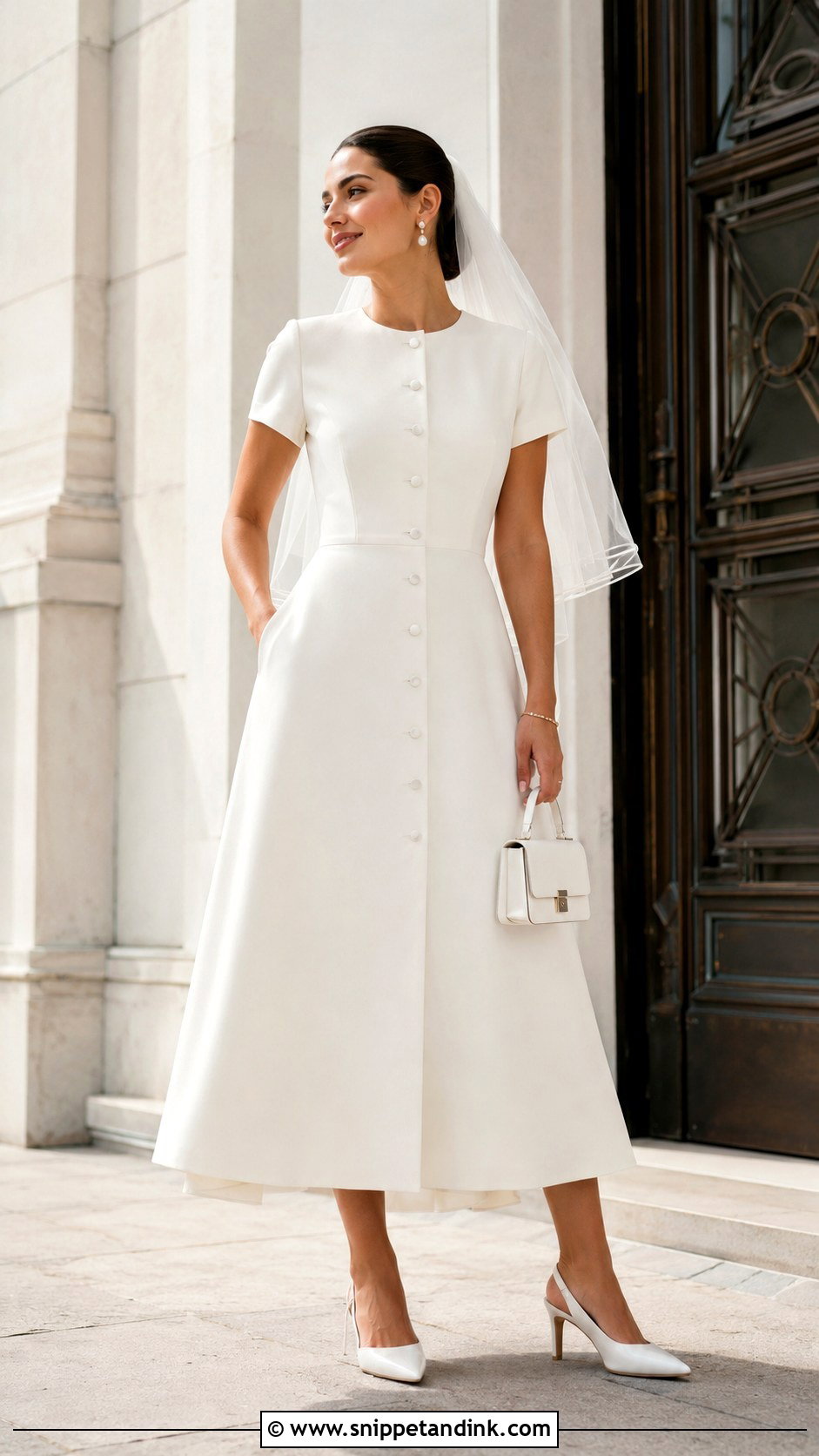
A button-front midi wedding dress has a relaxed, tailored charm. Look for a fitted bodice, fabric-covered buttons and an A-line skirt with room to move. Short sleeves suit warm weather; long sleeves carry the same shape into autumn. Slingbacks, pearl earrings and a structured mini bag complete it, with a hair ribbon or fingertip veil that won’t hide the buttons. The first thing I check is gaping. When you sit, the buttons across the bust and stomach should still lie flat, and if they pull, a seamstress can add hidden hooks between them. Pockets are worth asking for too.
Shoes Are on Show at This Length, So Shop for Them Like Jewelry
With a floor-length gown, shoes are comfort first and looks second. With a midi, they appear in every full-length photo and every step down the aisle, so I treat them as part of the dress rather than an accessory.
- Match the tone, not just the word. An ivory satin shoe beside a bright white crepe dress turns yellow in photos, so I take a fabric swatch shopping.
- A pointed toe in ivory or a shade close to your skin lengthens the leg. Ankle straps hold slingbacks on, but on shorter brides they cut the line, so try both in the mirror with the dress.
- For lawns and gardens, a block heel or clear heel protectors stop you sinking into the grass during the vows.
- Wear them indoors for a week or two on carpet. The soles stay clean and you’ll know where they rub before it matters.
Getting a Shorter Dress to the Venue Without Creases
Midi dresses are often the choice for destination and travel weddings, which means they spend time folded. Crepe and heavyweight satin recover well; bias-cut satin and silk chiffon crease easily and show every mark. For a flight, I carry the dress on in a breathable garment bag, with acid-free tissue softly stuffed into the bodice and between skirt folds so the creases stay loose.
On arrival, hang it straight away on a padded hanger. A handheld steamer used from the inside of the skirt, kept moving and held a hand’s width away, releases most creases; never press satin with a hot iron, and test steam on a hidden seam first, because some silks water-spot. Give the dress at least half a day hanging before you wear it, and keep it away from windows so ivory doesn’t pick up a sun line.
Your Shoes and Hemline Decide the Whole Outfit
The right midi dress balances your style, how much you’ll move and how formal the day is. Satin A-lines give polish; lace, tulle, embroidery and puff sleeves bring romance; sheath, slip, drop-waist and peplum shapes give cleaner lines. Two things matter more at this length than at any other. Your shoes are part of the dress, so bring them to every fitting. And the hem position, measured on your actual leg, decides whether the outfit looks considered or accidental. Get those right and a midi dress carries a courthouse ceremony or a full reception with the same confidence.
You'll Like These Ideas:




Leave a Reply