
A halter neckline hangs the bodice from the back of your neck instead of the shoulders, and that one change shapes everything I recommend around it. It pulls the eye up to the face, collarbones and shoulders, leaves the back open to show off, and gives more hold than spaghetti straps. It also asks your neck to carry some weight all day, which is why fabric and fit matter more here than with almost any other neckline. Halters now turn up in satin columns, lace mermaid gowns, light beach dresses, full ball gowns and reception minis. Below are thirty of them, with notes on what each one needs from a fitting and what I’d pair with it.
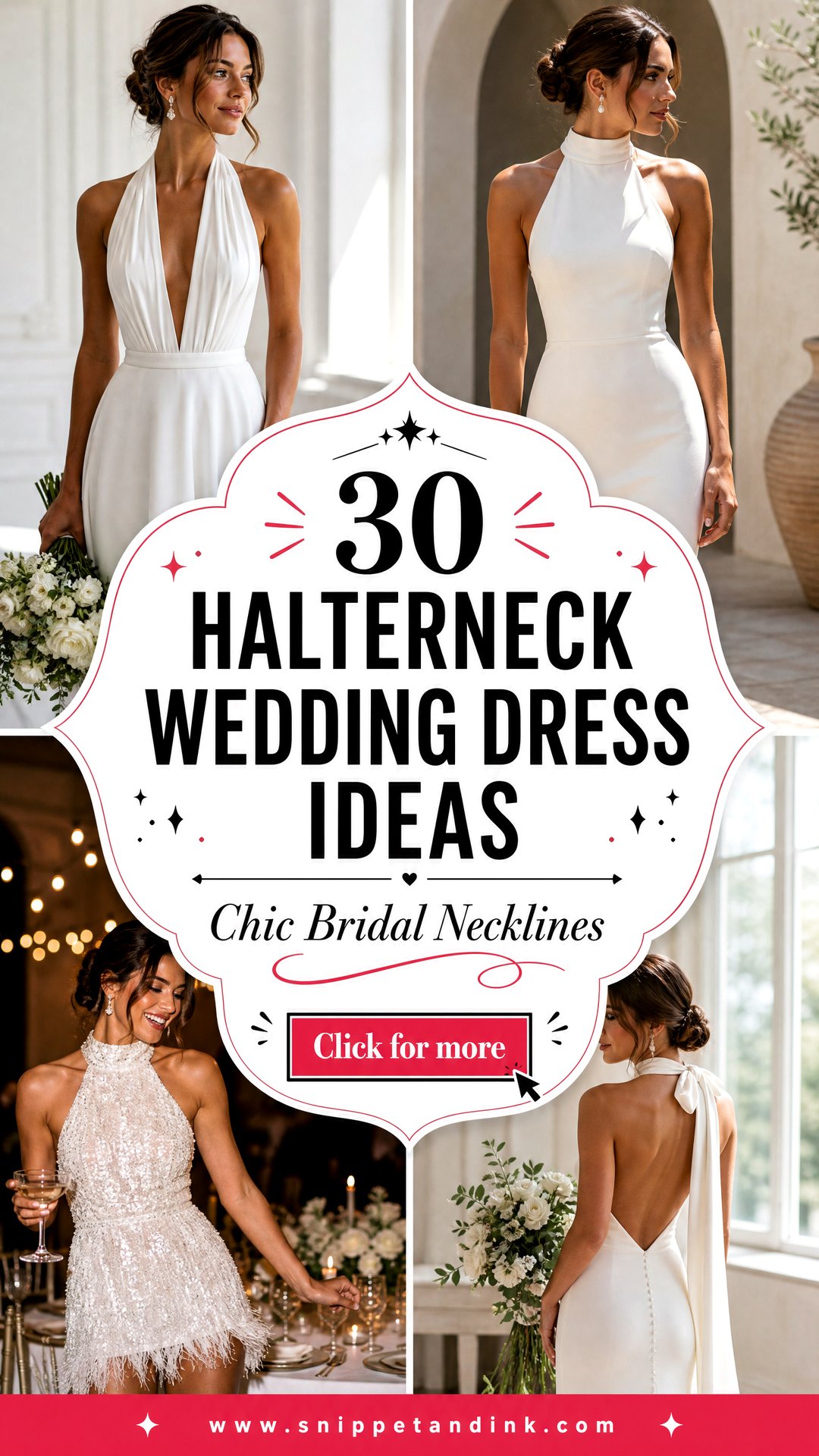
What a Halter Asks of Your Neck and Shoulders
With most necklines, the bodice rests on your shoulders. A halter fastens at the nape and lets the front of the dress hang from there, so the first question I ask in an appointment is how heavy the gown is. A light crepe or chiffon halter feels like nothing. A beaded or full-skirted one can leave you with a sore neck by the evening if the weight isn’t held at the waist.
Shoulder shape matters too. Halters cut inward toward the neck, which suits broad or athletic shoulders and shows off toned arms. On very narrow, sloping shoulders, a wide-set halter strap tends to sit better than a narrow one. A good seamstress can adjust strap width and angle, so treat the sample as a starting point.
One more summer warning: halters show off any strap tan lines from earlier in the season. If your wedding is in late summer, avoid sun on your shoulders in a regular bra for the weeks before.
1. Satin Halterneck Wedding Dress
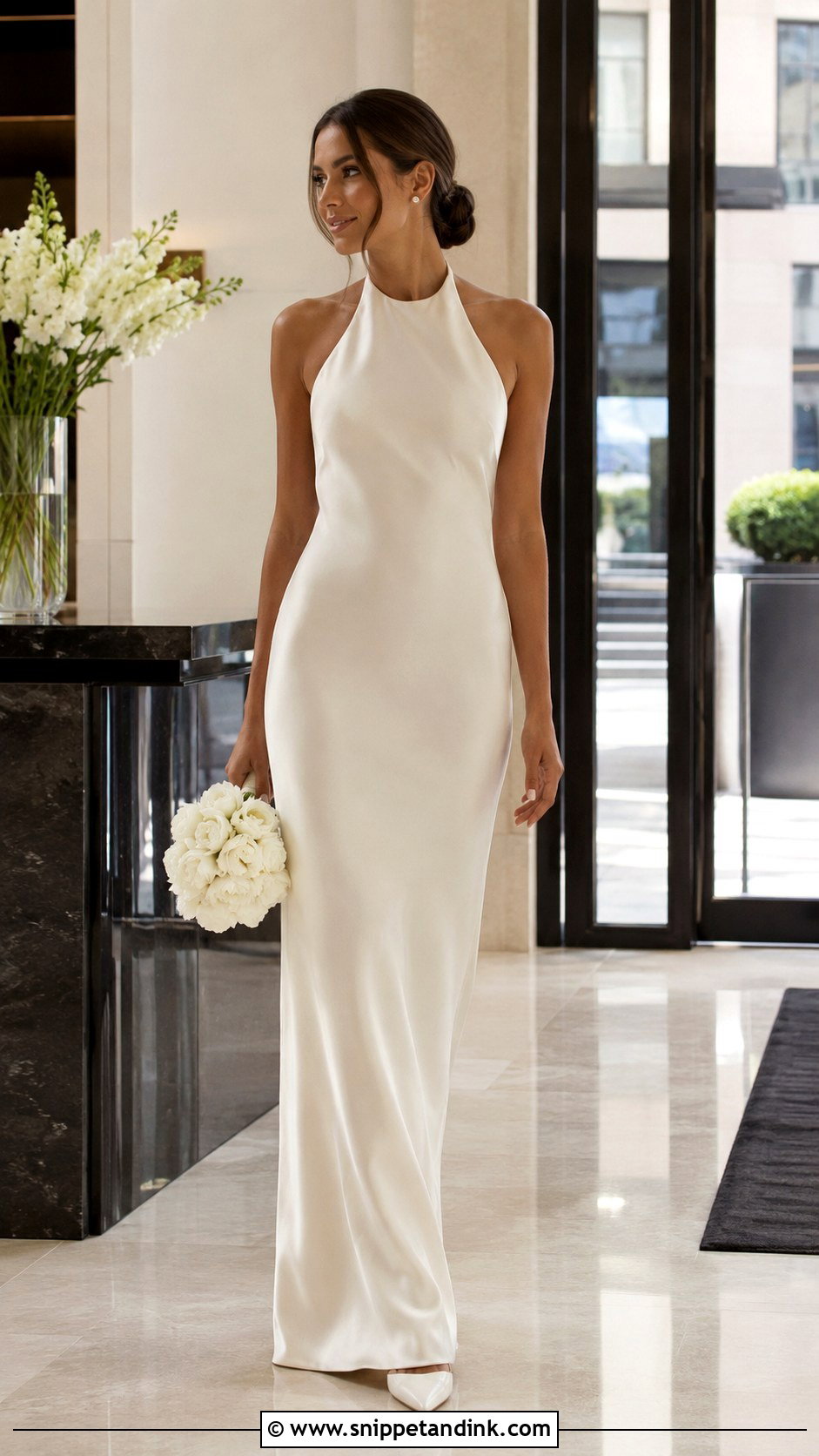
Satin and a halter suit each other because satin’s sheen draws the eye straight up the neckline to your face. The fabric is unforgiving at the seams, though, so the strap point at the neck needs to be cut precisely; if it’s even slightly long, the bodice sags at the front. A sheath, column or soft A-line lets the fabric lead. Pearl studs, a low bun and pointed heels keep it clean, and a long veil adds ceremony weight if the venue is formal.
2. Lace Halterneck Wedding Dress
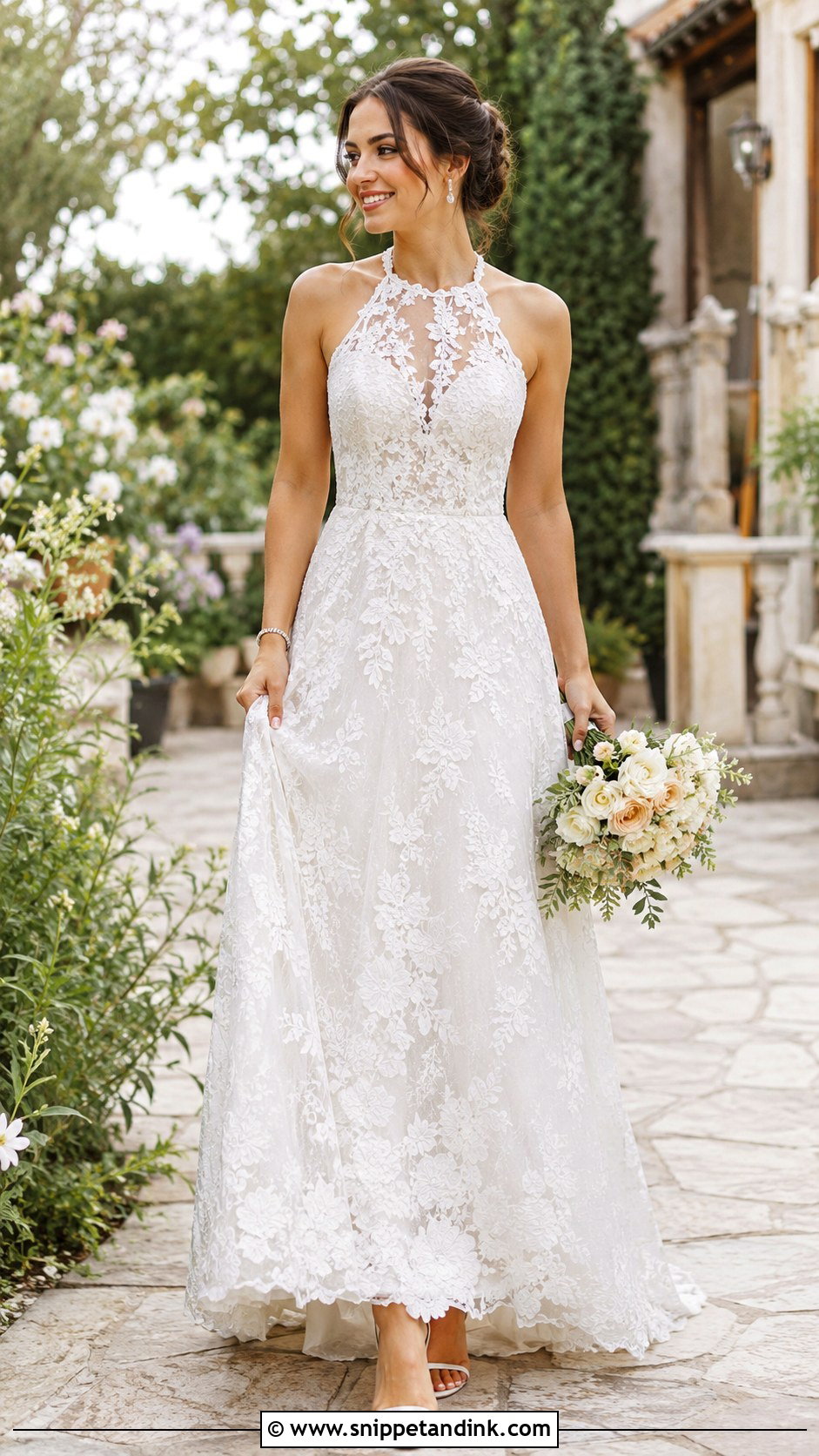
Lace softens a halter’s sharp lines, and the type of lace changes the mood entirely. Floral lace feels classic, while geometric or embroidered lace over an illusion panel reads more current. Scratchiness is the thing I check first: lace that rests against the side of the neck for ten hours can rub, so ask whether the strap edge is lined or bound. Soft waves, fine drop earrings and barely-there heels suit it. If the back is open, choose a veil that doesn’t cover the lace.
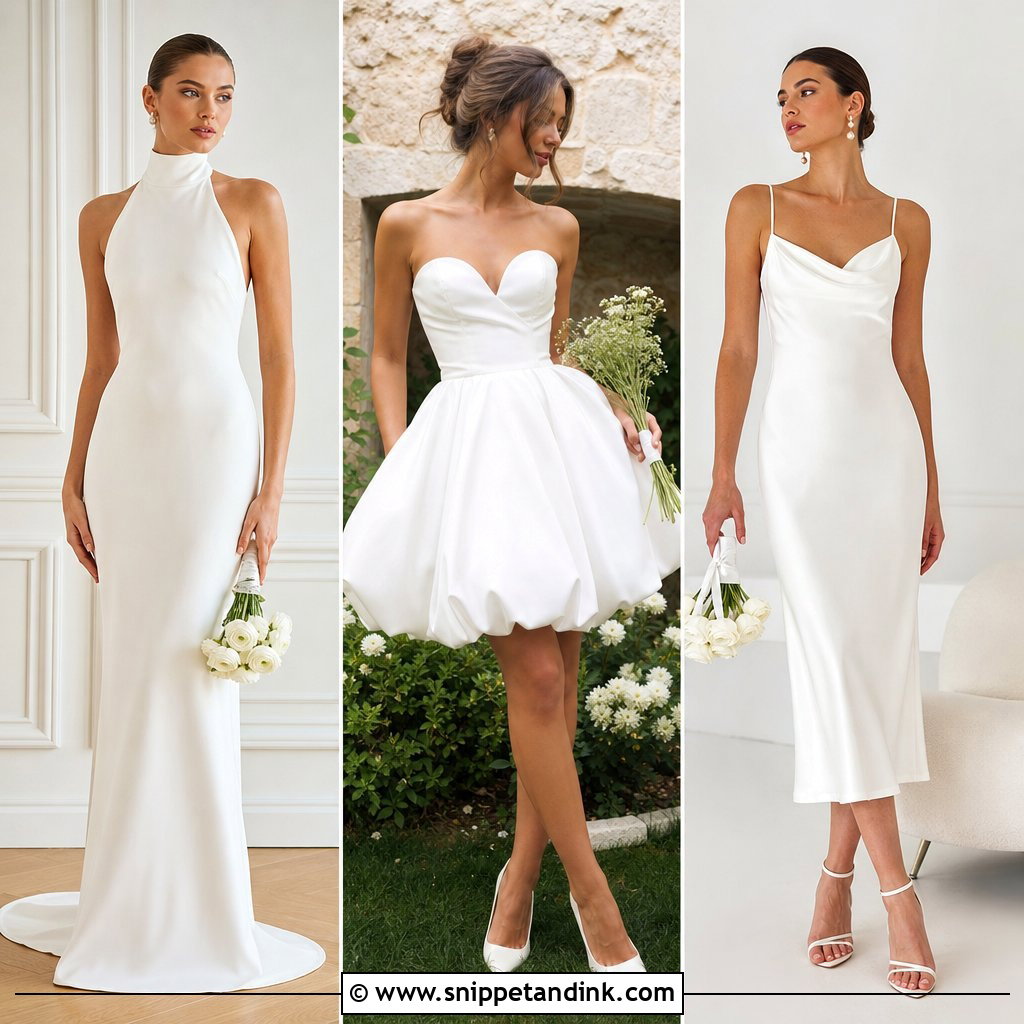
3. High Neck Halterneck Wedding Dress
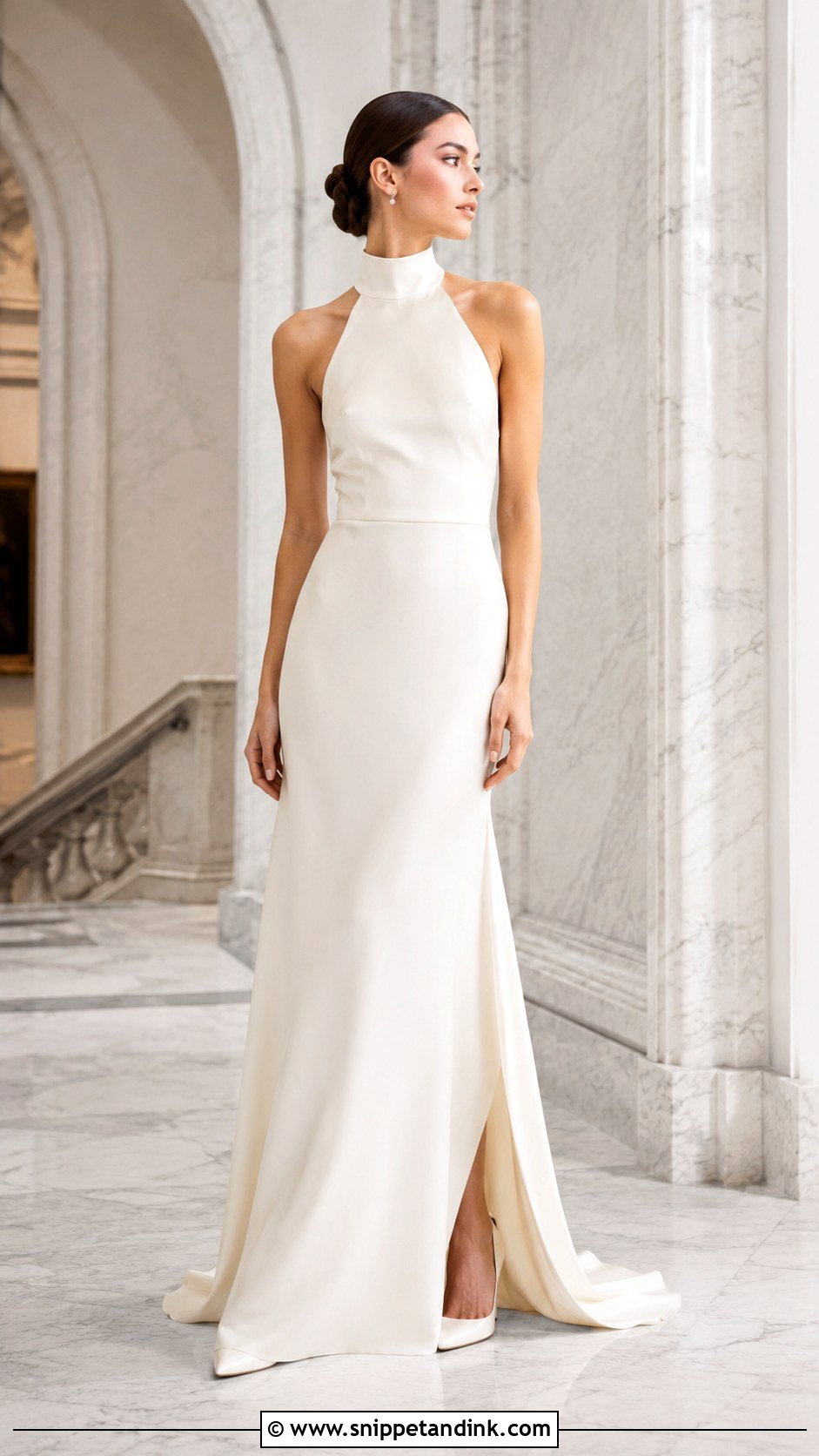
A high halter collar runs up toward the jaw, which lengthens the neck and gives you natural posture in photos. Crepe looks sleek, satin glows, lace softens and mikado holds a sculpted collar. The collar has to sit flat without digging in when you turn your head, so turn side to side at every fitting. An updo keeps the neckline clear, and small earrings or a bracelet are plenty, because the collar already does the work a necklace would.
4. Plunging Halterneck Wedding Dress
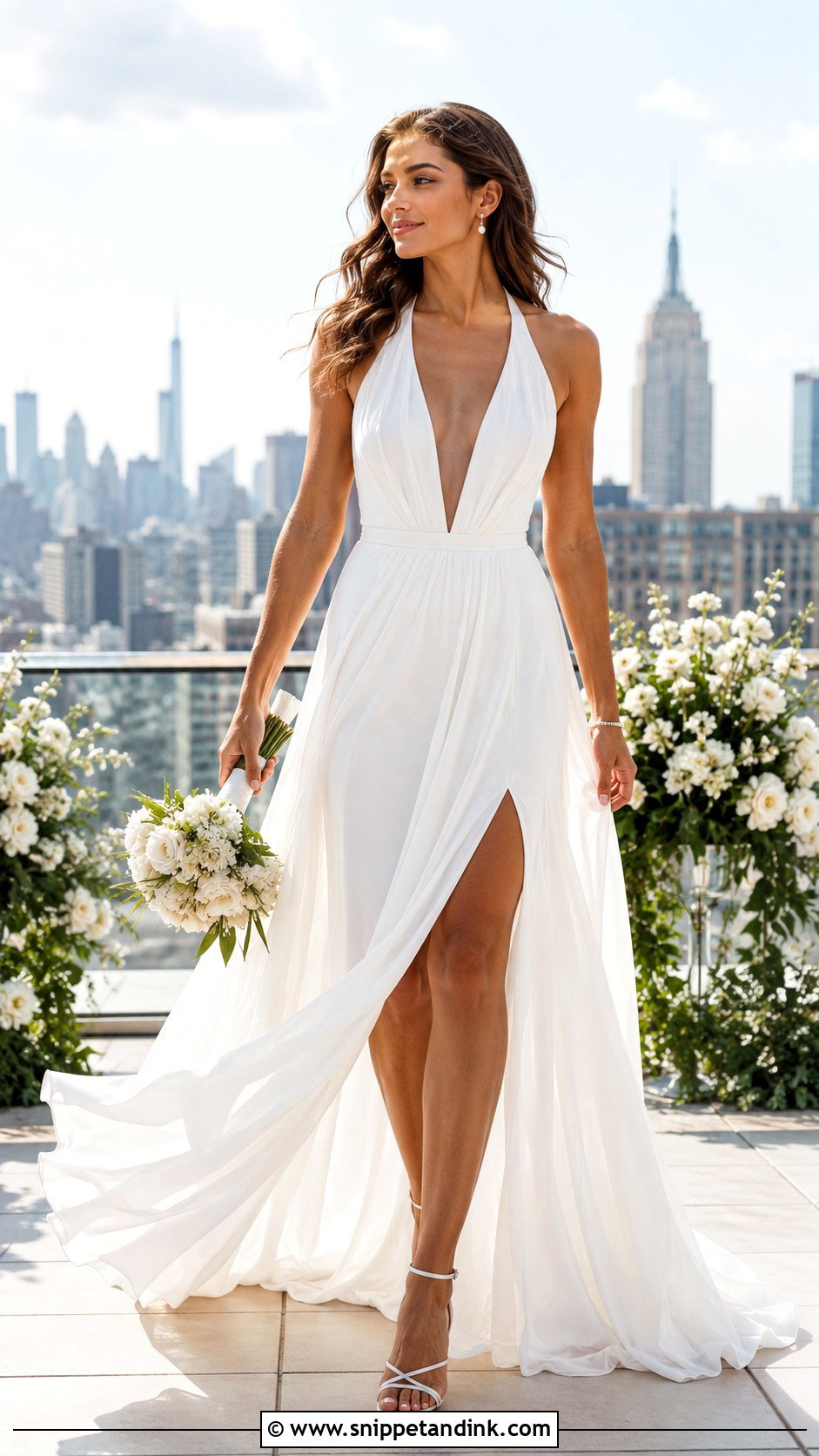
A plunging halterneck wedding dress gives you drama from the cut alone, without embellishment. The halter straps actually make a deep V more secure than a strapless plunge, because the bodice is anchored at the neck. Most versions add illusion mesh down the centre for hold, and I’d still use fashion tape along the edges. Chiffon, crepe or satin all work. Skip necklaces, since they fill the space the neckline is designed to show, and keep the hair soft with slim heels.
5. Open Back Halterneck Wedding Dress
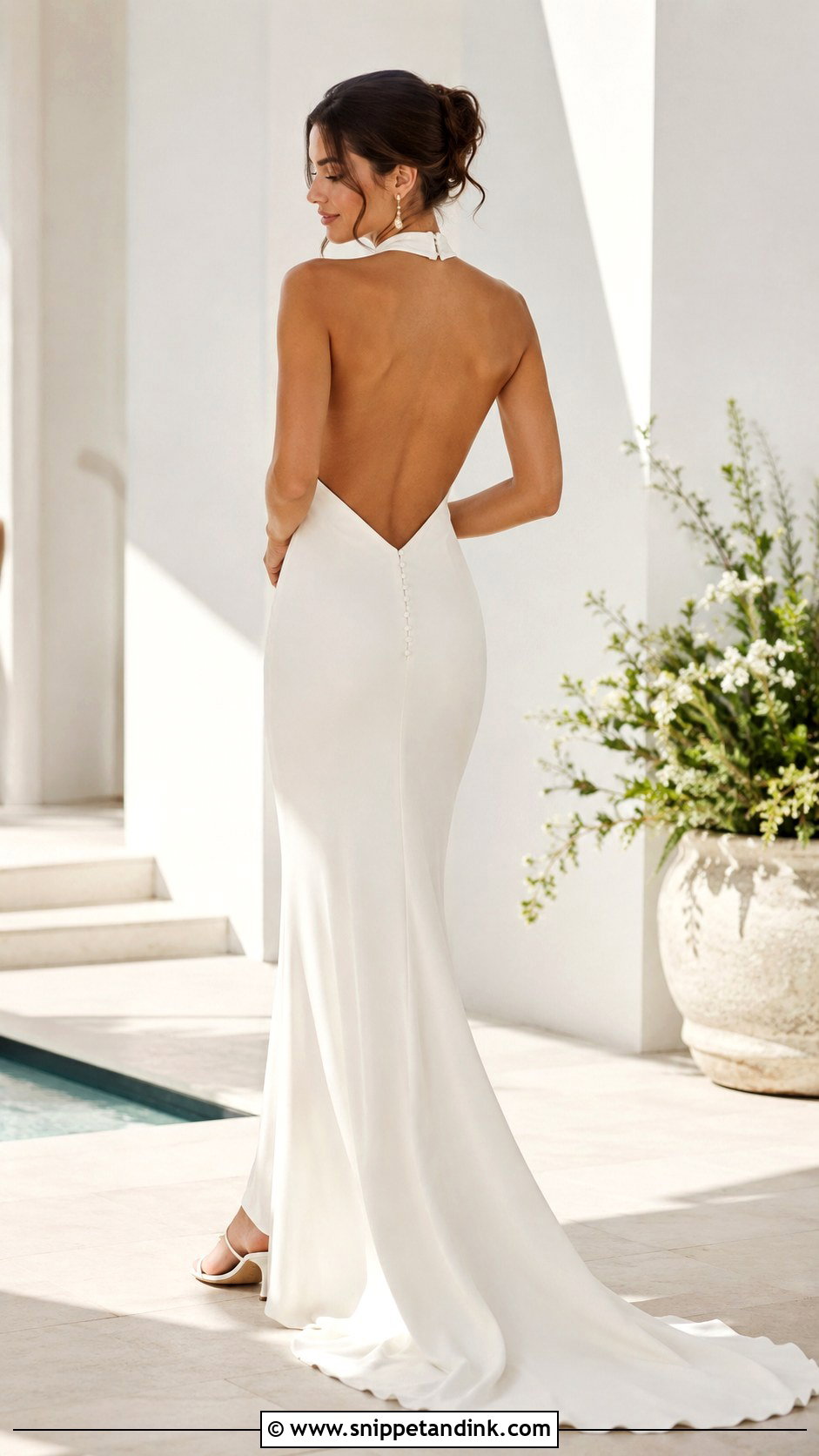
Halters and open backs go together naturally, because nothing has to hold the bodice up across the back. What surprises brides is how much of the ceremony the guests see from behind, so this design gets more attention than you’d think. A fitted crepe version looks sculpted; satin or chiffon skirts feel softer. Wear your hair up or swept to one side so the back stays visible. A sheer veil, delicate earrings and strappy heels finish it without hiding the view.
6. Mermaid Halterneck Wedding Dress
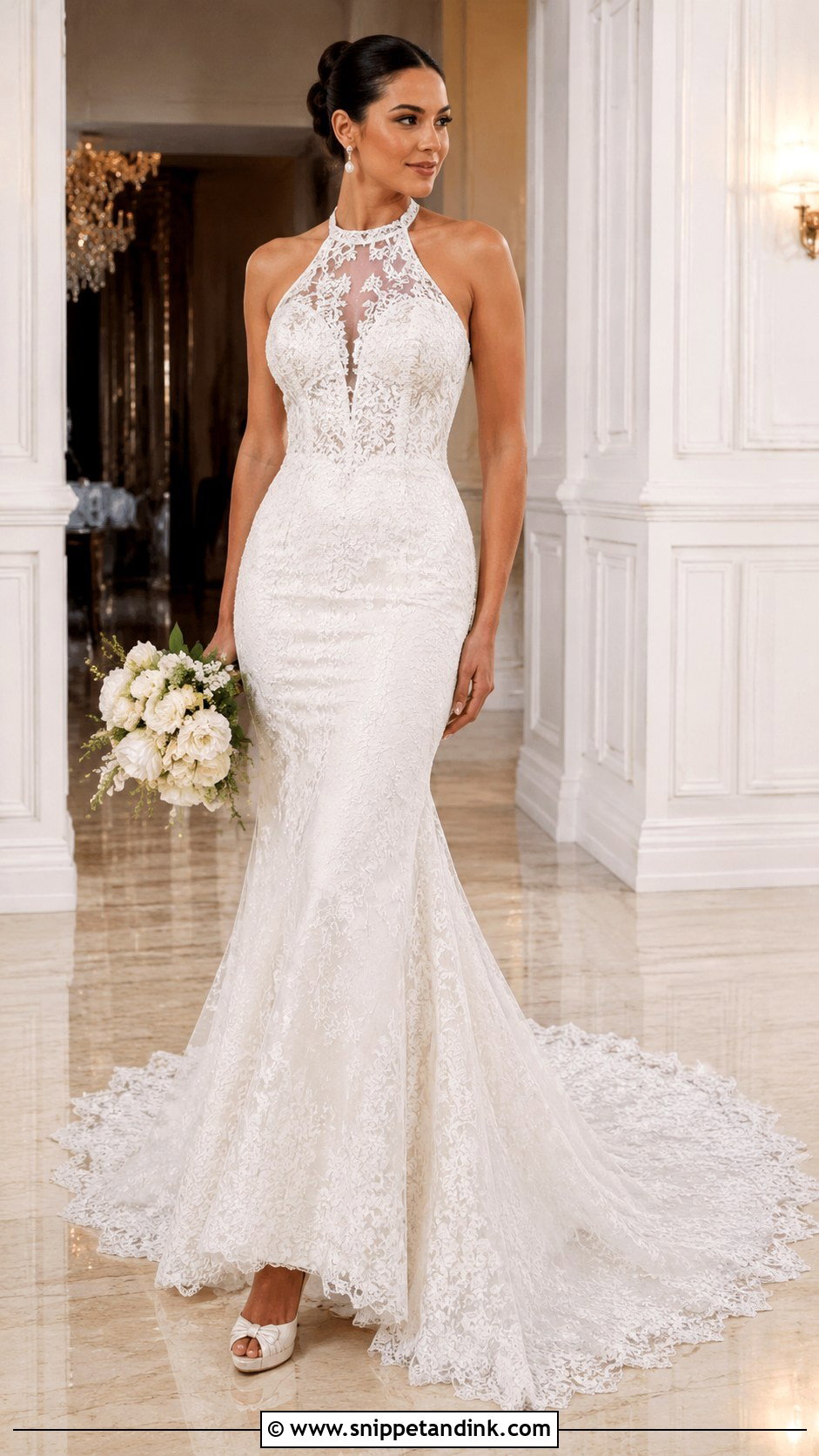
A mermaid shape holds tight through the hips and flares low, and the halter neckline balances it by drawing the eye back up. I always have brides walk the length of the shop and sit on a chair in a mermaid gown before deciding, because a flare set too high restricts your stride. Lace, crepe, satin or beaded fabric all suit the shape. If the gown is heavily detailed, go simple on accessories and sleek on hair. A tulle veil or floral hair pins soften it.
7. A Line Halterneck Wedding Dress
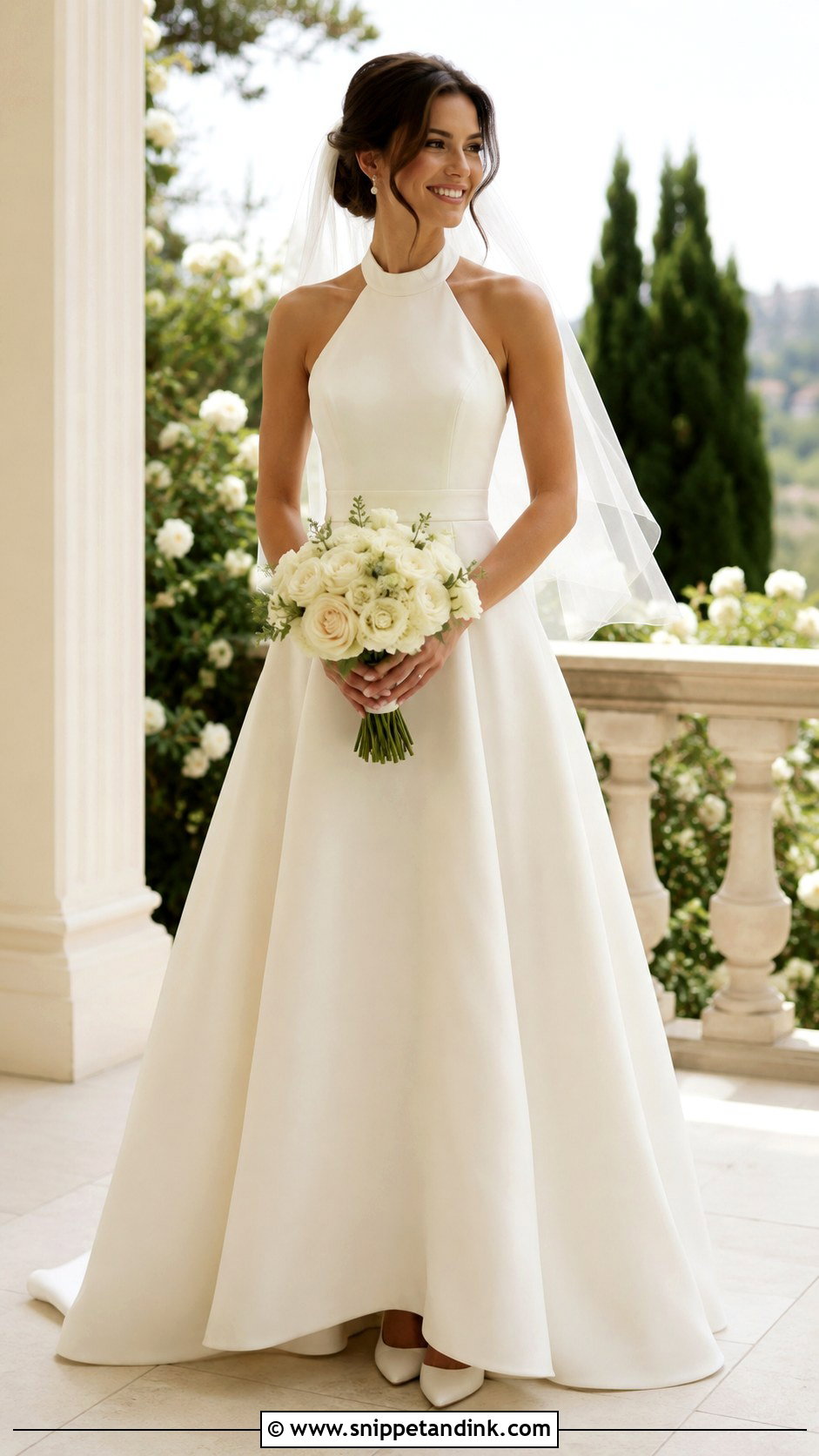
The A-line is the halter shape I recommend most to brides who aren’t sure yet. The bodice defines the upper body and the skirt skims everything below, so the neckline reads graceful rather than sharp. Satin or mikado keep it formal, lace makes it romantic and chiffon softens it for outdoors. It moves easily over a long day. Classic pumps, pearl earrings and a mid-length veil suit most venues, from gardens to ballrooms.
8. Ball Gown Halterneck Wedding Dress
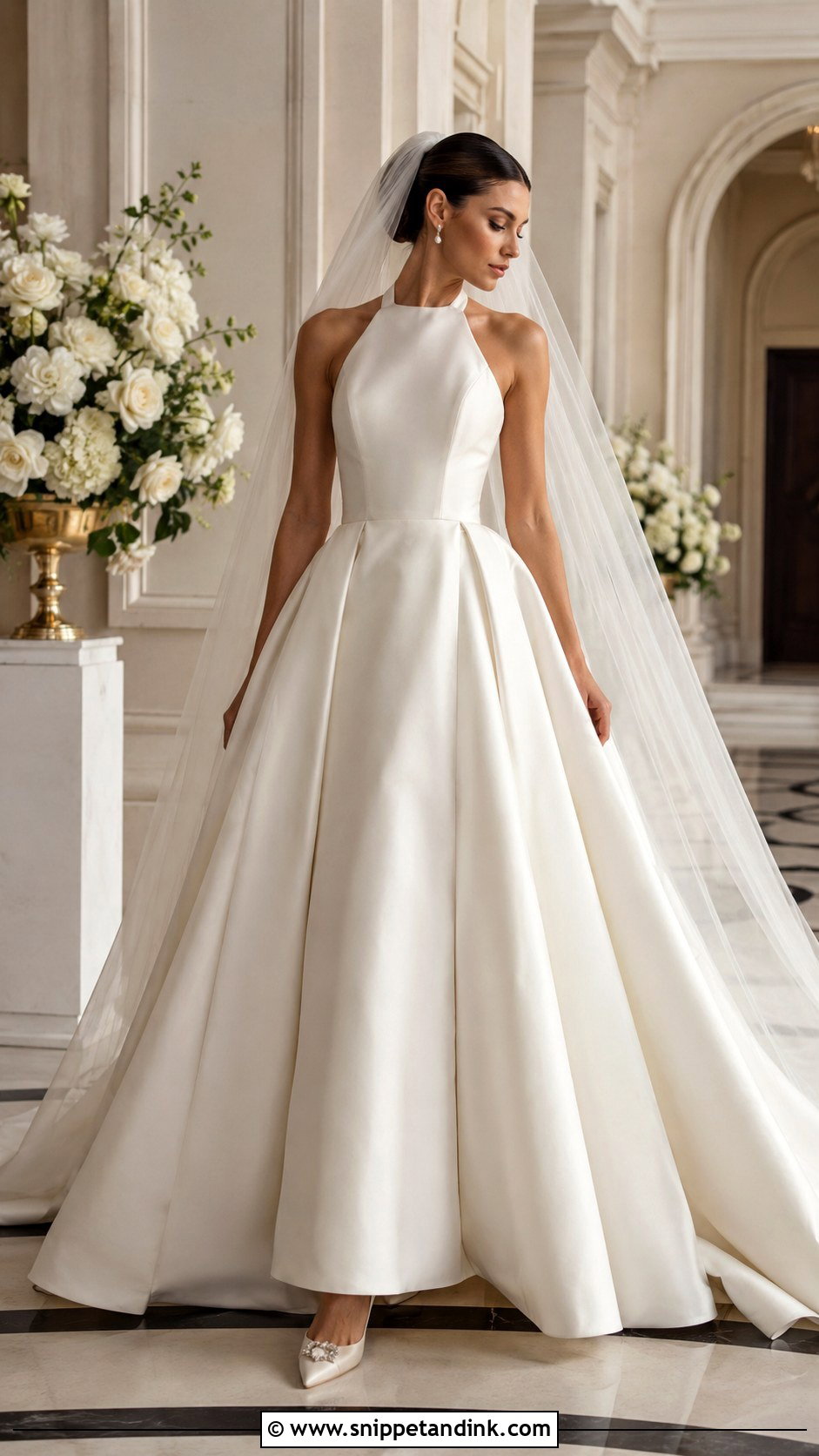
A ball gown halterneck wedding dress gives you the volume of a princess silhouette with a lifted, modern neckline instead of the usual strapless top. One thing to raise with your seamstress: a full skirt is heavy, and the halter needs a waist stay or strong internal structure so the skirt’s weight hangs from your waist, not your neck. Mikado, satin, organza and layered tulle all work. Plain bodices can carry statement earrings; beaded ones need quieter accessories. A cathedral veil suits a grand ceremony space.
9. Sheath Halterneck Wedding Dress
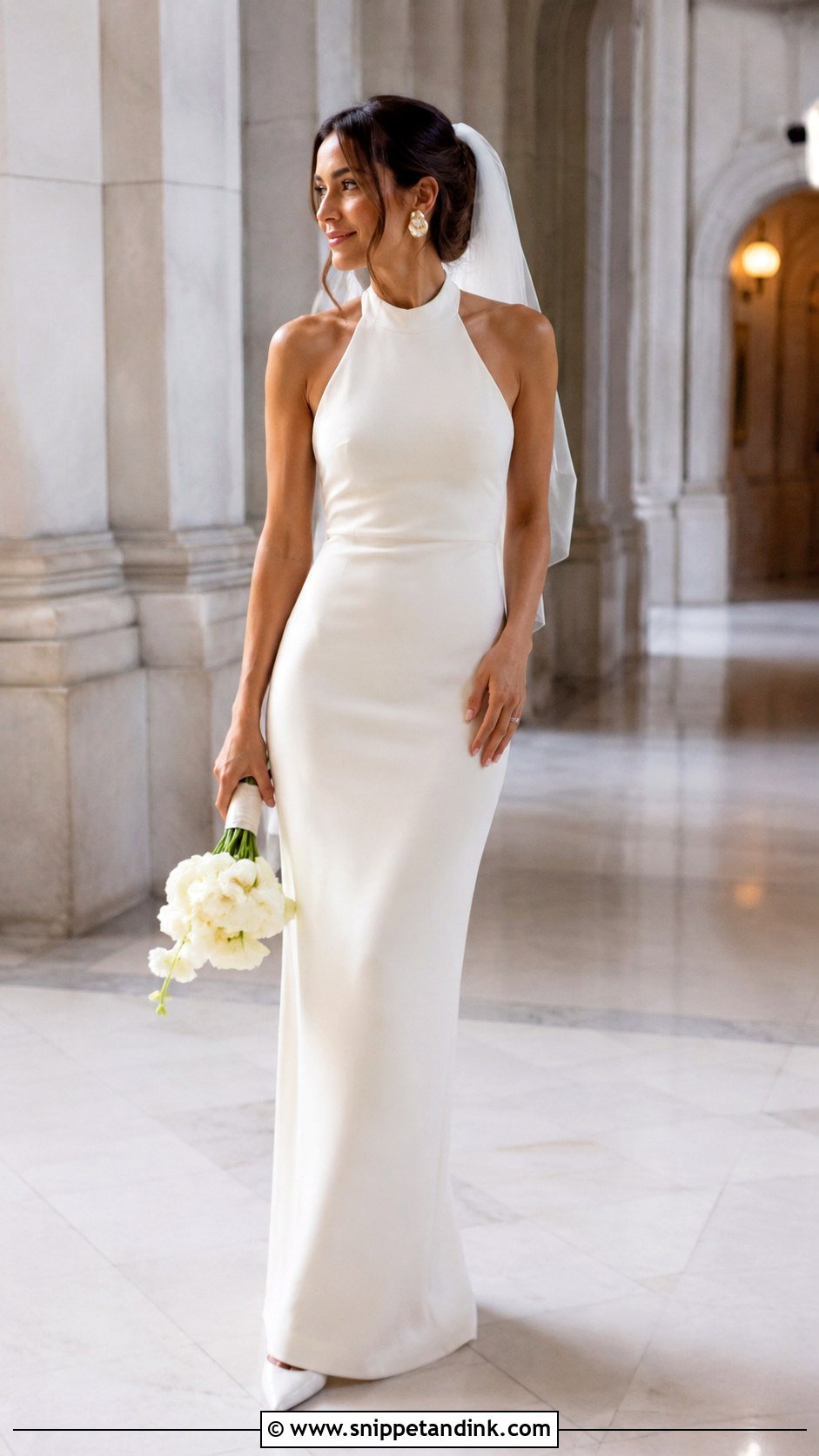
A sheath follows the body without much volume, and the halter gives it shape at the top. Crepe looks clean and matte; silk satin glows. Because there’s no skirt to hide behind, underwear lines show, so wear your actual undergarments to every fitting. A low chignon, minimal heels and sculptural earrings suit it. If you want more ceremony presence, a detachable train or long veil adds length without changing the dress.
10. Crepe Halterneck Wedding Dress
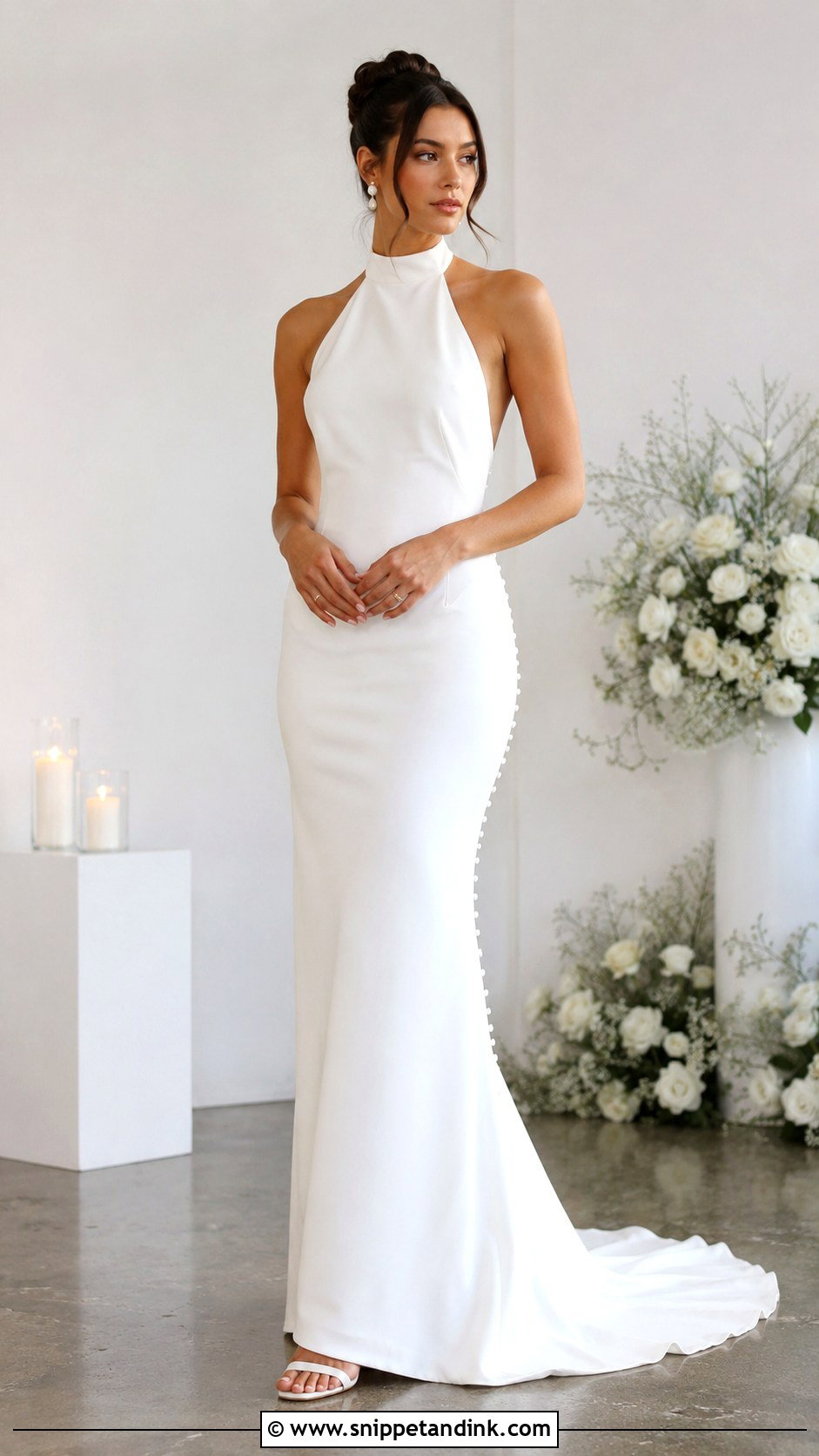
Crepe skims the body and moves more easily than heavier bridal fabrics, so it’s comfortable for a long day. With a halter, it gives a tailored line around the shoulders. Low backs, covered buttons or a small train suit it. The thing to know is that crepe clings, so it shows shapewear edges; bring yours to fittings. Pearl drops, white heels and a polished bun keep it modern, and it suits evening ceremonies and courthouse weddings alike.
11. Chiffon Halterneck Wedding Dress
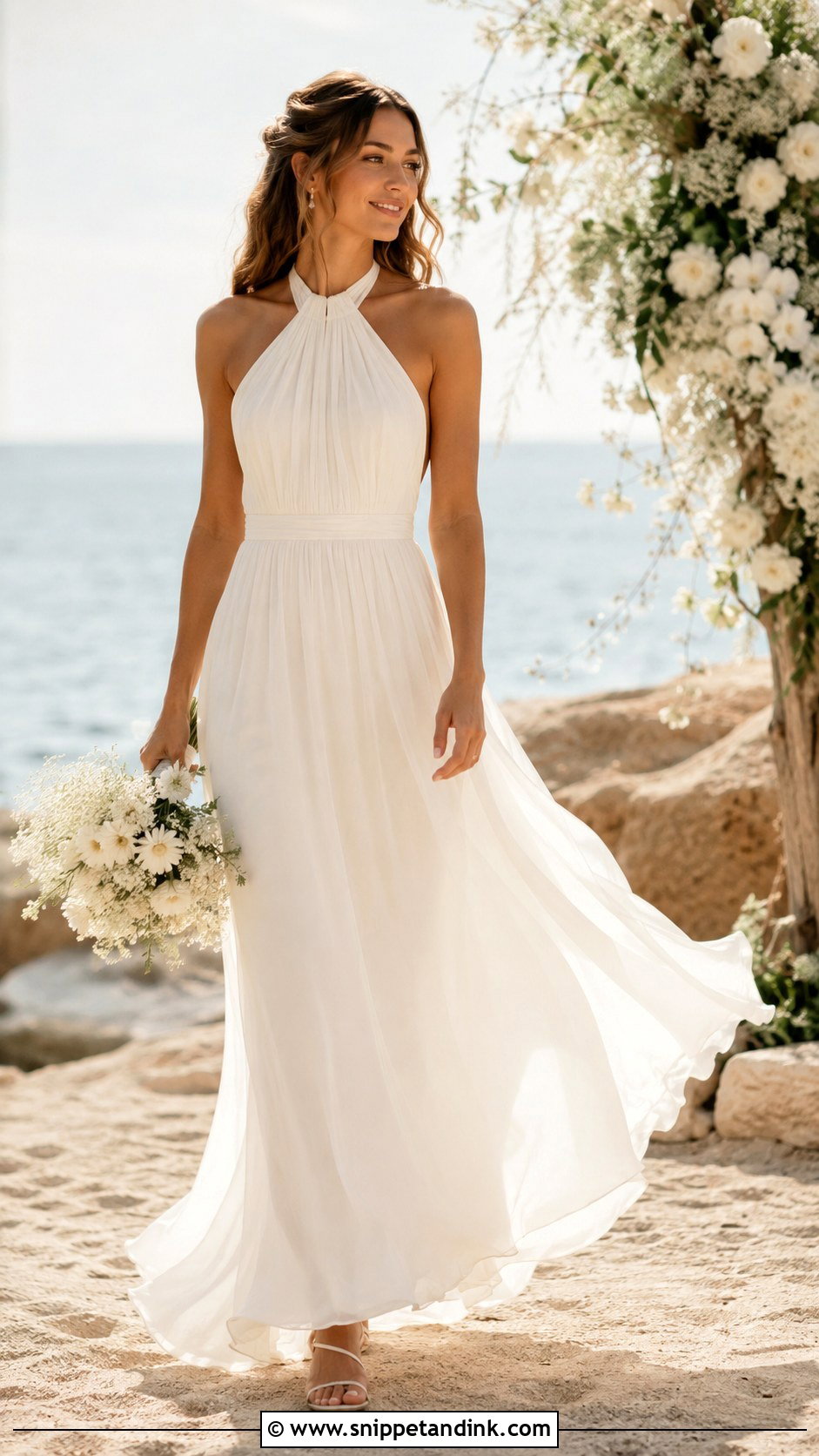
Chiffon is the lightest fabric on this list and moves with every step, which makes it a natural choice for warm-weather ceremonies. The halter bodice gives it enough structure that it doesn’t look like a day dress. A flowing A-line or empire waist keeps it comfortable. The downside is wind: chiffon lifts easily, so a slightly weighted hem helps on beaches and clifftops. Delicate sandals, soft curls and a sheer veil suit the mood.
12. Beaded Halterneck Wedding Dress
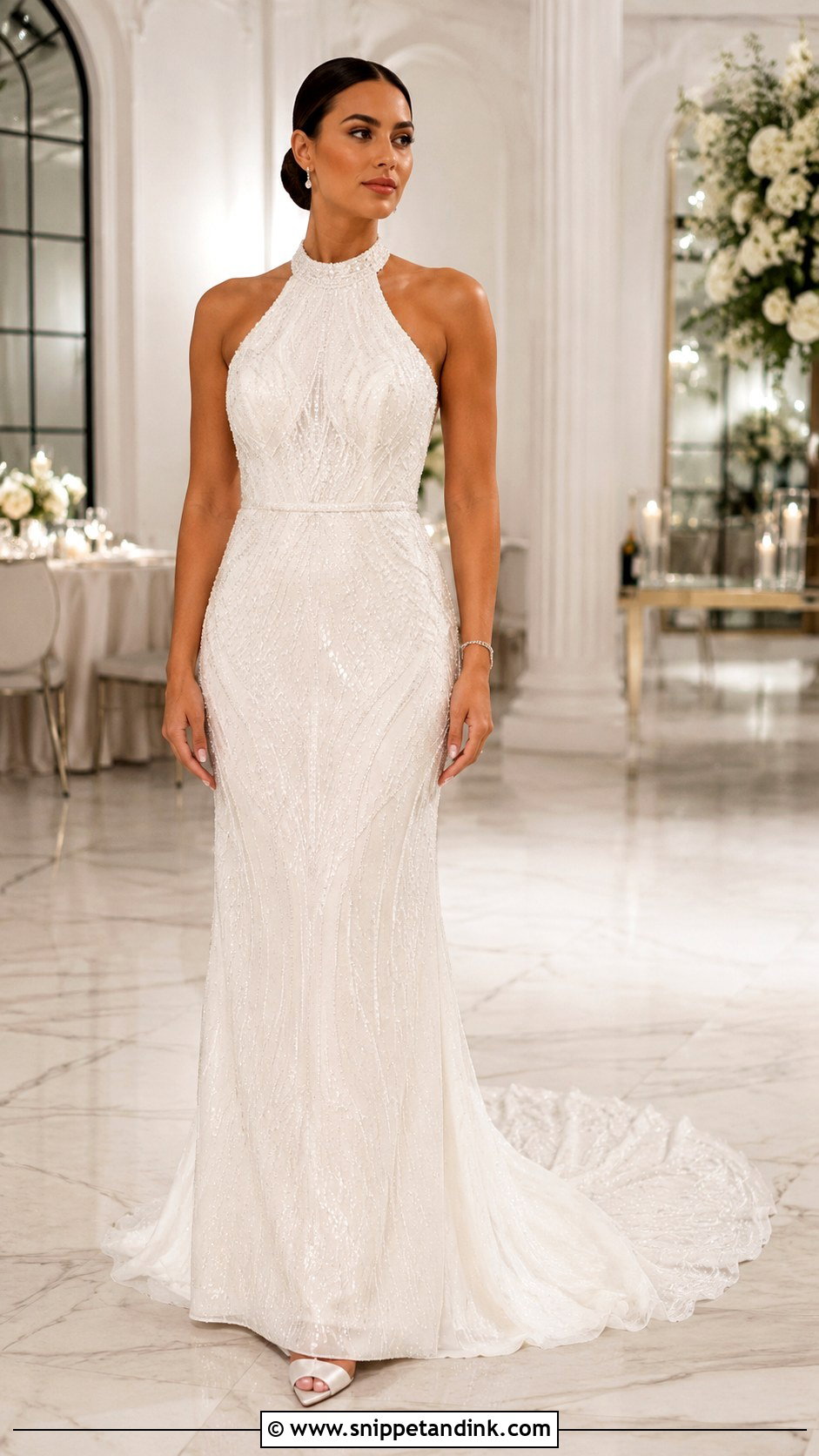
Beading on a halter has a practical cost: every bead adds weight, and a halter hangs that weight from your neck. I’d look for gowns where the beading sits below the bust or is spread lightly, and ask whether the bodice has internal support so the neck isn’t carrying it all. Allover beading suits a fitted evening look; pearl or crystal accents on tulle feel softer. Simple heels, small earrings and a sleek updo let the shine stand out.
13. Pearl Halterneck Wedding Dress
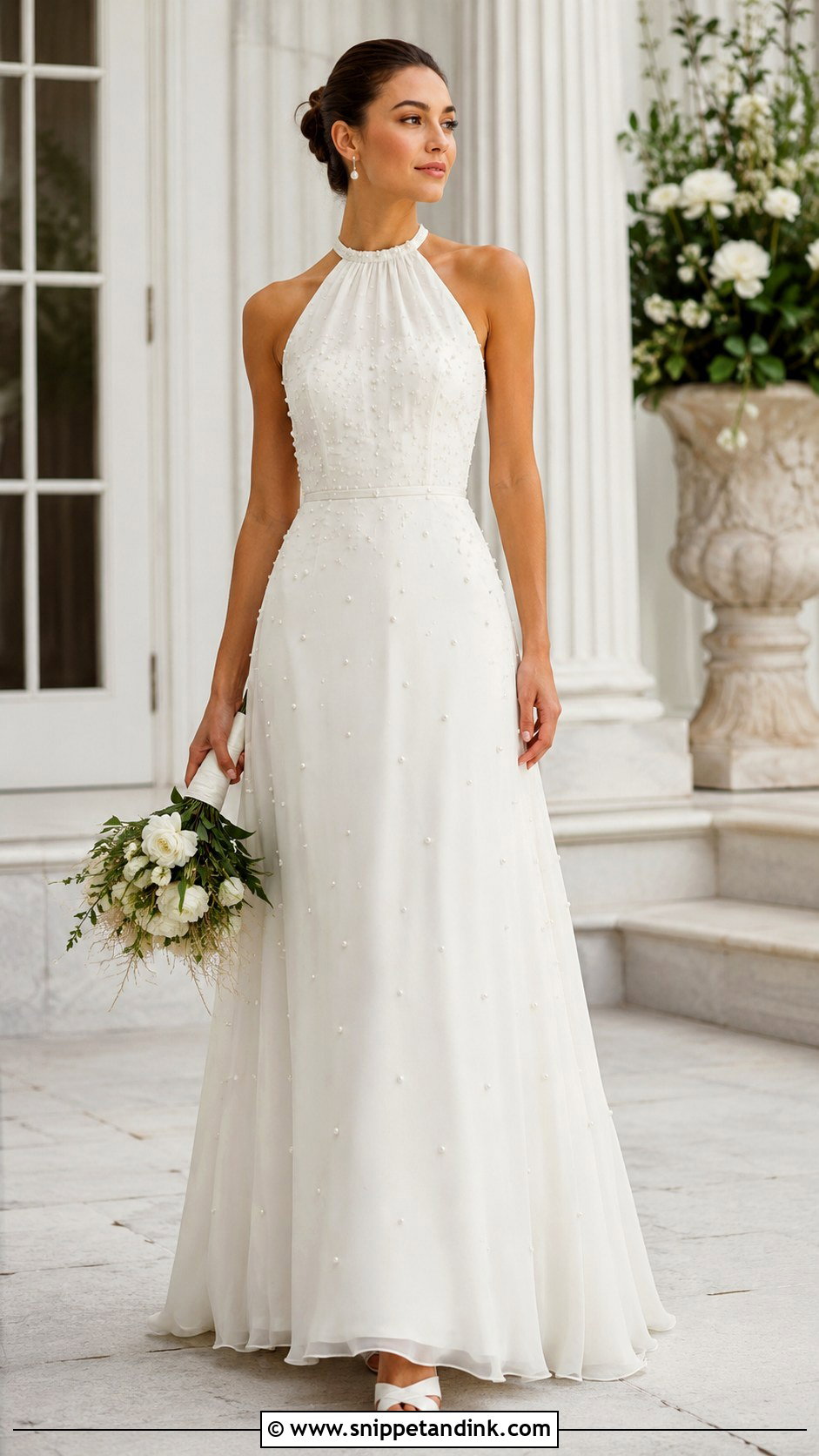
Pearls can be scattered, used as trim along the neckline or worked across the bodice, and the halter shape keeps even a heavily pearled dress looking current. Pearl trim along the halter strap frames the face nicely in close-ups. If the dress already has a lot of pearl detail, skip a necklace and choose pearl earrings instead. Satin heels and a clean veil work well. A smooth bun or soft waves both suit it, depending on how formal the venue is.
14. Simple Halterneck Wedding Dress
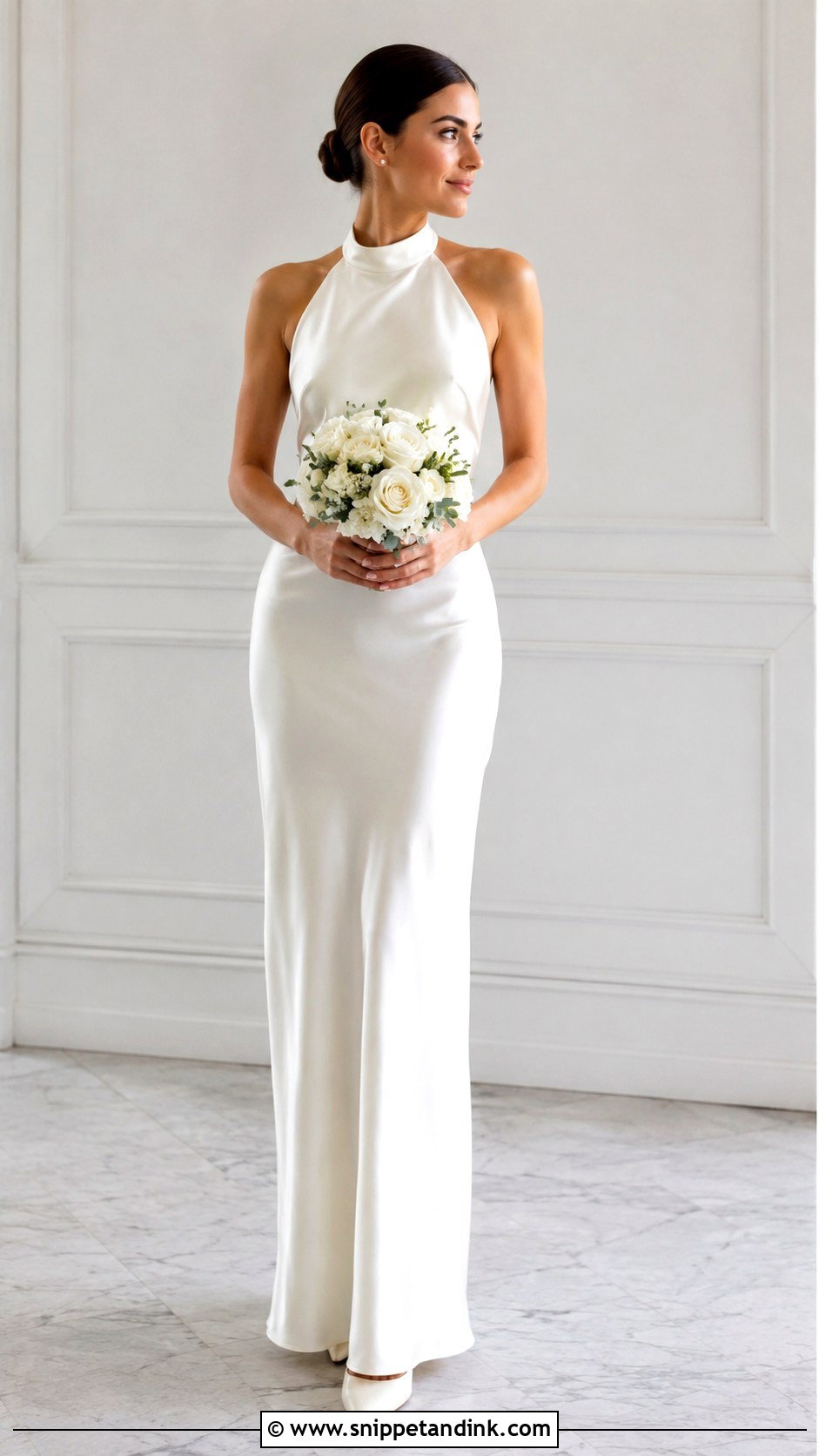
A plain halter gown relies entirely on fit, fabric and proportion, which means every seam is on show. Satin, crepe and mikado hold shape best for this. I’d book an extra fitting for a dress like this, since there’s no lace or beading to hide an uneven hem or a strap that pulls. Pearl studs, a fine bracelet and sleek heels are plenty. A dramatic veil is the one place you can add impact without cluttering the dress.

15. Boho Halterneck Wedding Dress
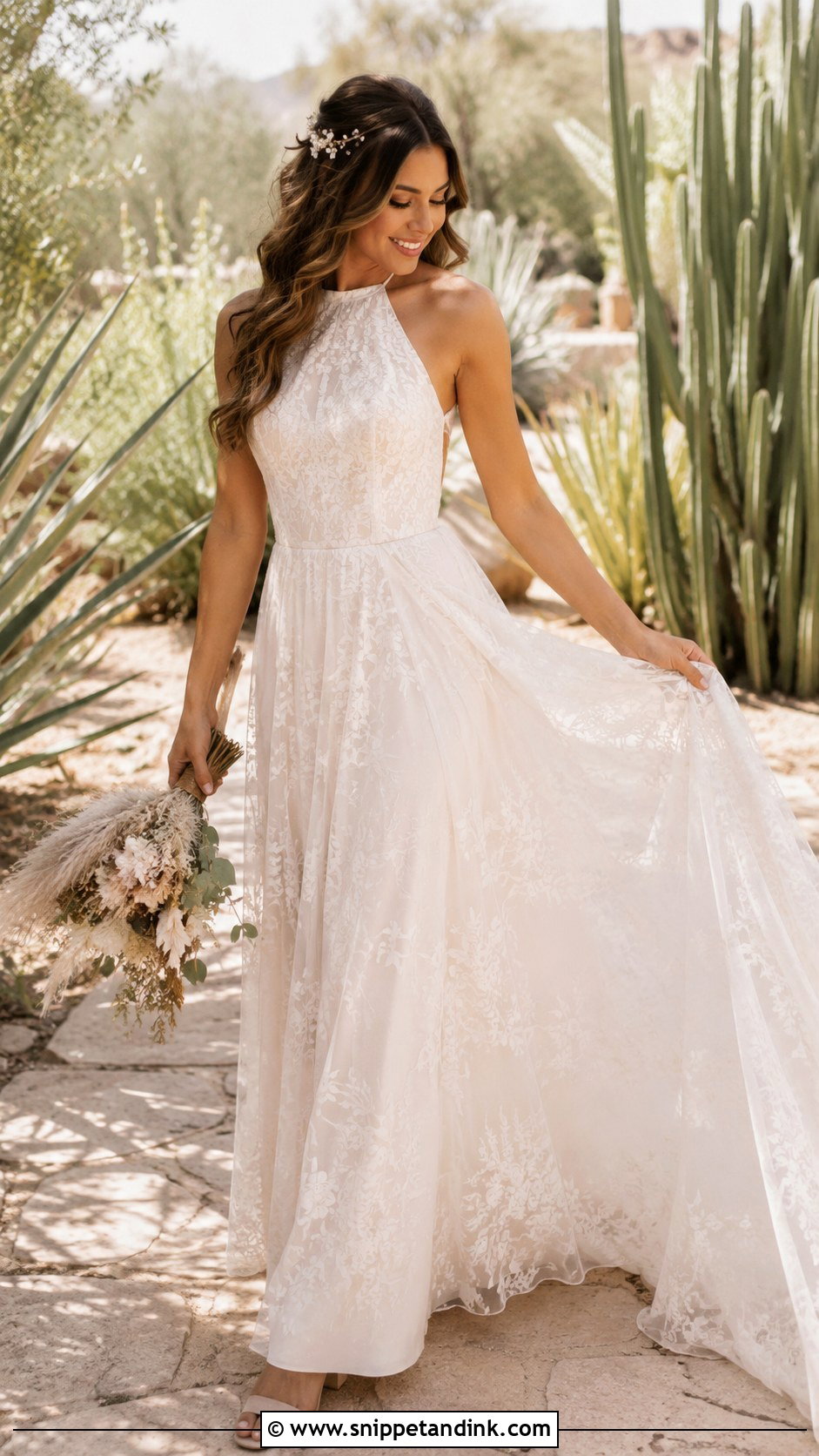
Boho halters use soft lace, crochet-style detail and light, loose skirts, and the halter neckline stops the whole thing from looking too casual. Fabrics should drape rather than stand stiff. Loose waves, small floral pins and block heels or bridal sandals suit outdoor ground. A simple veil or a short cape adds softness without hiding the dress. Check that crochet-style lace doesn’t catch on jewelry or a bouquet’s wire.
16. Beach Halterneck Wedding Dress
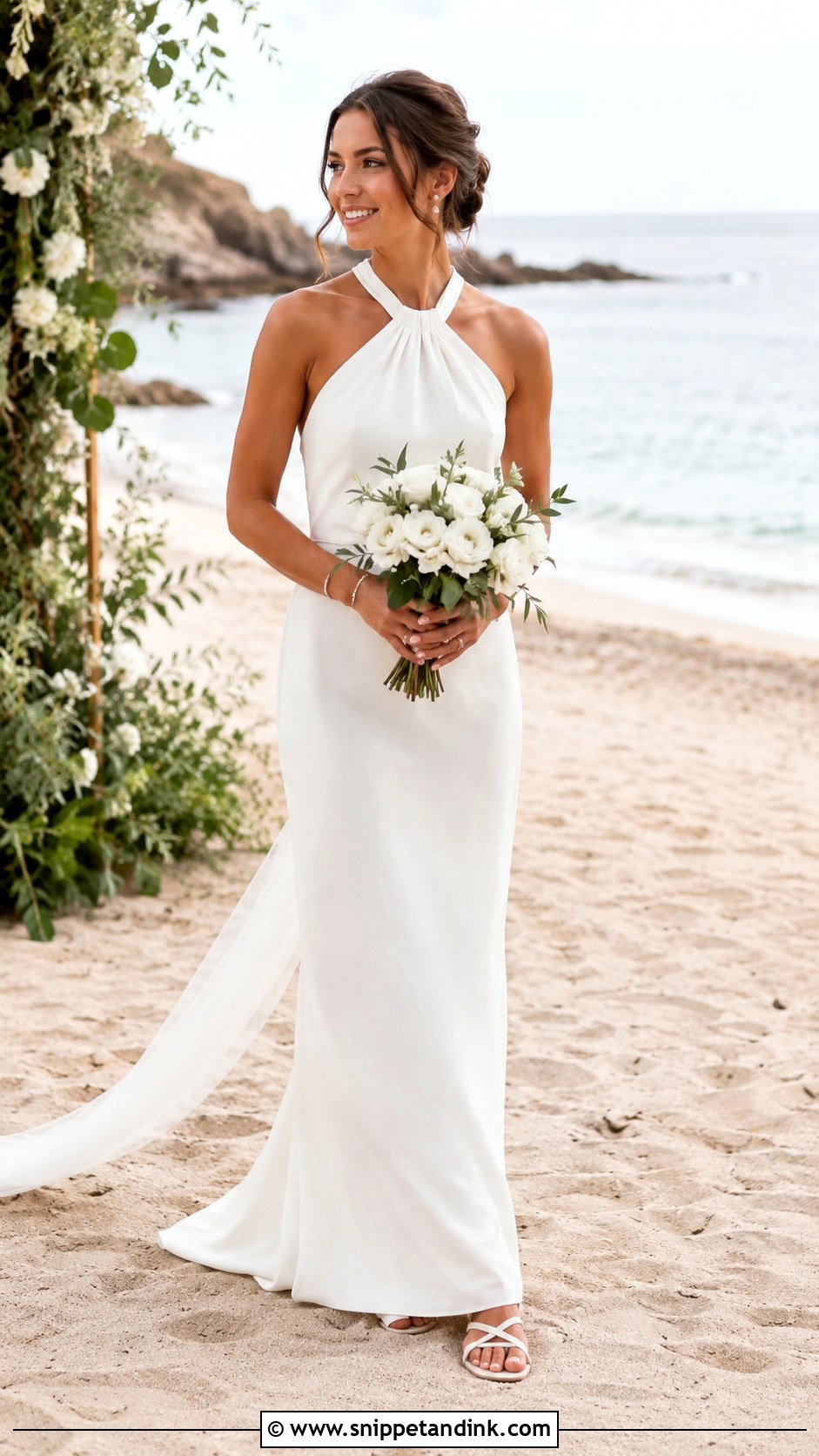
On a beach, a halter is a practical choice, because it holds the bodice more securely in wind than thin straps do. Chiffon, silk or light crepe move without weighing you down. A sheath, A-line or slip silhouette works best on sand; long trains collect sand and drag. Flat sandals, pearl studs and hair that can handle wind finish it. This style suits coastal ceremonies and tropical destinations, and I’d check the tide times before choosing a hem length.
17. Garden Halterneck Wedding Dress
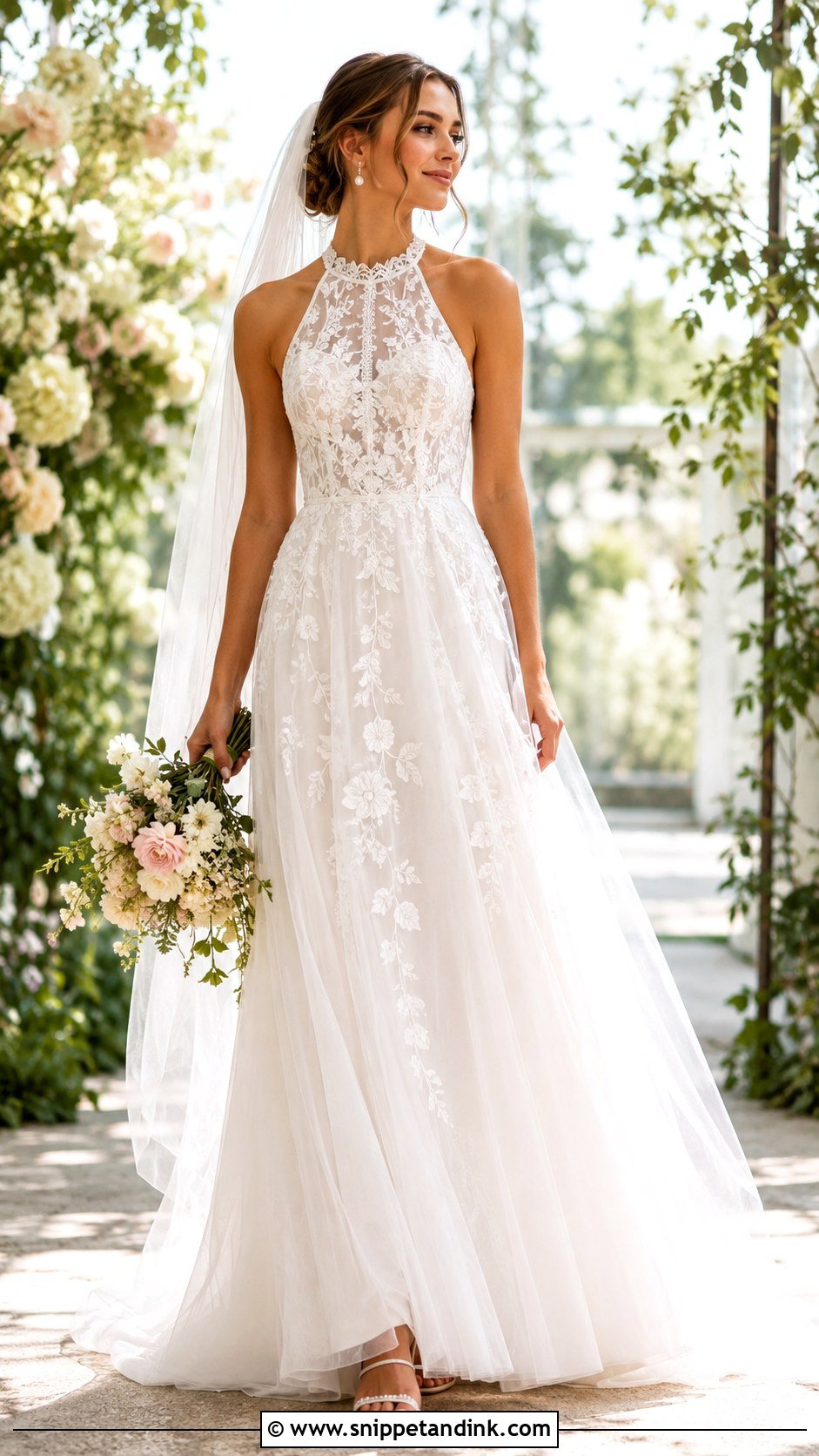
In a garden, floral lace, embroidered tulle or chiffon tie the dress to its surroundings, and the halter keeps the upper body defined. Low heels or block heels won’t sink into lawns the way stilettos do, and that is the most common problem I see at garden weddings. Pearl earrings and light makeup suit daylight. A veil with tiny floral details adds a finishing touch for spring ceremonies.
18. Long Sleeve Halterneck Wedding Dress
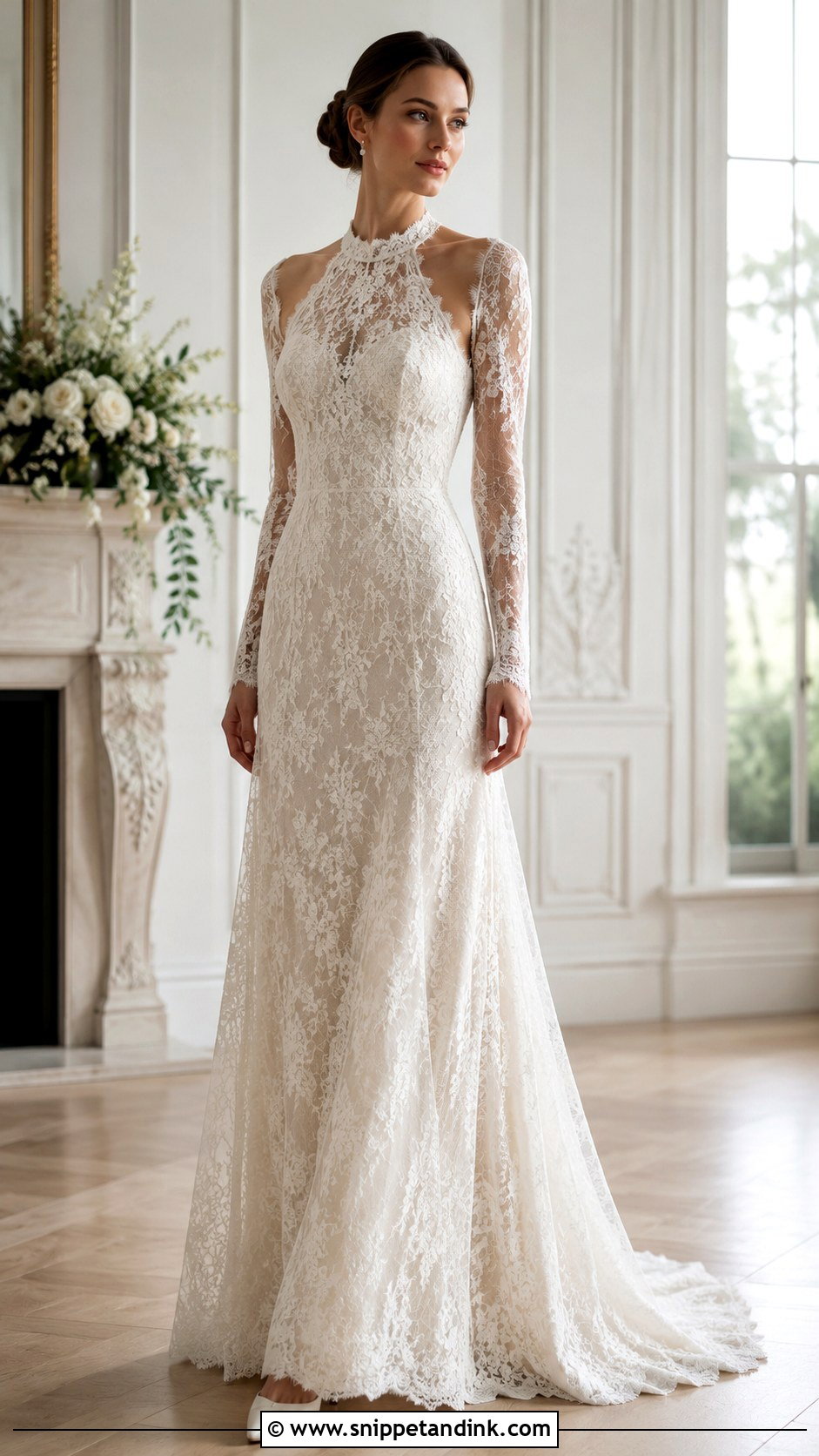
Long sleeves with a halter cut is an unusual pairing, usually done with sleeves set in below an open shoulder line or illusion sleeves joined at the neck. Lace or fitted crepe sleeves read formal; illusion is lighter. Check arm movement carefully, because sleeves attached to a halter can limit how high you can lift your arms. It suits cooler seasons and formal venues. An updo keeps the neckline clear, with small earrings, closed-toe heels and a simple veil.
19. Illusion Halterneck Wedding Dress
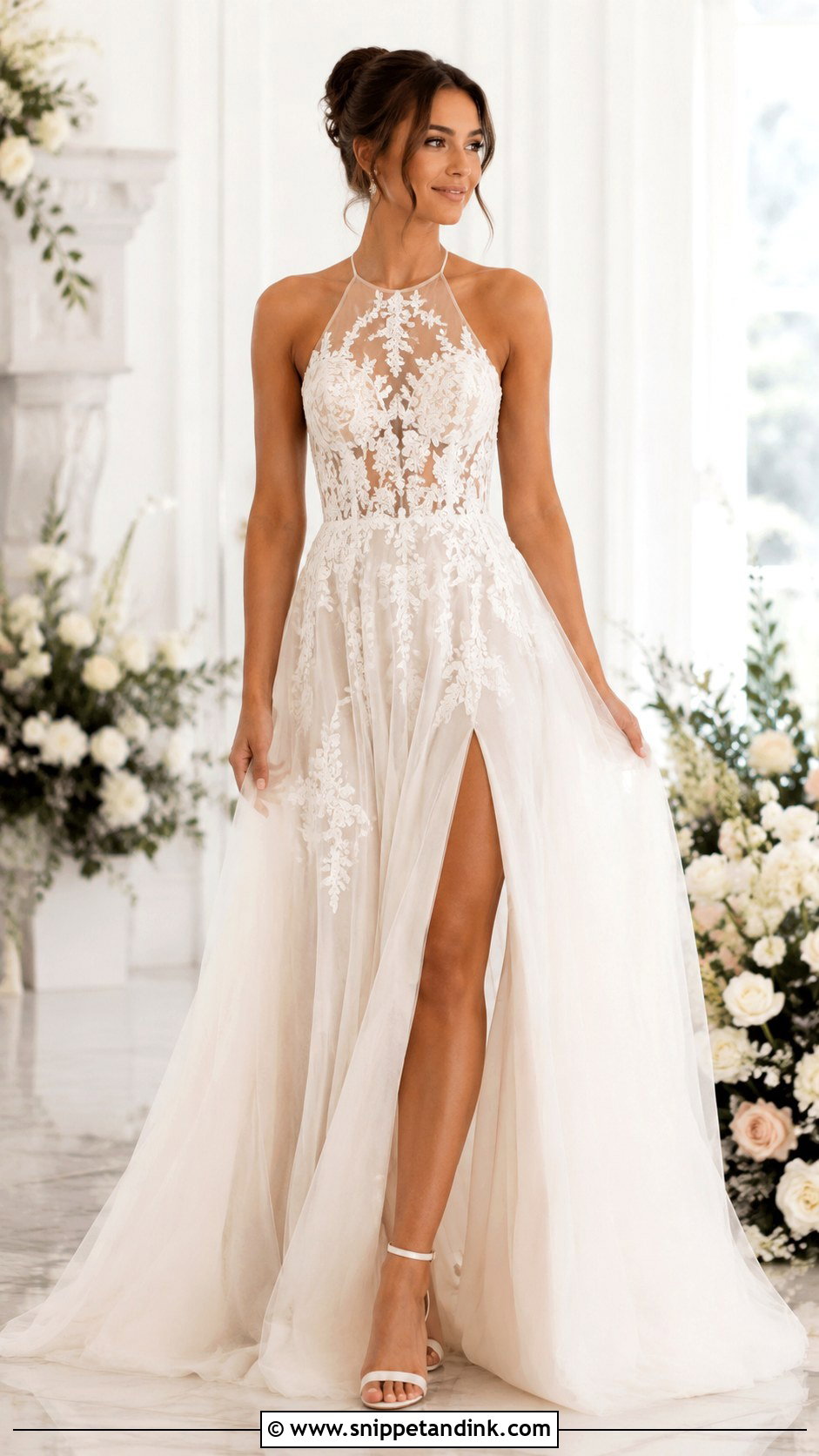
Illusion halters use sheer mesh, often with lace, beading or embroidery placed on top, to give a detailed neckline extra coverage and hold. It’s also what makes many plunging and open-back halters secure. Mesh colour matters: the closer it matches your skin, the less it shows in photos. Soft earrings and a hairstyle that leaves the neck visible suit it, and a plain veil keeps an embellished bodice from looking crowded.
20. Keyhole Halterneck Wedding Dress
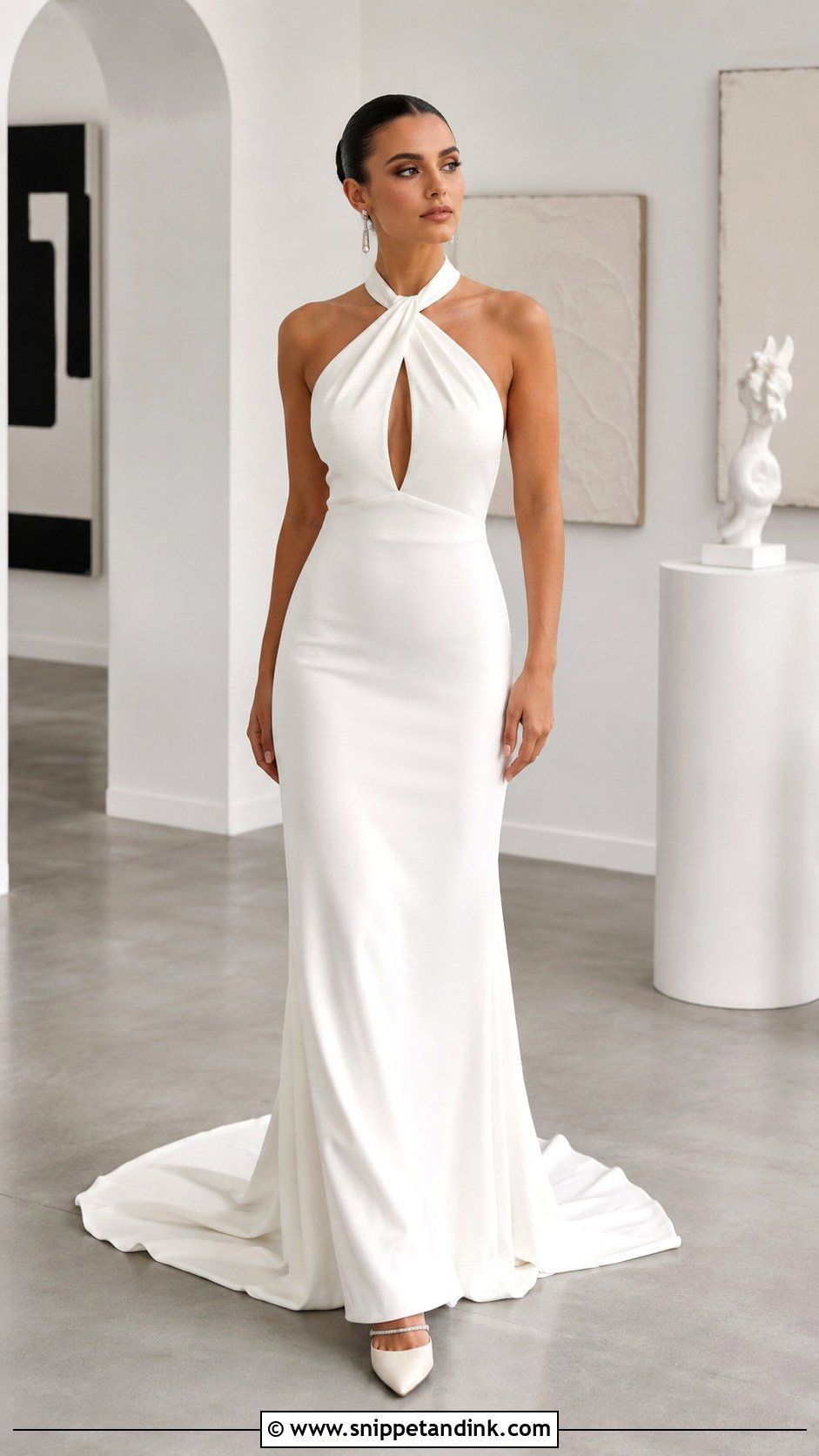
A keyhole is a small opening in the bodice, usually at the centre front or just below the halter collar. It can be modest or deep. Because the keyhole is the one detail, skip necklaces, which tend to dangle into it, and wear earrings instead. Lace, crepe, satin and beaded fabrics all work. Have the opening checked at a fitting while you sit; keyholes can gape when you lean forward.
21. Tulle Halterneck Wedding Dress
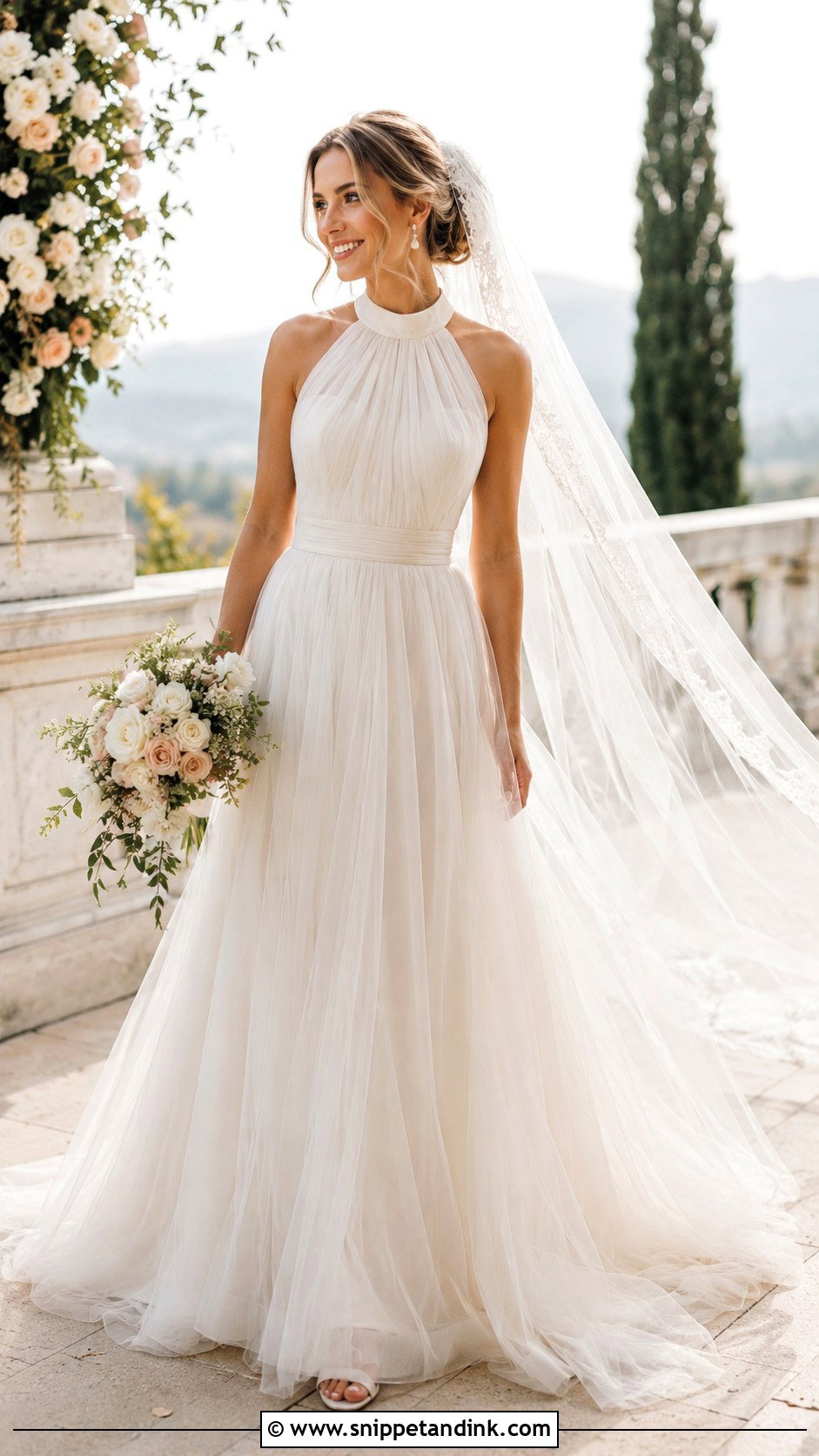
Tulle gives you volume without weight, which pairs well with a halter, since the neckline isn’t hauling a heavy skirt. A layered tulle A-line is easy to wear; a full tulle ball gown adds drama. Lace appliqué, light sparkle or plain tulle are all options. Tulle snags on rough surfaces and jewelry clasps, so choose earrings that don’t catch. A veil and graceful heels finish it.
22. Two Piece Halterneck Wedding Dress
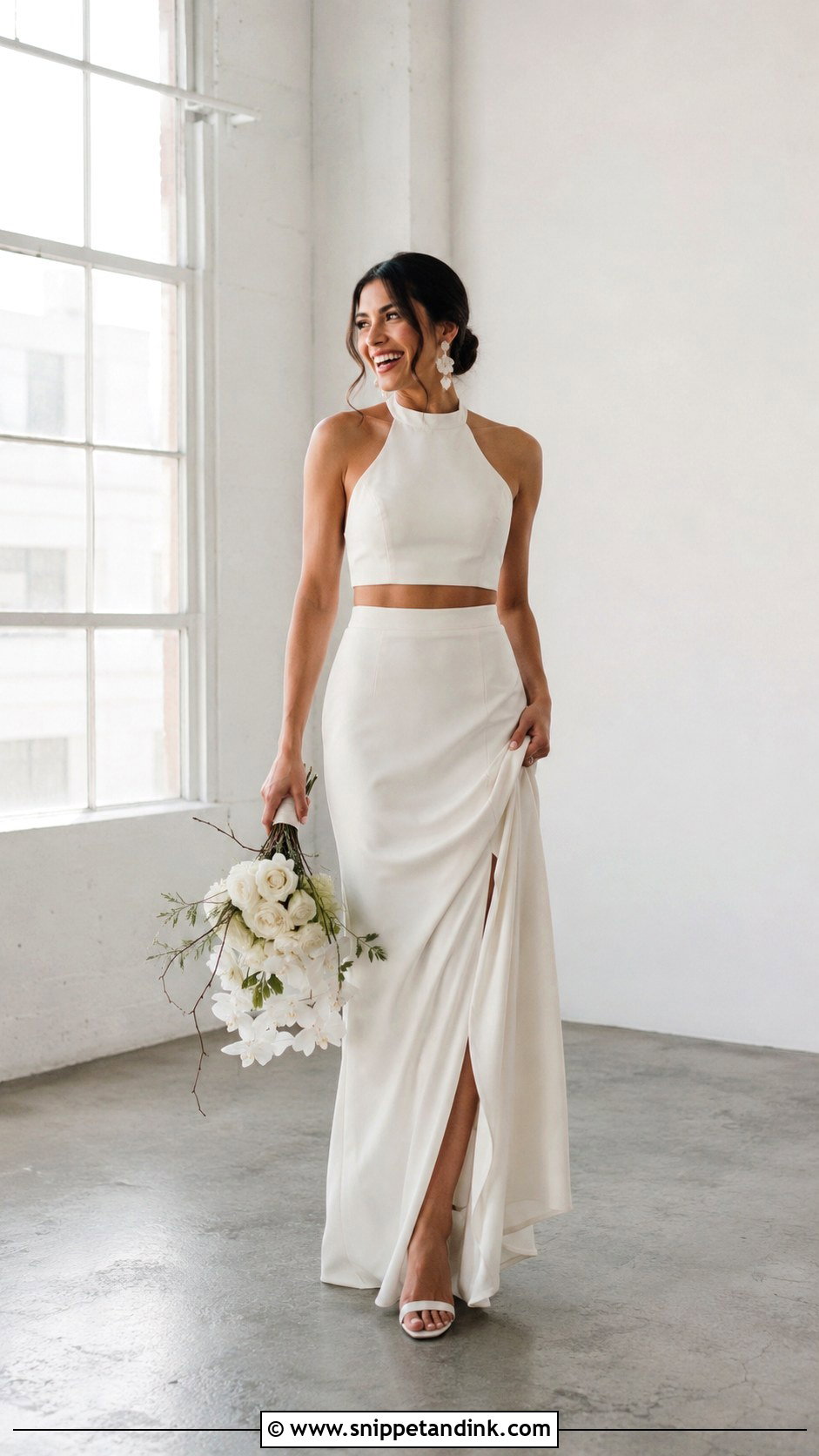
A two-piece halter separates the top from the skirt, so you can mix a lace or satin top with a fitted, flowing or full skirt. It’s also practical if you plan to swap skirts for the reception. Match fabric tones closely, because ivory and white side by side look obviously different in photos. A low bun, modern earrings and clean heels keep it cohesive for city weddings and creative venues.
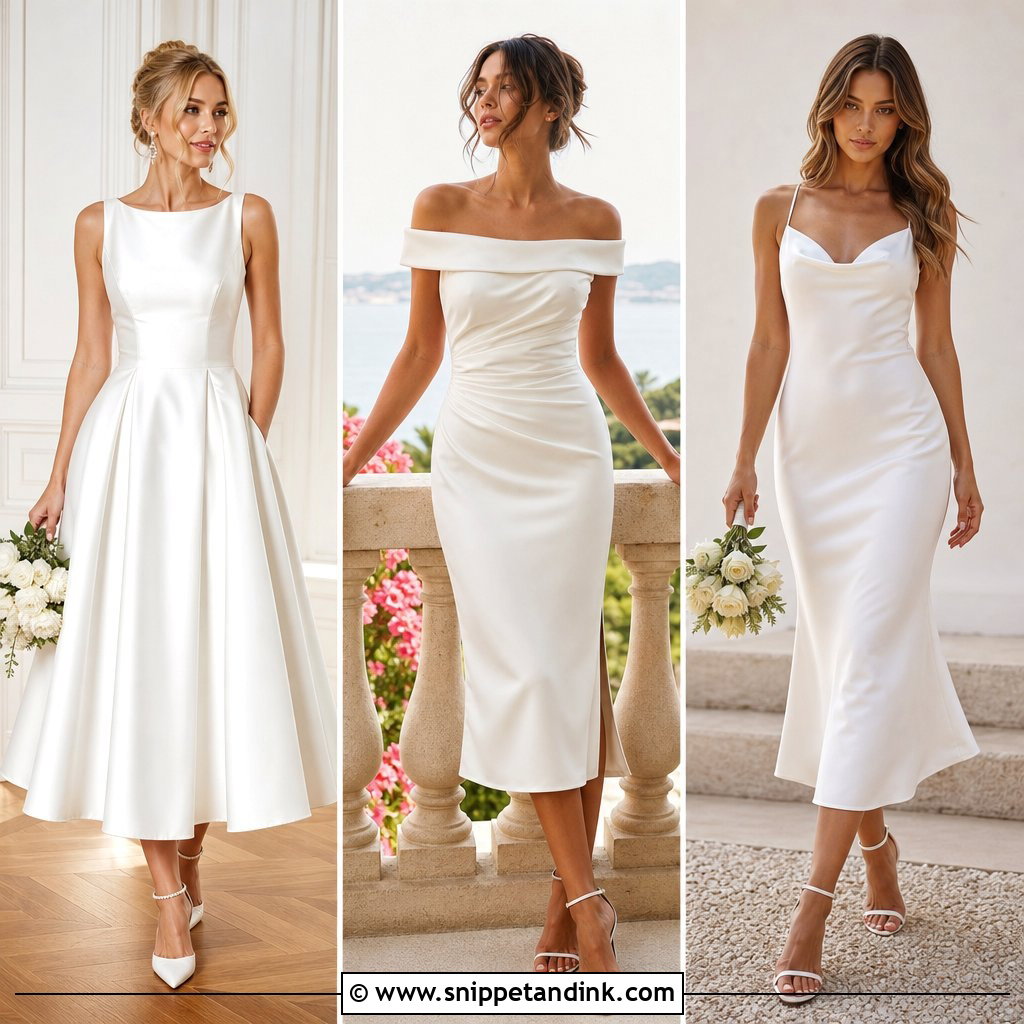
23. Short Halterneck Wedding Dress
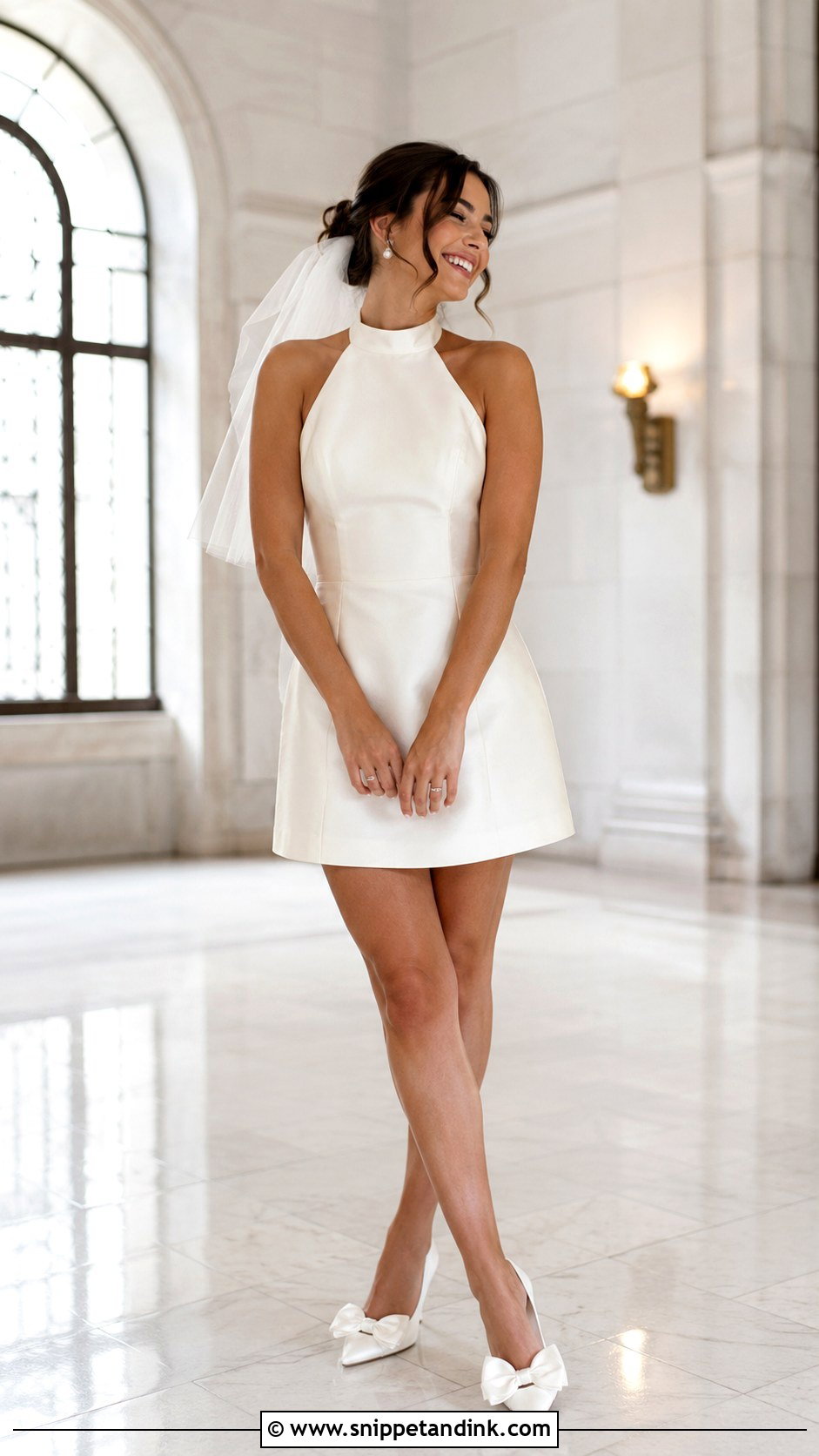
A short halter dress works for a courthouse ceremony, a rehearsal celebration, or a reception change. A shorter hem shows off your shoes, so this is the time for satin pumps, embellished heels or sleek slingbacks. A structured mini feels modern; lace or tulle feels softer. The halter neckline stops it from looking casual. Pearl earrings, a small bouquet and a short veil or hair bow keep it bridal, and you can dance freely in it.
24. Reception Halterneck Wedding Dress
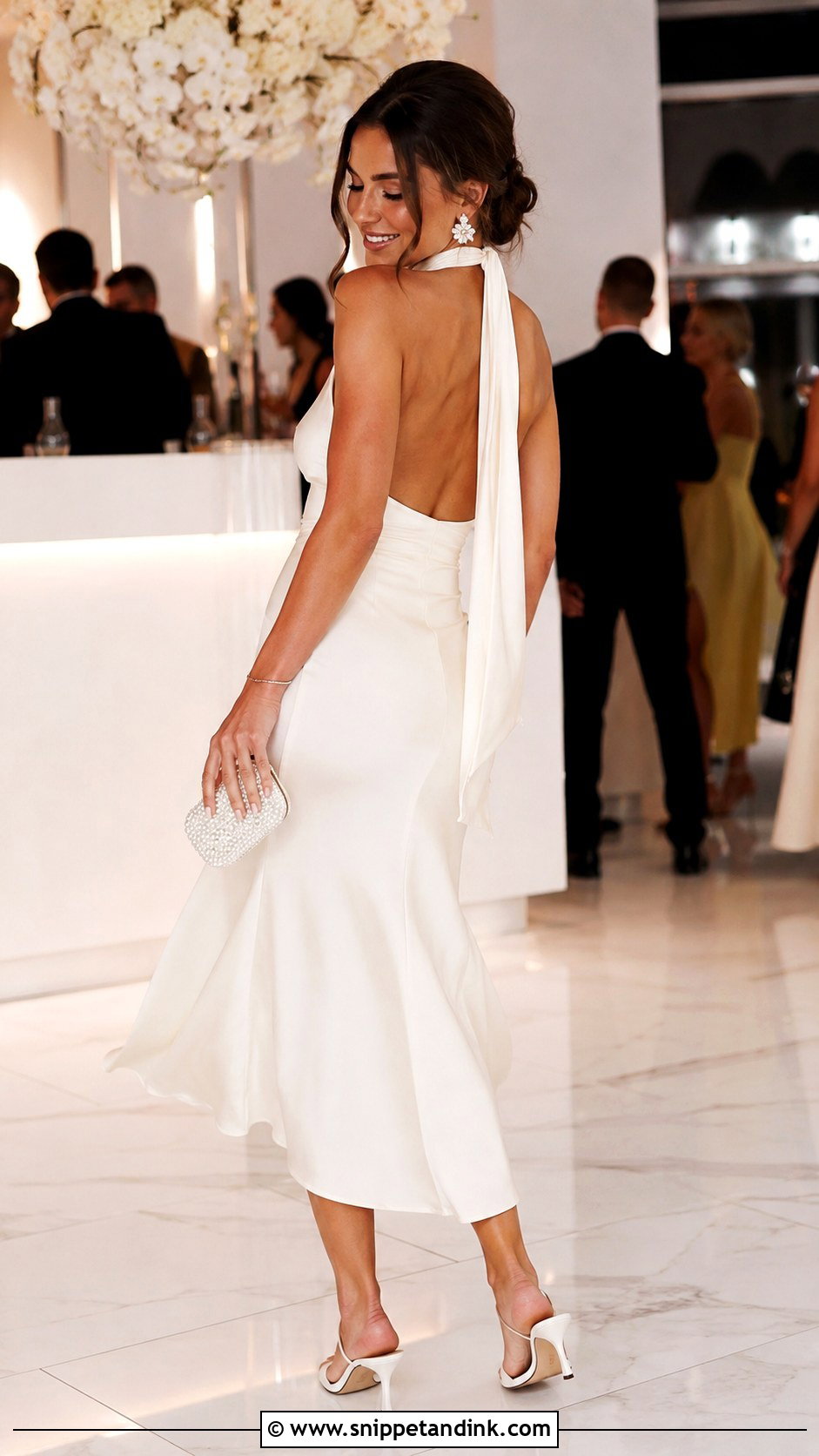
A reception dress needs to be easy to dance in. Many brides choose a simpler halter gown, a short dress or a fitted satin piece. The neckline keeps it looking dressed up, even if the silhouette is relaxed. Pearls, feathers, a slit or a low back add personality. Statement earrings, comfortable heels and a clutch complete it. Change quickly by having the second dress unzipped and on a hanger before you leave the ceremony dress.
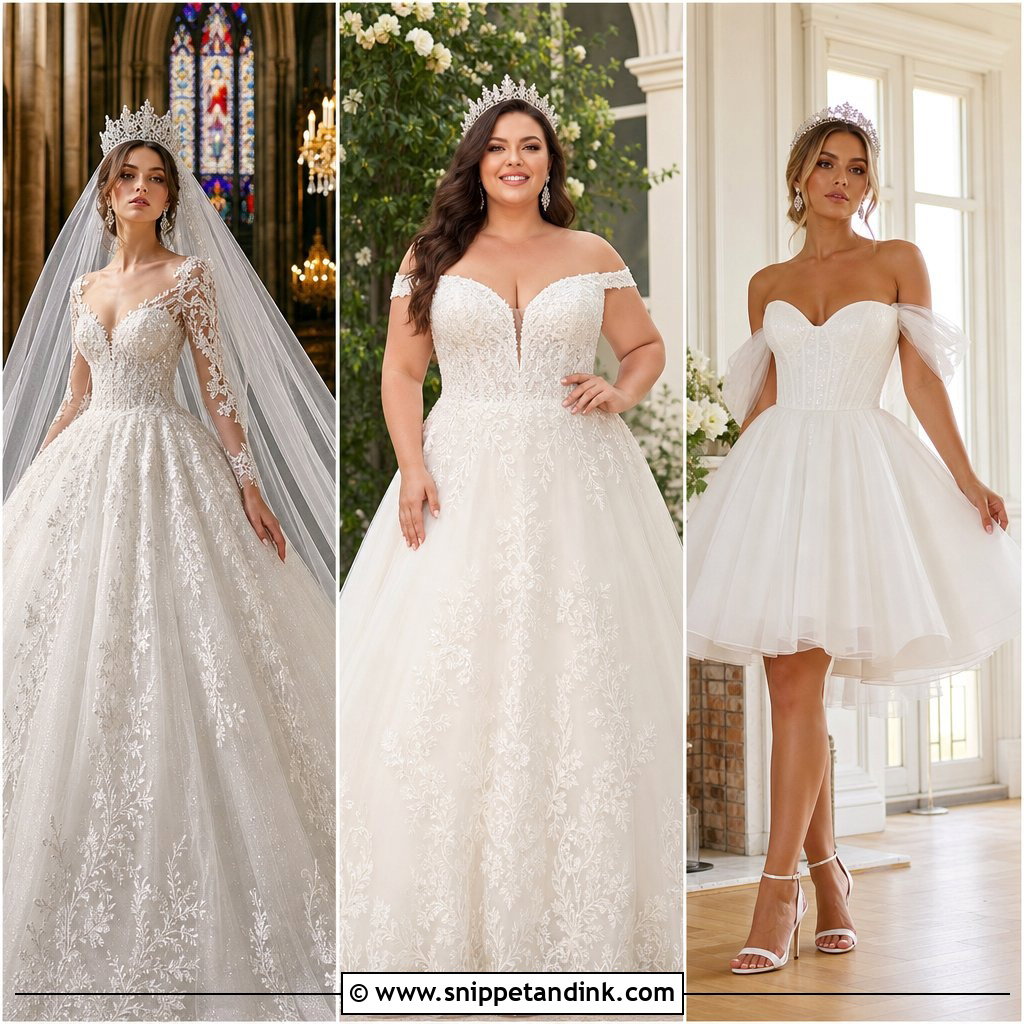
25. Vintage Halterneck Wedding Dress
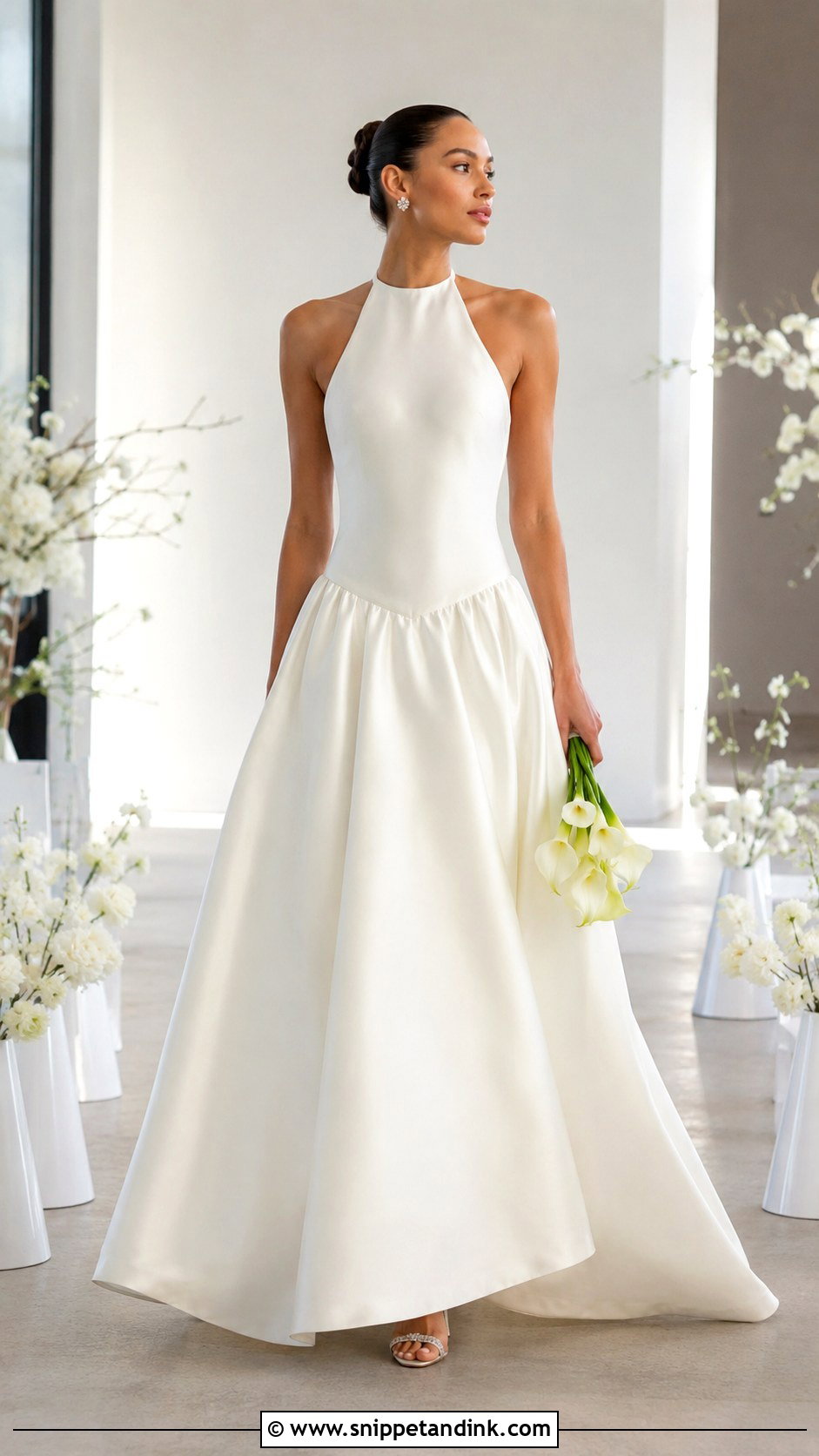
Vintage halters often reference 1930s bias-cut satin or 1950s tea-length skirts. Bias cutting makes satin cling and drape on the diagonal, which is the source of that liquid Old Hollywood look; it’s also why bias-cut gowns are hard to alter, so find a seamstress who knows the technique. Lace overlays and covered buttons suit a softer vintage style. Waves, pearl earrings and classic heels fit, with a birdcage or fingertip veil to keep it from looking like a costume.
26. Modern Halterneck Wedding Dress
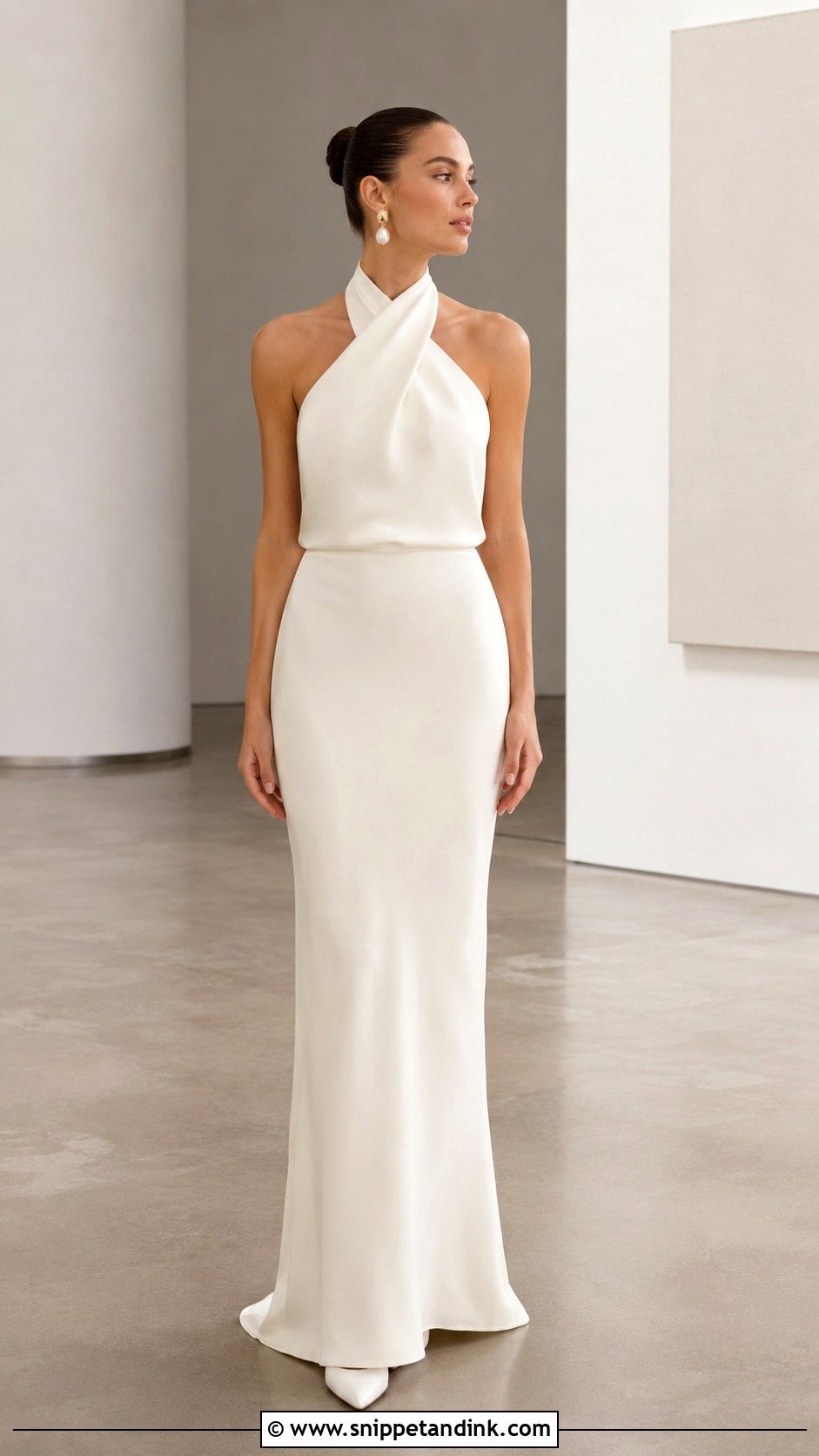
A modern halter is about clean shape and few seams: a sharp crepe column, satin with a low back or a structured halter dress with minimal detail. Sculptural earrings, sleek hair and pointed heels suit it. A simple veil works for the ceremony and can come off for the reception. These dresses look best in galleries, on rooftops and in city halls, where the architecture is as clean as the gown.
27. Plus Size Halterneck Wedding Dress
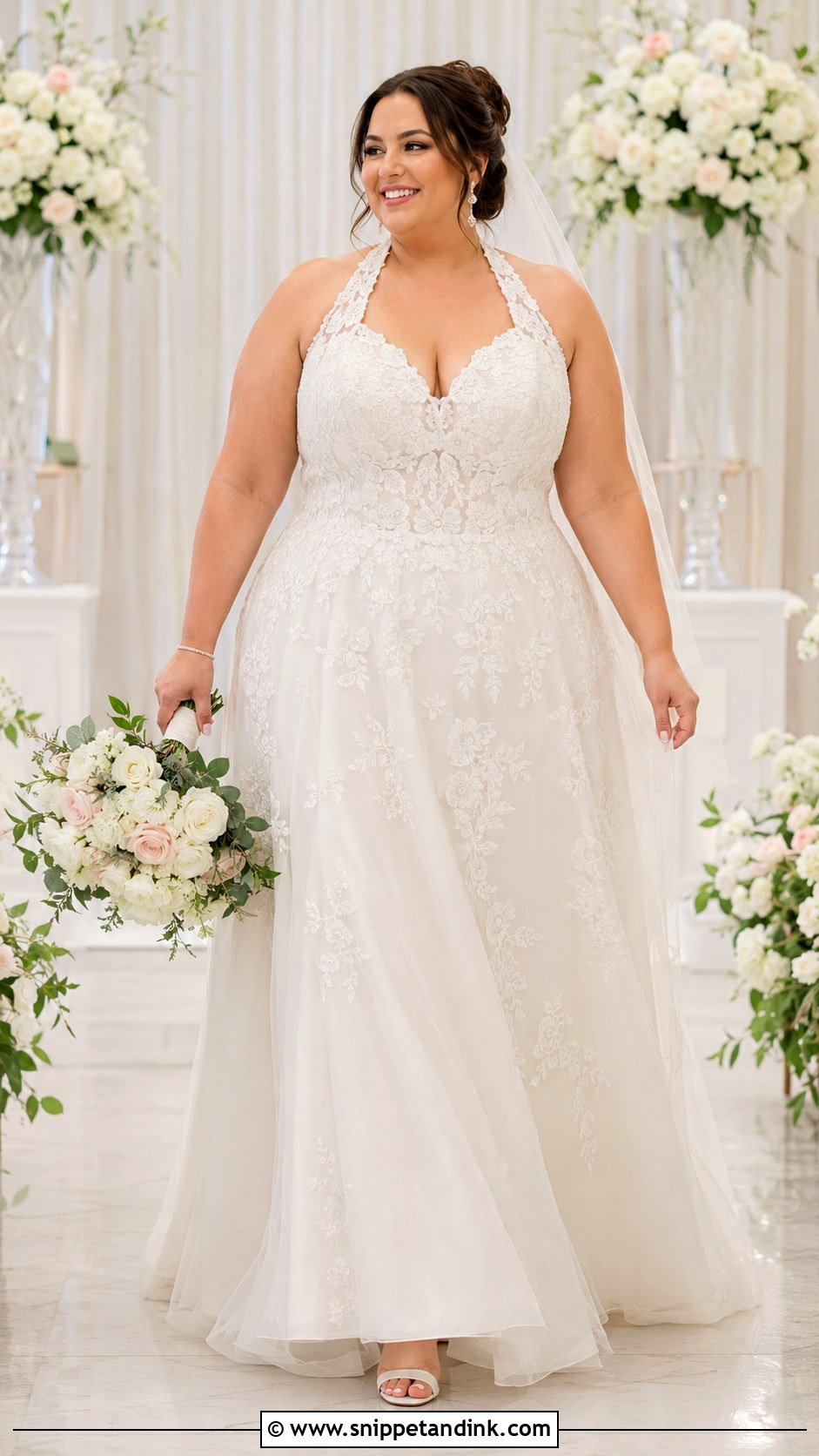
A plus size halterneck wedding dress works best with a wider halter strap that spreads the weight across more of the neck and shoulders. A structured bodice with built-in support takes the strain off the neck, so ask about boning and internal cups early. A-line, fit-and-flare and soft mermaid shapes all suit it. Lace, crepe, satin and tulle all work. Comfortable heels and secure undergarments help, and earrings that frame the face draw attention up to the neckline.
28. Petite Halterneck Wedding Dress
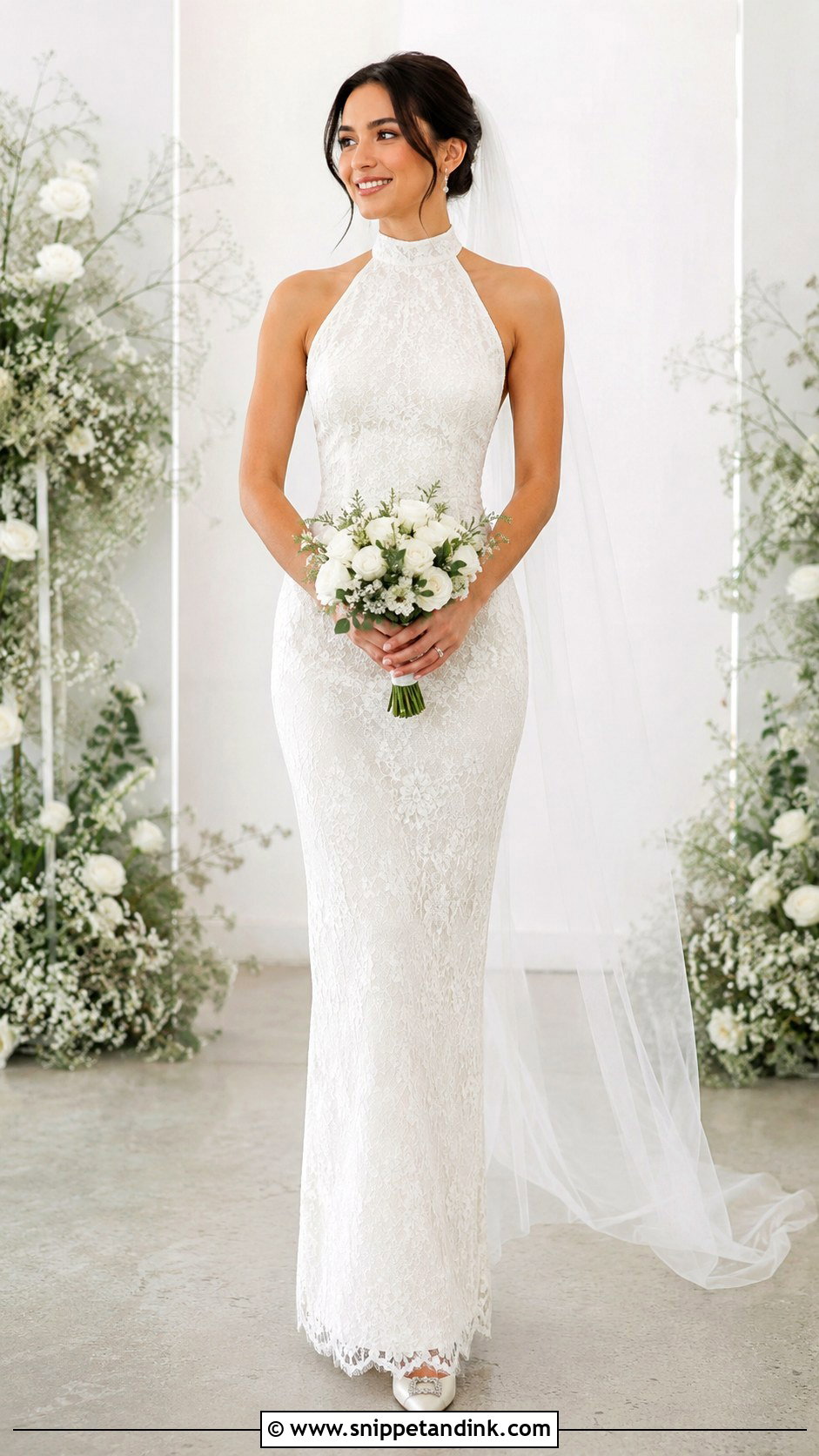
A halter can lengthen a petite frame by creating a vertical line from the neck down. Sheath, slim A-line and column gowns avoid bulk. A higher halter lengthens the neck; a plunging halter lengthens the torso. Smaller-scale lace or plain fabric keeps the details in proportion. Nude or white pointed heels extend the leg line, and a proportionate veil without a heavy train keeps the look balanced.
29. Backless Halterneck Wedding Dress
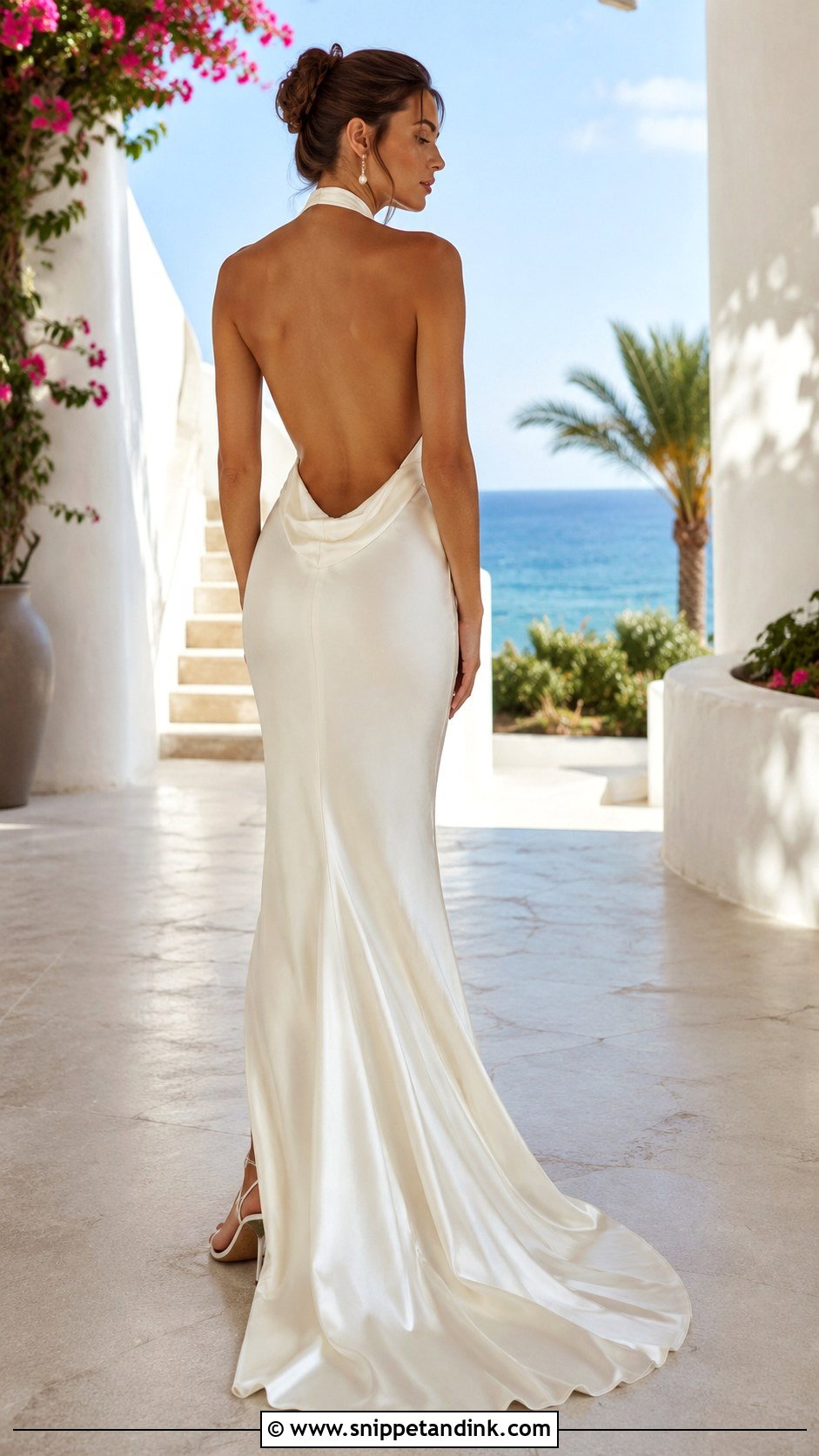
With a backless halter, the only thing holding the bodice up is the neck strap and the fit around the ribs, so support needs planning. Adhesive cups, sewn-in cups or a structured bodice all work; try your choice at a fitting, not for the first time on the day. Crepe or satin look modern; lace softens it. Pin your hair up or sweep it aside so the back shows. Simple earrings and delicate heels suit warm-weather and destination weddings.
30. Drop Waist Halterneck Wedding Dress
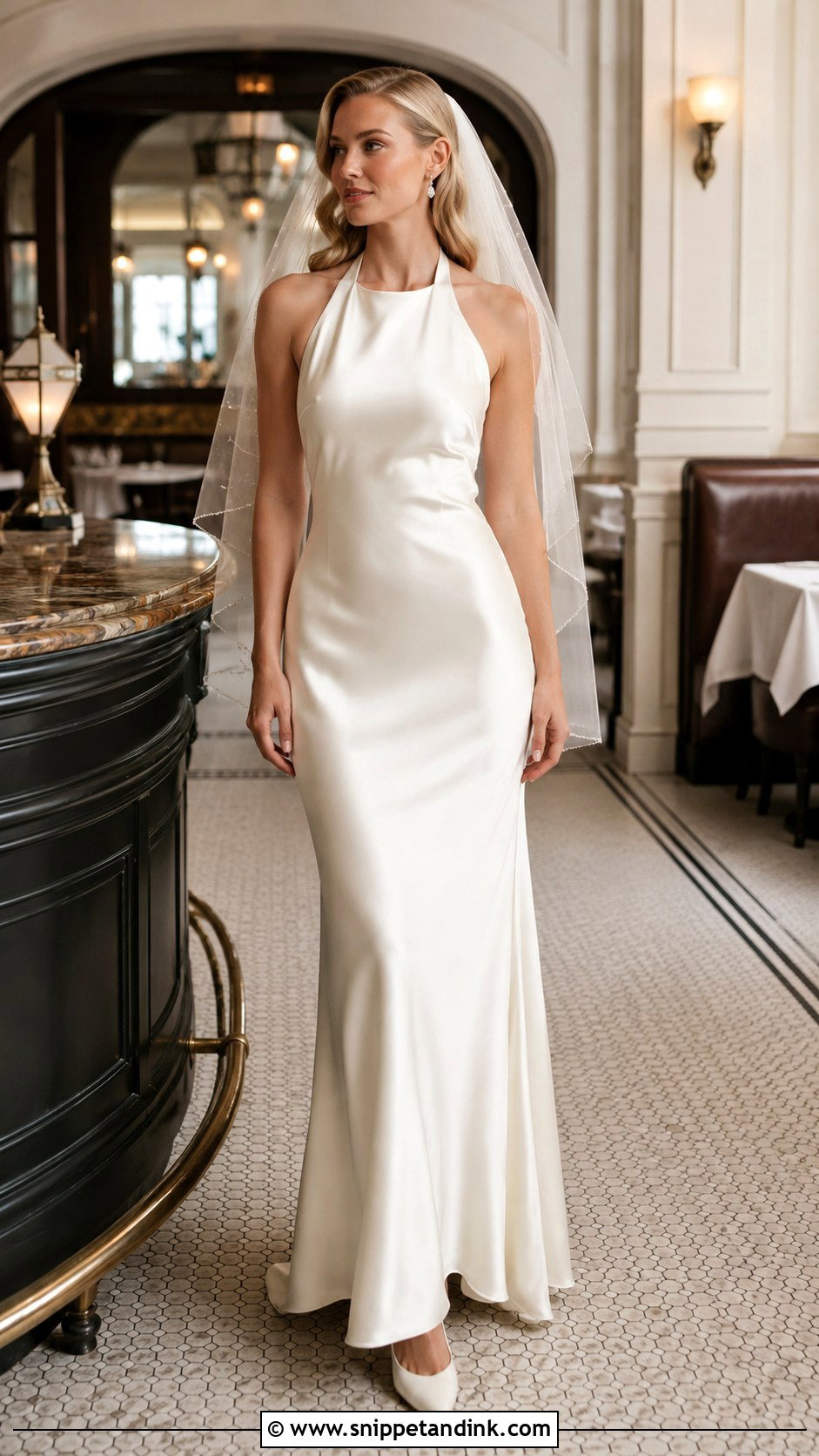
A drop waist halterneck wedding dress moves the seam down to the hips, lengthening the torso before the skirt begins. Combined with a halter, it gives a strong shape from top to bottom. Satin, mikado, crepe and lace all suit it. A fitted bodice with a full skirt feels romantic; a slim drop waist looks more editorial. One caution: a dropped waist can shorten the legs on shorter brides, so try it beside a natural-waist dress before deciding.
Hair, Veil and Bra Problems a Halter Creates, and How I Solve Them
- The clasp at the nape. Hair worn down hides it but can catch on hooks. An updo shows it, so ask for covered buttons or a neat hook rather than a visible zip pull.
- Veil placement. A comb set right at the nape fights the halter fastening. I place it higher, just below the crown, so the veil falls clear of the strap.
- Bras. Most halters need built-in cups, a backless adhesive bra or a plunge-backed style. Bring whichever you choose to every fitting so the seamstress fits the dress around it.
- Necklaces. Nearly always skip them. A halter already frames the neck, and a chain fights the strap line. Earrings do the job instead.
- Neck fatigue. If the strap digs in at your trial, have a small strip of soft padding or a wider strap added inside before the final fitting.
Wear the dress for at least an hour at your final fitting, turning, sitting and lifting your arms. A halter that feels fine for five minutes in front of a mirror isn’t always fine after hugging every guest.
A Halter Should Still Feel Light at the Last Dance
Halters give structure and lift the eye to your face, whether in a satin column, a lace mermaid, a beach dress, a ball gown or a short reception look. The neckline works when the weight sits on your waist and not your neck, the strap length is exact and the support is planned. Keep the neck area clean, let the shoulders show and pick details that suit your venue. Plenty of halter shapes will do that; the right one is the one you can wear comfortably until the last dance.
You'll Like These Ideas:








Leave a Reply