
A sleeve changes a wedding dress more than almost any other detail. The same bodice reads traditional in heavy lace, minimal in matte crepe and theatrical in a full bishop cut, so I always ask brides what they want the sleeve to do before we look at anything else: keep them warm, cover the arms for a religious ceremony, or simply add shape. Today’s collections run from sheer illusion lace and fitted crepe to satin ball gowns and loose chiffon. The other half of the decision is practical. Your venue, the temperature, how much coverage you want and how much alteration time you have all narrow the field quickly. Each of the twenty gowns below comes styled with a veil, jewelry, shoes and a bouquet, so you can see the whole picture rather than a dress on a hanger.
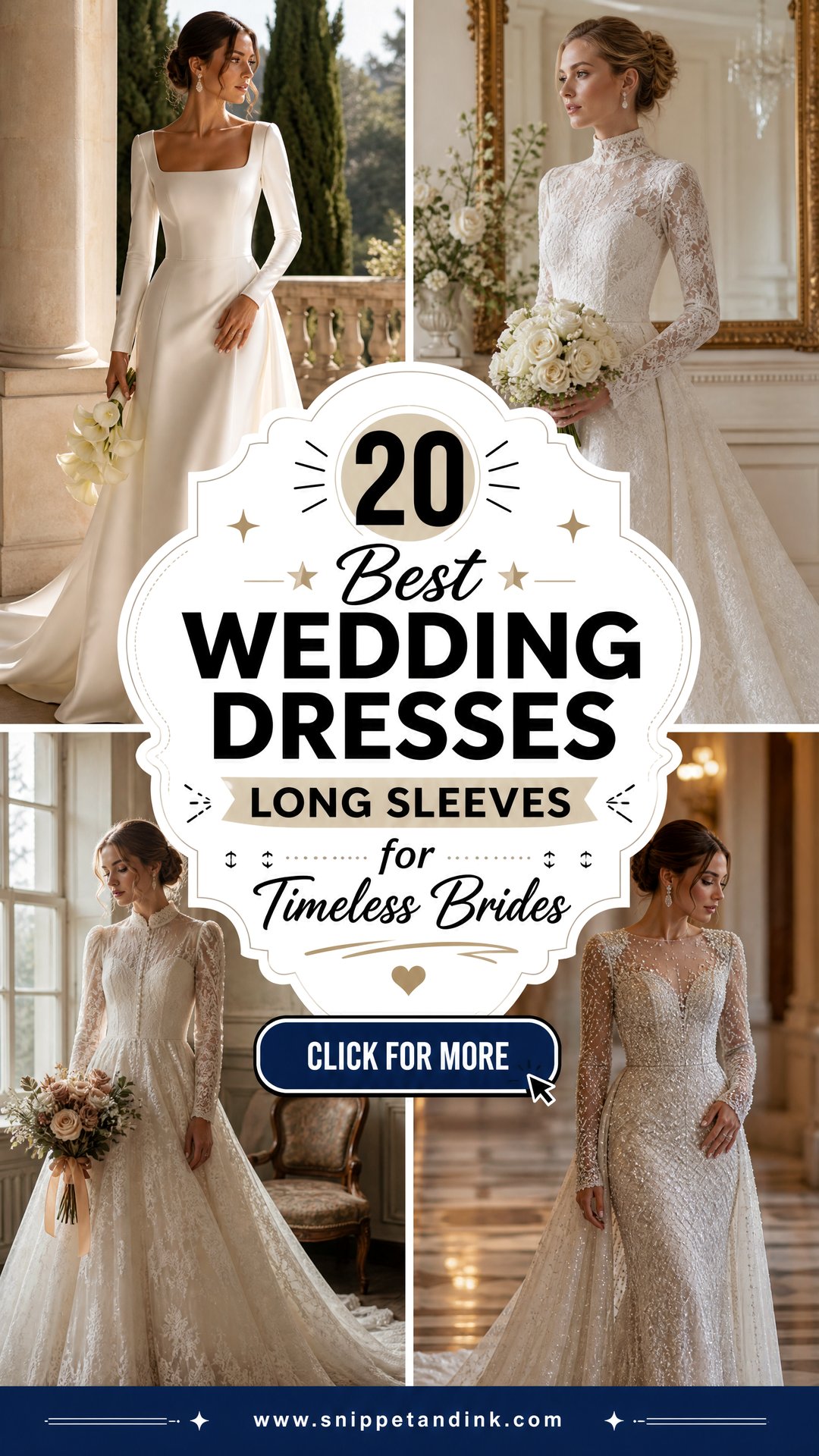
Bishop, Bell, Juliet or Fitted: Sleeve Shapes Compared
Before we talk about dresses, it helps to know what the different sleeve cuts actually do. Each one changes how your arm moves, how the gown photographs from the side, and how warm you’ll be.
- Fitted: follows the arm to the wrist. The cleanest line, but the least forgiving. It needs extra room at the bicep or you won’t be able to lift your arms.
- Bishop: full through the forearm and gathered into a cuff. Romantic and roomy, but the gathered fabric catches on things at dinner.
- Bell: fitted at the top and flaring from the elbow. Dramatic in photos; the open end will dip into anything on the table.
- Juliet: puffed at the top, fitted below. A vintage look that adds width at the shoulder, so I’d steer broad-shouldered brides elsewhere.
- Illusion: sheer mesh, often with lace motifs. The lightest option, and the coolest to wear.
The cut also decides how the sleeve joins the body of the dress. A set-in sleeve with a high armhole looks sharp but limits how high you can reach. A slightly lower, softer armhole gives you room to hug, wave and dance. When a boutique says a sleeve can be altered, ask whether that means length only or the armhole too. Length is a simple job. Reshaping the armhole is a much bigger one.
1. Long Sleeve Lace Wedding Dress
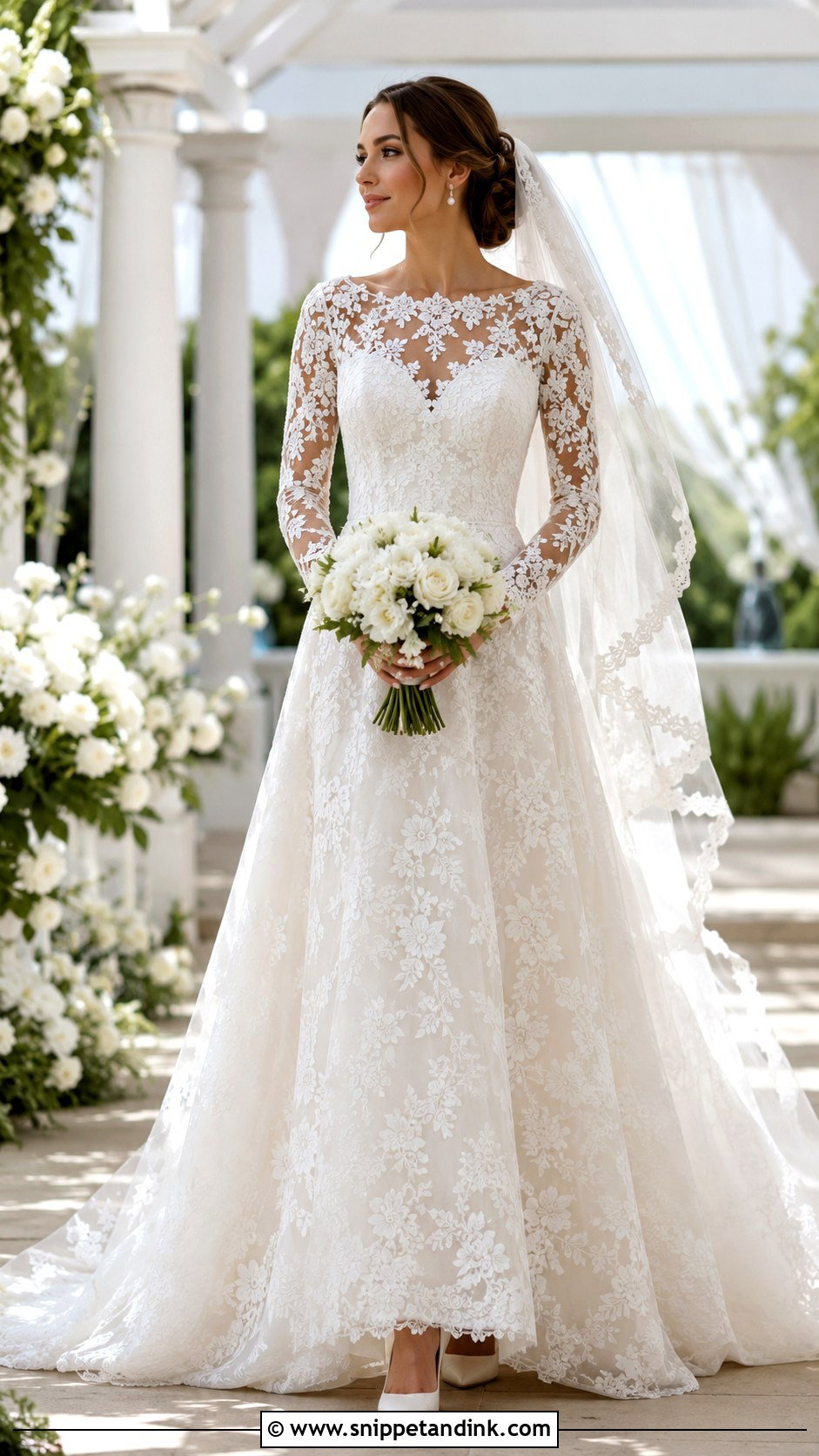
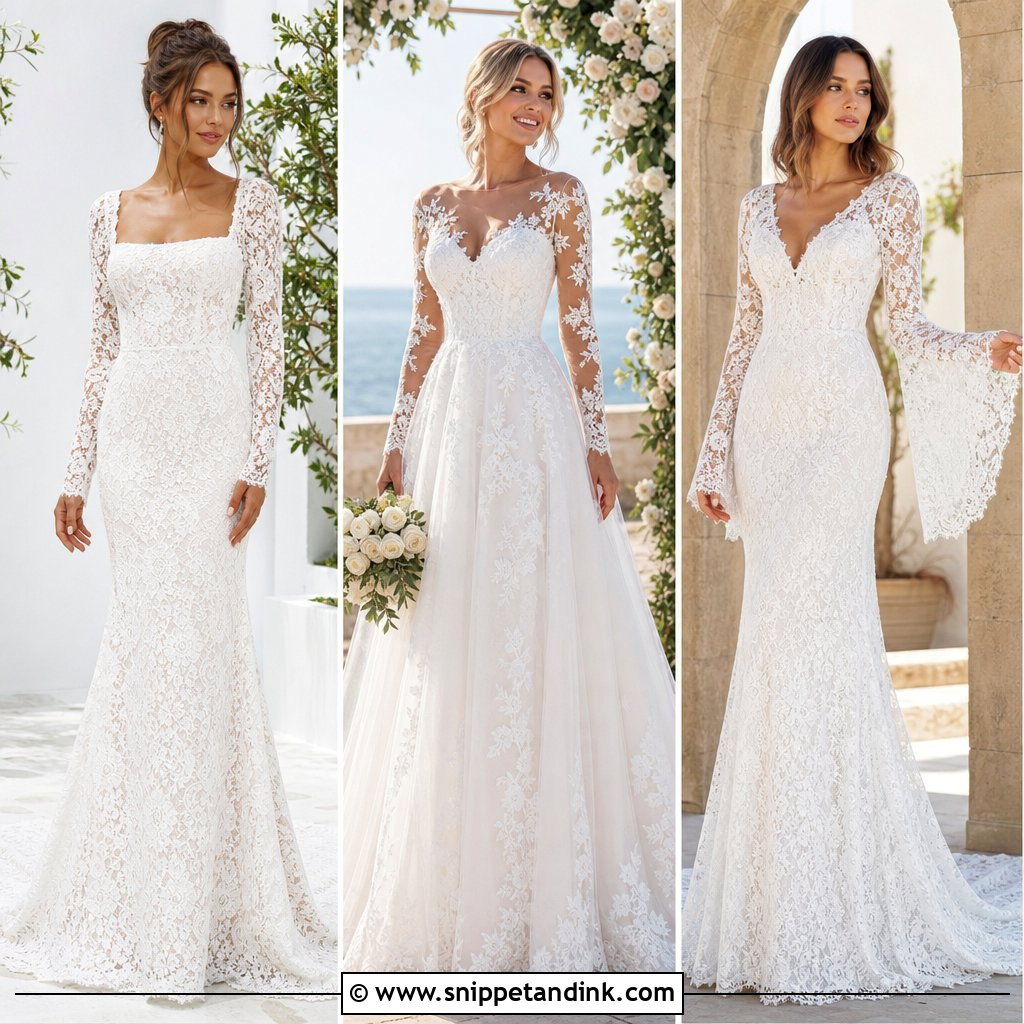
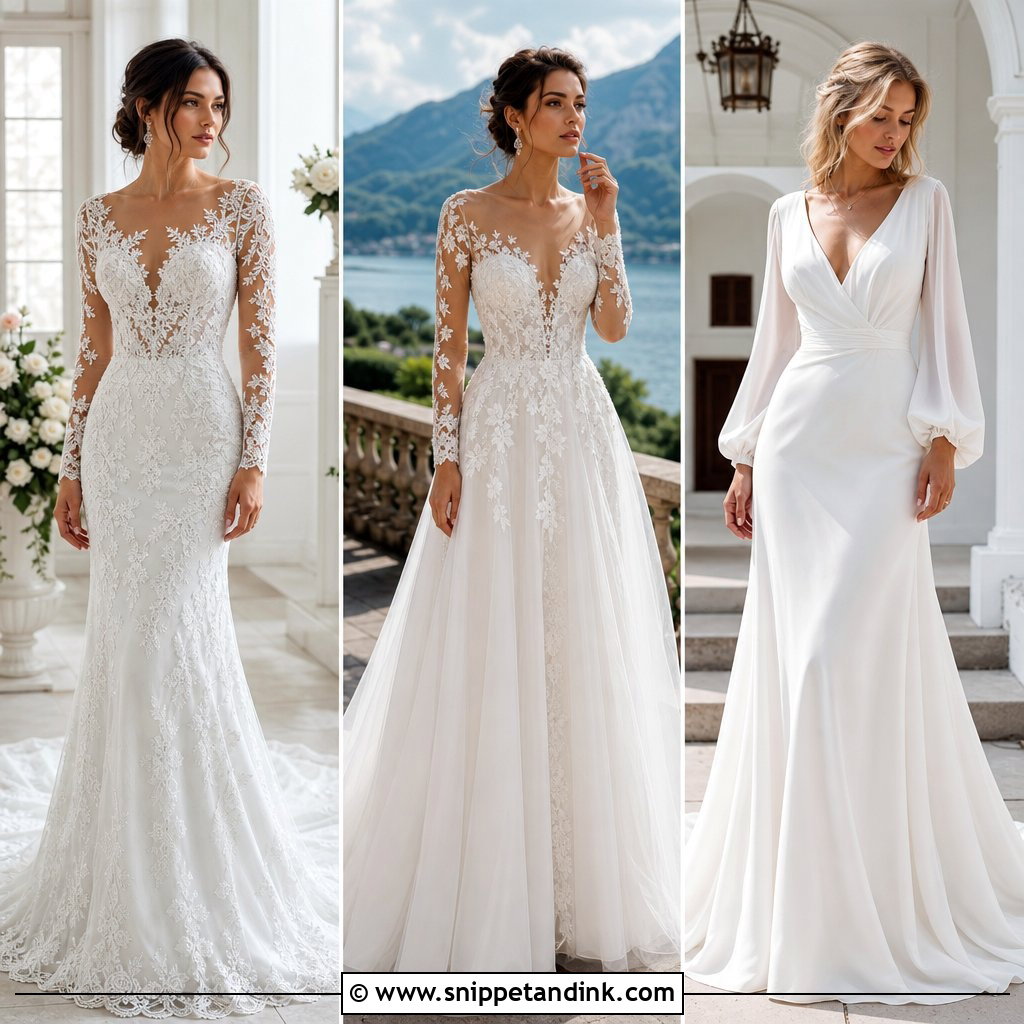
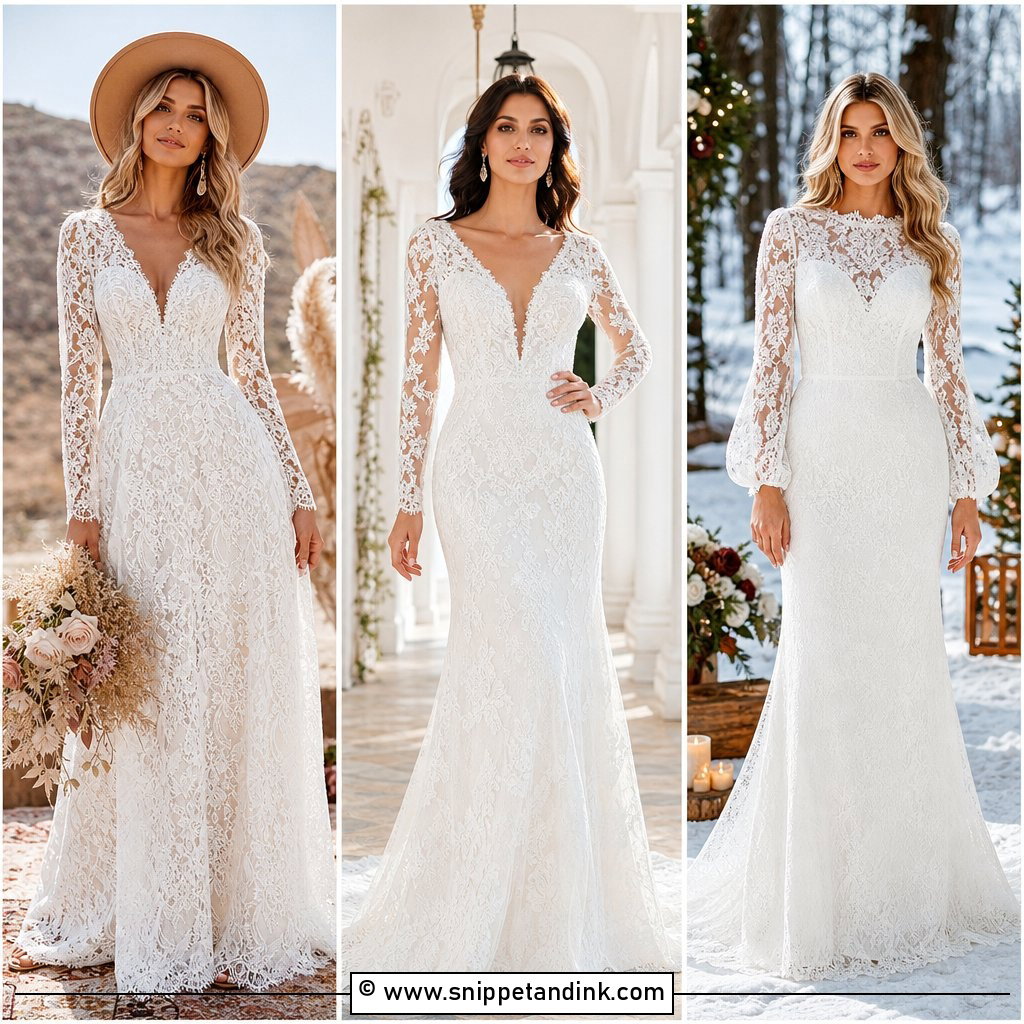
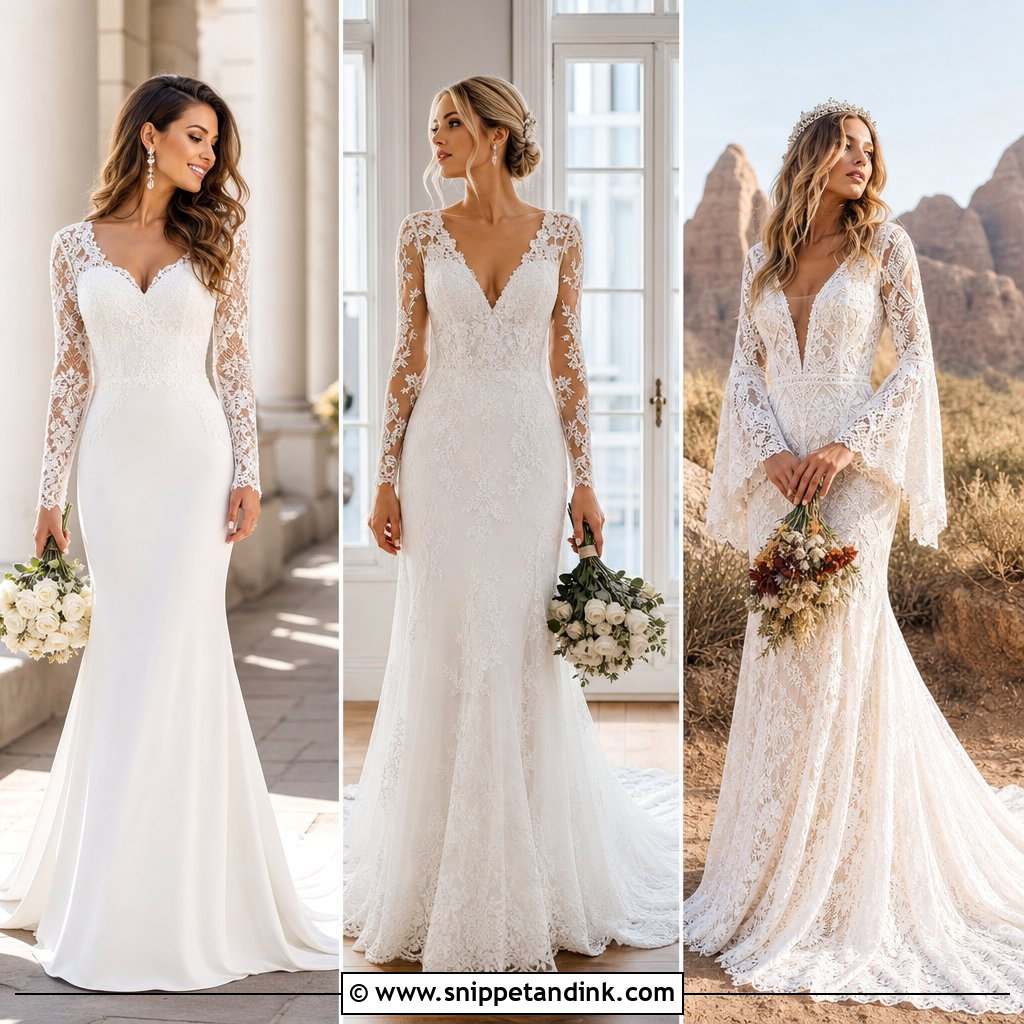
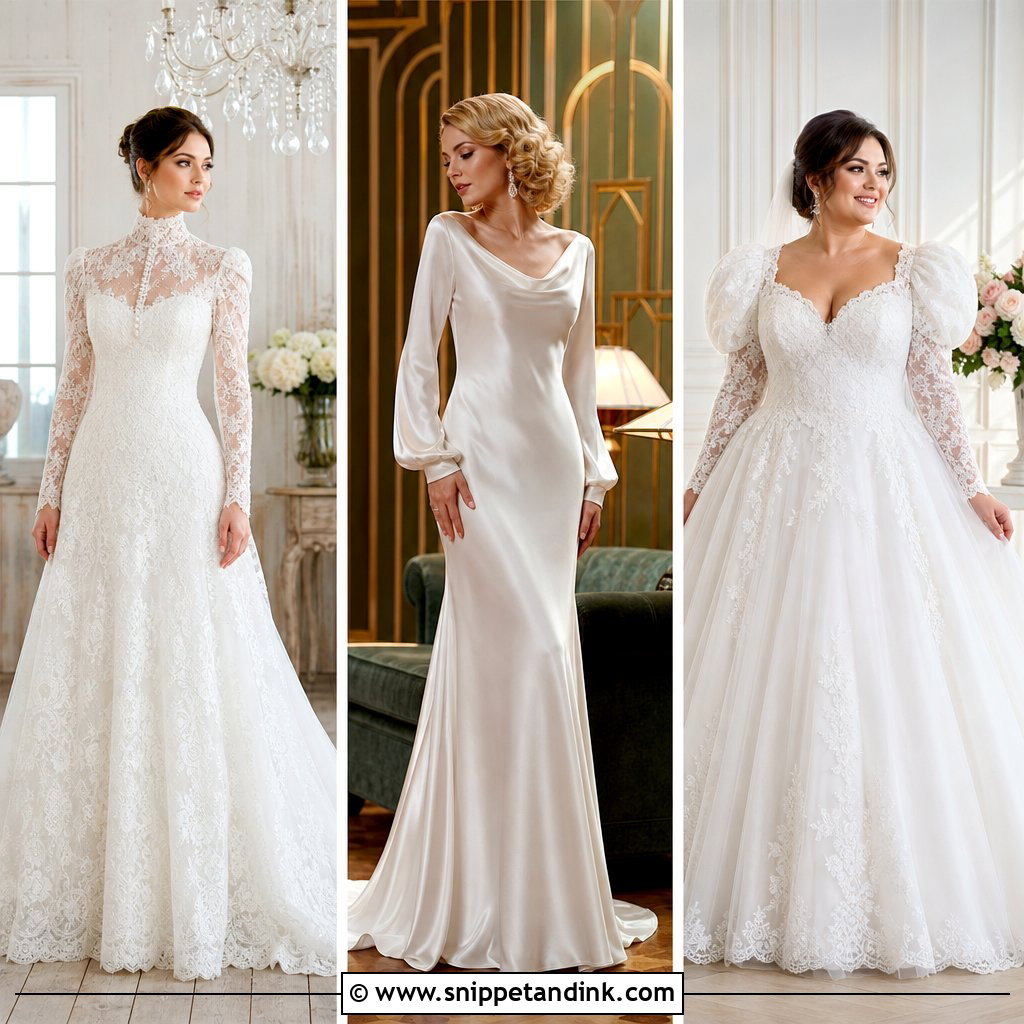
Lace sleeves are the classic version, and they’re popular for good reason: the pattern hides small fitting flaws that plain fabric would show. I like floral lace over a fitted bodice with a soft A-line skirt. A sweetheart lining beneath an illusion neckline gives you coverage while the lace still reads as pattern on skin. Pearl drops, an ivory cathedral veil and pointed satin pumps keep it classic, and a loosely gathered bouquet stops it feeling stiff. Rub the inside of the sleeve against your forearm before you commit. Some corded laces scratch, and you’ll feel it by hour three. If you want full coverage, ask for the sleeves to be lined in soft tulle.
2. Long Sleeve Satin Wedding Dress
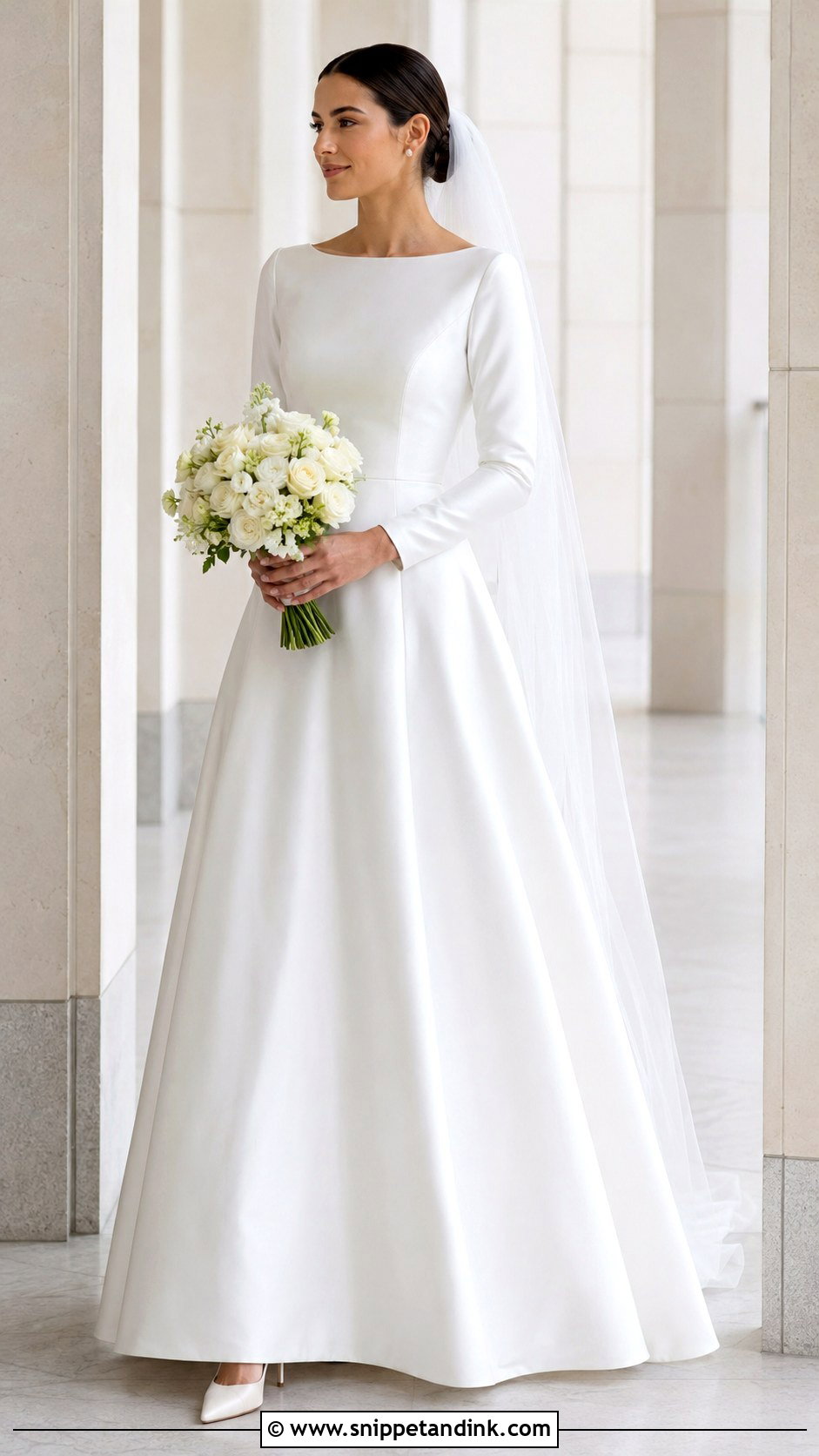
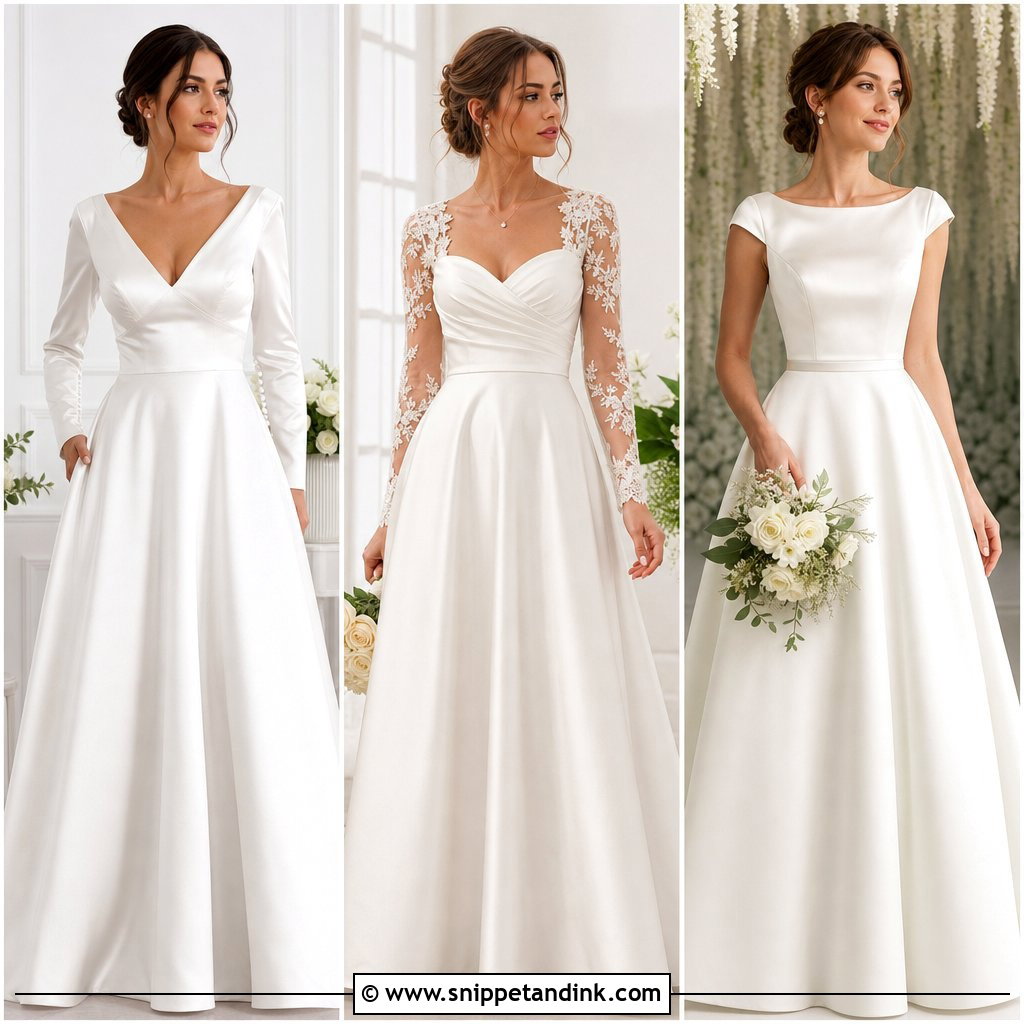
Satin is honest fabric. It shows every pull at the shoulder and every crease at the elbow, which is why satin sleeves need more fitting time than lace ones. In return you get structure and a soft sheen that catches light well in a church or ballroom. A bateau, square or gently draped neck suits it, with an A-line skirt and a defined waist. Keep the styling spare: pearl studs, a low sleek bun, a plain fingertip veil, pointed ivory heels and a small white bouquet. At the fitting, sit down and raise both arms as if you’re hugging someone taller. If the sleeve drags the shoulder seam inward, it needs more room through the upper arm.
3. Long Sleeve Crepe Wedding Dress
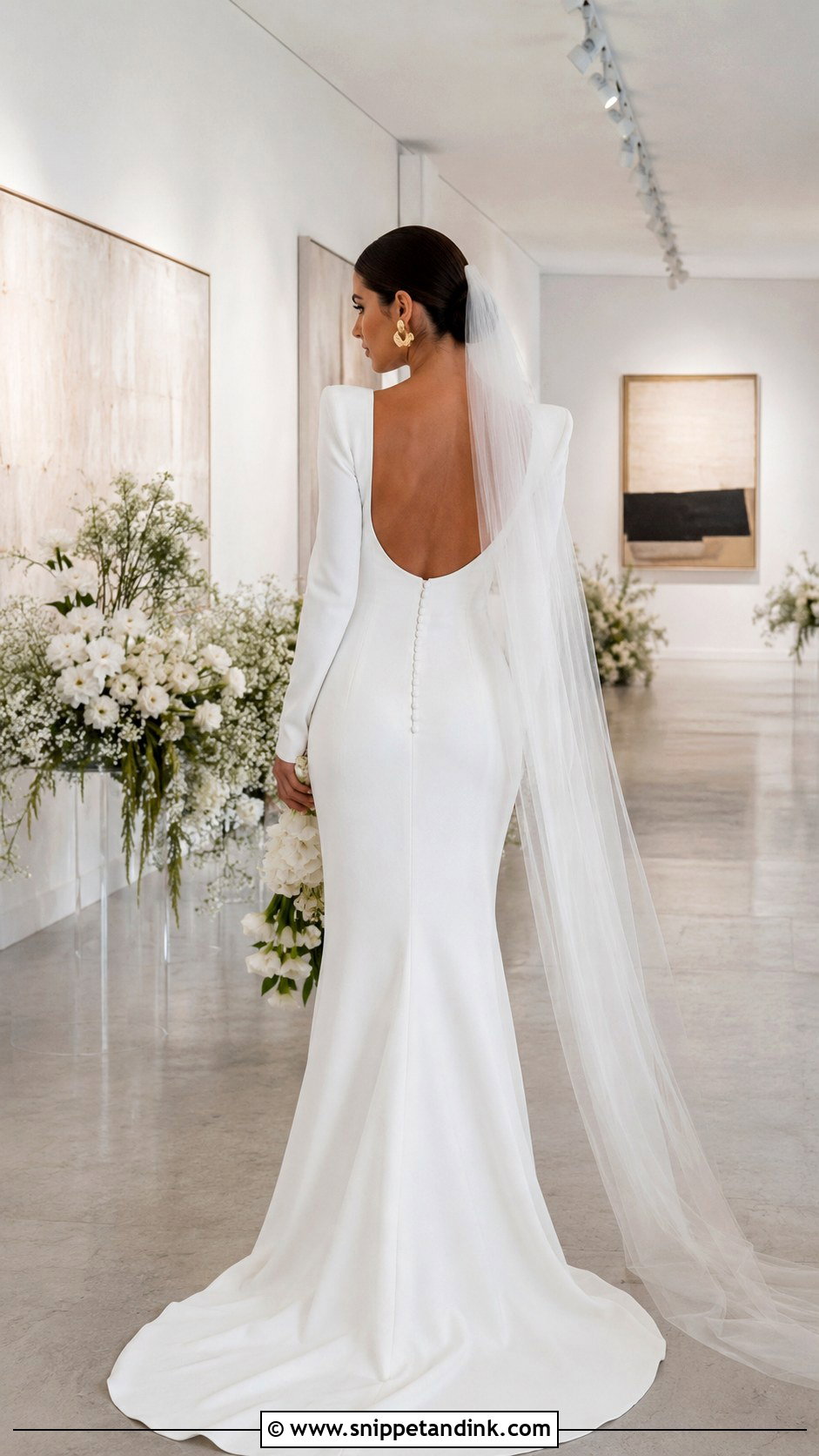
Matte crepe is my pick for a bride who wants a long sleeve that looks modern rather than romantic. There’s no lace or beading to hide behind, so the cut does the work: a fitted column or a gentle fit-and-flare, a structured shoulder, a defined waist and maybe a low back for contrast. Sculptural earrings, pointed pumps and a veil with no lace edging keep it clean, with a neat bun or soft waves. Crepe follows the body closely, so smooth undergarments matter. The sleeve detail I’m fussiest about is the wrist. A crepe sleeve that’s a centimetre too long bunches over the hand, and one that’s too narrow at the cuff won’t let you slide a ring on during the vows.
4. Long Sleeve Ball Gown Wedding Dress
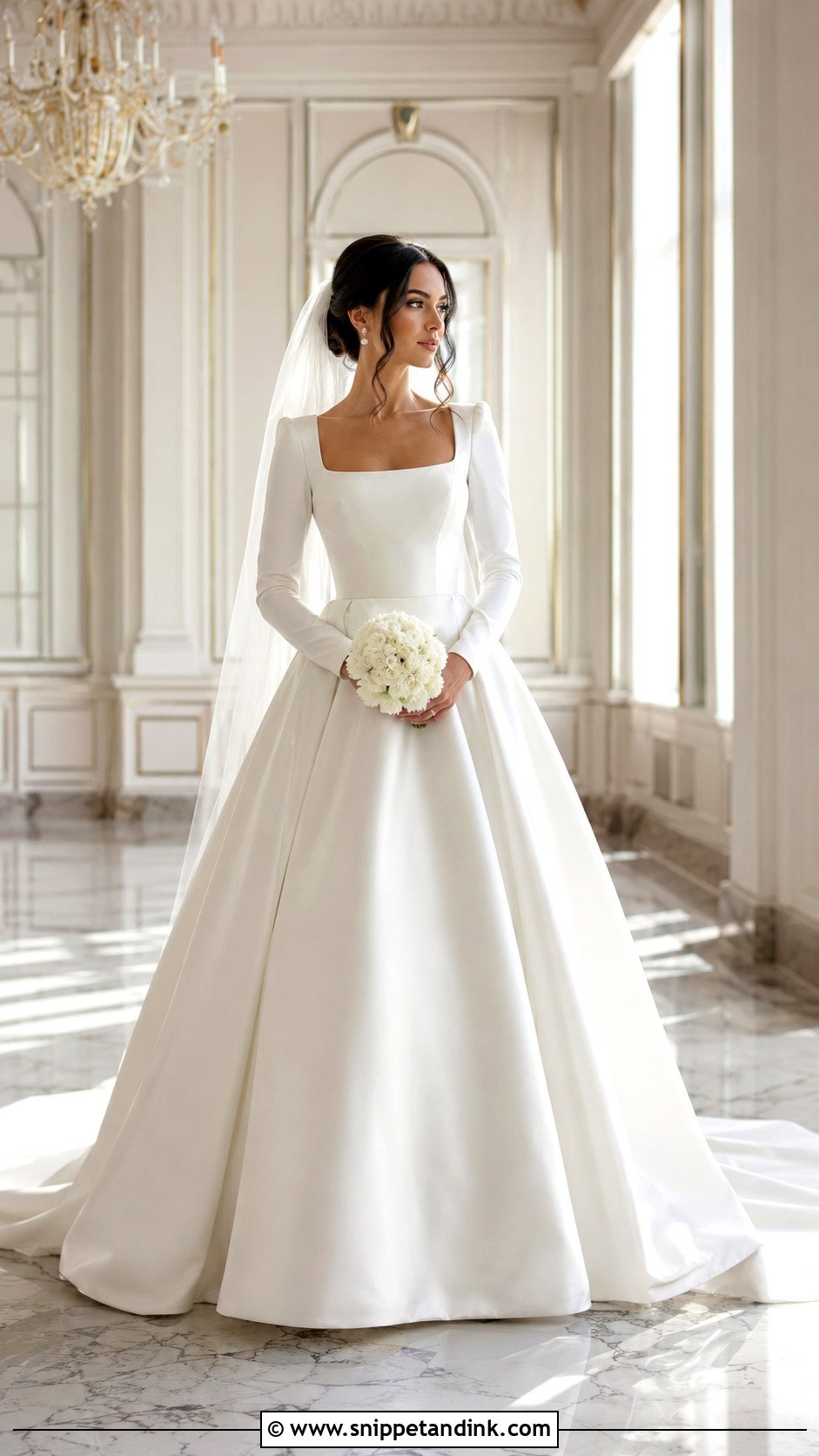
Do you want a dramatic entrance without relying on sparkle? A long-sleeve ball gown gets there through shape alone: a fitted top over a full skirt, built in Mikado or structured satin so it holds its form. Covered buttons down the back and along the cuffs add traditional detail. Balance all that skirt with a clean square or bateau neckline, then add a long veil, pearl earrings and closed satin heels. Keep the bouquet compact so it doesn’t cover the waist. This is the heaviest gown on the list, and with sleeves there’s no escaping the heat it holds, so do a long fitting and walk, turn and sit. Ask where the bustle points will go before the train is pinned.
5. Long Sleeve A-Line Wedding Dress
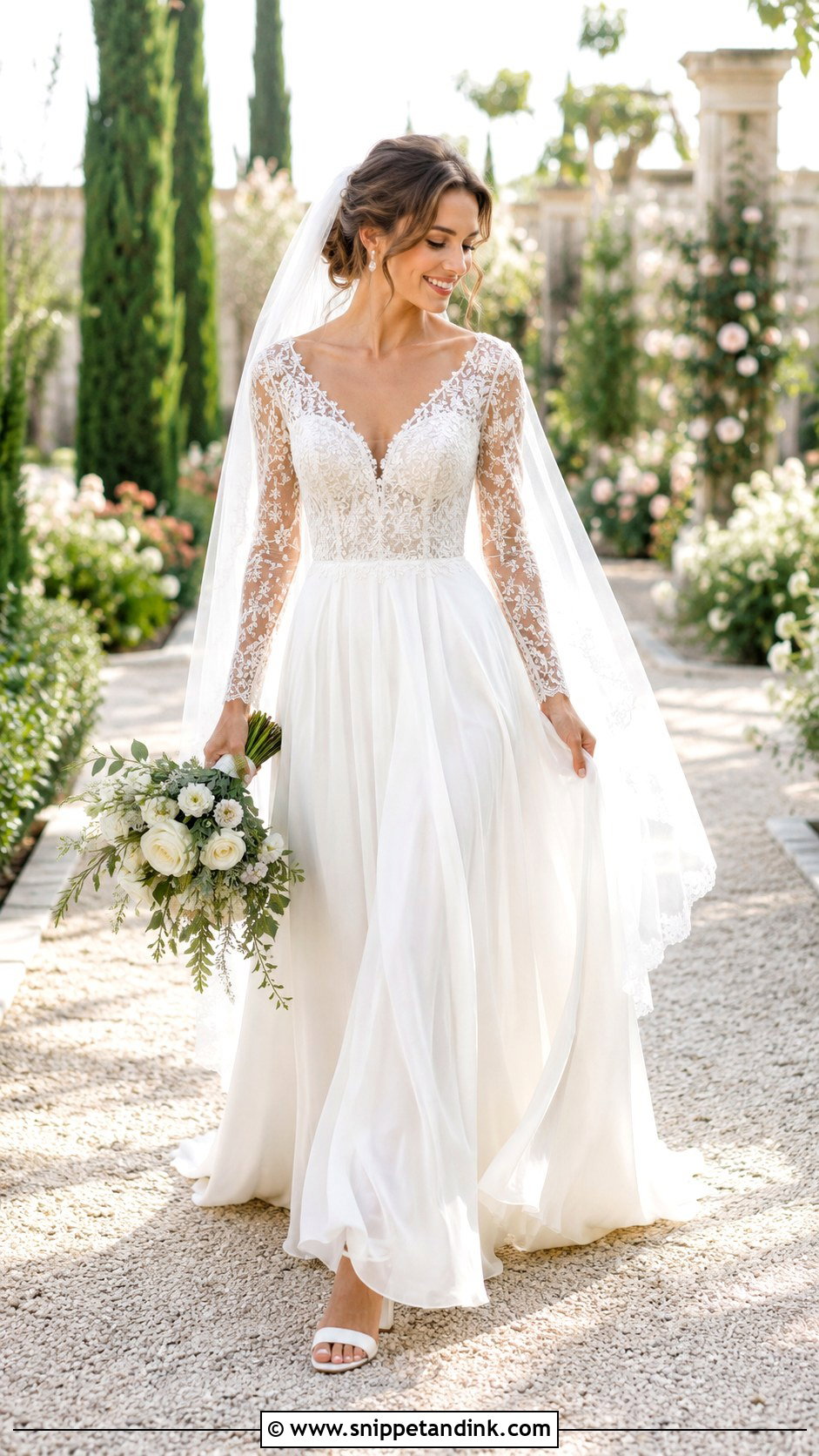
The A-line is the easy all-rounder: close through the bodice, then a skirt that widens gradually so you can walk and dance. Mixing lace sleeves with a chiffon skirt keeps it soft; an all-satin version reads cleaner. A medium-length veil, delicate drop earrings, comfortable block heels and a loosely arranged bouquet suit it. Because the shape is so forgiving, it’s the easiest silhouette to add hidden pockets or extra bodice support to. The one check I never skip is the waist seam. Sitting even an inch above or below your natural waist throws off the whole proportion, and with sleeves in the picture the arm line exaggerates the error.
6. Long Sleeve Mermaid Wedding Dress
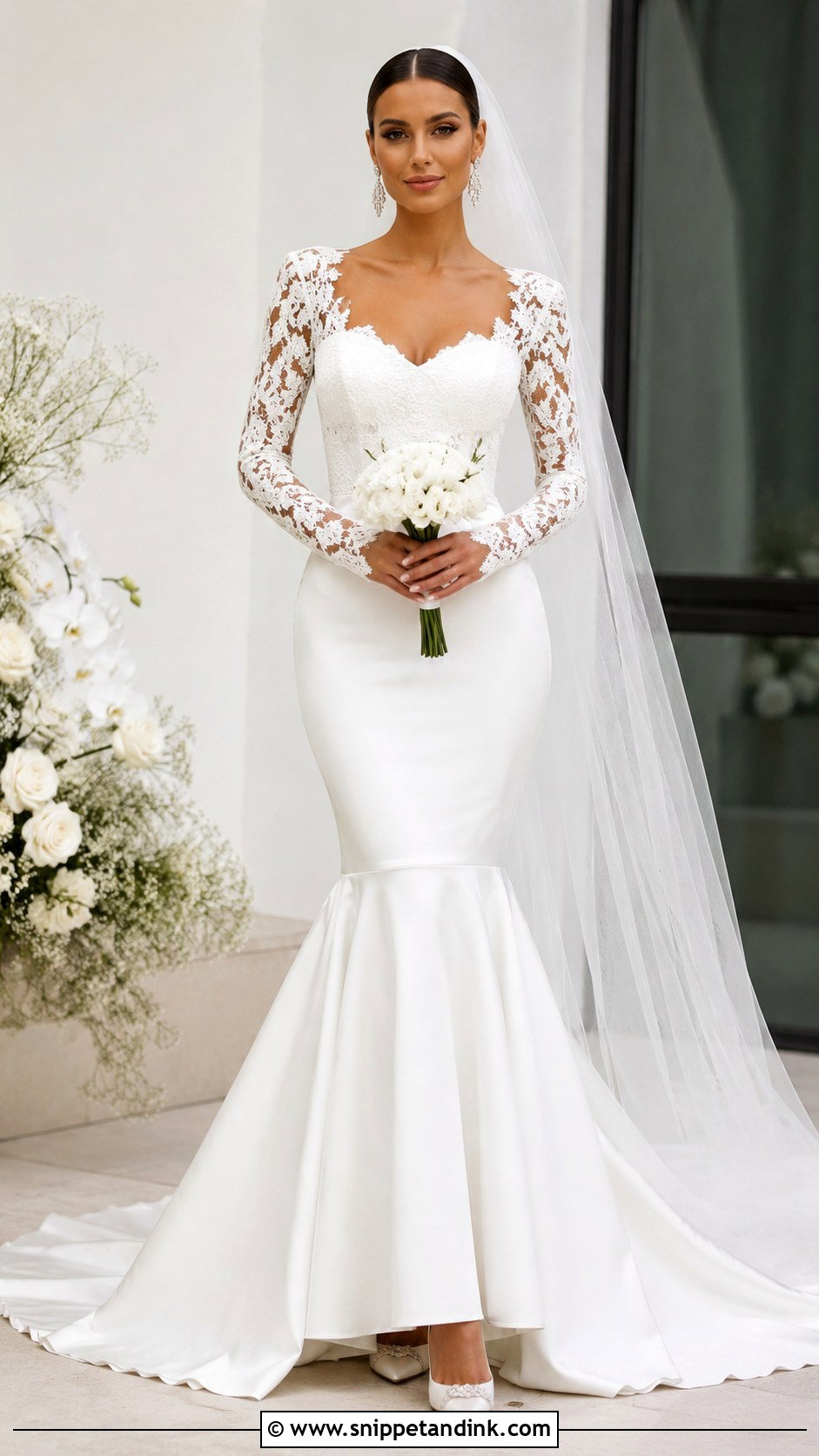
A mermaid follows the body down to the knee and flares from there, and long sleeves make it even more fitted from top to bottom. Stretch crepe gives a smooth, modern line; embroidered lace makes it romantic. A V-neck or illusion neckline balances the fitted sleeves and sculpted skirt, with a narrow veil, crystal earrings and slim pointed heels. A smaller bouquet stops the front looking crowded. This combination restricts you more than any other on the list, both at the knee and the shoulder. Take full strides, sit down, and reach forward for a glass. If either the flare or the sleeve stops you, it’s too tight, however good it looks standing still.
7. Long Sleeve Square Neck Wedding Dress
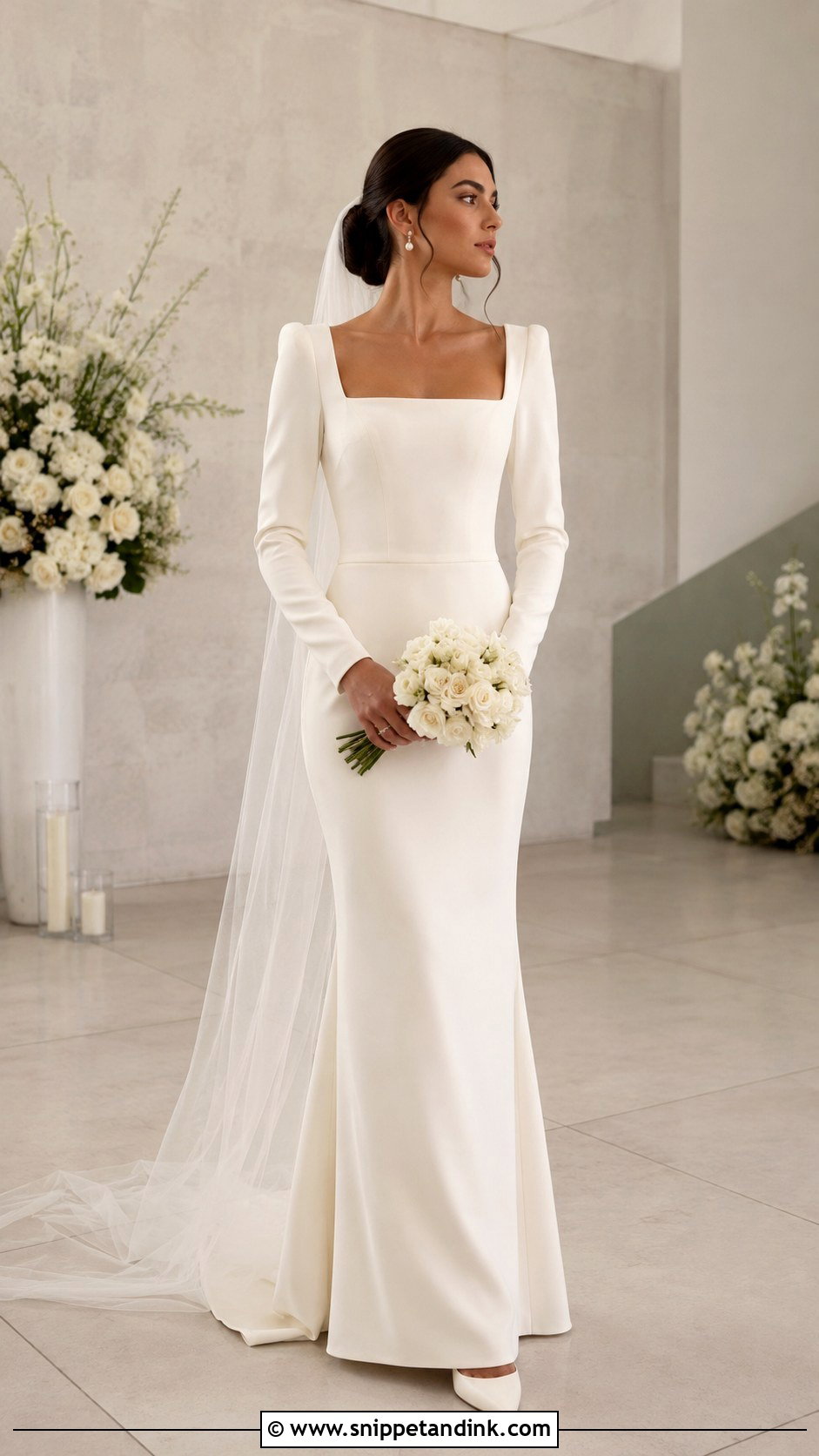
Square necklines give a long-sleeve gown a crisp frame across the collarbone, with more coverage than a plunge. A fitted bodice over an A-line or column skirt keeps it modern. I’d keep the jewelry near the face: pearl drops, a low chignon and a plain tulle veil, plus closed ivory pumps and a compact white bouquet. Skip the big necklace; it fights the straight edge. A fine bracelet or a small hair pin is enough. The sleeve and the neckline are connected here in a way brides don’t expect. If the sleeve is cut tight at the top, lifting your arm pulls the square corners outward, so the corners need to be checked while you move, not just while you stand.
8. Long Sleeve High Neck Wedding Dress
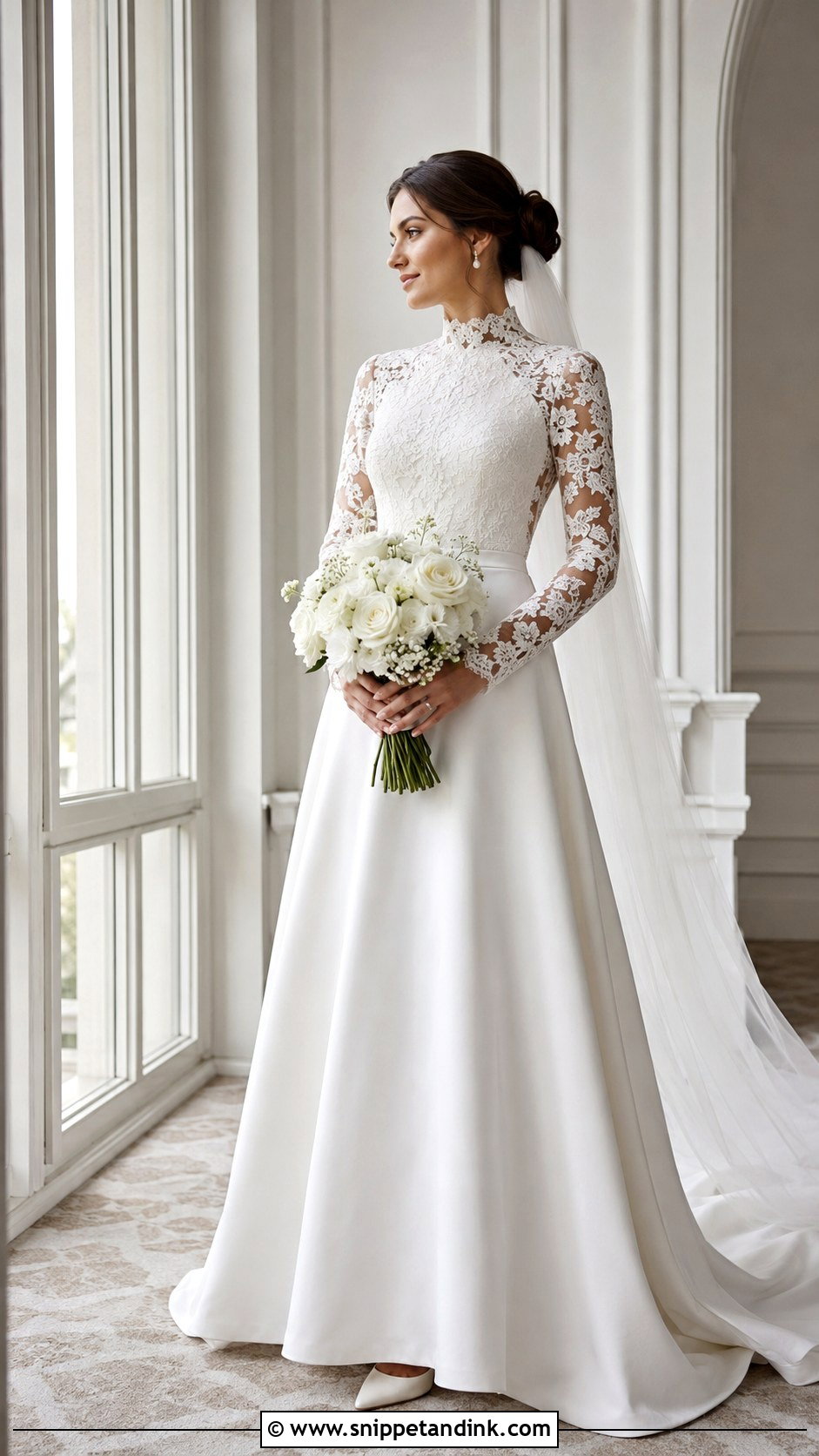
A high neck with long sleeves covers chest, shoulders and arms completely, so the material decides the mood. Sheer lace keeps it light. Solid crepe makes it sleek and almost architectural. A fitted waist and a flowing skirt stop all that coverage from feeling heavy. Small earrings, a polished bun and a veil pinned beneath it are plenty; the neckline already does what a necklace would. Pointed heels and a softly structured bouquet finish it. I check the collar on a high neck by asking the bride to look down at her bouquet and turn her head to both sides. Lace edges, beads or a boned collar that pinches or folds over will bother you all day.
9. Long Sleeve V-Neck Wedding Dress
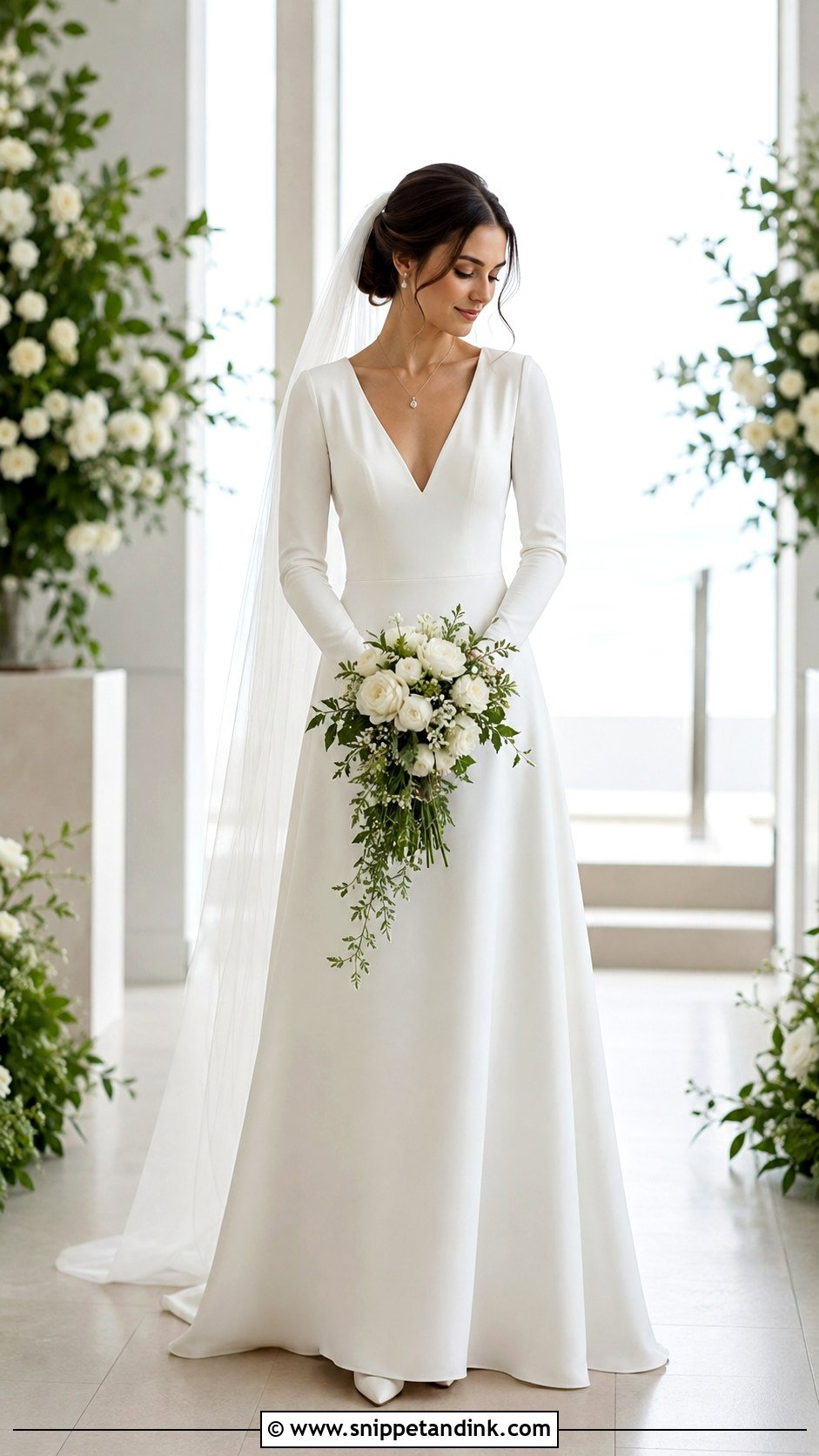
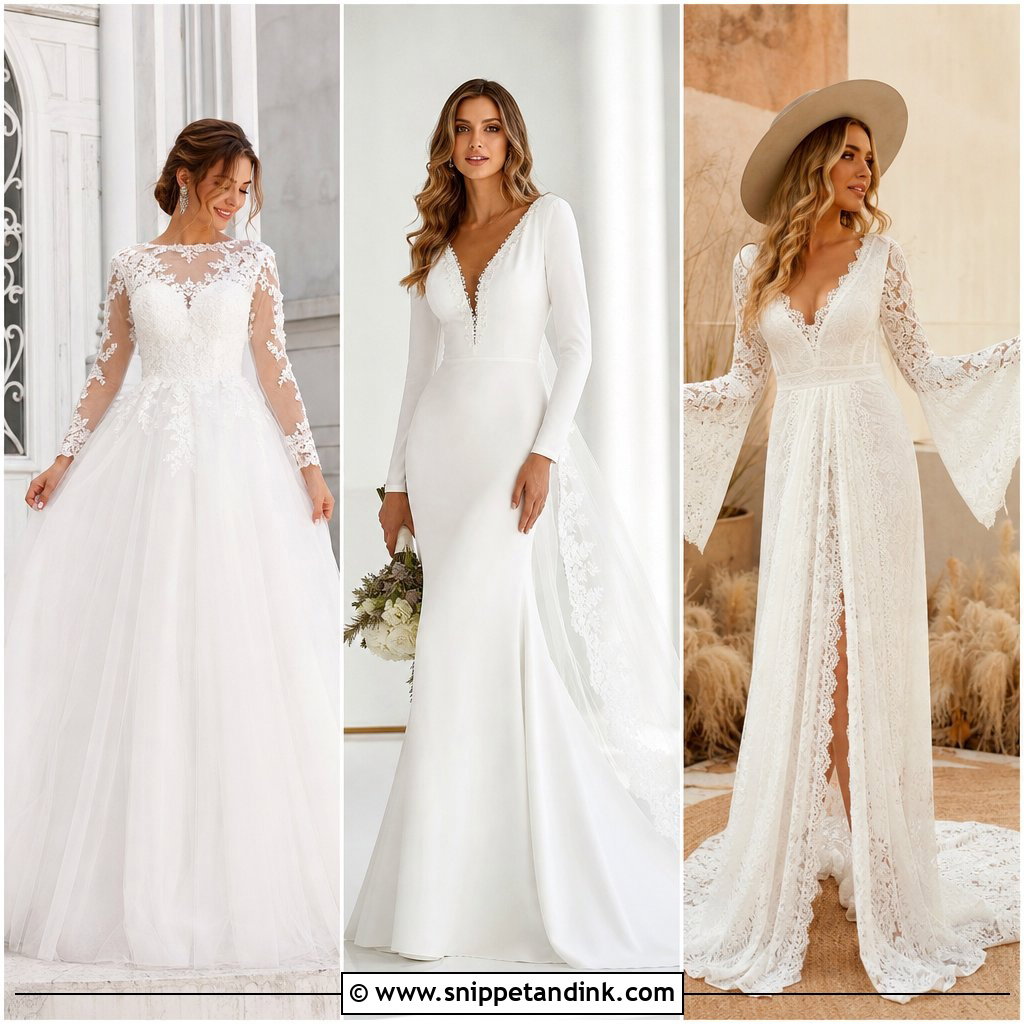
The V gives you coverage on the arms while opening up the chest and neck, which lengthens the upper body. A moderate depth is the most wearable, paired with an A-line or fit-and-flare skirt. Lace keeps it traditional; matte crepe keeps it quiet. A fine pendant can trace the V, though if the bodice is embroidered I’d stop at earrings. A fingertip veil, pointed shoes and a bouquet with some vertical shape suit it. Want more security? An illusion panel or a slightly raised V can be done during alterations. Watch the side view in the fitting mirror. A sleeve set too tightly will tug the V away from the chest every time you reach forward.
10. Long Sleeve Off-Shoulder Wedding Dress
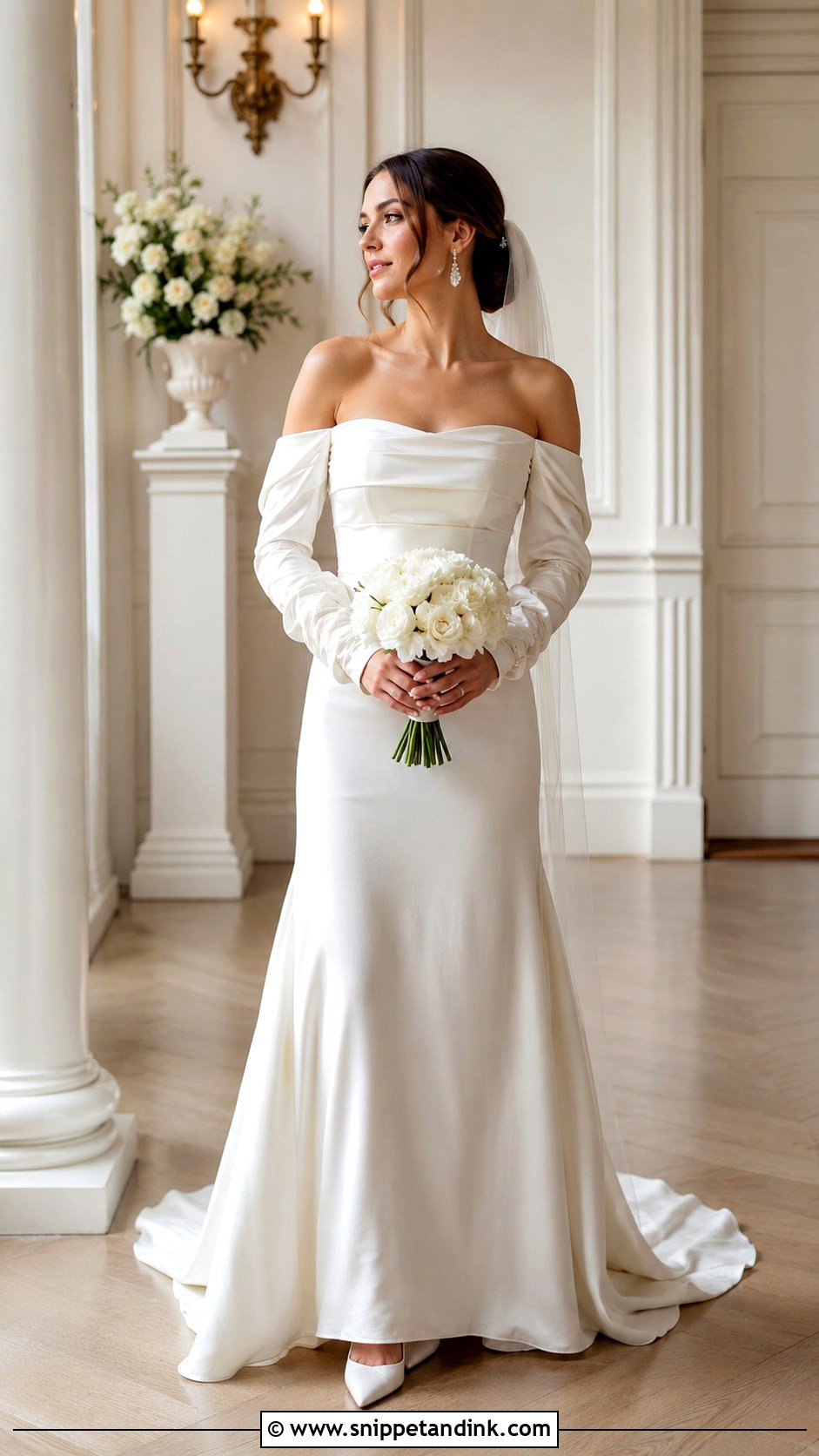
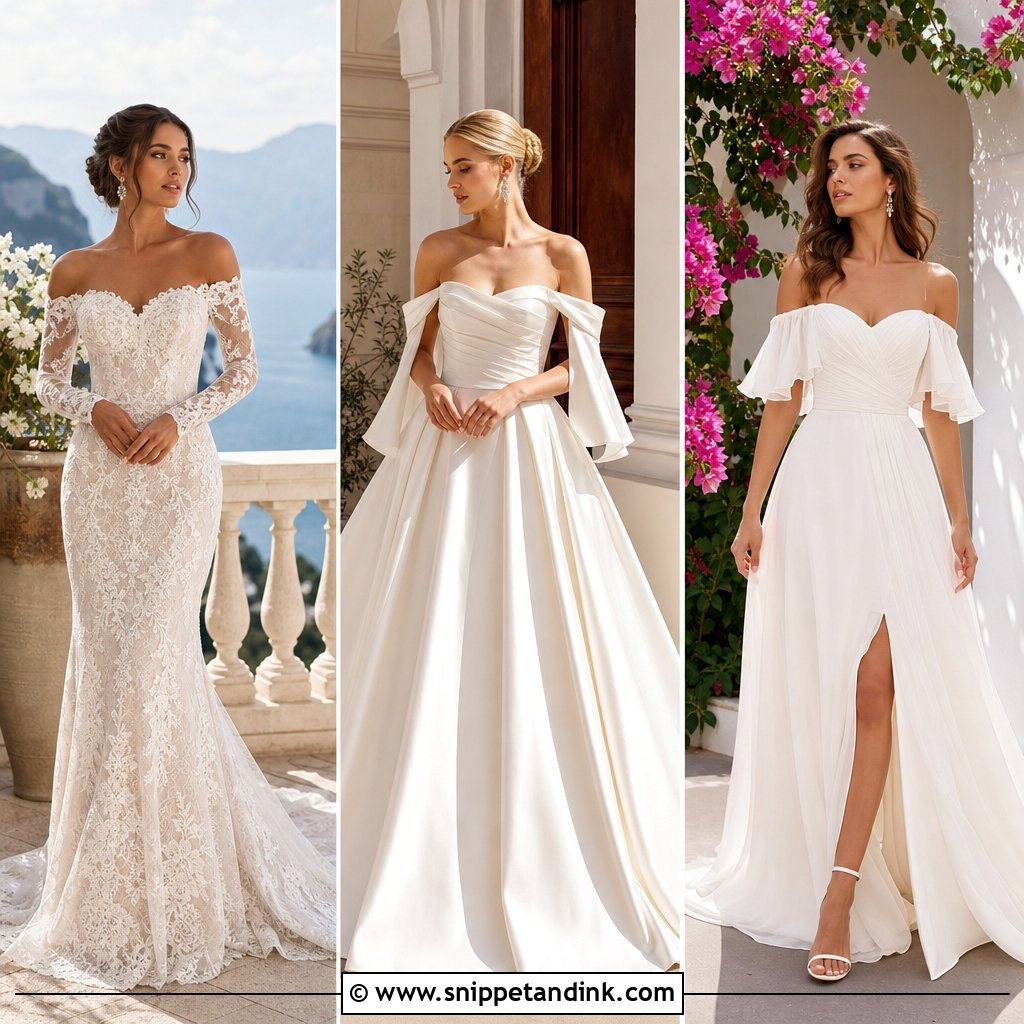
Off-the-shoulder sleeves sit below the shoulder joint, which leaves the collarbones bare while covering the arm. That position is also why they slip. A structured bodice with proper boning is what holds the neckline in place, not the sleeves. Fitted lace, draped satin or light chiffon cuffs all work, over a full A-line for a classic look or a fitted skirt for a sleeker one. Statement earrings, a simple veil and ivory pumps finish it, and a low bun or side-swept waves show the shoulder line. Leave the necklace off. At your fitting, raise your arms and hug someone. With this cut, your arm range is limited by design, so you need to know before the day exactly how high you can reach.
11. Long Sleeve Boho Wedding Dress
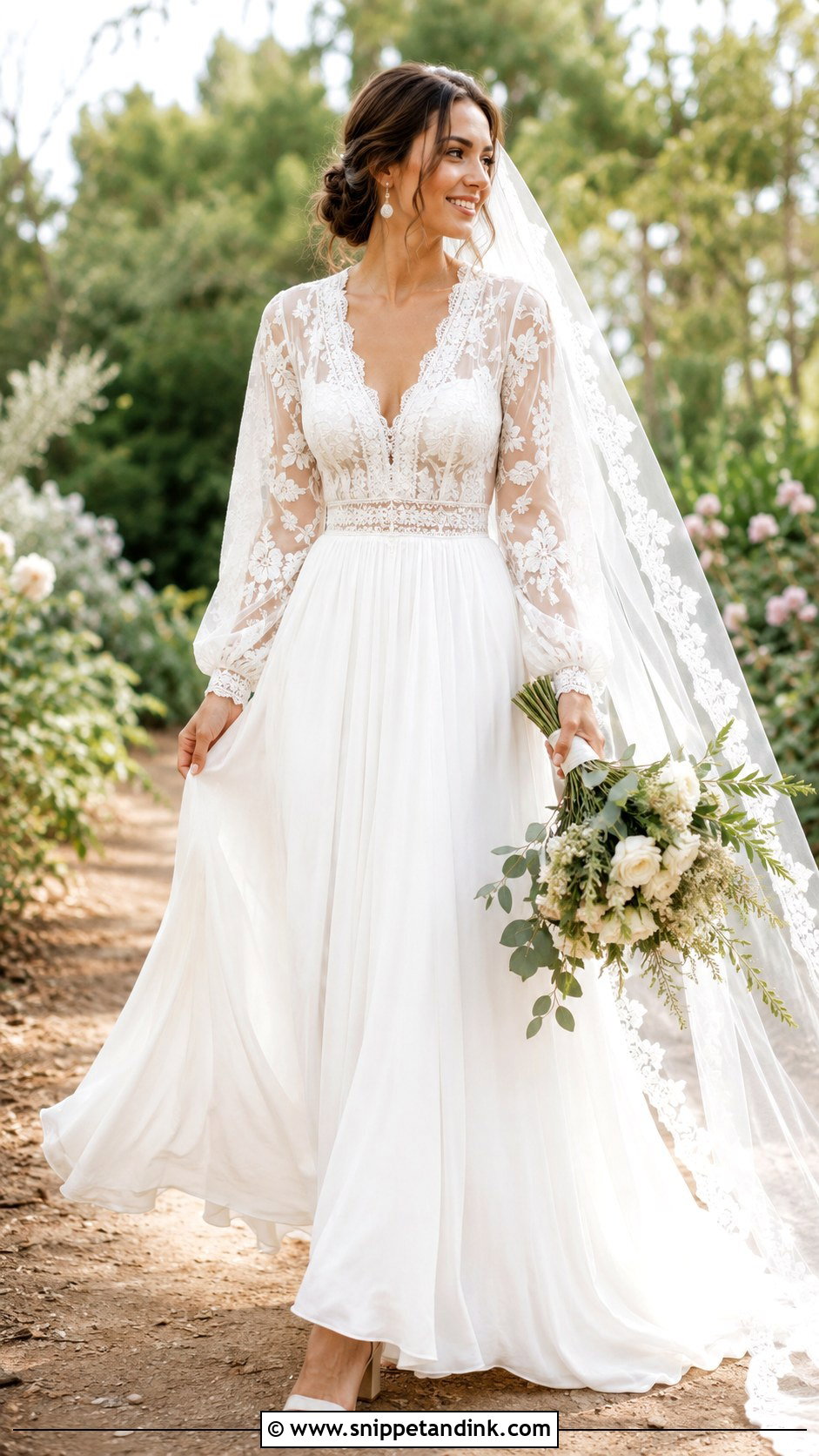
Boho gowns are about texture and ease: botanical lace, a gently fitted waist and a chiffon or tulle skirt that moves. Bishop sleeves or lightly flared cuffs add character without making it formal. Loose waves, delicate earrings and block-heel sandals keep it relaxed, with a lace-edged veil or a fine hair vine and an airy bouquet full of mixed greenery. When the lace is busy, keep the jewelry quiet. Wide cuffs look wonderful in photos and are a nuisance at dinner. They drag through sauces and catch on bouquet stems, so I’d test eating and holding flowers in them at the fitting. A hidden elastic or a button loop can gather a bishop cuff for the reception.
12. Long Sleeve Modest Wedding Dress
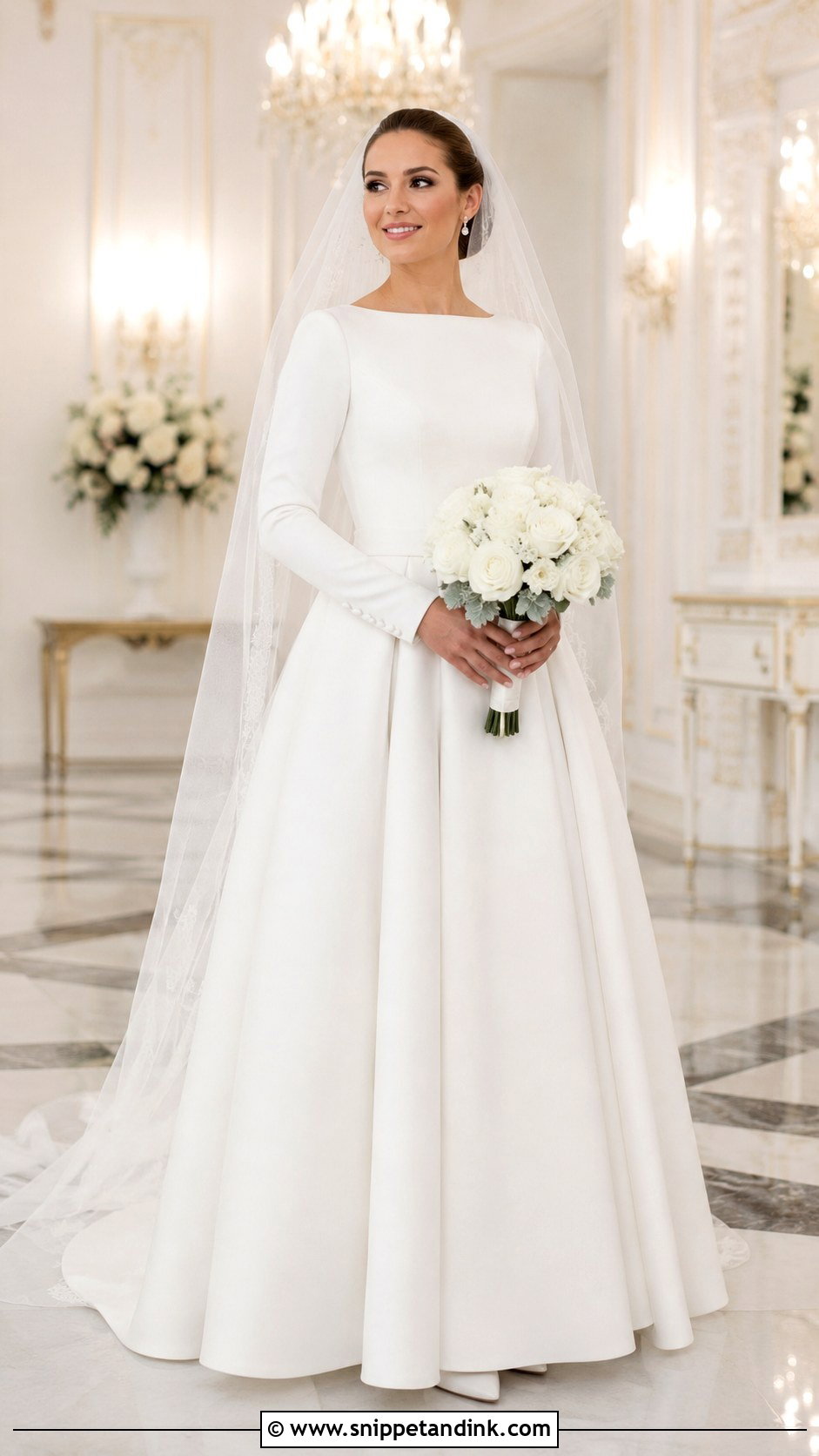
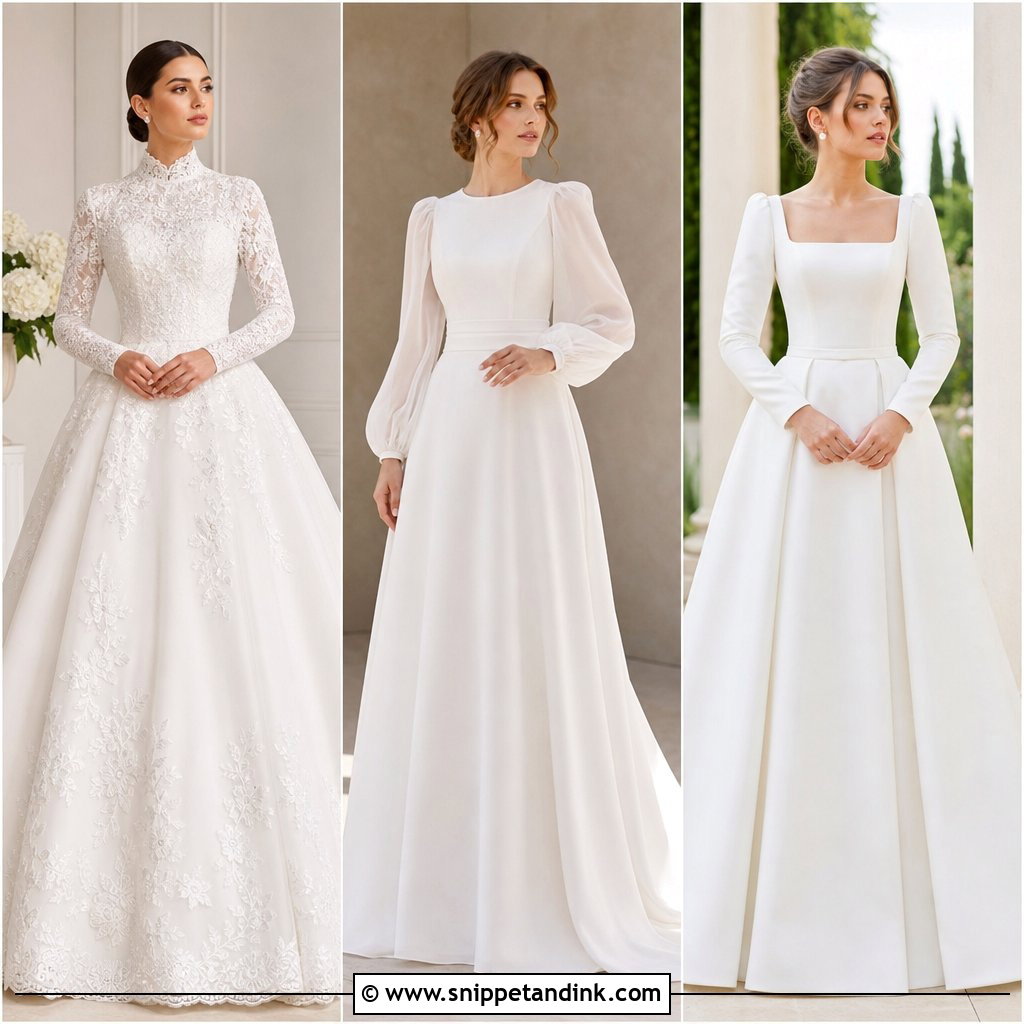
Modest gowns are some of the most carefully constructed dresses I fit, because coverage leaves nothing to distract from the cut. Look for an opaque bodice, fully lined long sleeves and a bateau, jewel or high neck, with an A-line skirt for movement. Soft pleats or a row of covered buttons add interest without showing skin. Pearl earrings, closed heels and a veil that matches the gown’s fabric and detail keep it cohesive, with a structured bouquet. If you have specific coverage requirements for a ceremony, say so before you order. Raising a neckline, lining sleeves or adding a back panel can take extra weeks, and the fabric has to be sourced from the same dye lot to match.
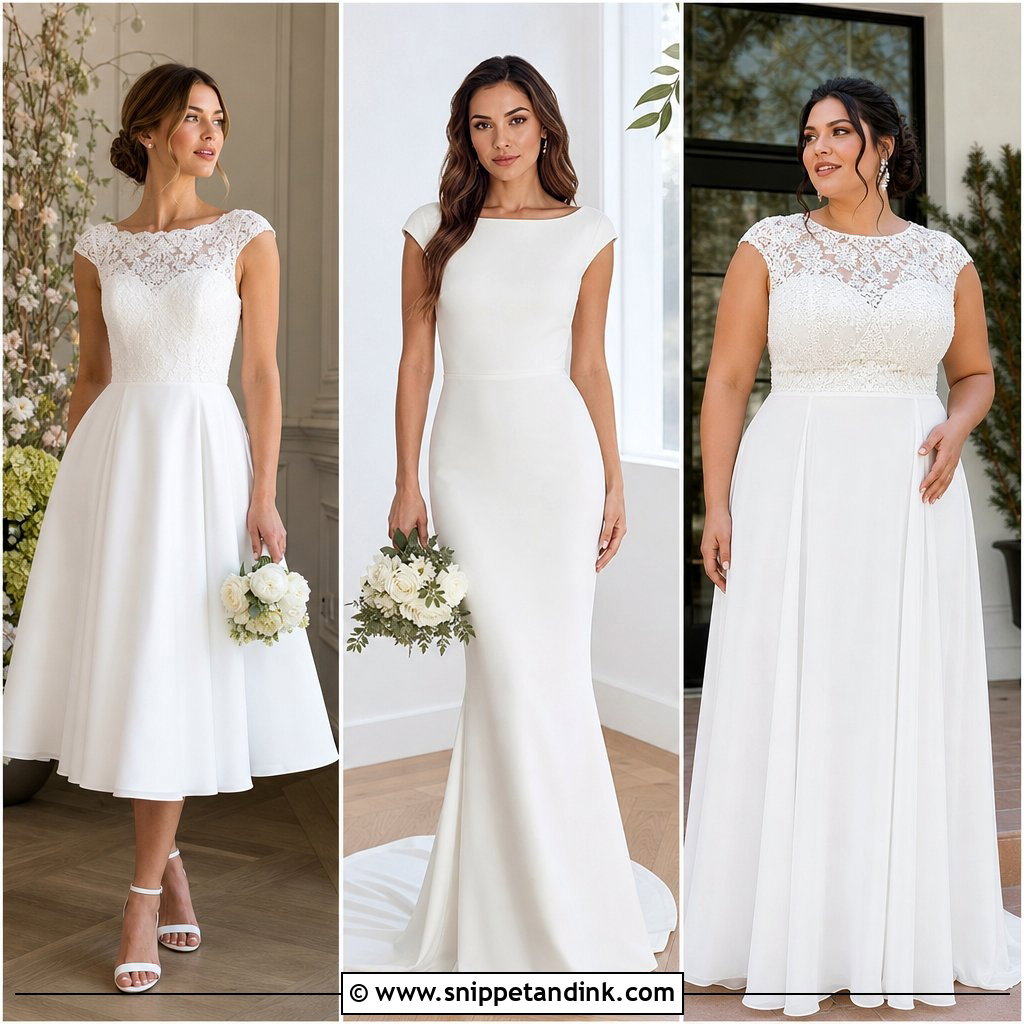
13. Long Sleeve Plus Size Wedding Dress
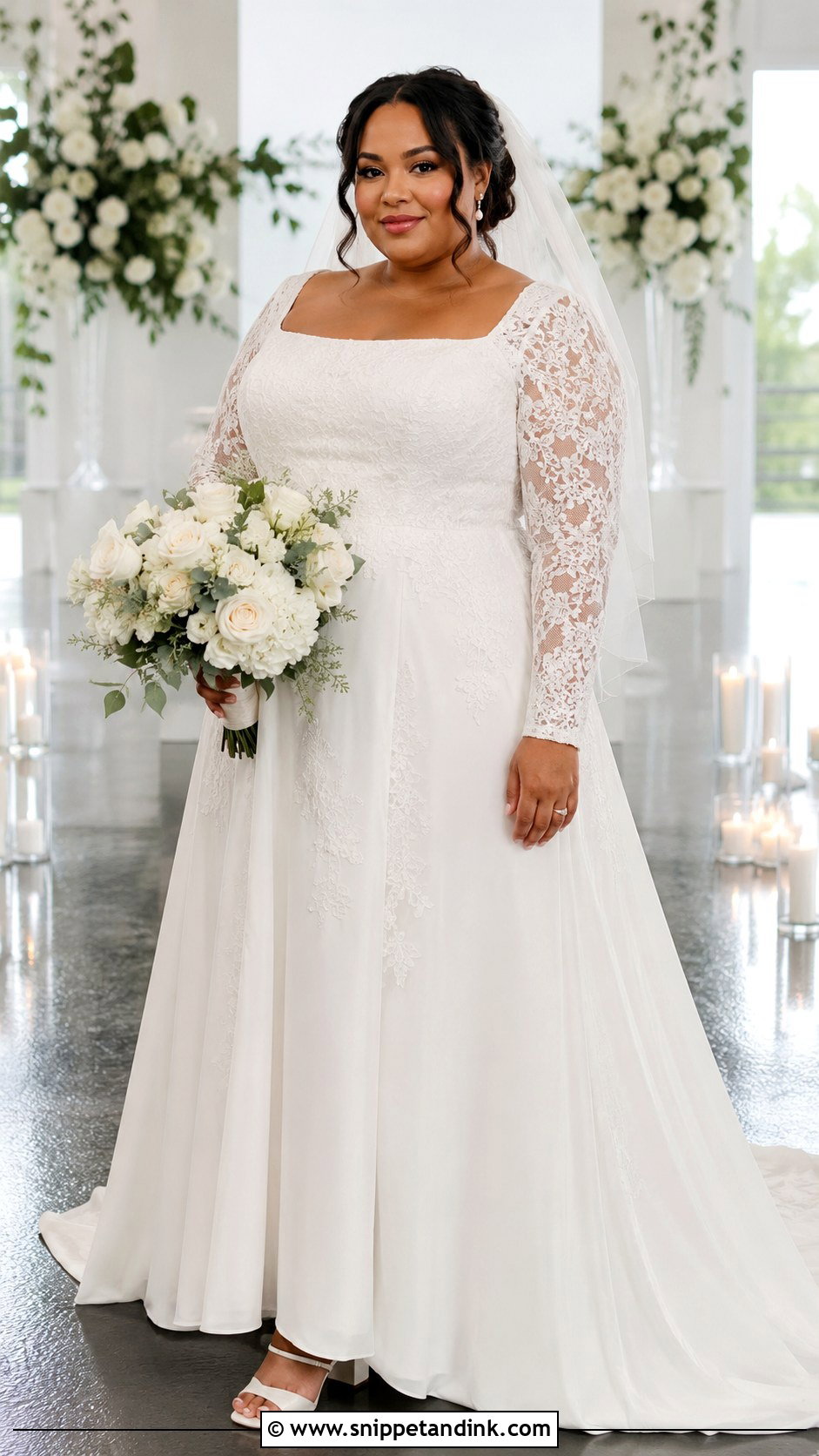
The sleeve is often what a plus-size bride is most nervous about, and the fabric matters more than the cut. Stretch lace, soft tulle or flexible crepe rather than stiff materials let your arms move without that tight, sausage-casing feel. An A-line or fit-and-flare with internal boning defines the waist and supports the bust. A V-neck, square neck or open bateau frames the face well. Supportive block heels, statement earrings and a veil scaled to the gown finish it. Ask the boutique before you go whether they carry true samples near your size; trying on a dress clipped open at the back tells you very little. At fittings, sit, walk and raise your arms, and watch for tension across the back.
14. Long Sleeve Winter Wedding Dress
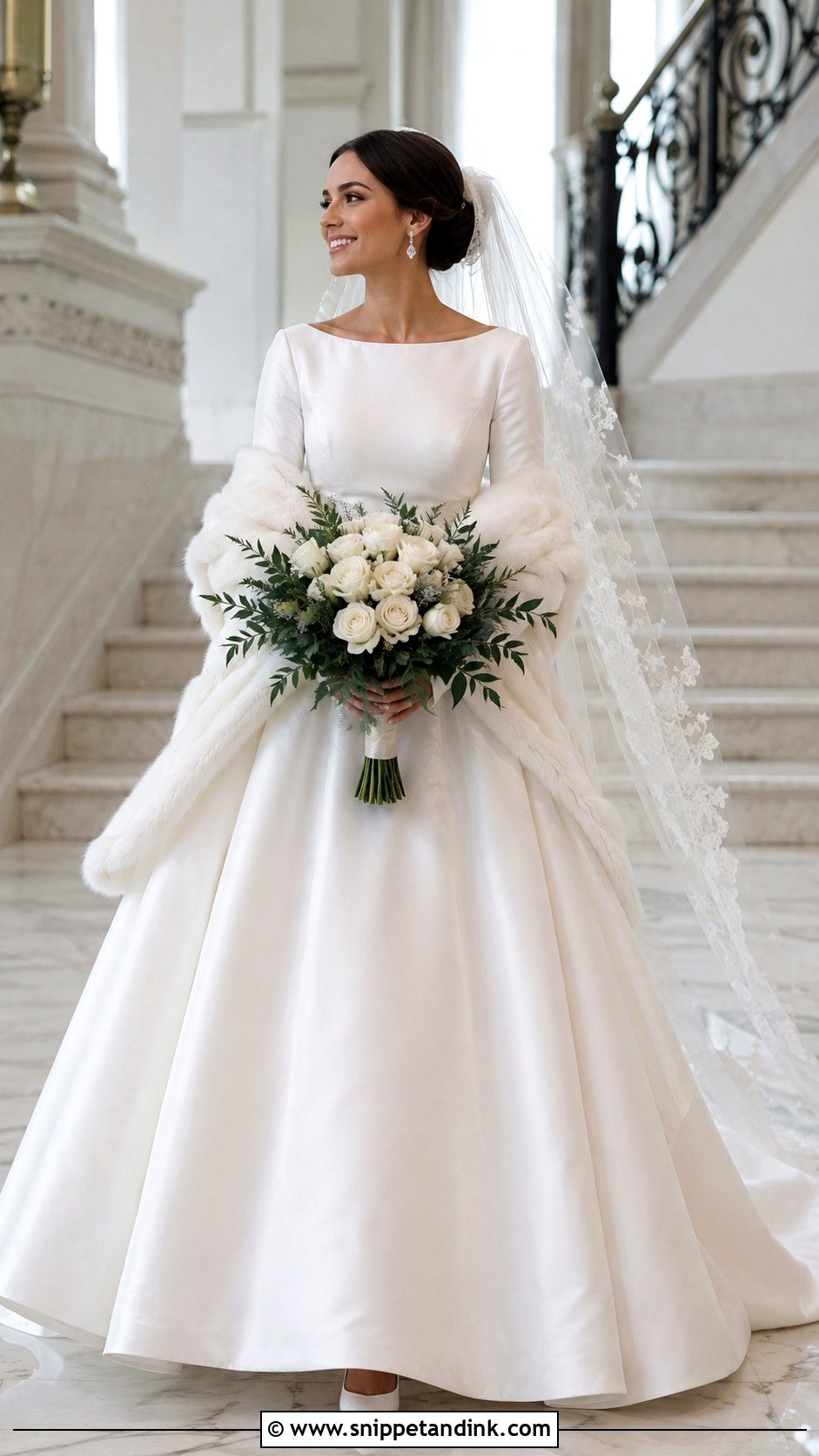
Winter is the season long sleeves were made for, and heavier fabrics finally make sense. Mikado, heavy satin, velvet details or fully lined crepe give structure and a bit of warmth. A ball gown or long A-line suits a ballroom or a grand indoor venue, with crystal earrings, closed pumps and a cathedral veil. A removable faux-fur wrap gets you through outdoor portraits without changing the gown. White flowers against deep green foliage look right in the cold. Don’t count on the sleeves alone to keep you warm, though. Bridal fabric isn’t insulation, so have a proper coat ready for transfers. And if you plan to wear gloves or a bracelet, try the cuff over them before the final sleeve fitting.


15. Long Sleeve Beach Wedding Dress
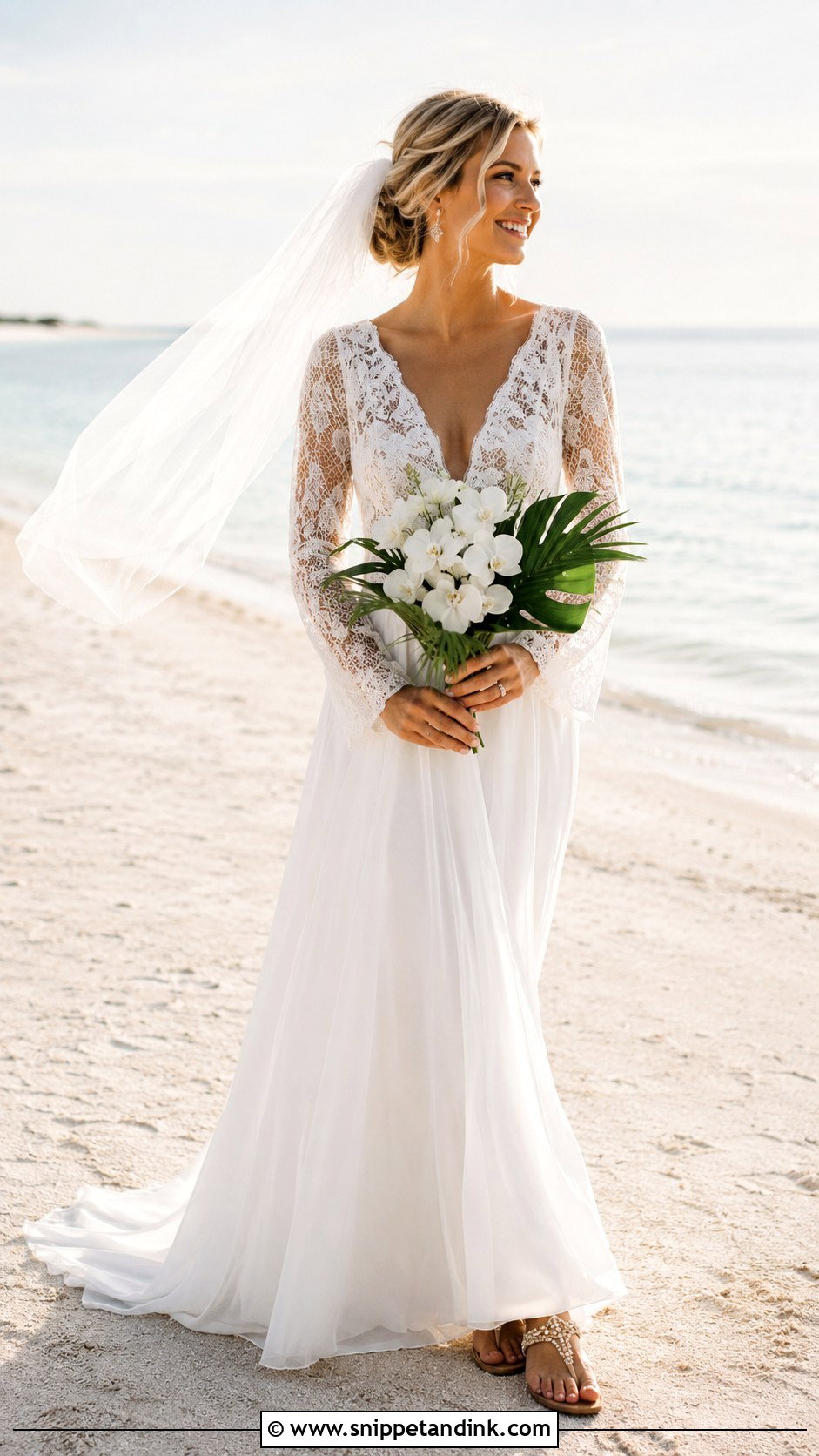
Long sleeves on a beach sound mad, but they work if the fabric breathes. Chiffon, open lace and soft tulle give coverage without the weight of satin or heavy beading. A relaxed A-line or column with a short train is easier on sand, and open lace or loose bishop sleeves let air move along the arm. Flat sandals, simple earrings and a light veil pinned firmly against the wind suit it, with a compact tropical bouquet for colour. Skip stiff petticoats and long trains. One thing I always test: stand outside or at a bright window. Sheer fabric that looks opaque under boutique lights can turn see-through in full sun, and a breathable lining fixes it.
16. Long Sleeve Courthouse Wedding Dress
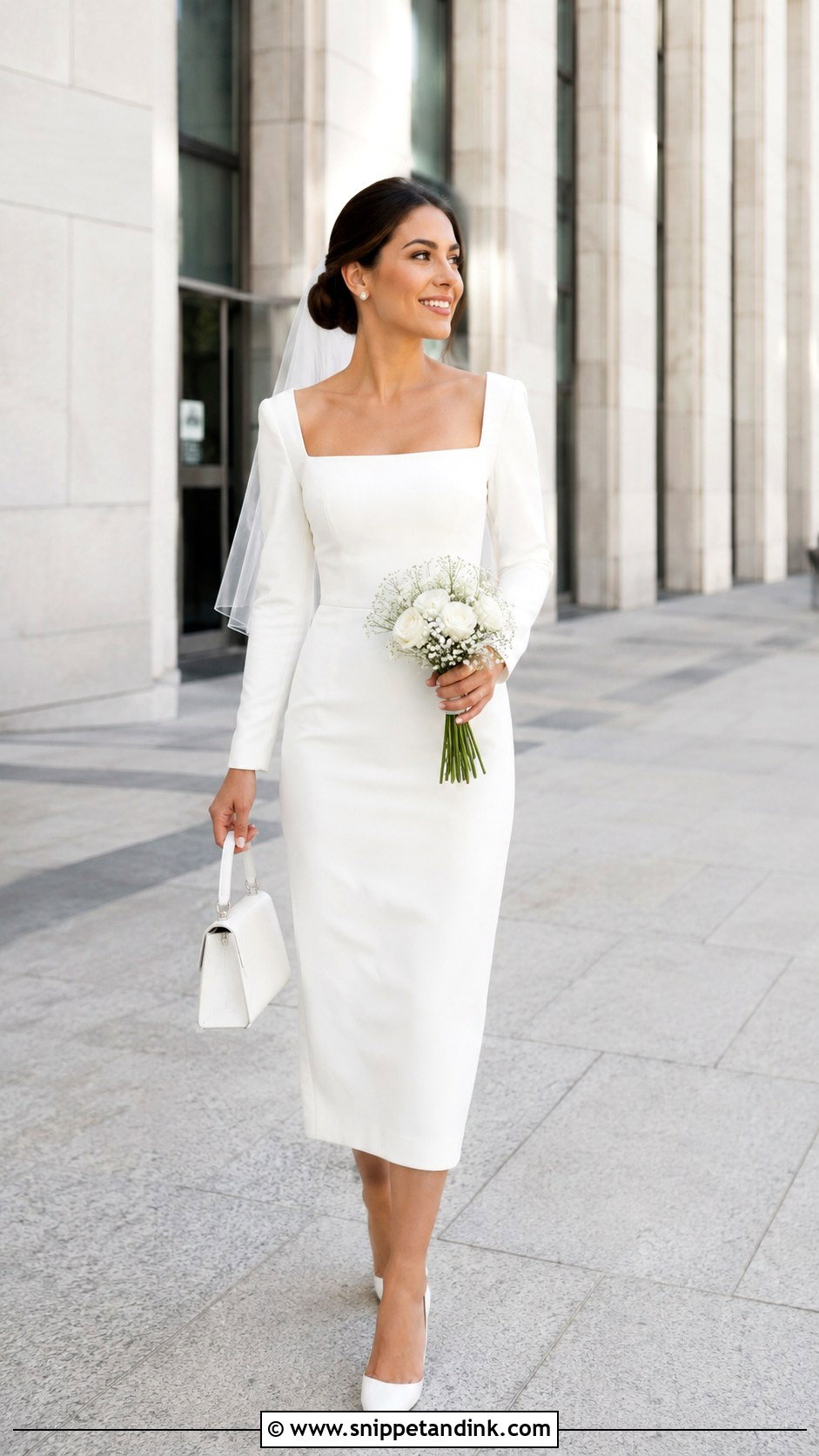
A civil ceremony calls for something polished that still works on stairs, sidewalks and city streets. A tailored midi, a fitted crepe column or a tea-length dress with a square neck all suit, with clean sleeves and sharp seaming in place of a train. Pointed pumps, pearl earrings and a structured top-handle bag look smart, and a short veil or a minimal hair bow tells everyone you’re the bride. Carry a compact bouquet you can hold while signing paperwork. If you’re travelling to the courthouse, wrinkle-resistant fabric is worth more than any detail. Sit for ten minutes at your fitting, then stand and look at the lap: crepe and wool blends recover, linen and fine satin do not.
17. Long Sleeve Vintage Wedding Dress
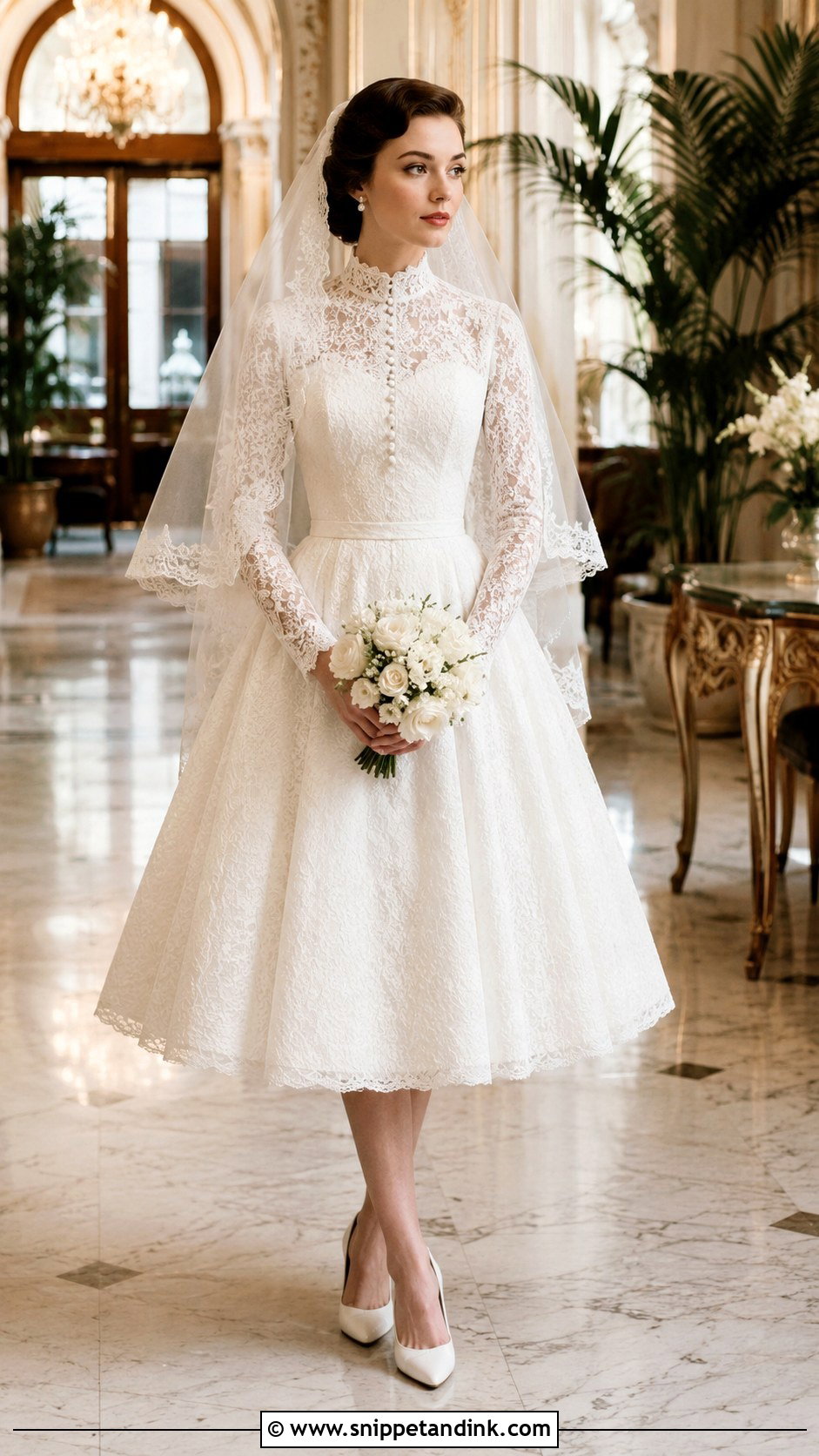
The line between vintage and costume is thin, and it usually comes down to how many period details you stack. Pick two or three: a high lace neck, covered buttons, a fine cuff, a softly defined waist. A flowing A-line or tea-length skirt keeps it wearable. Pearl earrings, a lace-edged veil and closed pumps fit the era, with soft waves or a rolled updo. Keep the bouquet small so it doesn’t hide the lace across the bodice. If the gown is genuinely old, have it inspected before anyone cuts it. Aged lace can tear along the seams under strain, and old silk can split along fold lines. A specialist can reinforce it and refit the lining without losing the original details.
18. Long Sleeve Floral Applique Wedding Dress
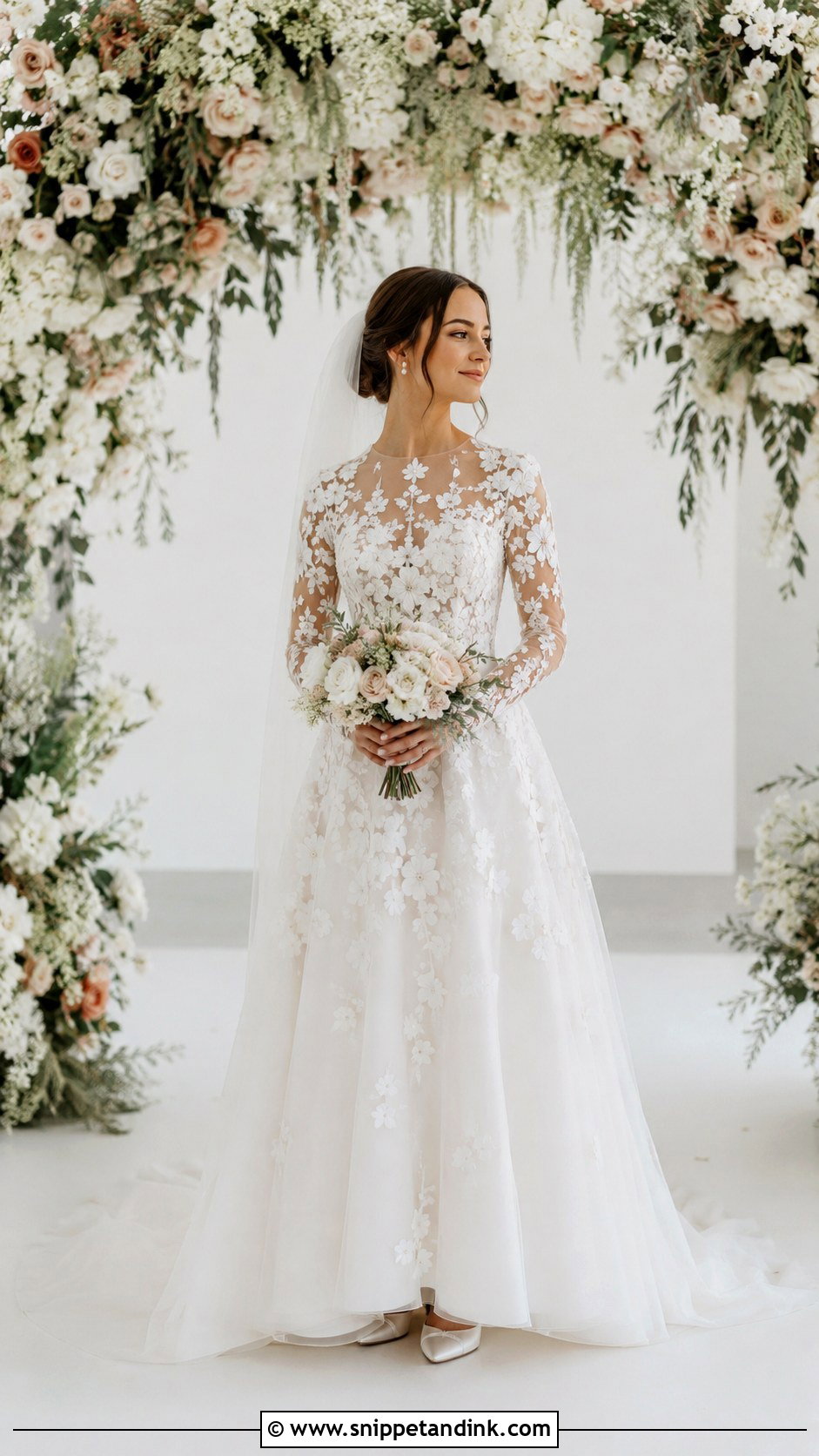
Raised appliqué flowers add real texture, and on a sleeve the placement makes all the difference. Ask for motifs that run continuously from the bodice down the arm instead of stopping in a hard line at the shoulder. An illusion base makes them look like they’re floating on skin; a lined base gives more coverage. Balance the busy top with a soft A-line skirt, then go quiet elsewhere: pearl earrings, plain satin shoes, an unembellished veil and a bouquet that echoes the flower shapes without competing. The fitting issue I see most is a large appliqué sitting right on the inside of the elbow, where it folds and lifts every time you bend. It can usually be moved. Ask for loose petals to be stitched down so they don’t snag the veil.
19. Long Sleeve Beaded Wedding Dress
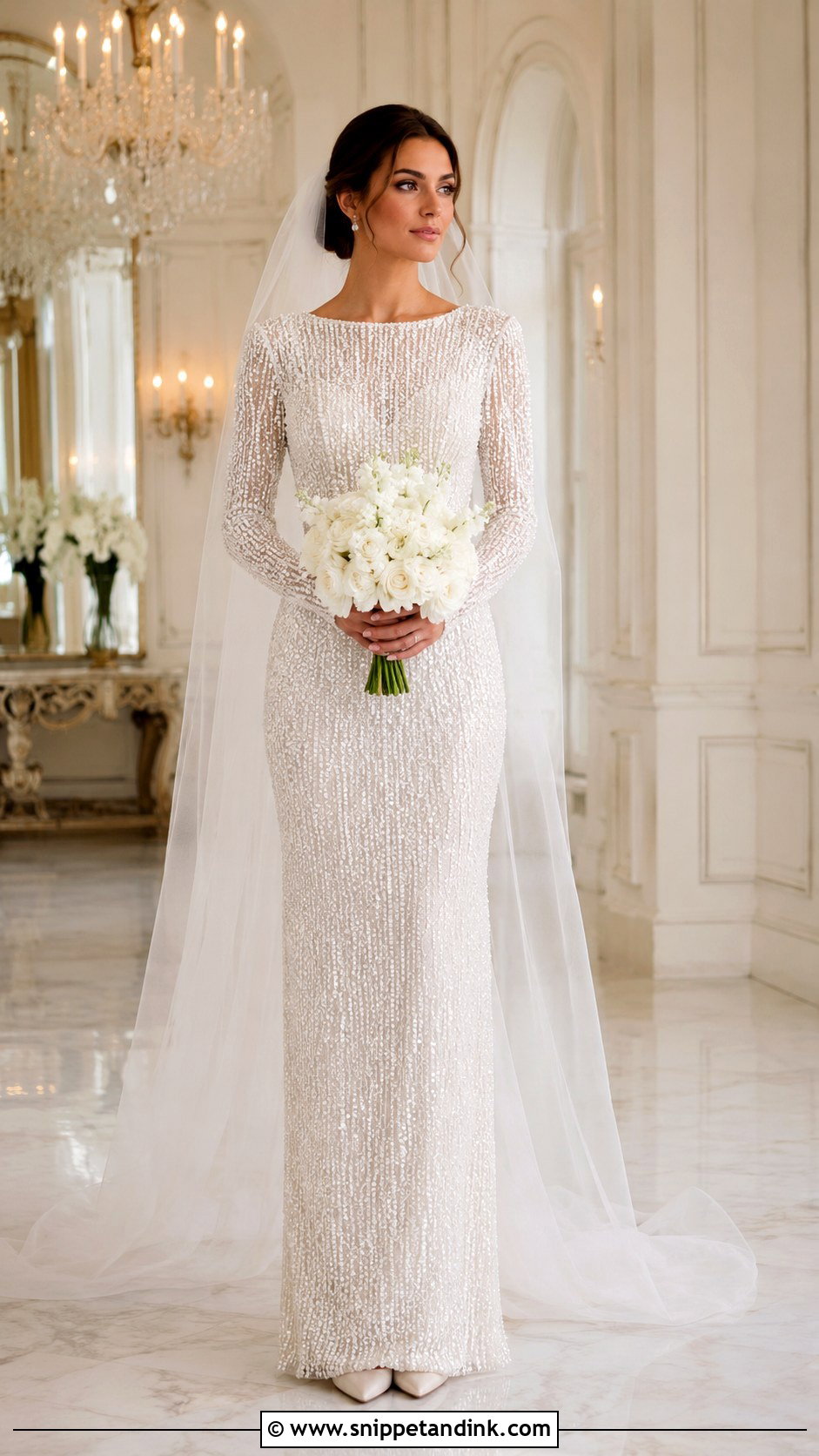
Beading on a long sleeve adds weight as well as sparkle, and that weight pulls the sleeve down and the shoulder seam with it. I look for embellishment that follows the shape of the bodice and thins out down the arm. A fitted column, a mermaid or a soft A-line can all carry it. Small crystal earrings, metallic or ivory pumps and a plain tulle veil keep it in proportion; if the neckline is already beaded, skip the necklace. A single-colour bouquet keeps the shimmer visible. Turn the sleeves inside out at your fitting and run your fingers along the seams, because rough beading threads scratch. Ask for spare beads, and store the gown flat or on a padded hanger with straps so the sleeves aren’t hanging by their own weight.

20. Long Sleeve Detachable Sleeve Wedding Dress
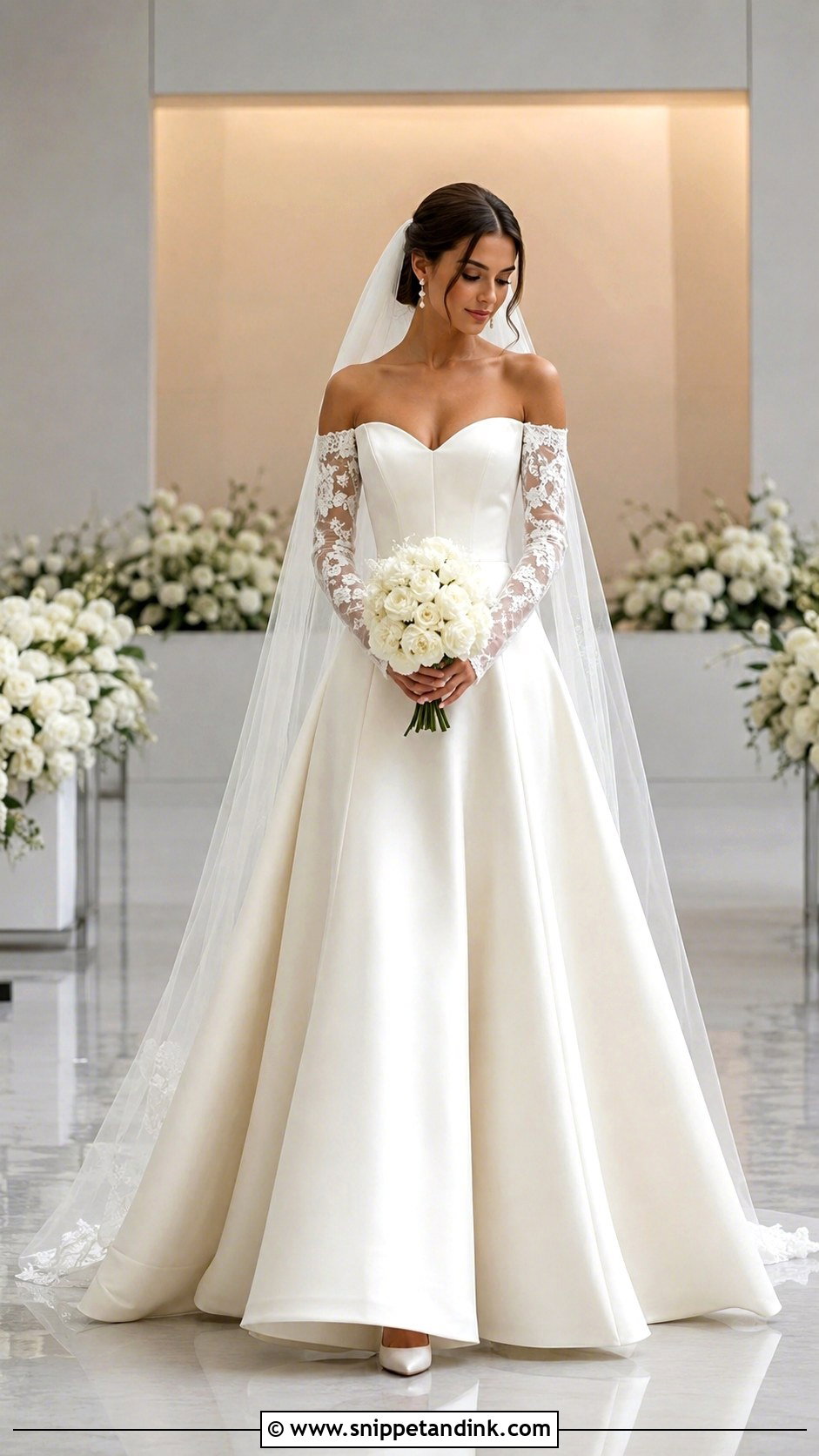
Detachable sleeves get you two looks for the price of one dress. You walk the aisle in fitted lace, draped satin or sheer tulle sleeves, then take them off for a strapless or sleeveless reception. They have to be made for that specific gown, though. Sleeves bought separately rarely match the bodice’s fabric or attach without a visible gap. Keep the ceremony look classic with a long veil, pearl earrings and pumps, then swap to statement earrings or a hair piece once the sleeves and veil come off. Practice the change twice before the wedding. Snaps and hooks look simple until you’re doing them in a bathroom with three people helping. Name one person to fold and keep the sleeves safe.
Long Sleeves in a Warm Room for Ten Hours
The bride I worry about isn’t the one marrying in December. It’s the one in a lined lace sleeve at a June reception with a packed dance floor. Arms sweat, lace sticks to skin, and by the first dance you’re pushing the sleeves up, which stretches the lace for good.
If the wedding is in a warm month, choose illusion or open lace over a fully lined sleeve and ask whether the lining can stop at the elbow. A silk or cotton lining breathes far better than polyester, though the swap can add to the cost. Keep some blotting papers and a fan with whoever is looking after you.
Cuffs, makeup and the rest of the day
Long sleeves pick up marks in places a strapless gown never would. The inside of the cuff brushes the dinner plate. Foundation and self-tan rub onto the inside of the wrist and the upper arm when you hug guests. And a light-coloured lace cuff shows every one of those marks in the evening photos.
- Let any spray tan settle fully before you dress, and set body makeup with powder.
- Have one person carry a stain pen made for delicate fabrics, and test it on an inside seam first.
- Push wide cuffs back with a hidden elastic loop or a button during dinner instead of rolling them.
- After the wedding, tell your cleaner which areas are marked so the sleeves get proper attention.
What a Good Sleeve Should Let You Do
Long sleeves cover far more ground than the traditional lace gown. You’ve got crepe columns, satin ball gowns, relaxed boho chiffon, courthouse midis and dresses that shed their sleeves for the party. Don’t fall for one detail in isolation. The neckline, how the sleeve is built, the skirt, the fabric and the accessories all have to work together. Comfort matters as much as looks: walk, sit, turn and lift your arms in every gown you try. Start alterations early, because reshaping a sleeve or resetting lace takes longer than a hem. The right dress covers you as much as you want, suits the place you’re marrying in, and still looks like you.
You'll Like These Ideas:





Leave a Reply