
Shopping for a wedding dress later in life is usually more fun than people expect, mostly because brides who’ve lived a bit know what they like. Age doesn’t set the rules. Fabric, silhouette and how much detail you enjoy wearing do. Some of the brides I dress want full lace and a long skirt; others want a crisp midi, a clean satin column or a dress with a jacket. What tends to matter more with experience is comfort: a neckline that stays put, sleeves you can move in, fabric that doesn’t weigh you down, and a train you won’t trip over while greeting guests. The twenty looks below cover formal ceremonies, gardens, courthouses and small dinners, each with what I’d check before buying.
Bridal Salon, Eveningwear Rail or a Dressmaker?
Many of the dresses here don’t have to come from a bridal salon at all. I often suggest brides planning a smaller or second wedding look in three places, because each has different timing and different trade-offs.
Bridal salons
Gowns are usually made to order, and production can take several months before alterations even begin. You get proper internal structure and a fitting service, but you need time. If your engagement is short, ask which samples or stock dresses can be bought straight off the rail.
Eveningwear and occasion departments
Ivory midis, satin columns, blazers and cropped jackets often sit in occasionwear sections at a fraction of bridal prices, and you can buy them the same day. The catch is construction. These dresses rarely have cups or boning, so budget for a seamstress to add support and adjust the fit.
A dressmaker
If you can’t find the exact sleeve or neckline you want, a dressmaker can make it from scratch. Expect a toile, a test version in cheap fabric, and several fittings, so start early. It’s the best route if you’re between sizes or want a dress you can shorten and wear again.
1. Tea-Length Lace Wedding Dress
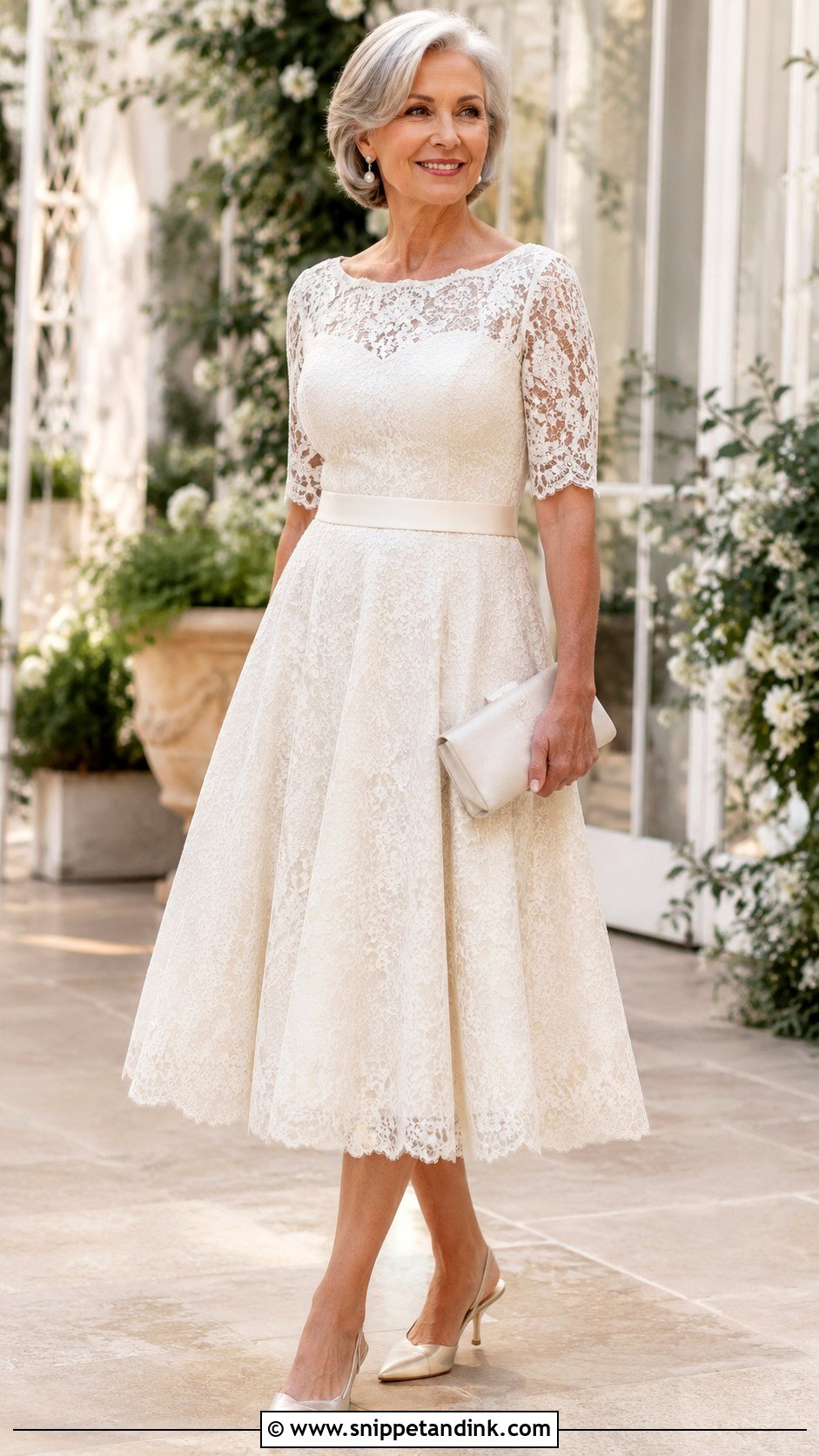
Tea-length lace is one of my favourite starting points for a garden or afternoon wedding. The hem sits between knee and ankle, so you can walk, mingle and dance without gathering your skirt. A fitted bodice with a defined waist, scalloped lace sleeves and an illusion or bateau neckline keeps it polished. Ivory, soft white and champagne all suit the vintage shape; I’d hold each one under your chin in daylight to see which brightens your skin. A floral hair comb replaces a long veil neatly. Set the hem wearing your actual shoes, since tea length shows every centimetre.
2. Long-Sleeve A-Line Wedding Dress
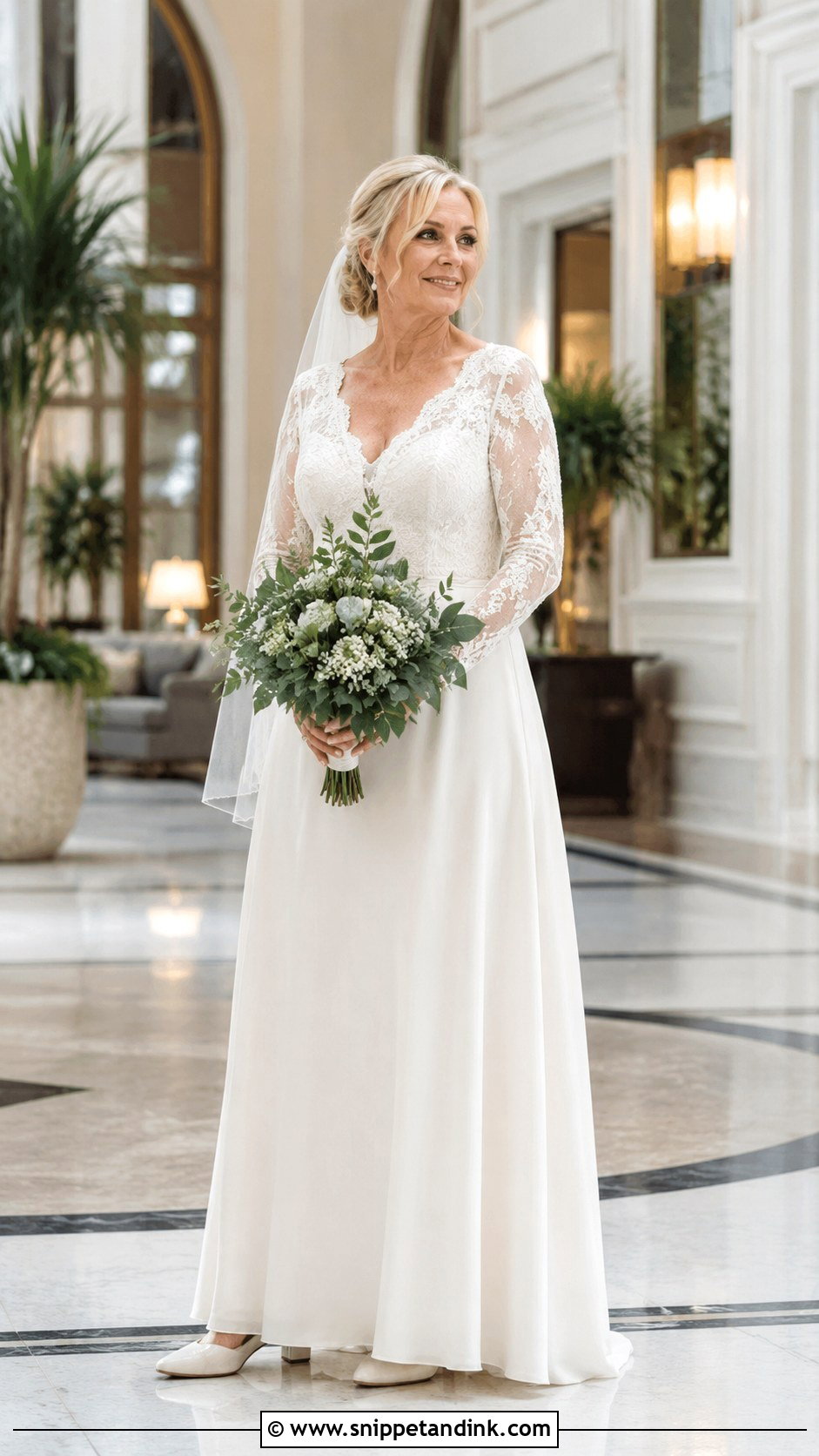
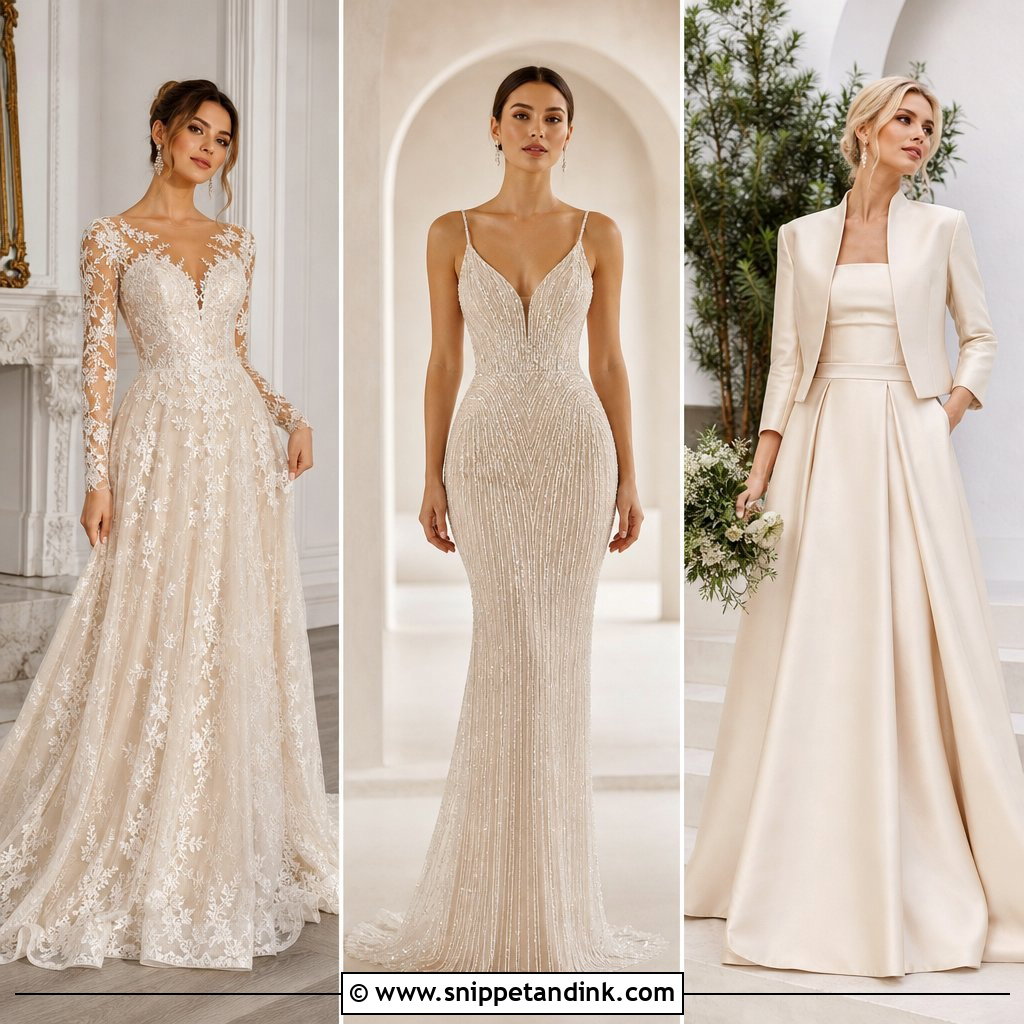
Formal without fuss: an A-line with long sleeves is the dress I’d pull for a hotel ballroom or a winter wedding. The skirt falls from a defined waist without heavy layers, which keeps it light to wear. Lace, crepe or sheer tulle sleeves all work, but test them by reaching forward and hugging. Sleeves cut tight at the upper arm restrict you more than any other part of a dress. A V-neck lengthens the torso; a scoop or bateau gives more coverage. Keep the veil short, fingertip or shoulder length, so it doesn’t cover the back of the sleeves.
3. Simple Satin Column Wedding Dress
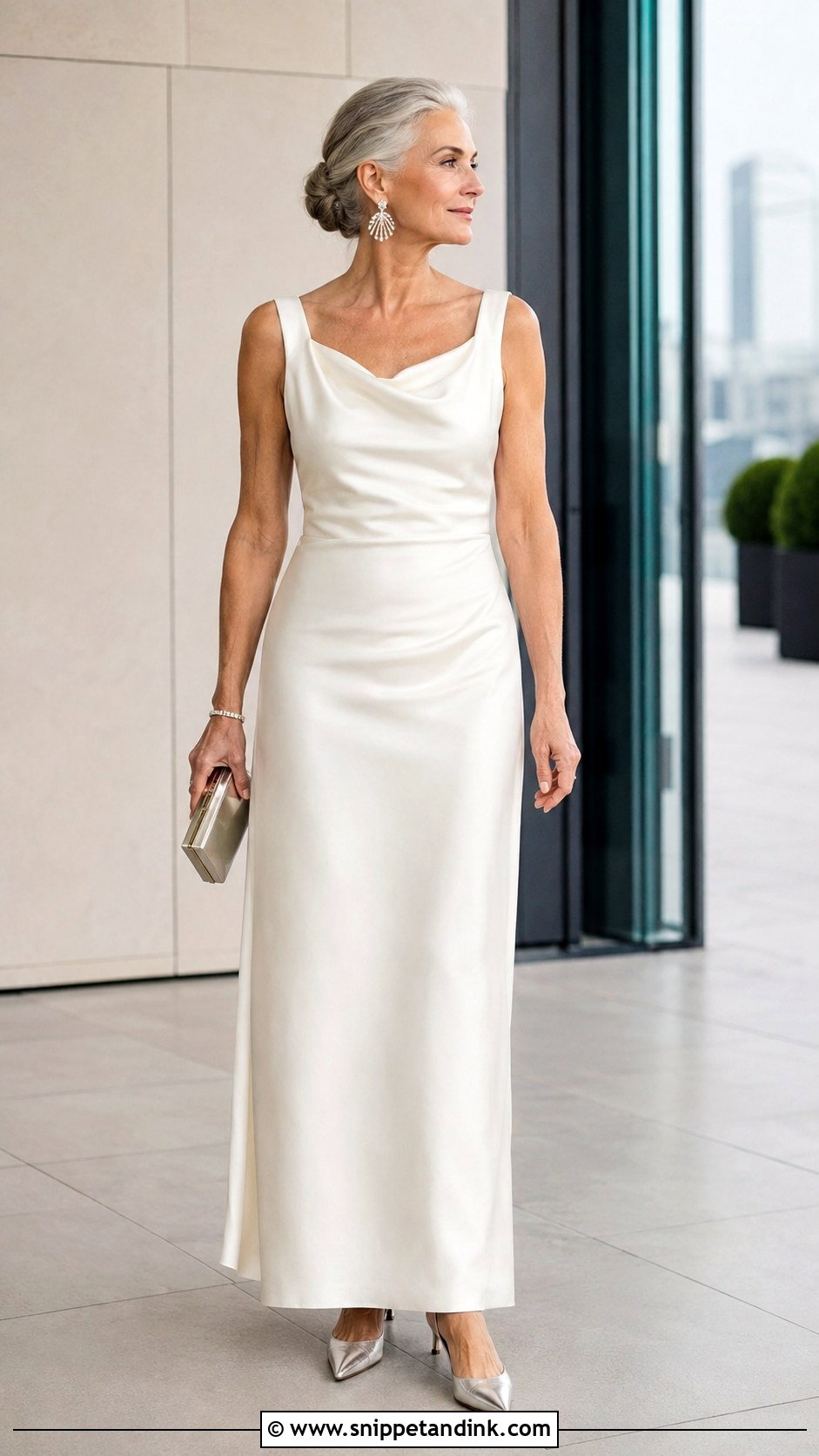
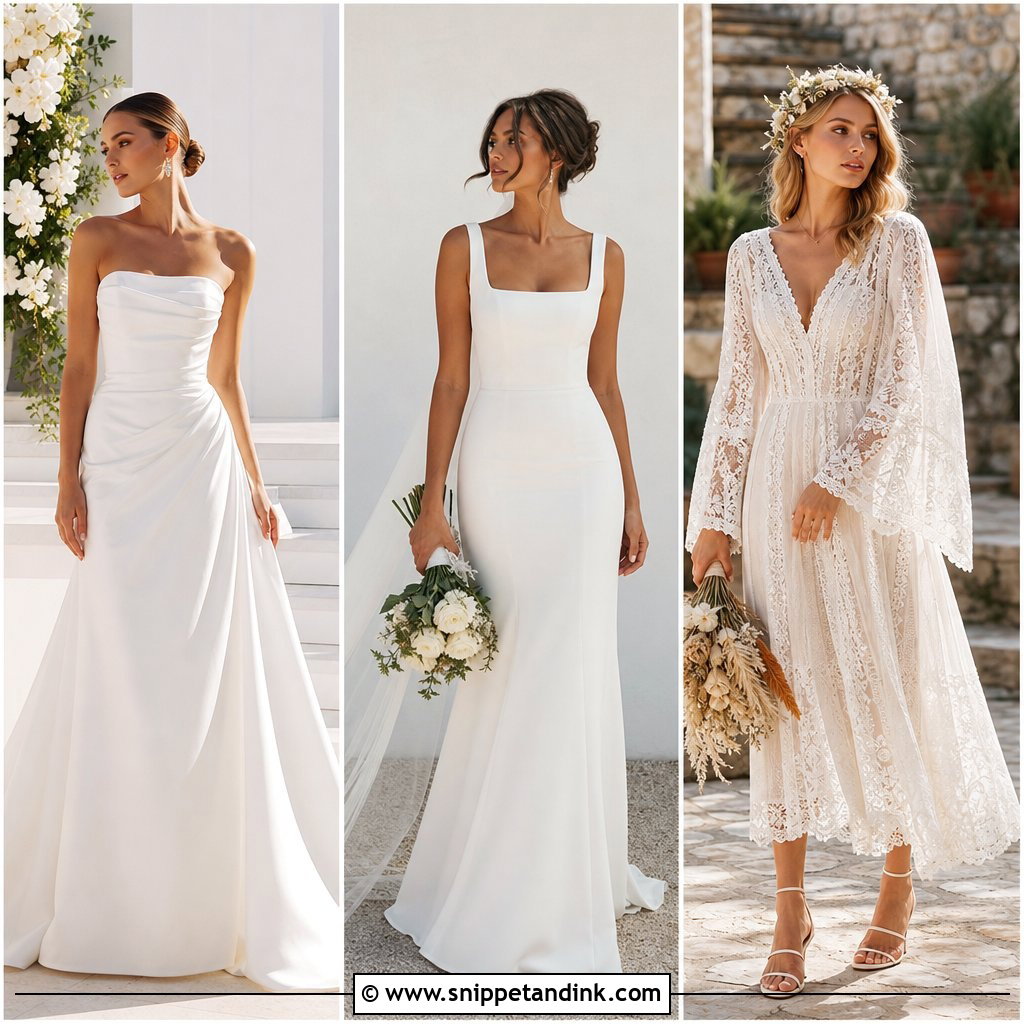
A satin column is understated and very modern, and it depends entirely on fit. The dress should skim the body, never cling, with enough structure in the bodice to support you. Draped necklines, wide straps or short sleeves make it feel secure. Choose the shade carefully: pearl white, ivory and light champagne look very different against different complexions, so compare them side by side. One thing I always tell brides about satin is that it shows creases where you sit. For an evening ceremony followed by a seated dinner, a heavier satin or a satin-backed crepe recovers better than a thin, shiny one.
4. Chiffon Cape Wedding Dress
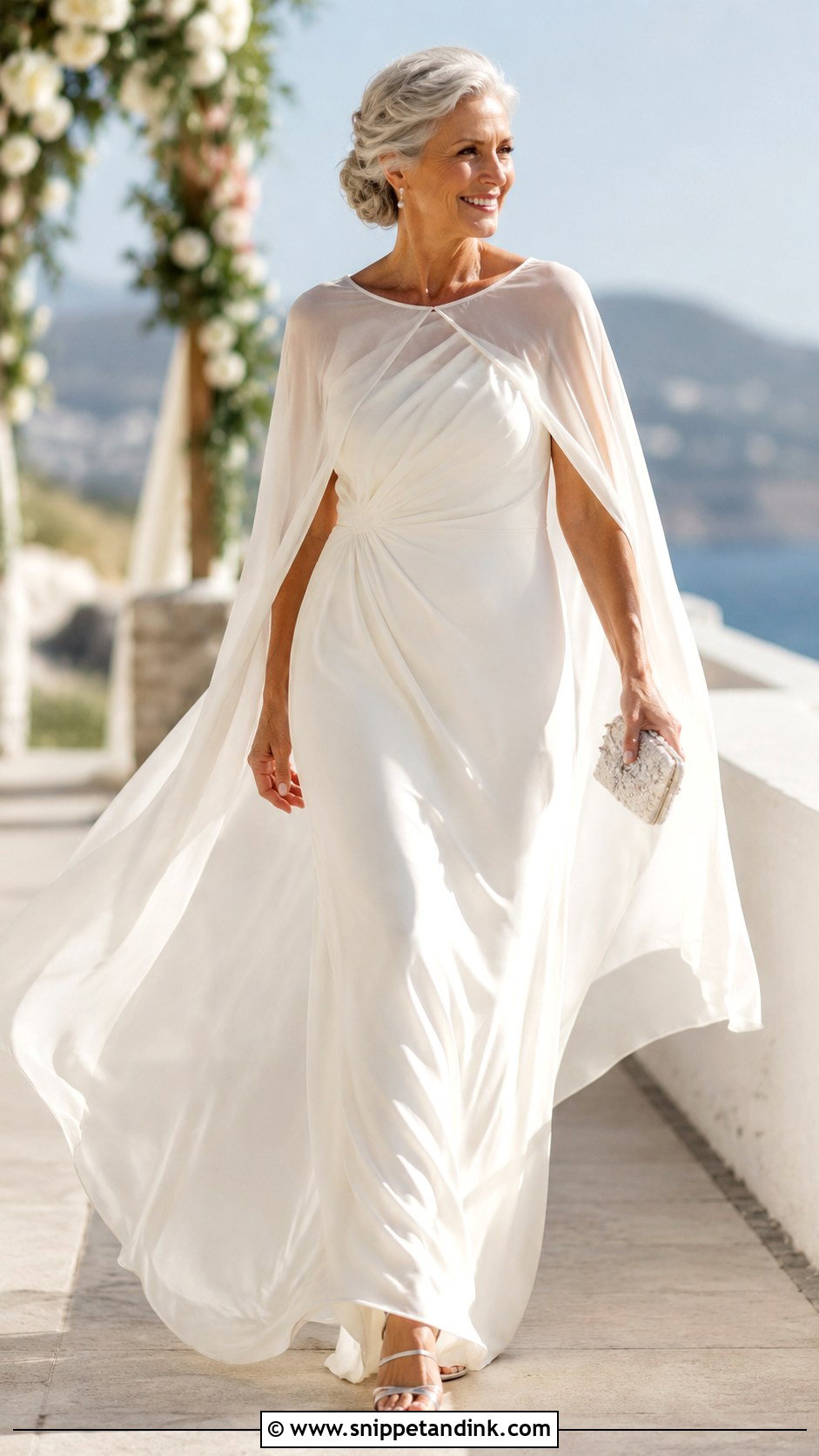
Chiffon is one of the most comfortable fabrics for a long day: it’s light, it breathes, and it moves when you walk. A floor-length sheath or A-line with a sheer cape at the shoulders gives arm coverage while leaving your arms completely free. Light pleating adds depth without bulk at the waist. The cape replaces a veil here, or keep the veil very short. Outdoors, chiffon catches a breeze nicely, but it also catches on things, so check bracelets and brooches for prongs that could snag it. It suits a coastal ceremony, a rooftop or a destination wedding.
5. Ivory Wedding Dress With Jacket
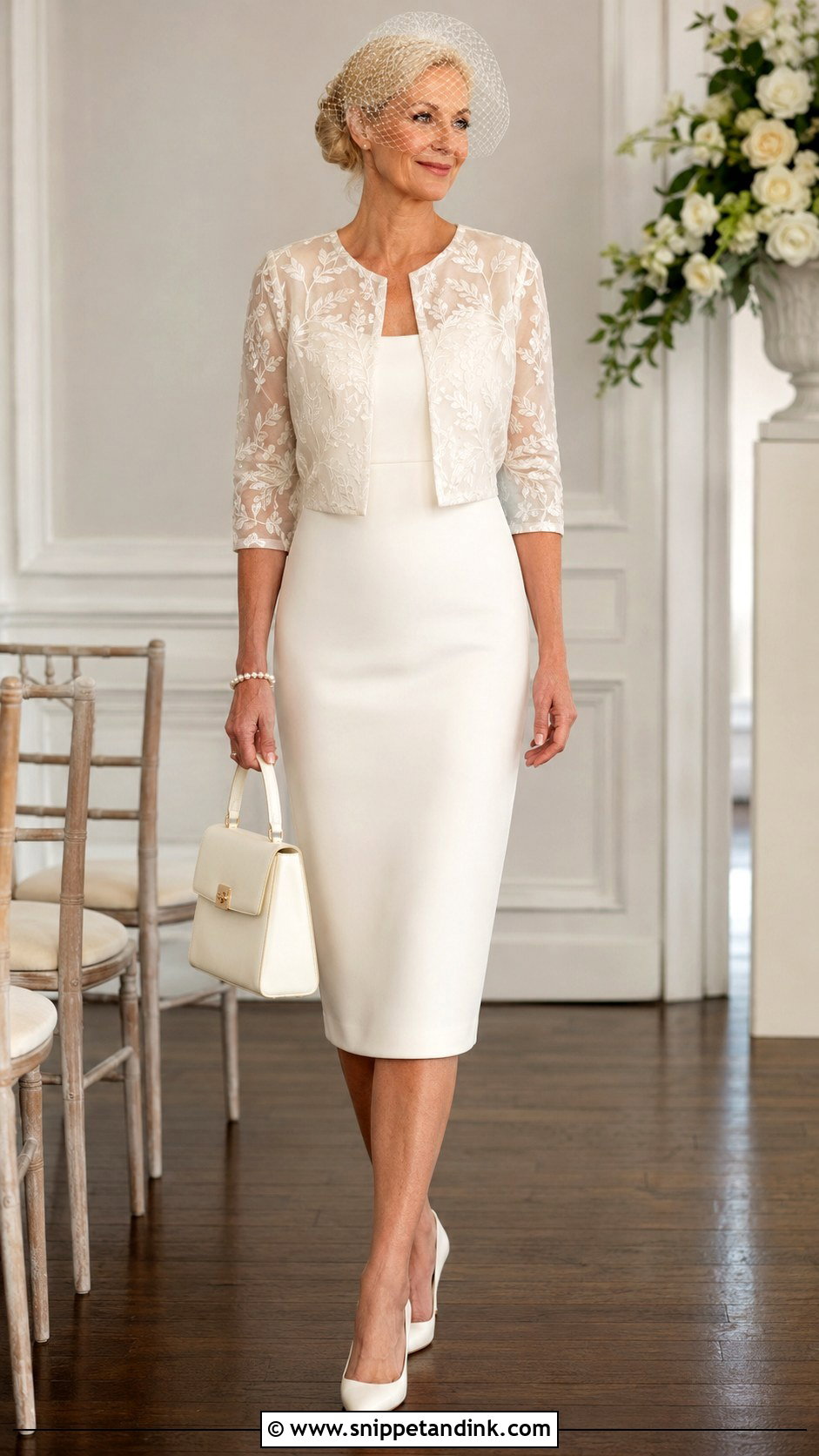
Sheath plus jacket is the most practical combination on this list. Start with a sleeveless or short-sleeve sheath that sits close without being tight, then add a cropped lace, embroidered organza or crepe jacket ending at the natural waist. The short jacket defines your shape and comes off for dancing or a warm afternoon. Air-conditioned venues and changeable weather make this genuinely useful. When fitting, have the jacket’s shoulders checked separately from the dress. A jacket that fits the shoulder but pulls across the back when you raise your arms will annoy you all day. A birdcage veil or decorative comb matches its tailored feel.
6. Off-the-Shoulder Midi Wedding Dress
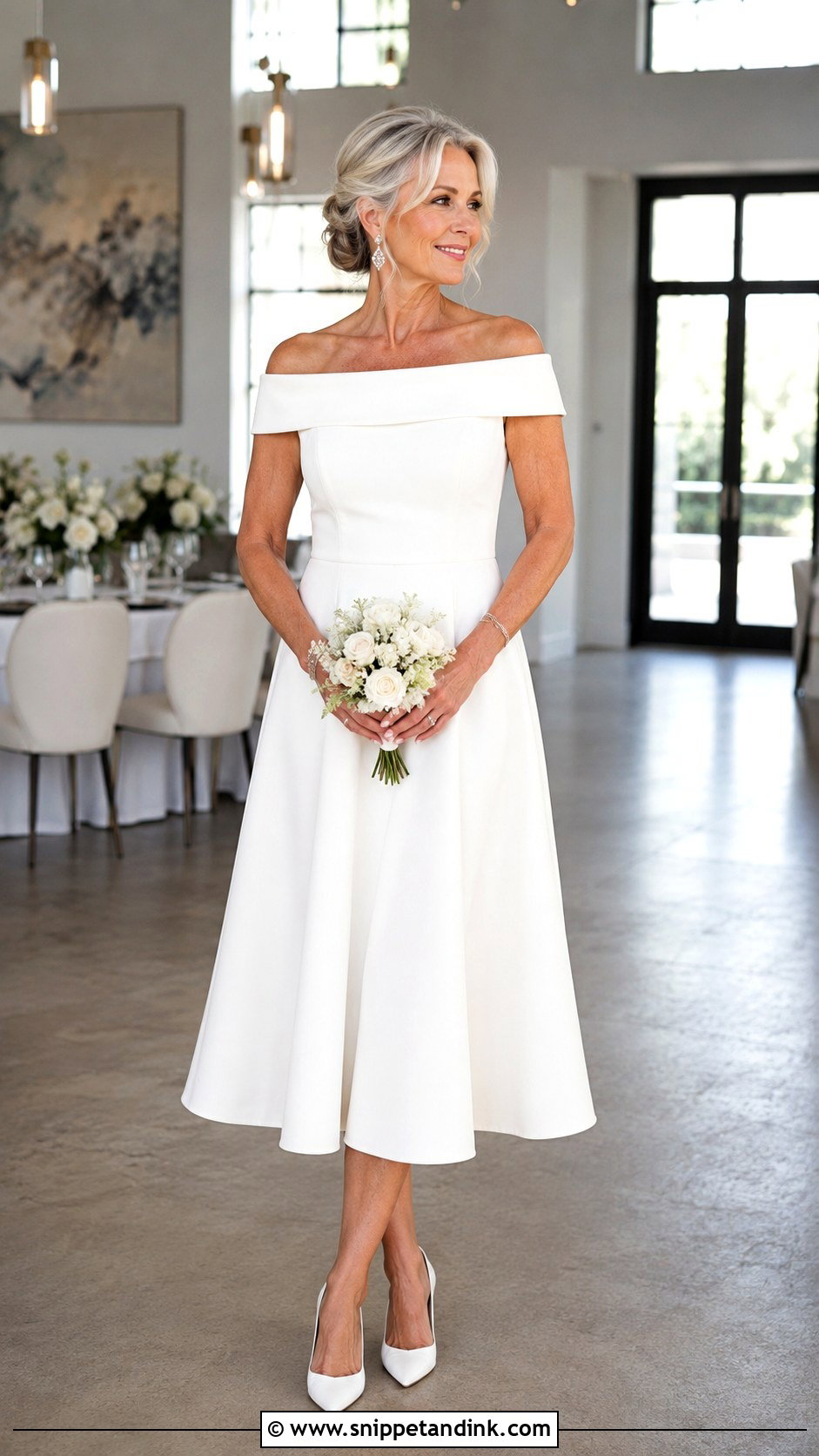
Choose a fold-over portrait collar rather than a narrow elastic band if you want an off-the-shoulder midi you won’t keep adjusting. The wider collar sits securely across the shoulders. A fitted bodice and lightly flared midi skirt keep it romantic but not overly formal. Stretch crepe or matte satin holds the shape. Raise your arms at the fitting: off-the-shoulder cuts limit how high you can reach, and you’ll want to hug people. Wear your hair low or swept to one side so the collar shows. It suits a courthouse ceremony or an afternoon reception.
7. Empire-Waist Wedding Dress
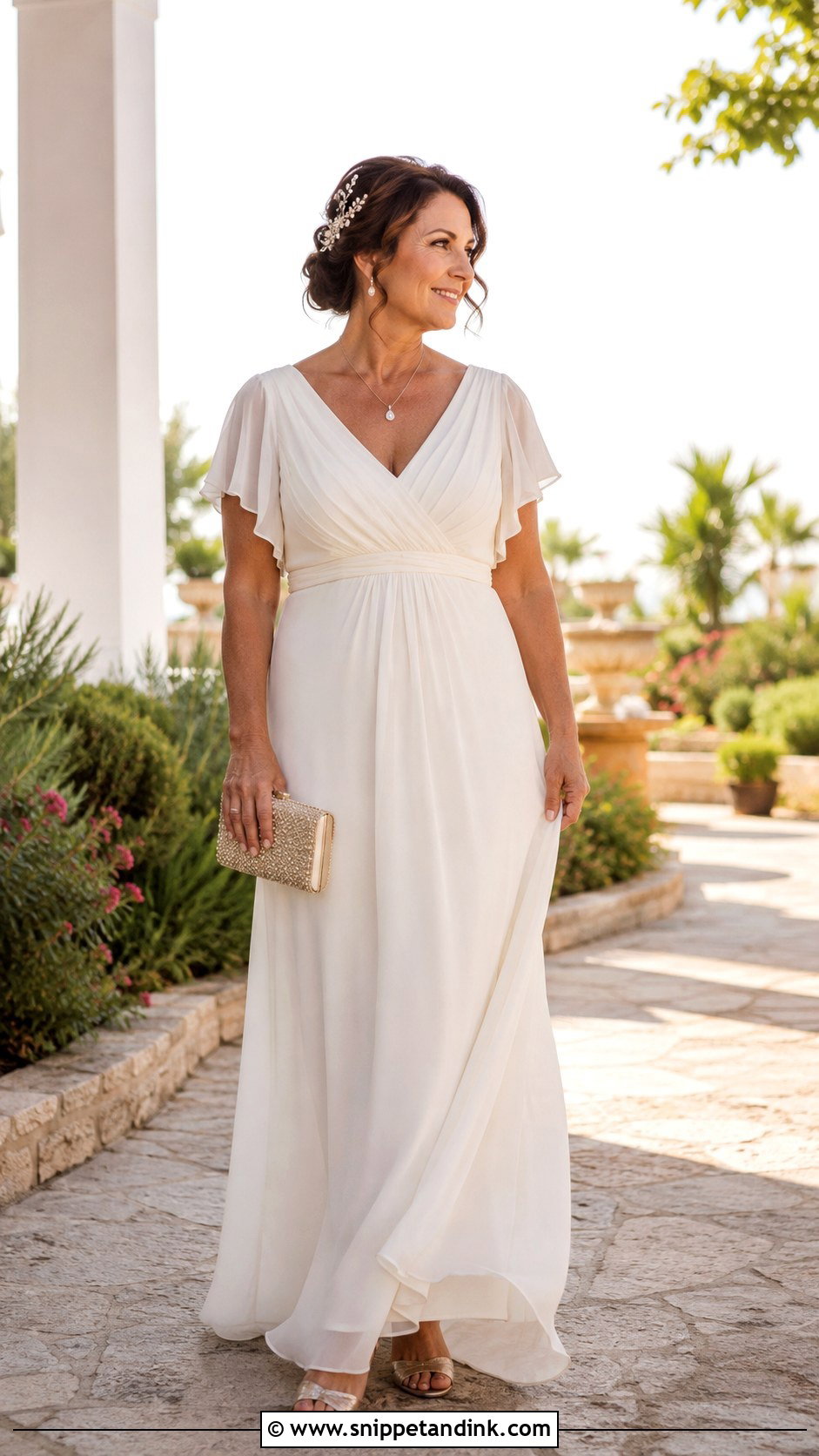
Empire waists are about ease. The seam sits just under the bust and the skirt falls freely, leaving lots of room at the waist and hips for sitting through a long dinner. Chiffon, silk georgette and soft tulle drape best. Flutter sleeves and a gently crossed V-neck suit the raised waist. The thing I watch: the under-bust seam must fit snugly and sit level, or the dress loses its shape and looks like a nightgown. A floral comb or narrow headband can replace the veil. Petite brides can try a slightly raised waist to lengthen their line.
8. High-Neck Lace Wedding Dress
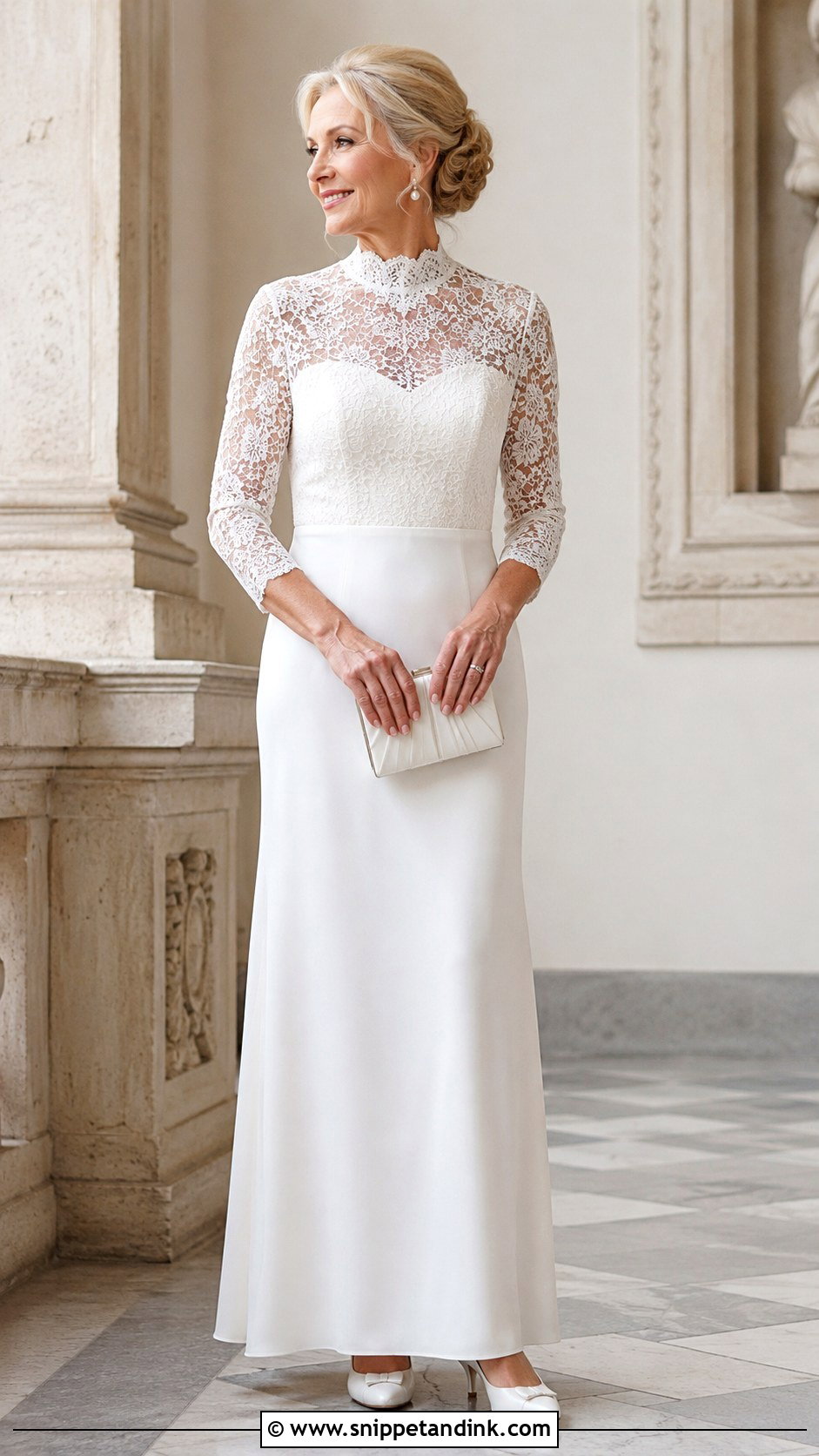
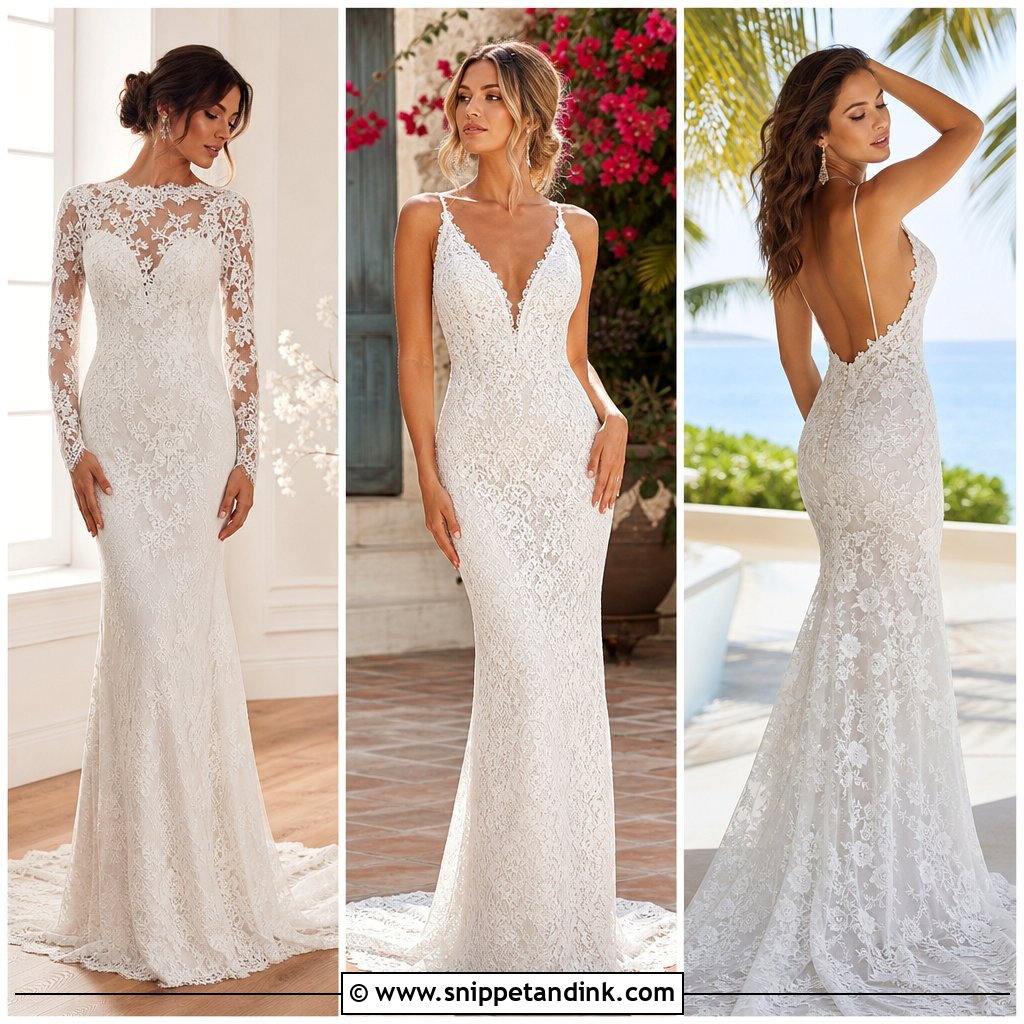
High necks show off lace well, especially with a streamlined skirt. I’d look for a soft mock neck, a scalloped collar or a sheer lace yoke, not a stiff band. Stiff collars rub when you turn your head, and you’ll be turning to greet people all day. Three-quarter or full sleeves continue the lace; a crepe or chiffon skirt keeps it balanced. Wear your hair up so the neckline isn’t hidden. The upper half has plenty going on, so a plain veil or no veil at all works best. It suits historic venues and cooler months.
9. Wrap Wedding Dress With Sleeves
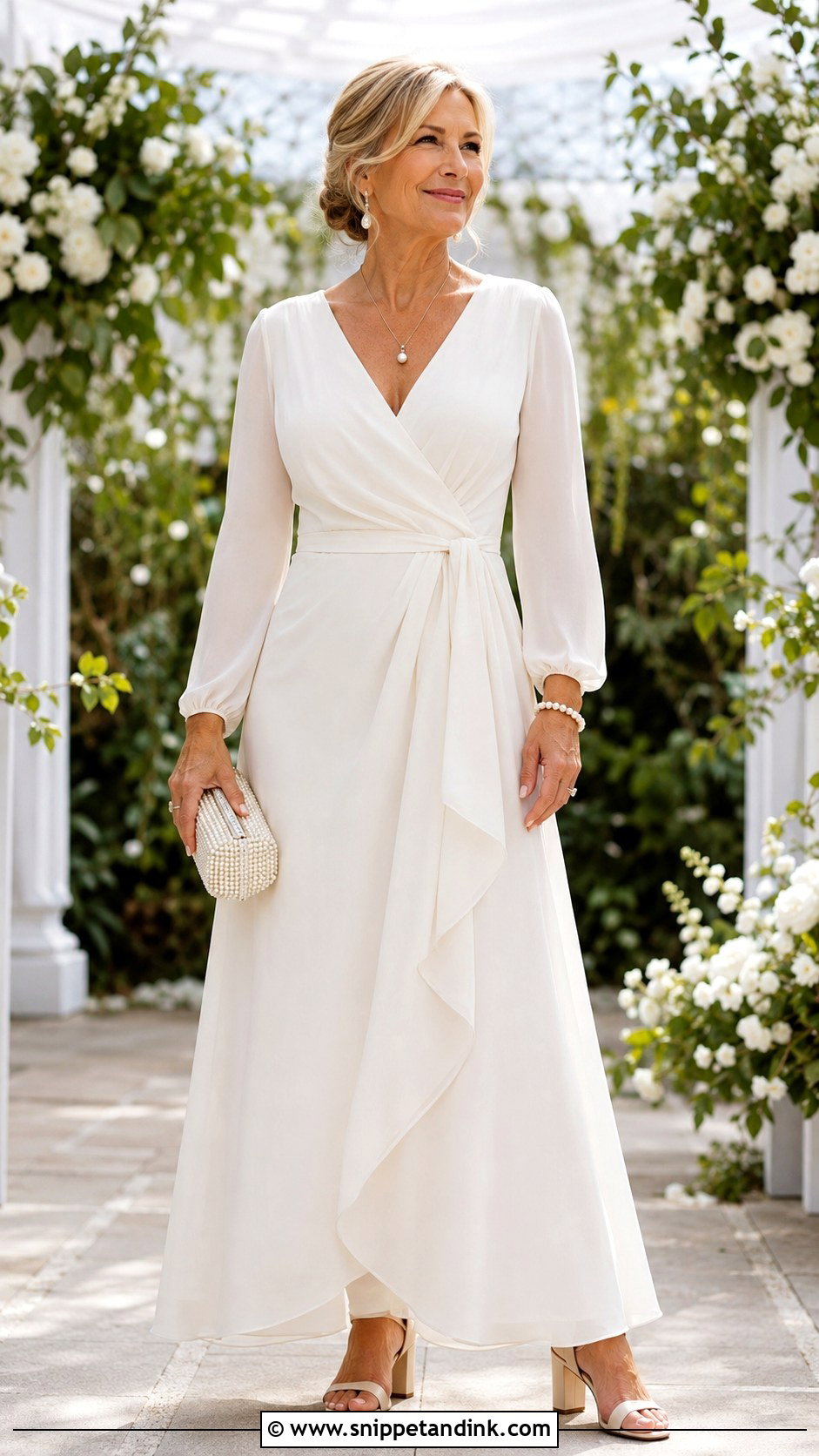
A wrap dress gives a soft, defined waist without rigid structure, which many brides find more comfortable than boning. I’d choose a faux-wrap with an internal closure over a true wrap, because a true wrap shifts and gapes as you move. Elbow-length flutter, bracelet or sheer bishop sleeves add movement. A midi or ankle-length skirt keeps it easy to wear. If the V feels too open, a discreet lace inset adds coverage without changing the line. Ivory chiffon or crepe keeps it bridal. Sit and lean forward at the fitting to make sure the crossover stays closed.
10. Beaded Sheath Wedding Dress
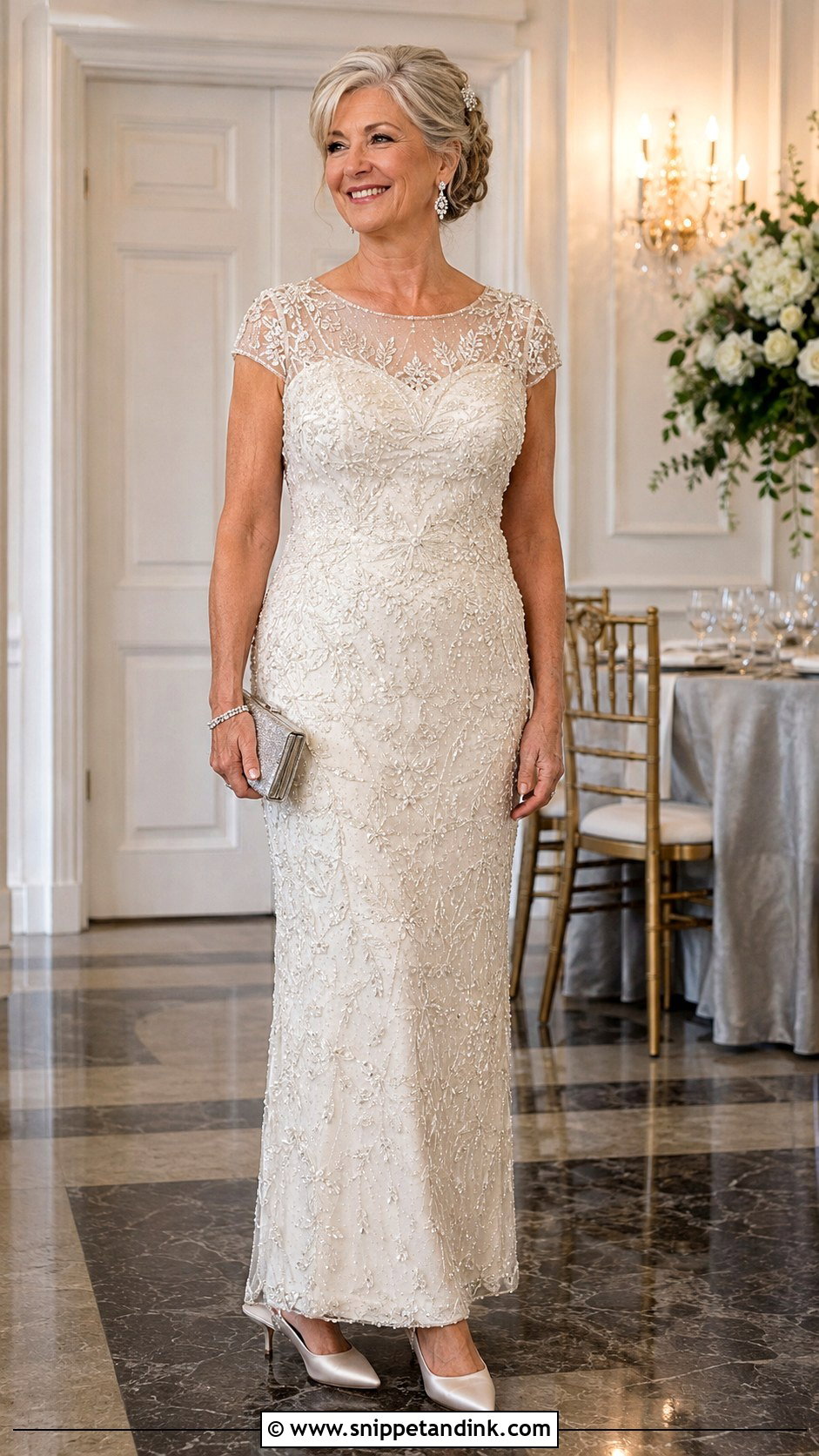
Beading on a sheath adds evening sparkle, and tonal beads, pearls or sequins in a fine linear or botanical pattern keep it from looking showy. A mesh overlay with a smooth lining lets the dress skim the body. Cap, flutter or sheer elbow sleeves balance the fitted shape. Two practical warnings from fittings. Beading is heavy, so a fully beaded dress gets tiring to wear over several hours; and beads under the arms rub with every movement. Check both before committing, and ask whether beads can be removed from the underarm area during alterations.
11. Square-Neck Wedding Dress
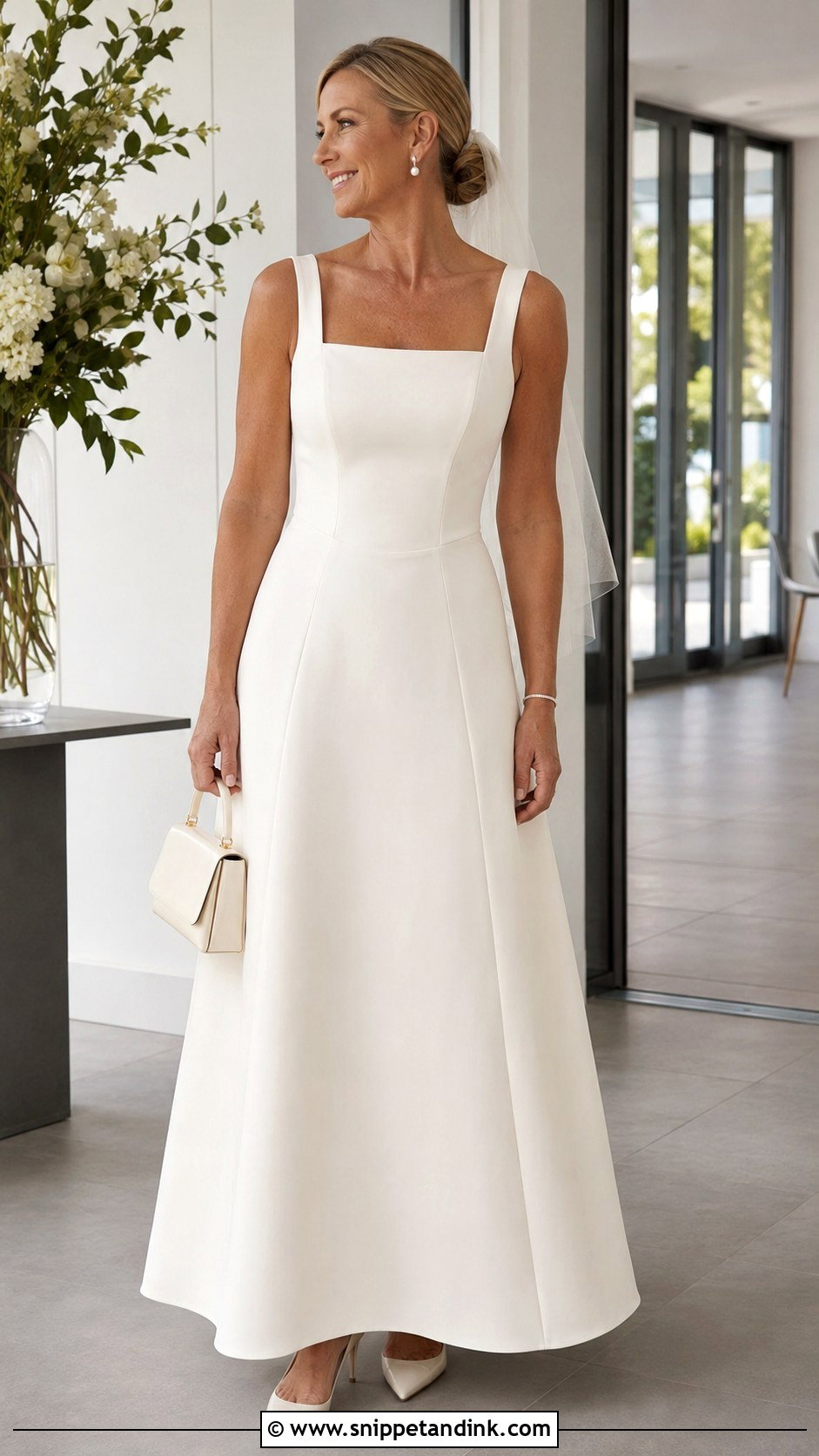
Square necks frame face, collarbones and shoulders cleanly, and with wide straps or short sleeves the bodice feels supportive without heavy boning. Princess seams give quiet shaping. Pair it with an A-line, a fit-and-flare or a straight midi, depending on formality. Matte crepe looks modern; jacquard adds subtle pattern. This is the dress I suggest when a bride wants simplicity but finds a slip dress too bare. The square neck must lie flat when you lean forward, so check that at your fitting, and ask for the straps to be shortened if the front edge stands away.
12. Floral Embroidered Wedding Dress
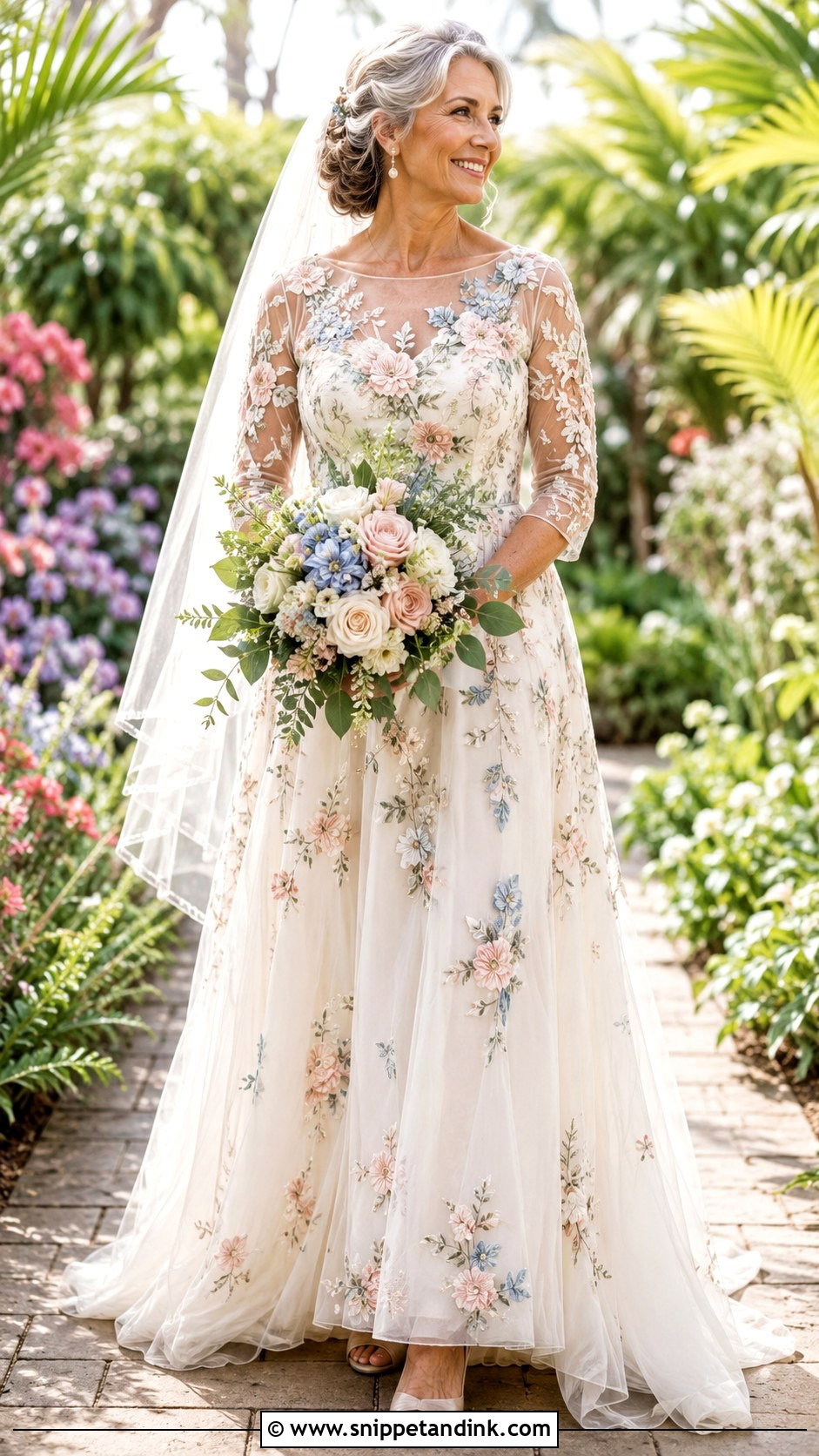
Embroidery adds colour without loud prints. Ivory tulle with white, champagne, blush or pale blue flowers gives a romantic look, and a lined, fitted bodice keeps it structured underneath. Sheer elbow sleeves can carry the pattern up the arm. I’d pick the bouquet after the dress, repeating one or two thread colours, and keep the veil edge plain. Brides wanting subtlety can choose tonal white embroidery. One fitting point: embroidered tulle is hard to take in without cutting through the motifs, so ask how the seamstress plans to alter it before you order a size that needs big changes.
13. Plus-Size A-Line Wedding Dress
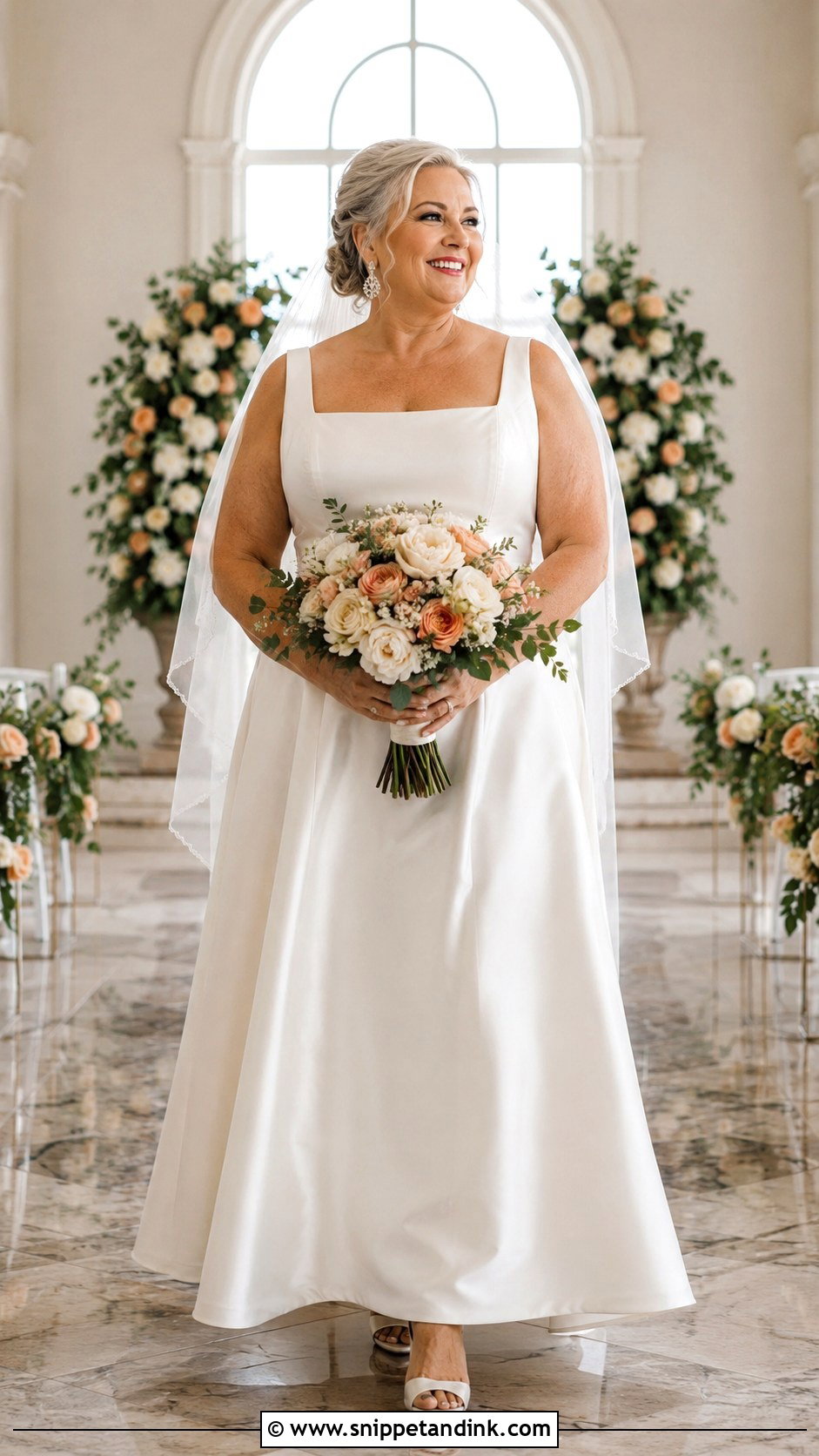
A plus-size A-line works when the bodice is built properly: wide straps, smooth lining, secure cups and good seaming. V, scoop and square necks all suit it when fitted correctly. The skirt should fall cleanly from the waist without stiff petticoats adding volume. I always advise ordering to your largest measurement and tailoring the rest, since a dress is far easier to take in than let out. At the final fitting, move around for a while. You shouldn’t see pulling, gaping or find yourself adjusting anything, and if you do, it’s not finished yet.
14. Petite Midi Wedding Dress
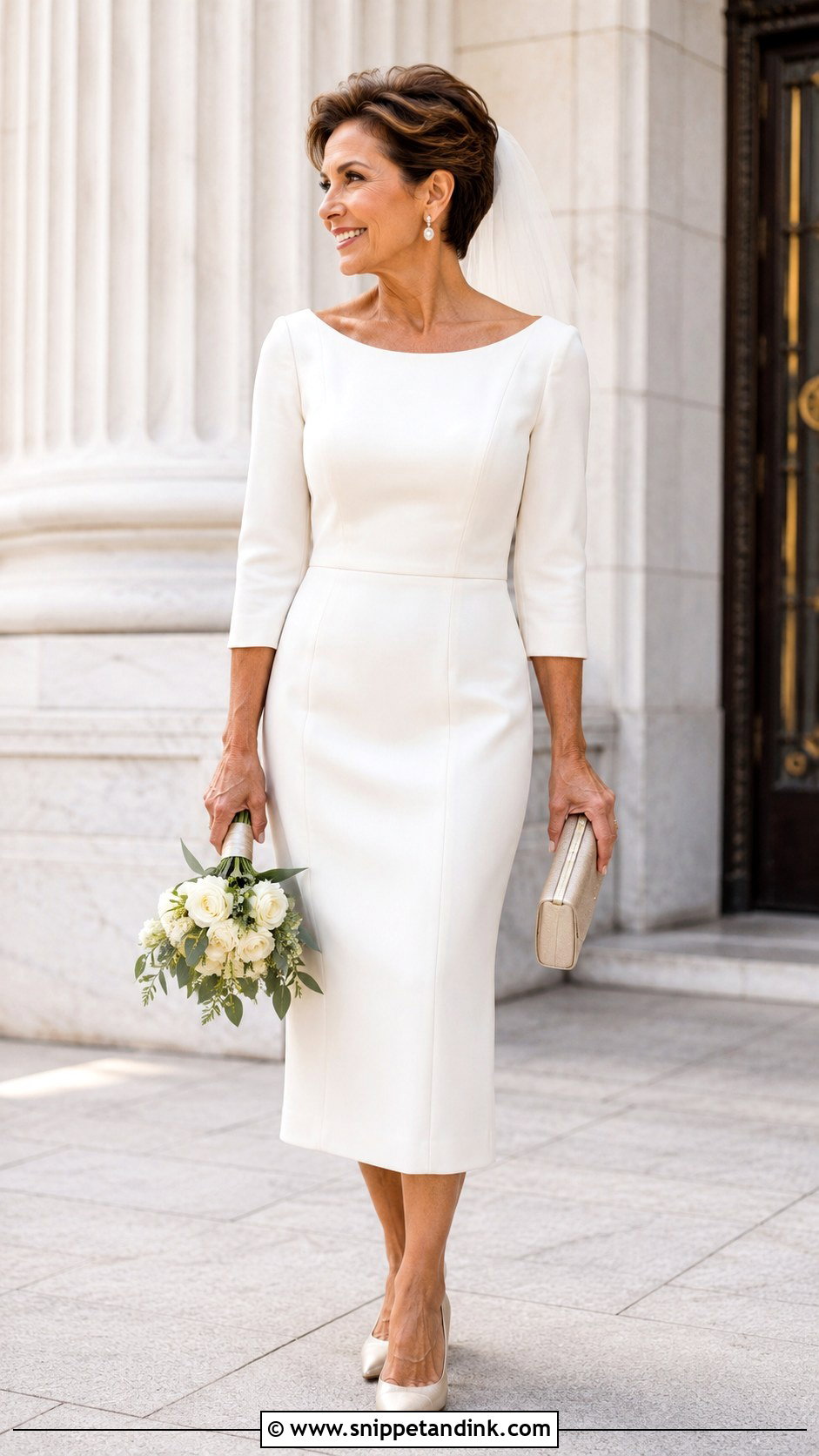
Petite brides look best when the dress respects their scale. A midi hem below the knee but above the ankle shows enough leg to stop the fabric overwhelming you. A fitted waist, vertical seams and an open neckline add length, and slim or sheer sleeves are better than puffed ones. Pointed toes in ivory or metallic leather extend the line further. Keep the bouquet and veil small, and skip oversized accessories. The exact hem height matters a great deal on a petite frame, so I’d have it pinned with your shoes on and look in a full-length mirror from a few steps back.

15. Boho Bell-Sleeve Wedding Dress
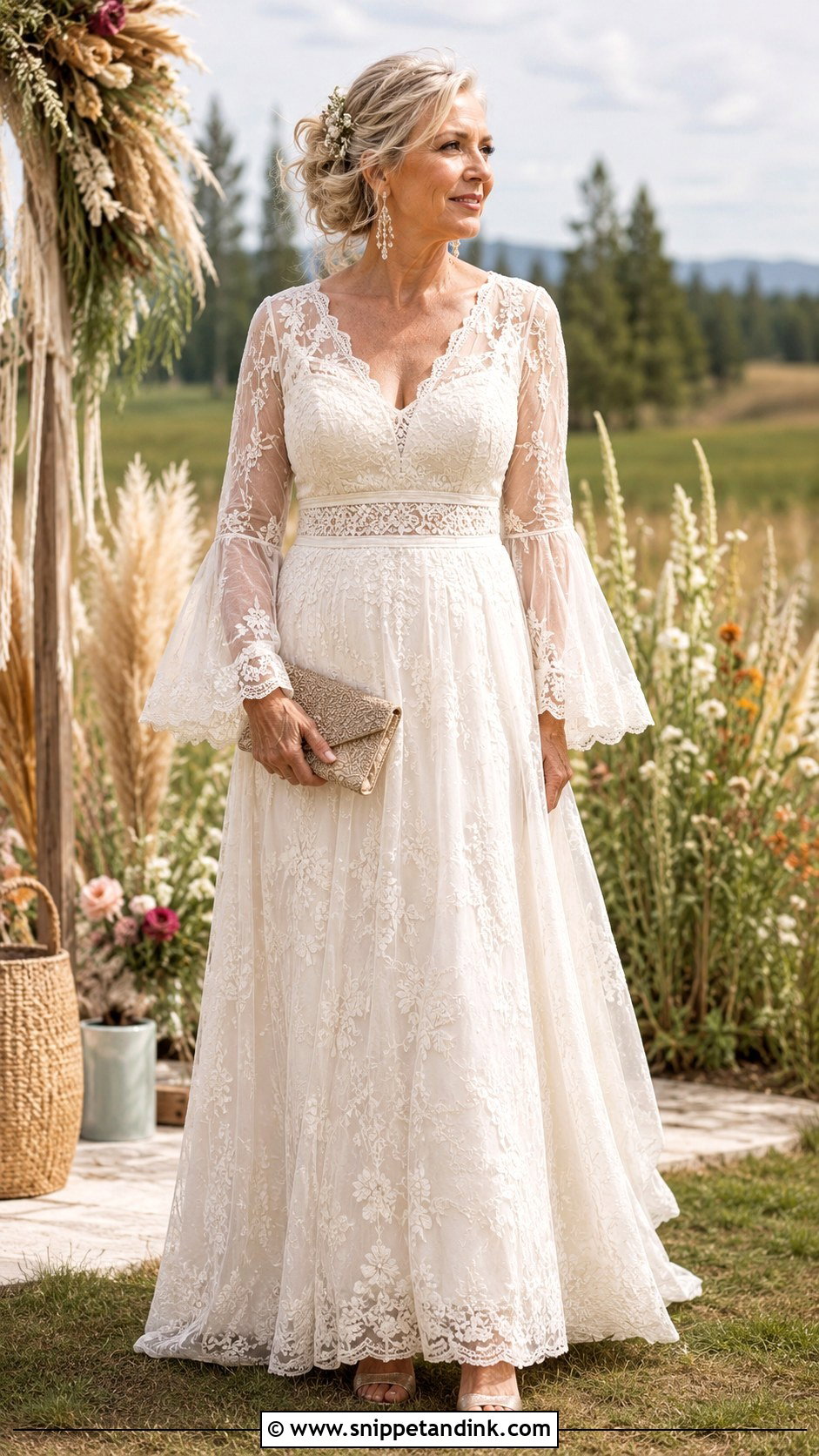
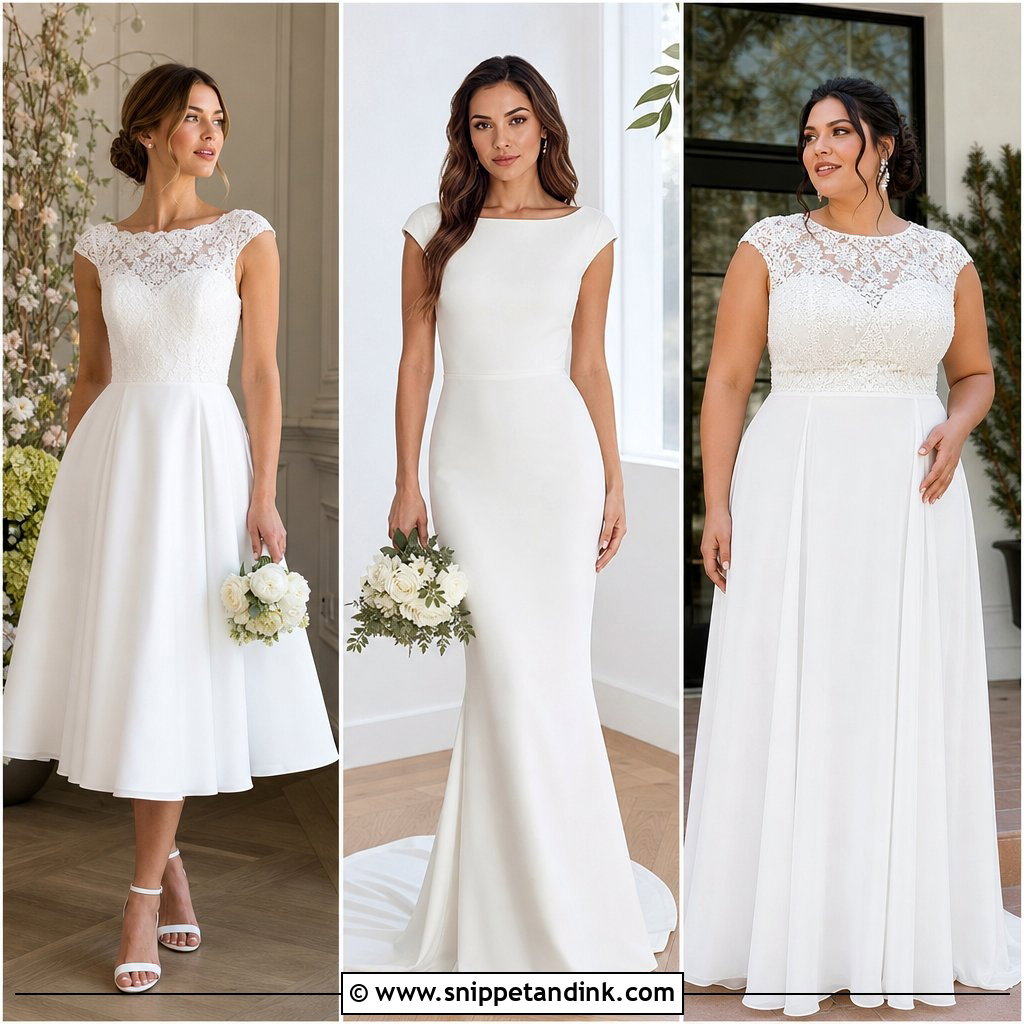
Bell sleeves give a boho dress personality, but length is everything. If they hang past the wrist, they’ll fall in your plate at dinner and get tangled in the bouquet, so I’d have them end just above the wrist bone. Soft lace or embroidered tulle with a smooth lining, an empire or natural waist and a fluid floor-length skirt complete the shape. A floral comb or a light greenery crown replaces the veil. Keep the bouquet loose but manageable. It suits meadows, desert venues and relaxed outdoor celebrations, and low heels help on uneven ground.
16. Courthouse Wedding Dress With Blazer
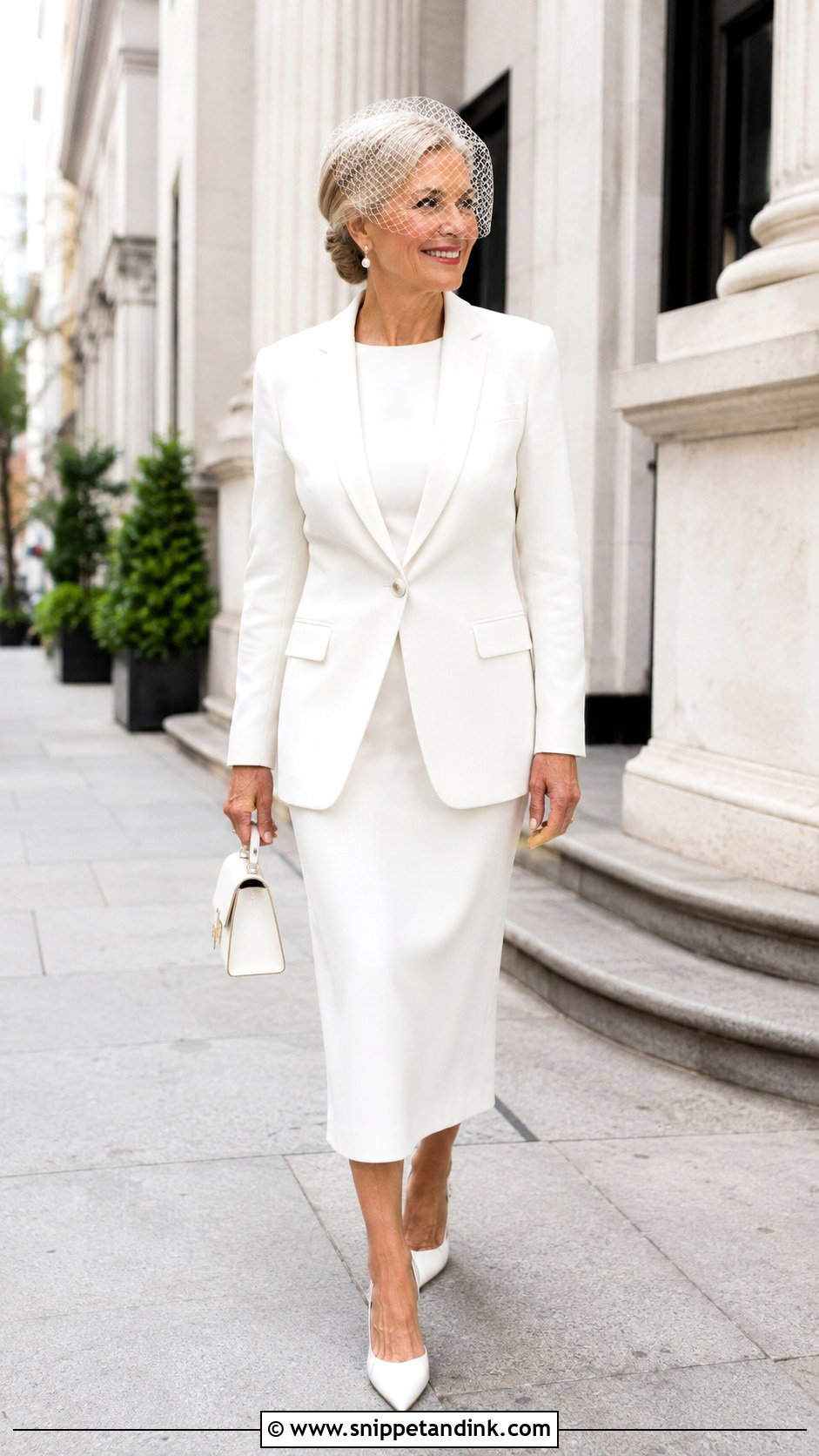
For a courthouse ceremony, a sheath and blazer looks smart, travels well and gives you two pieces you’ll wear again. Start with a knee-length or midi sheath in ivory crepe, satin or jacquard, then add a tailored single-breasted blazer. The blazer needs its own fitting: it should follow the waist and leave room across the shoulders when your arms are forward, as they will be when signing the register. Wear it for the ceremony and take it off for lunch. A birdcage veil or simple hair bow makes it read as bridal. Restyle both pieces separately afterwards.
17. Blush Wedding Dress
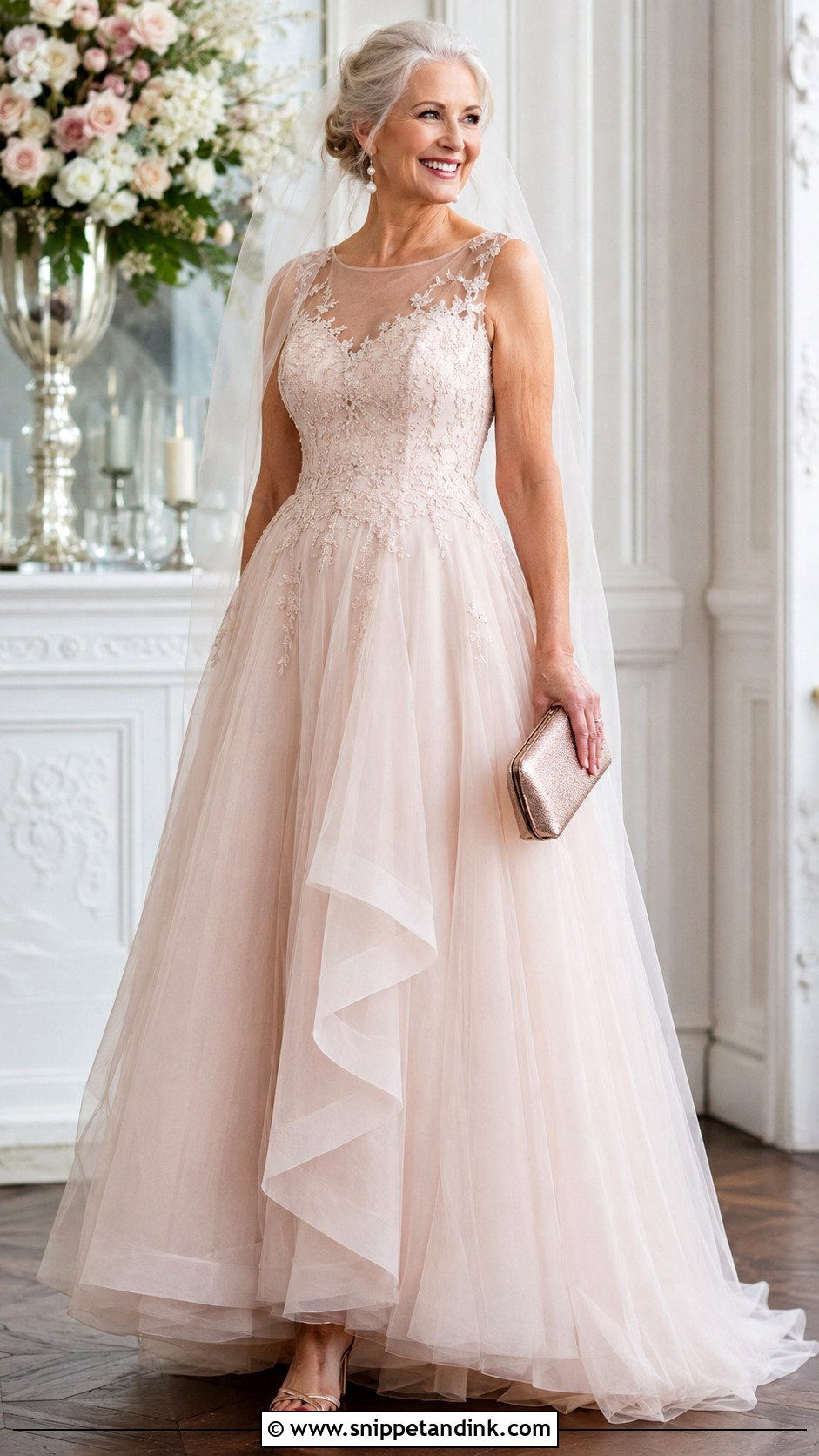
Blush suits brides who don’t feel like themselves in bright white. The trick is choosing a tone with enough contrast to your skin: pale pink, rose beige and nude blush look quite different, and one that’s too close to your complexion washes out. I hold swatches against the face in daylight before deciding. Blush works on a tulle A-line, a lace midi or a satin column. Champagne, pearl and soft metallic accessories coordinate well. A sheer ivory veil gives contrast, or a blush-edged veil keeps everything tonal. It photographs softly in natural light.
18. Pleated Chiffon Wedding Dress
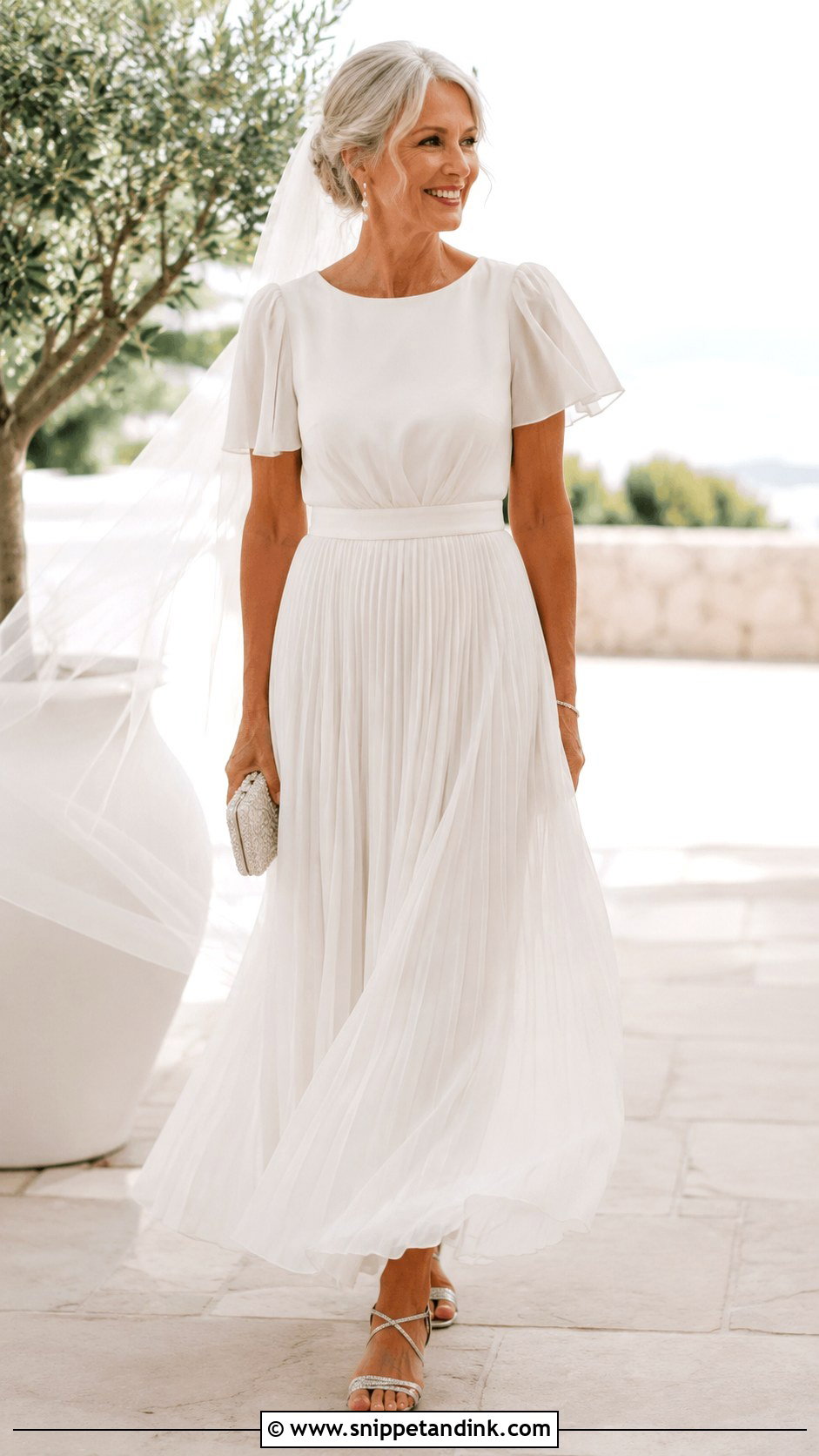
Narrow vertical pleats give chiffon movement and texture, and they make a dress swing nicely as you walk. Keep the bodice smooth or lightly draped so the pleats aren’t competing with anything. A defined waistband adds structure, and short flutter or sheer bracelet sleeves add coverage. Choose ankle or floor length for the venue. Pleated chiffon is very forgiving in warm weather. Two notes: check the lining is opaque in bright sun, since pale chiffon can turn see-through outdoors, and make sure the dress is steamed, not ironed, before the day, as an iron flattens the pleats.
19. Three-Quarter-Sleeve Wedding Dress
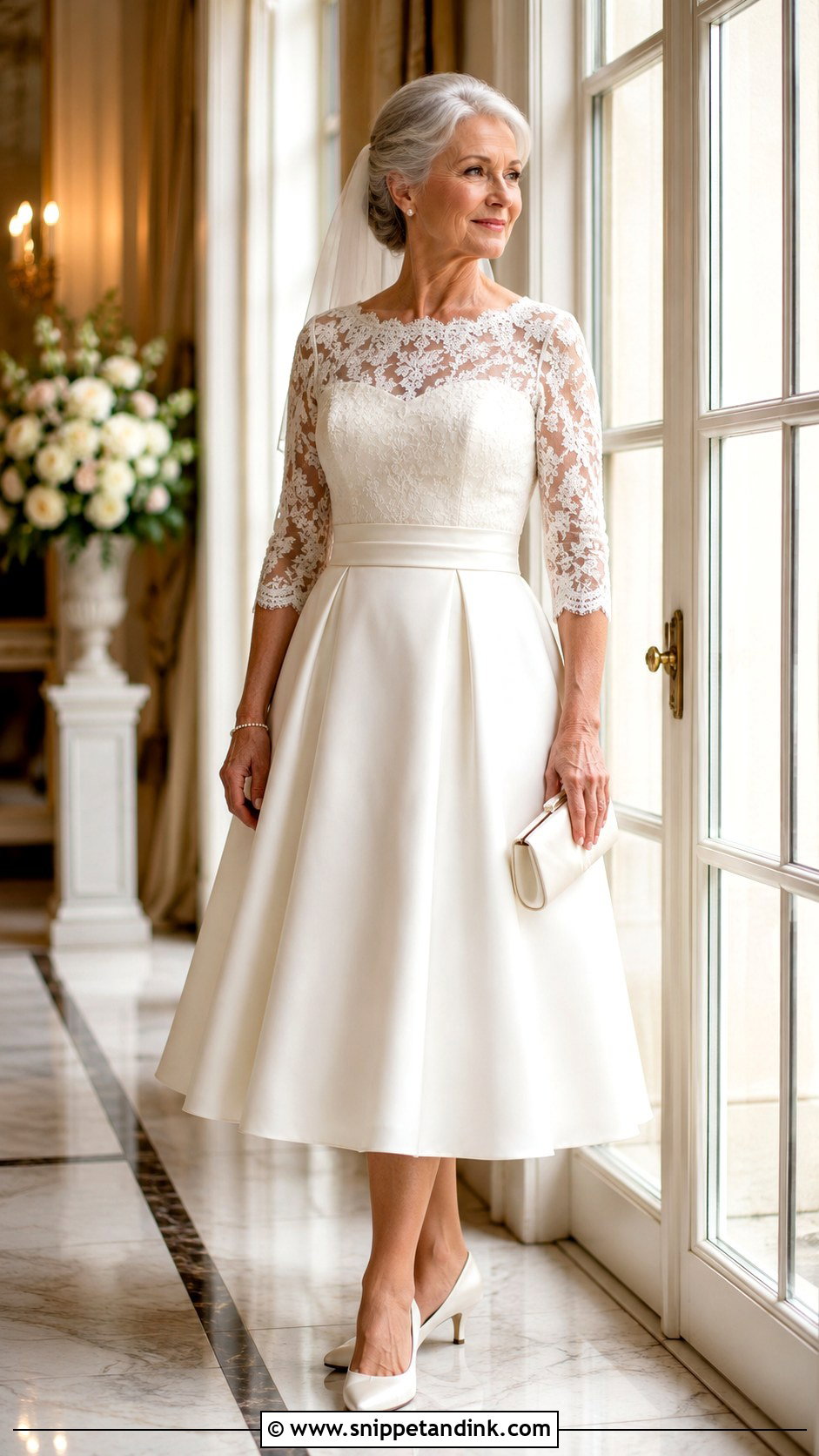
Here’s a sleeve length that suits almost everyone. Three-quarter sleeves cover the upper arm and stop above the wrist, leaving space for a bracelet or a watch that means something to you. Fitted lace looks romantic; smooth crepe is cleaner. A tea-length A-line feels light, while a floor-length column is more formal. These sleeves also sit nicely under a cropped jacket on cooler days. Check that the sleeve lets you bend your elbow fully, as lace sleeves are often cut slim. Keep the veil plain so it doesn’t compete with the sleeve detail.
20. Minimalist Wedding Dress With Capelet
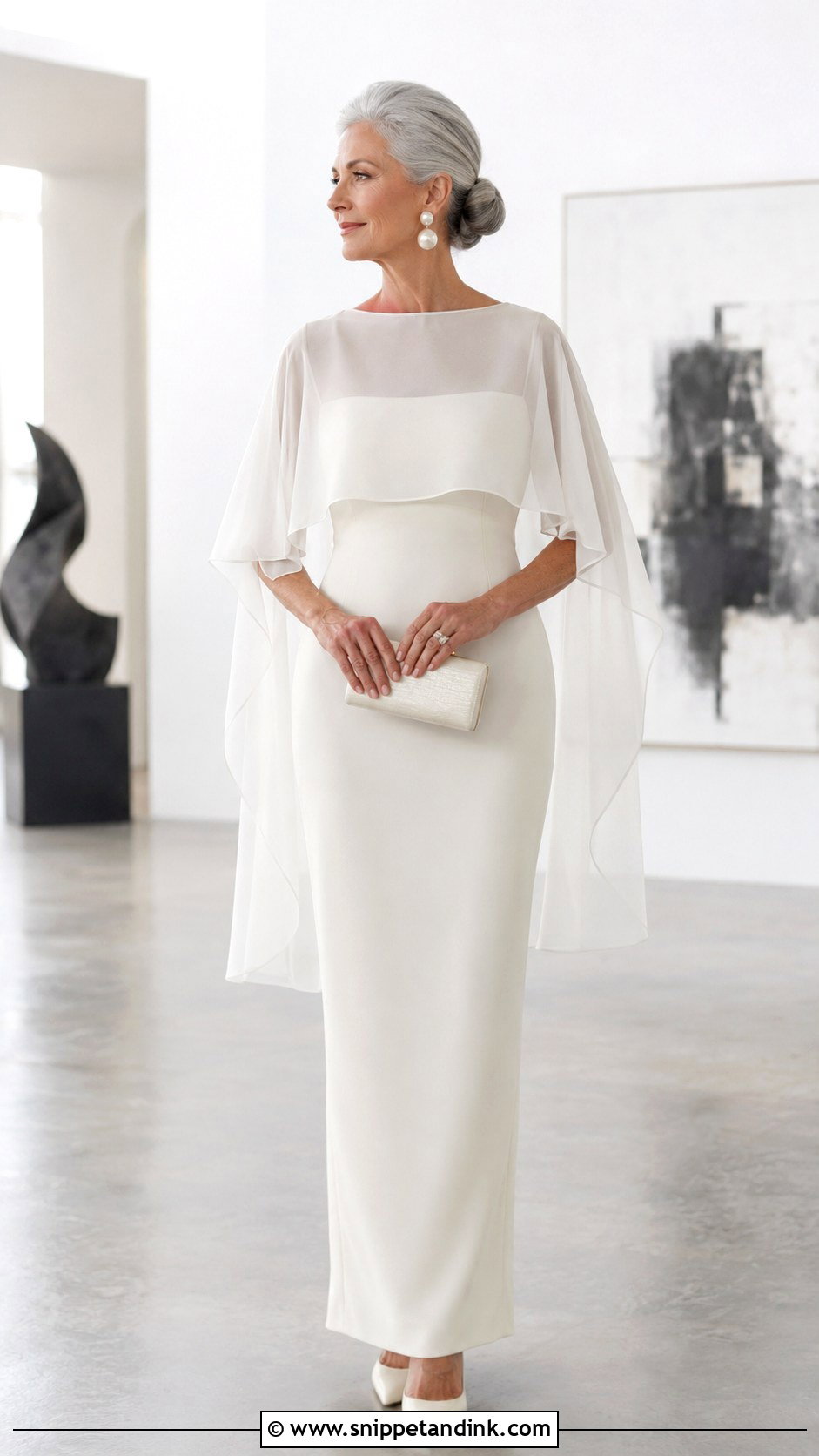
A removable capelet gives a simple crepe dress some ceremony drama and then comes off for the reception. Start with a sheath or A-line with minimal seams, then add a sheer organza, chiffon or matching crepe capelet that ends at the elbow or waist. Ask how it fastens. A small hook at the neck or snaps along the shoulders are neater than a tie, which can loosen and slide back over the course of the ceremony. A low bun lets the capelet fall smoothly. Skip the veil, or wear a short plain one. It suits galleries, hotels and city venues.
Which Fabrics Still Look Crisp After Dinner
Smaller weddings are often built around long seated stretches: a meal, speeches, time with family. That’s worth thinking about when choosing fabric, because the dress you walk in at noon is the dress in the photos at nine.
- Crepe and jacquard recover well after sitting and rarely show seat creases.
- Chiffon and georgette hide creases in their drape and are the most forgiving overall.
- Lightweight satin creases across the lap and shows it under flash; heavier satins hold up better.
- Linen looks relaxed and suits outdoor weddings, but expect it to crease within an hour, and only choose it if you’re happy with that look.
Try a simple test in the fitting room: sit down for ten minutes, stand, and look at your lap and the back of the skirt. If the creases stay, they’ll be there all evening. Have the dress steamed the day before, keep a small travel steamer with whoever is helping you, and hang the dress, not fold it, between the ceremony and the reception if you’re changing location.
Wear What You’d Have Picked at Any Age
The bridal outfit that works is the one that looks like the woman wearing it. Age doesn’t limit your hemline, colour, sleeve or level of formality. Concentrate on fit, comfortable construction, good proportions and details that mean something to you. Try a couple of shapes you wouldn’t normally choose, and take your actual shoes and undergarments to every fitting. A skilled seamstress can make even a simple ready-to-wear dress look made for you. Chiffon, crepe, lace or satin, choose the one you can’t wait to put on.
You'll Like These Ideas:





Leave a Reply