
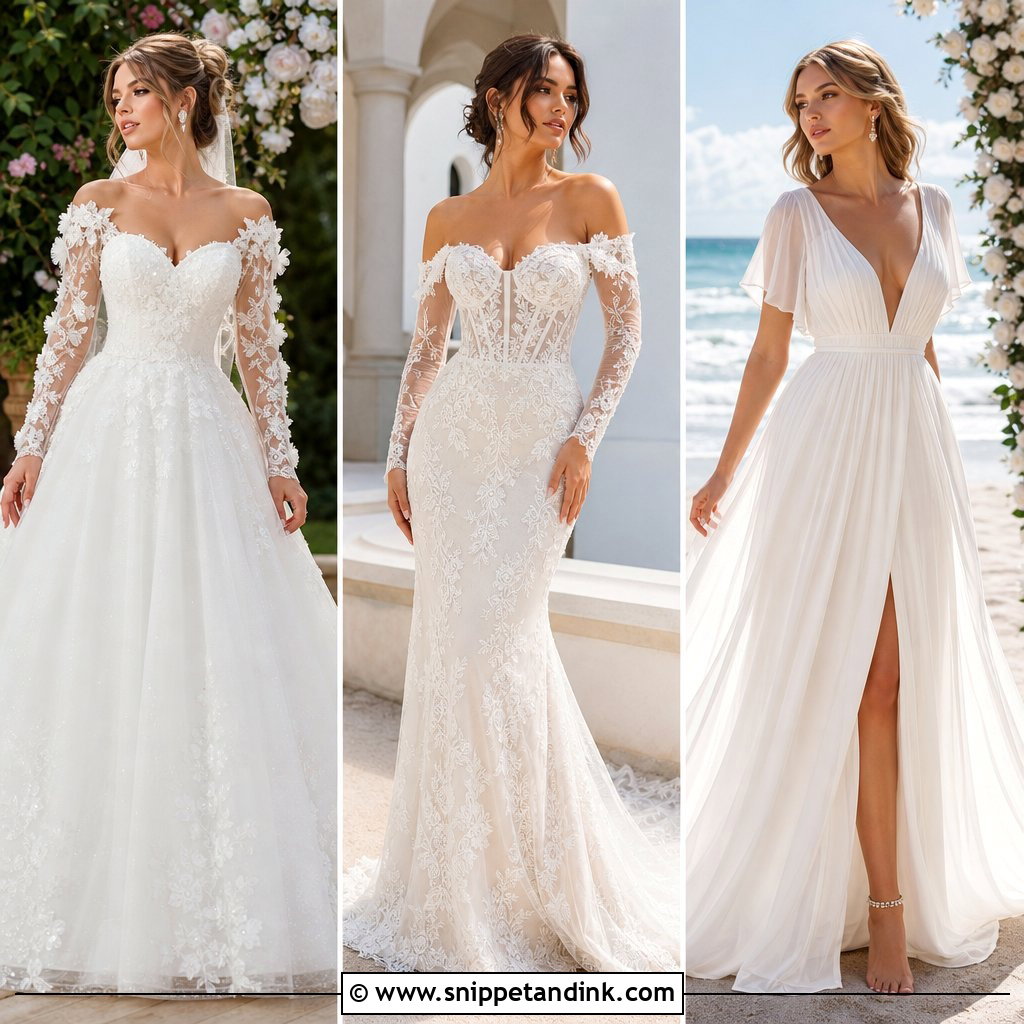
A cap sleeve is barely a sleeve at all: a short piece of fabric that covers the top of the shoulder and stops before the arm really begins. That small amount of coverage changes a lot. It gives a strapless bodice something to hang from, it softens a square neckline, and it means you aren’t hitching the dress up all evening. Lace reads romantic, structured satin reads cleaner, and chiffon feels lighter in the heat. I always style these gowns from the shoulders out, because the sleeve sits right where earrings, hair and veil all meet. The looks below run from ball gowns to short reception dresses, with notes on what I’d pair with each and what to check at fittings.
Where Should a Cap Sleeve End on Your Arm?
The sleeve looks tiny on the hanger, but on the body a centimetre either way changes how your arms and shoulders read. These are the three points I check on every bride before we talk about lace or beading.
- The edge. A cap sleeve that stops exactly on the widest point of the upper arm makes the arm look wider. Ending a little above or a little below that line is almost always better.
- The armhole. If it is cut low, the whole bodice lifts every time you raise a hand to wave or hug. A higher, closer armhole gives more freedom, oddly, because the sleeve moves with you.
- The shoulder seam. It should sit on top of your shoulder bone, not slipping toward the back. If it drifts, the neckline will pull at the front all day.
Try each gown with your arms down, then across your body as if holding a bouquet. That second position is how you’ll stand in most ceremony photos, and it’s when a badly placed sleeve bunches.
1. Lace A-Line Cap Sleeve Wedding Dress
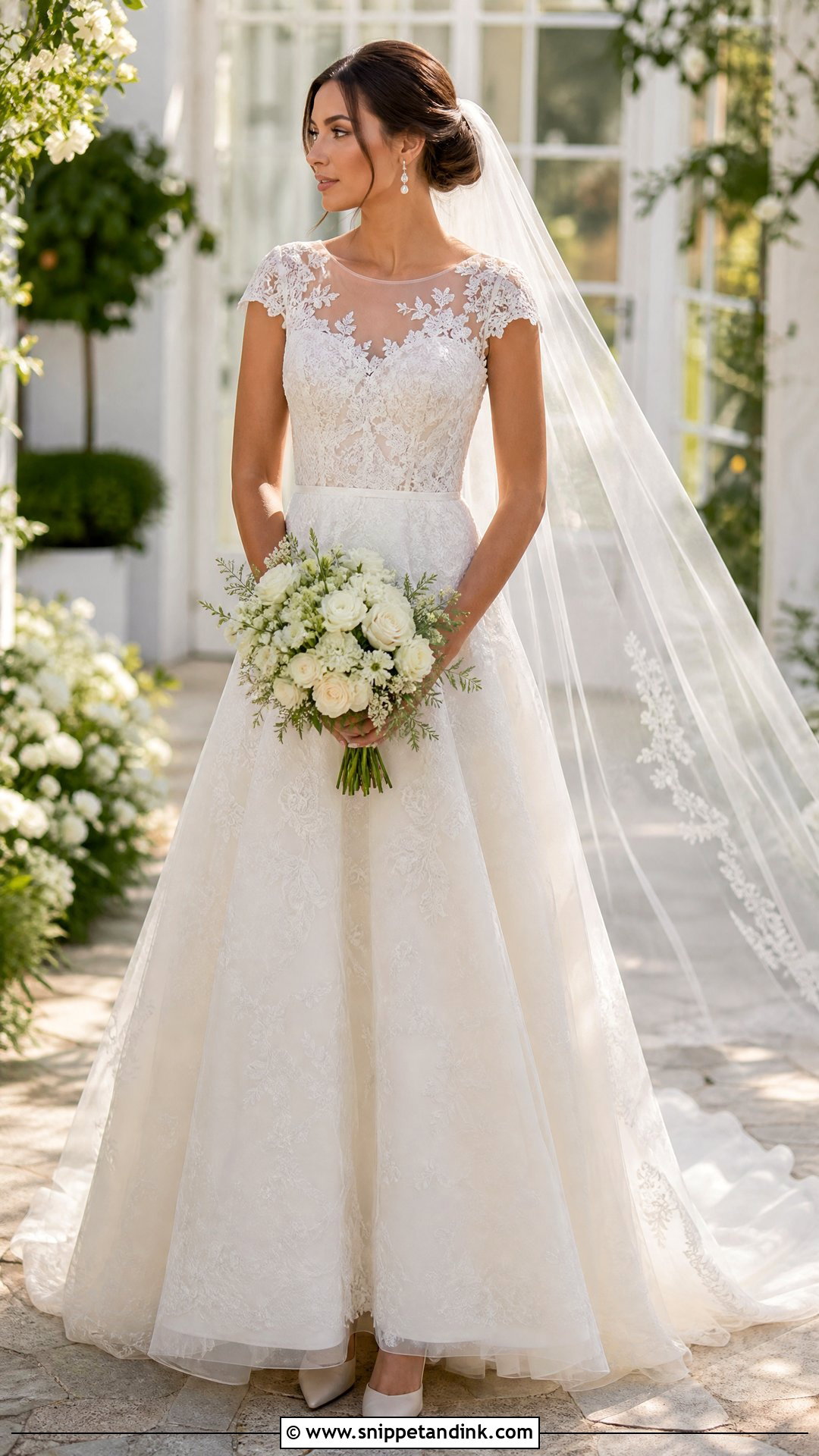
Lace that runs straight from the bodice into the sleeve, with no seam interrupting it, is what makes this A-line look so calm. A V-neck or soft sweetheart lining keeps the top open, and a skirt with scattered appliqués carries the lace down instead of stopping hard at the waist. I’d style it with pearl drops, an airy fingertip veil, pointed ivory pumps and a low bun that leaves the sleeves and back on view. A loose bunch of white flowers and greenery suits it better than a tight round posy. One thing to watch: lace sleeves cut on the cross can stretch, so ask the seamstress to stabilise the edge if it starts to flare.
2. Satin Ball Gown Cap Sleeve Wedding Dress
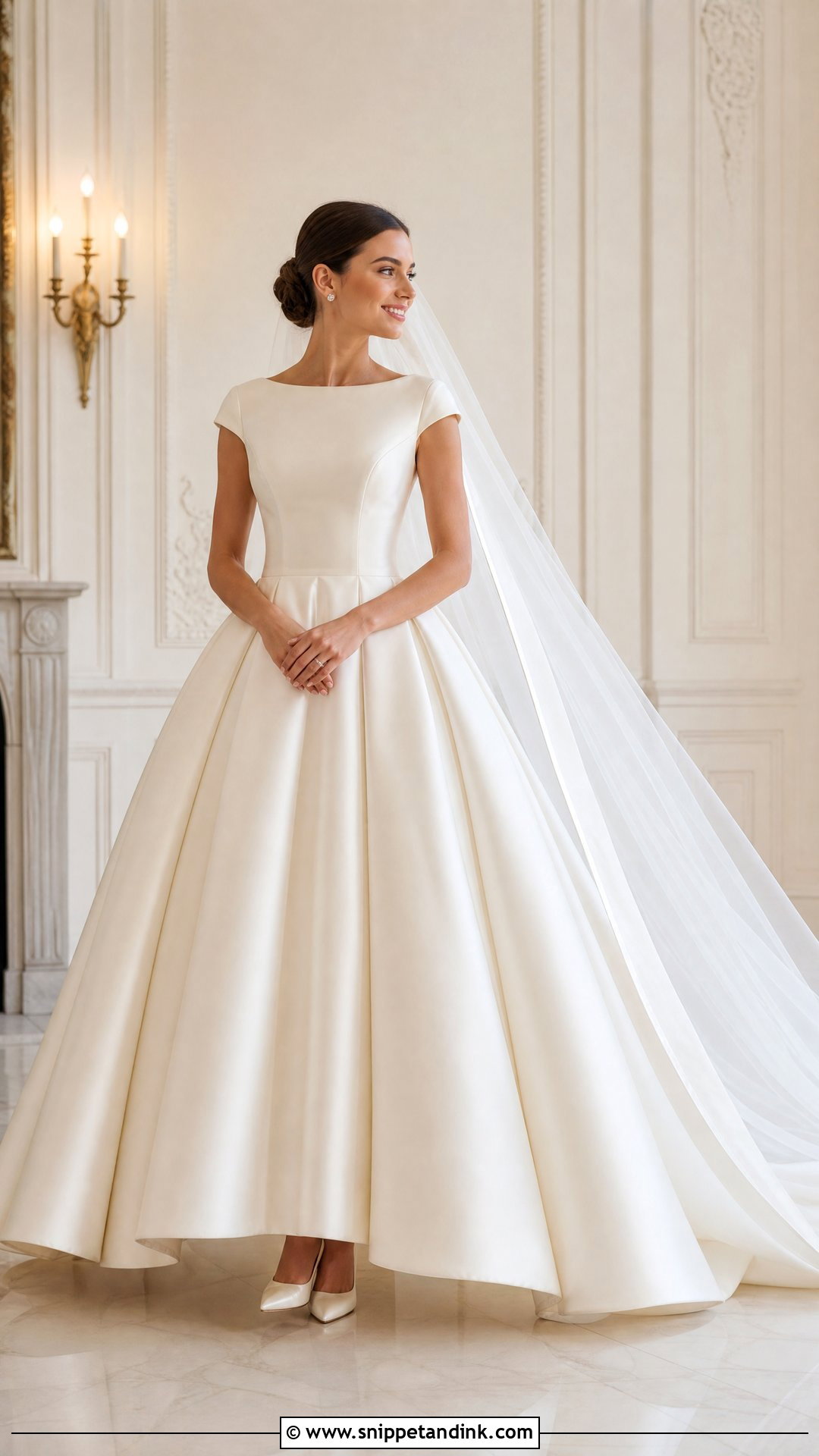
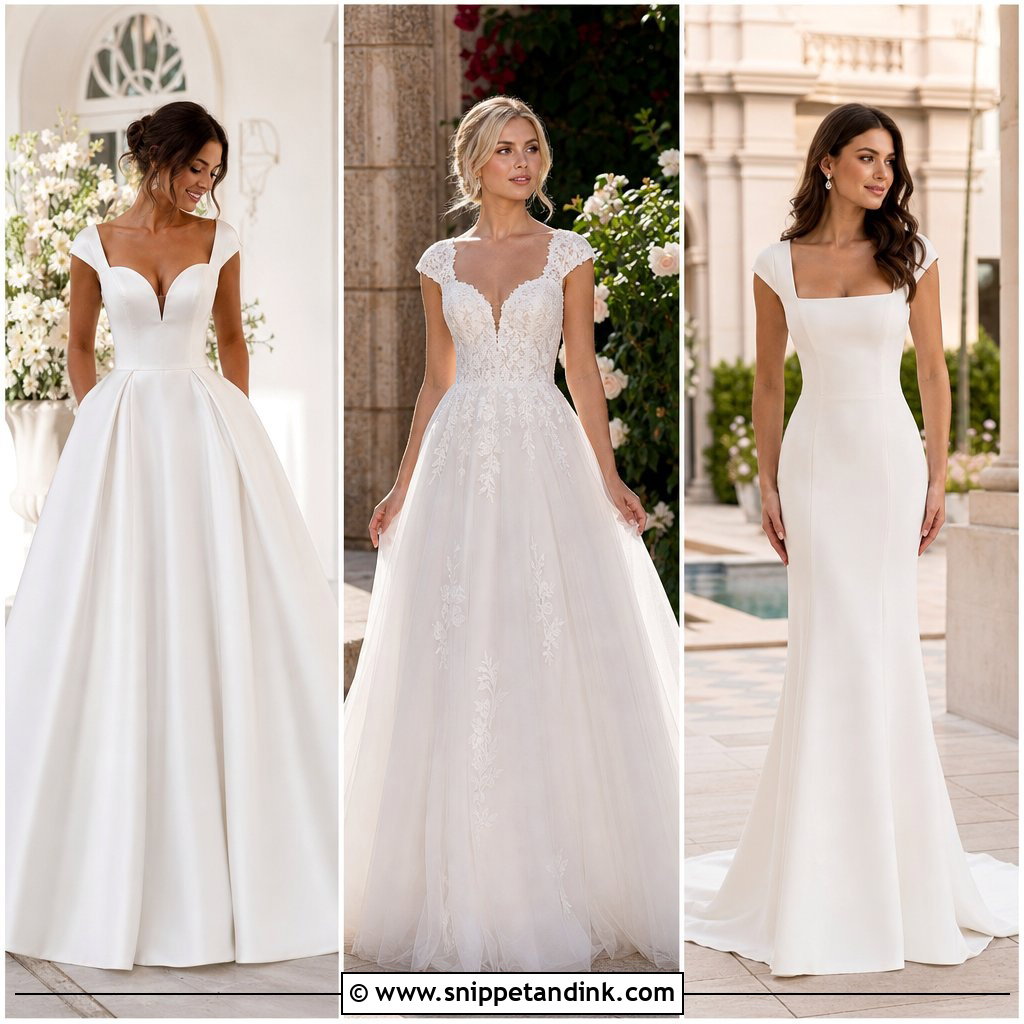
Smooth satin gives a cap sleeve ball gown the formal, slightly regal feel people expect from a cathedral wedding. Satin holds its shape on a structured bodice and reflects light evenly, so the sleeves should stay plain and let the skirt do the work. A bateau or square neckline frames the face nicely. Style it with a sleek chignon, crystal studs and a long veil finished with a narrow satin edge, plus a small comb if you want a little sparkle at the back. Leave off the heavy necklace. Satin sleeves crease where the arm bends, so I ask brides to bring the gown’s bustle and practise sitting during the fitting to see how the shoulder fabric behaves.
3. Chiffon Cap Sleeve Wedding Dress
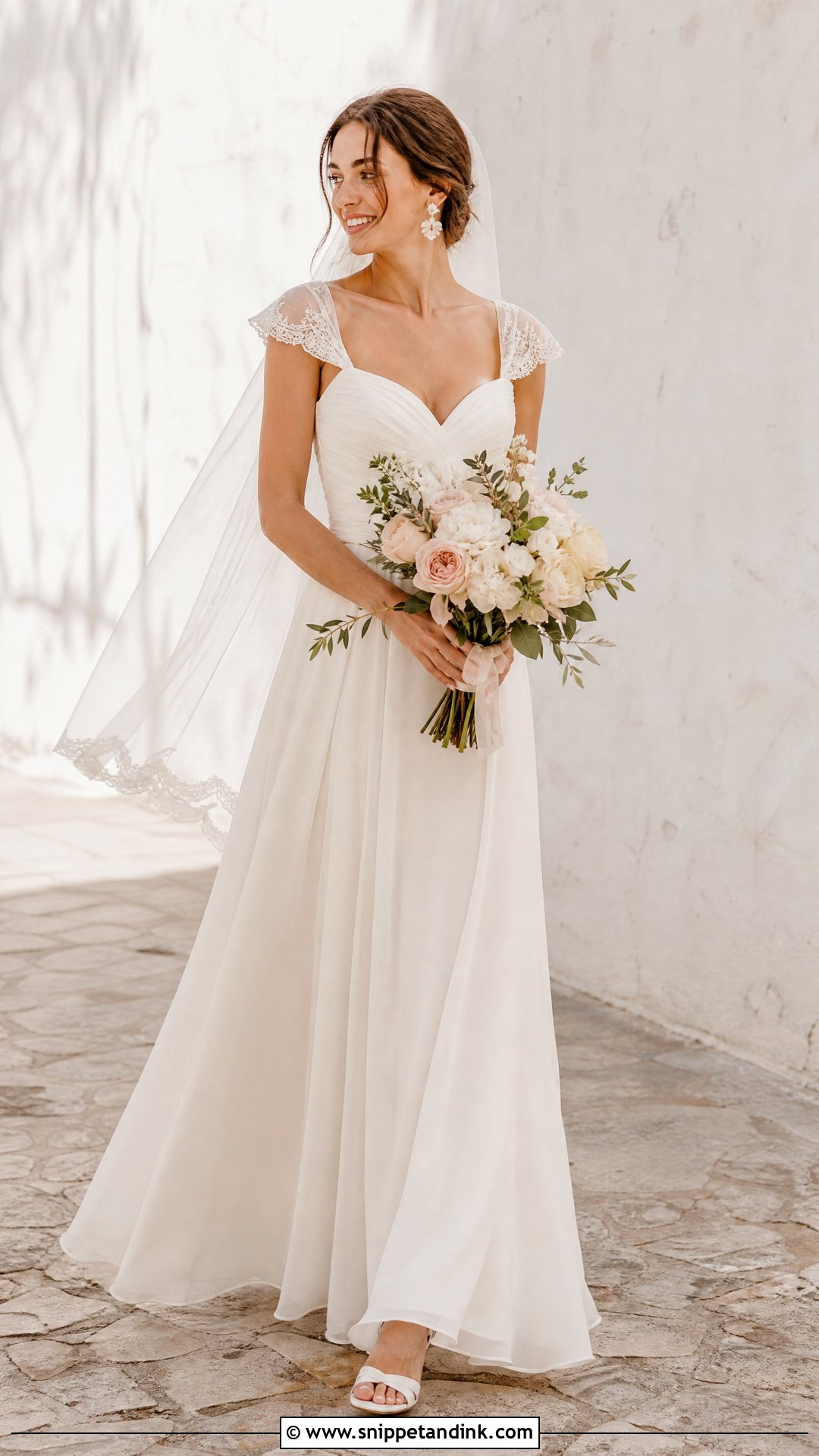
Chiffon is the fabric I reach for when the wedding is outside in summer. It breathes, it moves, and it doesn’t fight you when you sit on a bench for photos. Look for a lightly gathered bodice, a defined waistband and a flowing A-line skirt, with sheer chiffon sleeves over a lace lining if you want some detail. Low block-heel sandals keep you upright on grass. Small floral earrings, a fine bracelet and a plain fingertip veil are enough; anything heavier swamps the fabric. Loose waves or a textured low bun suit it, and a bouquet in white and pale blush finishes the mood. Chiffon snags easily on rough bark and stone walls, so mind where you lean in portraits.
4. Mermaid Cap Sleeve Wedding Dress
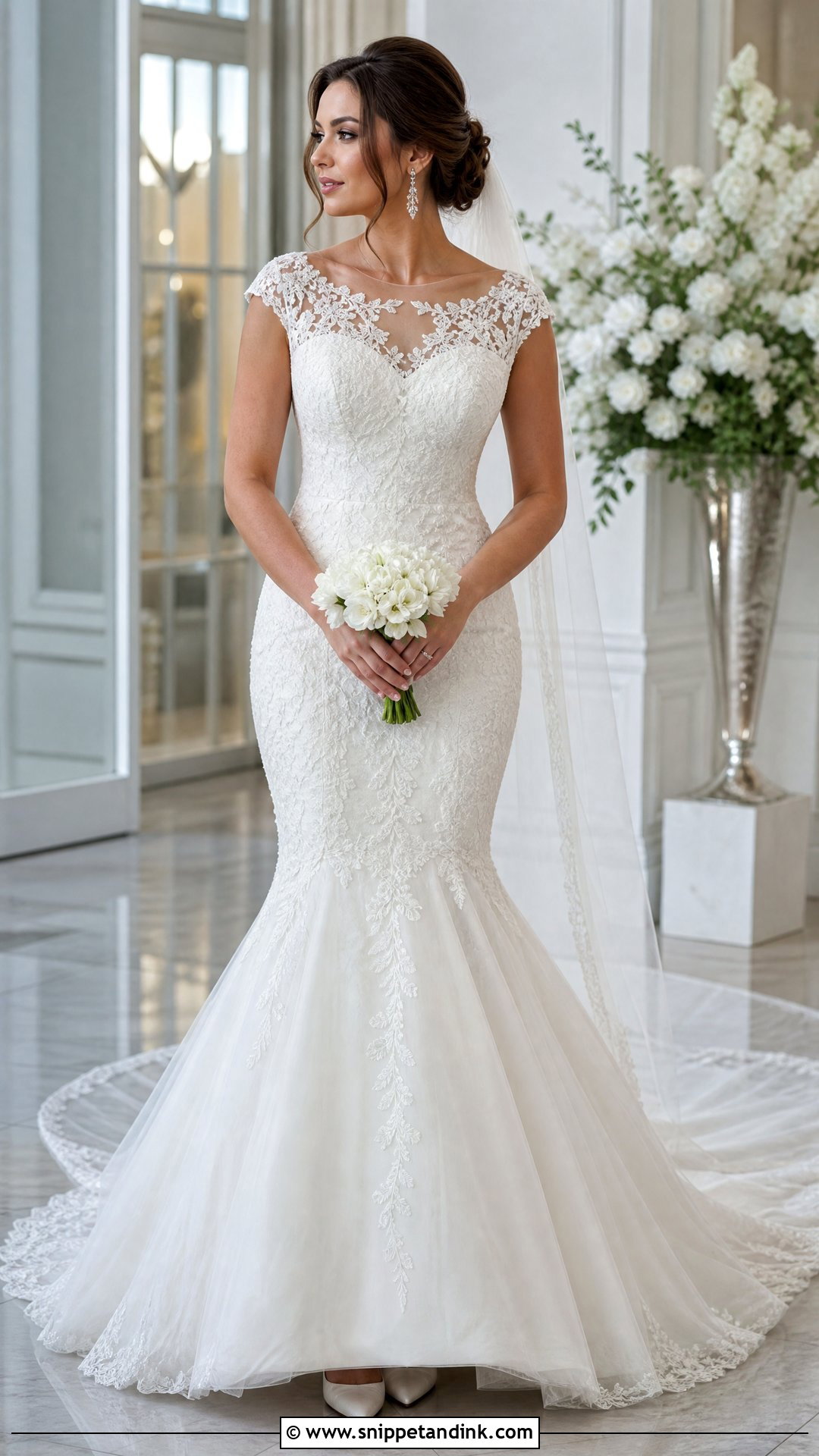
A mermaid gown with small sleeves balances a dramatic hip line with a little cover up top. The sleeve should lie flat on the shoulder, not cut a band into the upper arm, and the bodice needs real inner structure so the sleeves aren’t holding the dress up. Lace appliqués help soften the shape as they run down toward the flare. I keep the styling vertical: clean updo, long drops, pointed pumps, a narrow veil falling behind and a small structured bouquet. Skip the necklace if there’s beading. Mermaids restrict the stride more than people expect, so walk the length of the shop and climb a step during fittings, watching whether the sleeves pull forward when you do.
5. Tea-Length Cap Sleeve Wedding Dress
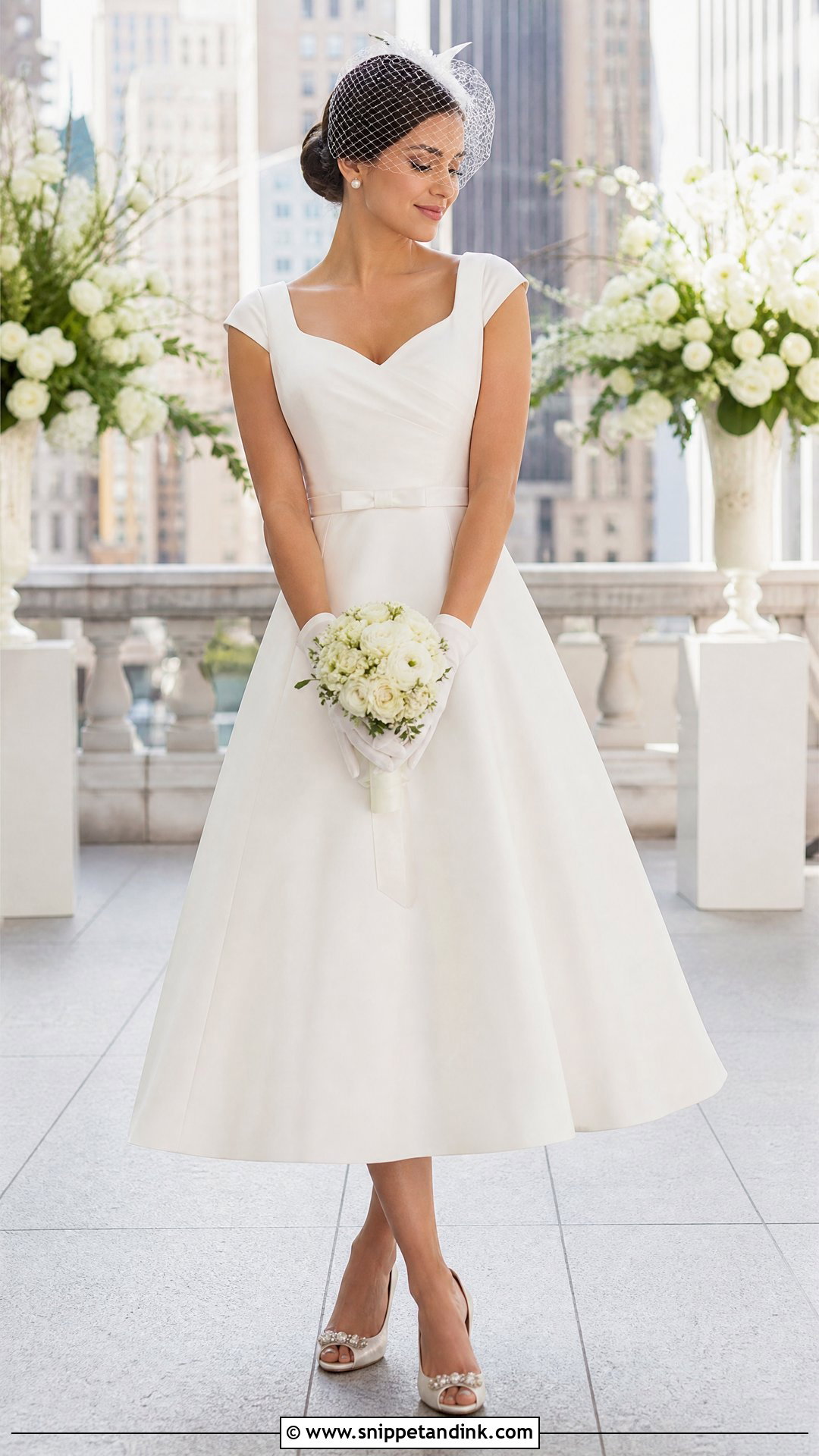
Tea length suits a courthouse ceremony, a daytime lunch or a small venue where a train would just get in the way. The skirt should land somewhere between the knee and the ankle, ideally at the narrowest part of your calf, which is the most flattering point for most legs. Because your shoes are on show, choose them on purpose: ivory slingbacks, embellished flats or low block heels. Pearl studs, short gloves, and a birdcage veil or small hair bow give it a vintage nod. A smooth bun looks more polished; soft curls feel more relaxed. Keep the bouquet compact so it doesn’t cover half the skirt.
6. Boho Lace Cap Sleeve Wedding Dress
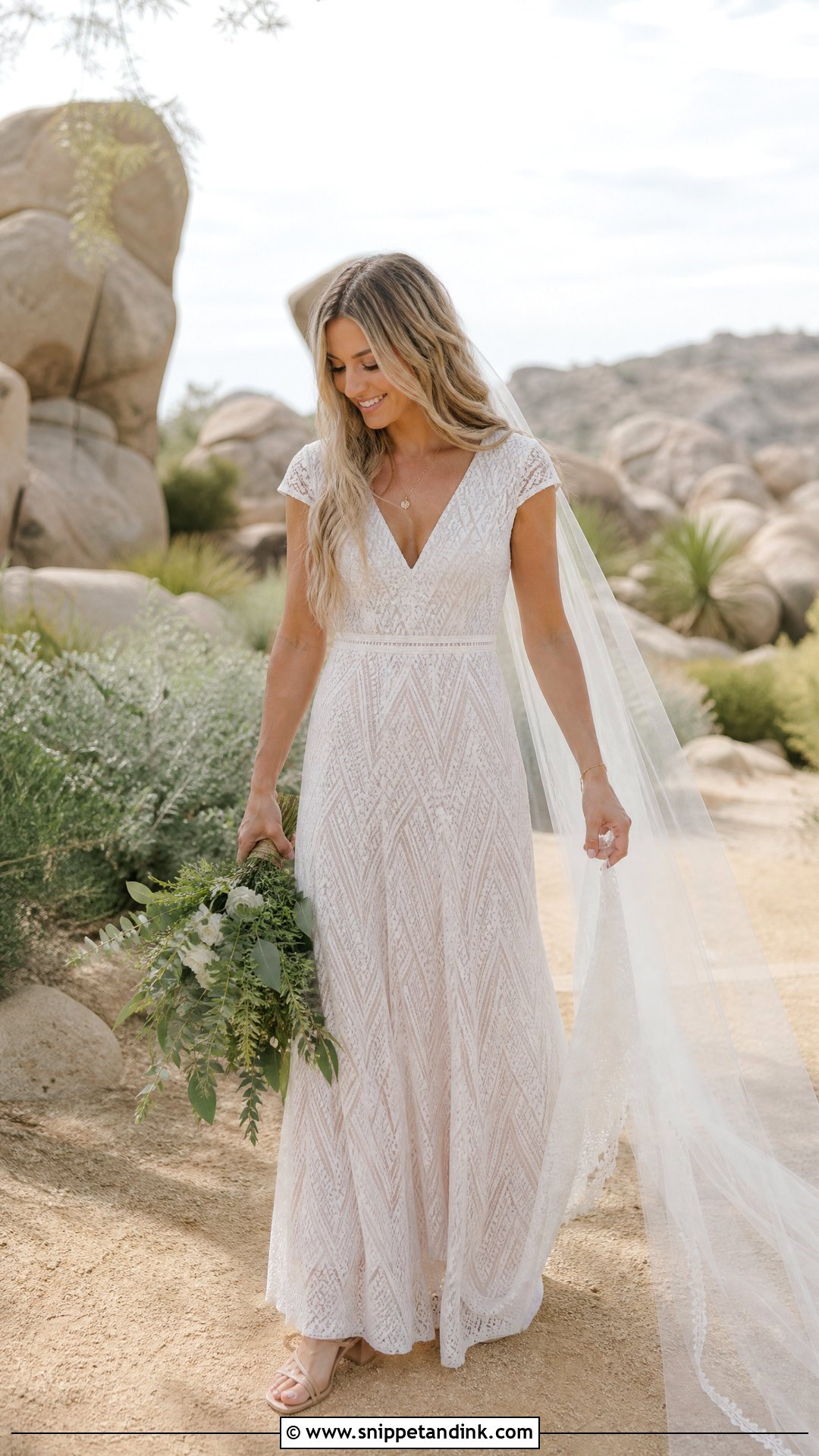
For an easy outdoor wedding, a boho cap sleeve gown in soft lace with a body-skimming cut feels right. Floral or geometric lace gives texture without any sparkle. A deep V needs a secure illusion panel underneath, and a lightly defined waist keeps the shape from turning shapeless. Neutral block sandals or ankle boots work, depending on the season and ground. Add delicate gold earrings, a fine pendant and a fingertip veil with a raw or lace edge. For hair, I’d go with loose waves, a braided half-up or a textured low bun, and a garden bouquet with a few muted colours. Soft lace sleeves stretch with wear, so fit them snug rather than loose.
7. Crepe Sheath Cap Sleeve Wedding Dress
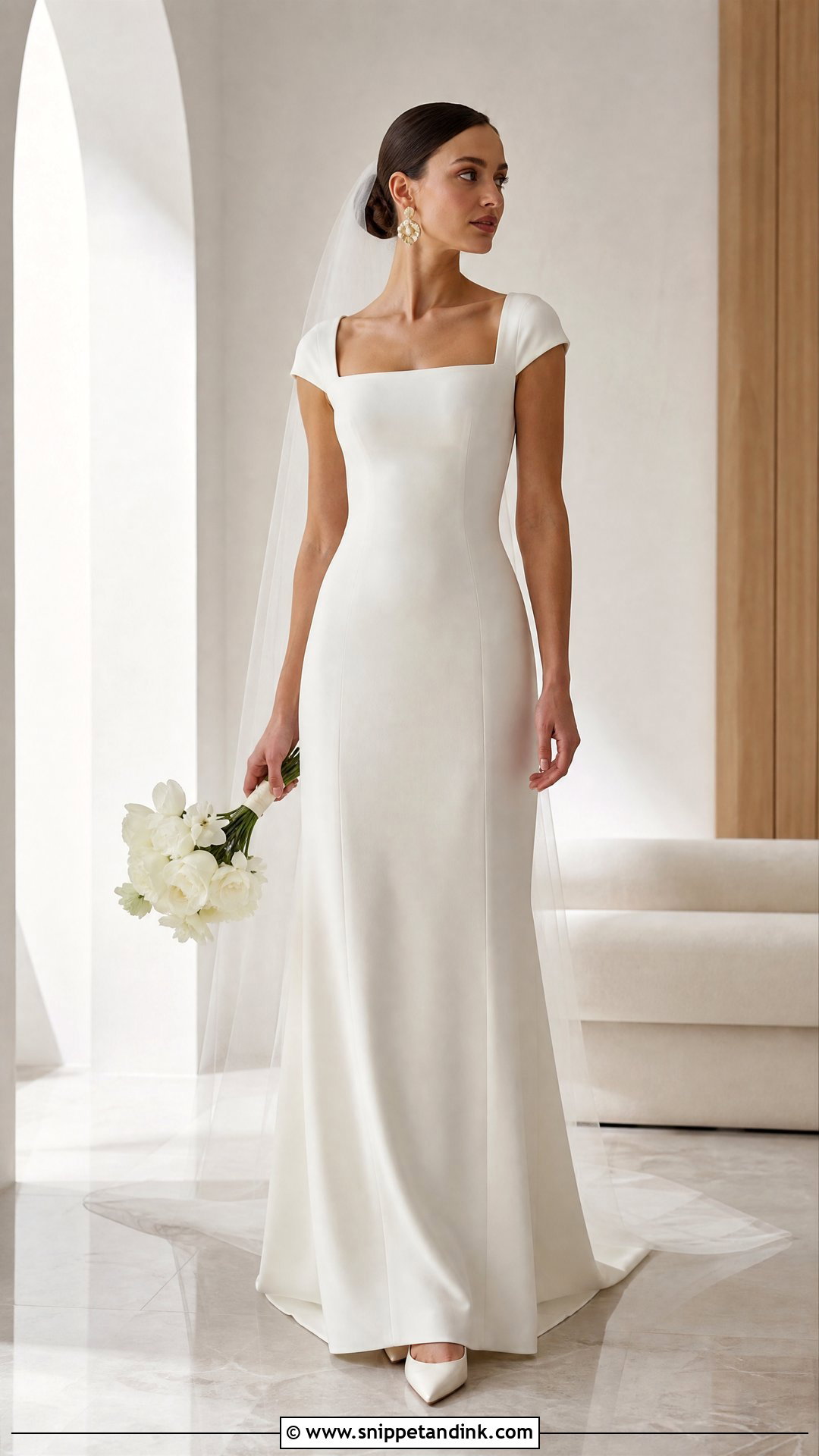
Crepe is honest fabric, which is why a sheath gown in it looks so modern and also why it needs the best tailoring of anything on this list. Every seam shows. Look for precise seaming, a defined waist and a skirt that follows the body without gripping it, with a square or high bateau neckline for that minimalist feel. Sculptural earrings, a sleek low bun and pointed heels finish it; a plain tulle veil adds a little softness. Carry one flower variety in tonal white. Smooth, seam-free underwear isn’t optional here, because crepe shows the edge of a knicker line from across the room.
8. Beaded Cap Sleeve Wedding Dress
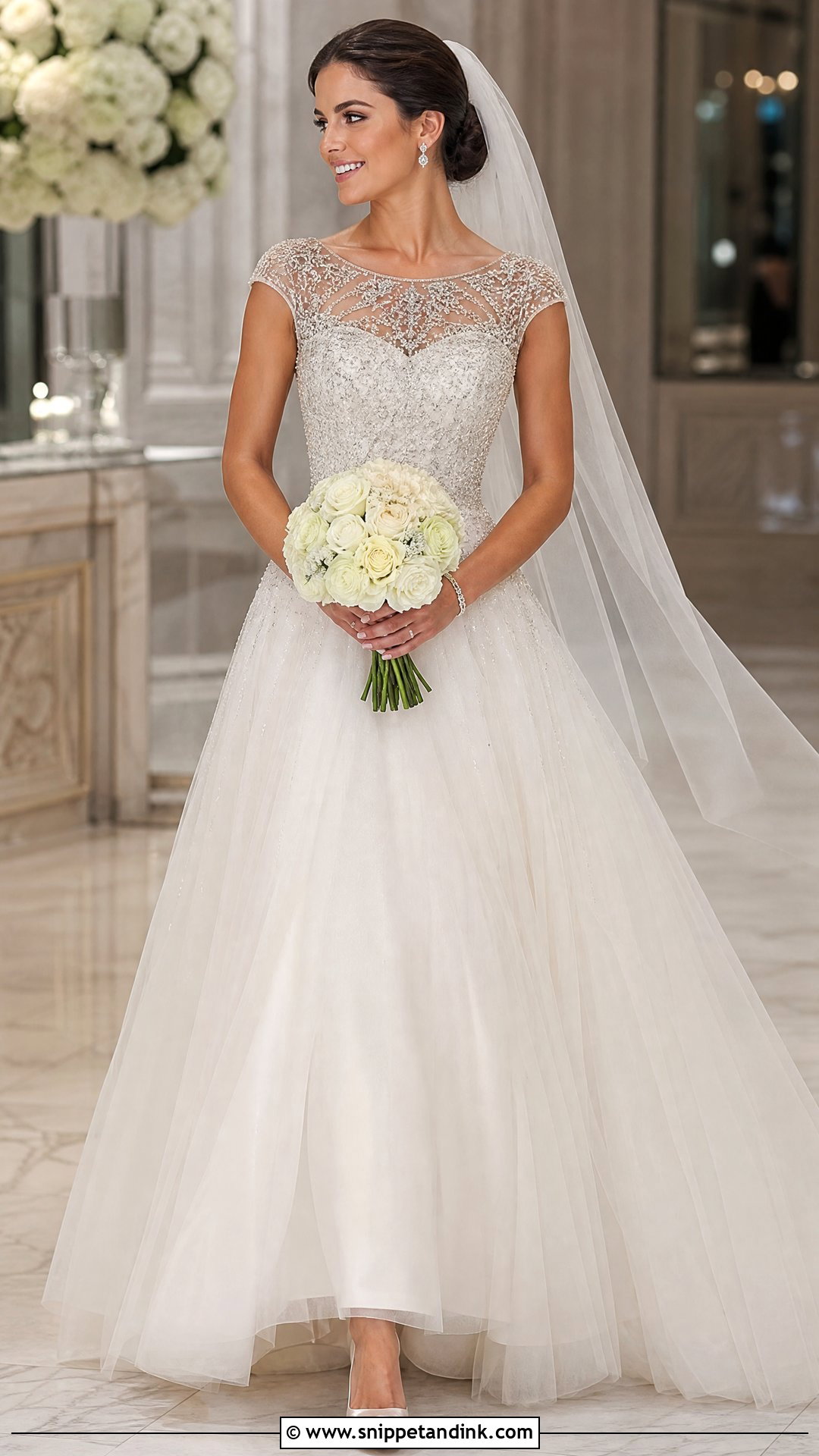
Beaded sleeves work like built-in jewellery, which is why I’d call this an evening gown first. Look for beading that is balanced across the bodice and sleeves, then a soft tulle skirt or a fluid sheath below it. Hold back everything else: crystal studs, a slim tennis bracelet, metallic or ivory heels and a plain veil with no lace or crystals. A polished updo lets the shoulders show, and a compact white bouquet gives a quiet contrast. The inside of a beaded sleeve is where it goes wrong. Thread knots and rough sequin edges rub the inner arm raw by the speeches, so ask for a soft lining where the sleeve meets skin.
9. Floral Appliqué Cap Sleeve Wedding Dress
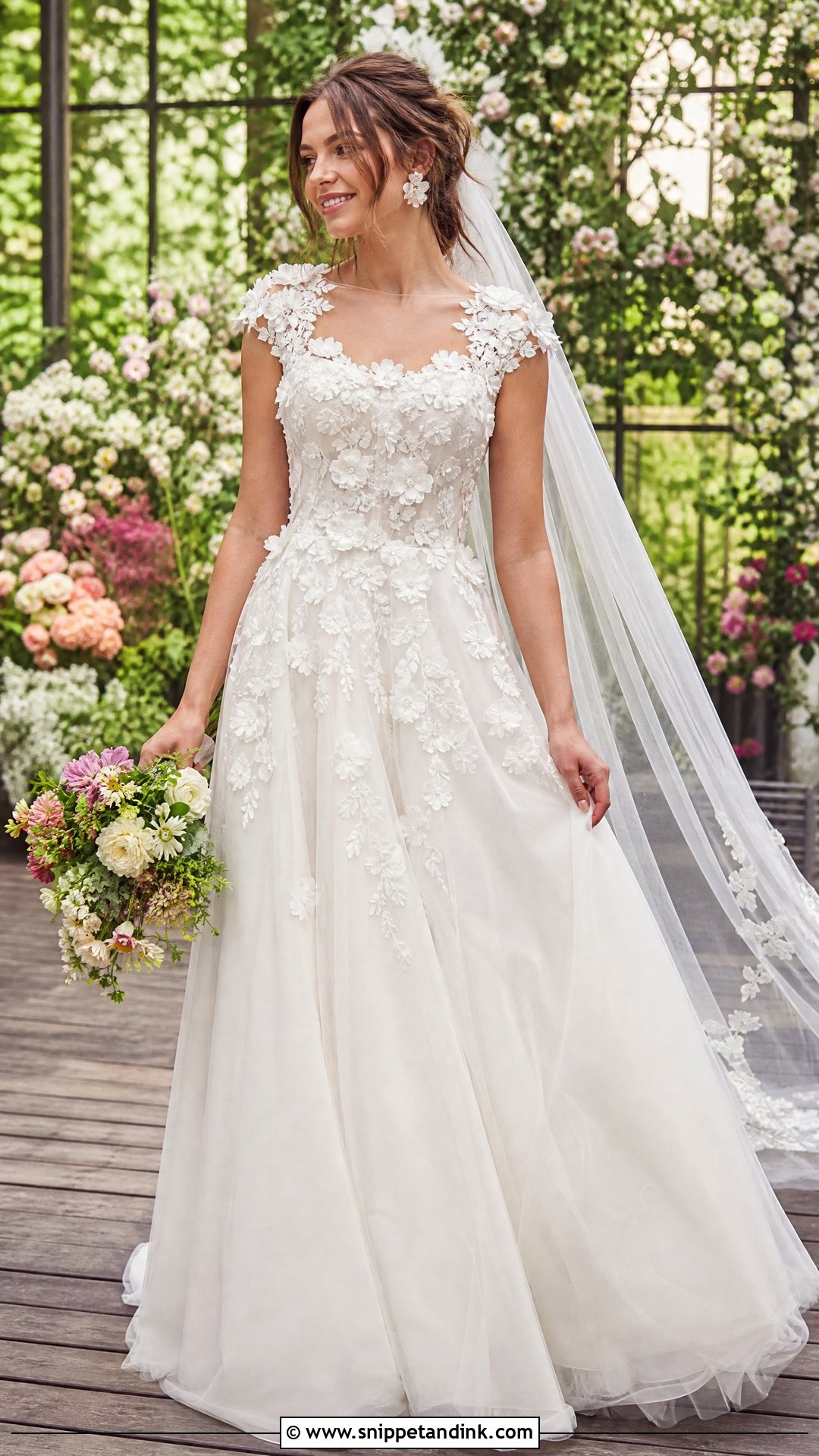
Three-dimensional flowers on the shoulders bring texture that flat lace can’t, and they read well from a distance. The best versions place appliqués across the shoulders, bodice and upper skirt, then let them thin out, so the gown keeps a clear shape. A soft A-line or fit-and-flare stops it looking like costume. Small flower-inspired earrings, a sheer plain veil and clean ivory heels are plenty. A loose updo keeps the neckline open and can hold one subtle floral pin. With the bouquet, echo the appliqués in shape or colour without copying them flower for flower. Raised petals flatten under a heavy bag strap or coat, so carry the gown on its own hanger when you travel.
10. Square Neck Cap Sleeve Wedding Dress
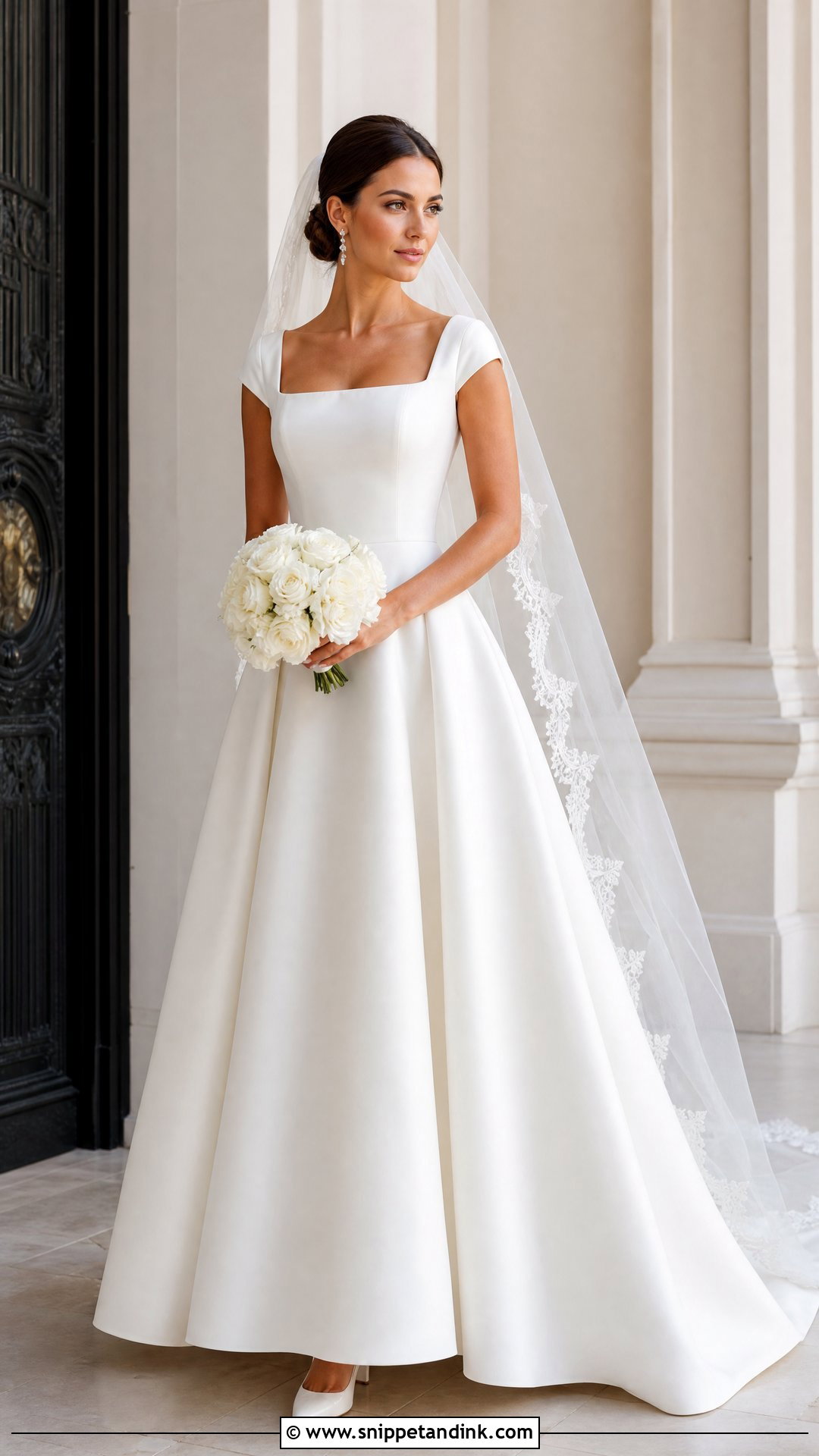
A square neckline gives a cap sleeve gown clear structure and puts the focus on the collarbones. It needs a fabric that holds a straight edge, so satin, Mikado, crepe or firm lace, not soft chiffon. An A-line skirt reads classic; a fitted column feels sharper. Style it with a neat bun, pearl or crystal drops and a single bracelet, but no necklace, which only breaks up the square. Pointed pumps and a medium veil finish it, and a narrow lace border on the veil adds interest if the bodice is plain. The common fault is the neckline lifting when you raise your arms; the sleeves need enough room under the arm to prevent it.
11. V-Neck Cap Sleeve Wedding Dress
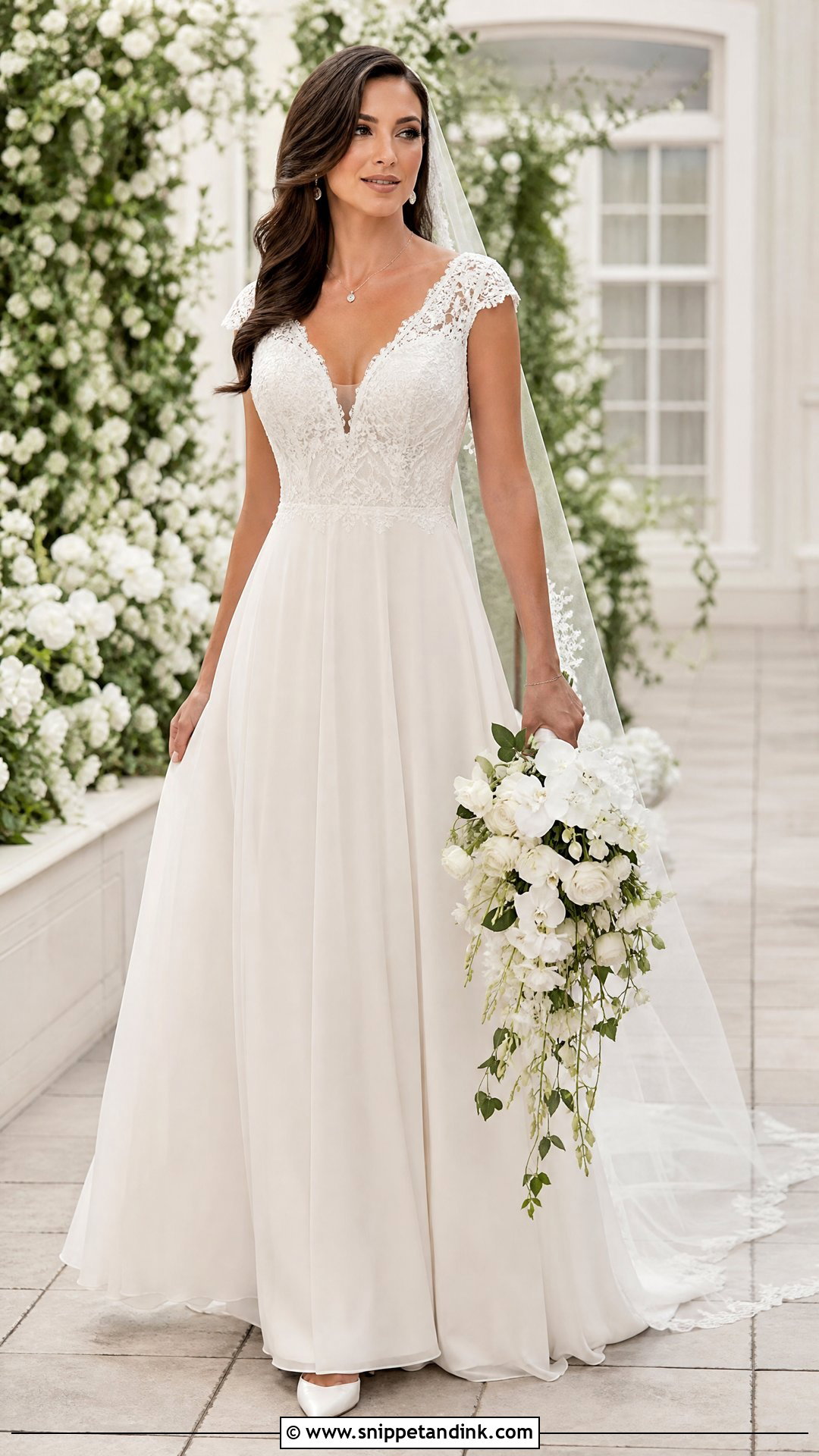
A V-neck opens up the upper body, and soft cap sleeves stop it feeling too bare. Pick a depth you won’t be adjusting during the vows, and use an illusion insert if you need more support or coverage. Lace makes the shape romantic; crepe or satin makes it modern. A fine pendant that follows the V, small earrings and a low bun or side-swept waves suit it, along with a fingertip veil, ivory heels and a slightly trailing bouquet. I check this neckline from the side while the bride sits and hugs, since that’s when a V can gape. A dot of fashion tape at the point fixes most of it.
12. Illusion Cap Sleeve Wedding Dress
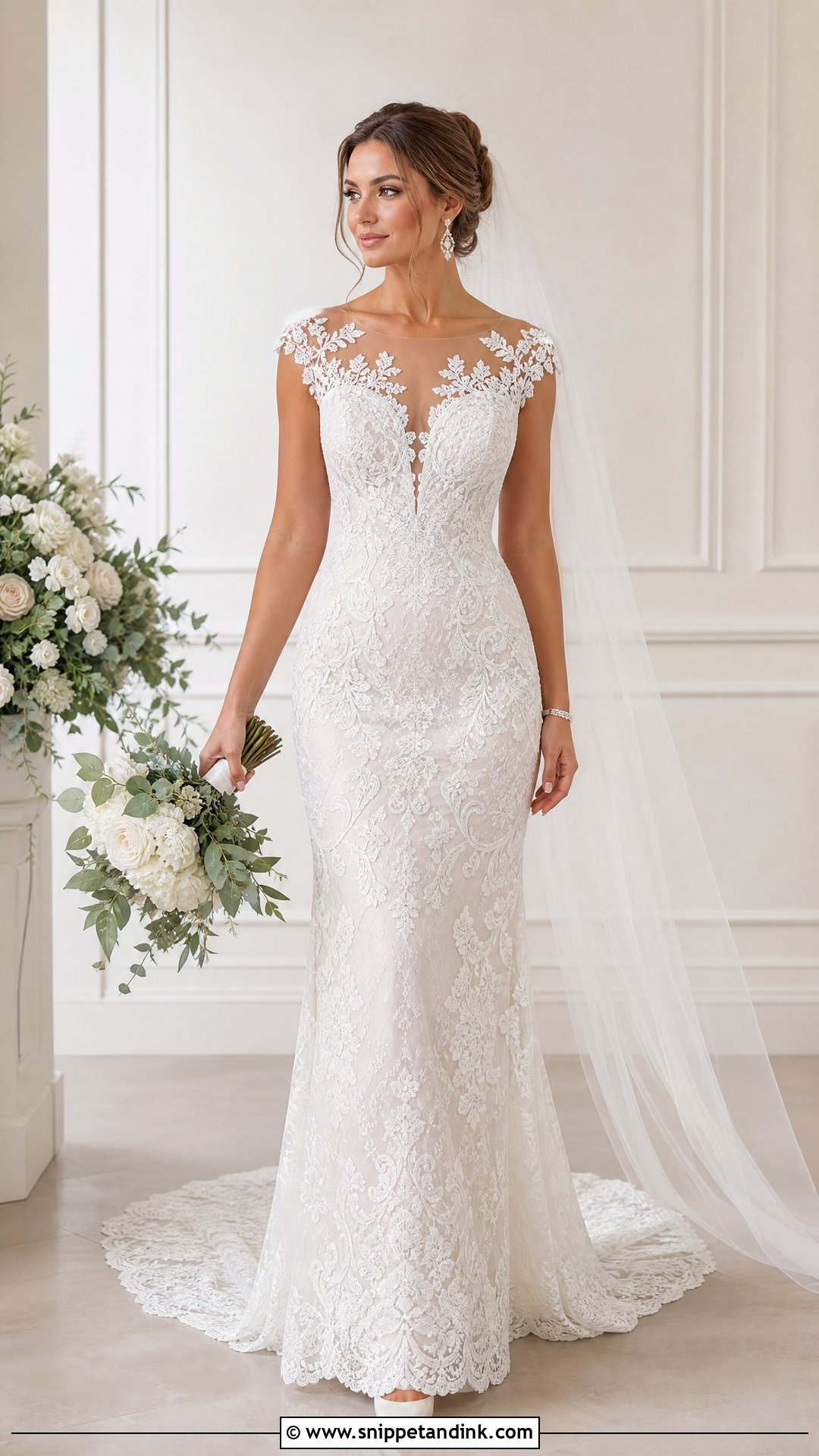
Illusion sleeves make lace or beads look as if they’re resting on bare shoulders. The effect only works if the mesh matches your skin closely and lies flat, so try several shades if the shop offers them. An illusion neckline can carry across the chest and back, which holds a low lace bodice securely. A tidy updo shows off the construction; tiny crystal earrings, a fine bracelet and ivory pumps are enough. Go with a plain tulle veil, because a second decorated layer competes with the illusion work, and keep the bouquet softly structured. Look at the mesh edges at a window and under warm bulbs, since a visible edge in daylight shows in every photo.
13. Basque Waist Cap Sleeve Wedding Dress
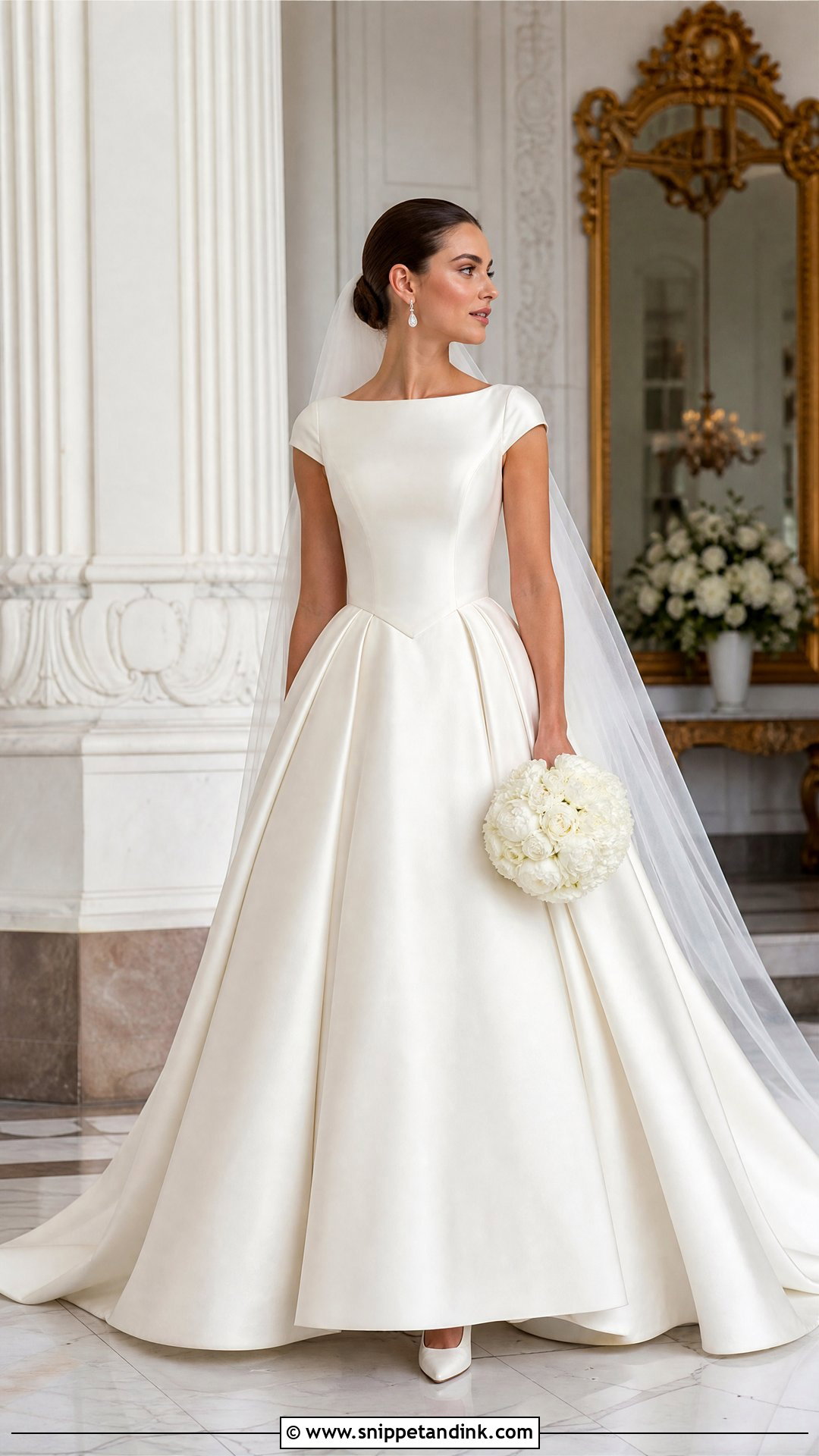
A basque waist dips into a point at the centre front, then opens into a full skirt, and it’s one of the most flattering lines for a long torso. Cap sleeves balance the drama below by giving the shoulders some definition. Choose satin or mikado for structure, or lace for a softer, slightly historical feel. A smooth chignon, drop earrings and a long veil pinned beneath it suit the shape, with closed pumps and a rounded bouquet. Don’t add a contrasting belt; it cuts straight across the point. The bodice must be fitted closely for support, but I always ask the bride to take a deep breath and laugh at the final fitting. If she can’t, it needs letting out.
14. High Neck Cap Sleeve Wedding Dress
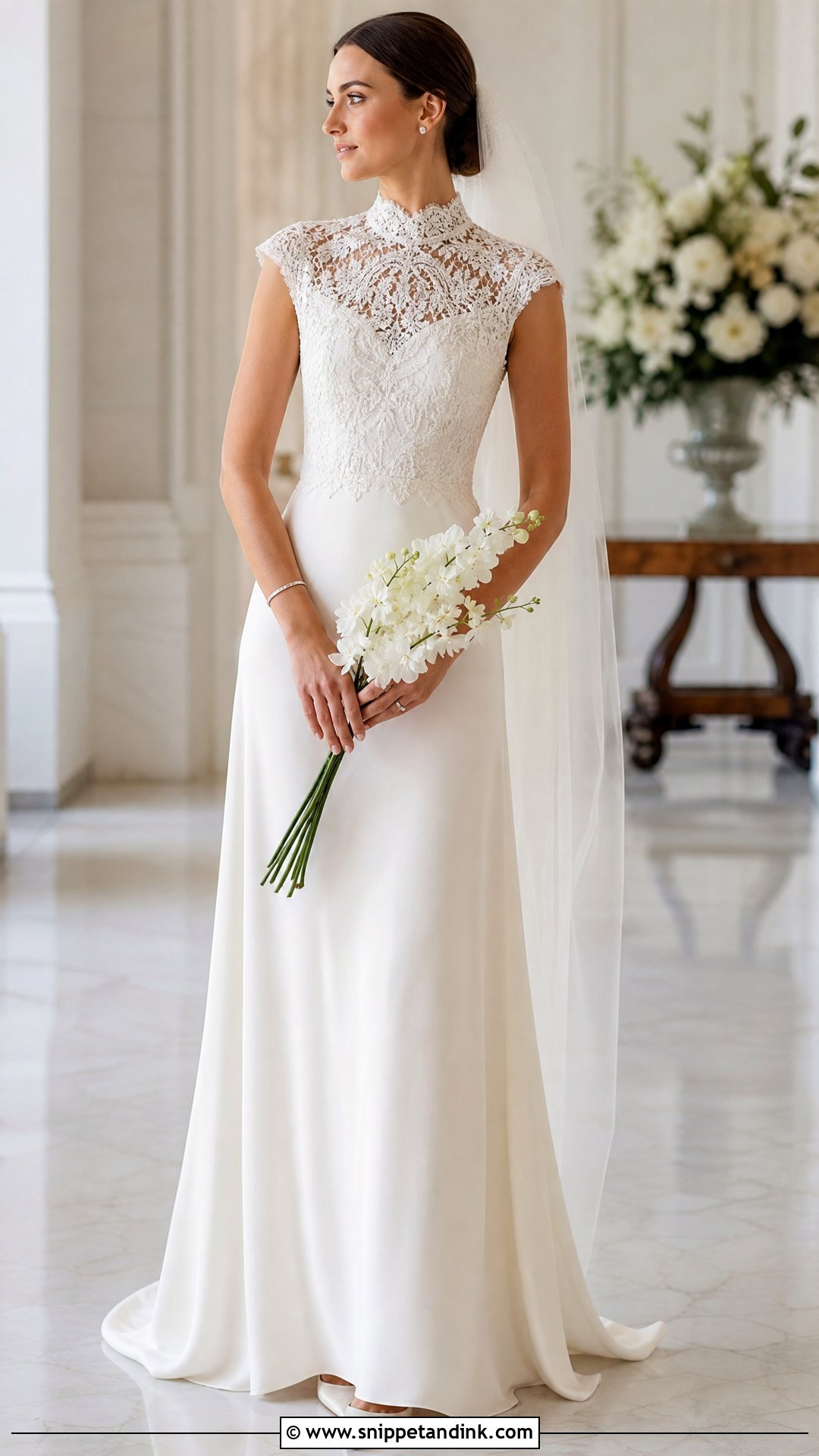
A high neck with cap sleeves is the most covered-up shape here, so keep the skirt simple or the whole gown gets heavy. A lace or embroidered upper bodice over a plain skirt works well, and a keyhole, open or illusion back adds contrast behind a modest front. Wear your hair up so the collar stays clean. Studs, a slim bracelet, no necklace, and a veil pinned below the bun so it doesn’t crowd the neck. Pointed pumps and a long-stemmed bouquet complete it. High necks are the hardest neckline to alter well: too much fabric wrinkles at the throat, too little restricts your head turning, so leave time for two fittings on the collar alone.
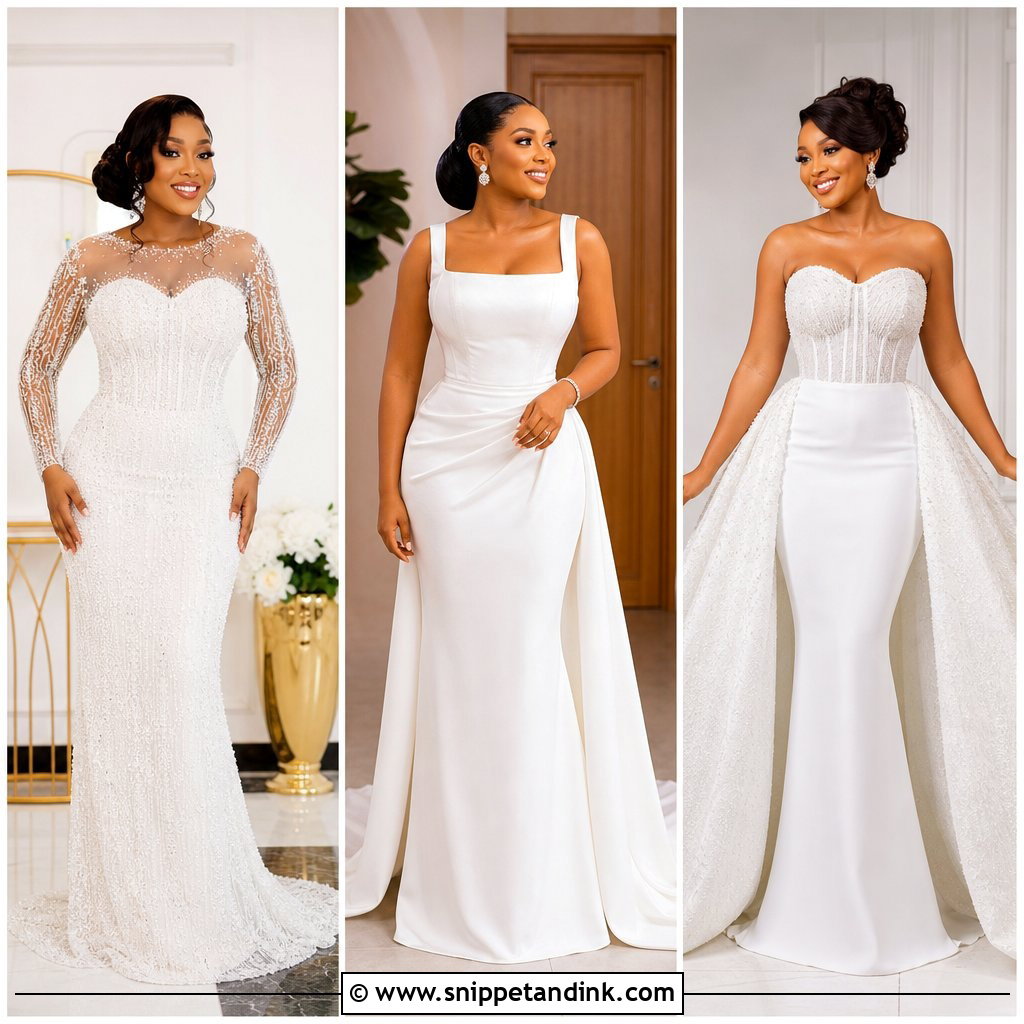
15. Plus-Size Cap Sleeve Wedding Dress
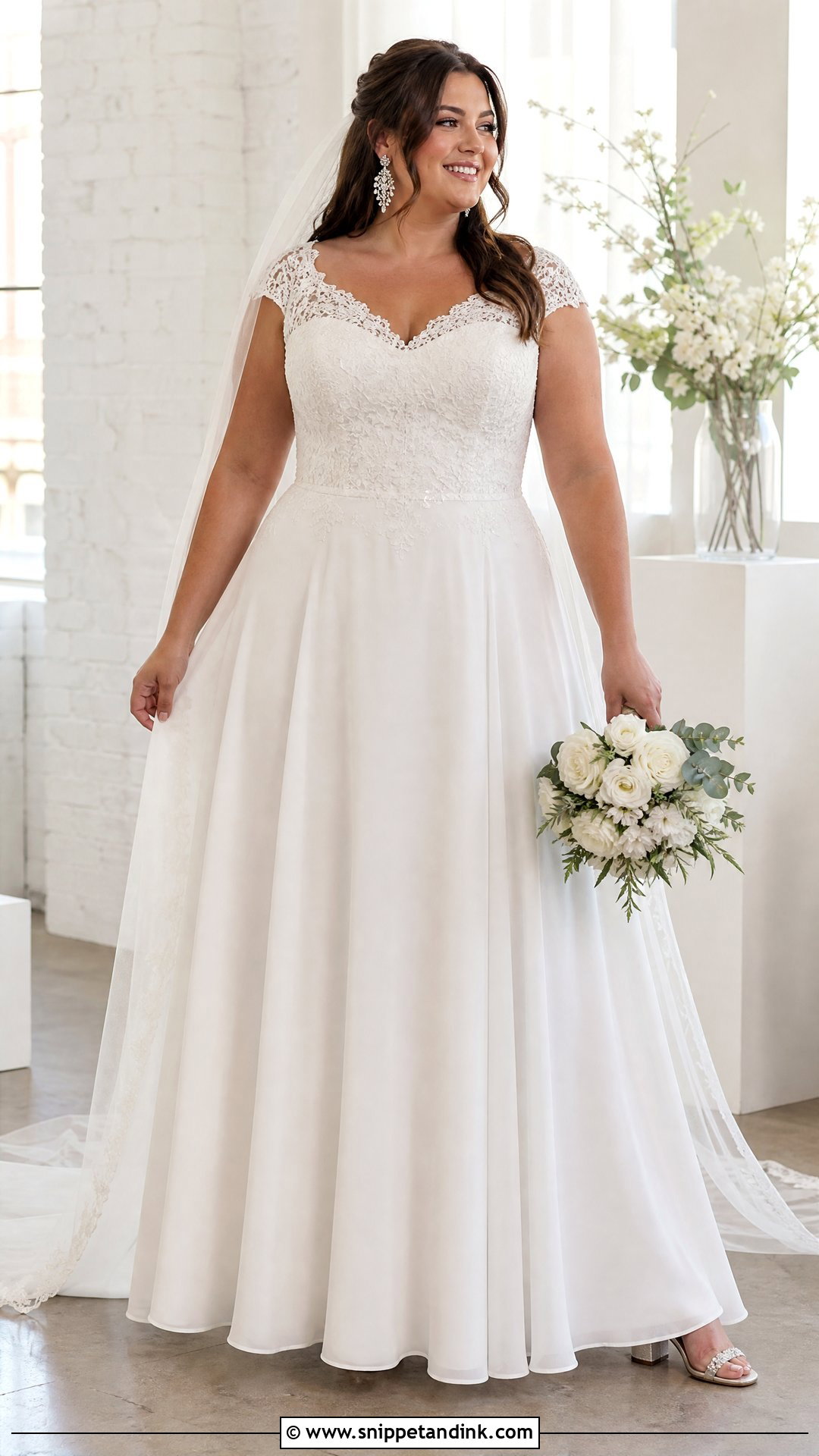
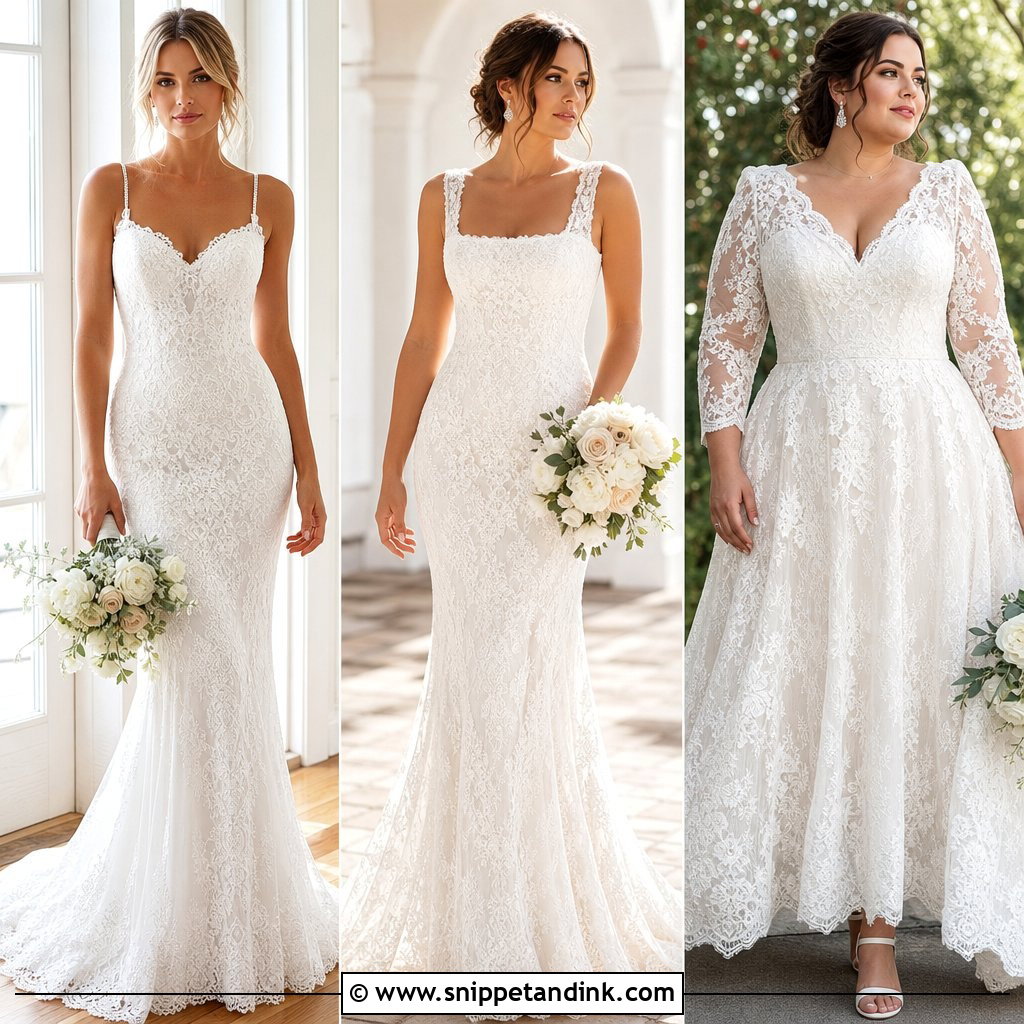
A well-built cap sleeve gown gives plus-size brides support and some shoulder coverage without hiding their shape. Look at A-line or fit-and-flare cuts with a strong bodice, a defined waist and sleeves that follow the shoulder without squeezing the arm. Soft lace or lined illusion keeps it light. Supportive block heels, statement earrings and a veil scaled to the skirt suit it, with a half-up style or low bun. I tell every bride the same thing: order for your largest measurement and let the seamstress take the rest in. A sleeve that’s too tight at the arm can’t be let out much, because there’s usually little seam allowance in a cap sleeve.
16. Petite Cap Sleeve Wedding Dress
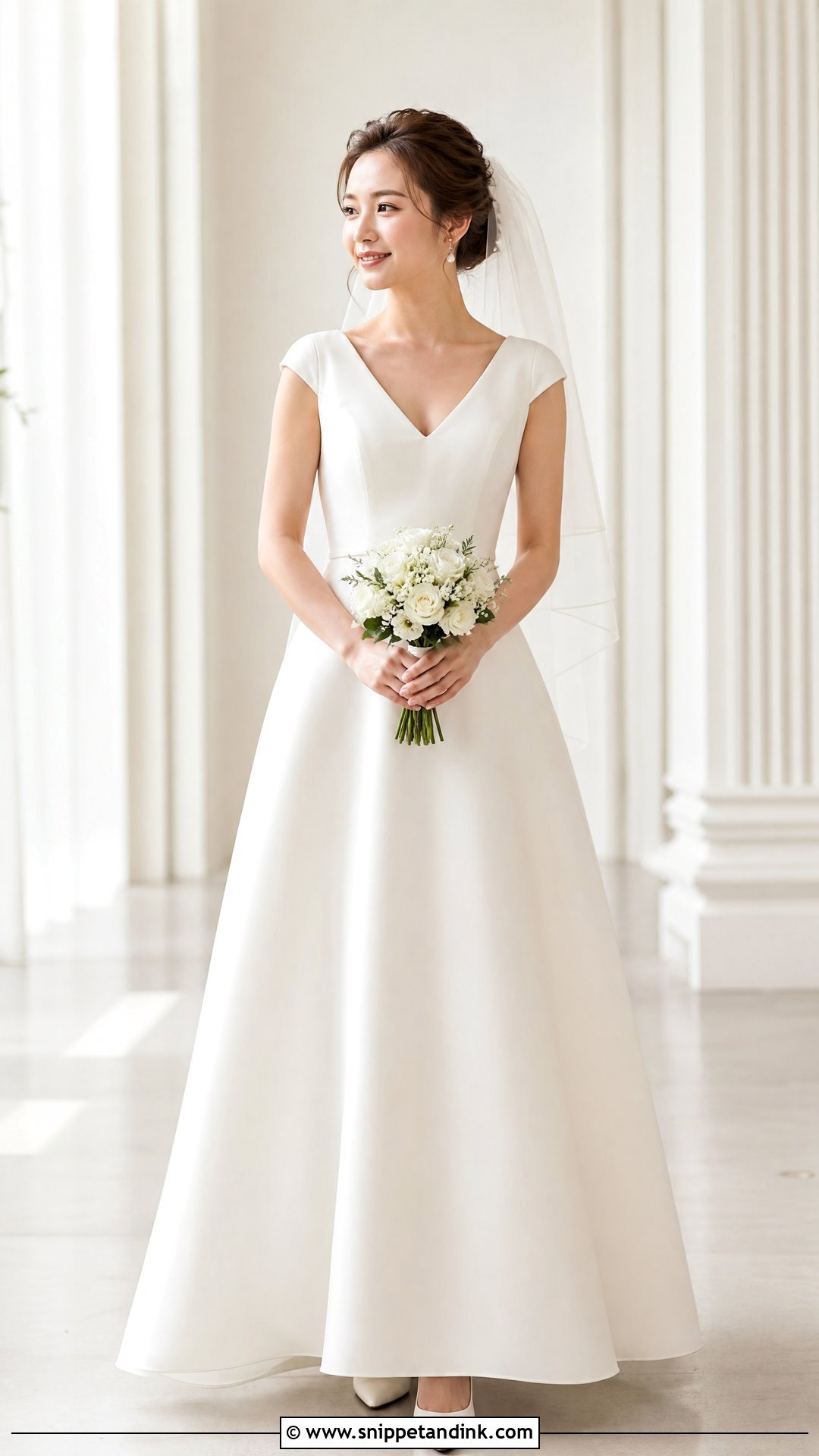
Petite brides look great in cap sleeves as long as the details are scaled down. A clean A-line or sheath creates length, but only if the waistline lands where your waist actually is. Pick narrow sleeves that stop at the edge of the shoulder; wide ones extend the frame sideways. A moderate V or open scoop lengthens the upper body. Add pointed heels, small drops, a light fingertip veil and a compact bouquet, and wear your hair up or pushed back from the shoulders. At alterations, have the bodice shortened as well as the hem. Taking up only the skirt leaves the waist and sleeves sitting in the wrong places.
17. Modest Cap Sleeve Wedding Dress
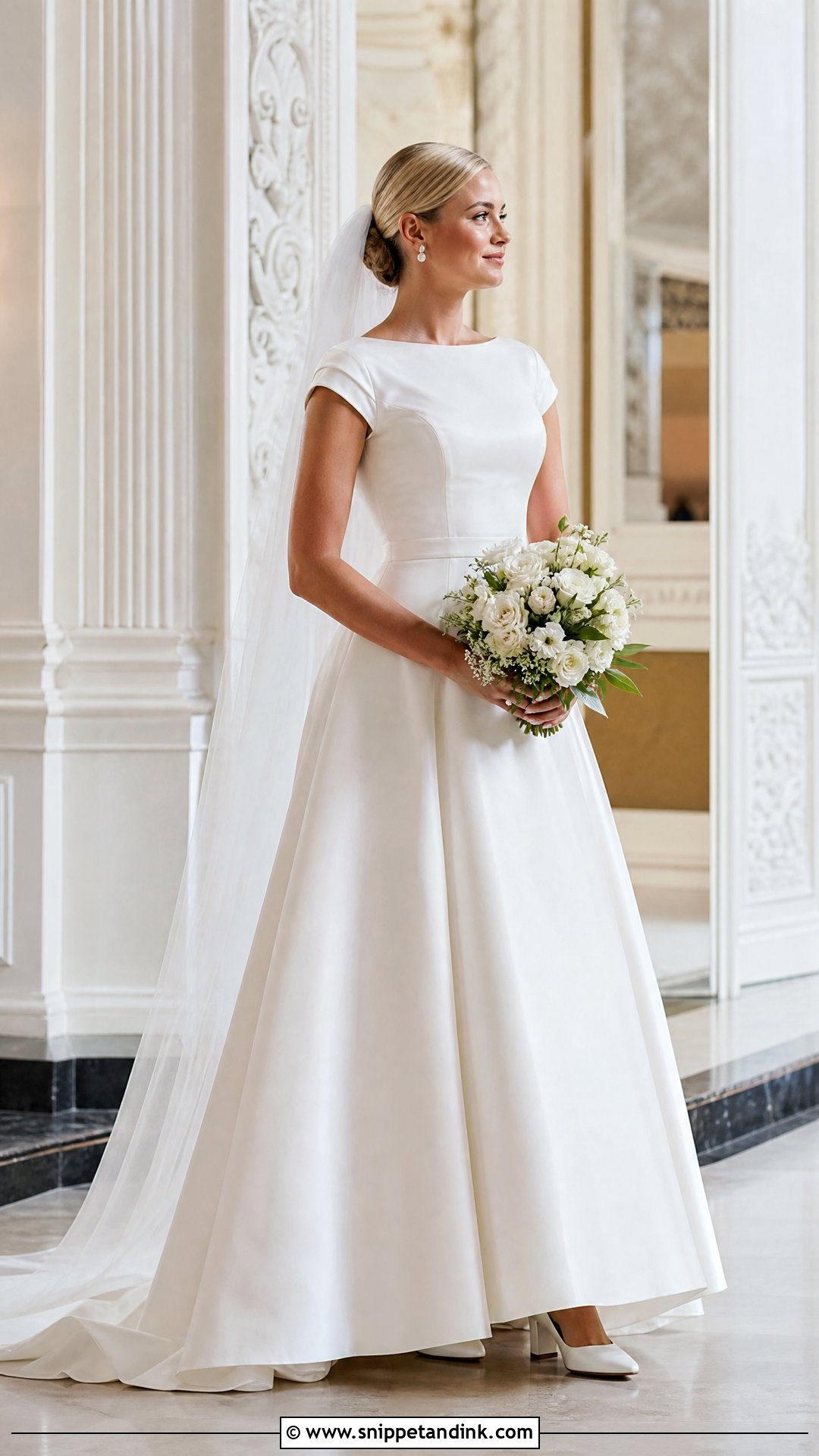
Modest doesn’t have to mean dated. Look for a higher front neckline, a fully lined bodice, a closed back and cap sleeves that extend a little past the shoulder. An A-line skirt in satin, chiffon or lace moves without clinging. I’d keep the styling clean: pearl earrings, a sleek bun, closed block heels and a structured white-and-green bouquet, with a long plain veil for formality or a shorter one for lightness. If you want more of the upper arm covered, ask early whether the sleeves can be lengthened with matching fabric. Done well, nobody will guess the sleeve was changed; done late, the fabric may not match.
18. Destination Cap Sleeve Wedding Dress
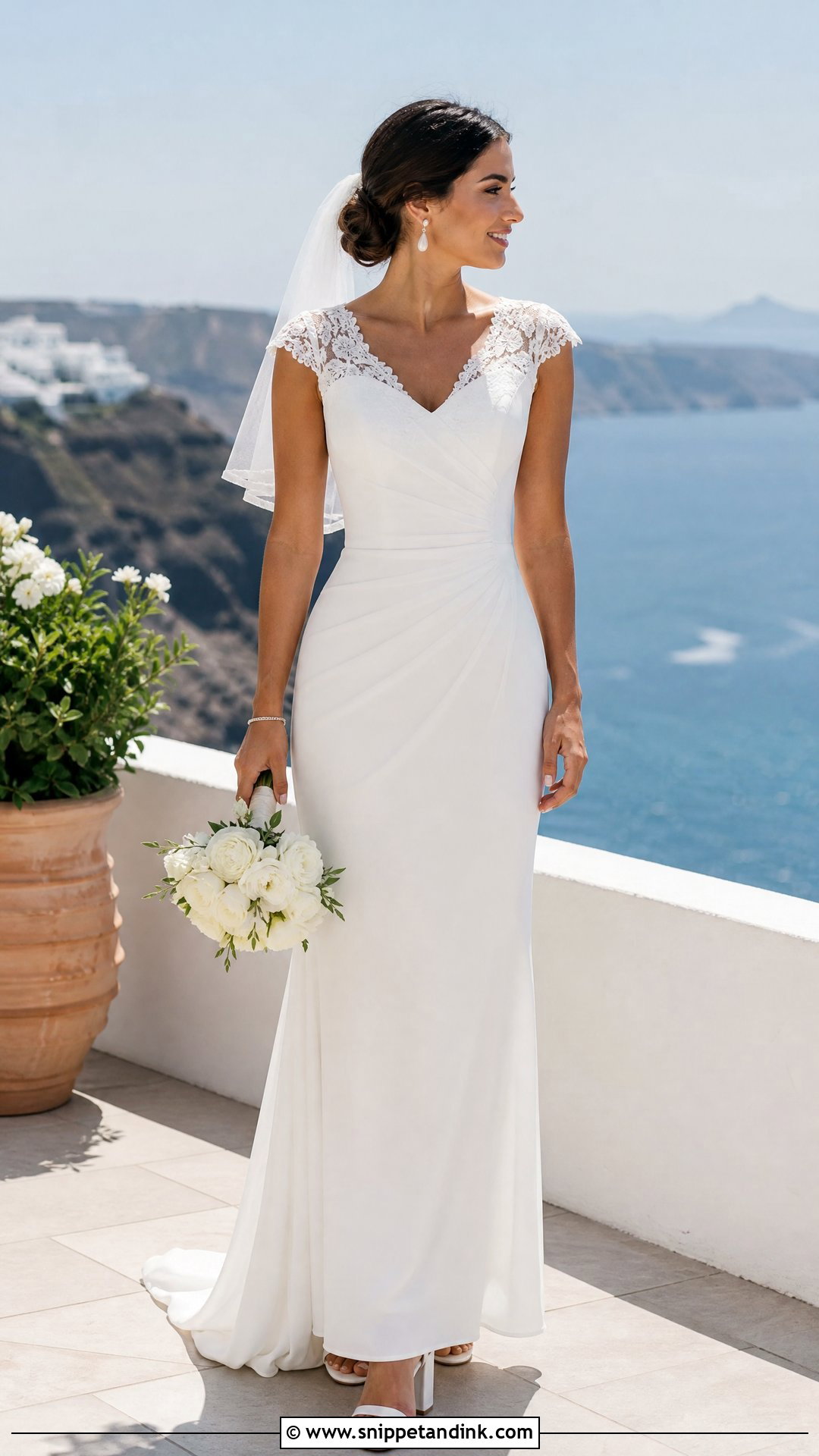
A destination dress has to survive a suitcase or overhead locker and then a hot afternoon. Lightweight chiffon, soft tulle, lace or stretch crepe all travel well, and a relaxed A-line or sheath packs far smaller than a structured ball gown. Pick shoes for the actual ground: block heels, polished flats or wedges for sand and grass. Light earrings, a simple bracelet and a short veil that won’t sail off in the wind are enough. A low bun stays neat in a breeze. Avoid heavy beading and multiple underskirts. I always ask the boutique how to fold the gown in tissue and check whether the hotel can steam it, because a travel iron on chiffon is a risk.
19. Winter Mikado Cap Sleeve Wedding Dress
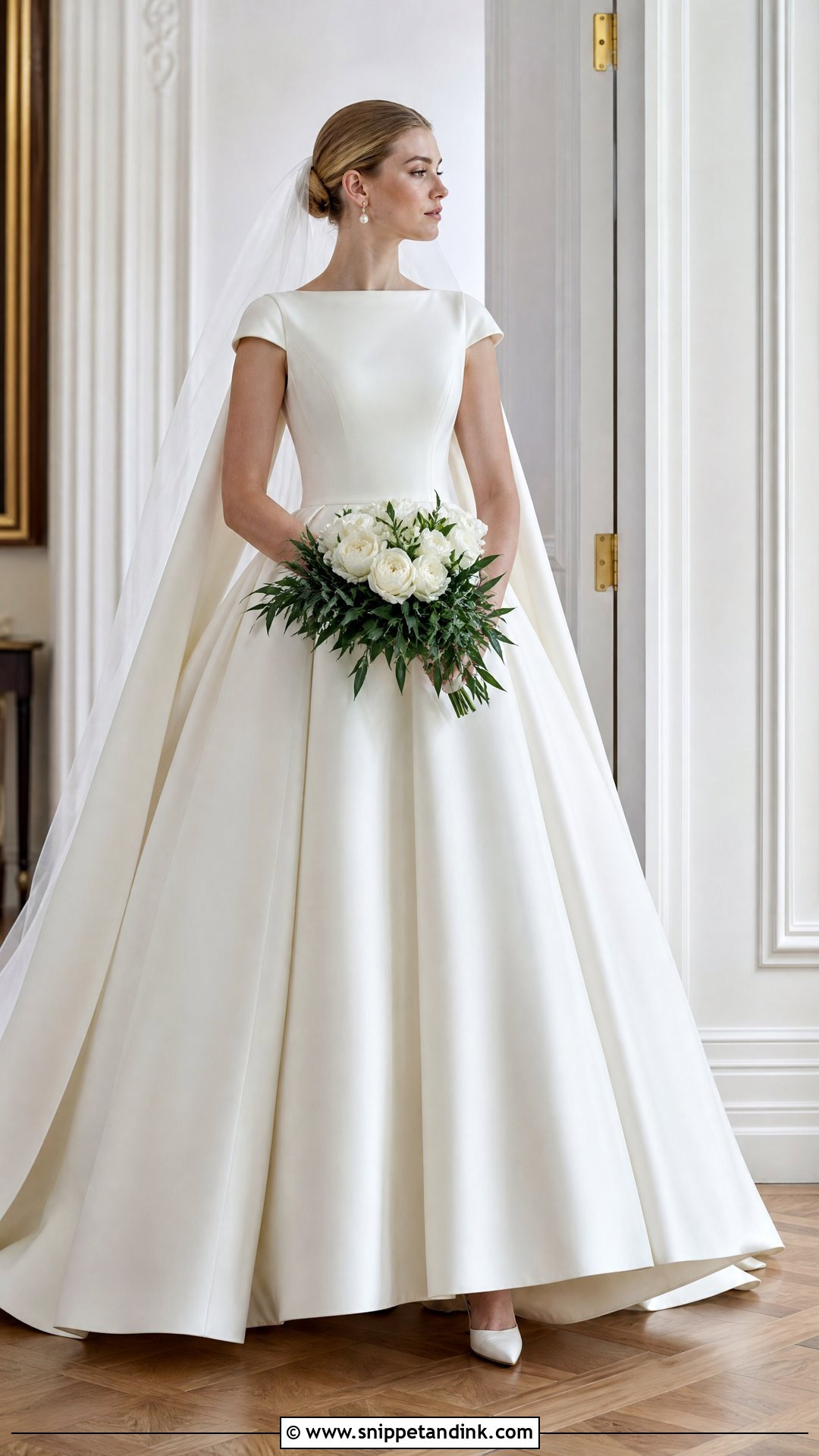
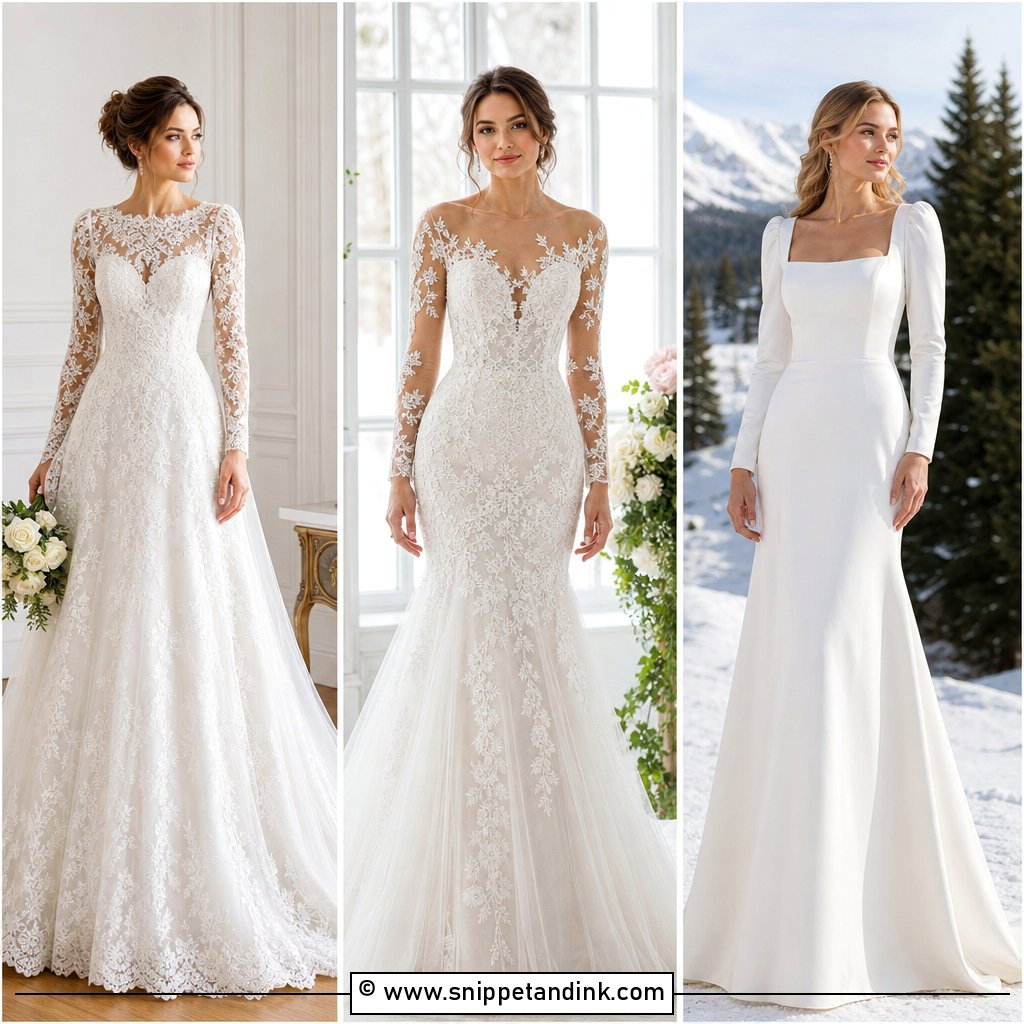
Mikado has enough body to stand up to a cold-weather wedding, and it gives cap sleeves a crisp, slightly sculpted outline. A ball gown or structured A-line with a fitted bodice, covered buttons and a full skirt works best. The sleeves can stay sleek or carry a small fold for interest. Closed pumps, pearl drops, a long clean-edged veil and a smooth updo keep it formal. For outdoor portraits, add a tailored coat, faux-fur wrap or cape you can slip off indoors without crushing the sleeves. Choose a compact bouquet of white flowers with darker foliage. Mikado is warm to wear, which is a welcome change in winter but worth remembering if the reception room is heated.
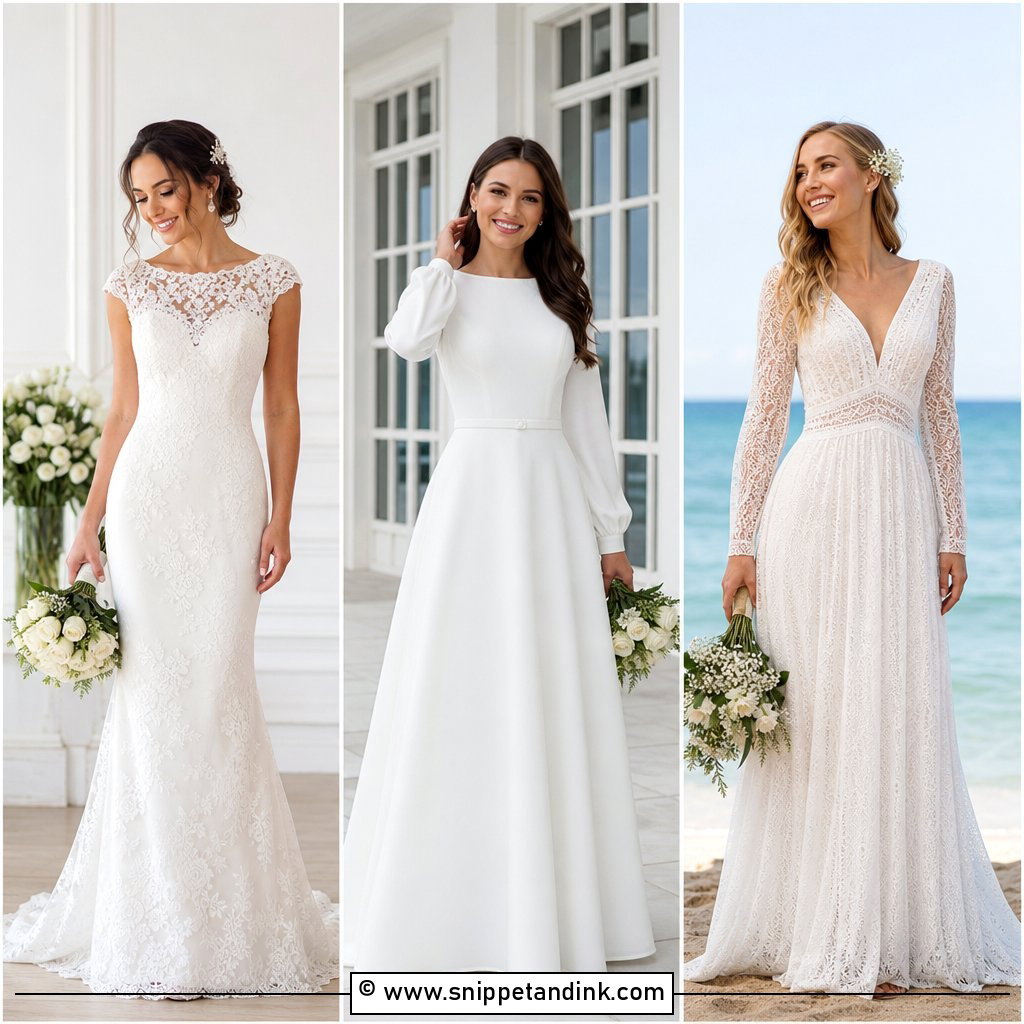


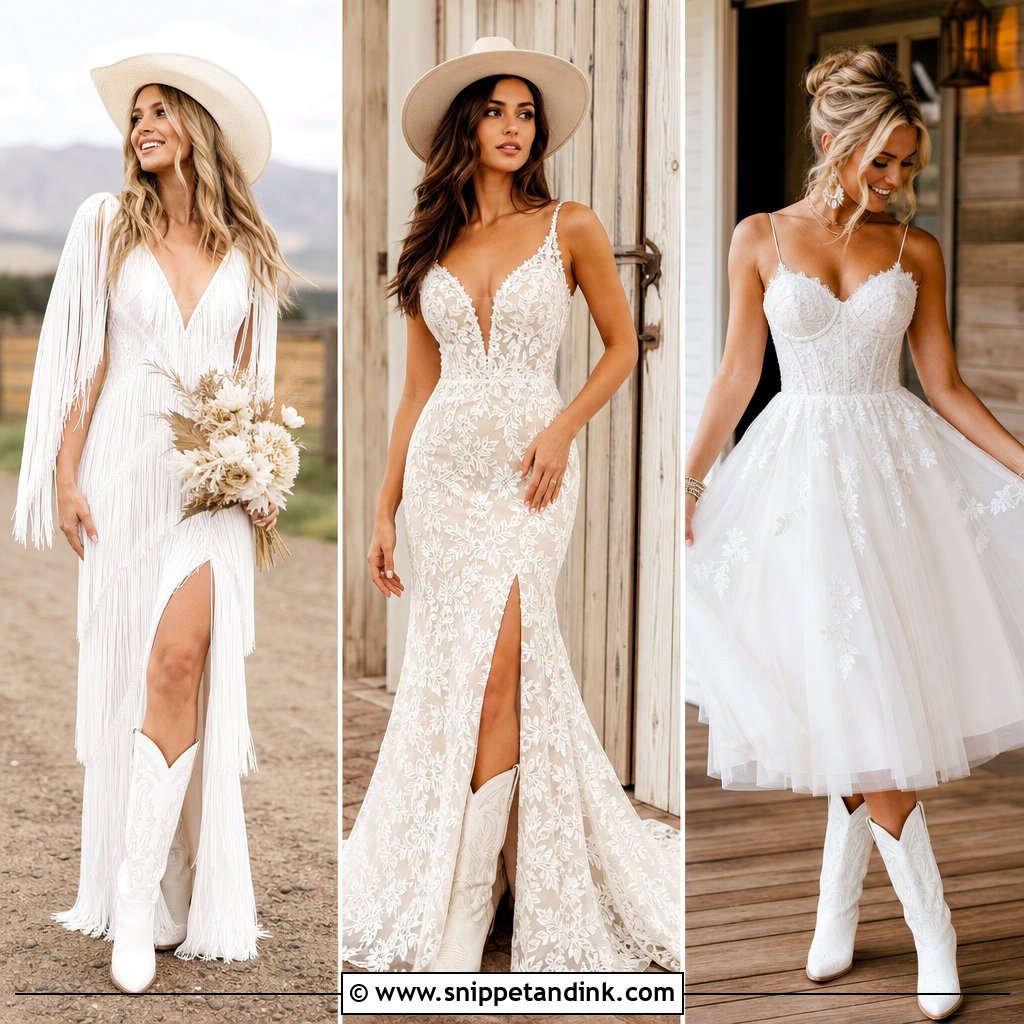
20. Short Cap Sleeve Wedding Dress
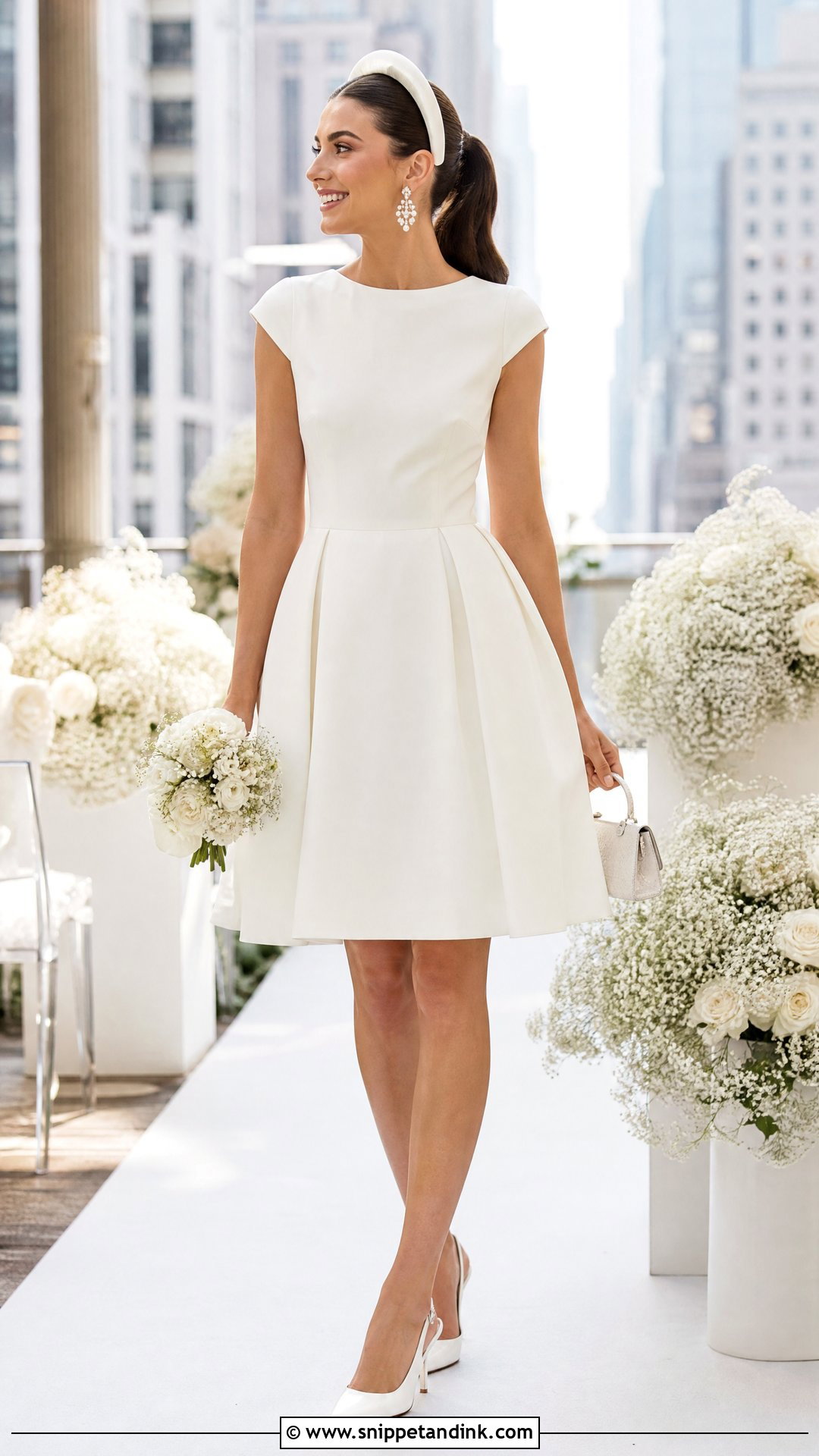
A short cap sleeve dress fits a civil ceremony, a reception change or a relaxed daytime party. Choose a mini or knee-length cut with enough structure to read as bridal. A tailored sheath looks modern; a flared skirt is more playful. Your legs and shoes are part of the outfit now, so statement pumps, embellished flats or sleek slingbacks all earn their place. Add bold earrings, a small bag and a short veil, headband or sculptural hair piece, with a polished ponytail or smooth bun. Carry a petite bouquet that doesn’t cover the dress. Sit down in front of a mirror before you buy; short hems ride up further than you think, and fitted shorts or a lining underneath solve it.
Adding Cap Sleeves to a Gown That Doesn’t Have Them
A lot of brides fall for a strapless dress and then decide they want something on the shoulders. That’s usually possible, but it’s real alteration work, not a quick tweak, so it pays to know your options early.
Sewn-in sleeves
A seamstress builds sleeves from matching lace or fabric and attaches them to the bodice. Ask the shop at the time of ordering whether extra lace from the same dye lot can be supplied with the gown, since ordering it separately later can take weeks and may not match. Allow time for at least two fittings once the sleeves are tacked on.
Detachable sleeves
Separate lace caps can hook or snap to the inside of the bodice, giving you coverage for a religious ceremony and a strapless look for dancing. They’re less permanent and often cheaper, but the fastenings need to be placed well or the sleeves sag between the hooks.
Illusion straps
If you mainly want security rather than coverage, a fine mesh strap with a few appliqués can hold a strapless bodice in place without changing its style much. I’d suggest this to anyone who is mostly worried about the dress slipping.
A Small Sleeve With a Big Job
Cap sleeves add gentle coverage, define the shoulders and give lace, beadwork or crisp fabric somewhere else to show. The best results come from planning the whole outfit around them: neckline, silhouette, shoes, hair, veil, jewellery and flowers. At each fitting, sit, walk, dance and raise your arms, and watch for pulling, gaping or a sleeve that bites. Good tailoring fixes most of it. From a lace A-line to a sharp crepe sheath or a short reception dress, the sleeve should feel like part of the gown, not something you have to think about.
You'll Like These Ideas:




Leave a Reply