
Romantic is the word brides say to me most often in a first appointment, and it means something slightly different to each of them. For one it is lace sleeves, for another a skirt that floats when she walks. The twenty dresses here include classic lace gowns, corseted bodices, flowing chiffon and some quieter silk and crepe shapes, chosen to work across venues, seasons, ages and figures. Sculpted waists, soft draping and three-dimensional flowers are all popular in bridal right now, but none of them matters if the dress doesn’t let you walk, sit and hug people. Before you fall for a picture, think about neckline, train length, fabric weight and how much altering it will need.
Romance Comes From Movement, Not More Lace
When a bride tells me she wants romantic, I ask her to show me three pictures and tell me what she likes in each. Almost always, it is not the amount of decoration. It is the way a skirt sways, the softness of a sleeve or how light passes through a layer of tulle. That changes what we try on.
- Layers that move: tulle, organza and chiffon catch air as you walk. Two or three soft layers feel more romantic than one heavy skirt.
- One focal detail: lace sleeves, a bow, appliqué flowers or a draped neckline. Pick one and let the rest support it; four focal points read as fussy.
- Warm whites: ivory and soft white glow next to skin and candlelight, while bright white can look stark.
- Soft edges: scalloped lace hems, raw-edge veils and covered buttons all blur hard lines.
At the appointment, I’d tell the consultant how you want to feel and what your venue is like before you mention any style names. A romantic dress for a stone church in January and one for a meadow in June share a mood, not a fabric. Then ask to try at least one dress you think you won’t like. Romantic brides often expect lace and end up choosing a plain silk that moves well.
1. Chantilly Lace A-Line Wedding Dress
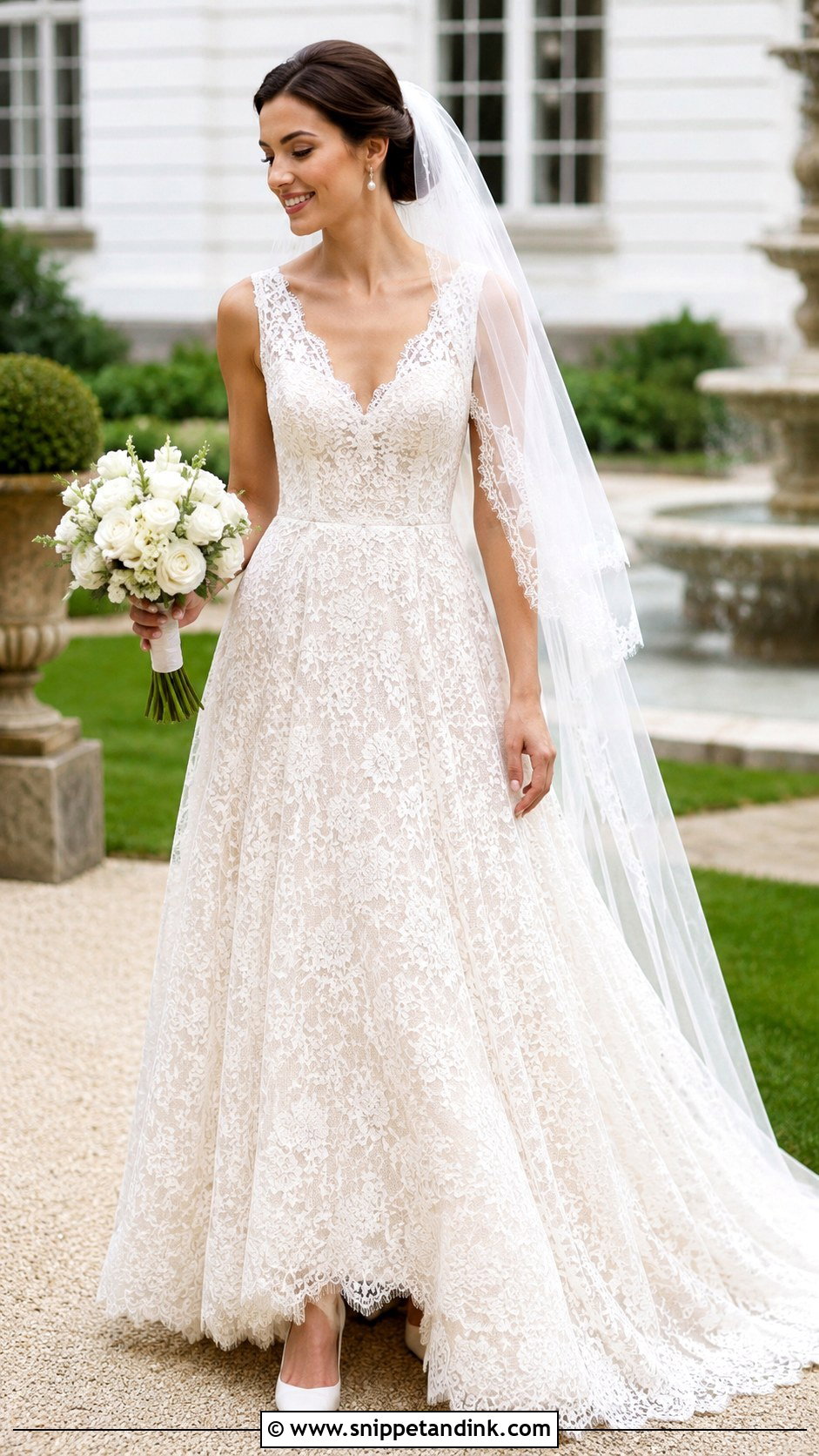
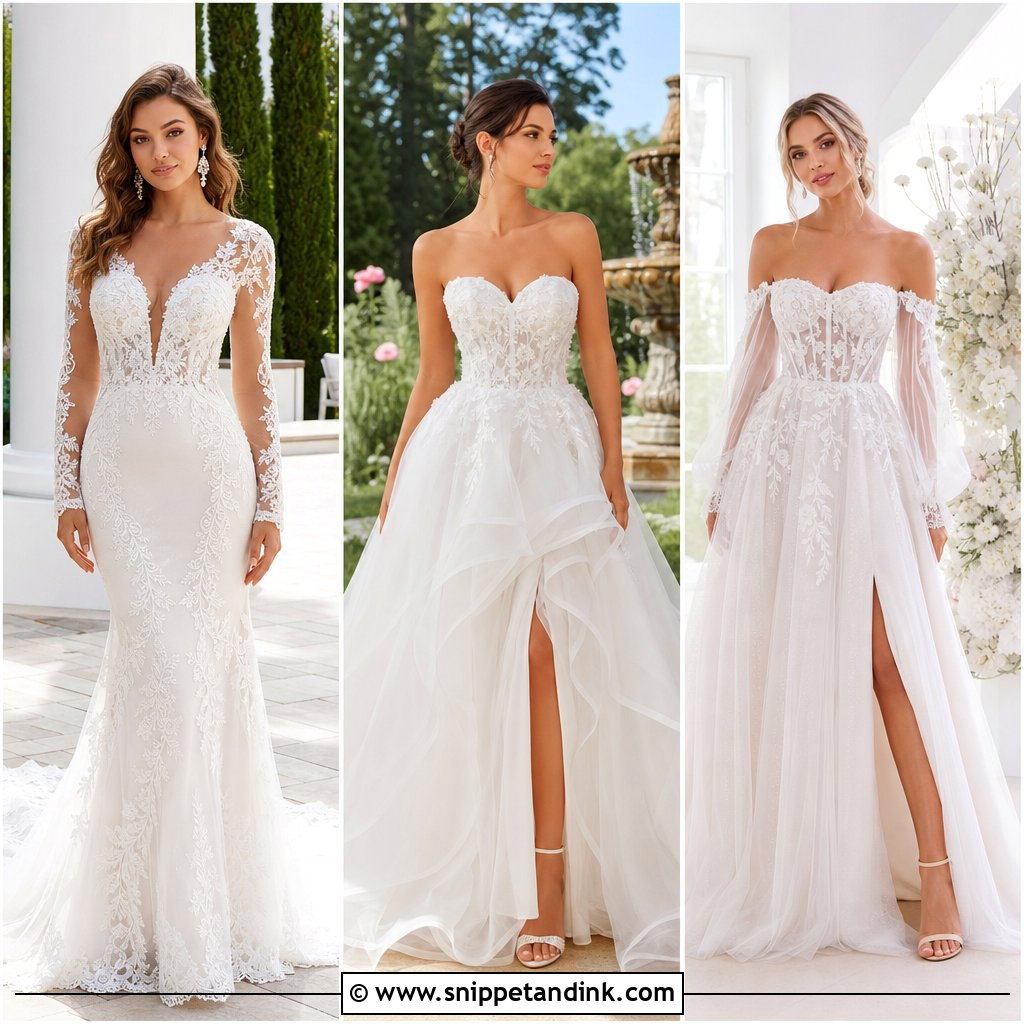
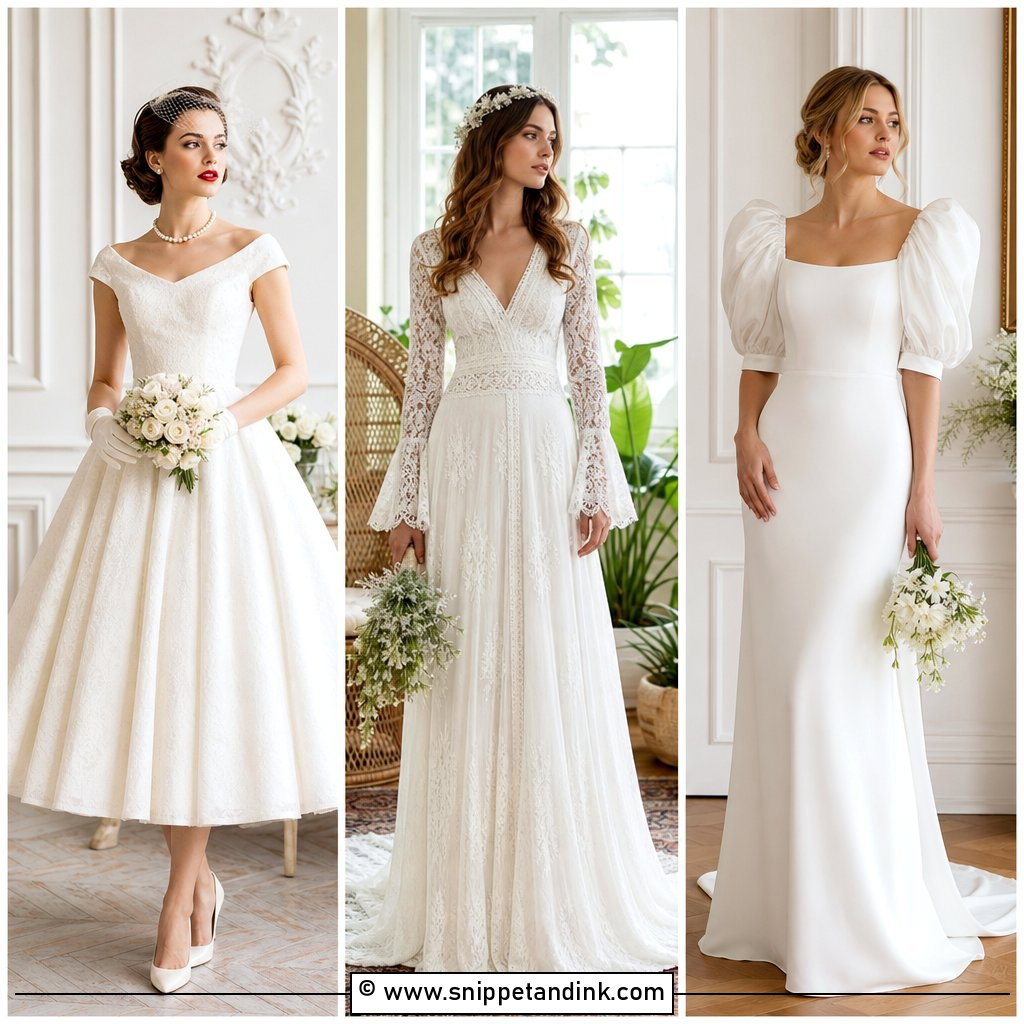
Chantilly is a very fine, flat lace with outlined flowers, and it is the softest lace I work with. On an A-line it gives a gentle look rather than an ornate one: fitted bodice, lightly defined waist and a skirt that widens smoothly to the floor. An ivory lining under the lace adds depth. A scalloped V or a subtle sweetheart neckline frames the face, and pearl drops, a fingertip veil, pointed ivory pumps and a few white garden roses are plenty. It suits most figures because it follows the torso and floats over the hips. The downside is fragility. Chantilly snags on bracelets and engagement ring prongs, so I tell brides to turn their ring inward while dressing.
2. Basque Waist Ball Gown Wedding Dress
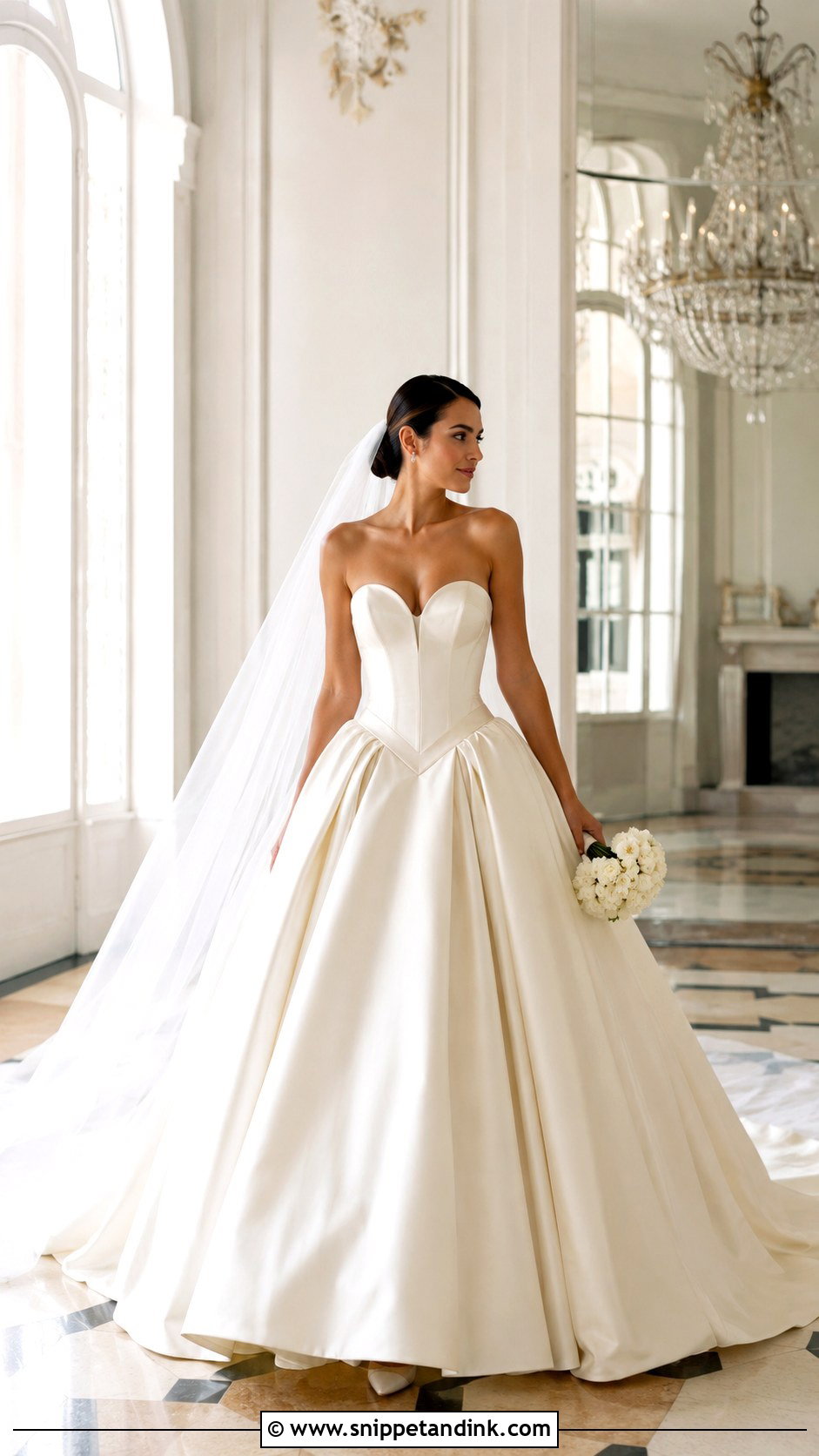
A Basque waist ball gown wedding dress dips into a soft V at the front, which lengthens the torso before the full skirt begins. It has been everywhere in bridal lately, in lace and in plain satin alike. A corseted bodice with a clean scoop or sweetheart neck balances the volume. A cathedral veil, crystal studs and satin heels hidden under the skirt are all it needs; a small bouquet keeps the waist visible in photos. The V point has to sit at the dead centre of your body and the boning has to let you breathe. I check both with the bride seated, because a Basque point that is too long digs into the thighs when you sit.
3. Off-Shoulder Satin Wedding Dress
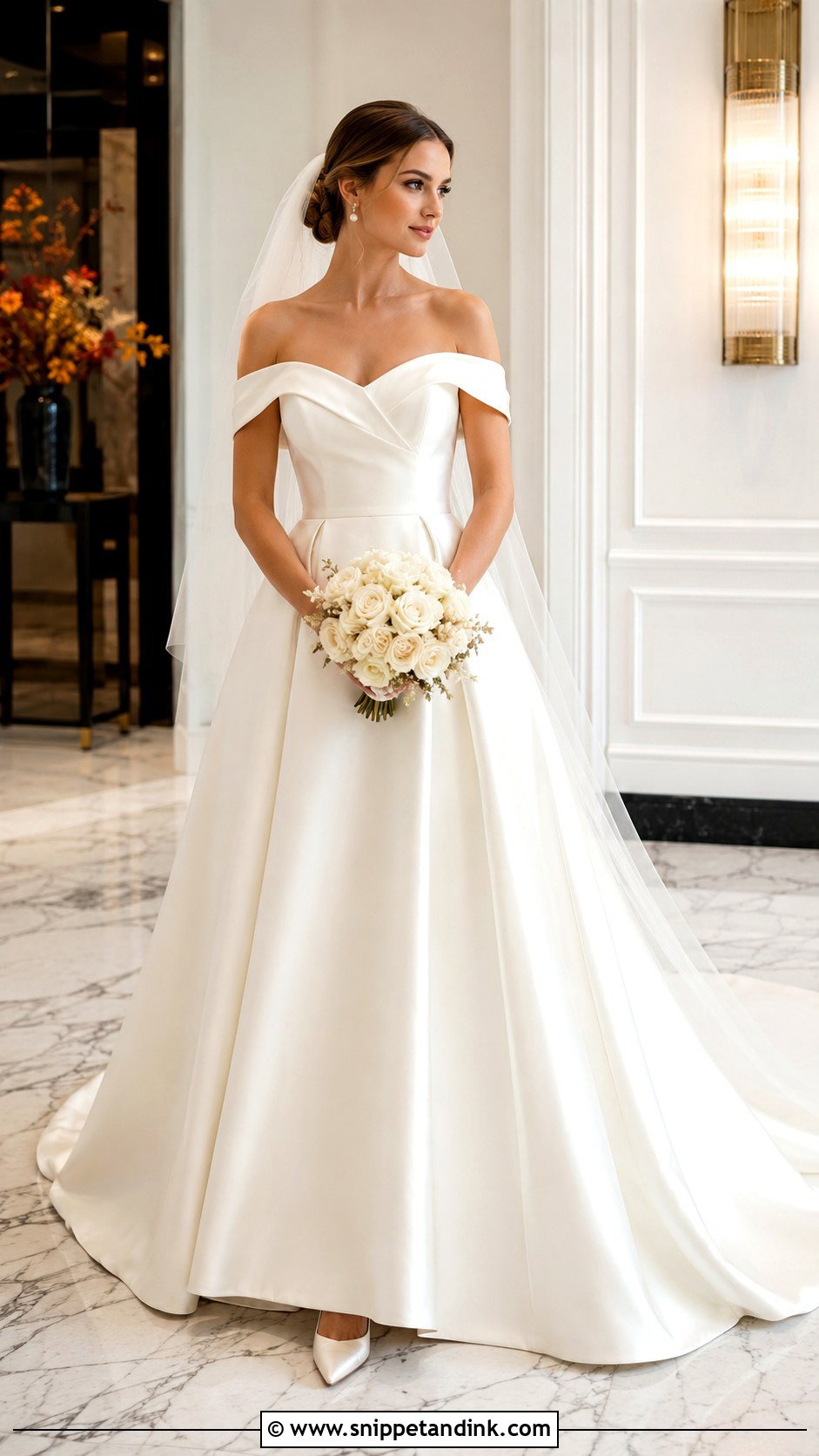
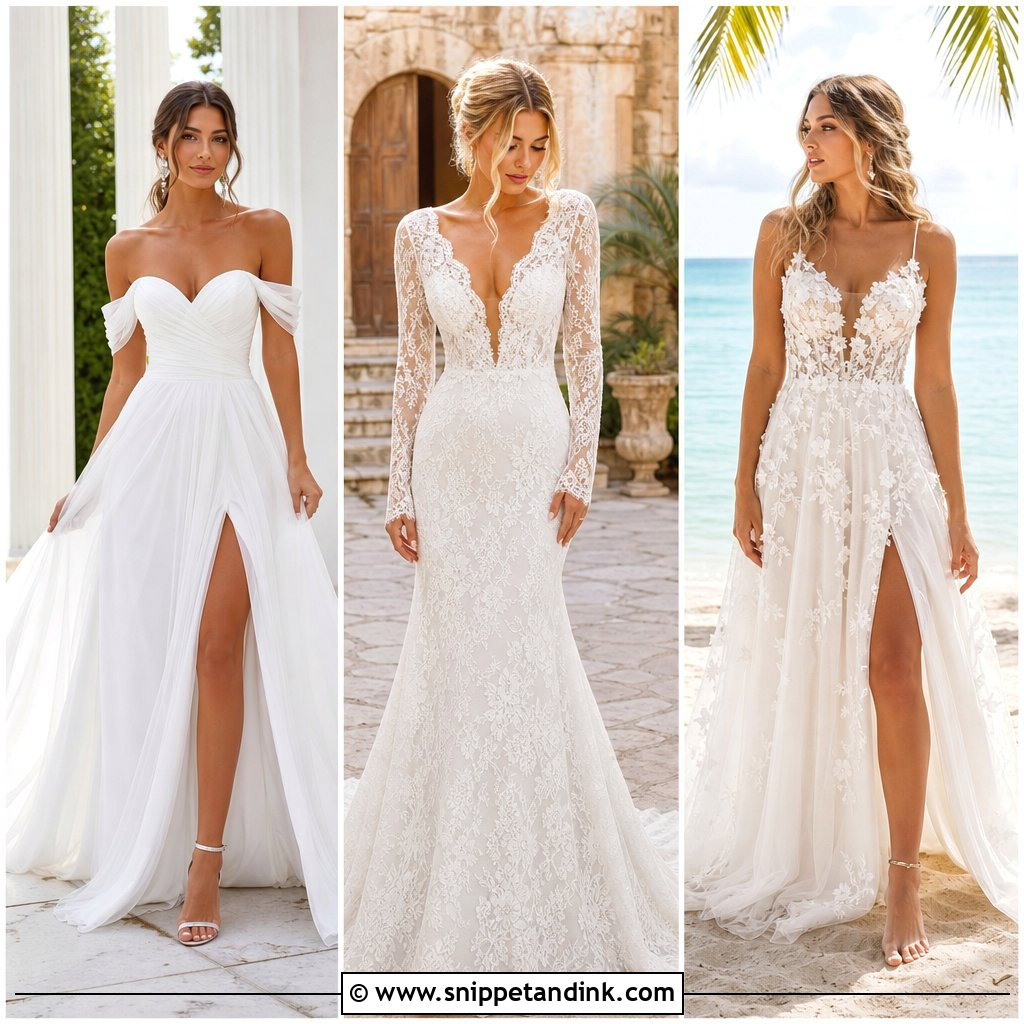
Satin with an off-shoulder neckline has a grown-up kind of romance. The bodice must be structured enough to stay up without relying on the sleeve band, which should rest across the upper arms, not hold the dress on. A softly pleated A-line skirt adds movement and stops the shiny fabric looking stiff. A low chignon, pearl earrings, a chapel veil and closed-toe satin pumps finish it. Satin reflects every bump and seam, so careful tailoring and the right underwear matter more than with lace. It is especially good for autumn and winter, grand hotels and evening ceremonies, when warm light makes the fabric glow.
4. Long Sleeve Lace Wedding Dress
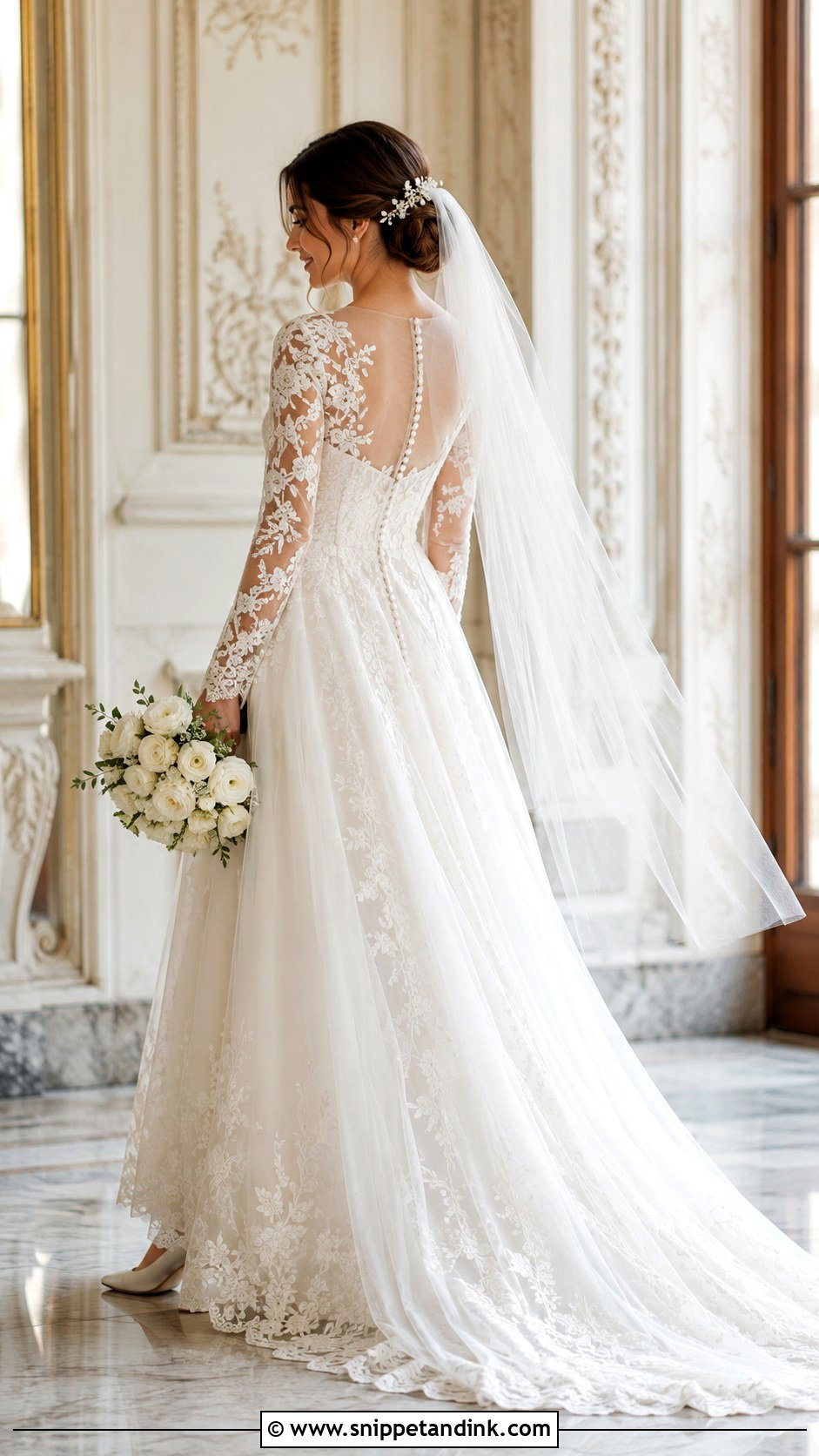
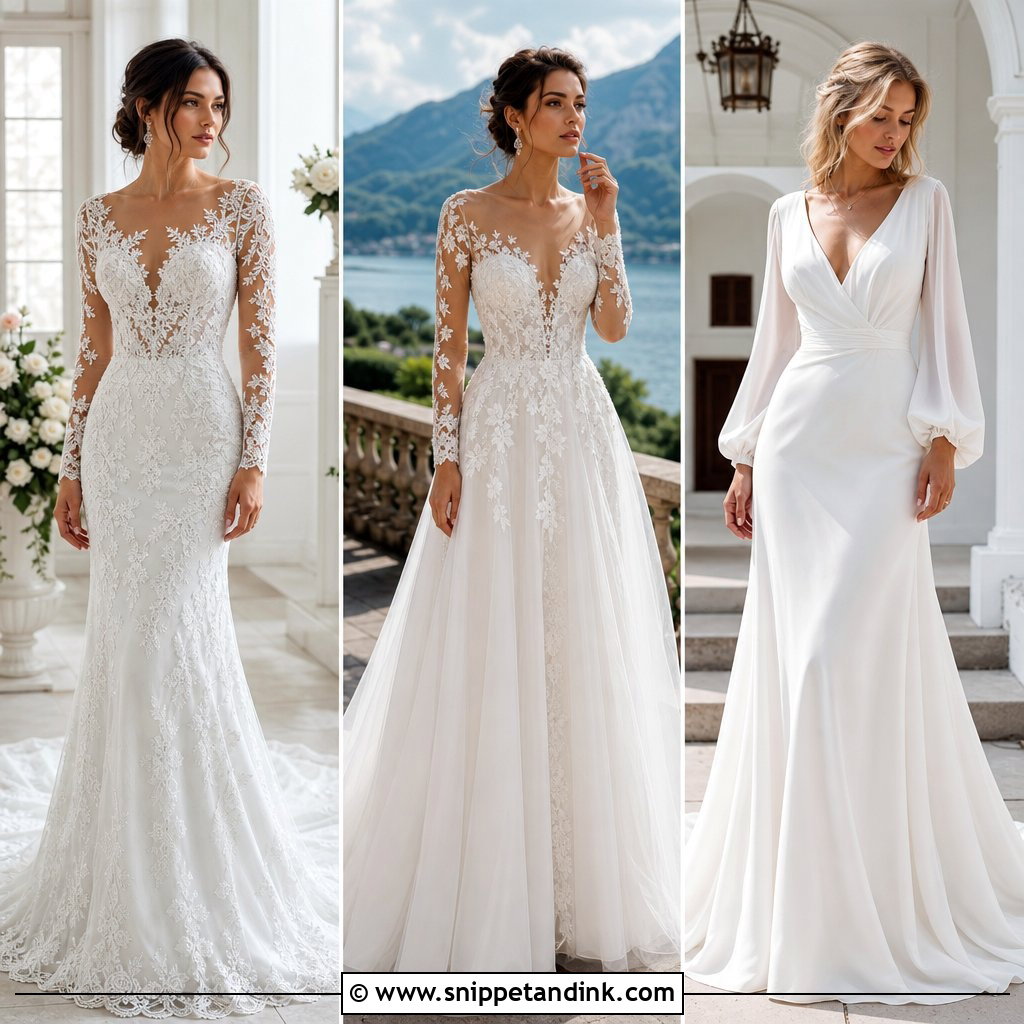
Long lace sleeves can look graceful or stiff, and the lace decides which. I steer brides toward sheer, fitted sleeves with appliqués placed carefully over tulle, instead of heavy corded lace that holds the arm like a tube. A lined bodice, natural waist and flowing A-line keep it modest yet light, and covered buttons at the wrist and down the back add an old-fashioned touch. A soft tulle veil, pearl hairpins, block-heel pumps and a small bouquet of white ranunculus are enough. Test the sleeves by reaching for something on a high shelf. If the back seam strains, ask for more room across the shoulder blades.
5. Floral Appliqué Tulle Wedding Dress
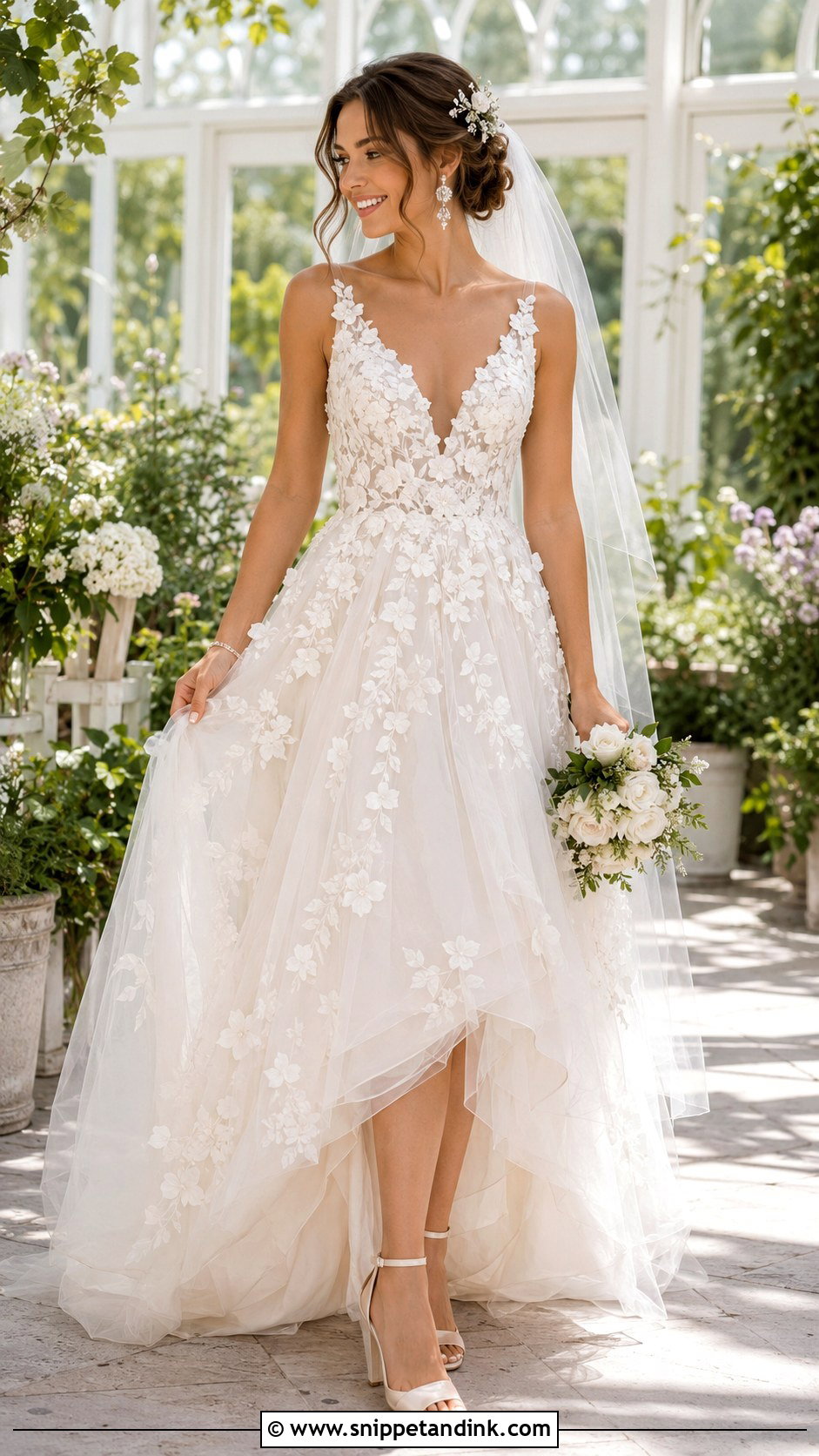
Embroidered flowers on tulle give a dress real depth, especially when they start dense on the bodice and thin out down the skirt. That gradient keeps the waist defined and lets the layers of tulle show. A soft V-neck and supportive straps make it easy to wear through a long reception. Floral hairpins, small crystal earrings and ivory ankle-strap heels suit it, with a plain veil; an embellished one would compete. Tulle is soft and catches on everything outdoors: gravel, rose bushes, rough stone. For a garden or estate wedding, I ask the seamstress to keep the hem just off the ground and pack a few safety pins for small tears.
6. Sweetheart Corset Wedding Dress
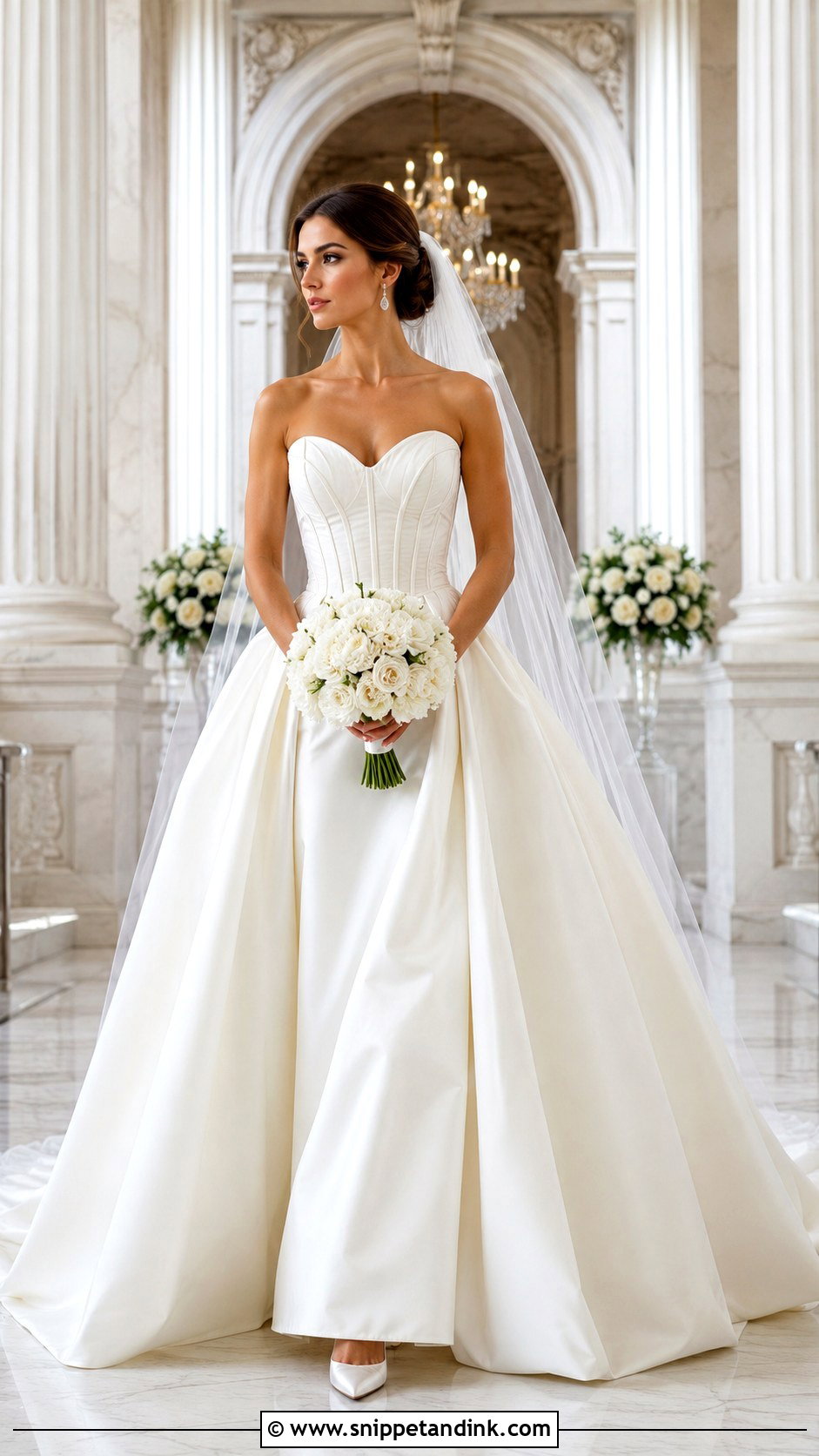
A sweetheart corset wedding dress joins a shaped, supportive bodice with a soft curved neckline. If you want it to feel timeless rather than fashion-led, choose covered boning or subtle seam lines instead of exposed bones. A full organza or satin skirt contrasts with the fitted top. Add a sheer cathedral veil, teardrop earrings and pointed pumps. The neckline should stay put when you bend, sit and raise your arms; I make every bride do all three. A well-made corset feels firm, like a long hug, never painful. If you’re bruised after twenty minutes in the fitting room, it will be unbearable by dinner.
7. Square Neck Mikado Wedding Dress
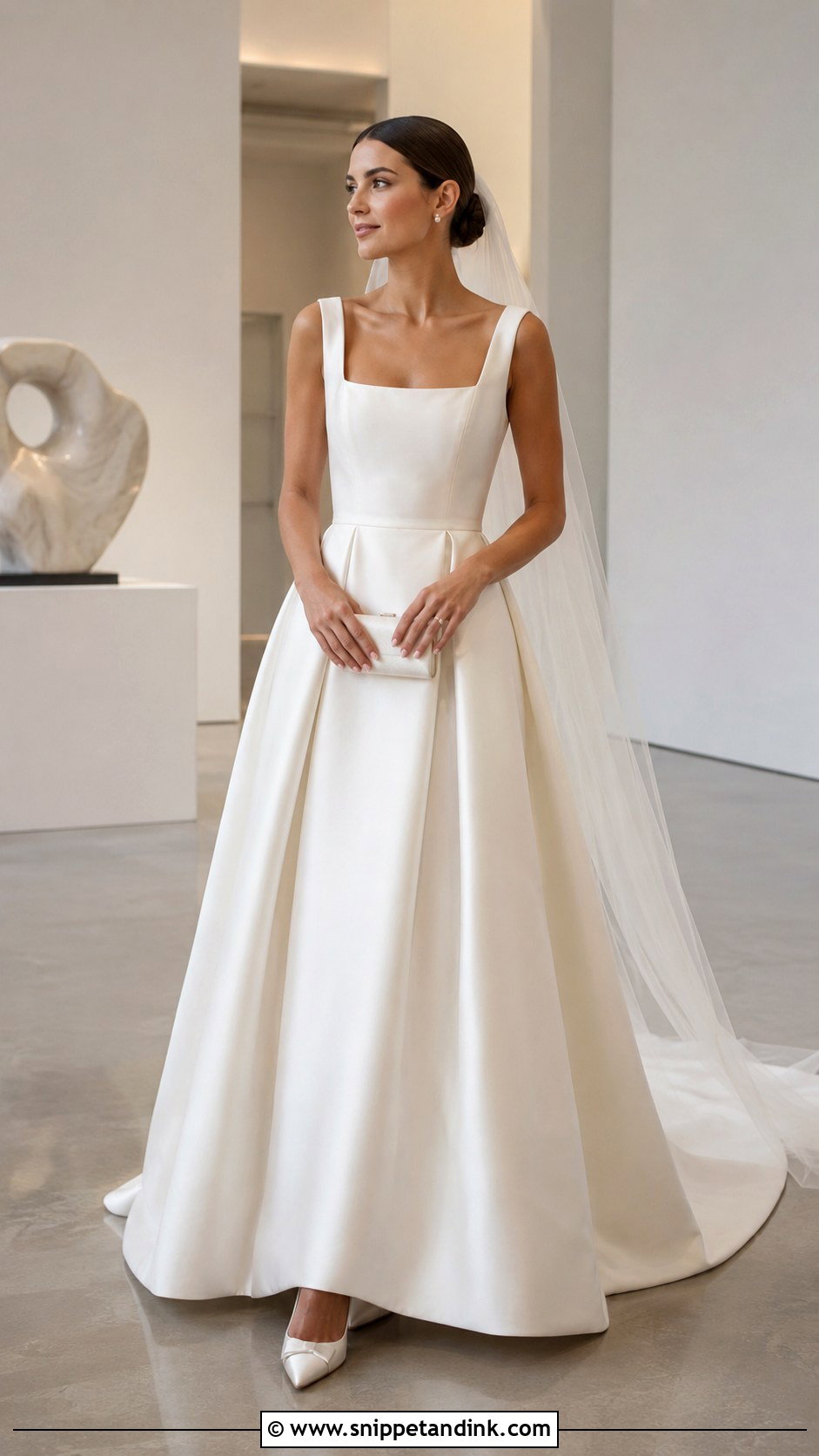
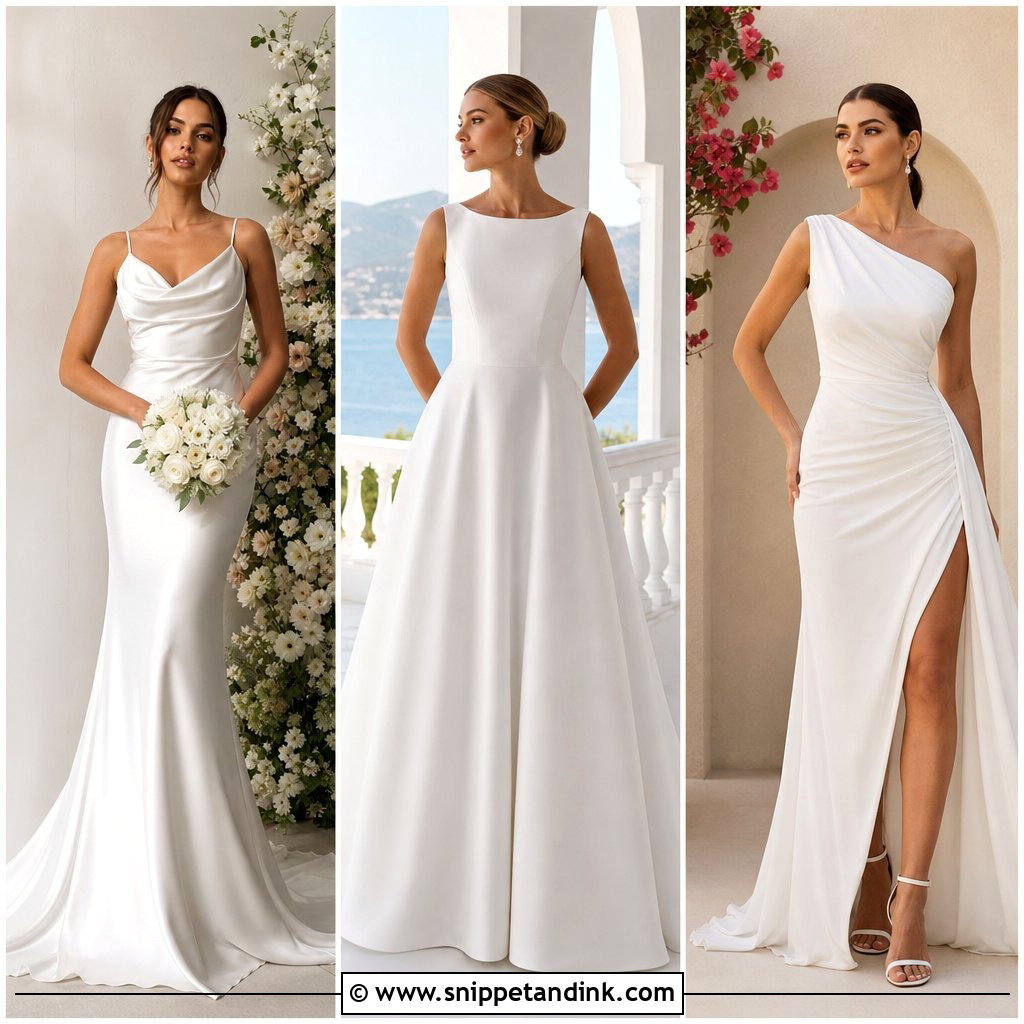
Mikado has a slightly ribbed surface and enough stiffness to hold pleats on its own, which suits a square neck. The neckline frames the collarbone and the wide straps carry more support than spaghetti straps can. A pleated ball gown or A-line skirt keeps it formal. A sleek bun, pearl studs and a long plain veil are all the decoration it needs, plus pointed satin heels and a small structured clutch. Heavy jewellery fights with the fabric. Mikado suits museums, hotels and modern spaces with strong architecture. Be aware it is heavy; a full mikado skirt is warm in summer, and I’d think twice about it for an outdoor July ceremony.
8. Pearl Beaded Sheath Wedding Dress
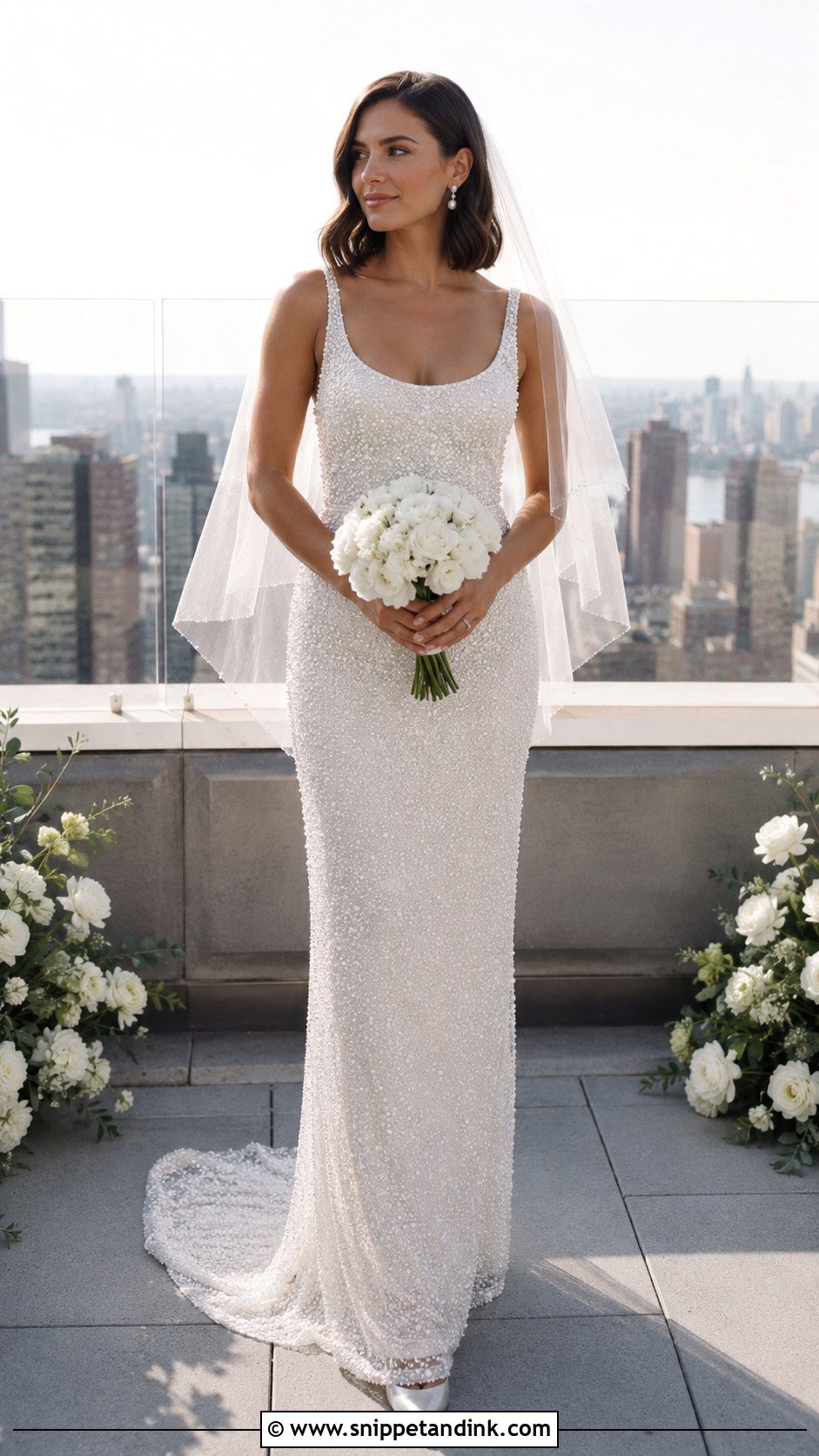
Pearl beading turns a simple sheath into something luminous without the glare of crystals. I look for pearls placed evenly over fine tulle or crepe, but kept off the inner arms and the lower back where you lean against a chair; beads there press and rub. A gentle scoop and narrow straps keep it refined, and a short sweep train adds formality without weight. Pearl earrings, a sheer shoulder-length veil, low pointed heels and a compact bouquet suit the vertical line. Sheaths sit close to the body, so smooth underwear and careful alterations are non-negotiable. It works well for galleries, rooftops and destination weddings where a big skirt is a nuisance.
9. Chiffon Empire Waist Wedding Dress
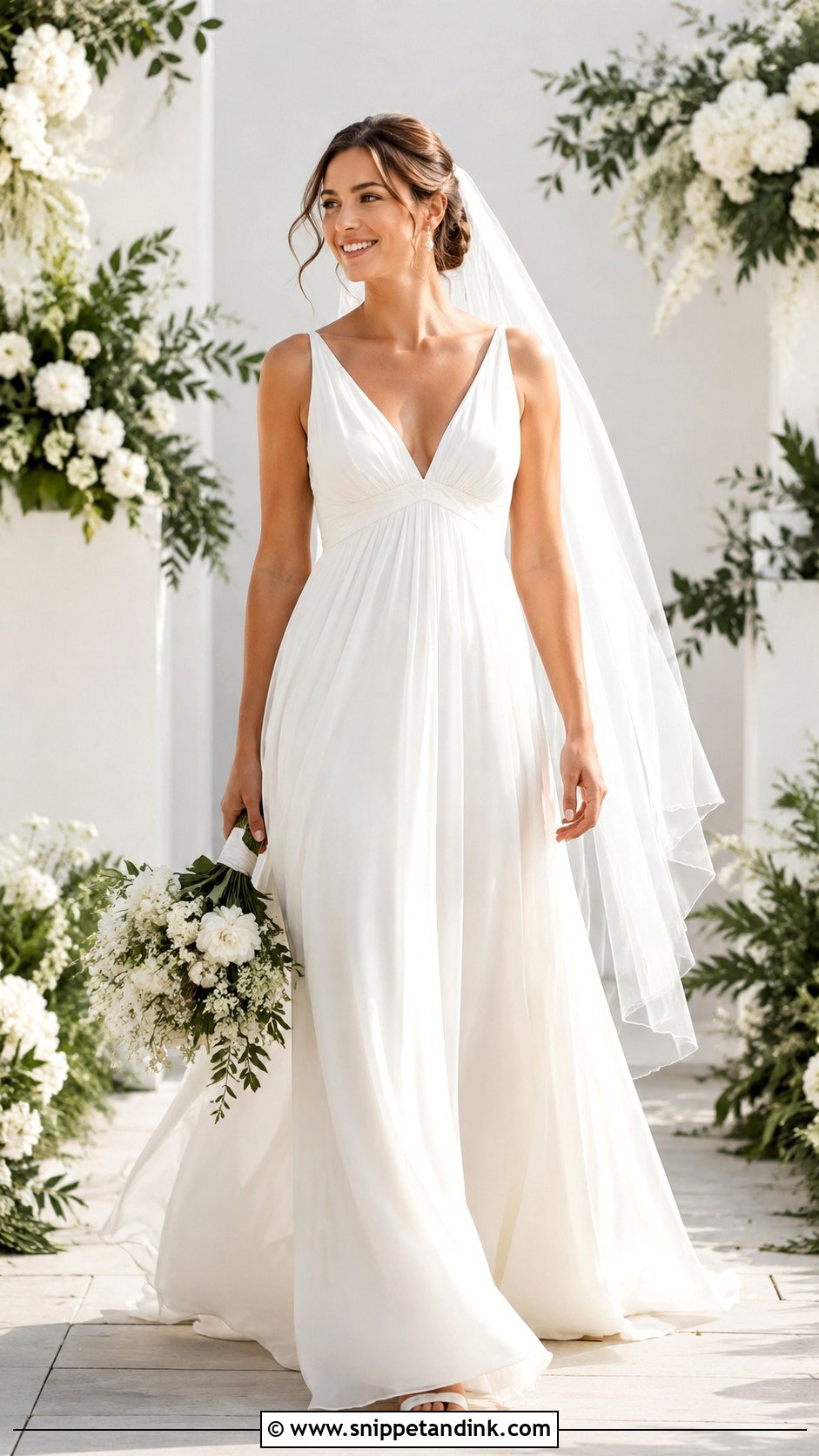
Chiffon on an empire waist is about the easiest dress to move in. The bodice fits the upper torso and the skirt drops softly from under the bust, so nothing presses on the waist. A lightly gathered skirt, supportive straps and a modest V give a polished but relaxed look. Delicate drops, an airy fingertip veil, a loose updo and low block heels that won’t sink into grass suit beach and garden weddings. The one thing I always check is the lining. Chiffon is see-through in sunlight, and a lining that stops at the knee shows clearly in outdoor photos, so ask for it to run close to the hem.
10. Silk Cowl Neck Wedding Dress
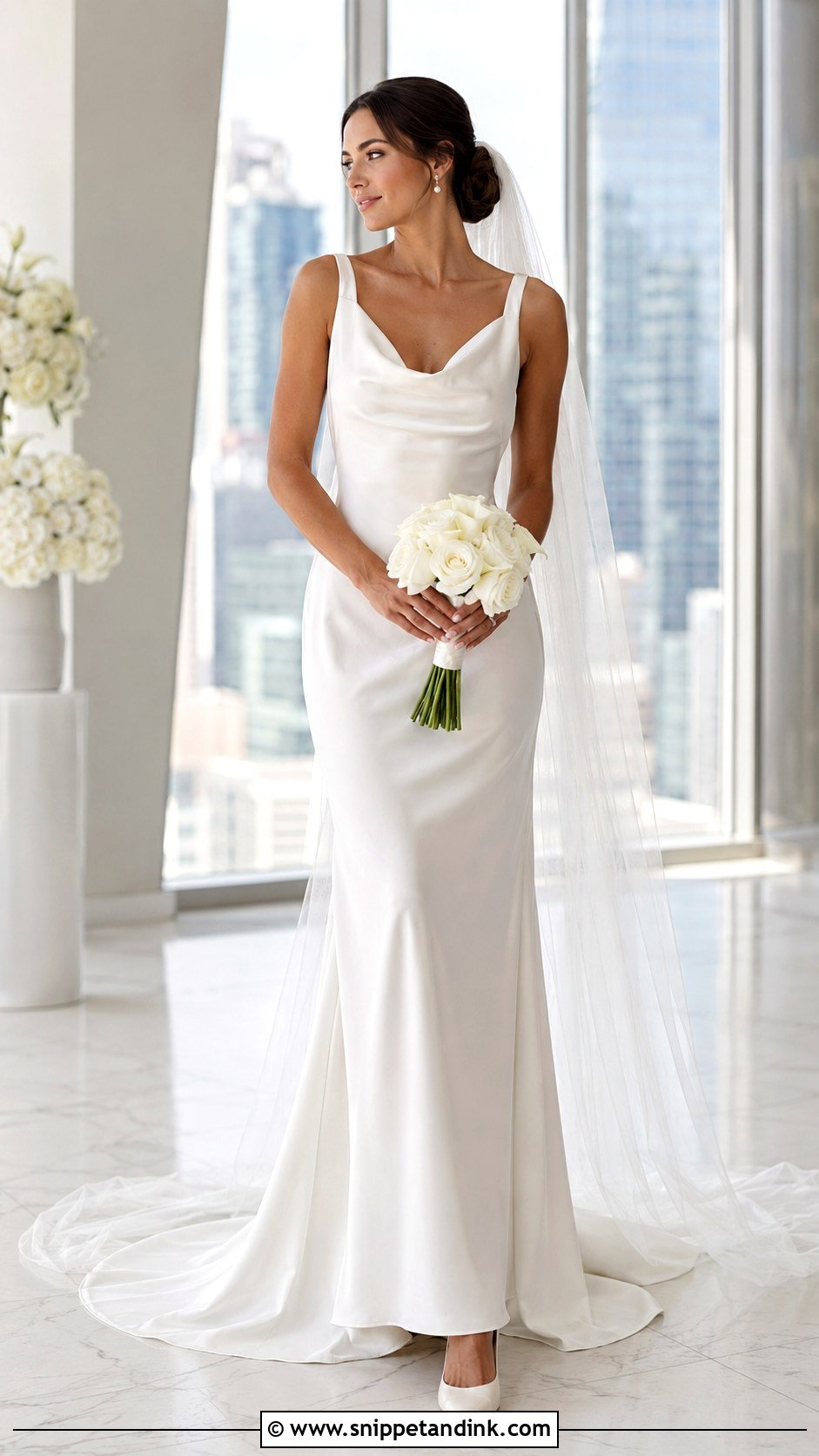
A silk cowl neck is minimal romance: the softly draped neckline gives movement to a clean slip or column. It must be cut on the bias so the silk falls naturally, with wider straps and a gently shaped waist for security. A low back adds drama, but support comes first. Pearl earrings, a smooth low bun, sleek ivory pumps and a sheer cathedral veil make it clearly bridal. I’d plan for creasing. Silk wrinkles as soon as you sit, and it shows every line underneath, so book a professional steam on the morning and try several underwear options at fittings, in daylight.
11. High Neck Lace Wedding Dress
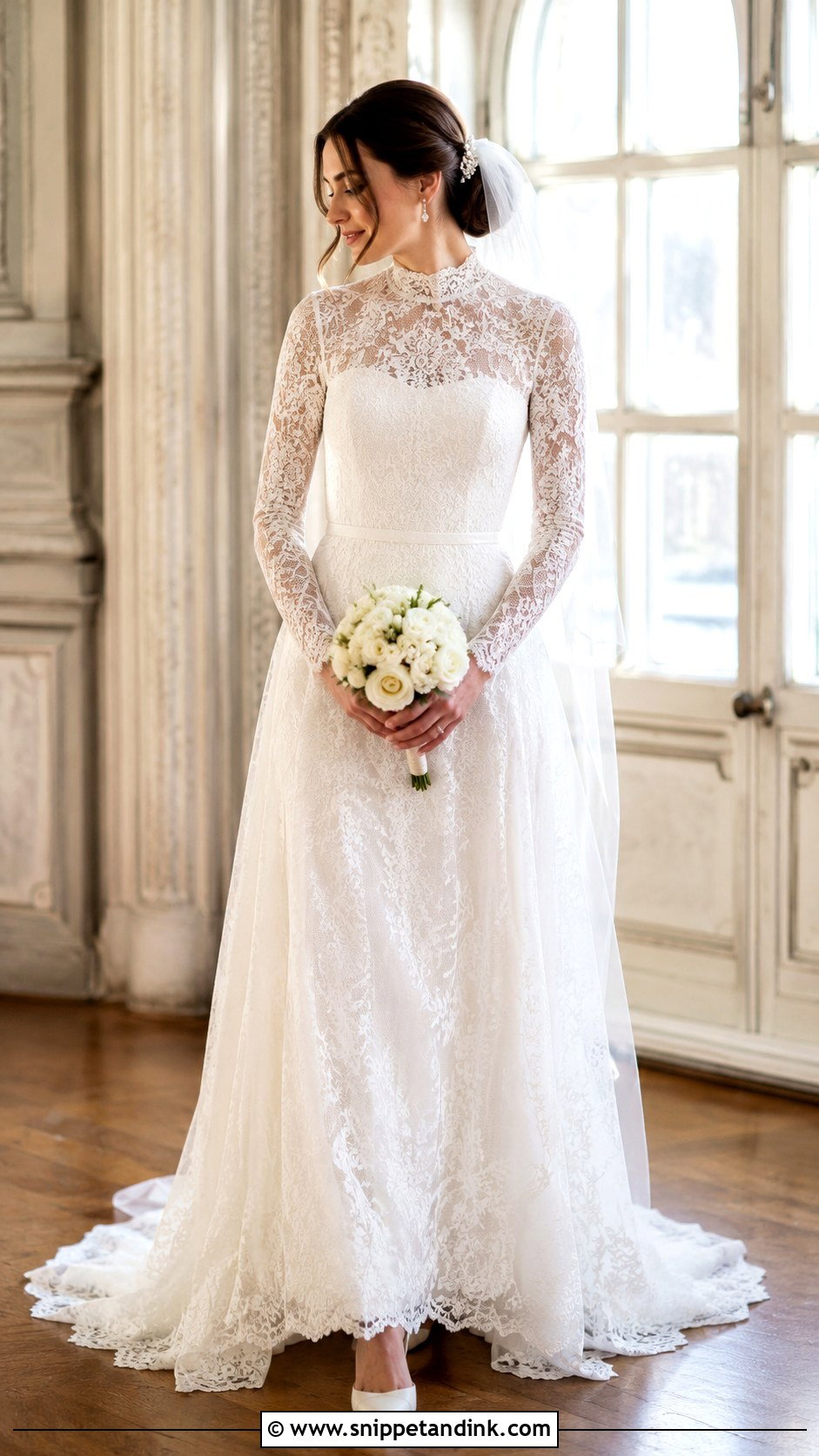
For coverage without feeling old-fashioned, a high neck lace wedding dress with an illusion neckline is the way I’d go: fine lace over sheer tulle frames the shoulders while the bodice underneath stays lined. A fitted waist and flowing skirt keep it from looking heavy. Cap sleeves suit warm months, long sleeves cold ones. A neat chignon, pearl comb and drop earrings that end below the lace collar work well, with a plain veil and pointed pumps. Leave the necklace off. Before buying, turn your head fully left and right; scratchy lace at the jaw or a hook at the nape can bother you all day.
12. Cap Sleeve Tea-Length Wedding Dress
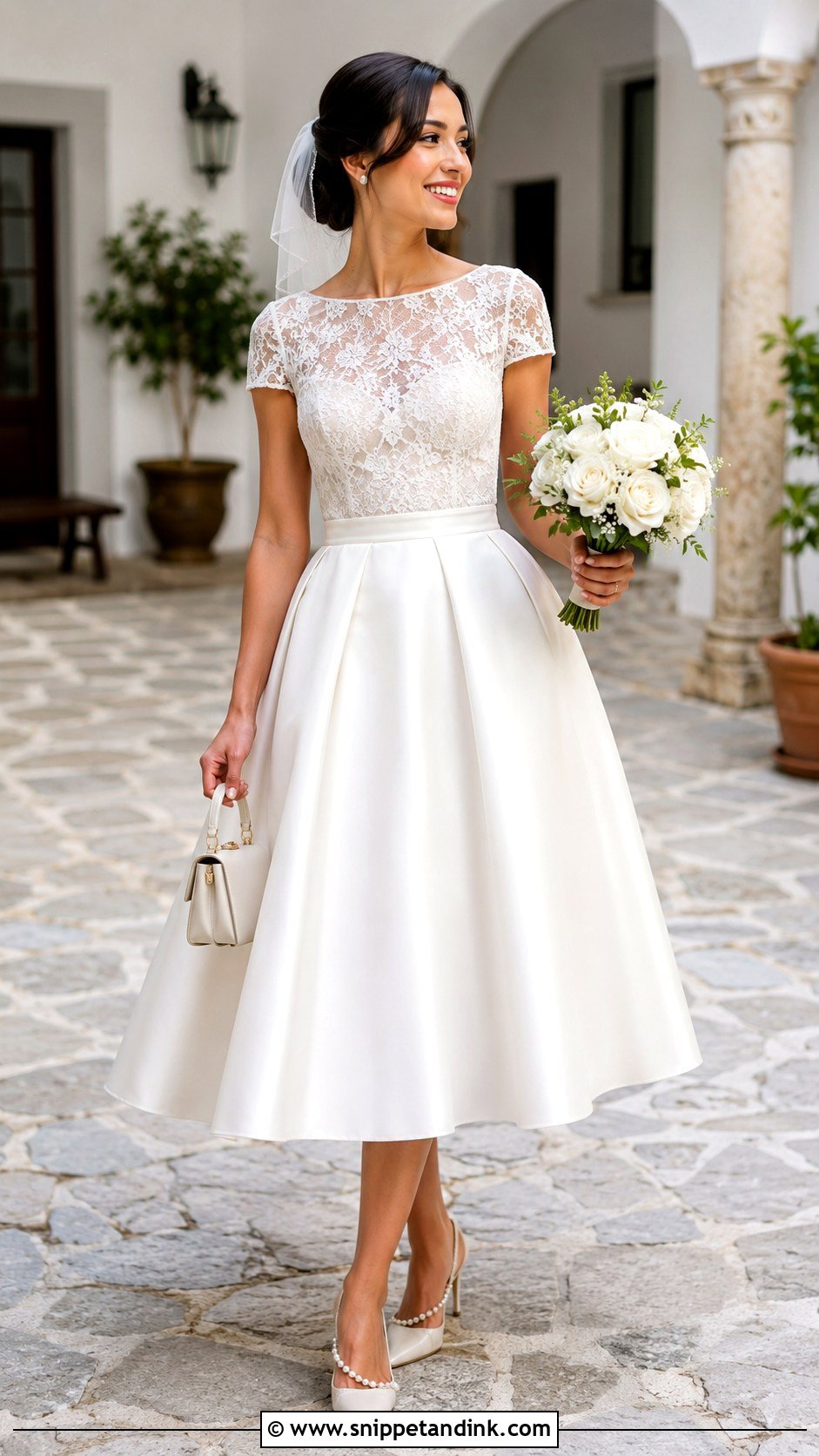
Tea length with cap sleeves is cheerful and slightly vintage. A fitted lace or satin bodice and a full skirt ending between knee and ankle are the basics. The shoes are on show, so choose pearl-detailed pumps, slingbacks or comfortable block heels with care. A short veil, a small structured bag and stud earrings keep it in proportion. It is easy to walk and dance in, which makes it a strong choice for courthouse ceremonies, daytime receptions and second looks. Hem length is where I fuss. A couple of centimetres changes the whole look, so pin it with your final shoes on, and keep a light petticoat to hold the skirt’s shape.
13. Detachable Overskirt Wedding Dress
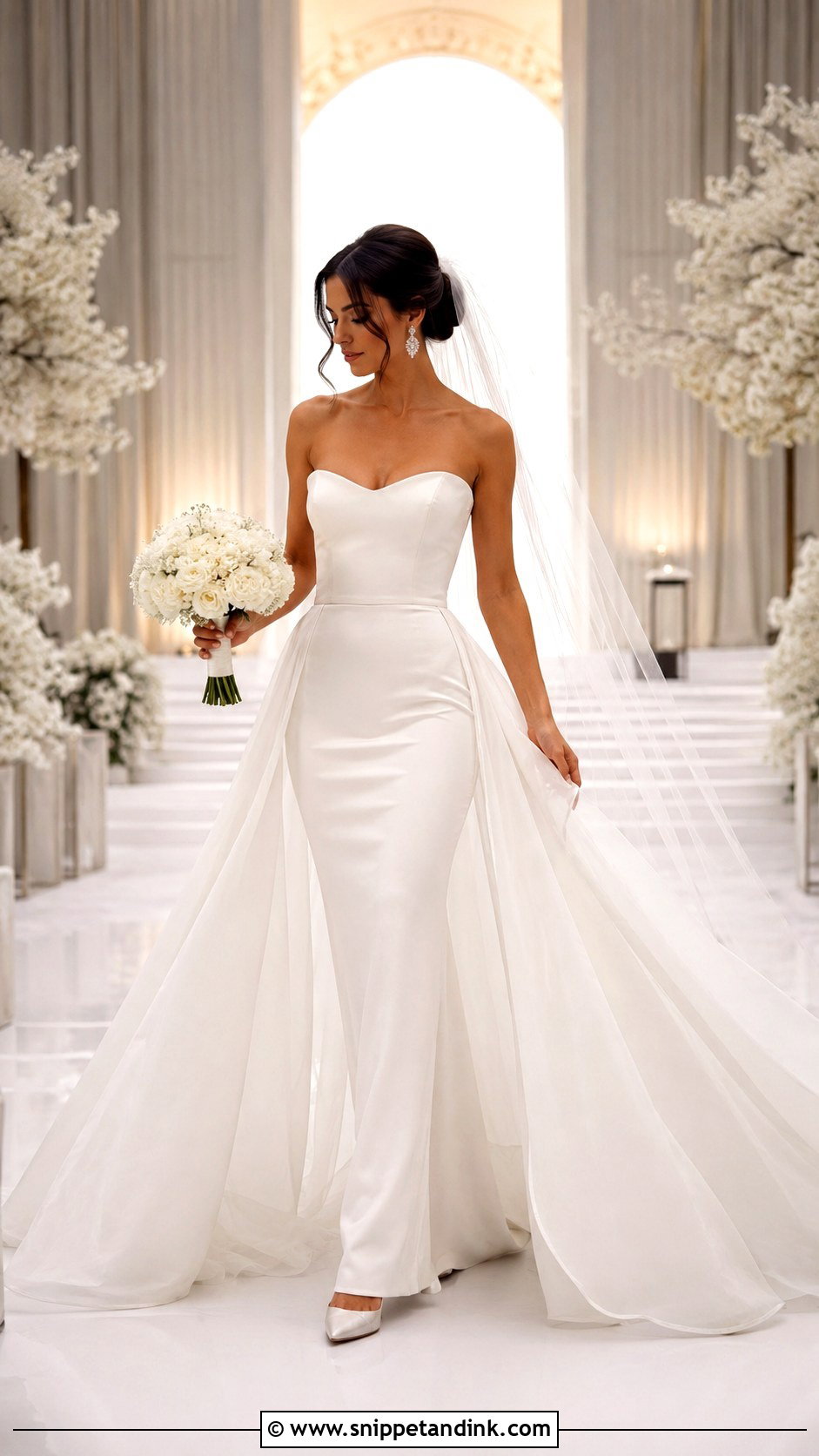
An overskirt gives you two looks without a full outfit change. Under it sits a fitted crepe, lace or satin column; over it, a flowing organza or tulle skirt that adds volume down the aisle and comes off after the photos for dancing. Crystal earrings, pointed pumps and a long sheer veil suit both versions. The waistband is the giveaway. It should lie flat with the fastening hidden from every angle, and the column underneath needs to be fitted to look finished on its own. Practise taking it off with whoever will help you; hooks and snaps are fiddly with nervous hands.
14. Cape Sleeve Crepe Wedding Dress
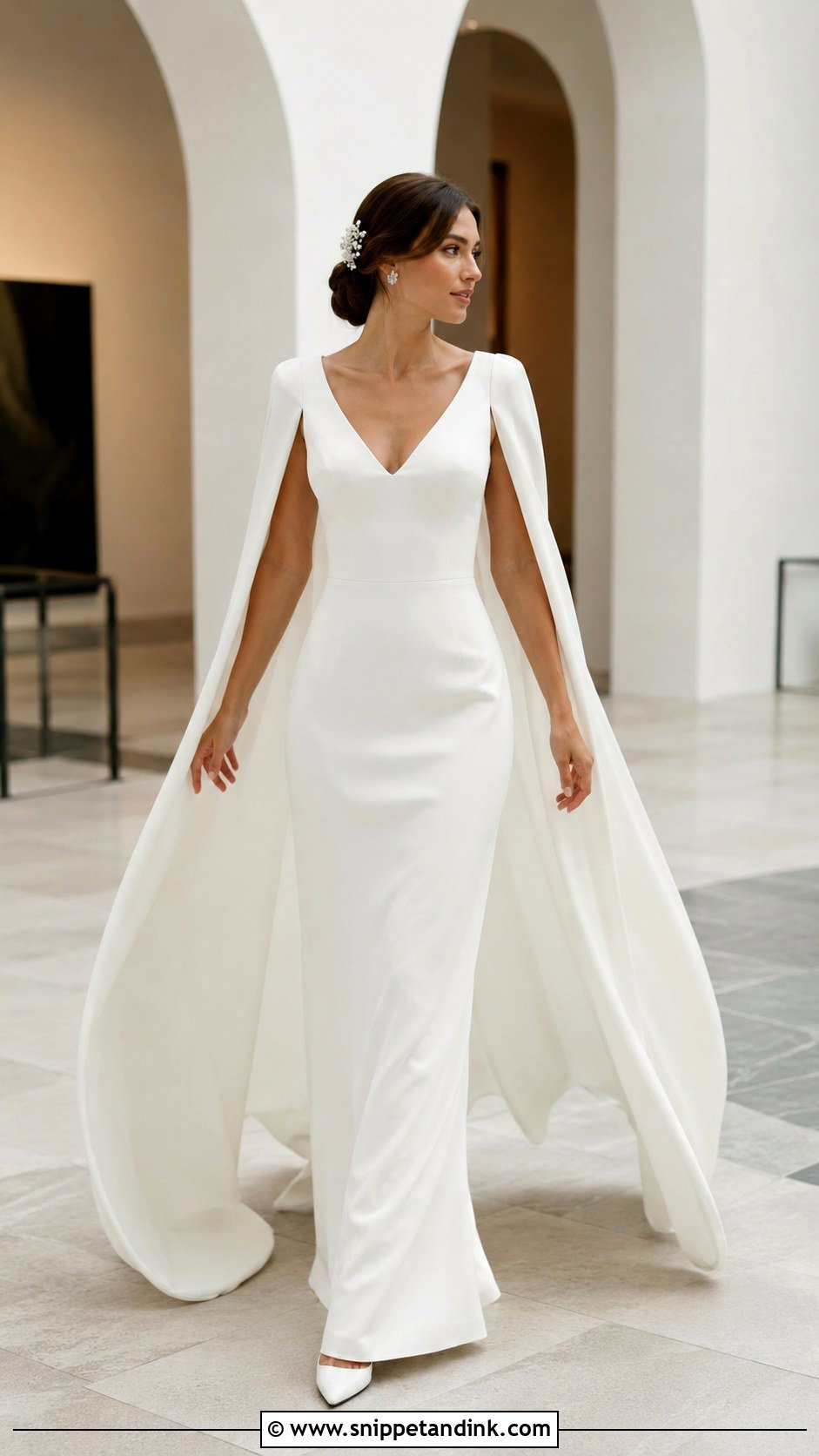
Cape sleeves add movement and drama to plain crepe. They attach at the shoulders of a fitted column or soft A-line and fall behind the arms. A bateau, scoop or V-neck keeps it clean, with a low bun, crystal studs and pointed ivory heels. With a cape, a long veil is usually too much; a small comb or short veil will do. Length is my biggest concern. A cape that touches the floor gets stepped on, so I like it to finish around the hem of the dress or shorter. In a light breeze it looks wonderful in photos, but practise walking and turning first so it falls where you want.



15. Drop Waist Tulle Wedding Dress
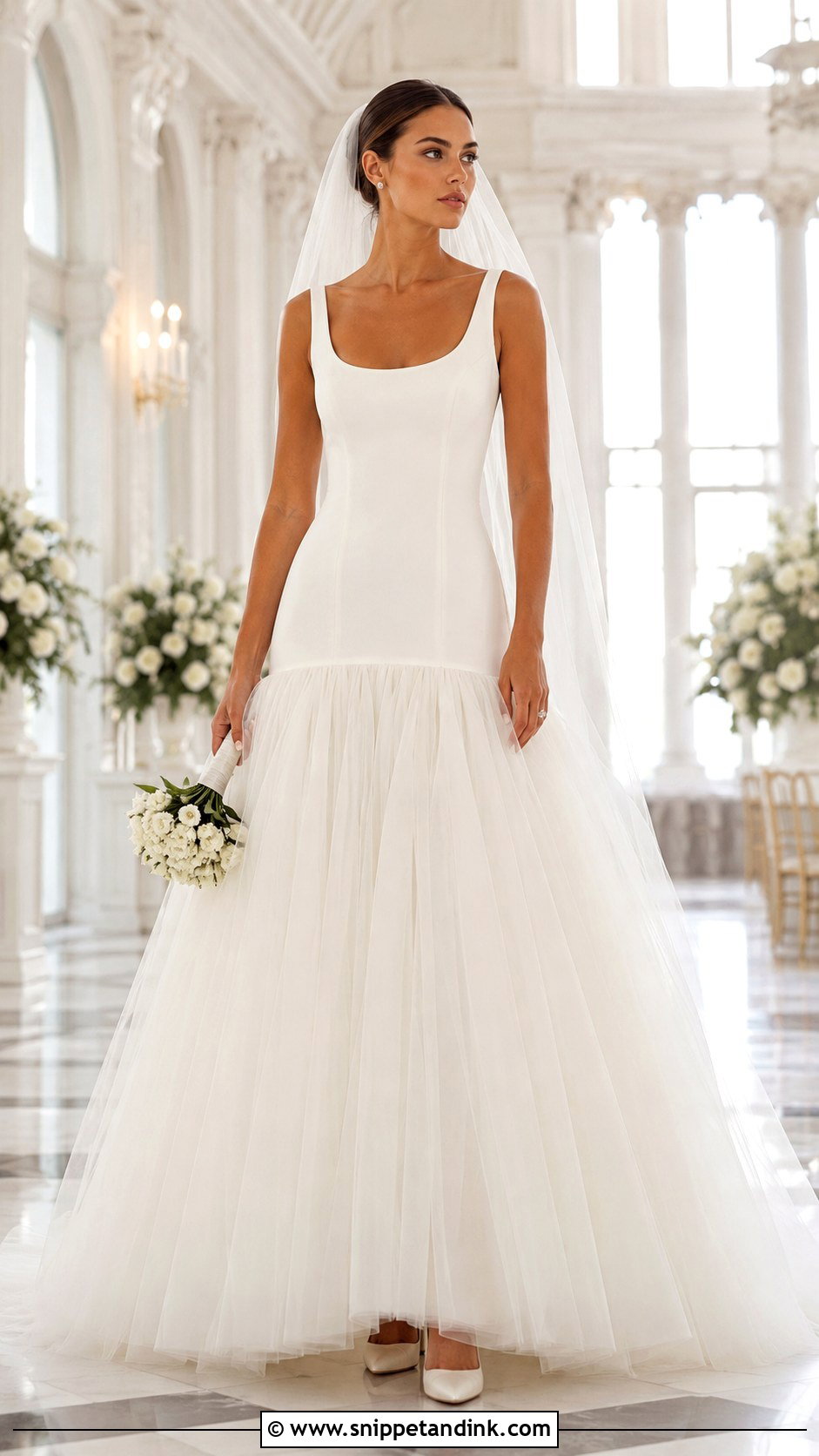
A dropped waist runs the fitted bodice below the natural waist before the tulle skirt opens out. It looks sculpted and a little different from the classic ball gown. Because the bodice is long, the fit has to allow sitting without the boning digging into the hips. A scoop or strapless neckline with internal support, a simple veil, small sparkling studs and closed-toe satin pumps suit it; a belt would break the line. Torso length matters here. On shorter torsos I usually raise the drop a little, since an extreme drop can make the legs look short. Try a few seam positions before committing.
16. Blush Floral Wedding Dress
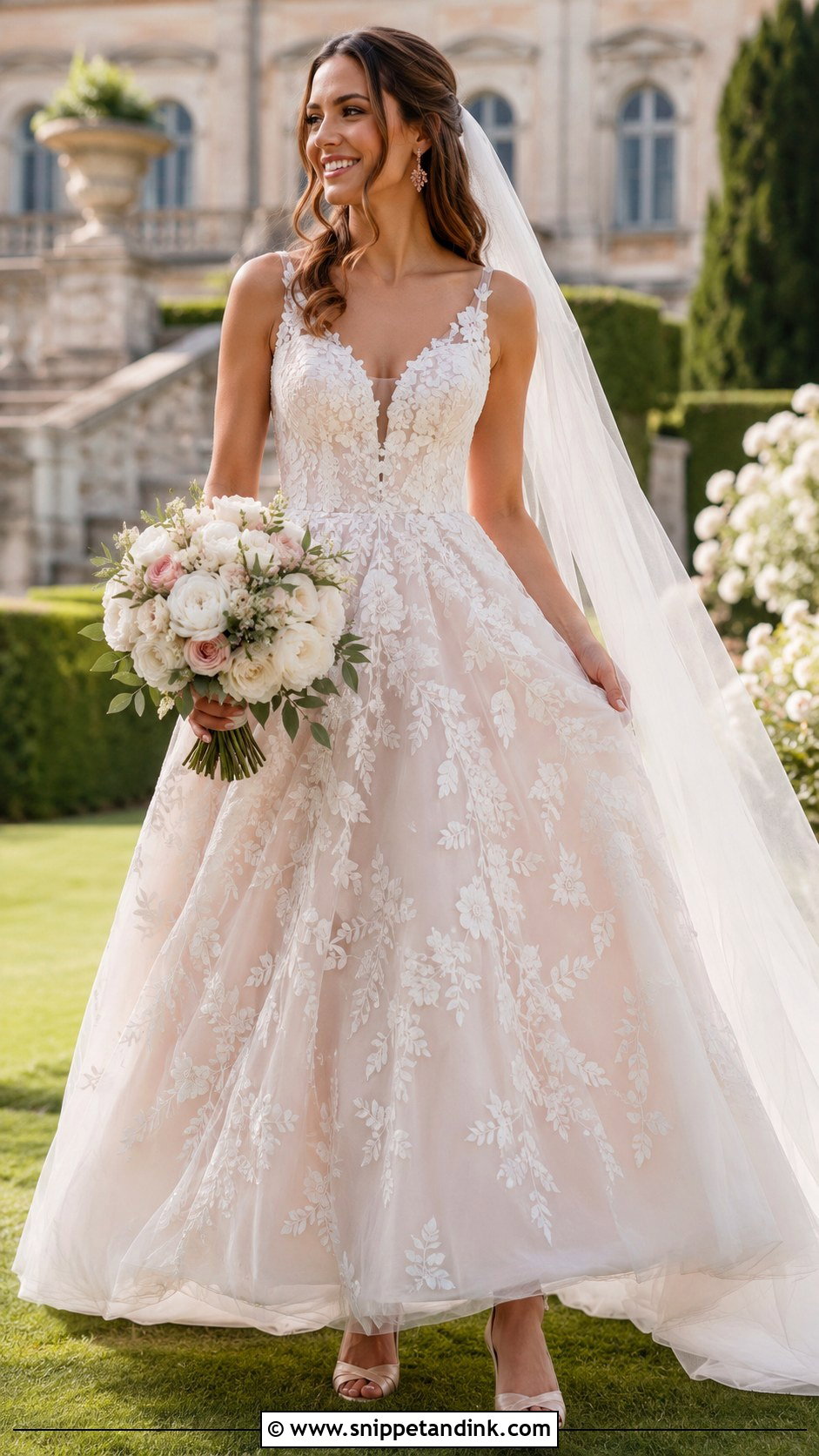
A blush floral dress adds colour quietly: pale blush tulle under ivory lace or embroidered flowers, so the pink reads as a glow rather than a colour. A fitted bodice, defined waist and flowing A-line keep it balanced. Champagne heels, rose-gold earrings and a plain ivory veil suit it, and a bouquet of white, cream and pale pink ties the palette together. Blush changes with light more than any other bridal shade. I show it to brides by a window and under warm lamps, because next to some skin tones it disappears and with others it turns peachy. Spring gardens and bright venues suit it best.
17. Illusion Neckline Wedding Dress
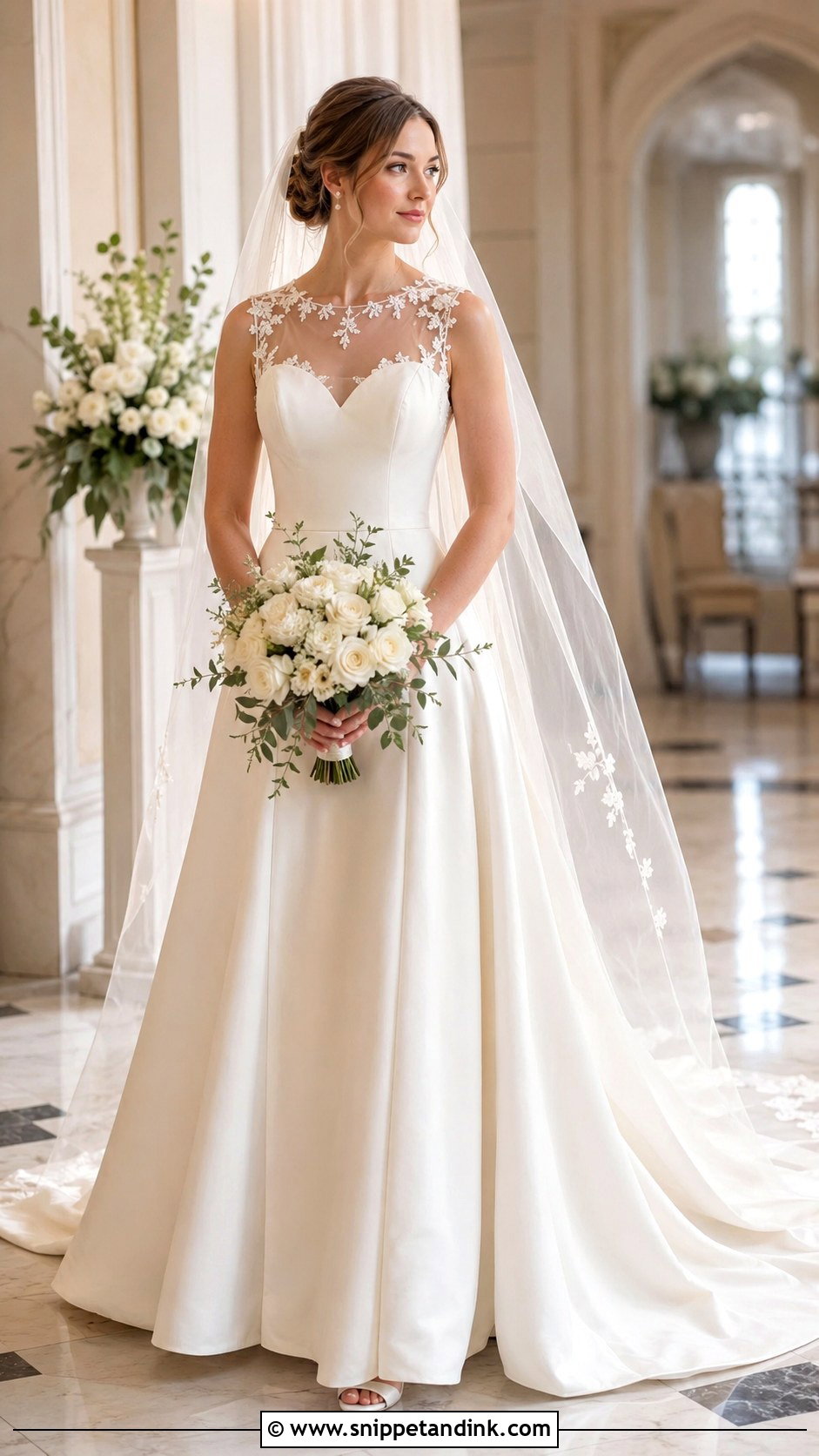
An illusion neckline uses fine sheer tulle to extend a sweetheart or V bodice up to the collarbone, with appliqués appearing to float on the skin. It gives coverage and support without a visible strap. The edges must be soft; cheap tulle scratches the neck after a few hours. An A-line skirt and a short chapel train keep it elegant, with pearl studs, a sheer veil, satin block heels and a low updo. Matching the tulle to your skin is the detail people miss. Most shops can order it in several shades, and the closest match makes the lace look as if it sits directly on you.
18. Bow Back Satin Wedding Dress
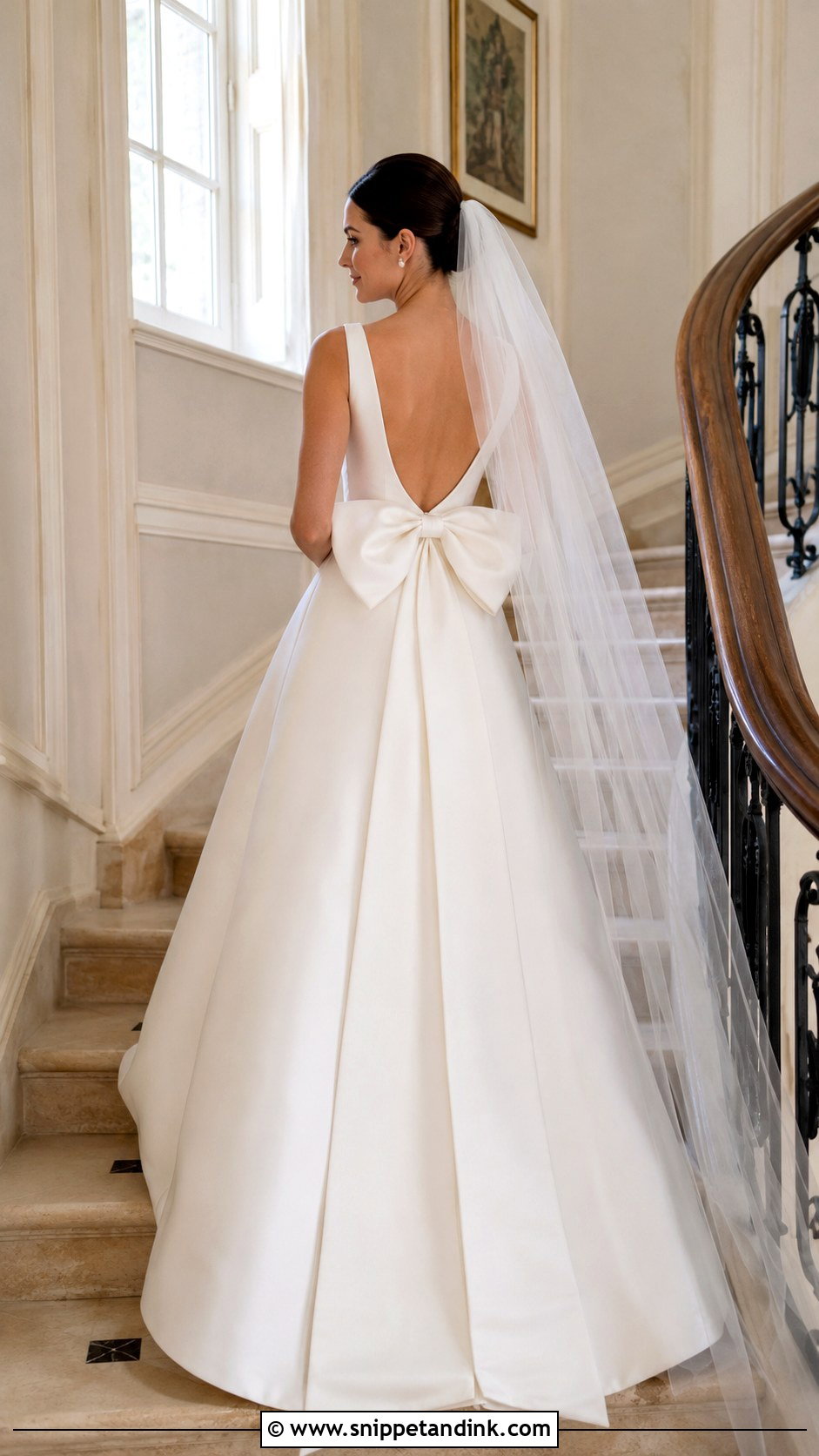
A bow at the back is for the moment you walk away from your guests. Choose a clean A-line or ball gown with a structured bodice and a bow at the back waist, either compact or with long ribbon tails over the skirt. Keep the front simple so the back looks deliberate. Pearl earrings, a sleek bun and satin pumps are enough, and the veil should fall past the bow without burying it. Test a sample by sitting in a hard chair and leaning back. A big bow gets crushed against chairs and gets in the way of bustling, so I usually suggest a removable one for the reception.
19. Plus Size Lace A-Line Wedding Dress
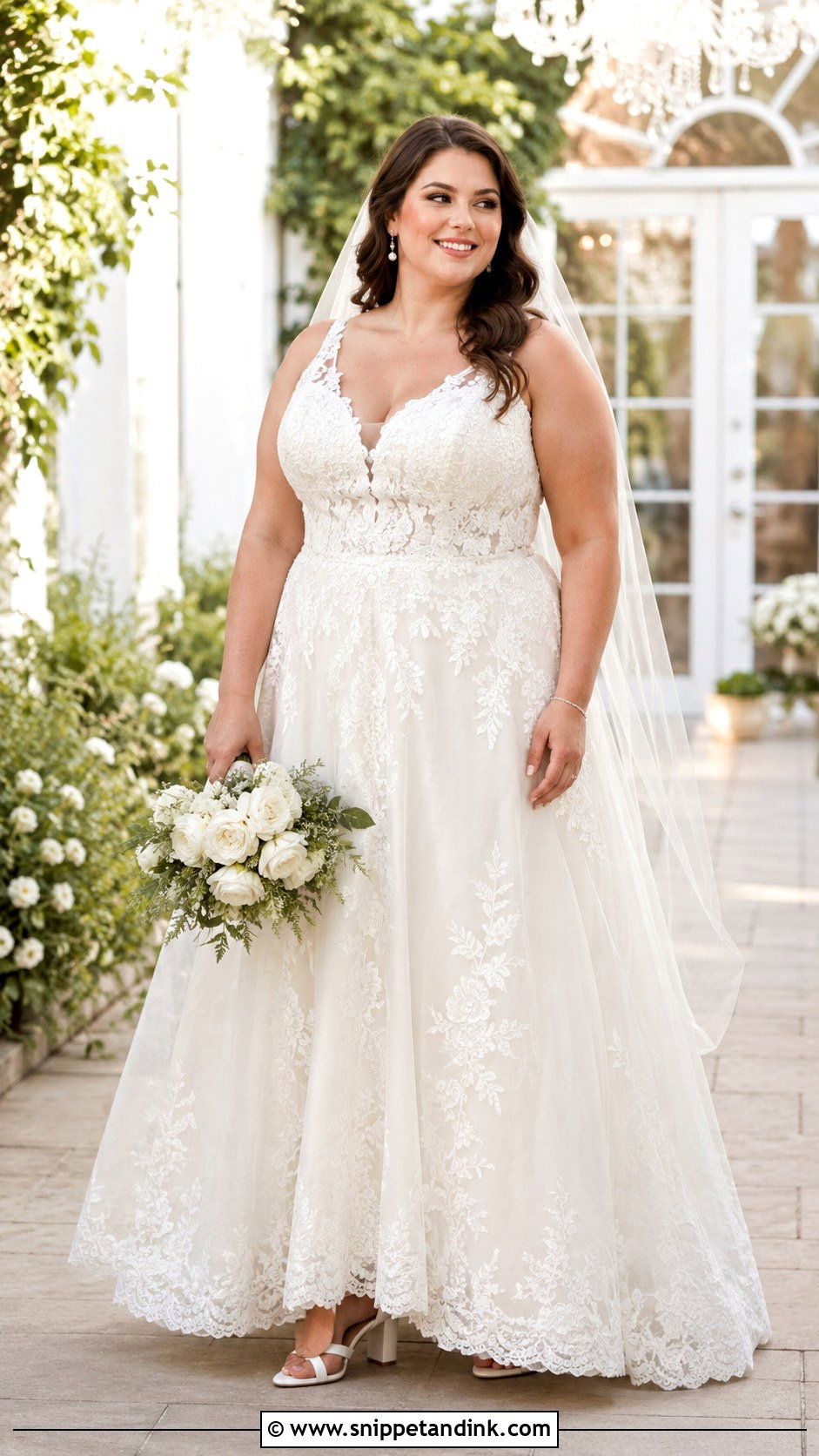
On a curvy figure, lace on an A-line is supportive and balanced when the bodice does its job: internal boning, comfortable straps and a waist set where it feels best on you, not where the pattern says. The skirt should glide over the hips without extra bulk, and vertical lace appliqués lengthen the line. Supportive block heels, pearl drops and a fingertip or chapel veil finish it. I always tell plus size brides to ask the salon for samples near their size before the appointment. Judging a neckline or a waist on a dress clipped open at the back is guesswork, and a closer sample shows how the support actually feels.


20. Petite Column Wedding Dress With Train
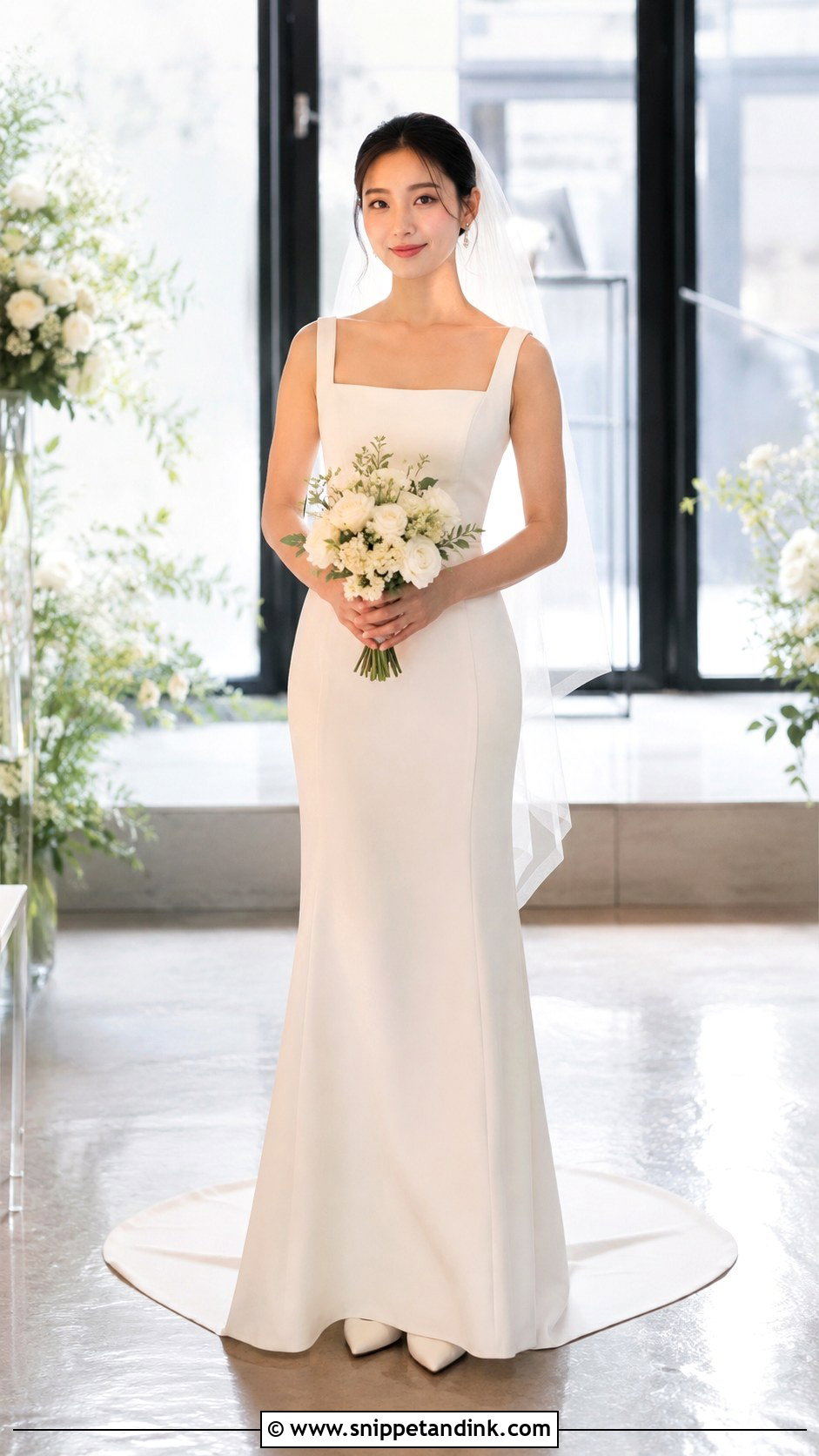
On a petite frame, a column with a narrow train keeps the bride from disappearing in fabric. Fitted crepe or silk with vertical seams, a clean neckline and very little horizontal decoration works best. A V or soft square neck opens the upper body, and a sweep or chapel train gives drama at a sensible scale. Pointed heels, small drops, a narrow veil that follows the dress and a compact bouquet keep the proportions right. Look for a plain hem. Taking six inches off a lace or beaded border means removing and re-sewing the edging, which is slow and costly, while a clean hem is a quick job.
Trains, Bustles and the Walk Down the Aisle
Many of the dresses above have trains, and a train affects your whole day, not only the aisle. Sweep trains just brush the floor, chapel trains extend a short way behind you, and cathedral trains stretch well beyond. The longer the train, the more planning it needs.
Which bustle suits which dress
- Over or American bustle: the train is hooked up to the back of the skirt in one or more points. It suits satin, crepe and mikado and looks tidy and structured.
- Under or French bustle: the train is tucked under and tied with ribbons inside. It suits lace and tulle and creates soft folds.
- Wrist loop: a simple loop on a short or light train that you hold while dancing. It is easy, but it ties up one hand all night.
Bustling is usually added during alterations and, depending on the number of points, can add a noticeable amount to the bill, so ask early. I show the bustle to a bridesmaid or your mum at the final fitting and ask her to practise it twice. Ribbons are often numbered or colour-coded; take a photo of each step.
Think about the ground too. A long train over grass picks up grass stains and dew; on stone steps it drags dust. For outdoor ceremonies, I’d have someone fluff and straighten the train before you walk and again before the first photos, because a twisted train is the most common thing I see in wedding pictures.
Soft Fabric, Firm Fit and a Veil That Moves
Romance in a dress comes from how it moves and how comfortable you are in it, more than from the amount of lace. Start with the silhouette you love, then compare necklines, fabrics, trains and practical touches like pockets, sleeves you can lift and a bustle you can manage. Bring your ceremony shoes and underwear to every fitting. Walk, sit, raise your arms and test the bustle before you sign off the alterations. Keep accessories in support of the dress. A gown that fits well, in a fabric that suits the season, will look romantic in photos and still feel good at midnight.
You'll Like These Ideas:






Leave a Reply