
A dress that still looks right decades later rarely gets there through decoration. It gets there through cut, fabric and fit. The silhouettes that have stayed in bridal shops for generations are the A-line, the ball gown, the sheath and the column, and almost every gown below is a variation on one of them. Accessories do a lot of the finishing work: a plain veil, good shoes, small jewelry and a bouquet sized to the skirt turn a well-made dress into a complete look. I’ve added the styling and fitting notes I’d give a bride for each one, whether she’s marrying in a ballroom, a garden, a courthouse or by the sea.
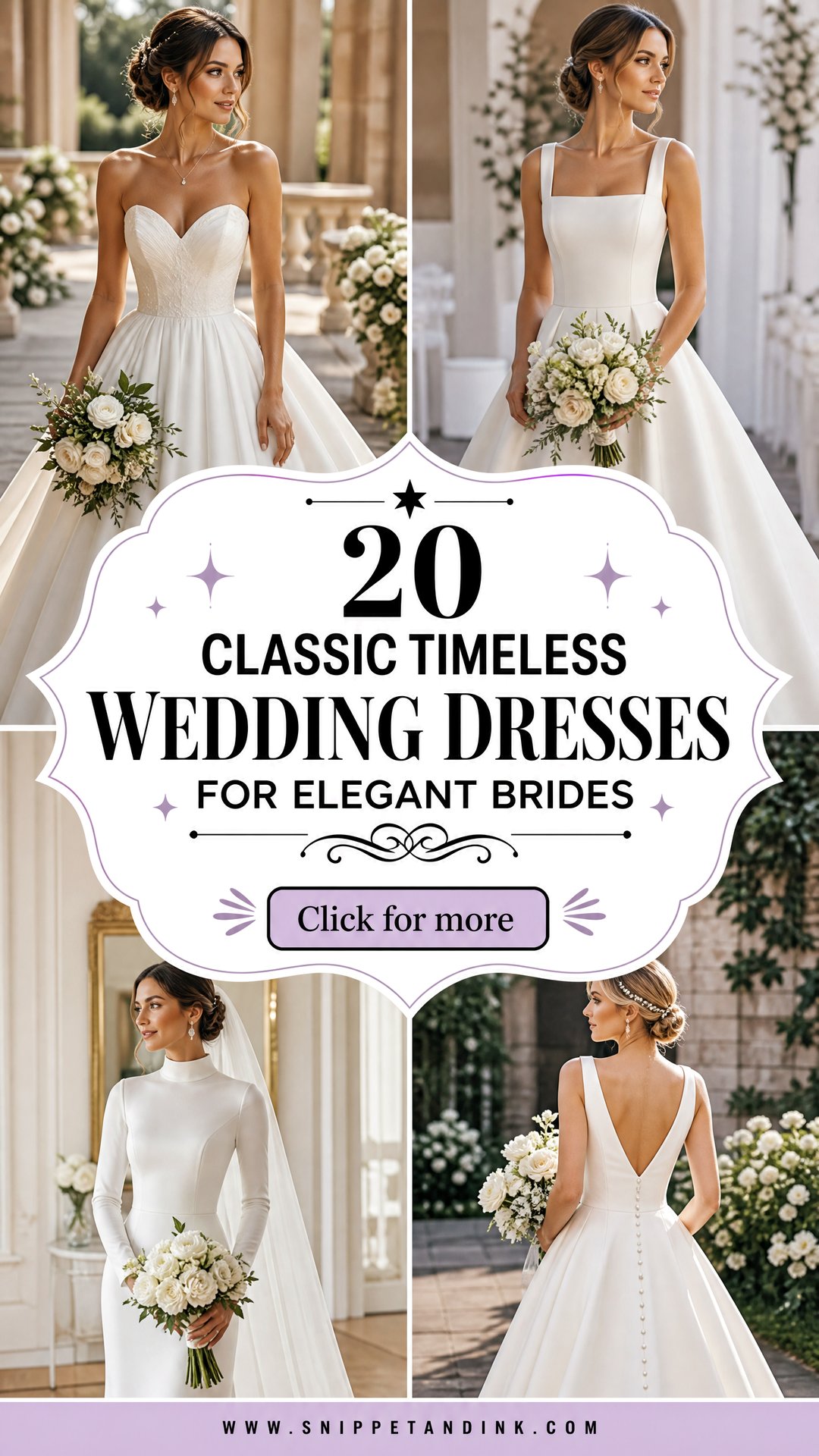
Try On the Shape You Think You Won’t Like
Brides often arrive at their first appointment certain about the silhouette and leave in a completely different one. Photos online can’t show how a skirt moves with your stride or where a waist seam sits on your body. So I plan a first appointment as a quick tour of the basic shapes, not a hunt for the final dress.
- Try one of each main shape: an A-line, a ball gown, a fitted sheath or column, and a fit-and-flare. Compare them before you compare any details.
- Wear or bring underwear close to what you’ll wear on the day, and shoes at roughly the heel height you’re planning.
- Look at the back in a hand mirror and sit down in every gown you like.
- Bring one or two people whose opinion you trust. A big group pulls you toward whatever gets the loudest reaction.
Once the shape is settled, neckline, sleeves and fabric become much easier decisions, and the gowns in this list will make more sense to you.
1. Satin A-Line Wedding Dress
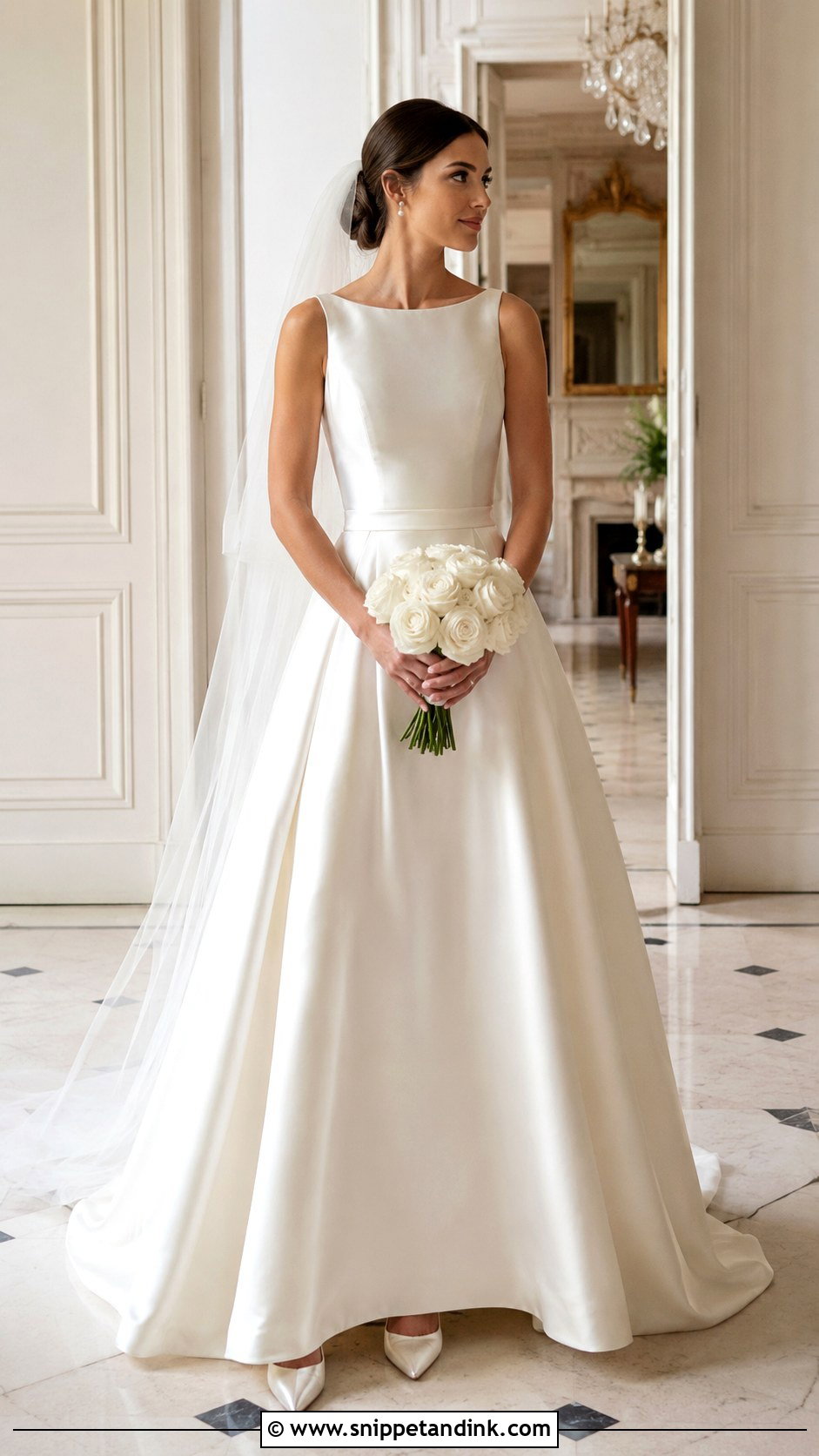
If I could only keep one wedding dress shape in the shop, it would be this one. A satin A-line with a fitted bodice and natural waist widens slowly to the floor and flatters nearly every frame I’ve dressed. Ivory satin or silk Mikado gives it body and catches light softly. Pointed ivory pumps, pearl studs and a fingertip veil with a narrow satin edge are enough, with a low chignon to keep the neckline open. A small bouquet of roses, ranunculus or peonies stays in proportion. Ballrooms, hotels, estates and formal gardens all suit it.
2. Strapless Ball Gown Wedding Dress
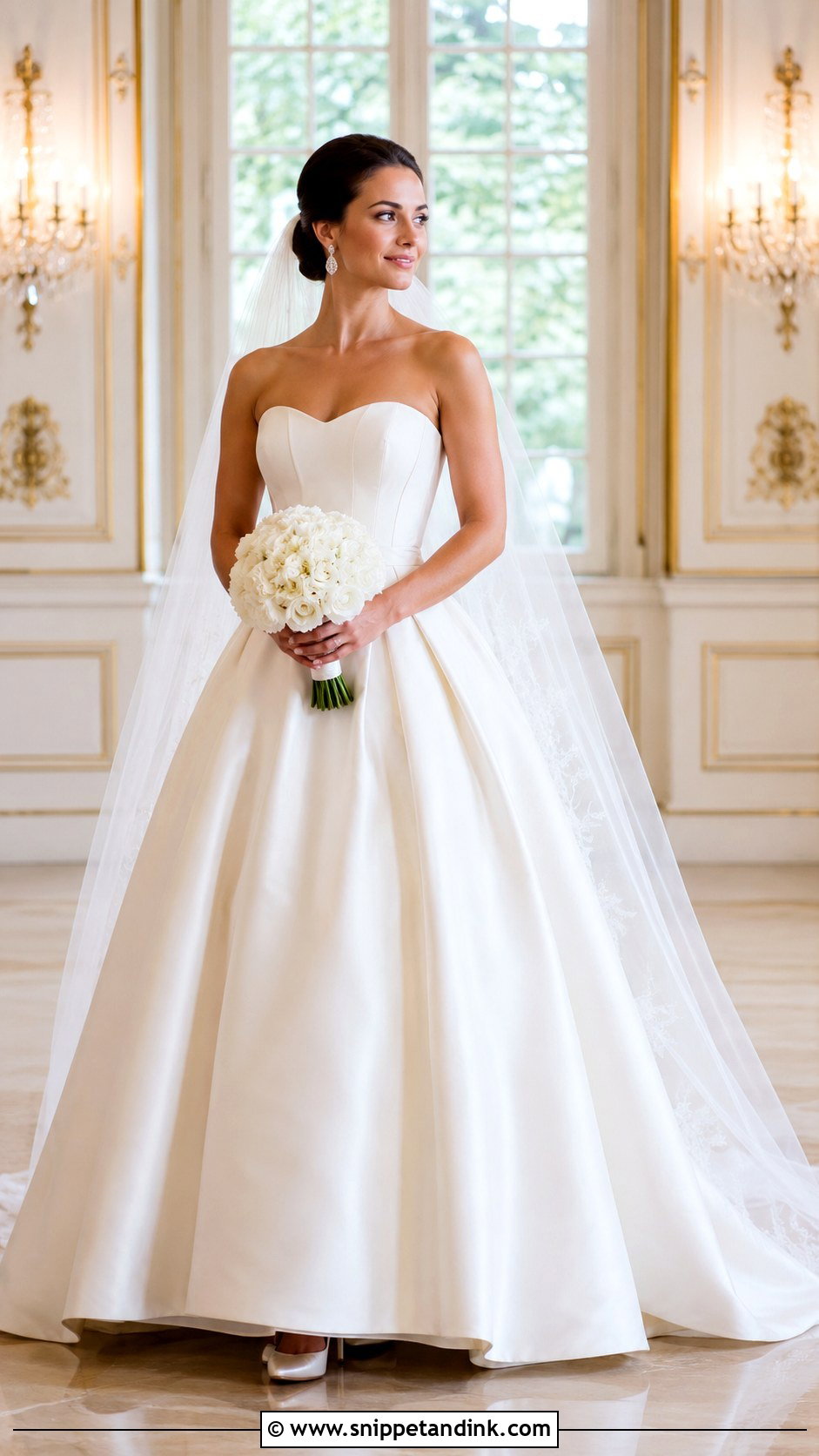
Few gowns feel as ceremonial as a strapless ball gown. The full satin or Mikado skirt brings volume; the fitted bodice has to do all the holding up, so I look for internal boning and a waist stay, not just a tight zip. A straight or softly curved neckline keeps it clean, and pockets are worth asking for. Wear a cathedral veil for the ceremony and take it off for the reception. Crystal or pearl drops, closed-toe pumps, a neat bun and a structured bouquet finish it. Skip a large necklace; the skirt already brings the drama, and too much on top tips it toward costume.
3. Long Sleeve Lace Wedding Dress
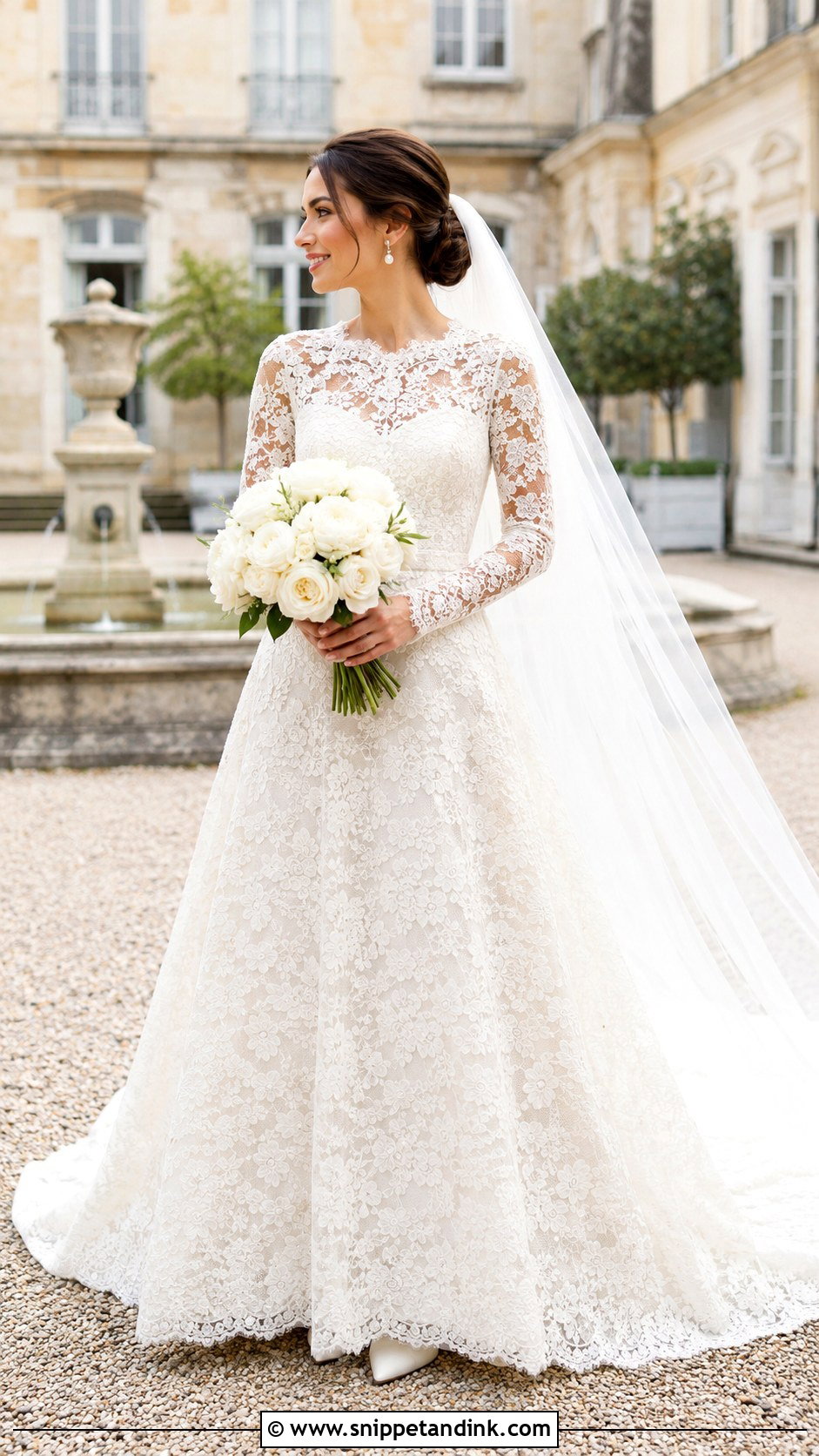
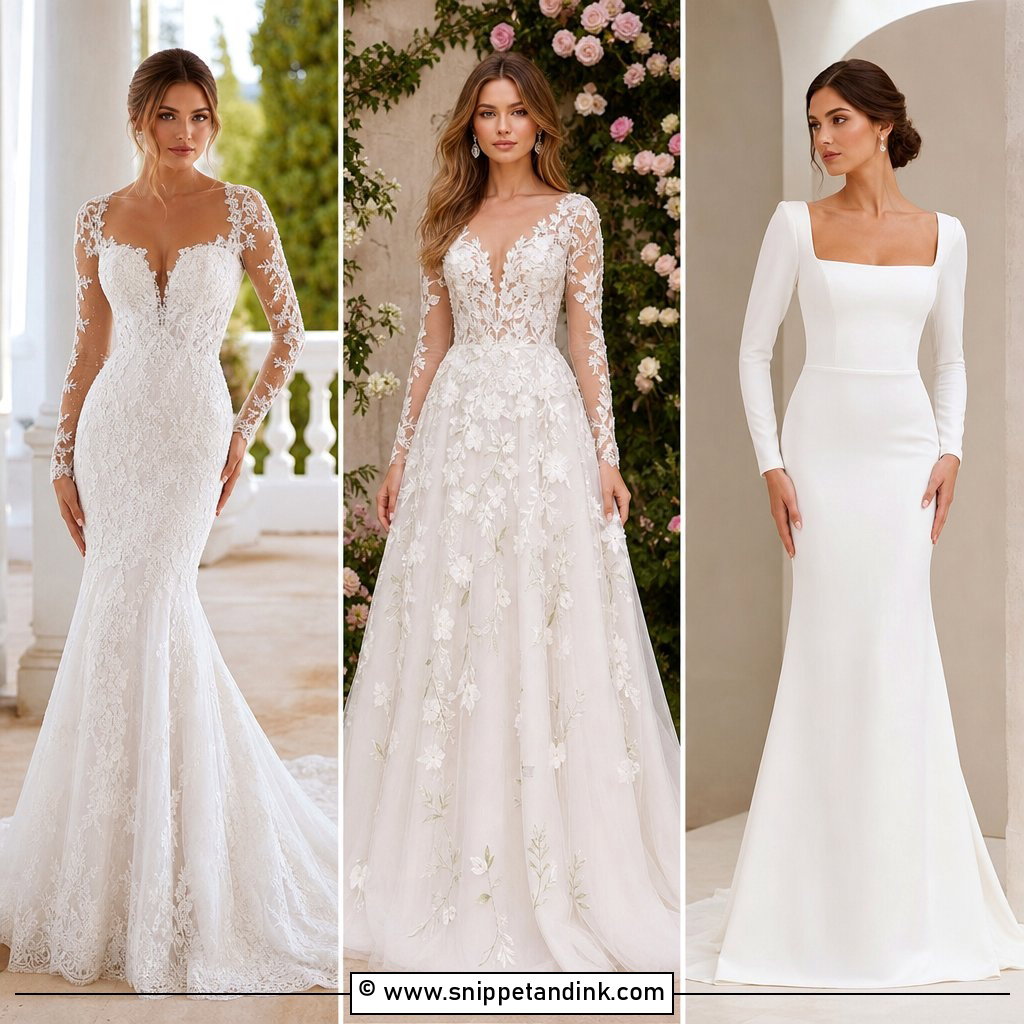
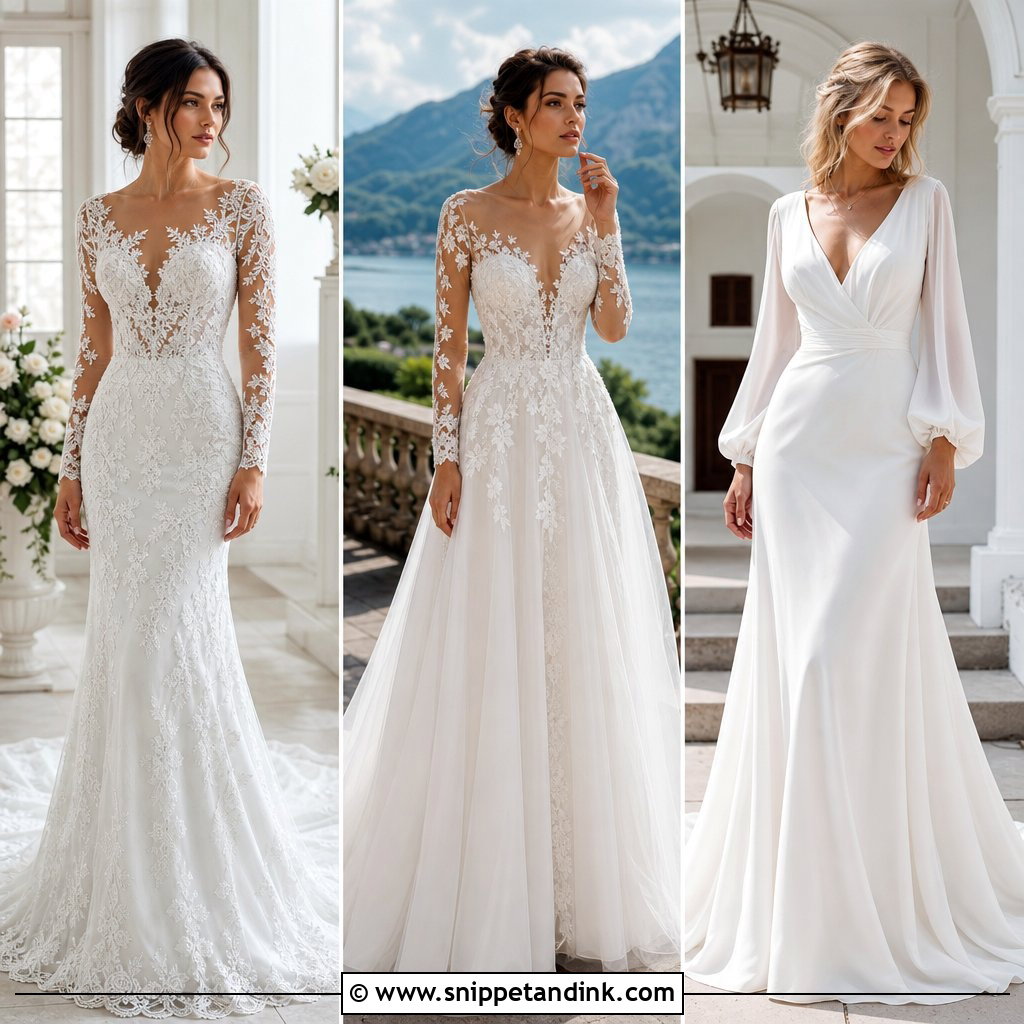
With long lace sleeves, I look at how the lace was cut more than the lace itself. The best gowns carry one continuous pattern from the bodice over the shoulder and down the arm. Heavily patched appliqué can look busy at close range. A lined bodice, defined waist and soft A-line skirt keep the lower half quiet. Pearl earrings, ivory pumps and a sheer chapel veil with a plain edge suit it, along with a low bun or twisted chignon. Keep bracelets and necklaces to a minimum and carry garden roses with seasonal greenery. Historic houses and cool-weather weddings are where this one shines.
4. Bateau Neck Wedding Dress
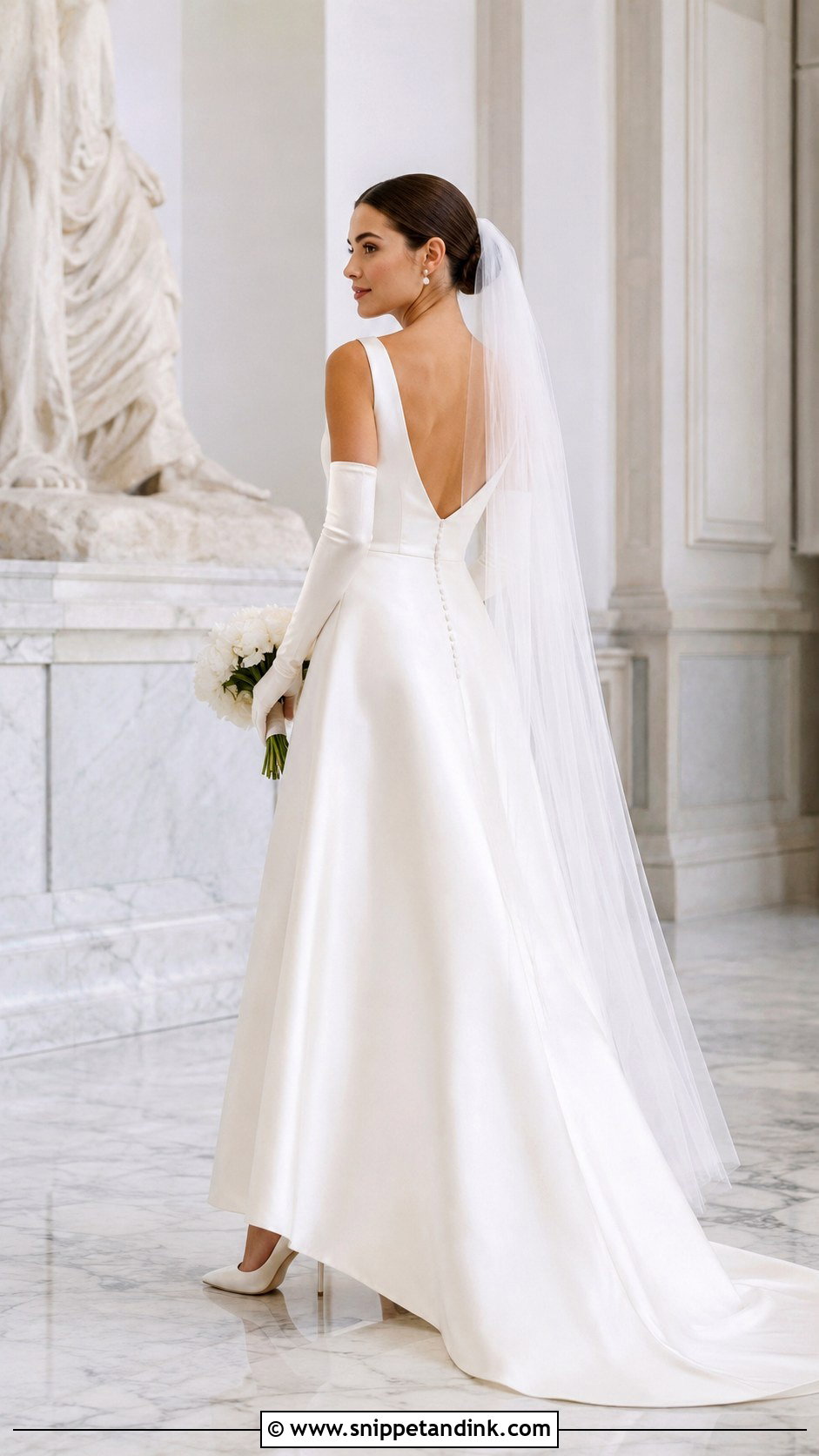
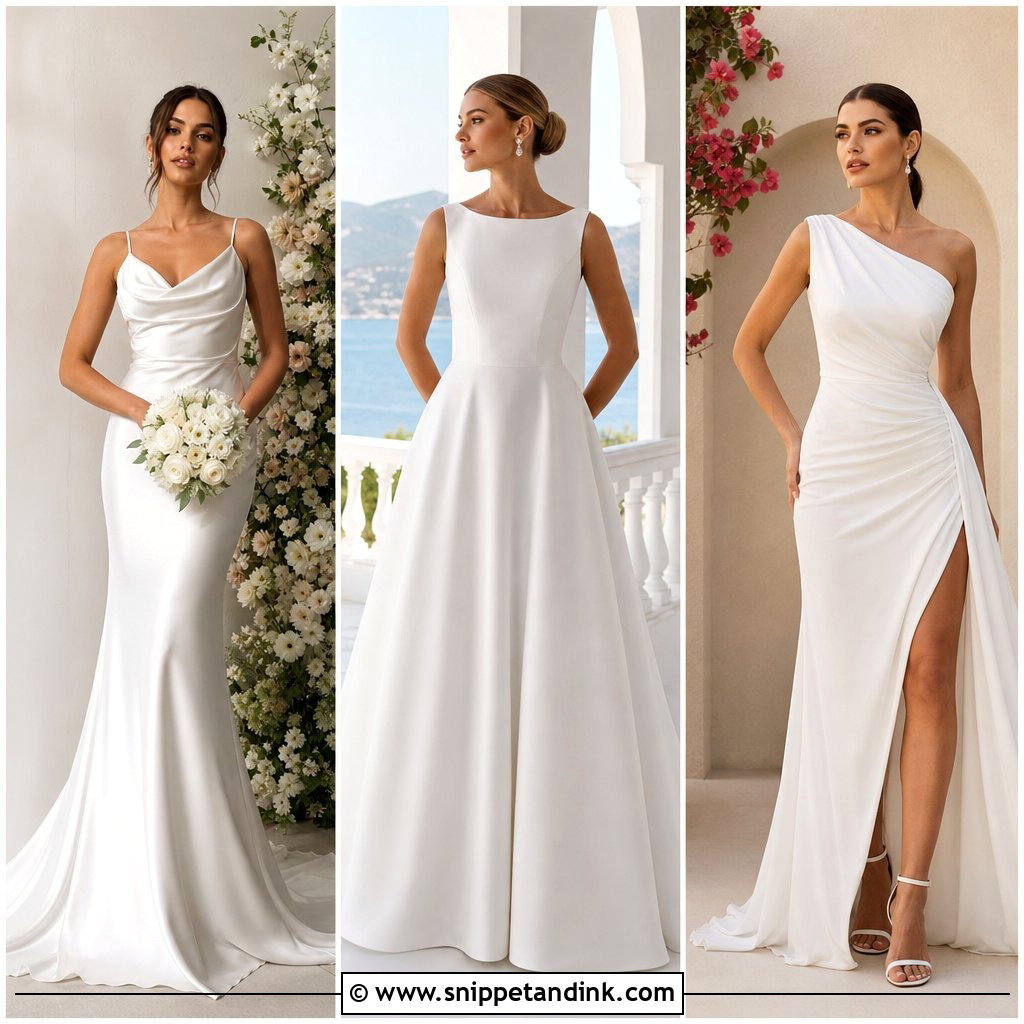
A bateau neck wedding dress runs a shallow curve from shoulder to shoulder, close to the collarbone. On a fitted bodice with a full A-line or modest ball gown skirt in silk, satin or Mikado, it looks composed from every angle. A low back adds contrast while the front stays traditional. Pearl studs, a sleek bun, pointed pumps and a sheer veil placed under the hair are all it needs. Long gloves can suit a formal ceremony; keep them plain and take them off before dinner, since eating in satin gloves is awkward. I like it for city venues, museums and hotels by day.
5. Off Shoulder Wedding Dress
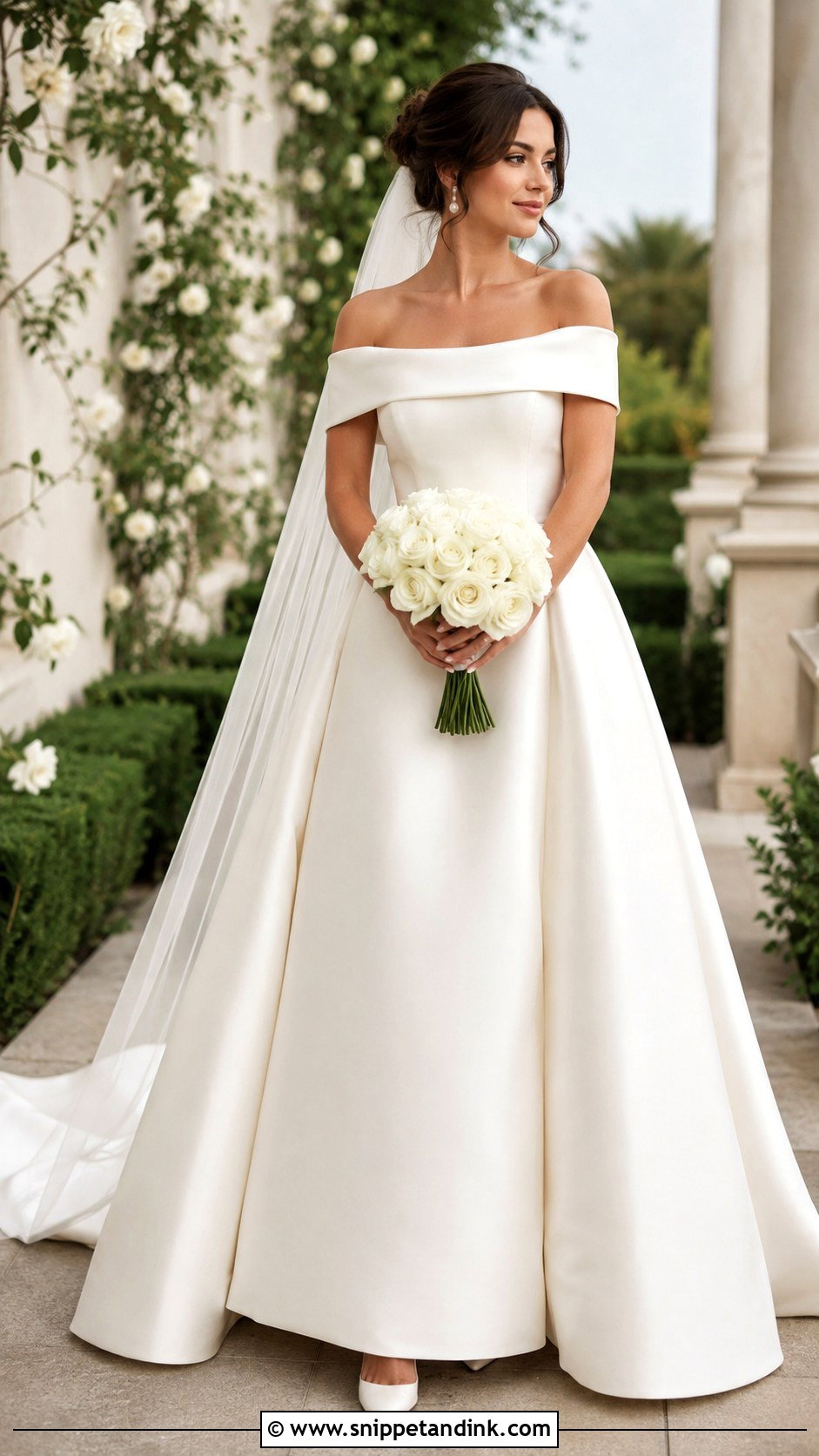
Off-shoulder necklines soften a structured gown. A fold-over neckline or draped band should sit on the upper arm without sliding, which depends on boning and a well-fitted bodice more than on elastic. The fitted waist and full A-line skirt balance the bare shoulders, and satin or Mikado keeps it formal. Pick a collarbone-length necklace or pearl drop earrings, not both. Pointed ivory shoes and a long plain veil falling behind the shoulders complete it, with an updo and a rounded rose bouquet. I’d warn any bride who loves to dance with her arms up that this neckline will hold her back a little.
6. Sweetheart Neck Wedding Dress
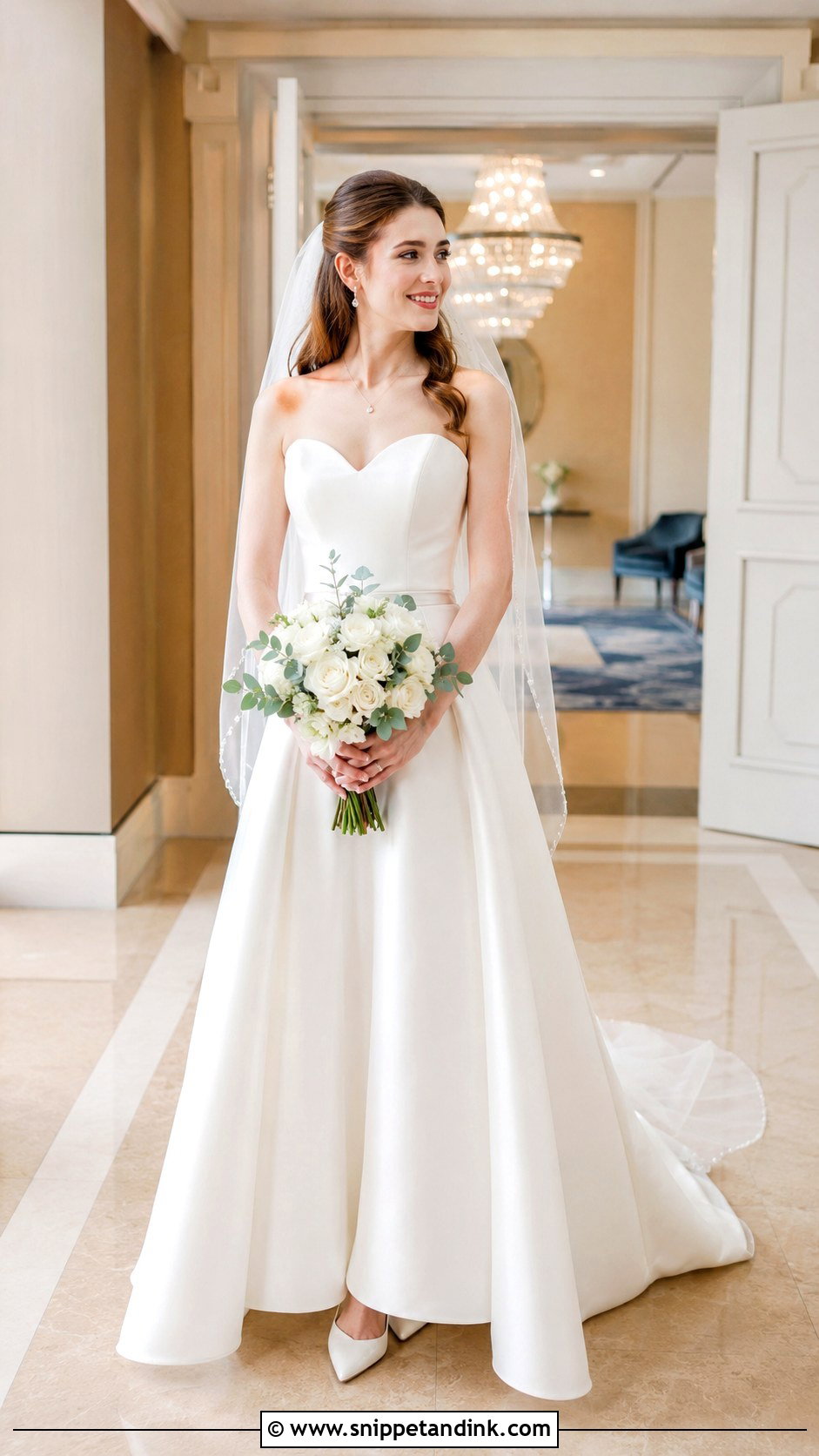
Sweetheart necklines are easy to make your own. I steer brides toward a structured bodice in smooth satin or subtle lace with the boning covered, since exposed corsetry dates faster. An A-line or restrained ball gown skirt balances the curve. A delicate pendant, small drops and classic ivory pumps suit it, with a fingertip or chapel veil. Hair can go almost any way here: waves, half-up or a low bun. White flowers with pale greenery finish it. The fit at the top edge matters most; if it gapes when you lean forward, the bodice needs taking in at the side seams.
7. Square Neck Wedding Dress
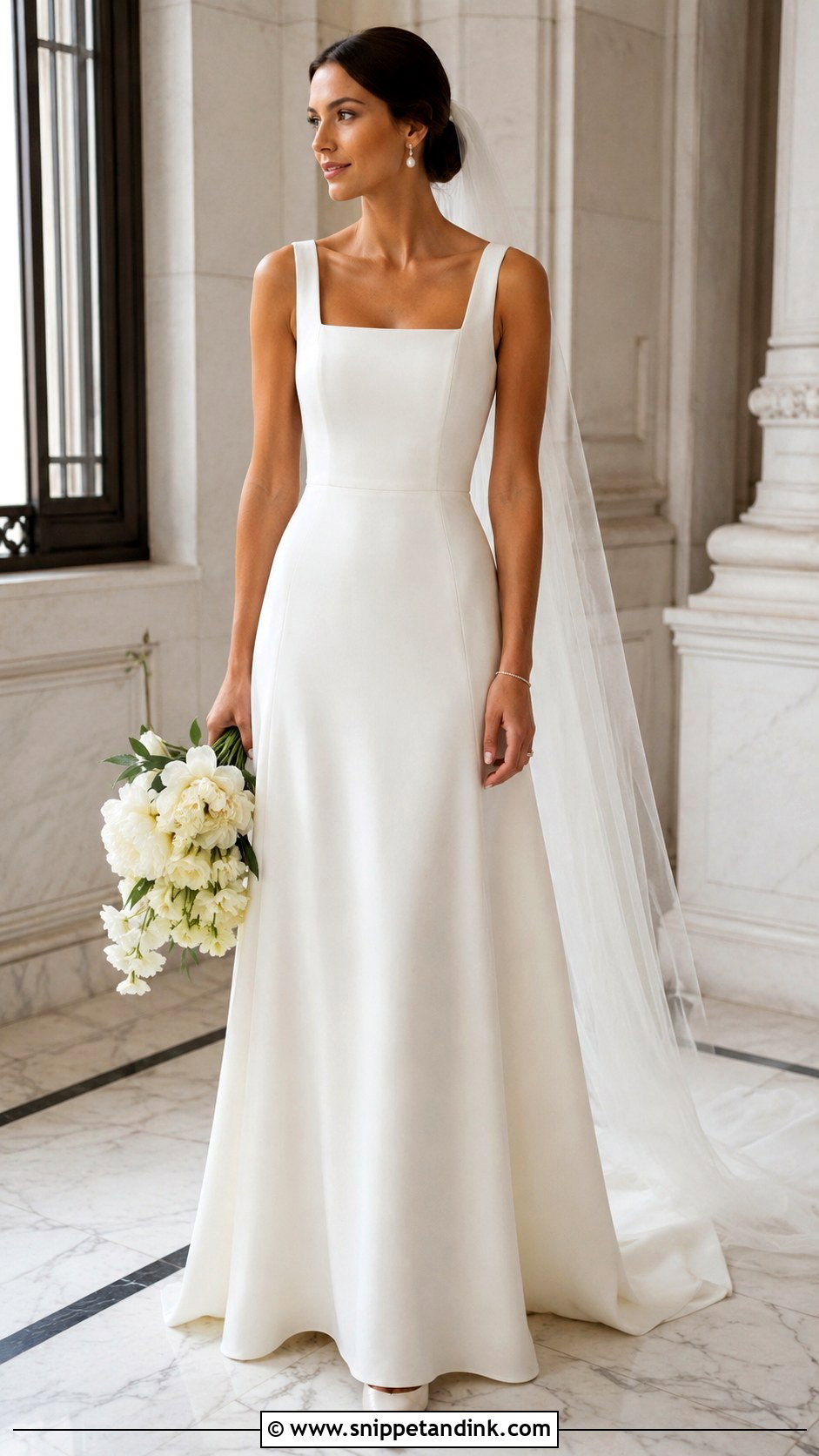
A square neck gives a strong frame to the face and shoulders, especially on wide straps that keep everything in place. Over a fitted waist and flowing A-line skirt, the fabric decides the mood: matte crepe for something modern, satin or silk mikado for formality. Pearl earrings, a slim bracelet, pointed pumps and a plain chapel veil are enough, and a centered low bun repeats the neat lines without looking severe. Tulips, roses or sweet peas in a loose bouquet keep it soft. Change the train and accessories and the same dress moves from a courthouse to an estate.
8. Scoop Neck Wedding Dress
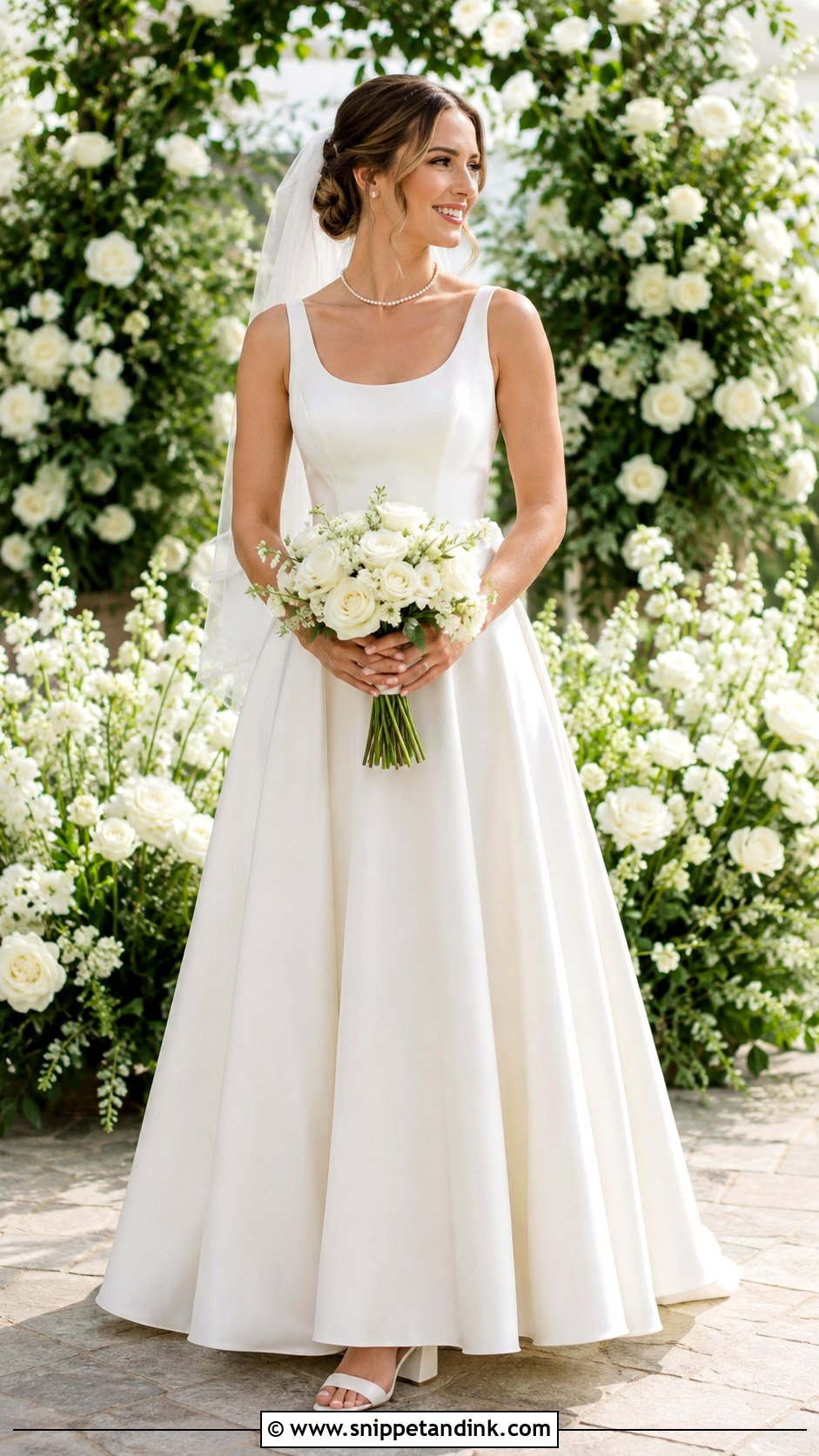
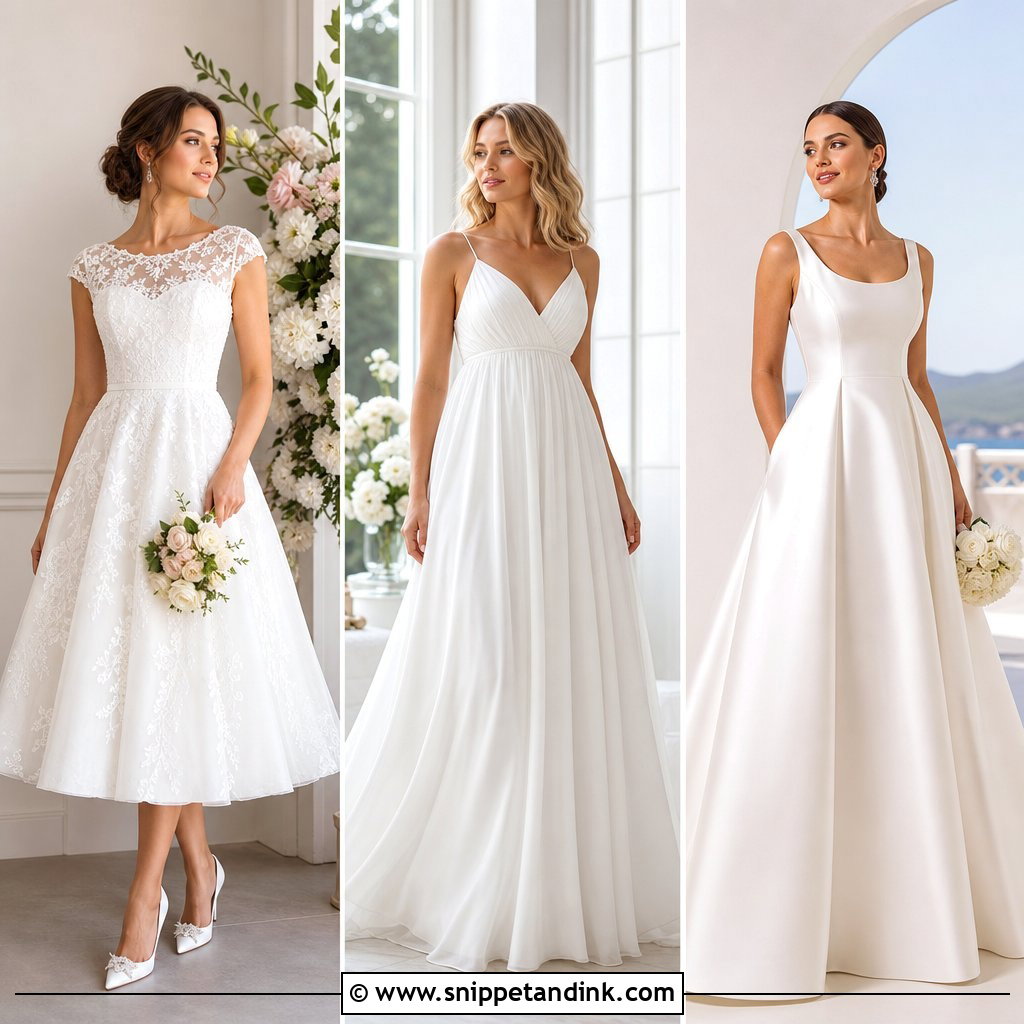
Of all the necklines here, a scoop is the most relaxed and probably the easiest to wear all day. Supportive straps, a natural waist and an A-line skirt in satin, crepe or chiffon keep it bridal. One short pearl necklace and small earrings highlight the curve; layered jewelry only crowds it. Ivory block heels, a light veil and a smooth blowout or relaxed chignon fit the easy mood, with roses and seasonal flowers in a bouquet with little greenery. It suits daytime ceremonies, smaller rooms and gardens. If you have a fuller bust, ask for a slightly higher scoop so you aren’t adjusting it through dinner.
9. High Neck Wedding Dress
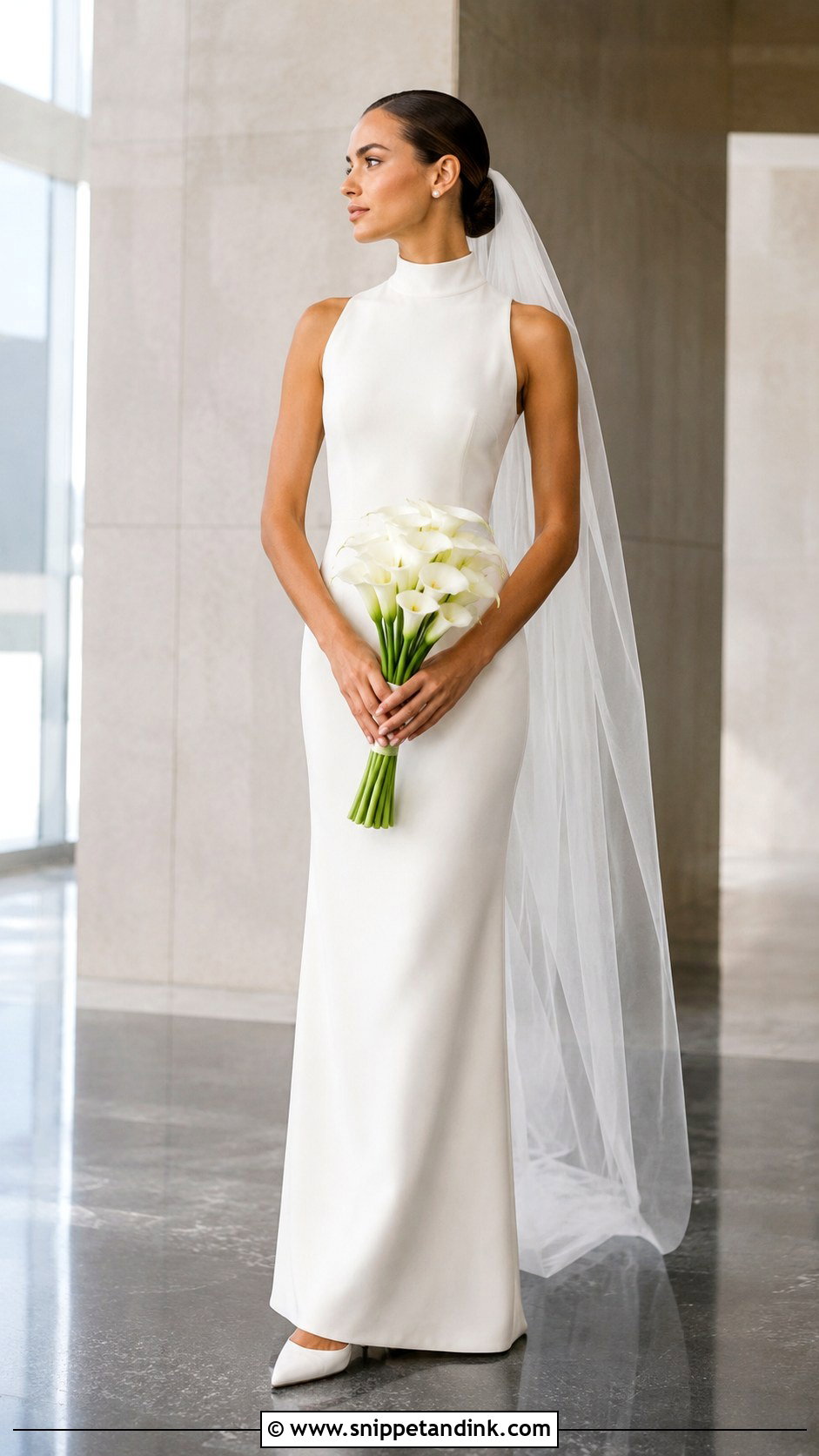
A high neck keeps the focus on your face. In crepe it looks clean and architectural; in fine lace it softens. Long sleeves make it formal, sleeveless makes it cooler for summer. Stud earrings and no necklace. Add pointed ivory pumps, a low bun and a sheer veil under the hair, plus calla lilies or roses in a narrow bouquet. A slim column skirt suits a city setting, an A-line an estate. I have every bride turn her head and sit down at the fitting, because a collar that’s even slightly tight becomes the only thing she notices by evening.
10. Crepe Column Wedding Dress
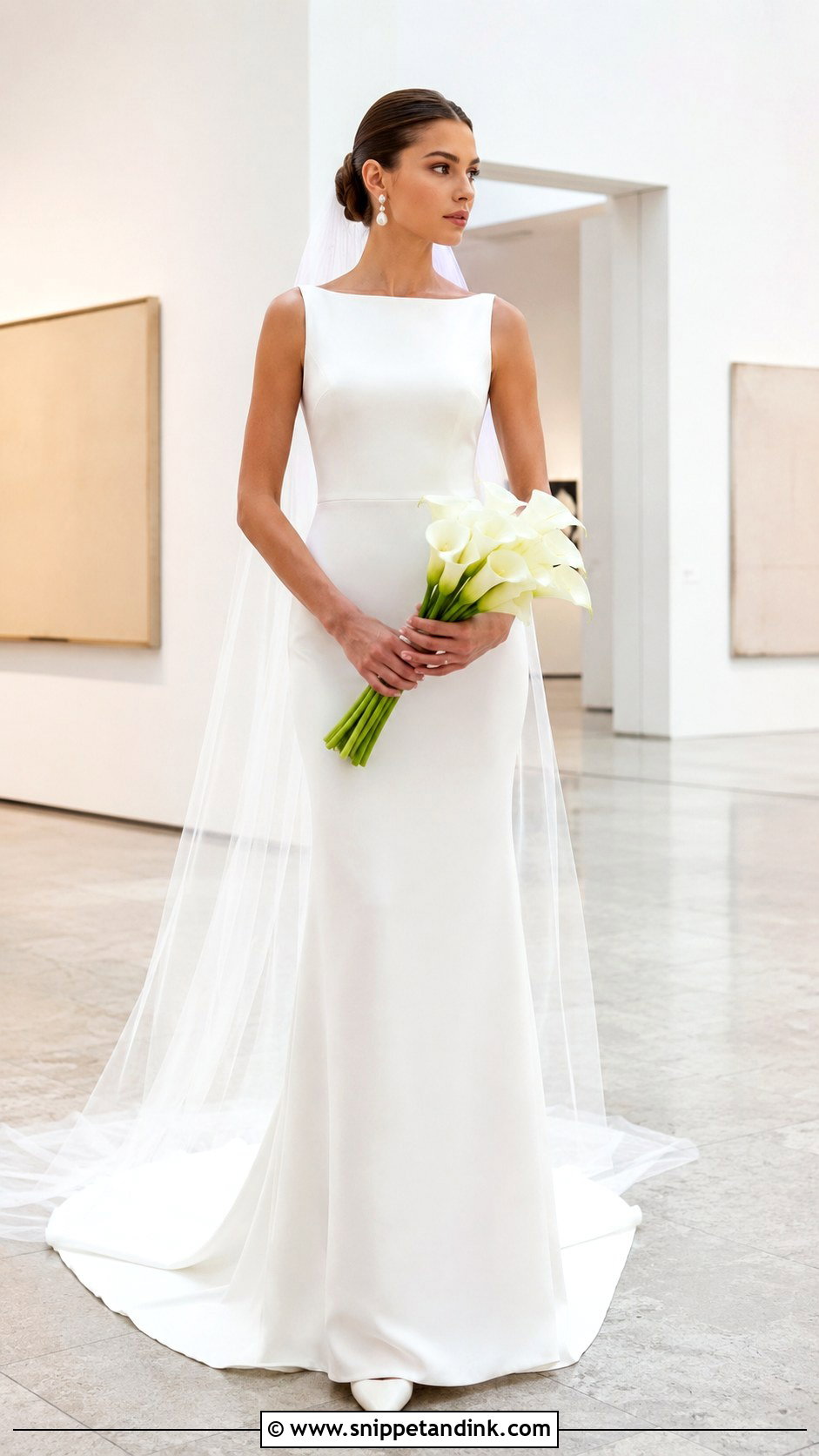
Crepe columns are deceptively simple. With almost no decoration, the fabric has to skim from shoulder to hem without pulling or clinging, so I start every fitting by checking undergarments, then seams, then length. A bateau, square or softly draped neckline, a defined waist and a small train keep it refined. Pointed pumps, sculptural pearl earrings and a clean low bun suit it, with a cathedral veil for drama or a short one for a city wedding. Calla lilies or a compact bouquet repeat the long line. Hotels, galleries, restaurants and courthouses all suit its quiet confidence.
11. Silk Slip Wedding Dress
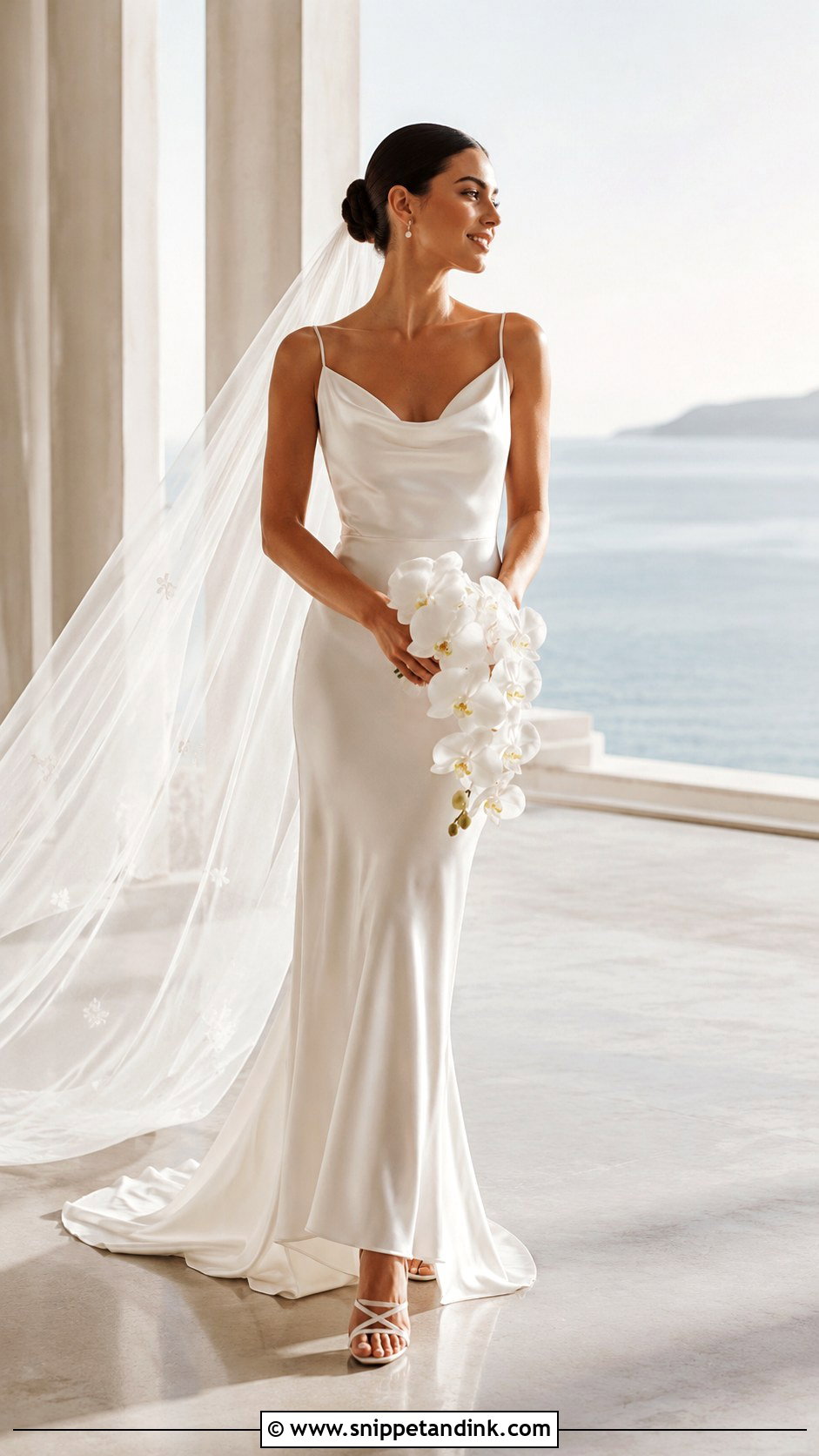
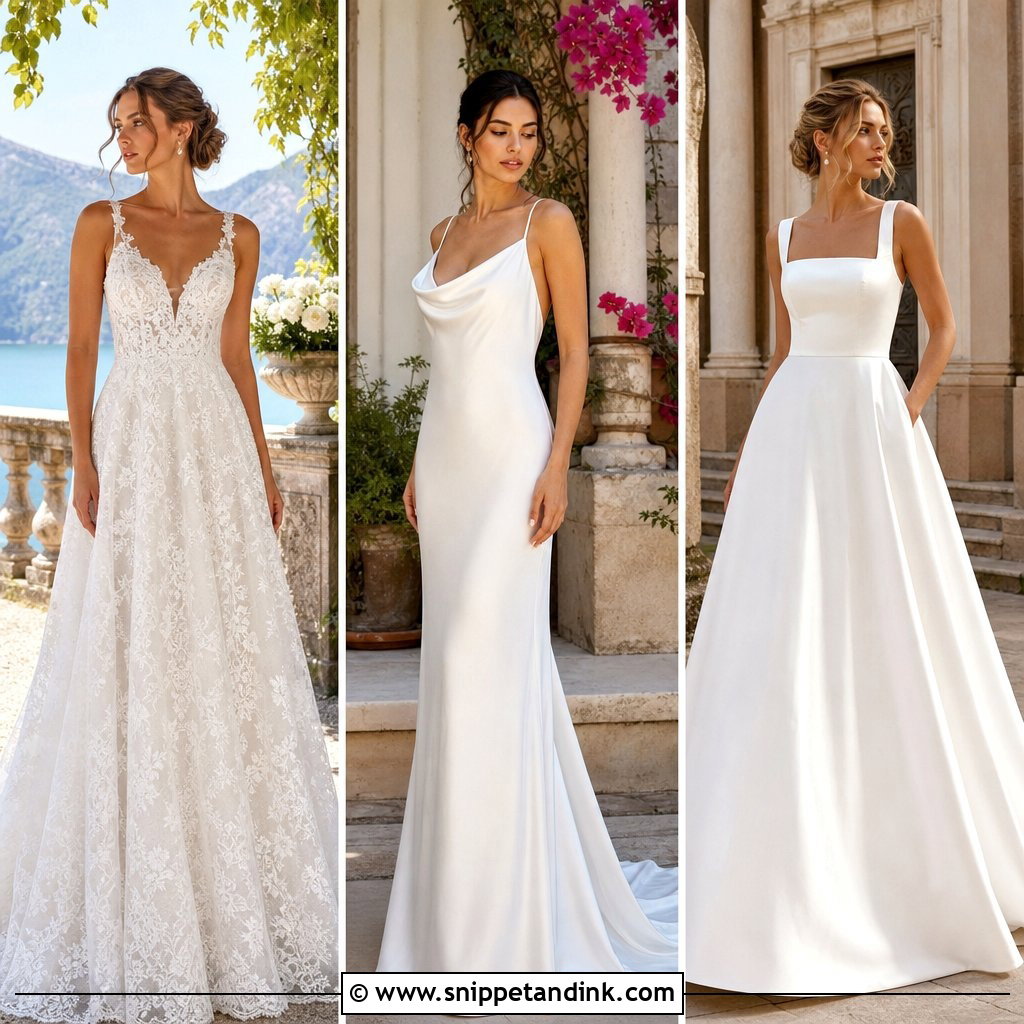
The silk slip has been a minimalist bridal favorite for decades, and its appeal is all in the clean line. Choose bias-cut silk with a soft draped neckline, narrow straps and a skirt that falls without trim. Refined slingbacks, small pearl earrings and a sheer cathedral veil give a nice contrast between lightness and length. A sleek bun is formal; brushed waves are relaxed. White roses or orchids with little greenery suit it. Silk shows every line underneath, so I’d budget time for finding the right undergarments and for an experienced seamstress, since bias-cut hems are tricky to alter. It travels well to coastal and destination weddings.
12. Fit And Flare Wedding Dress
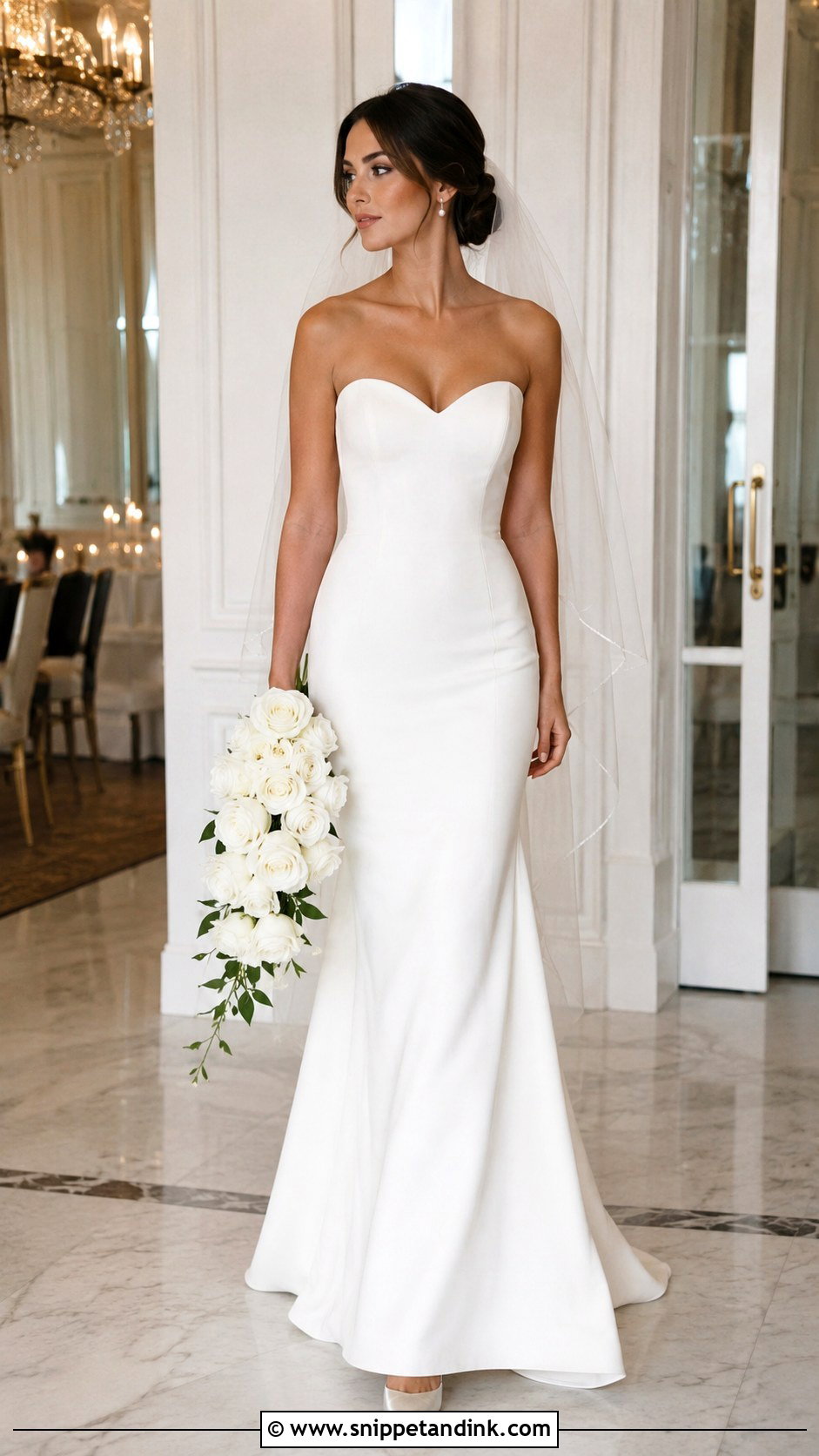
A fit-and-flare follows you through the bodice and hips and then opens around the upper thigh, which gives more room than a true mermaid. In crepe, satin or lace with a supported bodice and a train you can manage, it looks defined without being restrictive. Pearl drops, a fingertip veil, pointed pumps or supportive heeled sandals and a low side-parted bun suit it, with roses in a slightly elongated bouquet. Practice sitting, walking and dancing at each fitting. The bride who’s comfortable in a close fit looks confident in photos; the one who’s fighting the skirt doesn’t.
13. Empire Waist Wedding Dress
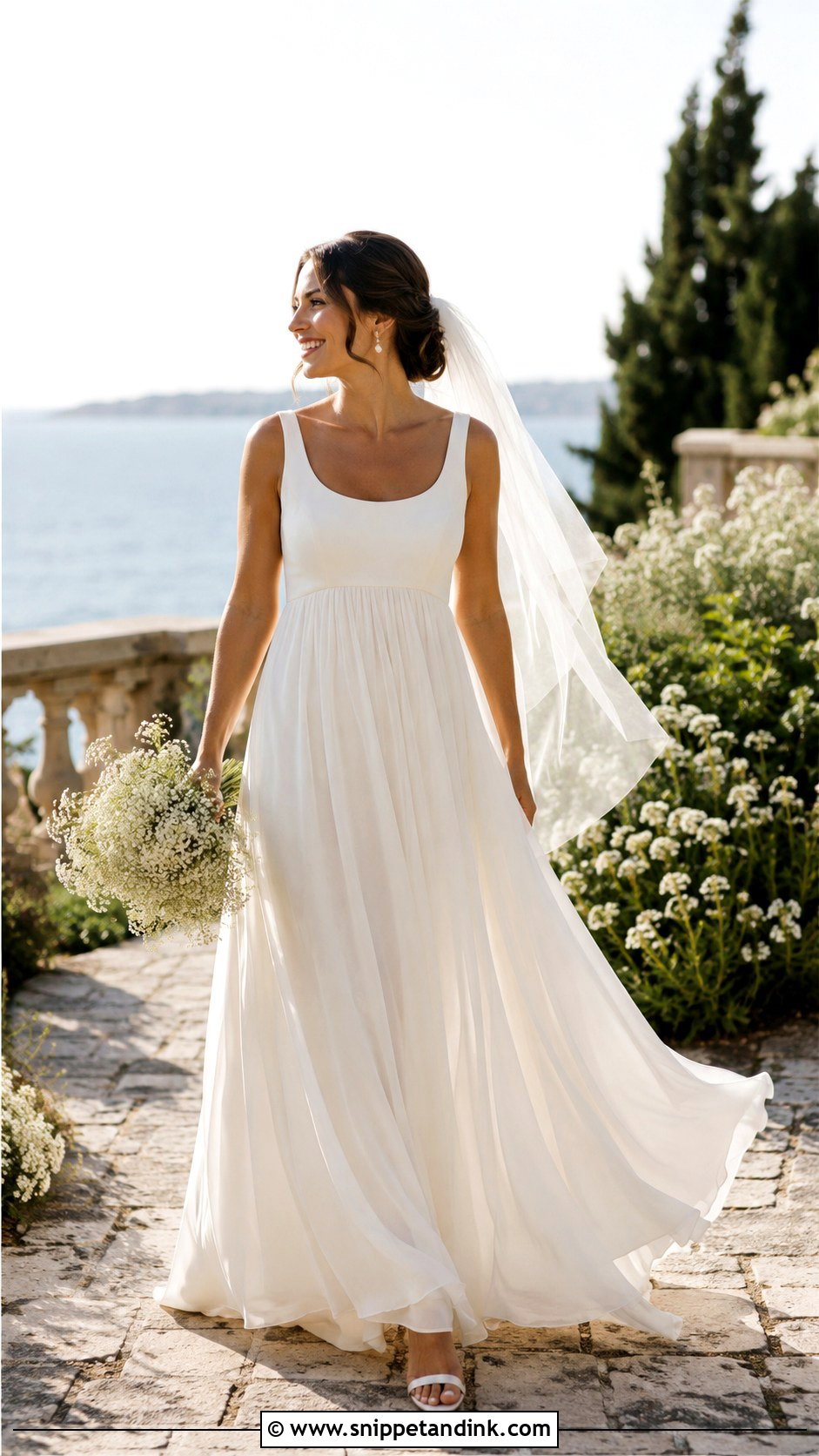
An empire waist wedding dress puts the seam just under the bust and lets the skirt fall freely. Silk chiffon, georgette and lightweight crepe move easily and add no bulk. The support has to sit in that short bodice, so I check straps and inner structure carefully. A modest scoop, V or square neck with little decoration keeps it light. Delicate drops, comfortable ivory sandals, a soft chapel veil and loose waves or a low bun fit, with sweet peas, garden roses and airy greenery. It’s my first suggestion for beach and garden ceremonies. Ask for a hem that clears grass, stone or sand.
14. Tea Length Wedding Dress
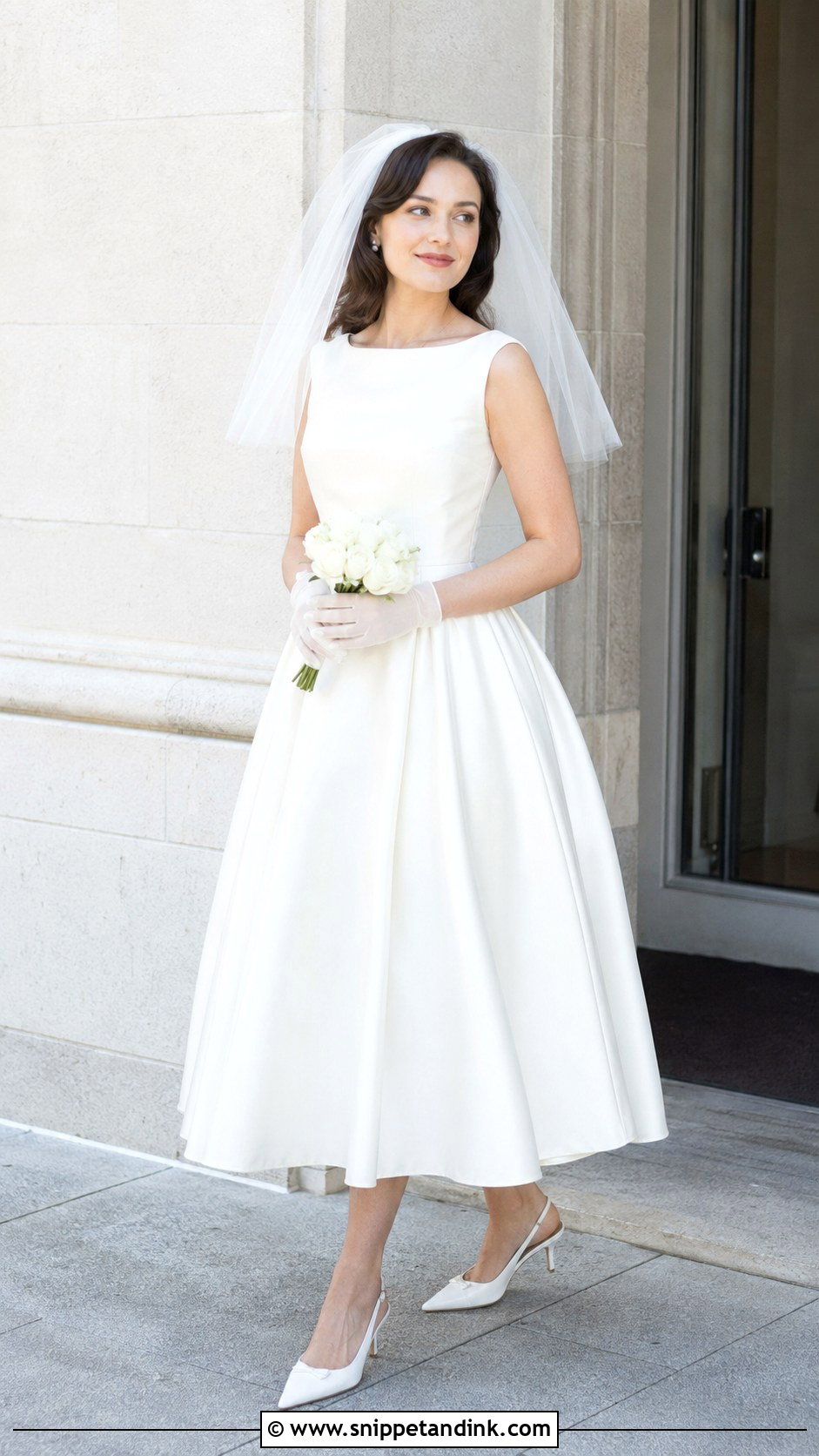
Tea length puts your shoes on show, so choose them as carefully as the dress. A fitted bodice with a bateau, scoop or sweetheart neck and a structured skirt ending between knee and ankle works in satin, Mikado or lace, depending on how formal the venue is. Pointed pumps, slingbacks or low block heels in ivory all suit it. Pearl studs, short gloves and a birdcage or shoulder-length veil bring a vintage note without tipping into costume. A smooth bun or waved bob and a compact rose bouquet complete it. I suggest it often for courthouses, restaurant weddings and smaller ceremonies where a train would only get in the way.


15. Portrait Collar Wedding Dress
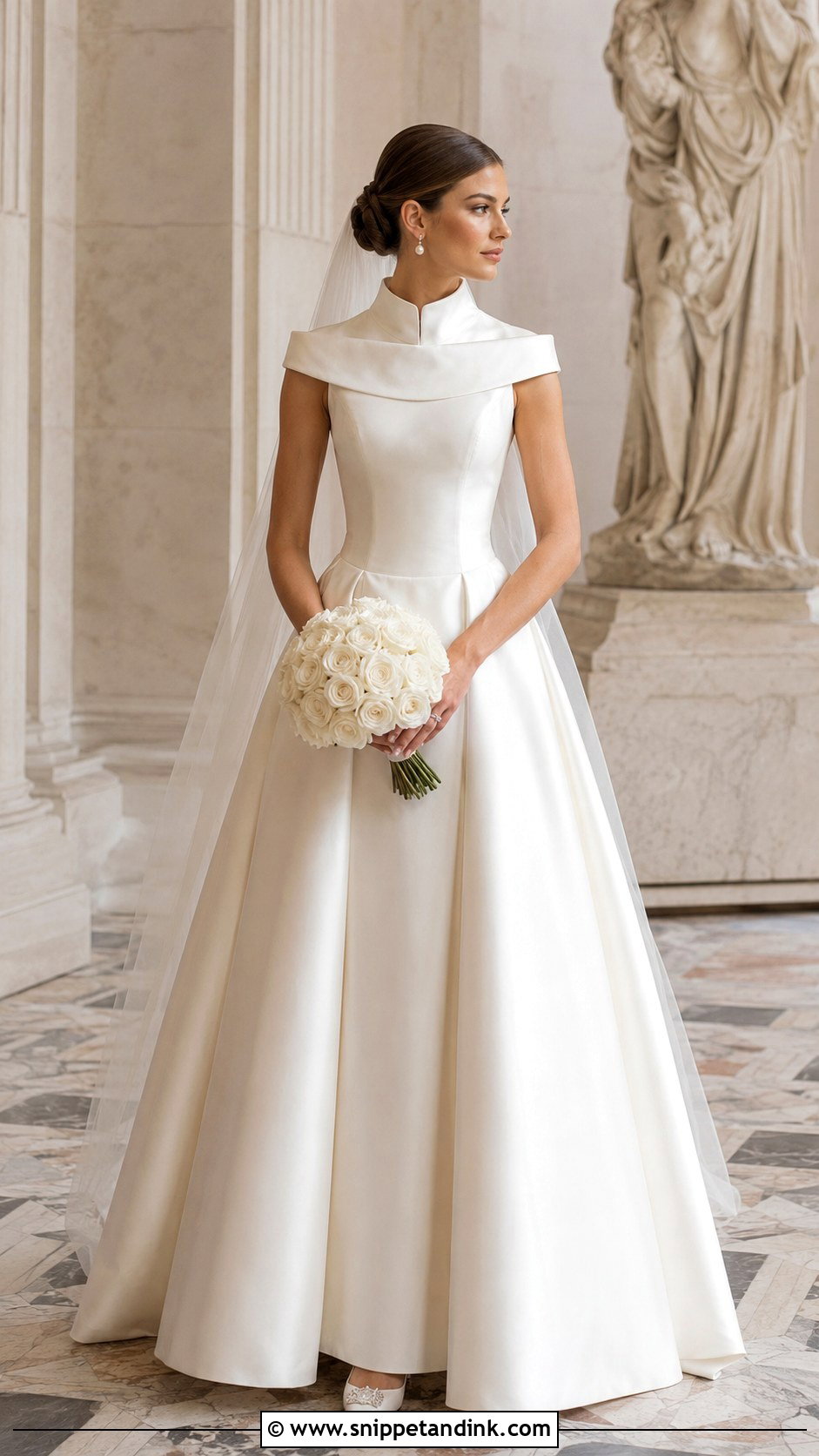
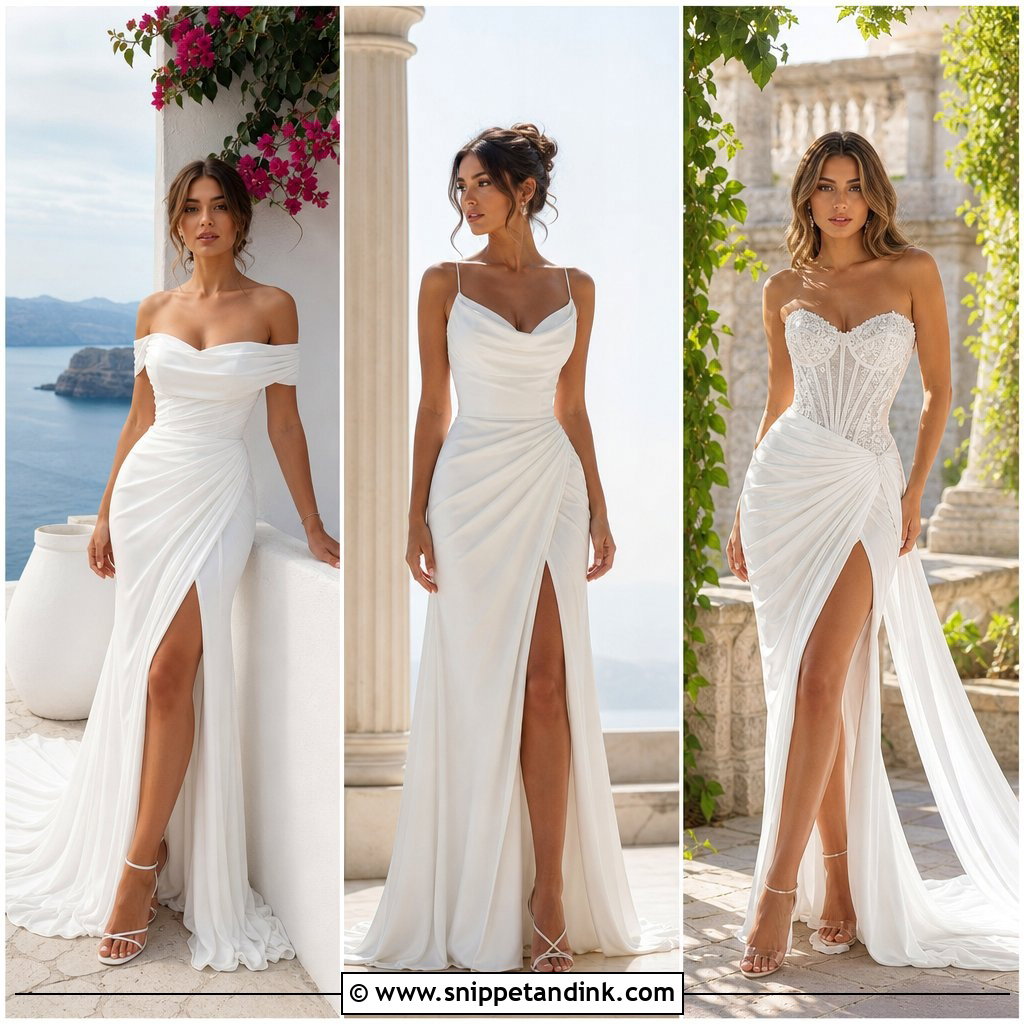
A portrait collar folds wide across the shoulders and frames the face like a picture mount. It looks best on a structured satin bodice and full A-line skirt with few seams to distract. Pearl studs or small diamonds, a low chignon and pointed ivory heels are enough. Place the veil beneath the bun so it doesn’t compete with the collar. Long satin gloves suit a very formal ceremony, though they’re optional. A rounded bouquet of white roses and greenery finishes it. The fold has to lie perfectly flat, so I watch it closely while the bride raises her arms and turns; a gap at the shoulder shows in every portrait.
16. Basque Waist Wedding Dress
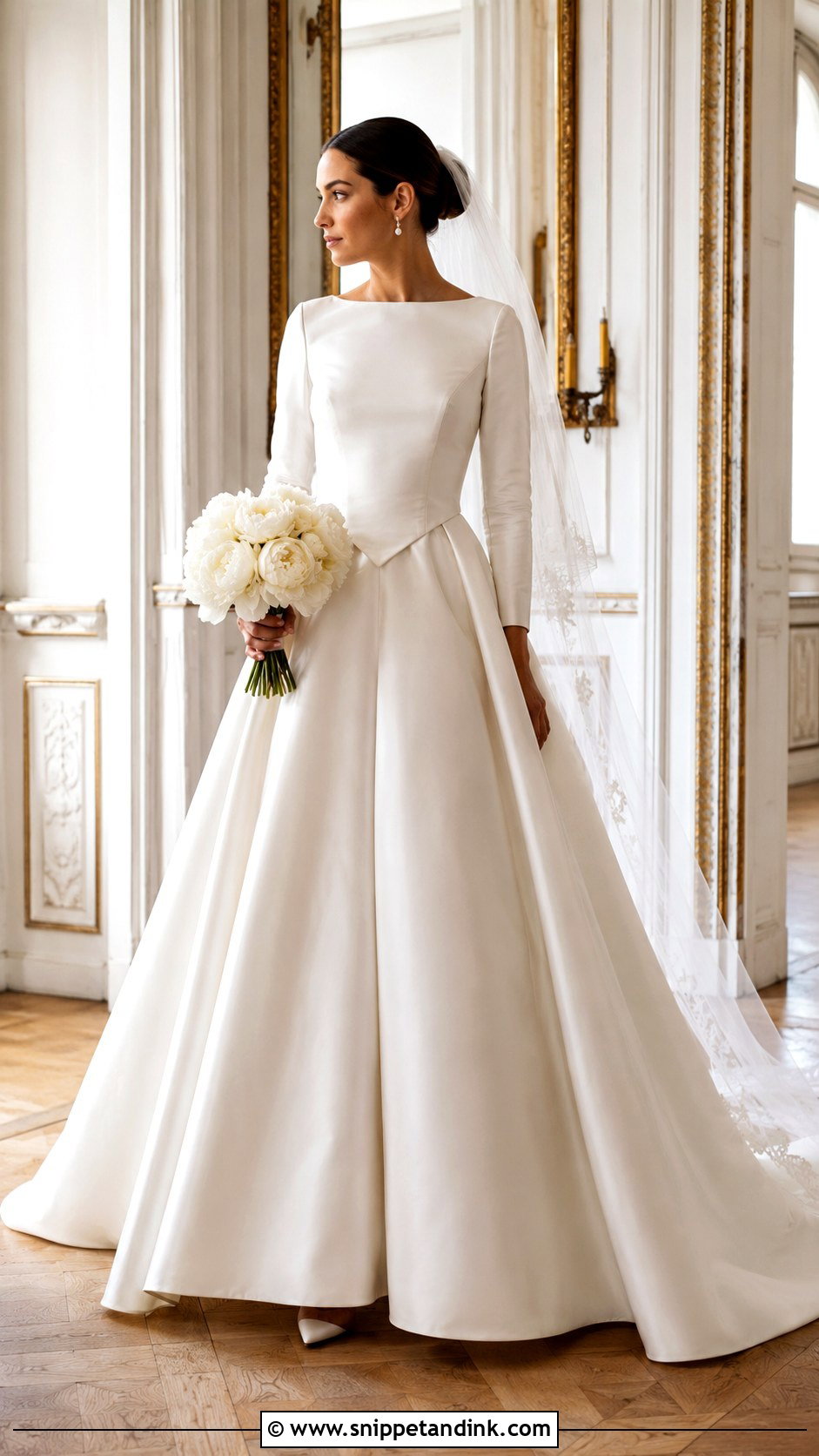
A Basque waist wedding dress has a bodice that dips into a point or soft curve below the natural waist. It has a long history in gown design and looks classic when everything else stays restrained. Choose satin or Mikado with a covered structured bodice and full skirt, and skip heavy sheer panels if you want a traditional finish. Pearl drops, pointed pumps, a cathedral veil and a smooth low bun suit it, with roses or peonies. The point of the waist has to sit on your body exactly, so I’d only order it with alterations time to spare. Ballrooms and historic venues suit its sculpted shape.
17. Cap Sleeve Lace Wedding Dress
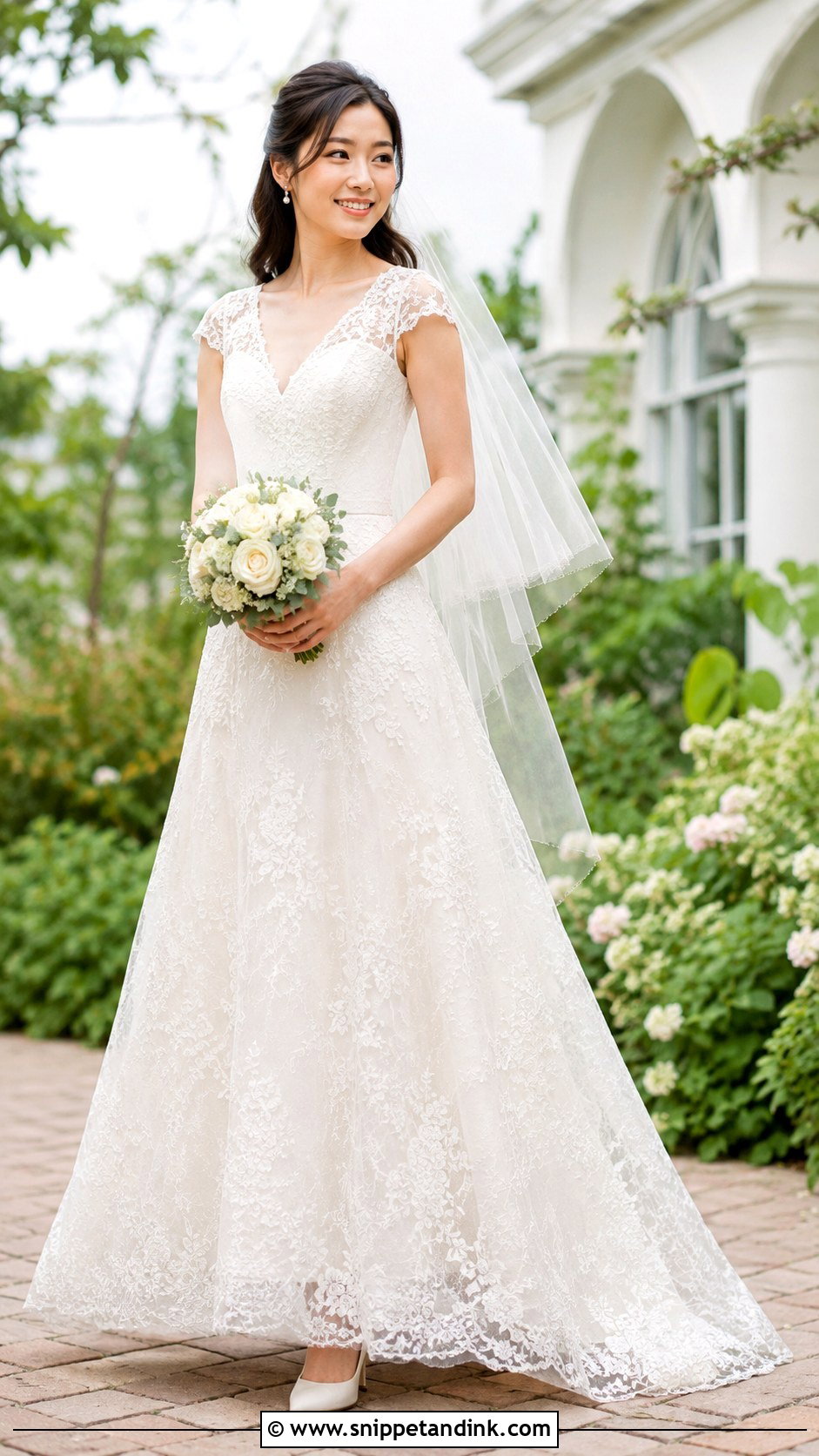
Cap sleeves cover the top of the shoulder and nothing more, which makes them a good middle ground: some coverage, without the warmth of a full sleeve. Fine lace that runs smoothly across the shoulders and bodice, a natural waist and a flowing A-line skirt keep the line even. A soft V or bateau neck balances the top half. Pearl earrings, ivory pumps and a plain fingertip veil suit it, with a half-up style or low textured bun that leaves the shoulders clear. Roses and light greenery complete it. Check that the cap doesn’t cut into the arm when you hug; lace sleeves without stretch can pinch.
18. V-Neck A-Line Wedding Dress
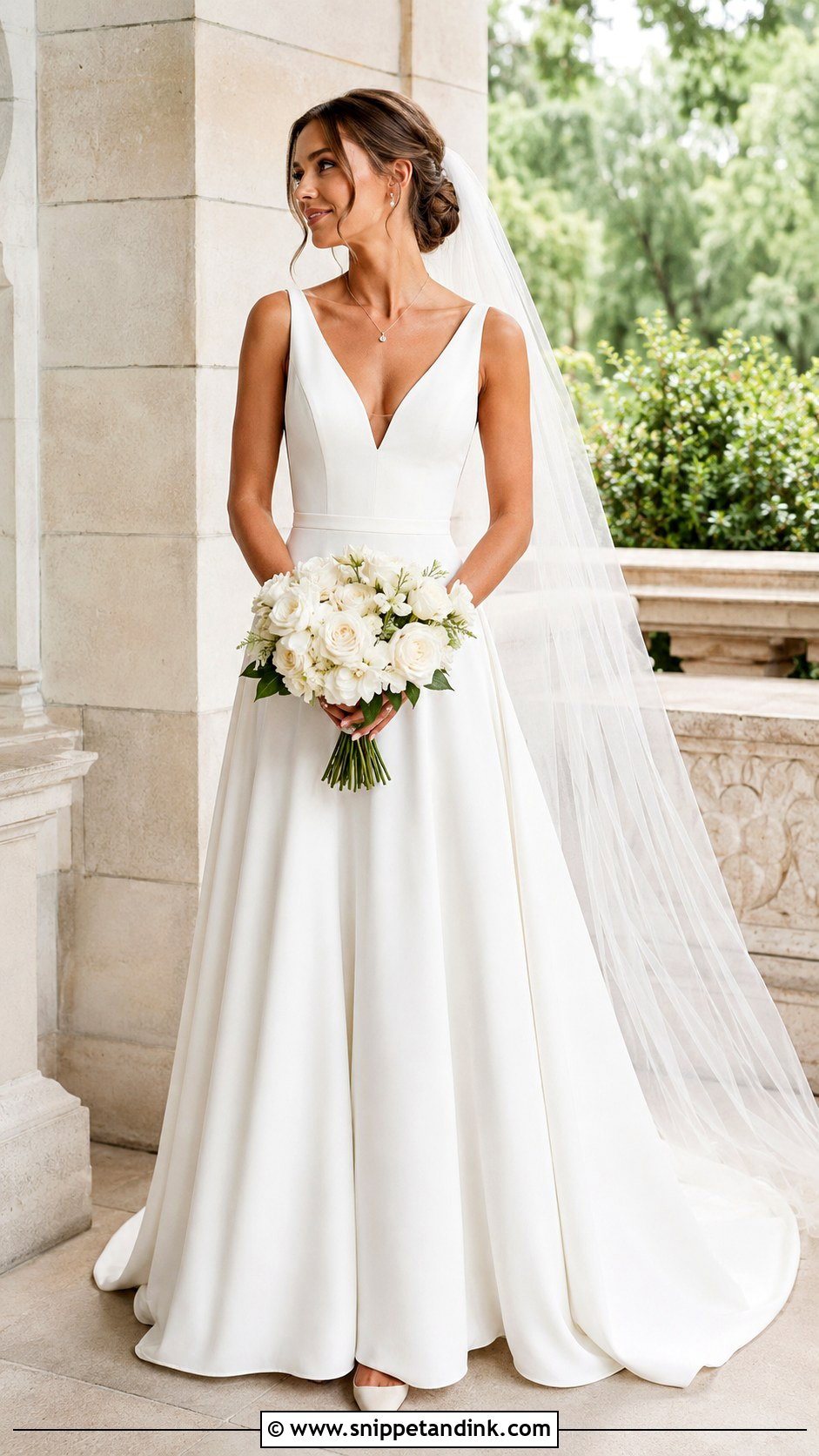
A V-neck A-line is one of the easiest gowns to wear. The V lengthens the upper body, and the A-line skirt is a shape everyone recognizes. A moderate V with secure straps, a defined natural waist and a skirt that moves when you walk are the basics. Crepe reads modern; satin or lace reads traditional. Add a fine pendant, small earrings, pointed ivory heels and a sheer chapel veil, with a soft updo and a loose bouquet of garden roses. Shoulder straps decide whether the neckline stays put, so I have the seamstress fit them with the bride’s arms moving, not standing still.
19. Chapel Train Wedding Dress
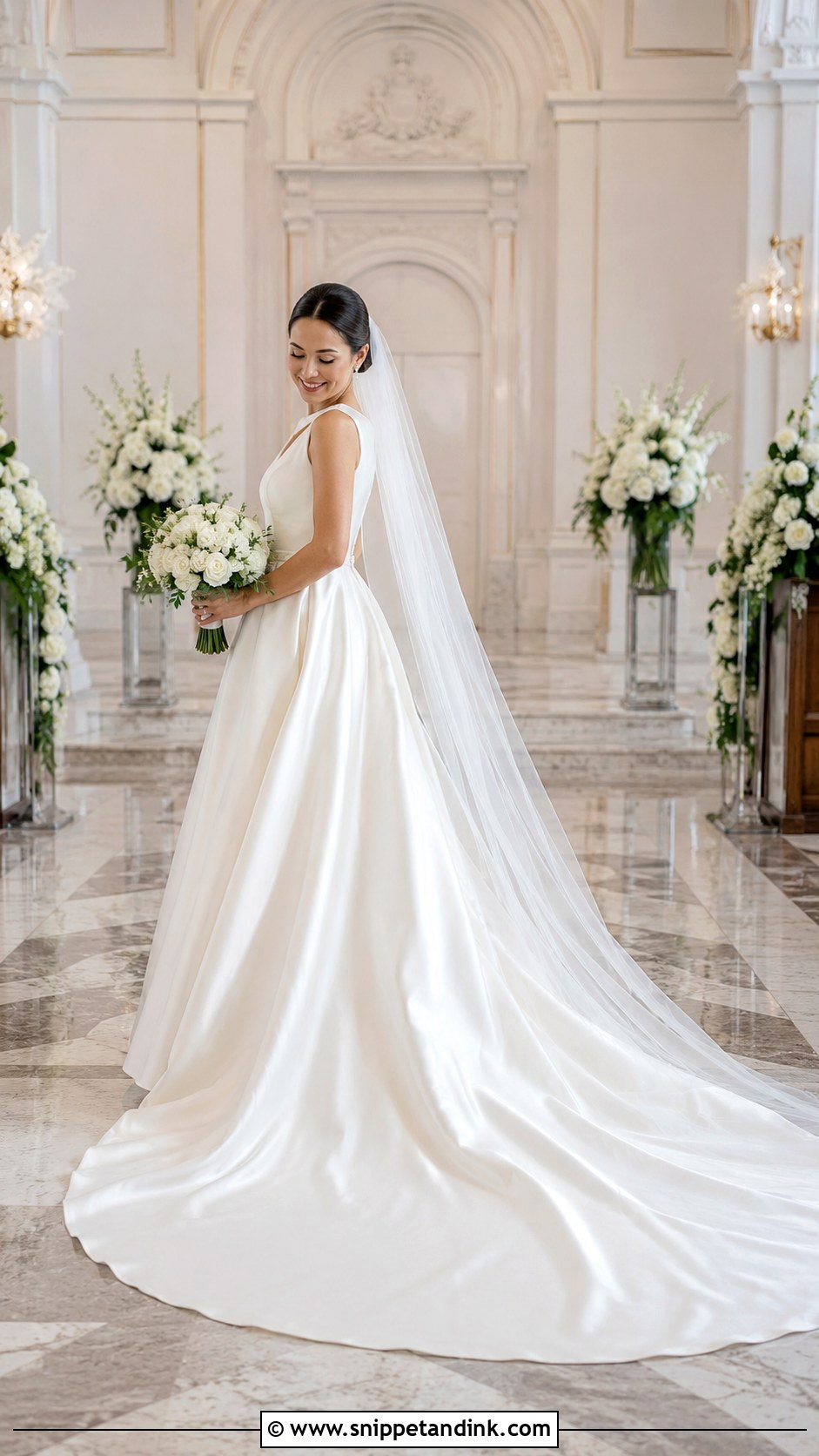
A chapel train gives you an entrance without the work of a cathedral length. It suits a satin A-line, a crepe fit-and-flare or a structured Mikado ball gown. A secure bustle is non-negotiable: it lifts the train for dinner and dancing, and a badly placed one droops by midnight. A veil ending near or just past the train looks cohesive at the ceremony. Pearl earrings, pointed pumps, a neat chignon and a medium bouquet of roses and greenery suit it. I always ask brides to bring the person who’ll bustle them to the last fitting so they can practice together.


20. Button Back Wedding Dress
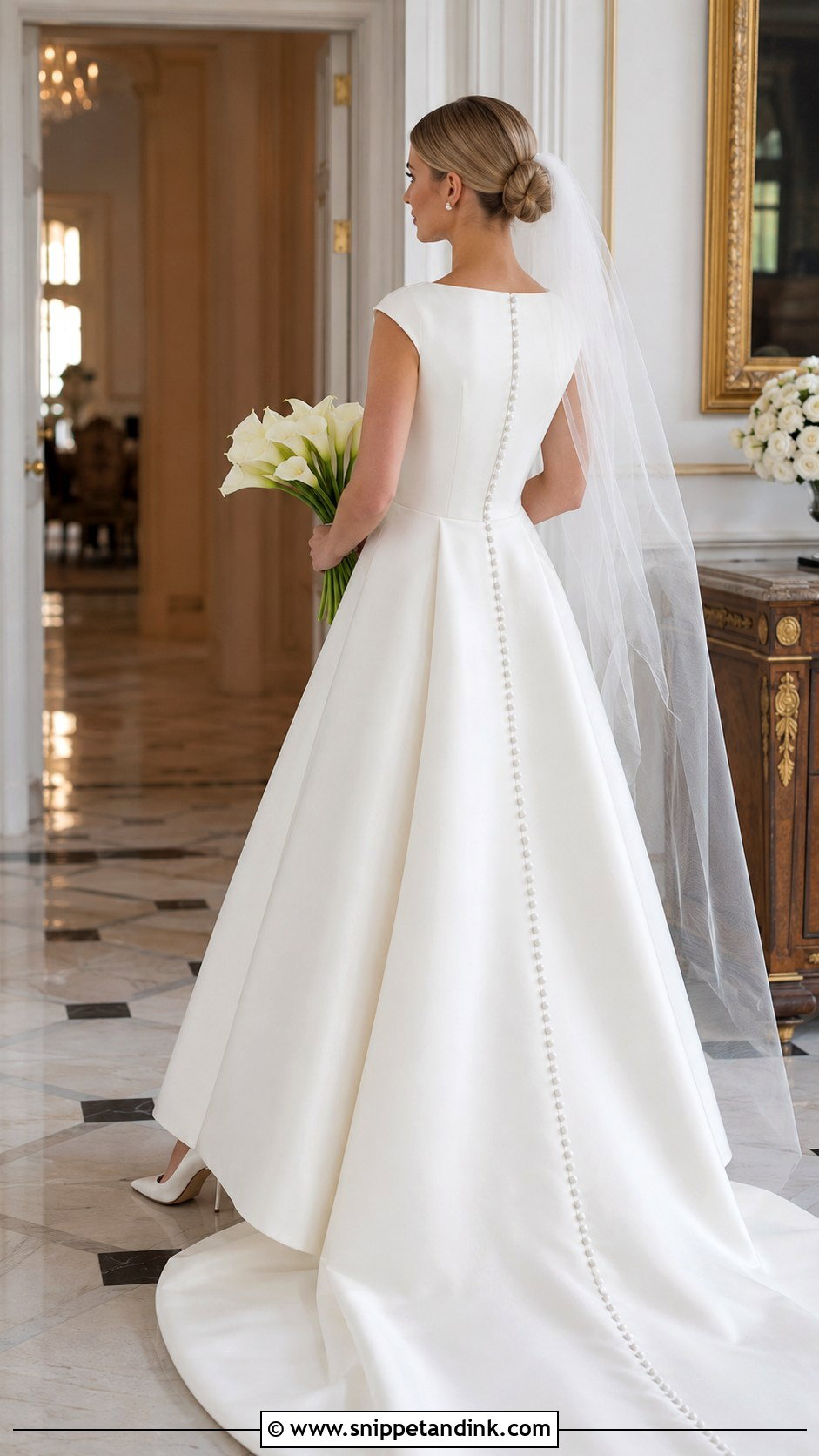
A row of covered buttons shows that construction can be the decoration. They can run from upper back to waist or carry on down the train, and they stand out best on smooth satin, Mikado or crepe. A bateau neckline, long sleeves or a structured A-line suits the restrained look. Pearl studs, ivory pumps, a low bun and a sheer veil that lets the buttons show through are enough, with white roses or calla lilies. Ask your photographer for a few back and three-quarter portraits. Guests see the back throughout the ceremony, so this detail earns its place in any traditional setting.
Storing a Classic Gown So It Can Be Worn Again
A timeless dress is the kind people want to pass on or restyle for a daughter or niece. That only works if it’s cared for properly after the wedding. Stains you can’t see, like sugar from a drink or sweat along the bodice, can turn yellow or brown months later, so I always tell brides to get the gown to a specialist cleaner within a few weeks, not a few years.
- Point out every mark you know about, including the hem and underarms. Ask how they treat beadwork, lace and silk before you hand the dress over.
- Store it flat or folded in acid-free tissue inside an acid-free box or a breathable cotton bag. Plastic bags trap moisture.
- Avoid hanging a heavy gown for long periods. The weight of the skirt can stretch the shoulders and straps over time.
- Keep it somewhere cool, dark and dry, so not the attic or a damp basement, and refold it along new lines every year or two to prevent permanent creases.
If you think a family member might wear it, mention that to the cleaner. Some will advise on how a gown can be altered later, and a well-stored satin or crepe dress gives a seamstress far more to work with than one that has spent years in a plastic bag.
The Dress That Fits Is the One That Lasts
The most memorable bridal look isn’t always the most detailed one. More often it’s the dress that fits well, feels comfortable and matches the bride’s own taste. Strong silhouettes, good fabric, careful alterations and restrained accessories are what keep a gown looking classic. Start with the shape that makes you feel most confident, then think about venue, season, train, neckline, shoes, veil and hair as one outfit. Satin ball gown, lace A-line, silk slip or crepe column, the rule is the same: keep every piece working together, and the photos will still feel right years from now.
You'll Like These Ideas:











Leave a Reply