
Sleeves are the part of a wedding dress I spend the most fitting time on, and they’re also the part brides rarely ask about until something pinches. A good sleeve adds coverage, softens a neckline and balances a fitted skirt; a badly cut one stops you hugging your mother. The gowns below run from barely there illusion tulle to tailored satin, and they suit a winter ballroom as readily as a courthouse ceremony. Under each one I’ve noted how that sleeve actually behaves once you’re wearing it, because that is what decides whether you love it at hour eight.
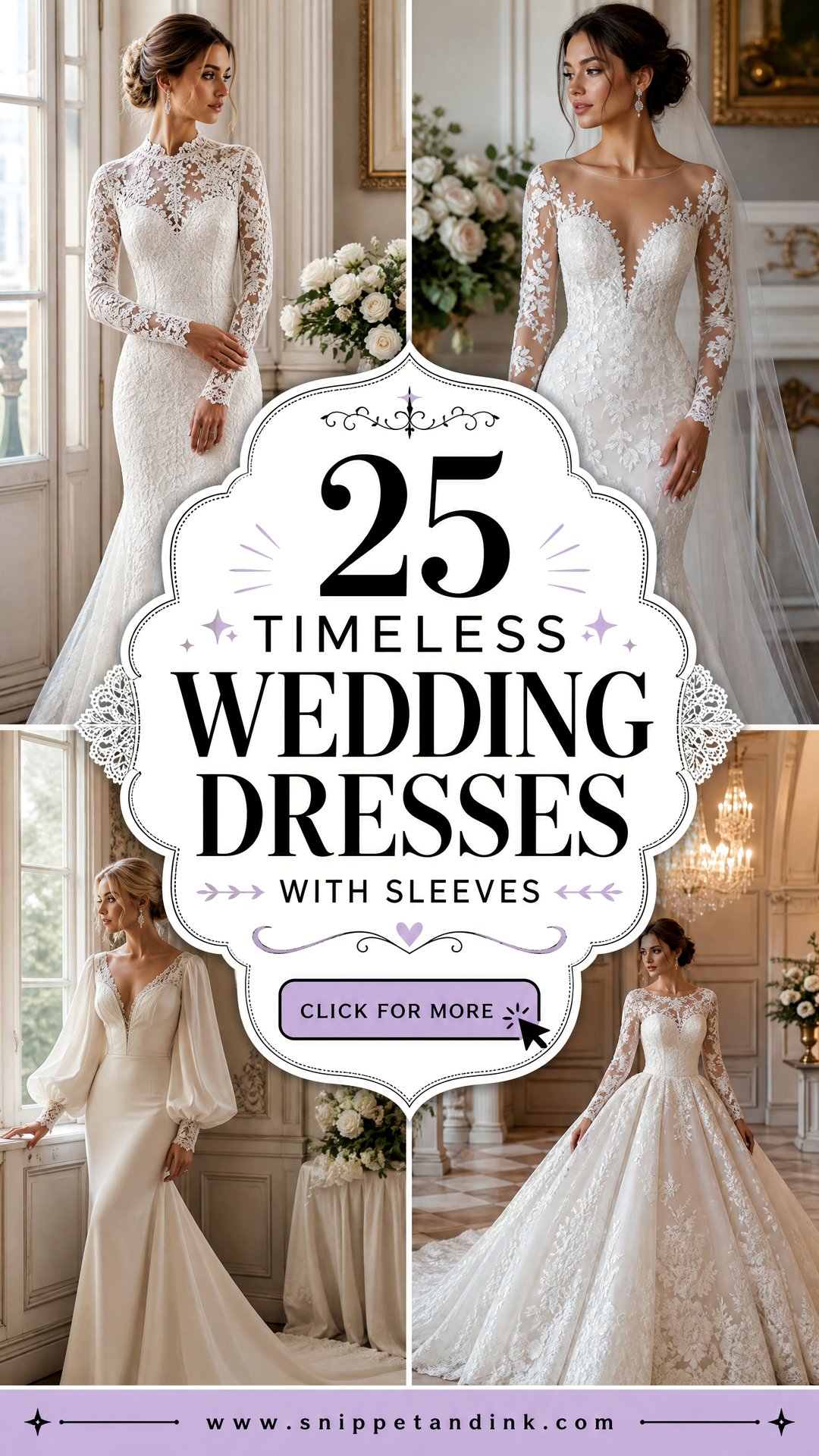
Raise Your Arms in the Fitting Room Before Anything Else
Most sleeve problems only show up when you move, and a shop mirror shows you standing still. At every first try-on I ask the bride to do the four things she’ll do most on the day. It takes two minutes and saves a lot of disappointment.
- Lift both arms as if hugging someone taller. If the bodice rises with them, the armhole is cut too low.
- Hold an imaginary bouquet at your waist for a full minute. Tight sleeves start to bite at the inner elbow.
- Sit down and reach for a glass. Long cuffs that slide over the knuckles will drag through food all evening.
- Turn your back to the mirror and look over a shoulder. Twisting seams or lace pulling sideways show here first.
Sleeves can be taken in or shortened fairly easily, but adding room through the arm is far harder, because there’s rarely spare seam allowance. If a sleeve feels snug at the try-on, assume it will feel tighter after a few hours of heat and dinner, not looser.
Fabric Changes How Much Movement You Get
Stretch lace and soft crepe forgive a close fit. Satin, mikado and taffeta have no give, so they need a little more ease and a slightly curved sleeve seam. Tulle and chiffon are light but snag easily on rings and bracelets, which is worth knowing before you plan your jewellery.
1. Long Sleeve Lace Wedding Dress
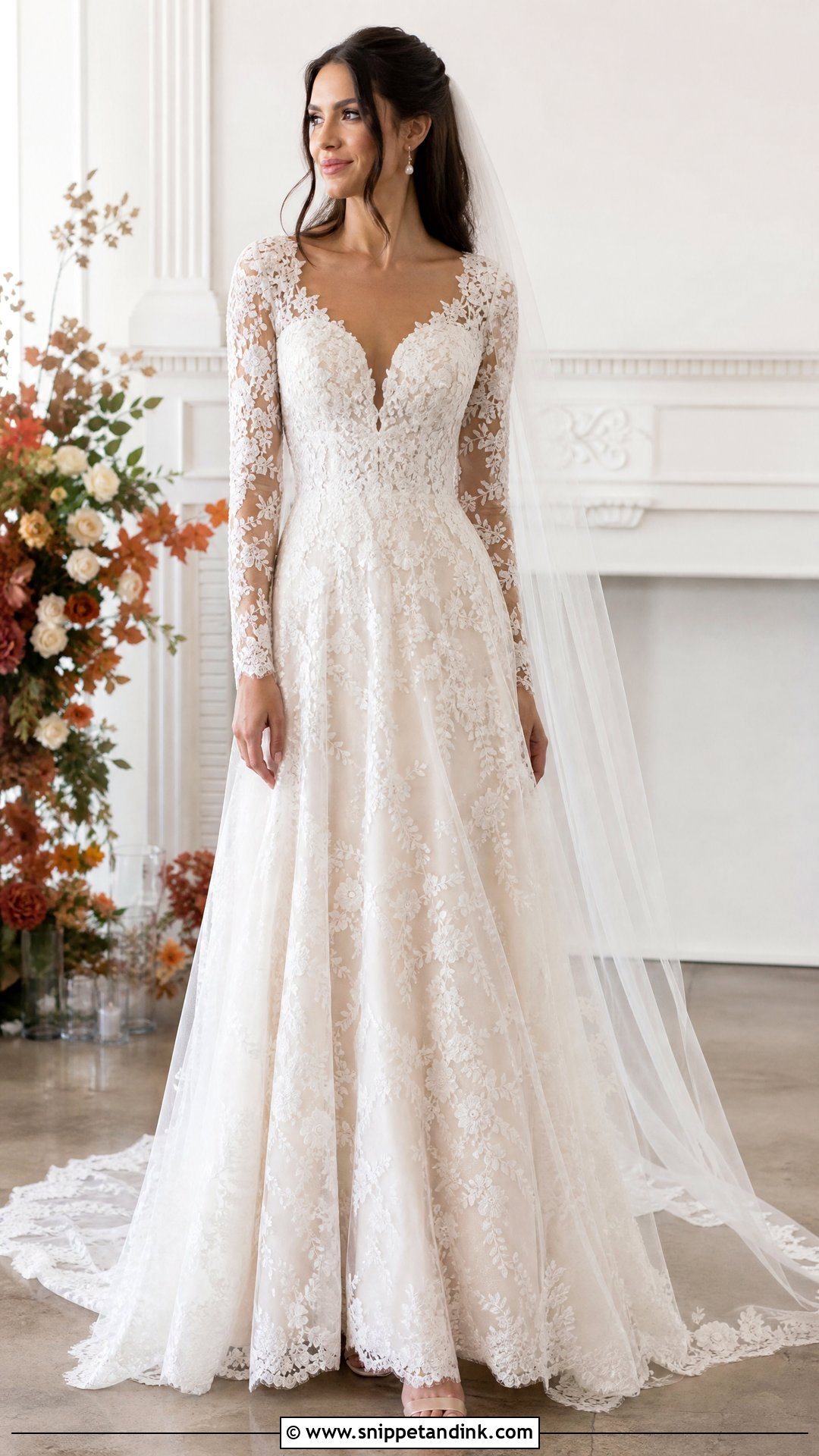
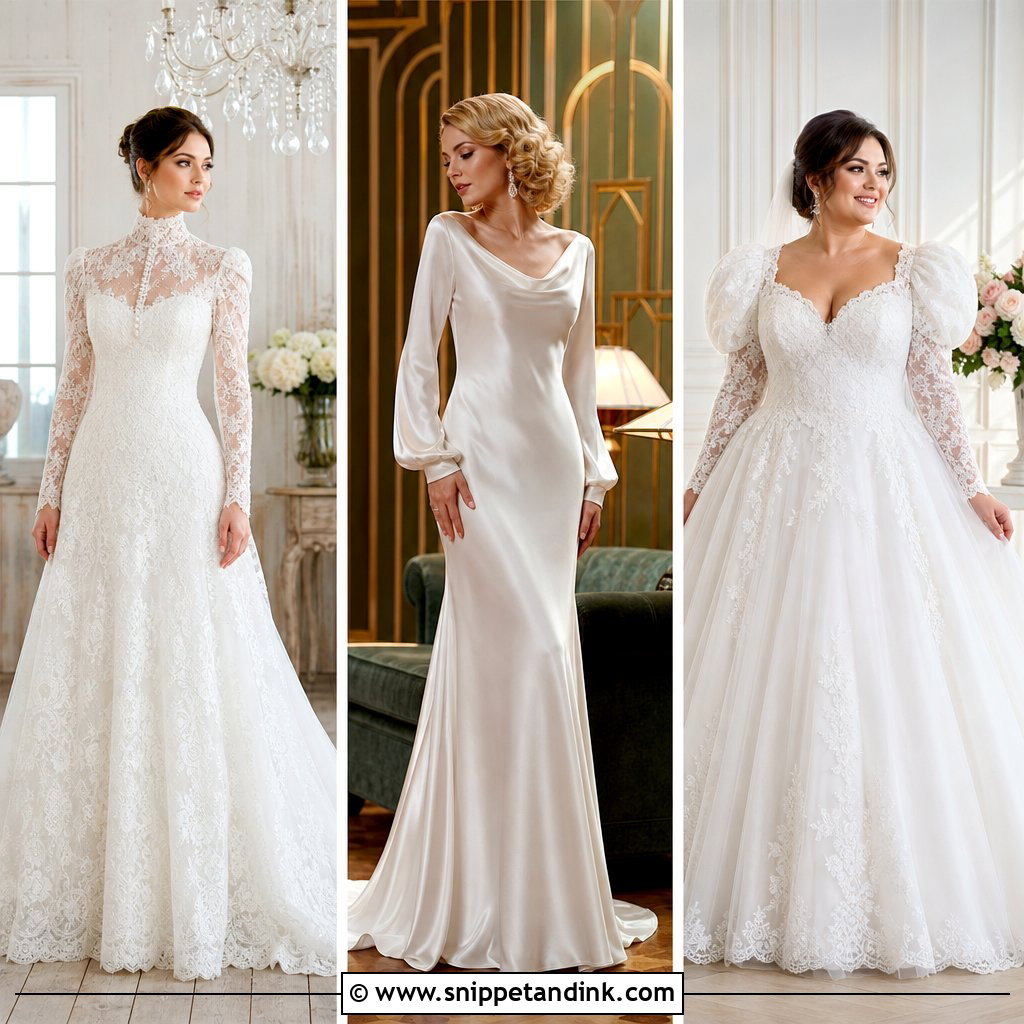
Lace sleeves are the classic for a reason: the pattern hides the small wrinkles that any sleeve picks up at the elbow. What I look at first is where the lace motifs land on the arm. A good maker places them so a flower sits on the outer forearm rather than being sliced in half by a seam. Ivory lace over a soft nude or champagne lining reads gentler in photos than lace on stark white. Keep the bouquet airy and the jewellery small, since the lace is already carrying the detail. It’s a natural fit for autumn, winter and formal indoor venues.
2. Satin Long Sleeve Wedding Dress
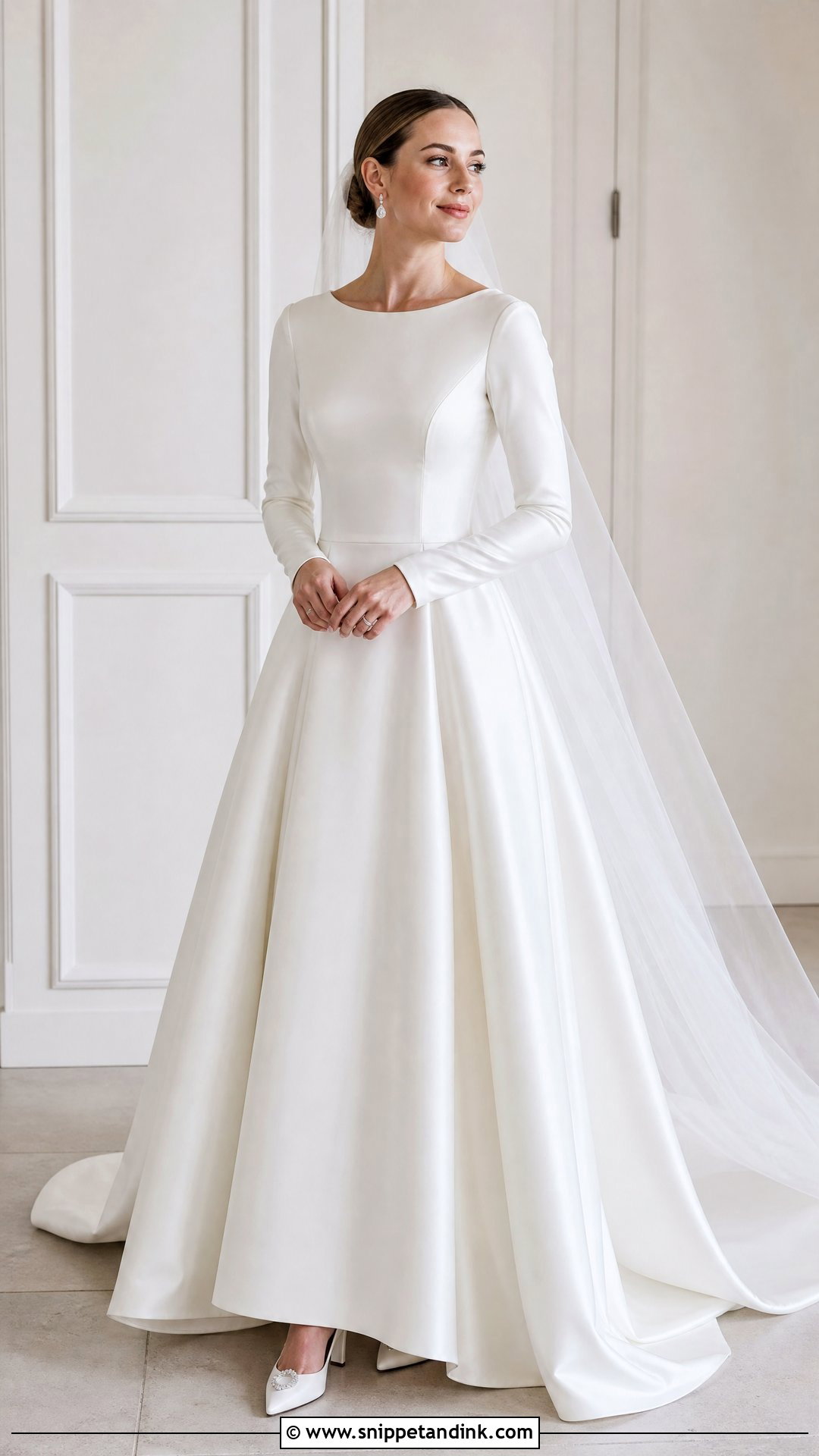
Satin is unforgiving on a sleeve. It shows every pull line, so a long satin sleeve has to be cut with enough ease across the upper arm or it will crease into little horizontal ridges the moment you bend your elbow. When it’s right, the fabric’s sheen makes even a plain column or sheath shape look expensive. A bateau or square neckline keeps the line clean. I usually suggest a low bun and a long single-tier veil here, because satin carries drama on its own and anything fussier fights it.
3. Off The Shoulder Long Sleeve Wedding Dress
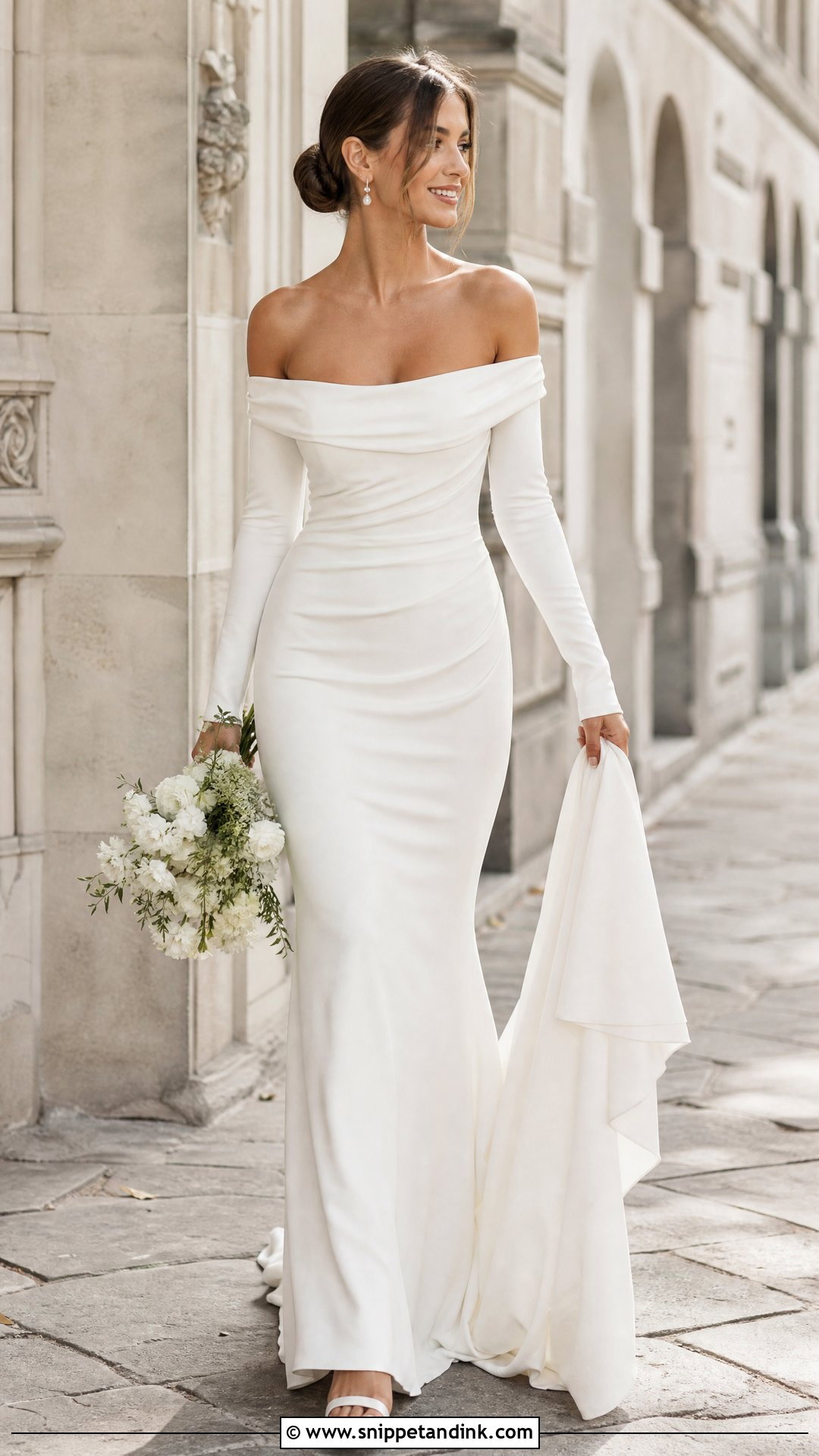
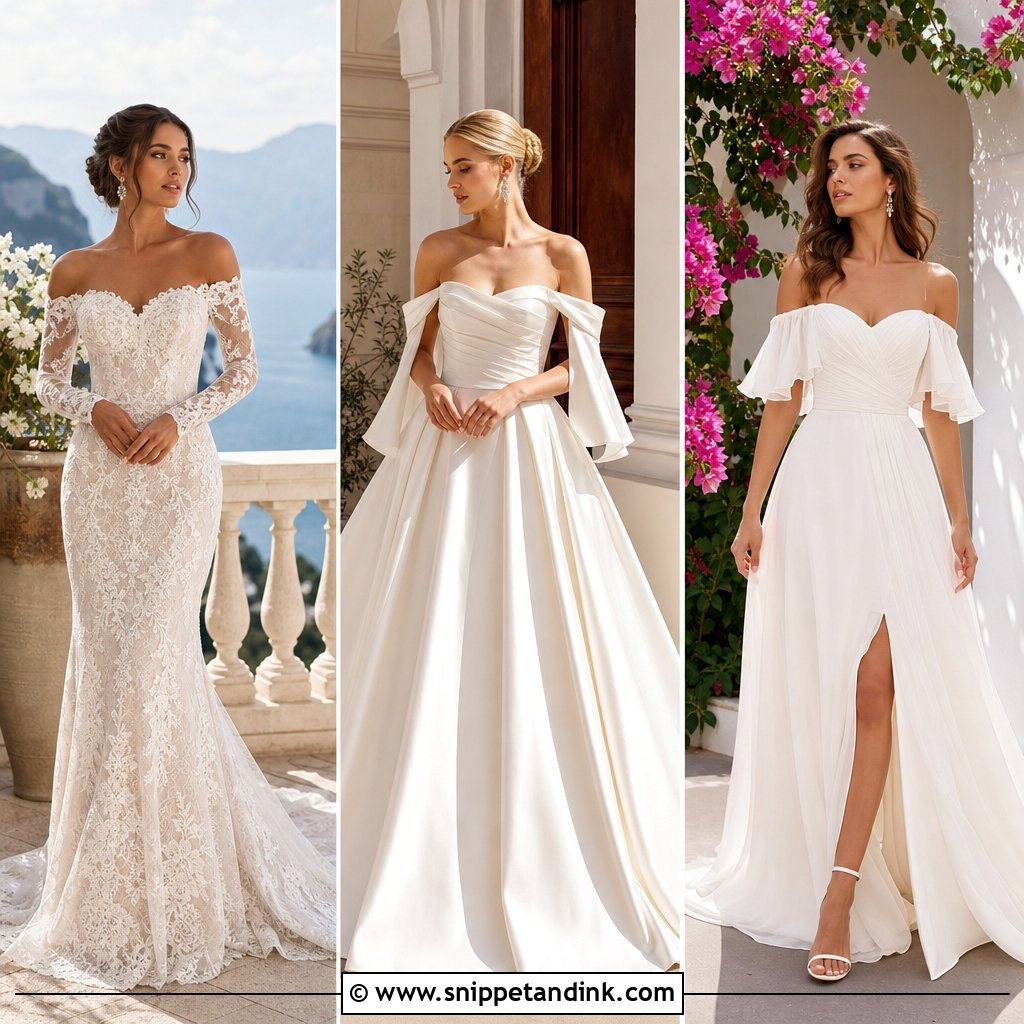
Off the shoulder long sleeves are the trickiest sleeve in this list to wear, and I tell brides that up front. The neckline is held in place by your upper arms, so raising them pushes the whole band up. Ask for internal elastic or a silicone gripper along the neckline and a bodice that is boned enough to hold everything without relying on the sleeve. Crepe and mikado behave better than soft lace here because they keep their shape across the arm. With the collarbone on show, small earrings and a smooth updo are all you need.
4. High Neck Long Sleeve Wedding Dress
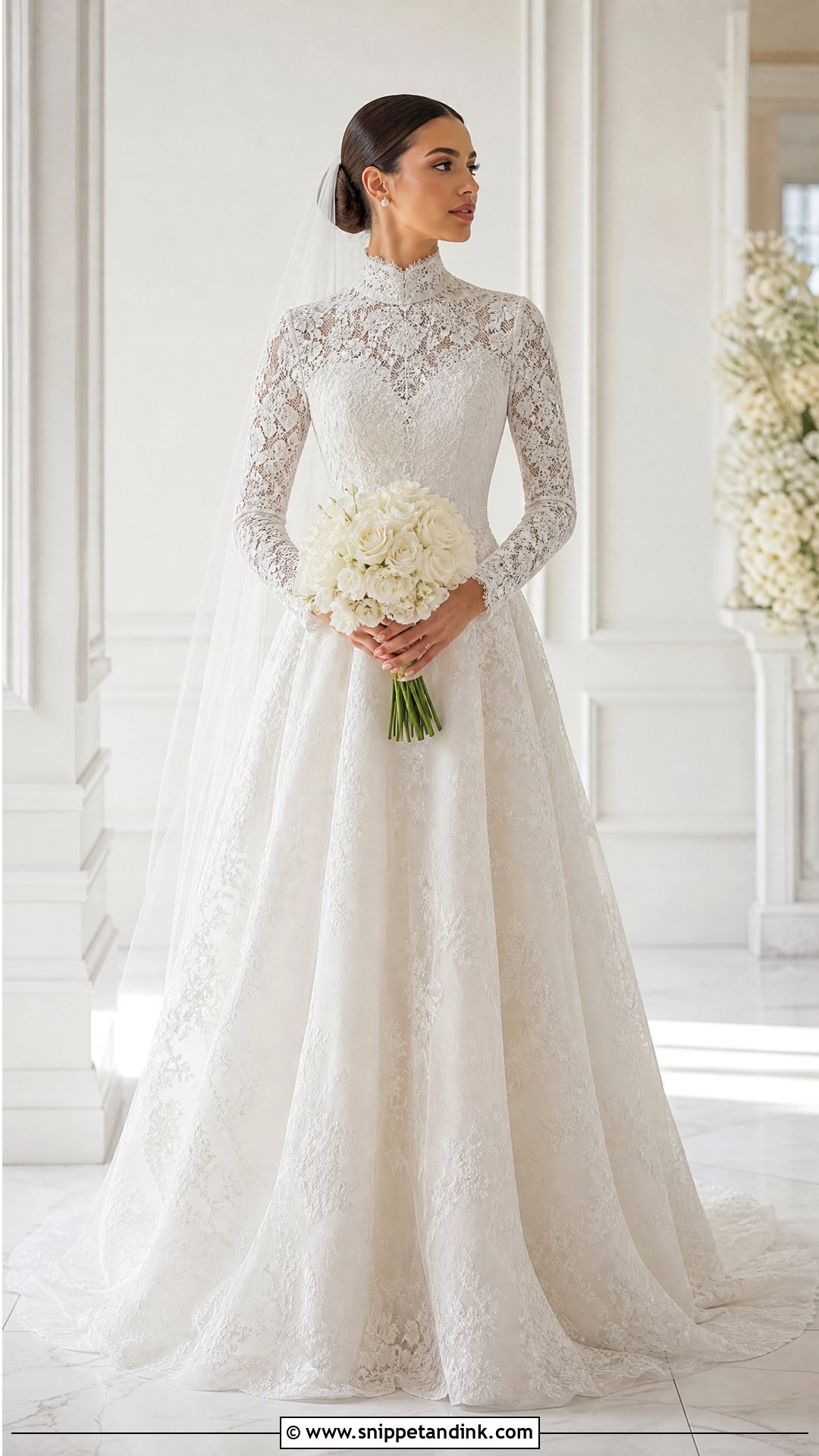
A high neck with long sleeves covers a lot of skin, so the gown needs somewhere to breathe. I look for one relief point: an open back, a defined waist or a sheer yoke. Without one, the dress can feel heavy and a little severe in pictures. Check the collar while seated, because a high neck that sits fine standing can press into your throat once you sit for dinner. A sleek bun and a veil set low at the back of the head keep the neckline uncluttered.
5. Illusion Sleeve Wedding Dress
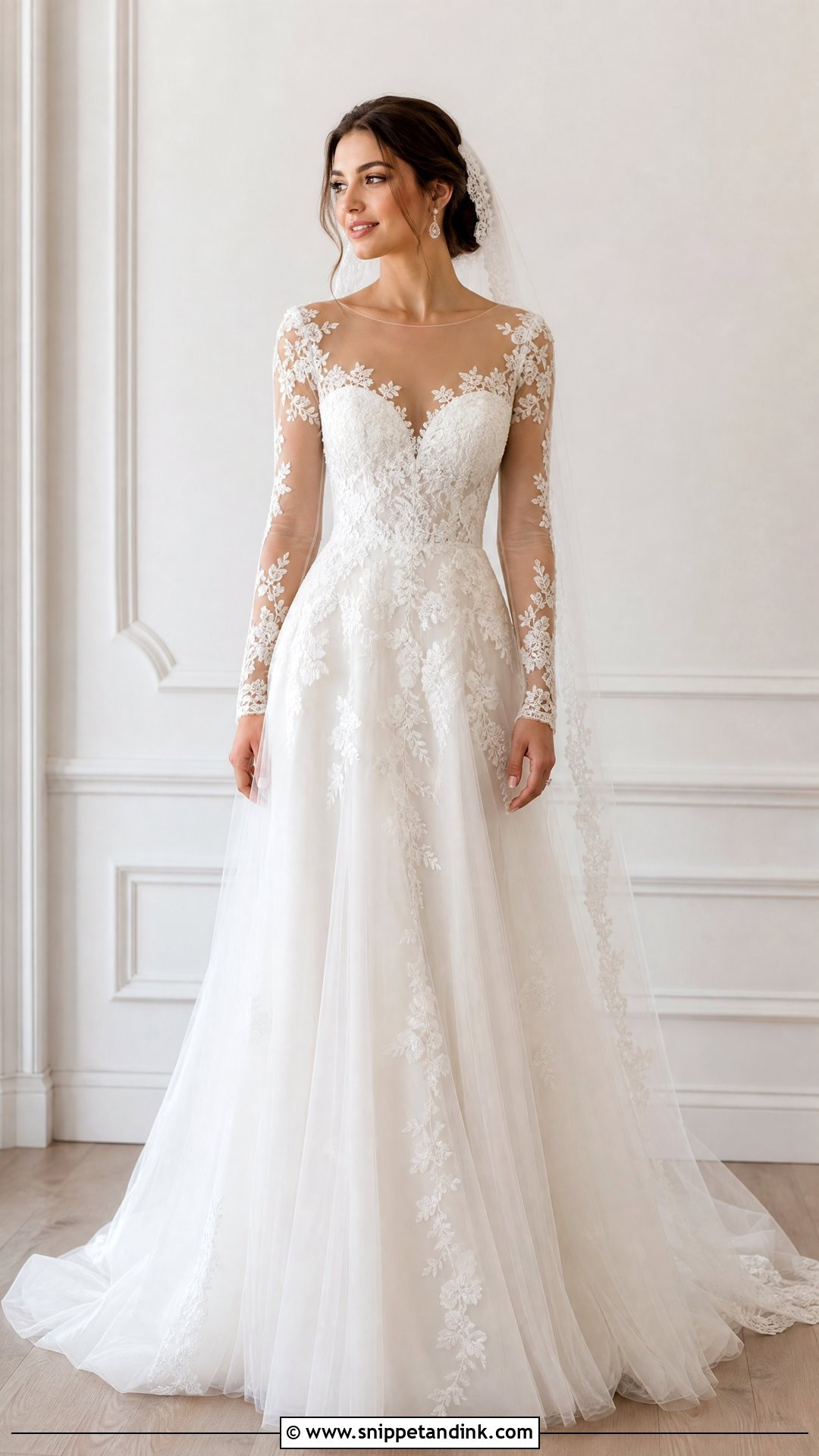
An illusion sleeve wedding dress gives the impression of coverage while the tulle underneath does almost nothing for warmth. Good illusion sleeves are matched to your skin tone; a mesh that’s a shade too pink or too grey shows as a band in flash photography. The appliqués should drift from the bodice onto the arm rather than stopping in a hard line at the shoulder seam. Tulle snags on bracelets and bouquet wire, so keep anything with prongs off that wrist.
6. Bell Sleeve Wedding Dress
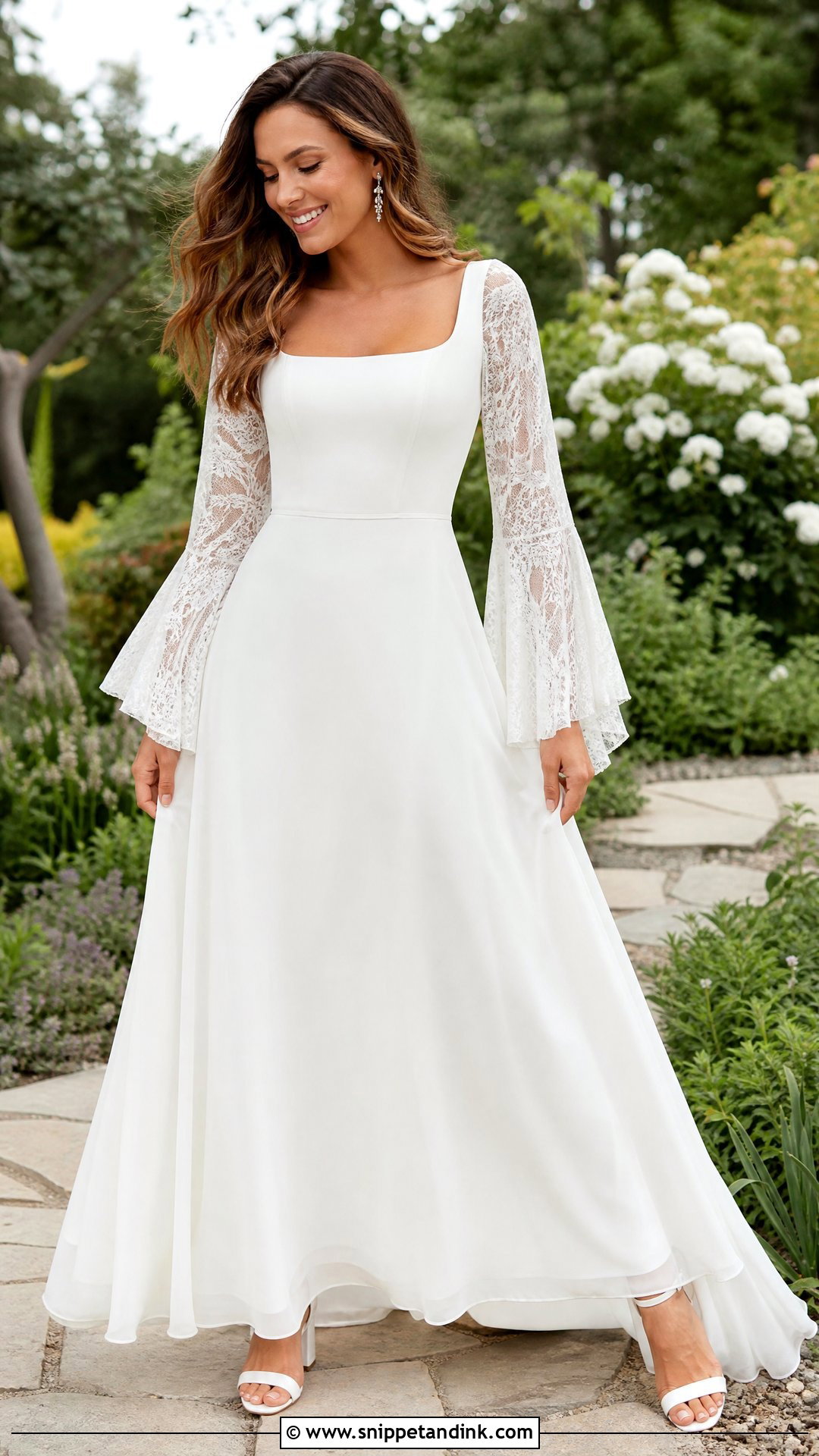
Bell sleeves fit close at the upper arm and open toward the wrist, which gives them a lovely swing when you walk. The catch is practical. That open cuff drags across plates, dips into sauce and catches on the bouquet stems. I’d only recommend a full bell for a ceremony and photo session, or a softer flare that ends just above the wrist bone. Chiffon and light lace let the sleeve move; heavier fabric makes it hang like a cone. Loose waves and block heels suit the relaxed mood of an outdoor wedding.
7. Puff Sleeve Wedding Dress
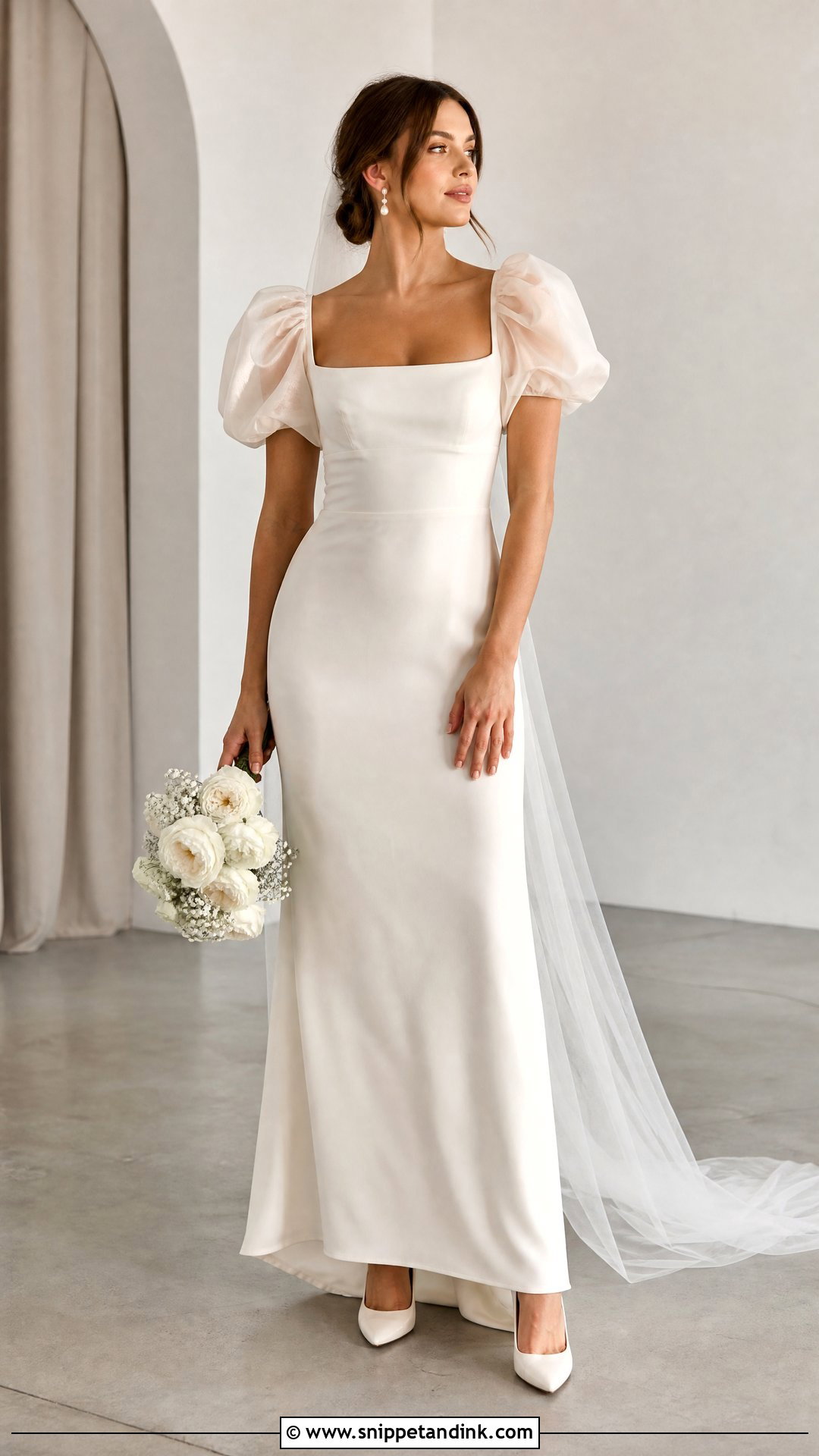
Puff sleeves date quickly when the volume is overdone, so I keep them restrained: a soft gather at the shoulder, not a balloon. Organza and lightweight satin hold the puff without a stiff support layer, while tulle needs a little netting inside or it collapses by the afternoon. Pair the sleeve with a square neckline and a plain skirt so there is one focal point. If you love the look but worry about dancing, ask whether the puffs can be made detachable. A smooth bun keeps the shoulders from looking crowded.
8. Bishop Sleeve Wedding Dress
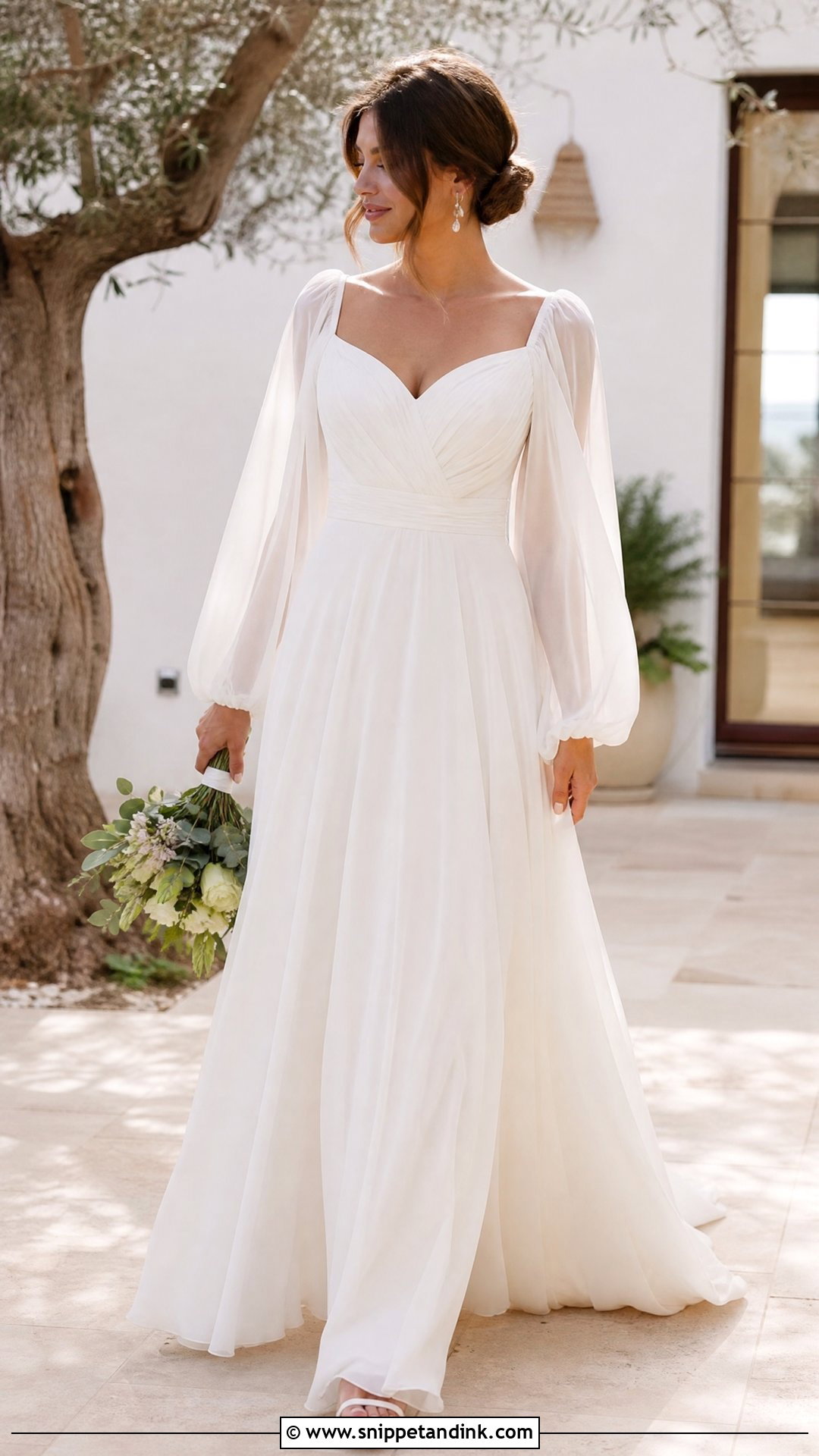
The bishop sleeve is gathered into a cuff at the wrist, and that cuff is what I check before anything else. It needs a few covered buttons or a hidden snap so you can open it to wash your hands; a sewn-shut cuff turns every bathroom trip into a project. Chiffon gives the softest billow, lace a little more body. Empire and A-line shapes suit the volume best. For a beach or countryside setting the movement in a breeze is the whole point, so pick a veil that won’t tangle with it.
9. Cap Sleeve Wedding Dress
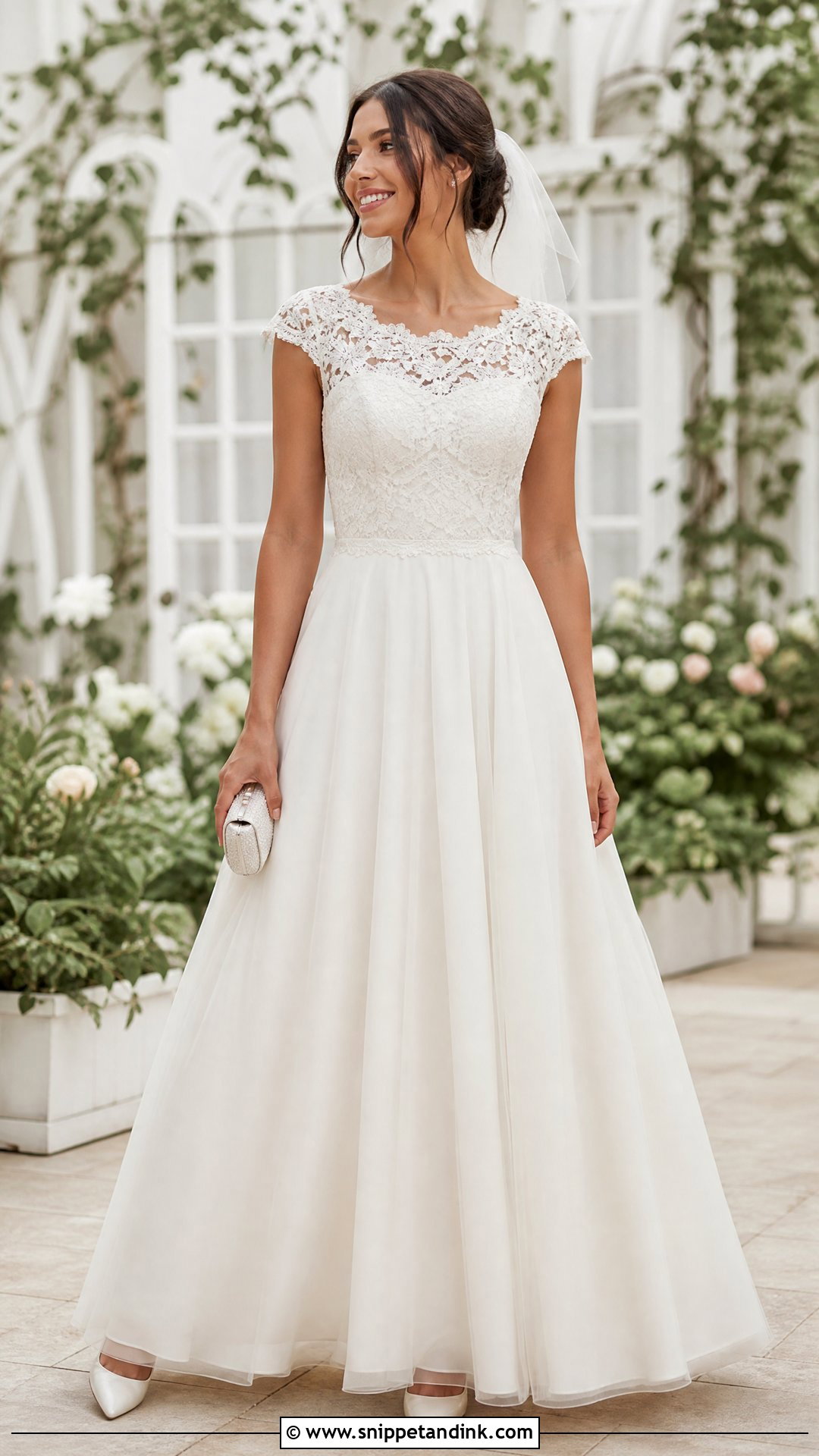
A cap sleeve wedding dress covers just the top of the shoulder and leaves the arm free, which makes it one of the coolest options for a summer day. The fit matters more than it looks: a cap that stands away from the shoulder makes the upper arm look wider, while one that hugs too tightly digs in. I pin caps so the edge curves slightly toward the body. A V or sweetheart neckline balances the line, and pearl studs are plenty.
10. Three Quarter Sleeve Wedding Dress
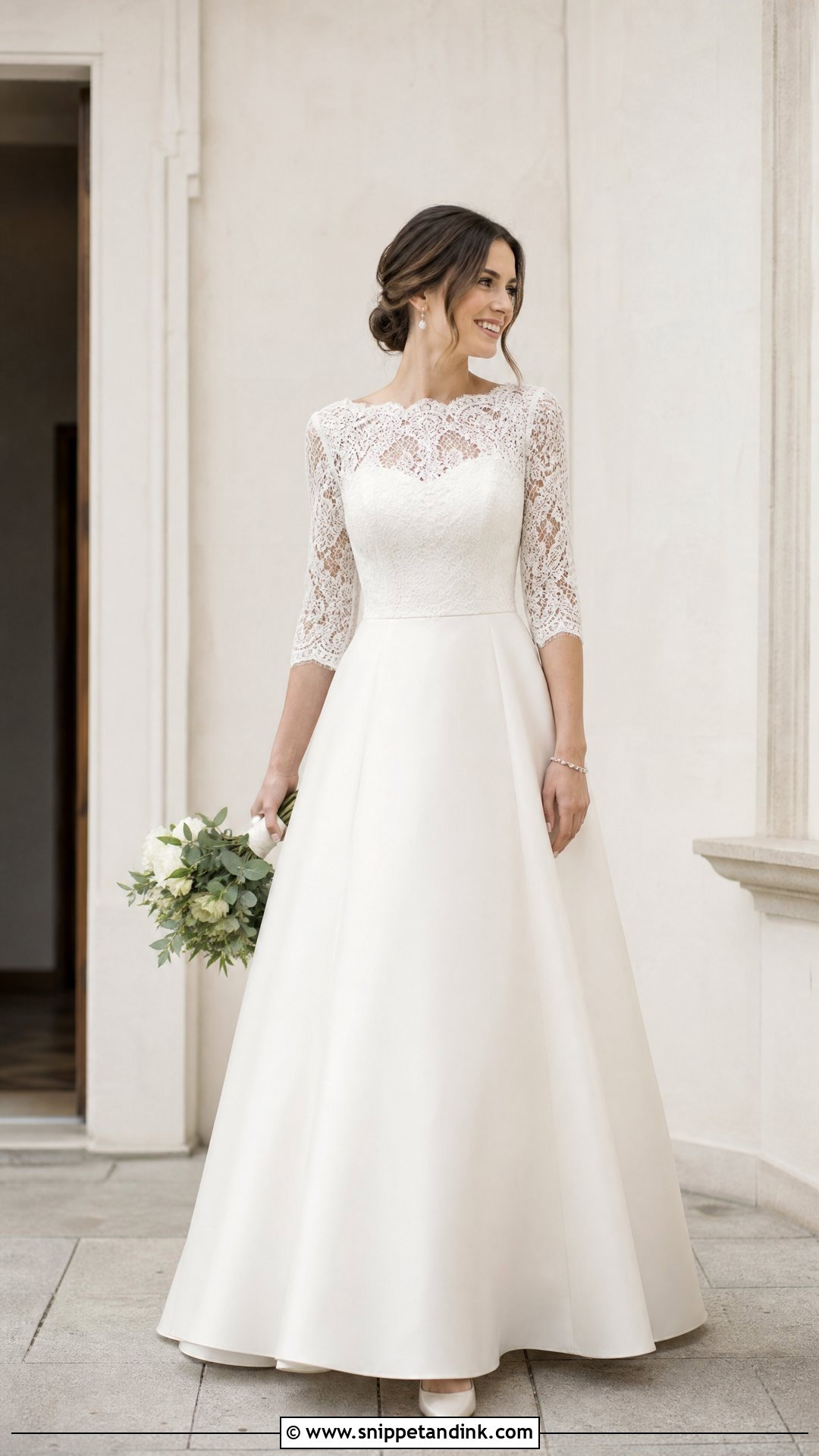
A three quarter sleeve wedding dress ends between elbow and wrist, so your hands, your ring and any bracelet stay visible. That length is the one I’d pick for brides who talk with their hands, because a long cuff tends to catch and creep down. The sleeve should finish at the narrowest part of the forearm; end it at the widest and the arm looks heavier. It pairs well with tea length and A-line skirts and suits spring or early autumn weather.
11. Sheer Sleeve Wedding Dress
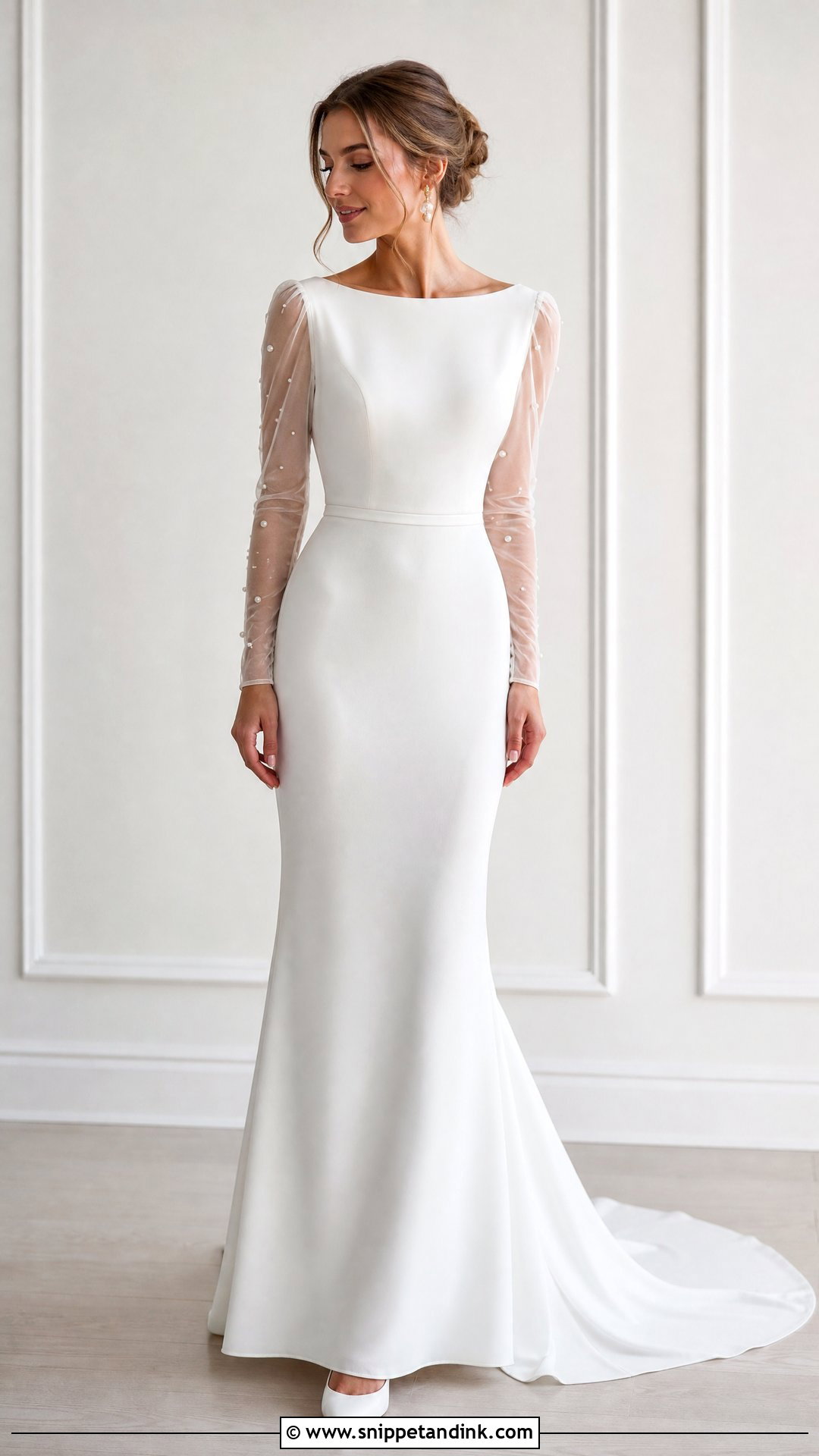
Plain sheer sleeves are the lightest way to have a sleeve at all. Unadorned tulle looks quietly modern; add scattered pearls or fine embroidery and it turns romantic. The thing to watch is the seam where sheer meets bodice. On a cheaper gown that join is visible and slightly puckered, and the camera picks it up. I’d also ask for a narrow binding at the wrist so the edge doesn’t fray or roll after a day of movement. Keep hair clean and accessories few so the sleeve can read as delicate.
12. Crepe Long Sleeve Wedding Dress
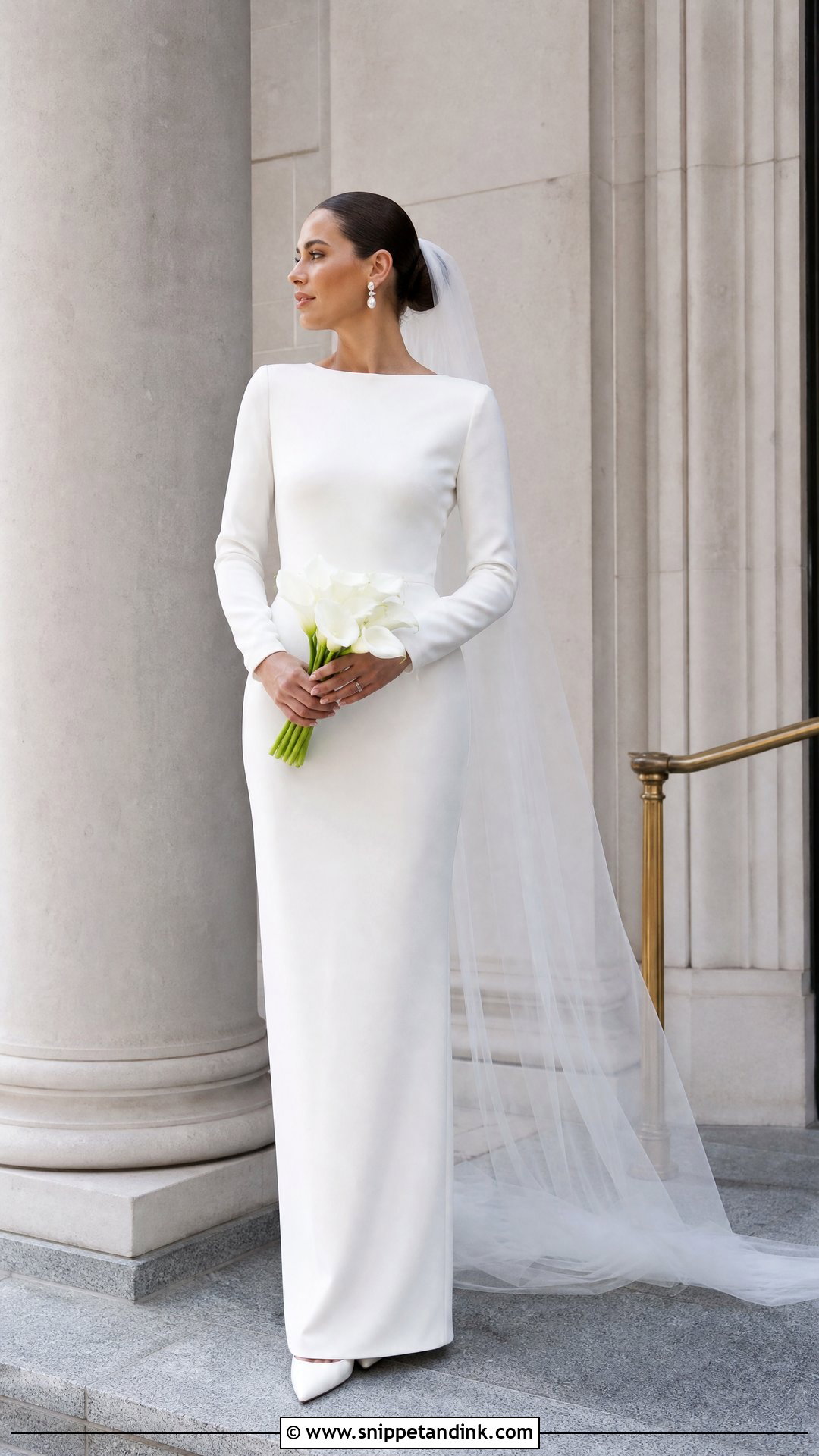
Crepe has a matte surface and a fluid drape, so it shows the body underneath honestly and needs exact tailoring. Long crepe sleeves should be finished with a slight taper at the wrist and a little extra room in the elbow, or they bunch every time you bend your arm. This is the gown for brides who’d rather skip decoration and let the cut do the talking. A sculptural earring and a cathedral veil or detachable overskirt add drama without breaking the clean surface.
13. Ball Gown Wedding Dress With Sleeves
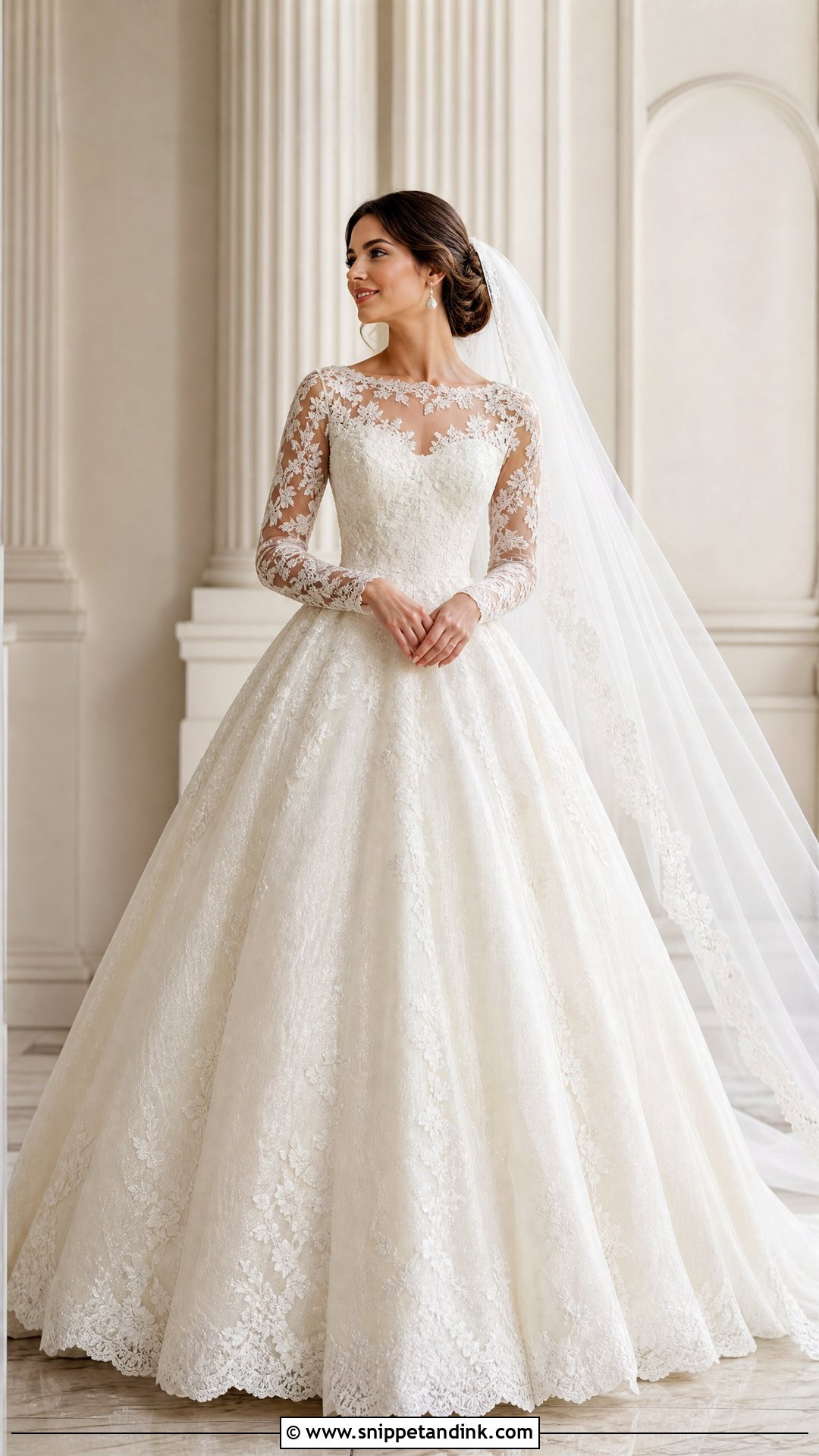
A full ball gown with sleeves is a lot of fabric, and the sleeves tip it toward grand or heavy depending on how they’re done. With a very full skirt I steer brides toward lighter sleeves, sheer lace or tulle, so the top half doesn’t look as weighty as the bottom. A well fitted, boned bodice carries the skirt so your shoulders don’t. Satin sleeves look regal but warm; think about the venue temperature before committing. Leave room in the aisle and the car for that hem.
14. Mermaid Wedding Dress With Sleeves
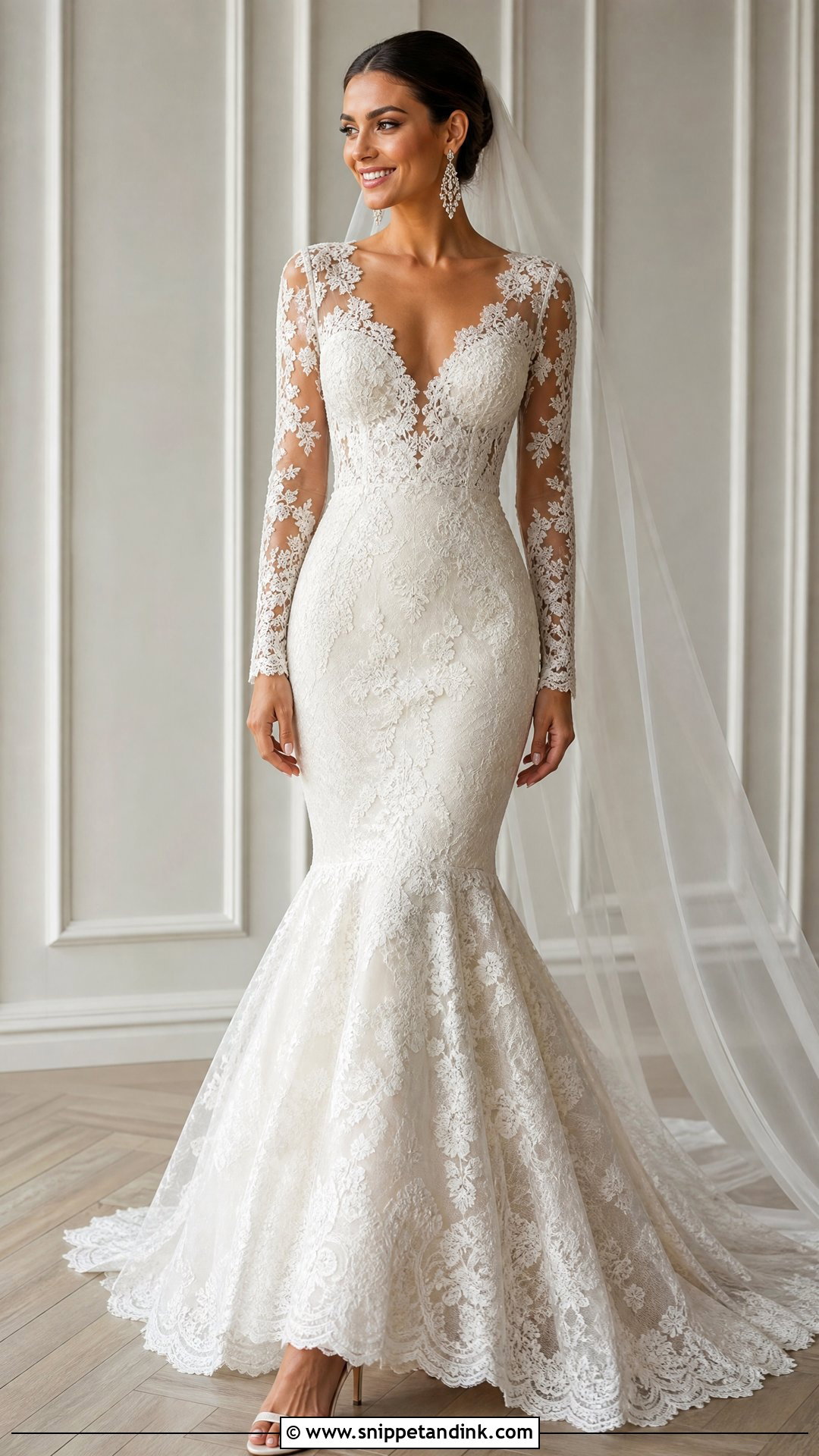
Mermaid gowns fit closely to the knee, so movement is the first thing I test: sit, climb two steps and do a slow dance turn at the fitting. Add tight sleeves to a tight skirt and some brides feel pinned in from both ends. A slightly stretchy crepe or lace on the arm solves that. A sweetheart neckline with illusion sleeves softens the shape, while a high neck makes it sharper and more formal. Slim heels and drop earrings finish it.
15. A Line Wedding Dress With Sleeves
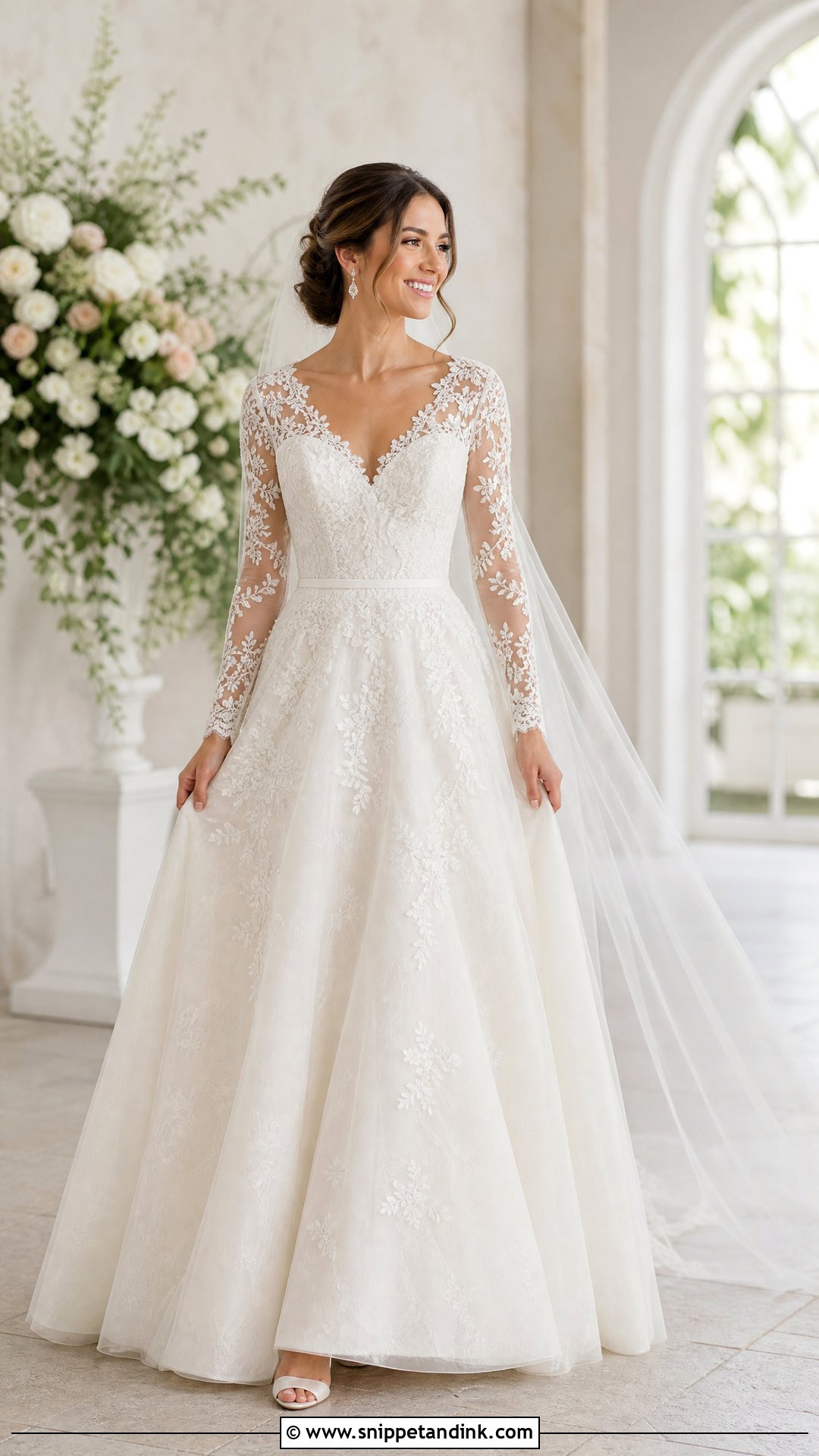
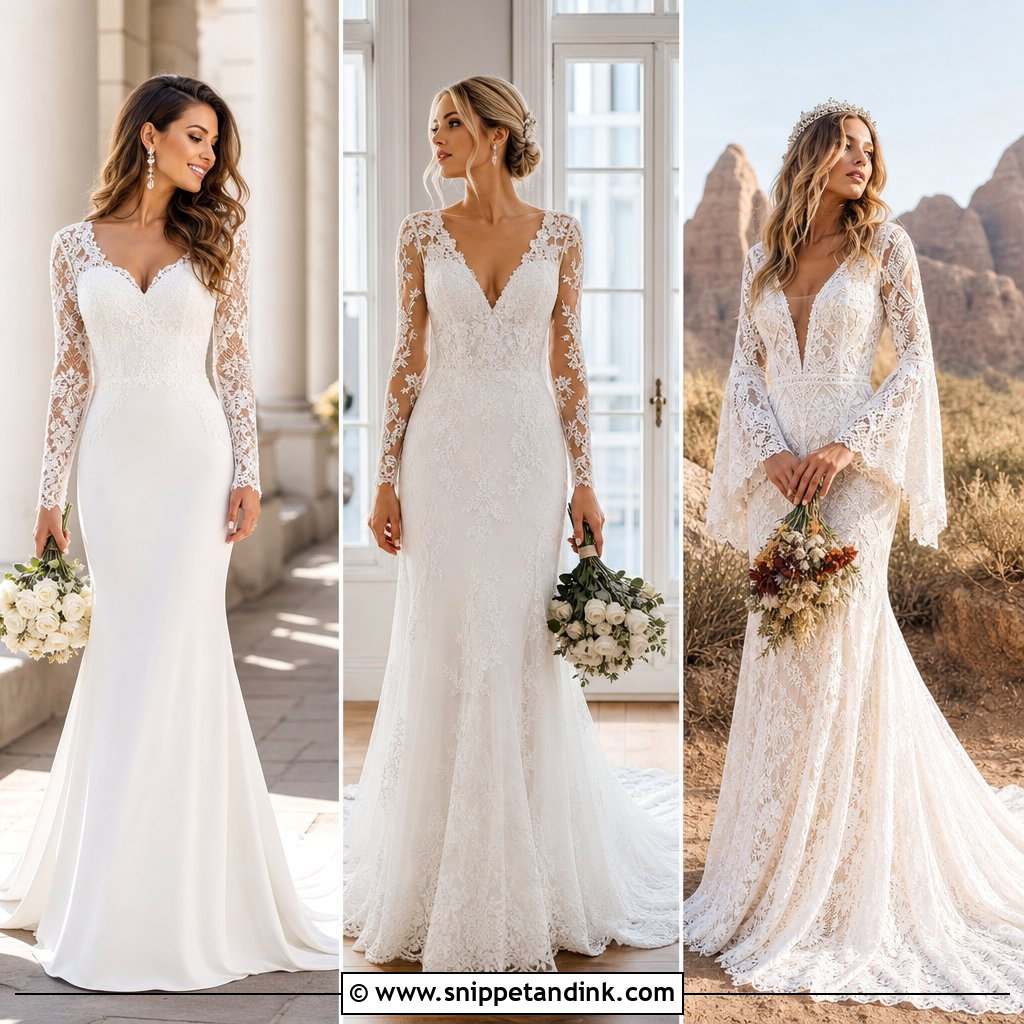
The A-line skirt skims away from the waist, which is why it suits more bodies than any other shape I fit. That ease leaves room to have fun with the sleeve: lace for romance, satin for a classic finish or sheer tulle to keep things light. It also moves well, so you can walk a field, take stairs and dance without hitching anything up. If you’re unsure which silhouette to try first at the shop, start here and adjust from what you notice in the mirror.
16. Tea Length Wedding Dress With Sleeves
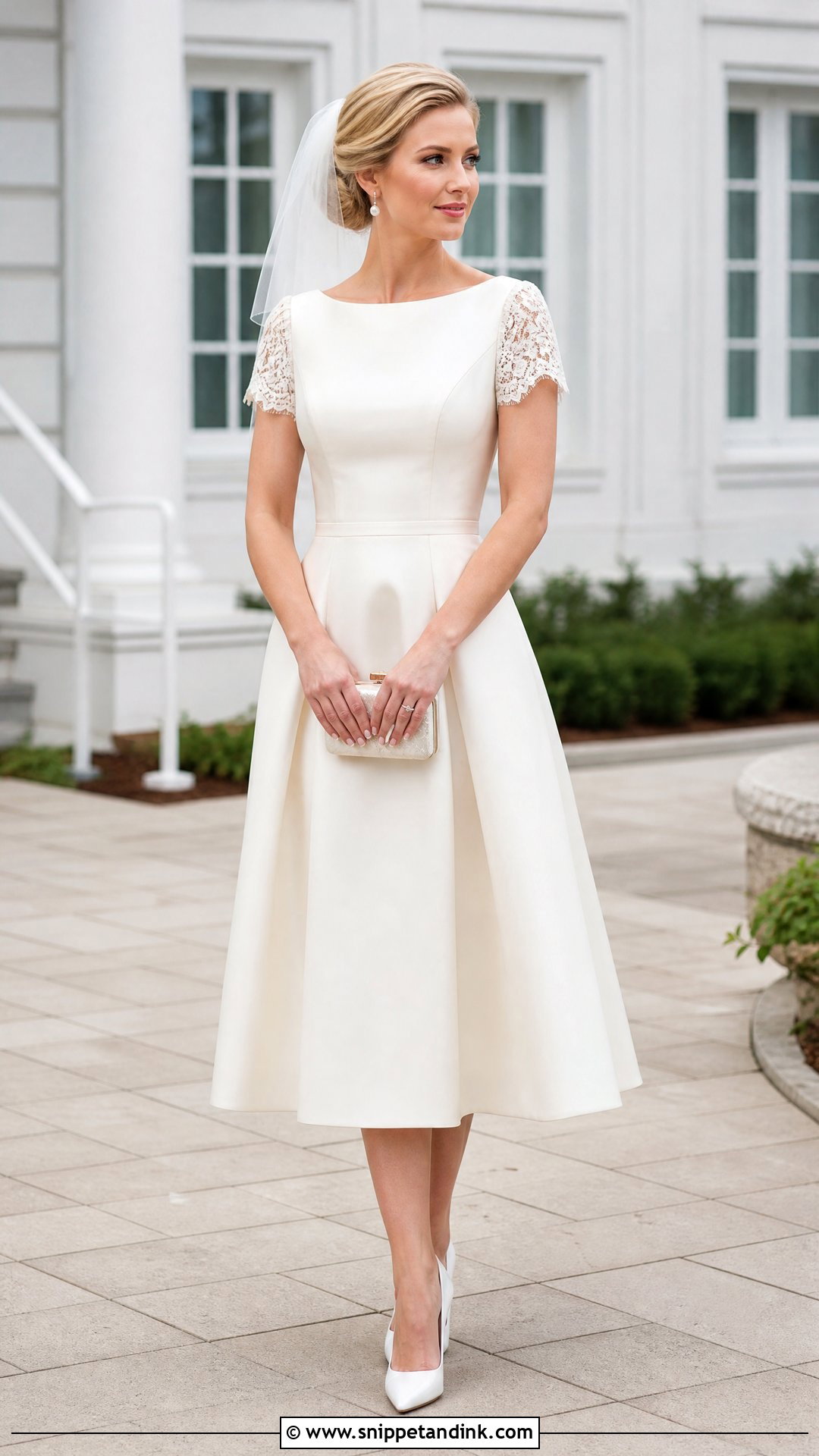
Tea length hems fall between knee and ankle, so your shoes become part of the outfit and need the same thought as the dress. Short or three quarter sleeves keep the proportion right; full-length sleeves on a shorter skirt can look top-heavy. I love this for courthouse and small restaurant weddings, where a full train would be awkward on the stairs. Satin gives a crisp, 1950s shape and lace softens it. A short veil or a bow pinned at the back of the hair suits the length.
17. Square Neck Wedding Dress With Sleeves
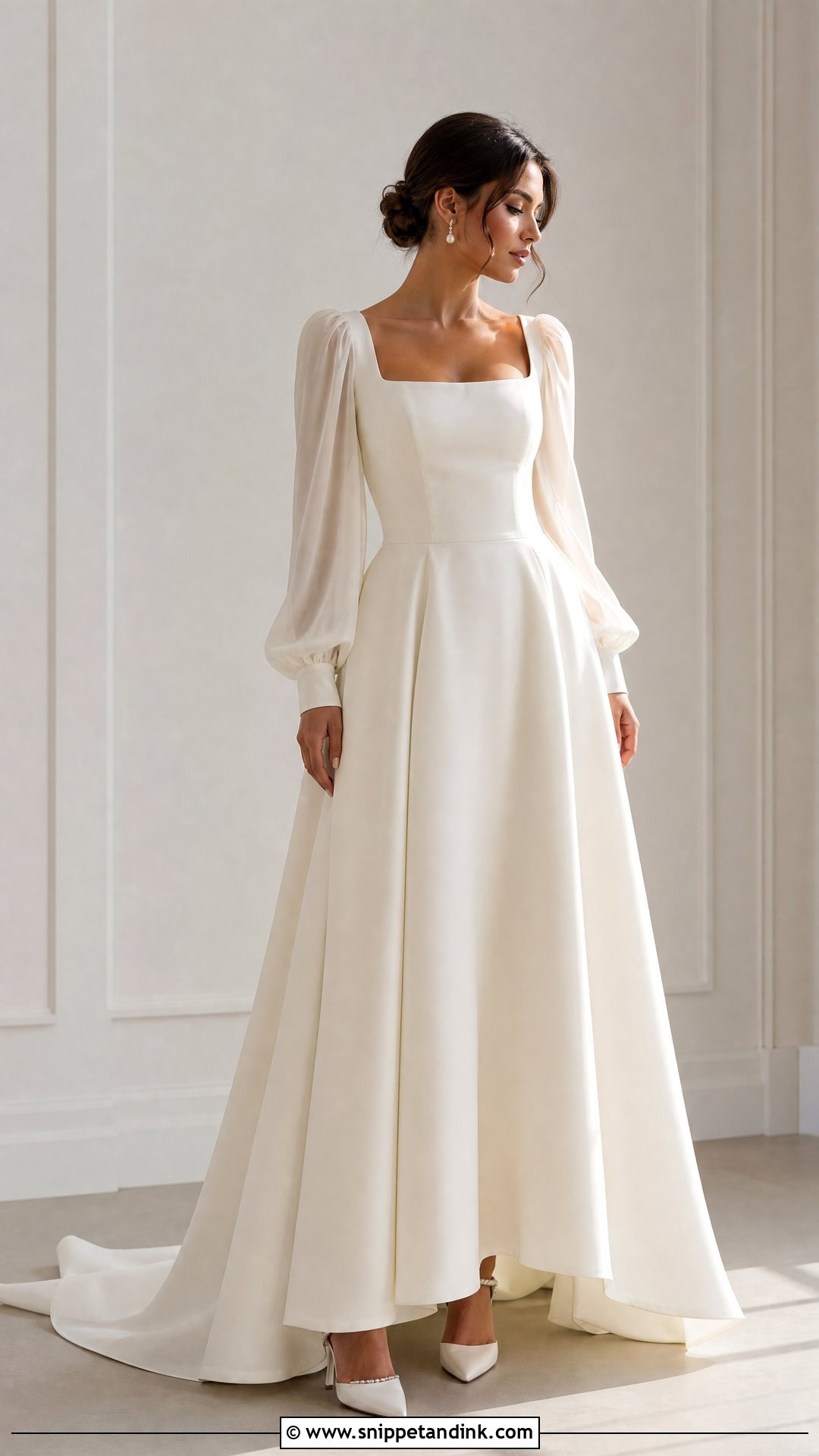
A square neckline opens the chest in clean straight lines, and the sleeve decides how the frame reads. Fitted long sleeves make it sleek, puffs make it sweet, sheer lace makes it gentle. The corners of the square need to sit at the same height on both sides; I check that in a mirror from straight on, because a gown that has stretched slightly on the hanger can tilt by a few millimetres. Skip the necklace and let earrings carry the jewellery.
18. V Neck Wedding Dress With Sleeves
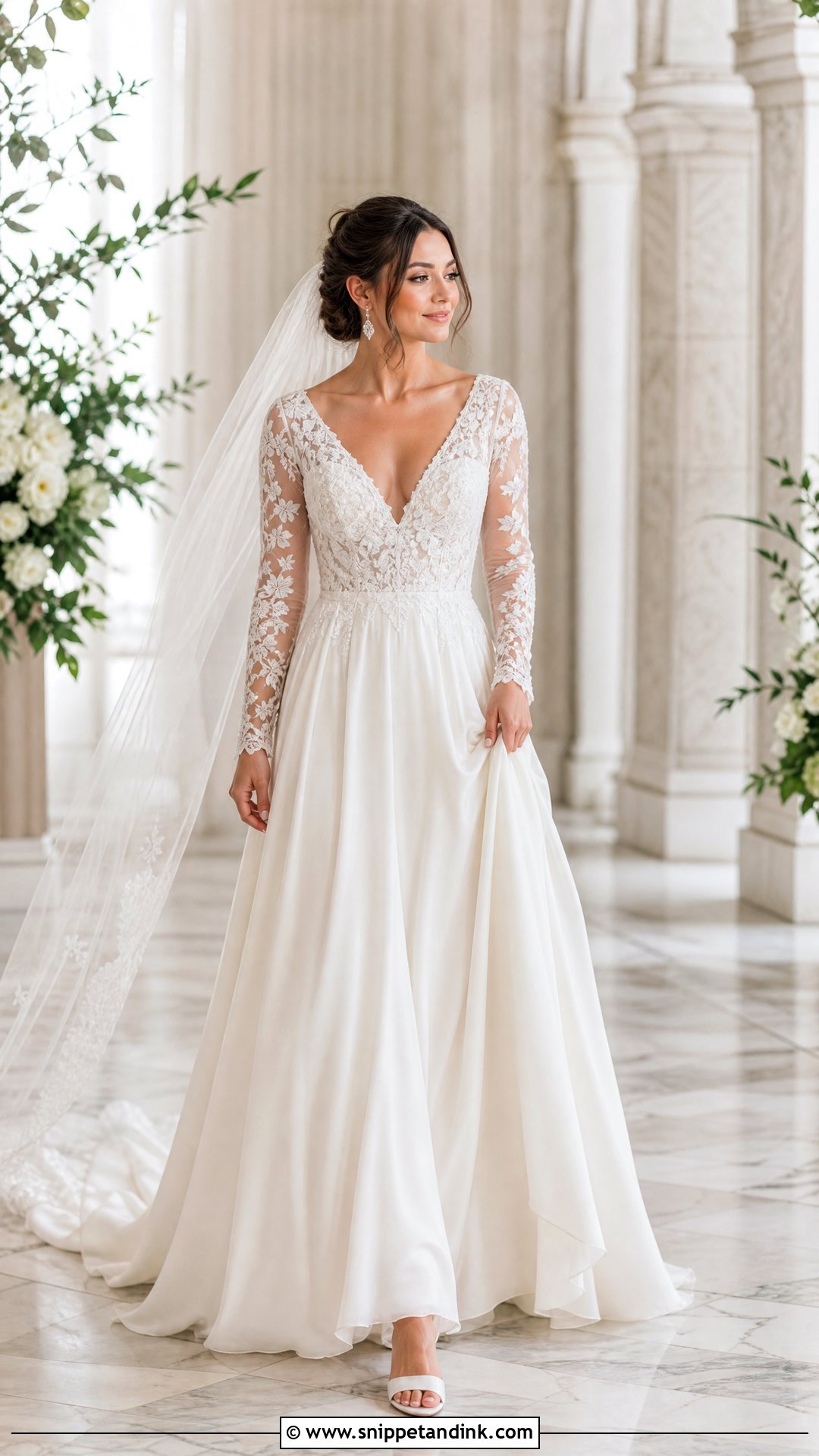
A V neckline draws the eye down and up again, so it makes the torso look longer. With long sleeves it stays covered enough for a religious ceremony if the V is shallow. Deeper plunges need an illusion panel or fashion tape, and I always test them with the bride lifting her arms and leaning forward to hug, because that is when a deep V moves. Fitted crepe sleeves suit a sleek V; long lace sleeves suit a softer one. A fine pendant or bare neck both work.
19. Boat Neck Wedding Dress With Sleeves
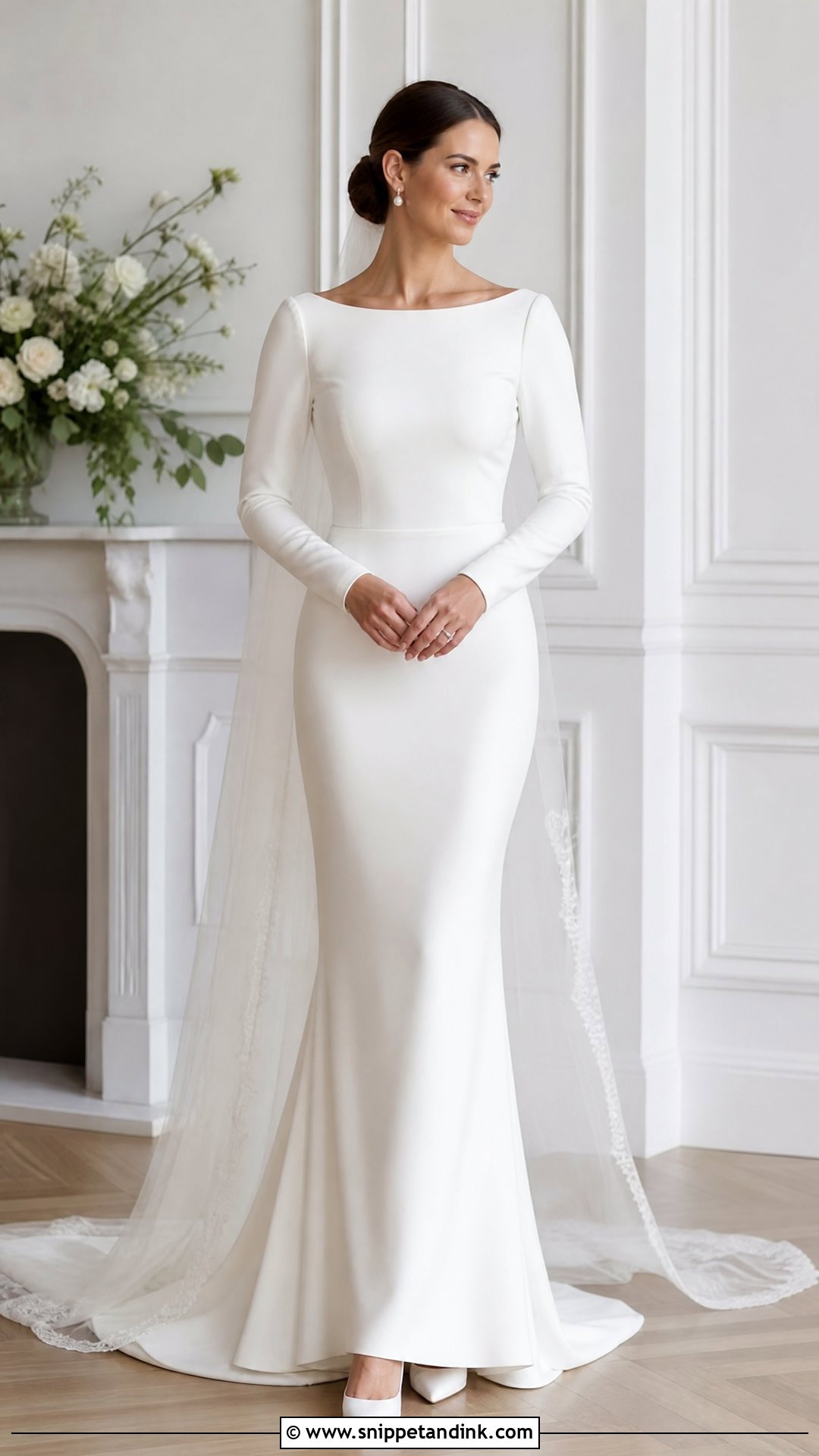
A boat neck wedding dress with sleeves runs straight across from shoulder to shoulder just above the collarbone. It’s poised and very easy to wear, since nothing slips. Structured fabrics such as mikado, satin and crepe keep the wide neckline from caving in at the centre. The width of the neckline matters for narrow shoulders, which can look swamped by a very wide boat. Earrings work better than a necklace, and a low bun shows off the line from behind.
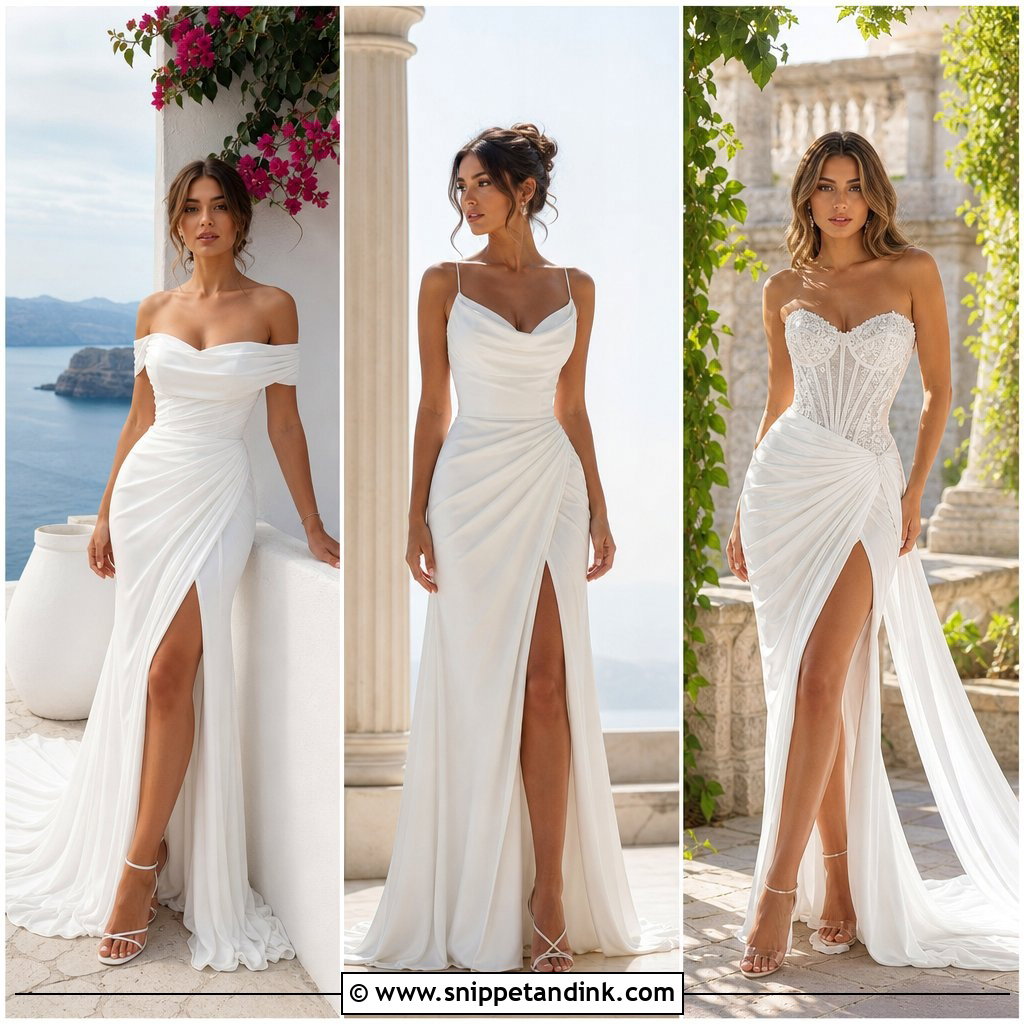
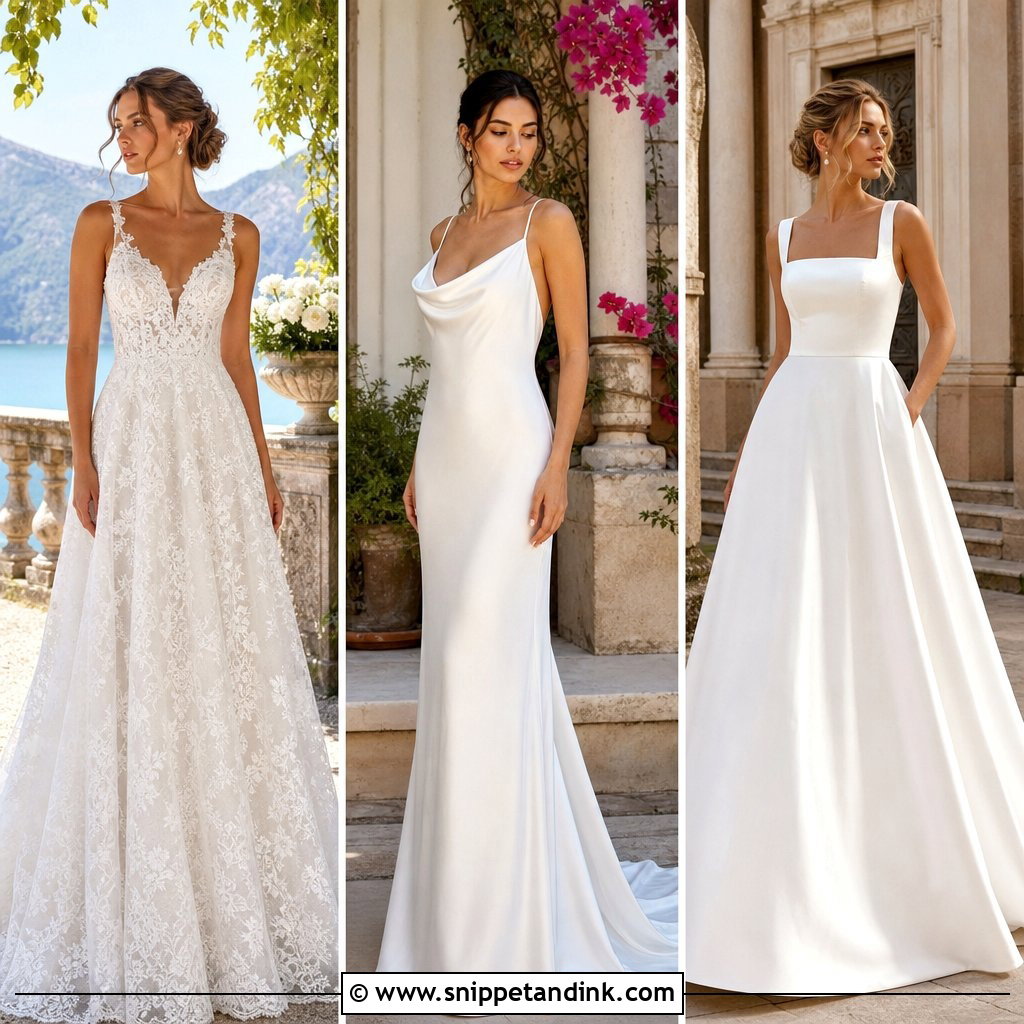
20. Open Back Wedding Dress With Sleeves
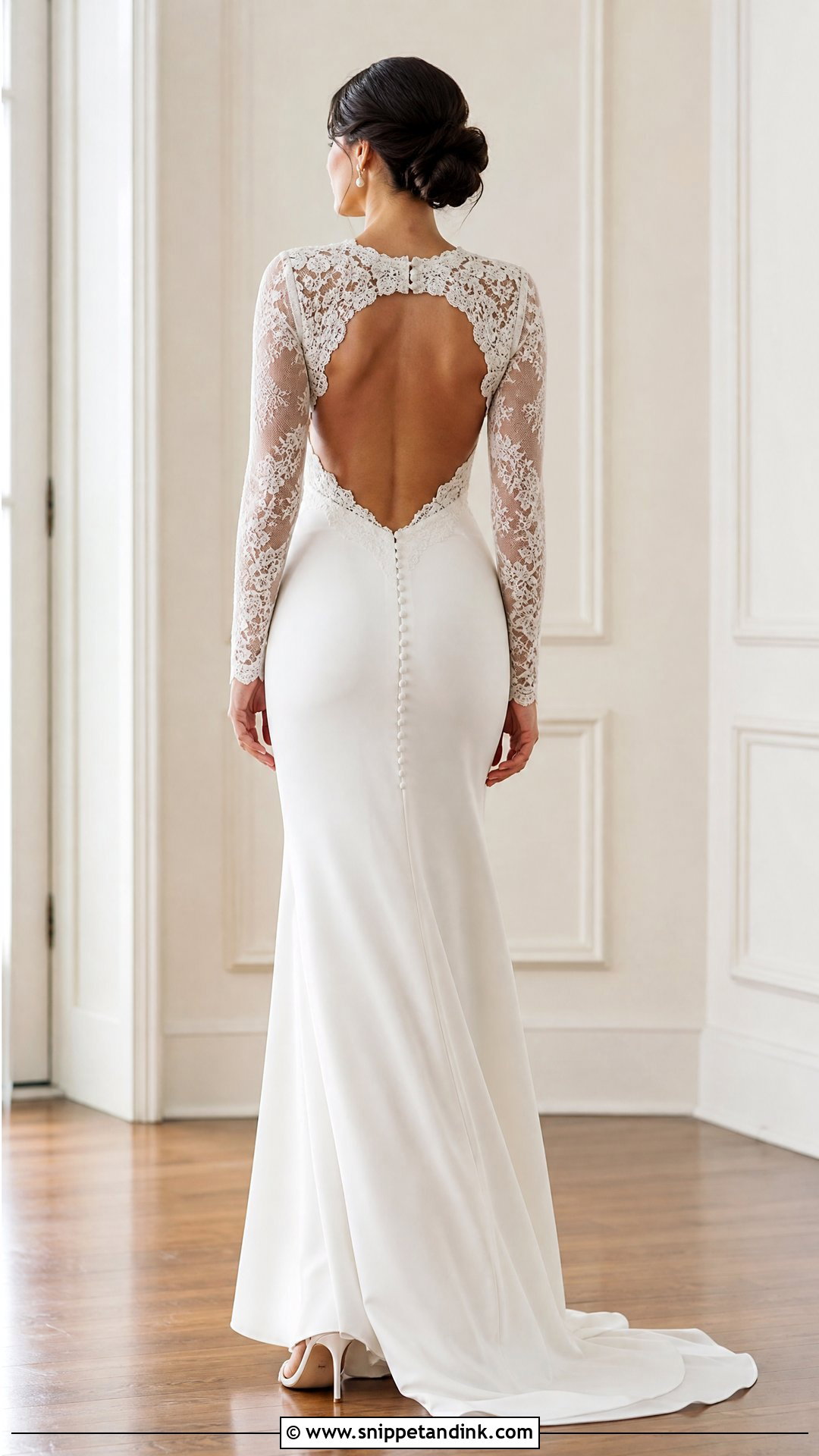
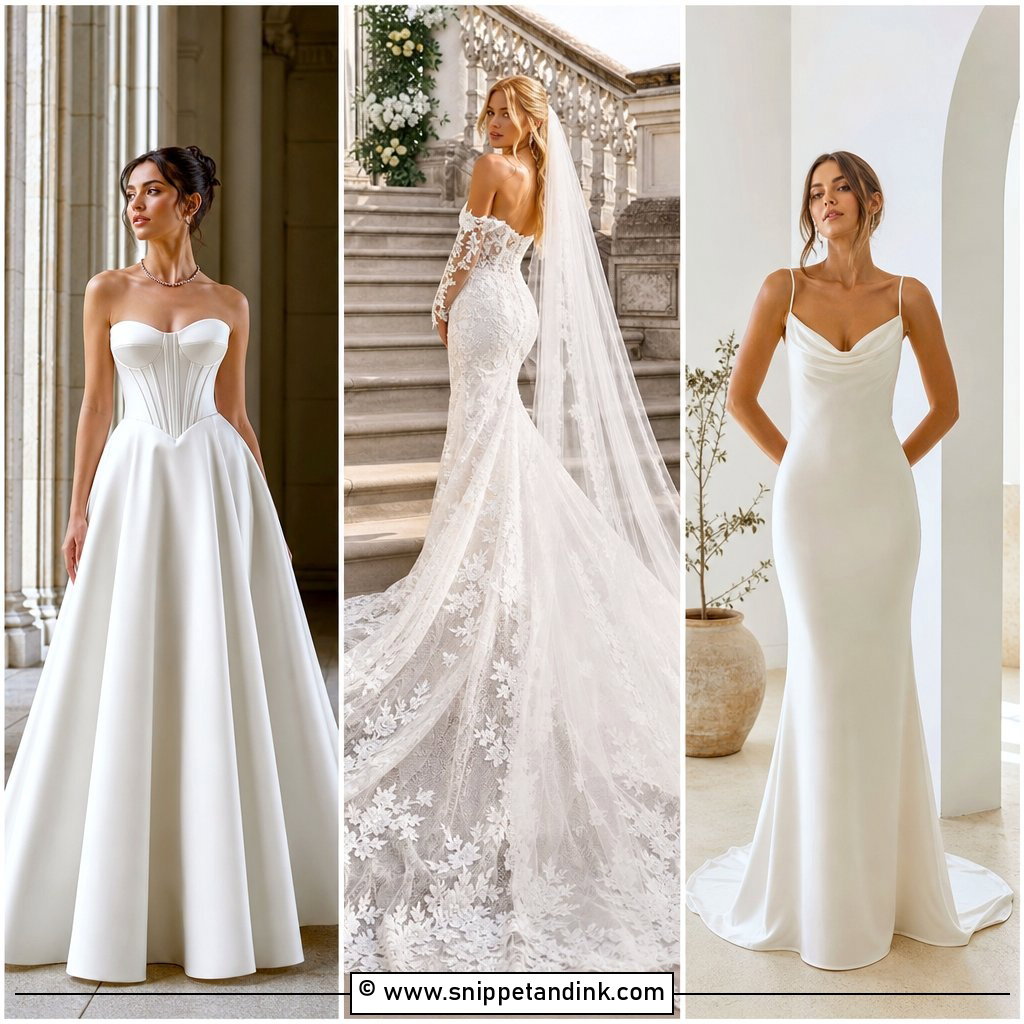
Open back gowns with long sleeves give you modest coverage at the front and a surprise as you walk away down the aisle. Structurally, the sleeves have to do work the back no longer does. Without a back panel, a heavy lace sleeve can pull the shoulders forward and outward, so I check the shoulder seam position and often add a hidden elastic strap across the back. Covered buttons or a thin illusion band help frame the opening. A low bun keeps the back on show.
21. Detachable Sleeve Wedding Dress
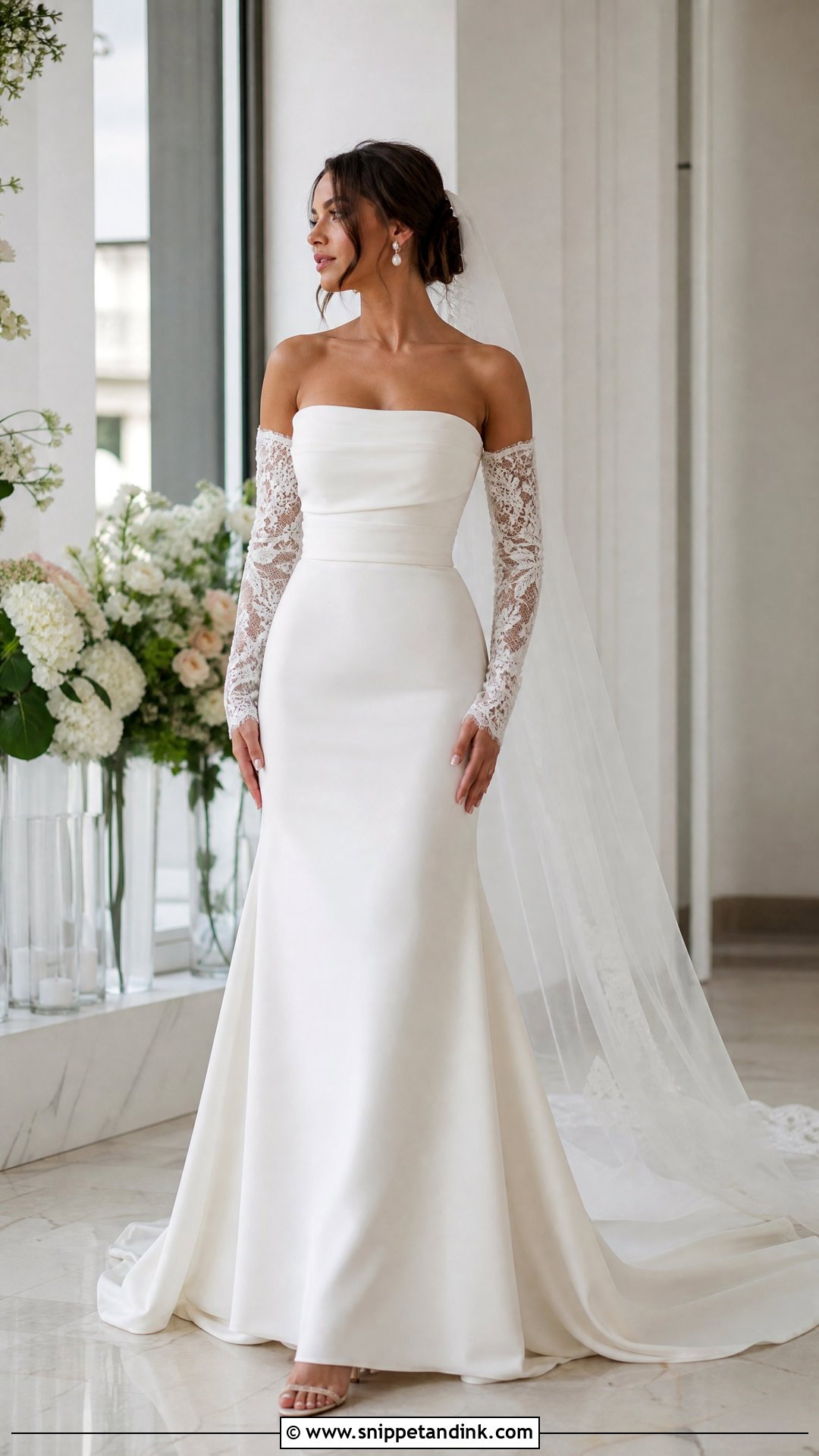
Detachable sleeves give you two looks from one dress, which is useful if the ceremony is in a church and the reception is a hot marquee. They come as lace long sleeves, puffs, off the shoulder bands or sheer tulle. How they attach makes or breaks them. Tiny snaps along the armhole seam hold better than ties, and the join should be hidden under a lace edge or seam line. Practise taking them off before the day; it usually needs a second pair of hands. Swap the veil for statement earrings once they come off.
22. Short Sleeve Wedding Dress
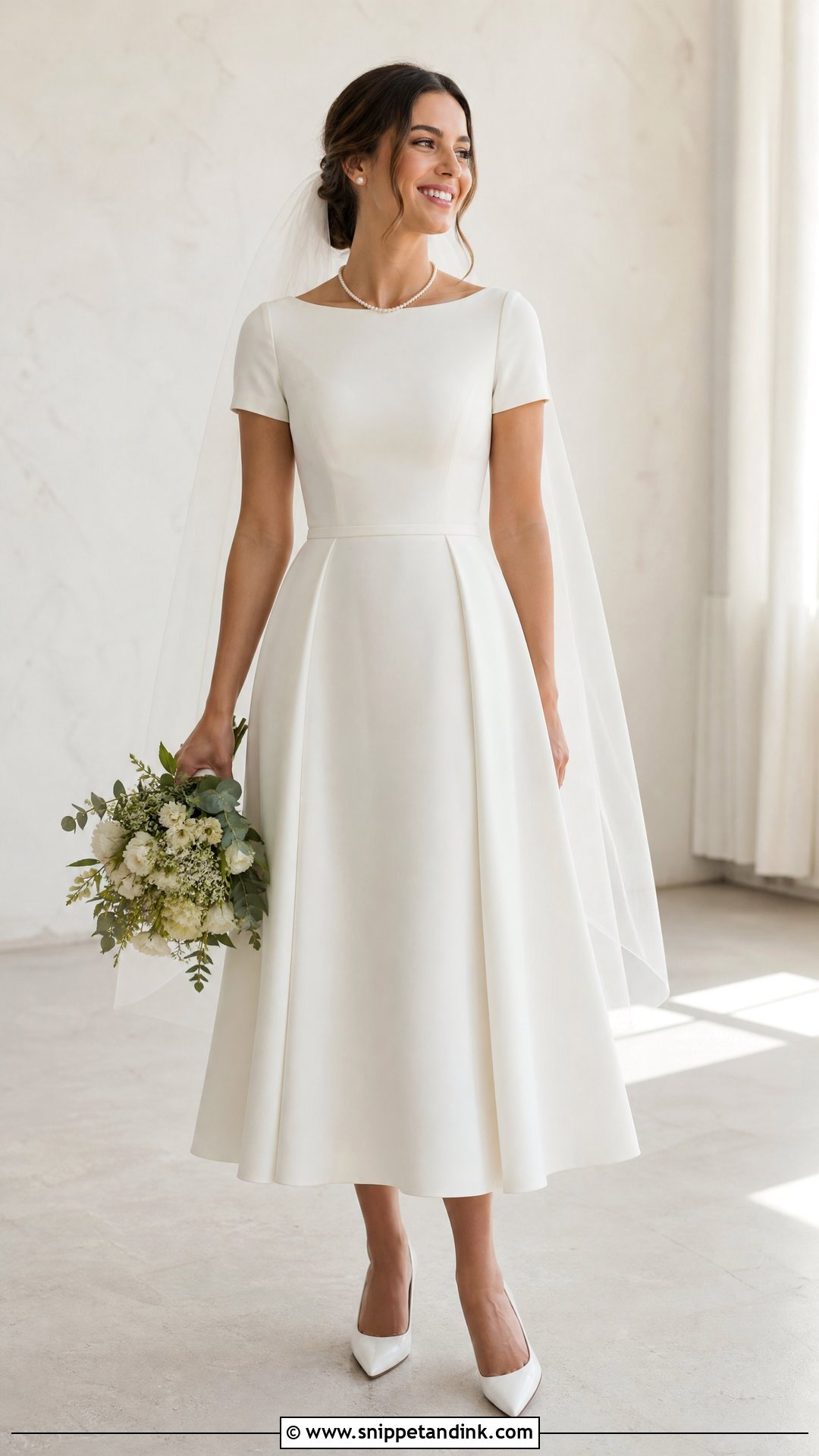
Short sleeves end around mid upper arm, giving more coverage than a strapless bodice while staying cool in spring and summer heat. The hem of the sleeve is where I fuss: it should sit flat, not flare out or bite into the arm, and a very slight curve upward at the back of the arm lets you lift a bouquet without the fabric pulling. Lace and soft crepe are kind to this length. It reads relaxed and pairs well with a tea length or A-line skirt.
23. Floral Lace Sleeve Wedding Dress
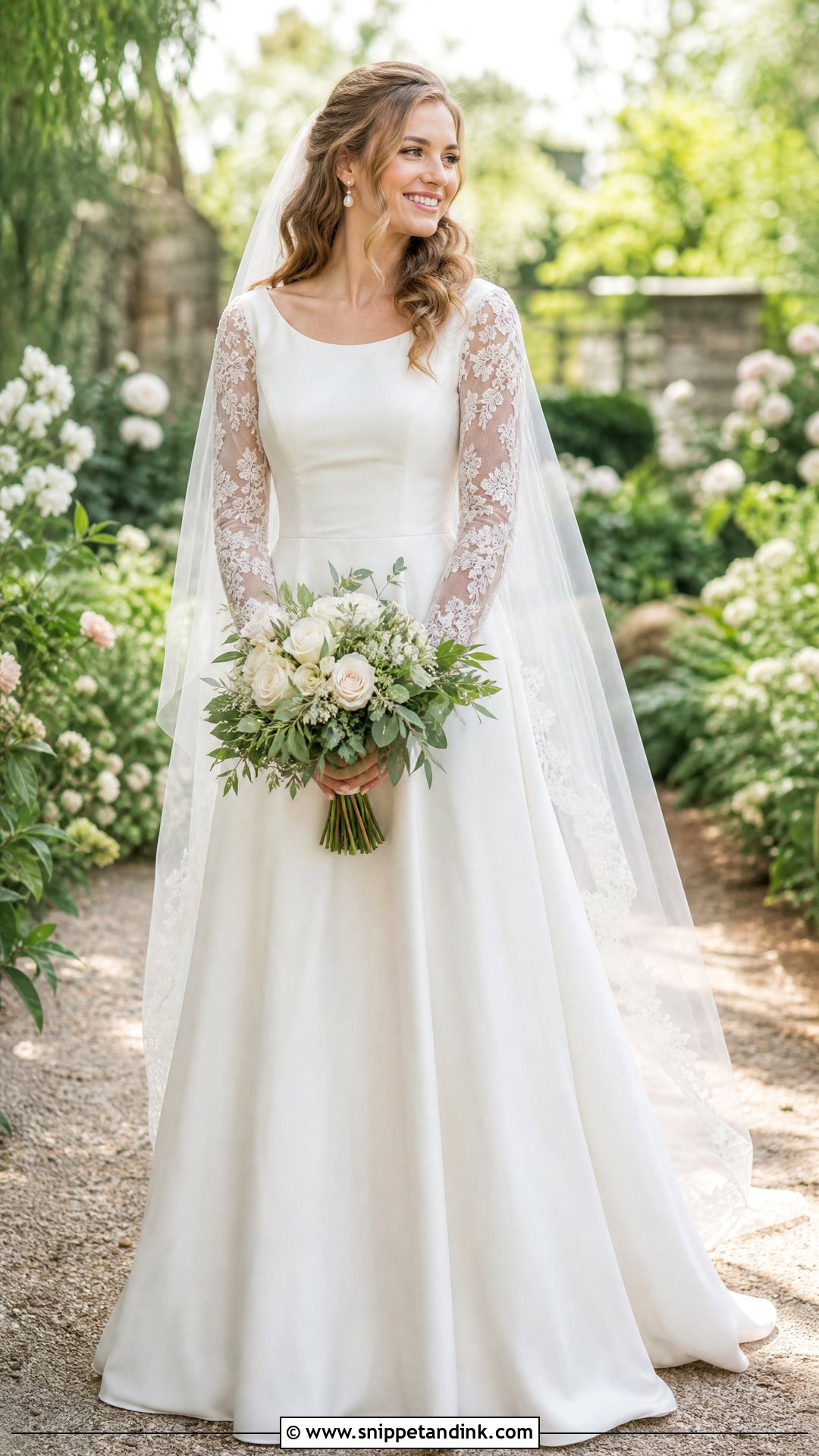
Floral lace on the sleeves is where lace gets seen most, in ring shots, during the vows and when your arm is around someone. Choose the motif size with your build in mind; large blooms suit taller frames, while smaller, spaced flowers look better on petite brides. A plain crepe or satin skirt keeps the lace from becoming busy. I also check that the lace on both sleeves is cut as a mirrored pair so the pattern matches from the front. Spring and garden weddings suit this best.
24. Minimalist Wedding Dress With Sleeves
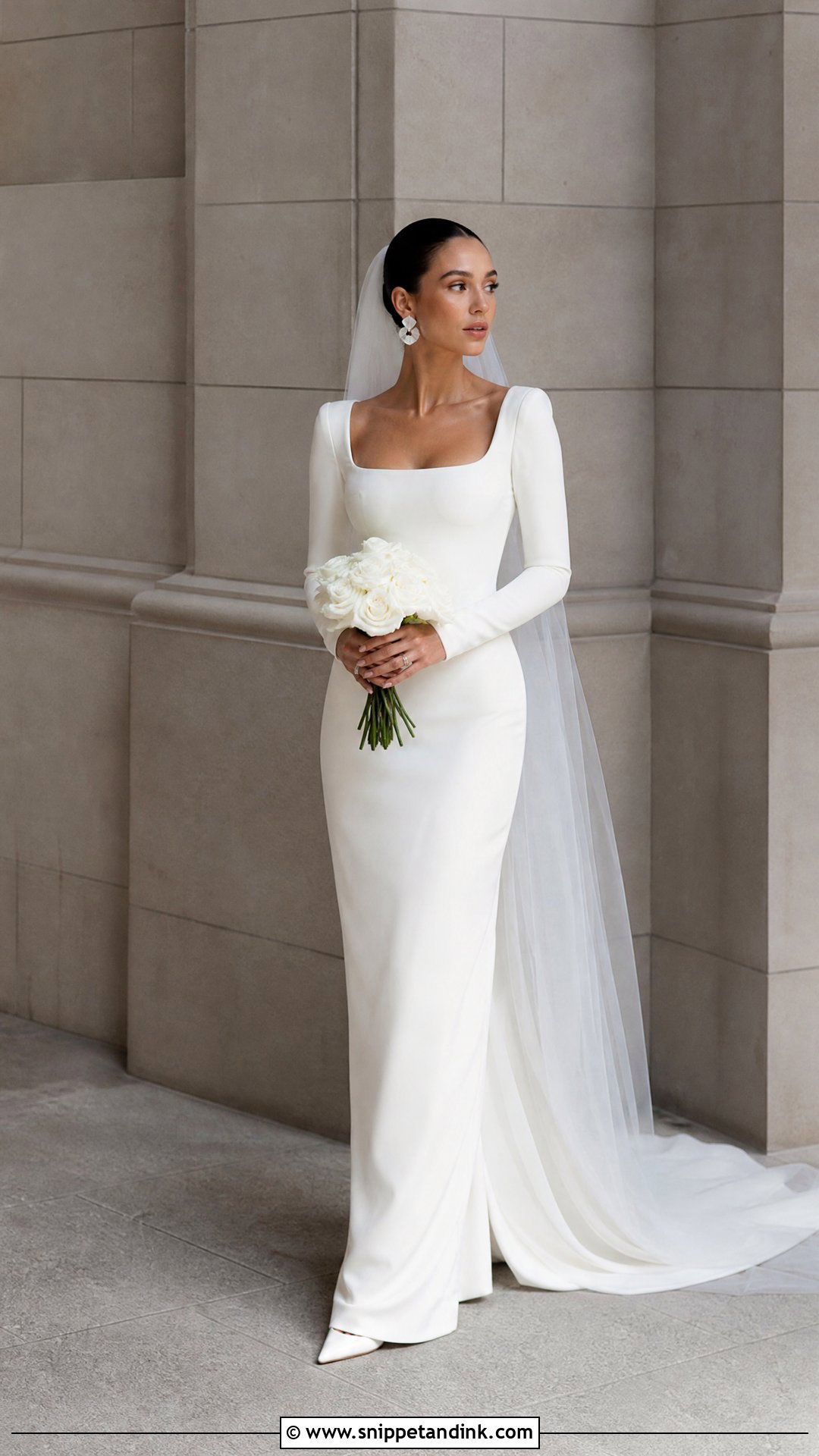
Minimal gowns hide nothing, so fit matters more than with any other dress here. A crisp column or sheath with long sleeves depends on the shoulder seam sitting exactly on the shoulder bone and the sleeve hanging straight with no twist. Satin gives a soft glow; crepe looks sharper and more modern. Plan for at least one extra fitting compared with a lace gown, because there’s no embroidery to disguise a small pucker. A sculptural earring and polished heels are all it needs.


25. Winter Wedding Dress With Sleeves
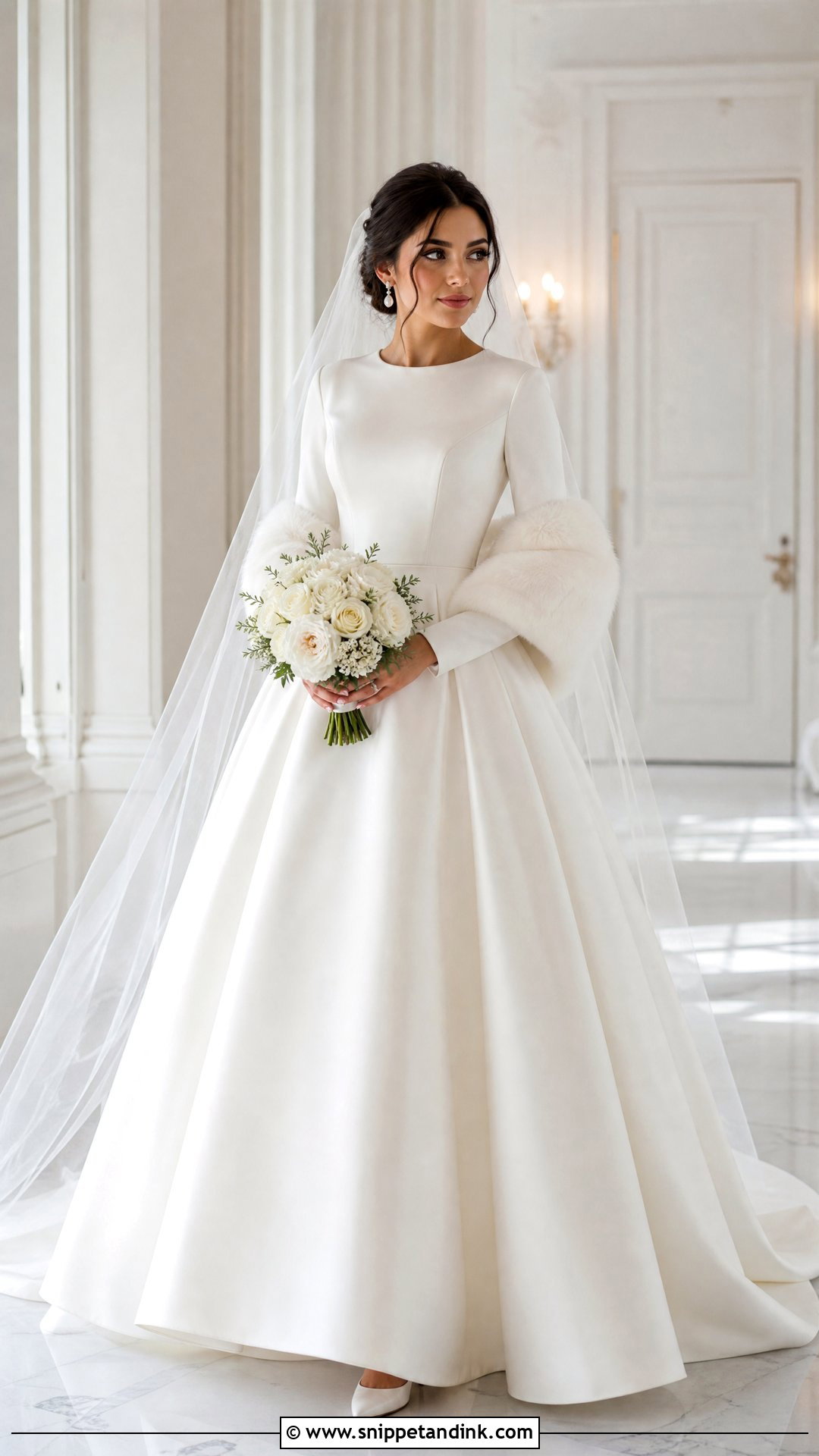
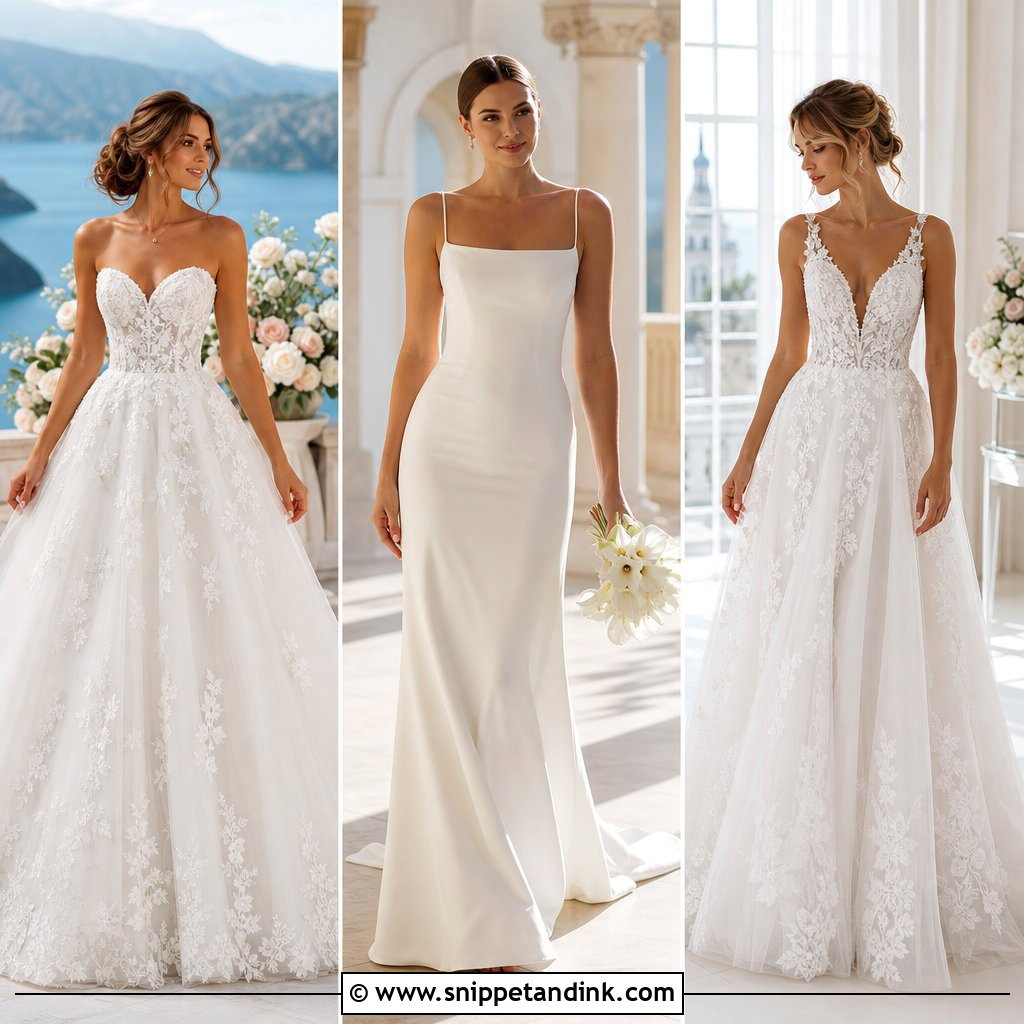
Winter gowns need sleeves that cope with cold churches and heated rooms in the same day. Heavier fabrics such as satin, mikado and dense lace hold structure and add a little warmth, though not much; I still plan a cover for outdoor photos. A tailored bridal coat or a soft cape layers over long sleeves better than a faux fur wrap, which tends to crush lace at the shoulder. Closed-toe heels and pearl jewellery suit the season and won’t snag on anything heavy.
Sleeve Alterations Run on a Slower Clock
Most made-to-order gowns take several months to arrive, and sleeved dresses tend to need more fitting work than strapless ones once they do. Lace sleeves are often shortened at the shoulder rather than the cuff, so the scalloped edge at the wrist survives, and that means unpicking and resetting the whole sleeve. It’s careful work and seamstresses book up in peak season.
I’d plan the first fitting roughly two to three months before the wedding, with a second a few weeks later and a final one close to the date. Bring the exact shoes and underwear each time, since a different bra changes how the shoulder seam lands. If you’re shopping late, ask the boutique outright how long sleeve adjustments usually take on that gown; timelines vary widely between shops.
Cuffs Get Dirty First, So Plan the Clean-Up
The wrist edge is the part of a sleeved dress that touches everything: the cake knife, handrails, makeup on someone’s cheek during a hug. Keep a stain pen for silk safe use and a white cloth in the emergency kit, and blot rather than rub. Foundation on ivory lace lifts best when it’s dabbed, not scrubbed.
After the wedding, have the gown professionally cleaned within a few weeks, before sugar and sweat stains oxidise and turn yellow. Store it flat or folded in acid-free tissue in a breathable box, with tissue padding inside the sleeves so they don’t crease along hard lines. Avoid hanging a heavy lace or beaded gown by its shoulders for long periods, because the weight slowly stretches the sleeve seams.
A Sleeve You Can Hug In Is the One to Keep
Sleeves earn their place when they’re comfortable, sit still and suit the setting. Lace, satin, crepe, tulle and puffs all have a version that works; the right one is the sleeve that lets you lift your arms, sit through dinner and hug everyone without thinking about your dress. Try on with movement, bring your shoes to fittings and give tailoring the time it needs. Get those things right and the sleeves will look as good in old photos as they do in the shop mirror.
You'll Like These Ideas:








Leave a Reply