
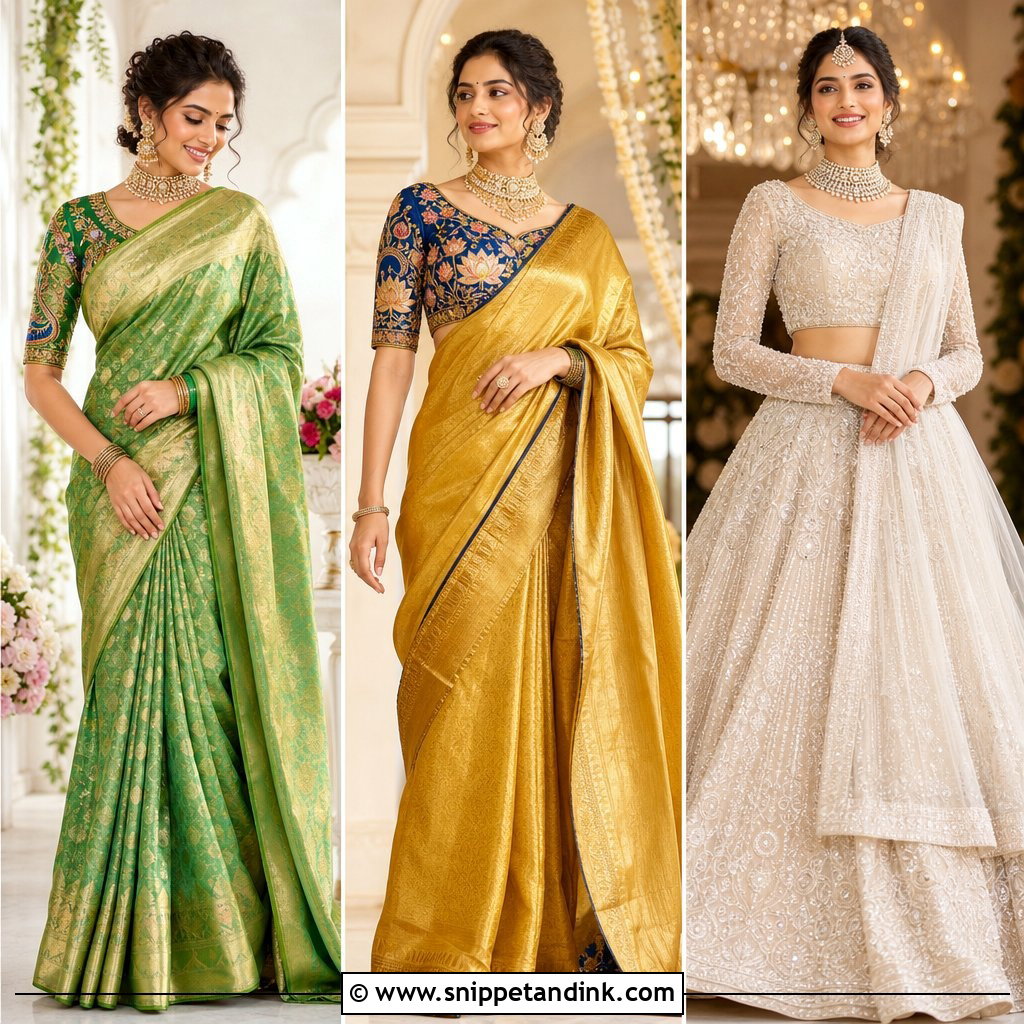
A bridal blouse doesn’t need dense embellishment to feel bridal. What it needs is a neckline cut for your jewelry, sleeves that let you lift your arms through every ritual, and a fit precise enough that plain silk looks deliberate. I start every blouse conversation with the saree or lehenga, because the blouse’s job is to support it, not compete with it. Clean shapes such as boat necks, sweetheart cuts, covered backs and full sleeves in traditional silk stay versatile for exactly that reason: they leave the drape and the border to do the talking. Below are twenty simple designs, each paired with the outfit it suits and the fitting detail I’d watch on it.
How Three Fittings Turn Plain Silk Into a Bridal Blouse
A simple blouse is harder to tailor than a heavily embroidered one. Stones and dense work hide a crooked seam; plain silk shows it from across the room. That’s why I plan a simple blouse around its fittings rather than around the sketch.
First appointment: shape and support
Hand over the fabric early enough for at least three appointments, ideally six to eight weeks before the wedding, and longer if Aari or other hand embroidery is involved. Wear the bra you’ll wear on the day, or decide now whether you want cups sewn in. Changing support after the pattern is cut changes the whole front.
Second appointment: jewelry and drape
Bring the necklace set and the saree or dupatta. A heavy necklace pulls a neckline forward and a pinned pallu drags the shoulder seam, so a blouse that looks right on a hanger can sit quite differently once you’re dressed. This is when neck depth and sleeve ease get settled.
Last appointment: movement
About a week out, wear everything and move the way you will at the wedding. Sit on a low seat, raise both arms, bend to touch someone’s feet, hug a friend. While you’re there, ask for about an inch of seam allowance to stay inside the side seams. It costs nothing now and means the blouse can be let out for re-wearing later.
1. Round Neck Bridal Blouse With Kanjeevaram Saree
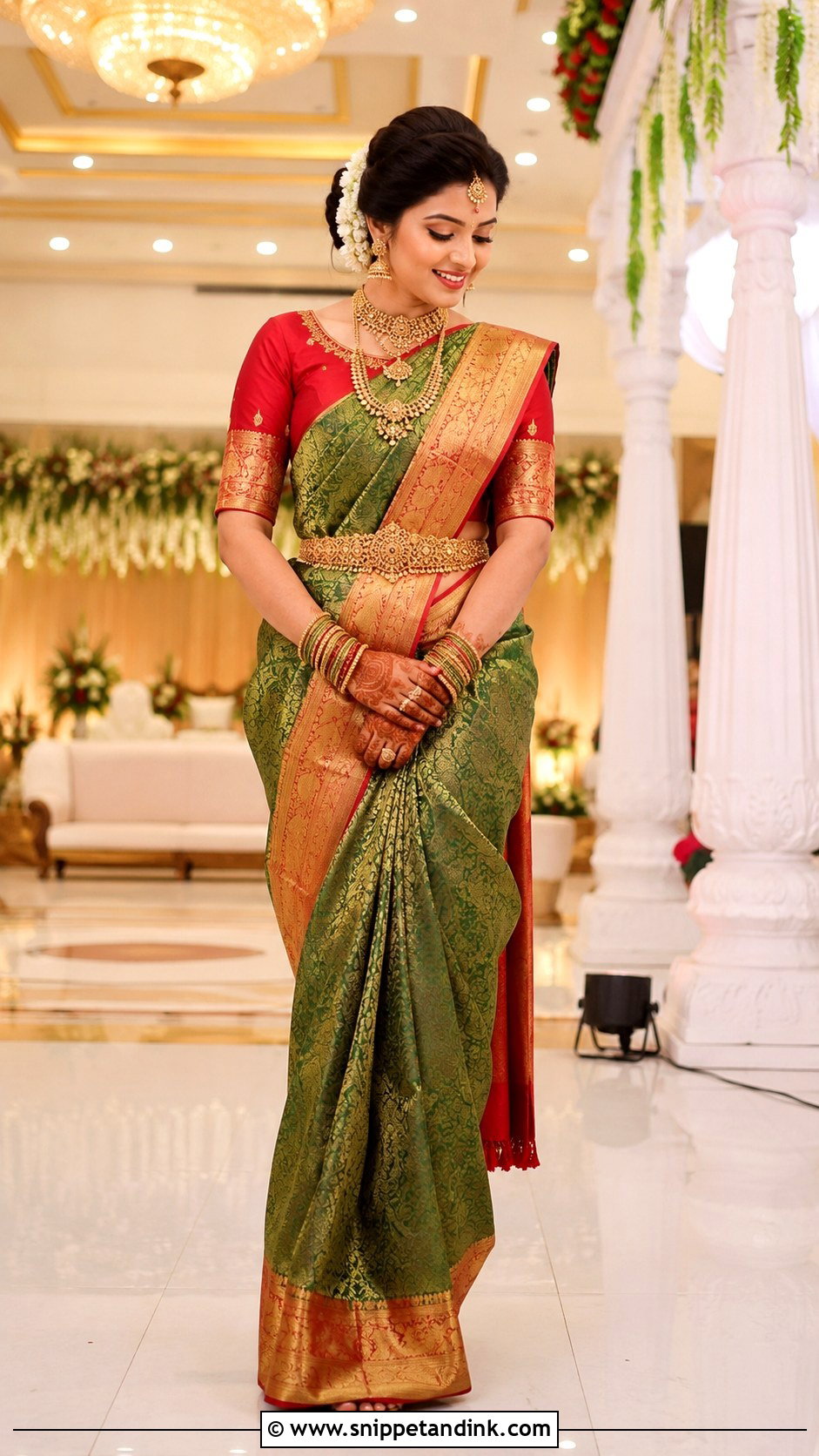
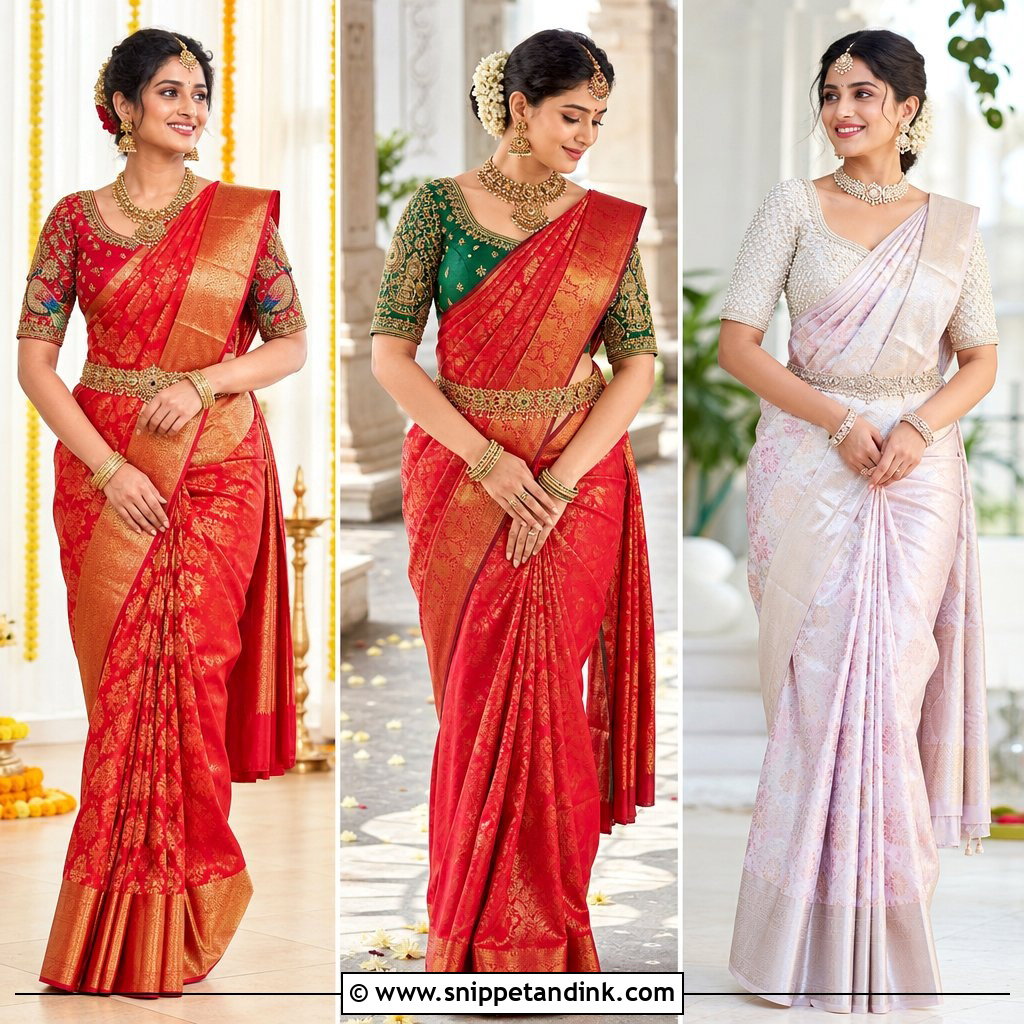
Round necks are the shape I trust most under heavy temple or antique gold necklaces, because the curve gives a layered set somewhere to rest instead of sliding into a point. Go for rich silk in red, maroon or emerald with a narrow zari border on the neckline and elbow-length sleeves, and keep any embroidery to tiny butis so the Kanjeevaram stays in charge. A contrasting saree, a neat pallu, a structured bun and fresh flowers finish it. The catch is the shoulders. A plain round neck shows every tailoring fault, so if the neckline stands away from the collarbone at the first fitting, have it taken in at the shoulder seam rather than at the front.
2. Boat Neck Bridal Blouse With Banarasi Saree
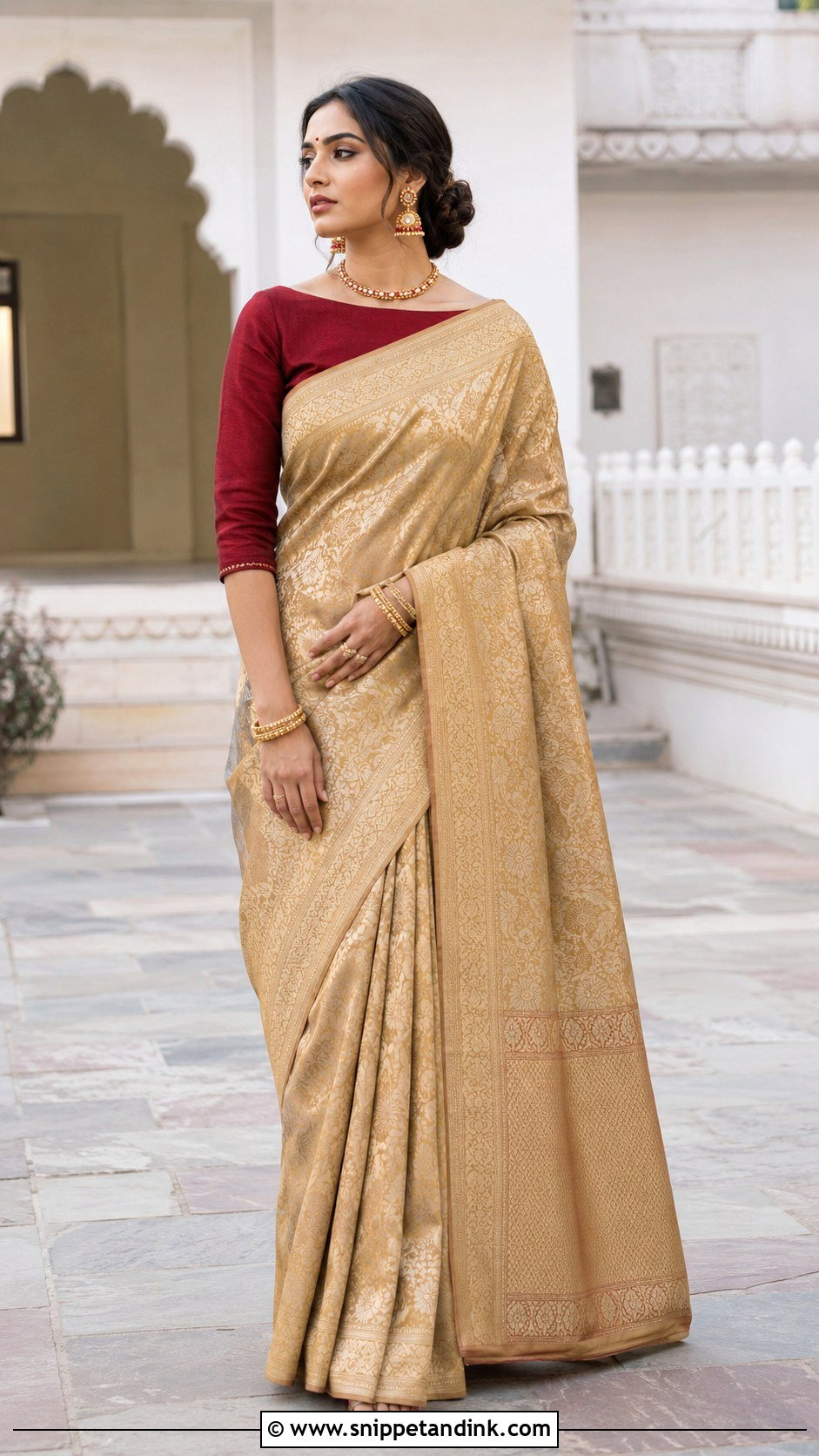
A boat neck draws one clean horizontal line across the collarbone, which is why it suits a Banarasi full of woven motifs: the eye gets a calm edge before it reaches the pattern. Pick a colour from the saree border for a solid raw silk blouse and keep the embroidery fine along the neckline, with three-quarter sleeves to balance the width. I’d skip a long, heavy necklace here, since it covers the one line you chose this blouse for; a short piece and a low bun keep it visible. Wide necks slip off the shoulder easily, so ask the tailor to add small strap keepers at the shoulder seams and leave room across the back for raising your arms.
3. Square Neck Bridal Blouse With Silk Lehenga
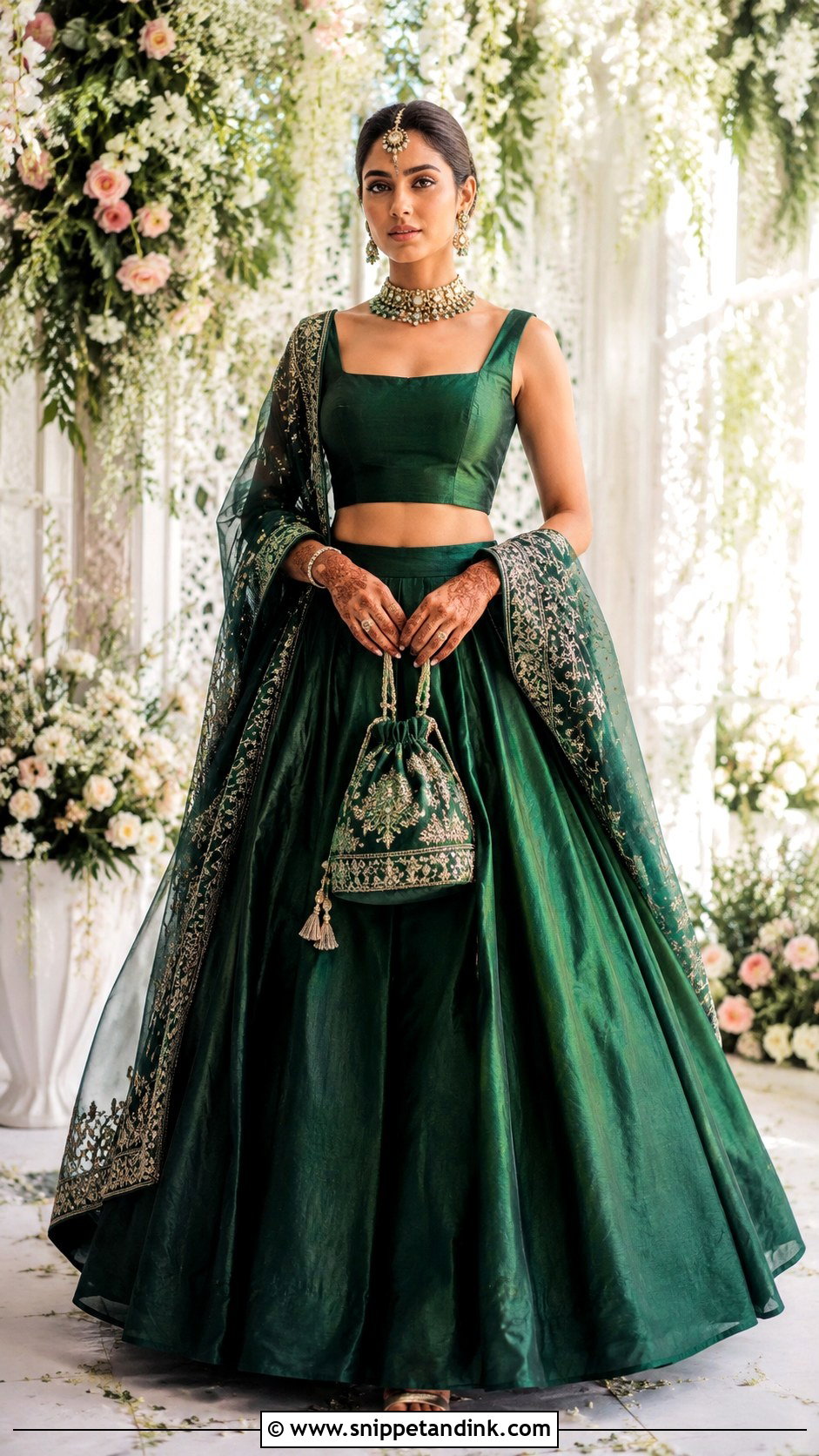
A square neckline gives a plain silk lehenga a neat, modern edge and leaves a clear frame for a choker. Matching raw or dupion silk keeps the outfit tonal, with narrow piping or a few gold motifs as the only detail. Width is where square necks go wrong. Cut too wide, the corners creep toward the shoulder the moment a dupatta is pinned on one side; cut too low, they gape when you lean forward to touch an elder’s feet. At the fitting I pin the dupatta in place and have the bride bow before anyone marks the final line. Elbow sleeves suit anyone who’d rather keep the upper arm covered.
4. V-Neck Bridal Blouse With Red Wedding Saree
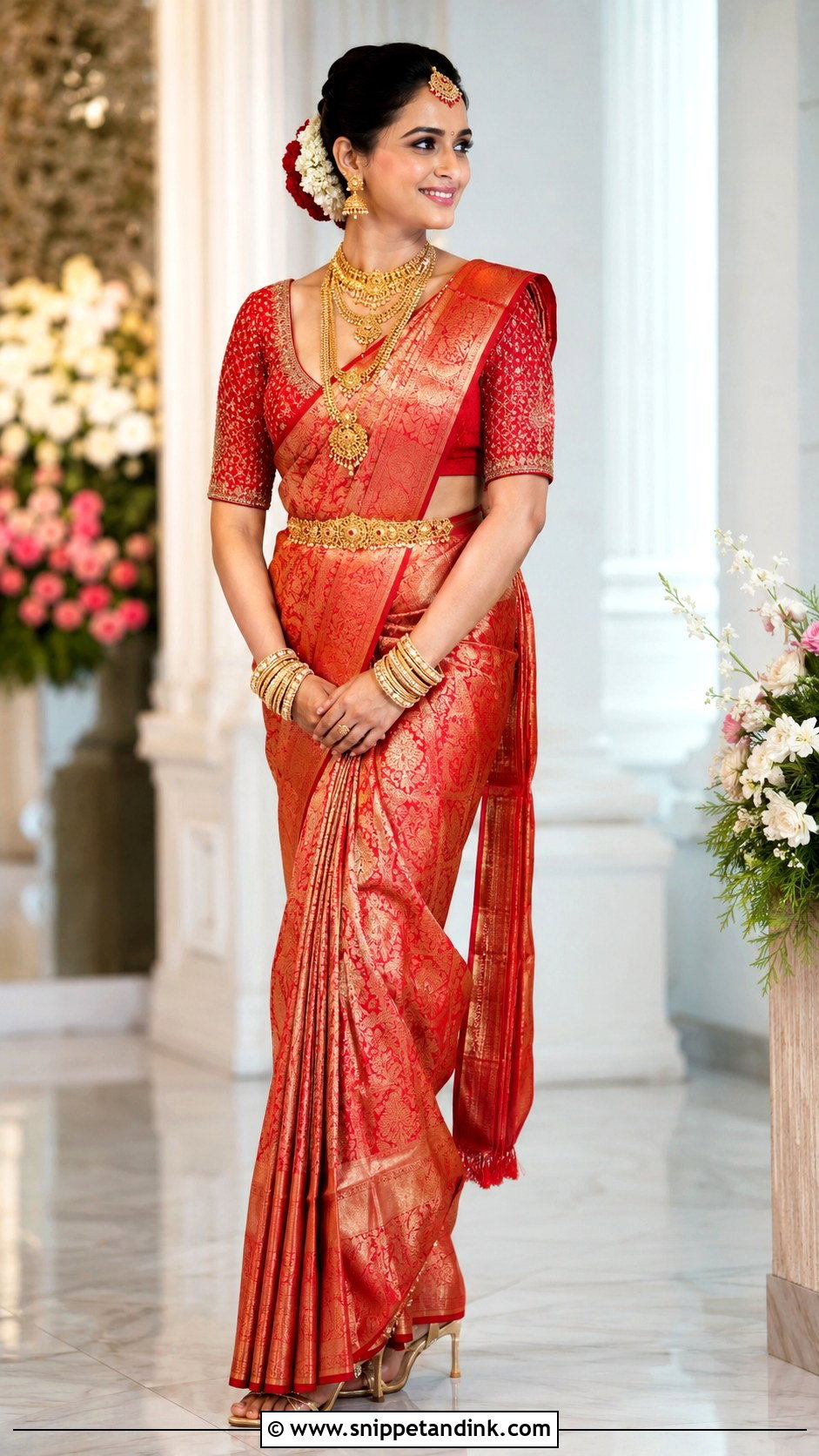
A moderate V lengthens the neck and gives a red wedding saree a sharper line without the risk of a deep plunge. Matching red silk with slim gold piping is enough. If the saree carries heavy zari, the neckline is already your detail, so leave the blouse body plain. Layered necklaces sit naturally inside a V, and a waist belt with a floral bun completes the traditional look. V-necks gape more than any other shape when the bust fit is off. I ask for a concealed support panel or sewn-in cups, then check the neckline again with the bride seated, because that is when the edges lift.
5. Sweetheart Bridal Blouse With Pastel Lehenga
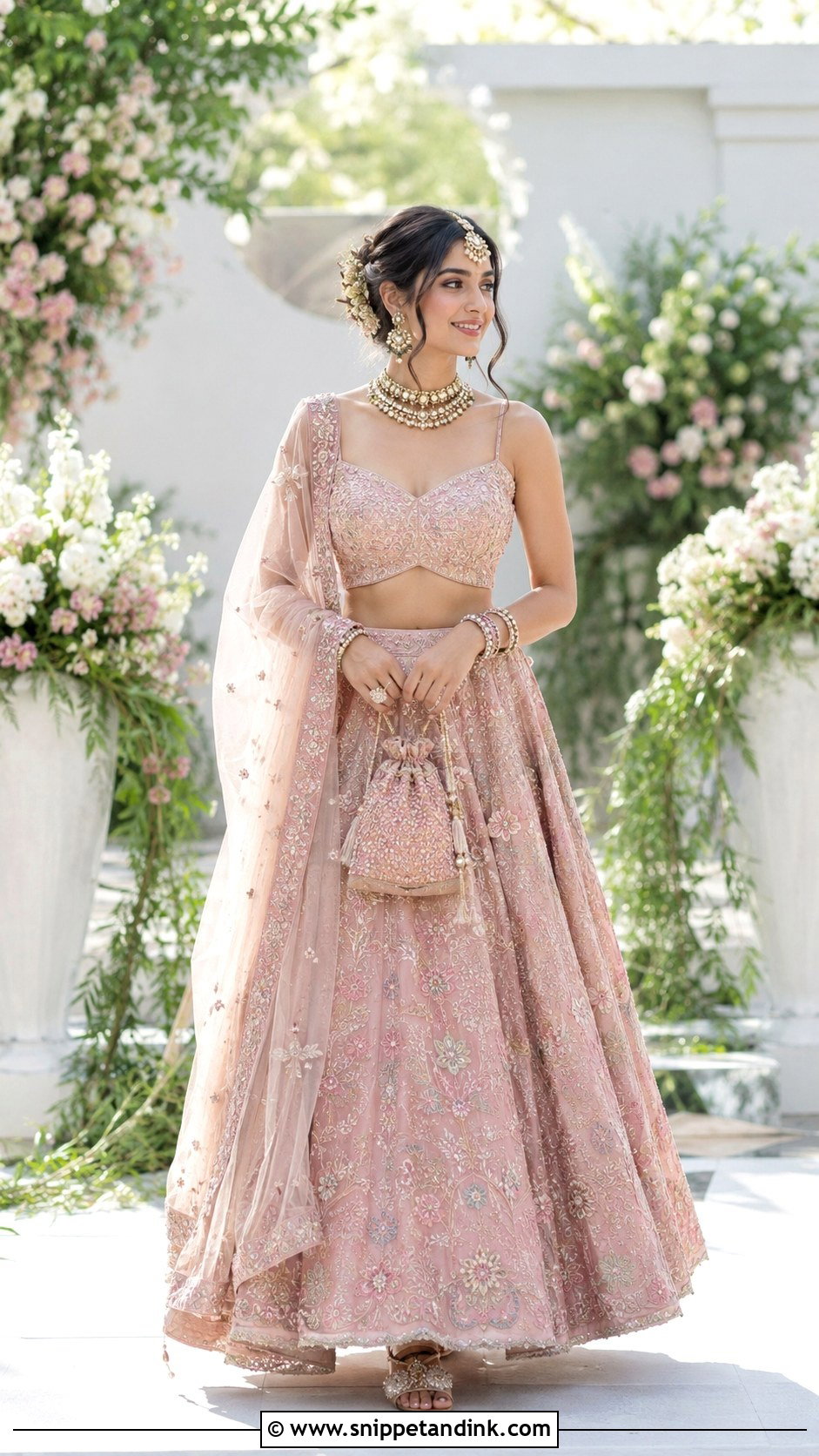
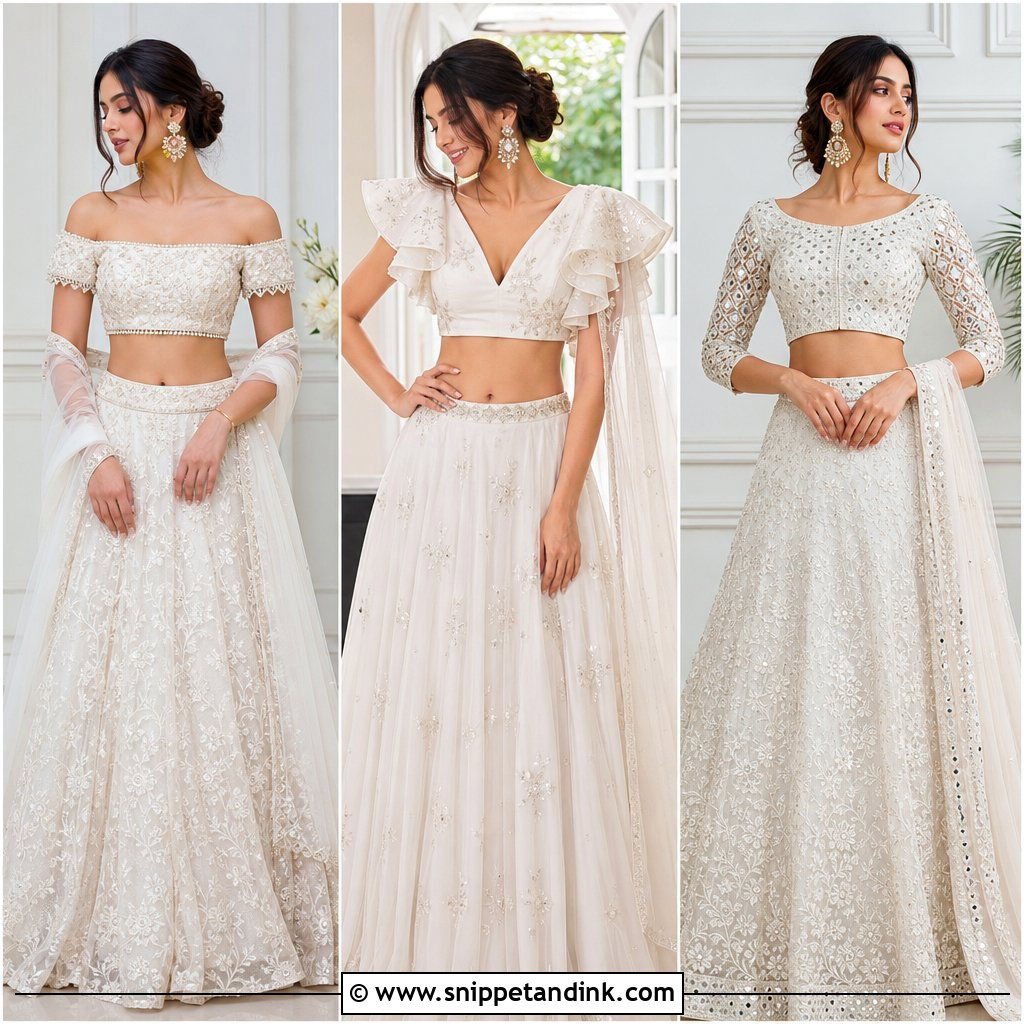
Pastel lehengas in blush, sage or powder blue are where a sweetheart blouse feels most at home. Keep the embroidery tonal; strong contrasting work on a pale base looks harsh in daylight. A modest curve shows off a short pearl or polki necklace, and a sheer dupatta over one shoulder keeps the top soft. The neckline needs structure to hold its curve, usually light interfacing or a stitched-in cup, or the dip at the centre collapses by afternoon. I’d keep this pairing for daytime ceremonies and indoor receptions, where pale colours aren’t flattened by hard midday sun.
6. High Neck Bridal Blouse With Organza Saree
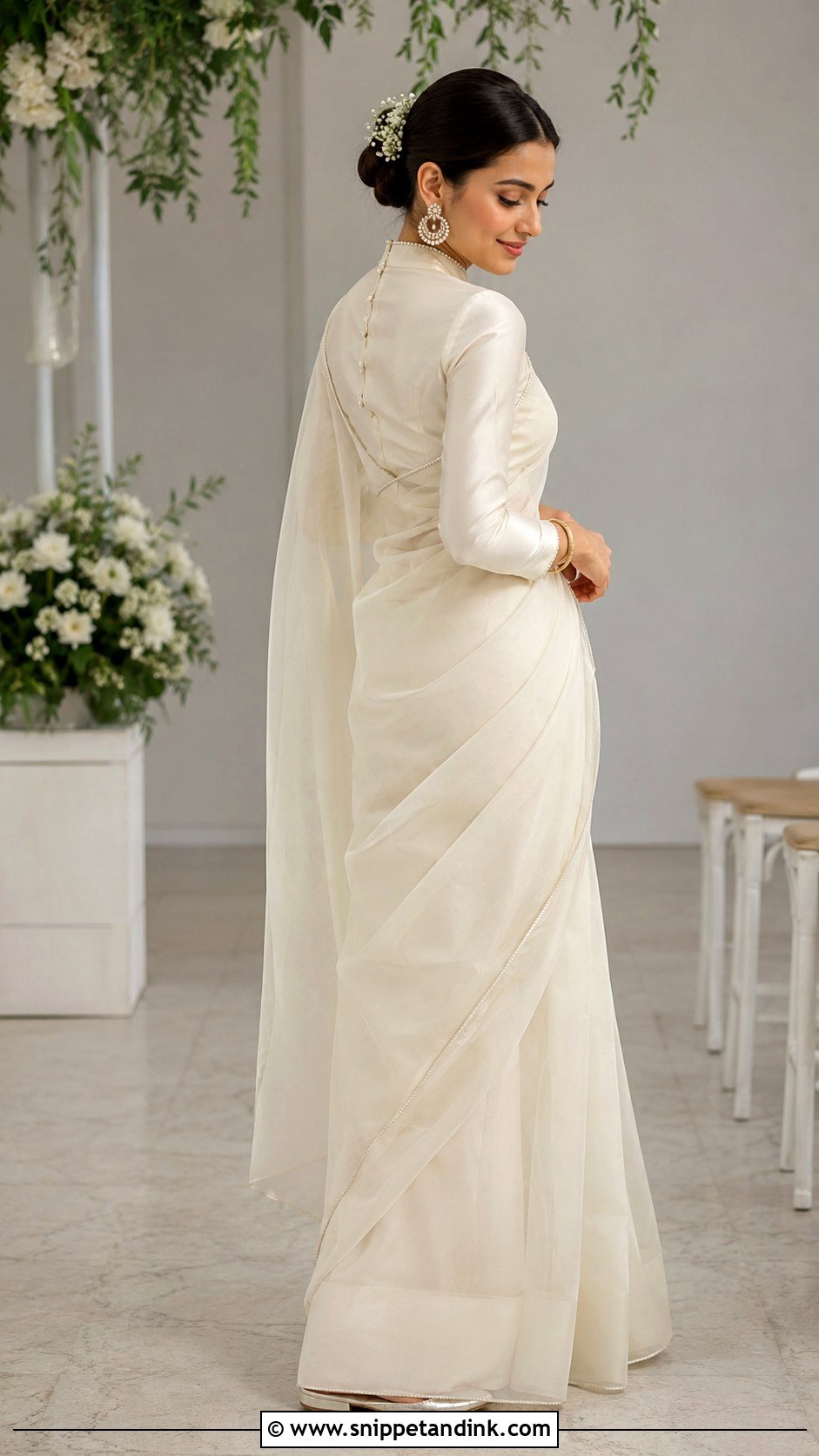
A high neck covers you comfortably and lets an organza saree’s sheerness do the work. Plain silk or satin, decorated only at the collar edge, the cuffs or a row of pearl buttons at the back, is all I’d add. Because the neck is closed, a necklace has nowhere to sit, so move the attention to statement earrings and keep the bun low enough that the collar shows. Two practical warnings. A stand collar that feels snug at the fitting feels tighter after hours under lights, so leave a finger’s width of ease. And organza is crisp, so wear the blouse with the actual saree at the trial and check that the pallu, once pinned at the shoulder, doesn’t drag the collar off centre.
7. U-Neck Bridal Blouse With Temple Border Saree
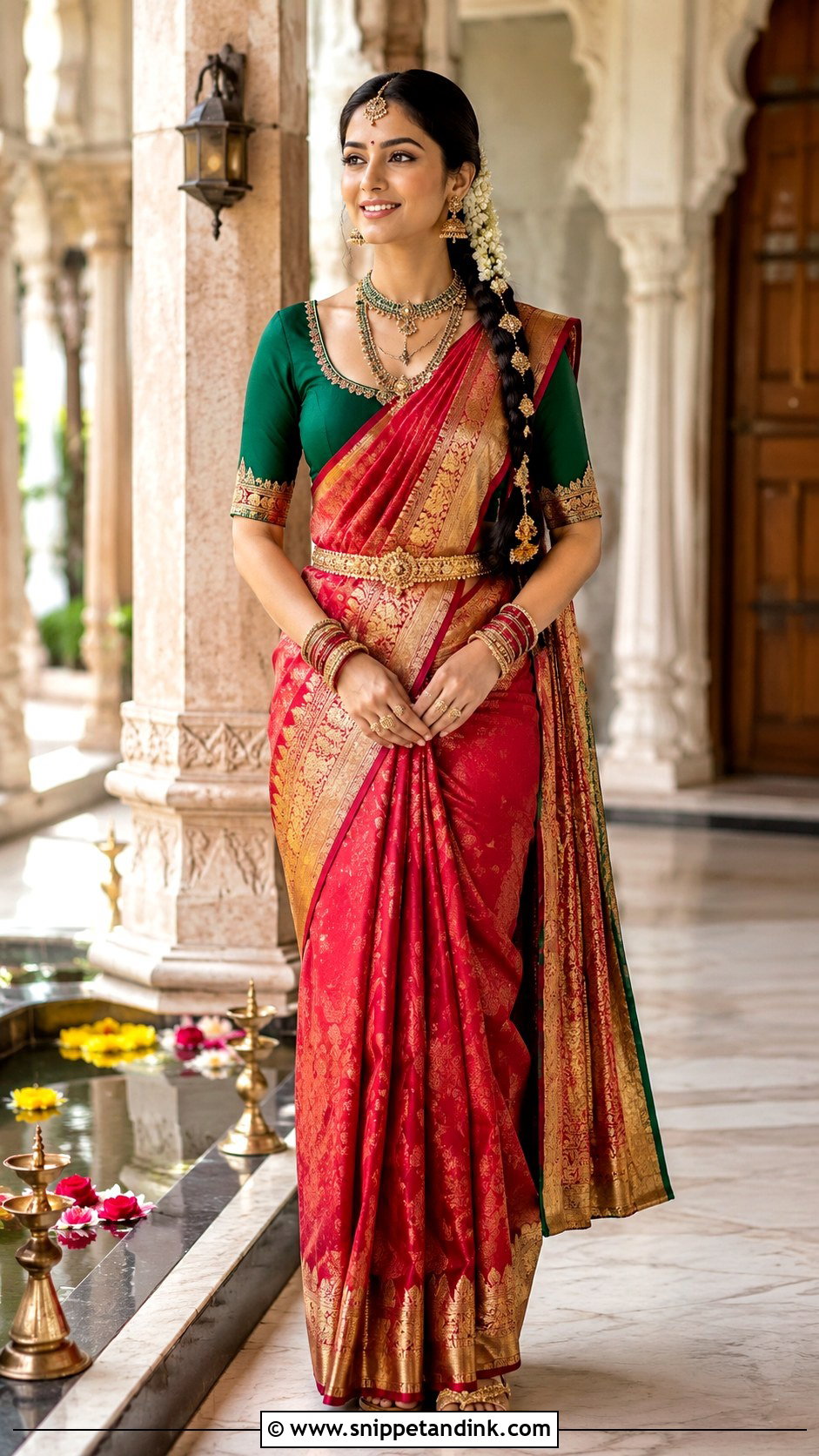
Temple border sarees already carry plenty of pattern, so the U-neck’s job here is to stay calm. A contrasting silk pulled from the saree, deep green against red or maroon with gold, and a narrow embroidered border tracing the neckline and elbow sleeves are all it needs. The rounded opening holds a long temple necklace and a shorter choker together without crowding the collarbone. Depth is easy to adjust on this shape, which is why I suggest it to brides unsure how much skin they want to show; we can lower it a little at each fitting. Keep the back a higher U with sturdy hooks, since a waist belt and a flower-wound braid will draw eyes there anyway.
8. Elbow Sleeve Bridal Blouse With Kanjeevaram Saree
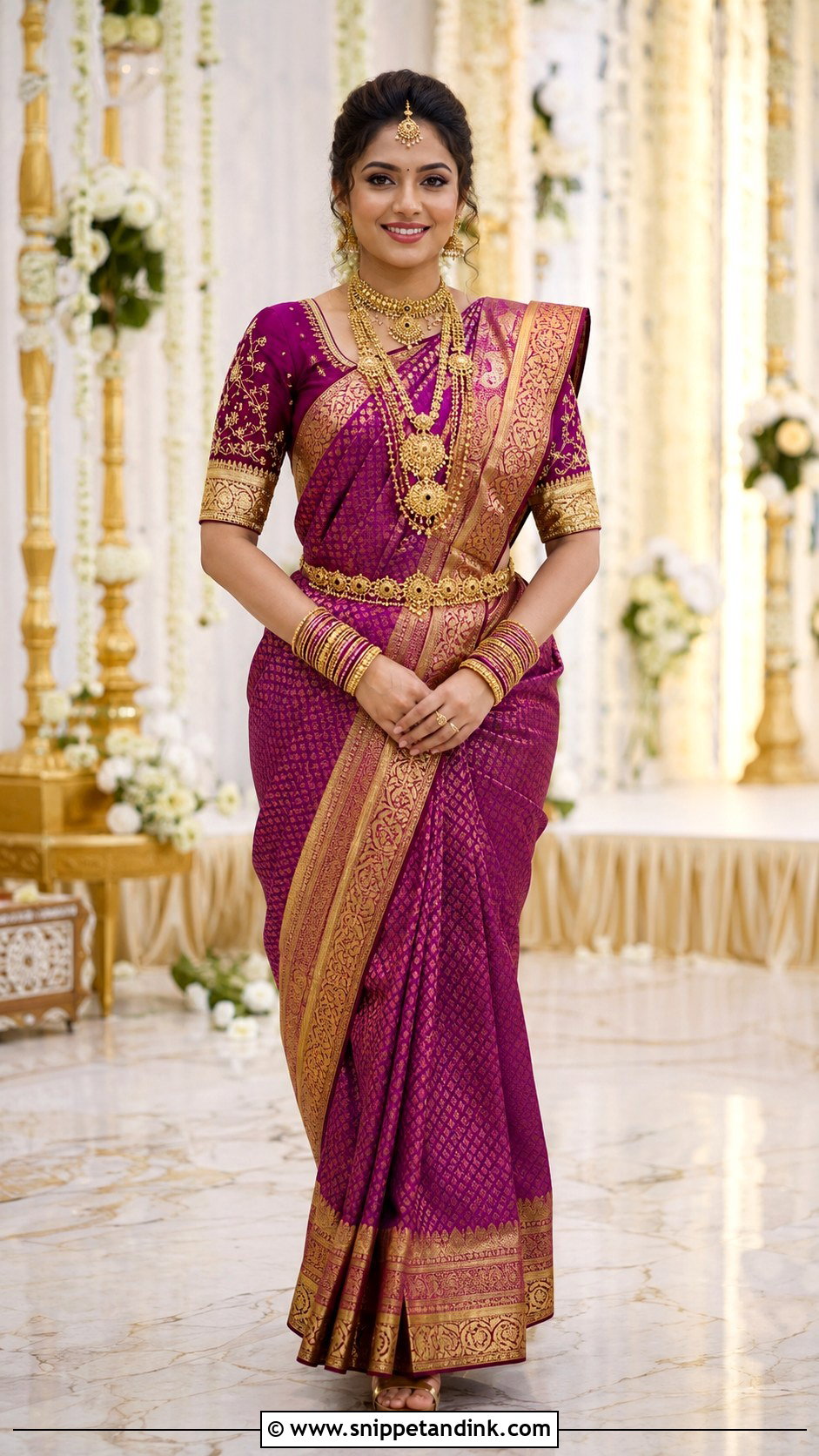
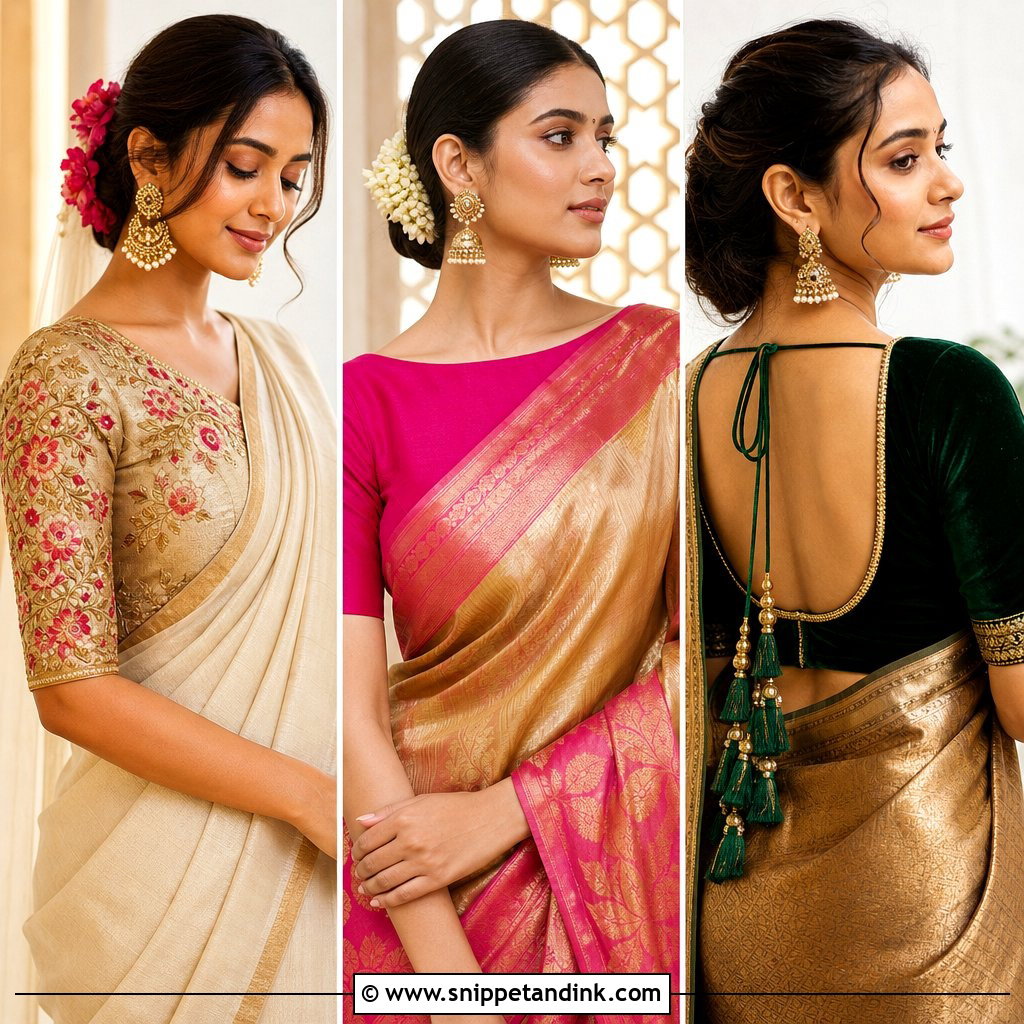
Plain silk with elbow sleeves looks finished even when the body of the blouse carries almost no work, because the sleeve end becomes the frame. A woven border, small motifs or a band of Aari near the cuff is plenty, and that strip is also the easiest place for a tiny personal motif or initials. Pair it with a rich Kanjeevaram, traditional gold and a sleek bun. Silk has no stretch, and this is the sleeve where I see brides struggle most during rituals that involve repeated reaching. At the fitting, bend and raise your arms several times. If the sleeve bites at the inner elbow, have it eased before the embroidery goes on, not after.
9. Full Sleeve Bridal Blouse With Winter Lehenga
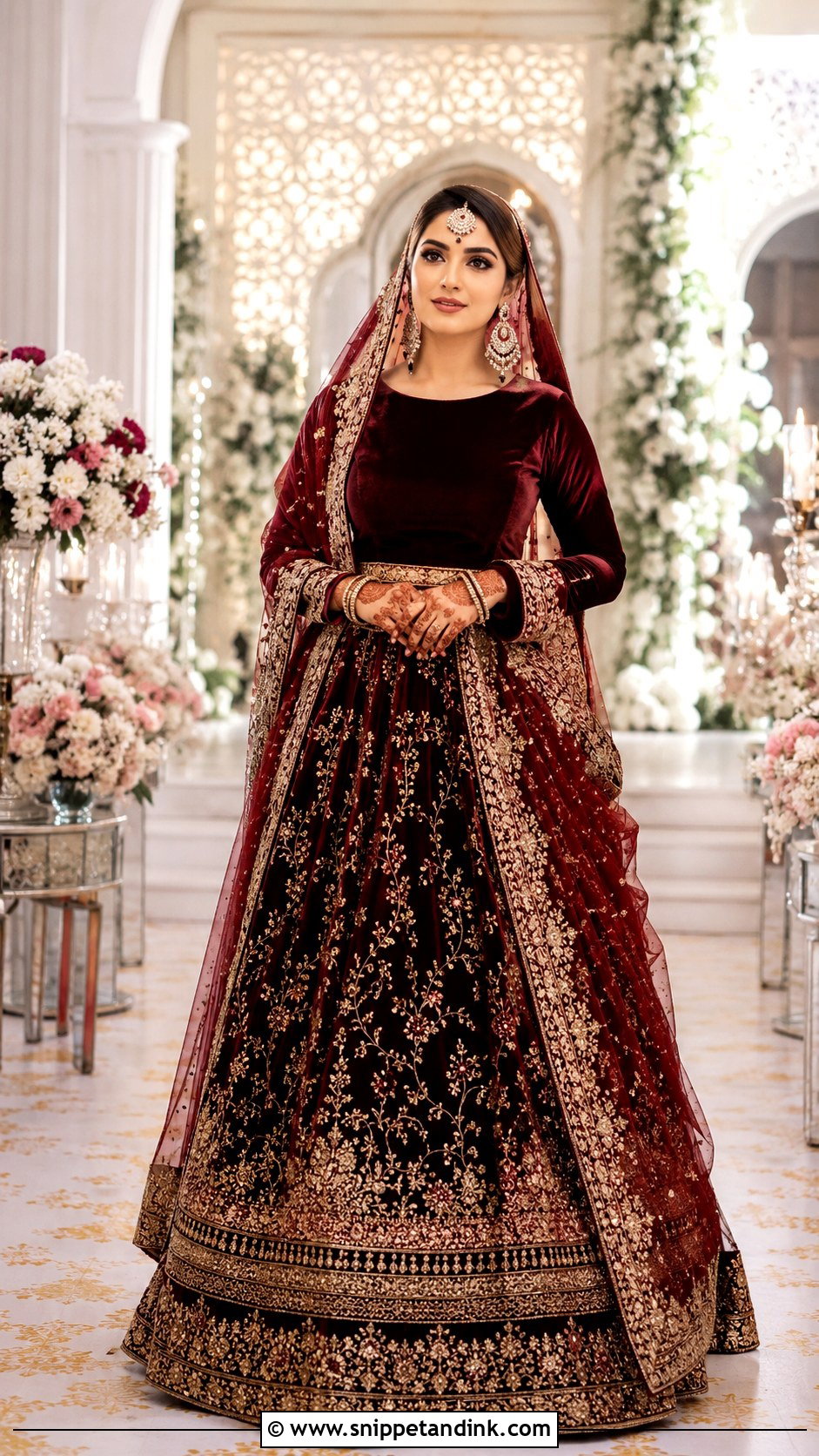
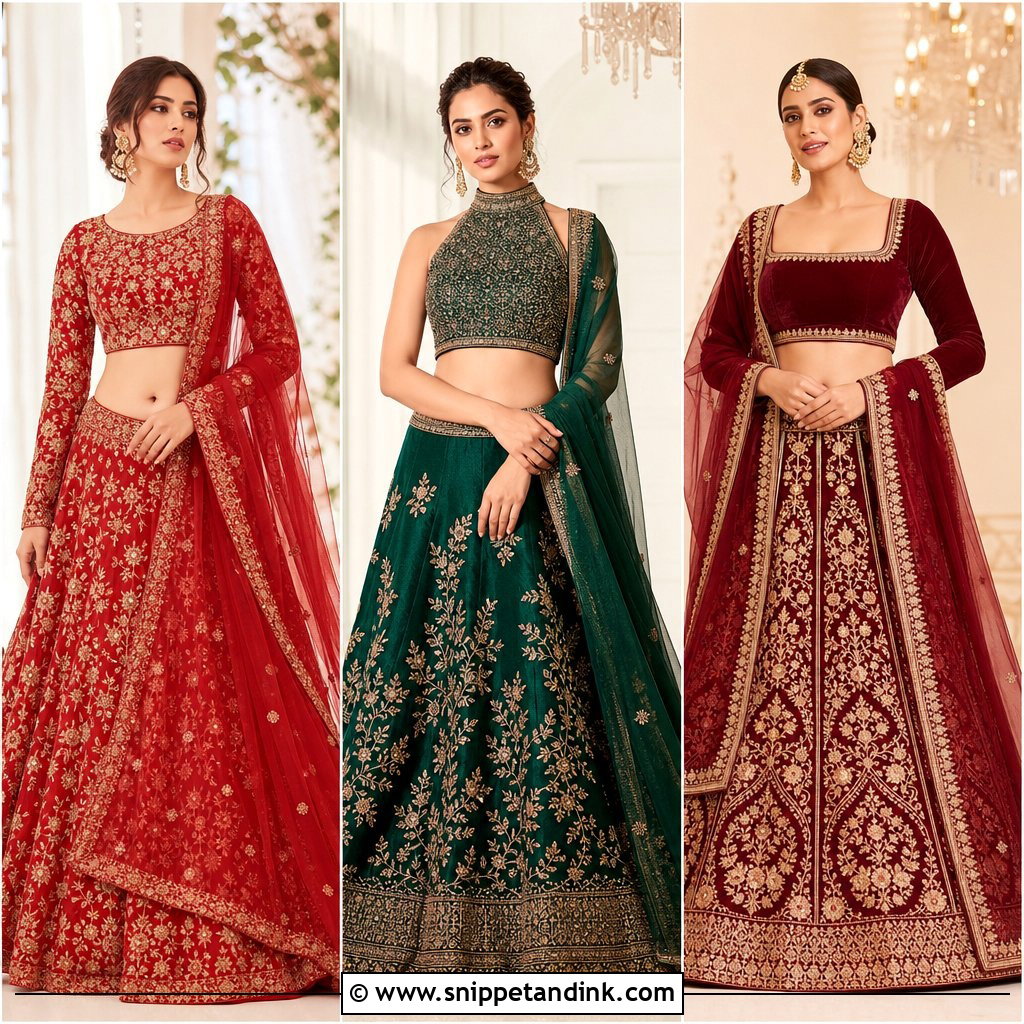
For a cool-season wedding, full sleeves solve two problems at once: warmth, and a strong silhouette without heavy surface work. Velvet, raw silk or lined georgette in a jewel tone like burgundy or forest green carries the look, with the torso kept plain and embroidery limited to cuffs, neckline and shoulder seams. Velvet has a pile that crushes, so I keep embellishment away from the inner elbow, where it scratches and wears flat. Ask for a slightly wider cuff and a breathable cotton lining, because velvet sleeves get warm indoors even on a cold evening. Pin the dupatta clear of the arms so the long sleeve line still shows.
10. Cap Sleeve Bridal Blouse With Chiffon Saree
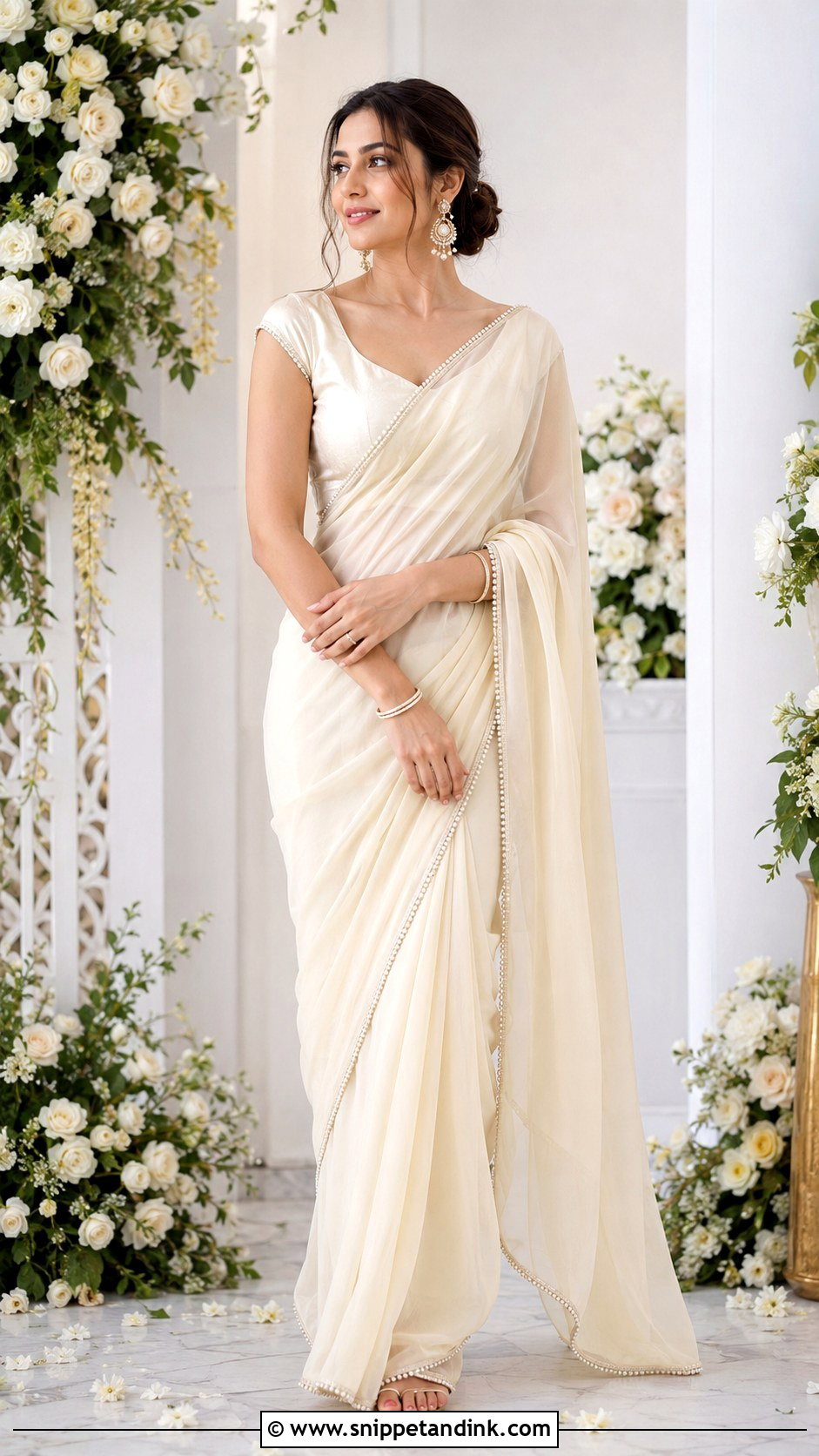
Chiffon is light and slippery, and a cap sleeve keeps the top half from feeling heavier than the drape below it. A fitted silk blouse with a round or shallow V neckline and a thin pearl edge is the version I’d suggest. Cap sleeves are unforgiving at the armhole. Too tight and the sleeve rides up or cuts into the arm; too loose and it flutters away from the shoulder in every photo. The bridal detail should come from the saree border, so keep the blouse quiet. If you plan a second drape or a veil, test the pinning beforehand, because chiffon slides unless it is anchored to the blouse itself.
11. Sleeveless Bridal Blouse With Reception Saree
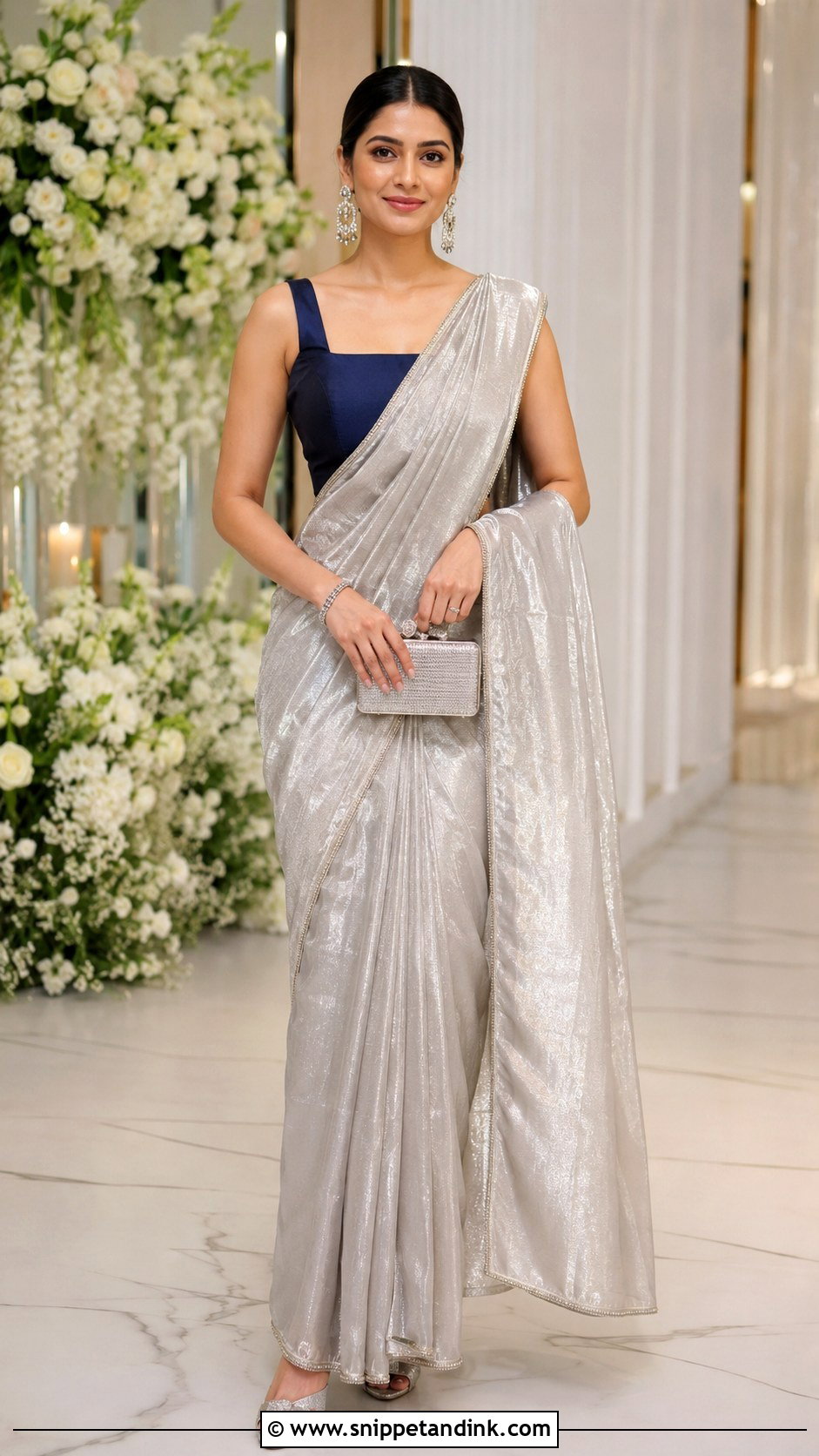
Sleeveless works at a reception when the structure is right, and that mostly comes down to strap width. Wider shoulders sit securely under a formal saree and hide bra straps, while narrow straps slip every time the pallu is adjusted. Silk, velvet or brocade with a moderate neckline holds its shape best. Keep jewelry near the face and let an open pallu show the cut. I always ask for soft lining around the armholes, because brocade edges rub skin raw after a few hours of dancing. If you want cover while greeting older relatives, a sheer dupatta over one shoulder can come off later in the evening.
12. Puff Sleeve Bridal Blouse With Silk Saree
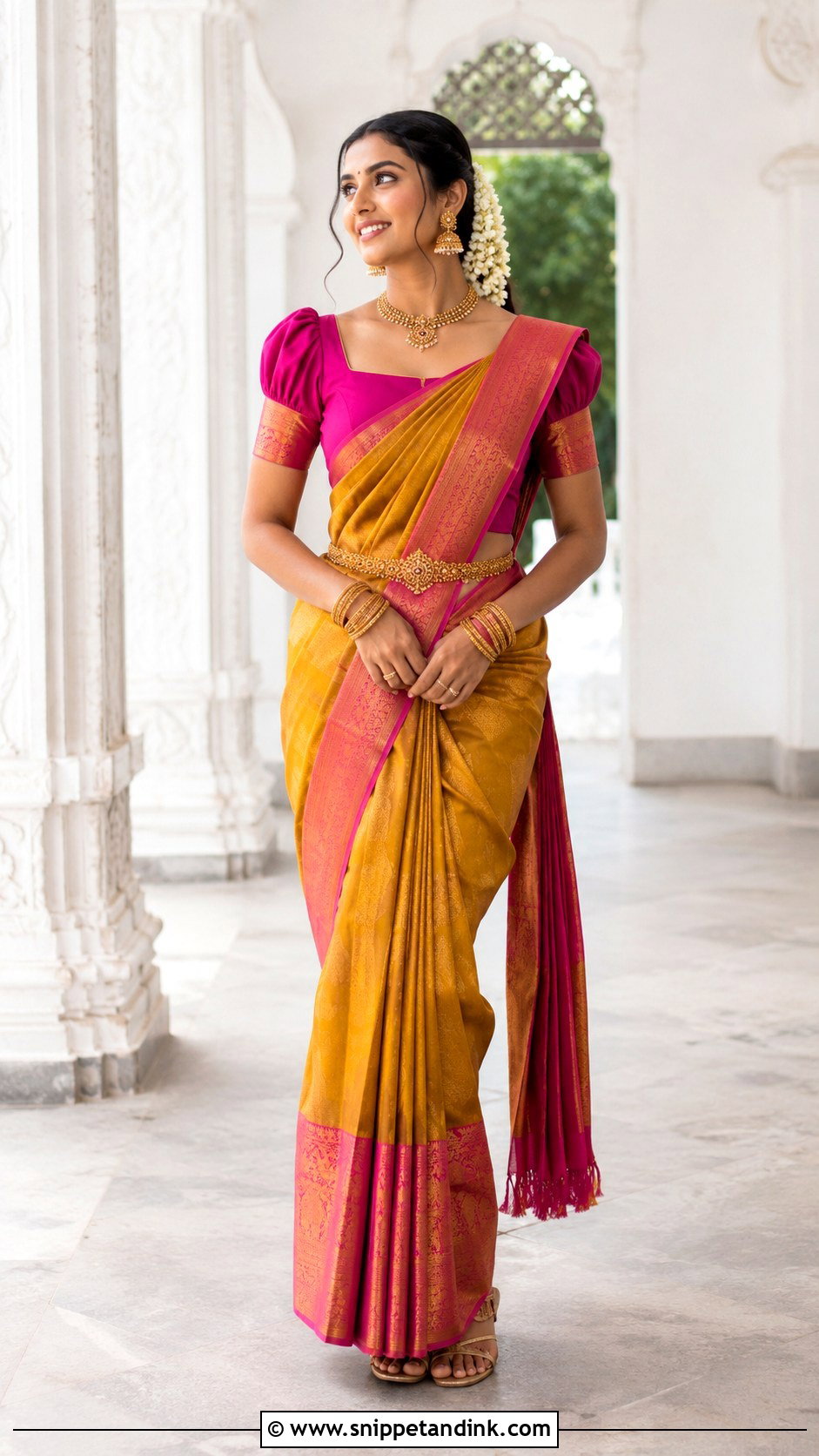
Small puff sleeves give a silk saree a slightly vintage feel, and they sit especially well with heirloom sarees. Control is everything: lightly gathered at the shoulder, finished with a narrow cuff on the upper arm, never so full that the shoulder line widens. Keep the neckline round or square and the jewelry modest, jhumkas with a floral bun or a long braid. Heavy shoulder embellishment makes gathers sit unevenly, so I keep the work off the puff itself. Silk puffs also flatten under a pinned pallu, which is why I ask the tailor to add a small layer of net inside the sleeve head on that side.
13. Button Back Bridal Blouse With Brocade Saree
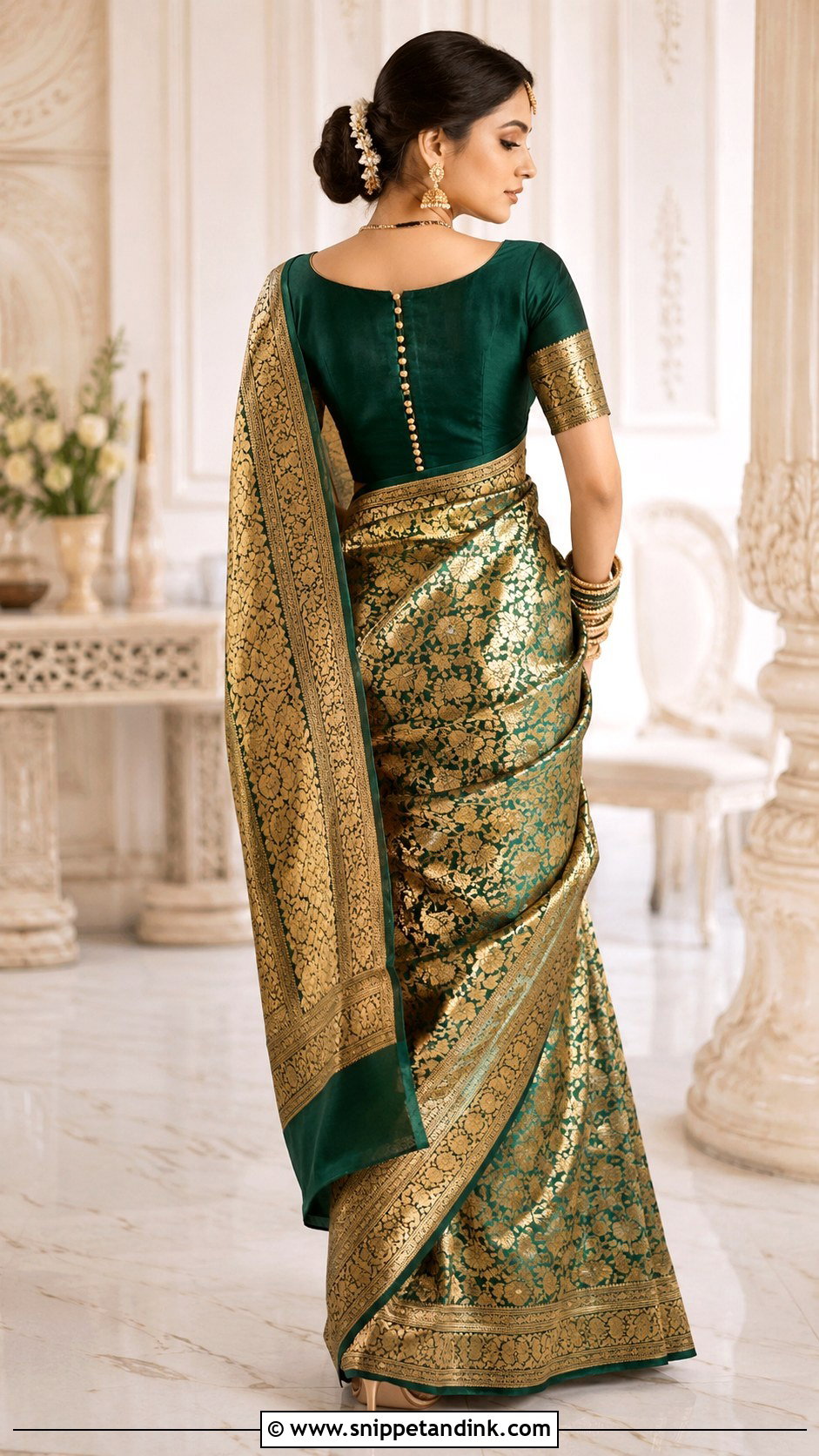
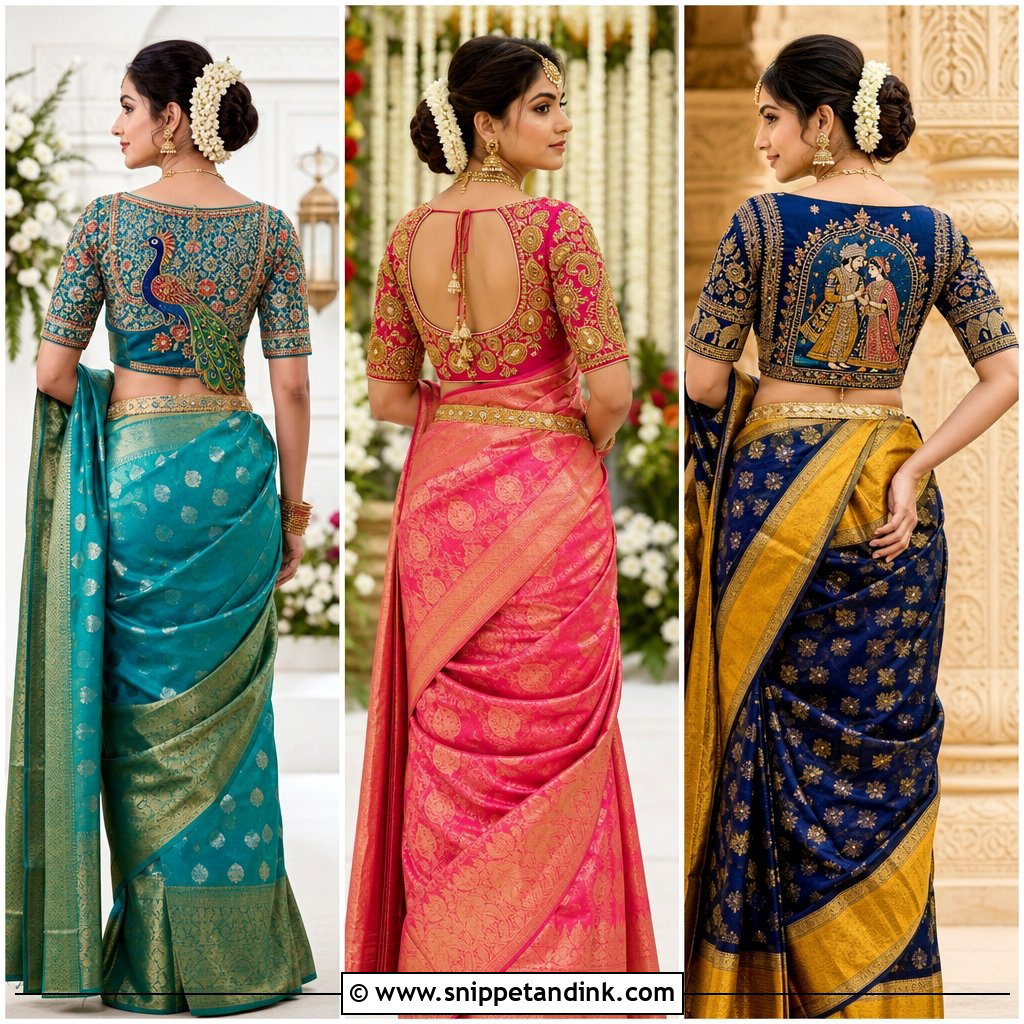
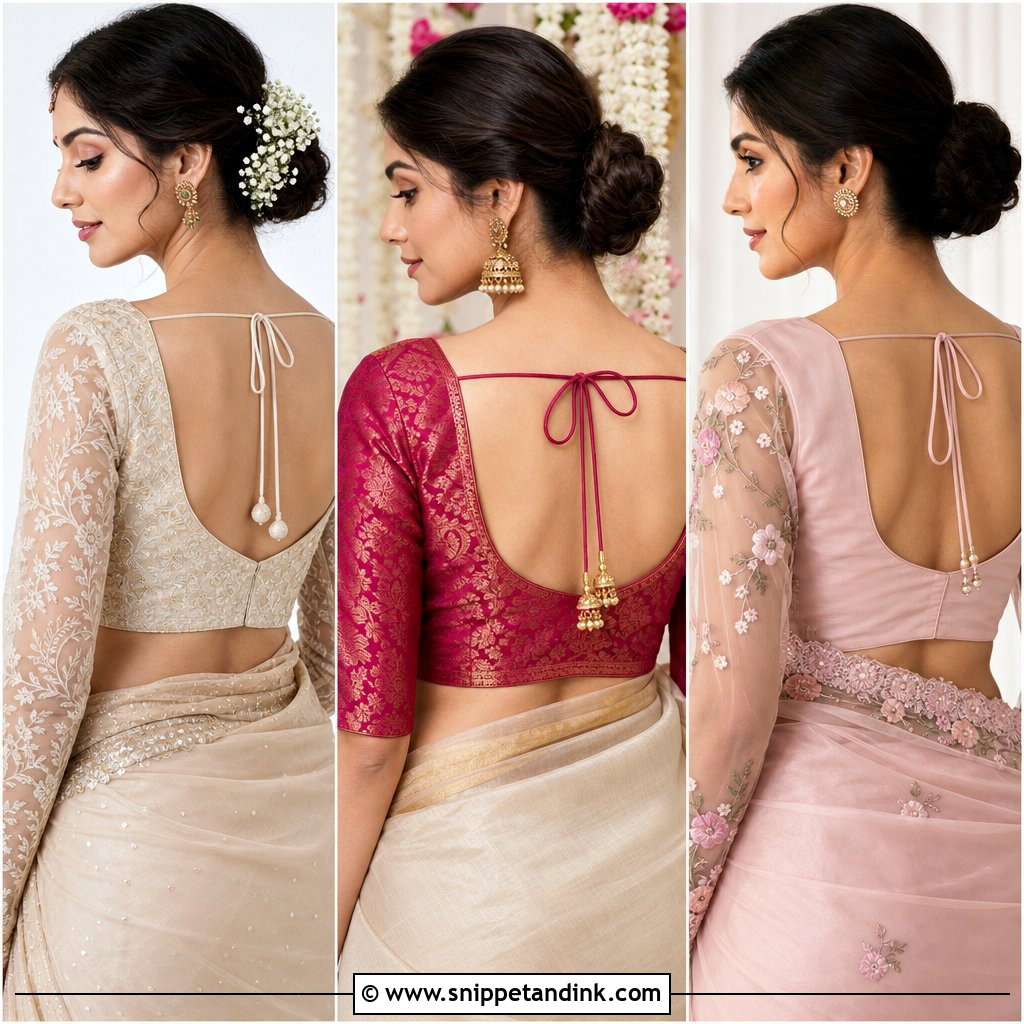
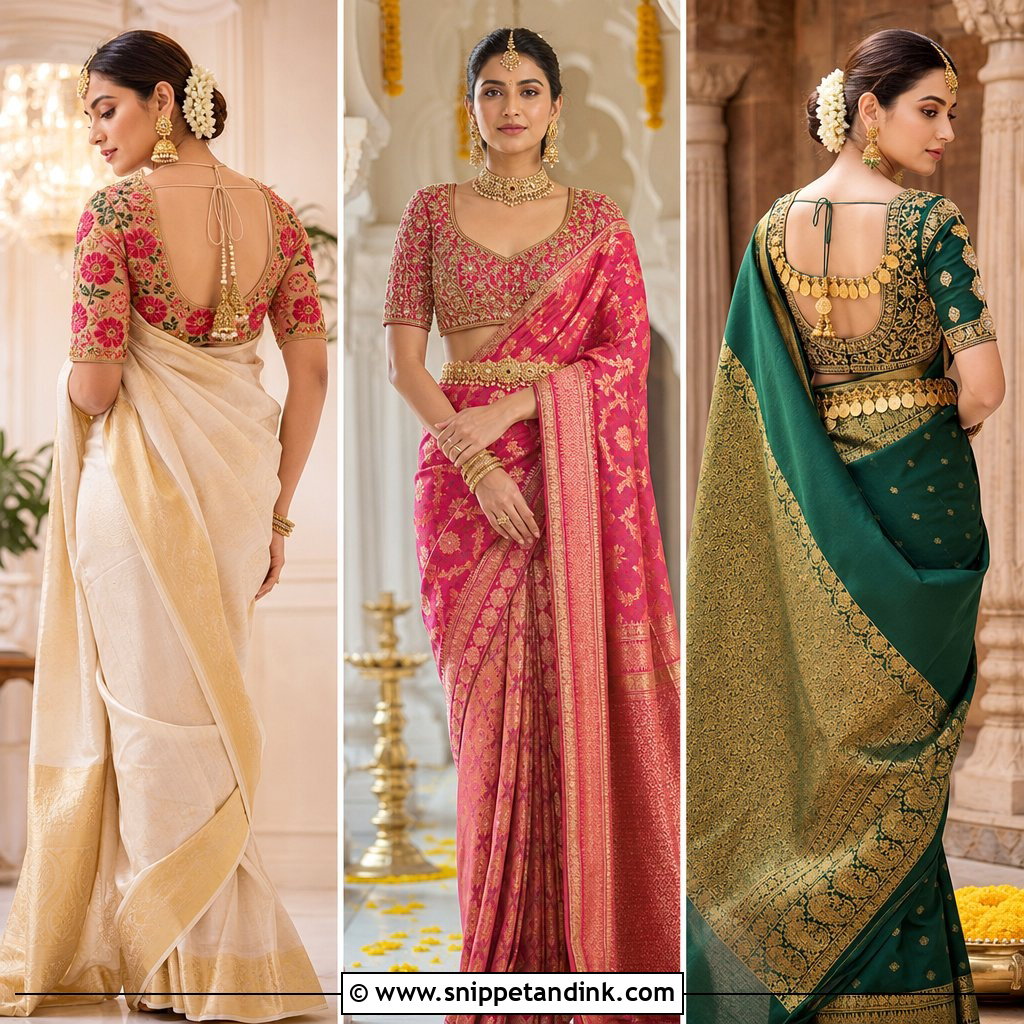
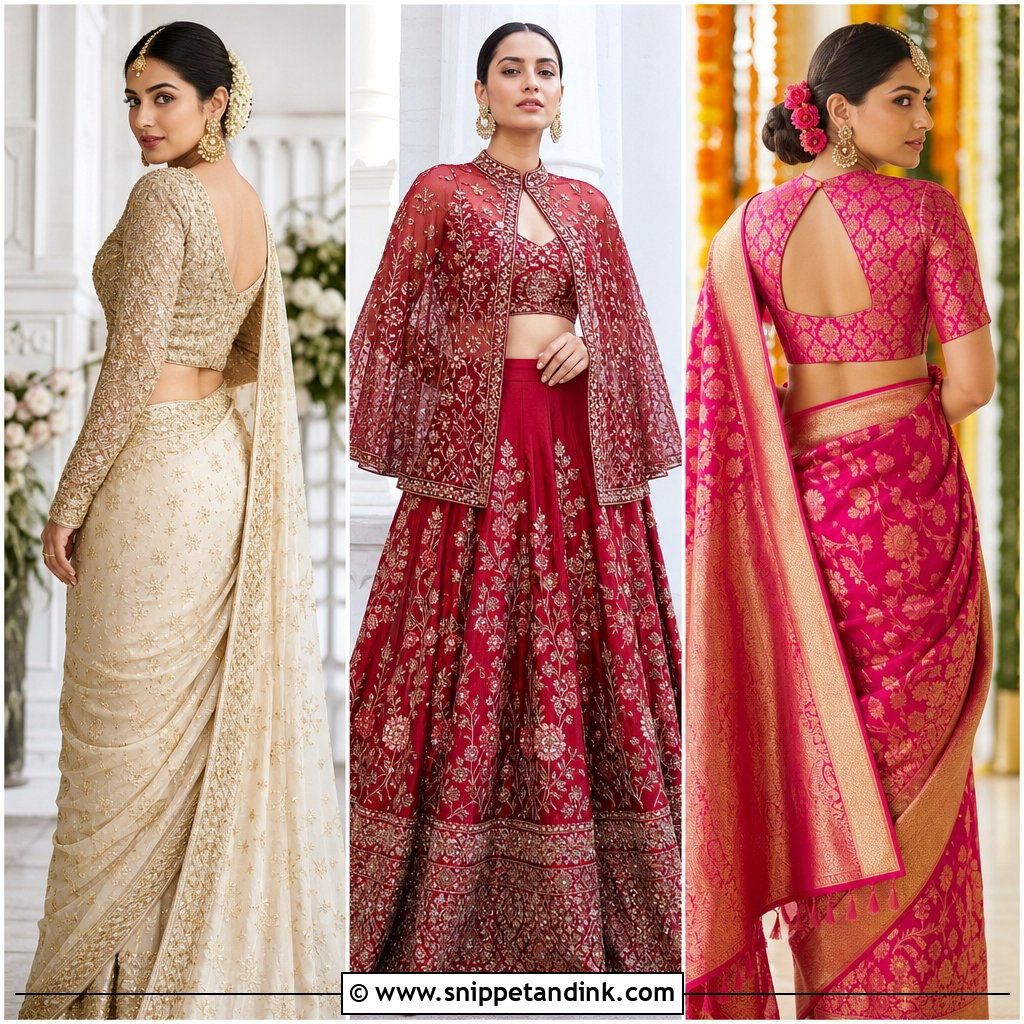
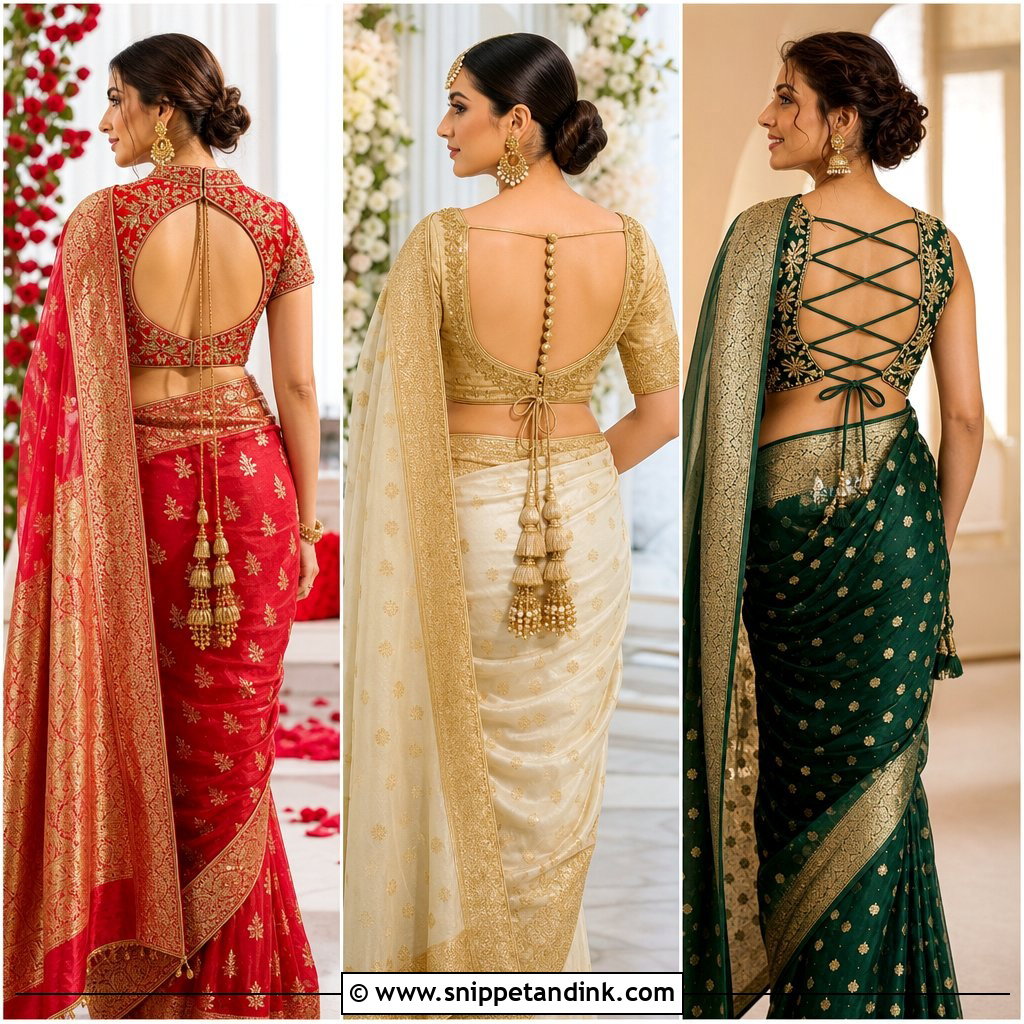
A row of fabric-covered buttons down a closed back is my favourite way to make a plain blouse look bridal from behind, and guests see your back for much of the ceremony. Use plain silk and define the opening with gold, pearl or contrast piping. A higher back also gives real support, so it suits brides who want modest coverage as well as anyone wearing a heavy necklace that pulls forward. Opening a long row of tiny buttons in a cramped dressing room is miserable, so I have hidden hooks sewn behind the decorative buttons. Ask the tailor to reinforce the placket and leave ease across the shoulder blades so it doesn’t strain when you sit.
14. Keyhole Back Bridal Blouse With Wedding Lehenga
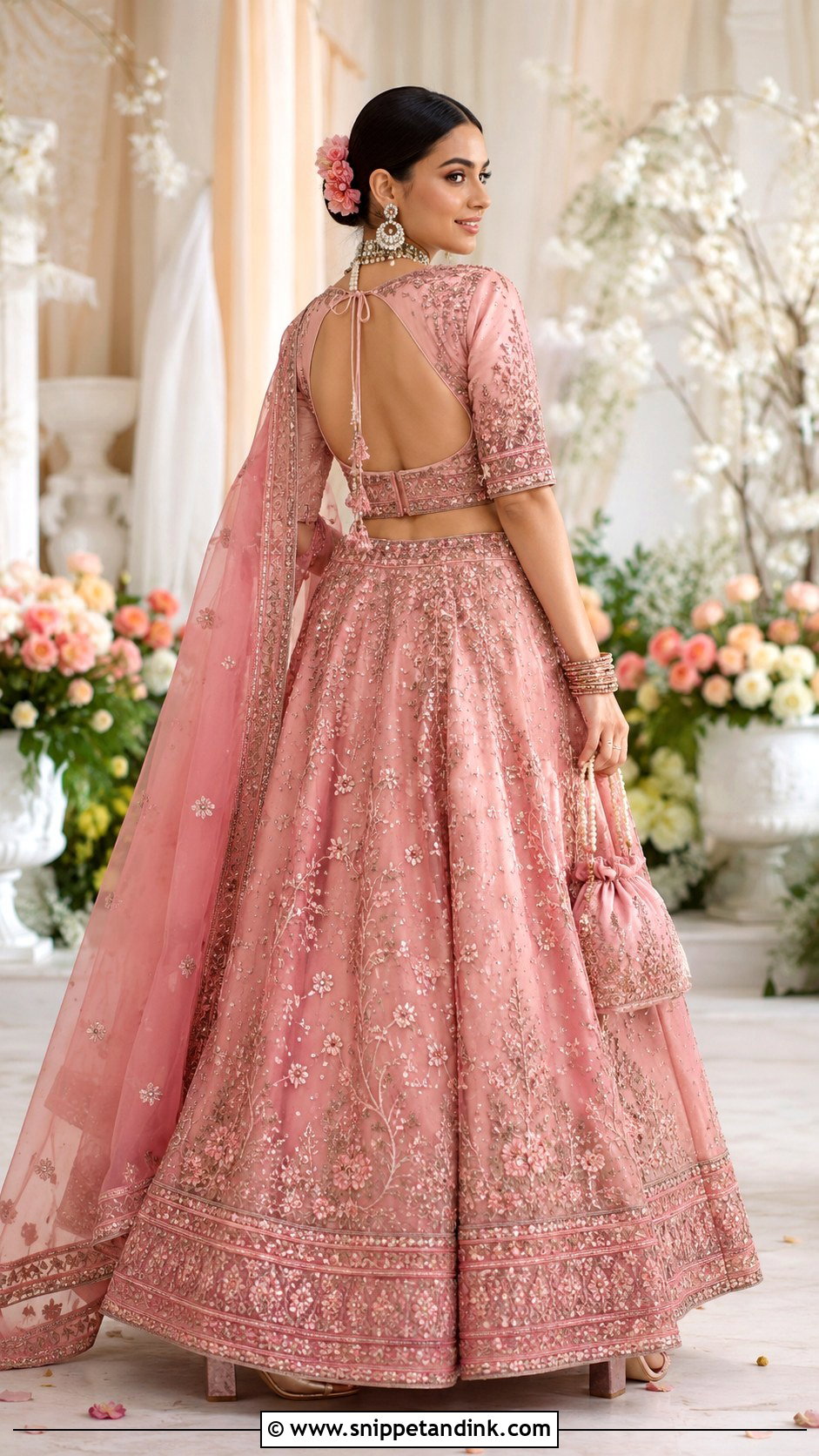
A small keyhole back gives the blouse one point of interest while keeping your coverage. A round or teardrop opening between the shoulder blades, edged with piping or tiny pearls, is enough, and the front can stay a plain round or boat neck. What I check is whether the keyhole lies flat when the bride rolls her shoulders forward, as she will when seated through long rituals. If it gapes, the opening is too wide for her back and needs reducing before any edge work starts. Line it well so beaded edges don’t scratch, and borrow one motif from the lehenga border rather than adding new stones or colours.

15. Dori Back Bridal Blouse With Plain Saree
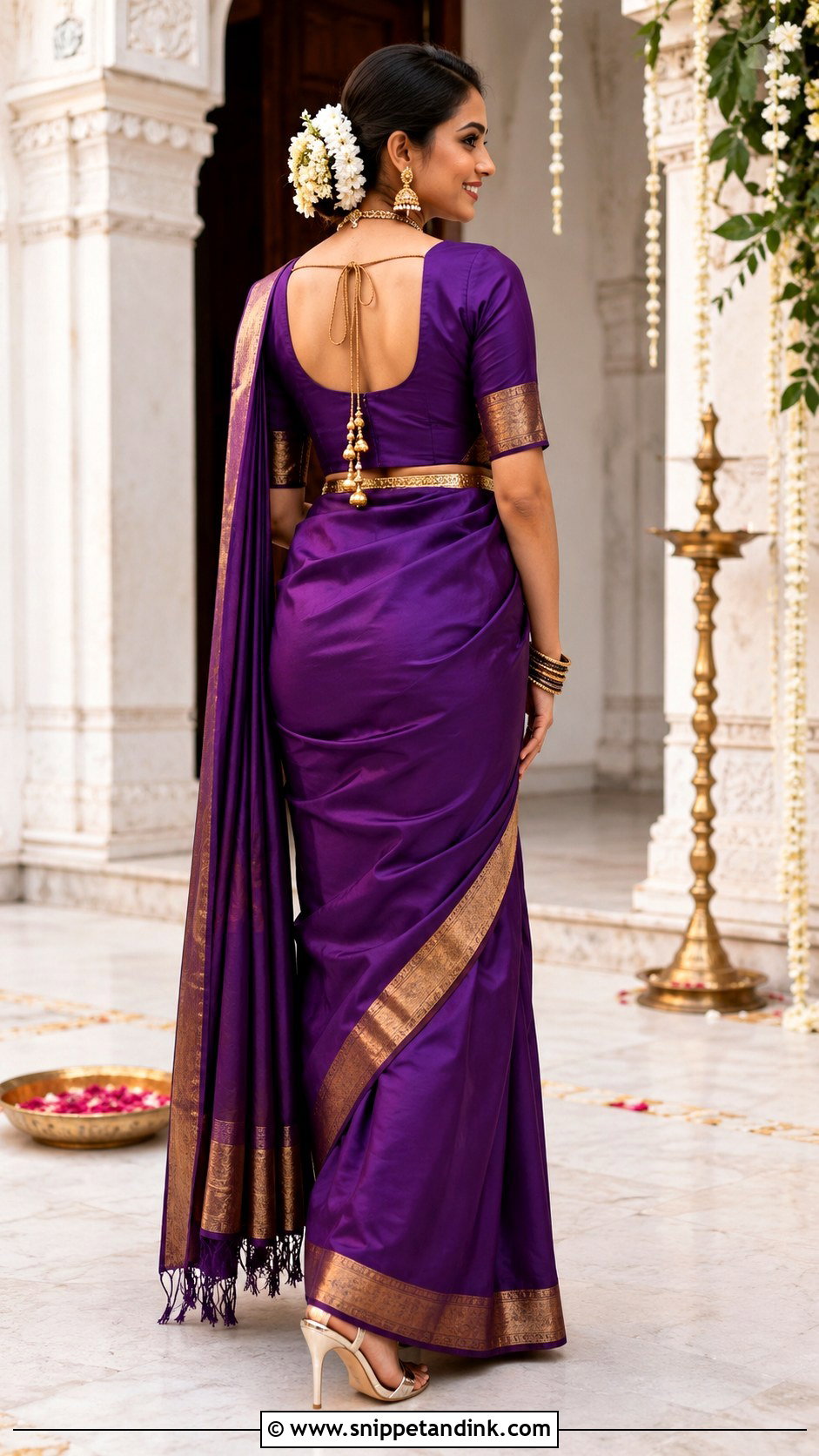
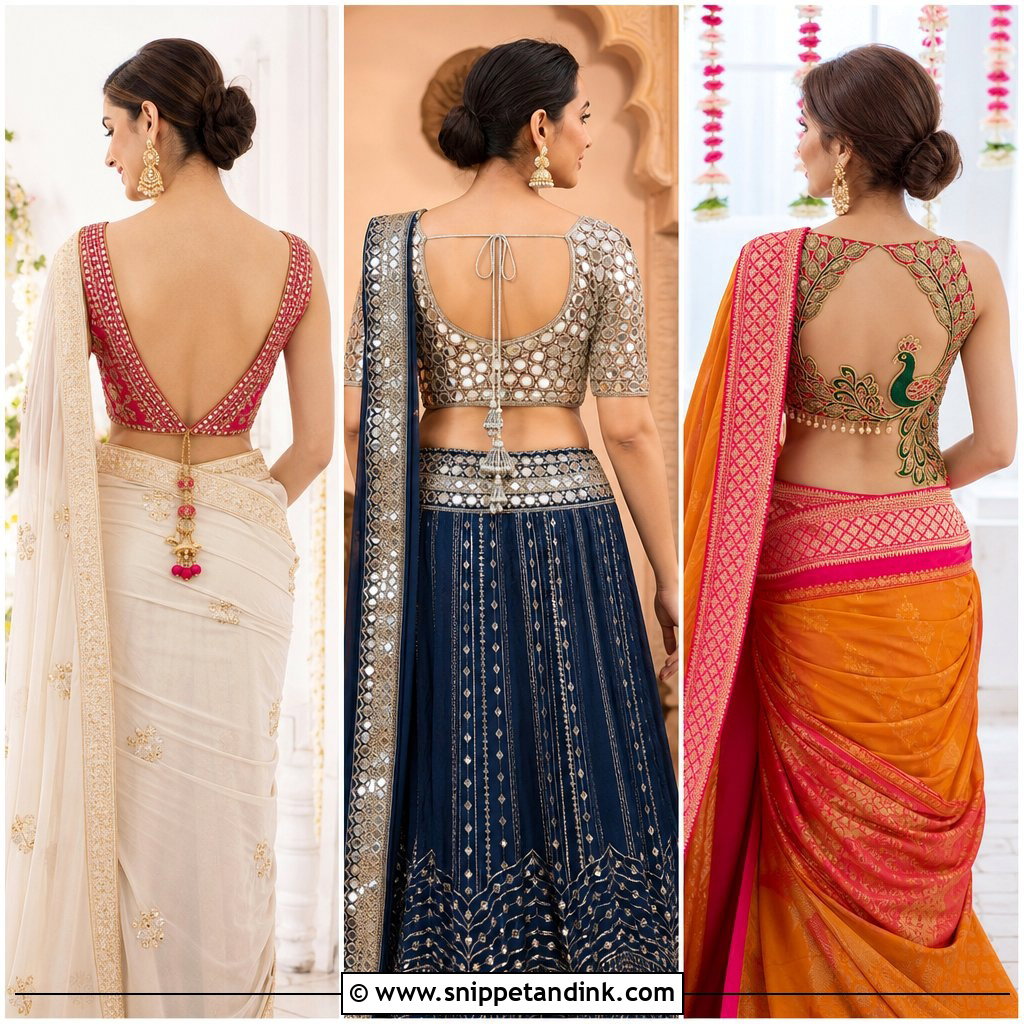
On a plain saree, a dori back becomes the focal point without embroidery covering the whole blouse. I prefer a moderate U back with a single tie at the top and proper hooks below, so the dori decorates and lends a little support rather than holding everything up. Keep the tassels light. Heavy pearl or metal latkans swing as you walk, pull the neckline backward and catch on hair accessories. I also ask the tailor to set the tie slightly below where a long braid or gajra will fall, so the two don’t tangle. A solid saree with a decorative border, a waist belt and a low bun round it out.
16. Scalloped Neck Bridal Blouse With Embroidered Lehenga
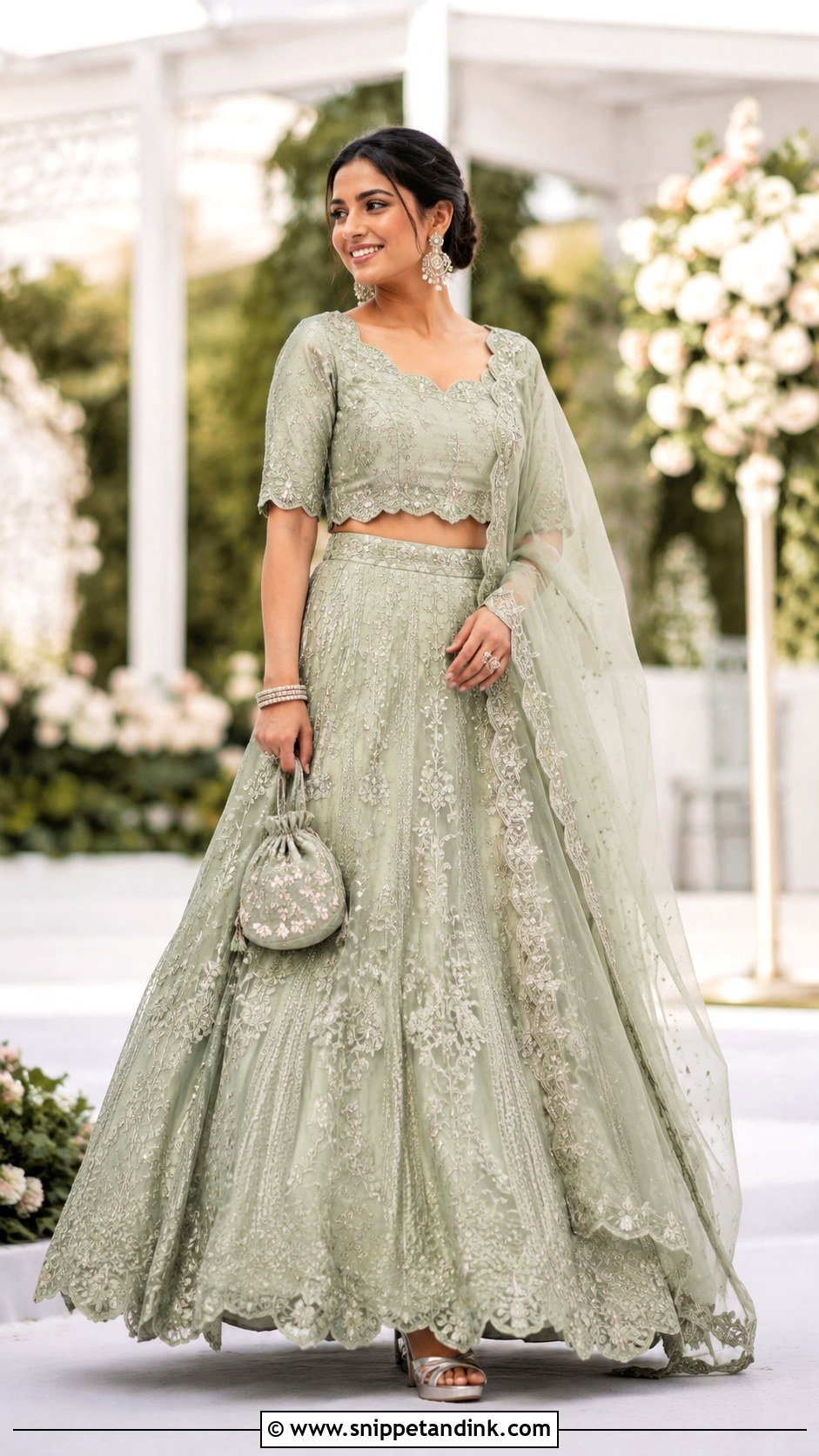
A scalloped neckline brings detail through the cut alone. Medium curves on a round, square or sweetheart neck read clearly in photos; very small ones blur at any distance. Each scallop needs piping and interfacing, or the edge softens and turns wavy after one wear. With an embroidered lehenga, keep the blouse in plain silk or velvet and repeat a single thread colour along the scallops. The usual mistake is a large necklace laid straight over the shaped edge, which hides it and looks crowded. A choker sitting above the scallops or a fine pendant falling below them is cleaner.
17. Princess Cut Bridal Blouse With Tissue Saree
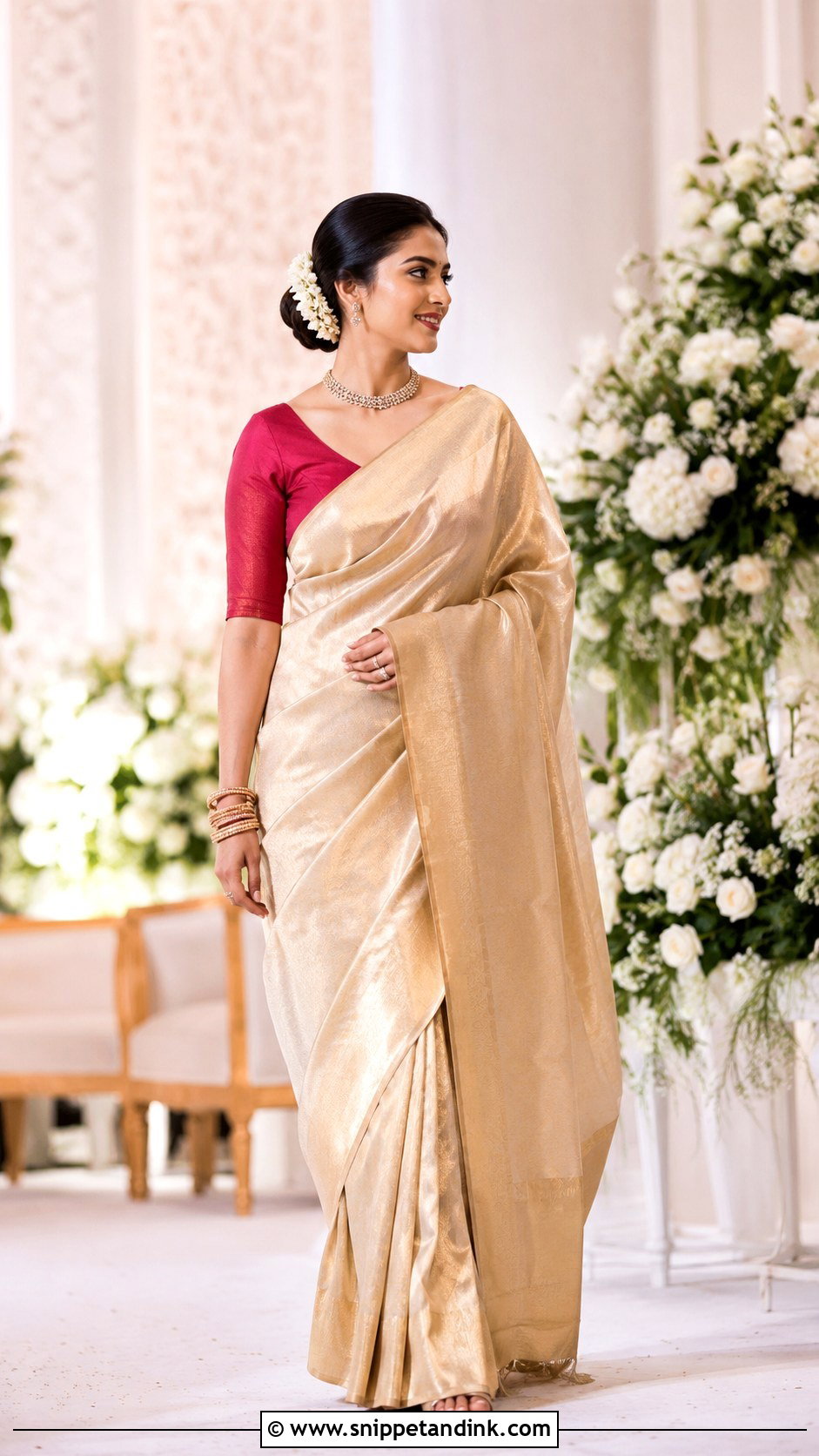
Princess seams run from the shoulder or armhole down over the bust and shape the blouse without darts, which makes them my first suggestion for a fuller bust or anyone between sizes. On a shimmering tissue saree the blouse should be about tailoring rather than decoration, so keep any work to the sleeves or neckline. Tissue snags on rough embellishment, and a soft lining protects both your skin and the saree. Book one fitting that is purely about movement: sit, raise your arms, drape the saree. If the front pulls across the bust or rides up at the underarm, those long seams are the easiest place for a tailor to redistribute the fit.
18. Contrast Bridal Blouse With Kanjeevaram Saree
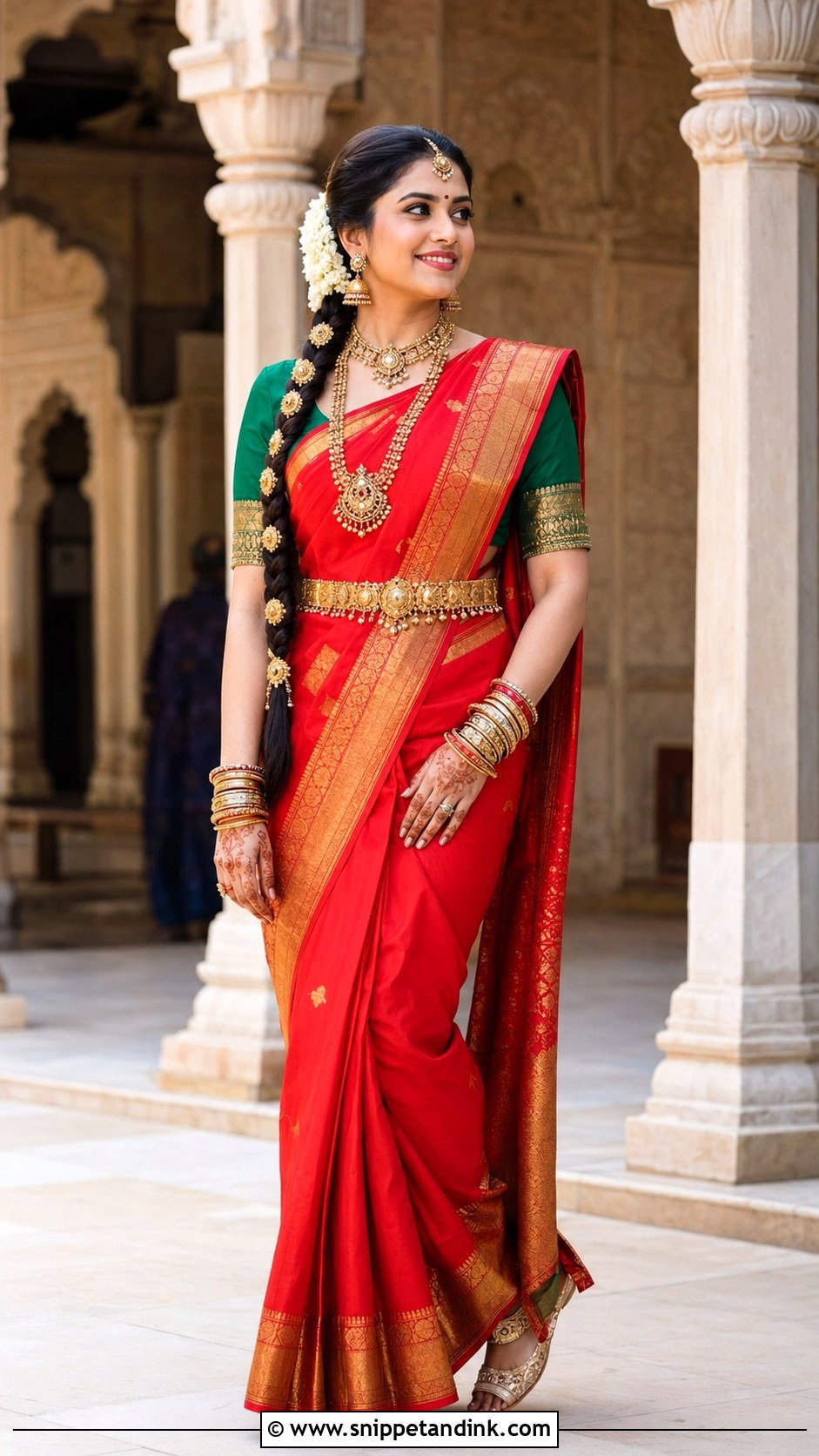
Contrast is the simplest way to refresh a traditional Kanjeevaram without adding embroidery. Pull a secondary shade from the border, green against red or pink against orange, cut it in plain silk and repeat the saree border at the sleeves. Undertones are where contrast blouses fail. A green that looks right under shop lights can turn muddy beside the saree outdoors, so before anything is cut I hold the blouse fabric against the saree in daylight. Stop at two dominant colours plus one metal. Temple jewelry, a waist belt and a braid dressed with flowers are the classic finish.
19. Monochrome Bridal Blouse With Matching Lehenga
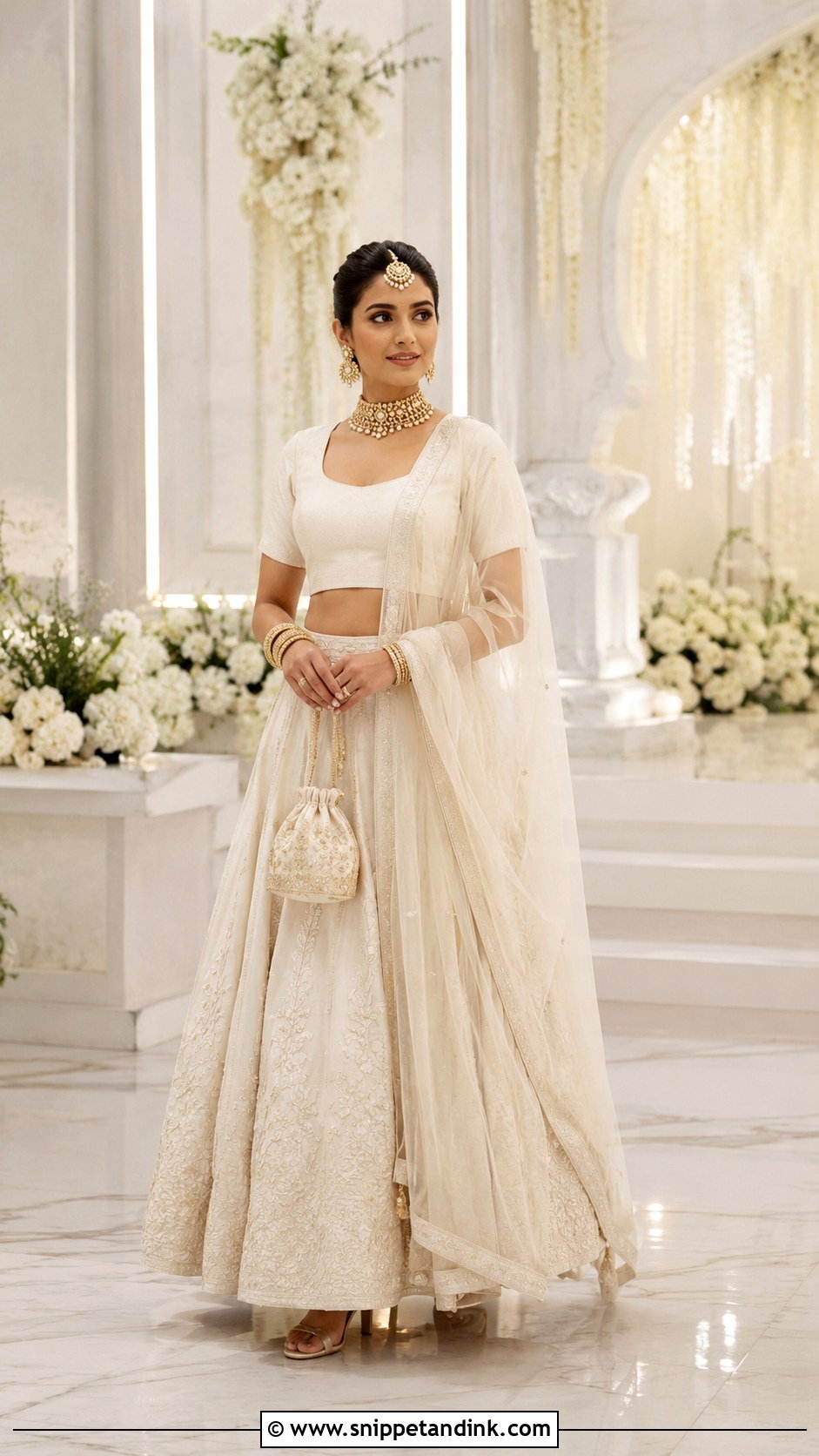
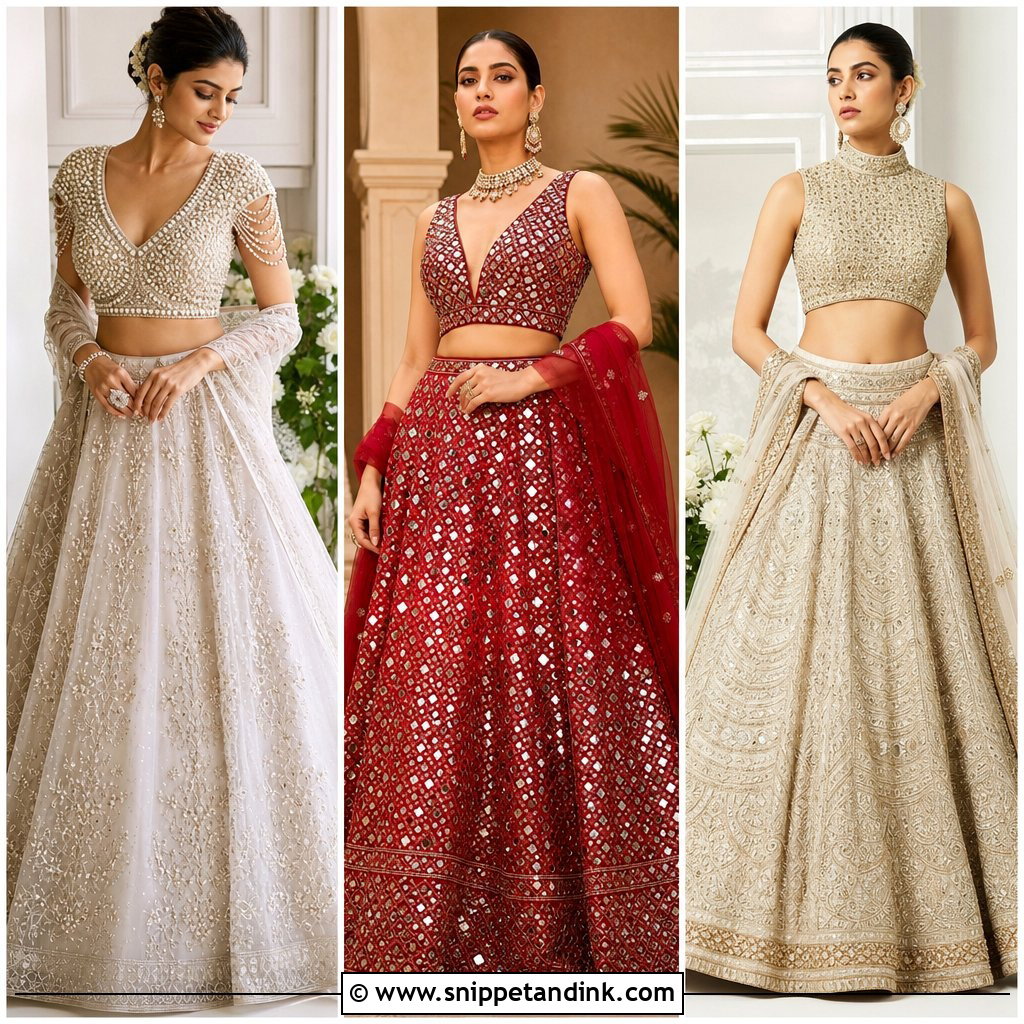
Monochrome looks calm and modern, but it hides nothing. When blouse and lehenga share one shade, the eye reads the outline, so a shoulder seam sitting slightly forward or a waist that rides up will show. Let texture create depth instead: a raw silk blouse, a lightly embroidered skirt, a sheer tonal dupatta. Ivory, rose, sage and wine all work. The trap is dye lots. A blouse cut from a different bolt can come out half a tone off, and that difference is obvious in photographs, so buy the blouse fabric with the skirt. A contrasting necklace or dupatta border adds definition without breaking the single colour.


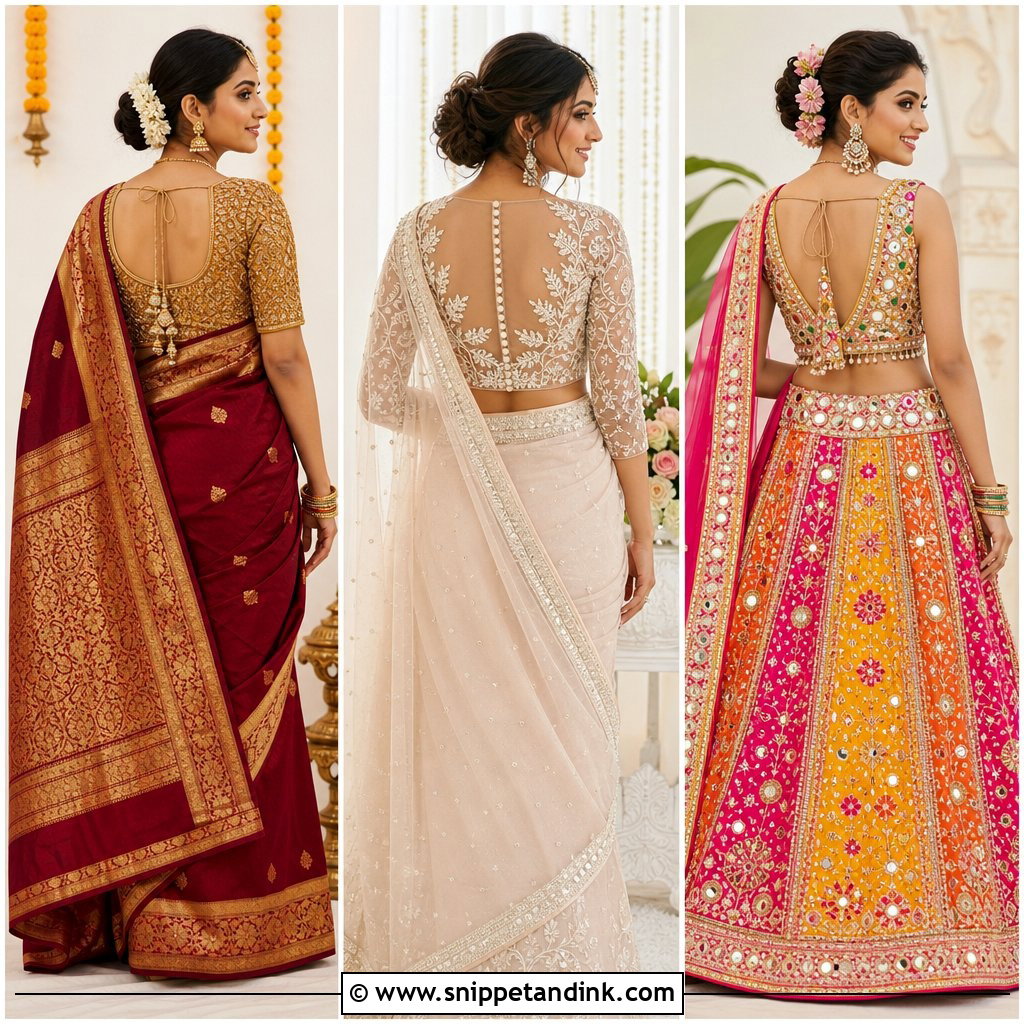
20. Minimal Aari Bridal Blouse With Wedding Saree
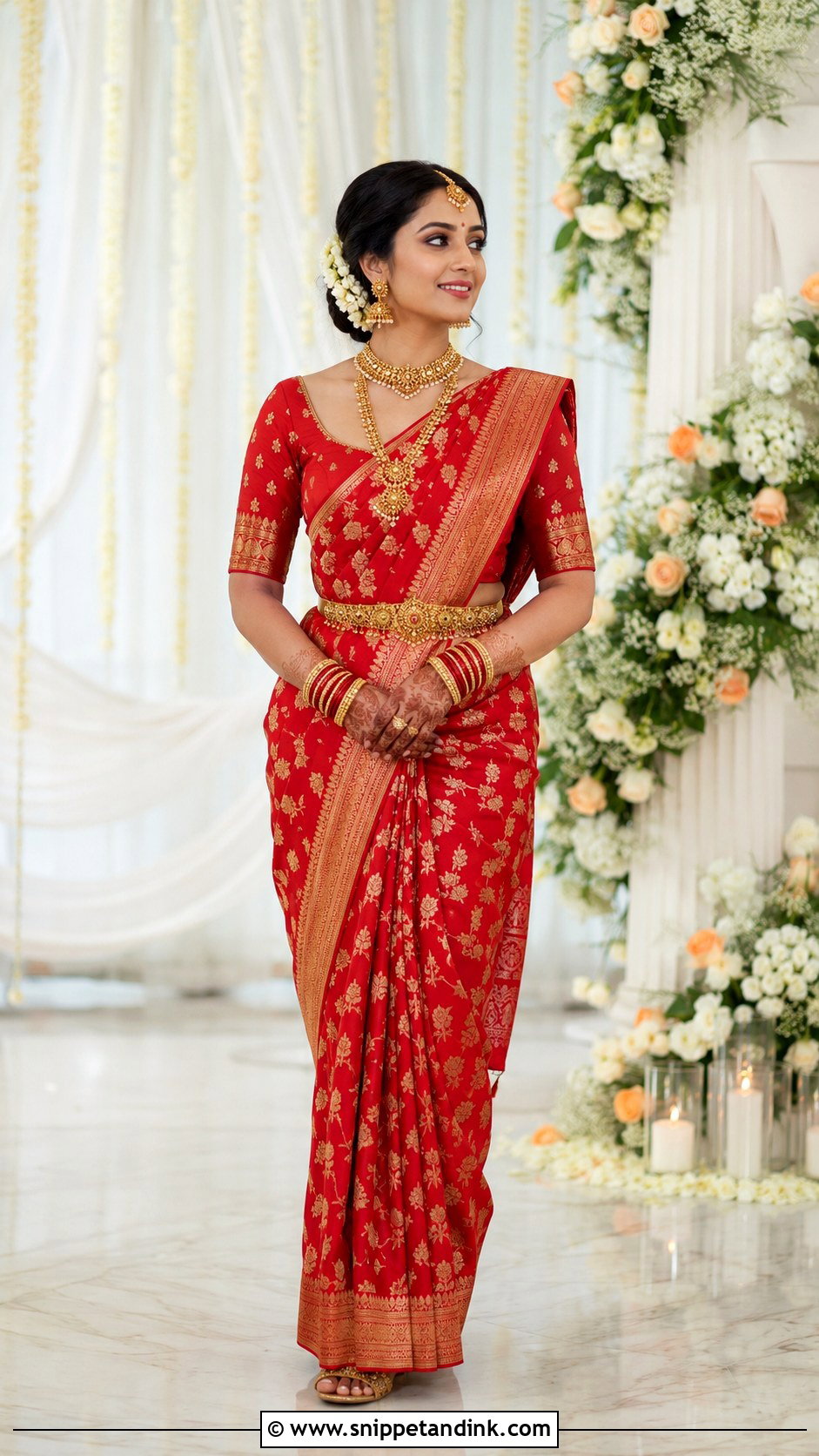
Minimal Aari embroidery makes a blouse look handmade without fighting a richly woven saree. Small vines, leaves or butis at the neckline, sleeve ends and back closure, with plenty of plain silk between them, read as intentional rather than unfinished, and the restraint pays off most when the saree already carries heavy zari or brocade. Aari is worked on a frame before the blouse is stitched, so ask the artisan to mark the final seam lines first. Otherwise motifs vanish into seams, or get cut when the blouse is later let out. Smooth thread and securely finished edges stop the work from snagging the saree.
Hooks, Pins and Sweat Over a Long Wedding Day
Silk and zari don’t forgive sweat. Salt marks on silk are hard to lift, and metallic thread can tarnish where it stays damp, so for a warm-weather wedding I ask for removable dress shields or a cotton underarm panel in the lining. A few other small things save a lot of panic:
- Have the tailor stitch a small fabric tab or hidden snap at each shoulder seam, so the pallu pin goes through reinforced fabric instead of straight through the silk.
- Pack two spare hooks, matching thread, a needle and a few small safety pins with whoever is minding your bag. Hooks are the part that fails most often.
- Let perfume and deodorant dry fully on your skin before you dress, and never spray them onto the blouse.
- If you’re changing outfits, decide who will handle back hooks or buttons and how long the change really takes.
Silk Wants Air Before It Wants a Box
Don’t fold the blouse away on the wedding night. Turn it inside out and let it hang on a padded hanger for a day so the sweat dries, then take it to a dry cleaner who handles silk and zari and point out any makeup on the collar.
For storage, wrap it in clean muslin or cotton rather than plastic, which traps moisture. Lay tissue between embroidered areas so metallic work doesn’t press into the silk, and keep mothballs from touching the fabric. Refold it along different lines every few months, because zari cracks along permanent creases. A plain blouse cut with seam allowance is easy to wear again with another saree, which is one more reason to keep it simple.
The Saree Decides First, Then the Blouse
The saree or lehenga makes the first decision. Once you know its colour and how much work it carries, the neckline, sleeve, fabric and back almost choose themselves, and a simple blouse will look intentional rather than plain. Book fittings early and bring your real undergarments and jewelry to the last one. Piping, covered buttons, a woven sleeve border or a little Aari can feel every bit as bridal as dense embellishment, as long as the fit is exact.
You'll Like These Ideas:



Leave a Reply