
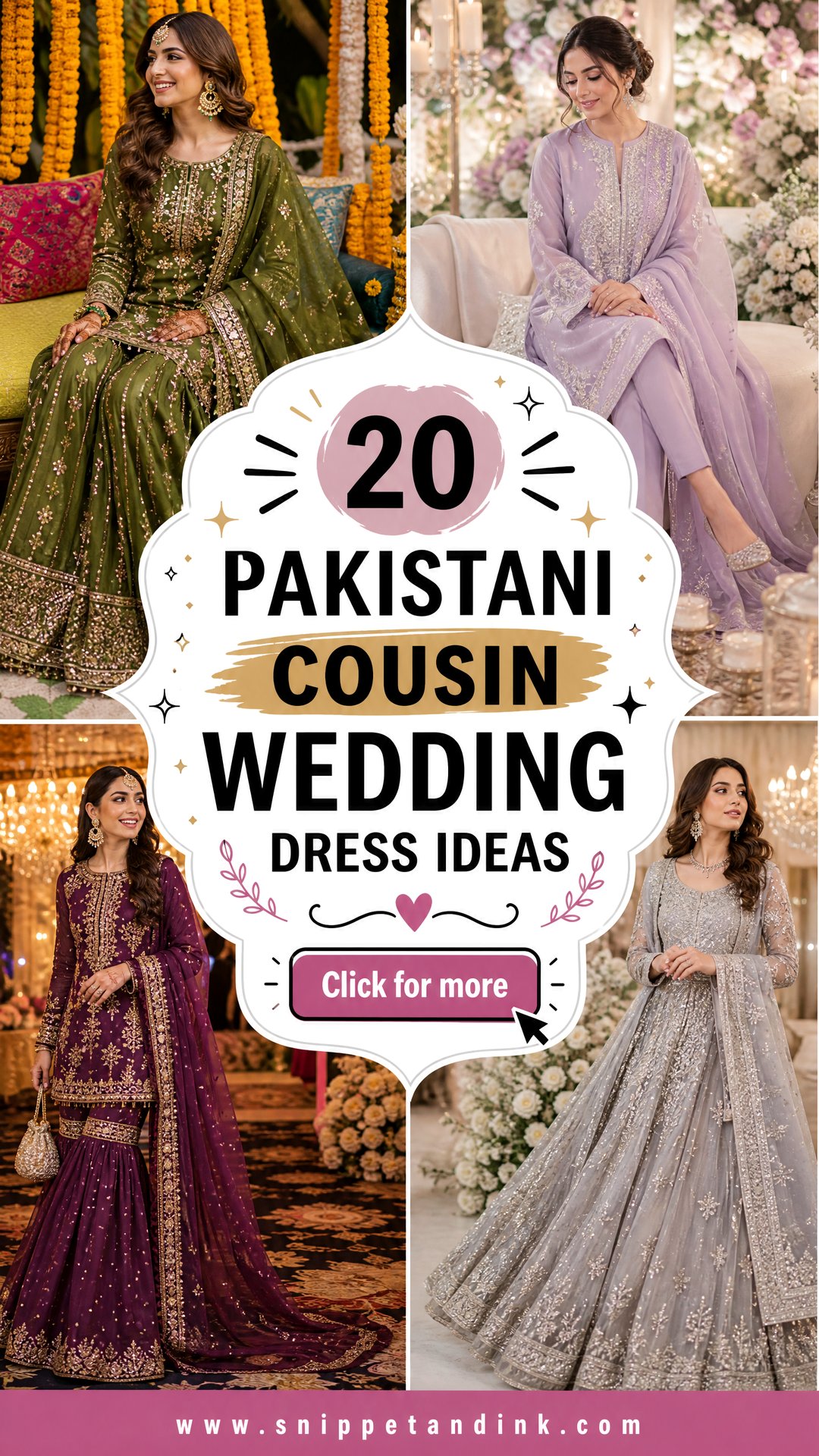
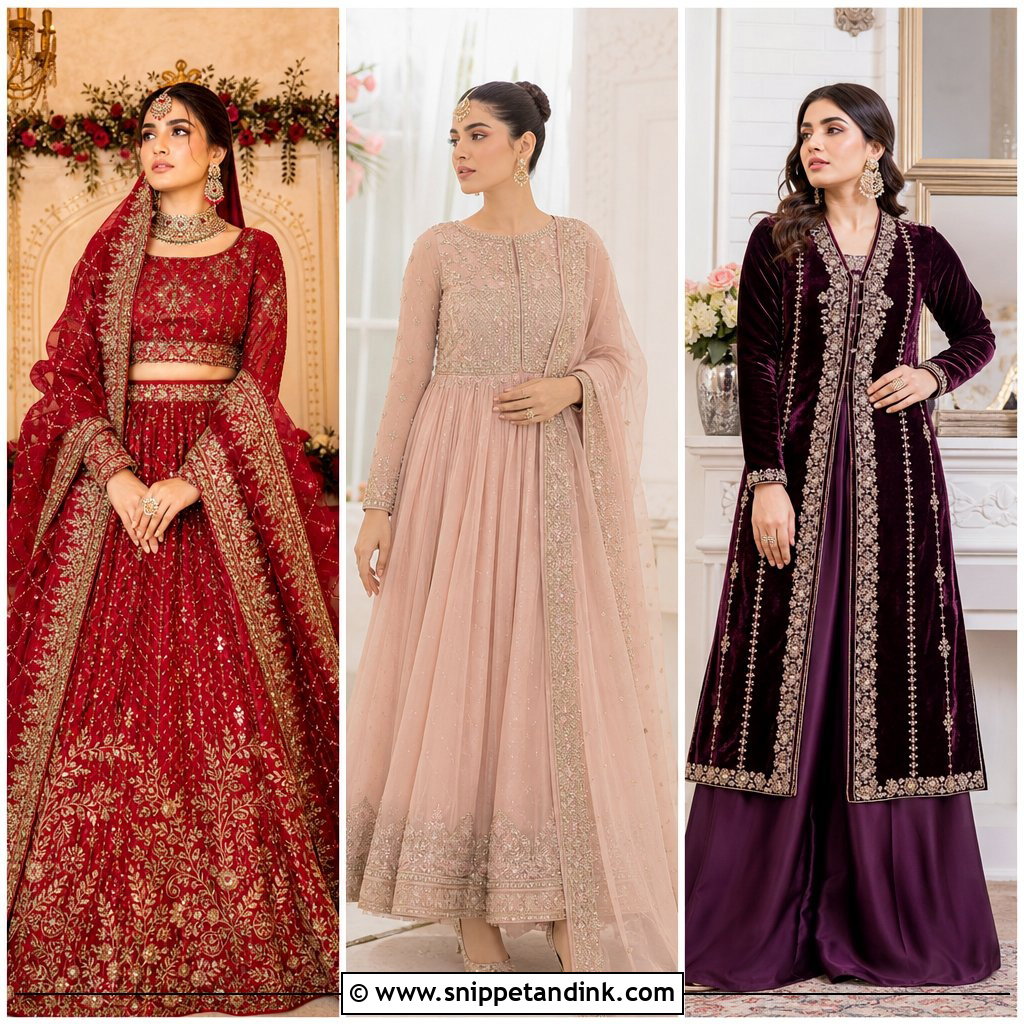
A cousin’s wedding sits in an odd middle ground. You are family, so you are on stage, in the group photos and dancing at the dholki, but the bride still has to be the one people look at. That is the brief I work to when a client is dressing for a cousin’s mehndi, dholki, nikkah, baraat and walima. Lighter silhouettes, rich textures, jewel tones and soft pastels are what most families are wearing now, rather than embroidery from neck to hem. Below are twenty complete outfits, from gharara and pishwas to sari and kurta sets, each matched to the function it handles best, with the jewelry, shoes and dupatta draping that make it work.
Reading the Family Dress Code Before You Order
Cousin weddings come with unwritten rules, and they differ from family to family. Before I sketch anything with a client, we ask the same few questions, ideally to the bride or her mother rather than through the family group chat.
- What is the bride wearing at each function? Red, deep maroon and heavy gold at the baraat are usually hers, and ivory or white often is at the nikkah.
- Is there a color theme for the girls? Many mehndis ask the bride’s side to wear yellow, green or a specific pair of colors, and you do not want to arrive in the wrong one.
- Is anyone in the family uncomfortable with black, or with sleeveless or backless blouses? It is easier to adjust a design than to change an outfit on the day.
- Are you dancing, performing or sitting on stage? A performance outfit needs more movement and a better-secured dupatta than a seated one.
Once you have those answers, the rest of the decisions get much simpler.
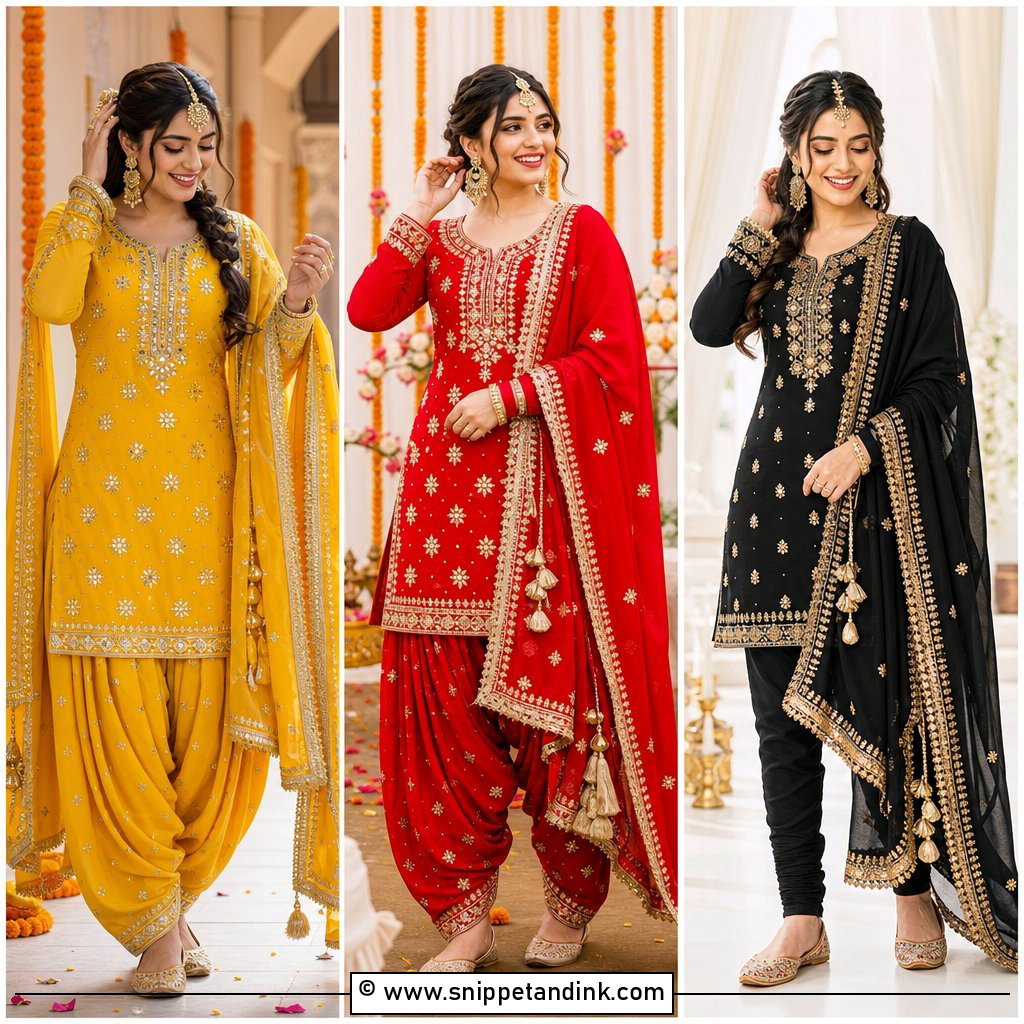
1. Yellow Gharara Pakistani Mehndi Dress
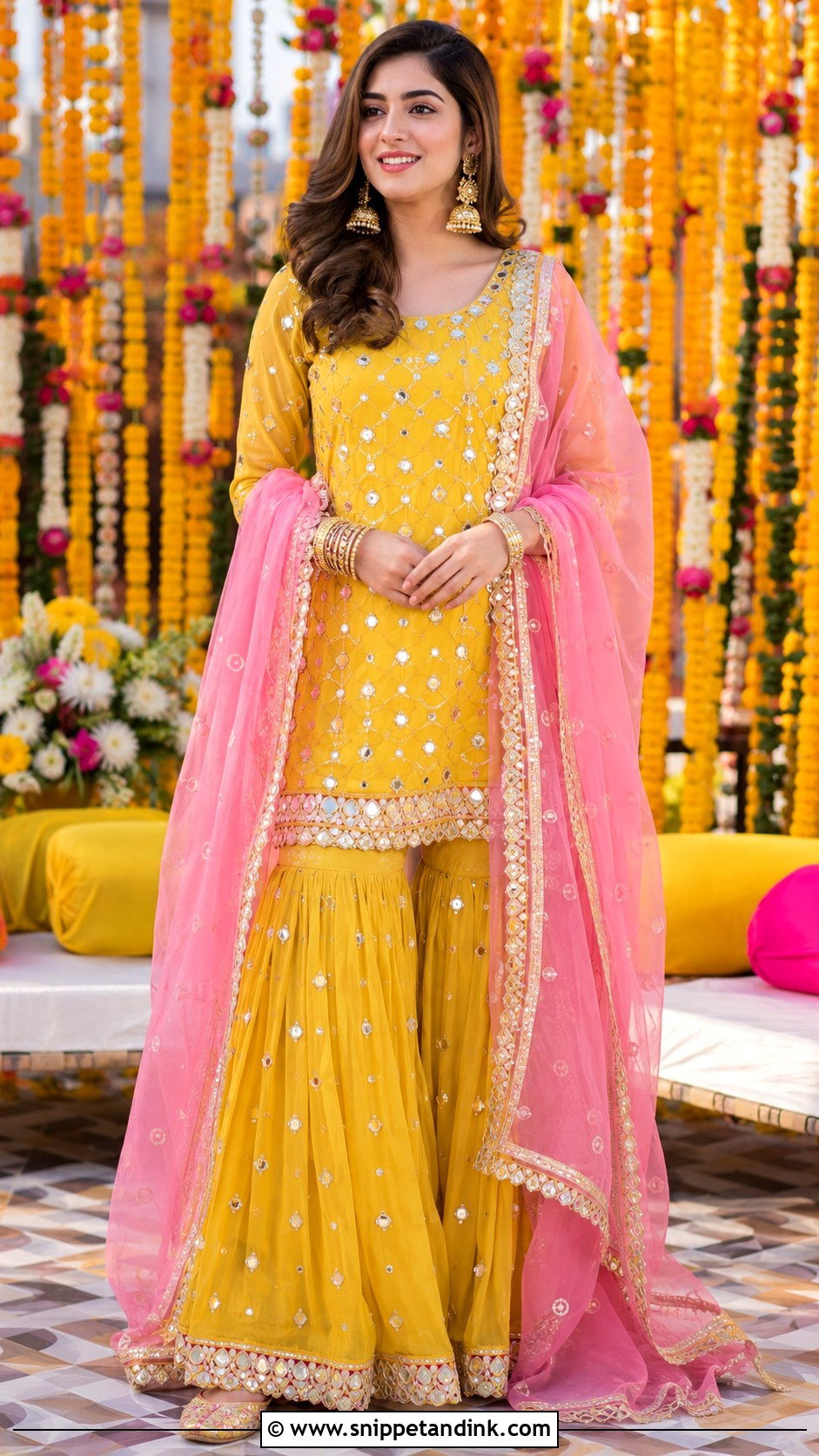
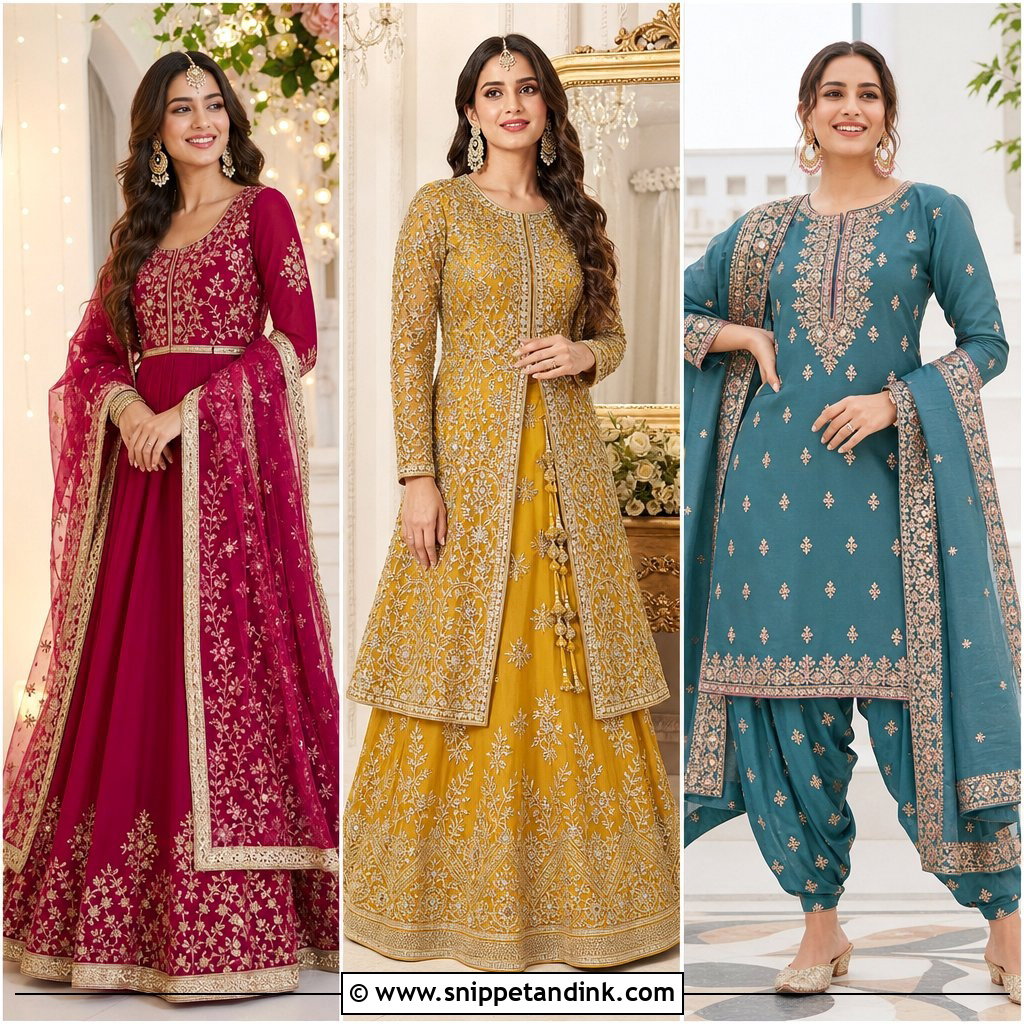
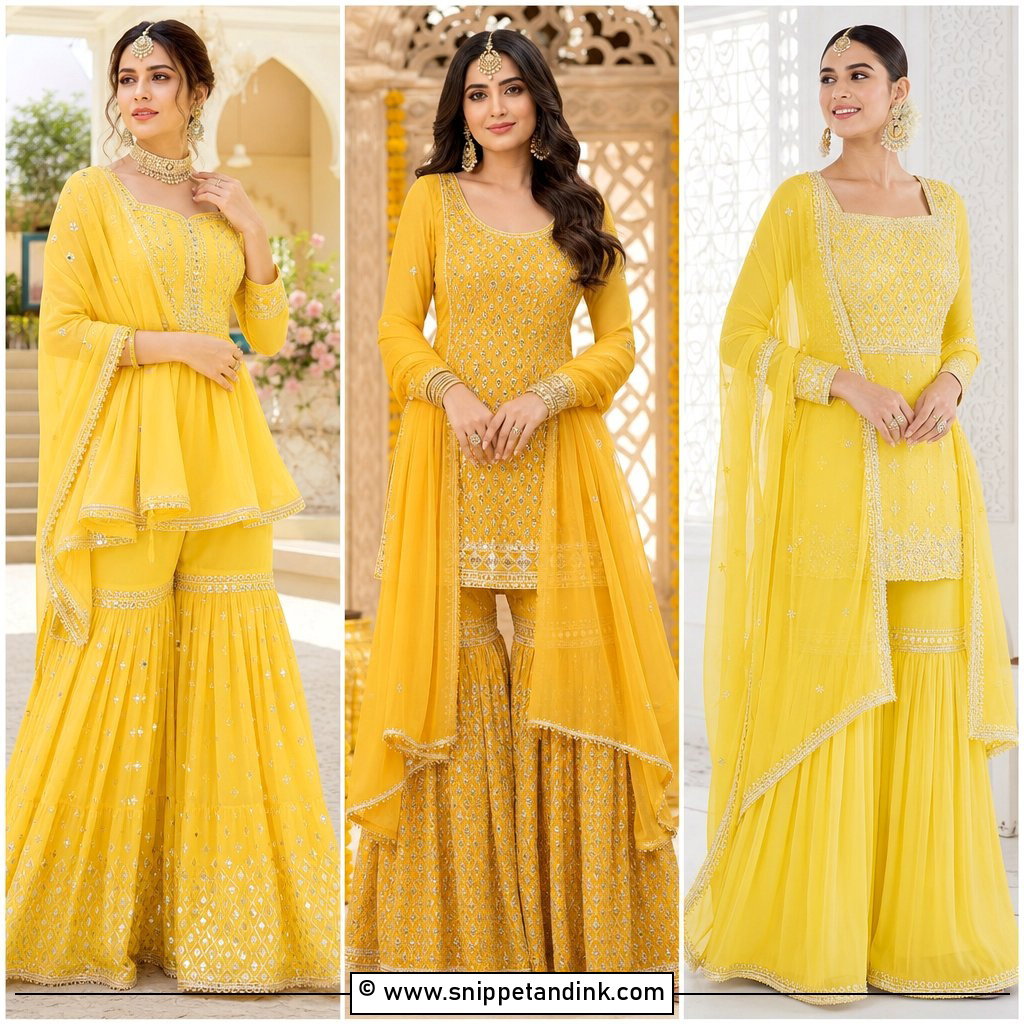
A yellow gharara is the cheerful mehndi outfit I come back to every season. A gharara is fitted to the knee and then flares from a gathered band, so it moves well when you dance but needs a little lifting on stairs. Keep the kameez short, with mirror work, gota borders or colorful thread. A pink, green or orange organza dupatta adds contrast. If you are getting henna yourself, choose three-quarter sleeves so the fabric never touches the wet paste. Gold jhumkas, stacked bangles, embroidered khussa, peach blush and a flower-trimmed braid finish it.
2. Green Sharara Pakistani Mehndi Dress
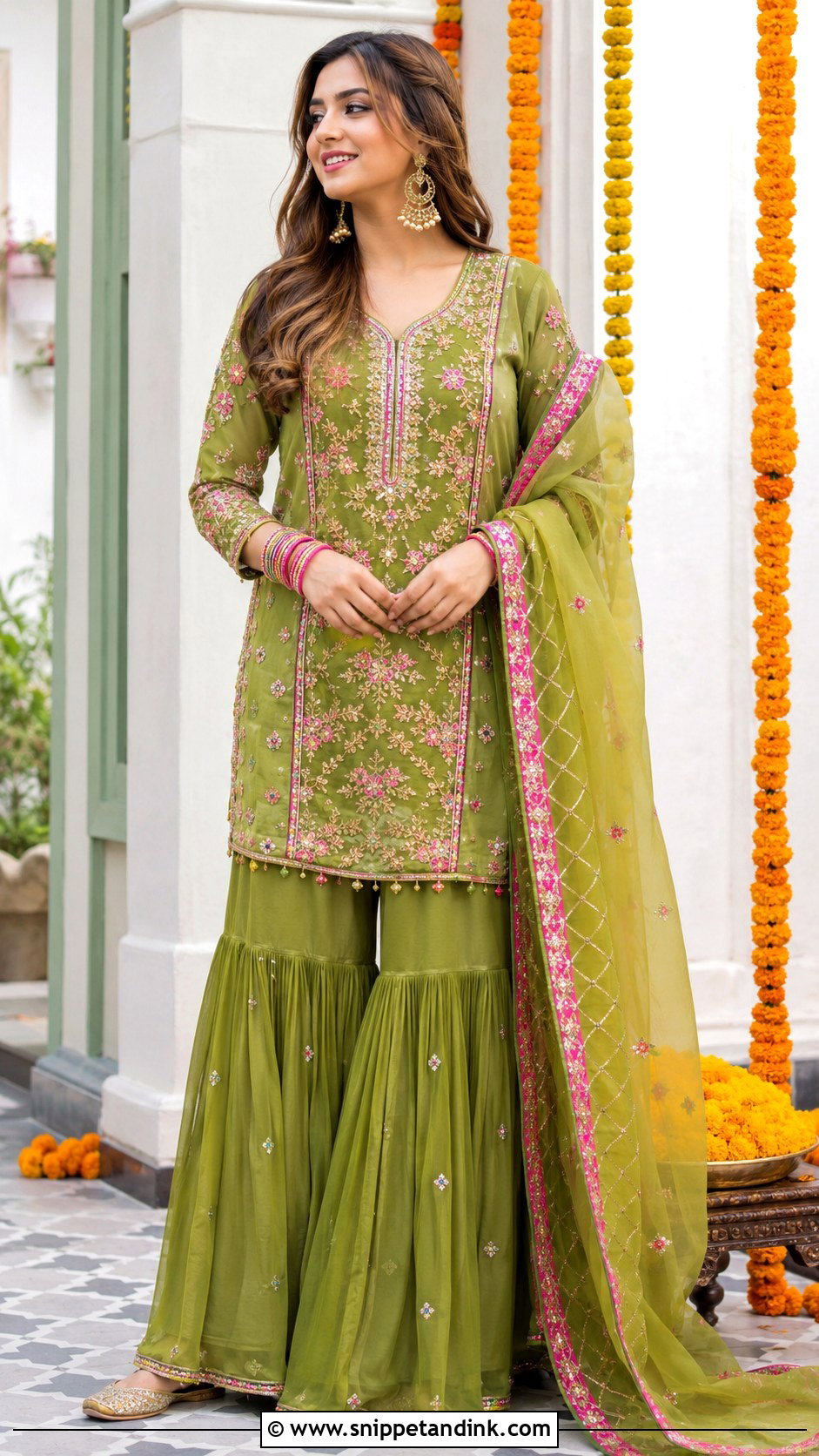
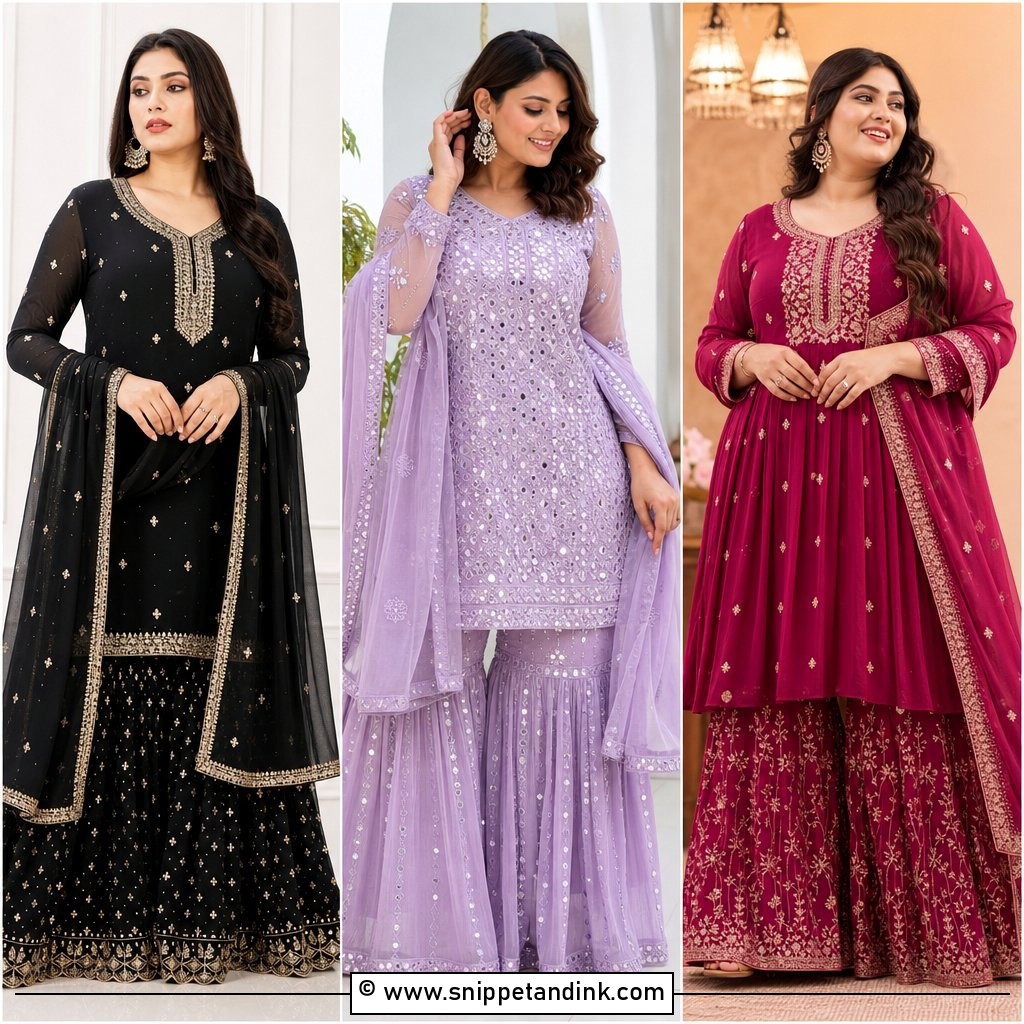
Rich green holds its own against bright mehndi decor, and it looks deeper and richer under evening lights. Pair a knee-length embroidered kurti with a chiffon or georgette sharara, which is wide from the waist down and far easier to dance in than a gharara. Gold gota, mirrors and touches of hot pink keep it playful. The kurti should be fitted or lightly structured, otherwise all that width below makes you look shapeless. Drape the dupatta over one shoulder so your hands are free. Gold khussas, colorful bangles, mid-sized chandbalis, loose curls and a soft gold lid suit it.
3. Pink Lehenga Pakistani Dholki Dress
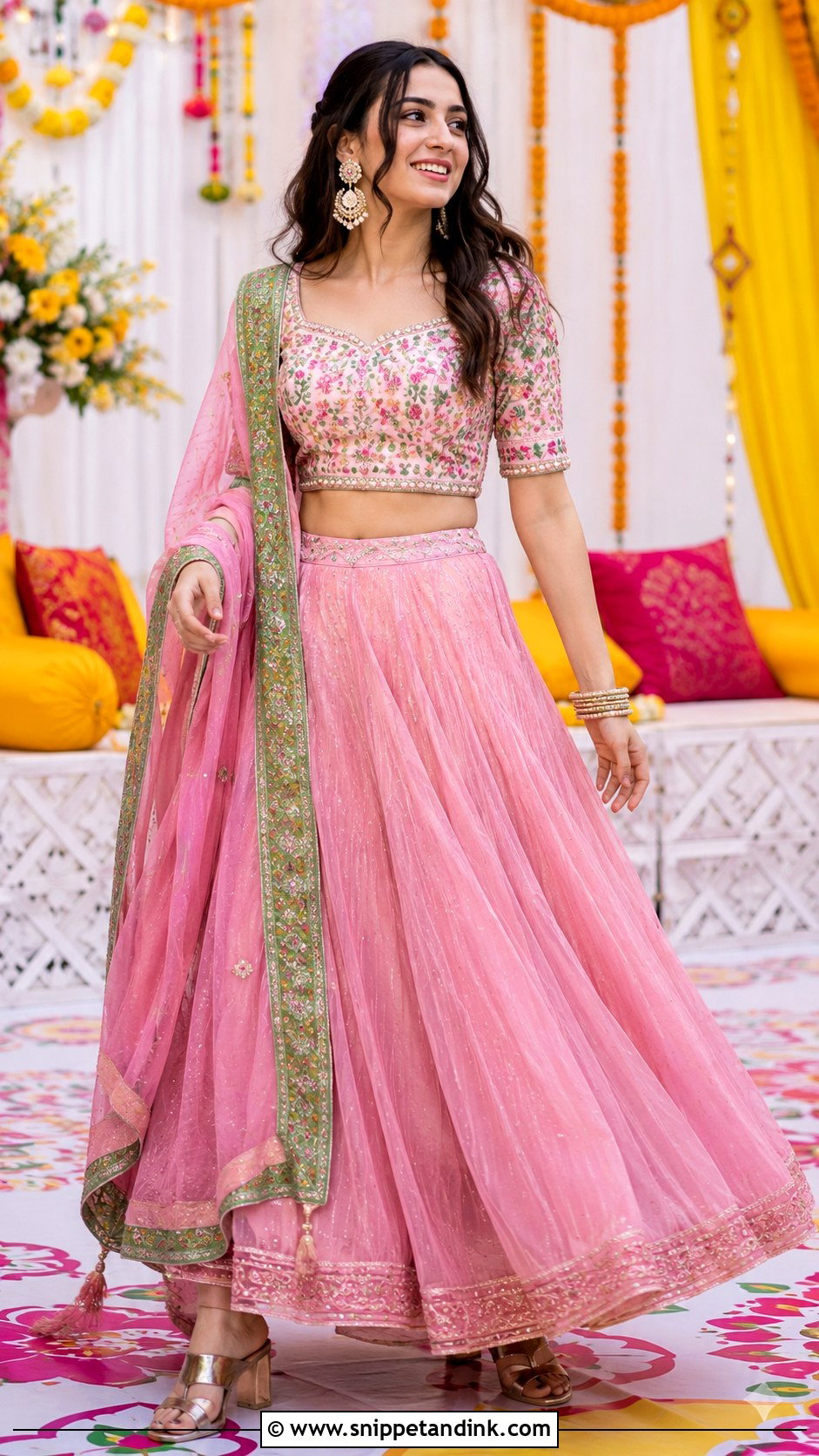
Dholki nights are long, loud and mostly spent sitting on the floor singing, so I dress clients for comfort first. A pink lehenga with a short embroidered blouse looks festive without the formality of a baraat outfit. Raw silk, cotton silk or georgette are the right weights; anything heavily layered gets hot within the first hour. Small florals, gota lines and a green border give it character. Wear the dupatta diagonally across the body so it stays put when you clap. Pearl-and-gold earrings, slim bangles, block heels, a half-up style and a long-wearing lip color take you through the night.
4. Orange Kurta Palazzo Pakistani Mehndi Dress
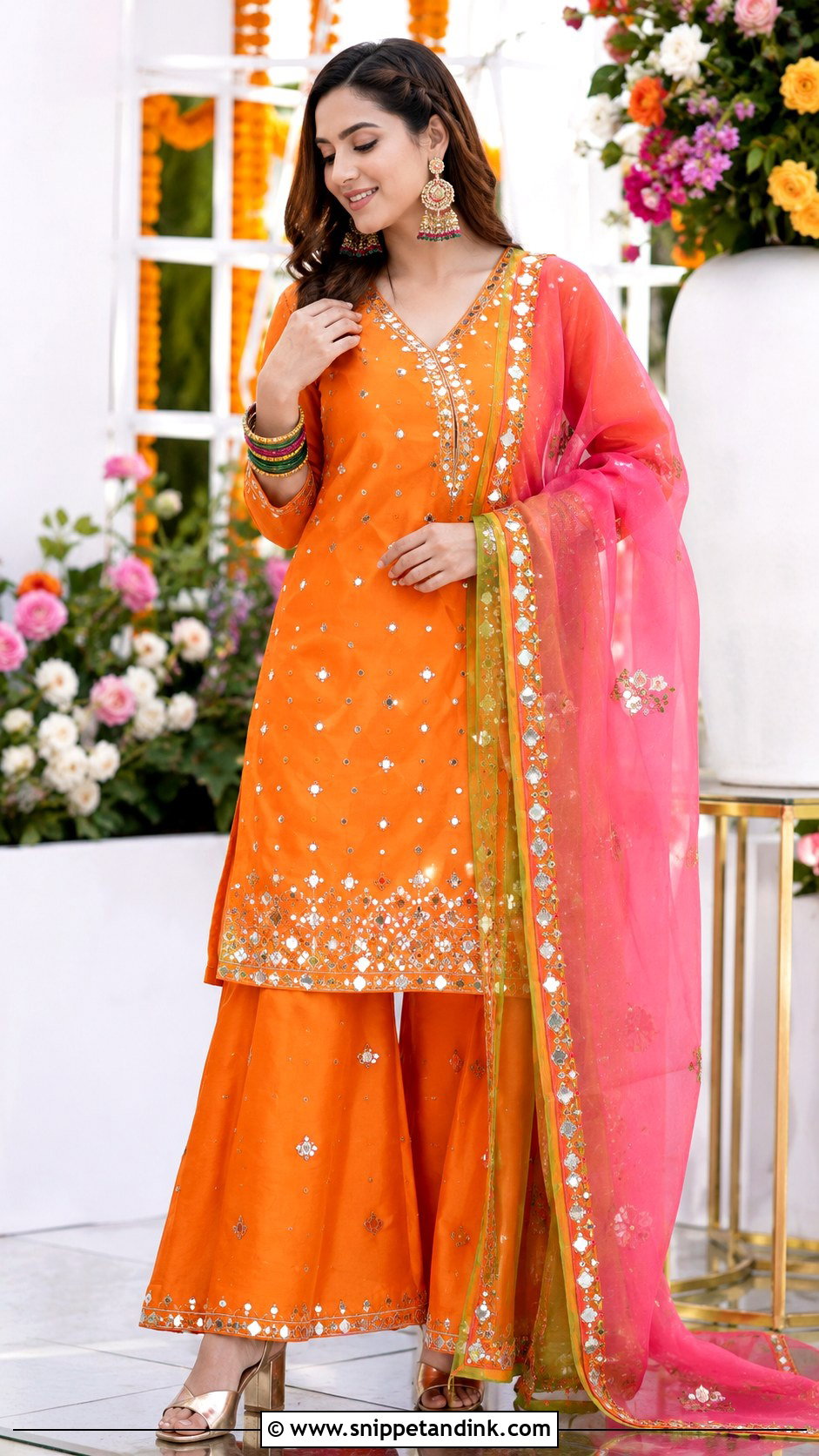
Not everyone wants to manage a lehenga at a mehndi. An orange embroidered kurta over wide palazzos gives you the festive color with none of the skirt management. I prefer a straight or slightly flared kurta, finished with mirror work, resham or fine gota at the neckline and sleeves. Palazzos should graze the top of the shoe; any longer and you will step on the hem while dancing. A pink-and-green dupatta lifts the orange. Statement jhumkas, a few bangles, metallic block heels, a sleek low bun and bronze shadow complete the look.
5. Floral Anarkali Pakistani Mayun Dress
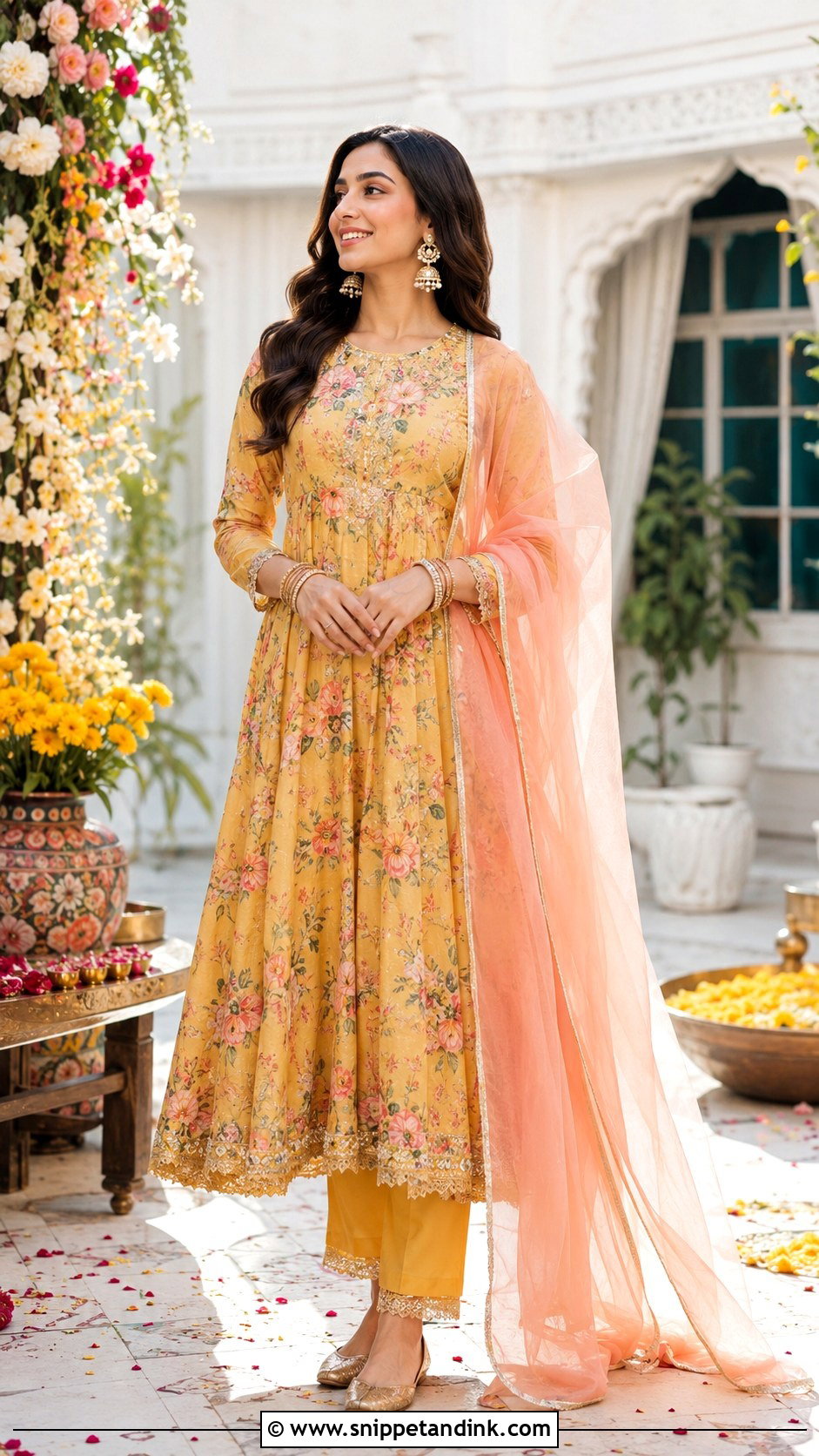
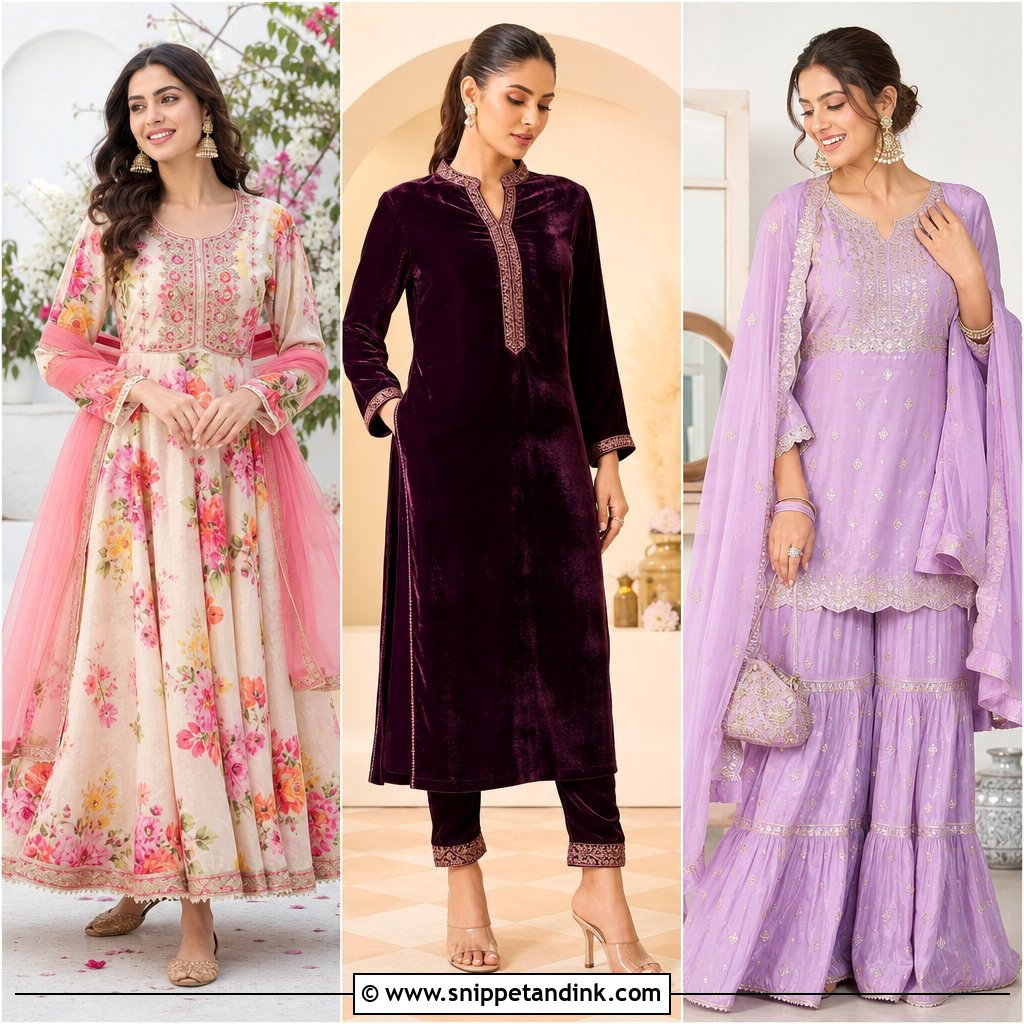
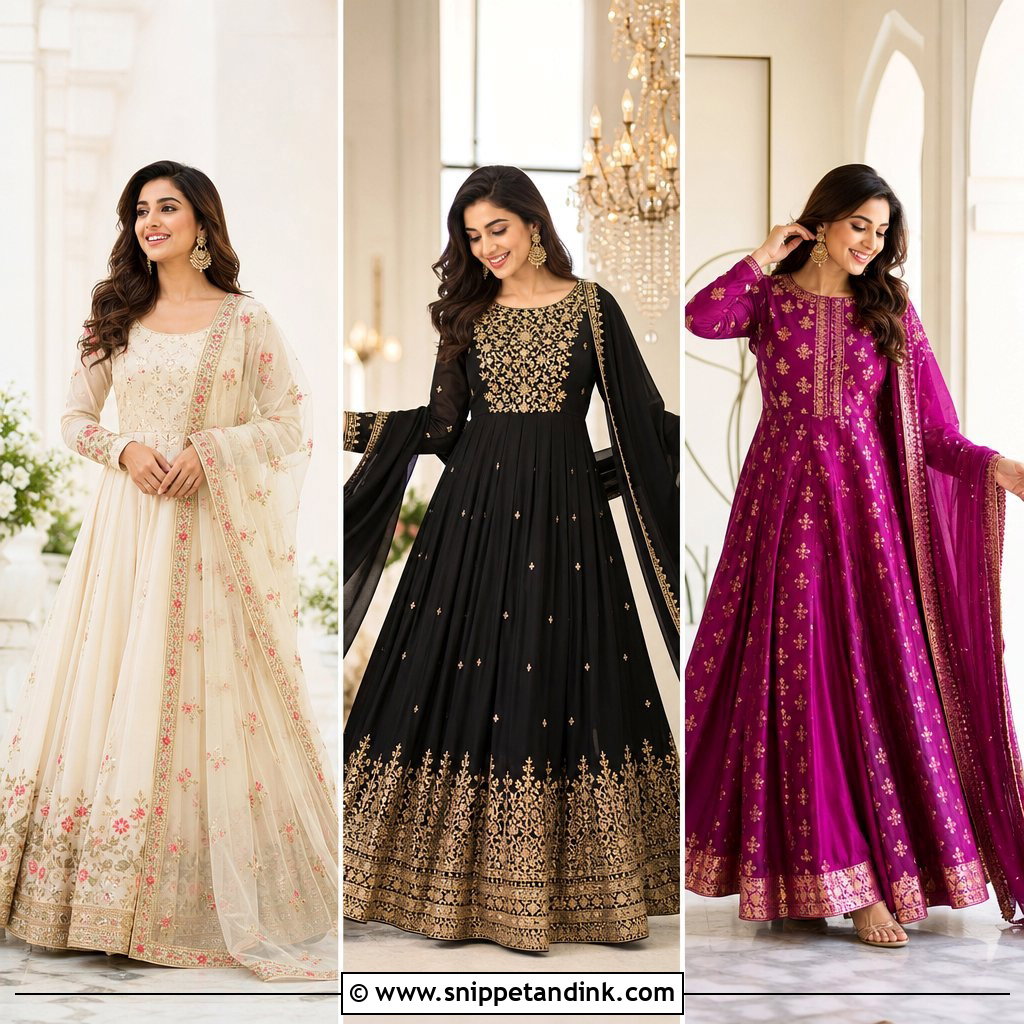
A floral Anarkali is a softer answer to the standard solid yellow mayun outfit. Pick a light, ankle-length dress with a cream, yellow, peach or mint base and small multicolored flowers, plus a lightly embroidered neckline and narrow gota border. Choose the dupatta by pulling one color from the print rather than matching the base; it ties the outfit together far better. Mayun usually involves haldi or ubtan, so a busy print hides marks well. Pearl jhumkas, delicate bangles, gold khussas, soft curls and coral lips keep it daytime-friendly and modest.
6. Pastel Pishwas Pakistani Nikkah Dress
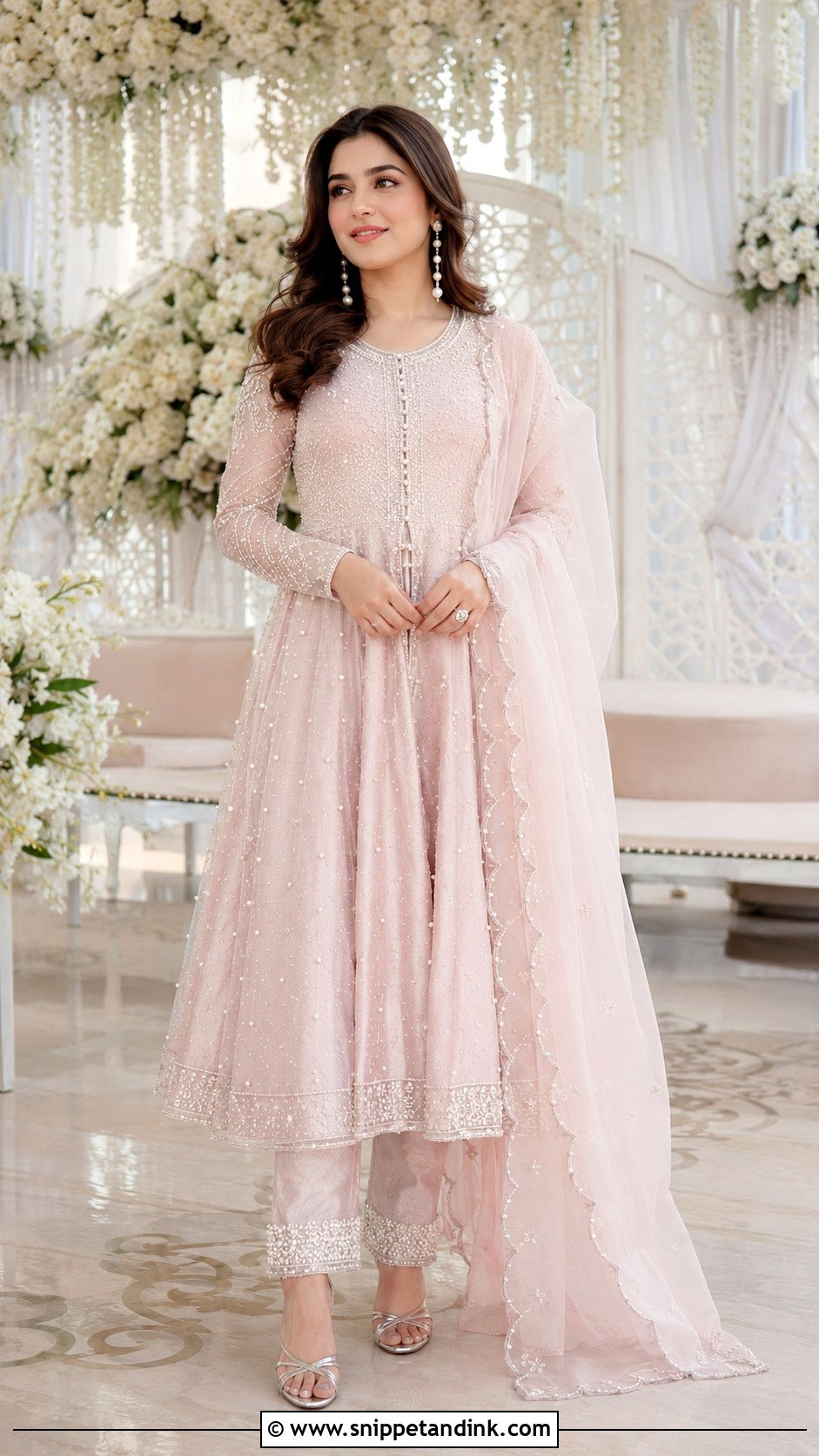
A pastel pishwas moves well and suits the calm mood of a nikkah. Blush, powder blue, pistachio and dusty lilac all work, but I always tell clients to check the bride’s plans before wearing ivory or white; at many nikkahs that is her color. A fitted bodice over a flowing skirt, with pearl, sequin or thread detail, keeps it graceful. Straight pants and a sheer organza dupatta with a fine edge finish it. Pearl drops, a delicate ring, champagne heels, a low bun with face-framing pieces and a mauve-pink lip complete the look.
7. Powder Blue Gharara Pakistani Nikkah Dress
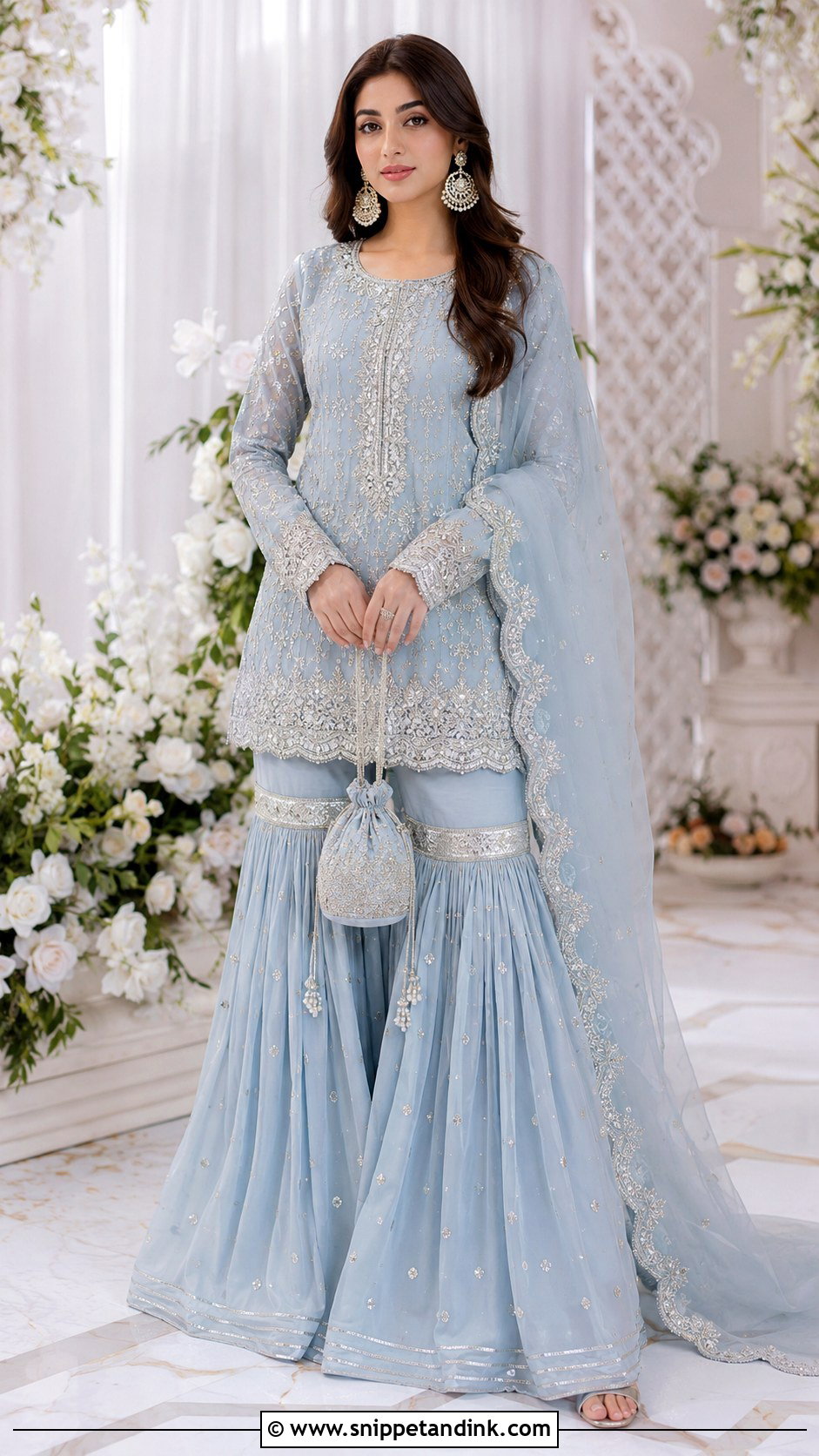
Powder blue is formal enough for a close cousin’s nikkah and still clearly a guest look. Pair a short straight shirt with a flared gharara edged in narrow silver or pearl bands. Keep the heaviest work at the shirt neckline and lighter work across the body. I check the gharara’s gathered knee band at the fitting, since a band sewn too low makes the flare start below the knee and shortens the legs in photos. An organza dupatta with a scalloped edge, pearl chandbalis, a small potli, silver heels and a center-parted low bun finish it with cool-toned makeup.
8. Lavender Kurta Trouser Pakistani Nikkah Dress
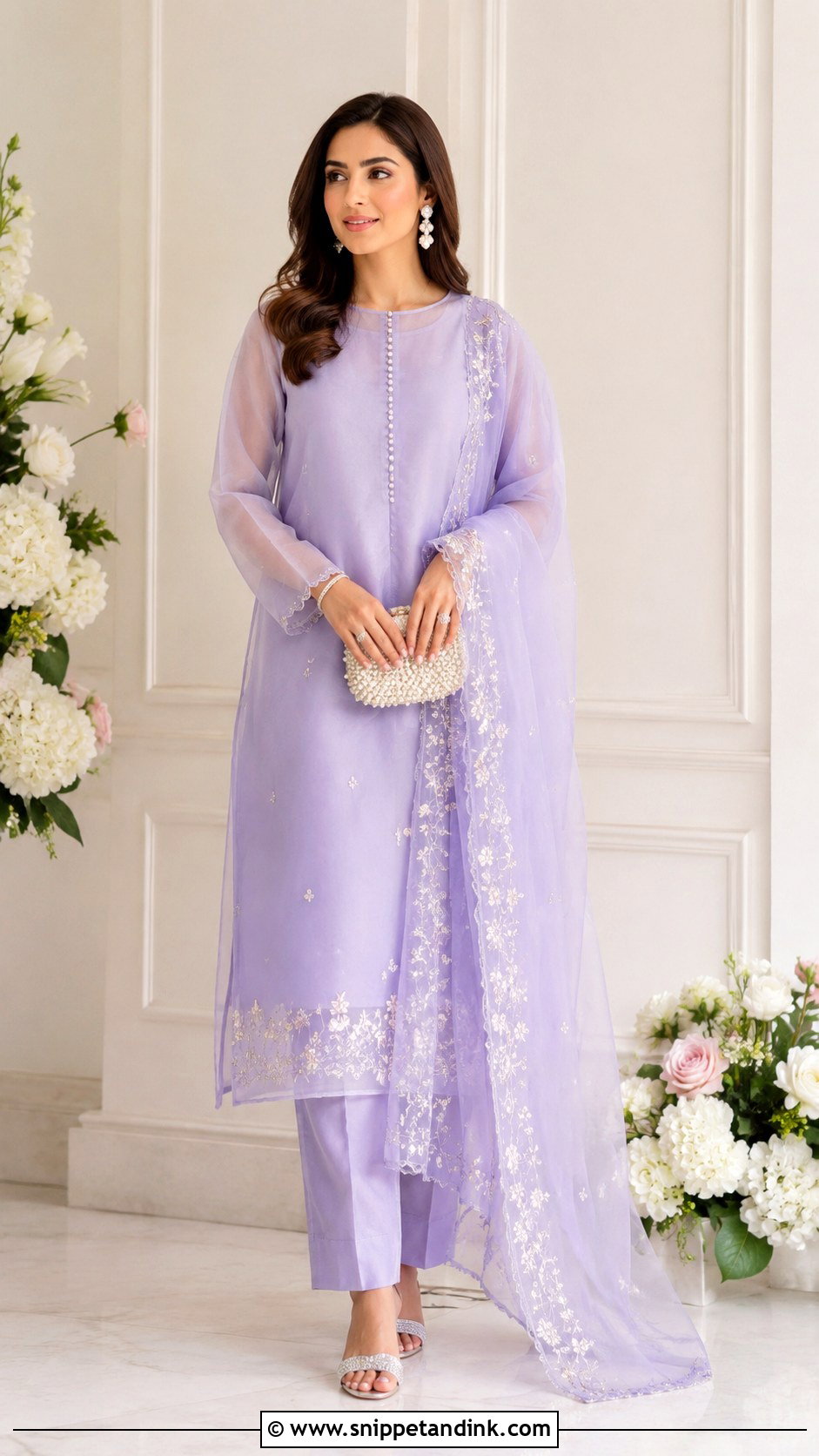
For a simple daytime nikkah, I like a lavender kurta with straight trousers more than a full outfit. An organza or silk kurta with white threadwork, pearl buttons or light silver embroidery looks polished without feeling overdressed. Organza creases sharply when you sit through a long ceremony, so a silk kurta is the safer choice if the nikkah runs long. Tailored trousers keep the top looking clean. A sheer matching dupatta, silver sandals, pearl earrings and a compact clutch suit it. Straight hair behind the ears looks modern; a low ponytail works too.
9. Emerald Lehenga Pakistani Baraat Dress
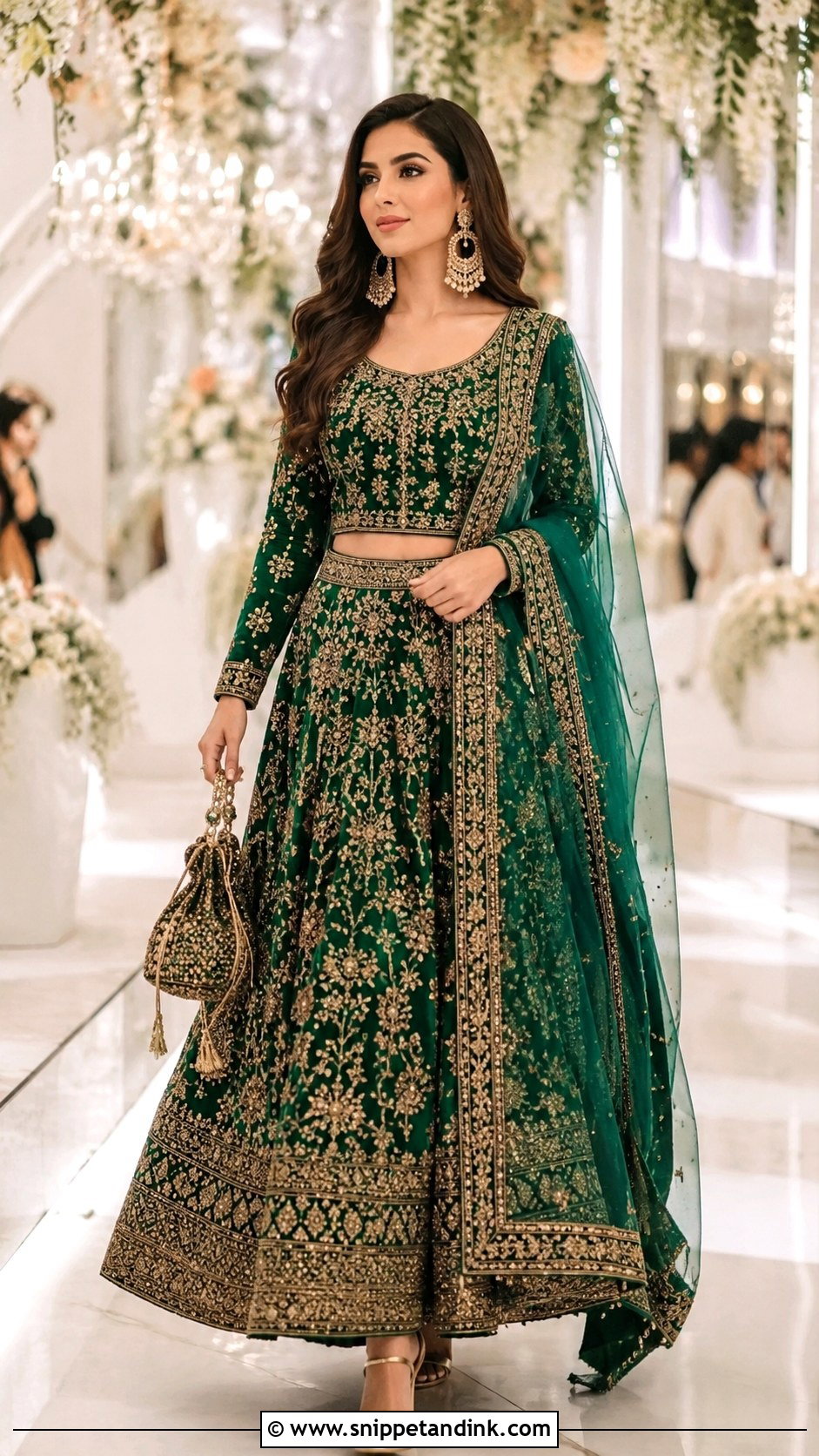
An emerald lehenga has the richness a baraat needs without stepping into bridal red. The gold embroidery should sit mostly at the border, with light scatter across the skirt, and the blouse should be fitted. A sheer dupatta with a coordinated gold edge finishes the outfit. Because the lehenga already carries plenty of visual weight, I steer clients away from a big necklace; statement earrings, a slim bracelet and a ring are enough, especially when the bride is wearing a heavy set. Gold heels, a structured potli, polished waves and warm metallic eyes with a berry-nude lip finish it.
10. Navy Blue Maxi Pakistani Baraat Dress
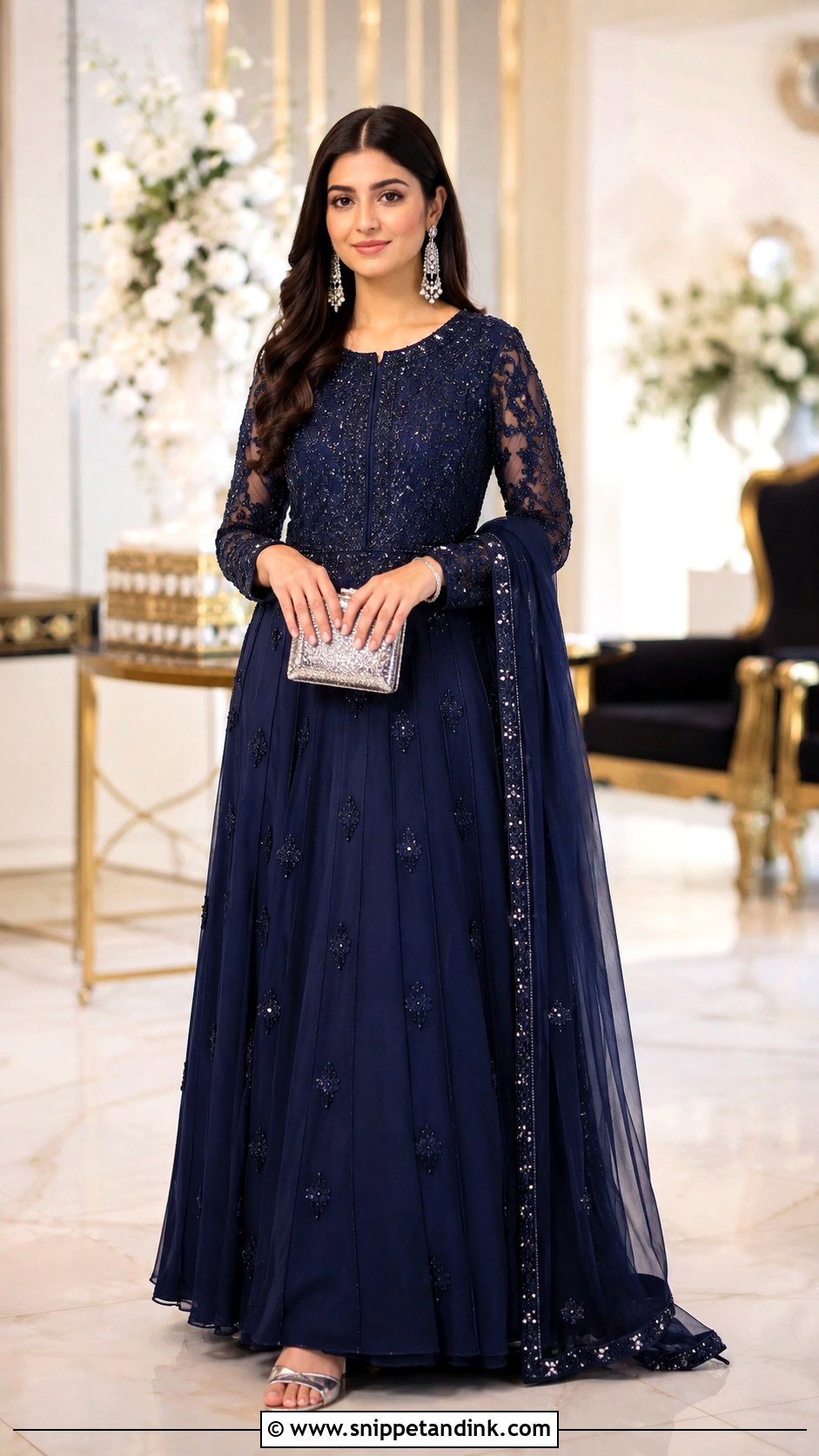
Deep navy holds up under bright baraat lighting, where pastels can wash out. A floor-length maxi with a structured bodice, flared skirt and gold or antique silver embroidery is the classic shape. Pin the lightly embellished dupatta over one arm so the dress silhouette stays visible. If the neckline is busy, go for long earrings and skip the necklace. I recommend a neat updo with this one, because a heavy maxi plus loose hair plus a dupatta becomes a lot to manage when you are greeting guests. Metallic heels, a small clutch and softly smoked eyes complete it.
11. Plum Sharara Pakistani Baraat Dress
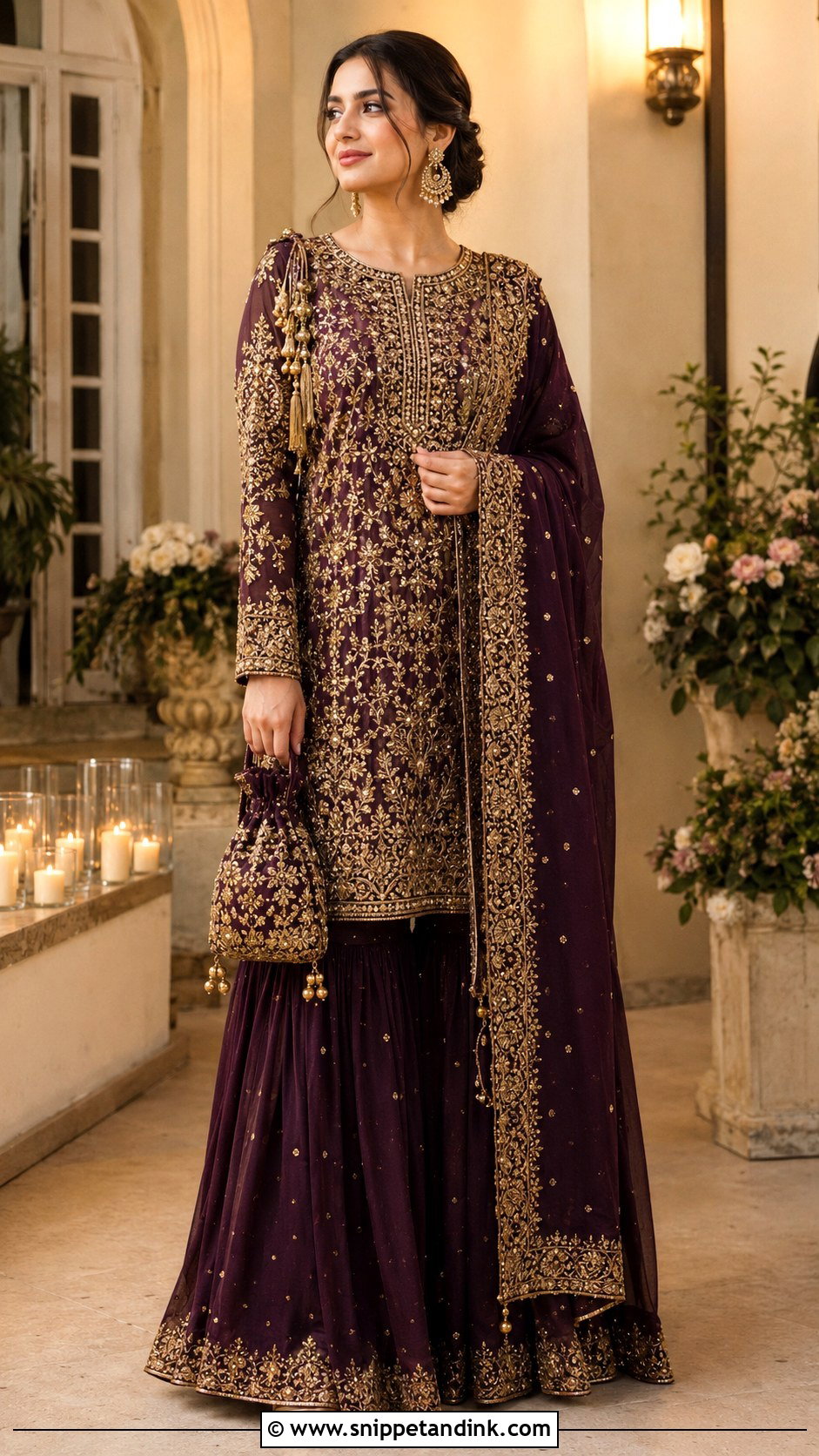
Plum gives a baraat outfit depth without competing with the bride’s red. Wear a long embroidered shirt over a flowing silk, chiffon or georgette sharara, with antique gold, bronze or dull silver detailing rather than bright embellishment. Antique finishes are also kinder in photos, since bright gold can flare under strong lights. Drape the dupatta over one shoulder and secure it at the wrist. Antique gold earrings, a coordinated potli and comfortable block heels see you through long family photos. Soft side-swept waves or a low bun, warm brown eye makeup, plum blush and a berry lip tie it together.
12. Teal Peplum Lehenga Pakistani Baraat Dress
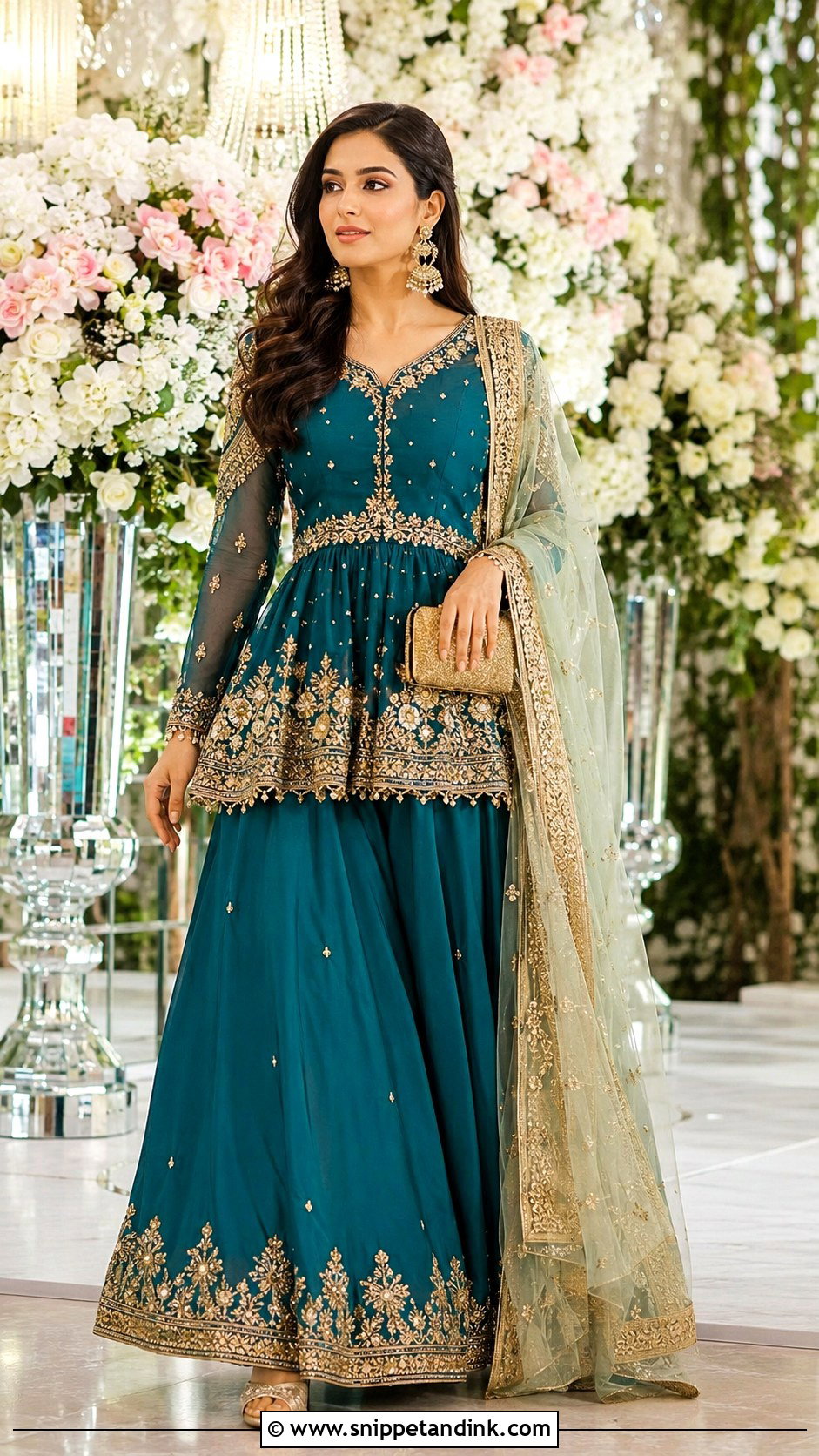
A peplum over a lehenga gives you definition at the waist without a cropped blouse, which is why I suggest it to clients who are not comfortable showing their midriff. In teal, the fitted waist and flared peplum balance a full skirt. Put the heavier work on the peplum’s sleeves, neckline and hem, and keep the lehenga simpler. The peplum should finish at the high hip; too long and it flattens the skirt’s flare. A teal or champagne dupatta over one shoulder, gold chandbalis, a compact clutch, dressy block heels and a soft curled bun finish it.
13. Black Velvet Kurta Pakistani Winter Wedding Dress
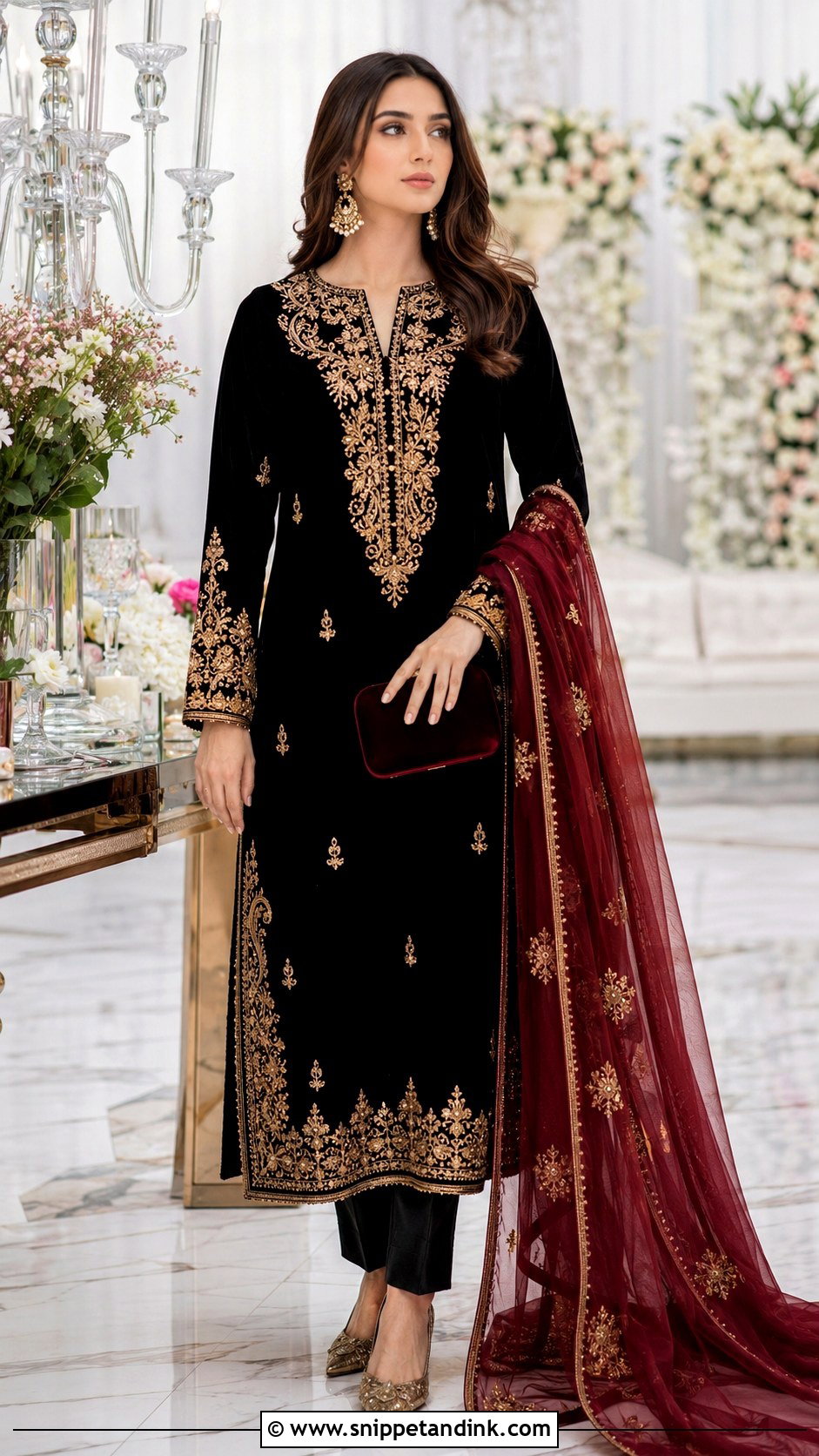
Black velvet suits a winter baraat or reception, but check with the family first, as some households still avoid black at weddings, especially at the pre-wedding functions. A knee-length or long kurta with antique gold embroidery at the neckline, cuffs and hem is the base. Straight raw-silk trousers keep it balanced, since velvet trousers under a velvet kurta make the whole outfit heavy. Velvet marks when you sit, so I tell clients to smooth the back of the kurta each time they stand. Add a maroon, emerald or black organza dupatta, gold earrings, a velvet clutch and closed heels.
14. Maroon Angrakha Pakistani Wedding Dress
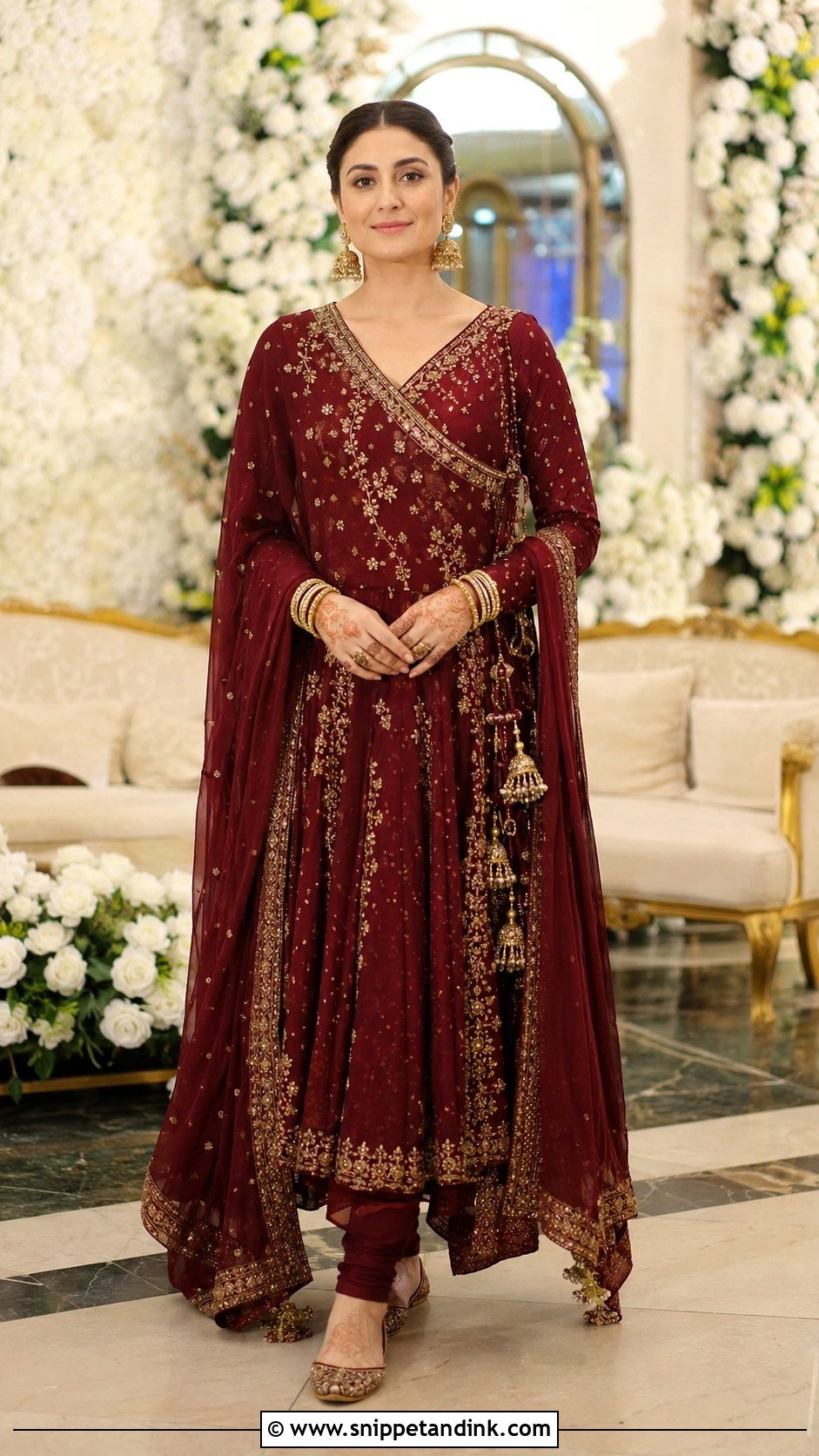
An angrakha wraps across the body and ties at the side, so the fit depends on where those ties sit. I mark the tie position at the fitting with the client seated, because a wrap that gapes when you sit shows more than you planned. In maroon, with a defined waist and flared lower half, it suits a formal evening celebration. Keep the gold threadwork or small sequins light so it never reads as bridal. Churidar pants and a sheer dupatta loosely over the arms, plus antique jhumkas, stacked bangles and embroidered khussas, complete it.

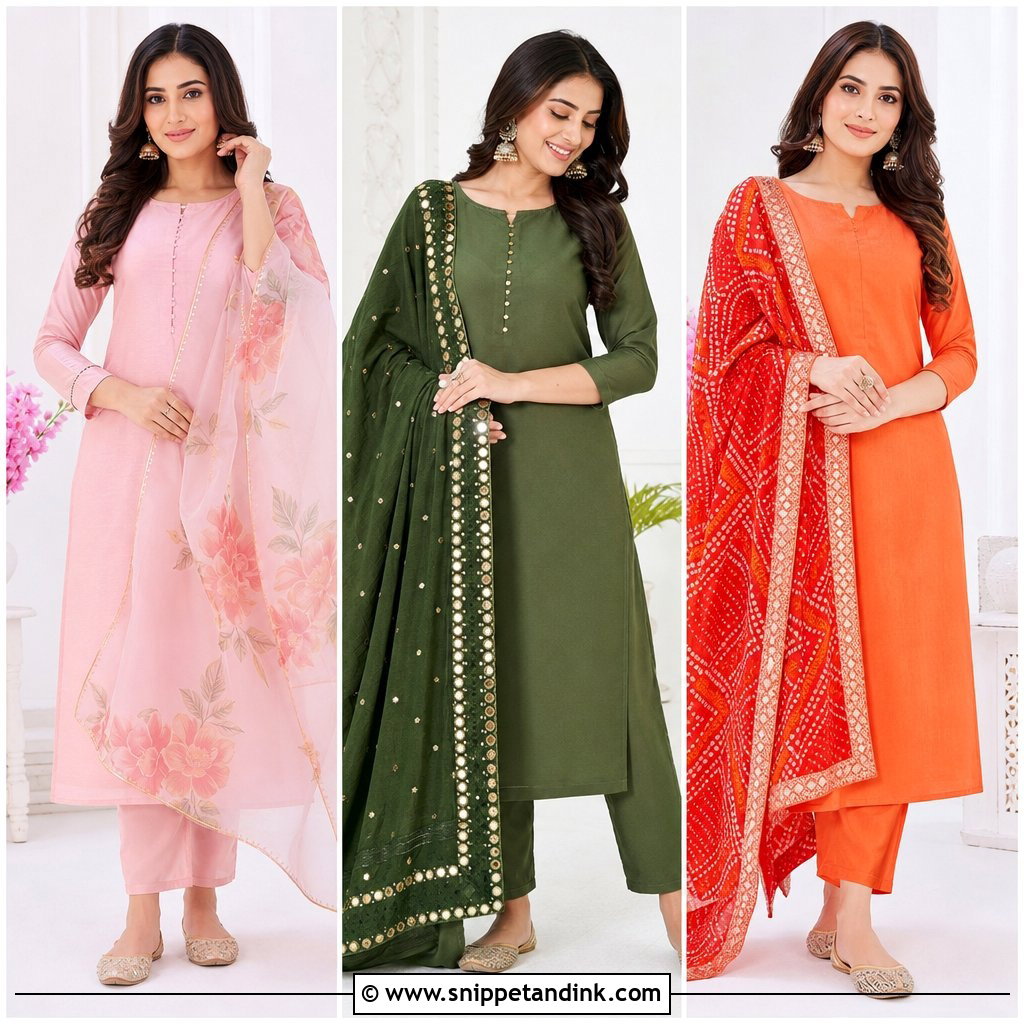
15. Rose Gold Sari Pakistani Walima Dress
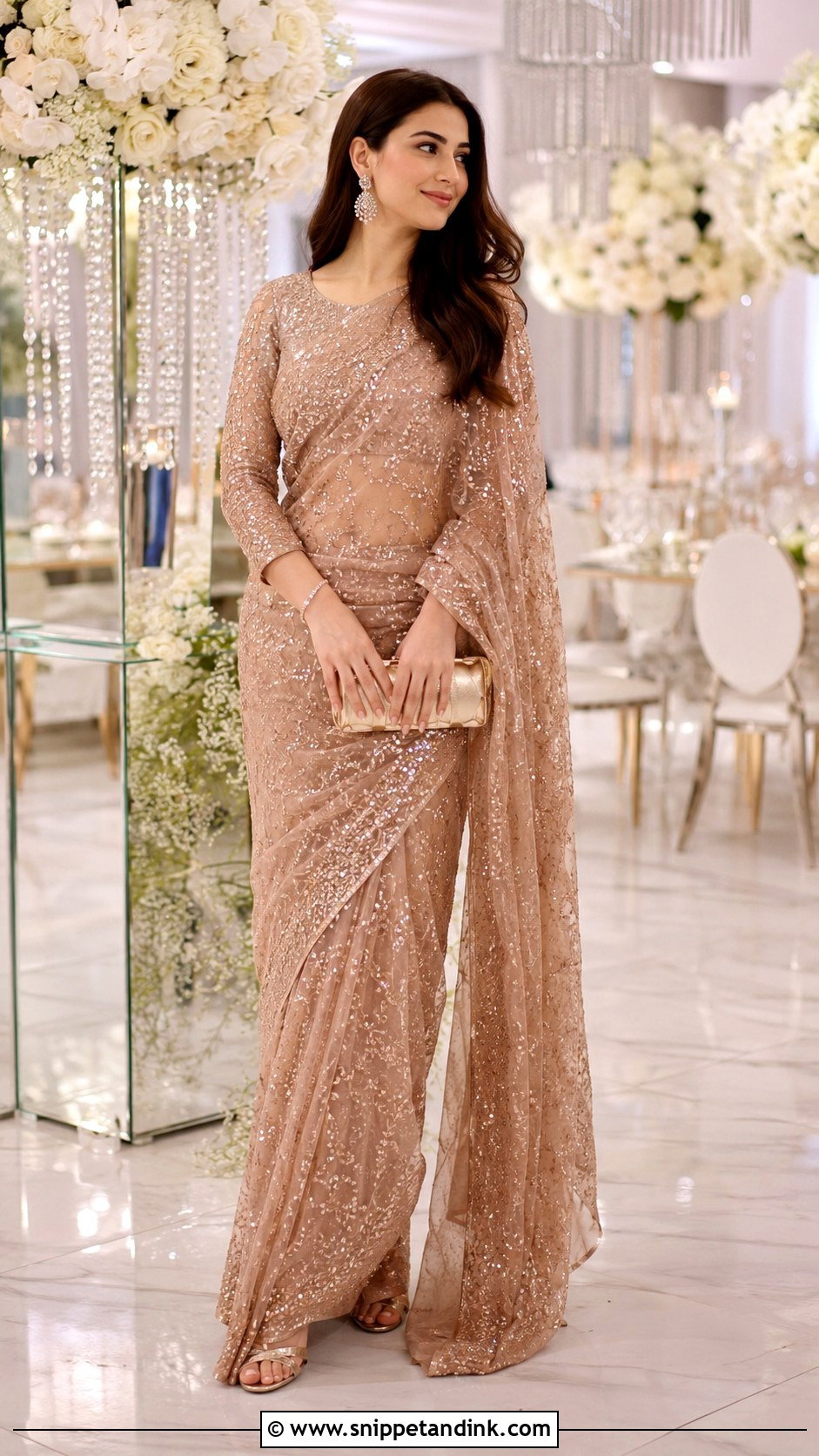
A rose gold sari has the polish a walima calls for, with a softer feel than bright gold. Chiffon, net or organza with fine sequins, pearls or an embroidered border all work, and the blouse needs modest sleeves and a supportive neckline. If you rarely wear a sari, have the pleats and pallu pinned by someone experienced, and wear it for half an hour before you leave; a sari pinned in a hurry starts slipping by dinner. Crystal drops, a delicate bracelet, a metallic clutch and champagne heels finish it. Check the bride’s palette before choosing a very pale champagne.
16. Silver Gray Pishwas Pakistani Walima Dress
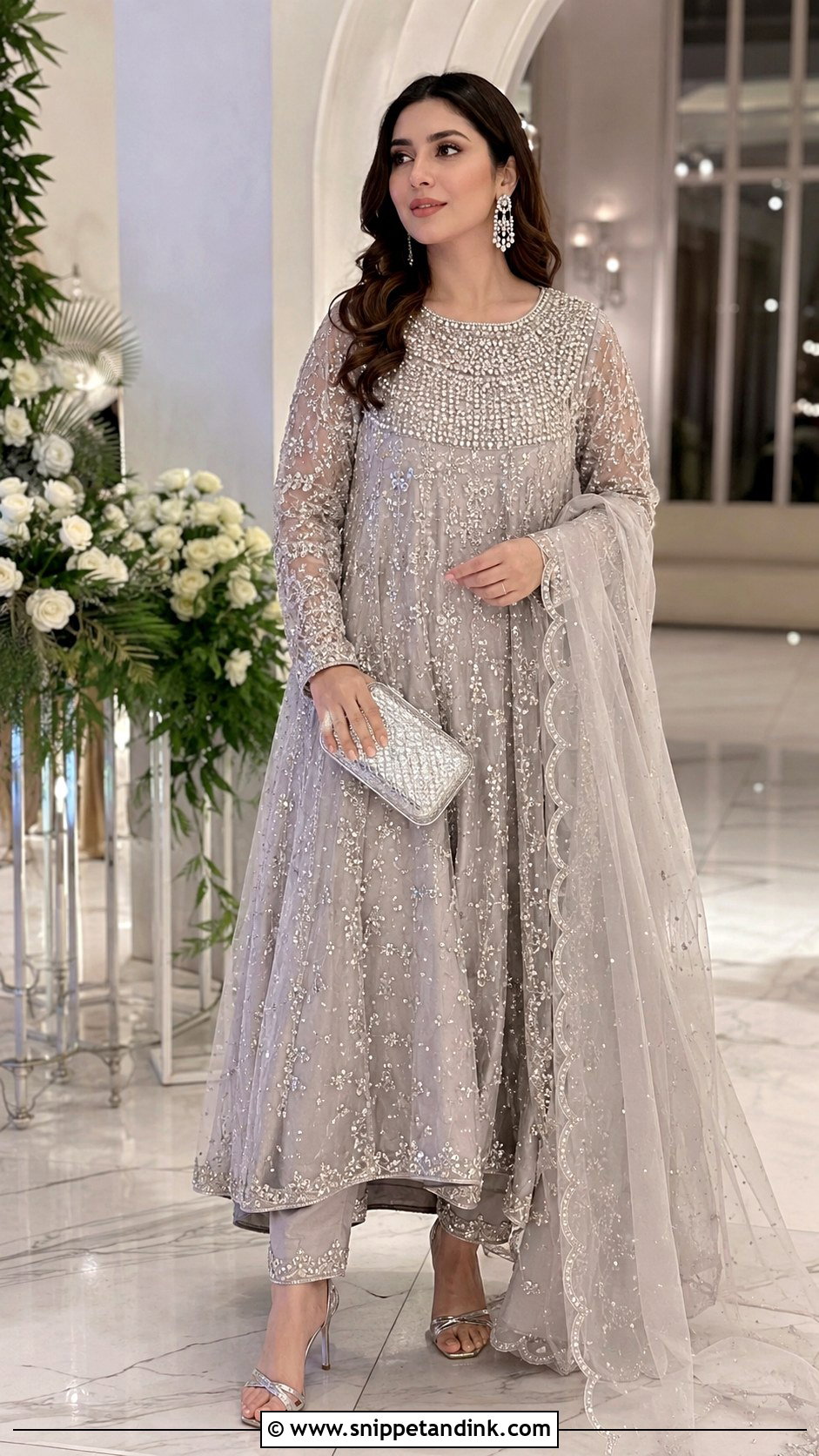
A silver gray pishwas is refined and well suited to an evening walima. Crystal, pearl or silver thread details belong at the bodice, sleeves and hem, with straight pants underneath and a sheer dupatta with a scalloped edge. Gray can look flat in person if the fabric is matte, so I steer clients toward a fabric with a little sheen. Keep the accessories cool: crystal earrings, a silver clutch, gray or metallic heels. If the neckline is high, let the earrings carry it. A smooth low bun and a mauve lip finish it.
17. Dusty Pink Kurta Palazzo Pakistani Walima Dress
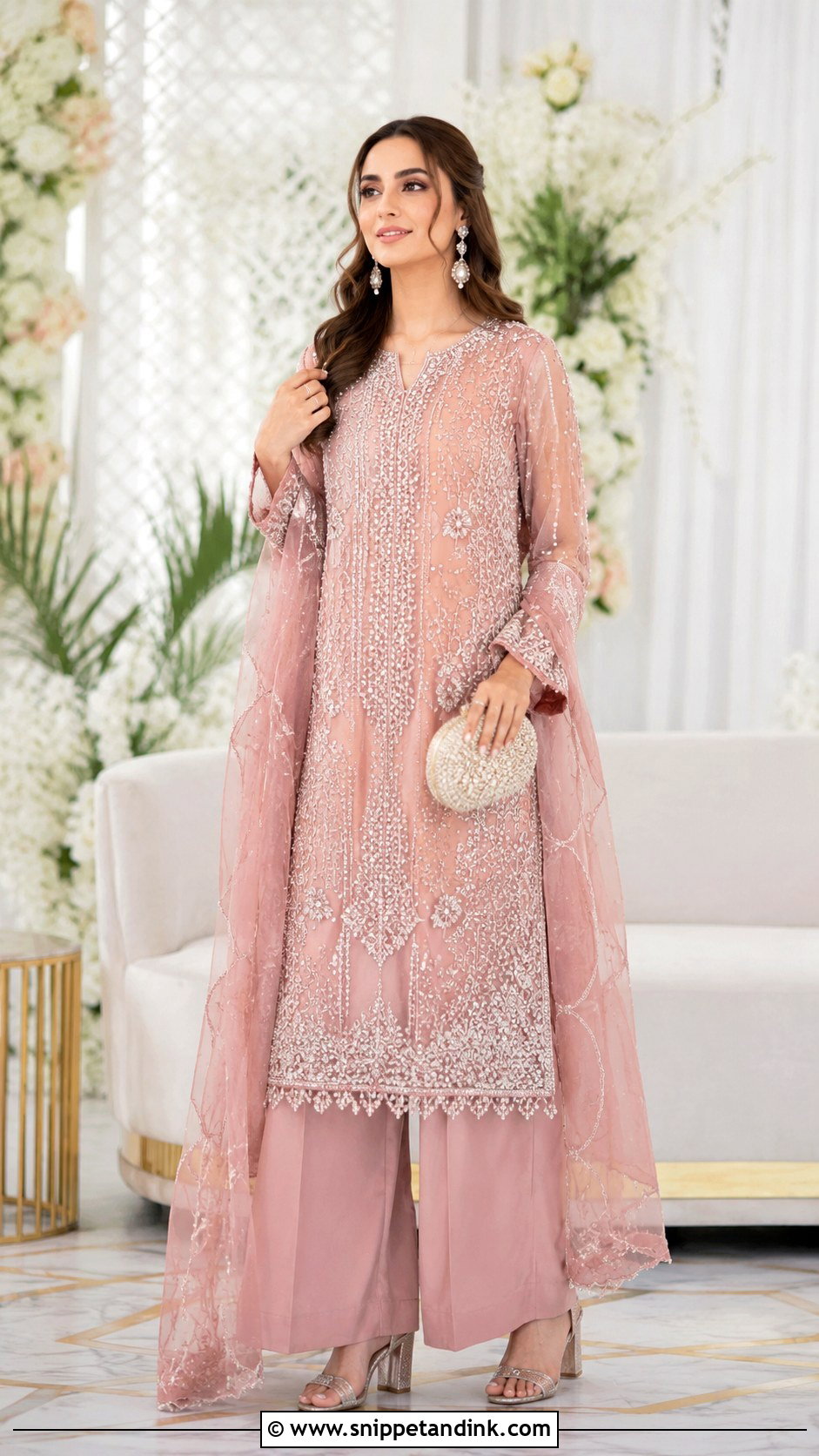
Dusty pink is the walima outfit for someone who wants to look elegant and still sit comfortably through a long dinner. Pair a long, slightly flared kurta with tailored palazzos in silk, chiffon or crepe, finished with pearl embroidery, tonal threadwork or restrained silver. Crepe drapes well and hardly creases, which matters after a long evening seated. A matching organza dupatta can go over both arms or on one shoulder. Pearl earrings, a beaded clutch, silver or nude block heels, side-parted waves and a satin pink lip suit the muted color.
18. Mint Green Cape Dress Pakistani Walima Dress
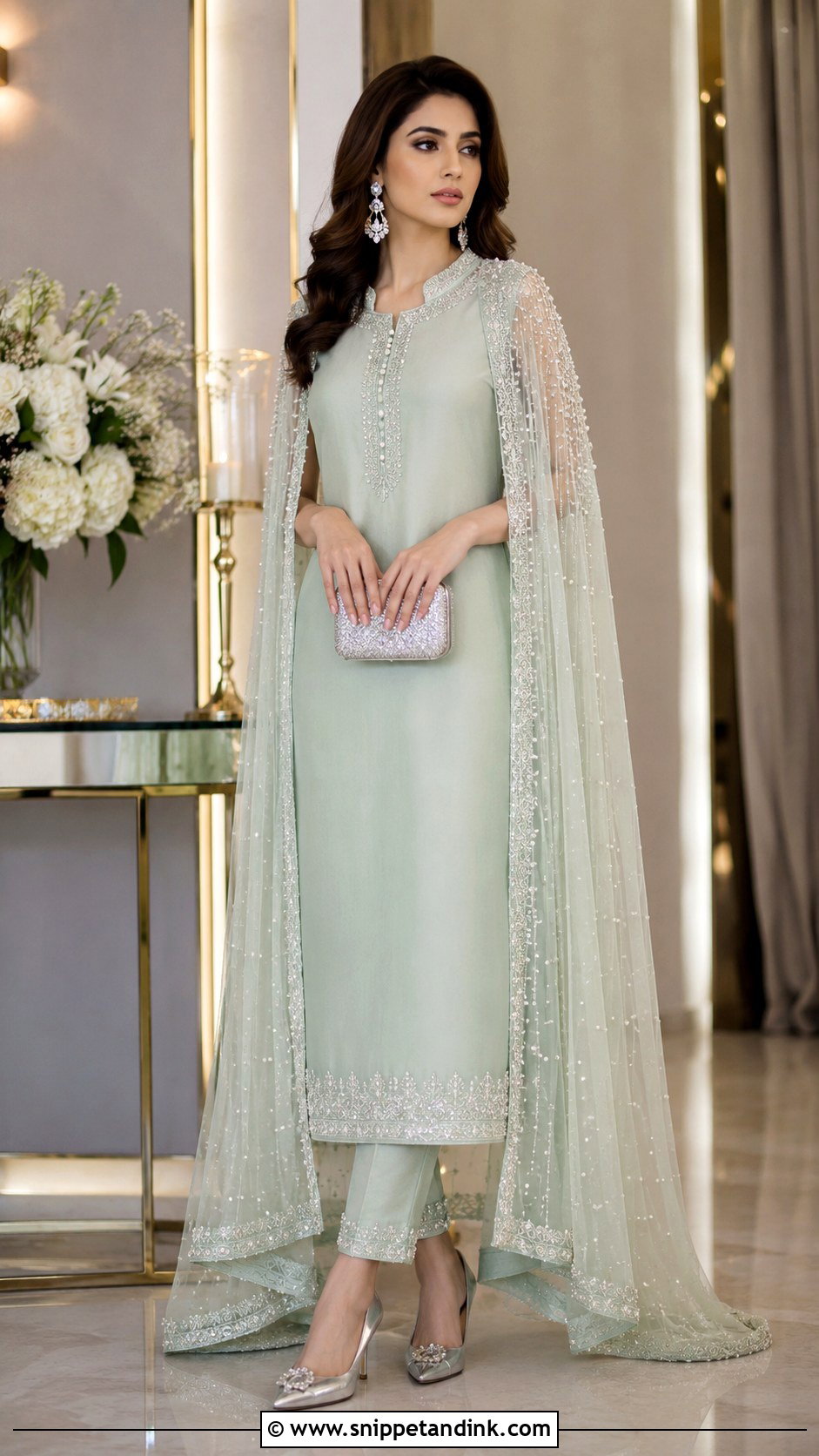
A mint green cape dress is a modern reception option that still covers the arms. The inner dress or long tunic should be fitted, with a sheer, lightly embroidered cape over it. Pearls, crystals and tonal applique give mint dimension without weight. Keep the trousers narrow to balance the cape’s volume. The cape also hides the arms when you lift your plate, which is why older clients often ask me for this cut. Crystal earrings, a silver box clutch, pointed metallic heels and a sleek ponytail or smooth bun let the shoulders show.
19. Ivory Floral Sari Pakistani Day Wedding Dress
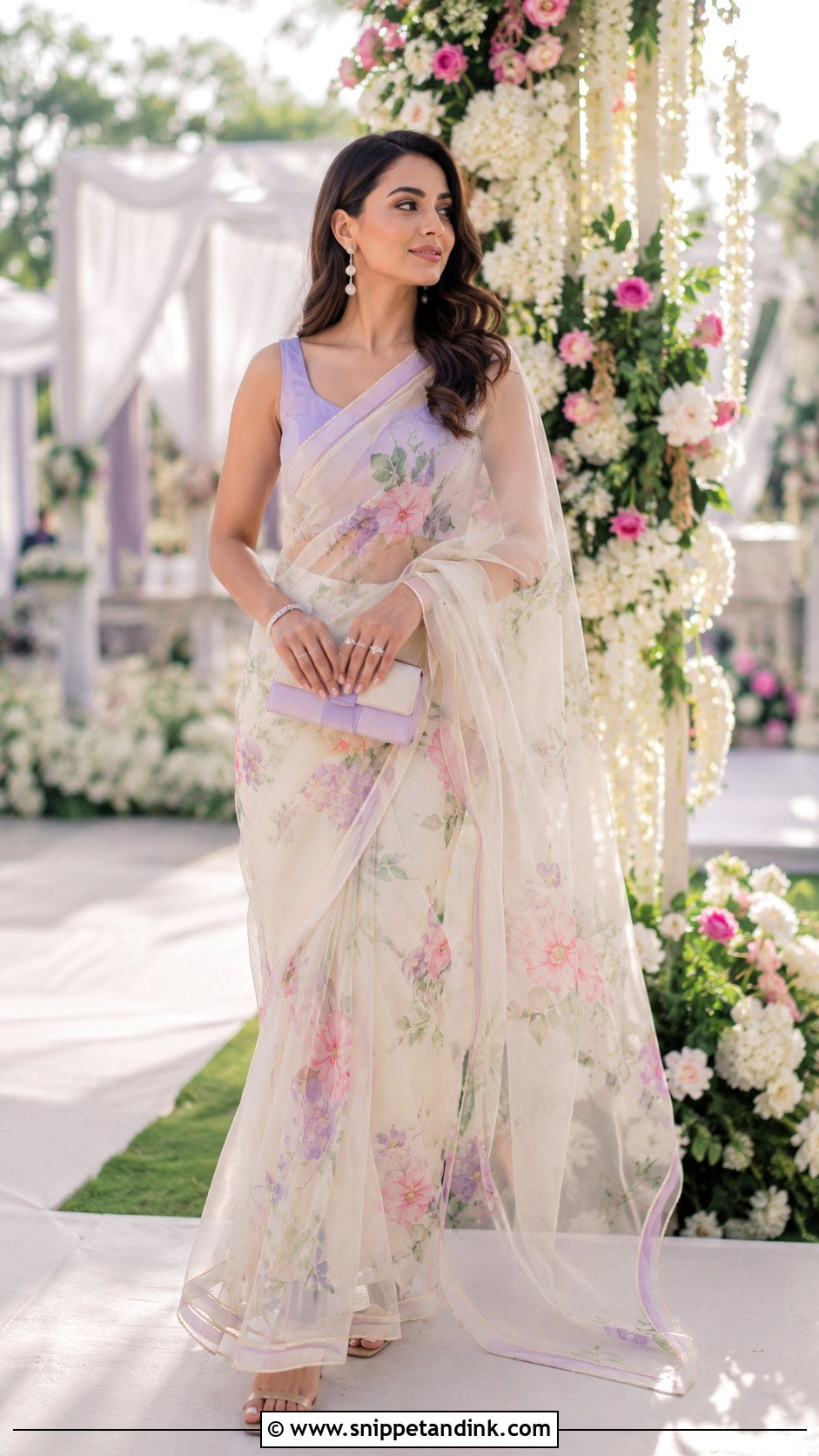
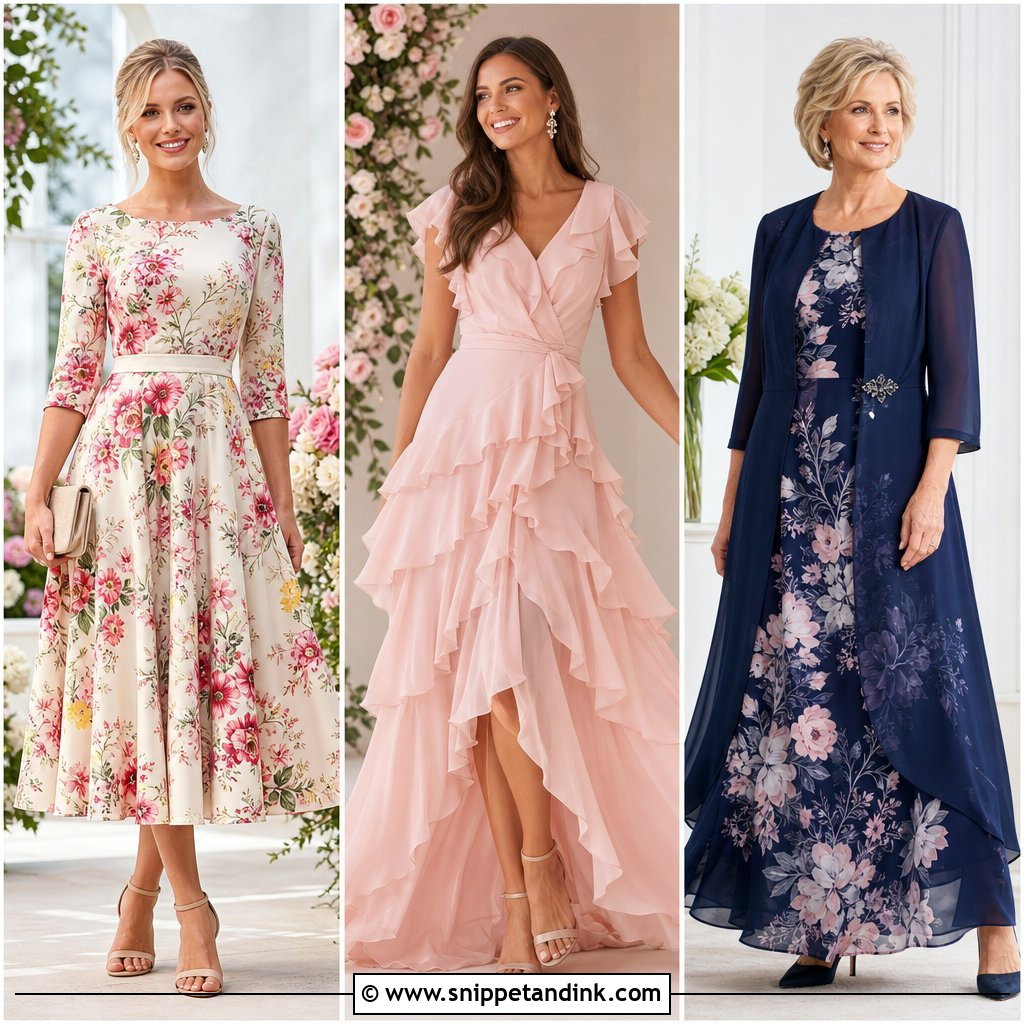
An ivory floral sari only works at a daytime wedding when the bride is not in white, cream or anything close, so confirm the palette before you buy. Choose a printed organza or chiffon with pink, lilac, blue or green flowers. The blouse is how you separate yourself from bridal ivory: I pick one color from the print and use it for the blouse, which pulls the eye away from the pale base. Pearl drops, a small pastel clutch, nude or silver sandals and a securely pinned sari suit it. Soft waves or a low bun with a few fresh flowers and peach blush finish it.
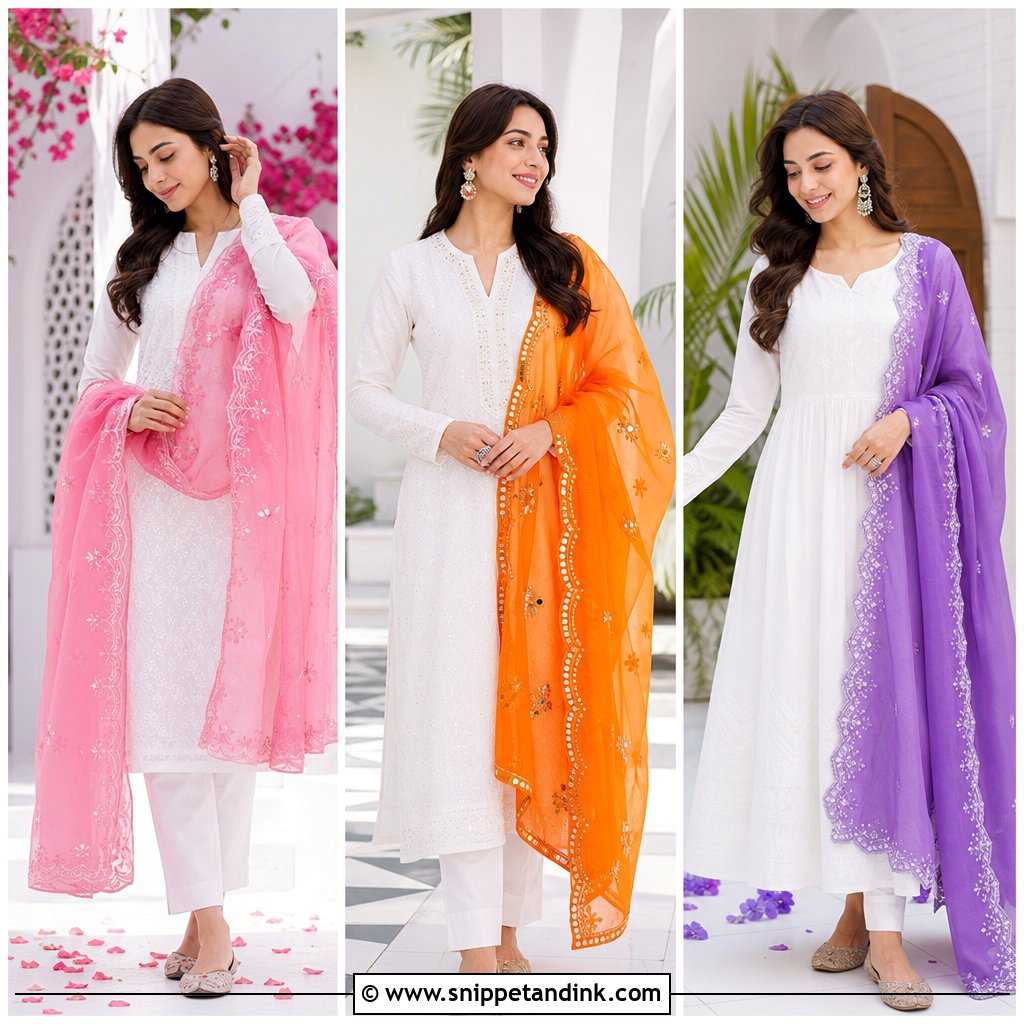
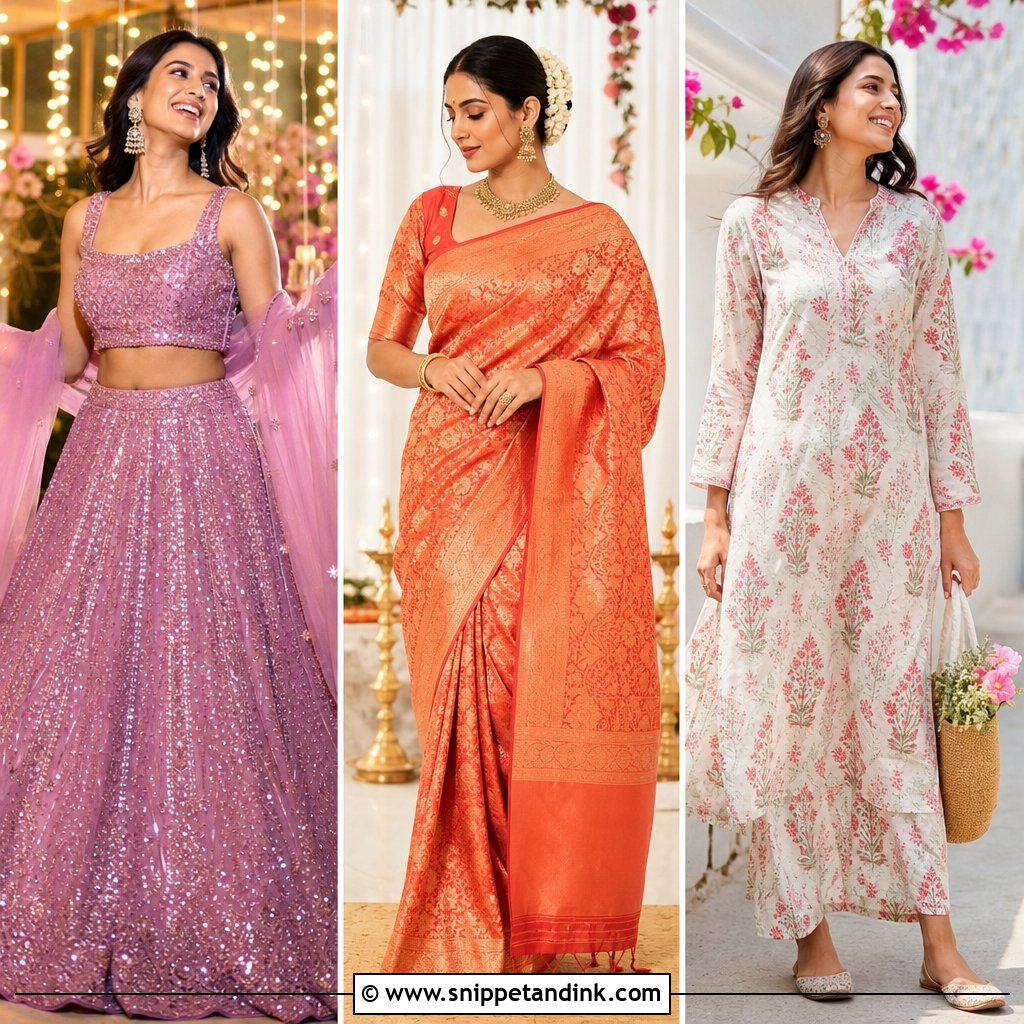
20. Cobalt Blue Long Shirt Pakistani Wedding Dress
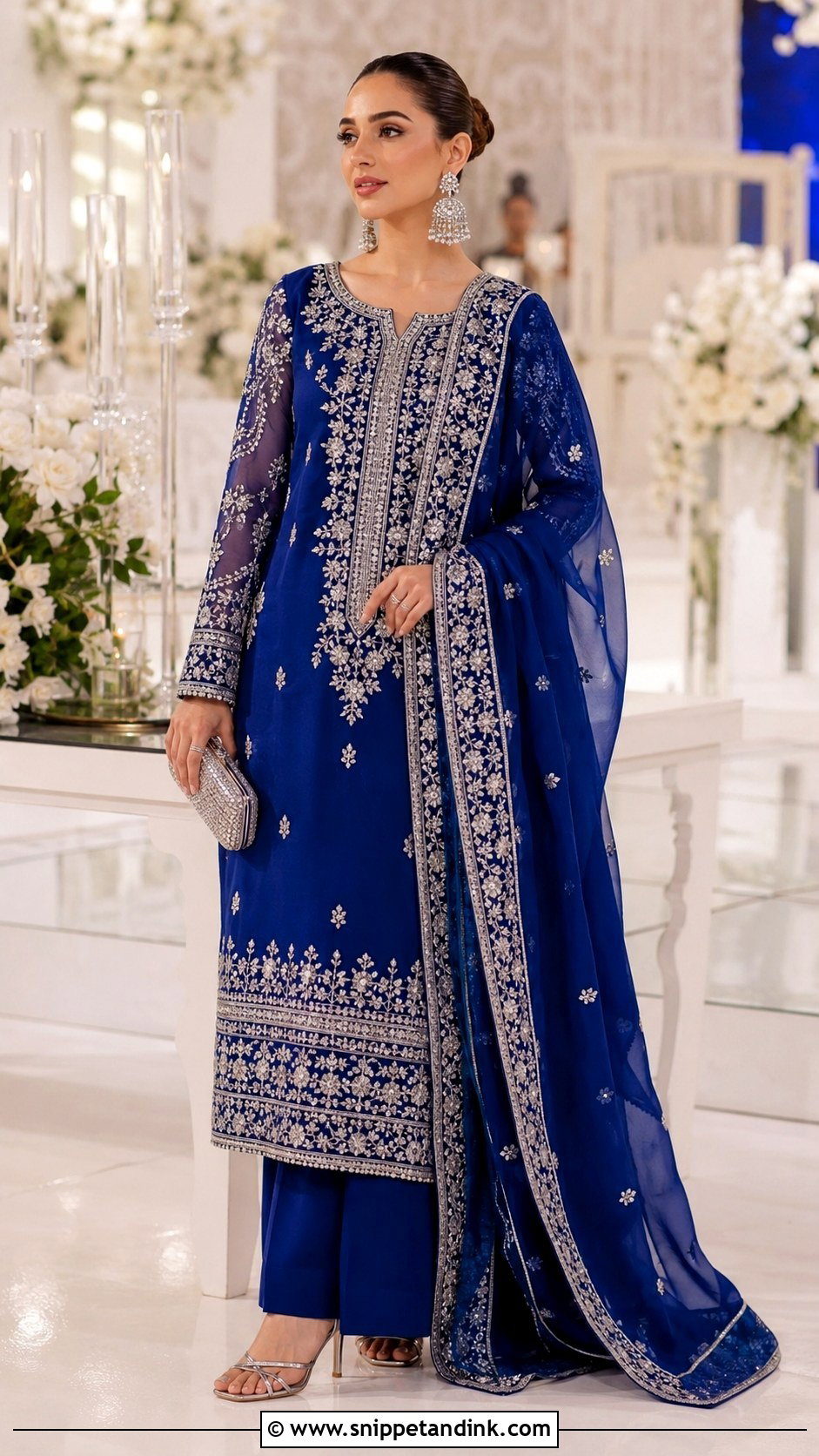
Cobalt is my suggestion when a client needs one outfit to cover more than one function. Wear a long embroidered shirt with wide trousers or a gently flared gharara, and change the mood with the embroidery: silver or pearls for a reception, antique gold for a baraat. Strong blue can dominate a group photo, so I keep the jewelry simple and let the color carry it. Pin an organza dupatta with a detailed border over one shoulder. Statement earrings, a structured clutch, metallic heels, a sleek low ponytail and bronze or taupe eyeshadow complete it.
Five Functions, One Sensible Budget
Buying five complete outfits for one wedding is rarely necessary. I plan a cousin’s wardrobe around pieces that can be worn more than once, which also cuts down on the number of tailor appointments.
- A plain, well-cut pair of straight trousers or a sharara in a neutral can sit under two different kurtas.
- One heavily embroidered dupatta can turn a simple outfit into a dressy one; swap it for a plain dupatta to dress the same outfit down.
- A single set of antique gold jewelry works with green, plum, maroon and navy, so it can cover the mehndi, baraat and a winter reception.
- Keep the most expensive piece for the baraat or walima, where the photographs are the formal ones.
Securing a Dupatta for Dancing and Stage Photos
Most styling problems at a cousin’s wedding are dupatta problems. Organza and net are slippery, and a dupatta that slides off a shoulder on stage ends up in every photograph. I use small safety pins on the inside of the shoulder seam, hidden under the fold, and a second pin at the back of the neck when it is draped over the head.
For dancing, drape it across the body or pin it on one shoulder with the long end tucked into the waistband at the back. Carry a few spare pins in your clutch; somebody will need them before the night is over.
Dressing Up Without Upstaging the Bride
Start every outfit decision with the function, the venue, the season and what the family expects, and the rest falls into place. Bright ghararas, shararas and lehengas belong at the mehndi; pastel pishwas and tailored kurta sets suit a nikkah; jewel tones carry the baraat; softer saris, capes and flowing dresses fit the walima. Ask about the bride’s colors, keep well clear of anything that looks bridal, and make sure your dupatta is secure and your shoes will last several hours. That combination looks festive in the family photographs and keeps the attention where it belongs.
You'll Like These Ideas:




Leave a Reply