
An Anarkali moves well, carries detail and is far easier to wear through a long day than most wedding outfits. The looks below cover brides, bridesmaids, family members and guests, from a daytime ceremony to a formal reception. Wedding wear this season leans toward floor-length cuts, light layers, jewel tones, pastels, mirror work, chikankari, and jackets or capes worn over the dress. Whatever you pick, match it to the event, venue, season and dress code. Heavy embroidery wants quiet accessories, while a plain suit can take statement jewelry and a decorated dupatta. Above all, I’d get the flare and hem right first, so you can walk and dance without thinking about it.

Anarkali Length and Flare for Your Height and Frame
The same Anarkali can look completely different on two people, and the reason is nearly always proportion. Before I think about color, I look at where the waist seam, the hem and the widest point of the flare will land on the person wearing it.
If you’re petite
Keep the waist seam at or just above your natural waist, and choose a floor-length or ankle-grazing hem in one color with matching pants or churidar. An unbroken column adds height. A very wide flare in a stiff fabric can swamp you, so georgette or chiffon with a moderate flare is safer, and small or medium motifs scale better than large ones.
If you’re tall
You can carry the fuller flares, heavy borders and contrast pants that would shorten a smaller frame. A knee-length or high-low Anarkali over palazzo or sharara looks balanced on a long body. Check the sleeves, too: ready-made sleeves often stop short of the wrist on long arms.
If you’re curvy
Look for a natural or empire waist seam with plenty of panels, so the volume starts from a defined point and falls evenly instead of bunching at the hip. A V or sweetheart neck draws the eye up. Ask for a supportive lined bodice, and avoid stiff tissue or heavy brocade across the bust, where it only adds bulk.
Whatever your shape, wear the shoes you’ll actually wear when the hem is marked. A hem set in flats will drag if you switch to heels later.
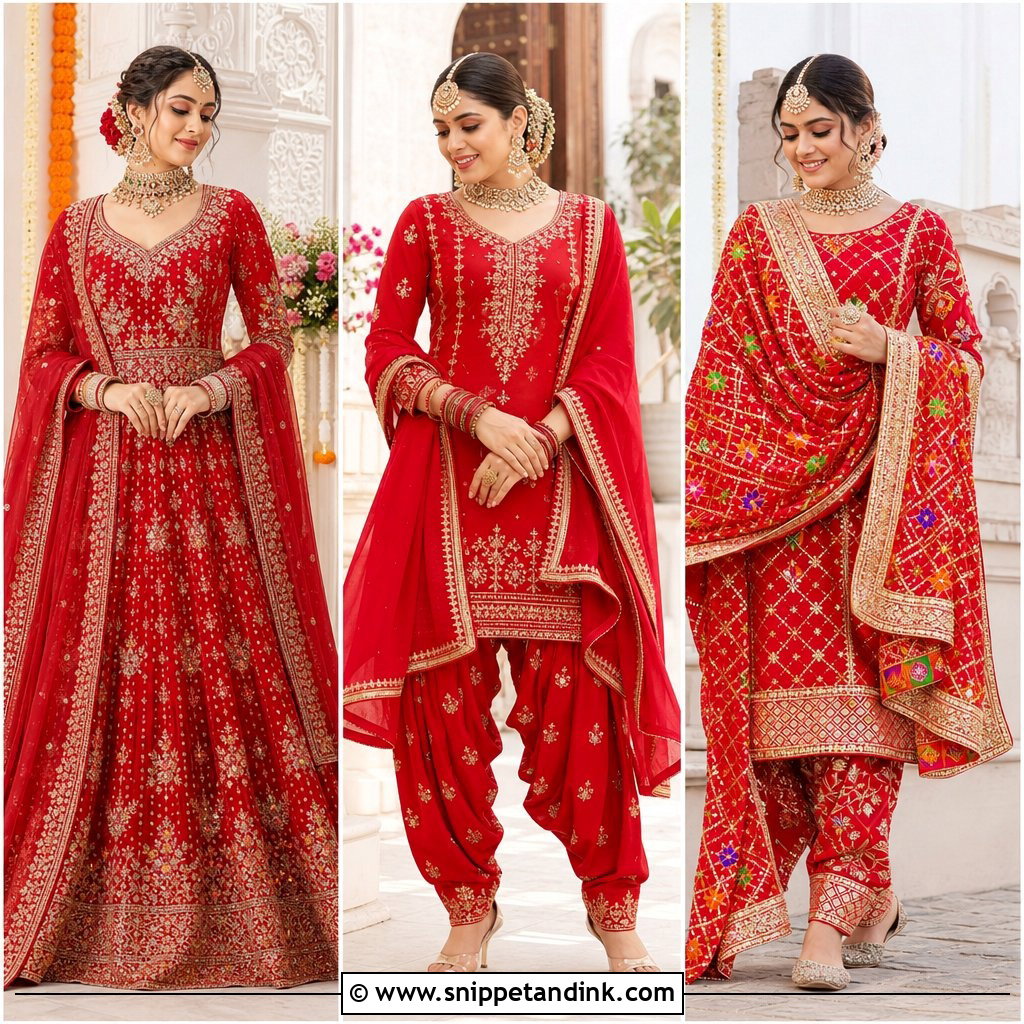
1. Red Bridal Anarkali Suit With Gold Dupatta
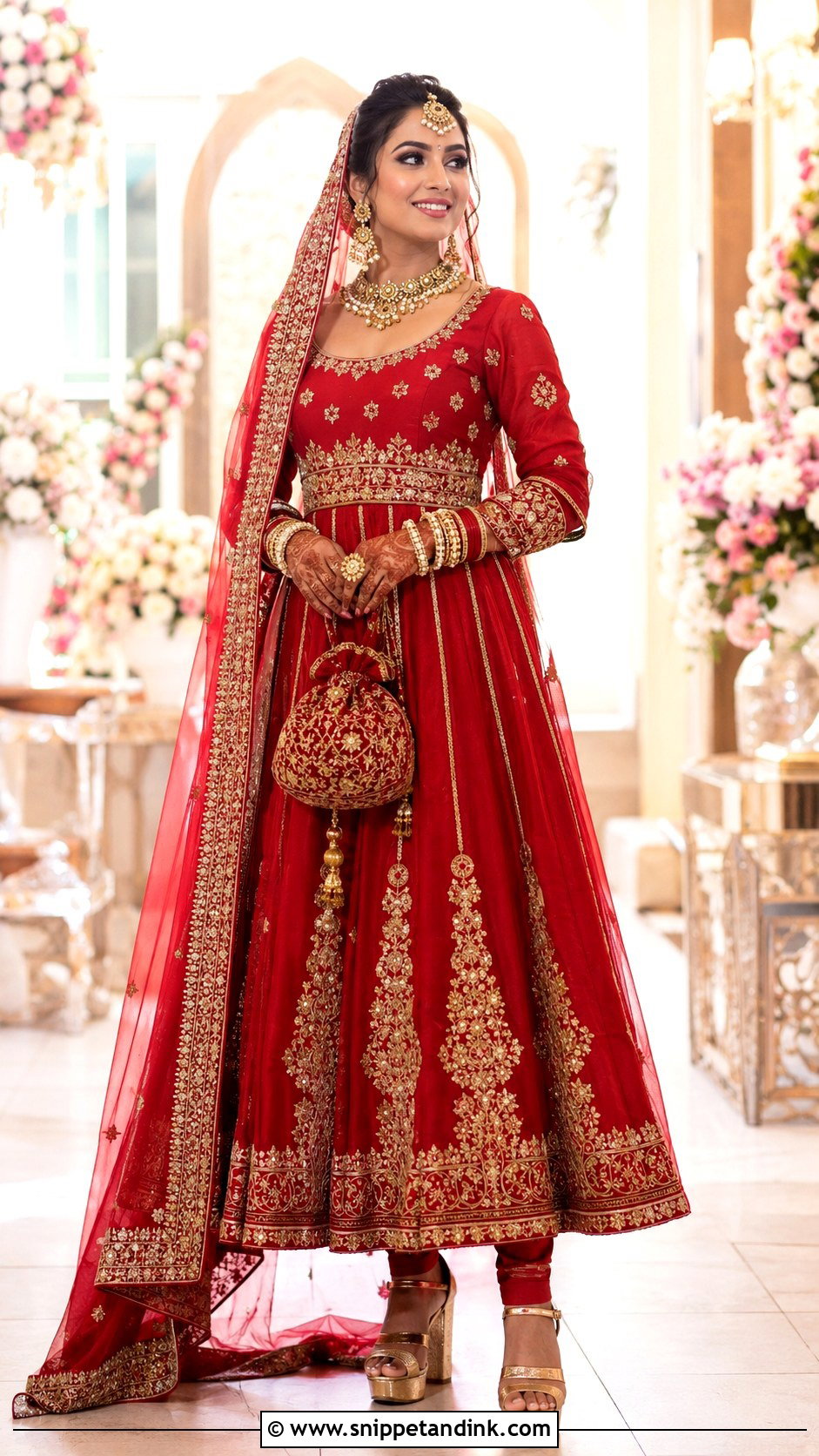
A red bridal Anarkali gives a bride the ceremony look without the weight and structure of a lehenga. I’d choose floor-length silk or raw silk with a fitted bodice, a generous flare and gold zardozi at the neckline and hem. Raw silk has more body than smooth silk, so the flare keeps its shape when you stand up after a long ritual instead of collapsing. A matching churidar keeps the lower half neat under the volume, and a sheer gold-edged dupatta goes over the head or across one shoulder, depending on the ceremony. Add a Kundan necklace, matching earrings, stacked bangles and an embroidered potli. Gold platform heels or cushioned juttis give height you can still manage. Luminous skin, defined eyes, a rich red lip and a sleek bun with fresh flowers finish it.
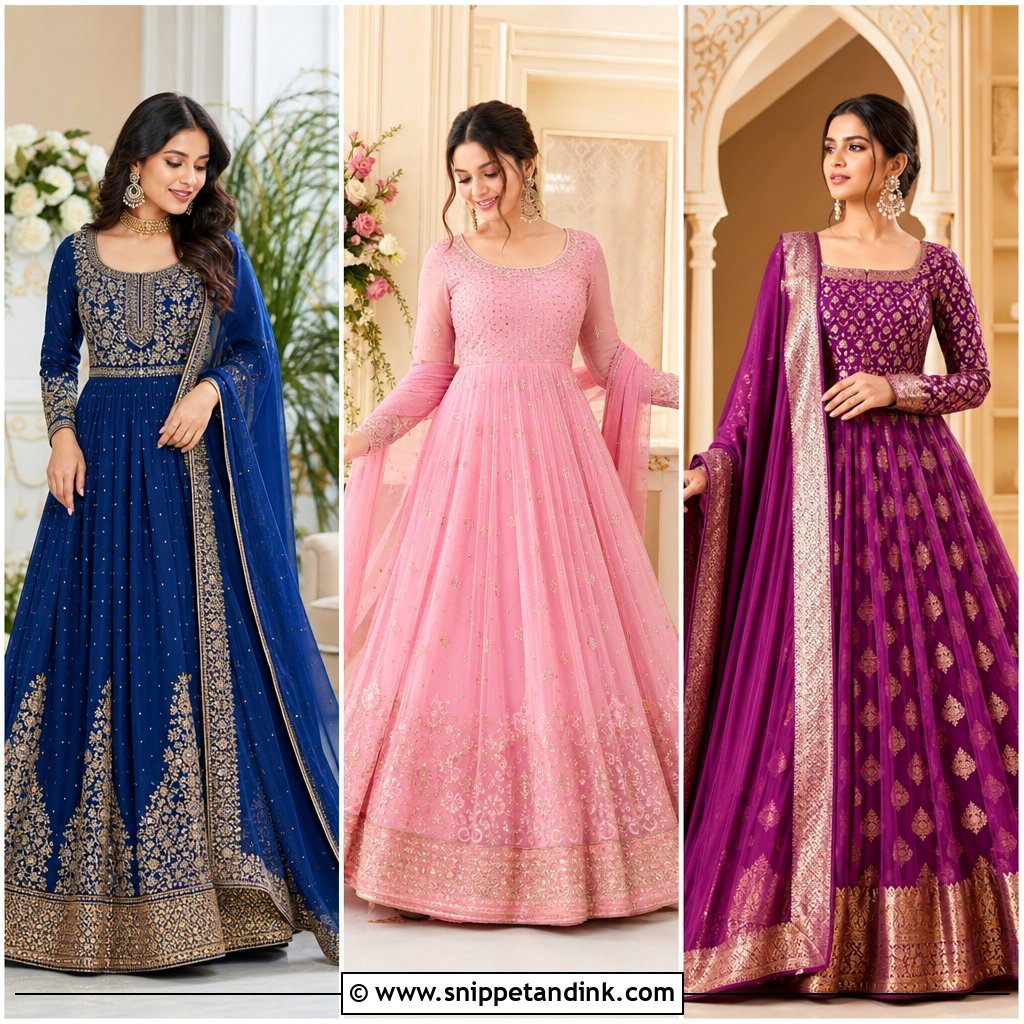
2. Blush Pink Anarkali Suit With Floral Embroidery
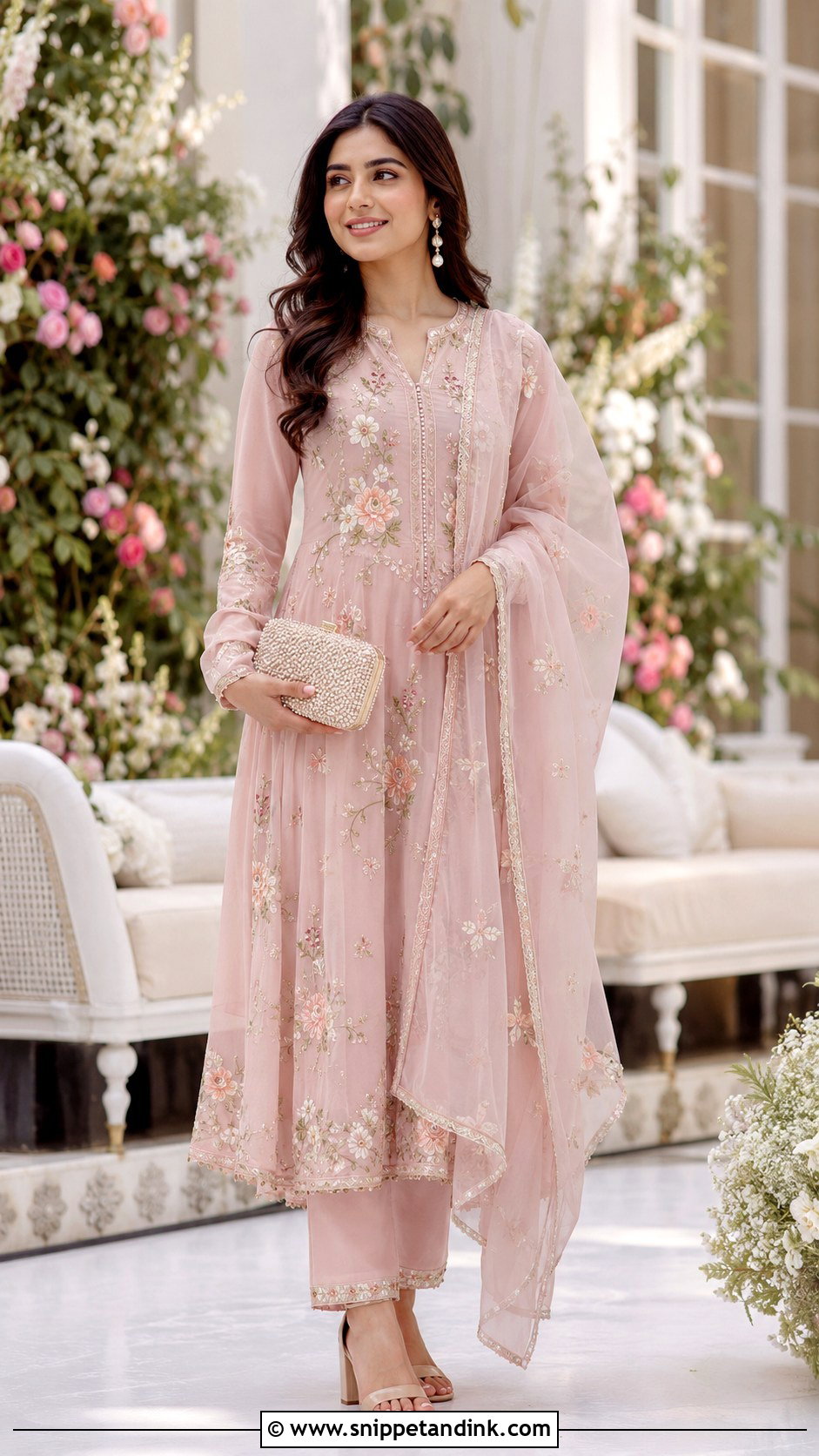
Blush works for a daytime wedding, an engagement or a bridesmaid line-up. A flowing georgette Anarkali with fine florals in ivory, peach and muted green, lightly fitted at the waist before a wide flare, gives shape without squeezing. Wear straight pants or a comfortable churidar and a sheer organza dupatta with a narrow embroidered border. If you’re dressing a group, keep in mind that deeper skin often looks better in a slightly dustier pink than in a very pale one. Pearl drops, a fine bracelet, a small beaded clutch and nude block heels keep the palette gentle. Loose waves or a low textured bun, rosy cheeks and a pink-nude lip suit an outdoor garden celebration.
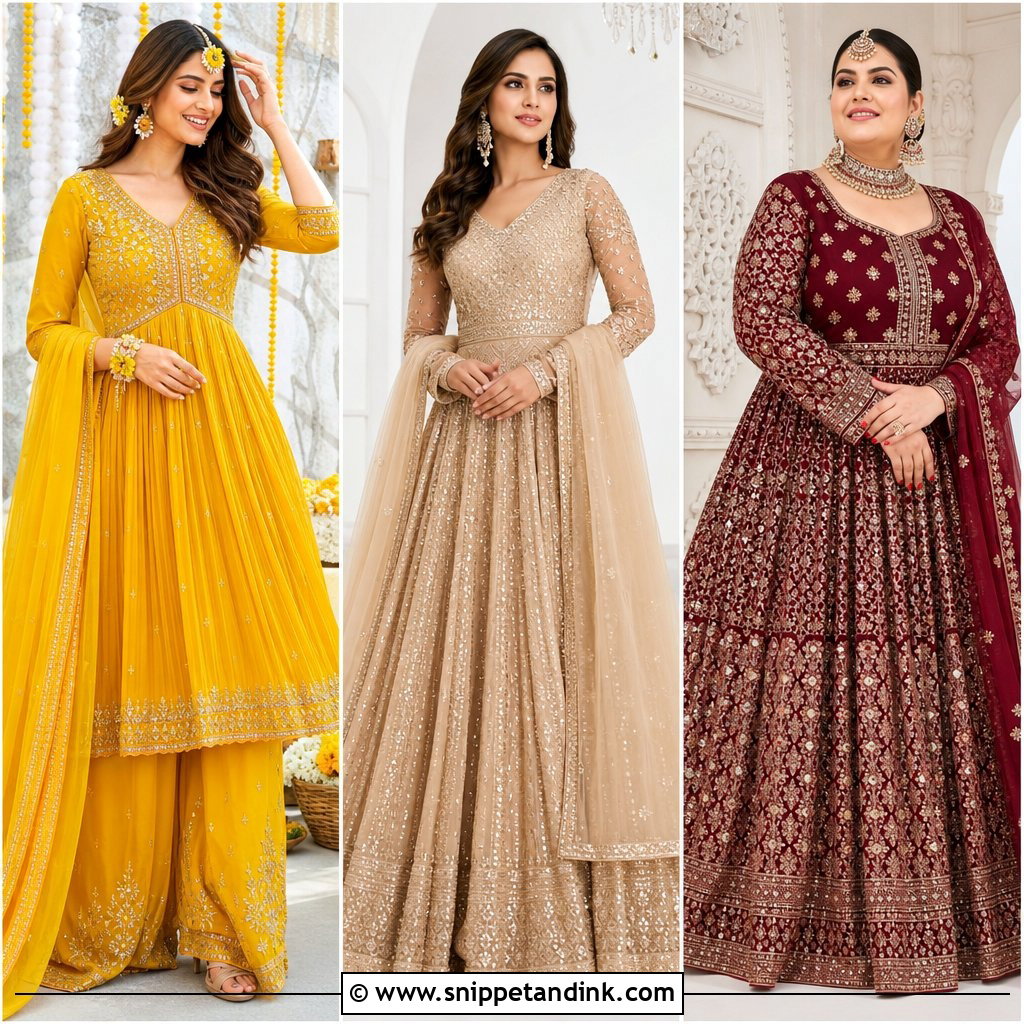
3. Yellow Mirror Work Anarkali Suit For Haldi
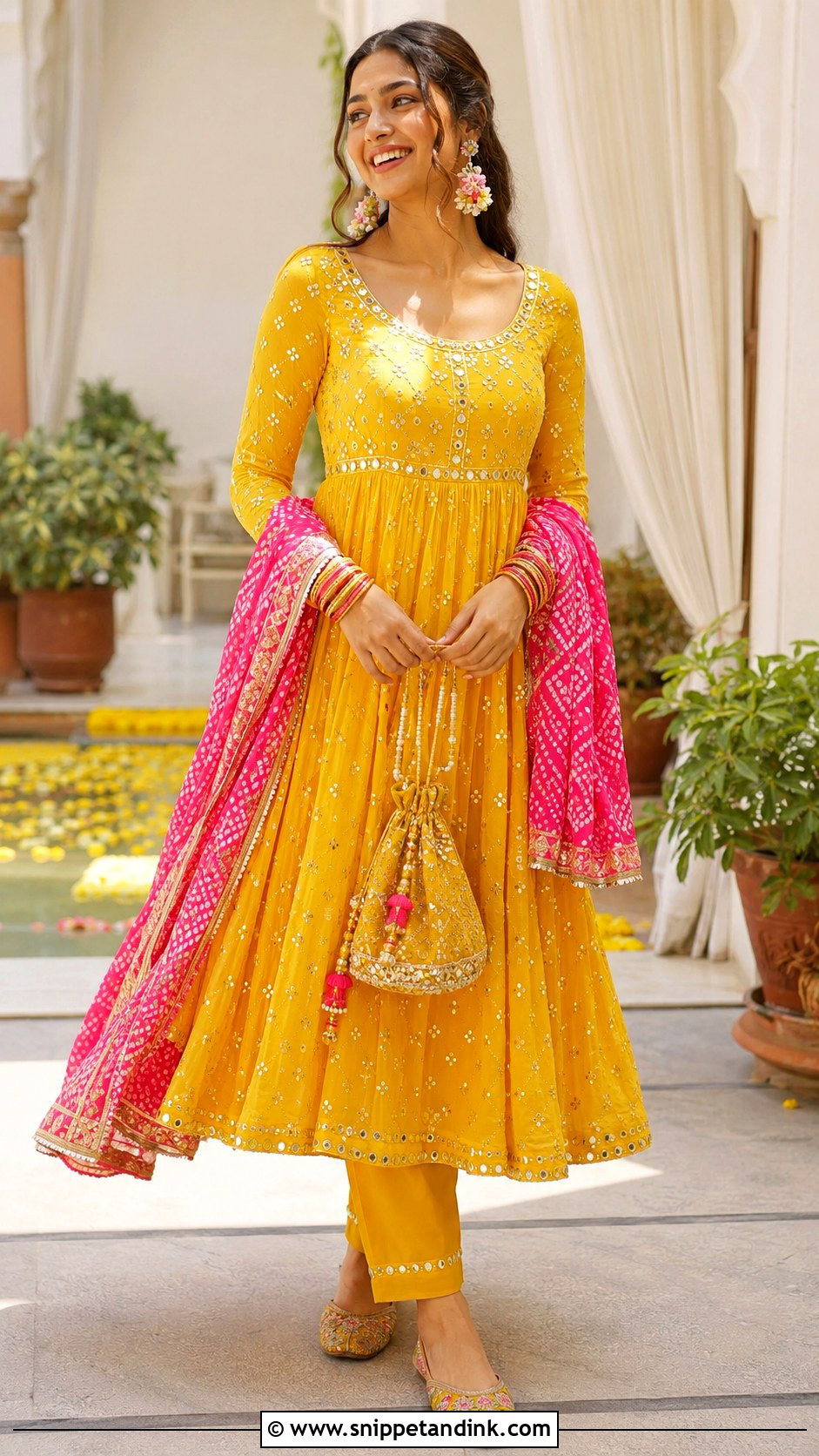
Yellow is the haldi color for a practical reason: turmeric marks barely show on it. For a haldi celebration, choose lightweight cotton-silk or georgette with small mirror accents rather than dense embellishment, especially outdoors. A calf- or ankle-length hem keeps you moving and keeps the hem out of the paste. Slim pants and a contrasting pink, orange or multicolor bandhani dupatta bring in more color. Floral earrings, bright bangles and embroidered flat juttis cope with hours of standing and dancing, and a small potli holds your essentials. Wear a braid or relaxed ponytail with a few flowers, and choose waterproof makeup with a cheerful pink lip, because someone will put paste on your face.
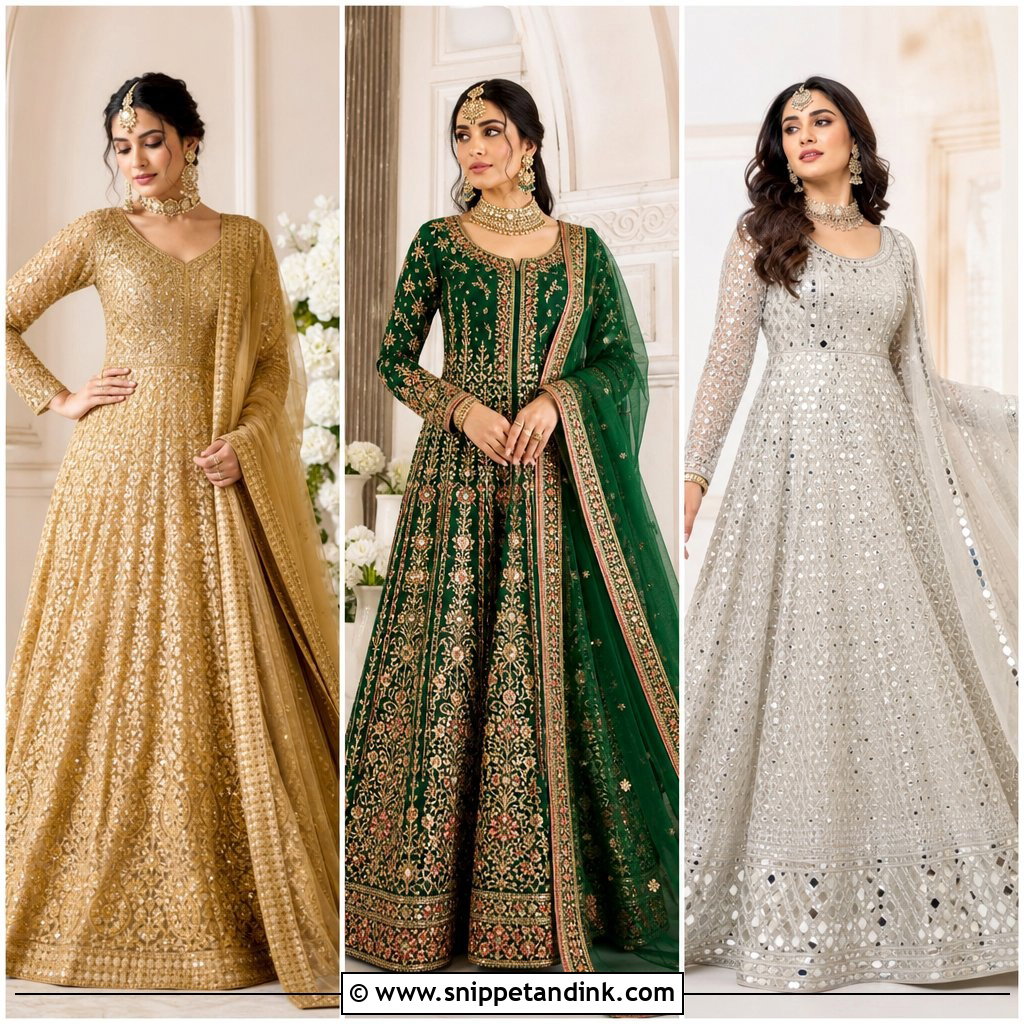
4. Emerald Green Velvet Anarkali Suit For Winter Wedding
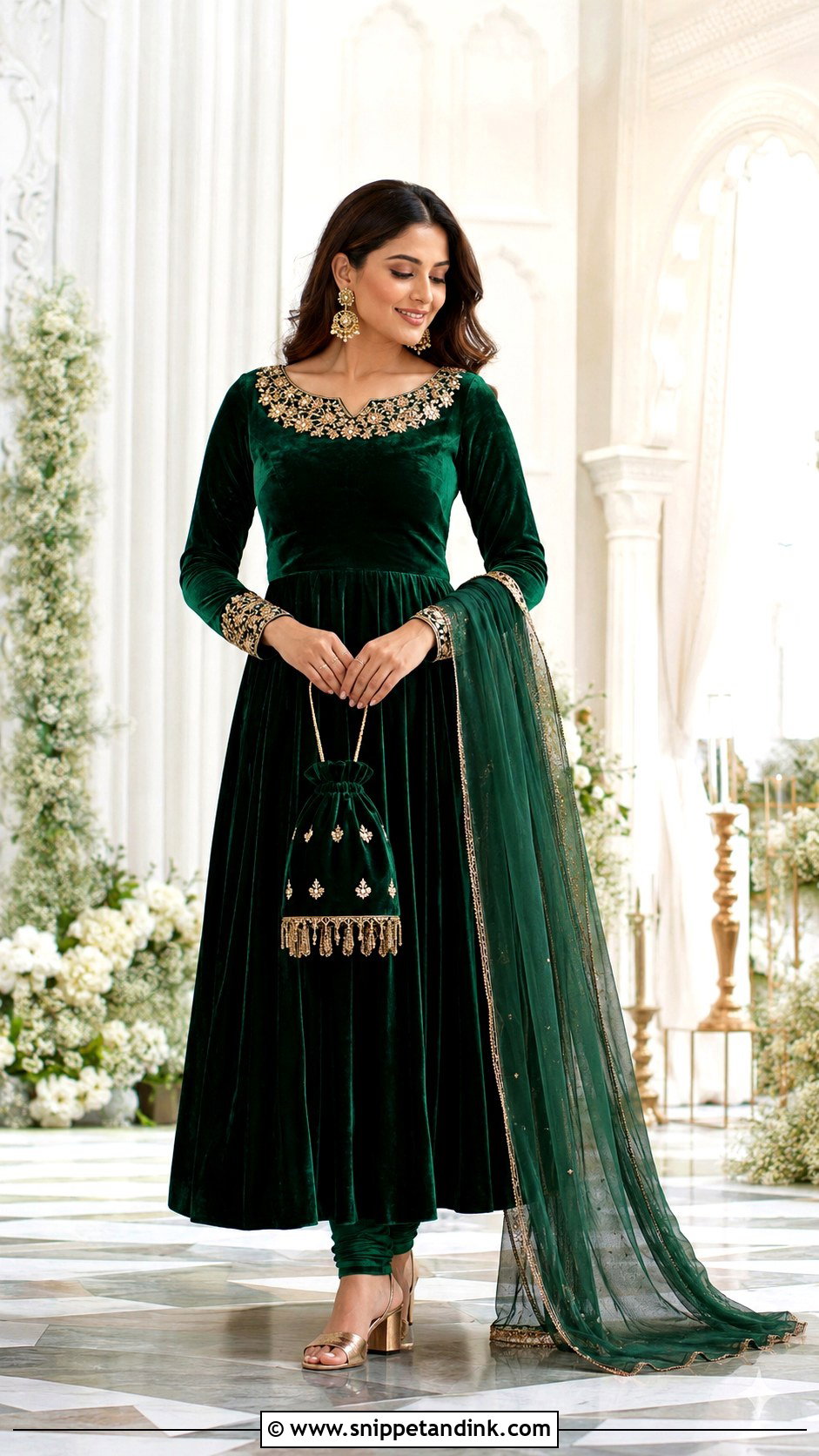
Emerald velvet belongs to a cold evening. The pile is heavy, so a floor-length cut with a controlled flare falls smoothly where a very full skirt would look bulky. Antique gold at the neckline, cuffs and border is enough. Pair it with a fitted churidar and a light net dupatta; I never add a second heavy layer on top of velvet. Antique jhumkas, one statement ring and a structured velvet potli complete it. On lawns or uneven floors, block heels beat stilettos every time. A center-parted low bun and softly defined eyes suit the depth of the green, and skip the big necklace if the neckline is already worked.
5. Ivory Chikankari Anarkali Suit With Pastel Dupatta
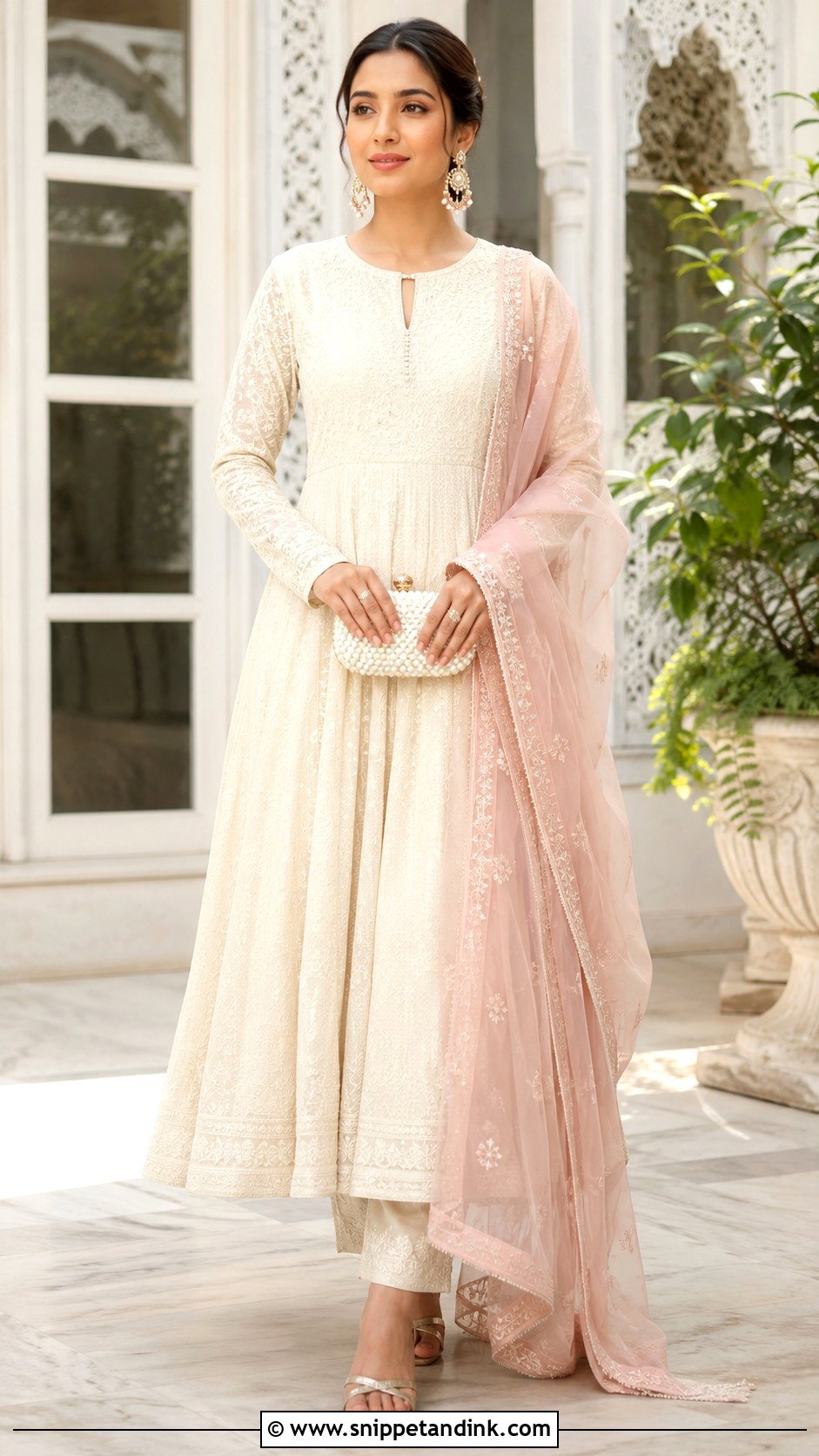
Ivory chikankari is understated enough for a morning wedding, a nikah or a small family ceremony. Before a guest wears ivory, though, I’d check the couple’s traditions and dress code, since pale shades are welcome in some communities and avoided in others. Choose cotton-silk, georgette or muslin with tonal threadwork and a soft flare, then fitted ivory pants and a pastel pink, mint or powder blue organza dupatta to bring in color. Pearl and Kundan earrings, a delicate ring and a mother-of-pearl clutch suit it, with champagne metallic sandals. Soft waves or a polished low bun, peach blush and a satin nude lip keep it festive and respectful.
6. Navy Blue Sequin Anarkali Suit For Reception
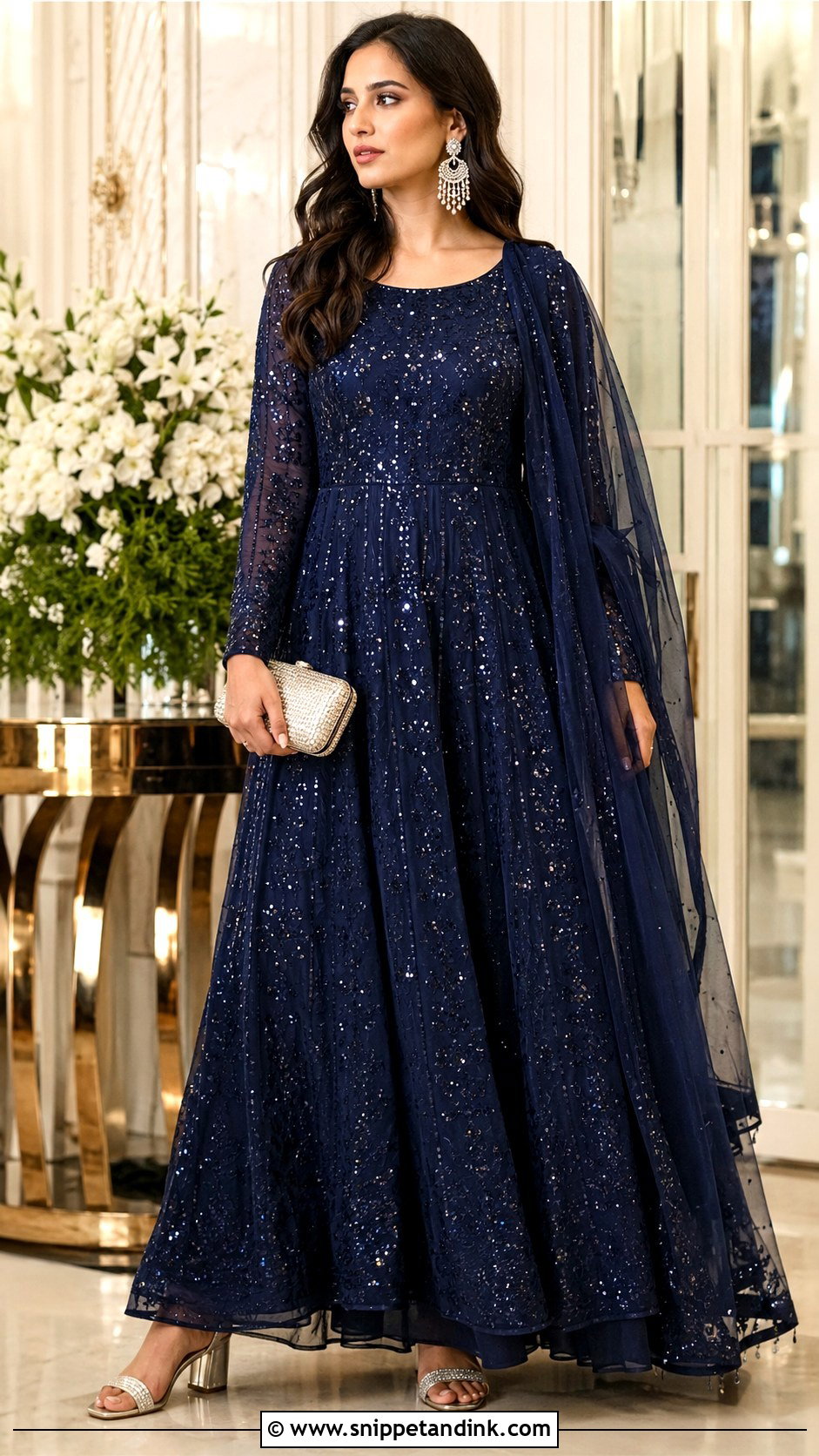
Navy sequins give evening drama without a bright color. Choose a floor-length georgette or net design with tonal sequins and a lined bodice. Sequins on an unlined bodice scratch, and by the third hour you feel every one. A V-neck or modest scoop breaks up the dark shade, and a moderately full skirt moves well under reception lights. Fitted pants and a sheer navy dupatta pinned over one shoulder keep it neat. Wear silver chandelier earrings, a crystal clutch and metallic block heels, and leave the heavy necklace at home if the bodice already sparkles. A smooth ponytail or glossy waves, softly smoky eyes and a berry lip give you a reception look that holds up well under flash.
7. Floral Print Anarkali Suit For Day Wedding
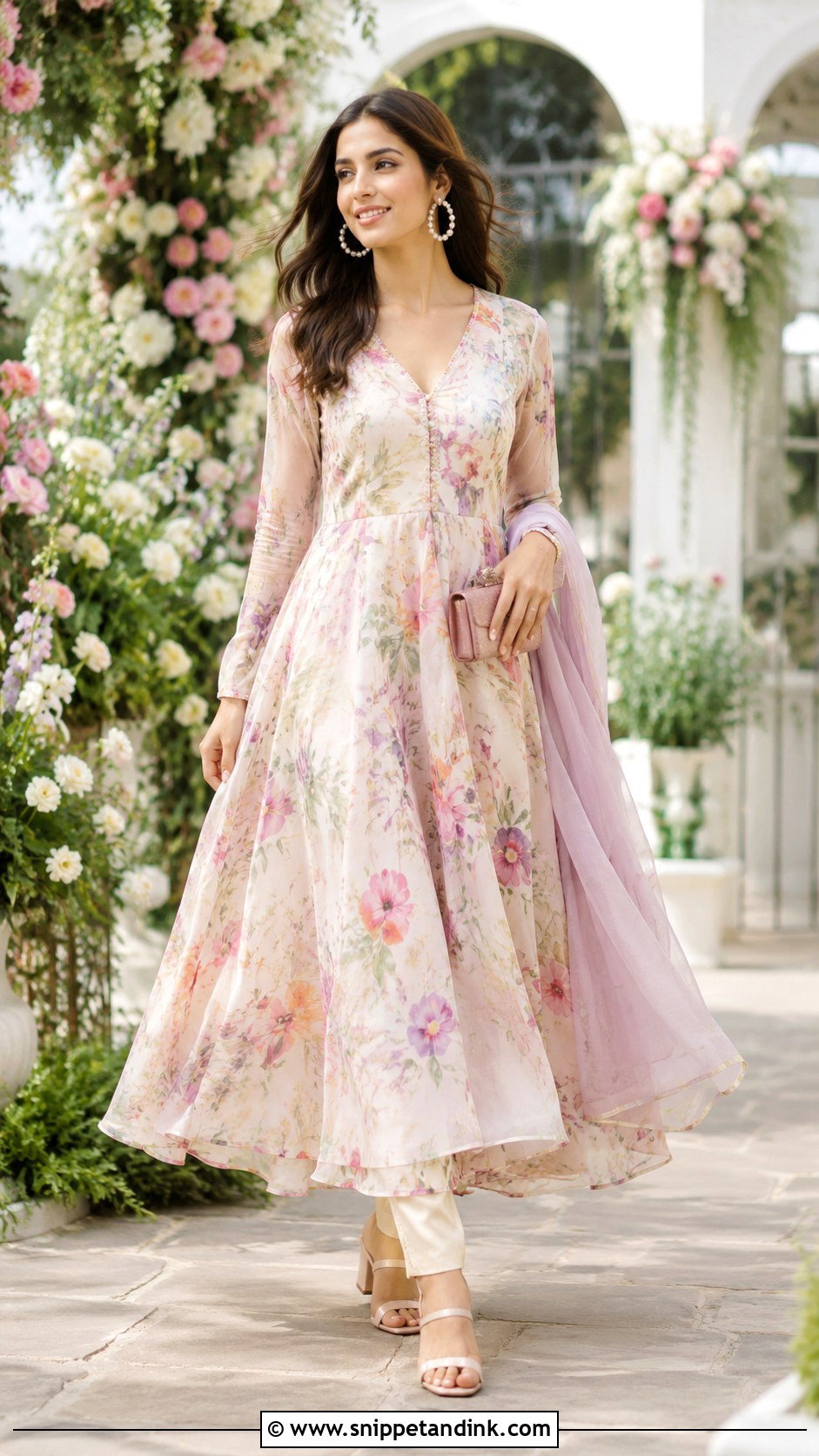
Watercolor florals on cream, peach, sage or pale blue feel light and easy at a daytime wedding. In chiffon or organza, ask for a layered lining. Printed chiffon is sheer, and in bright sun your legs show through a single layer. A defined waist keeps the shape. Slim pants, a plain chiffon dupatta in one shade from the print, pearl hoops, a pastel clutch and neutral block-heel sandals keep it simple, and if the print is large and busy, strip the accessories back further. A half-up style or loose curls, dewy skin, peach blush and a rose lip suit a garden venue.
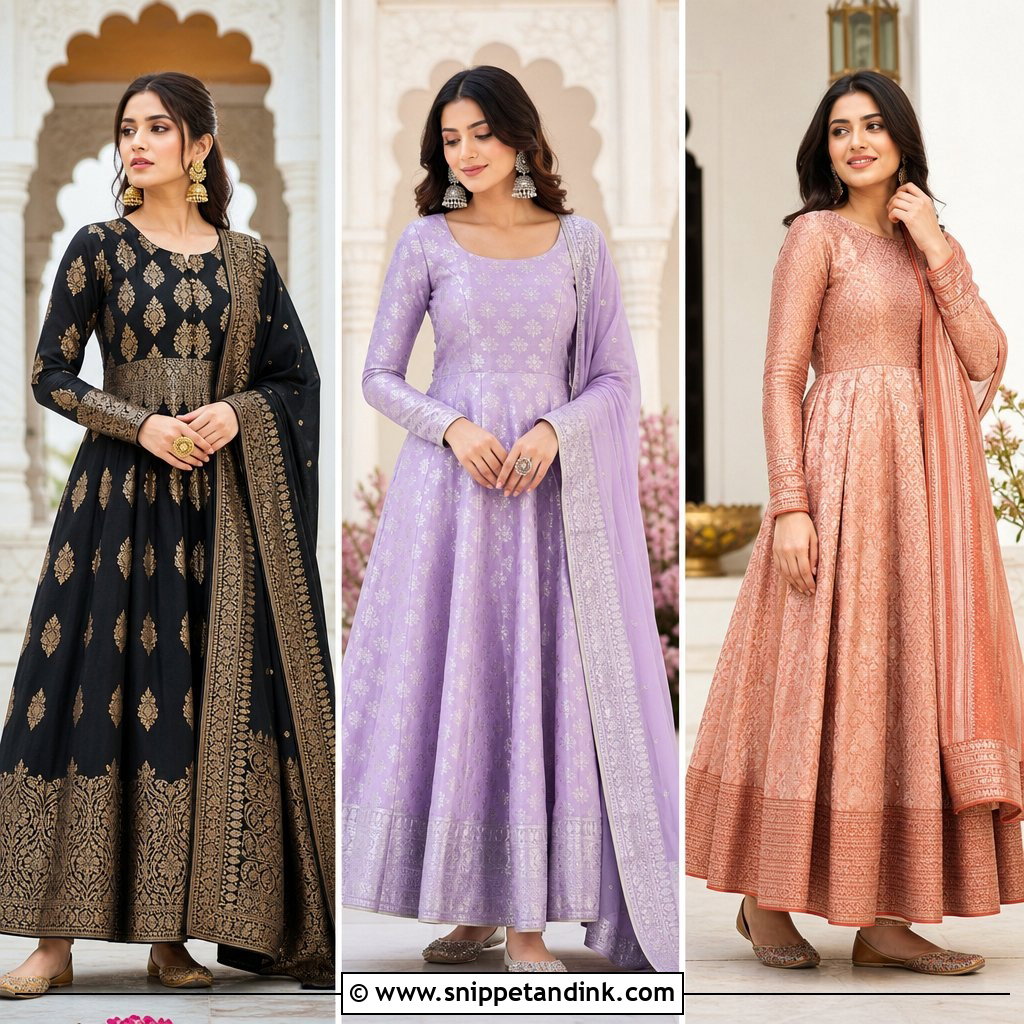
8. Black Anarkali Suit With Gold Embroidery
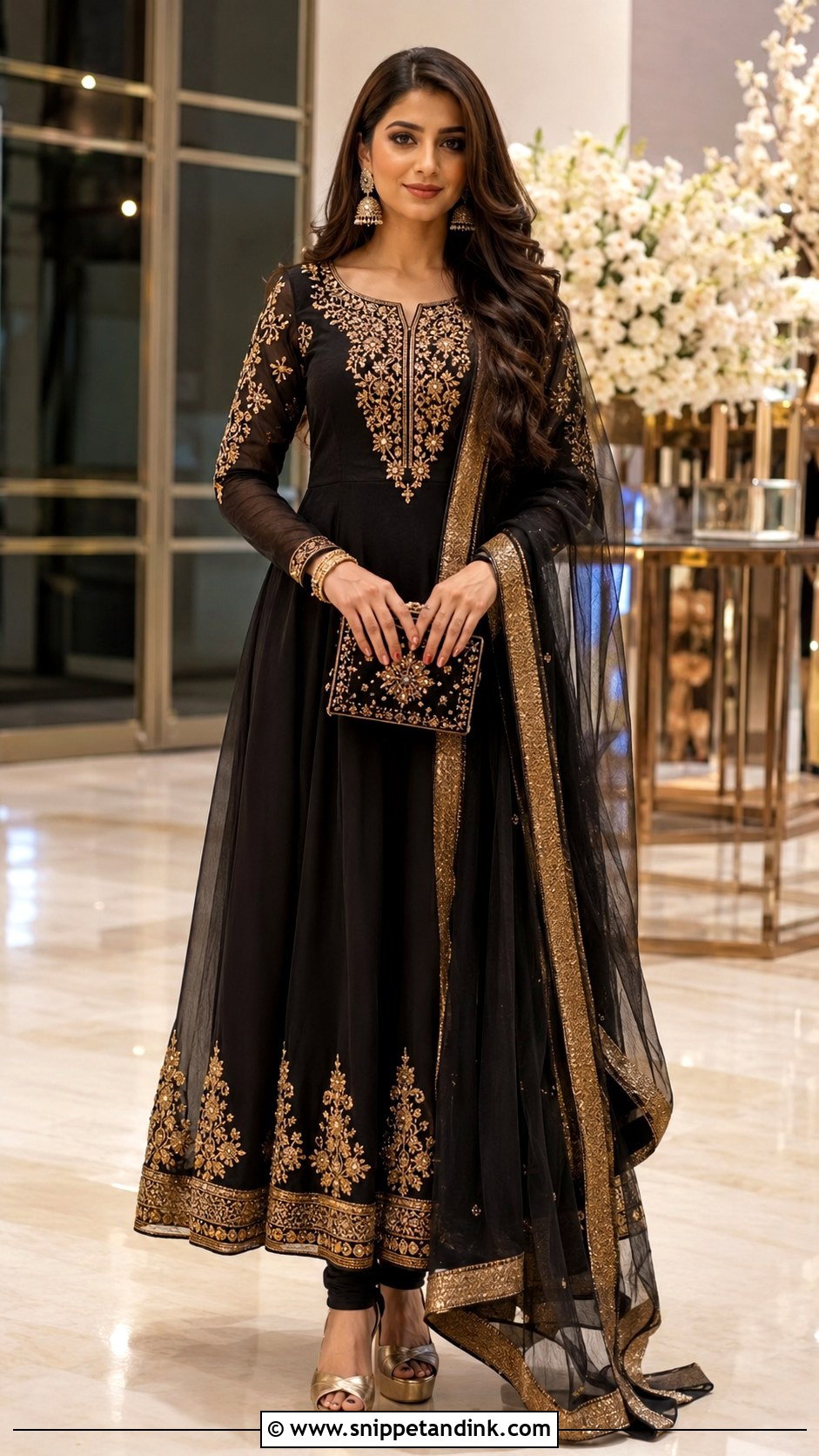
Black is still avoided at weddings in many families, so I’d only wear it where you know it’s welcome. Where it is, a long georgette, silk or velvet Anarkali with antique gold embroidery on the bodice, sleeves and hem gives definition while the black base does the rest. A fitted black churidar and a sheer black dupatta with a gold border over one arm keep the line clean. Antique jhumkas, a slim bangle stack and a gold embroidered clutch go with black or metallic platform heels that disappear under the hem. A neat bun, warm bronze makeup and a deep berry lip finish it without tipping into heavy.
9. Jacket Anarkali Suit With Straight Pants
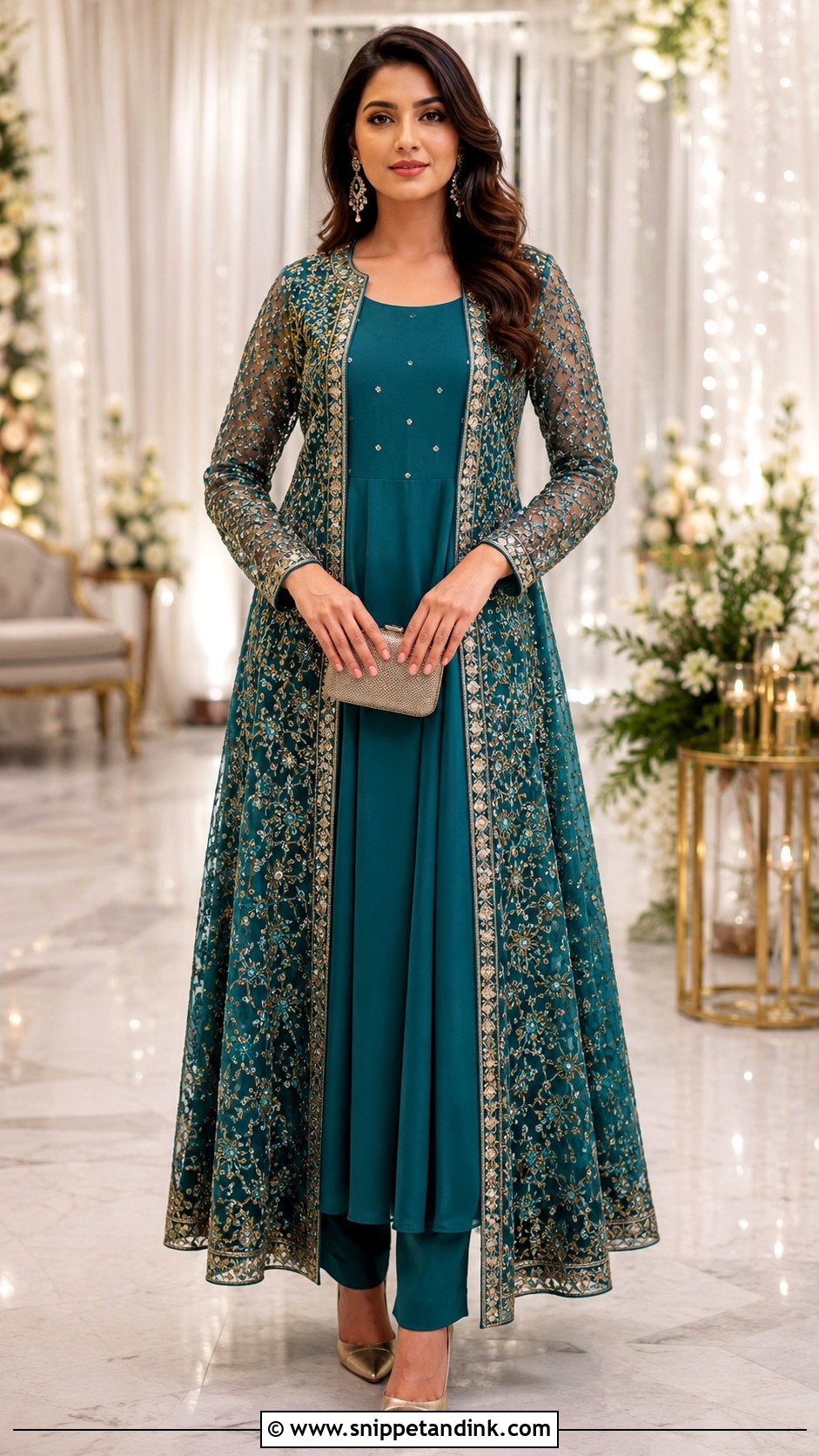
A jacket Anarkali reads modern at a sangeet, reception or formal dinner. Start with a sleeveless or short-sleeved Anarkali in plum, teal or ruby and layer a matching floor-length sheer jacket embroidered along the front opening and cuffs. Straight pants keep the volume in check. Skip the dupatta, or choose a very light one, depending on how much work the jacket carries. I check jacket sleeves carefully at a fitting: a sheer sleeve over a sleeveless dress needs a little more ease than a normal sleeve, or it rides up every time you lift your arms. Drop earrings, a compact box clutch and pointed metallic heels, a sleek ponytail to show the neckline, and defined eyes with a neutral lip keep the attention on the jacket.
10. Cape Anarkali Suit With Minimal Jewelry
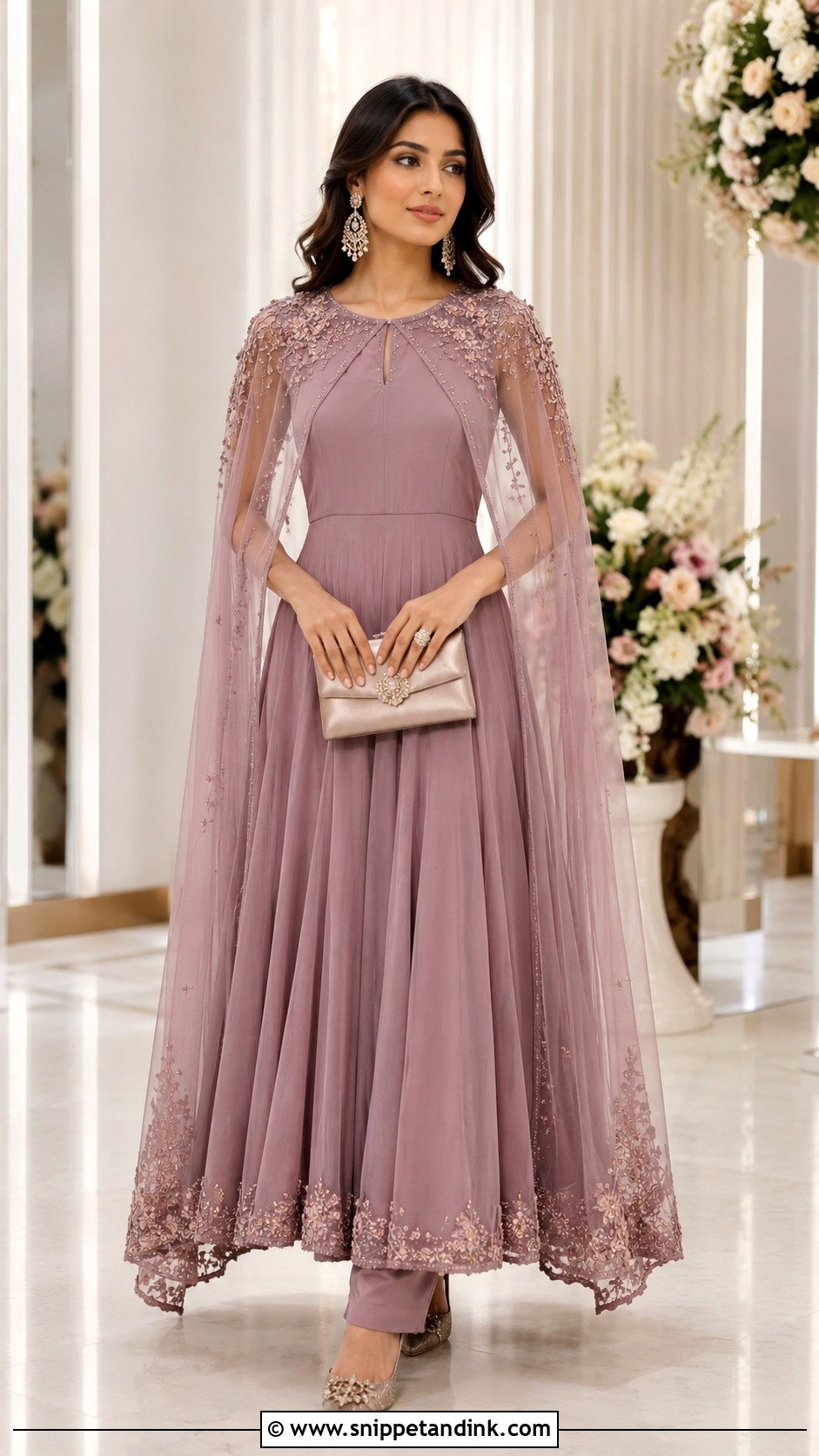
A cape Anarkali flows and covers the shoulders and upper arms without sleeves to wrestle with. Choose a fitted floor-length dress in mauve, dusty blue, wine or emerald under a sheer embroidered cape that ends at the elbow or waist. It has to sit securely and still let your arms move naturally. Wear slim pants underneath and leave out the dupatta, because an extra layer over a cape crowds the upper body. One pair of statement earrings, a delicate ring and a small satin clutch is plenty. Pointed heels or embellished sandals keep the long line, a smooth low bun keeps the cape visible from behind, and soft metallic eyes with a muted lip suit a sangeet or reception.
11. Silk Anarkali Suit With Banarasi Dupatta
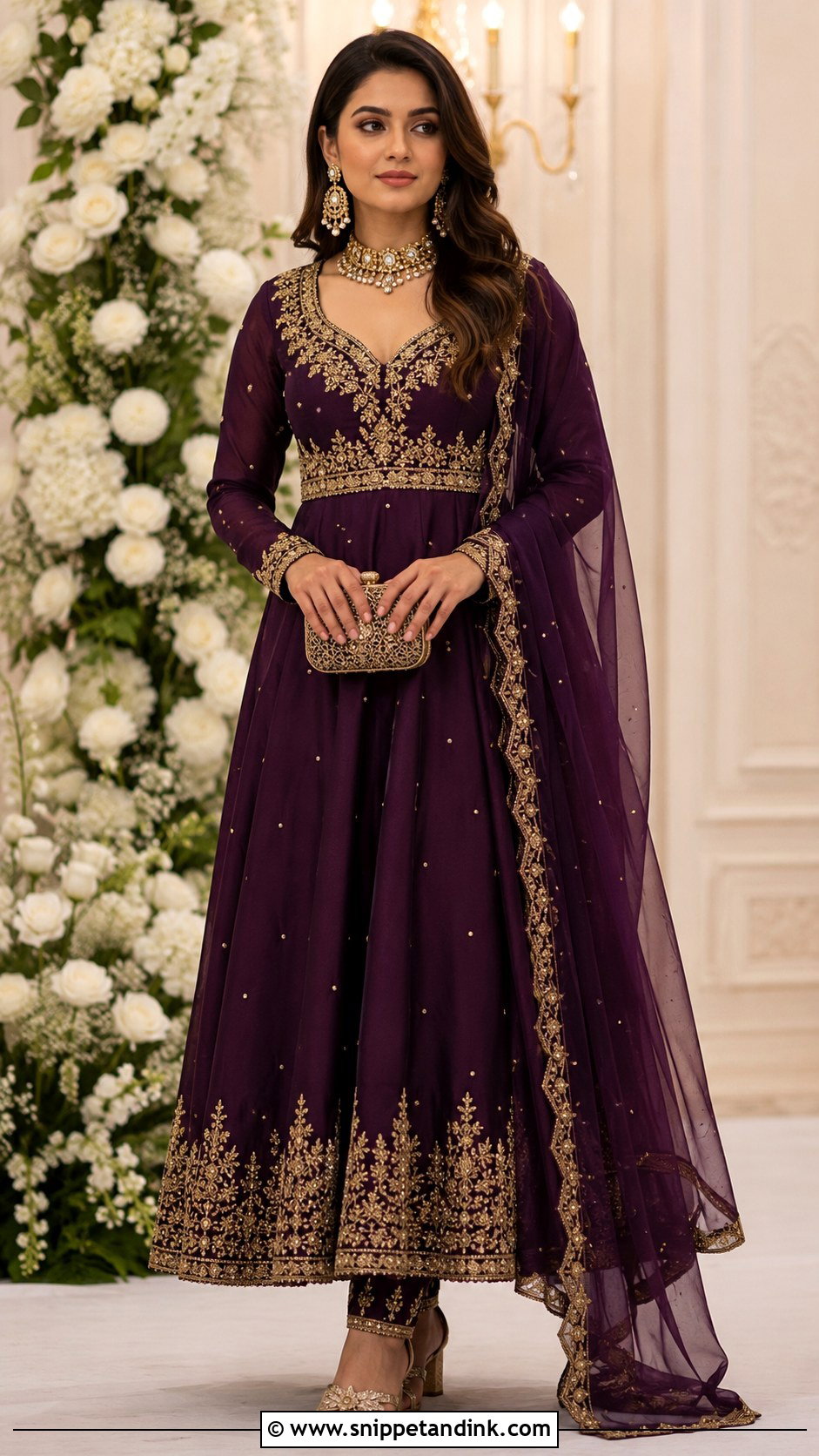
Silk has a gleam that makes even a plain Anarkali look ceremonial. Choose a solid floor-length design in magenta, royal blue, rust or deep green with a fitted top and evenly spread panels, and resist covering it in embroidery. Let a contrasting Banarasi dupatta bring the pattern instead, such as green with a pink weave or royal blue with magenta. Silk shows sweat marks under the arms more readily than most fabrics, so I suggest dress shields stitched into the bodice for long ceremonies. Temple jewelry or traditional jhumkas, coordinated bangles and an embroidered potli go with gold juttis hidden under the skirt. A center-parted bun with flowers and warm makeup with a defined lip complete it.
12. Asymmetrical Anarkali Suit With Palazzo Pants
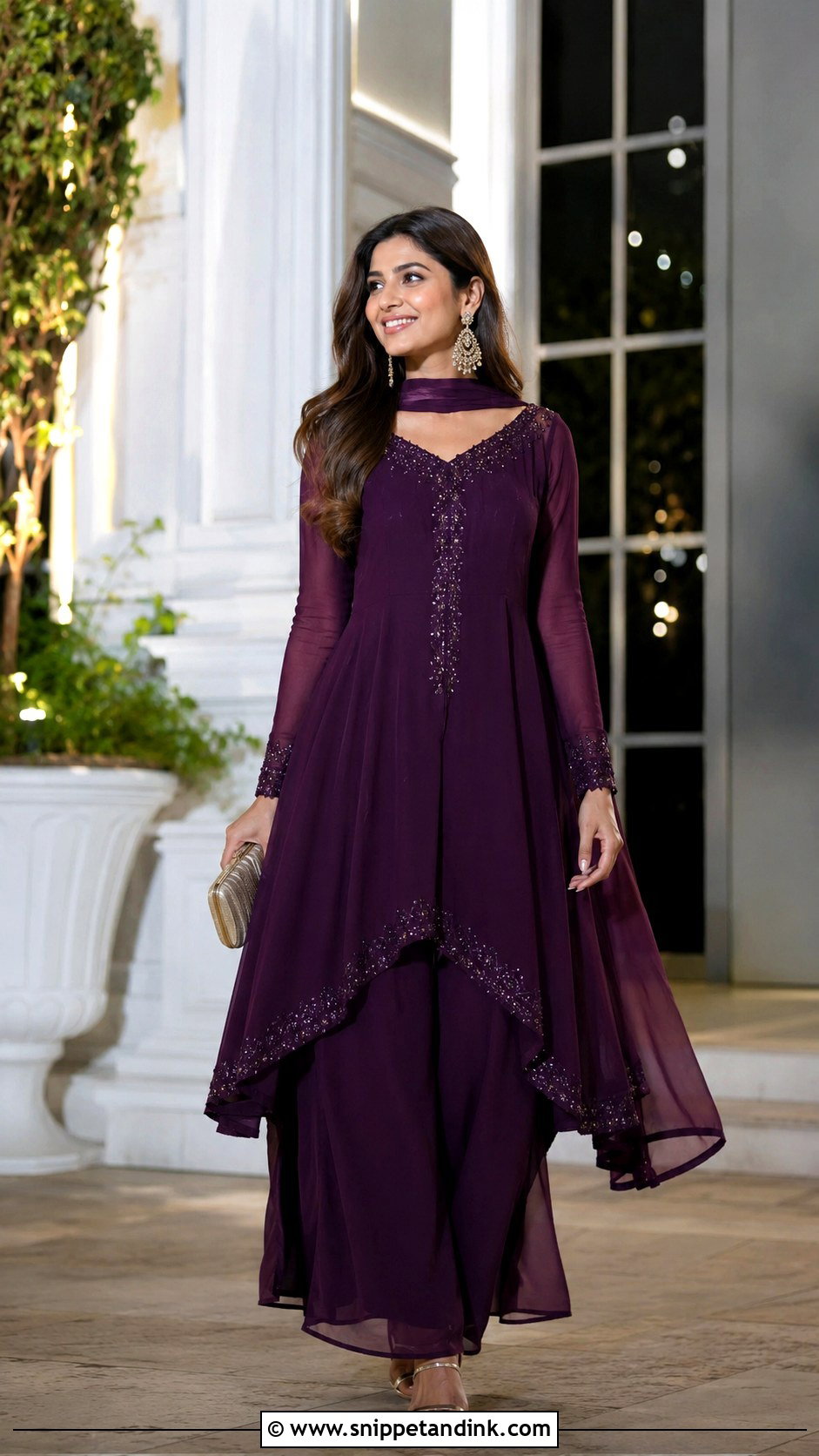
An asymmetrical Anarkali keeps the flare but looks contemporary. A high-low or angled hem falls cleanly in georgette, crepe or silk; stiffer fabrics make the hem jut out at its shortest point. Because the front shows more of the lower half, pair it with wide palazzo pants with a simple border or tonal work, and keep the bodice fitted to balance the volume. A narrow dupatta over one shoulder is optional when the neckline and sleeves already have detail. Sculptural earrings, a structured clutch and heeled sandals that show under the front hem suit it, with a high ponytail or a softly waved bob. Fresh, defined makeup leaves the hemline as the focus.
13. Gota Patti Anarkali Suit For Mehndi
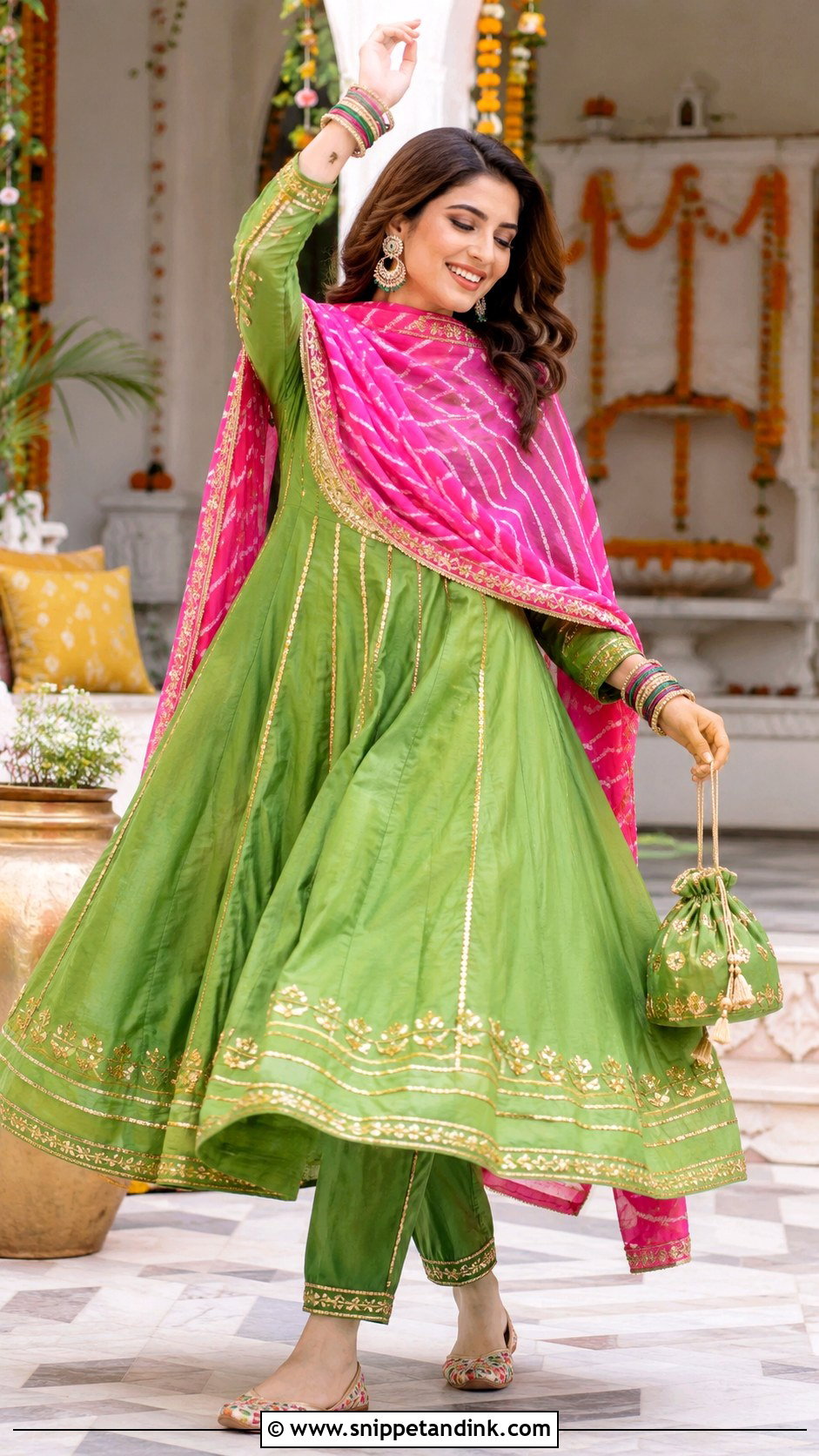
Gota patti is ribbon appliqué, traditionally in gold or silver, and it’s far lighter than zardozi, which is why it suits a mehndi where you’ll dance for hours. Choose a green gota patti Anarkali in breathable cotton-silk or light georgette, in parrot, lime or leaf green, with the gota placed around the neckline, cuffs and skirt panels. Comfortable straight pants and a bright pink or yellow leheriya dupatta go with enamel earrings, stacked bangles and flat embroidered juttis, plus a small tassel potli. A side braid with small flowers or a secure half-up style, green or gold eyeliner and a rosy lip finish it. If you’re having henna applied yourself, pick sleeves that end above the wrist so wet paste doesn’t smudge the cuffs.
14. Wine Anarkali Suit With Churidar
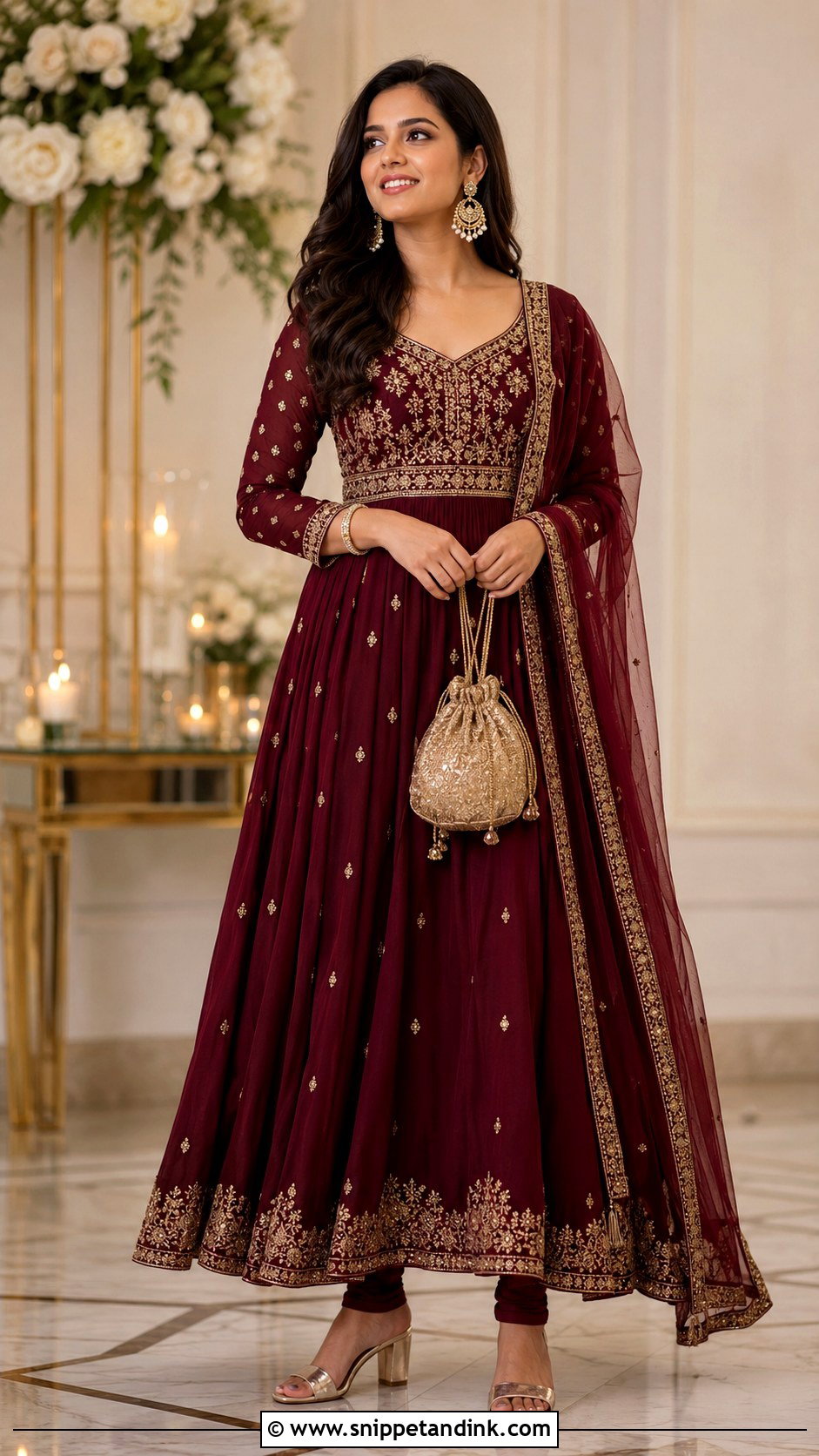
Wine is a richer, quieter alternative to red for a formal ceremony or evening reception, and a safer guest color, since red often belongs to the bride. Look for floor-length georgette, silk or velvet with tonal threadwork, fine sequins or antique gold embroidery, over a fitted churidar that adds no bulk. A matching sheer dupatta with a narrow edge, pinned at the shoulder, stays put all evening. Kundan earrings, a slim bracelet and a metallic potli are enough against the deep color. Add gold or champagne block heels, glossy waves or a low bun with face-framing pieces, softly smoky eyes and a wine-toned lip.
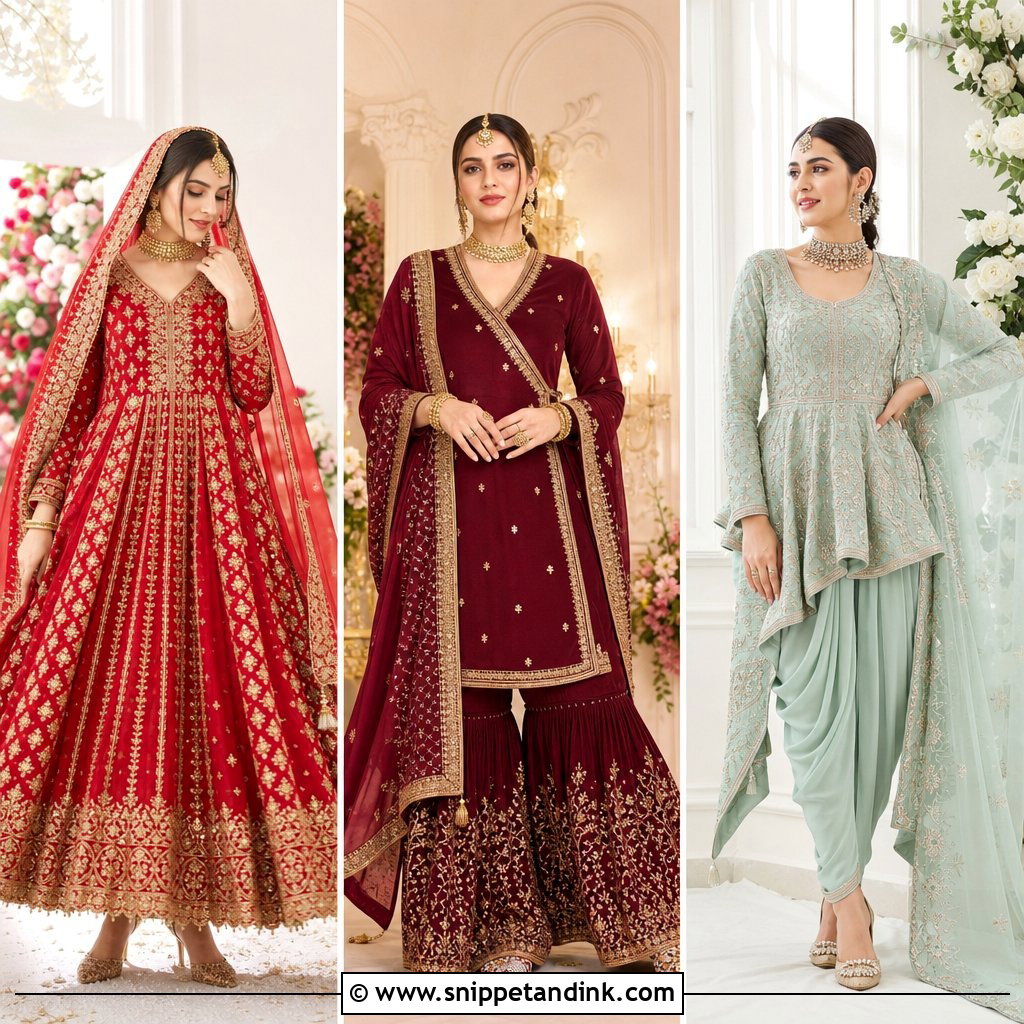
15. Powder Blue Organza Anarkali Suit
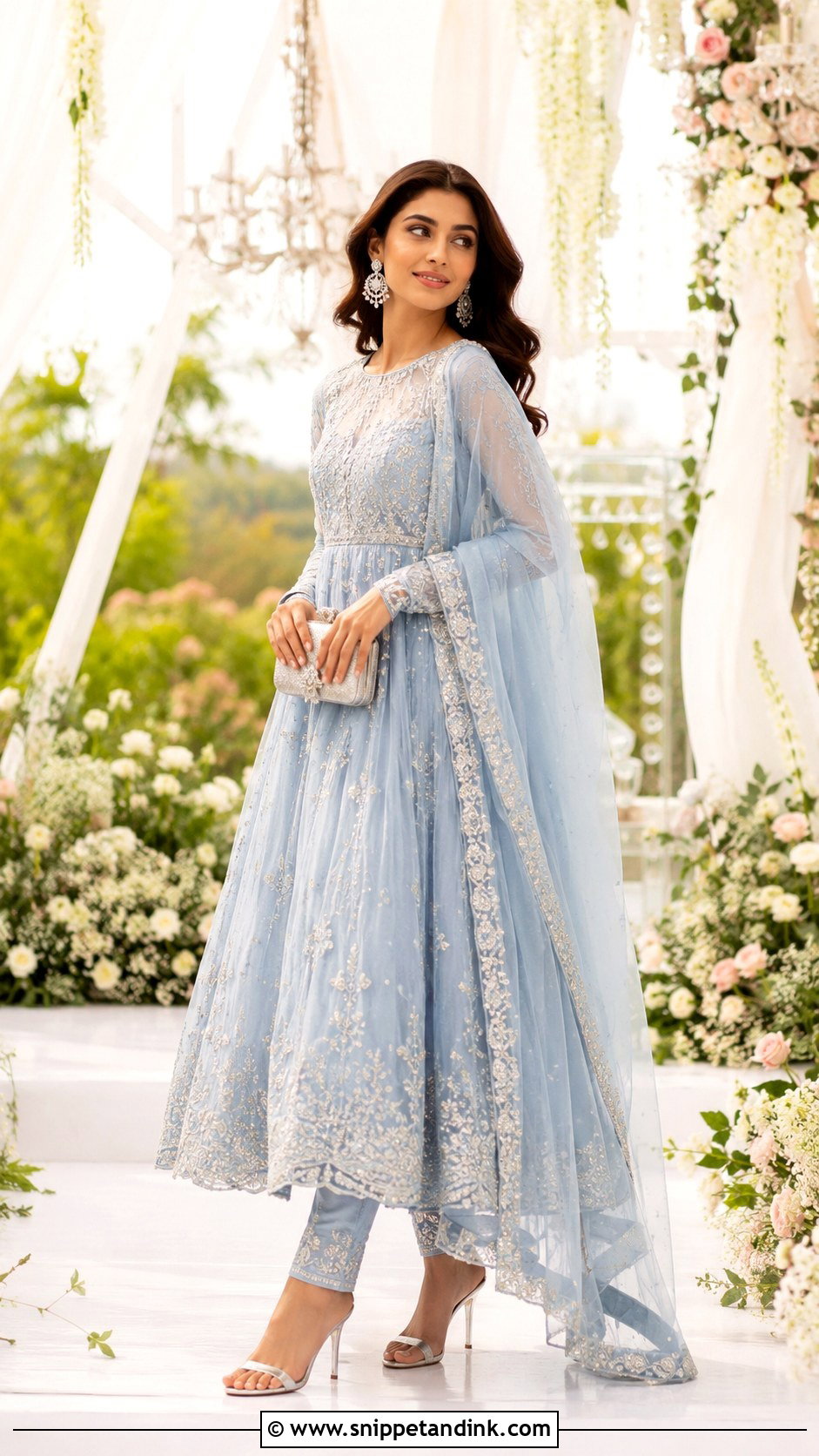
Organza is crisp and sheer, so a powder blue organza Anarkali gets volume without weight, which makes it a good spring or summer pick. It needs a structured lining under a fitted bodice, and silver threadwork, tiny pearls or scattered florals keep it soft. Organza also crushes when you sit on it and doesn’t spring back the way georgette does, so sweep the skirt aside before you sit. Slim tonal pants, a transparent dupatta with a delicate border, crystal drops, a silver clutch and pale metallic sandals complete it; leave oversized pieces at home. A relaxed bun or soft curls, luminous skin, cool pink blush and a glossy nude-pink lip suit a garden ceremony, a bridesmaid group or a daytime reception.
16. Purple Anarkali Suit With Kundan Jewelry
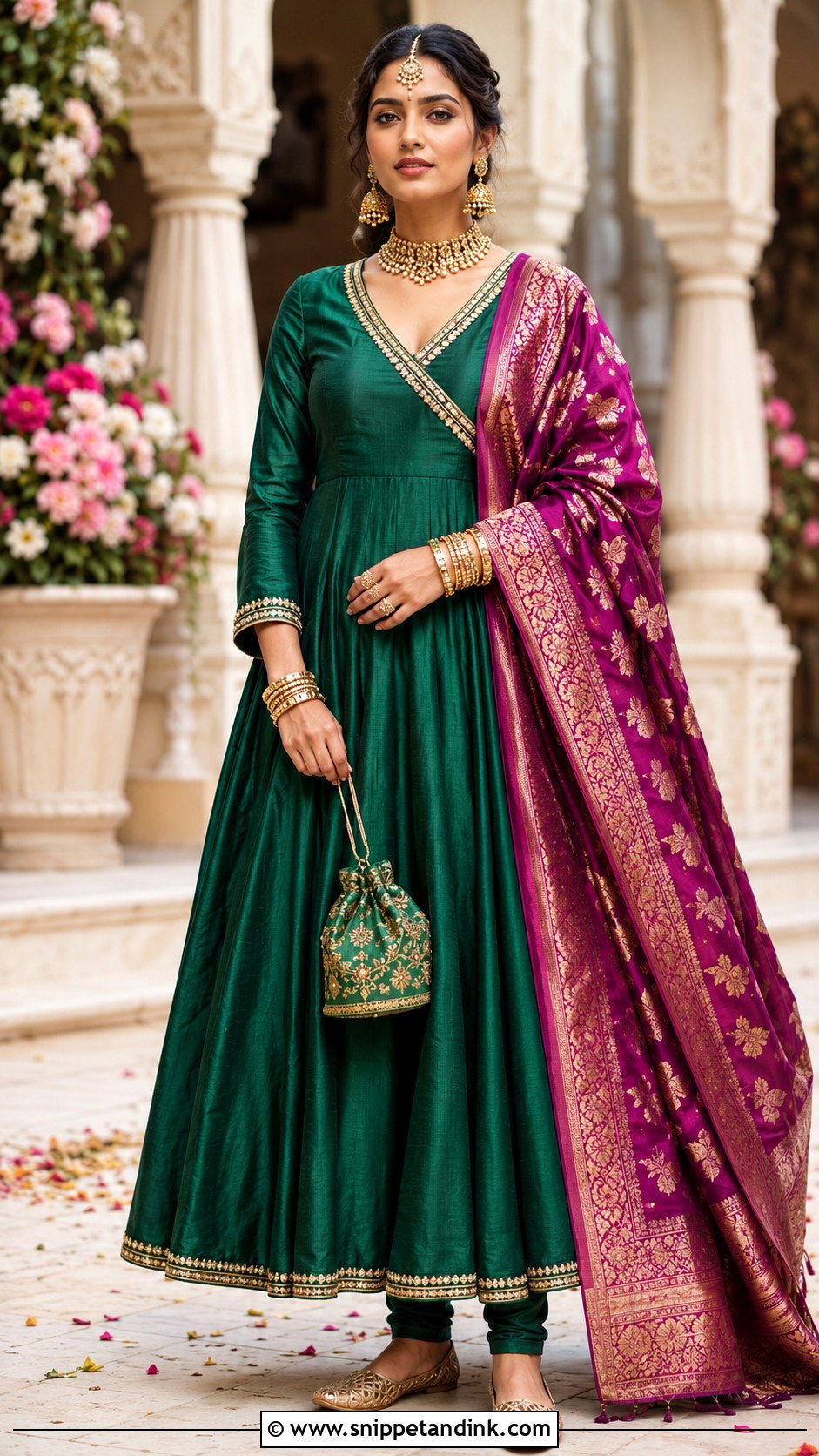
Purple stands apart from the red, pink and green that fill most wedding photos. Choose amethyst, plum or deep violet silk or georgette with gold embroidery concentrated at the bodice and border. A modest neckline frames a medium-length Kundan necklace well, and the gold-foil glow behind Kundan stones sits richly against purple, which makes this a good choice for a close family member. Add a matching churidar, a sheer dupatta worn diagonally or over one shoulder, coordinating earrings, one statement ring and an antique gold clutch. Embellished block heels give stability, a polished low bun shows off the jewelry, and softly defined eyes, warm blush and a mauve lip complete it.
17. Peach Anarkali Suit With Palazzo Pants
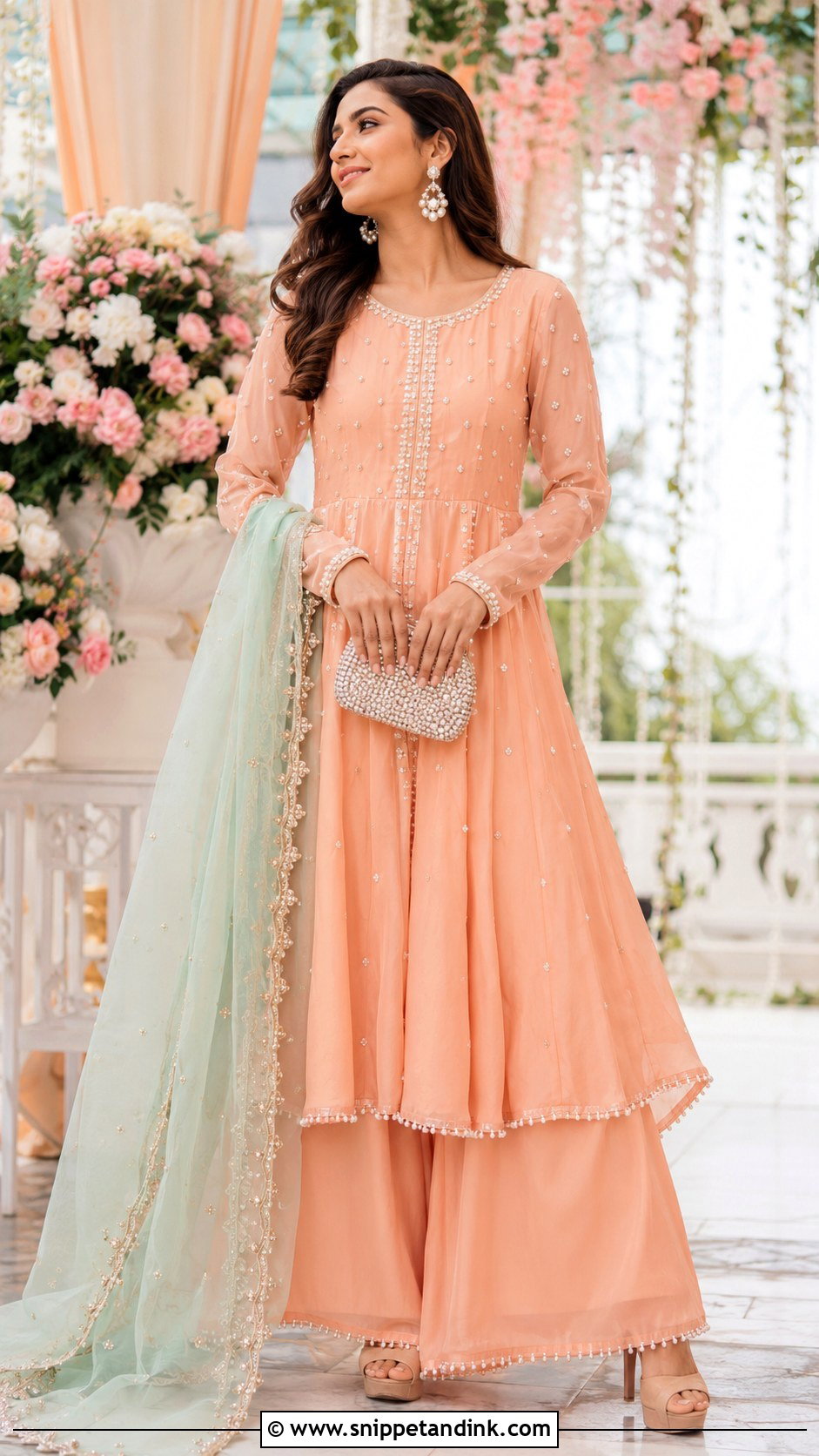
Peach suits a morning ceremony, an engagement or a bridesmaid outfit. Choose a knee-to-ankle-length Anarkali with a moderate flare, fine threadwork and small pearls, over flowing palazzo pants. Proportion is everything here: the Anarkali must end high enough to show the palazzo, or the two flares merge into one shapeless column. That’s the first thing I check in the mirror with this pairing. Add a sheer peach or contrasting mint dupatta, pearl earrings, a beaded clutch and nude platform sandals. Loose waves or a braided low bun, peach makeup and a rose-nude lip keep it celebratory without feeling too formal for daytime.
18. Teal Anarkali Suit With Embroidered Dupatta
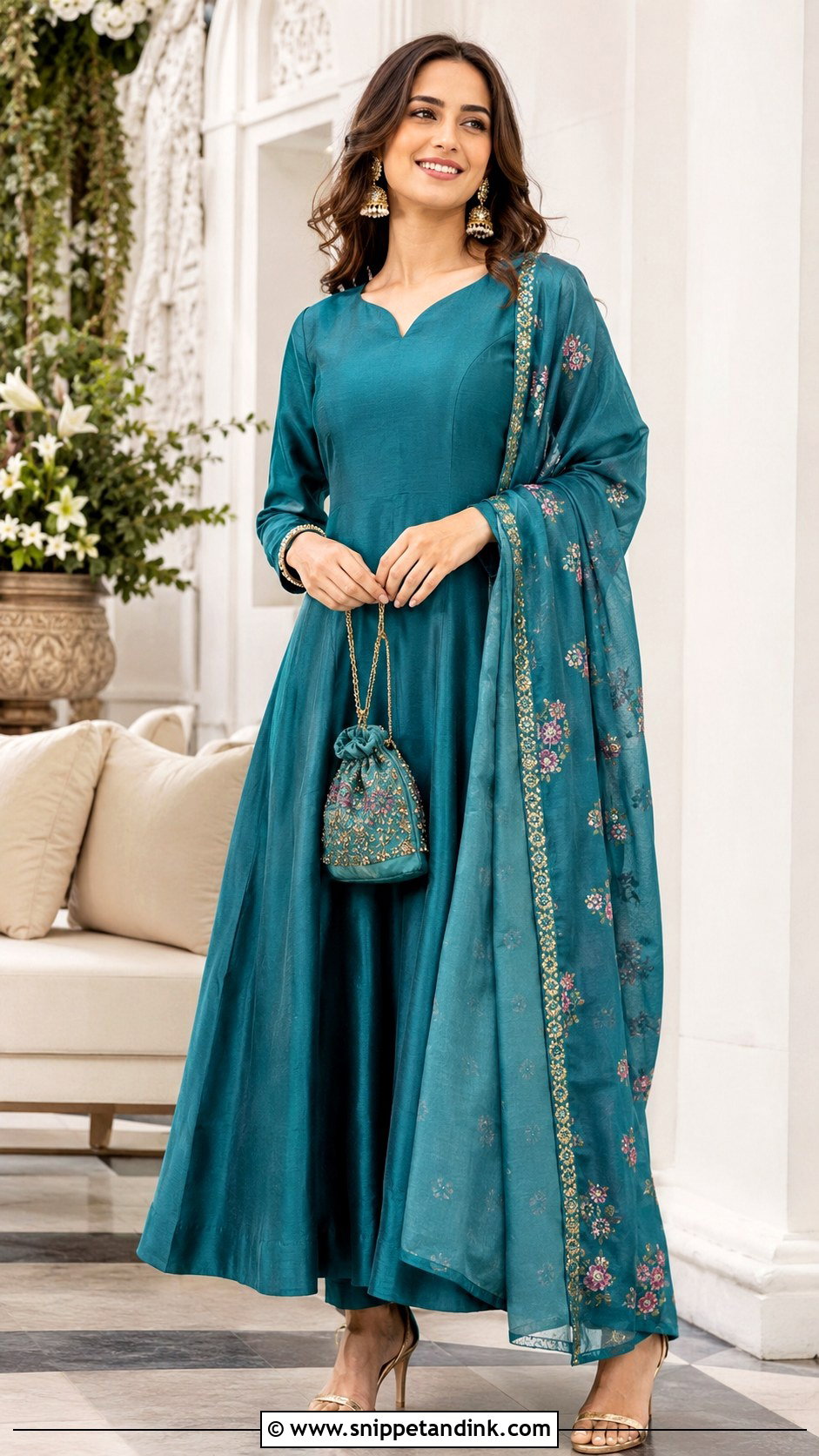
Teal sits between blue and green, so it moves easily from a day event to an evening one. Choose a floor-length georgette or silk Anarkali with a clean bodice and a lightly decorated skirt, and let an embroidered dupatta carry the detail with florals, sequins or a border in gold, pink or turquoise. Pin it at one shoulder so you can move freely. Gold jhumkas, a matching bracelet and a small potli in one of the embroidery colors go with metallic heels or embroidered juttis. Teal can look cold against warm undertones under evening lighting, so I warm the makeup: bronzed skin, a warm lip and a side-parted low bun. It suits a ceremony, sangeet or reception.
19. Mustard Anarkali Suit With Bandhani Dupatta
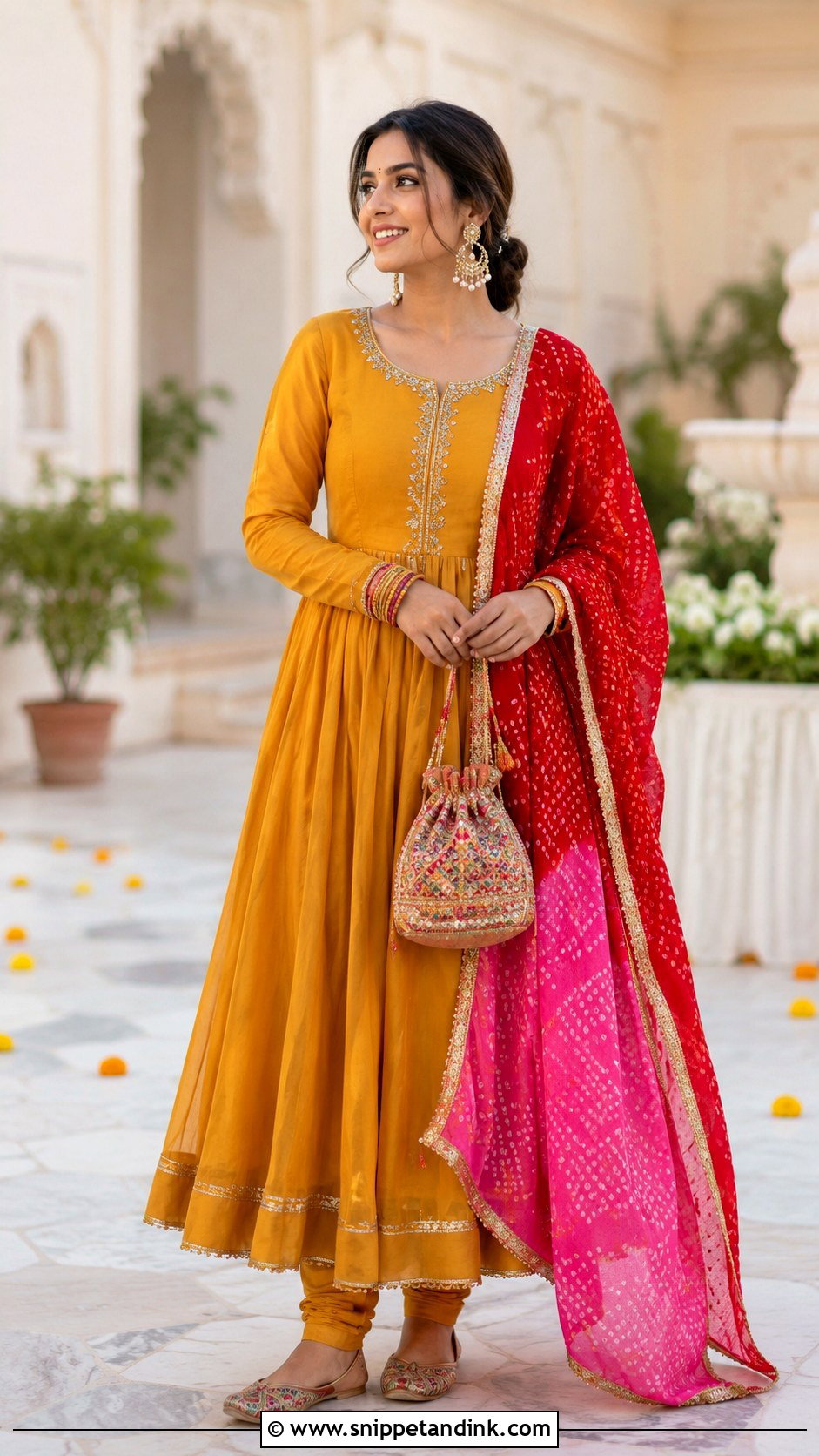
Mustard looks warm and festive outdoors, especially at a pre-wedding function. Choose cotton-silk or chanderi with a fitted bodice, an ankle-length flare and restrained gold detailing, then slim pants and a red, pink or green bandhani dupatta for pattern and contrast. Antique gold earrings, colorful bangles and a hand-embroidered potli complete the styling. Wear cushioned juttis for a long day, or low block heels for a dressier finish, with a braided bun or loose braid trimmed with small flowers. Golden eyeshadow, peach blush and a warm rose lip suit the color. Mustard flatters some skin tones far more than others, so hold the fabric to your face in daylight before you buy. This complete mustard Anarkali look suits haldi, mehndi or a daytime wedding.
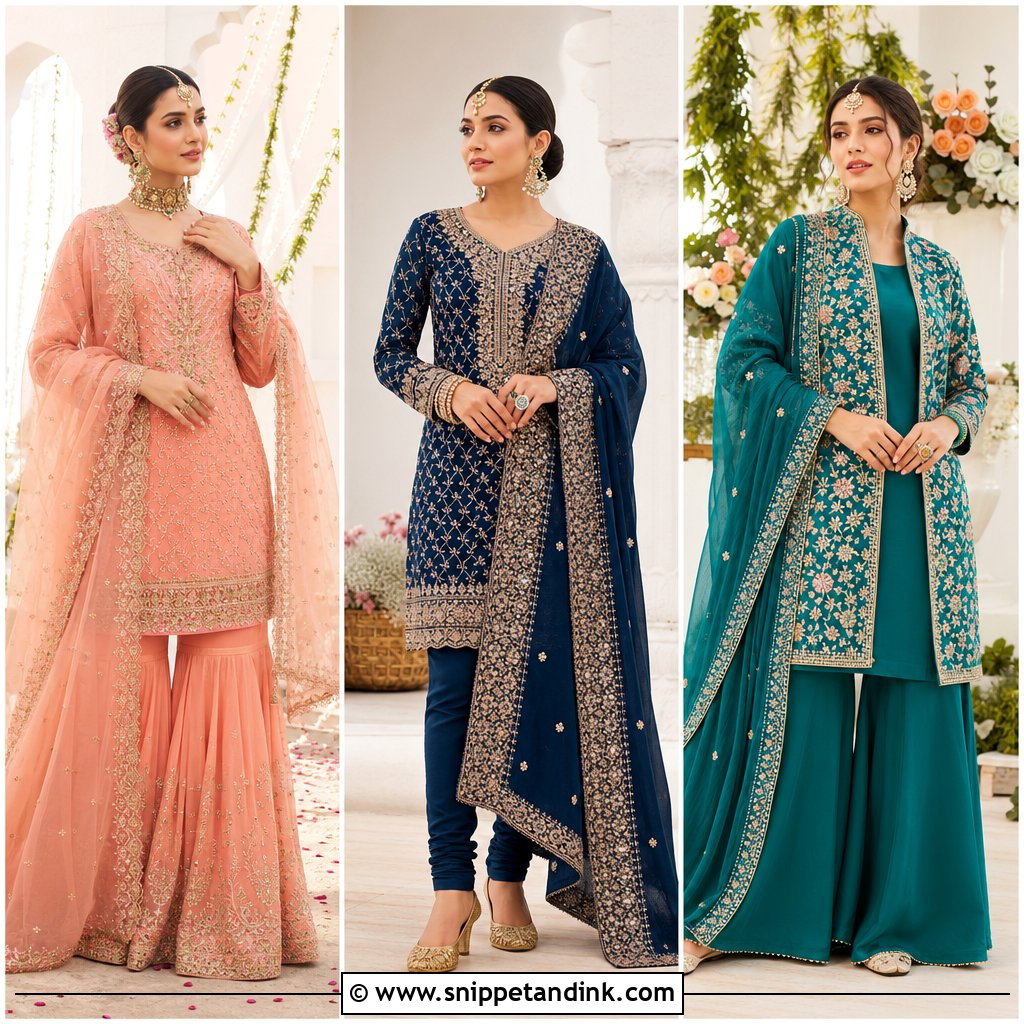
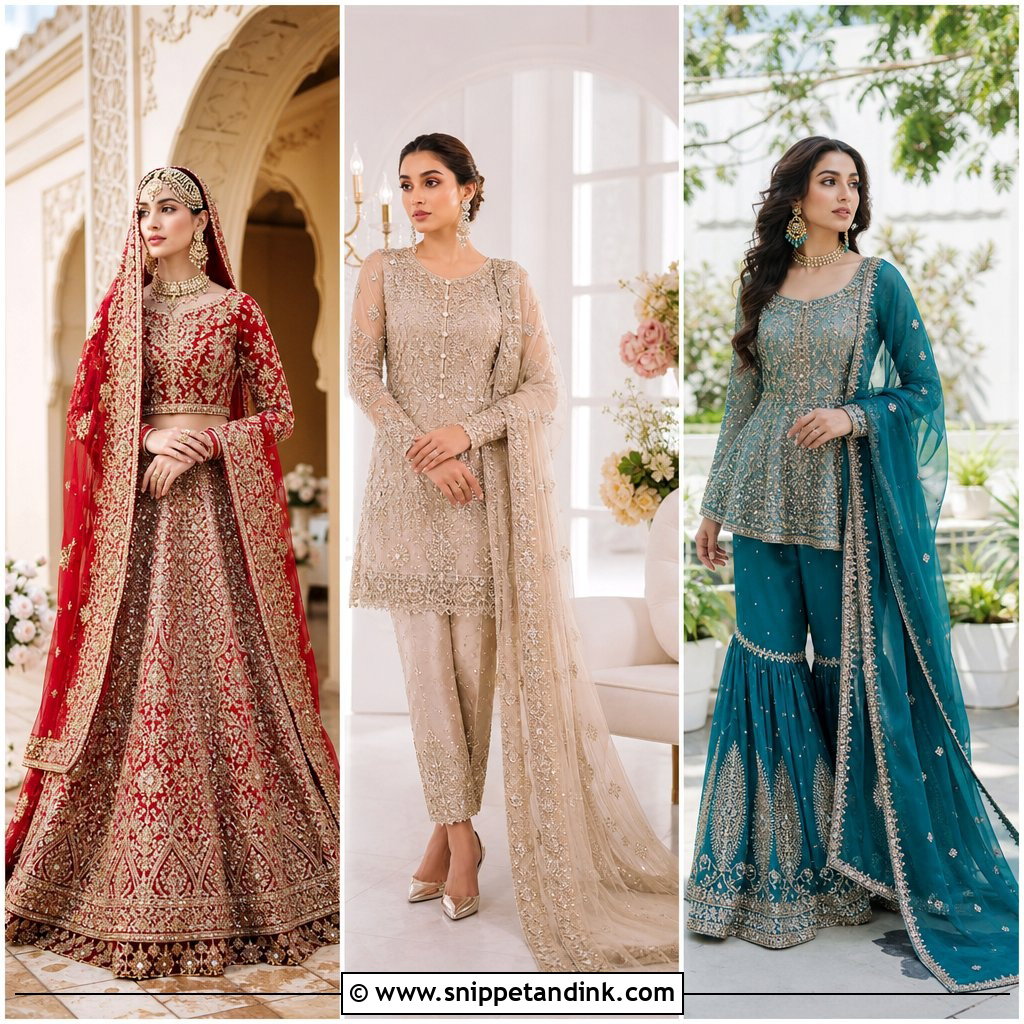

20. Rose Gold Embellished Anarkali Suit
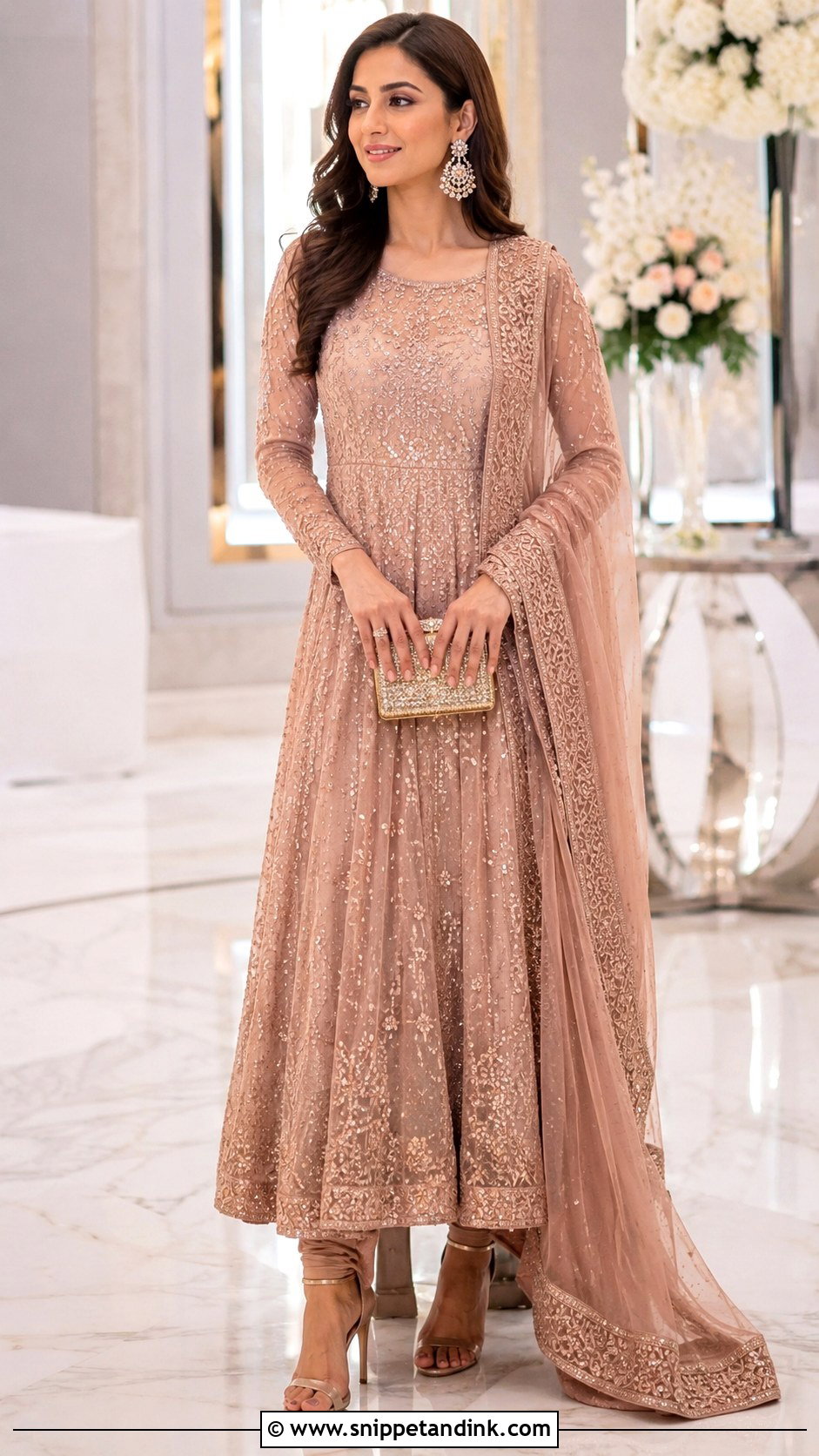
Rose gold has a softer shine than silver or yellow gold, which keeps a reception outfit from looking loud. Choose a floor-length net or georgette Anarkali with tonal sequins and beadwork over a fully lined bodice. Spread the embellishment evenly so the skirt catches light as it moves; work packed into one band makes the hem swing heavily. A slim churidar and a soft net dupatta over one arm, crystal earrings, a champagne clutch and rose gold heels complete it, and with this much sparkle in the fabric, one or two jewelry pieces is enough. Smooth waves, a sleek ponytail or a low bun, softly defined eyes and a muted pink lip suit a reception, formal dinner or bridesmaid entrance.
Guest, Bridesmaid or Bride? Colors That Send the Right Signal
An Anarkali turns up in every wedding role, which is exactly why color deserves a moment’s thought.
- Bride: red, maroon and deep wine read most traditionally, though plenty of brides now choose pastels or ivory. Here, the only people you need to check with are your own family.
- Bridesmaids: coordinate rather than copy. I’d give a group one color family in different shades, or one shade in different cuts, so nobody is stuck in a silhouette that doesn’t suit her.
- Guests: in many families, red and heavy bridal gold are left to the bride. White and black carry mourning associations in several traditions, so check before wearing either.
- Close family: mothers and sisters can usually go richer and more embroidered than other guests, and jewel tones with Kundan or temple jewelry suit that role.
When you’re unsure, ask the couple or a family elder. It’s a normal question, and nobody minds being asked.
Stitching to Measure or Buying Off the Rack
A ready-made Anarkali can work well if you leave time for alterations. Most need the bodice taken in or the hem adjusted, and a heavily embellished piece takes longer because work has to be unpicked and reattached at the seams.
For a custom-stitched outfit, I’d allow roughly six to eight weeks for an embroidered piece and plan at least two fittings. Lead times vary widely between tailors and stretch further in peak wedding season, so ask before you commit and build in a buffer.
Match the Flare to the Hours You’ll Spend in It
An Anarkali makes wedding dressing simpler than most outfits do. Start by matching fabric and embellishment to the season and venue, then look at how the flare, length and neckline work with your height and the coverage you want. Shoes should stay comfortable for as many hours as the event runs. Let jewelry, bags, hair and the dupatta drape support the dress rather than compete with it. And respect the couple’s traditions and dress code. A well-fitted, well-balanced outfit always looks more polished than one built on decoration alone.
You'll Like These Ideas:






Leave a Reply