
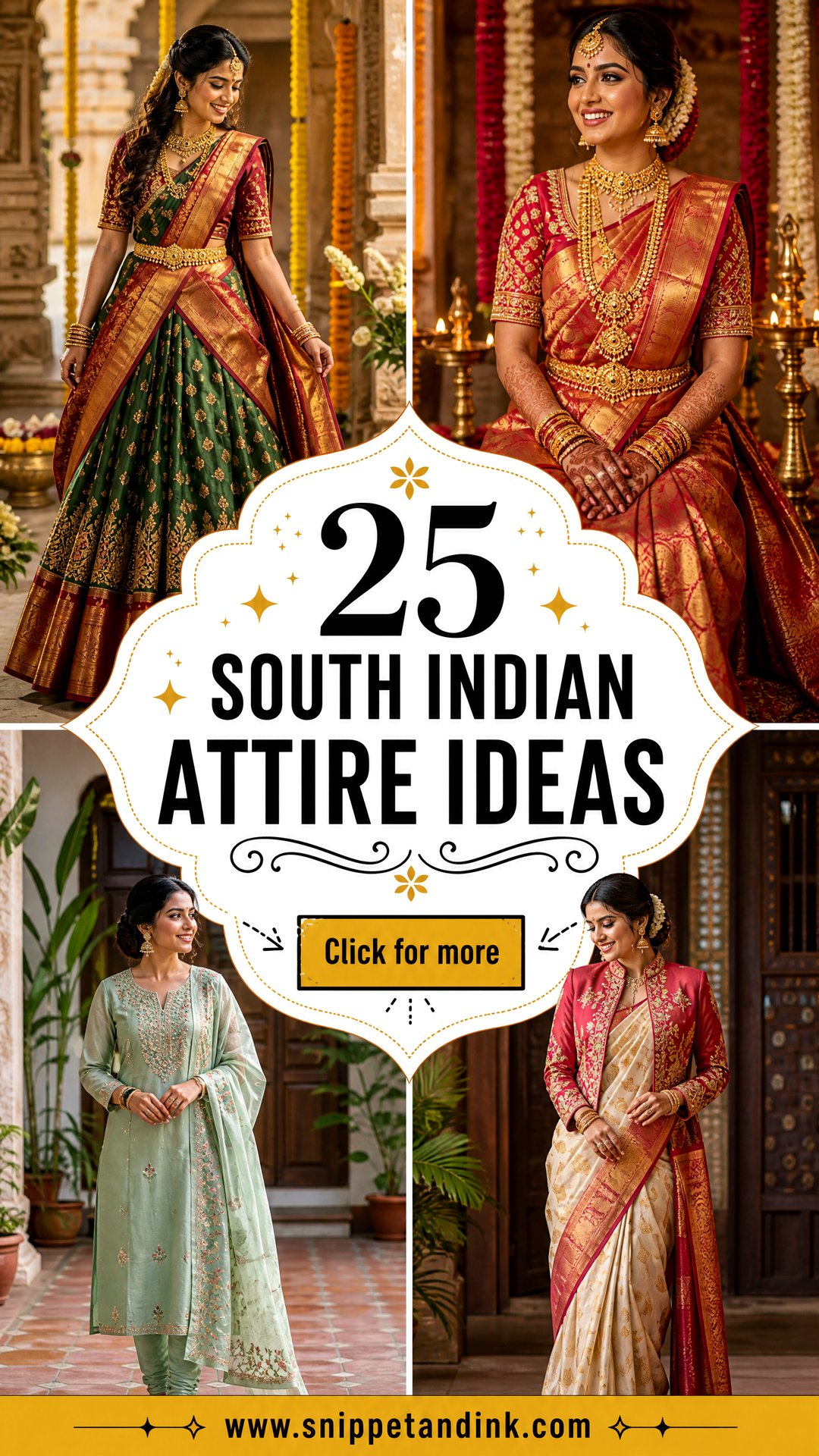
South Indian fashion covers far more than the Kanjeevaram most people picture. There are half sarees and pattu pavadai, Kerala kasavu, anarkalis cut from silk borders and fusion pieces that borrow a temple motif or a kalamkari panel. When I put a South Indian look together, I start with the occasion and the hours you’ll spend in it, then the fabric, and only then the colour, blouse, jewellery and shoes. The outfits below run from wedding-morning silk to temple-visit cotton, with notes on how each one drapes, wears and holds up, for different ages, body types and comfort levels.
Draping Silk So the Pleats Survive a Long Muhurtham
Most saree problems I fix on a wedding morning start before the saree goes on. A good drape depends on what’s underneath and on preparation done the day before.
The inskirt and the shoes come first
Tie the petticoat firmly at the natural waist with a drawstring, not elastic, so it can carry the weight of tucked silk. Put on the shoes you’ll wear before draping. The hem should just touch the top of the foot, and draping barefoot then adding heels leaves it short.
Pre-pleat heavy silk
With a Kanjeevaram or bridal silk, I fold the pleats and the pallu the night before, hold them with a few clips and leave the saree flat. In the morning they go in sharp and stay that way. Narrow pleats suit soft silk and tissue; slightly wider pleats suit stiff, heavy silk.
Give the blouse tailor real time
- Hand over the blouse fabric at least a month before the wedding, and longer for heavy embroidery or aari work.
- Book a trial fitting with the jewellery you’ll wear, because a heavy necklace drags a loose neckline down.
- Ask for a back hook placket and lining; unlined silk blouses stretch and sweat through.
1. Kanjeevaram Silk Saree Outfit
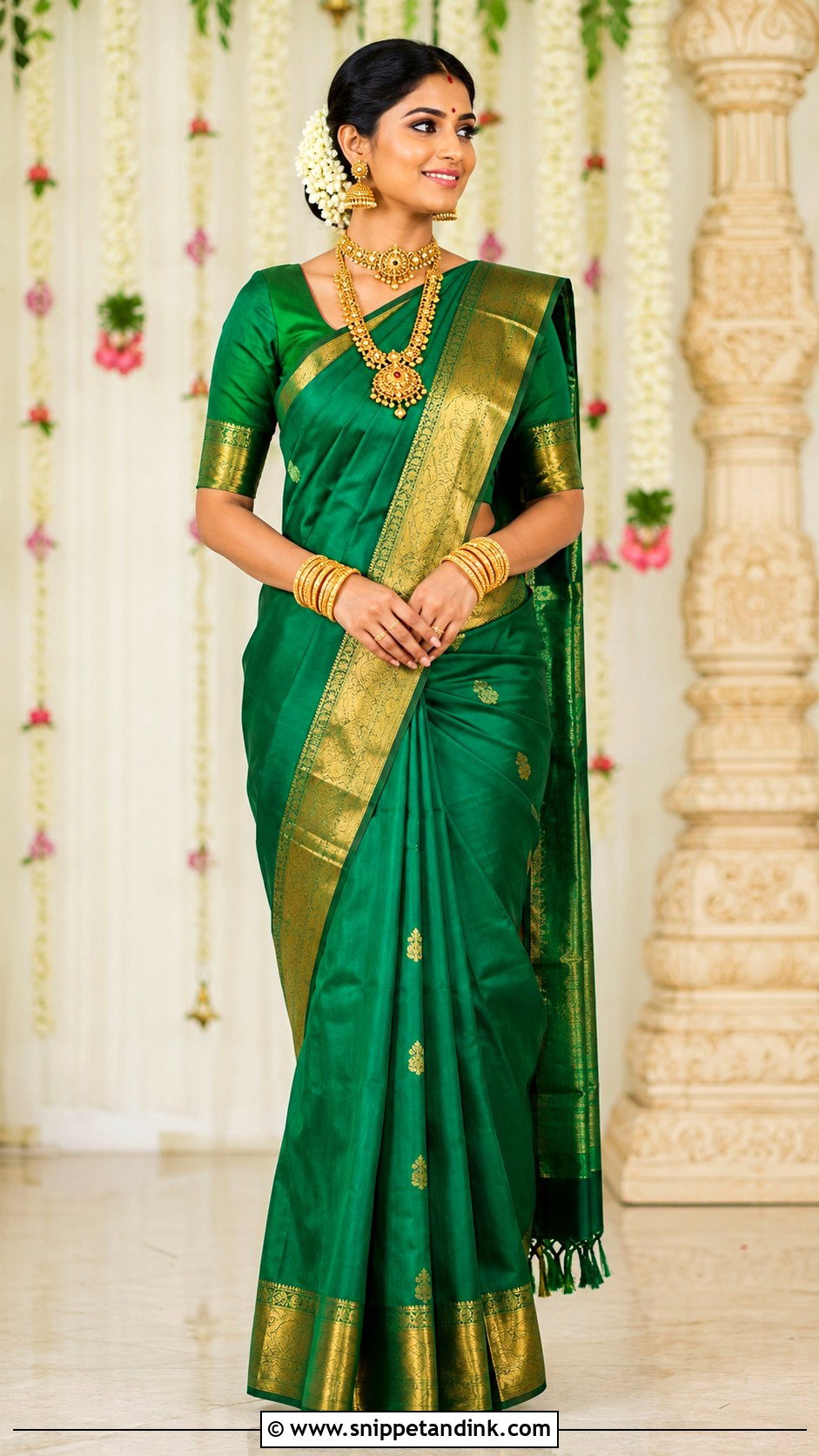
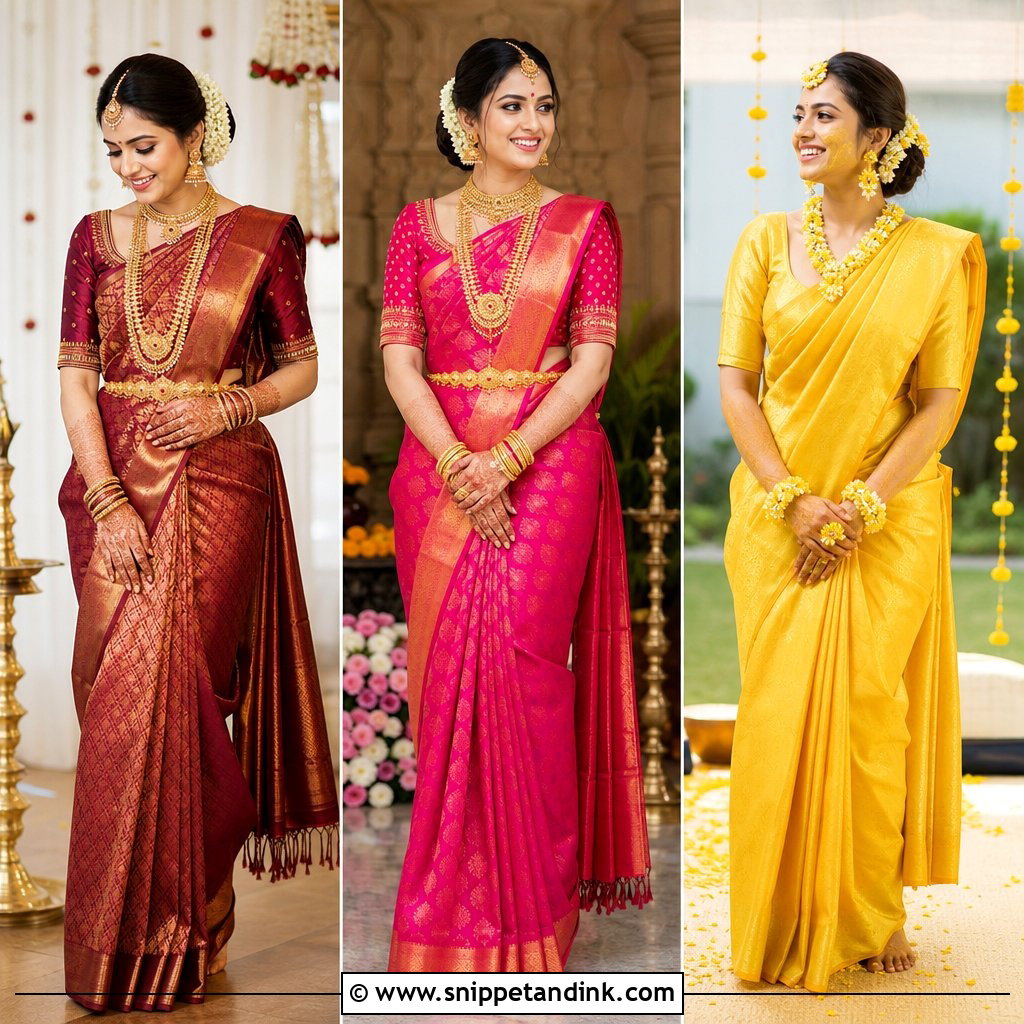
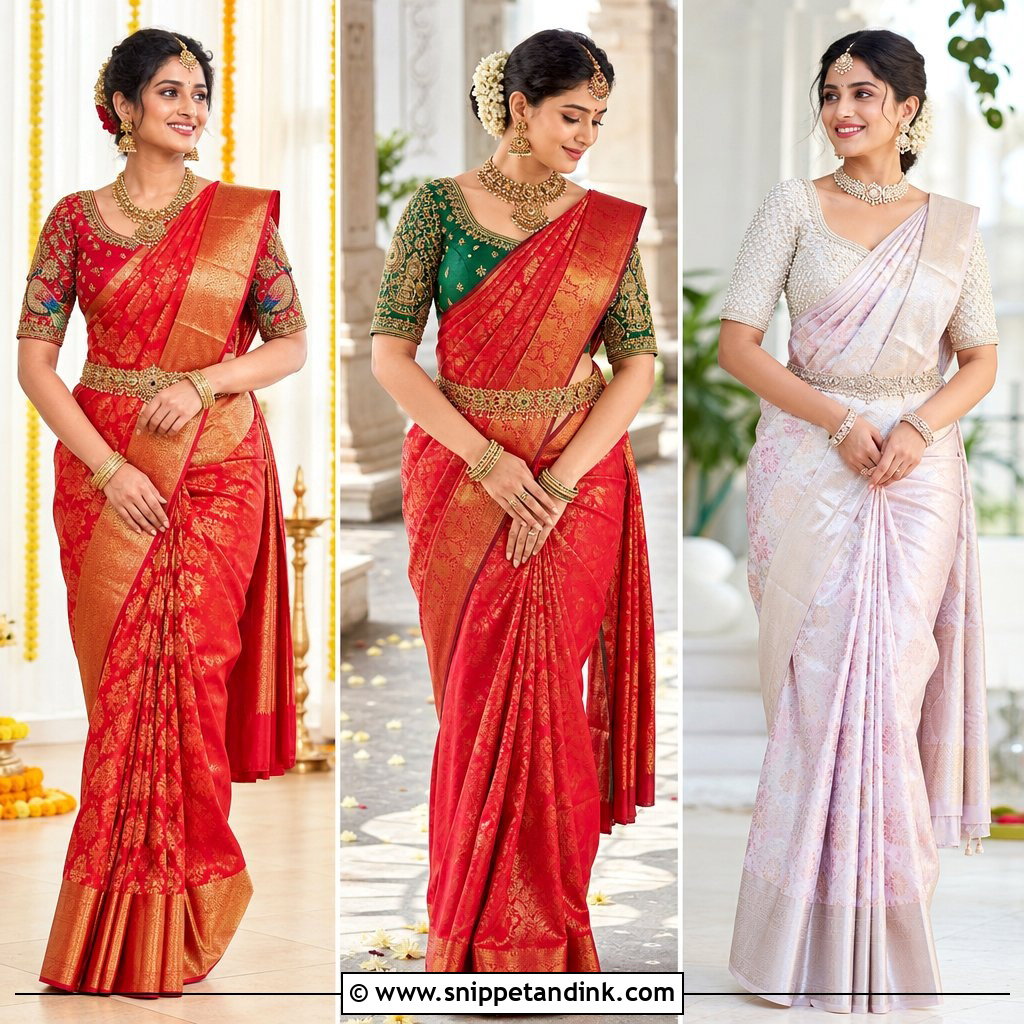
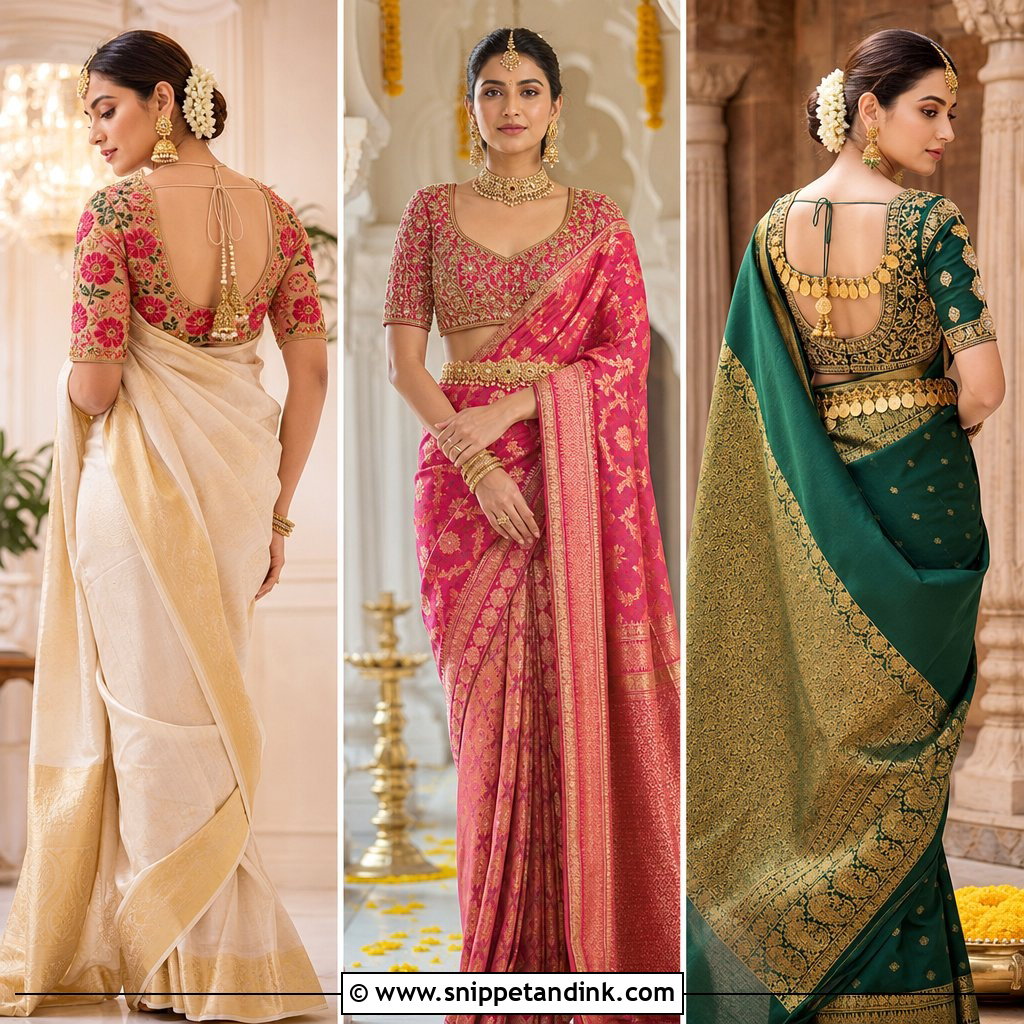
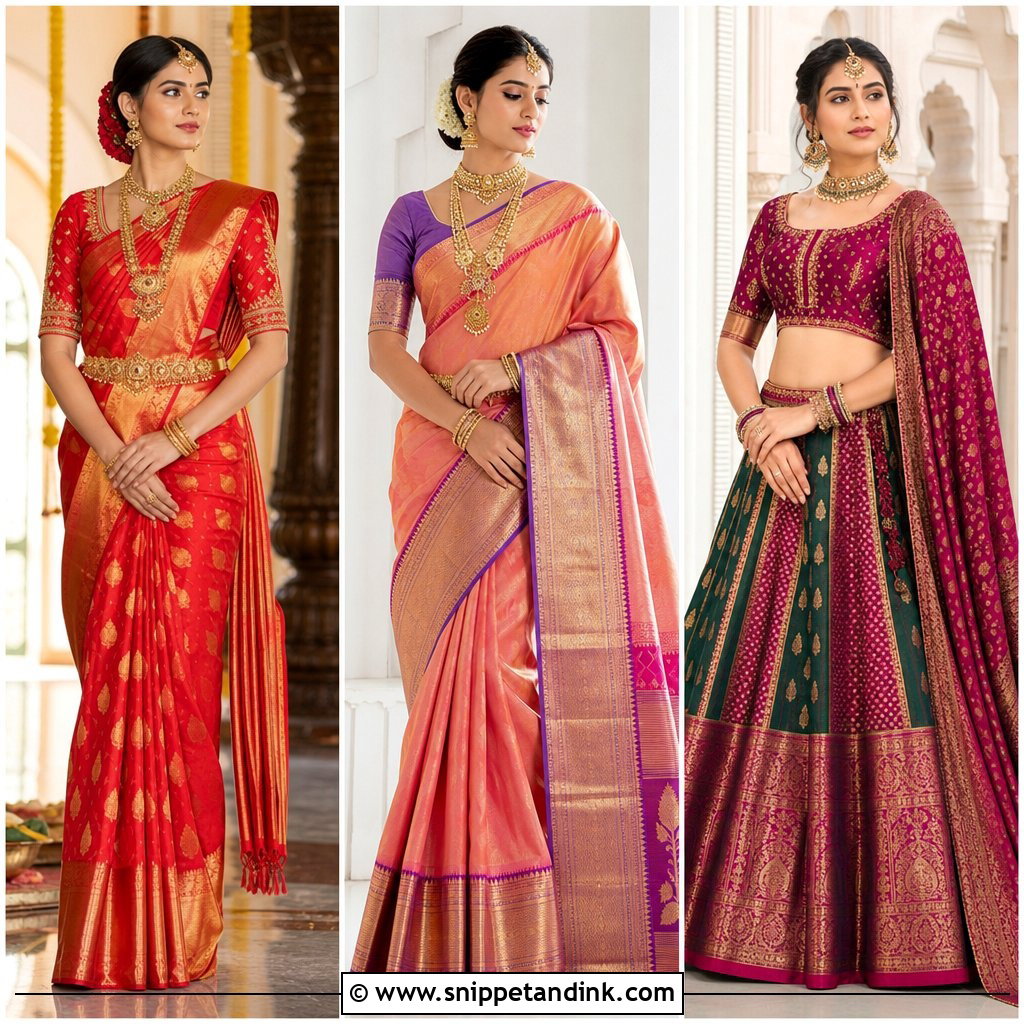
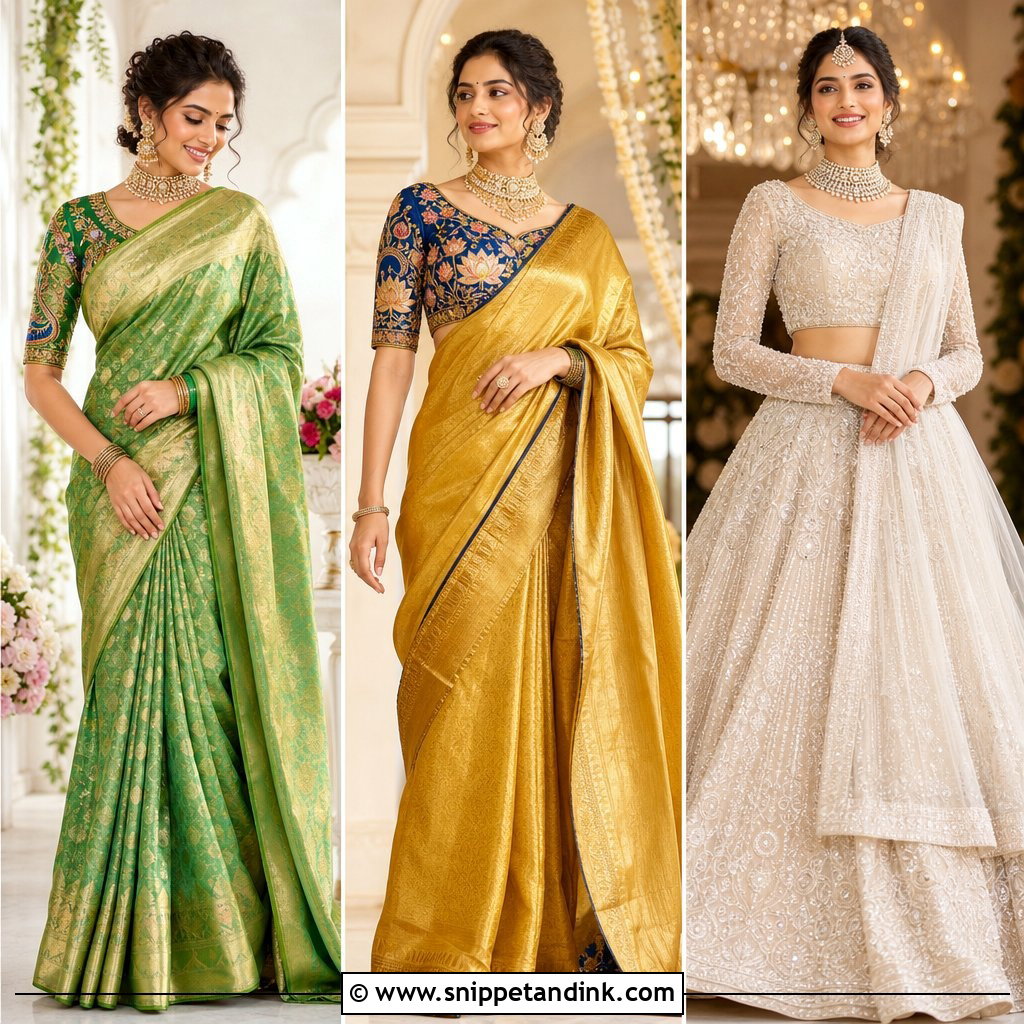
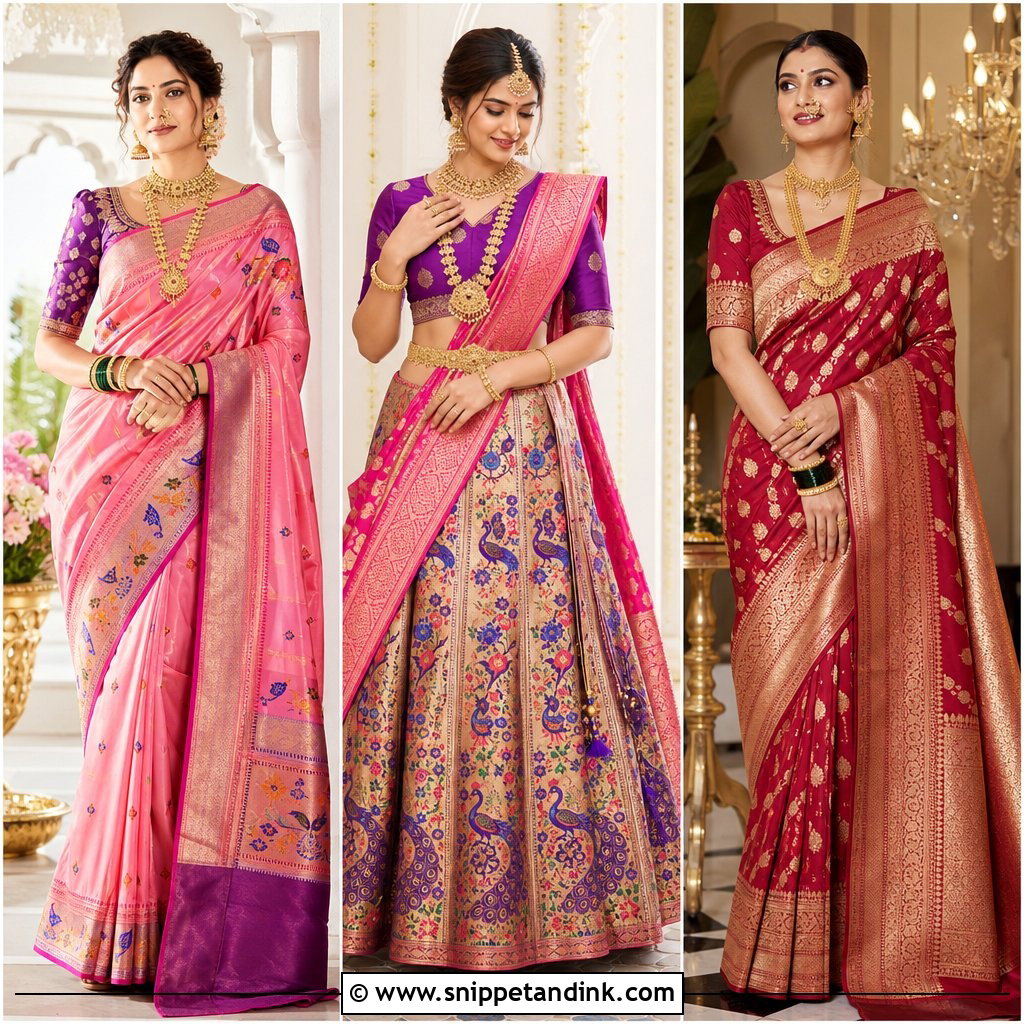
Kanjeevaram is the saree I’d recommend first for a wedding, reception or formal family function. Emerald, ruby, royal blue, mustard and deep purple with a zari border are the classic choices. A heavy Kanjeevaram has real body, so the pleats sit crisp but the pallu can feel stiff on a slim frame; I pleat the pallu in narrow folds and pin it at the shoulder so it falls instead of fanning out. Pair it with a fitted blouse in matching silk or a sharp contrast. Temple jewellery, gold bangles, a small bindi and a neat bun with fresh flowers complete it. Gold block heels or embellished flats keep the hem at the right height.
2. Kerala Kasavu Saree Outfit
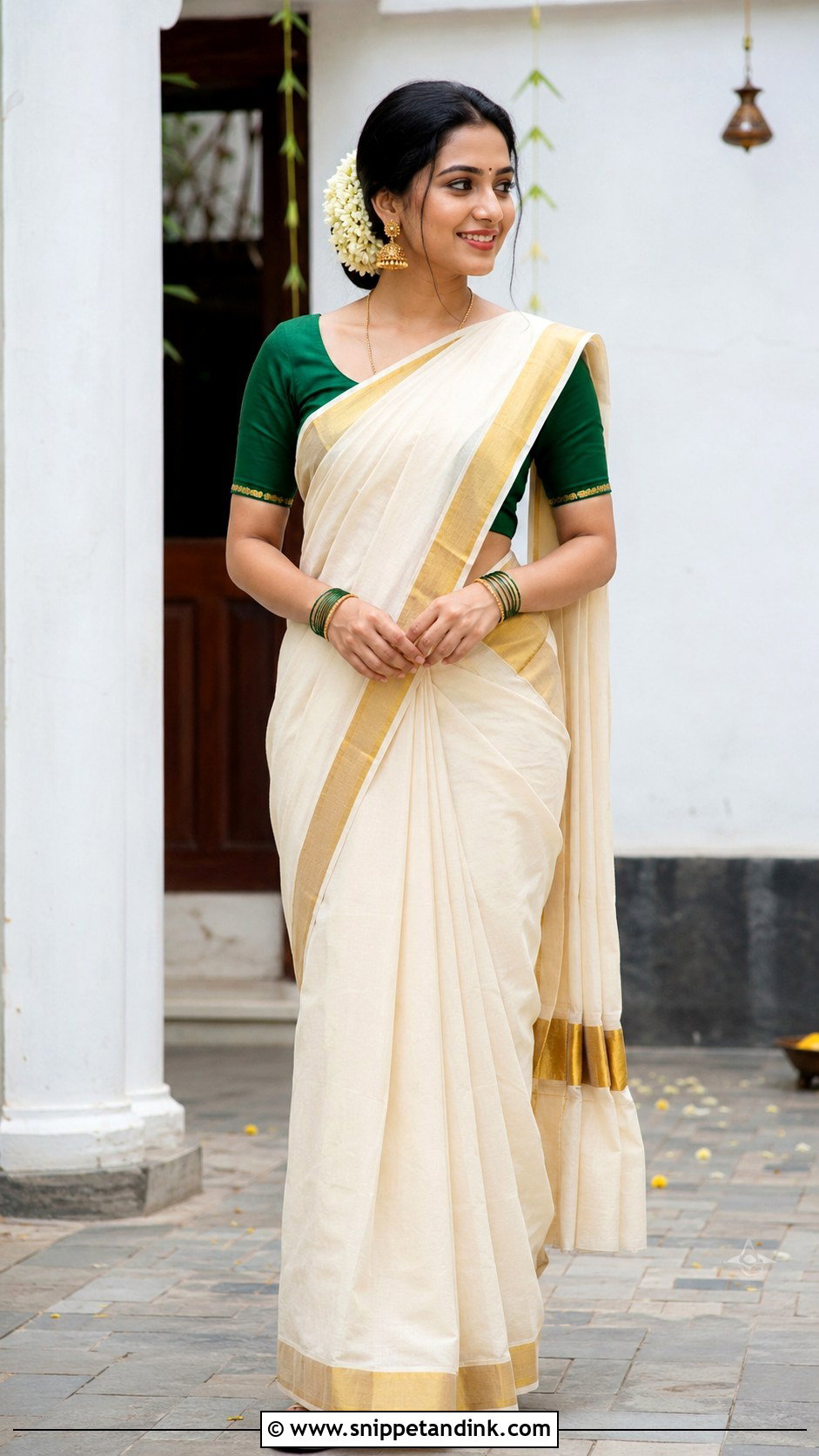
A Kerala kasavu saree outfit is the cream-and-gold look of Onam, temple visits and daytime ceremonies. Its simplicity is its strength. The blouse decides how festive it reads: gold or cream keeps it quiet, while green, red or maroon makes it celebratory. Kasavu is usually cotton, which means it crushes, so I starch it lightly and iron the pleats before draping rather than after. Gold jhumkas, bangles and a simple necklace suit it, along with a low bun, jasmine and natural makeup. A sleeveless or elbow-sleeve blouse modernises it without disturbing the drape.
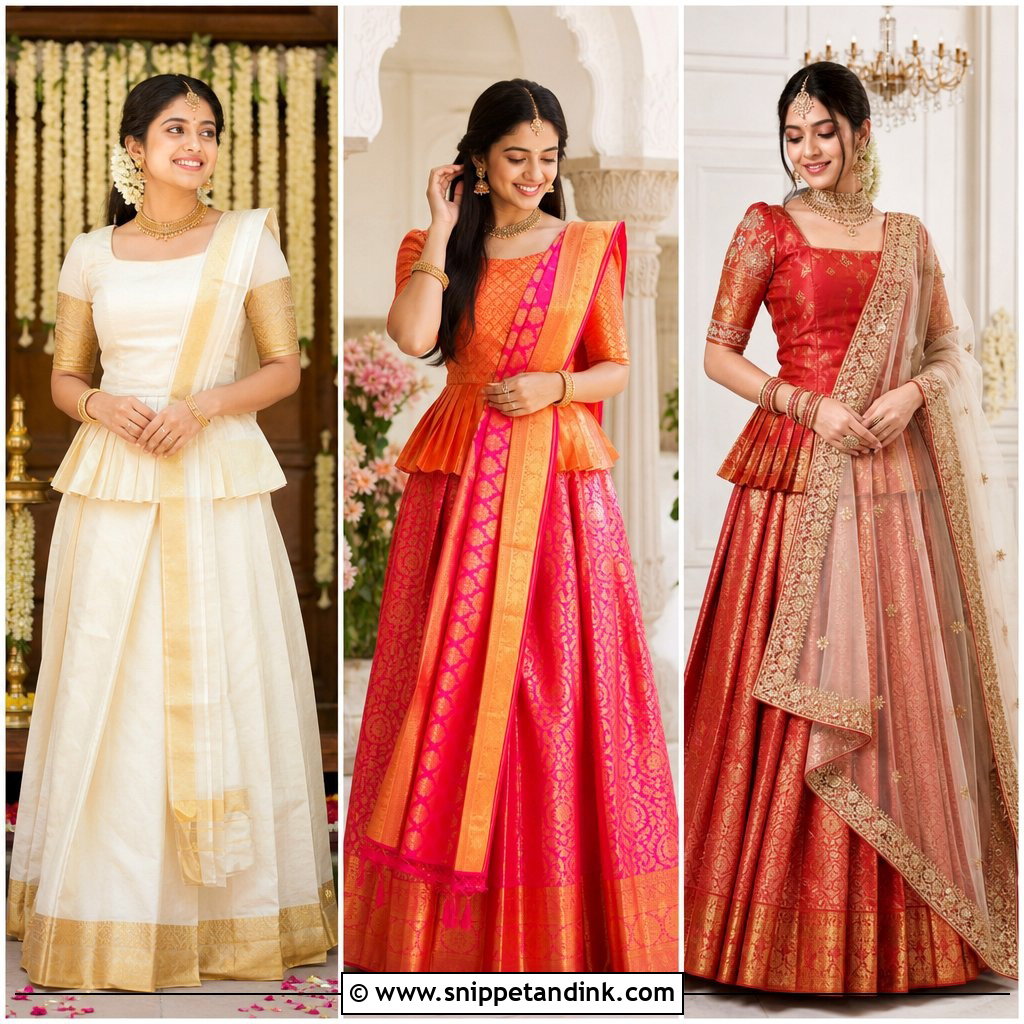
3. Half Saree Lehenga Outfit
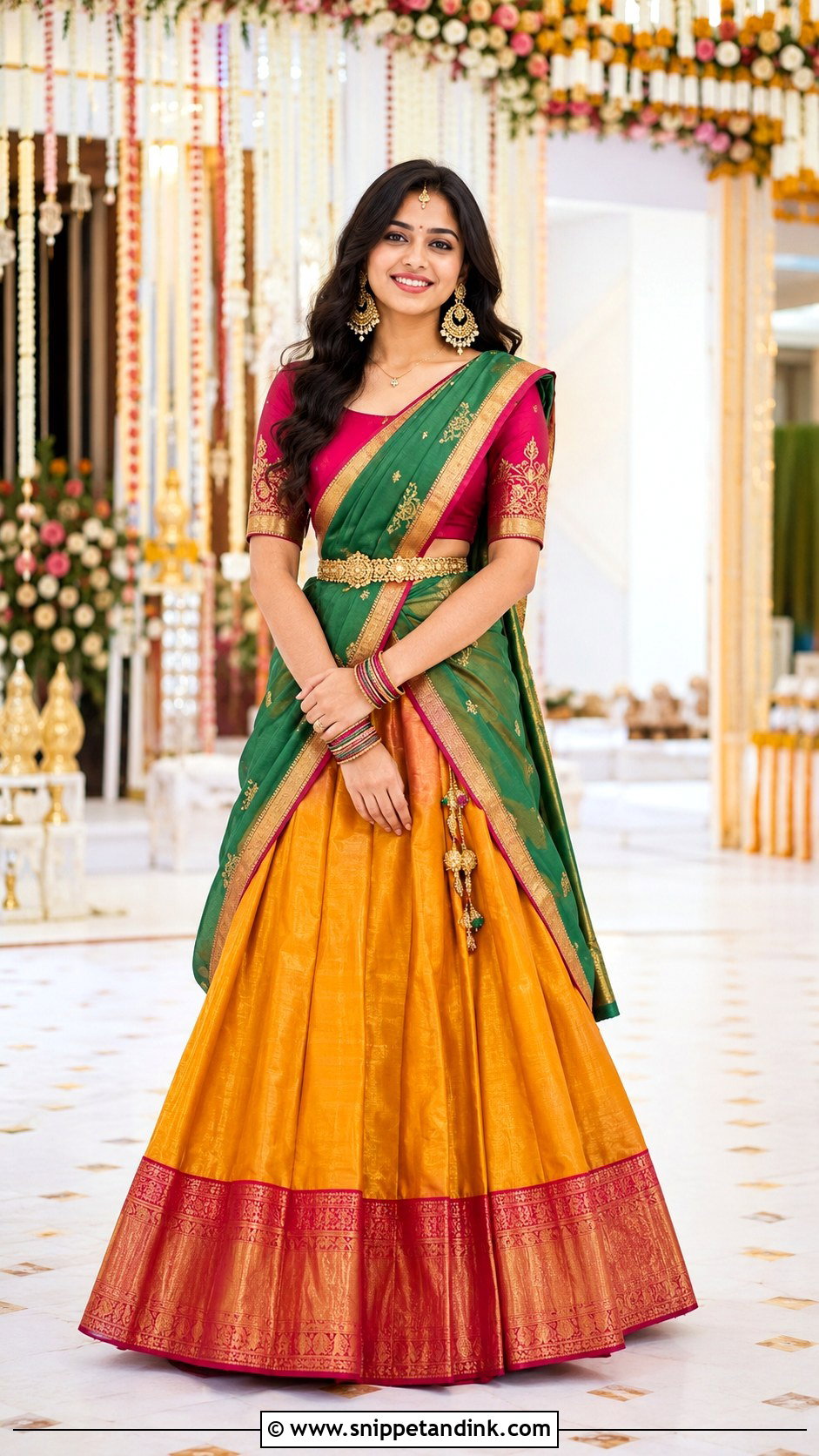
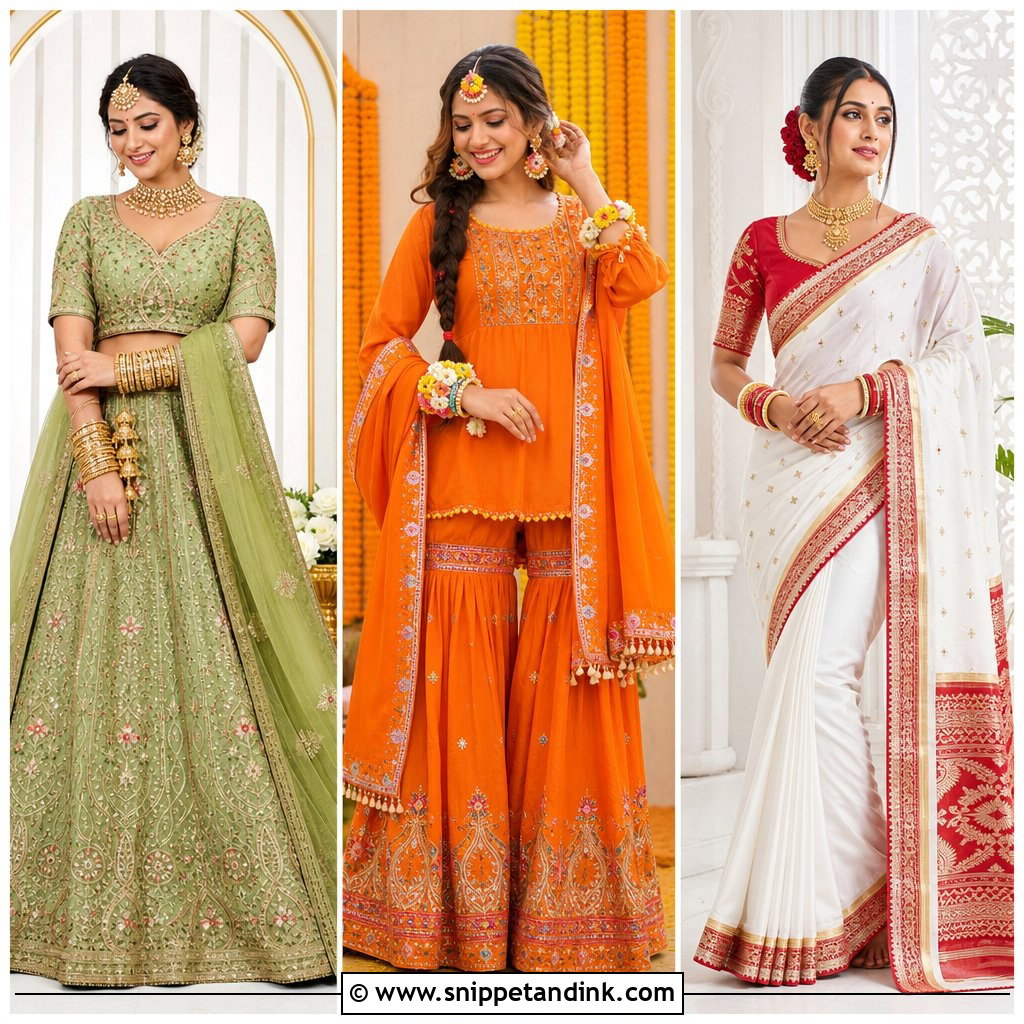
The half saree gives you a saree’s grace with a skirt’s ease. It’s a lehenga skirt, blouse and a dupatta draped across the body like a pallu. Silk, brocade, georgette and organza each suit a different occasion, and the bright pairings are the traditional ones: yellow with pink, green with orange, blue with gold, maroon with cream. The dupatta is the part that slips. I tuck it into the skirt waistband at the front, pin it at the shoulder and add a waist belt, which is why the belt is more than decoration. Chandbalis and bangles finish it for young women, bridesmaids, engagements and cultural programmes.
4. Pattu Pavadai Outfit
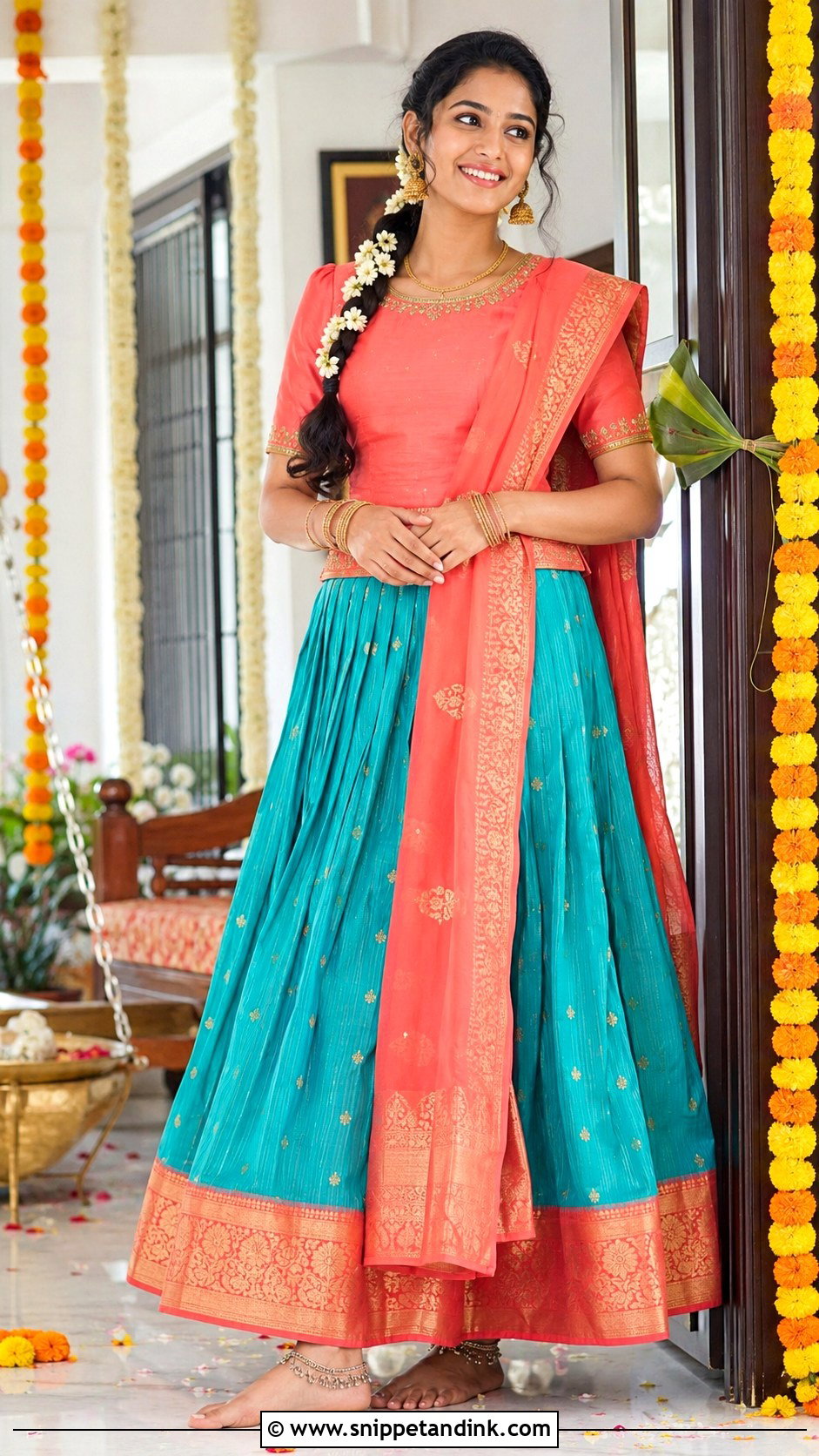
A pattu pavadai outfit is a silk skirt and blouse, often with a dupatta, and it is the classic festive look for girls and teens. Parrot green, coral, magenta, turquoise and golden yellow suit it, and a contrast blouse with zari adds richness. For children I check the skirt length with the actual sandals, because a pavadai that drags gets trodden on during play. Pair it with small jhumkas, bangles, anklets and a flower-woven braid. Modern versions in heavier silk suit adult women who like skirt-based ethnic wear, and it moves freely through a long day.
5. South Indian Bridal Saree Outfit
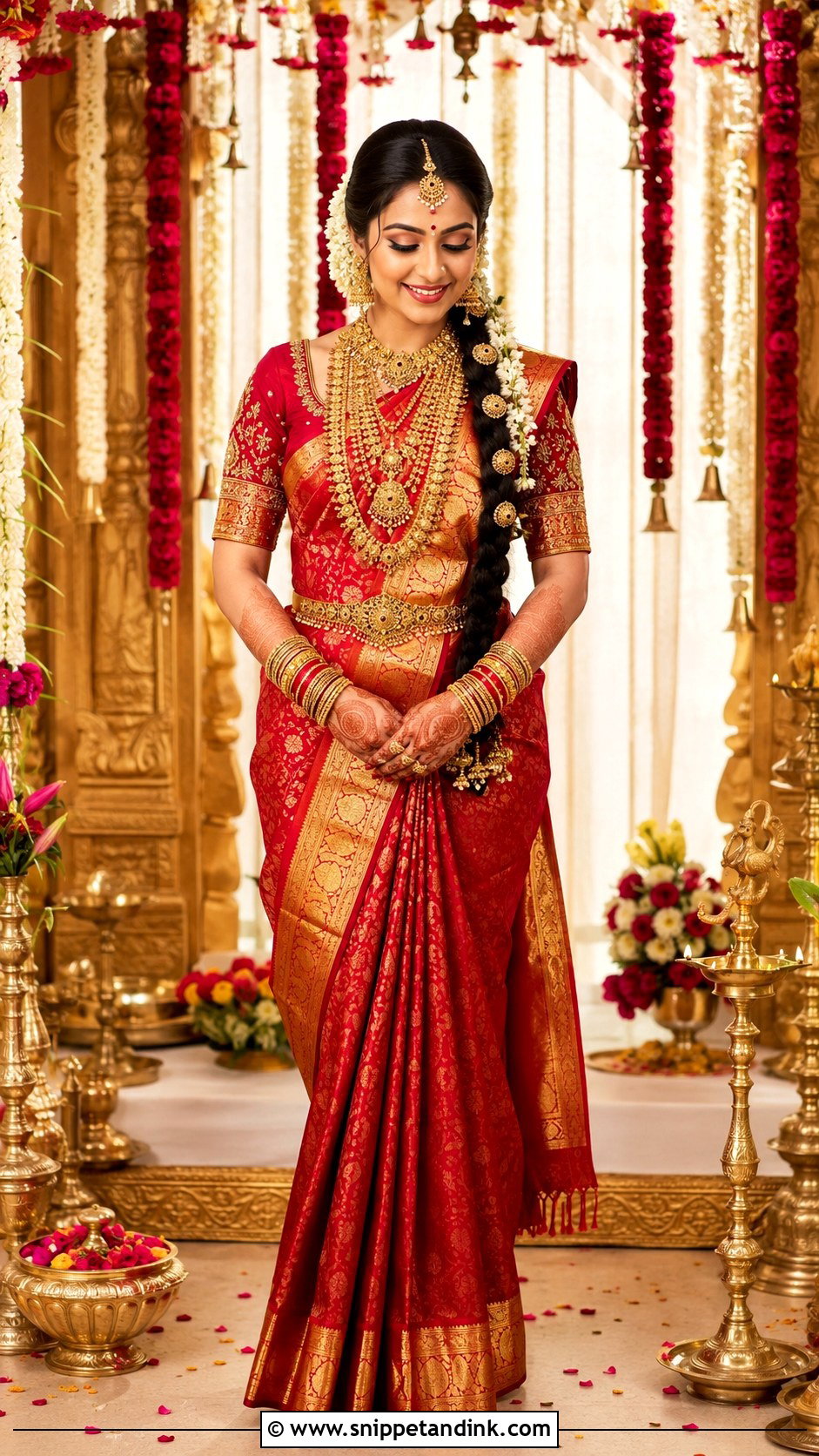
Bridal silk is about richness and heritage. Red, gold, maroon, green and mustard with heavy zari borders are the traditional colours, and the blouse can be embroidered, brocade or silk with detailed sleeves. A bridal Kanjeevaram can be heavy, and the weight sits on the waist and left shoulder for hours. I anchor the pleats with a tightly tied inskirt and two hidden pins, and I make sure the blouse has a hook-and-eye placket strong enough for layered necklaces. Add temple jewellery, bangles, an oddiyanam waist belt, maang tikka and flowers in the hair. Comfortable heels or embellished sandals help posture through the muhurtham.
6. South Indian Reception Saree Outfit
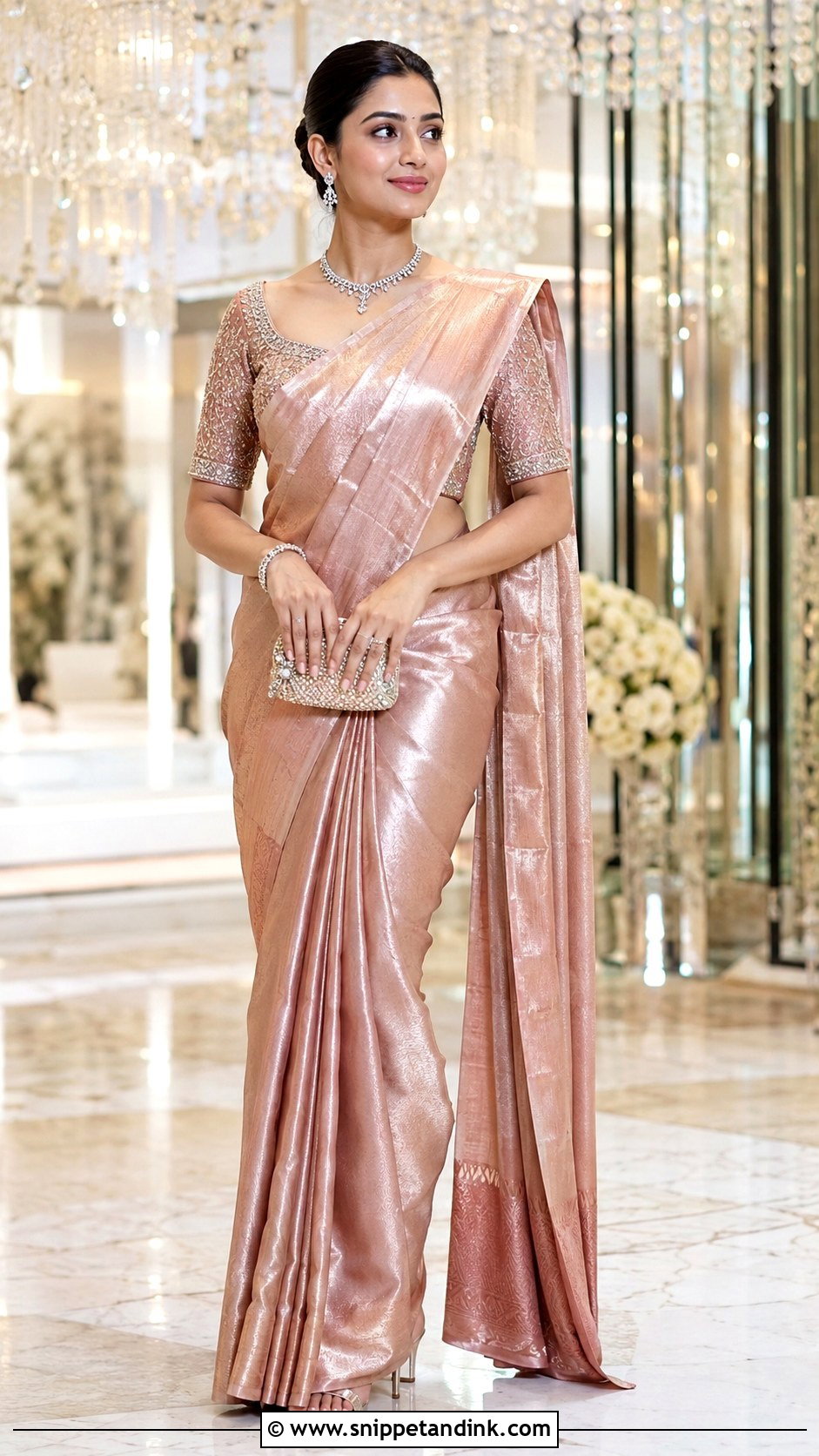
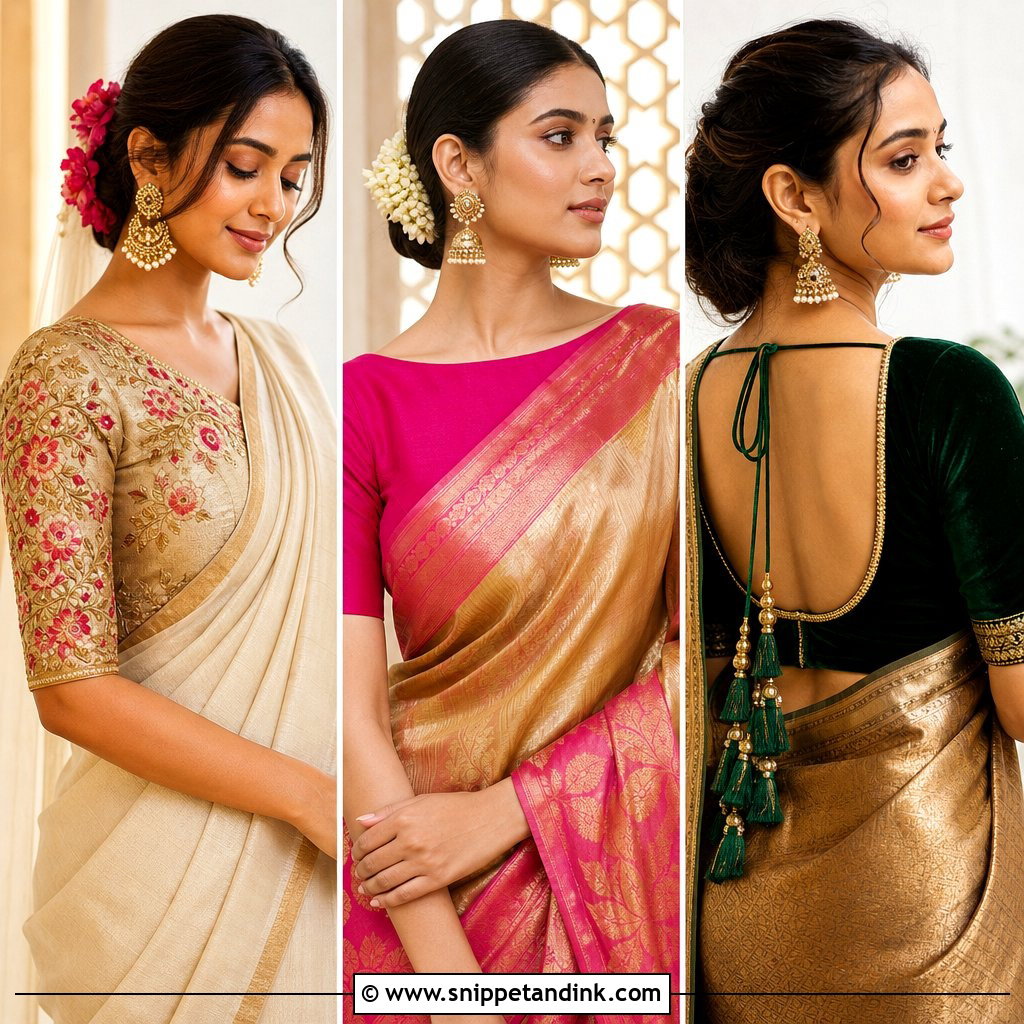
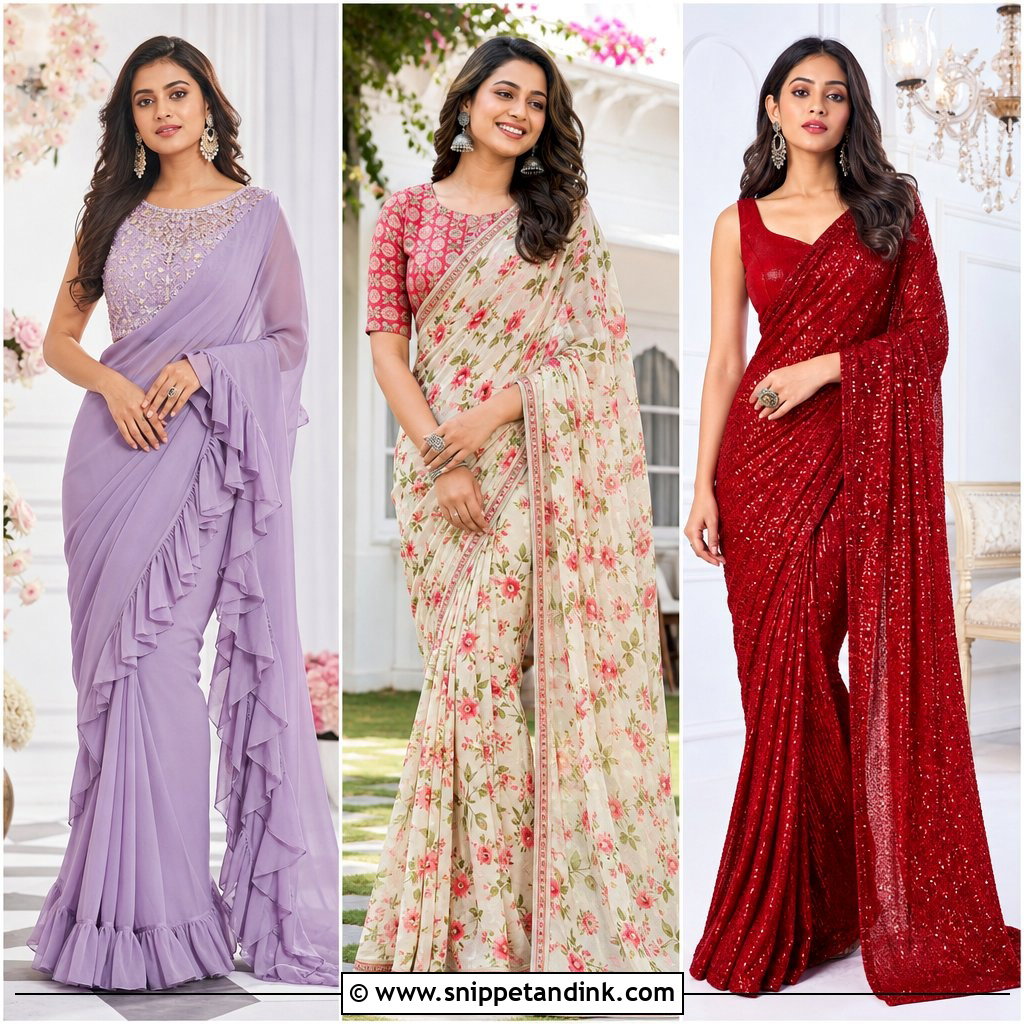
Reception sarees can be softer and more glamorous than the ceremony. Tissue, organza, satin silk or embroidered sarees in champagne, rose gold, lavender, teal, silver or wine suit evening light. A statement blouse with beadwork, elbow sleeves or a deep back makes it dressier. Match the jewellery to the saree’s metal: diamonds or pearls with silver-toned tissue, antique gold with warm silks, kundan with embroidery. Soft curls, a sleek bun or a flower braid all work. Tissue sarees are slippery, so I use more pins than usual and pre-pleat them. Metallic heels and a small clutch finish it.
7. South Indian Wedding Guest Saree Outfit
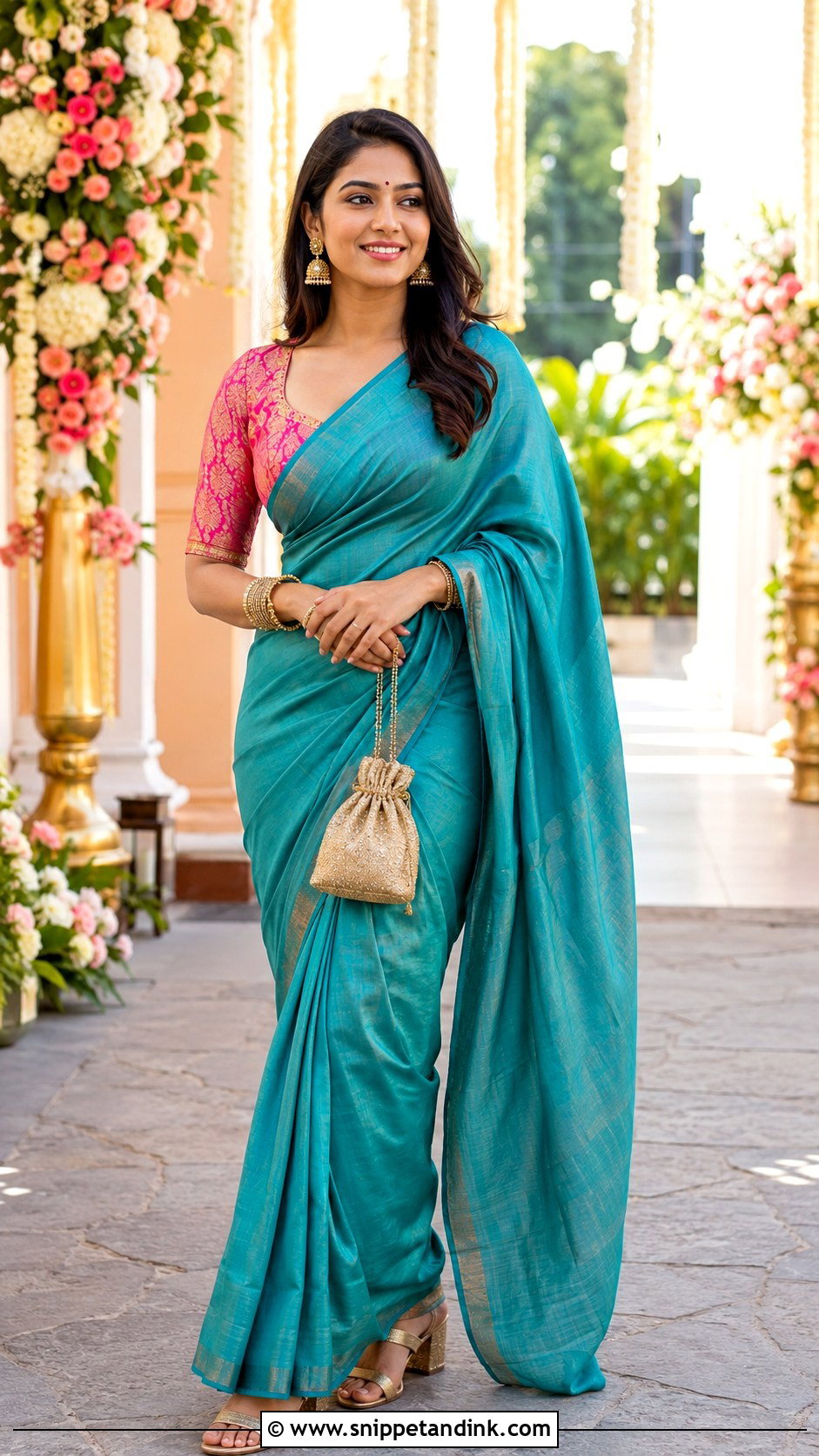
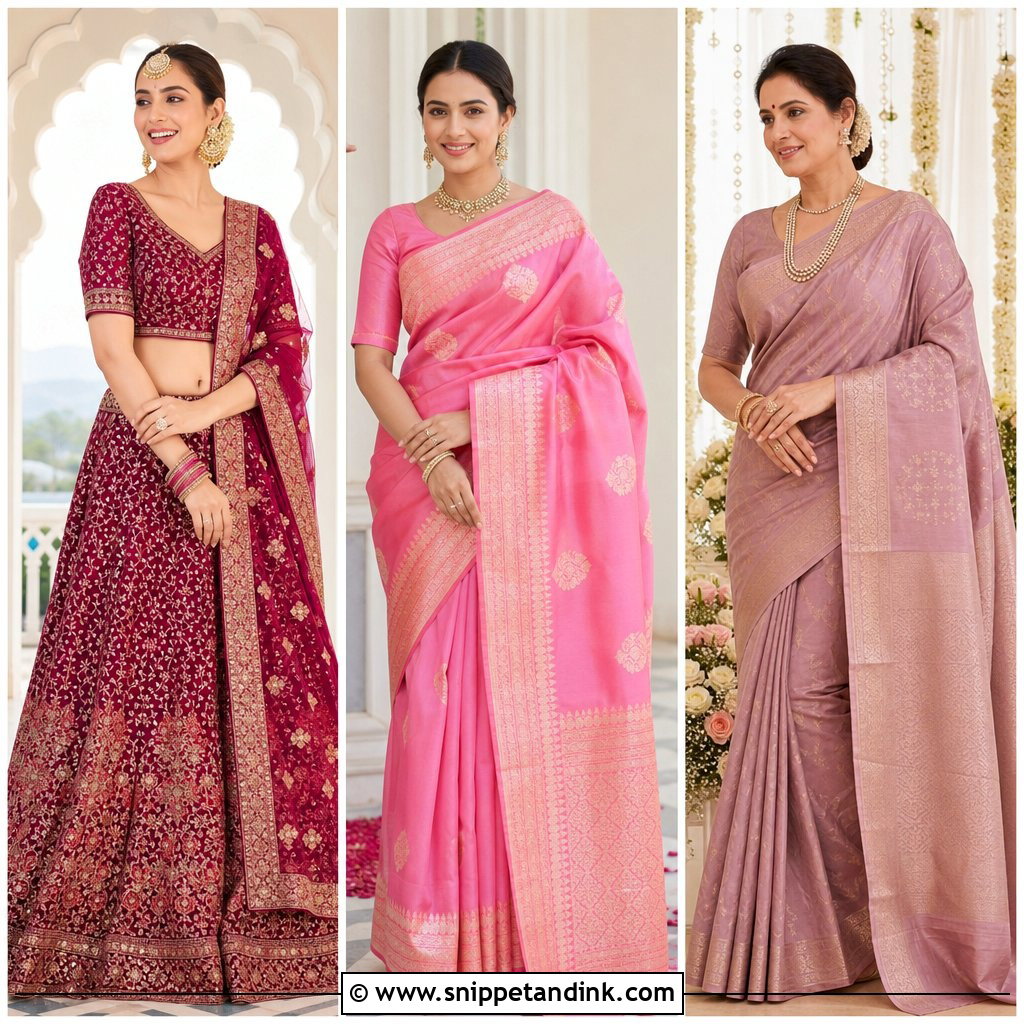
Guests should look festive without competing with the bride. A silk cotton, organza, georgette, light silk or soft Kanjeevaram in peach, teal, bottle green, coral, lilac or mustard sits well. Steer away from bridal red and heavy gold if you’re close family, since that’s usually the bride’s palette. A brocade, puff-sleeve or contrast silk blouse adds interest. Jhumkas, bangles and a small bindi are enough, with comfortable heels or flats. Long wedding days involve standing in queues and sitting on the floor, so a lighter saree pays off by afternoon.
8. South Indian Engagement Saree Outfit
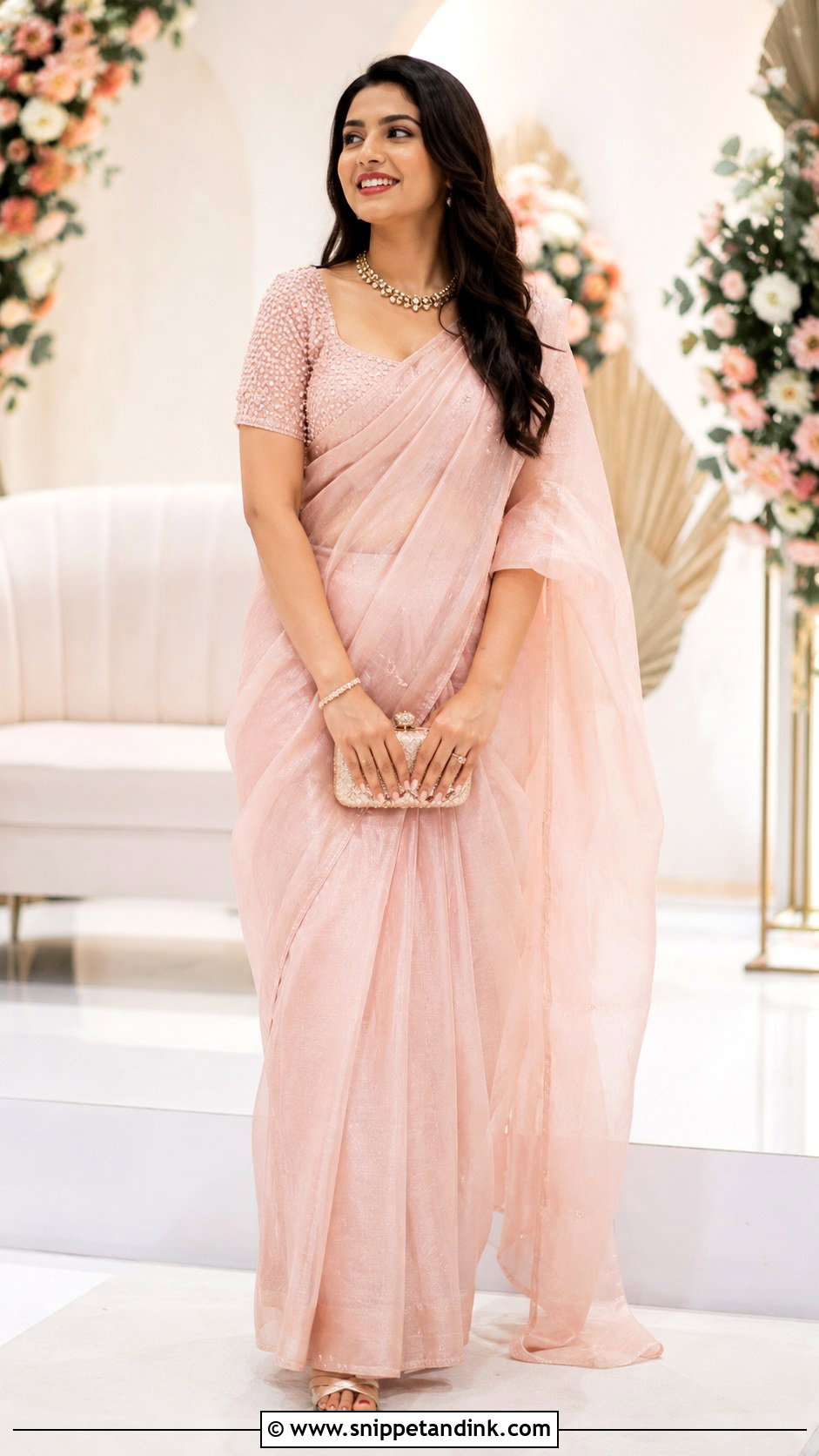
Engagements call for something festive but short of bridal. Soft silk, tissue silk, organza or a pastel Kanjeevaram in blush, mint, ivory-gold, lavender, peach or powder blue all work. Pastel silk shows marks easily, especially oil from hands and food, so I’d keep a little talc in your bag for emergency blotting. A blouse with embroidery, pearls or zari makes it special. Delicate gold or diamond jewellery, soft makeup and a polished bun or loose waves keep it modern. A small clutch and metallic sandals finish a look that suits family ceremonies and still feels fresh.
9. South Indian Festival Saree Outfit
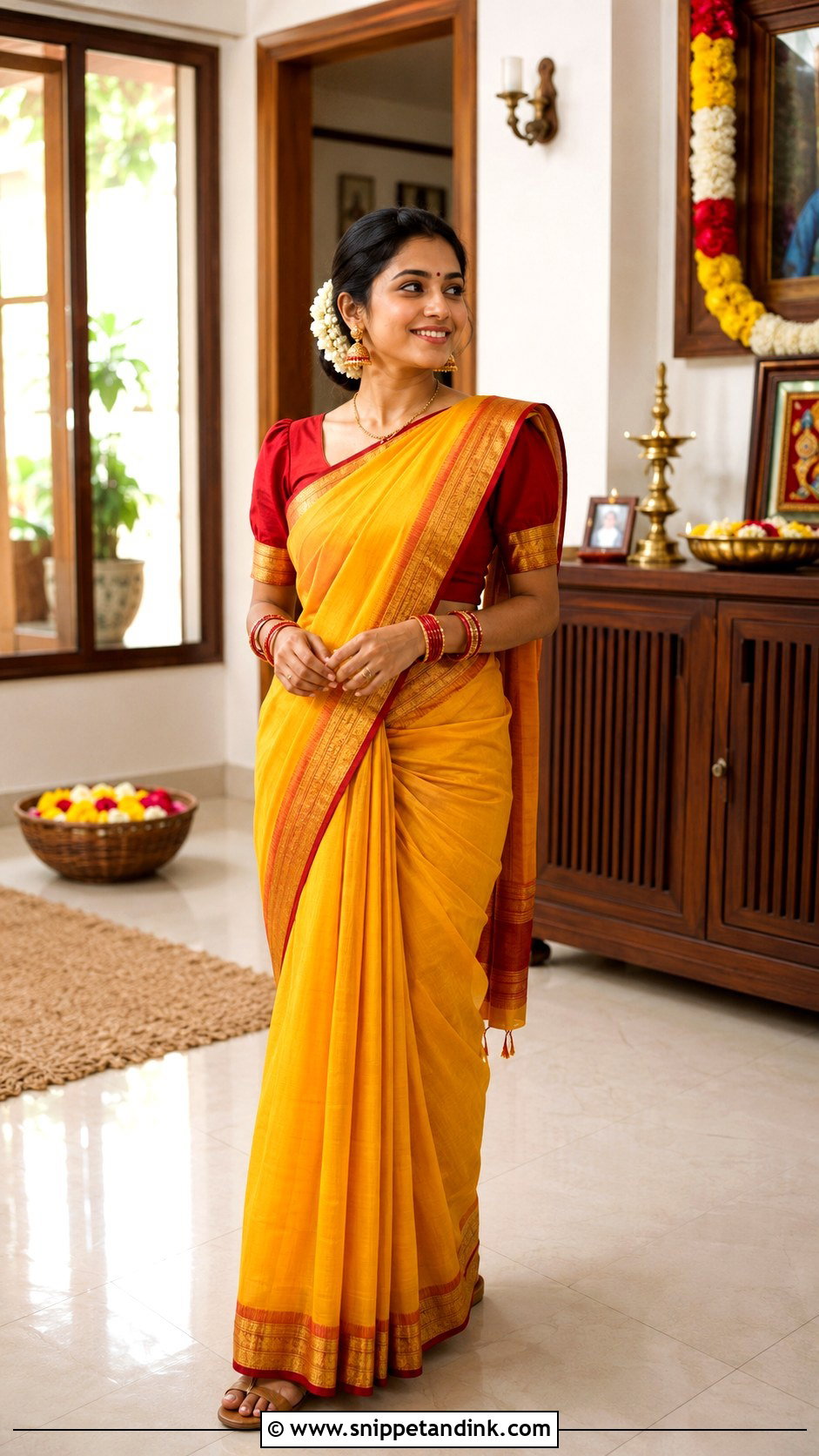
Festival sarees have to survive cooking, hosting and visiting relatives. Silk cotton, cotton silk, linen and lightweight pattu are the practical fabrics. Turmeric yellow, vermilion, leaf green, orange and bright blue feel festive. A simple blouse, gold earrings, glass bangles and a small bindi are enough, and fresh flowers in the hair make it traditional in an instant. If you’ll be in a kitchen, tuck the pallu into the waist and pin it there; a loose pallu near a flame is a real risk. Flats or low block heels keep you comfortable all day.
10. South Indian Temple Visit Saree Outfit
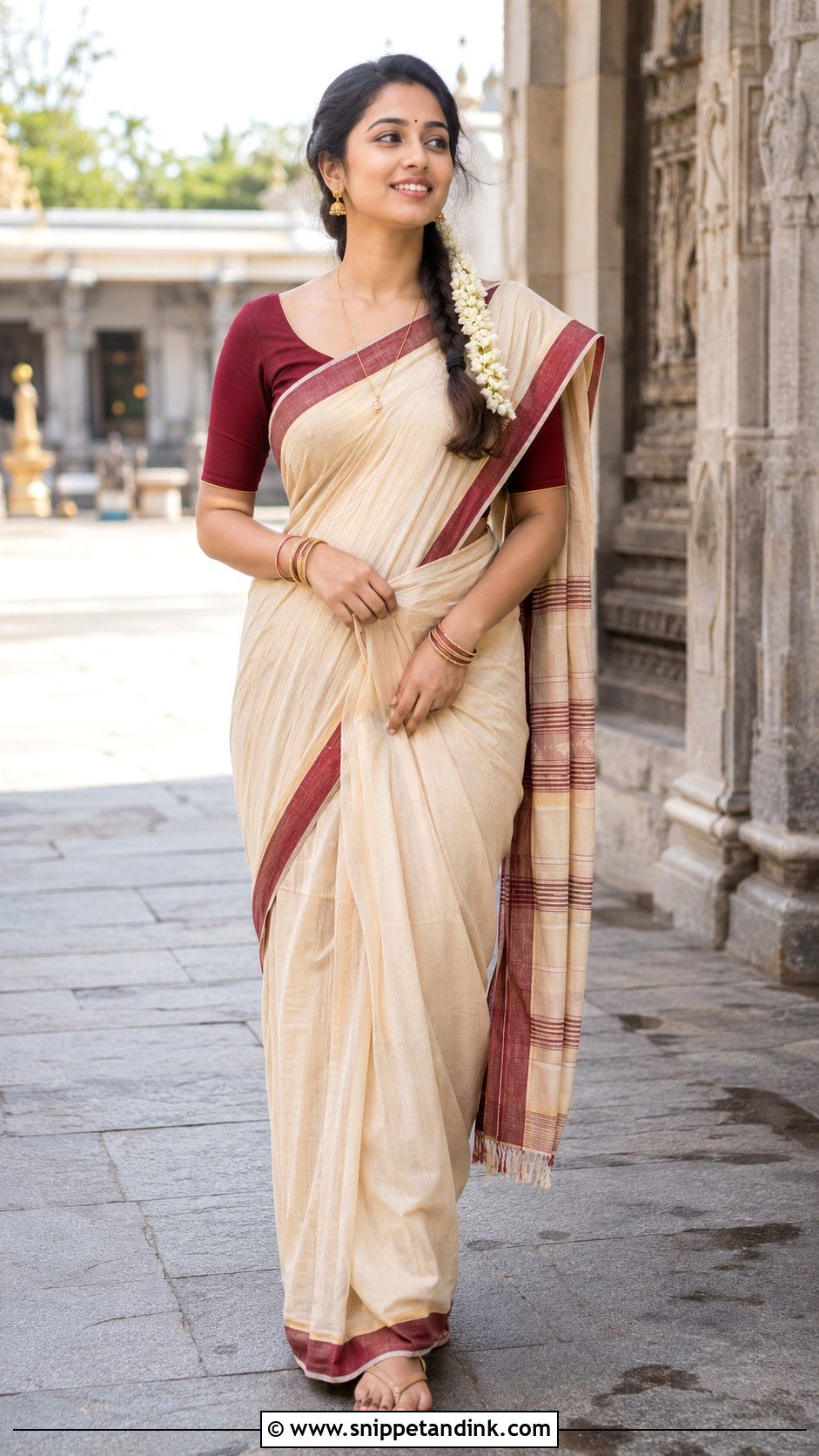
For a temple visit, I dress for modesty, respect and a lot of walking barefoot on stone. Cotton, silk cotton, handloom or kasavu in cream, rust, maroon, green, yellow or white with a gold border all suit. The blouse should give comfortable coverage. Keep jewellery minimal: small gold earrings, bangles, perhaps a thin chain. A braid or bun with flowers finishes it. Choose flat sandals you can slip off and on quickly, and drape slightly higher at the hem so it doesn’t brush wet temple floors. Neat, devotional and comfortable is the goal.
11. South Indian Cotton Saree Outfit
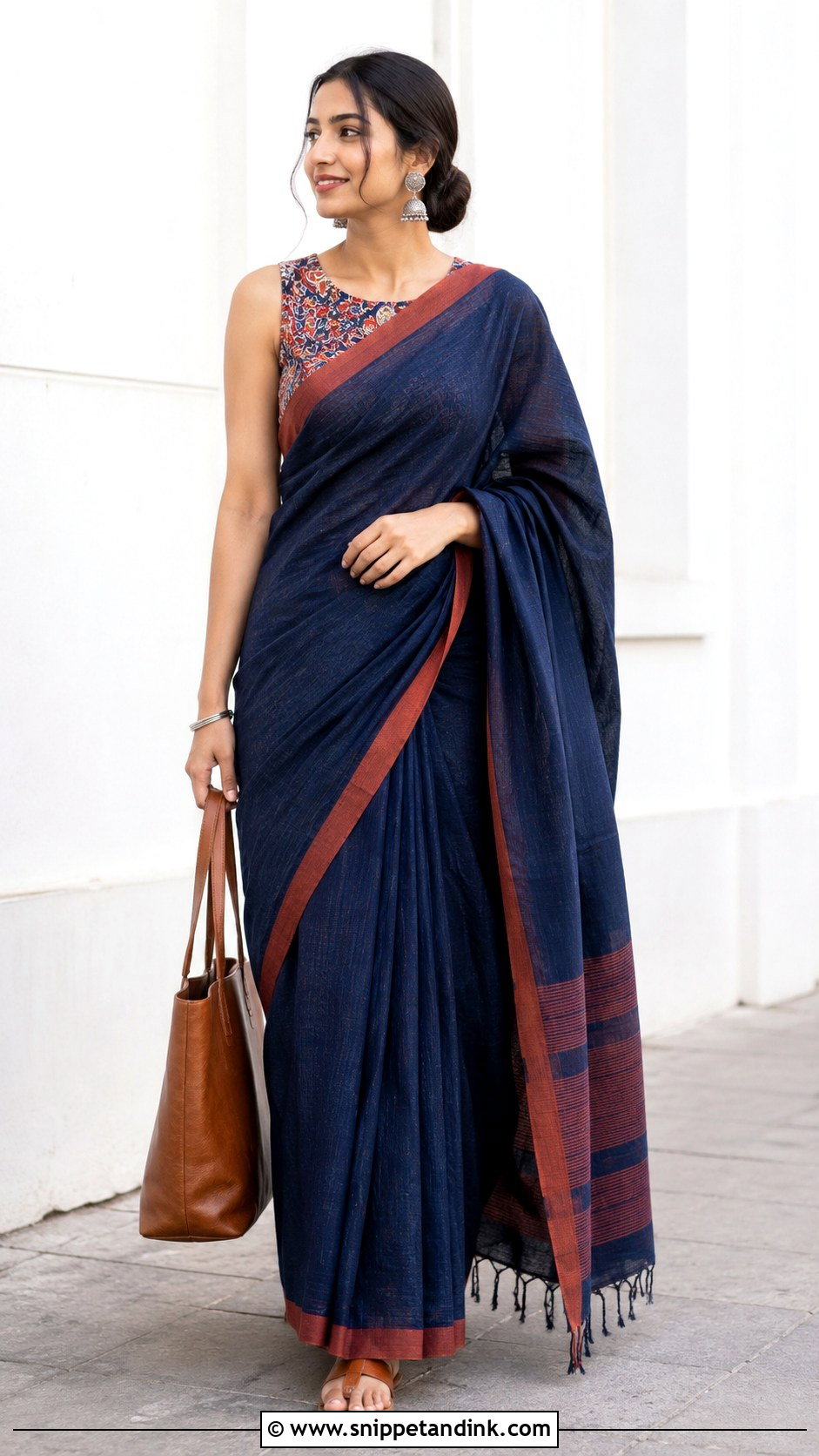
Cotton is what I’d wear for warm weather, casual gatherings, office ethnic days and daytime events. Handloom, Chettinad and Mangalagiri cotton with simple borders look elegant in earthy rust, indigo, olive, cream, mustard and brick red. Starch is the secret: a lightly starched cotton saree holds pleats all day, while an unstarched one goes limp by lunch. Pair it with a cotton or printed contrast blouse. Silver or oxidised earrings, leather sandals and a simple tote keep it modern. Keep the drape easy and the pleats light.
12. South Indian Silk Cotton Saree Outfit
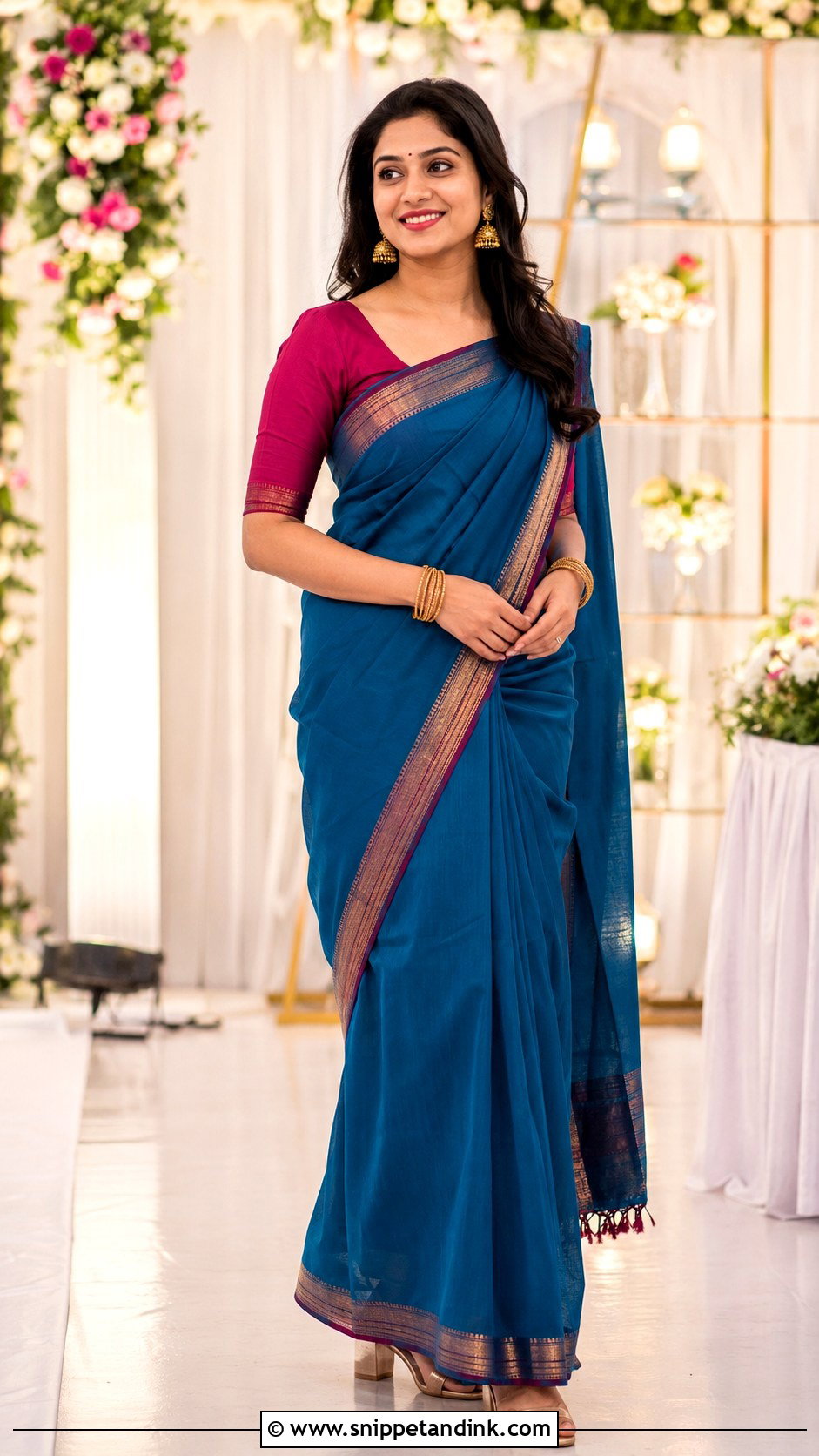
Silk cotton sits between everyday cotton and heavy silk. It’s festive enough for family functions and light enough for a full day. Teal, maroon, copper, mango yellow, peacock blue and deep pink with a subtle zari border all look good. Because it has less body than pure silk, I pleat it a little narrower so the folds don’t collapse. A matching or contrast blouse in silk cotton or brocade suits it, with gold jhumkas, a few bangles and a small bindi. Block heels, kolhapuri-style flats or simple sandals all work, for pujas, small ceremonies, office celebrations and daytime weddings.
13. South Indian Kurta Palazzo Outfit
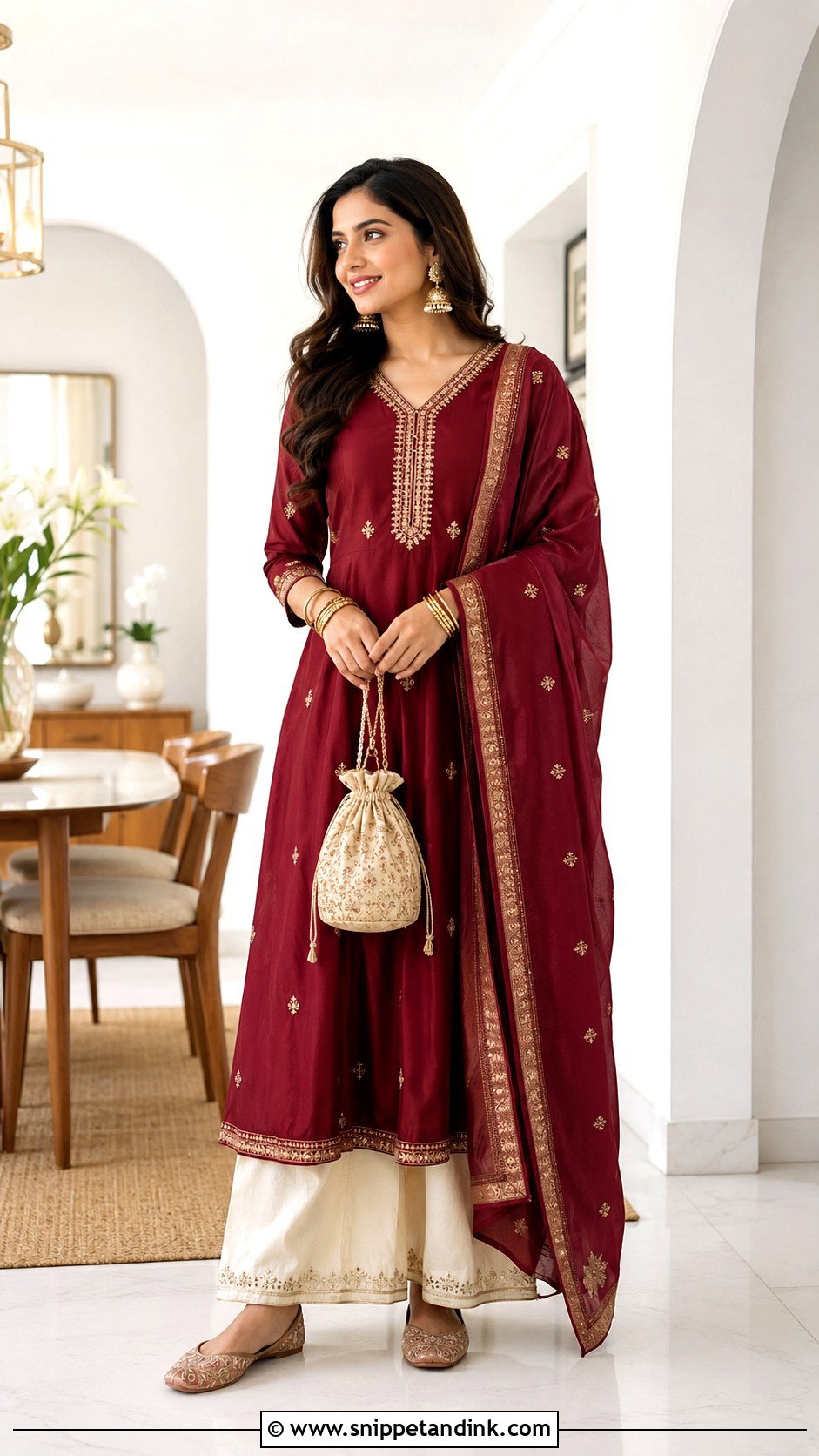
No saree? A South Indian kurta palazzo outfit keeps the ethnic feel with far less effort. A long kurta with South Indian prints, zari, temple motifs or handloom fabric over wide palazzos in cotton, silk cotton or rayon is comfortable all day. Rayon palazzos shrink and twist after washing, so if you’re buying for a specific event, wash them once first. A matching dupatta makes it festive. Jhumkas, bangles, embroidered flats and a small potli bag finish it, in deeper colours for evening and lighter ones for daytime.
14. South Indian Anarkali Suit Outfit
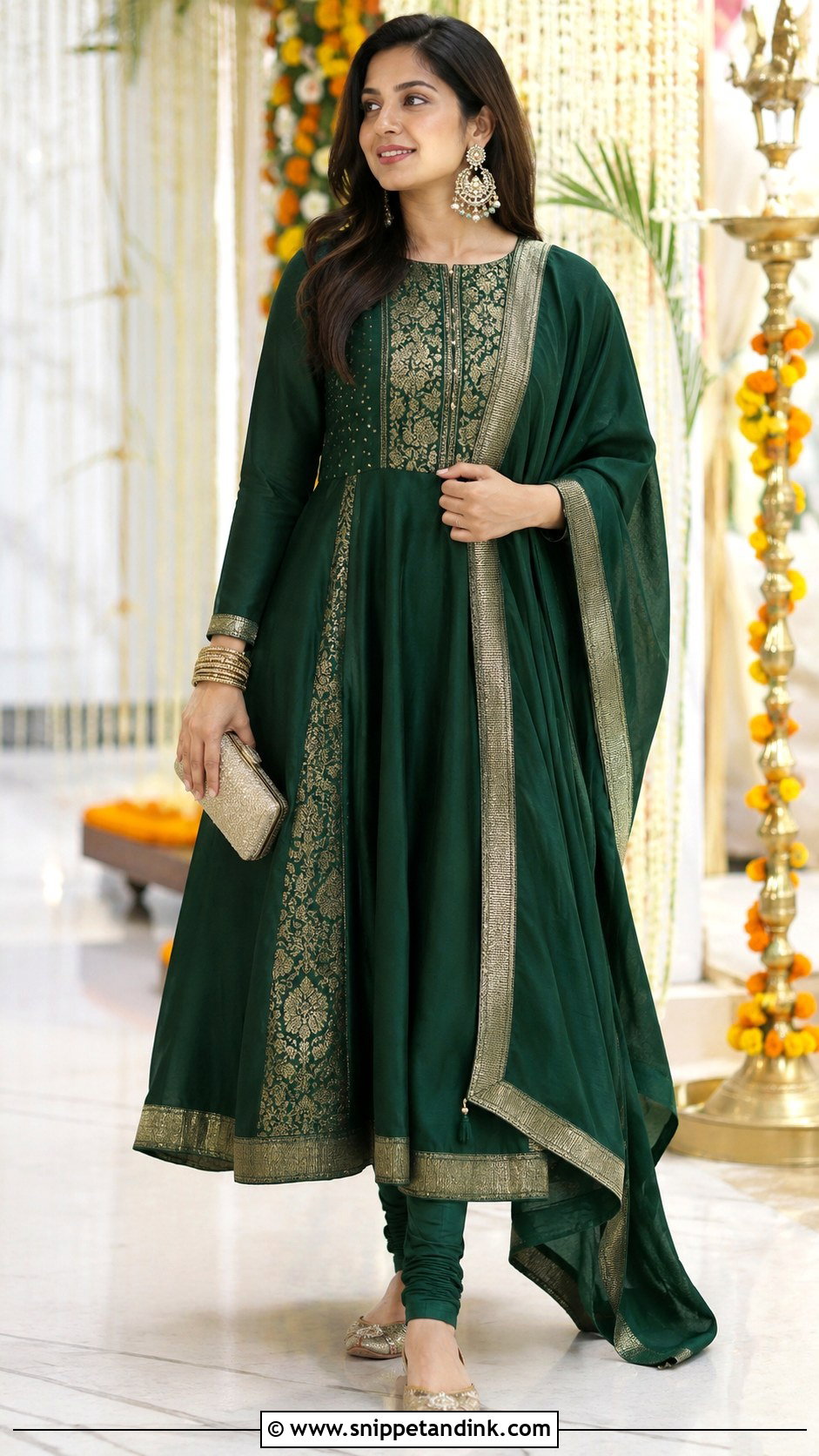
An anarkali gives flow without a drape to manage. Silk borders, brocade panels, temple prints or zari embroidery tie it to South Indian dressing. Maroon, emerald, navy, gold and magenta feel festive; ivory, peach and sage look softer. The fitted bodice and flared skirt suit many body types, but the waist seam must sit at your natural waist or the flare starts in the wrong place. Pair it with churidar or slim trousers and a dupatta over one shoulder, then add statement earrings, bangles, embellished flats and a small clutch for engagements, festive dinners or guest looks.

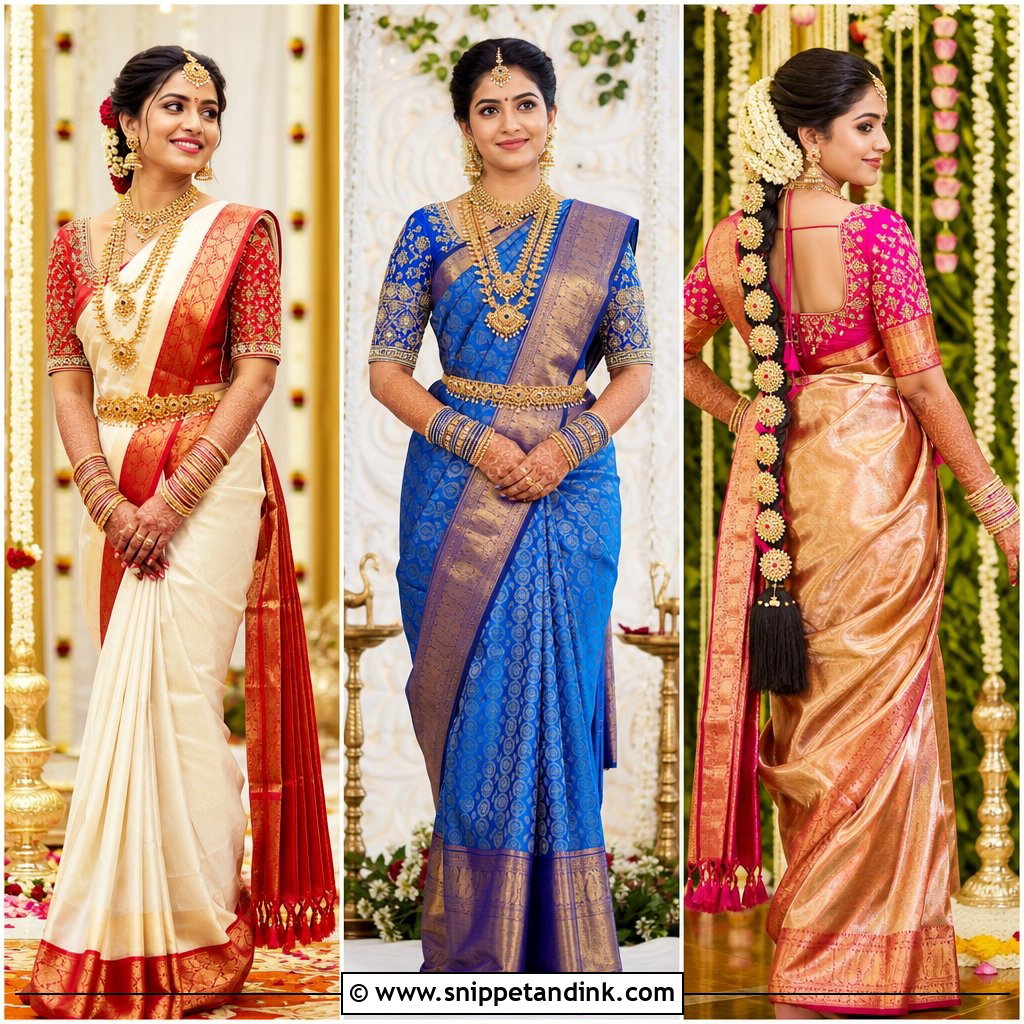
15. South Indian Lehenga Choli Outfit
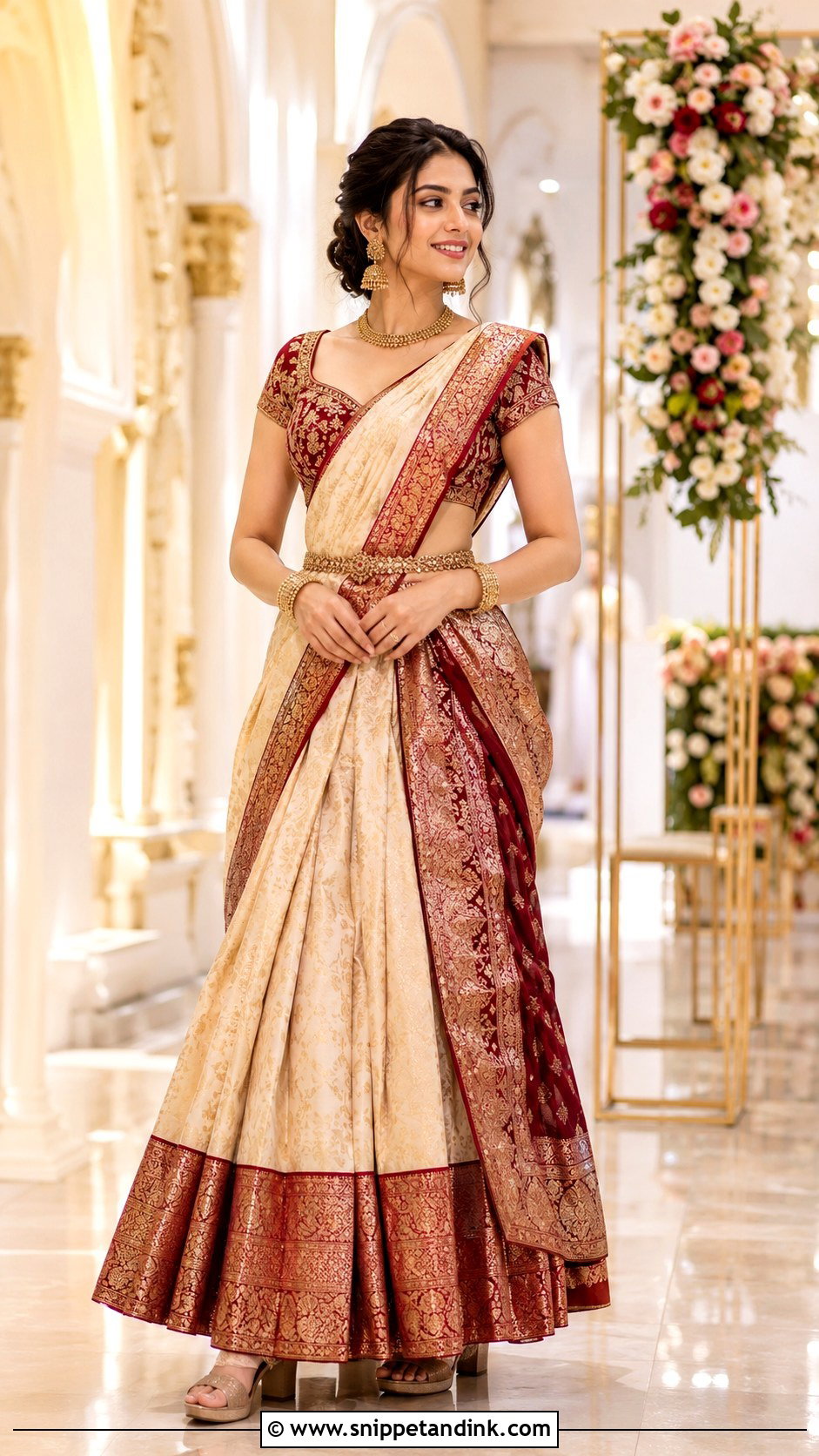
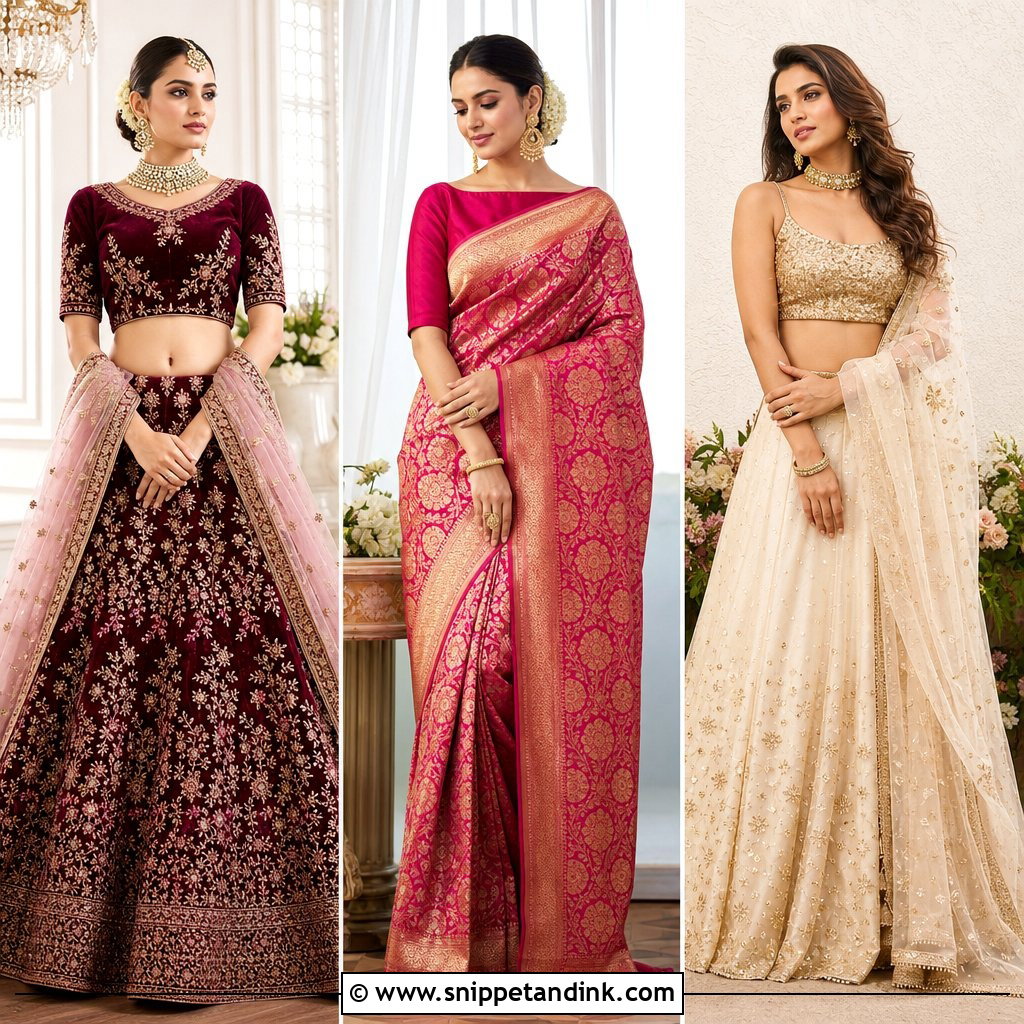
A silk or brocade lehenga with a zari or embroidered blouse brings drama to weddings, receptions, sangeet-style nights and festive evenings. Draping the dupatta over one shoulder like a pallu gives it a South Indian feel. Red with gold, green with pink, blue with orange and cream with maroon are rich, classic pairings. Heavy silk lehengas need cancan or a layered lining to hold their flare; without it, the skirt clings and loses shape. Temple earrings, a waist belt, bangles and a sleek braid or bun finish it. It is easier to dance in than a heavy saree.
16. South Indian Long Skirt And Blouse Outfit
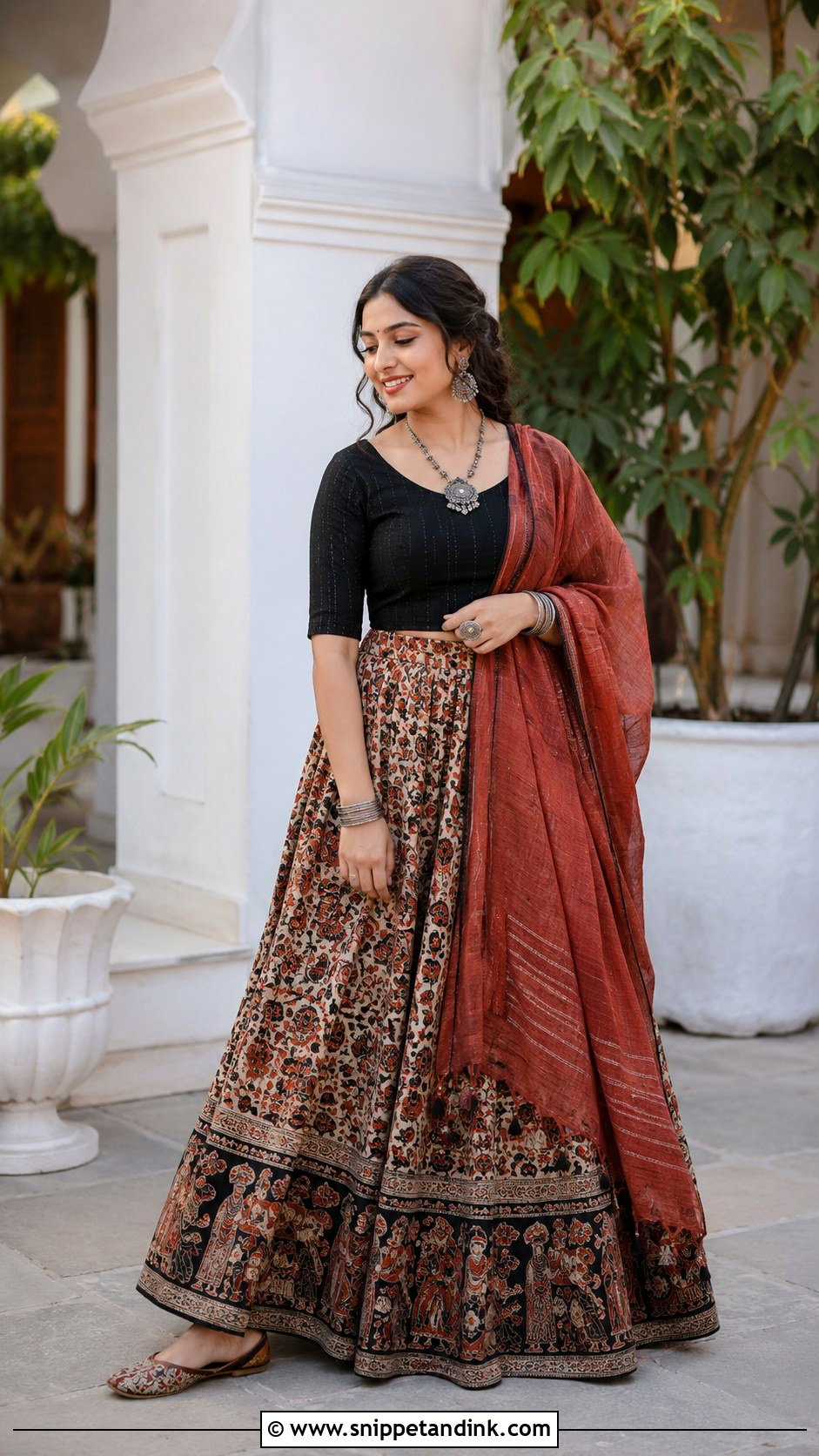
A long flared skirt with a blouse is the easiest festive outfit on this list to put on. Silk, cotton silk, kalamkari, ikat or brocade all work for the skirt, with a fitted blouse, crop blouse or short kurti. Add a dupatta for a more traditional event. Oxidised jewellery suits printed skirts; gold suits silk. I like a skirt with deep side pockets for long functions, and most tailors can add them. Flats, juttis or block heels keep it comfortable for college events, family celebrations and casual festive gatherings.
17. South Indian Kalamkari Saree Outfit
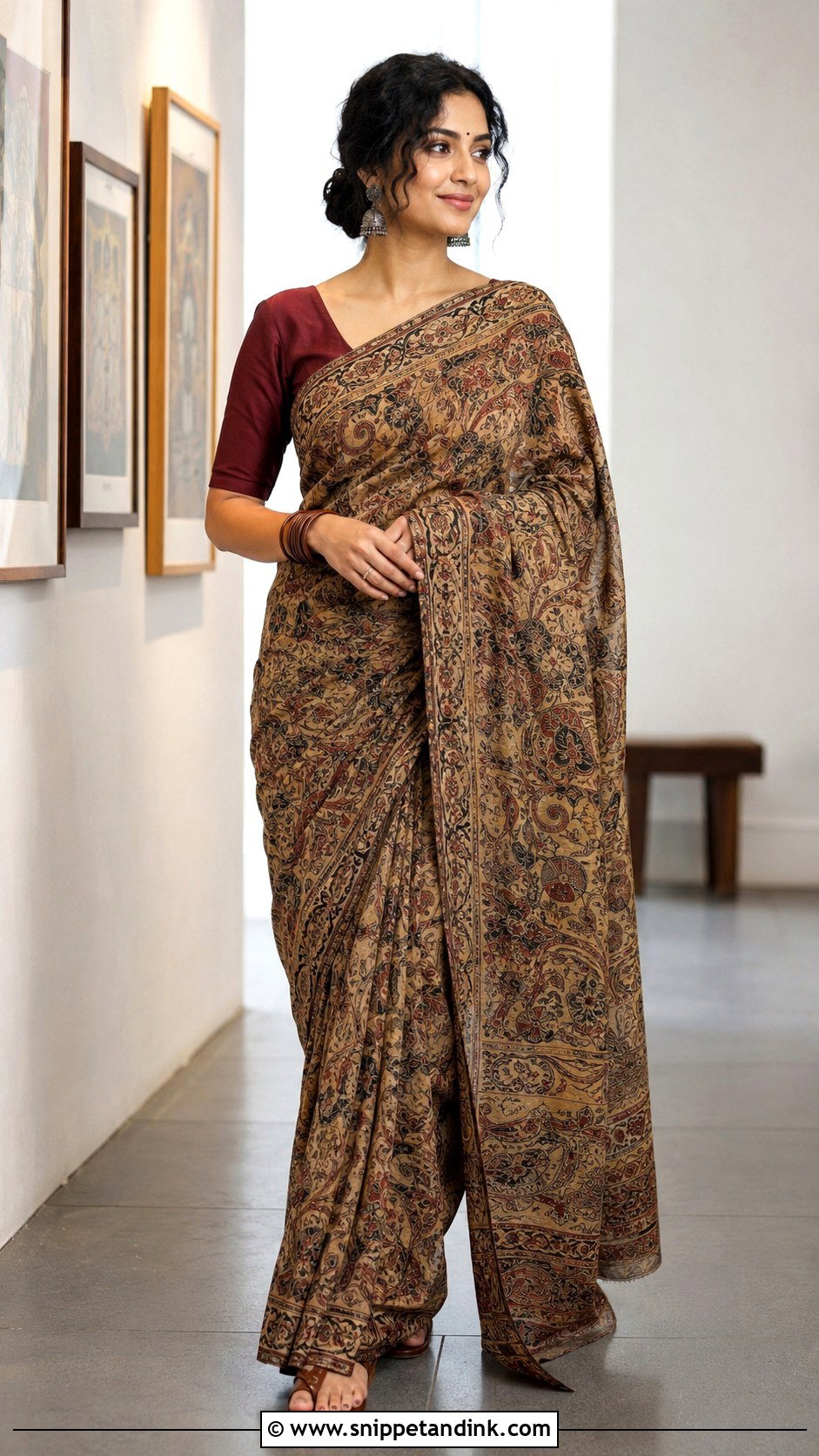
Kalamkari brings an artistic, earthy charm to cultural events, festive lunches and daytime functions. The motifs are hand-drawn or printed on cotton, silk or cotton silk. A plain blouse in black, maroon, mustard, rust or deep green lets the saree lead. Hand-painted kalamkari uses natural dyes, which can fade with harsh detergent or strong sun, so I’d wash it gently in cold water and dry it in the shade. Oxidised jewellery, wooden bangles or antique gold earrings suit it, with a relaxed bun, braid or soft waves and flat sandals or block heels.
18. South Indian Ikat Saree Outfit
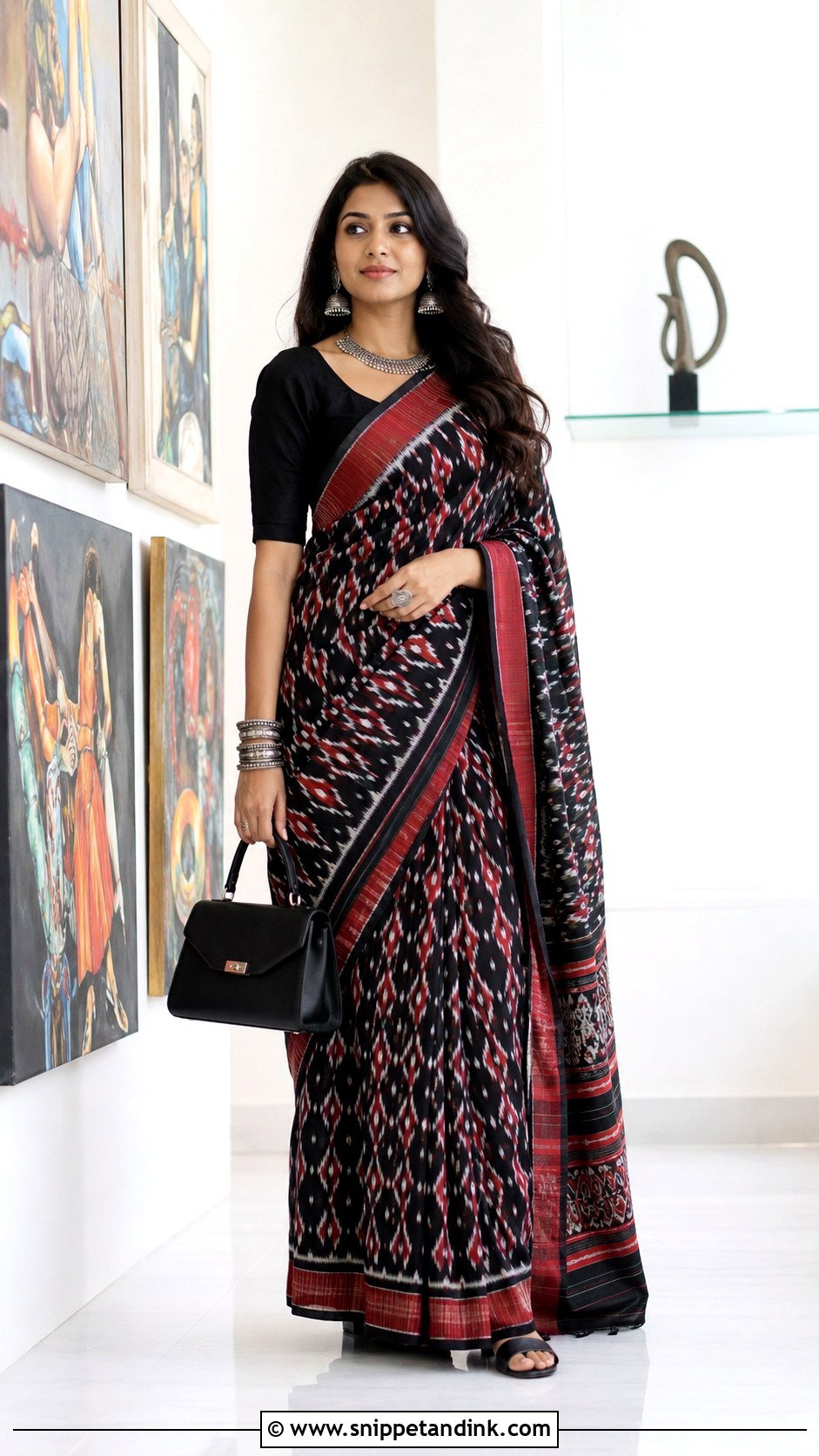
Ikat is bold and graphic without being heavy. Pochampally and similar woven patterns come in bright or earthy colours, and red with black, blue with white, mustard with maroon and green with cream are strong combinations. The pattern is woven in, so it looks the same on both sides, which makes draping easier. A solid blouse balances the pattern. Silver jewellery feels contemporary; gold makes it festive. Comfortable sandals and a structured handbag suit office events, art gatherings, festivals and casual weddings.
19. South Indian Churidar Suit Outfit
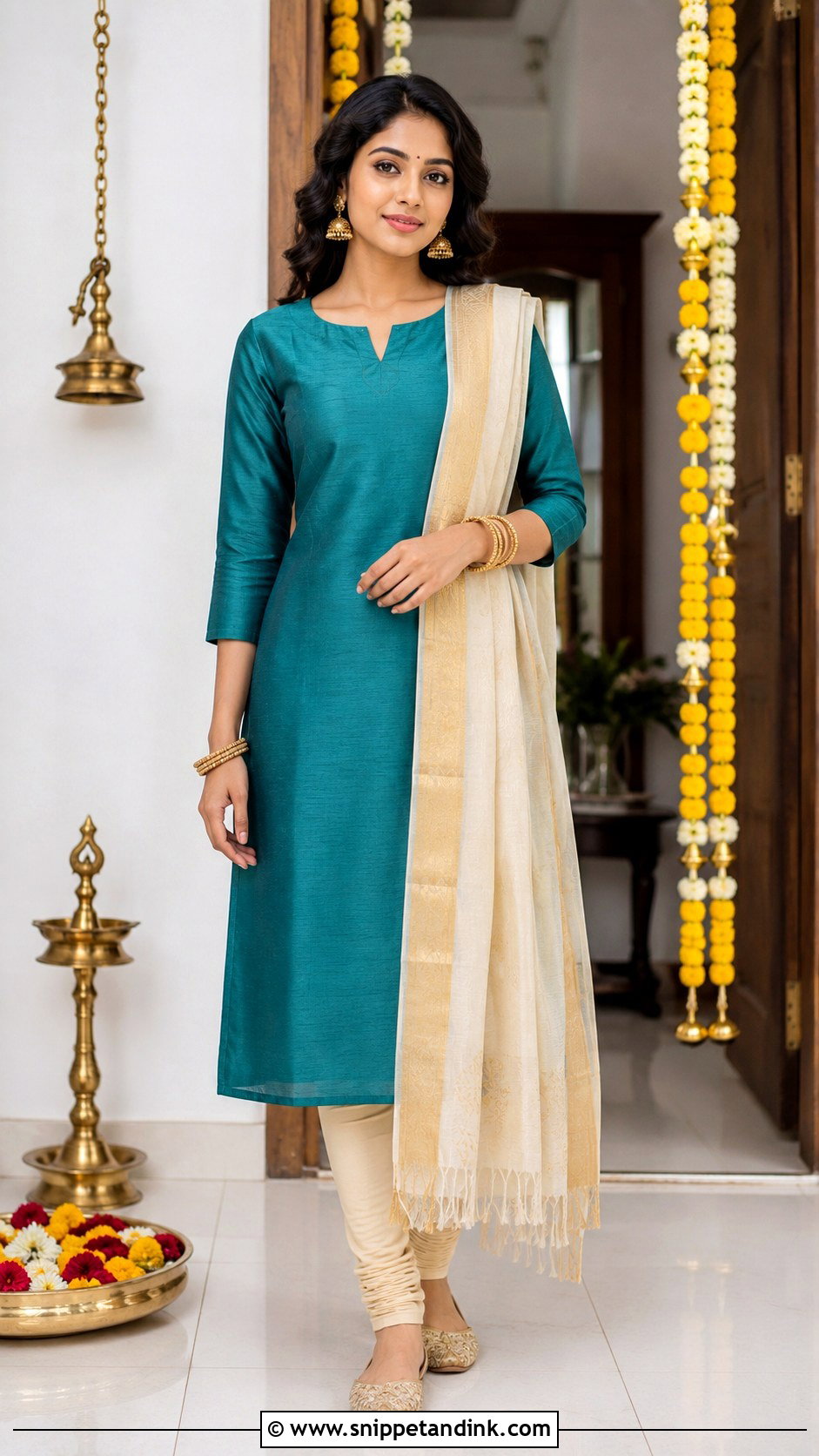
A churidar suit is simple, neat and comfortable for semi-formal occasions. A straight-cut kurta in silk cotton, chanderi, cotton or light brocade with fitted churidar trousers keeps the silhouette clean, and a dupatta with zari border, print or light embroidery makes it festive. Maroon, teal, cream, mustard, pink and navy style easily. Churidar is cut long so it gathers at the ankle; if it’s too short, it pulls when you sit cross-legged, so check before the event. Jhumkas, a few bangles and embroidered flats finish it for family visits, pujas and daytime functions.
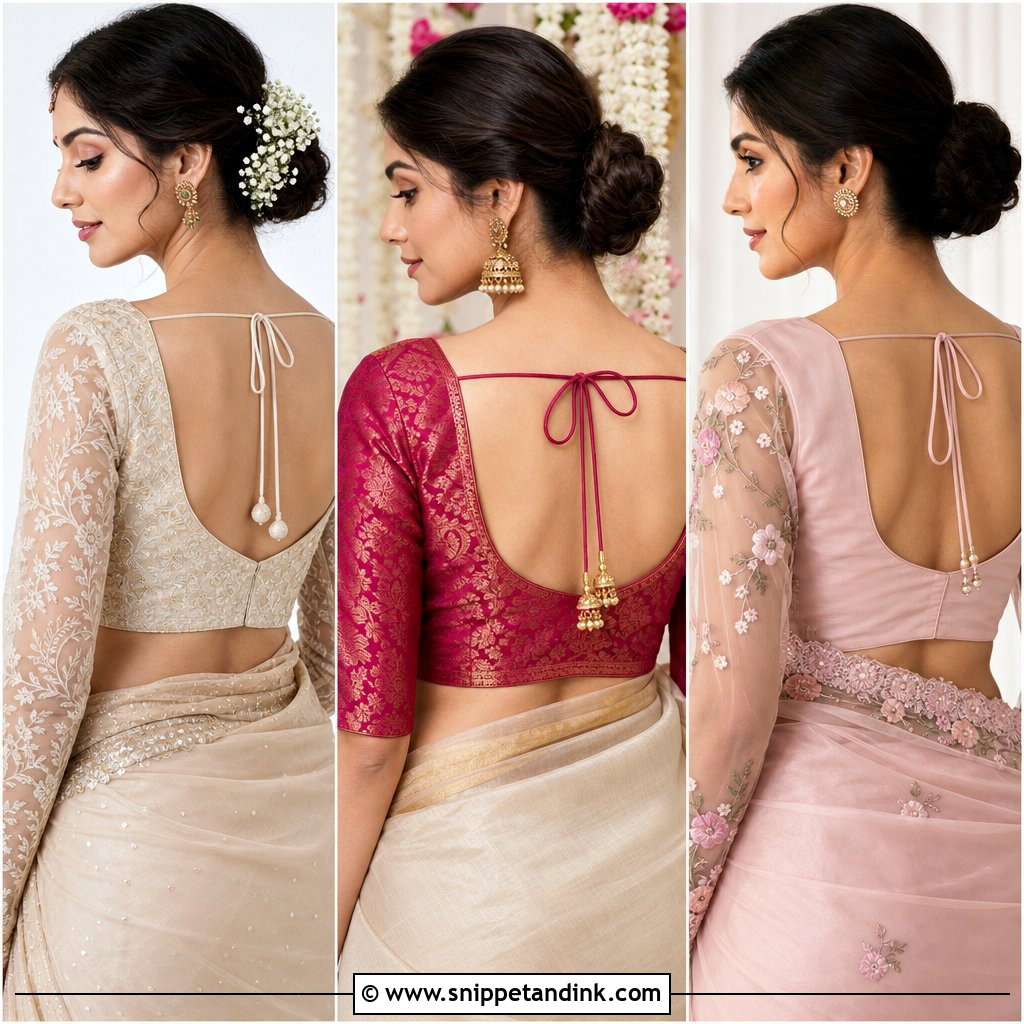
20. South Indian Sharara Suit Outfit
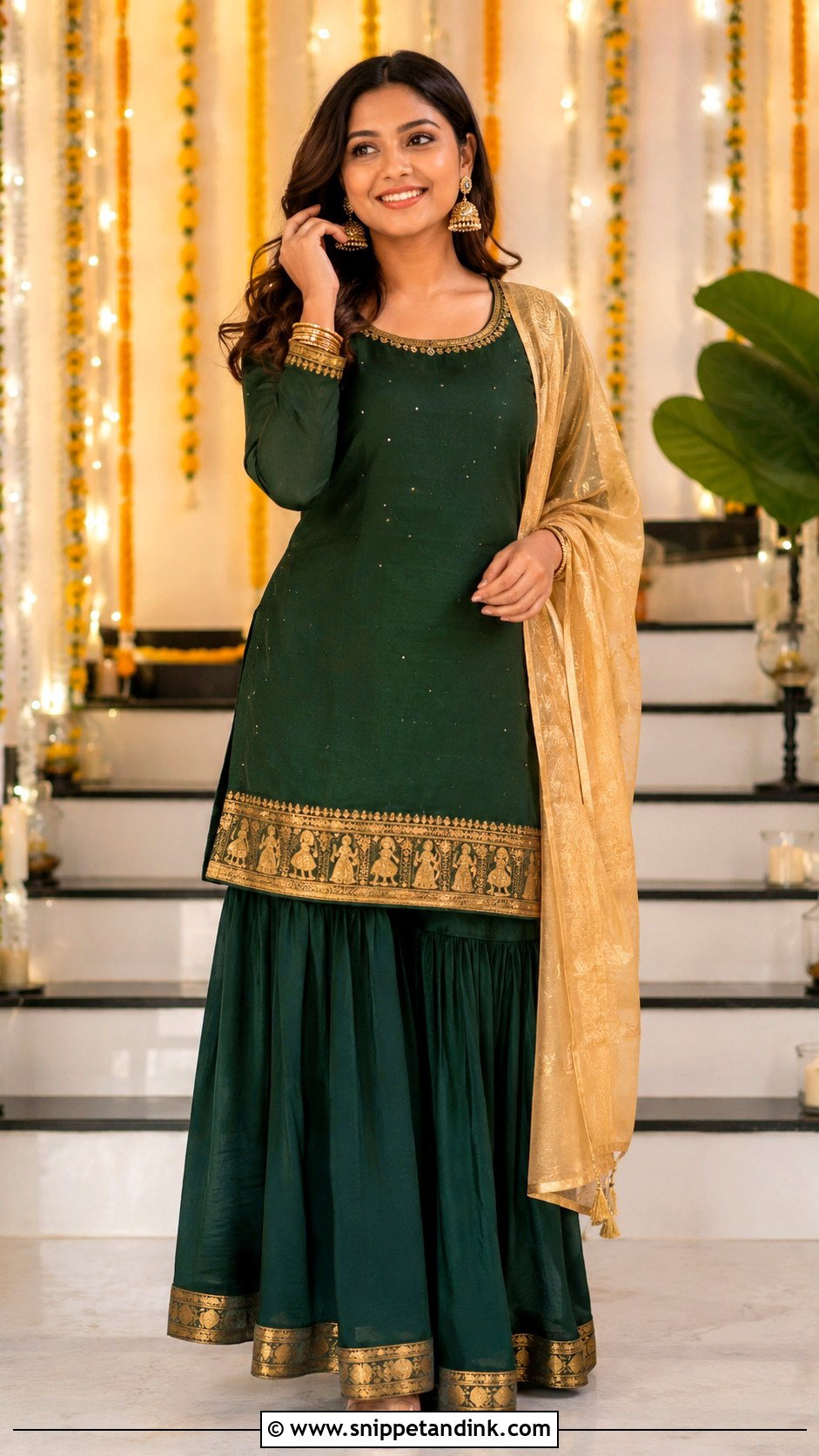
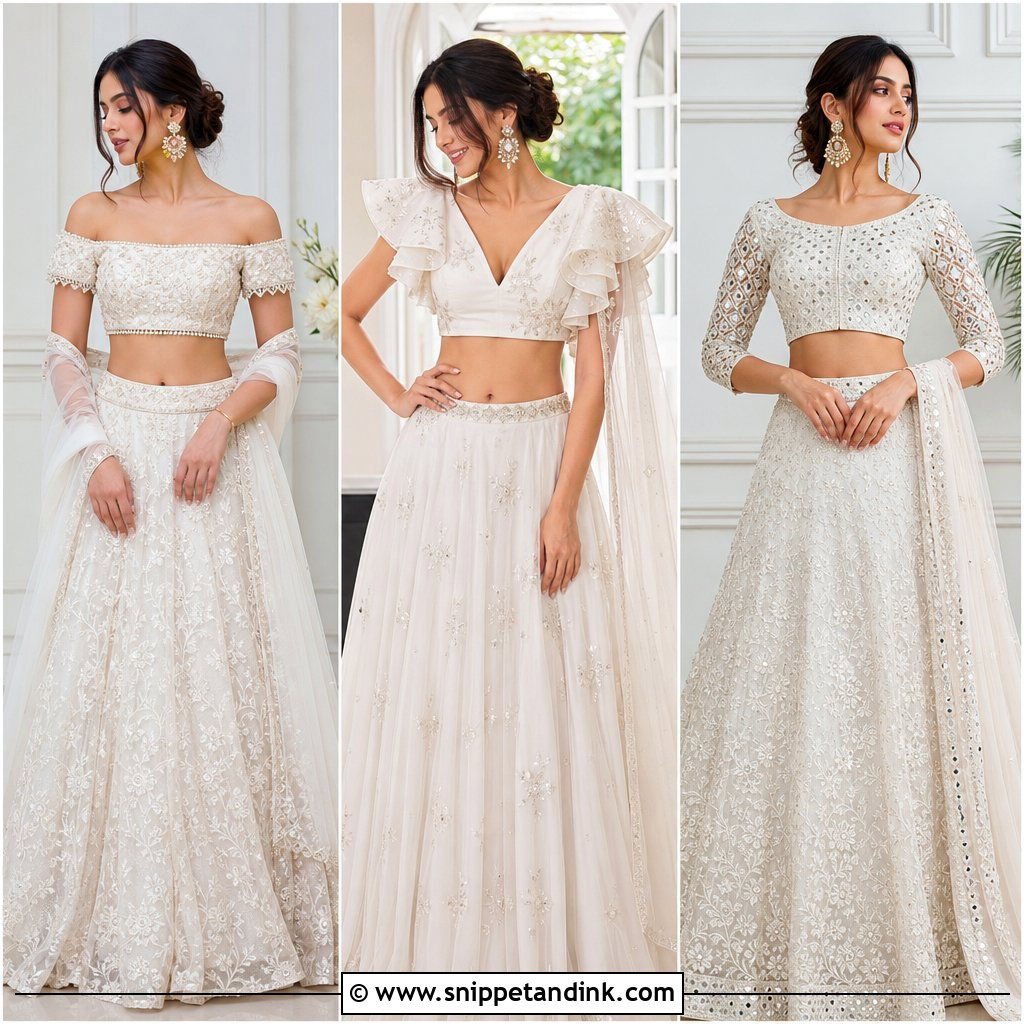
Sharara suits are dressy and still comfortable. A short or mid-length kurta with wide sharara trousers in silk, georgette or cotton silk becomes South Indian-inspired through temple borders, zari trims, brocade or traditional jewellery. A matching dupatta adds movement. Bottle green, rani pink, gold, rust and ivory look festive. Shararas flare from the knee, so the hem should just clear your heels; too long and you’ll trip on stairs. Add jhumkas, bangles and block heels for mehndi-style events, festive evenings and family parties when you’d rather not wear a saree or lehenga.
21. South Indian Co Ord Set Outfit
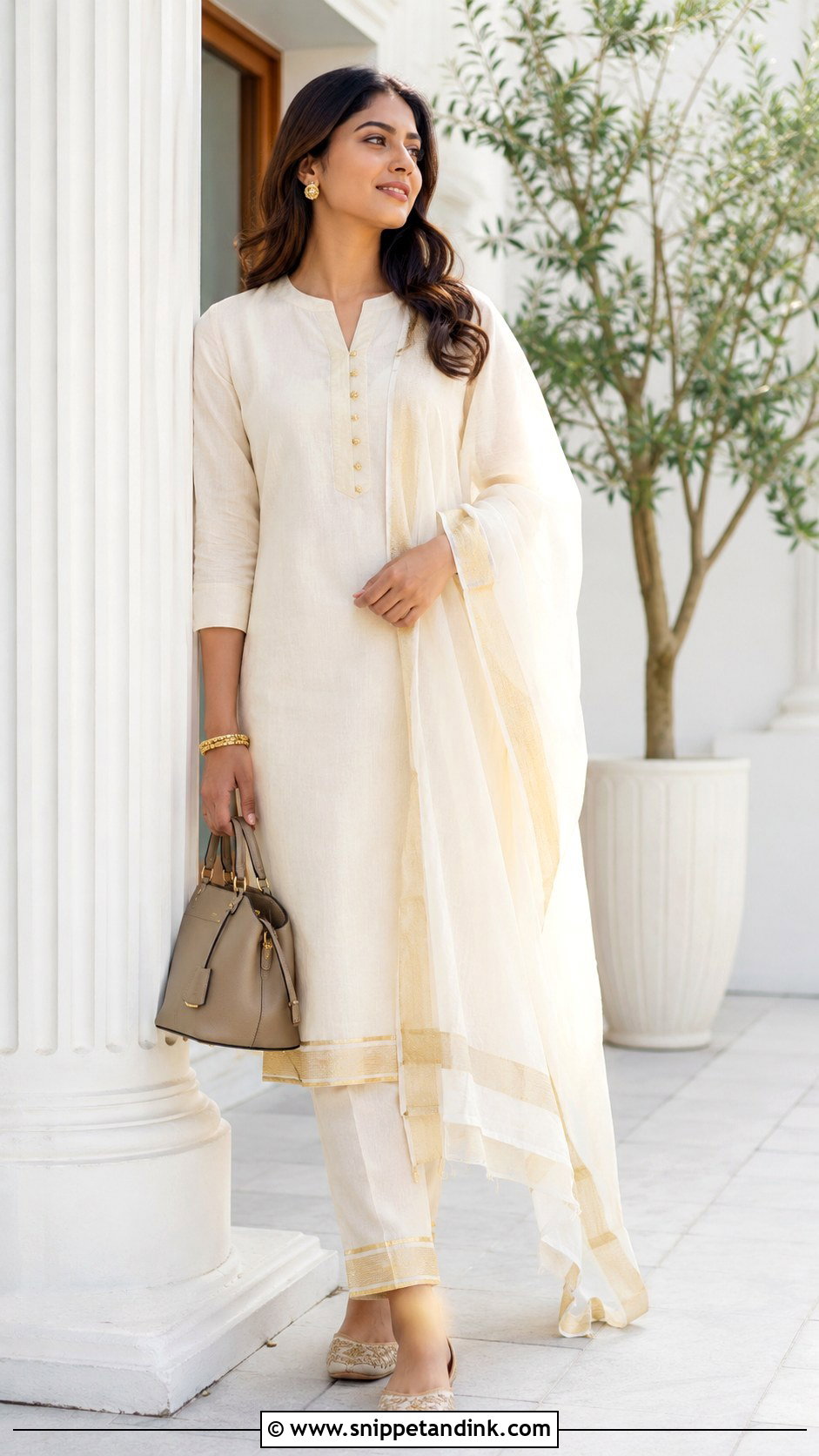
A co-ord set is the minimal option: a matching kurta and trousers in silk cotton, handloom cotton, brocade or print. Zari borders, temple prints, ikat or kalamkari motifs keep the cultural link. Add a dupatta for formal occasions or skip it for a clean line. Gold studs, bangles, embroidered flats and a structured handbag finish it. I pack co-ords for travel, because both pieces mix with other outfits on the trip, which suits casual festive events, office celebrations and family lunches.
22. South Indian Saree With Belt Outfit
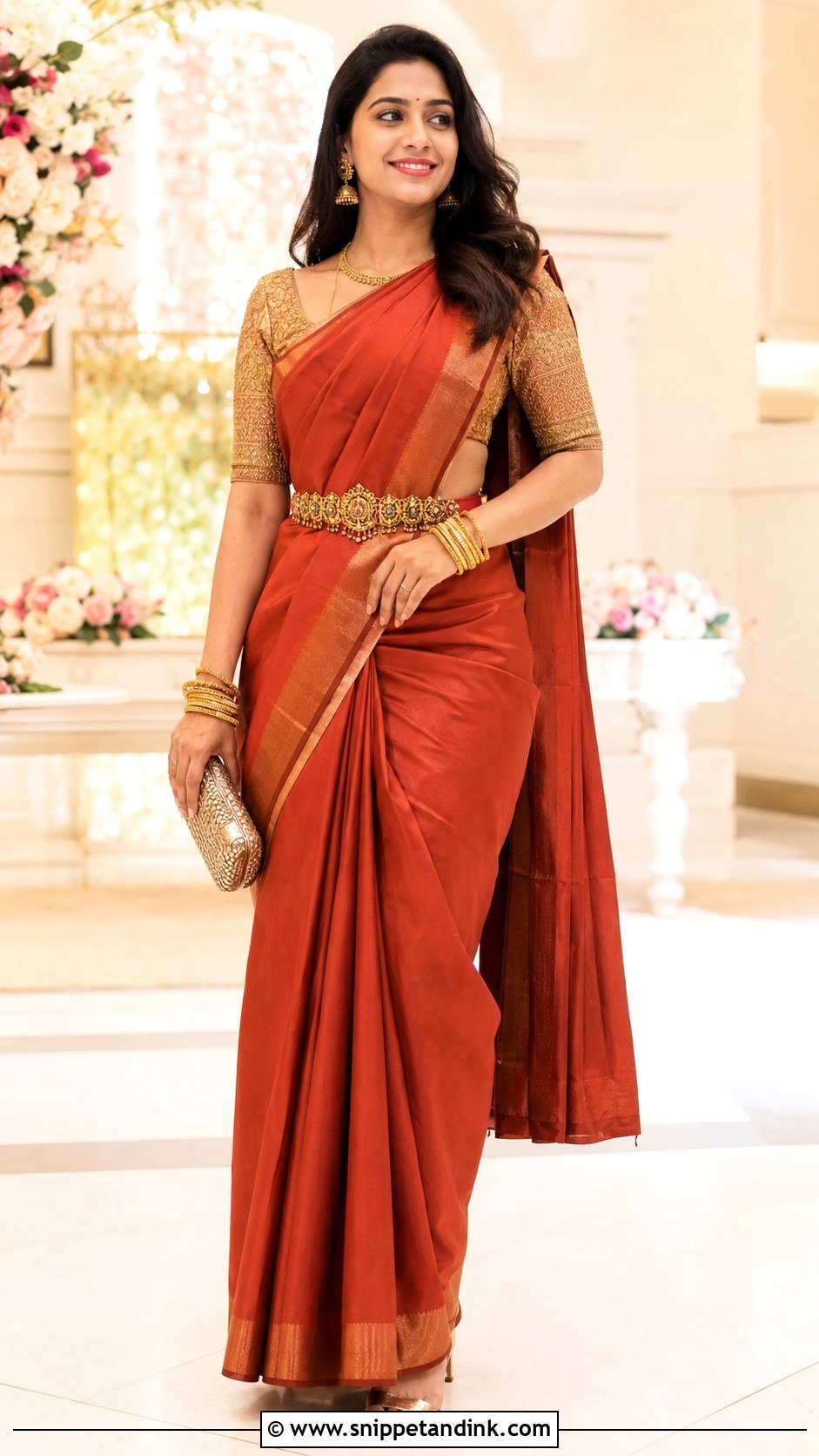
A waist belt gives a saree structure. It holds the pleats, defines the waist and keeps the pallu from sliding, which is why South Indian brides have worn the oddiyanam for generations. Silk, silk cotton and organza all take one, in gold, antique metal, fabric or embroidery. Sit down in the belt before the event; a rigid metal belt set too high pinches the ribs at dinner. Pair it with a fitted blouse and traditional jewellery, then heels, a clutch and a polished bun or braid. It stays neat through weddings, receptions and photoshoots.
23. South Indian Saree With Jacket Blouse Outfit
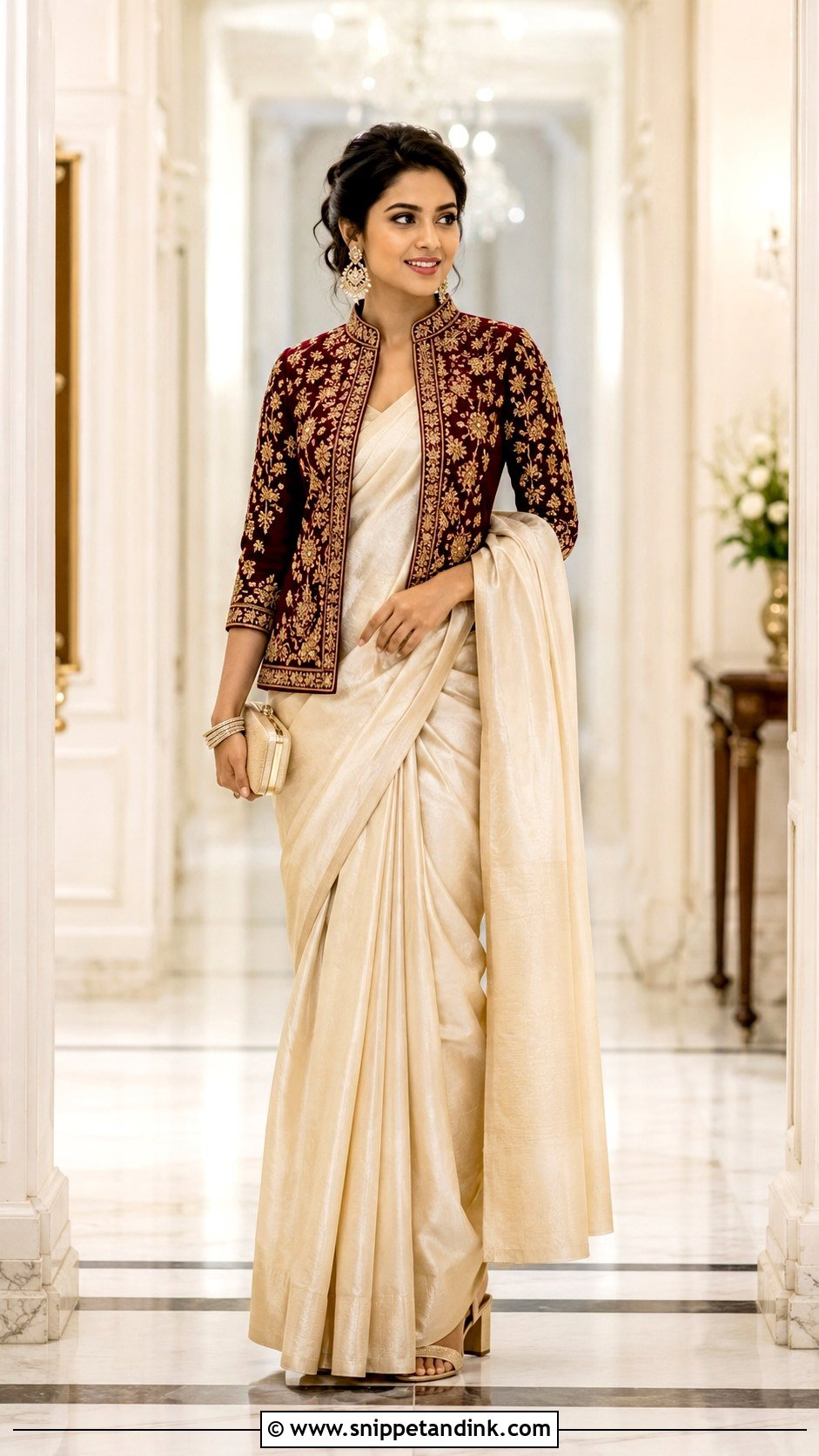
A jacket blouse adds coverage, structure and personality. A short embroidered jacket, a long brocade one or a high-neck blouse-jacket can turn a plain silk or handloom saree into the main event. With a high neckline, I drop the necklaces and rely on statement earrings. Jackets are warmer than blouses, which makes them excellent for cooler-weather celebrations and difficult in a packed summer hall. Block heels and a clutch finish a modest, refined look for receptions and cultural events.
24. South Indian Organza Saree Outfit
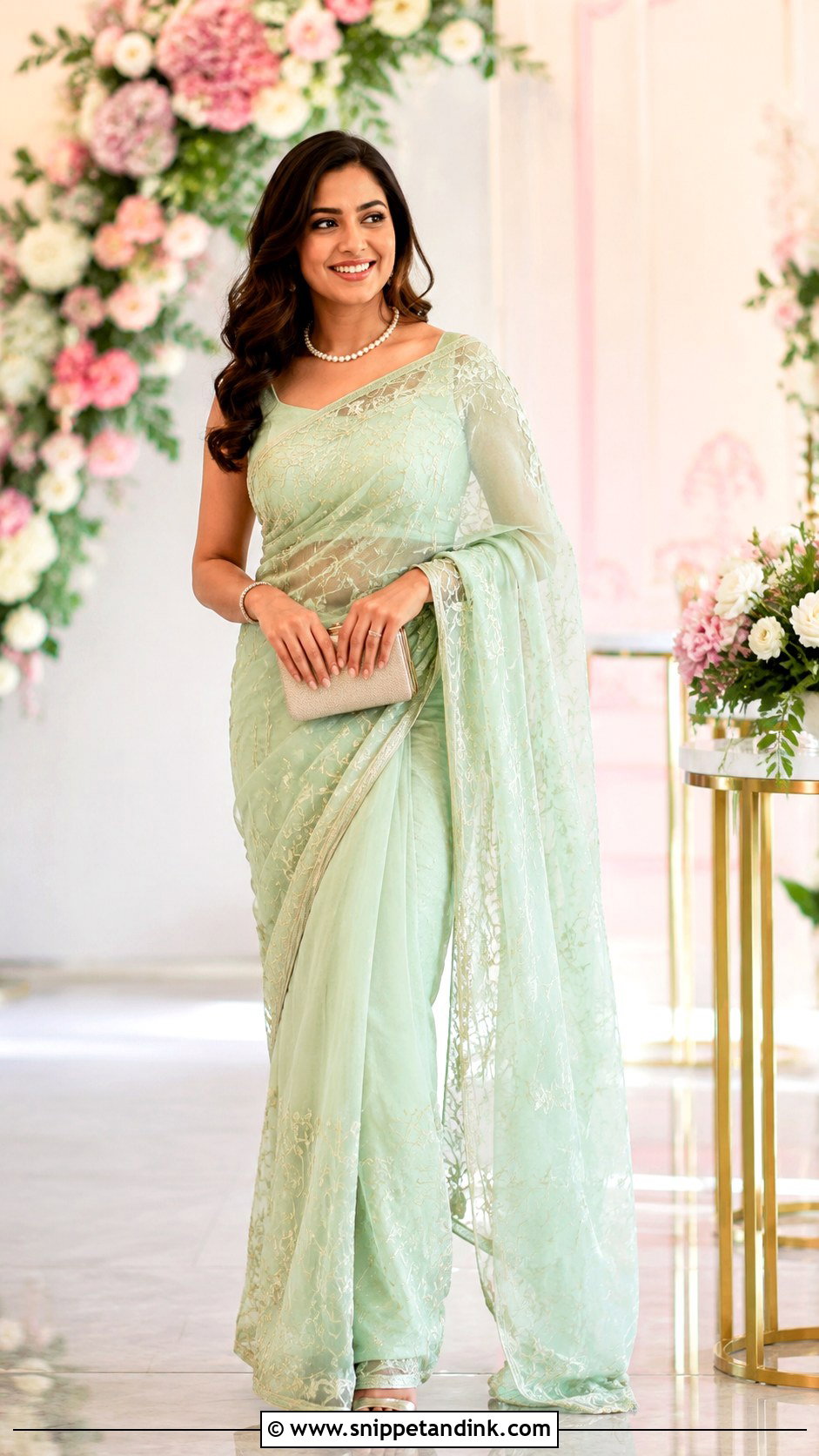
Organza feels light and modern. Ivory, blush, mint, lavender, peach and powder blue with subtle embroidery or a delicate border suit engagements, receptions, daytime weddings and festive gatherings. Pair it with a silk, embroidered or sleeveless blouse, and keep jewellery refined with pearls, diamonds, kundan or light gold. Organza has body and stands away from the figure, so I make the pleats narrower than usual and press them before draping; otherwise the front puffs out. Keep accessories minimal, add metallic heels and a small clutch, and you have something graceful that never feels heavy.
25. South Indian Modern Fusion Outfit
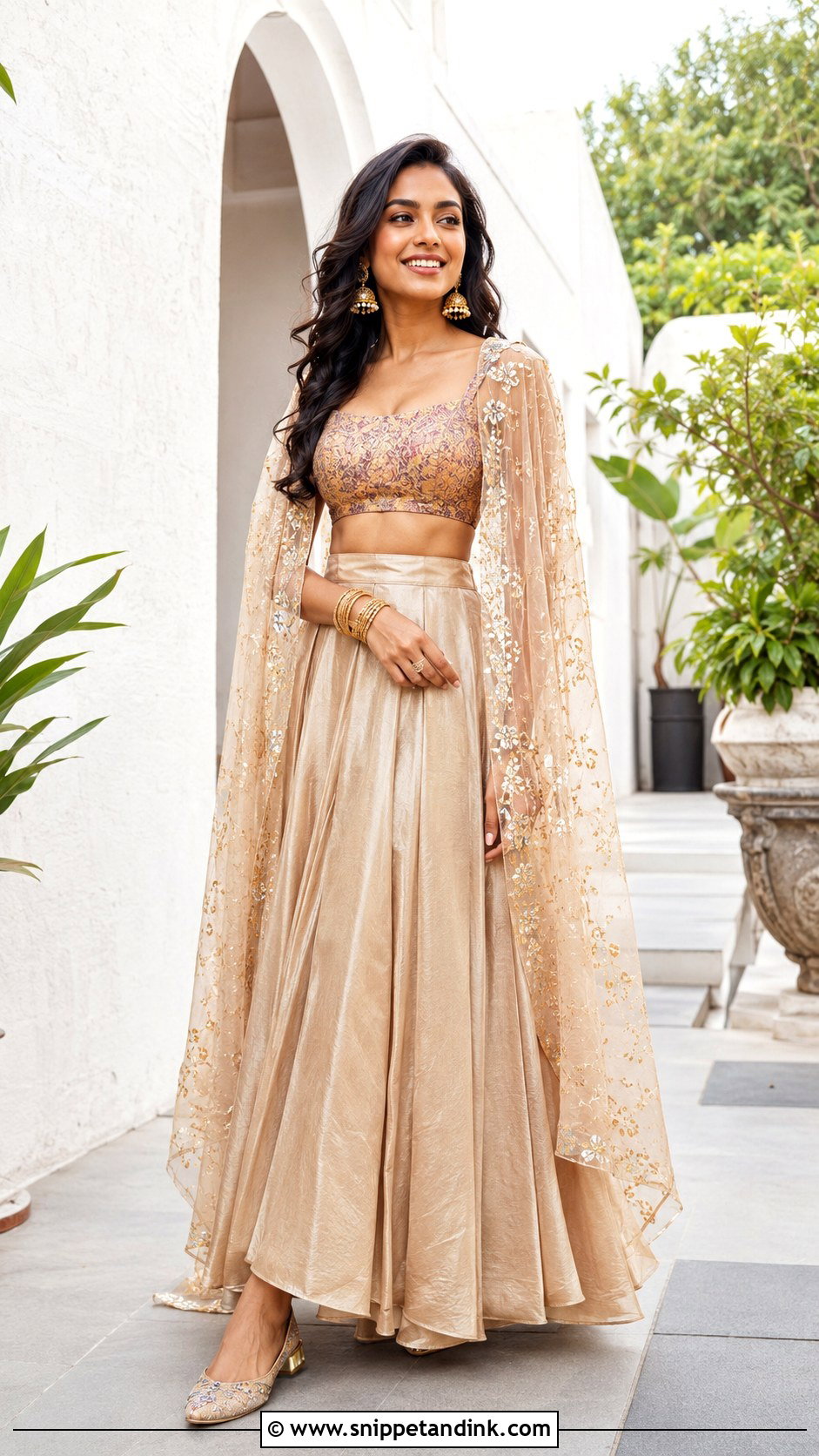
A South Indian modern fusion outfit starts with one ethnic piece: a silk skirt, a kalamkari jacket, a saree-inspired drape or a brocade crop top. Pair it with modern separates such as tailored trousers, a structured blouse, a cape dupatta or a long jacket. Balance is everything. I let exactly one traditional element lead and keep the colours of everything else coordinated, otherwise fusion reads as a costume. Temple earrings, bangles and simple heels or embroidered flats suit cultural events, festive parties and pre-wedding functions.
Is It Pure Zari? Checking a Silk Saree Before You Pay
Pure silk sarees with real zari are an investment, and they are worth a careful look in the shop. Pure zari is silver thread coated in gold; tested zari uses a copper core instead, which is lighter on the wallet and fine for many events, as long as you know what you’re paying for.
- Look for a silk certification label and, for Kanchipuram silk, ask whether it carries the geographical indication tag.
- Turn the border over. In a traditionally woven Kanjeevaram the border and body are often interlocked, and the reverse looks neat rather than floating with loose threads.
- Gently scratch a zari thread end. A reddish core suggests copper; silver underneath points to pure zari.
- Feel the weight. Pure silk with real zari has noticeable heft and a cool hand.
Storing Silk So the Zari Doesn’t Blacken
Zari tarnishes when it meets damp and air, and silk splits along permanent folds. After the wedding, air the saree in the shade for a few hours, then dry clean it only if it’s actually soiled. Wrap each silk saree in plain cotton or muslin, never plastic, and keep mothballs away from direct contact with the zari. Refold along different lines every few months; the classic split along an old fold is completely avoidable.
Matching the Weave to the Celebration
South Indian dressing runs from heavy silk to comfortable kurta sets and modern fusion. For grand events, Kanjeevaram, bridal silk and silk lehengas carry the weight of the day. For daytime and long hours, cotton, kasavu and kurta-palazzo sets are lighter. Half sarees, pattu pavadai and long skirts suit a younger festive look. Start with the occasion and the hours you’ll be in the outfit, choose a fabric that will cope with both, then let colour, blouse and jewellery follow. That order gives you outfits that look respectful and polished and still feel easy to wear.
You'll Like These Ideas:





Leave a Reply