
Volume is the easy part of a big wedding gown. The harder part is making a full skirt look like it belongs to you, at your height, in your venue, with shoes you can stand in for hours. I’ve laid out twenty full-skirted gowns below, from plain satin to pearls, blush tulle and vintage lace, and for each one I’ve noted the styling I’d pair with it and the fitting detail I would not let a bride skip. Any height, size or age can carry a grand silhouette. It comes down to proportion and tailoring, not to a body type.
Measure the Room Before You Measure the Skirt
I always ask where a bride is getting married before she tries on anything with real volume. A ball gown that looks grand in a salon can feel cramped in a narrow chapel or swallowed in an empty barn, so the space should shape the choice.
- Aisle width: a very full skirt plus a parent walking beside you needs more room than most people expect. If the pews are close, walk the aisle and picture the hem brushing both sides.
- Floor: polished stone and carpet are kind to a train. Grass, sand and gravel snag tulle and stain satin, so a lighter skirt with a shorter train is more practical outdoors.
- Ceiling and scale: high ceilings and grand staircases suit the biggest skirts. In a low, intimate room, I usually suggest moderate fullness and a chapel train instead.
- Temperature: Mikado and lined satin are warm. For a summer venue without air conditioning, layered tulle on a breathable lining is far kinder.
- Seating: if you’ll sit at a long head table, ask how wide the chairs are and whether there is space behind them for the skirt.
Bring photos or a short video of the venue to your appointments. Your consultant can then pull gowns that will fit the space, which saves a lot of falling for the wrong dress.
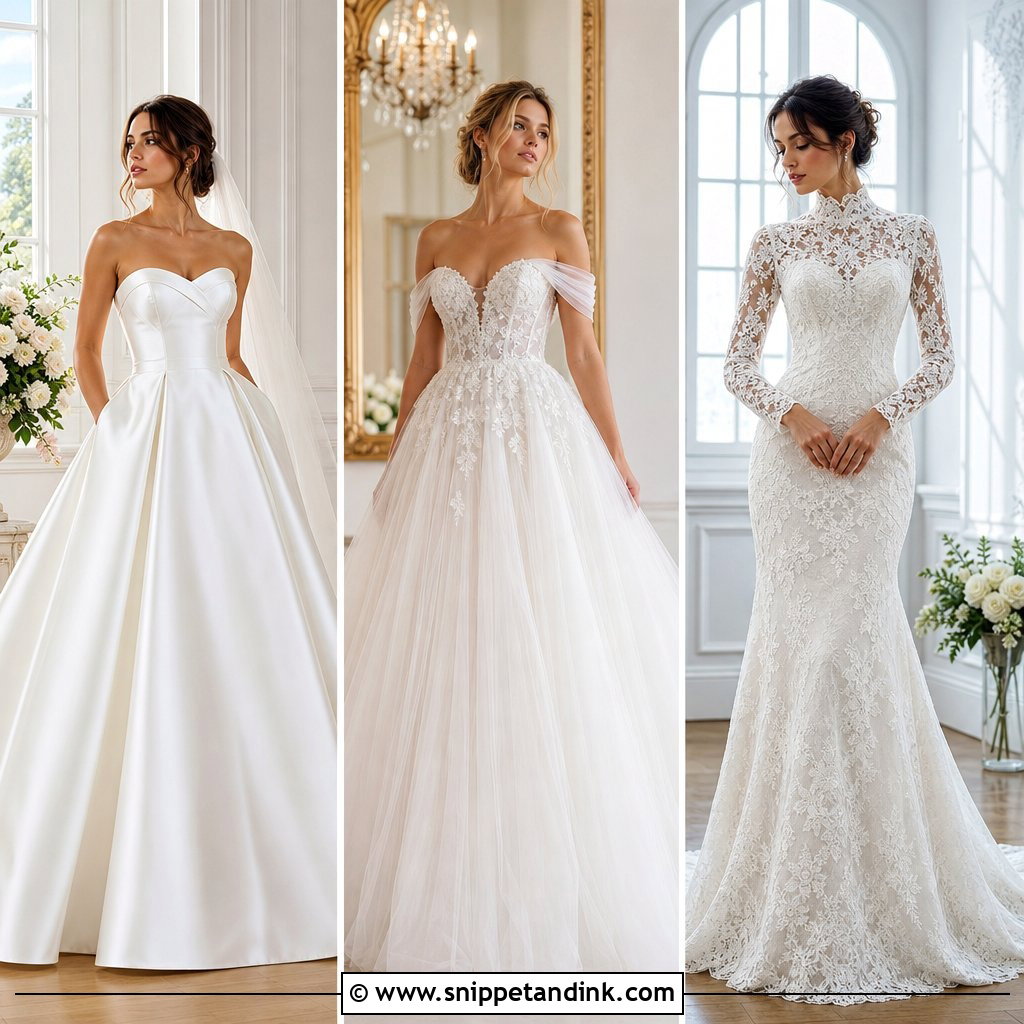
1. Strapless Satin Ball Gown
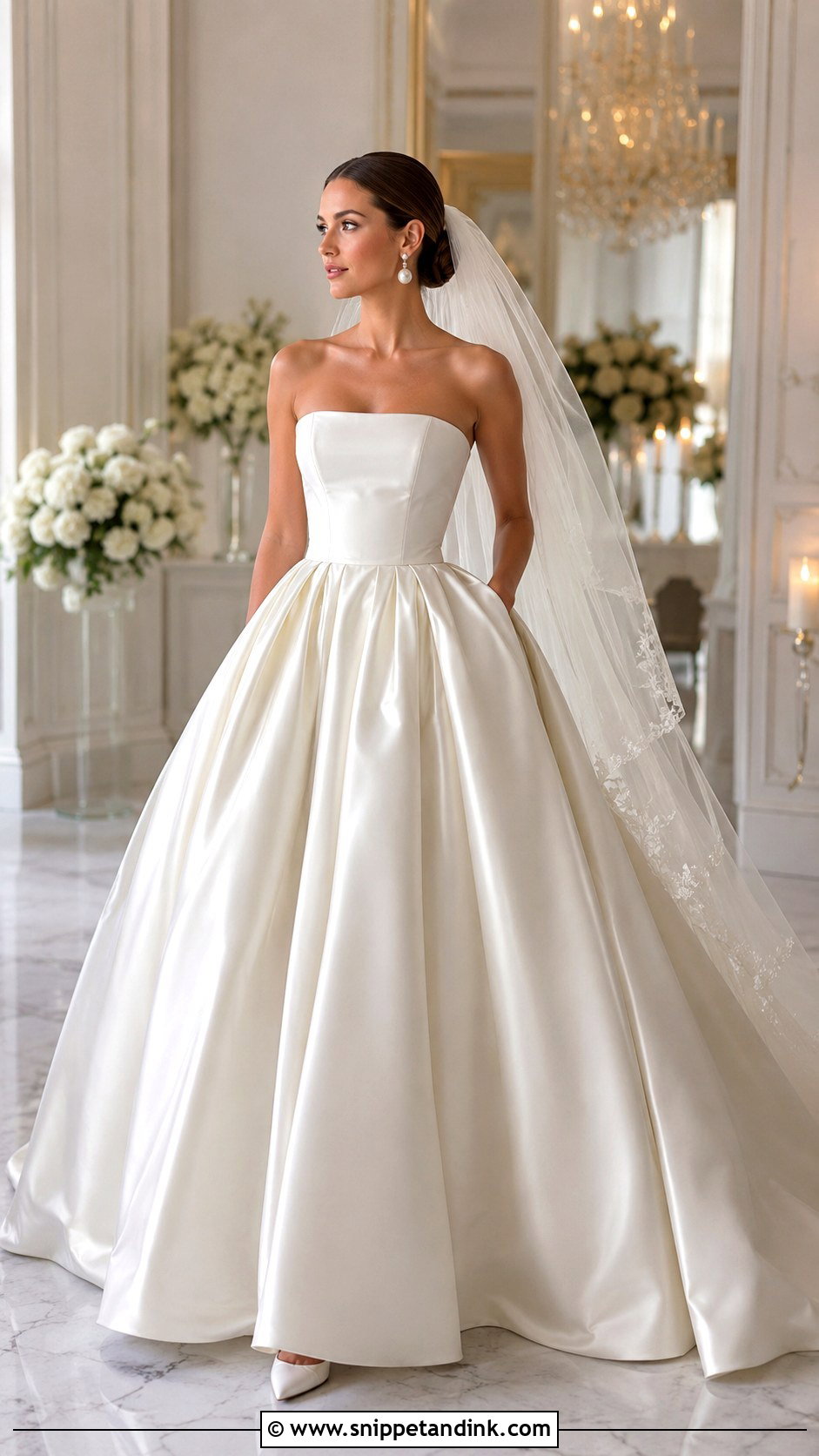
Duchess satin with box pleats is the purest version of a ball gown: no lace, no beading, just cut. Because there is nothing to distract from it, the bodice has to be built properly, with boning and a waist stay so the strapless neckline does not creep down during the ceremony. I style it with pearl drops, a sleek low bun, a cathedral veil with a raw edge and pointed ivory pumps, plus a compact bouquet of white roses. Satin reflects light, which suits an indoor ballroom or church better than harsh midday sun, where it can look shiny in photos. Covered buttons running down onto the train give the back view a reason to be looked at.
2. Off The Shoulder Lace Wedding Gown
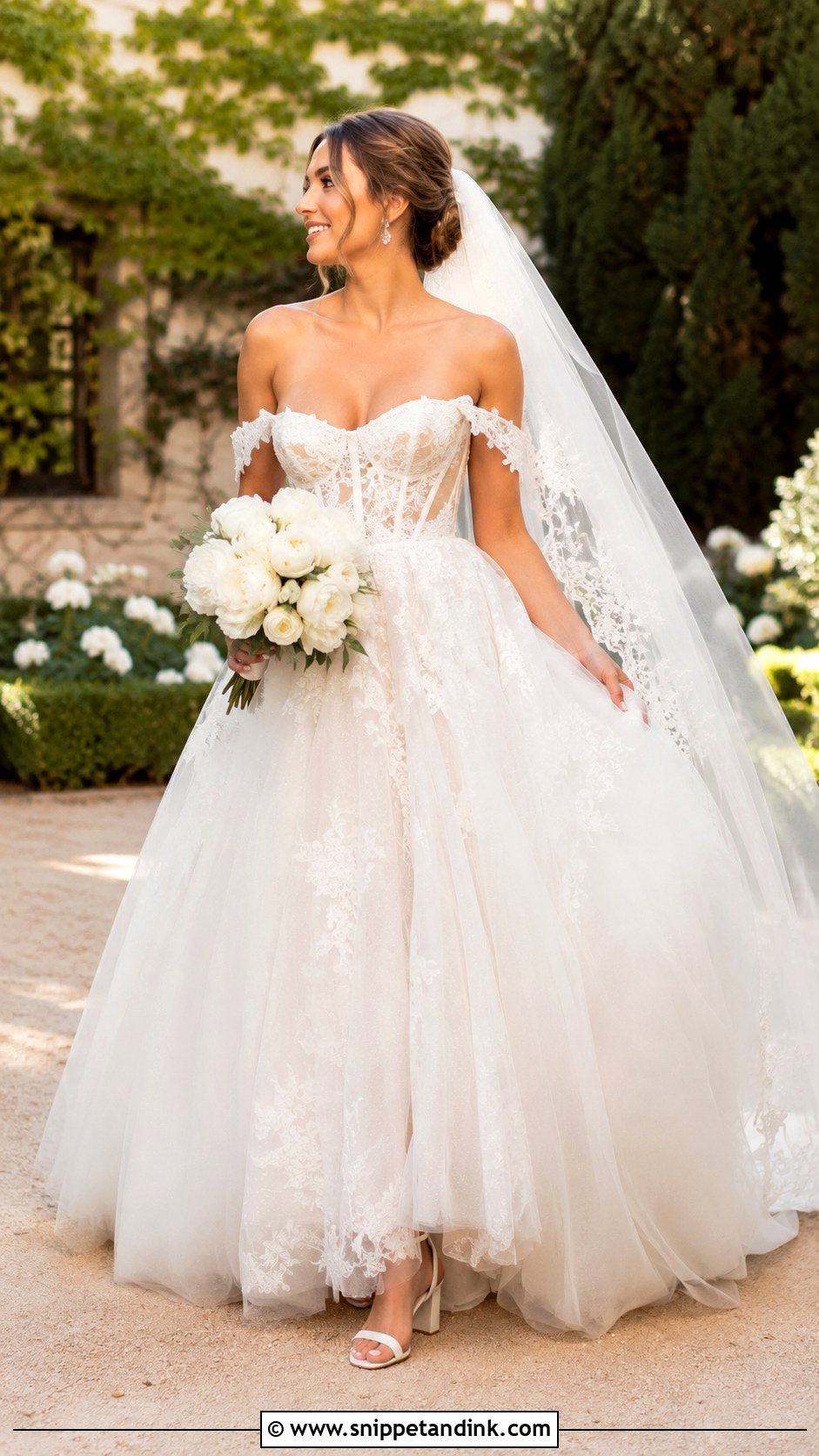
Off-shoulder lace looks soft, but the sleeves carry real tension. They sit across the upper arm, and if they are cut too snug, every hug lifts the bodice. I look for a corset with built-in cups and appliqués placed heavily near the waist, thinning as they move down the tulle skirt so the hem stays light. A lace-edged veil, crystal studs and a loose low chignon suit it, with block heels for stability under the width and white peonies with soft greenery. At the fitting I have the bride hold her bouquet at waist height and then raise both arms to wave. If the band rides up, the seamstress needs to adjust the sleeve angle, not just tighten it.
3. Long Sleeve Princess Wedding Gown
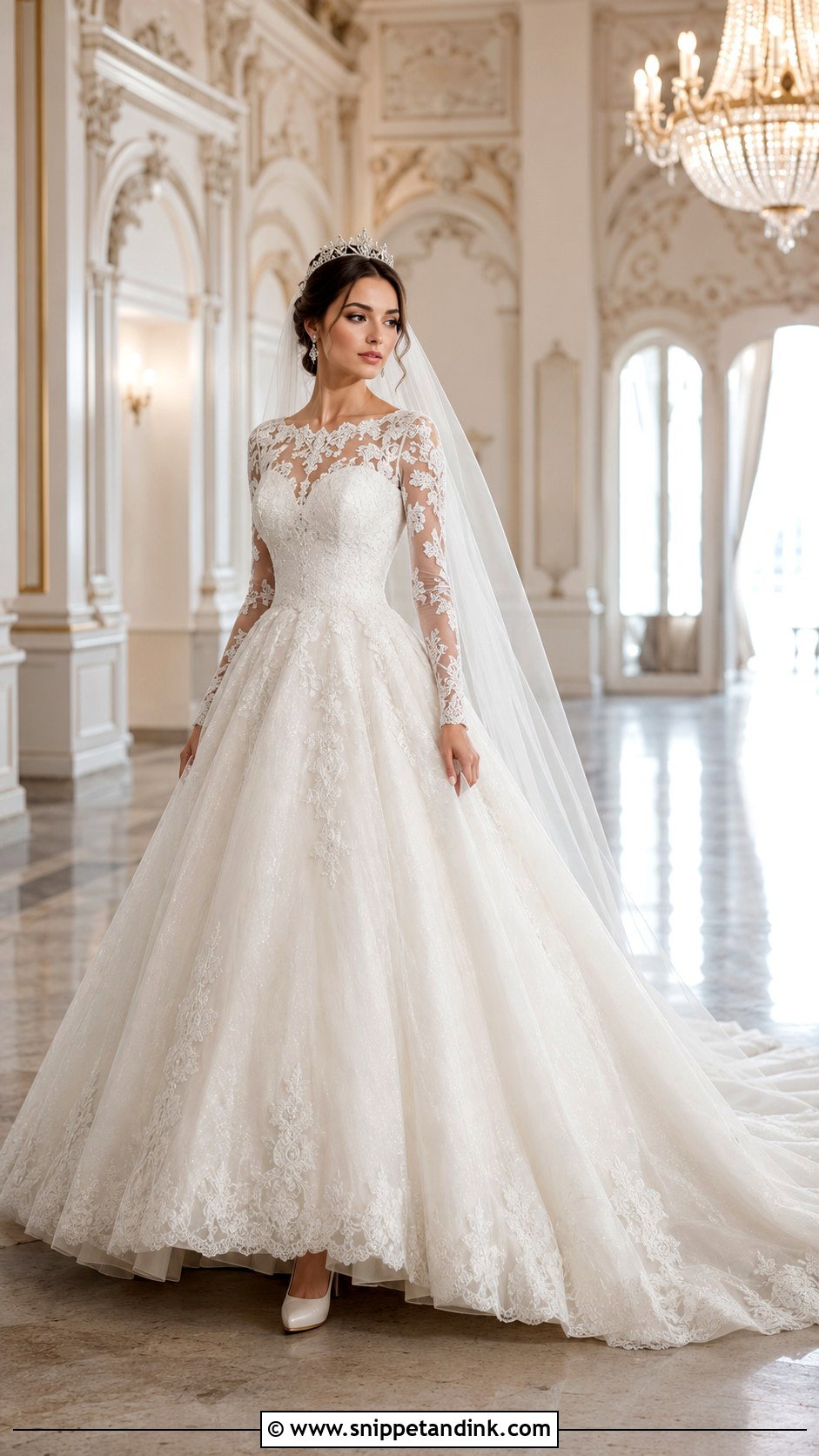
Sheer long sleeves and a princess skirt are about as regal as bridalwear gets, yet the coverage is genuinely comfortable in a cool church. I like illusion sleeves with embroidered lace and covered buttons at the wrist, a structured bodice and a layered organza or tulle skirt, which is noticeably lighter than lined satin. A long plain veil keeps the sleeves visible. Add a delicate tiara, small diamond earrings and a polished bun, plus cushioned closed pumps. One thing brides forget: wrist buttons need fastening after the hands are done, so leave a few minutes in the schedule. A hidden skirt loop lets you lift the hem without grabbing the tulle.
4. Drop Waist Ball Gown
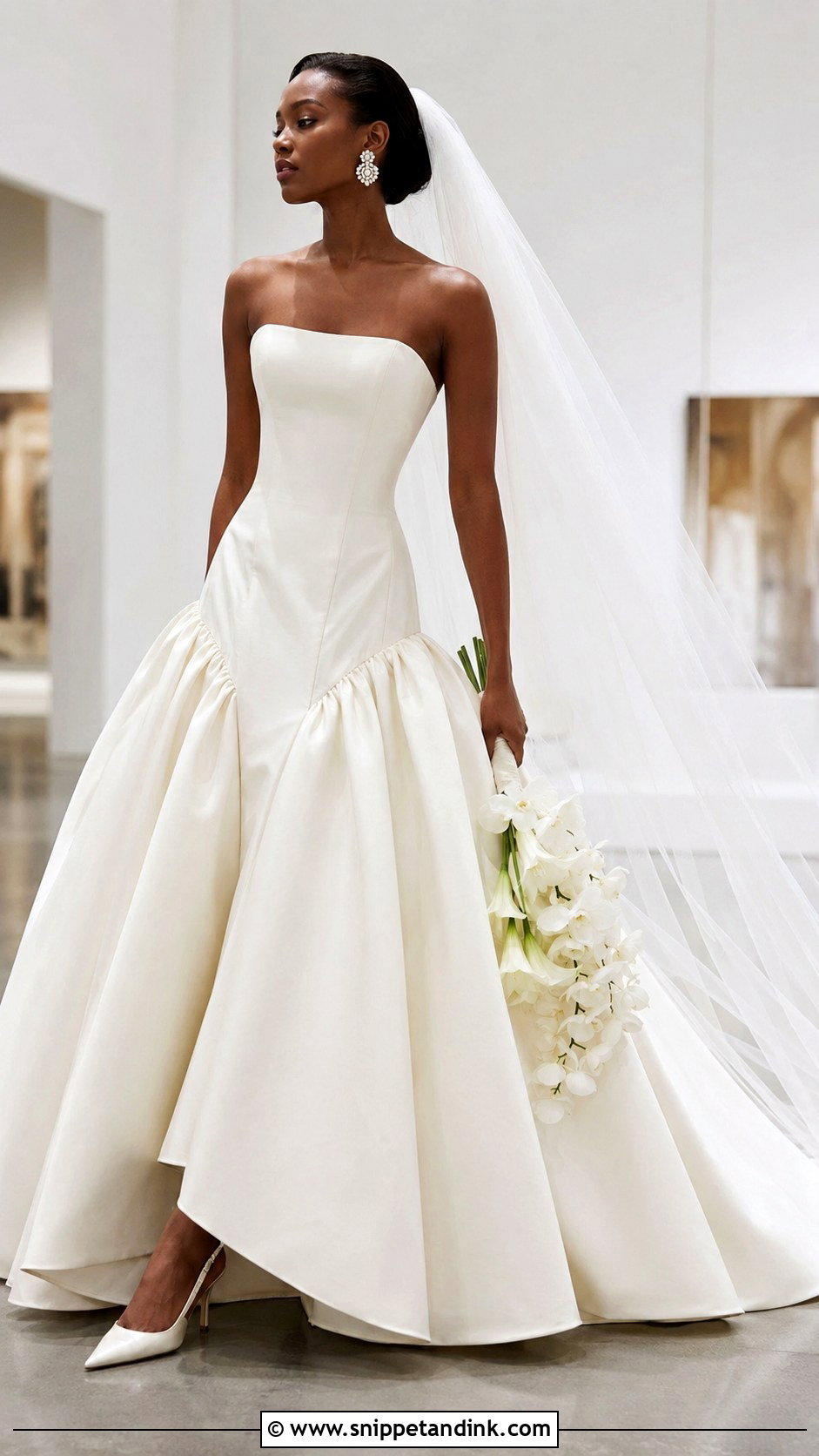
This is the gown I’m most careful recommending. A drop waist sits on the upper hip, so it lengthens a short torso nicely but can make a long one look endless, and it shows every fitting error at the hip line. Mikado, duchess satin or taffeta hold the shape best. I keep the styling modern: a smooth fingertip veil, sculptural earrings, hair pulled back, pointed slingbacks or a lower heel under the heavier skirt, and long-stemmed flowers that echo the line. Sit in it at every fitting. If the seam pushes into the thighs when seated, it needs to come up, even slightly.
5. Corset Tulle Wedding Gown
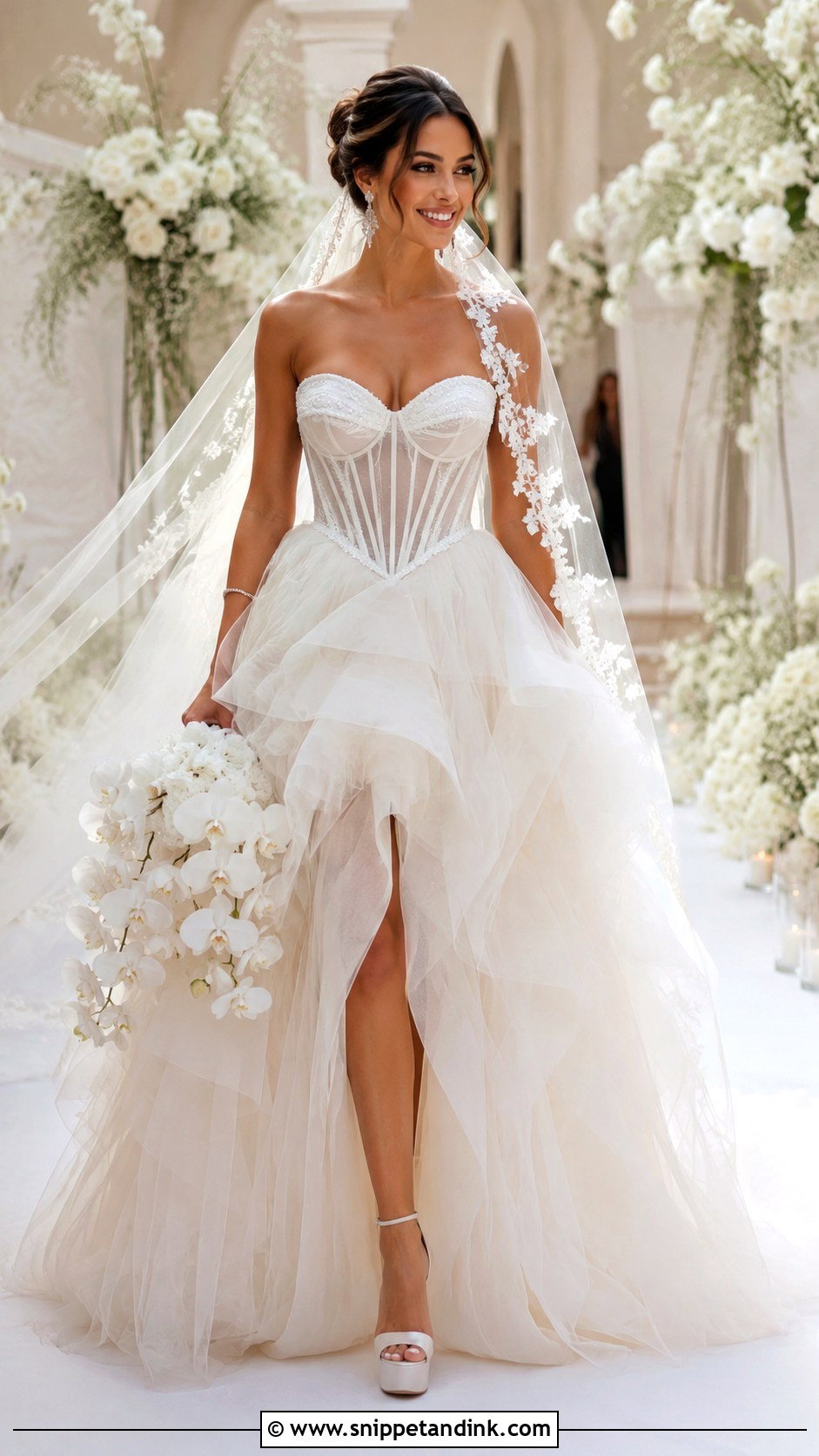
Clouds of tulle over a visible corset is the airiest way to get real volume. The bodice does all the structural work, so I check that the boning lies flat against the ribs and the cups hold without a bra. A lace-up back adjusts more easily than covered buttons if your weight shifts before the wedding. Soft tulle layers stay floaty; finish with crystal earrings, a slim tennis bracelet, a sheer cathedral veil with a few appliqués and a romantic updo. Platform sandals or wide block heels are less likely to snag the net. Ask for a bustle that catches every layer, not just the top one, or the underlayers drag on the floor all night.
6. Square Neck Mikado Wedding Gown
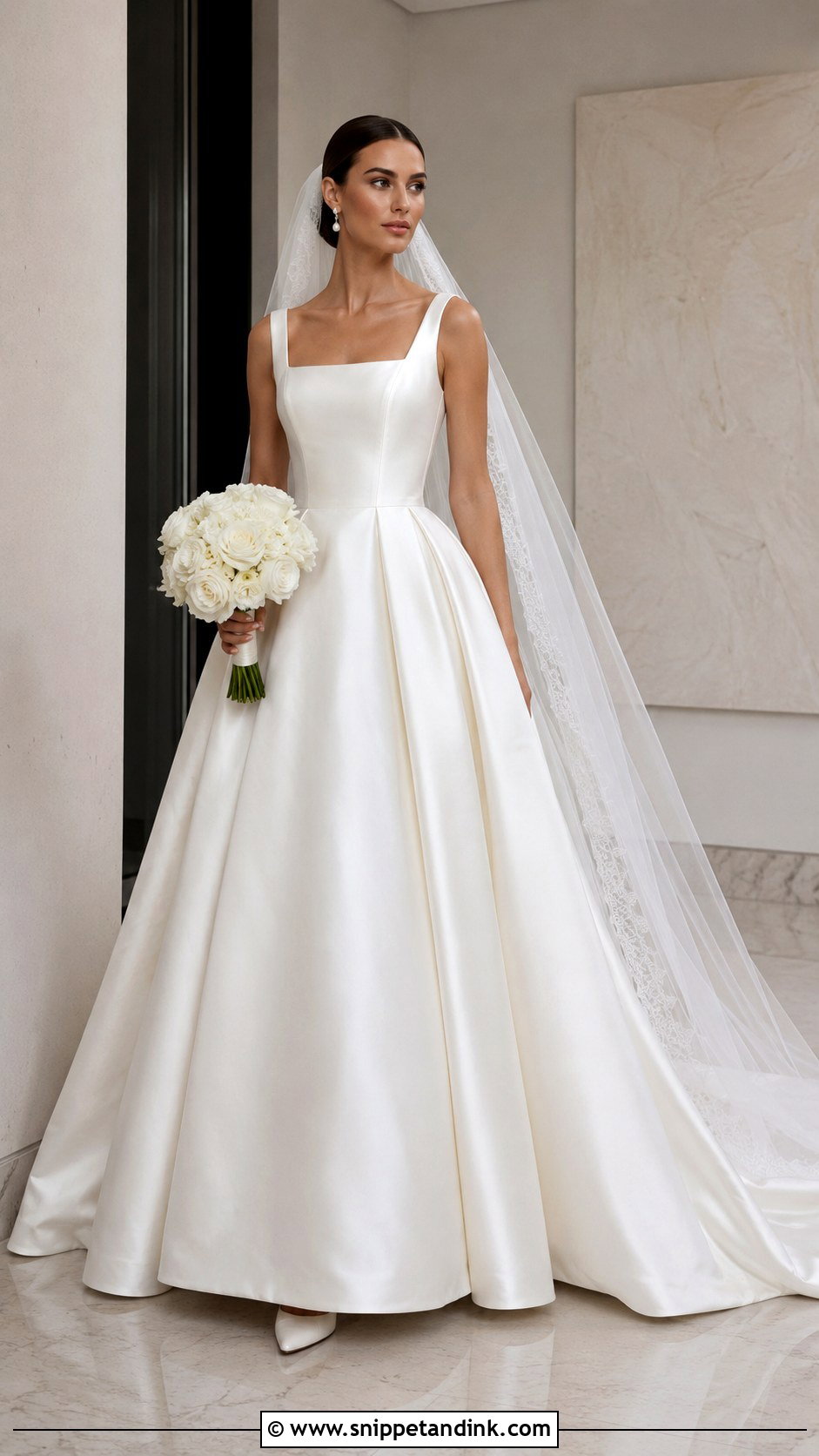
Mikado is crisp enough to stand away from the body, which is why it suits a square neck so well. The neckline frames the collarbones, the wide straps give more support than strapless, and deep pleats open from a fitted waist into an architectural skirt. A row of covered buttons down the back onto the train is the only decoration it needs. I’d pair it with a smooth bun, pearl-and-diamond earrings, a simple cathedral veil set below the hair, closed satin pumps and a structured white bouquet. Mikado creases sharply if it is packed tightly, so it should travel on a hanger with the skirt stuffed with tissue, not folded into a box.
7. Sweetheart Wedding Gown With Cathedral Train
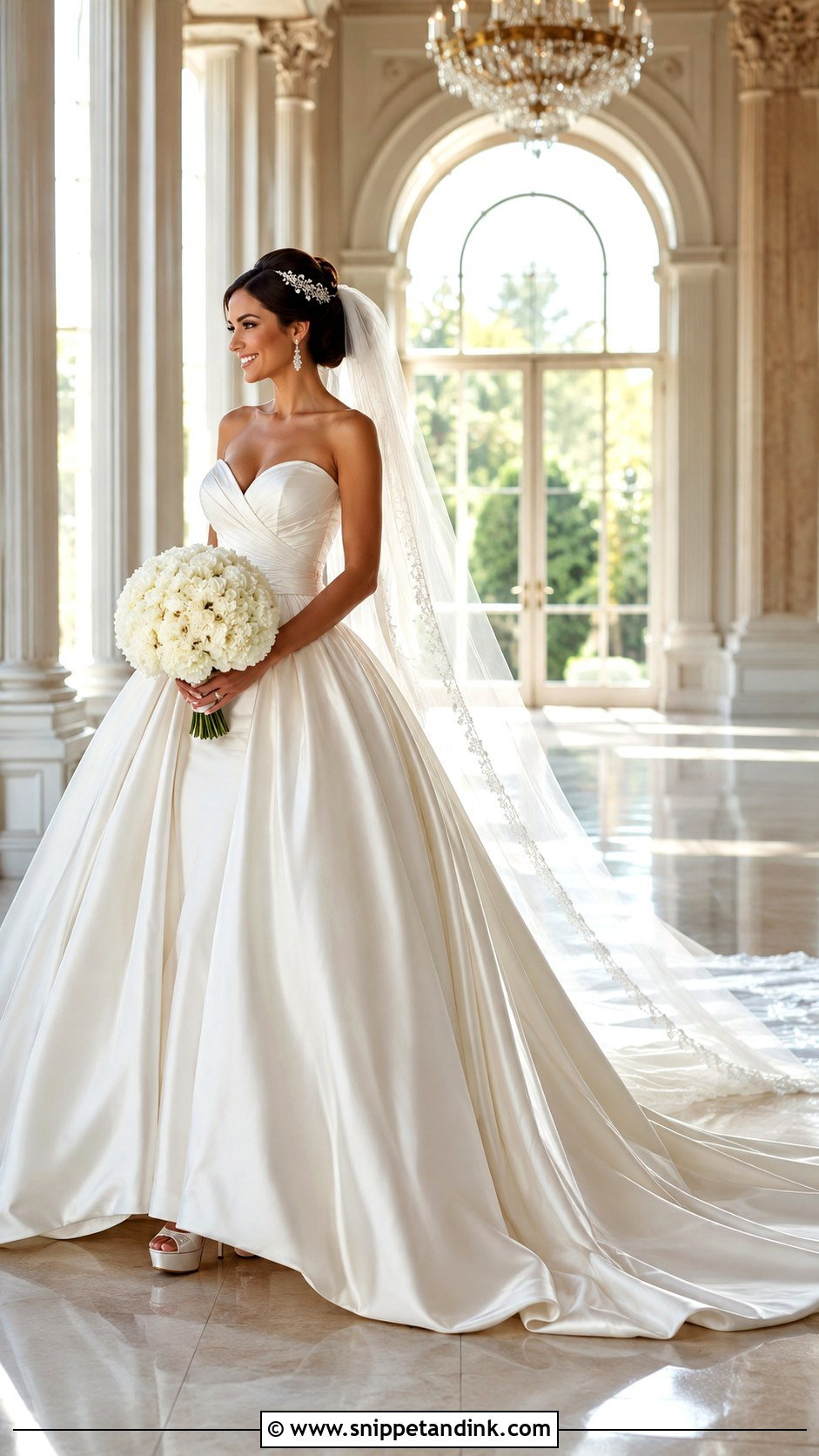
A sweetheart neckline needs to follow the curve of your bust, not sit low on it. When a sweetheart gapes at the dip, the seamstress takes it in at the centre front seam, which is a quick job, so mention it early. A satin or layered tulle skirt flares from the waist into a cathedral train. During the ceremony, I’d use a fingertip veil so the train is the hero. Add a crystal comb, small drops and soft waves away from the face. Low platform heels carry the weight without a steep angle. Practise walking, turning and climbing a few steps in a borrowed petticoat of similar fullness before the final hem is set.
8. Basque Waist Wedding Gown
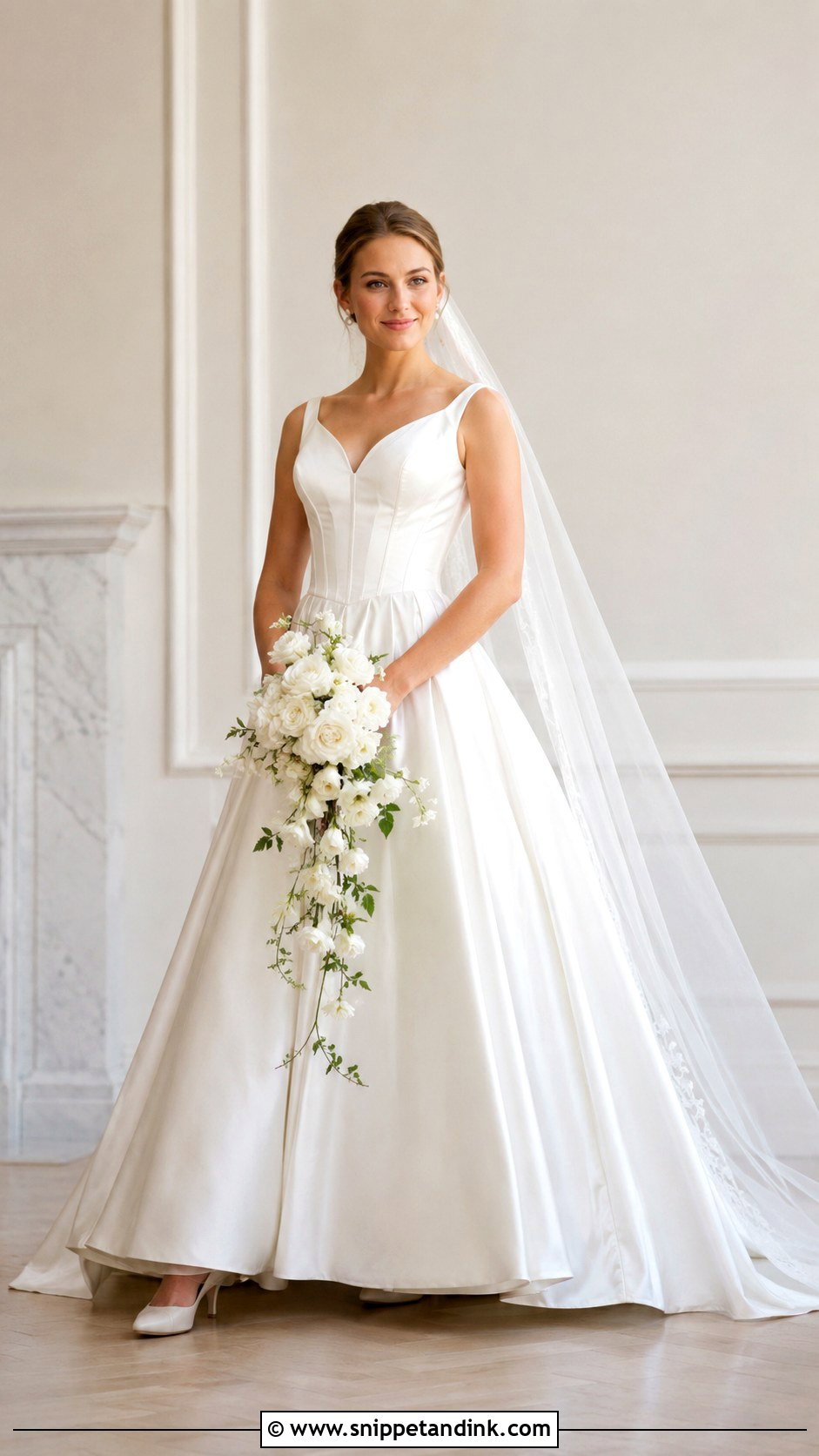
Pointed at the centre front, a Basque waist makes the skirt look as if it grows out of the bodice rather than starting at a straight seam. It lengthens the torso and suits most figures, including curvier brides who want waist definition without a belt. Plain satin keeps it clean; embroidered fabric adds ornament. I pair it with a chapel veil, soft pearl earrings, an updo with a little height at the crown, round-toe pumps or block heels, and a cascading bouquet that continues the downward line. The seam has to lie smooth across the stomach. When it buckles, that usually means the bodice is too short for you, and it needs letting down rather than taking in.
9. Floral Appliqué Ball Gown
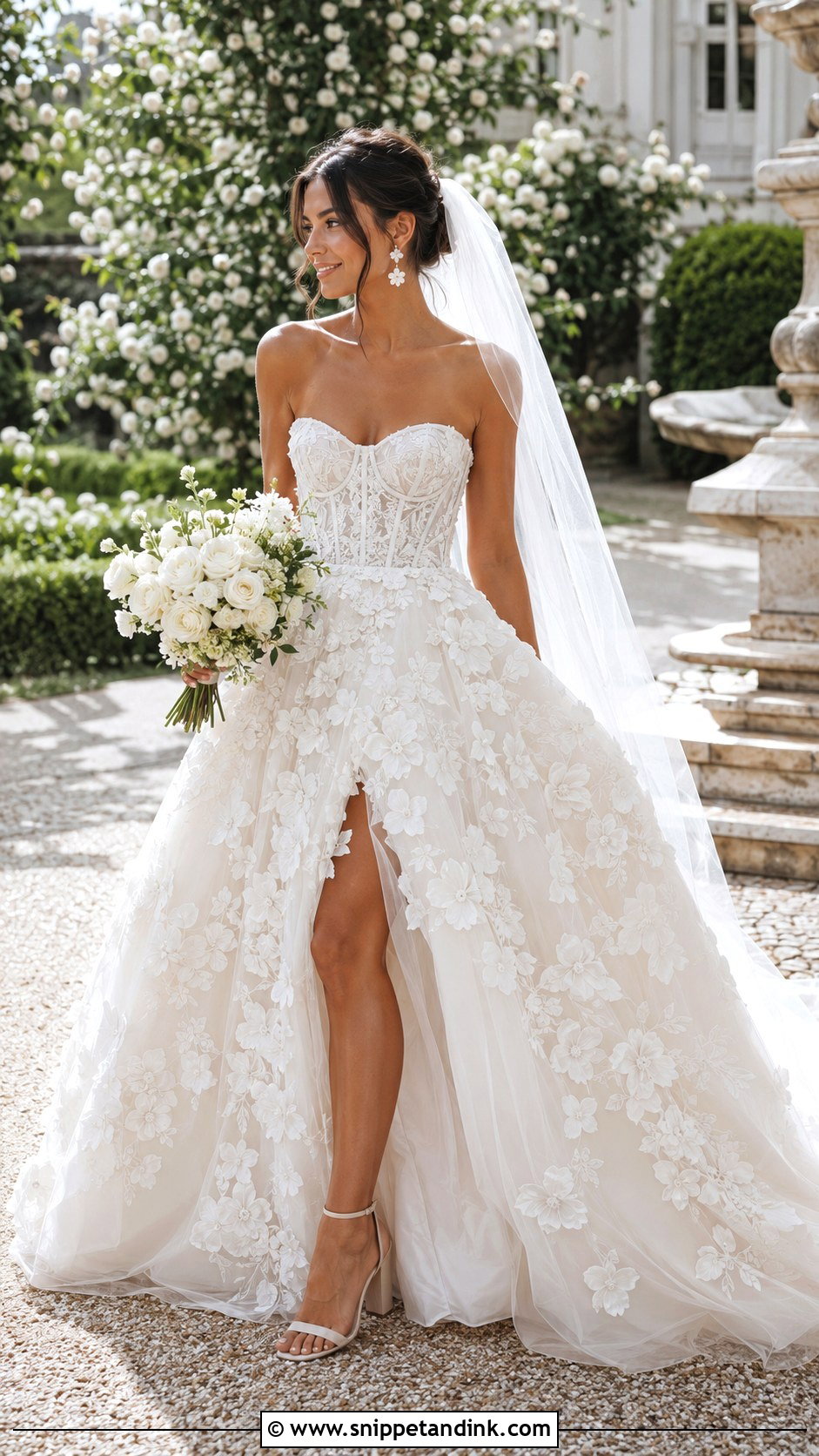
Mixed appliqués of embroidered leaves, fabric petals and small beads give texture without relying on sparkle. I look for flowers that start on the corset and drift across the skirt with real gaps between them; a gown covered edge to edge can look busy in photos. Keep everything else gentle: a plain sheer veil, small floral earrings, a relaxed twisted updo, ivory block-heel sandals and a bouquet of one or two flower types. It is a natural fit for a spring garden wedding. On grass, though, a soft skirt collapses quickly, so ask whether the gown has enough petticoat or crinoline underneath to keep its shape on uneven ground.
10. Sparkling Tulle Wedding Gown
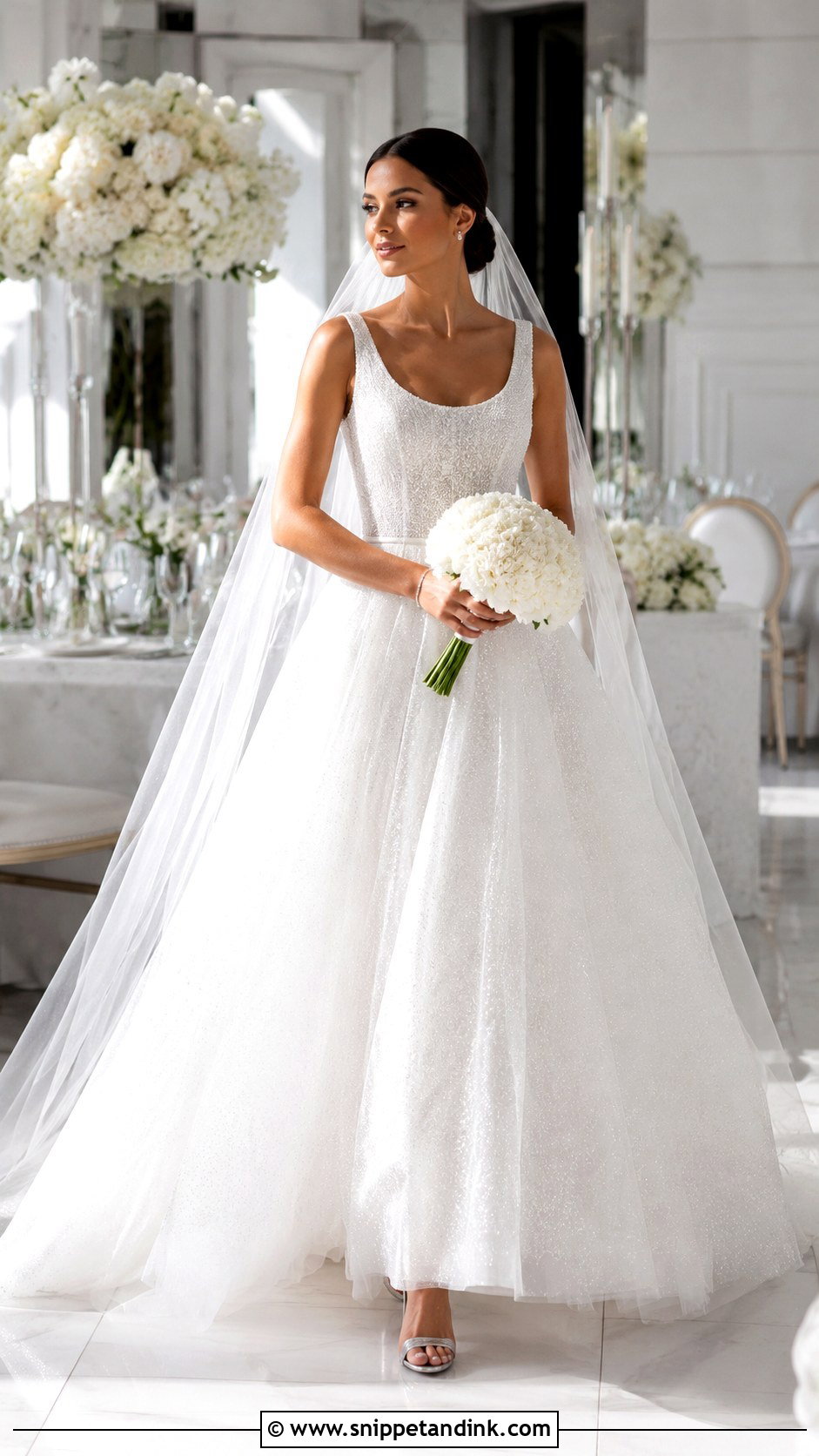
Evenly spread sparkle is what separates a luminous tulle gown from one that looks dusty. Fine glitter, small sequins or tiny crystals should be scattered consistently over a full skirt, with a structured sweetheart or scoop bodice holding the shape. I’d style it quietly: stud earrings, a smooth updo, a plain cathedral veil and a white bouquet with a satin-wrapped stem. Silver heels can echo the shimmer, though they rarely show. See the fabric in daylight and under indoor lights before you order, and photograph it on your phone with the flash on. Sparkle that looks soft in a salon mirror can turn bright and spotty on camera.
11. Pearl Embellished Wedding Gown
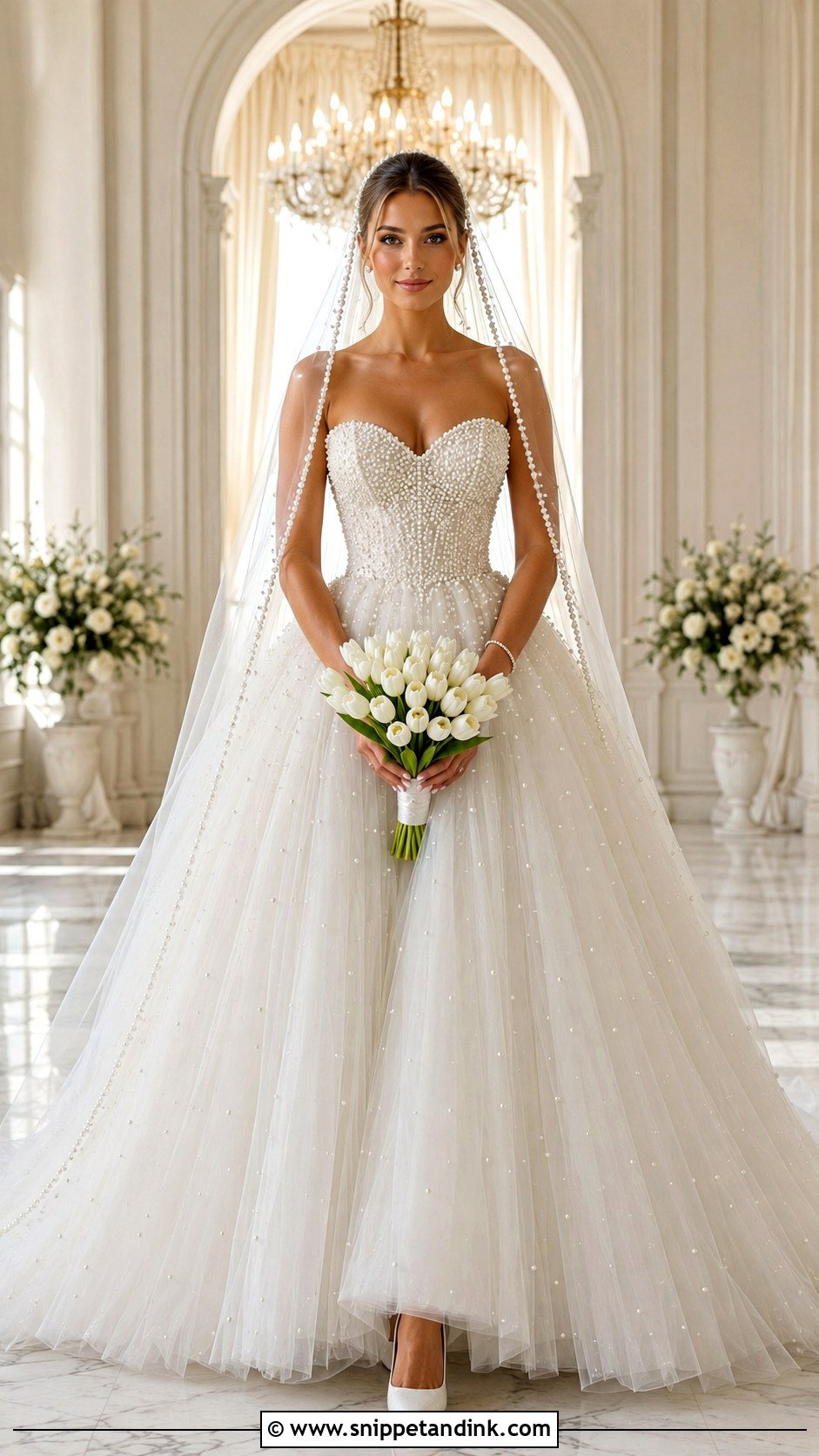
Pearls are kindest to a full gown when they thin out as they go down. A bodice evenly scattered with pearls, easing off onto a tulle skirt, keeps the waist defined and stops the dress feeling top-heavy. I add pearl studs, a slim bracelet, a sheer veil with a narrow pearl edge, a classic chignon and fresh natural makeup, with closed ivory heels and a streamlined bouquet such as tulips or calla lilies. Turn the bodice inside out at your appointment. Sewn pearls leave small knots on the lining that can rub the inner arm and waist all day, and a seamstress can cover them with a soft lining strip.
12. Bow Back Ball Gown
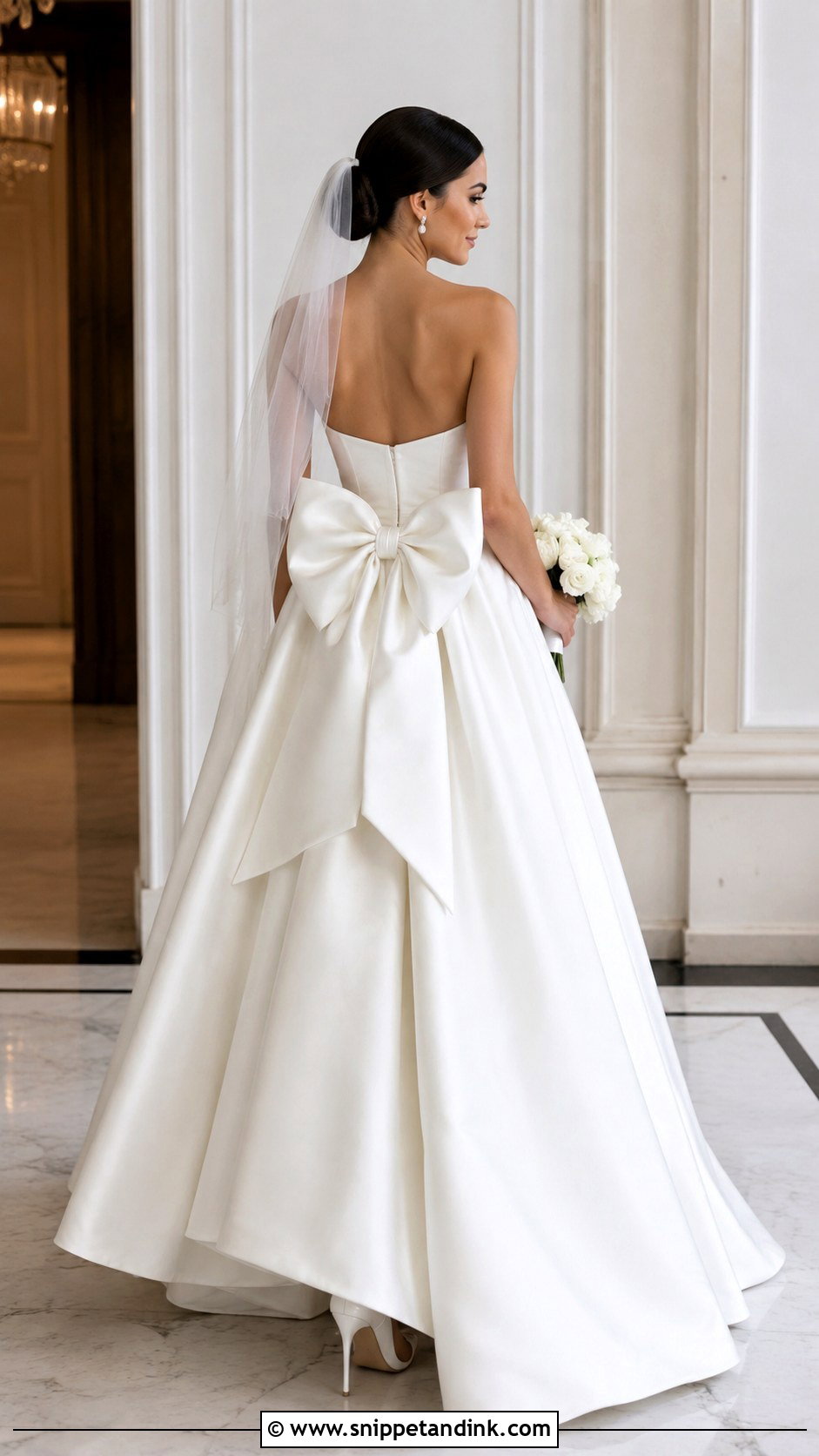
The back of this gown is the event. A structured satin dress with a clean bodice and full skirt lets a large bow take over, and a detachable bow gives you a simpler line for dancing. I’d use a shoulder-length or fingertip veil that stops above the bow, sleek drop earrings, a polished bun, comfortable satin pumps and a compact bouquet. Ask the salon to show you exactly how the bow attaches and where the bustle points sit around it. If the bow is not detachable, check that you can sit back in a chair without crushing the loops, because a flattened bow does not recover easily.
13. Wedding Gown With Detachable Overskirt
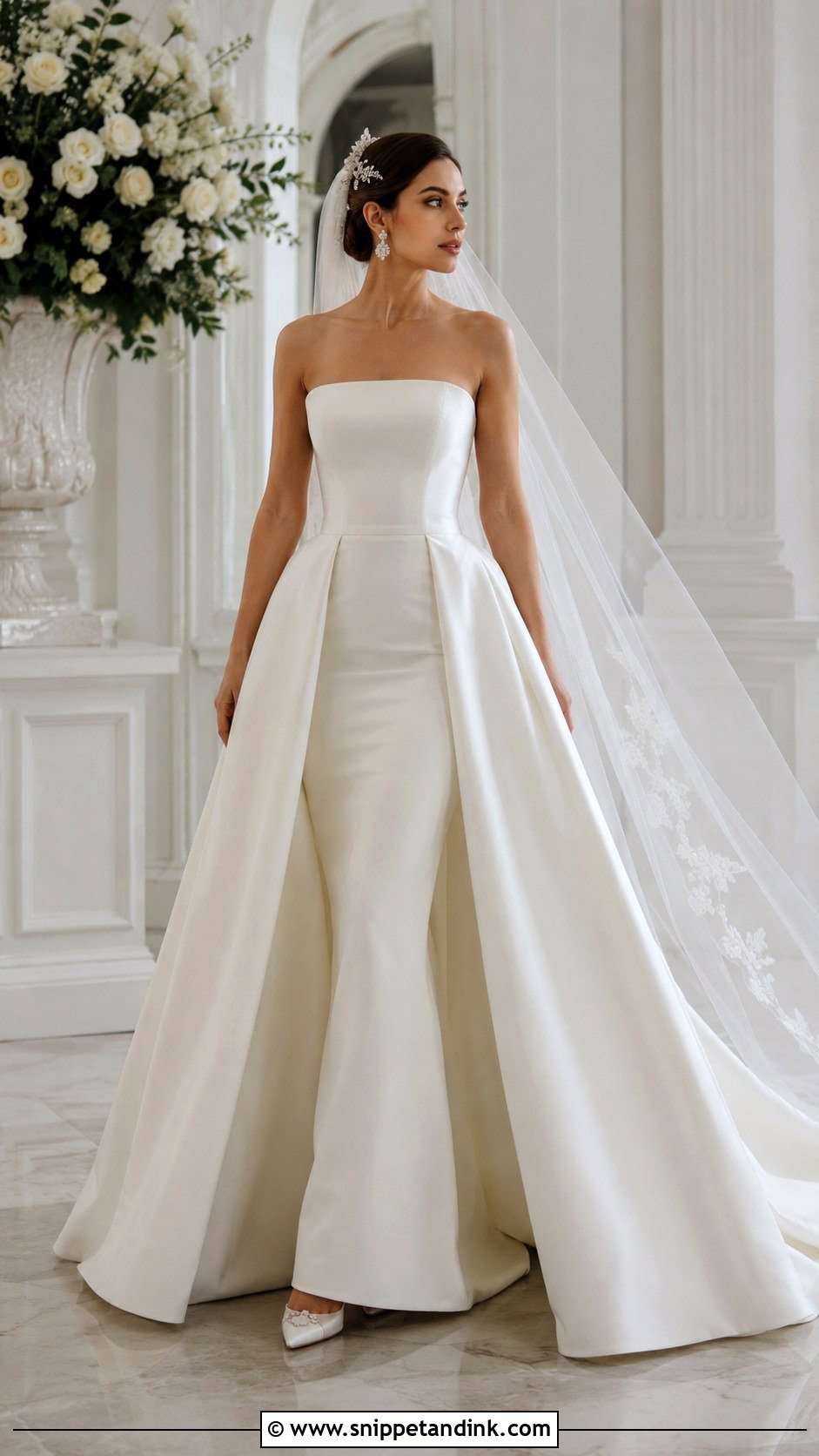
An overskirt is the clever way to have a ball gown at the ceremony and a slimmer dress for the party. It goes over a fitted column, trumpet or simple A-line base and fastens at the waist under a belt, seam or decorative band. For the ceremony I’d pair a cathedral veil, drop earrings and pointed pumps; later, a shorter veil or a jeweled comb and shoes you actually want seen. The base gown is what you’ll live in, so fit it first and the overskirt second. Most overskirts close with hooks or snaps at the back; practise taking it off once, and give one trusted person a garment bag for it.
14. High Neck Lace Wedding Gown
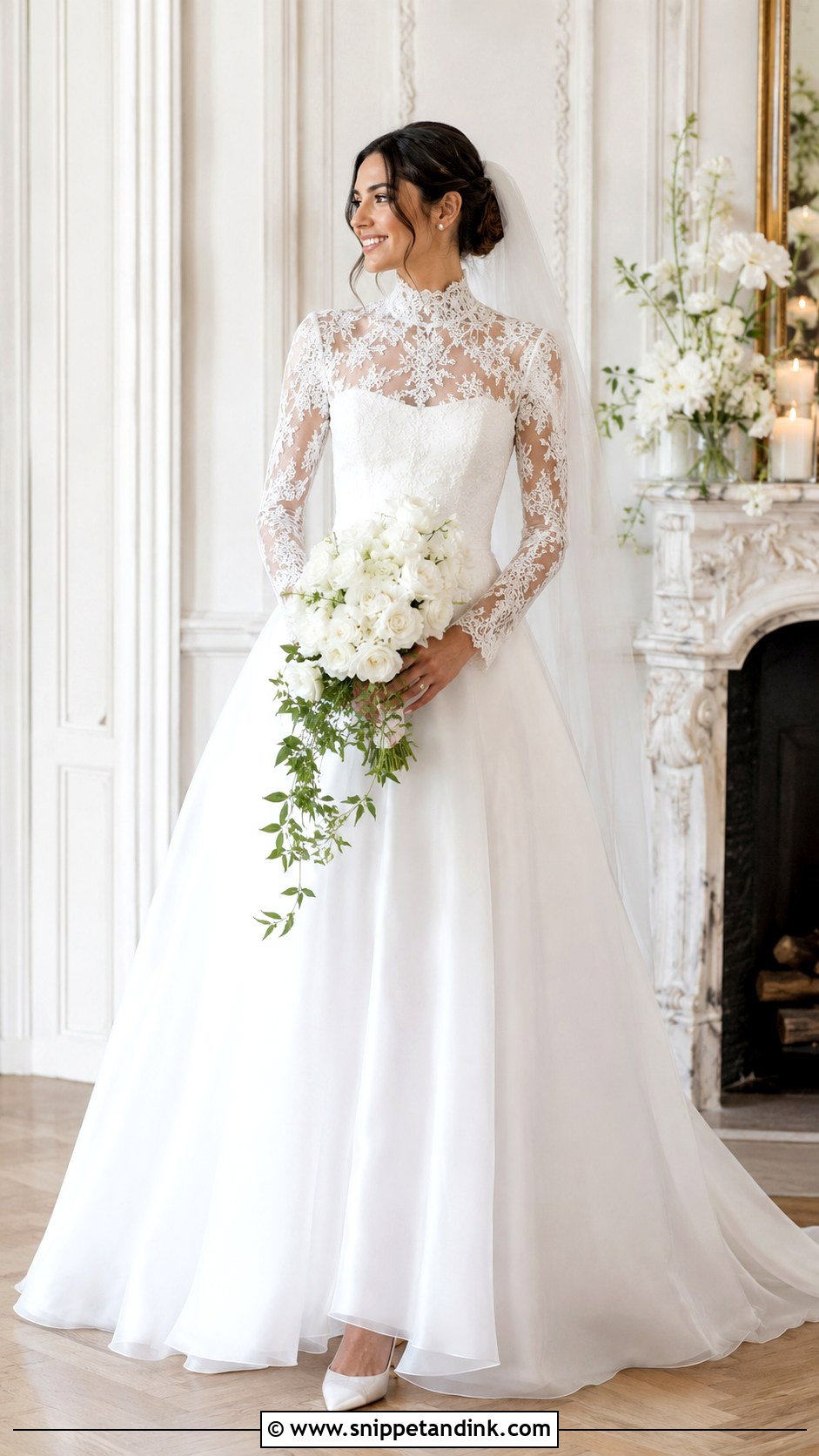
With a high lace neck, the gown already wears the jewelry. A sheer lace neckline over a lined bodice, long or cap sleeves depending on the season, and a skirt of organza, tulle or light satin from the natural waist keep it formal and balanced. I stop at small diamond studs, a low bun with the veil attached underneath and pointed ivory shoes, adding a bouquet with a little trailing greenery to soften the line. Lace collars are cut from the edge of the lace, and those edges can be scratchy. I run a fingertip around the inside of the neckline at fittings; if it catches, a fine tulle facing solves it.


15. Cap Sleeve Beaded Wedding Gown
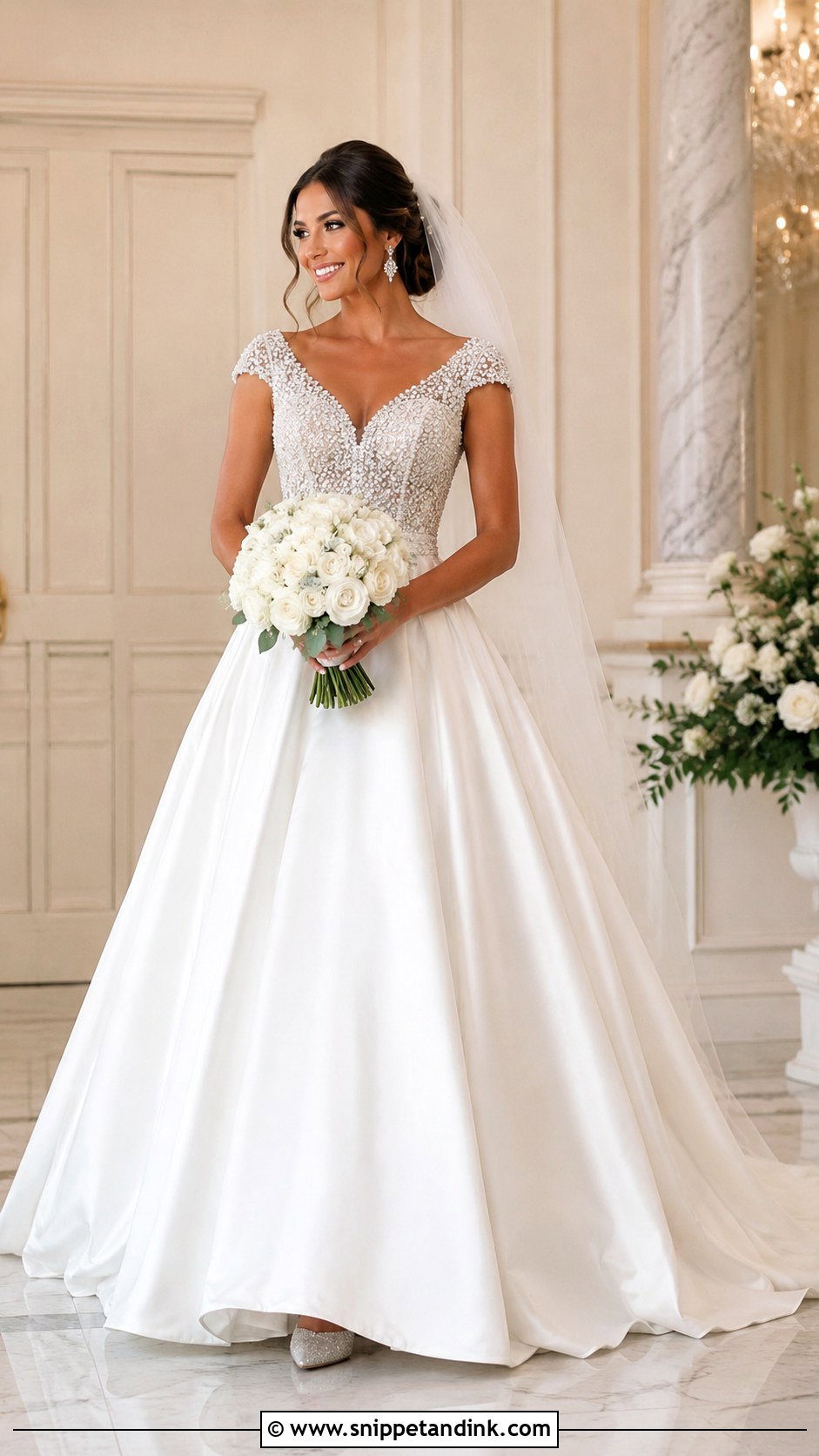
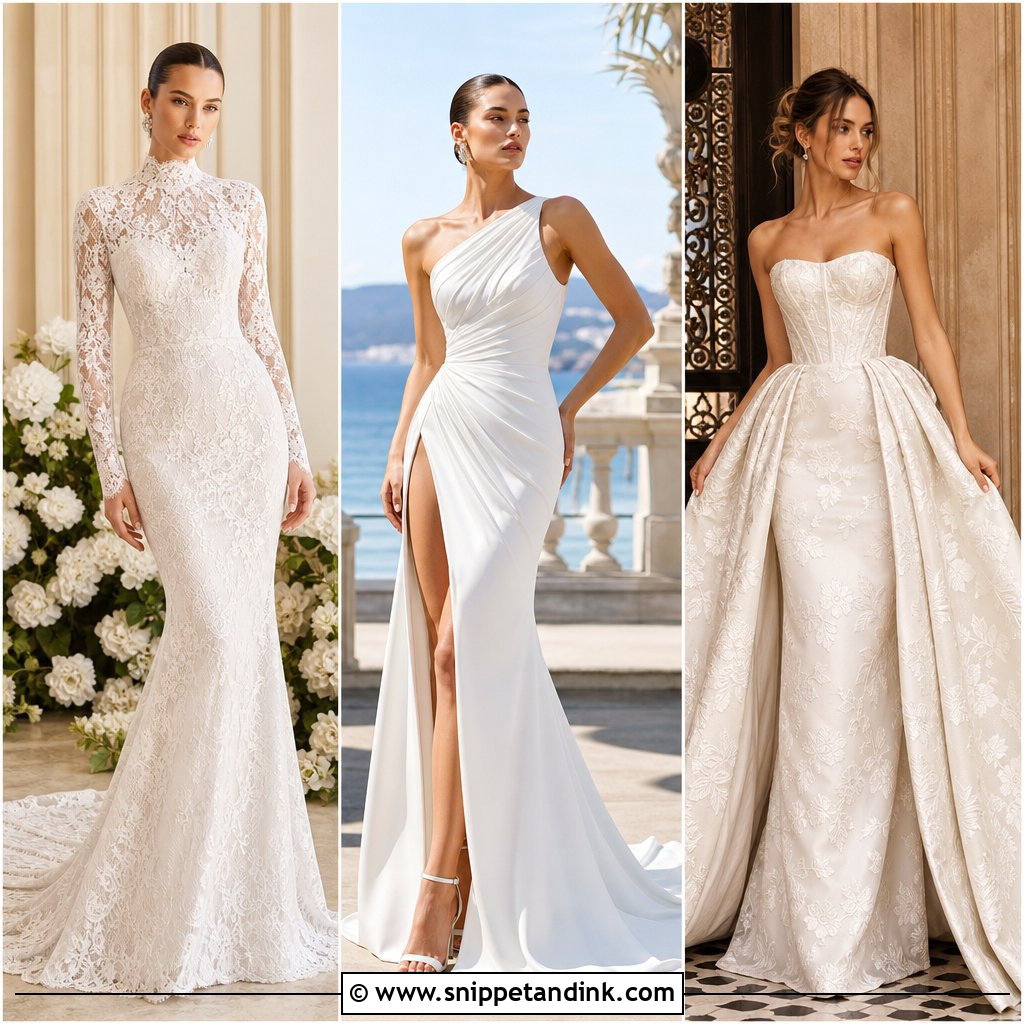
Beaded cap sleeves add a little coverage and, more usefully, give a heavy bodice something to hang from. The beads or crystals should travel lightly over the shoulder and connect to the bodice decoration, while a plain satin or lightly sparkling tulle skirt keeps attention up top. A simple veil, crystal studs, a low twisted bun, closed heels and a medium bouquet finish it. Check the armholes carefully. A cap sleeve that is cut too high pinches under the arm, while one cut too low slips off the shoulder when you reach forward to hug someone.
16. Blush Pink Ball Gown
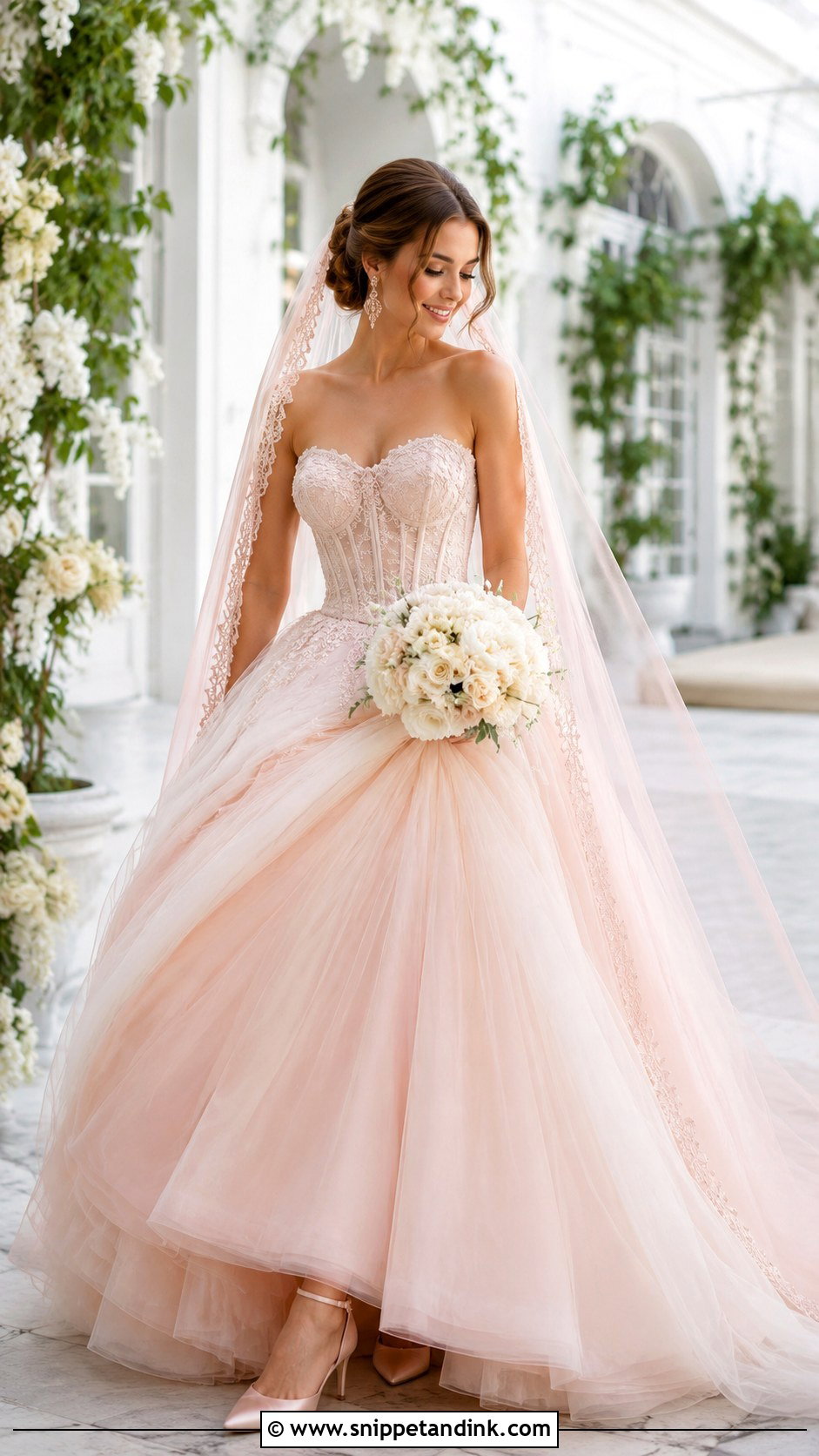
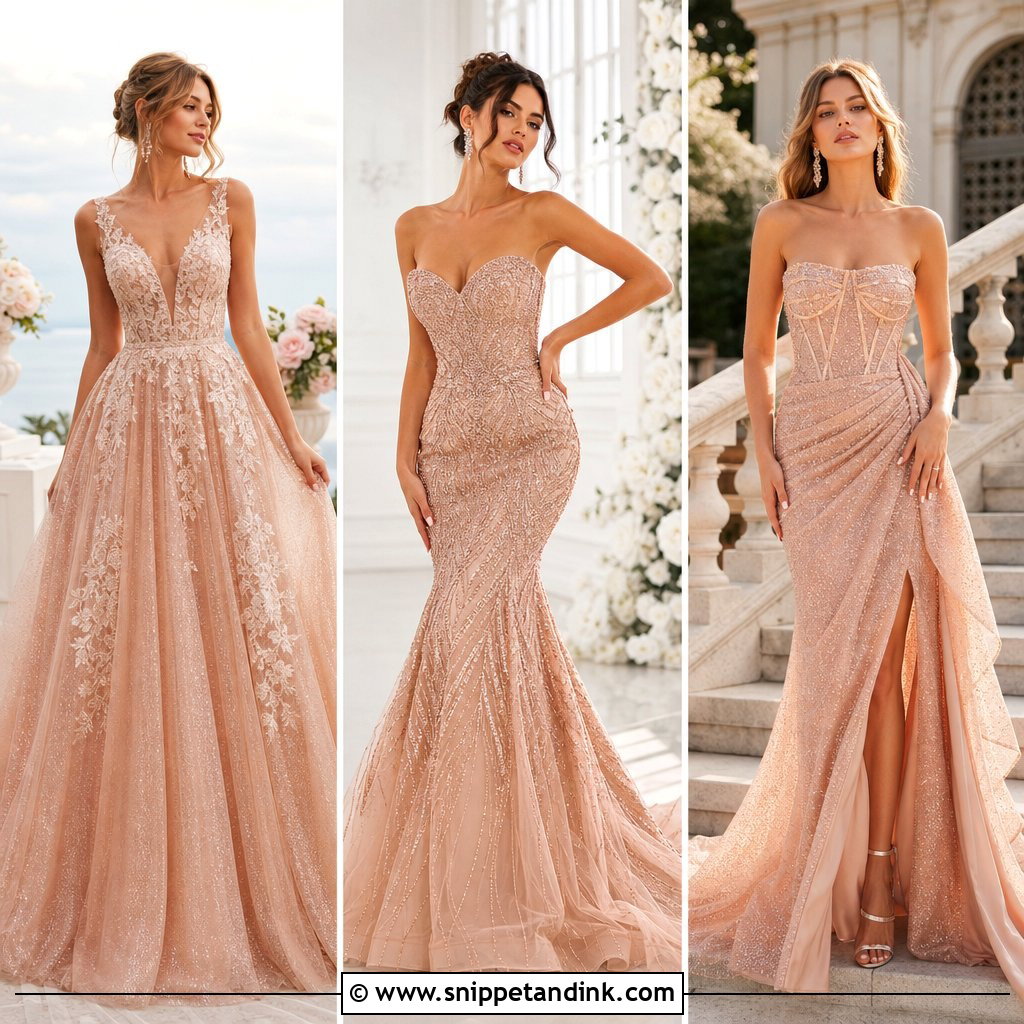
Blush works best when it is a hint underneath, not the top layer. A pale pink lining under ivory tulle, lace or organza gives depth without reading as a pink dress, and a corset bodice with a full skirt keeps it formal. I’d add rose-gold earrings, neutral makeup, a softly pinned updo, and nude or pale pink shoes. An ivory veil brightens the face; a blush-edged veil ties the colours together. Bring a fabric swatch outside before ordering. Blush shifts toward peach in warm evening light and toward beige under white overhead lights, and the same gown can photograph in both tones on one day.
17. Plus Size Corset Ball Gown
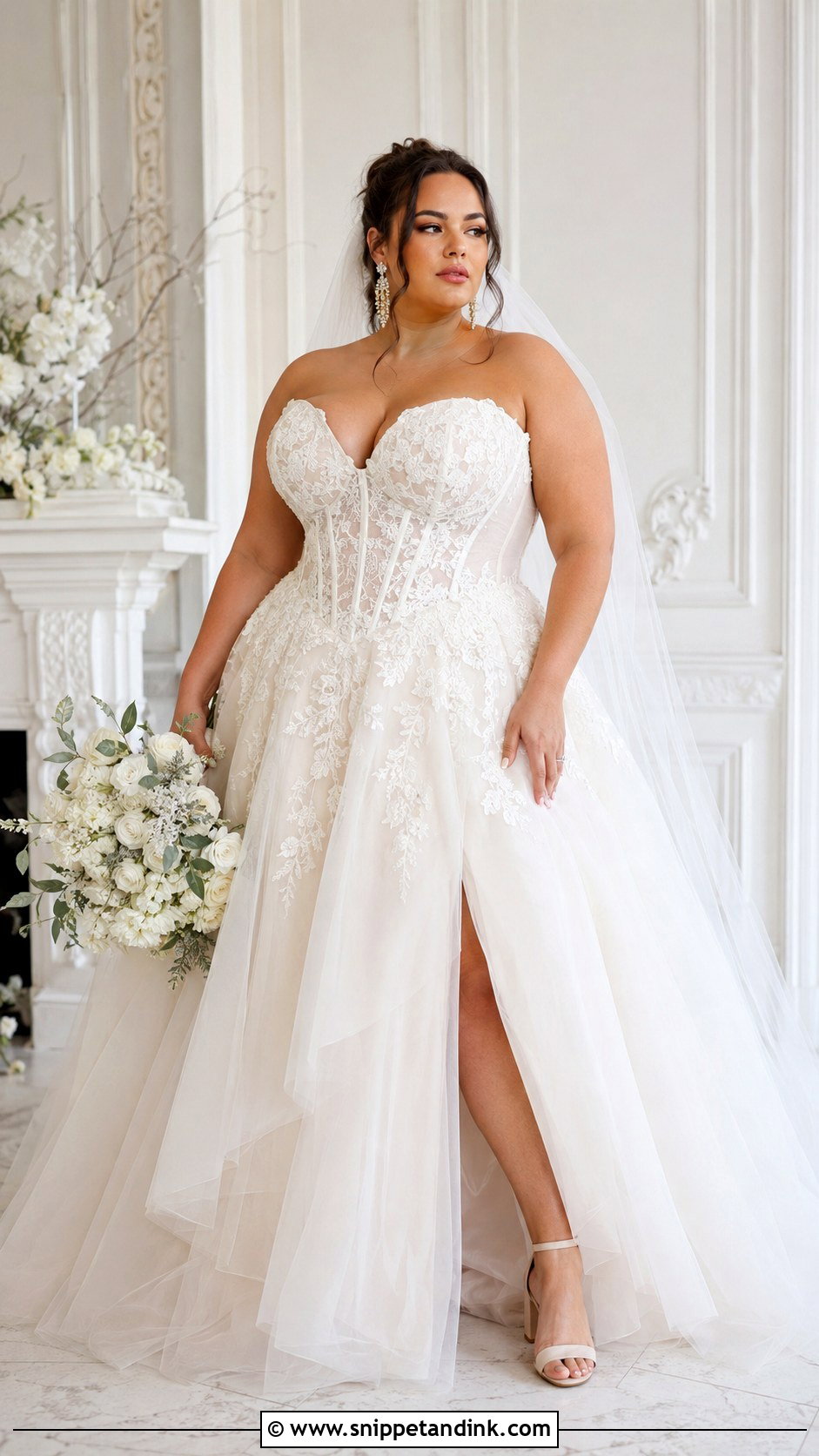
A corset ball gown can be one of the most supportive things a curvy figure wears, if the inside is built for it. I check for firm but flexible boning, cups that actually hold, a smooth lining and a waist seam that sits where your body naturally bends. A lace-up back allows small adjustments if your size changes in the final months. Pair it with a long veil, statement earrings, block heels or bridal flats, a half-up style with a sweetheart or off-shoulder neckline, and a bouquet with enough presence beside the skirt. Shop where samples come in sizes close to yours. Trying a gown held together with clips tells you very little about how it supports you.
18. Petite Ball Gown
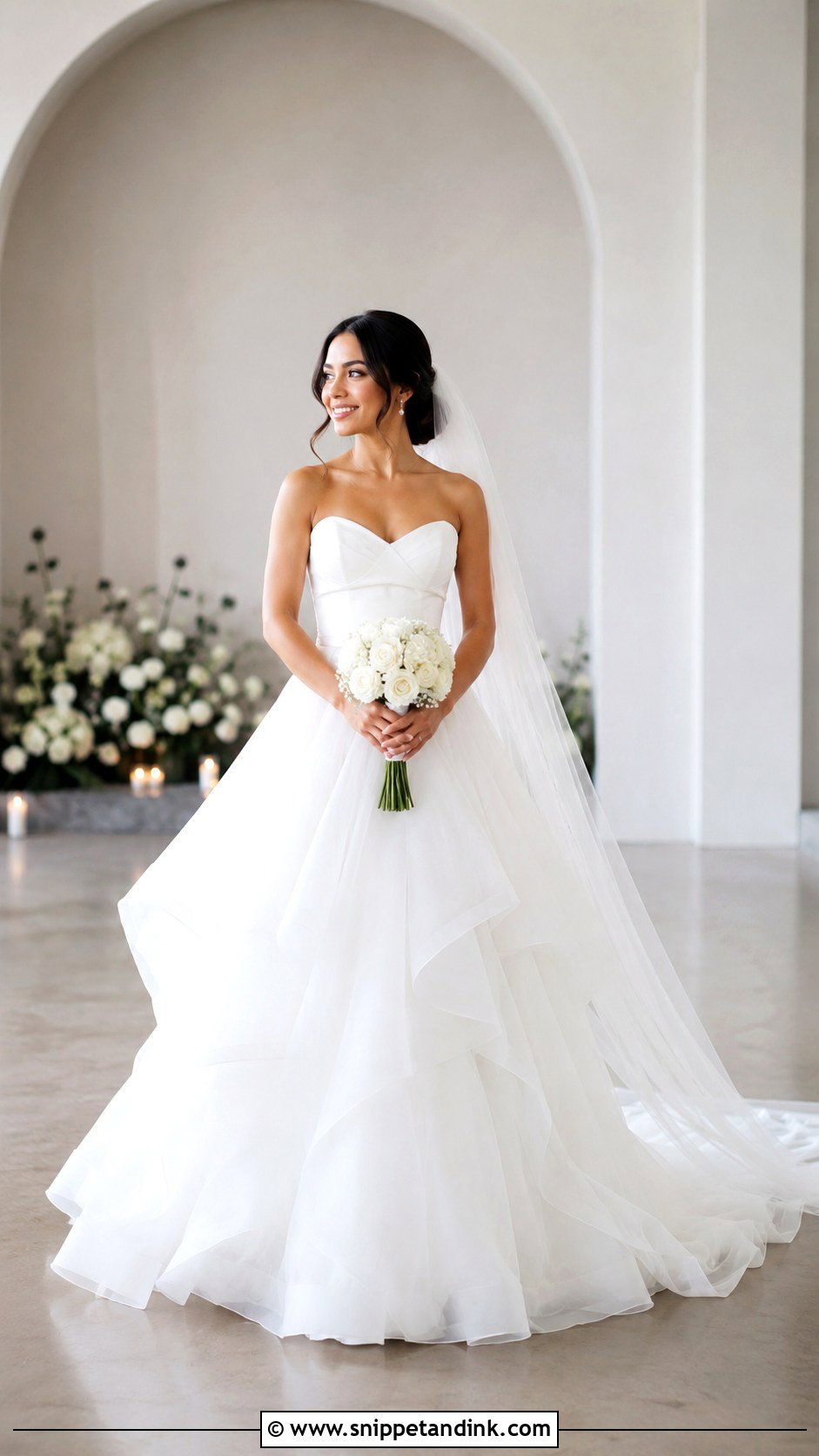
Petite brides can absolutely wear a ball gown; the trick is lightness and placement. A natural or slightly higher waist lengthens the legs, and tulle, organza and well-placed pleats give volume without weight. Keep embellishment narrow and vertical, or concentrated at the waist, rather than large motifs spread across the skirt. I’d choose a slim cathedral veil, small drops and platform heels with secure straps, plus a compact bouquet. When the skirt is too long, ask whether it can be shortened from the waist seam instead of the hem. That keeps a lace border or horsehair edge intact, though it is more work and may not be possible on every gown.
19. Modest Ball Gown With Sleeves
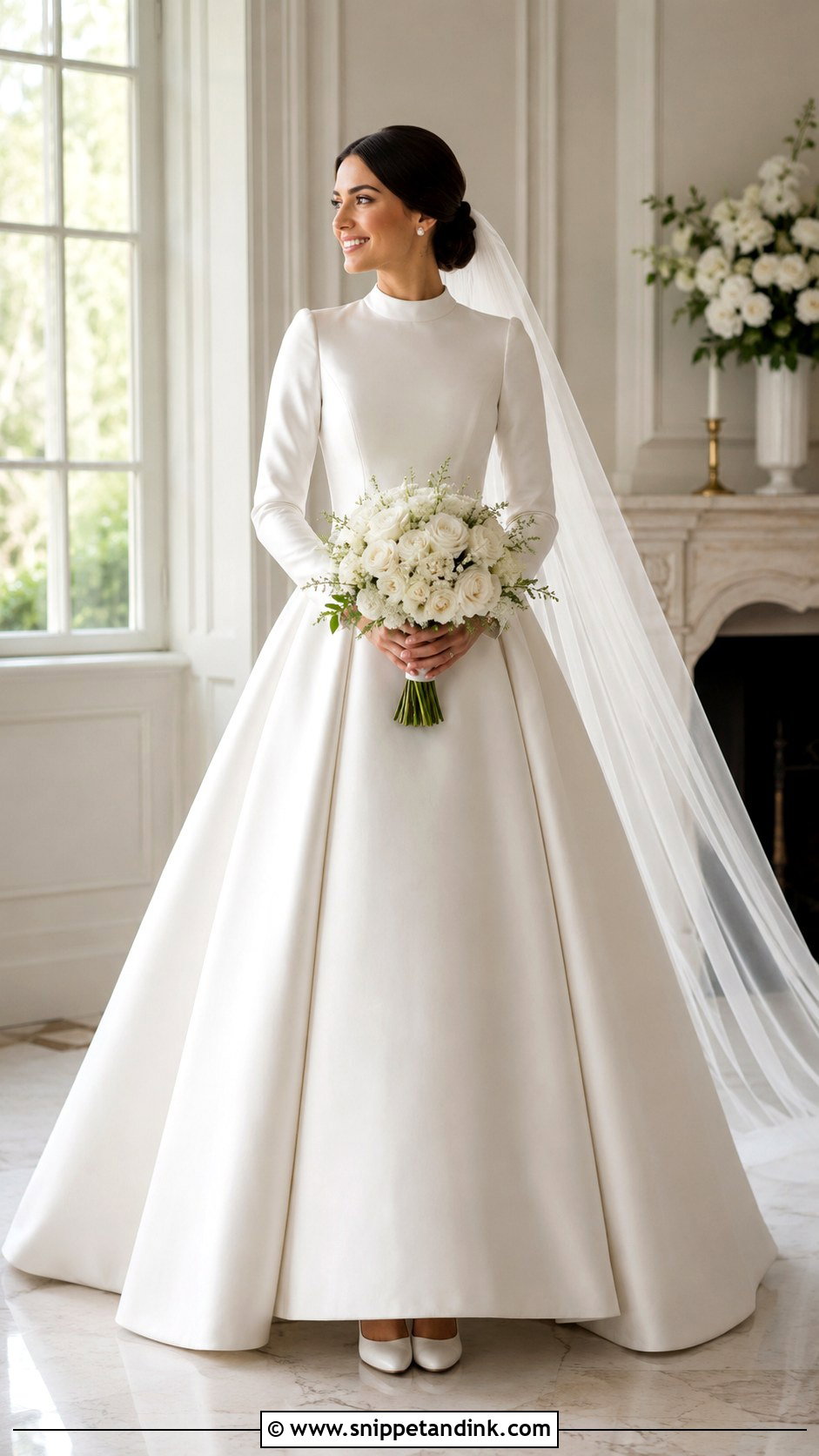
Coverage should feel secure, not padded. A fully lined bodice with long sleeves and a higher neckline in smooth satin looks clean and formal; lace sleeves soften it. I define the waist with seaming rather than a heavy belt, which can add bulk at exactly the wrong spot. A plain chapel or cathedral veil, pearl earrings, a low bun, closed block heels and a structured white bouquet finish it. Ask whether the sleeve lining has stretch. A rigid lining under lace sleeves makes it hard to bend the elbow, and that becomes obvious the moment you try to eat.


20. Vintage Inspired Wedding Gown
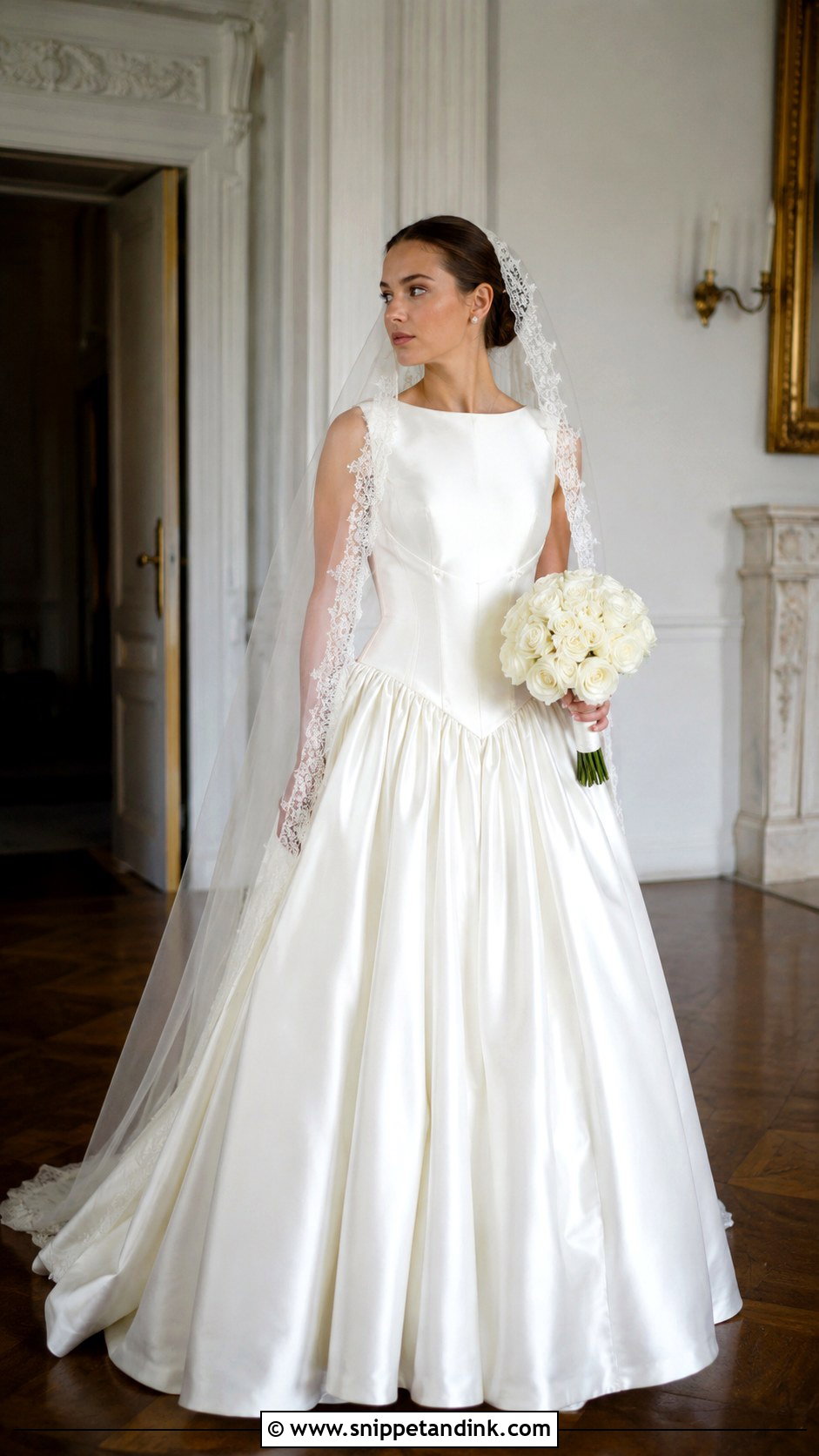
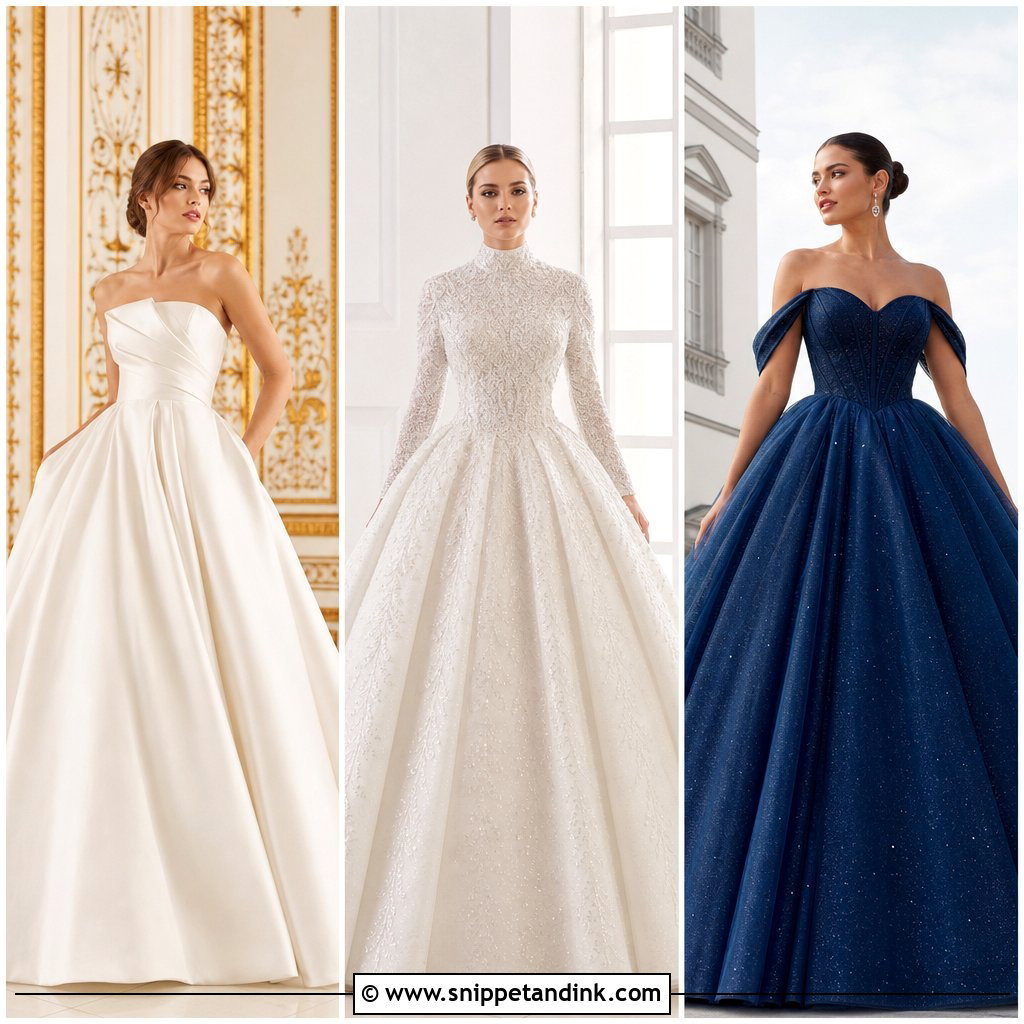
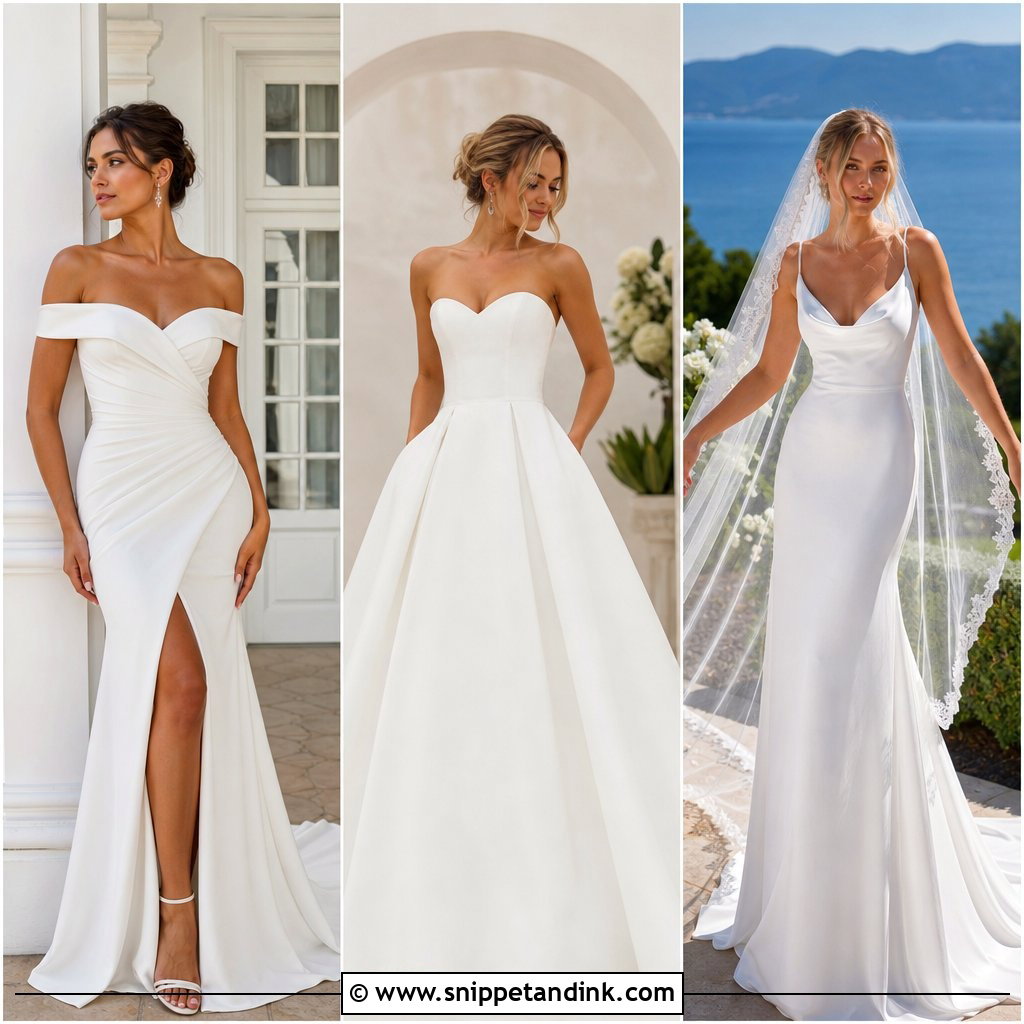
Vintage gowns go wrong when they borrow everything at once. I suggest one historical cue, such as a corseted bodice, a Basque waist, covered buttons, a portrait neckline or a gathered skirt, and modern construction underneath for comfort. Then add pearl earrings, a soft updo, and a lace-edged veil or a delicate Juliet cap veil, round-toe pumps and white roses. Stack too many period details and it starts to look like a costume. A skilled tailor can keep the character while adjusting the hem, sleeves and inner structure so you can move freely all night.
Getting Dressed on the Morning Without Flattening Anything
A full skirt changes the order of the morning. These are the steps I follow when I dress a bride in a ball gown:
- Hair and makeup go first, while you wear a button-front shirt you can take off without pulling anything over your head.
- Put on underwear, shapewear and shoes before the gown. Bending down to buckle a strap once you’re in a big skirt is close to impossible.
- Step the petticoat on first if it is separate, then step into the gown from the centre while two people hold it open like a ring on the floor.
- Close the back from the bottom up for buttons, or from the middle outward for lacing, so the bodice settles evenly.
- Fluff the skirt layers by lifting them from underneath and letting them drop, rather than pulling at the top tulle.
Allow longer than you think. With covered buttons or a laced back it can take a good while, and it is not the moment you want to be rushed.
Where a Gown This Size Lives After the Wedding
Have the gown cleaned soon after the wedding, even if it looks spotless. Sugary drinks and perspiration can dry invisibly and turn yellow or brown months later, especially on satin and silk. Point out every mark you know of when you drop it off, including the hem.
For storage, I’d avoid plastic dry-cleaning bags and hanging the gown by its straps for years. The weight of a full skirt slowly stretches the shoulders. A breathable cotton bag or an acid-free box with acid-free tissue in the folds, kept somewhere cool, dark and dry, protects it far better than an attic or basement. Take it out now and then to refold it along different lines so permanent creases don’t set.
The Fitting Room Test That Matters More Than the Mirror
A big gown earns its place when the volume is backed by solid construction and accessories that relate to it. Treat the ideas above as a starting point and change the neckline, fabric, train or finishing details to suit your body and your plans. At every appointment, walk, sit, turn and lift your arms before you decide anything. Think about the weight, the bustle, how you’ll get to the venue and how high a heel you can stand in. And pick a gown that looks like you, not like a formula. With good alterations, a full skirt can feel comfortable from the first photo to the last song.
You'll Like These Ideas:




Leave a Reply