
Full-skirted gowns are back in a big way, and the current ones are far more varied than the heavy princess dresses many of us picture. Clean mikado, airy tulle, corset and basque bodices, floral appliqué, lace sleeves, square necklines, overskirts, bows and pearls all show up, along with plain shapes that rely on cut alone. What I look at first with any ball gown is how much it weighs and how it’s supported underneath, because that decides how you’ll feel at hour eight. Structured gowns look regal; soft tulle feels lighter and more romantic. Here are thirty complete looks, with the fit and fabric notes I’d give a bride trying each one.
What All That Skirt Weighs, and What Holds It Up
Brides are often surprised by how different two ball gowns of the same shape feel to wear. Most of that comes down to fabric and the support layer underneath.
- Tulle is the lightest route to volume. Several layers of soft tulle can look huge and still feel manageable.
- Satin and mikado are heavier and get their shape partly from the fabric itself, plus a petticoat or hoop underneath.
- Beading, pearls and heavy lace add weight that hangs from your waist, not your shoulders.
- A hoop gives the widest, most even shape; a layered petticoat is softer and easier to sit in. Ask which your gown is designed for.
At the shop, I suggest wearing the gown for a full twenty minutes rather than five. Walk, sit on a chair without arms, and stand for a few photos. If your lower back or waist already feels it by then, a lighter fabric or a different support layer is worth trying before you commit.
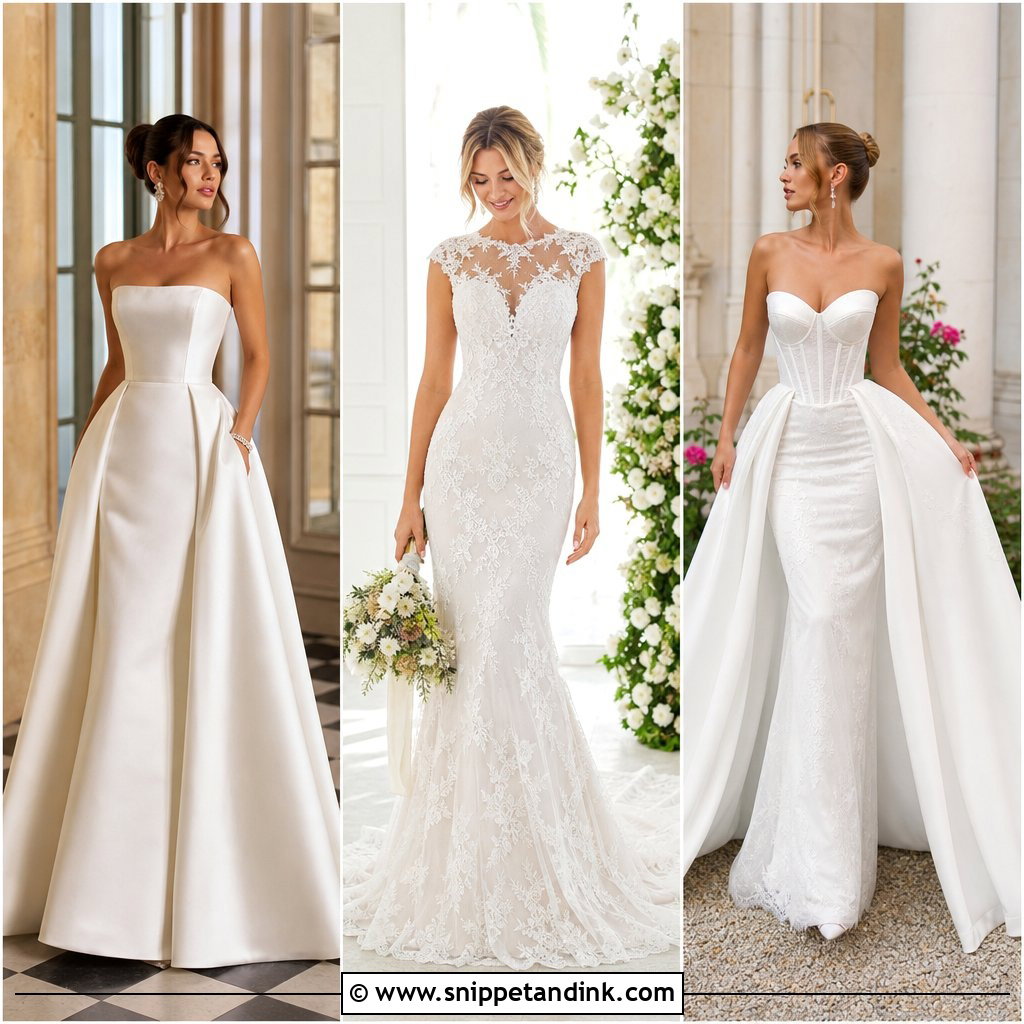
1. Strapless Satin Ball Gown Wedding Dress
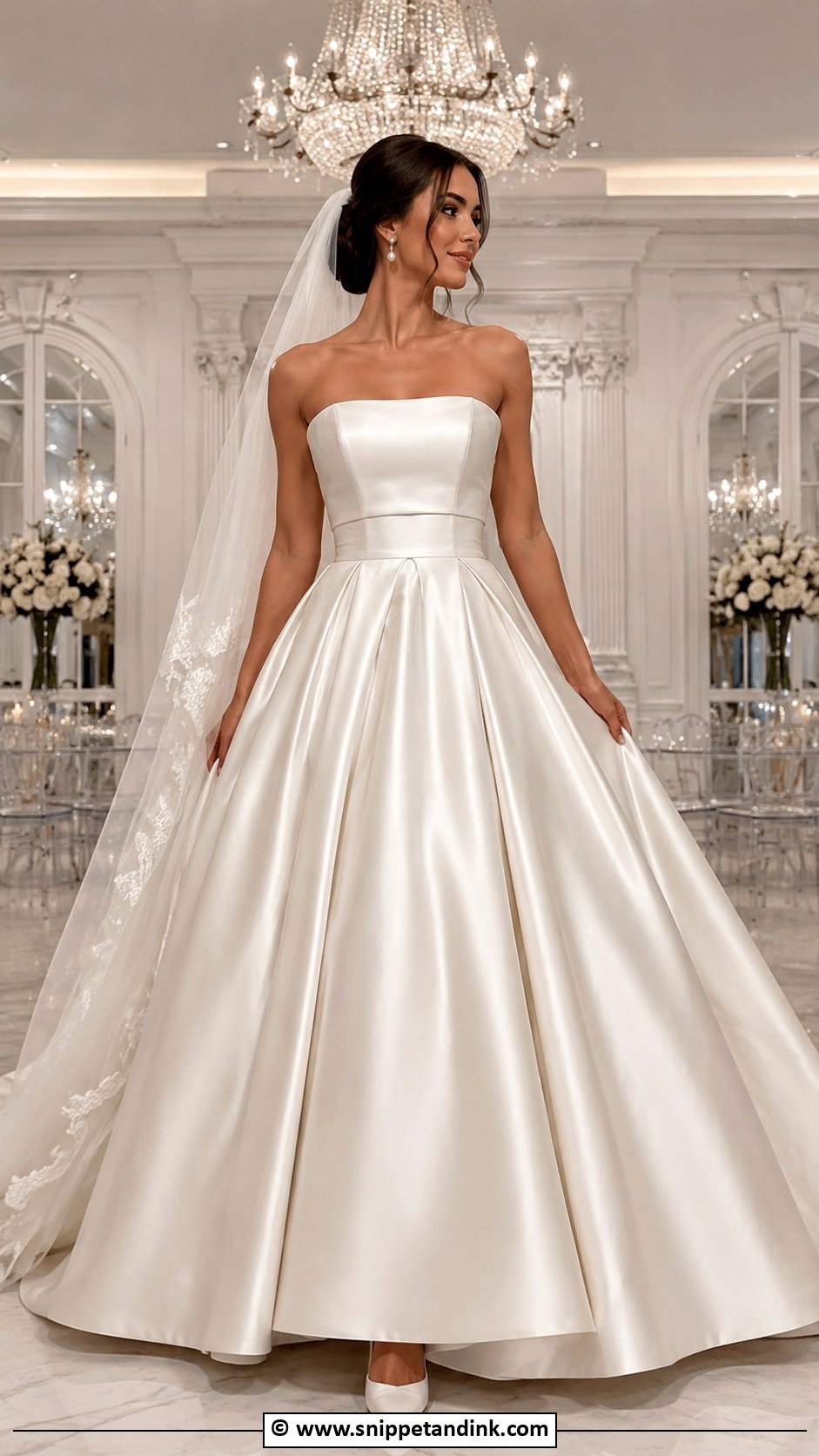
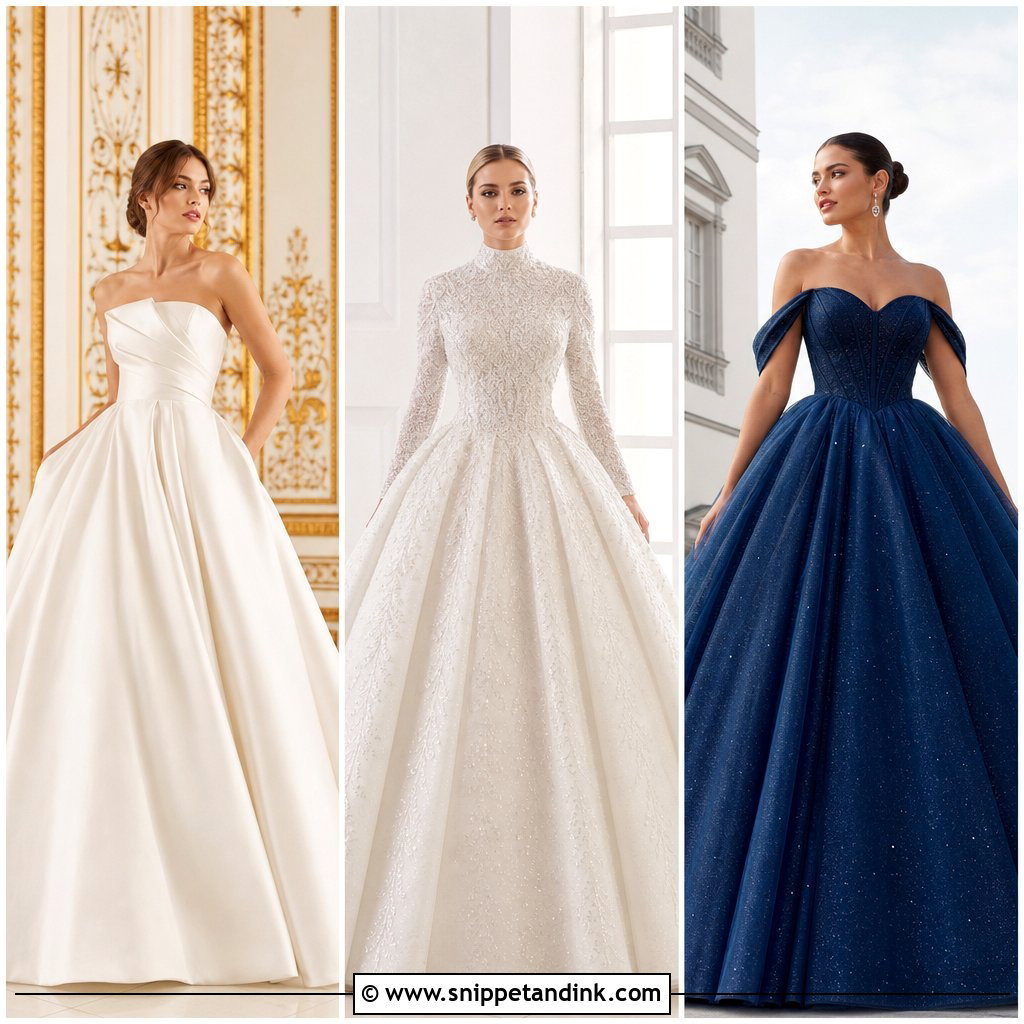
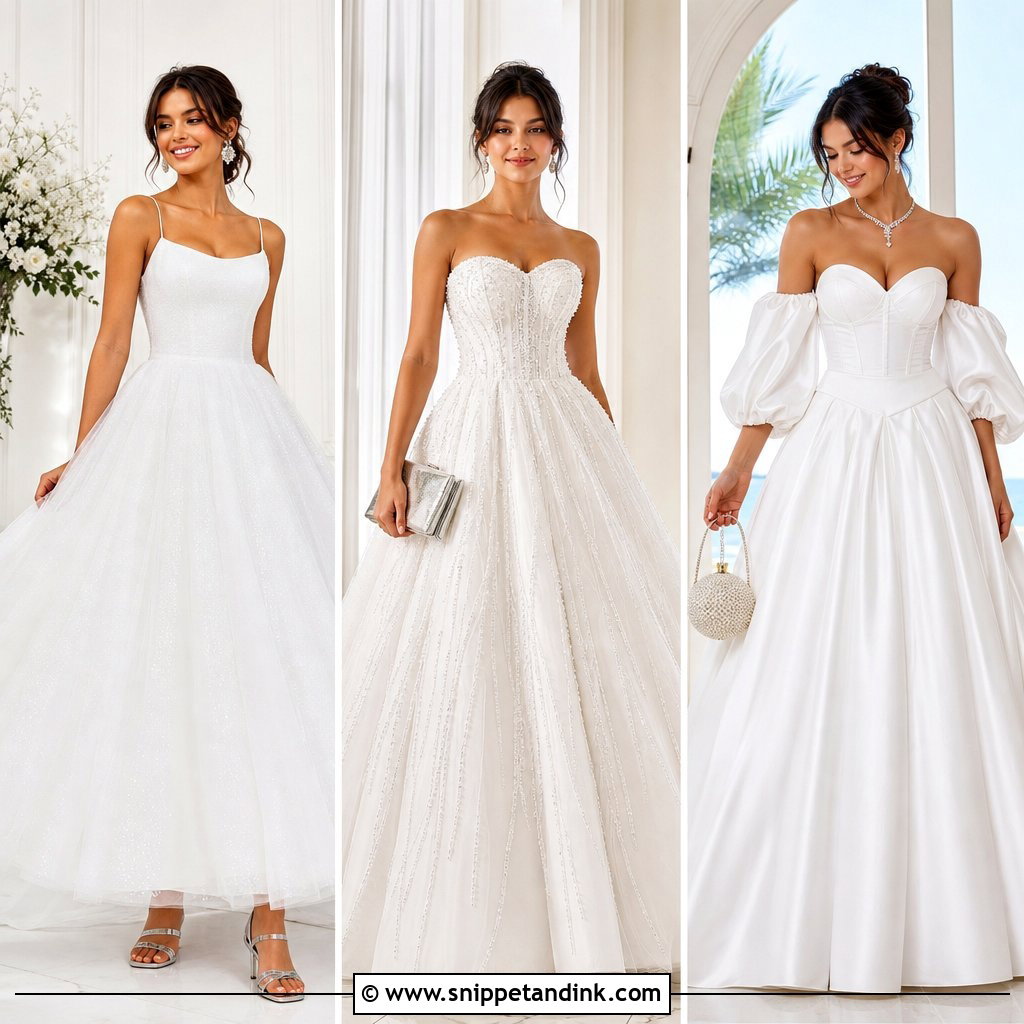
Strapless satin is the cleanest version of the ball gown. The smooth fabric shows off the volume of the skirt and the bare neckline keeps the top quiet. A fitted bodice, natural waist and softly pleated skirt are the classic combination. Satin skirts get their fullness from what’s underneath, so ask what petticoat comes with the gown, since a cheap one makes expensive satin look limp. Pointed satin heels, pearl drops and a sleek low bun suit it; a cathedral veil adds drama, a shorter one keeps it modern. Formal hotels and ballrooms give it space.
2. Off Shoulder Ball Gown Wedding Dress
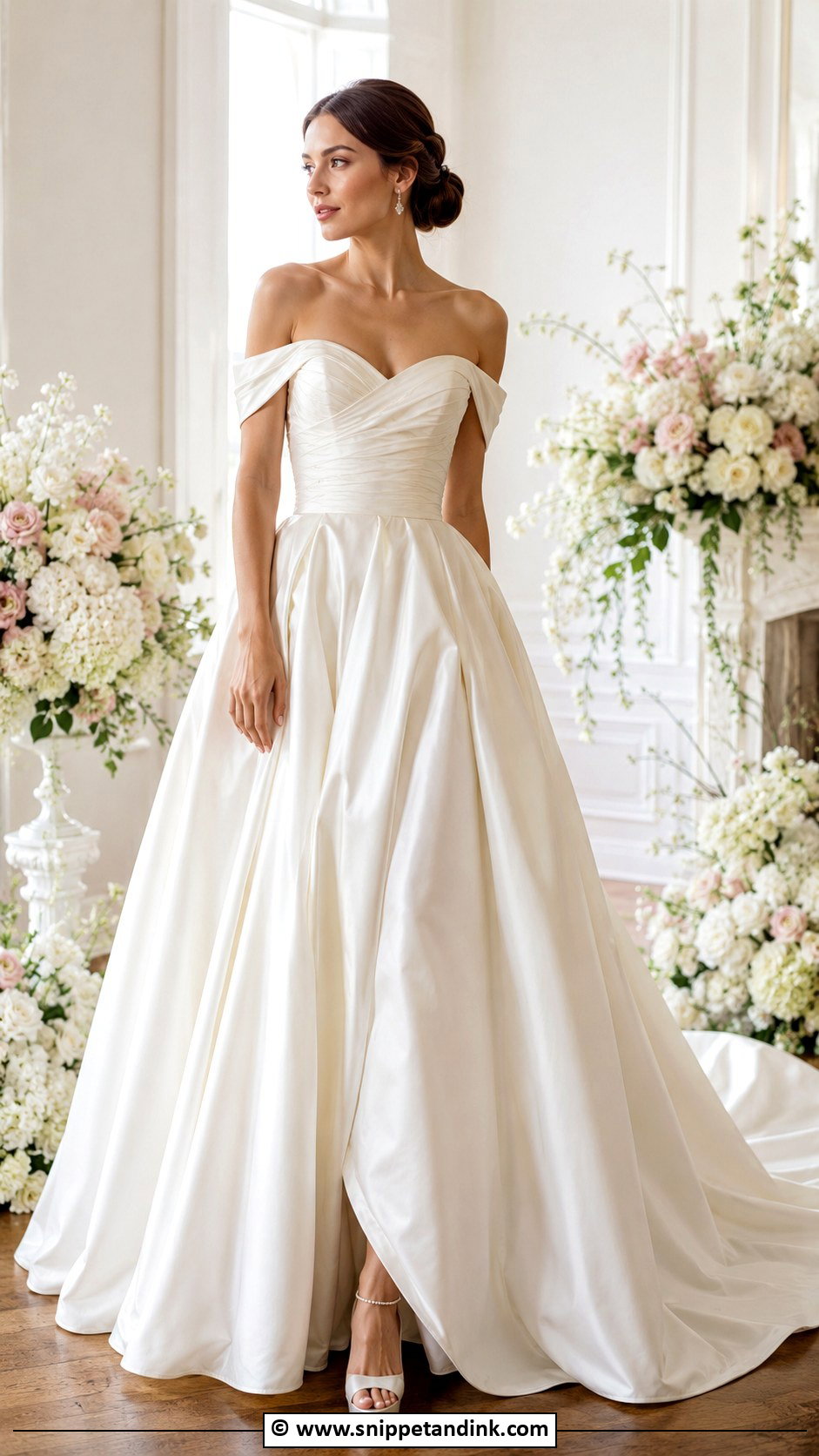
Off-shoulder necklines soften a big skirt by widening the line at the top, so the volume below looks balanced rather than bottom-heavy. Draped satin feels sculptural, lace sleeves softer, a tulle skirt more fluid. The sleeve band has to sit snugly on the upper arm; if it’s loose, it’ll slide up every time you hug someone. Statement earrings usually beat a necklace here. A loose chignon or brushed-back waves keep the shoulders clear.
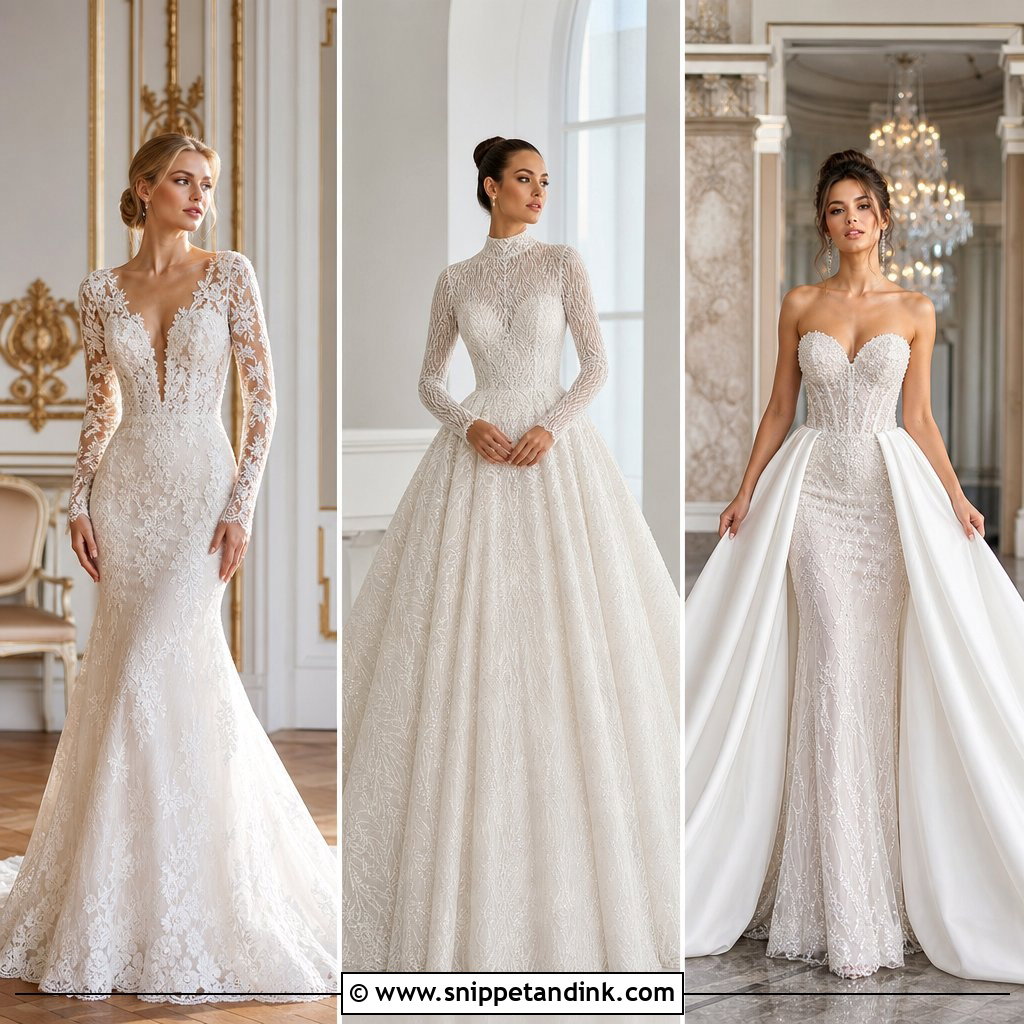
3. Long Sleeve Lace Ball Gown Wedding Dress
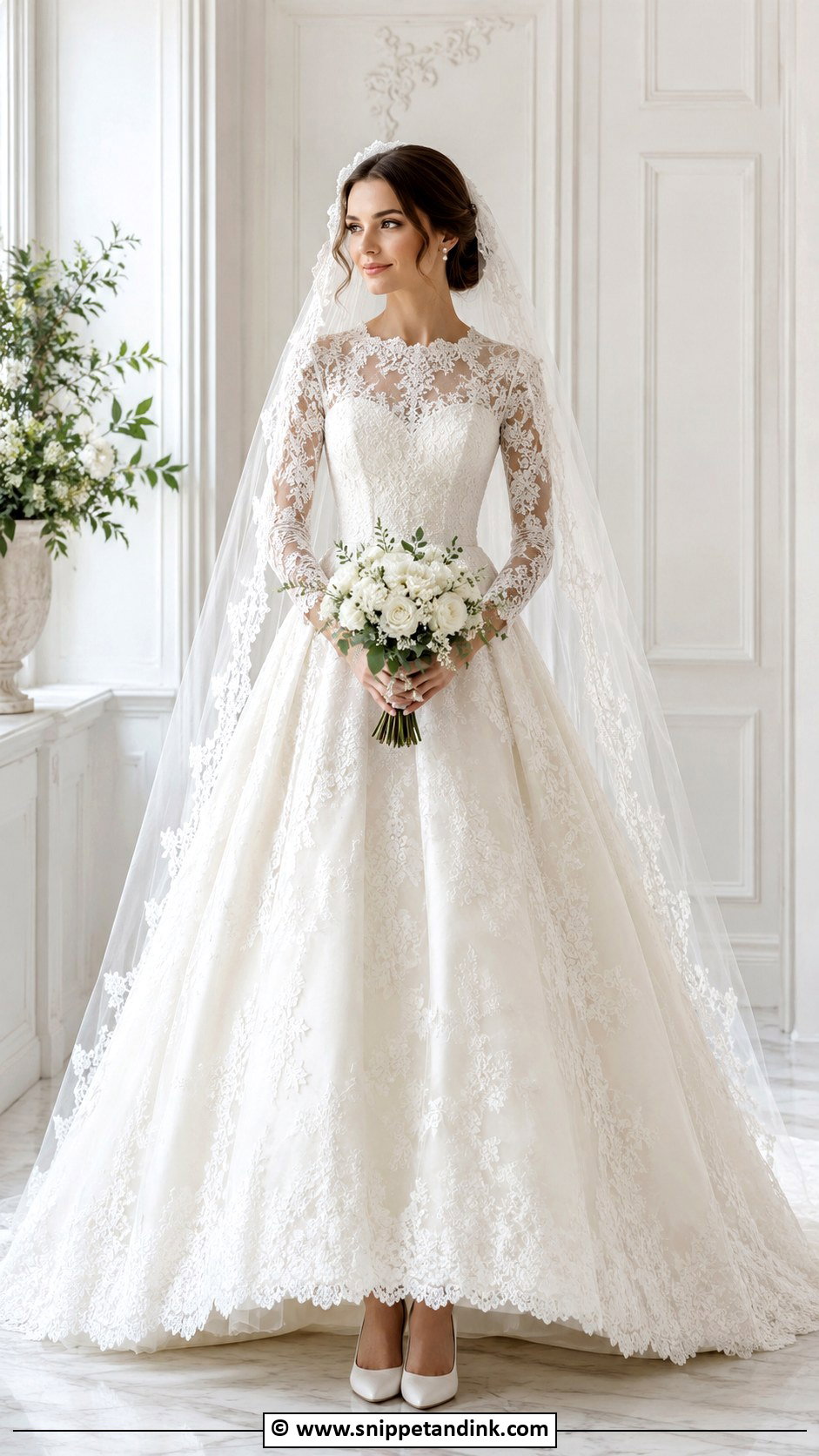
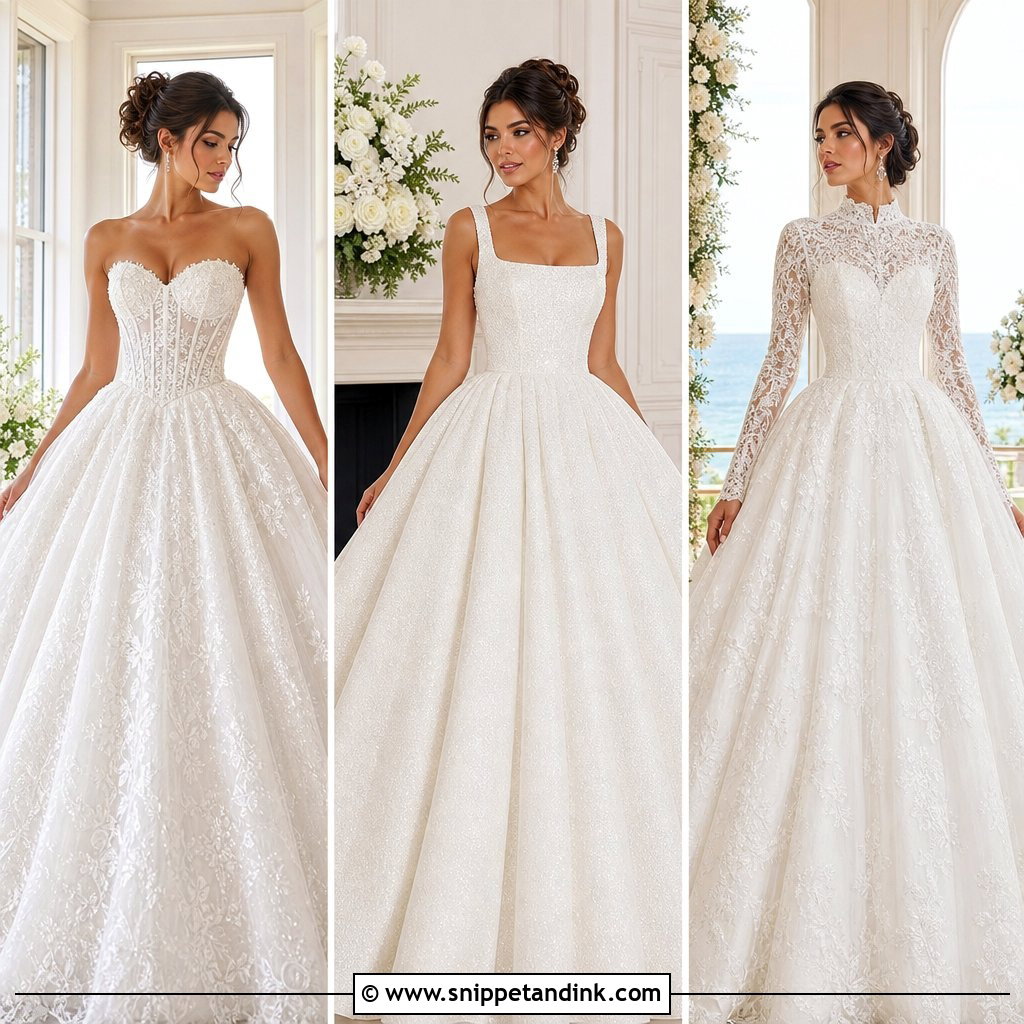
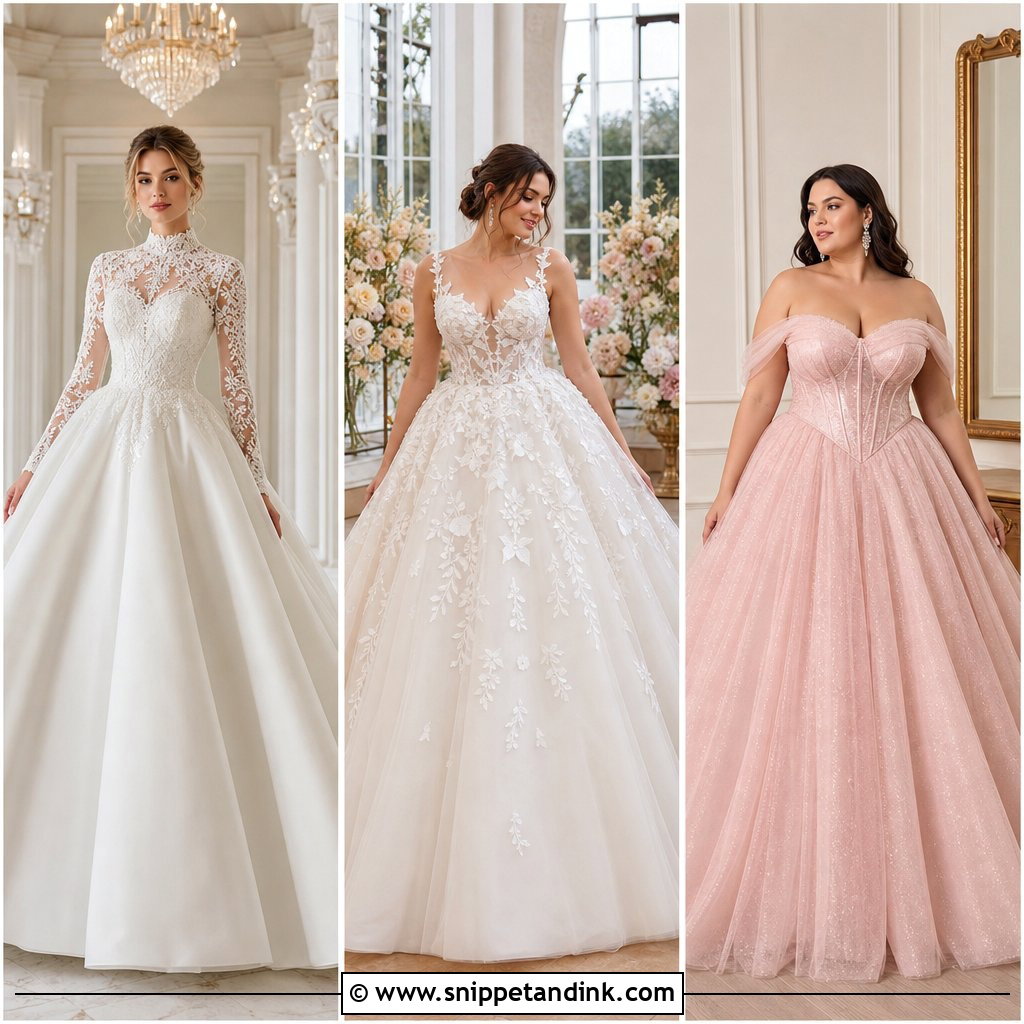
Long lace sleeves add texture near the face and coverage for a cooler or more traditional ceremony. Sheer sleeves with fine floral motifs and a lined bodice feel current. Lace with no stretch restricts the arms, so I have every bride raise both hands above her head at the fitting; if the underarm pulls, the sleeve needs a gusset or more ease. Pearl studs, a narrow bracelet and ivory pumps are enough. A lace-edged veil finishes it if the lace on the veil matches the dress.
4. Corset Ball Gown Wedding Dress
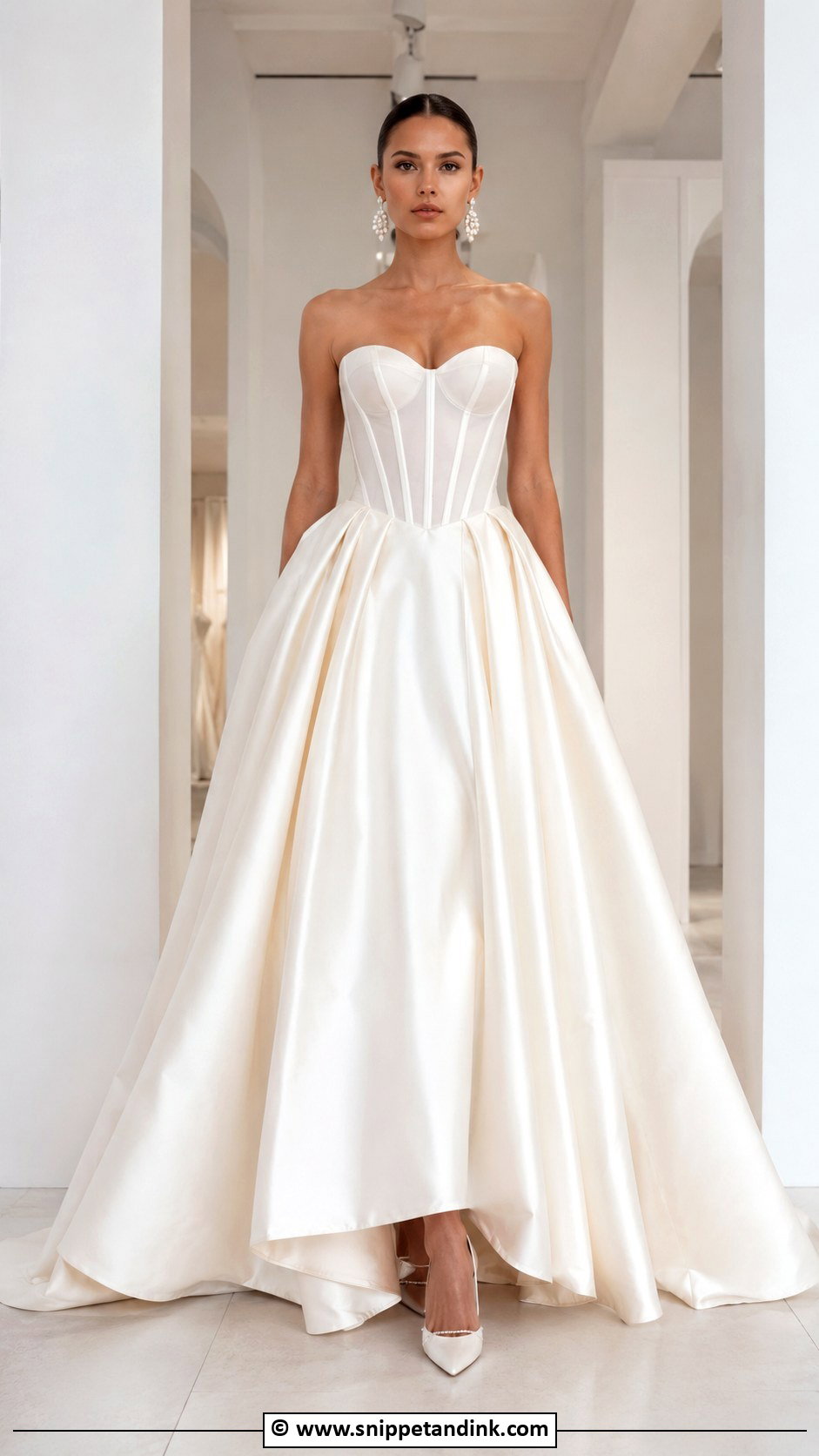
A corset ball gown wedding dress gives you shape and support from the bodice alone. Clean boning and good fabric are what keep it from looking like a costume. Satin is polished, tulle is softer, lace appliqué is more romantic. A basque or dropped waist lengthens the torso; a natural waist is more classic. Corsets are fitted tight at the waist, so eat a proper breakfast before the final fitting; fitting on an empty stomach leaves you uncomfortable at dinner. Simple heels, sculptural earrings and a smooth updo finish it.
5. Tulle Ball Gown Wedding Dress
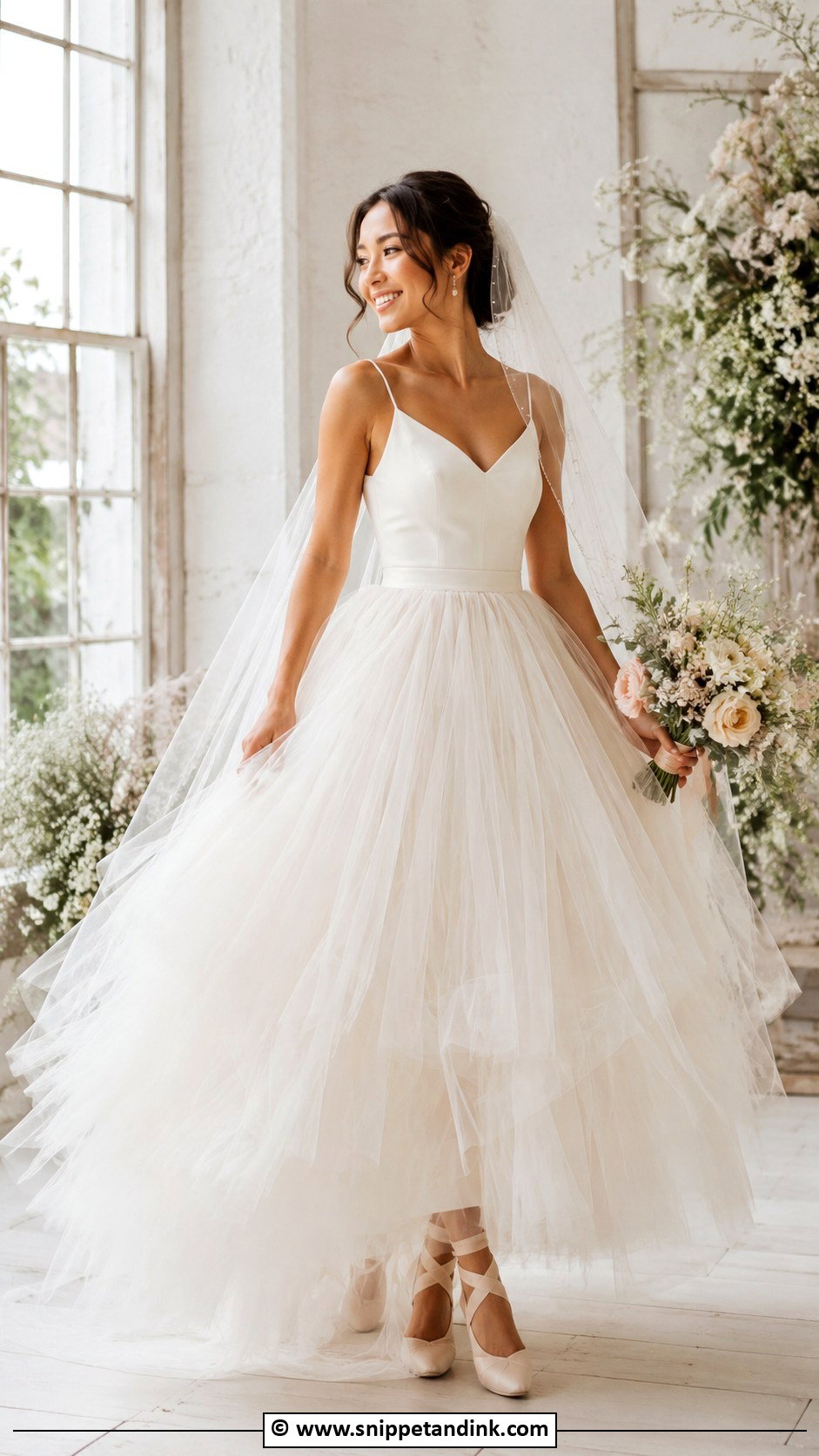
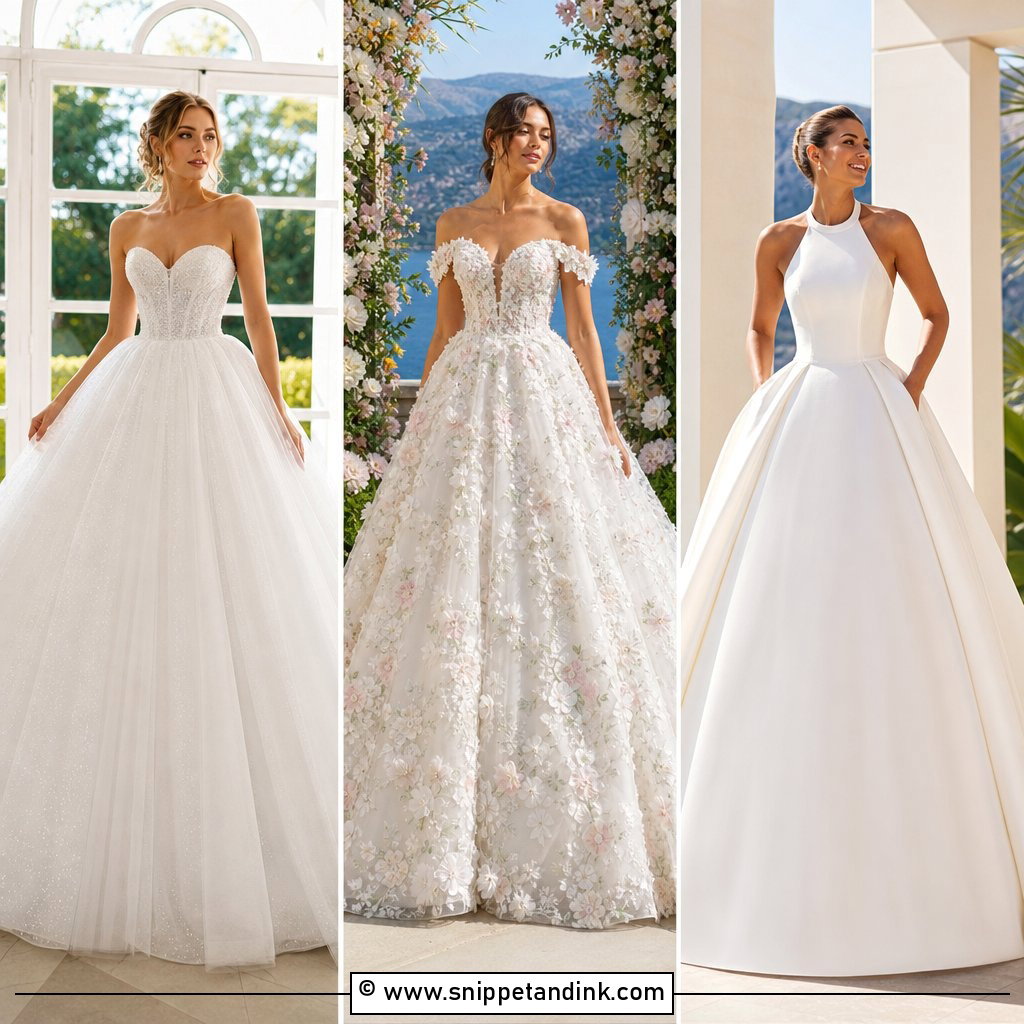
Tulle gives volume with the least weight of any ball gown fabric, which makes a long ceremony and portrait session easier. A plain bodice keeps it fresh; floral appliqué or a little sparkle adds personality. Soft makeup, airy waves, ballet-style heels, a fine veil and small pearl earrings suit it. Tulle catches on everything, from Velcro to rough bark to jewelry clasps, and it can pull. Outdoors it moves in the slightest breeze, which looks magical in photos and less magical when someone steps on the hem.
6. Mikado Ball Gown Wedding Dress
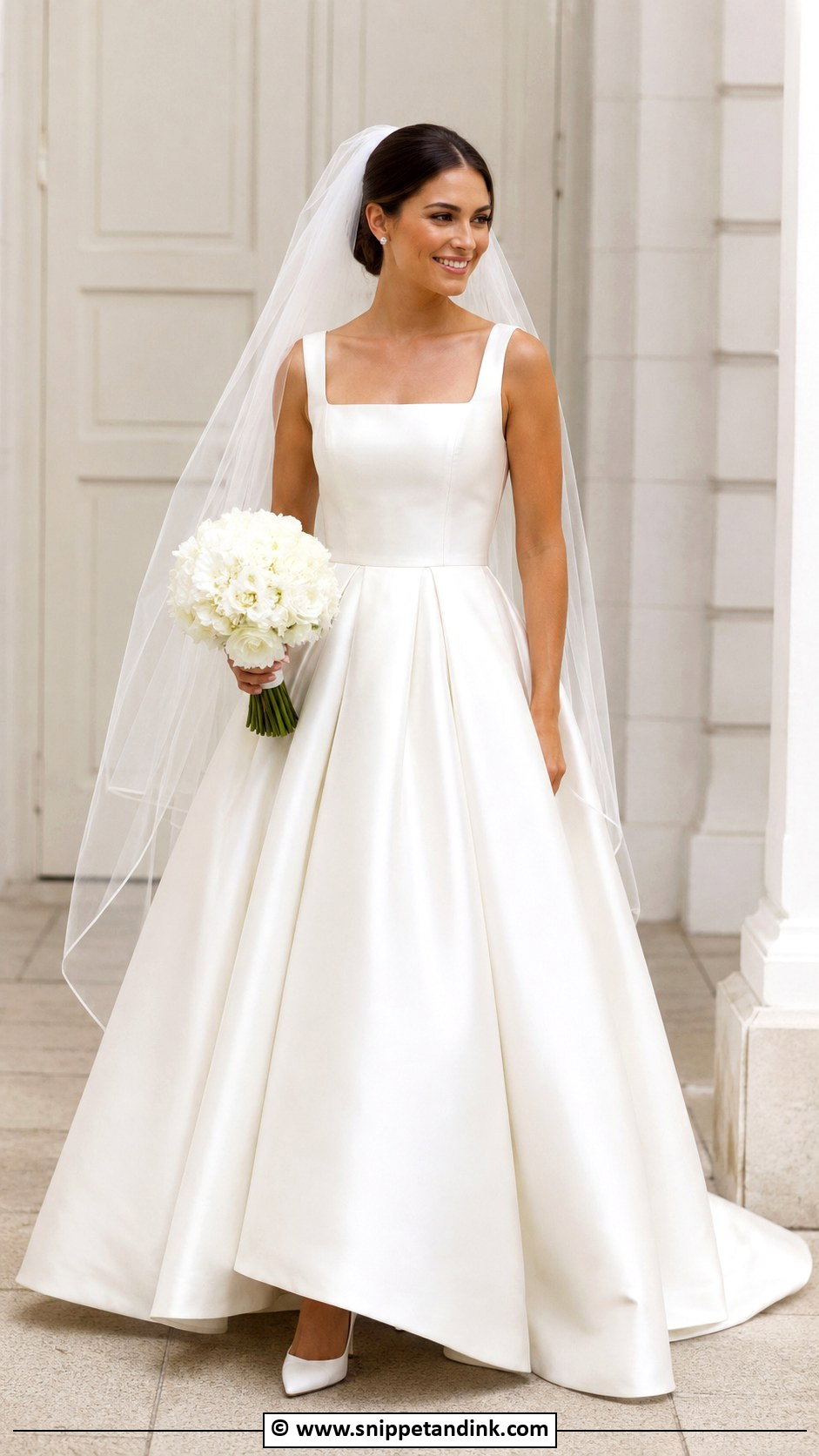
Mikado is the fabric for structure without beading. It has a firm body and a low sheen, so it holds pleats, folds and sculpted shapes cleanly. A square, strapless or bateau neckline all suit it. Mikado is also heavy and creases hard where you sit, so steam it the morning of and avoid sitting until after the ceremony if you can. Satin pumps, a structured bouquet, a sleek veil and diamond or crystal studs finish it for a formal or city wedding.
7. Floral Applique Ball Gown Wedding Dress
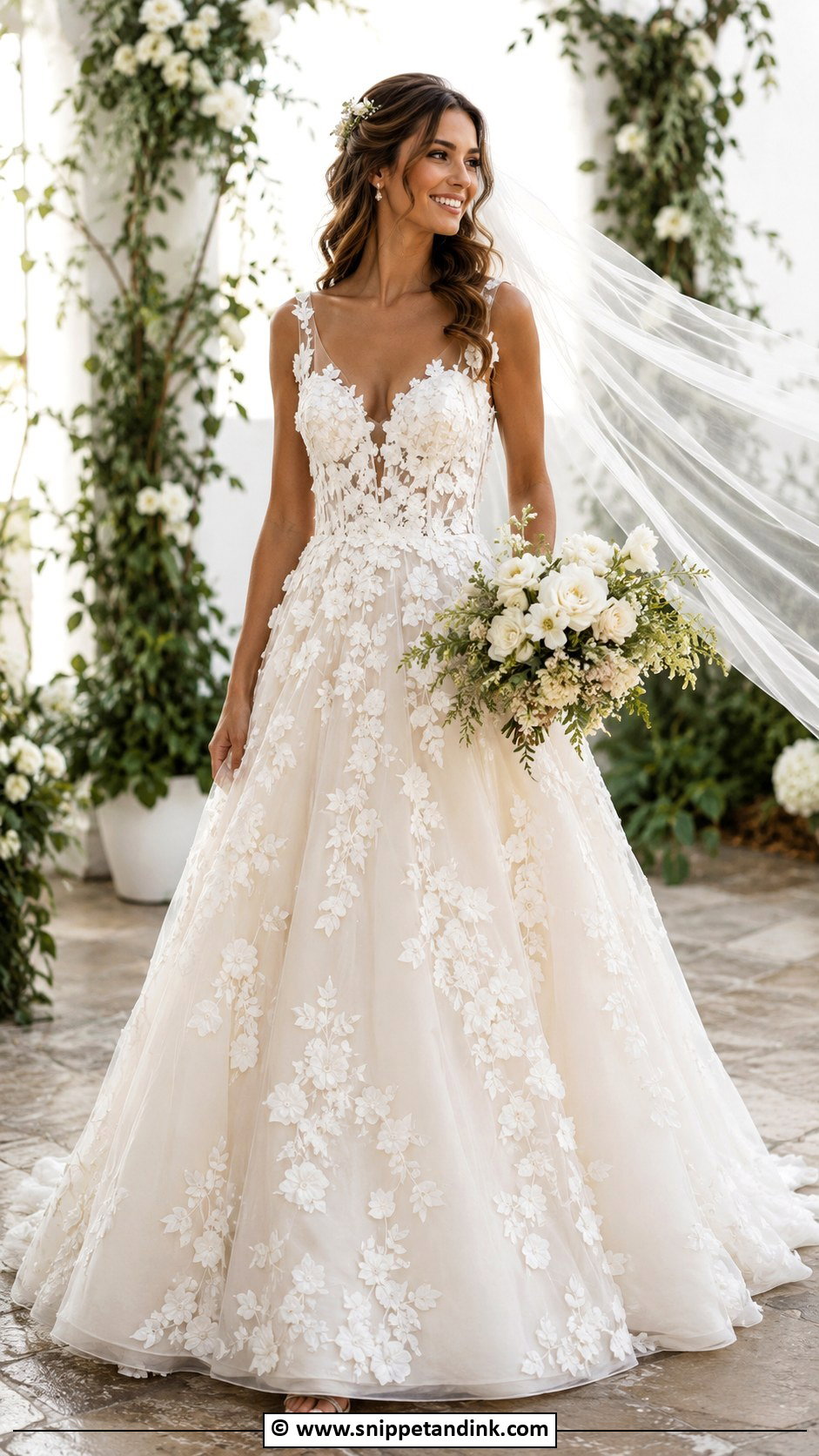
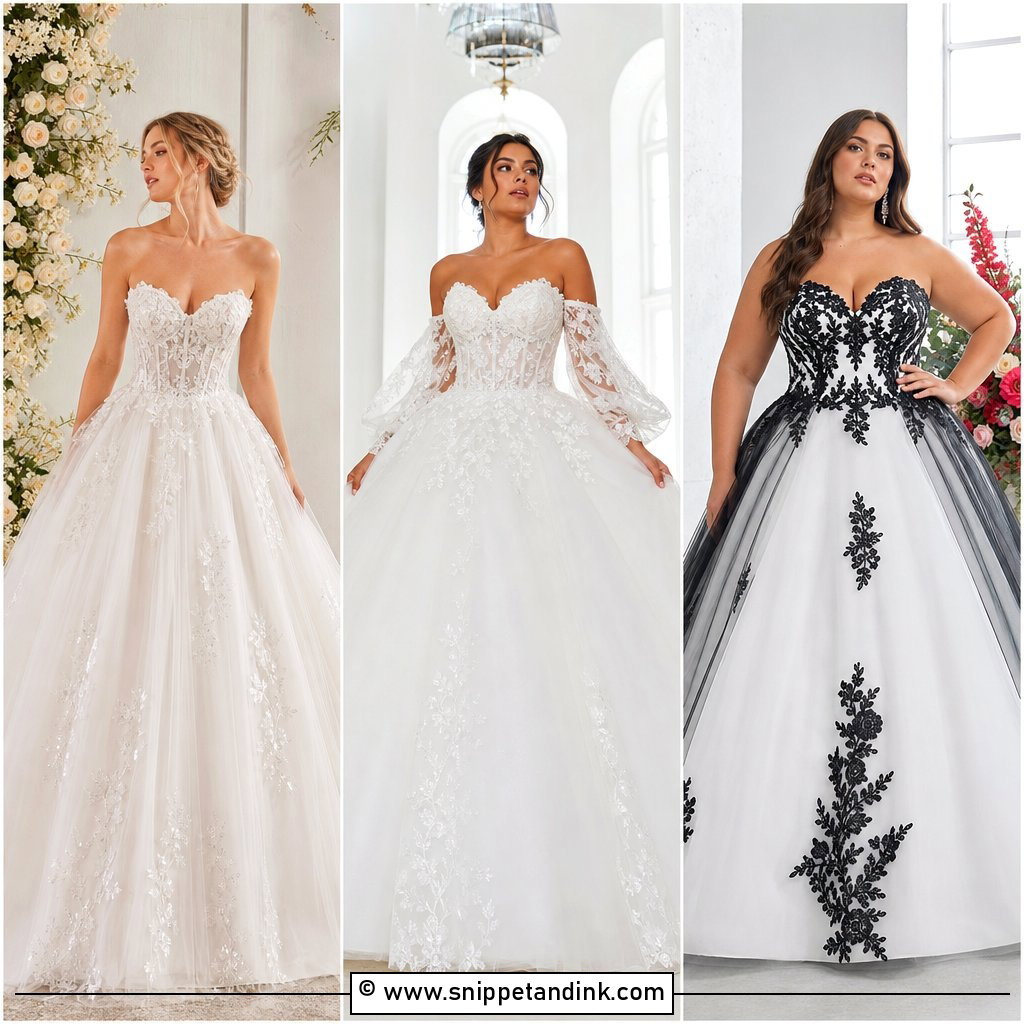
Floral appliqué adds depth to a classic shape, scattered across the bodice, trailing down the skirt or covering the whole gown. Tone-on-tone ivory looks more modern than contrast color. A sheer neckline, fine straps or an off-shoulder bodice keep the flowers delicate. Appliqué is usually hand-stitched, so look closely at the edges where flowers cross a seam; good work continues across, rushed work stops short. Minimal jewelry, soft curls, a tulle veil and simple heels let the flowers lead.
8. Minimalist Ball Gown Wedding Dress
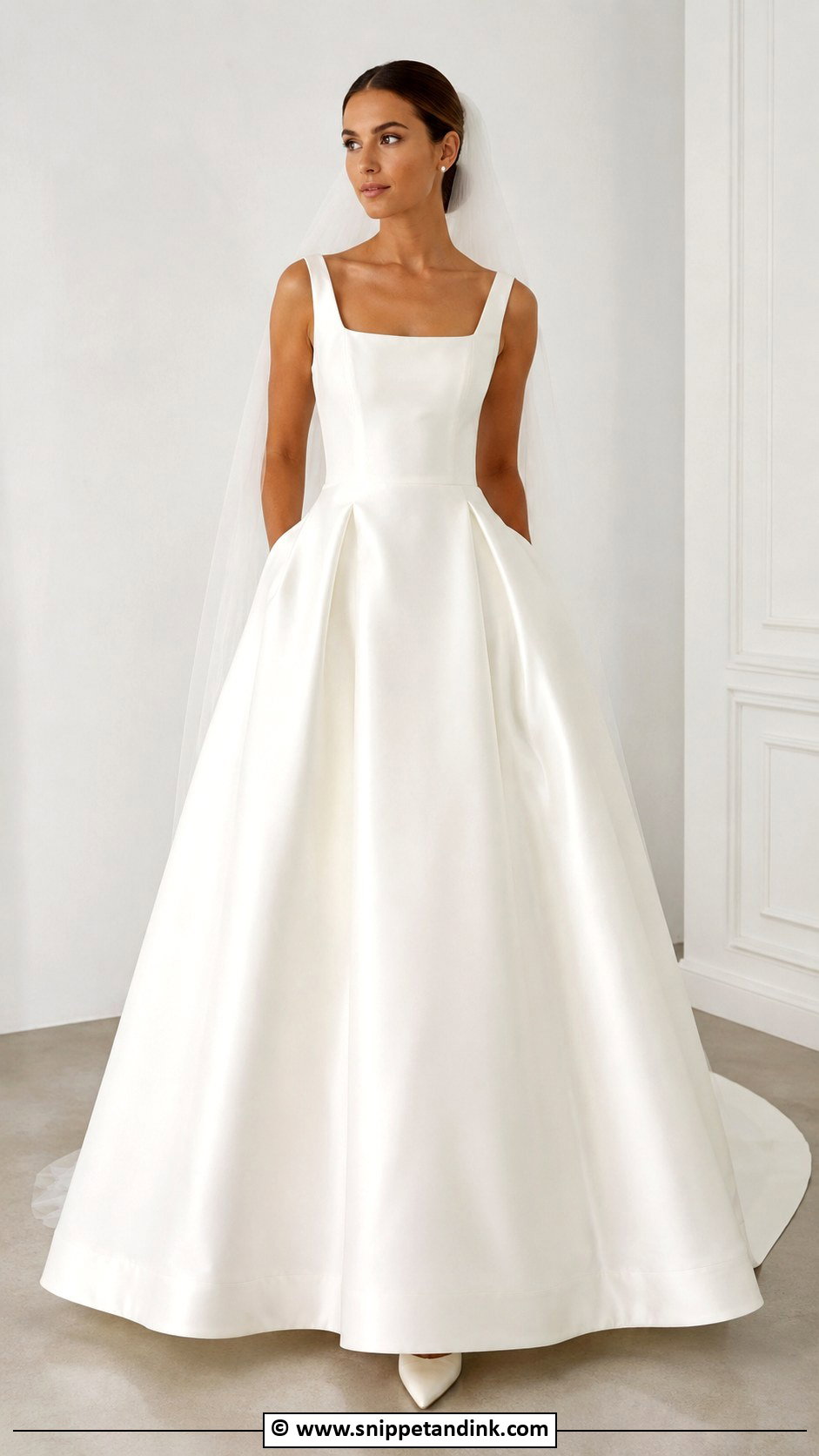
The minimal gown is drama by cut alone: a clean bodice, a full skirt, hidden pockets and one strong neckline. Satin, mikado or crepe-backed fabrics give the smooth surface it needs. With no decoration to hide behind, fit has to be exact; every pucker at the zip shows. A pointed heel keeps the line sharp under the hem. Polished hair, simple pearl or diamond earrings and a veil with no trim complete it, and leave room for a bold bouquet.
9. Beaded Ball Gown Wedding Dress
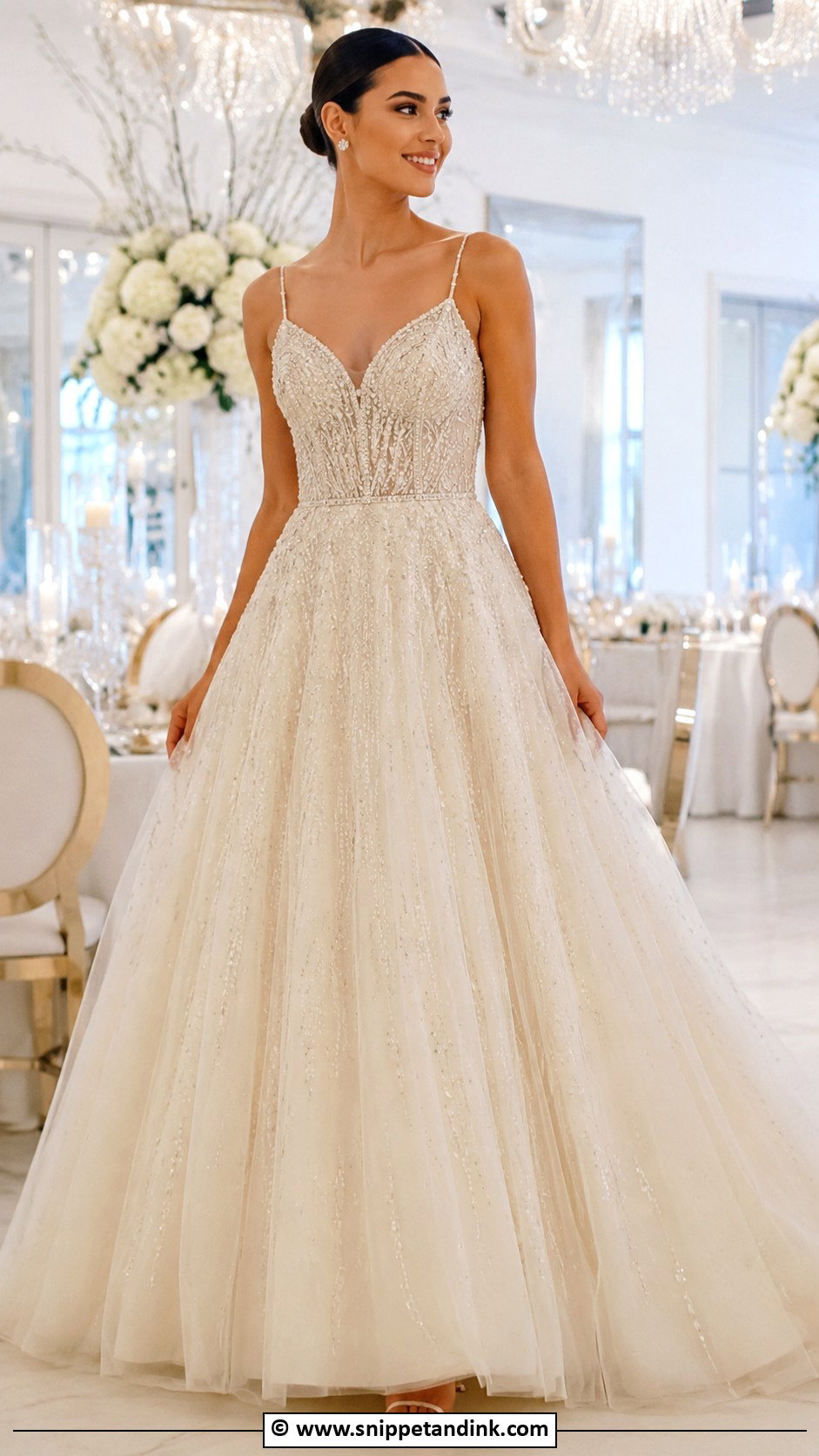
Beading catches light from every angle, so balance it. A heavily beaded bodice wants a softer skirt; an allover shimmer gown wants almost no jewelry. Fine beadwork at the waist, neckline or sleeves shapes the body without covering it. Beading adds real weight, and on a full skirt that weight hangs from your waist all day, so ask the shop how much the finished gown weighs. Clean heels, small crystal earrings and smooth hair keep it deliberate under candlelight or ballroom lighting.
10. Basque Waist Ball Gown Wedding Dress
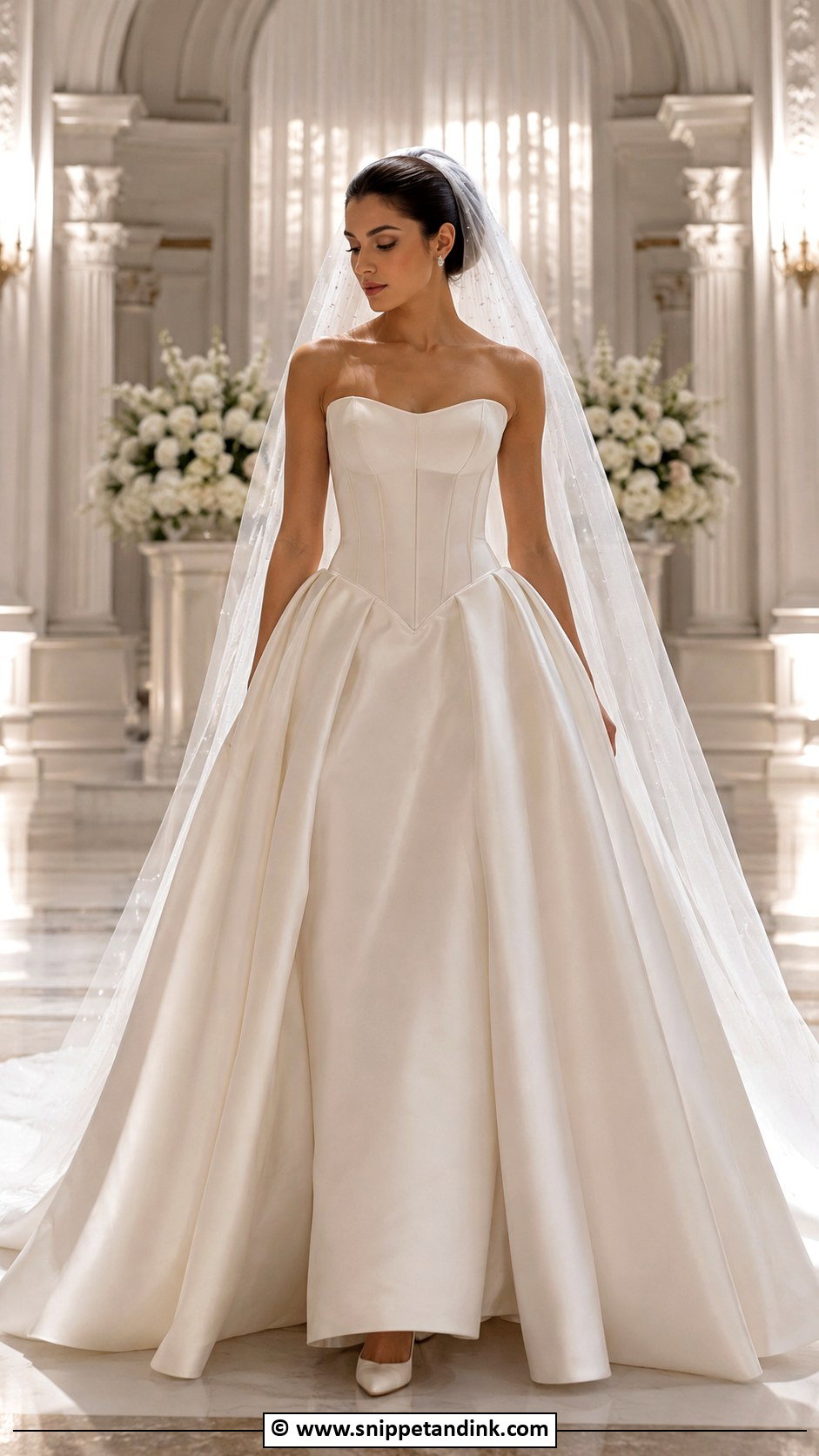
Basque waists dip into a V below the natural waist and make the torso look long and sculpted before the skirt opens. It’s one of the most current shapes in bridal right now. Satin or mikado with a corset or strapless bodice shows the line best. The point of the V should sit just above the hip bone; any lower and it digs in when you sit. A long veil, soft earrings and closed-toe heels keep it refined. It flatters an hourglass most and can read regal or modern depending on fabric.
11. Square Neck Ball Gown Wedding Dress
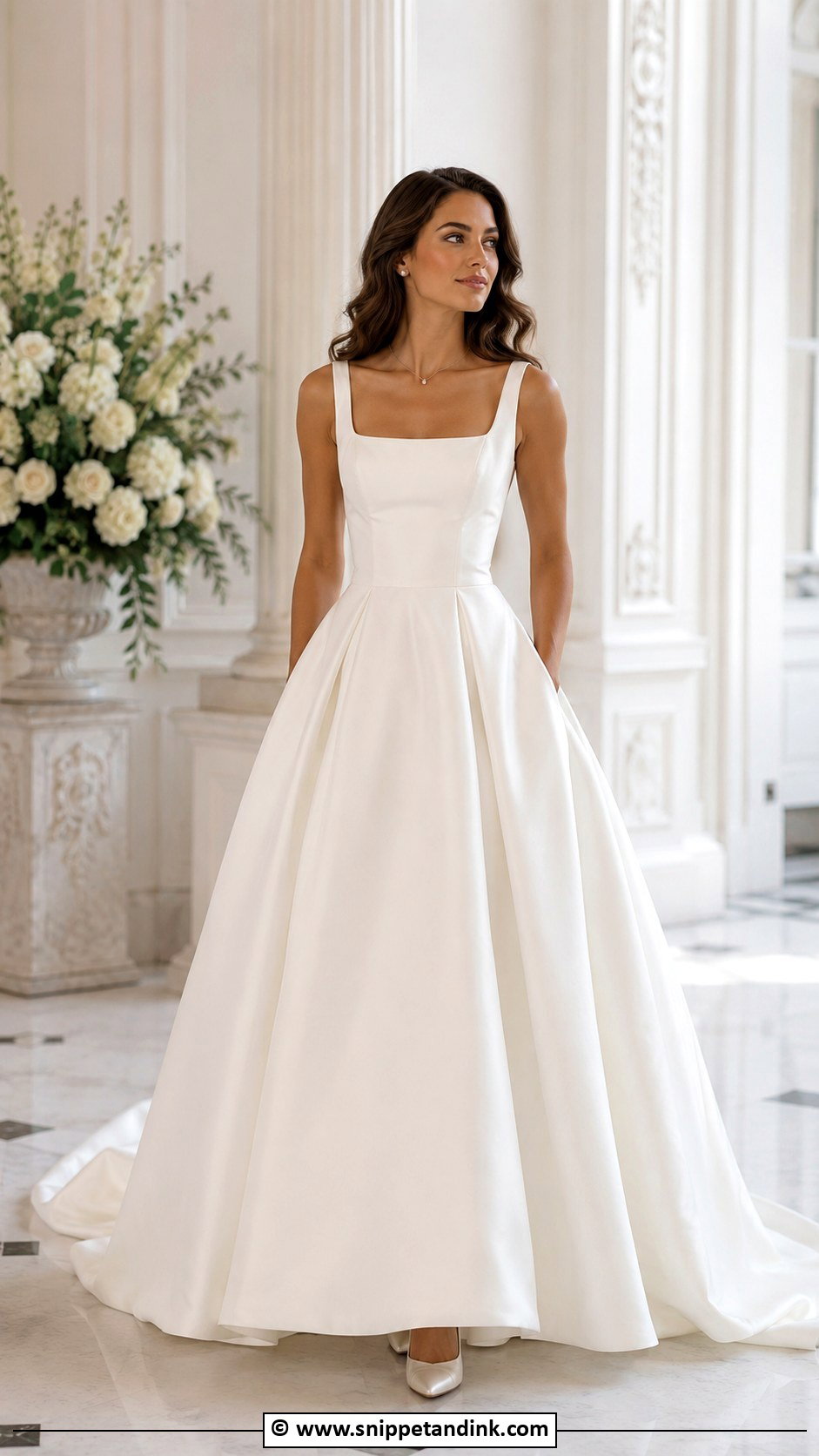
Square necklines are a good middle ground if strapless feels too exposed but you still want an open neck. Wide straps, cap sleeves or a sleeveless bodice all pair with it, and the straps give real support. A full satin or tulle skirt keeps the balance. Watch the corners of the neckline when you lean forward at the fitting; gaping is common and easy to fix if caught early. A simple pendant, pearl studs and a neat bun or soft waves suit it, with a sheer veil placed low.
12. Sweetheart Ball Gown Wedding Dress
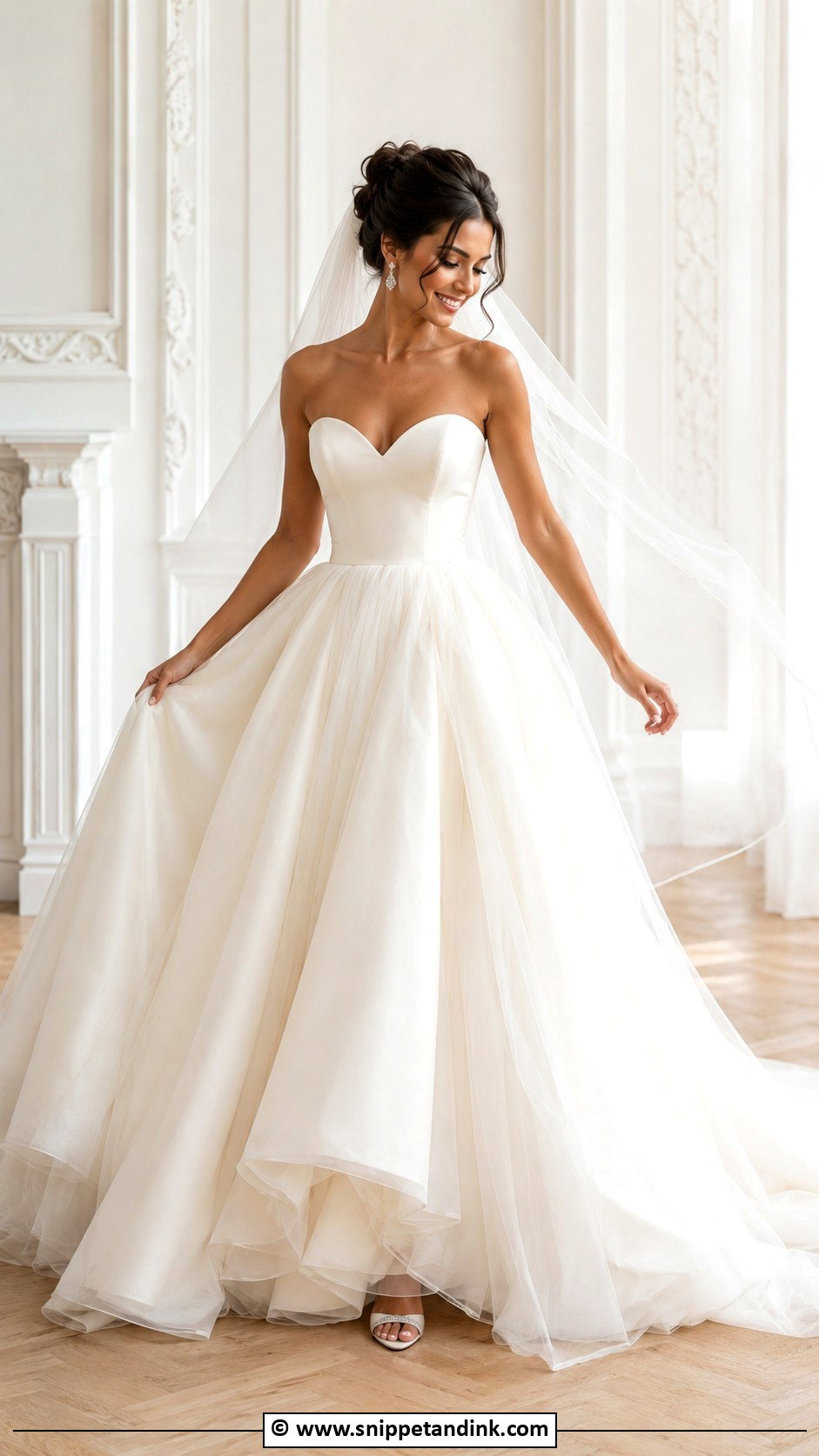
A sweetheart ball gown wedding dress softens the structure of the skirt with a curved neckline. Simple in satin, romantic in lace, dramatic with sparkle and tulle. A sweetheart needs a well-boned bodice with a secure fit, or the curve collapses and the dress starts to slip. Drop earrings, soft glam makeup and a veil matched to the gown’s level of detail complete it. The curve suits many body types because it adds shape without hard lines.
13. V Neck Ball Gown Wedding Dress
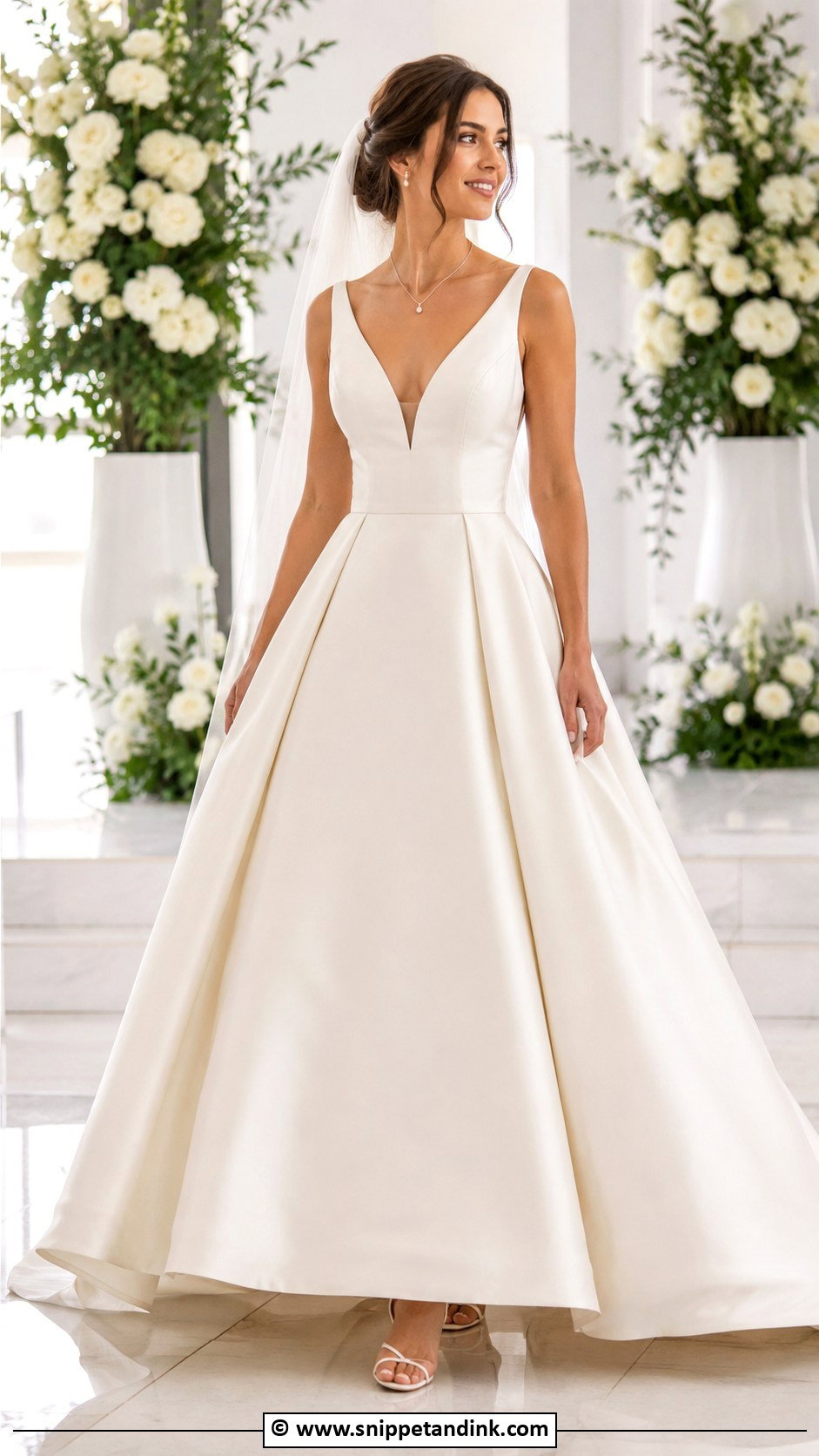
A V-neck lengthens the upper body and draws the eye vertically, which offsets a wide skirt nicely. A modest V is classic; a deeper V reads more fashion. If you’re fuller in the bust, look for side boning, illusion mesh or wider straps. I’d only add a pendant if the neckline is plain; otherwise earrings and a bare neck. A soft updo, strappy heels and a plain veil finish it.
14. High Neck Ball Gown Wedding Dress
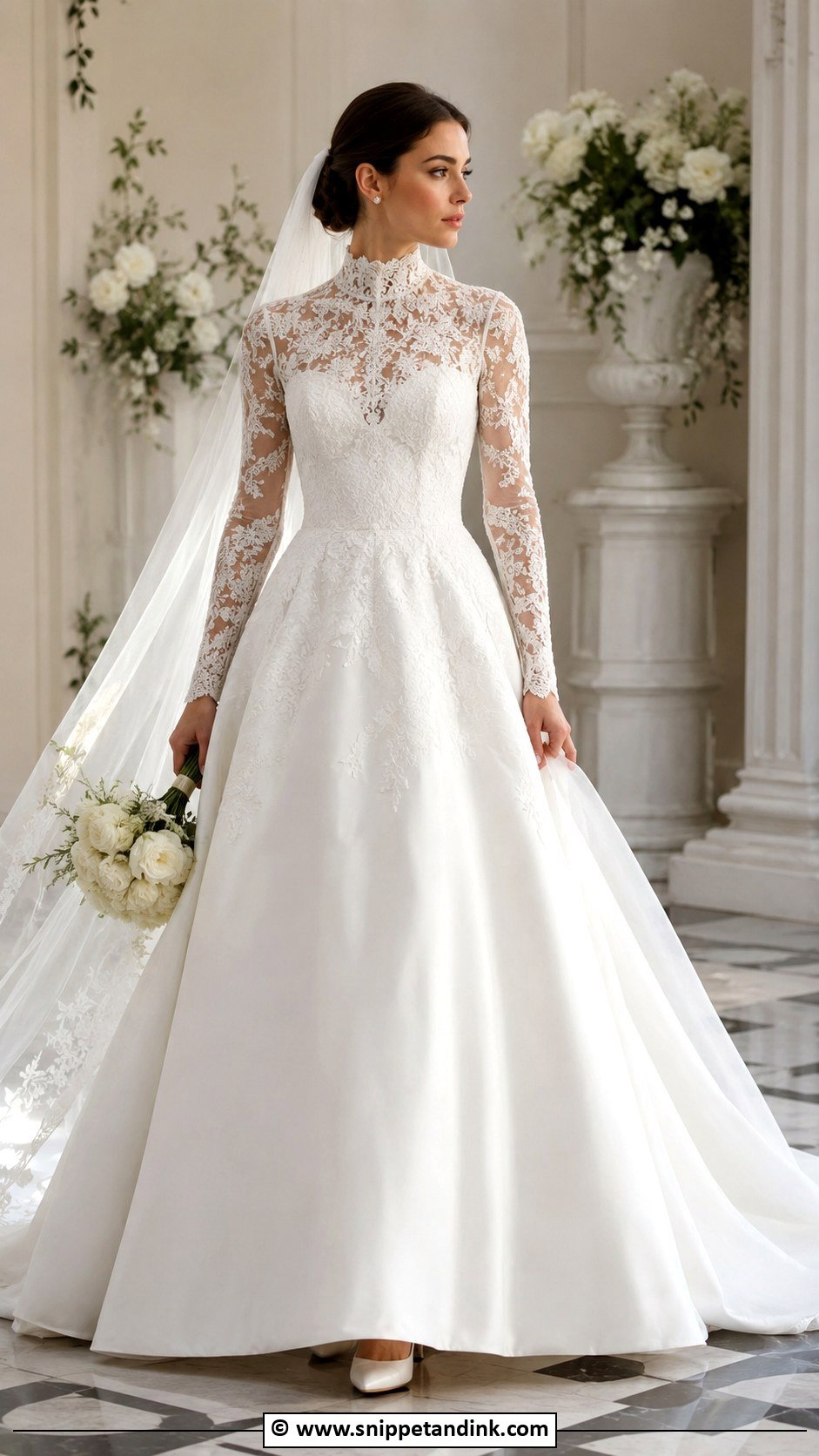
High necks feel refined and give coverage without looking plain when the fabric is light. Delicate lace, a keyhole back or a sheer yoke keep it from feeling heavy. A high neck in a warm venue can feel close, so ask for the yoke in a breathable illusion tulle rather than lined lace. Keep jewelry minimal: studs, a low bun, satin pumps. Winter weddings and formal indoor ceremonies suit it.

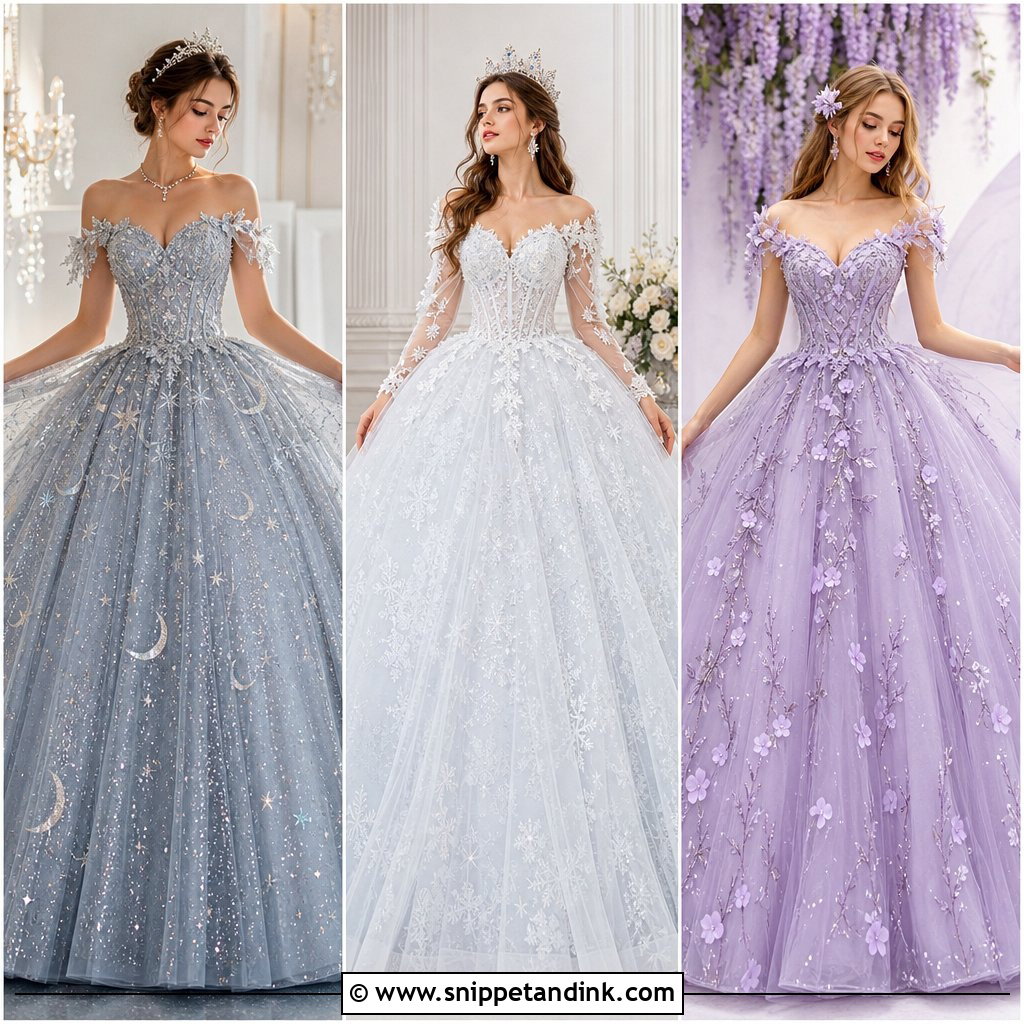

15. Plunging Neckline Ball Gown Wedding Dress
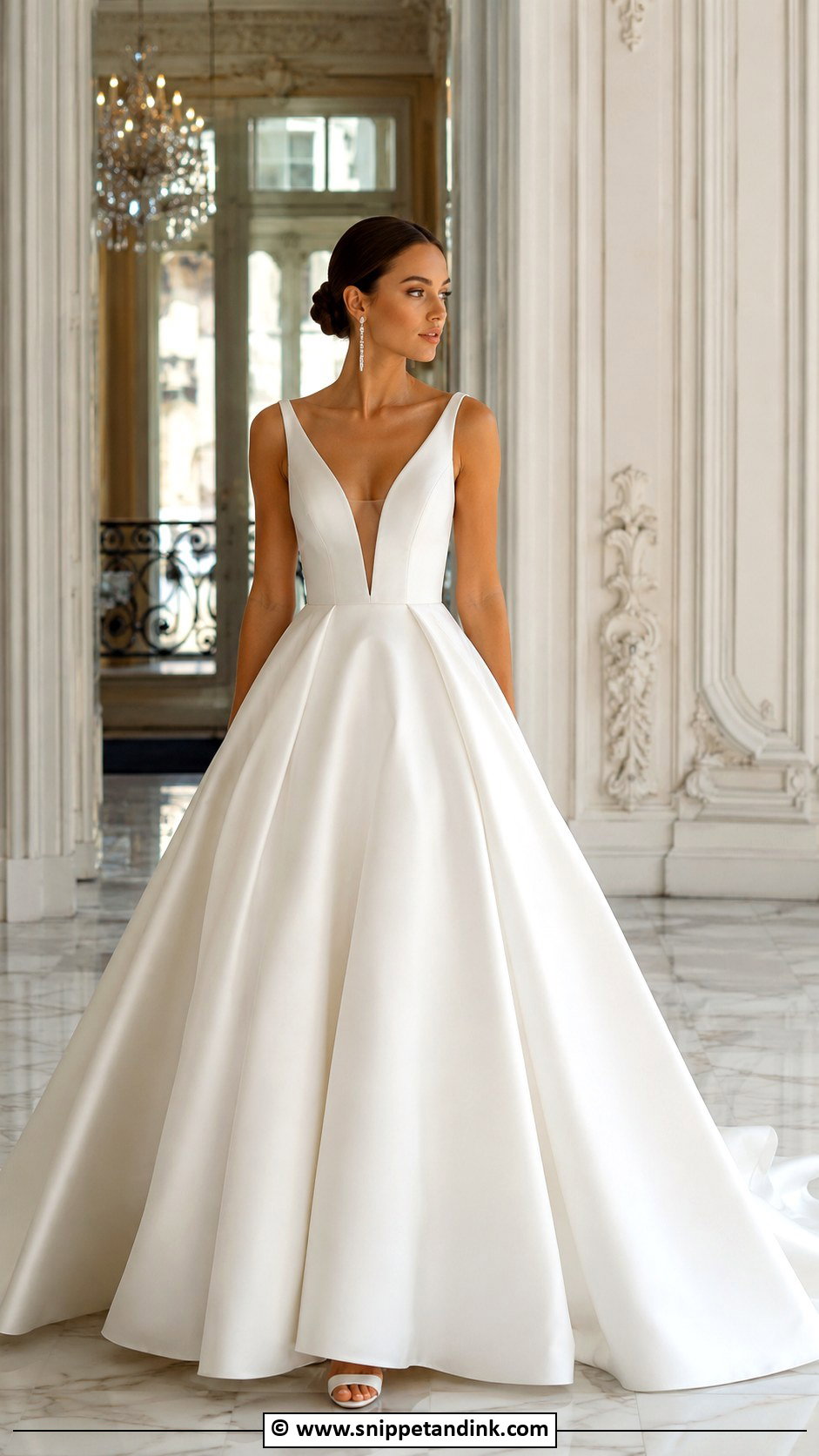
A plunge pairs a deep neckline with a traditional full skirt, so the overall look stays formal while the top goes modern. Illusion mesh, strong side panels and careful tailoring hold it in place; double-sided fashion tape is a sensible backup. Keep the area near the neckline clear of accessories. Long earrings, a sleek bracelet and simple heels, with hair pulled back. It suits a confident bride who still wants the gown to feel right for a wedding.
16. Pearl Ball Gown Wedding Dress
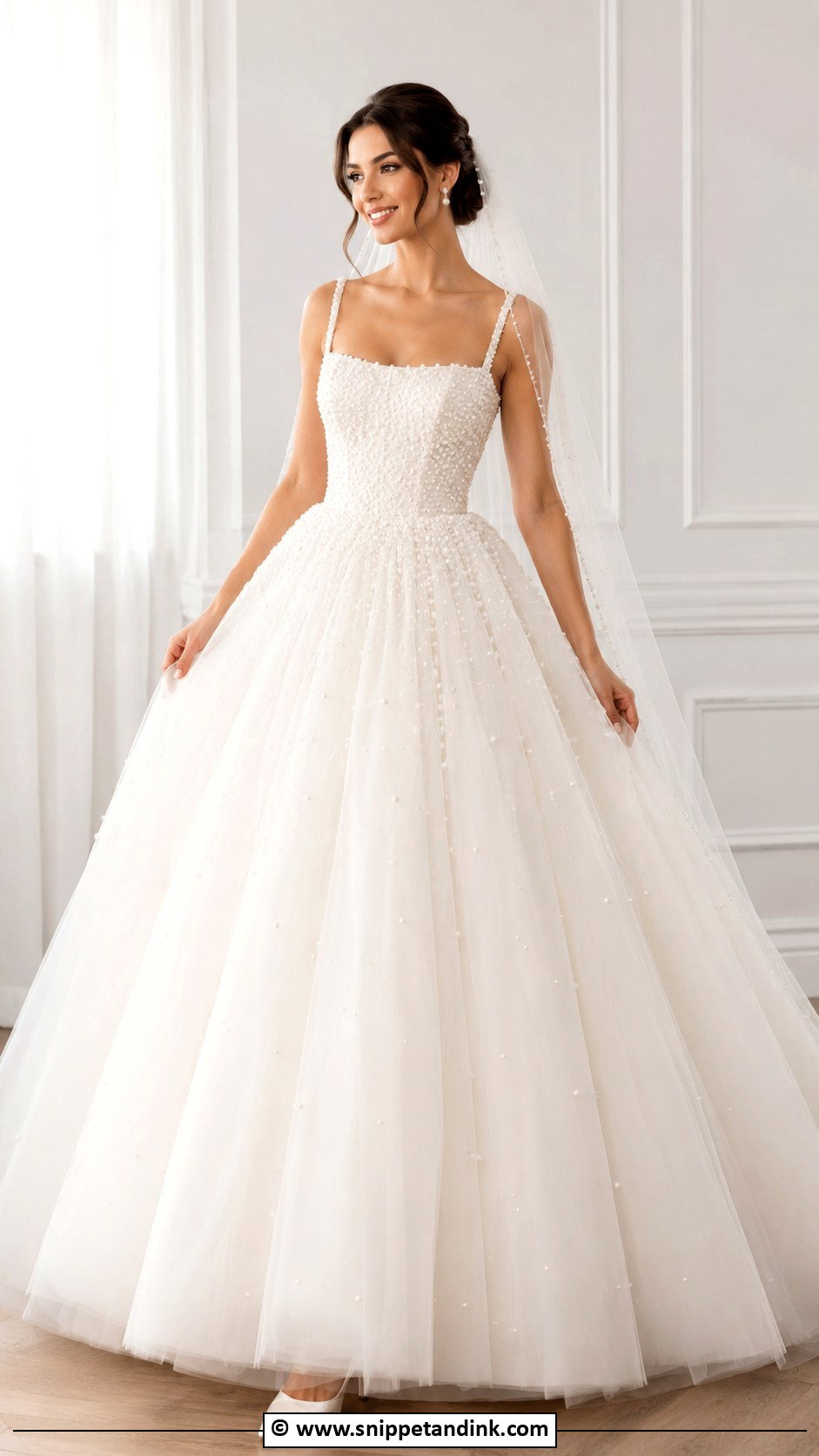
Pearls give a soft sheen rather than the flash of crystals. They can sit on the bodice, sleeves, skirt or veil, or be scattered across tulle. Coordinate rather than stack: pearl earrings or a pearl-trimmed veil, not both plus pearl shoes and a pearl necklace. Pearl beading is heavier than it looks and can drag fine tulle, so check that the skirt still falls straight. A smooth bun or soft half-up style suits it.
17. Bow Ball Gown Wedding Dress
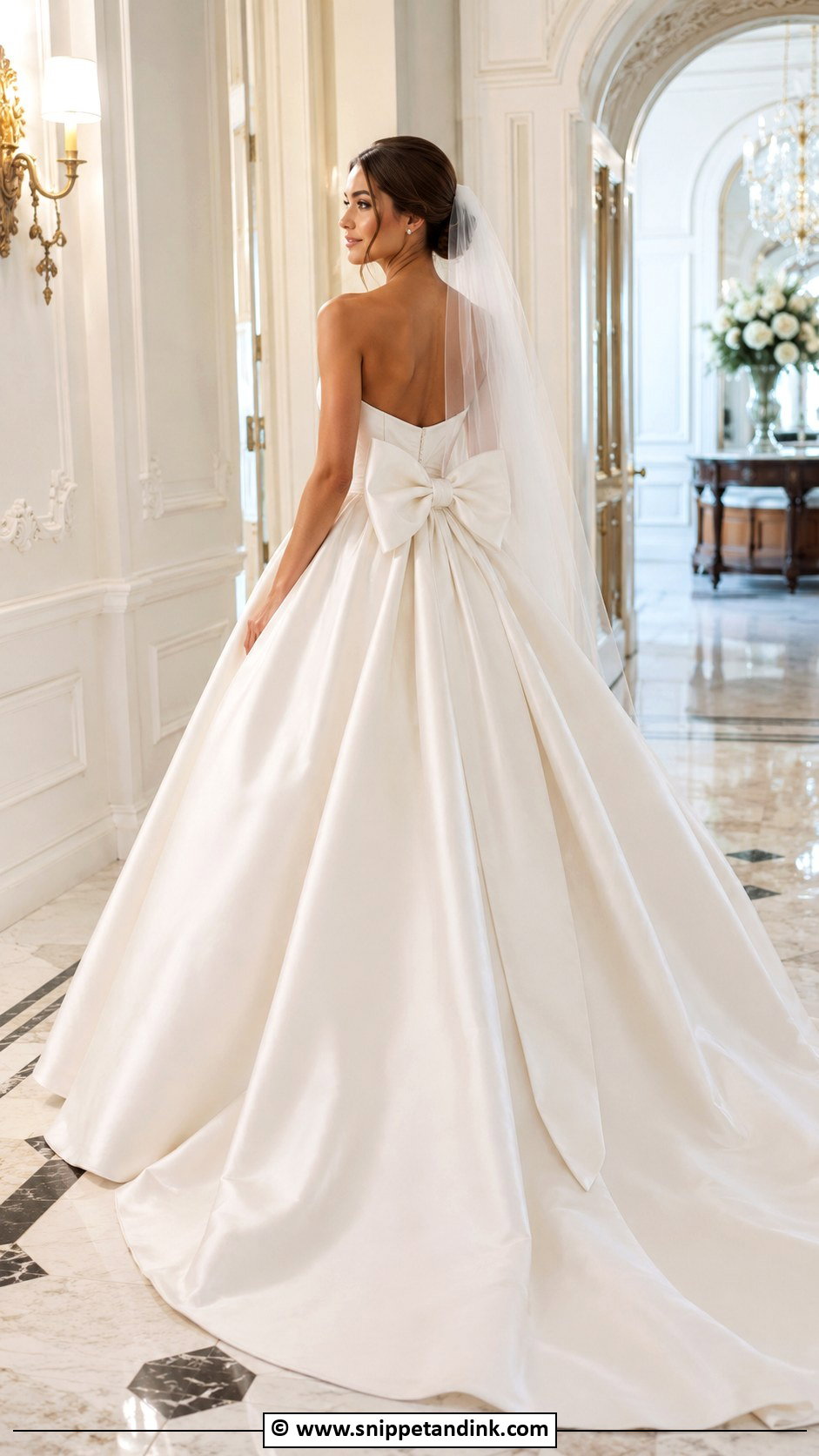
Bows can sit at the back waist, on the shoulder, at the neckline or clip on as a removable accent. A large back bow on a plain satin or mikado skirt looks dramatic; a small bow belt or shoulder bow is softer. A big bow at the back gets crushed every time you sit, so a detachable one you can clip on after dinner saves it. Pearl studs, satin heels and a plain veil keep the rest calm. Clean lines and good fabric keep a bow from looking childish.
18. Overskirt Ball Gown Wedding Dress
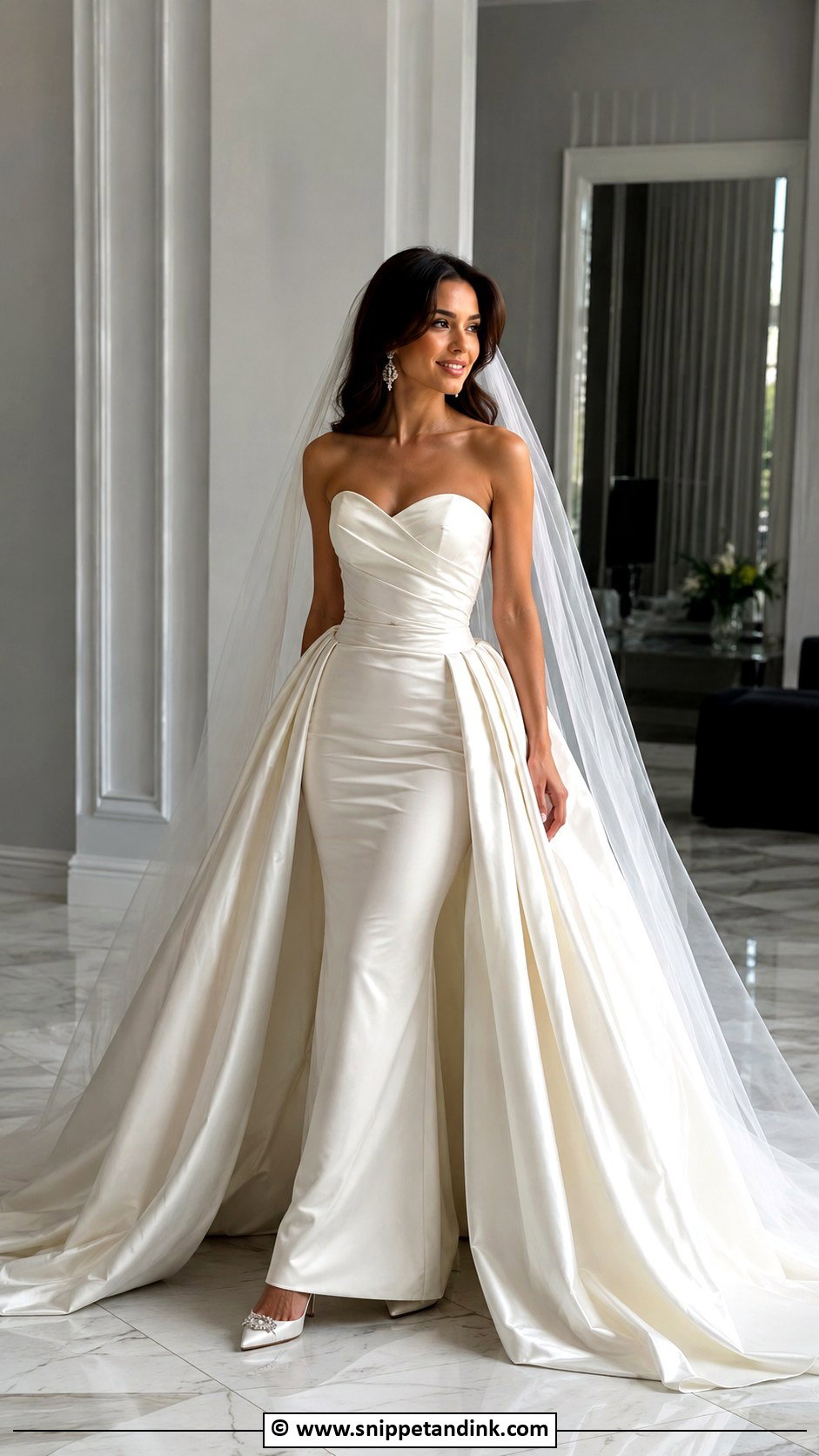
Overskirts give you the full ball gown for the ceremony and a slimmer dress for dancing. Look for secure fastenings, a smooth transition at the waist and a base dress that looks finished alone. Test the removal at your last fitting with whoever will help you on the day; it’s usually hooks or snaps around the waist and takes a few minutes. Wear the veil and elegant heels for the ceremony, then switch to statement earrings or a sleek hair piece for the party.
19. Tiered Ball Gown Wedding Dress
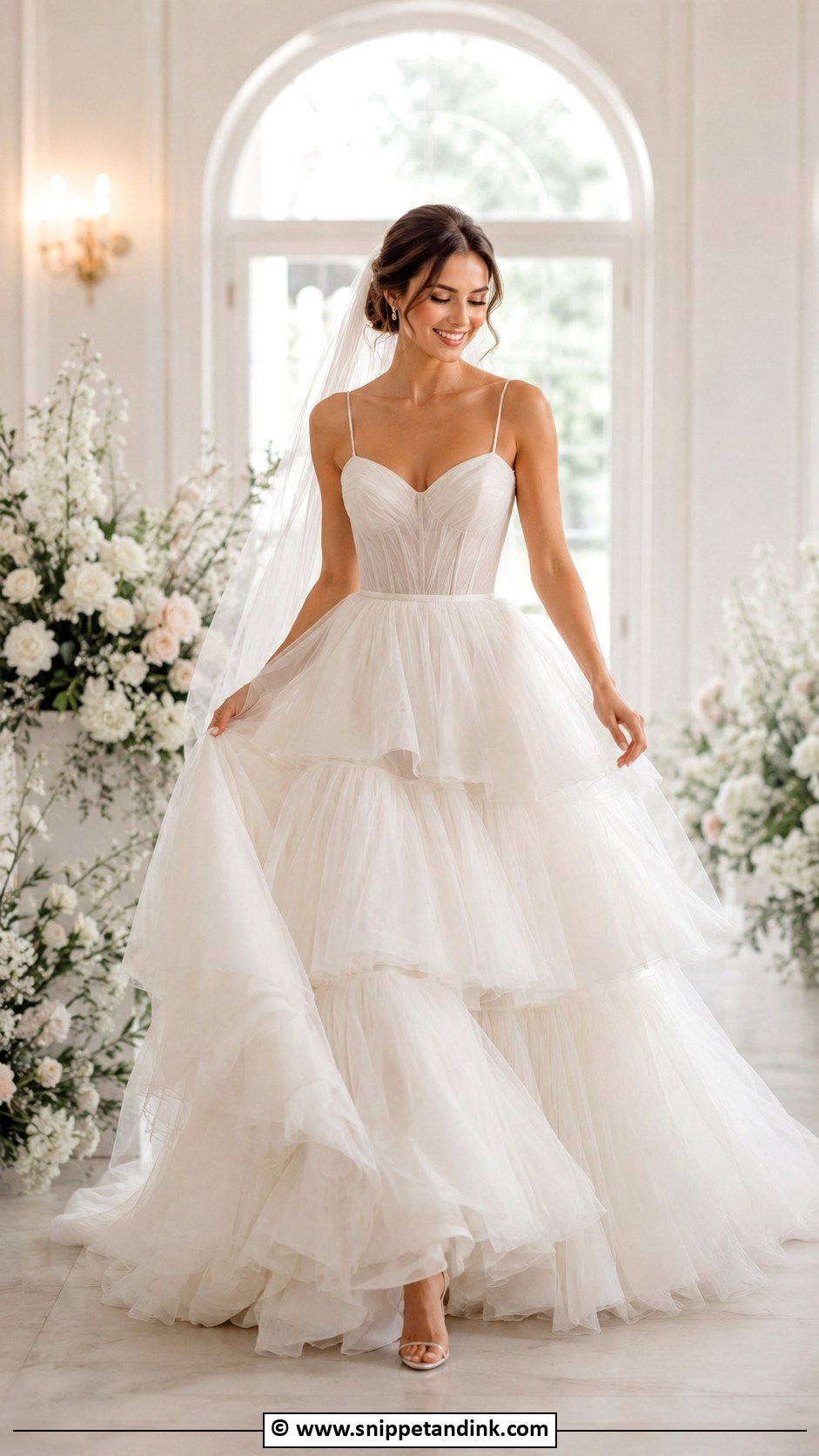
A tiered ball gown wedding dress builds volume from layered panels, airy in tulle or crisper in organza. Keep the bodice plain so the skirt carries the look: strapless, square neck or a fitted corset. Tiered skirts are tricky to hem, because each tier has to be adjusted separately, so allow extra time and budget for alterations. Delicate heels, minimal jewelry and a veil that doesn’t compete. It shows best in motion, walking or turning on the dance floor.



20. Ruffled Ball Gown Wedding Dress
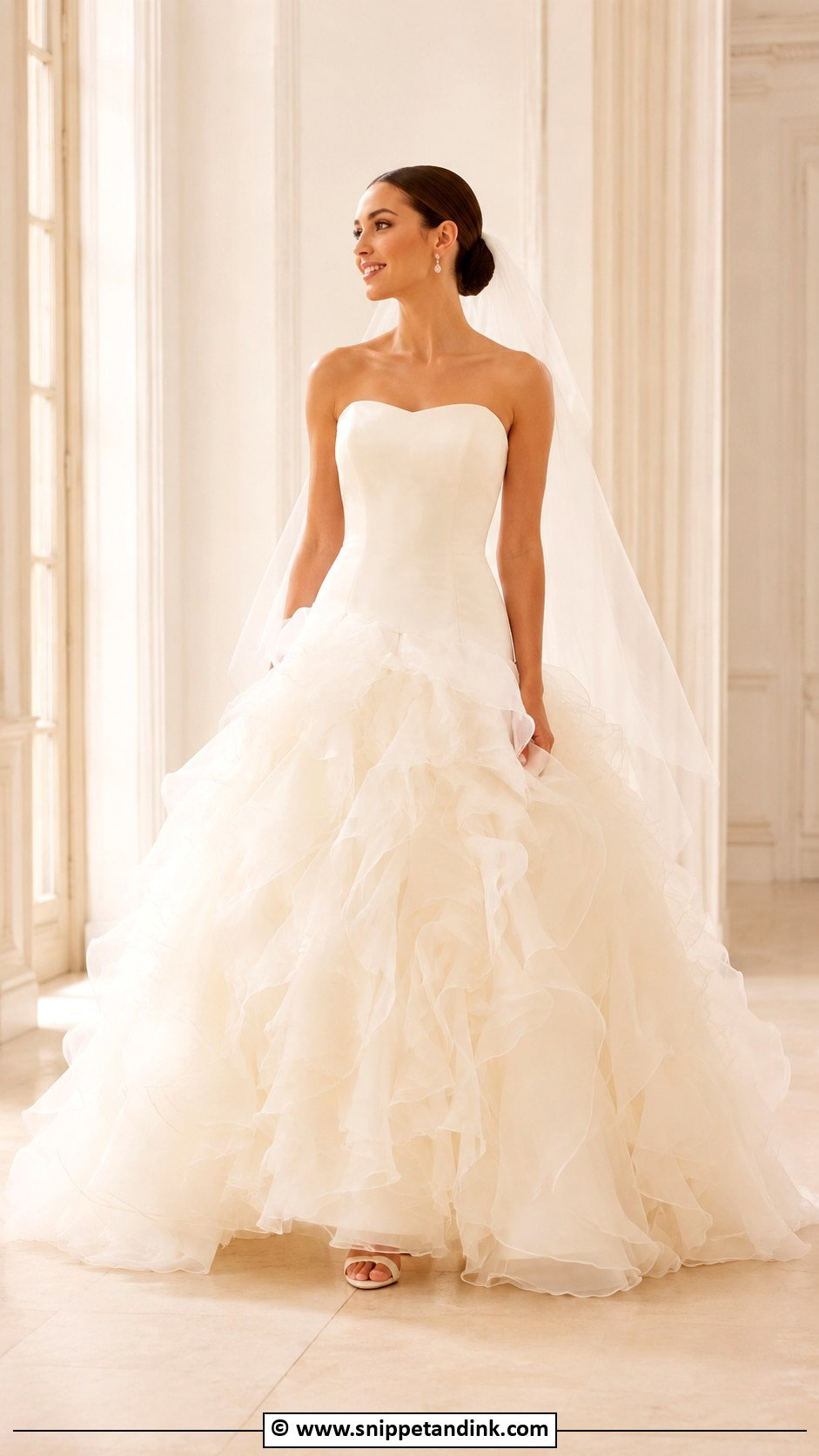
Ruffles bring the most texture and movement of any skirt here. They can be soft and cloudlike or sculptural. A fitted, clean bodice and a defined waist stop your body from getting lost in the volume. Ruffle edges are finished either with a rolled hem or with horsehair braid; horsehair holds the shape far longer through a long day. Understated earrings, plain heels, a smooth veil and controlled hair, like a bun or brushed waves, keep it from tipping over. It photographs best full length.
21. Detachable Sleeve Ball Gown Wedding Dress
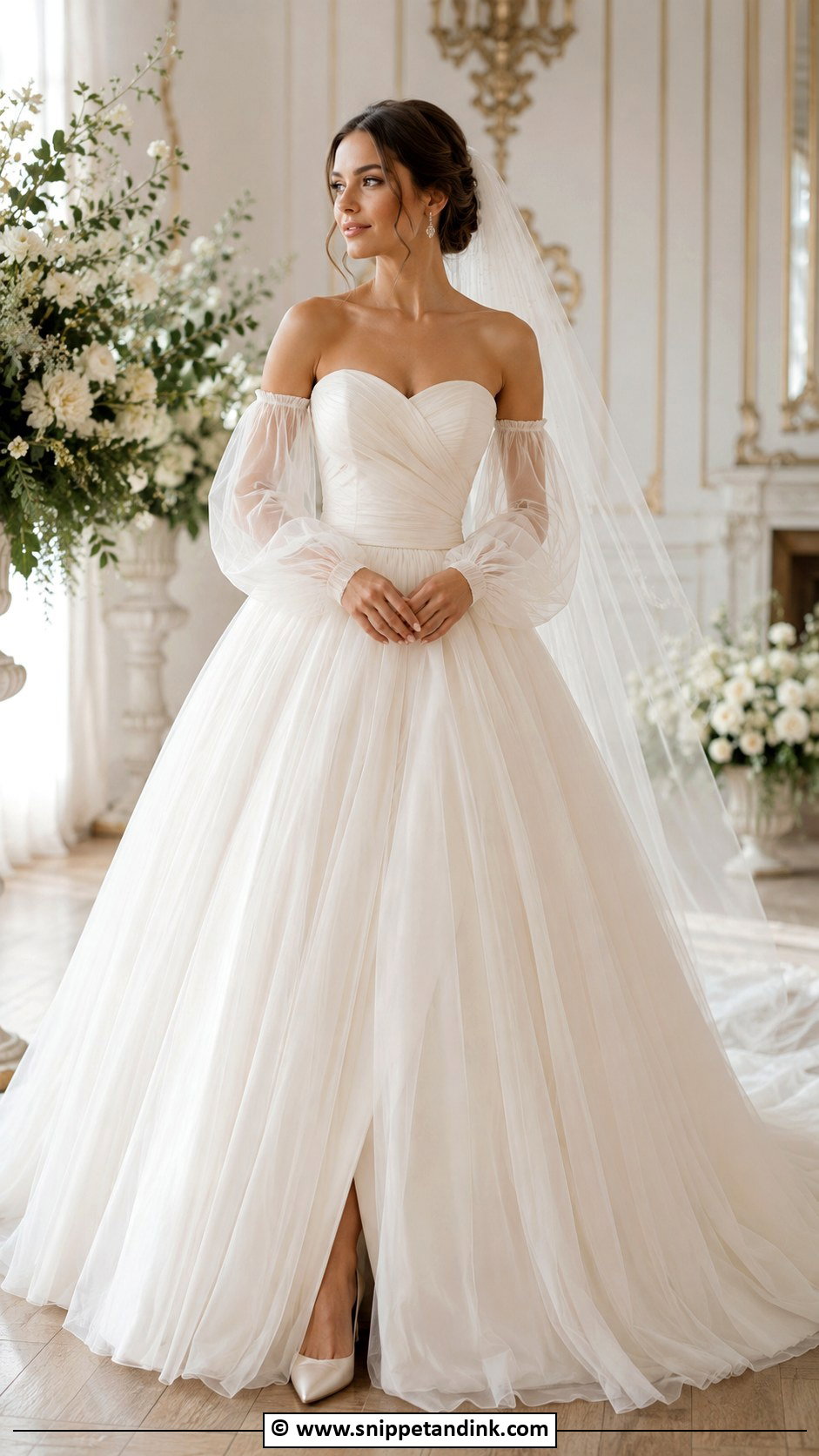
A detachable sleeve ball gown wedding dress lets you wear sleeves for the vows and take them off for dancing. Puffed, fitted lace, off-shoulder or sheer tulle sleeves all come detachable. They usually attach with hidden hooks or elastic bands, so move your arms a lot at the fitting to make sure they don’t slip. Delicate earrings, a soft veil and shoes matched to the gown’s fabric tone complete it. Useful for changing weather or mixed indoor and outdoor plans.
22. Puff Sleeve Ball Gown Wedding Dress
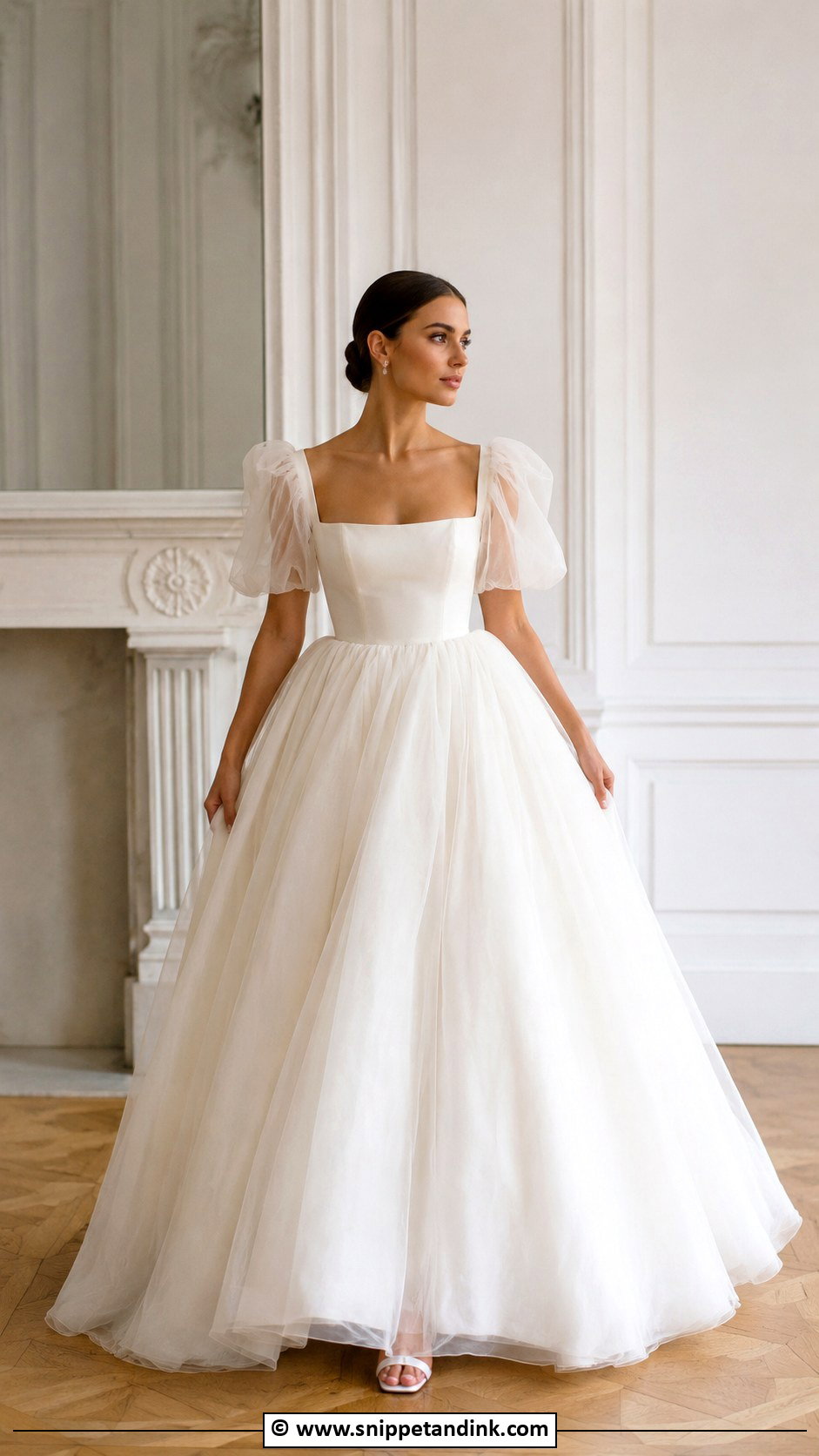
A puff sleeve ball gown adds volume at the shoulder, so the waist must be clearly defined or the whole outfit looks wide. Tulle puffs are dreamy; satin puffs are crisper and more editorial. A square neck, sweetheart or corset waist suits them. Puff sleeves crush in transport, so I ask brides to hang the gown the night before and stuff the sleeves lightly with tissue. Light jewelry and a low bun keep the neckline and shoulders on show.
23. Cap Sleeve Ball Gown Wedding Dress
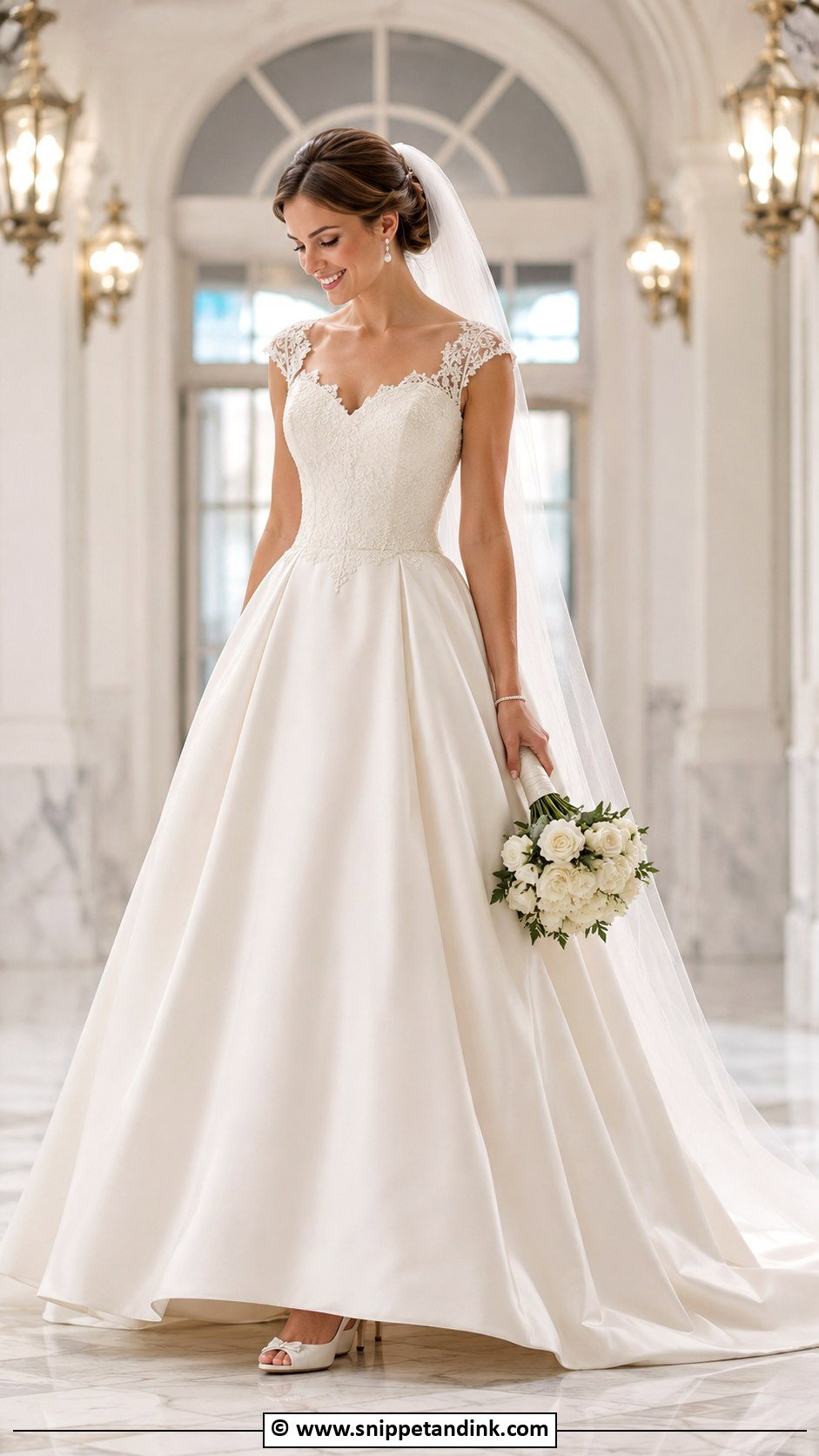
A cap sleeve ball gown gives a little shoulder coverage without the commitment of long sleeves. Lace caps are romantic, satin caps classic, beaded caps add sparkle. A cap sleeve that’s too tight cuts into the upper arm and shows in photos, so check it with your arms relaxed by your sides. Pearl earrings, a fine bracelet and comfortable heels pair well; a fingertip or chapel veil won’t overpower the sleeves.
24. Halter Ball Gown Wedding Dress
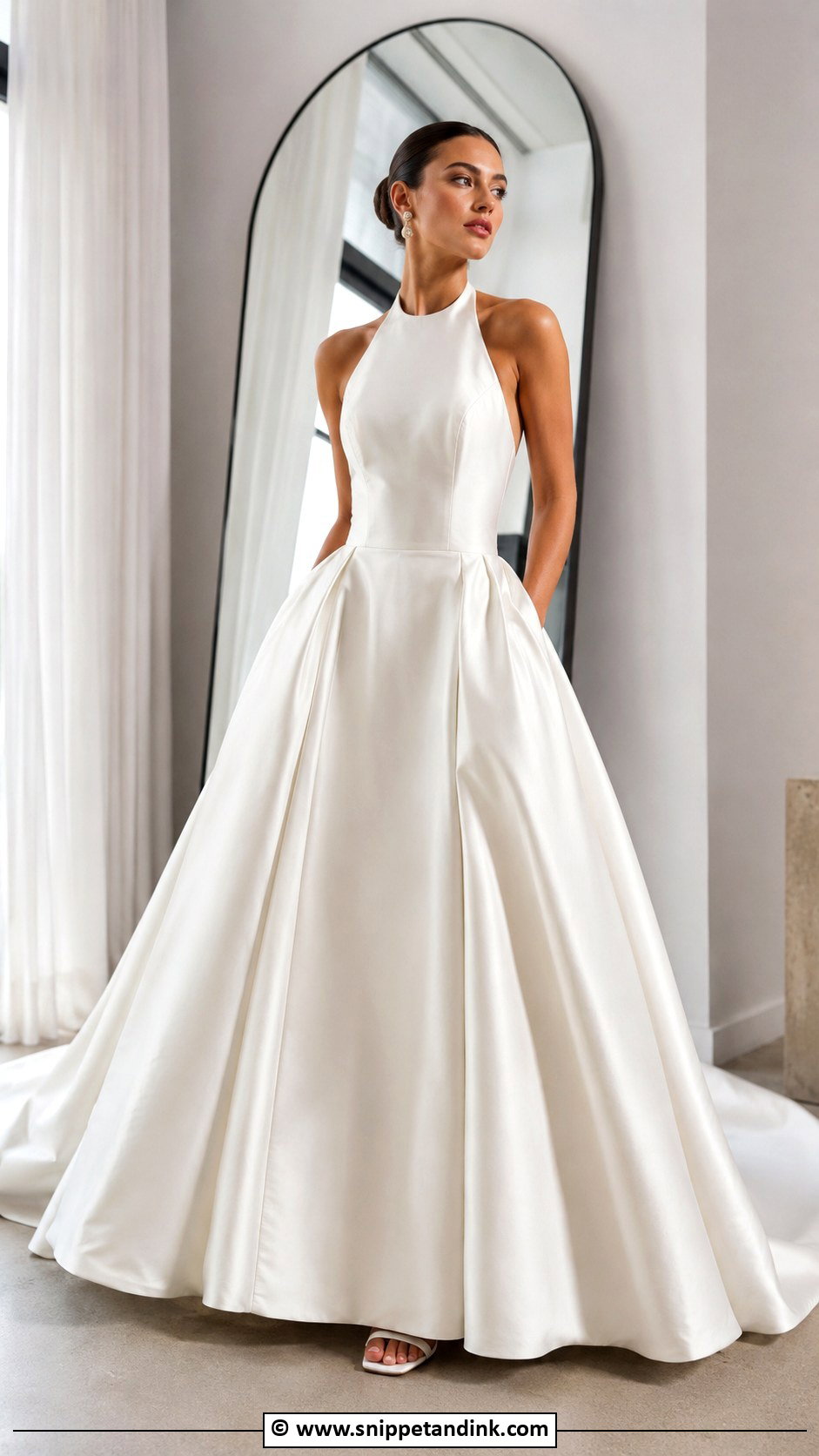
Halters put a sleek modern top on a classic full skirt. Satin or crepe show the line best, though lace or beading work if kept fine. The halter gives more support than strapless because it hangs from the neck, but with a heavy bodice that can strain by evening, so a wider halter band helps. Earrings rather than a necklace, and hair up or back so the neckline shows.
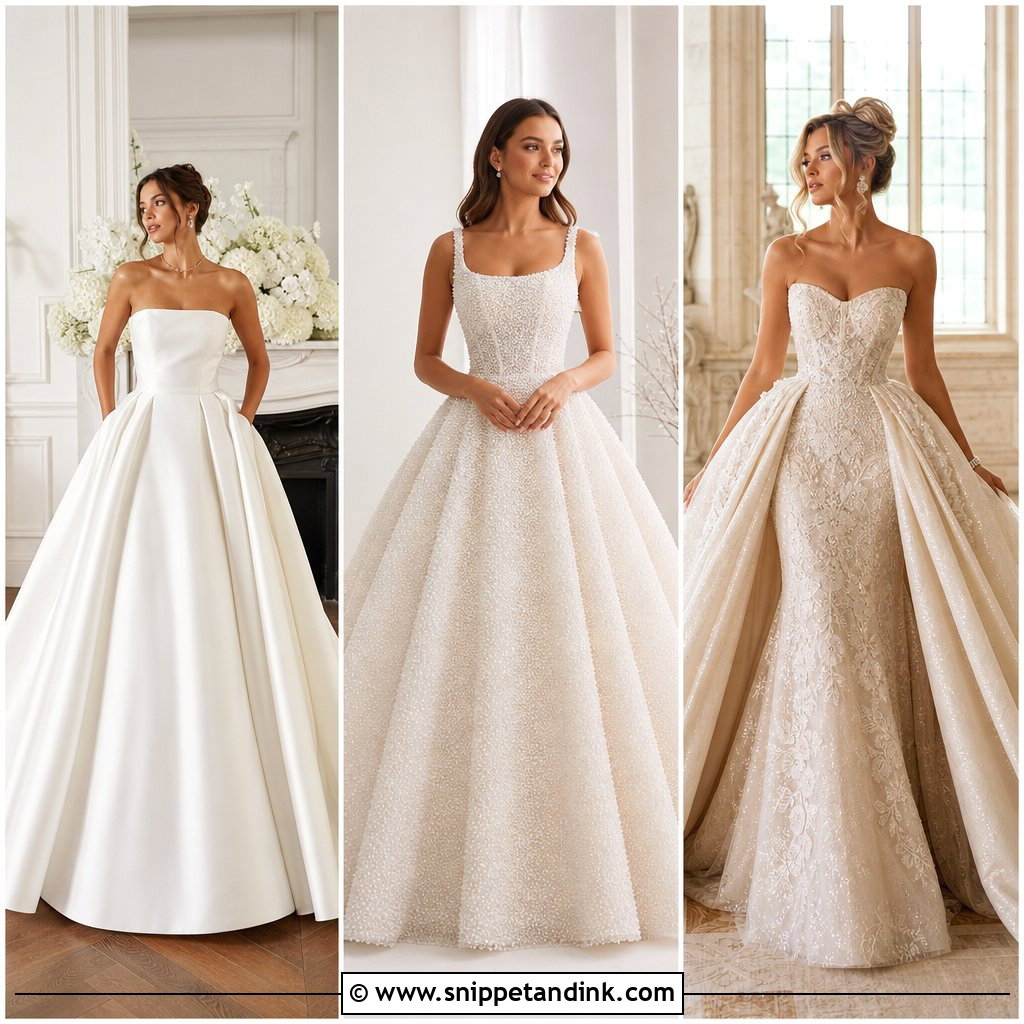



25. One Shoulder Ball Gown Wedding Dress
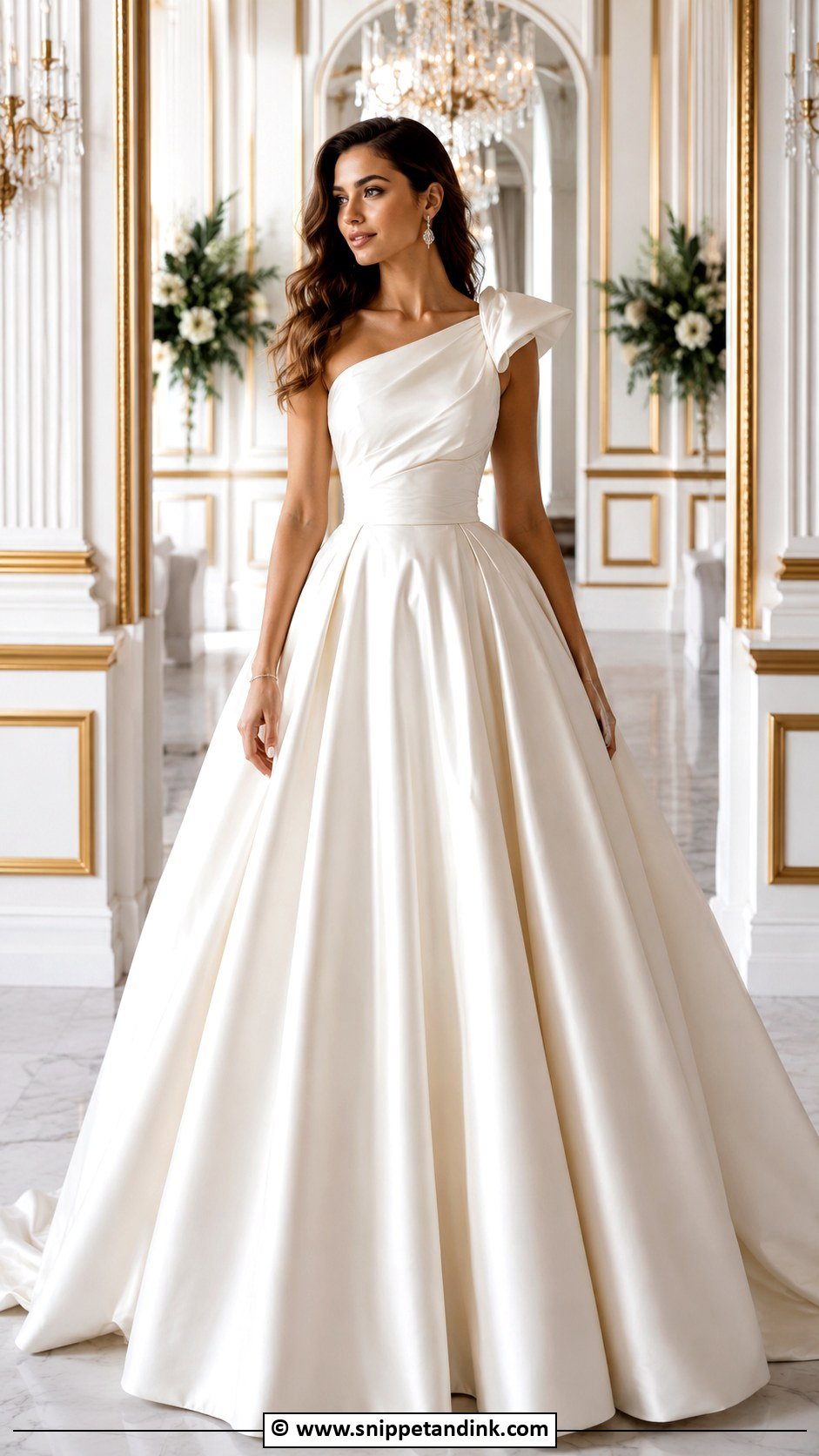
One-shoulder gowns add asymmetry to a traditional shape. Sleek in satin, romantic in tulle, dramatic with a sculptural strap or bow. The single strap carries all the tension, so it has to be fitted firmly or the bodice twists toward the bare side when you move. Skip the necklace. Earrings, a bracelet and clean heels, with a low bun or swept waves to show the shoulder. Modern venues suit it.
26. Embroidered Ball Gown Wedding Dress
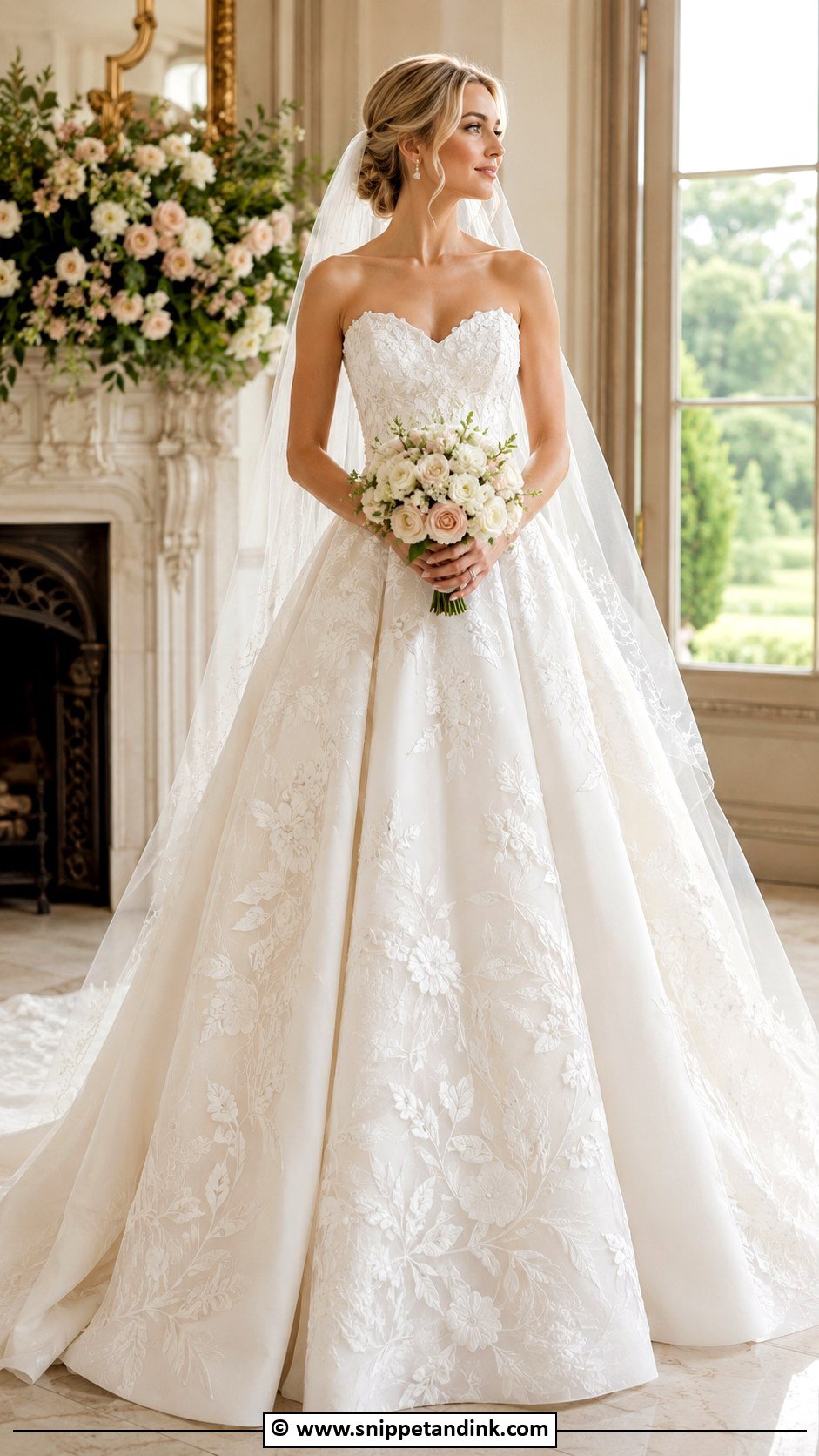
Embroidery adds artistry: floral, vine-like, geometric or tonal. Threadwork that blends with the gown looks more refined than high contrast. A fitted bodice and full skirt let it run across the dress. Turn the bodice inside out at the fitting; dense embroidery can scratch unless it’s fully lined. Soft earrings, satin heels and a sheer veil let the craft stand out. Garden, estate and romantic indoor settings suit it.
27. Sequin Ball Gown Wedding Dress
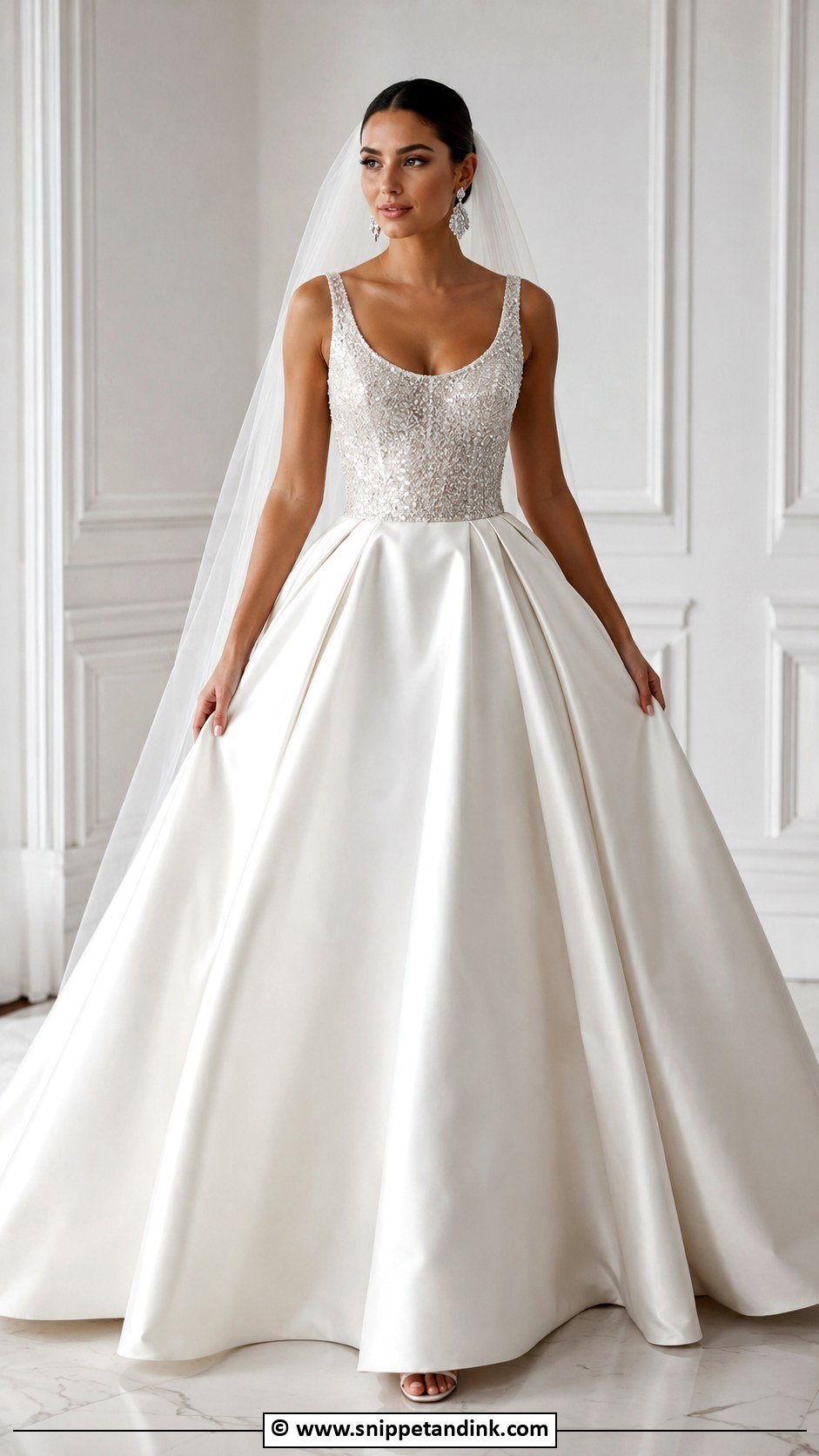
Sequin ball gowns combine shimmer with a grand shape. Fine sequins catch light softly; big paillettes look flashier. A sequin bodice over a plain skirt is balanced; allover shimmer makes a stronger statement. Sequins can scratch the inner arm during long hours of hugging and dancing, so check the lining. Clean neckline, small crystal earrings, simple heels and sleek hair keep it sophisticated for an evening reception.
28. Colored Ball Gown Wedding Dress
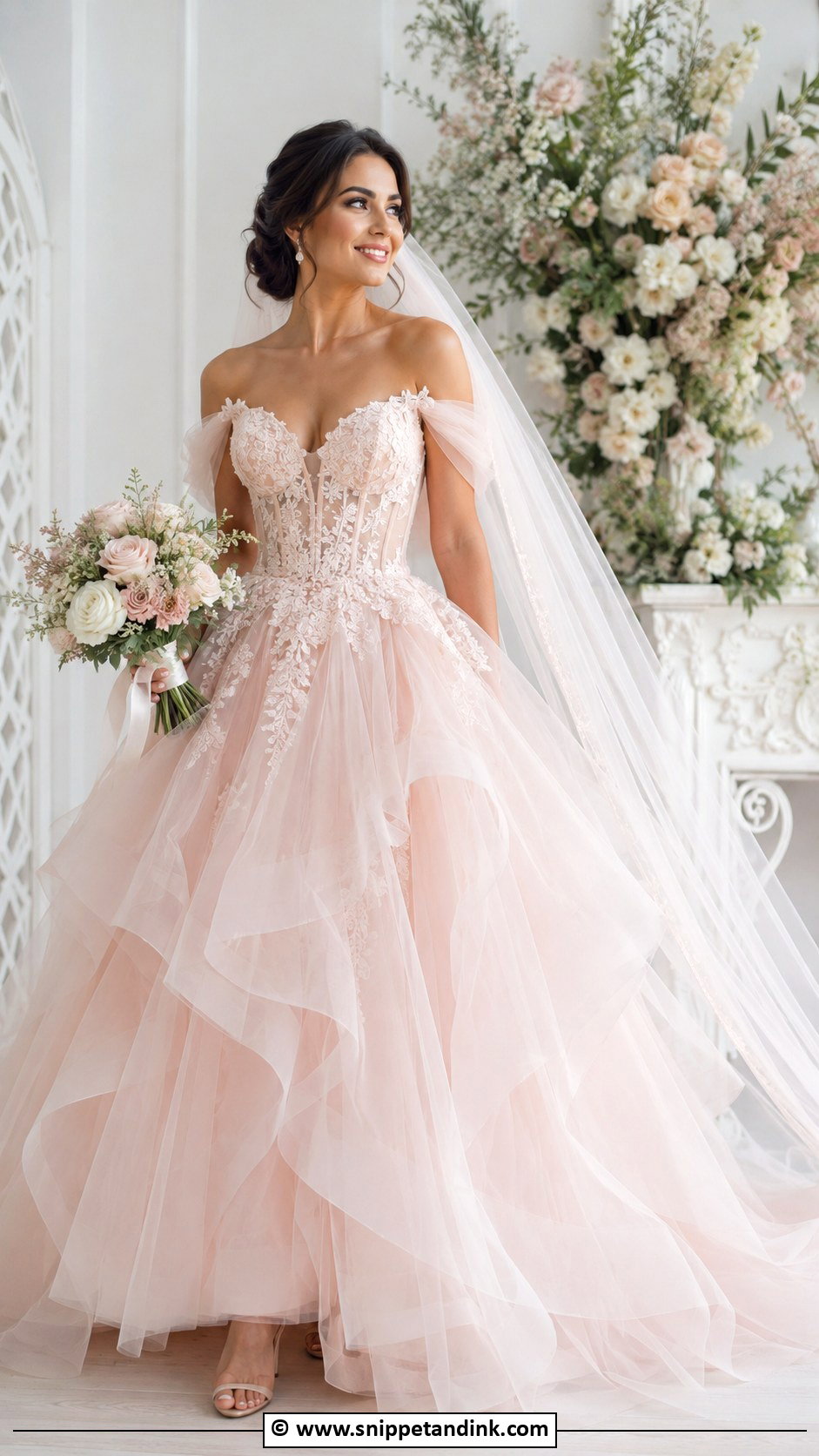
Color gives a ball gown individuality while the full skirt keeps it formal. Blush, champagne, pale blue and light gold all stay romantic. Colored tulle shifts noticeably between indoor light and daylight, so look at the swatch in both before ordering. Neutral heels, delicate jewelry and makeup that complements the fabric’s undertone help, and a veil in a matching or slightly lighter shade ties it together. It suits destination weddings and brides who don’t feel connected to white.
29. Plus Size Ball Gown Wedding Dress
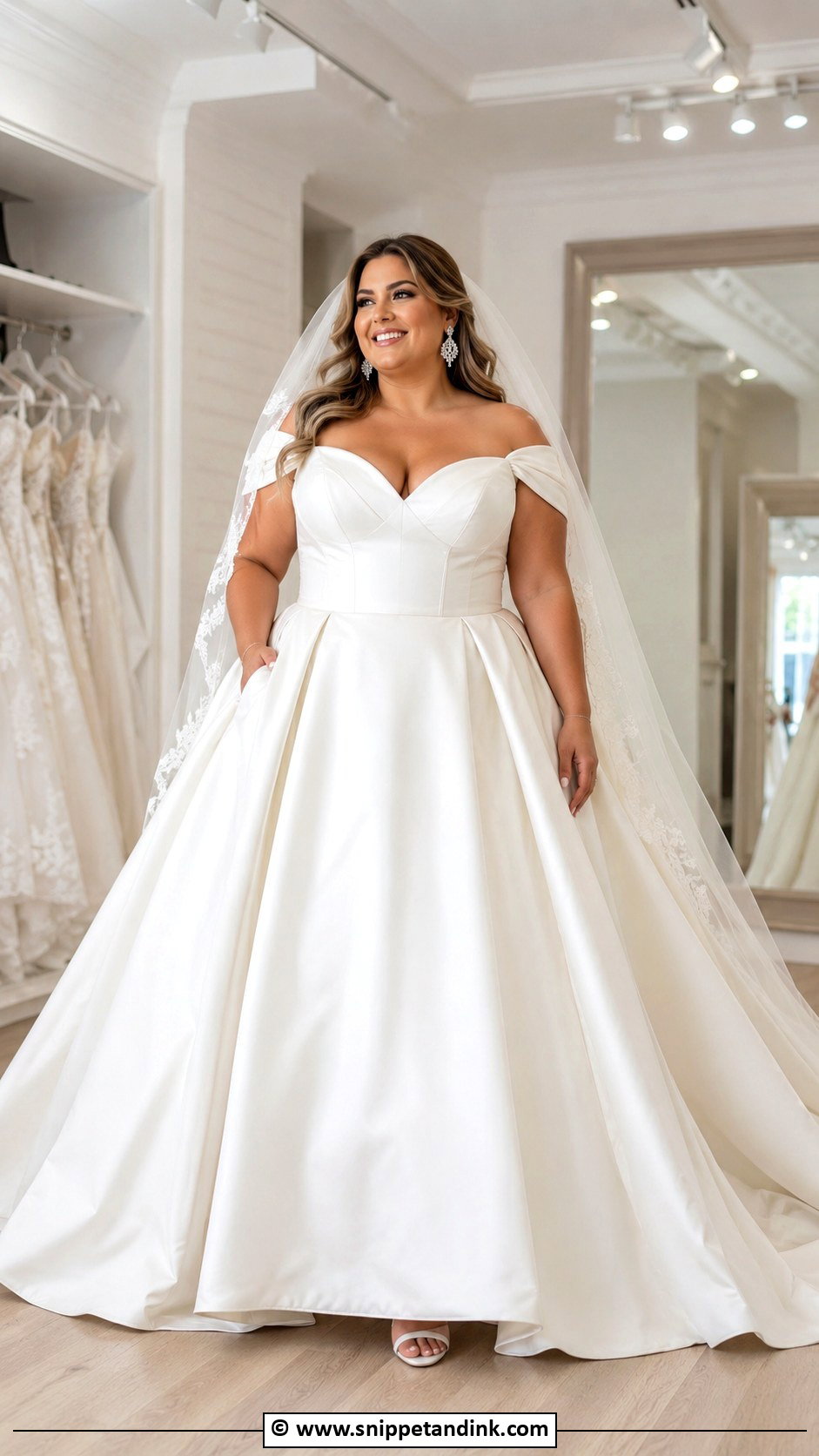
Plus size ball gowns look their best when the support is built in properly. A structured bodice, secure straps or internal cups and a waistline that sits comfortably without digging in matter more than any trend. A-line ball gown skirts give volume while skimming the hips. Satin, tulle, lace and mikado all work. I’d always ask for a waist stay inside the bodice; it carries the weight of the skirt so the straps and bust don’t have to. Supportive heels, statement earrings and a veil matched to the gown’s detail finish it.
30. Petite Ball Gown Wedding Dress
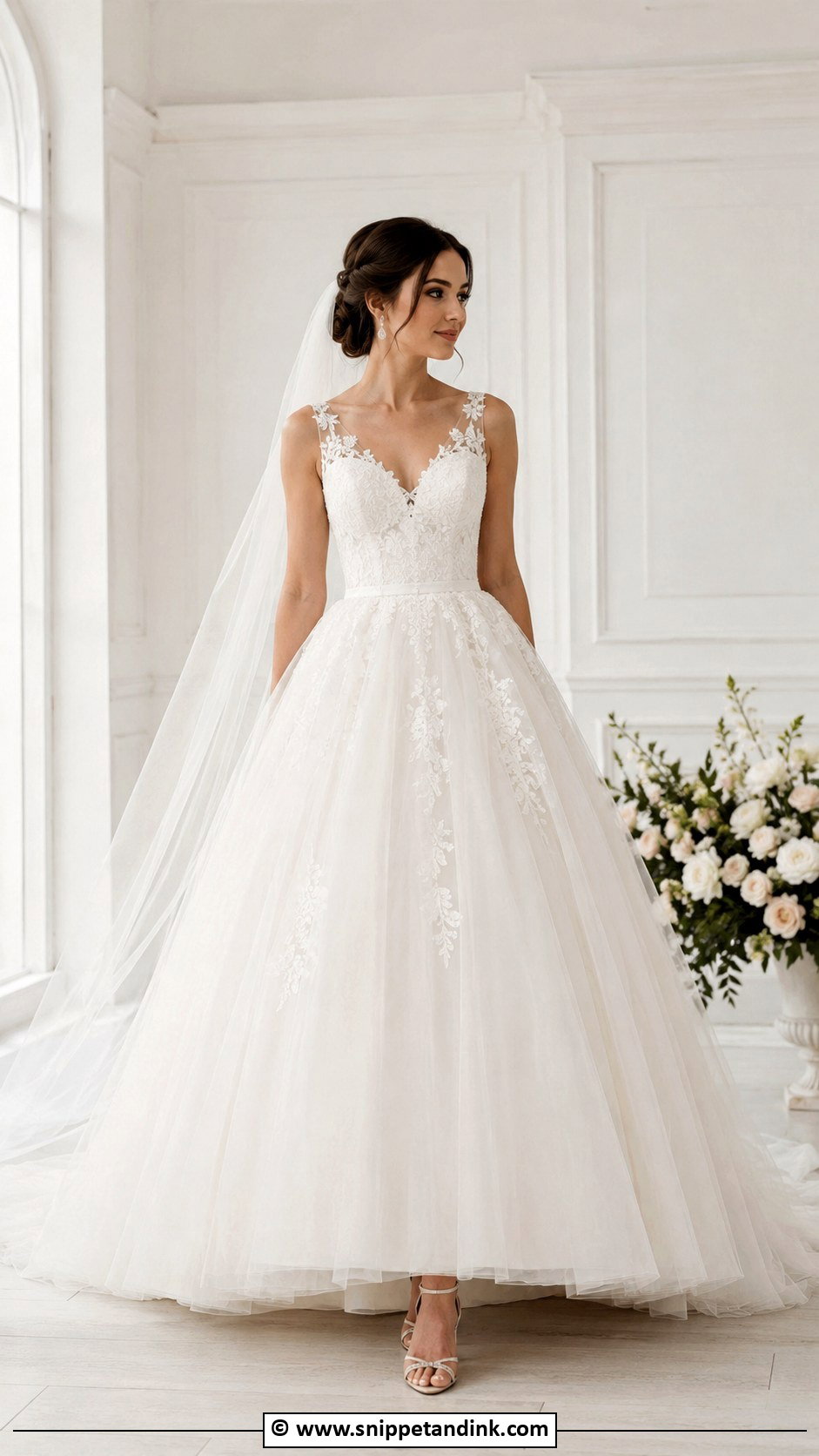
Petite brides can absolutely wear a ball gown; the trick is controlling volume. A defined waist, lighter skirt and vertical details lengthen the frame. A V-neck, basque waist or clean paneling all create a taller line. Very wide hoops overwhelm a shorter body, so try a softer tulle or a moderate satin skirt with a short train. Have the hem set for the heel you’ll actually wear. Delicate earrings and a veil that adds length without bulk complete it.
Cars, Doorways and the Dinner Table
Volume brings logistics that nobody mentions in the fitting room. Planning for them in advance keeps the day calm.
- Book a vehicle with a wide back seat or a van. Get in bottom first, then lift your legs and the skirt in together, with someone gathering the hem from outside.
- Measure narrow doorways and aisles at the venue if you’re unsure. Most full skirts compress more than you’d think, but a wide hoop does not.
- Ask the venue for a chair without arms at the head table and a little extra space on either side.
- Practice the bathroom routine once in the dress before the day, with the bridesmaid who’ll help.
- Learn the bustle at your final fitting. A heavy train needs several bustle points to hold, and whoever ties it should try it there.
On the dance floor, a hoop swings when you turn quickly, so a slow first dance suits it better than anything with spins. If you want a livelier dance, a petticoat skirt or an overskirt you can remove gives you far more freedom.
For storage afterwards, keep the gown off hangers if it’s heavy, since the weight stretches shoulder seams over time. A large acid-free box with tissue in the folds is kinder to satin and beading.
A Full Skirt You Can Still Sit Down In
A ball gown has to work as a whole outfit: support for your body, scale for your venue, and a version of bridal that feels like you. These gowns run from minimal to dramatic, modest to sparkling, soft to sculpted. The right one lets you move, sit, laugh and dance without thinking about it. Before you decide, pay attention to fabric weight, neckline, waist placement, sleeve comfort and the tailoring the gown will need. Satin, tulle, lace, pearls, bows or detachable details can all be part of it.
You'll Like These Ideas:






Leave a Reply