
Black lace does something ivory never can: it shows the outline of every flower, scallop and cord against skin and lining, so the craftsmanship reads from across a room. That same honesty means a poorly cut black gown looks worse than a poorly cut white one, because nothing hides behind the color. Bridal collections right now lean into corseted bodices, raised floral appliqué and sheer layering, and all of that lands harder in black. Below are twenty silhouettes I’d actually put a bride in, from full ball gowns to a short dress for the dancing, with notes on how each one fits, moves and gets altered.
How Black Lace Behaves Differently From White
Most bridal lace starts life white or ivory and gets dyed, and black dye changes how a fabric behaves. Dyed lace can carry a slightly different sheen from the tulle or satin under it, and two blacks from different dye lots almost never match exactly. When I look at a black gown in the shop, I take it near a window first. If the lace looks brown or blue against the lining in daylight, it will look that way in every outdoor photo too.
The lining color does more of the design work than most brides expect. Over a skin-tone lining the lace looks like it’s sitting on your body. Over black, you get a solid silhouette with texture on top. Over ivory or blush, every flower stands out. Ask to see the same lace over two linings if the salon can show you, because the change is bigger than any neckline swap.
What to check before you order
- Production time: made-to-order gowns commonly take four to eight months, and alterations need another two or three, so start shopping about a year out if you can.
- Whether the lace is dyed after cutting or before: pre-dyed lace usually matches its lining more evenly.
- Photos under flash: a quick phone photo with flash shows you whether the black reads as true black or turns greyish and flat.
- Shoe height for the first fitting: bring the exact pair, or at least the same heel height, so the hem is right the first time.
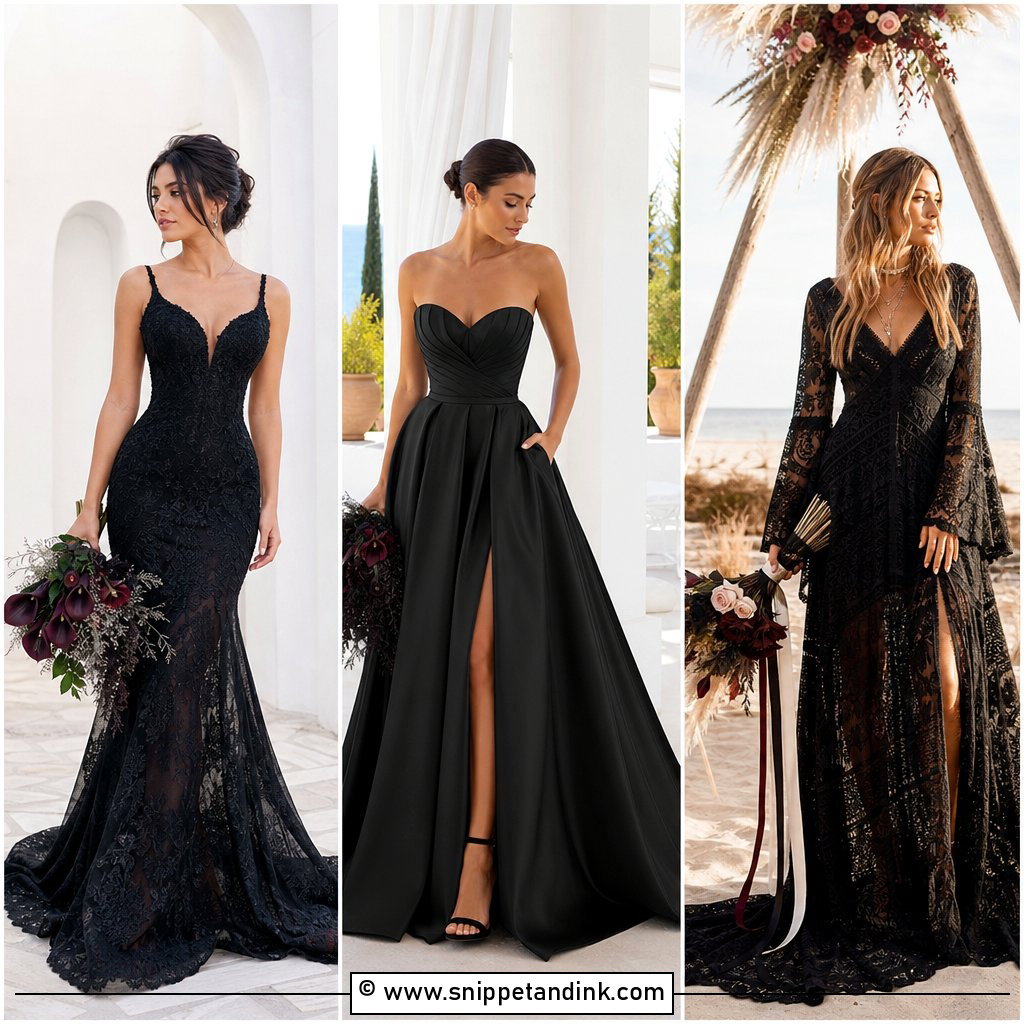
1. Black Lace Ball Gown Wedding Dress
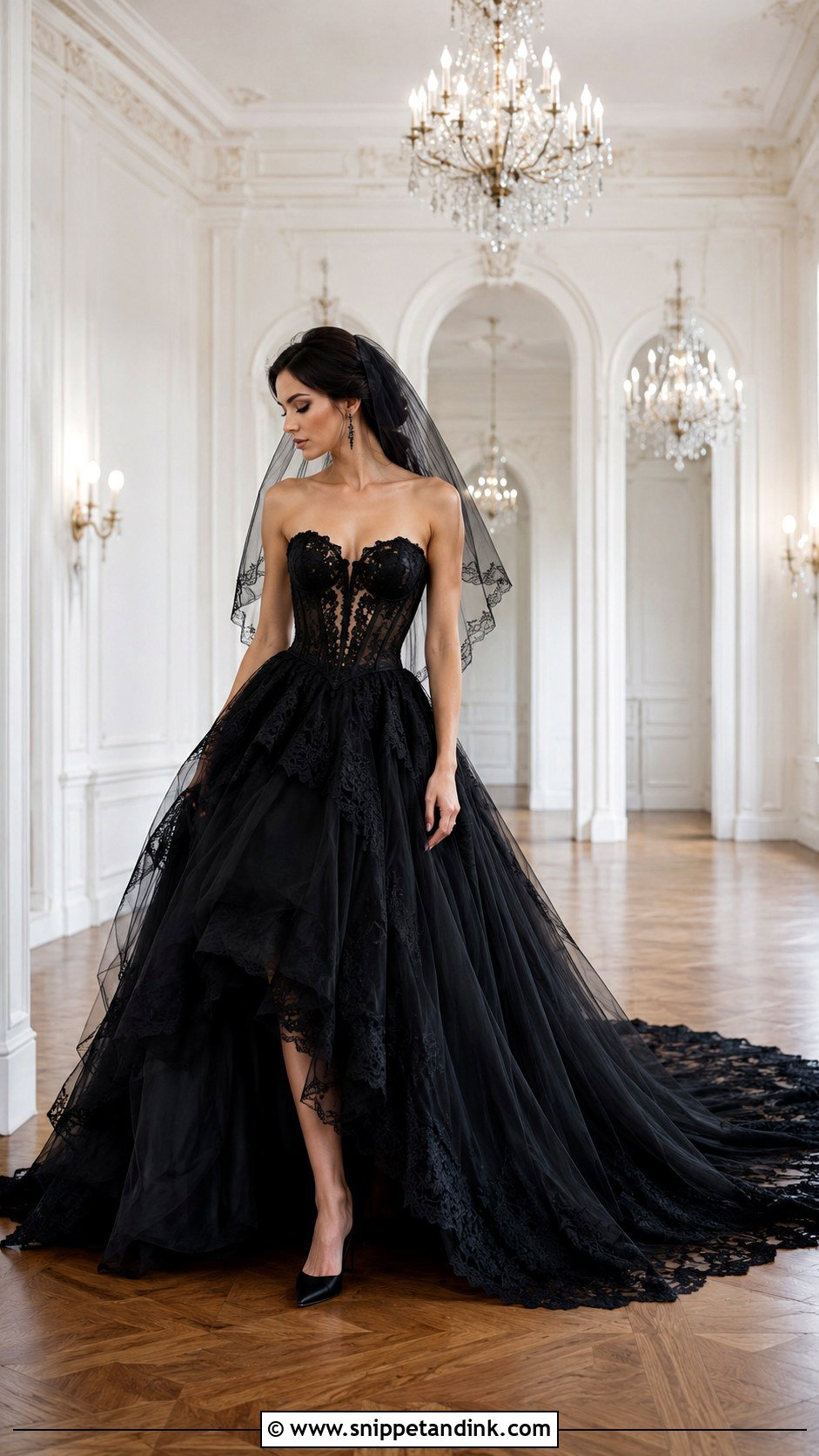
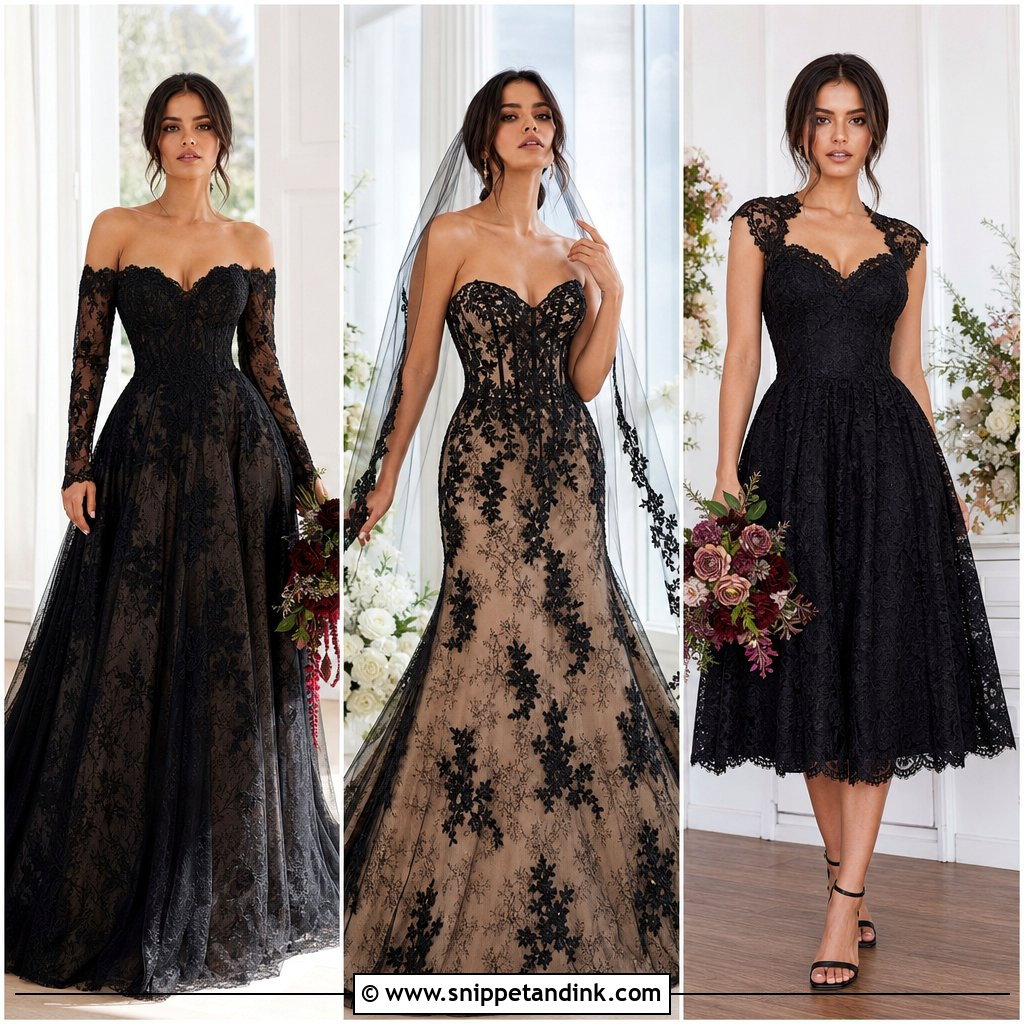
The fit test I trust for a black lace ball gown is simple: sit down in it. A good one has a real corset inside with a waist stay, and the tulle layers under the lace carry the skirt’s weight, so the lace itself is never stretched or dragged. Strapless and portrait necklines keep the top half from disappearing under all that volume. With this much skirt, I keep accessories to black satin pumps, crystal drops and a plain fingertip veil, and a small ivory or burgundy bouquet does the contrast work. Have the hem set while you stand in your actual wedding shoes, or the front will catch your toes on every step.
2. Black Lace A-Line Wedding Gown
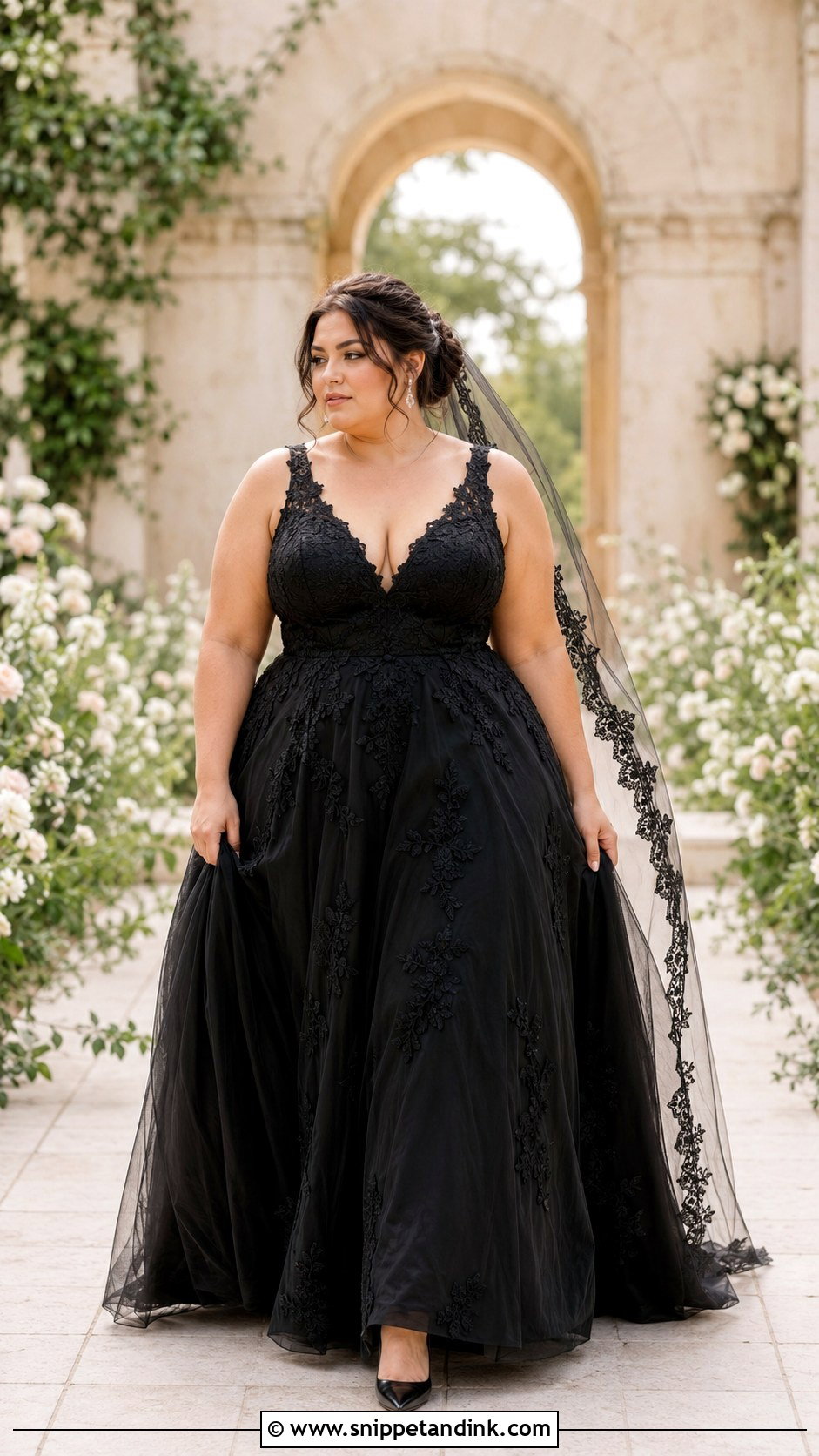
Would you like drama without hauling a full skirt all night? The A-line is where I send most brides who say that. It fits through the bodice and eases away from the waist, so you can sit, kneel for photos and climb stairs without a fight. Vertical appliqué placement lengthens the body, and wide straps under a V-neck give real support where thin ones just dig in. Pointed black heels and pearl or crystal studs are enough. A low bun leaves the neckline clear and gives a lace-edged veil somewhere to anchor.
3. Black Lace Mermaid Wedding Gown
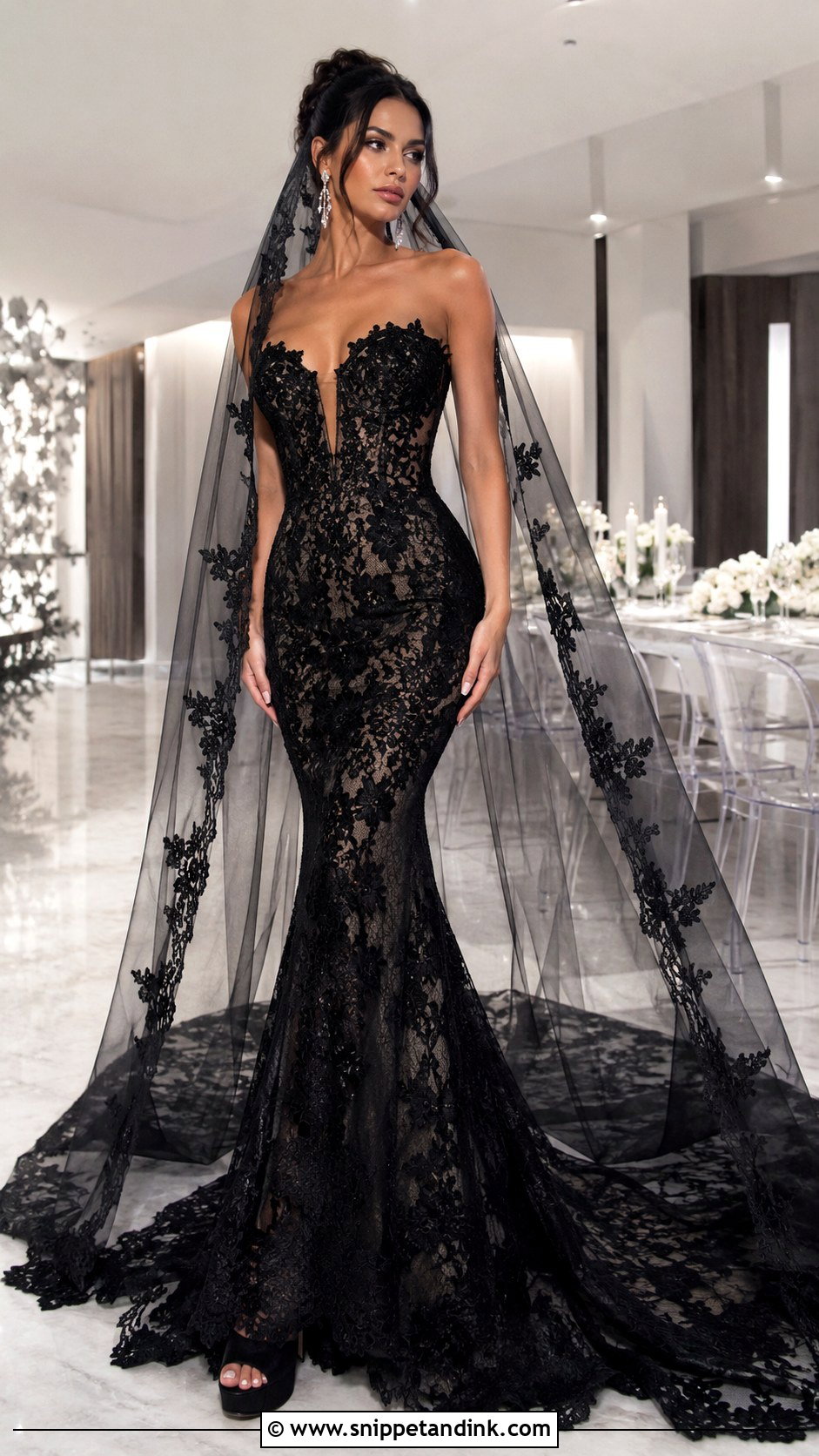
Mermaids are the gowns I see bought on looks and regretted on fit. The flare has to start at or just below the knee; set it higher and you lose the shape, set it lower and you shuffle. Insist on a stretch lining and a lace with some give, because rigid lace over a close fit splits at the hip seam the first time you sit. Floral appliqué softens the line and hidden boning keeps the bodice from wrinkling. I pair this one with black platform sandals or a stable block heel, slim drops and a plain cathedral veil, since beaded veil edges fight with the lace. At every fitting, take full strides and sit in a real chair. A detachable overskirt buys you ceremony volume and a free reception.
4. Black Lace Long Sleeve Wedding Dress
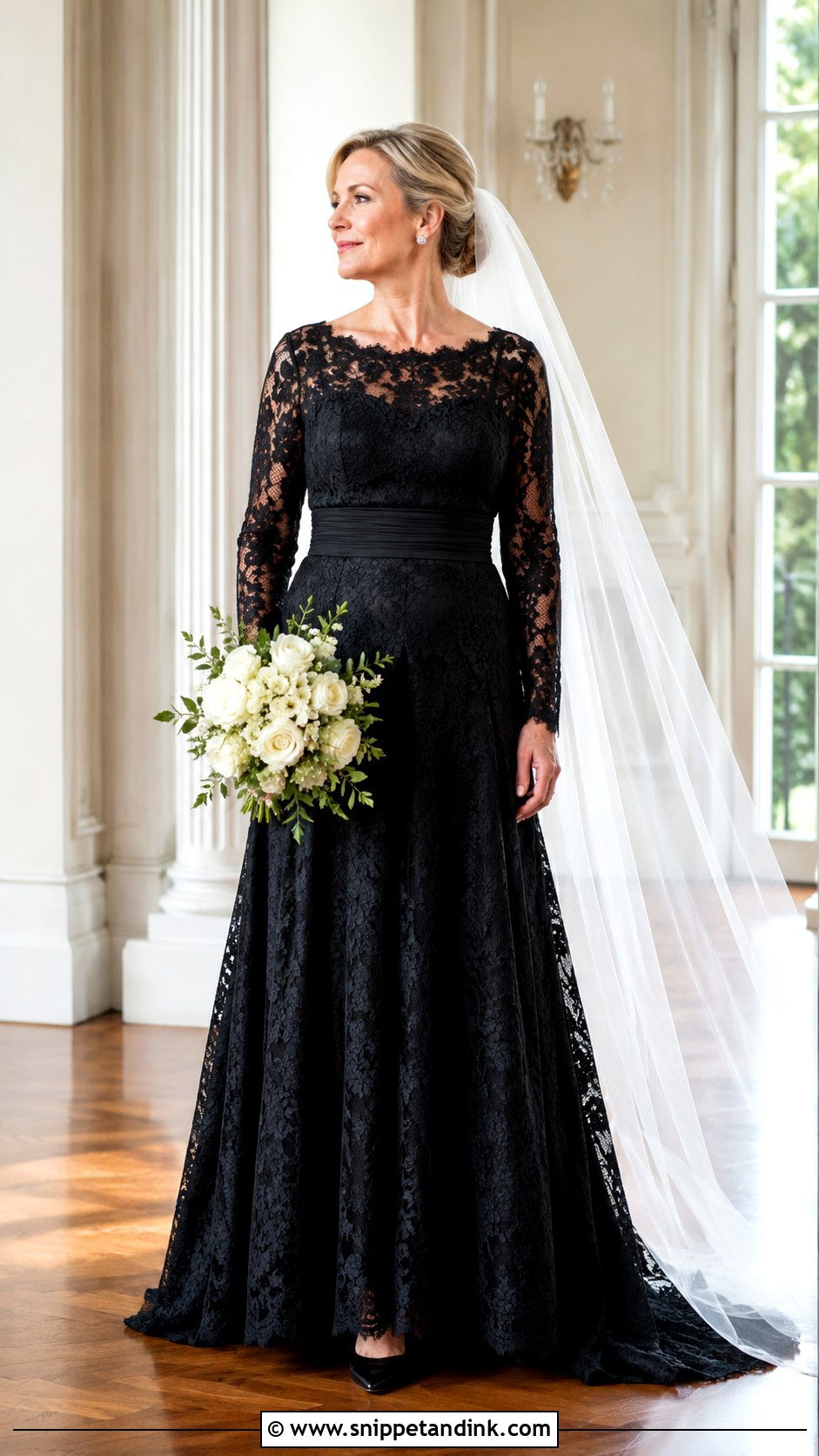
Long sheer sleeves are the most practical drama you can buy for an autumn or winter wedding. The lace keeps the pattern light on the arm while still covering it. Where these go wrong is the armhole: if it’s cut low and tight, you can’t hug anyone, so lift both arms straight up at your fitting and check that the whole bodice doesn’t rise with them. Skip heavy beading at the elbow, where it rubs. A bateau or soft V balances the covered arms, and small crystal studs with a velvet clutch keep the look quiet. Hair goes up and sleek so it doesn’t tangle in the lace at the shoulder.
5. Black Lace Strapless Wedding Gown
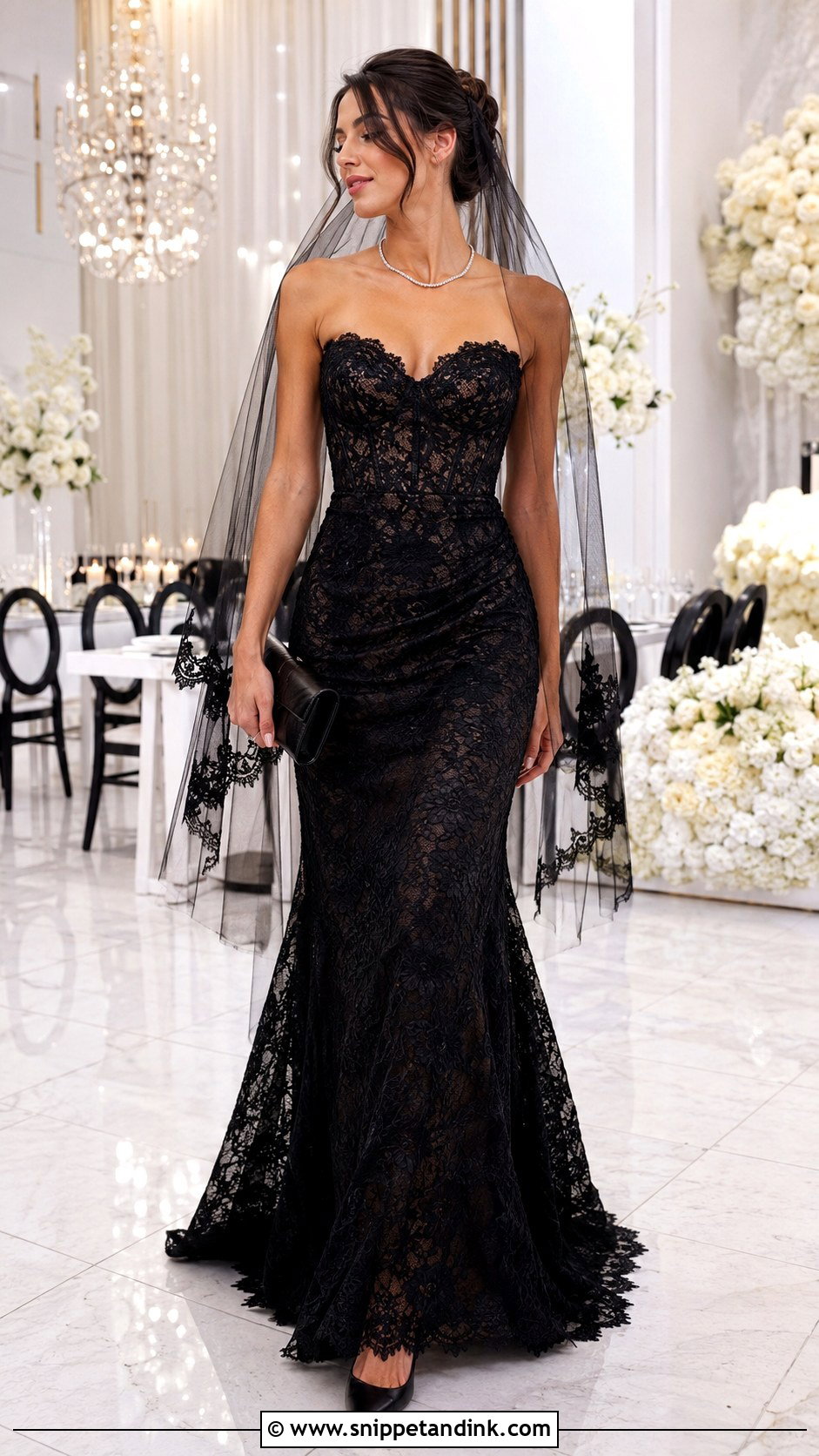
A strapless black bodice should hold itself up through boning, cups and a waist stay, not through being cinched tight. If you find yourself tugging it up in the mirror, the fit is wrong at the waist, not the bust. A sweetheart line reads romantic and a straight-across neckline reads sharper. I usually suggest a slim crystal necklace here, since the bare shoulders give it space. An ivory veil over black is a bold contrast, while a black tulle veil melts into the gown. Bring a lace bolero for a cold evening, and test sitting and lifting your arms before you sign off on alterations.
6. Black Lace Off Shoulder Wedding Dress
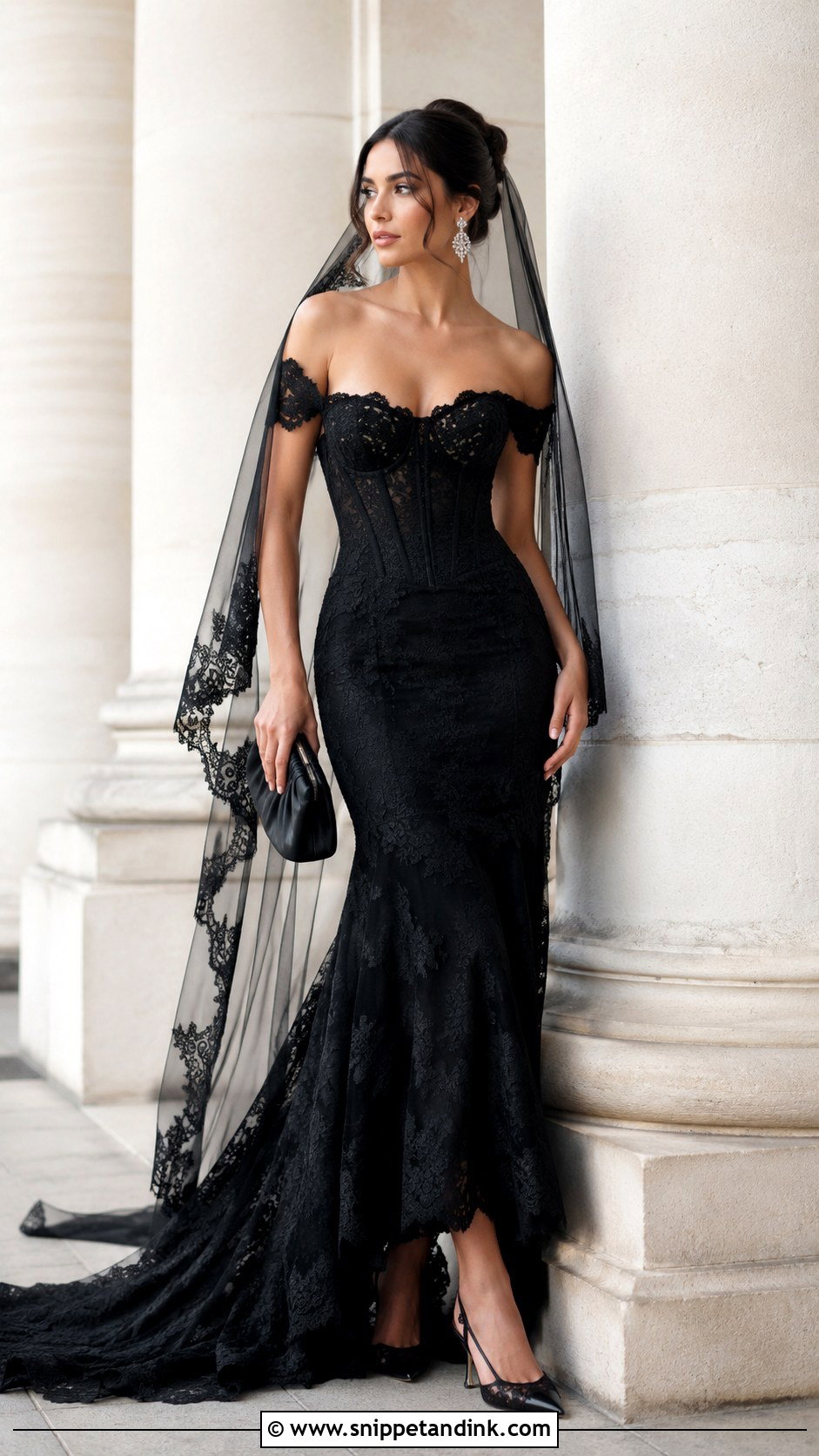
Off-the-shoulder bands look graceful right up until you raise a glass. That’s the trade-off: the lace band sits on the upper arm, so arm movement is limited unless the band has hidden elastic or the bodice has a corset doing the real holding. Ask your seamstress about clear detachable straps for the reception. With the shoulders on show, statement earrings beat a necklace every time. A loose low bun and a sheer chapel veil let the neckline stay the focus, and a scatter of appliqué that travels from the band into the bodice ties the whole dress together.
7. Black Lace High Neck Wedding Gown
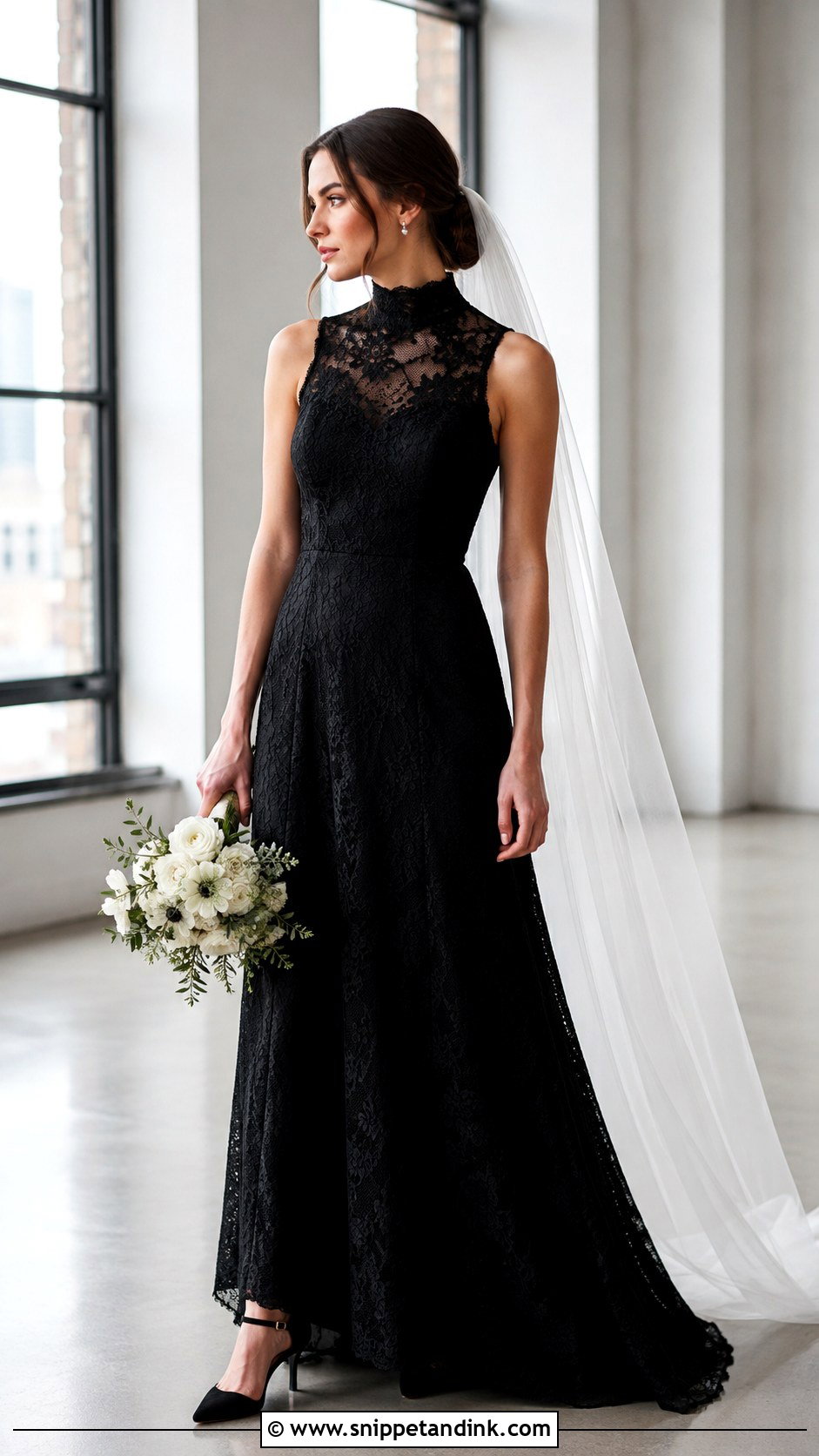
High necks only look heavy when the collar is lined solid. The good versions keep sheer lace across the collarbone and upper chest, with the opaque lining starting lower, so you see skin through the pattern. Cap or long sleeves suit cold months; sleeveless keeps it from feeling buttoned up in summer. No necklace, since the collar is already jewelry. Pointed ankle-strap heels and small earrings finish it. For hair, a neat bun or polished ponytail, and attach the veil below the style so the back view of the collar isn’t covered.
8. Black Lace Corset Wedding Dress
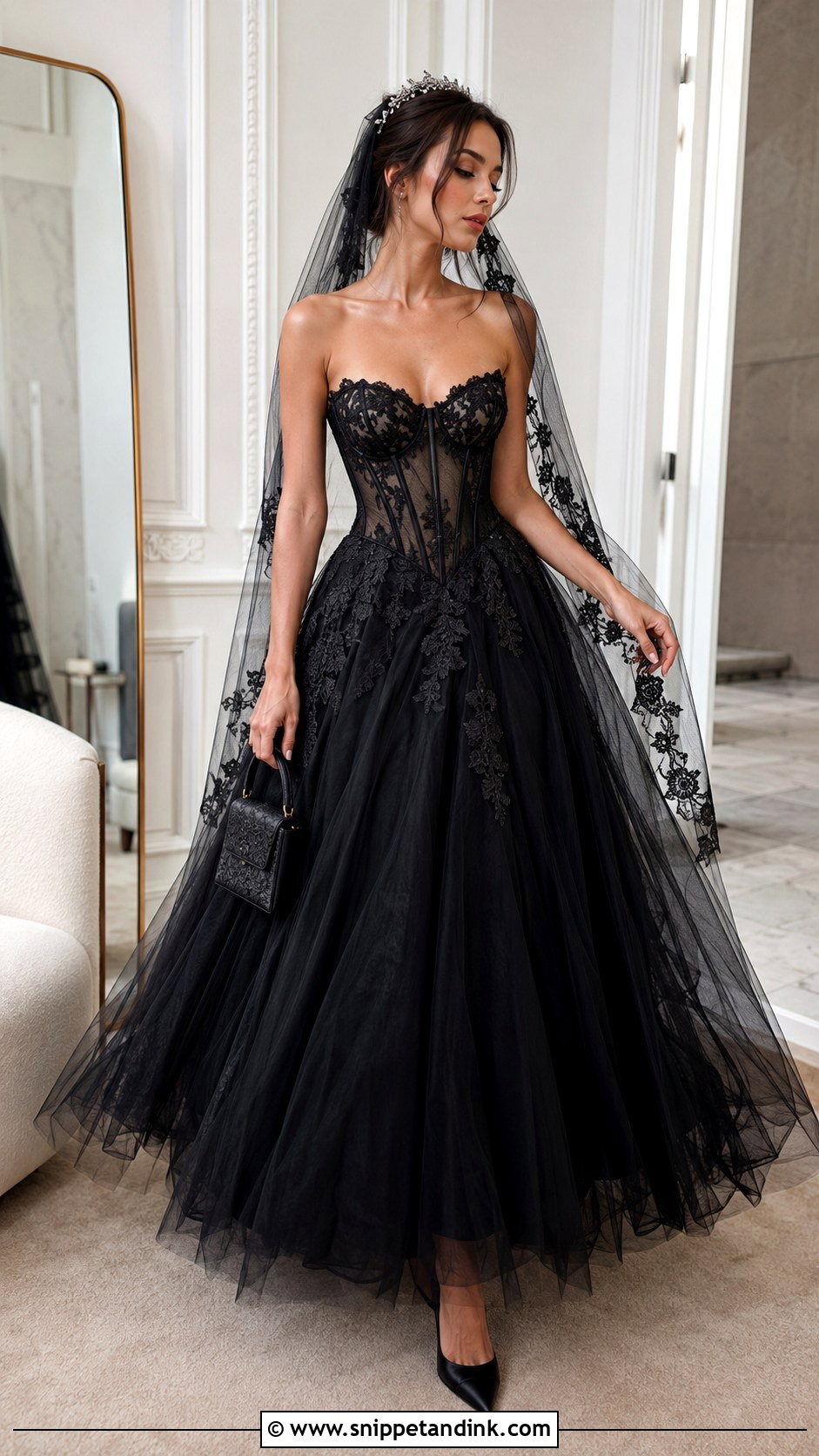
I fit corset gowns more carefully than any other style, because the temptation is to lace them tighter instead of fitting them properly. A good corset bodice spreads its support across many bones and finished seams, so you can breathe, eat and sit without it digging into your ribs. Floral lace over the corset softens the structure, and a basque or slightly dropped waist lengthens the torso. You can take it two ways: full tulle for a big ceremony, or a narrow skirt for a sharper city look. Black satin heels and a crystal comb are plenty. Choose a lightly edged veil, because heavy appliqué competes with visible boning.
9. Black Lace Sheath Wedding Gown
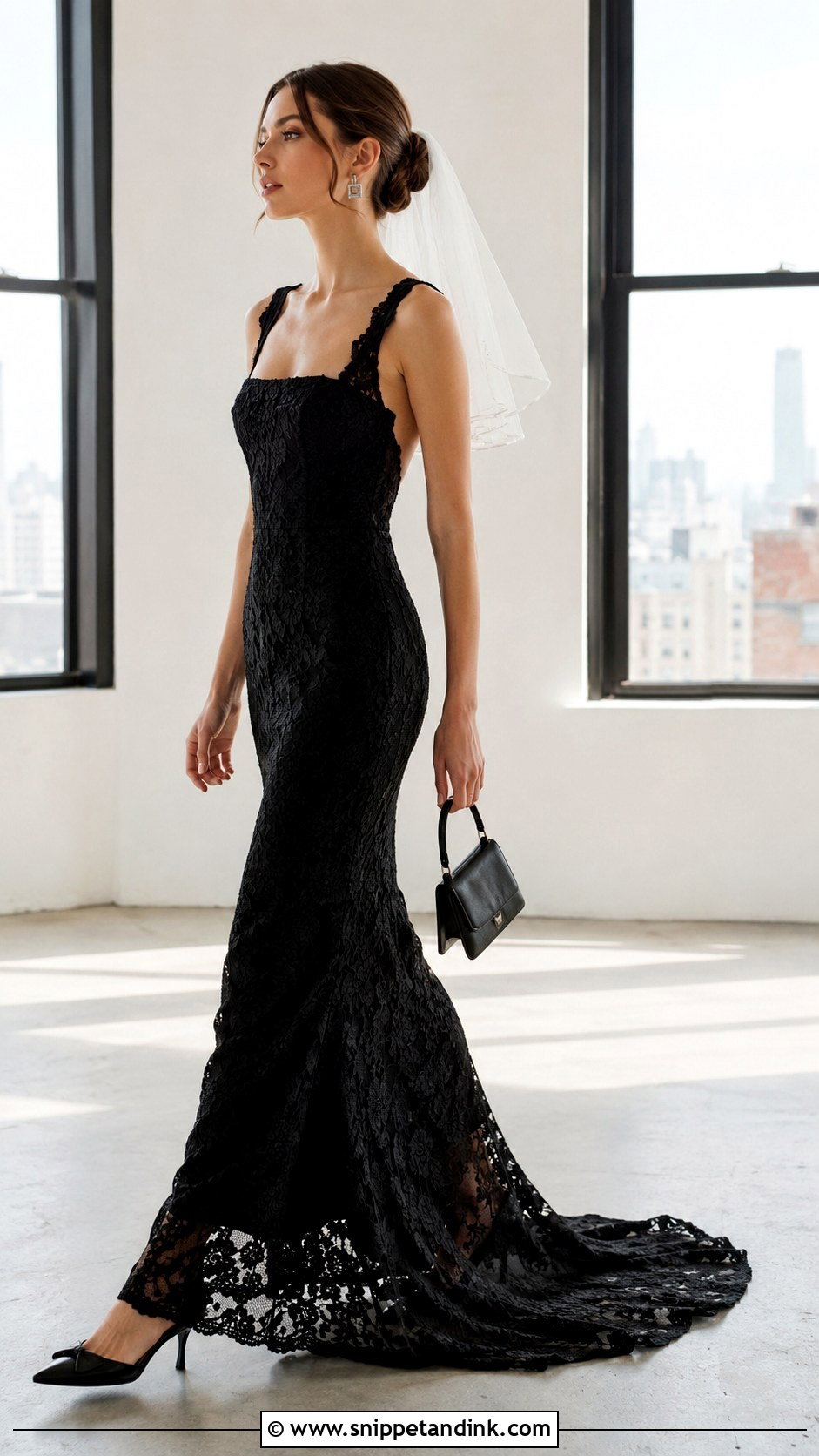
Sheaths suit small ceremonies and brides who want to be able to move. The cut falls close to the body with no flare, so the lining matters more than the lace: I look for soft lace over stretch crepe or jersey lining that recovers after you sit, rather than bagging at the seat. A square neck and low back modernize it. Kitten heels, geometric earrings and a sleek mini bag keep the proportions clean. Wear smooth, skin-toned shapewear to fittings, because black lace on a pale lining shows every line underneath. If you want more presence for the vows, add a removable cape or overskirt.
10. Black Lace Vintage Wedding Dress
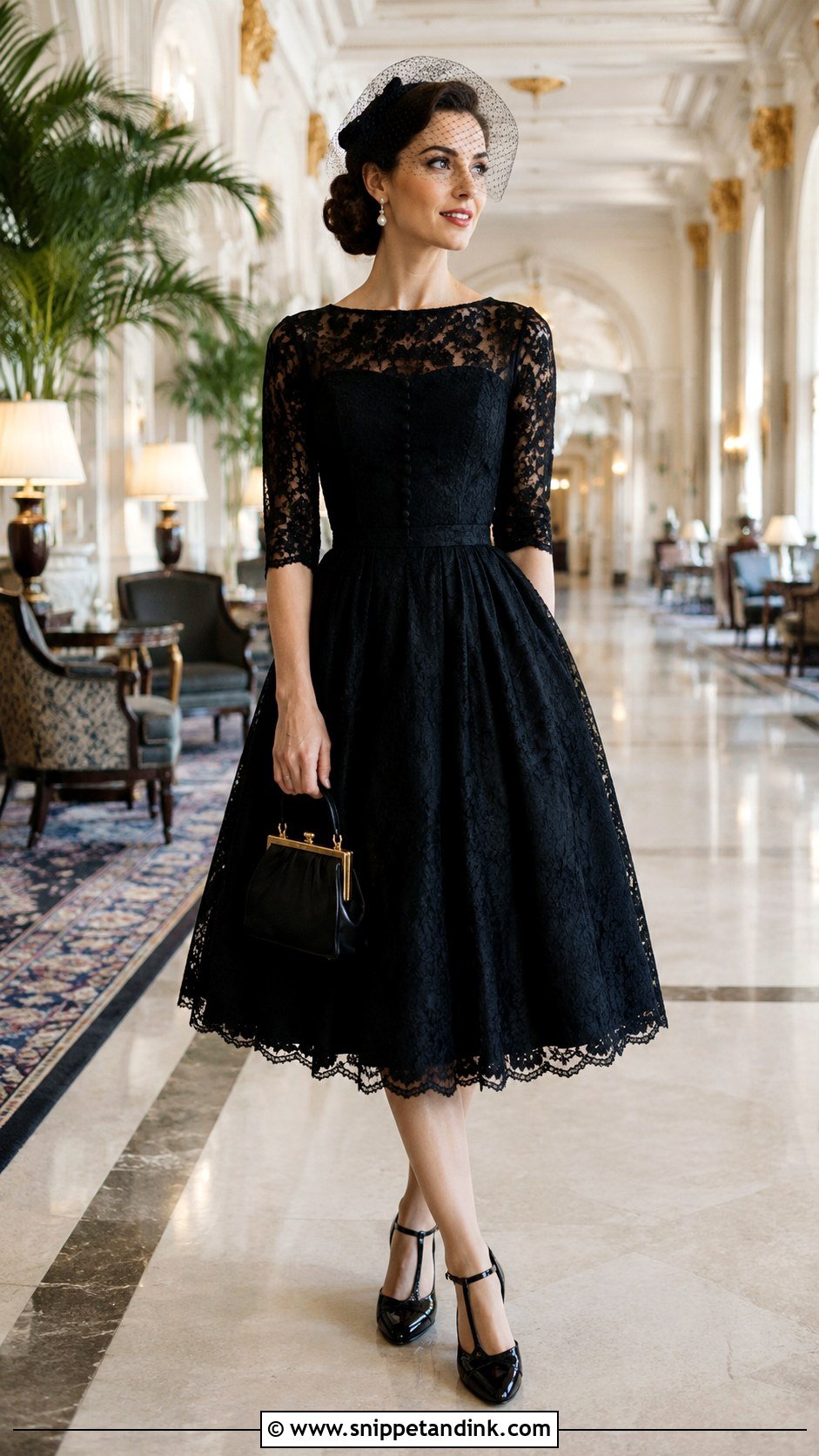
Vintage black lace works when you pick one era and commit to a single reference from it. A bateau neckline with covered buttons says fifties; a fluid floor-length cut with fitted sleeves leans earlier. Stack too many period details and the dress tips into costume. T-strap heels, pearl drops and a small frame bag are period-appropriate without being literal, and a low chignon or birdcage veil finishes it. If you’re working with a true antique, ask your seamstress about adding a modern lining, because old lace is often brittle and a new underlayer takes the strain off it.
11. Black Lace Gothic Wedding Gown
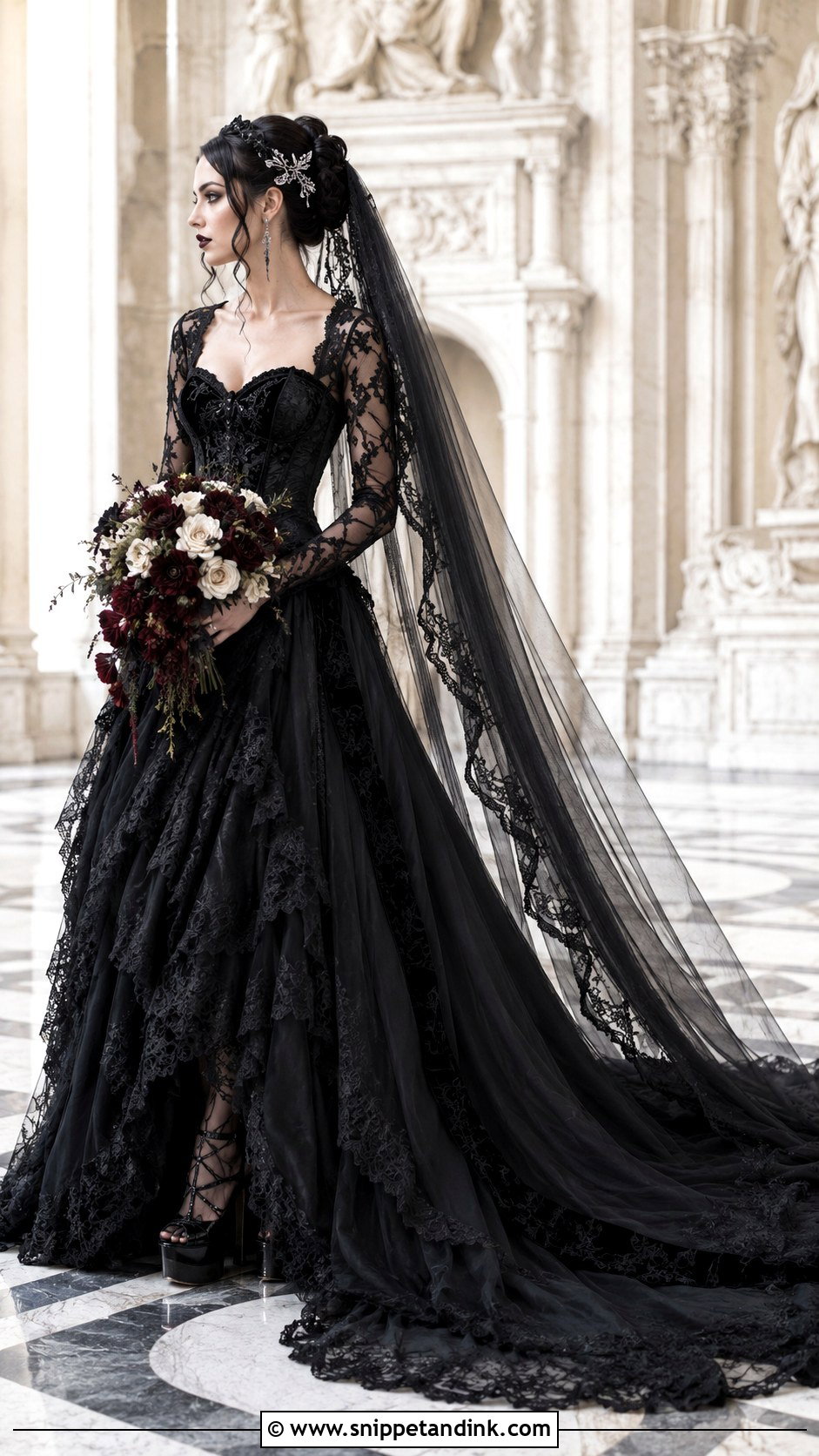
Gothic is all texture, so a black lace gothic wedding gown needs less decoration than people think. A corset bodice, long sleeves and a layered skirt carry the mood on their own. Add depth with tonal embroidery or velvet trim rather than color. Platform heels give you stability under a heavy skirt, and an ornate comb can stand in for a tiara. I’d go with a structured bouquet in deep red or dark greenery. If you add a long black veil, check its lace motif against the gown in daylight; two different black lace patterns stacked together often clash. For makeup, choose a strong eye or a dark lip. Both at once usually overpowers the dress.
12. Black Lace Boho Wedding Dress
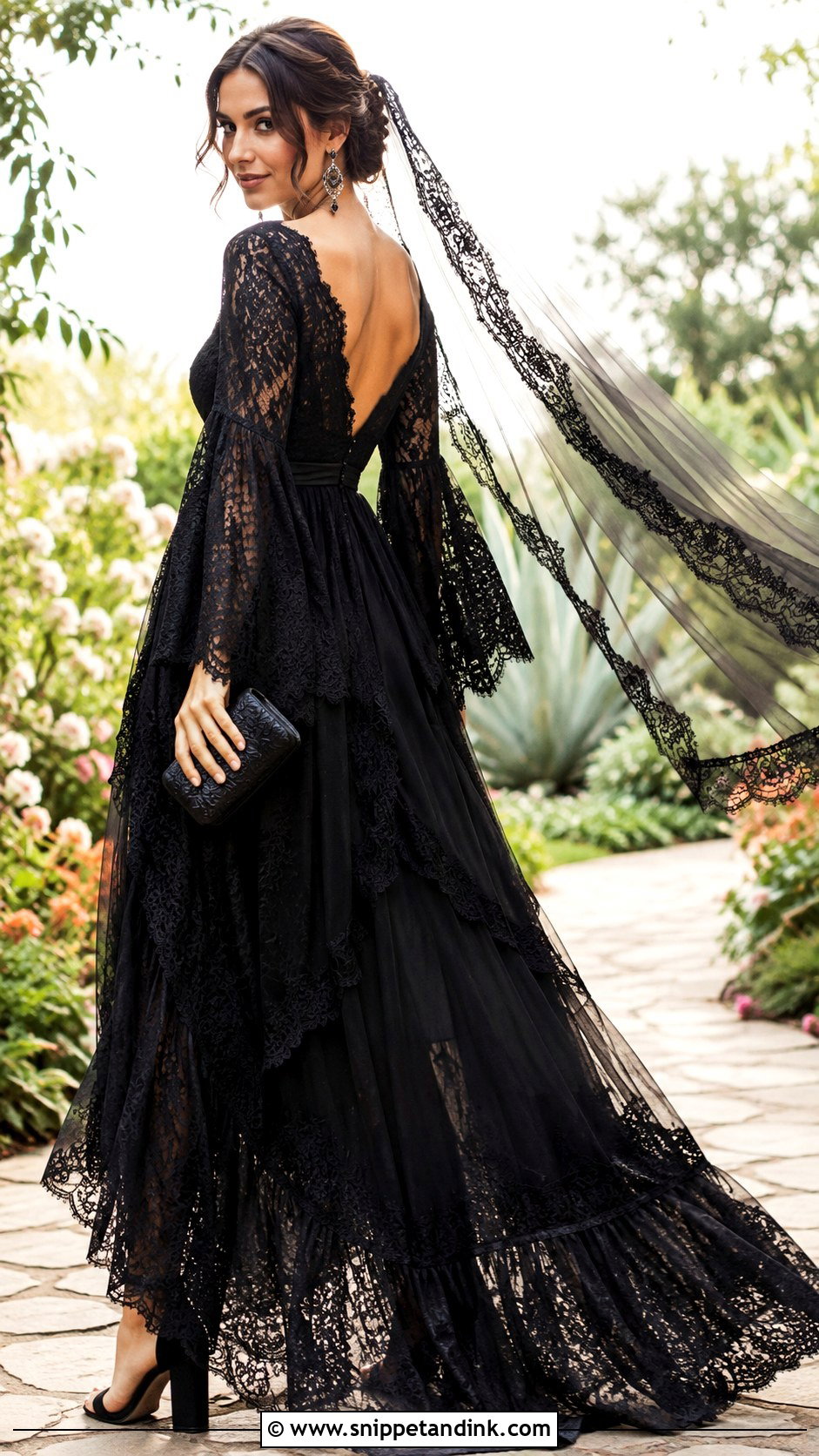
Boho in black is a lighter, looser cousin of everything else on this list. Flowing A-lines or empire waists with bell sleeves and an open back give you a gown you can walk across grass in. Skip stiff petticoats and rigid corsetry here; breathable lining and movement matter more outdoors. Black block-heel sandals won’t sink into a lawn the way stilettos do. Loose waves or a soft braid suit the shape, and a lace-trimmed veil keeps it reading as bridal. A manageable sweep train gives you length without dragging half the garden into the reception.
13. Black Lace Princess Wedding Gown
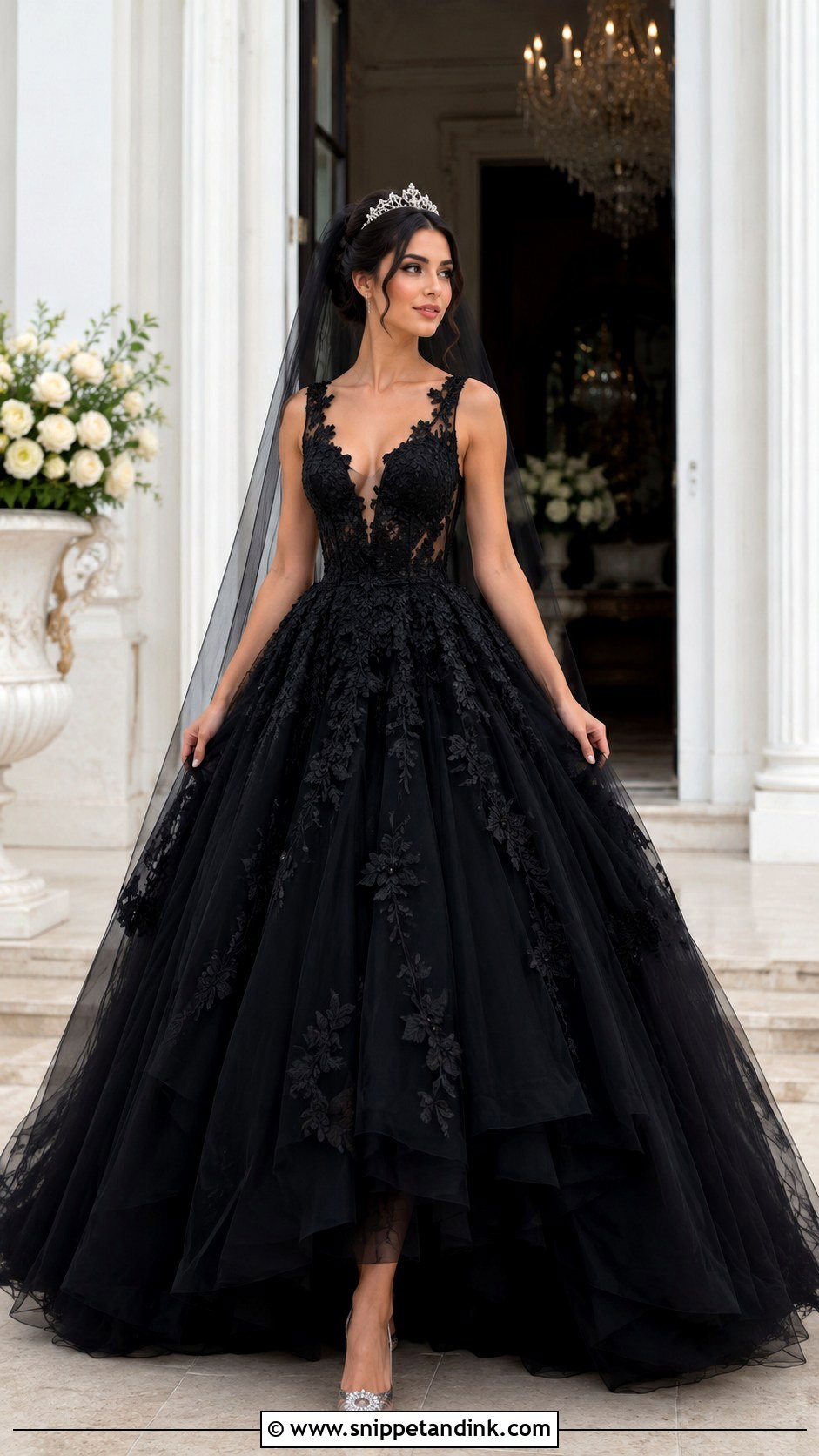
A black lace princess wedding gown is all about the skirt, and the skirt is all about weight. Good layered tulle holds its shape without pulling the bodice down. I like appliqué that starts dense at the bodice and thins out as it travels down the skirt, which draws the eye to the waist. Keep the neckline open, a V or off-the-shoulder, so the top half doesn’t drown. Crystal pumps, a delicate tiara and a plain-edged long veil complete it. The bustle is the detail people forget: have one trusted person practice fastening it at your final fitting, because a princess train left down at the reception gets stepped on within minutes.
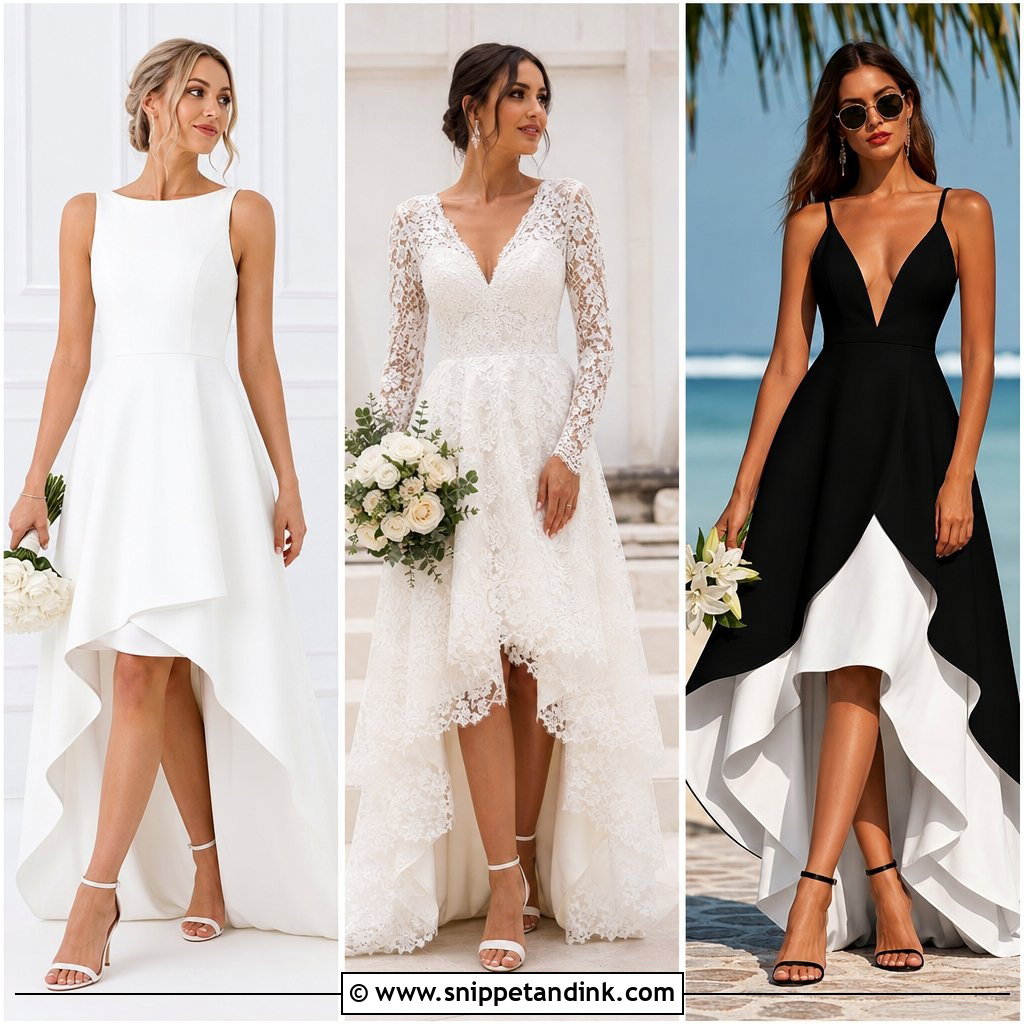
14. Black Lace Tea Length Wedding Dress
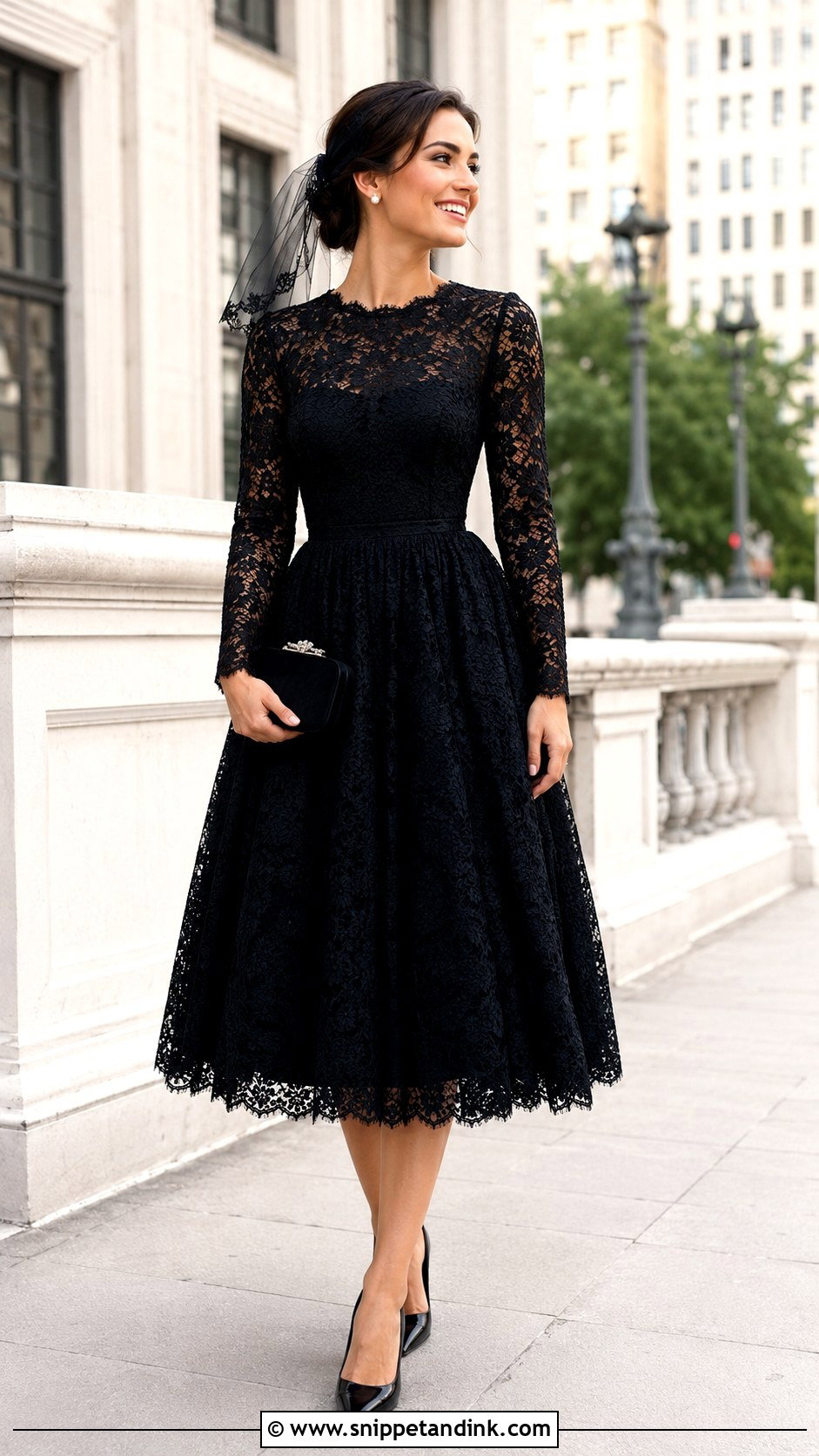
Tea length is the most underrated cut for a black lace bride. The hem falls between knee and ankle, which means your shoes become a real part of the outfit. The one thing I check at fittings is where the hem hits the calf: it should finish at a slimmer point on the leg, not at the widest part of the calf muscle, and a centimeter can change the whole proportion. A full skirt or a gentle flare both work. Pearl studs, a short veil and a small clutch keep it balanced. City halls, daytime ceremonies and dance-heavy receptions suit it best.
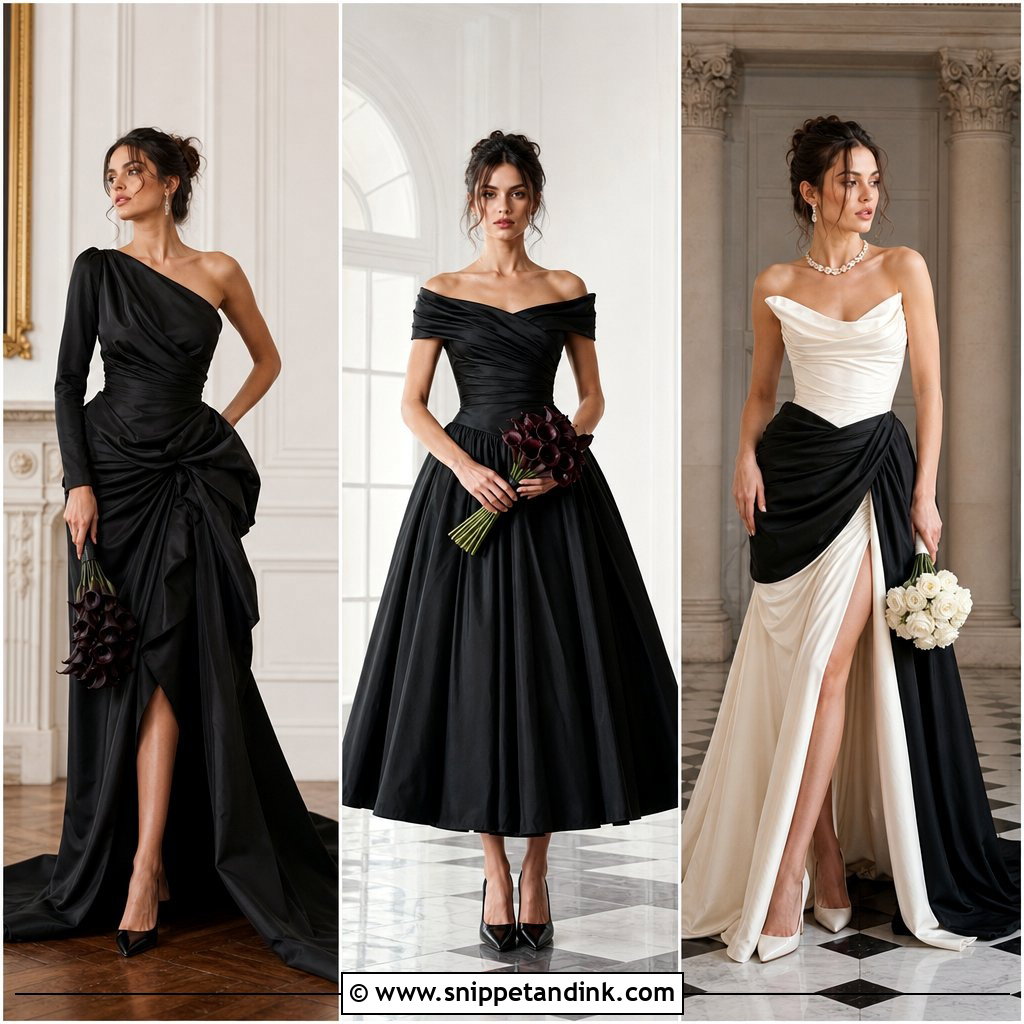
15. Black Lace Cape Wedding Gown
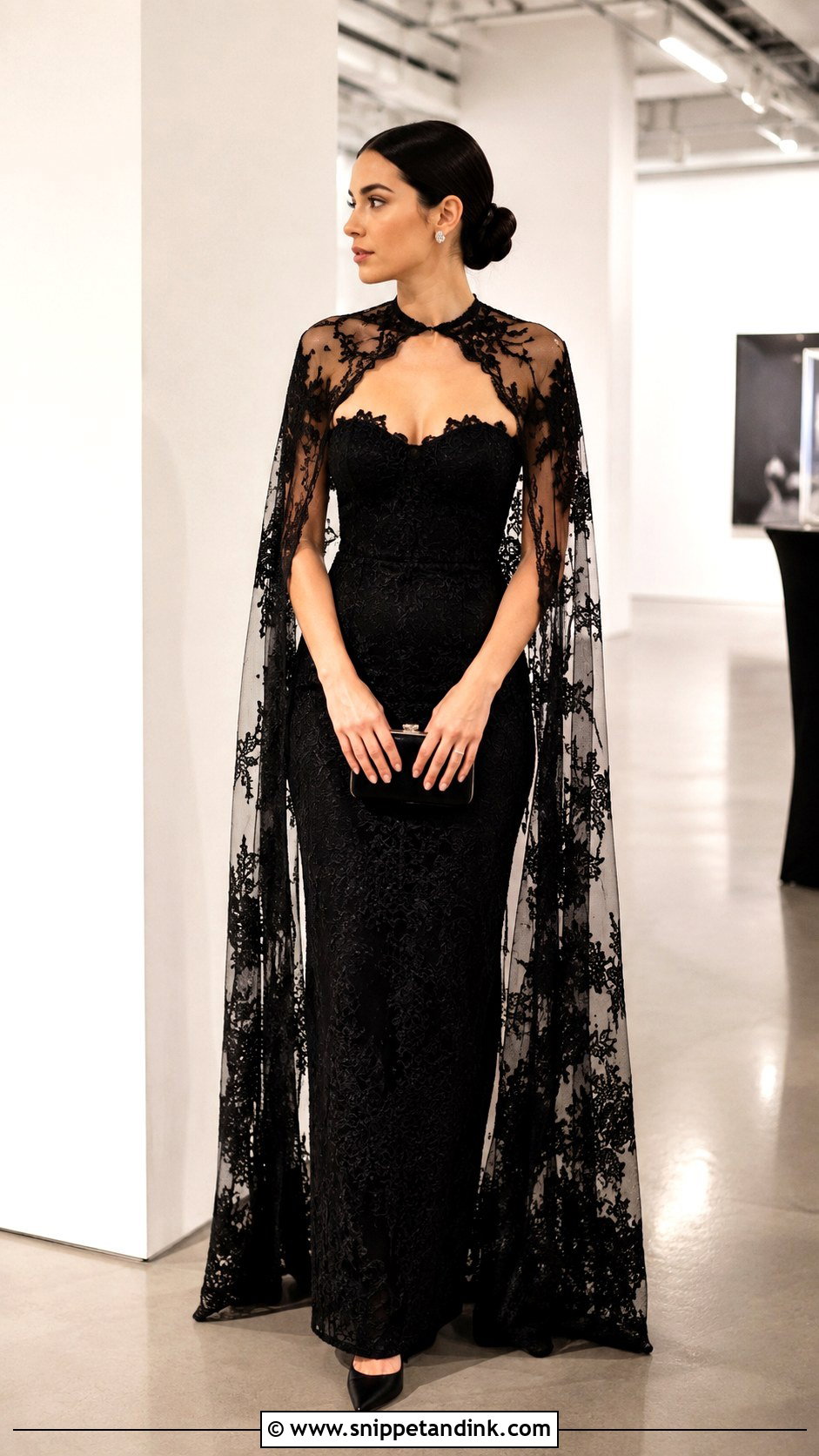
A cape changes a plain black lace gown into something ceremonial without changing the dress itself. Shoulder-length capes add movement; floor-length ones read almost like a veil, so you may not need both. The gown underneath should be simple, a column, A-line or mermaid with a clear shape. Lace motifs on cape and dress should either match closely or contrast on purpose. Check the attachment points: hooks and snaps sewn straight into fine lace will tear it, so ask for a reinforced tape or loop. Skip the large necklace. Taking the cape off for the reception gives you a second look for free.
16. Black Lace Two Piece Wedding Gown
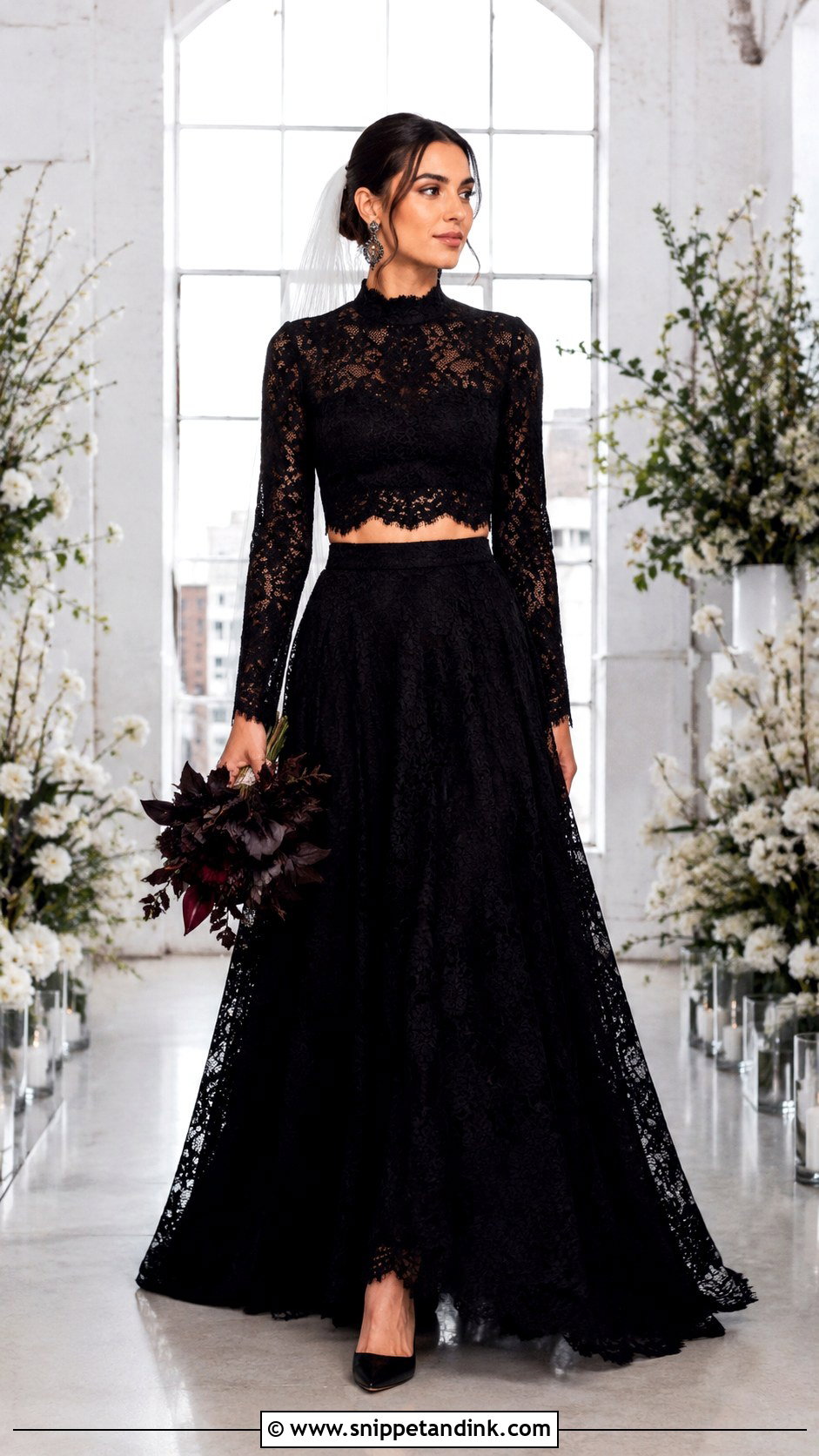
Two-piece sets give you options a one-piece can’t. A fitted lace top with a high-waisted skirt should show only a narrow line of skin or lining between them. Long sleeves with a full skirt feel romantic; a sleeveless top with a straight skirt is cleaner. The fitting problem is always the gap: raise your arms, sit and dance a few steps, and see whether the top rides up. Hidden hooks or a grip band at the waist fix it. Black pointed heels and sculptural earrings suit both versions, and you can swap the skirt for tailored trousers when the dancing starts.
17. Black And White Lace Wedding Gown
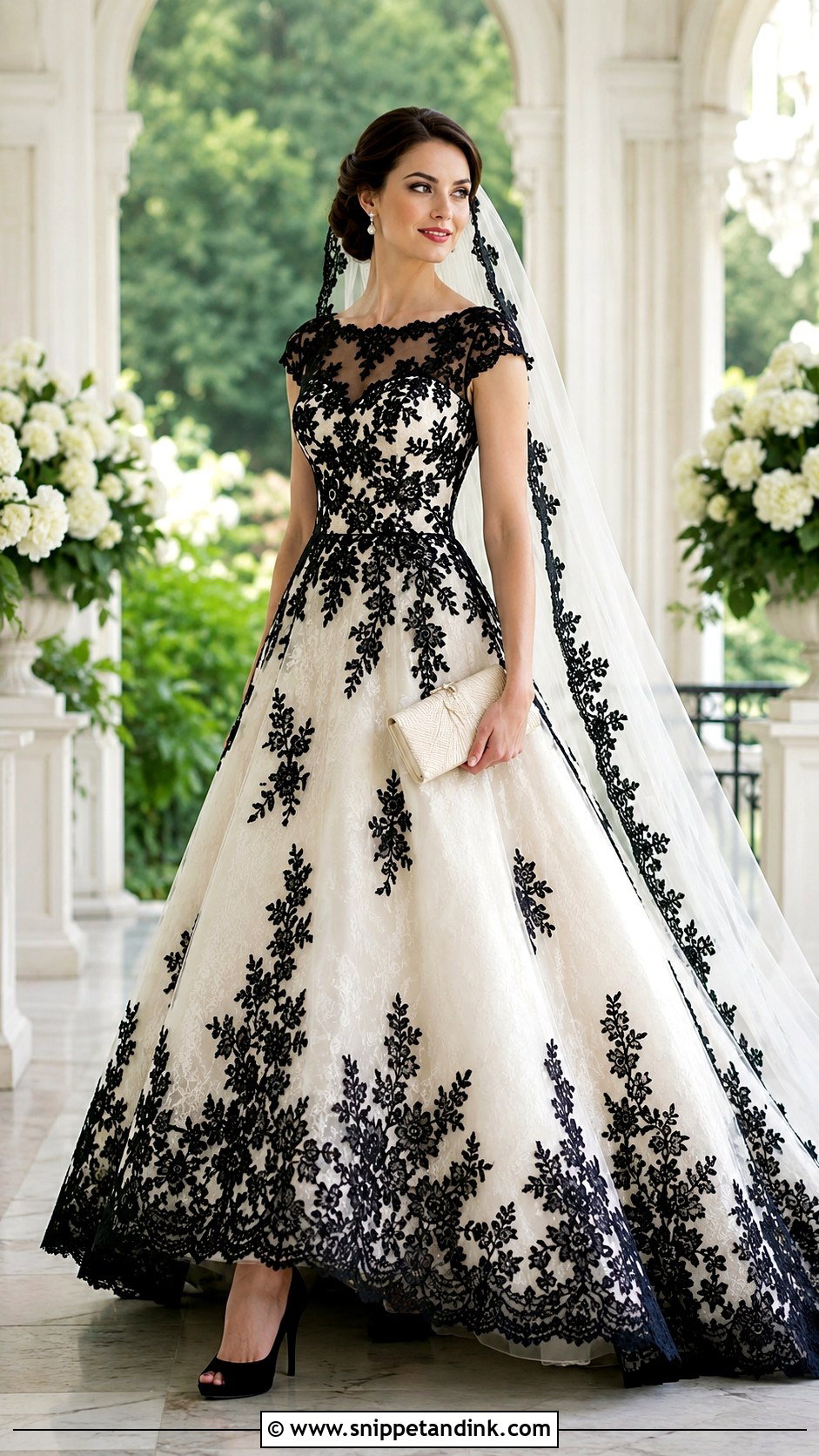
Black over white is the most photogenic combination here, because the pale base lights up every motif. Pick a ball gown if you want impact or an A-line for something softer. The catch is the base color: under black lace, ivory can look cream, blush or even grey depending on the light, so look at the gown by a window and again under warm indoor lights before you commit. Tie the accessories to both colors, black heels with pearl earrings or an ivory clutch, and repeat the two tones sparingly so the outfit doesn’t feel matched to the point of costume.
18. Black Lace Blush Wedding Gown
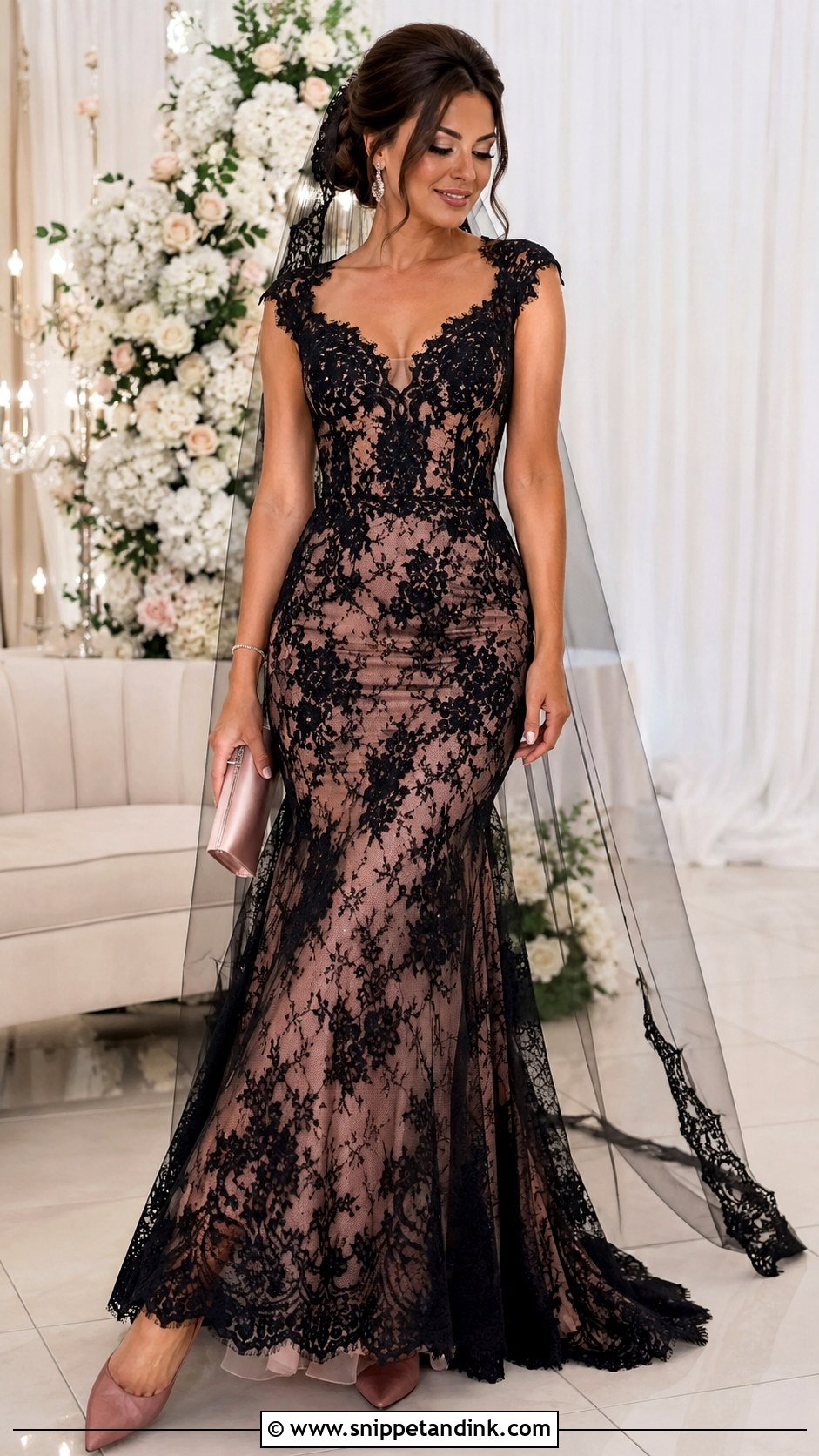
Blush under black lace gives softer contrast than white and warms up the face in photos. It suits A-lines, mermaids and sheaths equally. Blush is also the most variable color in bridal: one maker’s blush is pale pink, another’s is nearly beige. Order fabric swatches and hold them against your skin in daylight, because a blush too close to your skin tone makes the lace look like it’s floating on bare skin. Muted rose or black heels, crystal earrings and a neutral satin clutch keep the palette contained. A black veil carries the dark tone up; a blush one softens it.
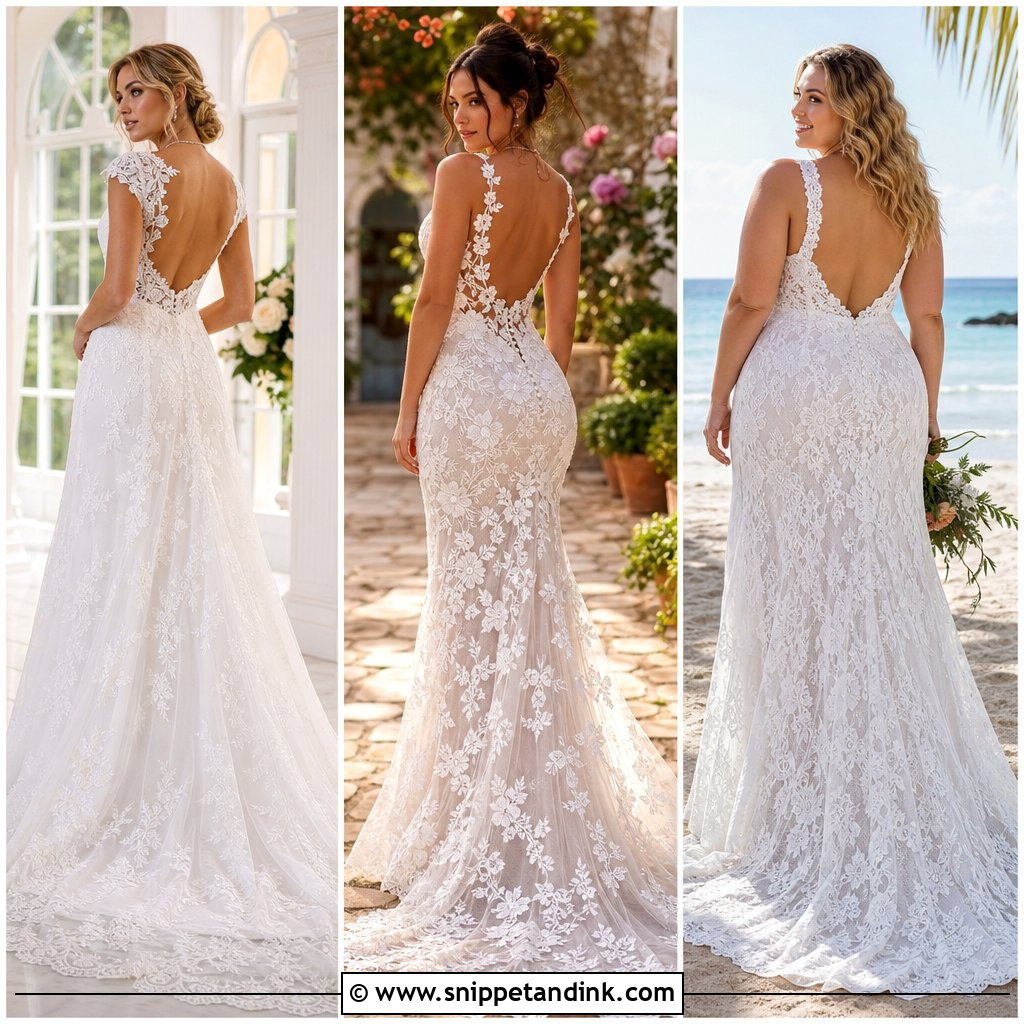
19. Black Lace Plus Size Wedding Gown
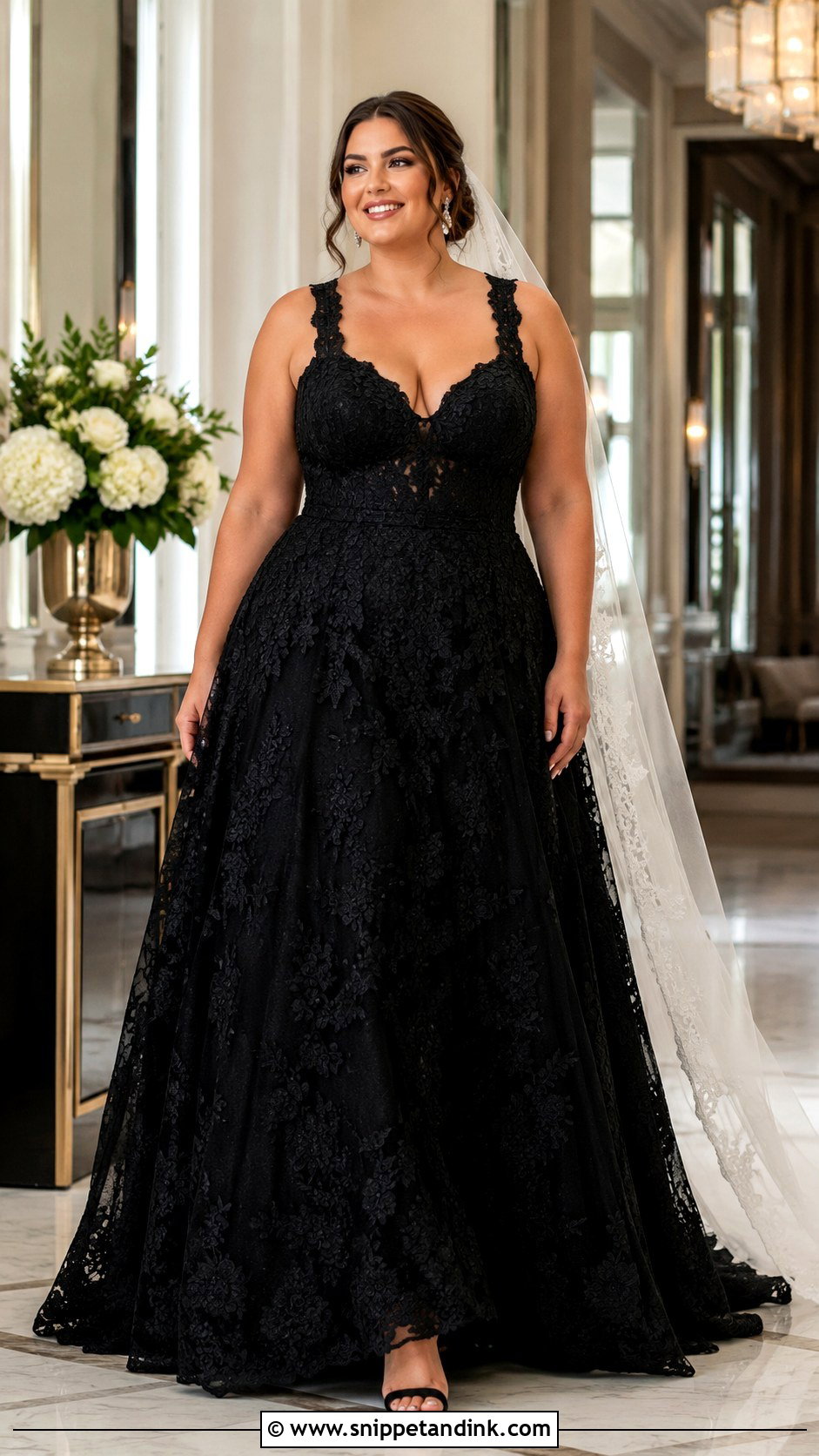
With plus-size gowns, support decides everything, and you can’t add it after the fact. Look for wider straps, built-in cups, smooth interior boning and a waist seam set at your actual waist rather than wherever the size chart puts it. A-lines and ball gowns give generous room in the skirt, and a stretch-lined mermaid can define curves well. Lace appliqué that runs across the seams looks far better than lace that stops at them. Don’t size up to get bust or hip room if the shoulders will then swim; order from the designer’s chart and plan on alterations. Block heels and drop earrings, with a veil sized to the train, finish it.


20. Black Lace Reception Wedding Dress
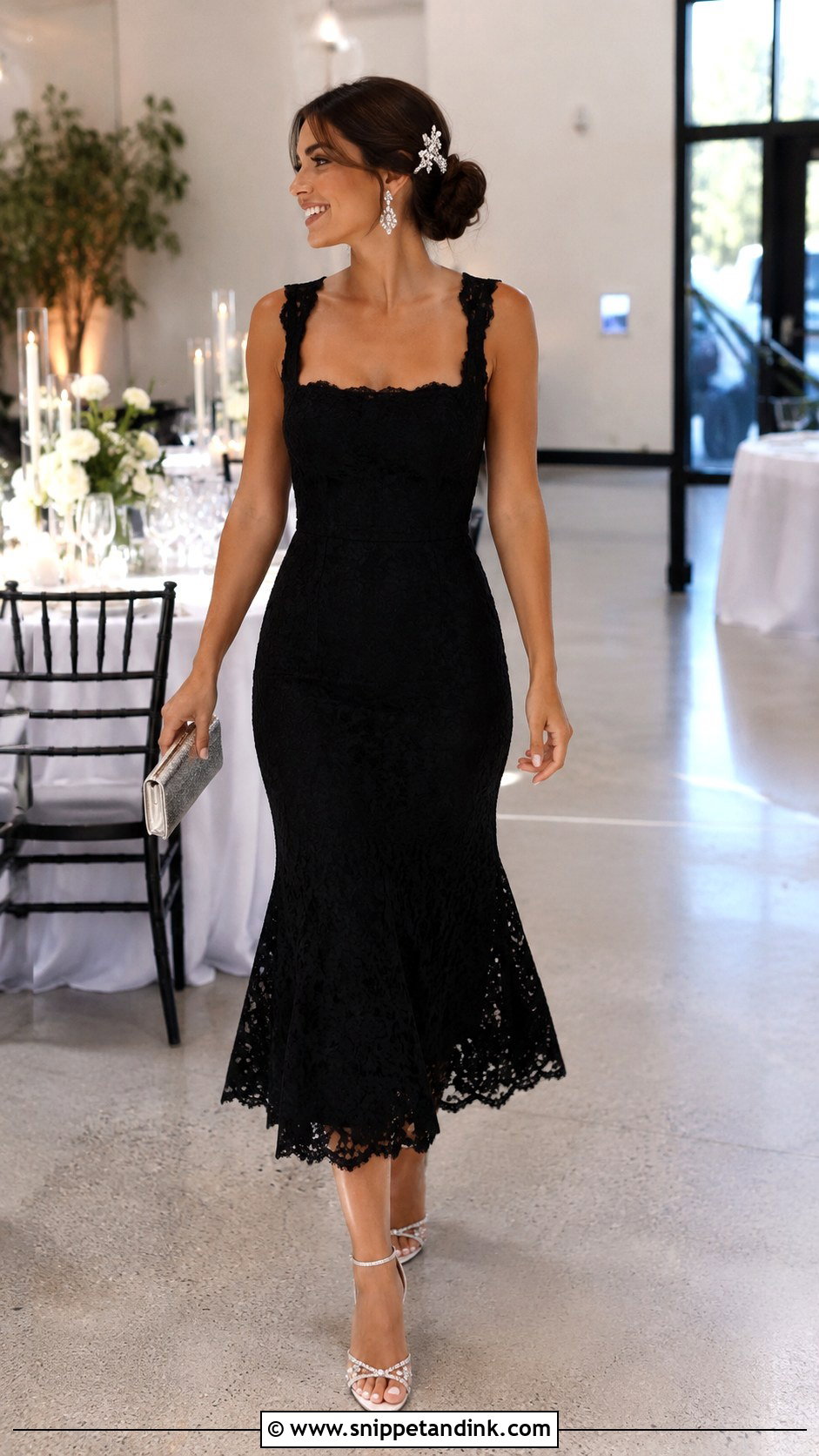
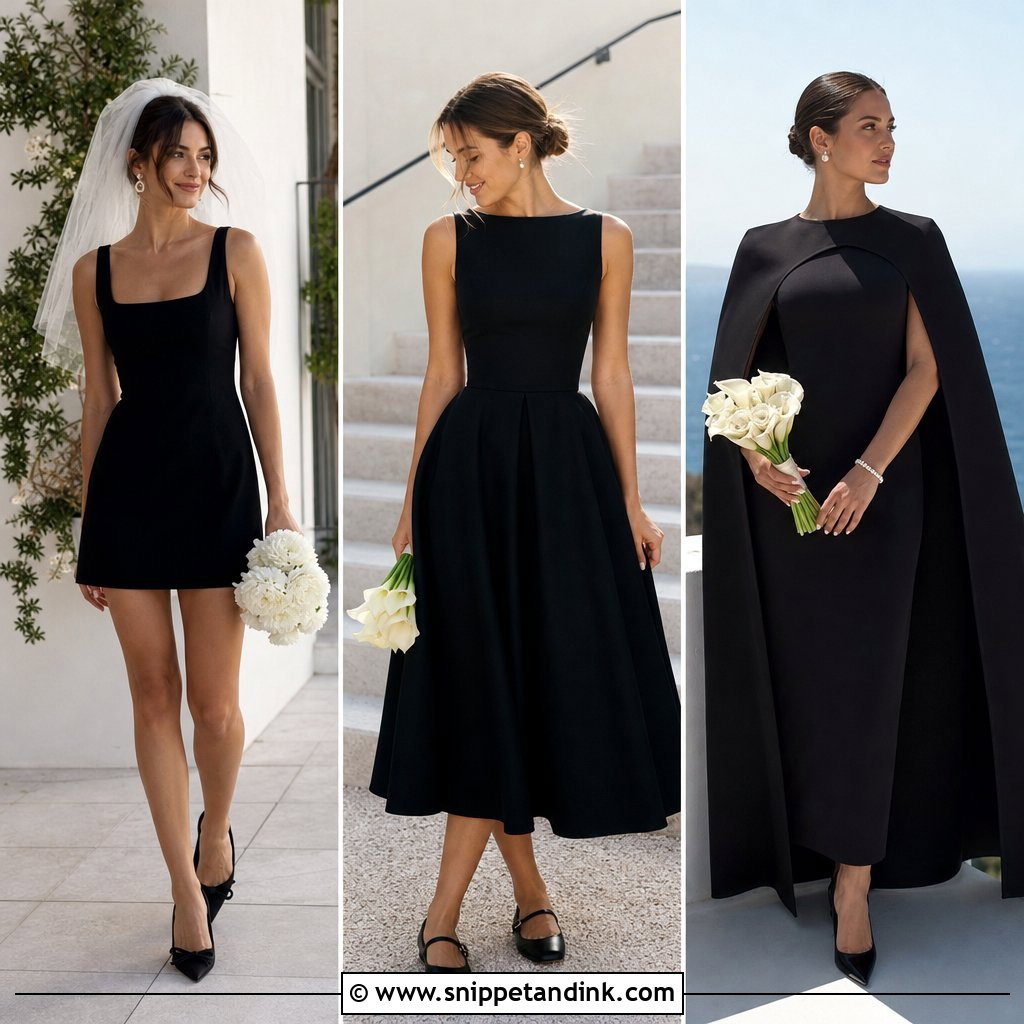
A short black lace dress for the reception keeps the bridal mood while freeing your legs. Tea-length A-lines, fitted midis and ankle-length columns with stretch lining all work. A shorter hem puts the shoes on display, so crystal pumps, black slingbacks or supportive block-heel sandals come into play. Once the veil is off, add statement earrings and a small hair accessory. I like the second dress to echo the first through matching lace or a similar neckline, so the photos look like one story. Test it the way you’ll use it: sit, walk and dance in it at the fitting. Secure straps matter more here than any extra detail.
Sweat, Deodorant and Salt Marks on Dark Lace
Black is forgiving about spilled wine and grass, and unforgiving about anything white. Deodorant, setting powder, sunscreen and dried sweat all leave pale marks on black lace that you’d never notice on an ivory gown. I tell brides to put deodorant on well before dressing and let it dry, step into the gown rather than pulling it over the head, and keep a clean black microfiber cloth in the emergency kit for blotting powder off the bodice.
Steam the gown from the inside, hanging, with the steamer held a short distance away. Pressing an iron straight onto dyed lace can leave shiny patches that don’t come out. If something lands on the skirt during the day, blot it with cold water and leave the rest to a specialist cleaner.
After the wedding
Have the gown professionally cleaned within a few weeks, because body oils and sugar from drinks darken and set over time even when you can’t see them. Store it flat or folded in acid-free tissue inside a breathable cotton bag, never sealed plastic, and keep it out of light. Black dye fades with long exposure to sunlight, and a gown hung near a window will show it along the fold lines first.
Testing a Black Lace Shortlist in Daylight and Indoor Light
A black lace gown should be memorable for the lace and comfortable for the wearer, and the fitting room is where you find out whether it’s both. Compare your shortlist in daylight and indoor light, and sit, walk and raise your arms in each one. Factor in the venue, the season, how long the train is and what the alterations will involve. Keep accessories quieter than the lace. A vintage chignon, a corset with structure or a boho gown you can walk across a lawn in can all be the right answer, as long as it fits the wedding you’re actually having.
You'll Like These Ideas:





Leave a Reply