
A plain gown has nowhere to hide. Without beading or layers of tulle to soften the eye, the fabric, the cut and the fit carry the whole look, which is exactly why I love styling them. The twenty dresses below run from structured satin ball gowns to fluid crepe sheaths, and each one comes with the shoes, jewelry, veil and hair I’d put with it. I’ve also noted where a style asks more of your tailor, your posture or your venue, because a simple dress that suits you is far more memorable than an ornate one that doesn’t.
Plain Fabric Shows Every Alteration, So Plan Fittings Early
On a heavily beaded dress, a slightly loose bodice disappears under the embellishment. On plain satin or crepe, it shows as a ripple in every photo. That’s the trade-off with a simple gown: you save on decoration and spend that attention on fit.
Most bridal gowns take several months to arrive after ordering, so I tell brides to order roughly eight to ten months out and to ask the shop for its own lead time in writing. Alterations usually start around eight weeks before the wedding and take two or three fittings. Plain gowns sometimes need one more than lace ones, because small adjustments are so visible.
What to bring to every fitting
- The exact shoes you’ll wear, since hem length is set to the heel height.
- Your wedding-day bra or shapewear; a crepe sheath fitted over one bra will pull differently over another.
- Your phone, so someone can film you walking, sitting and turning; plain fabric reveals pulling lines in motion that a mirror misses.
- Any belt, cape or wrap you plan to add, so the seamstress can mark where it sits.
At the last fitting, sit down, hug someone and lift your arms. If anything pulls, gaps or rides up, say so then. It’s a small fix in the studio and a long day if you leave it.
1. Simple Satin A-Line Wedding Gown
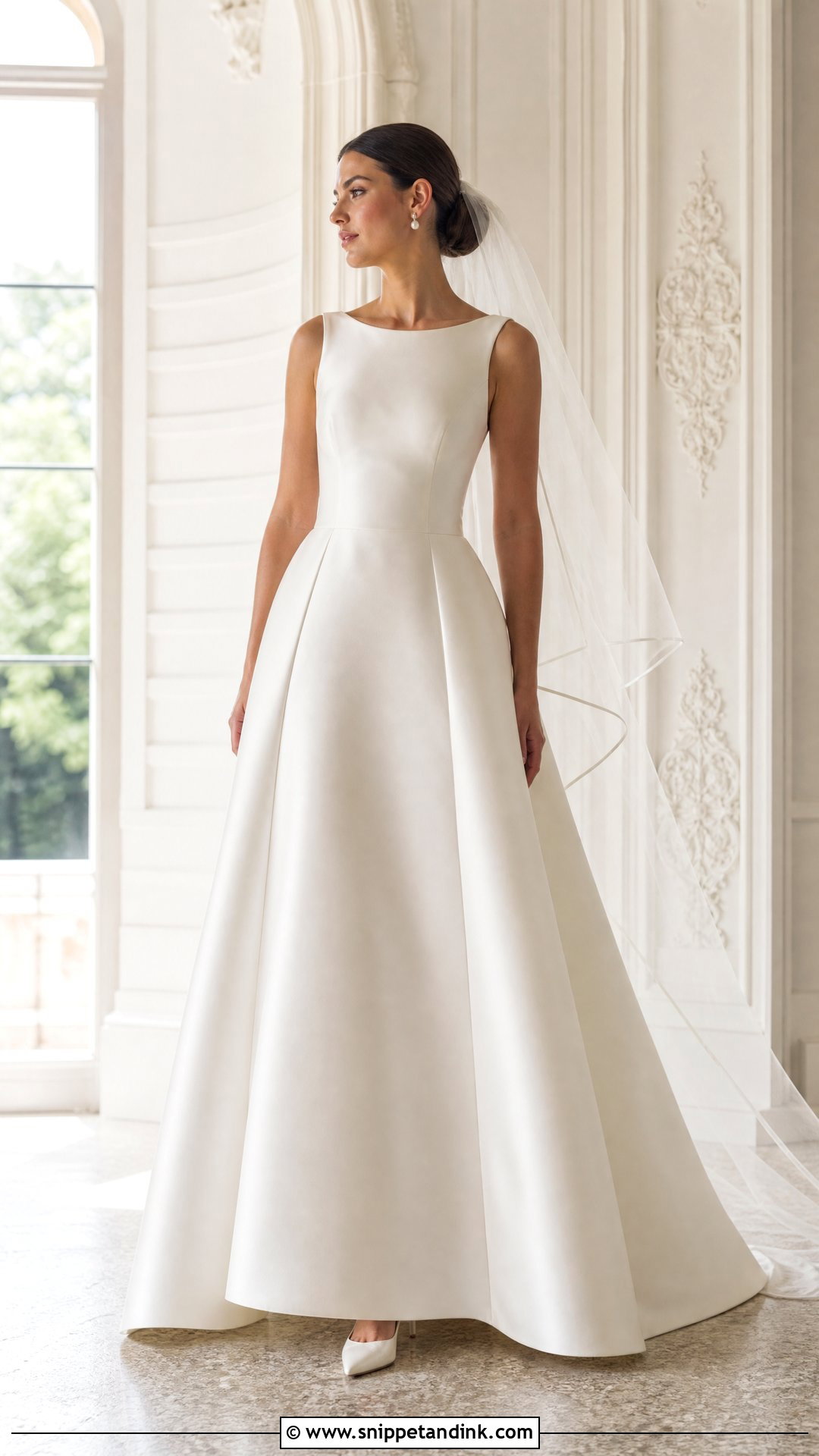
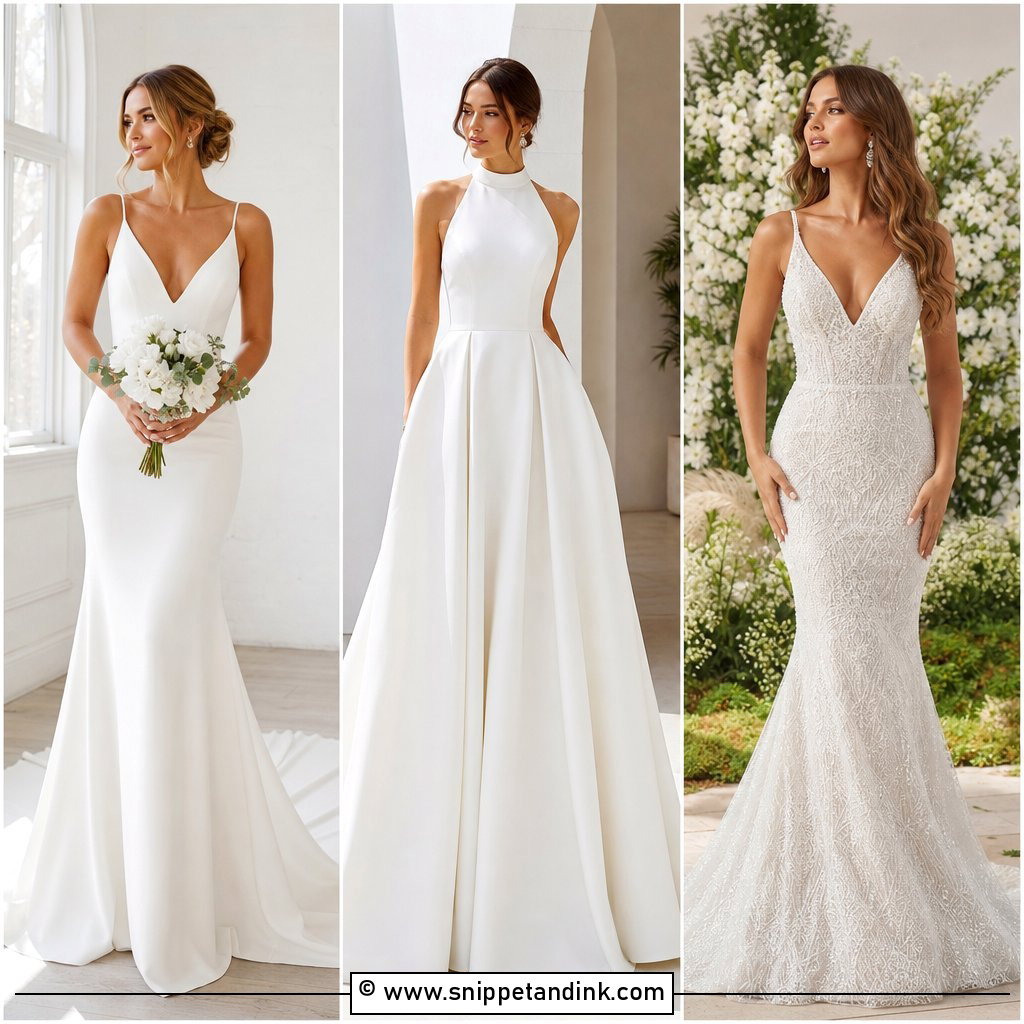
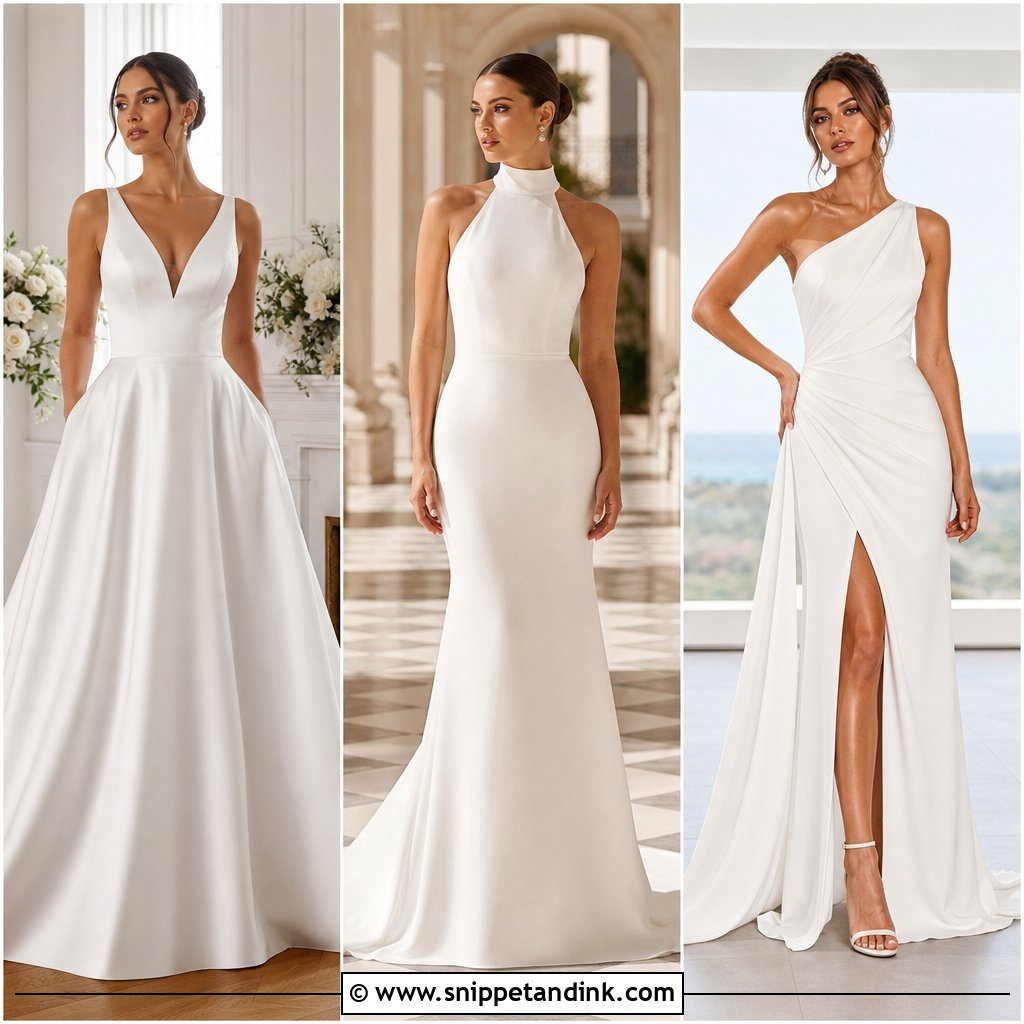
The satin A-line is the gown I suggest when a bride can’t decide, because the skirt falls away from the hips and forgives a lot. Look for a fitted bodice, a seam at the natural waist and a skirt with no gathering at the top; gathers add bulk exactly where satin shows it. Ivory satin gives a soft sheen on its own, so I keep the rest quiet: pointed pumps, pearl studs and a fingertip veil with a narrow satin edge. A low bun leaves the neckline clear. If you want more waist definition, a slim self-fabric belt is enough. This shape adapts to almost any level of formality, from a ballroom to a garden.
2. Strapless Mikado Ball Gown
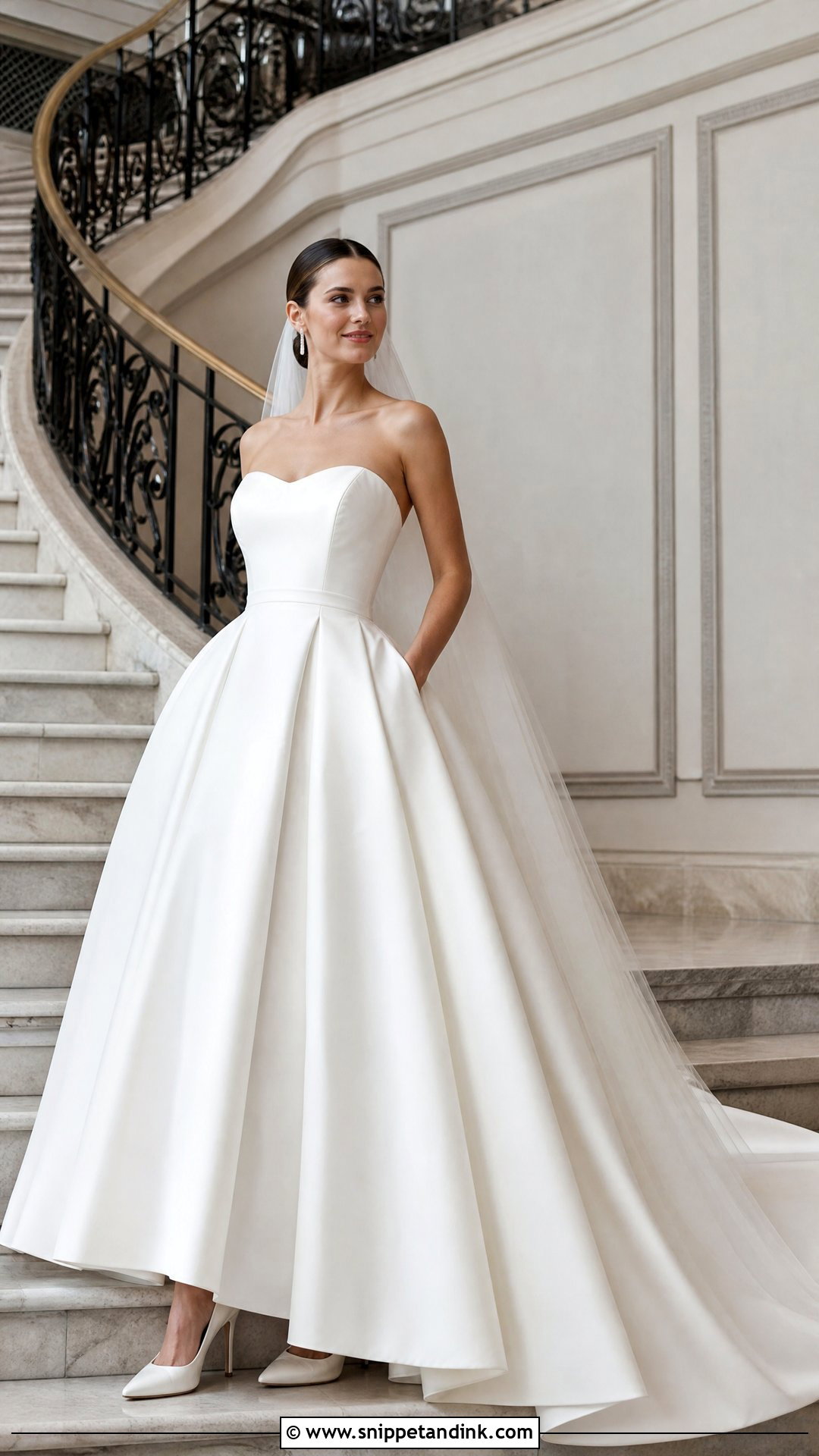
Crisp Mikado fabric holds its own shape, which is what lets a strapless ball gown look finished with no decoration at all. The bodice needs proper boning; when I check a strapless fit, I ask the bride to raise both arms and bend forward, and if the top edge gaps or slides, it goes back to the seamstress. Hidden pockets are worth asking for. Keep the jewelry small, a pair of drop earrings, and pair it with satin heels and a chapel veil. A smooth chignon shows the shoulders. Bring a sheer wrap for arrival photos if you feel exposed, and save this gown for a room with space, since a full Mikado skirt needs width on aisles and staircases.
3. Square Neck Crepe Wedding Gown
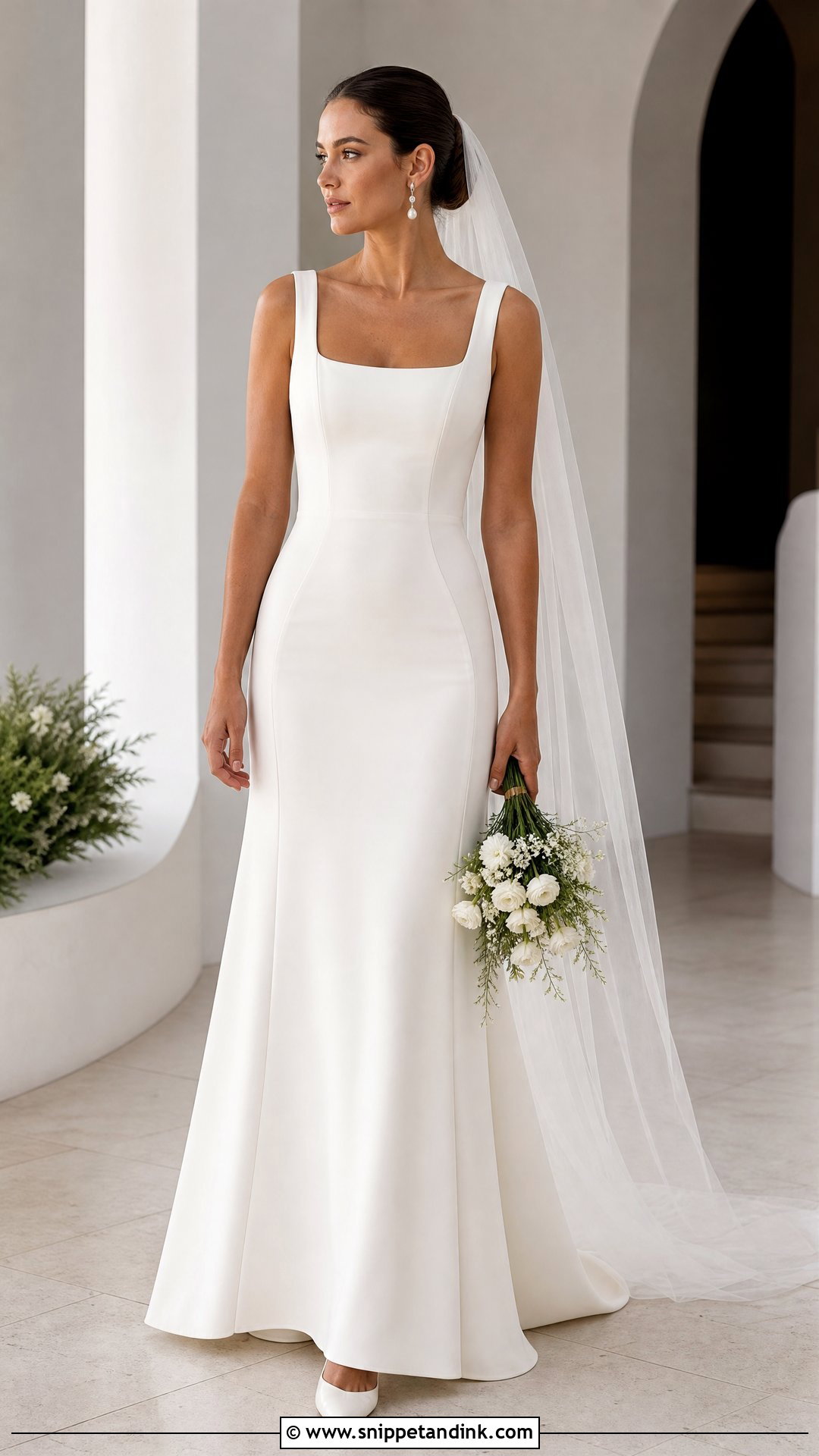
Square necklines are less forgiving than they look in photos. The corners need to sit exactly at the same height on both sides, and wide straps should land on the shoulder rather than sliding toward the arm. When that’s right, a crepe square-neck gown frames the collarbone cleanly. I like a medium-weight crepe here because lightweight crepe can look like daywear. Pearl drops, a fine bracelet and closed ivory pumps finish it, with a long plain veil if you want ceremony drama. If you’d like a defined waist, princess seams shape it more quietly than any jeweled belt.
4. Long Sleeve Bateau Wedding Gown
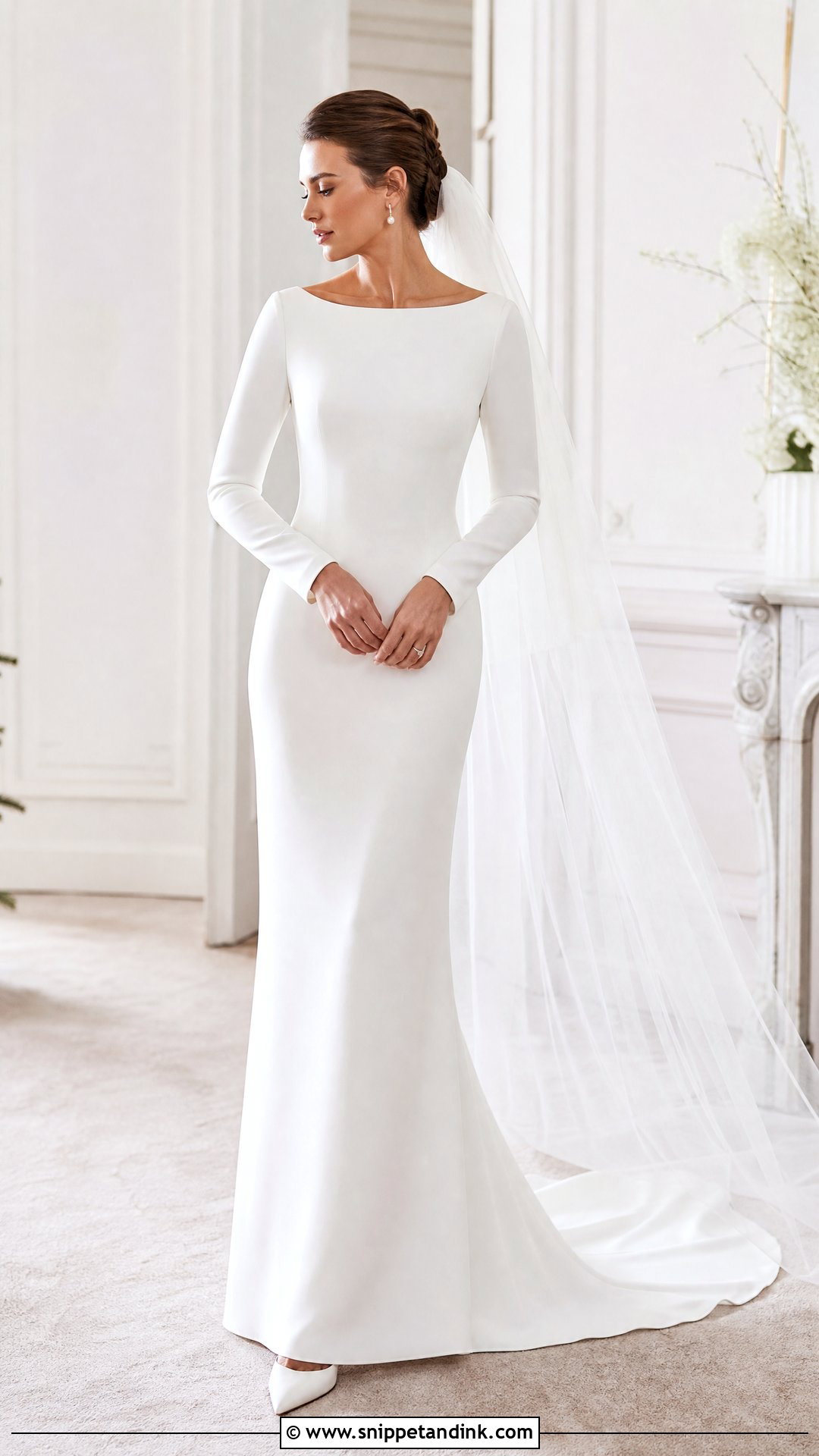
A bateau neckline with long sleeves is one of the most composed looks in bridal, and it relies entirely on alterations. Sleeves are where I see most fitting trouble: too tight at the bicep and you can’t hug anyone, too long at the wrist and the fabric bunches when you hold your bouquet. Ask your seamstress to fit them with your arms bent, not hanging. Smooth crepe or matte satin keeps the line clean. The neckline already does a lot, so I skip the necklace, add pearl earrings and a slim bracelet, and finish with pointed heels and a cathedral veil. A French twist suits the high neck. It’s warmest for autumn and winter, though light crepe works year-round.
5. Off Shoulder Satin Wedding Gown
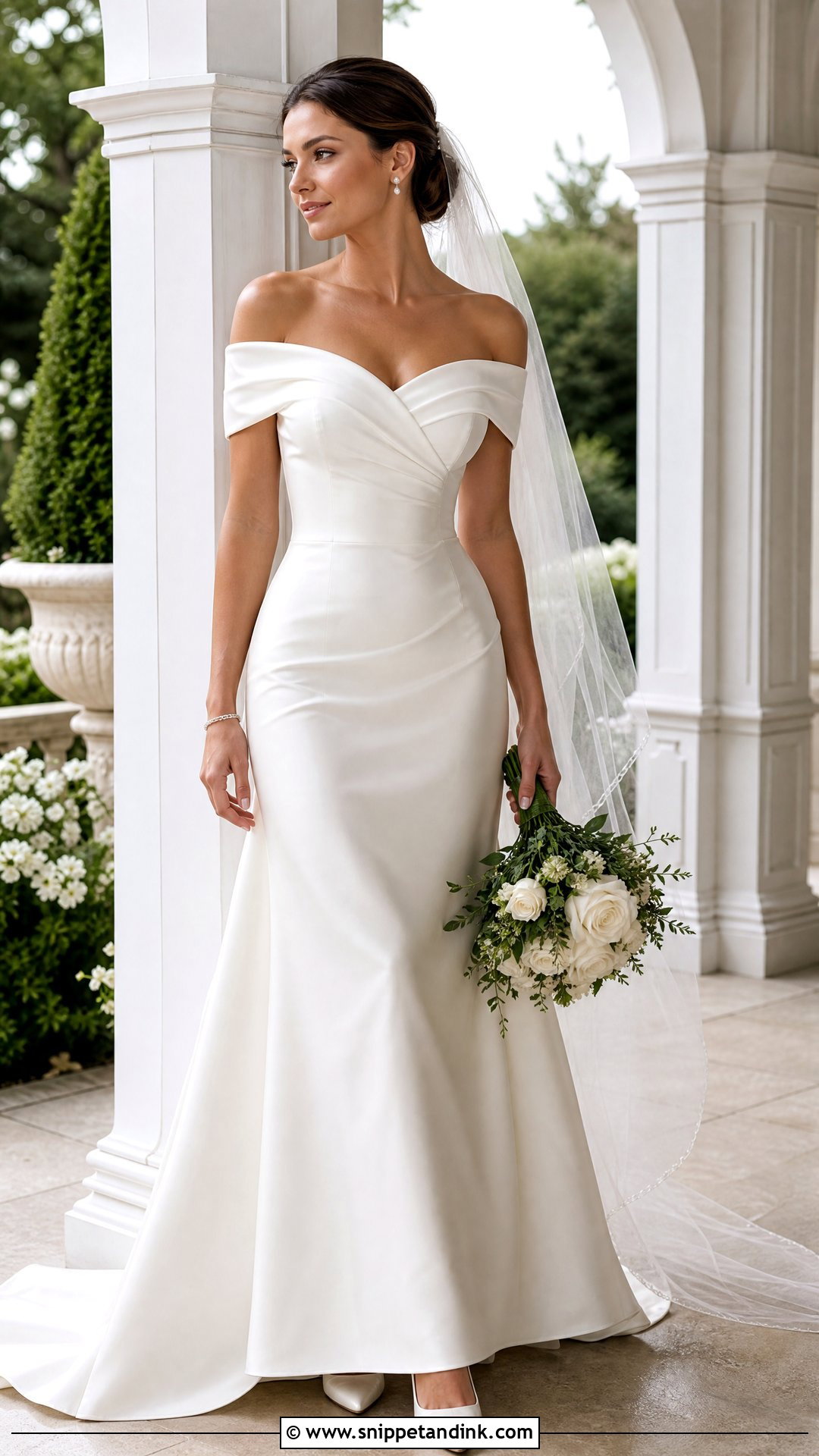
The worry with off-the-shoulder satin is always the same: will it stay up? A folded neckline that sits on the upper arms needs internal boning and sleeve bands fitted to your arms, otherwise it creeps down every time you lift a glass. Once it’s secure, it’s a soft, sculpted look that doesn’t need lace or crystals. Short pearl earrings and a fine tennis bracelet are plenty; a large necklace fights the shoulder line. I attach the veil under a low bun so nothing covers the neckline. Neutral ivory pumps, and you’re done.
6. Cowl Neck Slip Wedding Gown
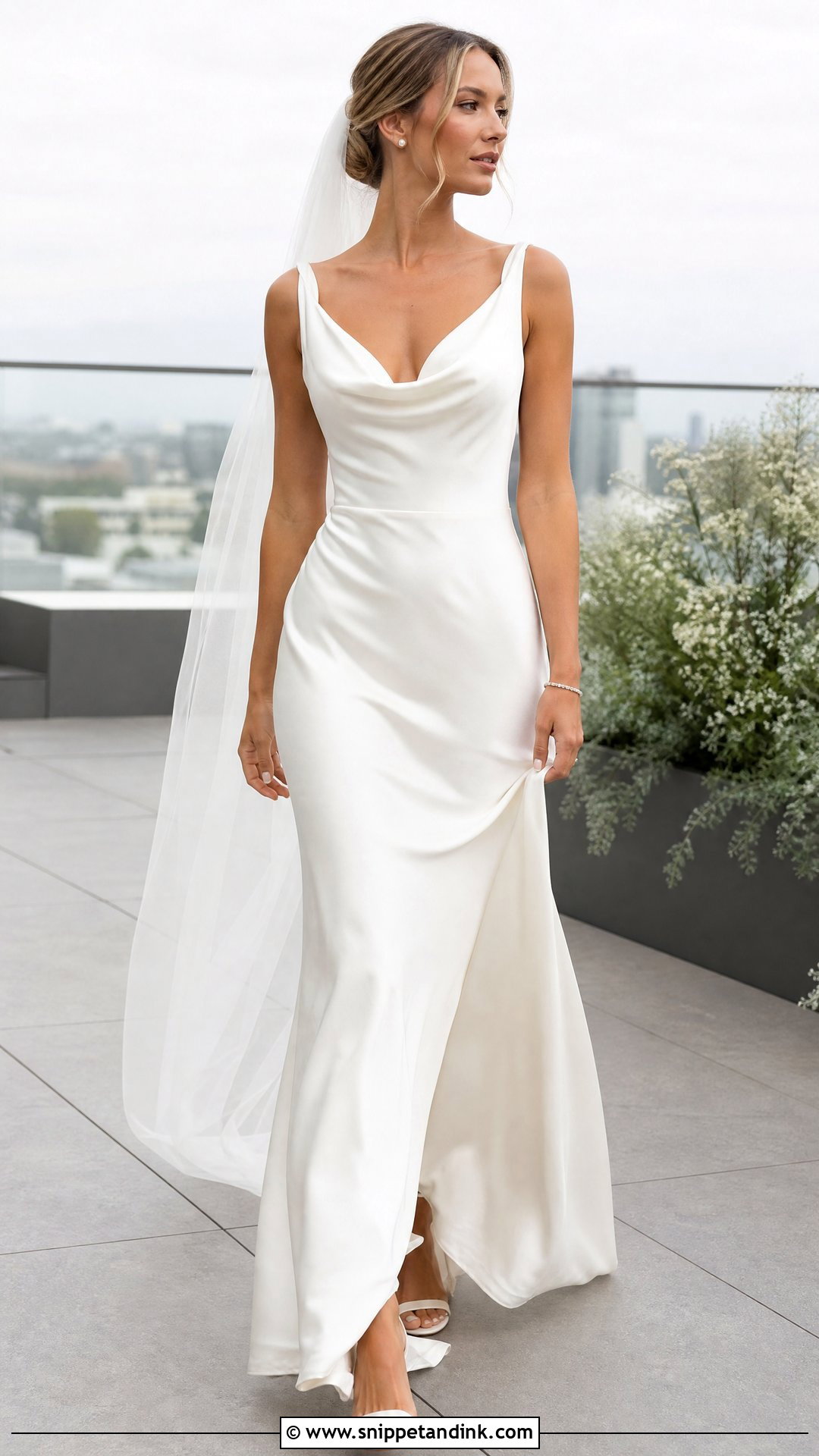
Slip gowns look simple on the hanger and turn out to be the hardest to wear well. Bias-cut satin follows every curve and every line underneath it, so the lining matters more than anything else on the label. I’d choose wider straps, a gently shaped waist and a skirt that skims rather than clings, then do the final fitting in the exact underwear you’ll wear on the day. A soft cowl at the neck adds movement without weight. Minimal slingbacks, small pearl studs and a sheer floor-length veil keep the mood fluid, with loose waves or a low bun. Rooftops, restaurants and coastal ceremonies suit it best.
7. High Neck Column Wedding Gown
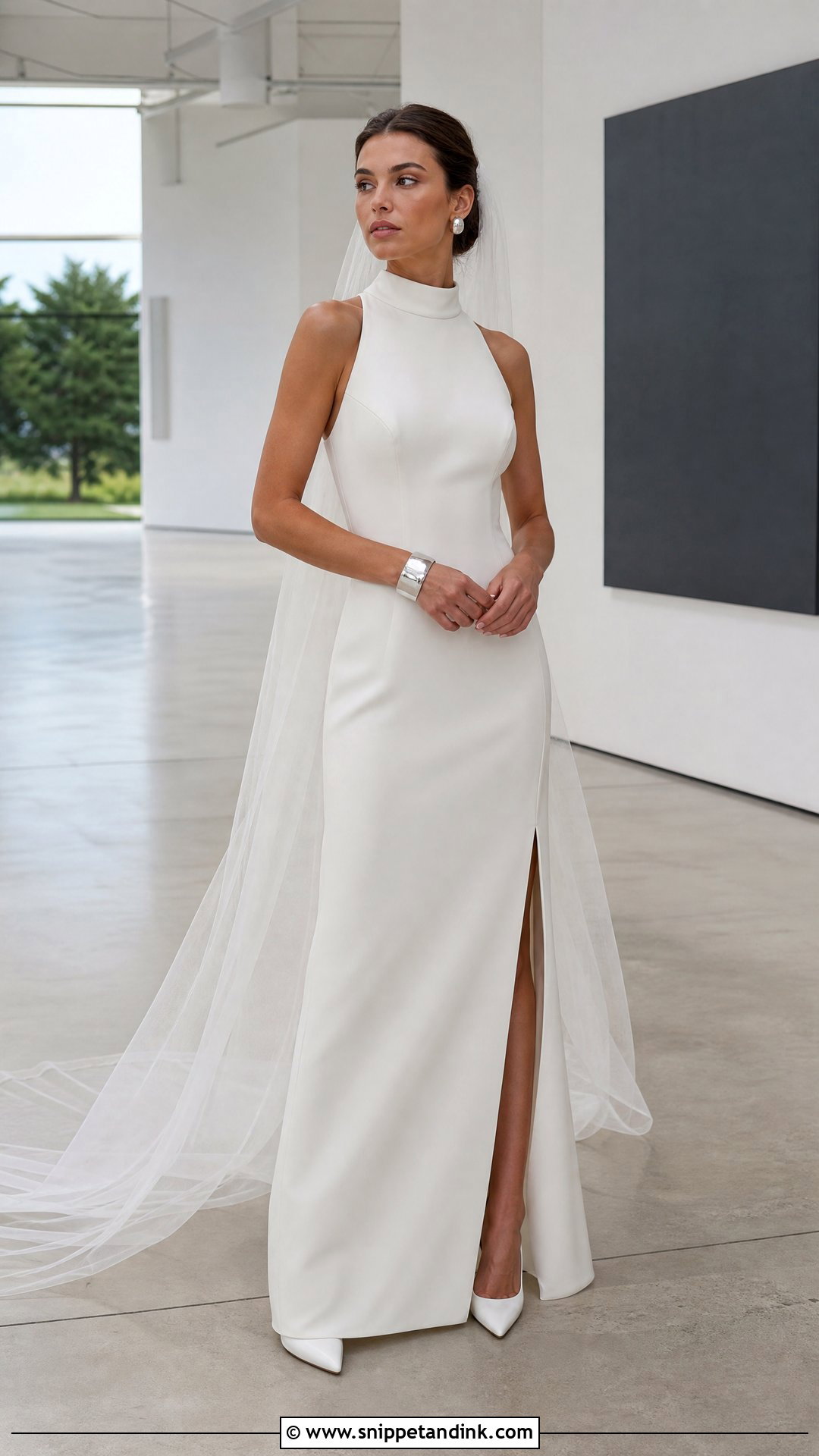
A high-neck column runs one long line from chin to floor, so seams and fabric weight decide everything. Substantial crepe or matte satin hangs straight; thin stretch fabric shows every ripple. A side slit or back vent is not optional for me with this shape, because a true column limits your stride on steps. Skip the necklace and wear sculptural studs or a cuff instead, with pointed pumps and a narrow cathedral veil. An updo keeps the neck clear. If you need shaping, ask for gentle darts at the waist or a narrow belt in matching fabric. Galleries, city venues and minimalist spaces echo its clean geometry.
8. V-Neck Chiffon A-Line Wedding Gown
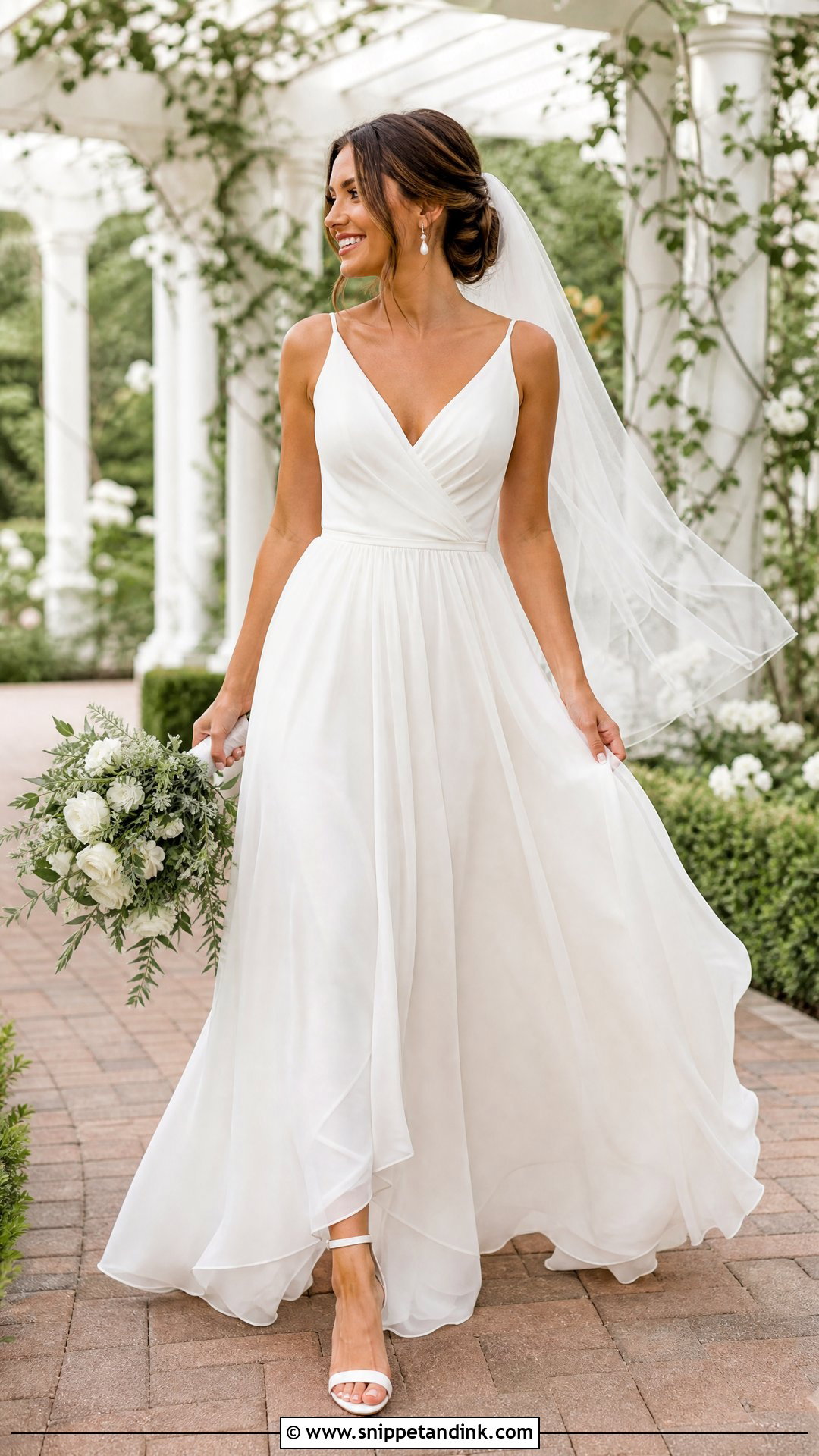
Chiffon moves with the slightest breeze, which is its charm outdoors and its risk on gravel. A lined V-neck bodice with supportive straps and a softly layered skirt keeps the gown light without turning it into a cloud of fabric. The V lengthens the upper body, and the A-line gives room through the hips. I put this with block-heel sandals, small drop earrings and a light fingertip veil, plus a loose bun or pinned waves. Keep detail to a narrow waistband or covered buttons. Walk your ceremony route before the hem is finalized, since chiffon catches on rough stone and decking.
9. Sweetheart Fit And Flare Wedding Gown
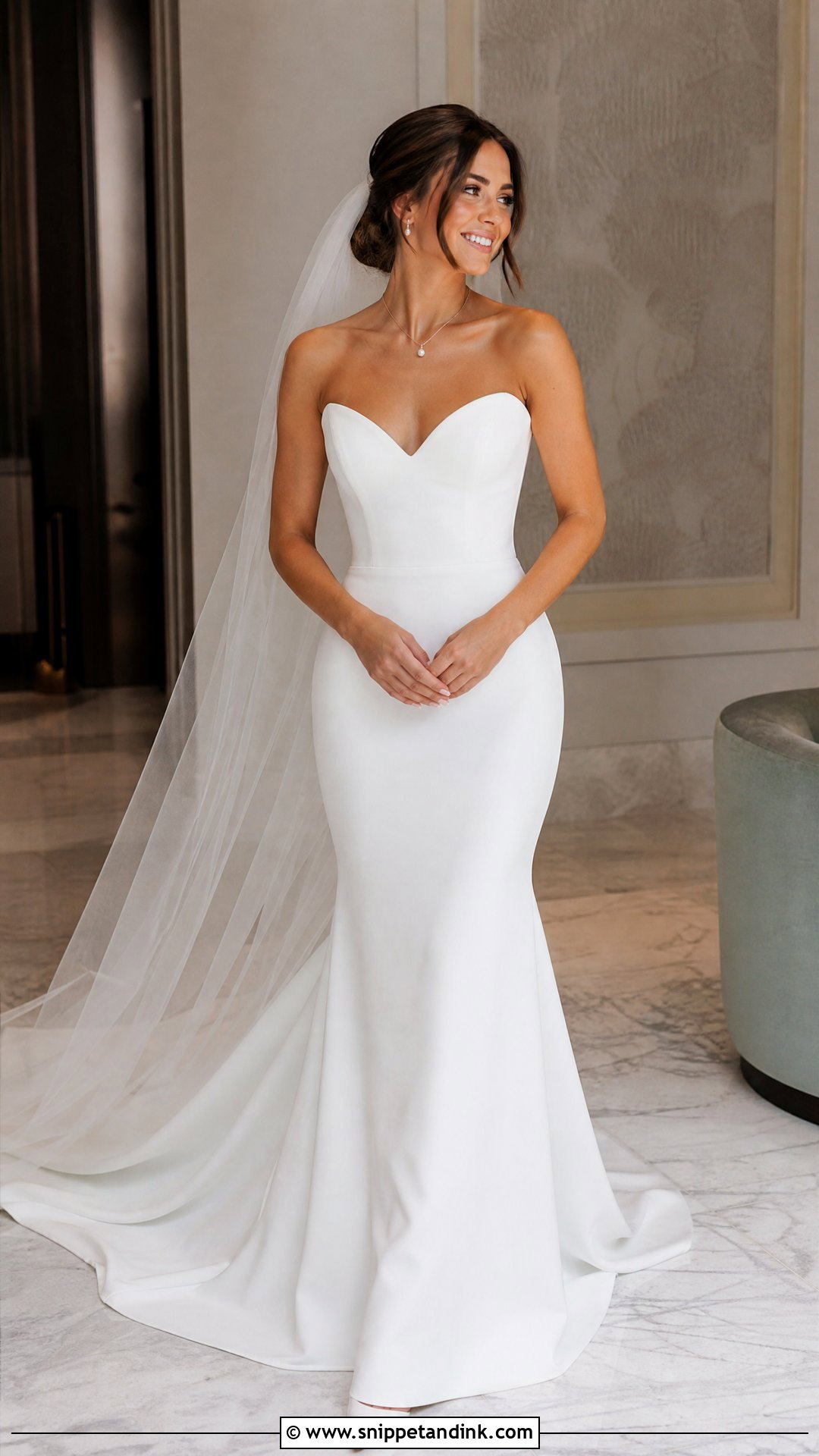
Fit-and-flare is close-fitting down to the lower hip, so clean stretch crepe or satin will show any wrinkle at the bust or waist. That’s why I schedule an extra fitting for this shape. The sweetheart neckline softens the tight silhouette and leaves room for a short pendant. Add understated earrings, pointed heels and a raw-edge veil, then go with Soft Hollywood-inspired waves or a smooth low bun. Brides with a defined waist and hips tend to love it. It moves from an afternoon ceremony into the evening without a change.
10. Cap Sleeve Lace Wedding Gown
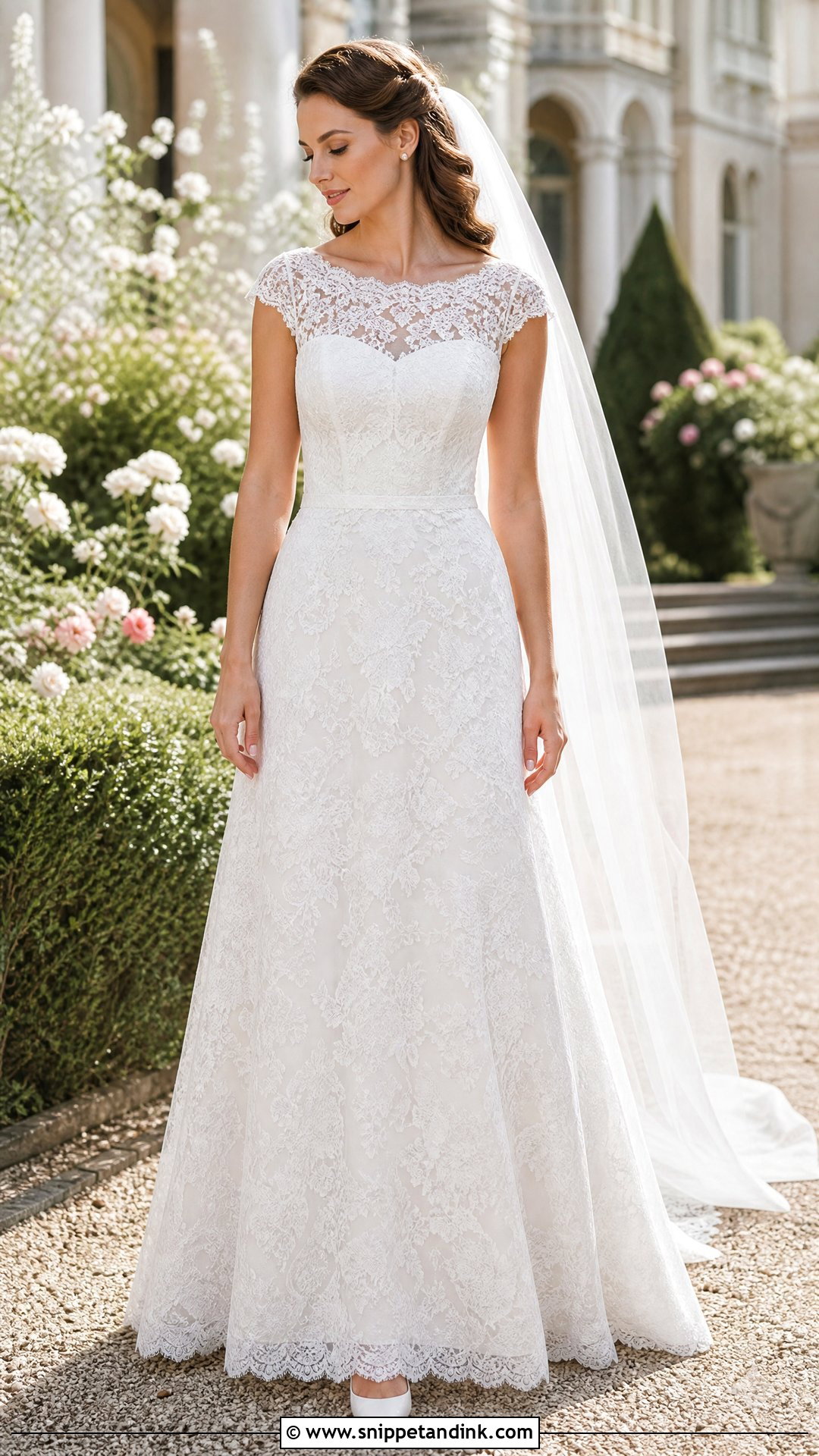
Lace stays simple when you stick to one pattern and keep it flat. Mixed lace, appliqués and beading are what tip a gown into busy territory. On a cap-sleeve A-line or sheath, I look for a smooth lined bodice and a single delicate lace throughout. The lining color changes the whole effect: nude lining makes the lace pattern stand out, matching ivory lining makes it read as texture. Pearl studs, low pointed pumps and a plain tulle veil let the lace lead. A low bun keeps the shoulders visible. Gardens, historic houses and daytime ceremonies are its natural setting.
11. Minimalist Mermaid Wedding Gown
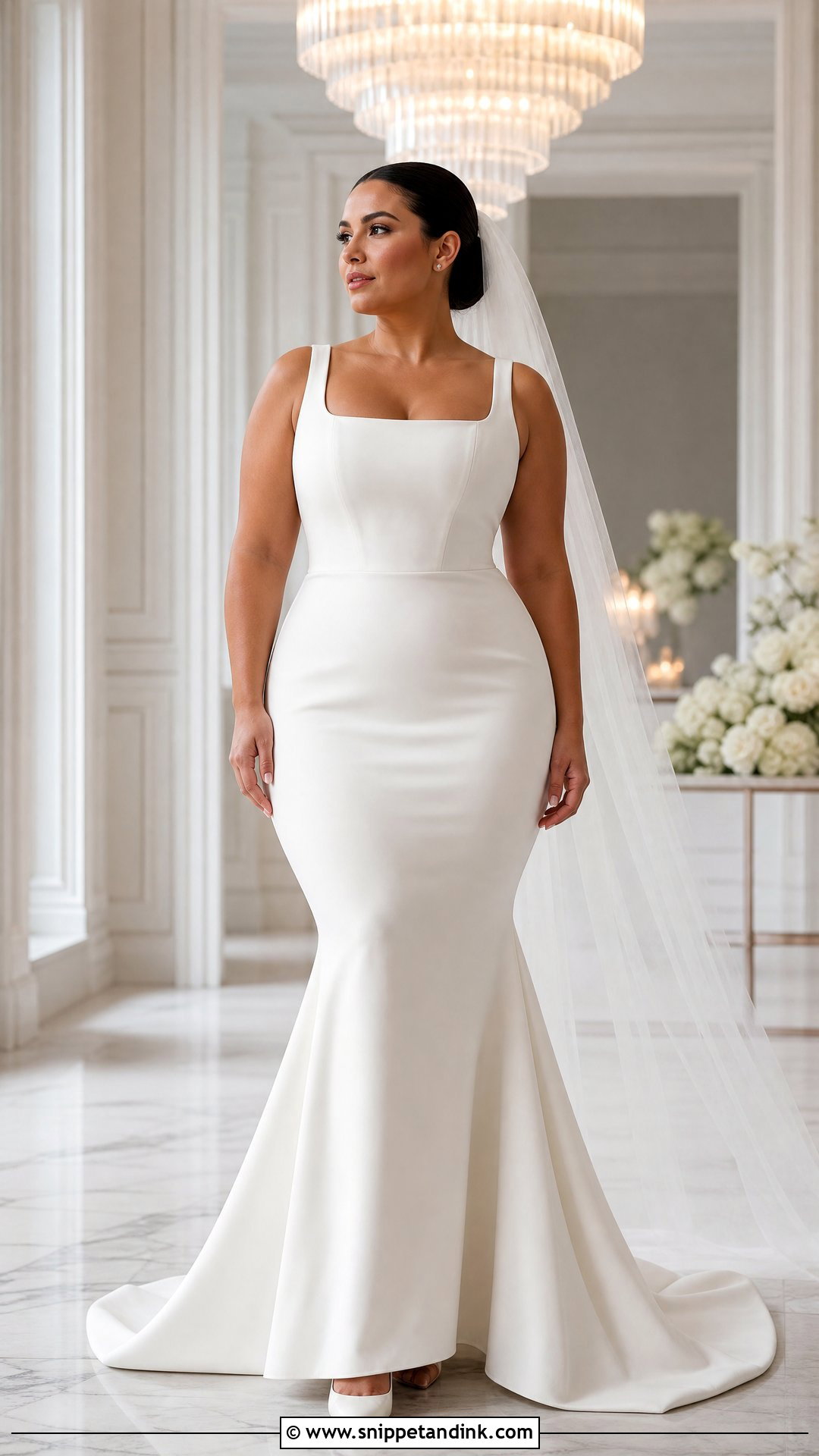
I always test a mermaid gown on stairs. The flare starts near the knee, so your stride is shorter than you expect, and some brides only discover that on the day. Stretch lining and a back vent help a lot. Choose smooth crepe with a fitted bodice and a square, scoop or soft sweetheart neckline, then keep accessories sleek: pointed heels, small sparkling studs and a narrow floor-length veil. A polished bun or controlled side-parted waves suit the shape. Hotels and formal evening venues are where it shines. If you dread feeling restricted, this isn’t your silhouette, however good it looks on others.
12. Tea Length Satin Wedding Gown
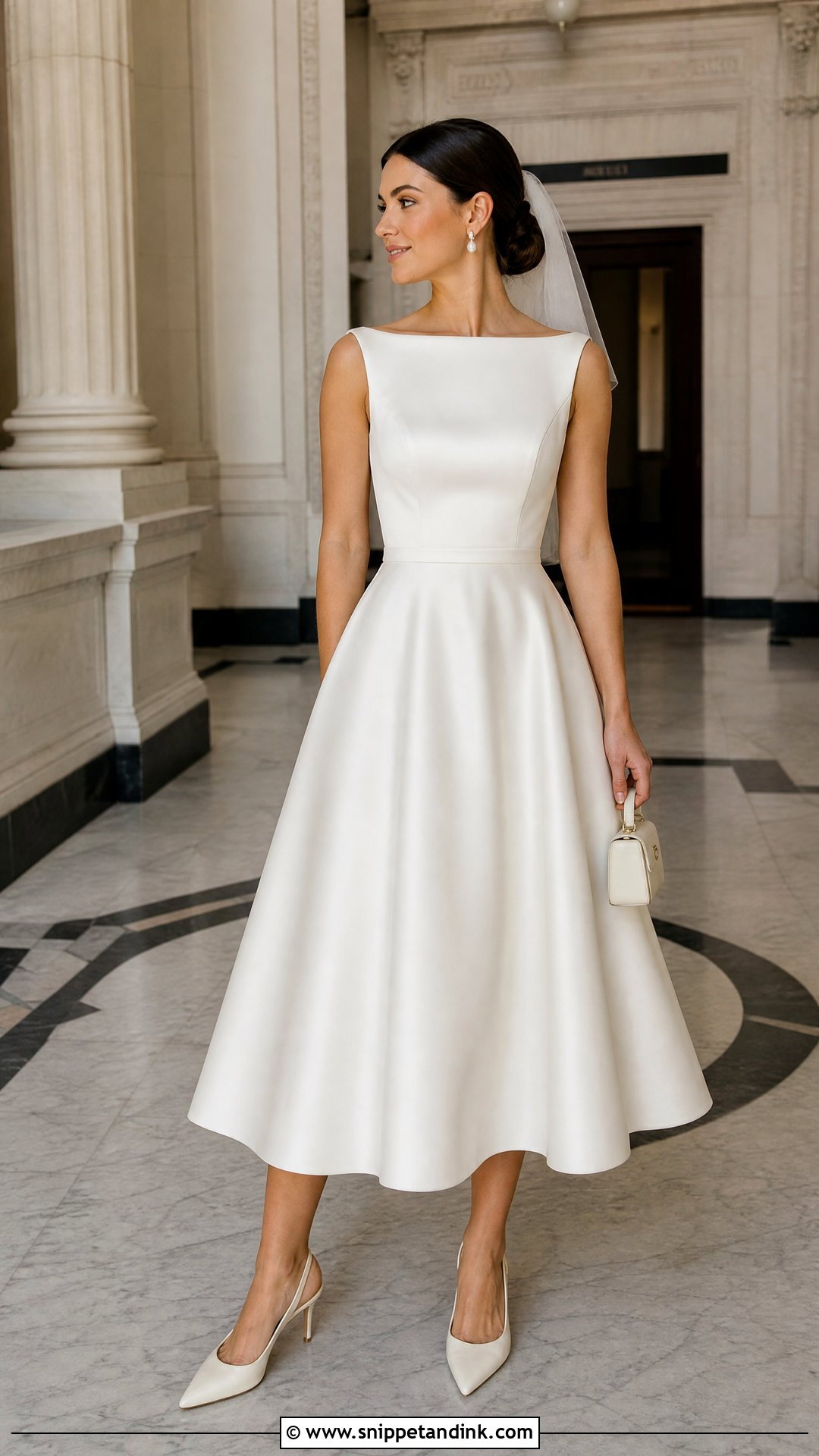
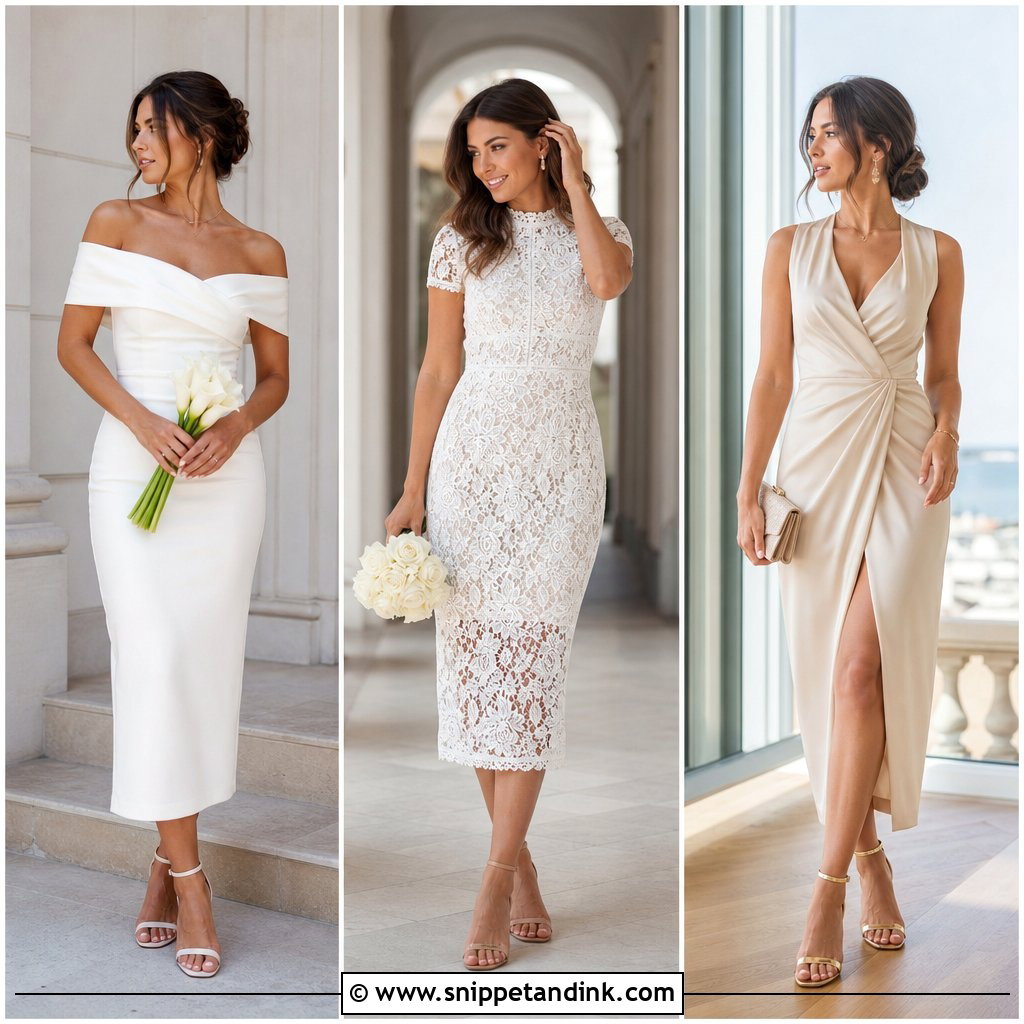
With a tea-length hem, your shoes become part of the dress, so I choose them before the jewelry. Pointed pumps, bow-back heels or ivory slingbacks all work; worn flats do not. The gown itself wants a fitted bodice, a defined waist and a skirt that ends between knee and ankle, with a bateau, square or off-the-shoulder neckline. Add pearl earrings, a short veil and a small structured bag. Keep the hair modern, a smooth bun or a softly curled bob, so the vintage length doesn’t drift into costume. Courthouse weddings, brunches and small receptions suit it, and you can dance without bustling anything.
13. Empire Waist Chiffon Wedding Gown
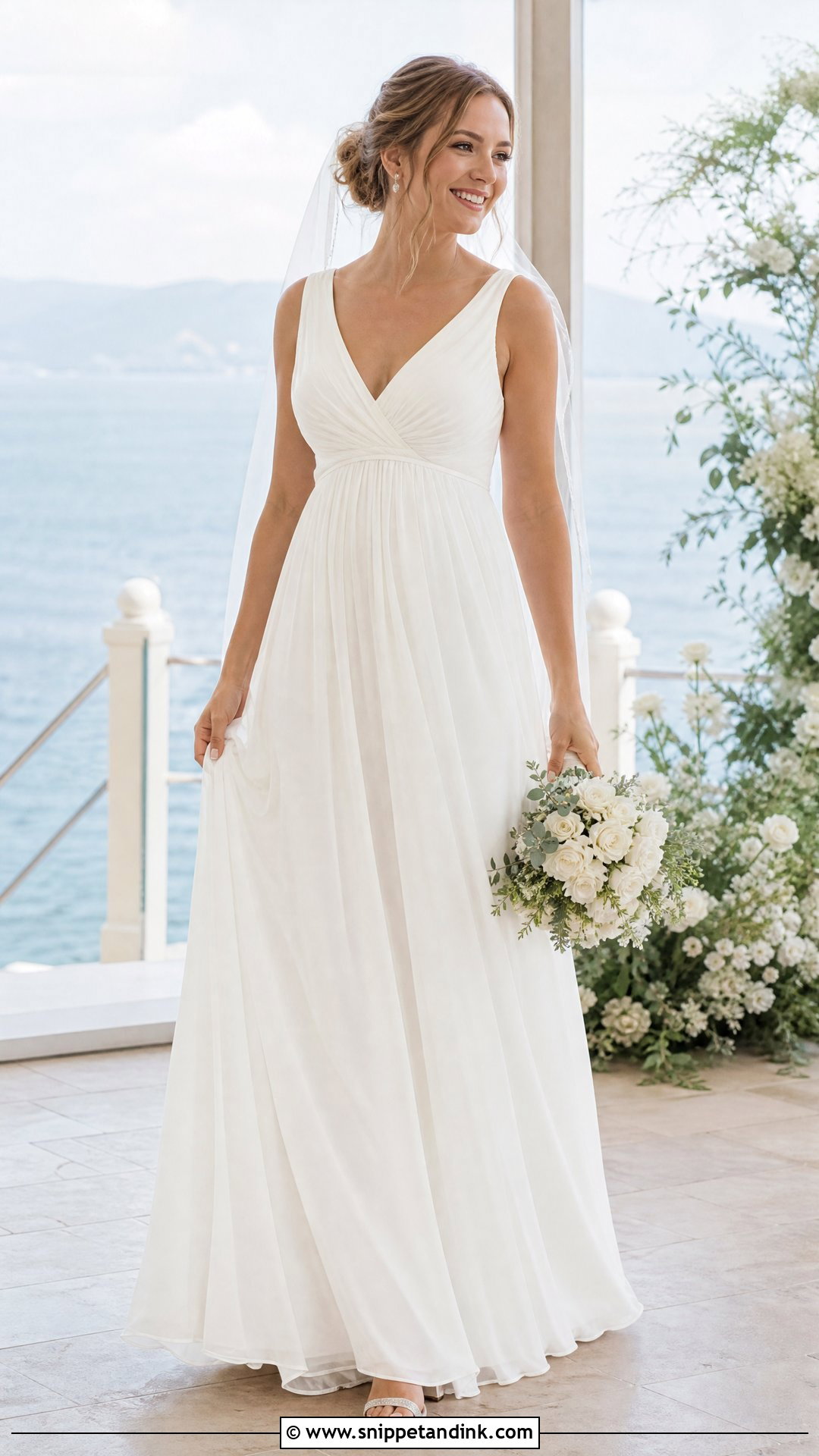
An empire waist puts the seam just under the bust and lets the chiffon fall from there, which leaves the stomach and hips completely free. That is why I suggest it to pregnant brides and anyone who hates a waistband. A V-neck or softly gathered bodice with wider straps gives proper support. Low block heels, small crystal studs and a shoulder-length veil keep it light; a delicate comb above a loose bun adds a little interest. Don’t add a belt, since the seam already does that job. It breathes well, which makes it a good choice for beaches and hot afternoons.
14. Halter Neck Wedding Gown
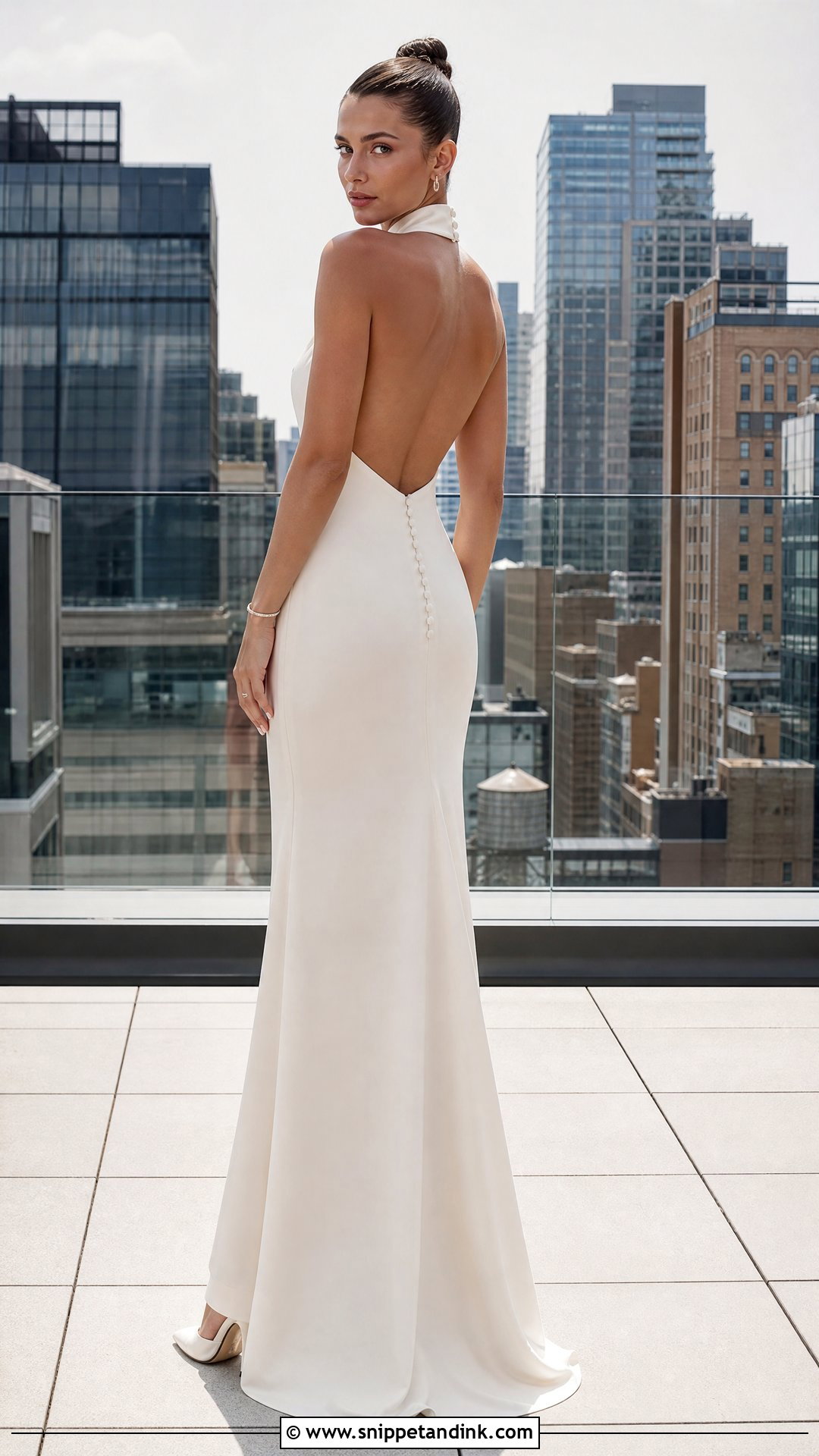
Halter necks carry the gown’s weight from the back of the neck, so after six or seven hours a narrow tie can start to ache. I prefer a wider halter band or one with a hook closure. In fluid crepe or satin with a fitted waist and an A-line skirt, it gives a clean modern line through the shoulders. Small hoops, a slim bracelet and pointed pumps are enough; skip the necklace. Hair goes up, in a high bun or a low twist, so it doesn’t sit on the neckline. An open back with covered buttons adds detail without fuss. Rooftops, destination weddings and summer evenings suit it.
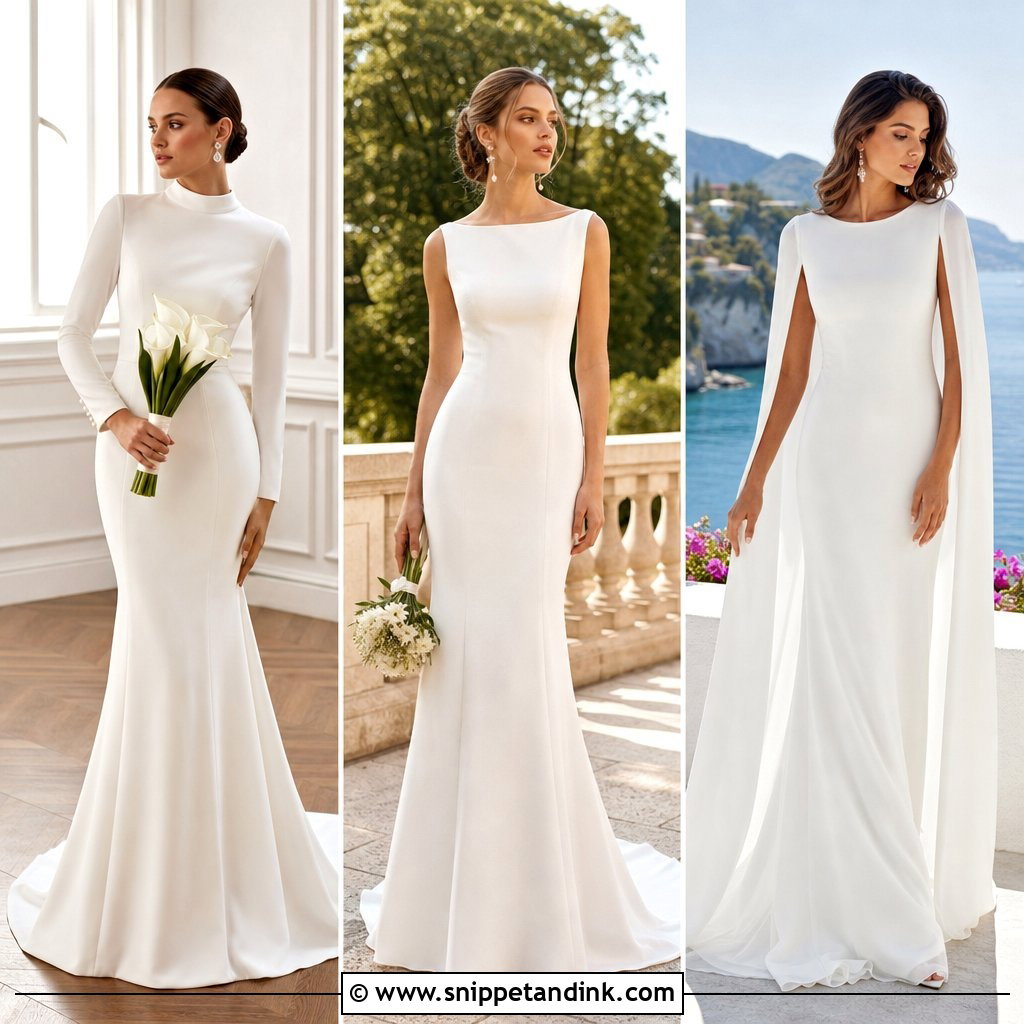

15. Scoop Neck Sheath Wedding Gown
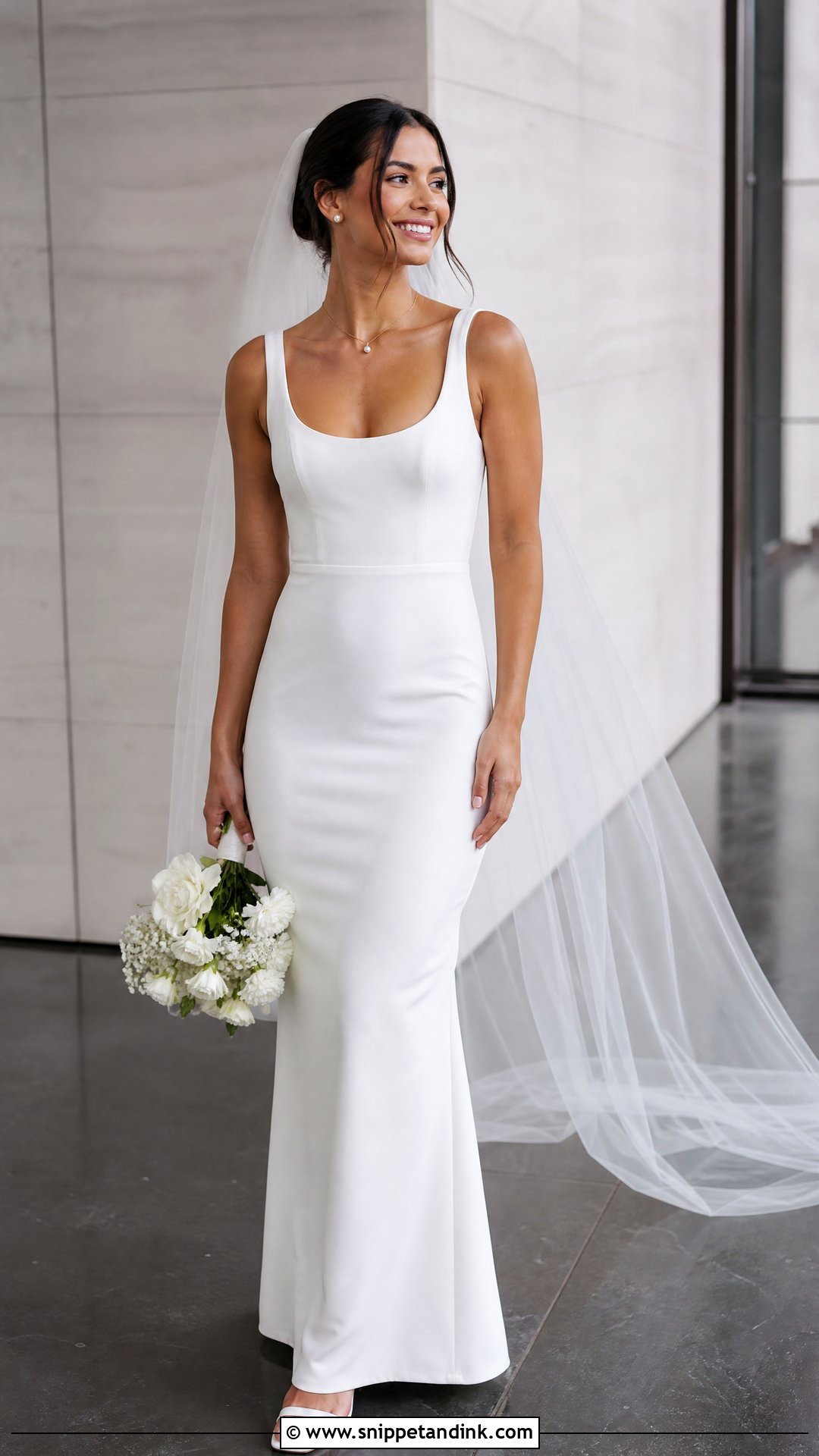
A sheath skims the body without sculpting it, which makes it one of the easiest gowns to move, sit and travel in. Stretch crepe with supportive straps and careful waist shaping is the best fabric for it, as long as there’s room at the knee to walk. The scoop neck leaves space for a tiny pendant or a single-strand pearl necklace. Slingbacks, matching studs and a long plain veil complete it, with a side-parted low bun. A removable crepe cape gives coverage for a religious ceremony. It’s practical for city weddings with a walk between ceremony and reception.
16. Basque Waist Satin Ball Gown
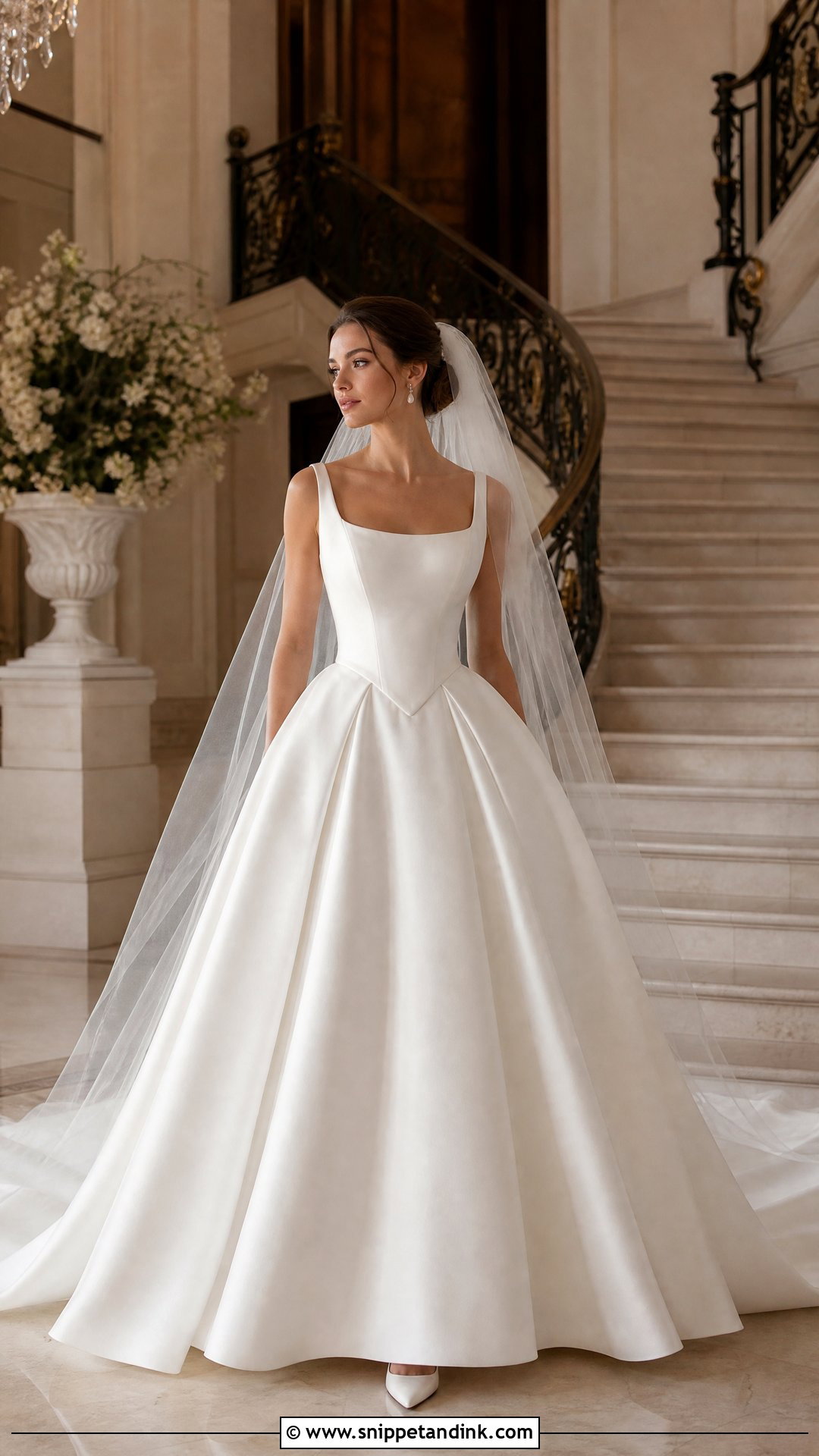
The basque waist dips into a soft point below the natural waist, which lengthens the torso before the skirt opens out. On a satin ball gown that structure is the decoration, so I steer brides toward little or no draping. Because the bodice is firmly boned, fittings must leave room to breathe, eat and sit; I ask brides to sit for a full minute in it before signing off. Closed pumps, pearl drops and a cathedral veil suit its formality, with a tidy updo and a few soft face-framing pieces so it doesn’t look severe. It needs a grand room to make sense.
17. One Shoulder Crepe Wedding Gown
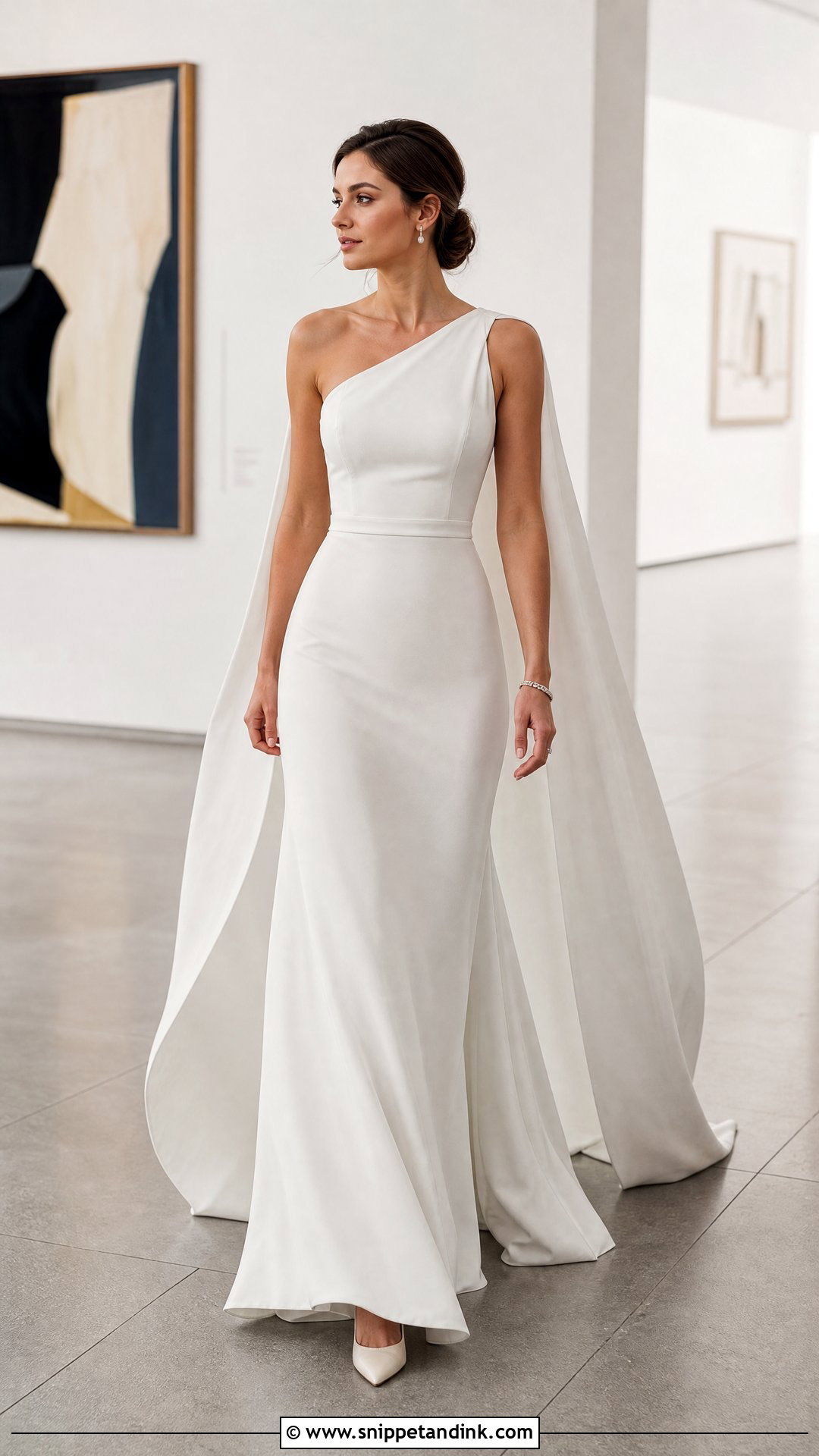
One-shoulder gowns depend on a wide, firmly anchored strap; thin ties pull the bodice sideways as you move. In smooth crepe with a straight, A-line or softly flared skirt, the asymmetry is the whole point, so I balance it with small earrings and a bracelet on the bare-shoulder side. Pointed heels and a sleek bun or low ponytail keep the neckline visible. A traditional veil can look awkward against the single strap, so I often suggest a detachable cape fastened at the back or a narrow veil without lace. Galleries and rooftop venues suit its modern edge.
18. Three Quarter Sleeve Wedding Gown
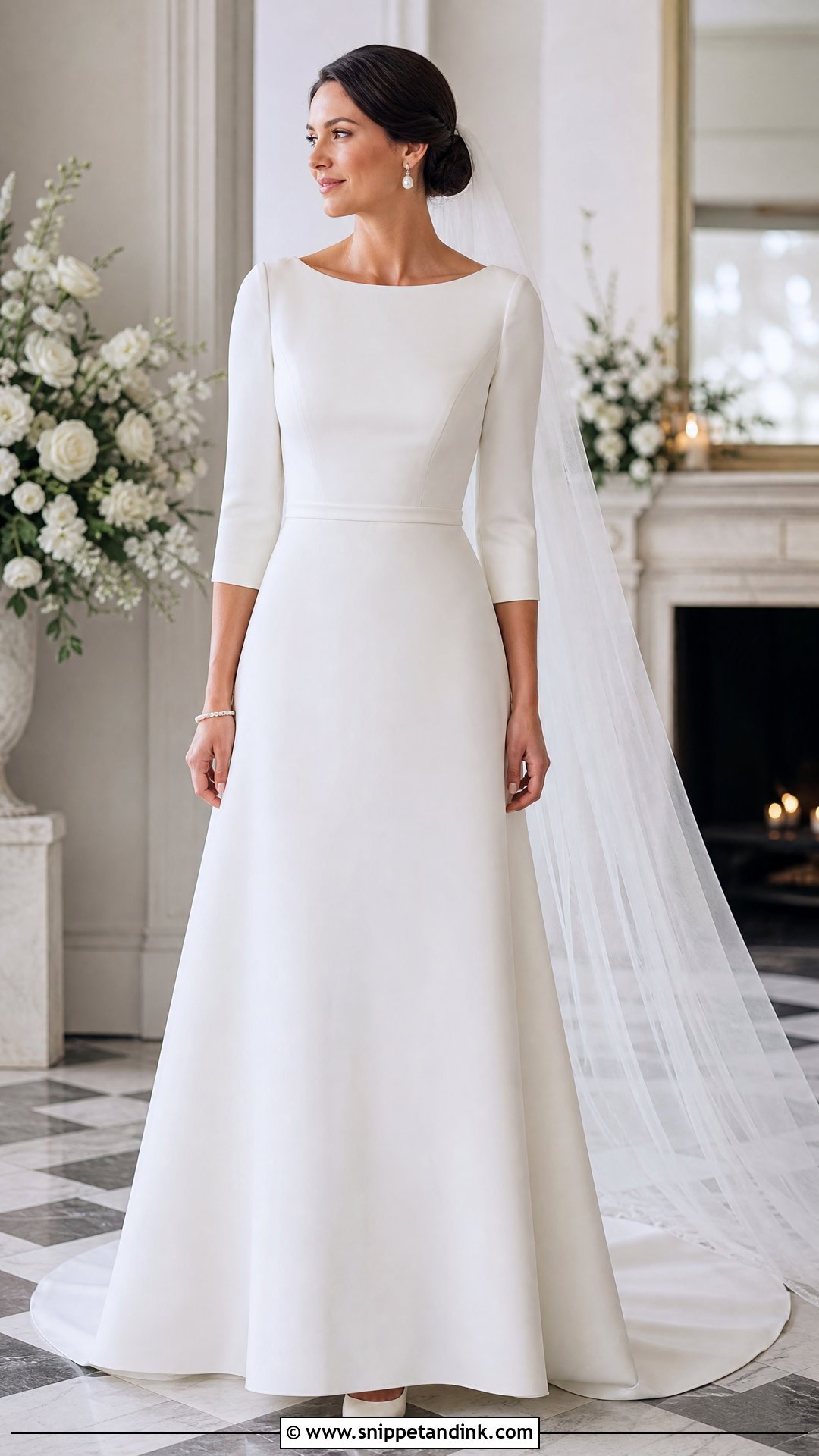
Three-quarter sleeves end just below the elbow, which gives coverage while leaving the wrists free for a bracelet and the bouquet. Choose matte crepe or satin with a bateau neckline, a defined waist and a soft A-line skirt; plain sleeves read sleeker, sheer ones add texture. The fitting test is lifting your arms as if for a first dance. If the bodice rises with your arms, the sleeve head is set too low. Pearl earrings, pointed pumps and a chapel veil finish it, with a low chignon or French twist. It suits cool-weather and traditional family ceremonies.
19. Backless Satin Wedding Gown
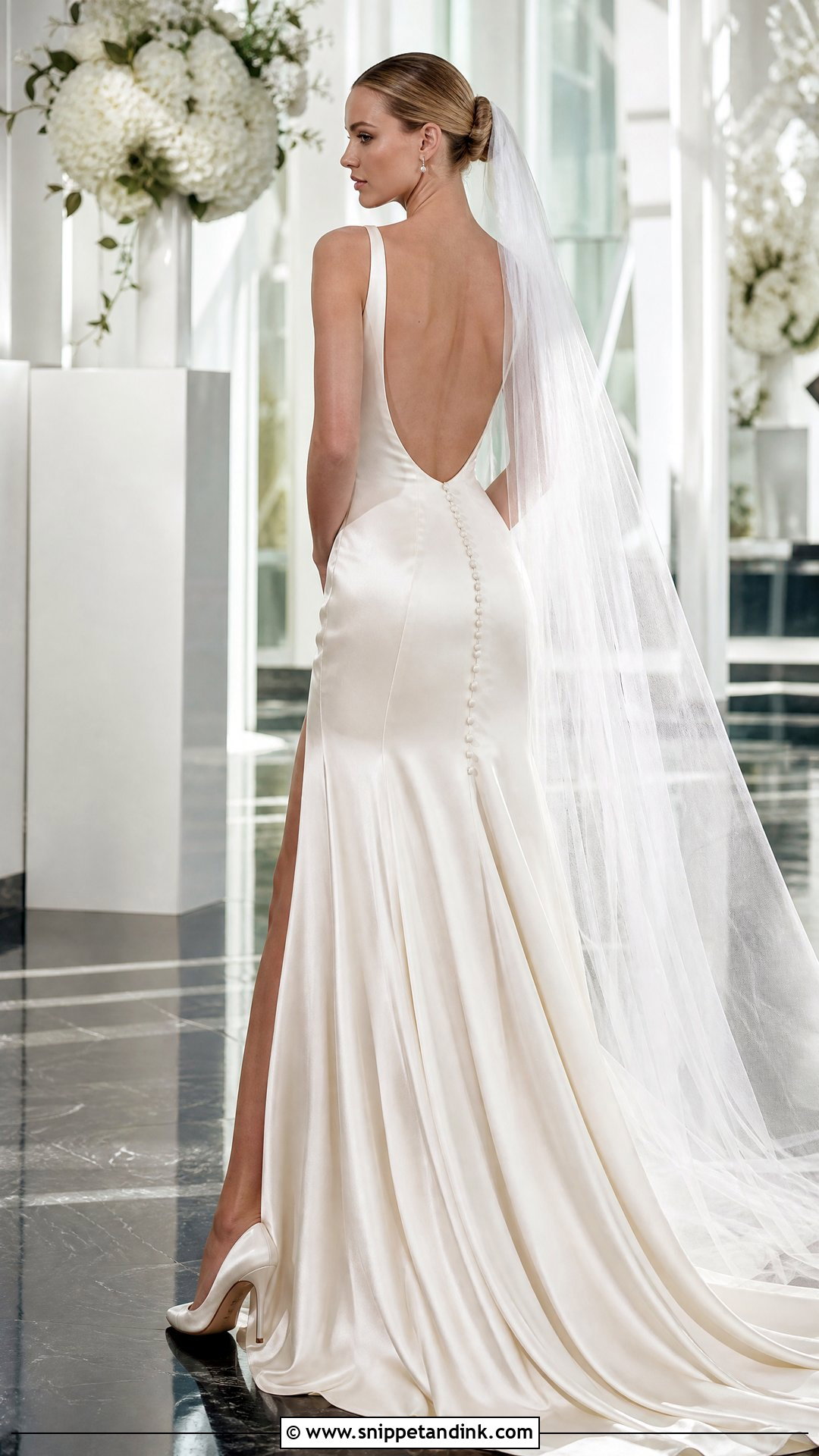
A backless satin gown only looks elegant if the front stays put, and that comes down to support you can’t see. A high bateau, square or draped neckline balances a low scoop or V at the back. Depending on the depth, you may need built-in cups, fashion tape and careful tailoring along the side seams. Covered buttons on the lower back add traditional detail. I’d only add a back chain if it lies flat against the skin. Understated earrings, satin pumps and a sheer veil attached under a sleek bun keep the back the focus during the ceremony, when guests see it most.

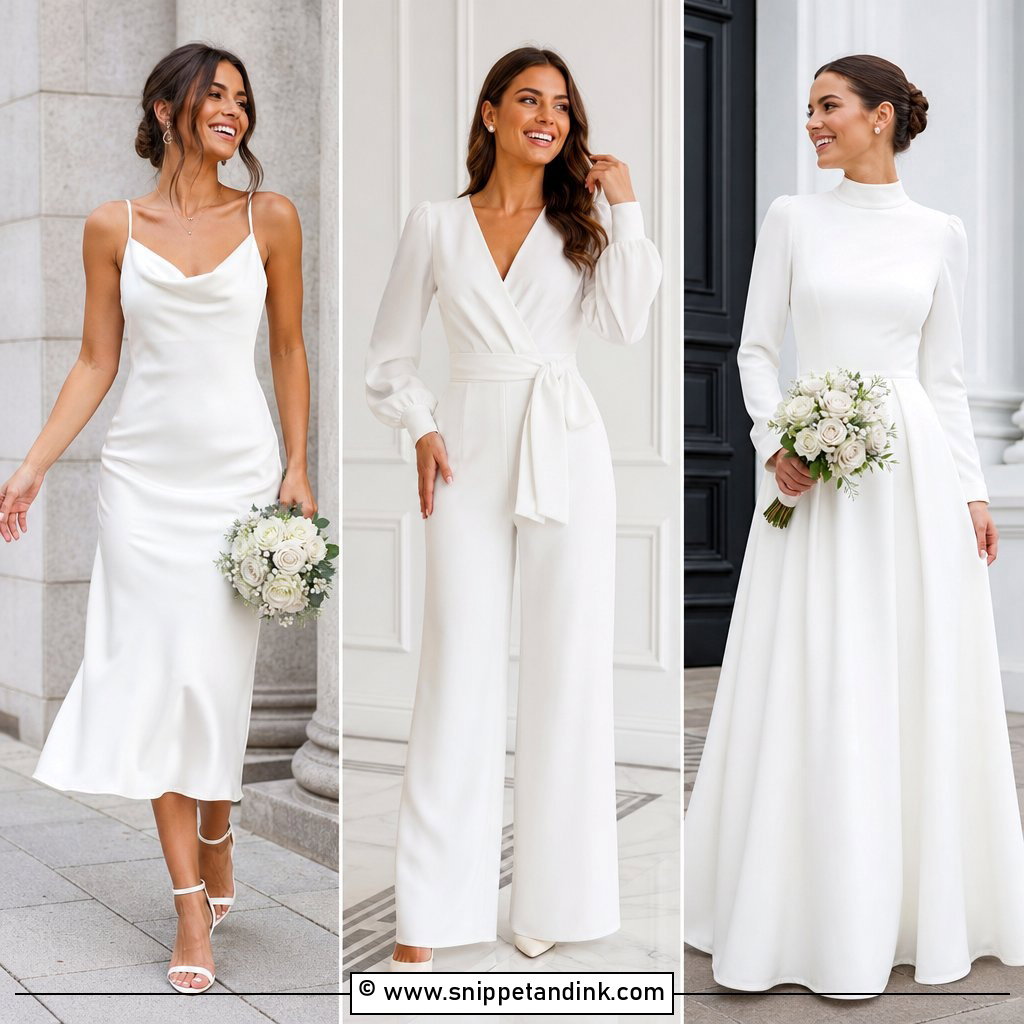

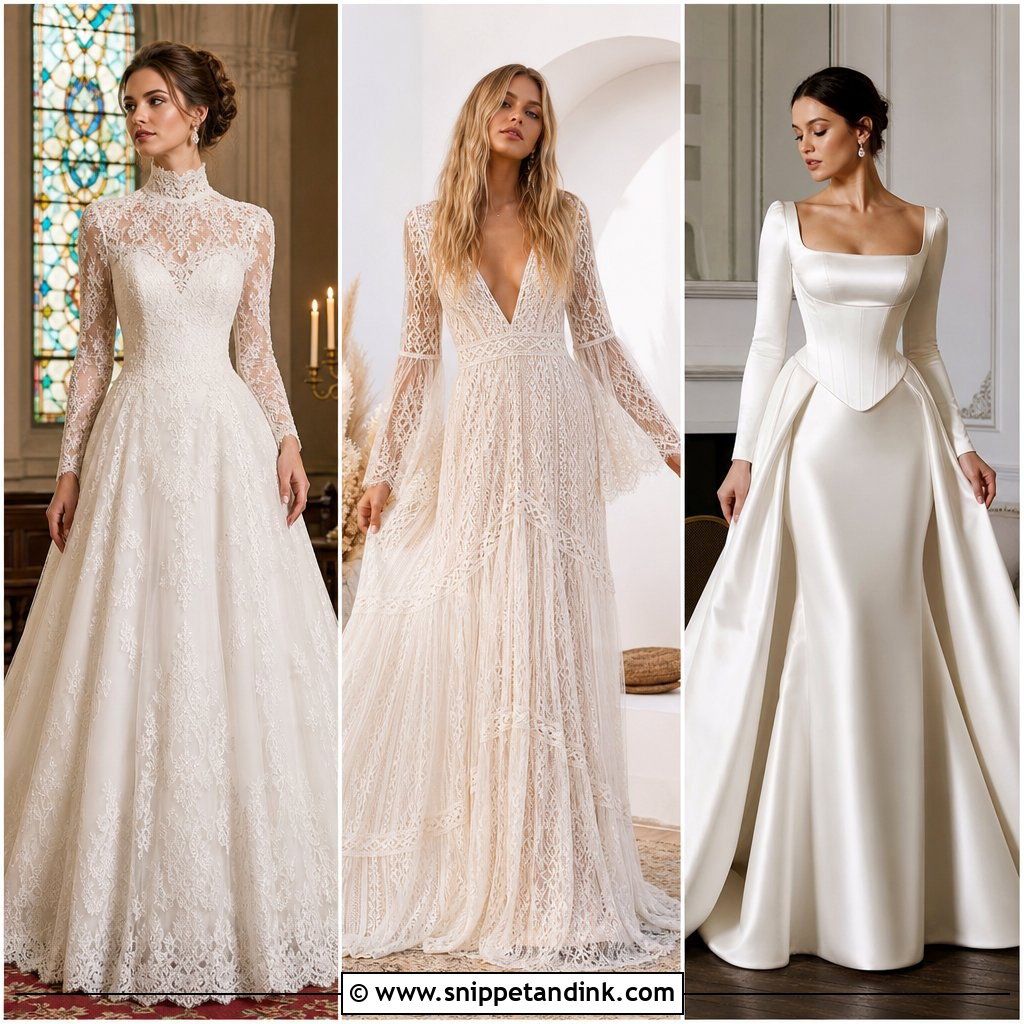
20. Simple Plus Size A-Line Wedding Gown
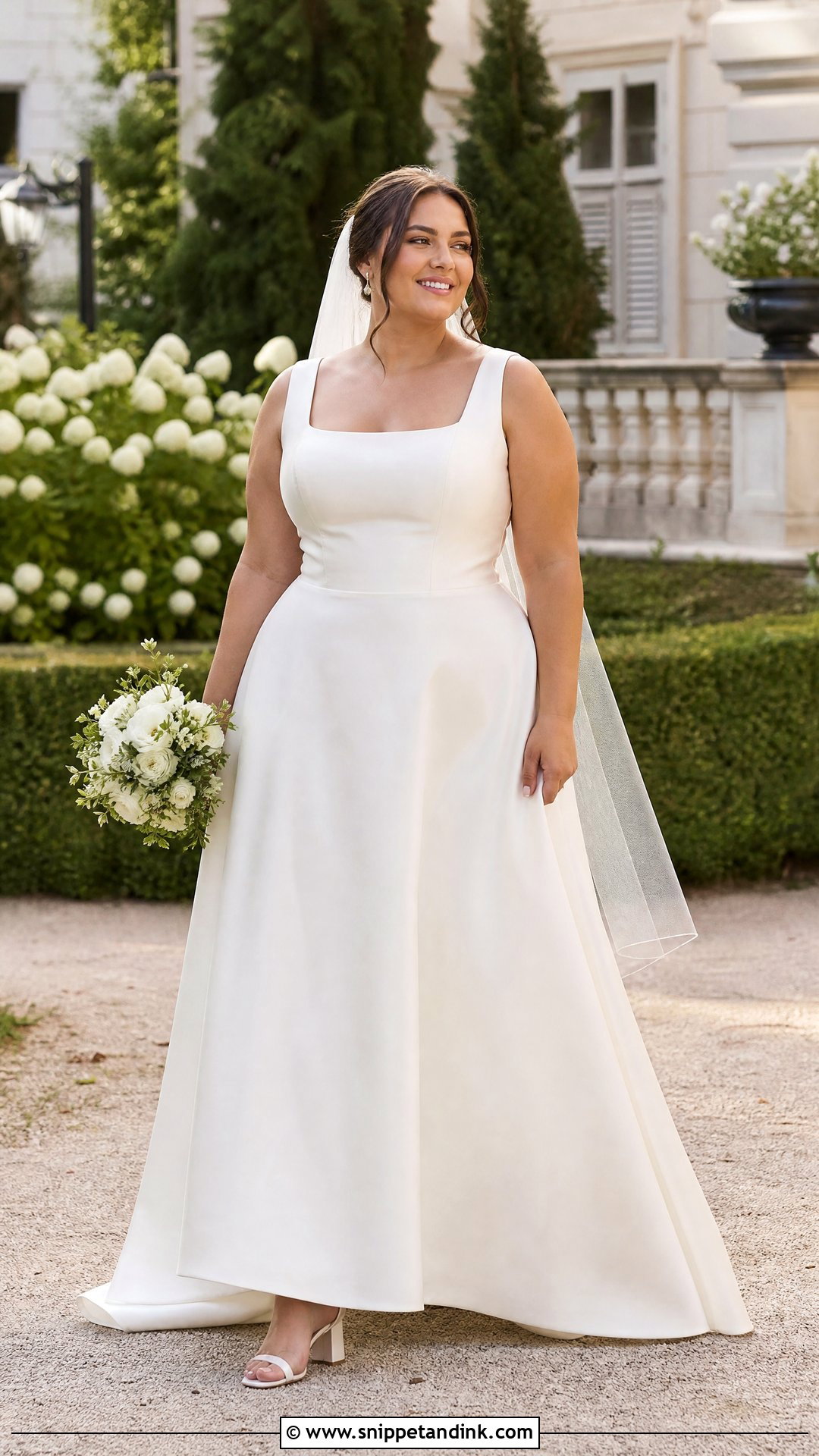
For plus-size brides, the A-line remains the shape I trust most, because it supports at the top and releases at the hip. Look for a structured bodice with wide straps, a square or V-neckline and a skirt that falls smoothly from the waist. Stretch crepe is softest, satin has more sheen, and Mikado holds the most structure. A properly placed waist seam and princess seams create shape without heavy shapewear. At fittings, sit, walk and raise your arms in it. Block heels, pearl drops and a light fingertip veil complete it, and it works in nearly any venue.
Mikado Holds Its Shape, Satin Creases and Chiffon Snags by Evening
The fabric you choose decides how your gown looks at the reception, not just at the aisle. Here is what I watch for with each one over a long day.
- Satin creases across the lap the first time you sit. Heavier duchess satin recovers better than thin polyester satin; a quick pass with a handheld steamer before portraits fixes most of it.
- Crepe barely wrinkles and drapes close to the body, which is why it shows underwear lines and any unevenness in fit.
- Mikado keeps its structure all day and hides creases well, but it’s heavier and warmer, which matters at a summer ceremony outdoors.
- Chiffon is the coolest to wear and the easiest to snag, so watch jewelry clasps, bouquet wire and rough flooring.
Steaming and Hanging a Minimal Gown the Night Before
Take the gown out of its bag the evening before and hang it by its internal hanger loops, not the straps, from a door frame or hook high enough that the hem doesn’t touch the floor. Steam from the inside of the skirt, keeping the steamer a few inches away and never touching satin with the plate; water spots show on satin and silk. Never iron directly. If you must press a stubborn crease, use a low setting with a clean cotton cloth between iron and fabric.
On the morning, keep makeup, self-tanner and hairspray well away from the dress. I put a scarf or clean pillowcase over a bride’s face while she steps into a high-neck gown, because foundation on ivory crepe is one of the hardest marks to lift.
Less Decoration Means the Fit Carries Everything
A simple gown is a bet on tailoring, fabric and how you carry yourself, and it pays off when those three are right. Start with the neckline you feel best in, check it against your venue and season, and let comfort settle the close calls. Then keep shoes, jewelry and veil supporting the dress rather than competing with it. Every one of the twenty styles above gets better with a good seamstress, and none of them needs extra sparkle to be memorable.
You'll Like These Ideas:










Leave a Reply